



An inverted bob on a man can look sharper than half the fades people keep repeating. The shape is simple — shorter at the back, longer toward the front, with the weight pushed forward — but the result depends on millimeters, not drama.
The best inverted bob haircuts for men do not try to look macho in the usual, boxed-in way. They use line, balance, and a little bit of swing. If the back is stacked too high, it turns stiff. If the front is left too long without control, it starts reading as accidental.
That’s the part a lot of people miss. This cut is not about copying a women’s style onto a man’s head and calling it finished. It’s about taking the angle, cleaning up the nape, and matching the shape to your hair type, face shape, and daily routine.
Some versions are sleek and almost architectural. Others are messy, wavy, and a little rebellious. The good ones all do the same job: they pull the eye forward, sharpen the jaw, and make the haircut feel intentional instead of grown out.
1. Classic Inverted Bob Haircut for Men
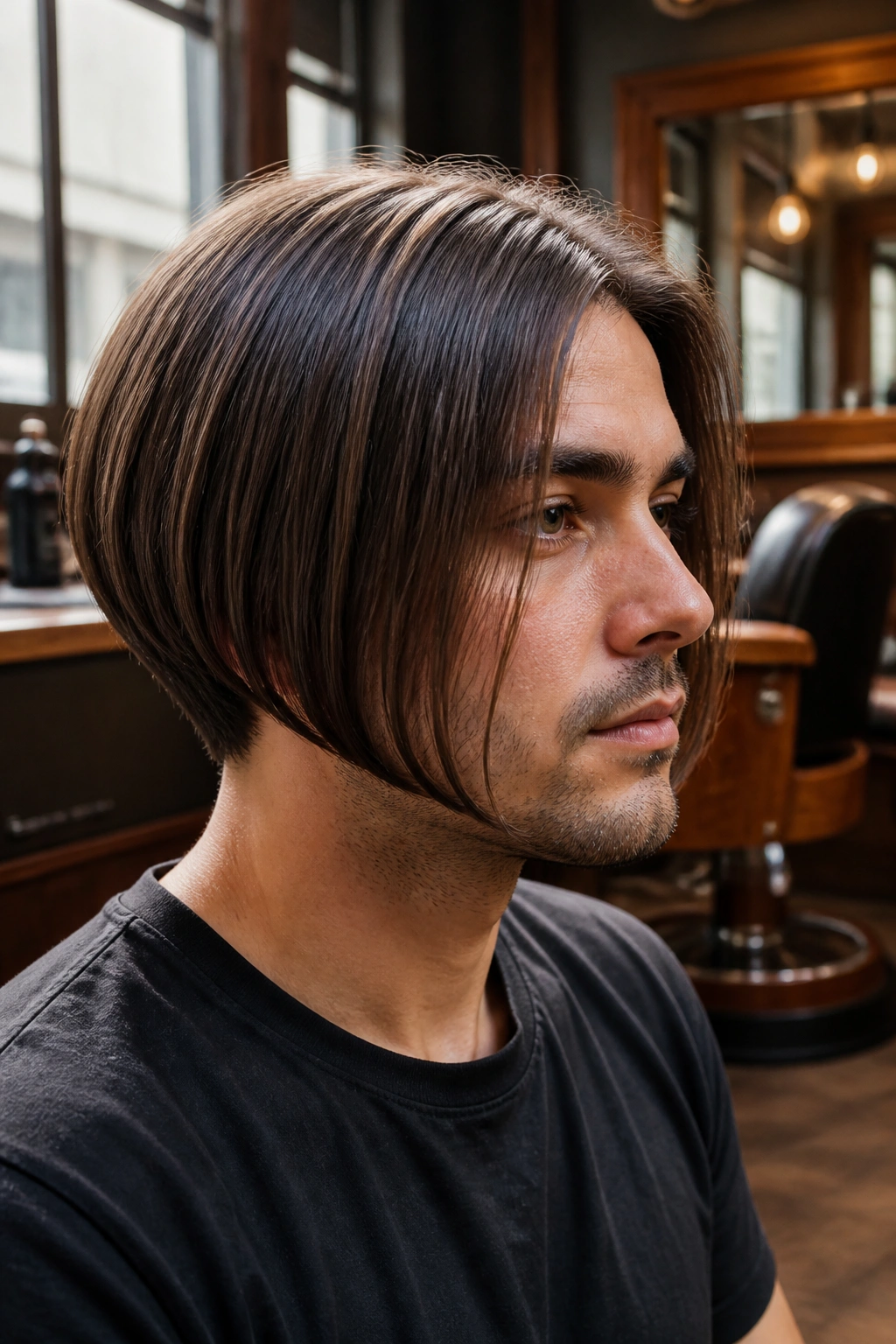
The classic version is the cleanest place to start. The back hugs the nape, the sides stay soft, and the front falls just below the jawline with a clear forward angle.
What to Ask Your Barber
Tell your barber you want a graduated back with a longer front and no bulky corners around the ears. A good cut here usually keeps the nape tight, then leaves enough length in front to show the angle when you turn your head.
- Keep the back stacked, but not puffy.
- Leave the front around chin length.
- Use point-cutting on the ends so it doesn’t look like a helmet.
- Clean up the neckline so the shape stays obvious.
Best for: straight hair, slightly wavy hair, and anyone who likes a polished finish.
Watch for: too much weight at the sides. That’s what makes a bob look boxy.
2. Messy Wavy Inverted Bob

Waves and an inverted bob get along better than people expect. A little bend in the hair keeps the cut from looking severe, and the longer front pieces move in a way that straight hair sometimes refuses to.
The messy version feels less formal and more alive. That’s the appeal. You still get the angled silhouette, but the texture breaks up the line so the haircut doesn’t look overly staged.
Let the hair air-dry about 70 percent of the way, then work in a small amount of sea salt spray or a light texture cream. Scrunch the ends with your hands. Don’t brush it into submission. That usually kills the shape and leaves you with a flat cap instead of a bob.
3. Center-Part Sleek Inverted Bob
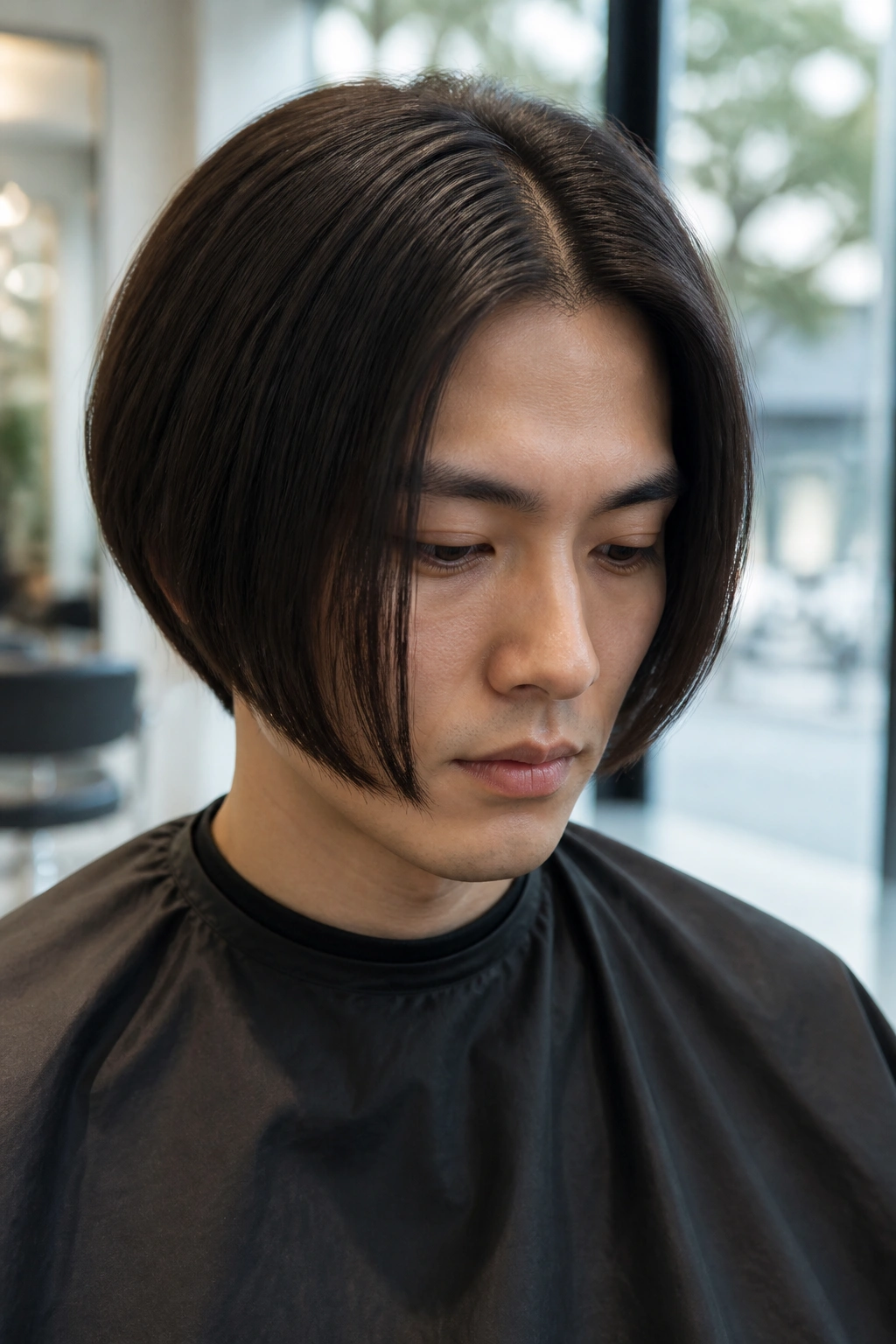
Why does a center part work so well here? Because it makes the angle honest. The front pieces frame both sides of the face evenly, and the short back stays hidden until you turn around.
How to Style It
A sleek version needs a clean blow-dry. Use a paddle brush or a flat vent brush, aim the airflow downward, and keep the nozzle moving so the surface lies smooth rather than puffy.
- Use a pea-sized amount of smoothing cream.
- Comb a sharp part while the hair is damp.
- Blow-dry the front forward, then tuck the ends inward slightly.
- Finish with a light serum on the tips only.
This is a good choice if your hair naturally falls flat and you want the cut to look precise. It can go too glossy, though. Keep the shine controlled.
4. Undercut Inverted Bob
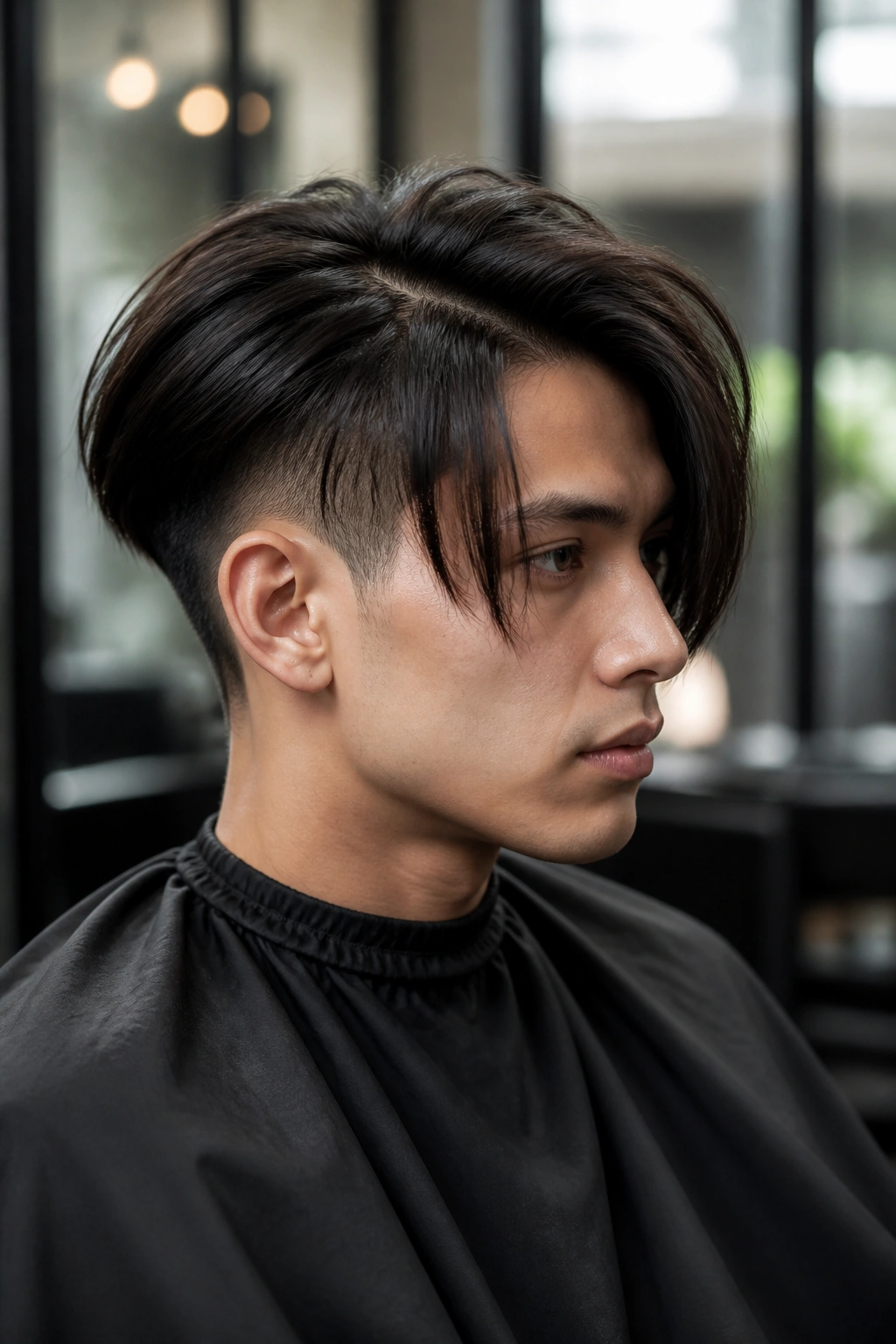
Picture the barber chair, the clippers humming low at the sides, and a fuller top section hanging forward. That’s the undercut inverted bob, and it has more edge than the classic shape without becoming messy.
The trick is contrast. The underside is cut tight, often with a low guard or a clean scissor-over-comb finish, while the bob layer sits on top and drops over it. That split makes the front look thicker and the head shape cleaner.
- Best when you want a sharp outline.
- Works well with dense hair that puffs out.
- Needs regular neck cleanups.
- Looks strongest when the top has some movement.
If you like a cut that feels a little defiant, this one has real presence.
5. Curly Inverted Bob
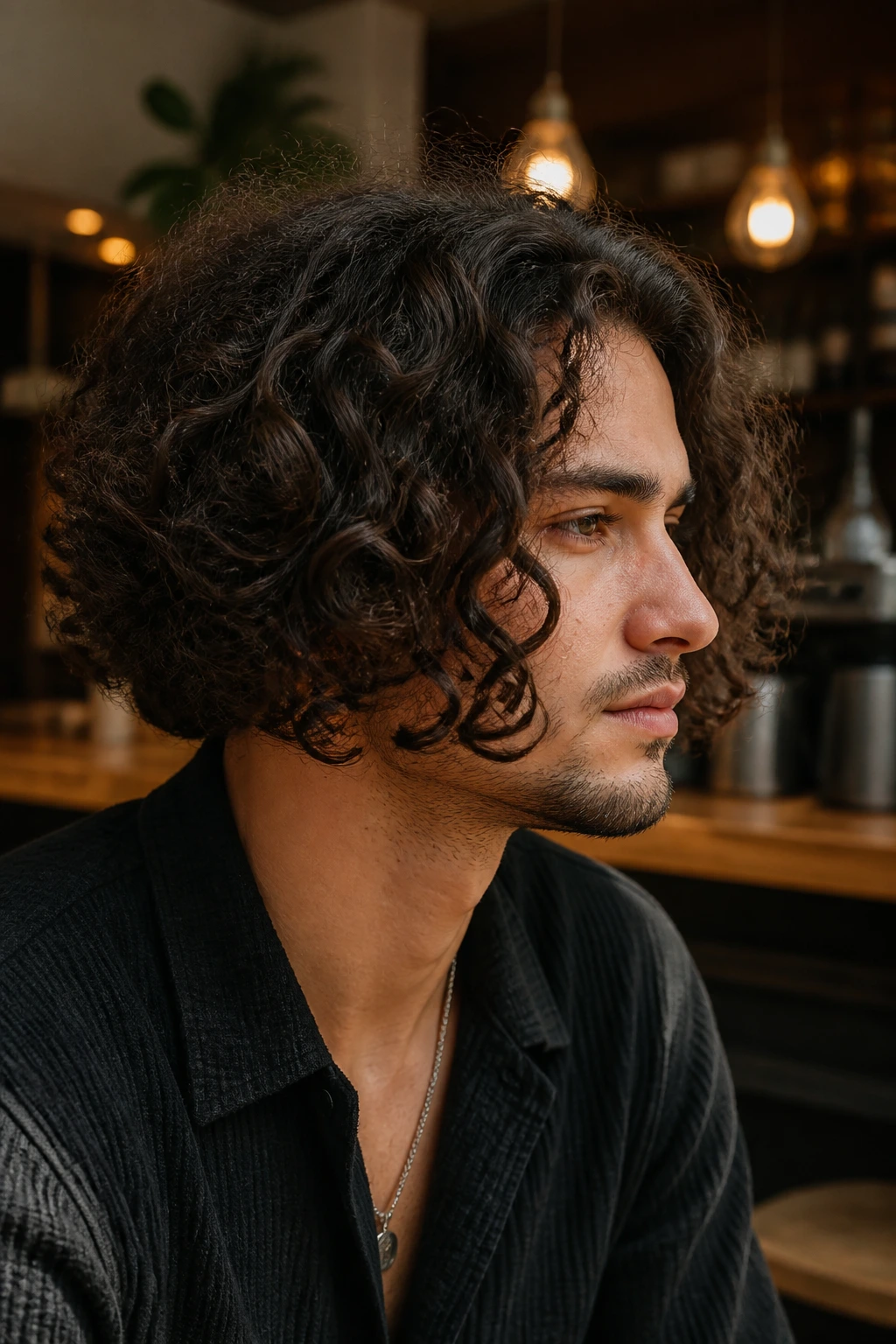
Curly hair changes everything. The front never falls in a perfectly straight line, and that’s fine. In fact, that softness is what makes the cut look good.
The main job is keeping the back neat while leaving enough length in front for the curls to stack naturally. A barber who understands curl pattern will usually cut this while the hair is dry or mostly dry, because wet curls can lie to you. They shrink. A lot.
Use a leave-in conditioner and a curl cream, then avoid aggressive thinning. That’s the fastest way to make the shape frizzy and uneven. A curly inverted bob should feel rounded at the crown and a little loose at the ends, not carved into tiny bits.
6. Chin-Length Inverted Bob
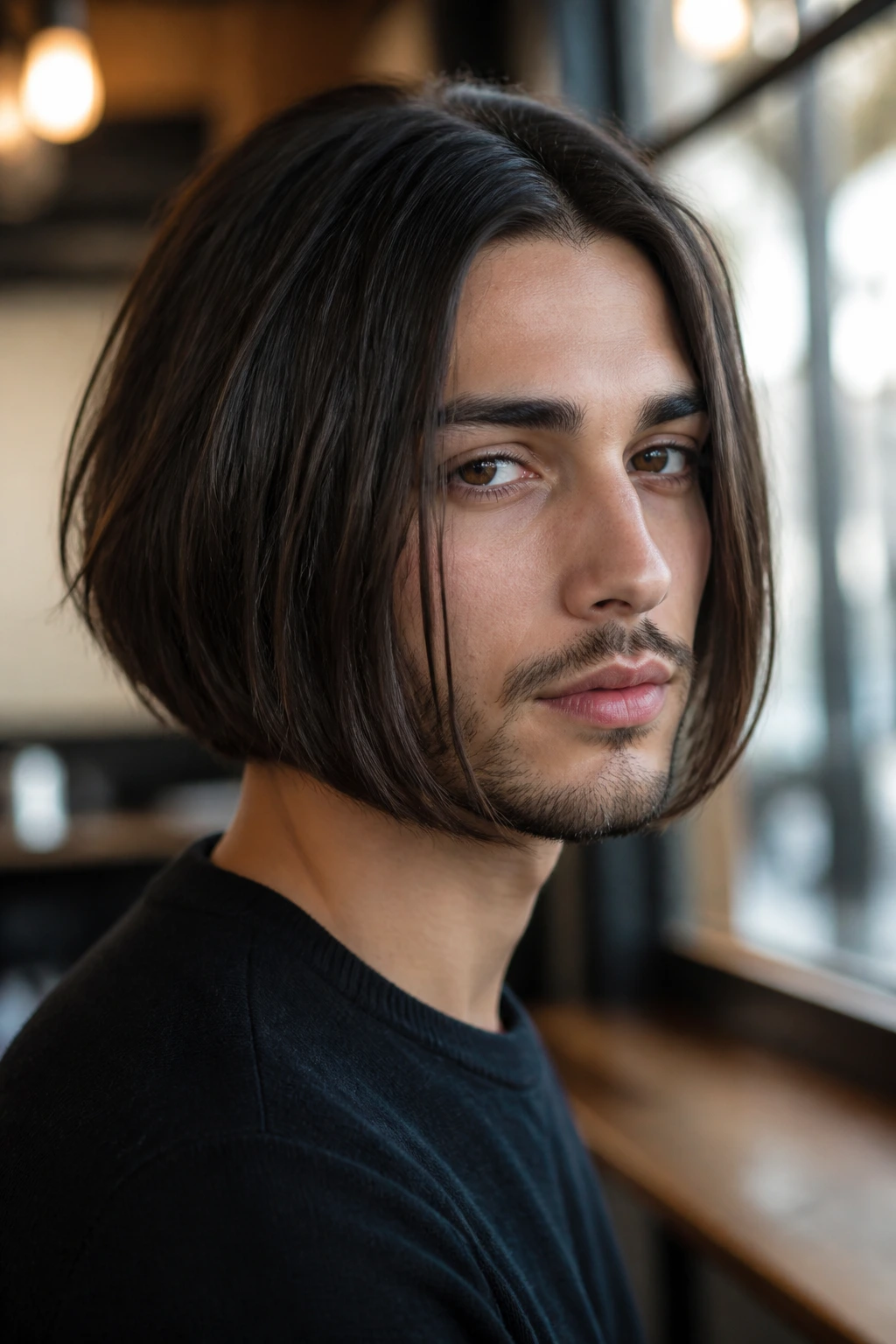
A chin-length front gives the cut more drama, plain and simple. The angle becomes easier to see, and the jawline gets a clean frame without the haircut feeling too short.
Why It Beats a One-Length Cut
A one-length bob can sit heavy on a man’s head. An inverted version changes the weight distribution. The back shortens the silhouette, while the longer front draws the eye downward and forward, which is handy if your face runs round or wide.
This length works best when the front pieces skim the chin rather than sit on top of it. If they land too high, you lose the shape. If they go too low, it starts drifting into lob territory. A soft taper at the nape keeps the back from looking blunt.
Ask for a subtle angle, not a steep slope. That distinction matters more than most people think.
7. Jawline-Framing Inverted Bob
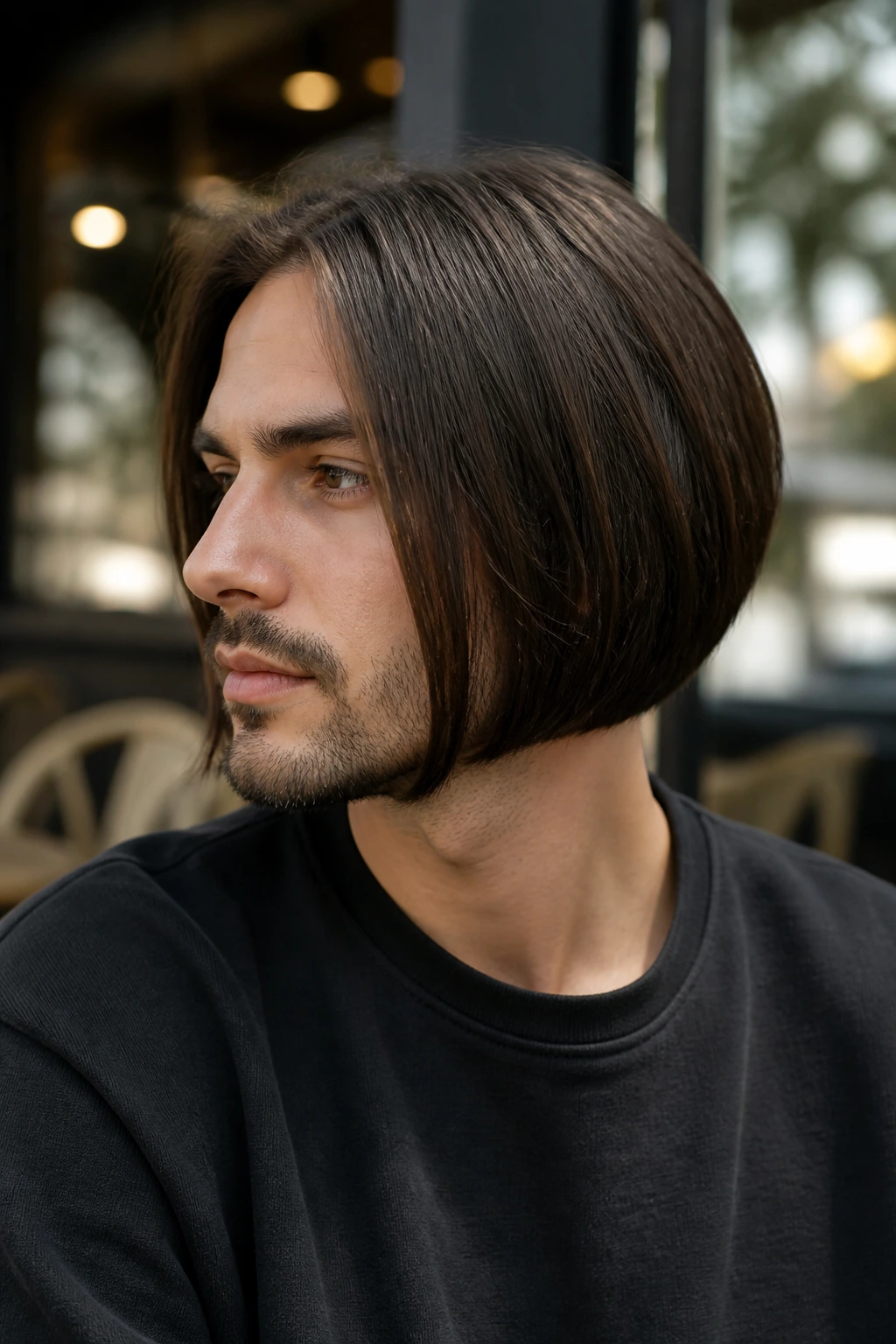
A jawline-framing version is all about placement. The front pieces should fall right where the jaw turns, which gives the face a stronger edge without adding harshness.
The Shape to Request
Tell the barber you want the front to hit at the hinge of the jaw and the back to stay tidy at the neckline. That positioning creates a clean outline when you’re facing front and a nice taper when you turn sideways.
- Slight graduation at the back.
- Soft ends around the jaw.
- Minimal bulk at the cheek line.
- Enough length to tuck behind the ear if needed.
This is a smart cut if your chin is a strong feature and you want the haircut to support it rather than fight it. It’s understated, but not boring.
8. Stacked Crown Inverted Bob
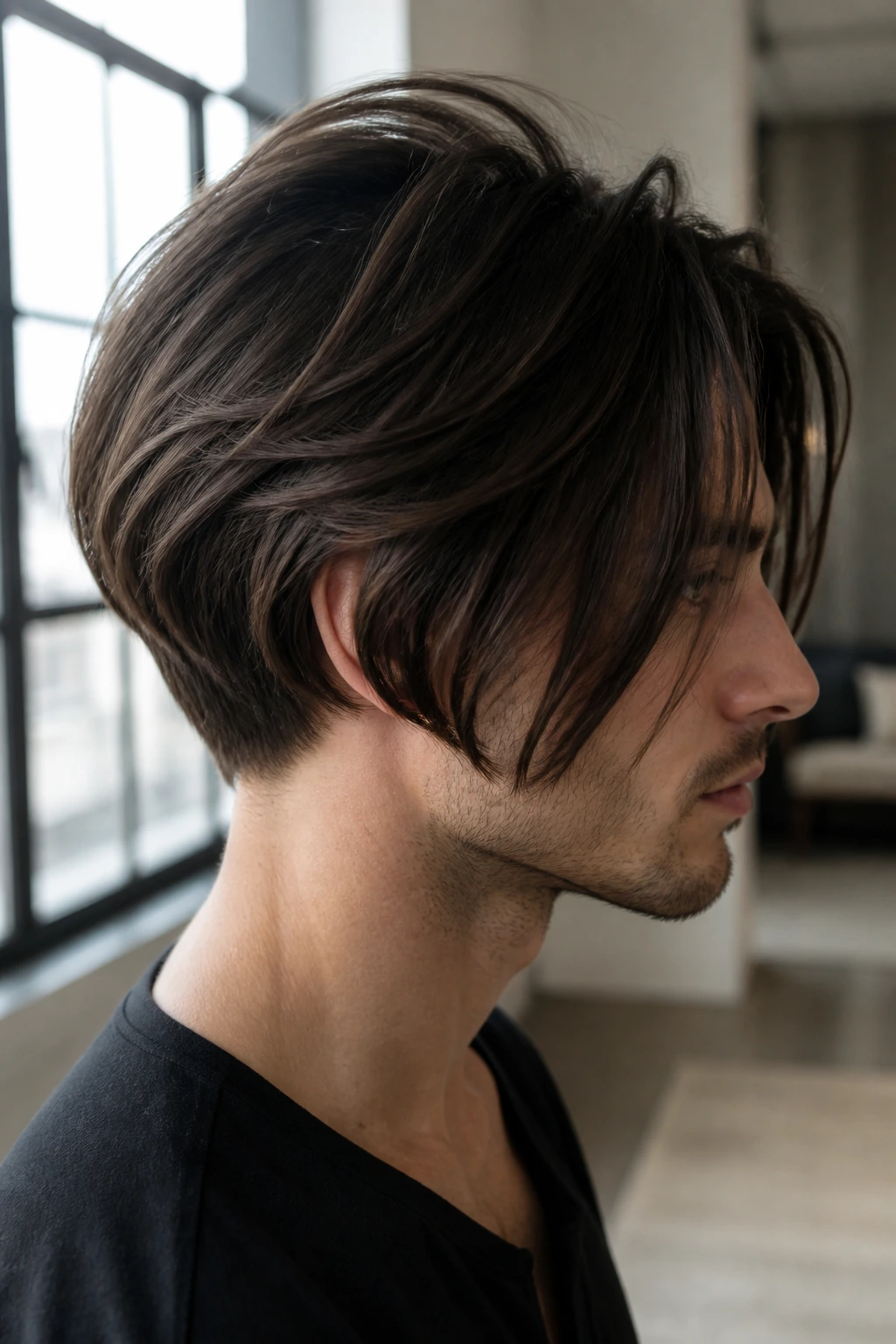
Stacking at the crown adds lift where flat hair needs it most. That’s the whole point here. The back is layered in a way that lets the top sit higher, while the front still drops forward in that classic inverted line.
This version is a favorite for people whose hair lies close to the head and refuses to hold shape. The extra stacking gives the illusion of a fuller crown without turning the style into a puffball. You still want movement, not height for its own sake.
A blow-dry with a round brush helps the top curve slightly away from the scalp. Keep product light. Too much paste drags the crown down and kills the shape you just built.
9. Feathered Inverted Bob
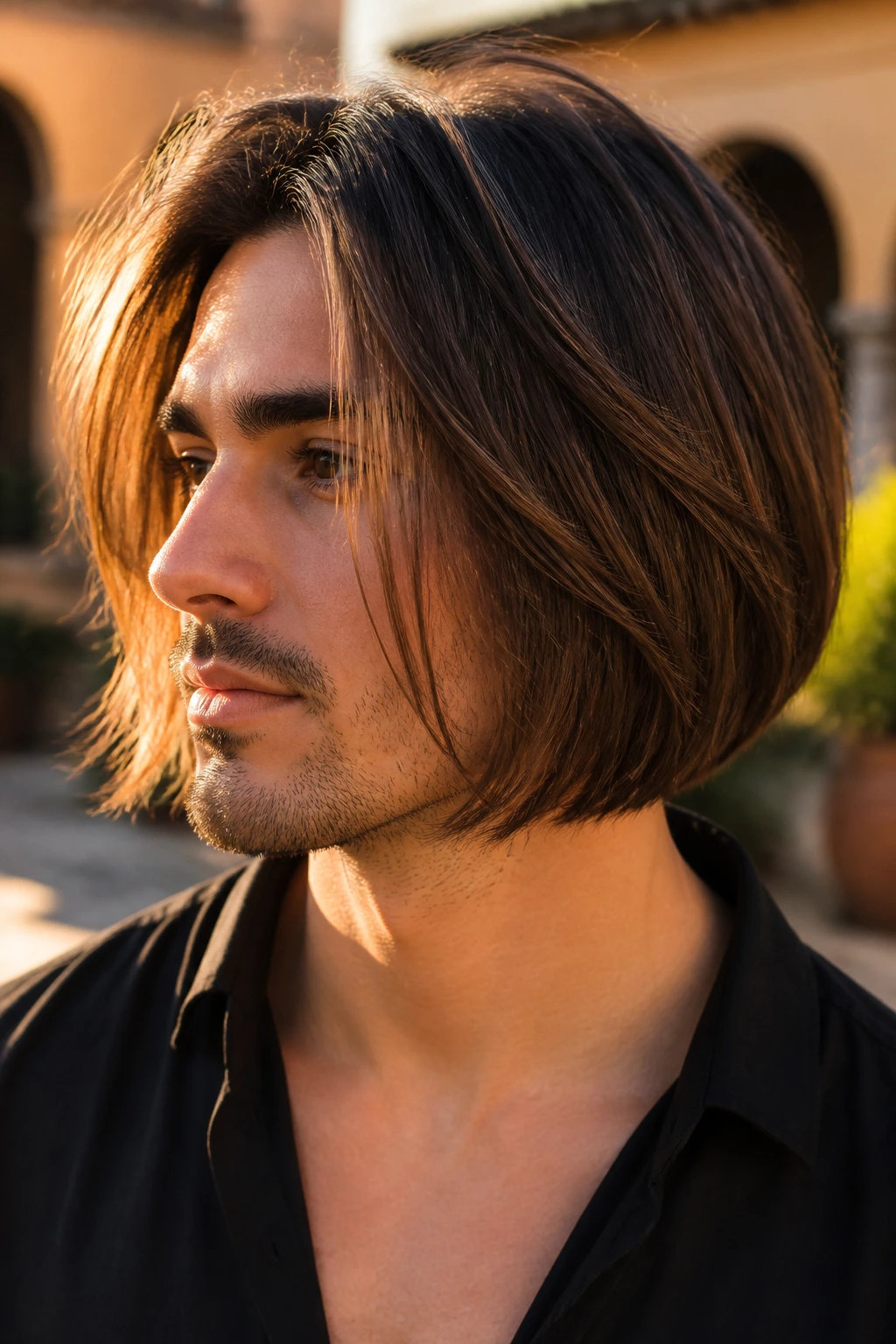
Does feathering sound old-fashioned? A little. Does it still work? Absolutely. Feathered ends soften the line enough to make an inverted bob feel less rigid and more wearable on everyday hair.
Why the Texture Matters
Feathering removes some of the bluntness from the perimeter. Instead of a hard edge, you get tips that move and separate. That helps especially if your hair is medium density and tends to sit in one solid sheet.
A good feathered cut should still show the angle. It just won’t shout about it. The front glides forward, the back stays neat, and the whole haircut reads as light on its feet. If a stylist goes too far with thinning shears, though, the ends can look scraggly fast. Moderate pressure. That’s the move.
10. Textured Fringe Inverted Bob
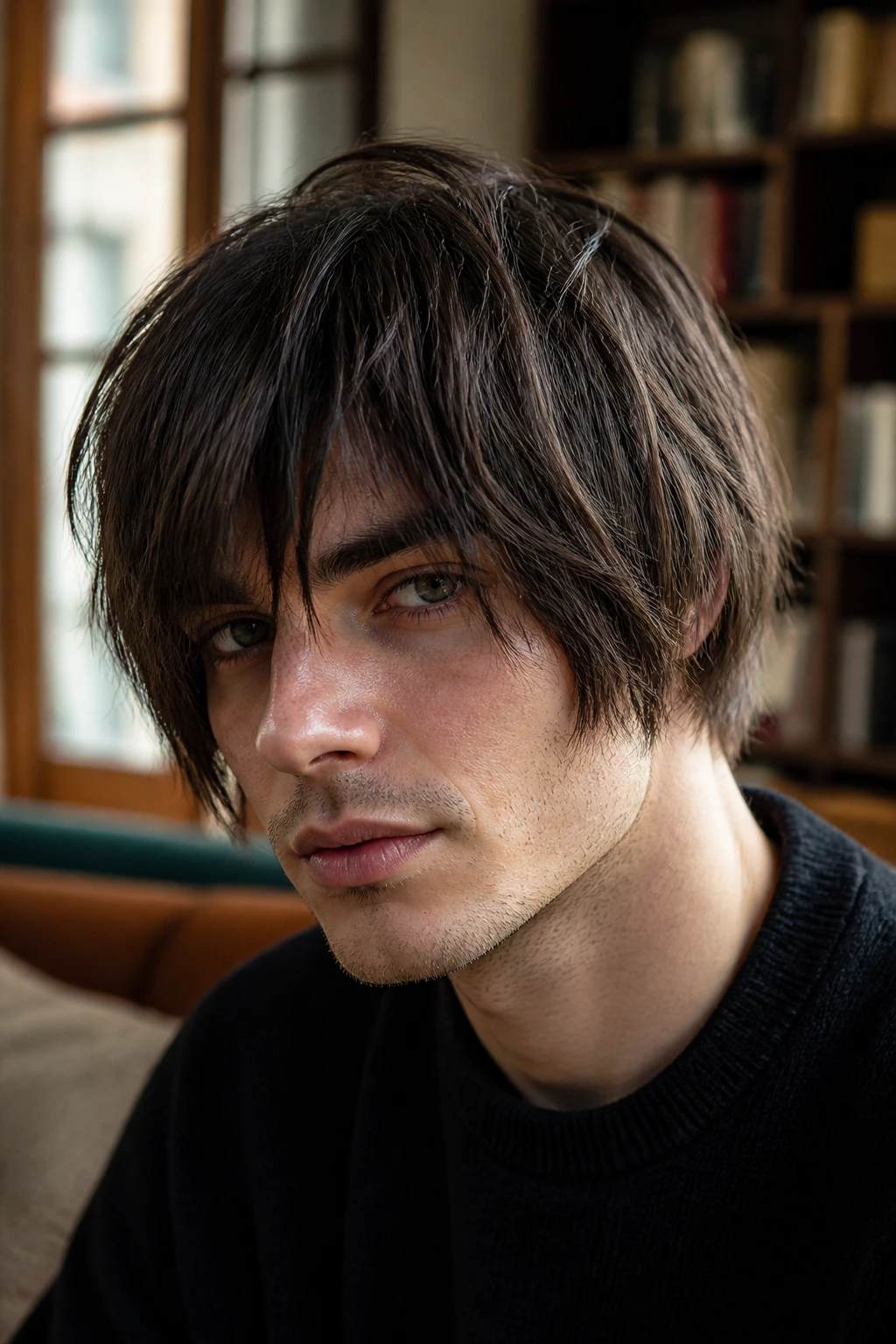
A fringe changes the mood instantly. With an inverted bob, it pulls attention to the eyes and breaks up the forehead line, which is useful if you don’t want all the weight sitting around the jaw.
This works best when the fringe is chipped into small pieces instead of cut as one heavy slab. A matte paste or a dry cream helps the front sit forward without sticking together. Comb it down, then push it slightly apart with your fingers.
The cut has a casual edge, but it still needs structure. If the fringe gets too thick, the bob starts to look top-heavy. If it’s too short, the angle loses its balance.
11. Taper-Fade Inverted Bob
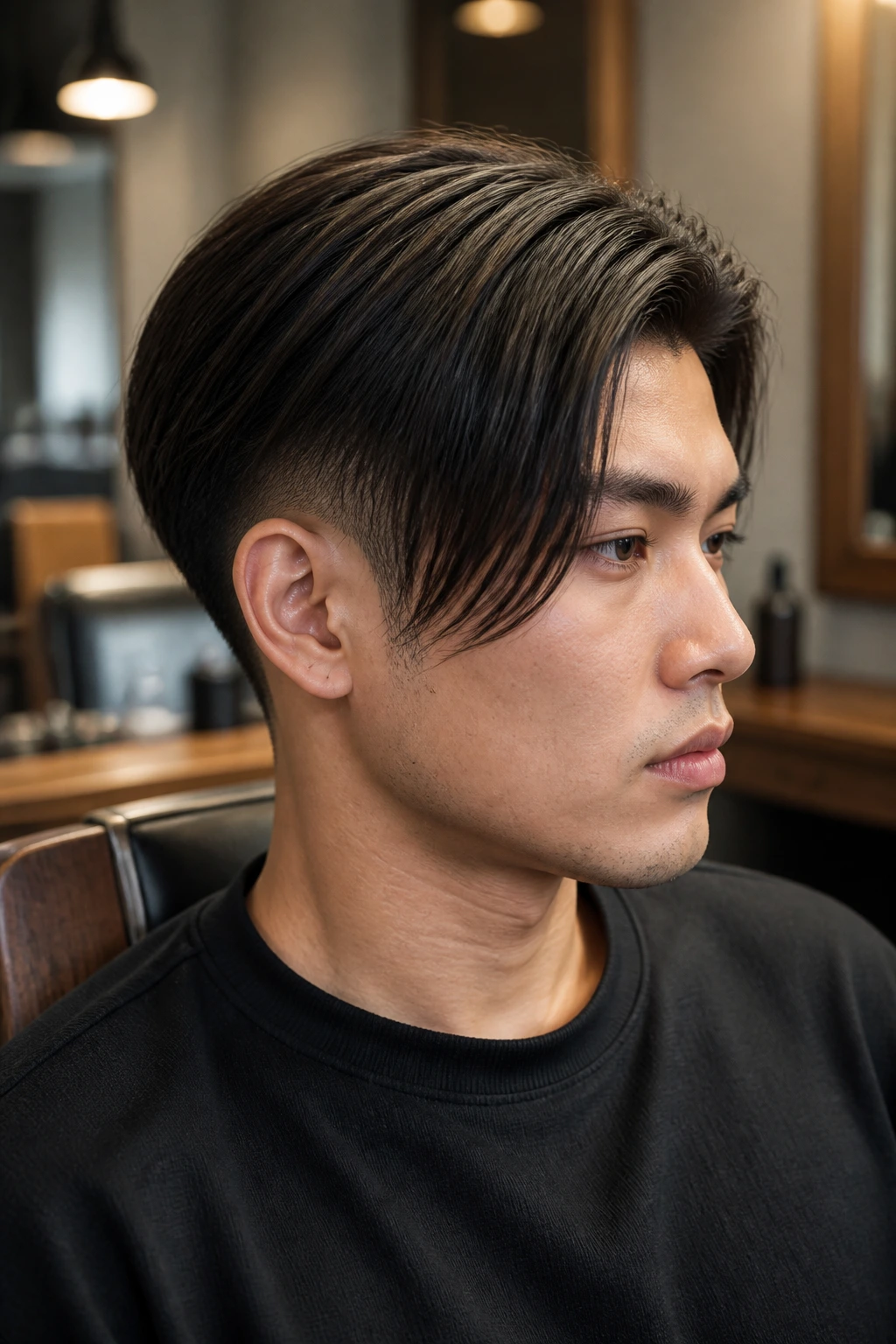
A taper fade can make an inverted bob much easier to wear, especially if you want the style to stay neat around the ears and neckline. The fade clears out the lower edge while the bob shape stays intact above it.
That contrast is the win. The haircut looks cleaner, the sides feel lighter, and the back no longer bulks out under jackets or collars. It also grows out better than a hard shaved line, which is a nice bonus.
Ask for the fade to begin low or mid-low. A fade that climbs too high can swallow the bob and leave you with a strange half-and-half shape. Keep the top long enough to show the angle. Otherwise, what’s the point?
12. Side-Swept Inverted Bob
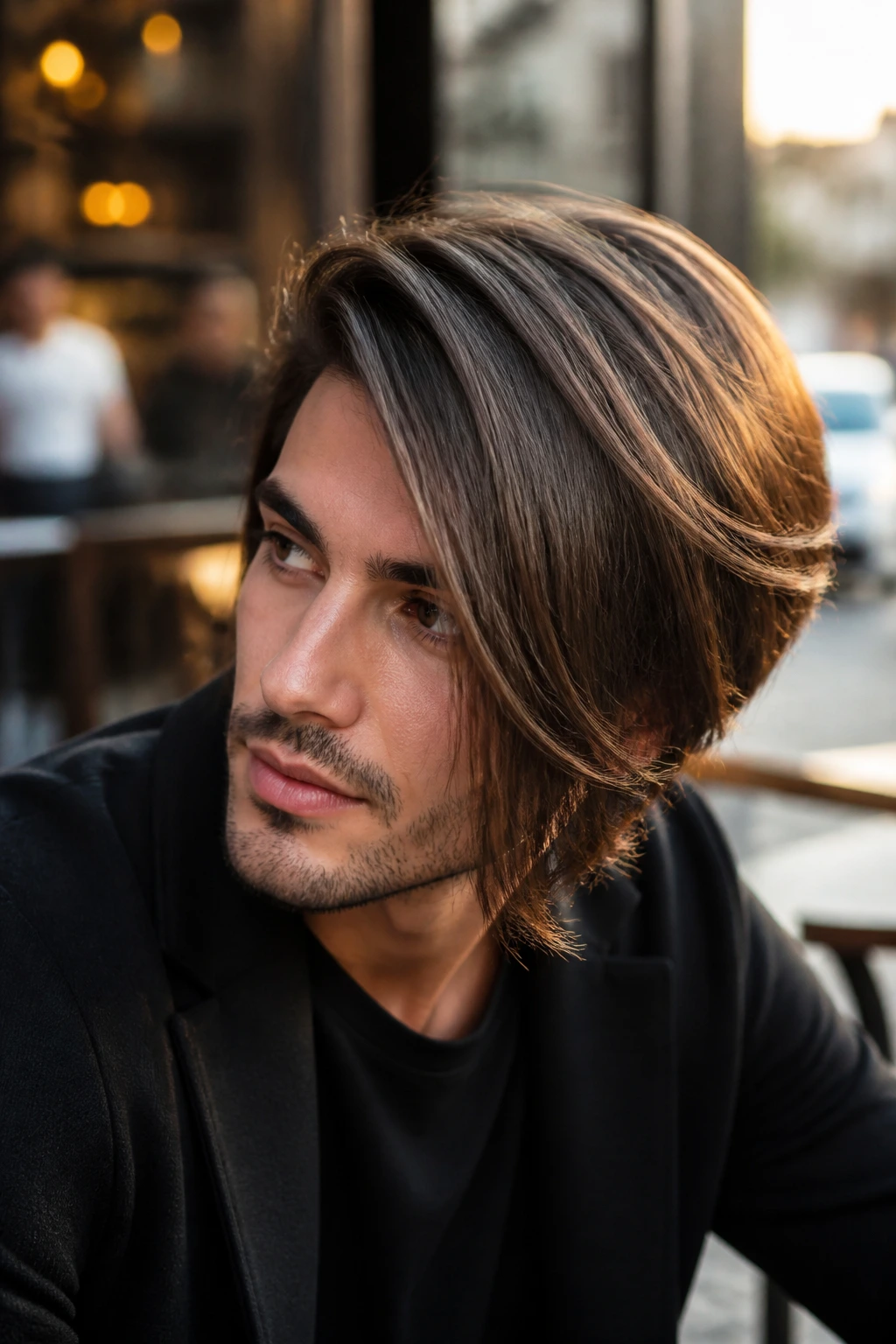
Side-swept versions suit hair that has a natural bend or a stubborn cowlick near the front. Instead of fighting that direction, you lean into it and let the longer front sweep across the face.
How to Get the Most From It
Blow-dry from the crown toward the sweeping side. That small bit of direction makes the haircut behave much better later in the day. A light cream is enough for most hair; heavy pomade can make the sweep collapse into a greasy sheet.
This is one of those cuts that looks relaxed but still controlled. The back stays shorter, the front keeps its angle, and the side sweep adds movement. If your face is a little narrow, the sweep can widen it nicely. If your face is already broad, keep the sweep soft and avoid too much volume at the temples.
13. Razor-Cut Inverted Bob Haircut for Men
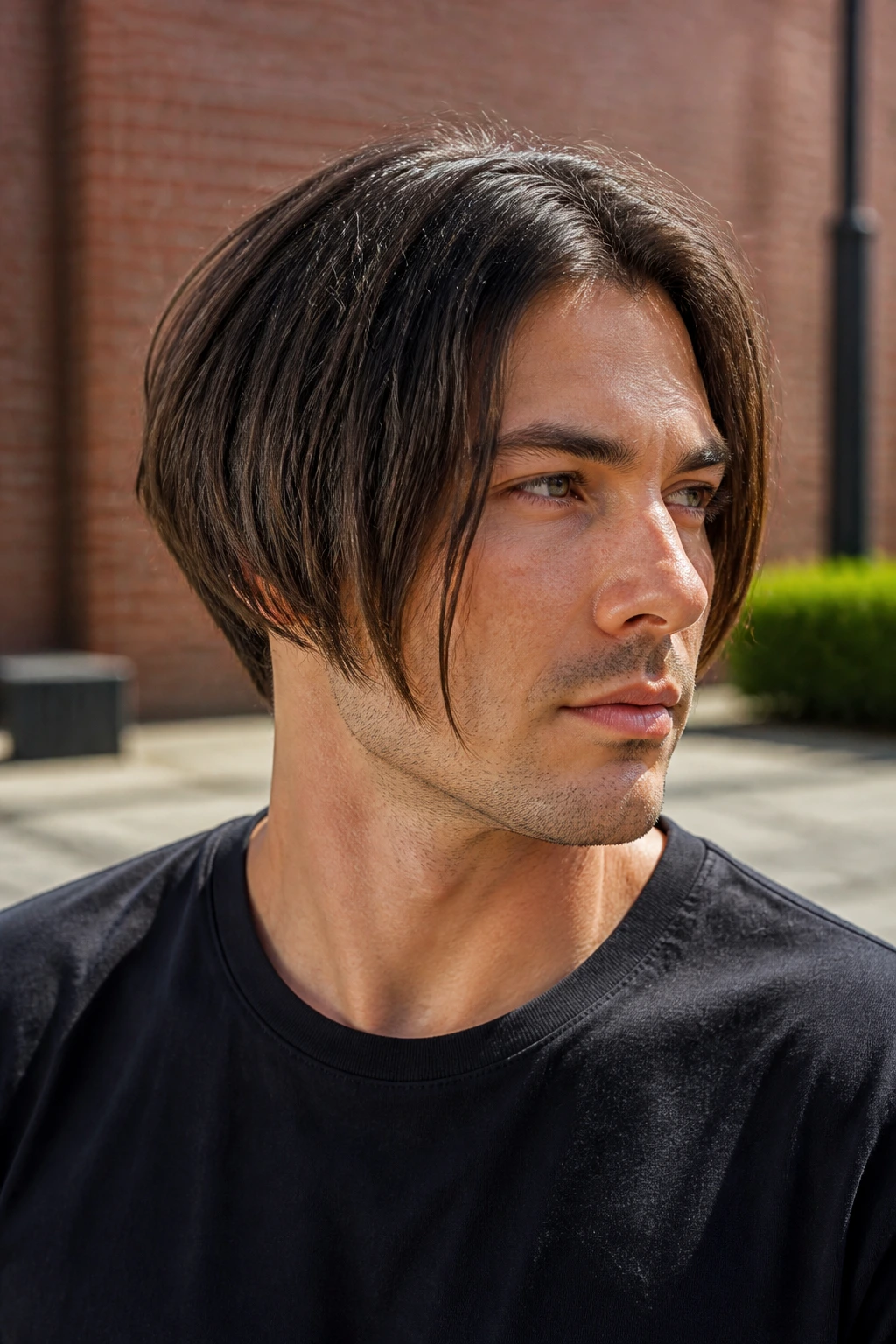
A razor-cut inverted bob has a softer edge than a scissor-cut version. The blade slides through the ends and leaves them a little wispy, which can be useful if your hair feels too blunt or too dense.
Unlike a heavy scissor line, this one moves when you turn your head. The texture reads less formal and more lived-in. That makes it a strong pick for straight hair that tends to sit too neatly on its own.
It is not the best choice for fragile ends or heavily processed hair. A razor can fray weak strands if the stylist is too aggressive. Done well, though, it gives the bob a lighter finish and keeps the front pieces from looking blocky.
14. Disconnected Inverted Bob
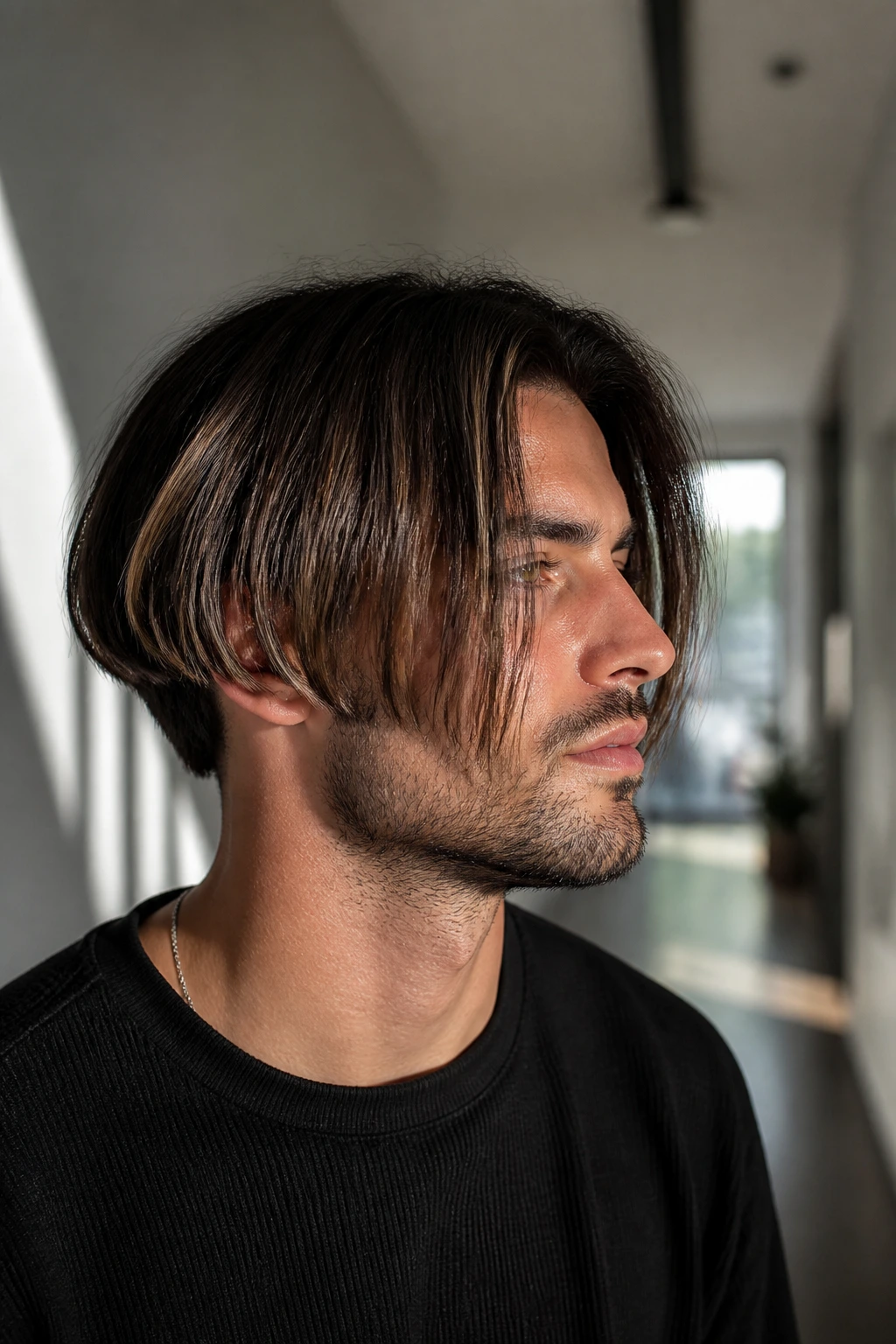
A disconnected cut makes the bob feel bolder. The top section stays long and clean, while the lower side or underlayer drops away more sharply, creating an obvious break in the shape.
Who It Suits
This one works for people who like a haircut with a visible edge. You need enough density on top to carry the contrast, and you need to be comfortable with a style that does not try to blend everything into one smooth shape.
- Strong on thick or coarse hair.
- Good if you want the silhouette to look sharper.
- Needs precise sectioning.
- Looks best when the neckline stays tidy.
It can look fantastic, but only if the disconnect is deliberate. A sloppy one looks like a haircut that stopped halfway through.
15. Long-Front Dramatic Inverted Bob
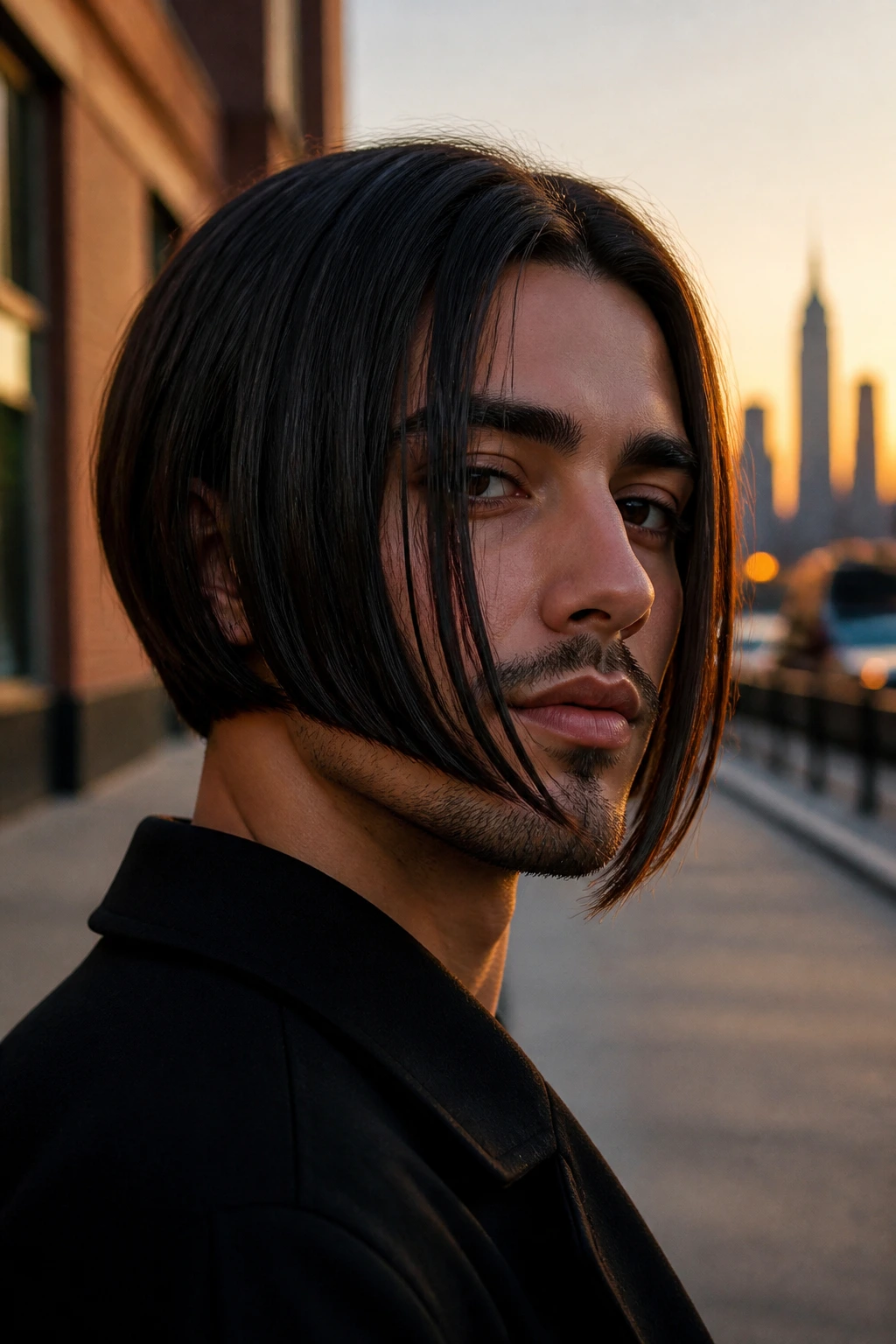
A long front pushes the style into bolder territory. The angle becomes more obvious, the face gets a longer frame, and the haircut starts to feel almost sculpted.
What matters here is control. The front can sit near the mouth or just below the chin, but the back must stay clean so the weight line does not sag. If the top is too flat, the whole thing feels dragged down. If it’s too bulky, the front loses the point of the cut.
This version suits denser hair and a bit of confidence. There’s no point pretending otherwise. It’s a strong shape, and strong shapes need intention.
16. Soft Layered Inverted Bob

Soft layers are the gentlest way to wear this haircut. They keep the bob from turning into one heavy block, but they do not shred the shape into pieces.
The Sweet Spot
The best layered version keeps enough length at the perimeter to show the angle, then sneaks in lighter internal layers so the crown and sides move better. That helps if your hair flips out at the ends or sits too flat near the scalp.
This is a smart first bob for men who are nervous about going too sharp. It still reads as an inverted cut, just without the hard edges. A little cream, a loose blow-dry, and you’re done. Over-layer it and the silhouette gets fuzzy fast. Under-layer it and you’re back to square one.
17. Wet-Look Inverted Bob
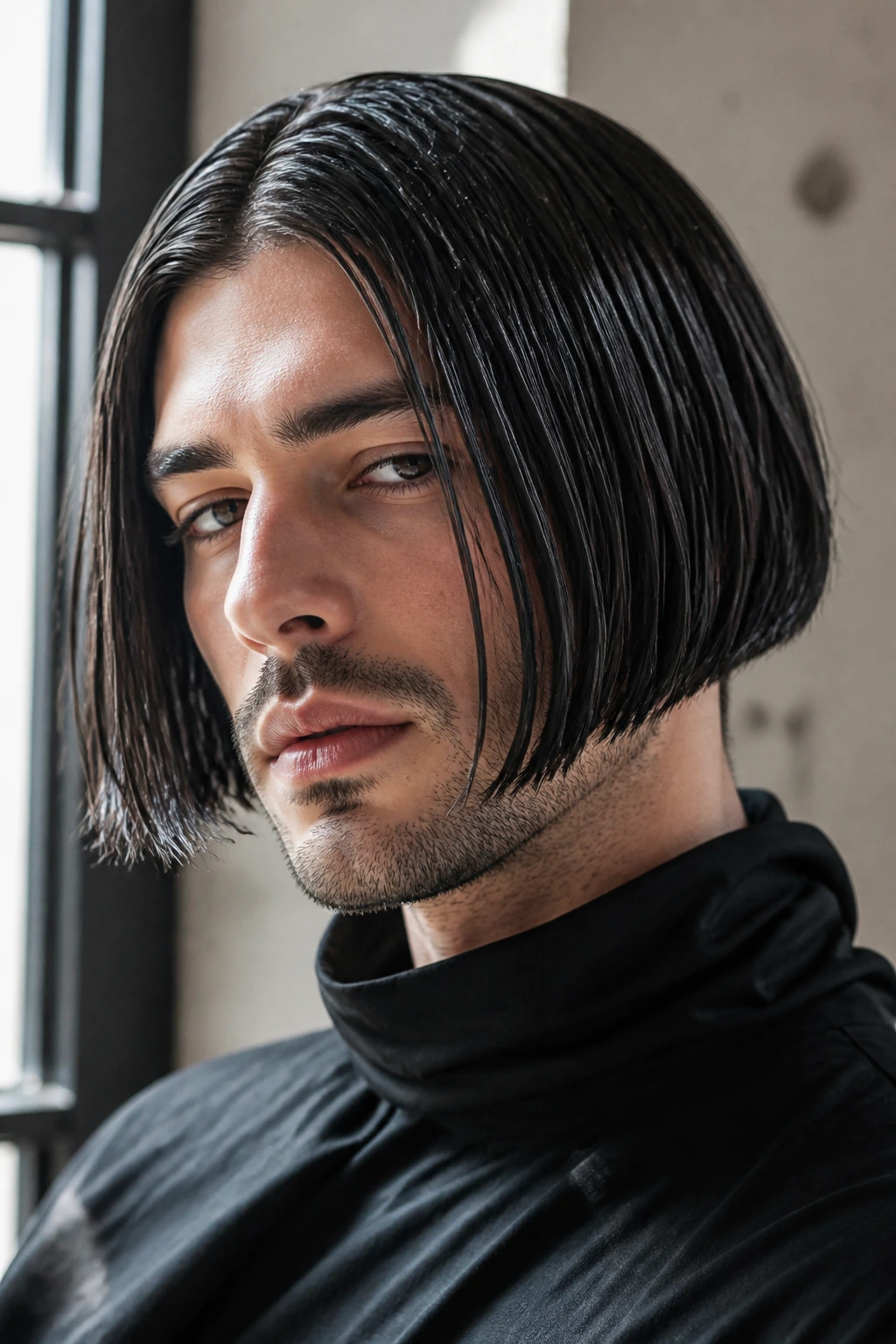
The wet look gives an inverted bob a glossy, controlled finish that feels deliberate from the first glance. It works especially well on straight hair, where the angle can shine through without much effort.
A small amount of gel mixed with a bit of shine cream usually does the job. Comb it through while the hair is damp, then use your fingers to keep the front pieces separated. The ends should look defined, not crunchy.
This style has a sharper mood than the soft versions above. It pairs well with a clean neckline and a neat beard line, though you don’t need facial hair for it to work. The main thing is restraint. Too much product turns it sticky, and no one wants that.
18. Salt-and-Pepper Inverted Bob
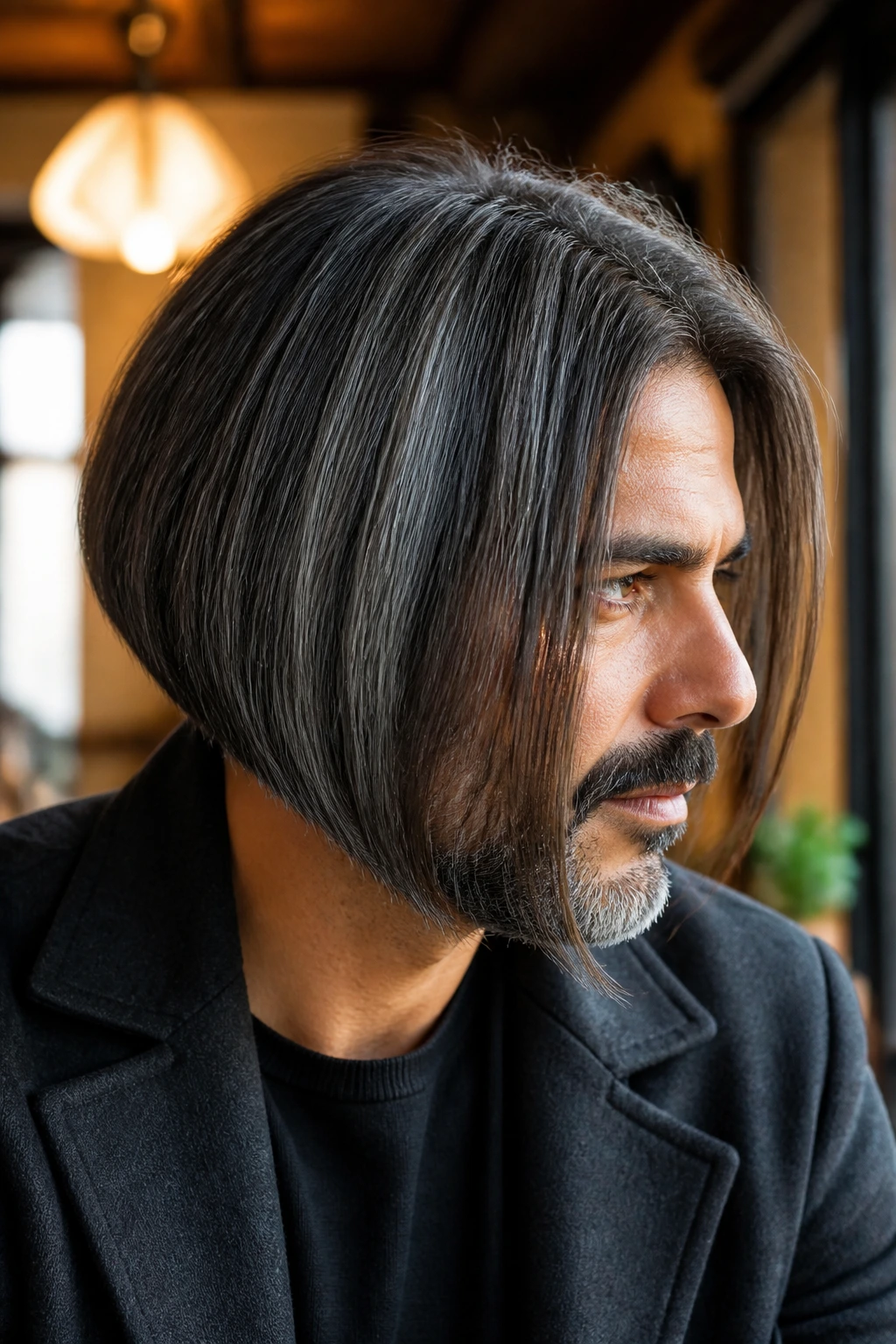
Salt-and-pepper hair looks especially good in an angled cut because the light and dark strands break up the line naturally. The front catches the eye, while the shorter back keeps the overall shape crisp.
You do not need to hide the gray. In this cut, the mix of tones helps the layers stand out. That’s one of the rare times where color does some of the styling work for you.
If the gray is coarse, a light conditioning cream can keep the ends from puffing out. If the color has gone a little yellow, a gentle silver shampoo once in a while helps, but don’t overdo it. Too much toning can make the hair feel dry and strangely matte.
19. Fine-Hair Volume Inverted Bob
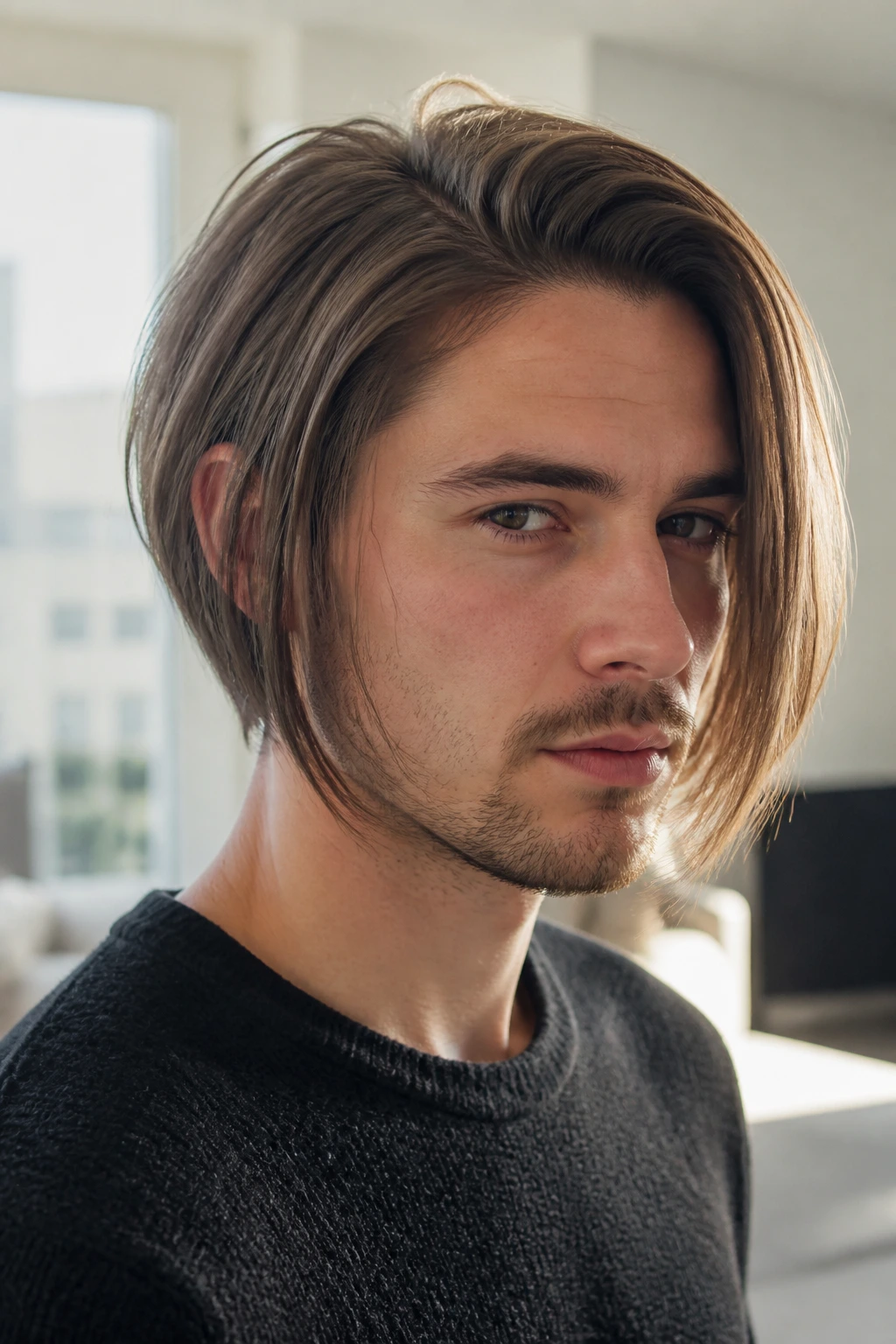
Fine hair needs a different approach. Heavy layers are a trap. They can make the cut look thin at the ends and flat at the crown, which is the exact opposite of what you want.
What Helps Most
A slight stack in the back, a clean perimeter, and a little root lift are usually enough. Mousse at the roots before blow-drying makes a big difference. So does drying the hair in the direction you want it to sit, not just blasting it randomly.
- Keep the front long enough to show a line.
- Avoid over-thinning the sides.
- Use lightweight products only.
- Ask for a blunt edge with soft internal support.
The result is a bob that looks fuller without becoming bulky. That balance matters more than extra length.
20. Thick-Hair Debulked Inverted Bob
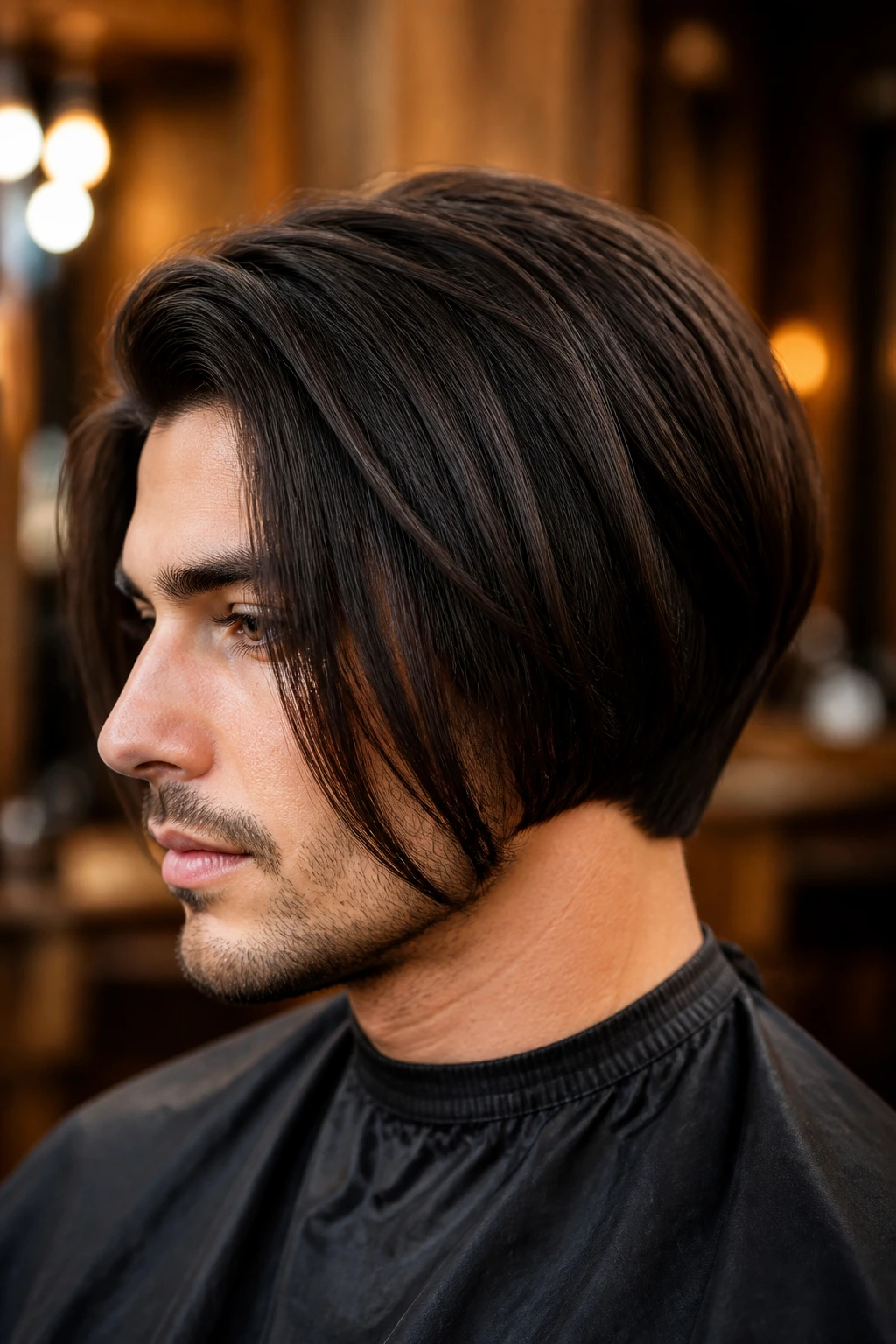
Thick hair can wear this cut beautifully, but only if the bulk is handled with care. The goal is not to remove as much hair as possible. It’s to remove the right hair.
A barber should open up the inside of the cut and leave the perimeter clean. That keeps the angle visible without making the front flare out like a triangle. A little debulking near the crown can also stop the shape from mushrooming.
This is the version that feels best when your hair naturally has a lot of body. It can hold line better than fine hair, but it needs more structure during the cut. If the stylist skips the shaping work, the bob will fight you every morning.
21. Round-Face Balancing Inverted Bob
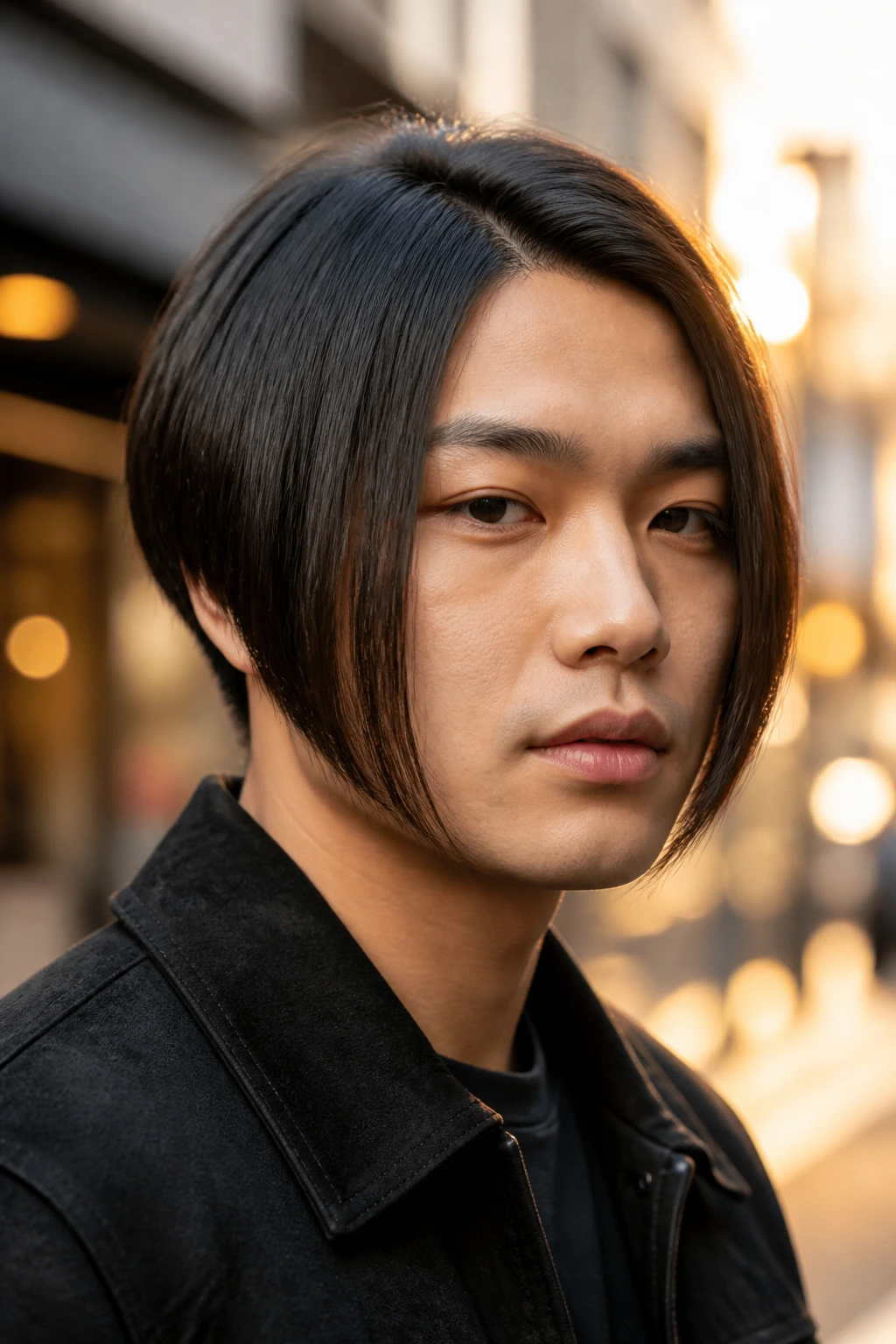
Can an inverted bob help a round face look a bit longer? Yes, and the trick is placement. You want the front to drop below the widest part of the cheeks so the eye moves vertically instead of sideways.
The Shape That Helps
Keep the sides from flaring outward. That’s the mistake that makes a round face look wider. A slightly off-center part helps too, because it breaks the symmetry and creates a longer line down the face.
This version works best when the back stays close to the neck and the front tapers toward the jaw. If the front ends exactly at cheek level, the face can look fuller than you want. A little extra length solves that fast.
22. Square-Jaw Softening Inverted Bob
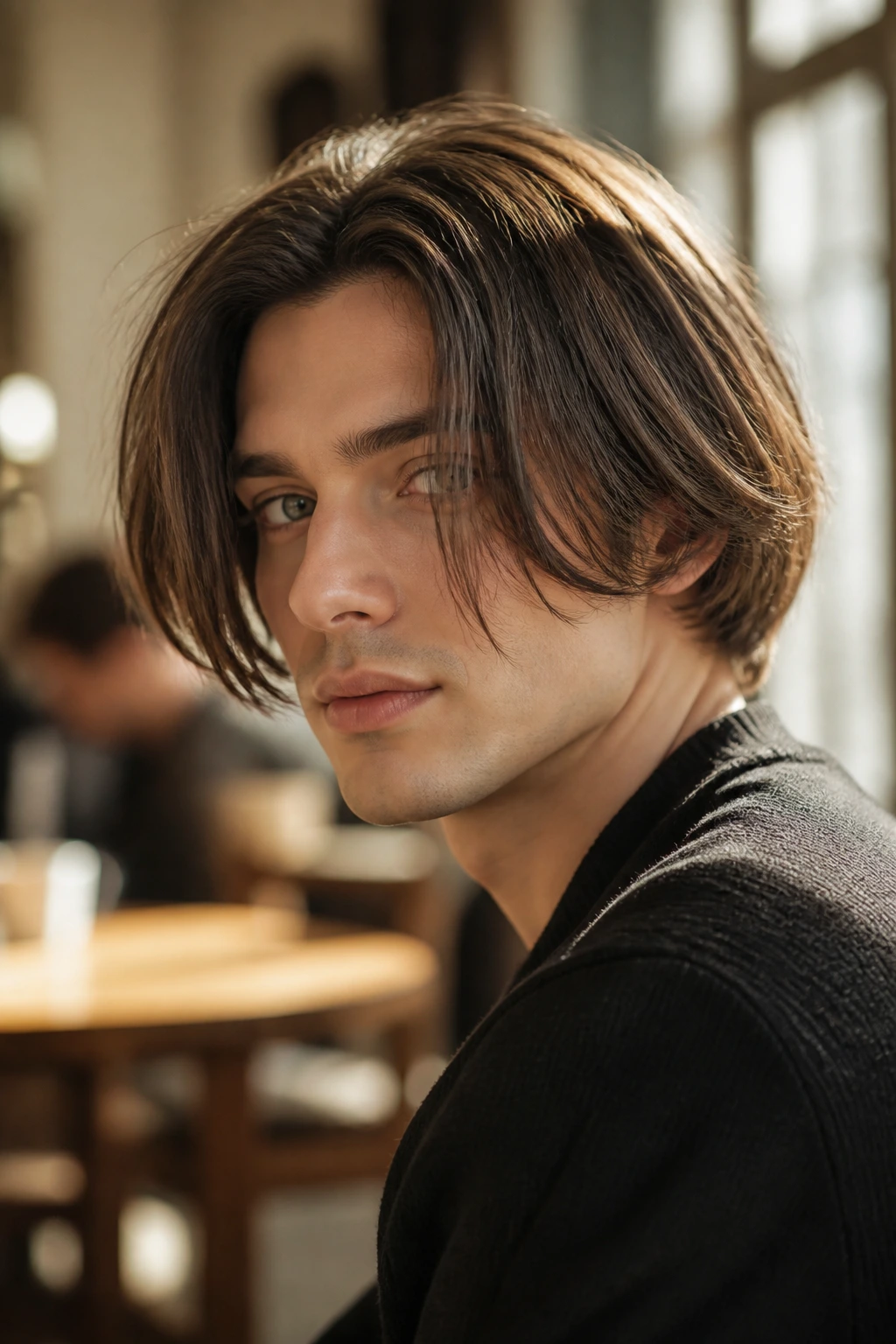
A square jaw can handle sharp haircuts, but a softer bob shape takes the edges down a notch. The haircut should curve, not square off.
This is where texture earns its keep. Soft ends around the jaw and a lightly feathered front keep the face from looking too severe. The back can still stay neat, but the sides should not cut a hard line across the cheek.
Styling Note
Use a matte cream or a light paste and push the front slightly forward rather than straight out. That small move softens the frame around the face. If you want the look even gentler, ask for longer side pieces near the mouth and a cleaner nape underneath.
23. Oval-Face Minimalist Inverted Bob
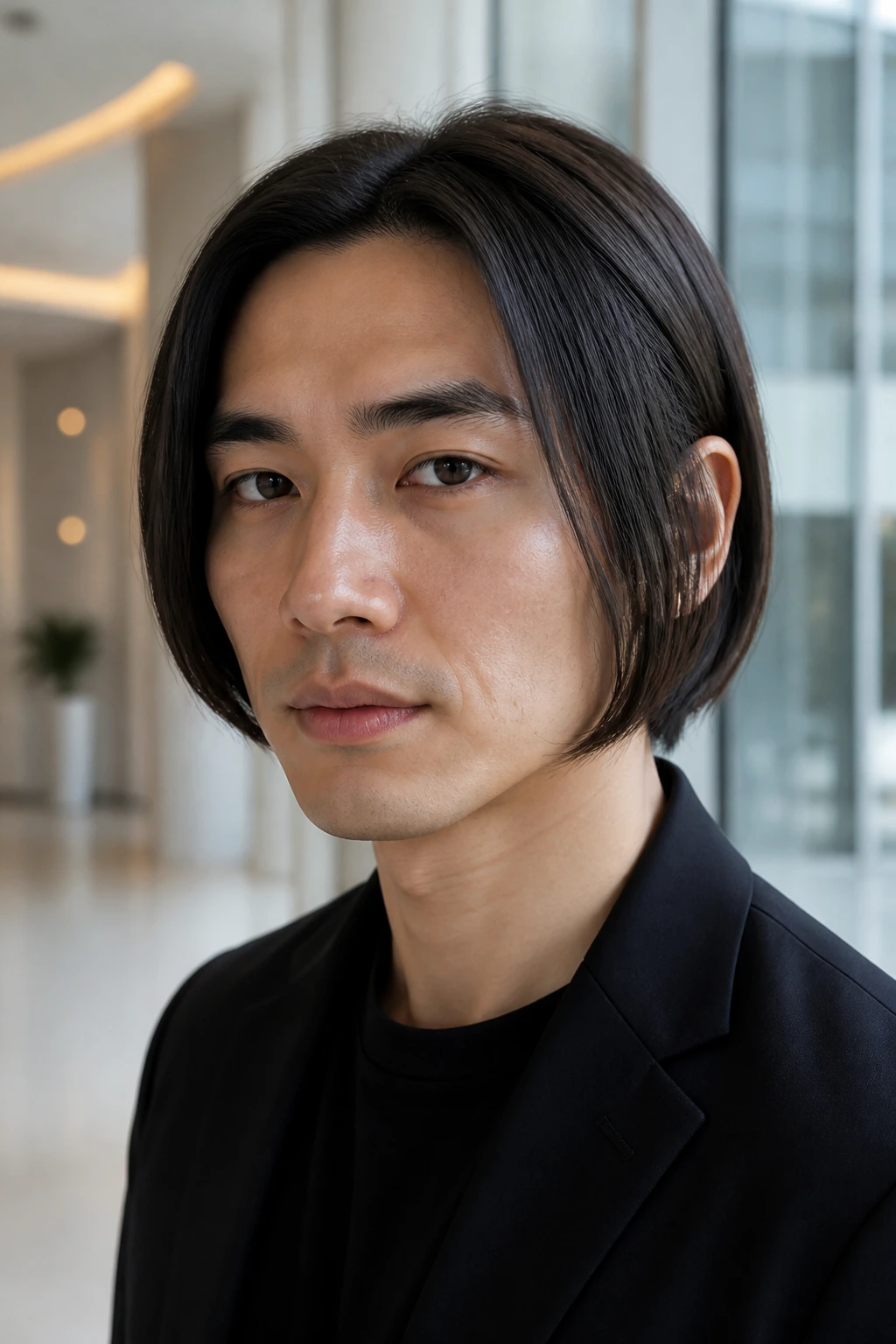
Oval faces can wear almost anything, which is useful and mildly annoying at the same time. For this shape, the best move is often the simplest one: clean angle, modest layering, and no unnecessary extras.
A minimalist inverted bob keeps the line obvious without crowding the face. You can tuck the hair behind the ears, wear it loose, or shape it with a soft side part. It won’t need much product if the cut is right.
What I like here is the lack of fuss. Some cuts need a trick. This one does not. A tidy neckline and a clear front angle are enough.
24. Bro-Flow Inverted Bob Hybrid
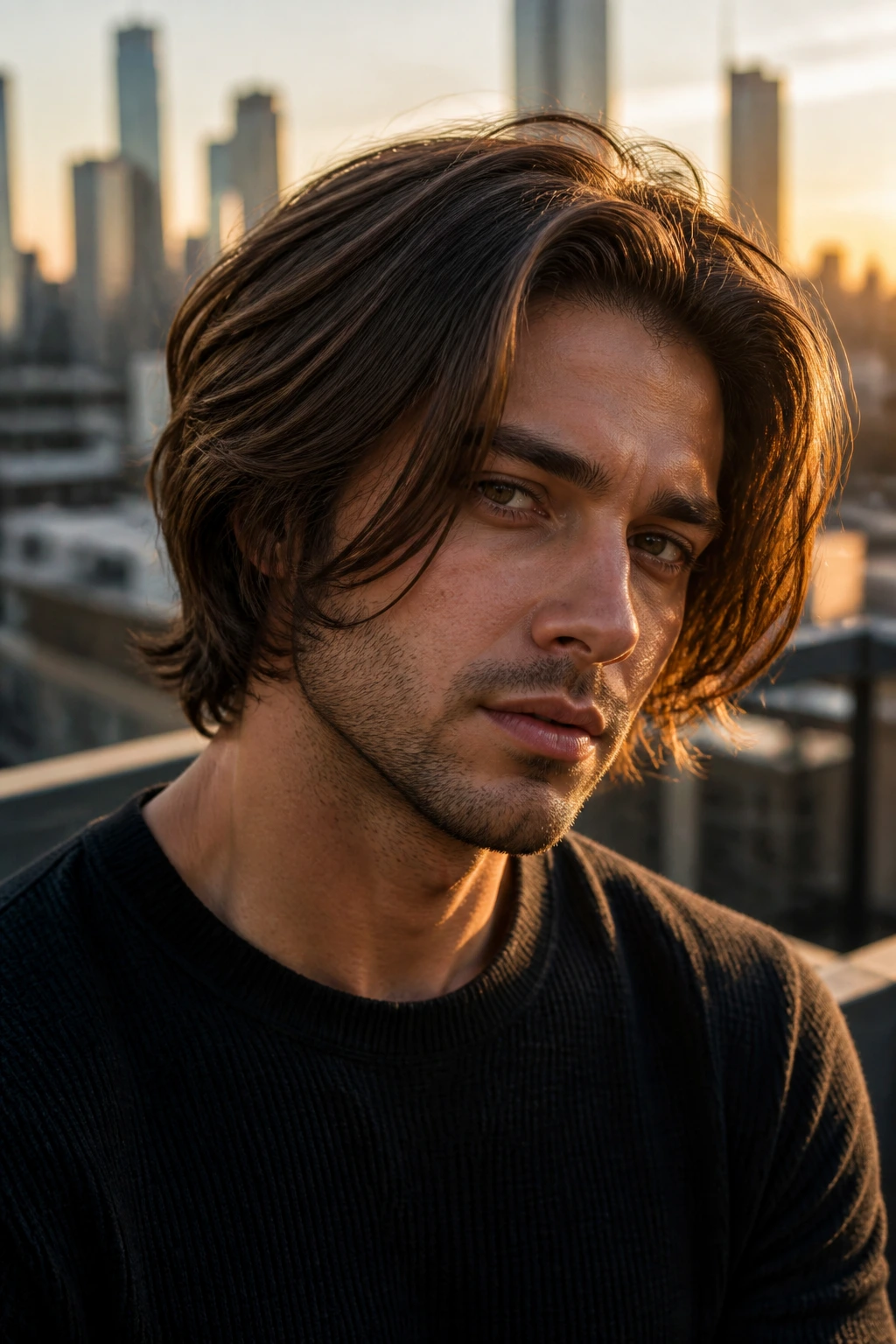
This is the cut for someone who likes the loose feel of a bro flow but wants a more defined silhouette. The back is still shorter, the front still angles forward, yet the overall effect feels more relaxed than polished.
The key difference is movement. The layers should be long and fluid, not chopped into sharp sections. That lets the hair fall naturally while still showing the inverted shape when it settles.
It works well if you’re growing out shorter hair and want a halfway point that does not look awkward. A light cream or leave-in conditioner is usually all you need. Heavy styling products will flatten the flow and kill the ease.
25. Mullet-Leaning Inverted Bob
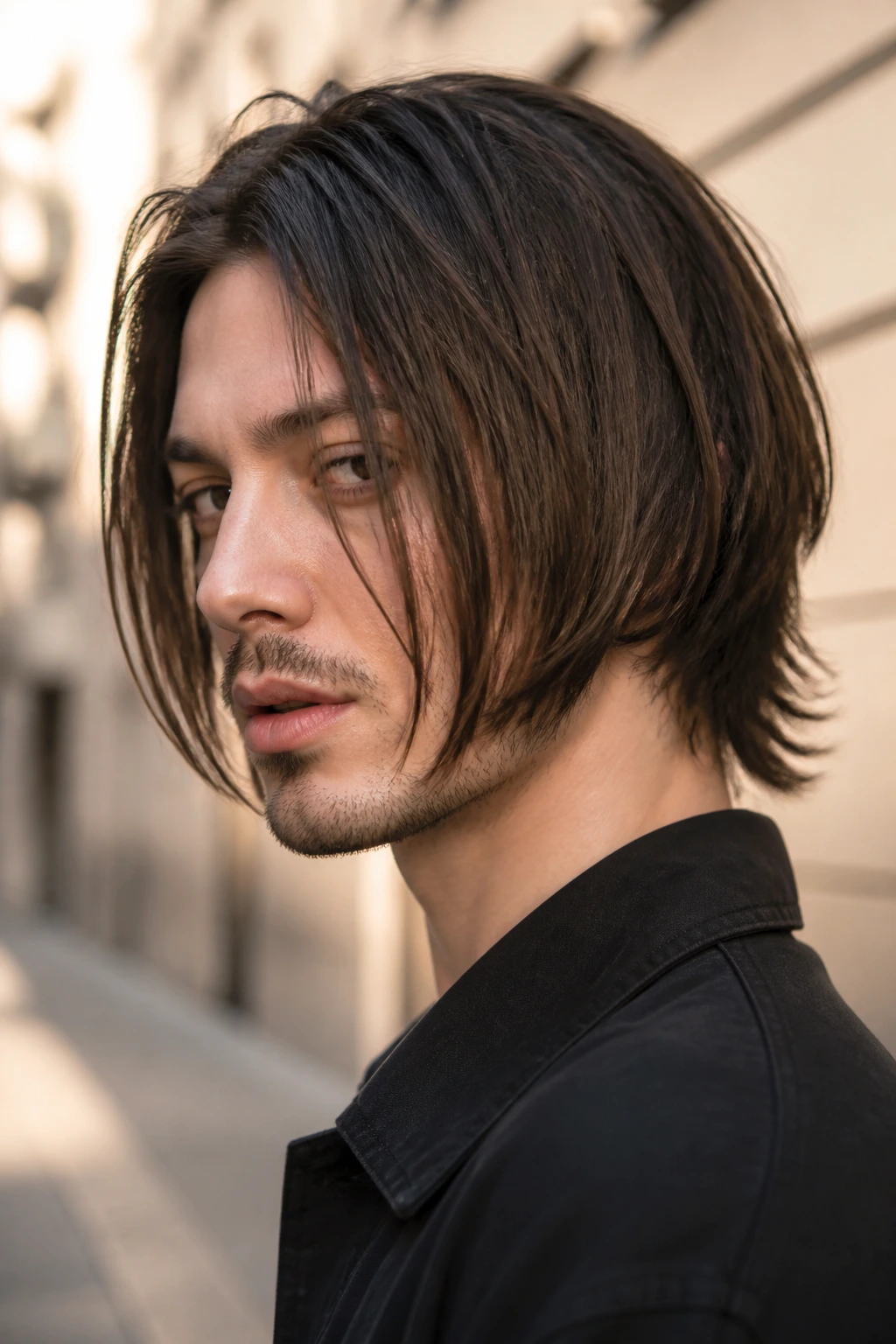
A mullet-leaning version keeps the front cleaner than a full mullet while letting the back trail a little longer. It has attitude, but not too much chaos.
Why It’s Different
A true mullet announces itself from across the room. This cut is quieter. The front still frames the face, the back stays slightly extended, and the sides remain controlled so the whole thing feels like a bob with a rebellious streak.
- Keep the top connected to the front.
- Leave a little extra length at the nape.
- Don’t over-fade the sides.
- Use texture, not bulk.
If you want something a little off-center without going full punk, this is the lane.
26. Bleached-Ends Inverted Bob
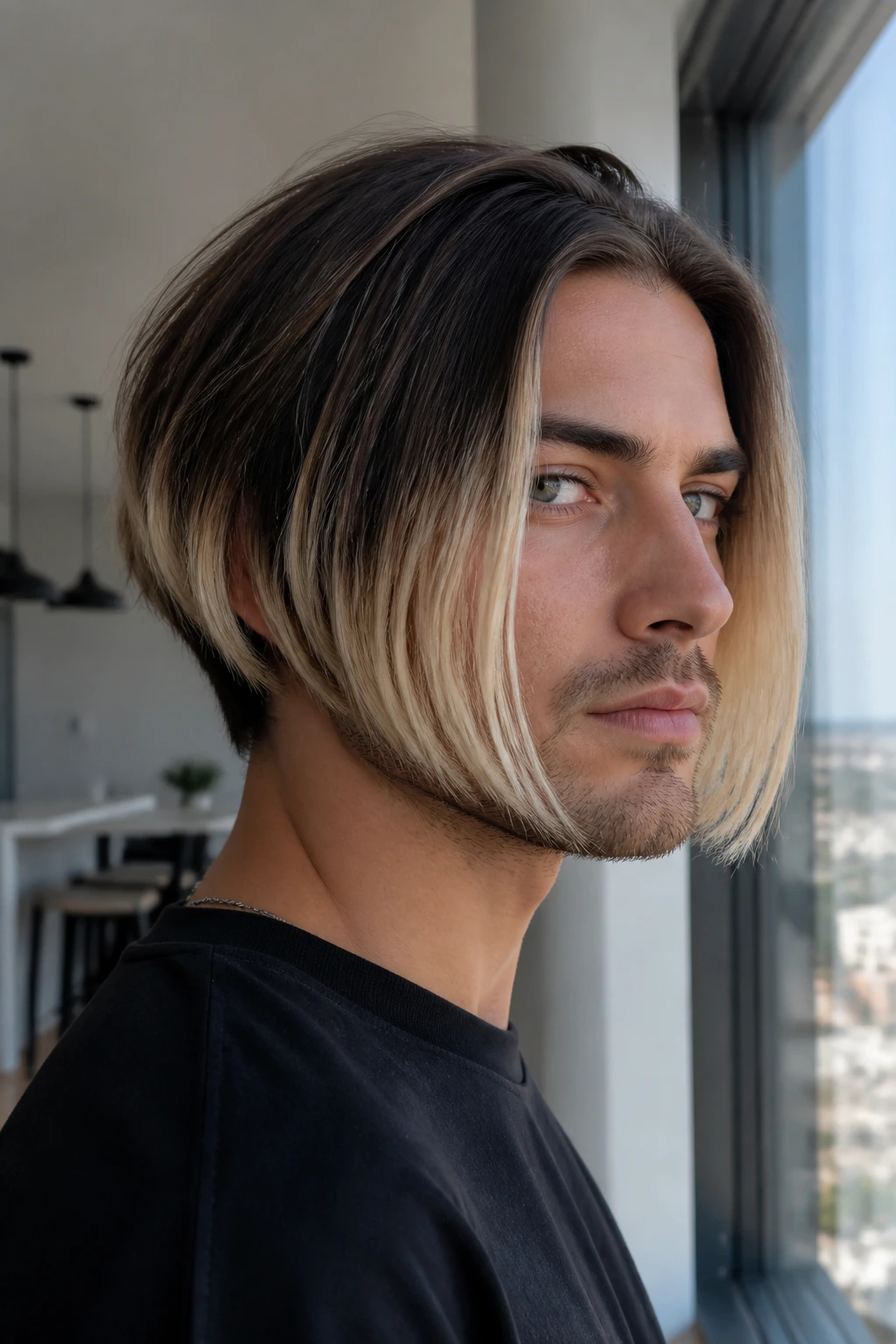
Bleached ends make the angle easier to read because the lighter tips pull the eye right to the front of the cut. On dark hair, that contrast can be dramatic. On lighter hair, it just looks sunlit and sharp.
The catch is maintenance. Lightened ends need trimming and conditioning, or they start to look dry fast. A purple or blue toning product may help if the blonde picks up brass, but only use it when the color needs it. Daily toning is overkill.
This version suits people who want a little visual punch without changing the whole head. The bob shape does the structure. The color does the talking.
27. Low-Maintenance Office-Friendly Inverted Bob
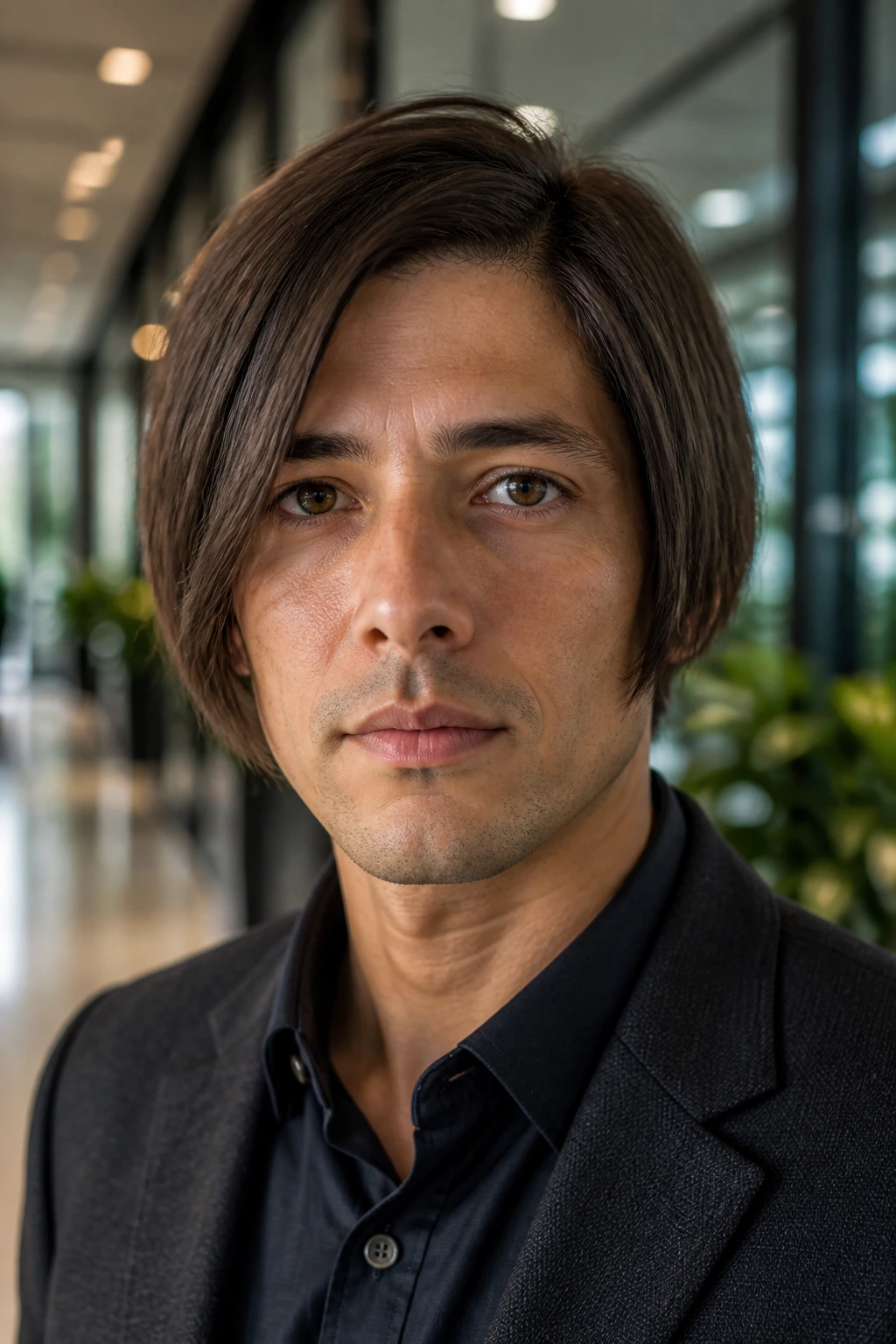
Can this cut stay neat without a long morning routine? Yes. Keep the angle modest, the back tidy, and the layers soft enough that the hair falls into place after a quick comb-through.
How to Keep It Tidy in 5 Minutes
A blow-dry for three minutes, a fingertip of matte cream, and a quick tuck behind the ears can be enough. The goal is a haircut that looks deliberate in a meeting and still relaxed by lunch.
This version works best if your hair has a bit of natural obedience. If it sticks up every which way, add a low fade or a bit more stacking in the back. That keeps the shape from puffing out around the collar.
28. Grown-Out Inverted Bob
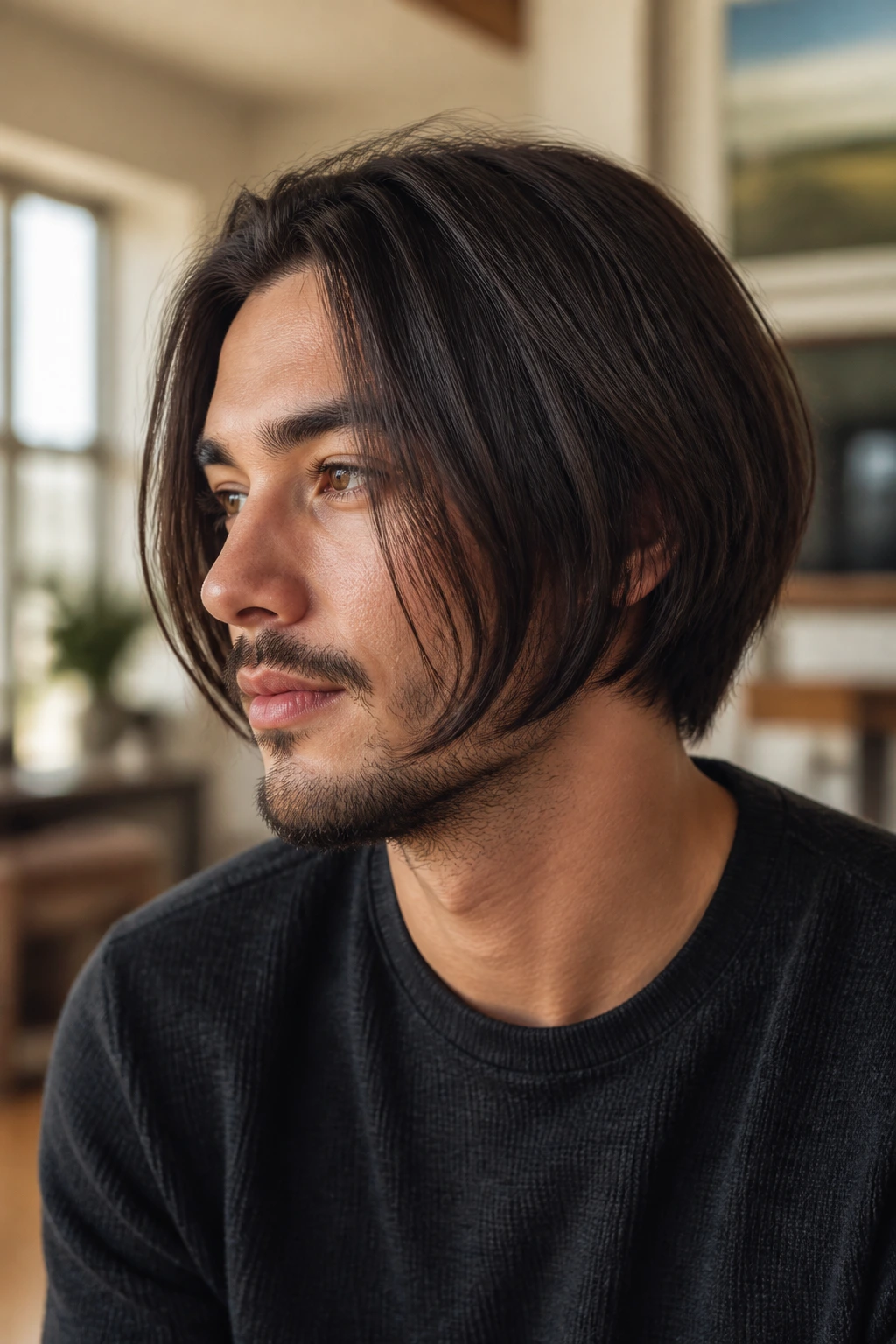
A grown-out inverted bob has a different charm. The angle softens, the front gets a little looser, and the cut starts to feel more lived-in than fresh-from-the-barber.
That can be a good thing. Sometimes the in-between stage is where the haircut looks best. The trick is keeping the neckline and sides clean enough that the style still has a shape, even if the front is getting longer than before.
- Trim the nape every 4 to 6 weeks.
- Keep the ends healthy with light conditioner.
- Use a comb only if the hair wants structure.
- Let the front move a little; don’t force it flat.
If you like hair that feels less rehearsed, this one may end up being your favorite version of all.
The Bottom Line
The best inverted bob is the one that respects your hair instead of bullying it. Straight hair wants clean lines. Wavy hair wants a little softness. Thick hair needs weight removed in the right spots, not just hacked away. Fine hair needs shape that creates the look of density.
That is really the whole game. Keep the back neat, keep the front intentional, and avoid the trap of making everything equally short or equally long. The angle is the haircut.
If you bring one reference photo to a barber, make it a photo that shows both the front and the nape. That’s where the real decisions happen.
