



Fine hair is unforgiving when a bob is cut badly. The ends go see-through, the crown lies flat, and the whole shape can start looking tired before you’ve even left the house.
Brown bob haircuts for fine hair work best when the cut does one clear job: hold a clean line, build a little lift where it matters, or use color to make the hair look denser than it is. Brown helps more than people think. A good brunette shade adds visual weight, and a clean perimeter makes the eye read the style as fuller. That sounds minor. It isn’t.
I’ve always liked bobs on fine hair when they feel deliberate rather than overworked. Too many layers can hollow the shape out. Too much length can make the hair hang. The sweet spot is usually somewhere between those two mistakes, with the stylist paying close attention to the outline, the part, and the way the hair falls around the jaw.
The styles below lean into those ideas in different ways. Some are blunt and crisp. Some are softer and airier. A few use side parts, fringe, or subtle stacking to cheat a little extra body into the cut. Good. Fine hair usually deserves that kind of help.
1. Chin-Length Espresso Bob with Blunt Ends
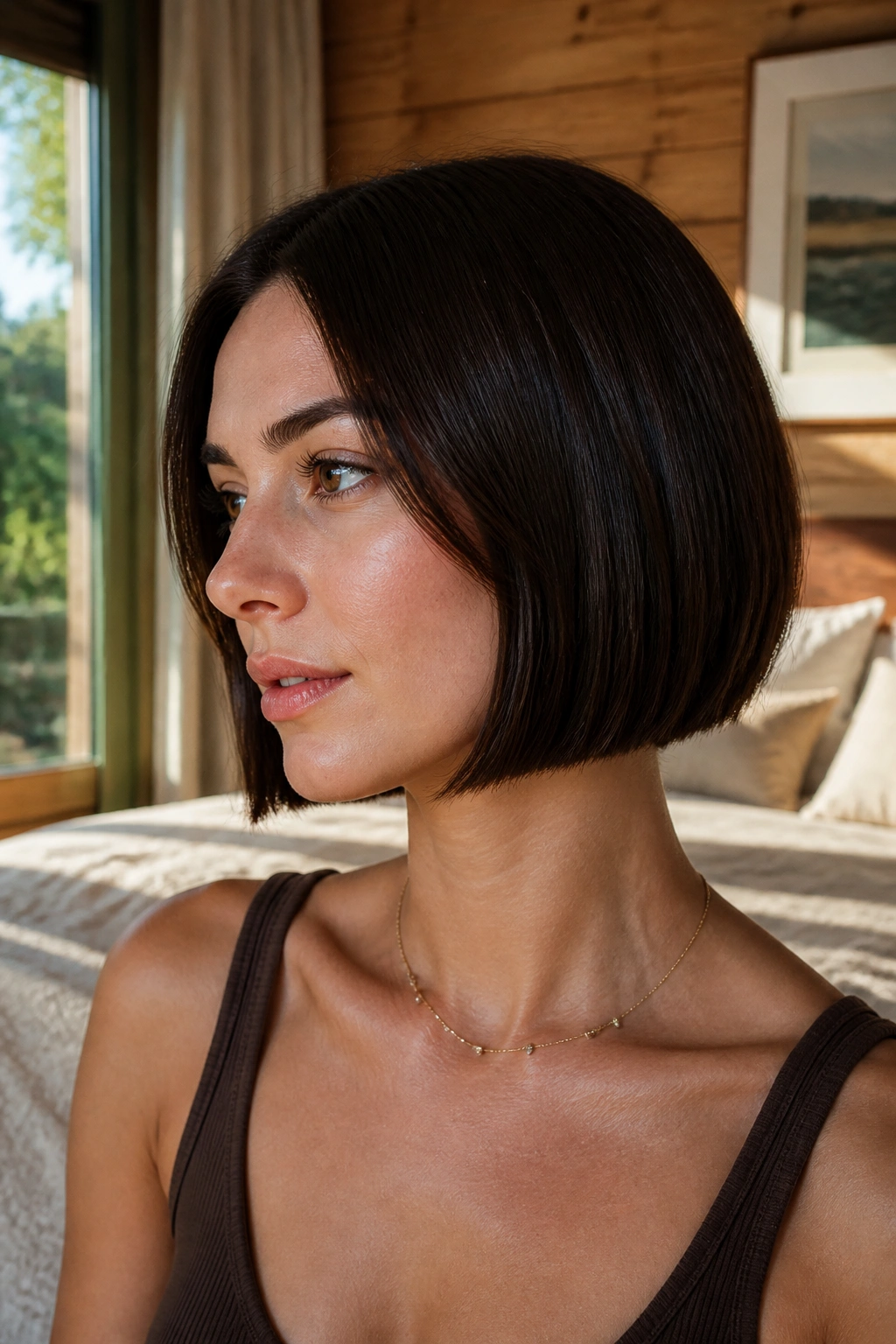
This is the bob I reach for when the goal is simple: make fine hair look thicker right away. A chin-length cut with blunt ends gives the perimeter a solid edge, and that edge does a lot of visual work. On straight or slightly wavy hair, the shape lands cleanly at the jaw and doesn’t fade out into wisps.
The espresso brown color helps too. Dark brown shades make the outline look firmer, especially when the hair is glossy and the ends are kept neat. Skip heavy layering here. Fine hair usually looks better with a blunt cut that has a little internal shaping, not a lot of shredded pieces along the bottom.
How to wear it
- Blow-dry with a flat brush and tuck the ends under just a touch.
- Use a pea-sized smoothing cream, not a heavy oil.
- Keep the length at the chin or a half inch above it for the strongest line.
Best for: straight hair, oval faces, and anyone who wants a bob that looks fuller from across the room.
2. Soft Chocolate French Bob with Brow-Grazing Bangs

Why does this work so well on fine hair? Because it keeps everything compact. A French bob sits short enough to hold shape, and brow-grazing bangs pull attention upward, which makes the whole cut feel fuller at the front.
The bangs need to stay light. Not wispy in a flimsy way — just soft enough to move. If they’re too dense, they can swallow the face. If they’re too sparse, the bob starts looking accidental. A soft chocolate brown shade keeps the style warm and rich without making it look severe.
What makes it different
The fringe carries the style
The bangs do more than frame the eyes. They give the haircut a front edge, which helps fine hair feel less flat around the temples.
The length stays easy
This bob usually sits around the jawline, so it doesn’t need much styling time. A quick bend with a round brush is enough.
A little matte texturizing spray at the roots can help, but use a light hand. Fine hair gets cranky fast when products pile up.
3. Rounded Mushroom Bob in Mocha Brown
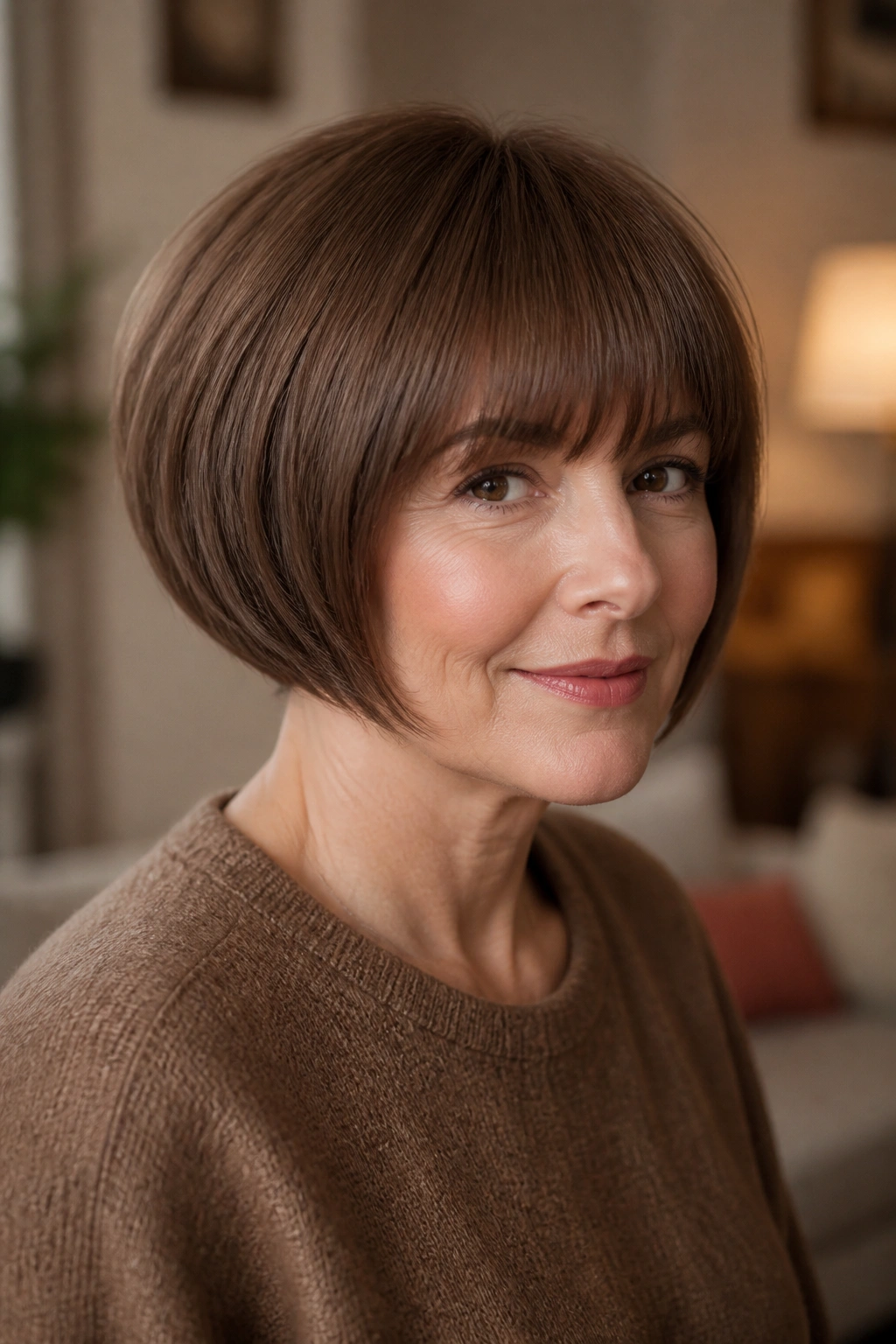
A rounded mushroom bob is one of those cuts that sounds quirky until you see it on the right head of hair. Then it makes perfect sense. The curve through the sides and back creates a soft dome shape, and that shape gives fine hair a fuller silhouette without needing lots of layers.
Mocha brown suits this cut because the color is smooth and even. There’s no need for high contrast here. The charm is in the shape. The lower edge stays dense, the crown stays controlled, and the overall effect feels tidy but not stiff. It’s a very good option for hair that tends to collapse around the ears.
Quick details
- Best length: just below the ears or at the jaw
- Best texture: straight to softly wavy
- Best styling move: blow-dry with a round brush and roll the ends inward
A mushroom bob can look a little retro if it’s cut too round. Keep the curve soft, not helmet-like. That’s the difference between chic and costume-y.
4. Collarbone Lob Bob with Caramel Ribbons
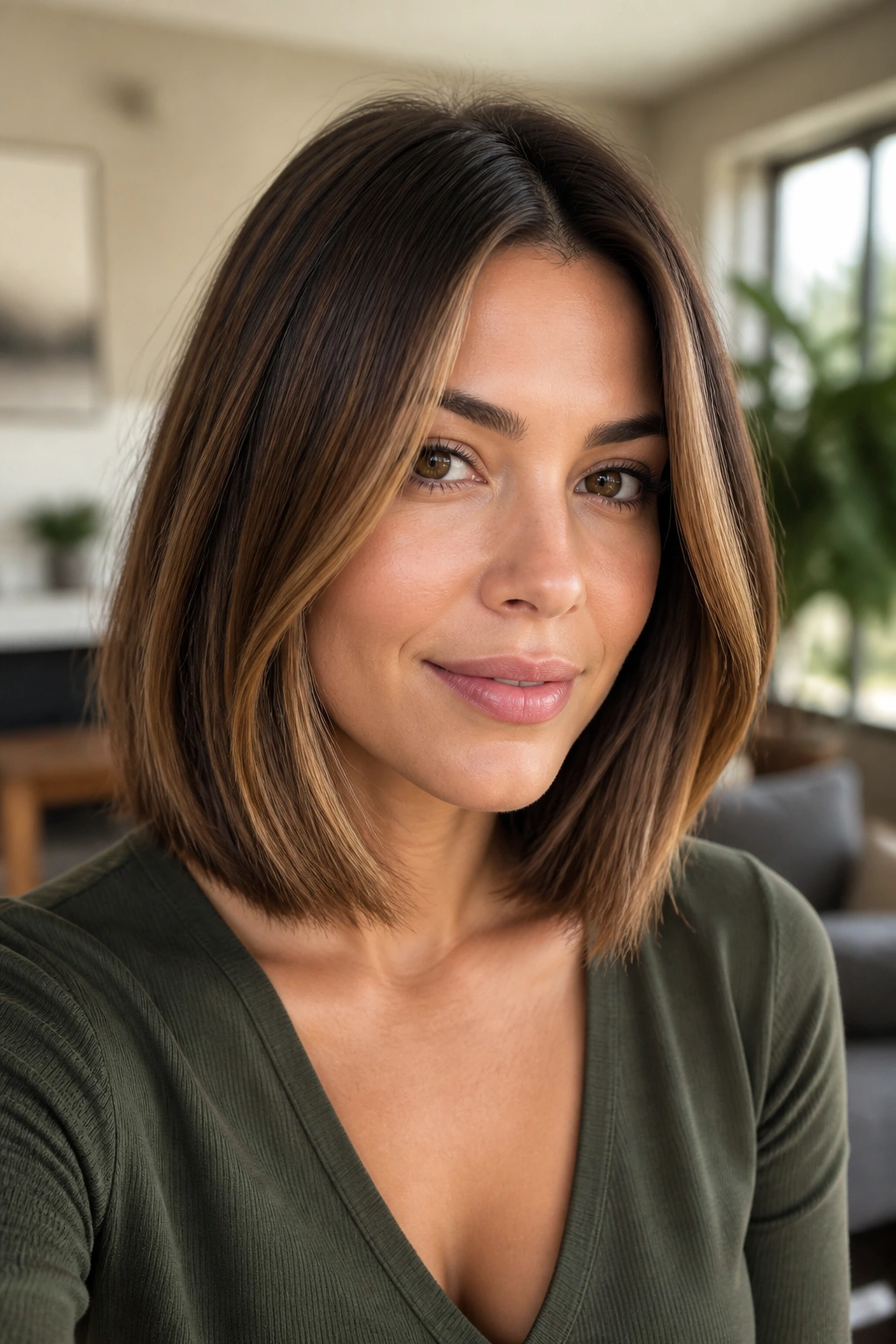
A lob gives fine hair breathing room. It’s the safe choice for someone who wants movement without losing all the weight at the ends. The collarbone length is long enough to tuck behind the ear, tie up, or wear loose, which makes it one of the easiest brown bob haircuts for fine hair to live with day to day.
Caramel ribbons change the feel of the cut. They don’t need to be loud. A few fine highlights around the face and through the top layers are enough to break up the brown and give the hair some lift. On flat hair, that contrast keeps the cut from looking like one solid sheet.
This is a good place for a slight off-center part. It adds a little asymmetry and keeps the top from sitting too close to the scalp. If your hair is fine but not limp, this cut often hits a nice middle ground.
5. Deep Side-Part Dark Roast Bob
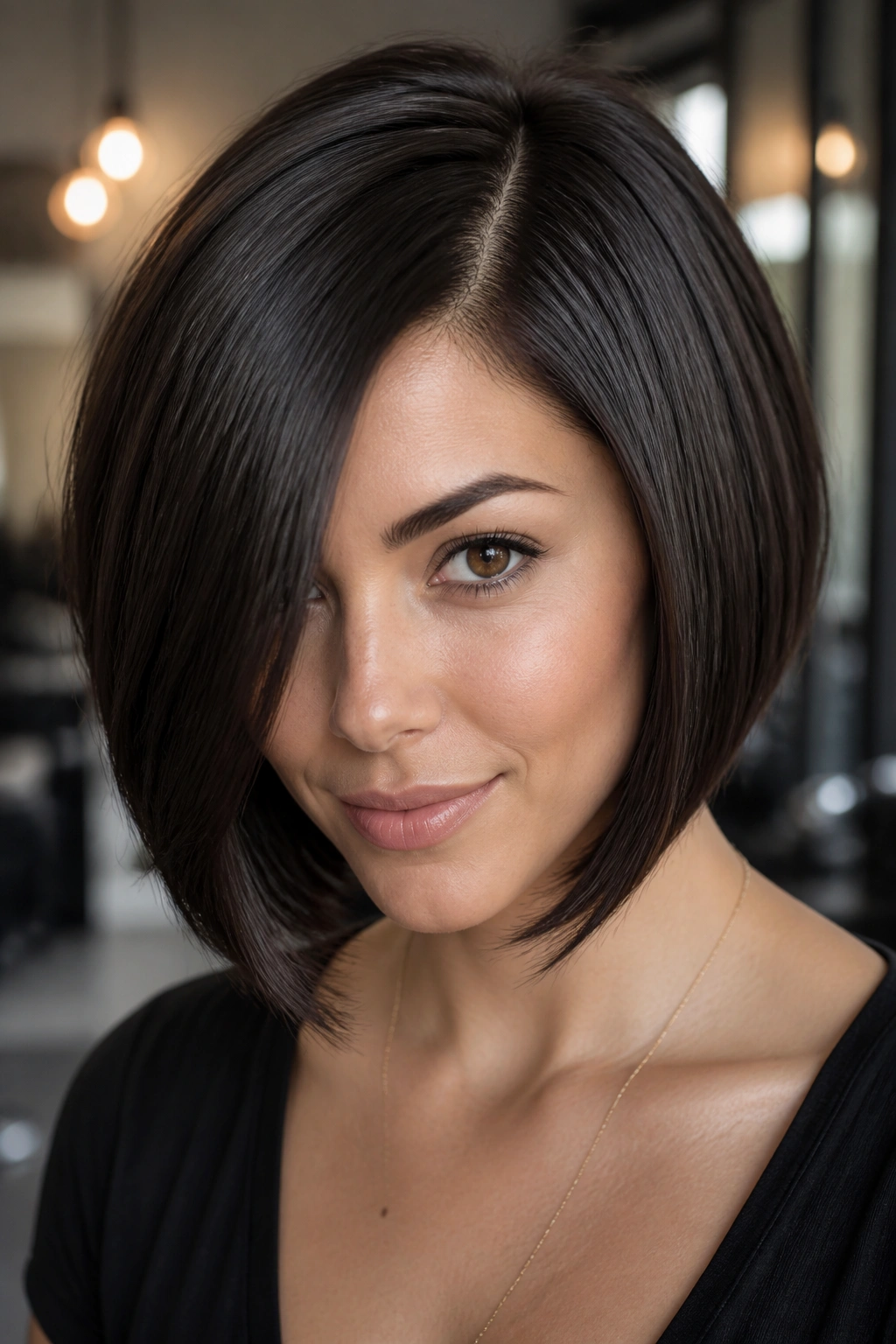
Sometimes the smartest thing you can do for fine hair is move the part. A deep side part creates instant volume on the heavier side, and that asymmetry gives the bob a more lifted look without changing the cut itself very much.
Dark roast brown works here because the color is rich and sleek. It suits a sharper line and makes the roots and ends look more connected. If the hair is pin-straight, this style can feel almost architectural. That’s not a bad thing. Clean shapes tend to flatter fine strands more than fussy ones.
How to style it
Use a root-lifting spray at the crown, then blow-dry the part in the opposite direction first. That little trick gives the roots a stronger bend once you flip the hair back. Finish with a small round brush at the ends so they curve under.
If you’ve got a flat top and a narrow face, this cut can be a small miracle. It’s tidy. It has drama. And it doesn’t ask the hair to be bigger than it is.
6. Layered Chestnut Bob with Face-Framing Pieces
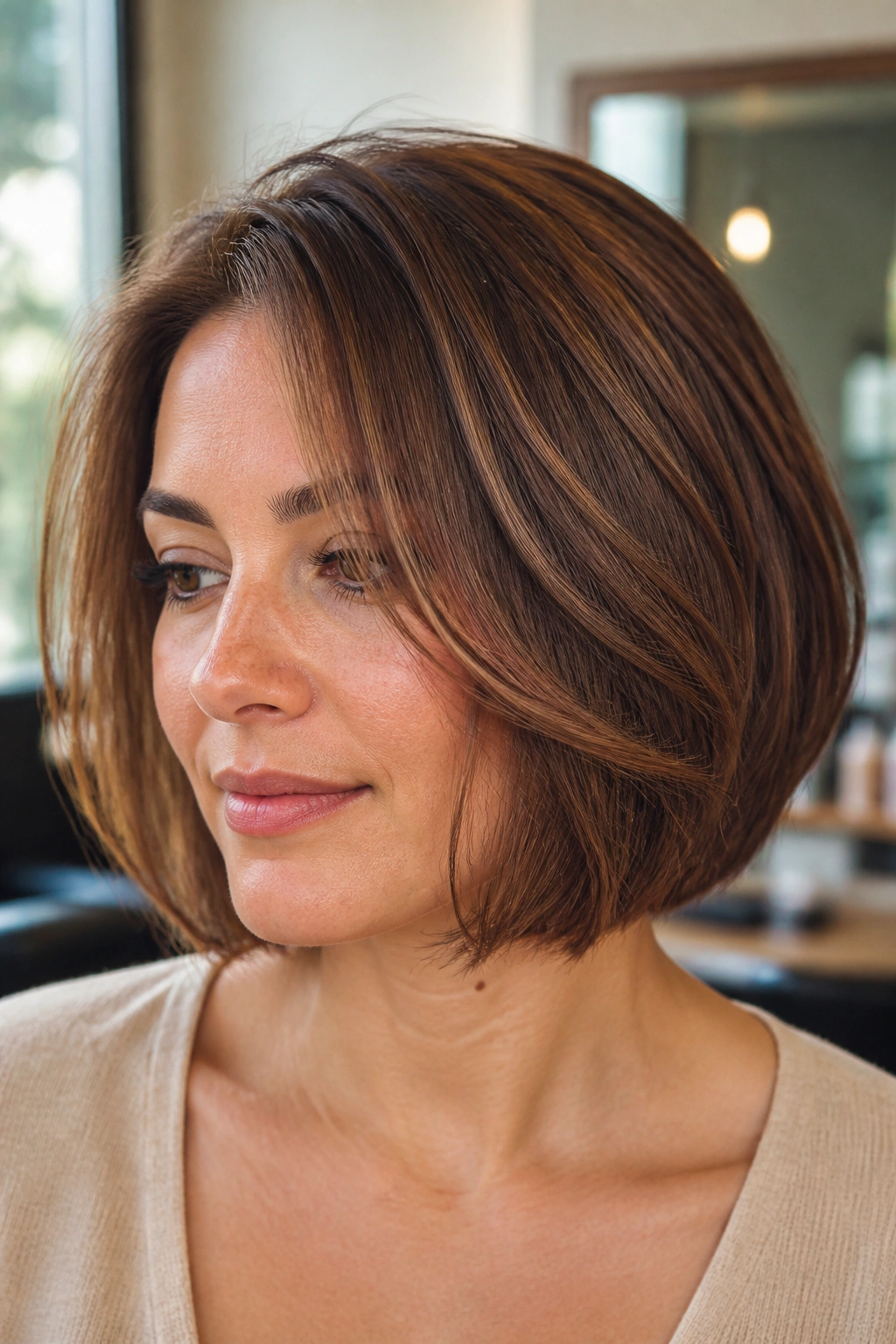
A light layer can help fine hair, but only when it stays controlled. This chestnut bob uses face-framing pieces to soften the front without carving away the bottom edge. That matters. If the perimeter disappears, the cut loses the one thing fine hair needs most: visible density.
Chestnut brown gives the style warmth and a bit of depth. It works especially well if your hair has natural movement, because the color changes slightly as the hair shifts. The layers should begin around the cheekbone or lip line, then taper gently into the rest of the bob.
What to ask for
- Soft framing around the face
- A solid bottom line
- Light internal shaping, not lots of visible steps
This is a smart cut if you want the hair to fall around the face in a flattering way but still look like a bob, not a shag with commitment issues. The trick is restraint. A few well-placed pieces beat a head full of chopped layers.
7. Sleek Tucked Cocoa Bob
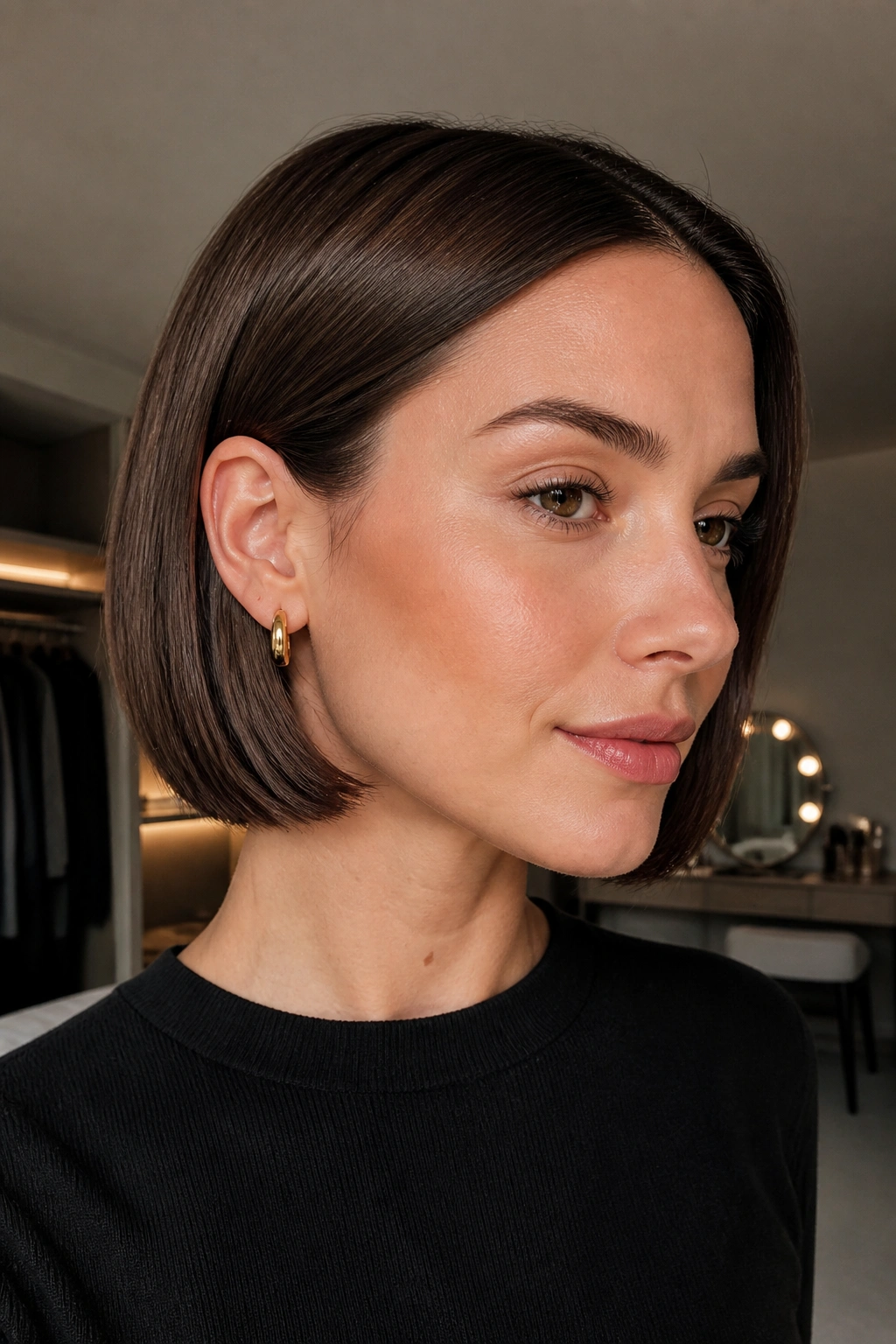
A sleek cocoa bob is all about polish. It’s the kind of cut that looks strongest when the edges are clean, the finish is smooth, and the ends just kiss the jaw. Fine hair can look expensive in this shape because there’s nowhere for the eye to wander. It sees the line, reads the shine, and moves on.
The tucked-behind-the-ear styling is part of the appeal. It shows the jawline, opens up the face, and gives the haircut a little structure without any extra cutting. On short fine hair, that tucked shape can make the whole style feel purposeful.
Use a heat protectant and a flat brush when you dry it. Then add a tiny bit of serum to the ends — not the roots, never the roots. If the hair gets oily quickly, keep products away from the scalp and concentrate on smoothness through the bottom third.
It’s sleek. It’s blunt. And it’s one of the easier ways to make brown fine hair look neatly finished.
8. Wavy Toffee Bob with Invisible Layers

A little bend can change everything. A wavy toffee bob works because the waves add width through the middle of the shape, while invisible layers keep the hair from looking bulky. You don’t see the layers right away. You feel them when the hair moves.
Toffee brown is a friendly shade for this look. It’s warm, soft, and forgiving if the finish isn’t perfect. That matters, because this style should feel relaxed rather than fussy. A 1-inch curling iron, used in alternating directions, gives the hair that loose, lived-in bend. Then you brush it out slightly so the waves sit soft, not crunchy.
How to get it right
Use a lightweight mousse before drying. That gives fine hair a little memory. After curling, shake the hair out with your fingers and mist only the ends if they need separation.
This is one of those cuts that looks better when it’s not overdone. Too much wave makes fine hair look smaller, not bigger. Keep the bend loose and the outline visible.
9. Jaw-Length Cocoa Bob with Micro Layers
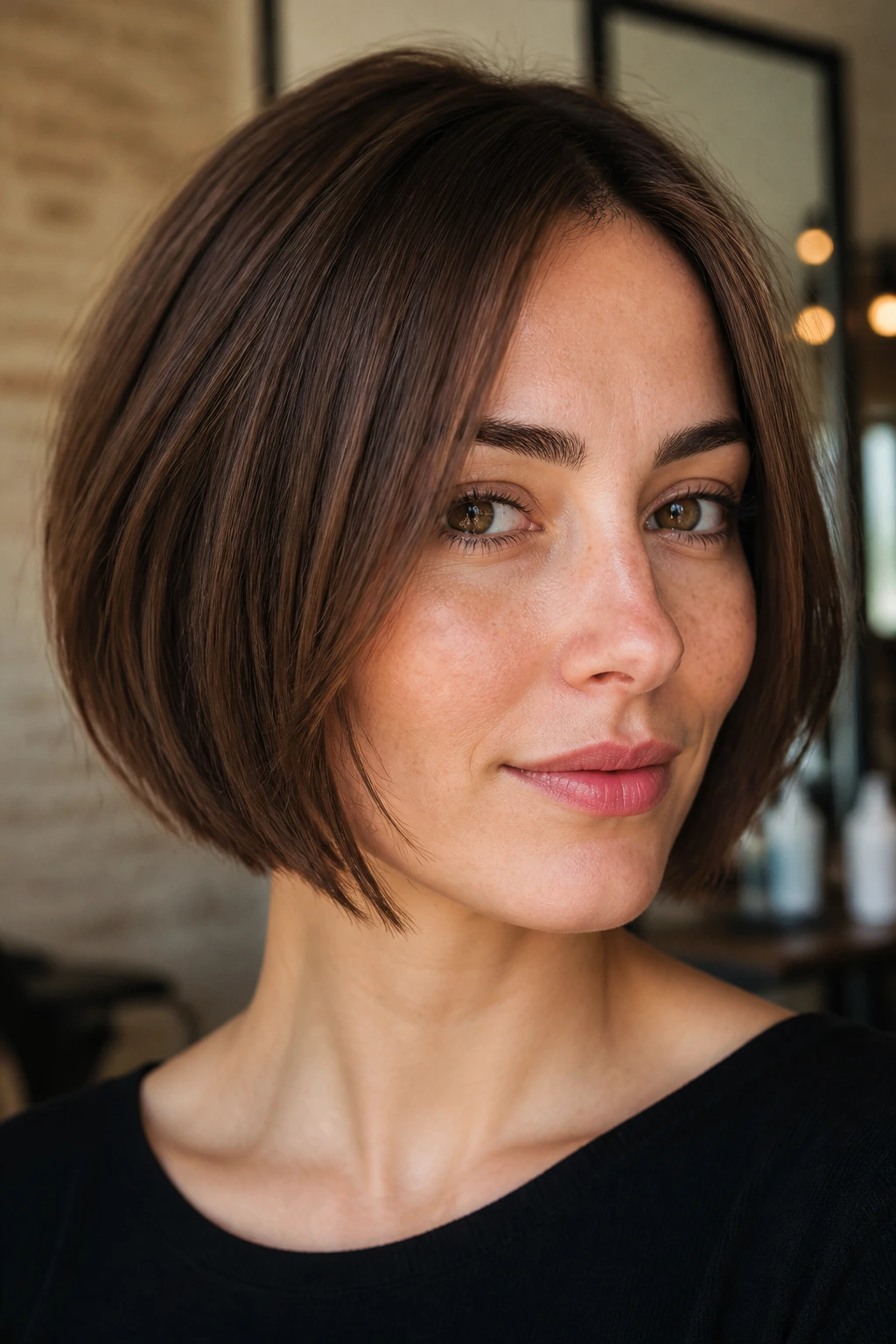
Short bobs can be a gift for fine hair. At jaw length, the cut naturally keeps more fullness in view, and micro layers — tiny ones, barely there — stop the shape from looking too blocky. Cocoa brown adds depth so the line reads clean without looking harsh.
This is a sharp choice for people who like a shorter haircut but don’t want something severe. It sits close to the face and shows off the neck and jaw. The important part is the balance: too many layers will thin out the ends, but no layers at all can make the cut sit heavy in the wrong places.
When this cut shines
- Straight hair that tends to limp
- Smaller faces that can handle a short shape
- Anyone who likes a quick morning routine
A round brush at the crown and a slight underbend at the ends usually do the job. No need to fuss. The haircut should do the work for you.
10. Curved Under Brunette Bob
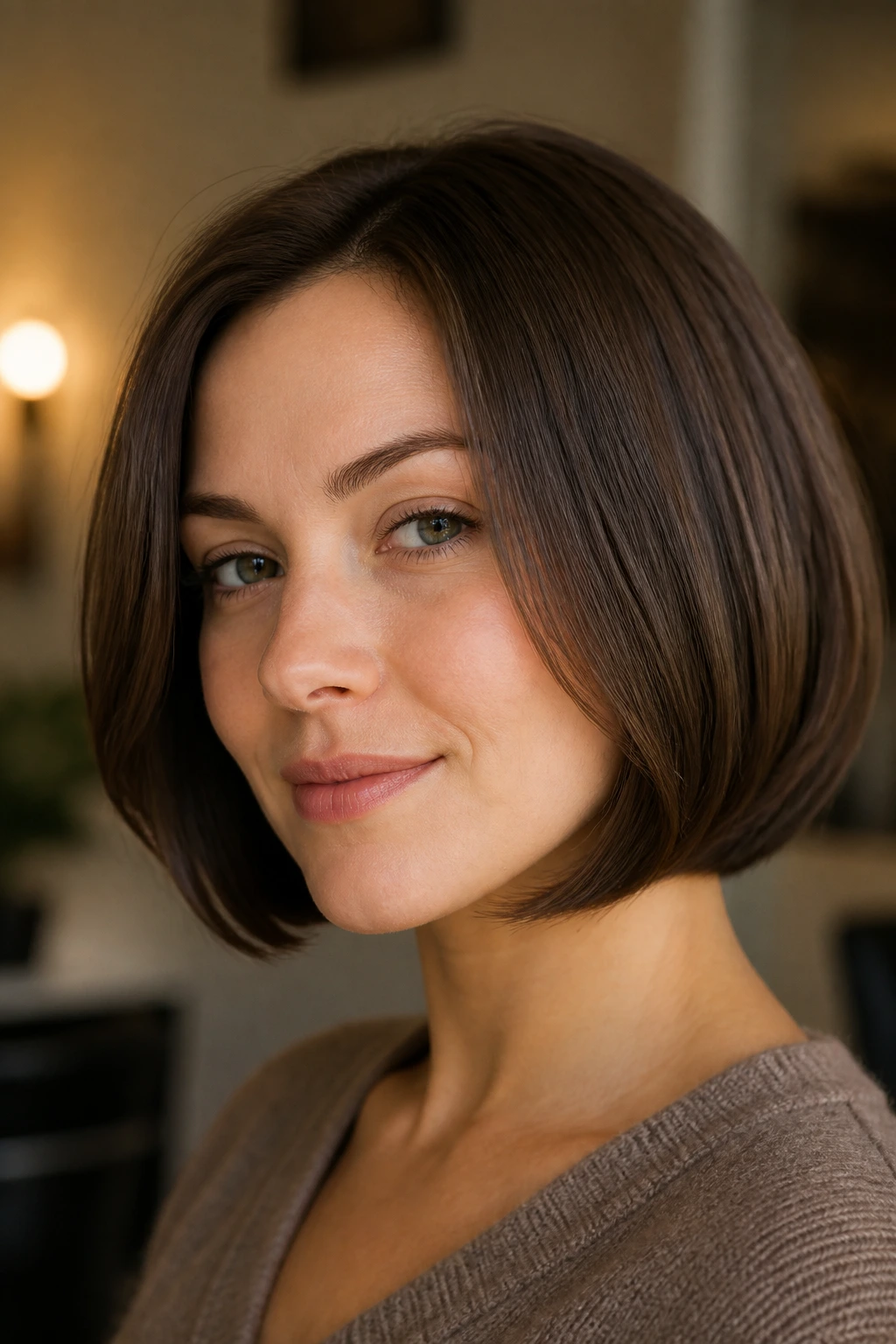
A curved-under bob gives fine hair a neat, tucked shape that feels polished without looking stiff. The ends turn inward, which creates a soft frame around the jaw and helps the hair appear a touch denser at the bottom edge. That bottom edge is the part I care about most with fine hair.
Brunette brown is a smart match because it keeps the shape clean and gives the cut a smooth finish. A line like this benefits from a nice gloss. You do not want dry ends here. Dry ends make the whole thing look thinner.
The styling trick is simple: dry the hair with a medium round brush and turn the ends under in the last minute or so. If you go too hard on the curve, the style can look old-fashioned. Keep it soft. A gentle bevel is enough.
This is a good daily-wear bob. It’s tidy, easy to maintain, and flattering when you want the hair to feel controlled rather than airy.
11. Sliced Dark Walnut Bob
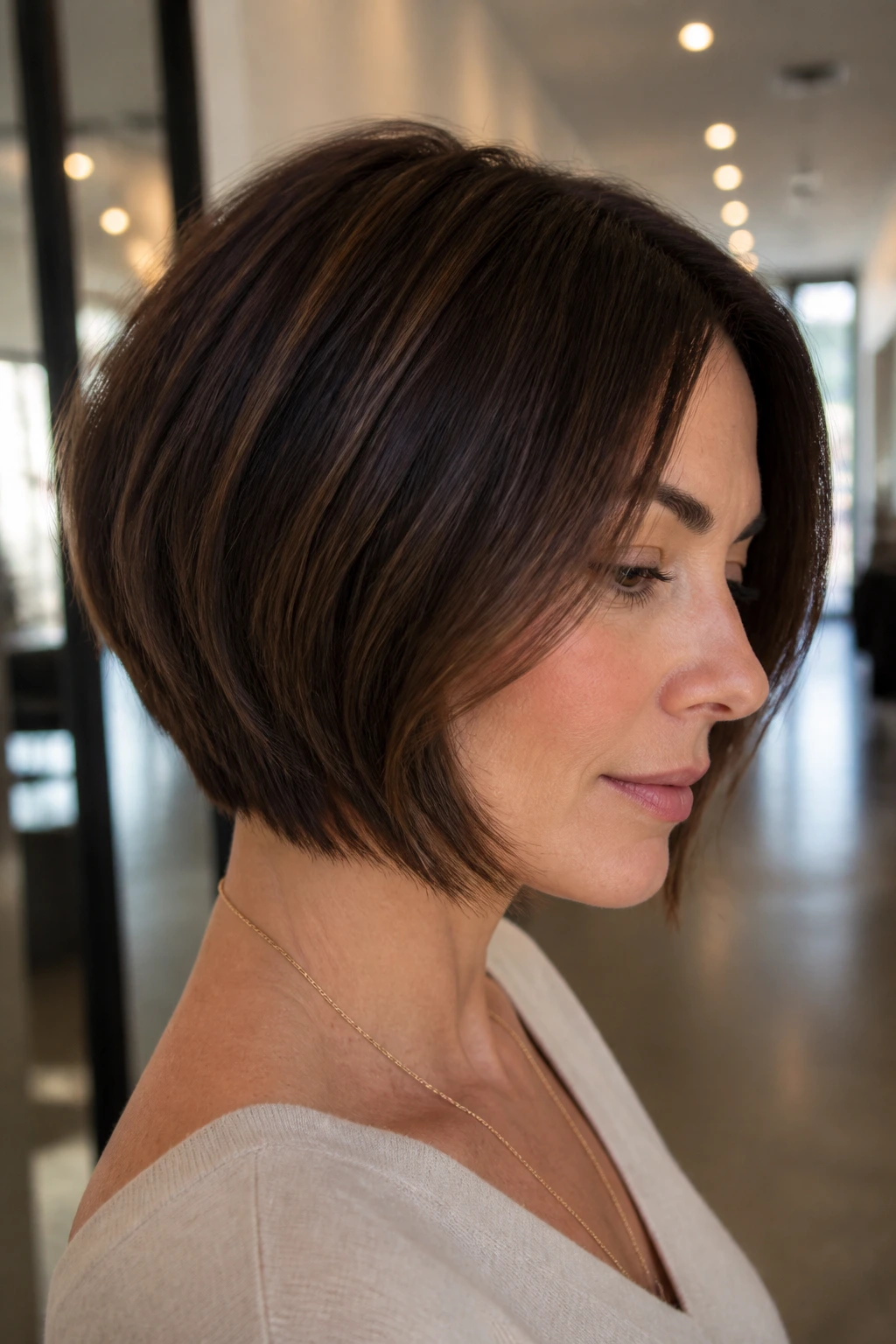
A sliced bob sounds sharp, and it is. The cut uses clean slicing through the ends to remove weight without destroying the outline. On fine hair, that can be tricky, but when it’s done lightly, the result is a bob that moves better and still looks full enough at the bottom.
Dark walnut brown keeps the finish grounded. It’s a cooler, deeper tone that makes the style feel sleek. I like this on hair that’s straight, a little resistant, and prone to hanging flat if left to its own devices. The slicing keeps the ends from looking blunt in a heavy way.
What to watch for
A sliced bob should not be shredded. That’s the mistake. The ends need movement, but they also need presence. Ask for controlled slicing, not aggressive texturizing.
If you like a cut that feels modern without looking too styled, this is a solid pick. It has edge. It also has enough structure to survive a windy day, which is more useful than most people admit.
12. Curtain Bang Bob in Warm Chestnut
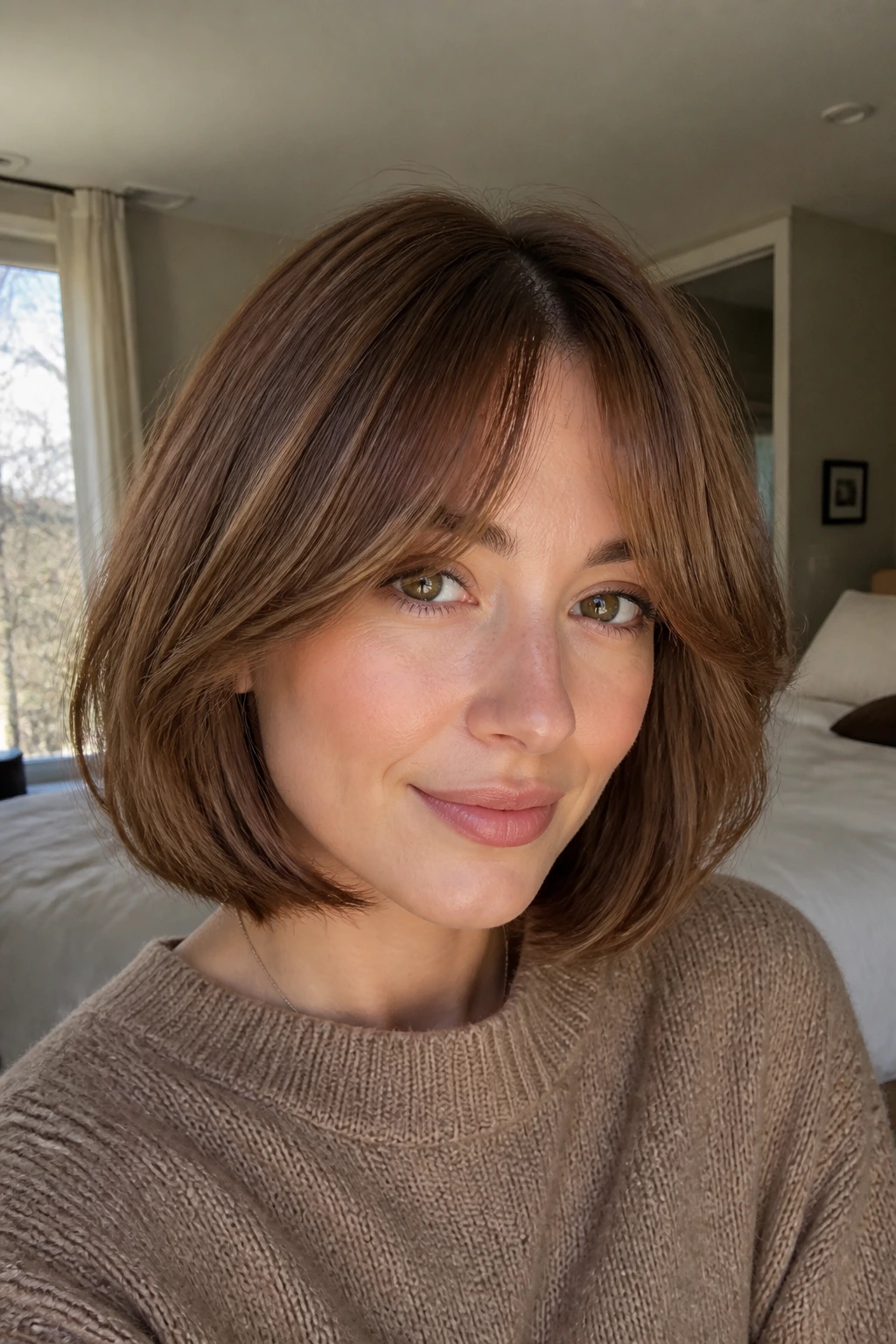
Curtain bangs bring a soft split to the front of the haircut, and that split can make fine hair feel lighter around the face while the bob itself stays full. The effect is nice on longer faces, but it also works if you just want a little softness without giving up structure.
Warm chestnut brown keeps the fringe from looking too stark. The color has enough warmth to soften the eye line, which matters when the cut is short. You want the bangs to frame, not dominate. They should open at the center and blend into the sides in a gentle sweep.
Styling notes
- Blow-dry the bangs forward first, then sweep them apart
- Use a small round brush or a vent brush
- Keep the ends of the bob blunt or only lightly layered
This is a good choice if you want movement around the face but still want the body of a bob. The bangs do the softening. The perimeter does the heavy lifting. That balance is the whole point.
13. Ash Brown Piecey Bob
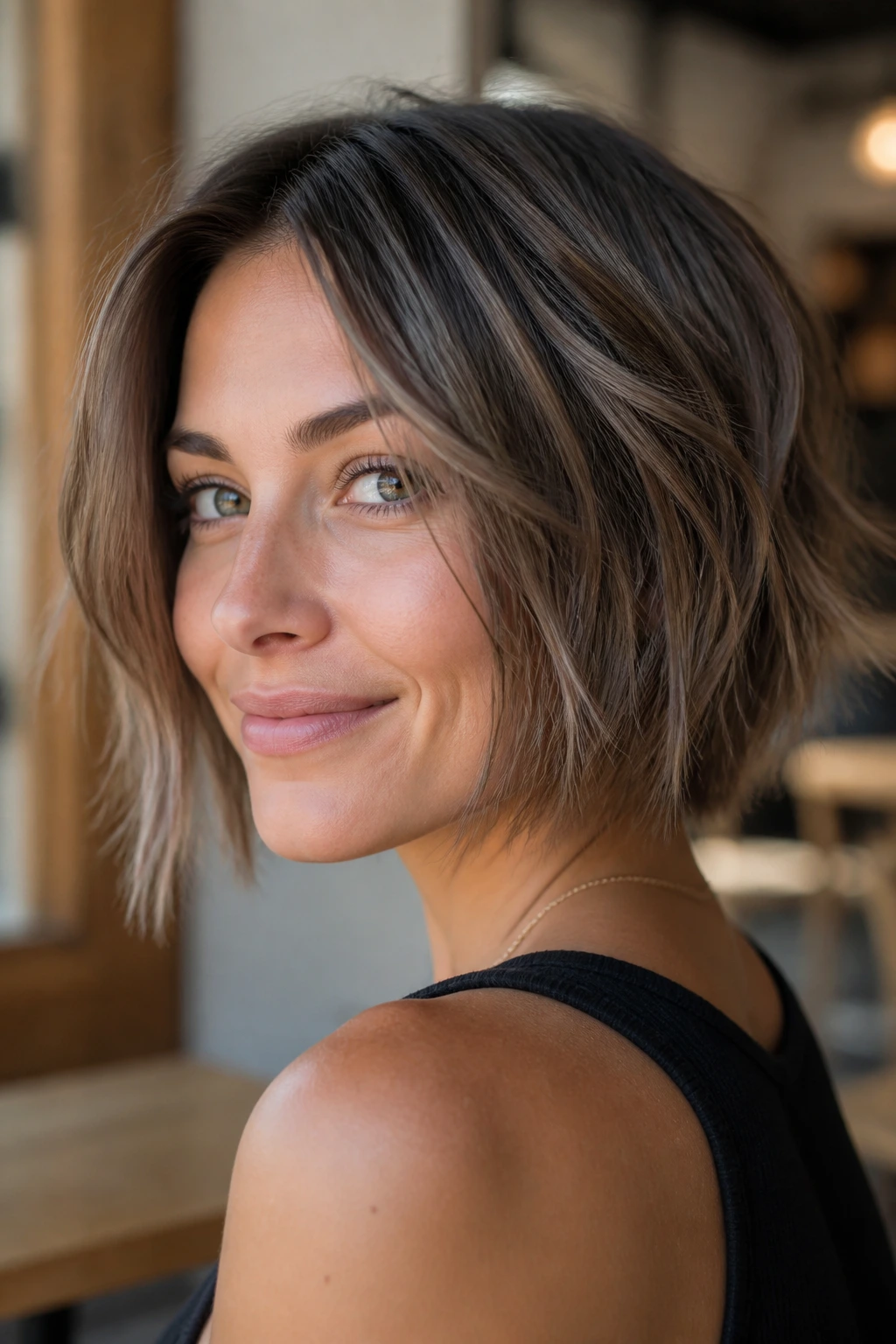
Ash brown gives a bob a cooler, cleaner look. On fine hair, that can be a smart move because cool tones make texture show up in a more controlled way. A piecey bob is all about separation — not chunks, not a mess, just enough definition to keep the hair from reading as one flat block.
The cut works best when the layers are subtle and the surface is lightly roughed up with spray or cream. If the hair is too shiny and too smooth, the piecey effect disappears. If it’s too dry, the texture looks frayed. You want the middle ground.
How to style it
- Dry the roots with a lifting mousse
- Bend only the mid-lengths, not the ends
- Scrunch a small amount of texture spray through the surface
This is the bob for someone who wants a little attitude. It’s a touch undone. It’s not precious. And it’s a nice answer if your fine hair refuses to sit perfectly neat anyway.
14. Angled Bob from Nape to Chin
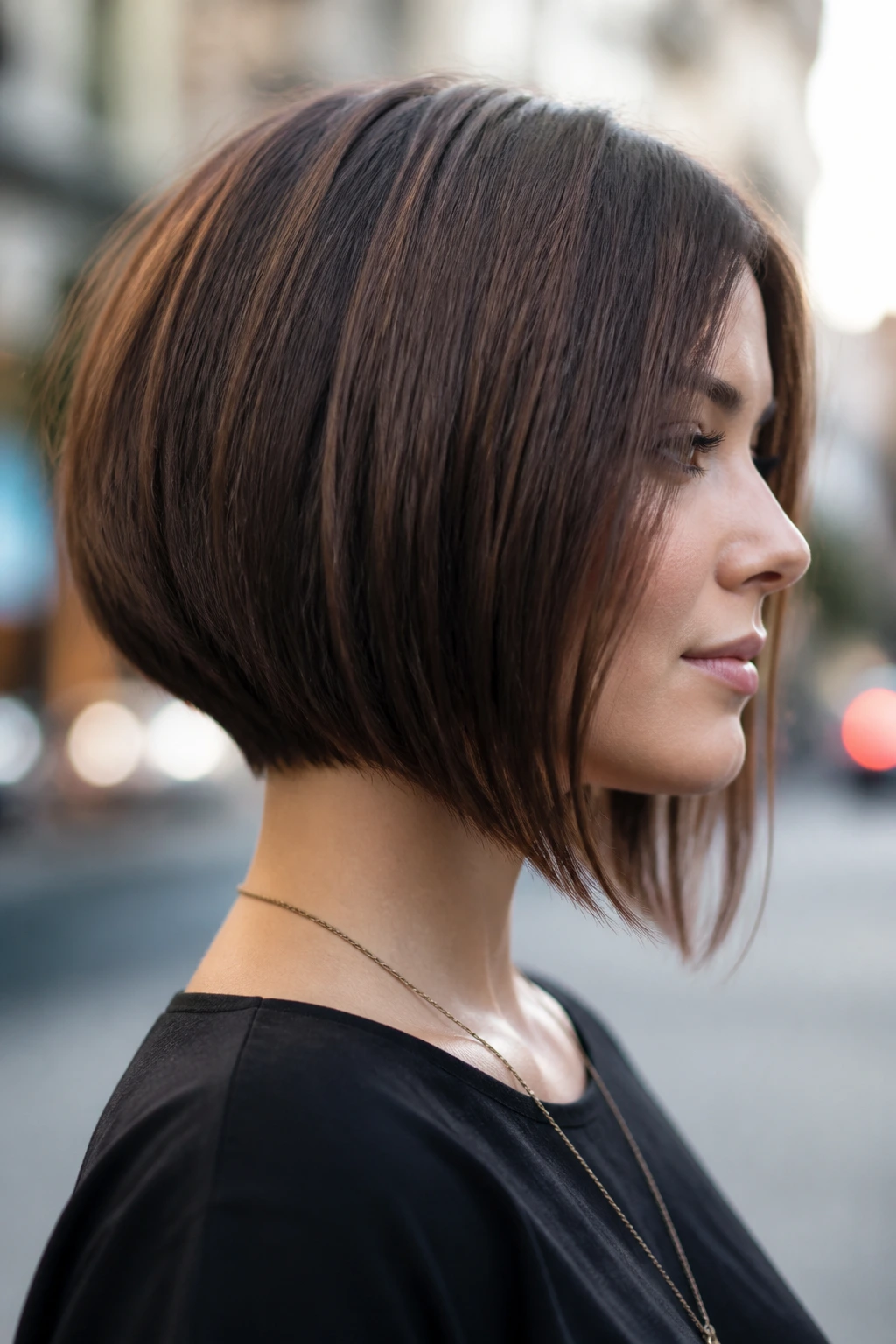
An angled bob creates lift where fine hair often needs it most: at the back. Shorter in the nape and longer toward the chin, the shape gives the illusion of a fuller rear section and a cleaner line along the jaw. It’s one of those cuts that looks more technical than it feels.
The brunette tone keeps the angle from looking too dramatic. I like a medium brown here more than an ultra-dark shade, because a slight warmth makes the cut look softer from the side. The front pieces can skim the chin or sit just above it, depending on how much length you want to keep.
Who it suits
- Hair that lies flat at the crown
- Faces that benefit from a longer front
- Anyone who wants a structured bob without a lot of styling
The angle needs to be subtle on fine hair. Too steep, and the back can look pinched. Too soft, and you lose the shape. A good angled bob is all about that narrow strip between the two.
15. Razor-Edged Walnut Bob
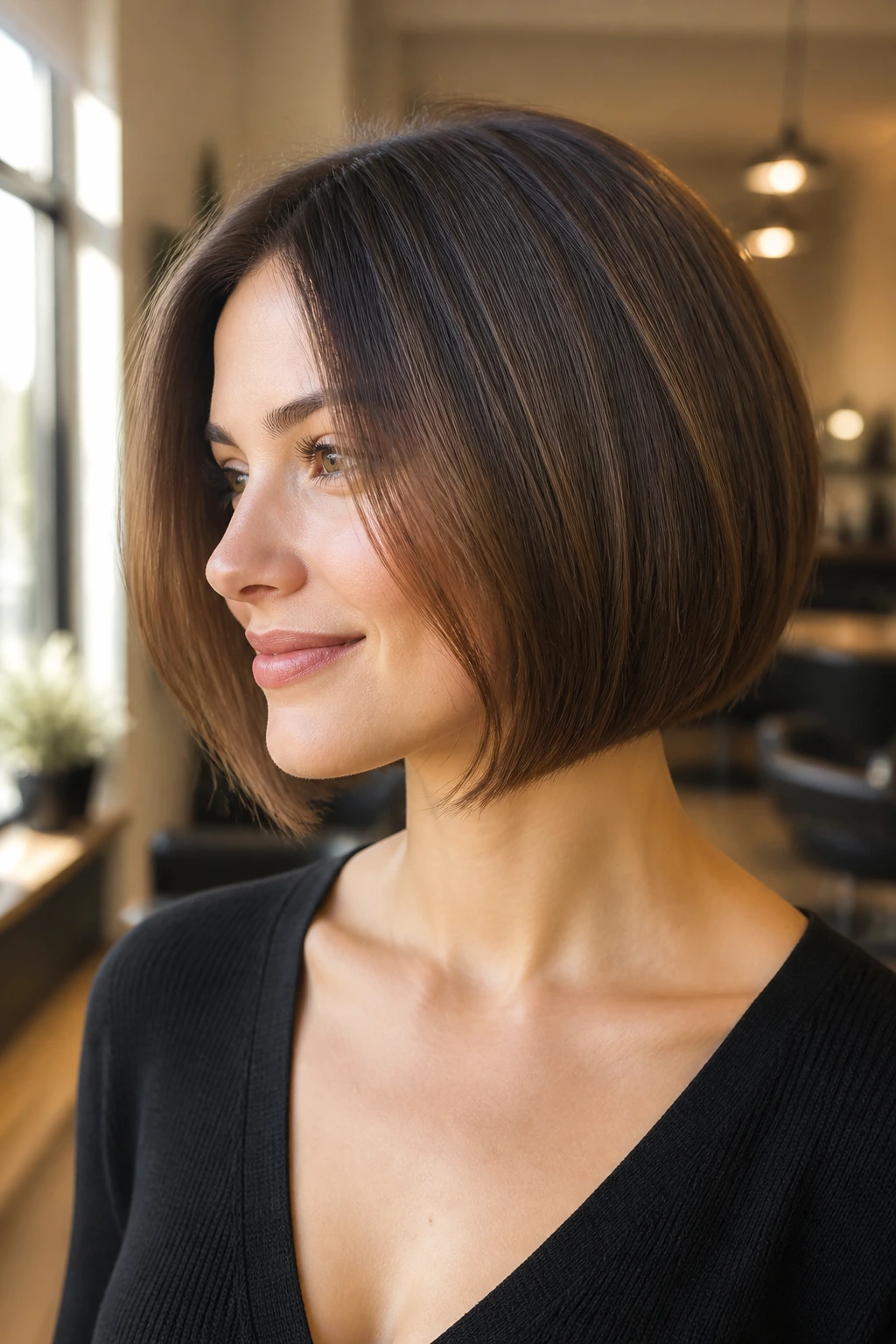
A razor-edged bob gets a bad reputation because people think it always means wispy, broken ends. It doesn’t. On fine hair, a careful razor cut can create a softer edge and a little movement without removing too much bulk. The walnut brown color makes the finish look rich and grounded.
This style is best when the hair is healthy and not already fragile at the ends. If the hair splits easily, a razor can make the problem show faster. But on strong fine hair, it can give you a lighter outline that still holds shape.
The shape to ask for
Ask for softness through the perimeter, not a full layered chop. You want the ends to move, but the overall bob should still read as a bob.
A light serum and a blow-dry with a medium brush usually keep this style in line. It’s a good option for people who like a less polished finish and don’t mind hair that falls a bit more naturally through the day.
16. Side-Swept Milk Chocolate Bob

A side-swept fringe can make a bob feel thicker at the front in a way that’s subtle but effective. The hair seems to start with more density near the forehead, which gives the whole style a little lift. On fine hair, that front weight helps the cut feel balanced.
Milk chocolate brown is a softer shade, and I like it here because it keeps the fringe from looking severe. The side sweep should cover part of the forehead, then drift into the rest of the bob. It’s a nice choice if straight bangs feel too blunt for you.
The styling is simple. Blow the fringe in the direction you want it to fall, let it cool, then use a tiny round brush or even your fingers to shape it. A dry shampoo at the roots can help the top stay lifted through the day.
This bob suits people who want easy movement near the eyes and a cut that doesn’t need much fuss.
17. Bob with a Hidden Underlayer
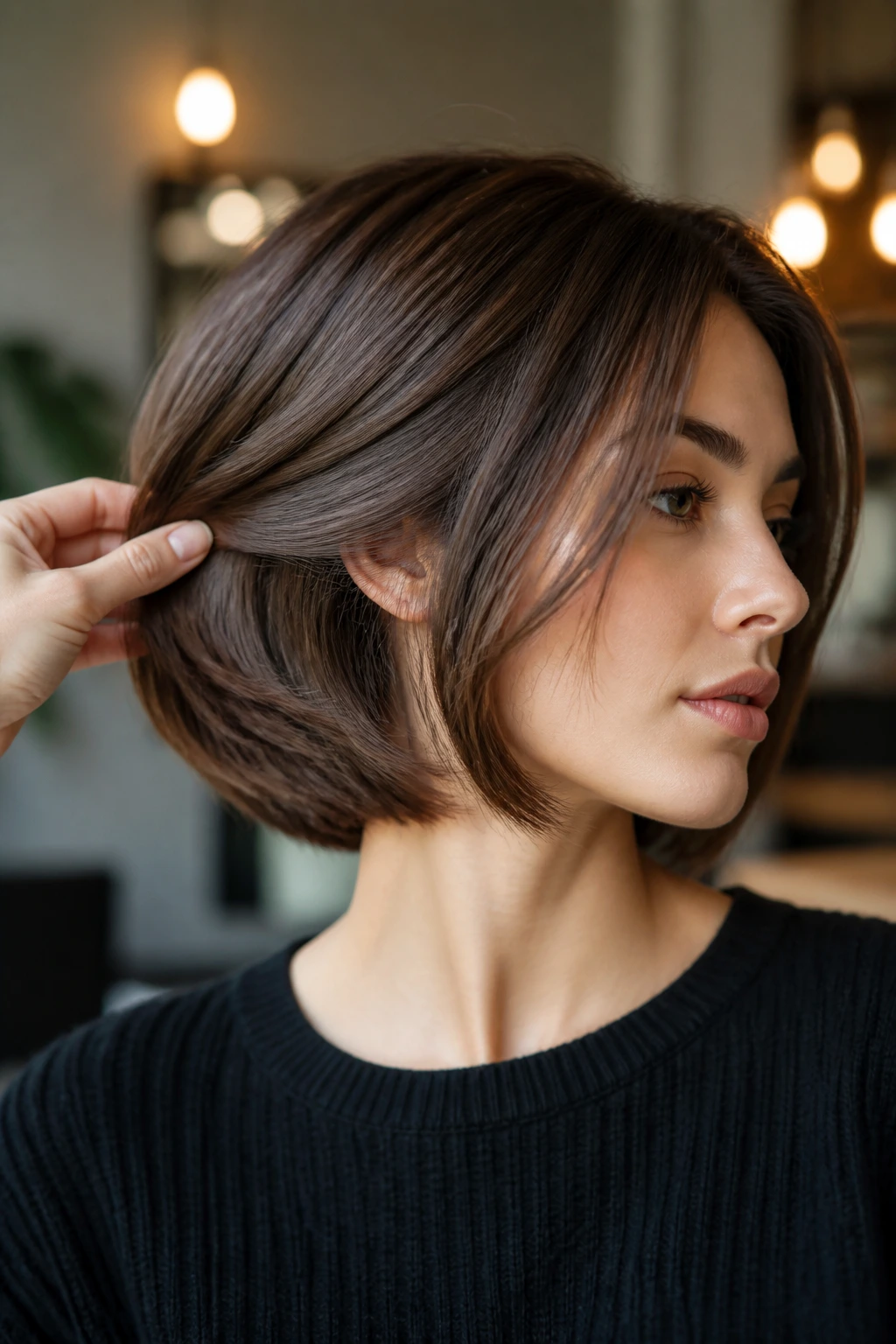
A hidden underlayer is one of my favorite tricks for fine hair. The surface stays smooth and clean, while the hair underneath gets just enough shaping to create bounce. You don’t see the layers as separate pieces, which keeps the bob from looking thin or overcut.
The brown color can be anything from medium mocha to deep espresso. The important part is the structure. When the top layer falls over the shorter interior, the cut gains a little lift without advertising the mechanics of the haircut.
Why it works
The outer layer protects the outline. The inner layer gives the movement. Simple idea. Big payoff.
This is a good salon request if you want volume but hate obvious layers. It’s also useful if your hair is fine yet plentiful, because the hidden shaping can keep the bob from ballooning at the sides.
Use a round brush at the roots and a light mist of flexible spray. That’s enough. If you start piling on products, the clean effect disappears fast.
18. A-Line Chestnut Bob
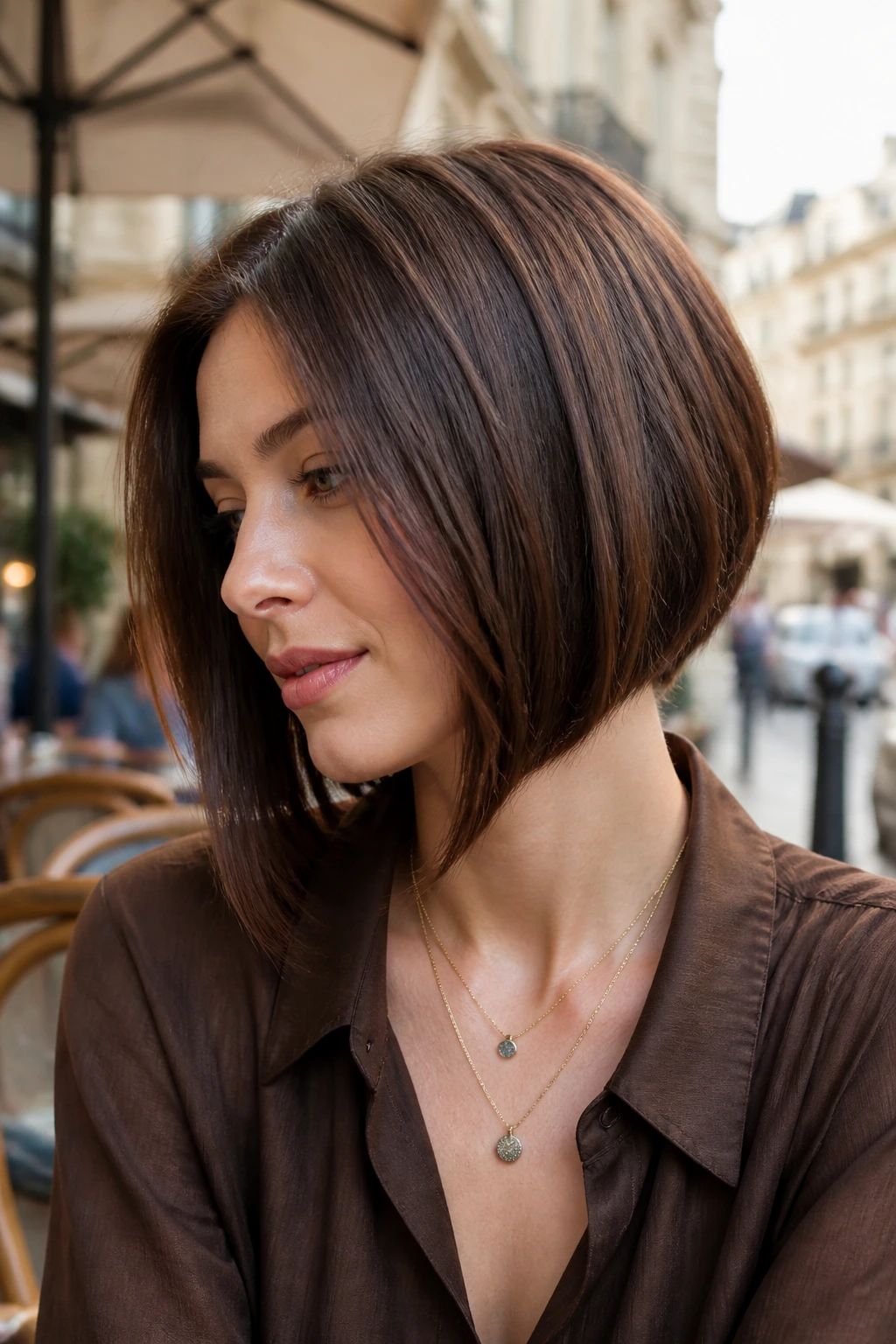
An A-line bob is longer in the front and shorter in the back, but the version that works on fine hair is usually softer than people expect. You do not want a harsh wedge. You want a gentle slope that gives the front a little presence and keeps the back lifted.
Chestnut brown suits this cut because the shade adds warmth and makes the line feel more natural. The front pieces can brush the jaw or collarbone depending on how much length you want. The back stays neat, which keeps the style from sagging.
The clean angle helps fine hair hold shape. It creates the look of density through the front while the shorter back supports volume at the crown. That’s a smart trade for hair that tends to flatten out as the day goes on.
This style feels polished, but not rigid. It’s a nice compromise when you want movement and structure in the same haircut.
19. Chin-Grazing Bob with Internal Layers

A chin-grazing bob is the classic answer when you want something simple that still flatters fine hair. The length sits in the sweet spot: short enough to feel full, long enough to tuck behind the ears. Internal layers keep the outside line intact, which is exactly what the cut needs.
Internal layers are not the same as a choppy layered bob. They live inside the shape and help the hair bend a little more naturally. You don’t see them right away. You feel them when the hair moves.
What to ask your stylist for
- A solid chin-length perimeter
- Soft internal shaping through the middle
- Minimal thinning at the ends
I like this cut because it is hard to mess up when it’s maintained properly. It grows out in a believable way, and it works with straight, slightly wavy, or blow-dried hair. If you want a brown bob haircut for fine hair that doesn’t need a lot of explaining, this is one of the safest bets.
20. Tousled Brown Bob with an Off-Center Part
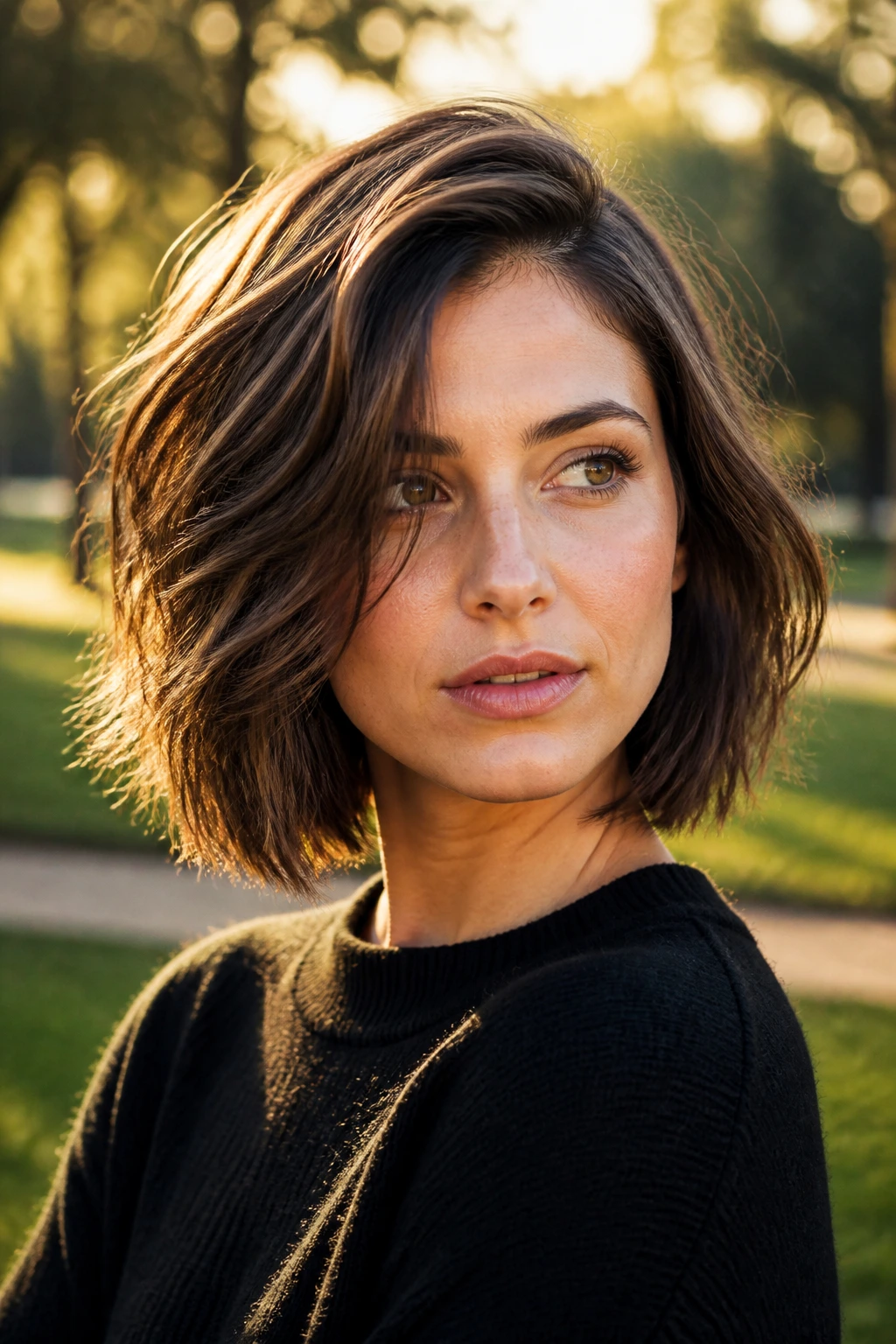
Fine hair can look flat when it’s too perfect. A tousled bob with an off-center part adds a little looseness without losing the shape. The part keeps one side slightly heavier, which creates a more natural fall and a touch of lift at the crown.
A brown shade with soft dimension works well here. Not chunky streaks, not obvious contrast. Just enough variation to make the movement visible. The style is especially good on hair that already has a slight wave or bends easily with heat.
Use a lightweight mousse or foam before drying. That gives the hair enough grip to hold the tousled shape without turning it sticky. A curling wand can help, but keep the waves loose and brush them apart after they cool.
This is a practical cut for people who want something casual but not sloppy. It feels easy. It also hides the days when your blow-dry doesn’t go to plan.
21. Rounded Bob with Bottleneck Bangs
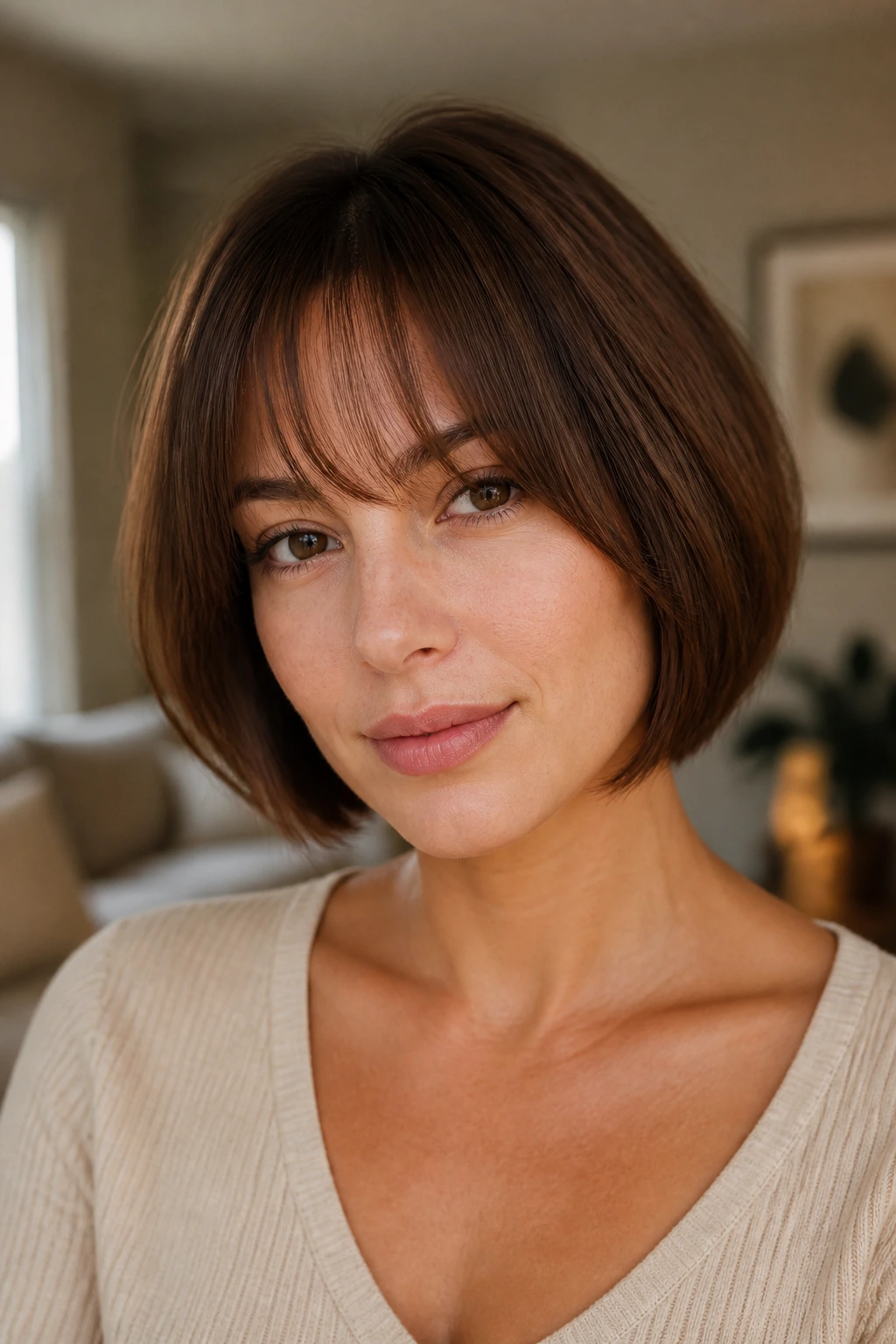
Bottleneck bangs are a clever fringe shape for fine hair. They start a little narrower at the top, open slightly through the middle, and soften around the eyes. That shape adds detail at the front without making the bangs look too heavy.
A rounded bob underneath gives the haircut a soft frame. The combination is lovely on brown hair because the color and shape work together: the fringe adds focus, and the rounded body gives fullness through the sides. It’s a very balanced look.
The bangs need to be kept airy. Too thick, and they eat the forehead. Too thin, and they disappear. The rounded bob should stay smooth through the perimeter, with only enough curve to support the fringe.
This cut suits someone who wants a little face framing and a little structure, but not the fuss of a lot of layers. It’s a tidy, flattering shape that feels more thoughtful than trendy.
22. Center-Part Brunette Bob
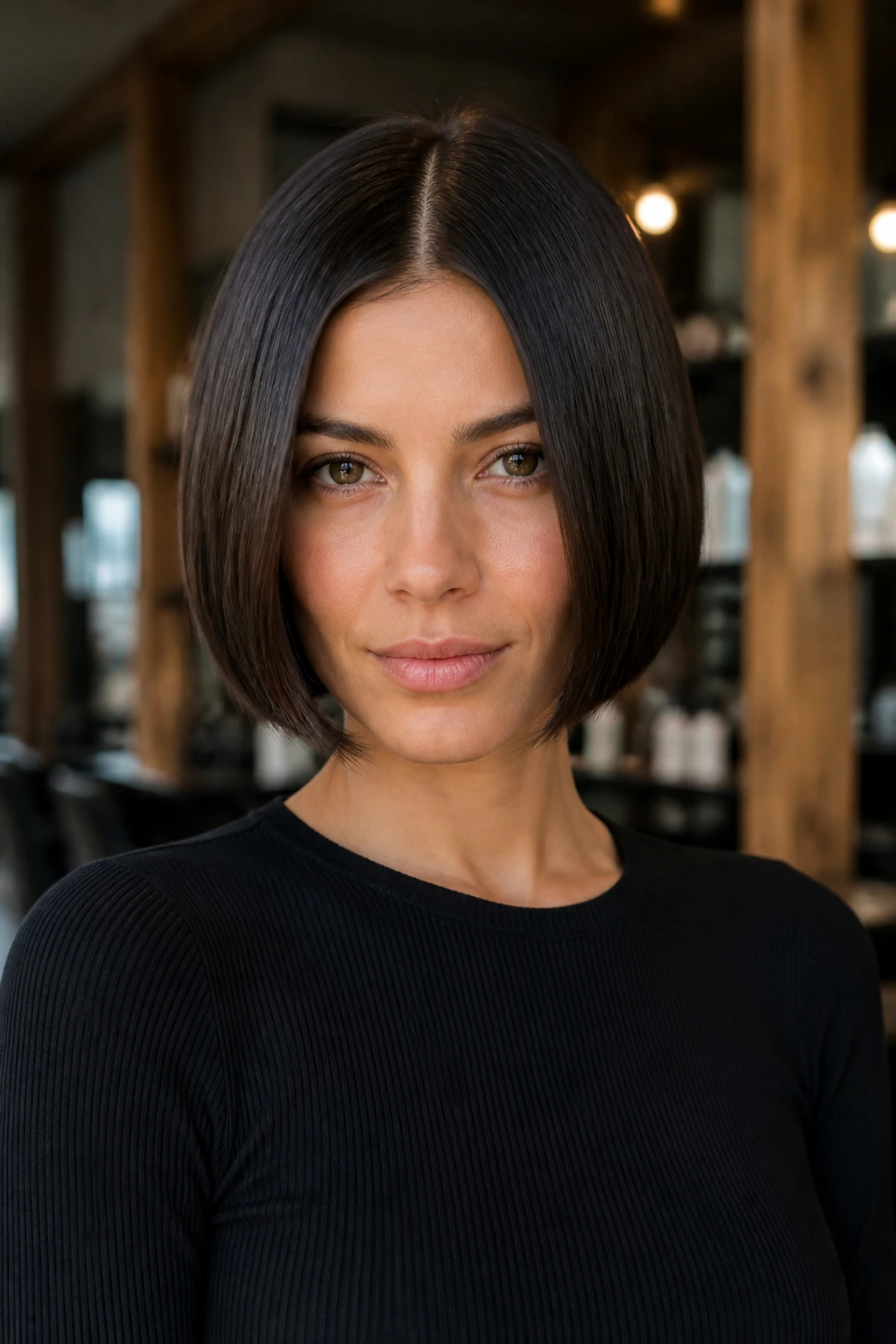
A center part can be unforgiving on thin hair if the cut is weak. Put it on a solid blunt bob, though, and it turns into one of the cleanest styles available. The symmetry makes the hair look deliberate, and deliberate hair usually reads as fuller.
Brunette brown is perfect here because it adds uniformity. A center part and a dark, even shade create a strong line straight down the head and across the ends. If the bob falls just below the jaw, the effect is sharp and fresh without trying too hard.
Why it holds up
The center part keeps both sides equal, which reduces the chance of one side collapsing or puffing out. That sounds small. It changes the whole silhouette.
This works best on straight hair or hair that takes a blowout well. It also helps if the ends are in good shape, because every split end will show. Keep the line crisp, and you get a bob that looks simple in the best way.
23. Softly Stacked Hazelnut Bob
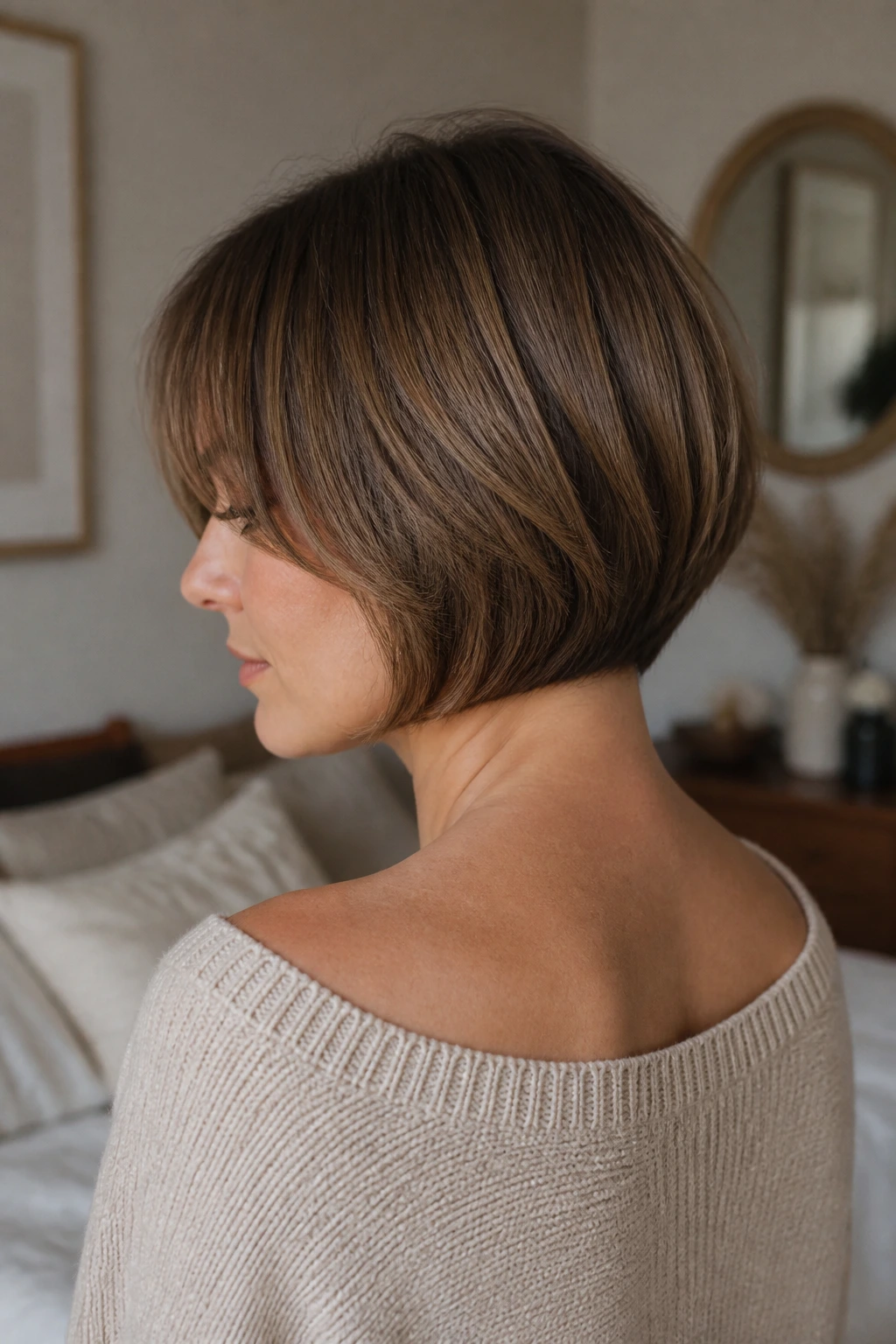
Stacking at the back can give fine hair the lift it needs, but it has to be soft. Too much and the cut starts looking dated. Just enough and the bob sits up nicely at the nape while the top stays smooth. Hazelnut brown gives the shape warmth and makes the back look less severe.
This is a strong option if your hair tends to go flat at the crown and around the back of the head. The stacking nudges the hair forward a bit, which creates a fuller-looking profile. You get a little built-in support without needing heavy styling every morning.
A blunt note
This cut needs restraint. The moment the stacking gets too steep, the bob becomes about the haircut instead of the hair. Fine hair usually looks better when the shape is subtle and believable.
If you like a bob with a little lift but don’t want an obvious wedge, this is a smart middle ground. It’s easy to wear and easier to grow out than people expect.
24. Tapered Bob with Crown Lift
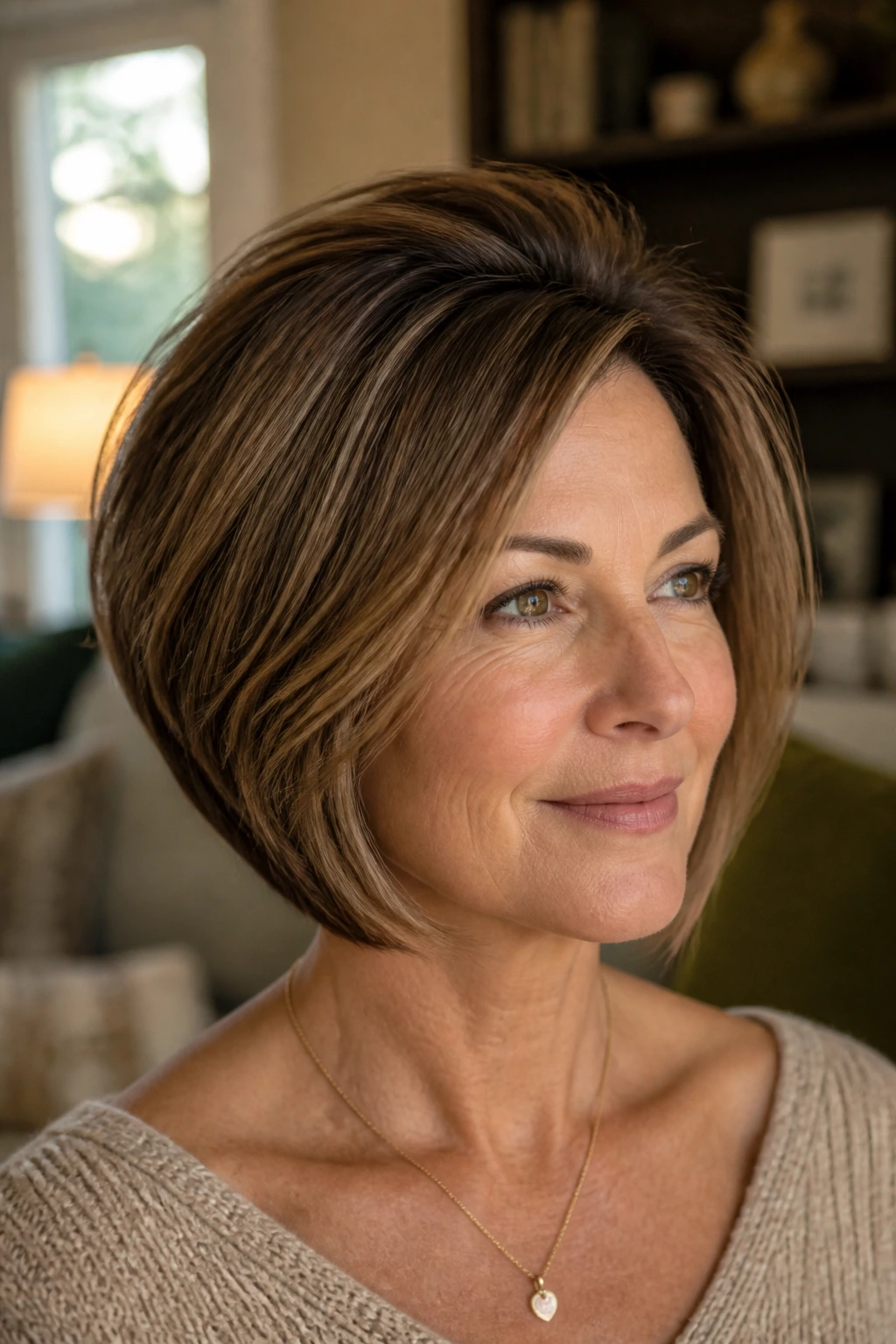
A tapered bob puts the attention where fine hair often needs it: at the crown and upper back. The top gets a little lift, the sides stay neat, and the ends narrow gently toward the neckline. That taper keeps the hair from feeling heavy without making it look sparse.
Brown with a soft caramel undertone works nicely here. It keeps the cut from looking flat in dim light, and the warmer shade adds a touch of depth around the crown. The styling is straightforward: root lift, a quick blow-dry, and a soft turn at the ends.
Useful details
- Best for hair that loses volume fast
- Best for round or square faces that benefit from crown height
- Best when the neckline is kept clean
I like this cut for people who want body without big waves or obvious texture. It feels neat, but not severe. And the crown lift makes a bigger difference than most people think when the hair is fine and straight.
25. Feathery Cinnamon Brown Bob
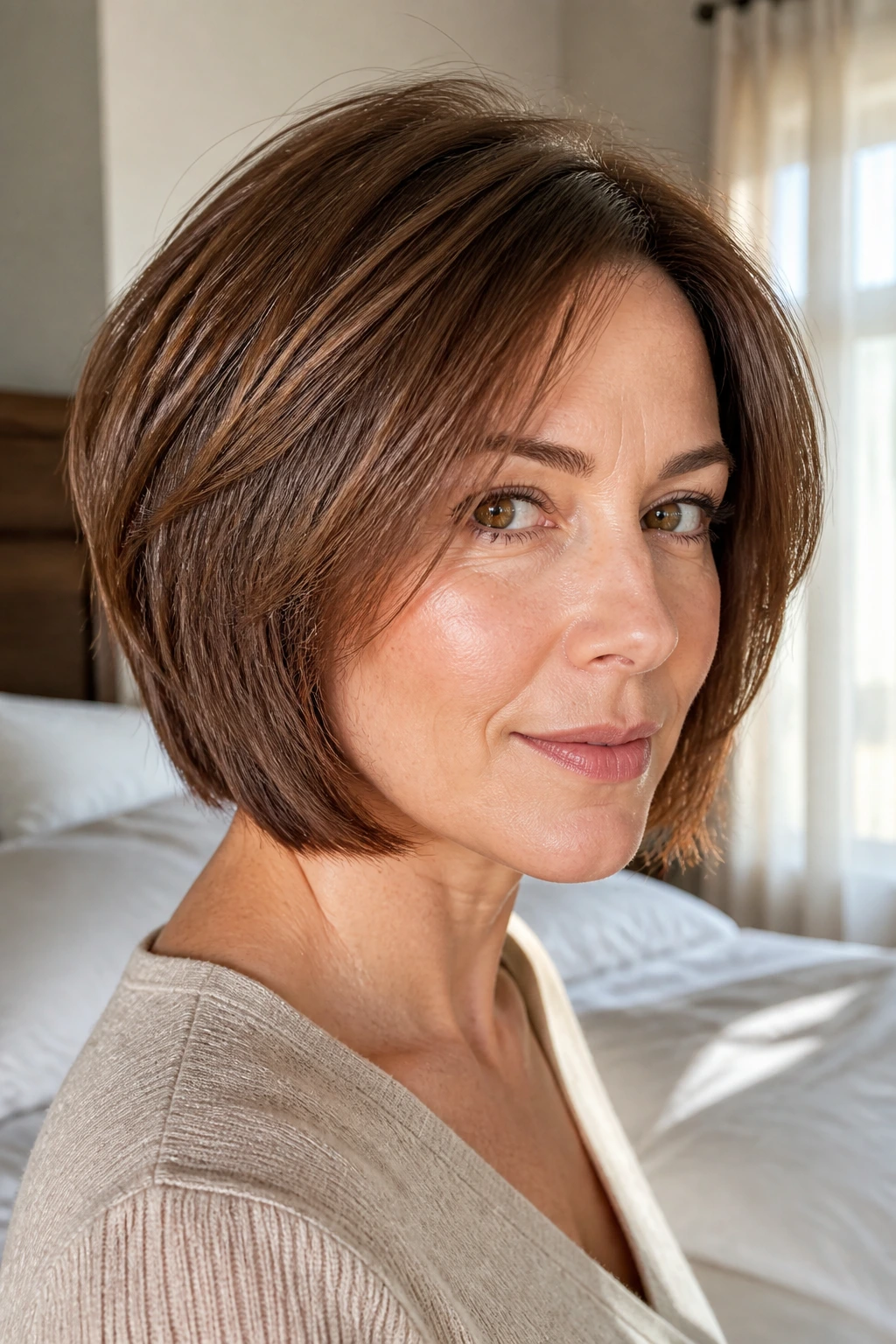
Feathering on fine hair needs care. Too much, and the ends look thin. Just enough, and the cut gains softness without losing its outline. A cinnamon brown bob with light feathering near the top layers can keep the style airy while the perimeter stays full.
The warm brown tone helps because it makes the hair look richer and a little more dimensional. The feathering should sit high enough that it doesn’t eat into the lower edge. That’s the part that holds the haircut together.
This bob is good for someone who wants movement and a bit of softness around the face. It works especially well if your hair bends easily but doesn’t hold big waves for long. A round brush and a touch of smoothing cream are usually enough.
The result feels relaxed, not messy. That’s the goal. Fine hair often looks best when the cut understands its limits instead of fighting them.
26. Mini Bob Tucked Behind the Ears

A mini bob is short, clean, and blunt in a way that fine hair can handle beautifully. The length usually sits around the cheek or just below the ear, which gives the haircut a crisp outline and keeps the ends from getting wispy. Tucking it behind the ears changes the whole mood, making the cut feel sharp and open.
Brown hair keeps this style grounded. A medium or deep brown shade gives the tiny bob more presence, especially if the cut is very neat. I like this on faces with strong cheekbones or a narrow jaw. The short length draws attention to the bone structure instead of the hair itself.
What to expect
This is not the easiest style to tie back. It is, however, one of the fastest to dry and one of the cleanest to wear.
If you want a short brown bob haircut for fine hair that feels modern without being fussy, this is a strong choice. Add small earrings if you like that sort of thing. The cut already does most of the talking.
27. Dimensional Brown Bob with Lowlights
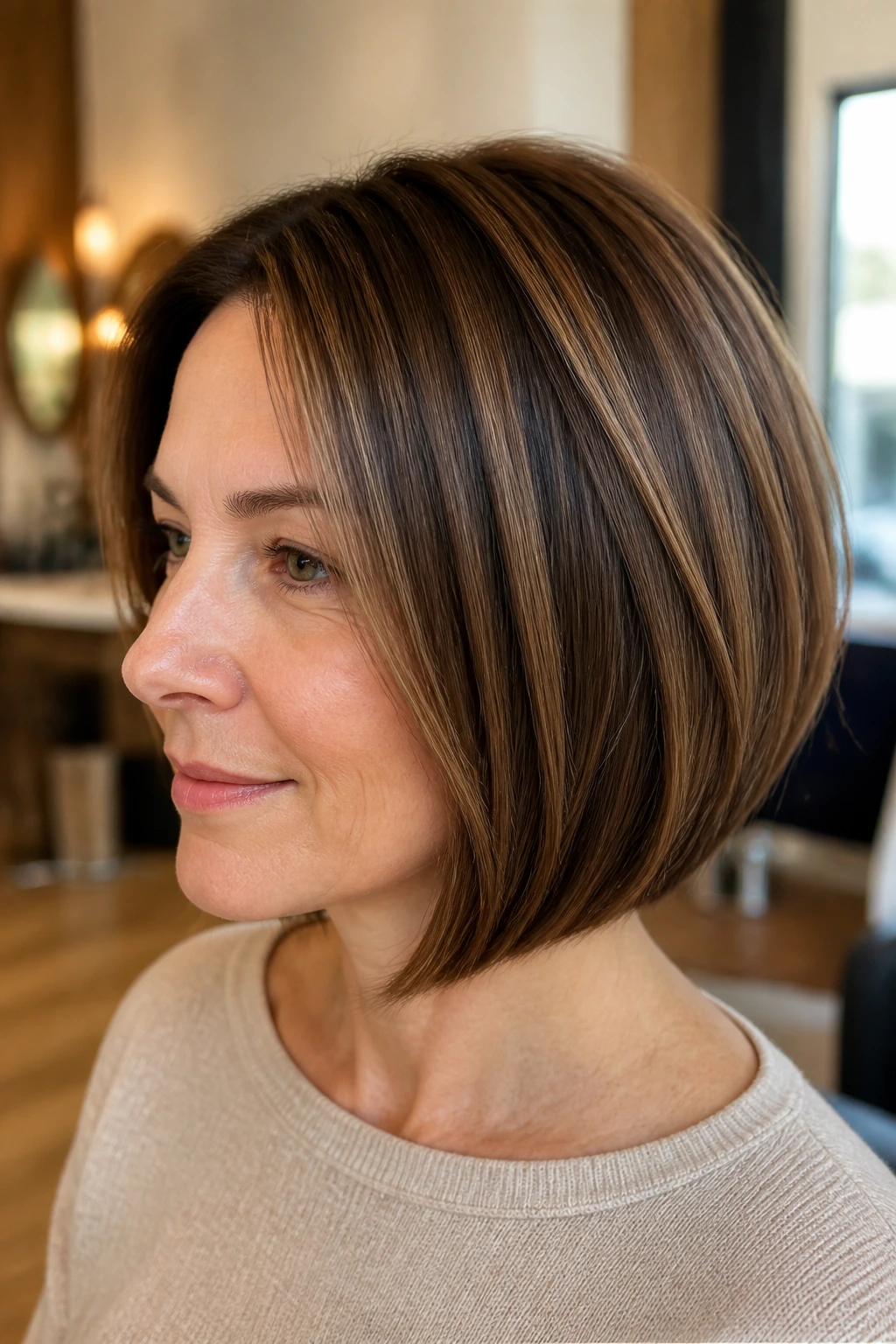
Color can do a lot for fine hair. Lowlights add shadow, and shadow adds depth. A dimensional brown bob uses that idea to make the hair look fuller without changing the cut very much. The trick is to keep the color believable — close enough to your natural brown that it grows out gracefully.
The bob itself can be blunt or lightly layered. What matters is the contrast. If every strand is the same shade, the cut can look flat. Add a few deeper pieces underneath and through the mid-lengths, and the whole shape suddenly feels thicker.
Why lowlights help
They break up the surface in a subtle way. The eye reads the darker strands as depth, which is useful when the hair is naturally fine.
This style works well for people who don’t want a dramatic haircut but still want the illusion of more hair. It is a quiet fix. Sometimes those are the best ones.
28. Shaggy Bob with Wispy Bangs

A shaggy bob can work on fine hair, but only if the layers stay light. If the cut gets too choppy, the ends will disappear. Wispy bangs help soften the front and keep the shape from feeling too serious, while the rest of the bob carries a little movement and bend.
Brown shades with a little warmth tend to suit this style because the texture shows more clearly. The goal is not a full shag. It’s a bob with a bit of attitude, some looseness, and enough layering to keep the hair from lying like a sheet.
What to keep in mind
This cut needs styling. A small amount of texture spray or mousse helps the layers separate in a clean way. Air-drying alone can leave it looking limp.
If you like hair that feels undone, this one has appeal. If you want crisp edges and very little maintenance, skip it. That honesty saves everyone time.
29. French-Girl Bob with a Soft Bend
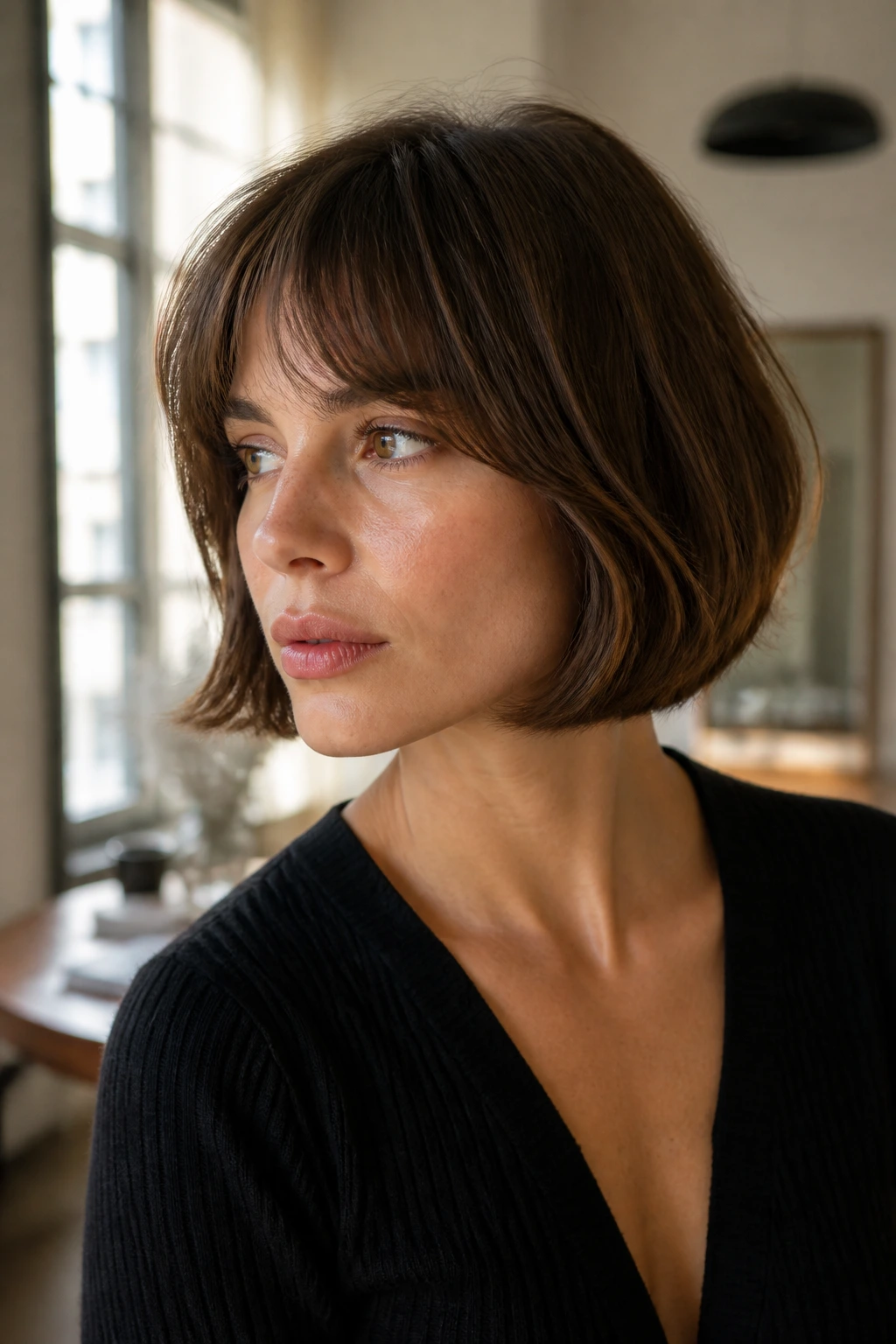
There’s a reason this shape keeps showing up again and again. It works. A French-girl bob usually lands around the chin, with a soft bend rather than a rigid curve. On fine hair, that slight looseness keeps the style from looking over-styled while the short length preserves fullness.
Brown hair gives the cut more depth than a lighter shade would. A medium brunette tone is especially nice because it makes the line look rich and slightly lived-in. The bend should be subtle, almost like the hair naturally settled that way after a good blow-dry.
This is a strong pick if you like hair that feels easy but still intentional. You can wear it with a center part, a soft side part, or with the front pieces pushed back. It is flexible without turning messy. That’s rare.
30. Polished Brown Bob with a Sleeker Finish
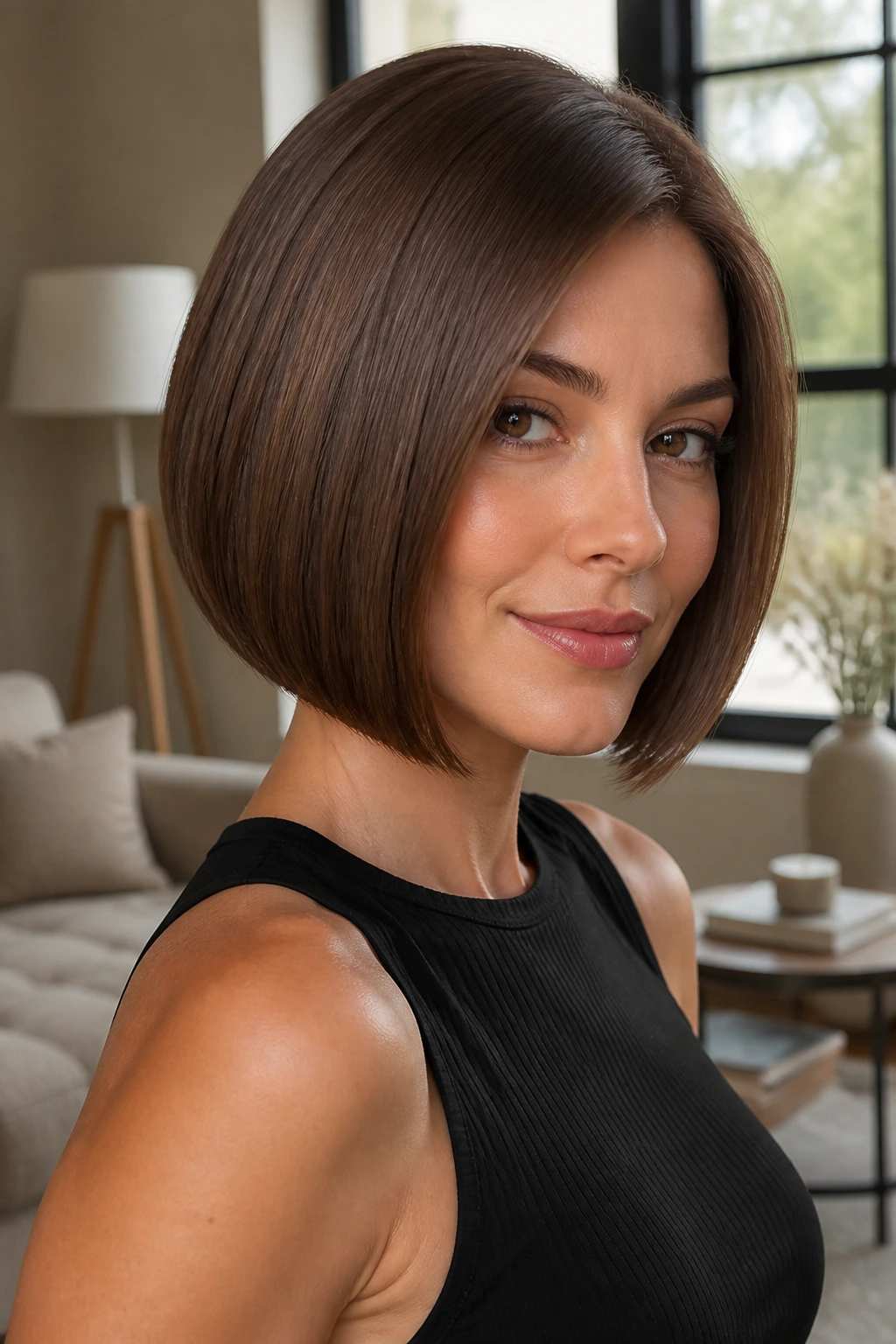
A sleek finish can be a gift for fine hair when the haircut is clean enough to support it. A polished brown bob with minimal texture leans into smoothness, shine, and a controlled outline. The ends should sit neatly, usually with only the smallest bend under or inward.
This style works especially well with rich brown shades because the color reflects light in a calm, even way. The bob looks intentional and expensive without needing much decoration. No heavy layering. No choppy perimeter. Just a precise cut and a good finish.
Styling approach
Use heat protectant, blow-dry in sections, and finish with a flat brush or iron if needed. A touch of serum on the last inch or two of the hair helps the ends look neat, but keep the roots free of product.
This is the bob for someone who likes order. It’s clean. It’s direct. And on fine hair, that simplicity often looks better than a lot of styling tricks.
Final Thoughts
Brown bob haircuts for fine hair work best when the cut respects the hair’s limits. That usually means a strong outline, careful layering, and color that gives the eye a little depth to work with.
The smartest choices are rarely the busiest ones. A blunt chin-length bob, a soft angled cut, or a short French bob can all do more for fine hair than a stacked style that’s been overworked. Clean shape wins. Every time.
