



Fine hair and a choppy bob haircut are a better match than most people think, but only when the cut is handled with restraint. The trick is not to shred the ends until they look see-through. It’s to keep enough shape at the perimeter to make the hair look fuller, then build movement in the places that actually need it.
That balance matters. Fine hair usually loses body fast when it gets over-layered, especially through the bottom third of the cut. A smart choppy bob gives you lift, texture, and a little swing without turning the ends into string.
Sparse is not the goal.
What you want is a bob that looks a touch undone in a flattering way — clean at the edges, broken up in the right spots, and easy to style with a blow-dryer, a 1-inch iron, or even air-drying if your hair has a bend to it. The best versions work with fine hair instead of fighting it, which is why some bobs look thick and lively while others look thin and tired before lunch.
1. The Chin-Length Choppy Bob With Soft Ends
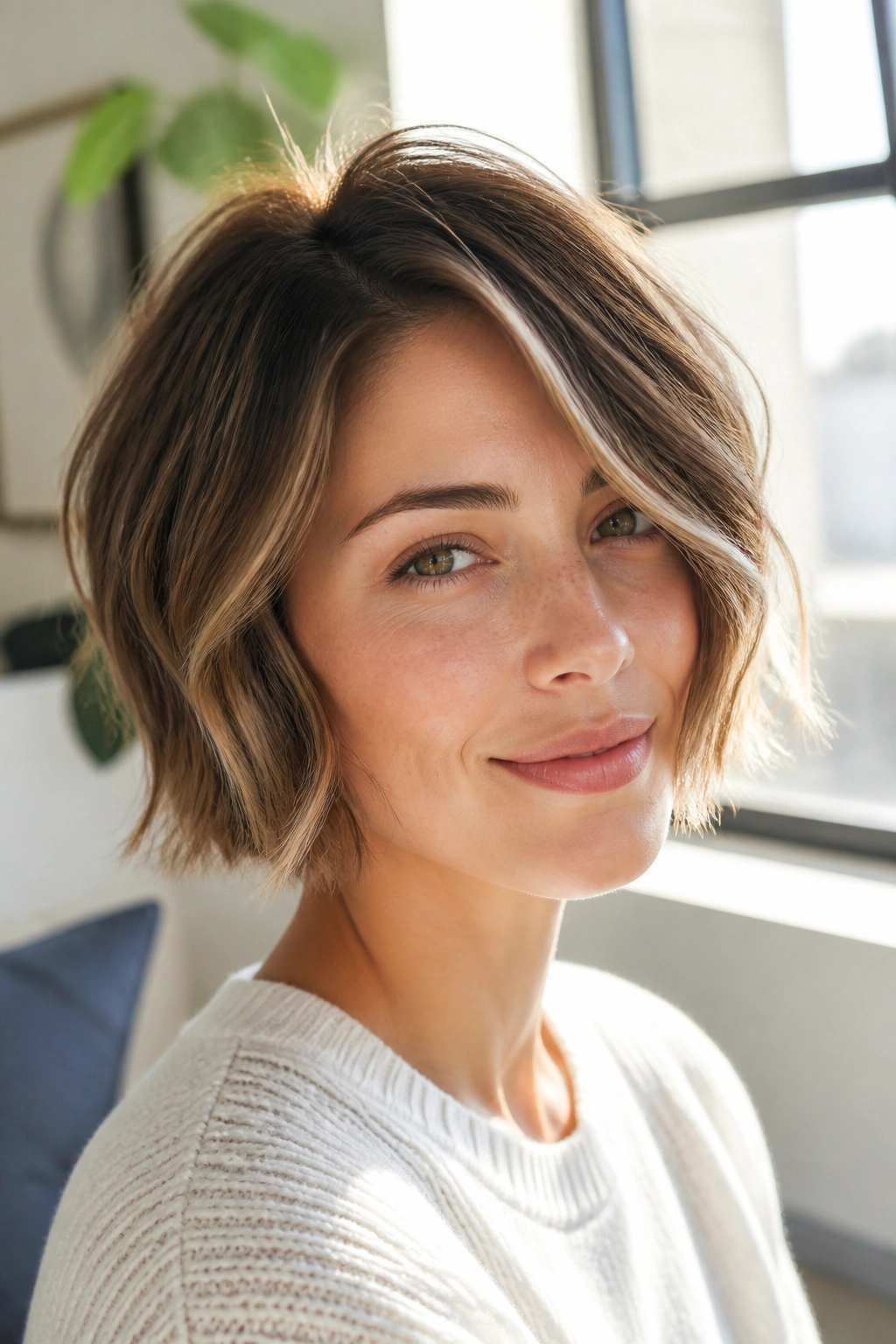
This is the cut I reach for first when someone wants more body without losing the neat shape of a bob. Chin length keeps the hair close enough to the face to look full, and the soft choppy ends stop the line from feeling too blunt or blocky. Fine hair usually likes this because it creates the illusion of density right where people can see it.
Why it works for fine hair
The chin is a strong stopping point. Hair that lands there tends to look intentional, not accidentally grown out, and the short distance from roots to ends helps the cut hold shape. Ask for light texture through the bottom only — not heavy thinning, not razor damage.
- Best for straight to slightly wavy hair
- Easy to tuck behind the ears
- Looks fuller with a side or center part
- Pairs well with a quick round-brush bend
A tiny bit of root spray at the crown makes this one look expensive in the best sense: polished, but not stiff.
2. The Jaw-Skimming Piecey Bob
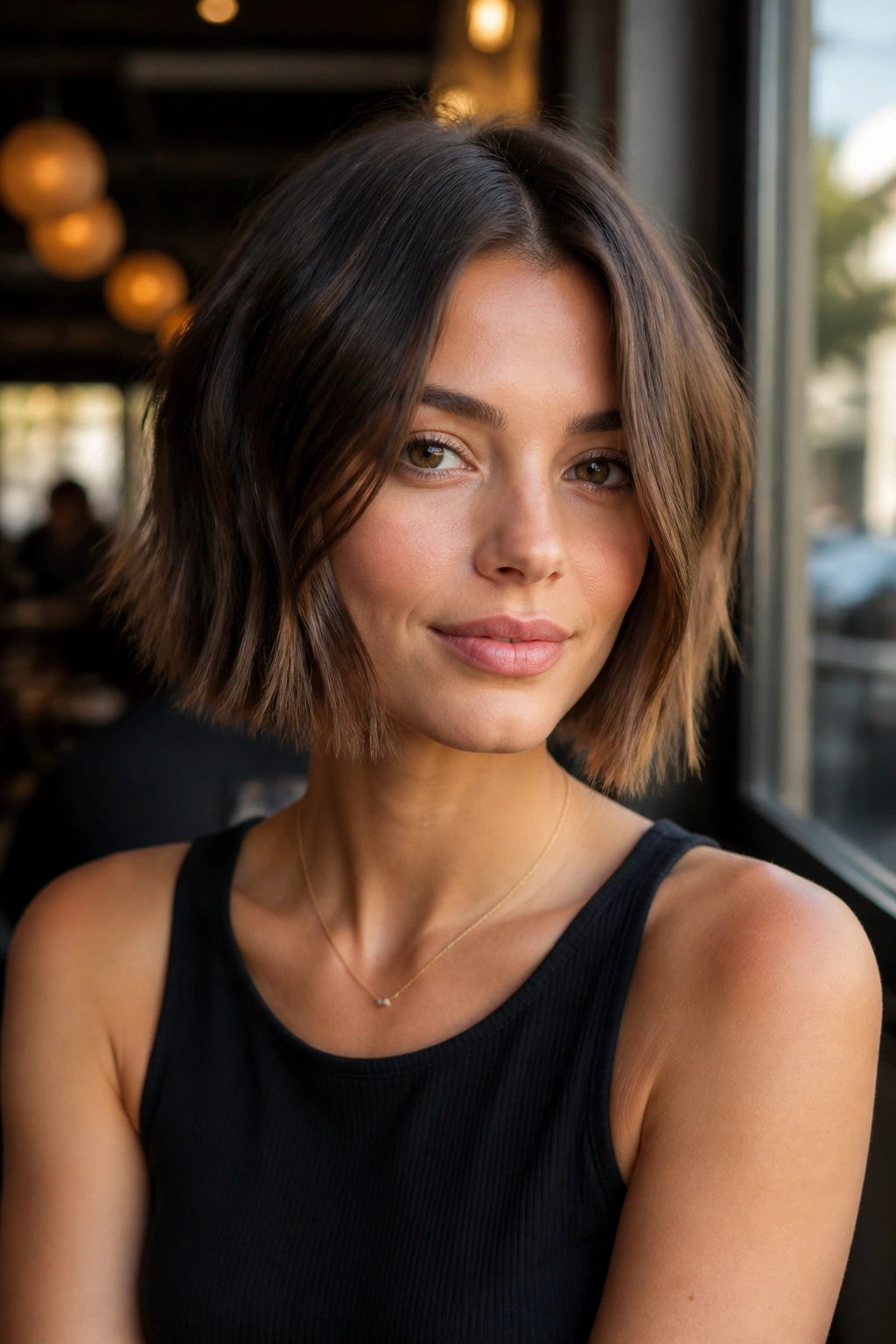
Jaw length is sharp in a good way. It puts the emphasis right on the face, and the choppy texture gives the whole cut a little grit so it doesn’t fall flat. Fine hair often looks best when the shape is deliberate, and this bob is all about that clean, slightly edgy line.
If your hair tends to collapse near the temples, this cut helps because the ends hover around the jaw instead of hanging lower and losing structure. I like it with a subtle middle part, but a soft side part works too if you want more volume on one side.
Styling note
Use a pea-sized amount of lightweight cream through the mid-lengths, then twist two or three sections around your fingers while drying. That’s enough. Too much product and the choppy pieces turn limp fast.
3. The Softly Stacked Bob That Lifts the Nape
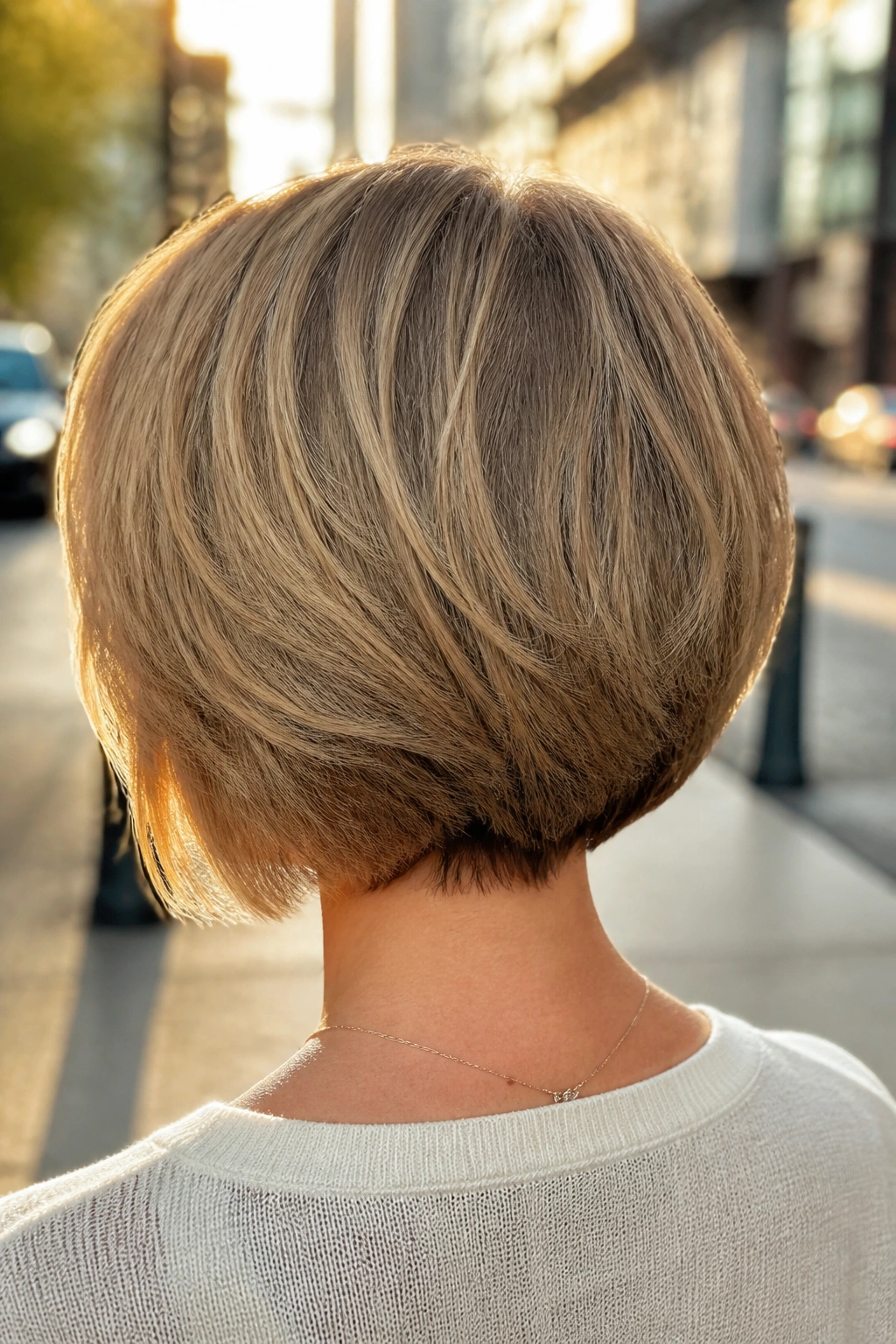
A stacked bob can be a gift for fine hair, but only if the back is handled carefully. Too much stacking and you get the old-school helmet shape. Too little and the cut loses the lift that makes it worth wearing.
This version keeps the nape a little shorter, then angles softly toward the front. The result is a clean back view and a fuller-looking crown, which is often exactly what fine-haired clients are after. It’s especially useful if your hair lies flat at the back of the head and needs a little architecture.
What to ask for
- Light graduation through the back
- A blunt-ish edge at the front
- Internal texture, not shredded layers
- A blowout that curves under at the neck
It looks best when the ends are smoothed just enough to show the shape. Messy styling can work, but the cut already has enough personality.
4. The Collarbone Choppy Lob With Airy Ends

If you’re nervous about going too short, start here. A collarbone lob keeps more length, which means a bit more swing, and the choppy ends keep it from hanging like a curtain. Fine hair often benefits from this middle ground because it preserves some weight while still giving you movement.
This cut is especially good when your hair gets flatter as it gets longer. The collarbone gives it a natural resting point, and the texture through the last two inches stops the ends from looking stringy. It’s one of those cuts that looks casual on a good day and polished on a straight one.
A center part keeps it modern. A deep side part gives it a little extra drama.
5. The Deep Side-Part Bob With Crown Volume
Could a simple part change the whole haircut? Absolutely. A deep side-part bob is one of the easiest ways to make fine hair look fuller without cutting off more length. The off-center placement creates immediate lift at the roots, especially if the hair naturally falls flat in the middle.
The choppy element matters here because the cut needs movement to keep one side from looking too heavy. Ask for textured ends and a slightly shorter layer around the crown. That little bit of difference makes the part hold better.
How to wear it
- Blow-dry the crown in the opposite direction first
- Flip the part back once the roots cool
- Finish with a dry texture spray, not a sticky hairspray
This one has a bit of attitude. Good attitude, not fuss.
6. The Blunt Bob With Hidden Texture
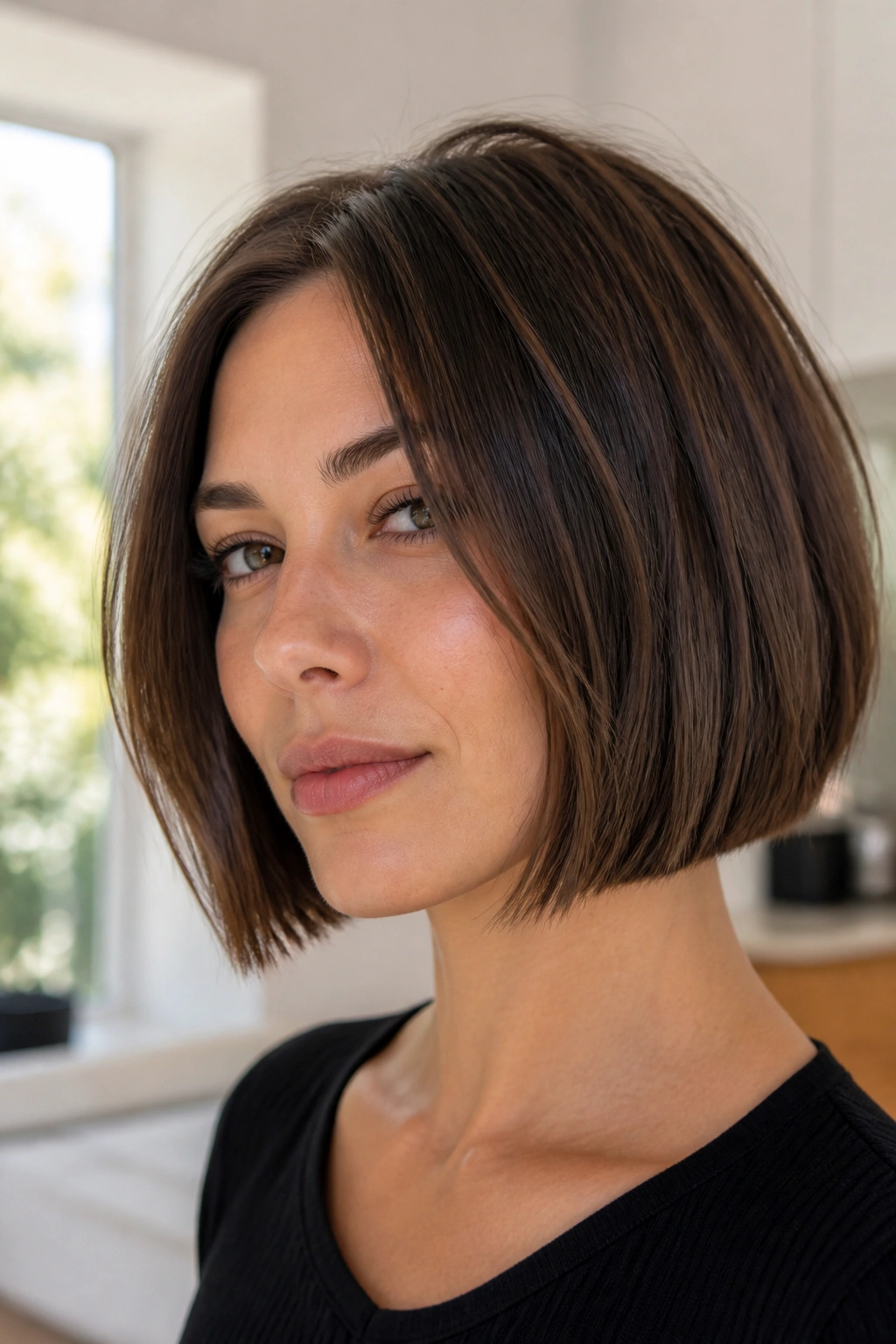
A lot of people think fine hair needs layers everywhere. I don’t buy that. Sometimes a blunt bob with invisible interior texture is the better move, because the outer line makes the hair look thick while a few soft pieces inside keep it from feeling too severe.
This cut looks especially nice when the ends are cut at one solid length, then just lightly chipped inside the shape. The result is sleek but not rigid. Fine hair often looks denser when the perimeter is strong, and this is the cleanest way to get that effect without losing movement.
Best for
- Straight hair that frizzes a little at the ends
- People who want a sharper outline
- Fine hair that needs a thicker-looking edge
A flat iron pass at the very ends can make this one look especially crisp. Keep it loose. No pin-straight severity unless that is your thing.
7. The Airy Wavy Bob for Natural Texture

If your fine hair has even a little wave, don’t fight it. A choppy bob that lets the wave stay visible usually looks fuller than one that’s pressed flat and over-polished. The irregular movement gives the eye more to read, which helps the hair look like there’s more of it.
This cut works best when the stylist respects the wave pattern and doesn’t carve in too many short layers. You want pieces that bend and separate, not a puffed-up triangle. A touch of sea salt spray on damp hair can help, though I prefer a light mousse if your hair is especially soft.
Air-dry halfway, then diffuse for 5 to 8 minutes. That often gives you the best mix of shape and softness.
8. The French Bob With a Micro Fringe

A French bob can be gorgeous on fine hair, but the fringe has to stay airy. A tiny, wispy fringe paired with a choppy chin-length bob creates a compact silhouette that looks fuller because everything sits together in one clean shape.
This style is less about bounce and more about confidence. It frames the eyes, shortens the visual length of the face, and makes fine hair look intentional rather than delicate. That matters. Fine hair often reads as stronger when the haircut has a clear point of view.
Styling tip
Use a round brush only at the fringe and crown. Leave the rest a little undone. The slight imperfection is what keeps this bob from feeling too fixed or too costume-y.
9. The Curved-In Bob With Broken-Up Ends
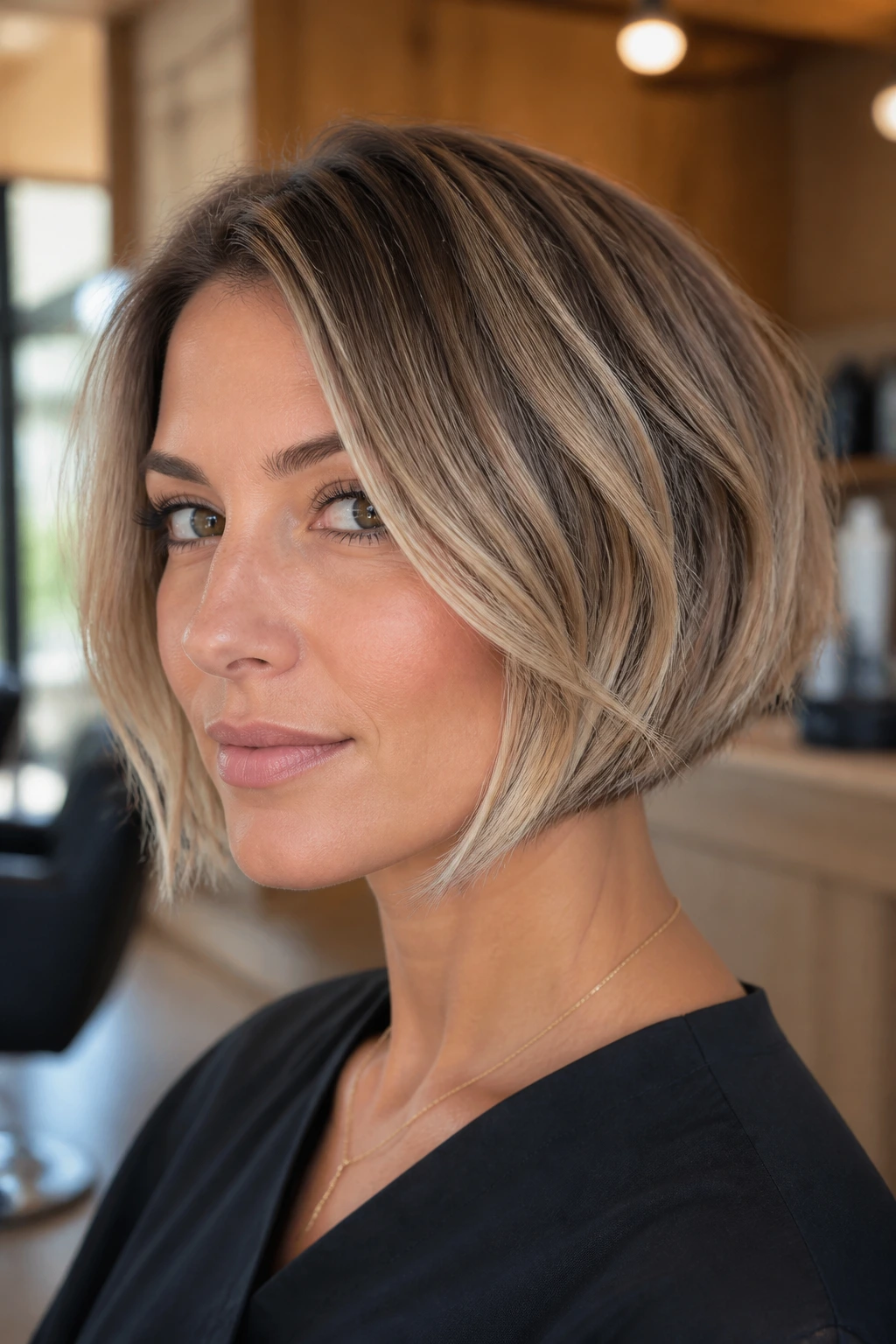
This is the quiet one on the list, and I mean that as a compliment. A curved-in bob hugs the jaw and neck, which makes the hair appear denser, while the choppy ends keep the shape from feeling too tidy. It’s a good fit if you want movement but still like a classic outline.
I like this cut for fine hair that won’t hold big waves for long. The inward curve gives you structure even on a lazy styling day. Ask for a slight bevel at the bottom and very light texturing just below the cheekbones.
You can wear it sleek, or rough it up with your fingers and a bit of paste. Either way, the outline stays strong.
10. The Razor-Lifted Bob With Airy Movement

A razor cut can be tricky on fine hair. Too much, and the ends go frayed. Too little, and you lose the airy motion that makes the style work. The sweet spot is a bob with lightly razor-lifted ends and a solid base underneath.
This cut suits hair that feels heavy even when it’s not thick. The razor work removes just enough bulk to help the pieces separate, which can make the whole head of hair look more lively. It’s a good option if your hair falls limp in humid air or if you like a little mess in the finish.
Watch for this
If the stylist starts feathering aggressively through the bottom inch, stop them. Fine hair needs movement, yes, but it still needs structure to look full.
11. The Asymmetrical Choppy Bob
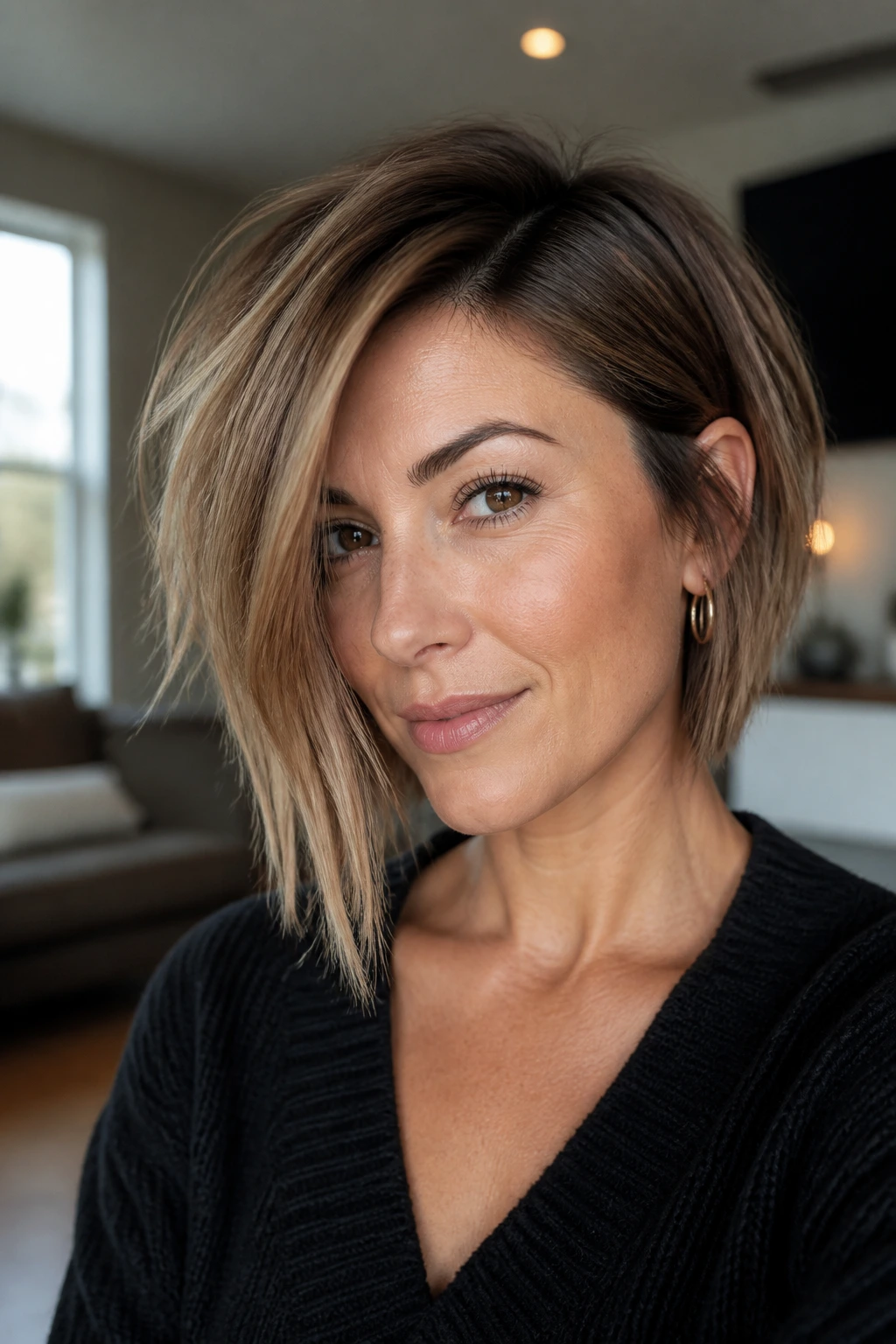
Asymmetry is doing a lot of work here. One side slightly longer than the other creates visual tension, and that helps fine hair look more interesting without relying on volume alone. The choppy texture keeps the shape from looking like a formal haircut.
This one tends to flatter people who like a little edge but don’t want an aggressive cut. The longer side can skim the cheek or collarbone, while the shorter side opens the face and gives the whole style a bit of lift. I’d avoid excessive layering; the asymmetry is already doing the heavy lifting.
It’s especially good if one side of your hair always falls flatter than the other. The cut turns that into part of the style.
12. The Inverted Bob With a Feather-Light Back
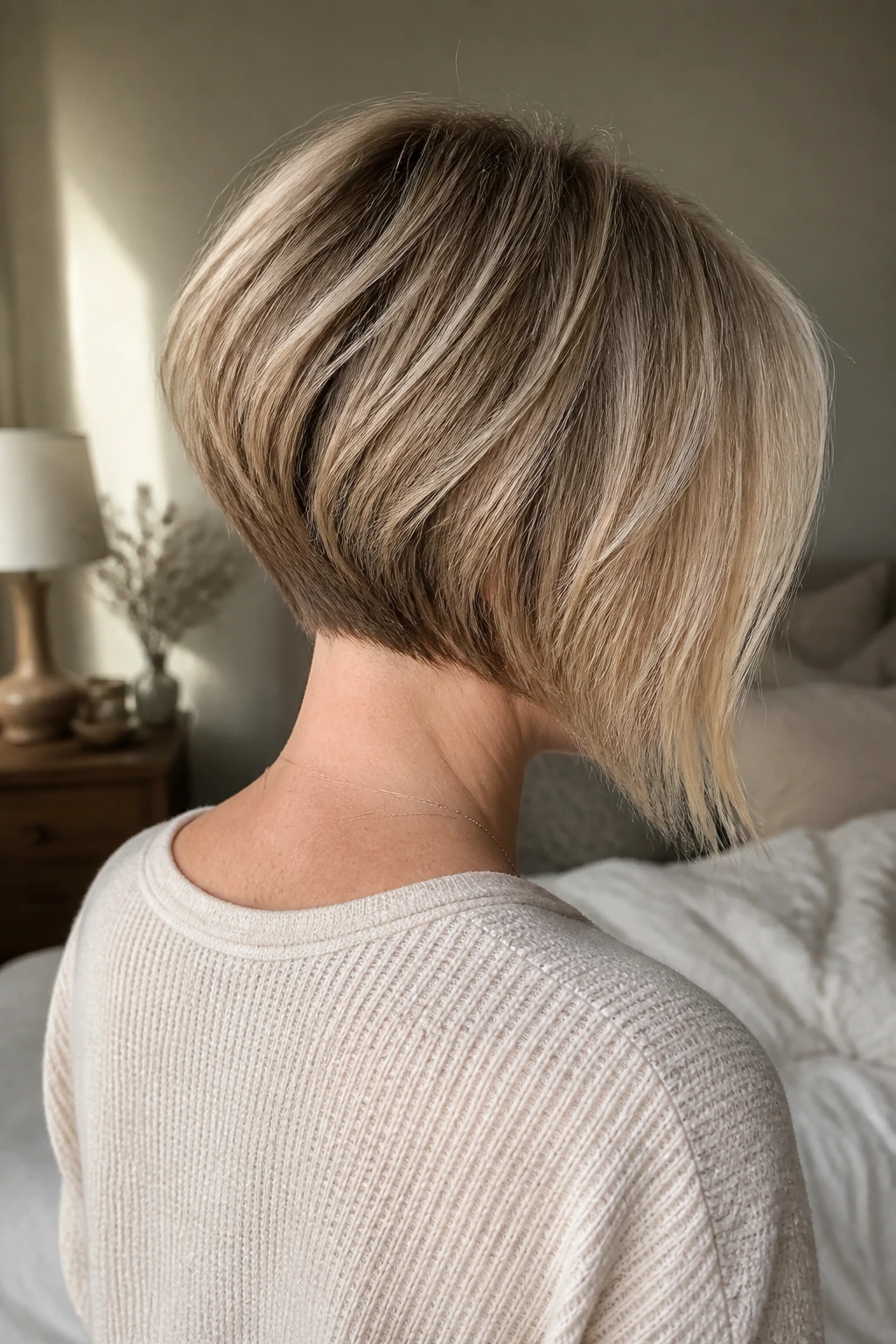
A classic inverted bob has a shorter back and a longer front. On fine hair, that can be brilliant — or a mess — depending on how much weight is left in the perimeter. The version I like keeps the back neat but not over-trimmed, then adds feather-light texture through the front lengths.
That gives you a little swing around the jaw and cheekbones, which makes the face feel lifted. It also stops fine hair from looking bottom-heavy. If your neckline tends to get bulky, this cut can clean it up without making the whole style too severe.
A quick blow-dry with a vent brush usually shows the shape best. The back should sit close to the neck, not puff away from it.
13. The Bob With Curtain Bangs
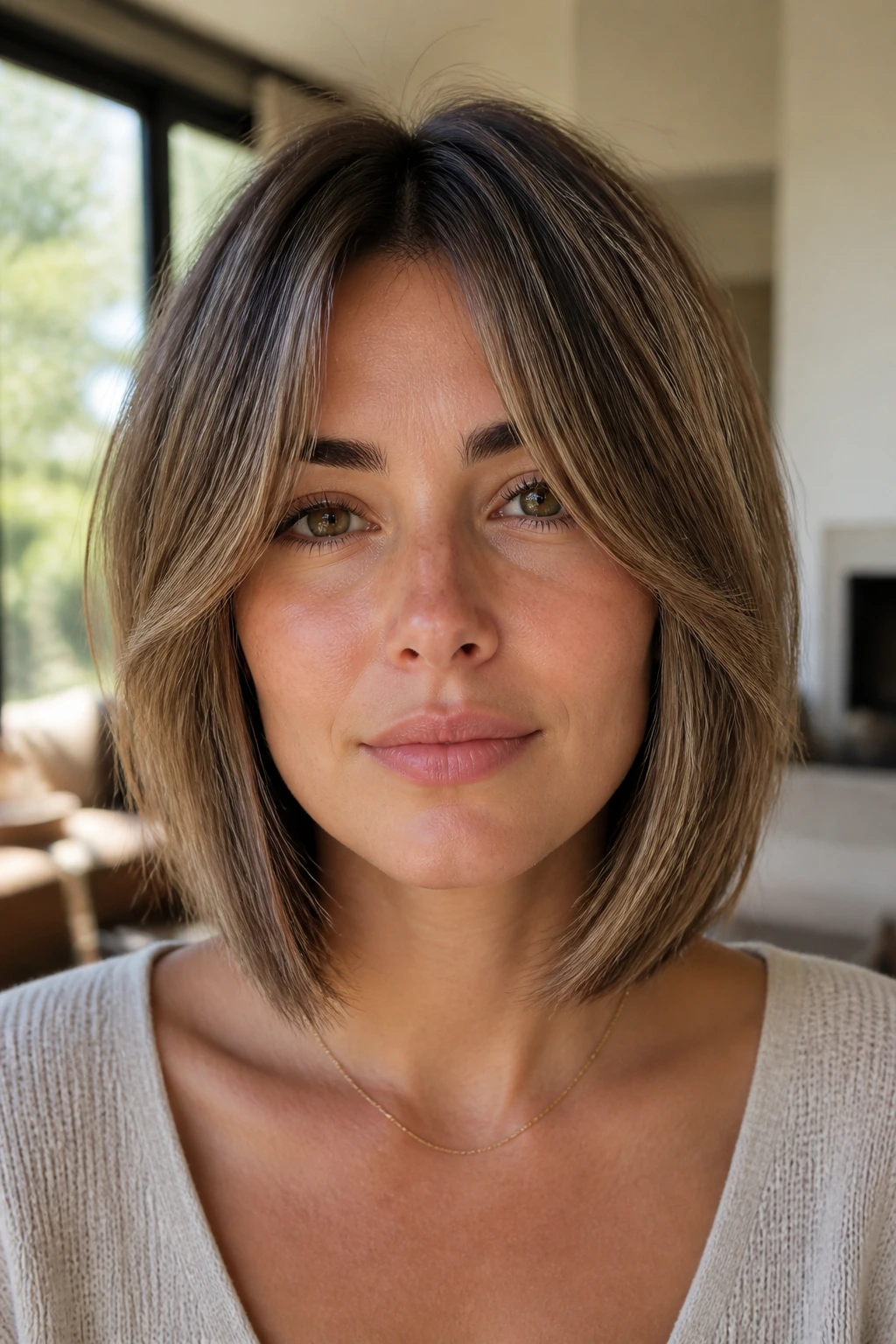
Curtain bangs and fine hair can get along beautifully when the fringe stays soft. The center-parted bangs blend into a choppy bob and create a face frame that makes the haircut look fuller at the front, where people notice it first.
This is one of my favorite picks for someone who wants a bob but worries about looking too plain. The bangs add movement around the eyes and cheeks, and the slightly longer sides connect the fringe to the rest of the cut. Keep the bob itself around chin to collarbone length so the whole shape stays balanced.
Styling it well
Dry the bangs first. Seriously.
If they dry crooked, the rest of the cut will never quite look right, even if the bob itself is perfect.
14. The Bottleneck Bang Bob
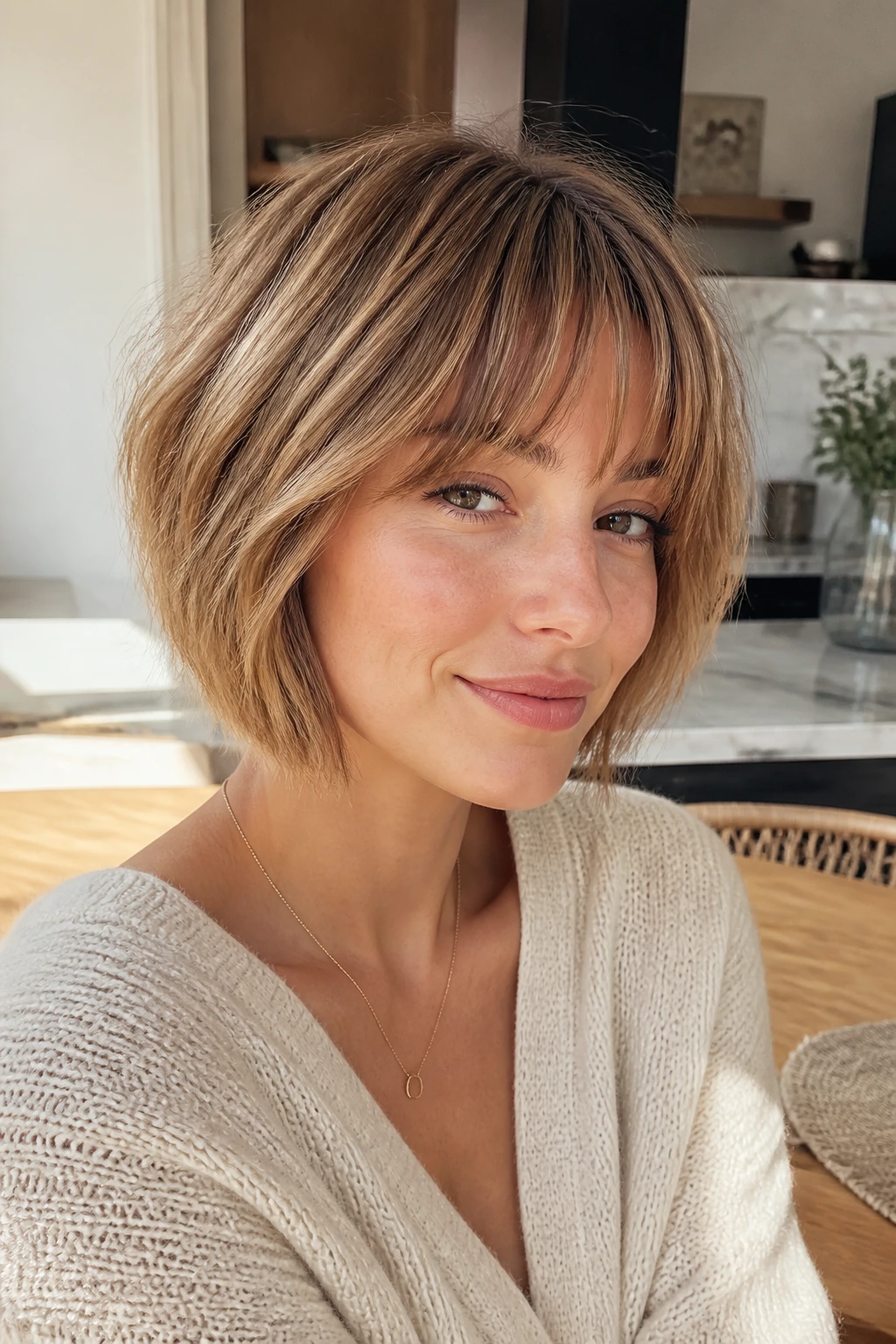
Bottleneck bangs are a smart match for fine hair. They’re shorter in the center, a touch longer at the sides, and they blend into a choppy bob without swallowing the face. That shape matters because heavy fringe can flatten fine hair fast.
This bob works best when the bang area is soft, not dense. The side pieces should melt into the lengths, which keeps the haircut airy around the forehead and gives the rest of the style some room to move. If your hair is fine but naturally straight, this is a nice way to add shape without forcing volume everywhere.
The result feels current without trying too hard. That’s a useful sweet spot.
15. The Sleek Choppy Bob With Gritty Ends
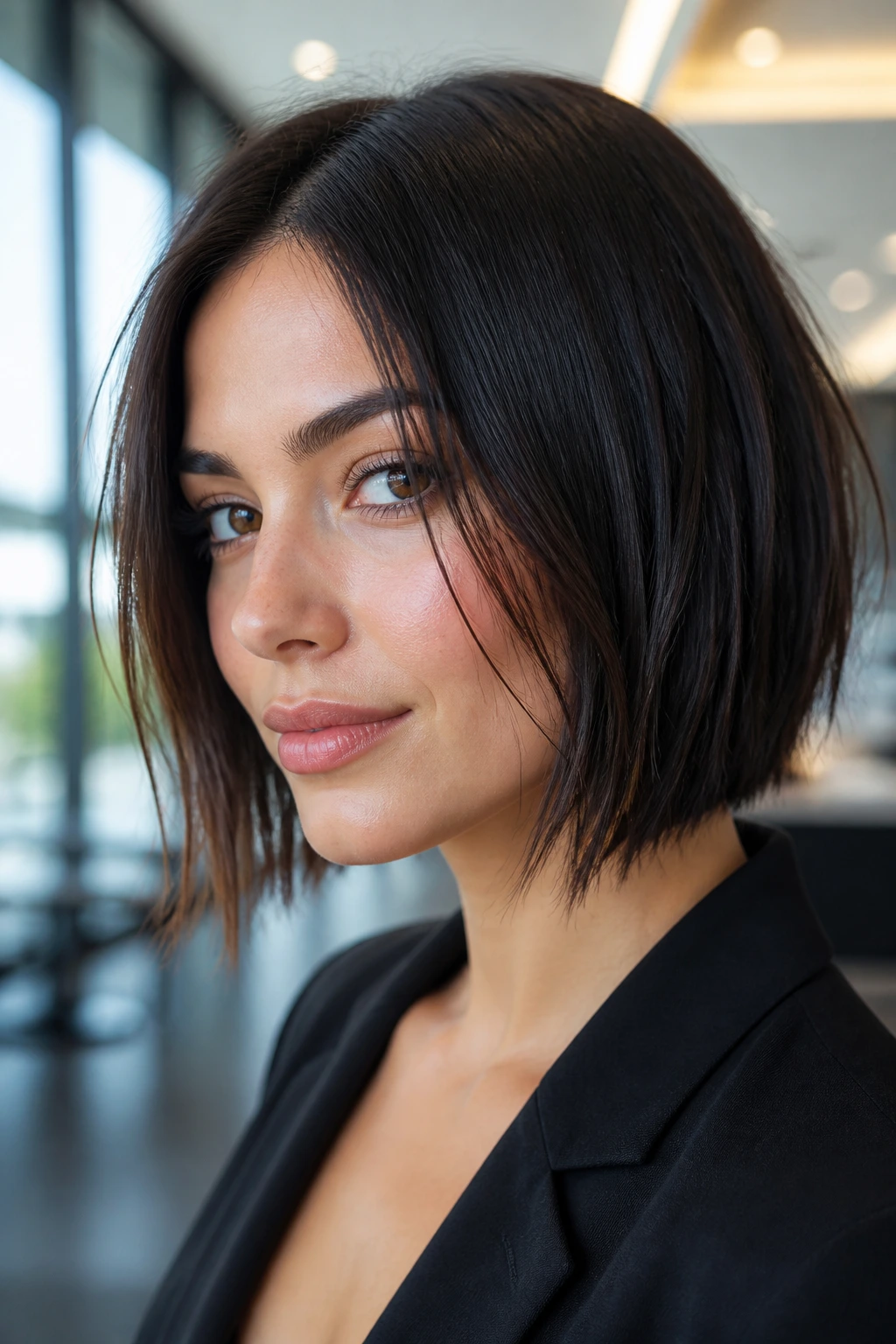
A sleek bob does not have to be boring. When the surface is smooth and the ends are a little broken up, fine hair can look polished and a bit rebellious at the same time. That contrast is what makes this cut work.
Ask for a strong outline with light texture only at the last inch or so. Then style with a flat brush or a paddle brush and keep the ends from flipping too much. The grit comes from the cut, not from piling on product.
This is a good office-friendly bob that still has enough movement to feel alive. Clean, controlled, and not boring. That’s the point.
16. The Messy Bed-Head Bob
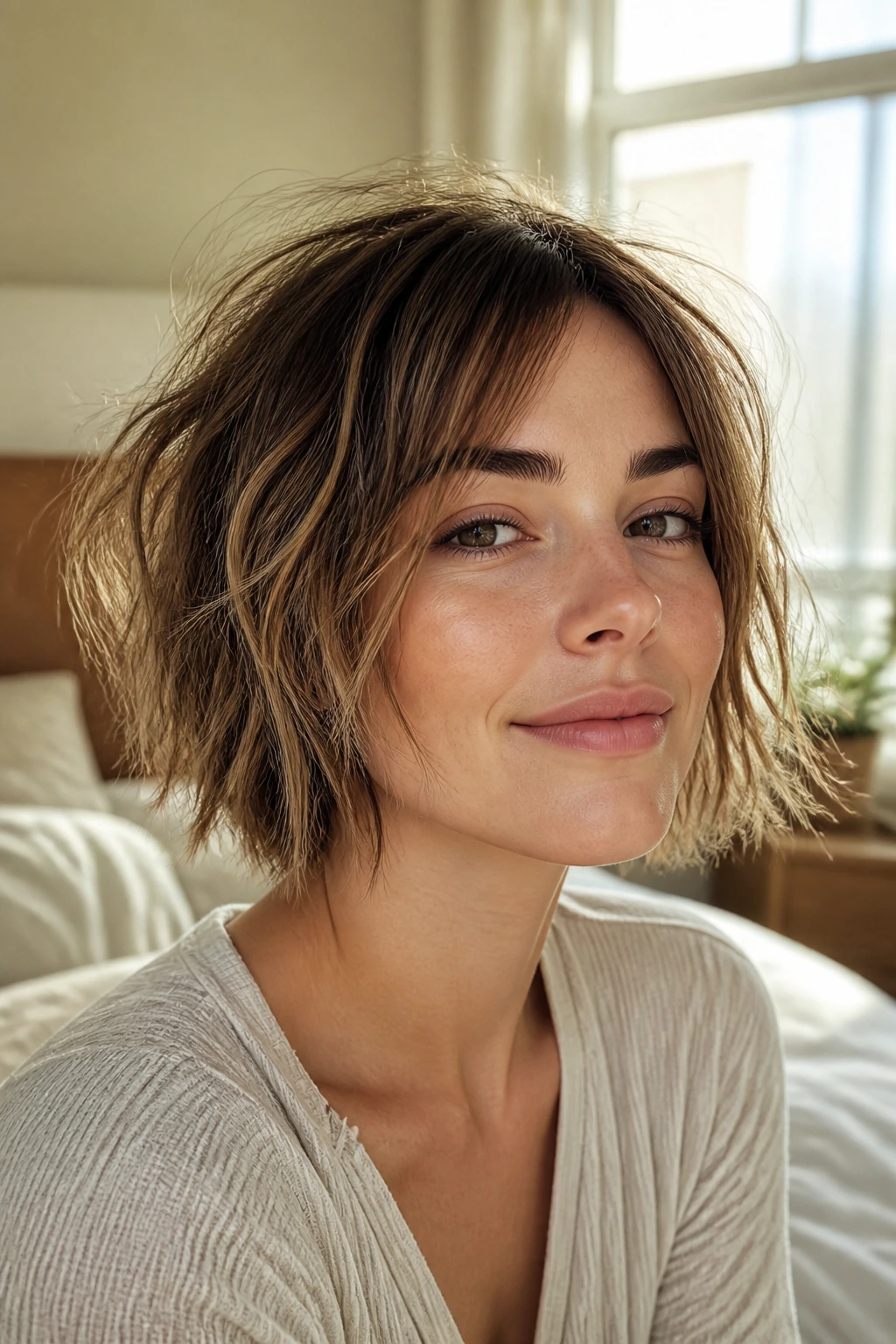
Some fine hair is happiest when it’s not overworked. A messy bob with broken-up ends and loose, uneven movement can make the hair look fuller because it creates space between pieces. That space catches the eye and suggests density, even when the actual strands are fine.
This version likes a little spray, a little hand scrunching, and a refusal to over-brush. If you spend twenty minutes trying to smooth every hair into place, you’ll lose the charm. Let the cut be a little imperfect. It’s more forgiving that way.
Best styling products
- Lightweight mousse at the roots
- Dry texturizing spray through the mid-lengths
- A tiny dab of paste on the ends
That’s enough. Anything heavier tends to flatten the whole thing.
17. The Face-Framing Layer Bob

A bob with face-framing layers can be flattering, but the layers should stay long and deliberate. Fine hair does not need a staircase of short pieces around the cheeks. It needs one or two controlled angles that guide the eye and create movement where the haircut needs life.
This style works well if you want the front to feel a little softer than the back. The framing pieces can start around the cheekbone and angle down toward the jaw or collarbone. That keeps the face open and gives the cut a gentle swing when you move.
I like this one on people who wear glasses. The longer front pieces sit nicely with frames without crowding them.
18. The Shoulder-Grazing Lob With Choppy Ends

Shoulder length sounds safer, and in some ways it is. But on fine hair, it can become a flat rectangle if the ends are all one length. The choppy version fixes that by breaking up the bottom edge and letting the hair fall with a bit more shape.
This cut is practical. You can tie it back, clip it half-up, or wear it loose without feeling trapped by the length. It also gives fine hair enough weight to lie smoothly, which can be a blessing if your hair floats away from your head in strange directions.
If you want a low-drama cut that still looks polished, this is a strong pick.
19. The Tucked-Behind-the-Ear Bob
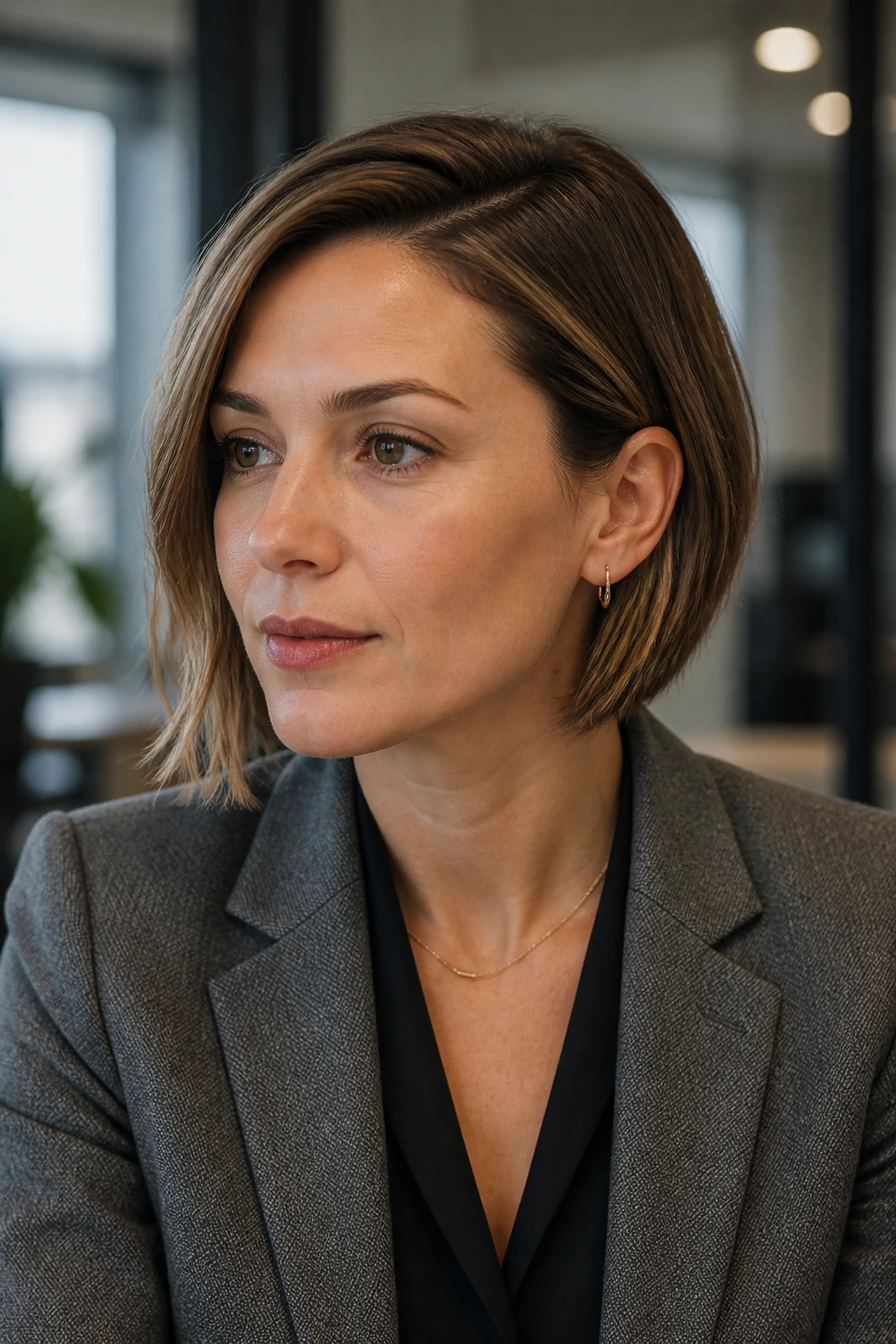
This one has a small trick that makes a big difference. A bob that can be tucked neatly behind the ears looks fuller at the crown and cleaner through the sides, which fine hair often needs. The choppy ends keep it from feeling too blunt when you wear it loose again.
The key is keeping the front just long enough to tuck without losing the shape. If the haircut is too short, it starts to pop out and lose polish. If it’s too long, the tucked look gets messy. Somewhere around jaw to chin length usually lands well.
This is the kind of cut that works with a blazer, a tee, or a sweatshirt. Handy. Slightly underrated, too.
20. The Rounded Bob With Soft Internal Layers
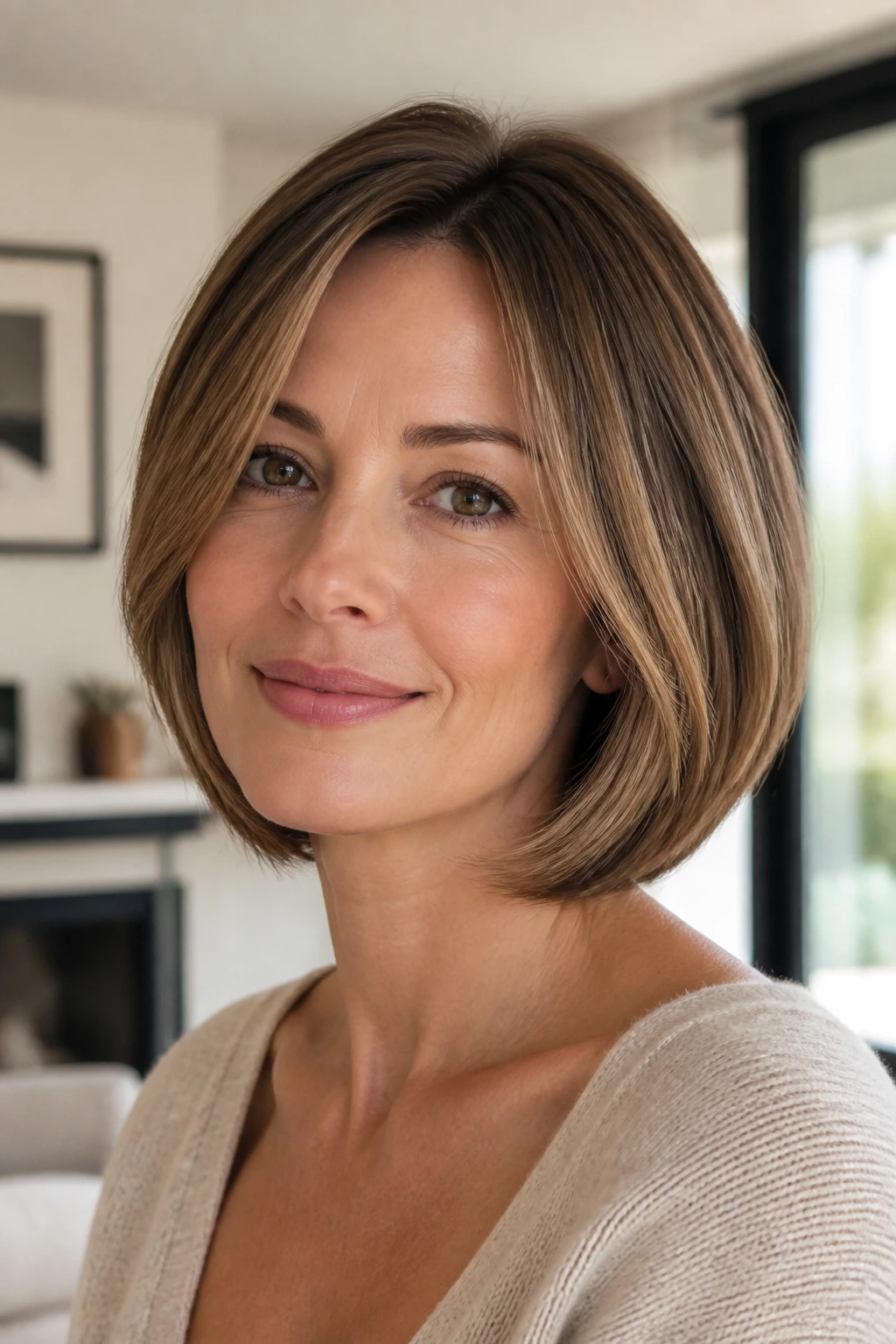
A rounded bob can be lovely on fine hair because the curve around the head creates the illusion of fullness. Add soft internal layers, and the shape gets movement without collapsing. The cut feels almost sculpted, but in a relaxed way.
This is a good choice if your hair is straight and tends to separate into flat panels. The rounded outline helps it sit together, while the hidden layers stop it from looking like a solid block. You want fullness, not helmet hair, so the layers should be gentle.
A round brush and a little bend at the ends will show the shape well. Don’t overflip it outward. That gets dated fast.
21. The Air-Dried Bob for Slight Wave
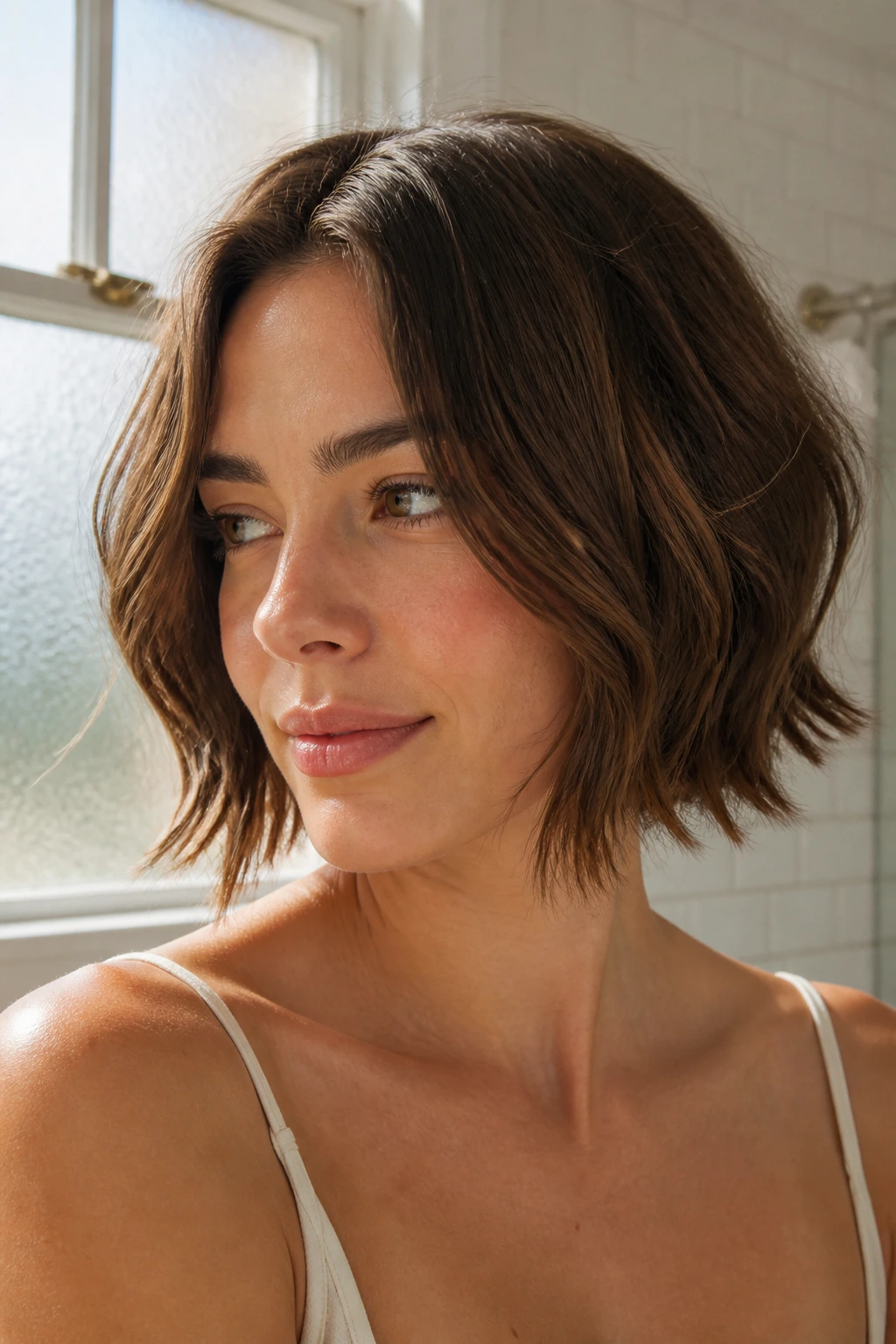
If your fine hair already has some bend, stop forcing it into perfection. An air-dried choppy bob can look fuller than a blown-out one because the natural wave creates little changes in direction all through the cut. That movement makes the hair look thicker than it really is.
This style likes a leave-in conditioner that doesn’t weigh the hair down and maybe a foam mousse if your wave is loose. Scrunch from the ends upward, then let it dry without touching it too much. If you disturb it constantly, you’ll get fuzz instead of shape.
The best version feels relaxed, not sloppy. There’s a difference, and it matters.
22. The Grown-Out Bob That Still Looks Intentional
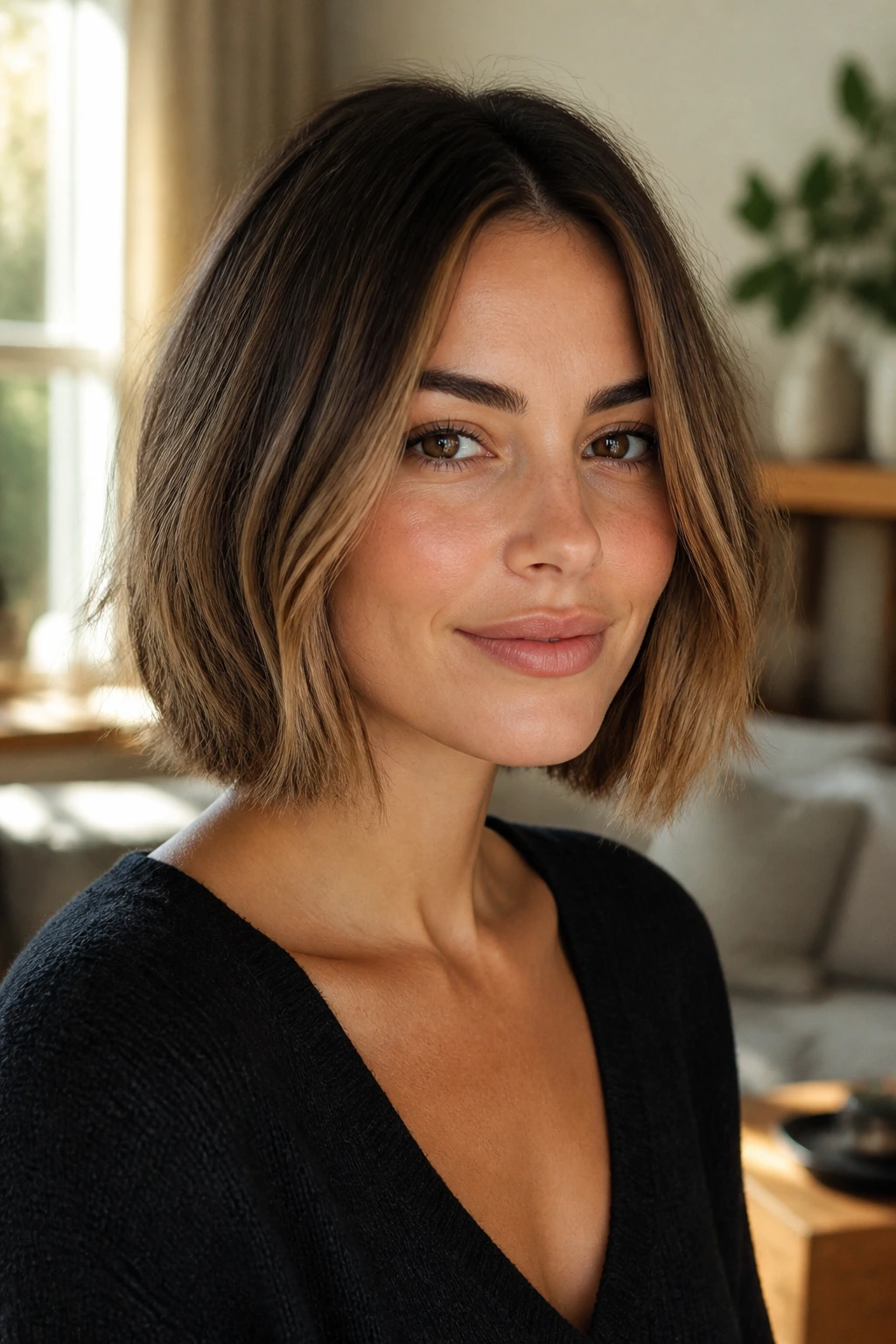
A grown-out bob is not a failure. Done well, it can be one of the prettiest options for fine hair because the ends sit a little lower and the choppy pieces keep the shape from going dull. The trick is making the grow-out part look planned.
This works especially well if you’ve had a shorter bob and want to keep it for another few months without losing style. Ask for the perimeter to stay clean and the interior to keep a bit of broken texture. That way, when the length starts brushing the shoulders, it still has some lift.
It’s the haircut version of good posture. Quiet, but it changes everything.
23. The A-Line Choppy Bob
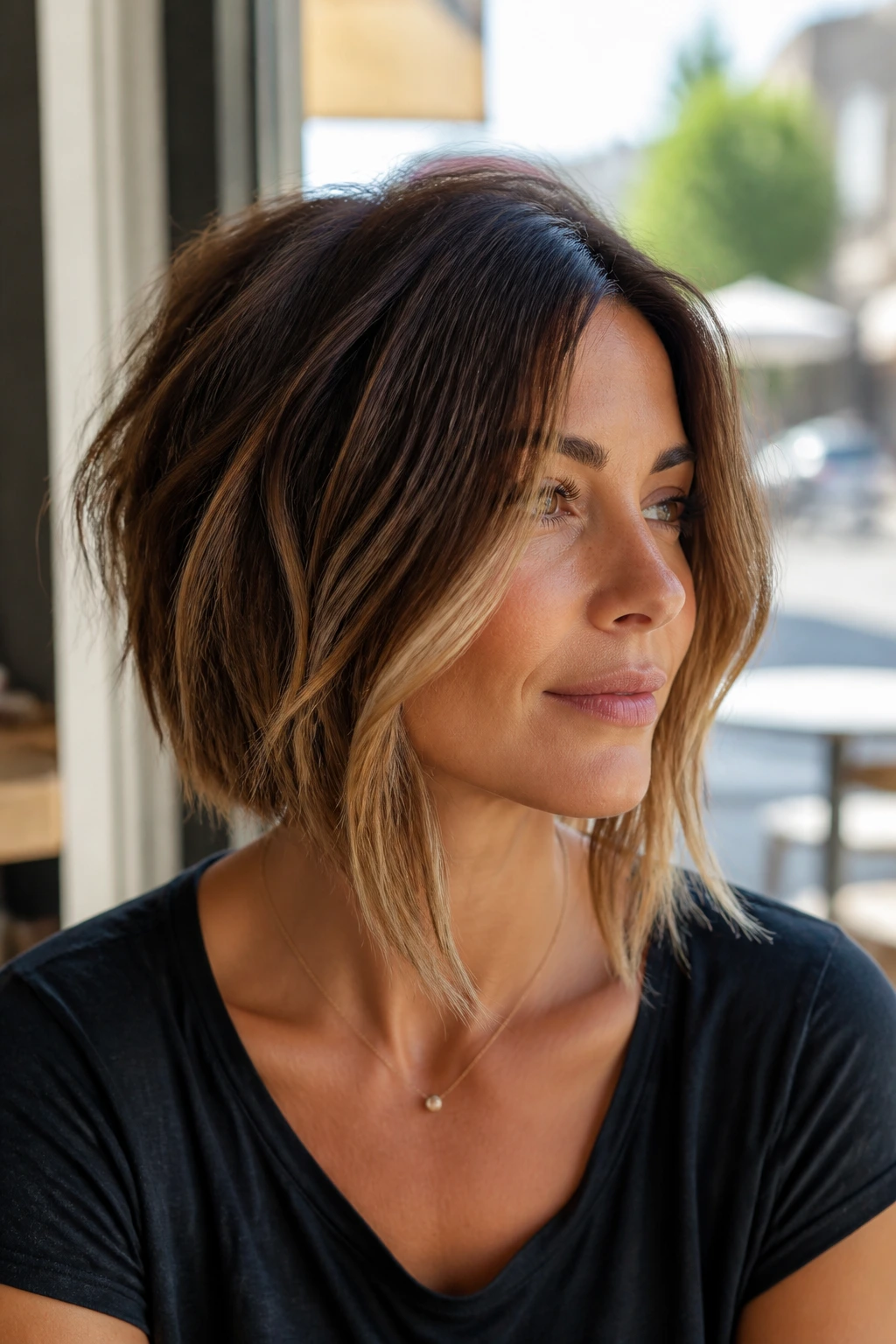
A subtle A-line bob angles longer in front than in back, and on fine hair that shape can be a lifesaver. It gives the illusion of longer front pieces while keeping the back light enough to stay off the neck. The choppy treatment prevents it from looking too corporate or too severe.
I like this cut when someone wants a little drama but not a huge change. The angled front pieces can slim the jaw, and the shorter back gives the crown a tiny boost. If your hair is flat at the root and thin through the ends, this shape does a lot of visual work for you.
Blow it smooth, then bend the ends just a touch inward. That’s enough.
24. The Curled-Under Bob With Broken Edges
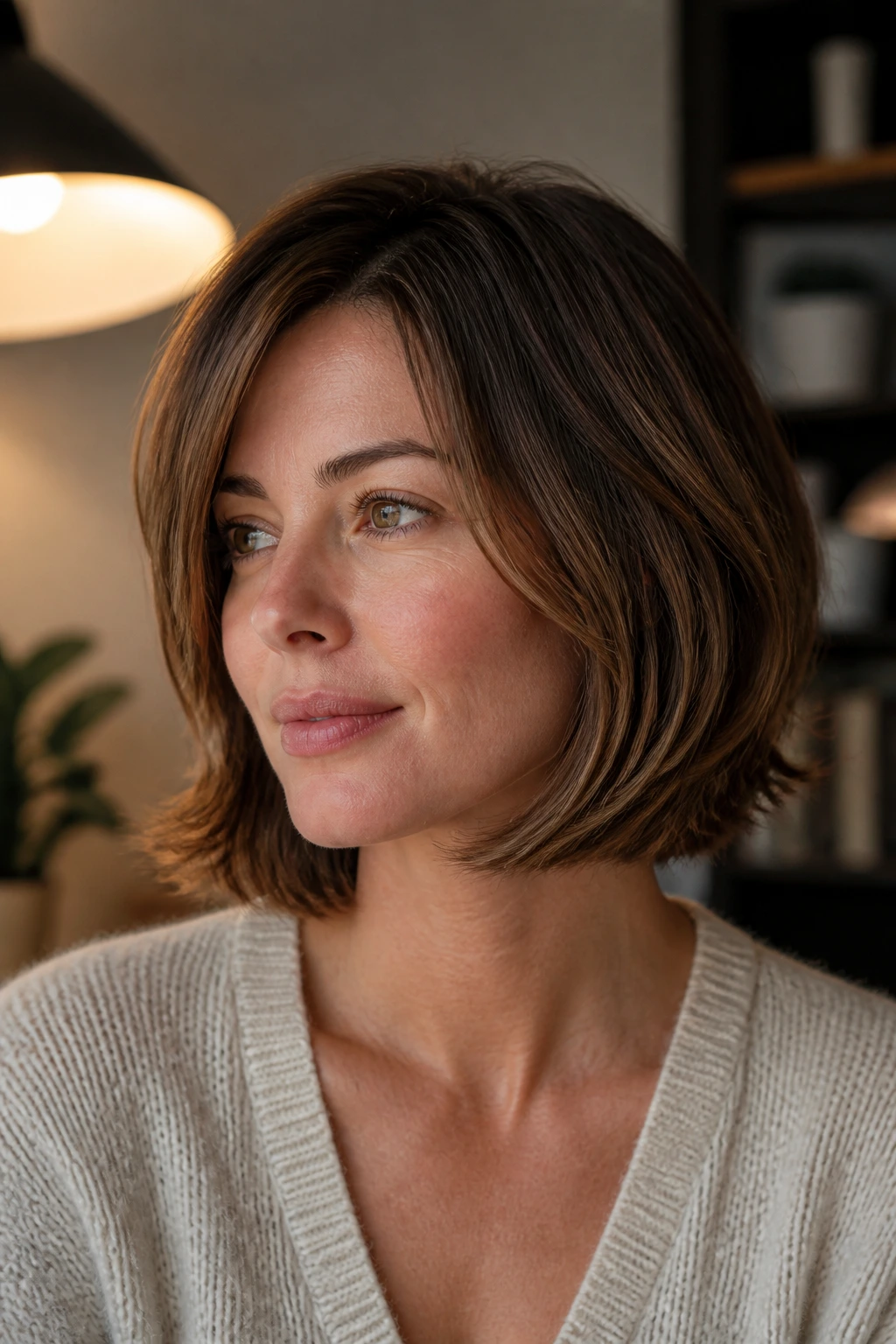
A curled-under bob can look thick fast, which is why it’s such a good fine-hair option. The under-curved ends create a solid boundary, and the choppy edge keeps the silhouette from feeling rigid or old-fashioned. It’s one of those styles that looks neat even when the weather tries to mess with it.
This is a good pick if you want something tidy for daily wear. It doesn’t need wild styling. A round brush, medium heat, and a light smoothing cream usually do the job. The surface can stay soft while the ends tuck in just enough to make the hair feel fuller.
I’d call it dependable, which is not a sexy word. Still useful.
25. The Wispy Fringe Bob
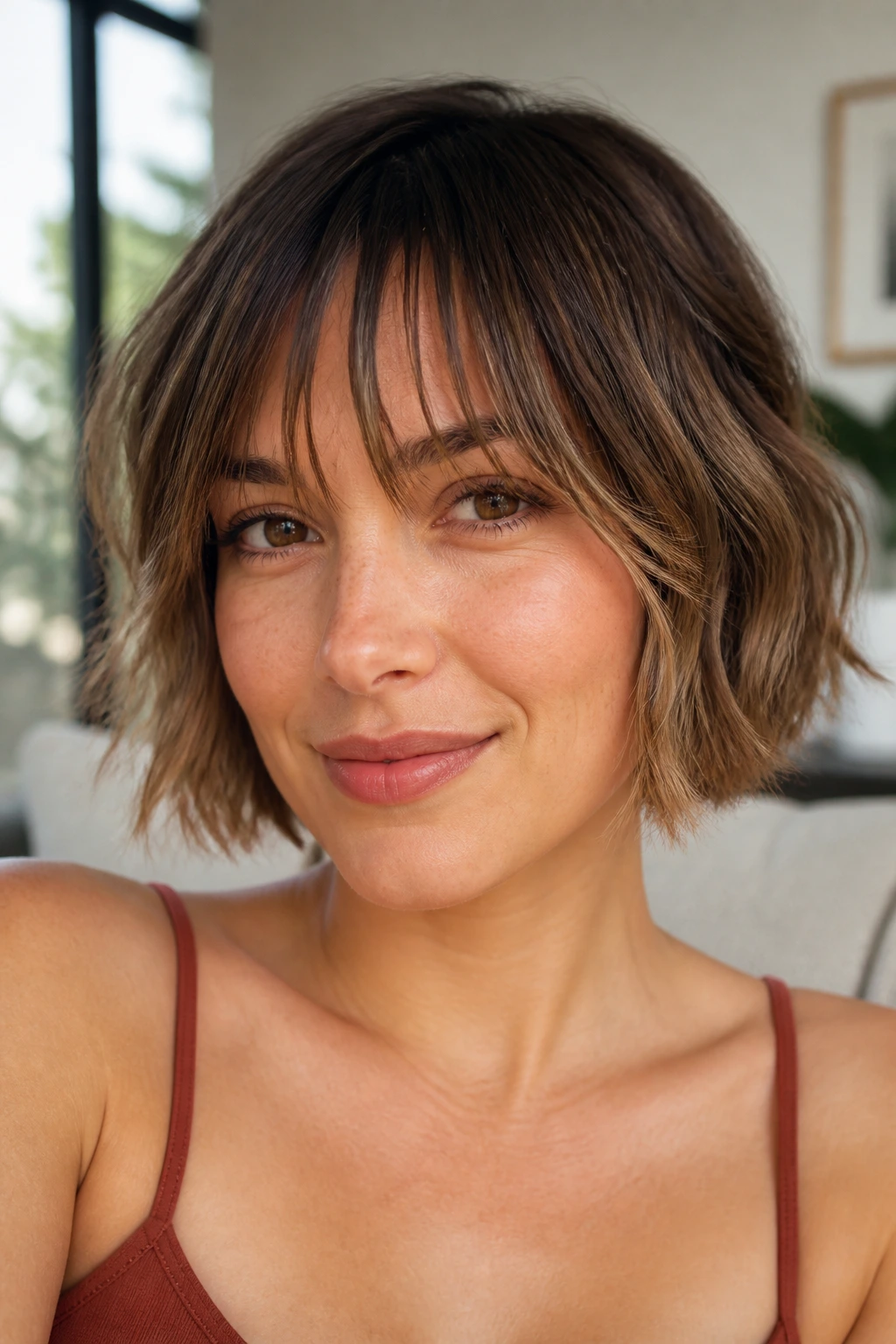
A wispy fringe can save a bob from looking too simple, especially on fine hair. The fringe adds a little texture around the face without using much hair, so the rest of the style stays full. That’s the smart part.
This version works best when the fringe is cut softly and connected to the sides instead of sitting like a heavy slab across the forehead. The choppy bob underneath should stay clean at the base, so the whole haircut has a mix of softness and shape.
Styling note
Use a small round brush or even your fingers to dry the fringe forward and slightly apart. If you over-direct it, the softness disappears. If you ignore it, it can hang in the eyes all day.
26. The Low-Maintenance Choppy Bob

Not every bob needs daily styling gymnastics. A low-maintenance choppy bob is built with enough internal movement that it still looks good when you wash, air-dry, and leave the house. Fine hair often responds well to this kind of cut because it doesn’t need heavy structure to look tidy.
The best versions keep the shape simple: shoulder to chin length, gentle texture through the bottom, and just enough face framing to stop the cut from feeling boxy. If your routine is short on time, this is the one to show your stylist.
You might still use a root spray or a tiny bit of mousse on wash days. Fine hair usually appreciates that extra lift, and the haircut does the rest.
27. The Modern Pageboy Bob

A pageboy-inspired bob sounds old-fashioned until you see it with choppy texture. Then it gets interesting. The classic rounded shape gives fine hair a solid outline, while the broken ends stop it from feeling costume-like.
This one usually sits around the jaw or a little below it. The fringe can be optional, but a soft contour around the face usually helps. I like this cut on straight hair that needs a bit of personality without going fully layered.
The style works because it keeps the silhouette compact. Fine hair often looks better when it’s gathered into one clear shape instead of scattered in too many directions.
28. The Shattered Bob With Soft Edges
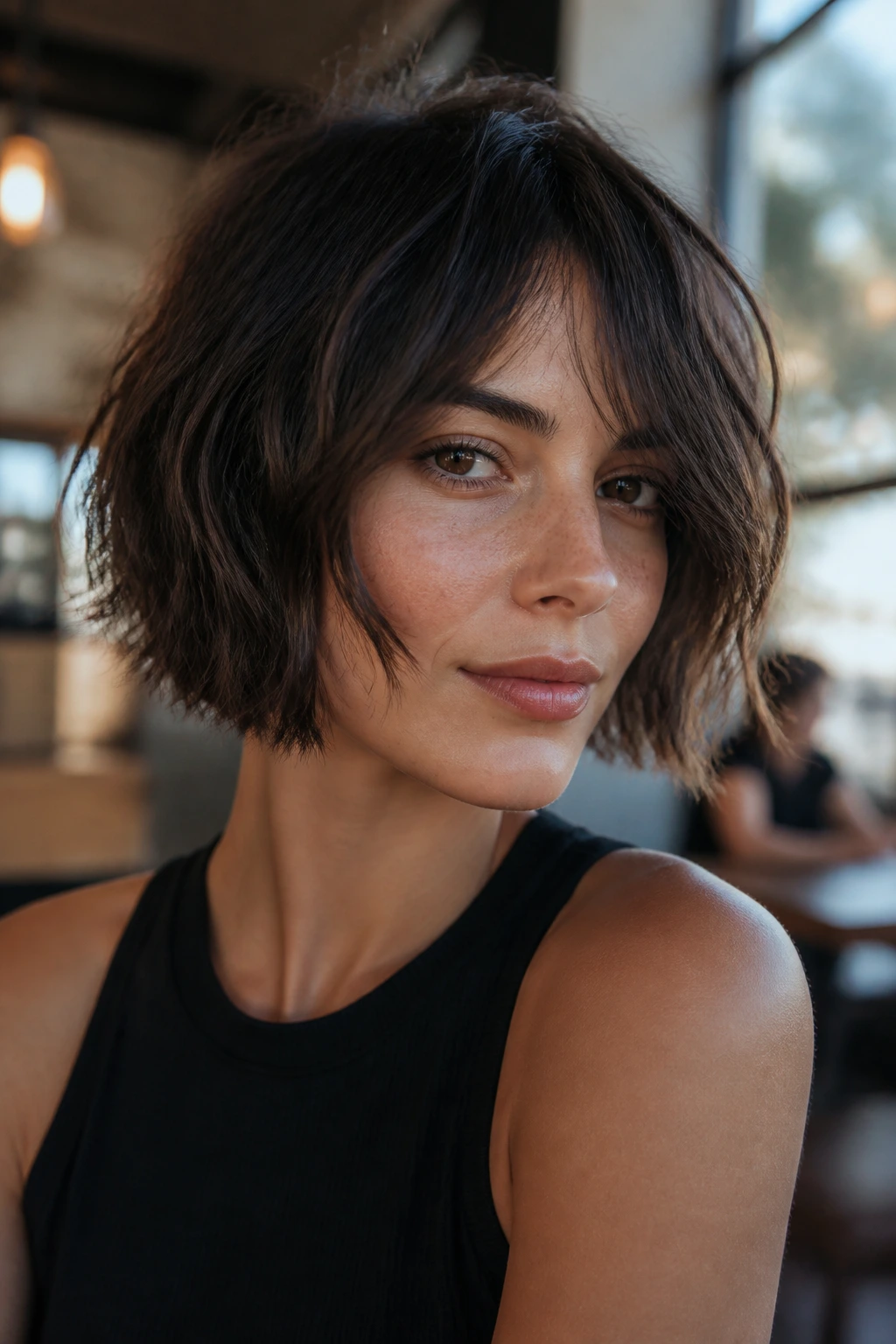
A shattered bob is more textured than most of the cuts here, but it can still work on fine hair if the stylist is careful. The pieces are deliberately uneven, yet the overall shape remains controlled. That balance is what keeps it from looking thin.
This is a good match for someone who likes a slightly messy, modern feel and doesn’t mind using texturizing spray. The soft edges create movement, and the internal choppiness gives the cut a little lift at the top. It’s not the most polished option, but it can look stylish in a fast, easy way.
What to avoid
Do not ask for aggressive thinning. On fine hair, that usually gives you less of everything — less body, less shine, less forgiveness.
29. The Micro-Layer Bob
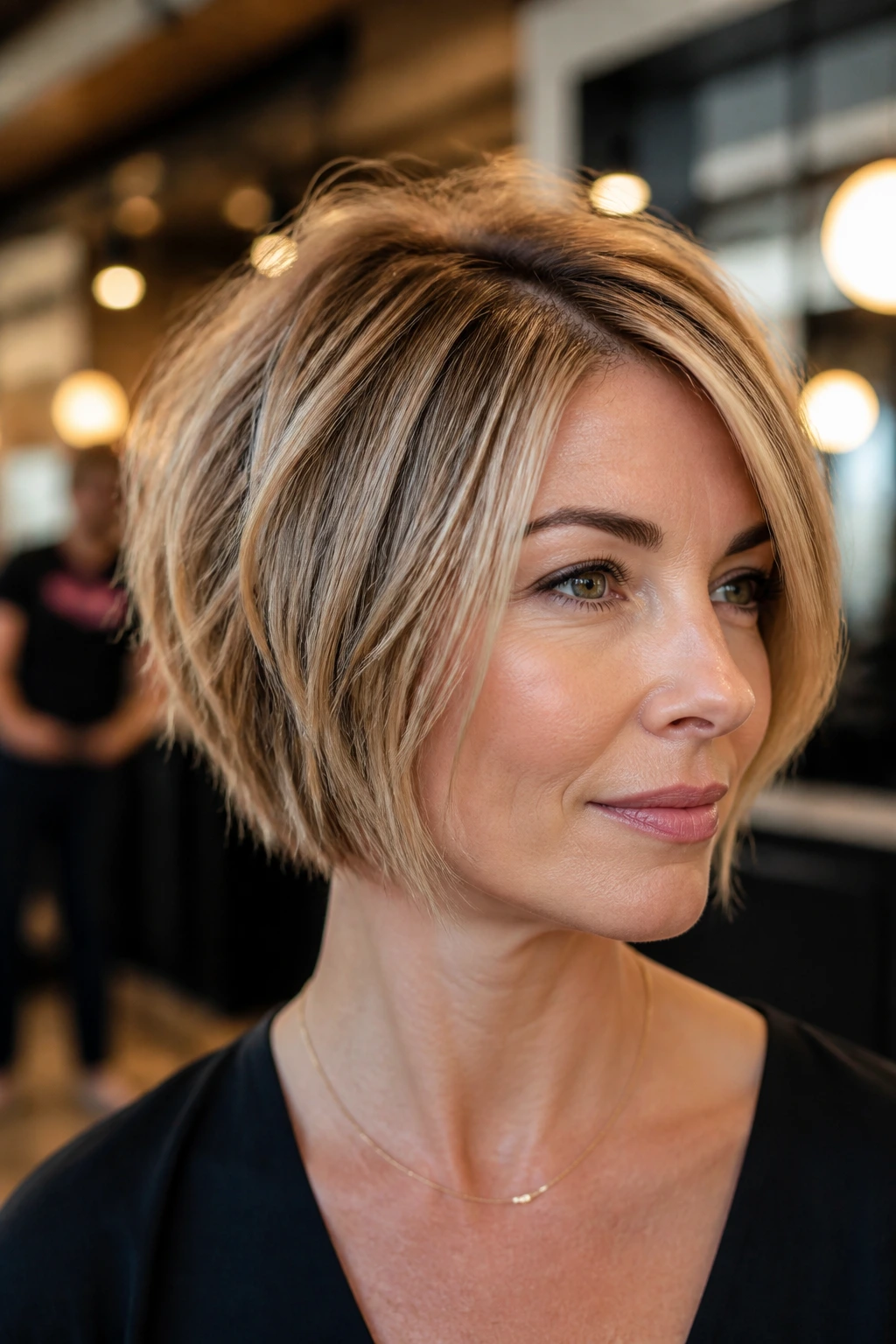
Micro-layers are tiny, controlled layers placed high enough to create movement without stealing bulk from the ends. On fine hair, that’s the whole game. You want a bob that feels light but still looks like it has substance.
This cut is especially useful if your hair clumps into one flat sheet. The micro-layers break that up just enough to let air move through the shape. The result is a bob that can be worn sleek, tousled, or slightly bent under. It stays flexible, which matters more than people admit.
I’d choose this over a heavily layered cut almost every time for fine hair. Heavy layers chase volume and lose density. Micro-layers keep both.
30. The Soft-Edge Bob With Just Enough Texture

A soft-edge bob is the one I’d hand to someone who wants the safest, prettiest version of a choppy bob for fine hair. The perimeter stays clean enough to look full, and the texture is kept light enough to avoid frizzing out the ends. It’s a controlled cut, not a chaotic one.
This style works on straight, wavy, and slightly curly hair, which is part of why it’s so useful. You can blow it smooth, scrunch it, tuck it, clip it, or let it fall naturally. The haircut doesn’t fight back.
If you want one sentence to tell your stylist, use this: keep the shape solid, and add texture only where the hair needs movement. That’s the whole philosophy, really.
Final Thoughts
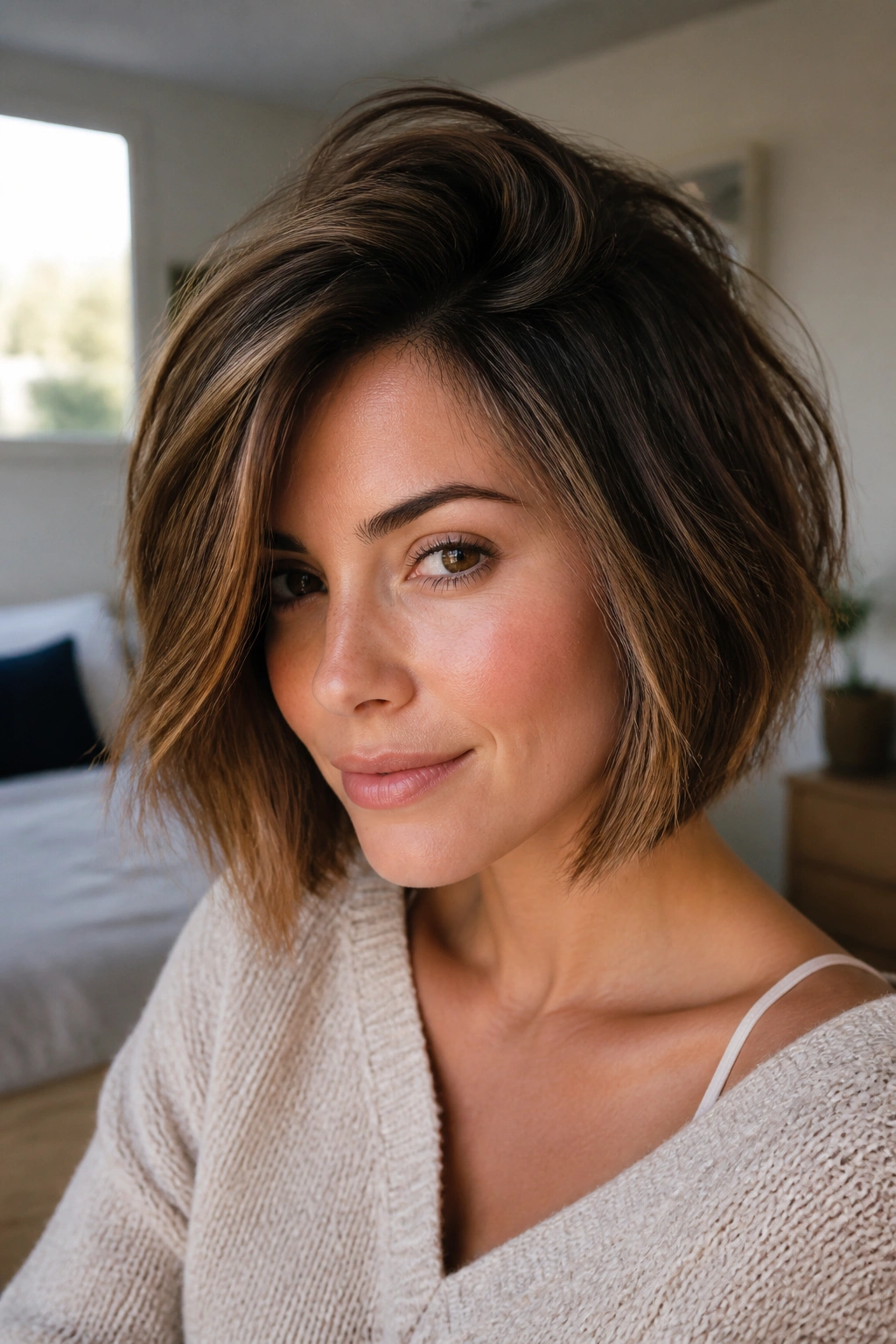
Fine hair does not need to be bullied into volume. It usually looks better when the cut gives it a strong outline first, then a little choppy movement second.
That’s why the best bob haircuts here all have the same quiet rule underneath them: keep enough weight to make the hair look full, and only break up the shape where it helps. Too much texturizing can make fine hair look thinner. Too little, and the bob goes flat. The sweet spot is somewhere in the middle, and it’s worth finding.
If you’re sitting in a salon chair trying to decide, ask for a perimeter that still feels solid when the hair moves. That one detail changes everything.
