



An inverted bob haircut for men lives or dies on the angle. Too flat, and it looks like a grown-out trim; too stacked, and it starts flirting with costume territory. The sweet spot is that clean line from a shorter back to a longer front piece that brushes the jaw, cheek, or even the mouth.
That shape can do more than people expect. On straight hair, it reads sharp and deliberate. On wavy hair, it gets a little softer and more relaxed. On curls, it picks up bounce and keeps the bulk from exploding outward. The cut changes a lot with one small decision: where the weight sits.
The part most people miss is the back. If the nape is bulky, the whole haircut looks heavy. If the graduation is too severe, the front can feel disconnected. A good barber will talk about the occipital area, the nape line, and how much length to leave around the cheekbones instead of just grabbing the clippers and hoping for the best.
Some versions feel polished. Some feel artsy. A few are almost aggressive in the best way. If you like bob-and-lob territory but want something a touch sharper, these 30 inverted bob haircuts for men give you plenty of room to pick your lane.
1. Classic Inverted Bob Haircut for Men
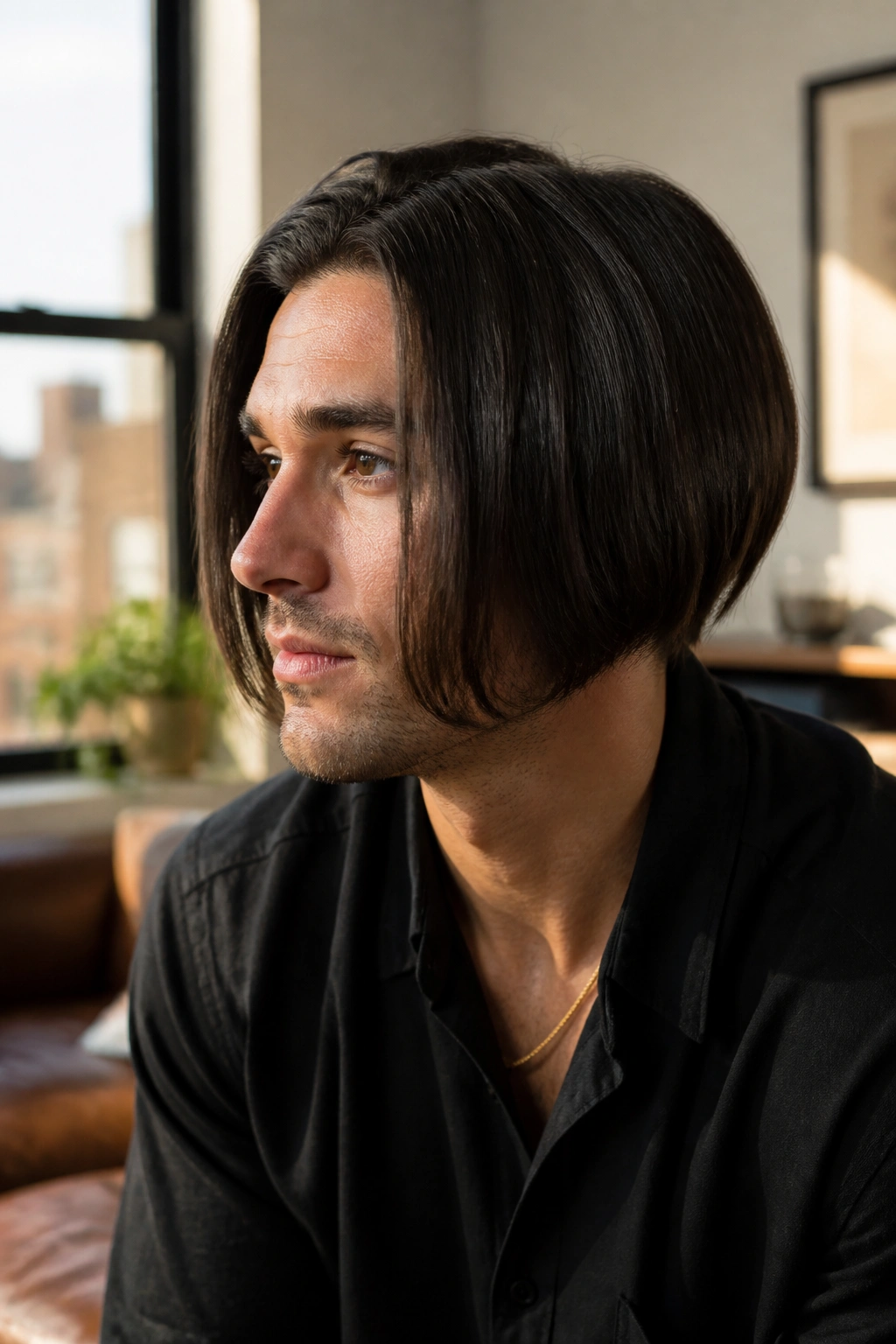
The cleanest version is often the strongest. A classic inverted bob haircut for men keeps the back shorter and stacked softly, then lets the front fall forward to the jawline. It does not need drama to work.
What makes it hold together
The trick is balance. The back should feel light at the nape, but not shaved bare, and the front should move in one smooth line instead of hanging like two separate cuts. On straight hair, that curve looks crisp. On thick hair, it needs a little internal weight removal or it can puff out near the ears.
How to ask for it
- Keep the nape tight, but leave enough length for a soft taper.
- Let the front land between the chin and jaw.
- Ask for subtle graduation through the back, not a hard stack.
- Finish with a small amount of matte cream or light paste.
Best for: oval, square, and heart-shaped faces.
Avoid this version if: you want a high-contrast, edgy shape with a shaved undercut.
Flat bangs will ruin this one fast. Keep the front clean, keep the ends blunt, and let the profile do the talking.
2. Tapered Nape Inverted Bob
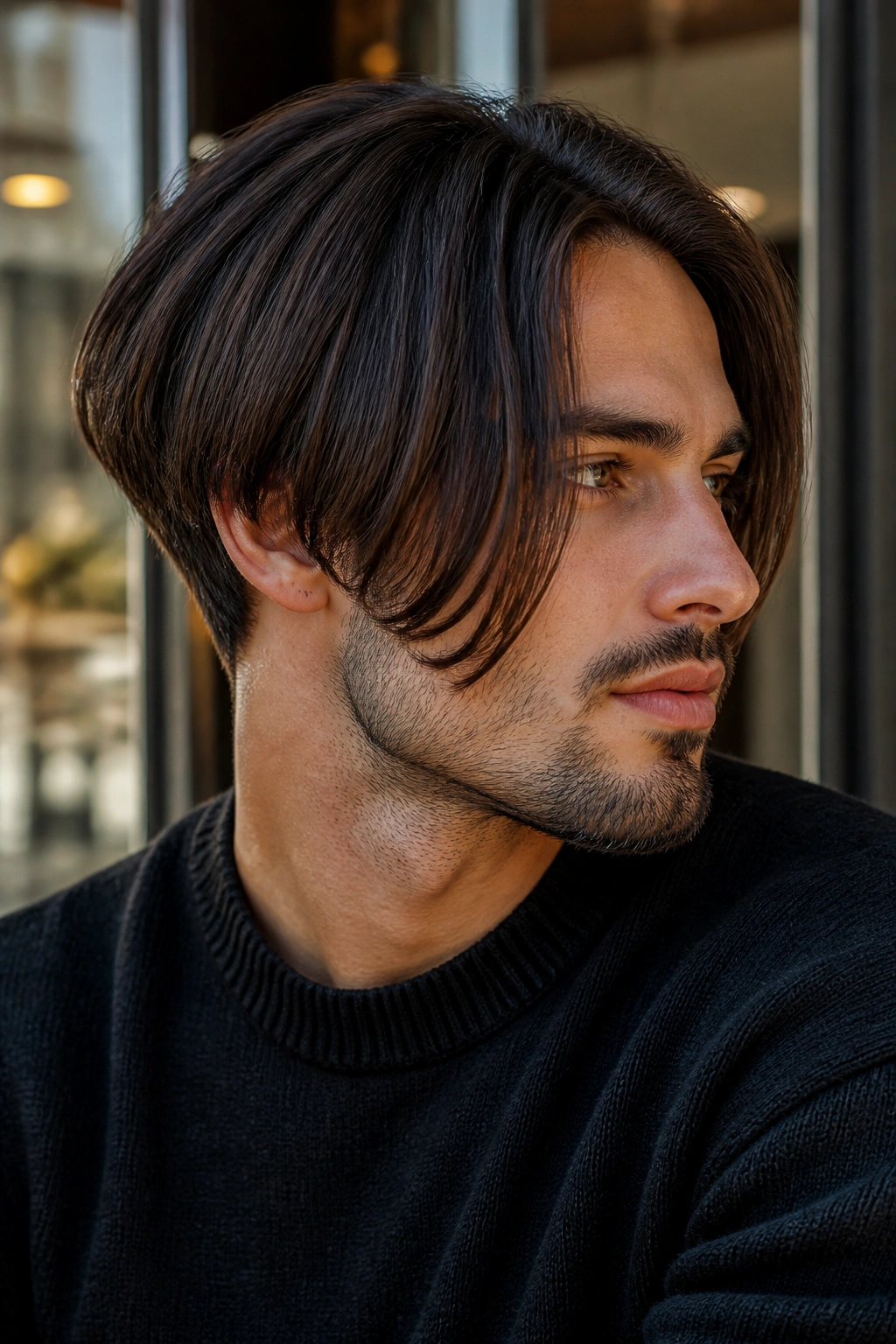
Ever seen a bob that looks expensive because it never gets bulky in the back? That’s the tapered nape version. The shape stays soft at the sides, then tightens right where the hair meets the neck, so the whole cut sits neatly against the head.
The appeal is practical. Less bulk means less morning fight with a blow-dryer, and the neckline stays cleaner between trims. It also helps if your hair grows fast around the nape, because the cut keeps its shape longer before it starts looking shaggy.
Why barbers like it
- It’s easier to blend into a beard or sideburn.
- The taper keeps thick hair from flaring at the collar.
- It gives the front length room to stay the star of the show.
If you wear jackets with collars or shirts that sit close to the neck, this version behaves better than a blunt back. That sounds like a small thing. It isn’t.
3. Textured Inverted Bob
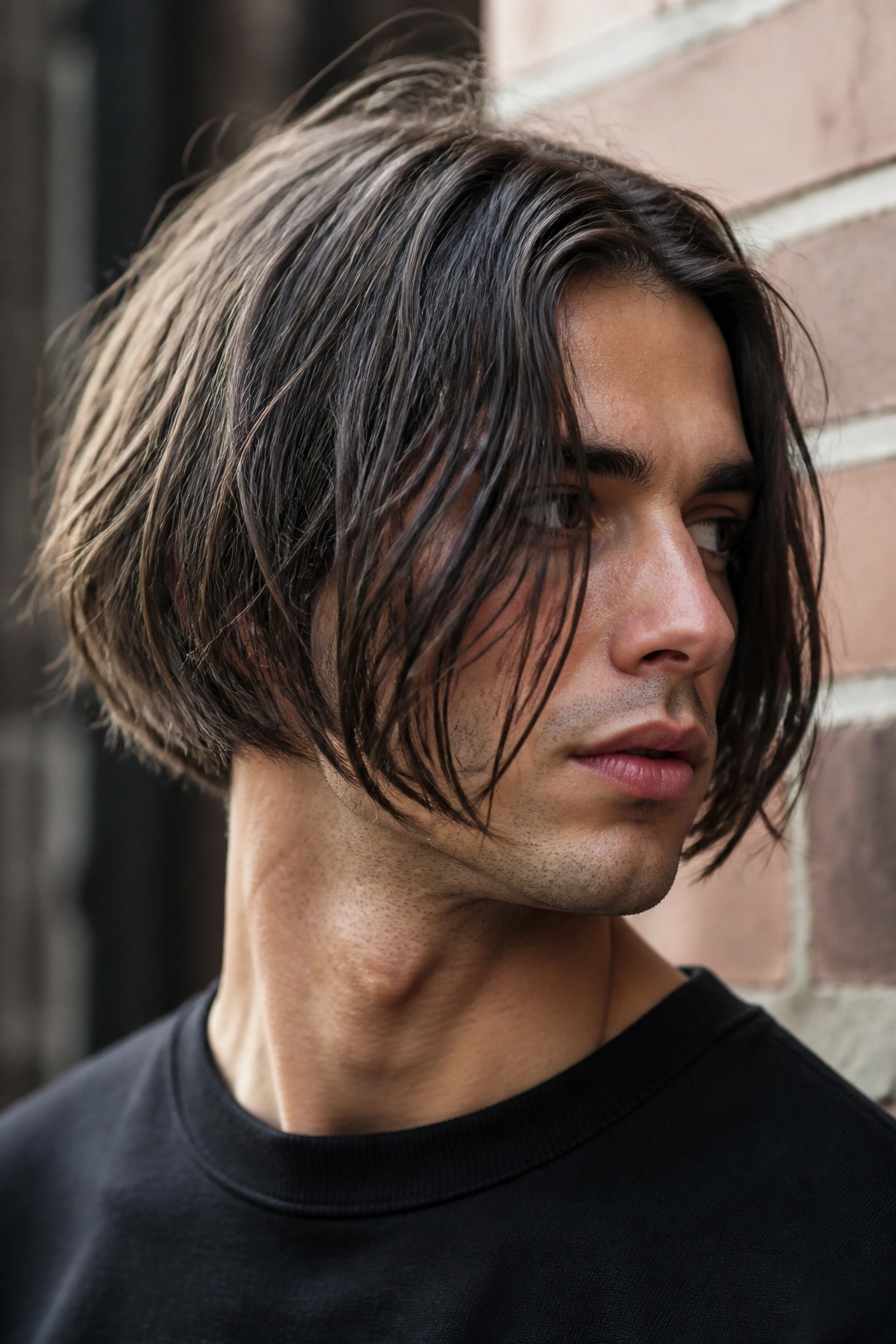
This one has movement you can see from across the room. The texture keeps the cut from feeling like a helmet, and that matters because a straight, heavy bob on men can go stiff fast if the hair has any density at all.
A textured inverted bob works best when the ends are point-cut rather than sliced into perfect lines. That leaves tiny variations at the edge, which helps the front pieces break up nicely instead of hanging in one flat sheet. A pea-sized bit of matte paste rubbed through damp hair is usually enough.
The texture sweet spot
You want separation, not fuzz.
That’s the difference.
Use a blow-dryer on medium heat with your fingers first, then pinch a few strands into place once the hair is about 80 percent dry. If you overwork it, the texture turns crunchy. If you underwork it, the cut can look unfinished. There’s a narrow middle ground here, and that’s where the haircut looks best.
4. Undercut Inverted Bob
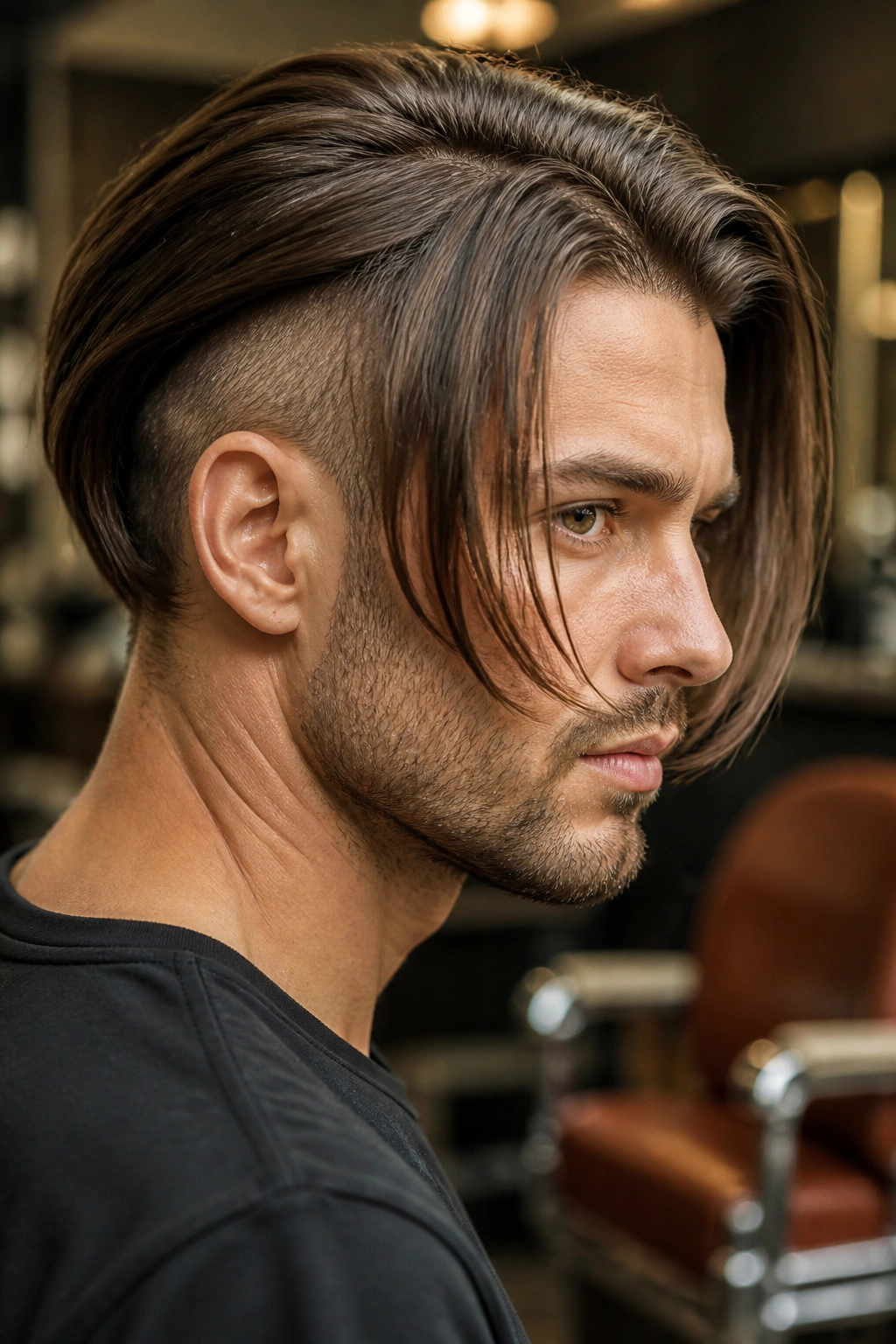
Here’s the blunt truth: the undercut version is not subtle. That is exactly why some guys love it. The sides and lower back are clipped short, while the top and front keep the bob shape and the angled line.
This cut works when you want the bob silhouette without the softness. It creates a hard break between the long upper section and the short bottom section, which makes the front length look even more dramatic. On straight hair, the contrast is sharp. On wavy hair, it adds a little chaos in a good way.
Best way to wear it
Ask for the undercut to stop low enough that the top hair still covers it when worn down. If the disconnection sits too high, the shape can look chopped instead of intentional. A dry clay or paste helps keep the longer section from sliding too flat over the shorter sides.
This is one of those cuts that looks better with confidence. Weak styling makes it look accidental.
5. Curtain Fringe Inverted Bob

Imagine the front falling into two soft pieces that part near the center and skim the cheeks. That’s the curtain fringe version, and it brings a more relaxed mood to the inverted bob shape.
It suits men who want face framing without a hard bang line. The fringe opens the face a little, which is handy if the back is already short and you do not want the whole cut to feel too severe. It’s also one of the easiest ways to soften a strong jaw.
How to style it without making it floppy
- Blow-dry the fringe forward first, then split it with your fingers.
- Use a round brush if the hair wants to collapse in the middle.
- Keep product light; heavy wax makes the fringe sit in sticky ropes.
The best curtain fringe bobs have a bit of bend. Not curl. Bend. That tiny difference makes the haircut feel lived-in instead of theatrical.
6. Side-Part Inverted Bob
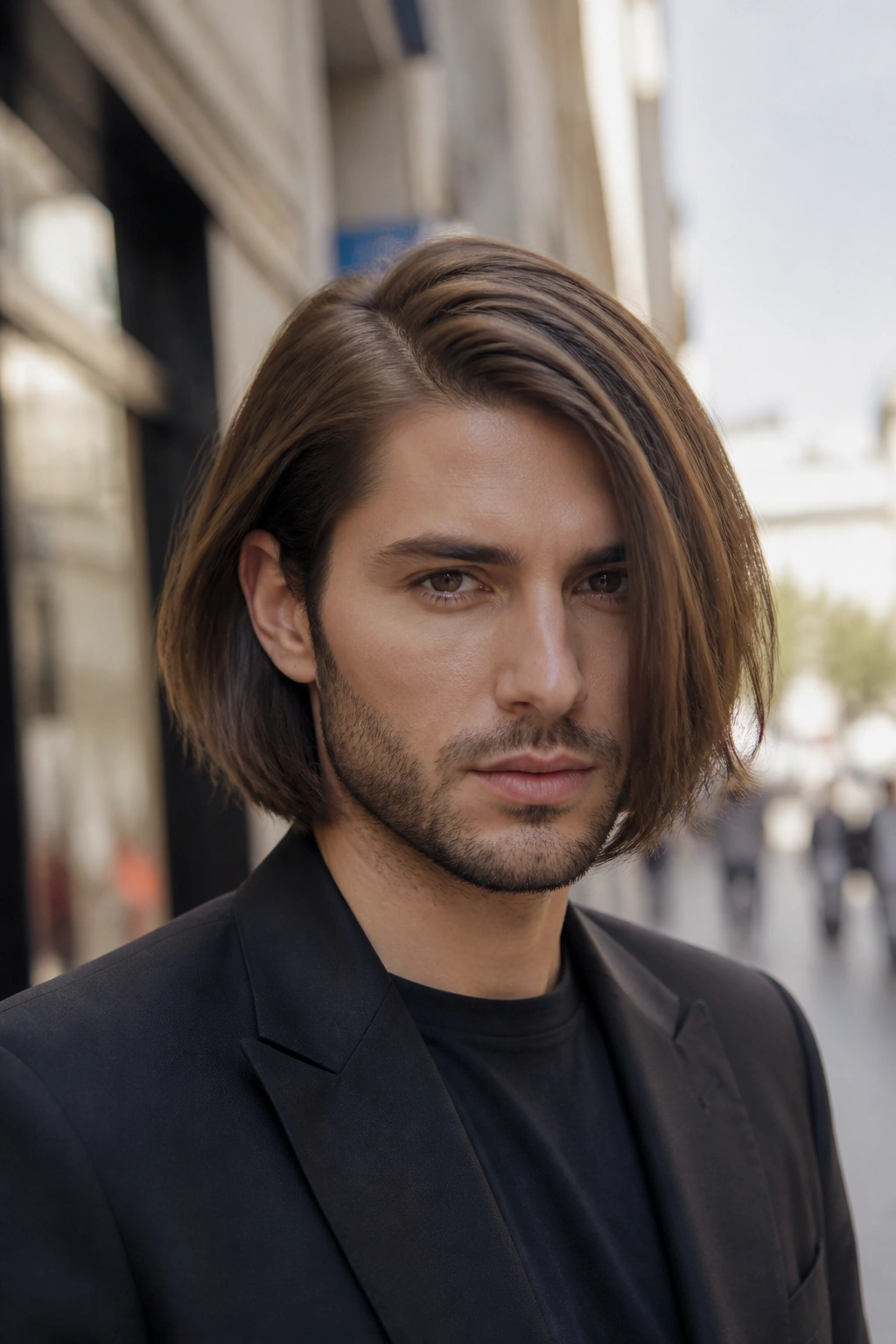
A side part changes everything. Suddenly the haircut stops reading as artsy and starts looking precise, almost tailored, because the weight shifts to one side and the front line gets a cleaner drop.
This version is smart for men with finer hair. The side part gives the roots a little lift, especially if you blow-dry against the natural fall first. It also helps a longer face shape, since the off-center line breaks up the vertical length.
One thing to watch: if the part is too deep, the haircut can sag on the heavy side and lose its angle. Keep the part shallow and let the bob do the shape work for you. A small amount of light cream works better here than anything sticky or shiny.
7. Wavy Inverted Bob
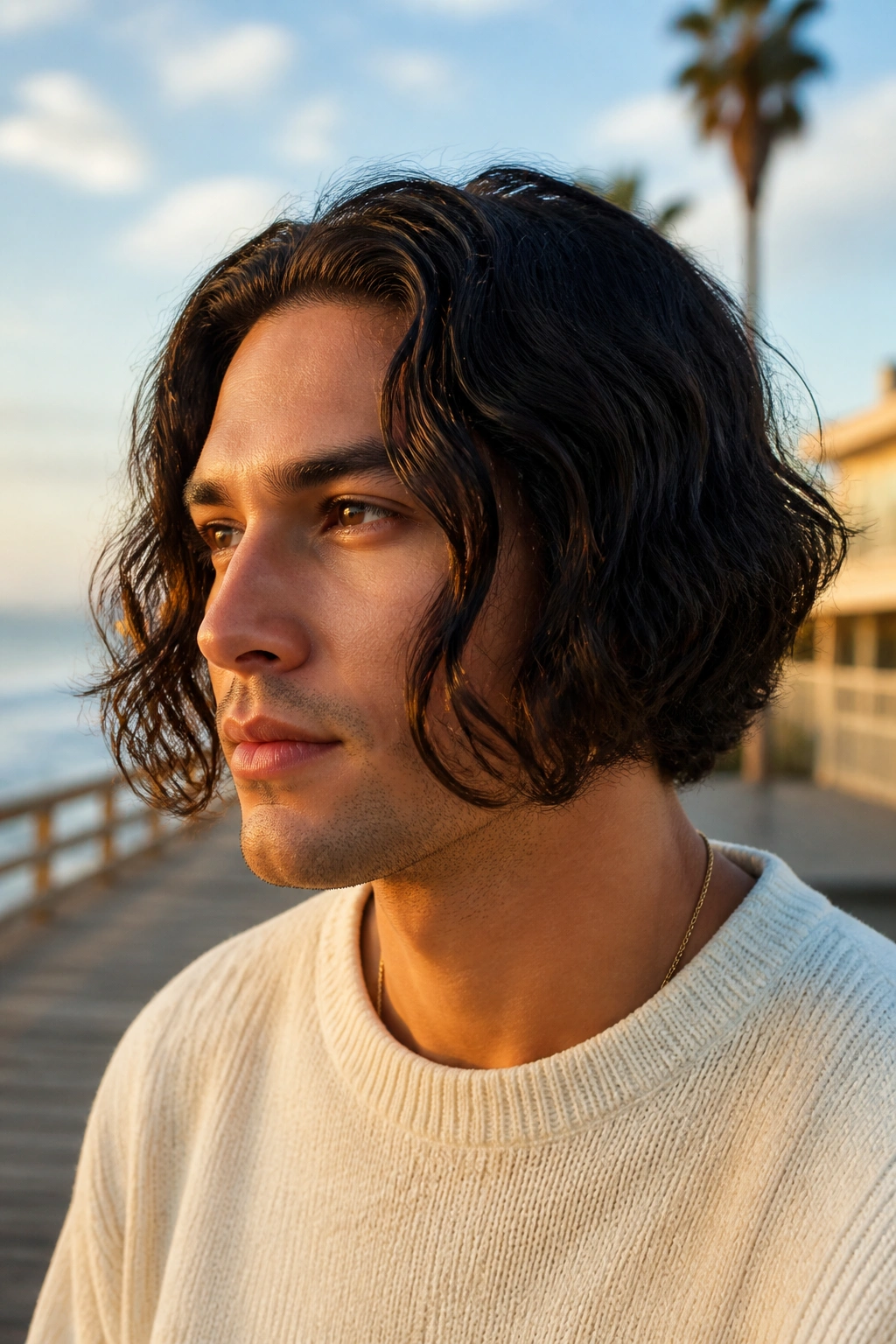
Waves change the geometry in a good way. The angle of the bob is still there, but the texture softens the line and gives the cut a little body that straight hair sometimes has to fake.
What to ask your barber
- Leave enough length for the waves to move, usually around cheek to chin level in front.
- Remove bulk under the surface so the sides do not puff outward.
- Keep the back controlled, not chopped to pieces.
The best wavy inverted bob looks like it settled into place on its own, even though it took a decent blow-dry to get there. A salt spray can help, but don’t drown the hair in it. Too much and you get roughness instead of shape.
Wavy hair is forgiving, yes. It is also sneaky. If the cut is off by half an inch, the front can flip outward in the wrong places and the whole thing starts acting like it has a mind of its own.
8. Curly Inverted Bob
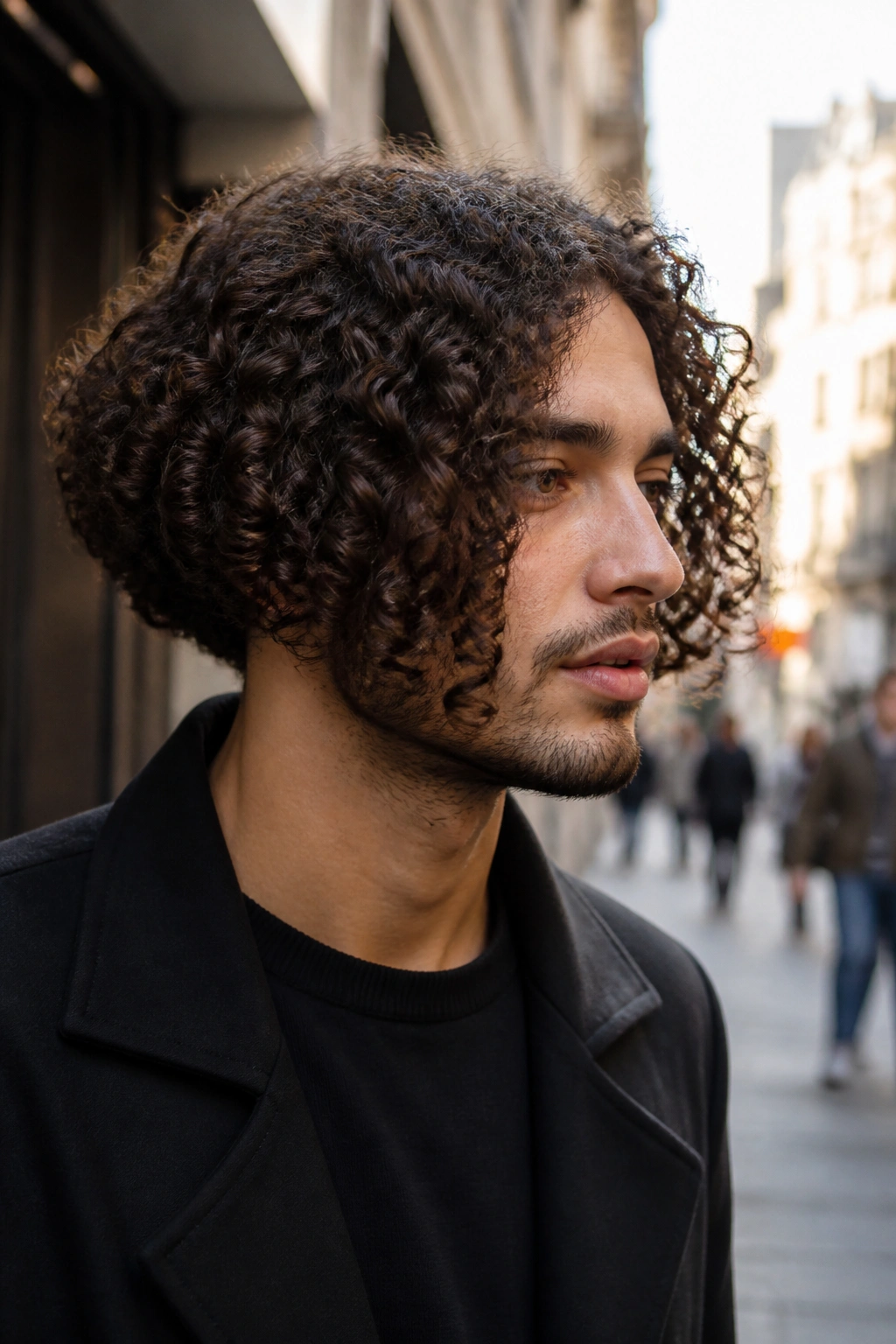
Curly hair can wear an inverted bob beautifully, but it needs room. If the barber cuts it as though the curls were straight, the shape will jump up and the front length may disappear.
The better move is to leave the front a touch longer than you think you need. Curls shrink. Everyone forgets that once, then spends the next six weeks wishing they had not. The back should still stay lighter so the silhouette keeps that angled feel instead of turning round and boxy.
What helps most
- Cut curls dry or mostly dry so the actual shape is visible.
- Use curl cream, not heavy pomade.
- Diffuse on low heat if you want the front to keep its line.
This cut has a nice contrast when the curls are controlled but not flattened. You want bounce, not puff. And if your curl pattern is tight, ask for more length than a straight-haired man would need. That extra inch matters.
9. Slick-Back Inverted Bob
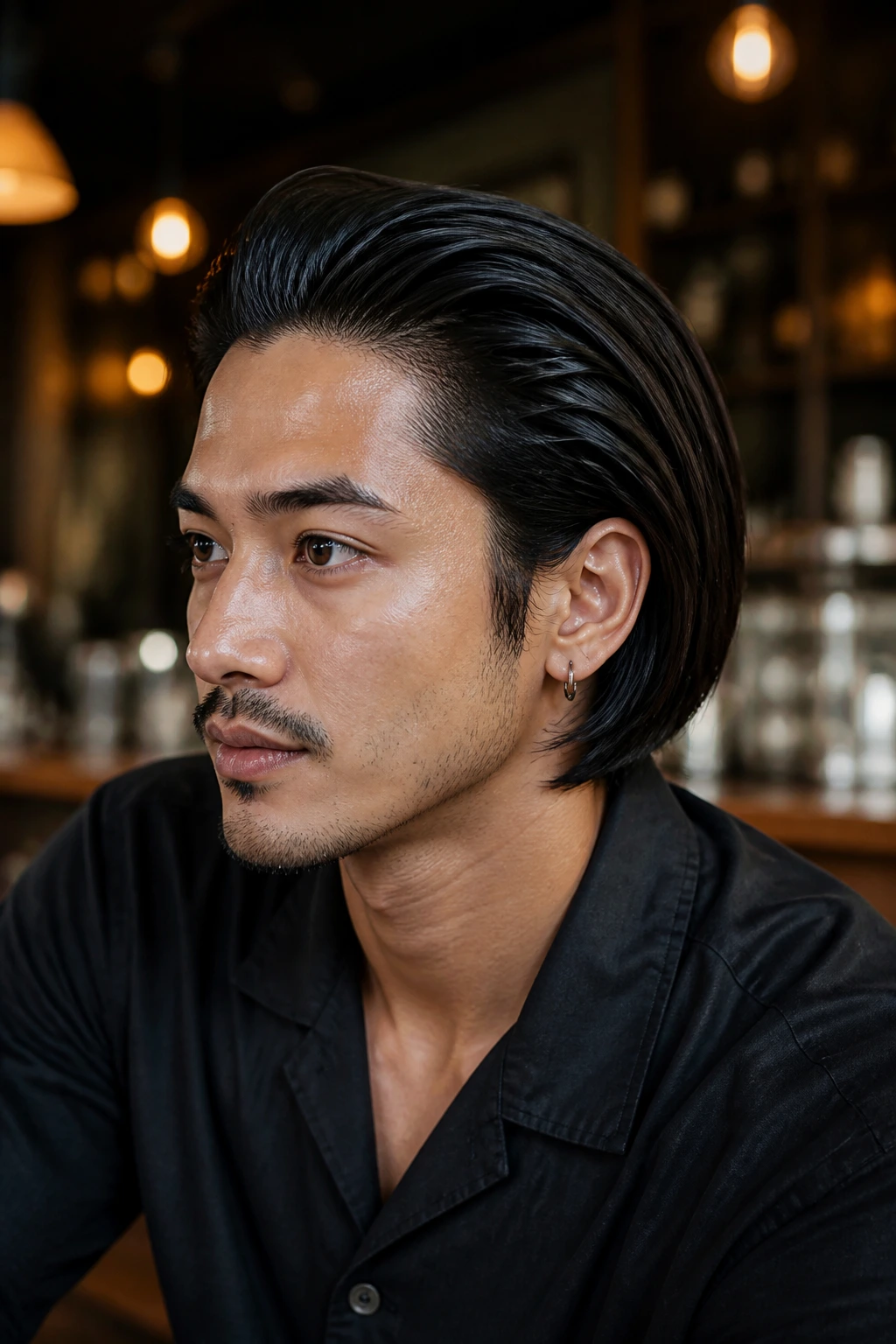
This one has a sharp mood. The front length is long enough to be pushed back or back and to the side, while the nape stays short enough that the whole thing feels deliberate, not floppy.
The slicked version is best when the hair is dense and has enough length on top to hold direction. Fine hair can do it too, but you’ll need a lighter product and a blow-dry for lift at the roots. Otherwise the hair just slides back and lies there.
A comb gives the finish more precision. Fingers make it softer. I usually prefer fingers for daytime and a comb when the cut needs to look cleaner. That small difference changes the whole read of the haircut.
10. Messy Matte Inverted Bob
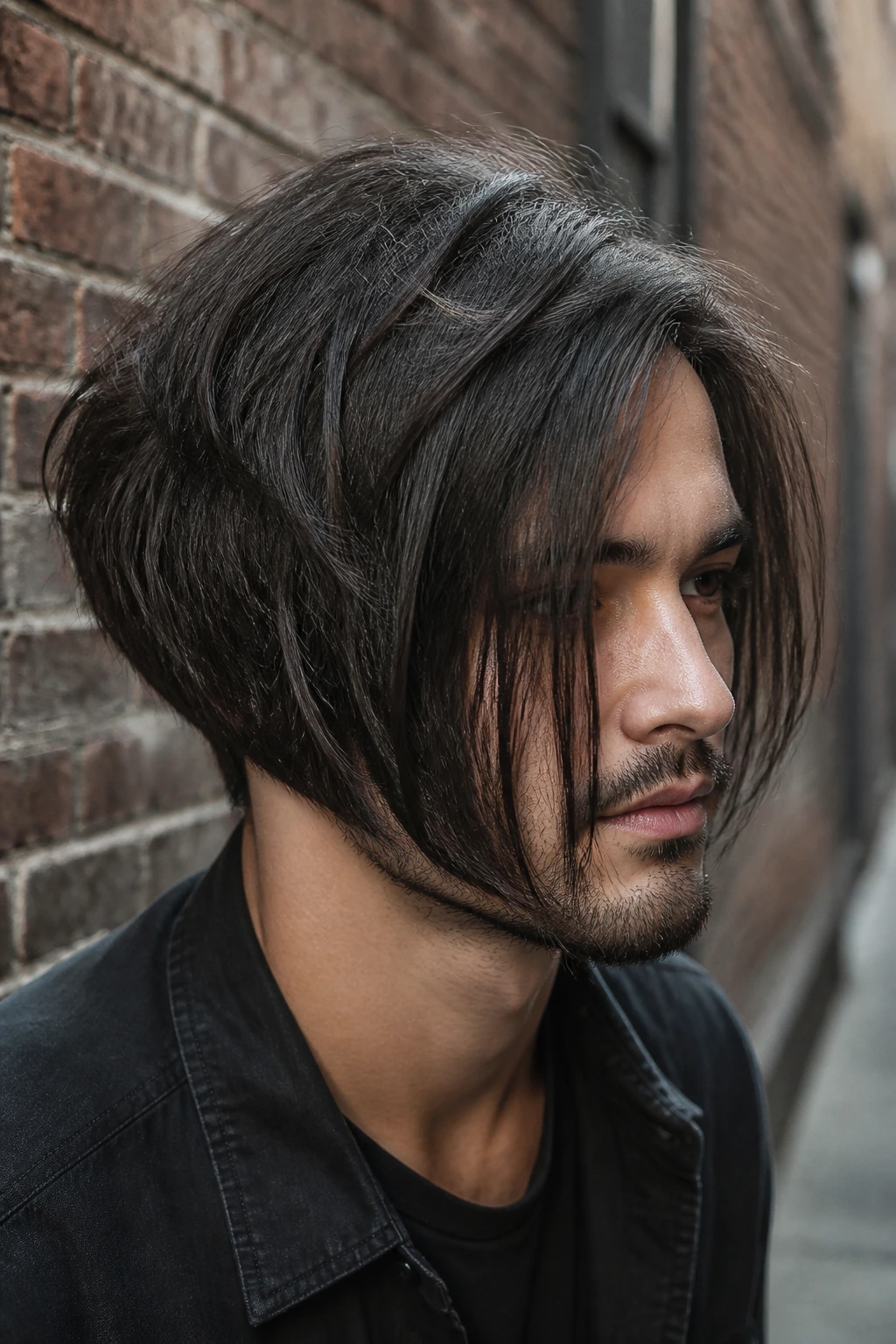
This is the cut for men who want shape without looking polished to death. The back is still angled and tidy, but the top and front are roughed up enough to feel casual.
A quick styling path
- Towel-dry until the hair is damp, not dripping.
- Work in a small dab of matte paste.
- Scrunch the front pieces forward and let the ends separate.
- Finish with your fingers, not a brush.
The messy version looks best when the front is still obviously longer than the back. If the contrast disappears, the haircut turns into generic medium-length hair. That’s not what we want here.
It’s a good one for thick hair that likes to misbehave in the morning. The slight disorder actually works for it. Clean the neckline, leave the front loose, and stop before the style gets crunchy.
11. Micro Fringe Inverted Bob
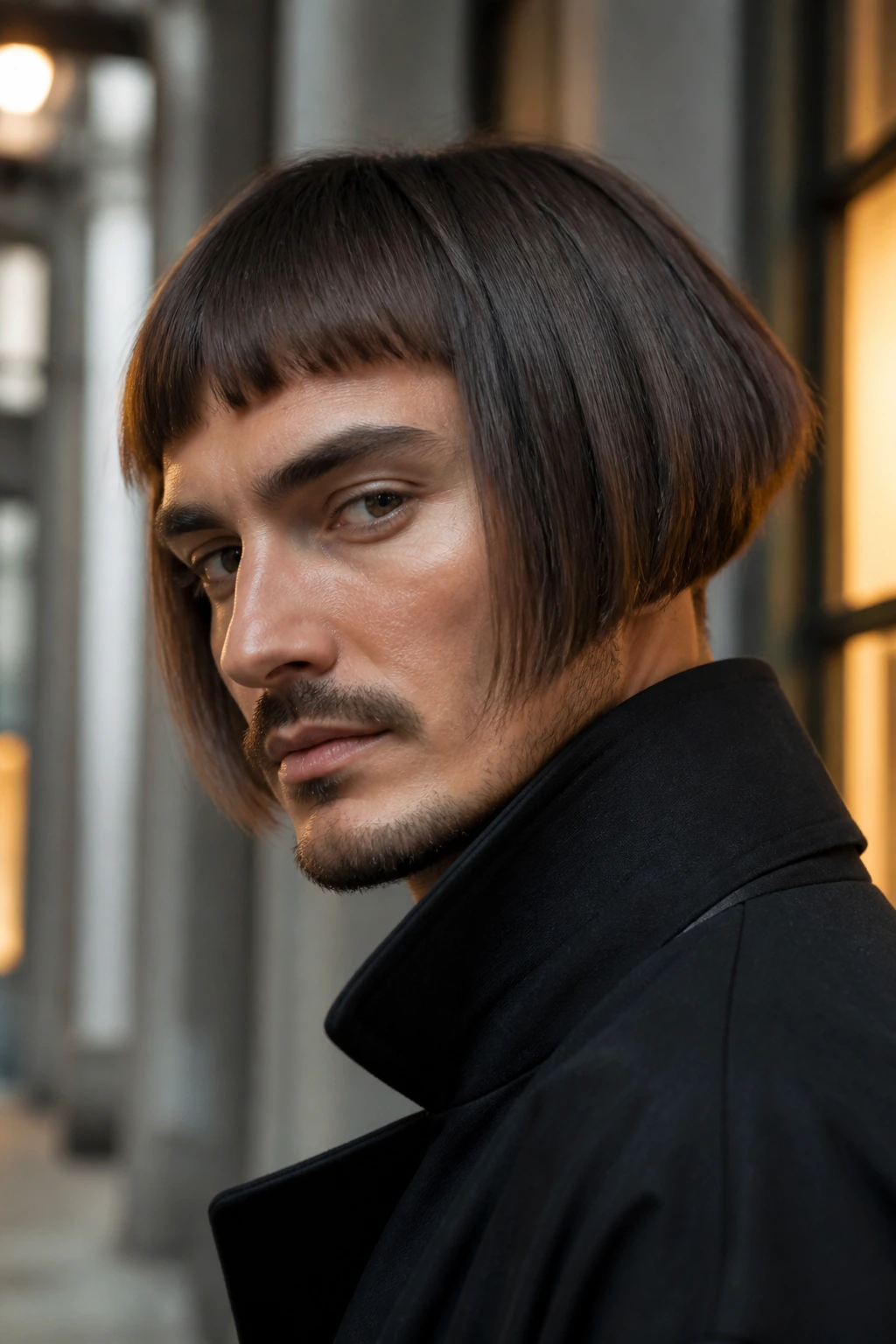
A short fringe makes the whole haircut feel more graphic. The front is trimmed above the eyebrows or just barely at them, while the sides and back keep the inverted line.
This is a gutsy look. It’s not trying to flatter everybody in the room. It works best on men with strong brow lines, good hair density, and a face that can handle a shorter front without looking boxy. Straight hair makes the fringe look precise; wavy hair makes it look a little raw.
If you choose this one, keep the fringe blunt or lightly feathered, not choppy to the point of looking broken. A micro fringe plus a stacked back can become too busy if the perimeter is handled badly. Clean lines win here.
12. Angular Jawline Bob
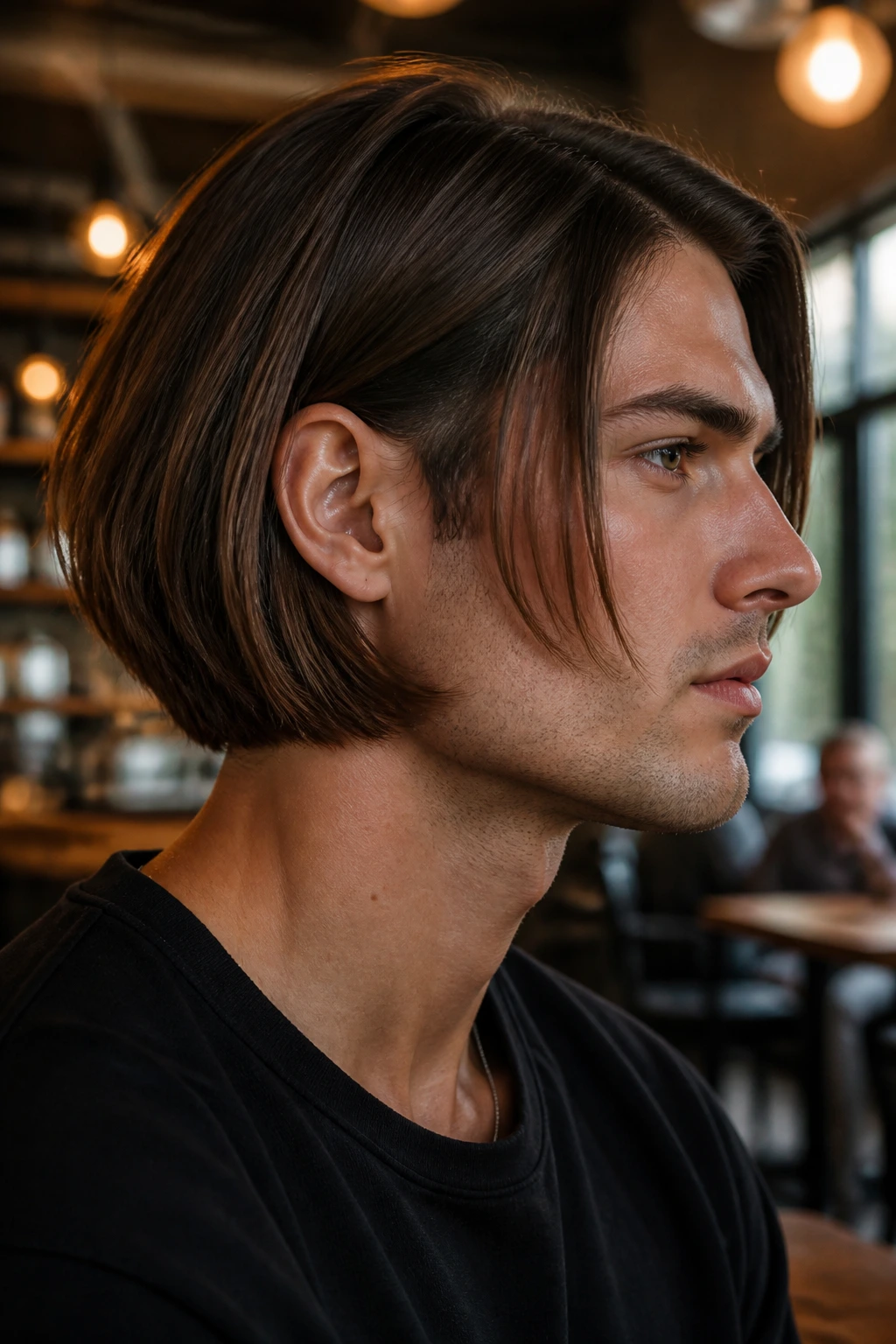
This version leans hard into the face shape. The front pieces are cut to hit right around the jaw, which makes the lower face look stronger and more defined.
Does it always work? No. On a narrow face, it can feel a little severe. On a round or softer face, though, it adds structure where the haircut needs it most. The angle should be obvious from the side, with the front sitting low enough to create a clear line.
Best pairing
A light side part, a little bend at the ends, and a blade or razor finish on the perimeter.
That combination keeps the haircut from looking too stiff. You want the jawline emphasis, not a cardboard edge. If your barber is skilled with a razor, this is one of the places that detail really shows.
13. Layered Shag-Bob Hybrid
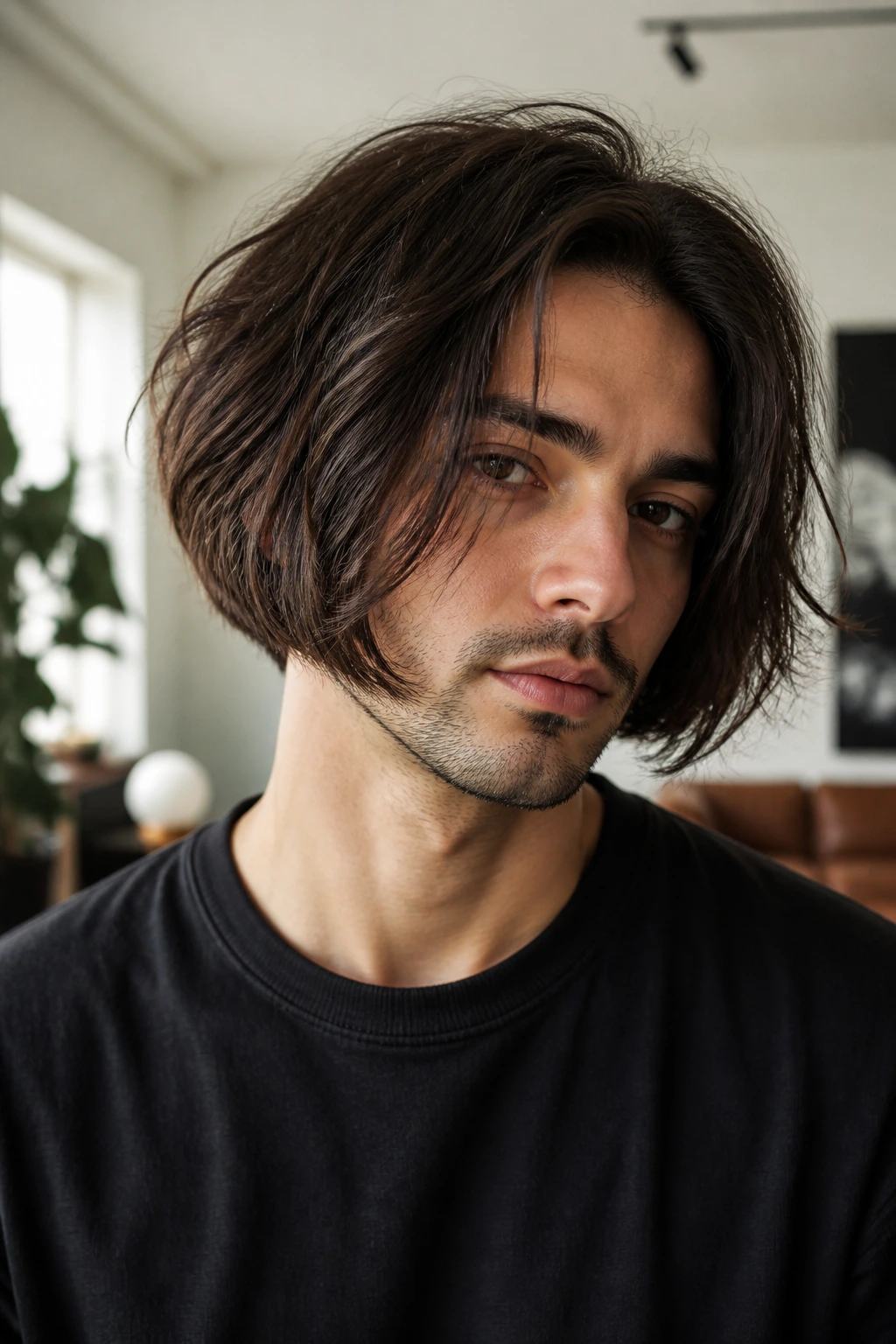
The shag-bob hybrid sits between tidy and chaotic, which is why a lot of men end up liking it more than they expected. You get the inverted back shape, but the top and sides are layered enough to move like a shag.
Why it works
The layers break up weight, especially on thick or slightly wavy hair. That means the haircut grows out in a friendlier way and doesn’t suddenly turn into a triangle. The downside is obvious: too many short layers can make the top stick up and lose the bob shape altogether.
A good version keeps the front longer and lets the layers live mostly through the interior, where they help the hair fall instead of puff. Use a texturizing spray or a very light cream, then let the ends stay a little piecey.
This one has a lived-in feel without needing to look messy on purpose. Nice balance. Hard to fake.
14. Blunt Edge Bob
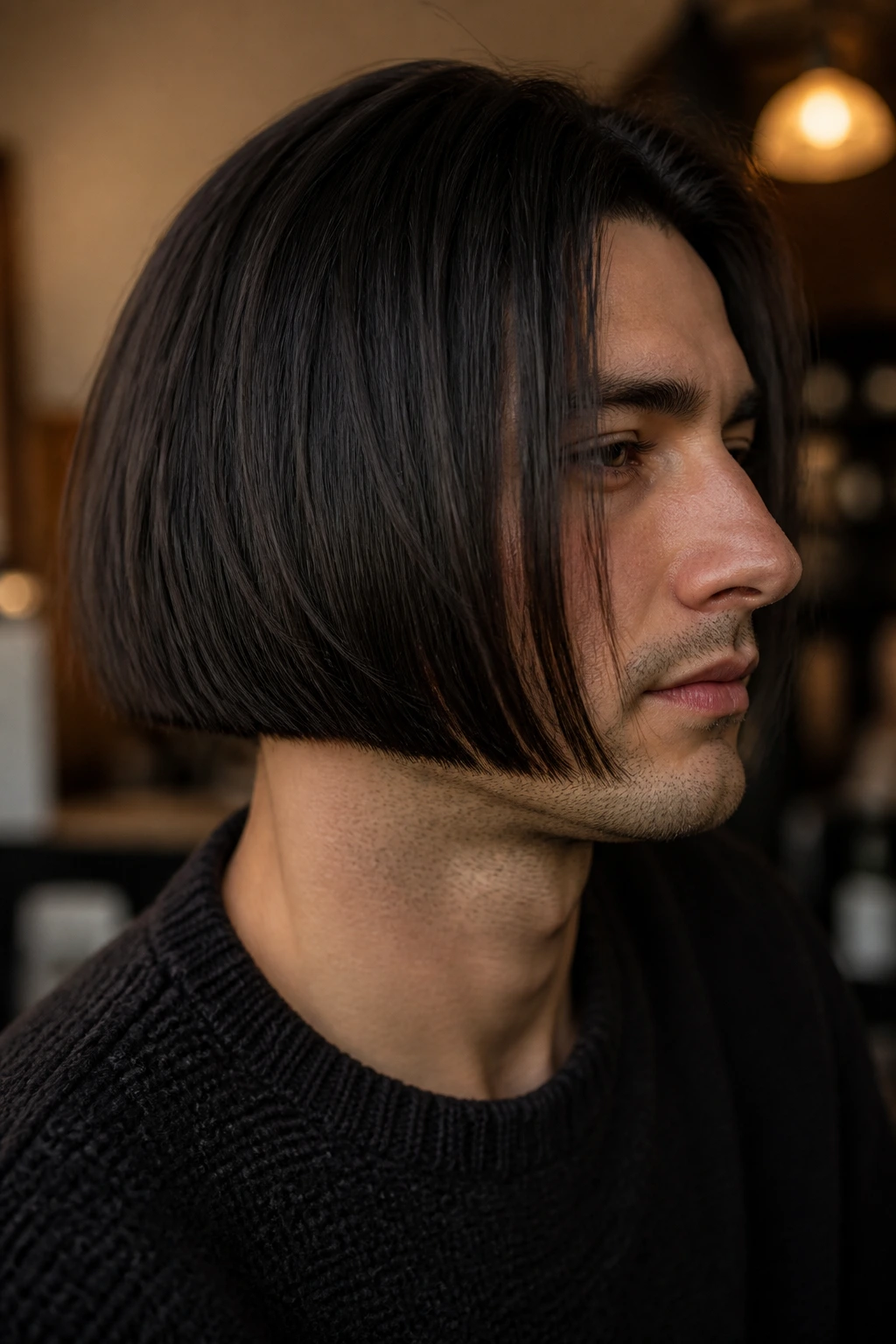
A blunt edge makes the inverted bob look disciplined. The back is still shorter, but the perimeter line is clean and solid, which gives the haircut more weight visually.
Straight hair handles this best because the line stays visible. If your hair bends a lot, the blunt edge can get interrupted, and then the whole effect softens. That may be fine if you like a looser finish, but it changes the character of the cut.
What to tell the barber
Ask for a crisp perimeter at the front and sides, with the graduation kept hidden inside the shape. That gives you the angular bob feel without making the ends appear wispy. A blow-dryer and paddle brush help the line sit flat and smooth.
This is a strong choice if you wear simple clothes and want the haircut to do the heavy lifting.
15. Disconnected Bob
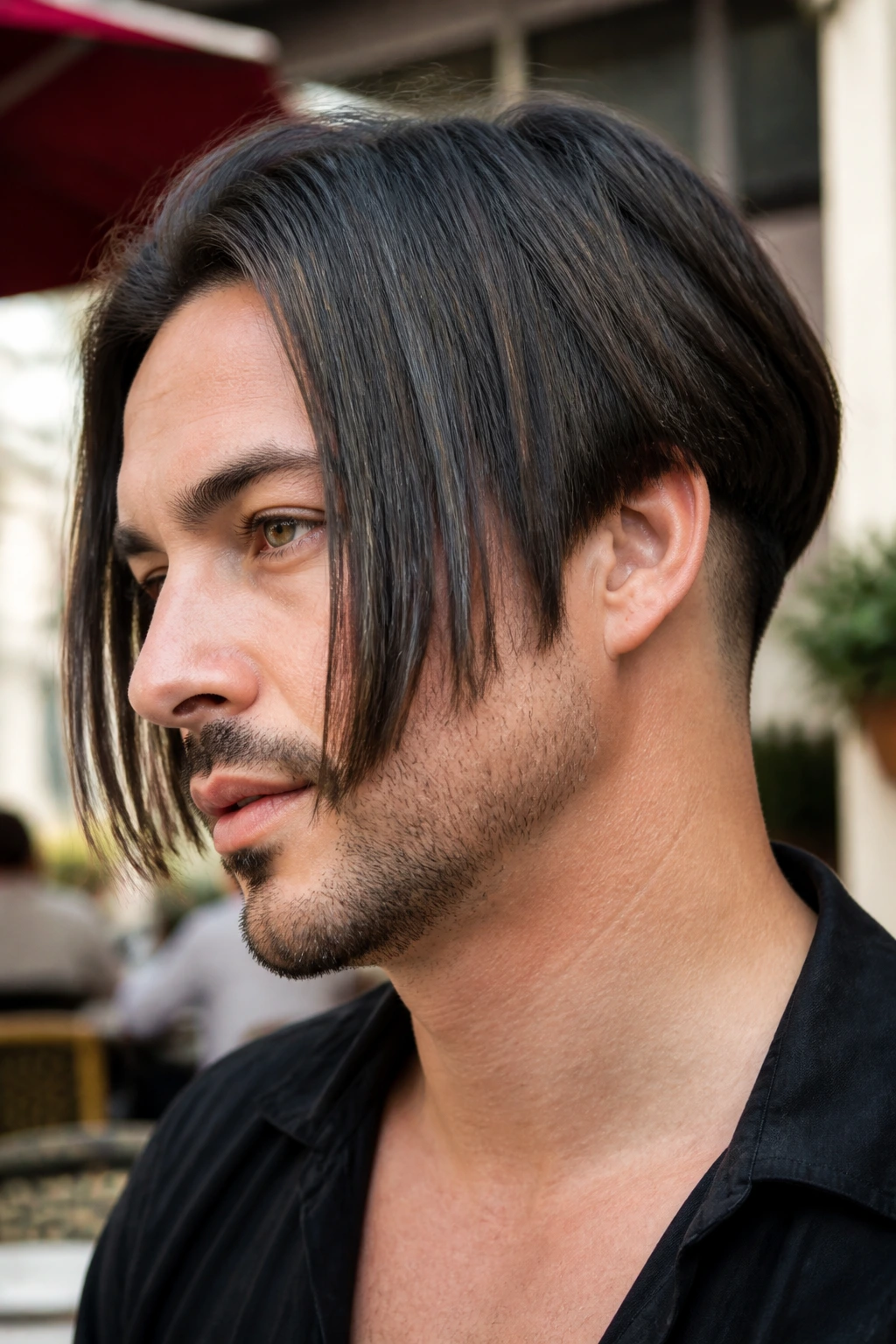
Not everything has to blend. The disconnected bob proves that point by leaving a visible break between the shorter lower section and the longer top and front.
The contrast is the whole appeal. It can look fashion-forward, a little severe, and frankly cooler than a fully blended bob when the styling is right. That said, the disconnect needs to be intentional. If the barber creates a random shelf, the cut looks unfinished instead of sharp.
Who it suits
- Men who like a sharper silhouette.
- Dense hair that can hold shape.
- Anyone comfortable with a more obvious style choice.
Use a matte product and keep the upper section from puffing out. That break line should feel like design, not damage.
16. Low Fade Inverted Bob
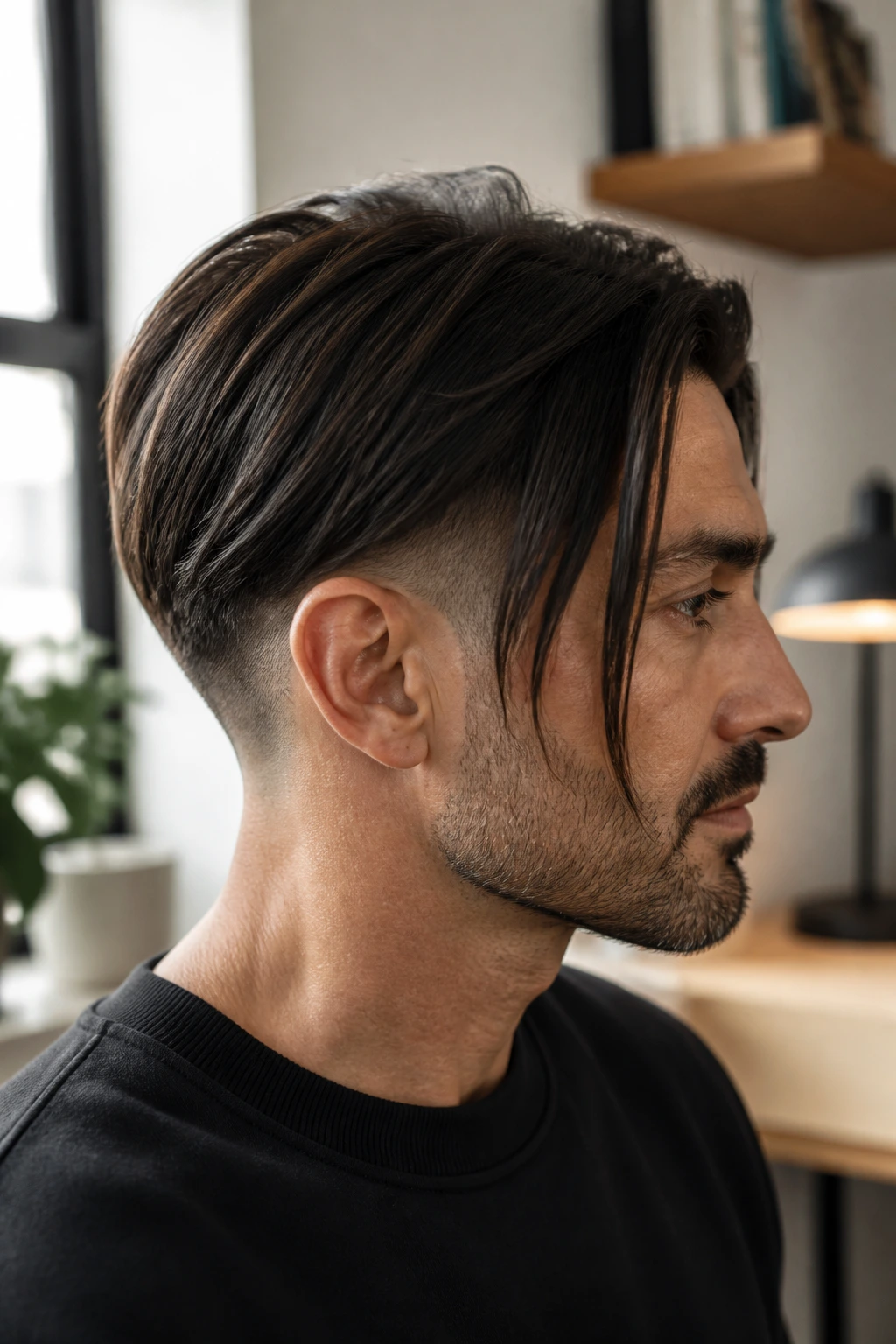
A low fade keeps the lower sides clean while preserving the bob length above. It’s a calmer version of the undercut, and I think that makes it easier to wear day to day.
The fade should stay low enough that the inversion still reads clearly from the side. If the fade climbs too high, the haircut starts looking more like a hybrid crop and less like a bob. The front length can sit at the chin or just below it, depending on how dramatic you want the slope to feel.
Why this version is easy to live with
- It stays neat around the ears.
- It grows out better than a high fade.
- It gives thick hair a cleaner base.
A low fade pairs nicely with light styling cream. You do not need much else. The shape does the work.
17. High Fade Inverted Bob
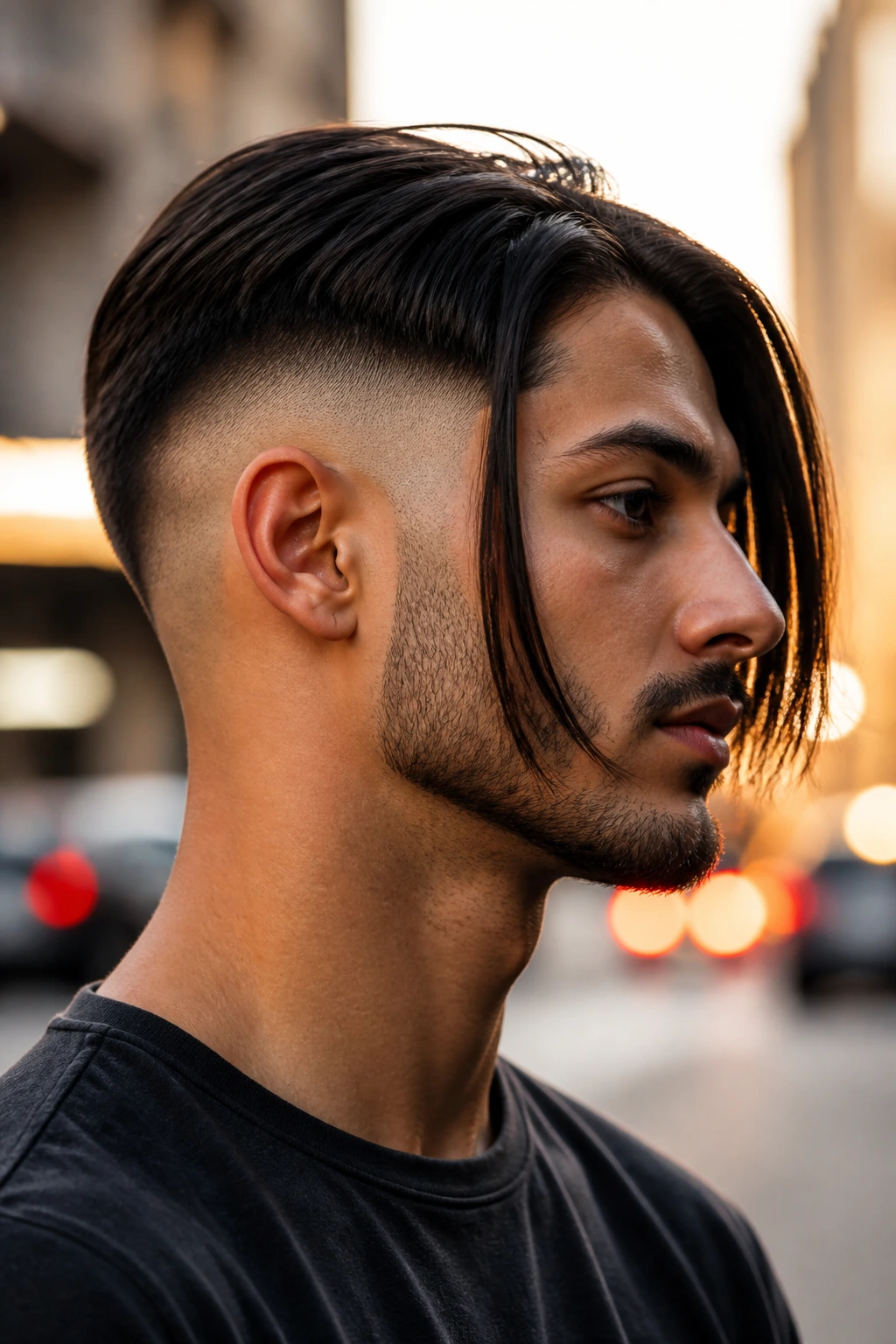
A high fade pushes the contrast harder. The top and front keep their bob length, while the sides disappear much faster toward the temples and above the ears.
This is a bolder version, and it can look fantastic on men who want a strong profile. The upper section stands out more, which means the front length becomes the hero. It also exposes the face a bit more, so be ready for that. There’s nowhere for the haircut to hide.
The one thing I’d warn about: high fades can make a bob feel top-heavy if the front isn’t long enough. You need enough length to balance the fade, or the cut will feel lopsided.
18. Feathered Bob
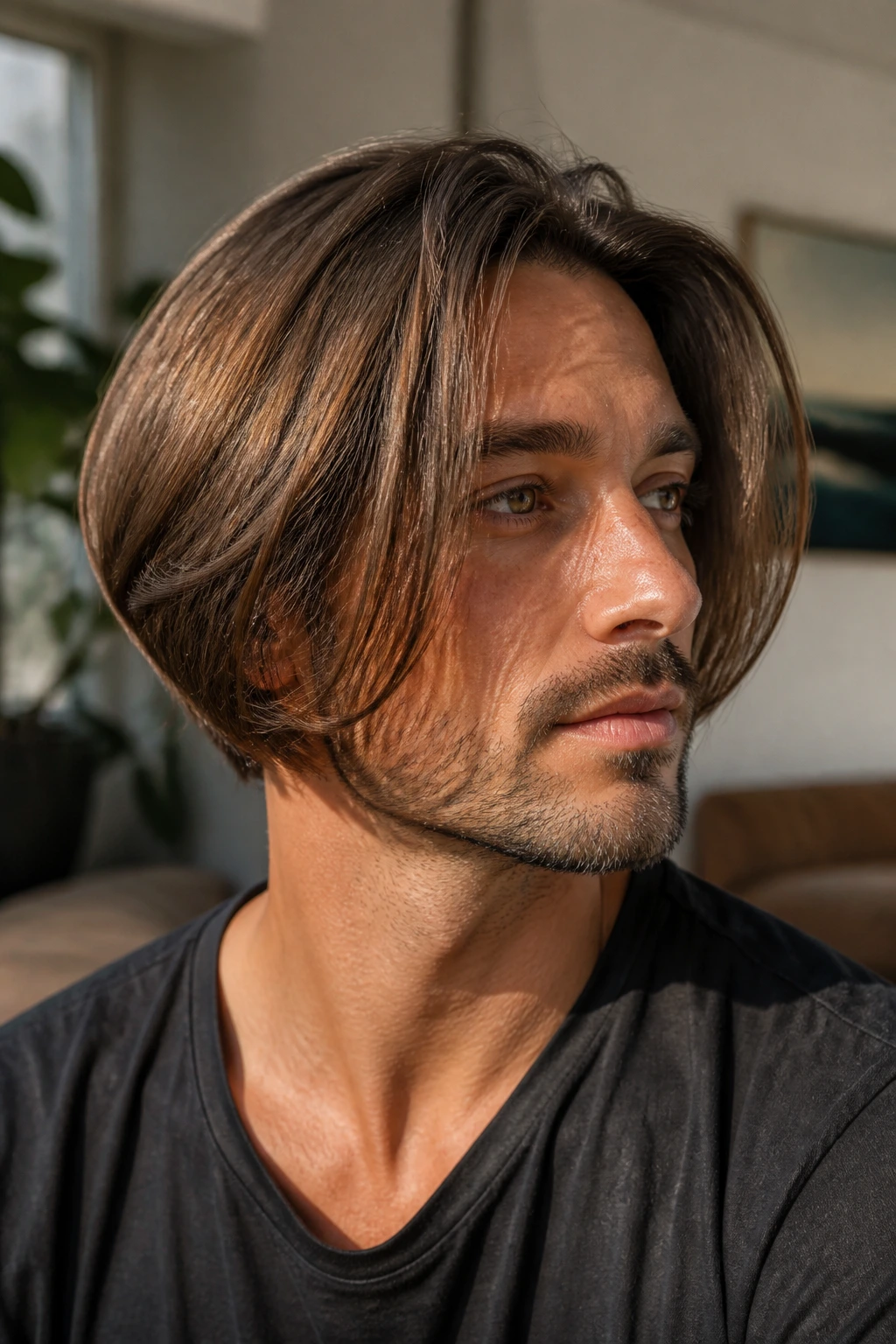
A feathered inverted bob is softer around the edges. Instead of a blunt perimeter, the ends are lightly thinned or feathered so the hair moves with less stiffness.
This works especially well if your hair feels heavy and you hate the look of a hard, square edge. The feathering also helps the front curve around the face rather than sticking out in a straight line. It’s a gentler read, and that can be a relief if you want the cut to feel less severe.
Use a round brush and a touch of blow-dryer heat to encourage the ends inward. If you air-dry it, the feathering can sit a little too loose. That’s fine on some heads. On others, it just looks unfinished.
19. Chin-Grazing Bob with Tucked Sides
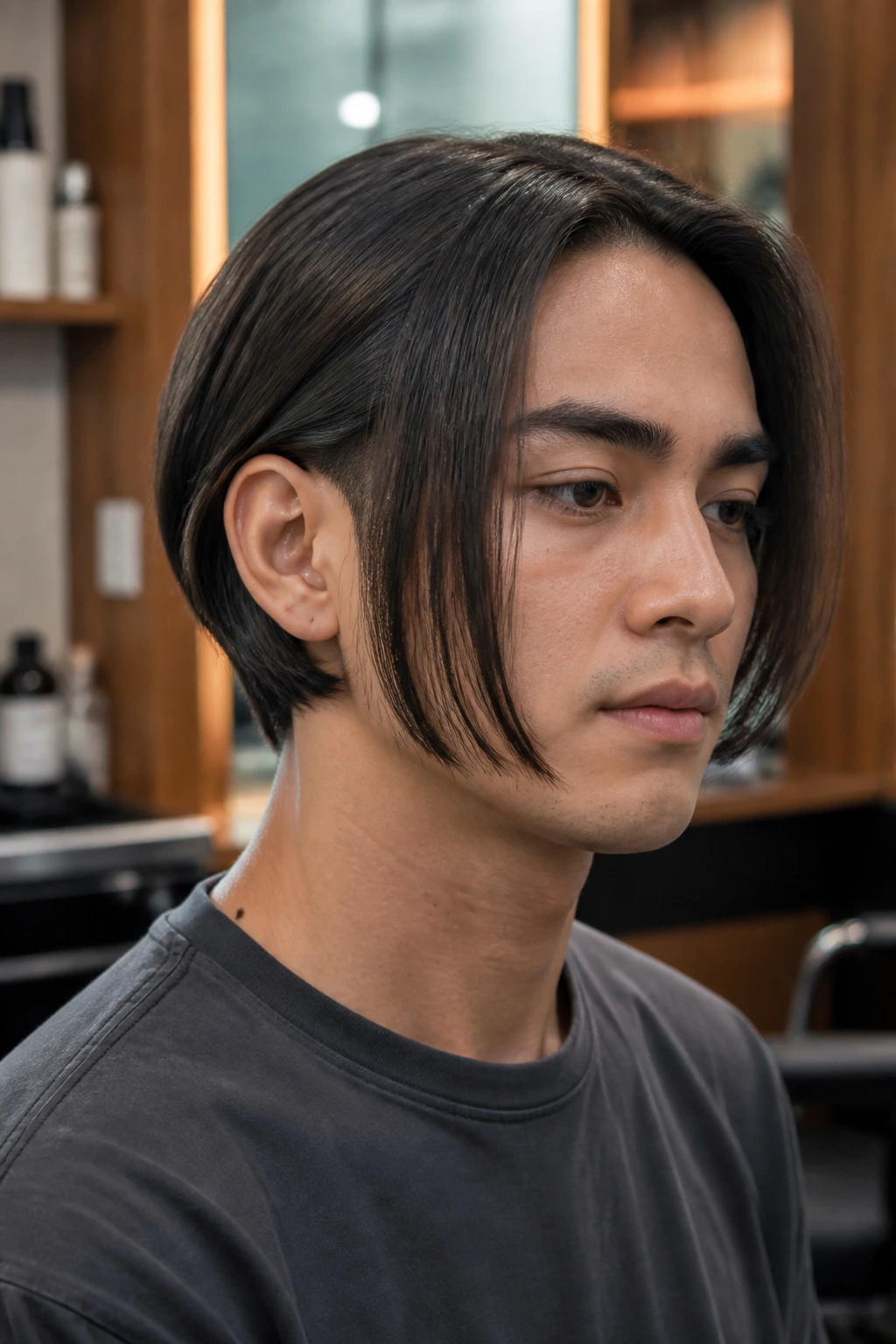
The chin-grazing version has a more classic bob length in front, but the sides are tucked in close so the shape stays slim. It’s one of the easiest ways to make the haircut feel tidy without losing the longer front.
A chin-length front gives you a lot to work with. You can wear it straight, bend it under slightly, or let it swing forward with a little movement. The tucked sides keep the silhouette from ballooning at the cheek.
Small details that matter
- Keep the side length close enough to tuck behind the ears when needed.
- Ask for soft graduation near the jaw.
- Use a lightweight cream, not a wax that gums up the ends.
This is a good one for men who want a controlled shape that still has enough length to play with.
20. Long Top, Short Back Bob
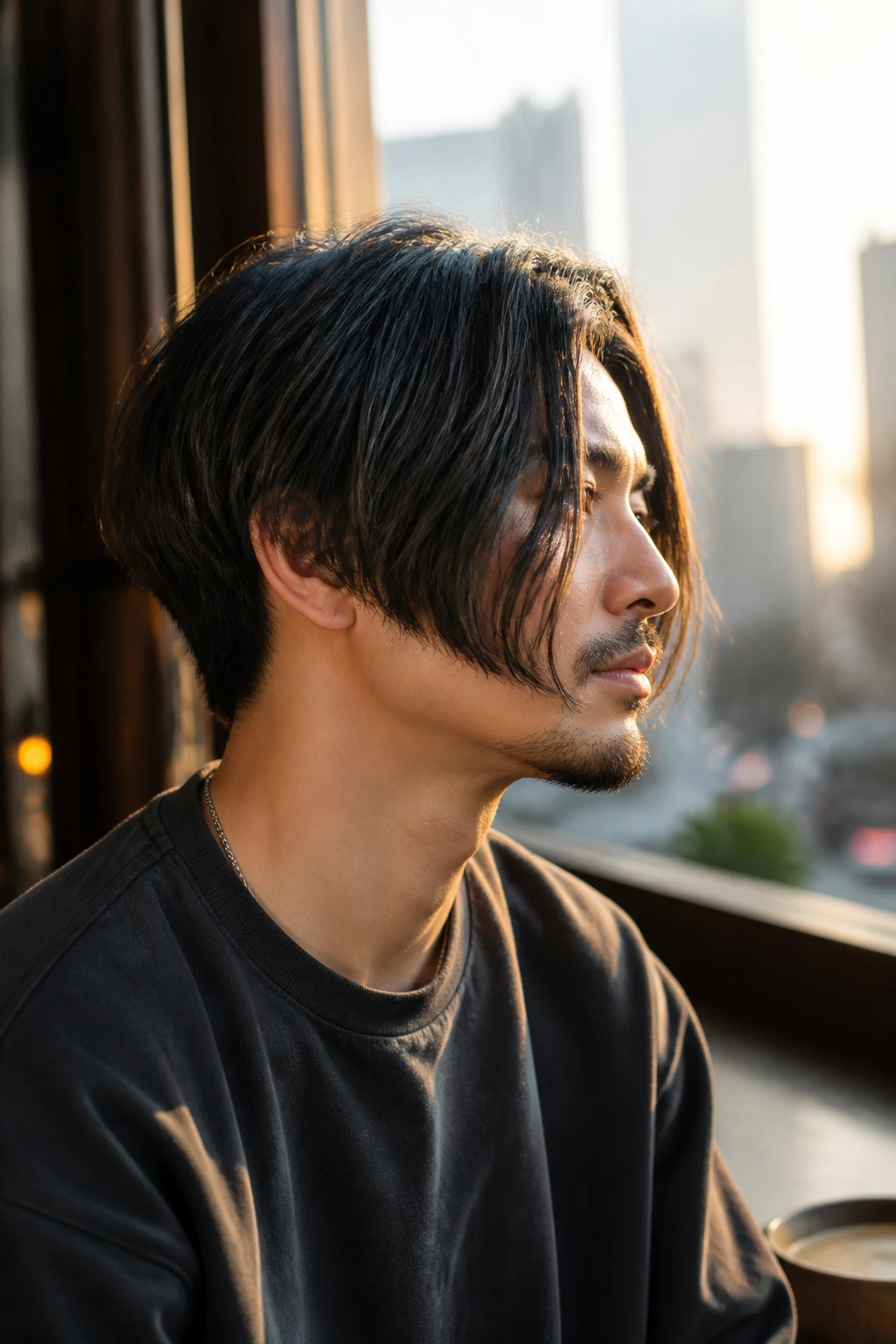
This version exaggerates the difference between the front and the nape. The top and front stay notably longer, while the back is cropped close enough to make the angle obvious the second you turn your head.
It can look really clean, but only if the transition is handled with care. If the back is too short and the top too long, the cut starts leaning toward a mullet-ish shape. That may be what you want. It may not. Know that before you sit in the chair.
The best version keeps the back short but not stripped, with enough length to blend into the long top. That keeps the bob identity intact. A side view is where this haircut shines, so ask your barber to check the profile before they finish.
21. Wolfish Inverted Bob
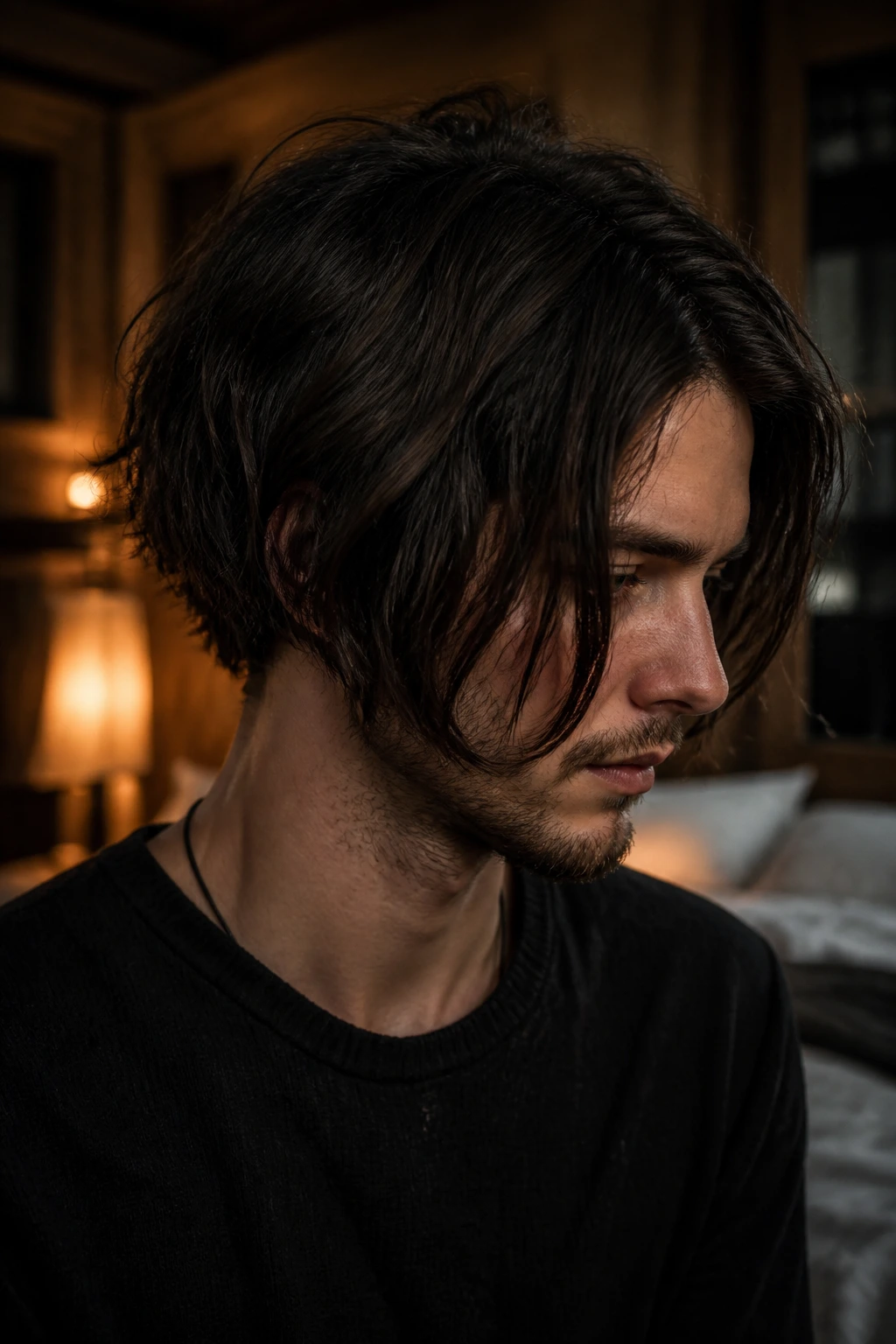
This one borrows a little from the wolf cut. The back still angles upward, but the layers are rougher and the top carries more texture, which gives the haircut a wilder edge.
It suits men who like hair that moves. The shape can feel a bit rebellious, but it works best when the ends are controlled enough that the bob outline doesn’t disappear. A wolfish cut with no discipline just turns into chaos. That’s not the goal.
Use it if you want
- A rougher finish than a classic bob.
- More volume through the crown.
- A cut that looks better slightly undone.
A bit of dry texture spray helps this one. So does a barber who knows when to stop layering.
22. Center-Part Inverted Bob
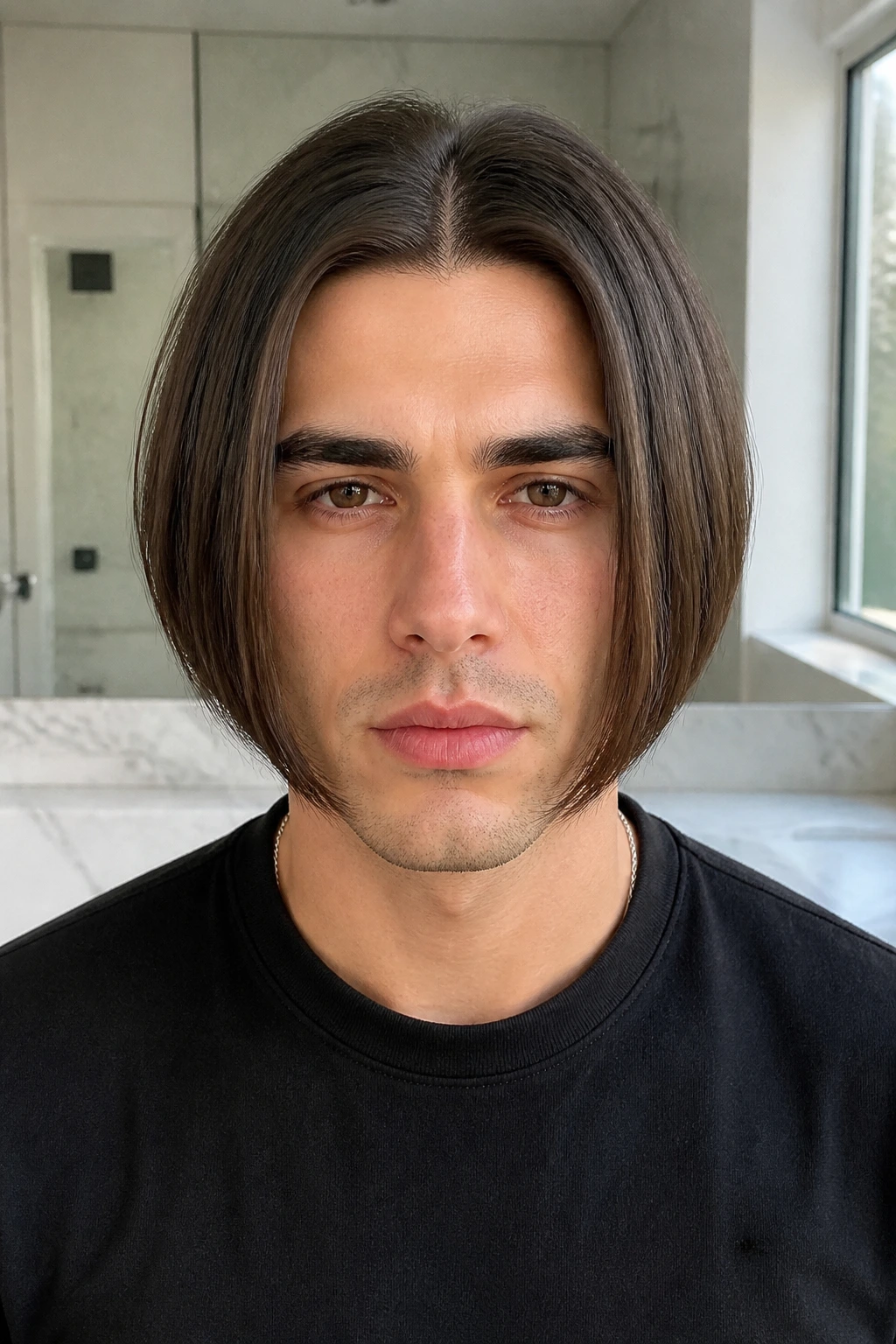
A center part makes the angle on both sides easier to read. It gives the haircut symmetry, which can be striking when the back is shorter and the front drops evenly around the face.
This style is best when your hair naturally falls in a fairly even pattern. If one side always misbehaves, you’ll spend too much time fighting it. Straight or loose-wavy hair usually handles the center part the cleanest, especially if you blow-dry it from the middle outward.
How to keep it from looking flat
Use a root-lifting spray near the crown, then dry the hair with the nozzle pointed down the shaft. That keeps the part neat without making the top collapse. A soft shine cream can help the ends look healthy, but don’t use too much or the front goes limp.
It’s a quiet haircut, which is part of the charm.
23. Fine-Hair Inverted Bob
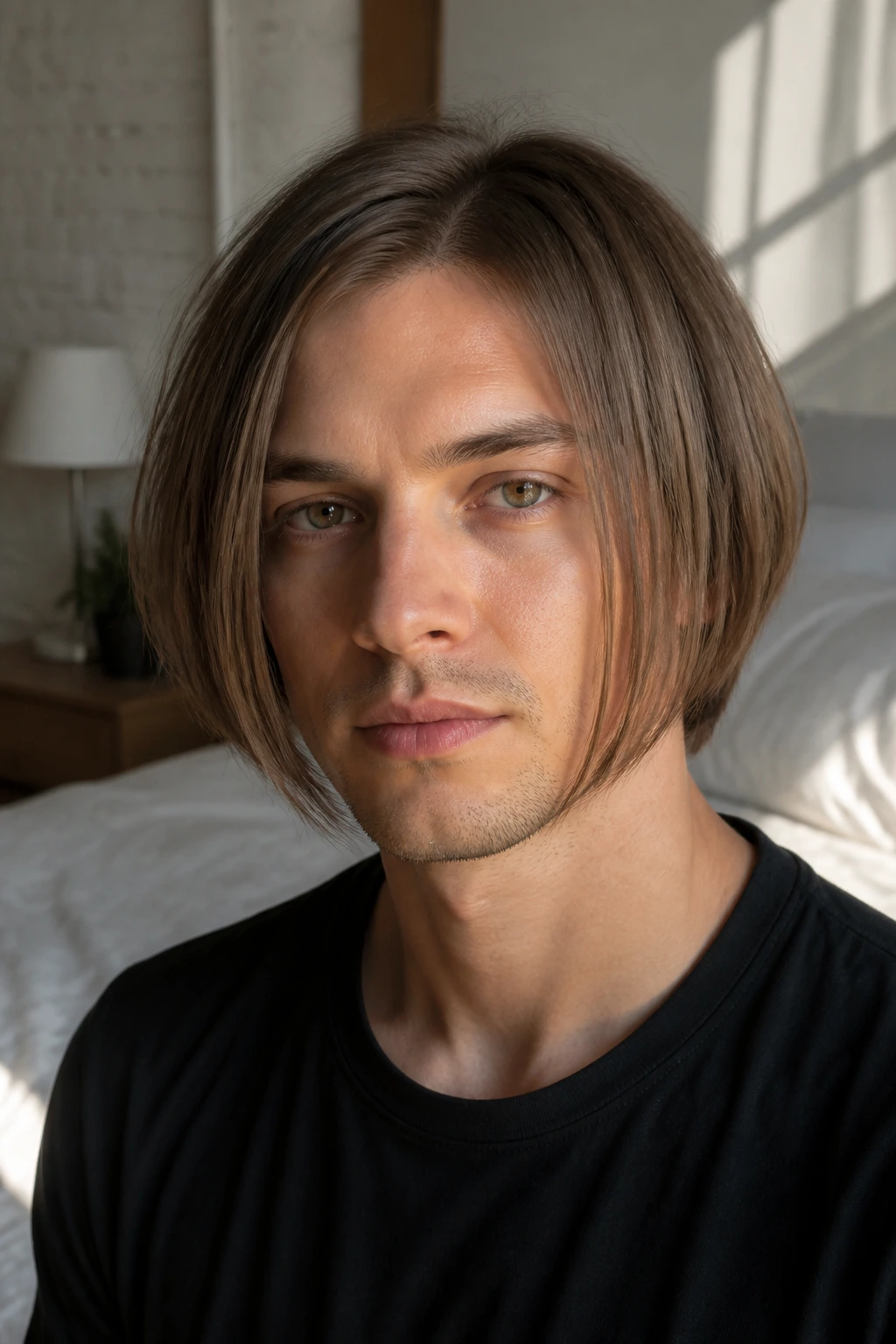
Fine hair needs smarter cutting, not more product. A fine-hair inverted bob works because the shorter back and longer front create the illusion of body without forcing the hair to do more than it can.
The barber should avoid over-thinning it. That’s the big mistake. Fine hair already lacks density, so if the ends get taken apart too much, the cut looks stringy and tired. Keep the perimeter solid, leave enough length in front, and use a lightweight mousse or root spray if you want lift.
It’s a cleaner option than most people expect. Fine hair can wear this shape with more control than a big layered style, and that’s worth remembering.
24. Thick-Hair Inverted Bob
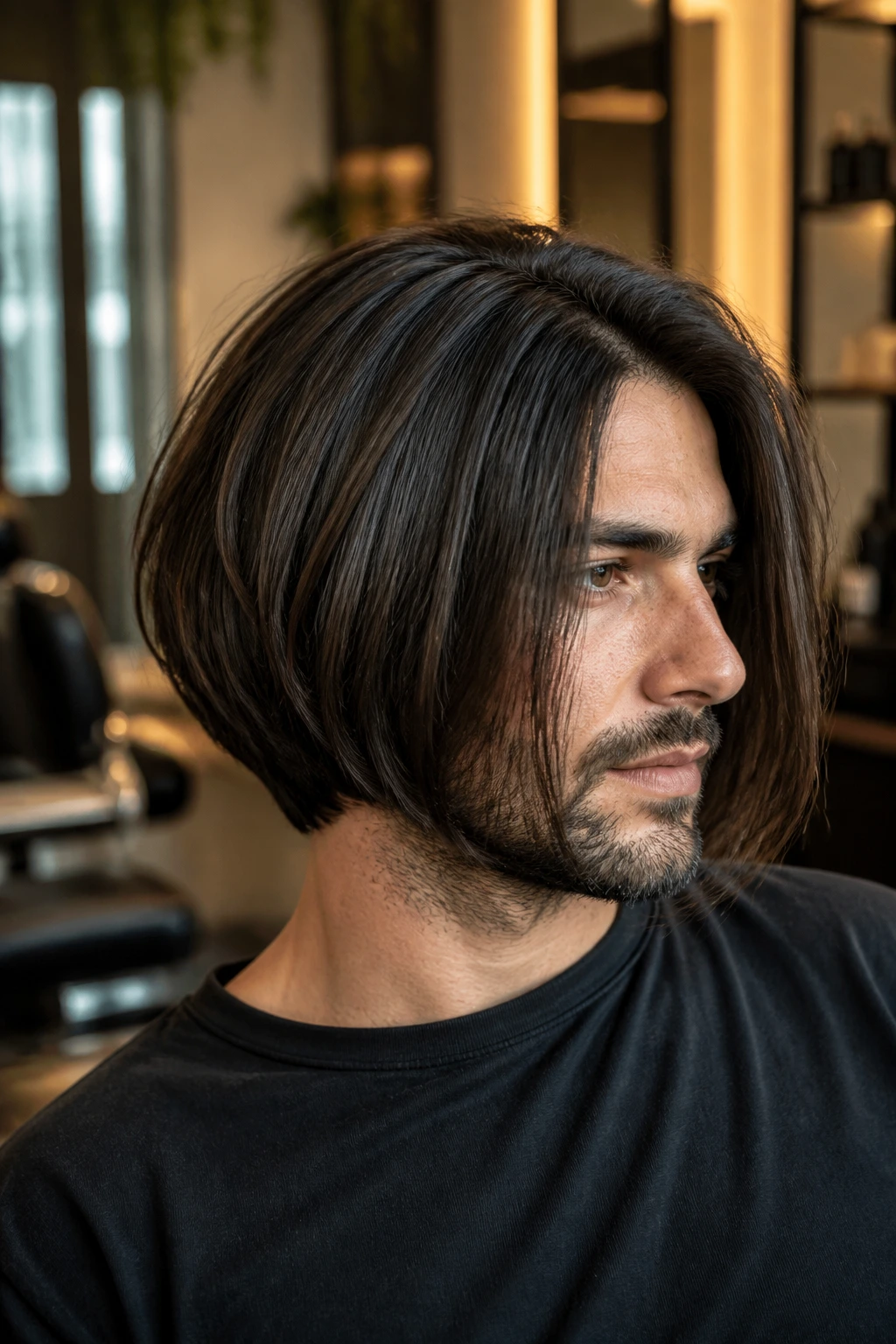
Thick hair can make this haircut look rich, full, and expensive—if it’s handled right. If it isn’t, the back balloons and the sides turn triangular. There’s no middle ground.
The key moves
- Remove bulk from inside the shape, not just from the surface.
- Keep the back stacked enough to sit close to the head.
- Leave the front long enough to show the angle.
This version often needs a little more maintenance than fine hair, because thick strands grow outward as much as downward. That said, the payoff is big. The front pieces can hold a strong line, and the cut keeps a lot of visual weight without turning heavy.
A matte paste or clay works better than a glossy product here. Thick hair usually looks better with grip than shine.
25. Salt-and-Pepper Inverted Bob
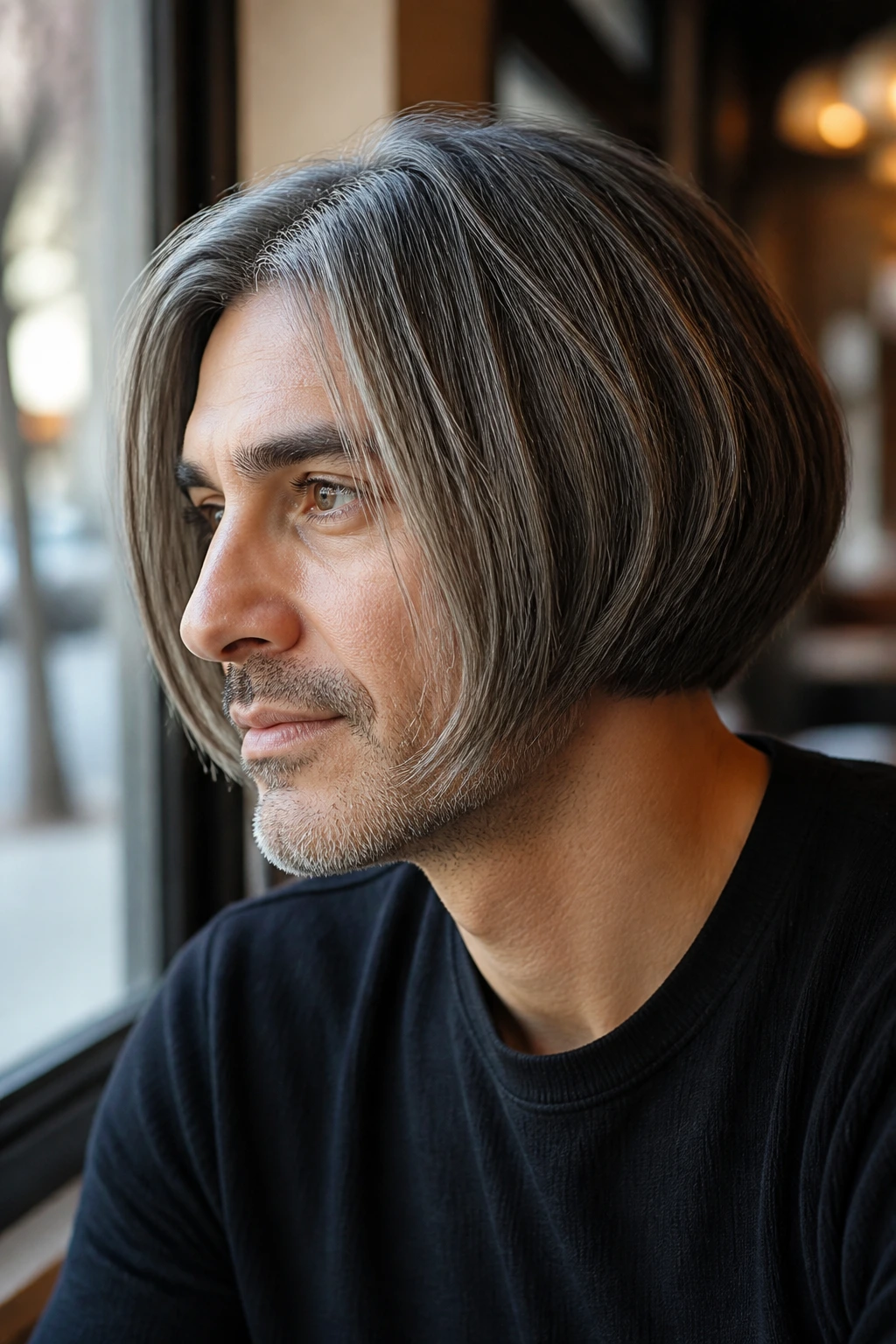
Gray mixed through dark hair gives this cut a lot of character. The angle in the back and the longer front catch the light differently, so the shape looks even more layered and dimensional in person than in a photo.
That mixed color also makes the haircut feel less precious. It reads lived-in, not overstyled. A little texture cream can keep the gray strands from sticking out in dry, wiry little lines, which happens more than people like to admit.
A good choice if you want
- A mature shape without looking stiff.
- Less need for color maintenance.
- A haircut that looks better with natural texture.
This is one of those styles that improves when the barber respects the hair instead of trying to force it flat. Let the color do some of the work.
26. Bleached Blonde Inverted Bob
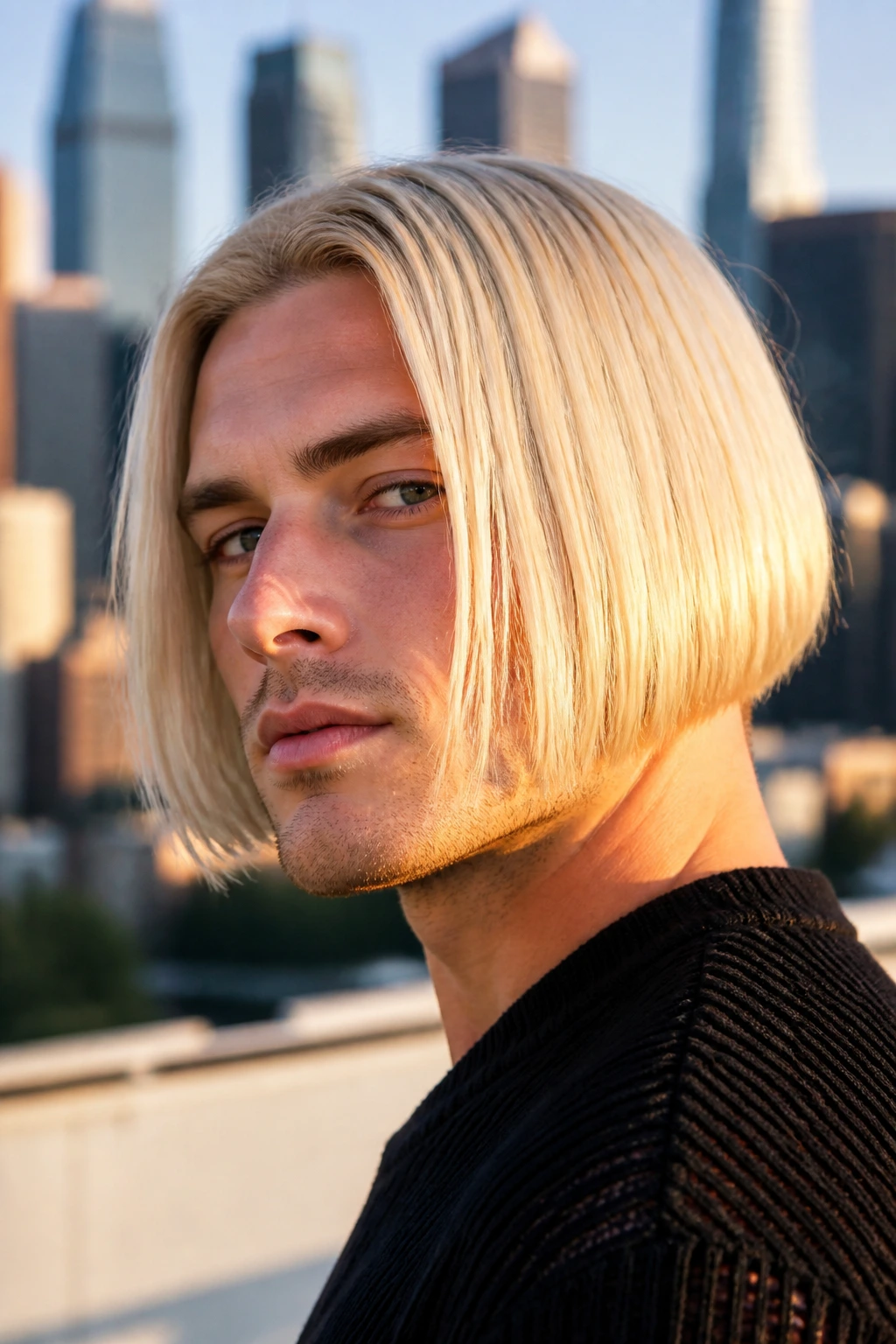
Blonde changes the mood fast. A bleached inverted bob looks sharper, brighter, and a touch more editorial because the lighter color makes every line of the cut easier to see.
That can be a gift or a headache. The cut has to be good, because bad layering shows up fast on light hair. The tone also needs upkeep, especially if the hair lifts warm instead of icy. Toner helps, but the cut should still stand on its own.
The best blonde versions use texture lightly. Too much product makes pale hair look dusty, and too much heat can make it look brittle. Keep the finish soft and the line clean.
27. Wet-Look Inverted Bob
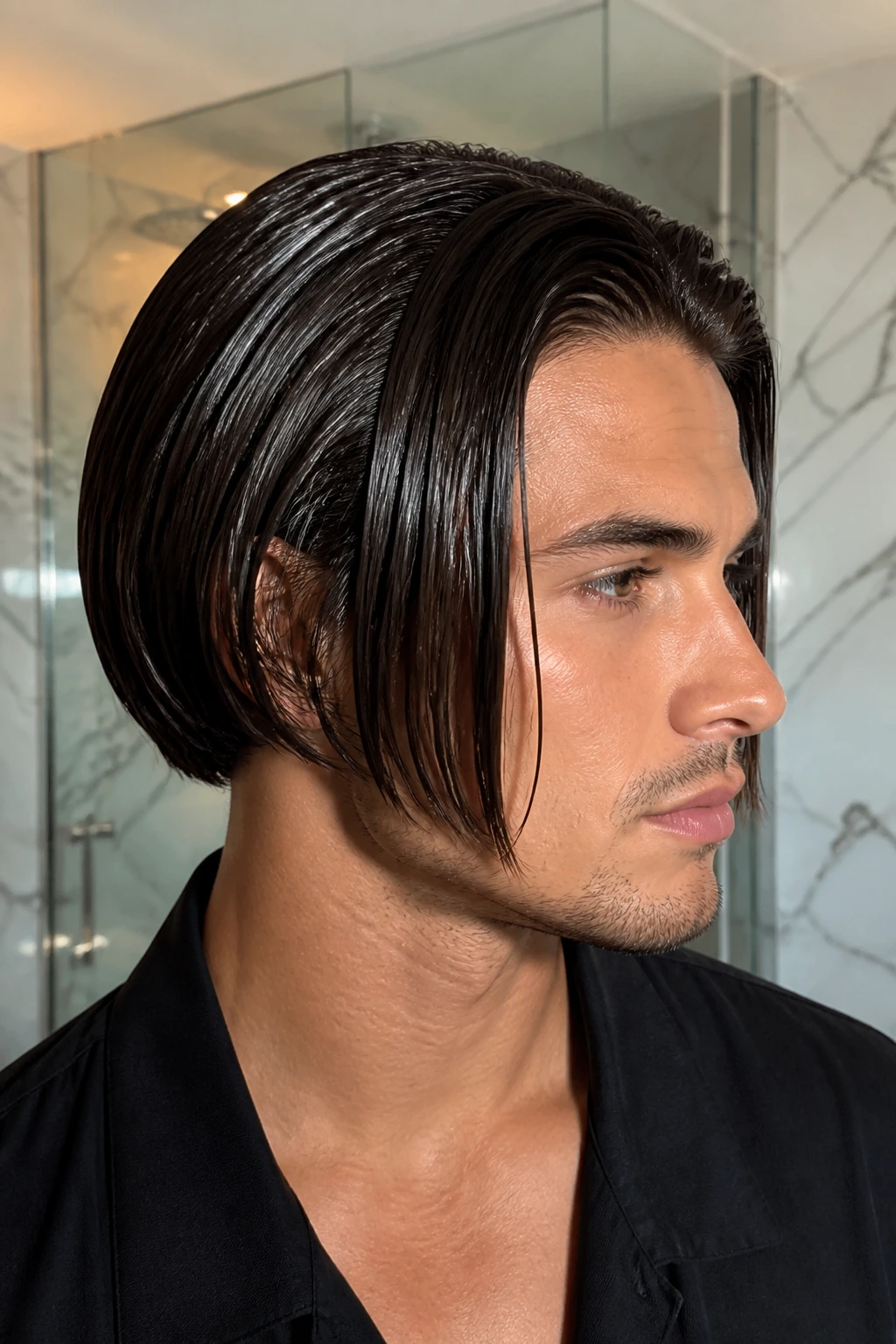
A wet finish gives the haircut a sleek, polished edge. It’s the sort of style that can look expensive when the hair is healthy and the shape is already good.
The key is control. Use a gel cream or light wet-look gel on damp hair, comb it into place, and stop before it hardens into a crunchy shell. The back should stay smooth against the neck, while the front falls in a clean, glossy angle.
This version doesn’t forgive bad cuts. It shows everything. Split ends, uneven layers, messy nape work—they all show up. When the shape is right, though, this style has a strong, clean look that works for nights out and formal settings without feeling stiff.
28. Ear-Tuck Inverted Bob
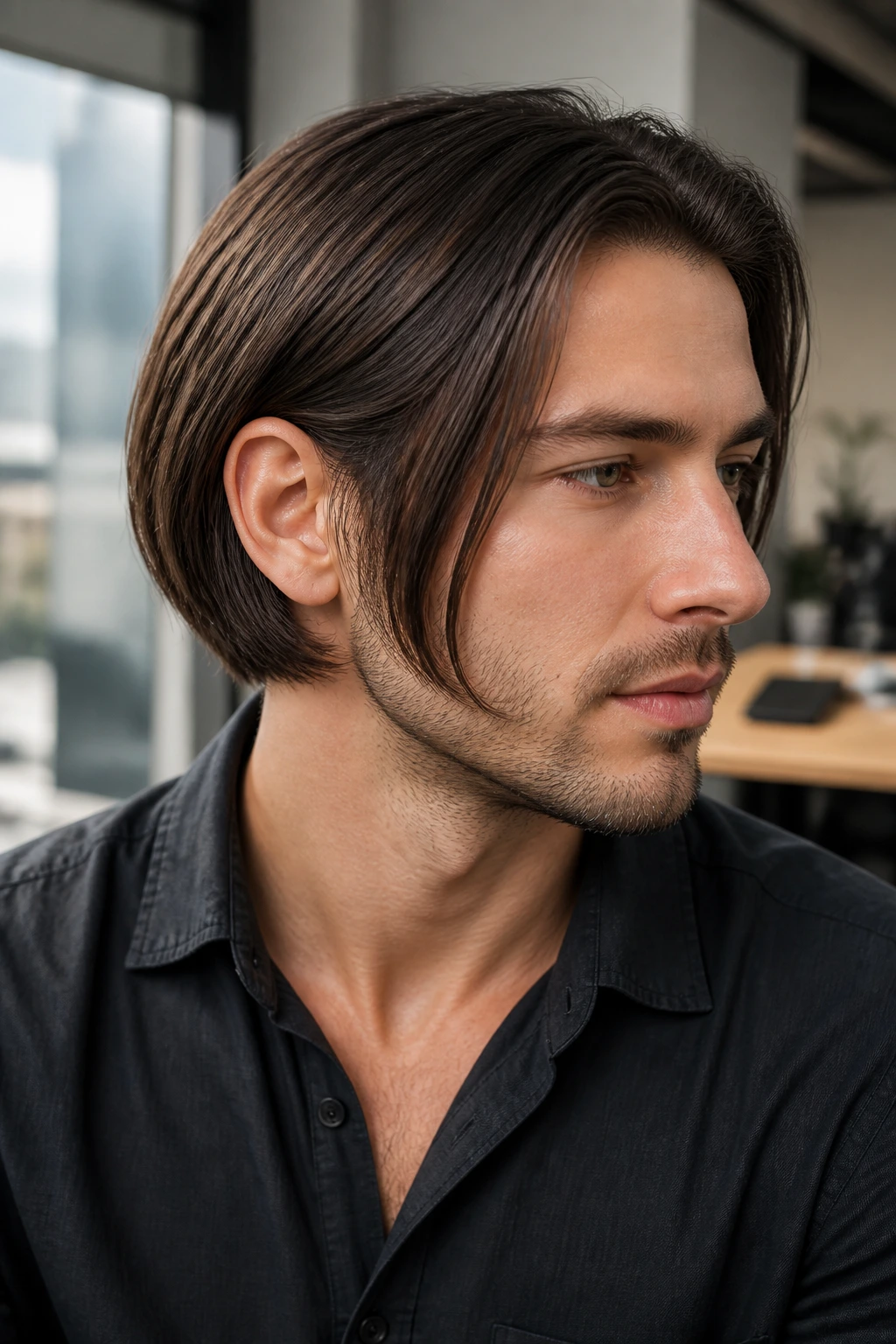
A haircut that can tuck behind the ears on command is more useful than people think. The ear-tuck inverted bob keeps enough length in front and around the sides to sweep back when you want a cleaner face frame.
That flexibility makes it easy to wear in different settings. Leave it forward for a softer line. Tuck it back for work or when you want the face open. The cut needs carefully tapered side lengths so the tuck looks intentional and not like you forgot to style it.
Watch for this
If the side length is too short, it won’t tuck well. If it’s too long and heavy, it will bulge behind the ear. The sweet spot sits right between those two problems, and it’s worth discussing before the first snip.
29. Brushed-Forward Inverted Bob
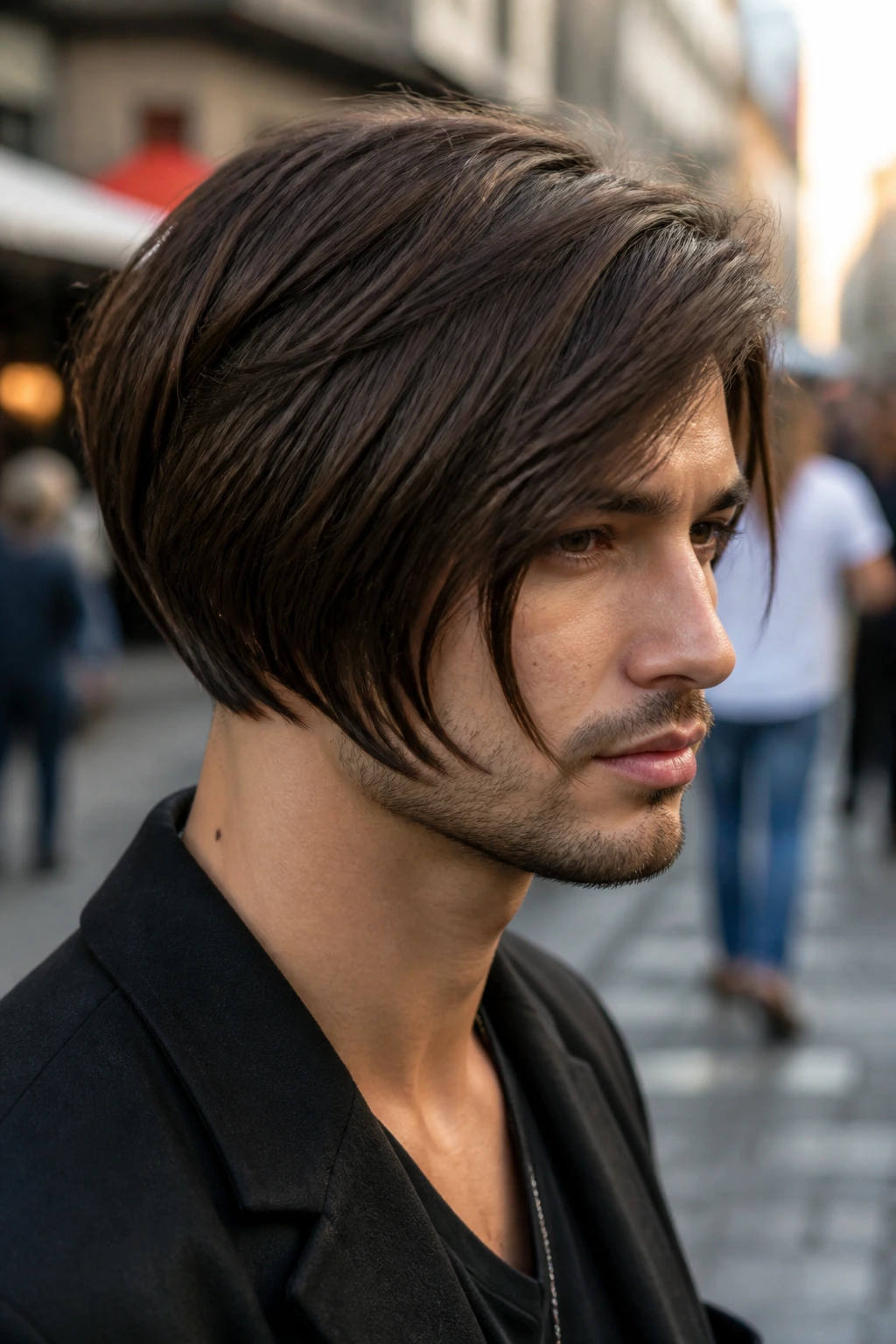
Brushing the hair forward changes the attitude entirely. Instead of a back-swept shape, the front comes over the forehead a little and softens the face while the shorter back still keeps the angle alive.
This is a good one for men with a high forehead or anyone who wants the haircut to feel less open. The front should still be long enough to move, not cling to the forehead like a curtain. A light blow-dry with the brush pointed forward gives the shape. Then you stop. Overdoing it makes the hair collapse.
The result feels quieter than some of the sharper versions. Quiet doesn’t mean boring. It means the shape is doing its job without shouting.
30. Editorial Inverted Bob Haircut for Men
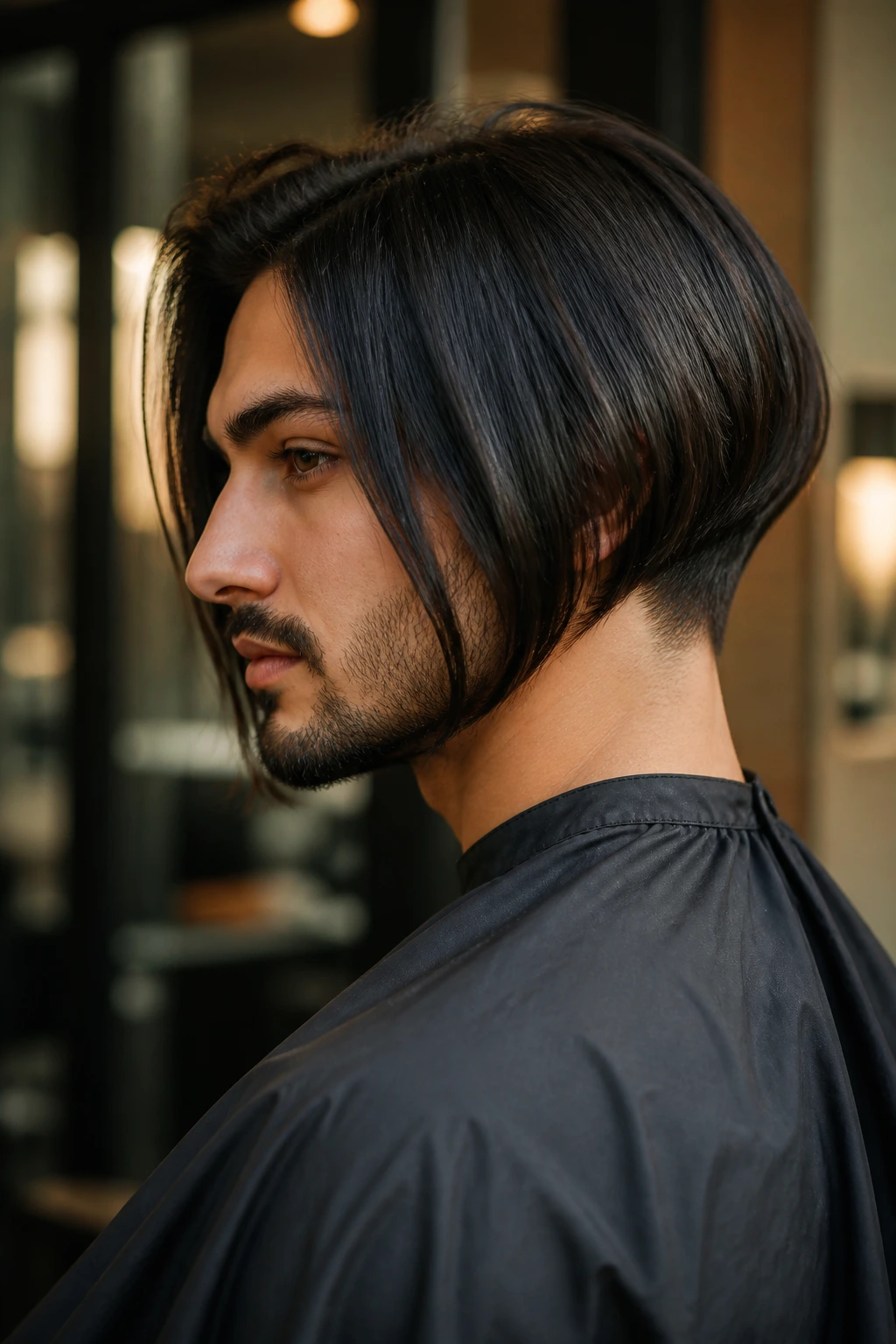
Some cuts are made for everyday wear, and some are built to look like they belong in a magazine spread. The editorial inverted bob haircut for men sits in that second group, but it can still work in normal life if the proportions are right.
What gives it that edge is usually a stronger angle, a cleaner neckline, or a more obvious finish through the front pieces. You might see a slightly longer front on one side, a harder part, or a slicker texture that makes the profile stand out. The haircut should still suit the head shape. Fashion is not an excuse for a bad silhouette.
If you’re showing a barber a photo, choose one where the side view is visible. That’s the part people skip, and it’s the part that tells the truth. The front can look fine in a mirror while the back sits too high or too bulky. The side view shows whether the bob has shape, or whether it’s just length with a name attached. And that’s the difference that actually matters.
