



Asymmetrical bob haircuts for fine hair solve a problem blunt, even cuts can make worse: the ends disappear before the shape has a chance to say anything. A slight tilt changes the whole read. One side lands a little longer, the eye follows the diagonal, and the haircut looks fuller without asking the hair to become something it isn’t.
Fine hair usually needs a strong outline more than it needs a pile of layers. Too many short pieces can leave the crown airy in a bad way, like the haircut forgot to finish the job. A cleaner perimeter, a side part, or a little stacking at the nape does more useful work than a dozen random snips.
There’s also a practical reason people keep coming back to these cuts. They grow out with some grace. They can be blunt and sleek, softly textured, or a little undone. They can make a jawline look sharper, soften a long face, or give the back of the head a better shape when hair tends to lie flat against it.
Some of the ideas below are subtle. Some are sharper. All of them are built to make fine hair look denser, cleaner, and more intentional — without making it look overworked. The first one is the easiest place to start.
1. Soft Diagonal Bob With a Longer Front Corner
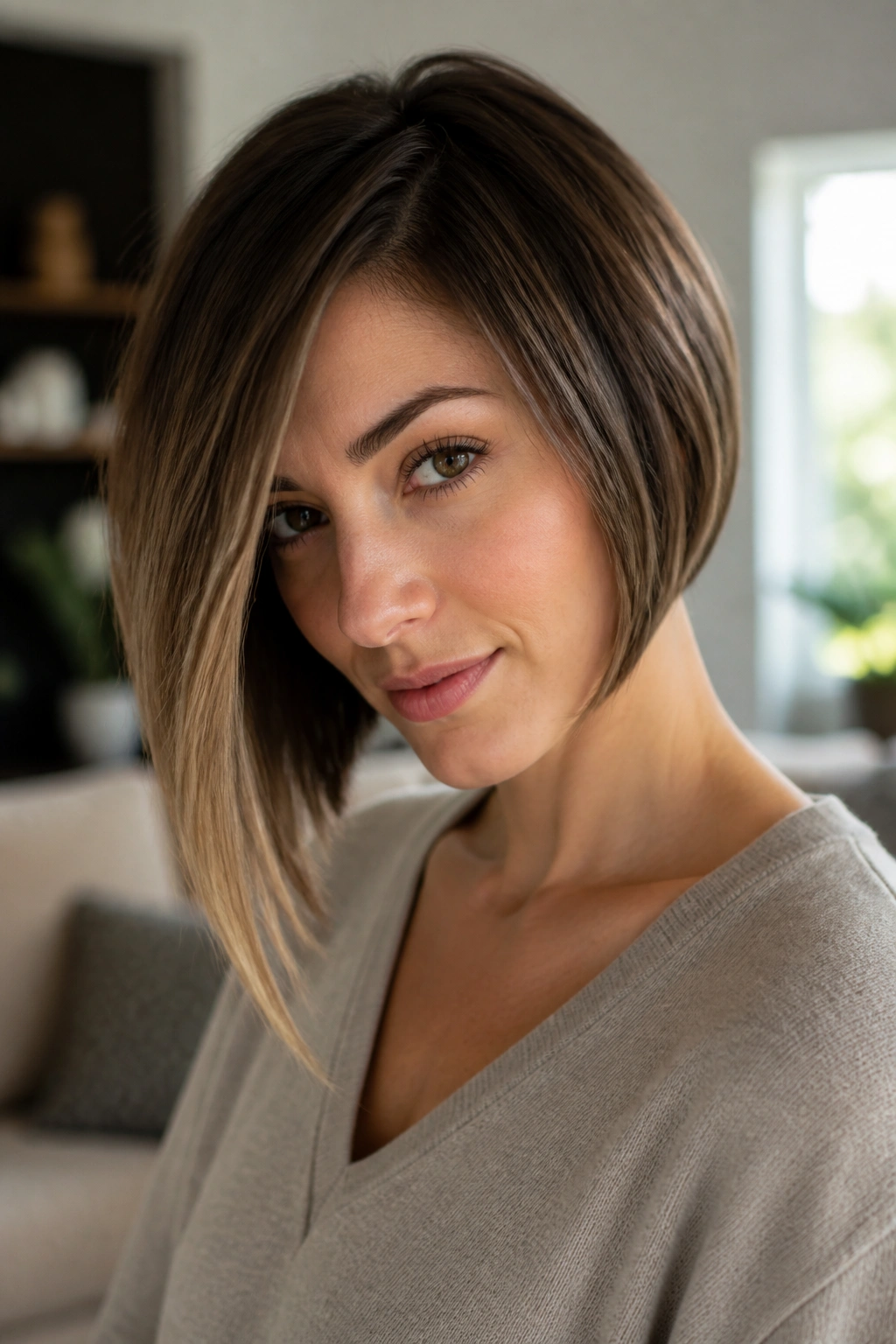
A soft diagonal bob is the haircut I point toward when someone wants asymmetry without a lot of fuss. One side drops only a little lower than the other — maybe half an inch, maybe an inch — and that small tilt makes the whole edge look thicker because the eye reads a solid line instead of separate wispy ends.
Why the tilt helps fine hair
The diagonal front gives the illusion of movement without chopping the whole shape apart. Fine hair often looks stringy when it’s heavily layered, but a controlled angle keeps the perimeter intact and lets the hair appear denser near the face.
The best version is not severe. It should feel like the cut is leaning forward, not slashing across the head. If the angle gets too steep, the shorter side can look sparse and the longer side can start feeling accidental.
Ask for:
- A blunt baseline with a gentle forward tilt
- A longer front corner that sits just below the chin
- Minimal internal layering near the ends
- A side part if your hair falls flat at the crown
Skip this if: you want a dramatic shape that reads edgy first and wearable second.
One small tip matters here: dry the hair with the front pieces pulled slightly forward, not tucked behind the ears. That keeps the diagonal visible.
2. Deep Side-Part Angled Bob
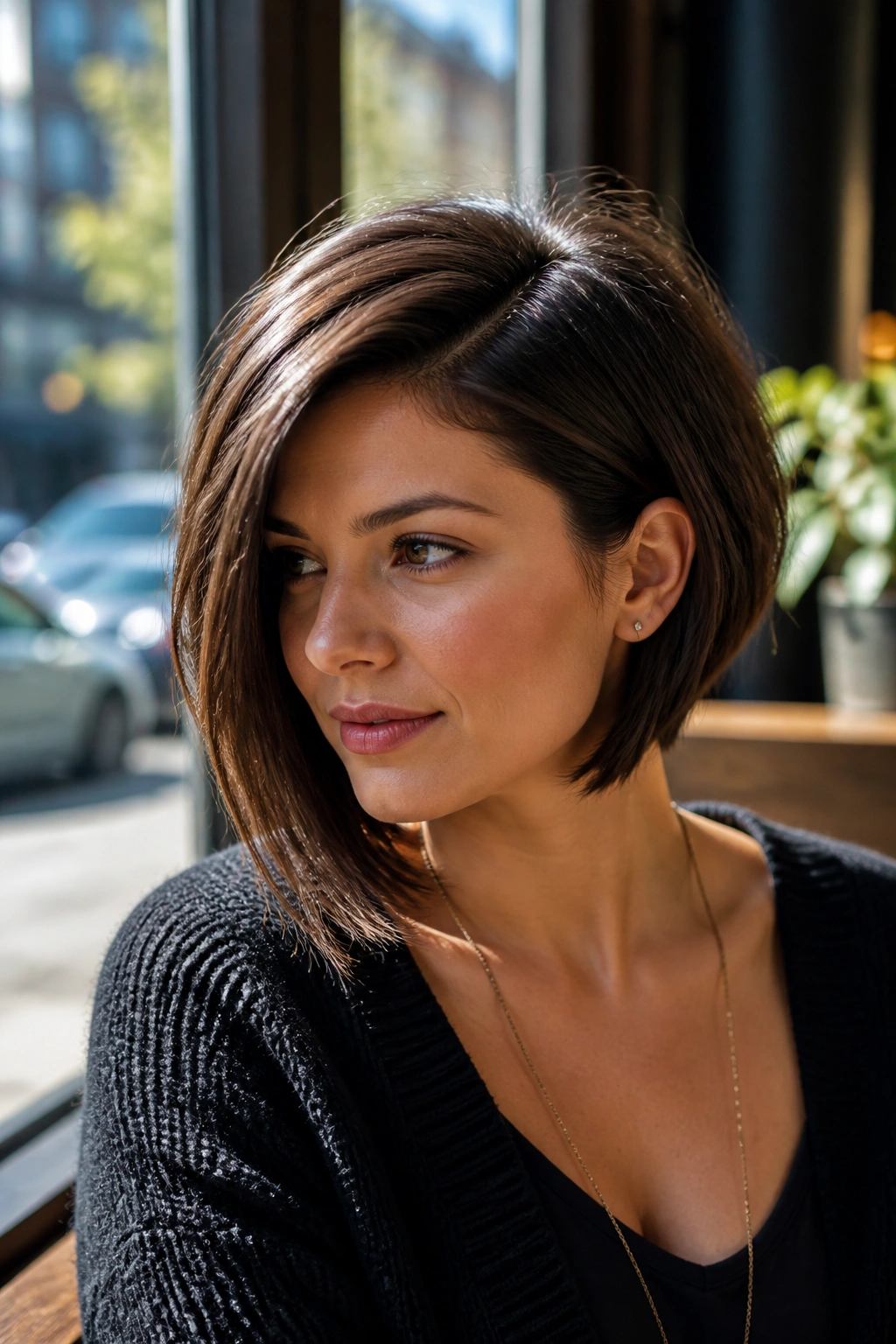
The side part does half the work here. Fine hair often lifts better when the part is not sitting dead center, and an angled bob gives that lift somewhere to go. The shorter side rises a little, the longer side drops lower, and the whole haircut feels fuller right away.
This cut is especially useful if your hair collapses around the crown. A deep side part creates a built-in push at the root, and the angled perimeter keeps the shape from going soft at the bottom. It’s a tidy haircut, but not a stiff one. That matters.
The part should sit off the natural high point of your head, not shoved so far over that the shorter side goes limp. Too deep, and the bob can start looking lopsided in a bad way. A good stylist will cut the angle so it follows your face, not just a picture on a wall.
Use a round brush or a blow-dry brush to direct the front away from the part. A pea-sized amount of root spray near the part line helps, too. Not much. Fine hair gets weighed down fast.
3. Chin-Grazing Bob With Tucked-Under Ends
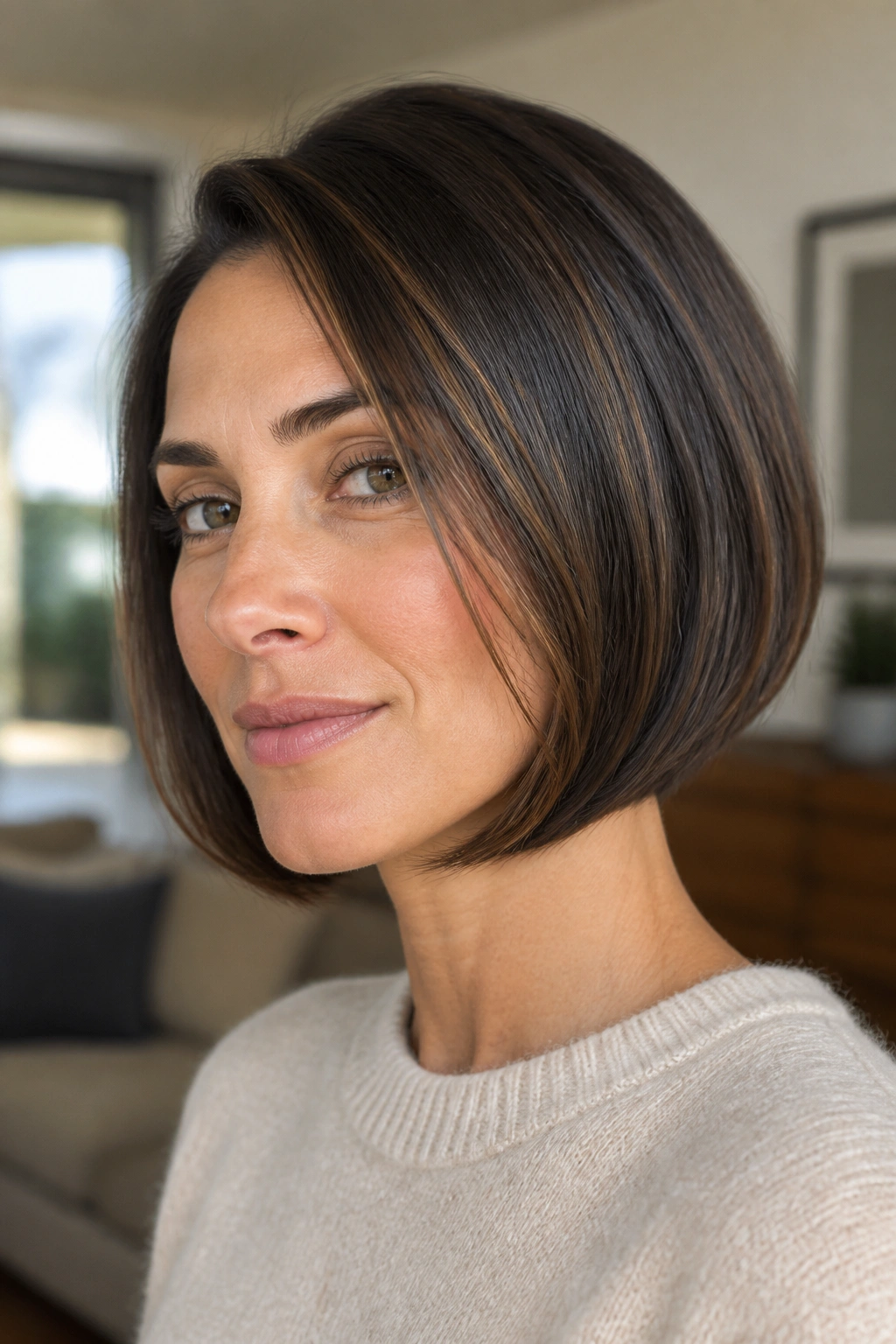
Want the bob to look thicker at the jaw? Keep it around chin length and have the ends tucked slightly under. That inward curve makes the lower edge look denser, and it gives fine hair a finished shape instead of a thin, see-through hem.
How to style it
A 1-inch or 1.25-inch round brush is usually enough. Roll the ends under while the hair is still warm from the dryer, and let them cool in place for a few seconds before you release them. That tiny pause helps the bend hold.
This cut works because it gives the illusion of weight. Hair that stops right at the chin can sometimes look sparse if the ends are too blunt and too light. Tucking the ends under softens that line and makes the bob feel anchored.
The one catch: if your hair naturally flips out at the ends, this shape needs a little help. A smoothing cream, used sparingly, keeps the curve neat without making the crown flat.
One more thing. Keep the front pieces just a touch longer than the nape. That is the asymmetry here, and it’s enough.
4. Stacked Nape Bob With Long Front Pieces
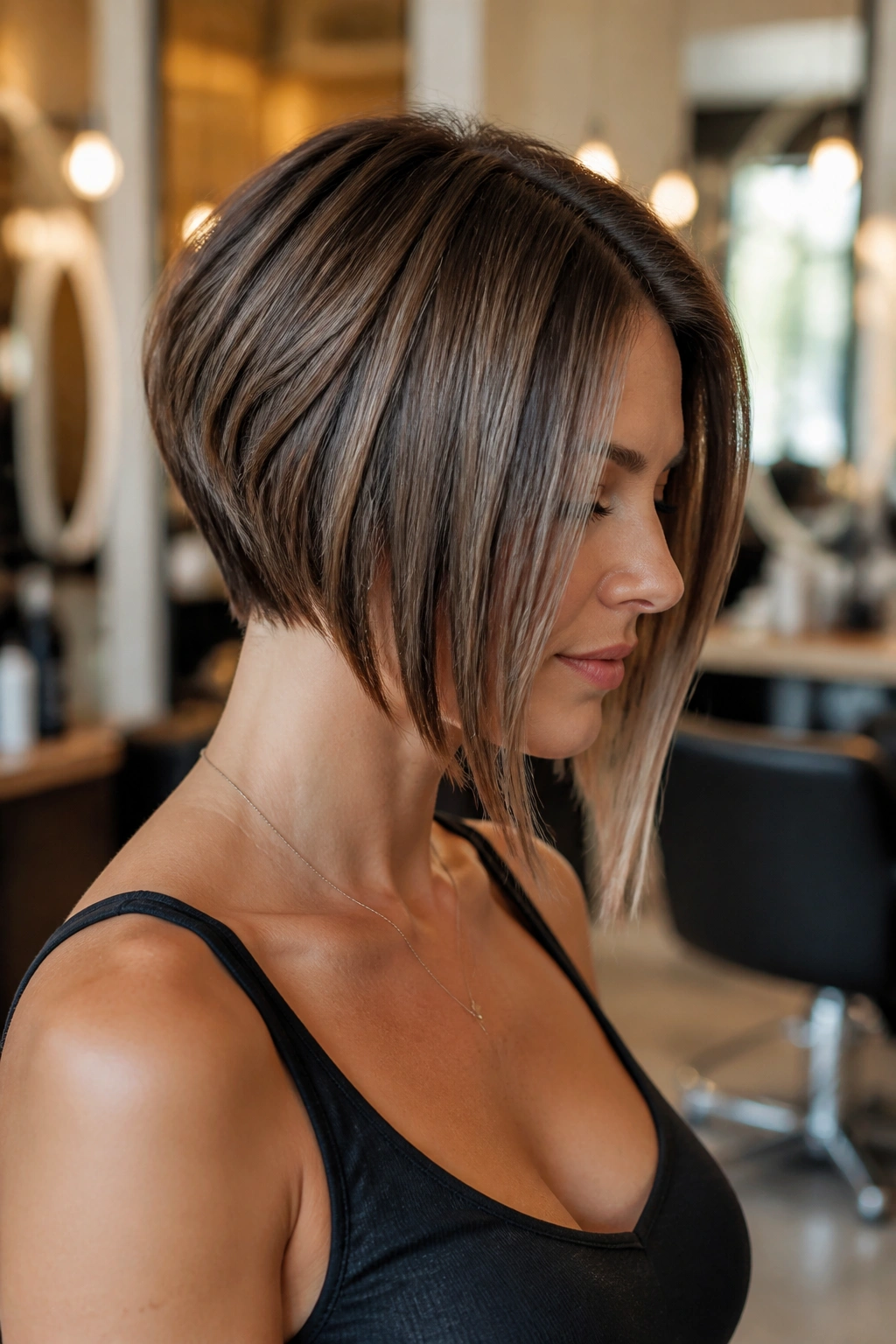
Picture hair that collapses at the back by lunchtime. A stacked nape bob fixes that faster than most people expect. The shorter back builds lift at the crown, while the longer front pieces keep the haircut from feeling boxy or too old-school.
This version is useful when fine hair also grows flat against the head. The stacking removes a little weight near the nape, so the back can stand up instead of hugging the neck. The front stays longer, which gives the face something to frame.
What to ask your stylist for
- Shorter layers at the back that build gently, not in a hard shelf
- A longer front that reaches the jaw or below
- A clean neckline, not a feathered mess
- Soft graduation so the cut doesn’t look bulky in the middle
A stacked bob can go wrong when the back is cut too high. Then it starts looking puffy instead of lifted. Fine hair needs support, not extra architecture.
This one has a little attitude. Not much. Just enough.
5. Feathered Bob With Airy Ends
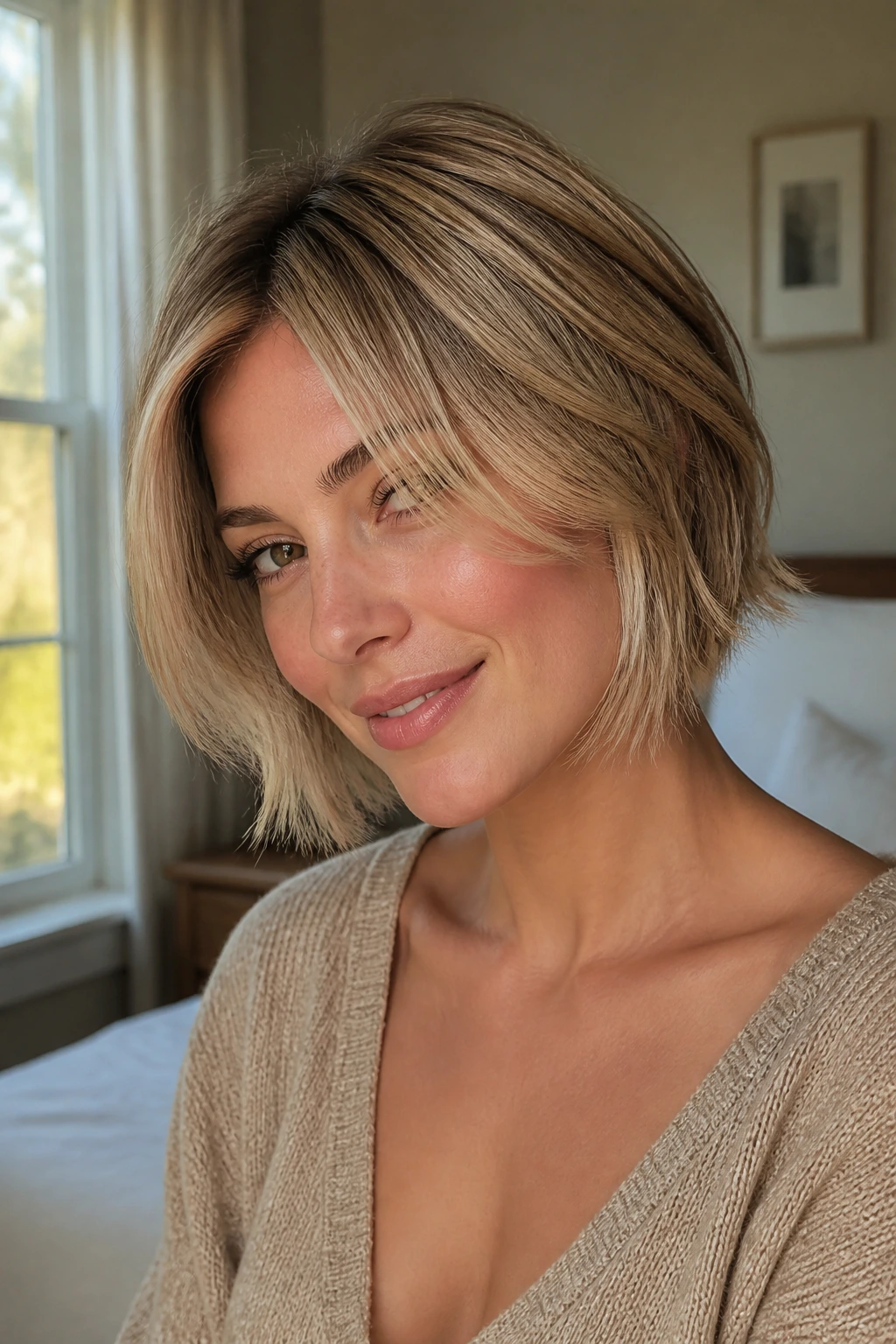
Not every fine head of hair wants bluntness. A feathered bob can look lighter and more graceful, especially if your strands are soft and tend to slip apart when cut too cleanly. The trick is to feather only the ends and a small section around the face, not the entire head.
That restraint matters. Too much feathering makes fine hair look frayed. Too little, and you lose the movement that makes this cut worth wearing. I like the last half-inch to inch of the perimeter to feel gently softened, almost like the ends were dusted with scissors instead of chopped.
The best version of this cut has a quiet swing to it. You see it when the hair turns your head, not when it sits still. That kind of movement gives life to a bob that might otherwise lie too close to the skull.
It also pairs well with a light mousse or volumizing foam. Use a palmful, not a cloud of product. Fine hair will tell on you if you get heavy-handed.
6. Razored Bob With a Lightly Shattered Edge
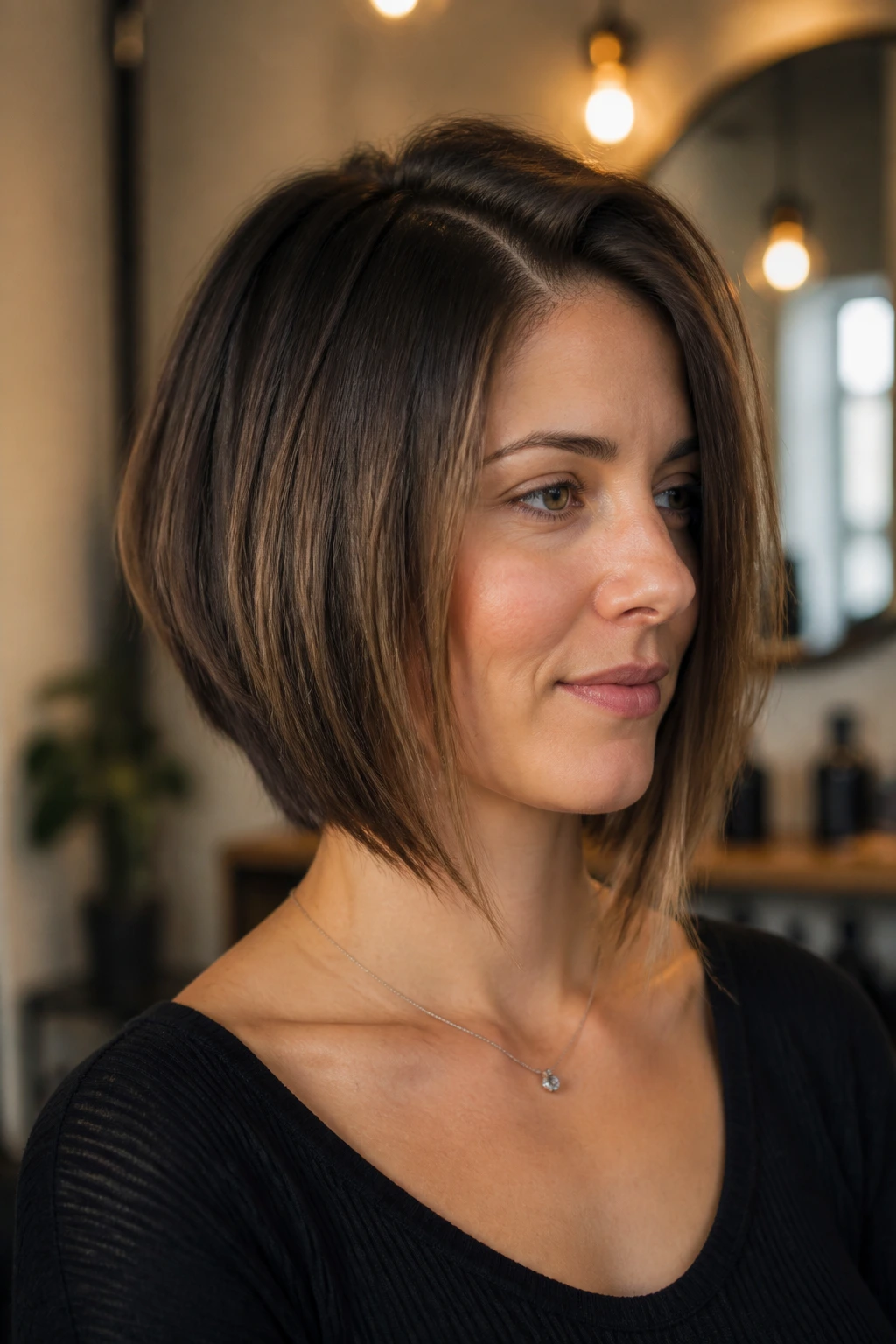
A razor can be useful on fine hair, but only if the hand holding it knows when to stop. A lightly shattered edge softens the perimeter just enough to keep the bob from feeling blocky, while still leaving enough density at the bottom to make the hair look full.
Unlike a blunt cut, this one has a looser finish. The edge is less crisp, more broken up, and that can be flattering on straight fine hair that needs some movement. The wrong amount of razor work, though, and you end up with ends that look see-through. That’s the tradeoff.
I’d reserve this version for hair that has at least some natural body or a decent number of strands per section. If your hair is very sparse, point cutting may be the safer choice. Razor work can be lovely. It can also go too far, fast.
Ask for a controlled razor finish only on the very ends, with the front pieces left a little heavier. That keeps the asymmetry visible and protects the density where it matters most.
7. Collarbone Asymmetrical Lob
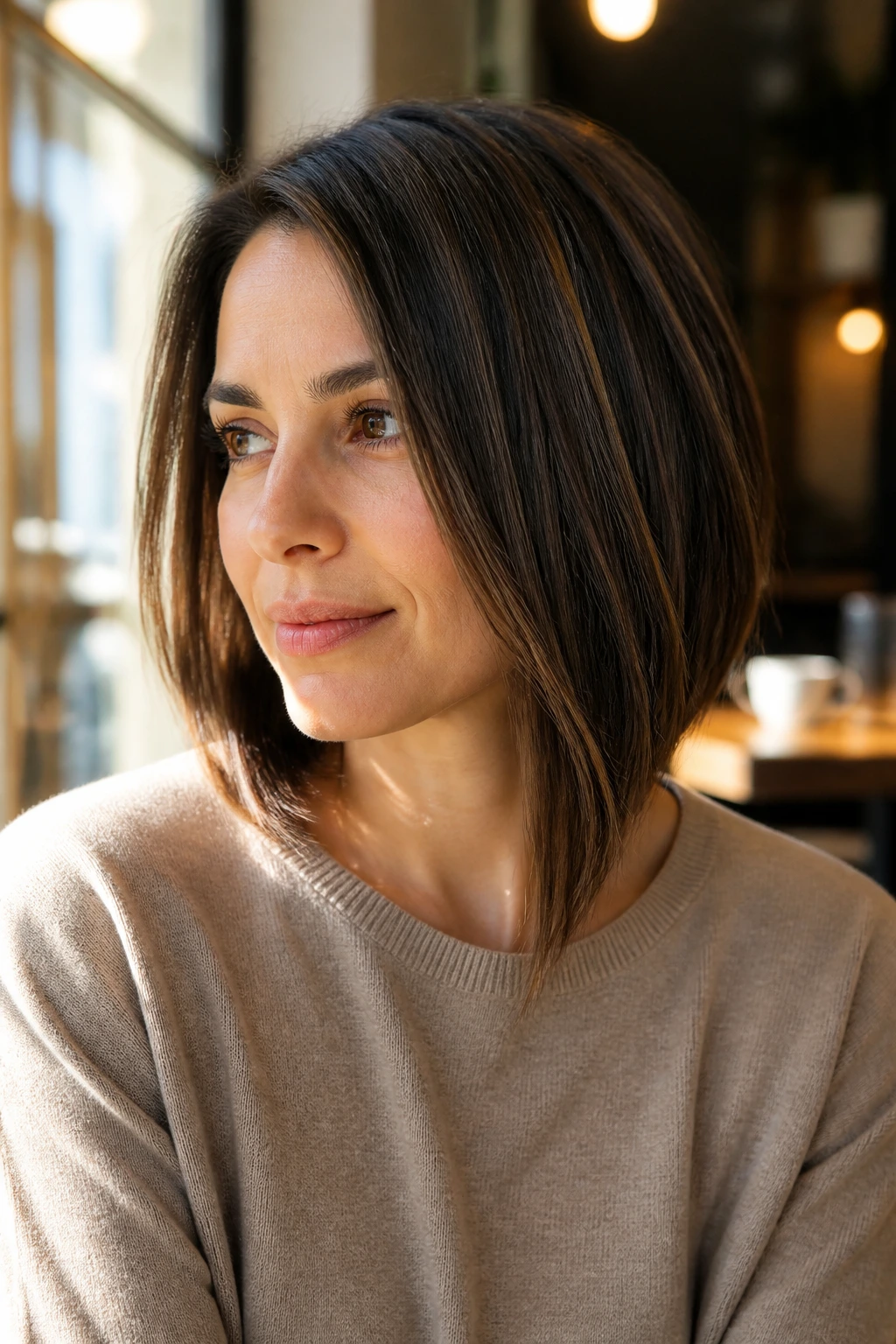
A collarbone-length bob — or lob, if you want the longer label — is a smart middle ground for people who like length but still want shape. On fine hair, that extra inch or two can help the ends look less fragile, especially if one side lands a bit lower than the other.
The longer length gives the cut more swing. It also makes the asymmetry feel less severe, which is handy if you want something you can wear tucked, waved, or blown straight. One side brushing the collarbone and the other stopping a touch higher creates a line that moves when you move.
Where the long side should sit
The long side usually looks best when it falls between the collarbone and the top of the chest. Any longer and the asymmetry can flatten out visually. Any shorter and the cut starts to feel like a standard bob with a slight tilt.
Why length helps
- Fine hair keeps more visual weight at the ends
- The style grows out without looking choppy
- A wave or bend shows up more clearly
- It can be pinned back without losing the shape
This is one of the easiest cuts to live with. There’s a reason people keep drifting back to it.
8. French Bob With One Longer Side

Short doesn’t have to mean flat. A French bob with one longer side can sit right around the cheekbone and jaw, which gives fine hair a crisp outline without the heaviness of longer layers. It’s small, neat, and a little cheeky.
The asymmetry here is subtle enough to feel polished but not rigid. One side might graze the jaw while the other hits higher at the cheek. That difference does a lot of visual work, especially if your hair tends to go limp when it gets too long. The shape stays close to the face, so it reads fuller.
This cut likes a bit of natural bend. Straight hair can wear it well, but a touch of wave makes the shape feel softer and less severe. A side part also helps keep the shorter side from looking too blunt against the temples.
I’d call this a strong choice for anyone who wants a shorter bob without the fuss of constant styling. It holds its character even when it’s not perfectly done. That is a nice quality. A rare one, honestly.
9. Sleek Glass Bob With a Hidden Diagonal
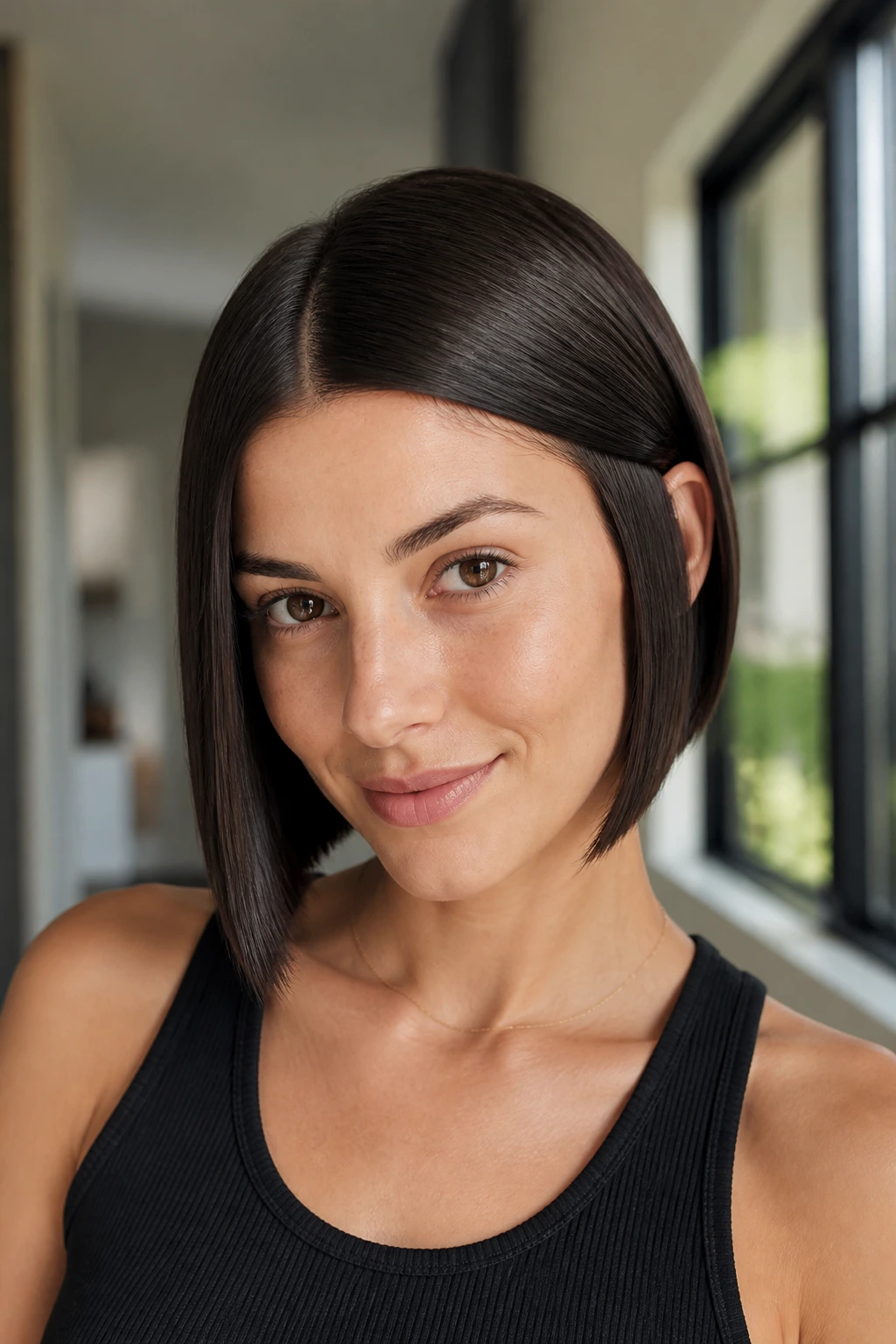
Can a sleek bob still work on fine hair? Yes. Sometimes sleek is the point. A glassy finish — smooth, reflective, and tight to the head — can make the cut look expensive in the plainest sense of the word: controlled, deliberate, and dense at the edge.
The hidden diagonal is what keeps it from feeling flat. One side should sit a little longer, even if the difference is only visible when the hair is tucked behind one ear. That small shift keeps the eye moving and prevents the bob from looking like a helmet.
Use a heat protectant, blow-dry with a nozzle, and finish with a flat iron only if your hair needs it. One pass per section is usually enough on fine hair. More than that, and the strands can start to look limp and polished in the wrong way.
A shine spray helps here, but barely. Too much product and the haircut stops looking sleek and starts looking coated. Not a good trade.
10. Curved Bob With a Soft C-Shape
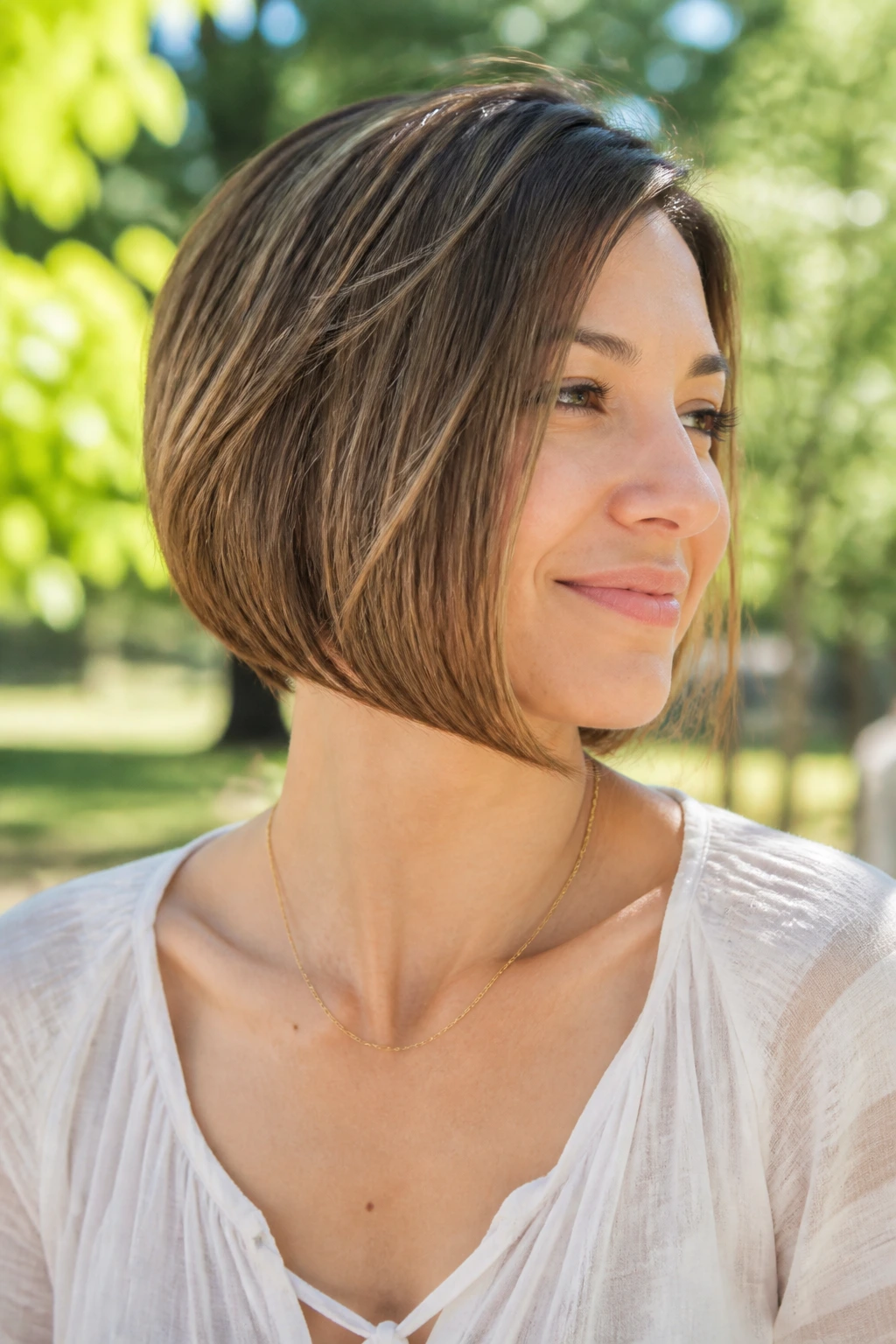
A curved bob gives fine hair a shape that feels built in. The ends bend gently inward in a C-shape, which creates the impression of thickness at the bottom and keeps the outline from going boxy. Add a slight asymmetry to that curve, and the whole haircut feels more alive.
The nice thing about this shape is that it does not need a lot of teasing or product. The form does the work. A round brush, a medium blow-dry, and a few clips while the hair cools can set the curve cleanly enough for daily wear.
What makes it hold
- A rounded finish through the mid-lengths
- A slightly longer front edge on one side
- Controlled tension while blow-drying
- A lightweight cream on the ends only
If your hair flips out at the bottom, this cut can calm it down. If your hair already turns inward, it can make the whole bob look denser than it really is. That’s the kind of trick a good haircut should pull.
It is polished, but not stiff. There’s a difference.
11. Micro Bob With a Longer Front Corner
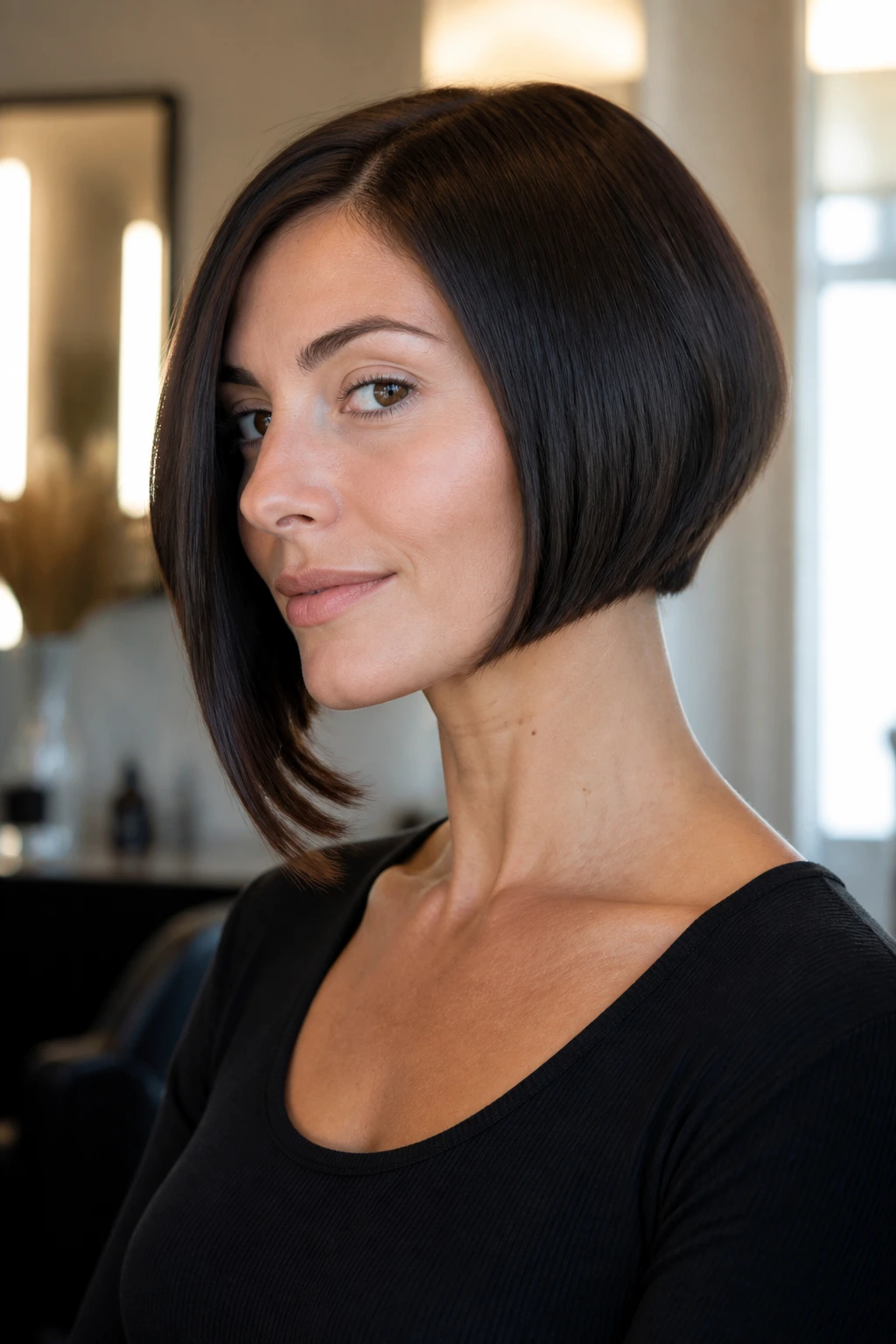
A micro bob is not shy. It sits high, often around the jaw or just above it, and on fine hair that can be a strength. The shorter length makes the strands look more compact, so the shape often reads fuller than a longer cut that’s been thinned out too much.
The asymmetry keeps it from feeling too exact. One front corner should extend a little farther forward, giving the haircut a point of interest and a bit of softness. Without that longer side, the micro bob can feel severe. With it, the cut gets a little lift.
This is one of those styles that rewards confidence, but not in a dramatic way. It simply looks clean. If your hair is flat at the roots, a micro bob can make the whole head look more open and balanced because there’s less weight dragging everything down.
Maintenance is part of the deal. Short cuts lose their shape faster, and a sharp asymmetrical line can blur when it grows. Still, if you like a crisp silhouette, the upkeep is worth it.
12. Asymmetrical Bob With Wispy Curtain Fringe

A fringe changes the story. Add wispy curtain bangs to an asymmetrical bob and the haircut suddenly feels softer at the front, even if the back stays neat and compact. For fine hair, that softness helps balance the harder line of the bob without swallowing the face.
The fringe should stay light. That’s the rule. Heavy bangs can steal density from the rest of the haircut, which is the last thing you want if the hair is already fine. Two thin sections that fall away from the center and open at the cheekbones are usually enough.
This shape works well when the forehead feels a little too bare with a standard side part. The fringe gives the front more presence, and the longer side of the bob keeps the profile interesting. It’s a nice compromise between playful and clean.
If you wear glasses, this version can be especially good. The fringe softens the frame line without hiding your face. And yes, it still needs trimming. Fringe always does. That’s the boring part, but it matters.
13. Inverted Bob With a Tighter Back Sweep
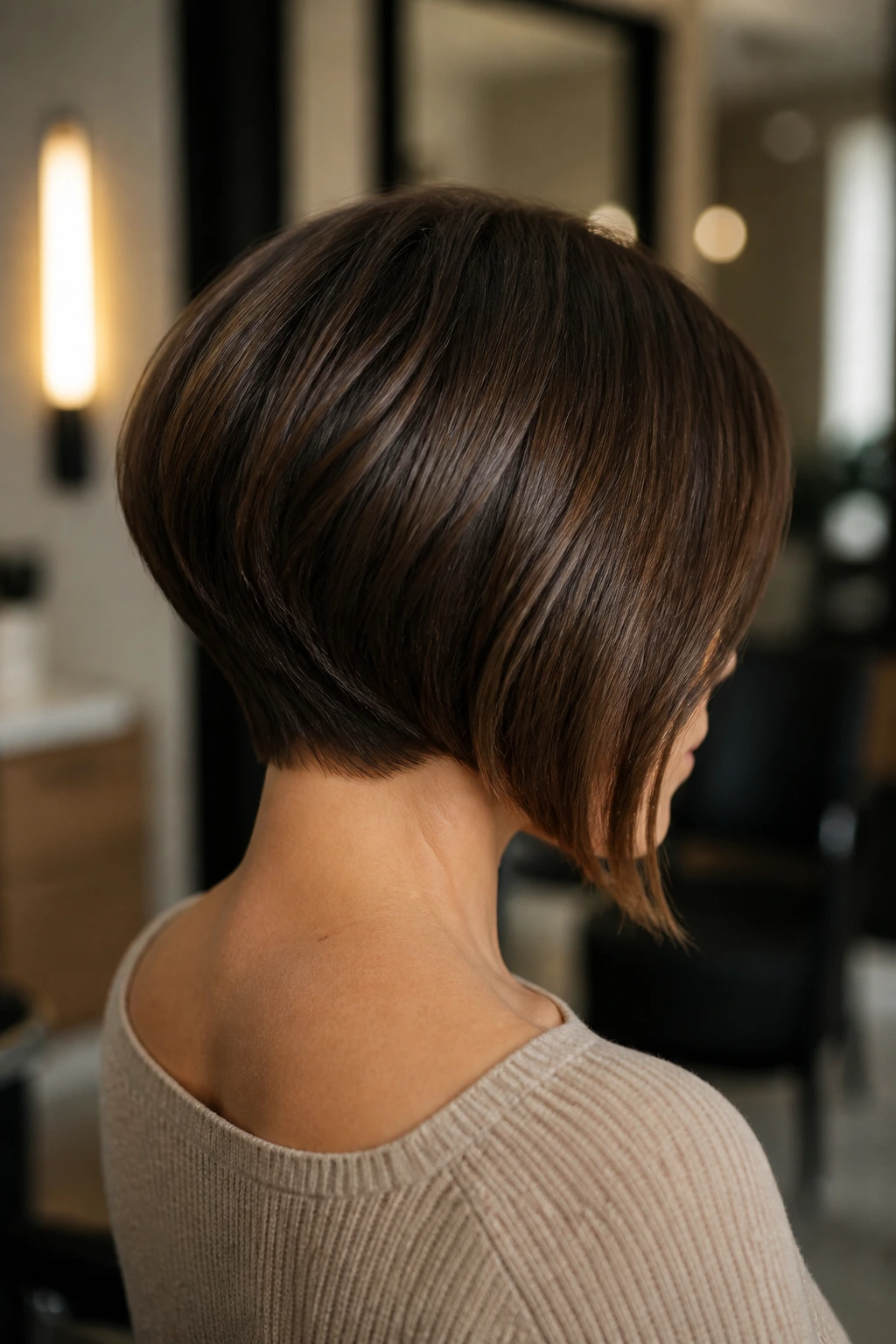
A tighter back sweep changes the whole mood of an inverted bob. The back curves up neatly, the front falls longer, and the head shape gains a little lift right where fine hair tends to go slack. It’s one of the most dependable shapes for adding body without piling on layers.
What to ask for
Tell the stylist you want a soft inversion, not a harsh wedge. The back should be shorter, yes, but it should still move. If the stack is too steep, fine hair can end up looking narrow at the crown and frizzy at the ends.
What the back should do
The back should sit close enough to the head to create lift, but not so close that the neck looks exposed in an unflattering way. A good inverted bob leaves a clean curve through the occipital bone and lets the front pieces fall forward with purpose.
Who it suits
- Hair that falls flat at the nape
- Straight or slightly wavy textures
- Faces that like a little framing near the jaw
- People who want a neat shape that still feels modern
This cut is practical. It is also a little unforgiving, which is part of why it looks so sharp when done well.
14. Wavy Bob With Piecey Ends
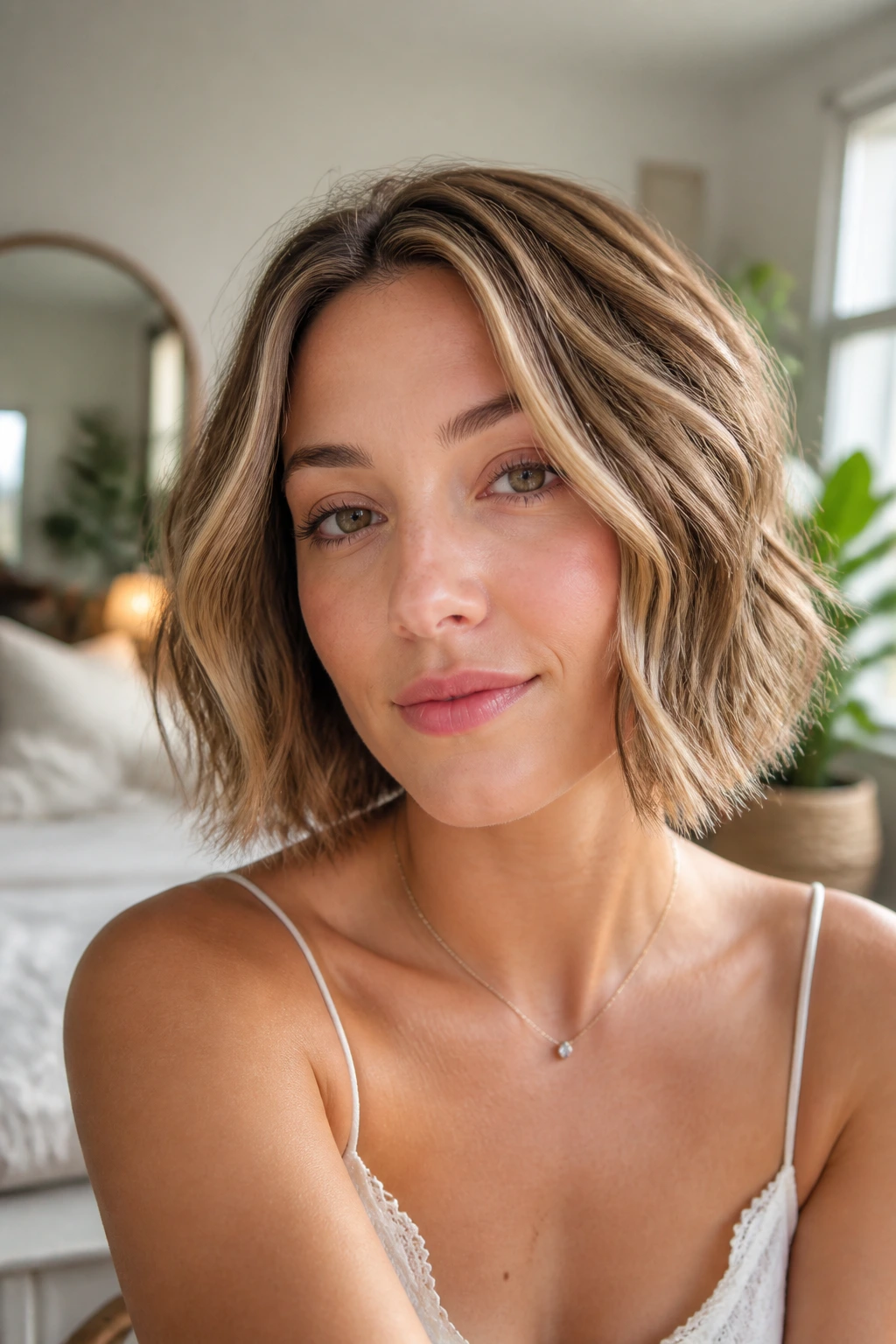
A little wave changes everything. On fine hair, a wavy asymmetrical bob can look fuller because the bend creates space between sections without making the style feel thin. The key is piecey, not stringy. Those are not the same thing, and the difference shows.
I’d rather see a soft wave through the mids and ends than a crimped pattern or too much texture spray. A small amount of mousse, scrunched through damp hair, often does the job better. Let the hair air-dry partway, then rough-dry the roots for lift. That gives the shape body without crushing it.
The asymmetry can be subtle here. One side might rest a little longer around the cheekbone while the other sits closer to the jaw. When a wave moves across that difference, the cut looks more expensive than a straight, even bob ever could.
This is a good one for people who hate perfection. It forgives a little mess. Sometimes that’s the whole point.
15. Side-Swept Bob With an Ear-Length Opening
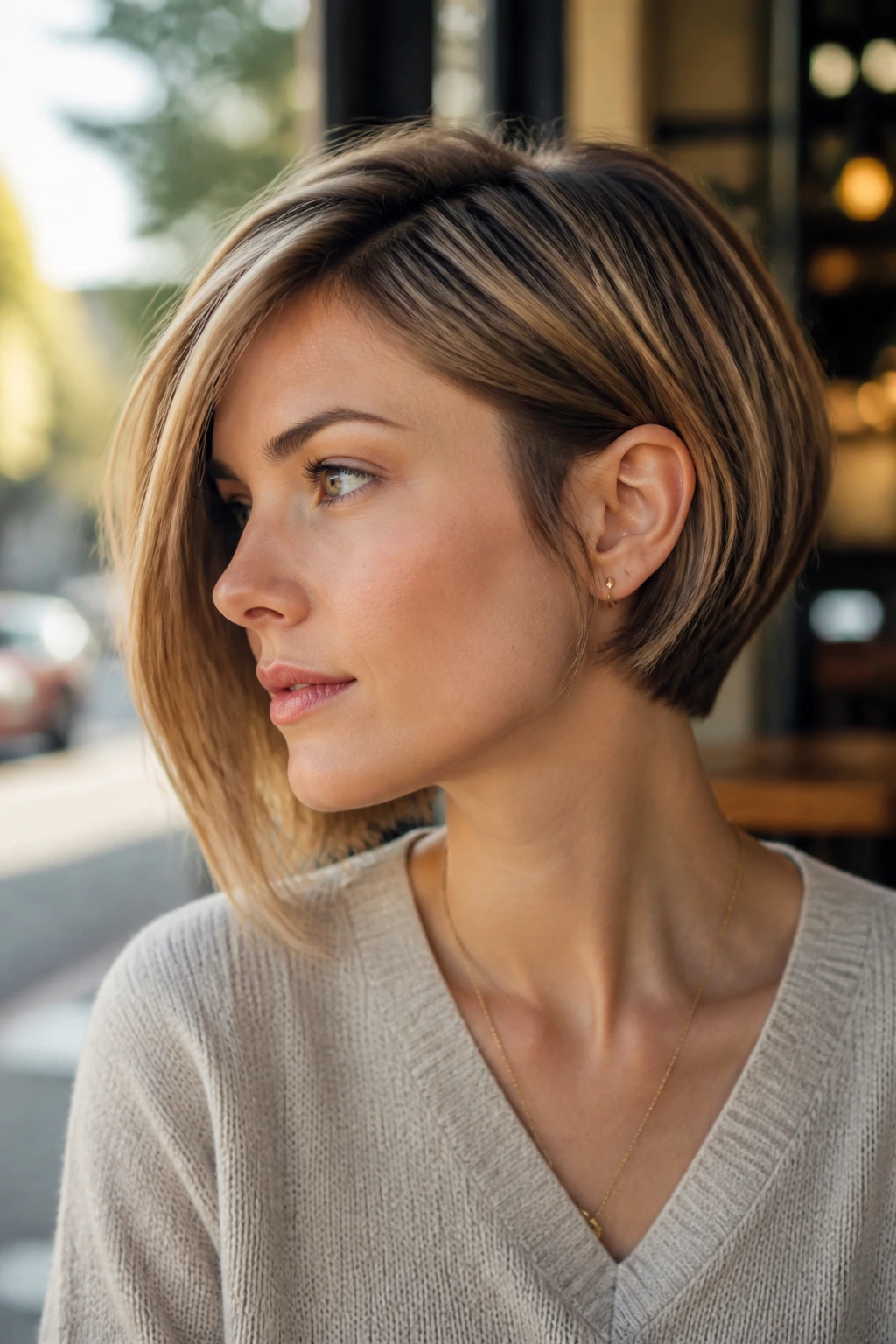
Ever notice how one tucked side can make a bob feel twice as intentional? A side-swept asymmetrical bob uses that trick well. One side stays open around the ear or cheek, while the other falls longer and softer, which creates a shape that feels light without losing structure.
The ear-length opening does more than show skin. It breaks up the outline, and for fine hair that can be a gift. Too much uninterrupted length can look flat, especially if the strands are fine and straight. A tucked side gives the eye a place to stop and restart.
This cut also works nicely if you like to wear earrings or sunglasses. The open side keeps the face from feeling crowded. The longer side still protects the density of the bob, so the style does not lose its frame.
A side-swept finish can be worn sleek or slightly mussed. I prefer the slightly mussed version. Clean enough to look planned, loose enough to avoid looking pasted down.
16. Hidden-Layer Bob That Keeps the Outside Solid
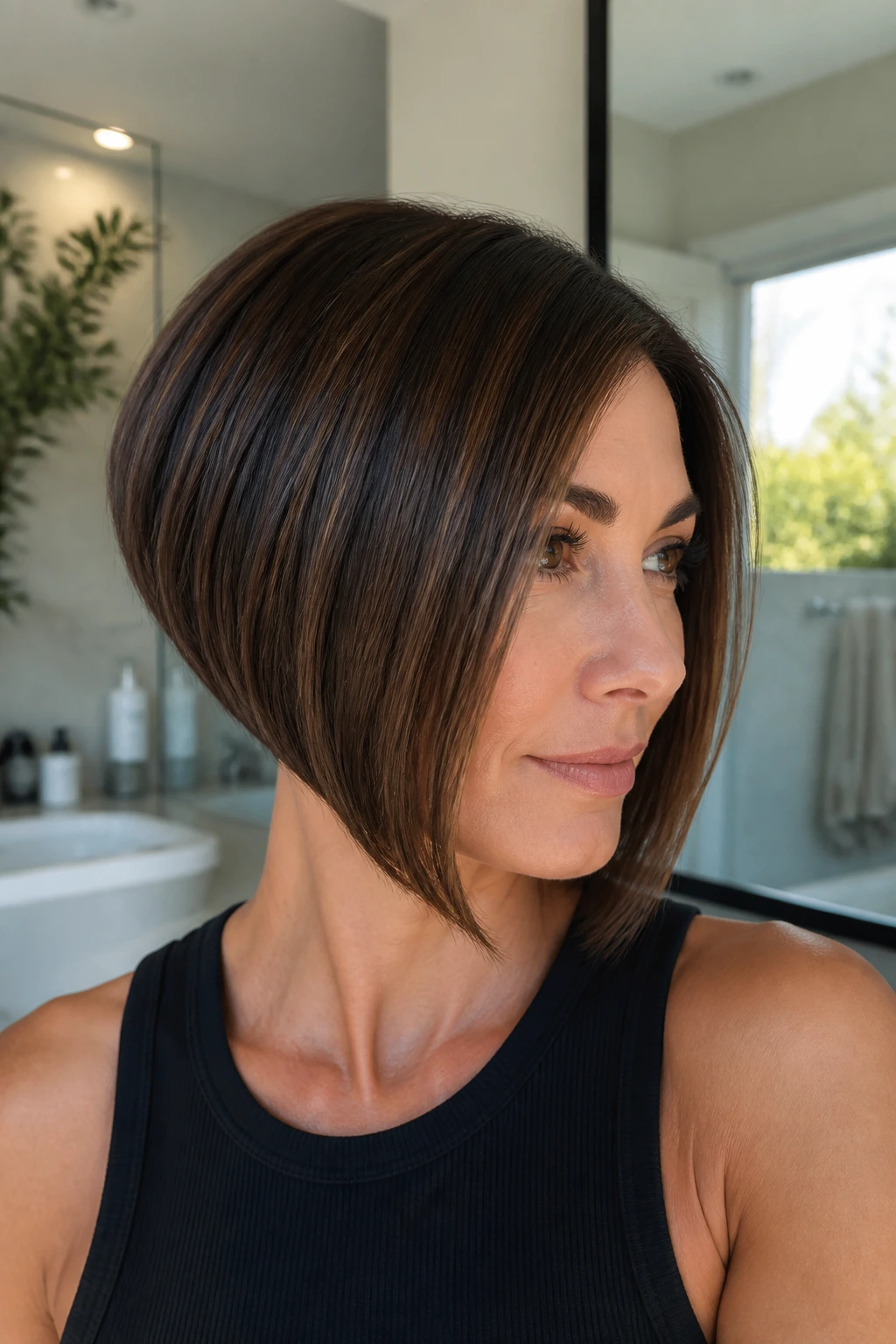
Hidden layers are a smart move when you want movement but refuse to give up the look of fullness at the edge. The outer line stays solid, while the inside loses just enough weight to let fine hair lift instead of hanging limp. That balance is the whole point.
A client with fine hair and a little extra density underneath often gets a better result from hidden layers than from obvious, choppy ones. The haircut keeps its clean outer shape, which matters when you want the ends to look thick in photos and in real life, not just in motion.
What to ask your stylist for
- Internal layers only, not visible choppy ones
- A perimeter that stays blunt
- Slight asymmetry through the front corners
- Weight removal inside the shape, near the lower back sections
What to avoid
- Too many short layers at the crown
- Thinning shears through the ends
- Slicing the outer line to bits
- A dramatic difference between both sides
This is one of those cuts that looks simple and is actually quite clever. That is usually a sign the haircut is doing its job.
17. Textured Bob With a Slight Undercut at the Nape
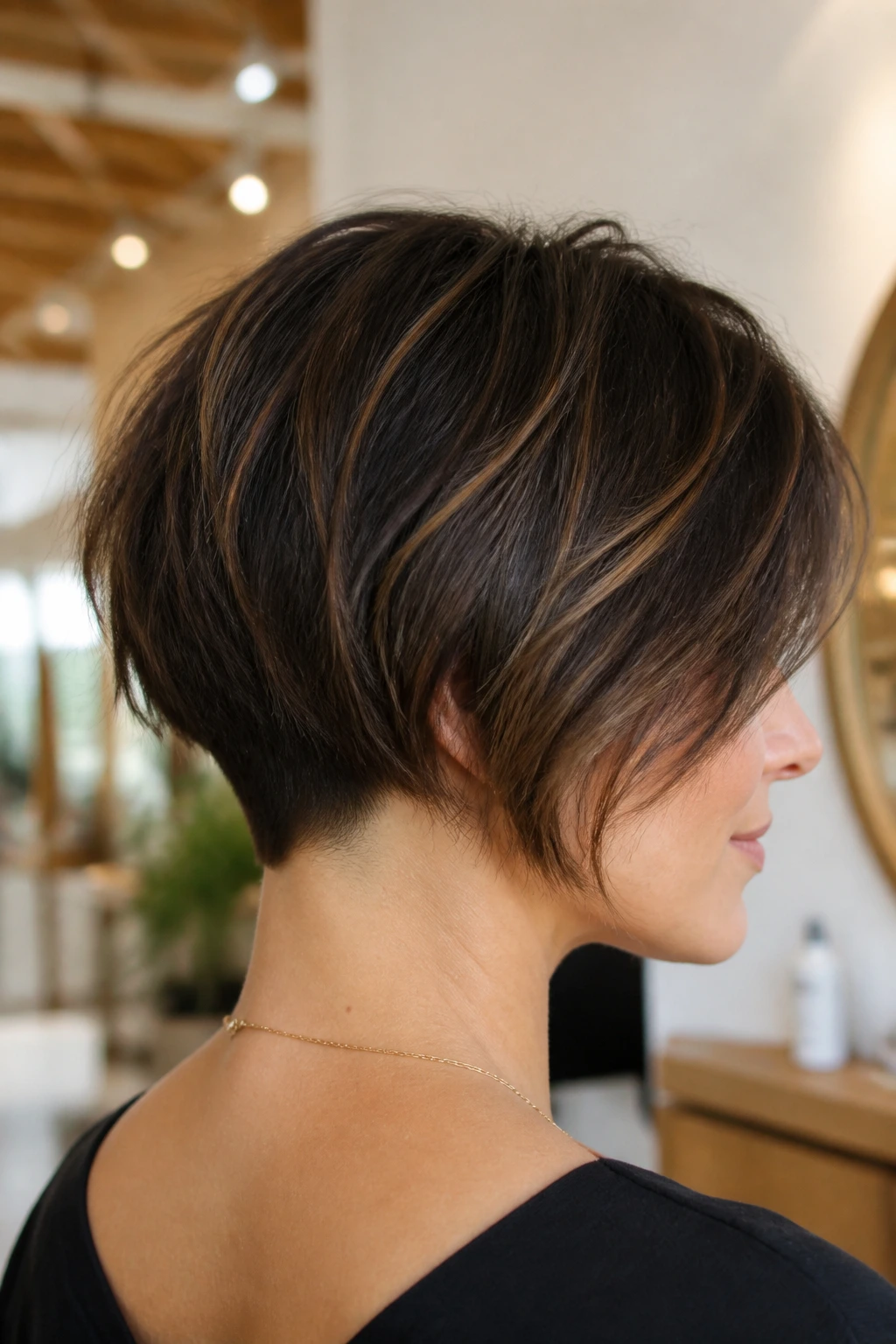
A tiny undercut at the nape can be a quiet fix for hair that puffs or bulkes out at the back while the top stays fine. Remove just a little weight there — a narrow strip, not a shaved section — and the bob can sit closer to the head with less fuss.
This is not about going edgy for the sake of it. It is about keeping the back from fighting the front. If the nape is too heavy, the whole shape can look boxy. If it is too bare, the haircut loses support. The sweet spot is small. Really small.
On some heads, that tiny bit of cleanout helps the asymmetry show better because the longer front pieces no longer have to compete with a puffy back. On others, it is unnecessary. Fine hair that is already sparse at the crown usually does better with a strong perimeter and no undercut at all.
The point is to fix a problem, not create one. A good stylist will know the difference.
18. Blunt-Edge Asymmetrical Bob for Maximum Density
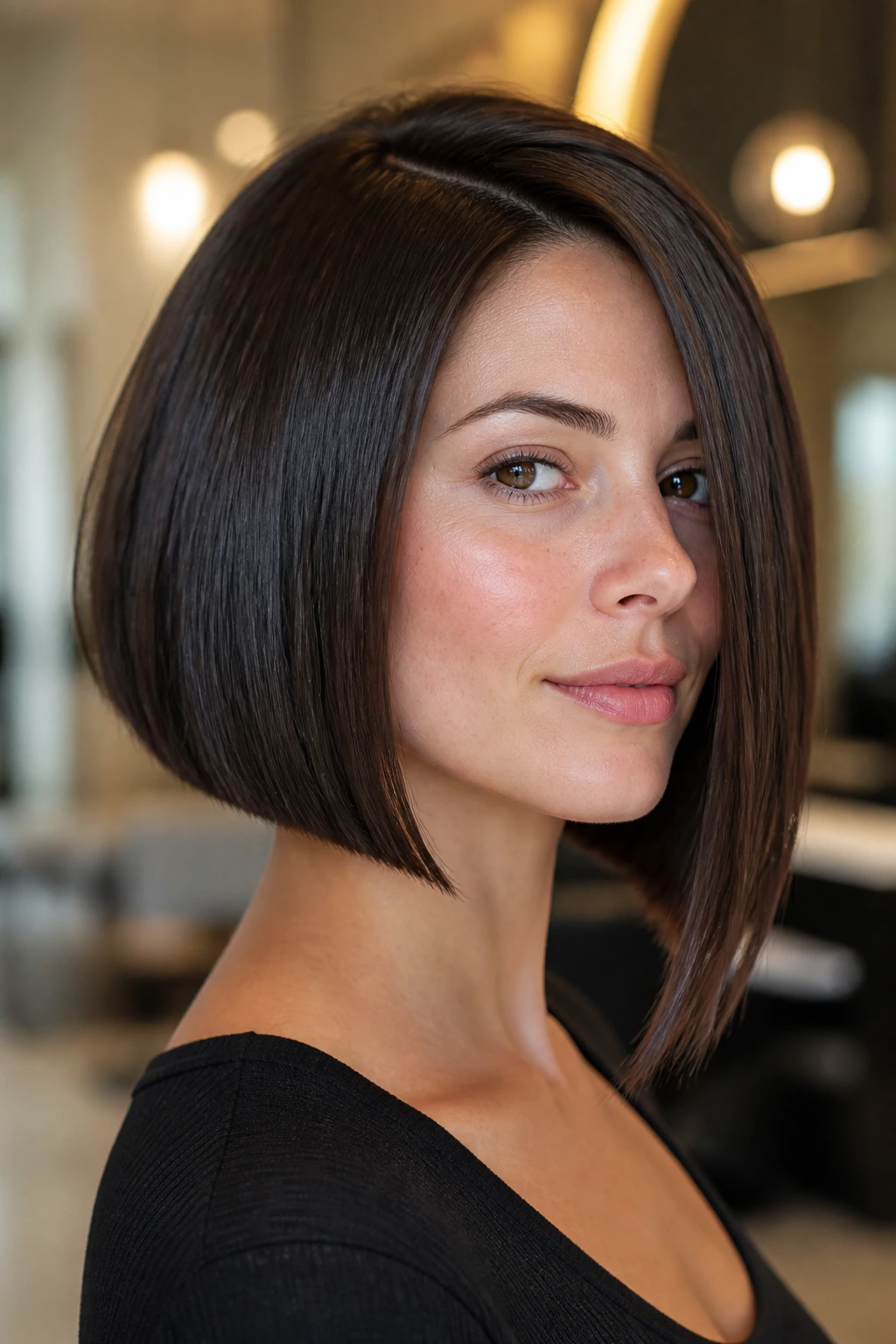
If your fine hair has enough strands but not much diameter, a blunt edge can make a huge difference. The straight perimeter gives the ends a heavier visual line, which is exactly what thin-looking hair needs when it wants to seem fuller.
The asymmetry keeps the bluntness from feeling too strict. One side can fall a touch longer, but the bottom line should stay clean. No shredding. No over-texturizing. This is the haircut for people who want the ends to look packed in, not airy.
What makes it work is restraint. The shape should be firm, and the interior should stay mostly calm. A few soft face-framing pieces are fine, but they should not chew up the outline. Once the bottom edge gets too soft, the whole effect weakens.
This style looks especially good on straight hair because the line reads clearly. Wavy hair can wear it too, but the cut needs to be balanced carefully so the waves do not puff out the corners. Strong shape first. Texture second.
19. Grown-Out Asymmetrical Bob With a Soft Collarbone Finish
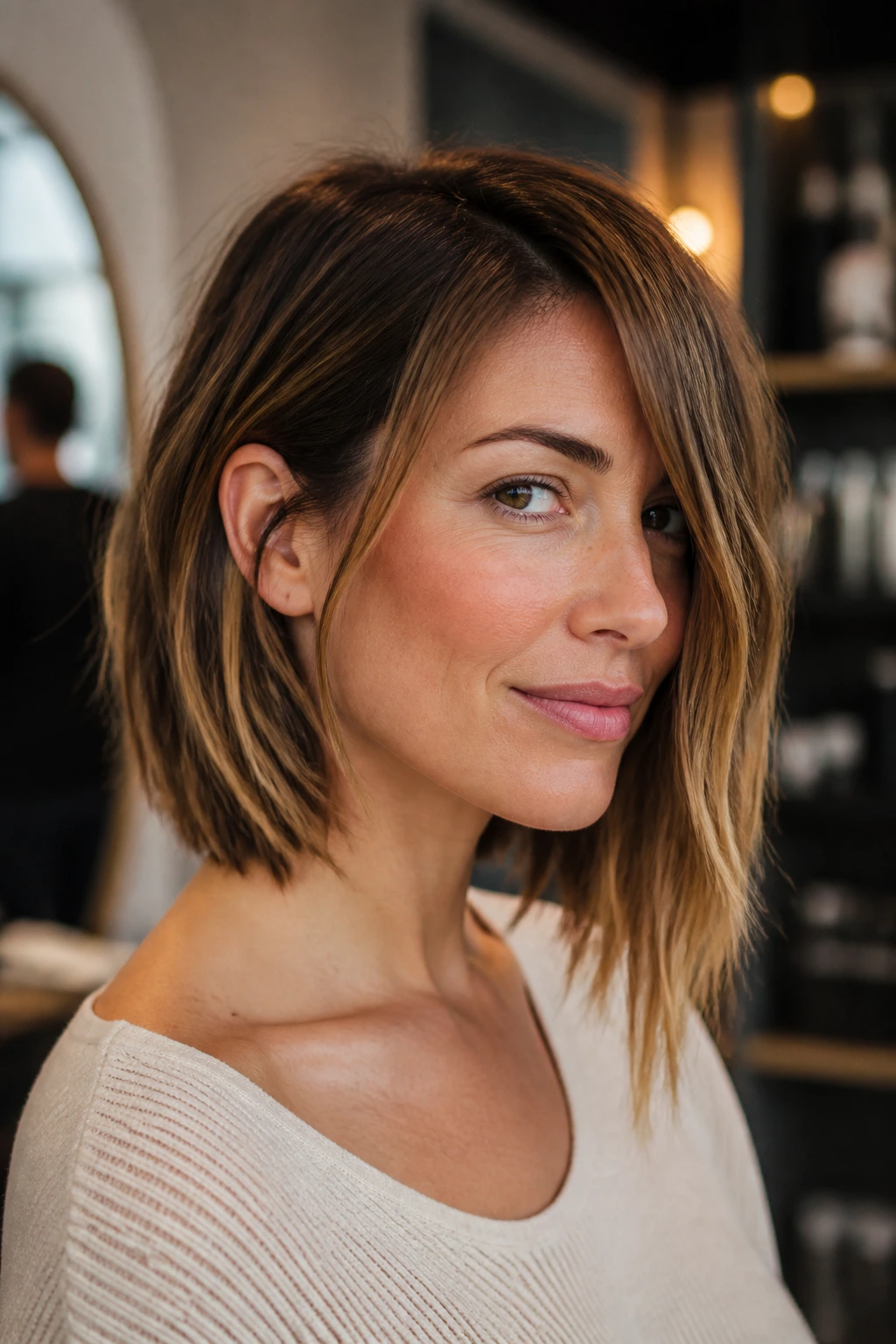
Not everyone wants to live at the salon. A grown-out asymmetrical bob gives you room to breathe, and on fine hair that can be a blessing. The longer side skims the collarbone, the shorter side stays near the neck or jaw, and the whole shape feels relaxed instead of freshly sharpened.
This is the cut for someone who likes structure but does not want to police it every three weeks. It can be worn tucked behind one ear, waved loose, or blown smooth. Because the longer side lands lower, the hair often looks fuller than a shorter bob that has been thinned too aggressively.
The grow-out looks nicer when the asymmetry is gentle. A huge difference between both sides can get messy as it grows. A small, controlled tilt ages better. That is the part people forget.
There’s a softness to this version that I like. It feels lived-in from the start, which means the haircut keeps its charm even after it loses a little sharpness.
20. Softly Cropped Asymmetrical Bob That Feels Light at the Nape
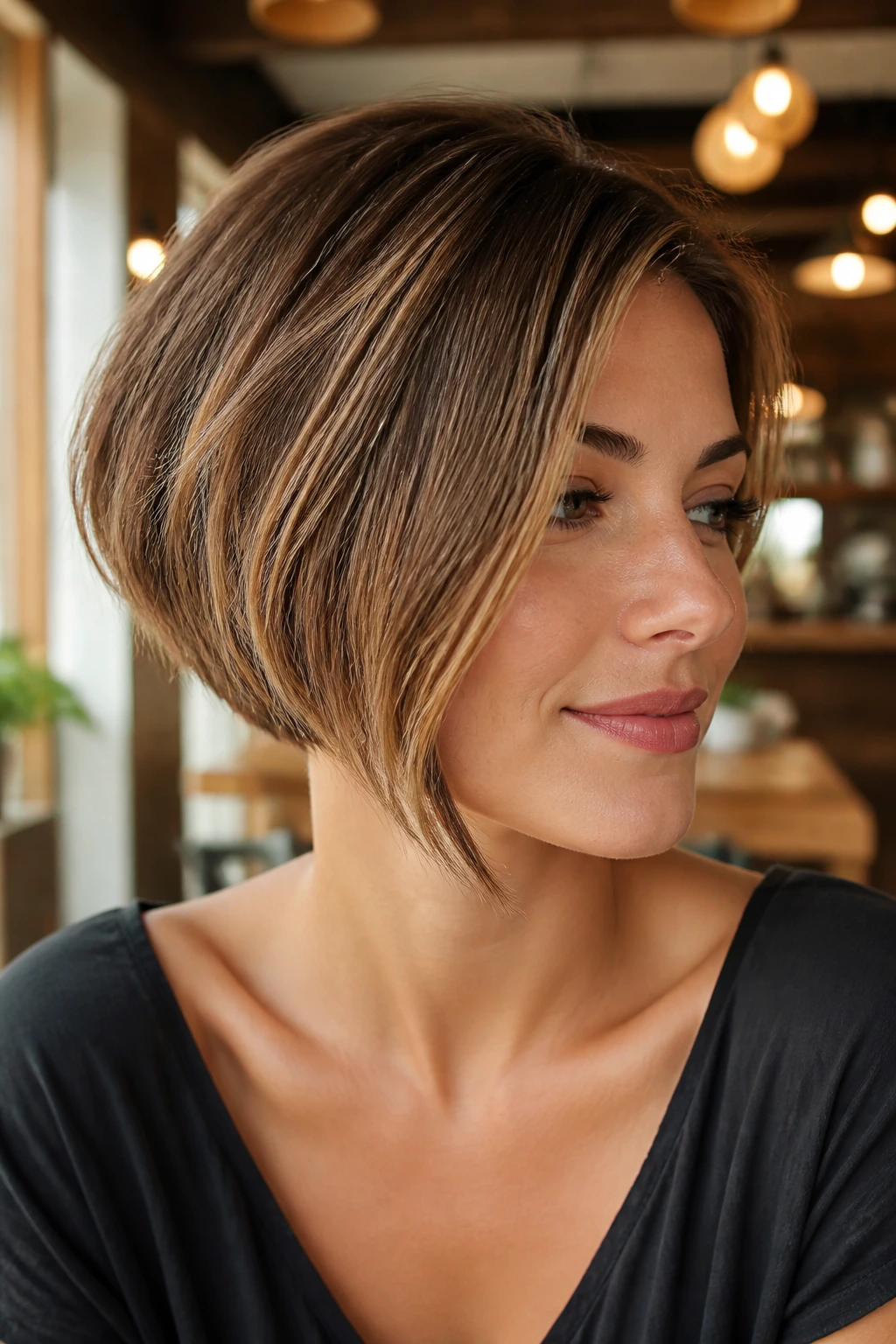
If you want the easiest version to wear, start here. A softly cropped asymmetrical bob keeps the nape light, holds a clean outline, and leaves enough length in the front to keep fine hair from disappearing into the neckline.
The best thing about this shape is its balance. It is short enough to make the ends look fuller, but not so short that the whole head starts feeling exposed. One side can sit just under the chin, the other a little higher, and the difference stays readable without turning the haircut into a stunt.
Bring photos, sure, but also bring a plain opinion about maintenance. Do you want a sharper edge or something that can grow out for a few months without getting awkward? That answer matters more than face shape alone. A good asymmetrical bob for fine hair should work from the front, the side, and the back — not just in one flattering mirror angle.
And if you’re torn between two versions, choose the one with the cleaner perimeter. Fine hair usually looks better when the ends are allowed to look full. That part never gets old.
