



Round faces and blunt bobs have never been the happiest pair. A cut that stops right at the jaw can make the cheeks look wider than they are, while a longer front bob changes the whole read of the face. The front pieces pull the eye down, the corners soften the width, and the shape keeps some movement instead of sitting like a box.
That detail matters.
The sweet spot is usually somewhere between the chin and the collarbone, with the front panels dropping past the jaw and the back staying a touch shorter. A side part can add a stronger line. Curtain bangs can open the center. Even a blunt edge can work if the front length is doing enough of the visual work.
Texture changes everything, too. Straight hair, wavy hair, and curls all handle the same haircut in different ways, and that’s where people get tripped up. A cut that looks airy on one person can look heavy on another if the layering is off by even an inch or two.
1. Deep Side-Part Long Bob for Round Faces
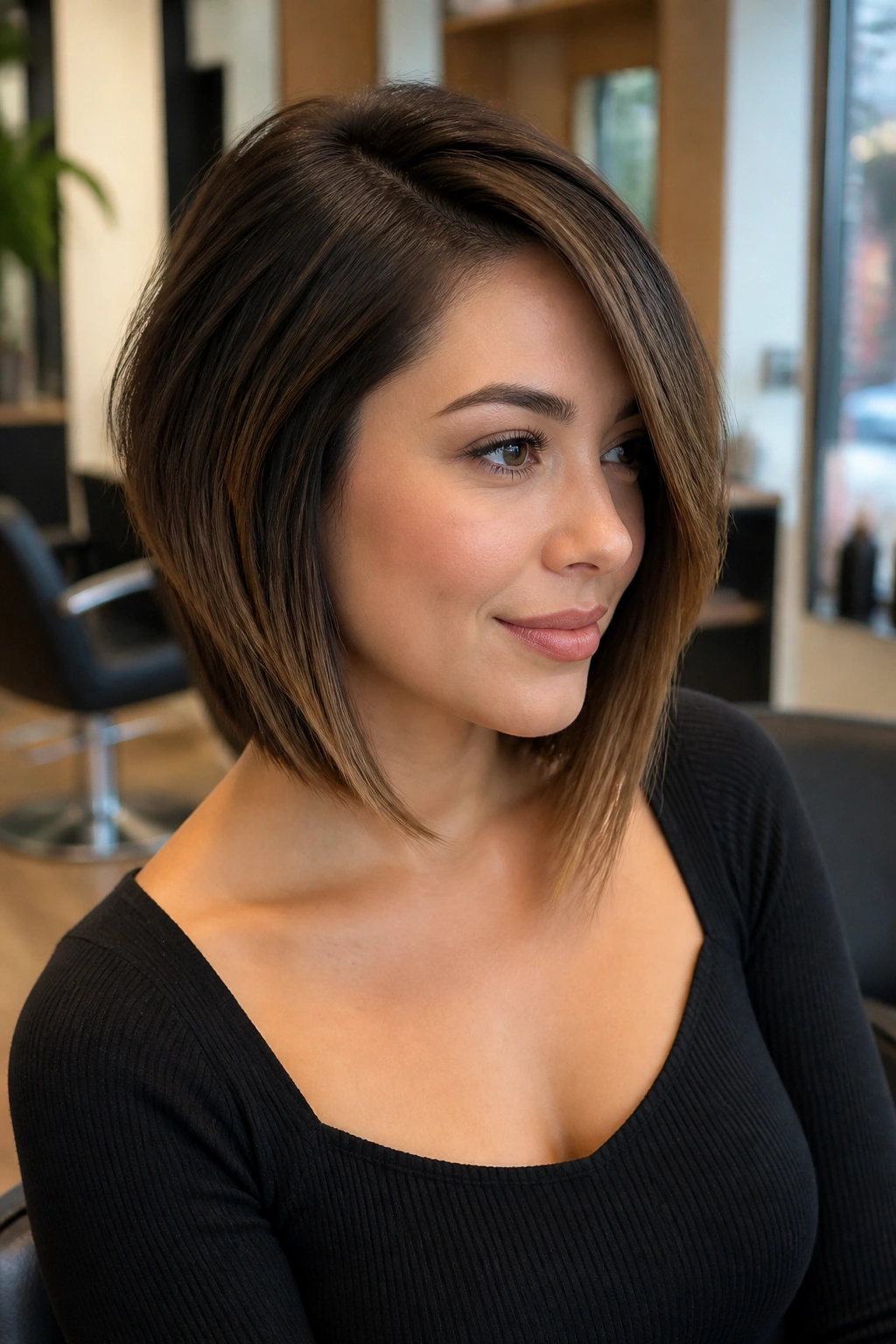
The deep side part does more face-shaping than most people realize. It breaks the symmetry of a round face and creates a long diagonal line that makes the whole cut feel slimmer. Add front pieces that fall below the chin, and the style stops reading as “bob” and starts reading as structure.
A good version of this cut usually lands around the collarbone in front, with the back sitting slightly higher. That little angle matters. It keeps the front from puffing out at the cheeks, which is the mistake I see most often when people ask for a “long bob” without being specific about the front.
Why it works
- The side part adds height at the crown, which lengthens the face visually.
- The longer front pieces skim past the widest part of the cheeks.
- The back stays clean, so the cut doesn’t lose shape as it grows out.
A round face often looks better when the eye moves in a diagonal, not a circle. This cut gives you exactly that. If you want polish without stiffness, start here.
2. Cheekbone-Layered Textured Lob
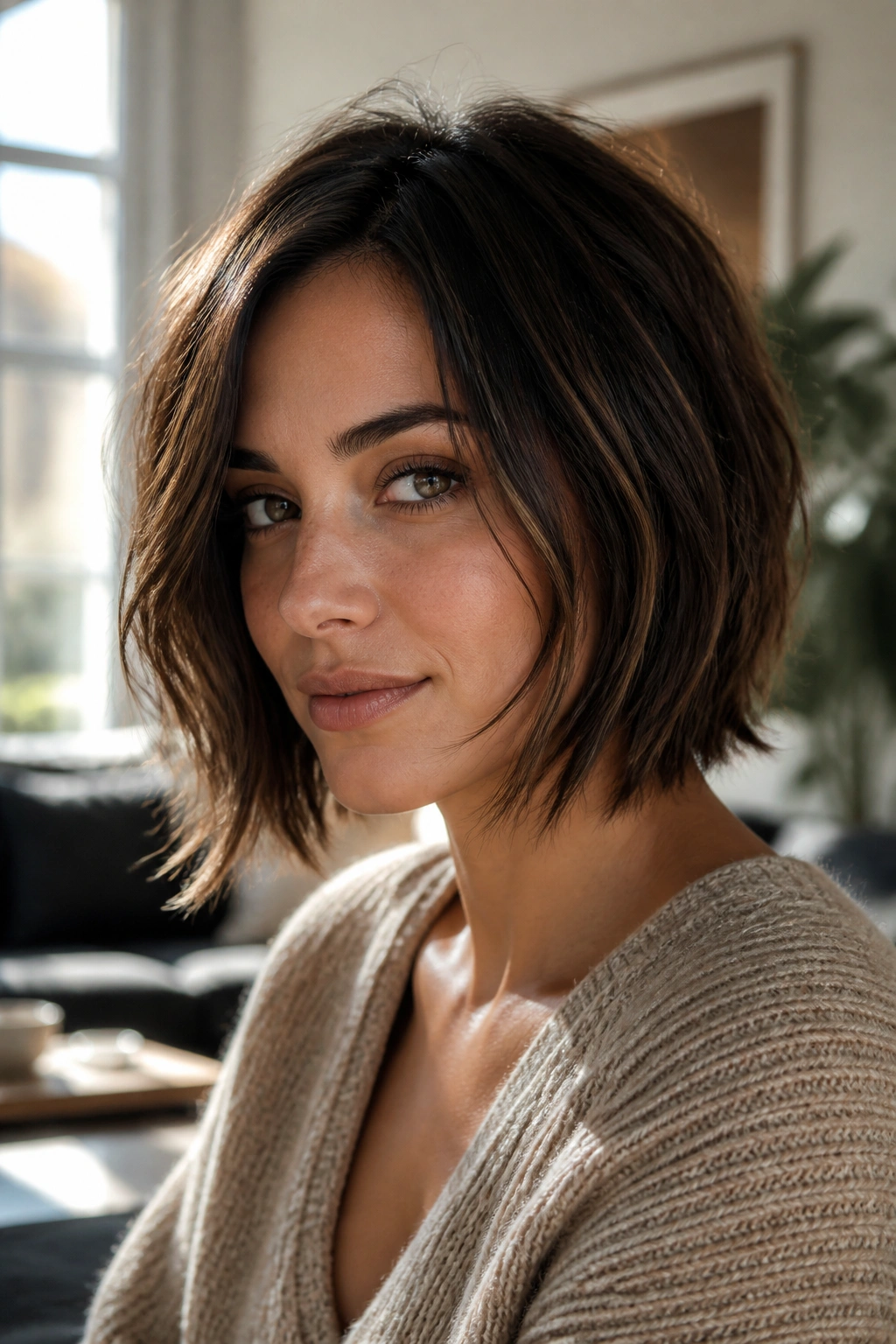
What if you want softness instead of sharp angles? Then a cheekbone-layered lob makes more sense than a strict A-line. The layers start high enough to kiss the cheekbones, but they don’t explode outward, which is the trap with too much volume on a round face.
This cut looks especially good when the hair has a little bend in it. A few loose waves help the front pieces fall around the face in a more vertical way, and that keeps the shape from feeling wide. On straight hair, the same cut can still work, but you’ll want a bend through the mid-lengths rather than a curl at the ends.
A light mist of salt spray on damp hair is usually enough. Scrunch it, rough-dry it halfway, then finish with a diffuser or a large round brush if you want more control. The point is movement, not puff.
3. Soft A-Line Bob With Long Front Corners

If you wear your hair tucked behind one ear most days, an A-line bob with long front corners feels polished without trying too hard. The front corners should graze the collarbone or at least land well below the jaw, because that’s where the cut starts doing real work on a round face.
The angle is the main event here. Shorter in the back, longer in the front — yes, but not dramatically so. Too much slope can look severe. Too little slope can flatten the silhouette. The middle ground is cleaner and far more wearable.
What to ask for
- A back length that sits at or just below the nape.
- Front pieces that fall at the top of the collarbone.
- Light internal texture, not heavy thinning at the ends.
- A side or off-center part if you want extra length through the face.
This is one of those haircuts that looks calm from the front and neat from the side. That’s part of its charm. It gives you angle without shouting about it.
4. Curtain-Bang Lob That Opens the Cheeks
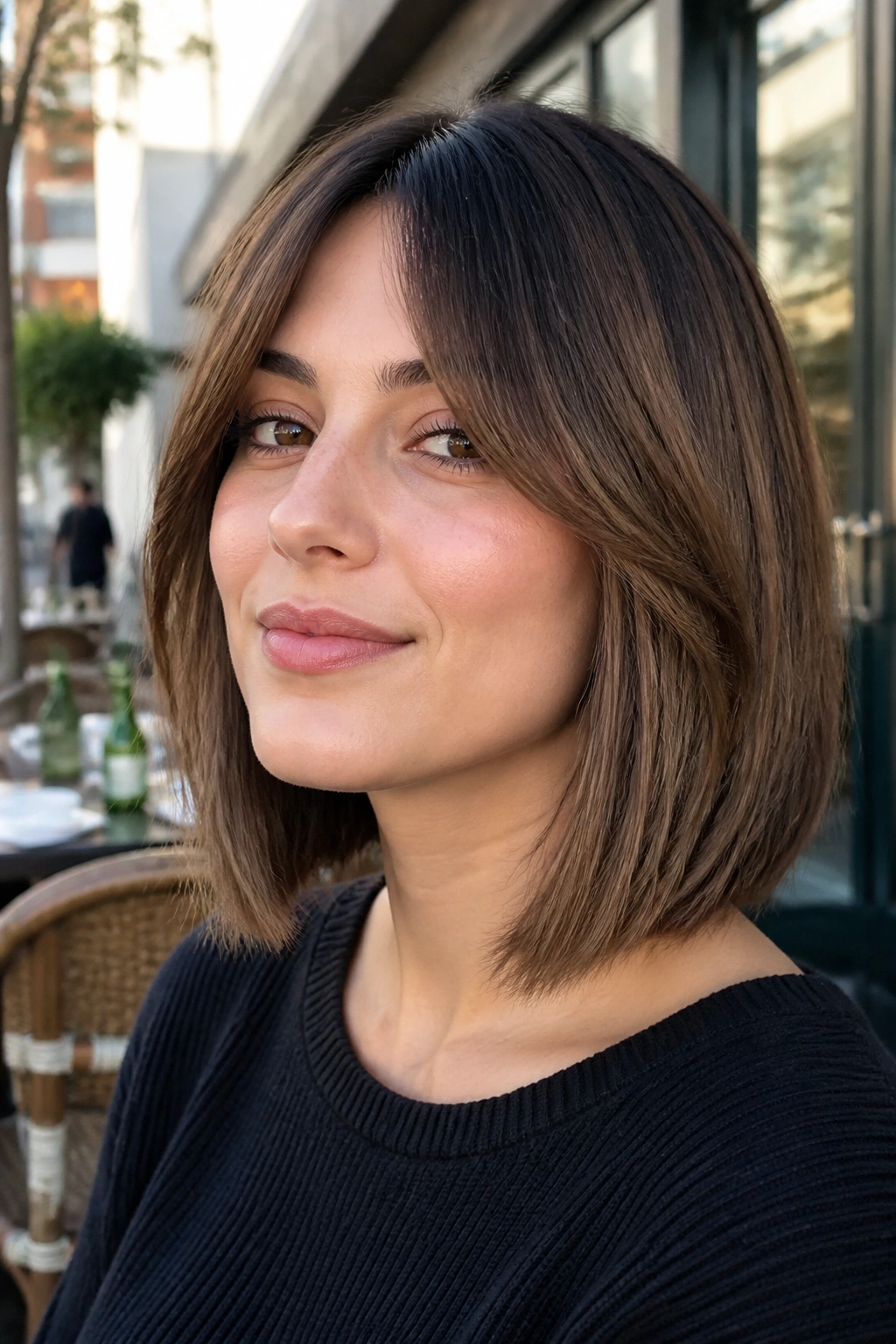
Curtain bangs are not the problem. Bad curtain bangs are. On a round face, the right version splits the width at the center and pulls attention upward, then lets the longer front pieces sweep down around the cheeks.
The key is length. The shortest part of the fringe should sit around the brows or just below, and the longest sides need to blend into the front lob so they don’t stop at the cheeks like a hard line. When the transition is smooth, the whole cut feels softer and longer.
Blow-dry the bangs away from the face first, then curve them back in slightly with a round brush. If you leave them too flat, they can sit like a curtain in the wrong sense — heavy, dense, and oddly square. The shape wants air.
5. Grown-Out French Bob With Airy Front Pieces

This cut feels soft the second it dries. A grown-out French bob keeps the easy charm of a shorter bob, but the front length stretches past the jaw and into something more flattering for fuller cheeks. It’s especially good if you like hair that moves when you turn your head.
The texture should stay a little undone. Not messy. Just loose enough that the ends don’t form a hard line. A little bend through the front pieces gives the face room, which is half the point. If the ends are too precise, the cut starts to box in the face instead of framing it.
Wavy and slightly coarse hair usually wears this shape well. Straight hair can wear it too, but then the cut needs a careful finish — a soft bend, a little root lift, and no overfussy smoothing. It should look lived in, not shellacked.
6. Razor-Cut Sleek Lob With Tapered Ends
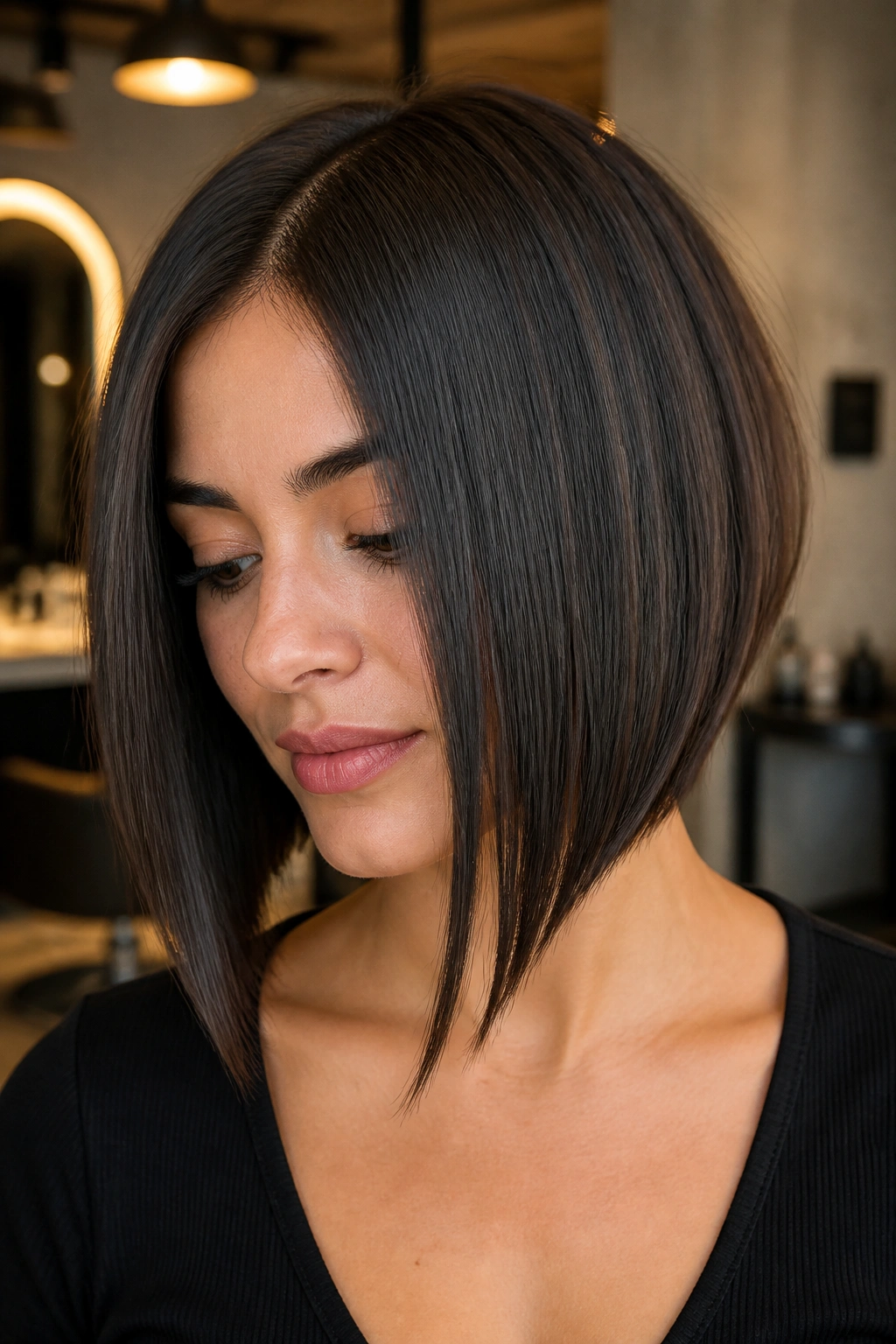
A razor cut can be a smart move when hair feels heavy around the face. It removes some visual weight from the ends, so the front doesn’t sit in a blunt block at the cheeks. On a round face, that extra lightness makes a bigger difference than people expect.
This version works best on straight to slightly wavy hair. The razor gives the perimeter a softer edge, and the front stays long enough to stretch the face rather than widen it. If your hair is already frizzy or prone to splitting, ask for a careful razor finish, not a shredded one. There’s a difference, and it matters.
Good reasons to choose it
- Fine-to-medium hair gets movement without losing too much density.
- Straight hair looks cleaner when the front is tapered.
- A deep side part adds even more length.
- The cut grows out neatly if the front corners stay below the mouth.
I like this style most when it’s worn smooth with a slight curve under at the ends. It feels sharp without becoming harsh.
7. Invisible-Layer Lob for Thick Hair
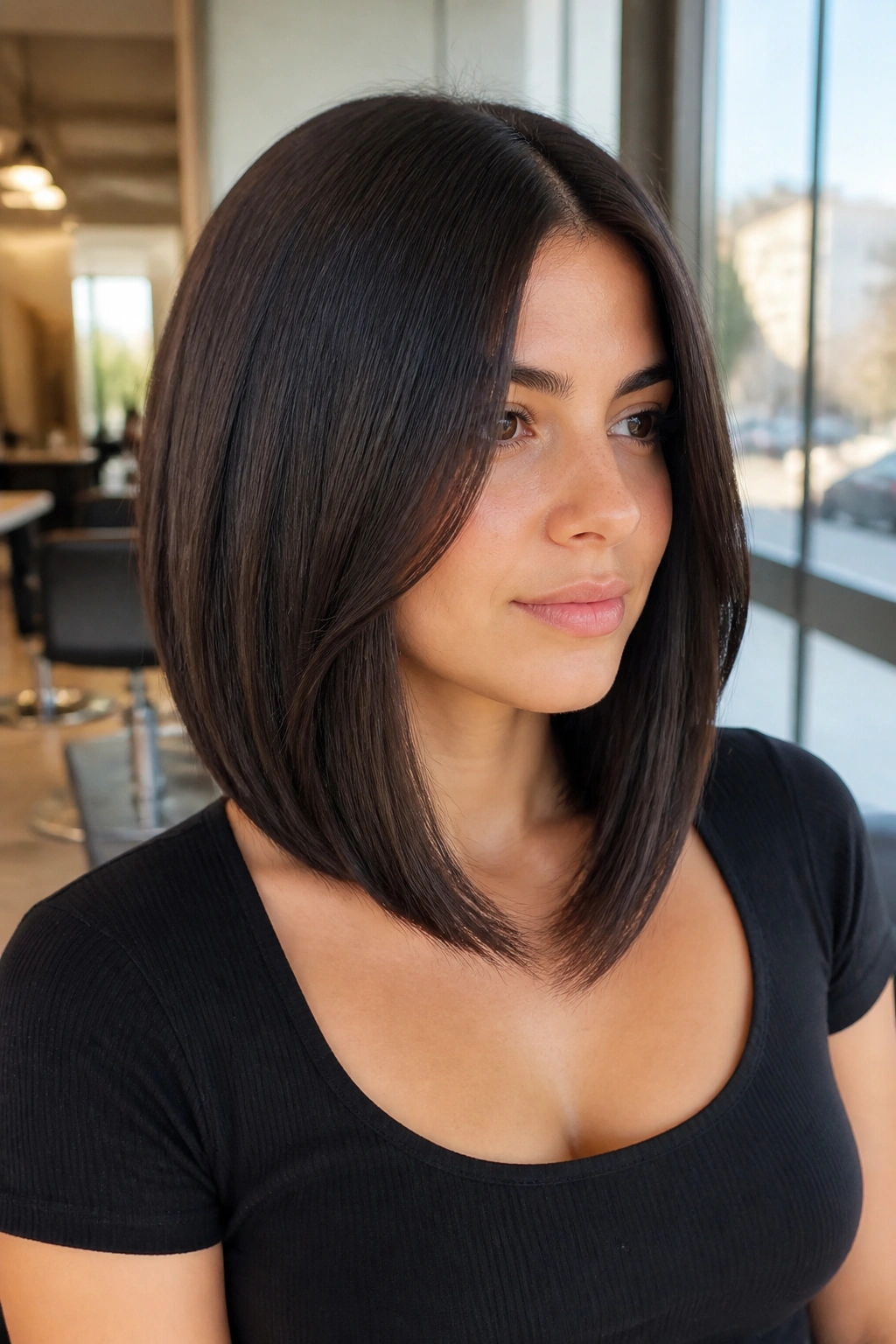
Unlike choppy layers, invisible layers keep the outline clean. That’s the whole appeal here. You still get movement inside the cut, but from the outside it reads like a sleek long bob, which is exactly what thick hair often needs.
Round faces can get swallowed by too much bulk near the cheeks. Hidden layering fixes that without making the ends thin and stringy. The shape stays controlled, and the front can fall in a longer line that does the slimming job.
A stylist will usually remove weight from underneath and leave the outer surface smoother. That means the haircut can still feel full, just not puffy. If your hair is dense, this is one of the better ways to keep the long front sections from flipping out at the sides.
8. Side-Swept Fringe Bob That Lifts the Face
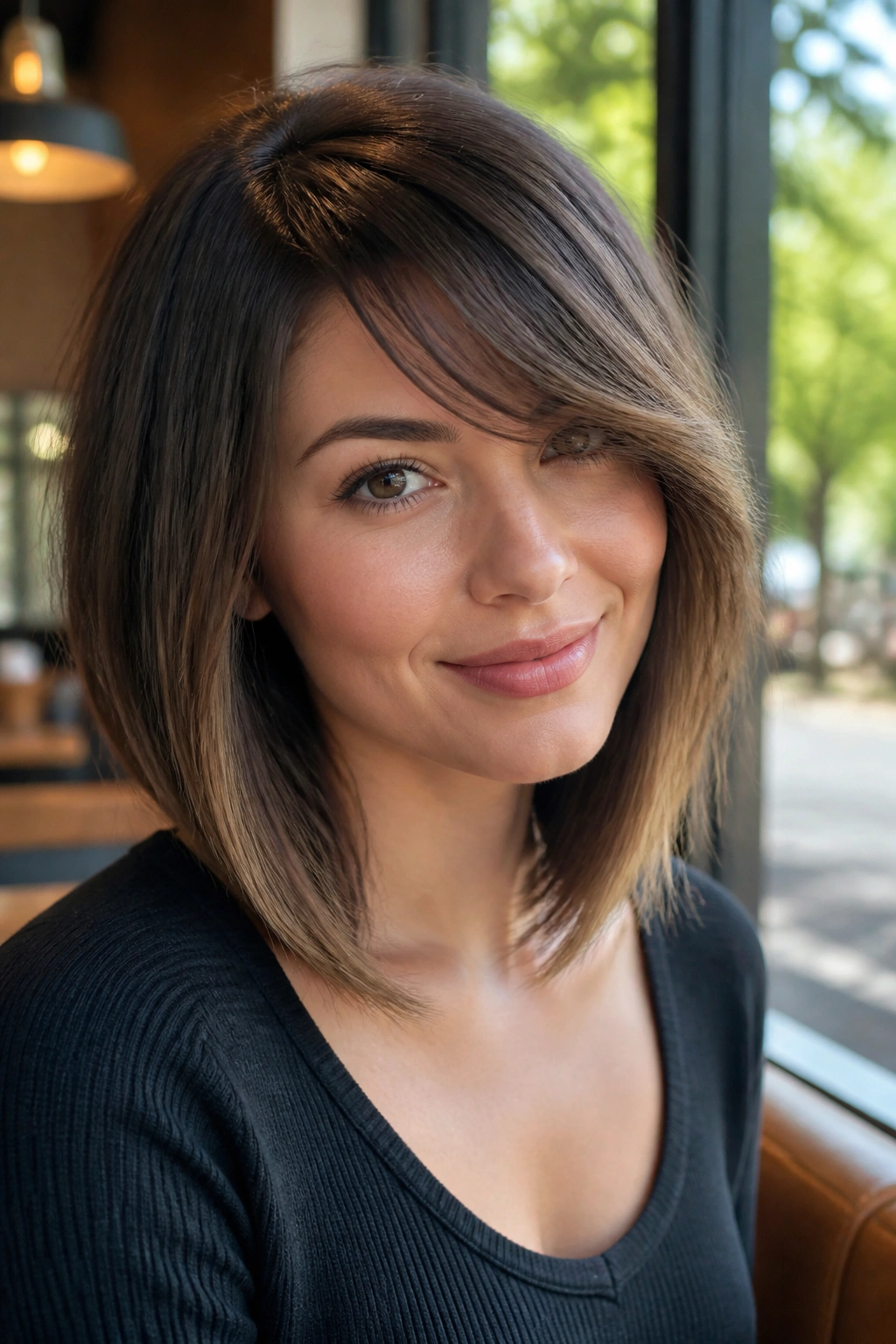
A side-swept fringe can do more for a round face than a straight-across bang ever will. It shifts the visual weight off the center line and creates a gentle slope that leads into the longer front pieces. That slope is doing a lot of quiet work.
Picture a face with soft cheeks and a broad smile. A side fringe changes the balance immediately, especially when the longest bits of the bob hit around the collarbone. The cut stops circling the widest part of the face and starts drawing attention up and out.
Keep the fringe light. It should sweep, not droop. If it lands too heavy over the brow, the whole style loses lift and starts to feel weighed down. A little movement near the temple goes a long way.
9. Shaggy Lob With Feathered Ends

Can a shag work on a round face? Absolutely, if the longest pieces stay controlled. The mistake is going too short around the cheeks and turning the cut into a cloud. Keep the front long, feather the ends, and the result feels relaxed rather than puffy.
This version likes natural texture. A loose wave or a soft bend gives the haircut shape, and the feathered ends stop the line from becoming too blunt. The crown can have a little lift, too, which helps stretch the profile. Just don’t go wild with layers. Two or three well-placed ones usually do more than a dozen tiny ones.
A mousse or lightweight cream is enough for styling. Scrunch it into damp hair, then let the front pieces fall where they want. If they kick out too much, a quick pass with a flat iron can calm them down without flattening the whole cut.
10. Blunt Long Bob for Round Faces With Extended Front Corners
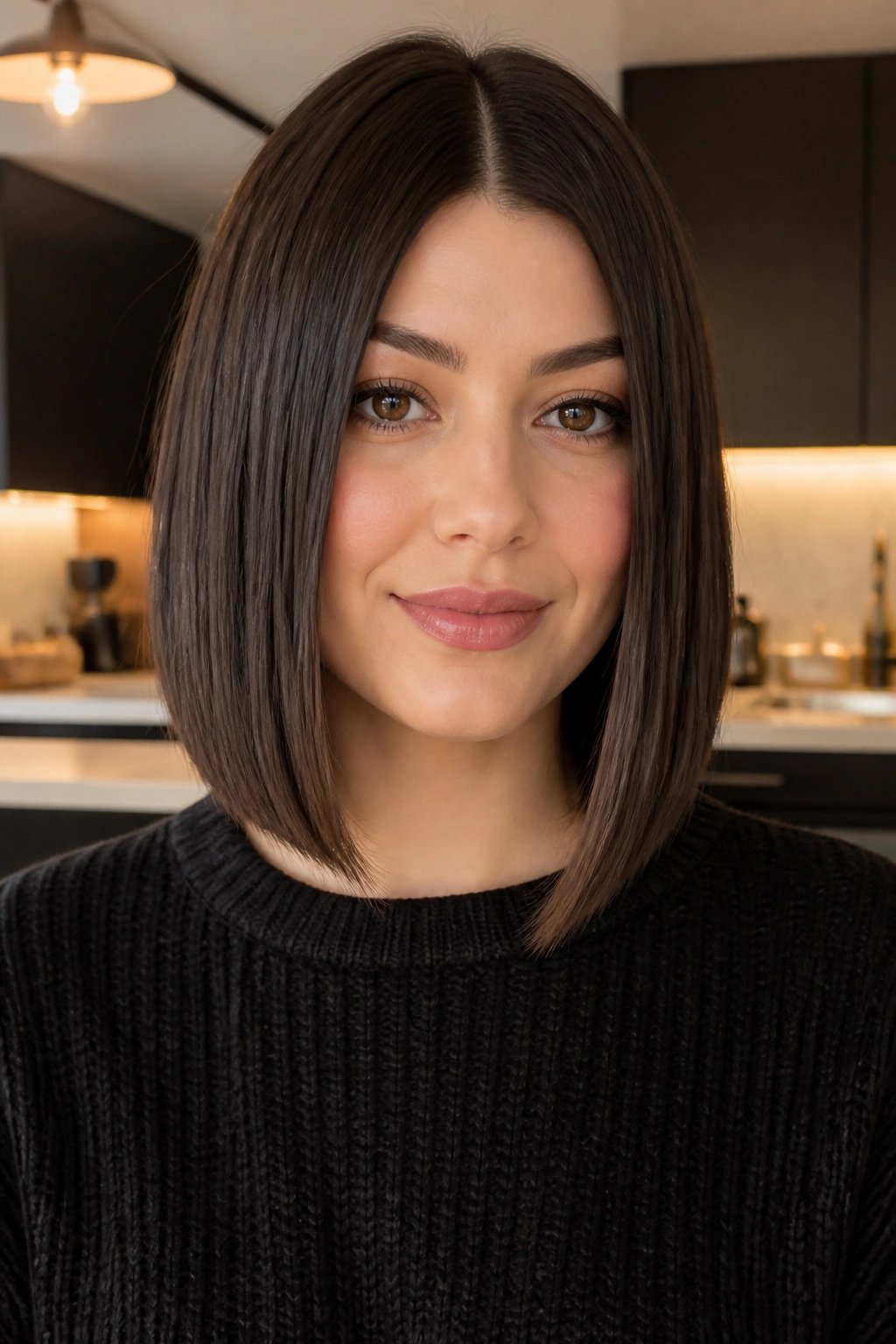
A blunt perimeter isn’t off-limits for round faces. It just needs the front corners to do some real lifting. If the length stops around the chin, the shape can feel boxy fast. If the front reaches the collarbone, the same blunt line suddenly looks cleaner and more deliberate.
This is the one I’d point to for fine hair that needs fullness. The straight edge gives the illusion of density, and the longer front pieces keep the face from looking wider. A center part can work here, but an off-center part often gives a little more vertical lift.
What makes it feel right
- The ends should be clean, not wispy.
- The front corners should sit below the jawline.
- The cut should feel smooth from root to tip.
- Styling should stay simple — blow-dry, bend, done.
It’s a good haircut for anyone who likes a neat outline and doesn’t want layers everywhere. Simple, but not plain.
11. Curly Long-Front Bob With Sculpted Shape
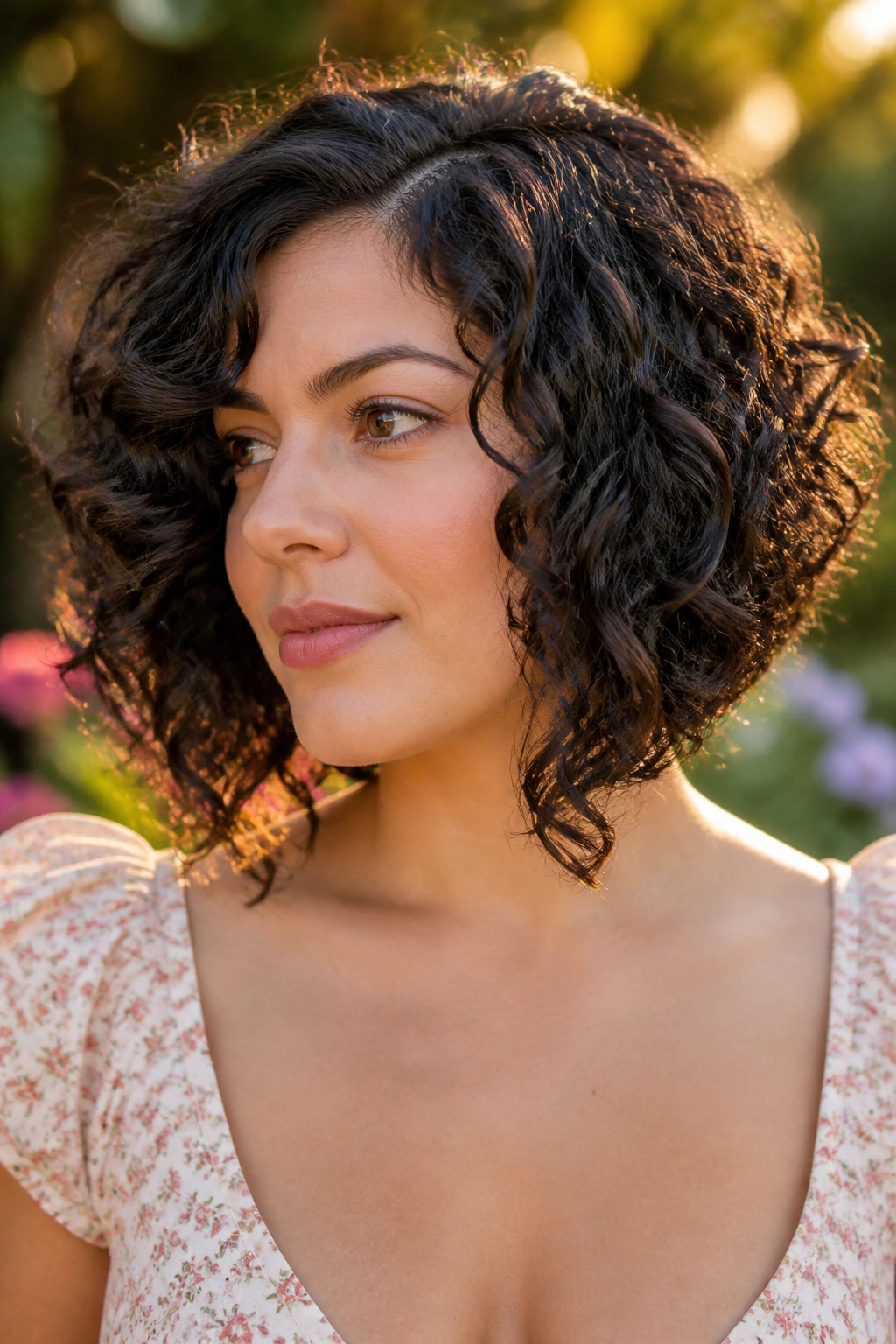
Curly hair changes the whole conversation. Shrinkage can turn a flattering long bob into something much shorter, so the cut has to be planned for the curl, not the wet length. The front should be left long enough that it still falls past the cheeks once dry.
Cut it for the curl you actually have
If your curl pattern is loose, the shape can sit near the collarbone with gentle face-framing layers. Tighter curls need more room in the front and a bit more weight at the bottom so the bob doesn’t spring up around the jaw. Either way, the goal is the same: avoid a wide halo at the sides.
Styling on wash day
- Apply leave-in conditioner to soaking wet hair.
- Use a curl cream or gel from mid-length to ends.
- Scrunch, then diffuse on low heat or air-dry.
- Do not rake through dry curls; it breaks the shape and causes frizz.
A curly long-front bob works when the front pieces are shaped, not chopped. That distinction matters more than almost anything else with this cut.
12. Subtle Inverted Bob With Nape Lift
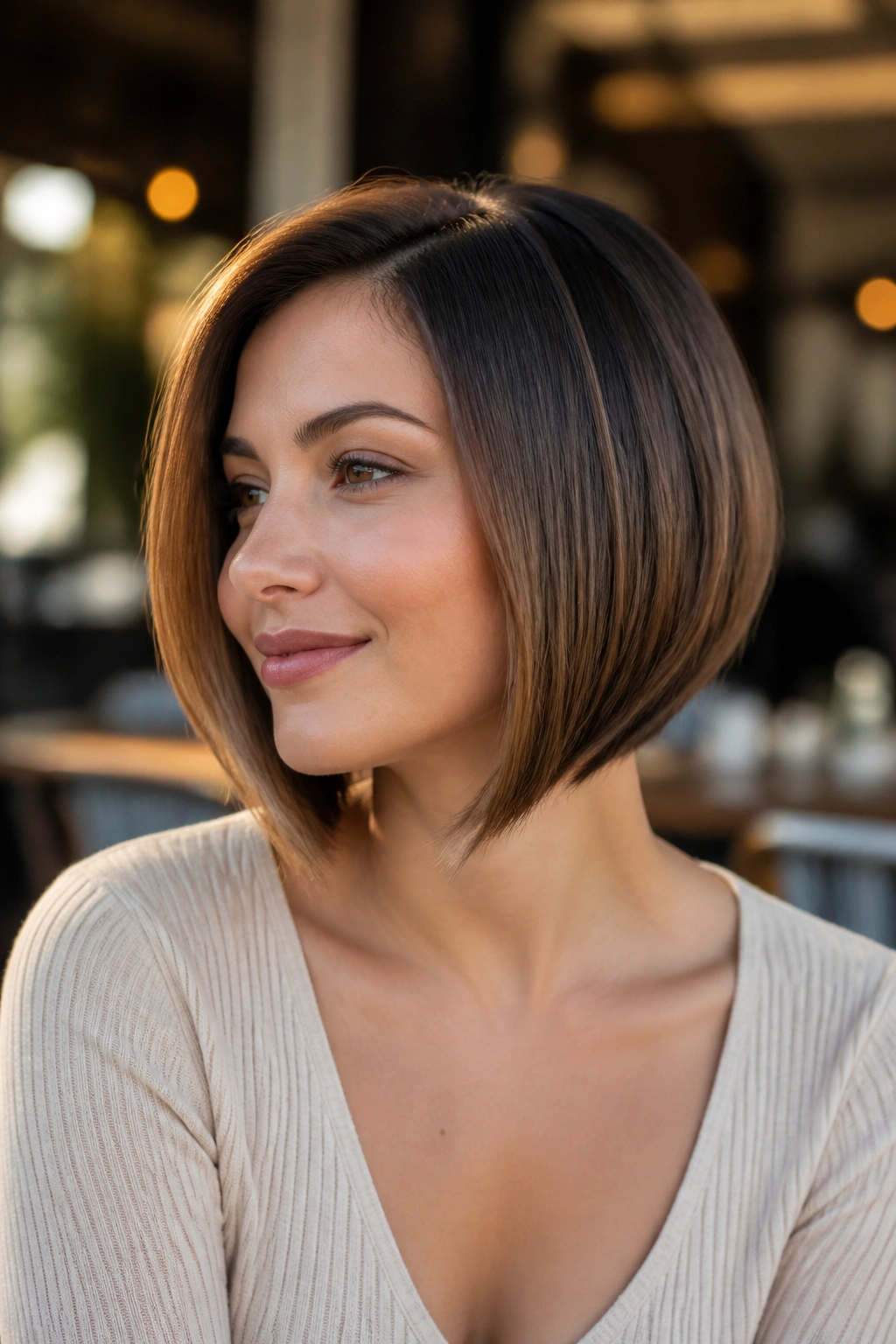
A subtle inverted bob lifts the back just enough to stretch the profile. That’s the trick. You don’t need a dramatic stack to get the effect. In fact, too much stacking can make a round face feel even fuller through the sides.
What you want is a clean slope from the nape to the front. The front pieces should still reach below the chin, ideally closer to the collarbone, so the eye keeps moving downward. That long front line is what keeps the cut from reading too short.
This version suits people who want a little shape in the back but don’t want the haircut screaming “inverted bob.” It’s neat, slightly sculpted, and easy to wear with both straight and softly waved hair. If you like tucked sides and smooth finishes, it’s a strong pick.
13. Feathered Lob With a Split Front
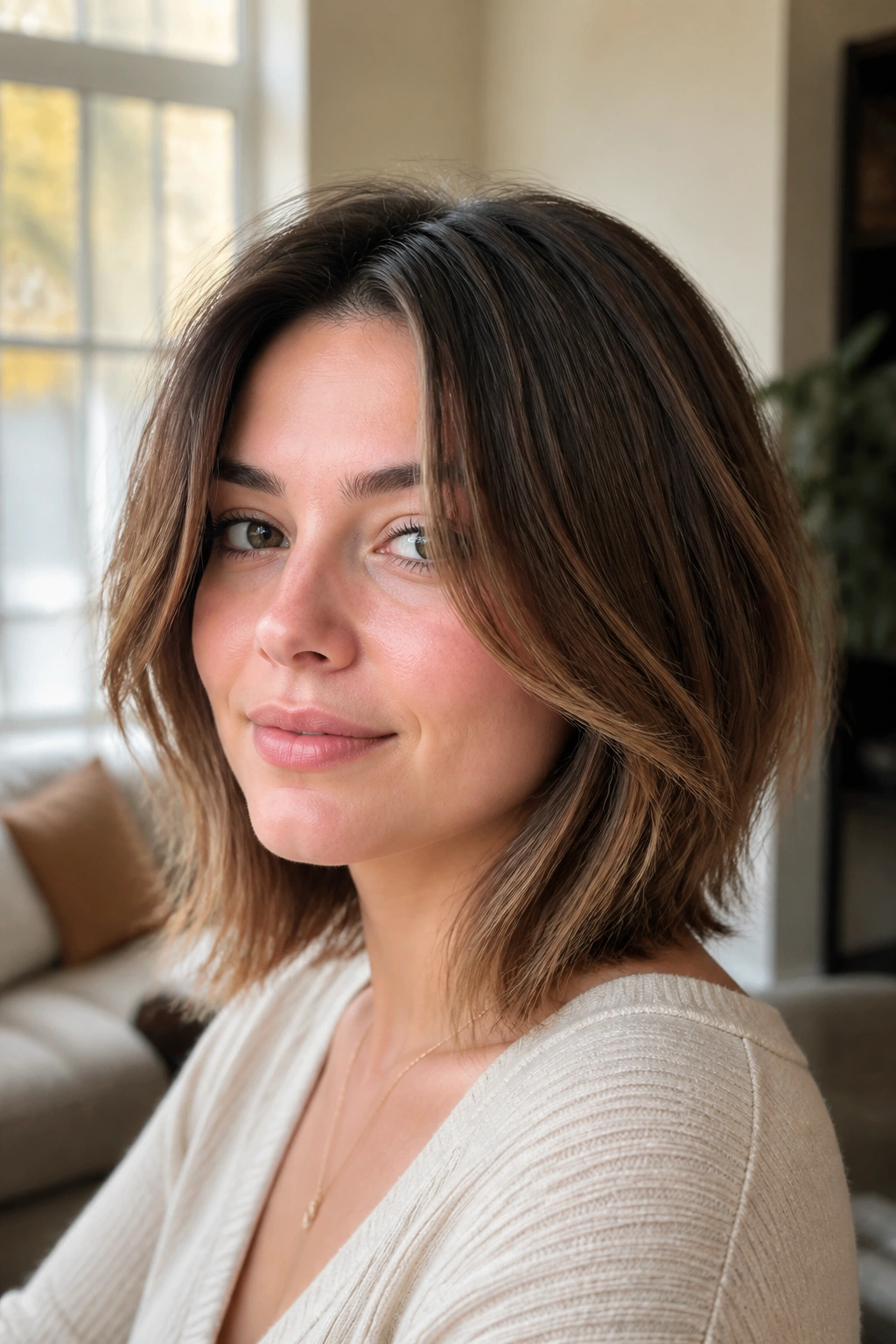
Soft is the point. A feathered lob with a split front doesn’t rely on hard angles or chunky layers; it relies on air. The ends are light, the front opens away from the face, and the whole cut feels less closed-in than a blunt bob.
That’s useful on a round face because heavy front sections can sit like curtains in the wrong place. Feathering breaks that weight up. The front splits just enough to let the cheekbones show, which makes the face feel a touch longer and a touch leaner.
Use a lightweight mousse or foam on damp hair, then rough-dry or diffuse. Heavy creams can drag the feathering down. If the ends start to puff, a small round brush at the last minute is enough to smooth them without flattening the lift.
14. Shoulder-Skimming Center-Part Bob
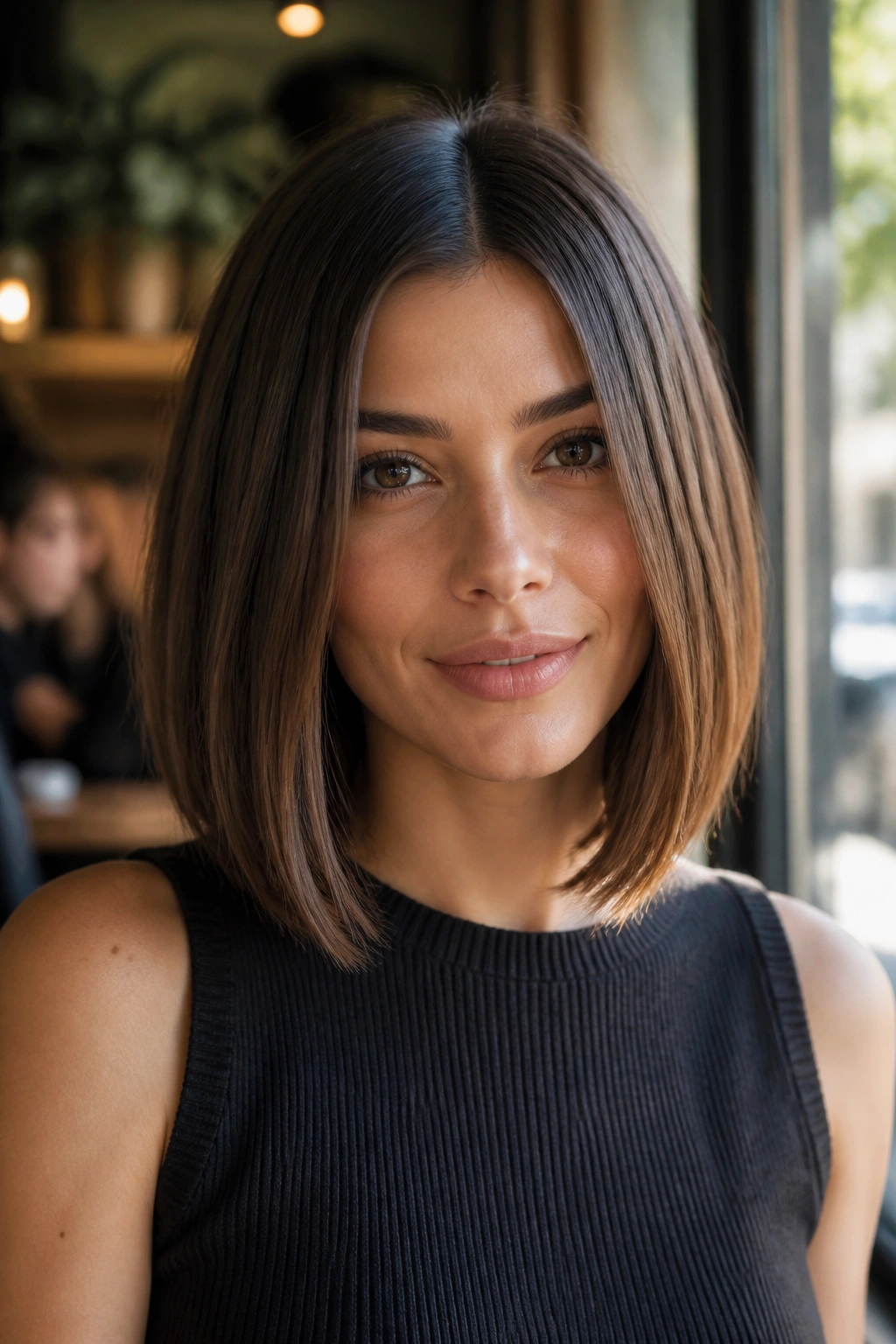
A shoulder-skimming bob with a center part is the cut I’d send to someone who wants movement but refuses drama. It’s straightforward, easy to style, and the length is forgiving. The front pieces fall low enough to pull attention past the cheeks, which is the whole job here.
The center part makes the face read a little longer, but only if the front length supports it. If the ends stop too high, the result can feel boxy. Keep the front at or below the collarbone, and the cut starts behaving much better on a round face.
This style looks especially good when the hair has a little bend around the ends. Not curls. Just a soft curve that keeps it from sitting flat. Tuck one side behind the ear, leave the other loose, and the shape feels more relaxed right away.
15. Piecey Bob With Wispy Ends
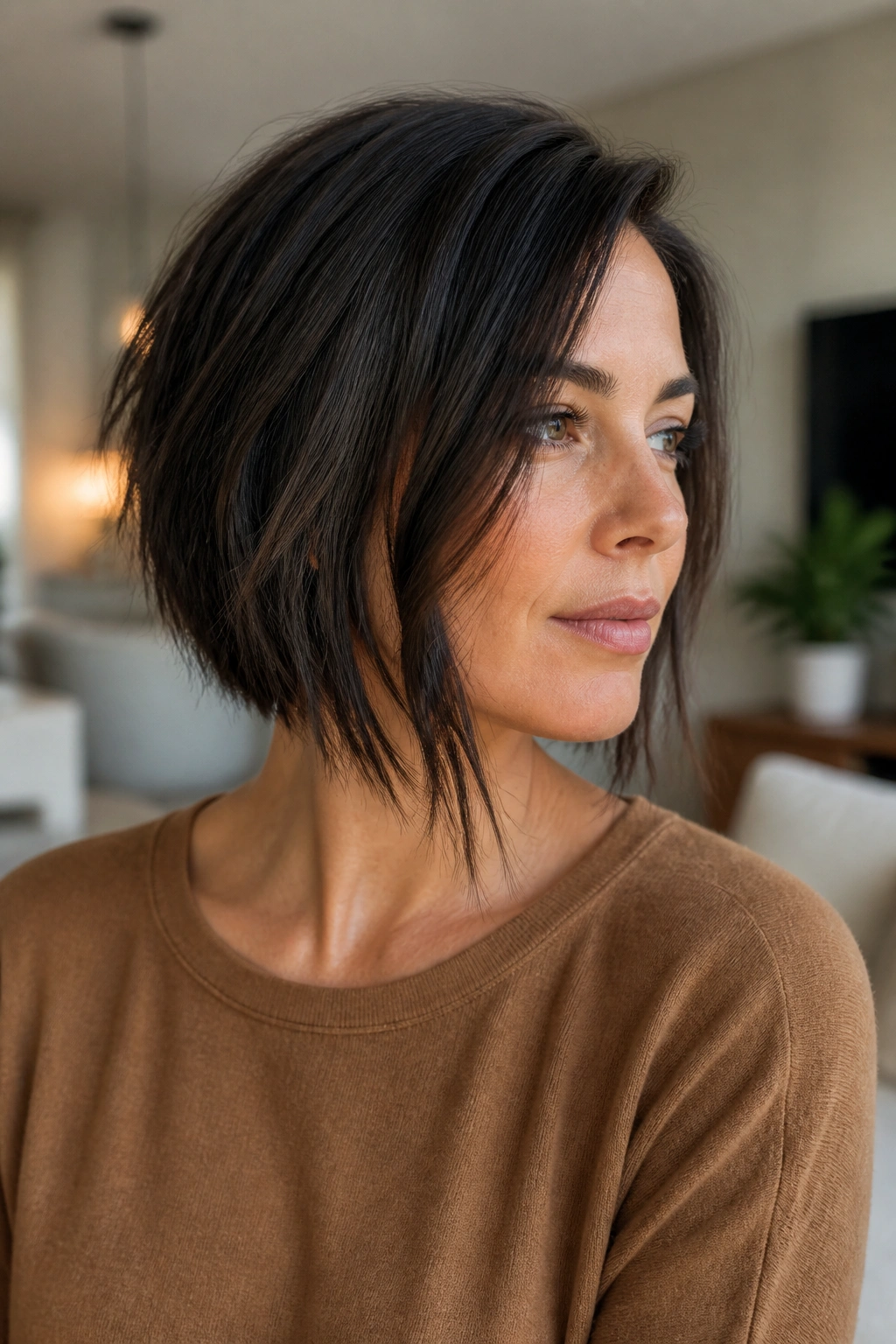
Piecey ends are your friend when cheeks are full. They break up the round contour and stop the hair from forming one solid line around the face. That makes the whole cut look lighter, even if the overall length doesn’t change much.
This version works when the front is kept long and the texture is separated in small sections. A dab of styling paste on dry hair can give that kind of movement without making the ends stiff. Use your fingers, not a brush, if you want the pieces to stay visible.
I like this cut for hair that’s somewhere between straight and wavy. It has enough structure to hold the separation, but not so much texture that the ends spring into chaos. If your hair tends to go flat at the crown, a little root lift fixes that fast.
16. Asymmetrical Lob With One Longer Side
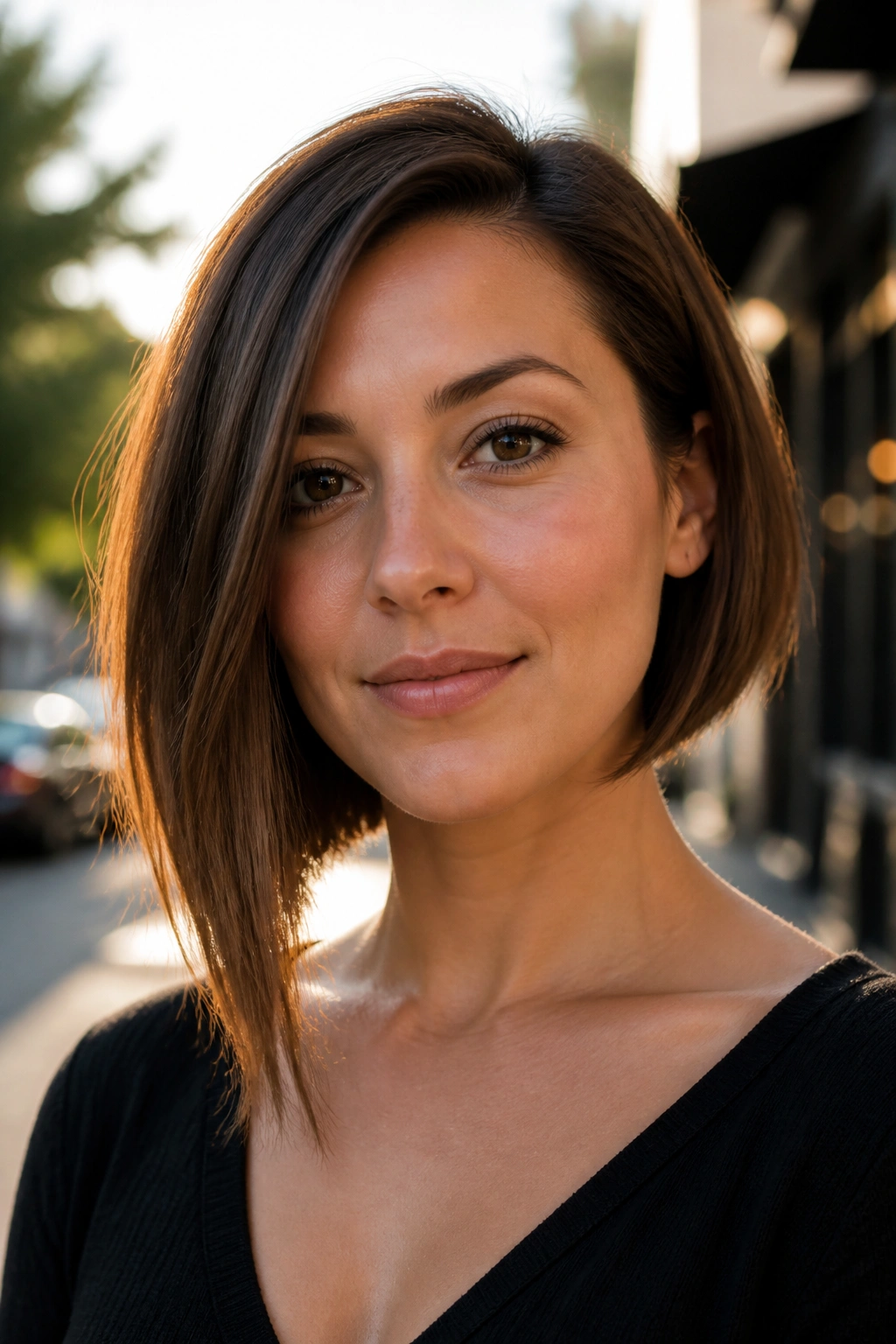
If one side of your face carries more volume, an asymmetrical lob can feel surprisingly flattering. The uneven line changes the balance immediately. One side falls a bit longer, the other stays slightly shorter, and the eye stops reading the face as a perfect circle.
The difference doesn’t need to be dramatic. An inch or so is plenty. Too much asymmetry can start to feel costume-y, and that’s not what we want here. The best version is subtle enough that people notice the shape before they notice the trick.
Keep the longer side below the jaw and let the shorter side stay just as long as the chin. That way the cut still keeps its elongated front effect. It’s a sharp choice, but not a fussy one.
17. Hidden-Weight Long Bob for Dense Hair
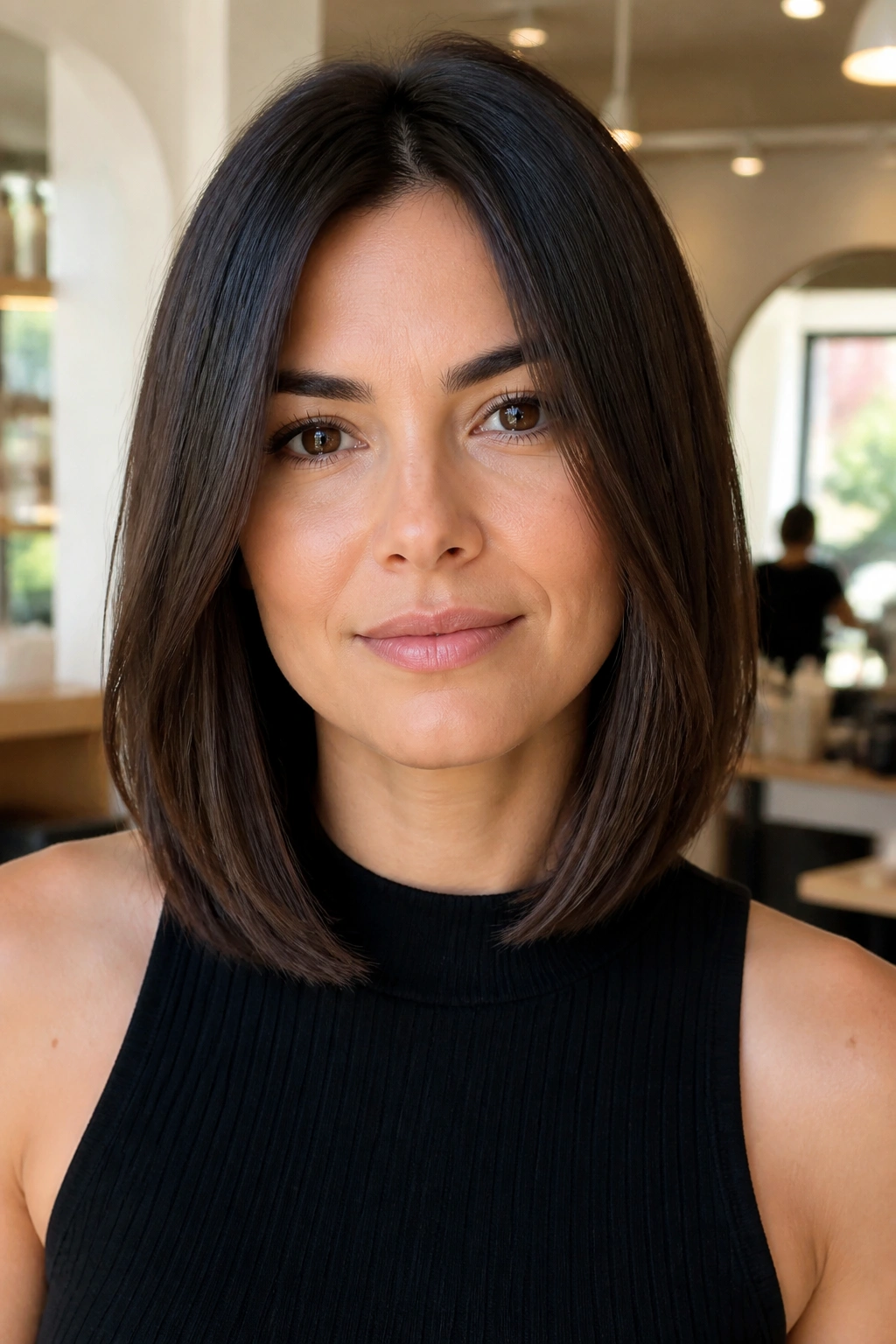
Dense hair can make a round face look wider if the cut is too heavy. That’s where hidden weight removal helps. The outer shape stays sleek, but the inside loses bulk, so the front can lie closer to the head instead of flaring out.
A good stylist will usually work underneath the surface rather than slicing into the visible ends. That keeps the bob looking full and healthy. It also helps the long front pieces fall in a cleaner line, which matters a lot when you want the face to look longer.
Ask for these details
- Internal weight removal only, not aggressive thinning at the tips.
- Front length that reaches the collarbone.
- A soft side or off-center part.
- Minimal layering near the cheeks.
This haircut is a quiet fix. Nothing flashy. Just a cleaner silhouette, and for dense hair that’s often the smartest move.
18. Soft Undercurve Lob
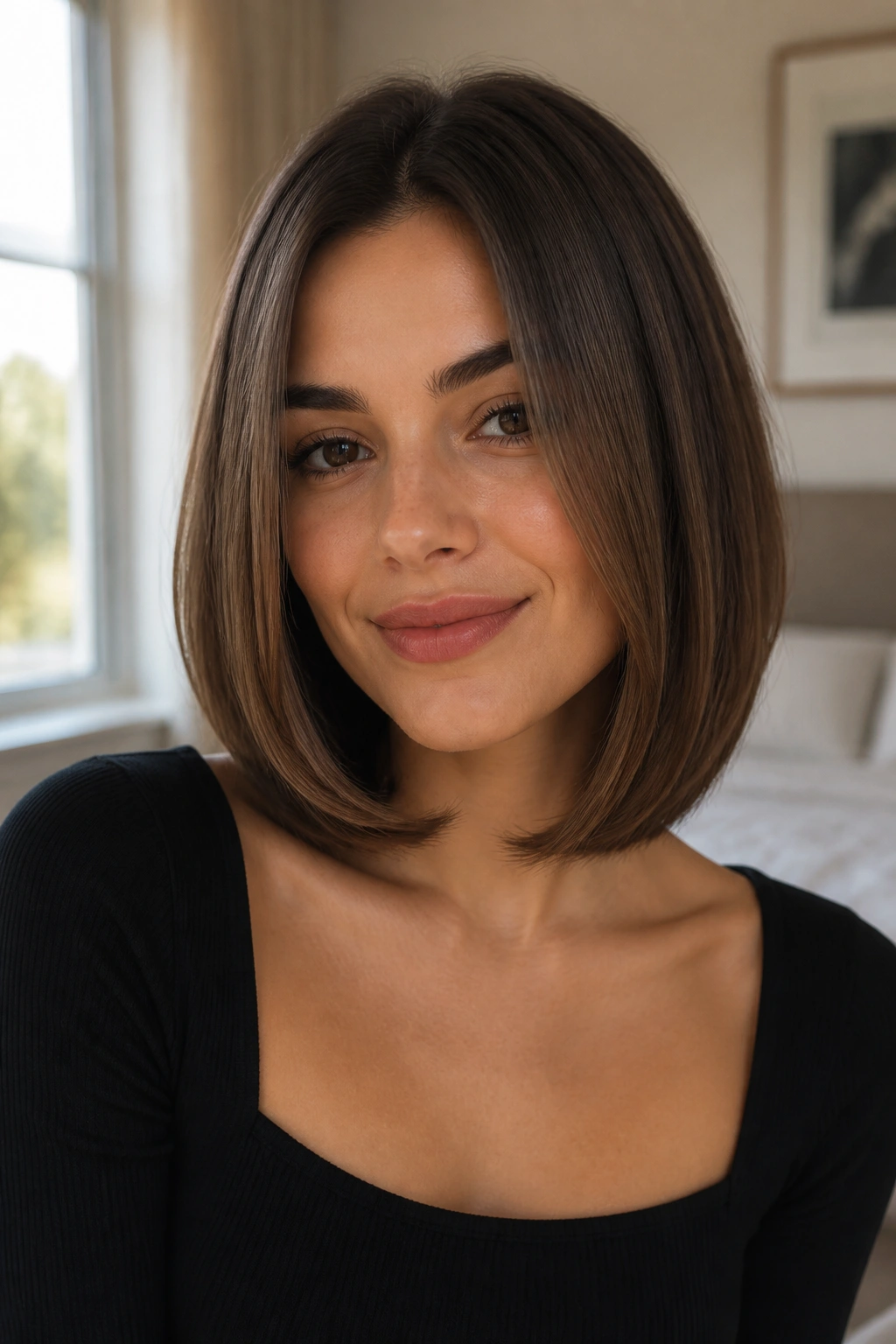
A soft undercurve is different from a bubble shape. The ends bend inward a little, but the front stays long and draped rather than rounded all the way around. That distinction is what keeps the cut friendly for a round face.
You can wear this look sleek or lightly blown out. On straighter hair, a large round brush gives the undercurve without making the finish too curled. On wavy hair, the shape can form almost on its own if the cut is done well. The front panels should still fall below the jaw, though. Don’t let the bend push them back up to cheek level.
This is a polished style. It feels tidy, smooth, and a little old-school in the best way. If you like hair that sits nicely all day, it’s worth a look.
19. Air-Dry Lob With Loose Face Framing
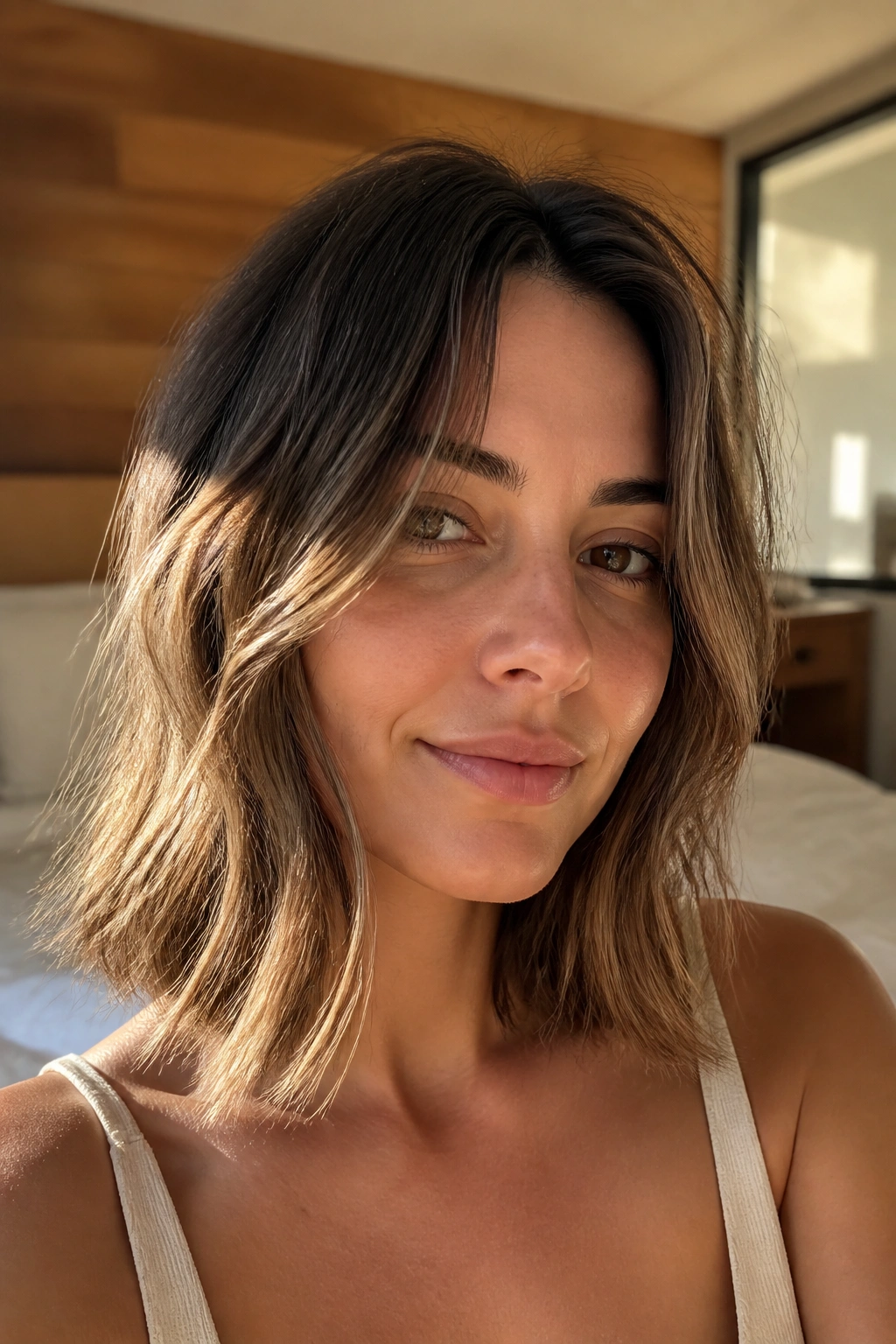
If you hate styling, this is the one that behaves. A loose face-framing lob doesn’t need a full blowout to work, which is a relief on busy days. The front pieces keep enough length to flatter a round face, and the rest of the cut can dry into its own shape.
The secret is restraint. Too many layers, and air-dried hair puffs out around the cheeks. Too little shape, and it falls flat. The middle ground is a light frame around the face with a clean base below it. A leave-in conditioner and a small amount of curl cream or smoothing milk are usually enough.
Let it dry without touching it too much. That part is boring, I know. But it matters. Once dry, a quick shake at the roots and a little serum on the ends can make the haircut look intentional instead of lazy.
20. Glossy Long Front Bob for Round Faces
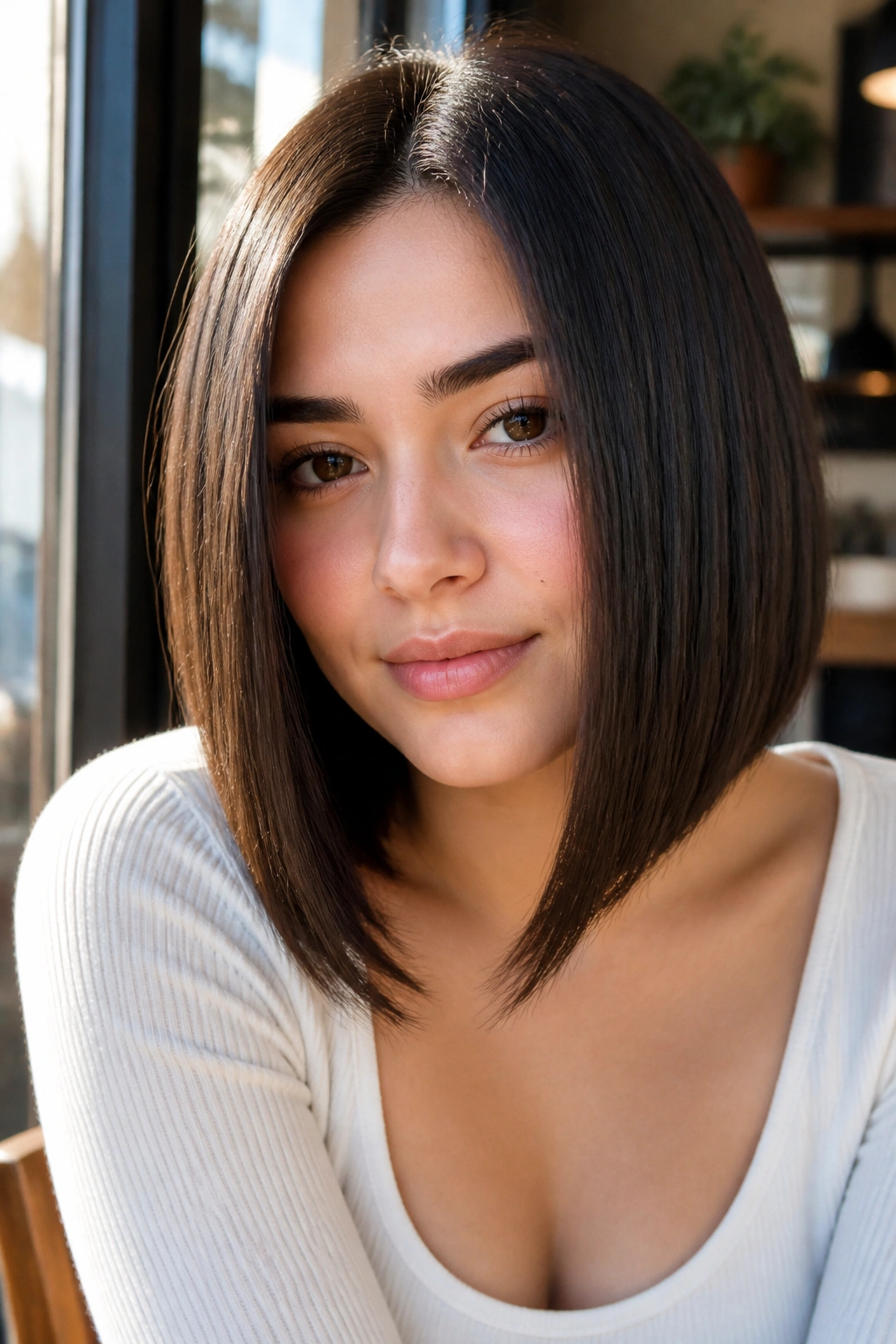
A polished long front bob works when you want clean lines and a little shine. The front pieces should drop well past the chin, ideally to the collarbone, so the face feels stretched instead of boxed in. This is the version that looks especially sharp with dark hair or high-shine color, but the cut itself does most of the work.
The front taper should be soft, not abrupt. If the ends stop too suddenly at the jaw, the whole look tightens up. A slight angle from back to front keeps the shape moving forward, which is exactly what helps a round face. I also like a center part here when the hair is straight, though an off-center part can soften it if the face needs more break from symmetry.
Use a smoothing cream before blow-drying, then finish with a drop of serum on the ends. That keeps the line glossy and controlled. No fluff. No fuzz. Just a neat front frame that does its job.
Final Thoughts
The strongest long front bob haircuts for round faces all do the same basic thing in different ways: they pull the eye downward, keep the cheeks from sitting at the widest point of the cut, and give the front enough length to shape the face instead of crowding it.
If you remember only one thing, make it this: the front matters more than the back. A bob can be slightly shorter behind, slightly longer in front, softly layered, blunt, shaggy, or polished — but if the front stops at the jaw, the whole thing gets harder to wear.
Bring a photo if you can, but bring a point of view too. Tell the stylist where you want the shortest front piece to land. That one detail usually tells the truth about the haircut.
