



Not every bob flatters a round face in the same way. A cut that stops right at the widest part of the cheeks can make the face look broader, while long choppy bob haircuts for round faces keep the eye moving downward and leave room for shape, swing, and a little edge.
The sweet spot is usually length, texture, and balance. A collarbone-grazing bob, an off-center part, and pieces that break up the outline can do more than a blunt line ever will. You do not need to hide your face shape. You just need a cut that works with it instead of boxing it in.
I’ve always liked this family of cuts because it has range. Some versions feel sharp and polished. Others are messy in the best possible way. A few lean soft and airy, which is handy if you want movement without losing too much length.
The details matter, though. Where the shortest front pieces sit. How much weight gets taken out of the ends. Whether the fringe opens the face or closes it down. Those little choices are what turn a regular bob into one of the better long choppy bob haircuts for round faces.
1. Collarbone-Length Choppy Bob for Round Faces
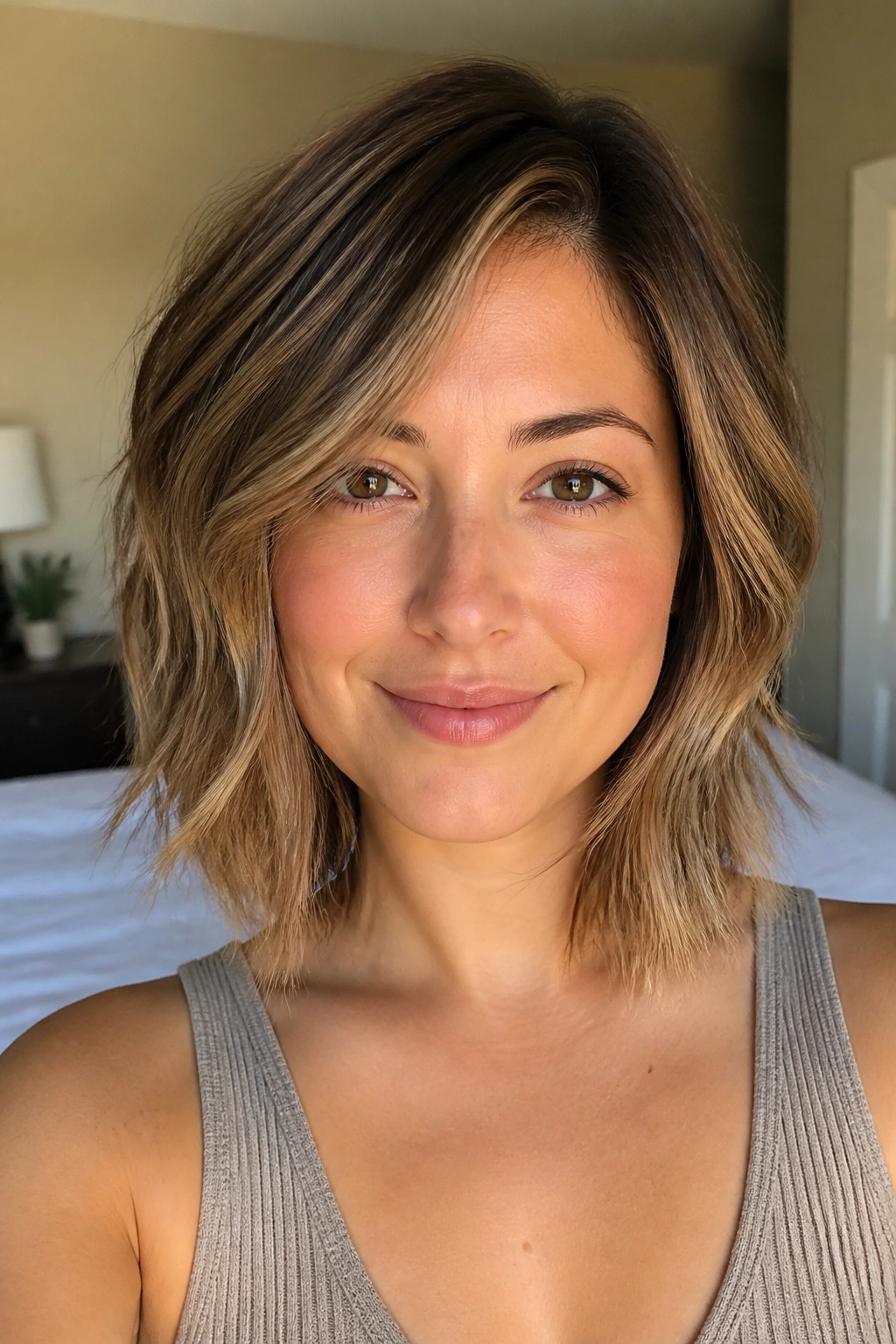
Start here if you want the safest, most wearable version of the cut. A collarbone length keeps the shape long enough to stretch the face visually, and the choppy finish stops it from looking flat or bulky.
The most useful part is where the front lands. Ask for the longest pieces to hit around the collarbone, with the shortest face-framing bits falling below the cheekbone, not right on it. That one detail keeps the width away from the center of the face.
Why the Length Helps
- The collarbone line creates a vertical path for the eye.
- Choppy ends break up the heavy blocky look that can happen with one-length bobs.
- A soft off-center part keeps the cut from feeling too symmetrical.
- The shape works well with a quick bend from a flat iron or a round brush.
Pro tip: Tell your stylist you want the perimeter to stay visible, but the interior softened with point cutting. That gives you movement without losing the bob’s structure.
2. Angled Lob with Cheekbone-Skimming Layers

An angled lob gives you built-in shape. The back sits a touch shorter, while the front length hangs lower and draws attention away from the widest point of the cheeks. It’s one of those cuts that looks thoughtful even when you toss it into a clip.
What makes it work on a round face is the diagonal line. Straight-across cuts can feel too boxy. A gentle angle keeps the cut moving forward, which feels cleaner and leaner around the jaw.
I like this version on hair that bends easily. A small wave or a loose blowout makes the angle show up better. If your hair is poker-straight, ask for a bit of internal texture so the front doesn’t just hang there like a curtain.
Keep the front pieces longer by about 1 to 2 inches past the jawline. That tiny difference matters more than people think. It keeps the eye moving down instead of sideways.
3. Choppy Bob with Curtain Bangs and Soft Sides
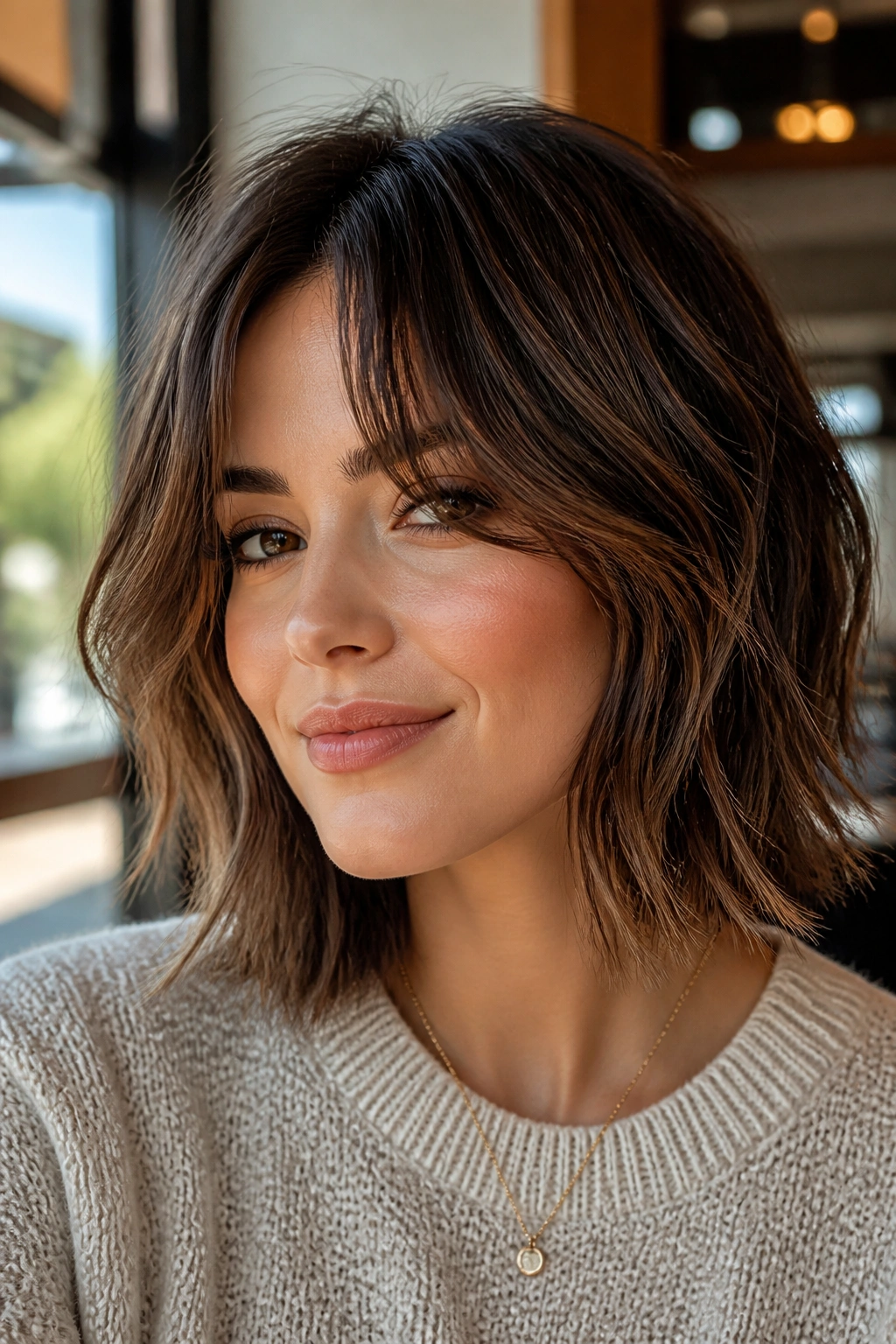
Can bangs work on a round face? Yes, if they’re cut with enough openness. Curtain bangs are the easy answer here because they split in the center and sweep out toward the cheekbones instead of landing in one hard line across the forehead.
The trick is length. Short, blunt fringe can make a round face feel shorter. Curtain bangs that graze the brows and fall to the top of the cheekbones do the opposite. They create a soft frame, not a wall.
How to Style It
- Blow the bangs forward first, then bend the ends away from the face with a round brush.
- Keep the side pieces a little longer than the bang line so the shape melts together.
- Use a pea-sized amount of cream or mousse, not a heavy oil, or the fringe will separate too soon.
This cut has a nice, lived-in feel. It also grows out better than most fringe-heavy styles, which is a relief if you do not want a trim every few weeks.
4. A-Line Lob with Longer Front Panels
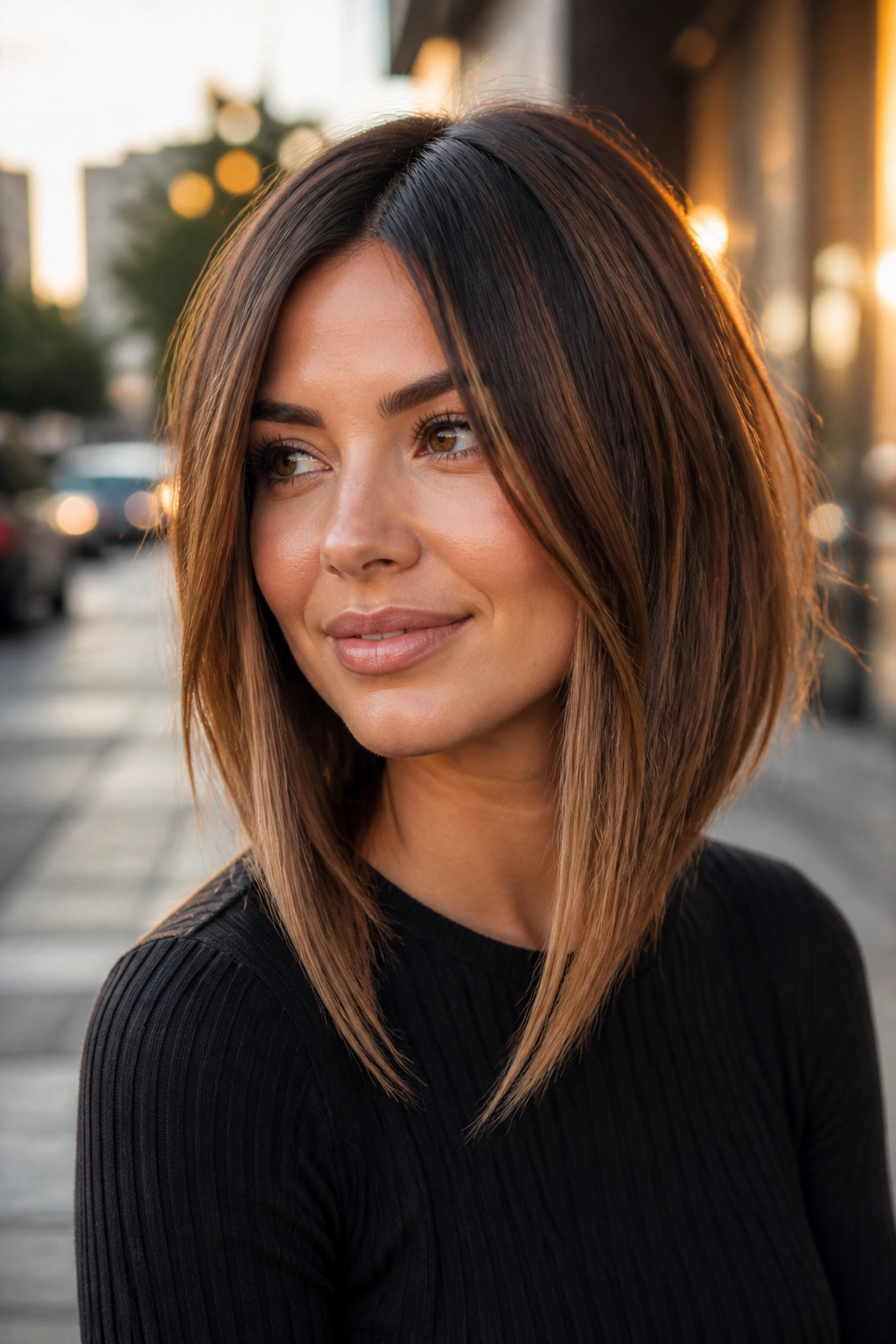
If your hair tends to puff at the sides, an A-line shape can fix that faster than people expect. The back sits tighter near the nape, while the front drops longer and slimmer toward the collarbone, which gives the face more length than width.
I’ve seen this cut do especially well on round faces with full cheeks and softer jawlines. The front panels act like rails. They guide the eye downward, and that changes the whole feel of the cut.
Ask for the front to be long enough to tuck behind the shoulder, not so short that it sits on the cheeks. That’s the part people miss. If the longest sections are too high, the cut loses its lengthening effect.
A little bevel at the ends helps too. It keeps the front from flaring out and creating extra bulk where you do not want it.
5. Razor-Cut Lob with Airy Ends
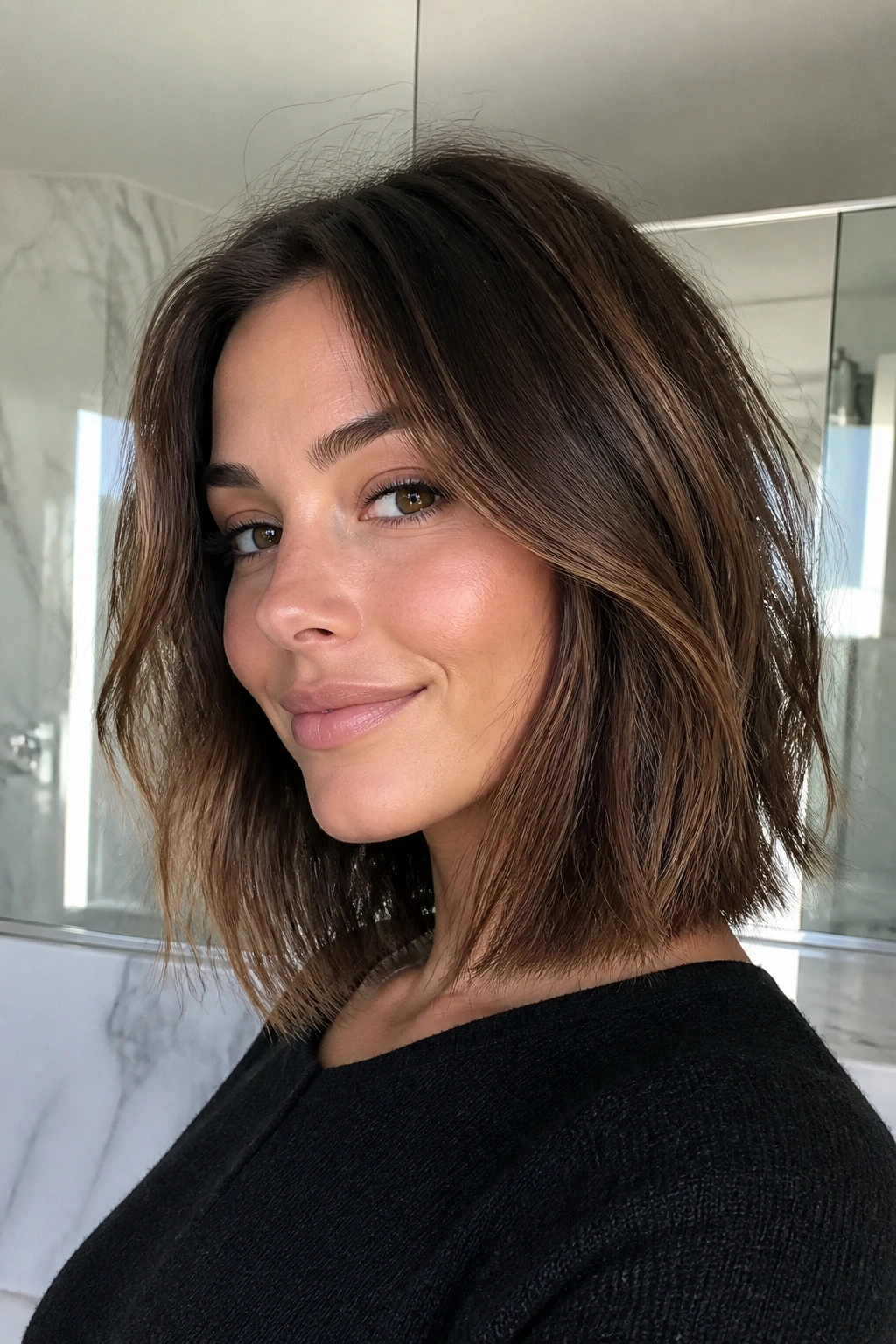
A razor-cut lob has a lighter edge than a scissor-cut bob. The ends look softer, a little frayed in a good way, and that works well when round faces need less heaviness around the jaw.
This is especially good for fine or medium hair that gets weighed down easily. A razor removes bulk fast, so the cut moves instead of sitting like a shelf. The danger, of course, is going too far. Over-razoring can make the ends look see-through, which is not the same thing as airy.
The best version keeps enough density through the perimeter to hold a clean outline. You want the ends to flick, not disappear. On straight hair, a quick blow-dry with a medium round brush gives a soft bend. On wavy hair, a little scrunching is usually enough.
One thing I like here: the cut looks casual even when it’s freshly done. That can be a blessing if you prefer hair that never looks too stiff.
6. Deep Side-Parted Choppy Lob

A deep side part changes the whole face shape in one move. It creates height at the crown and shifts the visual weight away from the center of the cheeks, which is useful when the goal is a little more angle.
Unlike a center-part bob, this one gives the haircut a built-in diagonal. That diagonal does a lot of work. It cuts through roundness, softens symmetry, and adds a little attitude without needing a dramatic length change.
This version is best for people whose hair has enough body to hold a part without collapsing five minutes later. If your roots fall flat, a root-lifting spray at the crown can help. Use it on damp hair, then blow-dry the part in place with your fingers or a paddle brush.
The result should feel slightly undone. Not messy. Just relaxed enough that the part looks intentional instead of forced.
7. Face-Framing Choppy Bob Starting Below the Cheeks
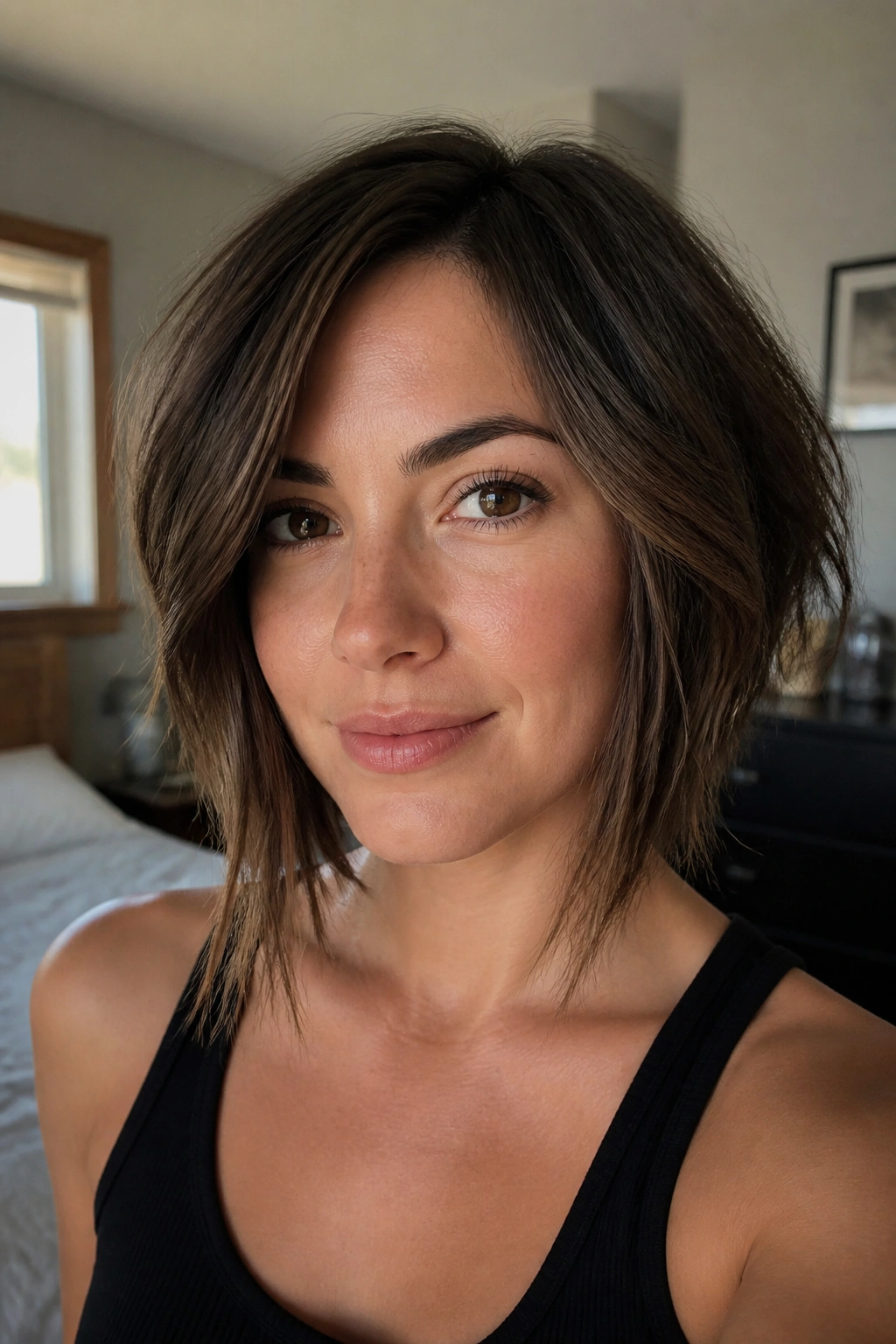
The shortest pieces should not sit at the widest part of the face. That is the whole rule here, and it matters more than any trend label.
A good face-framing choppy bob starts the shortest layer below the cheekbone, then lets it slide toward the jaw or collarbone. That lowers the visual center of the haircut, which is exactly what round faces tend to need. The face still looks soft, but not wide.
What to Ask For
- Shortest face-framing layer: 1 to 2 inches below the cheekbone
- Longest front section: around the collarbone
- Texture: point-cut ends, not blunt chopping
- Parting: slight side part or off-center part
This is one of those cuts that looks simple in the chair and smarter once it moves. If you like wearing hair half-tucked behind one ear, this shape gives you that little swing without losing structure.
8. Bottleneck Bang Lob with Broken Texture

Bottleneck bangs are a nice middle ground if you want fringe but do not want your forehead swallowed whole. They start narrower at the top and open out near the cheekbones, which gives a round face some breathing room.
The broken texture matters. A smooth, heavy bang line can make the face feel compressed. Bottleneck bangs that are lightly shattered through the ends keep the forehead visible and let the haircut stay soft. I prefer them with a lob that has a bit of bend through the mids, not a dead-straight finish.
What to Tell Your Stylist
- Keep the center of the fringe light and slightly shorter.
- Let the sides grow longer so they taper near the cheeks.
- Avoid a thick, solid bang line.
- Add soft internal texture around the crown so the fringe does not feel too heavy.
This cut works well if you like a little fashion energy without going full statement fringe. It has shape, but it does not boss the face around.
9. Softly Stacked Lob with a Tapered Nape
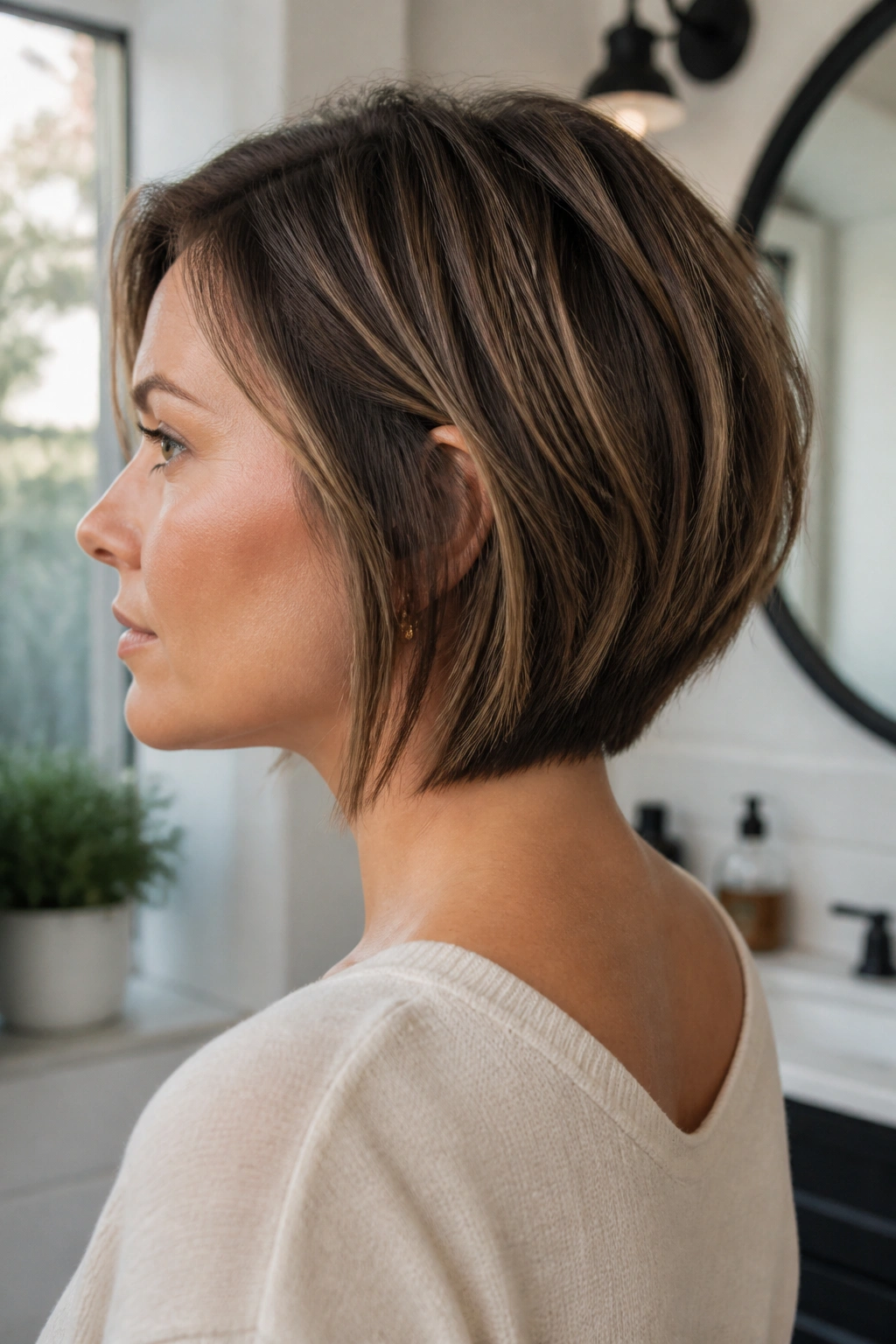
A subtle stack in the back can clean up the neckline without adding width to the sides. That’s the whole point. You get a little lift at the nape, then the length falls forward in a controlled way.
For round faces, I prefer a soft stack rather than a dramatic one. Too much height in the back can make the cut feel old-fashioned, and too much bulk near the crown can push the shape upward in a strange way. A light taper is enough.
This style feels neat. Almost tidy enough to fool people into thinking you spent more time on your hair than you did. It’s good for straight to slightly wavy hair and for anyone who wants the bob to sit close to the head at the back.
A round brush on the top layers and a quick bend through the ends is usually enough to keep it from looking too set.
10. Asymmetrical Long Choppy Bob for Round Faces
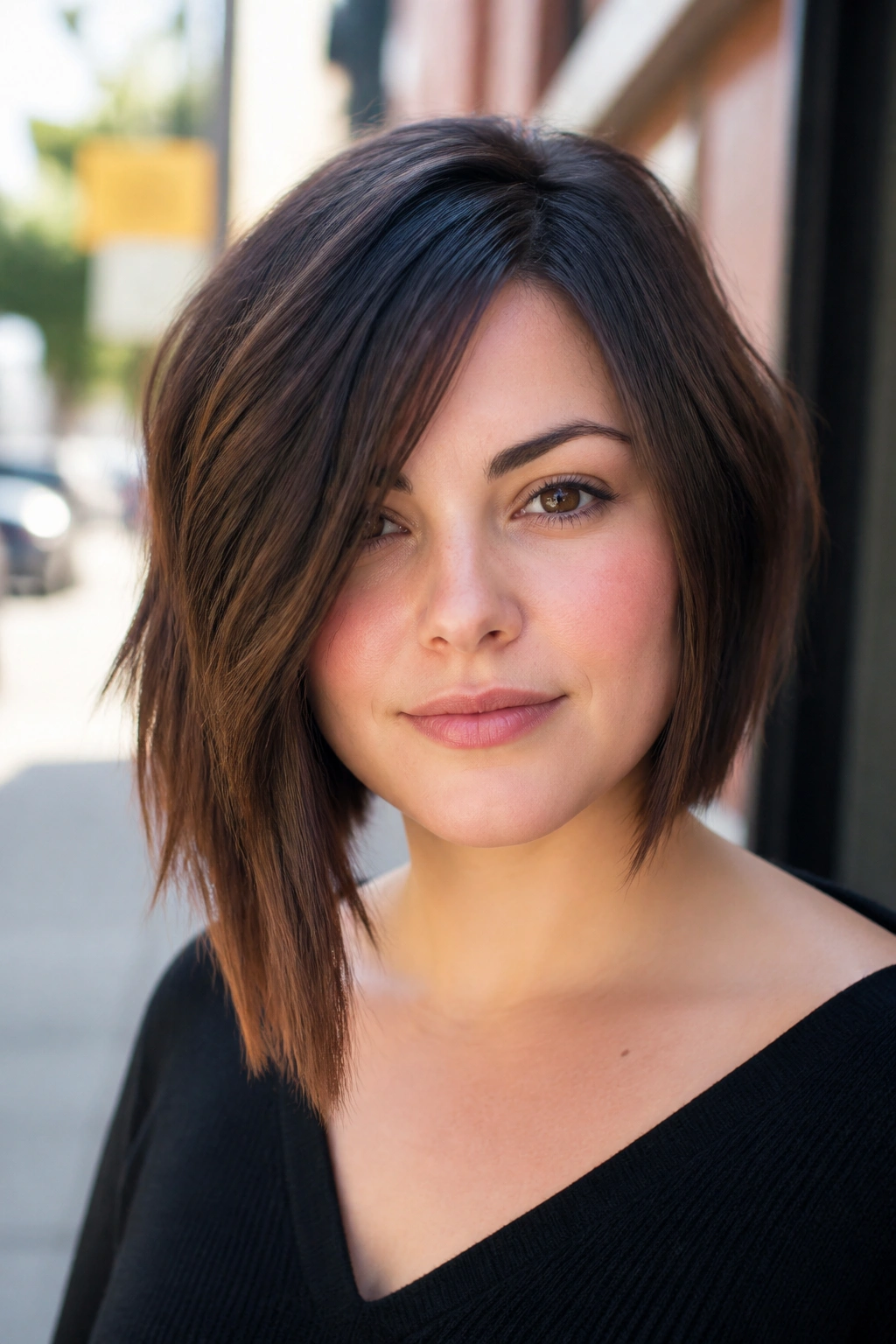
A little imbalance can be a good thing. An asymmetrical long choppy bob makes the face look less circular because the eye does not get a neat, equal frame on both sides.
One side is usually kept a touch longer than the other, sometimes by just half an inch to 1 inch, and that small shift changes the whole shape. The cut feels sharper. More directional. Less sweet, which may be exactly what you want.
This version is strongest on straight or softly wavy hair, where the asymmetry shows up without effort. If your hair is very curly, the uneven sides can shrink at different rates, so the cut needs more thought and more maintenance.
It’s a smart pick if you like a haircut that has personality built into it. No need for extra styling tricks. The shape does the work for you.
11. Wavy French-Inspired Lob with Jaw Movement
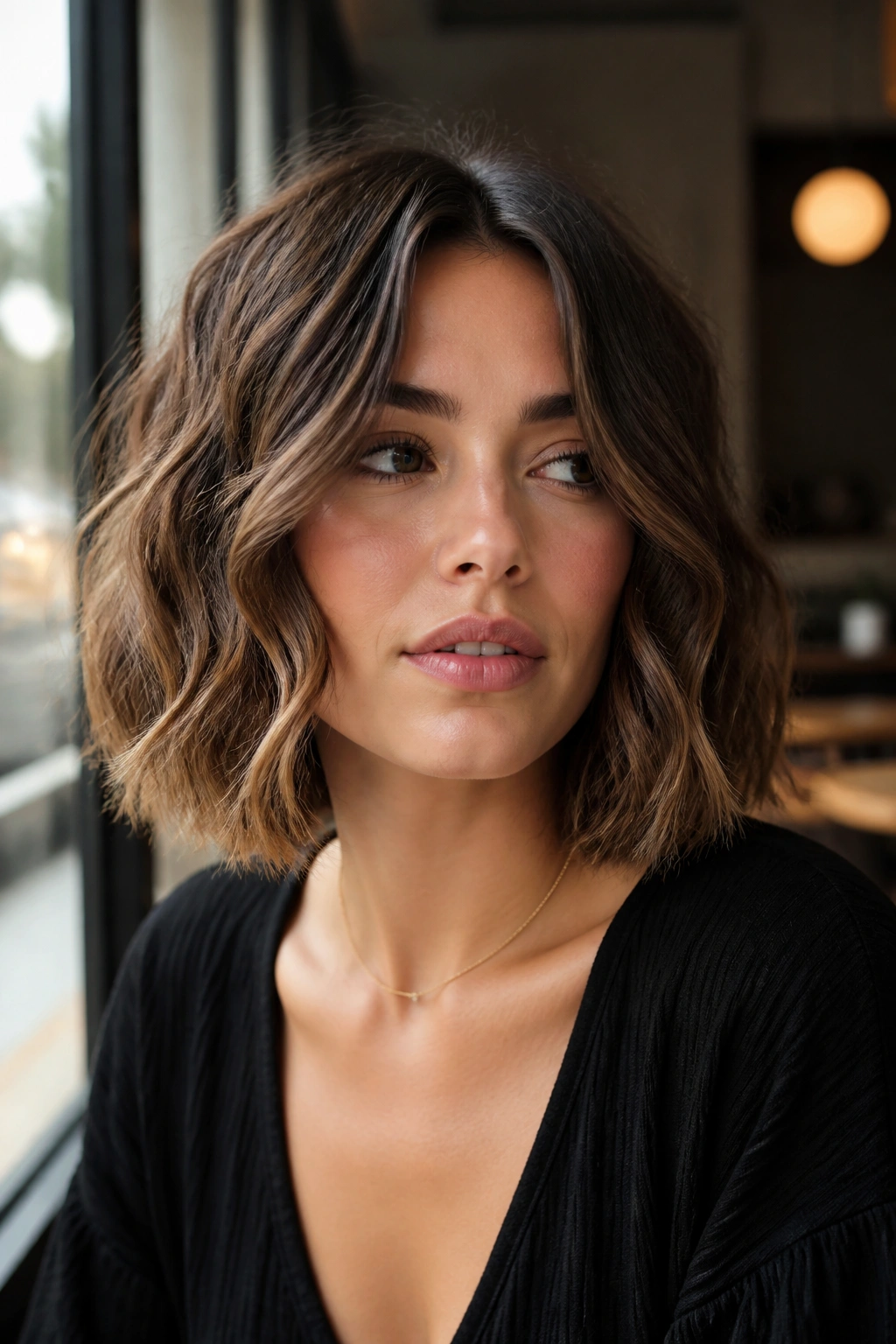
There’s a reason this style keeps showing up in salons. It looks loose, but not lazy. The waves fall around the jaw and collarbone, which gives a round face more shape without making it look overworked.
The key is movement near the lower half of the cut. If the waves start too high, you can end up with extra width around the cheeks. If they begin lower, around the jaw, the shape feels softer and longer. That’s the better lane.
I like this cut with a center-ish part that is not perfectly centered. A tiny shift keeps the style from feeling precious. A 1-inch iron bend through the mid-lengths is enough if your hair needs help holding wave. You do not need a pageant curl. That would be too much.
The finish should feel slightly undone, like the hair settled that way on its own. That’s the charm.
12. Lob with Hidden Internal Layers
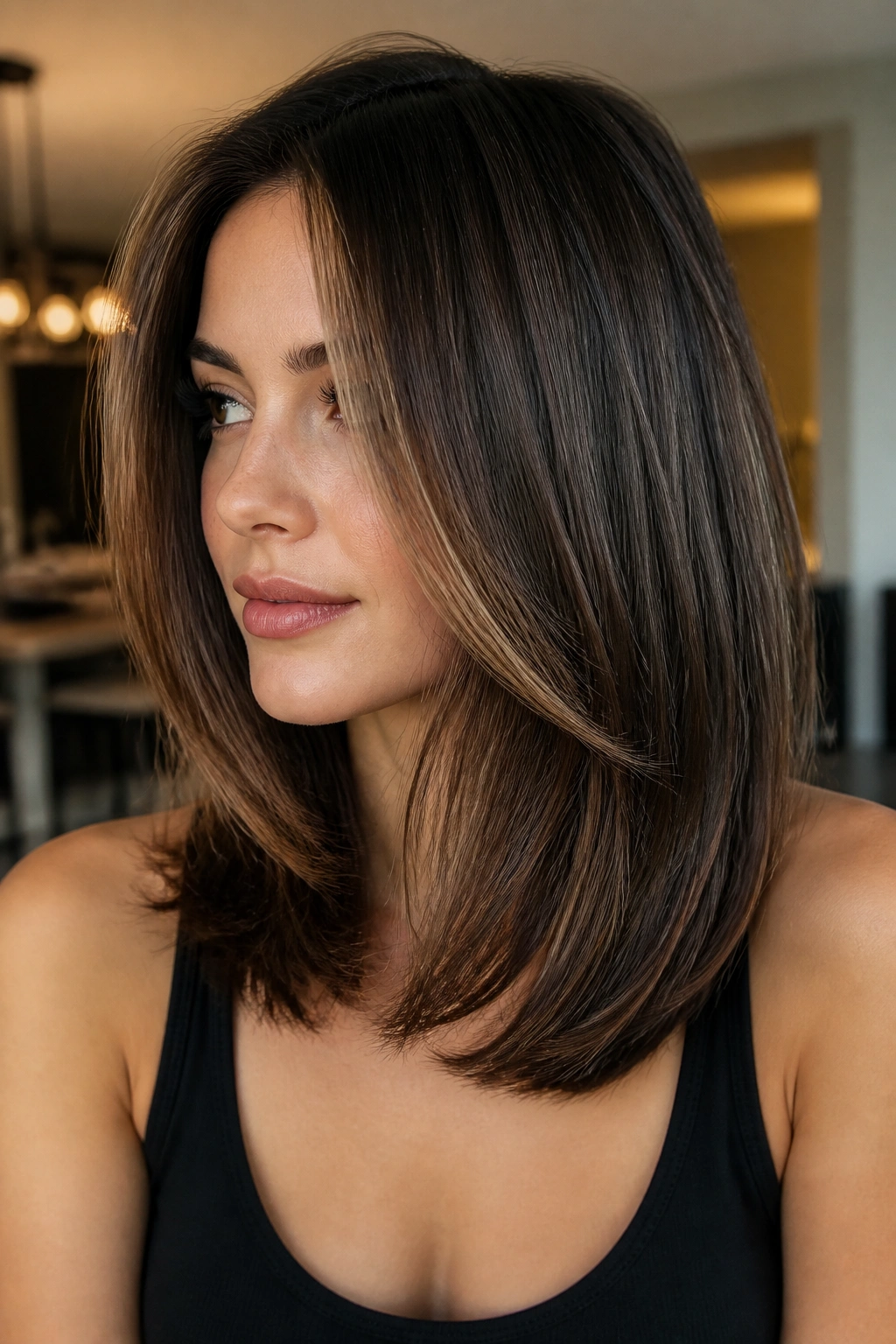
Hidden internal layers are one of the smartest tricks for round faces, especially if the surface of your hair needs to stay clean and smooth. The layers sit inside the cut, not around the outline, so you get movement without losing the outer shape.
That matters because a round face usually benefits from length and direction, not extra volume at the sides. Internal layers let the hair collapse in the right places and move in the right places. The result feels lighter without looking thin.
Why Stylists Reach for This
- It removes weight from dense hair.
- The top layer still looks polished.
- The ends keep enough density to frame the face.
- Styling takes less time because the shape is built in.
This is a quietly excellent option. It is not flashy. It just works. If you want your bob to look tidy at the office and a little messier on the weekend, hidden layers are hard to beat.
13. Shattered Bob with Piecey Ends

A shattered bob is for anyone who hates the idea of a smooth, blunt line. The ends are broken up and separated enough to read as texture, not heaviness.
On round faces, that piecey edge helps prevent the haircut from forming a visible circle around the head. Instead, the pieces move a little independently, and that movement keeps the silhouette from looking too round.
This cut can lean cool or casual depending on how you style it. A dab of matte cream makes the pieces stand apart. A light mist of texture spray gives a more relaxed finish. Either way, the goal is separation, not stiffness.
It’s a good fit for thicker hair, though it needs a careful hand. Too much thinning and the ends can look ragged in a bad way. The sweet spot is choppy, not shredded.
14. Long Choppy Bob with a Diagonal Fringe

A diagonal fringe can do what a straight fringe cannot: it guides the eye across the face instead of cutting it off. That’s useful if your face is round and you want a little narrowing without losing bang softness.
The angle should start higher on one side and sweep down toward the opposite cheekbone. That gives the haircut motion and breaks up any feeling of symmetry. It also leaves more forehead visible, which helps the face look a bit longer.
How to Wear It
- Blow the fringe toward the longer side first.
- Use a small round brush to curve the ends, not curl them.
- Keep the length brushing the brow or just below it.
- Let the rest of the lob stay lightly textured, or the fringe will feel disconnected.
This style has more personality than curtain bangs and less commitment than a full blunt fringe. That balance makes it easy to wear.
15. Air-Dried Choppy Lob for Natural Waves

If your hair already waves on its own, stop fighting it. A choppy lob that looks best air-dried can save time and still flatter a round face by keeping the shape soft and vertical.
The trick is to cut in enough internal movement that the wave falls in the right direction once it dries. You want the bends to live below the cheekbone and around the jaw, not puff out beside the cheeks. That means the stylist should avoid a heavy line at the bottom.
What Helps at Home
- Work a lightweight mousse through damp hair.
- Scrunch from the ends upward with your hands.
- Part the hair while it is still wet so the root dries in the right place.
- Avoid heavy oils near the crown; they flatten the lift you need.
This cut has an easygoing feel. It does not beg for a blowout. That alone makes it attractive for people who want shape without a long morning routine.
16. Sleek Choppy Bob with Beveled Ends
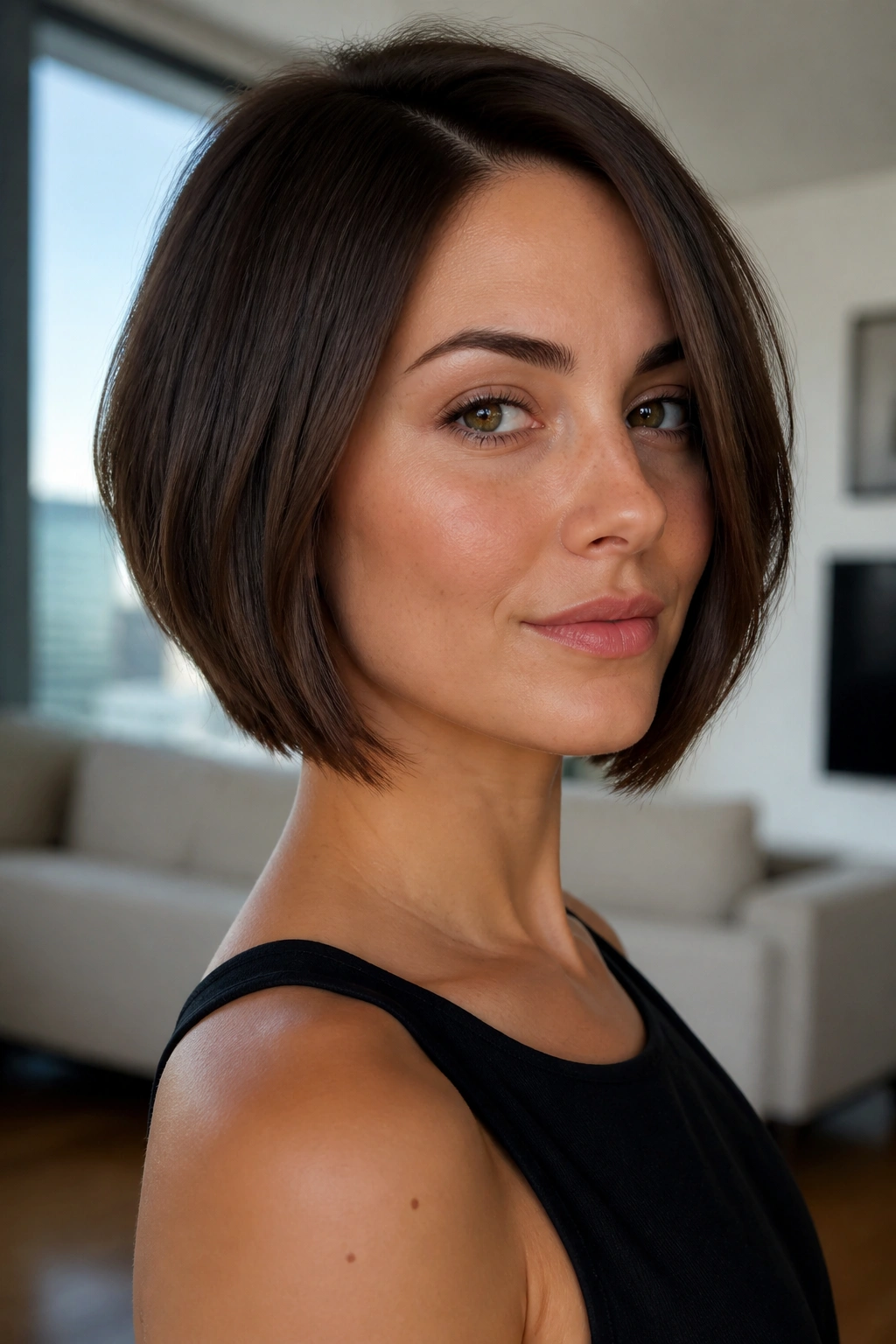
A sleek choppy bob sounds contradictory, but that mix is the point. The surface stays smooth, while the ends are lightly beveled and textured so the haircut does not turn into a hard block.
For round faces, a sleek finish can be helpful when it is controlled. The hair lies close enough to the head to avoid extra side volume, and the beveled ends give the line a softer exit. The cut looks cleaner than a shaggy lob, but less severe than a blunt bob.
This one is especially nice for fine hair that needs shape without too much layering. Too many layers can make fine hair look wispy. A beveled edge gives movement without thinning the outline too much.
A flat iron bend at the last inch of the hair is often enough. Just a slight turn inward or outward. Nothing fussy.
17. Curly Choppy Lob with Dry-Cut Layers

Can curly hair handle a choppy bob on a round face? Absolutely, if the cut is done dry and the layers are placed with shrinkage in mind.
Wet curls hide a lot. Dry curls tell the truth. A dry cut lets the stylist see where each curl sits, so the shortest layers do not jump up and land right on the cheeks. That’s the mistake to avoid. You want the curls to fall around the jaw and collarbone, where they open the face.
Ask for This at the Salon
- Dry cutting or curl-by-curl shaping
- Longer face-framing pieces
- Minimal thinning near the cheeks
- A perimeter that keeps enough weight to hold the shape
This cut can look gorgeous when the curls have room to spring. It takes a little discipline, though. A heavy hand with the scissors can make the top too wide and the face feel shorter.
18. Thick-Hair Lob with Interior Debulking

Thick hair needs a different strategy. If you simply cut thickness off the ends, the shape can still swell out around the cheeks, and that is the last thing a round face needs.
Interior debulking fixes that. The stylist removes weight from inside the haircut while keeping the outside line controlled. So the hair feels lighter, but the perimeter still gives structure. That matters. A round face usually looks better with a clean outline than with random thinning at the edges.
I’d avoid too much razor work here. Thick hair can handle it in small doses, but aggressive texturizing can create frizz and make the cut look fuzzy by day two. Scissor-over-comb or internal point cutting is often the calmer choice.
This style is practical. It sits better, it dries faster, and it does not puff up as much under a hat or scarf.
19. Soft Shag Lob with Long Nape Pieces
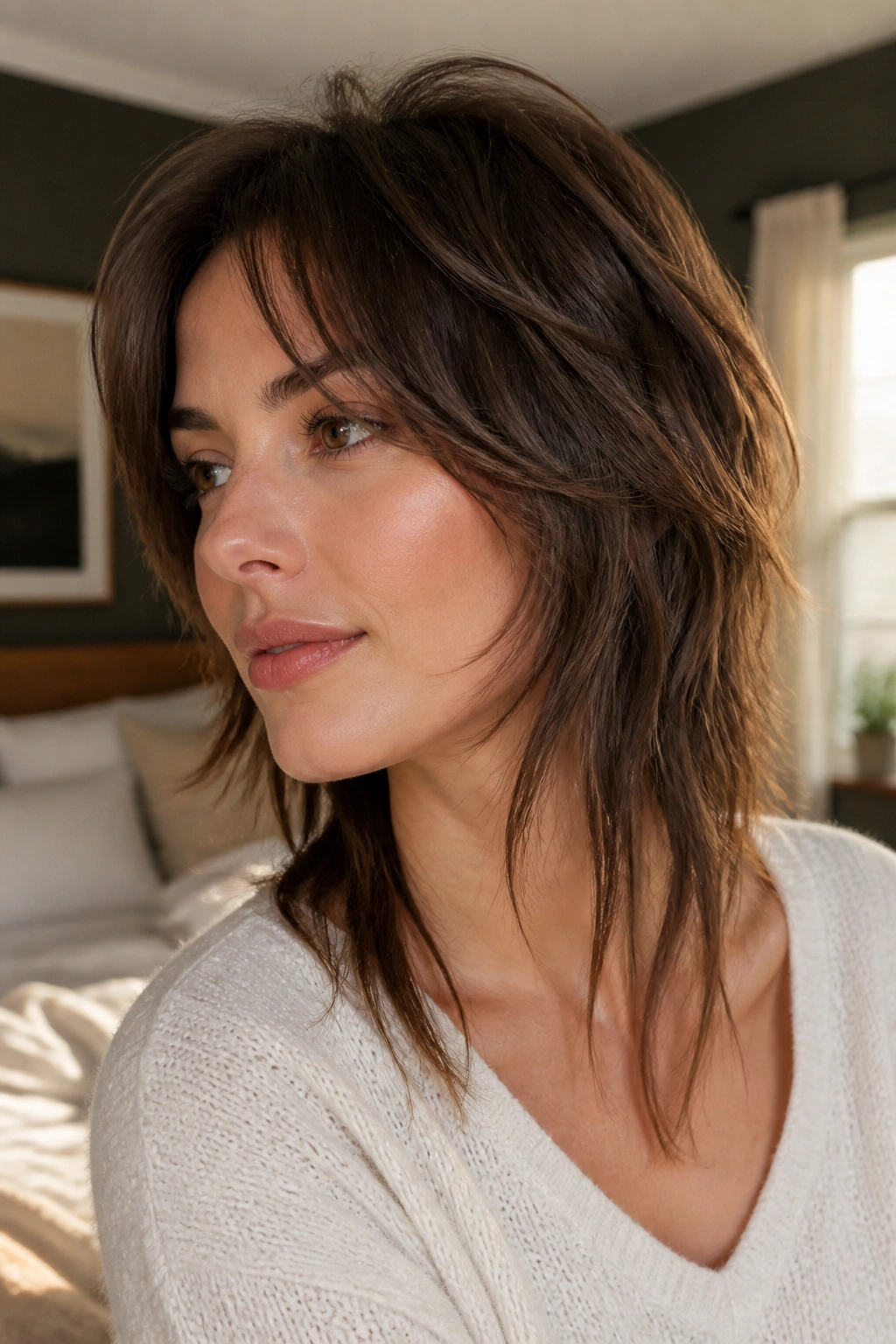
This is the cut for people who want a little edge without going all the way into shag territory. The top layers are soft, the nape pieces stay longer, and the overall shape keeps some swing around the collarbone.
On a round face, the long nape pieces are the quiet hero. They stop the cut from ending too high and help stretch the neck visually. The shag texture up top keeps it from looking stiff or too polished.
It’s a good cut if you like hair that moves when you move. If you tuck it behind the ears, a few broken pieces still fall out. If you wear it loose, the layers create a messy frame that feels lived in rather than styled to death.
I like this one on people who want a haircut with a little personality and do not mind a bit of daily finger styling. It rewards a rough blow-dry more than a perfect one.
20. Low-Maintenance Long Choppy Bob That Grows Out Well

If you want one of these cuts to survive a few weeks without looking tired, this is the version to keep in mind. The perimeter stays long enough to grow out cleanly, and the texture is soft enough that it does not turn awkward the moment it loses a quarter inch.
The shape should hit somewhere between the collarbone and the top of the shoulders, with face-framing pieces that do the work. Not too short. Not too feathered. Just enough choppiness to keep the line from feeling heavy.
A few things make this version easier to live with:
- A slightly off-center part.
- Ends that are point-cut, not sliced blunt.
- Layers that begin below the cheekbone.
- Enough length to tuck behind the ears or pull into a small clip.
That combination buys you flexibility. You can wear it sleek, wavy, or barely styled, and it still reads as intentional.
Round faces do not need a haircut that hides them. They need one that makes the angles feel a little cleaner, the cheeks a little less dominant, and the whole shape a little more relaxed. A long choppy bob does that without trying too hard, which is probably why it keeps earning its place in the chair.
