



The transition from long hair to something shorter is a threshold many people hesitate to cross. We worry about losing the ability to pull our hair back into a ponytail or fearing that a shorter length will somehow look awkward in the grow-out phase. There is a specific sweet spot, however, that manages to solve all those anxieties while offering a sharp, intentional look: the straight lob.
When you commit to a long bob—or lob—that is cut with precision, you are essentially opting for the most versatile length in existence. It is long enough to feel feminine and secure, yet short enough to shed the weight and dead ends that accumulate at the bottom of longer lengths. A straight lob isn’t just about length; it is about the geometry of the cut and how those ends hit the collarbone.
For those who prefer a clean, sleek aesthetic, the straight lob is the standard. It commands attention without needing layers of product or excessive styling time. But, because it is so popular, the variation in how these cuts are executed is massive. Some are blunt and heavy, designed to make hair look thick, while others are razor-cut and airy, designed to remove bulk. Choosing the right one comes down to understanding your hair density and how you intend to wear it day-to-day.
1. The Classic Blunt Perimeter Lob
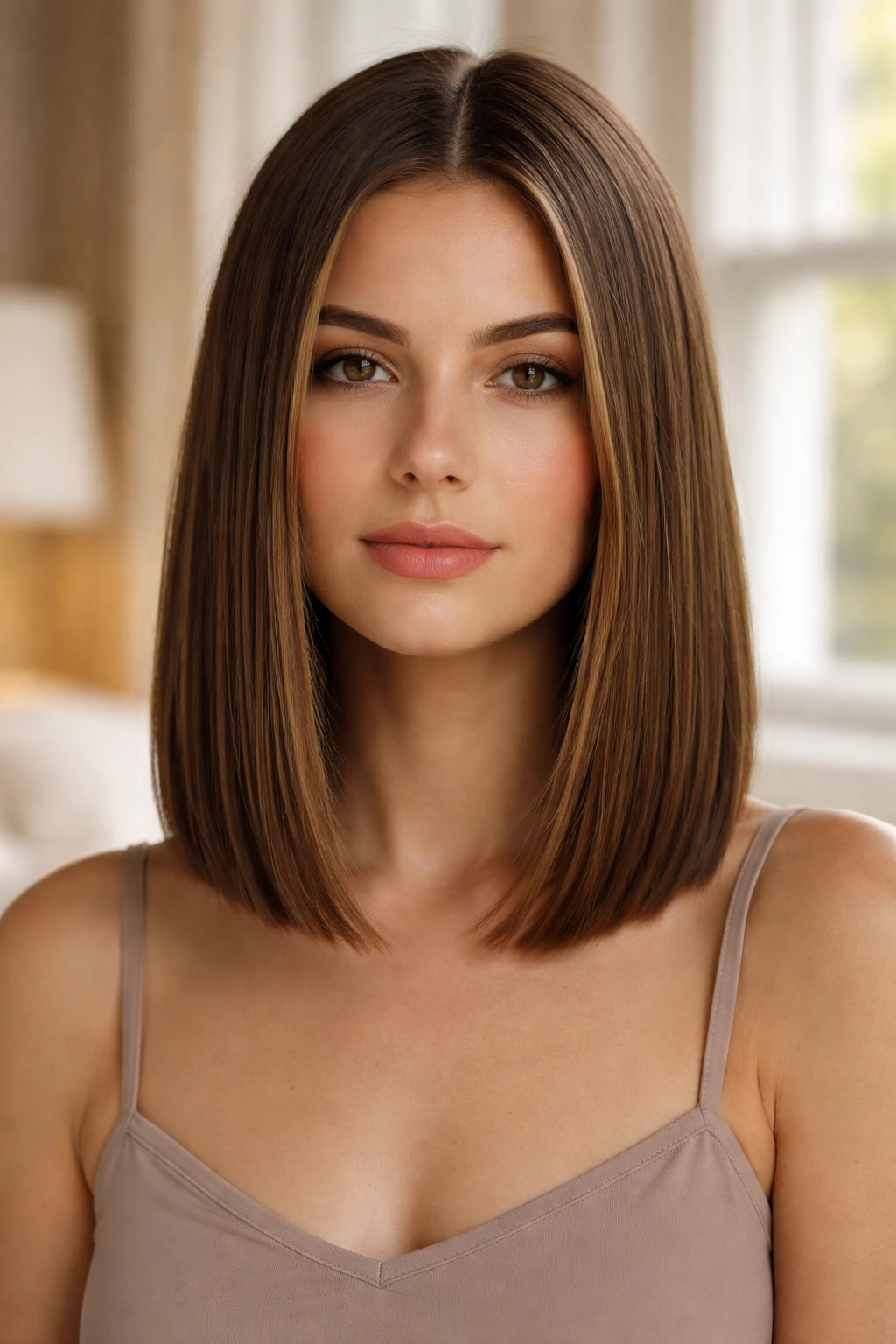
This is the baseline for every straight lob. The defining characteristic here is that all the hair is cut to the exact same length, usually hitting just above or right at the collarbone. There are no layers, no face-framing pieces, and no thinning.
Why It Works for Fine Hair
If you have fine hair, you are likely looking for a way to make your hair appear thicker. A blunt perimeter does exactly that by keeping the weight at the bottom. When hair is layered, the ends become wispy and thin, which emphasizes a lack of density. With a blunt cut, you are forcing the ends to sit together as one solid line, which creates the visual illusion of a much thicker head of hair.
Styling Tip for the Blunt Cut
To make this cut shine, you need to commit to a straight iron. Since there is zero layering to hide any potential breakage, your hair needs to look polished. Use a light heat protectant spray—never an oil before heat—and pass the iron slowly over the ends to lock them in place. The goal is a crisp line that doesn’t bend or flip.
2. The Subtle A-Line Straight Lob
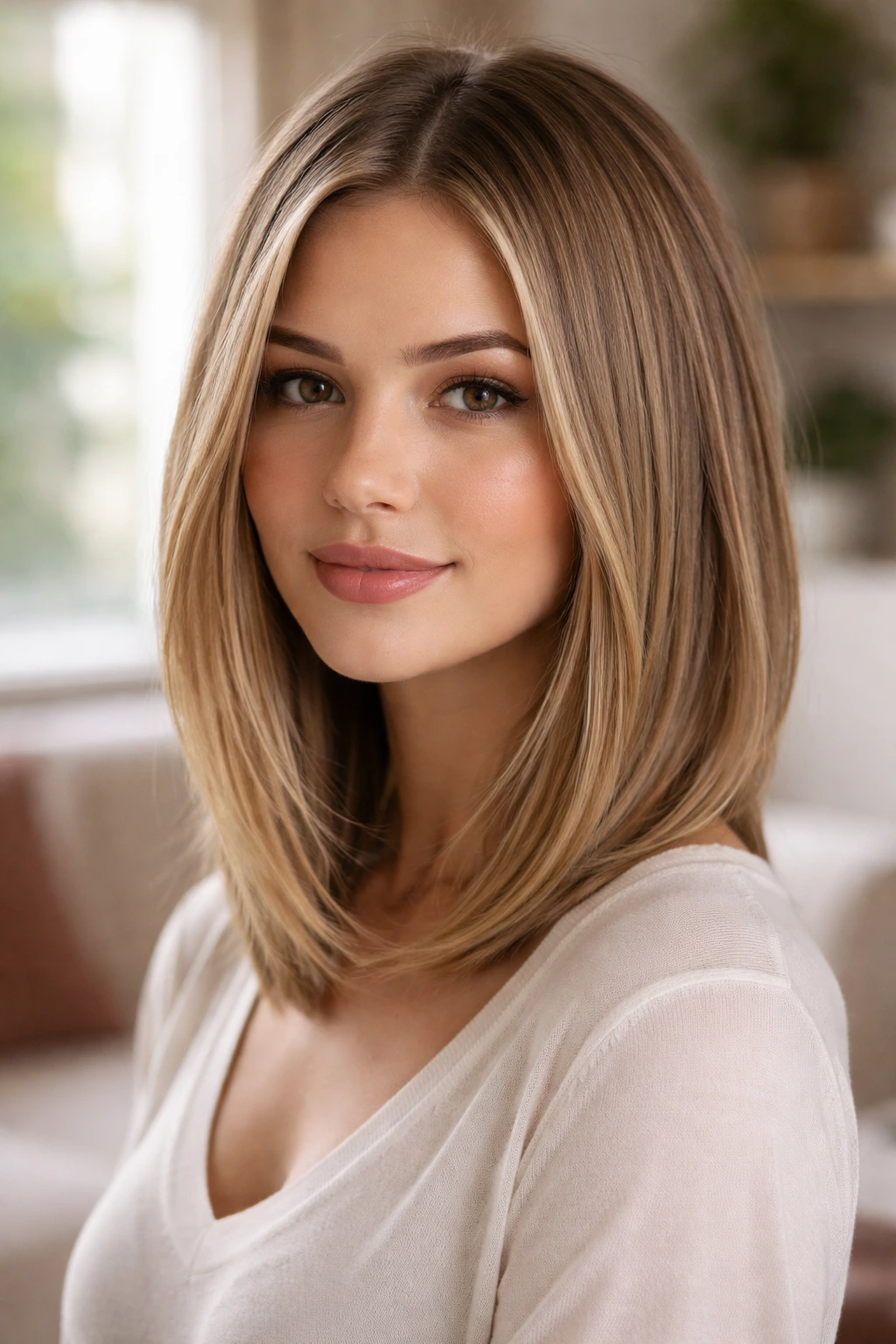
Think of this as the slightly more modern cousin to the blunt cut. While the classic blunt is completely horizontal, the A-line introduces a very slight graduation where the front pieces are about a half-inch to an inch longer than the back.
The Geometry of the Cut
This cut is all about the angle. You aren’t looking for a dramatic “Victoria Beckham” bob from the early 2000s; that is not the goal here. The angle should be so subtle that it is almost imperceptible to the untrained eye. It provides just enough length in the front to frame the face without the back of your hair creeping up toward your neck too quickly.
Who Should Choose This
If you feel that a perfectly blunt cut makes your head look too round or your face too wide, the A-line is the correction you need. That extra length in the front pulls the eye downward, which creates a slight elongating effect. It is a fantastic option for anyone with a round or square face shape who wants to soften their features without committing to bangs.
3. The Invisible Layer Lob
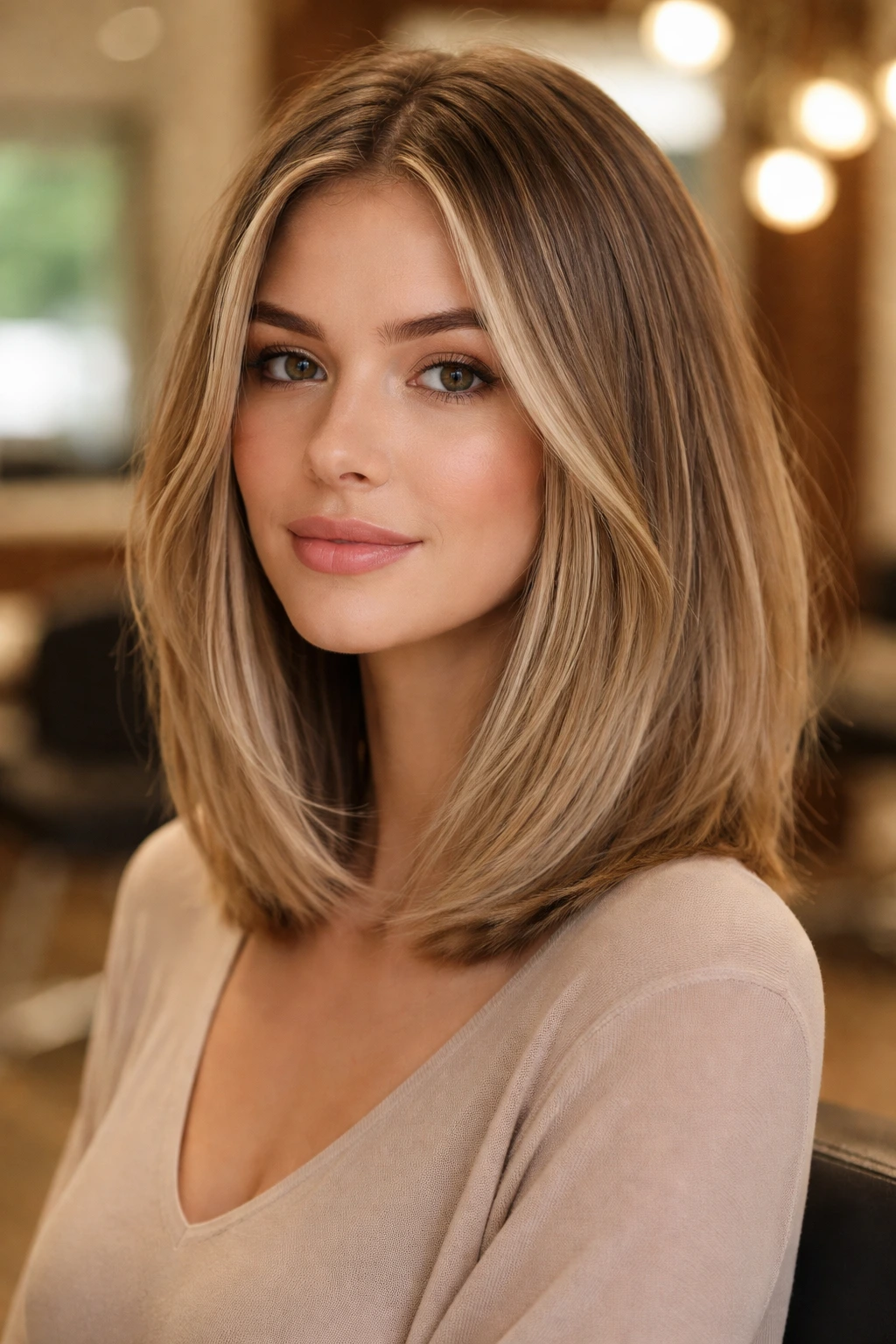
Not everyone wants a blunt, heavy weight line. If you have incredibly thick, coarse hair, a blunt lob can sometimes result in what people jokingly call “the triangle effect,” where your hair poofs out at the bottom. The invisible layer lob is the antidote to that problem.
How It’s Executed
The stylist keeps the perimeter length exactly where you want it—at the collarbone—but they go inside the hair to create weight-removing layers. These are not visible on the surface. They are essentially debulking techniques performed with shears or a razor on the underside of the hair.
The Benefit of Movement
Because the surface of your hair remains long and continuous, it still looks like a sleek, one-length cut. However, the hair will move differently. It won’t sit like a rigid helmet. Instead, it will have a bit of swing and flexibility. This is the cut you get when you want the aesthetic of a blunt lob but need the manageability of a layered cut.
4. The Face-Framing Fringe Lob
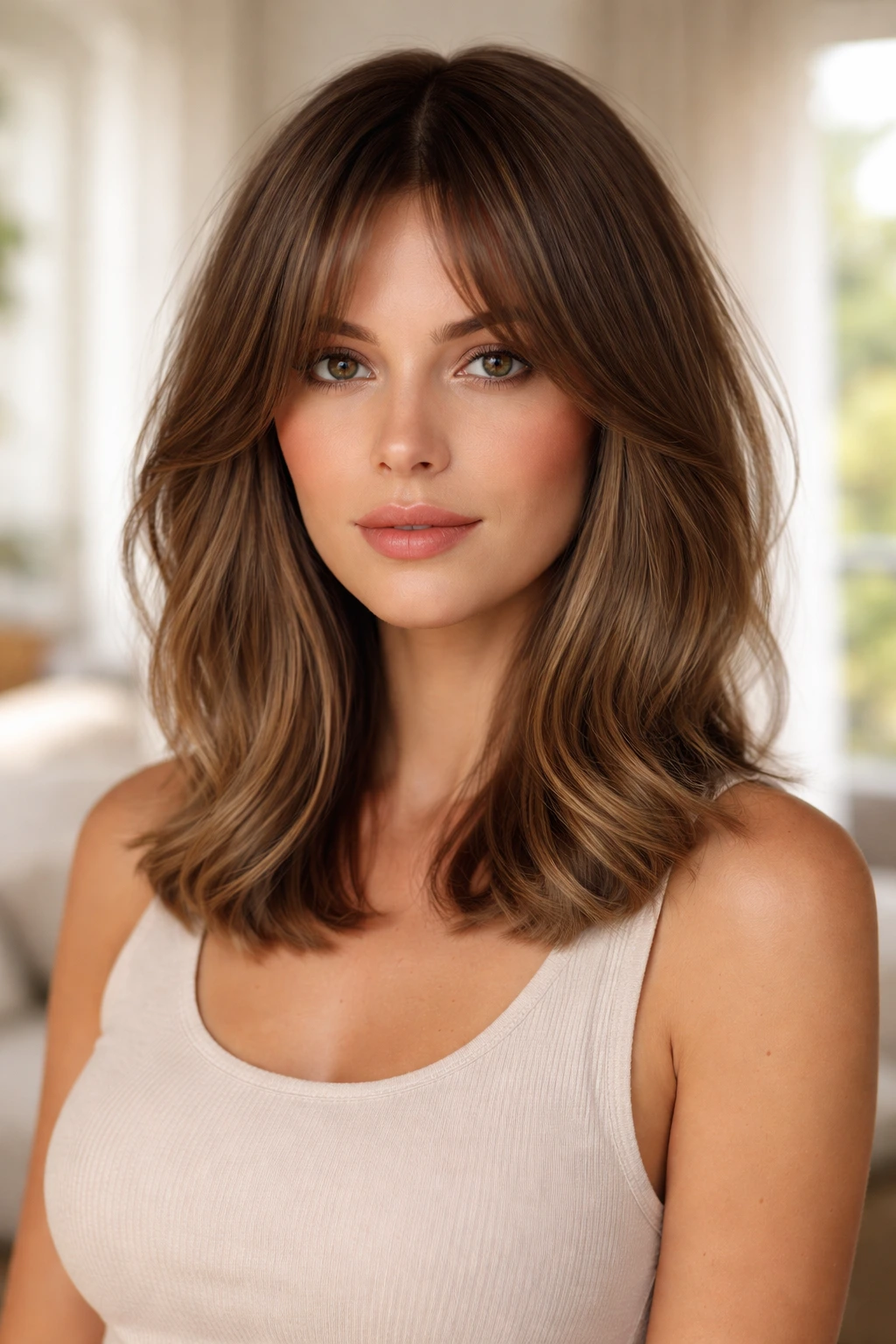
If you want to keep the length but feel like your style is lacking character, introducing a face-framing fringe—or “curtain bangs”—is the easiest way to change your look without sacrificing much hair.
The Transition Zone
The trick with a face-framing lob is the connection between the bangs and the rest of the hair. You don’t want a harsh line where the bangs end and the long hair begins. The stylist should use a point-cutting technique to blend the fringe into the side sections. This creates a soft, sweeping motion that looks intentional, not like a mistake.
Maintenance Considerations
Be aware that bangs require more frequent trimming than the rest of the hair. If you choose this style, you will likely need to head back to the salon every four to six weeks just to tidy up the fringe, even if the length of your lob is still perfect. If you aren’t prepared for that maintenance, you might end up with overgrown, annoying strands in your eyes within a month.
5. The Center-Parted Sleek Lob
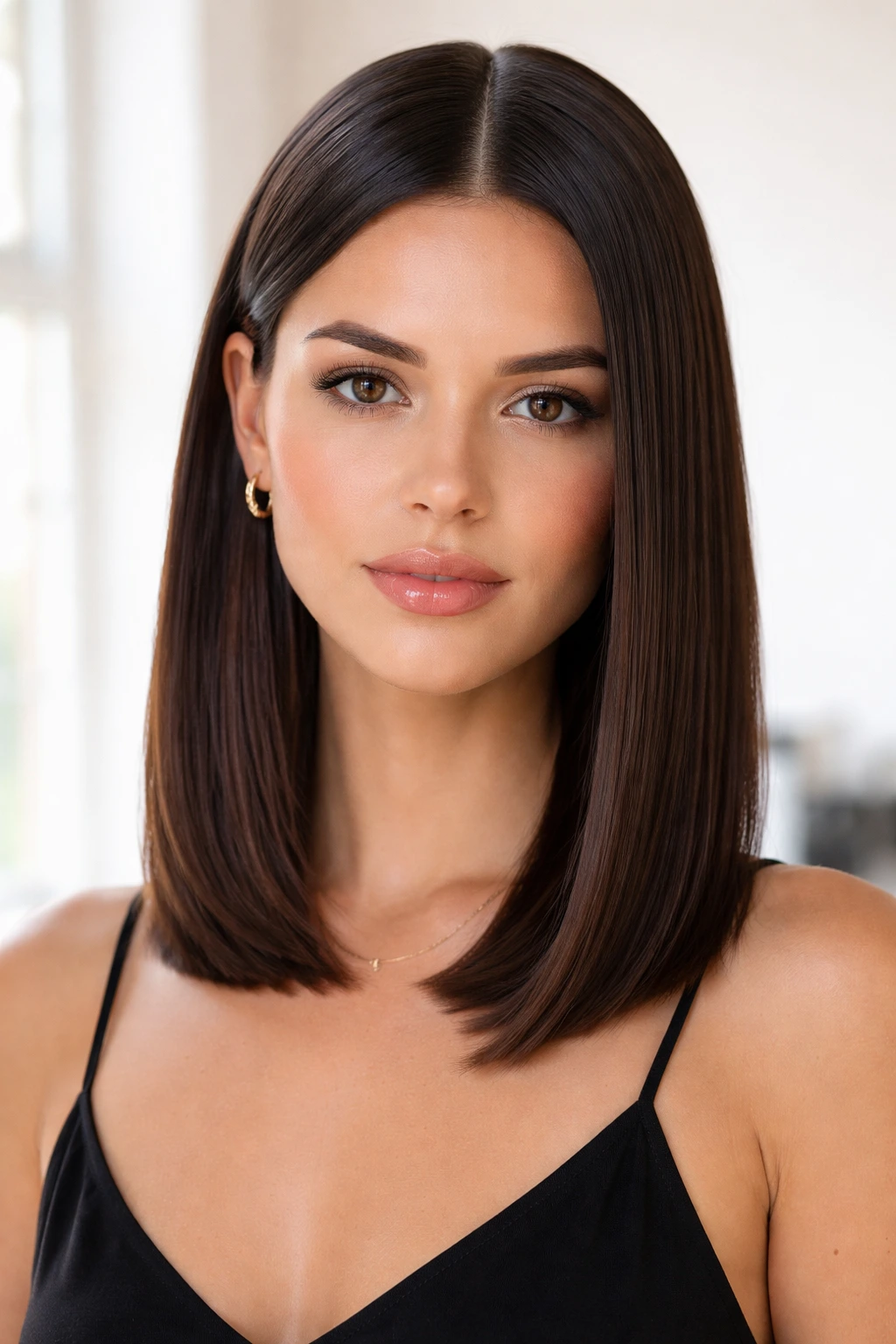
This cut is the epitome of minimalism. It is designed to be worn perfectly straight, parted directly down the middle, with the hair tucked behind the ears. It is very editorial and has been a staple in high-fashion settings for years because it draws all the attention to your facial features.
Why Symmetry Matters
A center part is unforgiving. If you have an asymmetrical face, it will be highlighted. However, for those with balanced features, a center-parted lob is incredibly chic. To pull this off, your hair health needs to be a priority. Because the hair is parted down the center, any split ends near the roots or frizz along the part line will be immediately visible.
How to Achieve the Finish
Use a boar bristle brush while blow-drying to create tension. Tension is the secret to getting that “glass hair” effect. As you pull the brush through your hair with the dryer, follow the brush with the nozzle of the dryer. This flattens the cuticle and creates that reflective, high-shine surface that defines this specific look.
6. The Side-Swept Deep Part Lob
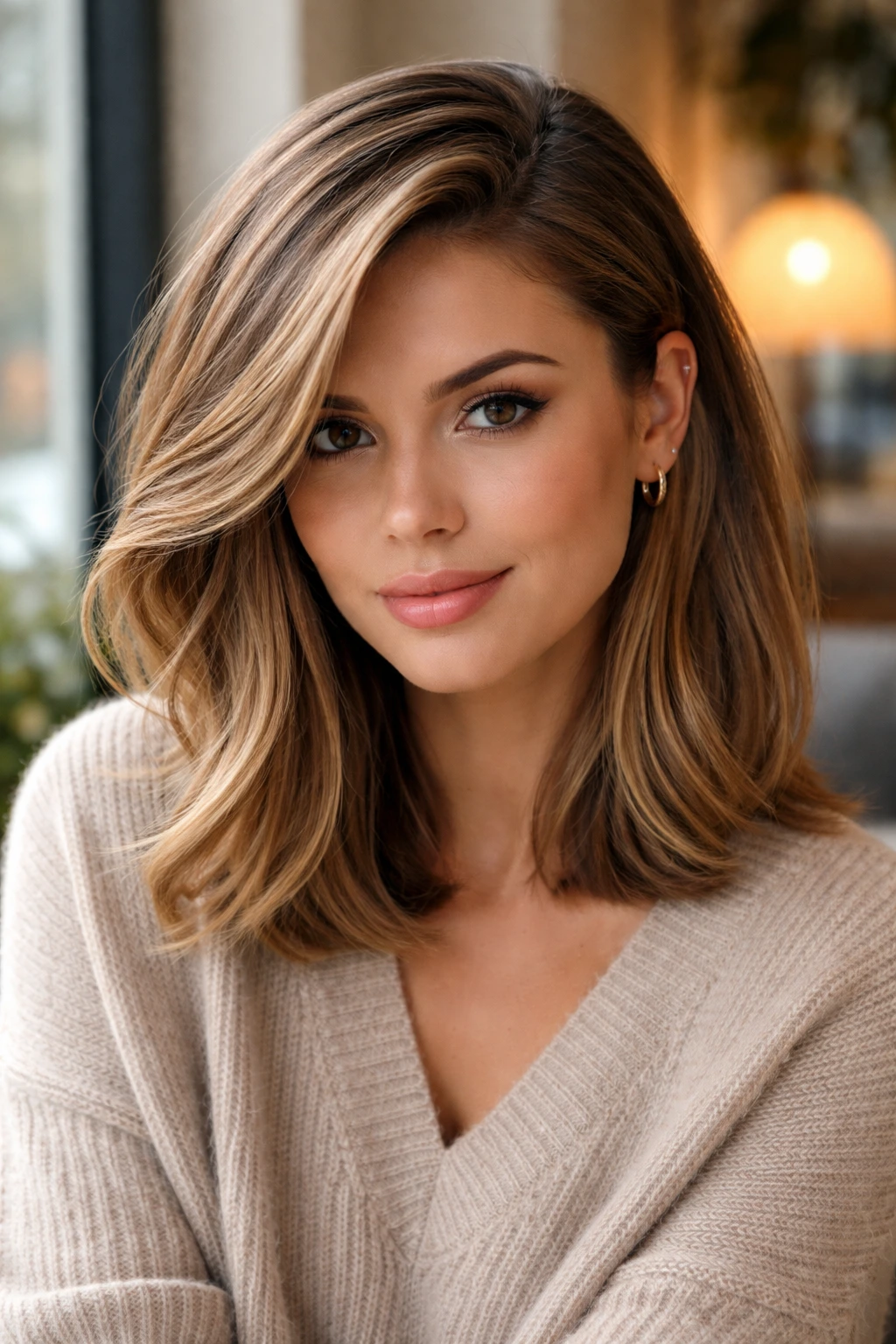
If a center part feels too severe, the deep side part is your alternative. This is a classic styling choice, but it changes the shape of the lob entirely. By pushing the majority of your hair to one side, you create an instant volume boost at the roots on that side, which adds a bit of drama.
Balancing the Face
A deep side part is excellent for breaking up the symmetry of the face, which can be very flattering. It also helps to hide a receding hairline or simply add some height to an otherwise flat-looking head of hair.
Styling Strategy
You have to train your hair to sit this way. If you have been parting your hair in the middle for years, your roots will resist a deep side part. To make it stick, use a texturizing spray on your damp roots before you dry your hair. Once it’s dry, a quick mist of medium-hold hairspray will keep the heavy side from flopping back over.
7. The Tucked-Behind-the-Ear Lob
This isn’t a cut per se, but rather a way of wearing a lob that defines the shape of the style. The tucked-behind-the-ear look requires the hair to be cut with enough “give” that it doesn’t pop back out.
The “Slick” vs. “Soft” Tuck
There are two ways to do this. You can use a bit of styling cream to slick the hair back for a sharper, more evening-ready look. Or, you can just tuck it behind your ears for a casual, “I woke up like this” vibe. If you prefer the latter, ensure your side pieces are cut long enough to stay behind the ears without sliding forward into your mouth every time you talk.
Why This Style Works
It opens up your face and shows off your jawline and cheekbones. If you have spent money on a nice cut, don’t hide your face behind a curtain of hair. This style essentially forces you to display the cut and highlights the way it falls around your shoulders.
8. The Disconnected Ends Lob
This is a more aggressive take on the lob. In this cut, the internal layers are shorter than the perimeter, but they are cut in a way that creates a “shelf” of hair. It is not for everyone, but for those who want a sharp, edgy, unconventional look, it is brilliant.
The Edgy Aesthetic
The hair looks like it has been chopped with precision. It creates a jagged, almost punk-inspired silhouette that looks great on people with bold personal styles. It removes a significant amount of weight, so it is fantastic if you have extremely thick, heavy hair that just wants to lay flat.
How to Style
Don’t try to make this look “smooth.” The beauty of a disconnected cut is the texture. Use a sea salt spray or a matte paste on the ends to emphasize that jagged, choppy line. It is meant to look a bit messy, so embrace the lack of polish.
9. The Razored Ends Lob
Traditional shears give you a blunt, crisp line. A razor gives you a feathered, soft edge. When you opt for a razored ends lob, you are sacrificing the “blunt” look for something much softer and more airy.
The Mechanism of the Razor
A razor is essentially a knife. It cuts the hair at an angle, which thins out the tip of every single strand. This prevents the hair from clumping together in a block at the bottom. If you want a lob that feels weightless and moves with every step you take, the razor is the tool your stylist needs to use.
A Warning for Damaged Hair
Do not get a razored cut if your hair is already damaged, fried from bleach, or prone to split ends. The razor will shred the ends of damaged hair, making the split ends much worse. This cut is reserved for healthy, virgin hair that can handle the aggressive thinning without turning into frizz.
10. The Heavy Bangs Lob
A shoulder-length cut combined with heavy, thick bangs is a timeless aesthetic. It frames the eyes intensely. Because the lob sits at the collarbone, it balances out the weight of a heavy fringe at the top of the face.
The “French Girl” Influence
This cut is heavily inspired by French beauty standards. It is effortless and chic. To make it work, the bangs need to be cut wide—meaning they shouldn’t just sit in the middle of your forehead; they should extend toward the temples to blend into the sides of the lob.
Styling the Bangs
You cannot let heavy bangs air dry. They will do whatever they want. You must blow-dry them with a round brush immediately after washing your hair. Even if you let the rest of your hair air dry, your bangs require five minutes of heat styling to sit correctly.
11. The Curtain Bangs Lob
If heavy bangs feel like too much commitment, curtain bangs are the compromise. They are longer, parted down the middle or slightly off-center, and swoop away from the face. When paired with a straight lob, this creates a frame that is very flattering for almost every face shape.
Why It’s Versatile
Curtain bangs can be tucked behind your ears when you want them out of the way. That is the ultimate test of a good haircut—versatility. You get the visual interest of bangs when you want them, but you can hide them entirely when you are working out or just want a cleaner look.
The Grow-Out Phase
The best part about curtain bangs is that when they grow out, they just become long face-framing layers. You don’t have that awkward “bangs-in-the-eyes” phase that you get with full, blunt-cut fringe. They transition into the rest of the cut seamlessly.
12. The Tapered Ends Lob
Tapering is a technique where the stylist gently reduces the volume of the hair as it nears the bottom. It is similar to razoring but done with shears, making it a bit more controlled.
Precision is Key
This cut is perfect for someone who loves the look of a blunt lob but hates the “heavy” feeling at the bottom. By tapering the ends, the hair will curl slightly inward toward the neck rather than flaring out. It creates a very polished, rounded shape that looks intentional and expensive.
Maintaining the Shape
The downside to a tapered cut is that as it grows out, the taper disappears, and the hair begins to look like a standard, heavier blunt cut again. You will need more frequent trims—every 6 to 8 weeks—to keep that tapered, inward-curving shape looking sharp.
13. The One-Length Sharp Cut
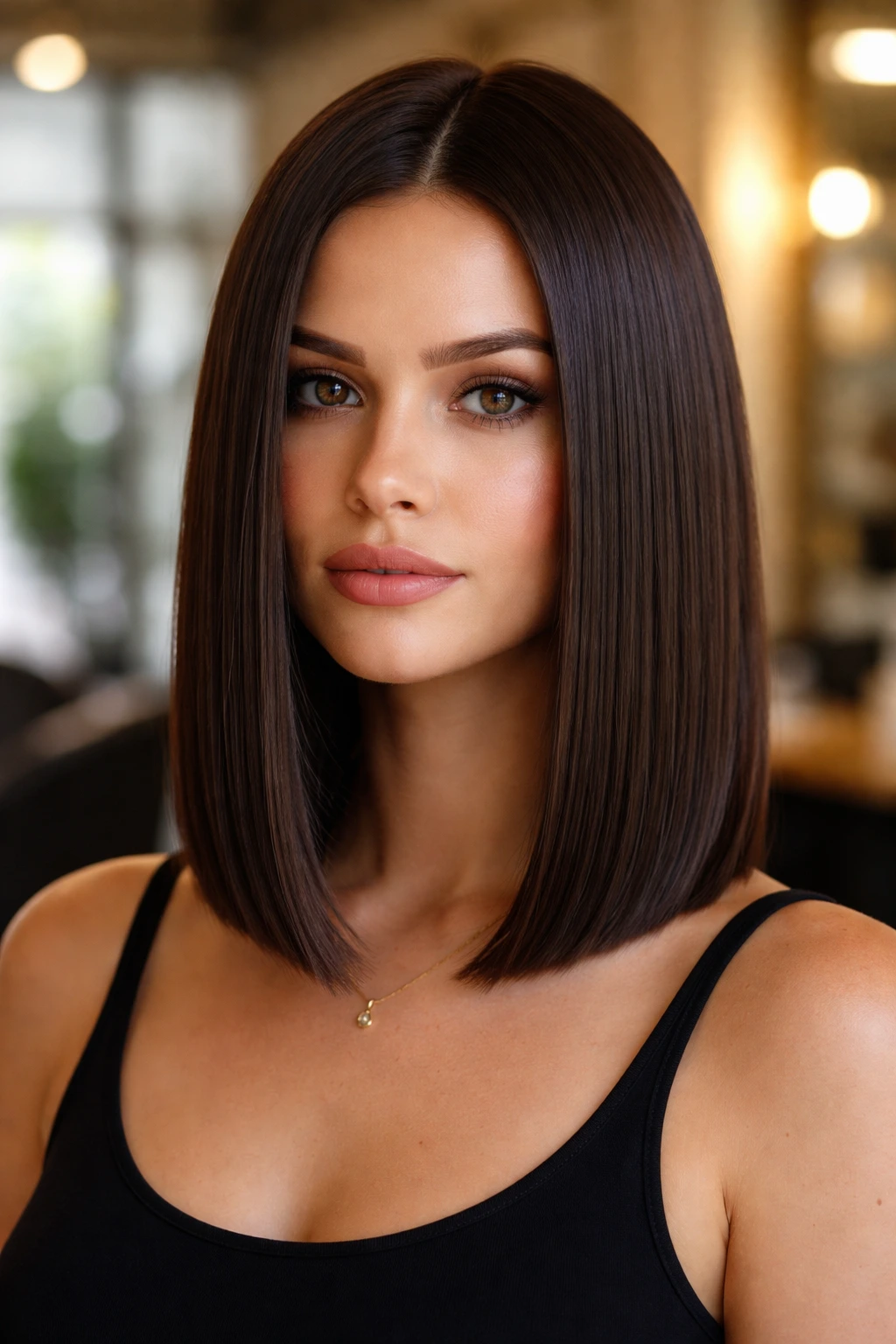
This is the “no-nonsense” lob. It is cut entirely with shears, with no thinning, no tapering, and no layers. It is the most geometric version of the lob you can get.
The Impact
There is something inherently powerful about a perfectly straight, one-length cut. It suggests confidence. It looks like you know exactly what you want. This style works best on straight hair types. If you have a natural wave, you will be fighting your hair texture every single day to keep this cut looking this crisp.
The Products You Need
To maintain this, you need a high-quality smoothing serum. Apply it while the hair is damp, then blow-dry it smooth. Once dry, run a flat iron through it. You want the hair to have a mirror-like finish. Anything less, and the cut looks a bit dull.
14. The Stacked Back Lob
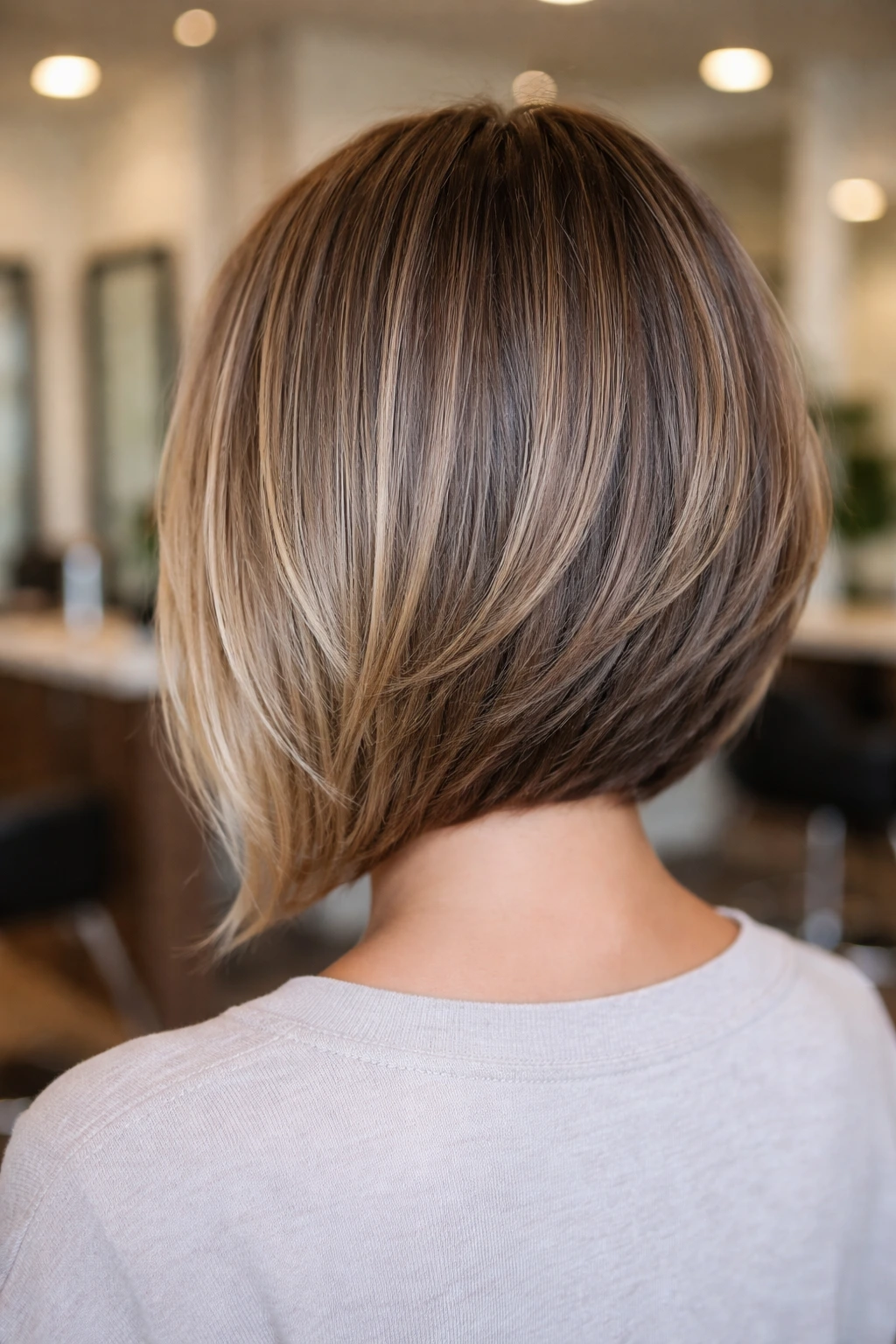
Most people associate a “stacked bob” with very short, inverted hair. But you can do a subtle stack with a lob, too. By cutting the hair slightly shorter at the nape of the neck and allowing it to get longer as it moves toward the front, you create a natural lift in the back.
The Volume Hack
If you have flat hair, this is your secret weapon. That tiny bit of graduation in the back creates a “shelf” that pushes the hair above it outward, creating volume at the crown of your head without you needing to tease it or use heavy products.
Who Should Avoid This
If you have very fine, sparse hair, avoid a deep stack. It will look like you have a “mullet” of sorts if it’s done incorrectly. Keep the stack very subtle—just enough to give the hair some shape, not enough to be a design feature.
15. The Middle-Parted Face-Framing Lob
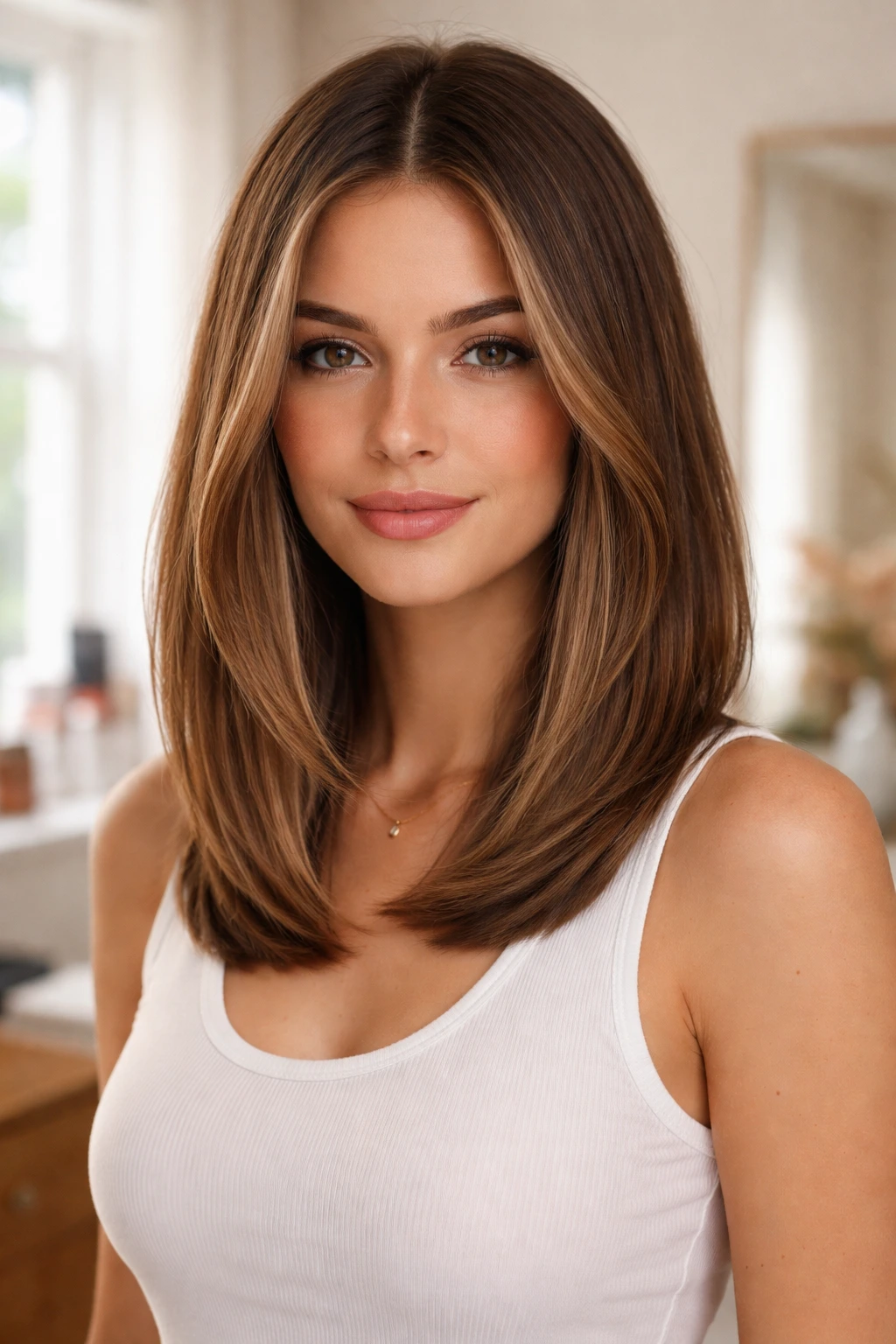
This is a combination style. It features the sharp, blunt perimeter of a classic lob but adds long, invisible layers around the face that start at the chin or collarbone.
Bridging the Gap
This is the perfect transition cut if you are growing out a shorter bob. It allows you to keep the length you’ve achieved while removing the “weight” of the hair that is dragging your face down. It adds movement around the jawline, which can make your face look more defined.
Styling for Softness
Because this cut has face-framing layers, you can use a large round brush to flip the front pieces outward. This creates a soft, feathered look that contrasts nicely with the straightness of the rest of the hair. It adds a bit of “bounce” to an otherwise serious style.
16. The Texturized Ends Lob
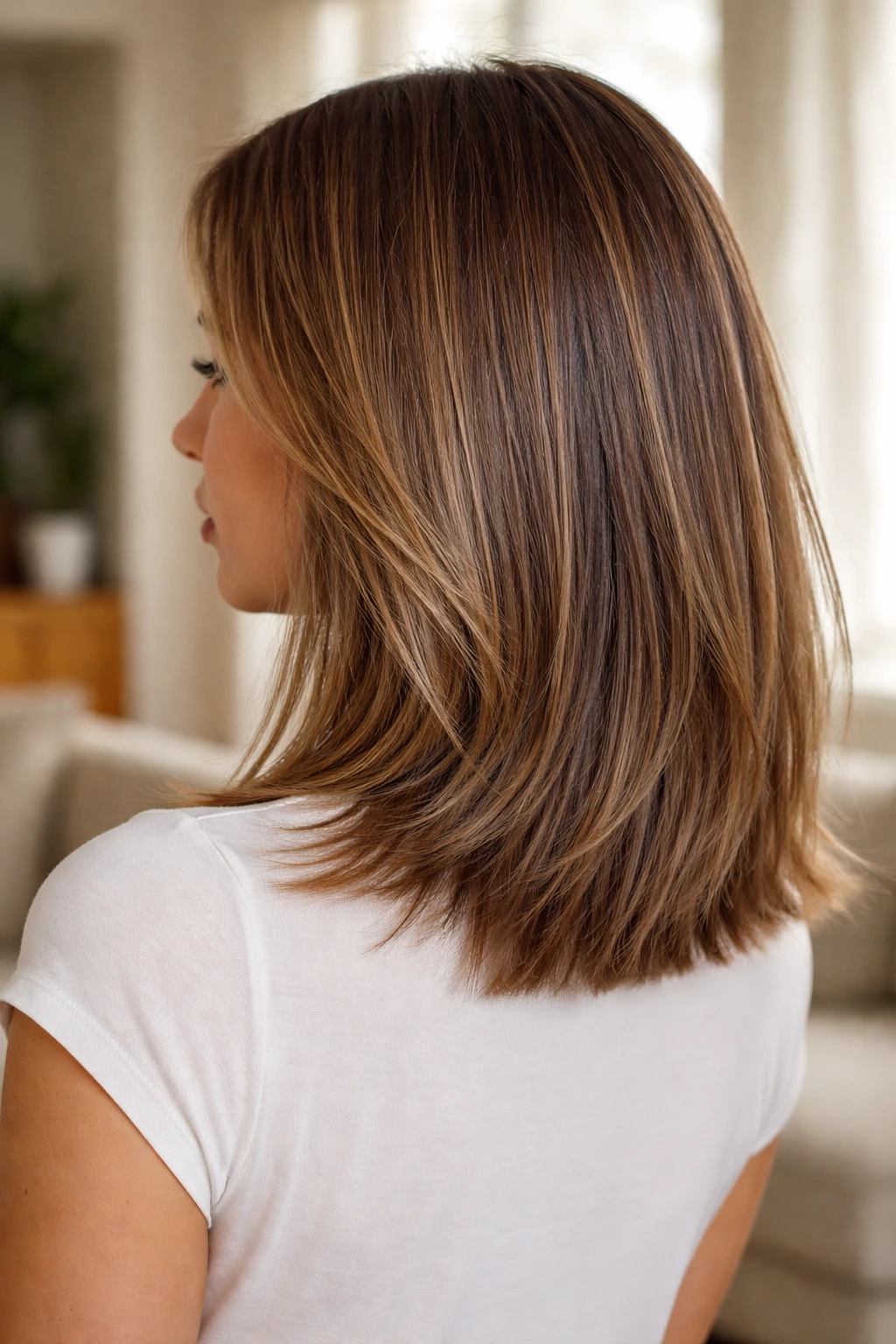
Sometimes, a blunt cut just looks too heavy. But instead of layering it, you can just texturize the very tips. This involves the stylist taking shears and cutting vertically into the last inch of your hair.
The Visual Effect
The result is that the ends look soft and feathered, but the density is still there. You get the best of both worlds. It looks like a straight-across cut from a distance, but up close, there is no harsh, jagged line. It is a very sophisticated look.
Why This Is Low Maintenance
This is one of the easiest cuts to live with. Because the texture is already built into the ends, you don’t need to do much styling to make it look “finished.” It will naturally look a bit undone and effortless, which is a great aesthetic for day-to-day wear.
17. The Ultra-Long Lob (Collarbone-Grazing)
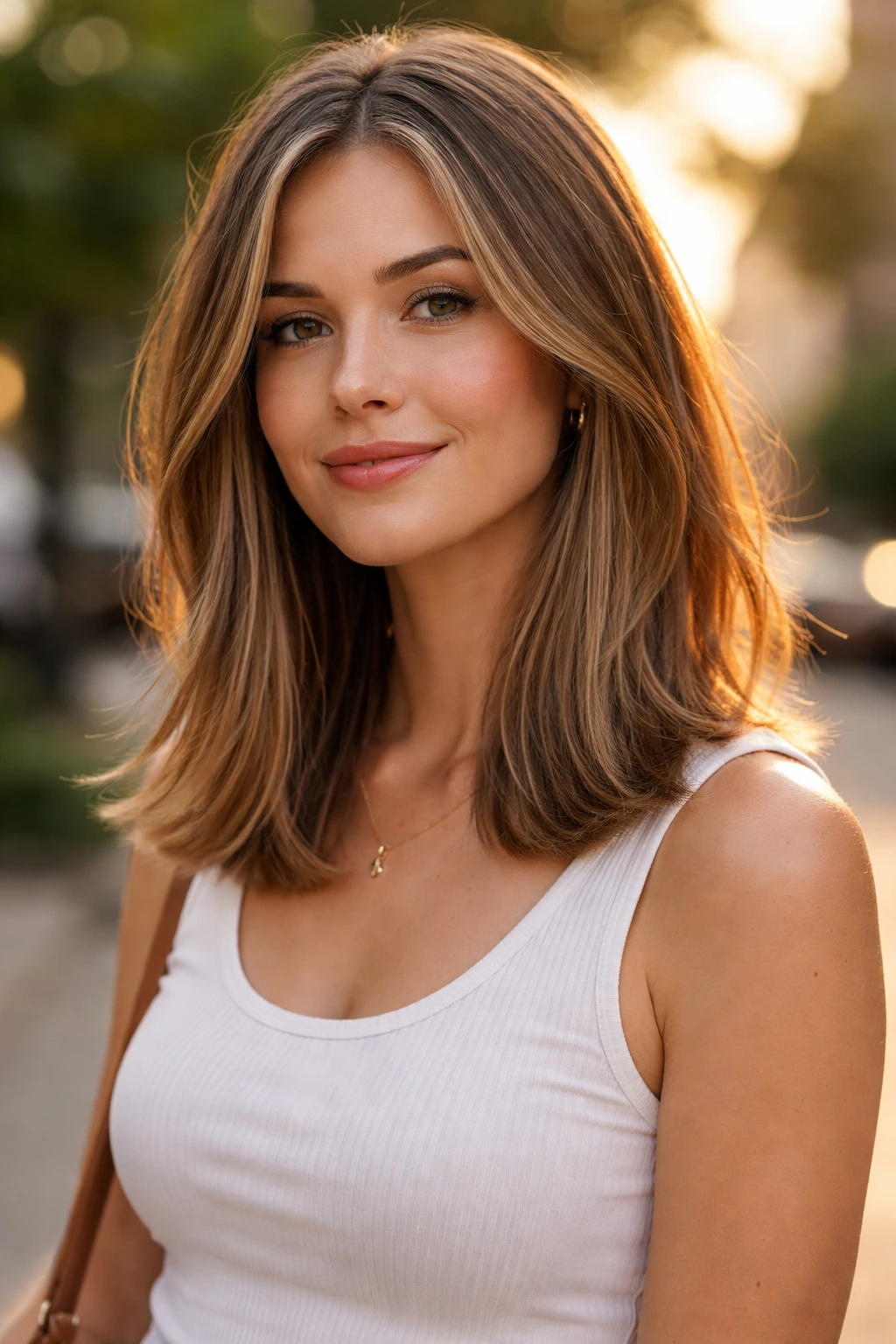
A lob is generally defined as hitting between the chin and the collarbone. The ultra-long lob pushes that definition to the limit, hitting right at or slightly below the collarbone.
The “Gateway” Cut
If you are terrified of cutting your hair, this is the safest place to start. You are removing the dead ends, you are getting a fresh, healthy shape, but you are not losing your length. You can still tie it up into a high bun or a ponytail, which is a major requirement for many people.
The Maintenance Level
Because this cut is touching your shoulders, the hair will naturally flip out as it hits your clothing. This is the main downside. You will have to use a flat iron or a round brush to smooth those flips out every morning, or embrace the “flippy” look as part of the style.
18. The Chin-Grazing Straight Lob
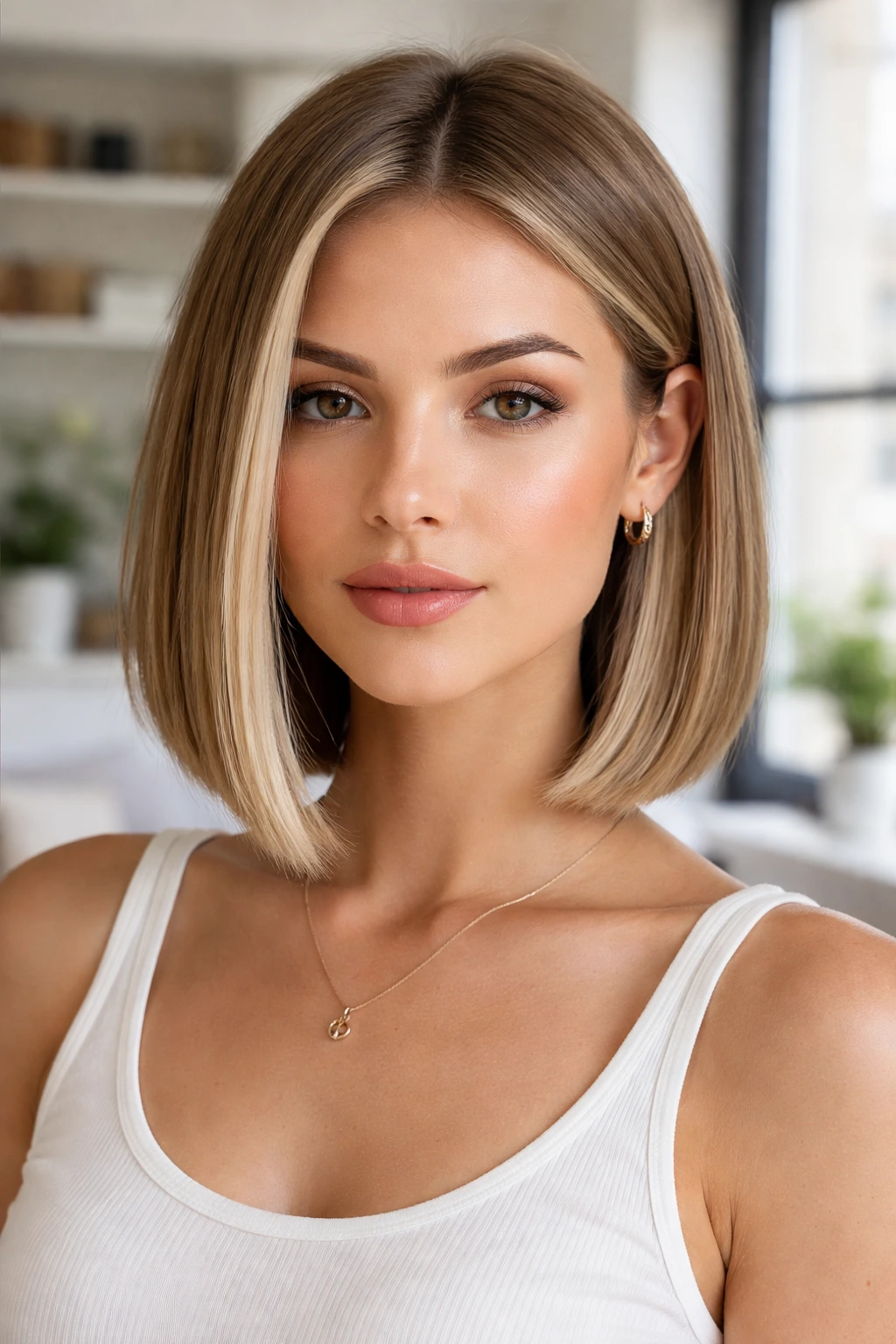
On the other end of the spectrum is the chin-grazing lob. This is a bold choice. It is short, it is sharp, and it is incredibly stylish. It elongates the neck and creates a very clean line around the jaw.
The Impact on the Jawline
This cut is brilliant for people who want to accentuate their jawline. If you have a strong jaw, this cut will highlight it beautifully. If you have a softer jaw, this cut can actually provide some artificial definition.
Why It’s High Maintenance
This length is short enough that you cannot just throw it up in a messy bun. You are committed to the style. You also need to be prepared for the fact that it will require a trim every 4-5 weeks. If it grows out even a little bit, it loses its “chin-grazing” precision and becomes an awkward in-between length.
19. The Sleek Minimalist Lob
This is the “no layers, no angle, no fringe” cut. It is just the hair, cut straight across at the shoulder. It is the most difficult cut to pull off because there is nothing to hide behind.
The Health Requirement
To wear this, your hair needs to be in excellent condition. If your hair is dry, frizzy, or broken, this cut will look lackluster. It requires a commitment to masks, heat protectants, and gentle brushing.
Why People Love It
It is timeless. You could look at a photo of this haircut from three decades ago, and it would look just as current today. It is the ultimate “clean girl” aesthetic. It pairs perfectly with everything from casual sweaters to sharp blazers.
20. The Asymmetrical Straight Lob
If you want something a bit different, the asymmetrical lob is a great way to introduce personality without going “wild.” One side is cut slightly shorter, and the other is left longer.
The Subtle Approach
You don’t need a drastic difference. Even a half-inch difference between the two sides can change the look entirely. It is a detail that people won’t immediately notice, but it will make your hair look more “designed” and expensive than a standard one-length cut.
Styling Advice
This cut looks best when worn with a side part. The side part emphasizes the asymmetry. If you part your hair in the middle, the effect is muted. Lean into the asymmetry by sweeping your hair toward the longer side to really showcase the graduation.
21. The “Glass Hair” Lob
This isn’t necessarily a specific cut, but a styling technique that has become synonymous with the lob. It involves a very blunt, one-length cut combined with a perfectly flat, mirror-like finish.
The Technique
The secret here is the blow-dry and the flat iron. You must use a heat protectant spray that also provides shine. Section your hair very thinly—so thin that you can see your brush through the section. Pull it taut. Run your iron over it once or twice, slowly. The goal is to eliminate every single kink in the hair shaft.
The Daily Reality
This style is not for the person who wants to wake up and go. It takes 15–20 minutes of dedicated styling time to achieve the “glass” look. If you are willing to put in the time, it is one of the most stunning, polished looks you can wear.
22. The “Grown-Out” Blunt Cut
Sometimes, the best version of a lob is the one that has been left to grow for a few weeks. It has lost that “fresh from the salon” stiffness and has developed a bit of softness.
The Accidental Texture
A blunt cut that has grown out just a quarter-inch starts to lose its aggressive line. The ends soften up, and the hair begins to move a bit more naturally. Many people find this is actually their favorite length—it is still a lob, but it feels lived-in and relaxed.
Why You Should Ask for This
You can actually ask your stylist to mimic this. Tell them you want a “soft perimeter.” They will use a point-cutting technique to soften the line so it doesn’t look like you took scissors and a ruler to your hair. It gives you the “lived-in” aesthetic from day one.
Final Thoughts
Choosing the right straight lob is less about following a trend and more about understanding what your hair naturally wants to do. Do you want it to have weight and density? Go for a blunt, one-length cut. Do you need to remove volume? Look for internal texturing or razored ends. Are you looking to change your face shape? A set of curtain bangs or a face-framing layer might be the adjustment that makes everything click.
The most successful haircuts are the ones you don’t have to fight against every single morning. If you have stick-straight, fine hair, avoid heavy layers that will just make your ends look sparse. If you have coarse, thick hair, do not shy away from weight-removing techniques—you need that movement. Ultimately, a great lob is about precision and execution. Find a stylist who understands the geometry of your specific hair texture, and you will find that the “in-between” length is actually the best place to be.
