



Short silver bob haircuts for round faces work best when they do one thing well: bend the eye downward instead of letting the width sit right at the cheeks. Silver hair makes that job easier and harder at the same time. Easier, because the color shows shape with striking clarity. Harder, because every line, bump, and puff around the face shows up too, so the cut has to be smart.
That is why a good silver bob on a round face is rarely just “short and cute.” It needs direction. A side part can break the symmetry. A longer front can pull the eye lower. A little crown lift can add height where you want it, and a blunt edge can sharpen the whole thing when the texture is smooth enough to support it. Bad bob advice tends to pretend every round face wants the same thing. It doesn’t. Some faces look better with a cheekbone-skimming fringe, some with an undercut nape, and some with nothing more than a clean line and a deep side part.
Silver also changes the game. Cool gray, bright silver, white-blonde silver, and salt-and-pepper tones all reflect light differently, so the same haircut can feel airy, polished, or edgy depending on the finish. That means the cut, the styling, and the maintenance all matter. A soft wave placed at the wrong spot can widen the face. A strong angle placed just below the jaw can do the opposite. Tiny details. Big difference.
1. Side-Parted Chin-Length Silver Bob
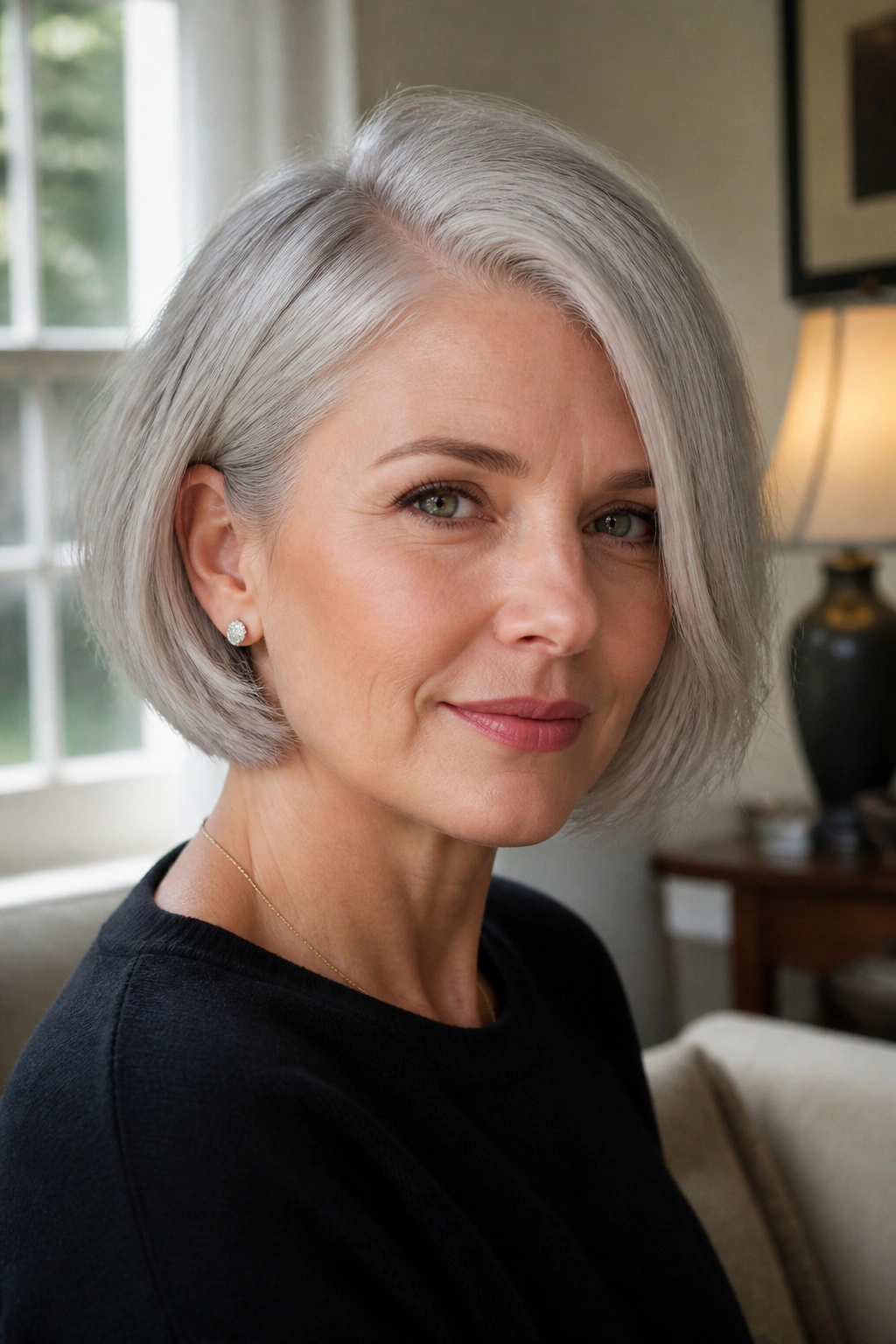
This is the one I reach for first when someone wants a safe bet that still looks sharp. A side-parted chin-length silver bob gives a round face a clean vertical line without making the haircut feel severe, and the side part keeps the top from reading too symmetrical. That matters more than people think. Symmetry can be pretty. It can also make the face feel wider.
Why It Works
The part should sit slightly off center, not shoved all the way over to one side. That little shift creates movement at the crown and helps the hair fall in a softer diagonal across the forehead. The chin-length edge keeps the cut sitting below the widest part of the cheeks, which is the whole trick.
- Best for straight, fine, or medium hair.
- Ask for the front pieces to skim the jaw, not flare out at the cheek.
- Blow-dry with a round brush, lifting at the roots only.
- Keep the ends blunt enough to look full.
Pro tip: if your hair flips out at the bottom, have the stylist bevel the edge inward by a small amount. Too much bevel and the bob turns into a helmet. Nobody wants that.
2. Soft Angled Silver Bob
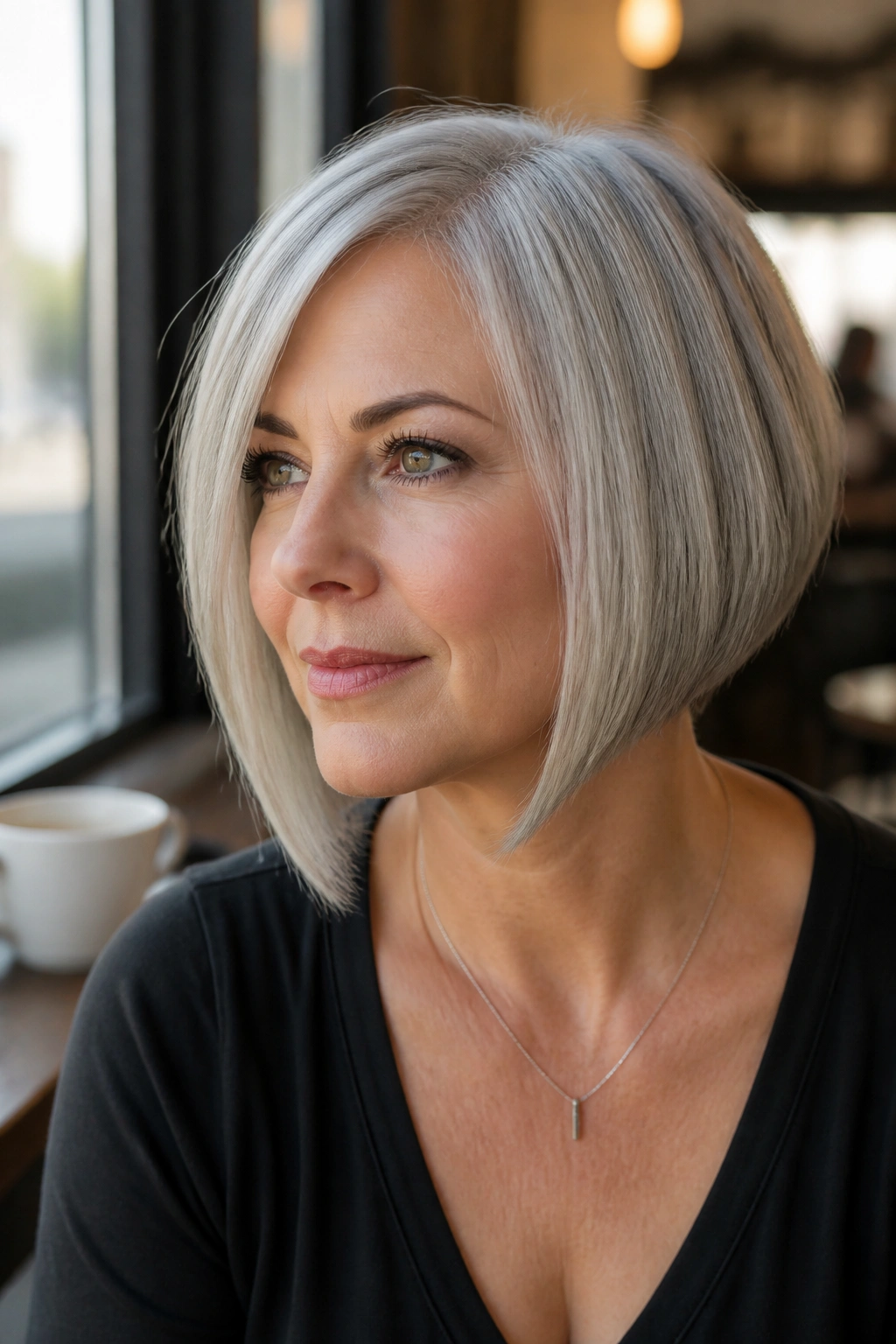
An angled silver bob does a lot of quiet work on a round face. The front is longer than the back, but the angle does not have to shout to be useful. A gentle slope from nape to chin draws the eye downward and makes the jawline look a little more defined.
I like this version for people who want movement without layers all over the place. The back stays tidy, which keeps the haircut from puffing out at the sides. The front hangs long enough to soften the cheek area, and silver color makes that line feel crisp in a very flattering way.
The key is restraint. If the angle is too dramatic, it can start to look dated or fussy. A soft 1 to 2 inch difference from back to front is usually enough. When the hair is smooth, the shape does the talking.
If you wear glasses, this cut is especially useful. The frames, the angle, and the silver sheen all work together instead of fighting for attention. Clean. Simple. Smart.
3. Stacked Crown Silver Bob
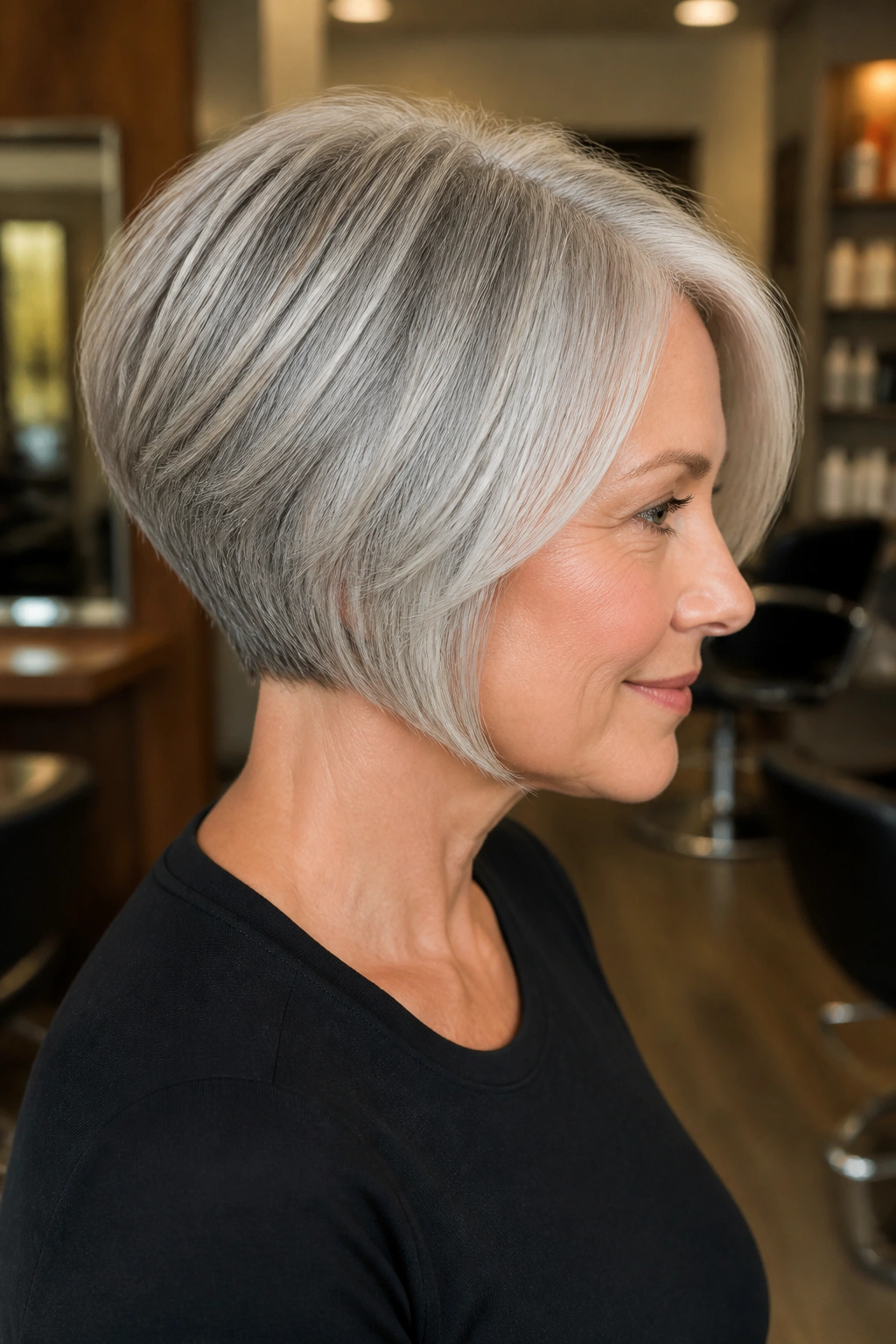
Need a bob that adds height without turning into a teased mess? A stacked silver bob is the answer. The back is cut shorter and layered so it lifts off the neck, while the front stays a touch longer and sleeker. That crown height is what helps a round face look longer.
What to Ask For
A good stacked cut should rise softly at the back, not spike up. The layers need enough graduation to remove bulk, but not so much that the silhouette becomes round again. That is the trap. Too much rounded volume on a round face can make the whole look feel circular.
How to Style It
Use a volumizing mousse at the roots, then round-brush the crown while directing the front pieces forward and slightly down. The goal is height at the top, not width at the sides. A light mist of flexible hairspray will keep the shape from collapsing by lunch.
This cut works especially well on thick hair. It takes weight out of the nape and gives the silver color a neat, sculpted finish. If your hair tends to sit flat, this is the version that wakes it up.
4. French Bob with Micro Fringe

Picture a cheeky little silver bob that stops around the jaw and comes with a tiny fringe barely skimming the brows. That’s the French bob with a micro fringe. It sounds daring because it is. On the right round face, though, it looks sharp in a way that feels more fashion-forward than fussy.
The trick is keeping the fringe light. Heavy bangs can box in a round face and make the forehead disappear. A wispy, broken fringe opens the face instead, especially when the bob itself stays a touch longer near the jawline. The cut should feel airy, not dense.
- Best on straighter hair or soft natural waves.
- Keep the fringe thin enough to see some forehead through it.
- Pair it with a slightly undone texture through the sides.
- Works best when the bob ends are clean, not frayed.
Watch this: if your hair is very curly or very dense, a micro fringe can require more daily effort than it’s worth. Lovely when styled. Annoying when rushed.
5. Piecey Textured Silver Bob
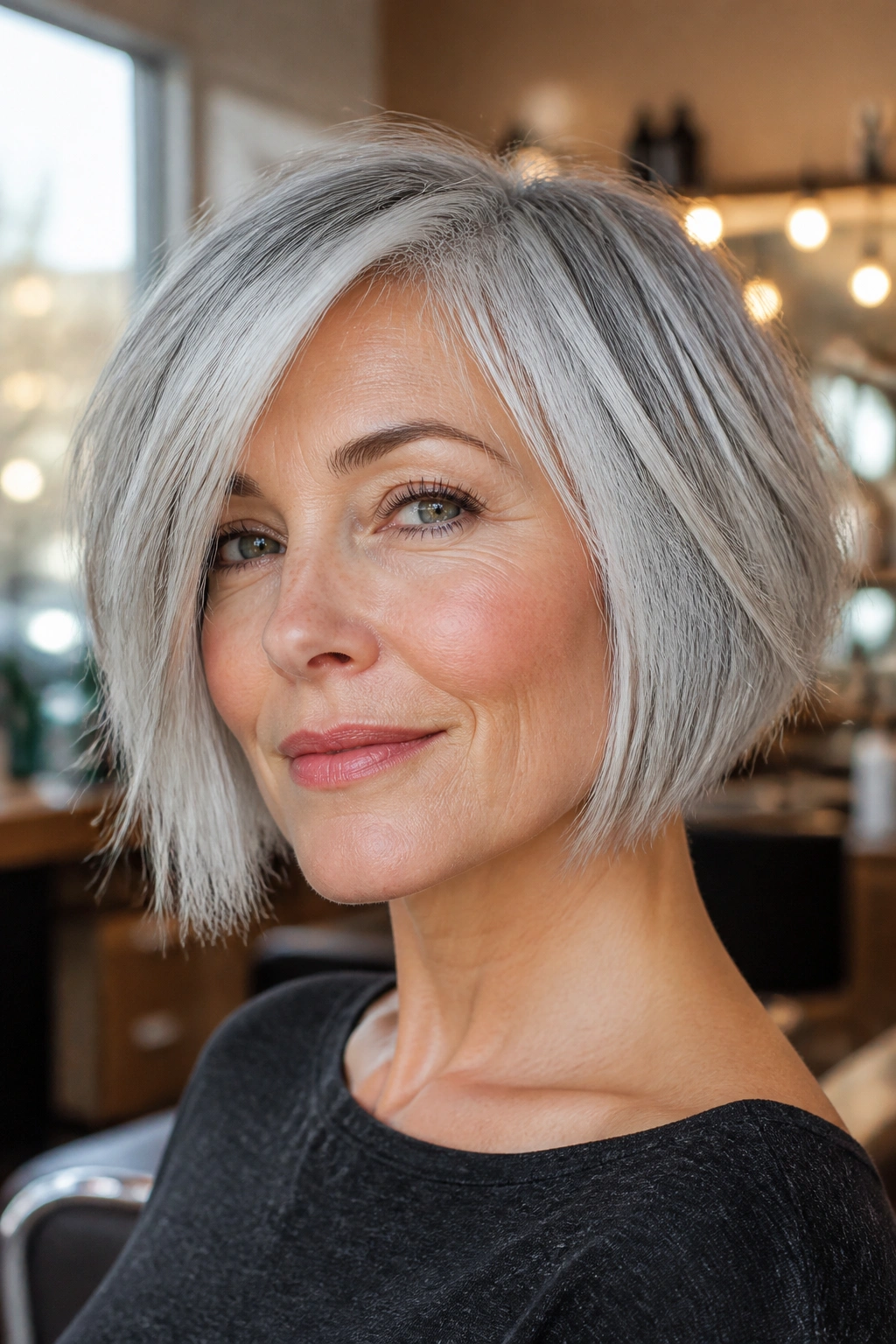
A piecey textured silver bob is the haircut I recommend when someone says, “I want movement, but I do not want a shag.” That difference matters. This cut uses light, separated ends and a bit of interior texture to keep the shape from sitting heavy around the cheeks.
Silver hair loves this kind of detail because the light catches each piece. It gives the cut depth without needing big, obvious layers. The face still gets a vertical line, but the finish feels less polished and more lived-in. That can be a good thing. A very good thing.
The best version keeps the longest pieces around chin level or just below, with the texture concentrated through the mid-lengths and ends. Ask for point cutting rather than blunt chunking. The result should move when you shake your head, not flip into random triangles.
This style is friendly to wavy hair, but it also wakes up fine hair that tends to go limp. A little texture spray at the roots and through the ends is enough. Nothing heavy. Silver hair shows product buildup fast.
6. Blunt Silver Bob with Deep Side Part
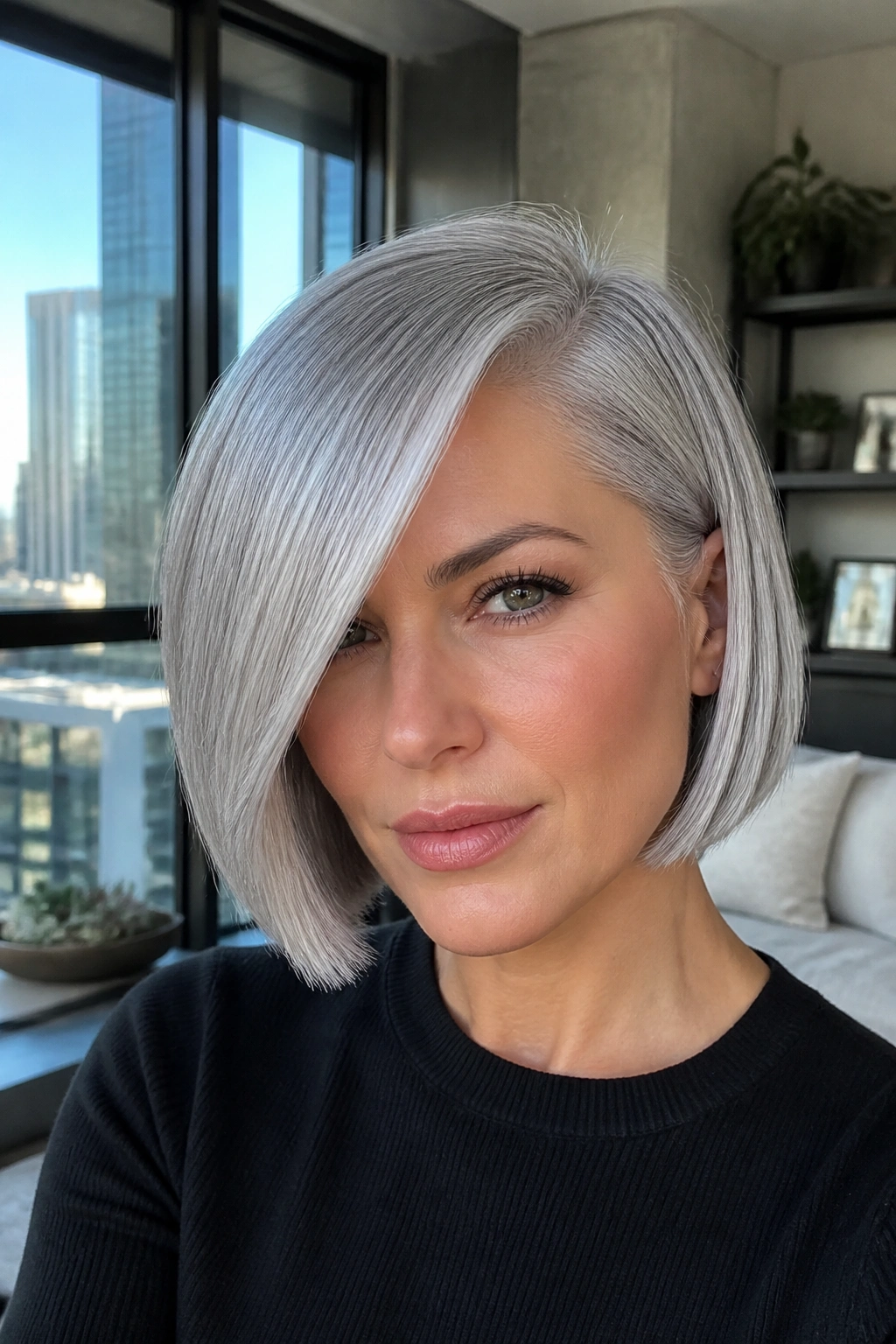
The blunt silver bob with a deep side part is the sharpest one on this list, and I mean that in a good way. Unlike a center-part blunt bob, which can read a bit too even on a round face, the deep side part creates a long diagonal across the forehead and cheek line.
That diagonal matters because round faces benefit from lines that travel. Horizontal fullness tends to sit exactly where you do not want it. A blunt cut keeps the ends full and thick, which is especially nice if your hair is fine or medium and you want the silver tone to look dense rather than wispy.
I like this cut best on straight hair or hair that can be smoothed easily. The ends should land around the jaw or slightly below it, with no extra fluff at the sides. A flat iron pass and a serum the size of a pea are usually enough to finish it.
If you prefer crisp haircuts, this one is hard to beat. It looks expensive without trying too hard.
7. Loose Waved Silver Bob

A round face and a wavy bob can get along beautifully if the waves start in the right place. A loose waved silver bob should begin below the cheekbone, not right at the widest point of the face. That’s the detail a lot of people miss.
When the wave sits too high, the side of the face gets crowded. When it drops lower, the face keeps its shape and the hair gets a soft swing around the jaw. Silver strands make the wave pattern stand out, so even a gentle bend looks intentional.
How I’d Style It
Use a 1-inch curling iron or wand and wrap only the mid-lengths, leaving the ends a little straighter for that modern broken-up finish. Then rake the waves apart with your fingers. Not a brush. A brush usually makes the whole thing too fluffy.
- Keep the waves loose and uneven.
- Pin one side behind the ear for a cleaner line.
- Use a lightweight heat protectant so the silver tone stays bright.
- Finish with a soft cream, not a crunchy spray.
This is one of those cuts that looks relaxed but still does the face-shaping work.
8. Inverted Silver Bob
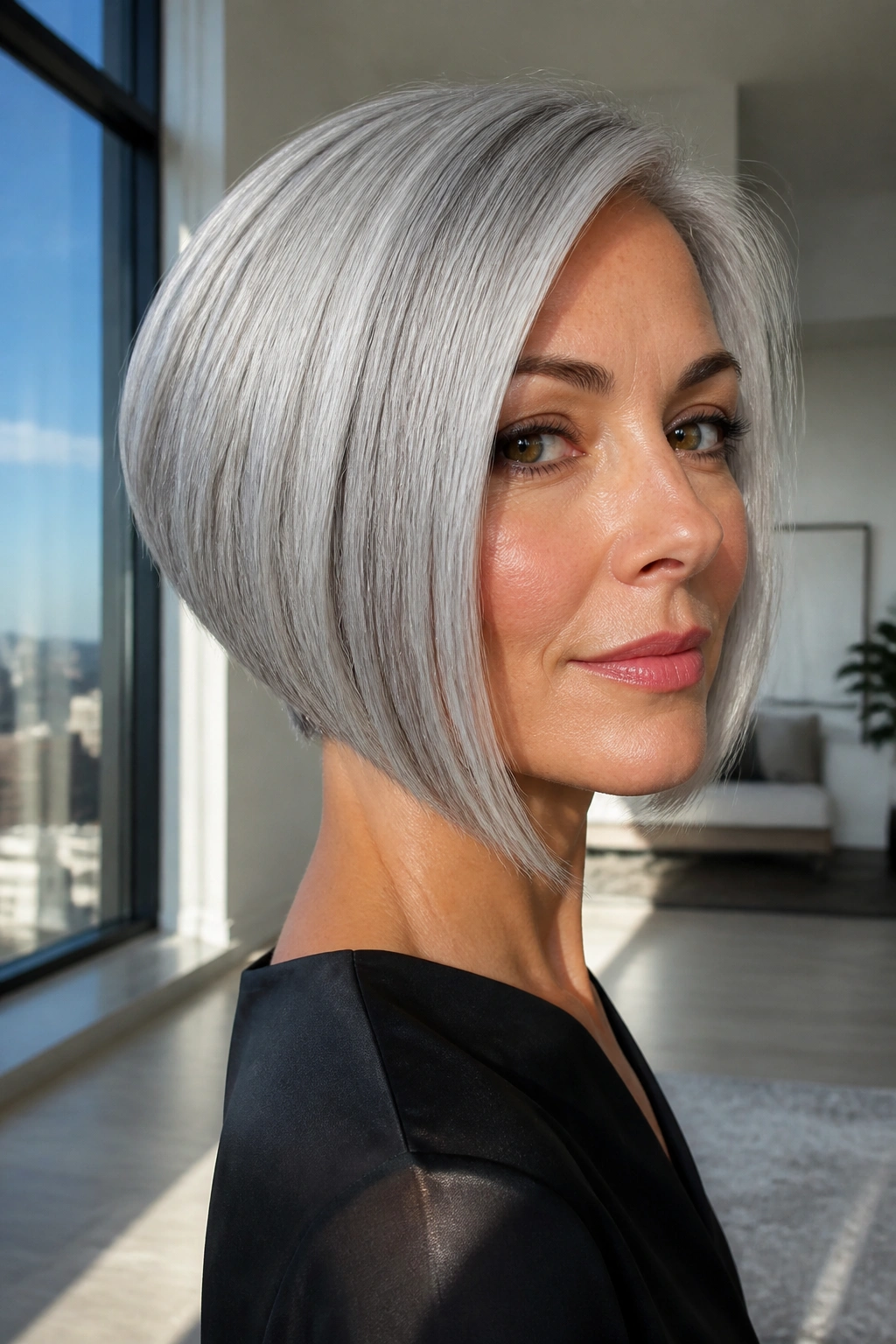
A strong inverted bob can be a gift to a round face. The back is shorter, the front is longer, and the line drops forward in a way that adds shape fast. It is the more dramatic cousin of the soft angled bob, and I usually recommend it to people who like a haircut that reads clearly from across the room.
The reason it works is simple: the shape builds lift in the back and length in the front, which pulls attention down and forward rather than out. On silver hair, that geometry looks especially clean. The color makes the stacked back and longer front pieces easy to see.
This cut needs a careful hand. If the angle gets too steep, the front can dominate the whole look. Keep the longest pieces somewhere around the chin, maybe a touch below, and let the nape stay short and tidy. It should feel sleek, not armored.
Best with straight or softly bent hair. If your texture is very curly, this shape can be harder to keep precise, though not impossible.
9. Asymmetrical Silver Bob
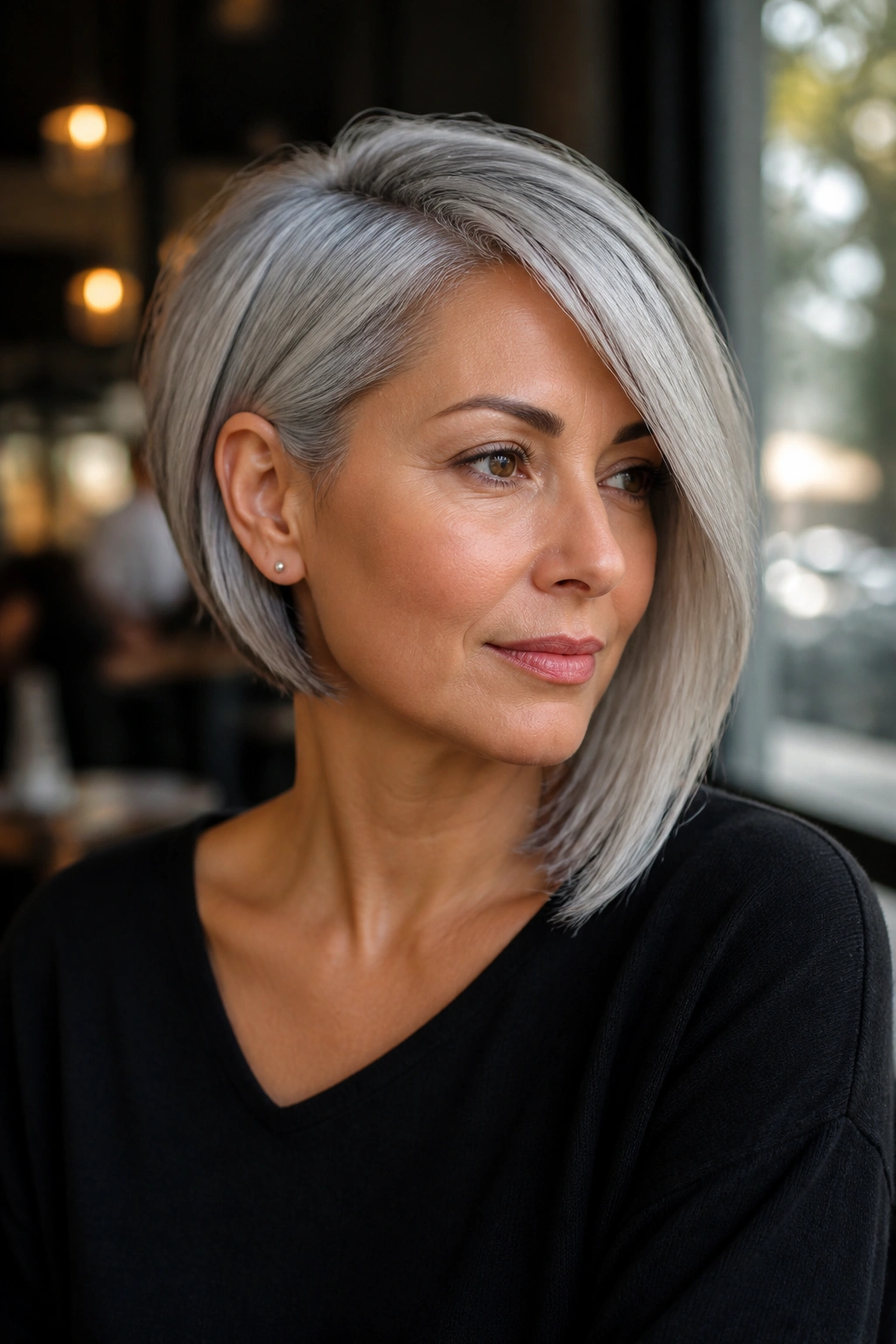
Want something bolder? The asymmetrical silver bob gives you a clear style statement while still working with a round face. One side stays longer than the other, and that uneven line creates instant direction. The eye follows the length. That is the whole point.
I prefer this cut when the longer side falls below the chin and the shorter side stays near the jaw or cheekbone. Anything too extreme can start to feel costume-like, which is fine if that is the goal, but it is not the easiest everyday shape. A subtle asymmetry wears better.
How to Wear It
Keep the shorter side sleek and tucked back, then let the longer side swing forward. That contrast makes the face appear longer without needing heavy layers or a lot of styling.
- Works well with straightening creams or light smoothing serum.
- Ask for a clean perimeter, not choppy ends.
- Keep the part slightly off center to support the shape.
- Trim every 5 to 7 weeks if you want the asymmetry to stay obvious.
It is a good cut for someone who wants silver hair to feel modern and a little sharp.
10. Curtain Bang Silver Bob
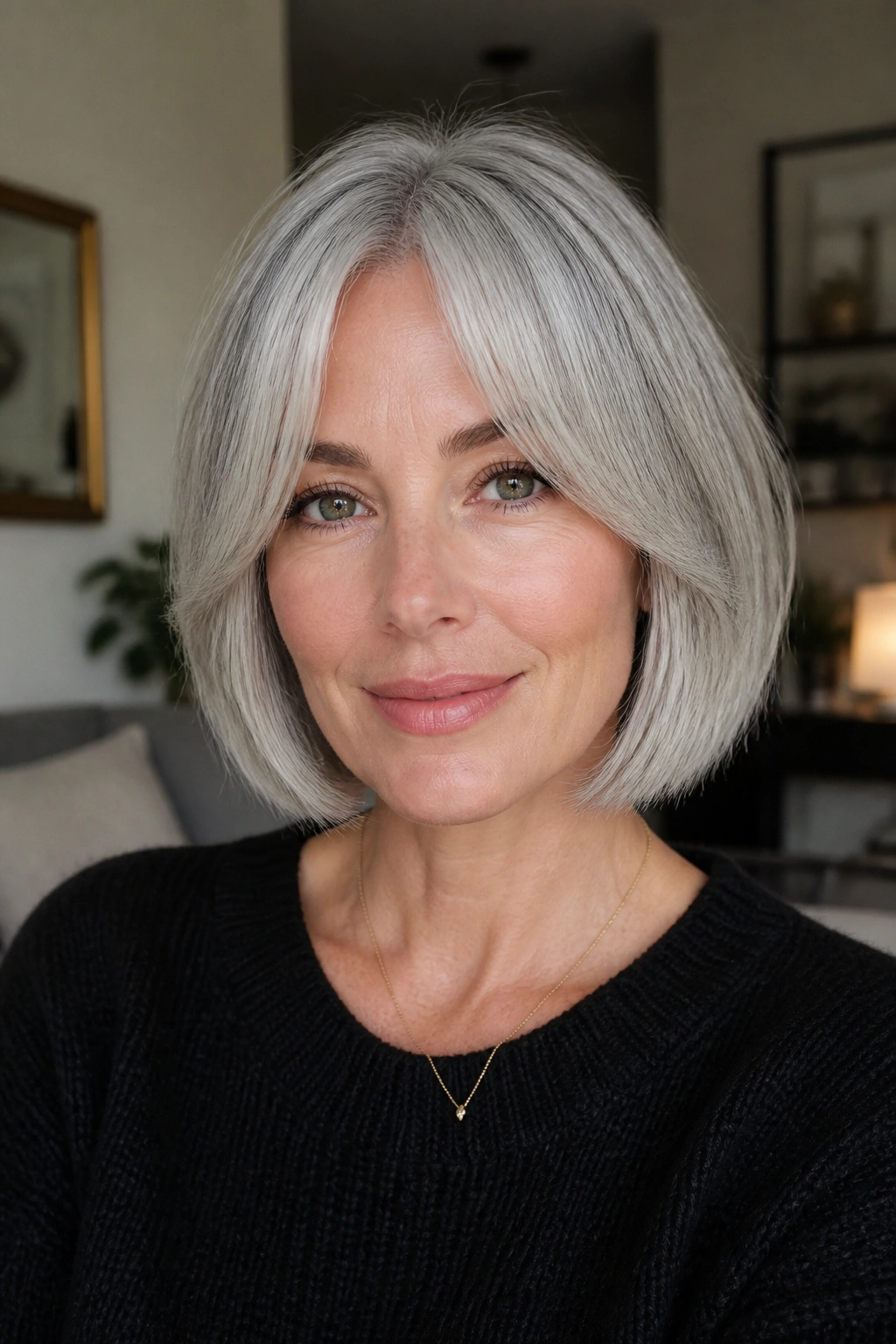
Curtain bangs and round faces get along for a reason. The center opening breaks the width across the forehead, while the longer sides sweep toward the cheekbones and jaw. On a silver bob, that softness looks even better because the light color keeps the fringe from feeling heavy.
The most flattering version keeps the shortest point of the bang around the eyebrow area, then lets the sides slide into the front pieces. I would avoid a thick curtain bang that ends too bluntly at the cheek. That can widen the face instead of framing it.
A bob with curtain bangs also solves one common problem: people want short hair, but they still want some face framing. This gives both. The bangs blur the forehead line, and the bob keeps the ends clean below the face.
Blow-dry the fringe with a round brush, rolling it away from the face. If you skip that step, curtain bangs can split in strange places. They are lovely. They are also a little needy.
11. Feathered Silver Bob

A feathered silver bob is softer than the blunt versions, and that softness is the point. Feathering removes weight in a controlled way, so the hair sits away from the cheeks instead of puffing out around them. For round faces, that can make a real difference.
This cut works especially well for medium to thick hair that needs movement without losing shape. The layers should be airy and directional, not chopped up all over the place. Think lightness through the ends, not short bits popping up everywhere. There is a difference, and a big one.
I like feathering best when the top stays smooth and the movement starts lower down. That keeps the crown from getting too fluffy. Silver tones show every layer, so a skilled cut matters more here than on darker hair. A blunt mistake looks blunt. A feathered mistake looks frizzy.
The styling is easy. A blow-dry with a paddle brush, a dab of smoothing cream, and maybe a little root lift at the front. Done. It is the sort of bob that looks polished without being stiff.
12. Glassy Straight Silver Bob

There is something almost architectural about a glassy straight silver bob. The line is clean, the shine is obvious, and the shape does all the talking. Unlike textured bobs that depend on movement, this one depends on precision. That precision is what helps a round face look longer and neater.
The cut should be one length or nearly one length, with the edges sitting at the jaw or a touch below. The part can be center or slightly off center, but I usually prefer a slight offset on round faces because it keeps the top from feeling too symmetrical. A dead-center part can be a little unforgiving unless the face has a lot of natural length already.
This is the bob for people who like to flat iron their hair and keep it smooth. A heat protectant is non-negotiable. Silver hair often runs dry at the ends, and a glassy finish depends on healthy-looking cuticles, not greasy serum overload.
If you want that crisp, high-shine effect, keep the trim frequent. A blunt silver bob loses its edge fast once the ends start fraying.
13. Shaggy Silver Bob

The shaggy silver bob is the easygoing cousin in this group, but it still needs structure. The best version uses broken layers around the lower half of the head, with the heaviest fullness staying below the cheekbone. That keeps the haircut from widening the face.
A lot of shaggy bobs go wrong because the layers are too high and too even. On a round face, that can create a halo effect you do not want. The good shag is looser. A little ragged around the ends, a little separation, and enough length to keep the jaw line open.
What Makes It Different
This cut suits people who do not want a perfect finish every morning. Air-dry cream, a bit of scrunching, and maybe a diffuser are often enough. The silver color gives the layers extra visibility, so the shape looks deliberate even when it is messy.
I think this is a strong choice for wavy or thick hair. Fine hair can wear it too, but you need careful layering so the body does not disappear. Keep the perimeter at or below the chin. That detail saves the look.
14. Tapered Nape Silver Bob
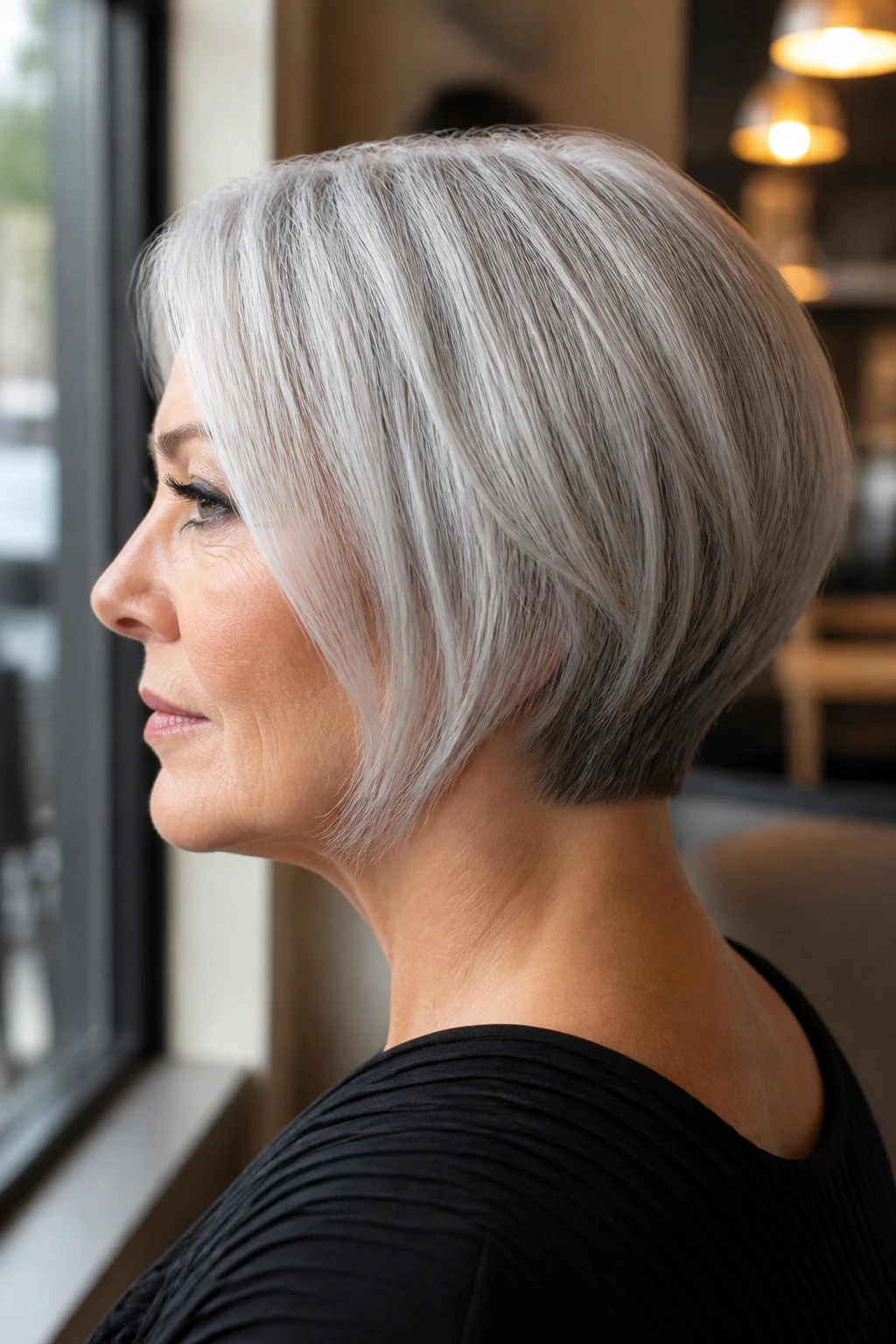
The tapered nape bob is underrated. A cleanly tapered back removes bulk where the hair can otherwise balloon out, which matters a lot on a round face. The front can stay slightly longer and softer, while the nape sits close and tidy.
This cut has a neat, tailored feel that works well with silver hair because the color shows the shape clearly. If you like your hair to look polished even when you do very little to it, this is worth a serious look.
The nape taper also helps thick hair behave. Less weight at the back means less mushrooming. The front pieces can be angled toward the jaw so the cut still feels feminine and not too severe. That balance is the tricky part.
Maintenance is a little higher than with a shaggy bob. The neck area loses its clean line faster than people expect, and once it grows out, the whole silhouette gets less crisp. If you hate regular trims, keep that in mind. If you love a tidy neckline, you will probably enjoy it.
15. Curly Silver Bob

Can a curly bob flatter a round face? Absolutely. The trick is letting the curls build shape below the widest part of the cheeks instead of exploding right at the sides. A curly silver bob can be gorgeous when it is cut with the shrinkage in mind.
Dry cutting usually helps here because curls spring up in their own weird, honest way. If the stylist cuts wet and guesses wrong, the bob can come home much shorter than you wanted. I’d ask for curl-by-curl shaping or at least a careful dry check before the final snip.
How to Style It
Use a curl cream or light gel, then scrunch and diffuse until the curls feel set but not hard. The goal is definition, not a helmet. Silver curls look especially rich when they have glossy shape and a little separation.
- Keep the side volume lower and the top a touch higher.
- Let some curl clusters fall forward near the jaw.
- Avoid heavy oils near the roots.
- Trim every 8 to 10 weeks to keep the silhouette open.
A round face does not need curls crushed flat. It needs them placed with a little thought.
16. Face-Framing Silver Bob
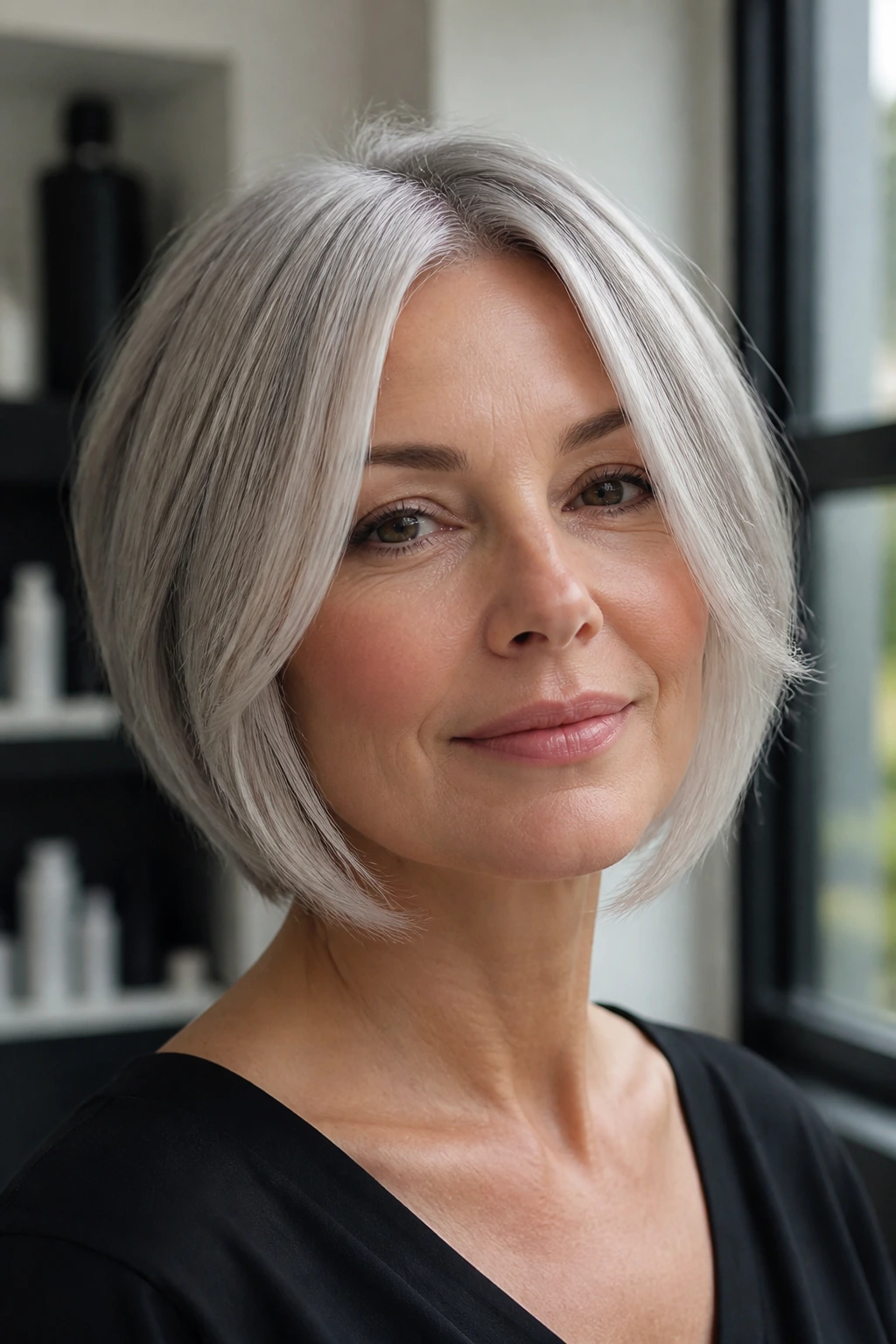
A face-framing silver bob is the haircut I recommend when someone wants flexibility. The front pieces can sweep toward the cheekbones, the sides can tuck behind the ears, and the back can stay compact. That means you can wear it neat one day and softer the next.
The front layers should start low enough to help the face, usually around the lip or chin area, not right under the eye where they can read fussy. When those pieces swing forward, they create two vertical tracks along the face. Very useful. Very flattering.
This style works with straight, wavy, and lightly curly textures. It is less about a strict silhouette and more about placement. Silver hair picks up the edge of each front piece, so the framing effect shows clearly even in simple light.
I like this cut because it is forgiving. If your hair gets a little flat, the front pieces still do some of the work. If it gets a little messy, it still looks intentional. That kind of flexibility is worth a lot.
17. Side-Swept Fringe Silver Bob

There is a reason stylists keep coming back to a side-swept fringe silver bob. The fringe crosses the forehead at an angle, which helps lengthen the face shape and soften the widest points without hiding everything. On a round face, that slanted line matters.
The fringe should not be thick all the way across. A heavy side bang can drag the whole style down. Better to let it start fuller near the part and thin out as it moves toward the cheek. That gives softness without crowding the eye area.
This bob works especially well if you want some fringe but do not want the maintenance of full bangs. It also grows out more gracefully. The side sweep can be nudged into place with a brush and a little heat, or it can fall naturally and still look fine.
If your silver tone is very bright, the side-swept fringe adds a little shadow near the forehead, which can make the color look even more dimensional. Small detail. Nice result.
18. Micro-Bang Silver Bob

Micro bangs are not shy, and that is why they can work. On the right round face, a silver bob with micro bangs creates a strong contrast between the short fringe and the longer jaw-length perimeter. The effect is graphic, clean, and a little rebellious.
Here is the catch: the bob underneath needs enough length to balance the bangs. If everything is too short, the face can feel boxed in. Keep the bob at the chin or a touch below, and let the fringe stay narrow and light. The goal is to open the features, not press on them.
This style best suits someone who likes a fashion-forward look and is willing to style the fringe every morning. Micro bangs have opinions. They can stick up, split, or sit flat in the wrong weather. Still, when they are cut well, they look fantastic with silver hair because the color makes the line read so clearly.
Best on straighter hair, though a wavy version can work if you like a little chaos.
19. Razor-Cut Choppy Silver Bob
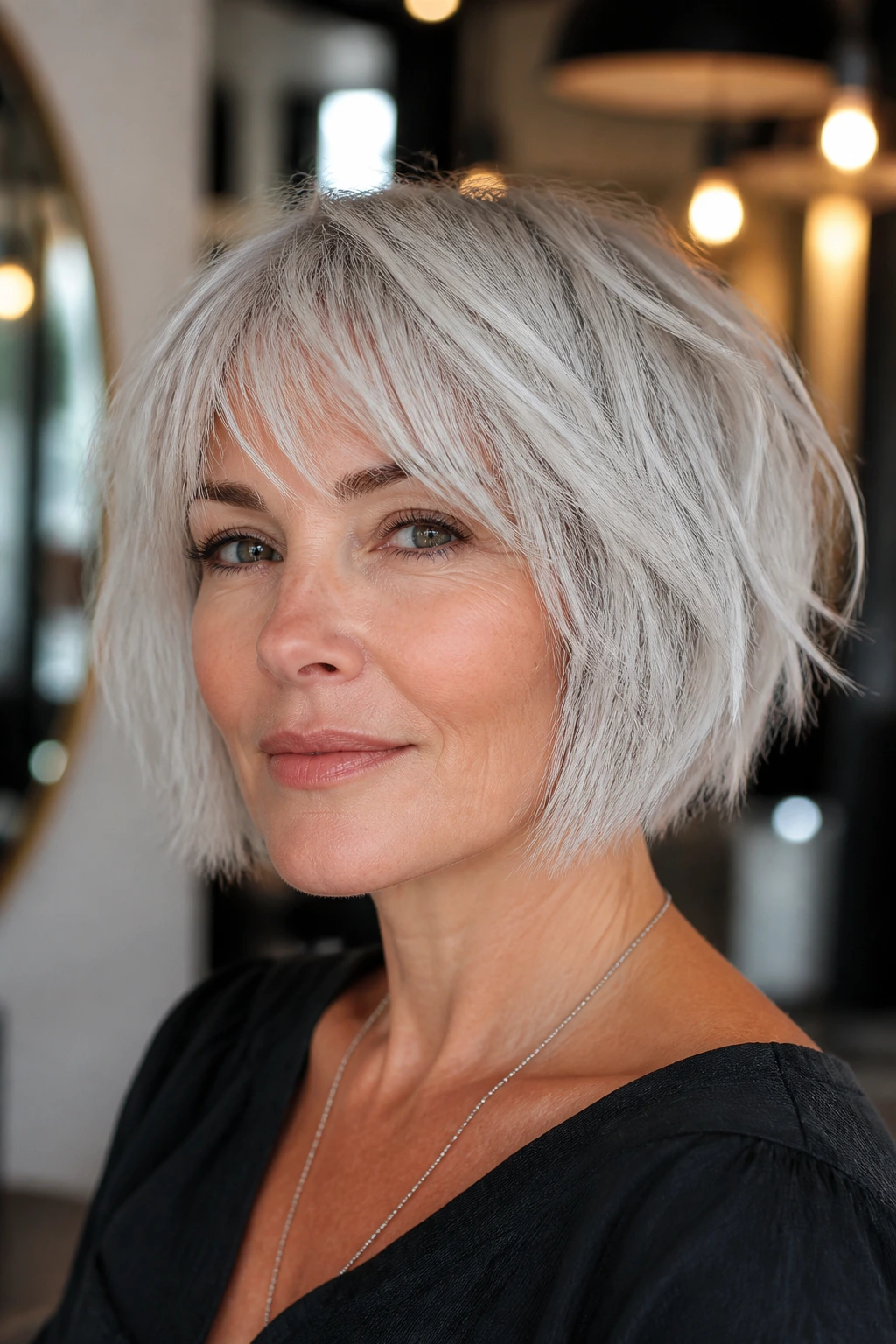
A razor-cut choppy silver bob gives you texture with bite. The ends look light and slightly broken, which keeps the hair from sitting in one heavy ring around the face. For round faces, that broken edge can be a gift, especially if your hair is thick or coarse.
I’d be careful with razor cutting on very fine or fragile hair. Done badly, it can make the ends look wispy and tired. Done well, it softens the perimeter without killing the shape. That’s the line. You want movement, not chewiness.
Quick Notes
- Best when the longest pieces still fall below the cheeks.
- Works well with messy styling cream and a soft blow-dry.
- Ask the stylist to keep the texture concentrated in the ends.
- Avoid too much thinning near the temples.
The cut feels modern because the outline is not perfect. Silver hair loves that kind of imperfect edge. It looks deliberate, not sloppy, when the texture is controlled.
20. Sleek Tucked Silver Bob

A sleek tucked silver bob is the cleanest finishing move in the whole group. The hair sits smooth, the sides can tuck behind the ears, and the cheekbones stay open. On a round face, that open line is a blessing because it lets the jaw and the center of the face do more of the visual work.
This version is especially nice if you prefer a simple silhouette but still want the haircut to feel current. The perimeter should be crisp, the ends should curve inward a little, and the overall shape should sit close to the head without looking flat. That last part matters. Flat and sleek are not the same thing.
I like this cut for silver hair because the color makes the tucked shape look polished fast. A light serum, a round brush, and a quick pass behind the ears can turn an ordinary bob into something that looks intentional in five minutes.
If I had to pick one style from the whole list for someone who wants the least fuss with the most payoff, this would be near the top. It is tidy, sharp, and kind to round faces. And it has enough shape to keep looking good when the day gets messy.
