



A shaggy lob can look almost effortless from across the room. Up close, though, it’s a very deliberate haircut: the kind that only works when the layers are cut in the right places and the ends are softened instead of chopped into a blunt block.
Medium length hair is the sweet spot for it. You get enough weight to keep the shape from puffing out, but not so much length that the texture disappears. If the shortest pieces land too high on the head, the whole thing can turn fluffy in a bad way. If the perimeter is left too heavy, it starts to behave like a solid helmet with a few random frays on top. Nobody wants that.
What makes shaggy lob haircuts for medium length hair so useful is the range. You can wear one with curtain bangs, side-swept fringe, bendy layers, razor-soft ends, or a shape that leans almost wolf cut without going full costume. The trick is knowing which version works with your texture, your face, and the amount of effort you’re willing to put in every morning.
Some of these cuts are airy and lived-in. Some are sharper. A few are almost shockingly low-maintenance once they grow out a little. The differences are all in the layers — where they start, how much weight gets removed, and how much movement stays at the ends.
1. Curtain Fringe Shaggy Lob for Medium Length Hair

Curtain fringe is the easiest place to start if you want a shaggy lob that feels soft instead of heavy. The middle opens at the forehead, then the longer pieces skim the cheekbones and blend into a collarbone-length cut that moves when you turn your head.
Why It Flatters So Many Faces
The shape works because it gives you lift at the front without chopping off width around the face. Ask for the fringe to start around the bridge of the nose and graduate down to cheekbone length at the sides. That keeps the front from looking too blunt.
- Keep the longest pieces at the collarbone.
- Let the shortest face-framing layers hit around the cheekbone.
- Use a 1.25-inch round brush or a large barrel wand.
- Finish with a light texture spray, not a sticky paste.
Pro tip: Blow the fringe forward first, then split it with your fingers. That tiny move keeps it from sticking flat to the forehead.
2. Razor-Cut Ends Shaggy Lob
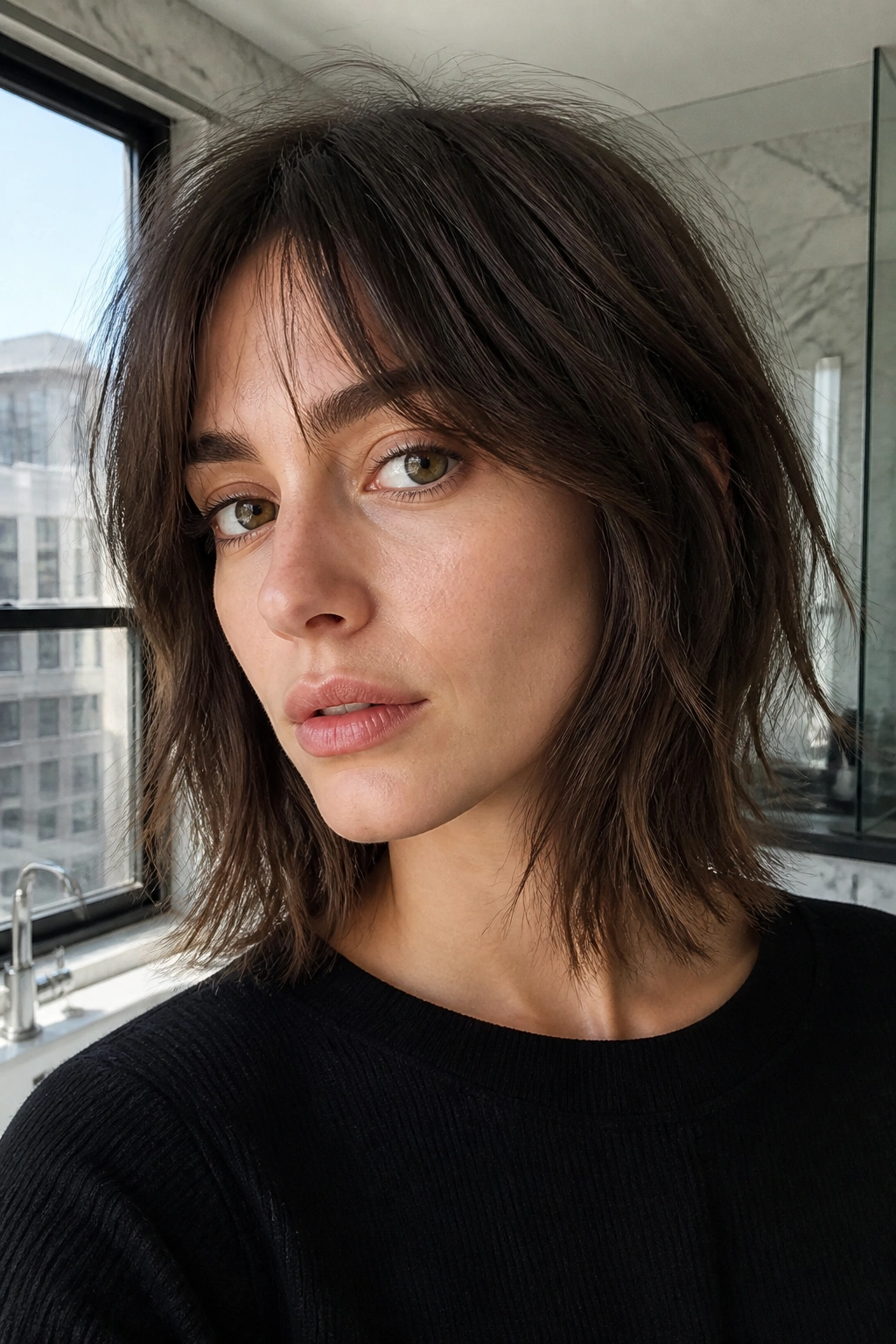
A razor-cut shaggy lob has a little bite to it. The ends look broken up in a good way, almost like the haircut has its own movement before you even touch a styling tool.
That matters if your hair gets bulky at the bottom. A razor softens the edge so the lob doesn’t sit like one heavy line at the shoulders. It’s a strong choice for straight to slightly wavy hair, especially when the ends need to be lightened without losing the shape.
The catch is simple: a razor is not a free pass to remove weight everywhere. If the stylist goes too high or works too aggressively on fragile ends, you can get stringiness fast. Ask for controlled razor work only through the perimeter and the very bottom of the layers.
On a good day, this cut dries into that piecey, uneven texture people keep trying to fake with spray. On a bad day, it frizzes. So keep the finish light, and skip heavy creams unless your hair is coarse.
3. Cheekbone-Layer Lob with Bottleneck Bangs
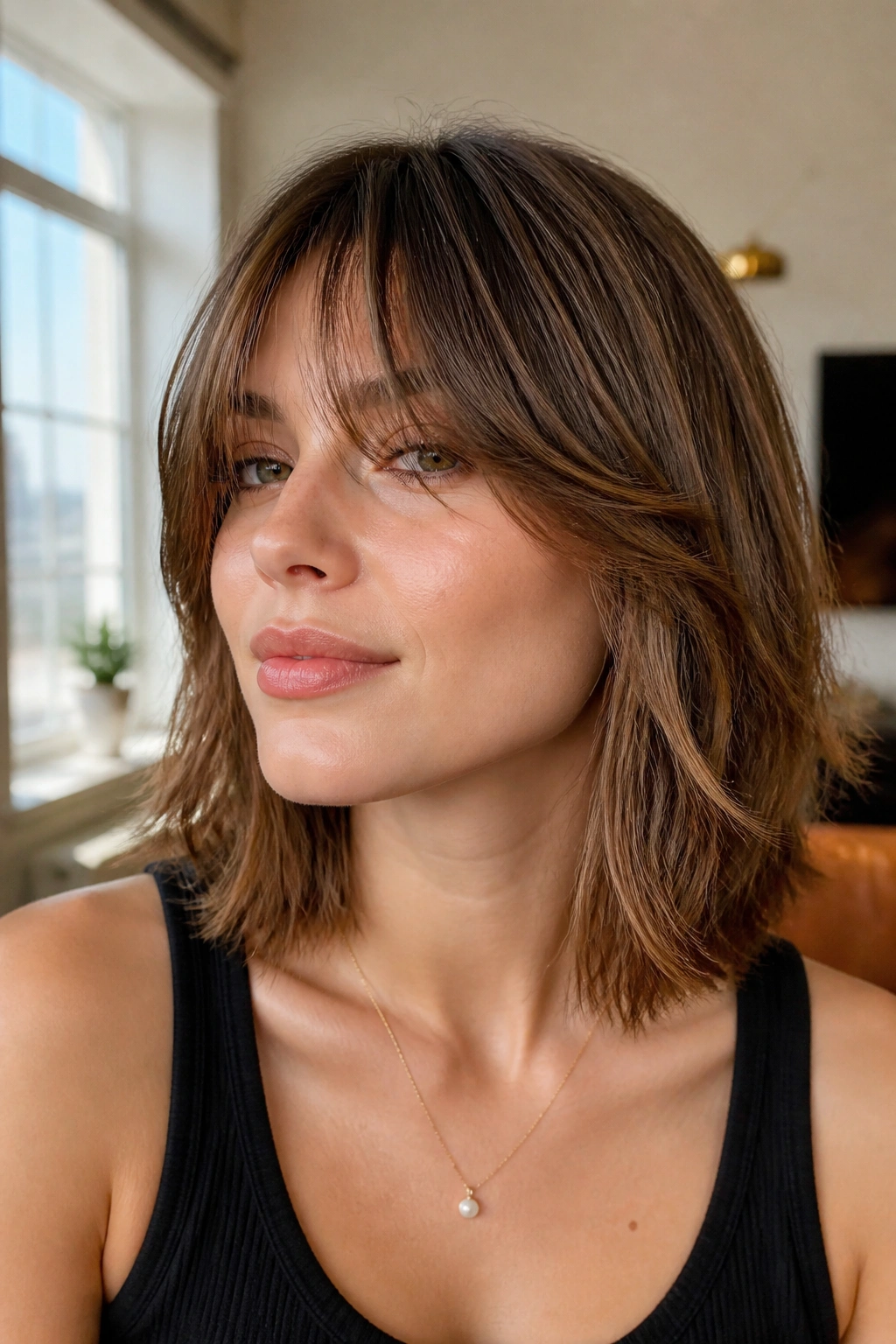
Why does a shaggy lob suddenly look sharper when the shortest layers land right at the cheekbones? Because that’s where the face starts to get its shape back. The layers pull the eye inward, and bottleneck bangs make the whole cut feel intentional instead of random.
Bottleneck bangs are narrower in the center and longer at the sides, which means they grow out better than a straight-across fringe. They also give you a little softness near the eyes without closing off the forehead. That’s a useful thing when medium length hair needs a bit of structure.
How to Wear It
Ask for bangs that graze the brows in the center and taper to cheek level. Keep the lob itself just below the shoulders, with the front a touch longer than the back. That slight angle helps the layers fall instead of ballooning out.
Use a round brush at the roots and a flat iron only on the front pieces if they need a bend. The rest can stay loose. A cut like this gets better when it isn’t overworked.
4. Wispy Bangs and Soft Ends Shag Lob
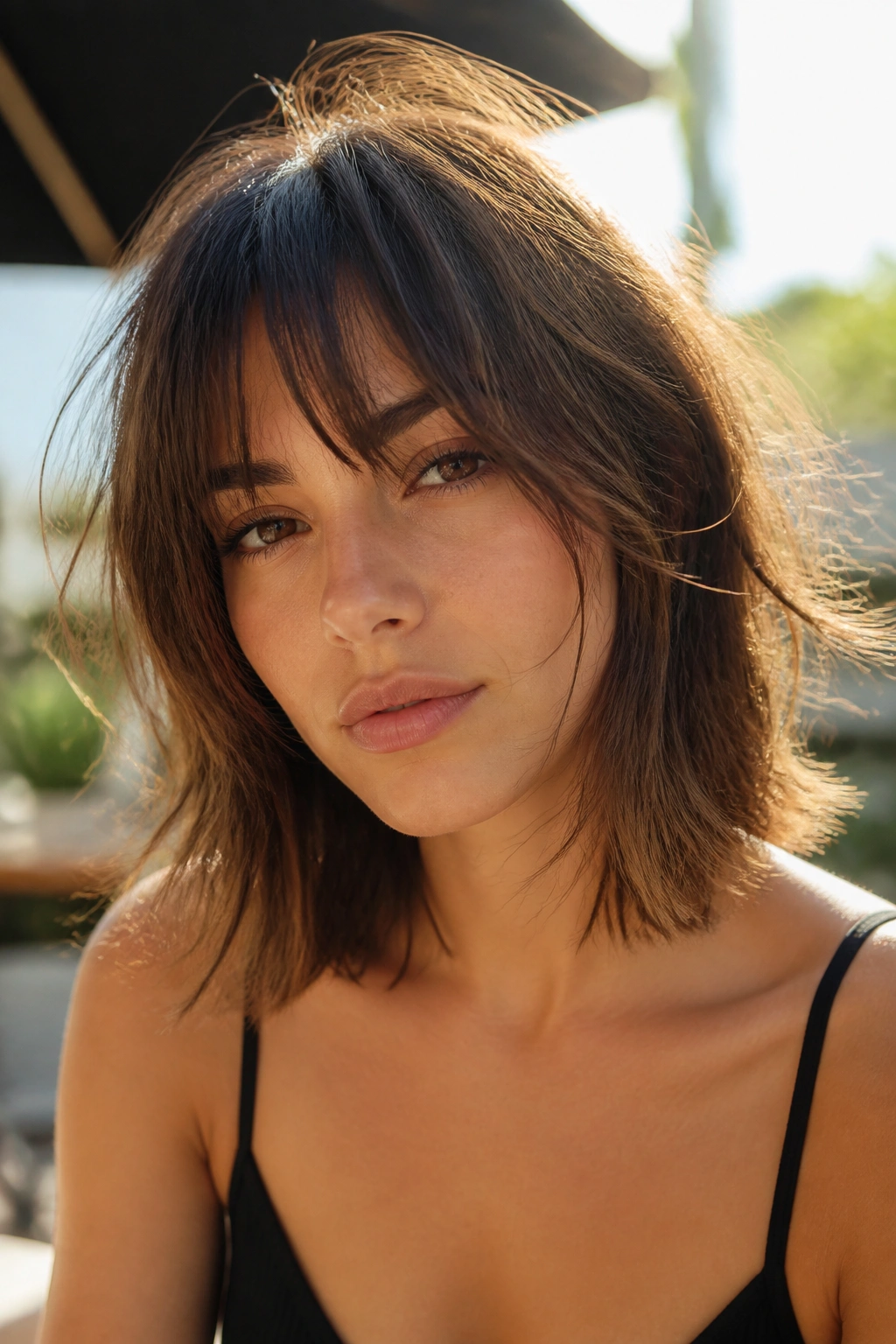
Picture hair that looks like it dried after a long lunch on a breezy patio. That’s the energy here. The bangs are thin, the ends are softly chipped, and nothing feels overbuilt.
This version suits people who want a shaggy lob without the heavier fringe commitment. The wispy bangs keep the forehead open, while the outer layers are cut with a light hand so the line stays smooth. If your hair is fine, this is one of the safer ways to get movement without making the ends look thin.
- Ask for a dry cut if your texture changes a lot when it dries.
- Keep the fringe just above the lashes.
- Add a pea-sized amount of styling cream to the mid-lengths only.
- Trim the bangs every 4 to 6 weeks so they do not grow into your eyes.
Soft ends matter here. Too much razor work turns this look shabby instead of relaxed. There’s a thin line between the two.
5. Curly Shaggy Lob
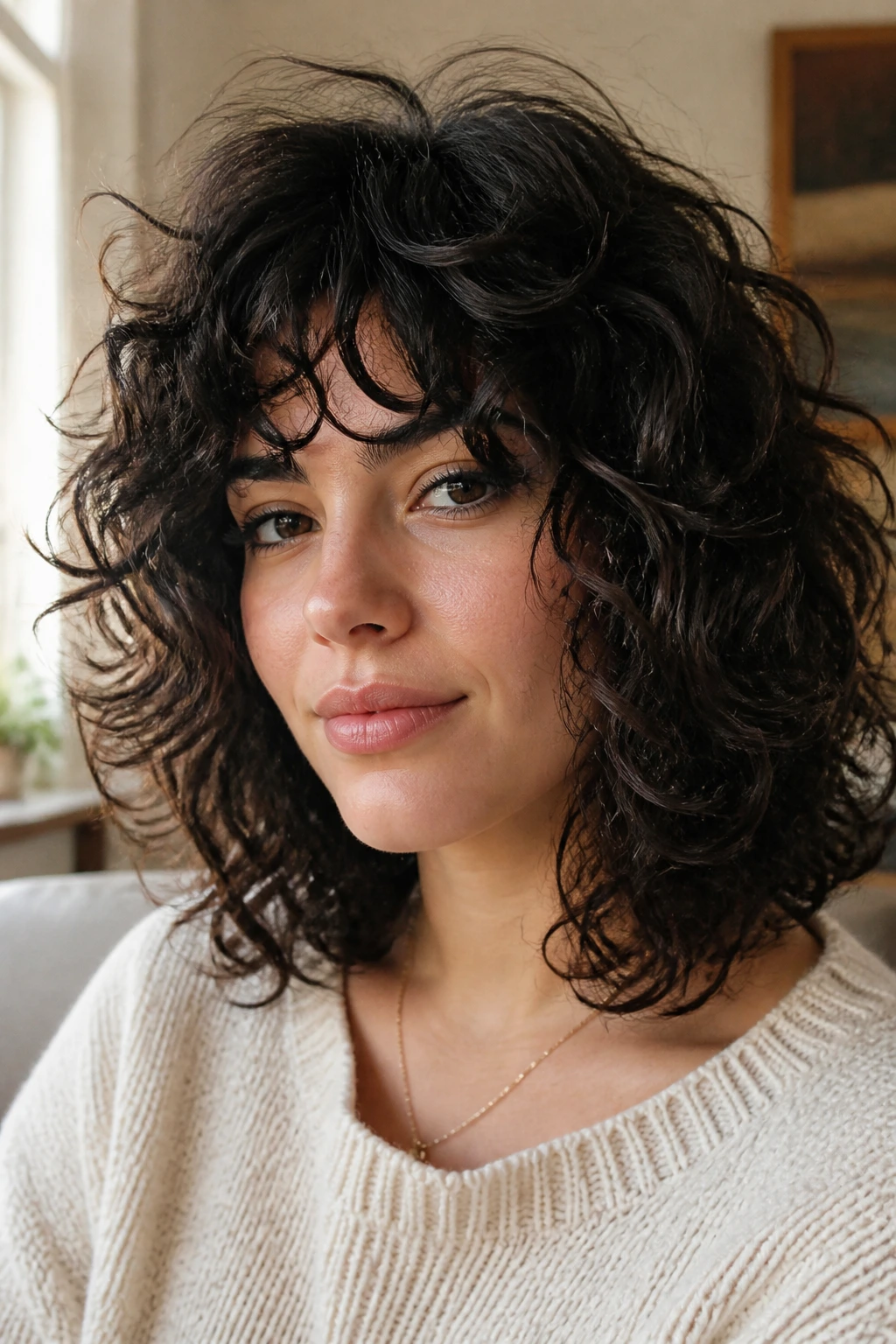
Curly hair loves a shaggy lob when the layers are placed with some sense. Cut too blunt, and the shape gets wide. Cut too short around the crown, and the top explodes while the bottom goes triangular. Neither is flattering.
A good curly shaggy lob keeps the perimeter near the collarbone and uses layers to let the curls stack without fighting each other. The curl pattern should still read as a column, not a puff. That means the stylist needs to think about spring factor, shrinkage, and where the curls fall when they dry.
Dry cutting helps a lot here. Wet curls lie to everyone. They stretch, drop, and then spring up later in ways that can wreck the balance of the cut. If your curls are loose, the face-framing pieces can sit around the chin. If they’re tighter, the front should be longer so the shape doesn’t jump up.
Use leave-in conditioner, a curl cream, and a light gel. Scrunch gently. Then stop touching it.
6. Deep Side-Part Shag Lob
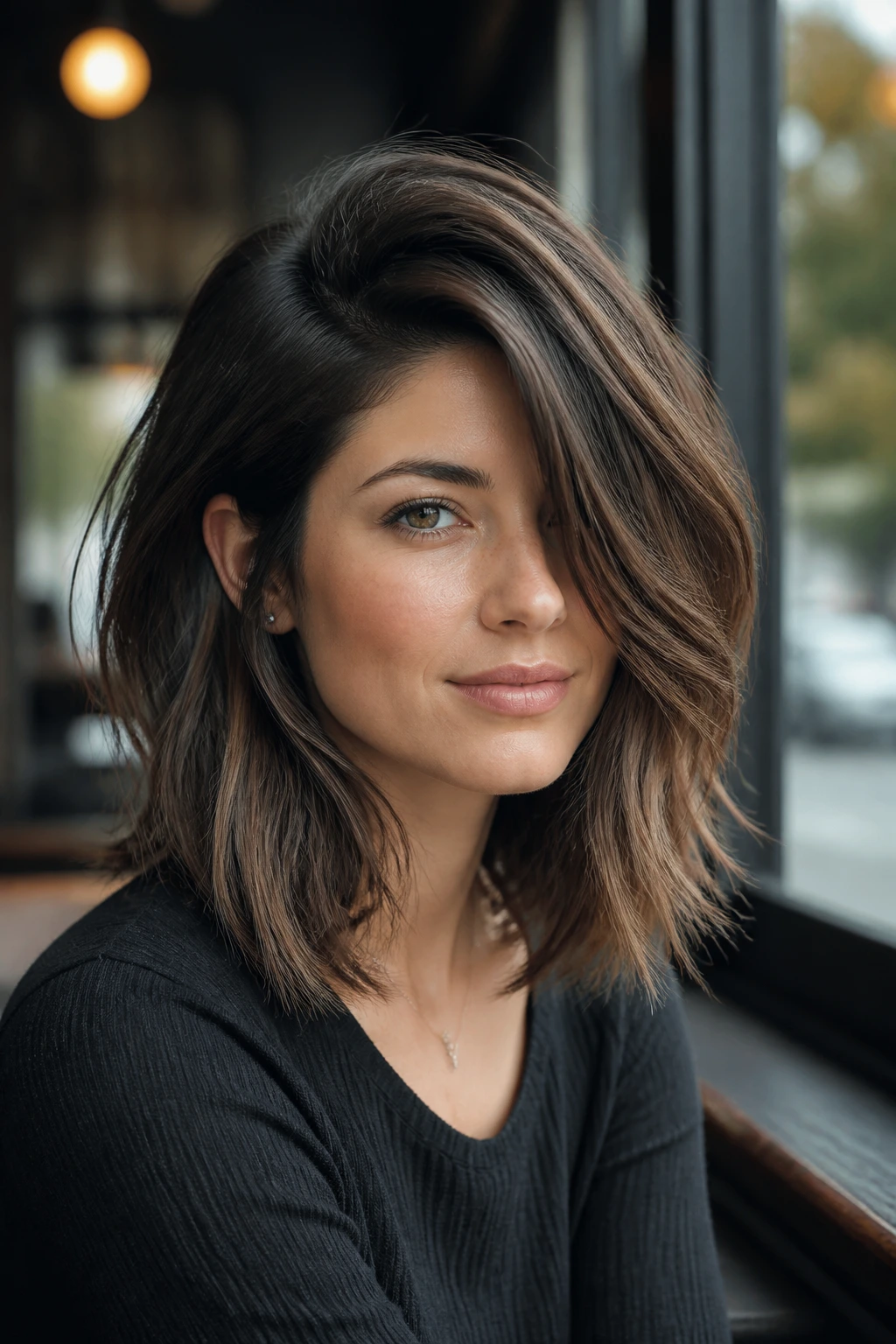
A deep side part changes a shaggy lob more than people expect. Suddenly the cut has a diagonal line, and the layers sweep across the face instead of sitting evenly on both sides. It feels a little more dramatic, but not fussy.
The difference shows up fastest on straight or softly wavy hair. A side part adds lift at the roots and gives the shorter side a neat tuck around the jaw. That works especially well if your hair tends to fall flat at the crown or if a center part makes your face look longer than you want.
This is one of those cuts that looks better when the roots are pushed the opposite way during drying. Use a blow-dryer and your fingers, lift the roots away from the scalp, and let the front fall naturally. A touch of mousse at the crown helps keep the lift without crunch.
If you like a haircut that changes the whole mood of your face with one small styling move, this one has a lot going for it.
7. Wolfish Lob with Longer Crown Layers

A wolf-leaning lob sounds louder than it is. The smart version keeps the length at medium range and lets the crown carry the edge, so the cut has shape without becoming a full mullet.
The Crown Is the Whole Story
The top gets shorter layers, the nape stays longer, and the sides soften the shift so it doesn’t look severe. That creates a messy, lifted silhouette that moves when you run your hand through it. The upper layers should feel airy, not hacked apart.
- Keep the back at or just below the collarbone.
- Let the crown layers start around the temple, not the part line.
- Use a diffuser if your hair waves or curls.
- Finish with a matte paste at the ends, then separate a few pieces.
Watch the balance: too much crown volume can make the head look top-heavy. The good version is shaggy, not puffy.
8. Shattered Lob with Piecey Ends

There’s something a little cooler about a lob that looks broken into pieces on purpose. The ends don’t sit in one straight line. They separate, bend, and fall with a bit of attitude.
That comes from point cutting and careful texturizing through the bottom third of the haircut. The goal is to build movement without stripping out the density. If the hair is medium thick, this shape can make it feel lighter the second it’s blown dry. If the hair is already fine, keep the texturizing modest or the ends will disappear.
This cut likes a small amount of styling paste rubbed between the palms and pressed only into the ends. Not the roots. The roots need air, not product.
It suits people who want their hair to look lived-in even when it’s clean. The finish is a little undone, a little choppy, and that is the whole point.
9. Face-Framing Lob with Bottleneck Bangs

Can a haircut make a face look softer without hiding it? Yes. This is one of the cleanest ways to do it.
The bottleneck fringe opens in the center and lengthens at the sides, while the front layers curve around the cheeks and jaw. On medium length hair, that shape gives you a frame without a wall of bangs. It also grows out with less drama than a heavy fringe, which is a relief if you hate trim appointments.
How to Ask for It
Tell the stylist you want the shortest fringe pieces around the bridge of the nose, with side pieces that brush the cheekbones. Keep the lob itself one to two inches below the chin, then let the front angle down toward the collarbone. That small slope matters.
Use a 1-inch round brush on the fringe and a flat brush on the rest. The front should curve, not curl into a ball. A little root lift at the part keeps the shape from sinking by noon.
10. Rounded Volume Lob
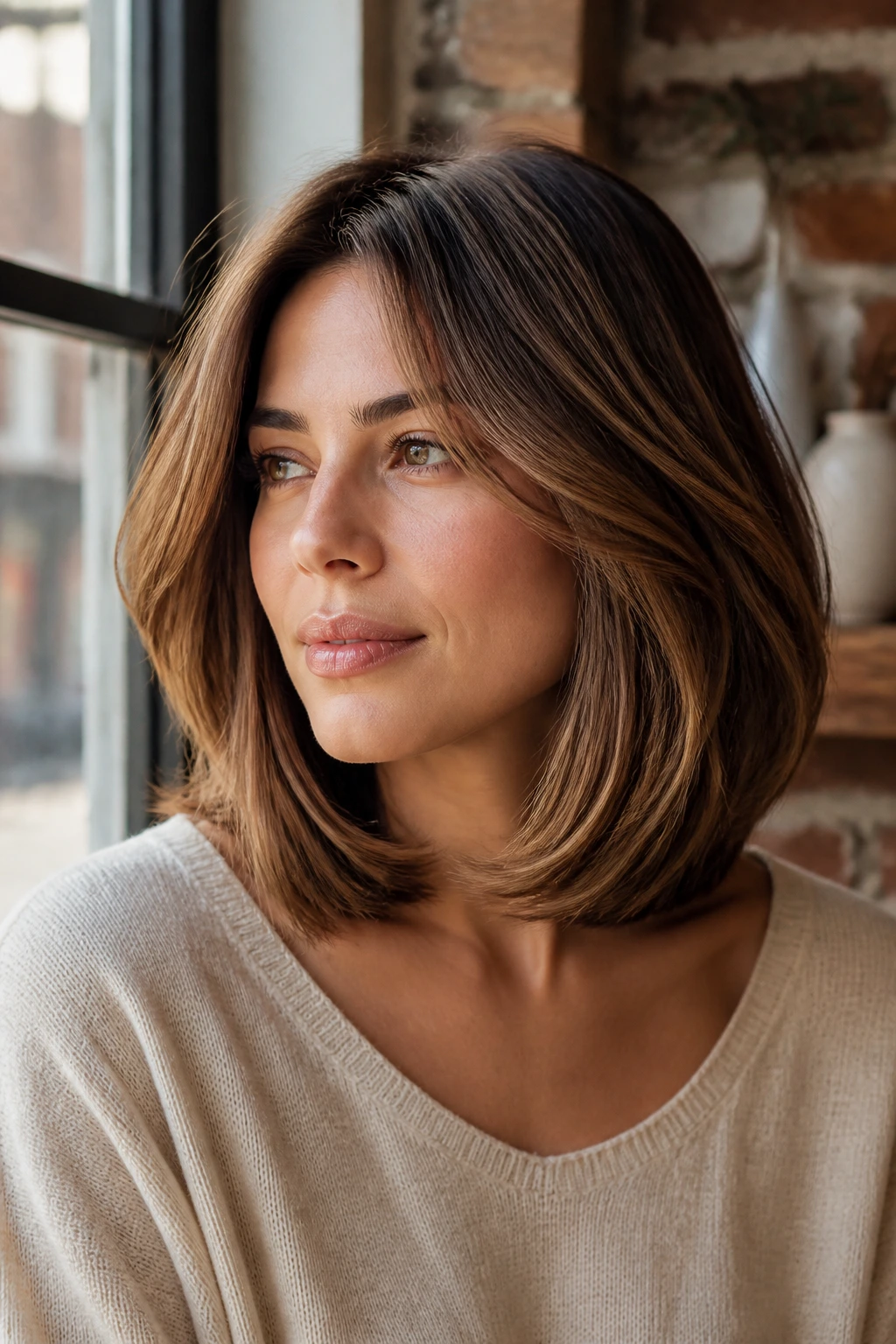
If your hair tends to stick out at the sides, the rounded shaggy lob is a friend. The silhouette tucks inward a little, which makes the whole cut feel neater while still keeping the texture.
It works best when the layers are cut to support a curve rather than a straight drop. The longest pieces can skim the collarbone, while the interior layers follow the head shape. That keeps thick hair from flaring out and gives wavy hair a cleaner finish.
A round brush or large Velcro rollers makes sense here. So does a 2-inch curling iron if you want the bend to hold through the day. Wrap the ends under, not all the way around. You want movement, not spirals.
This cut has a polished feel, but not the stiff kind. It still moves. It just moves in a smoother line.
11. Fine-Hair Shag Lob for Medium Length Hair

Fine hair needs a careful hand here. Too many short layers and you lose the bottom line. Too little layering and the haircut lies flat against the head like it has given up.
The sweet spot is hidden movement inside a fuller perimeter. That means the outer edge stays a little heavier, while the interior gets soft layering to create lift. Think of it as building texture from the middle out, not shaving the whole thing into bits.
A light mousse at the roots helps, but skip thick creams and oils near the scalp. They collapse fine hair fast. The best finish is usually a quick blow-dry with fingers, then a few bends added with a flat iron only where the hair needs direction.
Trim it every 8 to 10 weeks. Fine hair shows split ends sooner than people expect, and once the edges fray, the whole cut starts looking tired.
12. Thick-Hair Shag Lob with Bulk Removal
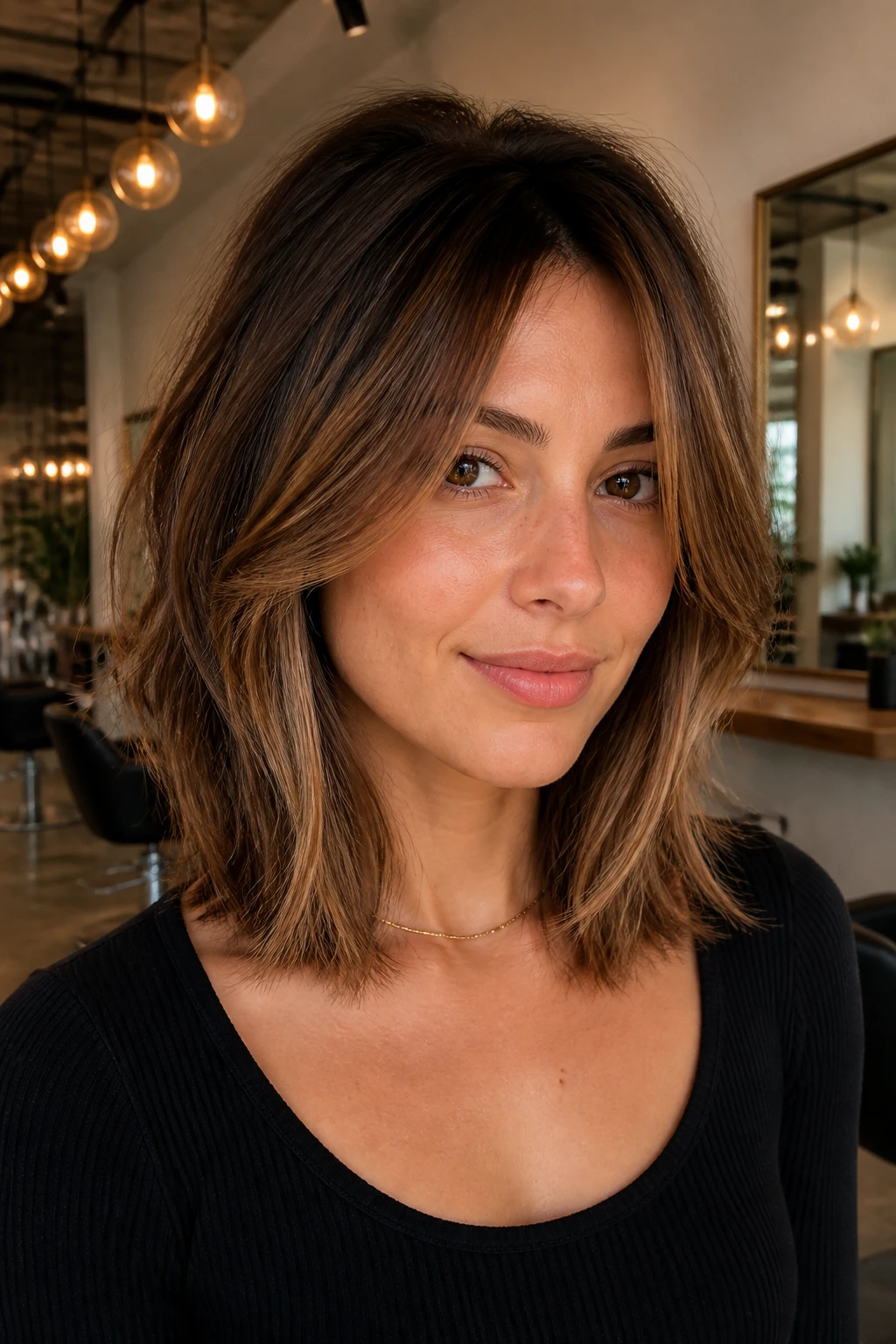
Unlike the fine-hair version, this one needs relief more than lift. Thick hair gets heavy in the middle and swollen at the ends, so the haircut has to remove weight where it matters most.
The best version keeps the length around the shoulders or collarbone and uses internal layering to break up the mass. A stylist should avoid over-thinning the very bottom, because that can leave the ends see-through while the upper section still feels dense. That is a bad trade.
Ask for soft debulking through the mid-lengths and longer face-framing layers that start around the mouth or chin. That gives the haircut room to breathe. It also makes blow-drying faster, which people with thick hair notice right away.
This shape shines when you want movement without losing substance. The hair still feels like hair. It just stops acting like a blanket.
13. Asymmetrical Shaggy Lob
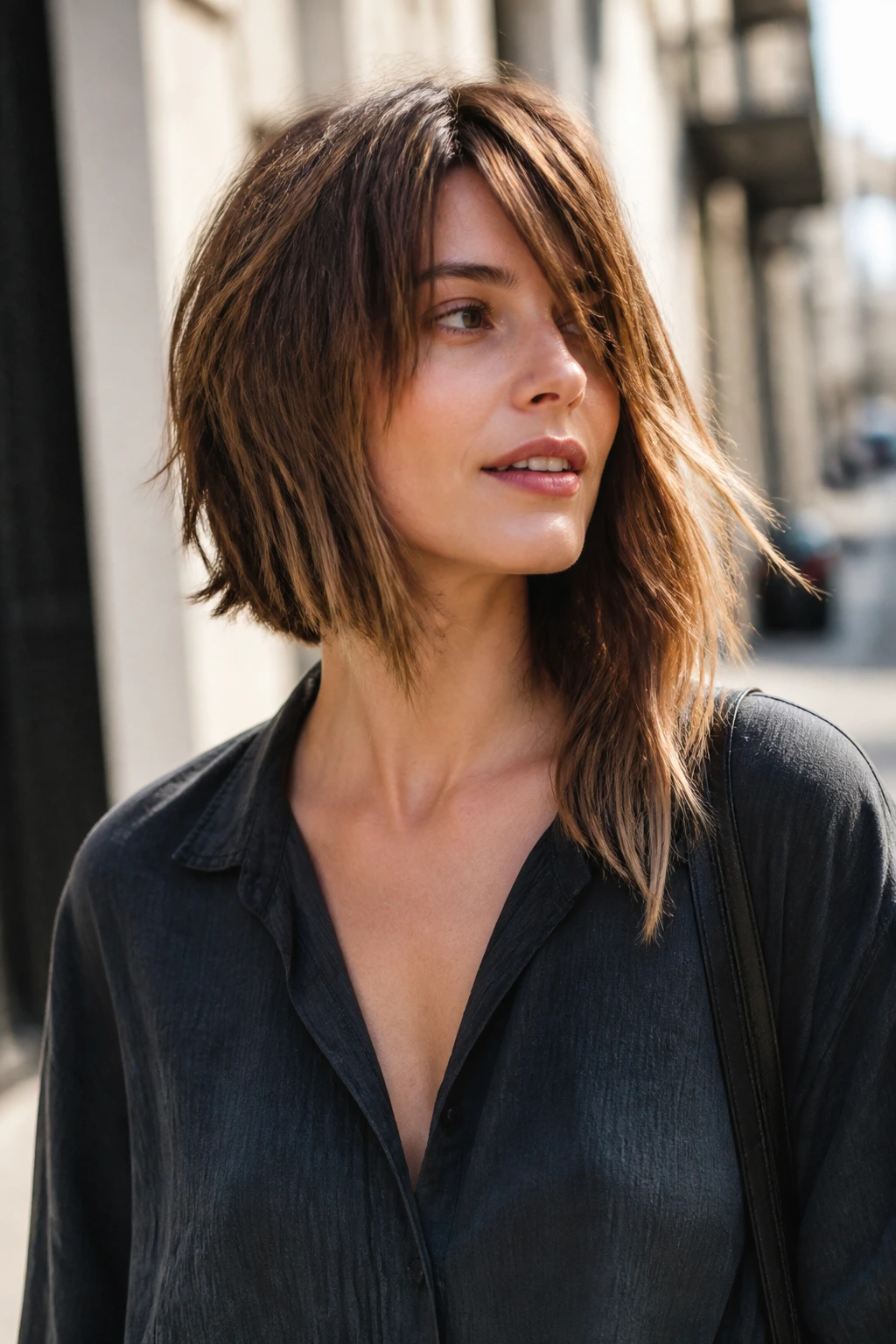
A slight imbalance can make a haircut look fresh fast. One side sits a little longer than the other, and the shag layers keep the difference from feeling harsh.
How the Asymmetry Works
Usually the longer side drops one to two inches lower than the shorter side. That’s enough to catch the eye without turning the cut into a statement piece you’ll regret in two weeks. The texture softens the line, which is what keeps it wearable.
- Ask for the longer side to fall just past the collarbone.
- Keep the shorter side at shoulder level or slightly above.
- Blend the front pieces into the fringe, if you wear one.
- Style with a side tuck on the shorter side for shape.
The best part is the movement. Hair swings differently when you walk, and that little asymmetry keeps the cut from feeling flat. If you like a haircut that has some edge but still reads as grown-up, this one lands well.
14. Side-Swept Fringe Lob

A side-swept fringe can rescue a shaggy lob that needs softness around the forehead. It also plays well with cowlicks, which are annoying in the moment and useful only when a stylist knows how to work around them.
The fringe should start somewhere around the high point of the brow and angle down toward the cheekbone. That gives the cut a sweeping line that blends into the layers instead of sitting on top of them. On medium length hair, this is a smart way to keep the face open while still getting movement near the front.
A 1.5-inch round brush gives the fringe enough bend. Dry it in the direction you want it to live, not the direction it naturally fights. That sounds obvious, but it saves a lot of frustration.
This version feels a little softer than curtain bangs and a little less committed than full fringe. Good middle ground. Sometimes that’s exactly what the haircut needs.
15. Retro ’70s Shag Lob
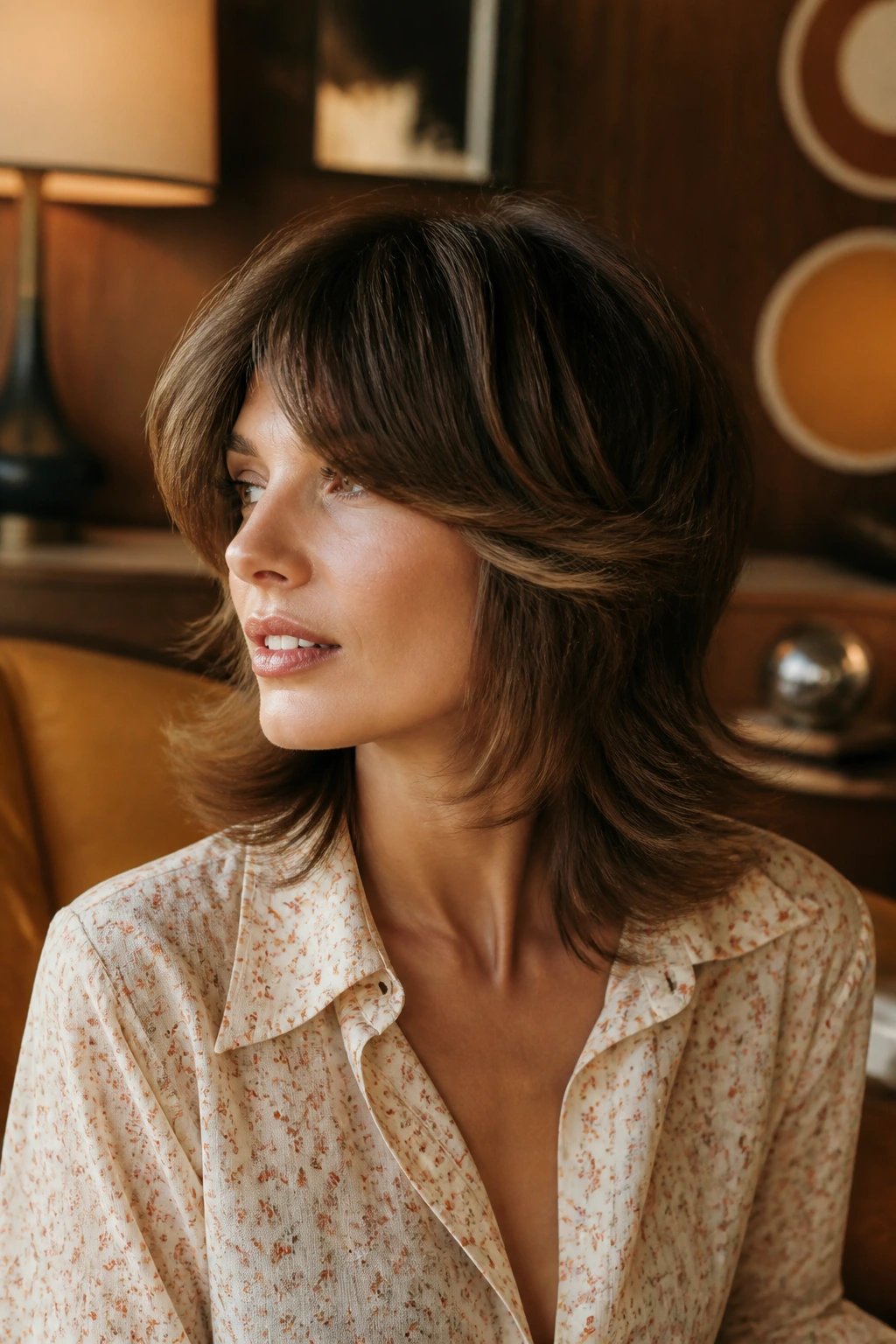
Does this cut nod to the old shag without looking like a costume? Yes, if the layers are kept long enough and the fringe stays feathered.
The retro version leans on crown layers, cheekbone framing, and a center or off-center part. The ends flip just a little, especially when they’re styled with a round brush. It has that airy, feathered swing that people like in old photos, only cleaner at the base.
How to Wear It Now
Keep the length between the shoulders and collarbone. That stops the cut from getting too nostalgic and keeps it in lob territory. Curtain bangs work better than a heavy blunt fringe, because they blend with the layers instead of cutting across them.
A light blowout cream and a medium round brush are enough. You don’t need stiff volume. You need soft lift, then movement through the ends. If the flip gets too perfect, it starts to look dated fast.
16. Minimalist Shag Lob with Soft Perimeter
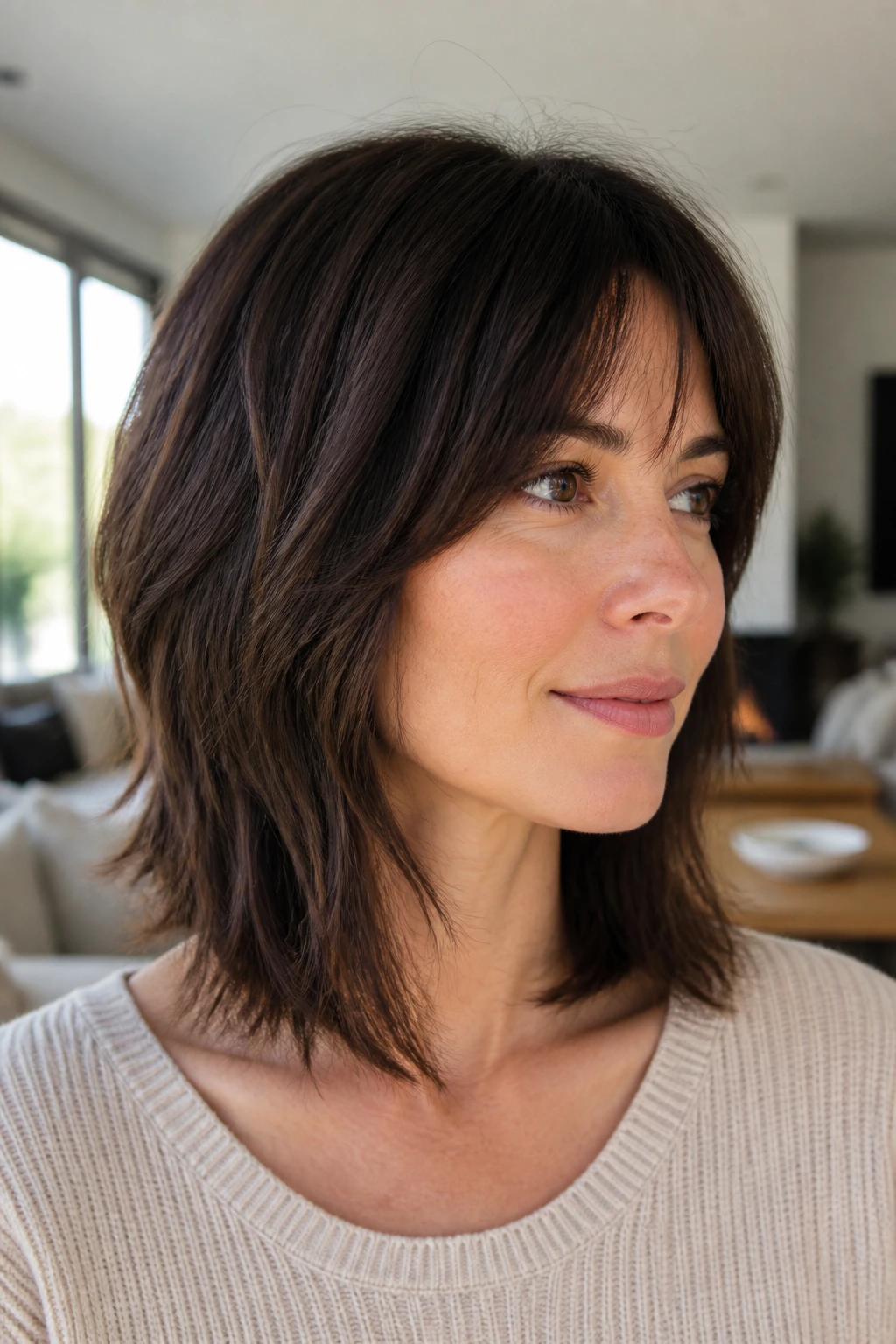
A lot of shag cuts go hard on texture. This one does not. It keeps the perimeter smooth, then adds just enough layering inside to stop the haircut from feeling flat.
That makes it a strong choice for people who want texture but still like a clean outline. The ends should sit in one readable shape, while the inner layers create movement when the hair swings. It’s subtle. Maybe almost boring in the chair. Then it dries, and the shape makes sense.
This works especially well if you wear your hair down most days and do not want to restyle it every morning. A mist of leave-in spray, a quick rough-dry, and a bit of finger-twisting near the front are usually enough.
The haircut is quiet, but not plain. That difference matters.
17. Flipped-Ends Shag Lob

Flipped ends make a shaggy lob feel playful without turning it into a throwback costume. The trick is keeping the rest of the haircut loose so the flip looks like a choice, not a gimmick.
Ask for ends that are light enough to turn outward when brushed or ironed. The layers should be soft through the mid-lengths, with the perimeter sitting around the collarbone. A flat iron on a low setting can flick the last inch away from the face or out at the shoulders.
Use a heat protectant. Seriously. Flipped ends are cute, and fried ends are not.
This style suits straight or slightly wavy hair that tends to hang too close to the head. The flip adds movement instantly, and the shag layers stop the finish from looking too neat. It’s a small change, but it changes the whole read of the cut.
18. Collarbone-Grazing Shag Lob
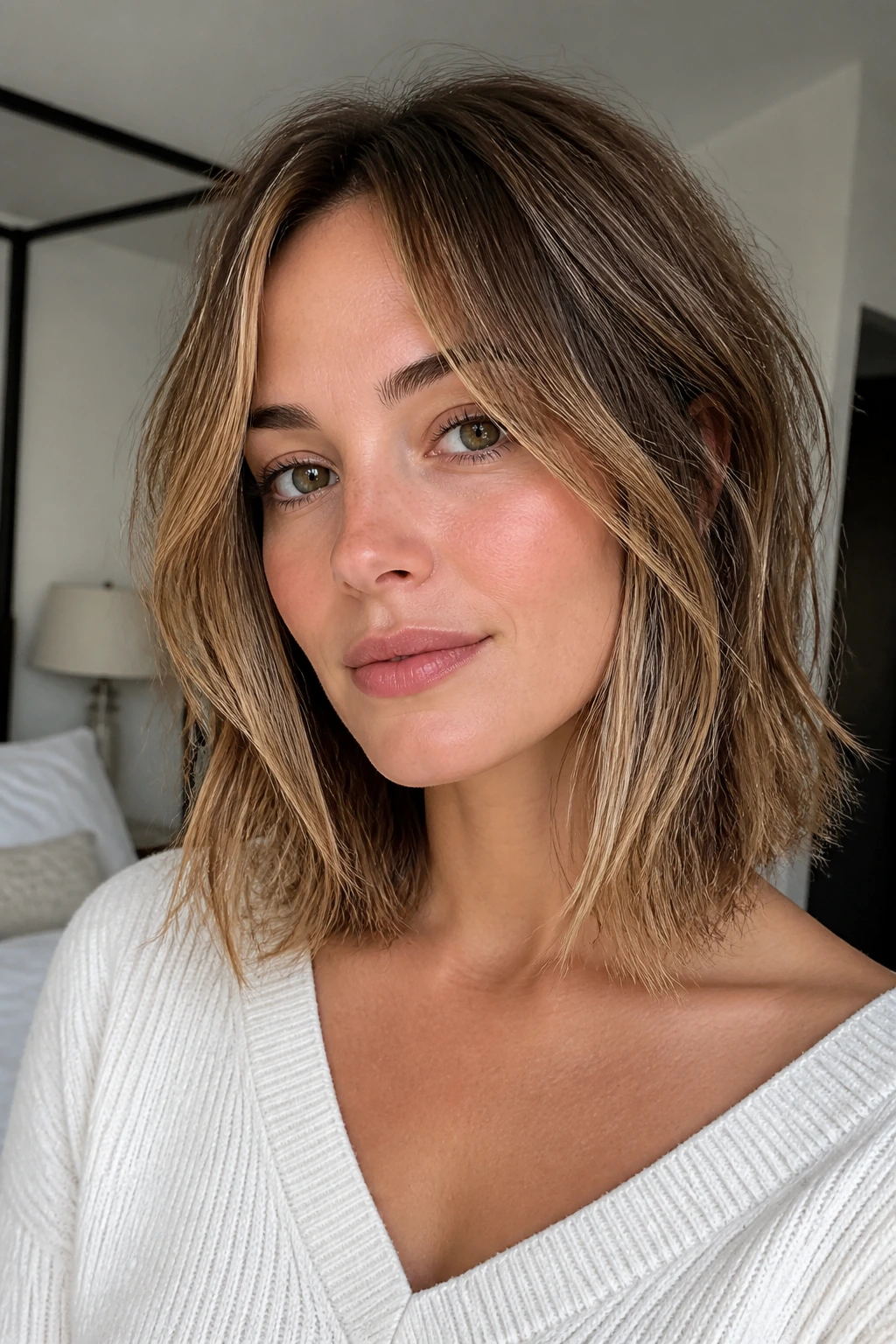
A collarbone-grazing lob gives the shag room to breathe. The length is long enough for waves, bends, and tucked-under ends, but short enough that the layers still show up.
That’s why it works so well for people in the middle ground — not ready for a short cut, not interested in heavy long hair. The front can angle slightly longer, while the back stays close to the collarbone. That slight difference keeps the hair from feeling boxy.
This shape also grows out well. When the layers soften, it still looks like a finished haircut instead of an accident. That matters more than people admit.
If you want a cut that can live in a claw clip one day and look styled the next, this one is practical. Not glamorous. Practical. And that is a compliment.
19. Tousled Blowout Shag Lob

A tousled blowout gives a shaggy lob that cushy, lifted finish people often try to fake with too much curling. The difference is in the prep. You need air at the roots and bend through the mid-lengths, not curls pinned into place.
The Blowout Shape
Start with mousse at the roots and a heat protectant through the lengths. Rough-dry until the hair is about 80 percent dry, then section it and use a medium round brush. Pull each section up and away from the head for lift, then wrap only the last few inches around the brush.
- Use 2 to 3 clips at the crown while the front cools.
- Finish with a light mist of flexible hairspray.
- Break the wave apart with your fingers once it cools.
- Keep the ends soft, not polished.
The beauty of this version is that it feels styled without feeling stiff. If the blowout falls a little by the next day, it often looks even better.
20. Low-Maintenance Wash-and-Go Lob
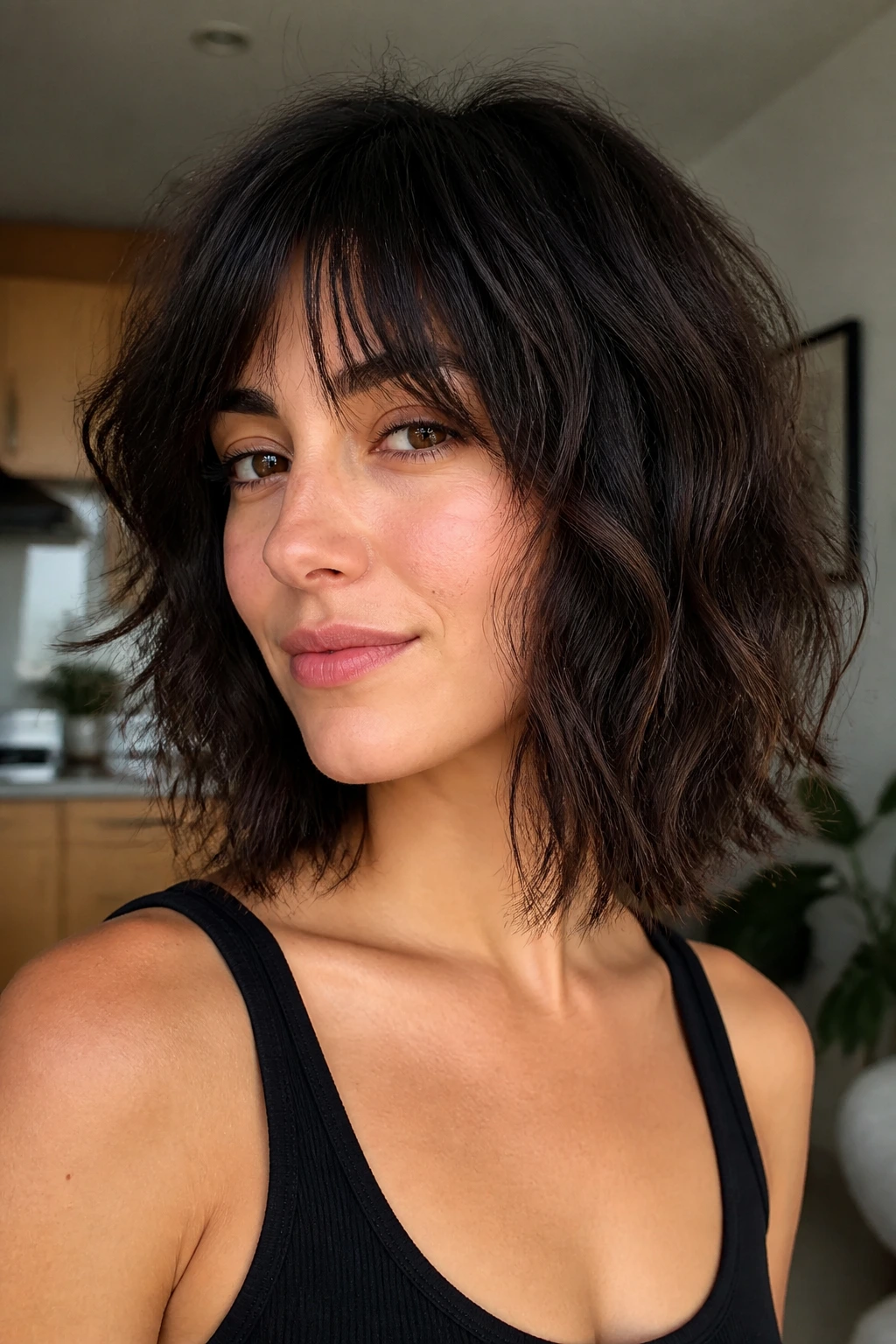
This is the shaggy lob for people who do not want to wrestle their hair before coffee. The shape is built to air-dry with texture already in it, so the routine stays short.
The cut should have enough internal layering to stop the ends from hanging like a sheet, but not so much that it needs daily repair. On wavy hair, a little cream and a few scrunches are usually enough. On straighter hair, a touch of salt spray can give the ends some life, though too much will make them dry and crunchy.
The real win is consistency. The haircut should look decent on a clean air-dry day and a second-day bend day. That means the layers have to be placed with restraint. No dramatic chopping. No over-texturizing.
This is the one I’d suggest to anyone who wants texture but hates a complicated morning.
21. Mullet-Inspired Shaggy Lob

A small dose of mullet energy can make a lob feel far less predictable. The crown gets a little shorter, the back keeps some length, and the sides bridge the gap so the shape stays wearable.
How to Keep It Wearable
Do not let the top get too short. That is where this cut can go wrong fast. The goal is a soft disconnect, not a full throwback. The front should still frame the face, and the back should fall around the shoulders, not past them.
- Keep the nape longer than the crown, but not sharply separated.
- Add texture around the temples to soften the transition.
- Style with a matte cream or a light pomade.
- Use your fingers to separate the top instead of a brush.
This version suits people who like some edge in their haircut and do not mind a little personality in the silhouette. It is not the quietest option on the list. That’s the point.
22. Internal-Layer Lob

Some shag cuts scream texture from every angle. This one whispers it. The movement lives inside the haircut, so the outside line still looks calm.
That makes it especially useful for people who need versatility. Wear it smooth, and it reads as a neat lob. Add a bend, and the hidden layers start showing up around the mid-lengths. It’s a smart cut for someone who changes styling moods a lot.
The stylist should keep the perimeter clean and use internal layers to build lift. Think of slicing a little air into the middle of the haircut without stealing the edge. The result is softer than a chopped shag and easier to grow out than a heavily layered one.
If you like a haircut that behaves in more than one way, this is a clever option. It’s not flashy. It is useful.
23. Soft Blunt Shag Lob
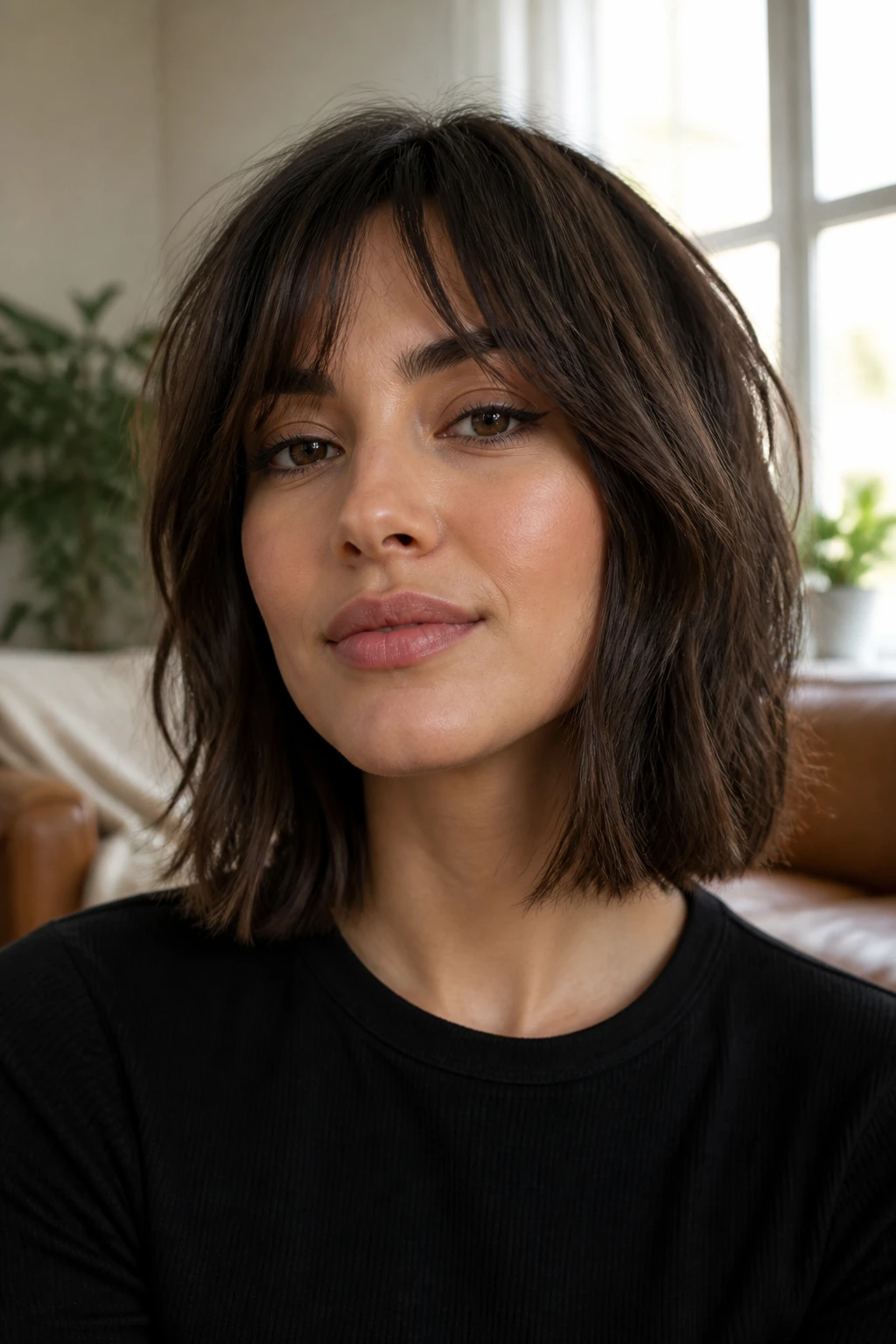
A blunt perimeter with shag texture inside sounds contradictory, and that’s exactly why it works. The solid edge gives the haircut weight, while the internal layers keep it from feeling heavy.
This is a good pick if your hair is straight or loosely wavy and tends to lose shape halfway through the day. The blunt line keeps the silhouette clean, and the shaggy interior gives you movement when you bend the ends or tuck one side behind your ear.
It also photographs well in real life, which is rare enough to mention. The line is clear, but the texture keeps it from looking flat. That balance is useful if you want a haircut that can swing from polished to messy with only a few minutes of styling.
Ask for the blunt edge to sit around the shoulders and the layering to stay mostly below the ears. That keeps the shape intact.
24. Triangle-Balancing Shag Lob
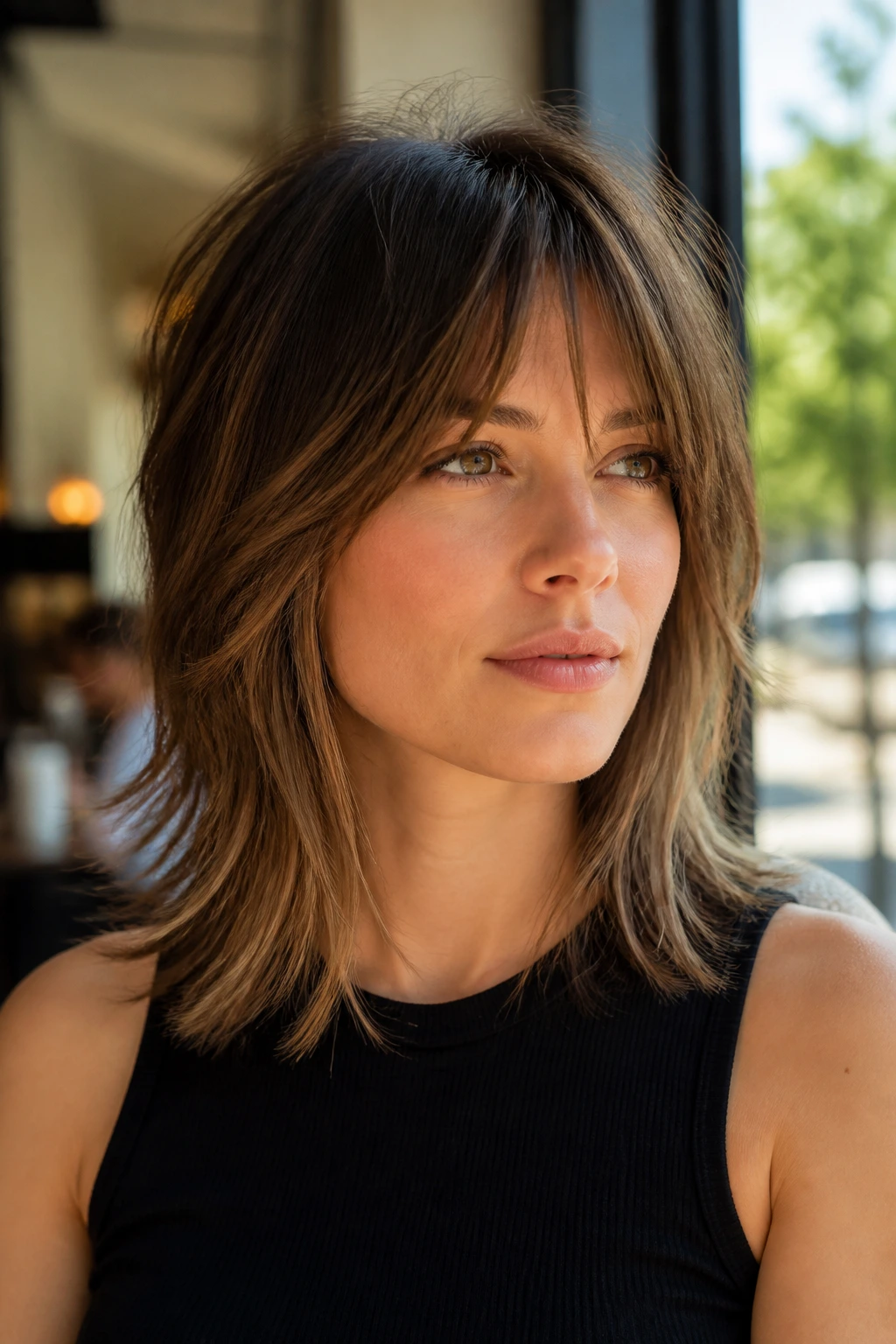
A triangle shape happens when the bottom of the hair gets wider than the top. It’s common on thick waves and on cuts that are too blunt at the ends. This shaggy lob fixes that by lifting weight out of the lower half.
The idea is simple: keep the crown and upper sides lively, then soften the width at the bottom with longer layers and a cleaner edge. The haircut should feel narrower near the ends and fuller near the top. That gives the hair a more balanced fall.
This cut is especially good if your hair expands in humidity or looks dense around the jaw. A stylist should use layering to reduce bulk without turning the ends wispy. That part matters. Wispy ends can make thick hair look tired.
If you’ve ever looked in the mirror and thought the shape got wider as it dried, this is the version to try.
25. Shoulder-Skimming Lob with Long Curtain Layers
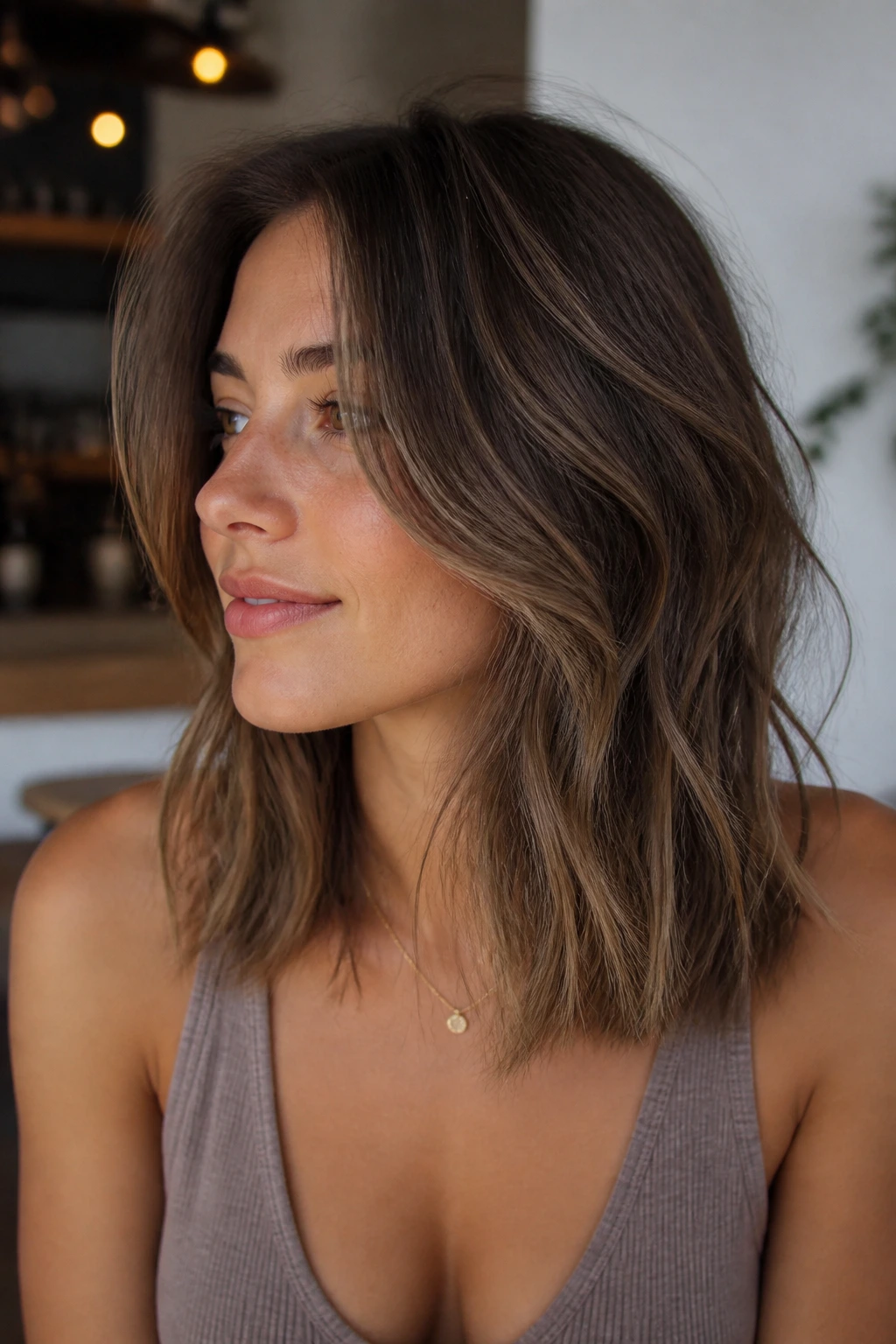
This one sits between a lob and a grown-out shag, which is part of why it’s so easy to wear. The length hits the shoulders or just below them, and the long curtain layers keep the front from feeling square.
The Shape in Motion
Because the layers stay long, the haircut still has weight. That makes it easier to tuck behind the ears, clip back, or wear half-up without pieces sticking out in weird places. The curtain sections should start around the cheekbones and fall gradually into the body of the cut.
- Keep the ends grazing the shoulders.
- Blend the front layers into a center part or soft off-center part.
- Use a 1.5-inch iron for loose bends.
- Refresh the front with dry shampoo at the roots when it starts to fall.
This is a strong choice if you want to grow your hair a little while keeping shape. The cut looks intentional during the awkward in-between phase, which is half the battle.
26. Razored Mid-Length Lob

The razor work here lives in the middle, not just the edges. That means the interior gets lightened and separated so the haircut moves when you shake it out.
That’s different from a razor-cut perimeter, which can sometimes make the outline too thin. In this version, the outer shape still has enough presence, but the inside feels freer. It suits wavy hair that wants definition and straight hair that needs a little grit.
Use a texturizing spray sparingly. If the haircut already has enough movement, too much product can make the layers cling together and look stringy. A small amount at the mid-lengths is plenty.
This is the type of cut that looks better the second day. Hair never sits exactly the same, and the loosened texture gives it a lived-in quality that can be hard to fake from scratch.
27. Airy Texture Lob for Straight Hair
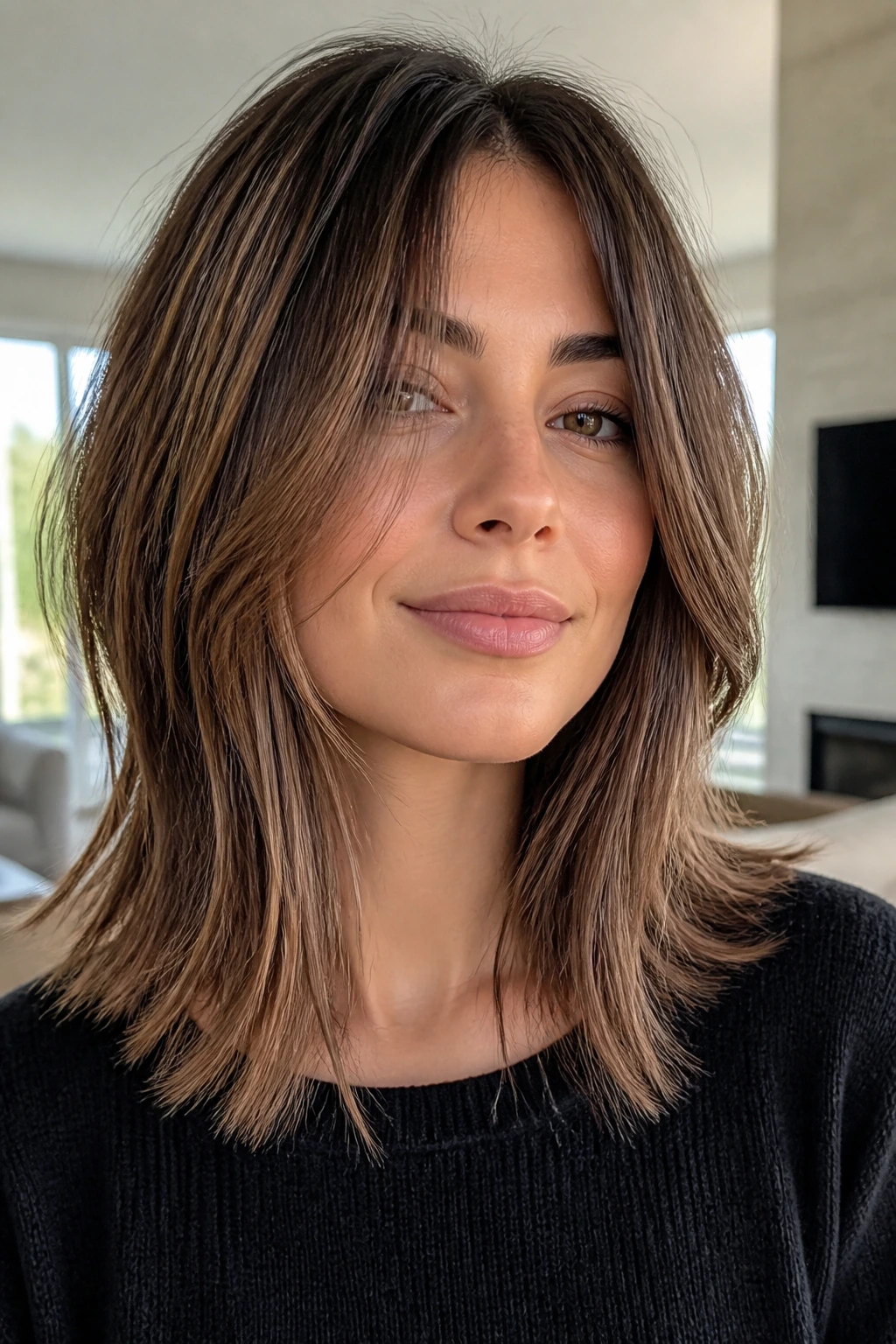
Straight hair needs texture with a purpose. If the layers are too random, it falls flat. If they’re too short, the ends stick out like they’re arguing with the rest of the haircut.
The answer is soft, controlled movement through the front and lower middle sections. Keep the perimeter around the collarbone, then add bends that show up when the hair is tucked, flipped, or swept back. A flat iron with a slight wrist turn is often enough.
How to Style It
A smoothing cream at the mids, a heat protectant, and a light spray at the roots are the basic lineup. Dry the hair in sections, then bend only a few pieces around the face. You do not need every strand waving at once.
The cut works because it gives straight hair a little motion without pretending it has natural waves it doesn’t. That honesty makes it look better. Strange, but true.
28. The Shaggy Lob That Grows Out Well for Medium Length Hair

Not every haircut needs to be dramatic on day one. This is the version that looks good at the salon, then keeps looking good six, eight, even ten weeks later if the shape is cut with restraint.
The layers stay long enough to soften as they grow, and the perimeter keeps enough weight that the lob doesn’t collapse. That means you can wear it textured, tuck it behind one ear, or let it air-dry and still get a real shape out of it. If you want shaggy lob haircuts for medium length hair that won’t punish you for missing a trim by a week or two, this is the safest bet on the list.
A good growth-out cut needs three things: a clean outline, layers that don’t start too high, and a fringe that can slide into the rest of the haircut. Get those right, and the grow-out phase feels like part of the plan instead of damage control.
Bring two photos to the stylist — one for length, one for texture. That usually tells the story better than a long explanation ever does.
