



Fine hair can go limp fast. A messy blonde bob haircut fixes that better than a lot of longer cuts because the shape sits close to the head, the ends land in a clean place, and the blonde dimension gives the eye something to follow. That combination matters more than people think.
The trick is not just cutting it shorter. Fine hair needs structure without heaviness, and that usually means a perimeter that holds its line, a little movement inside the cut, and color that creates lift instead of flattening everything into one pale sheet. Too much thinning can backfire. Too much length can drag the whole look down. Too much product can make it sticky by noon.
Blonde helps here because light and shadow do half the work for you. Beige ribbons, root shadow, baby lights, and soft highlights all make the bob look fuller than it really is, especially when the cut has a bit of mess in it — not chaos, just that slightly undone finish that keeps the hair from looking too neat or too thin.
The sweet spot is different for every face, but the logic stays the same: keep enough shape to make the hair feel dense, then add enough texture to stop it from lying flat. That balance is where the good bobs live, and the first one starts with the simplest version of all.
1. Airy Chin-Length Bob with Soft Ends
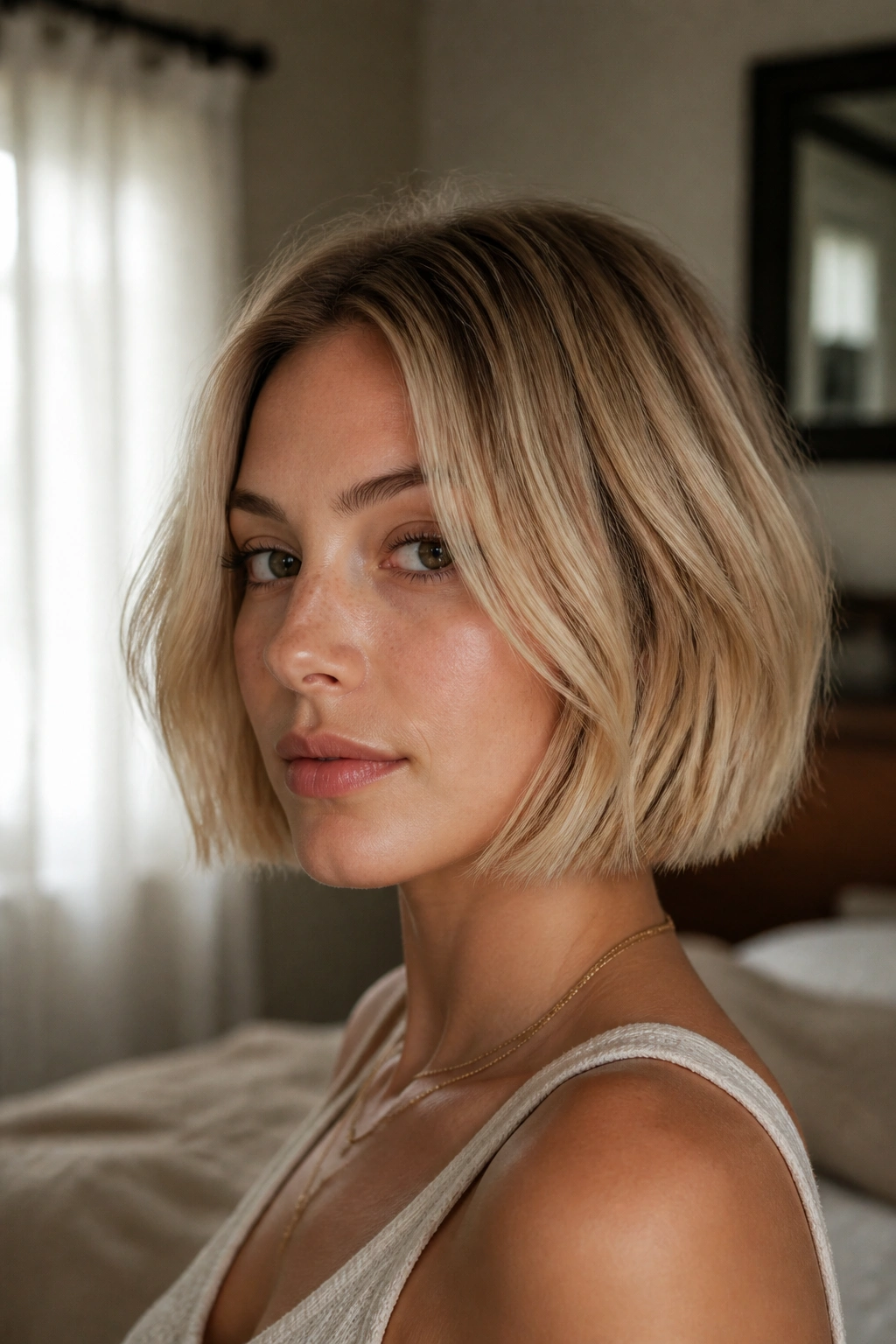
This is the bob I reach for when fine hair needs volume without looking overworked. The cut lands right at the chin, which gives the hair a strong line, but the ends are softened just enough to keep the shape from feeling boxy. In blonde, especially a beige or honey tone, it reads light and lifted instead of stiff.
Why It Works for Fine Hair
The chin-length perimeter makes the hair look denser than a longer lob would. Fine strands tend to separate when they get too long, and a shorter edge stops that from happening so fast. A little internal texture helps the ends move, but the weight stays where you want it.
- Ask for a clean chin-grazing line with very light point cutting at the ends.
- Keep layers minimal through the top so the crown does not collapse.
- Style with a 1-inch curling iron, then brush the wave out with your fingers.
- Finish with a dry texturizing spray, not heavy oil.
Best tip: blow-dry the front sections away from the face for a small lift at the cheekbones.
2. French Bob with Micro Bangs

Short, cheeky, and a little bit sharp — that is the charm here. A French bob with micro bangs gives fine hair a strong outline, and the short fringe adds personality without dragging the rest of the cut down. On blonde hair, the whole thing can look expensive in that effortless, barely-done way people always try to copy and usually miss.
The key is keeping the bob slightly undone. If the lines get too polished, the hair can look thinner because every strand sits in plain view. I like this cut best with a soft champagne blonde or a pale wheat tone, since the color keeps the fringe from feeling heavy.
Ask for bangs that skim above the brows and a bob that sits between lip and chin length. Anything shorter starts to feel severe.
3. Blunt Bob with Hidden Internal Layers
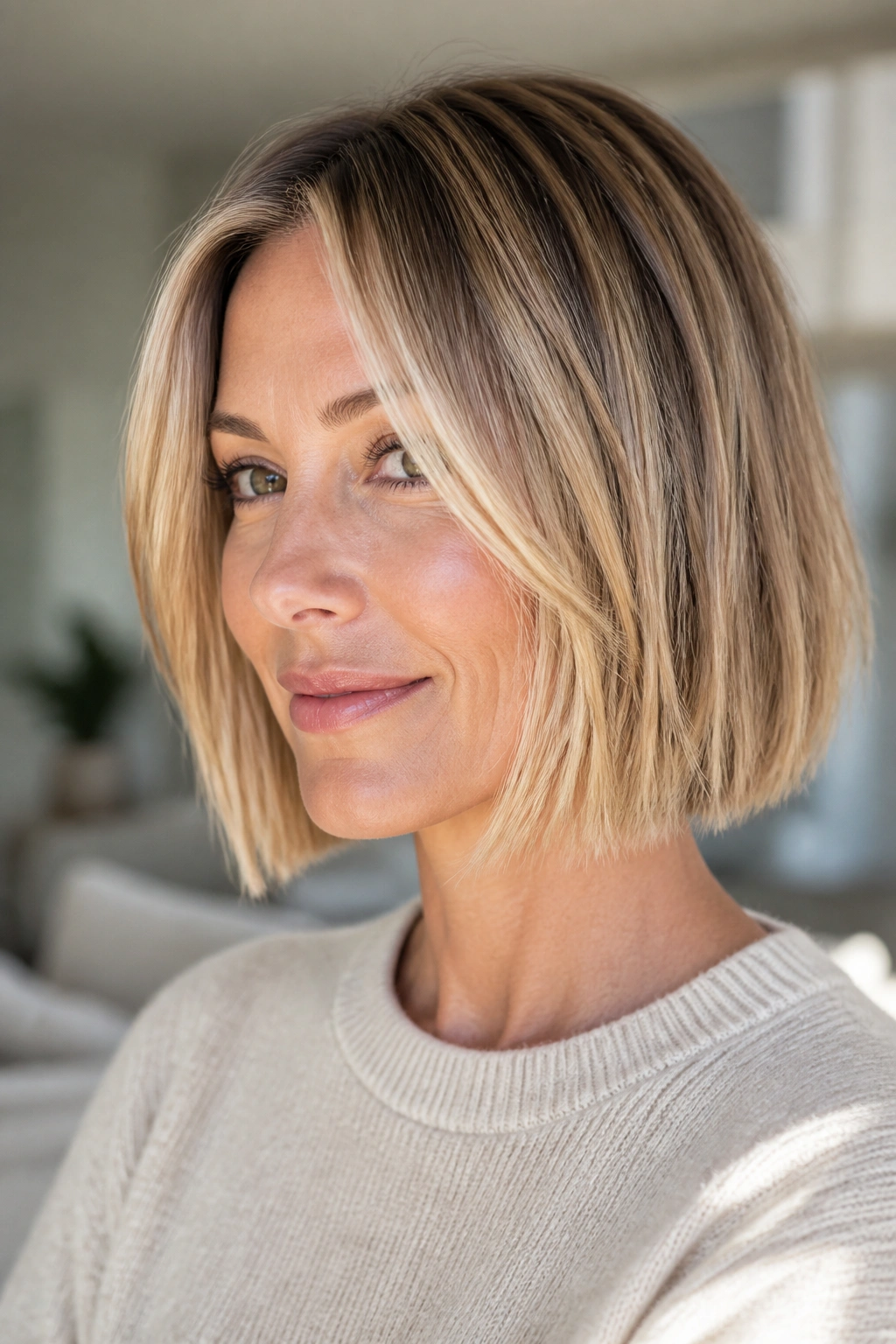
Can a blunt bob still look messy? Absolutely. In fact, that’s often the best kind for fine hair. The outside line stays solid, but the stylist removes a whisper of weight from the inside so the hair bends instead of hanging like a sheet.
That hidden structure matters. Fine hair usually looks fuller when the perimeter stays blunt, because the eye sees a thicker edge. Inside the cut, a few carefully placed snips can stop the shape from puffing at the sides or falling flat at the crown. Blonde highlights around the face make it look even denser.
What to Ask For
- A blunt bob at jaw or just below jaw length
- Internal softening only, not aggressive layering
- A neutral blonde with subtle dimension through the midlengths
- A low-maintenance finish that still moves when you shake it out
Skip razor-heavy versions if your hair is already delicate. They can fray the ends faster than you expect.
4. Jaw-Length Bob with Side-Swept Fringe
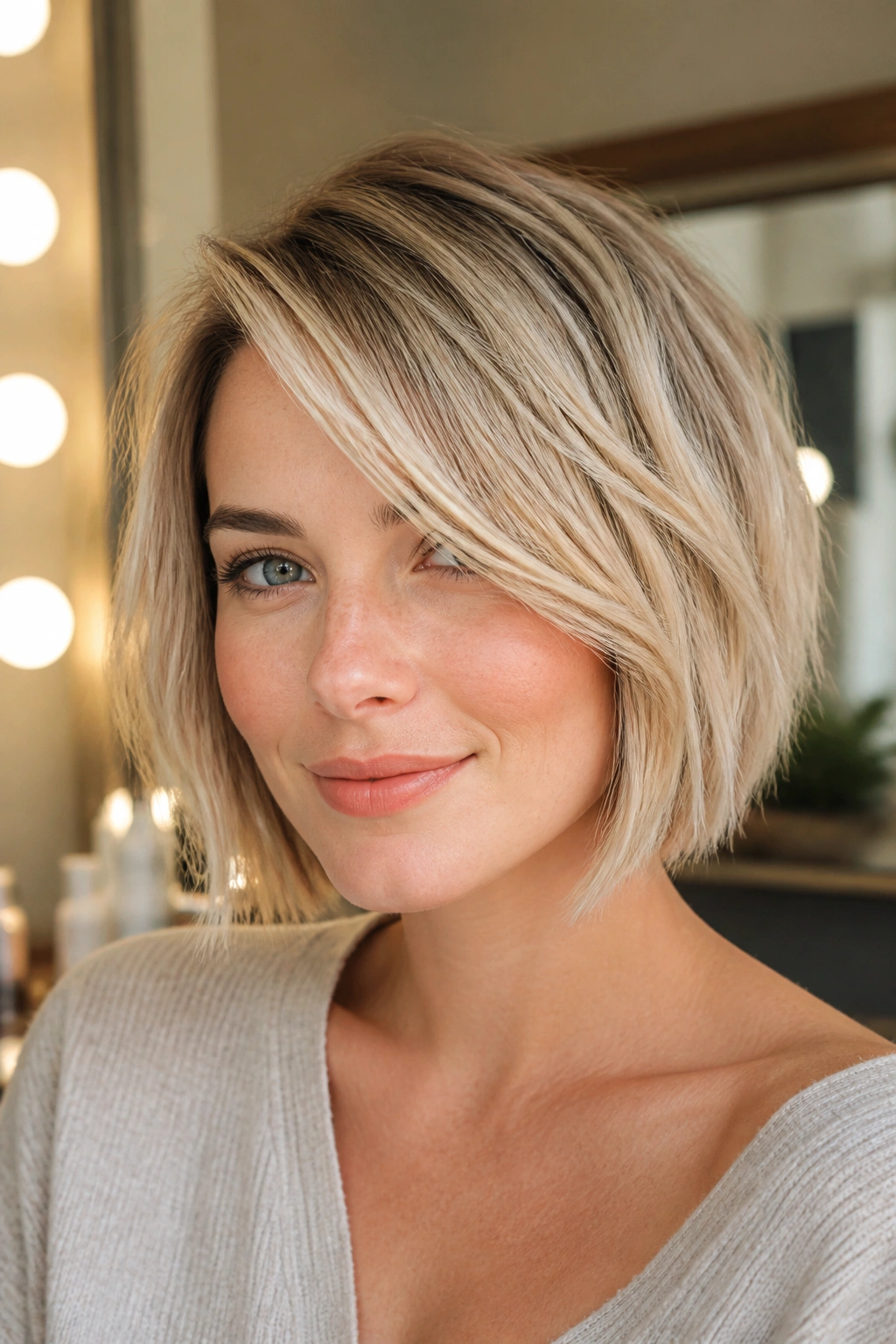
A side-swept fringe changes the whole mood of a jaw-length bob. Instead of splitting the face straight down the middle, the hair lands diagonally across the forehead and gives fine hair a little more presence right where you want it. The cut feels soft, but not fussy.
It works especially well if your hair lies flat at the crown. The diagonal fringe pulls attention upward and sideways, which creates the sense of lift without making you backcomb half your head. A buttery blonde or soft ash blonde keeps the fringe from feeling heavy.
I like this one for people who want movement but hate a full curtain bang. It gives you coverage, shape, and a bit of that messy finish without committing to a lot of styling every morning.
5. Collarbone Lob with Balayage Waves
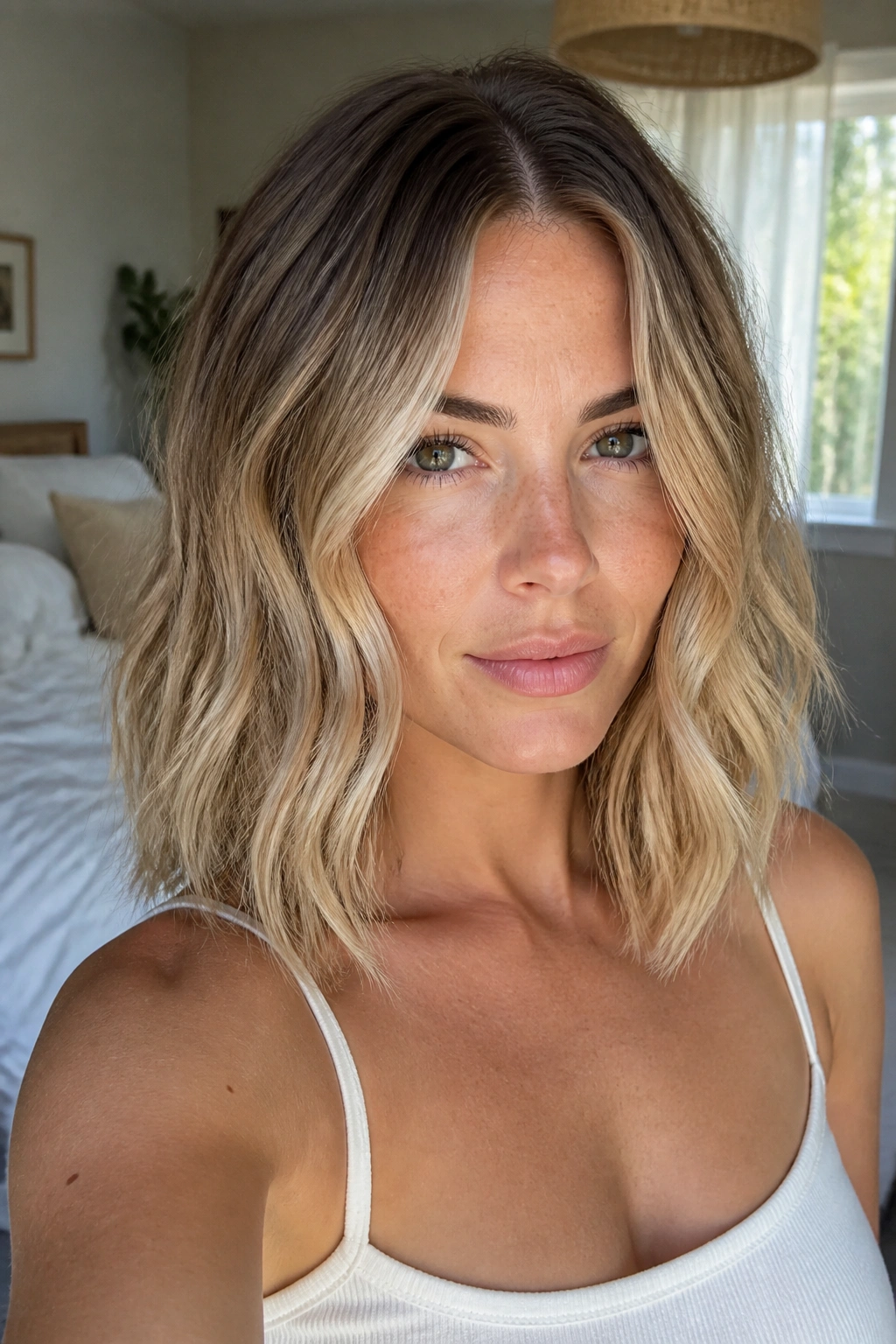
If you are nervous about going too short, start here. A collarbone-length lob gives fine hair enough length to wave, tuck, and bend, while still keeping the silhouette light. The blonde balayage does some sneaky work too — darker roots, lighter mids, and soft ends create the illusion of thicker hair.
This is the cut that forgives a bad blow-dry. Really. You can rough-dry it, clip in a few bends with a flat iron, and let the ends stay slightly uneven. That little bit of mess is the point. A clean, uniform wave can make fine hair look styled but flat; a looser bend looks more alive.
Styling Notes
- Use a mousse at the roots before drying.
- Wrap only the midlengths around a wave iron or curling wand.
- Leave the last inch of the hair out so the ends stay light.
- Break up the wave with a drop of lightweight serum on the fingertips.
6. Scandi Center-Part Bob

The Scandi bob is the cool cousin in this group. It sits near the jaw, usually with a center part and soft, straight-to-slightly-bent ends. On fine blonde hair, the whole effect feels clean but not severe, which is harder to pull off than it sounds.
What makes it work is restraint. No giant layers. No chunky texturizing. Just a smooth outline, cool blonde tones, and enough movement at the bottom to keep the cut from looking frozen in place. If your hair has a soft natural wave, this cut is even easier. If it’s pin-straight, a round brush at the ends is enough.
I would not overload this style with product. A light styling cream, a quick blow-dry, and a soft bend at the front are enough. Anything heavier makes the minimalist shape lose its charm.
7. Choppy Bob with Curtain Bangs
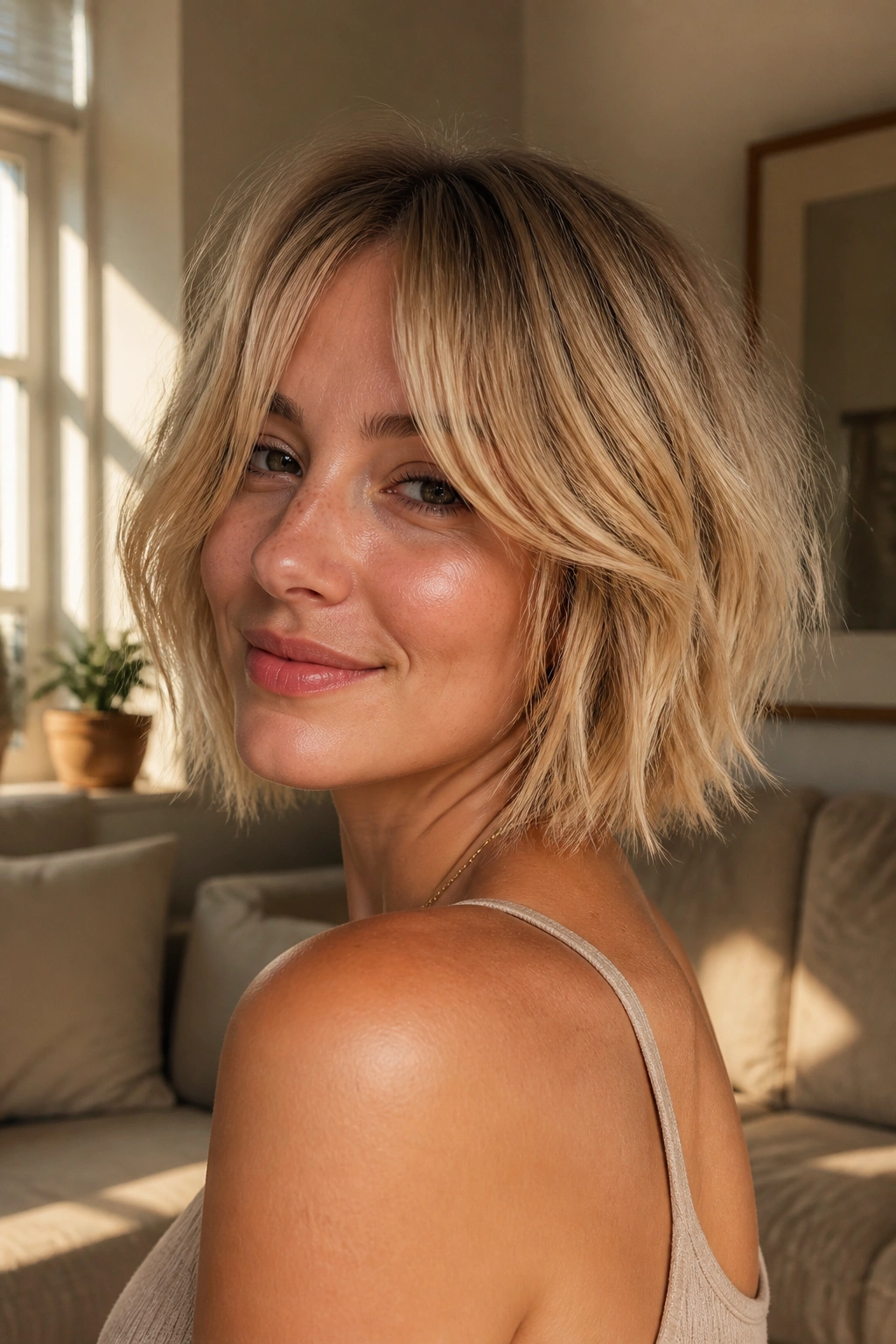
Curtain bangs are one of the easiest ways to make a blonde bob feel fuller. They split the forehead open, frame the face, and blend into the sides so the whole cut looks wider and more textured. Fine hair tends to benefit from that extra framing, especially if the front is the flattest part.
The bob itself should stay choppy but controlled. You want pieces that move, not shredded ends that look thin in daylight. A warm blonde with creamy highlights keeps the fringe from disappearing into the rest of the cut. If your hair is very fine, ask for the bangs to start a little farther back on the head so they have enough body.
Why This Cut Stands Out
The fringe does the visual heavy lifting.
The layers do not need to be dramatic. They just need to bend with the head shape and avoid a hard shelf at the bottom.
8. Rounded Bob with Feathered Crown
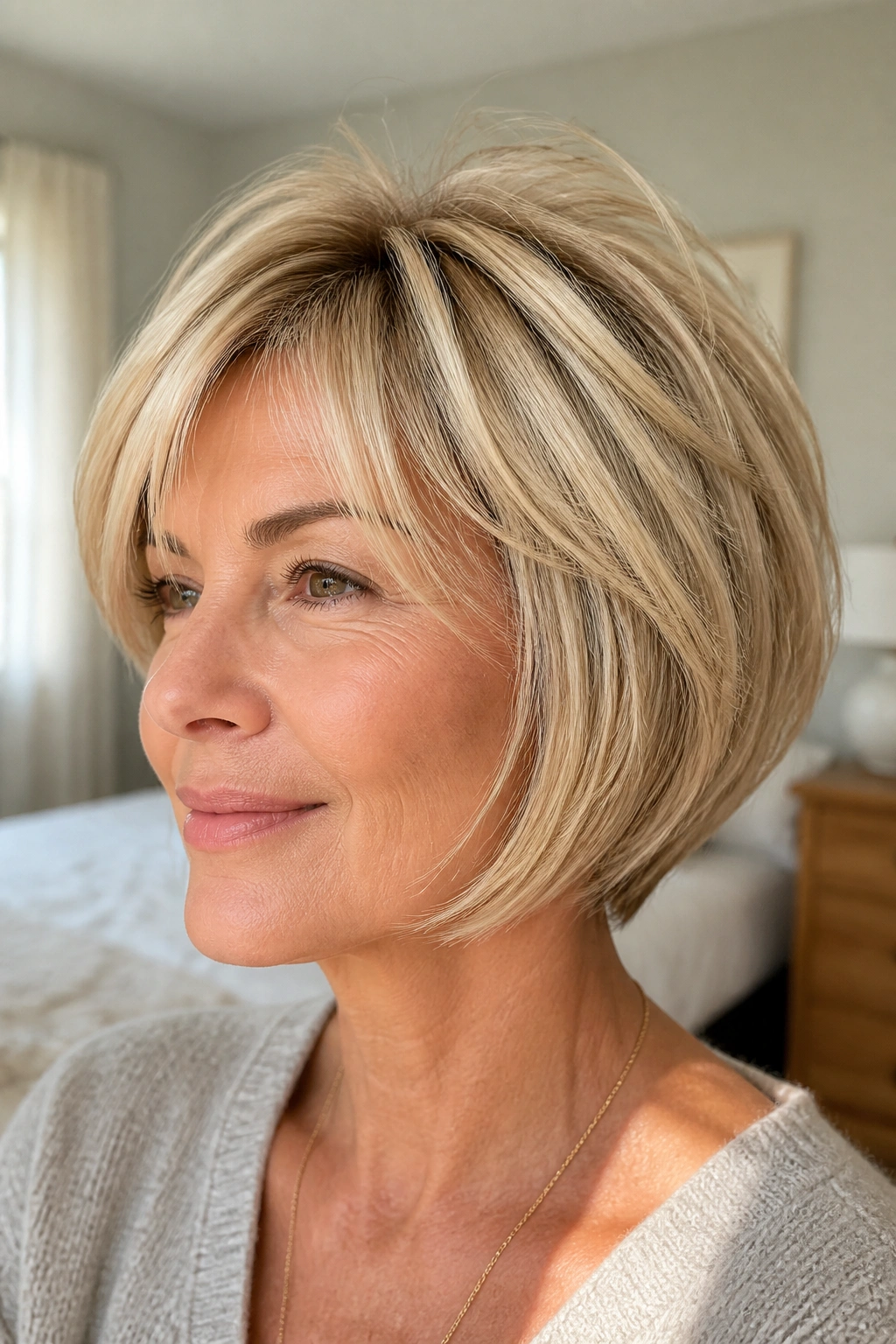
A rounded bob is underrated for fine hair because it gives the illusion of width at the crown and sides. The shape curves gently inward at the ends, which makes the hair feel fuller than a straight, flat line would. Feathering the crown keeps it from becoming helmet-like, and that’s the part people often miss.
On blonde hair, this shape looks especially soft. Pale beige, butter blonde, or cream tones all help the curve read as airy instead of heavy. I like this bob when someone wants a neat look that still has a bit of swing to it.
The crown should be lifted, not teased into a nest. A round brush and a cool shot from the dryer are usually enough. If the top gets too flat, the whole cut loses its purpose.
9. Inverted Bob with Loose Texture
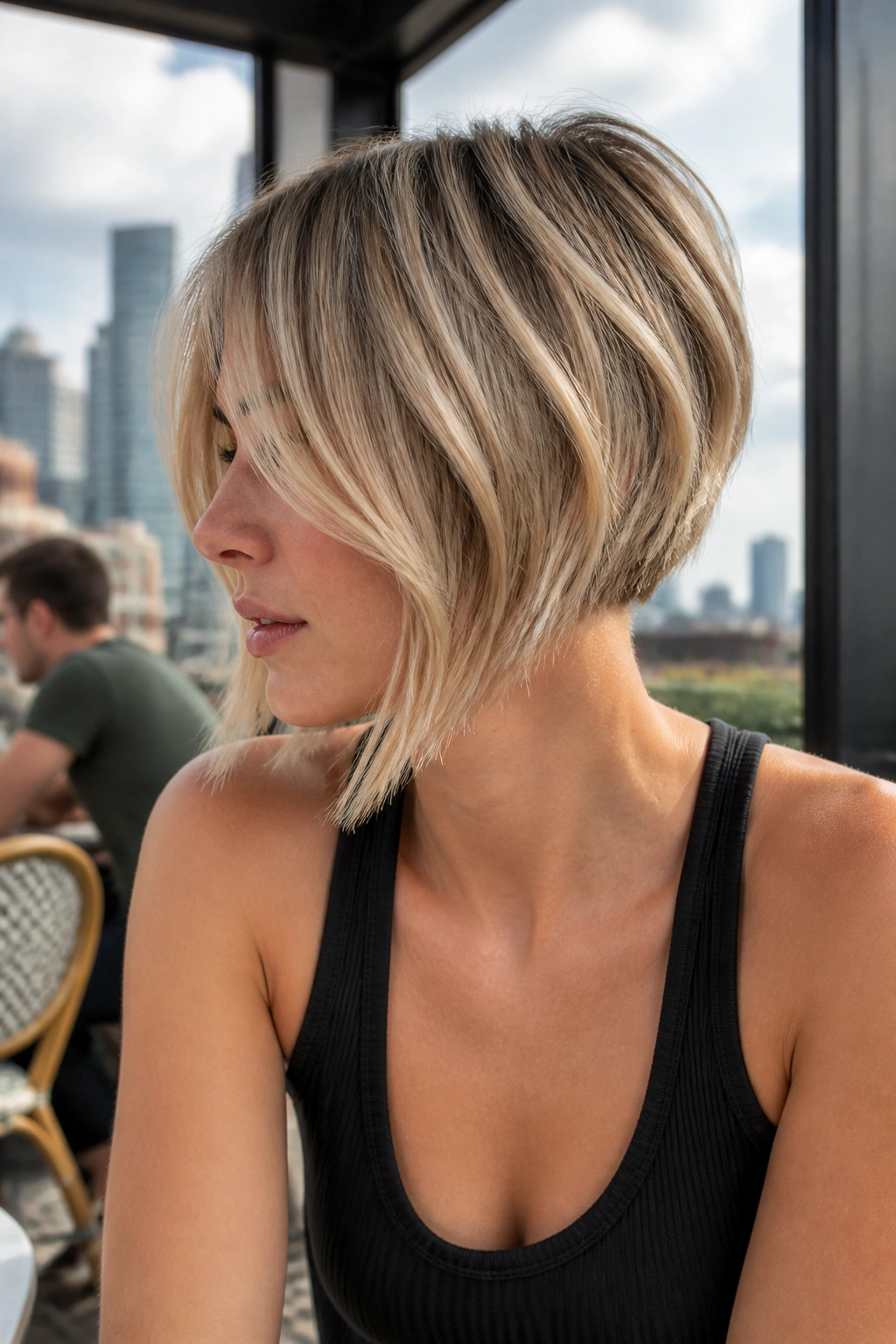
Why does an inverted bob work so well on fine strands? Because the shorter back creates instant lift, while the longer front pieces make the face look slimmer and keep the style from feeling too blunt. The angle gives the illusion of more hair than is actually there.
This cut can go wrong if the stacking at the back is too harsh. Then you end up with a stiff triangle. Keep it soft. The front should graze the chin or just below it, and the blonde color should have some depth near the roots so the angle is visible. A rooty beige blonde or soft bronde does the job nicely.
How to Wear It
- Dry the back first with a small round brush for lift.
- Leave the front slightly piecey.
- Add texture spray only to the mids and ends.
- Tuck one side behind the ear if you want more shape around the jaw.
10. Soft Box Bob
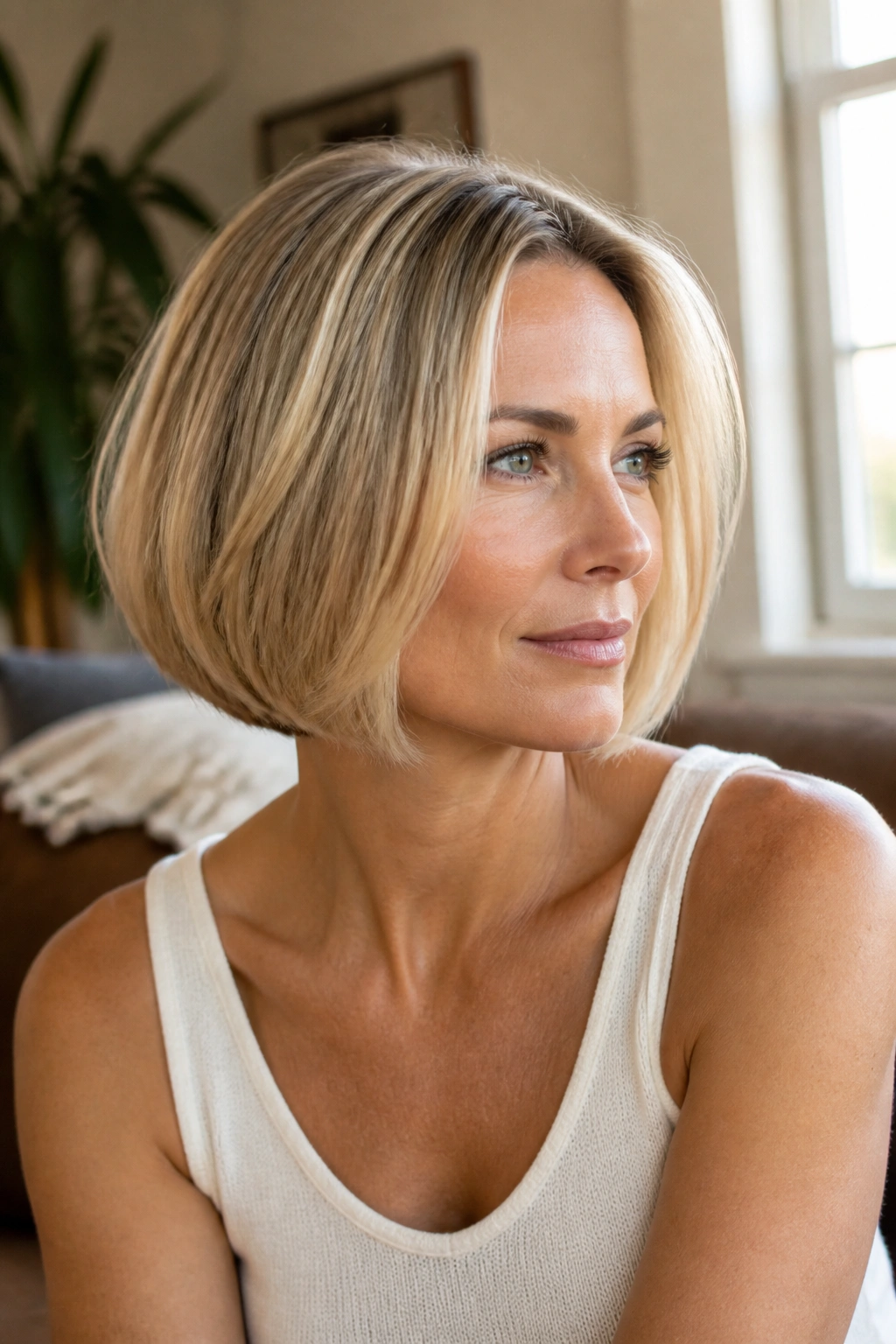
A box bob sounds harder than it is. The shape is slightly square, but the corners are softened so it doesn’t feel rigid or severe. On fine hair, that square-ish outline can make the hair look thicker because the edges stay visible all the way around the head.
This is a smart choice if your hair falls limp in more rounded cuts. A box bob gives a firmer boundary, and blonde highlights around the perimeter make that boundary stand out in a good way. I’d keep the layers minimal and the texture light. Too much breakup ruins the point.
It’s a neat cut, but not a boring one. The mess comes from the styling — a bit of bend, a bit of separation, a little dry texture at the ends. That’s enough.
11. Platinum Piecey Bob with Root Shadow
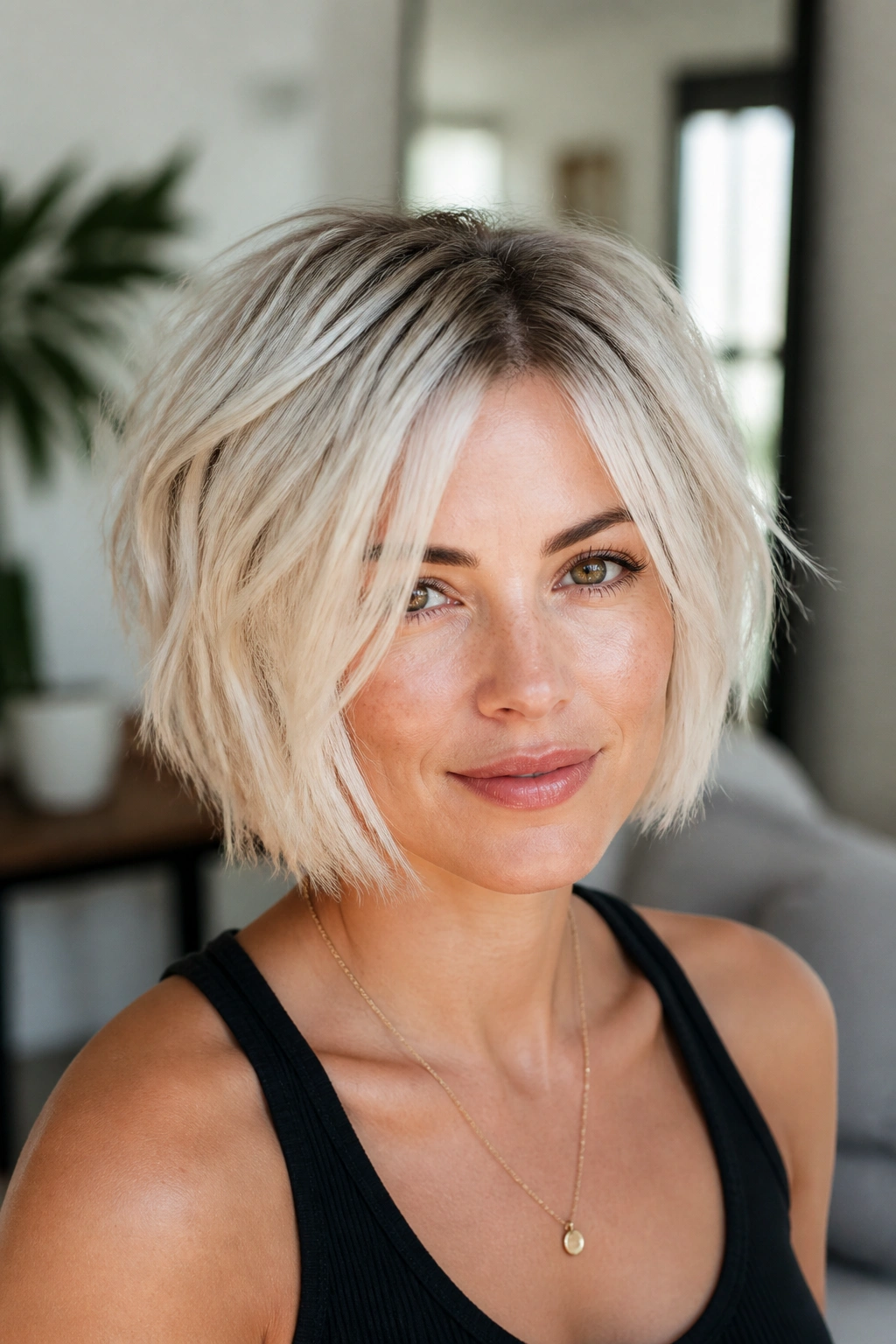
Platinum can be tricky on fine hair. Too much bleach, too much toning, and the strands can start to look fragile. But a piecey platinum bob with a soft root shadow is a different story. The darker root gives the cut depth, and the lighter ends reflect light like crazy.
The piecey finish is what keeps it from looking flat. You want separate sections, not a helmet of uniform pale color. A small amount of pomade or wax at the very ends can help define the texture, but use less than you think. Fine hair gets stringy fast when overloaded.
This is one of those looks that works best when the haircut is simple and the color does the drama. Keep the shape clean. Let the blonde do the talking.
12. Razor-Shag Bob
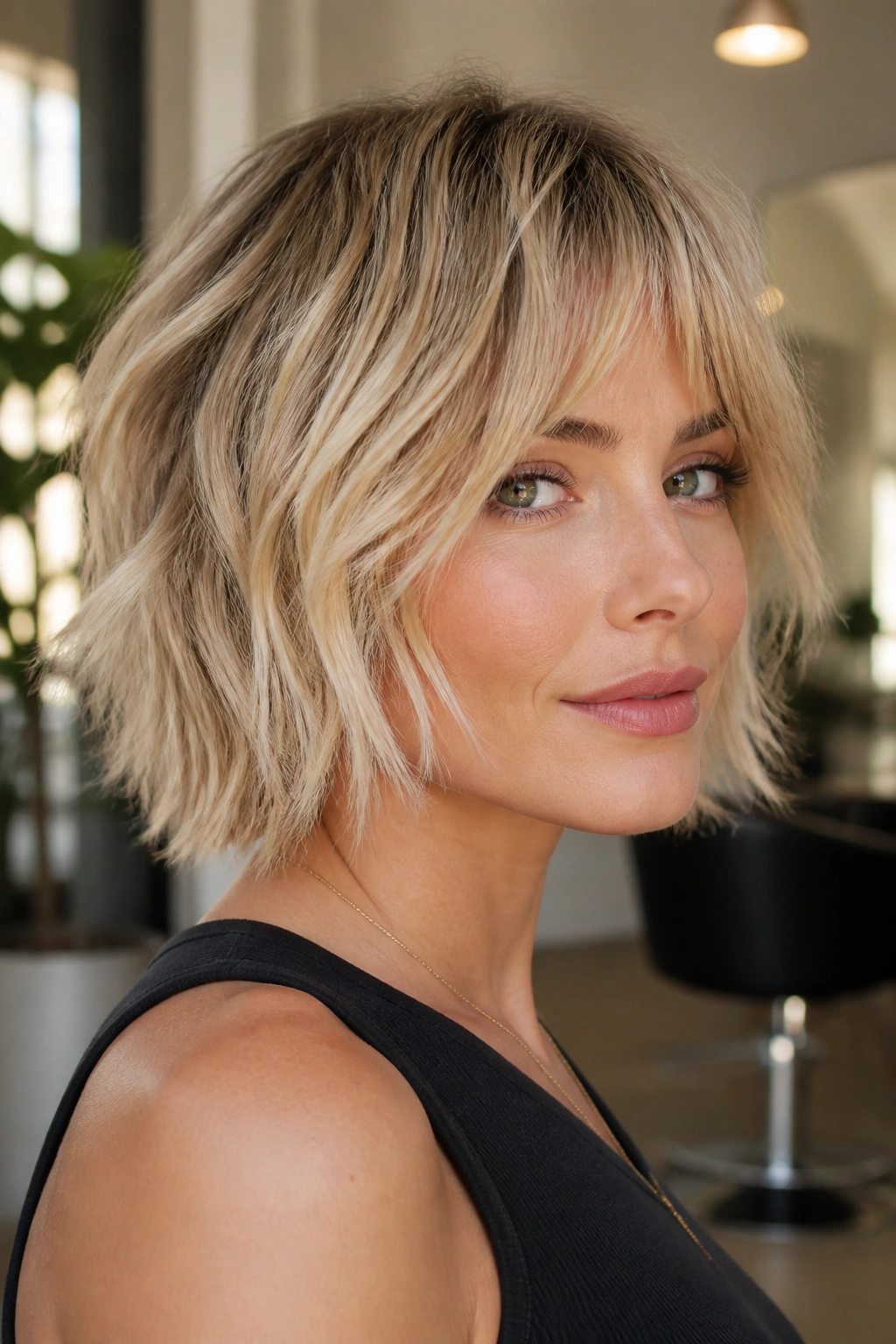
A razor-shag bob is for the person who wants movement first and polish second. The razor creates soft, shattered ends, which can look fantastic on fine hair if the stylist is careful. Too much of it, though, and the ends start to look see-through. That’s the catch.
The best version has a bob length with shag-style texture around the face and crown. Blonde highlights make each separated piece easier to see, so the hair looks fuller even when it’s loosely styled. I like this cut with a lived-in beige blonde or sandy tone, nothing too icy.
Keep the layers around the cheekbones and collarbone. That keeps the shape loose without stripping the whole cut of weight.
13. Graduated Bob with Light Stacking
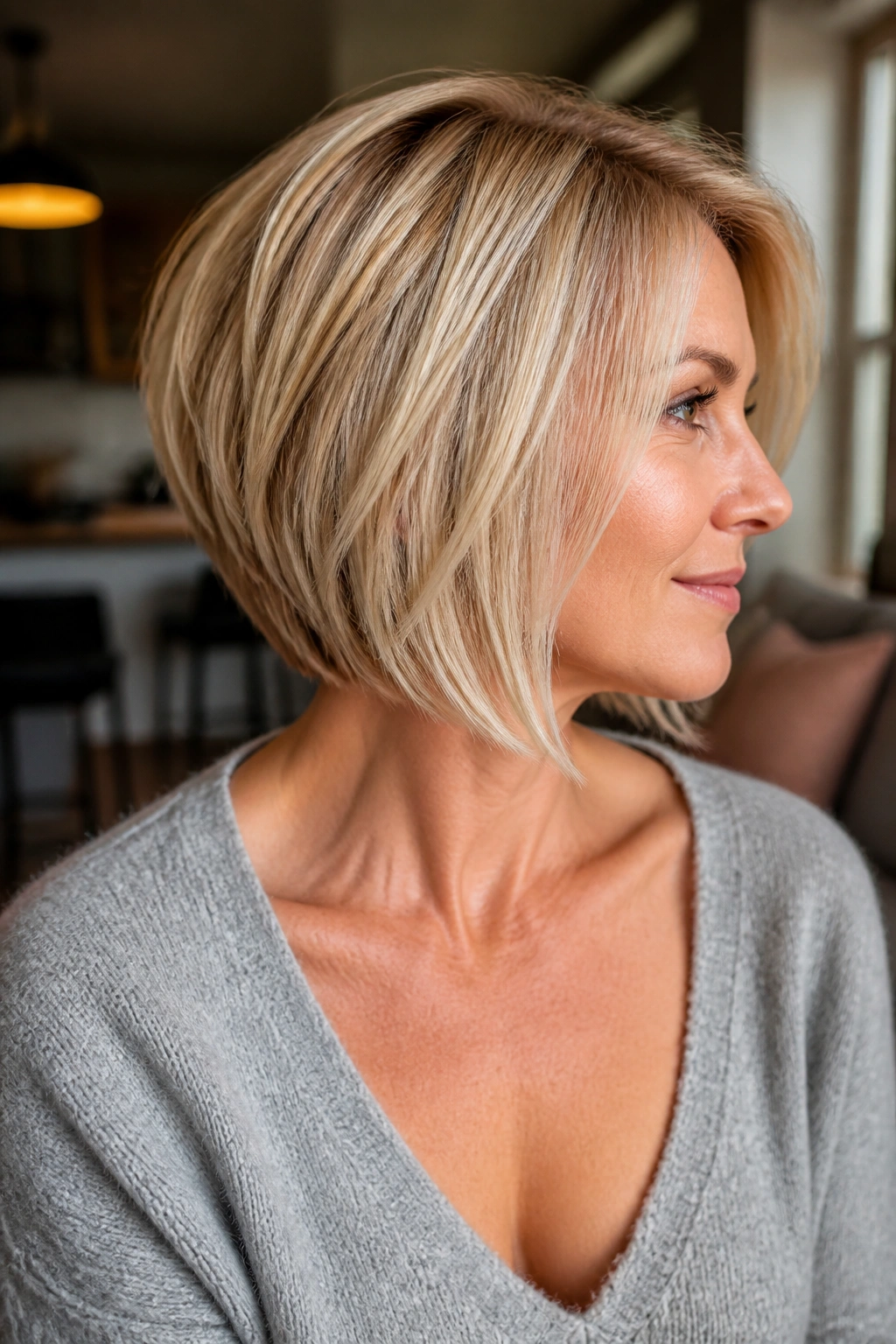
A graduated bob is one of the best old-school tricks for fine hair, and I mean that in the nicest way. The back is slightly shorter and lifted, while the front drapes longer. That small shift in length gives the head a rounder, fuller shape.
The stacking should stay light. If the angle is too steep, the cut can look dated fast. Ask for soft graduation through the nape and a blonde finish with subtle highlight placement around the crown. That makes the top look fuller, which is half the battle with fine hair.
Good Reasons to Pick It
- It creates lift without a lot of daily teasing.
- It keeps the neck area neat.
- It works with straight, wavy, or loosely curled hair.
- It gives the back enough structure to hold volume.
14. Deep Side-Part Bob
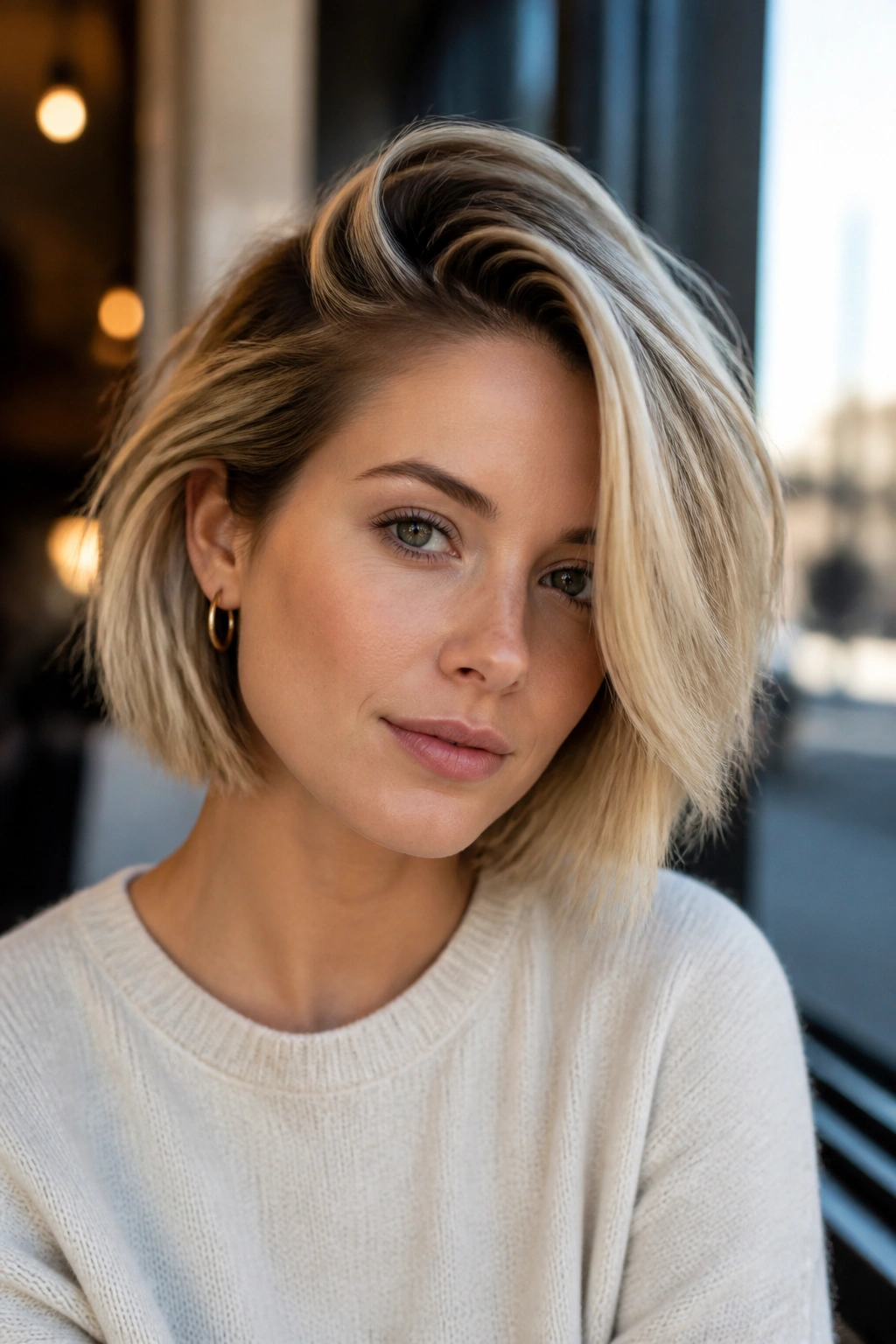
A deep side part can rescue a bob that keeps falling limp on one side. It shifts weight, creates instant lift at the roots, and gives fine hair a more dramatic shape without changing the cut itself. That’s useful if you like your hair short but want a quick fix that does not require scissors.
The bob underneath can be simple: jaw length, soft ends, blonde ribbons through the front. The part does the visual work. A deep side part also gives you a chance to push the fuller side slightly back, which opens the face and makes the cut feel less flat.
I prefer this on slightly wavy hair, but straight hair can wear it too. Just make sure the root area gets a little lift spray and a rough blow-dry at the base.
15. Bottleneck Bang Bob
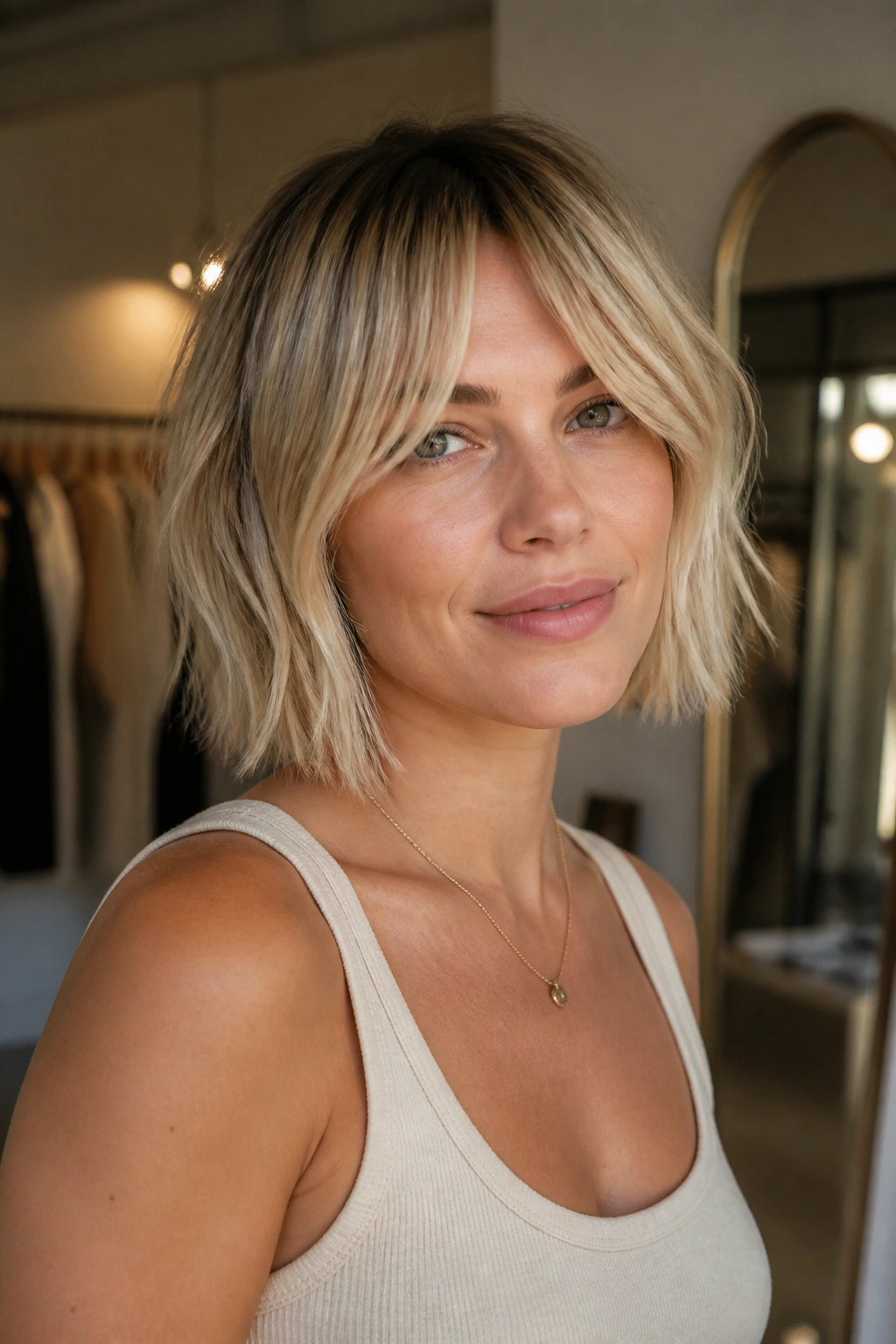
Bottleneck bangs are flattering because they narrow at the center and open out toward the cheeks. On a fine blonde bob, they create a soft frame without eating too much hair density from the rest of the head. That matters. Thin fringe can ruin a fine-hair cut if it’s too aggressive.
The bob itself should stay light and slightly messy, with movement around the chin or jaw. A creamy blonde with a little shadow near the roots keeps the bangs from blending into the face too much. I like this cut because it feels modern without asking for a hard styling routine.
How to Ask For It
Tell the stylist you want a fringe that starts narrow in the center and blends toward the cheekbones. Ask for the rest of the bob to keep enough weight through the perimeter so the ends still look full.
16. Soft Undercut Bob
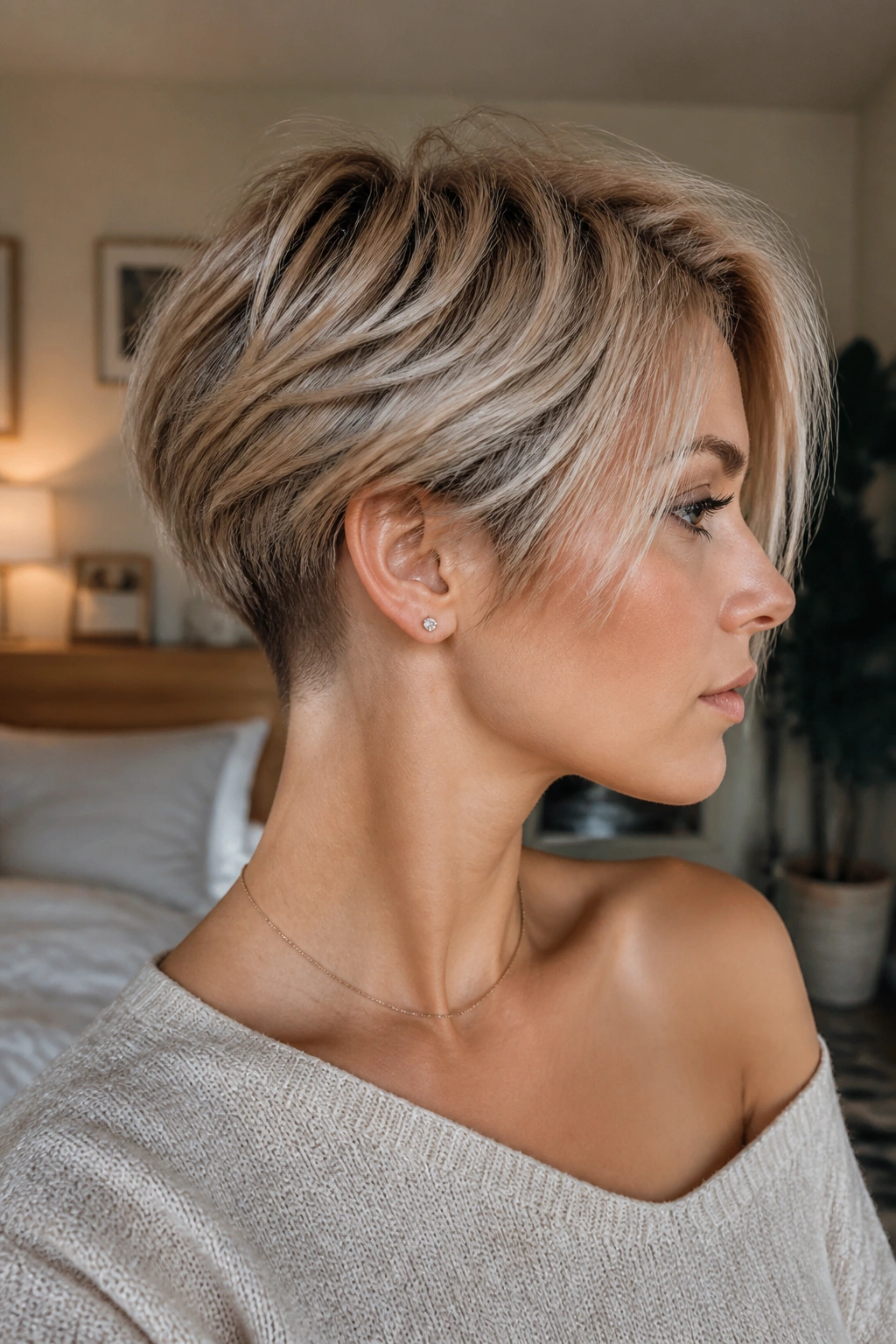
A soft undercut is a smart move for fine hair that still has too much bulk underneath, especially near the nape or behind the ears. It removes weight where nobody needs to see it, which lets the top layers fall better. That said, it needs a careful hand. Too much undercut, and the bob can start to look sparse from the side.
The look works best with blonde hair that has dimension through the top. A root shadow or soft balayage keeps the upper layers from looking one-note. You get lift, movement, and a cleaner shape around the jaw.
It is not the cut for someone who wants maximum fullness at the neckline. It is the cut for someone who wants the top to sit properly and refuses to fight heavy hair every morning.
17. Sliced-End Beach Bob
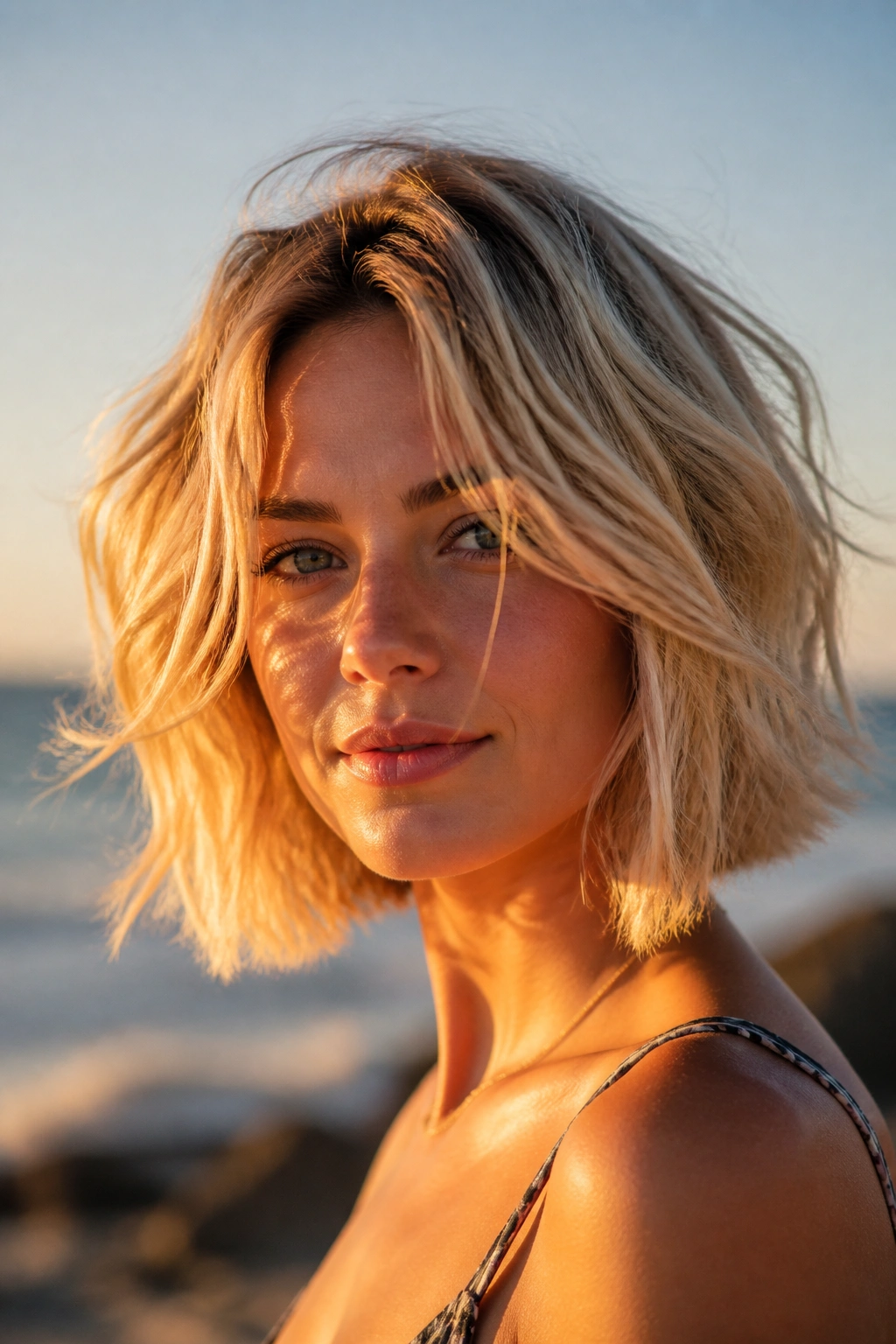
A sliced-end beach bob has that cool, effortless separation people want when they say “messy” but don’t actually mean messy. The ends are cut to move in thin, light pieces, which works beautifully on fine hair as long as the stylist does not overdo it. A soft slice keeps the bob airy; too much slice makes it wispy.
This cut loves blonde dimension. Think soft sunlit highlights through the mids, not chunky streaks. The beachy texture shows off the color and gives the hair more body. A sea-salt spray can help, but I’d use it lightly. Fine hair can get dry and rough fast.
The finish should feel touchable, not crunchy. If it feels stiff, too much product went in.
18. Asymmetrical Bob with Long Front Pieces
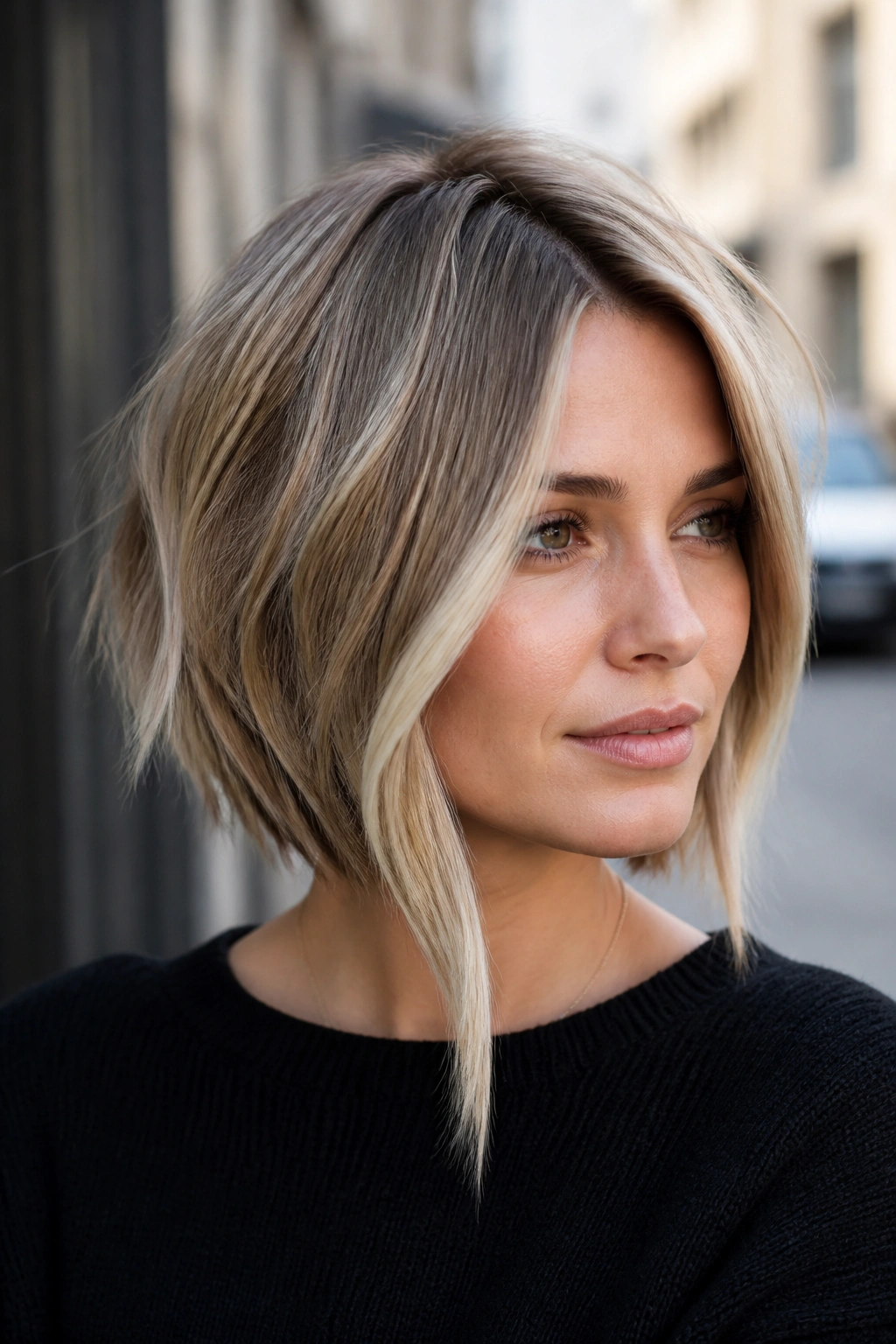
An asymmetrical bob gives you movement before you even touch a styling tool. One side sits slightly longer, which makes the cut feel more modern and creates a natural visual line through fine hair. That longer front piece can also pull the eye downward, which is useful if the hair needs a bit of drama to keep it from looking plain.
The asymmetry should be subtle, not cartoonish. You want enough difference to notice, not a dramatic one-side-is-shorter situation unless that is your thing. On blonde hair, especially a soft ash or champagne blonde, the shape shows up beautifully because light catches the longer side as it swings.
I’d keep this one low on layers. The angle itself provides movement. Over-layering only distracts from the shape.
19. Crown-Lift Bob with Invisible Layers
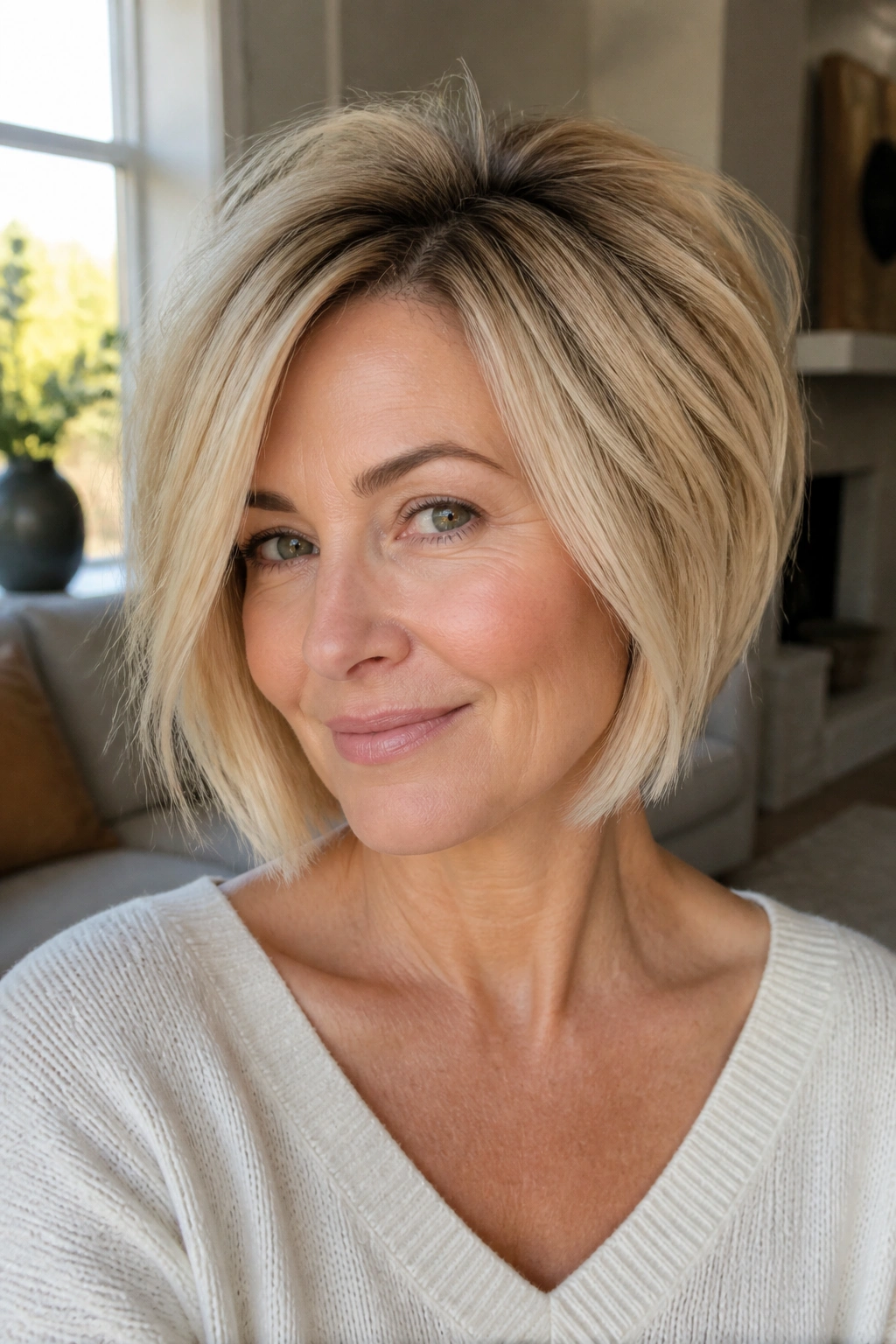
A lot of fine hair problems start at the crown. If that section lies flat, the whole bob looks tired no matter how good the cut is. A crown-lift bob uses invisible layers around the top to create height without leaving obvious steps or choppy holes.
The perimeter can stay pretty clean. That’s the point. The lift lives inside the haircut, not on the surface. A soft blonde with brighter bits near the face and a slightly deeper root makes the crown appear fuller than it is. It is one of those small color tricks that pays off every single day.
What Makes It Different
- The volume sits at the top, not just the ends.
- The shape keeps the sides smooth.
- The style grows out well because the layers are hidden.
- It works best with a root-lifting mousse and a round brush at the scalp.
20. Money-Piece Bob with Bright Face Frame
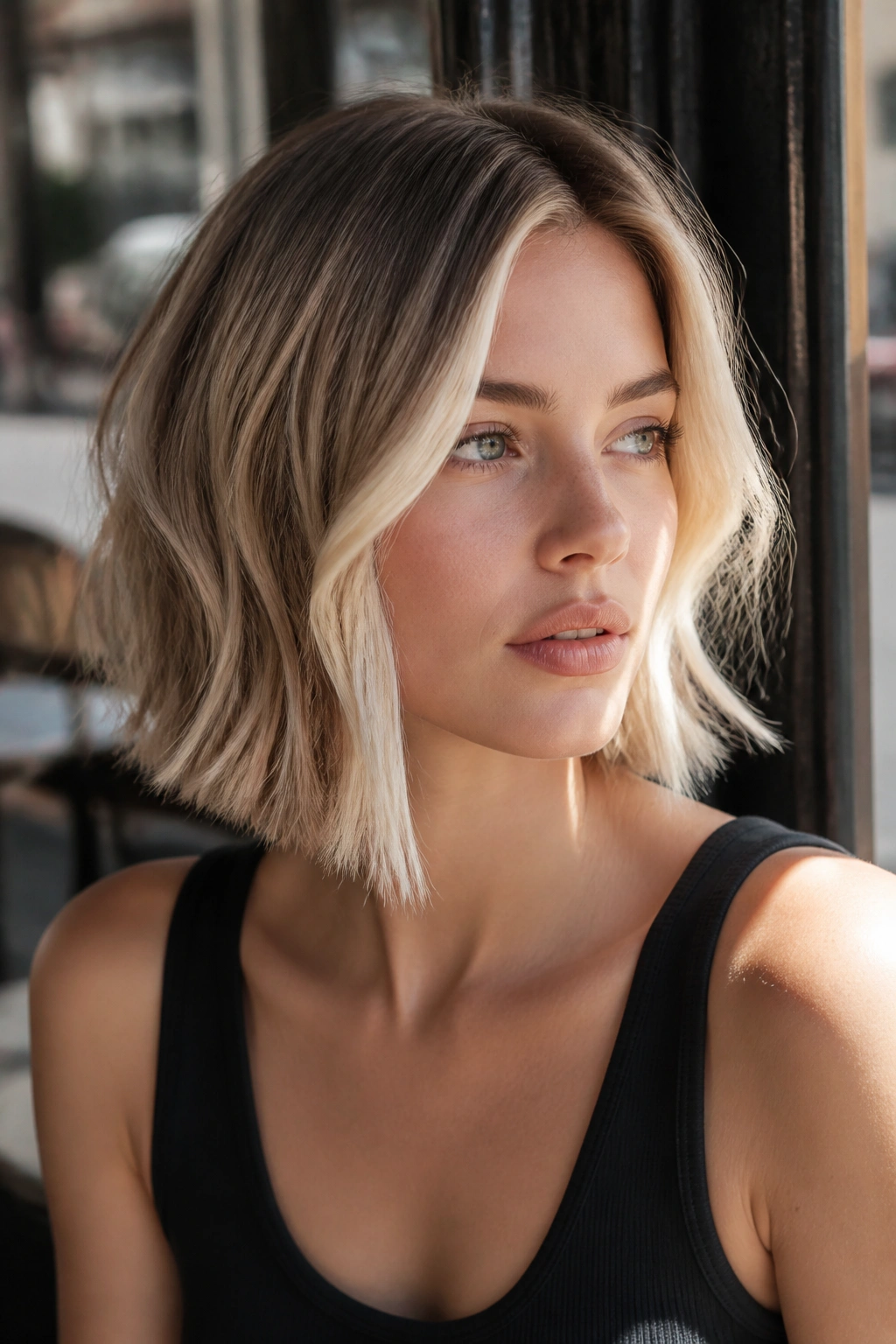
A strong money piece can wake up a fine bob in seconds. Bright blonde around the face pulls attention forward and gives the cut a sharper outline, which makes the hair look fuller at the front where people notice it most. The rest of the bob can stay softer and quieter.
I like this approach when the haircut itself is simple. The front pieces do the visual lifting, and the back can stay easy. If you want a messy finish, bend only those front sections a touch away from the face and leave the rest looser. It gives the style a little attitude without becoming high-maintenance.
The trick is balance. If the front is too bright and the rest too flat, the cut can feel disconnected. Keep the brightness blended enough to look intentional.
21. Curled-Under Layered Bob
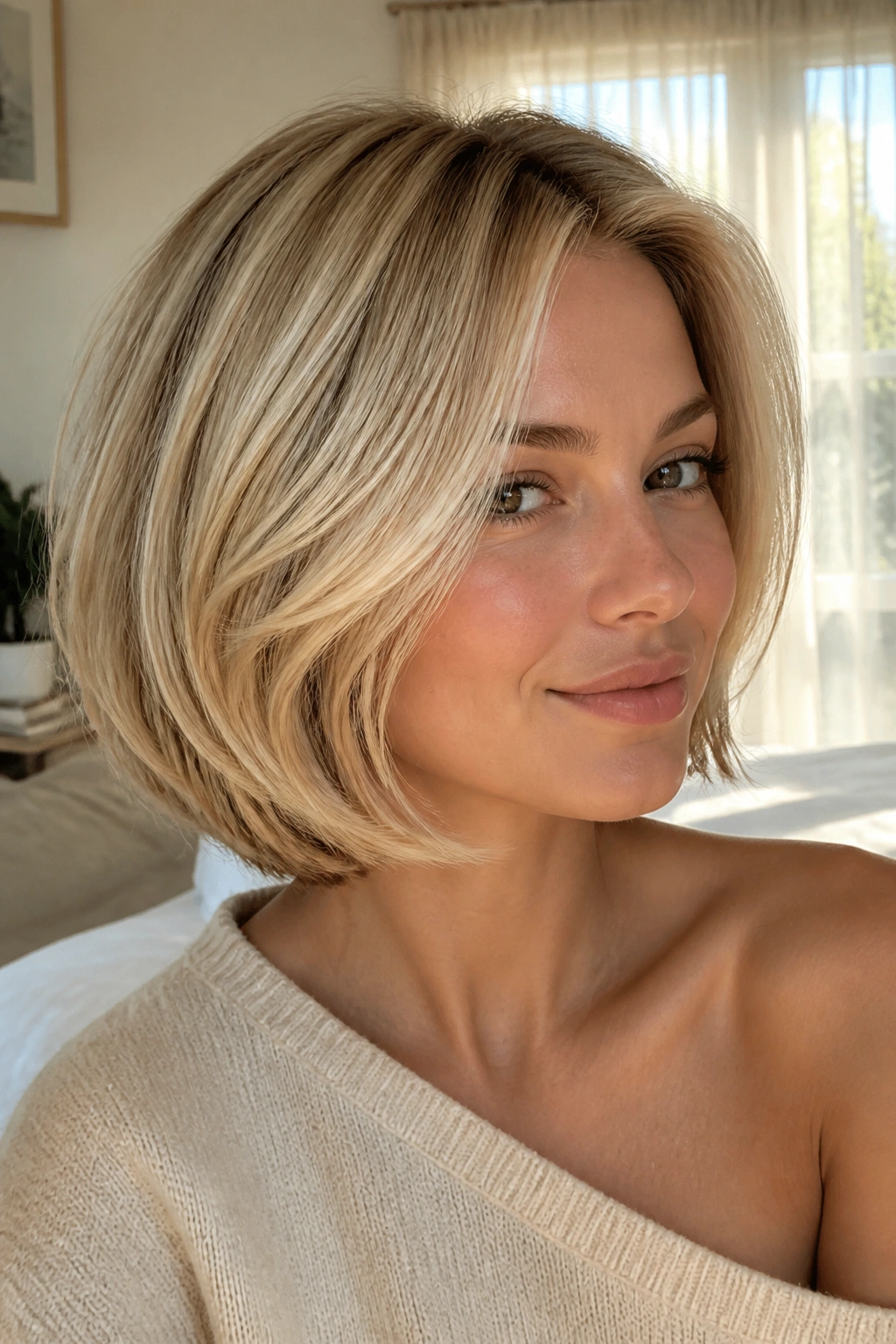
Can a curled-under bob still feel messy? Definitely. The polished bend under the jaw gives shape, while the soft layers stop the hair from sitting like one hard block. For fine hair, that bend can make the ends look thicker than they really are, which is why this old-fashioned shape keeps hanging around.
Blonde works well here because the curve catches the light. Beige blondes, buttery blondes, and soft pearl shades all highlight the movement. I like to keep the layers around the face light and the crown smooth. That way the curl under the ends feels deliberate rather than overly styled.
How to Style It
Use a medium round brush and dry the ends under in sections 1½ to 2 inches wide. Finish with a cool blast so the curve holds, then finger-separate the top a little.
22. Grown-Out Lived-In Bob
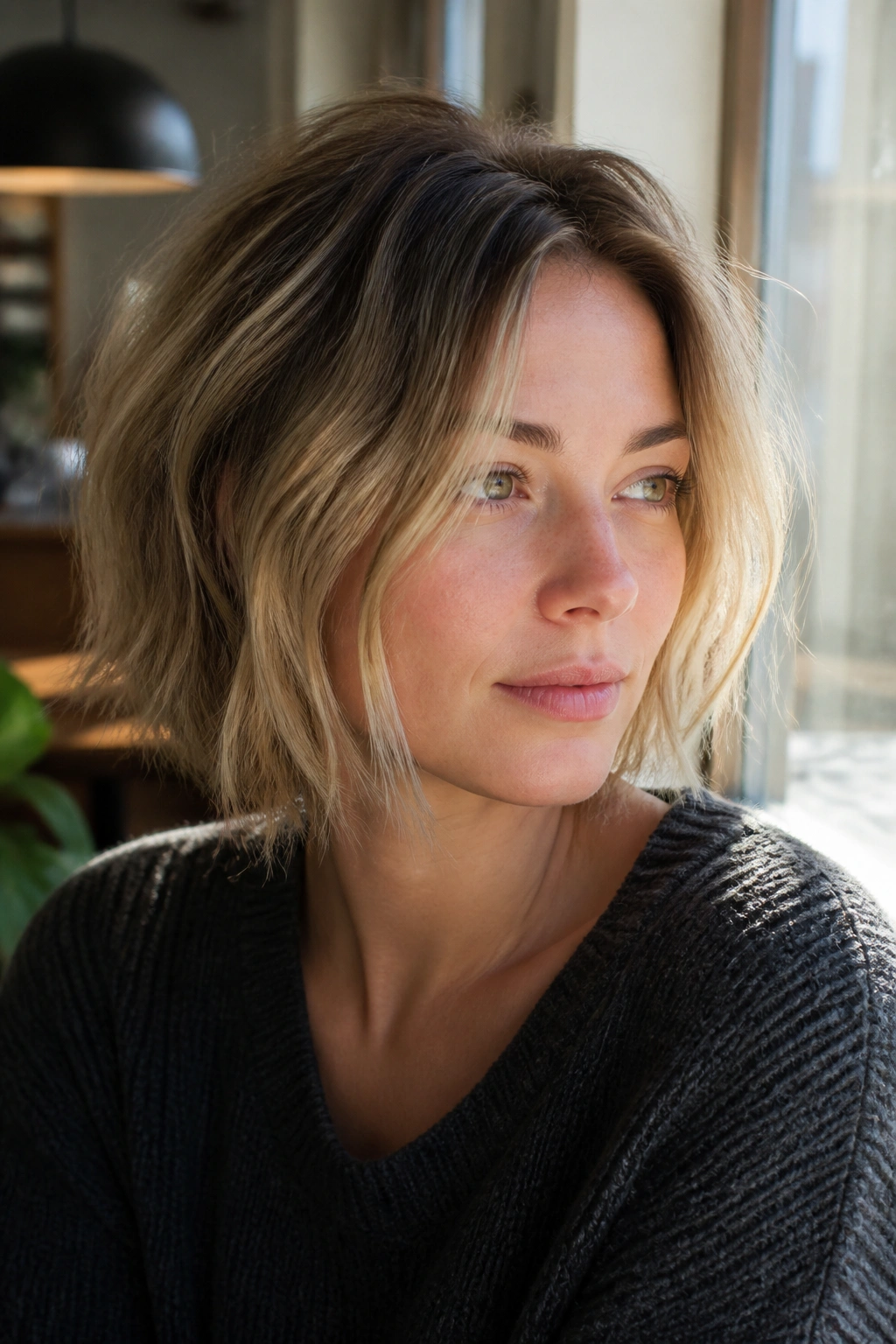
A grown-out bob is one of the best options for people who hate spending time on hair. It sits somewhere between a bob and a short lob, with edges that look intentionally a little undone. Fine hair often looks best in that range because there is enough length to move, but not so much that the hair goes limp.
The blonde color should support the softness. Think root shadow, gentle highlights, and a tonal finish that does not scream for attention. That lived-in color helps the cut look fuller and more relaxed at the same time. It also means your roots can grow a bit before the whole thing looks messy in the wrong way.
This is the cut I’d suggest if you want low drama and decent volume. It is not flashy. It just works.
23. Tucked-Behind-Ear Bob with a Shorter Nape
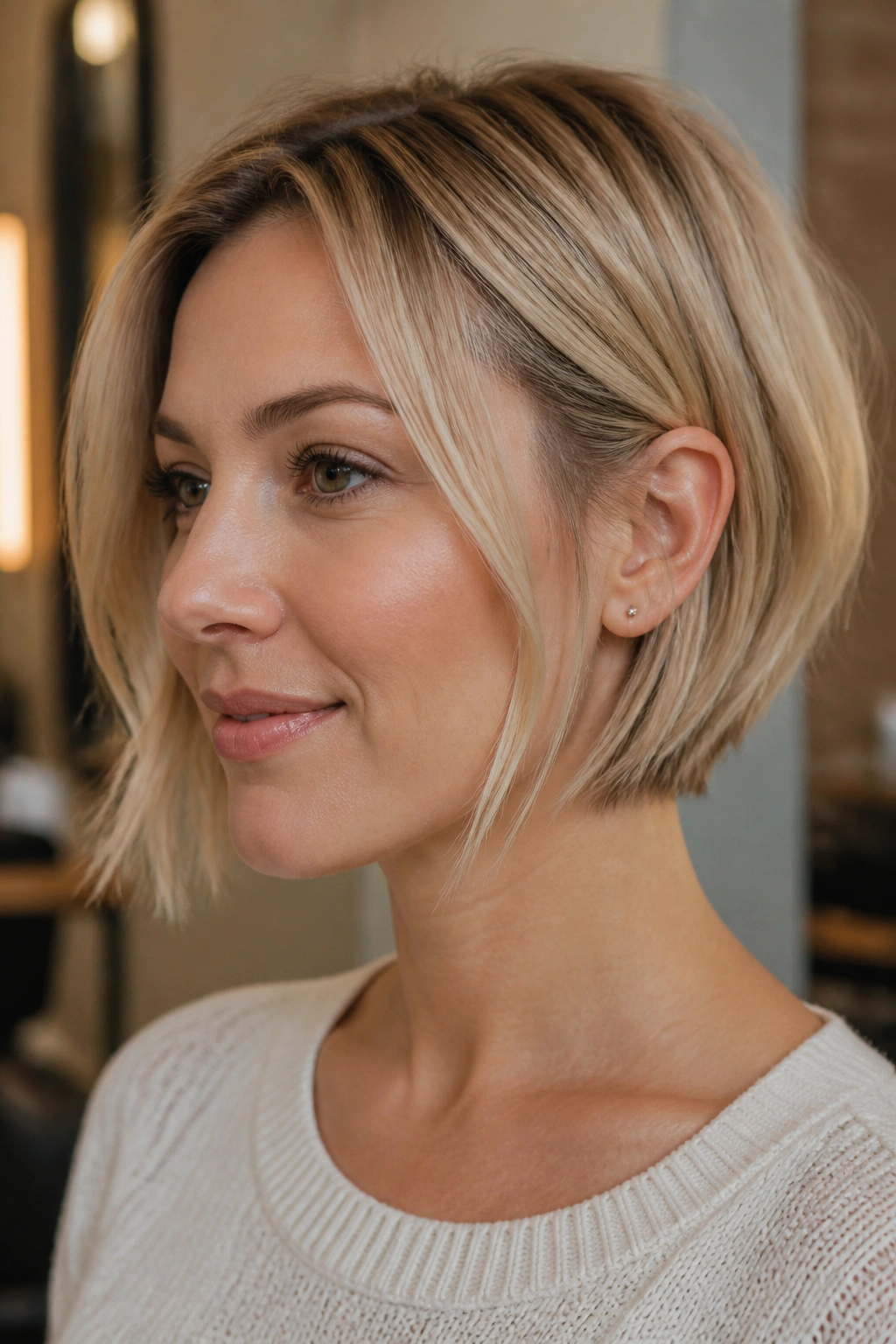
A tucked-behind-ear bob sounds simple, and that is exactly why it’s good. Fine hair often looks best when the front has a clear line and the nape stays a touch shorter, because the ear tuck creates a little lift around the face. The cut has structure even when the styling stays casual.
The shorter nape keeps the neckline neat, while the front pieces can be soft and blonde and lightly bent. That contrast matters. You get polish where the haircut needs it, and ease where it can afford to loosen up. A cool blonde with brighter face-framing pieces makes the ear tuck more flattering.
Small Details That Help
- Keep the front just long enough to skim the jaw.
- Leave a bit of texture at the ends.
- Use a lightweight cream, not a thick balm.
- Tuck one side only if you want asymmetry.
24. Whisper-Layer Bob
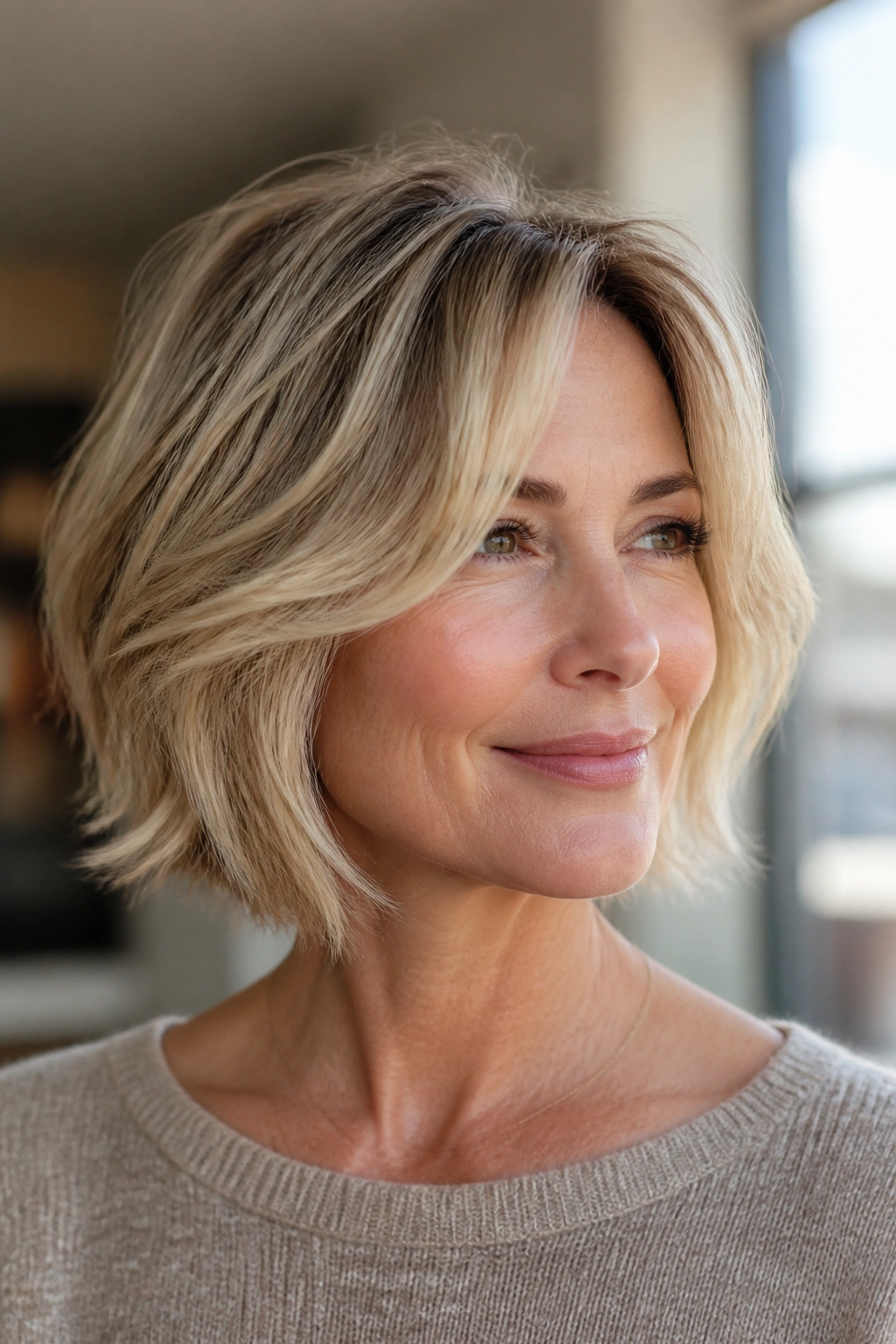
Whisper layers are exactly what they sound like: subtle, almost invisible layers that give fine hair motion without carving out too much density. That restraint is the whole point. A lot of thin hair gets ruined by over-layering, and then everyone wonders why the ends look scraggly. This cut avoids that mistake.
The blonde should stay soft and blended. Bright ribbons through the top and a deeper root at the base create a fuller-looking head shape. The layers are there to stop the hair from sitting too stiffly, not to make it look heavily textured. It is a careful haircut, which is why I like it.
If your hair tangles easily, this is one of the safer options. It moves, but it does not fray.
25. Face-Framing Angled Bob
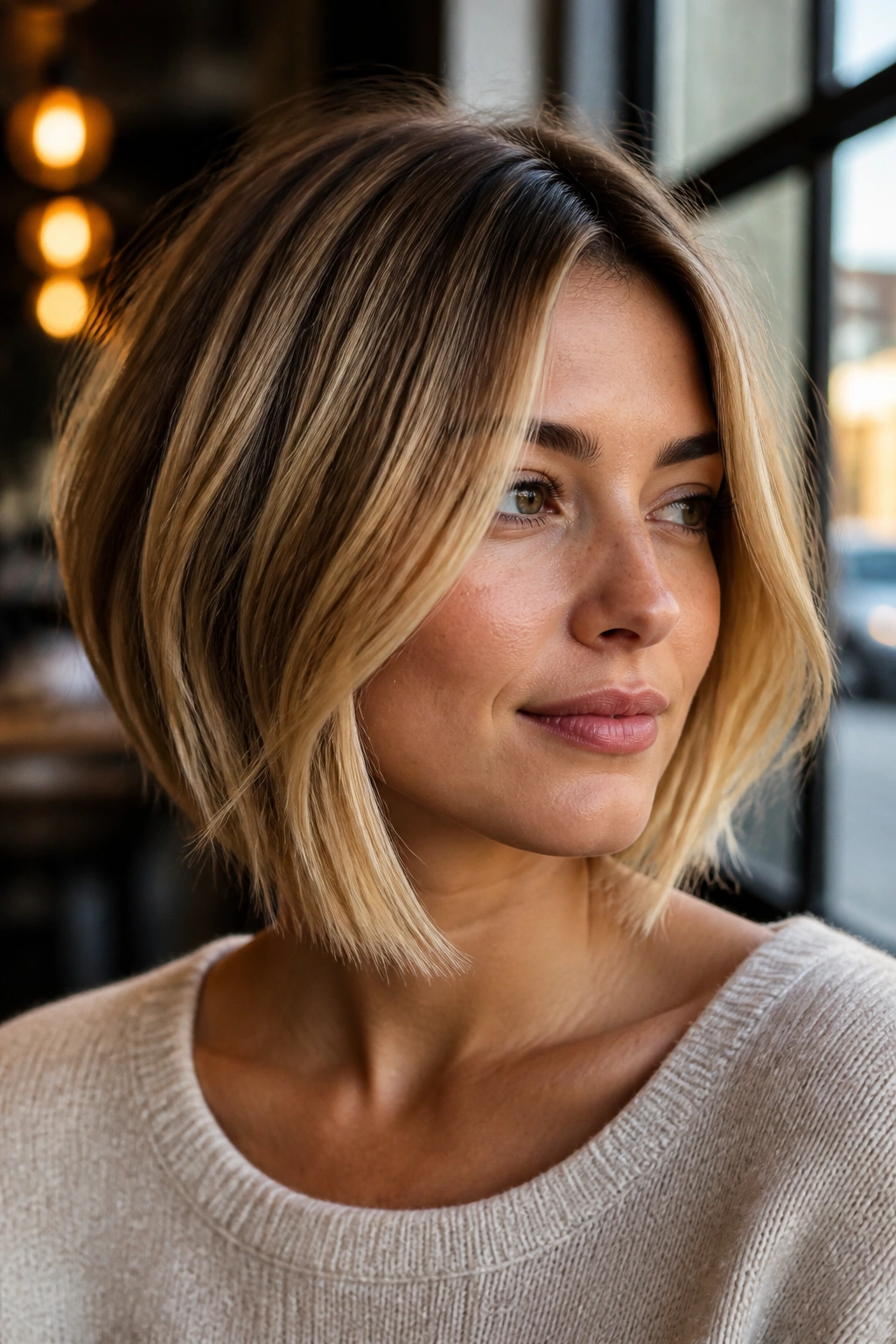
An angled bob gives fine hair direction. The front stays longer, the back stays cleaner, and the whole cut points the eye forward in a flattering way. Face-framing angles are especially useful if your cheekbones or jawline deserve a little help, because the hair creates a line that follows the face instead of hiding it.
The angle does not need to be extreme. In fact, a mild slope often looks better because it keeps the cut from feeling dated. Blonde highlights around the front pieces can make the angle pop just enough. A soft honey blonde or beige blonde keeps the style warm and easy to wear.
This one pairs well with a loose wave, but it does not demand it. Straight hair can carry it too, as long as the ends get a small bend under or away from the face.
26. Piecey Feather-End Bob
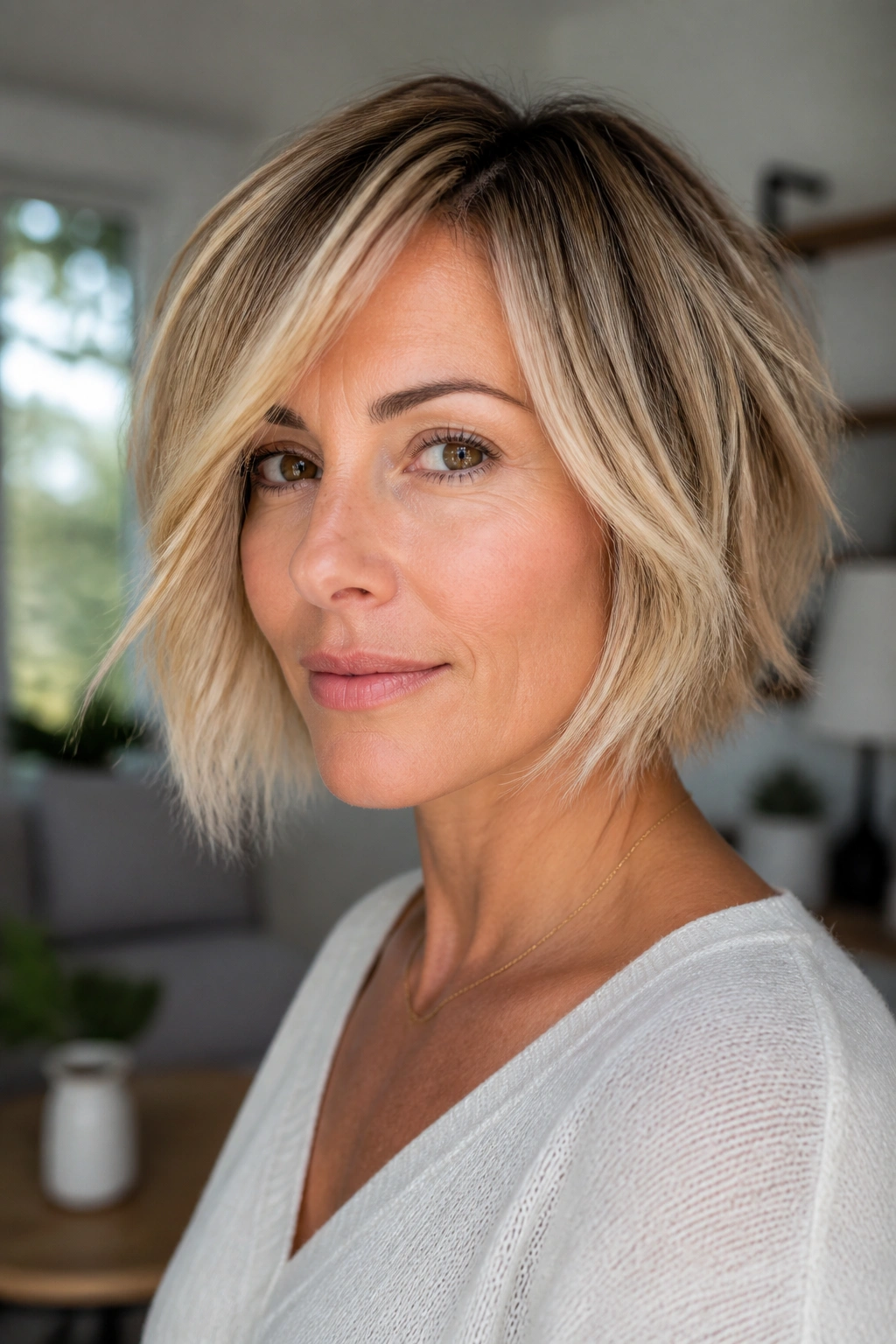
Piecey feathered ends give a bob that airy, separated finish people always ask for once they see it on the right hair. On fine strands, the trick is keeping the feathering focused at the perimeter, not shredding the whole head. You want movement, not gaps.
A blonde with soft contrast helps every separated piece show up. That can mean slightly darker roots, pale mids, or a few brighter strands at the front. It depends on how much contrast you like. The haircut itself should still feel balanced, with enough weight to keep the bob from floating away.
I’d style this with a light spray wax or a mist of dry texture spray. Work it through the ends with your hands. Done.
27. Side-Flip Bob
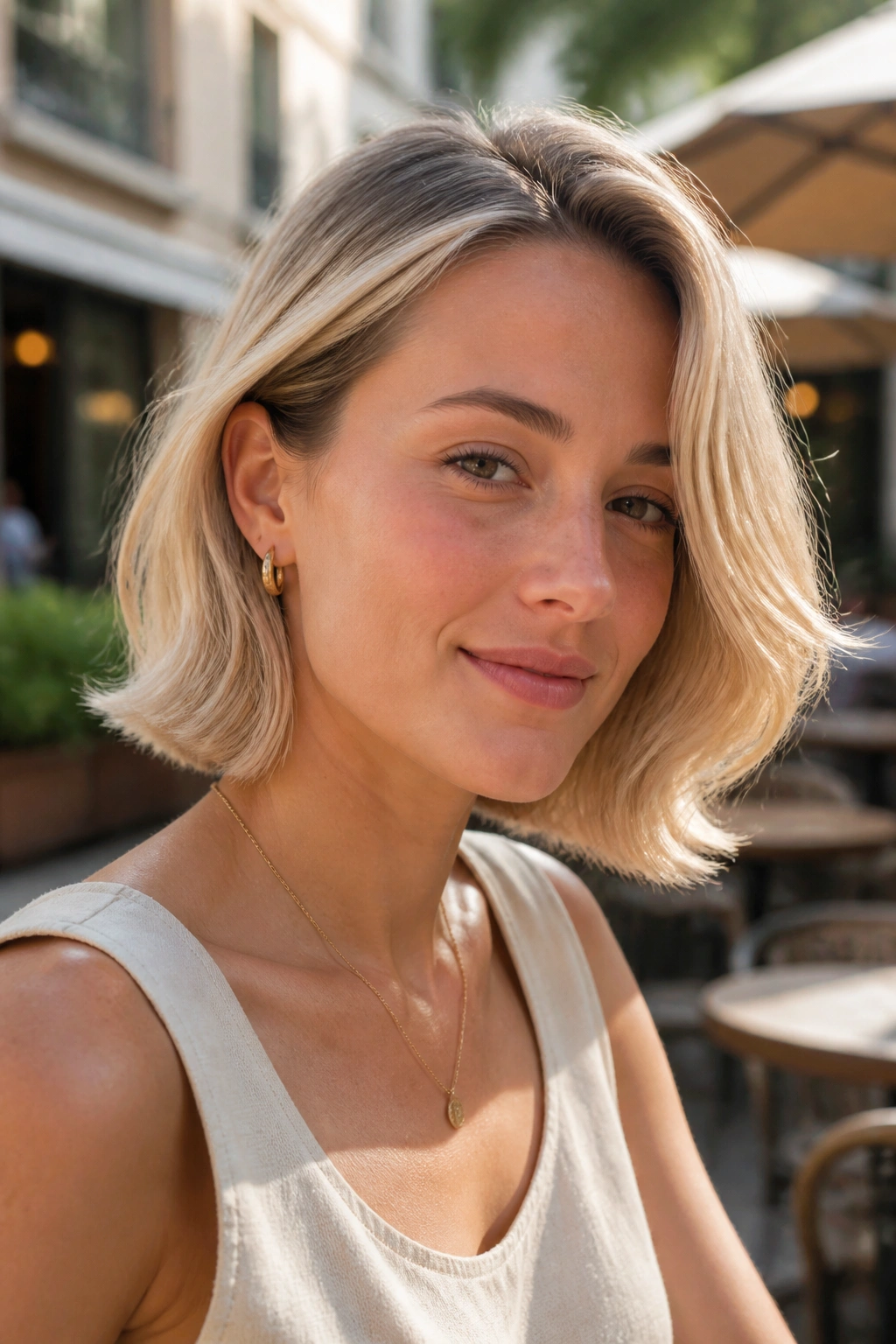
The side-flip bob has a little motion built into the shape. One side gets flipped away from the face, which creates lift at the root and makes fine hair look less glued to the head. It’s a small move, but it changes the whole mood of the cut.
This works well on blonde hair with soft dimension because the flip shows off the brightness underneath. You can wear it sleek, then bend the ends at the last minute for that slightly undone finish. That mix of neat and messy is what makes the style feel current without needing much effort.
If your hair has a stubborn parting, this cut can help reset it. Blow-dry the roots in the opposite direction first, then flip it back once the hair cools.
28. Soft-Edge Finale Bob
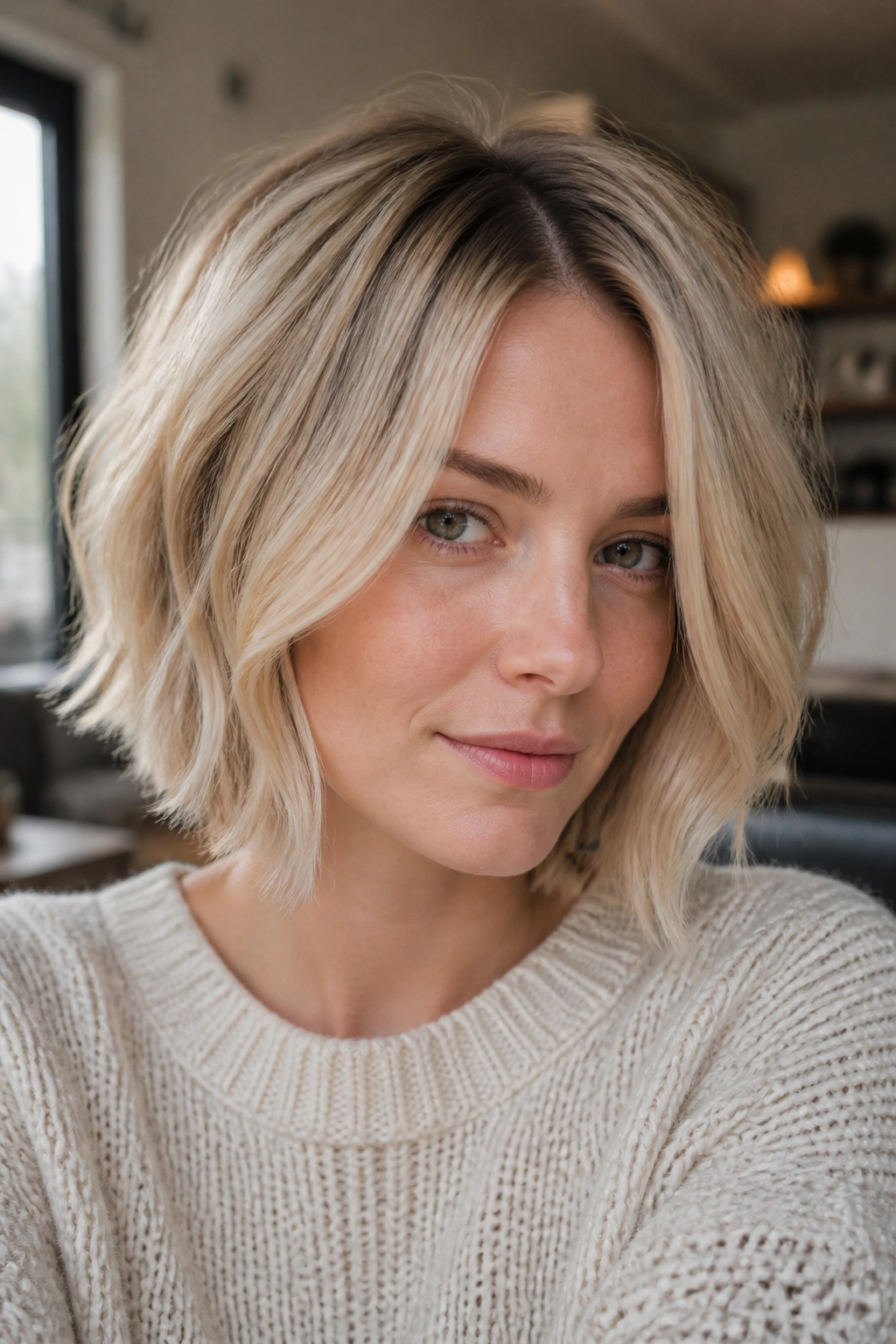
The best messy blonde bob haircuts for fine hair usually land in this zone: soft edges, enough structure, and color that does the lifting without screaming for attention. A soft-edge bob keeps the perimeter clean while easing the ends just enough so the whole thing looks touchable instead of severe.
I like this finish because it gives you room to dress the hair up or leave it undone. Wear it air-dried with a little texture spray, or smooth it with a brush and let the edges flick out slightly. Both versions work. A buttery blonde with a faint root shadow keeps the cut looking full even as it grows out, which is the part nobody complains about.
If you want one final rule, it is this: protect the perimeter. Fine hair looks fuller when the outline stays intact. Everything else — the waves, the bend, the lived-in color — is there to support that line, not replace it.
