



Curly blonde bob haircuts for round faces work best when they bend the eye downward, not side to side. That’s the whole trick, and it’s why one bob can make the face feel longer and sharper while another lands like a puffball right on the cheeks. Same haircut family. Very different result.
A round face usually has softness through the cheeks and a gentler jawline, so the haircut has to create a little vertical movement somewhere — at the crown, through a side part, or in the front pieces that skim past the jaw. Blonde color helps too, but not because blonde is magic. It’s because lighter ribbons can show curl pattern, break up heaviness, and keep the cut from looking boxy.
The wrong bob stops at the widest point of the face and lets the curls spread outward. The right one usually sits just below the chin, or it uses angle, layers, or a deep part to keep the shape moving. That can mean tight coils, loose ringlets, soft waves with curl memory, or a polished bend that reads as curly when it dries. Shrinkage matters. So does density. So does where the curl actually lands after it dries, which is why a dry cut or at least a curl-aware cut often makes more sense than guessing on wet hair.
And yes, blonde makes the whole thing a little more dramatic. Honey, champagne, beige, buttery, rooted platinum — each one changes how the cut reads. The color can make the hair look fuller, softer, or lighter through the ends. The shape still has to do the heavy lifting.
1. Side-Parted Curly Blonde Bob
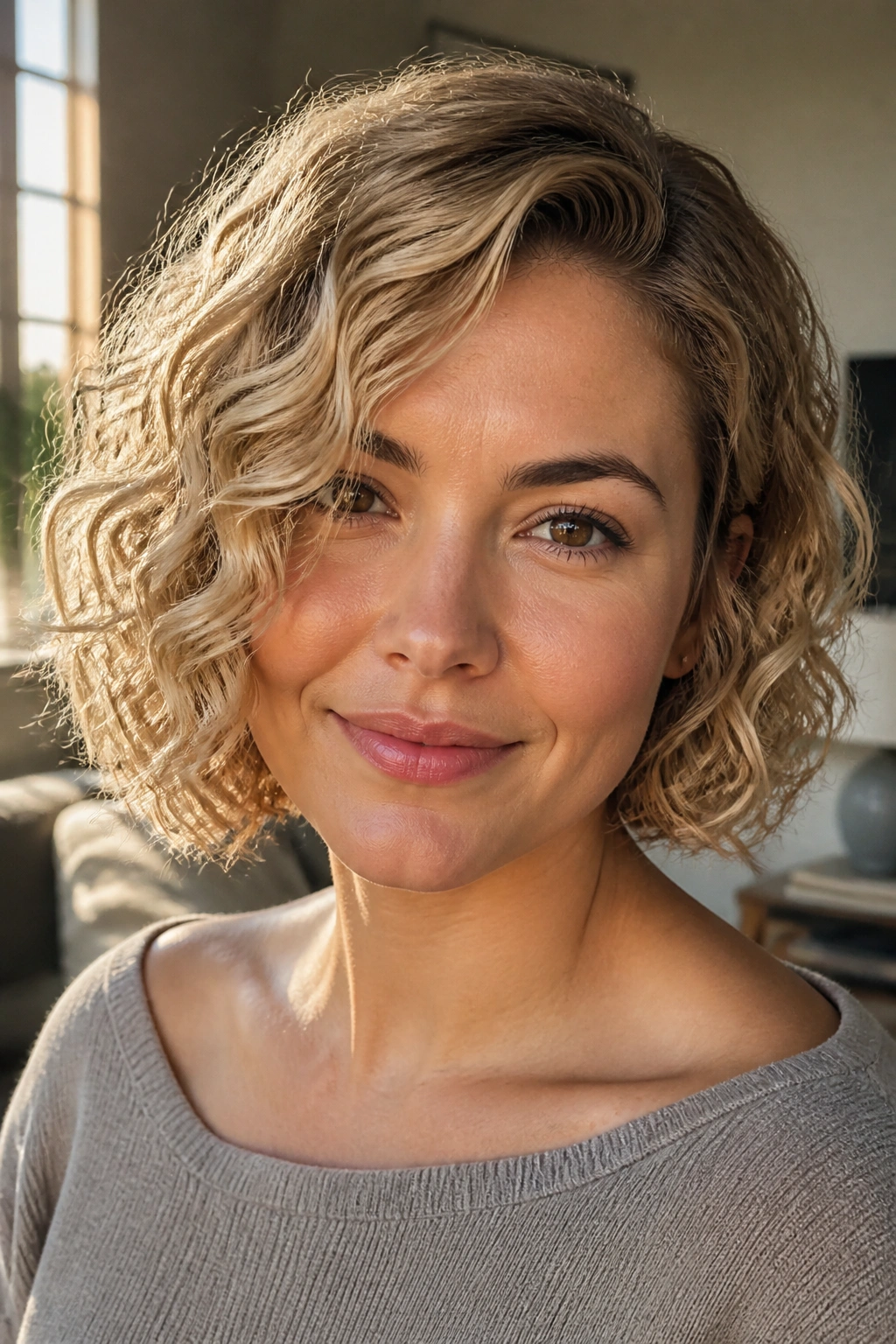
A side part does more than move a few strands around. It creates a diagonal line across the face, and that diagonal is exactly what a round face needs. A curly blonde bob with a side part feels softer at the cheekbones and less circular overall, especially when the longer side drops just below the jaw.
Why the side part works
The part shifts the visual weight away from the center of the face. That means the curls don’t sit in a neat halo that follows the curve of the cheeks. They fall a little unevenly, which is the point.
- Keep the deeper side part about 1 to 2 inches off center.
- Ask for the front pieces to land below the chin, not at cheek level.
- Use a light mousse at the roots so the top has lift without crunch.
- Finish with a diffuser on low speed to keep the curl shape intact.
Best tip: dry the roots on the smaller side first so they don’t collapse and erase the angle.
2. Collarbone-Length Curly Bob with Long Front Pieces
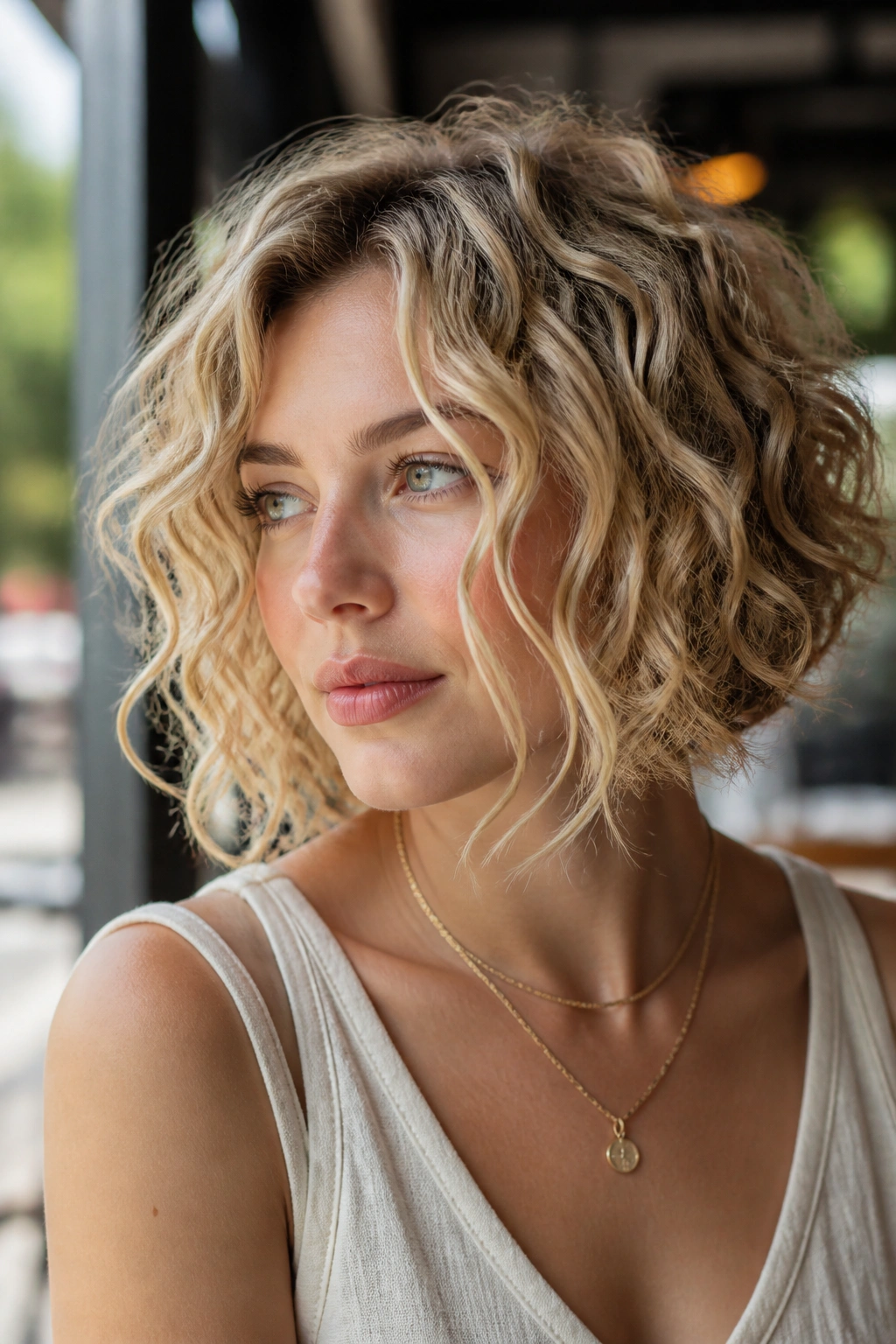
Longer is not boring here. A curly blonde bob that skims the collarbone gives a round face breathing room, because the eye keeps moving downward instead of landing on a blunt edge at the cheeks. The long front pieces are the part that matters most; they soften the jaw without making the cut look heavy.
This shape works especially well if your curls shrink more than you expect. A lot of people think they want a chin-length bob, then the curls dry and bounce up two inches. That is how you end up with a cut that feels too short. Collarbone length gives you a little safety margin.
It also plays nicely with blonde color. Lighter ends can keep the length from feeling dense, which is useful if your hair is thick or your curls clump together. Ask for the longest pieces to fall just past the jawline and keep the layers soft, not choppy. If the front is too short, the whole cut starts to balloon outward. Nobody wants that.
3. Crown-Lift Curly Bob with Soft Layers
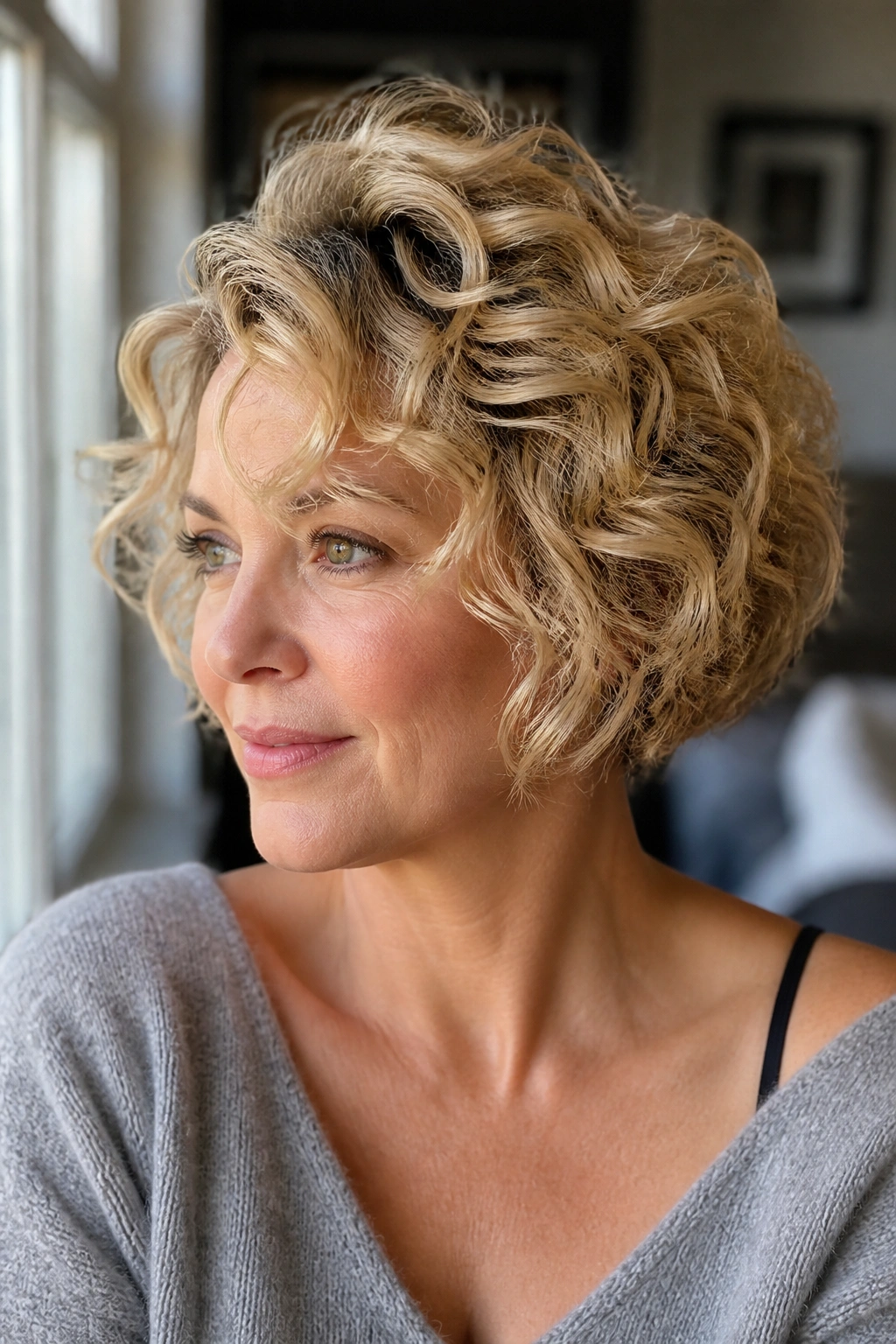
What if your face needs height more than it needs width control? Then crown lift is the move. A curly bob with soft layers around the top gives the face a longer outline, while the sides stay a little quieter and closer to the head.
How to style it
Root clips help. So does flipping the part while the hair is still damp. You want the crown to dry with a bit of direction, not collapse into the same level as the cheeks.
This cut is especially good for medium-density curls that like to flatten at the top and puff at the sides. The layers should begin high enough to create lift, but not so high that the shape turns frizzy. That line is thin. A good stylist will know it.
If you wear blonde with dimension — beige, honey, or a soft rooted blonde — the crown lift shows up even better. The light catches the height first, then the ends. That little order matters. It keeps the face looking longer and the curls looking intentional, even on a messy day.
4. A-Line Curly Blonde Bob
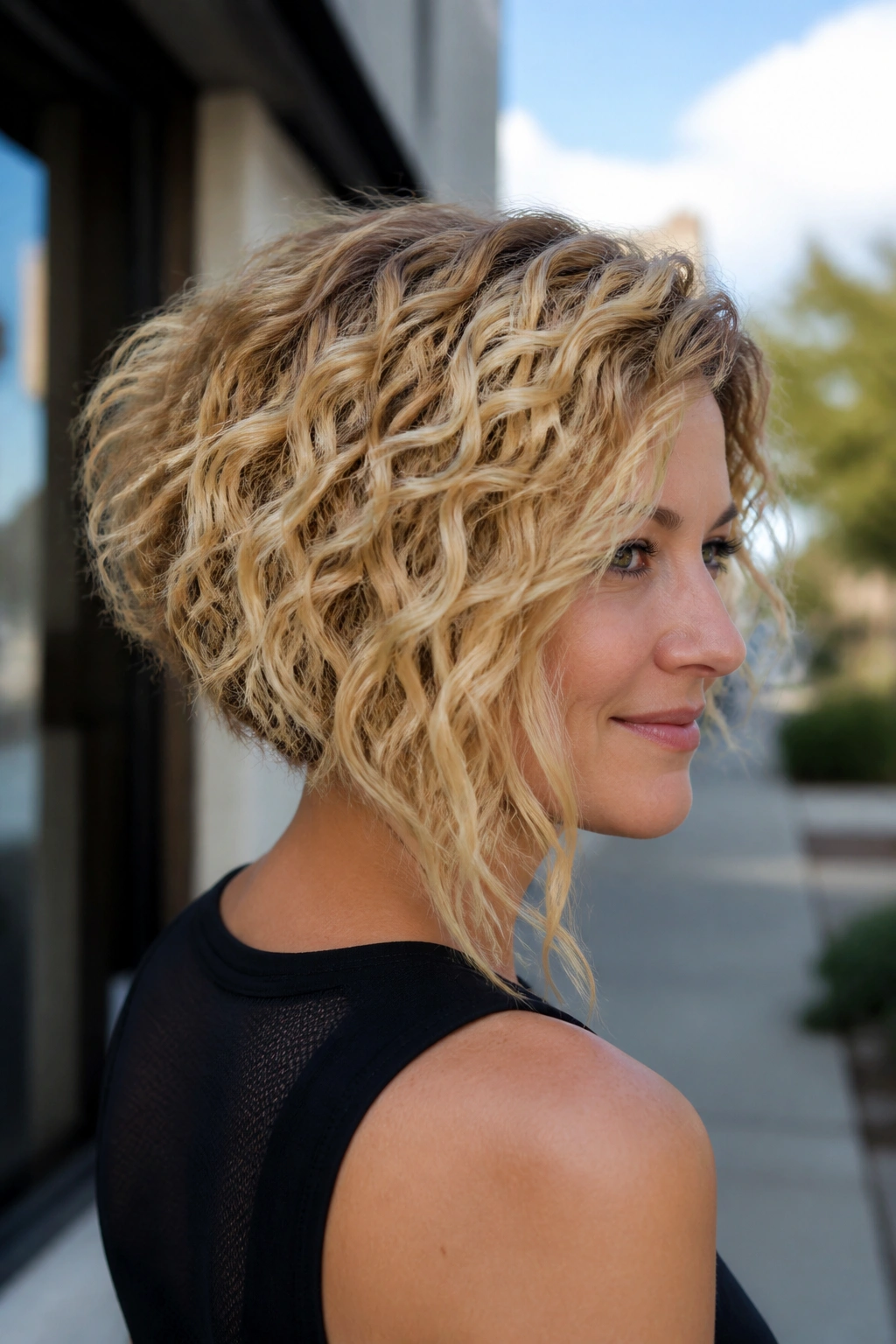
An A-line bob sounds sharp, but on curls it can feel unexpectedly soft. The front is longer than the back, and that simple angle pulls attention away from the widest part of a round face. It’s one of those cuts that looks neat on paper and better in motion.
If your curls tend to expand at the sides, this shape helps because the back stays controlled while the front creates a vertical path. The result is less “ball shape” and more clean frame. That matters. A lot.
- Keep the back grazing the nape, not stacked too high.
- Let the front fall 1 to 3 inches longer than the back.
- Choose a blonde tone with slight root depth so the angle stays visible.
- Use a light gel or curl cream only on the ends if they frizz out.
The A-line works best when the transition is smooth. A hard angle can look too severe once the curls spring up.
5. French Bob with a Curved Fringe

A French bob can flatter a round face, but only when the fringe is handled with restraint. The little curve at the brow softens the upper face, and the bob itself usually sits just under the cheekbone or right at the jaw. That placement matters more than the label.
Keep the fringe airy. Heavy bangs that cut straight across the forehead tend to box in a round face, and the whole look gets closed off fast. A curved fringe, or even a softly separated fringe that opens in the middle, does the opposite. It adds shape without flattening the face.
The blonde part should stay gentle too. Creamy blonde or buttery beige reads softer than a harsh one-note platinum if the haircut is short and close to the face. Ask for point-cut ends so the line feels broken up, not helmet-like. And if your curls are springy, leave a little extra length in the fringe. Dry curl shrinkage can turn “cute” into “too short” before lunch.
6. Stacked Curly Bob with a Clean Nape
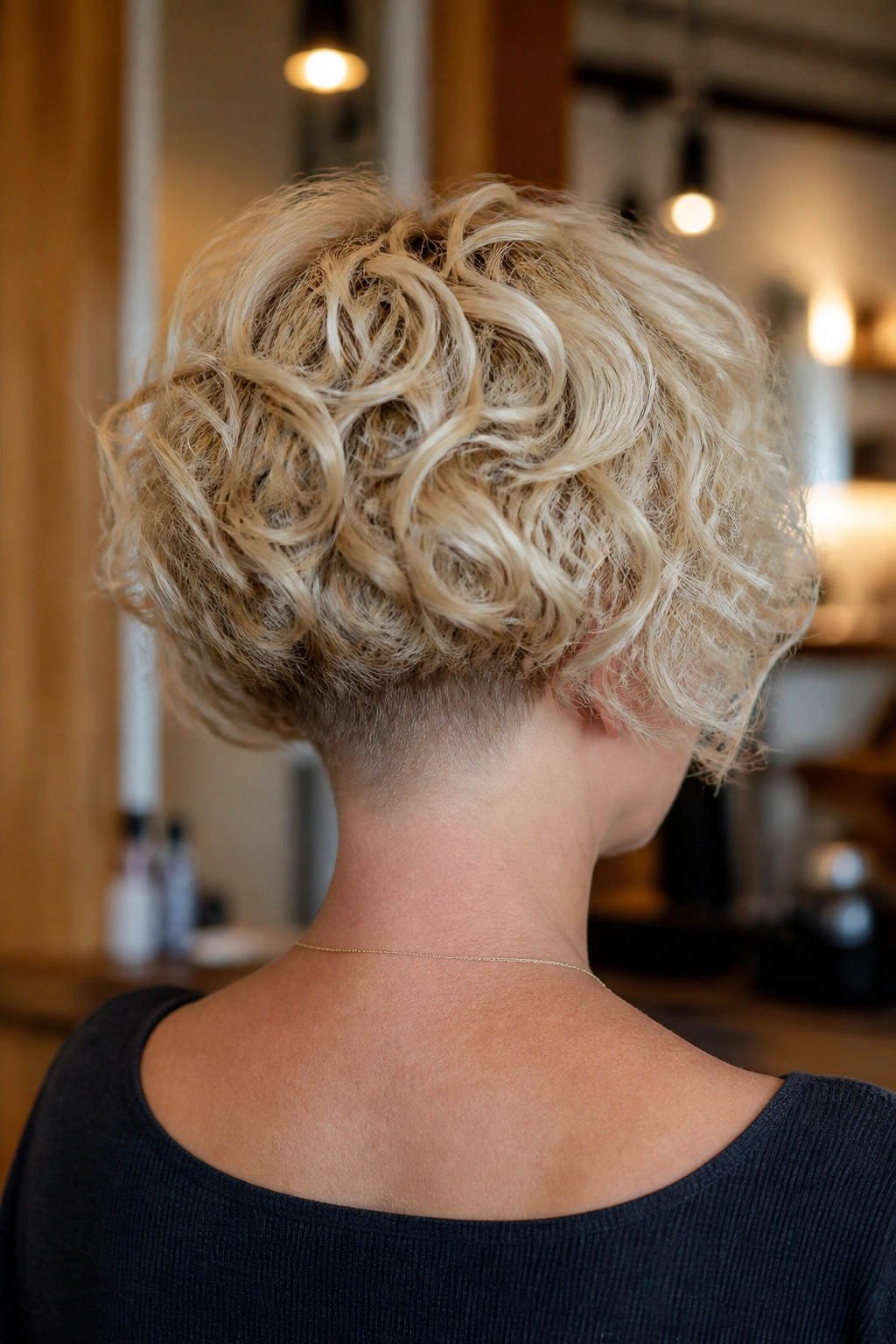
A stacked bob is usually the one people either love or avoid, and I get why. If it’s overdone, it can widen the sides. If it’s balanced, though, it solves a big problem for round faces: bulk at the back.
The clean nape removes weight where curls like to bunch up, and the stacked shape gives the crown a lift that keeps the face from looking too wide. This is especially good for thick hair that swells at the neck. You feel the difference when you turn your head. Less puff. More shape.
Best for curls that have some spring but not so much that they explode at the sides. Ask for a soft stack, not a dramatic shelf. The front should still stay long enough to skim the jaw. The blonde color can stay bright through the ends and a touch deeper at the roots. That little contrast keeps the back from looking heavy.
7. Shaggy Curly Bob with Curtain Bangs
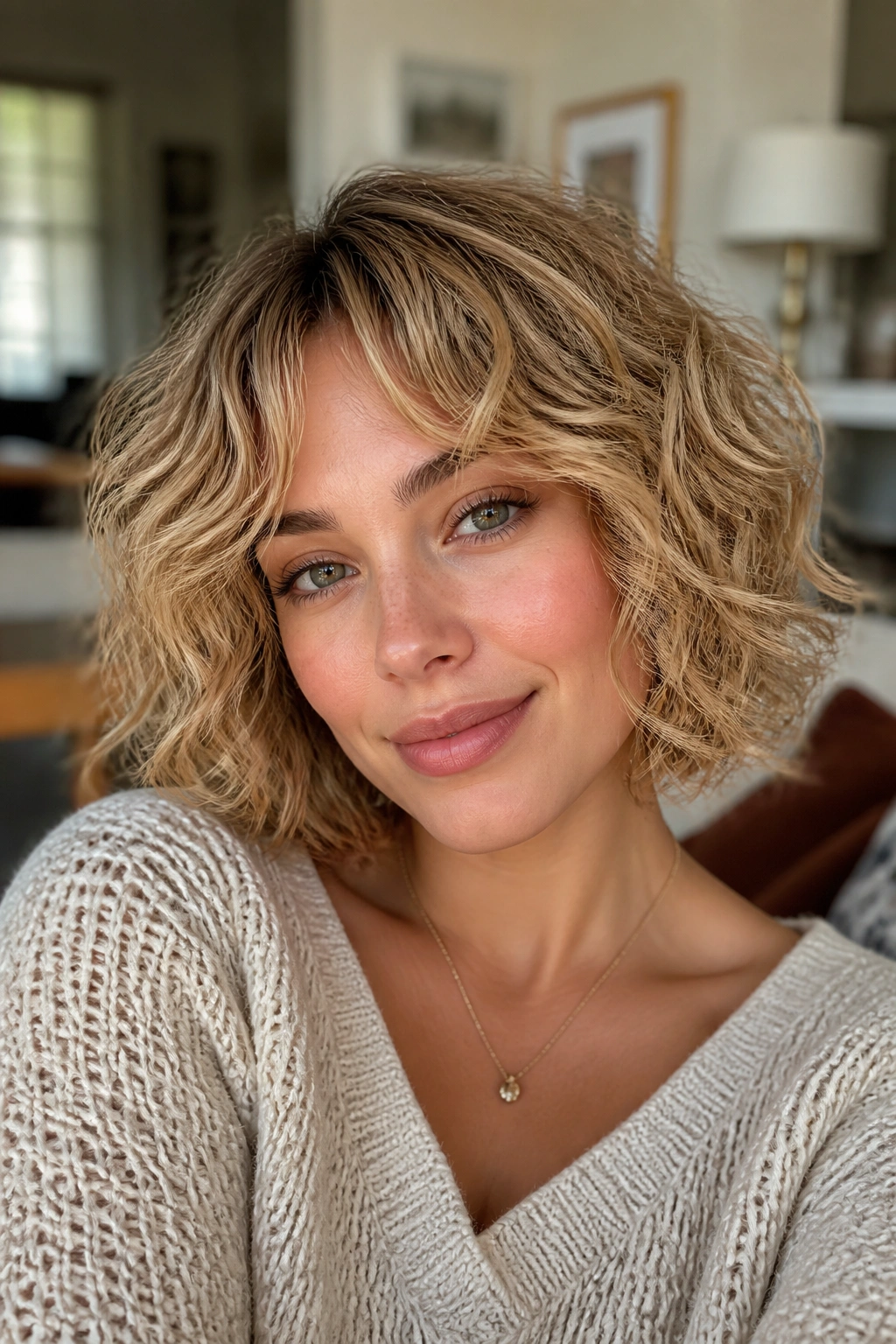
A shaggy curly bob is one of the easiest ways to stop a round face from looking too full. The shag breaks the outline into smaller pieces, and curtain bangs split the front into two soft angles instead of one wide curtain of hair. It sounds casual. It does real work.
What makes it different
The layers aren’t there to thin the hair out for the sake of it. They’re there to remove that broad, helmet-like shape that curls can create when everything hits at the same level. Curtain bangs help because they sweep away from the center and blend into the sides.
- Best on loose curls, waves, or soft ringlets.
- Ask for bangs that start around eyebrow level and open toward the cheekbones.
- Keep the longest layers below the chin.
- Use a small amount of curl cream so the layers stay piecey, not fuzzy.
This cut looks especially good in sandy blonde or dark-root blonde. The color stops the shag from reading flat.
8. Asymmetrical Curly Bob
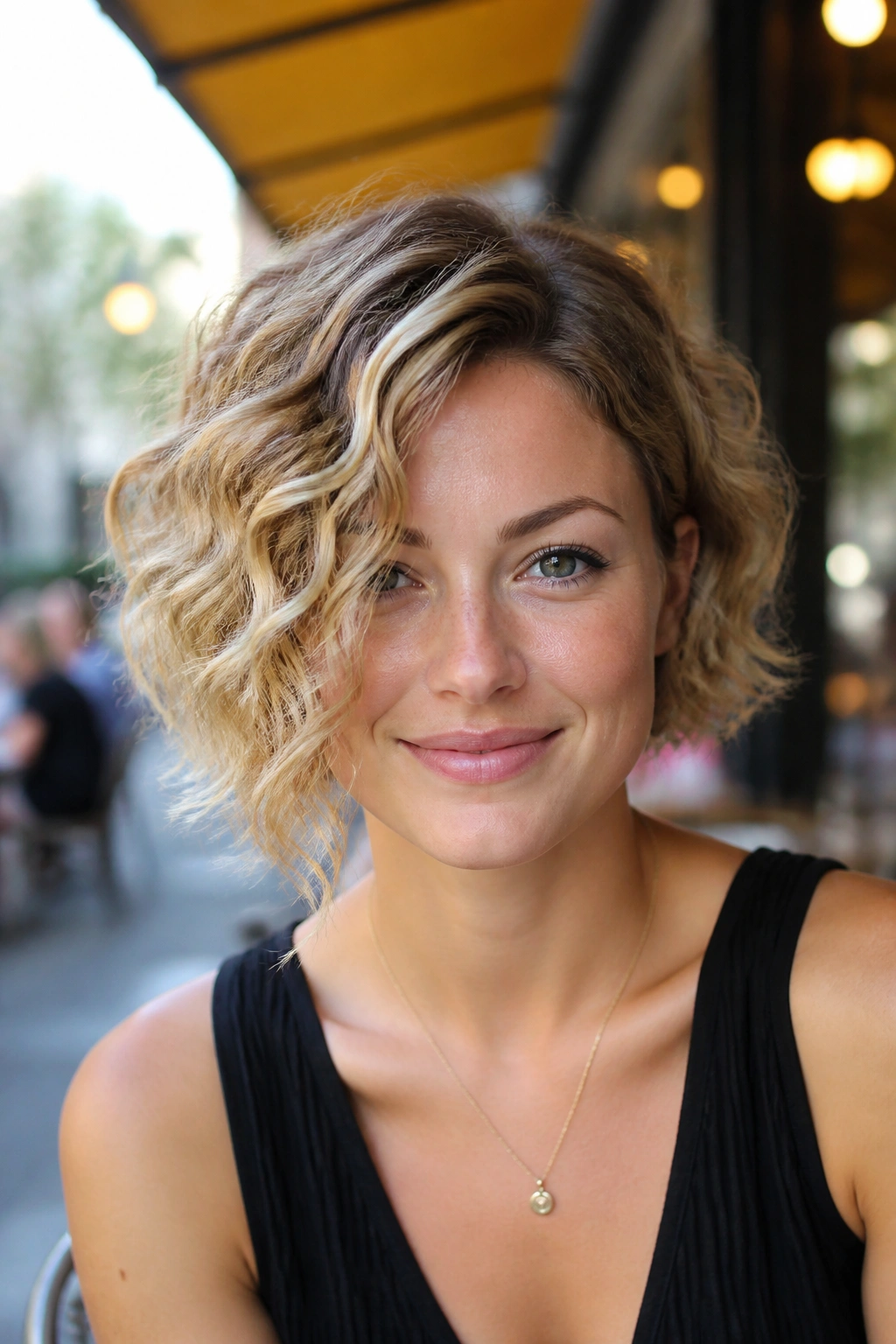
One longer side can change the whole face shape. That’s the simple truth here. An asymmetrical curly bob gives a round face a clean off-balance line, which feels sharper and less circular the second the hair moves.
The longer side should not be extreme. A huge difference between sides can look costume-like fast, especially once the curls dry and shrink. A subtle asymmetry — maybe an inch or two — is enough. That little shift draws the eye diagonally and keeps the cut from sitting in a perfect ring around the face.
This style works well if you like a side part but want something with a little more edge. It also suits blonde highlights because the uneven lengths show off color placement as the hair moves. If your curls are dense, ask your stylist to keep the shorter side softly layered so it doesn’t balloon out. The whole point is movement, not a triangle.
9. Deep Side-Part Curly Bob
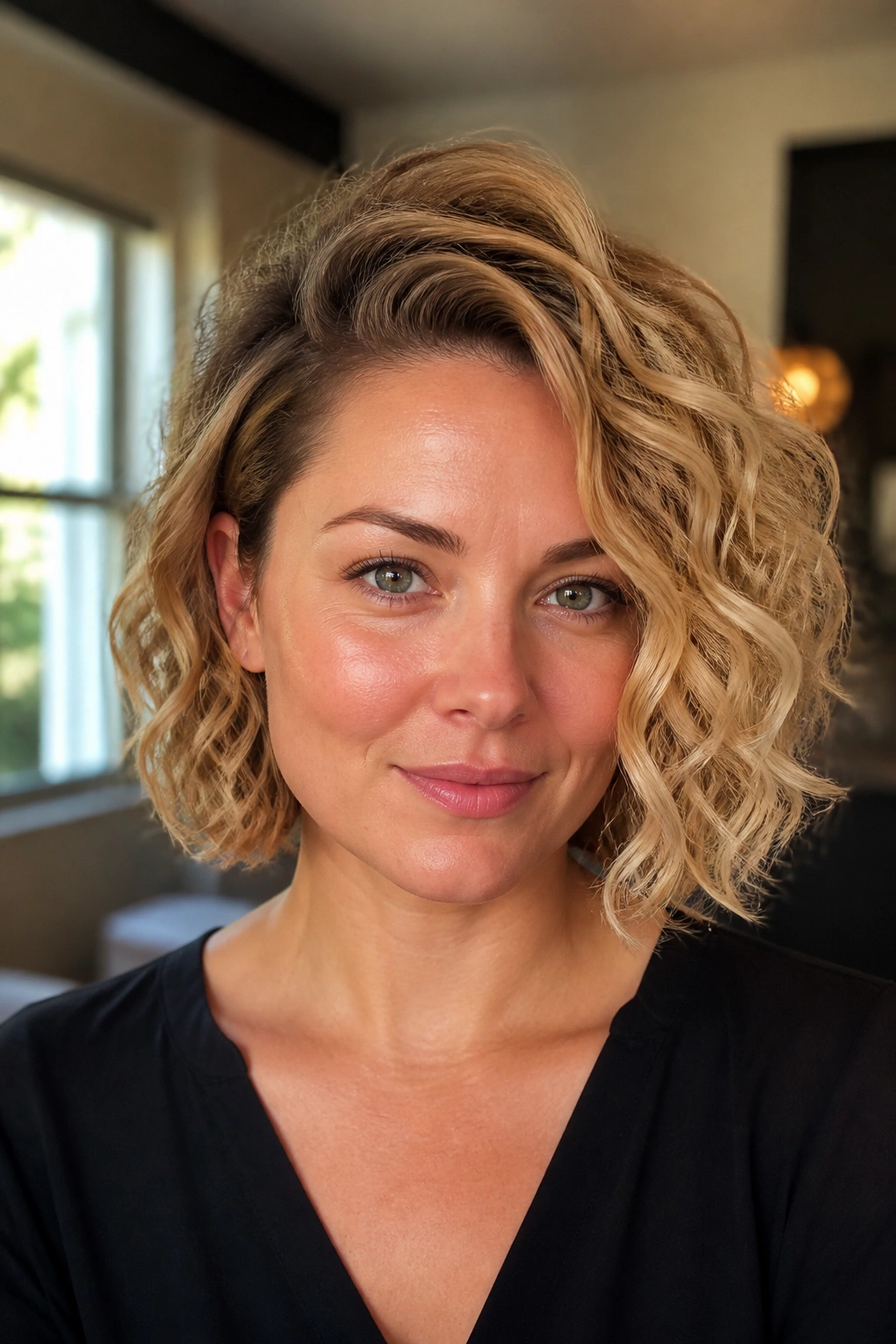
Why does a deep side part feel so effective on a round face? Because it changes the whole top line before the curls even start. The crown gets height, one side gets more body, and the face gets a clean vertical break that makes the cheeks seem less dominant.
This version is a little more dramatic than the regular side part. It’s also a good choice if your hair naturally falls flat at the roots. You get lift with almost no extra work, especially if you clip the part while the hair dries. That tiny move can matter more than another layer ever will.
How to get the most from it
Tuck the smaller side behind the ear if you want the jawline to show. Let the fuller side fall forward if you want more balance. A beige or honey blonde tone helps the parting line stay soft, which matters on curly hair because a harsh scalp line can look awkward.
If you only try one shaping trick, make it this one. It’s cheap, fast, and stubbornly effective.
10. Blunt Curly Bob with Piecey Ends
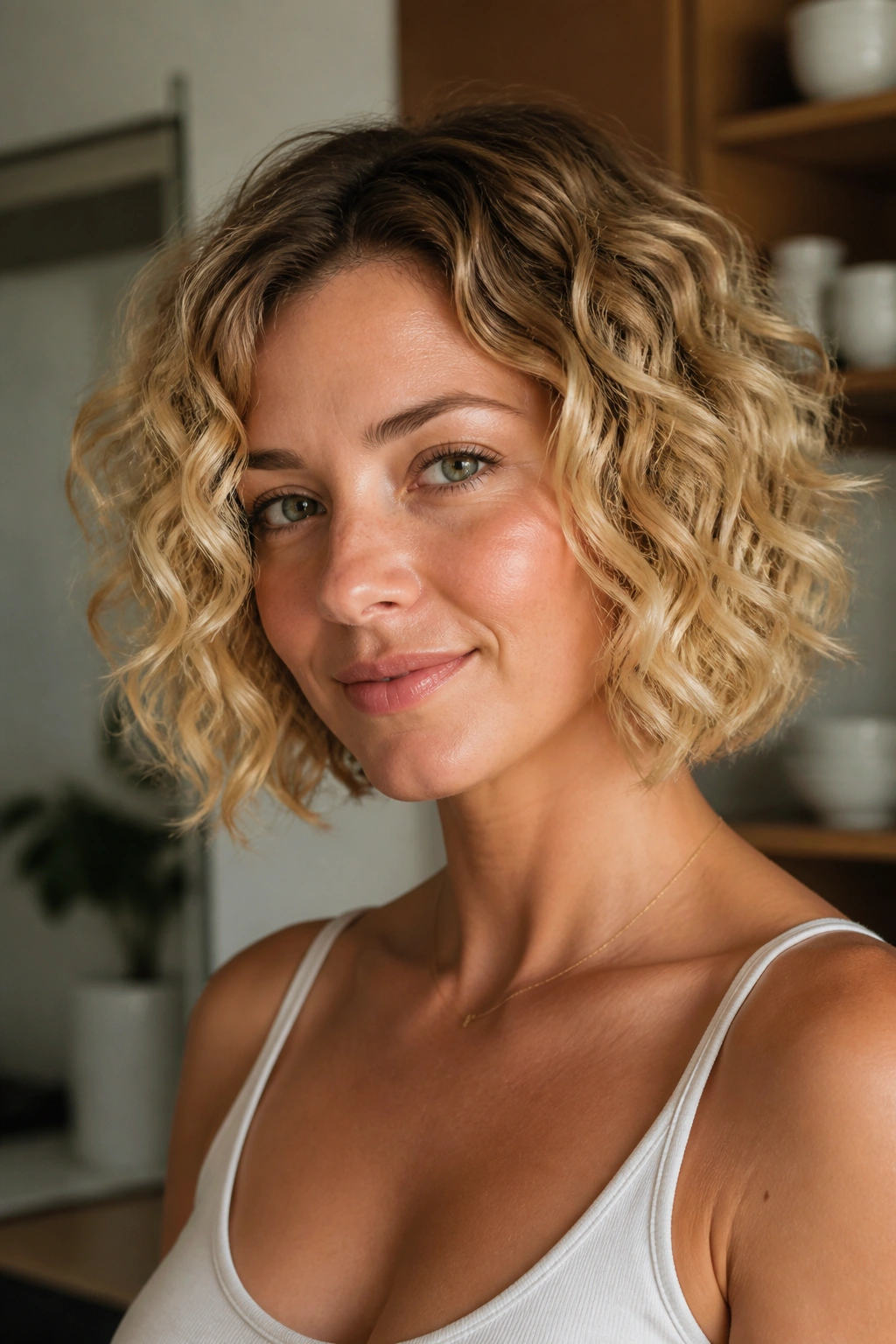
A blunt curly bob sounds like the last thing a round face should wear. Sometimes that’s exactly why it works. The key is keeping the hemline below the chin and the ends piecey, so the cut feels clean rather than wide.
Curly hair can turn a blunt line into a fluffy cloud if the weight isn’t controlled. Piecey ends fix that. They let the bottom edge stay visible while the curls move. You want a line, not a puffed circle. That difference is huge.
This shape is best if your curls are fine to medium and you like a polished finish. Thick curls can make it too broad unless the stylist removes bulk from the interior. A cool blonde tone, especially one with a darker root, keeps the blunt edge from looking heavy. And if the bob starts right at the jaw? Skip it. Too risky.
11. Bottleneck Bang Curly Bob
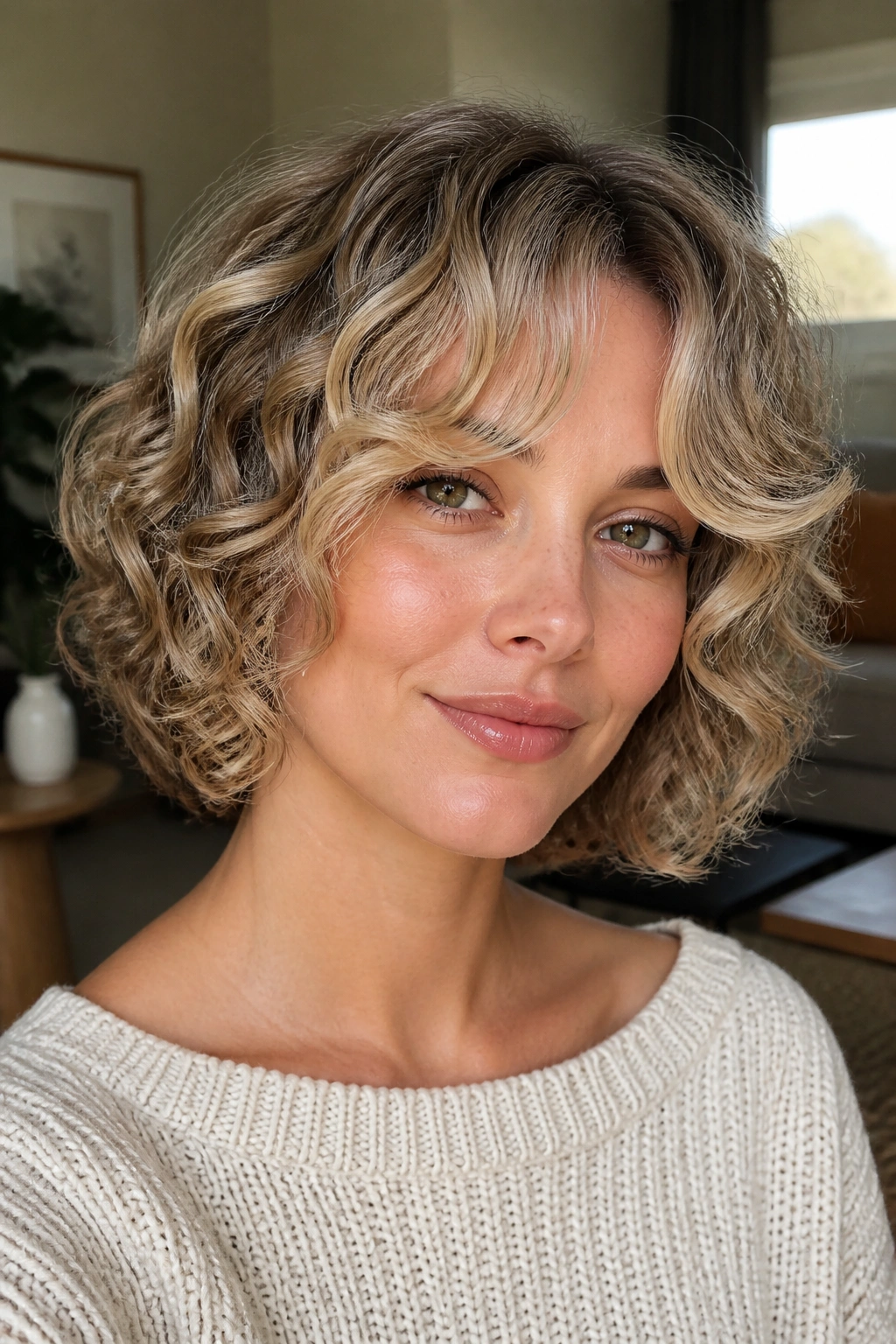
A bottleneck bang is one of those details that sounds fussy until you see what it does. It opens at the center, narrows a little through the middle, then curves wider toward the cheekbones. On a round face, that shape is a gift. It gives the forehead room and avoids a hard horizontal line.
The bob underneath should stay soft and slightly longer than the jaw. That combination keeps the fringe from doing all the work. If the bangs are cut too short, the face can feel boxed in. If they’re too thick, they can crowd the eyes. The sweet spot is airy, not dense.
Blonde highlights around the fringe help the cut read lighter and more lifted. You do not need bright streaks everywhere. Just enough light at the front to show the curl pattern and break up the shape. Ask for the bangs to be styled with a diffuser and a finger rake rather than brushed flat. It keeps the bend soft.
12. Platinum Curly Bob with a Shadow Root
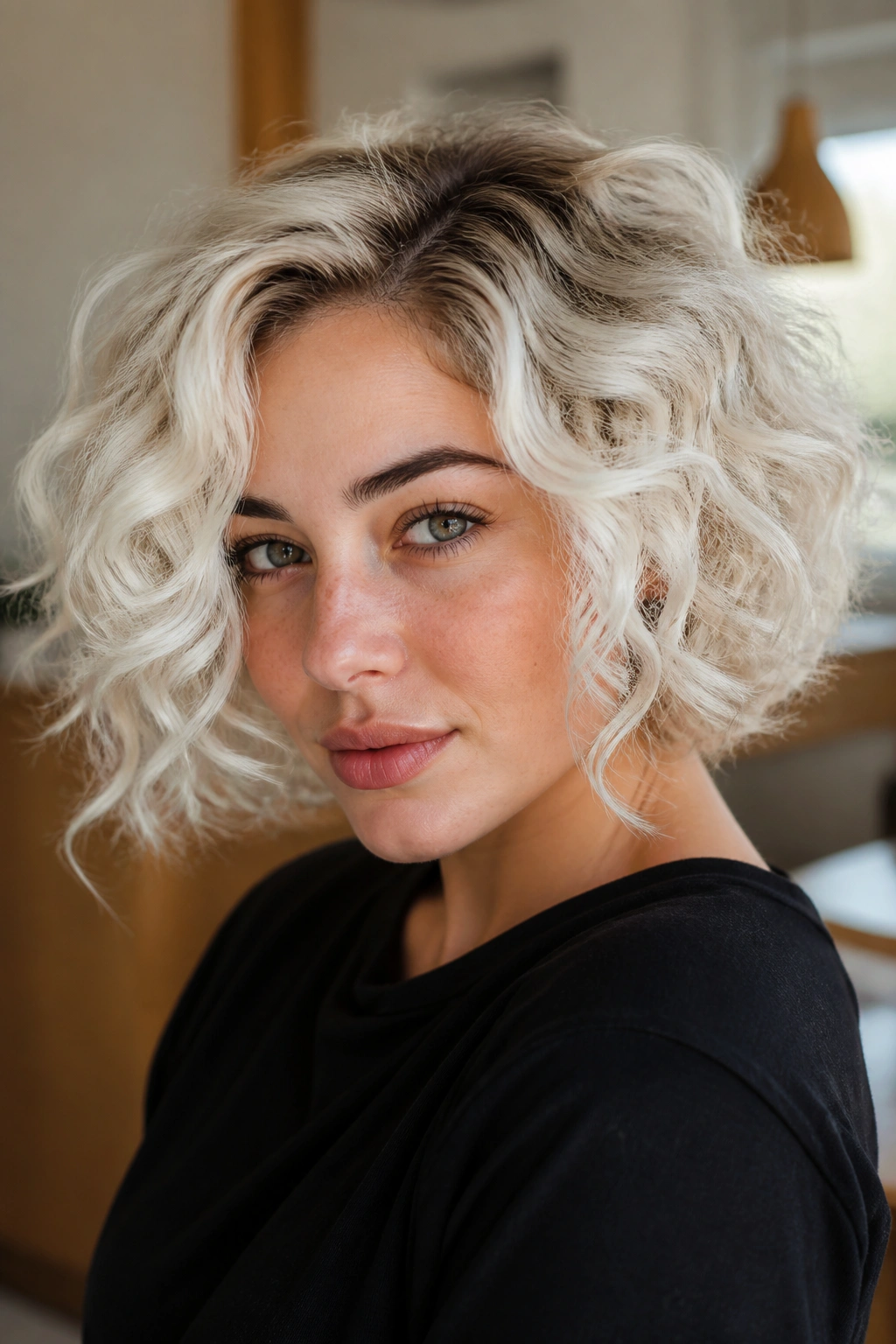
Platinum curls can be gorgeous on a round face, but they need structure or they can look too one-note. A shadow root gives the top of the head a little depth, and that depth is what stops the blonde from turning flat or helmet-like.
The best version keeps the bob just below the cheekbone or at the chin, with soft layers that stop the shape from spreading wide. Platinum needs a little contrast because light hair without depth can blur the haircut. The root shadow fixes that. It draws the eye up first, then lets it travel down the curls.
This is a higher-maintenance look, no sugarcoating it. Light blonde shows brass, and curls can make color wear unevenly on the ends. Still, when it’s done well, the result is sharp and airy. Ask for cool toner at the ends and a root that stays one or two shades deeper. That tiny difference keeps the round face from getting swallowed by brightness.
13. Shadow-Root Curly Bob with Bright Ends
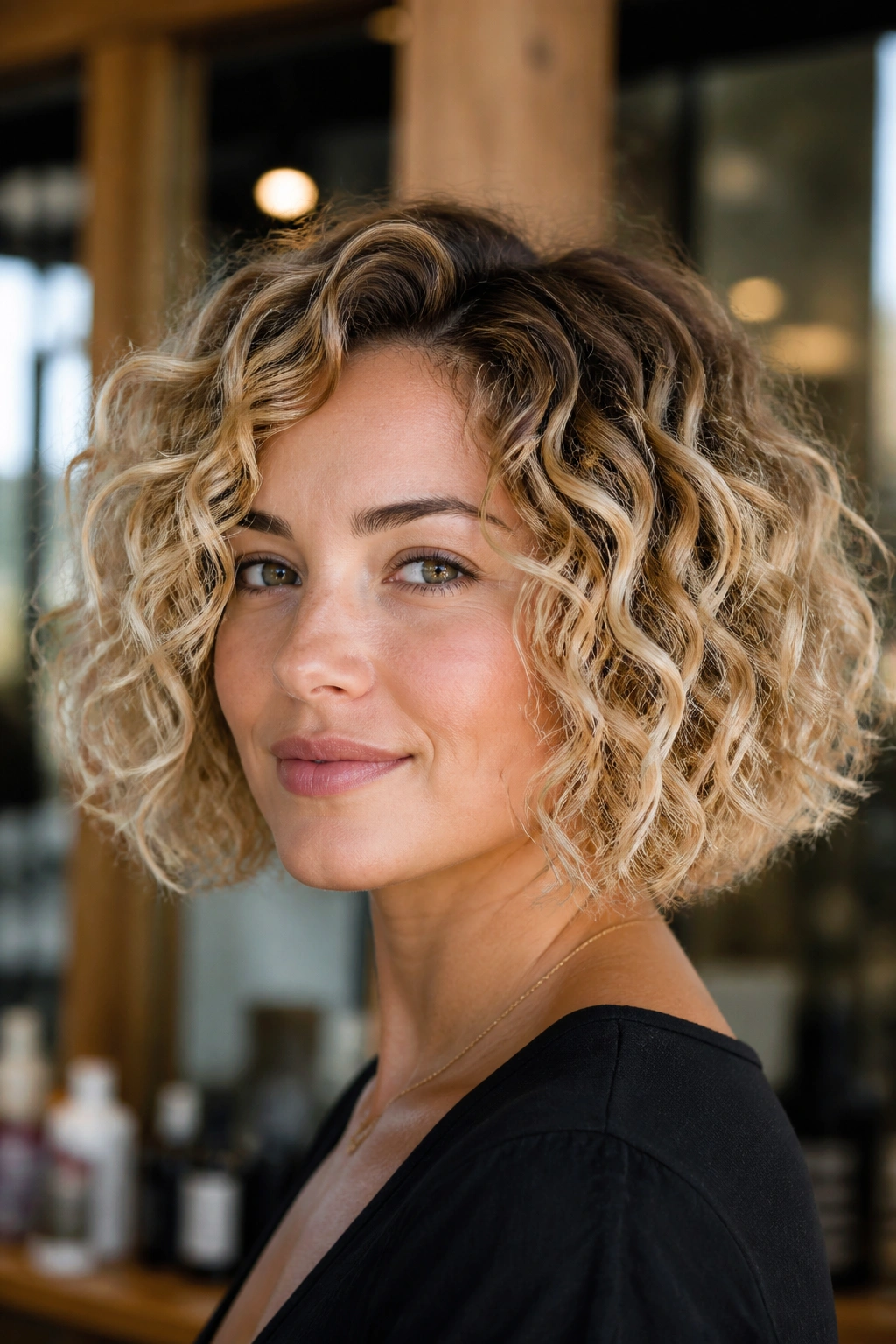
A rooted blonde bob is one of the smartest ways to wear curls on a round face. The darker root keeps the top from looking bulky, and the brighter ends pull the eye downward, which makes the face feel longer. Simple. Effective.
This cut is especially good if you want blonde but hate constant color upkeep. The root melt looks deliberate as it grows, and the dimension keeps the curls from merging into one flat sheet. It also gives each curl a little more definition. That matters more than people think.
- Ask for 1 to 2 shades of root depth.
- Keep the brightest blonde near the mid-lengths and ends.
- Avoid high-contrast stripes right at the cheeks.
- Style with a light gel cast and scrunch out the crunch once dry.
This is the version I’d point someone to if they want blonde hair that still feels easy to wear.
14. Chin-Framing Curly Bob with Internal Layers
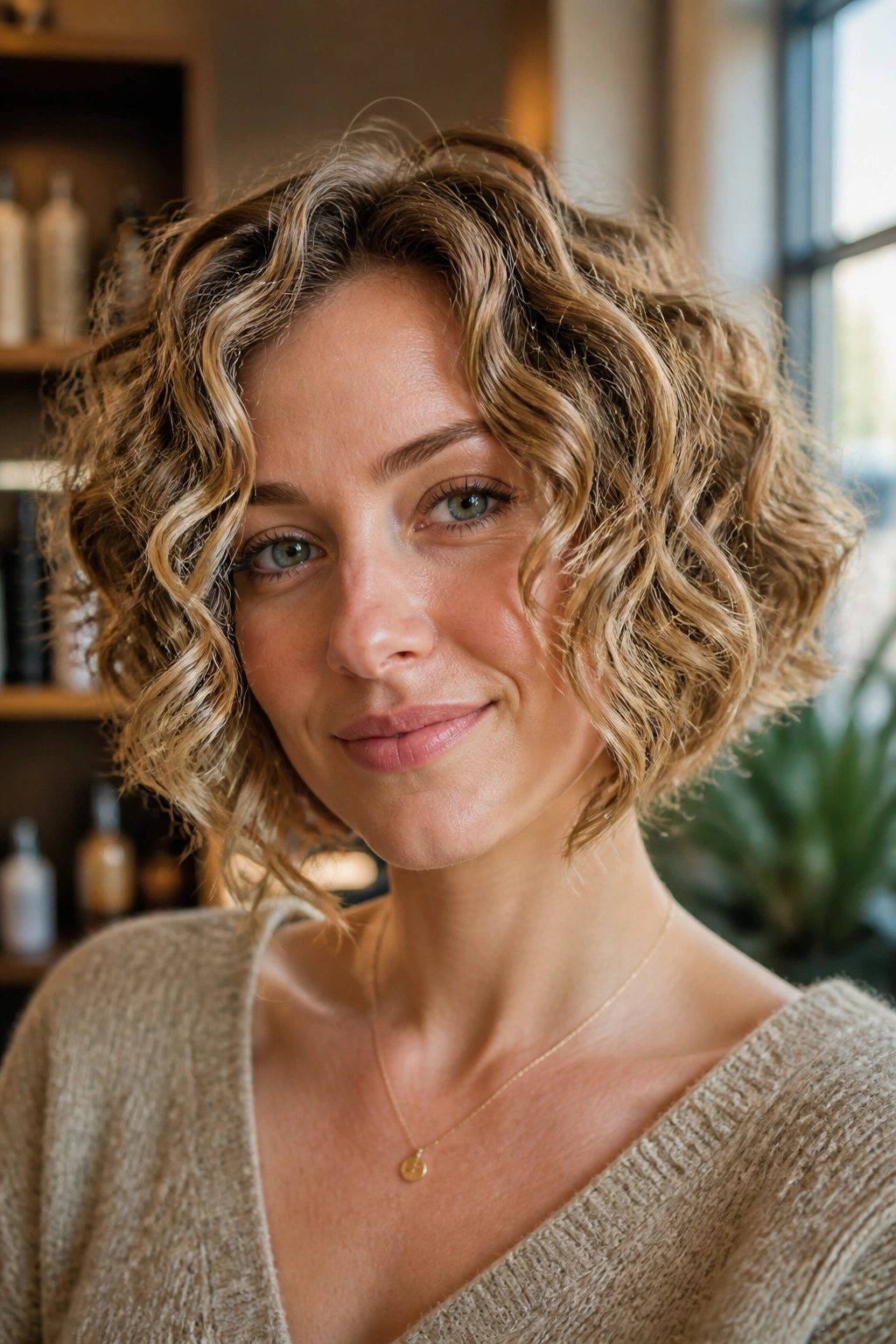
Internal layers are the quiet hero of curly hair. They remove weight from inside the shape without turning the outside into a choppy mess. On a round face, that means the bob can stay full and curly without puffing straight out from the cheeks.
The chin-framing pieces matter because they create a narrow point right where the face starts to widen. That little bit of structure makes the whole haircut look more intentional. Blonde balayage or a soft beige tone can help those front pieces stand apart from the rest of the hair.
The real advantage here is control. You can wear it scrunched, diffuse it, or let it air-dry, and the cut still holds. Ask your stylist not to over-layer the perimeter. The outside line should stay smooth. The shape underneath is where the magic happens. That’s the part most people never notice, and honestly, that’s why it works.
15. Flip-Out Curly Bob
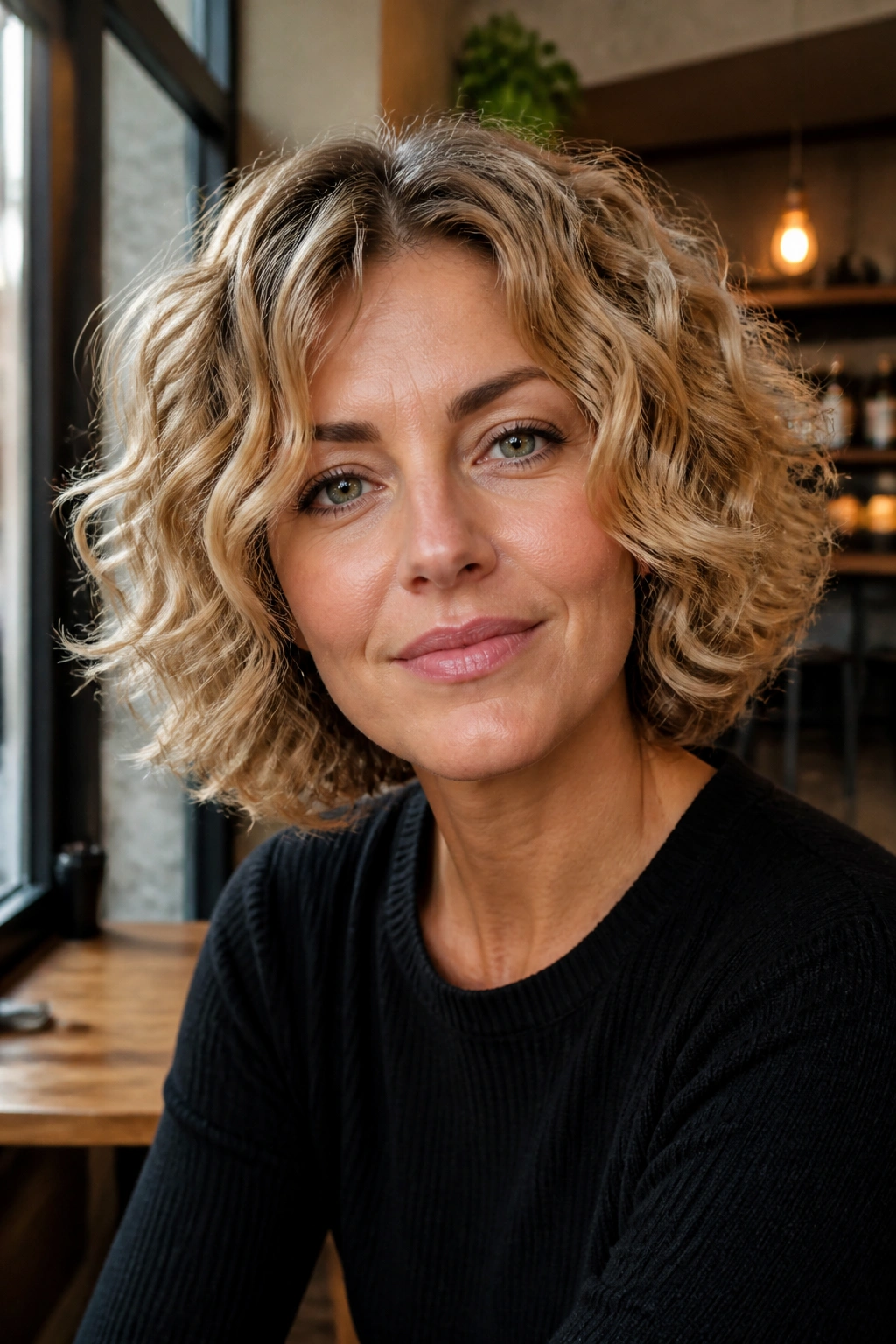
A flip-out bob sounds retro, because it is, and that’s part of the charm. But on a round face, the flip has to start low. If the ends kick out right at the cheeks, you’ve just added width where you don’t want it. If they flick out below the jaw, the cut looks lively and longer.
That lower flip gives the hair movement without hugging the face too tightly. It also plays nicely with curly hair that has a bend instead of tight ringlets. Think soft outward motion, not curled-under helmet hair.
How to style it
Use a round brush only at the very ends, or encourage the bend with a diffuser and a little finger twirling. A light blonde with warm undertones makes the movement more visible, especially in the bottom inch or two.
This one works best if you like hair that feels a little styled but not stiff. It has personality. It also grows out well, which is a blessing if you do not want a haircut that needs constant rescue.
16. Italian Bob with Loose Curls
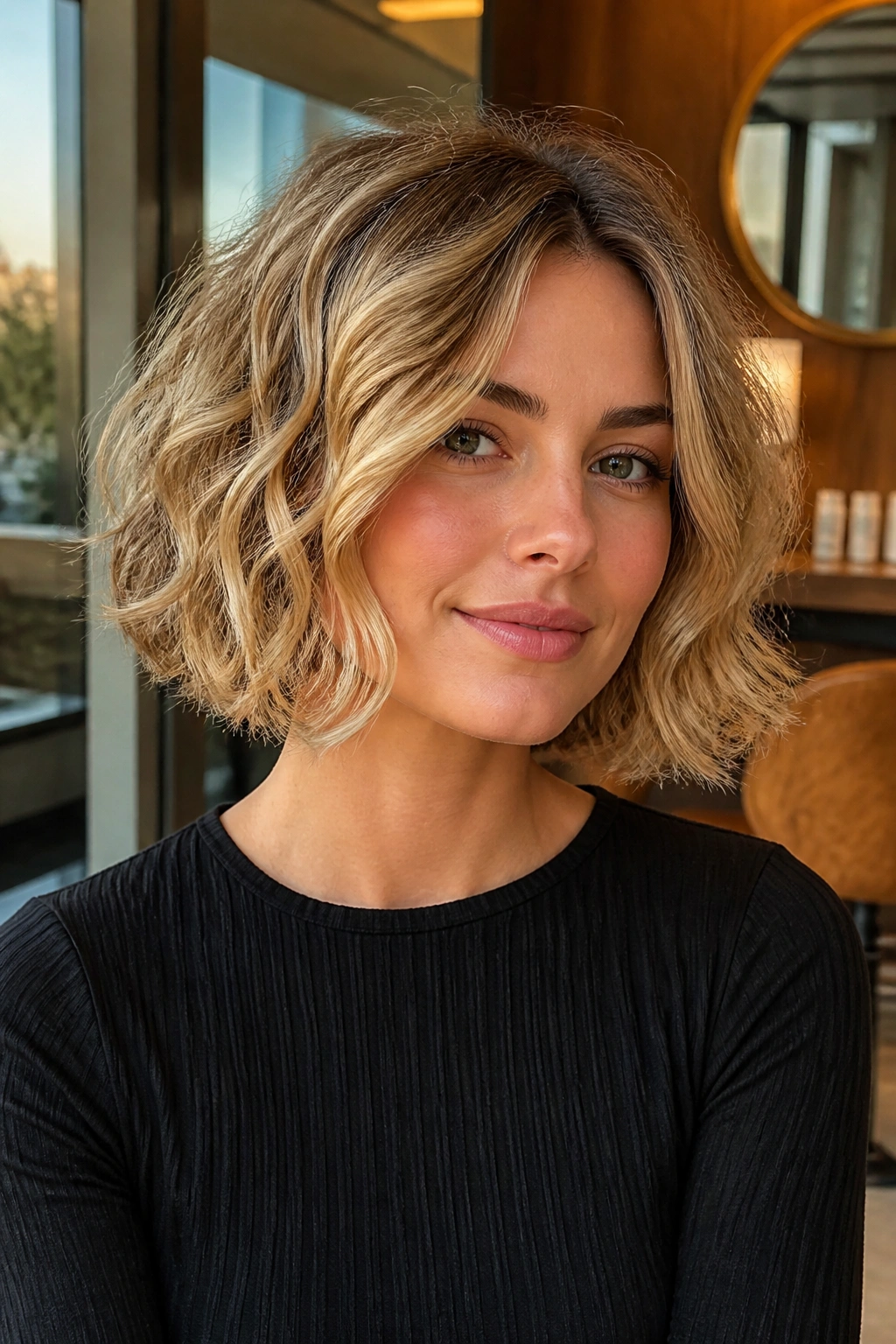
The Italian bob is all about fullness with control. It sits heavier than a shag, cleaner than a beachy cut, and more polished than a wild curly bob. On a round face, the key is keeping the front slightly longer and the curl pattern loose enough that the sides don’t puff out too far.
This is a good cut if you want a strong shape but still want softness around the face. The blonde should feel rich — cream, beige, honey, or a soft champagne tone. Too much contrast can make the shape look busy, and this haircut does not need extra noise.
It works especially well for medium to thick hair. The weight helps keep the outline smooth. Ask for the ends to be beveled, not blunt and heavy. A little bend at the bottom keeps the line elegant. And no, it does not need to be perfect. A small amount of mess is what makes it look human.
17. Micro-Layered Curly Bob for Fine Hair
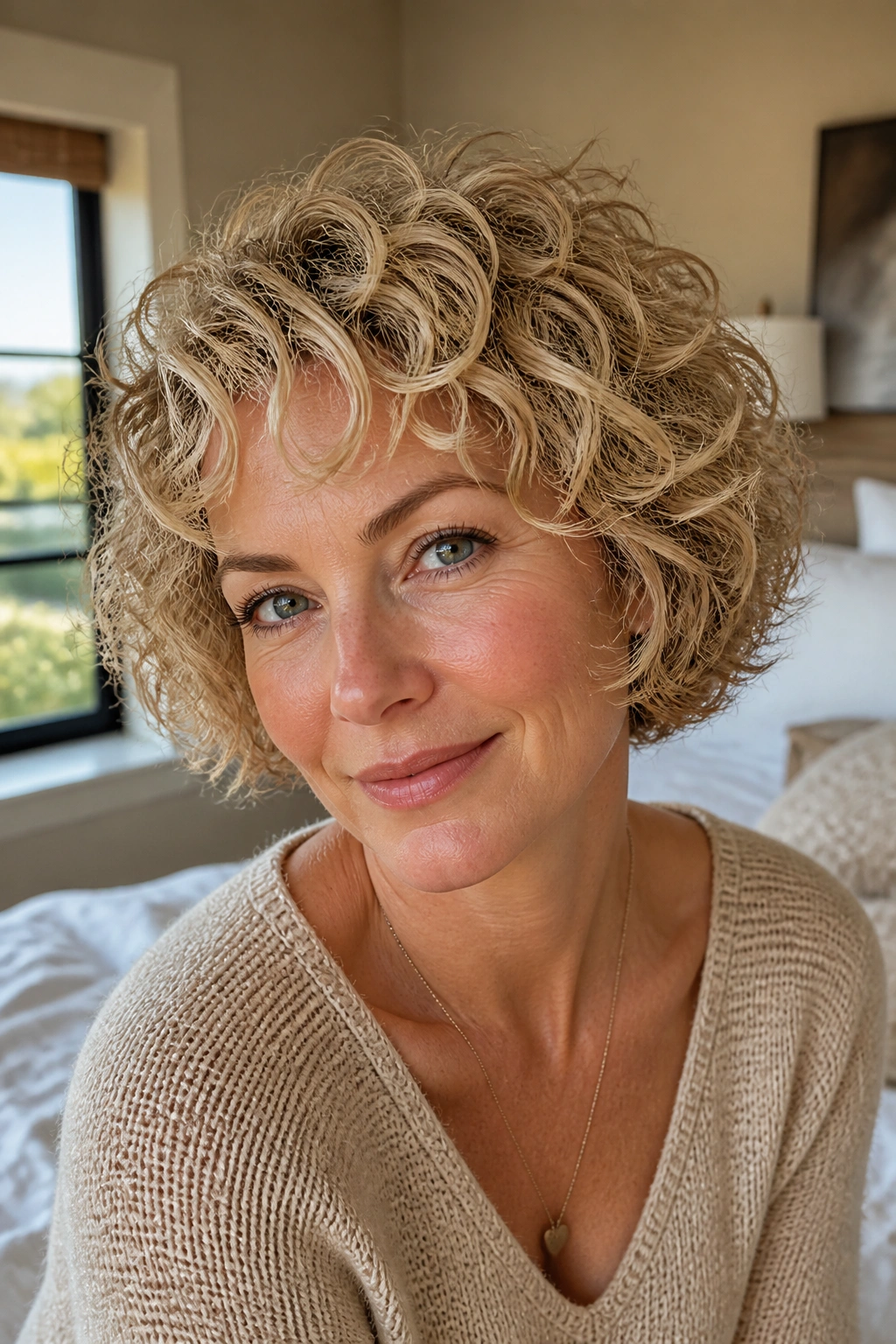
Fine curls are tricky. Too many layers and the hair goes fluffy. Too few layers and it lies flat, then flips out in weird places. Micro-layers split the difference. They give the bob enough movement to avoid a boxy shape while keeping the ends full.
For a round face, that balance matters. You want height and motion without making the sides expand. Micro-layers stay inside the haircut, so the outer line still reads clean. That’s a smart move if your hair is light in density but has a lot of curl pattern.
Blonde color helps here because the lighter strands make the curl detail easier to see, especially in soft beige or champagne tones. Ask for minimal bulk removal around the cheeks and a little extra height at the crown. If the cut looks too airy when wet, don’t panic. Fine curly hair often settles into a better shape once it dries. Patience saves a lot of bad decisions.
18. Inverted Curly Bob
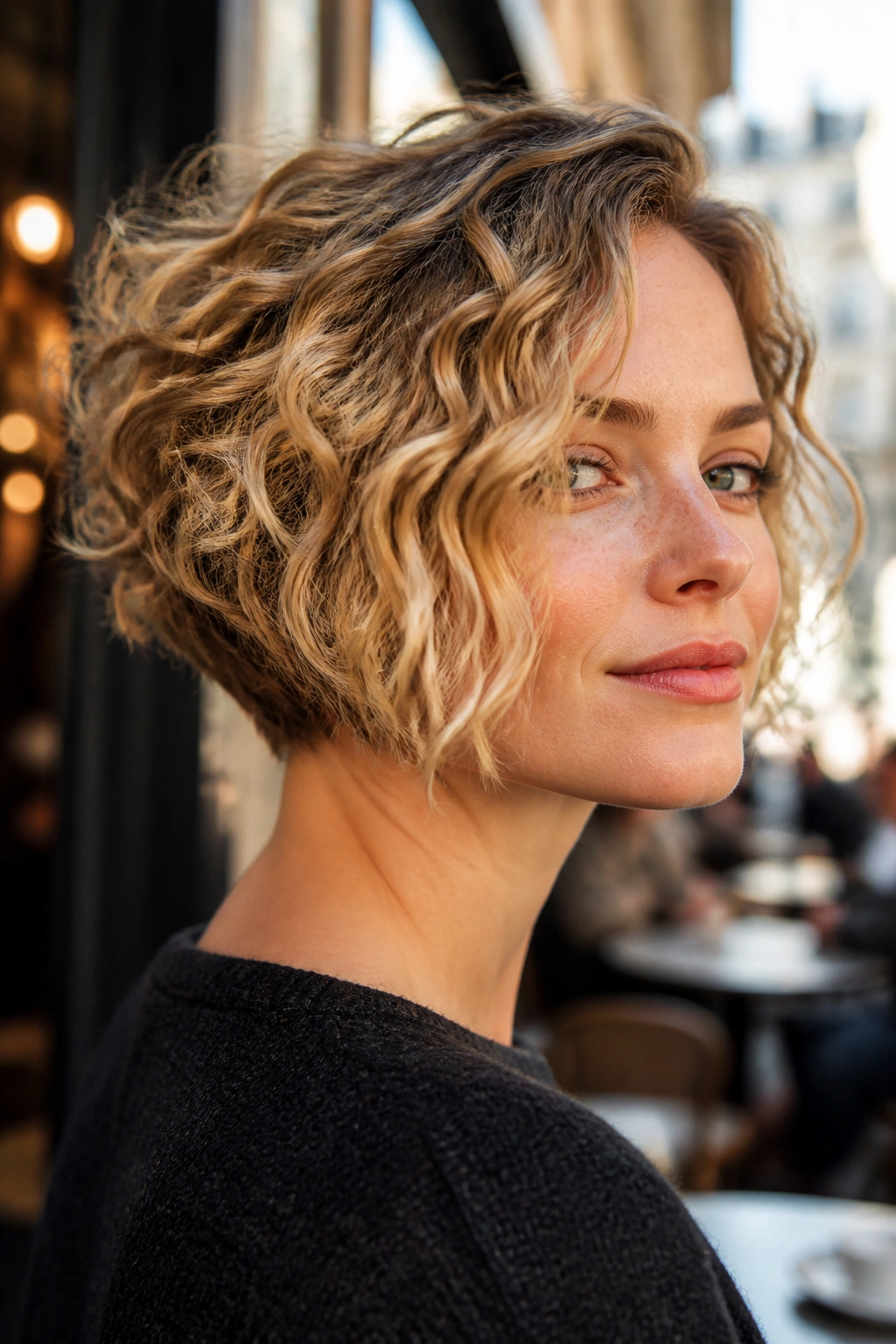
Shorter in the back, longer in the front. That diagonal is doing the work again, and round faces usually love it. An inverted curly bob builds lift at the nape while sending the front pieces forward past the cheeks, which keeps the face from looking wide and flat.
The key is restraint. A dramatic inversion can look sharp in a photo and awkward once curls start bouncing. A softer version is better — just enough lift in the back to create shape, just enough length in front to skim the jaw. That’s the sweet spot.
If your hair is thick, this cut can feel wonderfully light. If your hair is fine, keep the stack gentle so the back doesn’t collapse. Blonde highlights on the front pieces make the angle easier to see. I’d pick this one for someone who likes structure and wants the haircut to do some of the styling for them. It’s efficient. I appreciate that.
19. Beachy Curly Bob
A beachy curly bob can work on a round face, but the length has to be right. Too short and it balloons. Too wide and it reads like a puffy sphere. Kept below the cheekbone, though, the loose texture feels easy and relaxed without losing shape.
What makes it different
This isn’t the polished curl pattern of a structured bob. The strands separate a little. The ends look lived-in. The blonde tone usually leans sun-washed — think sandy, beige, or softly rooted.
- Best on loose curls or waves with bend.
- Keep the length at or below the jawline.
- Use a light salt spray only at the mids and ends.
- Scrunch the hair while it’s damp, then leave the top a bit smoother.
This style is ideal if you like movement more than precision. A round face needs the vertical stretch, so don’t cut it too short. The relaxed texture should still have a plan.
20. Jaw-Length Curly Bob with Tucked Ends
Jaw-length is risky. I’ll say it plainly. On a round face, that length can be perfect or a mess, and the difference usually comes down to how the ends sit. If they stay tucked in a little and the top has lift, the cut looks neat and sculpted. If they poof outward, it widens the whole face.
The safest version keeps the curls controlled around the lower cheek and jaw, then softens the line with side-swept pieces or a clean side part. Blonde can help by lightening the lower edge, which stops the bob from feeling too solid.
This cut suits people who want a shorter shape but don’t want a full chin-length box. It asks for discipline. Use a small diffuser attachment, not a blast of hot air, or the ends will expand in the wrong direction. If you’ve got dense curls, I’d only choose this cut with a stylist who knows shrinkage well. No guessing.
21. Golden Blonde Bob with a Side-Swept Fringe
Warm blonde can be kinder to a round face than a very cool tone, especially when the haircut already has movement. A side-swept fringe breaks the forehead line and sends the eye diagonally, while the golden color softens the whole shape and keeps it from feeling harsh.
This is a nice option if you want brightness without the upkeep of icy blonde. Golden, honey, and soft caramel-blonde shades tend to read friendlier on curls. They also make the fringe blend better into the rest of the cut, which is important. A fringe that looks pasted on is a nuisance.
The bob itself should sit just below the chin or at the collarbone. If the fringe is sweeping across one side, leave the longer side a touch heavier so the shape has balance. Use a round brush only if your curls are loose enough to handle it. Otherwise, finger-direct the fringe and let the curl pattern do the rest.
22. Razor-Layered Curly Bob
Razor layers are not for everyone. On the wrong hair, they can fray the ends and make the bob look fuzzy. On the right curls, though, they take out bulk and give the haircut a light, airy finish that round faces often need.
The trick is keeping the layers soft and controlled. You do not want shredded ends all over the place. You want just enough texture to stop the silhouette from becoming too round. That means a stylist who understands curl spring and doesn’t go wild with the blade.
This style works well on medium-density curls that tend to bunch up around the cheeks. The razor helps the bob fall in pieces rather than one thick block. Blonde highlights make that movement easier to see, especially if the ends are a shade lighter than the roots. If your hair frizzes when cut too aggressively, skip this one. There’s no prize for being brave with bad scissors.
23. Tapered-Nape Curly Bob
A tapered nape gives the neck room to show, and that alone can change how a round face looks. The haircut feels narrower from behind, while the curls in front stay soft enough to frame the cheeks without widening them.
This is a strong choice for thick curly hair that likes to puff at the base of the head. The taper removes some of that density where it tends to build up. The result is cleaner and less helmet-like. Good cut. Practical cut.
I like this shape with a neutral blonde, especially one with lowlights underneath. The contrast keeps the taper visible. Ask for the back to be shorter and lighter, but not shaved up high. You still want curl movement, not a hard undercut effect. If you tuck one side behind the ear, the neckline looks even longer. Small move. Big payoff.
24. Curly Bob with Peekaboo Highlights
Peekaboo highlights are a smart way to use blonde without painting the whole head bright. The hidden ribbons show up when the curls move, which means the eye keeps traveling through the haircut instead of stopping at one heavy line. That helps a round face more than a lot of people expect.
Place the lighter pieces under the top layer, near the cheek and lower crown, where they can peek out as the bob shifts. Avoid packing too much brightness right at the sides. That can widen the face. A few well-placed ribbons are enough.
This style is good if you want dimension but don’t want constant root drama. It also works for curly hair that clumps in sections, because the contrast makes the curls look more defined. Ask for the highlights to be soft and irregular, not stripes. The point is movement. Little flashes of light are enough.
25. Halo-Volume Curly Bob
A halo-volume bob sounds airy, but it has a job to do: lift the crown and keep the sides from taking over. That’s exactly why it works on round faces. The volume sits high, the face gets length, and the outline stops reading as perfectly circular.
How to build the shape
Diffusing upside down can help, but don’t overdo it. You want lift, not a mushroom cloud. Root clips near the top can make a bigger difference than people expect.
- Keep the side sections a little sleeker than the crown.
- Use mousse at the roots and a light cream on the mids.
- Don’t pile too many short layers into the sides.
- Choose a blonde with soft contrast at the root so the lift shows up.
This is a good option if your hair is naturally dense or if your curls flatten at the scalp. It reads bold in a nice way, not a messy one, as long as the width stays under control.
26. Shoulder-Grazing Curly Lob for Round Faces
This is probably the safest shape in the whole bunch. A shoulder-grazing lob gives curls enough room to fall without sitting right on the widest part of the face, and that extra length does a lot for round features. It’s the haircut I’d hand to someone who wants low drama and good payoff.
The blonde can go warm or cool here. Honey blonde feels softer. Beige blonde feels cleaner. Either way, the shoulder length gives the curl pattern time to show itself before the hair turns outward. That’s the real benefit.
The front should stay a touch longer than the back, or at least longer than the chin. A single-length lob can work too, but only if the curls are controlled and the ends are not bulky. If you want to wear your hair up half the time, this length makes that easier. It’s practical. It grows out well. It still looks styled even when it isn’t.
27. Old-Hollywood Curly Bob
Old-Hollywood curls are polished, but they are not stiff. That’s why they work on round faces. The wave pattern bends the hair downward and away from the cheeks, and the side part opens the top of the face instead of filling it in.
How to get the most from it
You want shine, a clean bend, and a smooth finish around the face. Too much fluff kills the whole point. A soft setting lotion or curl cream can help the shape hold without turning crispy.
This style looks especially good with blonde that has depth at the roots and lighter ends. The contrast shows off the wave pattern and keeps the bob from reading flat in photos or in motion. If your curls are looser, set them with larger rollers or a big-barrel iron after drying. If they’re tighter, work with what you’ve got and smooth the outer layer.
It’s a dressier look, sure, but it doesn’t feel costume-y when the length stays just below the jaw.
28. Piecey Invisible-Layer Curly Bob
Invisible layers are the kind of thing people notice only when they’re missing. They sit inside the haircut, remove bulk, and let the curls fall into little separated pieces instead of one wide wall. On a round face, that kind of quiet shaping is gold.
The piecey finish keeps the blonde from looking heavy. Each curl has room to show, and the face gets a softer outline without losing structure. This is a strong choice for dense hair, mixed curl patterns, or anyone who wants the bob to look polished one day and a little undone the next.
Ask for the perimeter to stay clean and the interior to carry the weight removal. That keeps the haircut from turning choppy. A soft rooted blonde works best here because the color contrast makes the pieces visible without screaming for attention.
Pick the version that changes the line around the cheeks or below the chin. That is where round faces get the biggest win. A good curly blonde bob should make the curl pattern do the shaping, not fight it.
