



Fine hair and a blunt bob can be a rough pairing. The line looks neat for a day or two, then the ends start telling on you. A little too much length, and the shape sinks. A little too much layering, and the hair can turn wispy fast.
That’s why choppy bob haircuts for fine hair stay so useful. The right cut doesn’t fight the hair you actually have. It gives fine strands a stronger outline, breaks up flatness, and creates movement without stripping away the weight that keeps the ends looking full.
The trick is balance. A good choppy bob is not a hacked-up cut with random bits missing. It’s a controlled shape with enough softness to move and enough structure to keep the hair from looking sparse. A skilled stylist watches where your hair collapses, where it bends, and where it needs help pretending to be thicker than it is. That sounds sneaky because it is.
Some of these cuts are clean and polished. Some are messy in the best way. All of them give fine hair more life than a one-length bob that just hangs there like it’s waiting for better news. Start with the chin.
1. Chin-Length Choppy Bob with Airy Ends

This is the cut I’d hand to someone who wants the safest win. Chin length keeps the ends dense, and the choppy texture stops the outline from looking stiff. Fine hair usually looks fuller when the perimeter sits near the face, where it can hold a shape instead of drifting downward.
Why It Works on Fine Hair
A chin-length bob leaves enough weight at the bottom to make the hair look thicker. The choppiness belongs inside the shape, not all over it. That means light point cutting around the ends and a soft internal break near the cheekbones, not a pile of layers that eat up density.
Ask for:
- Length that lands right at the chin or a hair below it
- Soft, broken ends instead of a blunt shelf
- Minimal layering at the crown
- A side part if your roots go flat fast
Skip heavy thinning shears. They can make fine strands look see-through in a hurry.
2. Jaw-Grazing Bob with a Deep Side Part
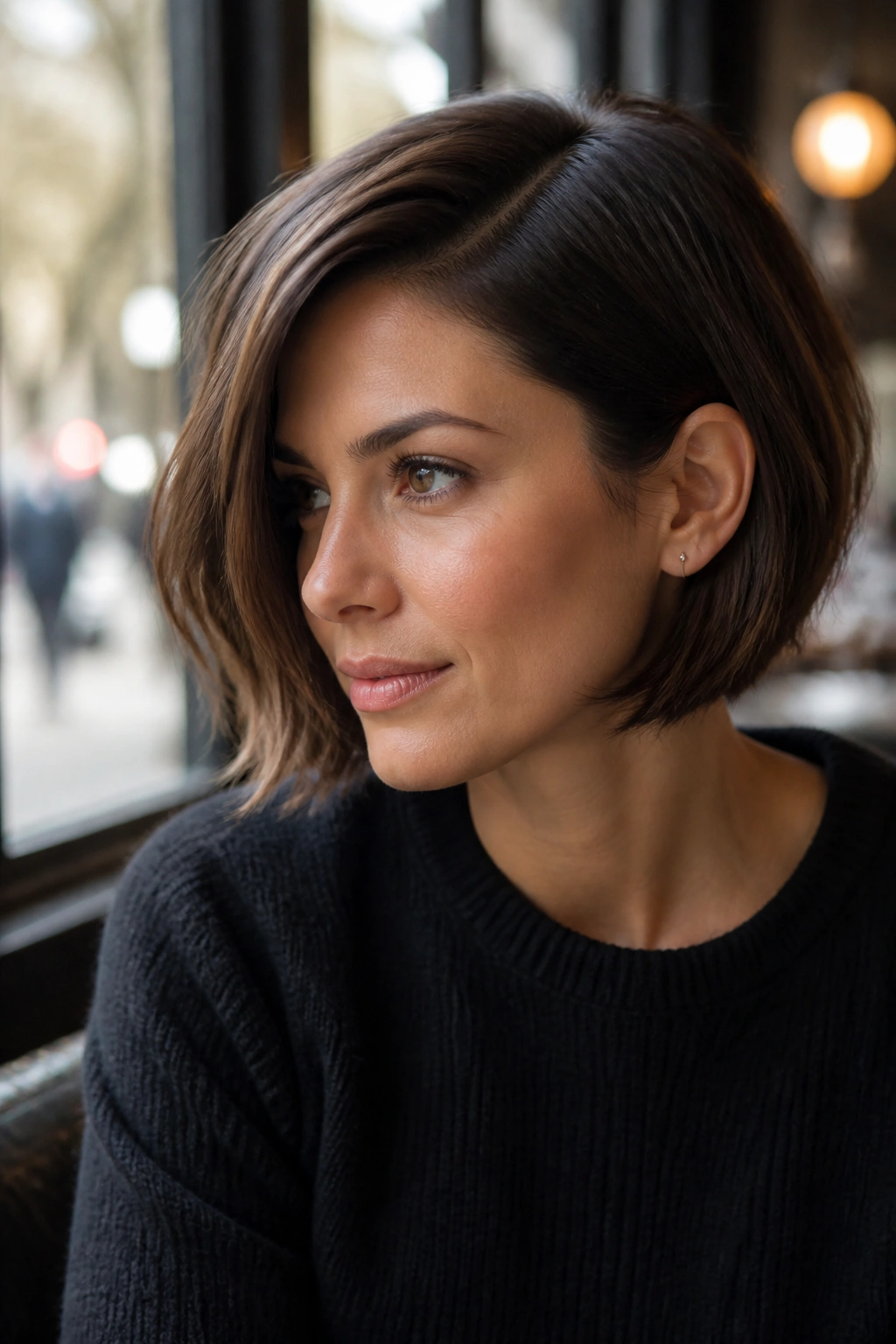
Why does a jaw-length bob look thicker than longer hair? Because it gives the eye a clear line to stop at. Fine hair tends to benefit from that kind of visual endpoint, and a deep side part adds a little lift at the root without asking for much work.
This version is especially good if one side of your hair lies flatter than the other. The longer sweep on the heavy side softens the face, while the shorter side gives a clean edge that reads fuller. A good stylist will keep the interior light and the outline strong.
It’s a calm haircut, not a loud one. That’s the charm. If you like a cut that still looks decent after a rough blow-dry, this is a smart pick. A small round brush and a quick bend at the ends usually do the job.
3. Stacked Nape Bob with Soft Crown Lift
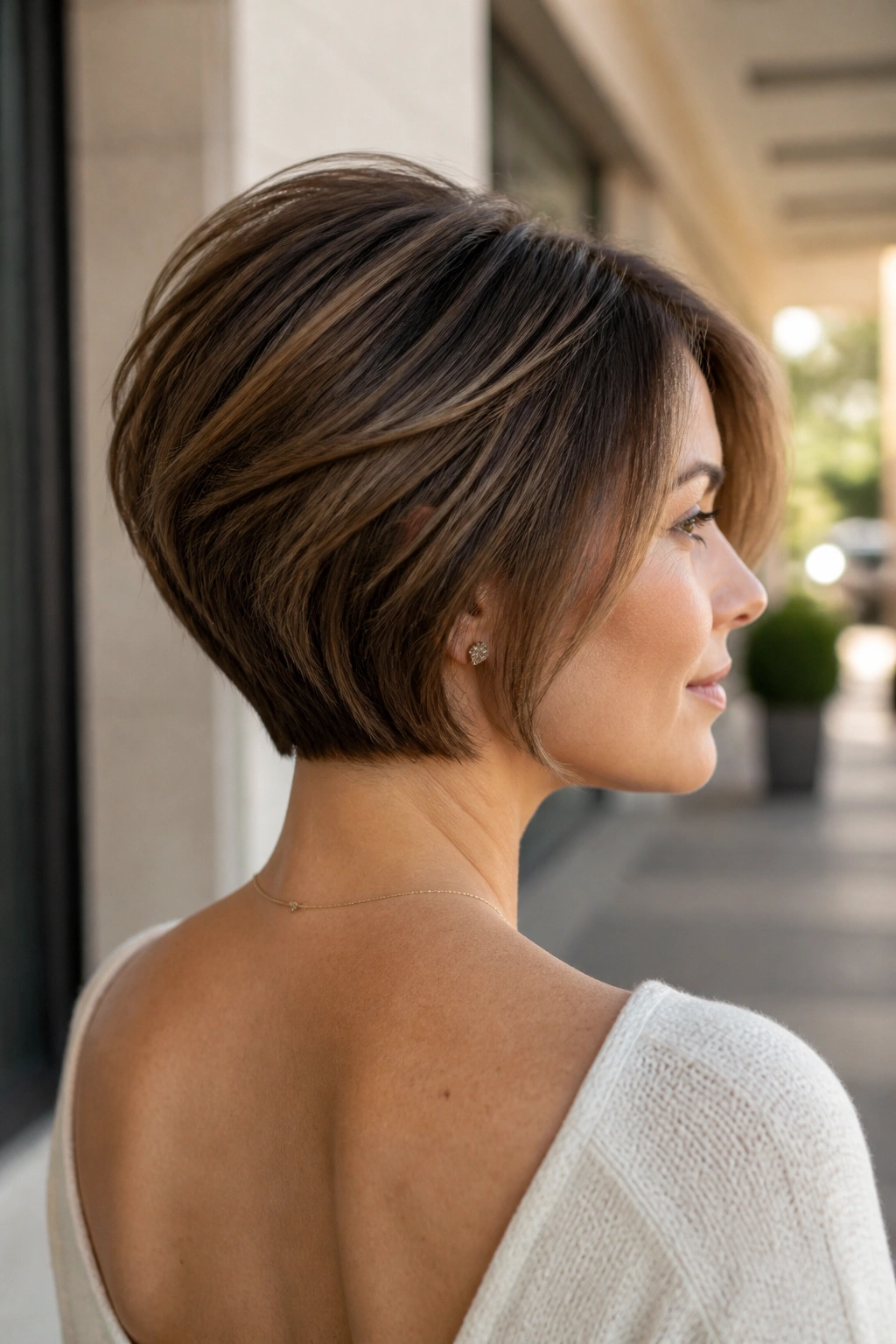
Flat crown? This is the blunt answer. A stacked nape bob puts the shortest layers at the back of the neck, then lets the shape rise gently toward the crown. On fine hair, that little bit of graduation can make the whole head look more lifted.
The key is “soft.” You do not want a hard, wedge-like stack that screams haircut from across the room. You want a gradual rise, almost like the hair is being nudged upward rather than forced. That creates the look of fullness without building a helmet.
A good version of this cut usually needs:
- A slightly shorter nape
- Gentle graduation through the back
- Longer top layers that can be smoothed over the stack
- A round-brush blowout or a quick root lift with clips
It’s one of those cuts that looks cleaner when the neck area is tidy. If you hate hair touching your collar, this one is satisfying.
4. French Bob with Wispy Fringe

A French bob has attitude built in. It sits shorter, usually around the cheekbone to jaw, and pairs that compact shape with a fringe that softens the face. On fine hair, the shorter length helps the ends look denser, while the wispy fringe keeps the top from looking too severe.
The fringe matters more than people think. A heavy bang can swallow fine hair and make the rest of the cut look thin. A wispy one leaves some forehead visible, which keeps the style airy and a little undone.
This cut works best when the hair has some natural bend or when you don’t mind a quick styling pass with a small brush. It’s cute when it’s neat, and even better when it’s a bit imperfect. That’s the whole point. If your hair naturally falls straight and flat, ask for only a light fringe so the front doesn’t eat up too much density.
5. Soft A-Line Choppy Bob
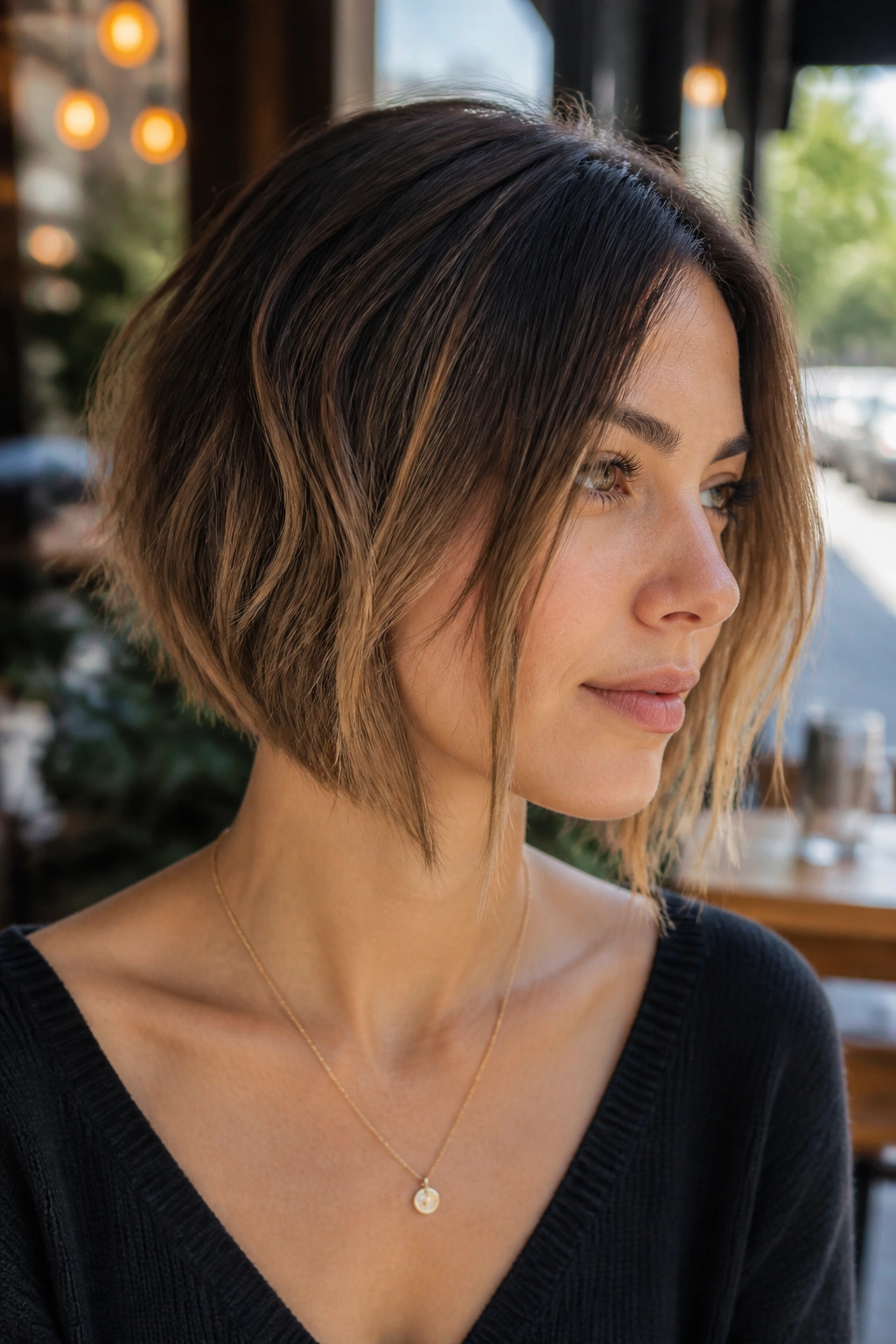
Unlike a straight one-length bob, the soft A-line gives you a little more movement in the front. The front pieces stay slightly longer than the back, which pulls the eye downward and makes fine hair look like it has more swing. The difference can be subtle. It should be subtle.
What makes this work is the combination of angle and broken texture. The angle creates shape. The choppy finish keeps the front from feeling sharp or too pristine. I like this cut for people who want their bob to look polished without losing that airy, lived-in feeling.
The front pieces should skim the jaw or the top of the neck, not drag down to the shoulders. If they get too long, the whole shape loses its snap. Keep the back neat, keep the front soft, and you get a cut that reads thicker than it really is.
6. Razor-Cut Bob with Broken Ends
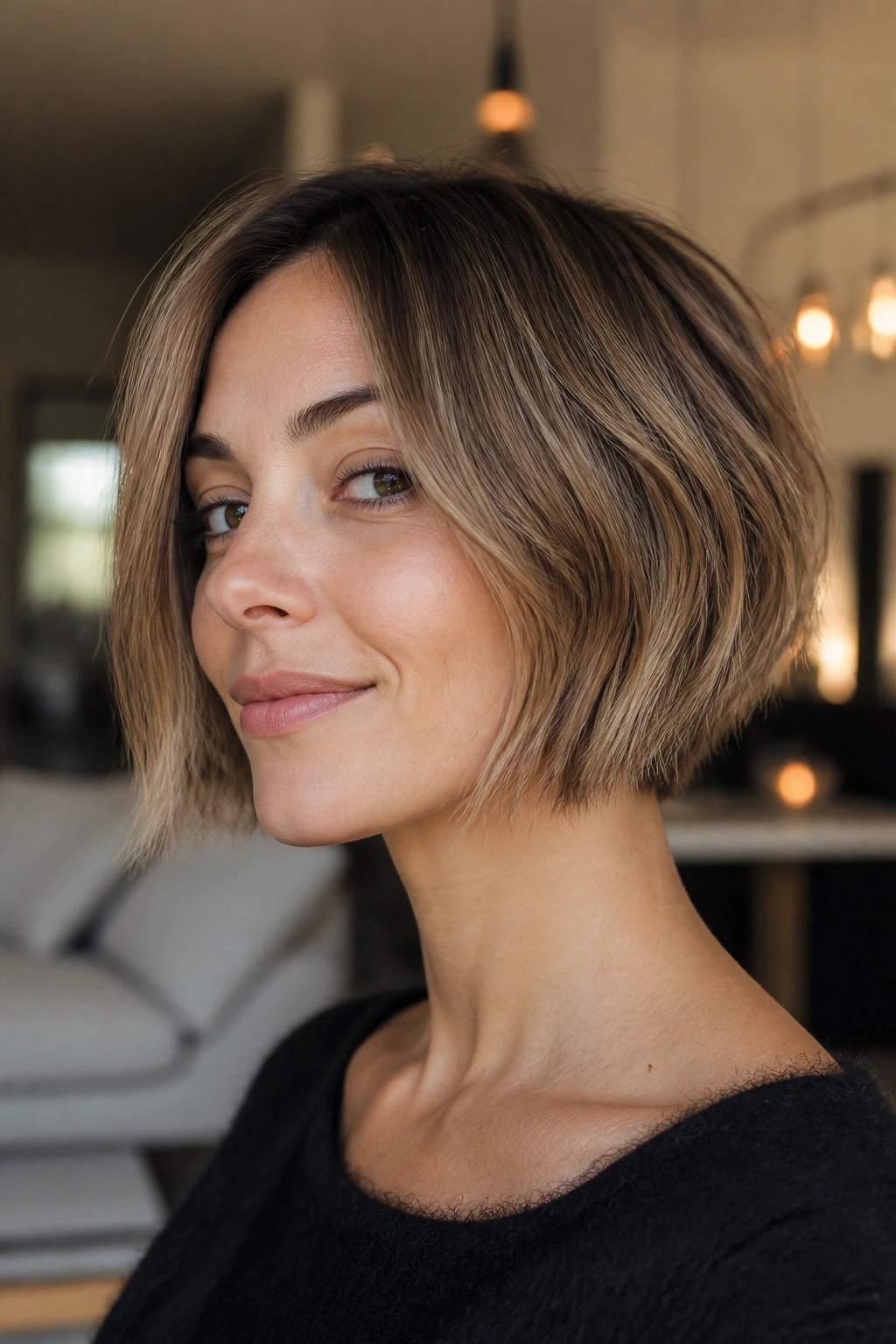
A razor cut can be a blessing on fine straight hair. It creates feathered, irregular ends that move well and keep the bob from looking like a clean block. But the razor is a tool, not a miracle. In the wrong hands, it can shred the ends and make fine hair look tired fast.
What to Ask For
- Light razor work only on the outer edges
- A solid base line underneath
- No aggressive thinning through the crown
- Ends that feel soft, not straggly
The best razor-cut bob has a little swing when you shake your head. That’s the test. If the ends cling together in sad little points, the cut went too far. If they separate in soft pieces, it’s doing its job.
This one suits pin-straight hair more than fluffy or frizzy textures. On those hair types, the broken ends can read messy instead of airy. A tiny amount of smoothing cream and a quick blow-dry usually keep it looking intentional.
7. Collarbone Choppy Lob for Fine Hair
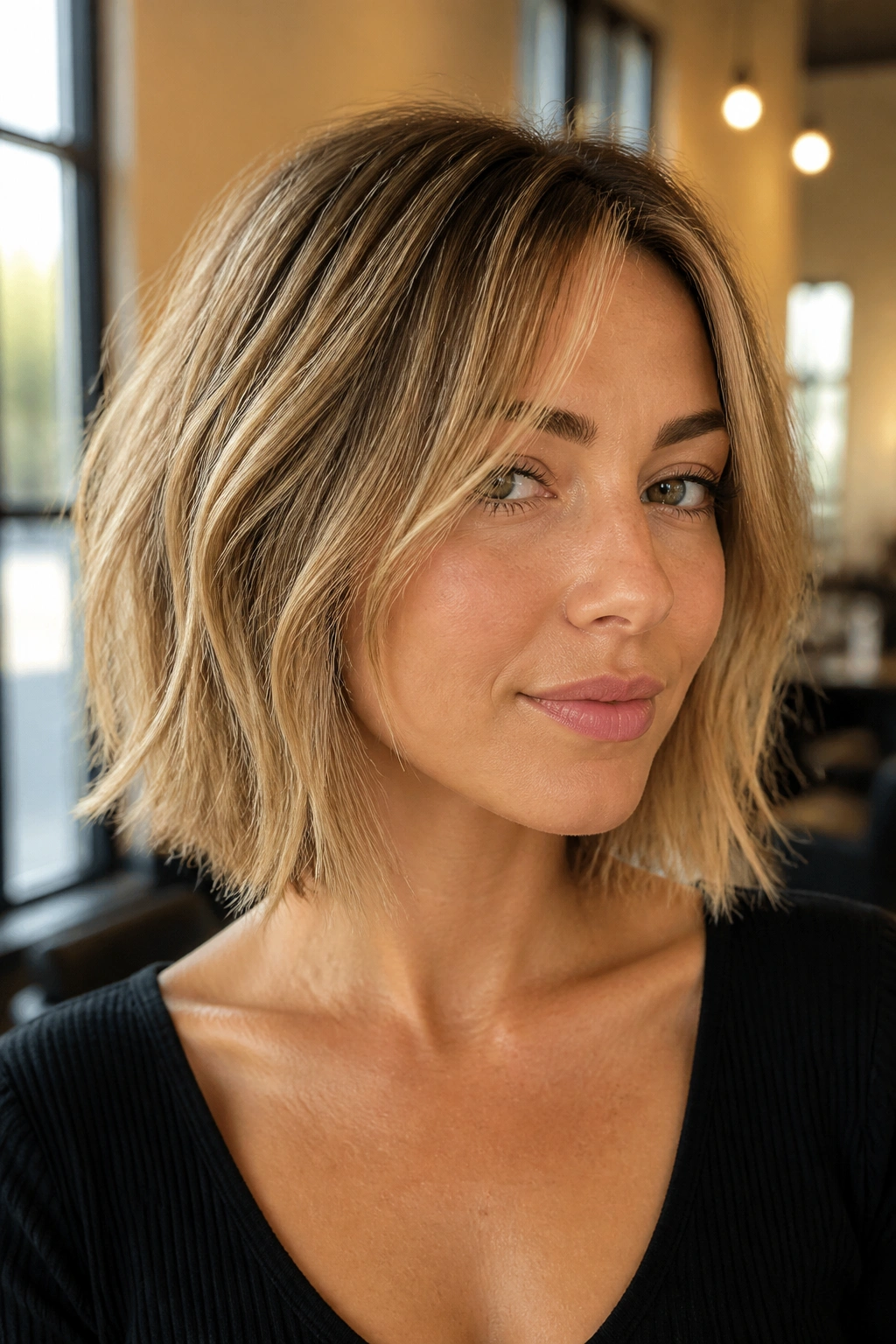
A collarbone lob is the long answer for people who aren’t ready to go short. Fine hair often benefits from a length that still feels swingy, and the collarbone gives you that sweet spot where the hair moves but doesn’t drag itself flat.
The secret is keeping the perimeter thick. Long layers are fine, but they need to be placed carefully so the bottom doesn’t look see-through. A good choppy lob should have texture around the face and through the ends, not a bunch of short pieces chopped all over the head.
This is also the easiest cut to tuck, clip, braid, or curl. That matters more than people admit. If you like options, the lob gives them to you. A chin-length bob can feel fixed. A collarbone version can shift between polished and casual without much effort.
8. Curved Bob with a Tucked-Under Bevel
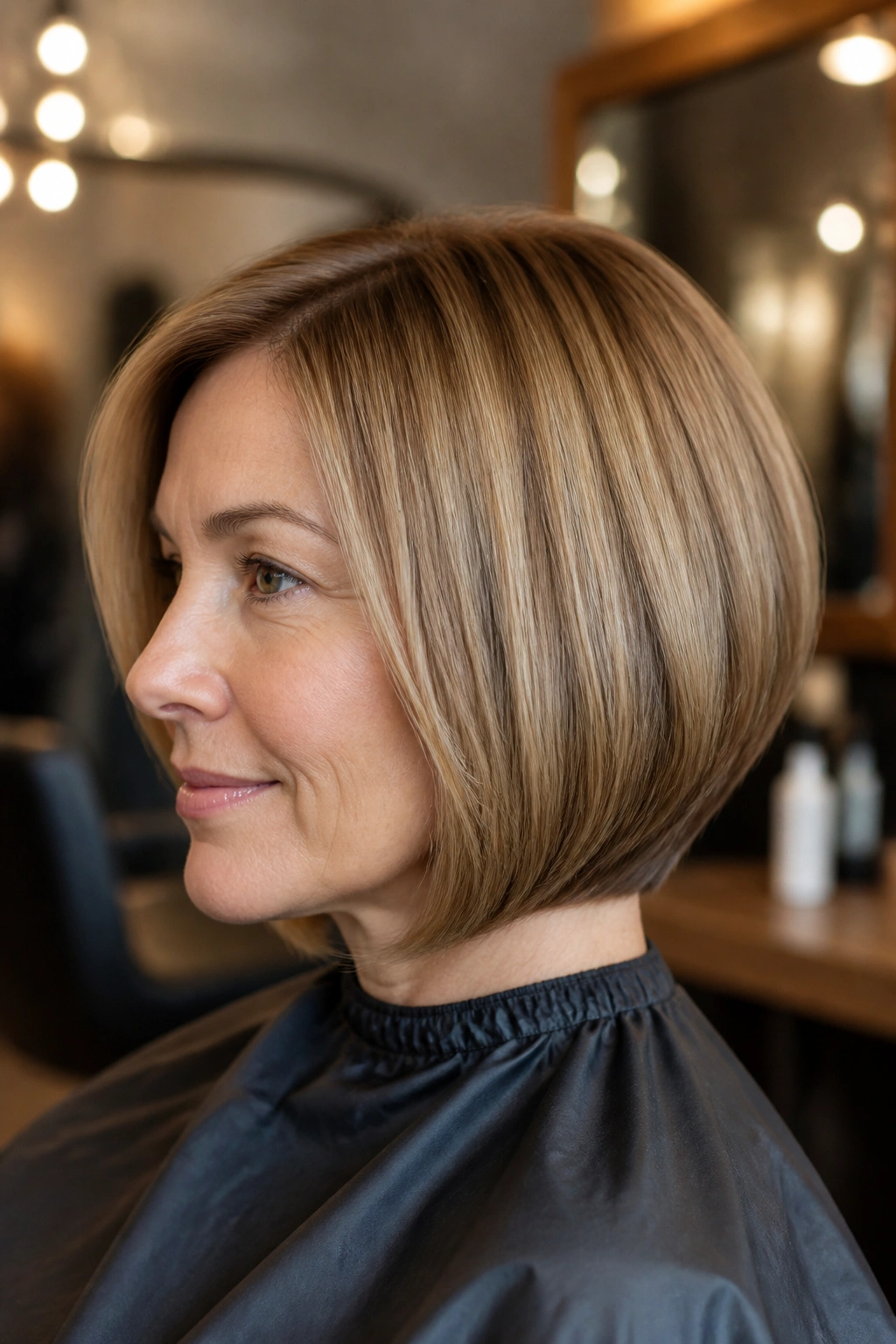
Run your fingers across a good curved bob and the ends feel smooth, almost cushioned. That tucked-under bevel is what gives fine hair a fuller-looking edge. Instead of flipping or fraying out, the hair curves inward and reads denser at the bottom.
This is a smart choice if you like a neater finish. The shape feels tidy, but it is not stiff. A little choppiness inside the cut keeps it from looking like a school uniform bob. The line stays clean while the interior does the work.
A round brush helps, but the cut should carry most of the effect on its own. If your hair tends to split at the ends, a bevel can hide that better than a blunt chop. It’s one of those quiet haircuts that looks more expensive than it sounds.
9. Asymmetrical Choppy Bob
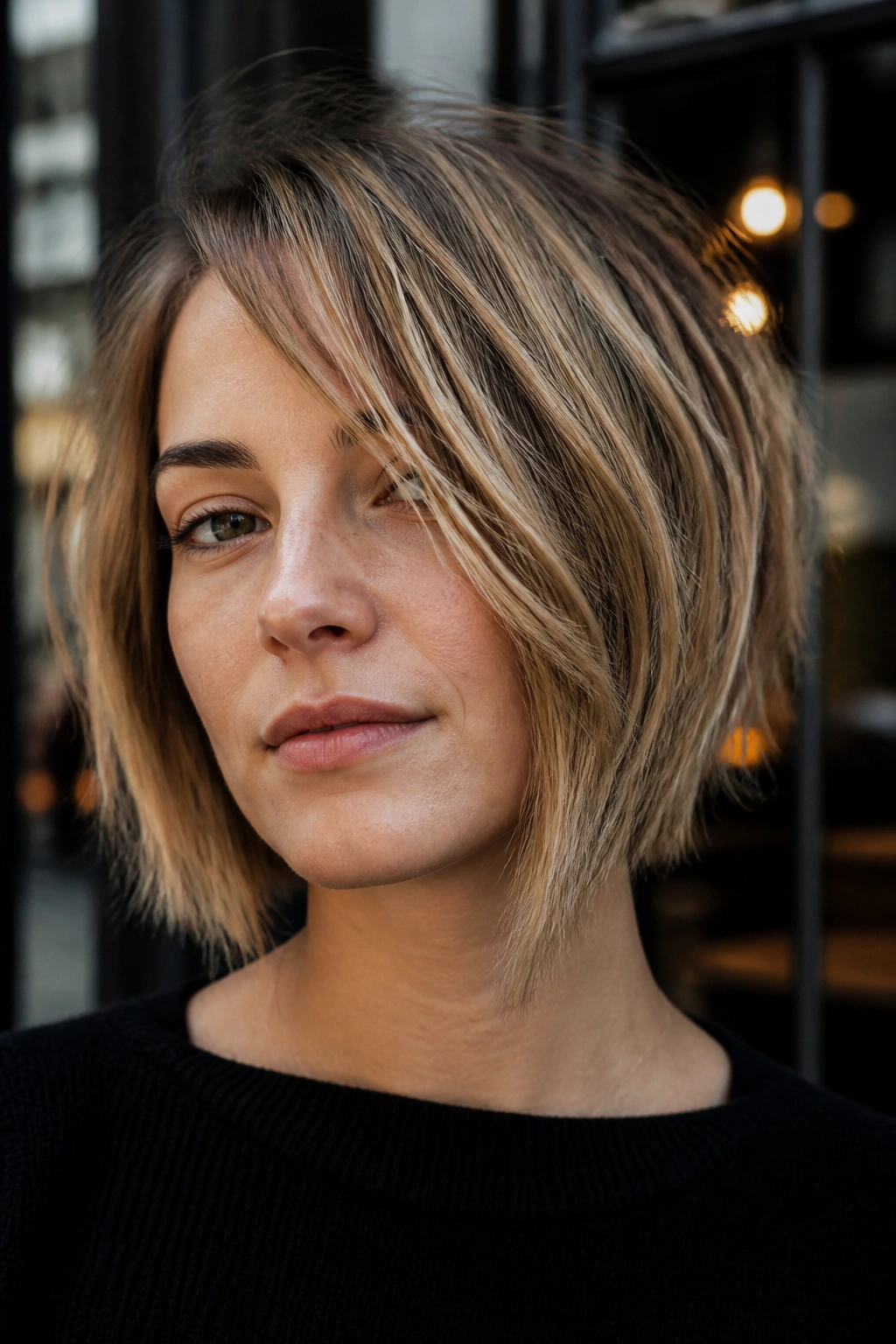
One side a touch longer. That’s it. Enough.
An asymmetrical bob brings movement to fine hair because the eye keeps following the uneven line. That diagonal pull makes the shape feel more alive than a perfectly even cut. It also helps if one side of your head naturally sits flatter, since the longer side can balance the whole look.
The asymmetry does not need to be dramatic. A half-inch to an inch can do the job. Too much difference and the haircut starts to dominate your face. Keep the choppiness soft, especially around the front, so the cut stays wearable rather than graphic.
I like this style for people who want a little edge without going into full statement-hair territory. It has personality, but it still behaves like a bob.
10. Choppy Bob with Curtain Bangs
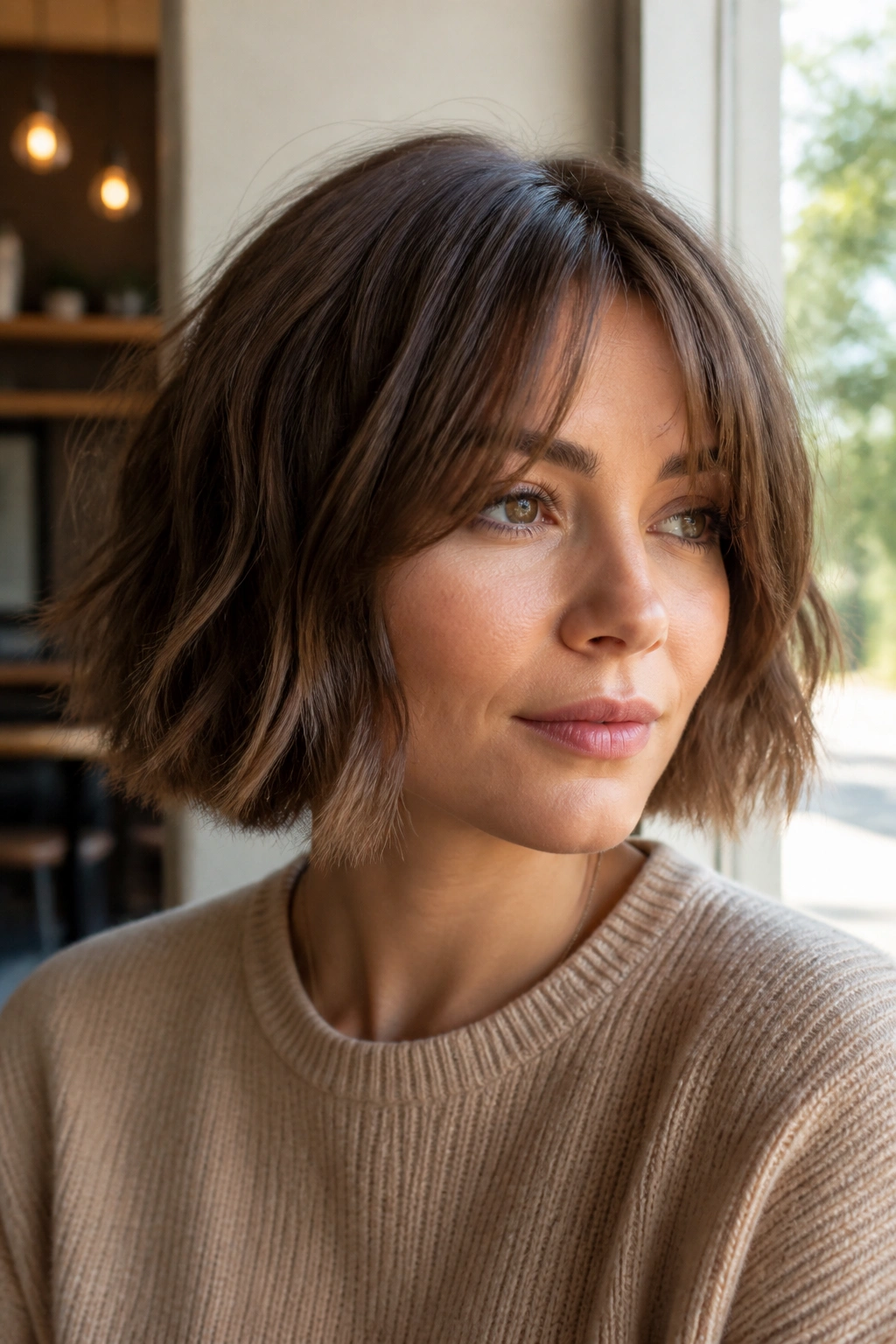
Can curtain bangs work on fine hair? Absolutely, if they’re cut with restraint. The best version opens from the center and blends into the sides instead of sitting as one heavy block across the forehead.
That matters because fine hair can lose volume fast when the front is overloaded. Curtain bangs split the weight, which keeps the face frame light and soft. The bob underneath can stay choppy and piecey, while the fringe adds a little shape around the eyes and cheekbones.
Best Way to Wear It
- Blow-dry the fringe away from the face with a small round brush
- Keep the shortest piece around the bridge of the nose or a bit below
- Let the side pieces graze the jaw
- Avoid a thick, blunt bang unless the hair is much denser than average
This is one of the most forgiving choppy bob haircuts for fine hair, especially if you like movement around the face.
11. Side-Swept Fringe Bob
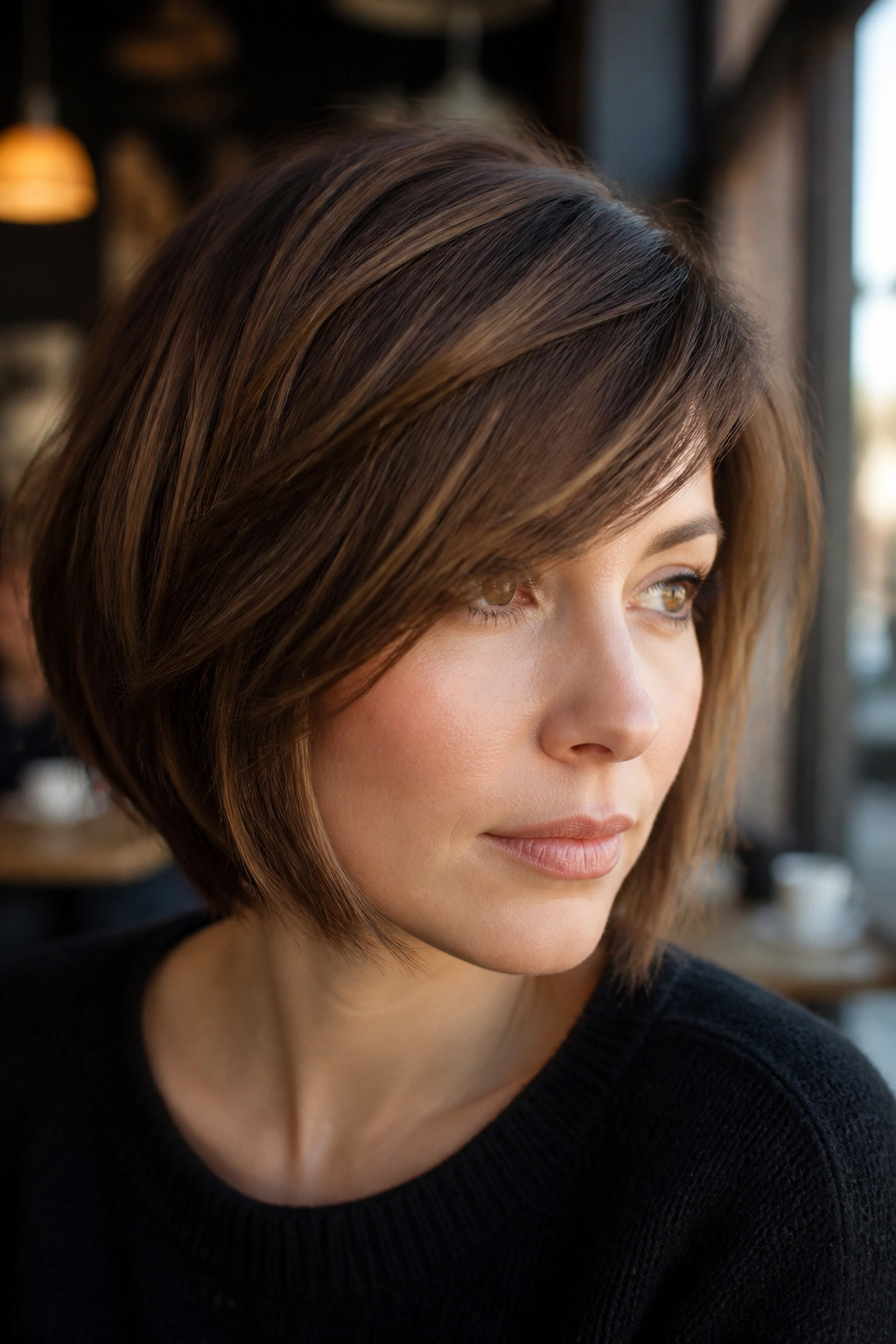
If curtain bangs feel like too much daily work, side-swept fringe is the quieter option. It gives fine hair a lift at the front, hides a stubborn cowlick, and lets the rest of the bob stay light and choppy.
The best side fringe for fine hair is not heavy. It should skim across the forehead and blend into the front layers so it does not steal too much density from the rest of the cut. That’s the mistake people make — they ask for fringe, then wonder why the bob feels thinner everywhere else.
This cut is especially useful if your face shape needs a little diagonal movement. The side sweep softens a broad forehead and gives round faces a bit more length. If you wear glasses, it also plays nicely with frames because it doesn’t sit in the same spot all day.
12. Wavy Bob with Invisible Internal Layers
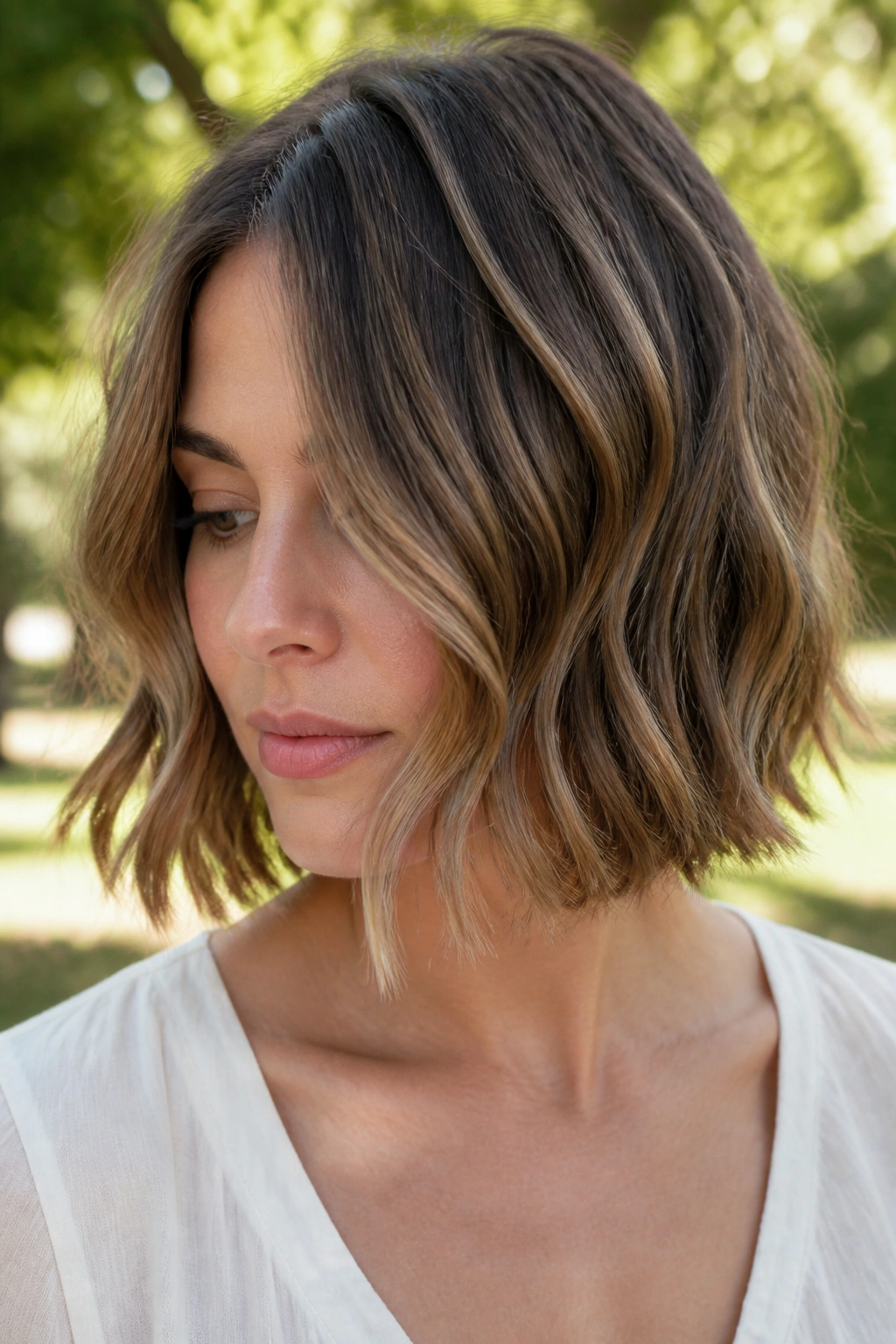
How do you keep waves from turning a bob into a triangle? You remove weight from inside the shape, not from the ends. That’s where invisible internal layers come in. They create movement without leaving the perimeter too skinny.
This is a good cut for fine hair that has a natural wave or can hold one with a little mousse. The outside line stays fairly full, while the hidden layers let the wave bend and separate. You get body without obvious chopping.
A diffuser helps, but the haircut needs to do most of the work. If the inside is too bulky, the wave collapses. If it’s too thinned out, the ends go wispy. The balance is delicate, and that’s why this cut is better in the hands of someone who knows how fine wavy hair behaves once it dries.
13. Curly Choppy Bob with a Rounded Shape
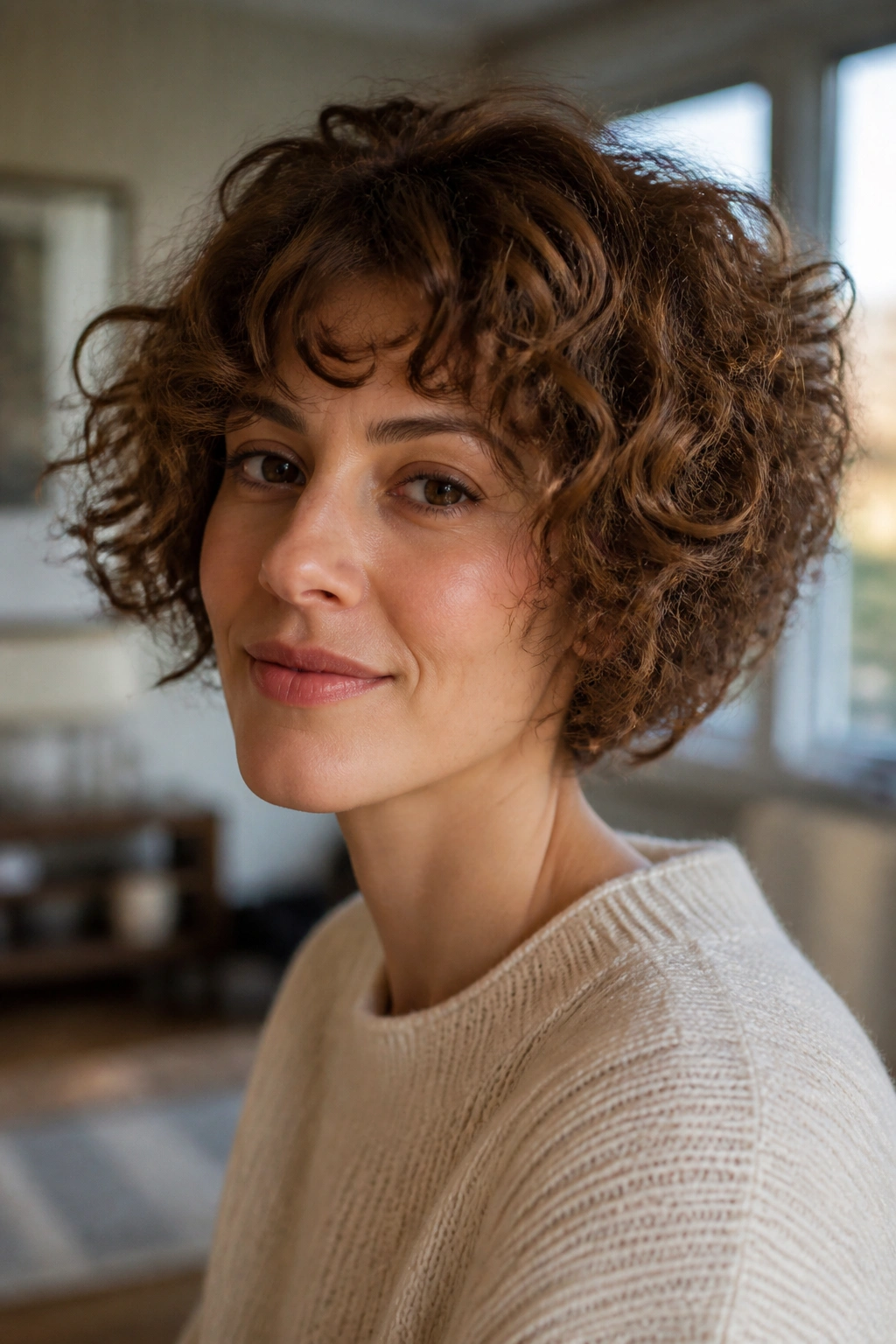
Curly fine hair has its own rules. It wants space, but not too much. A rounded choppy bob gives curls enough room to spring while keeping the overall outline controlled, which prevents the dreaded pyramid shape.
Dry cutting often helps here because curls shrink and bend in ways that are hard to judge when wet. The choppiness should follow the curl pattern, not fight it. A few carefully placed pieces around the face can add shape, but the interior should not be carved up too aggressively.
The result is a bob that feels soft and full instead of shredded. If your curls are loose, a little broken texture can keep them from clumping into one large shape. If they’re tighter, the stylist should leave enough weight so the ends don’t disappear.
14. Shag-Bob Hybrid for Fine Hair
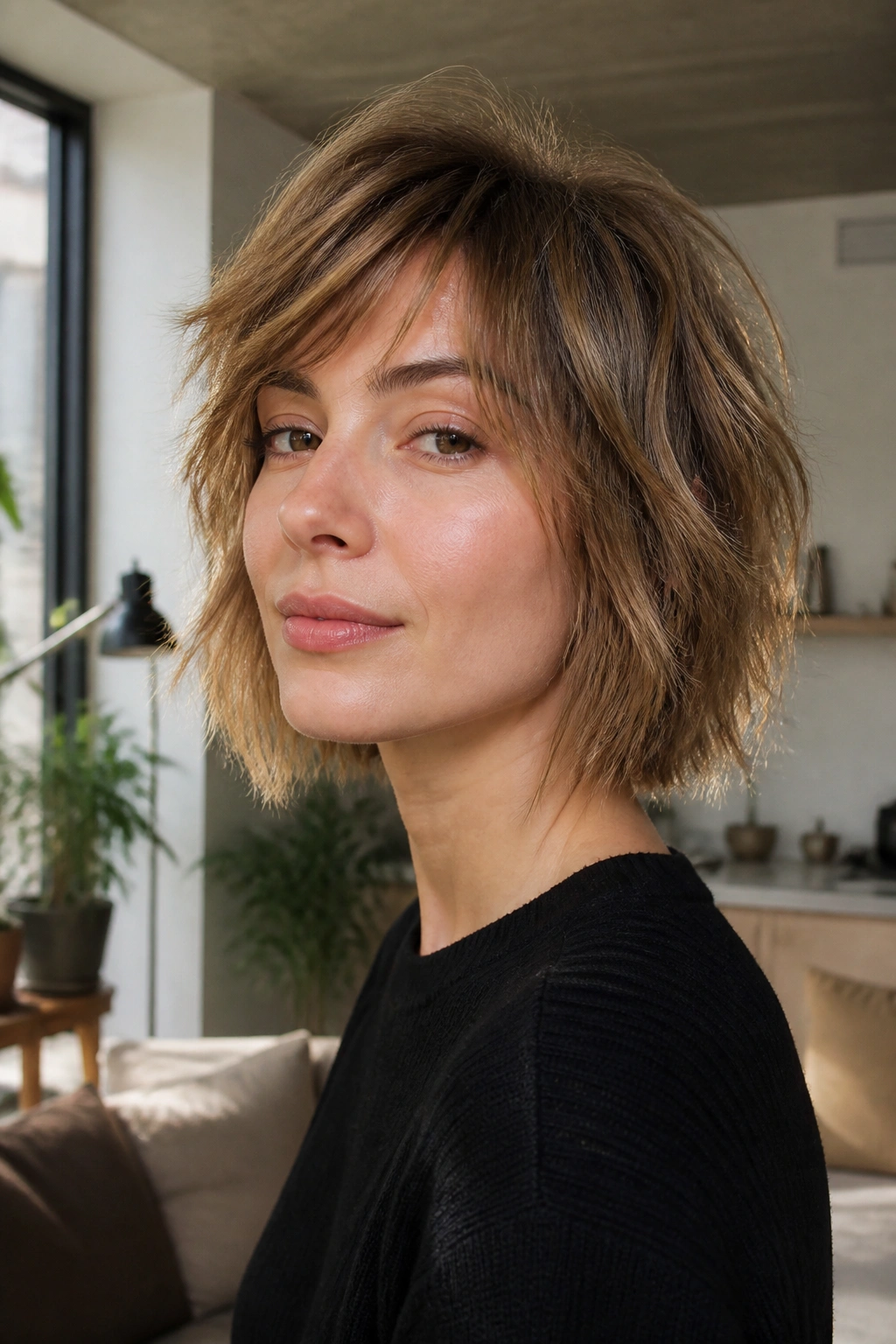
A shag-bob hybrid sounds like it might be too much. It isn’t, when the layers are handled with restraint. The best version keeps the bob’s perimeter intact while borrowing just enough shag texture to make fine hair look messy in a good way.
This cut is for people who want movement first and polish second. The crown gets a bit of lift, the sides stay soft, and the ends are broken up just enough to keep them from lying flat against the neck. You can wear it air-dried or lightly styled and it still looks deliberate.
Where the Texture Should Sit
- Shorter pieces around the crown, but not too high
- Soft layers through the mid-lengths
- A fuller perimeter at the bottom
- Face-framing pieces that blend instead of hanging separately
If you love a bit of undone shape, this is one of the most useful choppy bob haircuts for fine hair.
15. Boxy Bob with Micro-Layers
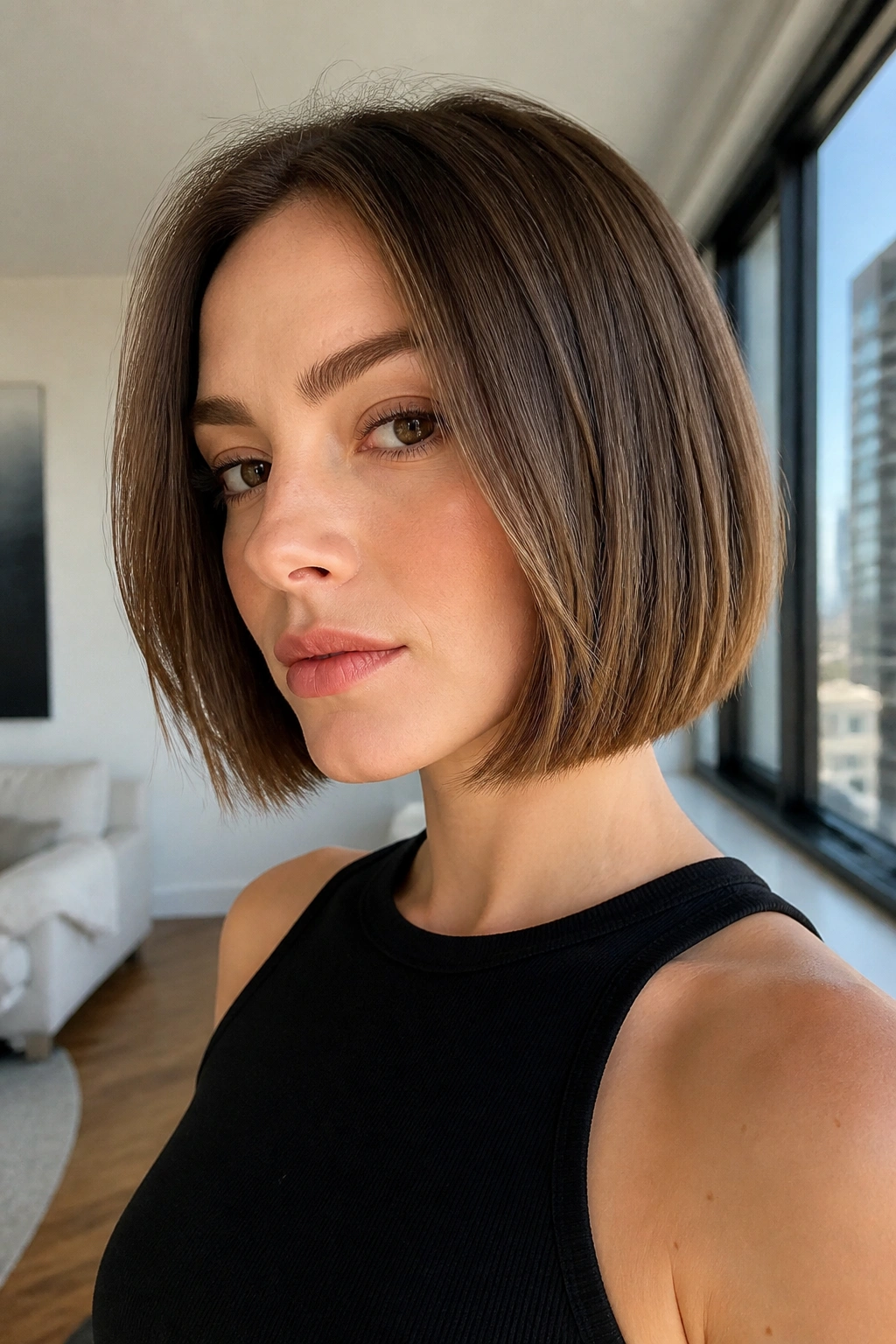
Short does not have to mean wispy. A boxy bob keeps a clean, slightly square outline, which can make fine hair look denser than a cut with too much softness. The micro-layers sit inside the shape, hidden enough to create movement without removing the weight that matters.
I like this for people who want a more architectural look. It feels precise. The hair around the jaw and cheekbones makes the statement, while the internal texture stops the cut from becoming stiff. A tiny amount of bend at the ends is enough.
This one can look expensive when the finish is smooth and the line is strong. It also grows out decently, which is a nice bonus. The downside is that it can feel a little strict if you prefer a looser, tousled look, so the personality has to match the haircut.
16. Sleek Choppy Bob with Piecey Ends
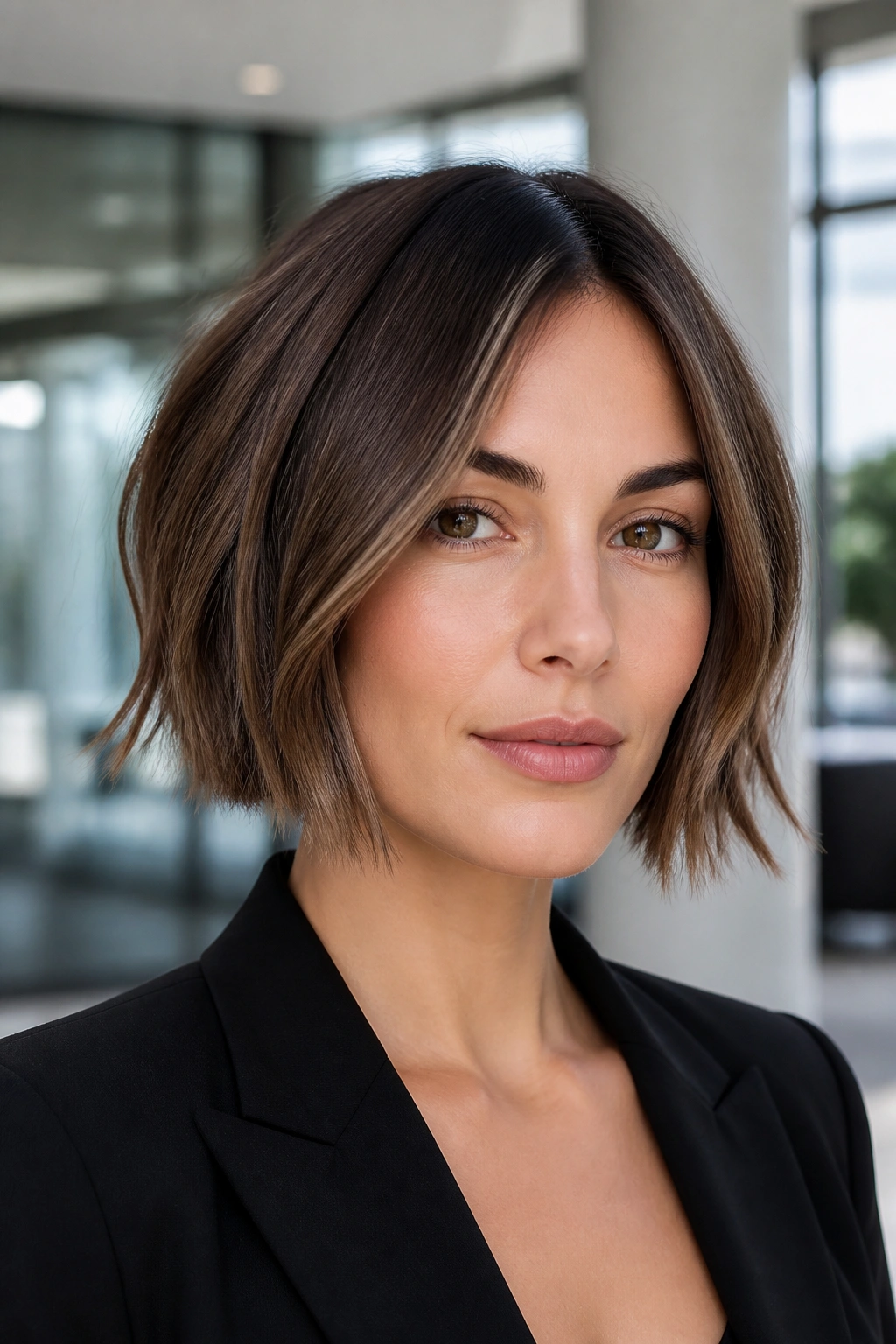
A sleek bob and a choppy bob should not be enemies. The slick top gives the style polish, while the piecey ends keep it from going flat and rigid. On fine hair, that mix works better than people expect.
The trick is keeping the roots smooth and the ends separated. A light serum through the mid-lengths, then a flat iron or paddle brush finish, can make the surface look neat. After that, a small amount of texturizing spray at the tips stops the ends from clumping together.
This style is useful when you want the haircut to work in a cleaner setting — office, dinner, anything where a messy finish feels too casual. It still has movement. It just behaves.
17. Flippy Bob with Outward Tips

There’s something cheerful about a bob that flicks out at the ends. It lifts the whole face. Fine hair often benefits from that little outward turn because it creates motion without needing a lot of hair.
The best flippy bob lands at the jaw or just below it. Too long, and the flip loses its spring. Too short, and it can read dated instead of lively. The choppy texture should be subtle here, mostly in the final inch or so, so the ends separate in soft little pieces.
A round brush or a small flat iron bend usually gets the shape. If your hair is naturally straight and flat, this is a nice way to interrupt the line. It’s not fancy. It just works.
18. Undercut Bob with a Light Top Layer
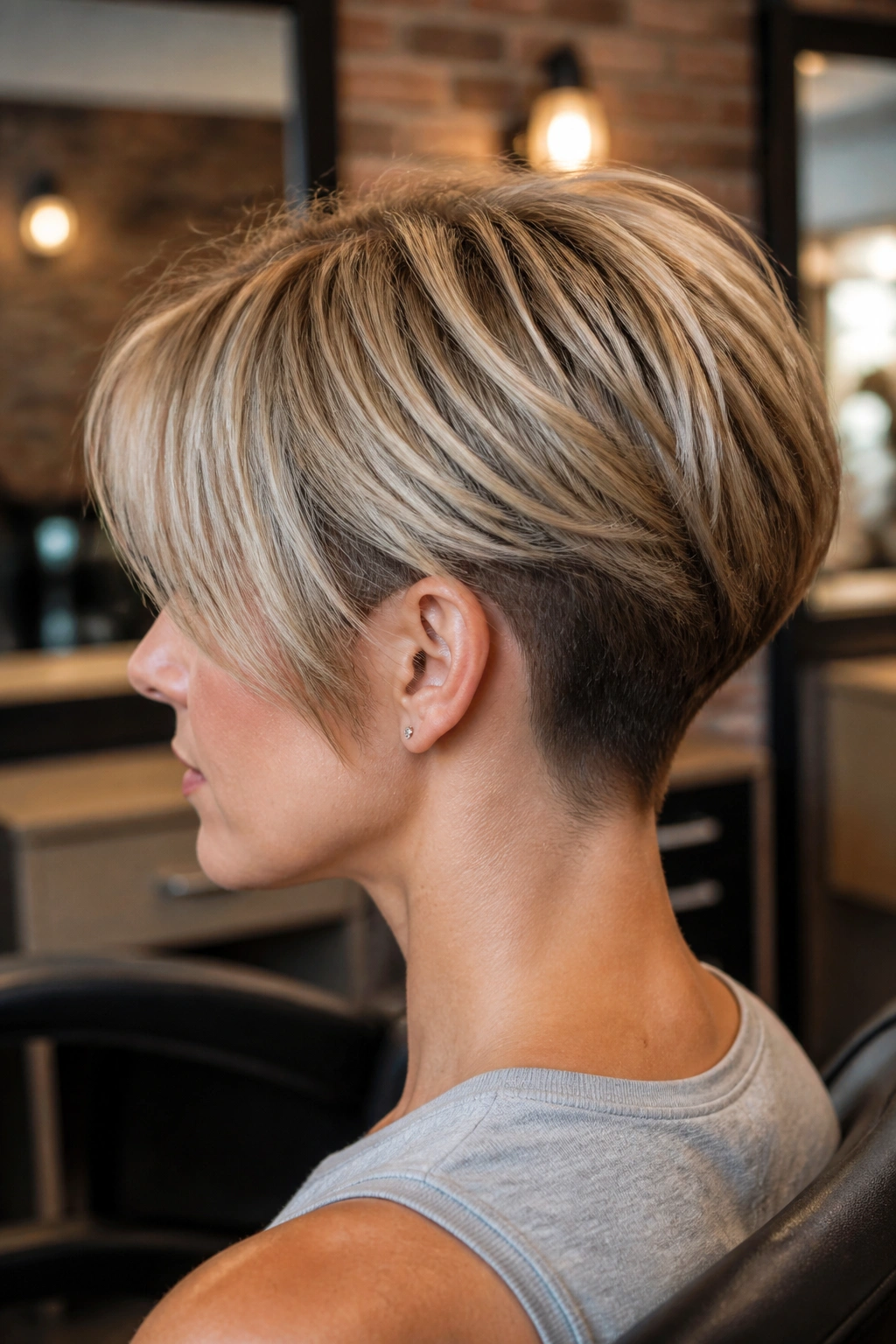
An undercut on fine hair sounds backward. Sometimes it is exactly right. If the lower section of your hair is dense or stubbornly bulky, removing a little underneath can make the top layers sit better and look more lifted.
The catch is that this cut needs a careful hand. Too much undercut and the bob can lose its body fast. Too little and you’ve just made a dramatic change for no payoff. The goal is a hidden reduction of weight, not a visible shave.
This style suits people who wear their hair short, like clean napes, and don’t mind a slightly edgier feel. It is not for everyone. But when it’s done well, the top section looks airier and easier to shape, which is a big deal for fine hair that lies down the second it gets warm.
19. Inverted Bob with a Soft Back Stack
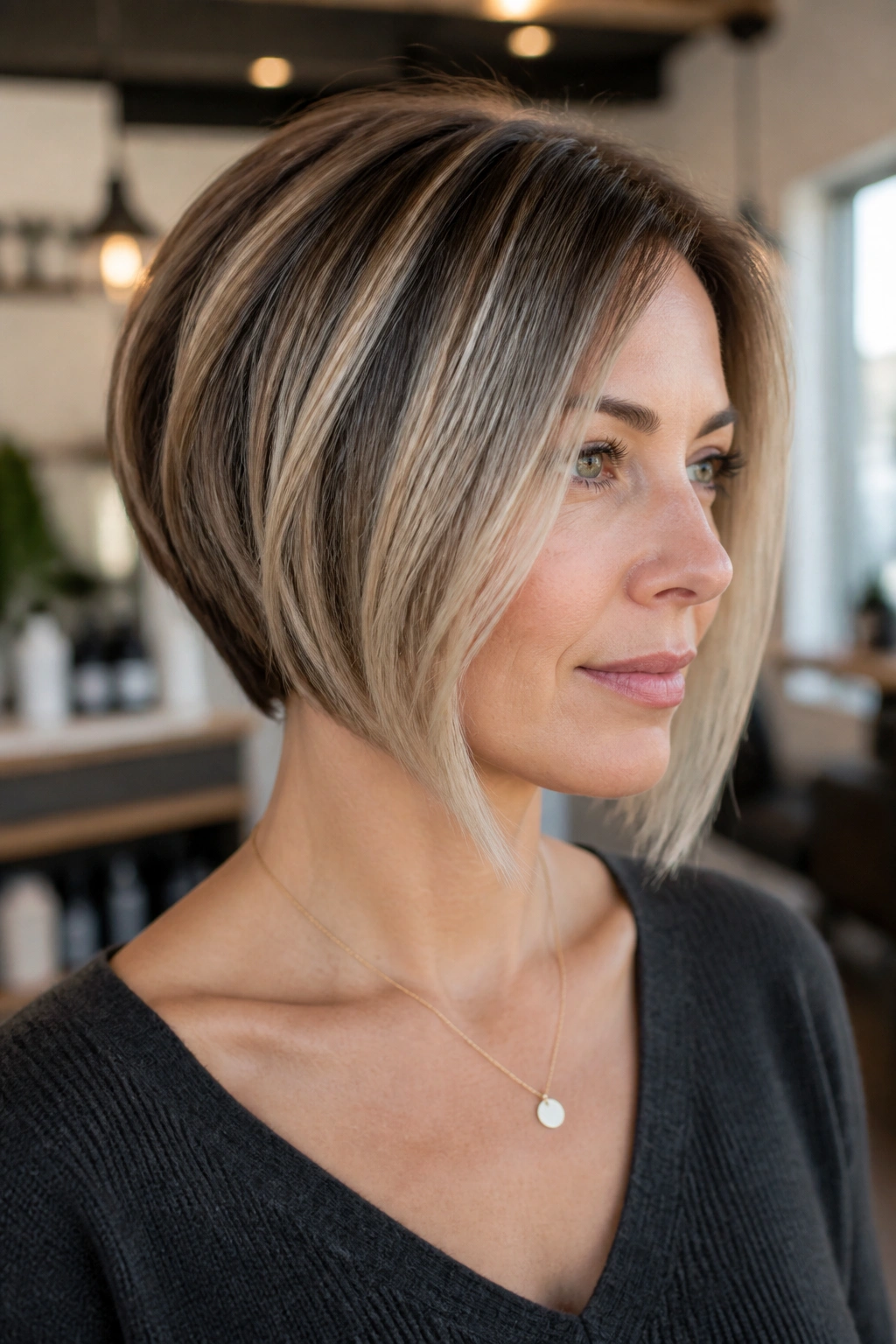
The inverted bob is a classic for a reason. Shorter in the back, longer in the front, it gives fine hair a built-in boost through the nape while leaving the front pieces long enough to frame the face. The shape does a lot of work before you even pick up a brush.
A soft stack is the part that keeps it from looking harsh. You want a gentle slope, not a sharp wedge. The back should feel lifted and the front should feel feathered, with enough length to tuck behind the ear or curve along the jaw.
This cut is especially handy if your profile looks a little flat from the side. The stacked back gives dimension where fine hair usually goes limp. It’s a strong choice for straight hair, but it can work on light waves too if the stylist respects the natural movement.
20. Center-Part Choppy Bob

A center part can be a gamble on fine hair. Too much length, and the hair splits into two limp curtains. The fix is a choppy bob with enough internal texture to keep the center from collapsing into a narrow line.
The best version has broken pieces around the cheekbones and a little lift at the crown. That stops the part from looking severe. If your face is symmetrical or you like a clean, balanced look, this is a strong option. It feels calm, not fussy.
What Makes It Work
- Keep the length around chin to jaw for the strongest shape
- Add texture near the front, not just at the ends
- Use a root-lifting spray at the part line
- Avoid over-smoothing the top, which can make the hair lie flat
It’s a simple haircut when done well. Simple is good.
21. Off-Center Part Bob

If a center part feels too flat and a deep side part feels too dramatic, the off-center part is the middle ground worth trying. It gives fine hair just enough asymmetry to pick up volume at the roots, while keeping the look relaxed and easy.
This bob does well with a choppy perimeter and a light face frame. The slight shift in the part changes how the hair falls across the forehead and cheeks, which can be enough to make the whole style feel fuller. Small change. Big payoff.
It’s also one of the easiest cuts to live with day to day. You can tuck one side, clip it back, or leave it loose. Nothing about it demands a perfect blowout. That’s useful, because fine hair rarely rewards perfection anyway.
22. Grown-Out Choppy Bob
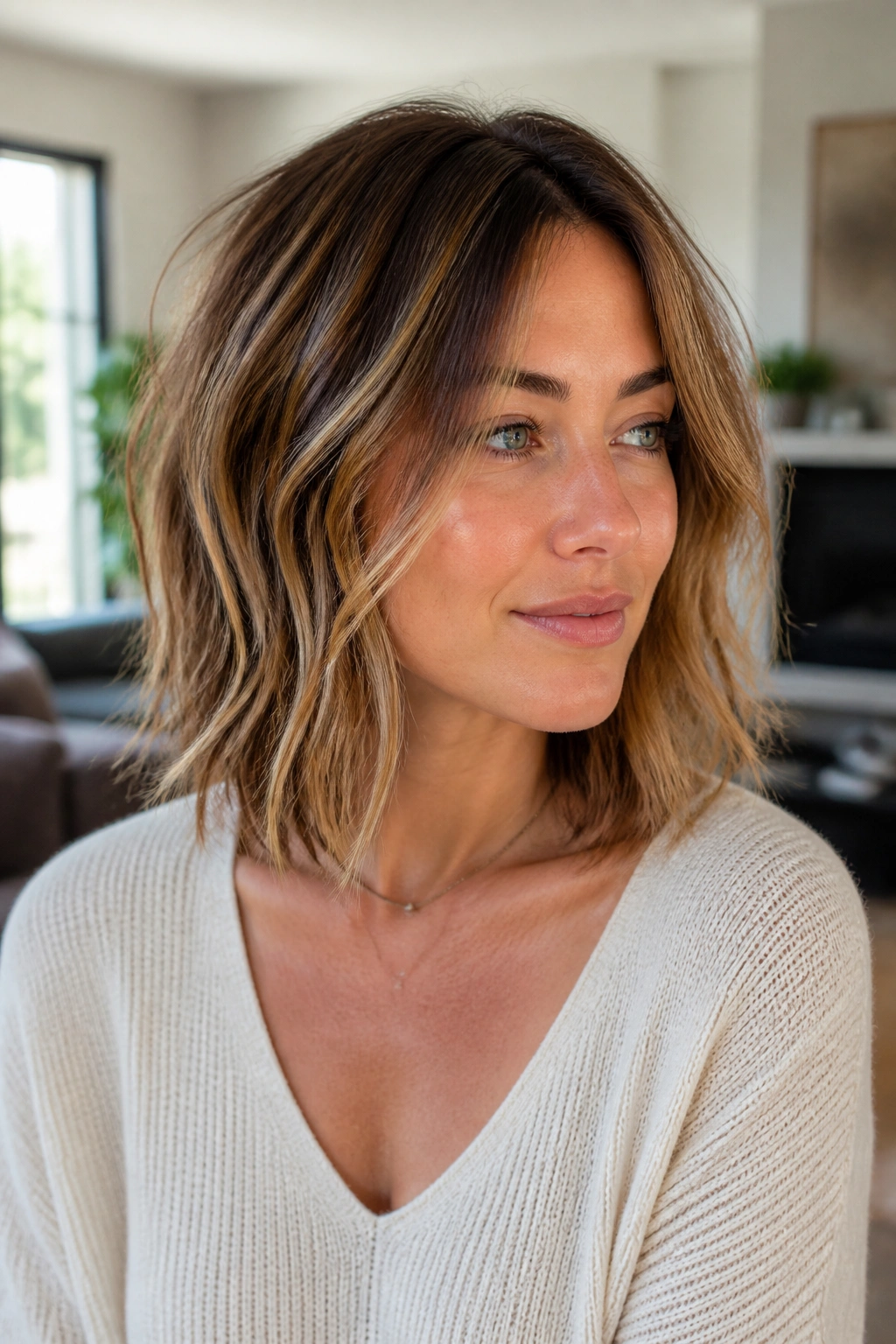
The best thing about a grown-out bob is that it doesn’t look like you missed the salon. It looks intentional, which is a much better place to be. The length usually sits somewhere between the jaw and the collarbone, and the choppy texture keeps it from going flat.
This cut works because it gives fine hair a little more movement than a short bob, while keeping enough structure that the ends still read as full. The face-framing pieces matter here. They should be soft and deliberate, not random.
A grown-out bob is a nice answer for anyone who wants fewer trims without surrendering shape. It’s also a good landing spot if you’ve been growing out a shorter cut and don’t want the awkward in-between phase to drag on forever.
23. Piecey Lob with Face-Framing Slices
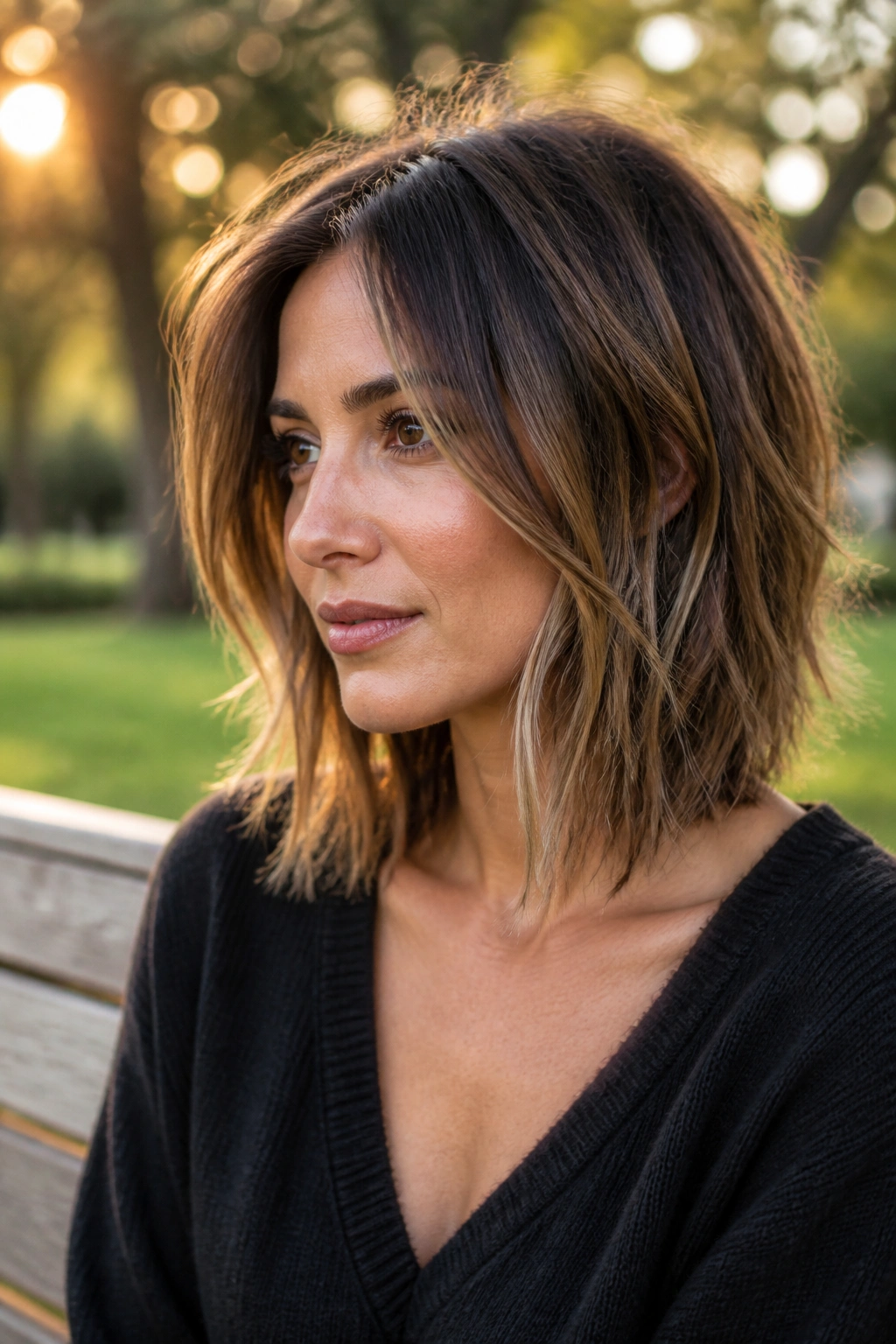
A piecey lob is different from a heavily layered lob. The emphasis stays on the ends and the front, where the eye notices movement first. Fine hair likes that because the main length remains intact, which keeps the line looking thicker.
The face-framing slices should be long enough to blend into the cut, not so short that they look pasted on. Think cheekbone to jaw, then taper down. That gives softness around the face without scattering the hair into too many thin pieces.
This style is one of the easiest to make personal. You can wear it sleek, wave it, clip one side back, or let it fall naturally. The cut does not force one mood. That flexibility is half the appeal.
24. Rounded Bob with Crown Layers
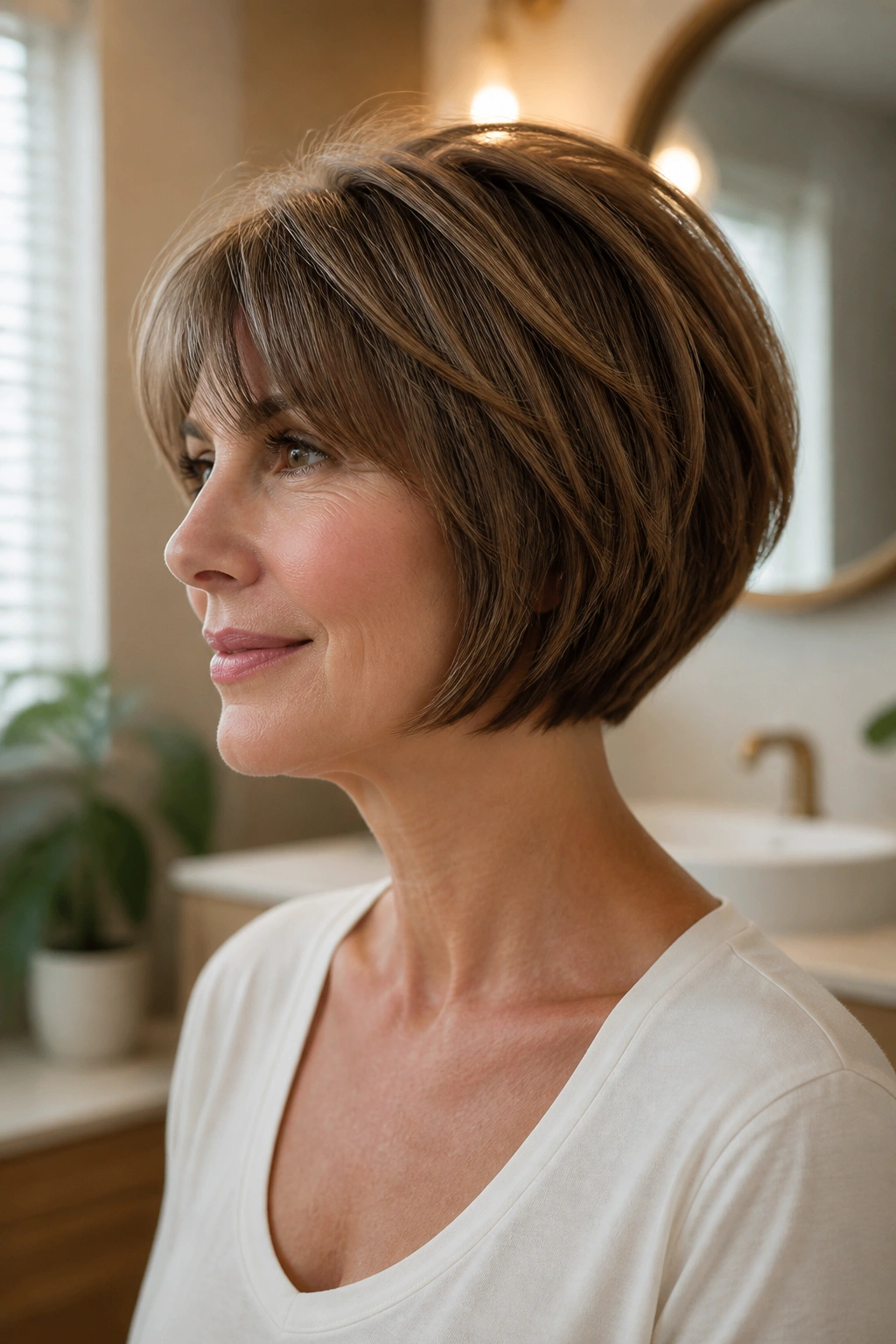
A rounded bob gives fine hair a little more shape on top, which is exactly where many cuts fail. The crown layers are the quiet hero here. They add lift without making the perimeter look weak.
The shape should curve gently around the head, not puff out like a mushroom. That’s the danger with rounded cuts. Done well, they make the hair look fuller from every angle. Done badly, they can feel old-fashioned fast.
Best Details to Ask For
- Crown layers that start softly, not high up near the part
- A rounded silhouette at the sides
- Enough weight at the bottom to keep the ends thick
- A blow-dry that lifts the roots before smoothing the surface
This cut is especially good if your hair falls flat at the top but still has decent density at the ends. It gives both areas a job.
25. Micro Bob with Shattered Texture
Short hair can make fine hair look richer. Counterintuitive, yes. But when the length is cropped close to the jaw or even a touch higher, the ends can appear denser because there’s less length pulling everything down.
The shattered texture keeps the micro bob from looking severe. The ends should separate into small, soft bits rather than one hard line. That little bit of irregularity gives the cut motion and keeps it from reading too stiff.
This is a bold choice, so it suits people who like their hair with a little edge. It also needs regular trims. A micro bob grows out quickly, and once it passes its sweet spot, the shape can lose its punch. If you like a sharp silhouette, though, it’s hard to beat.
26. Feathered Bob with Soft Edges
Feathering sounds like an old-school trick, but it still earns its keep on fine hair. The soft edges blur the perimeter just enough to make the hair move, while the overall shape stays light and current.
This version is best when the hair needs a softer finish around the cheeks and neck. The feathering should be subtle, almost invisible in motion. If the ends look shredded, the cut has gone too far. If they move like little soft ribbons, that’s the right zone.
I like this bob for delicate hair that gets weighed down by too much structure. It has less stiffness than a boxy cut and more shape than a fully loose one. That middle ground is where a lot of fine-haired people live.
27. Air-Dry Bob for Natural Movement
If you hate hot tools, the haircut has to do the heavy lifting. An air-dry bob for fine hair should be cut to bend well on its own, with just enough texture to keep the ends from sticking flat to the neck.
The shape is usually clean around the perimeter, with soft internal layers that encourage natural movement. A lightweight mousse or cream helps, but too much product will weigh everything down. Fine hair rarely needs much. A small amount goes further than people expect.
This cut is especially good for busy mornings. Wash, scrunch, walk away. The result will not be polished in the salon-blowout sense, but it can look easy and fresh in a way that works better for real life.
28. Soft Wolf Bob
A soft wolf bob is for someone who wants a little edge without going full shag. It keeps enough length to behave like a bob, then adds broken layers and movement through the crown and sides. On fine hair, the “soft” part matters more than the wolf part.
The danger here is over-layering. Too many short pieces and the cut turns stringy. Too little and it just becomes a regular bob with a messy name. The sweet spot is texture you can feel, not texture you can count from across the room.
What to Keep in Mind
- Keep the perimeter strong
- Let the crown stay airy, not chopped to bits
- Ask for soft face-framing pieces
- Style with a light mousse or texture spray, not heavy cream
This is a strong finishing point because it shows where choppy bob haircuts for fine hair can go when they want more personality. It’s still a bob. It just has a little bite.
