



Fine hair and a bad bob can be a miserable match. The wrong cut removes the little density you have left, and the ends start looking see-through before you even finish drying them. A sharp French bob haircut for fine hair does the opposite: it keeps a clean edge, gives the eye one solid line to read, and makes the whole head look fuller from a distance.
That’s why the strongest versions are usually the blunt ones. Not the over-layered ones, not the wispy, thinned-out ones, and not the shapes that depend on a lot of body you don’t naturally have. Fine hair likes precision, a smart length, and a finish that stays close to the head without collapsing.
I also think the sleek version is the smarter version. Sleek does not mean flat and sad; it means controlled shine, a neat perimeter, and ends that fall where you want them to. A good French bob can sit at the jaw, graze the chin, or land just below it, but the edge has to feel deliberate.
The cuts below cover blunt, tucked, curved, shorter, longer, and fringe-heavy versions, so you can match the shape to your face and the amount of styling you actually want to do.
1. Jawline-Blunt French Bob
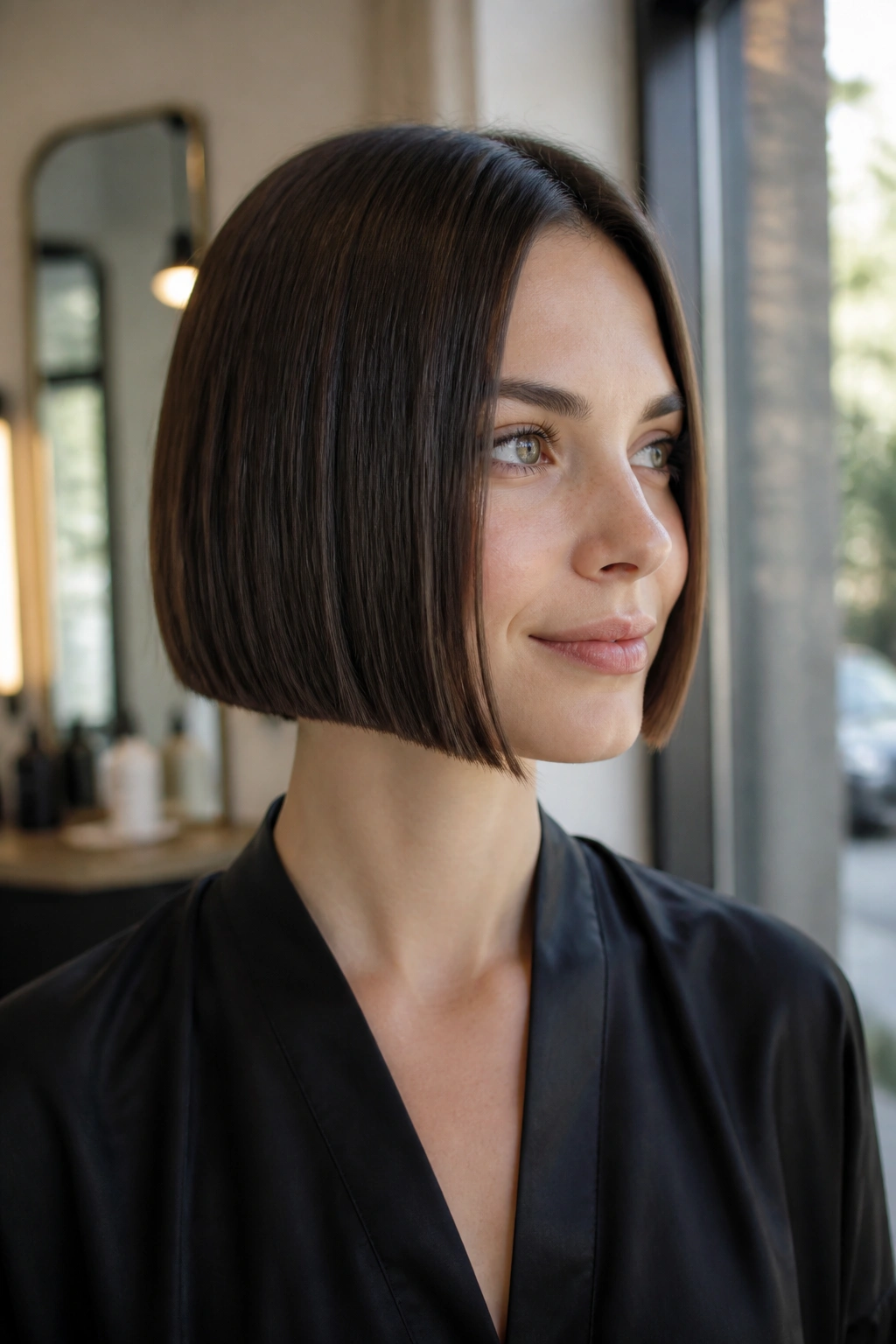
Bluntness wins here. A jawline cut gives fine hair a hard stop, which makes the ends look thicker than they are. When the perimeter lands right at the jaw, the eye sees one clean line instead of wispy lengths that taper off into nothing.
Why It Flatters Fine Hair
If your hair goes limp at the ends, this is the safest place to start. Ask for minimal internal layering and a clean dry-cut check at the jaw so the line stays honest when the hair settles.
- Keep the outline blunt, not feathered.
- Blow-dry with a small paddle brush for a smooth finish.
- Tuck one side behind the ear for a cleaner profile.
- Use only a pea-size amount of serum on the ends.
One smart detail: leave the front a touch longer than the back if your jawline is soft and you want the shape to read sharper from the front.
2. Chin-Skimming Center-Part French Bob
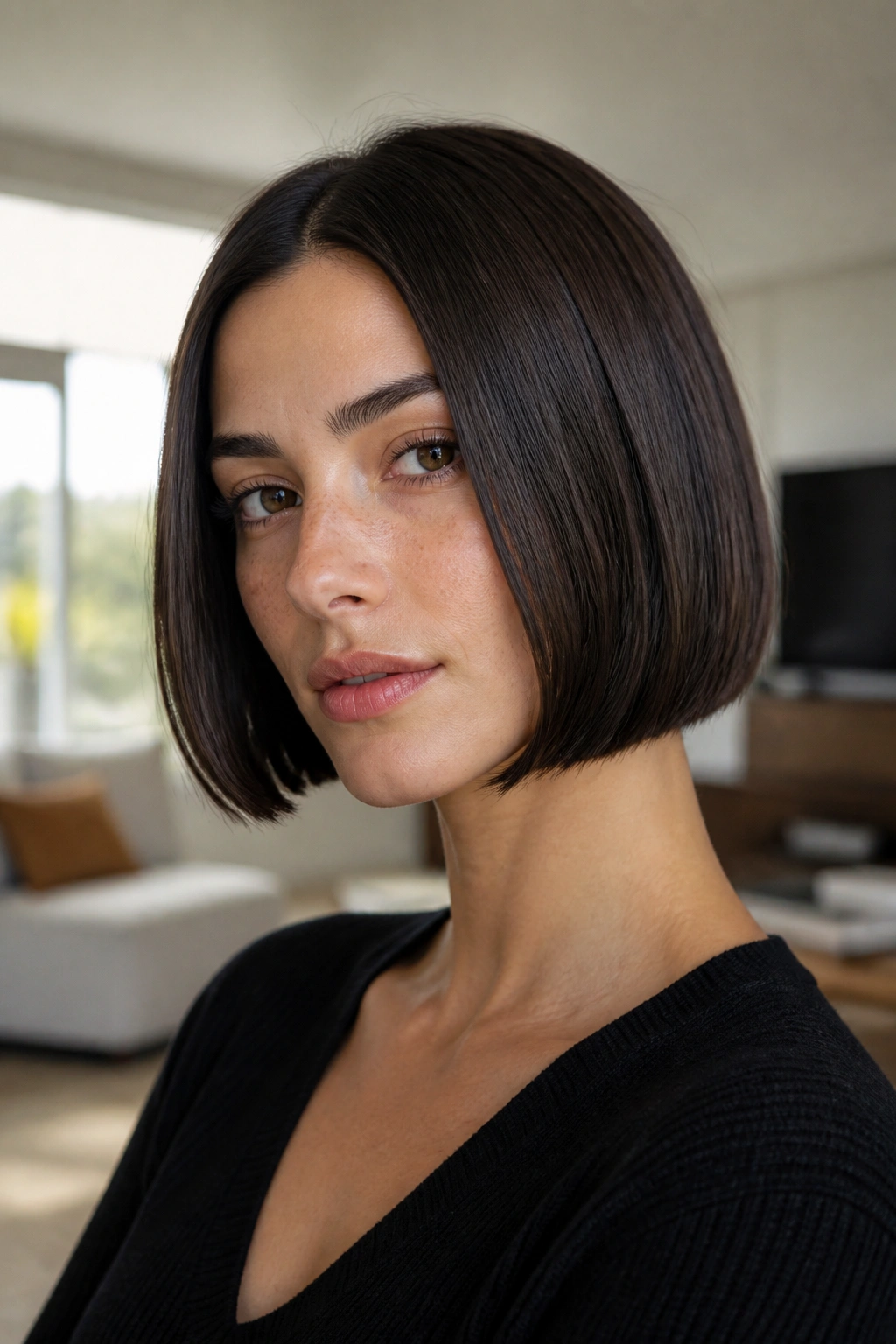
Why does this version work so well on thin strands? Because a center part splits the hair into two balanced panels, and balance makes the cut look fuller at once. Chin length also keeps the bob from feeling too short, which matters if your hair collapses when it loses weight.
The line should sit just low enough to swing, but not so low that the ends start looking stringy. I like this shape on straight or slightly wavy hair, since both textures can be pressed smooth without much effort. If your crown is flat, rough-dry the roots first and then finish with a flat brush.
Styling Notes
- Use a heat protectant spray before blow-drying.
- Smooth each side with a 1-inch round brush.
- Bend the last half-inch under, not into a curl.
- Keep the part crisp and straight.
A middle part can feel severe on paper, but on a clean French bob it reads as sharp, not harsh.
3. Micro French Bob With Sharp Edges
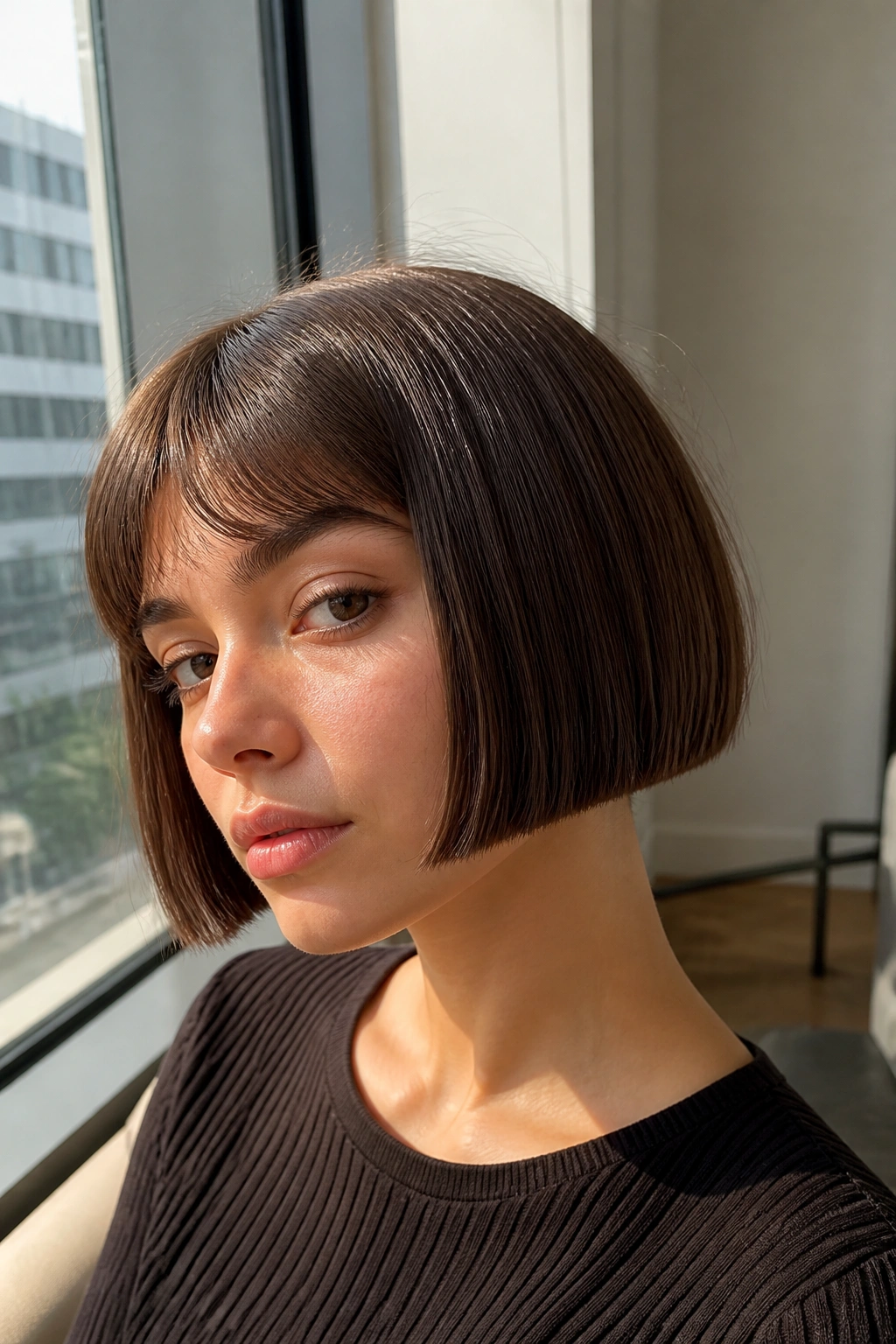
If your ends look see-through every time you wear your hair past the jaw, cut it shorter. A micro French bob gives fine hair more visual weight because there is less length dragging the shape down. That makes the whole head look denser, especially around the cheekbones and jaw.
I like this cut when someone wants a polished look without much styling time. The trick is to keep the edge precise and the neckline tidy. Anything fuzzy at the bottom ruins the effect fast. This one also needs regular trims, roughly every 5 to 7 weeks, because a tiny bob grows out faster than people expect.
This one is not shy. It looks strongest on straight hair, but a flat blow-dry and a light cream can keep it sleek on softer textures too.
4. Rounded Under-Curve French Bob
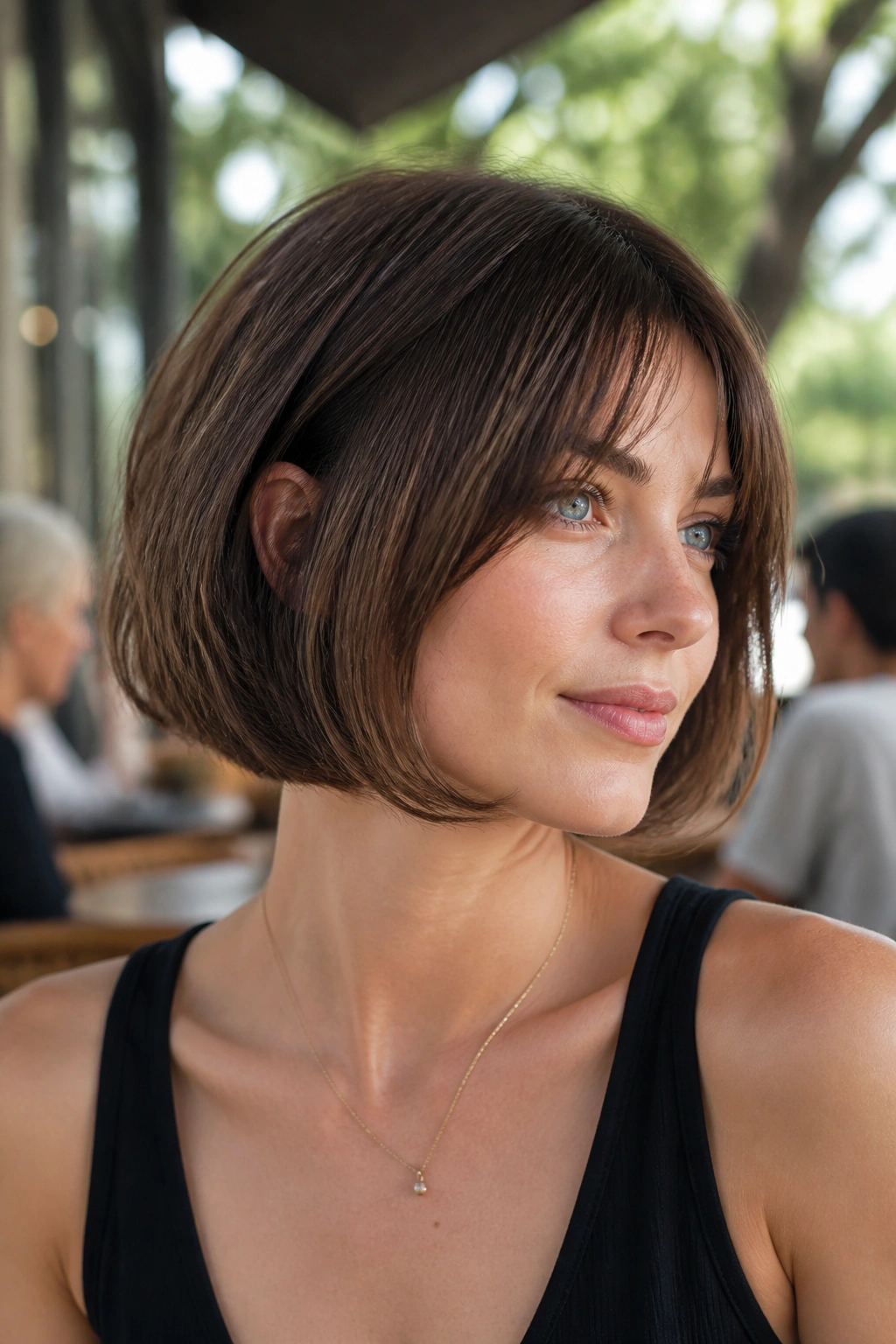
When fine hair sticks straight out at the ends, a soft under-curve fixes the silhouette. The shape follows the head and curves inward at the bottom, so the bob looks intentional instead of air-dried and unfinished. That slight bend is doing a lot of work.
What Makes It Different
This is the bob I reach for when someone wants softness without losing the clean French feel. The length can sit at the chin or a touch below it, and the round brush should be medium-sized, not tiny. A 1.5-inch brush gives a gentler curve and keeps the ends from flipping too much.
- Use a smoothing cream before blow-drying.
- Aim the dryer downward to tame flyaways.
- Curve the ends inward only at the last second.
- Finish with a light mist of flexible hairspray.
It suits people who want the shape to look polished in daylight and under indoor light, where rough ends show up fast.
5. Side-Part French Bob With Soft Balance
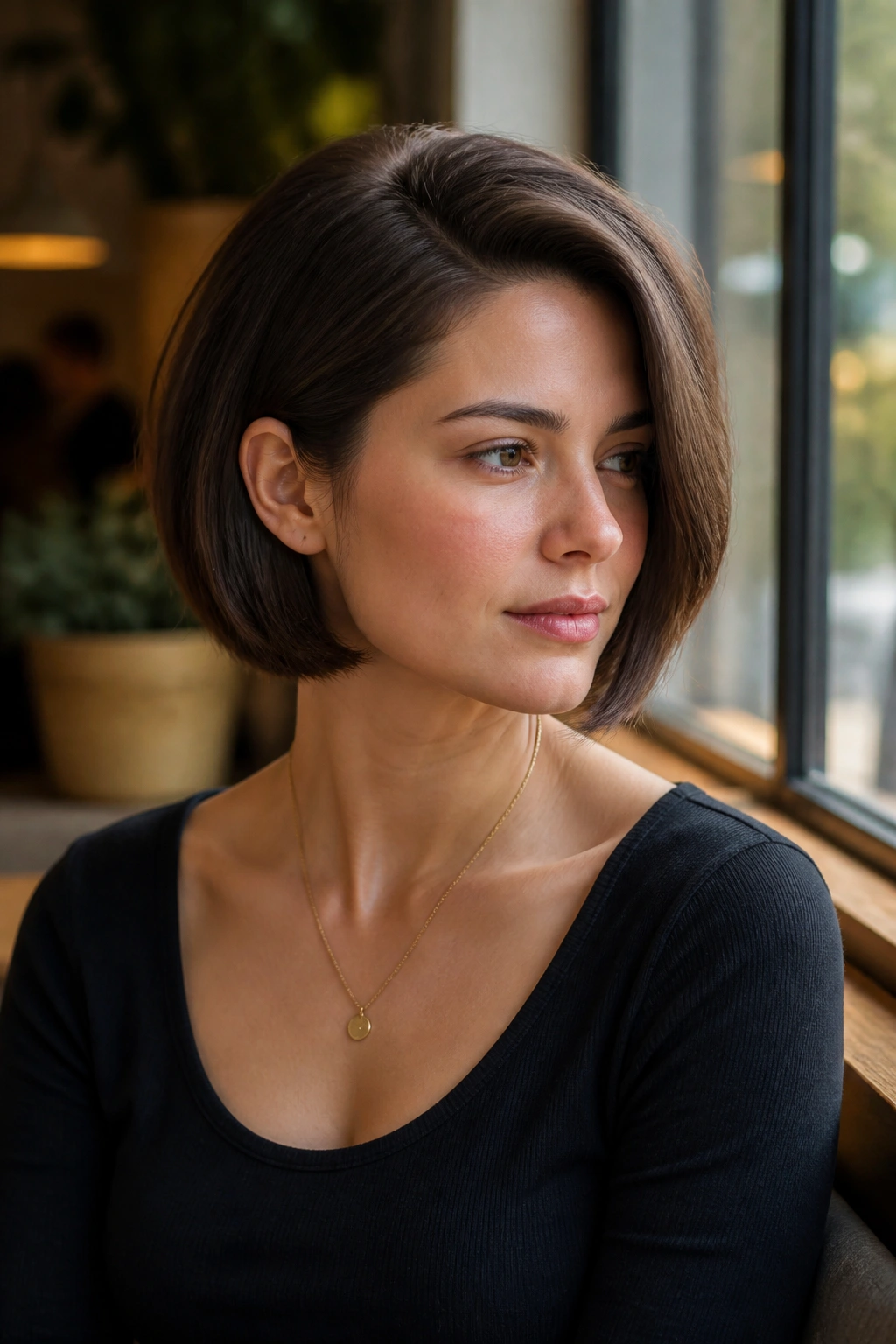
Unlike a center-part bob, this one gives you a little lift at the root without asking for a lot of product. The side part breaks symmetry in a way that makes fine hair look less flat at the crown, and that matters more than most people realize. A tiny shift in parting can change the whole mood.
I’d choose this cut for anyone whose hair falls limp at the top but still has decent density through the ends. It also works nicely if your face reads a bit round and you want the hair to sweep slightly off to one side. Keep the perimeter blunt and avoid face-framing layers that taper too much near the chin.
It’s a small change. Big payoff.
6. Tucked-Behind-the-Ear French Bob
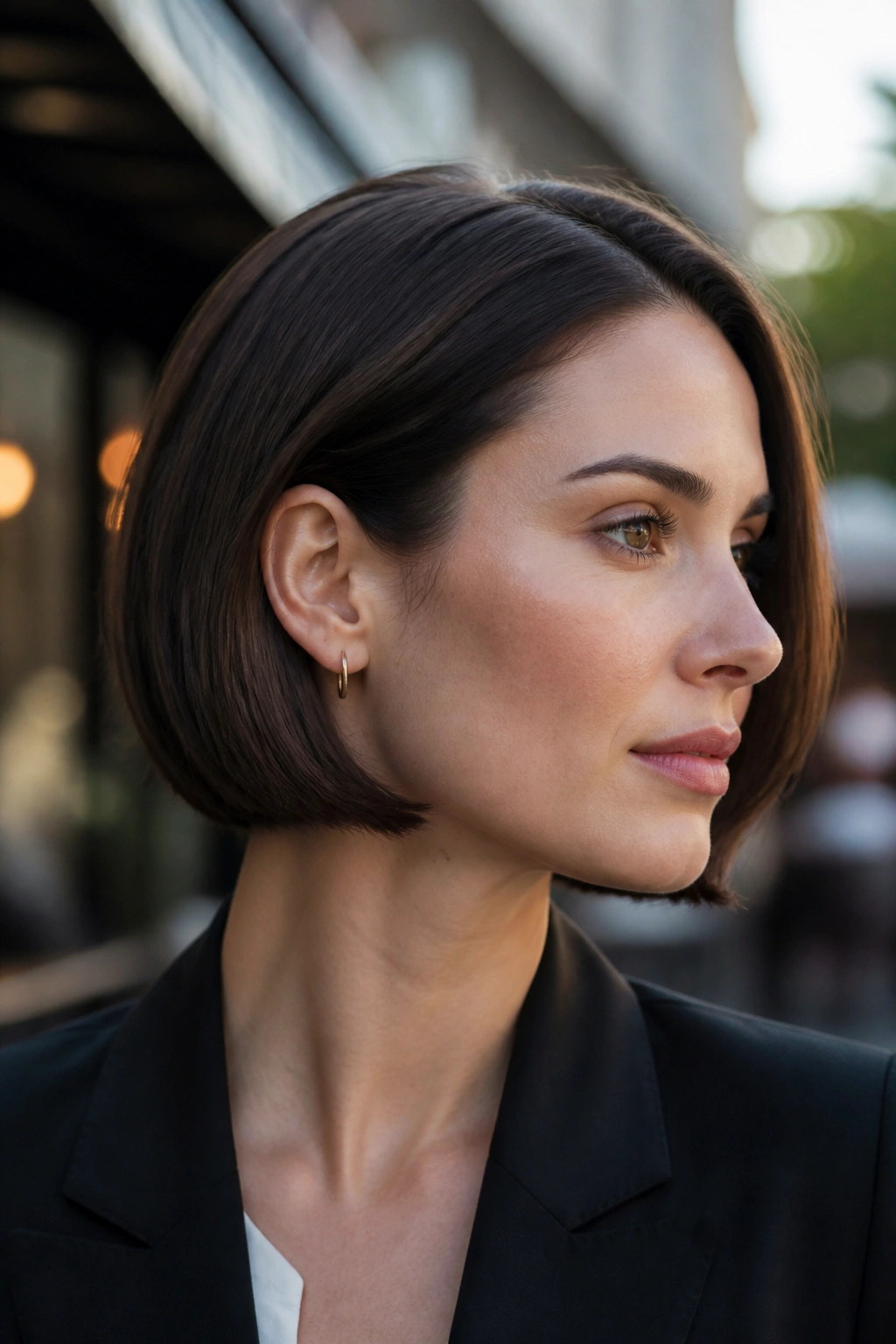
I like this one for days when you want the bob to feel sleek but not stiff. One side tucks neatly behind the ear, which exposes the jawline and gives the cut a little asymmetry. On fine hair, that asymmetry can make the whole style look more deliberate, like you planned every inch of it.
The key is keeping enough length to tuck without the hair popping back out. You want the tucked side smooth and close, while the other side still holds a clean line. A touch of pomade at the temple helps, but use almost none. Too much product will make fine hair collapse.
What to Watch For
- Keep the tucked side slightly longer.
- Flat iron only the front panels if needed.
- Wear a small stud or hoop if you want the ear to stay visible.
- Don’t tuck both sides unless the cut is very sharp.
This style is simple, and that’s exactly why it works.
7. Invisible-Layer French Bob
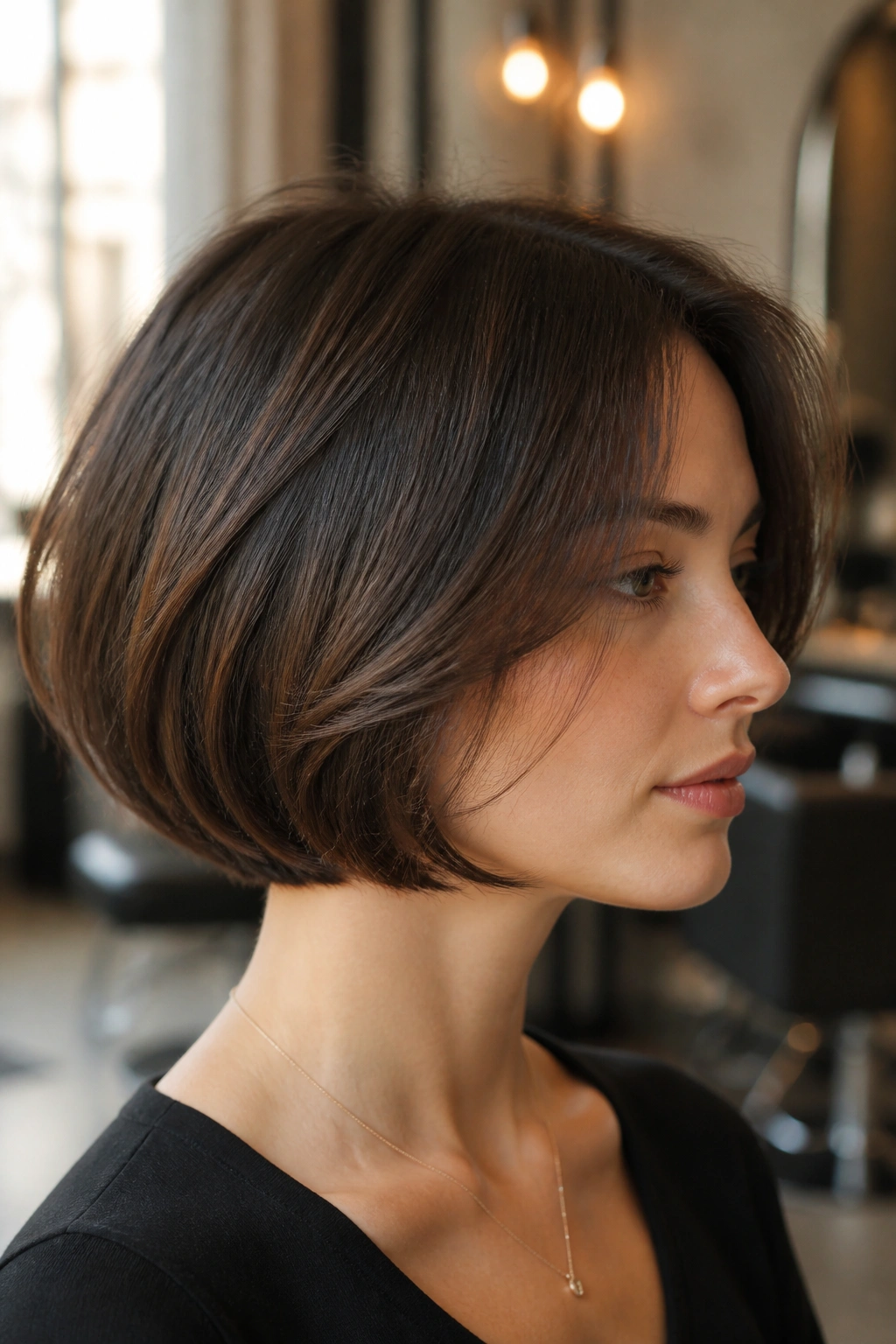
Hidden layers can be a friend to fine hair. Visible layers usually steal density, but invisible ones sit inside the shape and give movement without breaking the outline. That keeps the perimeter solid, which is the part that makes fine hair look fuller.
I’m picky about this cut. The layers should never be short enough to poke through the top or create a choppy crown. They should be so soft you only notice them when the hair moves. Ask for internal texture, not obvious slicing.
The Science Behind It
The outer line holds the bulk, while the inside gets just enough release to keep the hair from feeling like a helmet. That balance matters if your hair lies flat but still needs a little swing.
- Ask for interior weight removal only.
- Keep the bottom line blunt.
- Blow-dry with a paddle brush for smoothness.
- Use a tiny drop of oil on the ends, not the roots.
This is one of the best choices for people who want polish and a bit of movement in the same cut.
8. Blowout French Bob
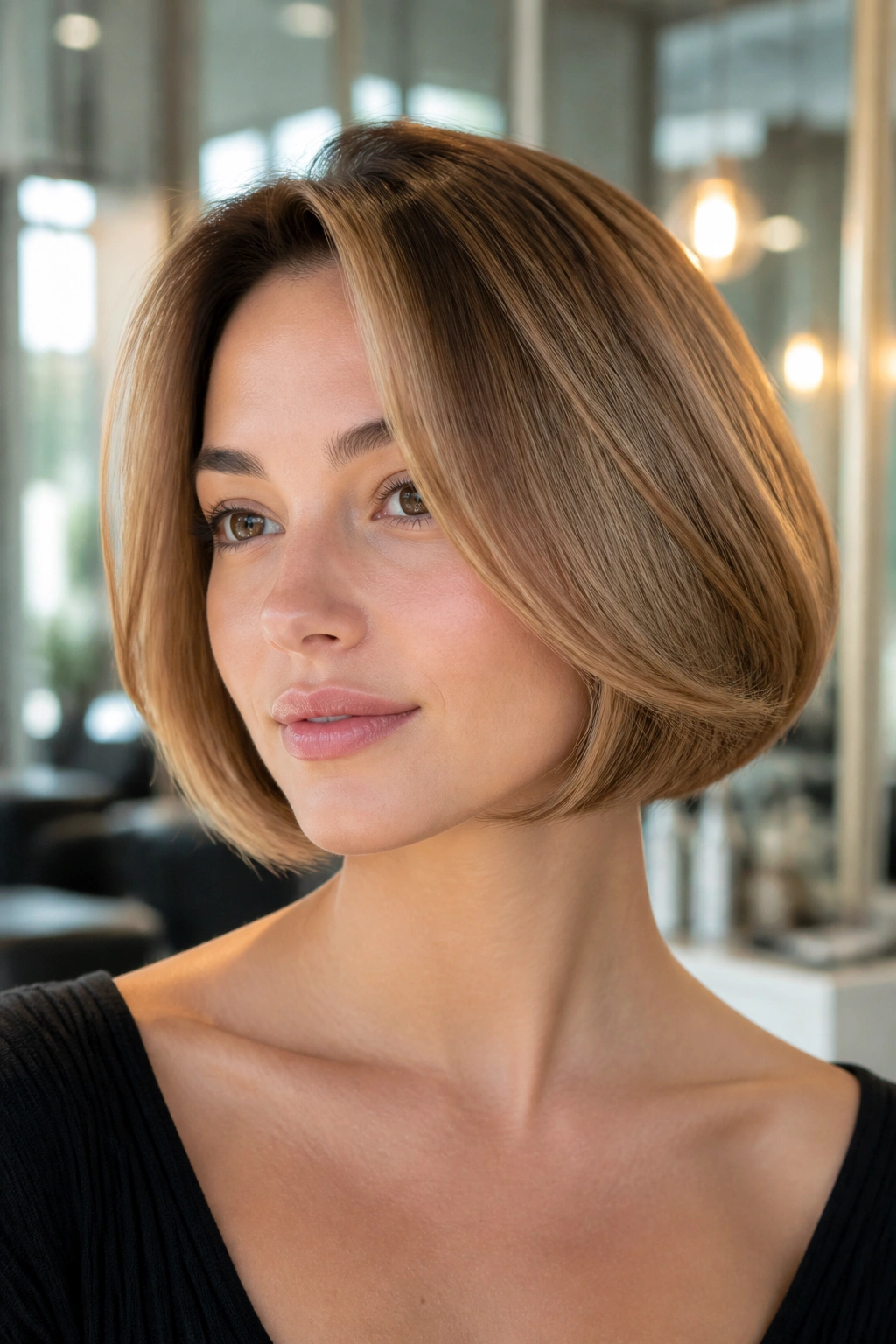
A blowout finish changes everything. The cut itself can stay sleek and simple, but the styling gives fine hair lift at the roots and a neat bevel at the ends. That little bit of volume makes the bob feel fuller without turning it into a round, fluffy shape.
I like this version best when hair is straight but lacks body. You don’t need a ton of tools, either. A round brush, a dryer with a nozzle, and a good heat protectant are enough. Work in small sections so the hair doesn’t slip through the brush and go limp again before it cools.
The trick is to stop short of curling the ends too much. A soft bend is prettier than a dramatic flip. Too much shape at the bottom can make fine hair look oddly light at the edges.
9. A-Line French Bob
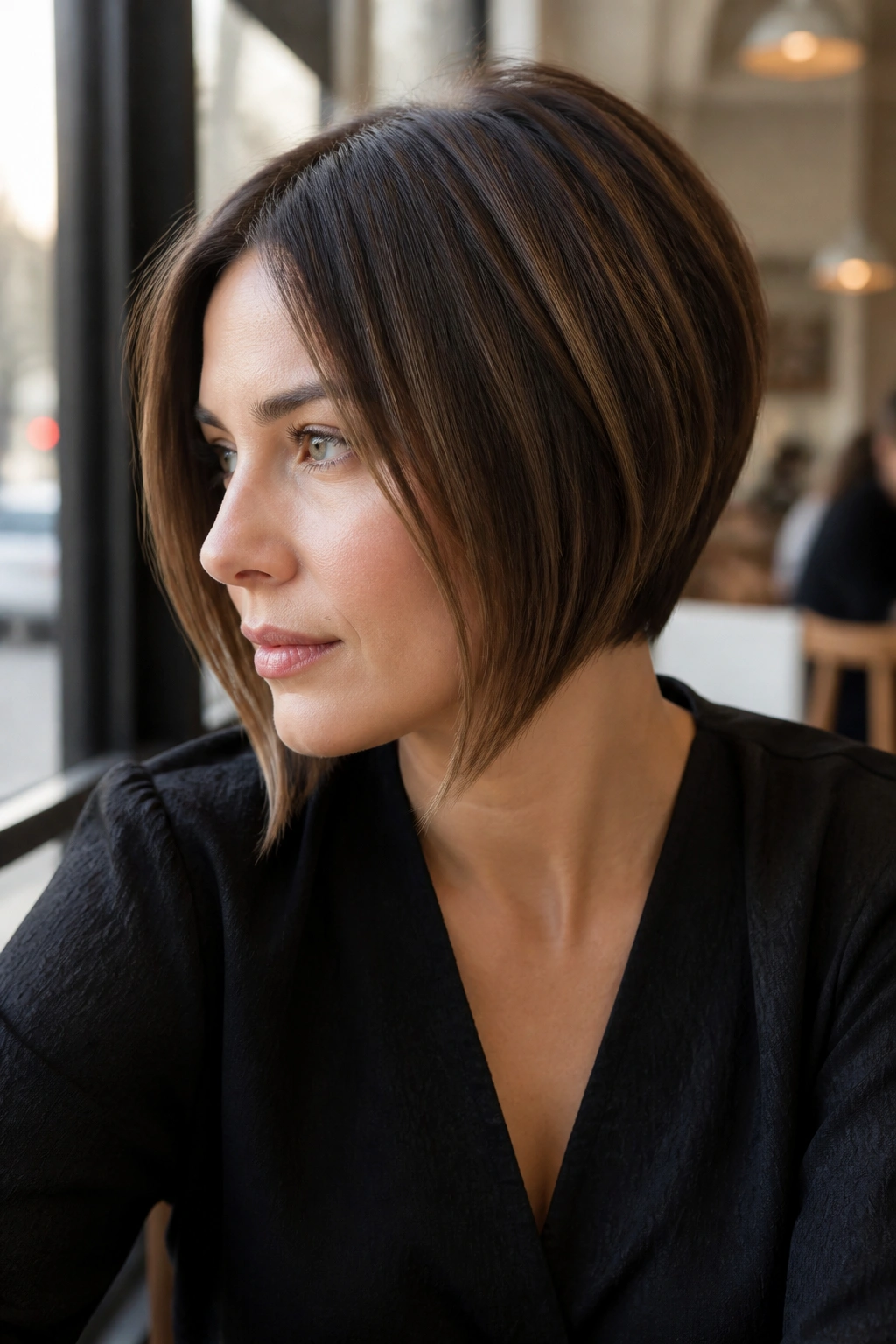
This cut is longer in front and shorter at the nape, and that slope gives fine hair a sneaky amount of presence. The front pieces frame the face, while the shorter back keeps the neck area clean and lifted. It’s a good pick if your hair tends to lie flat in the back.
The A-line shape also lengthens the neck, which is handy on round or square faces. Keep the angle gentle, though. A dramatic plunge can make fine hair look thin at the front ends, and that is exactly what you do not want. A subtle slope is more elegant and easier to wear straight.
If you like a bob that feels tailored, this one belongs on the shortlist.
10. Neck-Grazing French Bob
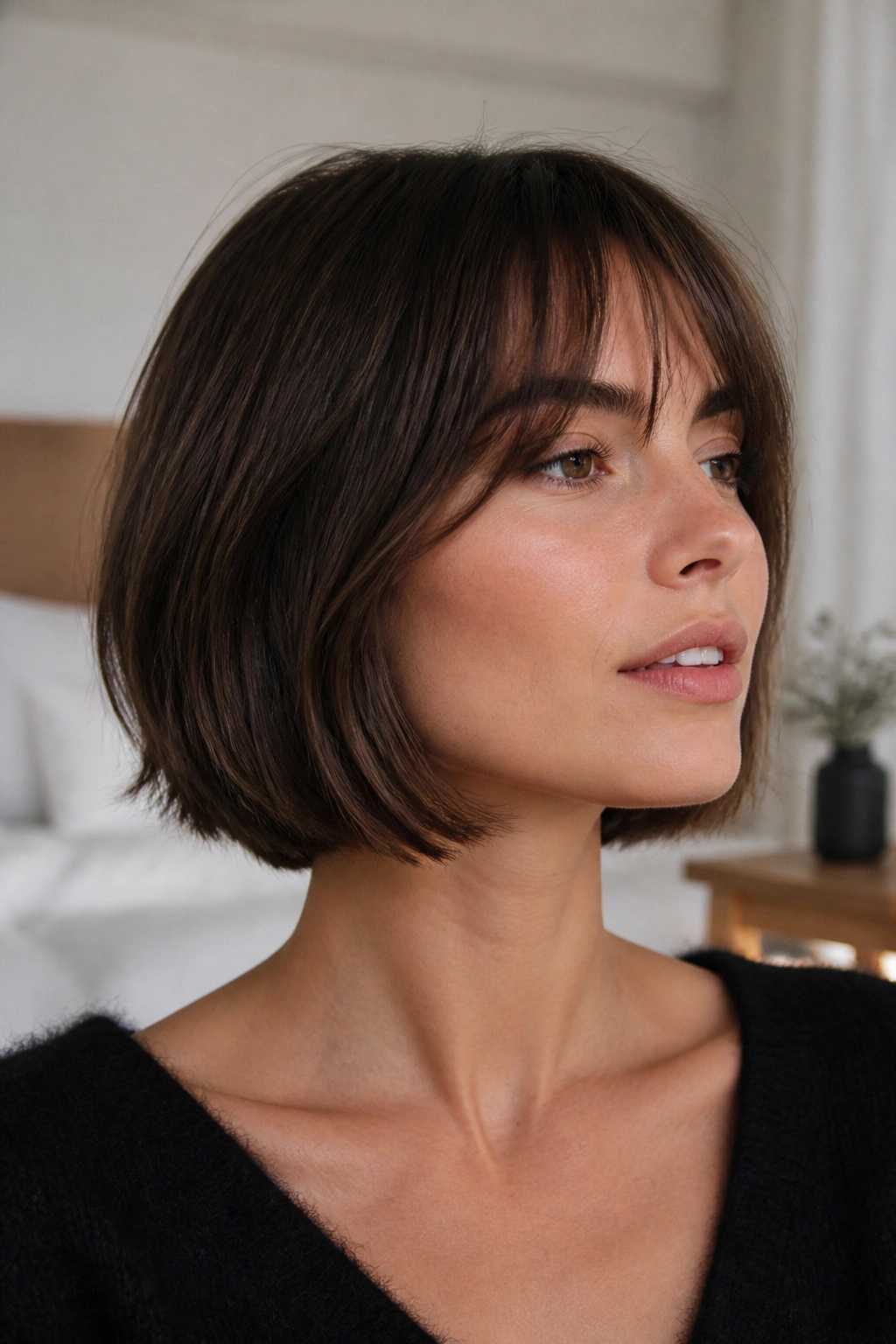
There’s something useful about a bob that barely brushes the neck. It gives you a little more length than a chin cut, which helps if you still want some softness around the face, but it stays short enough to keep the ends looking thick. Fine hair often does well right at this length.
This cut is also forgiving during grow-out. A chin bob can feel awkward after a few weeks; a neck-grazing bob usually still looks intentional. I’d style it with a smoothing cream and a flat brush, then bend the ends under just enough to keep the perimeter tidy.
No heavy layers. No shaggy ends. Just a clean, low-drama shape that behaves.
11. Bottleneck Fringe French Bob
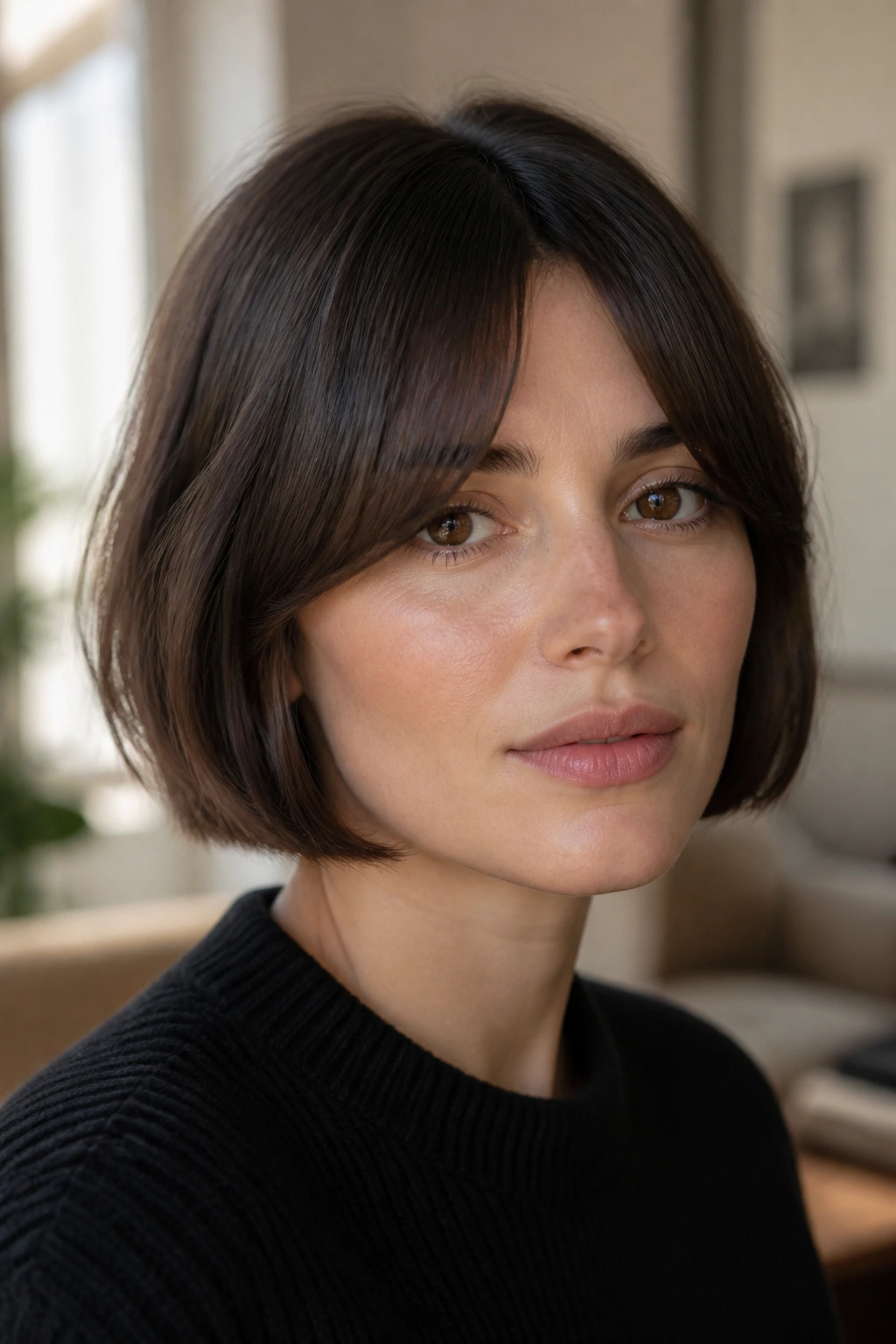
Bottleneck fringe is one of the smartest bang choices for fine hair. It opens slightly in the middle and gets softer toward the sides, so the forehead gets coverage without the heavy block of a full fringe. That matters because thick bangs can swallow fine hair whole.
The bob underneath should stay simple and blunt. The fringe is the feature, not a place to pile on more texture. A small round brush helps shape the center pieces while keeping the side sections airy. If the fringe gets too full, it can take over the whole face in a bad way.
This cut suits people who want softness around the eyes but still want the bob to feel crisp below.
How to Wear It
- Keep the fringe lightly separated with a touch of cream.
- Blow-dry the center forward, then sweep the sides off the face.
- Trim the fringe before it touches the lashes.
- Pair it with a smooth cheek-length bob for balance.
12. Ear-Length Crop French Bob
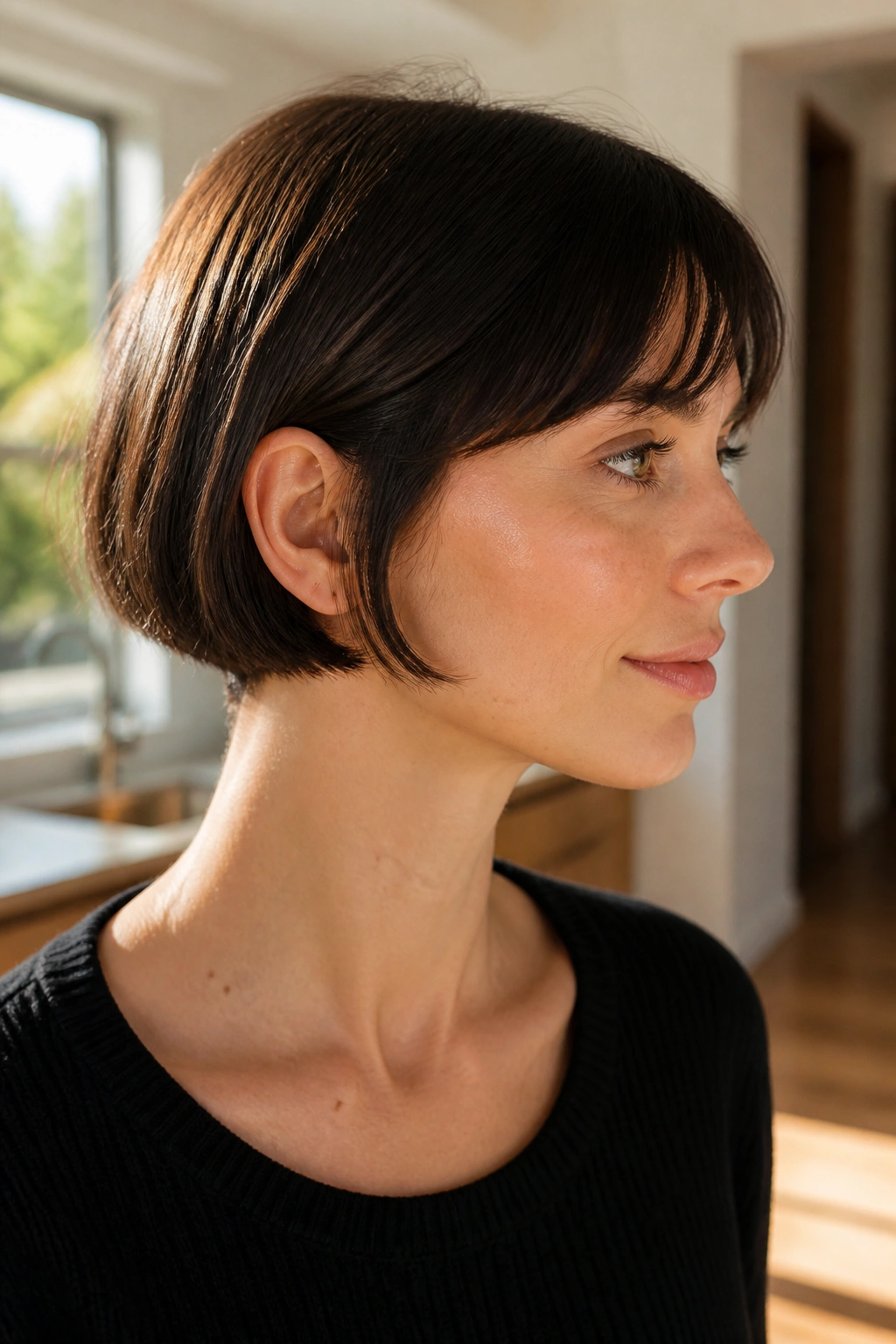
Short hair can look thicker than long hair, and this cut proves it. An ear-length French bob removes the limp ends that usually make fine hair look sparse, then leaves you with a small, dense-looking shape that sits close to the head. It’s clean, sharp, and a little daring.
The danger is over-texturing. If the stylist thins it out too much, the whole thing turns airy in the wrong way. I’d keep the line blunt around the ears and slightly rounded at the back so it follows the head. Glasses wearers often love this length because it sits neatly with frames instead of fighting them.
This is not a lazy cut. It needs a steady hand and a good trim schedule.
13. Wet-Look French Bob
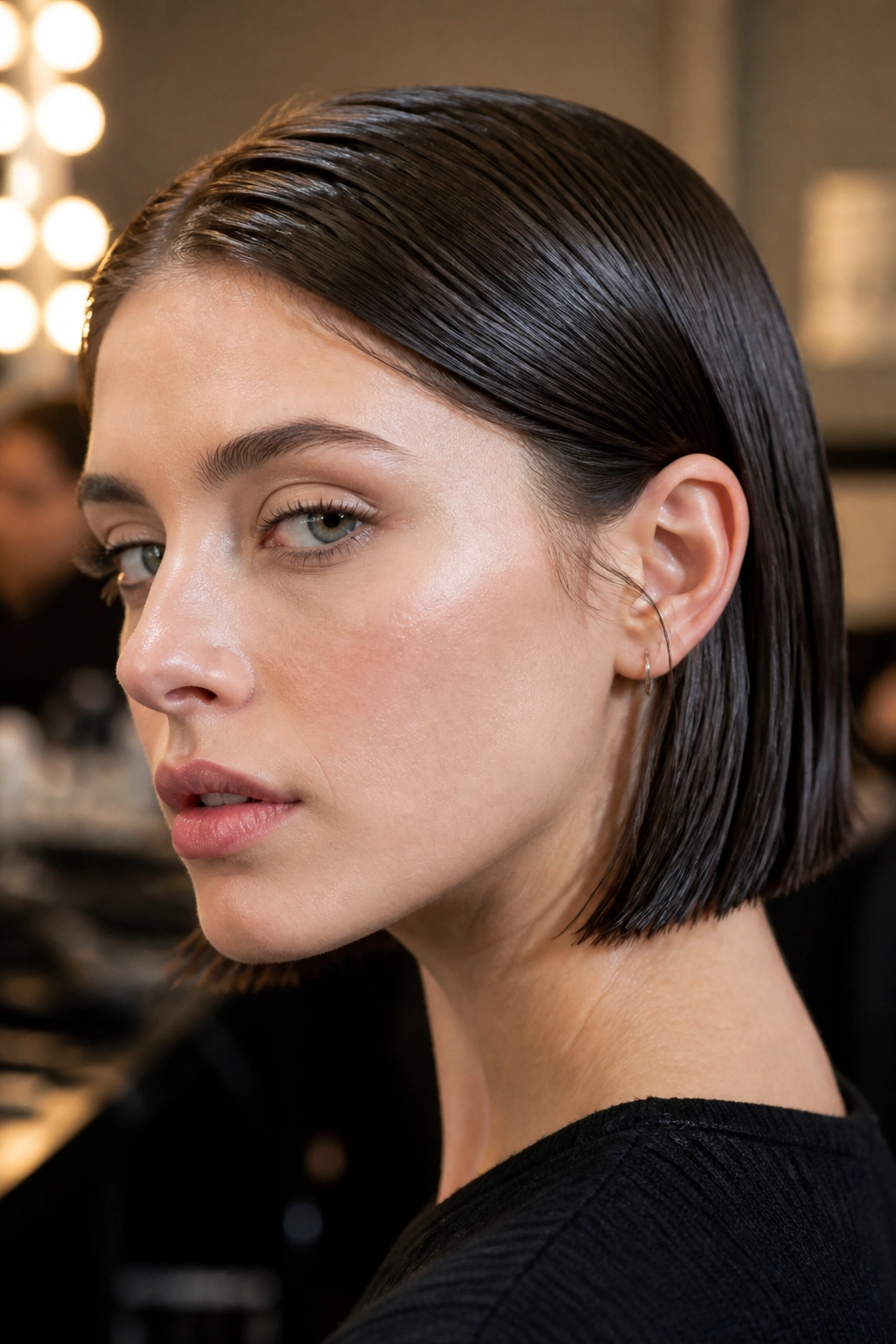
Wet-looking styling can be a gift for fine hair because shine makes strands look denser than matte texture does. A little gel, worked through damp hair, gives that sleek, pressed-down finish that suits a sharp French bob beautifully. The shape becomes the point, not random volume.
The key is restraint. Use a light gel or cream-gel mix, then comb it through with a fine-tooth comb so the hair stays smooth instead of stringy. If your hair is very fine, skip heavy oils at the roots. They can make the whole style look limp by noon.
This version feels polished in a strong, unfussy way. It is especially good for evenings, events, or any day when you want the bob to look intentional with almost no visible effort.
14. Soft Rounded French Bob
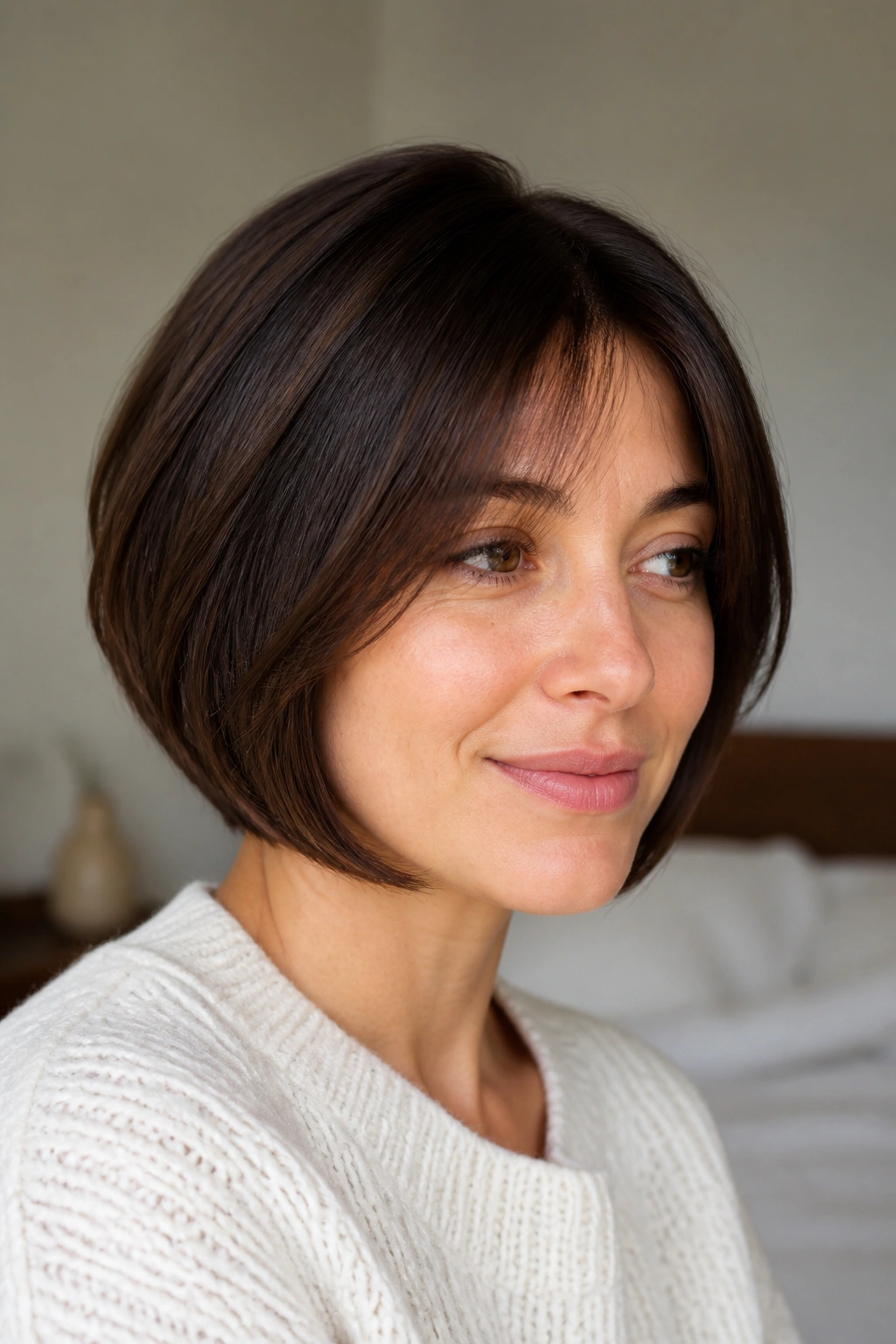
A soft rounded bob is less severe than a hard blunt line, but it still keeps the French shape intact. The curve follows the head and gives the crown a bit of lift, which can be helpful if your fine hair tends to sit too flat behind the ears. It feels gentle, not mushy.
I like this one for people who want a neat shape that doesn’t scream “I just cut my hair.” The line should still look clean at the bottom, but the interior can be smoothed with a paddle brush so the bob hugs the head a little. That gives it a fuller profile from the side.
Short, controlled, and easy to wear. That’s the appeal.
15. Blunt One-Length French Bob
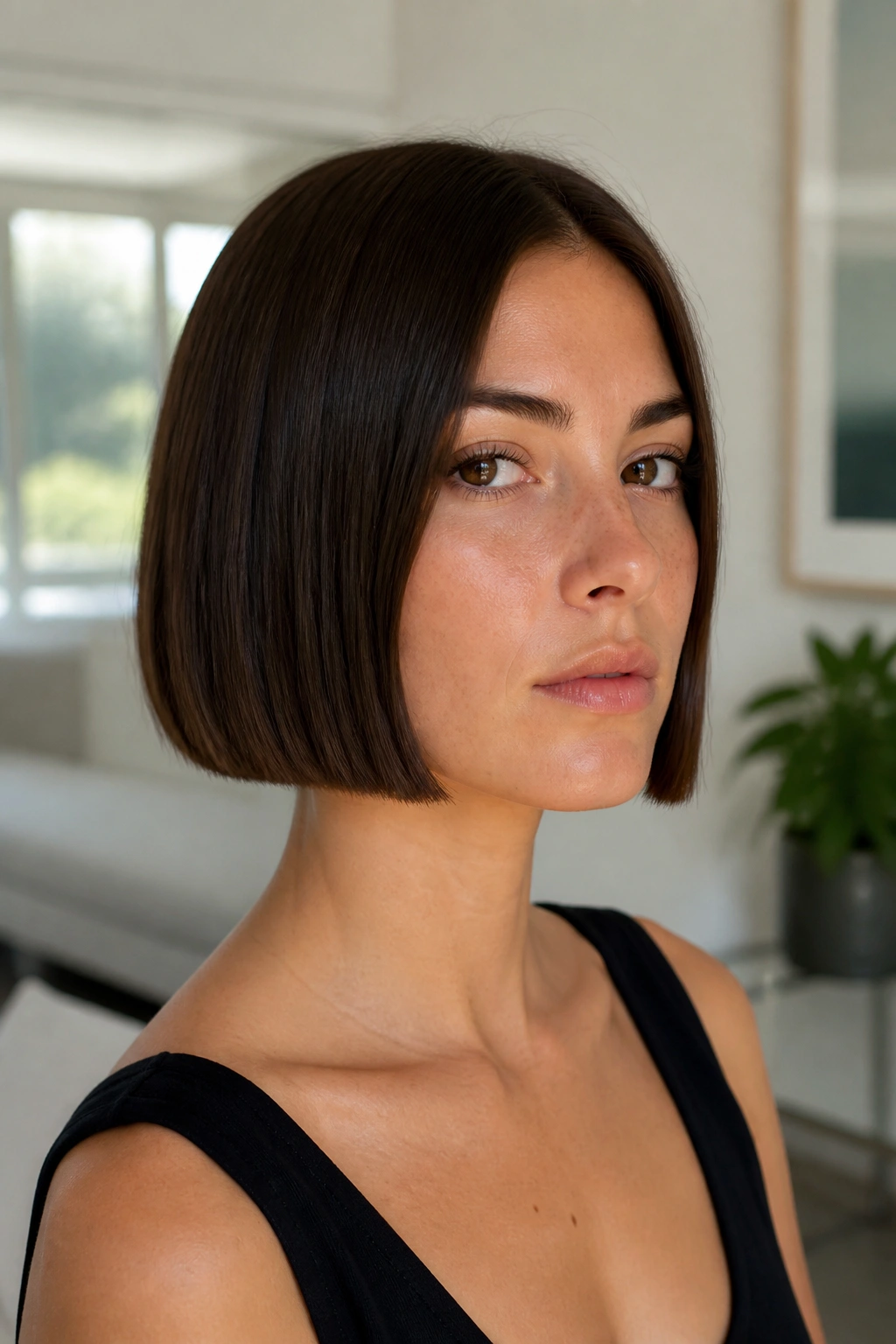
This is the most honest cut in the bunch. One length means the ends all sit in the same place, which gives fine hair the thickest possible looking edge. If your hair is naturally sparse at the bottom, a one-length bob is often the fastest way to fix that visually.
Why It Works
A layered cut can be lovely on thick hair, but on fine hair it often removes too much weight. One length leaves the perimeter strong, and that strong perimeter does the heavy lifting. It also makes styling faster because the cut already has a built-in shape.
The only catch is that it can feel plain if the finish is messy. So keep it smooth. Flat brush, heat protectant, clean part, minimal oil. That’s the formula.
If you like hair that looks neat even on an ordinary Tuesday, this is one of the best options.
16. Long French Bob
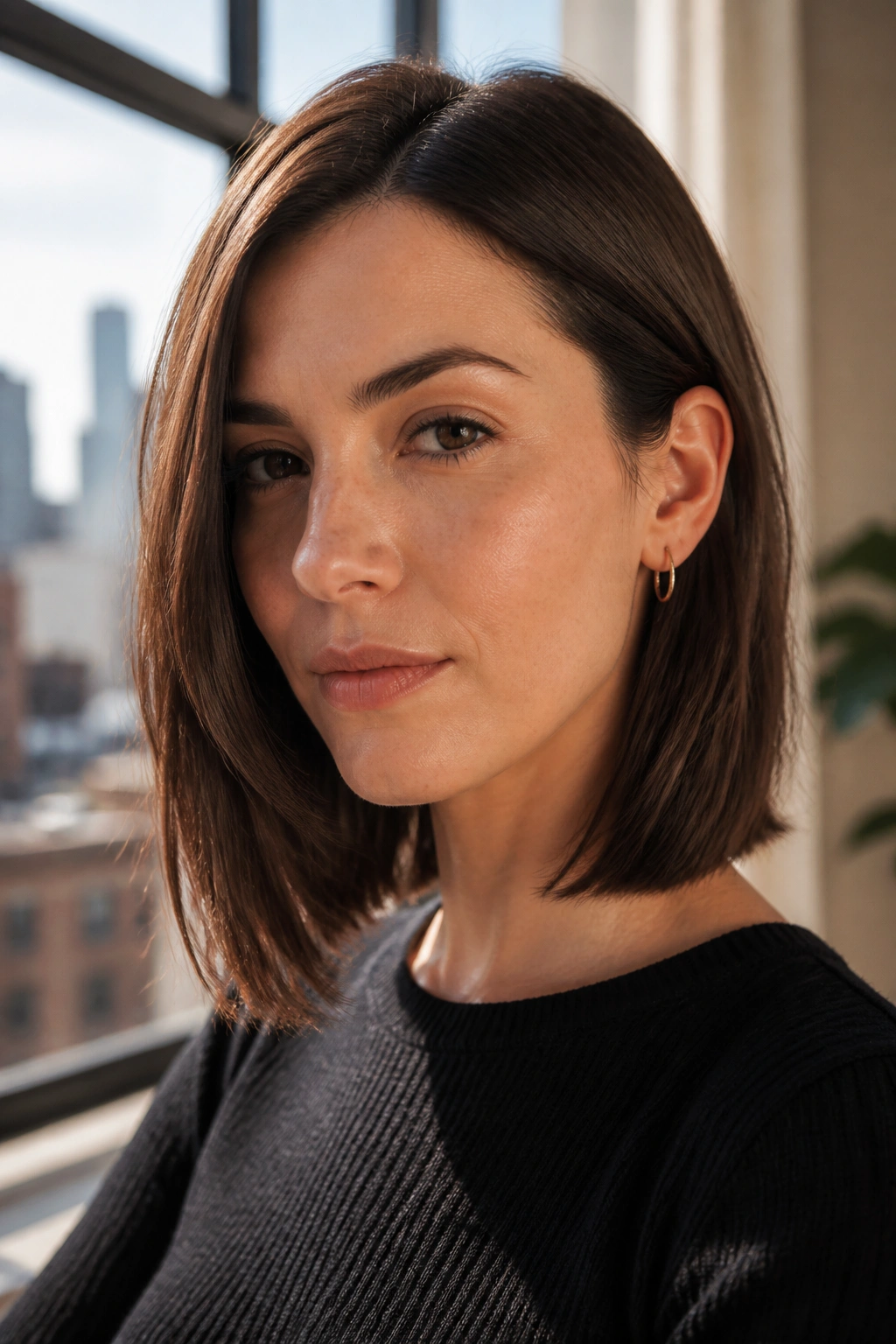
A long French bob sits somewhere between a bob and a lob, and that extra inch or two can help if you’re nervous about going short. Fine hair still benefits from the blunt edge, but you get a little more movement through the shoulders. It’s a softer entry point.
I think this length is smart for people who wear their hair straight most of the time. It keeps the bottom line visible, which is what makes the hair look fuller, while still giving you enough length to tuck behind the ear or clip back on one side. Just don’t let it drift too long. Once it falls past the point where the ends look dense, the shape loses its power.
It’s a quiet haircut. Not boring. Quiet.
17. Chin-Flip French Bob
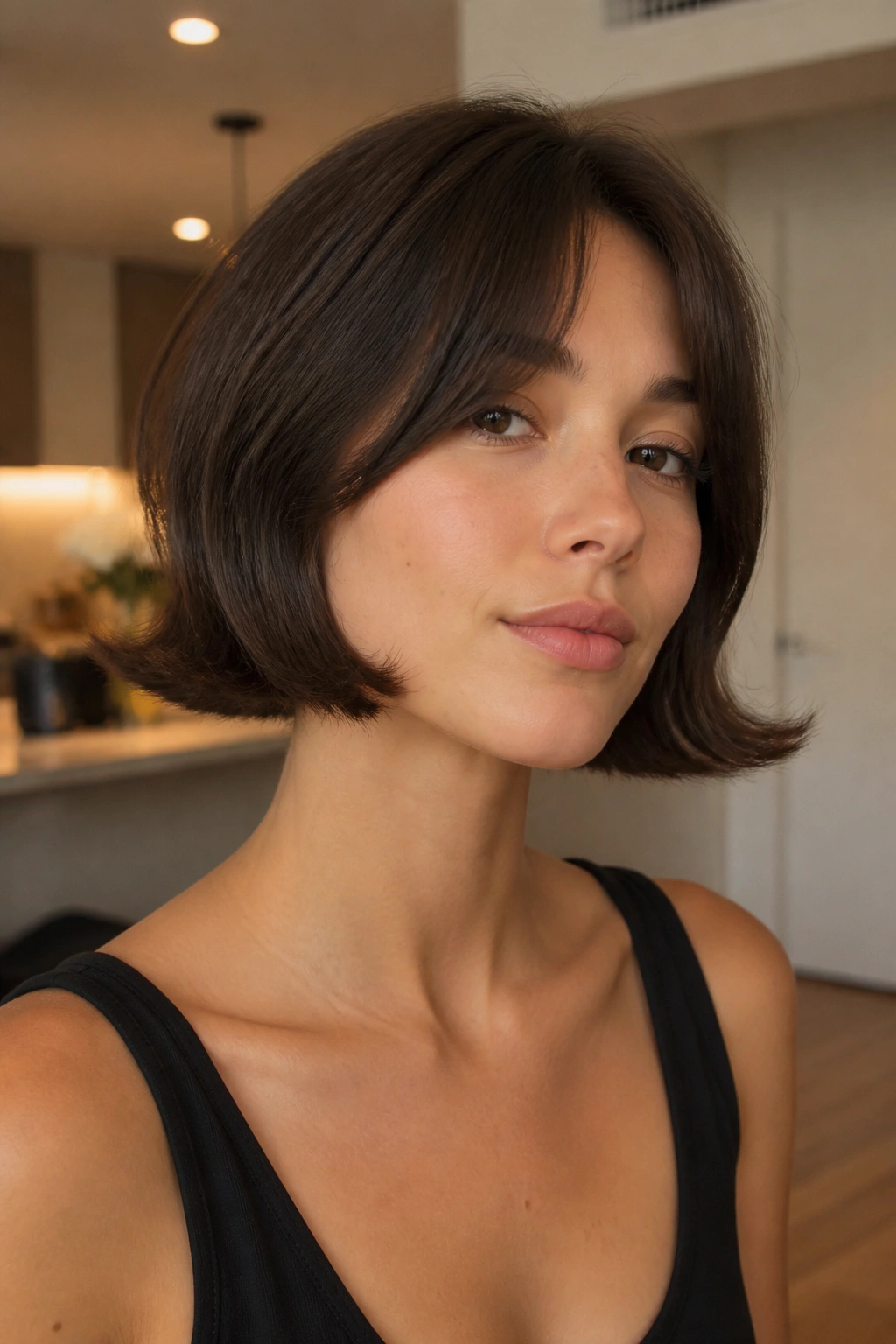
The chin flip is a little retro, and I like that. The ends turn outward just enough to give motion, which keeps fine hair from hanging dead straight against the face. The flip also makes the perimeter look more deliberate, especially if the rest of the hair is sleek.
This version is best when the hair has enough smoothness to hold a bend but not so much body that it springs into a full curl. Use a flat iron or round brush to kick the last half-inch outward. Keep the rest of the cut neat. Too much wave at the bottom will make the hair look lighter than it is.
It has personality without asking for much volume. That is a useful trick.
18. Deep Side-Part French Bob
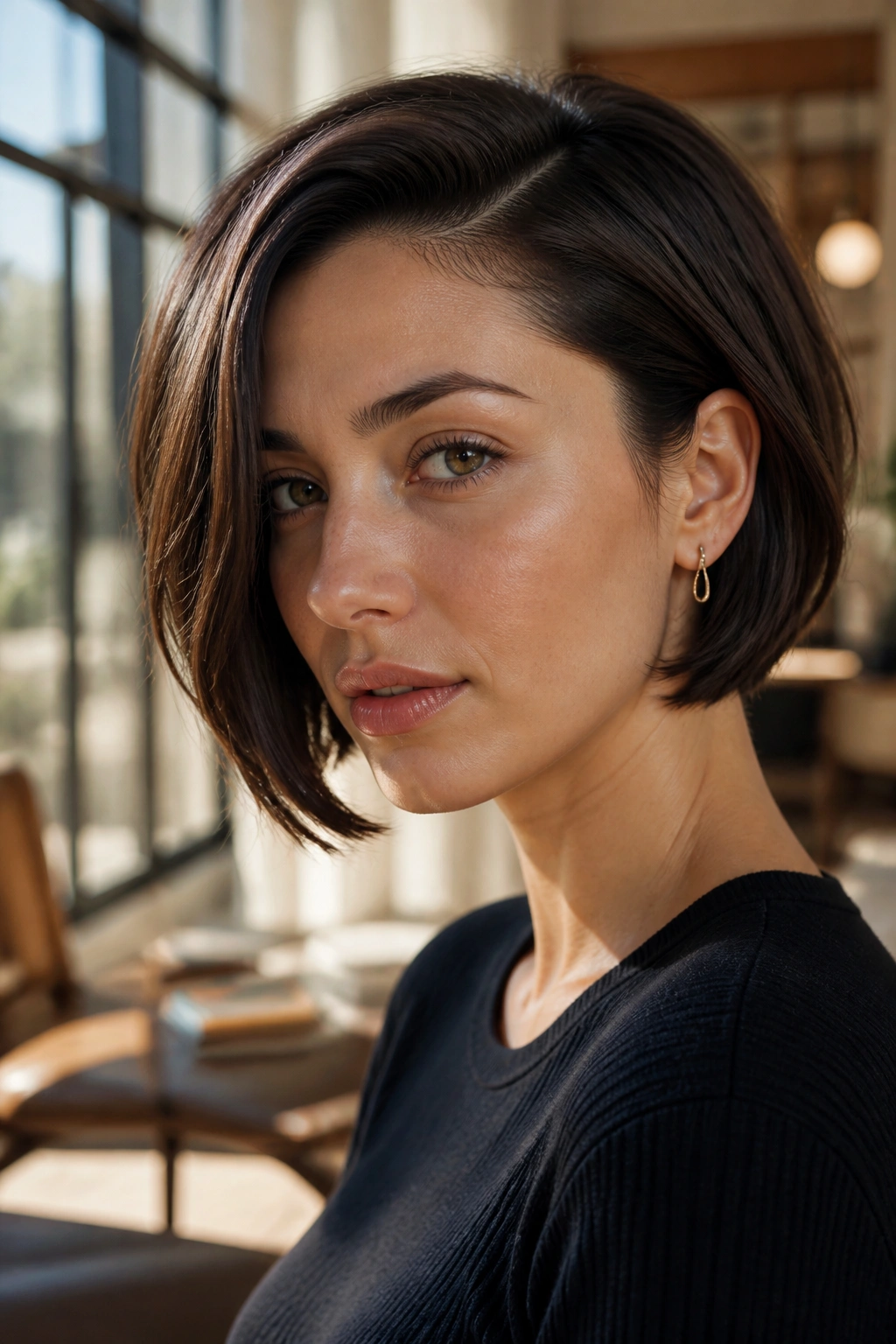
A deep side part gives fine hair instant lift at the root, and I mean instant in the practical sense, not the fake-hype sense. One side gets more hair to work with, so the top looks fuller before you add a single product. The shape also creates a slightly dramatic line across the forehead.
The bob itself should stay sleek and tidy, because the part already brings the movement. If the cut is too layered, the side part can turn messy fast. A clean edge under the cheekbone works better. I like this on people with strong brows or a clear cheekbone line, since the part draws the eye right there.
You can clip the heavier side for a few minutes while drying. That little habit helps the root hold its lift.
19. Micro-Fringe French Bob
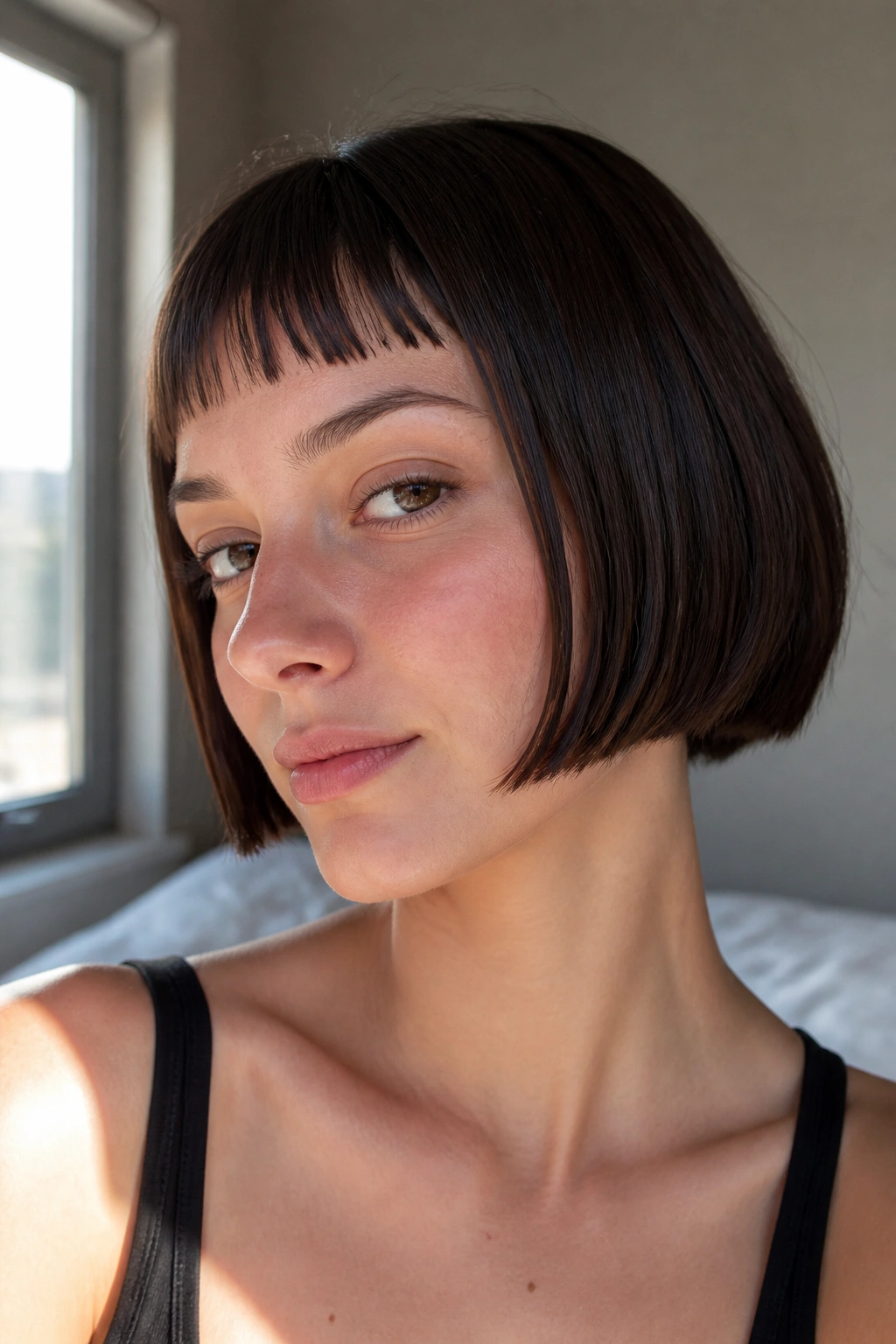
A short fringe changes the whole mood of a bob. On fine hair, a micro fringe can actually be easier to manage than a thick one, because it takes less density to look intentional. The bob underneath stays blunt and sleek, while the fringe gives it a crisp front edge.
What Makes It Different
This cut suits people who like a bit of edge and don’t mind getting regular fringe trims. Keep the bangs straight but soft enough at the ends so they don’t look chopped off. The rest of the bob should be polished, not fluffy.
- Trim the fringe before it drops into the eyes.
- Keep the bob at chin length or slightly above.
- Use a light styling cream to stop flyaways.
- Blow-dry the fringe first so it sits cleanly.
A micro fringe can go wrong if it is too thick. On fine hair, thin and precise is the safer move.
20. Sculpted Middle-Part French Bob
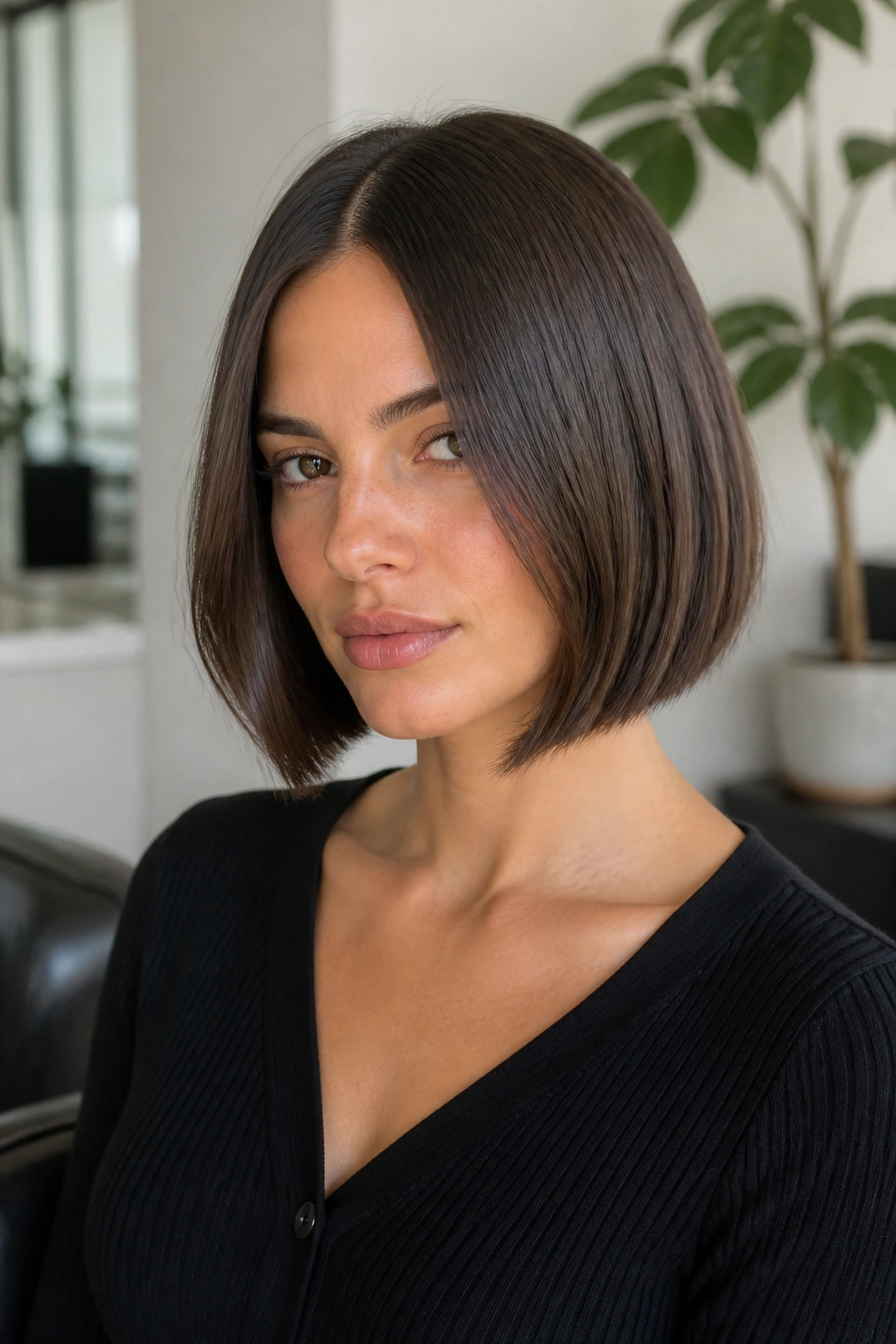
A sculpted middle part is about clean lines, not extra drama. The hair falls in two even sides, and the ends are beveled just enough to curve inward. Fine hair benefits because the center part gives the illusion of symmetry, and symmetry makes a style look more filled out.
I like this for straight textures that need discipline. A smoothing brush and a drop of serum are enough if the cut is shaped well. The ears can stay visible, or you can tuck the front panels for a neater profile. If your hair has cowlicks at the front, you may need to set the part while the hair is still damp.
Simple shape. Strong payoff.
21. Air-Dry French Bob

Air-drying gets a bad name when people try to do too much with it. On a French bob, though, it can work if the cut is clean and the hair is fine but not puffy. Use a light cream, comb the hair into place, and let it dry with the ends guided under or straight.
The point is not tousled volume. The point is controlled ease. A bob that air-dries well can save you a lot of time, but the perimeter still needs to be blunt enough to look full when it dries. If the ends are thinned out, air-drying will show every weak spot.
This is the low-maintenance version for people who hate styling tools but still want a polished result.
22. Grown-Out French Bob
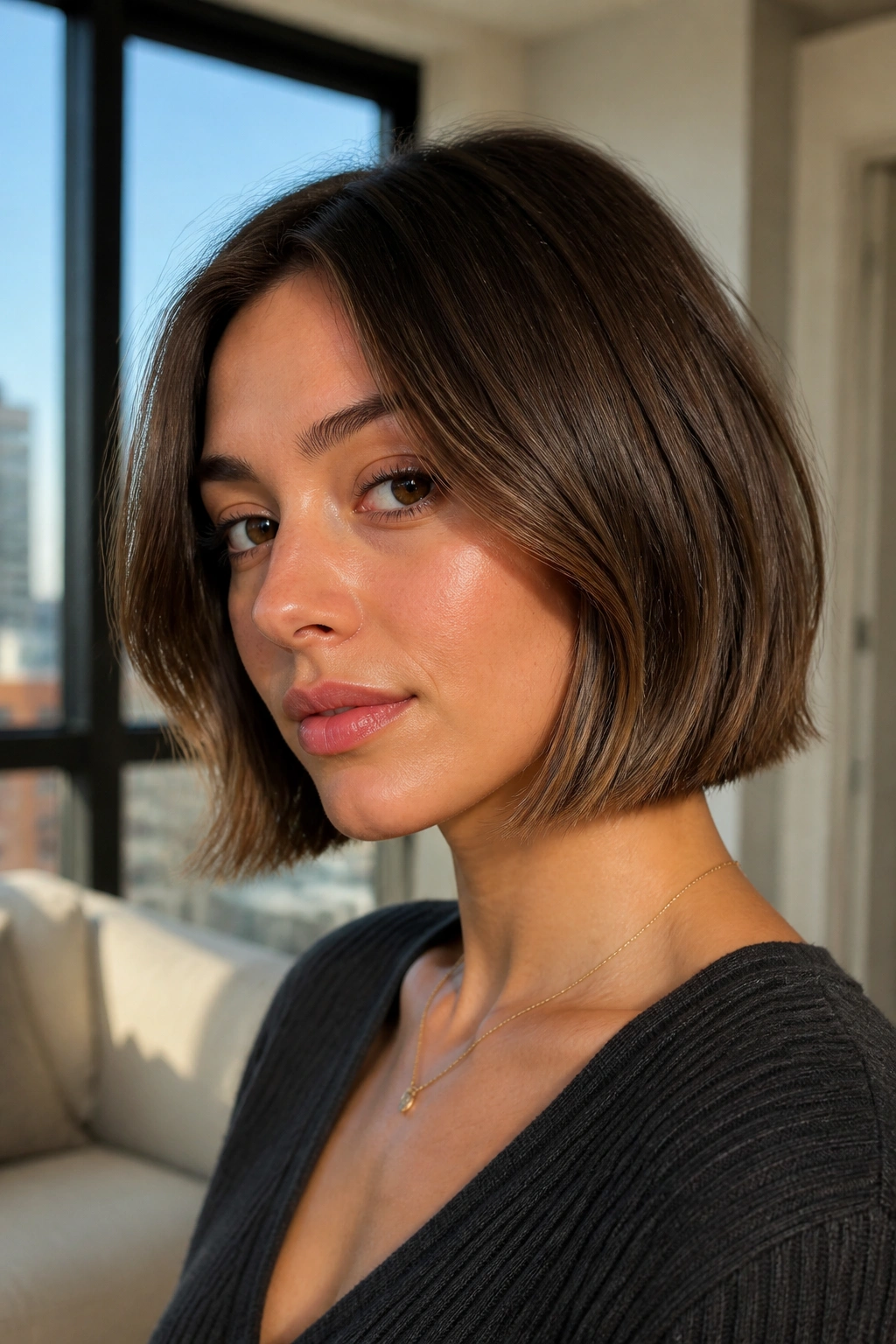
A grown-out bob only works if the original cut was strong. Fine hair can lose shape fast as it gets longer, so the trick is to keep the line compact enough that it still reads as a bob after a few weeks of growth. That makes this version useful for people who don’t want constant salon visits.
I’d keep the ends blunt and the front slightly longer so the shape survives as it softens. The result is less fussy than a fresh micro bob, but still far cleaner than a shaggy grow-out. If you wear your hair straight, this cut stays neat longer than most people expect.
It’s the practical option. Not flashy, just smart.
23. Graduated Nape French Bob
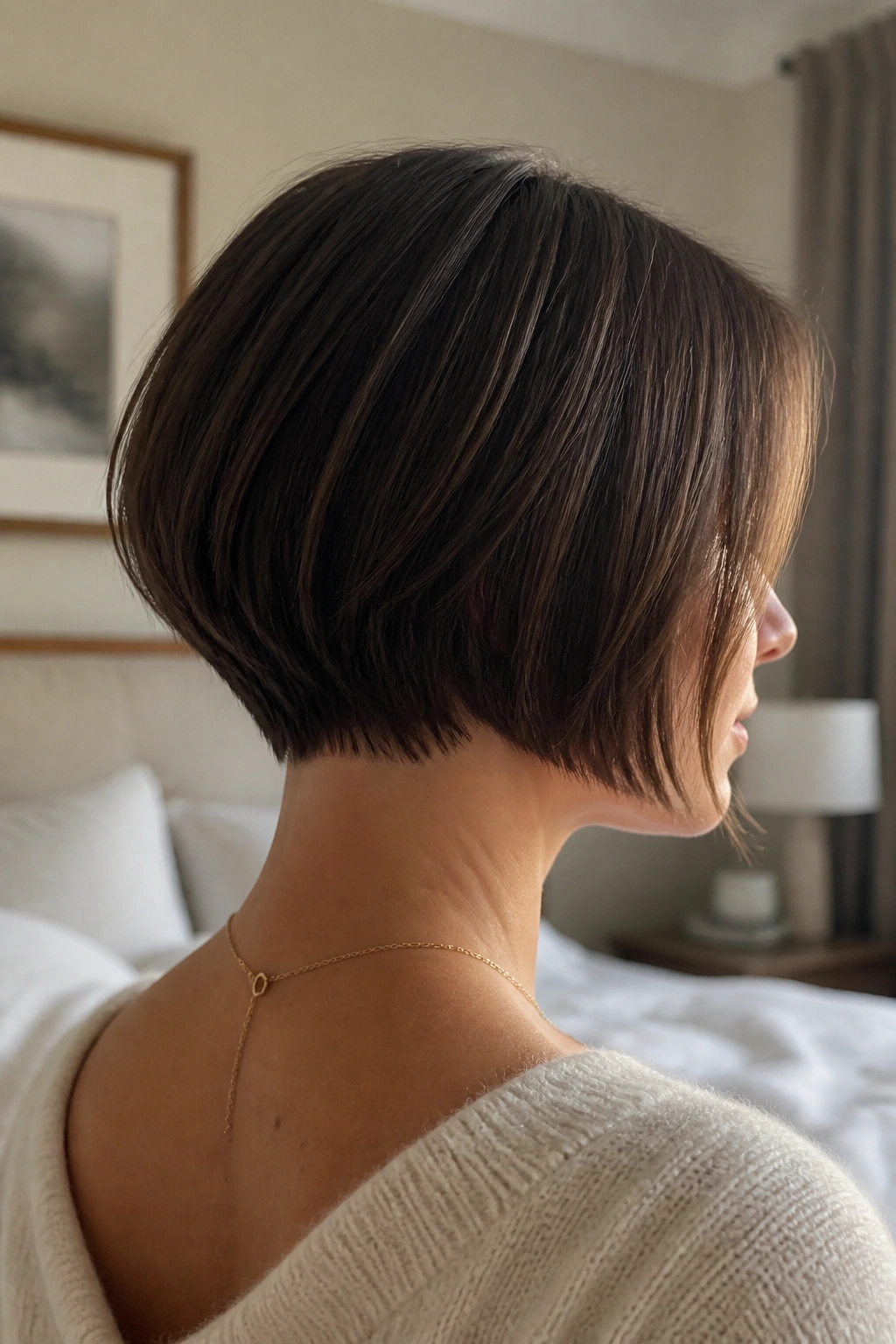
A gentle graduation at the nape can give fine hair lift where it usually falls flat. The back is cut a bit shorter, then the shape lengthens subtly toward the front. That creates a small stack at the back without turning the bob into a dated helmet shape.
The key word is subtle. Too much stacking can make fine hair look chopped up, and the whole purpose here is density. I’d ask for clean graduation only at the nape, then a smooth outer line that keeps the bob sleek from the side. This version is useful if the back of your hair always looks thin first.
It has structure. That matters.
24. Glass-Hair French Bob
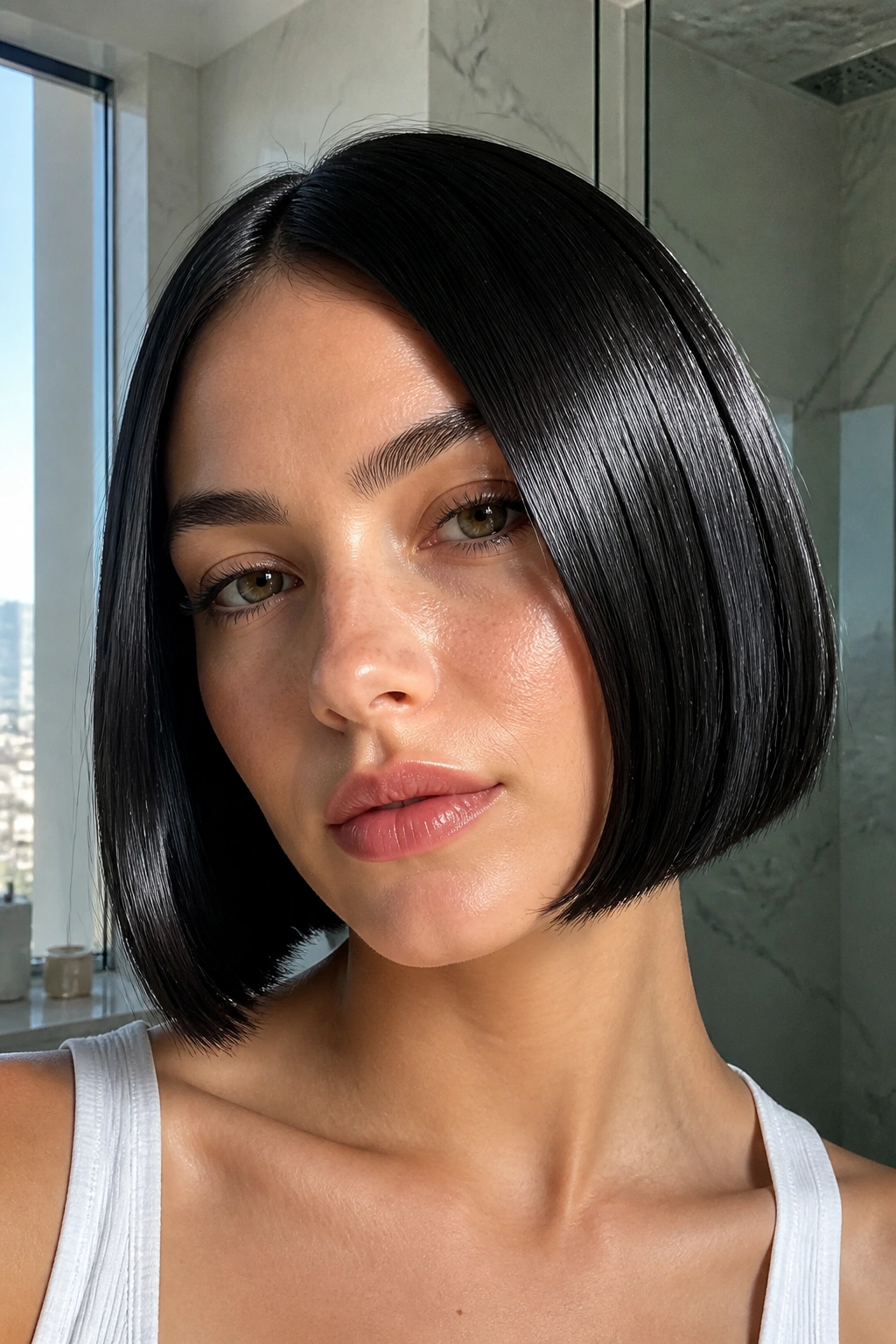
Glass hair is all about shine, and fine hair usually takes to shine well because the strands are small and reflective. Pair that finish with a sharp French bob and you get a cut that looks polished even when it is simple. The line does most of the talking; the shine just makes it louder.
Use a smoothing serum sparingly and a flat iron in small sections if your hair bends or frizzes. You want the surface smooth, not slick with product. Heavy oils can flatten the roots and make the style look greasy before the day is done. A light hand is better.
This is the dressy version of the bob. Clean, glossy, and crisp.
25. Pageboy-Inspired French Bob
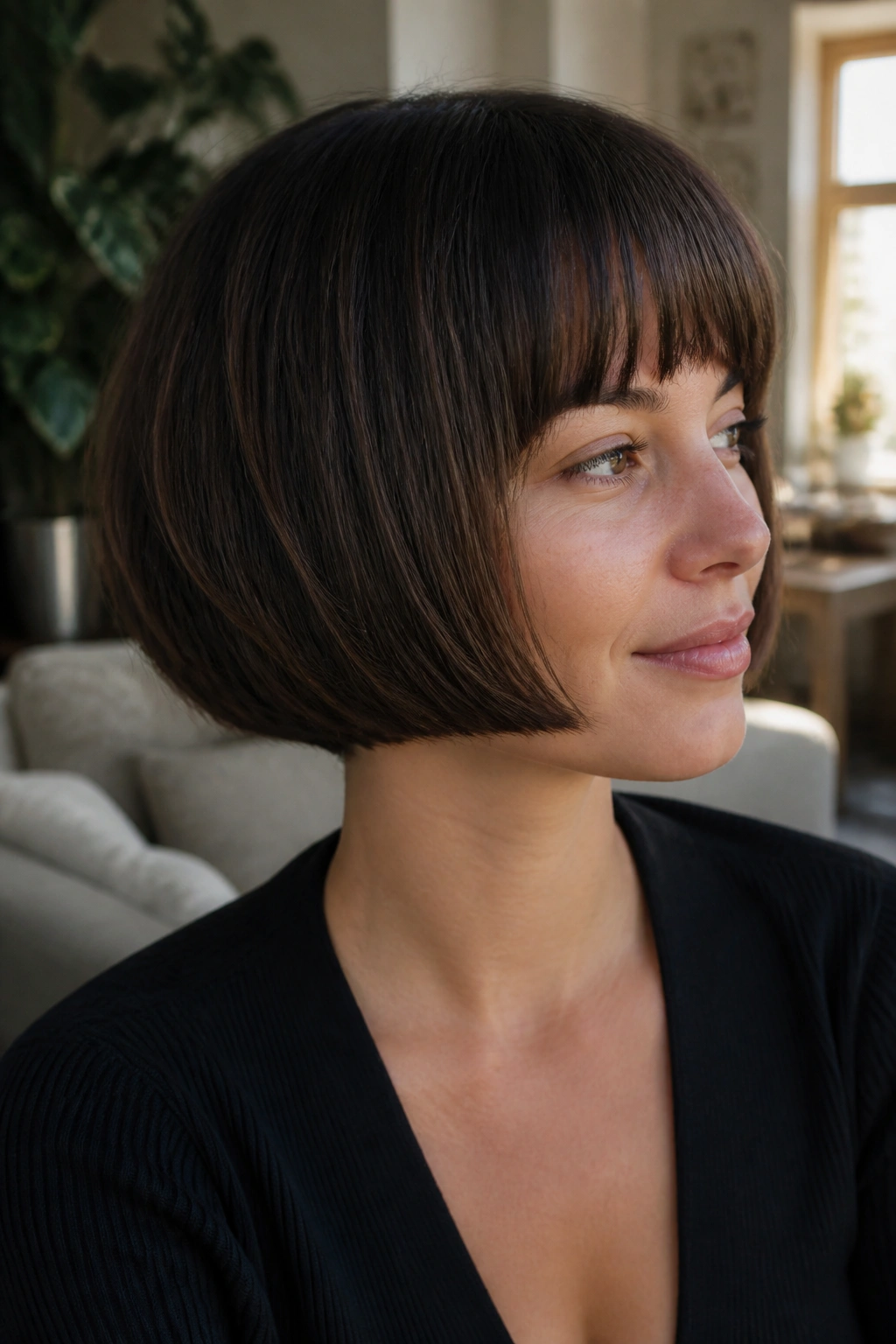
A pageboy influence gives the bob a curved-under shape and a slightly retro edge. On fine hair, that rounded outline can look fuller because the eye follows the continuous line from cheek to nape. It also keeps the hair close to the head, which helps when strands are soft and easily blown around.
I like this when someone wants a strong shape with a bit of softness at the bottom. The front can stay cheek-length, while the back sits a touch shorter. Keep the curve controlled, though. If it gets too round, the style can lose the French feel and start looking costume-like.
This one is for people who like a little vintage in their haircut.
26. Collarbone French Bob With Clean Ends
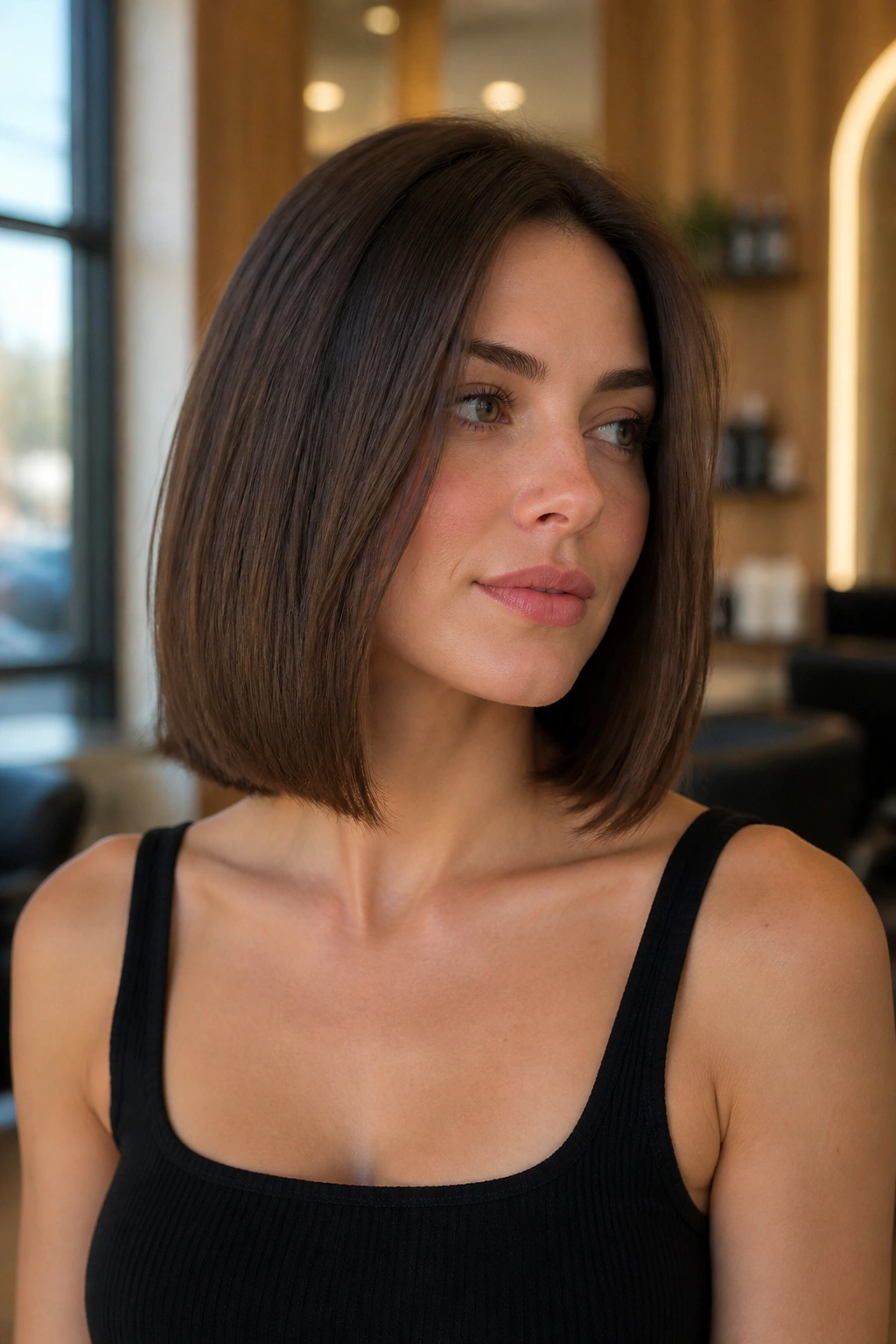
Longer does not always mean thinner, as long as the ends stay clean. A collarbone-length French bob gives fine hair more flexibility while still keeping enough weight in the line to look full. It is a good bridge cut if you are used to longer hair but want something sharper.
The important part is the finish. Straight and smooth wins here. If you let the ends fray or split visually, the whole style loses shape fast. I would ask for a blunt bottom edge and only the lightest internal softening, if any. That keeps the silhouette neat even when it moves.
For people who want polish without going short, this is a safe and stylish bet.
27. Minimalist Bob With Wispy Fringe
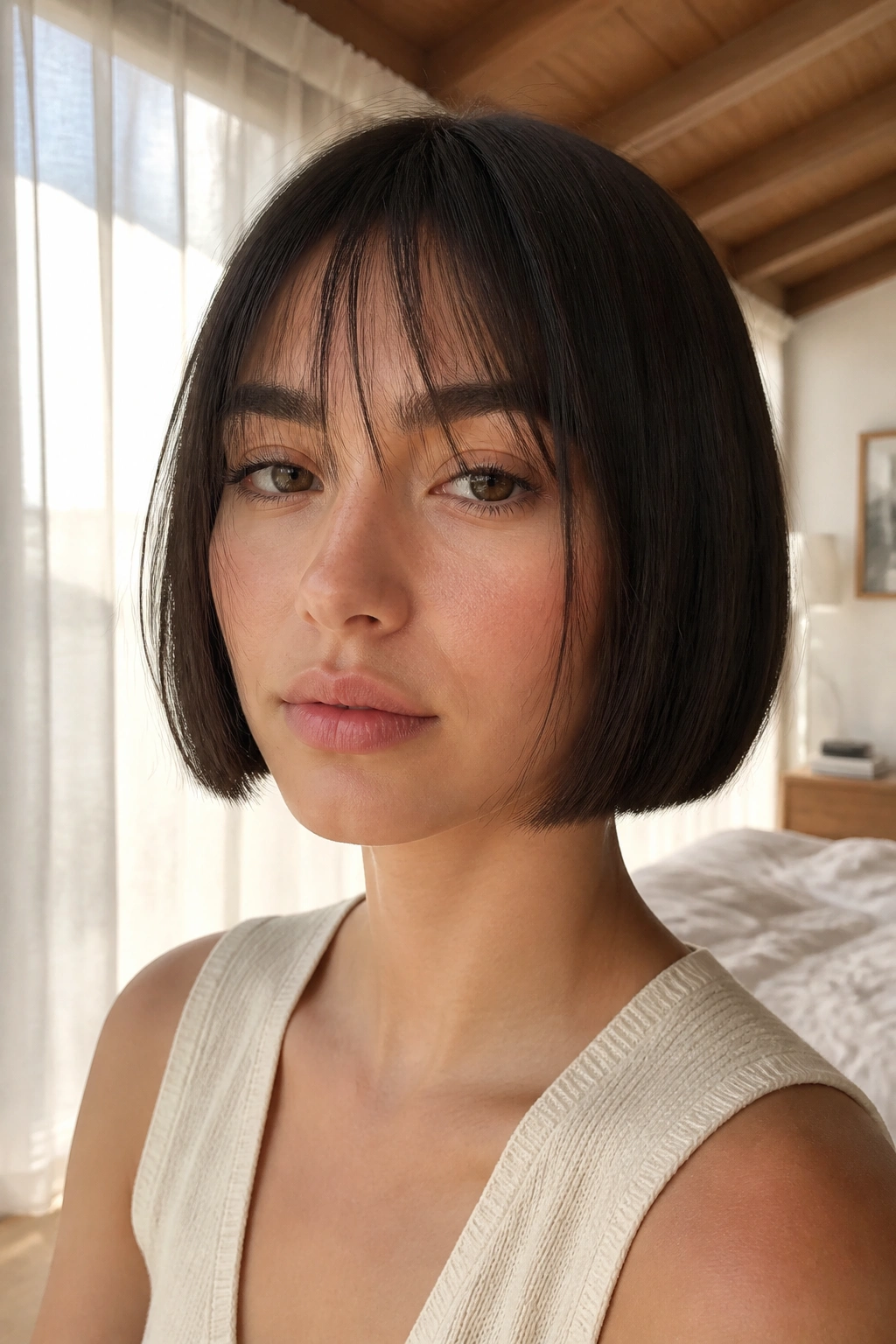
A wispy fringe can work on fine hair when the rest of the bob is solid. The fringe should be soft, see-through in a good way, and separated enough that it doesn’t swallow the forehead. Pair that with a blunt, sleek bob and the contrast looks intentional.
How to Get the Most From It
The fringe should be cut with care, not hacked in quickly. A few longer pieces around the temples help the bangs blend into the rest of the cut, which keeps the shape from looking too boxy.
- Keep the fringe light and piecey.
- Use a small round brush at the roots only.
- Let the bob stay one length.
- Finish with a tiny bit of dry texture spray at the fringe, not the ends.
This is a nice choice if you want softness up top and strength through the perimeter.
28. Sleek Side-Swept French Bob
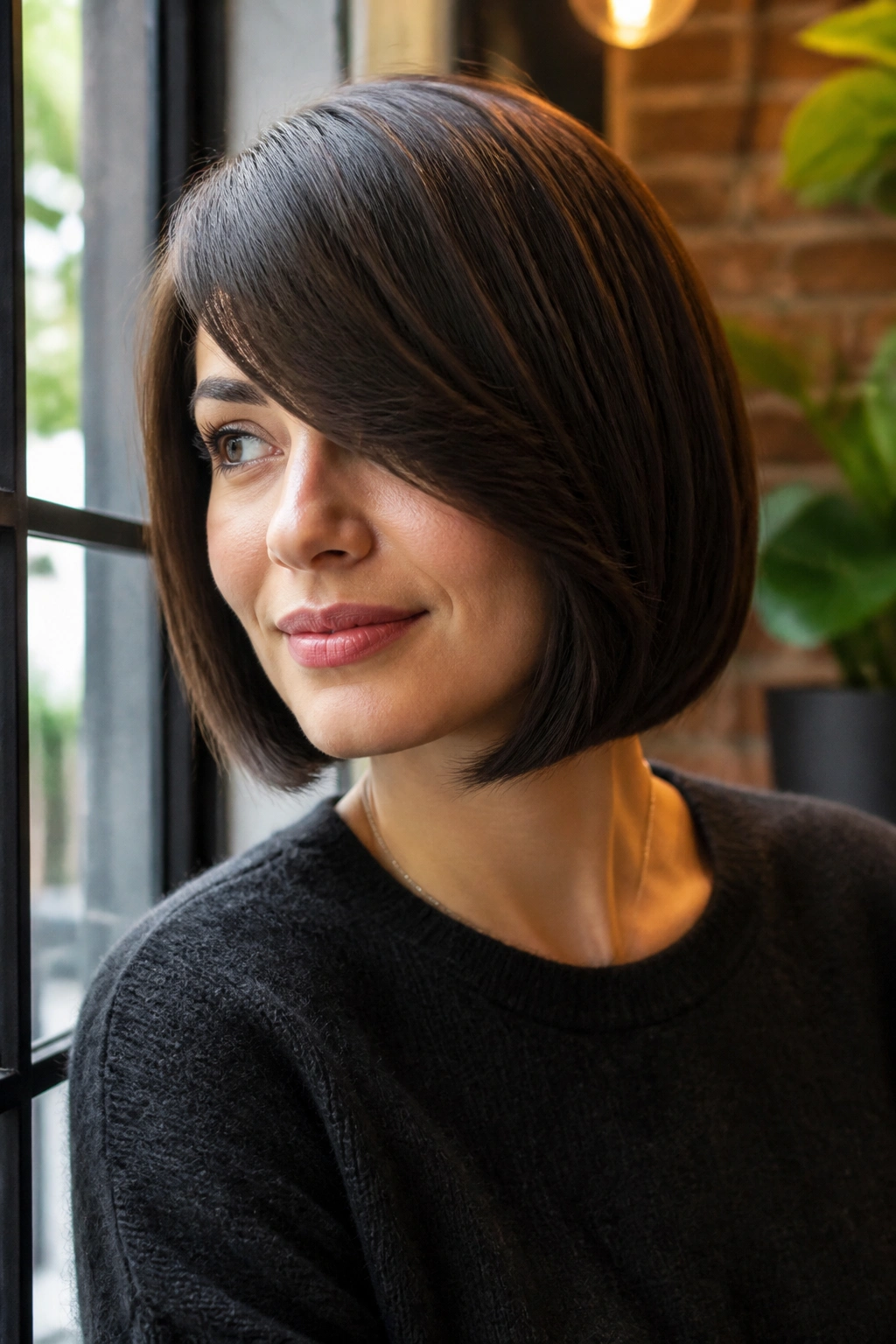
A side-swept finish gives the bob a softer face frame while keeping the rest of the cut neat. On fine hair, that sweep can hide weak spots at the part line and make the front feel fuller. It also gives the style movement without turning it messy.
I’d choose this for people who want the French bob shape but do not love a strict center part or a heavy fringe. The sweep should start from a clean side part and fall across the forehead just enough to soften the eye line. Keep the ends blunt and sleek so the shape doesn’t lose its edge.
It’s elegant without being stiff. That’s a hard balance to get, and this cut manages it well.
Final Thoughts
The best French bob for fine hair is the one that keeps a strong outline and stops trying to fake volume in all the wrong places. Blunt edges, smart length, and a clean finish do more work than a pile of products ever will.
If you’re torn between two versions, pick the one with the firmer perimeter. Fine hair usually looks richer when it has a solid line to hold onto, even if the style itself stays simple.
And if the cut feels a little too neat on day one, give it one wash and one real styling pass before you judge it. Sleek bob shapes often look best once they settle into your head and stop fighting the mirror.
