



Textured lob haircuts have a way of looking polished even when they’re a little undone, and that is exactly why they work so well on medium length hair. The cut sits in that middle zone where the hair still has swing, but it does not drag itself flat the way longer lengths can. A few bends through the mid-lengths, a chipped-up edge, or a fringe that breaks the line a little can change the whole read of the haircut.
Medium length hair is also easier to shape than people give it credit for. It has enough weight to fall neatly when you want that, and enough freedom to take a wave, a flip, or a bit of air-dried separation without fighting you every step of the way. The real difference comes from where the layers sit, how the ends are cut, and whether the stylist actually removes bulk with purpose.
Too many lobs look nice in a salon chair and then collapse at home. That usually happens when the cut has no strategy behind it. The styles below avoid that trap by leaning into movement, shape, and texture in ways that work with medium length hair instead of against it.
1. Blunt Textured Lob with Soft Ends
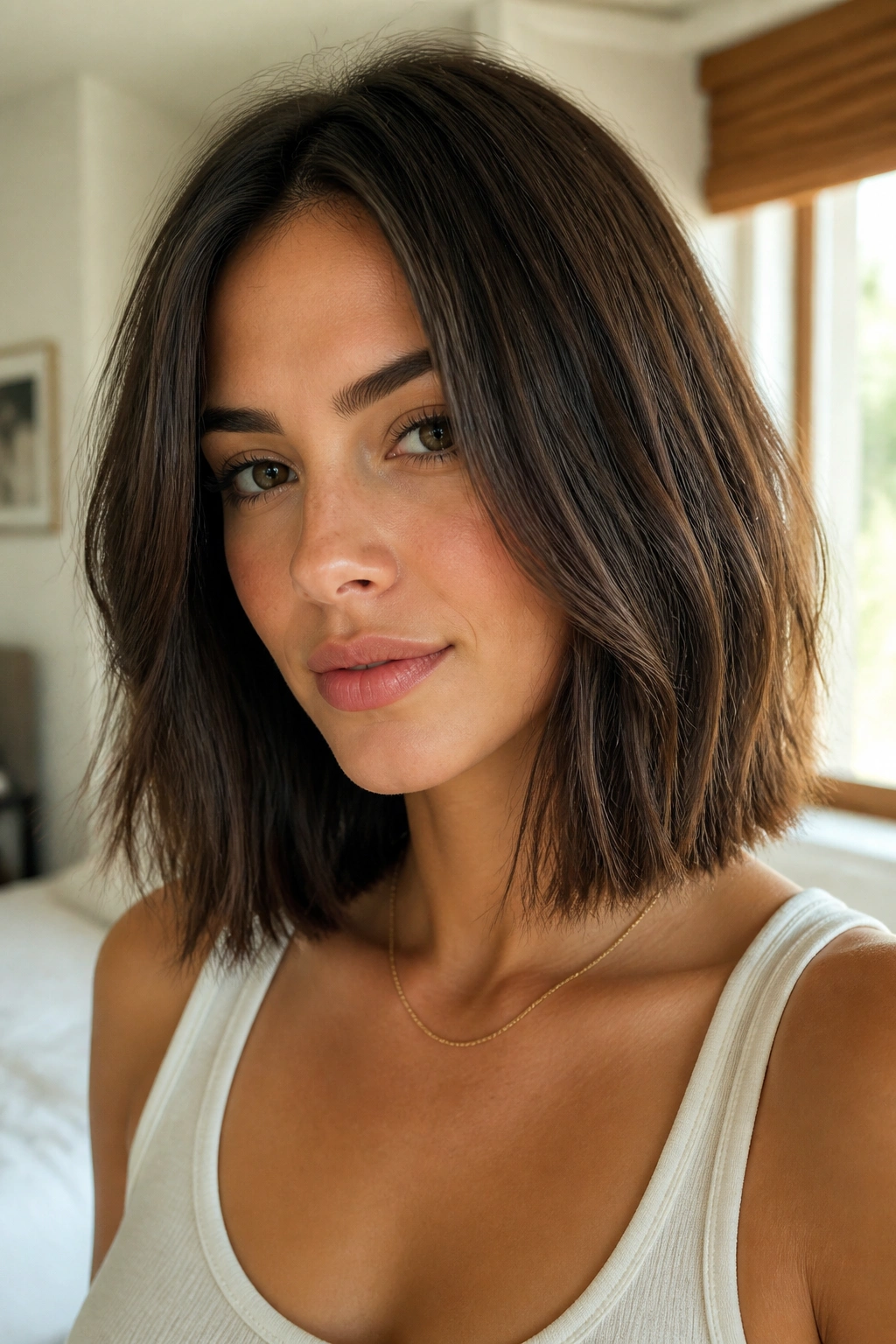
A blunt line does not have to feel hard or stiff. This version keeps the edge clean so the hair still looks full, but the ends are point-cut just enough to stop the finish from feeling blocky. On medium length hair, that tiny bit of softness goes a long way.
Why it works
The blunt perimeter gives the eye a clear shape to follow, which is why this cut can make finer hair look thicker at the bottom. The texture stays subtle on purpose. You get movement when the hair swings, not when the haircut gets shredded to pieces.
Ask for the length to land around the collarbone or just below it if you want a little more drape. If the ends are cut with heavy razoring, they can fray too fast and look thin at the very edge. Point cutting keeps the finish cleaner.
- Best for fine to medium hair that needs a little more visual weight
- Easy to style with a round brush or a flat brush blow-dry
- Looks sharp with a middle part or a soft side part
Tip: Keep the ends tidy every 6 to 8 weeks if you want the blunt outline to stay crisp.
2. Shaggy Textured Lob with Curtain Bangs
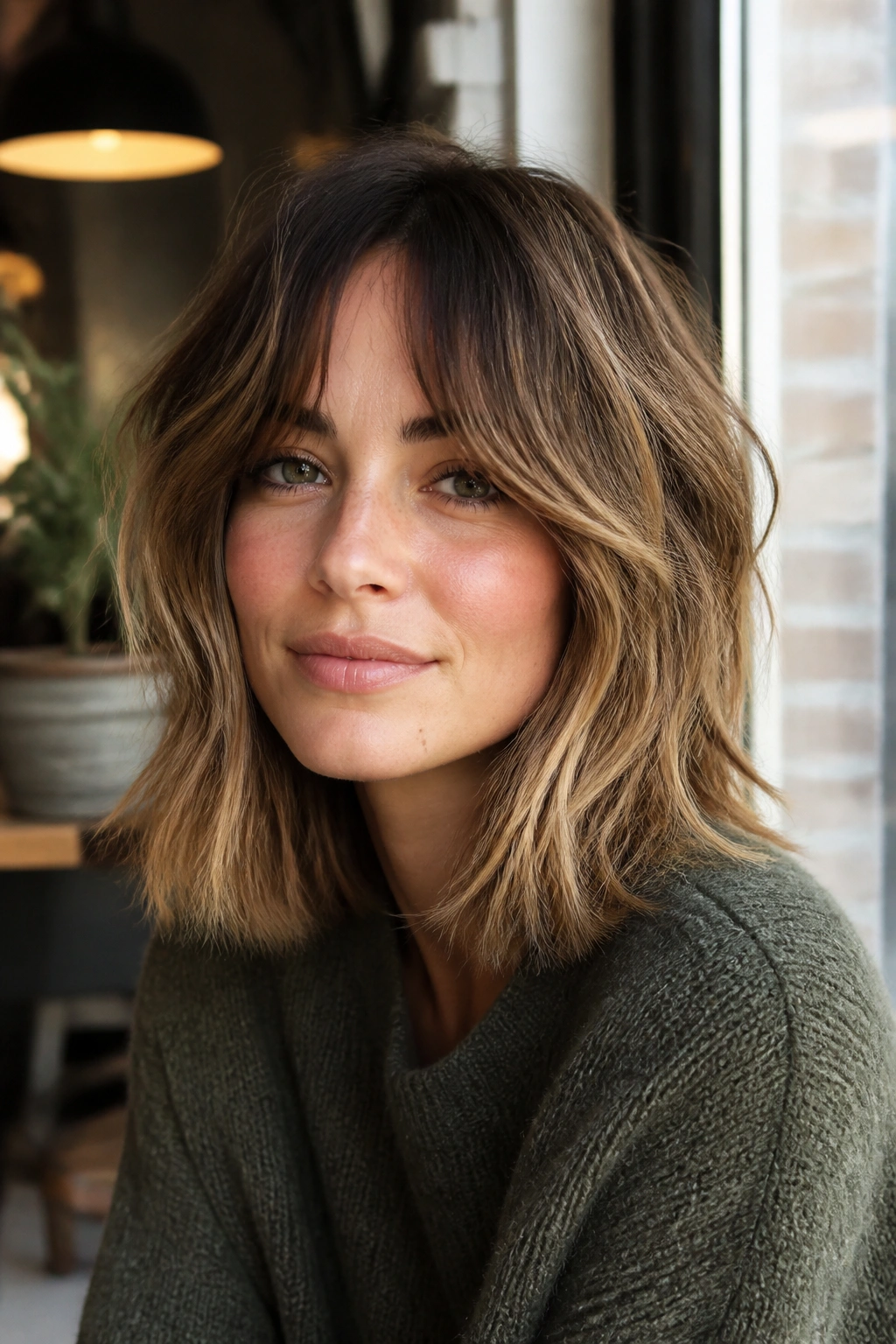
This is the one if you want your hair to move when you do. The shaggy textured lob takes the old shag idea and trims it down to medium length, then adds curtain bangs that split softly at the forehead and fall into the cheekbones. It has shape, but it never feels frozen in place.
The reason it works so well is simple: the shorter layers near the crown stop the cut from sitting heavy, while the longer layers keep it from turning into a puff. That balance matters a lot on thicker medium length hair. Without enough internal removal, the cut can mushroom outward. With too much, it turns wispy and loses its bite.
Curtain bangs are the piece that makes this cut feel finished. They blend into the sides instead of hanging like a separate object. If your hair is wavy, a little mousse at the roots and a diffuser will bring the shape out fast. If your hair is straighter, a quick bend around the face is enough.
3. Center-Part Lob with Loose Waves
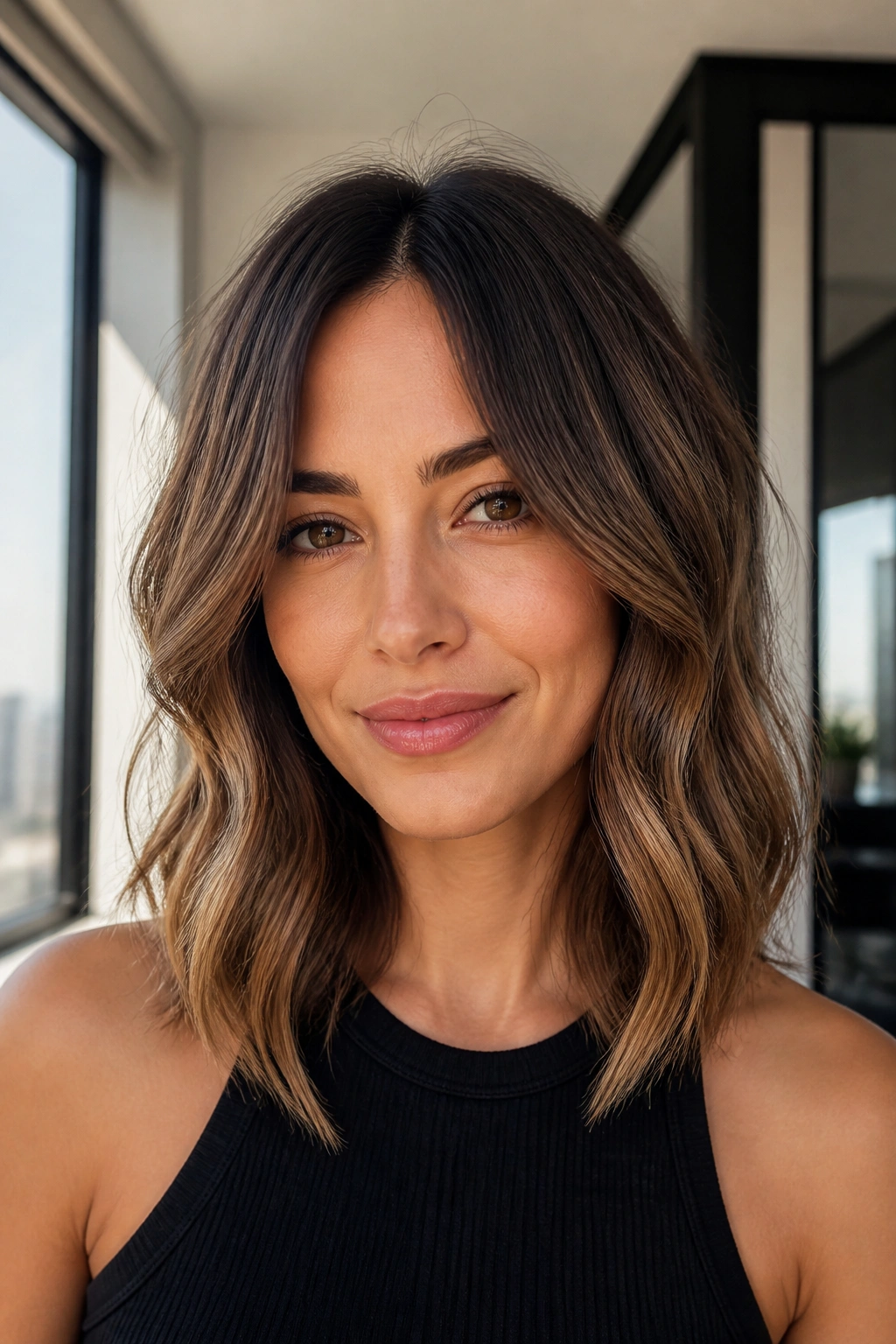
Why does a center part change a lob so much? Because it gives the haircut a clean line to anchor the texture around. Loose waves on medium length hair can look messy if the cut has no direction, but the center part steadies everything.
The trick is not to curl every section the same way. Wrap one-inch pieces around a curling wand, leave the last inch out, and switch the direction of the wave every other section. That stops the finished look from turning into ringlets. You want bends, not spirals.
How to style it
- Start with a heat protectant and a light foam or cream
- Curl away from the face on the front pieces
- Break the waves with your fingers once they cool
- Finish with a soft-hold spray, not a stiff one
A center-part lob looks especially good when the ends are cut blunt and the texture sits only through the mid-lengths. It is neat enough for work, but not so neat that it feels precious.
4. Side-Swept Lob with Root Lift
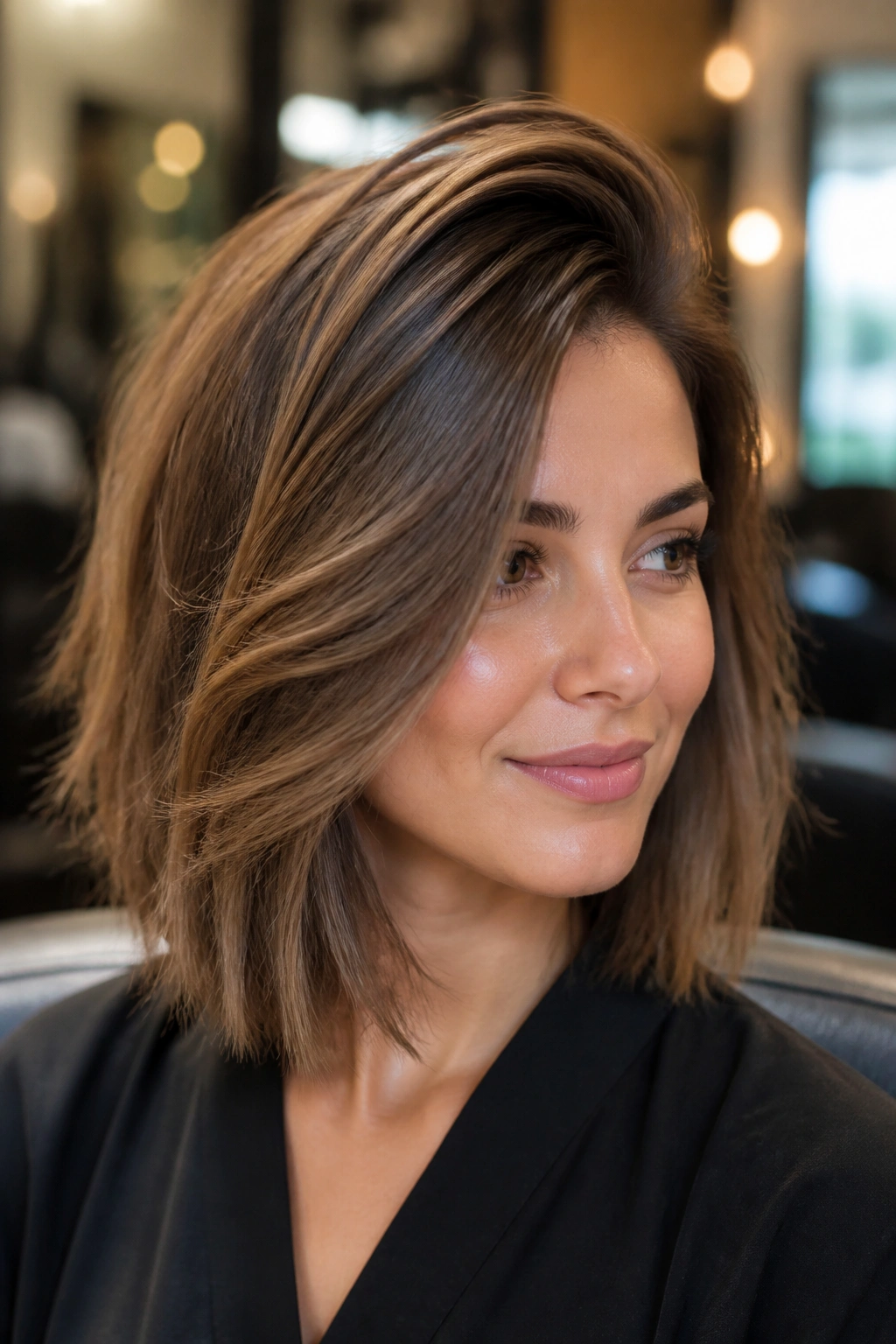
If your hair falls flat by lunch, this is the haircut that can save the silhouette. A deep side part creates instant height at the crown, and that small shift changes the entire balance of the lob. The side with more hair drops with a little drama. The other side gets a clean, lifted line.
The cut itself usually needs slightly shorter layers around the crown and longer pieces near the front. That keeps the volume at the top instead of pushing it into the bottom half of the hair, where it can look bulky. A root lift spray or mousse at the roots helps, but the haircut does most of the work.
What to ask for
- A deep side part that can be flipped either way
- Soft layering through the crown, not around the ends
- Face-framing pieces that land around the cheekbone or jaw
- Enough length in front to tuck one side behind the ear
This one is especially good if you like a little glamour without a lot of fuss. It looks styled even when it took twelve minutes.
5. Choppy Razored Lob for Thick Hair
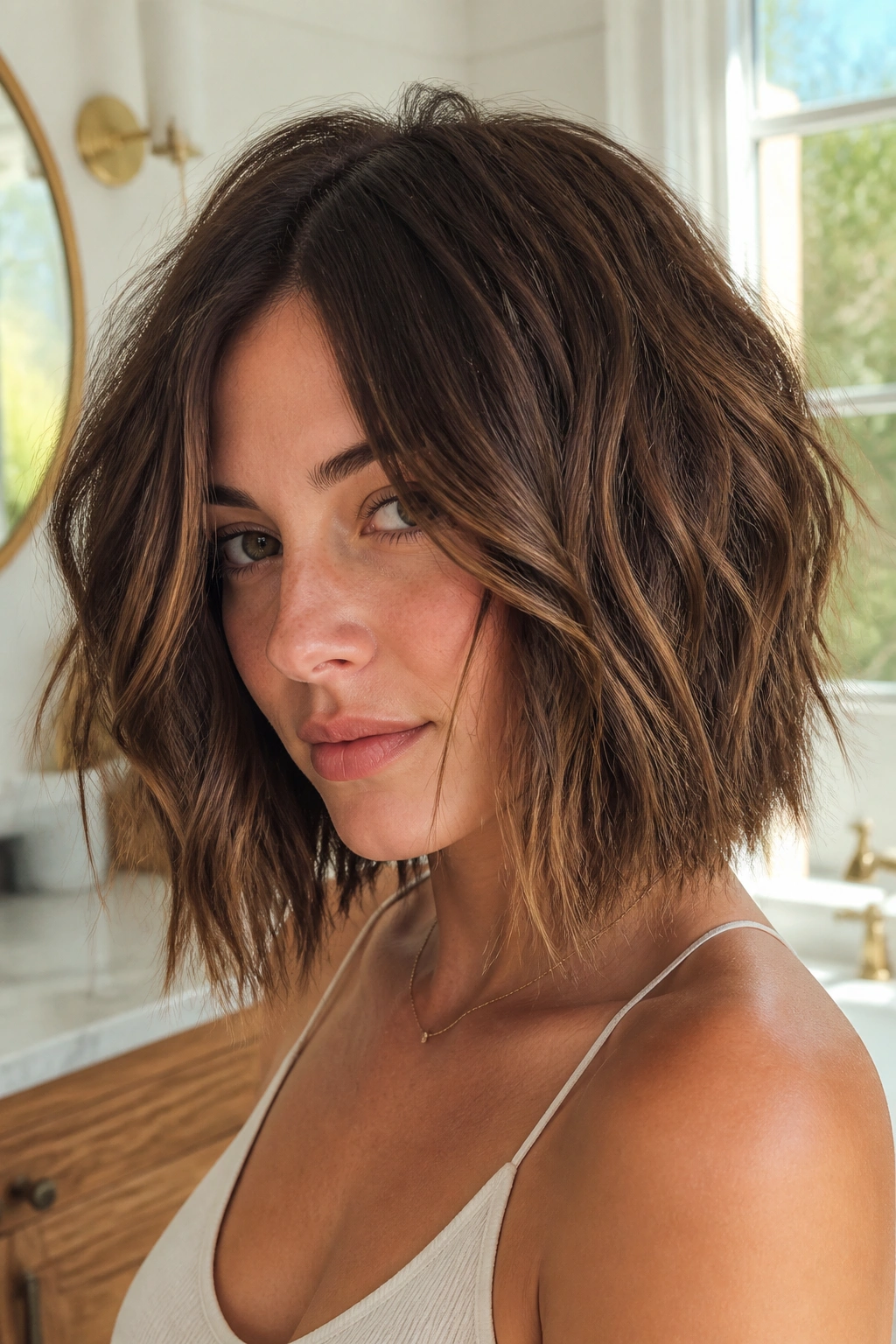
Thick hair can wear a blunt lob beautifully, but it can also turn into a heavy shelf if the shape is not handled right. A choppy razored lob fixes that by taking weight out of the ends and softening the body of the cut. The result is lighter, airier, and much easier to move around.
The razor gives the hair a more broken edge than scissors alone, which is useful when the goal is texture rather than a hard line. That said, razor cutting is not something every hair type likes. If your ends are dry or your hair is already fragile, too much razor work can make the finish look rough. A careful stylist will know when to stop.
This style feels especially good on medium length hair that tends to spread wide at the bottom. The texture pulls the shape inward a little and keeps the cut from looking bottom-heavy. It also gives you a built-in undone look, so you do not need a lot of styling to make it work.
A little smoothing cream through the mids and a rough dry with your hands is often enough. No overthinking. The cut already has personality.
6. Angled Lob with a Longer Front
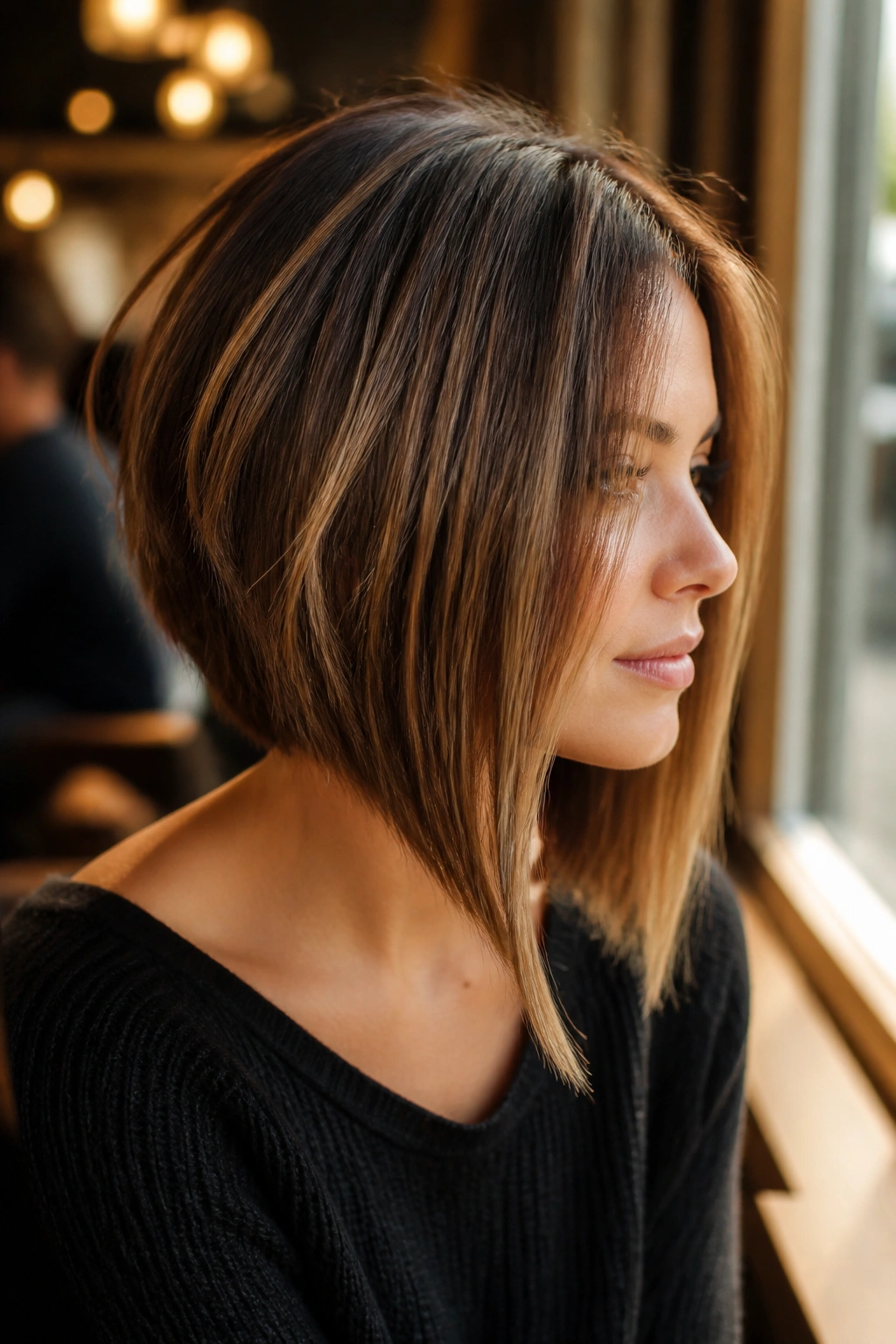
This is the haircut for someone who likes structure. The angled lob sits shorter in the back and gradually gets longer toward the front, so the line feels sharp without turning severe. On medium length hair, that diagonal shape gives the face a small lift and makes the neck look a bit longer.
The angle does not need to be dramatic to be effective. Even a difference of 1 to 2 inches from back to front can change how the entire haircut lands. Too much angle and the front starts to dominate. Too little and you lose the point of the cut.
Unlike a blunt lob, this shape does the visual work on its own. You can wear it straight and tucked under, or add a soft bend at the ends for more movement. It looks especially good on people who want a clean profile from the side.
If you want a haircut that reads polished first and textured second, this is a smart place to start.
7. Collarbone Lob with Hidden Layers
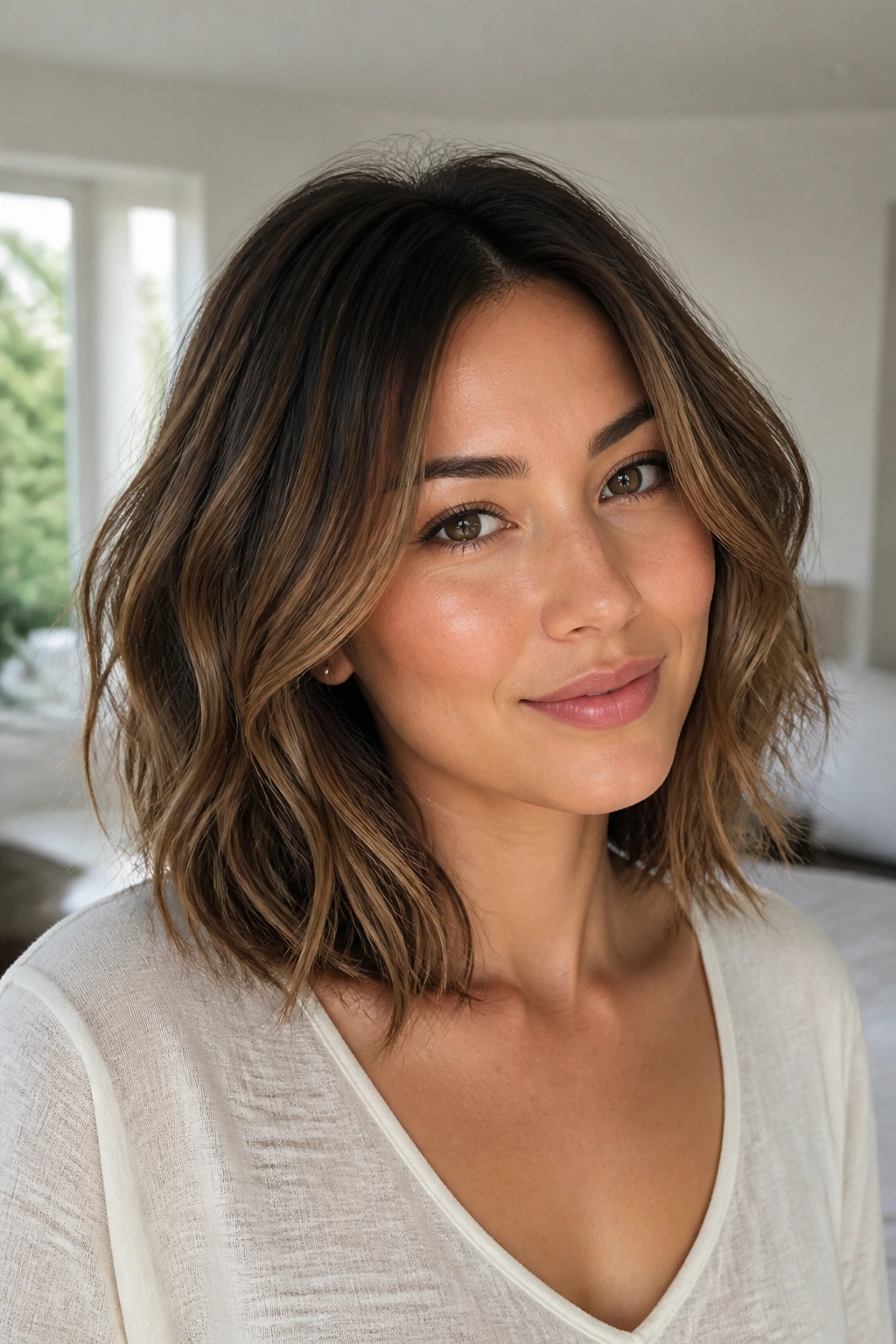
A collarbone-length lob with hidden layers is one of those cuts that looks easy because the work is tucked away. The outer line stays smooth, but the inside of the haircut has enough layering to stop it from hanging flat. That makes it a strong choice for medium length hair that needs movement without a visibly choppy finish.
The hidden layers usually start below the cheekbone so the top stays full. That matters. If the layers start too high, the haircut can lose weight in the wrong place and feel thin around the front. Kept lower, they just free the ends up a little and let the hair move.
The quiet part of the cut
This style is good for people who want to wear their hair straight most of the time but still want some life in it. A smooth blow-dry shows the shape. A quick bend with a flat iron shows the texture. Both work.
It is also one of the easiest lobs to grow out because the line stays soft as it gets longer. That alone makes it worth a serious look.
8. French-Inspired Lob with Airy Fringe
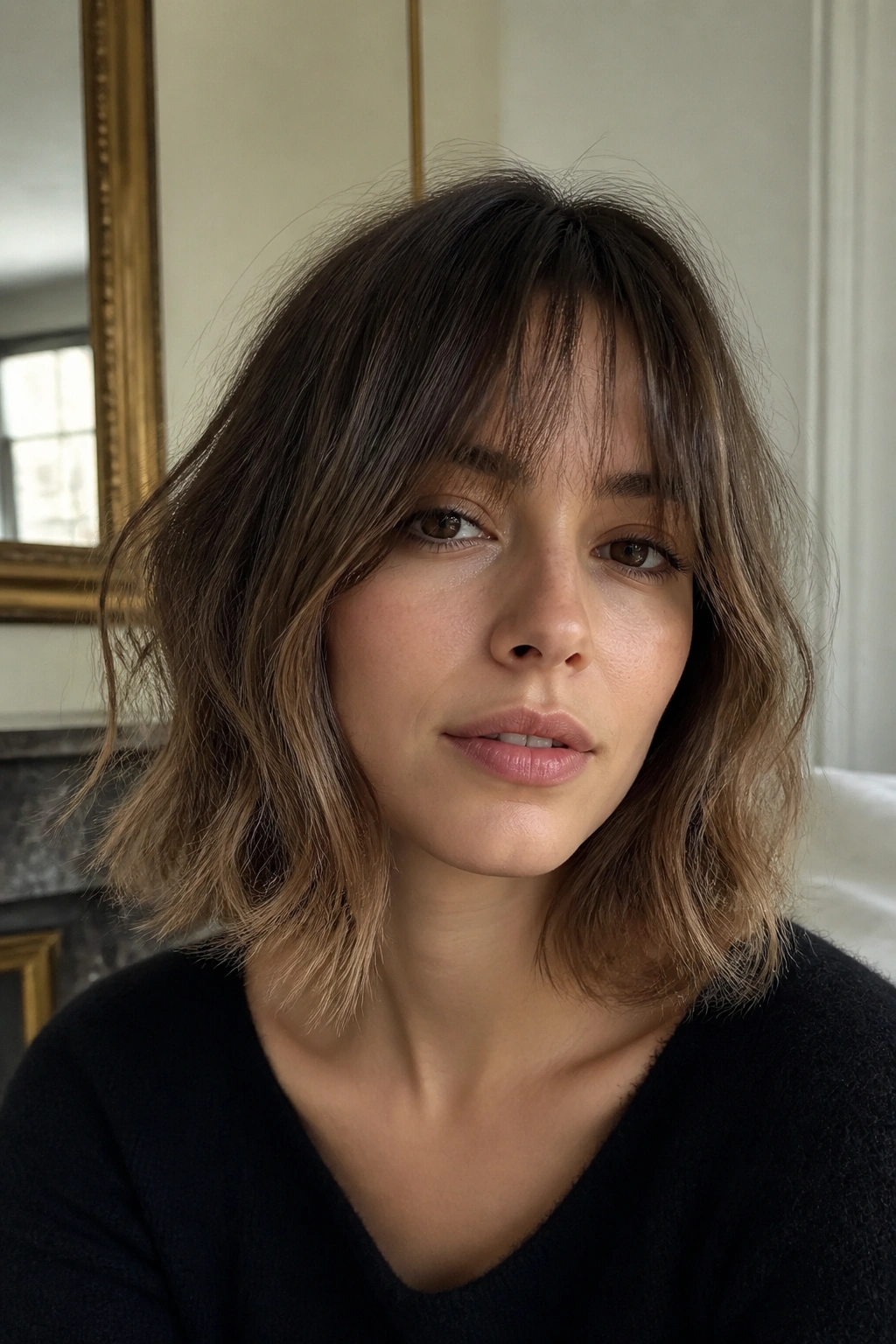
A French-inspired lob does not try too hard, and that is the whole point. It usually sits just around the jaw or collarbone, with an airy fringe and soft texture through the ends. The finish feels loose rather than built. You can almost hear the comb being put down.
The fringe is what gives this cut its character. It is lighter than a heavy bang and less polished than a blunt one, so it blends into the rest of the hair without stealing the show. That makes it useful for medium length hair that needs a little structure near the face but not a heavy curtain.
This version works well with a tiny bit of bend rather than full waves. A styling cream or balm through damp hair can be enough, especially if your texture already has some body. Do not brush it to death after it dries. That kills the airiness.
It is a good cut for anyone who likes hair that looks like it was lived in, not lacquered into place.
9. Beachy Lob with Broken Waves
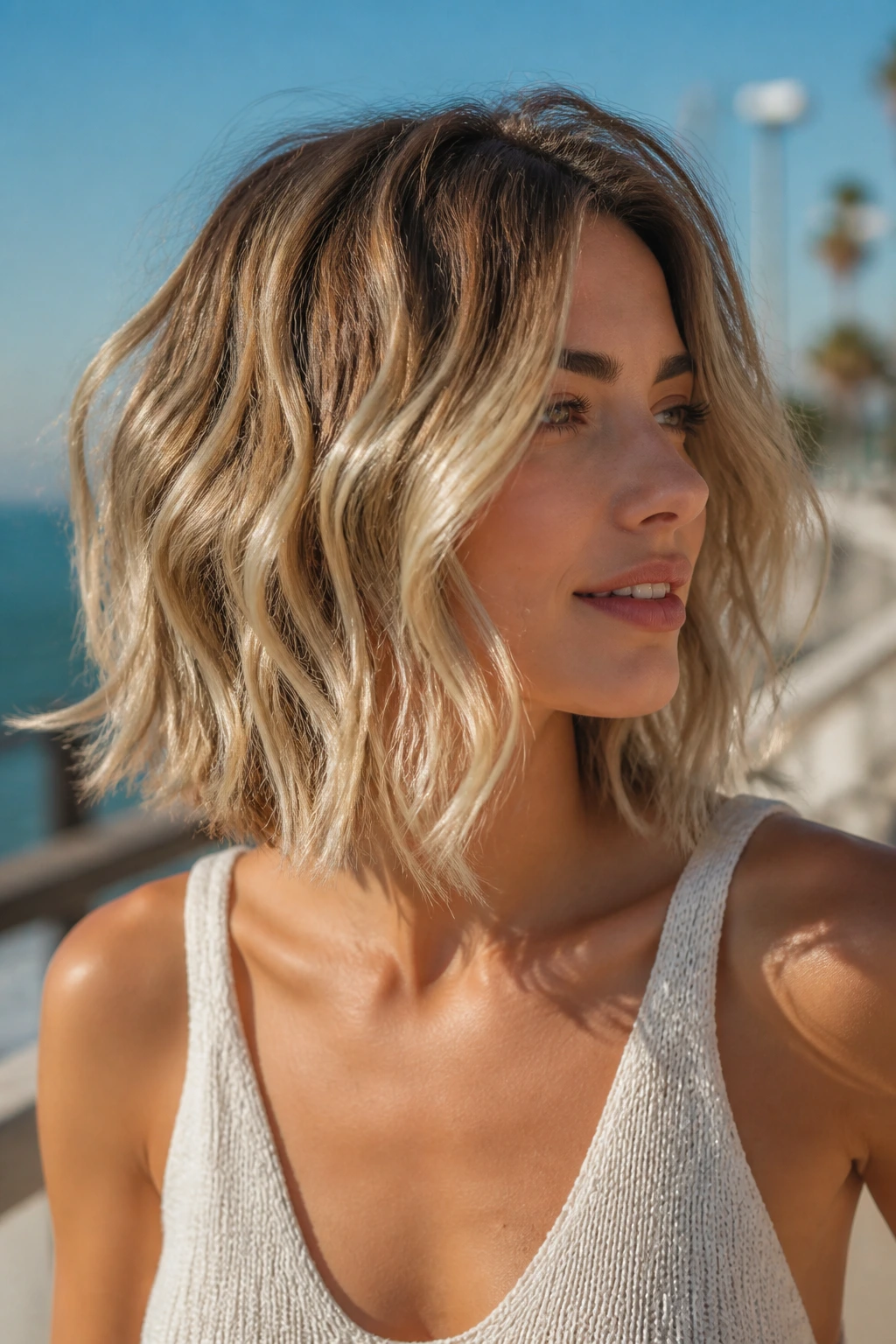
A beachy lob is not about curls. It is about broken waves that bend and separate in a way that feels loose, not formal. On medium length hair, that kind of texture gives you movement without making the cut feel busy. The hair looks touched by salt and air, even when the weather is doing nothing helpful.
What makes this style work is restraint. Wrap random sections around a wand, leave the ends a little straighter, and stop before every piece turns into the same wave. Then run a lightweight texture spray through the lengths and scrunch once or twice with your hands. That is enough.
How to keep it from looking crunchy
- Use a spray with a soft finish, not a hard shell
- Curl away from the face on the front pieces
- Leave some straighter sections in the back
- Separate the waves with your fingers after they cool
This style looks best when the haircut underneath has a bit of internal layering. Without that, the waves sit on top instead of sinking into the shape. A good beachy lob still has a haircut underneath it, not just styling.
10. Curly Lob That Keeps Its Shape
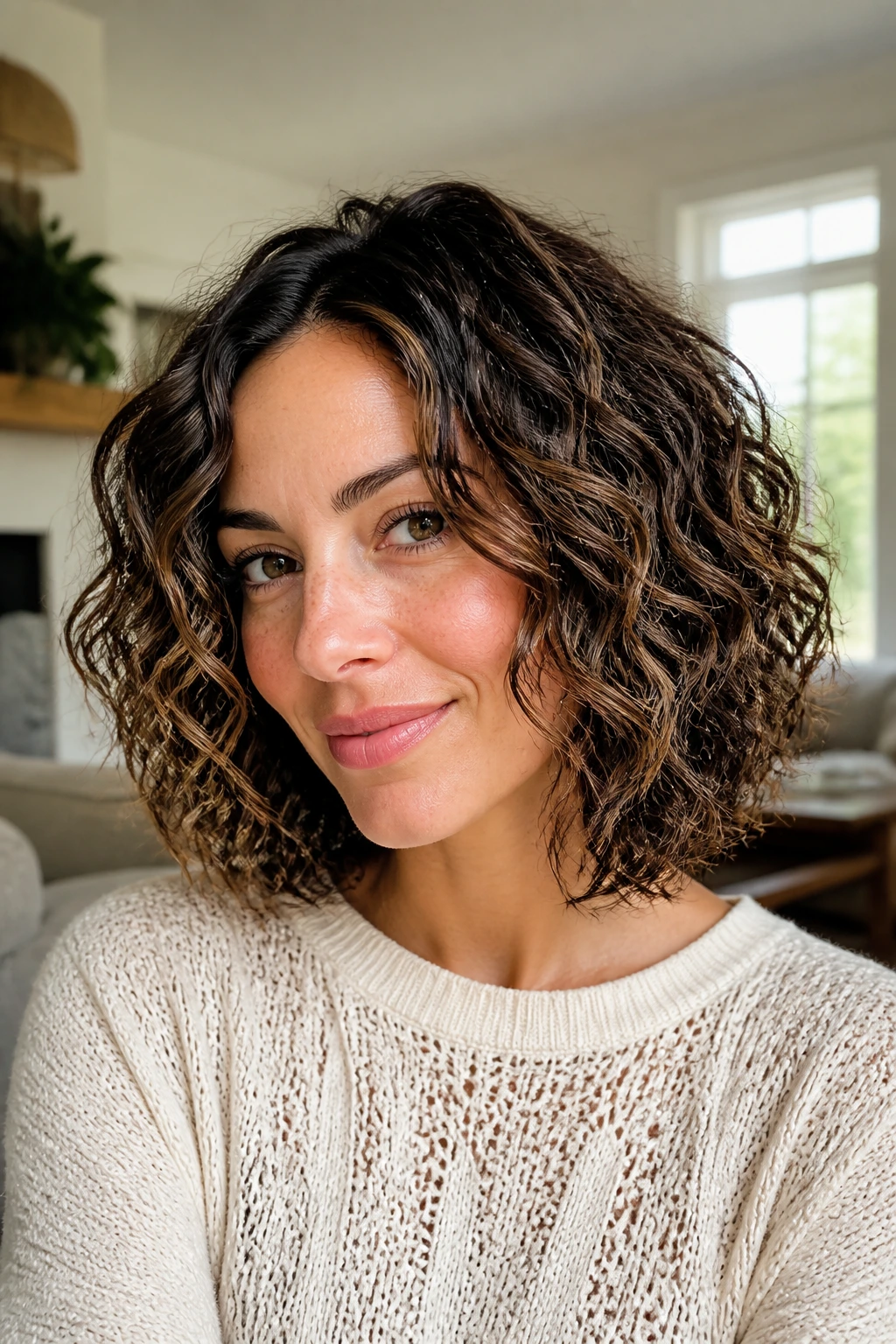
Curly hair at lob length can look fantastic when the shape is cut with the curl pattern in mind. The biggest mistake is treating curls like straight hair and cutting them wet with no thought for shrinkage. That is how you end up with a result that sits too short in the front and too wide at the sides.
A better curly lob usually keeps some length through the bottom while shaping the curl around the chin and collarbone. Dry cutting helps a lot here because it shows where the curls actually sit when they spring up. It also gives the stylist a chance to place layers where they support the shape instead of wrecking it.
The payoff is movement. Curly medium length hair can look dense and boxy if it has no structure, but a smart lob lets the curls stack in a cleaner way. A diffuser, a leave-in conditioner, and a gentle gel are usually enough to keep the shape in place.
This is one of those cuts where the haircut matters more than the styling. Get the shape right and the rest gets easier.
11. Flipped-Out Lob with a Soft Bend
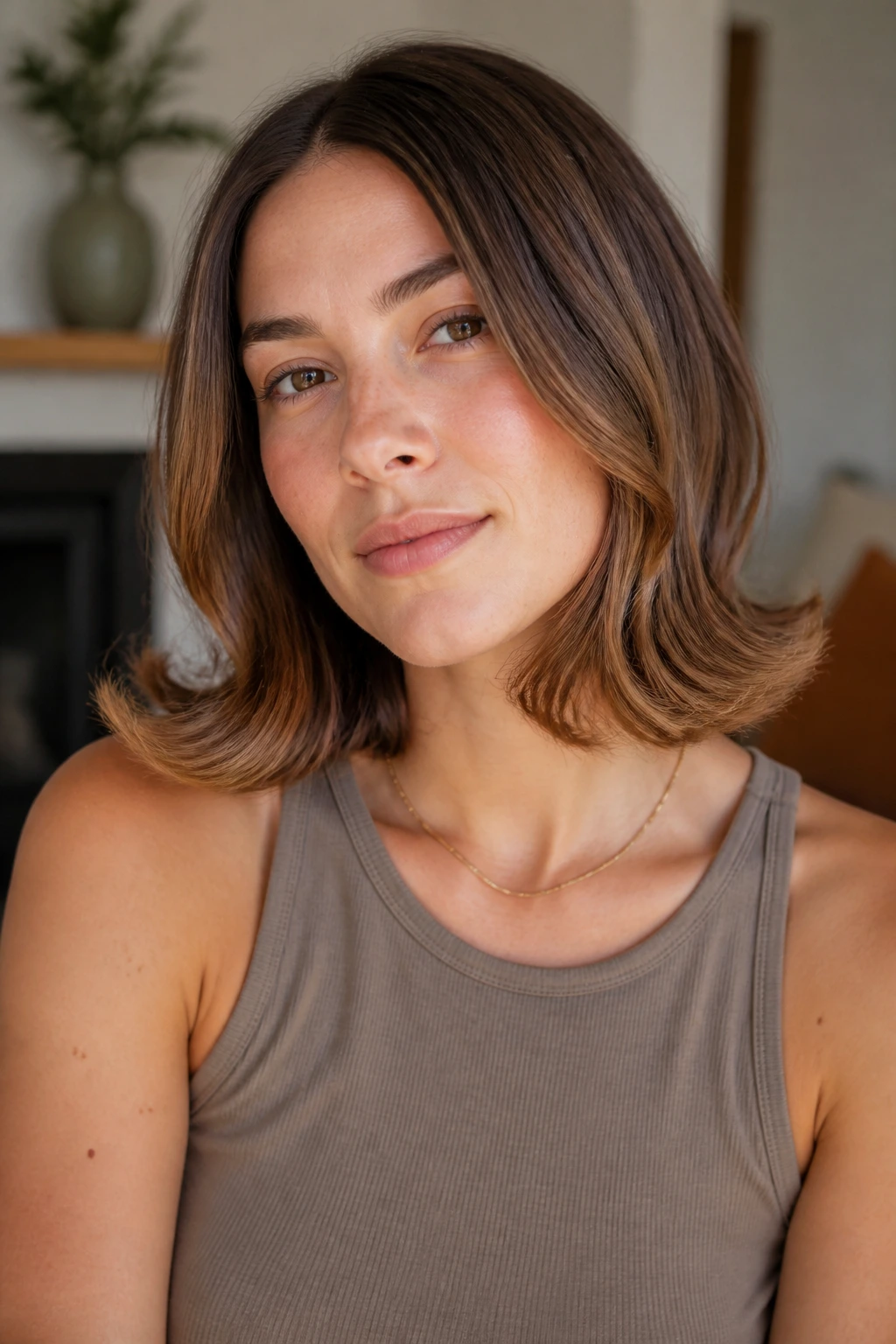
A flipped-out lob has a little retro energy, but it does not need to look costume-y. The best version keeps the roots smooth and sends the ends outward in a soft bend, almost like the haircut is lifting its chin. On medium length hair, that creates movement at the bottom without making the whole head feel busy.
The bend at the ends is the key detail. If the flip is too sharp, the cut starts to look dated fast. If it is too subtle, you lose the point. A flat iron or round brush can both do the job, but the goal is the same: a controlled turn at the bottom 1 inch of hair.
This style is handy when you want your hair to look finished in a hurry. Straighten the mids, flip the ends slightly out, and add a touch of shine spray. That is enough to make the cut feel deliberate. The style works especially well on medium length hair with a blunt line, because the edge gives the flip something to play against.
It is polished, but not stiff. That matters.
12. Air-Dried Lob for Natural Texture
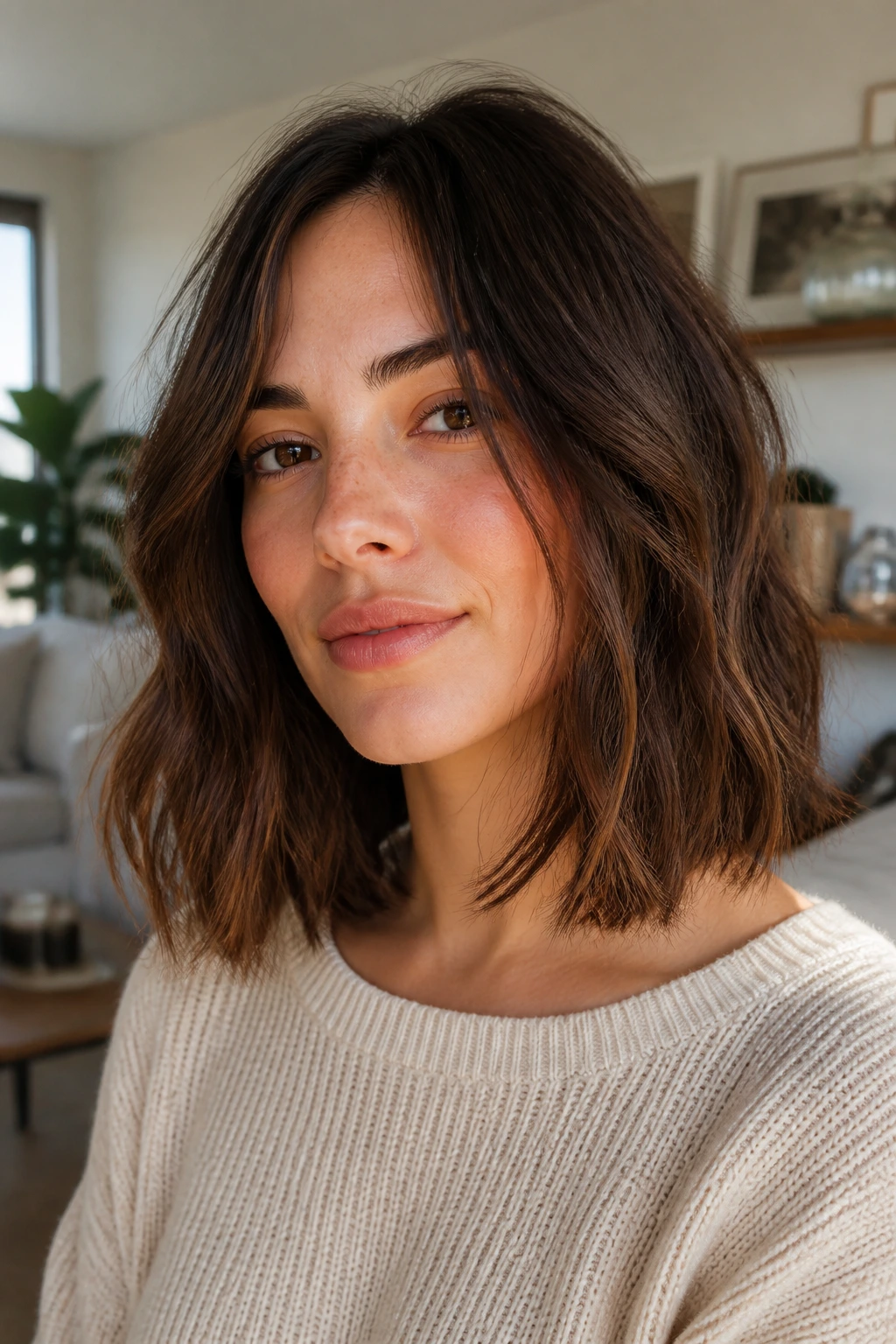
Unlike blowout-heavy cuts, this lob is built for the way your hair dries on its own. That means the shape has to do more than look good under a round brush; it has to hold up when your hands and a towel do most of the work. On medium length hair, that usually means soft layers, a clean perimeter, and no extra bulk at the bottom.
The best air-dried lobs are cut so the texture falls into place instead of fighting the haircut. A little leave-in cream, a dab of curl cream if your hair bends, or a light mousse if it tends to puff can be enough. Then you leave it alone. Touching it too much while it dries usually makes the ends frizzy.
This cut is ideal for people who want their hair to look good on ordinary days, not only on styled days. It has enough shape to feel intentional and enough softness to handle a rough morning. That balance is harder to get than it looks.
If your natural texture already has some pattern, this may be the easiest lob in the whole group.
13. Wispy Bang Lob with Feathered Ends
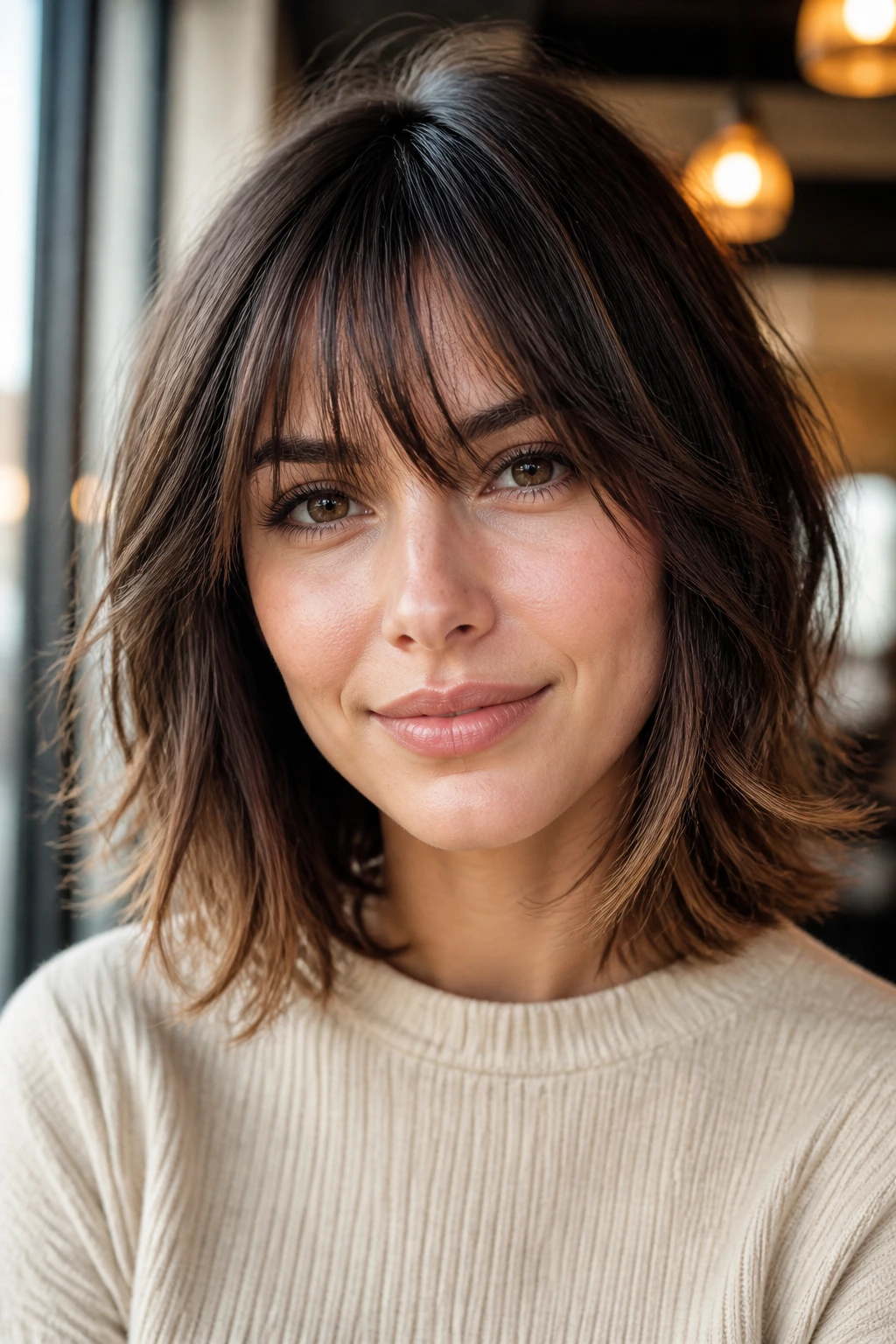
Wispy bangs can change a lob fast. They soften the forehead, pull attention toward the eyes, and keep medium length hair from looking too flat around the face. When the bangs stay light and the ends are feathered, the cut feels airy instead of heavy.
Why the bang matters
A soft fringe gives the haircut a built-in frame. That matters if your hair is straight or only slightly wavy, because the front section can look too plain without some interruption. Wispy bangs also work well if you do not want the commitment of a thick fringe that needs daily shaping.
The feathered ends keep the bottom from feeling boxy. Rather than a solid line all the way around, the cut has a little give at the edge. That makes the whole style easier to wear with glasses, earrings, or a side tuck.
- Great for softening a broad forehead
- Useful if you want movement near the eyes
- Works best with regular bang trims
Tip: Keep the fringe light. Heavy wisps stop being wisps fast.
14. Deep Side-Part Lob with Face-Framing Pieces
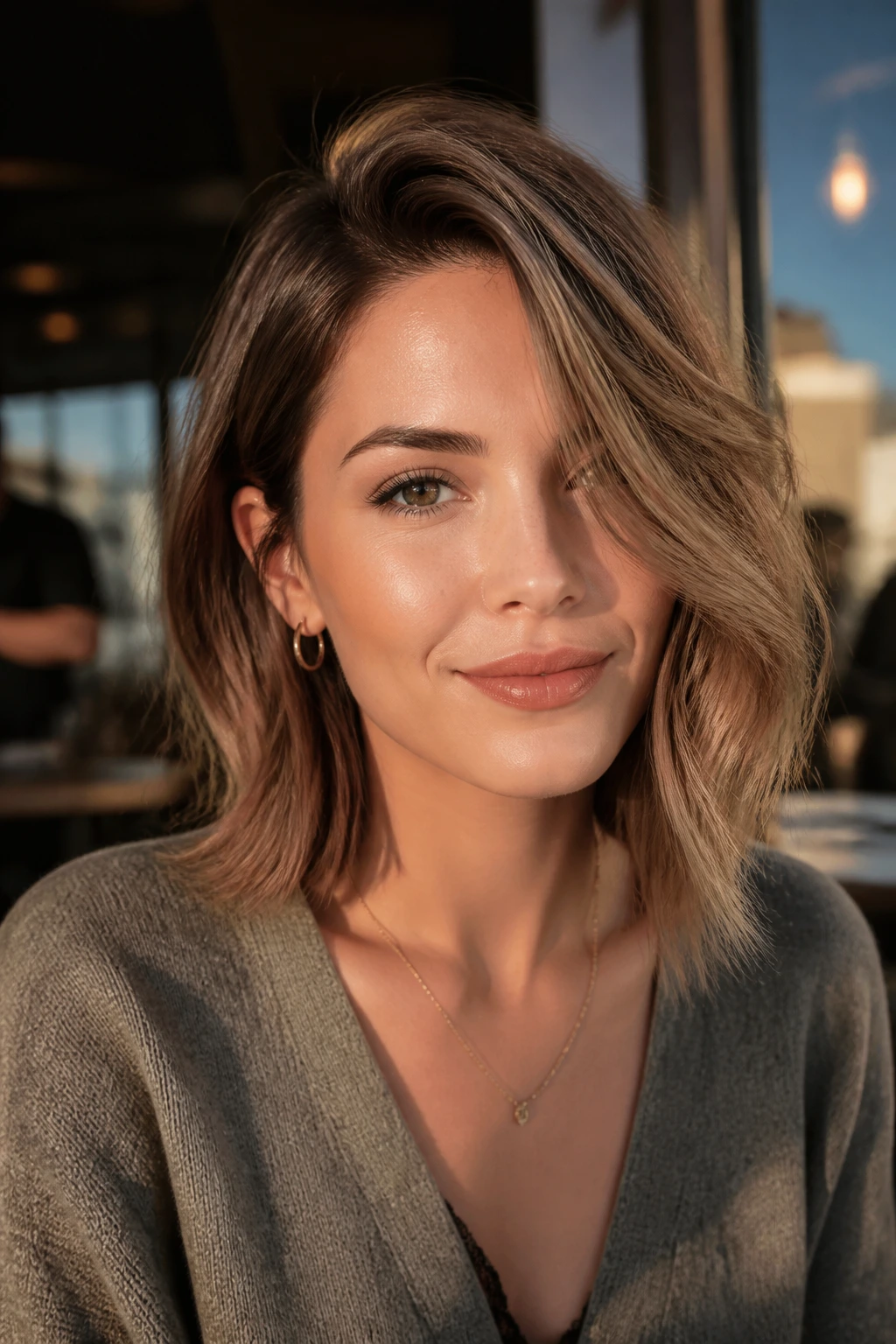
A deep side part can do more than people expect. It changes the balance of the haircut, creates lift on one side, and makes face-framing pieces fall in a more dramatic way. On medium length hair, that shift can be enough to make the whole cut feel new without changing the length at all.
The face-framing pieces should start around the cheekbone or chin, depending on how much softness you want. If they begin too high, the front can look too layered. If they begin too low, the part loses its payoff. The sweet spot is where the hair skims the face and then drops into the rest of the lob.
A deep side part is especially useful if you want to tuck one side behind the ear and keep the other side loose. That creates a clean shape with just enough asymmetry to feel current. A root spray at the part helps, but the haircut should already have enough support to stand up on its own.
It is one of the easiest ways to make medium length hair look styled without changing the cut itself.
15. Piecey Lob with Separated Layers
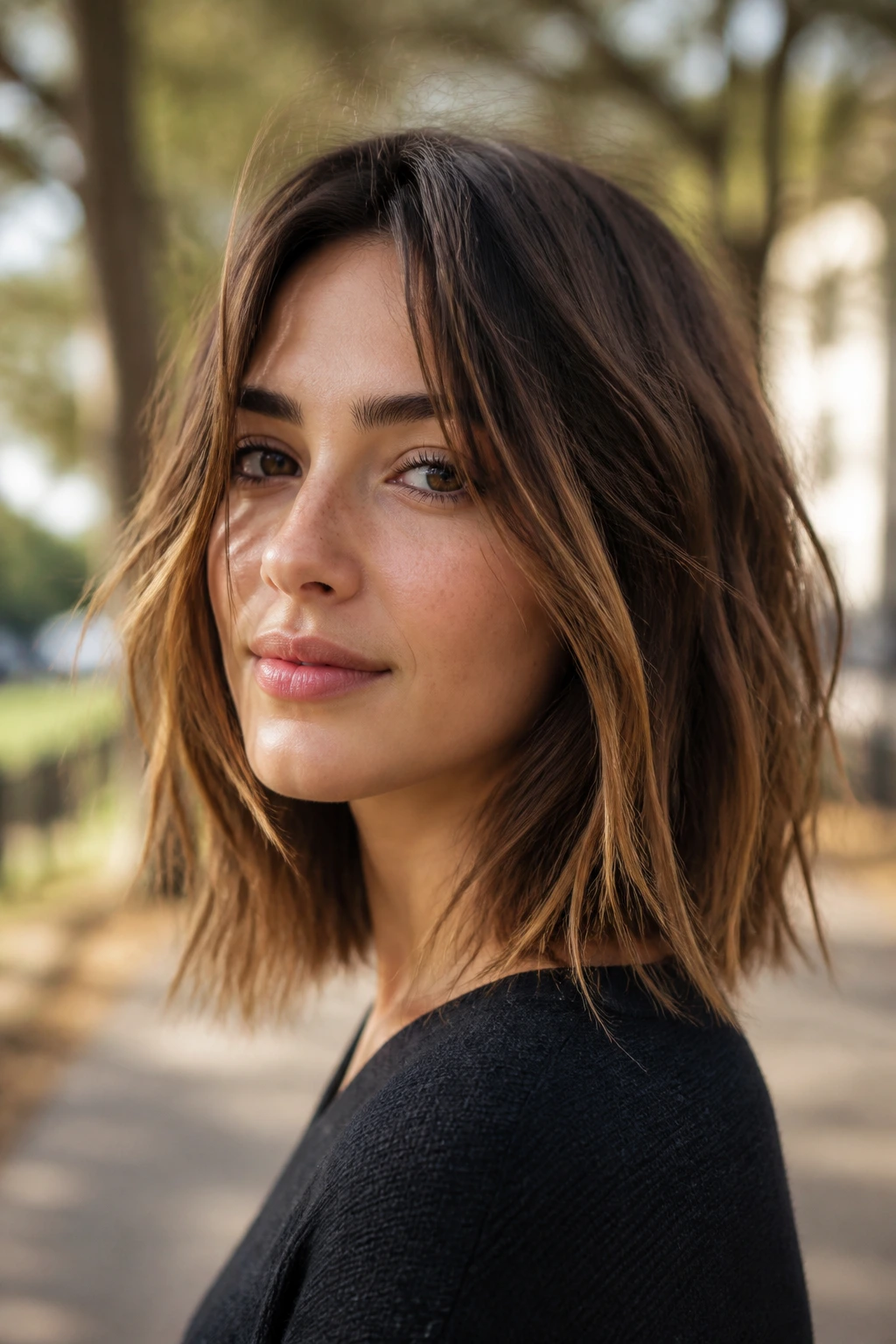
What makes a lob look piecey instead of frayed? It comes down to where the layers stop and how the ends are treated. A piecey lob keeps the hair separated in visible sections, but the sections still feel controlled. That balance is what makes it look deliberate instead of patchy.
This style works well when the stylist cuts in some movement through the interior and then leaves the perimeter a little softer than a blunt cut. The finished result gives you strands that read individually when styled with a small amount of wax or cream. On medium length hair, that can add a lot of life without making the cut too short.
How to get the most from it
- Use a pea-sized amount of styling cream on damp hair
- Twist random pieces while drying to build separation
- Finish with a tiny bit of wax on the ends only
- Avoid brushing it after styling if you want the texture to stay visible
This cut is good for people who like texture they can actually see. Not vague softness. Actual separation.
16. Messy Lob with Root Lift and Texture Spray
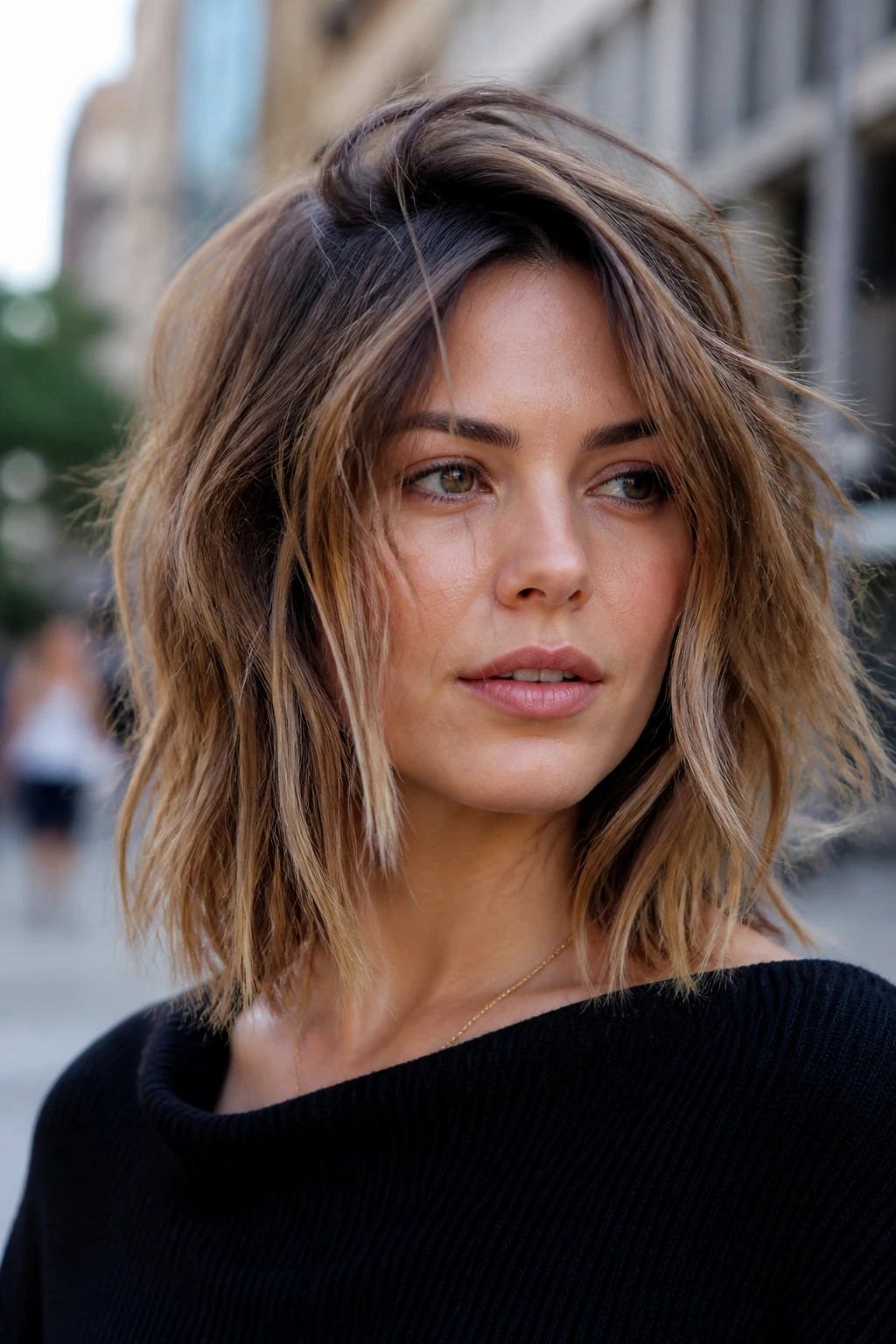
If you want hair that looks lived-in instead of overworked, this is the lane. The messy lob depends on root lift, a broken-up shape, and just enough texture spray to stop the ends from sitting flat. On medium length hair, that gives you movement from top to bottom without looking like you spent an hour forcing it.
The haircut should not be too layered or it will collapse into fuzz. A cleaner outline with a little interior softness works better. That way the mess stays on the surface, where it looks intentional. A dry shampoo at the roots can help if your hair tends to go limp fast, but too much product makes the style heavy.
This is a good cut for people who are fine with a little imperfection. A few pieces falling forward. A bit of bend near the cheeks. Hair that does not behave in the same exact way on both sides. That is the point.
It sounds casual, but there is strategy underneath. Without that, the mess turns into plain bedhead.
17. Sliced-End Lob for Heavy Hair
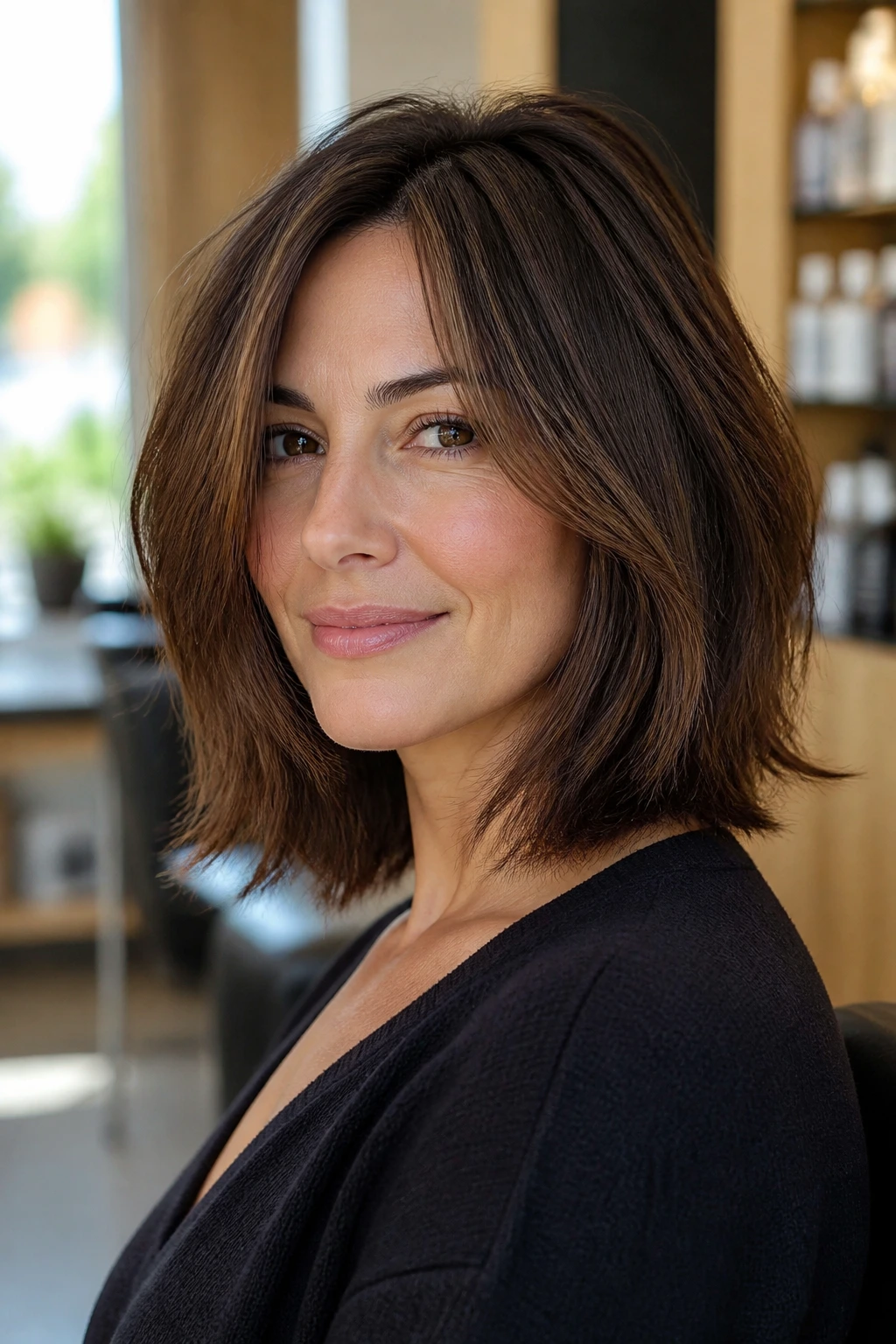
Sliced ends are a smart move when the hair is dense and tends to sit like a shelf at the bottom. Instead of cutting bluntly across, the stylist uses a slicing motion to remove weight and soften the edge. The result is a lob that still has length, but does not feel like a helmet.
This technique works well on medium length hair that needs movement without losing too much body. It is especially helpful if your hair is straight or only mildly wavy, because heavy ends can make those textures look stiff. Slicing lets the ends drop a little more naturally.
The cut can look deceptively simple, which is why it is worth doing carefully. Too much slicing and the ends go see-through. Too little and you do not solve the bulk problem. A good version keeps the outline intact while taking enough weight out to let the hair swing.
If your hair always feels thick at the bottom and flat at the top, this is one of the better options in the whole list.
18. Inverted Lob with a Stacked Back
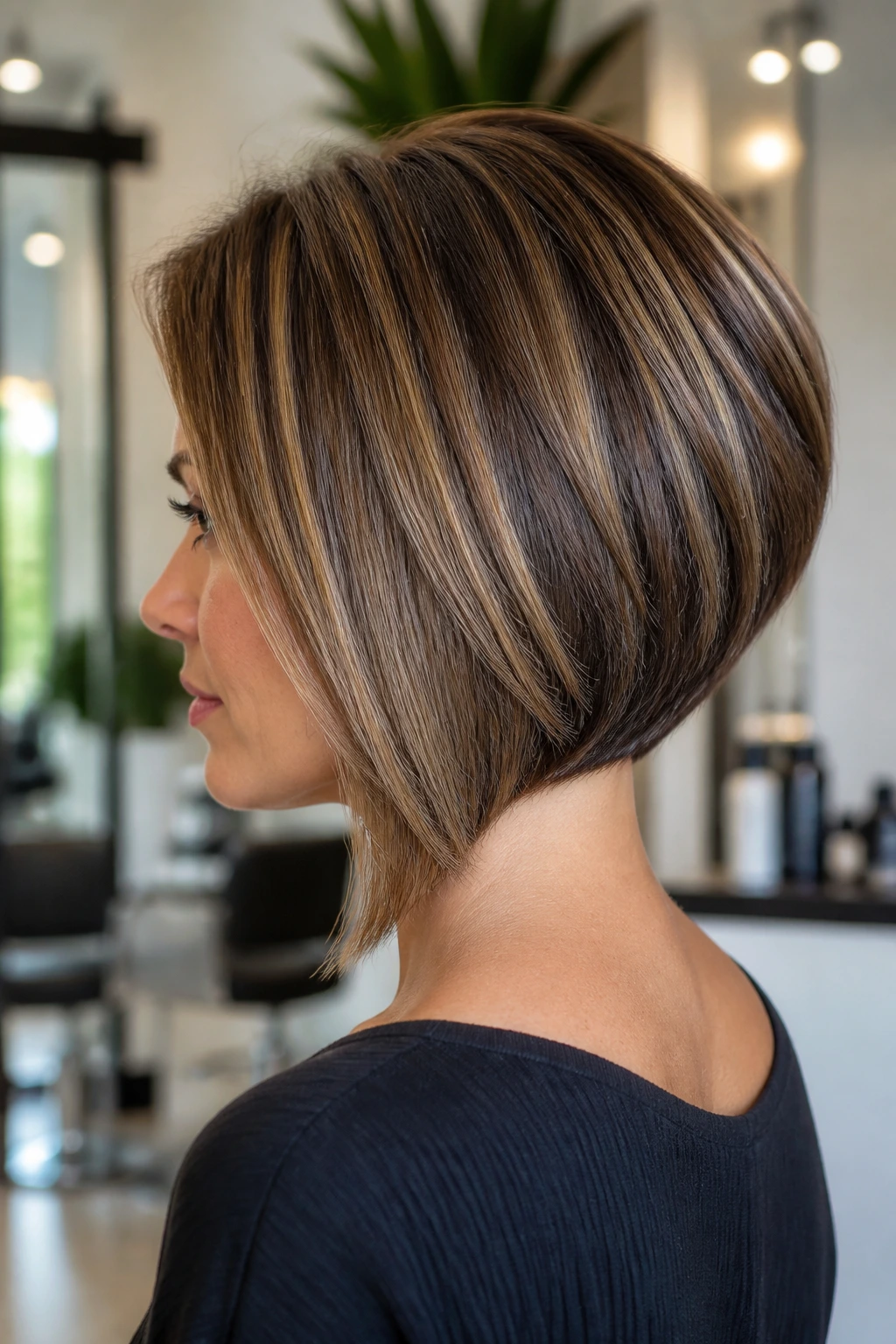
An inverted lob has a sharper curve than a softly angled one. The back sits shorter and often carries a bit of stacked shape, while the front falls longer and smoother. That extra structure gives the haircut lift through the crown, which can be useful if medium length hair tends to lie flat there.
The stacked back is what gives this cut its shape. It is not just shorter in the back; it is built to rise a little and then drop into the longer front pieces. That creates a clear profile from the side and a stronger silhouette from behind. If you like a haircut with obvious shape, this one delivers.
This style does best when the layers are neat and controlled. Too much random texture can make the stacked back look fussy. A smooth blow-dry usually shows it off better than rough drying. It also grows out in a noticeable way, so regular trims matter more here than in softer lobs.
This is not the quietest lob in the bunch. That is exactly why some people love it.
19. Sleek Lob with Tucked Ends
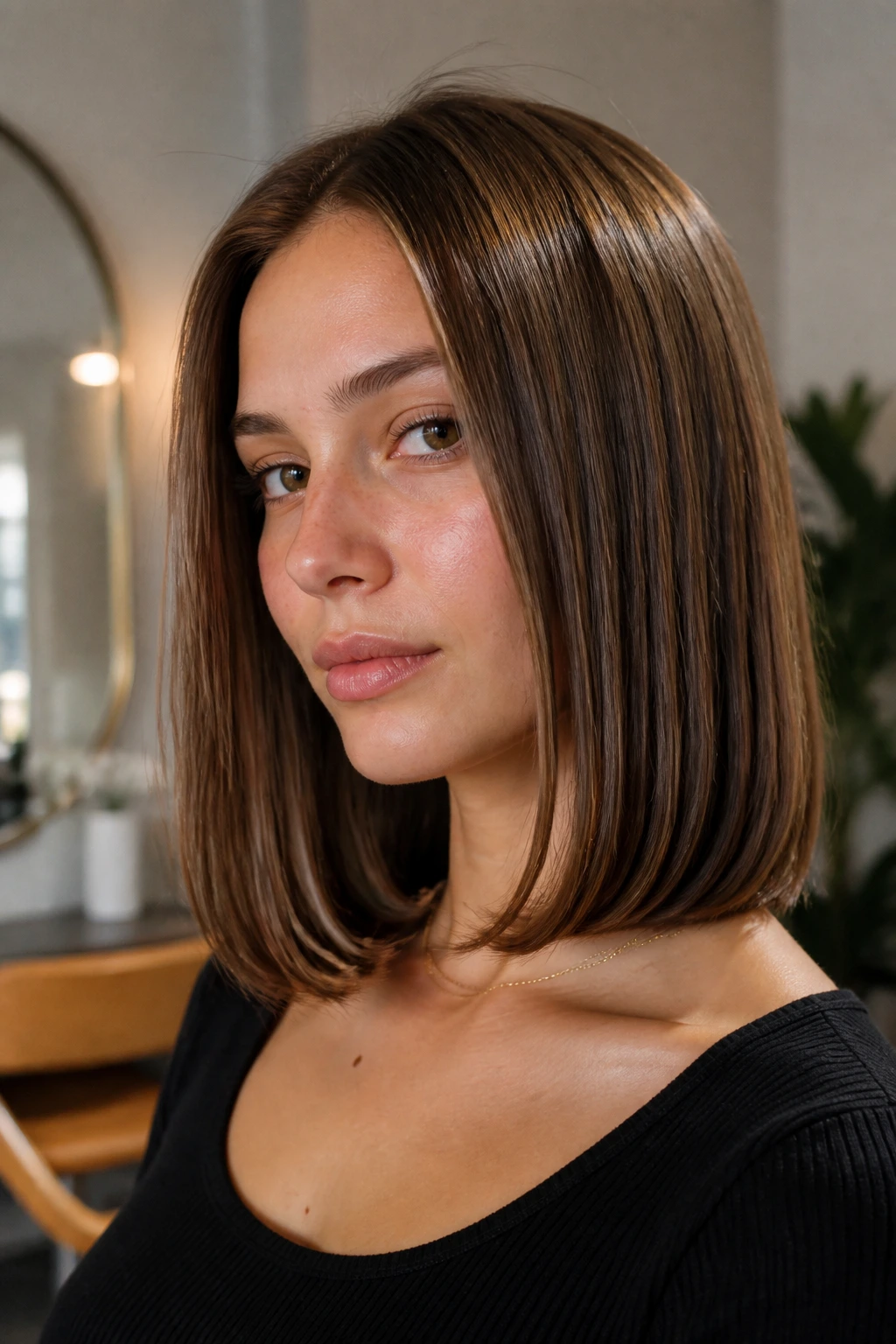
Sleek hair can still have texture. It just needs a lighter touch. A sleek lob with tucked ends keeps the surface smooth, then adds a tiny inward bend or soft undercurve at the bottom so the haircut does not look flat and lifeless. On medium length hair, that little bend is enough to keep the shape interesting.
The trick is to keep the styling controlled from mid-length to ends. Blow-dry with tension, smooth the surface, and then use a flat iron only on the last inch or so if you need a more tucked finish. The cut itself should be clean, with subtle internal movement rather than obvious layering.
This is a good option if you like a neat look during the week and do not want the hair to fight your clothes or makeup. It works with sharp collars, earrings, and clean lines. It also pairs well with a middle part or a soft off-center part, depending on how structured you want the final shape to feel.
It is tidy. Not boring. There is a difference.
20. Face-Framing Lob with Chin-Length Pieces
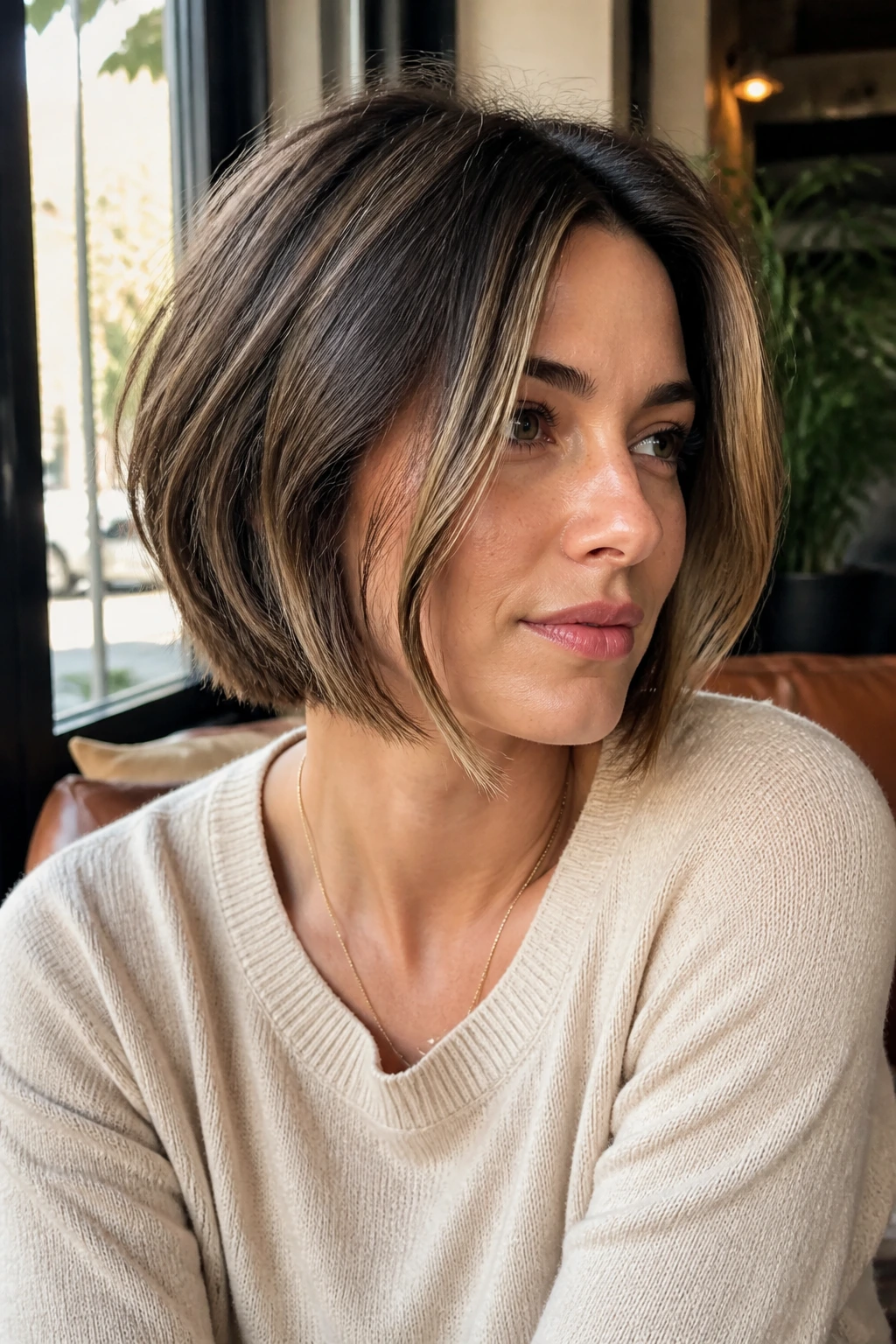
Why do chin-length pieces matter so much? Because they pull the eye to the center of the haircut and soften the edges of the face at the same time. On medium length hair, that kind of framing can change the whole vibe without making the haircut look overloaded with layers.
The front pieces should start around the chin if you want the most obvious effect, or a little higher if you want a softer drop. This shape works especially well when the back stays fairly clean, because the contrast between the front and the rest of the lob is what makes it feel fresh. If everything is layered equally, the face-framing loses its punch.
How to ask for it
- Ask for the front to start around the chin or lower cheek
- Keep the back line tidy
- Blend the front into the sides instead of cutting it as a separate block
- Style the front pieces with a small bend away from the face
This cut is useful for anyone who wants the face to feel a little slimmer or longer without going full shag. It is straightforward, and that is part of the appeal.
21. Asymmetrical Lob with One Longer Side
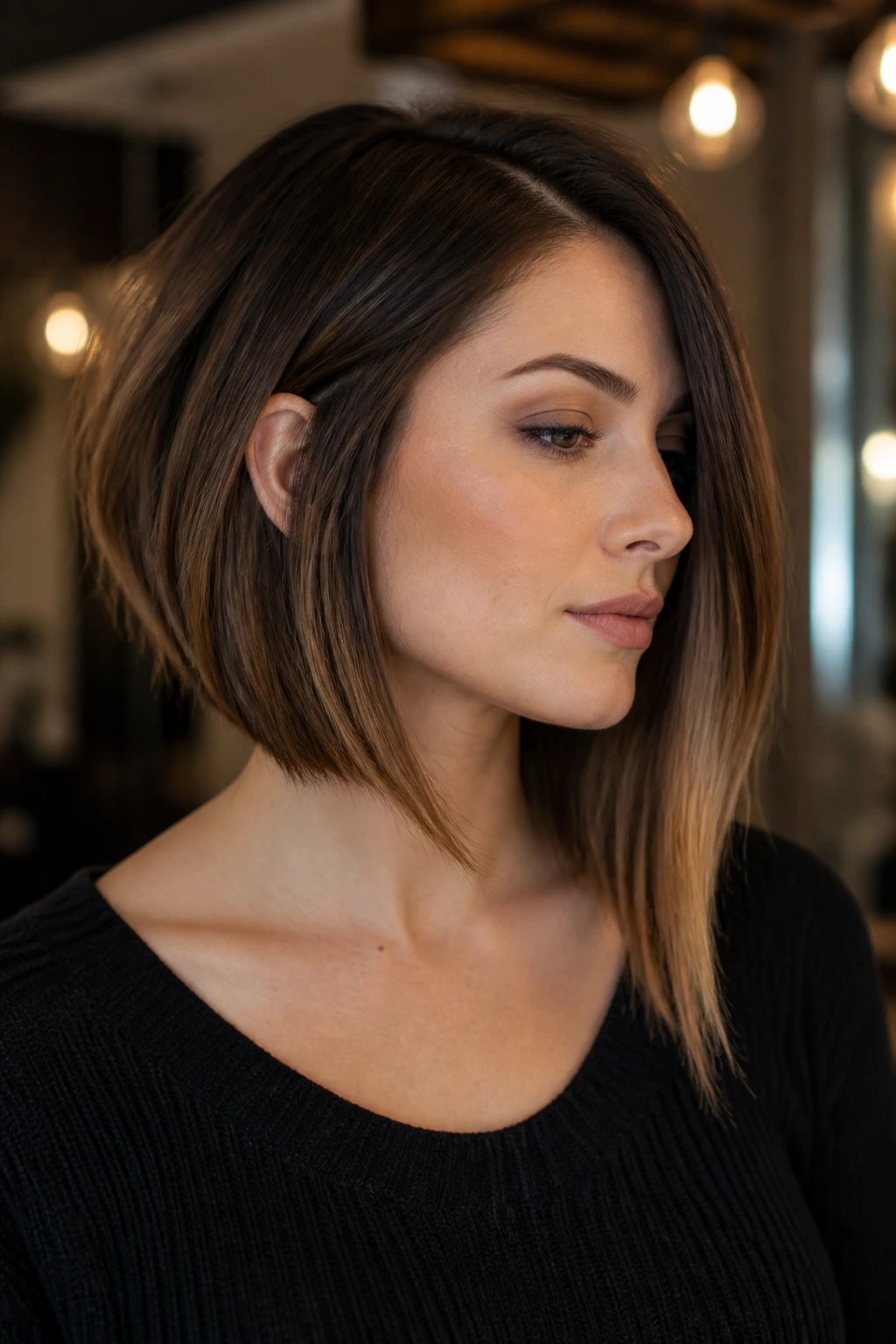
An asymmetrical lob is for someone who wants a little edge without going full avant-garde. One side sits a touch longer than the other, usually by 1 to 2 inches, and that small imbalance is enough to make the haircut feel deliberate. On medium length hair, it can be a nice change from a standard straight line.
The shape works because the eye notices the difference immediately, even when the cut is subtle. That means you do not need a huge shift to get a strong result. A clean finish helps here more than texture overload, because the line itself is the feature.
This style does need regular upkeep. Once the asymmetry grows out too far, it starts looking accidental instead of designed. Keep the ends trimmed so the difference stays obvious but neat. It is especially good for people who like haircuts with a little attitude and do not mind a shape that gets noticed from the side.
If you want something bolder than a classic lob but not as dramatic as an undercut or a very steep angle, this is a smart middle ground.
22. U-Shaped Lob with Tapered Ends
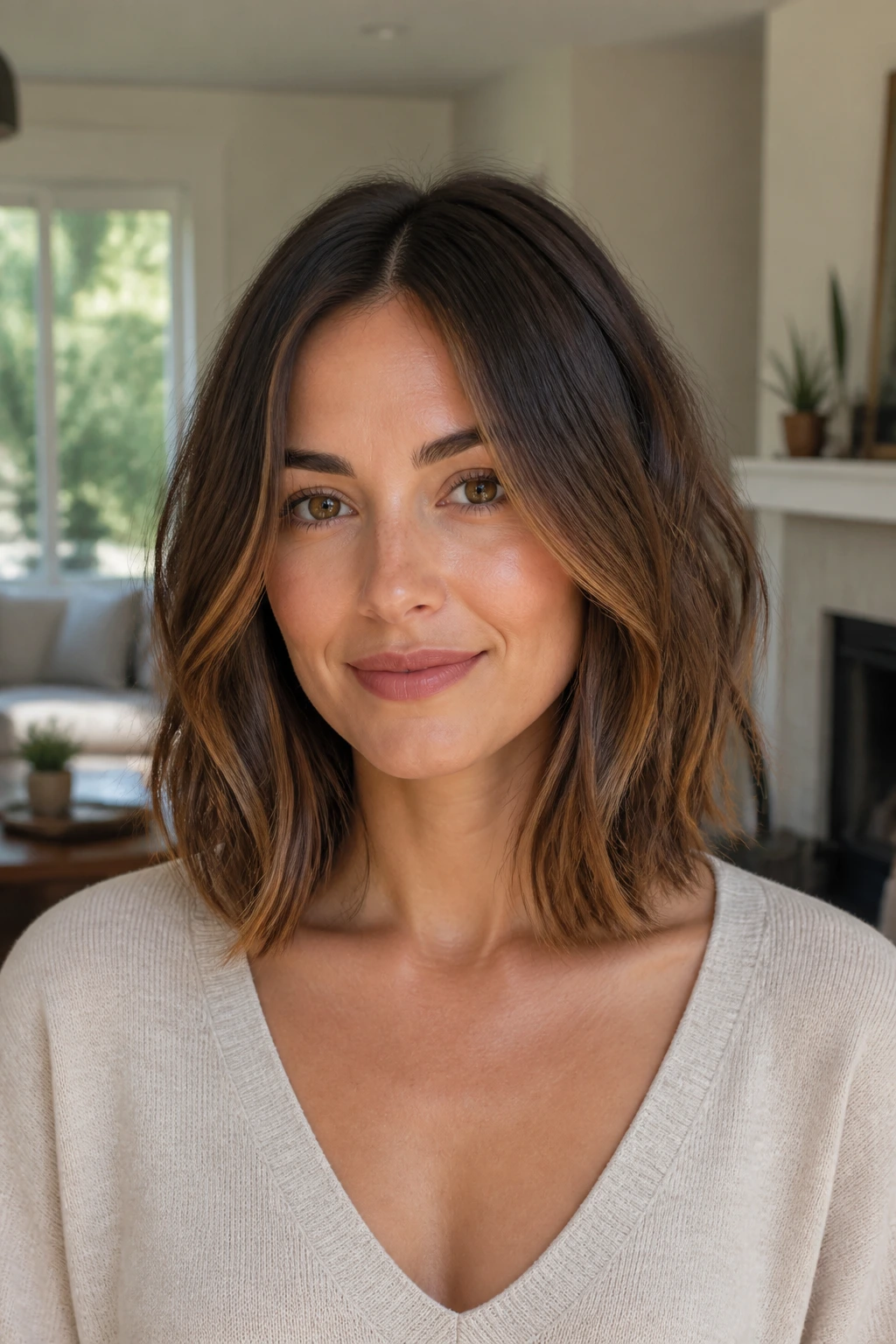
A U-shaped lob is softer than a straight line and easier to wear than a heavy blunt cut. The center sits slightly longer, then the sides taper upward just enough to create a gentle curve at the bottom. On medium length hair, that shape gives movement without making the haircut look chopped up.
The tapered ends are the part that keeps it from feeling bulky. Instead of one hard line all the way across, the hair has a little contour that helps it fall in a nicer way. That can be a relief if your hair tends to puff at the sides or hang too square around the jaw.
This style is especially good if you are growing out layers or trying to keep some length while still reshaping the hair. It also works well with soft waves, because the curve underneath gives the texture somewhere to land. You do not need much styling. A blow-dry with a medium brush or a few bends with a wand is enough.
It is a calm haircut. Not plain, just calm.
Final Thoughts
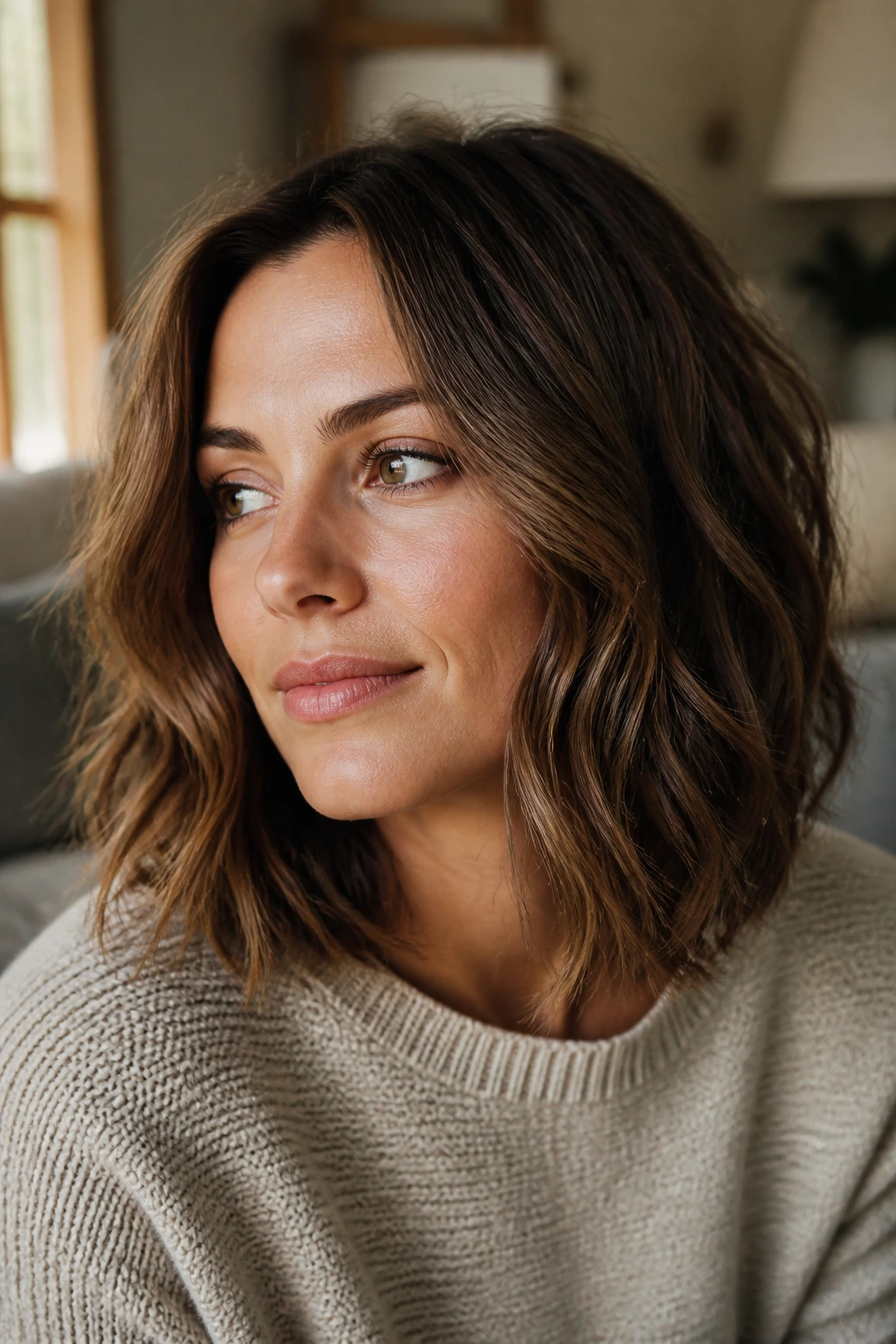
The strongest textured lob haircuts for medium length hair all do one thing well: they keep the shape clear while letting the ends move. That is the sweet spot. Too blunt and the cut can feel rigid. Too shredded and it can lose its line fast.
If you are choosing between styles, start with the shape your hair already wants to take. Thick hair usually likes more weight removal. Fine hair usually likes a cleaner outline with subtle texture tucked inside. And if you are still undecided, bring two photos to the salon — one for the silhouette, one for the texture — because those are not always the same thing.
