



Fine hair can look polished, airy, and expensive — or it can go flat before you’ve finished your coffee. The difference usually comes down to shape, not miracle products. An inverted bob haircut for fine hair is one of the few cuts that can make the hair look fuller at the ends and livelier at the crown without asking it to do anything impossible.
The reason it works is simple enough. A good inverted bob keeps the back shorter and more stacked, then lets the front fall a little longer. That angled line gives the eye something to follow, which makes the whole head of hair read as denser. A bad version does the opposite. It gets over-thinned, the ends look see-through, and the whole thing starts to resemble a sad triangle by day two.
Fine hair is picky about balance. Too much layering and it disappears. Too much length and it slumps. The sweet spot is a cut that builds shape where the hair naturally wants to collapse, then keeps the perimeter clean enough to hold its outline. That’s why some inverted bobs look sharp and full even when the hair itself is soft and delicate.
The 25 cuts below cover the full range — short, chin-skimming, lob-length, sleek, wavy, blunt, feathered, and a few with a little edge. Some are low-maintenance. Some need a round brush and five extra minutes. All of them are worth a look if your hair likes to go limp the second it loses structure.
1. Chin-Length Inverted Bob for Fine Hair With a Soft Stack
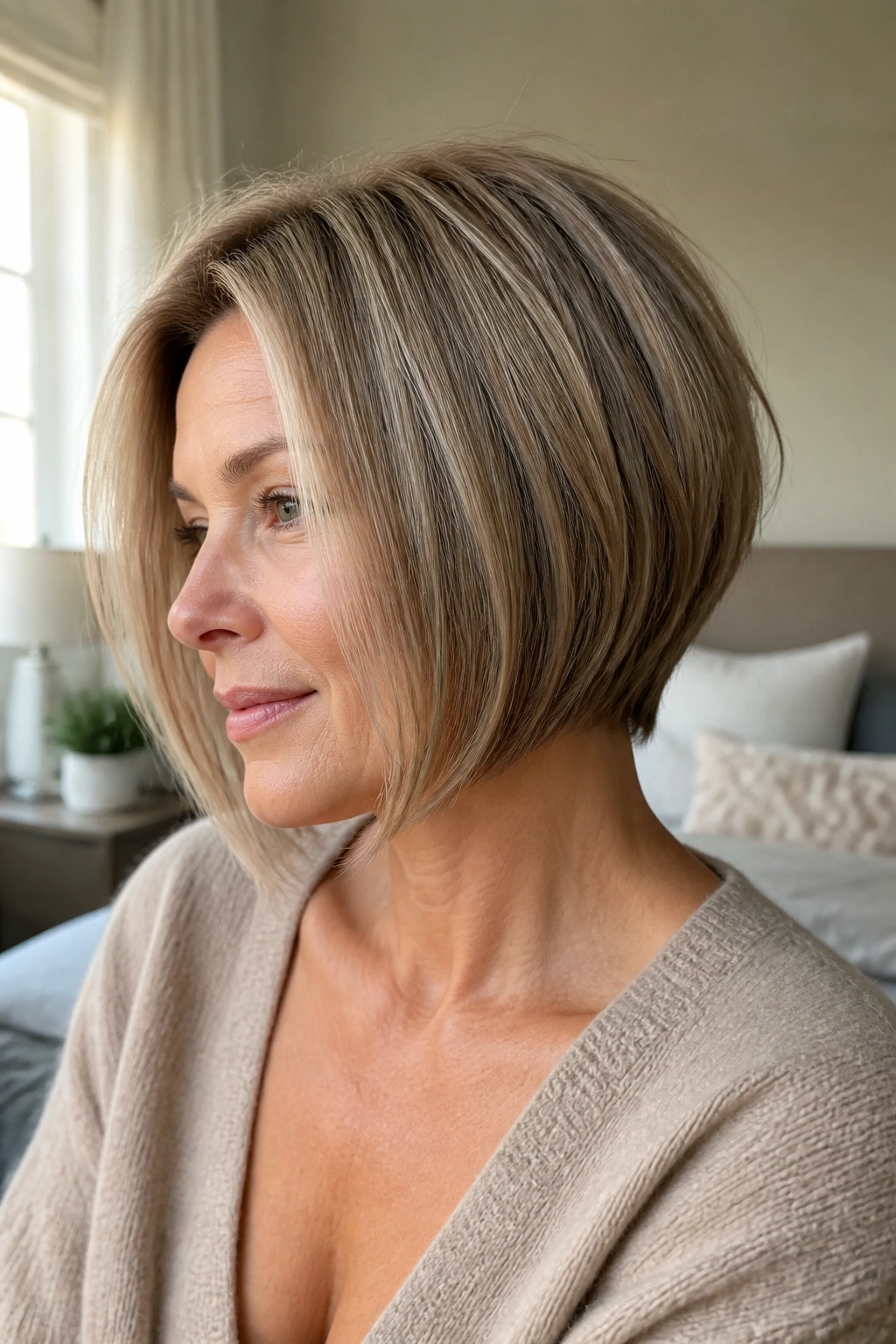
A chin-length inverted bob is one of the safest bets for fine hair because it keeps enough length in front to feel feminine, but shortens the back just enough to create lift. The shape sits neatly along the jaw, which gives the hair a cleaner edge than a longer cut usually can.
Why It Flatters Fine Hair
The stack at the nape does the heavy lifting here. Even a gentle graduation — think half an inch to one inch of lift through the back — can make the ends look much thicker than they really are. The trick is keeping the layering controlled, not fluffy.
- Ask for a soft stack, not a choppy one.
- Keep the front just grazing the chin.
- Leave the perimeter blunt enough to hold a line.
- Style with a 1-inch round brush for a slight bend.
Best detail: keep the nape snug and tidy. That little bit of neatness makes the whole cut look more expensive.
2. Jaw-Grazing Sleek Angled Bob
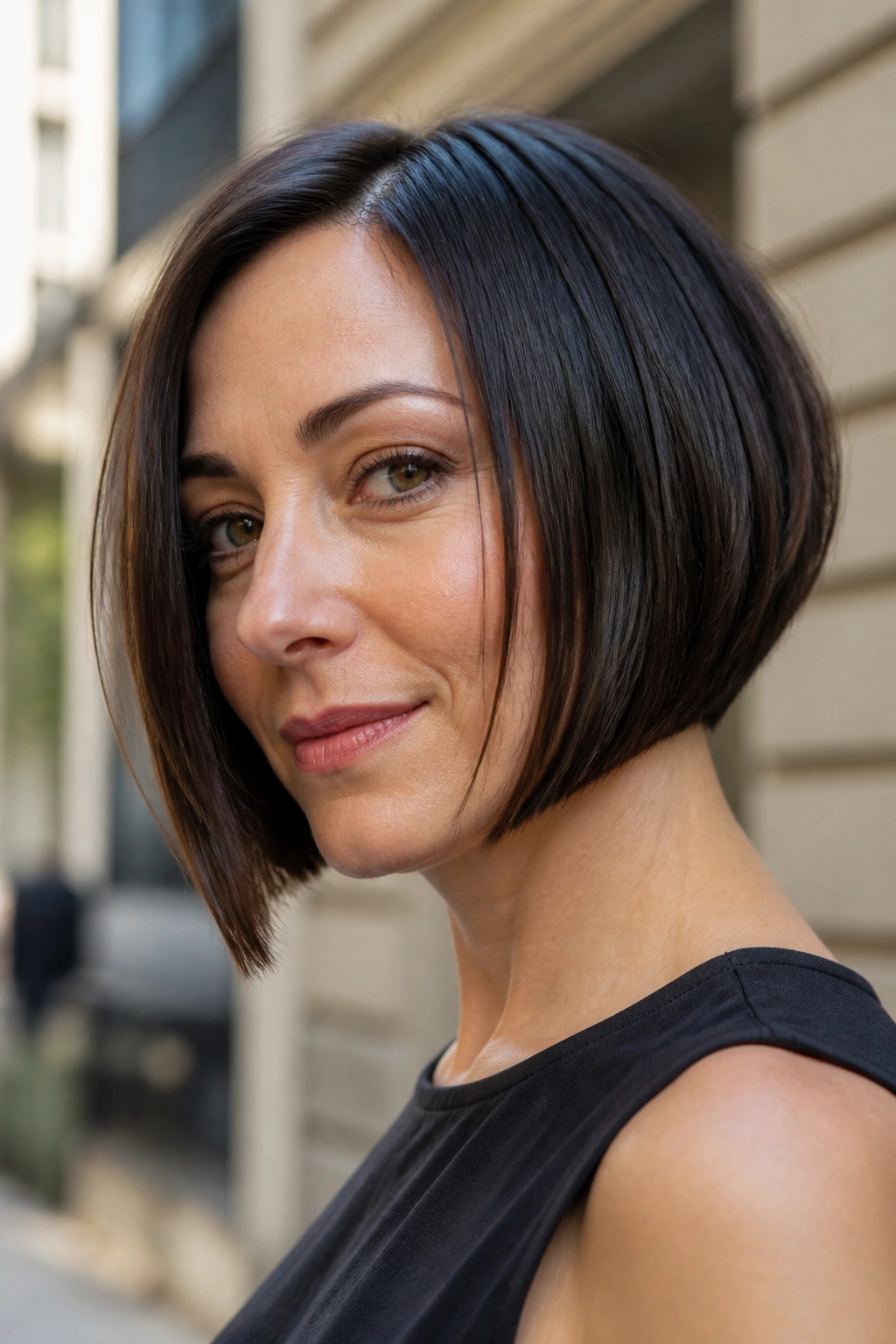
This is the cut for hair that falls flat the minute it gets too long. A jaw-grazing angled bob gives fine strands a sharper outline, which makes the hair look thicker from the side and cleaner from the front. There’s no mushy middle ground here. It’s crisp, and that’s exactly the point.
The front pieces should hit around the jaw or just below it, while the back is lifted enough to show the angle. On straight fine hair, this shape can look almost architectural — in a good way. It gives the face a firmer frame and keeps the ends from looking stringy.
If you want a low-fuss version, wear it with a center part and a quick flat-brush blow-dry. If you want more drama, tuck one side behind the ear and let the longer front section swing forward. Either way, the cut carries the look without needing a ton of product.
3. Side-Part Stacked Bob That Lifts the Crown
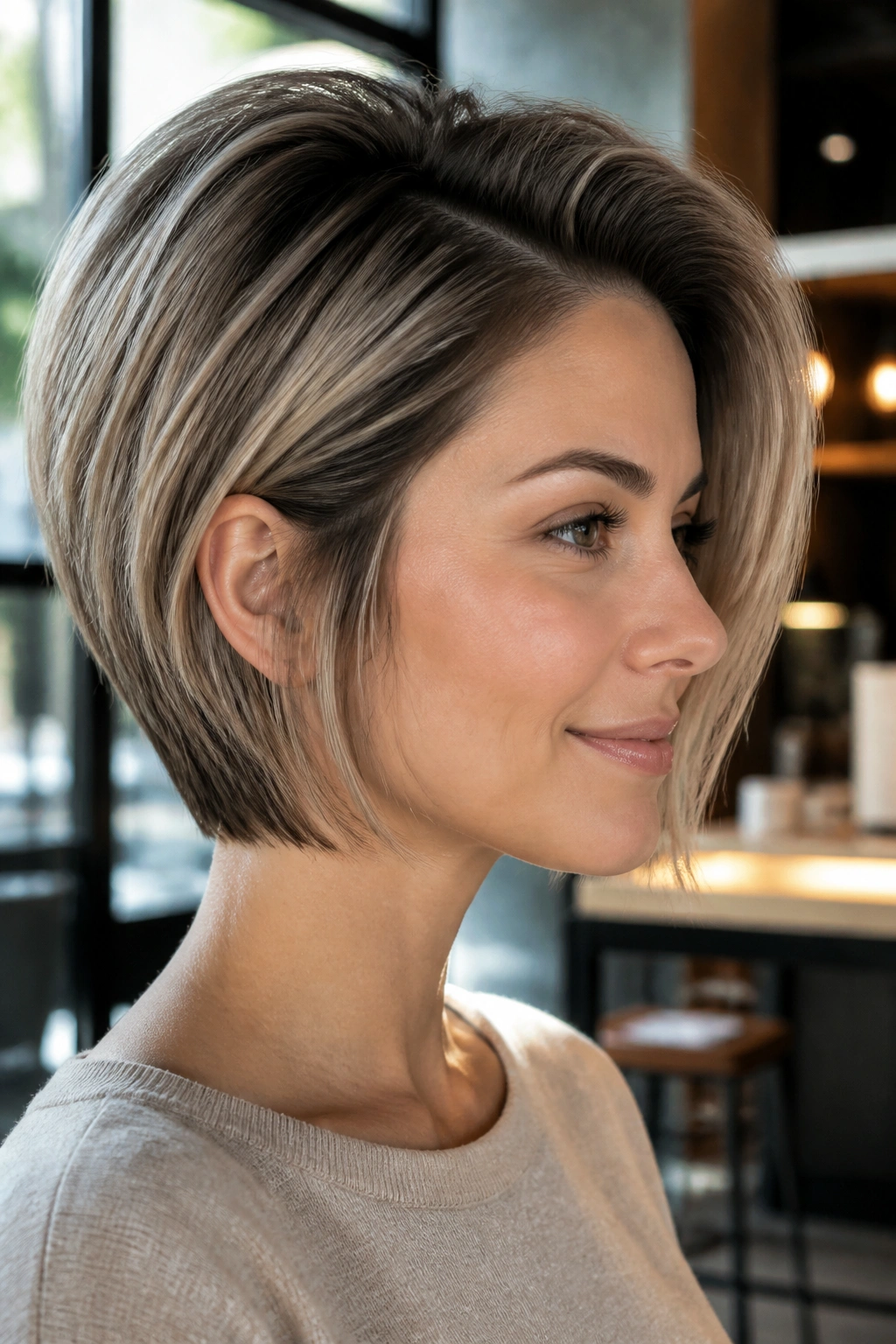
Why does a side part help so much on fine hair? Because it breaks up the flatness at the root and gives one side a little more height to work with. That’s a small change, but on a stacked bob it makes a real difference. The crown looks higher, the front gets more swing, and the whole cut stops sitting like a helmet.
How to Wear It
A deep side part works especially well if your hair naturally falls forward or collapses toward one cheek. Ask for the back to be stacked in a clean curve, then keep the front long enough to skim the cheekbone. That way the part has room to lift without the cut losing structure.
A light root spray at the crown helps, but the haircut still has to do most of the work. If the stack is too weak, no product will fix it. If the stack is too strong, the cut can start to feel old-fashioned fast.
4. Feathered Inverted Bob With Curtain Bangs
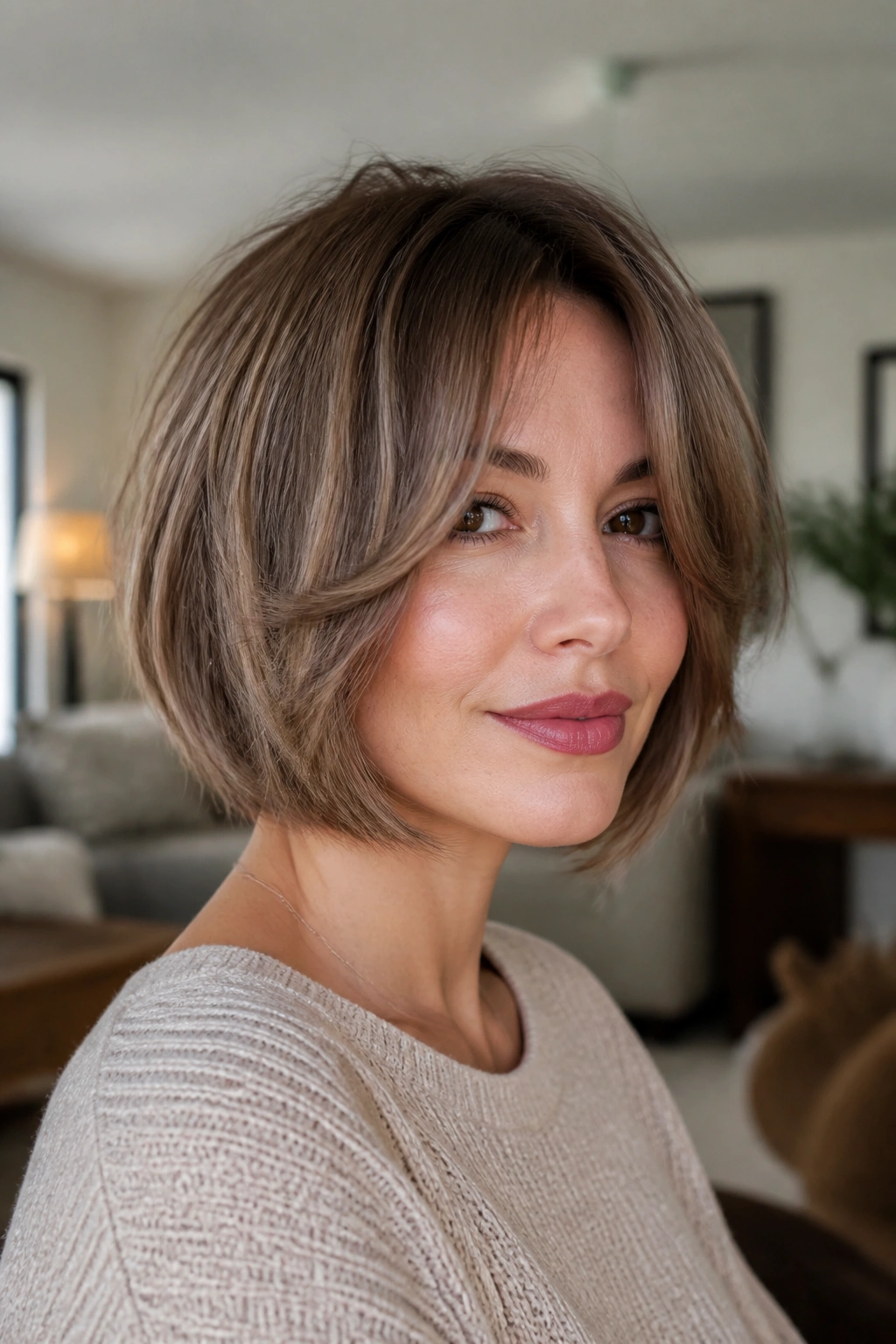
Picture fine hair that needs movement around the face but not a lot of bulk at the ends. That’s where a feathered inverted bob with curtain bangs makes sense. The curtain fringe softens the forehead, while the stacked back keeps the body in the haircut instead of letting it drift away.
The key is restraint. You want feathering around the face, not all through the perimeter. Too much texturizing on fine hair can leave the lower edge wispy, and that is the fastest route to a cut that looks thinner every time you wash it.
- Ask for curtain bangs that start near the cheekbone.
- Keep the back graduated, not heavily layered.
- Use a medium round brush to bend the fringe away from the face.
- Finish with a light mist of flexible spray, not stiff lacquer.
The result feels softer than a razor-sharp bob, but it still has shape. That balance is the whole game.
5. French-Girl Undone Inverted Bob

There’s a reason this version keeps showing up on people who want hair that looks lived-in without looking lazy. The French-girl version of the inverted bob works because it doesn’t fight the natural bend in fine hair. It lets the hair move a little. It lets the ends flick out if they want to.
The back is still shorter, but the shape is less exact than a polished angled bob. The front can land somewhere between the jaw and the top of the collarbone, which gives you room to tuck it, twist it, or leave it loose. Fine hair often looks better when it isn’t forced into total obedience.
Air-dry cream helps here, but the cut matters more than the styling. If the perimeter is too thin, the undone look turns into frayed. If the perimeter is solid, the relaxed finish looks deliberate. That’s the whole trick — soft, not sparse.
6. Collarbone-Length Inverted Lob
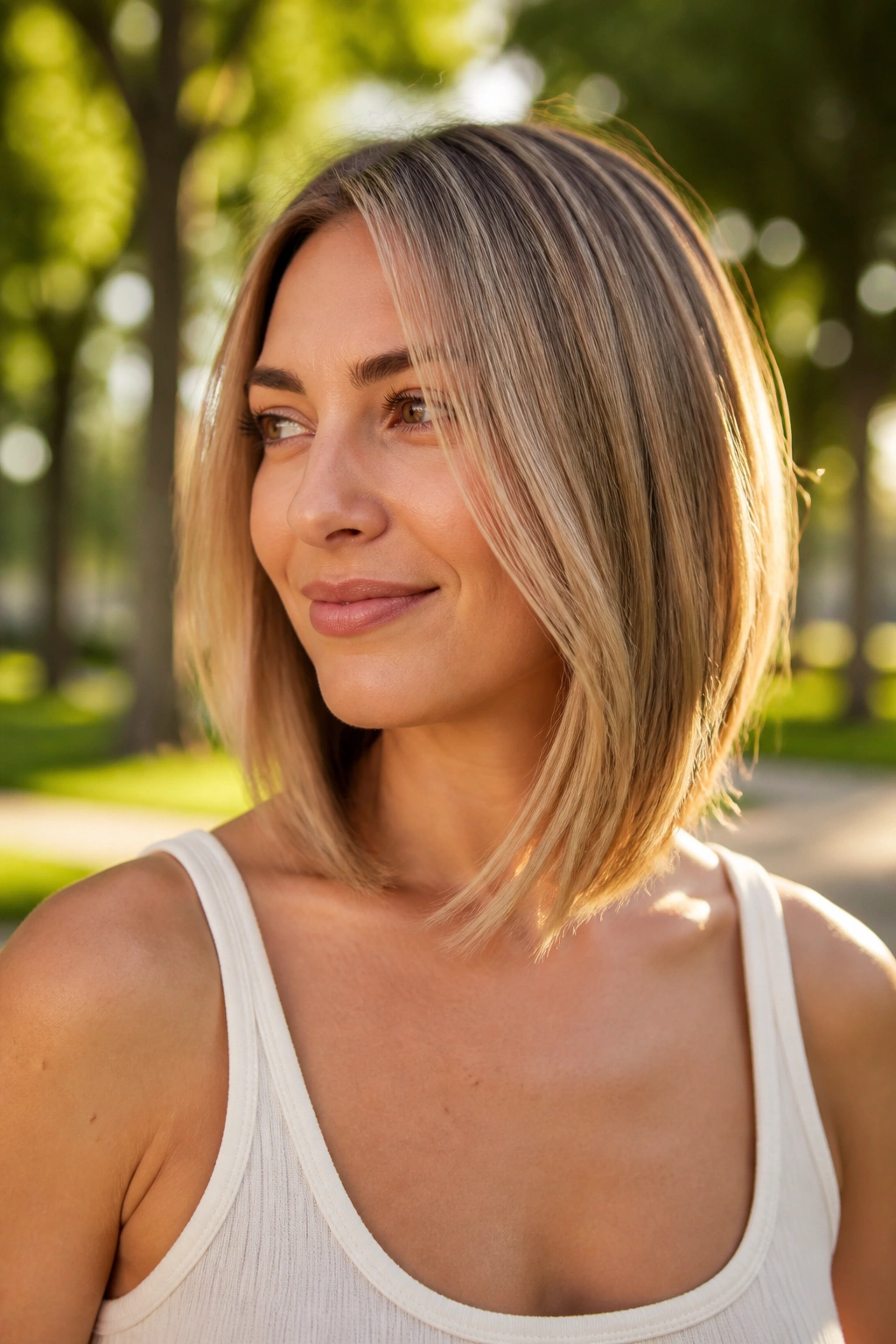
Unlike a chin-length bob, a collarbone-length inverted lob gives you a little more softness around the neck and a little more range when you want to tie your hair back. That matters if you like the shape of an inverted cut but hate feeling locked into short hair.
The back still sits higher than the front, so you get the lifted effect fine hair needs. But the extra length in front gives the cut a calmer feel. It’s a good choice if your hair gets flyaway around the jaw or if you want a shape that can survive windy weather without turning into static.
Best for: people who want volume without a harsh cut line. It also works well if your hair is fine but not especially sparse, because the longer front keeps the overall look from feeling too airy. I’d ask for subtle graduation and a blunt-ish edge, not delicate layers everywhere.
7. Blunt-Perimeter Inverted Bob
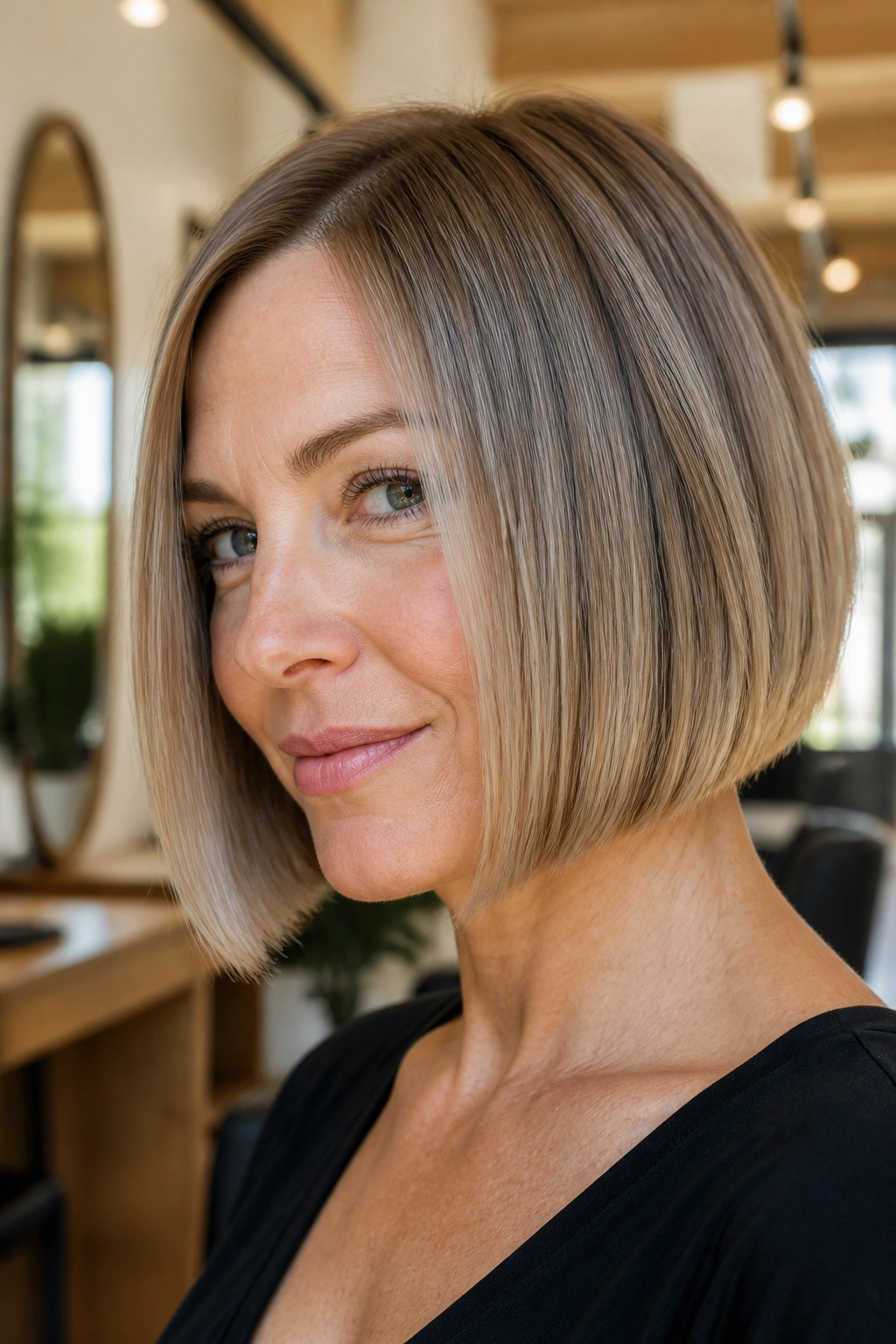
A blunt perimeter can be a lifesaver on fine hair. Why? Because the ends look thicker when they’re cut cleanly. No feathering. No chipped-up edge. Just a hard line that tells the eye, “Yes, there is hair here.”
What Makes It Different
This version is especially good if your hair has fine strands but a decent amount of density. The cut can sit at the chin, just below the jaw, or even a touch shorter. What matters is the bottom line. Keep it solid. Keep the outline crisp.
- Request minimal point-cutting on the lower edge.
- Leave the stack gentle so the ends don’t compete with the shape.
- Blow-dry with a paddle brush if you want a smooth finish.
- If the ends start looking airy, trim sooner rather than later.
The blunt edge is not fancy, and that’s the charm. It makes the hair look more present.
8. Razor-Textured Inverted Bob
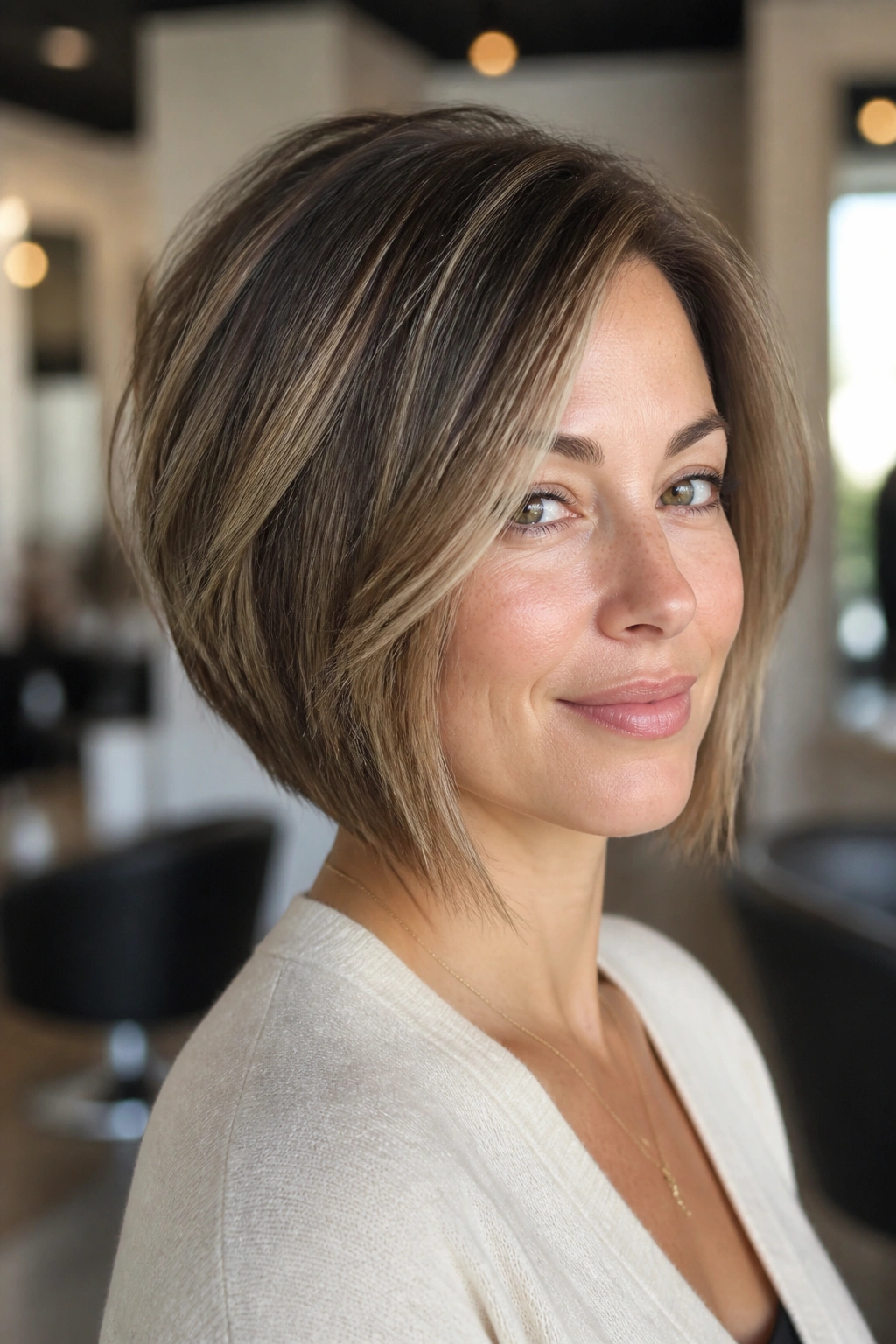
Razor cuts and fine hair can be a bad match if the hand is too heavy. But used carefully, a razor-textured inverted bob can soften the line just enough to keep the shape from feeling too severe. The trick is to use the razor for movement, not for thinning away the whole edge.
This cut works best on fine hair that still has some body and a little natural wave. On super-sparse hair, it can go wispy fast. On slightly denser fine hair, though, it creates a nice bend through the front and keeps the back from looking boxy.
Ask for texture mostly around the interior, not the bottom inch. That way you get movement without losing the thickness at the ends. And please, no aggressive slicing near the perimeter. That’s how a bob starts looking tired after one shampoo.
9. Deep Side-Part Bob With Cheekbone Lift
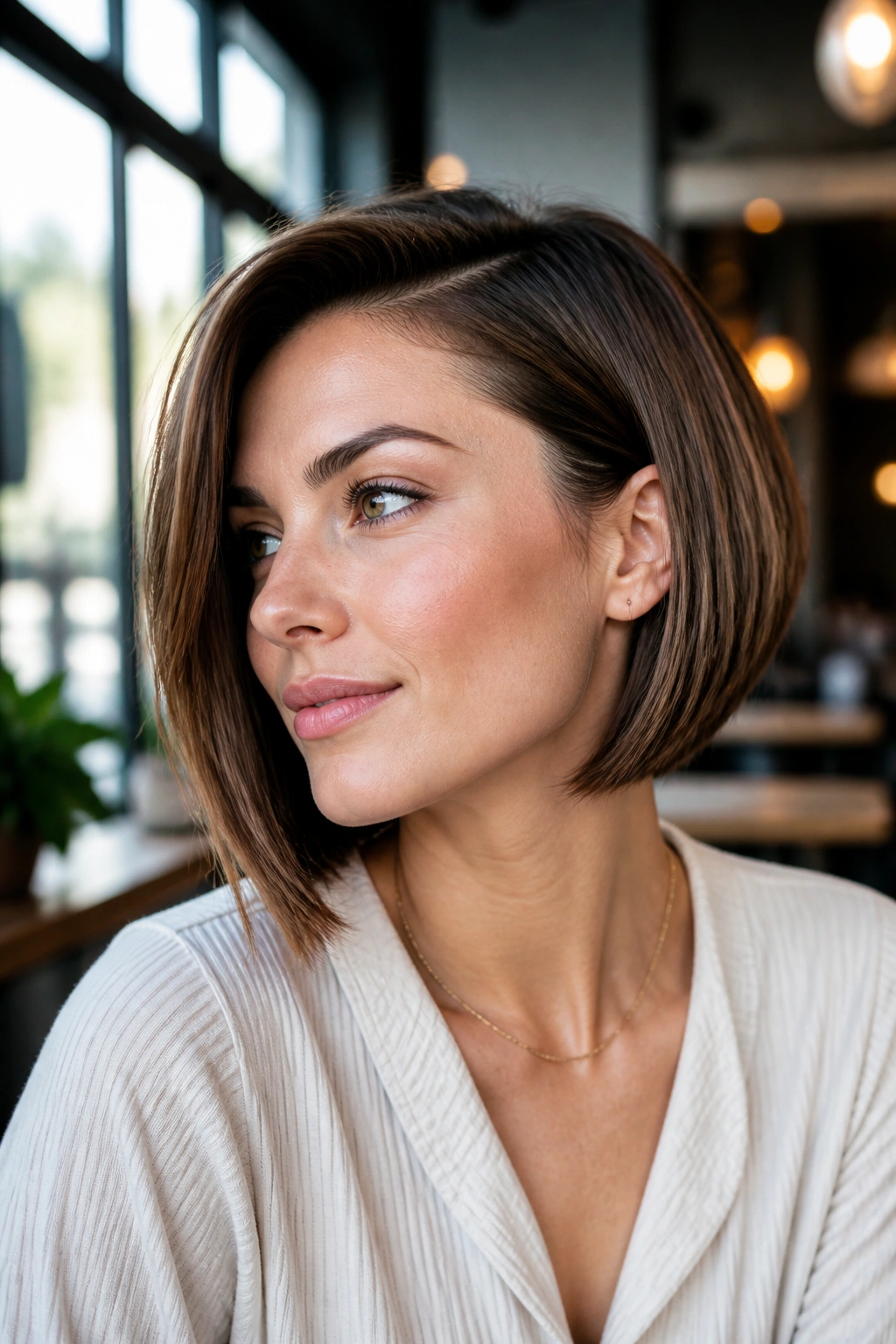
Why does this one feel so flattering? Because the deep side part gives the face height while the longer front section frames the cheekbones. It’s a neat little illusion, and on fine hair it can make the cut look more dimensional than a center-part version.
The back should still be graduated, but not so stacked that it turns rigid. You want a bob that moves when you turn your head. The front can be long enough to brush the cheek or just below it, which helps the shape feel softer from the front.
How to Use It
A deep side part works best when the roots at the part are slightly lifted. A quick blast with a root-lifting spray and a small round brush is enough. You do not need a mountain of product. Too much just weighs the hair down and defeats the whole point.
This is one of the easiest cuts to dress up for evening without much work. Tuck one side, leave the other loose, and the angle does the rest.
10. Stacked Bob With Micro-Bangs
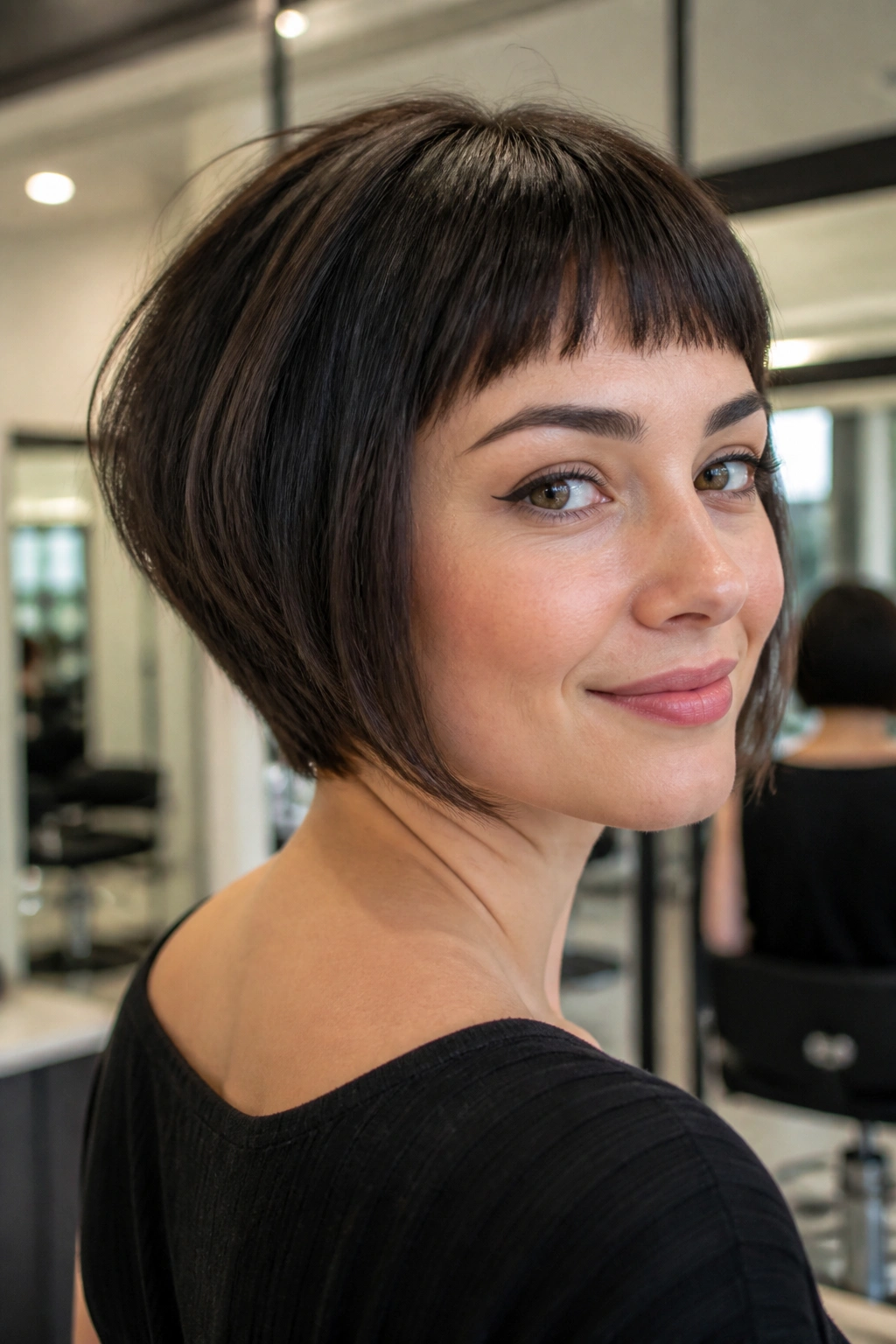
A stacked bob with micro-bangs is not subtle. That’s the appeal. The short fringe draws attention upward, while the stacked back gives the cut enough structure to keep it from feeling too playful or too flat.
This one suits fine hair that can hold a clean line. The bangs should stay soft at the edge — not blunt in a heavy, helmet-like way — and the stack should be visible but not extreme. Think small, controlled lift at the back, not a giant wedge.
- Micro-bangs look best when they stop well above the brows.
- Keep the bob length around the jaw or just under it.
- Ask for a neat nape so the back doesn’t puff.
- Style the bangs separately; they dry faster than the rest.
It’s a bold little cut. If you like polished with a hint of edge, it’s a smart one.
11. Wavy Inverted Bob That Air-Drys Well
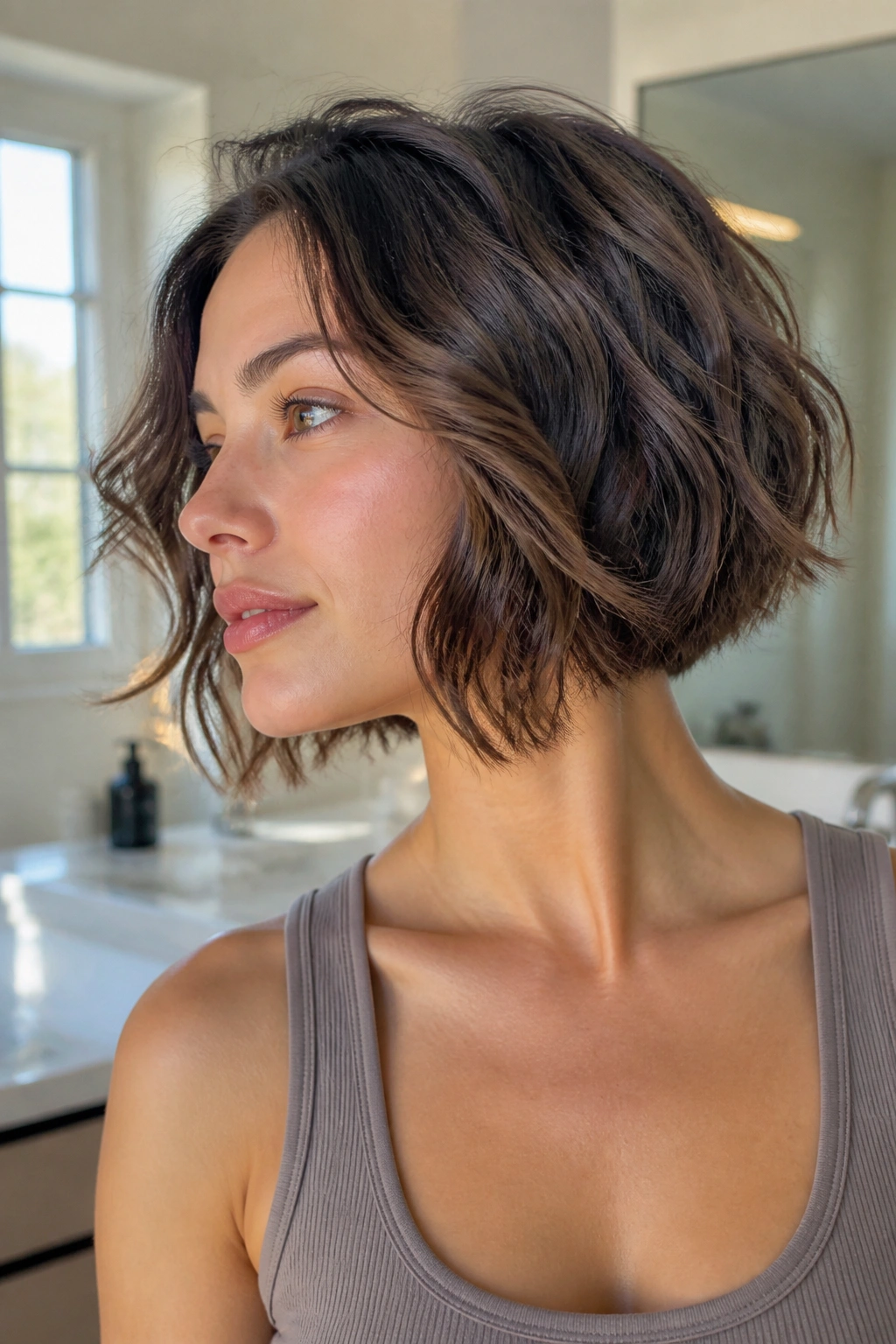
Fine hair with a natural wave often needs a haircut that respects the wave pattern instead of flattening it. A wavy inverted bob does exactly that. The back stays shorter, but the front and sides are shaped to let the bends fall where they want.
The best versions keep the layers light through the bottom half. Too many layers can make the wave split apart and show gaps. A cleaner shape lets the wave stack on itself, which makes the hair look fuller. That is the part people miss.
When you air-dry this cut, scrunch only a little. Let the hair settle. Then break the cast with your fingers once it’s dry. You want loose bends, not crunchy waves. The haircut should carry the shape, not the gel.
12. Soft Asymmetrical Bob
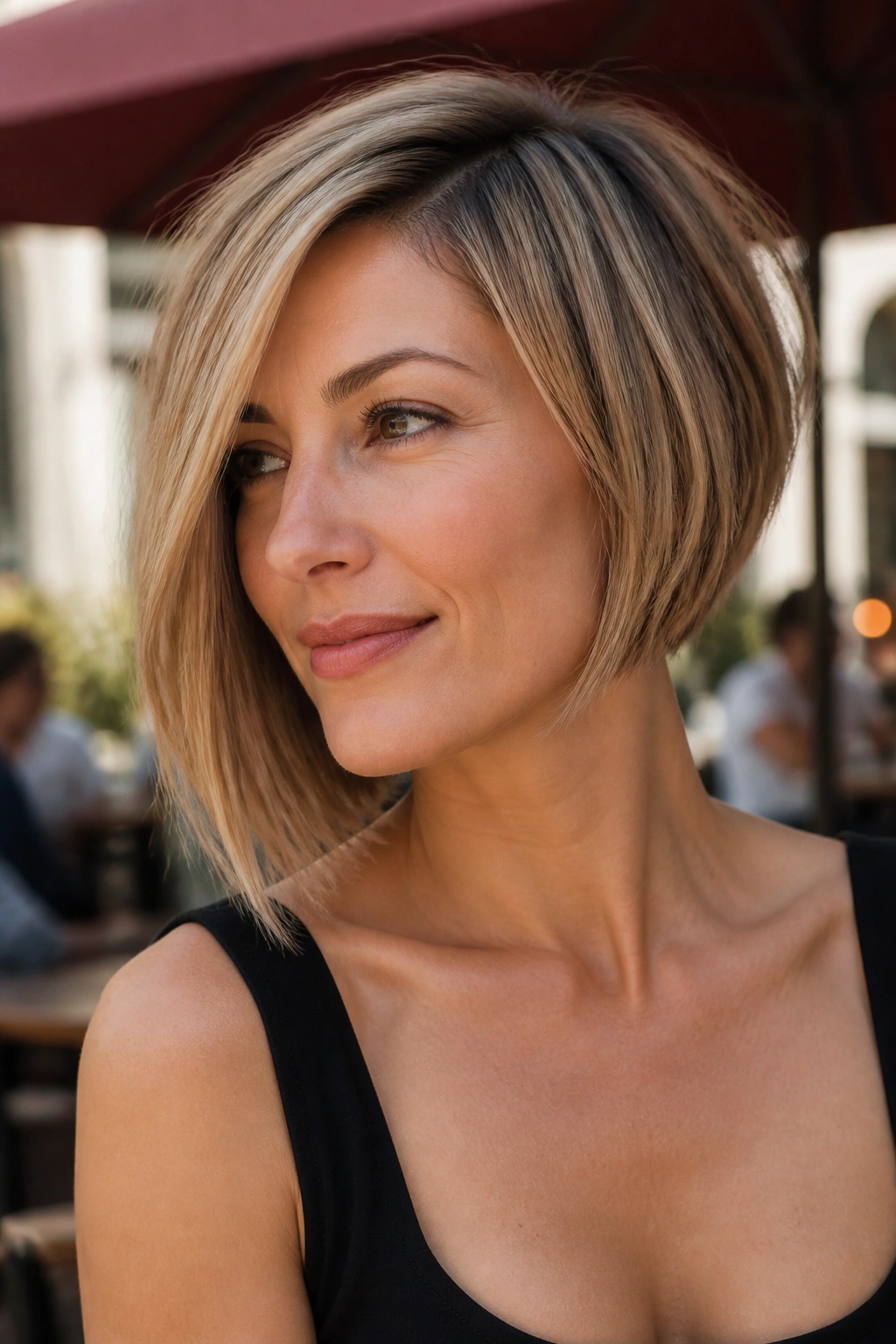
Unlike a symmetrical bob, a soft asymmetrical version gives fine hair a directional pull. One side sits a little longer than the other, and that slight imbalance makes the hair look deliberate instead of plain. It also works well if one side of your hair naturally grows flatter than the other.
The asymmetry does not have to be obvious. In fact, the better versions are subtle. A half-inch to an inch of difference is often enough. That tiny shift gives the front a more modern feel and keeps the cut from reading as stiff.
Best for: people who like clean lines but want something with a little movement built in. It’s also useful if your jawline is strong and you want to soften one side. I’d keep the nape neat and the ends blunt, then let the angle do the talking.
13. Inverted Bob With a Whisper-Short Nape
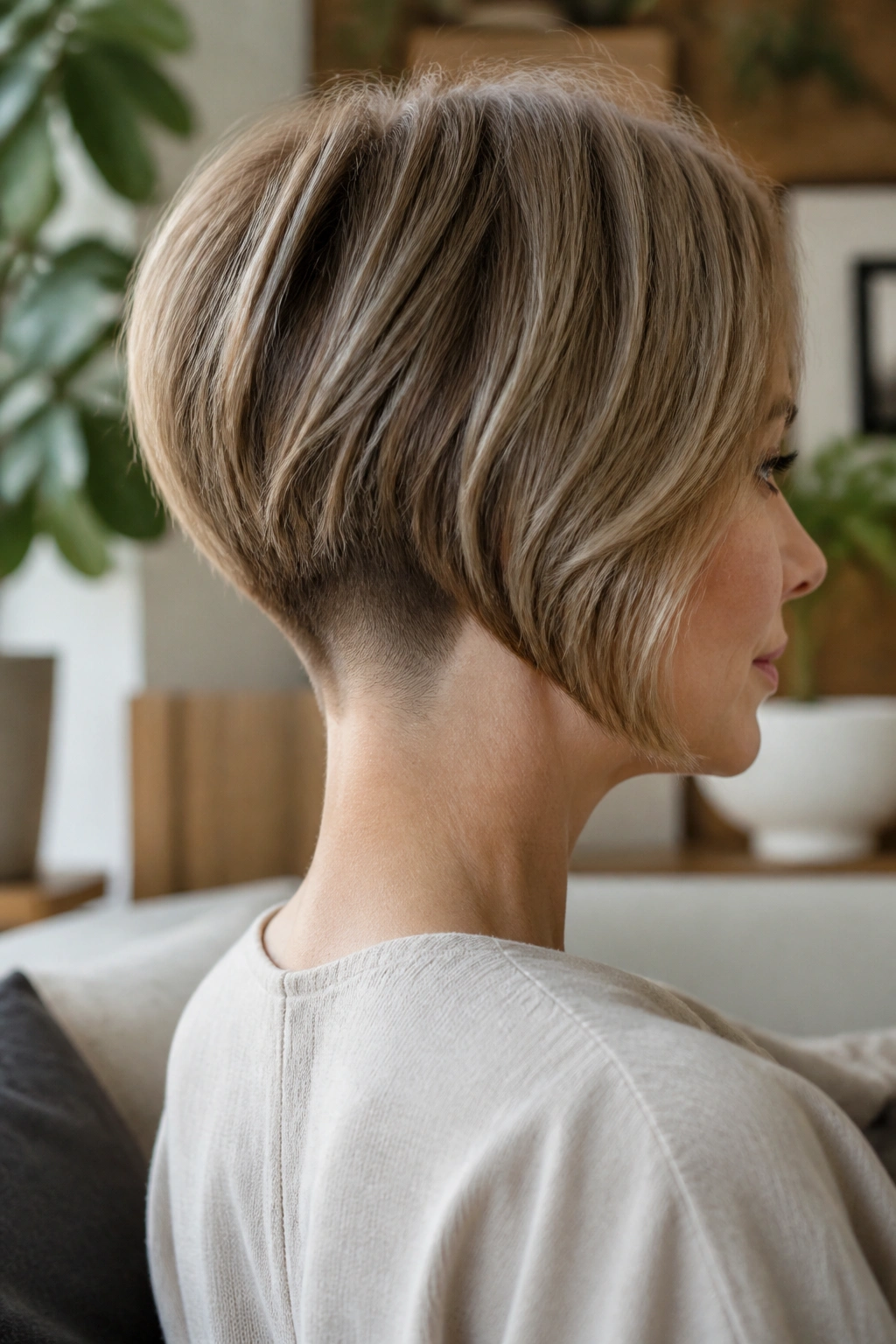
A hidden undercut at the nape can sound extreme, but in a very narrow strip it can help fine hair lie cleaner through the back. The trick is to keep it tiny — just enough to remove bulk where the hair gets bulky, not so much that the cut starts to feel shaved.
What Makes It Different
This version is for someone who wants a sharper silhouette and does not mind a bit of upkeep. The undercut keeps the nape from puffing out, which lets the stacked layers above sit closer to the head. On fine hair, that can make the shape look surprisingly neat.
- Keep the undercut narrow and low.
- Leave the top layer long enough to cover it completely.
- Ask for a soft transition into the stack.
- Trim the nape every 4 to 6 weeks if you want it to stay crisp.
Be careful here. If your hair is very sparse, an undercut can take away too much. This one works best when the hair is fine but still has enough density to support the shape.
14. Feathered Bob With Long Face Framing
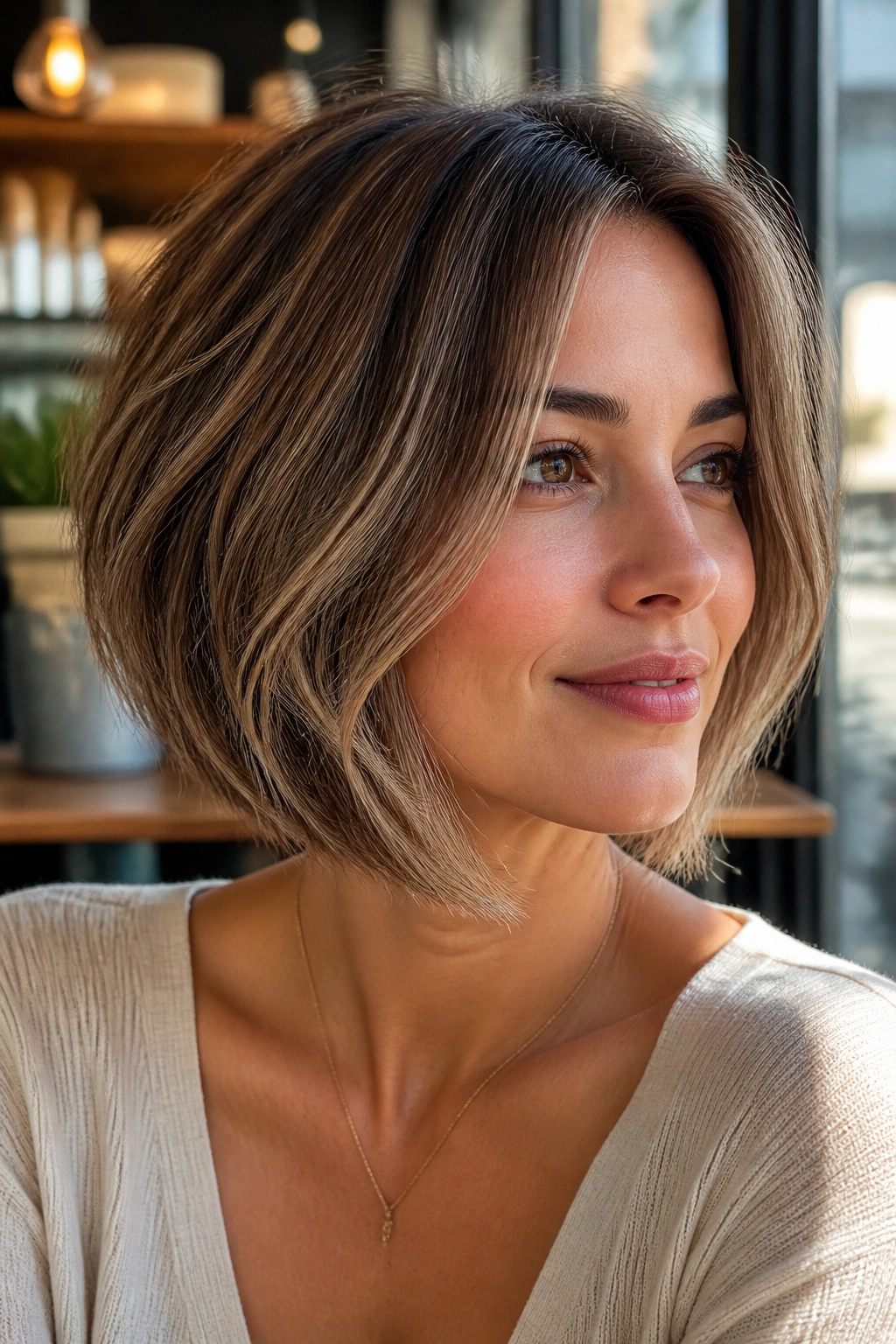
A feathered bob with longer face-framing pieces feels lighter than a blunt cut, but it still gives fine hair enough outline to look polished. The front sections should start around the cheekbone or a touch lower, then taper gently toward the chin. That keeps the face soft without making the ends look stringy.
The danger with feathering is overdoing it. Fine hair does not need every strand carved into a wispy finish. It needs a little movement near the face and a perimeter that stays full. Keep the feathering in the front third of the haircut and leave the rest steady.
This version looks especially good if you wear glasses or if your hair tends to fall into your face. The face-framing pieces can be tucked back, curved under, or left loose. Small details, but they matter.
15. Curled-Under Polished Inverted Bob
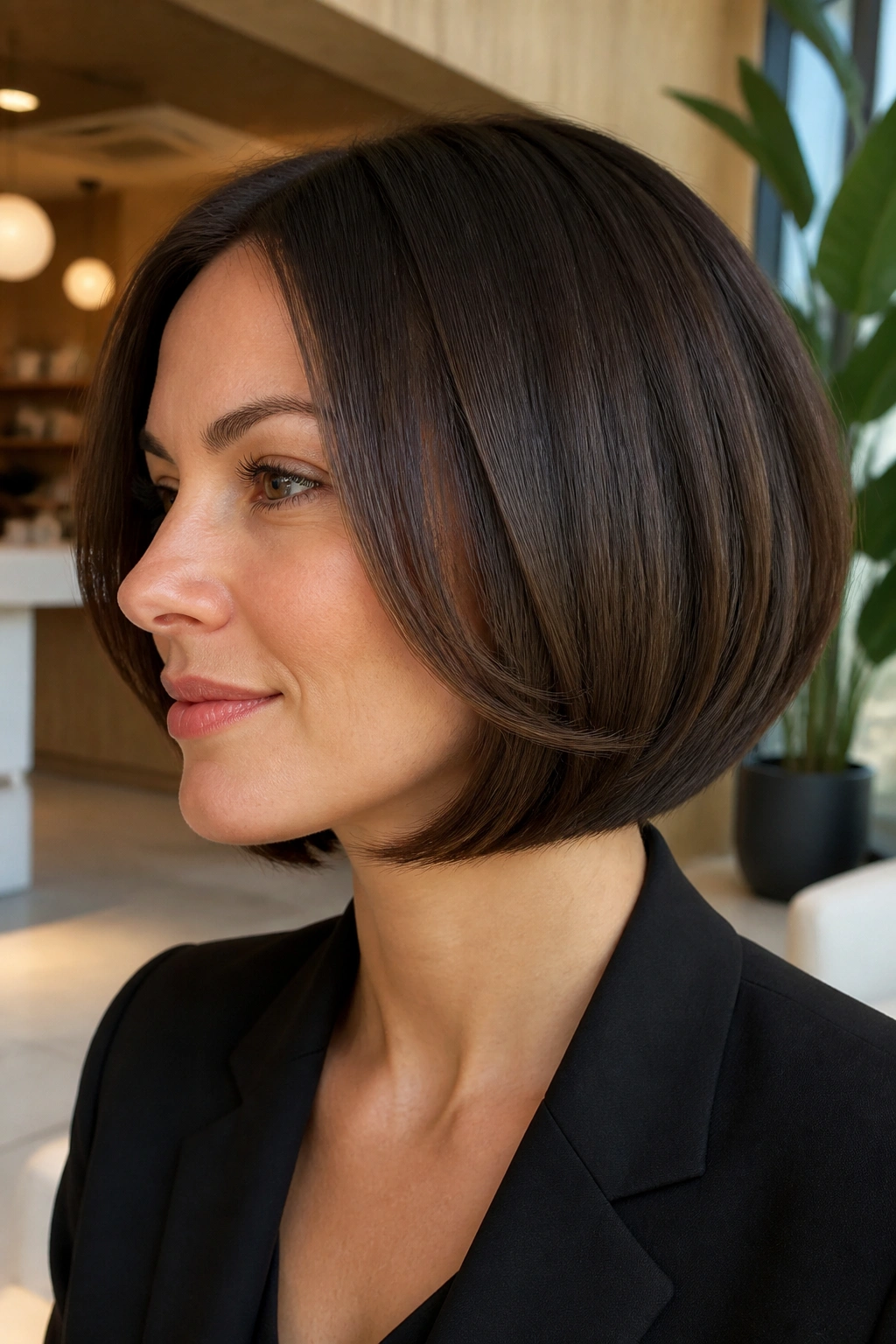
Want a bob that looks fuller the second you add a brush? This is it. The curled-under finish gives fine hair a rounded edge, so the ends look denser and the whole cut feels more finished. It is old-school in the best way.
How to Style It
Use a medium round brush — about 1.5 inches works well for most chin-length versions — and pull the hair slightly forward as you dry it. Then bend the ends under just a touch. You are not making ringlets. You are shaping a curve.
A light mousse at the roots can help, but don’t overload the mids. Fine hair gets greasy fast, and too much product kills the lift. The haircut should already be doing most of the work.
The result is clean, neat, and a little glossy. It’s the kind of bob that looks good at the office and at dinner without needing a full restyle.
16. Graduated Bob With a Rounded Crown
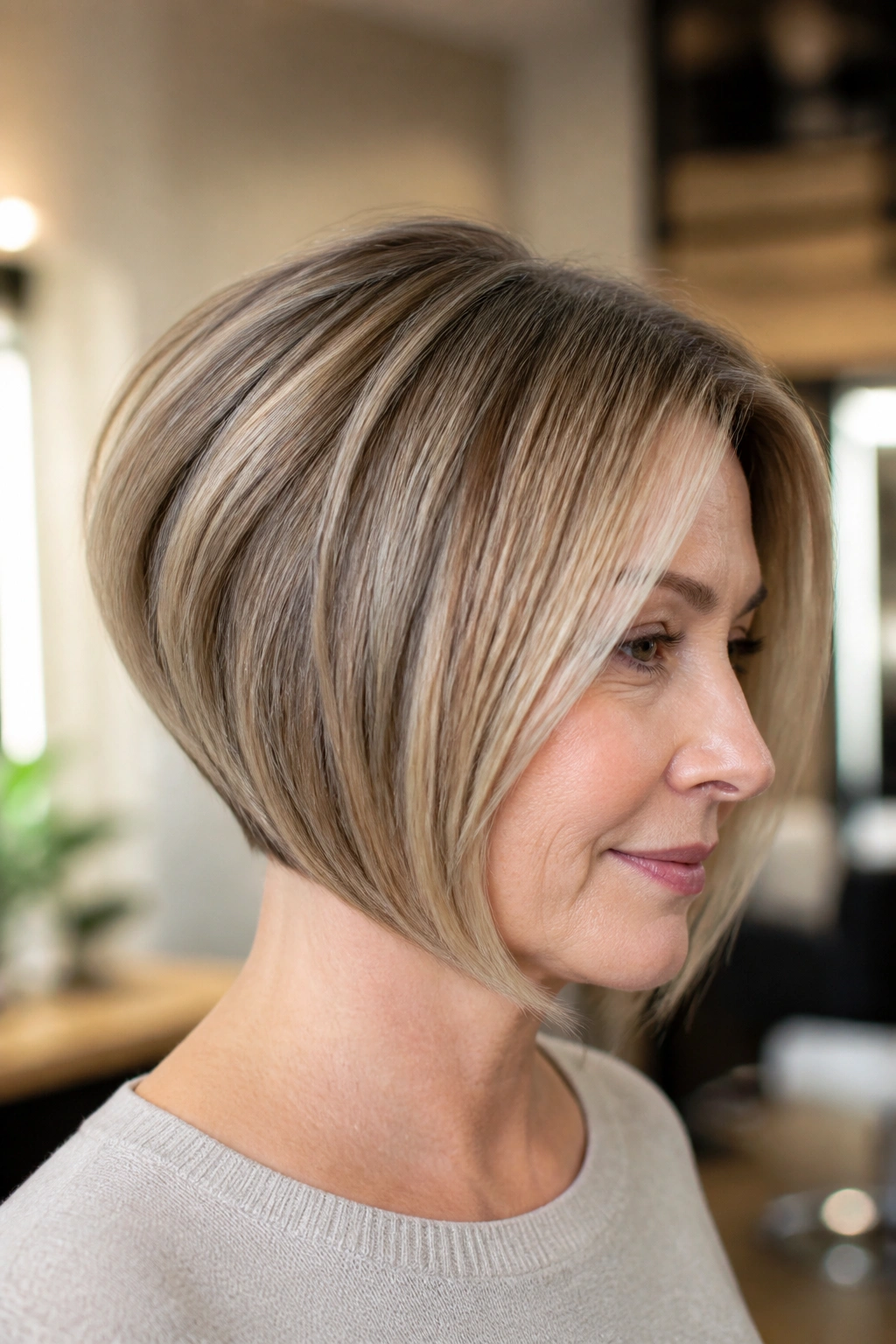
The rounded-crown version is for people who want the back of the haircut to carry real shape. The graduation starts a little higher, curves through the crown, and gives the head a softer dome instead of a flat line. On fine hair, that rounding can make the top feel fuller from every angle.
This cut is not the same as a stiff wedge. The best version has a gentle curve, not a hard shelf. The front should still fall forward a bit, but the crown has enough lift to keep the shape from collapsing.
I like this one for straight fine hair that has trouble holding body on its own. It creates a stronger silhouette than most softer bobs, which means you can skip some of the heavy styling products people usually reach for. That alone is worth something.
17. Inverted Bob With Hidden Internal Layers
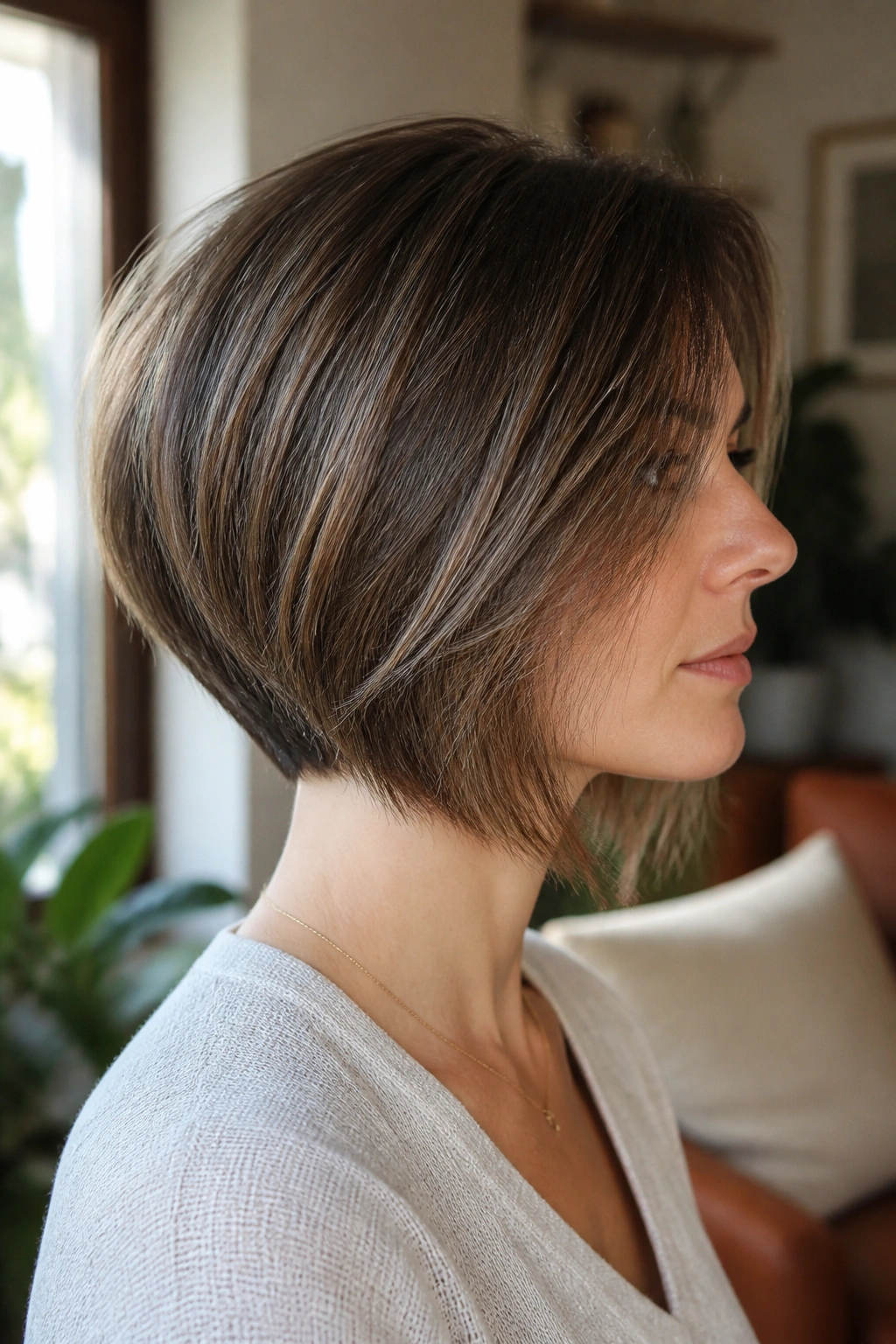
Hidden layers are the quiet fix for hair that needs movement but loses density the second you start slicing into it. Instead of layering the outer shape, the stylist removes some weight from the inside. The perimeter stays full. The haircut moves better. Fine hair likes that arrangement.
The result is especially good if your hair looks thick when it’s damp but breaks apart when it’s dry. Internal layers can keep the interior from ballooning while still protecting the visible edge. That makes the whole bob look cleaner and less choppy.
This is one of those cuts people don’t always notice right away, which I think is part of the appeal. It looks natural, not engineered. But if you run your fingers through it, the movement is there.
18. Airy Flipped-End Bob

A little flip at the ends can save a bob from looking too severe. On fine hair, those flipped-out tips create motion and keep the cut from hugging the face too hard. The look is playful, not messy.
The shape works best when the front stays longer than the back by a noticeable but not dramatic amount. Then you can use a flat iron or round brush to turn the ends out by a quarter-turn. That tiny curve is enough. Anything bigger starts to look theatrical.
- Keep the stack light.
- Let the ends sit a little wider.
- Use a heat protectant so fine hair doesn’t fry.
- Finish with a dry texture spray, not a heavy cream.
This version suits people who wear casual clothes, sneakers, or oversized knits and want the hair to feel a little less buttoned-up.
19. Tuck-Friendly Bob With Temple Length
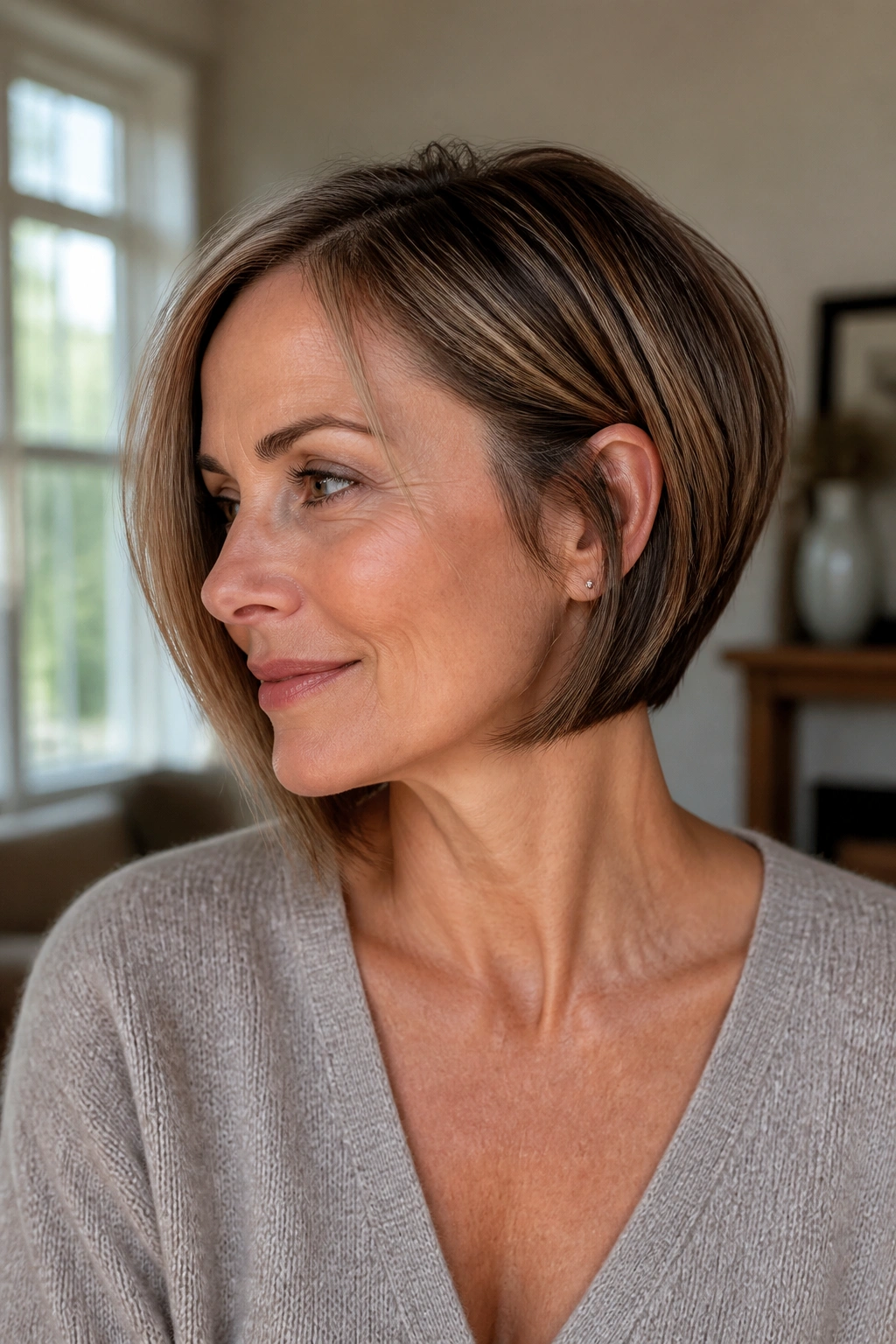
Some bobs look good only when they’re styled. This one works because the temple length gives you options. The front is long enough to tuck behind the ears, but the back still holds that inverted shape that fine hair needs.
The temple area matters more than people think. If it’s too short, the hair sticks out. If it’s too long, the shape starts to lose its angle. Get that section right, and the cut feels easy in a way that a lot of sharper bobs don’t.
How to Get the Most From It
A little bend at the ends helps the front sit behind the ears without puffing. That’s especially useful if you wear glasses, earrings, or just hate hair in your face. The tuck becomes part of the style instead of a compromise.
This is one of the most practical cuts on the list. It looks finished even when you haven’t fussed much with it.
20. Sleek Glassy Inverted Bob With a Clean Center Part
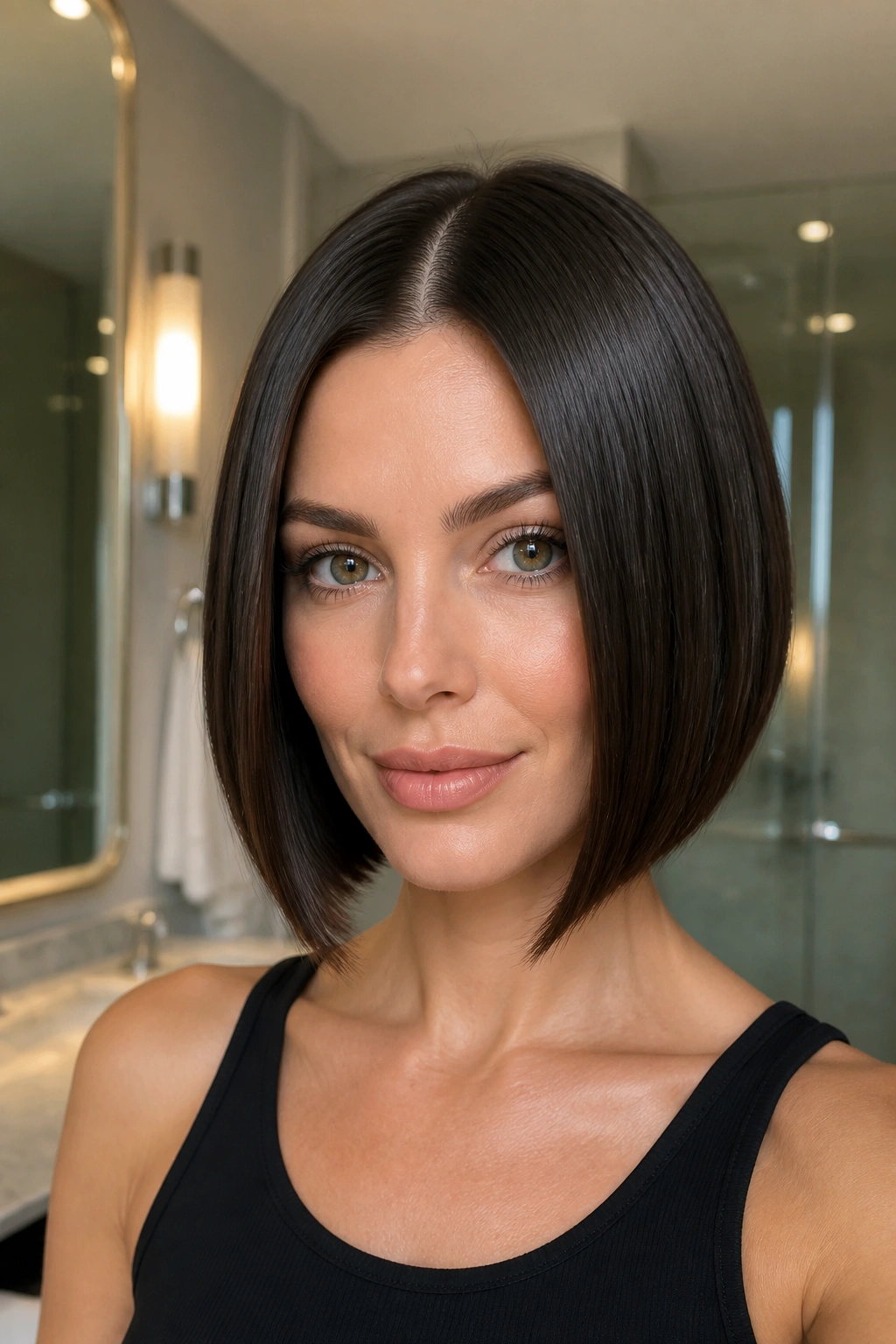
Straight fine hair often looks strongest when you stop trying to rough it up. A sleek, glassy inverted bob leans into the hair’s natural smoothness and makes the shape the star. The center part sharpens the line, and the clean back keeps the cut neat from the neck up.
The key is shine without weight. A tiny bit of serum on the ends is enough. Too much and the hair collapses. Blow-dry with the nozzle aimed downward, then use a flat brush to smooth the top section while keeping the back snug to the head.
This cut works especially well if your hair likes to lie flat anyway. Don’t fight it. Give it structure instead. The result looks polished, and the inverted angle keeps it from feeling plain.
21. Curly or Wavy Inverted Bob
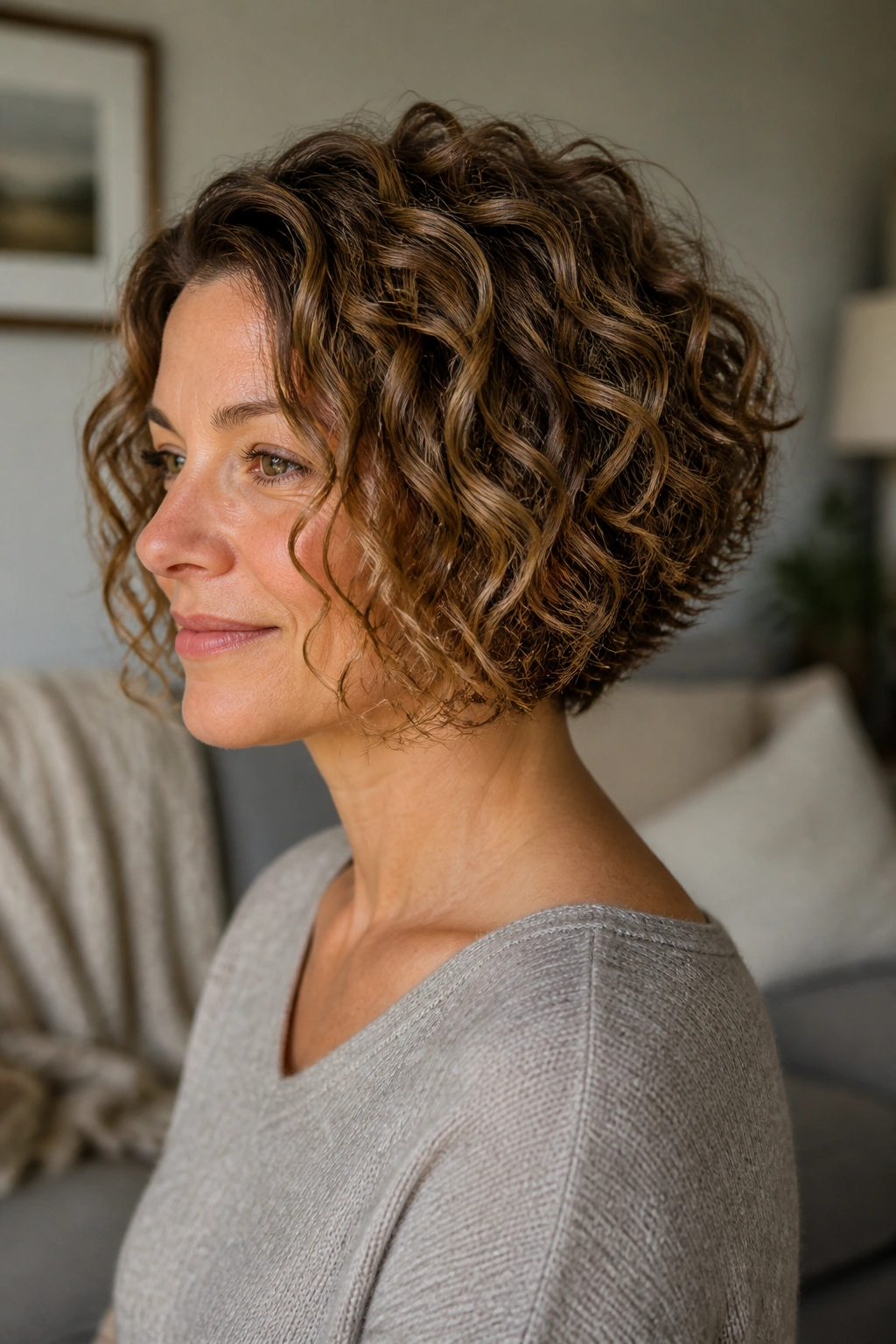
Can a fine curly bob work in an inverted shape? Yes, if the haircut respects the curl pattern. Dry-cutting or curl-by-curl shaping usually helps because wet curls can hide how much spring they really have. That matters when the back is shorter and the front is longer.
The best versions keep the stack soft and let the curls fill in the shape naturally. If the haircut is too short in the wrong places, the curls can bounce up and leave the outline uneven. A good stylist will leave enough length for the curl to settle without turning the bob into a triangle.
How to Ask for It
Tell the stylist you want a rounded inverted shape with light graduation, not a heavily sliced cut. Ask for the front to stay long enough that the curls can stretch a bit when dry. Then style with a cream that defines without making the strands stiff.
This is a lovely option if your fine hair has movement and you want to keep it.
22. Micro-Stacked Nape Bob
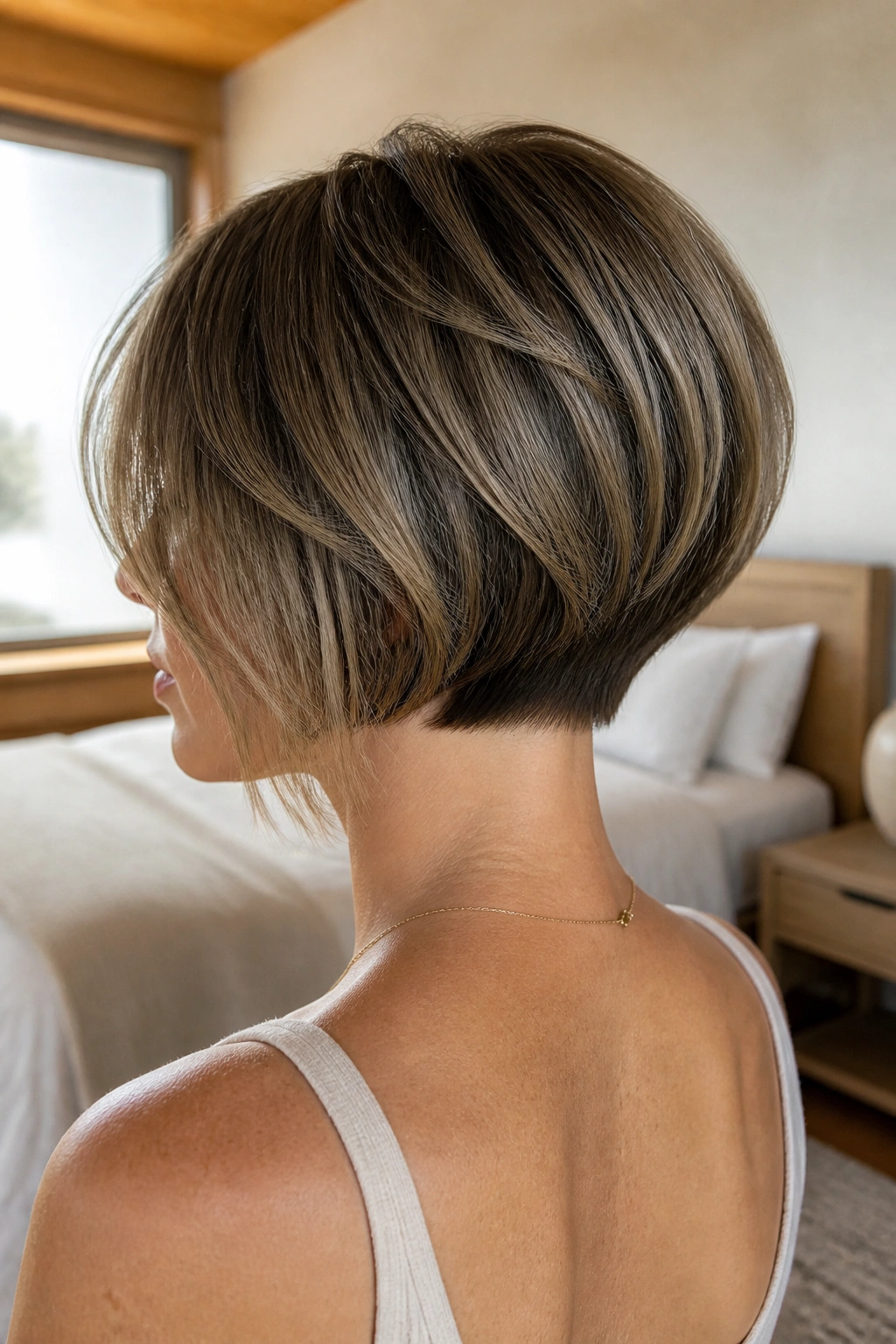
A micro-stacked nape bob looks small from the front and surprisingly full from the back. The stack is short, tight, and controlled, which makes it a good choice for fine hair that lies close to the head and needs a little lift without a lot of length removal.
The back curve should be visible, but not bulky. That’s the whole point. You get the feeling of structure without the heavy wedge shape people sometimes associate with old-school bobs. The front can stay just long enough to skim the jawline, which keeps the cut from feeling severe.
- Ask for a short stack only at the nape.
- Keep the top layers soft and connected.
- Avoid over-thinning the front pieces.
- Trim every 5 to 7 weeks if you want the shape to stay neat.
This is a strong choice if you want the hair off your neck and still want it to look intentional.
23. Shoulder-Skimming Long-Line Inverted Bob
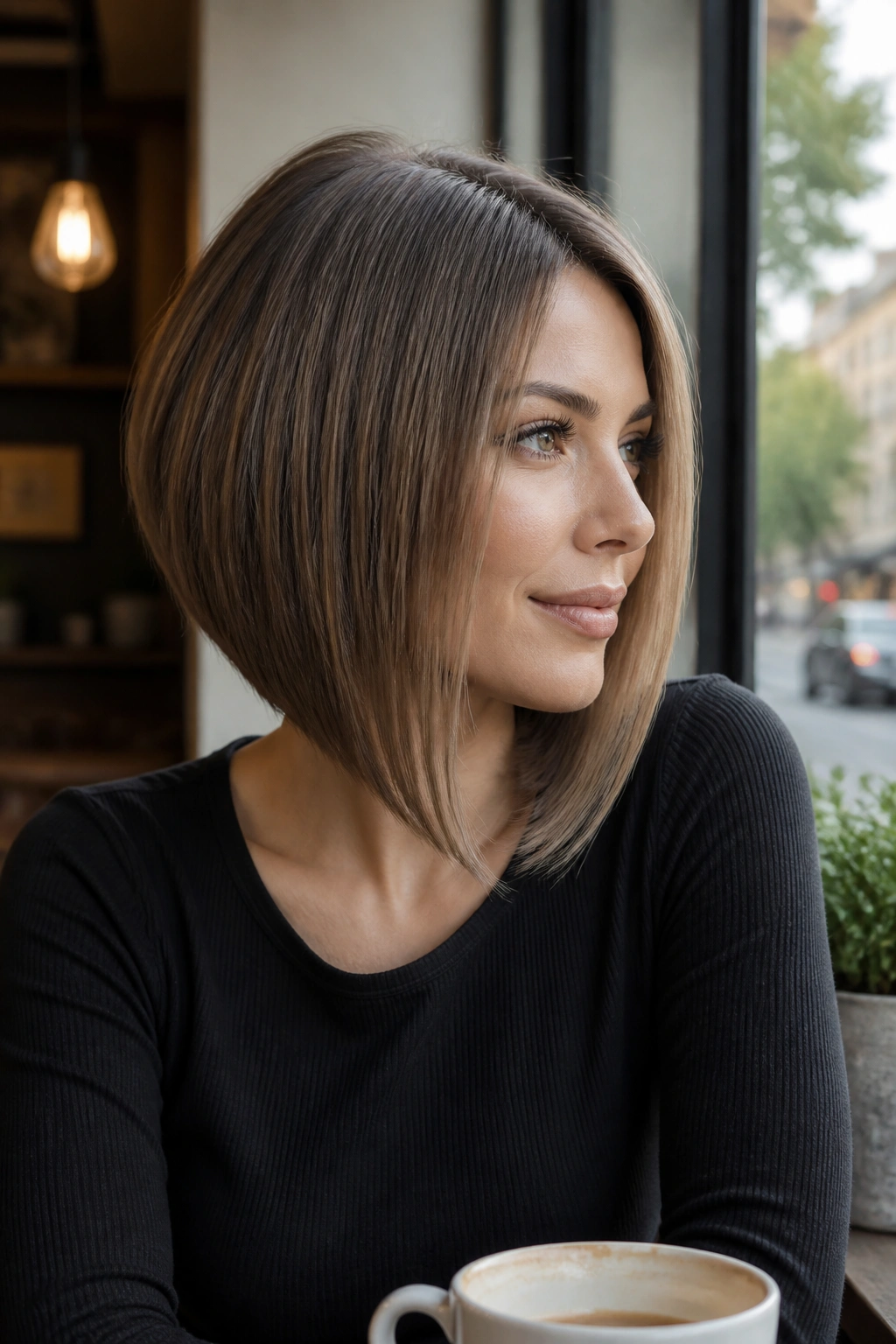
A shoulder-skimming long-line inverted bob gives fine hair a little breathing room. It is still shorter in the back and longer in front, but the overall length feels more relaxed. That makes it a smart compromise if you want the look of an inverted cut without committing to a very short one.
The long front pieces help the hair feel denser because they create a slower, smoother line. Fine hair can look stringy when it stops too abruptly at one length. Here, the transition from back to front is gradual, which keeps the ends from looking thin.
This cut also works well if you like to wear your hair half-up or tucked behind one ear. It holds its shape, but it does not box you in. For a lot of people, that is the sweet spot.
24. Rounded Bob With No Bangs
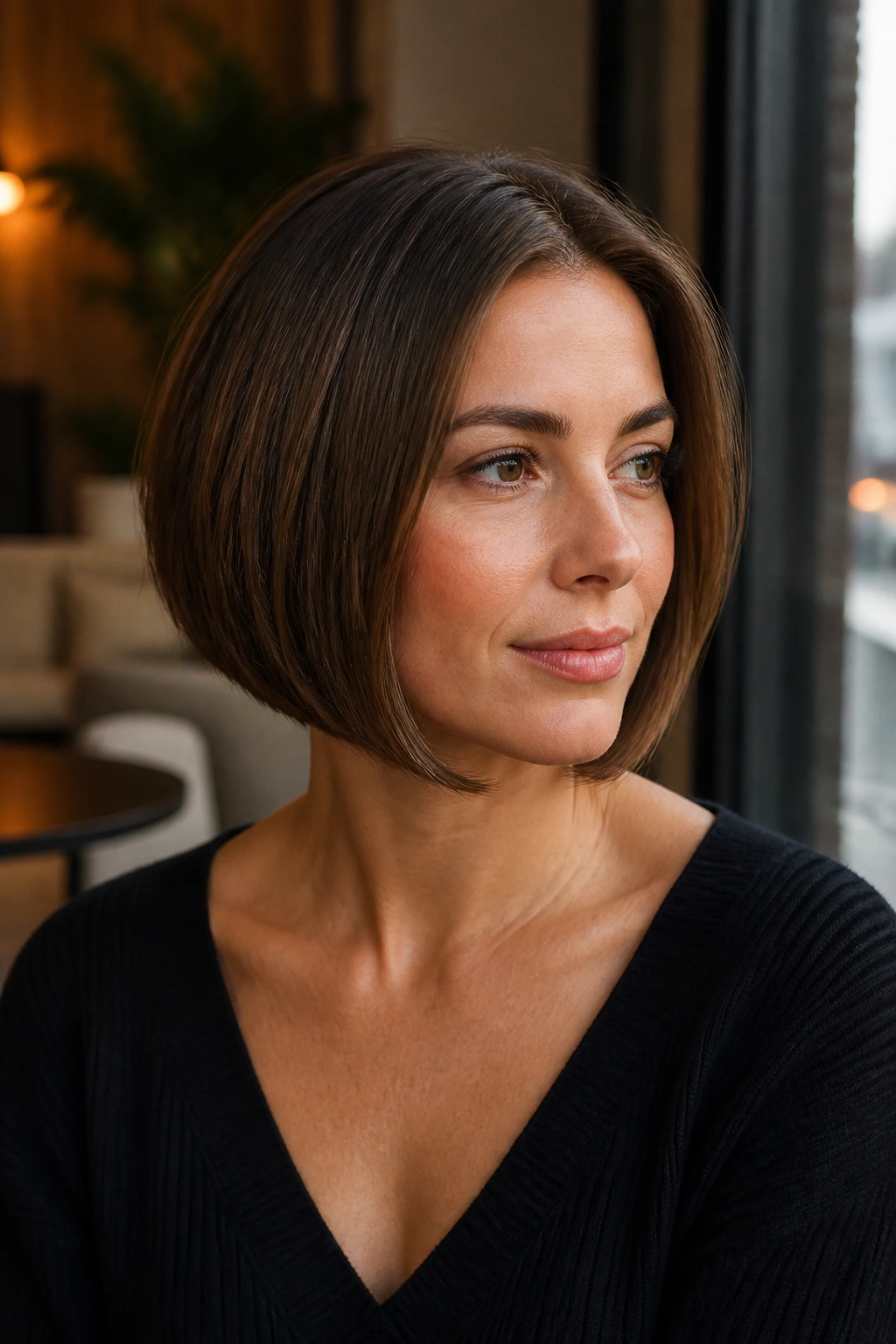
A rounded bob with no bangs is clean, simple, and a little unforgiving — which is exactly why it can look so good on fine hair. Without fringe, the eye goes straight to the shape of the cut, and that shape needs to be precise. Luckily, fine hair often behaves well in this format.
The roundness around the crown helps the top area feel fuller, while the front stays long enough to frame the face. If you want the face softened, you can keep the front pieces a little lower at the cheekbone. If you want a sharper line, bring them closer to the jaw.
Best for people who hate fringe maintenance. No bangs means less styling at the forehead and fewer little pieces escaping all day. Clean, simple, done.
25. Grown-Out Inverted Bob That Still Holds Its Shape
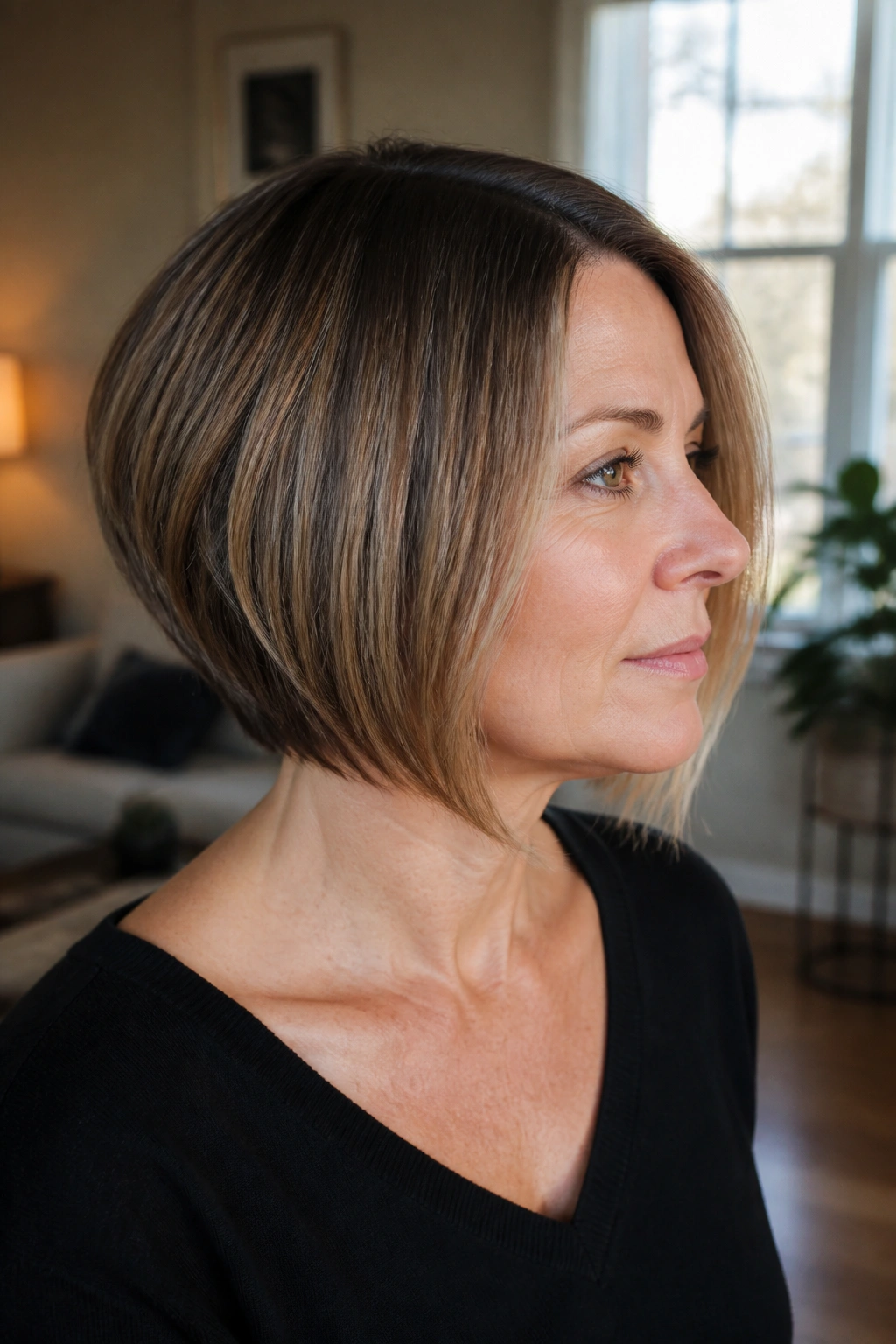
The best inverted bob is one you can live with after the salon glow fades. A grown-out version keeps the angle, but it softens the difference between the back and front so the cut still looks intentional at week six or seven. Fine hair often benefits from that kind of gradual change.
How to Keep It from Collapsing
Ask for a perimeter that stays blunt enough to hold density, even when the stack starts to loosen. A tiny bit of graduation at the back helps the shape stay lifted, and the front should remain long enough that it doesn’t flip into a triangle.
- Schedule trims every 6 to 8 weeks if you want the angle to stay visible.
- Keep heat styling light so the ends don’t go frayed.
- Use a root spray only at the crown, not all over.
- If the shape starts to disappear, shorten the back before touching the front.
This is the version that makes sense for real life. It still looks like an inverted bob, but it forgives the days when you do not feel like fighting your hair.
