



Fine hair does not need more layers. It needs a better line.
That’s why white bob haircuts for fine hair can look so much fuller than longer styles. The right bob gives the eye a clean edge to follow, and that edge does a lot of work. White, silver, pearl, and icy tones make every curve and corner more visible, which is exactly why the shape matters so much.
A weak cut shows its weakness fast. A strong bob does the opposite. It makes the hair look deliberate, denser at the ends, and easier to style without wrestling with it for half an hour.
The tricky part is restraint. Too much thinning, too much feathering, too much cleverness around the ends — and fine hair starts looking threadbare instead of light. The better cuts know when to stop. They give you lift, movement, and a clean finish without making the hair disappear at the bottom.
1. Blunt Chin-Length White Bob

A blunt chin-length bob is the one I keep coming back to when fine hair needs the biggest visual upgrade. A clean, straight perimeter creates the illusion of density because the eye reads a solid line as thickness, even when the actual strand count is modest.
Why It Works for Fine Hair
The cut sits right at the part of the face where the hair can still move, but not sag. That matters. Once fine hair gets much longer than the chin, the ends start to look see-through, especially in white or silver shades where there is nowhere to hide.
Ask for the ends to stay blunt, not chiseled. If your stylist wants to “open it up” with a lot of point cutting, steer it back. You want enough softness to avoid a helmet, but not so much texture that the ends look airy in a bad way.
- Keep the length at the chin or just below it.
- Ask for minimal internal layering.
- Blow-dry with a flat brush for a sharp finish.
- Use a pea-sized amount of light serum only on the ends.
Pro tip: if your hair is pin-straight, a tiny underbend at the bottom makes the cut look polished instead of severe.
2. Jaw-Grazing Box Bob with a Soft Side Part
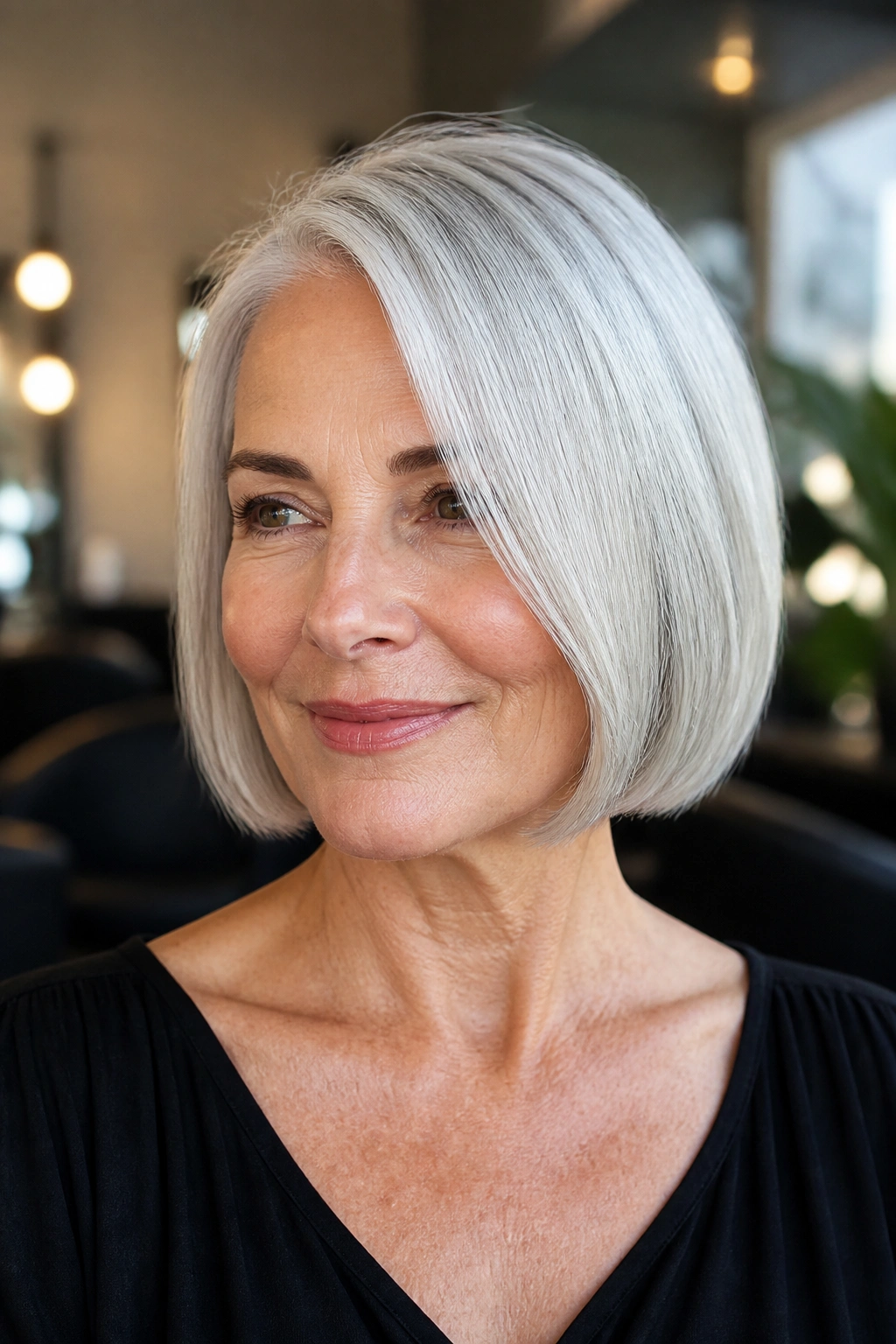
A boxy bob can be kinder to fine hair than a wispy, over-layered cut. That sounds backwards until you see it in the mirror. The square shape adds visual weight at the bottom, and the soft side part gives the roots a little lift without making the style feel stiff.
This length works especially well if your hair tends to collapse around lunch. The jaw line gives the bob a place to stop, and that stopping point makes the whole style read as fuller. White hair shows shape fast, so a box bob with a slight bend at the corners can look very expensive without much effort.
I like this shape for someone who wants structure but not sharpness. It’s cleaner than a shaggy bob, easier to wear than a razor cut, and less fussy than a full rounded blowout. On fine hair, those are not small wins.
Use a side part if your crown is flat. It breaks up the top line just enough to stop the style from lying there like a sheet.
3. Sleek Micro Bob with Tucked Ends

Why does a micro bob look so dense? Because it removes the dead weight that pulls fine hair downward. Shorter hair has less room to droop, and that alone can make the whole head of hair feel sturdier.
The tucked ends are the real trick. When the last half inch curves in toward the neck, the cut looks controlled and thick at the edge, not scraggly. On white hair, that neat finish matters even more because every little fray catches light.
How to Style It
- Blow-dry with a small round brush.
- Set the ends under with a 1-inch iron if needed.
- Keep products light; heavy cream will flatten the shape.
- Tuck one side behind the ear for a cleaner line.
This is a sharp look. Not harsh, just sharp. If you like hair that feels neat by default and does not need much rescue on busy mornings, the micro bob earns its keep.
4. Rounded French Bob with Brow-Grazing Bangs

You know the version: a soft curve under the cheekbones, a fringe that skims the brows, and a shape that makes fine hair look a little fuller than it has any right to be. The rounded French bob works because it concentrates volume where the eye notices it first — around the face, not at the ends that usually fall flat.
The fringe helps more than people think. A brow-grazing bang creates a dense-looking front line, and that front line changes how the rest of the cut reads. Instead of seeing narrow sides, you see a balanced frame.
If your hair is fine but not limp, this is one of the prettiest options on the list. It looks soft without getting fluffy. It also plays well with white and silver shades because the curve catches light in a gentle way, not a choppy one.
Be careful with the bangs. Too much thinning and they start to separate into little see-through pieces. Keep them full enough to read as a fringe, not a whisper.
5. Collarbone Bob with Light Interior Layers

A collarbone bob gives fine hair breathing room. It’s long enough to feel versatile, short enough to avoid the sad, stringy ends that happen when hair gets pulled past its strength. On a white base, that balance is even more useful because the color shows every taper.
The best version has light internal layers, not a lot of surface choppiness. That means the outside line stays full while the inside gets just enough movement to stop the cut from sitting flat. It’s a smarter choice than a heavily layered lob if you want body without losing weight.
This length also behaves well when you want to tie it back half an inch or clip the sides away. Nice bonus. Fine hair can be annoying on low-energy days, and a collarbone bob gives you more styling options than shorter cuts without giving up the thicker look at the perimeter.
I’d call this the safe bet that does not look safe. It has polish, and it does not ask for much.
6. Side-Swept Bob That Widens the Crown
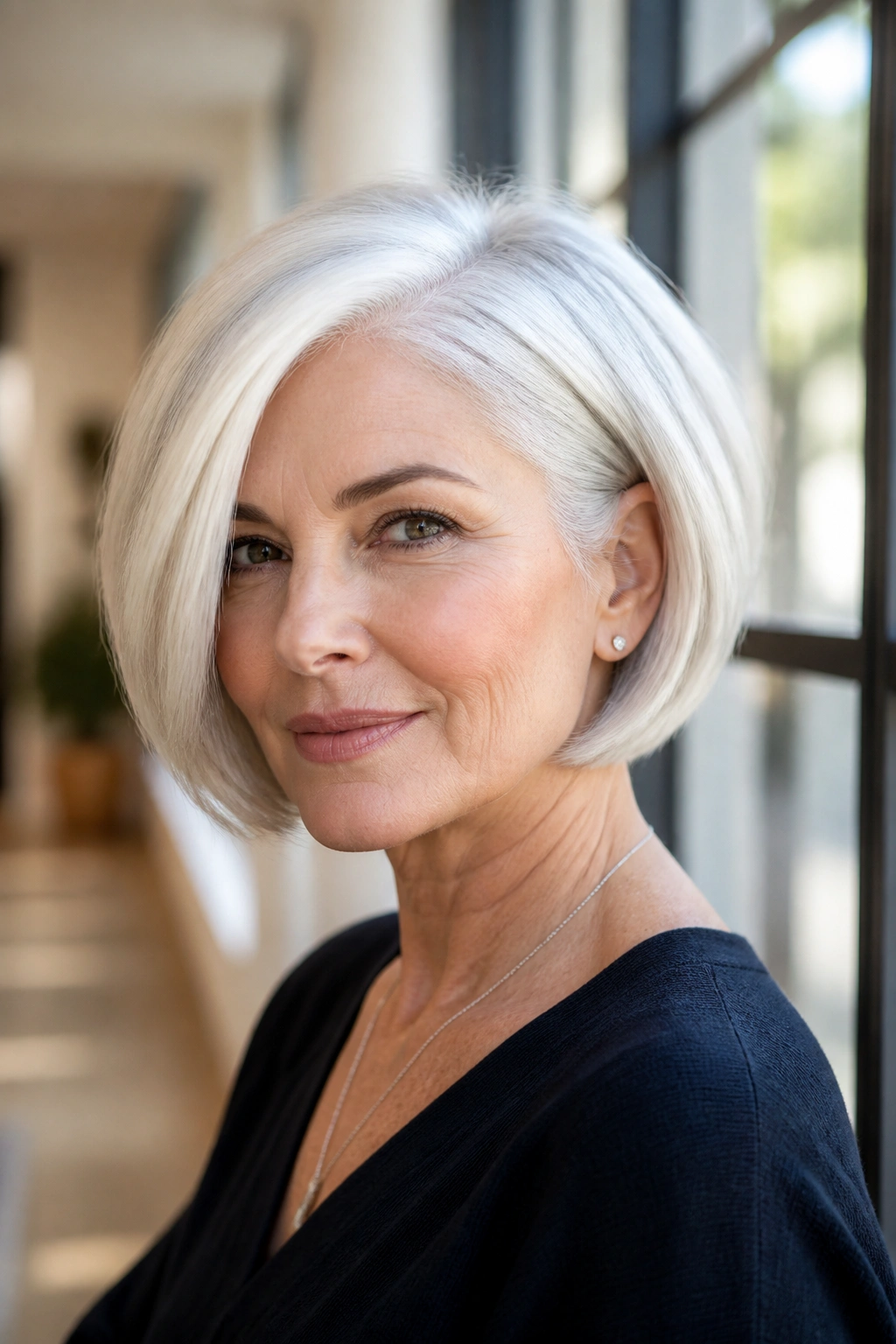
A side-swept bob is one of the easiest fixes for a flat top. The off-center part creates lift exactly where fine hair tends to lie down, and that small change can make the whole cut look more alive.
Unlike a center part, which can expose the scalp more clearly on very fine strands, a side part shifts the volume to one side and builds a little height near the root. That matters most on white hair, where the scalp contrast can be more visible. A deep side part softens that effect and gives the style a cleaner silhouette.
This one is especially good if your face is narrow or your crown needs help. It is not about drama. It is about creating a shape that does not collapse the second humidity enters the room.
Best for: straight to slightly wavy hair
Ask for: soft graduation near the jaw, not a stacked back
Style with: a root-lifting mousse at the part and a quick blow-dry with the front lifted away from the face
7. Wavy White Bob with Piecey Ends

A little wave changes everything. On fine hair, a wavy bob can look airy in a good way, as long as the ends stay piecey and not frayed. The goal is separation, not fluff.
What Makes It Different
The wave gives the hair a broken-up surface, which helps a white bob avoid that too-flat, too-uniform look. White hair reflects light so strongly that a perfectly straight finish can sometimes reveal every weak spot. A soft wave hides more than it shows.
The trick is keeping the wave loose. One-inch bends, not tight curls. If you over-crimp or over-curl fine hair, it loses its clean shape and starts looking smaller, not bigger.
- Use a light mousse on damp hair.
- Diffuse for about 5 to 7 minutes, then air-dry the rest.
- Wrap only the mid-lengths around a curling wand.
- Leave the last inch out for a softer edge.
One rule: if the ends look fuzzy, stop adding texture.
8. Inverted Bob with a Clean Nape
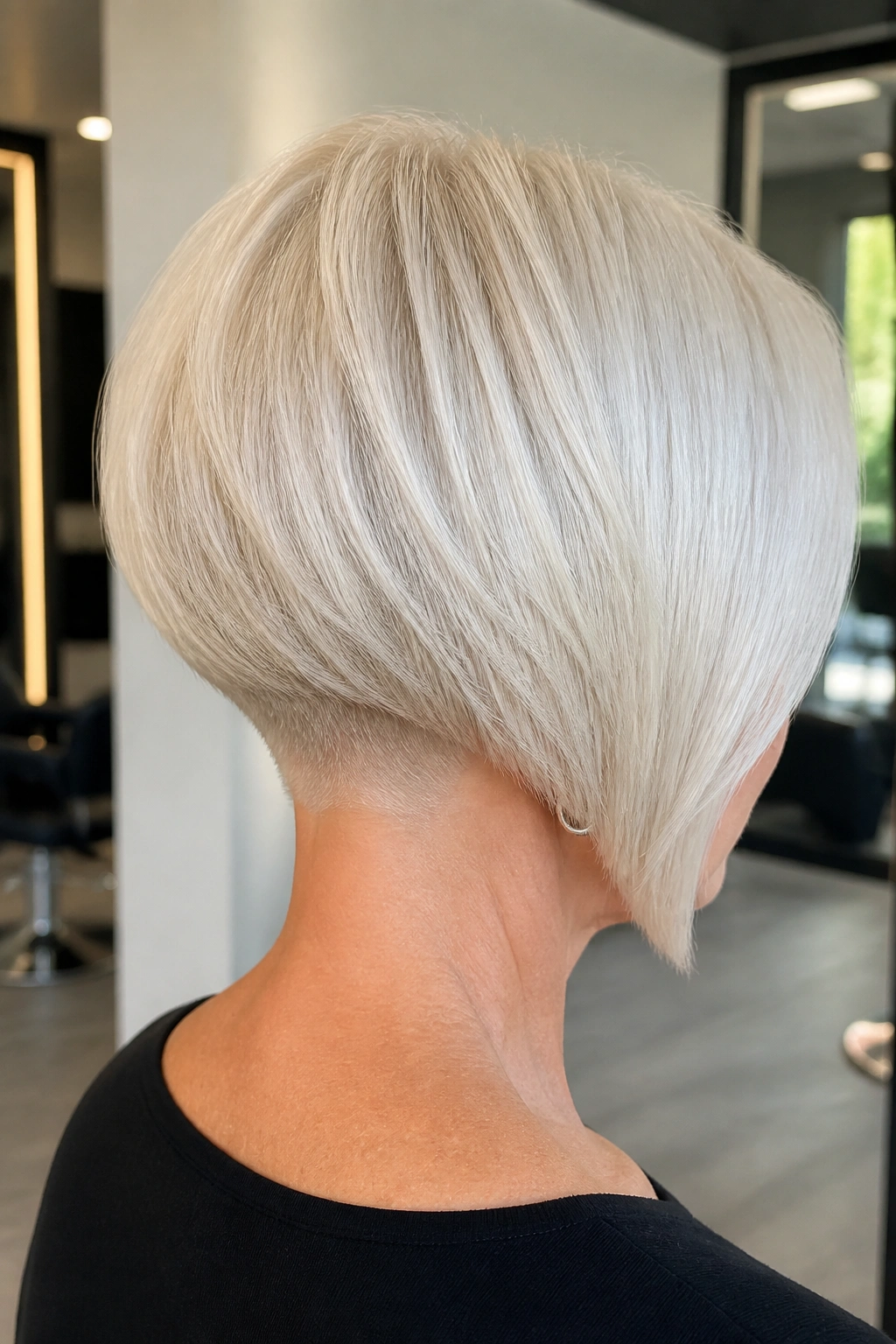
The back view is the whole story here. An inverted bob lifts at the nape and falls slightly longer toward the front, which lets fine hair feel fuller at the back where it usually goes limp first.
That shorter nape creates a built-in boost. It also keeps the overall shape from dragging downward, which is a common problem on straighter, finer textures. White hair loves a crisp cut like this because the angle reads clearly from every side.
I’m picky about the graduation on this one. Too much stacking and it starts to look dated or bulky in the wrong place. Too little, and you lose the lift that makes the cut worth having. The sweet spot is a clean rise through the back with a smooth transition into the front.
This is a strong choice if your neck is one of your favorite features. The cut shows it off, and it does that without asking the rest of the hair to do heavy lifting.
9. Curly-Friendly Bob with Soft Shape

Can fine hair be curly and still wear a bob? Absolutely. The shape just has to respect the curl pattern instead of fighting it. Loose curls and fine texture can look fantastic in a bob when the cut leaves enough room for spring.
A curly-friendly bob works best when the perimeter stays soft and slightly rounded. That avoids the triangle effect that can happen when curls are cut too wide at the bottom. On white or silver hair, the curve around the face helps the curls read as intentional, not accidental.
How to Wear It
Cut it dry, or at least mostly dry, so the stylist can see how each curl falls.
Use a light gel or curl cream, not a heavy butter.
Scrunch gently and let the hair air-dry partway before diffusing.
Keep the layers long enough to preserve weight at the bottom.
If your curls are loose and your strands are fine, this cut can look expensive in a very quiet way. No puffiness. No helmet. Just shape.
10. Feathered Bob with Wispy Fringe
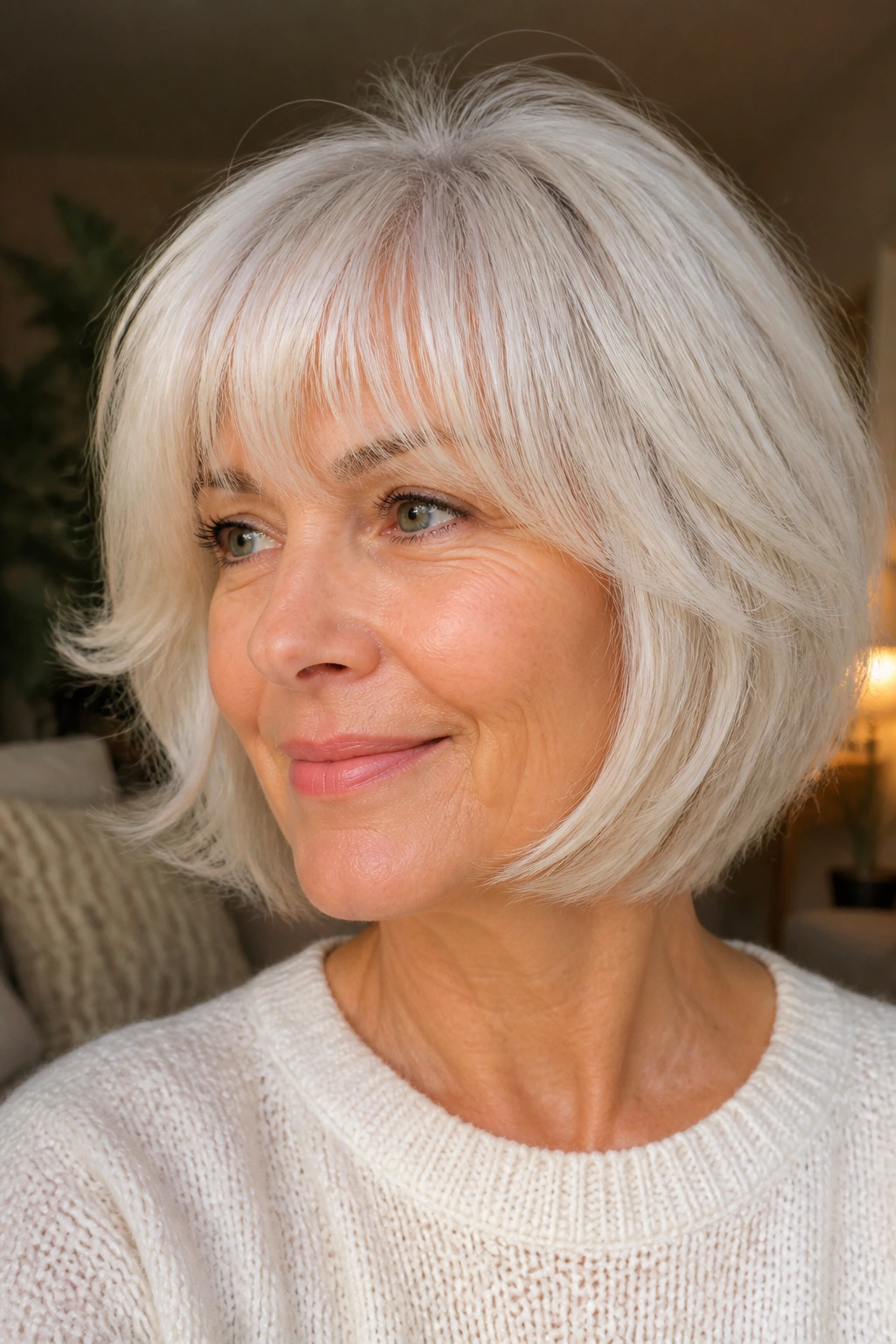
Feathering gets a bad reputation because too much of it can make fine hair look eaten away at the ends. Used with restraint, though, it softens a white bob in a way a blunt cut never will.
I like feathering most around the face, not all over the head. That keeps the perimeter strong while easing the line near the cheeks and temples. A wispy fringe can help if your forehead feels broad or if you want the cut to sit a little lighter.
What to Watch For
- Ask for feathering only at the front or crown.
- Keep the ends full enough to hold a shape.
- Avoid aggressive razor work on very fine strands.
- Style with a round brush so the feathers bend inward, not outward.
This is a good cut for someone who likes softness but hates a heavy look. It has movement. It just needs a steady hand.
11. Ear-Tucked Bob with a Deep Side Part

There’s something very clean about an ear-tucked bob. One side sits behind the ear, the other falls forward, and suddenly fine hair looks more styled than it really was. That asymmetry creates the illusion of intention, which is useful when the hair itself is small in scale.
A deep side part helps even more. It lifts the root on top and gives the tuck some contrast. White hair can read as stark if everything is the same length and all the lines are straight. This shape breaks that up in a flattering way.
I also like this one because it works on tired hair days. You do not need perfect blowout technique. You need a decent part, a smooth tuck, and maybe a tiny bit of cream on the front pieces so they do not stick out like little wires.
Glasses, earrings, a bold lip — this bob likes all of them. It gives them space.
12. Sleek Asymmetrical White Bob

Unlike a classic bob, an asymmetrical version gives you one stronger visual line to play with. That longer side adds movement without requiring a lot of texture, which is a gift for fine hair that tends to separate when it gets overworked.
Keep the difference subtle. One to two inches is usually enough. If the asymmetry gets too dramatic, the shorter side can look sparse and the longer side can start to feel heavy. The prettiest versions stay smooth and controlled, with a slight forward lean.
This is a good cut if you want edge but not mess. It looks deliberate with straight hair and still holds up when the ends get a little bend from sleeping on them. White color shows that line clearly, which is part of the appeal. There is no need to overstyle it.
Best for: oval, heart, or long faces that want a little sideways motion.
Skip the severe contrast if your hair is ultra-fine. Subtle wins.
13. Tousled White Bob with a Shadow Root
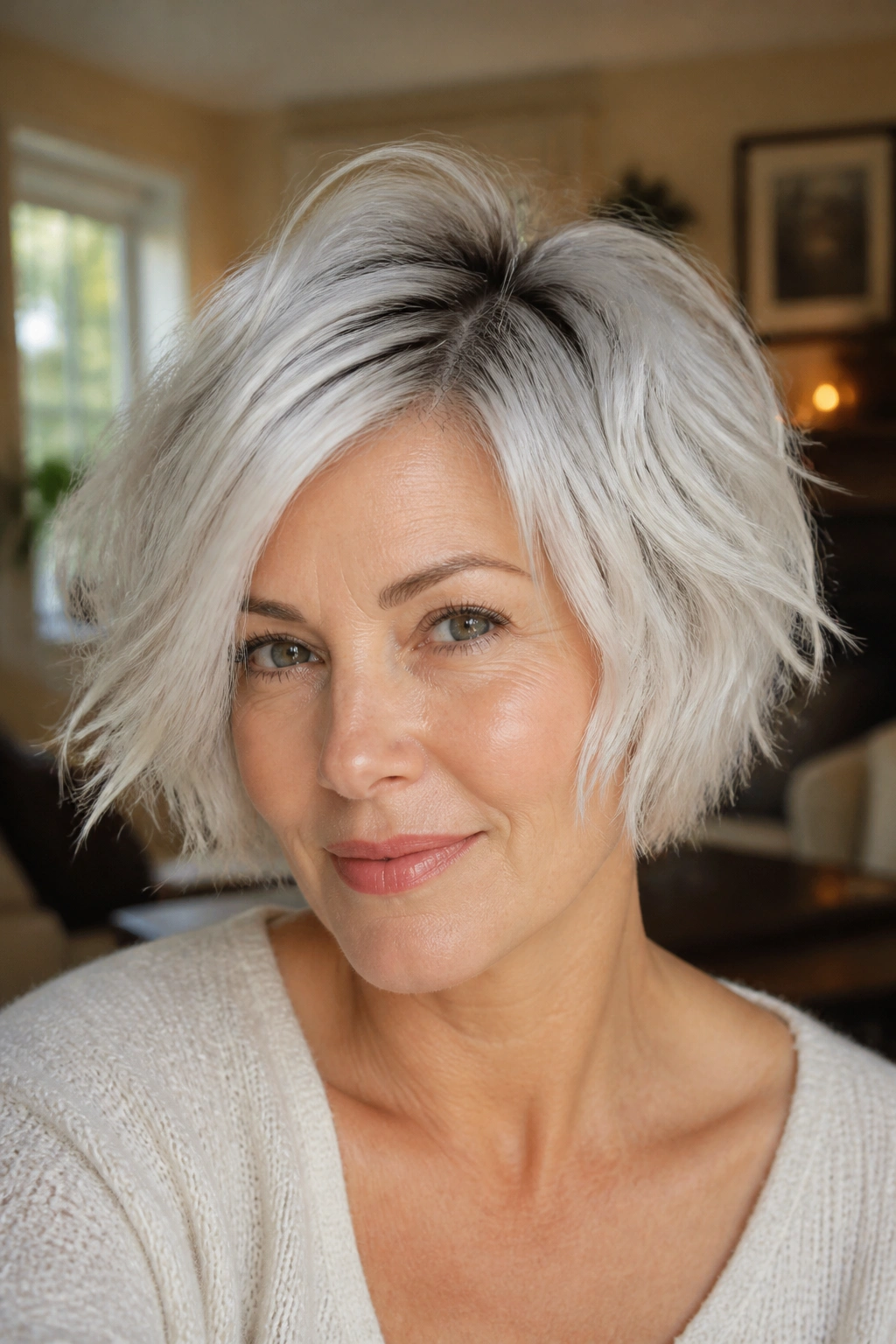
A shadow root gives white hair depth right where fine hair often needs it most — at the scalp. Without that darker base, a very pale bob can sometimes look a little washed out, especially if the strands are thin and the part is wide.
The tousled texture keeps the cut from feeling too polished. That matters because fine hair can look flat if every strand is pinned into place. A bit of lift, a few bent pieces, and a root that is one shade deeper can make the whole style feel fuller and more lived-in.
Quick Notes
- Keep the root blur soft, not stripey.
- Use a light texturizing spray at mid-lengths only.
- Bend random sections with a 1-inch wand.
- Leave some ends straight so the hair does not puff up.
This is one of the easier ways to wear white hair without letting the color do all the work. The cut and color share the load.
14. Graduated Bob with Built-Up Back
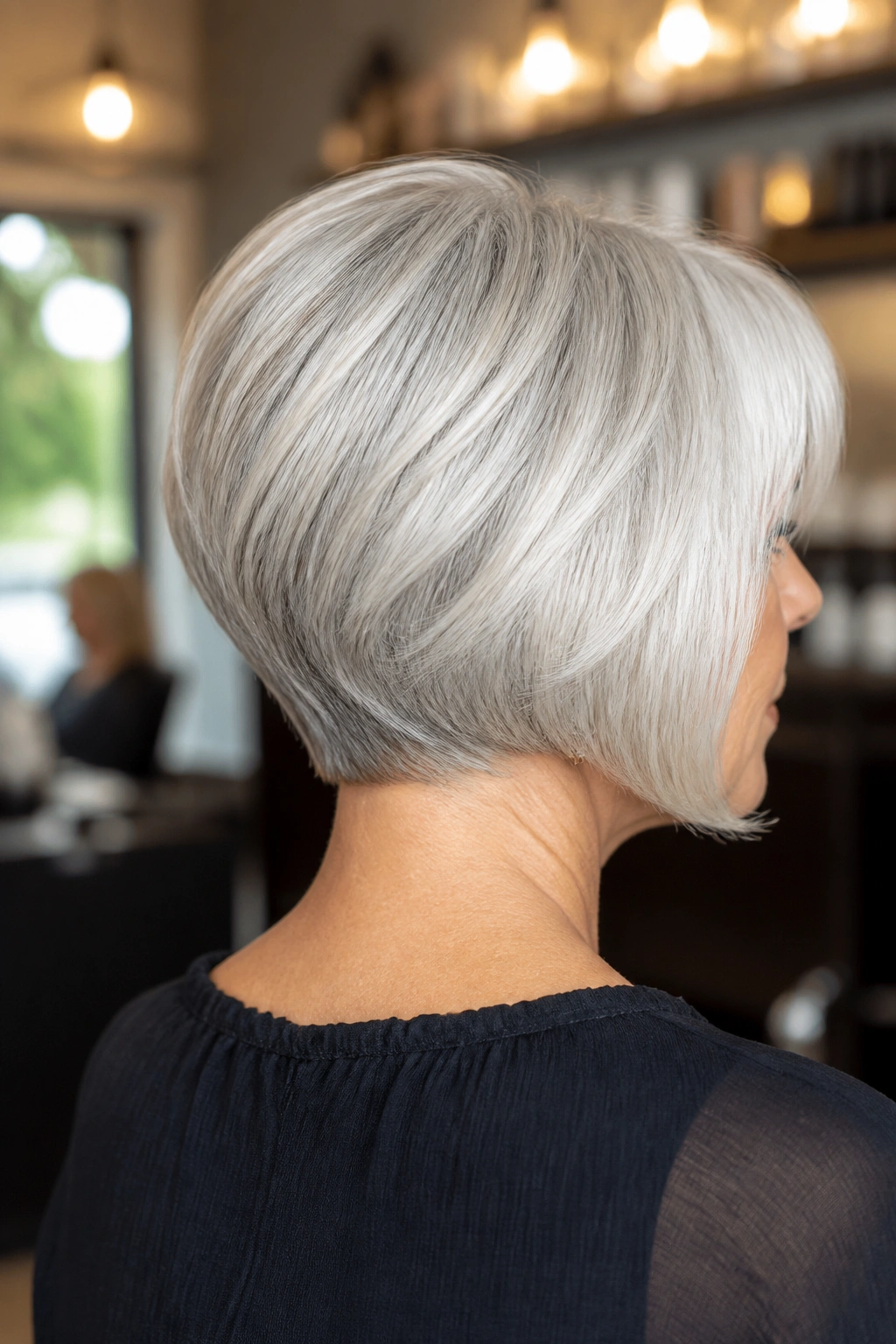
A graduated bob is basically architecture for fine hair. The back is shorter and slightly stacked, which creates lift through the crown and a fuller look at the nape where thinner hair often collapses first.
The nice thing about this shape is that it adds body without needing long layers all over the head. That keeps the outside line strong. And a strong outside line is what stops fine hair from looking stringy.
There is a catch. Too much graduation can make the back puff out while the sides go limp, which is not a good look on anyone. Ask for a controlled rise through the back, not a stacked mushroom. The difference is real.
This cut is especially good if your head shape benefits from a little height at the back. It also works well with white hair because the shape reads clearly from the side and the back. It’s one of those cuts that looks simple until you notice how well it holds itself together.
15. White Bob with Bottleneck Bangs

Bottleneck bangs are clever. They open at the center, curve out softly around the brows, and blend into the sides without looking heavy. On fine hair, that gives the front more presence without turning the fringe into a flat, blunt wall.
How to Keep the Fringe Light
The bangs should start narrow between the eyes and widen only enough to frame the face. If they get too thick, they can drag the whole bob down. If they get too thin, you lose the point of having them in the first place.
This style works well with white or icy tones because the softer fringe line balances the bright color. It also plays nicely with glasses and strong brows. The front stays readable, but it does not swallow the face.
A small round brush is enough. Dry the fringe side to side first, then settle it into place. That little bit of movement prevents the bangs from splitting awkwardly, which fine hair loves to do if left alone.
It’s a pretty cut. Not precious. There’s a difference.
16. Angled Bob for Jaw Definition
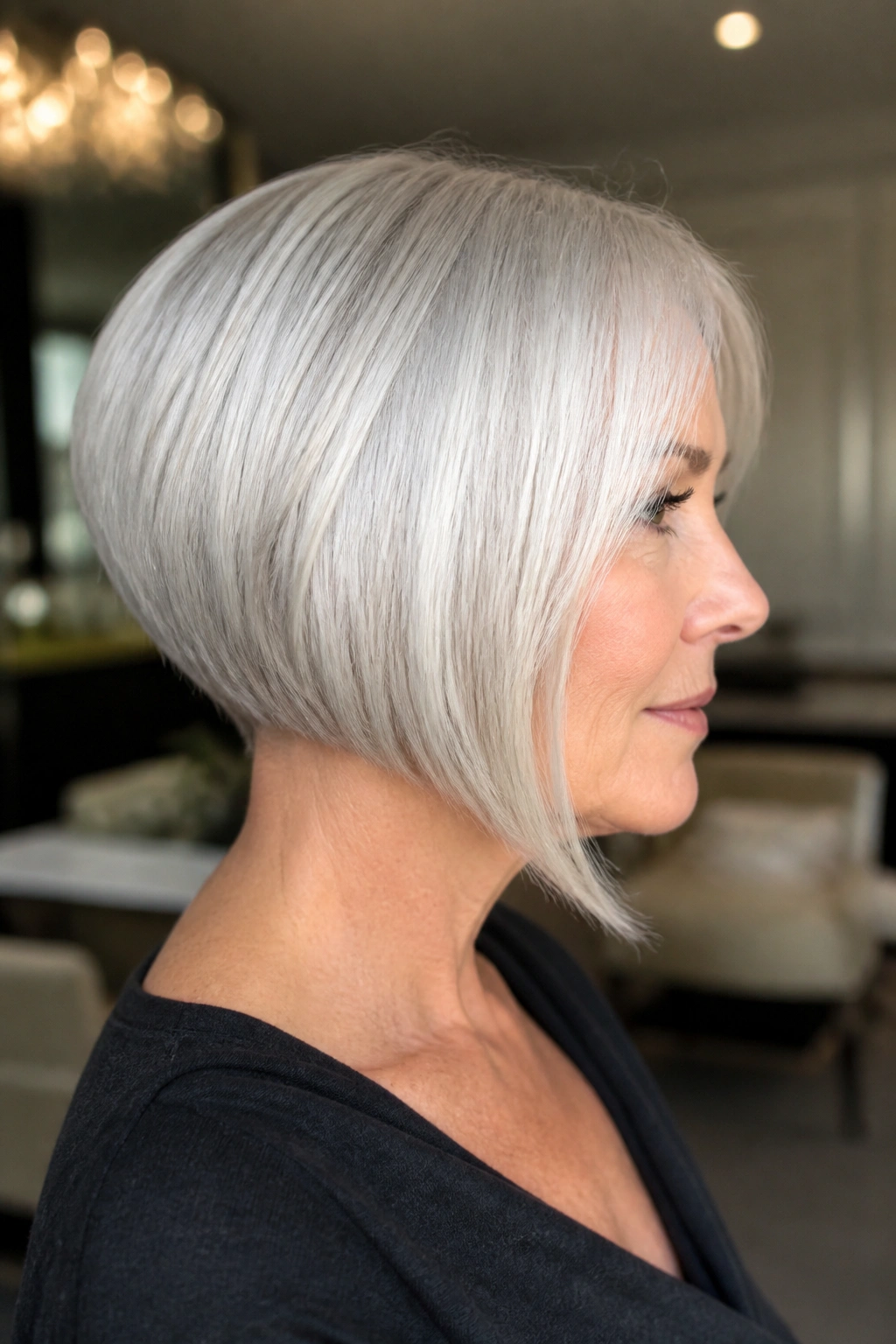
A proper angled bob gives the jawline a sharper frame. The back stays shorter, the front stays longer, and the eye follows that slope downward. For fine hair, that diagonal line creates shape fast, which is why the cut can look fuller than a longer, flatter bob.
This version suits people who want a little edge without going full asymmetrical. Both sides can match while still leaning forward. That makes it easier to wear day to day, and it keeps the cut from looking too aggressive in white hair, which already has a lot of visual presence.
- Great if your jaw is soft and you want more definition.
- Good for straight or lightly waved hair.
- Better with a side part than a dead-center part.
- Needs clean edges every 6 to 8 weeks.
One small warning: if the angle is too steep, the front starts to look stringy. A gentle slope usually wears better.
17. Shattered Bob for Flat Fine Hair

A shattered bob sounds rough, but the good version is simply a bob with broken-up internal texture and a lighter feel through the ends. On fine hair, that can be a smart way to stop the cut from looking like one solid block.
The key is not to overdo it. Fine hair does not need to be chopped to pieces. It needs tiny breaks in the line so the shape moves. A skilled stylist can point-cut or slice just enough to keep the ends from looking too hard without stripping away the thickness that makes a bob work.
I like this option for hair that air-dries with a little bend. The texture looks relaxed, not messy. White hair can take this style well because the uneven movement keeps the color from reading too flat across the whole head.
If you want a bob with a little personality, this is one of the more interesting options. It just needs a careful hand. No drama at the scissors.
18. Chin-Length Bob with a Peekaboo Undercut

Most people hear “undercut” and think of something bold. On fine hair, though, a subtle peekaboo undercut at the nape can remove just enough hidden bulk to help the top layer sit better.
That can matter if the hair looks flat on top but puffy underneath. A clean undercut clears the bottom without changing the visible shape too much. The top still reads as a classic chin-length bob, only lighter and easier to tuck under.
Unlike an undercut on thick hair, this version should stay discreet. You want a little relief, not a visible shave line unless that is the look you want. White hair makes the contrast obvious, so the transition needs to be soft.
This cut is best for someone who likes crisp outlines and hates that bulky neck area some bobs get. It’s a practical fix that does not look like a fix.
19. Airy Bob with Minimal Face-Framing
Sometimes the smartest move is to leave the front alone. A lot of face-framing pieces can make fine hair look sparse, especially once the strands are white and the contrast gets brighter.
Why This Cut Stays Full
The perimeter stays clean, and the front has only the lightest framing around the cheekbone or lip line. That keeps the bob from fraying at the sides. The effect is airy, but not thin. It’s a fine line, and this cut knows where it is.
This is one of the easiest white bob haircuts for fine hair to style because it relies on shape rather than tricks. A soft blow-dry, a bit of root lift, and a quick bend at the ends are enough. Nothing fussy. No elaborate separation work.
- Best for people who want a natural finish.
- Good if your hairline is already delicate.
- Works on straight hair that tends to lie close to the head.
- Needs trims to keep the edge from drifting too long.
If your hair is fine and your patience is also fine, this cut is honest about both.
20. Old-Hollywood Curved Bob
A curved bob gives fine hair a polished fullness that messy texture sometimes cannot match. The ends bend under in a smooth arc, which makes the hair look thicker at the bottom and more controlled around the face.
This shape is especially nice on white hair because the curve catches light in a soft band rather than in scattered bits. That gives the style a calmer, fuller read. It is elegant, but not stiff. More set than sprayed, if that makes sense.
You’ll usually need a round brush or a 1.5-inch curling iron to get the bend right. Start with a heat protectant, then shape the ends inward and let them cool before touching them. That cooling time matters more than most people think. Warm hair falls apart fast.
This is the cut for someone who likes a finished look. It does not pretend to be undone. It is built to look put together, and that can be a relief.
21. Salt-and-Pepper-to-White Transition Bob
What if you are growing into white instead of starting there? A bob is one of the easiest shapes for that transition because it removes the older, drier ends and leaves you with a cleaner line around the face.
The transition looks better when the cut does not fight the color shift. A soft bob lets the mixed tones blend naturally, especially if the white is coming in around the temples and part line. That patchwork can look intentional when the shape is tidy.
Why the Shape Matters During the Grow-Out
A longer style can make the old color at the ends drag the whole head down. A bob trims that problem away. It also gives you a chance to keep the line strong while the root shade changes, which is a much nicer way to live through awkward grow-out stages.
Ask for a cut that works with your natural part. If the new white is coming in heavily on one side, a slight side part can help balance the mix until the tone evens out.
This is one of the most forgiving cuts on the list. It respects the process instead of trying to hide it.
22. Center-Part Parisian Bob
A center part on fine hair can be risky if the cut is too long or too soft. A Parisian-style bob works because the shape is controlled: clean center, compact length, and ends that curve just enough to keep the hair from looking severe.
The center part creates symmetry, which can feel very chic on white hair. It also works well if your face is naturally even or if you want the bob to sit close and neat. The trick is keeping the cut dense at the bottom so the middle part does not expose too much scalp.
This style needs a little discipline. If your hair is always fighting the center line, it will not be the easiest choice. But if it falls there naturally, the result can be sharp in a good way — tidy, polished, and surprisingly full.
I’d choose this for someone who likes a minimal look and does not want a lot of texture fuss. It’s the least noisy bob in the group.
23. Platinum White Glossy Bob
Platinum white hair can look icy and luminous, but on fine hair the finish matters even more than the color. Shine shows the cut, and a glossy bob gives the eye a smooth surface to read instead of a dry, broken one.
That does not mean drowning the hair in oil. Too much product on fine strands kills lift and makes the roots go limp. What you want is a clean blow-dry, a good heat protectant, and a tiny bit of shine spray through the mid-lengths only. Keep the roots clear.
This style works best when the cut itself is simple. A blunt edge or a soft bevel under the ends lets the gloss do its job. If the cut is too busy, the shine gets lost.
White tones look especially good when they are maintained evenly. Brass at the ends or dullness near the crown makes the whole thing look tired fast. A sleek bob with polished color can avoid that problem better than almost any other short style.
It’s a high-maintenance look, yes. It’s also one of the prettiest when it’s cared for.
24. Low-Maintenance White Bob with a Soft Underbend
Not everyone wants to round-brush their hair every morning. Fair enough. A soft underbend bob is the lower-effort cousin of the more polished styles, and it still gives fine hair a tidy shape.
The ends curve under just enough to look finished, but the rest of the hair can air-dry or rough-dry without falling apart. That makes it useful for people whose hair hates too much manipulation. White hair can still read neat here because the bottom line stays visible and controlled.
Unlike a more sculpted blowout bob, this one doesn’t need perfect symmetry. A slight bend here, a softer front there, and you’re done. It wears well on busy weeks and still looks intentional after a few hours.
Best for: straight or slightly wavy fine hair
Ask for: a one-length baseline with a gentle bevel
Style with: a light mousse and a quick pass of a large round brush on the ends only
It’s not flashy. That’s the point.
25. Soft A-Line White Bob with a Longer Front
A soft A-line bob is a gentle way to get length without losing density. The front sits a little longer than the back, which keeps the face frame interesting while the shorter nape supports lift.
This shape works well for fine hair because the longer front pieces do not have to carry the whole style. The back gives the cut its strength. And because the angle is mild, the hair does not thin out dramatically at the front the way a steep A-line sometimes can.
Why It Flatters Fine Hair
The gradual slope keeps the outline full. That’s the main thing. Fine hair loves a perimeter that feels steady, and this one does that while still giving you a little motion near the cheekbones.
- Keep the front only 1 to 2 inches longer than the back.
- Ask for a soft bevel, not a hard angle.
- Blow-dry with the front slightly under and away from the face.
- Trim every 6 to 8 weeks so the shape does not lose its line.
If you want one cut that sits between classic and modern without looking overworked, this is a smart finish to the list.
Final Thoughts
Fine hair does not need to be hidden. It needs a shape that holds. That is the real job of a good white bob: create a line strong enough to make the hair look denser, cleaner, and easier to live with.
The blunt cuts, the angled cuts, the softly curved ones — they all work for different reasons, but the best ones respect the same rule. Keep the perimeter honest. Keep the texture controlled. And do not ask fine hair to do more than it can carry.
If you are choosing between lengths, I’d start with chin-length or jaw-length first. Those shapes give the strongest density payoff with the least fuss, and they usually behave better in white tones than longer, see-through ends.
