



Ash silver bob haircuts for fine hair work best when the cut does the heavy lifting. A blunt edge at the chin can make the whole shape look denser than a cloud of soft layers ever will, and the cool silver tone gives that edge a clean, smoky finish.
Fine hair and thin hair are not the same thing.
That distinction matters more than people think. Fine hair means each strand is smaller in diameter, so it can lose shape fast if the layers start too high or the ends get over-thinned. Ash silver can be a gorgeous choice because it reads crisp and airy at the same time, but it also shows every mistake: a muddy toner, a weak perimeter, a part that sits too flat.
So the real trick is pairing tone with structure. Some of these bobs lean blunt and tidy. Some have a little bend at the ends. A few use a fringe or a side part to make the hair look fuller without asking it to do impossible work. If your bob has been feeling limp, puffy, or oddly dated, one of these shapes should give you a much better place to land.
1. Chin-Length Ash Silver Blunt Bob for Fine Hair
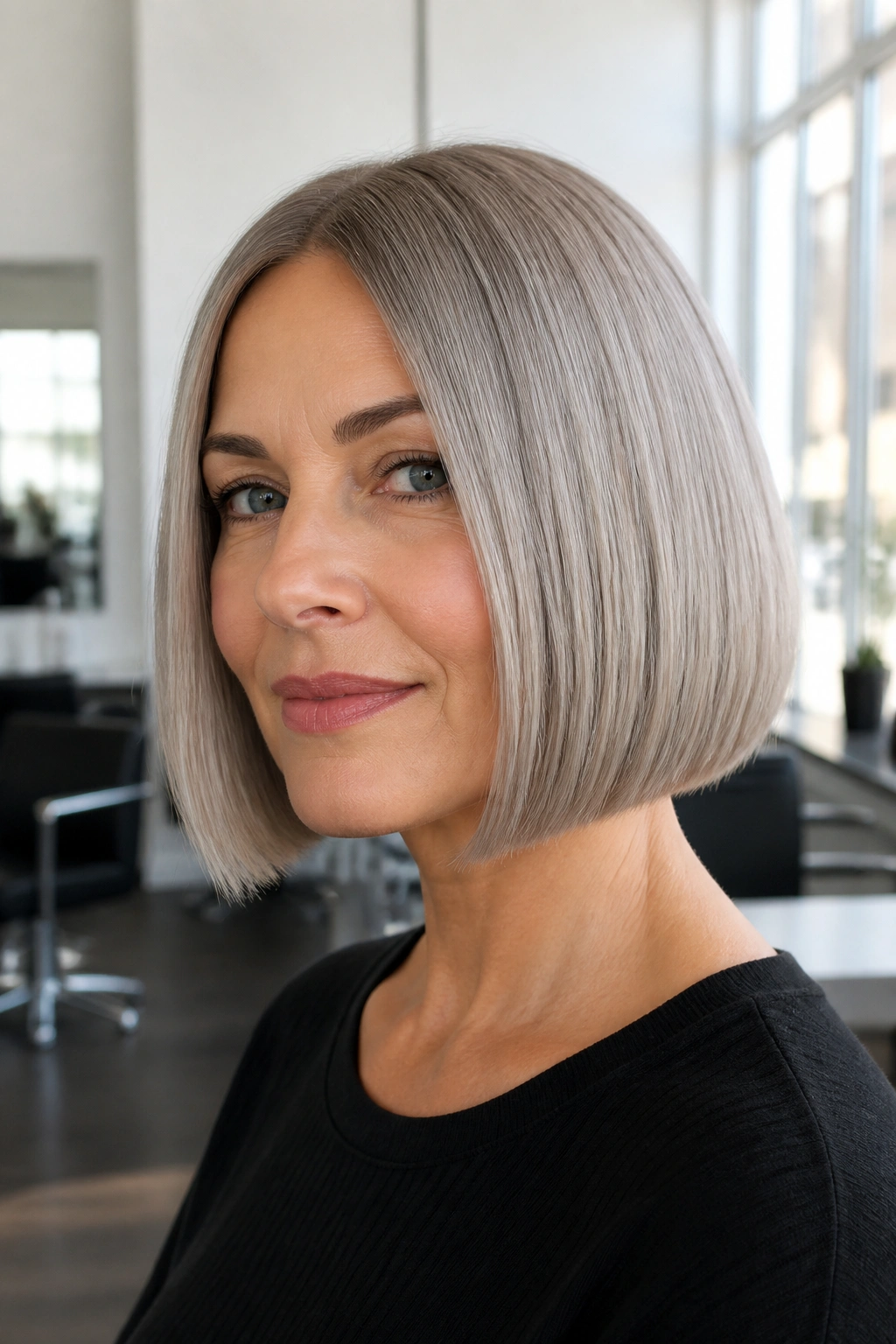
If fine hair needs one haircut to look fuller fast, this is the one. A chin-length blunt bob gives the eye a solid line to read, and ash silver makes that line look even cleaner. No fluff. No frayed ends. Just a crisp shape that looks deliberate.
Why the perimeter matters
A blunt edge keeps every strand landing in the same place, which is exactly what fine hair needs when density is low. The cut looks denser because it does not give the ends room to scatter.
Ask for minimal internal layering and a soft point cut only at the very bottom if the line feels too sharp. That tiny detail keeps the bob from looking like a helmet.
- Best for straight or slightly wavy fine hair
- Sits well at the jaw or just below it
- Works with a center part or a soft side part
- Needs a quick pass with a round brush or flat brush
Skip heavy razoring. On fine hair, it can chew the ends into wisps that disappear by lunchtime.
2. French Bob with a Tiny Micro Fringe
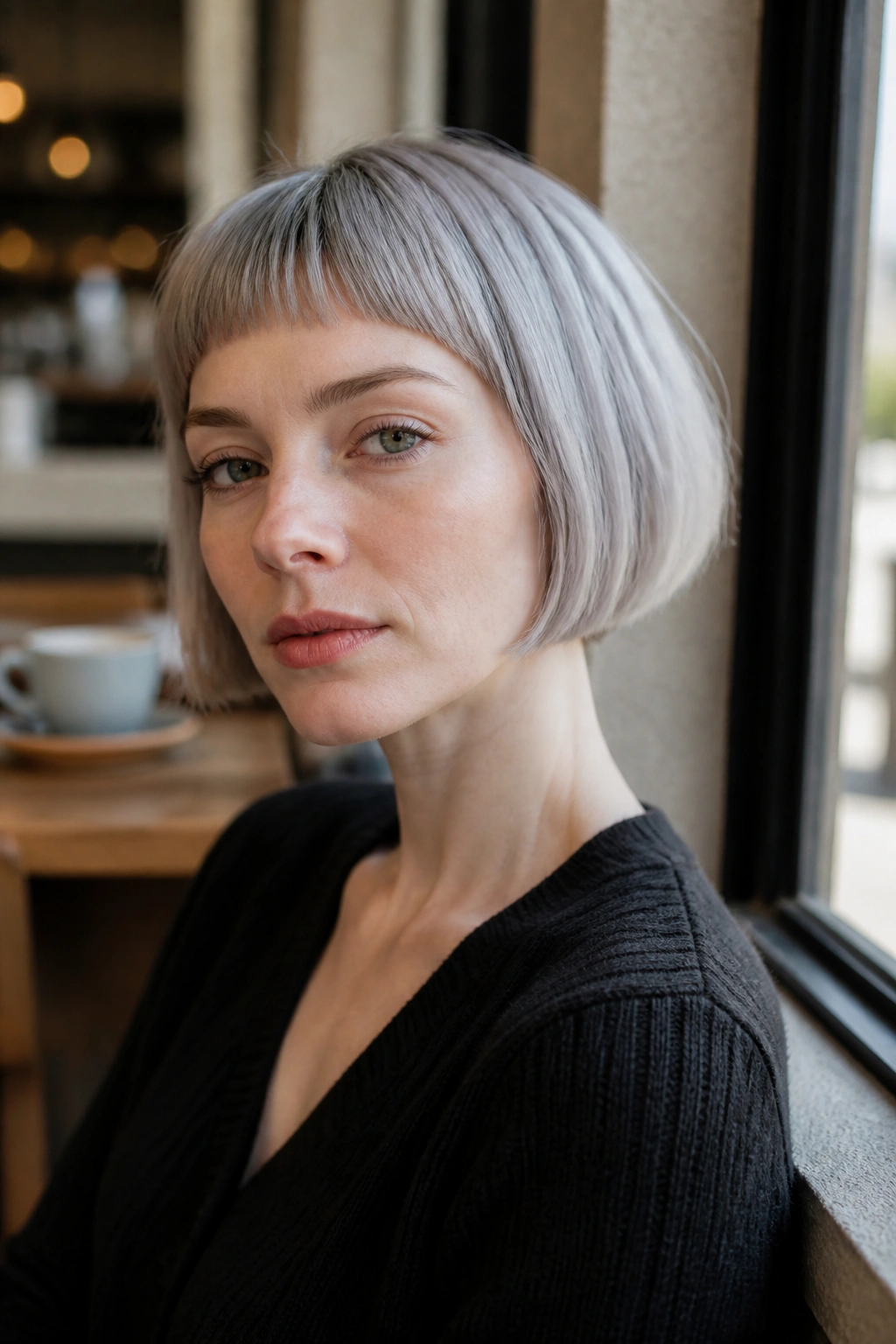
A French bob looks carefree, but it is actually a smart little haircut when your strands are fine. The shorter length keeps the shape compact, and the micro fringe pulls the eye upward so the hair around the face feels fuller.
This version works especially well when the ash silver tone is kept cool and matte rather than icy and flat. That little bit of texture at the brow softens the look. It also saves you from having to build volume everywhere else, which is a relief on mornings when you do not feel like wrestling a blow dryer.
I like this cut for people who want charm more than polish. It has a wink to it. The fringe should stay short enough to open the face, but not so short that it feels severe. Ask for the bang area to be cut lighter through the middle and slightly longer at the corners. That keeps it soft.
3. A-Line Ash Silver Bob with Longer Front Pieces
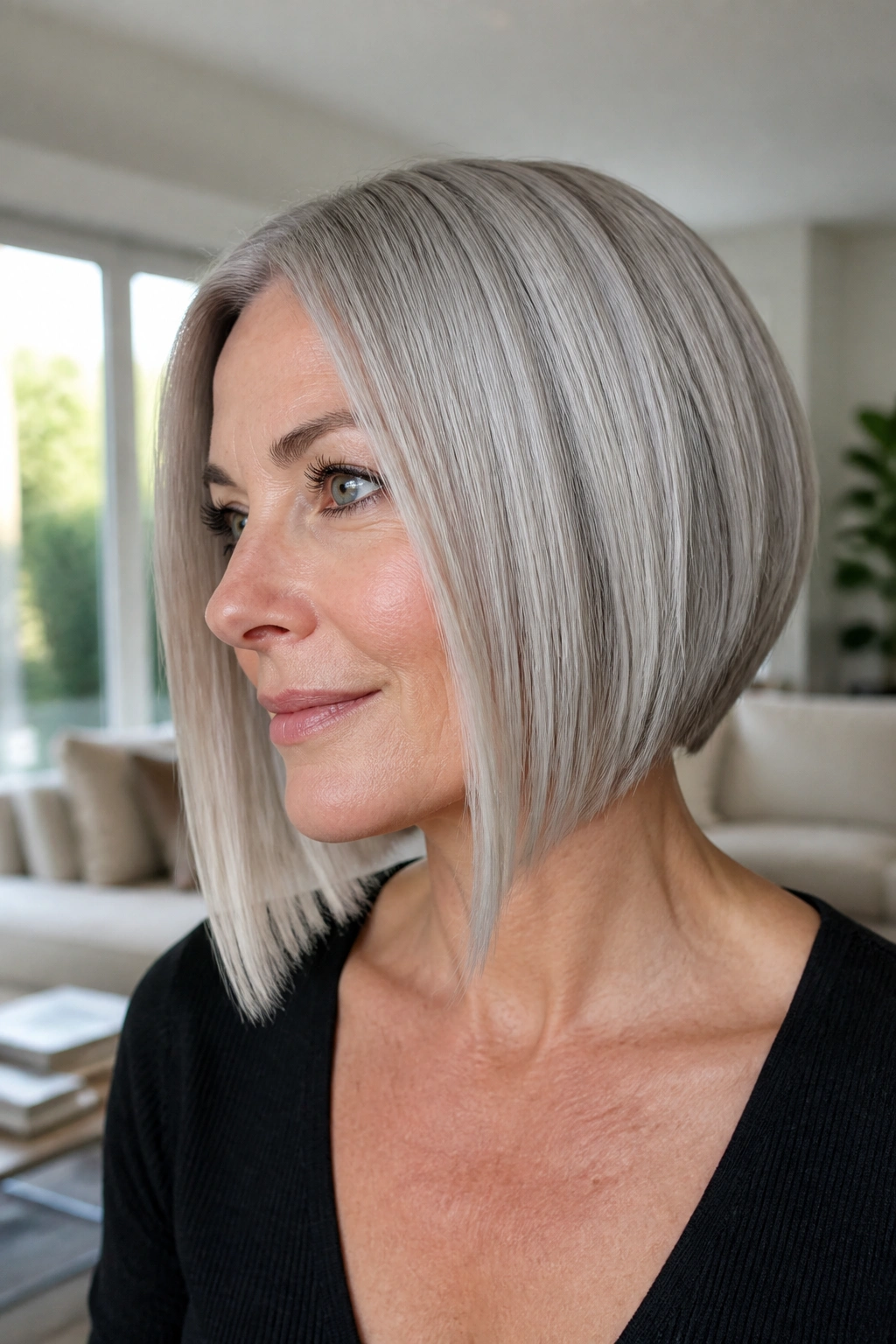
Why does a little extra length in front matter so much on fine hair?
Because it creates the illusion of density without stacking too much bulk at the back. A slight A-line shape, where the front sits about 1 to 2 inches longer than the nape, gives the bob a gentle angle that feels modern and full. The ash silver color helps, too, because the front pieces catch the light and make the shape look cleaner.
How to wear it
This cut works best when the back is tidy and the front does the visual work. You do not need dramatic graduation. You need a line that feels confident and controlled.
- Ask for a soft angle, not a sharp wedge
- Keep the perimeter blunt through the front
- Use a lightweight smoothing cream on the ends
- Dry the hair with the front pieces directed slightly forward
If your hair kicks out at the jaw, this shape helps guide it instead of fighting it. That alone makes it worth a salon visit.
4. Soft Layered Collarbone Bob
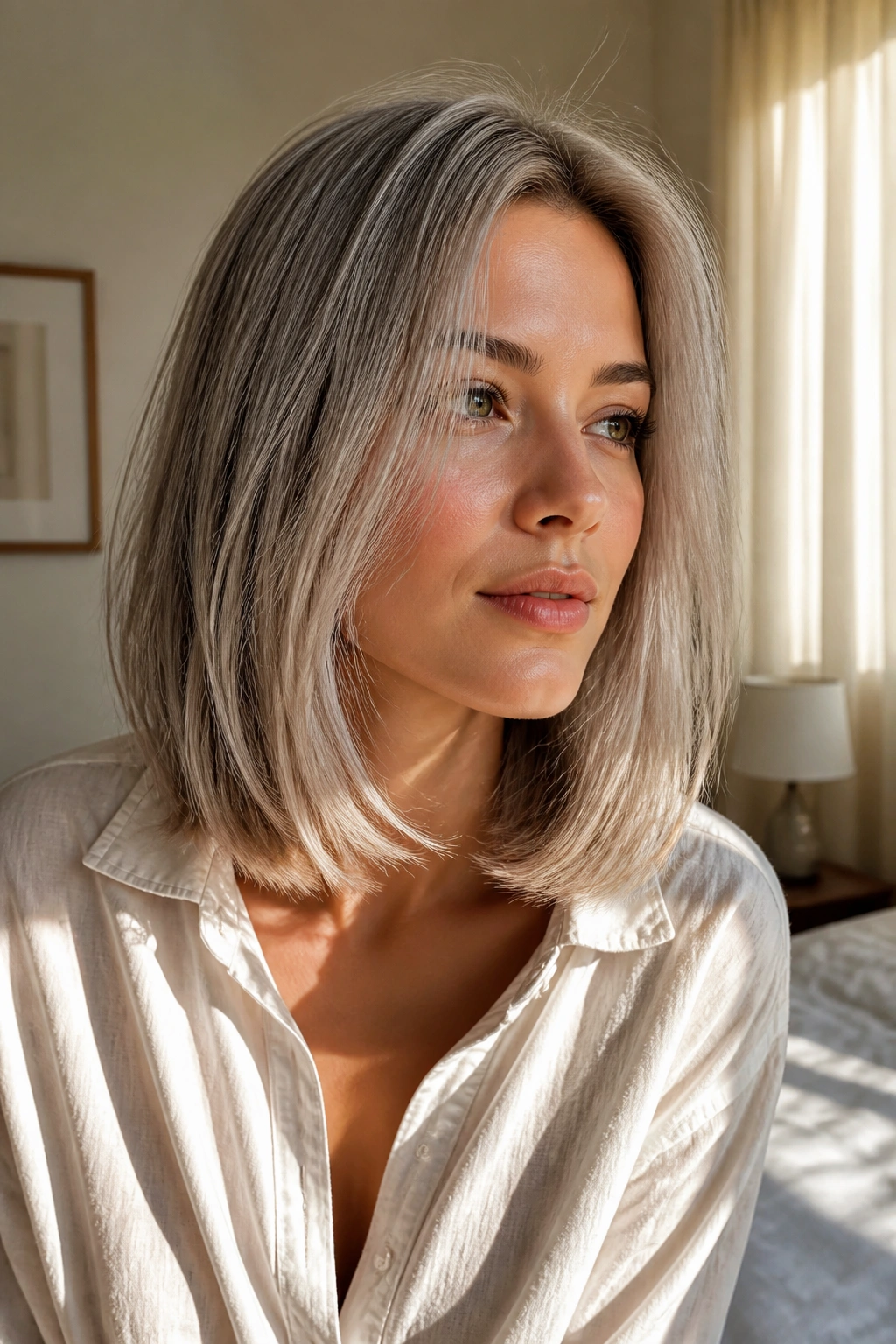
Picture a bob that grazes the collarbone, turns in a little at the ends, and never looks chopped to pieces. That is the appeal here. Fine hair can still have movement, but the layers need to stay low and quiet so the ends keep their presence.
The collarbone length gives you a touch more swing than a chin-length cut, which is useful if you dislike feeling boxed in. Ash silver also tends to look lovely on this length because the tone can move from smoky at the roots to brighter at the ends without looking harsh.
A few practical notes:
- Ask for long, low layers only
- Keep the ends blunt enough to hold shape
- Blow-dry with a medium round brush for a soft turn under
- Finish with a light mist of shine spray, not a heavy serum
This is the bob for someone who wants movement but hates thin-looking ends.
5. Sleek Center-Part Precision Bob
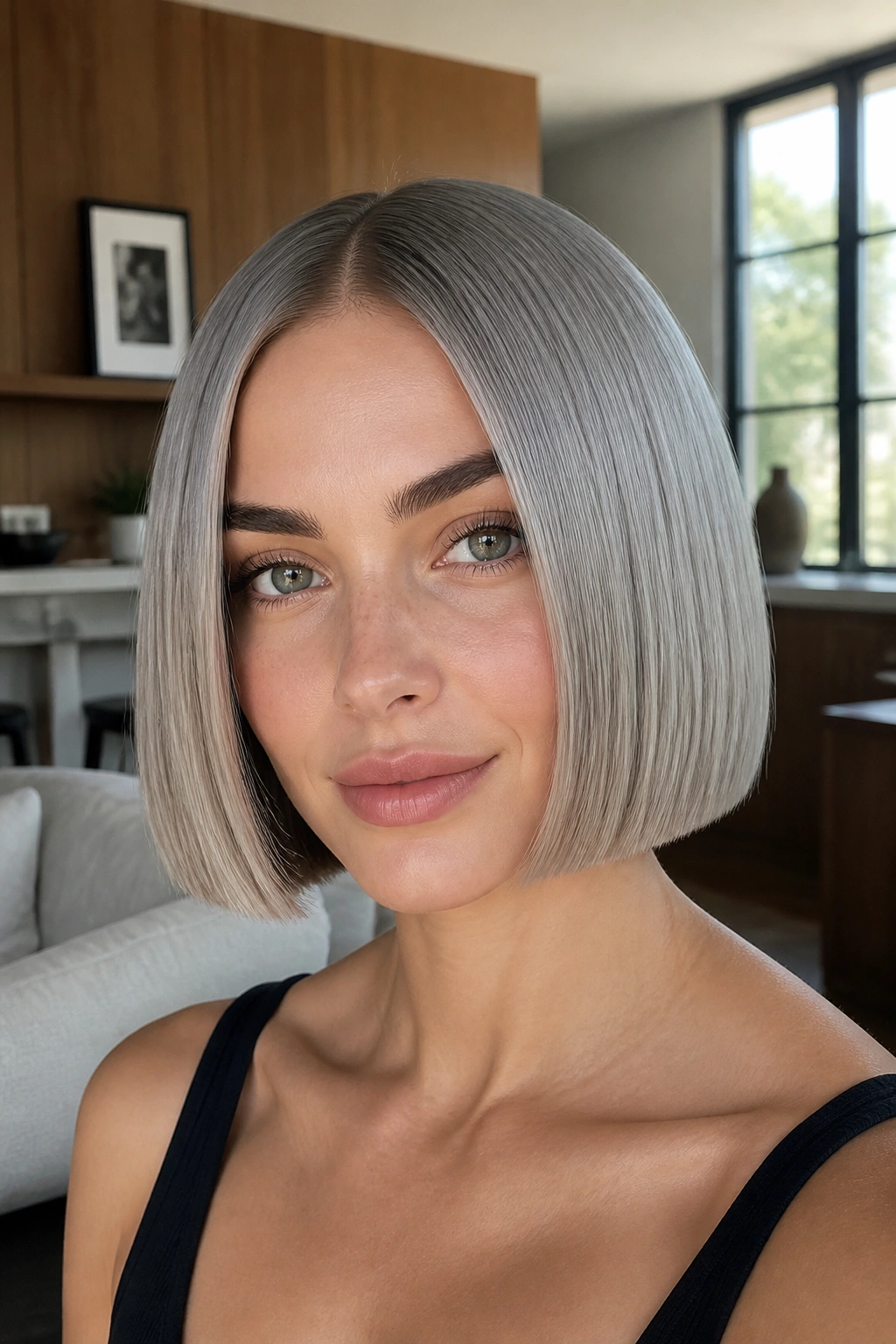
A center part can be brutal on the wrong cut and brilliant on the right one. Here, it works because the bob is kept precise, smooth, and even on both sides. Fine hair often looks better when it is not being pushed into big volume tricks it cannot hold.
Ash silver makes the clean line look sharper. The tone catches light along the perimeter, so the haircut feels neat instead of flat. That matters. A sloppy center part on fine hair can look accidental. A precise one looks intentional.
I’d call this the “quiet discipline” cut. It asks for a good blow-dry, a flat brush, and maybe one pass with a flat iron if your ends bend out. Nothing fancy. You want the hair to lie close to the head at the top and stay full at the bottom. That shape reads fuller than overworked lift ever does.
6. Side-Part Bob with Crown Lift
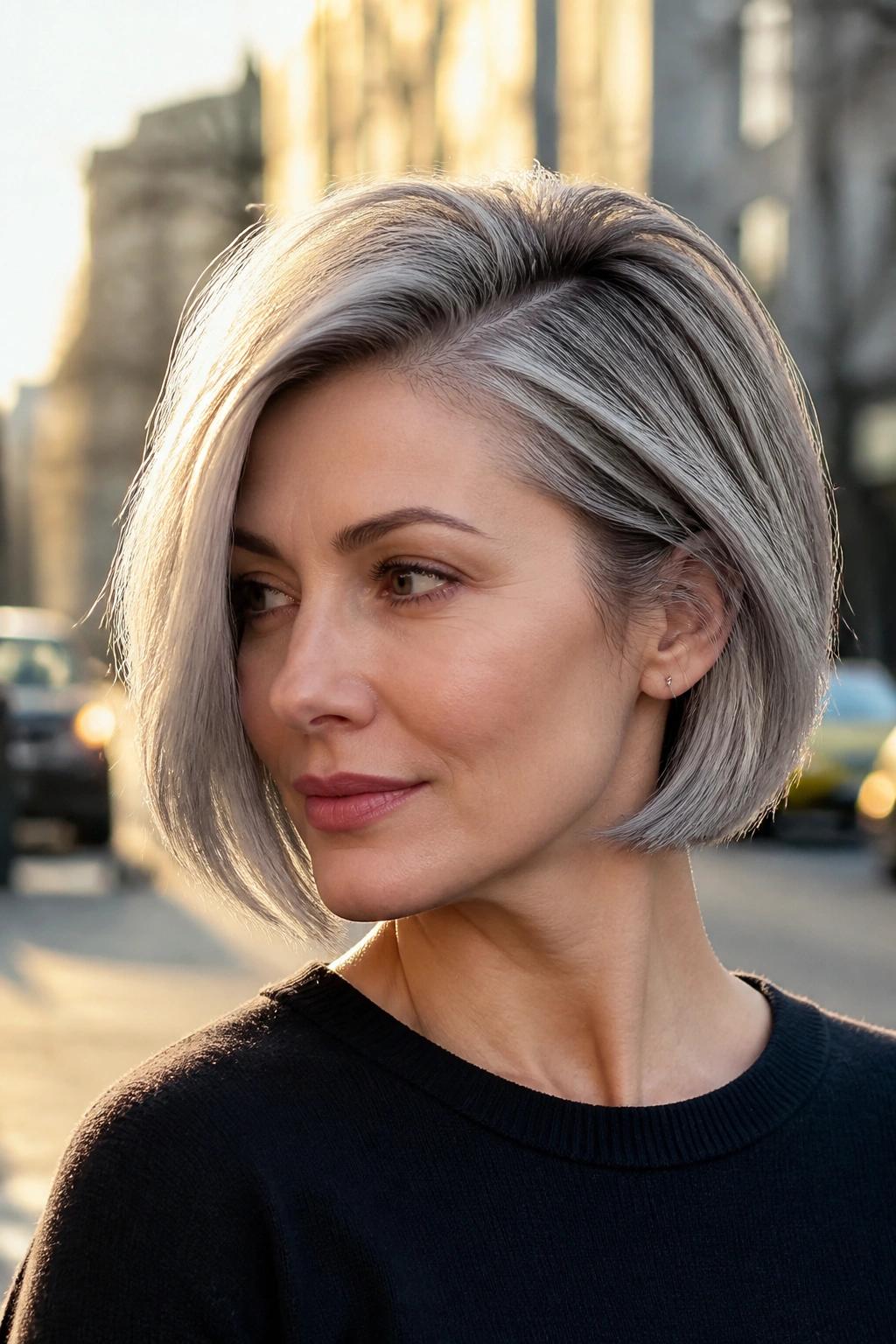
A deep side part is still one of the easiest tricks for making fine hair look less sleepy. Unlike a center part, it shifts weight to one side and gives the crown a little room to rise. That creates instant height without teasing the hair into a straw pile.
This cut looks especially good when the ash silver tone has a slightly darker root. The root depth keeps the top from washing out, and the lighter mids stop the style from looking heavy. If your hair tends to collapse on one side, the side part gives you a clean answer.
Use a root-lifting mousse at the base and direct the hair away from the part while drying. Then switch direction for the last minute of heat. That tiny bit of back-and-forth is enough to keep the root from setting too flat. Small habit. Big payoff.
7. Rounded Bob with a Tucked Nape
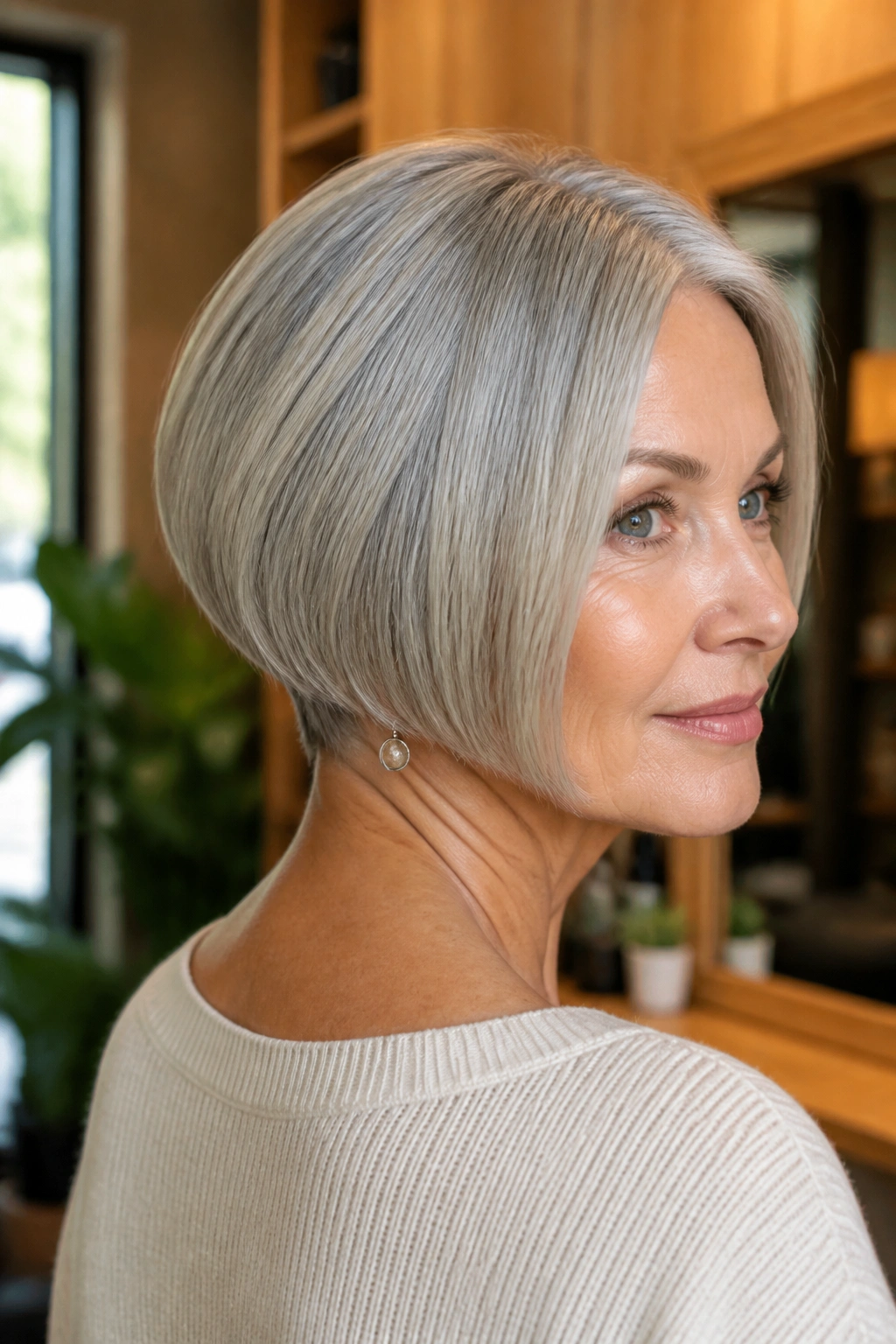
The ends sit inward, almost like they were coaxed into place with a round brush and a little patience. That rounded silhouette gives fine hair a plush look without needing obvious layers.
What makes it feel thicker
The tucked nape removes visual bulk where hair often looks thin anyway. At the same time, the round shape around the cheek and jaw gives the cut a soft body that reads fuller from the front.
- Best with a soft side part or slightly off-center part
- Ask for gentle graduation at the nape
- Style the ends inward, not pin-straight
- Keep texture products light so the curve stays clean
This one is good if you want a neat bob that still has some life in it. It can feel old-school in the best way.
8. Wavy Bob with a Soft Bend
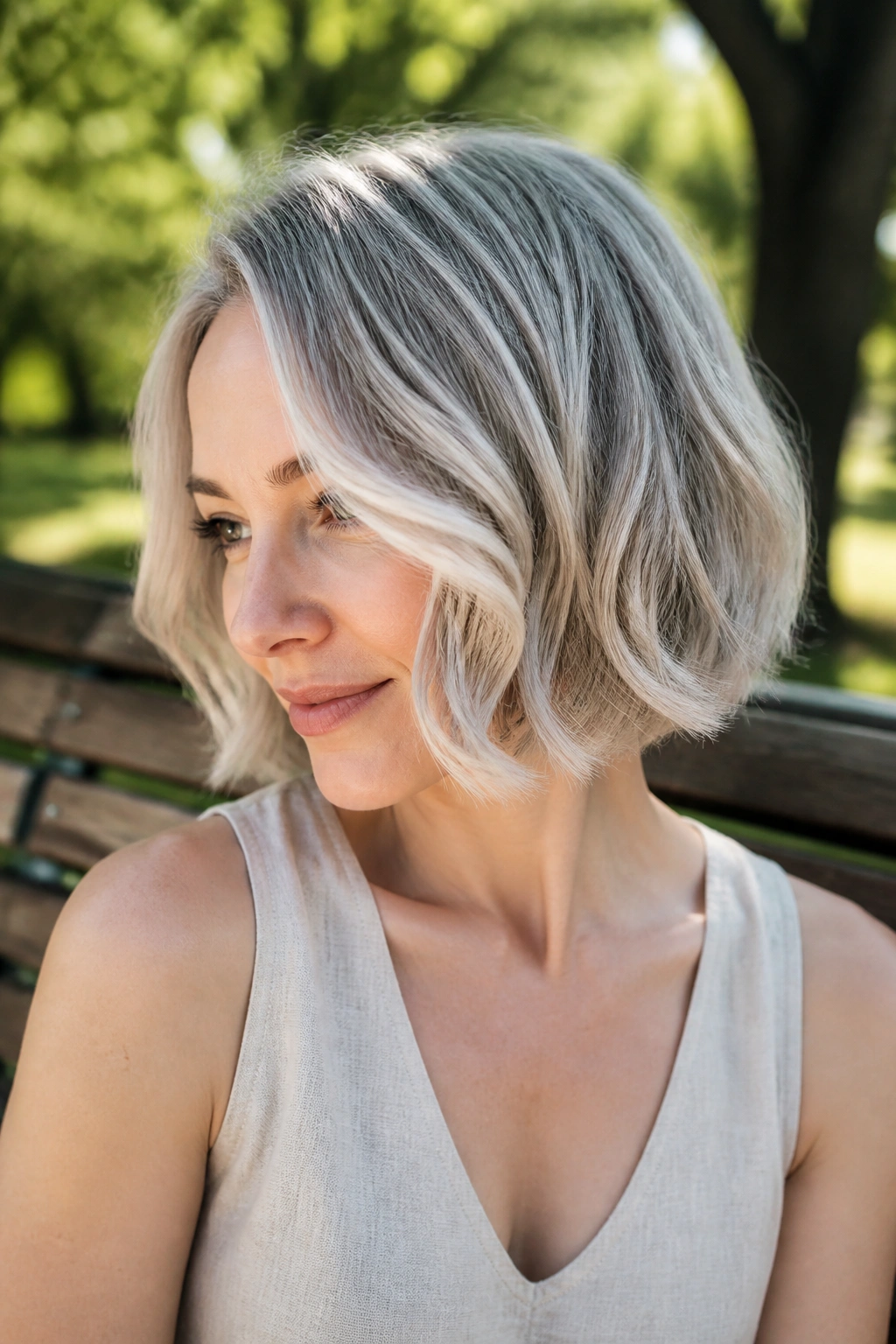
A little bend beats a full curl here. Fine hair usually looks better when it has one or two soft waves rather than a head full of tight bends that make the ends look sparse. The ash silver tone loves that kind of movement because the light catches the curve, not just the surface.
The trick is keeping the wave loose. A 1-inch curling iron, used only from mid-length to the ends, is often enough. Leave the last inch or so straighter so the whole shape does not look over-styled. That tiny straight edge keeps the bob looking fuller and less toy-like.
This is a good cut for people who want easy hair with some shape. It does not need to be perfect. In fact, a little inconsistency makes it look better. Too much curl can make fine hair seem shorter and thinner than it is.
9. Shaggy Bob with Light Texture
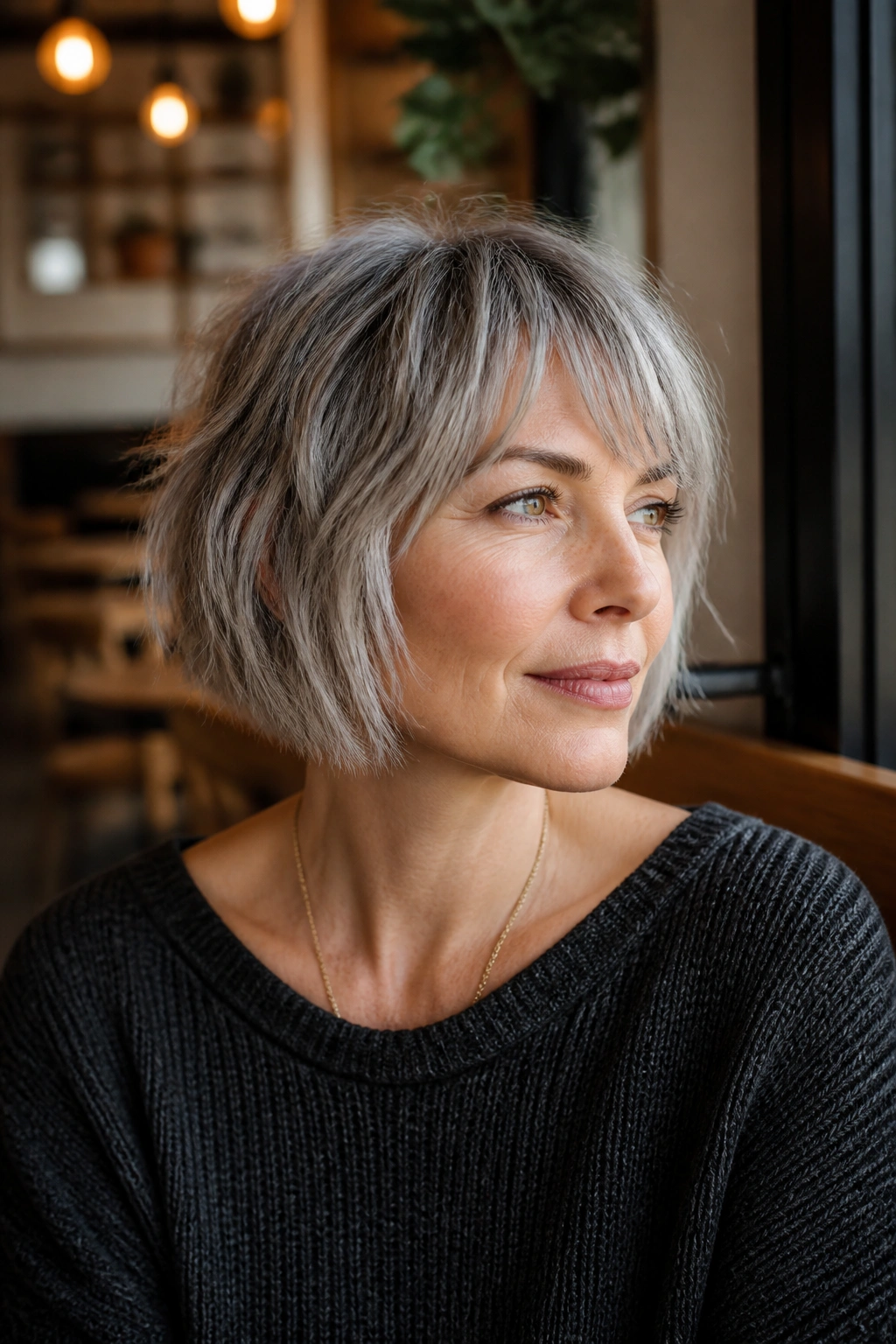
Can a shag work on fine hair? Yes, if the texture stays controlled.
A full, choppy shag can strip the ends bare, and that is a bad trade when the hair is already fine. But a light-textured bob, with the perimeter left solid and the upper layers softened just enough to move, can look fresh and airy. The ash silver color adds a smoky edge that keeps it from reading fluffy.
What to watch for
The goal is movement, not thinness. Ask your stylist to keep the lower line blunt and use texture only where the hair needs lift.
- Avoid heavy slicing through the ends
- Keep the top layers short only if your crown is flat
- Use texture spray sparingly, mostly at the mid-lengths
- Scrunch with your hands after drying, not a brush
This is one of those cuts that looks easy when it is done well and messy when it is not. The difference is restraint.
10. Inverted Bob with a Tight Nape
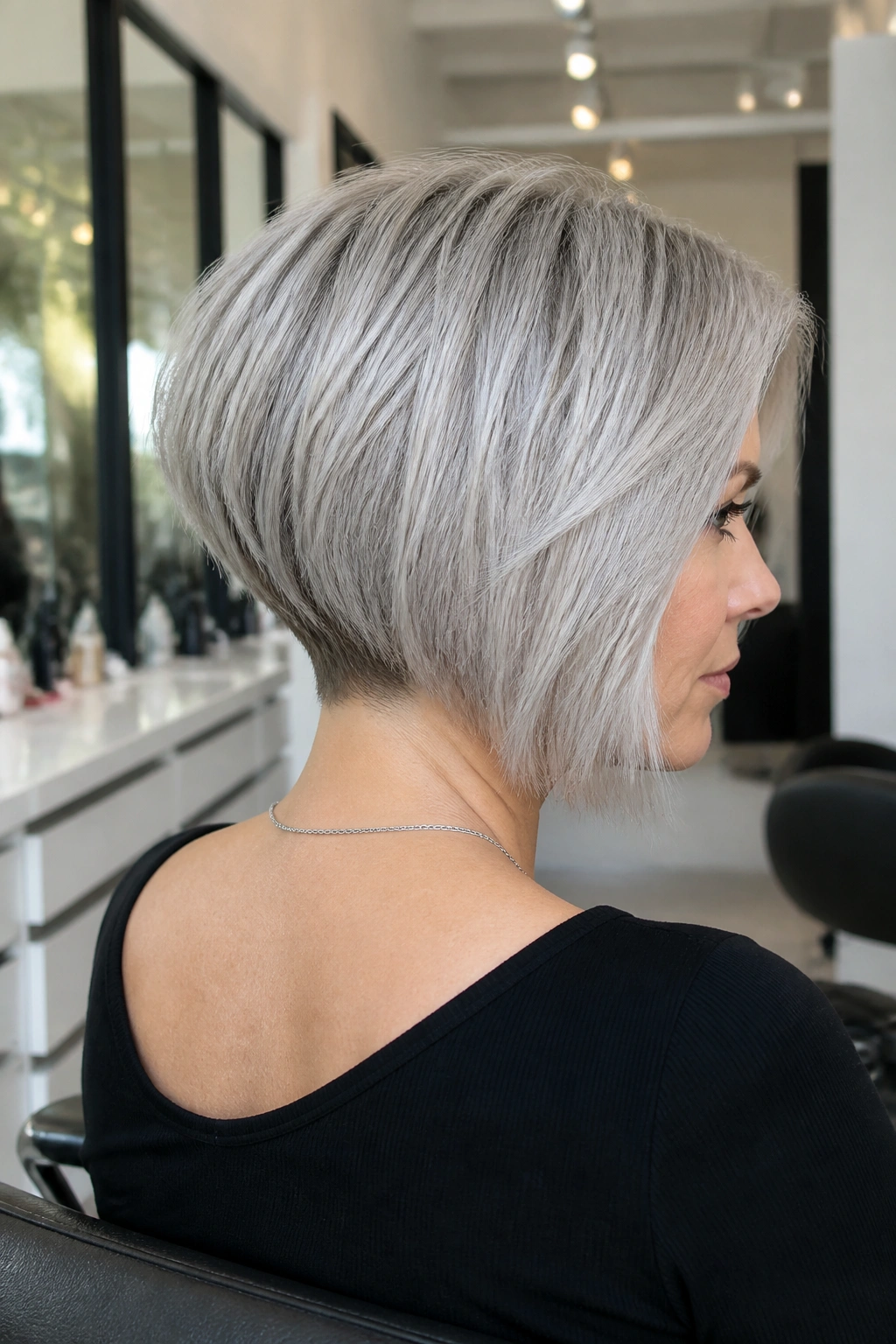
A little structure goes a long way here. The back is stacked just enough to create lift, while the front stays longer and sleeker, which gives fine hair a stronger profile from every angle.
The inverted shape works because it uses graduation where the hair needs support. The nape looks neat, the crown gets a boost, and the front pieces keep the cut from feeling too tight. In ash silver, that contrast looks crisp rather than severe.
Ask for a soft stack, not a high one. Too much stacking can make the back look thin, especially if the hair is sparse. You want a shape that hugs the head and rises gently, not a dramatic shelf. This is the sort of bob that rewards regular trims because the lines matter. Let it grow too far, and the whole thing starts to sag.
11. One-Length Box Bob
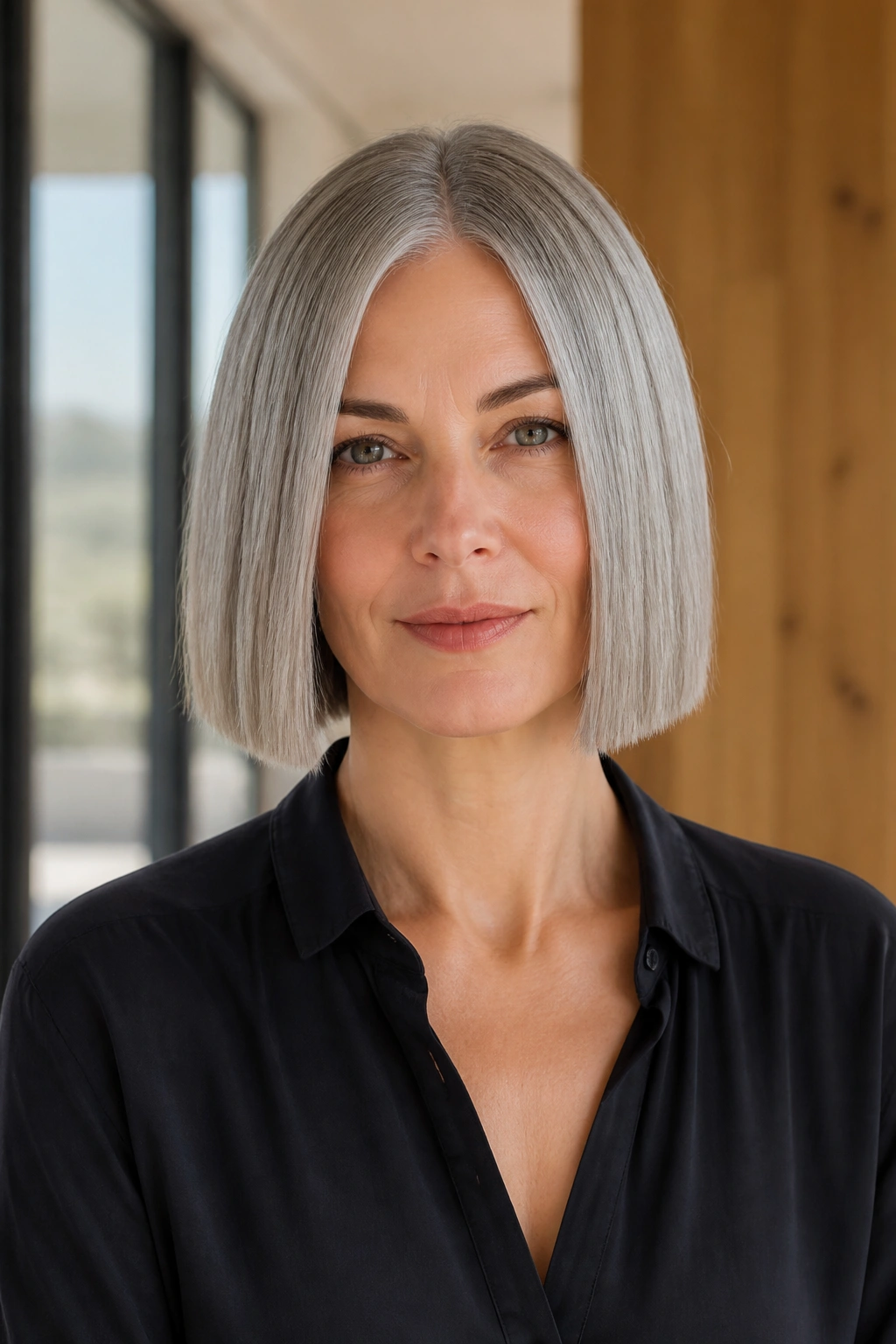
The box bob is blunt, square, and unapologetic. That is exactly why it works on fine hair. A one-length outline gives the illusion of more hair because there is no broken edge for the eye to pick apart.
Ash silver softens the severity just enough. Instead of looking hard or heavy, the cut can read cool and polished, almost architectural. The straight line around the jaw or just below it gives the whole style a fuller base.
I like this best on hair that naturally falls smooth. It does not need a lot of styling; it needs good shaping. A slight bevel at the ends can help if you want the line to curve inward, but the main job is keeping the perimeter solid. If your hair is extremely sparse at the ends, keep the length a touch shorter and the shape tighter.
12. Feathered Bob with Soft Ends
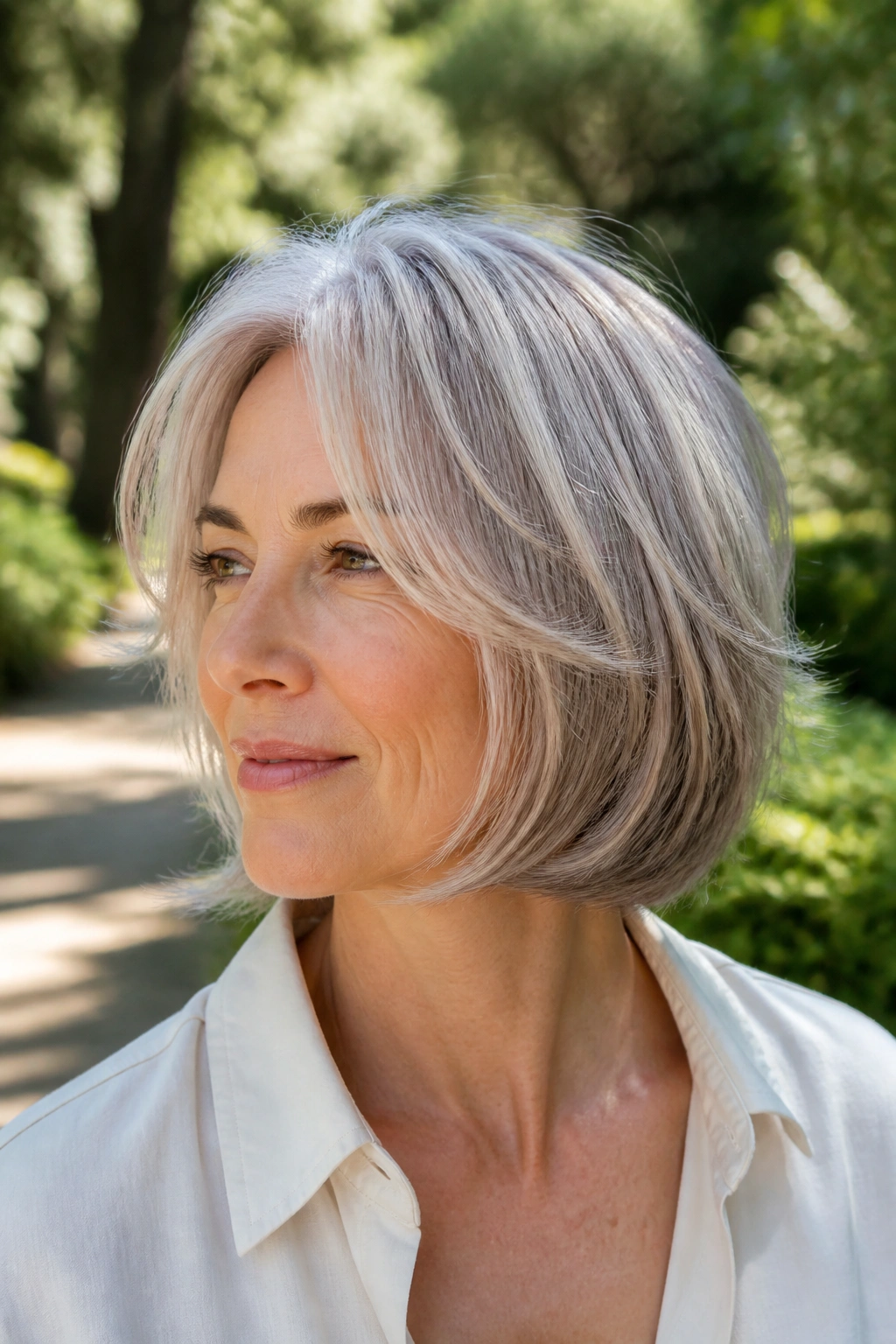
Unlike a shag, a feathered bob keeps the outline gentler. That matters on fine hair because you want movement without the see-through ends that happen when the layers get too aggressive.
The soft feathering should live around the face and just inside the shape, not all through the back. The ash silver tone makes the lighter pieces look airy, so the hair feels lifted without looking broken up. It is a nice choice if you want softness but you do not love a blunt, graphic line.
Ask for slide-cutting only in small sections and stay away from over-thinning shears. Those tools can ruin the density fast. A feathered bob needs enough weight to swing, not enough removal to disappear. That sounds obvious, but it is where a lot of fine-hair cuts go wrong.
13. Ash Silver Bob with Curtain Bangs
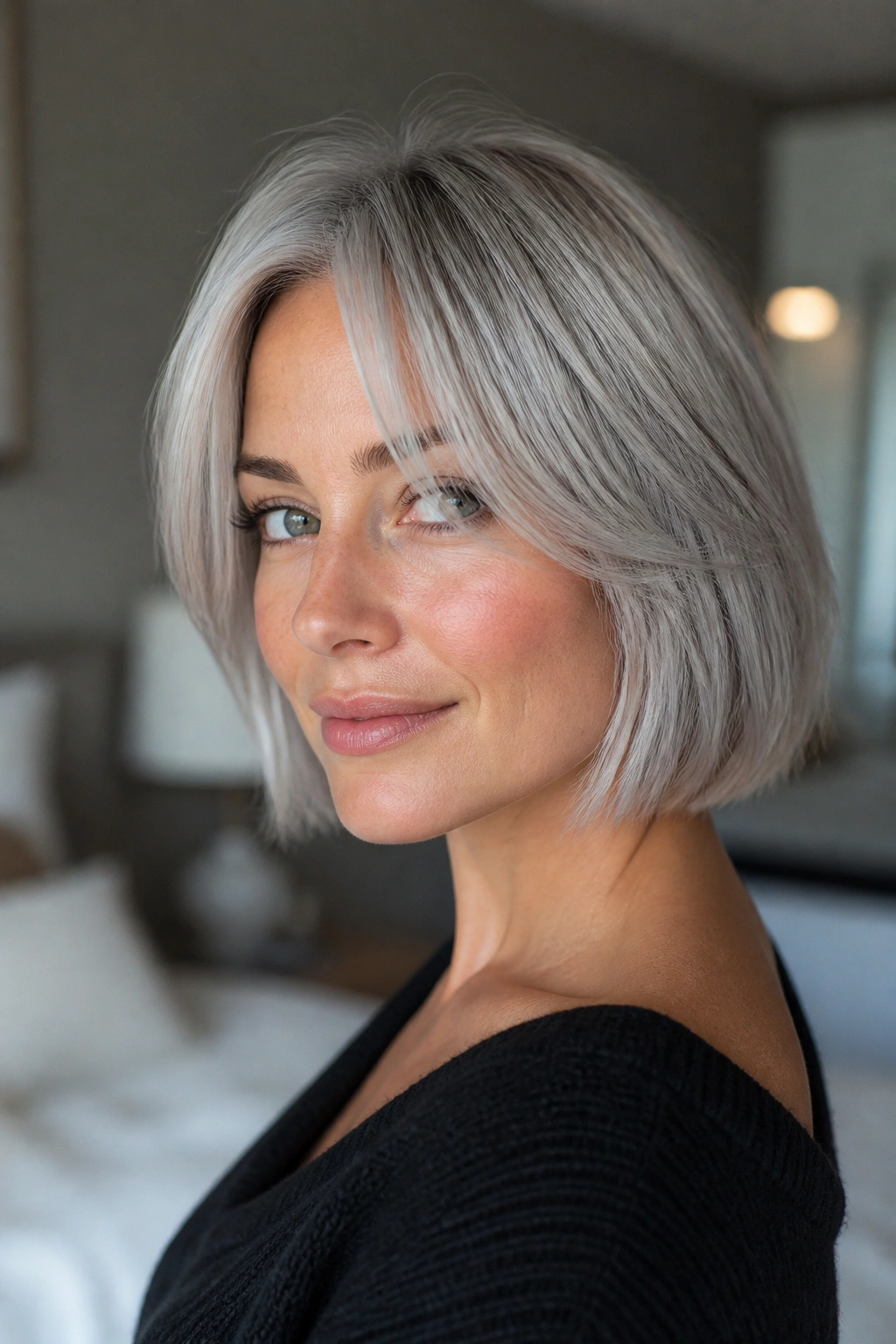
Curtain bangs can be a smart move for fine hair when they stay light and split naturally. The fringe opens the face, adds movement near the eyes, and helps the bob feel less severe.
Fringe balance
The bang pieces should start around the cheekbone or just above the lip, not right at the crown. That keeps the front from looking heavy. On ash silver hair, the split fringe also gives you a nice change in tone because the lighter pieces around the face create a bit of contrast.
- Keep the fringe wispy, not thick
- Blow-dry it away from the face first, then back down
- Pair it with a blunt or softly layered bob
- Trim the bangs more often than the rest of the cut
This style works well if you want your bob to feel a little softer and more wearable. It is flattering without being fussy.
14. Asymmetrical Bob
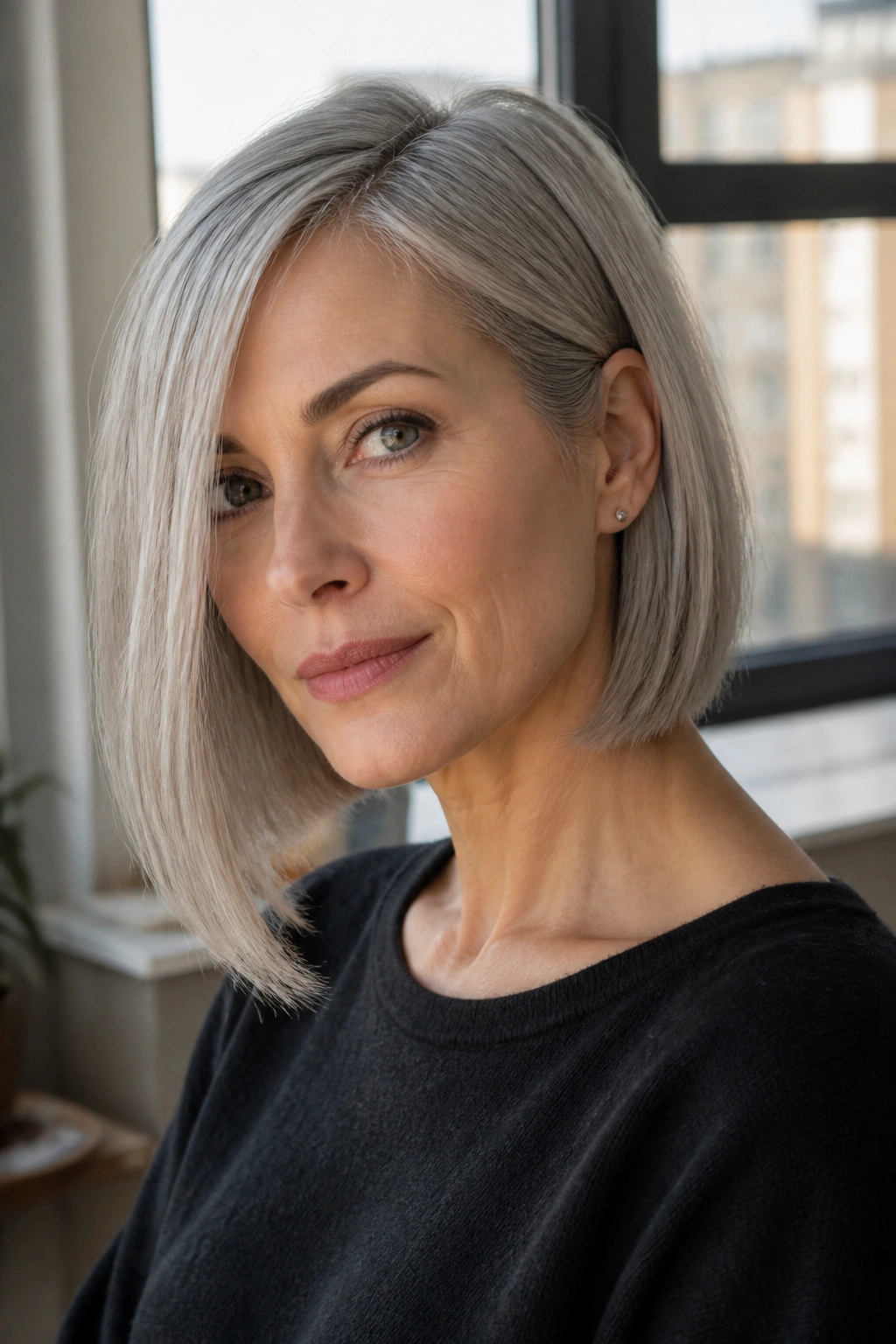
A slight imbalance can be more flattering than perfect symmetry. A bob that is a little longer on one side draws the eye, which gives fine hair more presence than a dead-even shape sometimes does.
The trick is keeping the difference subtle. You want enough asymmetry to be interesting, maybe half an inch to an inch and a half, not a dramatic diagonal that eats up the density. Ash silver helps the shape feel sleek because the cool tone keeps all that movement looking tidy.
This cut is useful if you have one side that falls flatter, or if your part naturally drifts. It also works well for people who like their hair to feel a touch edgy without turning it into a statement haircut. A strong blow-dry matters here. Let the longer side swing forward and the shorter side hug the jaw.
15. Bob with a Shadow Root and Silver Melt
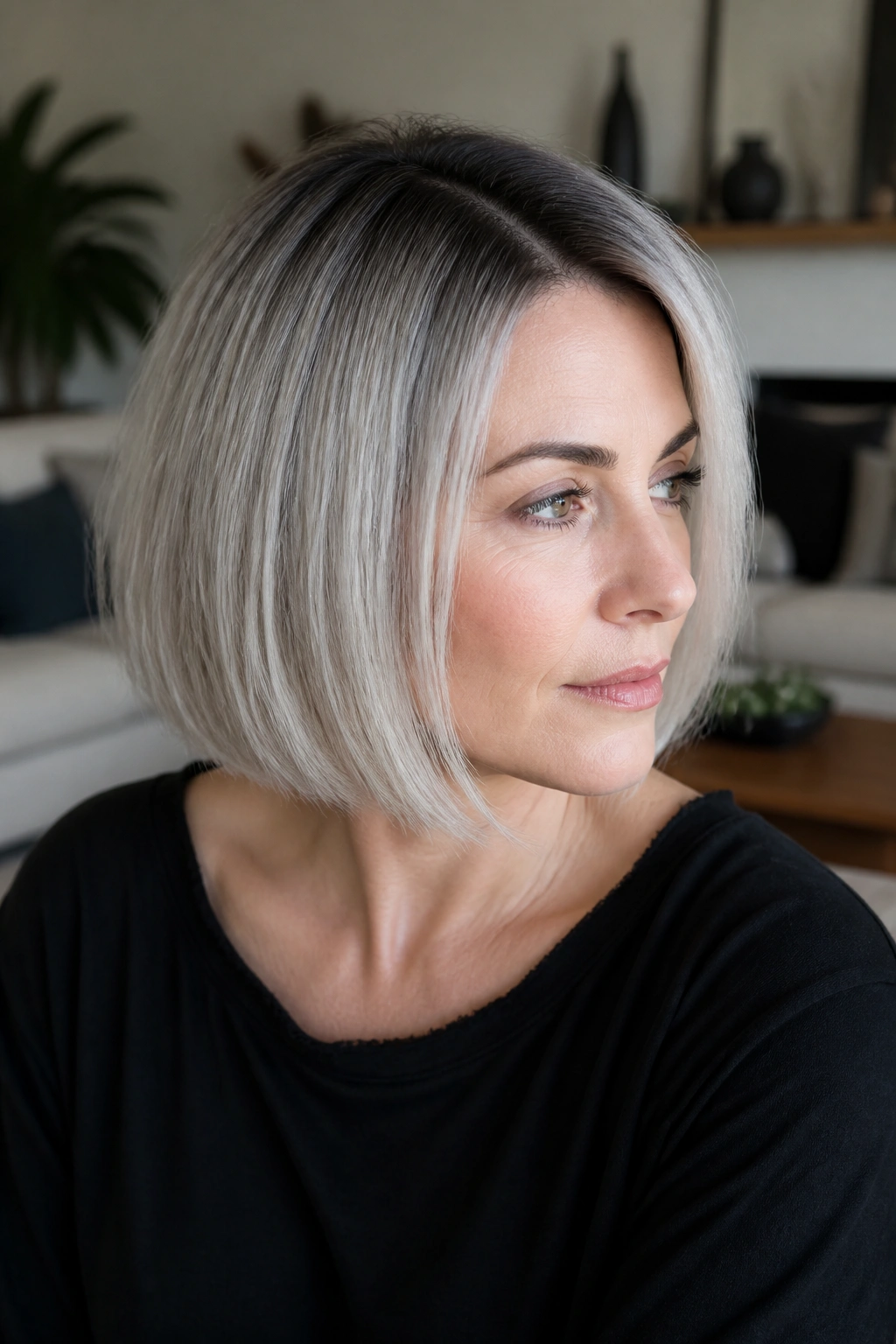
Why does a shadow root matter on fine hair? Because it gives the illusion of depth right where the hair most needs it.
A darker root, faded into ash silver through the mids and ends, makes the crown look fuller and keeps the whole style from washing out. The melt should be soft, not stripey. You want the change to look like it happened in the bowl of a good colorist, not on the surface of the hair.
How to ask for it
Tell your colorist you want a deeper root area by one or two shades and a cool silver through the length. That depth near the scalp keeps the haircut from floating.
A blunt or lightly layered bob works best with this color. The contrast makes the shape feel more defined, and the maintenance is a bit kinder between appointments. If your silver tends to go yellow, the shadow root also buys you a little forgiveness.
16. Razor-Cut Bob
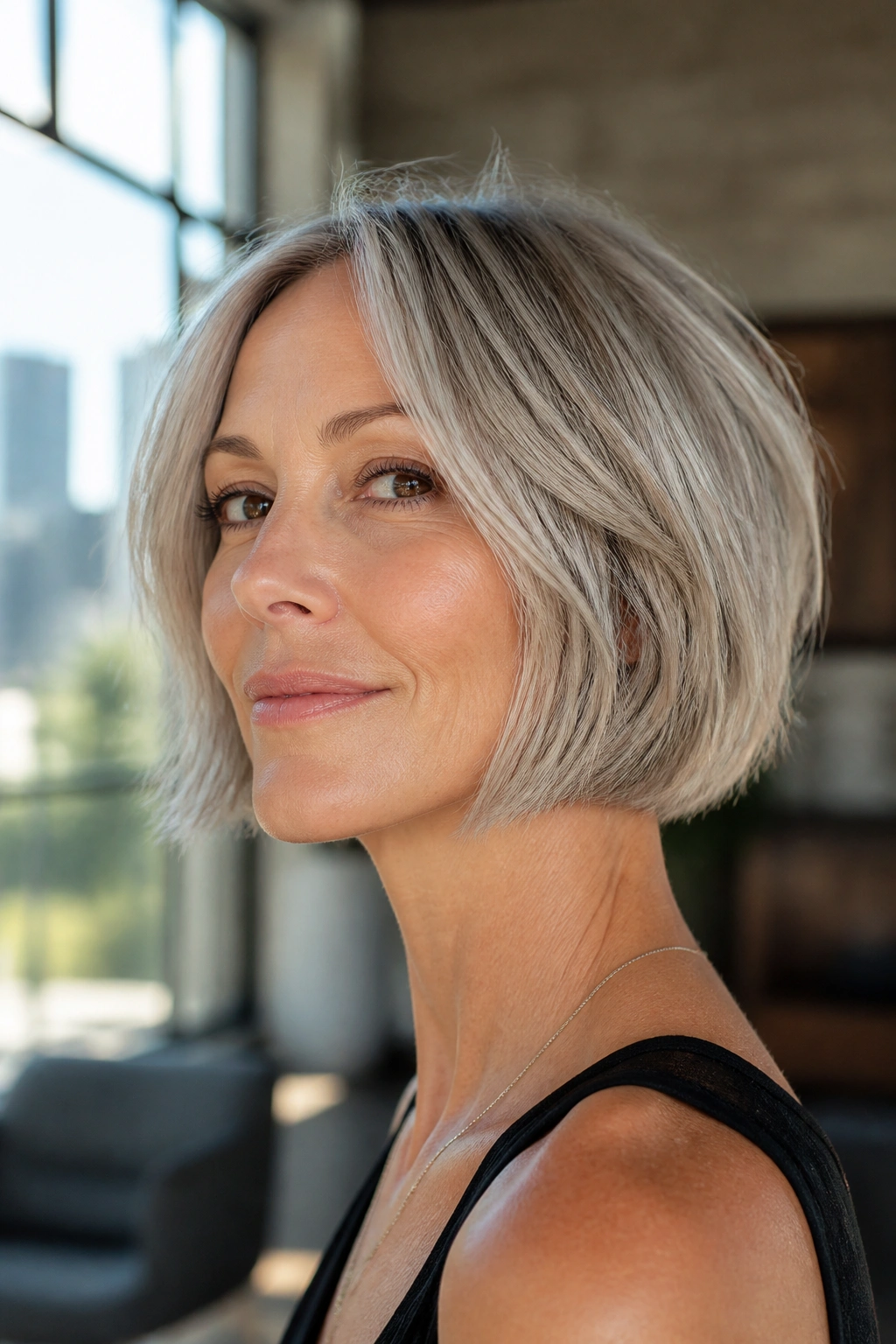
A razor cut can look airy and modern, but it is not the first thing I’d reach for on very fragile fine hair. Done lightly, though, it gives the ends a soft edge that moves well and avoids a hard shelf.
The danger is overdoing it. Razor work can fray the ends if the stylist takes too much off or if the hair is already dry and porous. When it works, the result is light, piecey, and a bit undone in a good way.
- Best on healthy, smooth fine hair
- Ask for light razor work only through select areas
- Avoid over-texturizing the perimeter
- Finish with a cream, not a crunchy spray
If your hair tangles easily or breaks fast, I’d stay cautious. A razor bob should feel soft, not shredded.
17. Bubble Bob
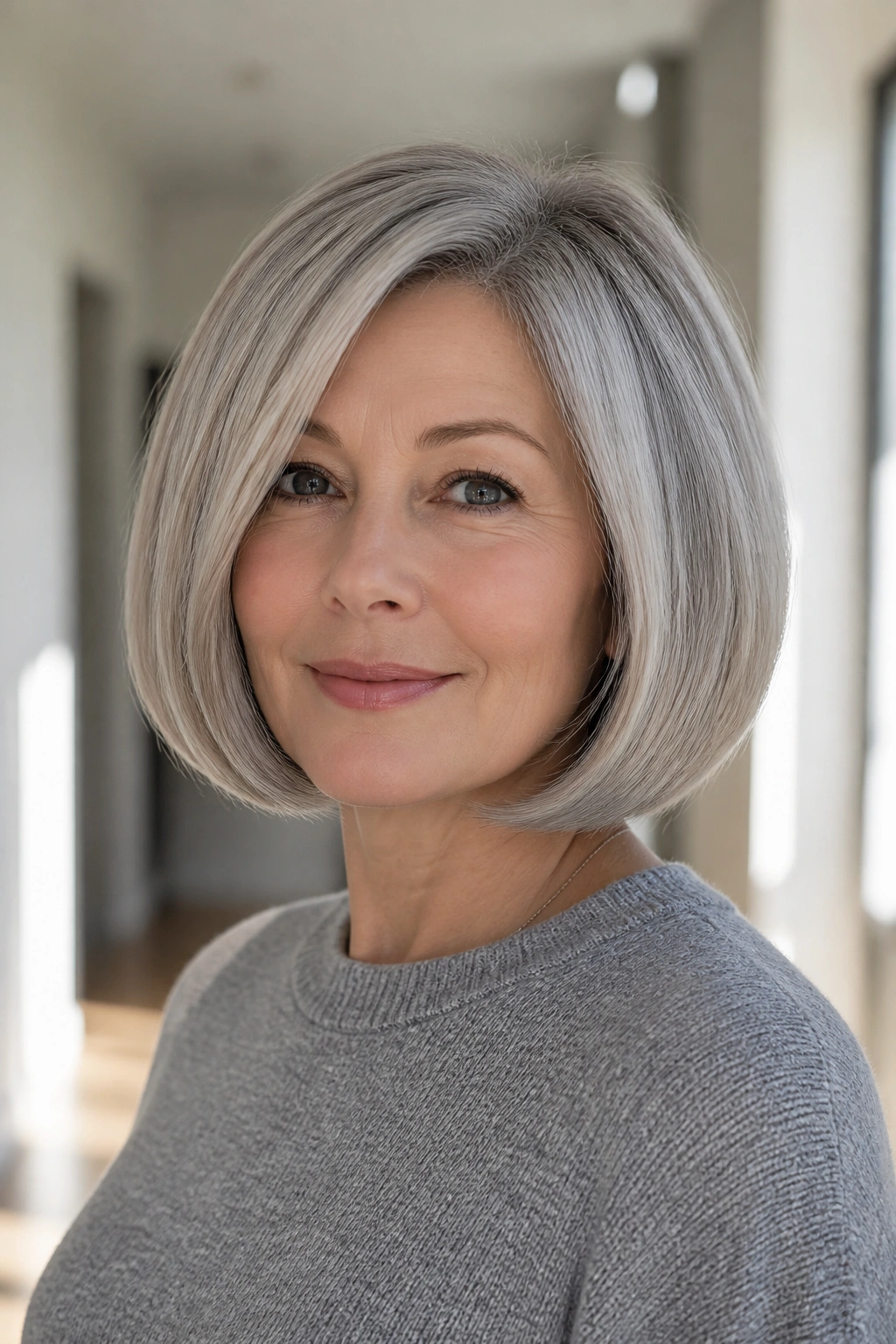
The bubble bob has a rounded outline that gives fine hair a fuller silhouette than most people expect. The curve sits at the jaw or just below it, and the ends tuck inward so the shape feels contained.
That rounded finish is the magic. Fine hair often looks sparse when the ends flare out, and this shape pushes in the opposite direction. The ash silver tone helps because it keeps the curve looking smooth and luminous instead of heavy.
It does need upkeep. Let it grow too far, and the bubble shape starts to collapse. But when the trim is fresh, it has a lovely, tidy body to it. This is the bob I’d suggest for someone who likes neat hair with a little softness around the edges.
18. Bixie Bob
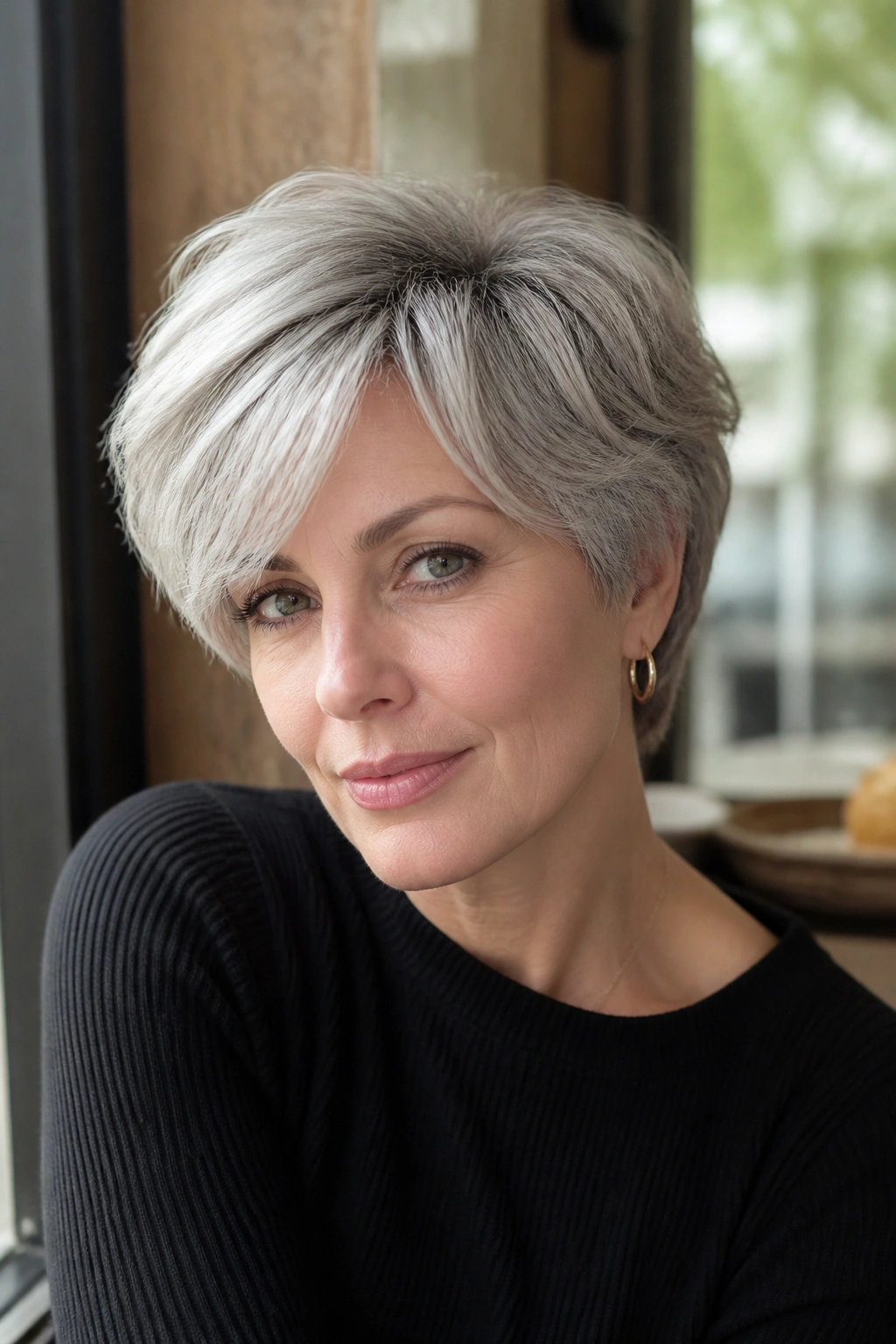
Not quite a bob. Not quite a pixie.
That in-between length can be a gift for fine hair because it gives the crown a lift and removes the dead weight that often drags short styles down. Ash silver makes the cut feel airy and modern, especially when the top is kept a touch longer than the sides.
A bixie bob works best if you do not want to spend much time styling. It can be tousled with a small amount of mousse or smoothed with a tiny round brush if you want the shape to look cleaner. The whole point is lightness. If your hair is too long for a pixie but too flat for a classic bob, this is a good middle ground.
19. Tucked-Behind-Ear Bob
A tucked-behind-ear bob is a small styling move with a big visual payoff. One side gets tucked, the other side stays loose, and suddenly the hair looks more intentional and a little fuller around the face.
Small habit, big shape
Fine hair often benefits from asymmetry you can create without a haircut overhaul. Tucking one side gives the crown a bit of lift and lets the ash silver tone show off that clean line near the ear.
- Use a pea-size amount of styling cream on the tucked side
- Keep the opposite side a touch fuller
- Works well with earrings or glasses
- Best on bobs that sit at the jaw or slightly above it
I like this on days when the hair wants to lie flat. A tuck can save the whole look.
20. Face-Framing Layered Bob
Face-framing layers can help fine hair without stealing the shape. The key is where those layers start. If they begin around the cheekbone or lip, they soften the front while leaving enough weight through the back to keep the bob full.
The ash silver color makes the face-framing pieces stand out a little more, which is useful if you want the cut to feel lighter around the eyes and jaw. Just do not let the layers creep too high. That is where a lot of fine-hair bobs go wrong. Once the front is too light, the whole cut starts to look wispy.
This is a smart option if your face feels crowded by a blunt line. It gives movement without turning the perimeter into confetti. Ask for the back to stay mostly one length and the front to be only gently graduated.
21. Choppy Bob with Piecey Fringe
Can a choppy bob work on fine hair? Yes, if you keep the ends controlled and the fringe soft enough to stay piecey rather than stringy.
The look depends on separation, but separation is a tricky thing on fine strands. Too much and the hair looks sparse. Too little and it loses the whole point. The sweet spot is a blunt base with small, visible pieces around the front and crown. Ash silver makes those pieces stand out in a nice way because the cool tone catches the texture.
How to keep it from looking stringy
Use texture spray lightly, then twist a few front pieces with your fingers. That is enough.
- Ask your stylist to remove weight only in small zones
- Avoid a heavily razored fringe
- Keep the nape and perimeter full
- Refresh the piecey bits with dry shampoo on day two
This cut has attitude, but it needs a careful hand.
22. Curved Bob with Polished Ends
If your hair flips out at the ends, a curved bob can be a relief. The shape follows the natural bend instead of fighting it, so the style looks smoother and less stubborn.
That curve is especially useful on fine hair because the ends can look fuller when they turn inward a little. Ash silver helps the finish look clean, and the polished ends make the whole cut feel neater. It is one of those styles that looks simple but depends on technique.
A round brush and a nozzle on the dryer matter here. Pull the hair forward, then guide the ends inward with a small roll under. Finish with a cool shot to lock the bend. If the ends are fraying, a trim makes all the difference. A curved bob does not forgive split ends.
23. Collarbone Ash Silver Lob Bob for Fine Hair
If chin-length feels too sharp, the collarbone lob is the gentler answer. It gives fine hair more room to move while still keeping enough length to hold shape, and the ash silver tone makes the longer line look airy instead of heavy.
What I like about this length is how forgiving it is. You can wear it straight, bent, tucked, or waved, and it still reads as a bob family cut. Fine hair often benefits from that flexibility because the shape does not collapse the second you skip a wash day.
Keep the layers minimal. A blunt or barely layered lob usually looks thicker at the ends than a highly textured one. If you want more lift, ask for a little internal graduation near the back, not through the full length. That way the lob keeps its weight where it needs it.
24. Undercut Nape Bob
An undercut nape bob is not just for thick hair. On some fine hair types, a tiny hidden undercut at the nape removes puffiness and helps the top sit cleaner.
The catch is density. If your hair is already sparse, I would not cut away much underneath. But if your fine hair grows in a lot of little layers at the neck or feels bulky under a heavier top layer, a discreet undercut can sharpen the shape without changing the visible length much. Ash silver makes that clean line look cool rather than edgy-for-the-sake-of-it.
This is the sort of cut that needs a good stylist. The undercut should be hidden enough that it disappears when the hair is down. Ask for a small section only. Too much removal and the bob starts to lose its base.
25. Tousled Air-Dried Bob
Some bobs need heat. This one does not have to.
A tousled air-dried bob works when the cut already carries the shape and the fine hair only needs a little help from mousse or cream. Ash silver keeps the texture looking soft and dimensional, so the hair doesn’t feel flat even when it dries on its own.
The trick is restraint
Use a golf-ball size amount of mousse through damp roots, scrunch once or twice, and leave the hair alone. Too much touching breaks the wave pattern and can leave the ends frizzy.
- Best on hair with a slight natural bend
- Works well at jaw or collarbone length
- Air-dry in sections if the crown collapses
- Finish with a tiny bit of serum on the ends only
This is a low-effort cut, but it still depends on the right perimeter. If the base is weak, the air-dry will be weak too.
26. Platinum-Leaning Ash Silver Bob
The lighter the silver, the more the haircut has to earn its keep. Platinum-leaning ash silver shows shape fast. If the bob is sloppy, the color makes that obvious. If the cut is crisp, it looks fantastic.
Fine hair can wear this shade well when the line is sharp and the ends are healthy. A blunt bob, a precise A-line, or a neat box bob all work here because they give the bright tone a frame. I would not pair this color with heavy thinning. The bright finish already makes the hair look lighter; you do not need to help it lose more weight.
This look asks for more upkeep than a darker ash silver. Toner matters, and so does hair health. If the cut grows out too much, the brightness can start to look washed out. Keep the outline fresh and the ends trimmed.
27. Silver Balayage Bob
Does balayage make sense on a bob? It does when you want dimension without losing the root depth that fine hair often needs.
With silver balayage, the ribbons of lighter color sit over a cooler base, which gives the cut more movement. The root stays a little deeper, so the crown does not go flat and pale. That contrast is useful on finer strands because it helps the hair read fuller from a distance.
How to keep depth at the roots
Ask for soft hand-painted pieces rather than chunky streaks. Chunky streaks can separate the bob too much and make the ends look thinner.
- Keep the root area cool and slightly darker
- Place lighter ribbons around the face and ends
- Works well on blunt, lob, or soft layered bobs
- Refresh with a gloss instead of over-lightening every time
This is one of the easiest ways to make ash silver feel dimensional instead of one-note.
28. Deep Side-Part Lob Bob
A deep side part does more than add volume at the crown. On a lob-bob, it also changes the shape of the whole face line.
The longer front pieces fall forward, the shorter side lifts, and the eye sees a more dramatic sweep than a center part can give. Fine hair often wakes up fast with this kind of parting because it creates height without requiring a lot of product. The ash silver tone keeps the look cool and sharp.
Use a root spray at the heavier side, blow-dry against the part first, then flip back. That routine gives the root a memory so the part does not sink by noon. This works especially well if your hair feels too plain in a straight-down bob. A part change can make the haircut feel new without changing the cut itself.
29. Micro-Layered Bob
Micro-layers are the quiet answer for fine hair that wants movement but cannot afford to lose its perimeter. The layers are small, hidden, and placed inside the shape so the outside line still looks full.
That is the appeal. The bob keeps its body around the edges, but the inside has enough give to keep the hair from sitting like a block. Ash silver helps the light catch the subtle differences in length, which makes the movement visible without looking messy.
I like this cut for people who hate obvious layering. You do not see the layers right away. You notice that the hair falls better, bends easier, and feels less heavy at the ends. Ask your stylist for internal graduation or ghost layers rather than obvious steps. Those terms usually get you much closer to the right result.
30. Soft Grow-Out Bob for Fine Hair
The best bob is often the one that still looks good when you stop babying it. A soft grow-out bob sits just below the jaw or skims the upper neck, with enough length to survive a few extra weeks between trims.
That matters for fine hair because maintenance can be a chore. If the cut is too strict, it falls apart fast once it grows. If it is too layered, the ends start to look tired even earlier. A softer grow-out shape gives you room to breathe while the ash silver tone keeps the style looking intentional.
This is the version I’d recommend to someone who likes neat hair but does not want to live at the salon. Keep the perimeter fairly blunt, leave the layers low, and let the color do some of the visual work. If you want one cut from this list that feels calm, useful, and easy to live with, this is the one I’d hand over first.
