



Silver bob haircuts for fine hair work best when the cut does the heavy lifting. Fine strands can fall flat fast, and silver shows every line, every bend, every weak spot in the shape. That sounds unforgiving, but it’s also the reason a good bob can look so crisp on fine hair: the right perimeter, the right length, the right kind of movement.
A lot of people make the same mistake with fine hair. They ask for too many layers, then wonder why the ends look wispy and the crown looks even thinner. Silver makes that problem easier to spot. It also makes the fix easier to love, because a clean bob can turn all that airy texture into something sharp, bright, and polished.
The best versions don’t rely on volume tricks that fall apart by lunch. They rely on smart structure: blunt ends, subtle graduation, a side part that lifts the root, or a fringe that gives the front a little more weight. The sweet spot changes with face shape and density, which is why the details matter so much here.
1. Blunt Chin-Length Silver Bob

A blunt chin-length cut is the fastest way to make fine silver hair look fuller. The edge lands all at once, so the eye sees a dense line instead of thin ends that taper off and disappear.
Why It Works for Fine Hair
A one-length perimeter gives the bob a stronger bottom line, which is where fine hair usually needs help most. Silver helps too, because the shine picks up the edge and makes the shape read clean.
- Ask for one length at the chin or just below it.
- Keep layering minimal or skip it entirely.
- Blow-dry with a paddle brush for a smooth finish.
- Tuck one side behind the ear if you want a little asymmetry.
Pro tip: If your hair flips out at the ends, flatten only the last inch with a round brush or flat iron. Don’t overwork the whole head.
2. French Bob with Soft Micro Bangs

Want something shorter that still feels airy? The French bob with soft micro bangs gives fine hair a neat shape without asking it to hold a huge amount of length.
The short fringe changes the balance in a good way. It puts some attention high on the face, while the bob itself keeps the jaw area tidy and full-looking. On silver hair, that combination can look smart in a way that’s hard to fake.
Styling Note
This cut likes a little bend, not poker-straight perfection. A quick pass with a small round brush or a flat iron at the ends is usually enough.
It works best when the bangs are soft, not stiff. If the fringe gets too heavy, the whole look can feel severe, and that’s not the point here. A light mist of texture spray at the roots helps keep it easy.
3. A-Line Silver Bob
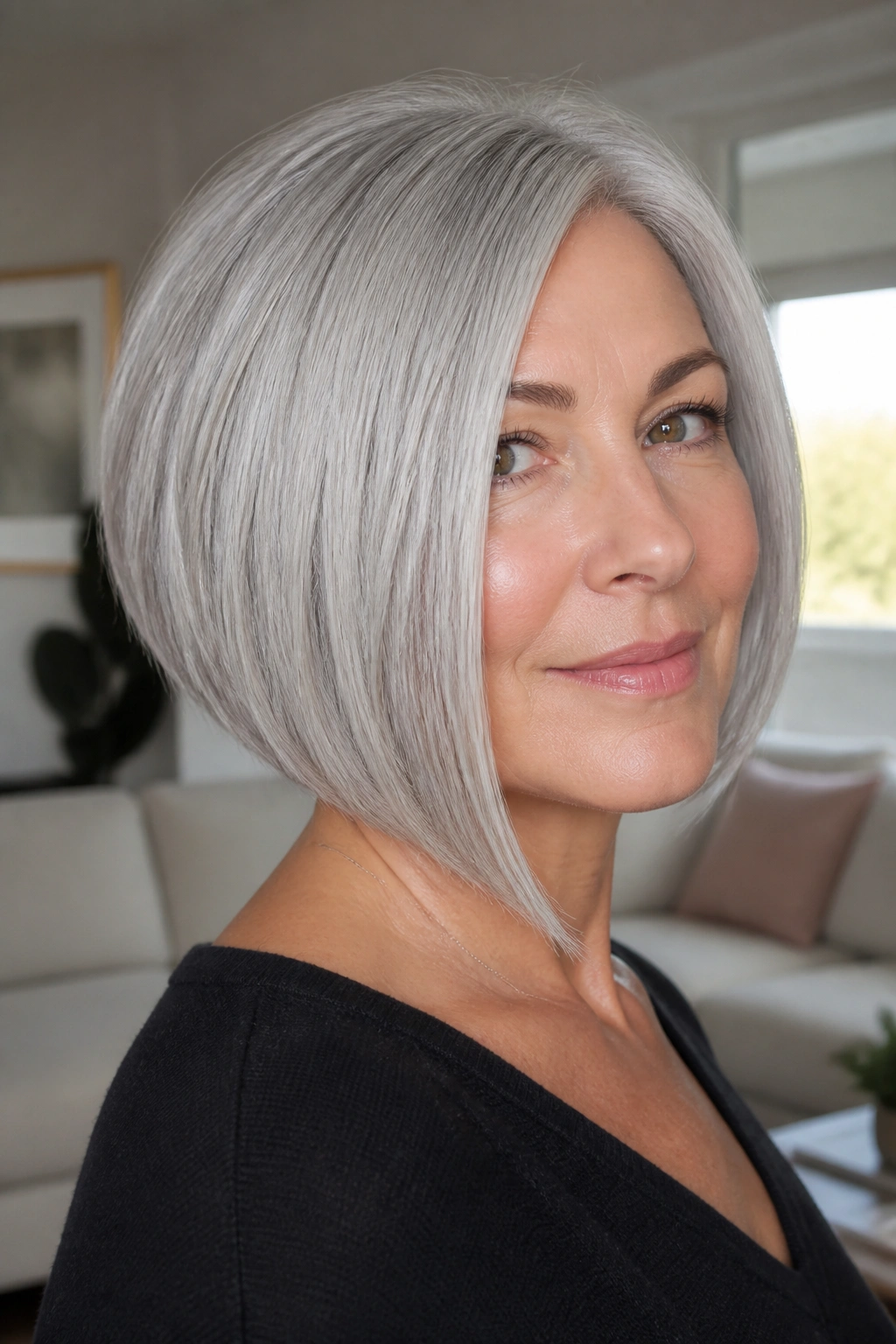
An A-line bob is a good move when you want the front to feel a bit longer and the back to sit neatly off the neck. Fine hair usually benefits from that diagonal shape because it creates the look of movement without stripping away too much density.
Picture a cut that gets shorter as it moves toward the nape. That angle pulls the eye forward and gives the face a cleaner frame. The silver tone makes the line even more obvious, which is useful when the shape is the whole point.
- Keep the back softly shorter, not stacked to the sky.
- Ask for a front that lands near the chin or collarbone.
- Style with a slight undercurve at the ends.
- Good for round or square faces that want a longer line.
4. Stacked Bob with a Lifted Nape
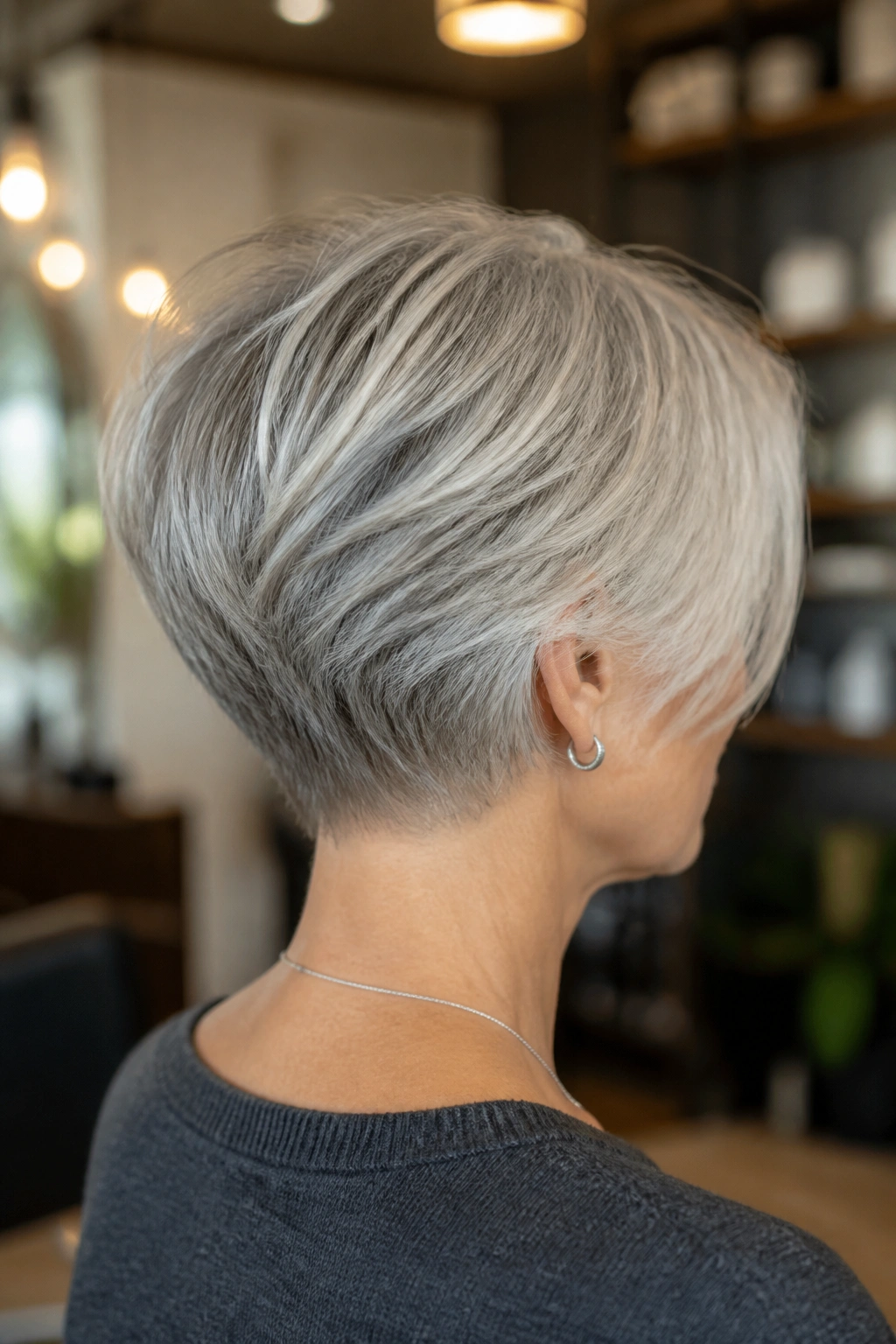
If your hair collapses at the back, this is one of the smartest bobs to ask for. A stacked shape builds lift where fine hair usually goes flat first.
The trick is restraint. Too much stacking turns the cut into a helmet, and that can look dated fast. What you want is a controlled graduation through the nape, enough to create support but not so much that the top looks disconnected.
What to Tell Your Stylist
Ask for a soft stack and keep the crown short enough to support the shape. The silver color works well here because it makes the outline read clearly from the side and back.
This cut is especially helpful if your hair grows in a way that makes the back look hollow. A little density at the nape changes the whole silhouette. Small detail, big difference.
5. Center-Part Glass Bob
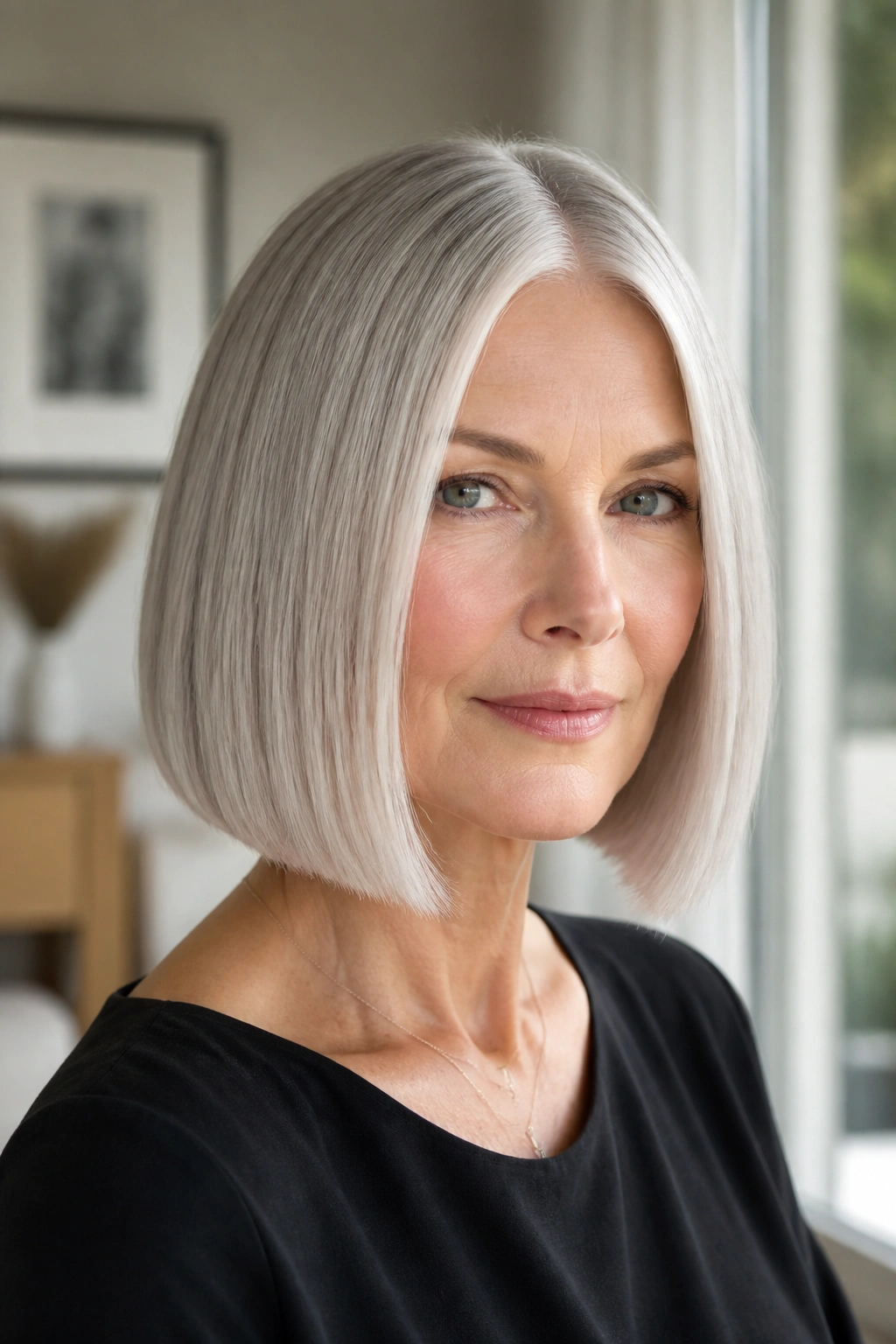
A center part can be risky on fine hair, but a sleek glass bob makes it work. The clean line down the middle gives the look symmetry, and symmetry can make a sparse texture seem more intentional.
The real magic is in the finish. Silver hair catches light beautifully when the surface is smooth, so a glassy bob can look polished without needing extra bulk. That said, the cut has to be blunt enough to support the shine.
- Best with a straightening blow-dry or flat iron pass.
- Use heat protectant before any hot tool touches the hair.
- Keep the ends blunt and even.
- A light gloss or serum helps the silver read bright, not dull.
6. Deep Side-Part Silver Bob

A deep side part is one of the easiest ways to get instant lift at the root. Fine hair often falls flatter on a center part, so shifting the line over can change the whole mood of the cut.
This is a good choice if one side of your hair tends to lie flatter than the other. The heavier side gives you a little sweep across the forehead, and that sweep creates visual fullness where the hair starts.
The best part? It doesn’t need a dramatic haircut to work. Even a simple bob looks more alive once the part is moved and the roots are directed up instead of down.
Use it when you want: a quick style change, more height at the crown, and a little softness around the face.
7. Rounded Bob
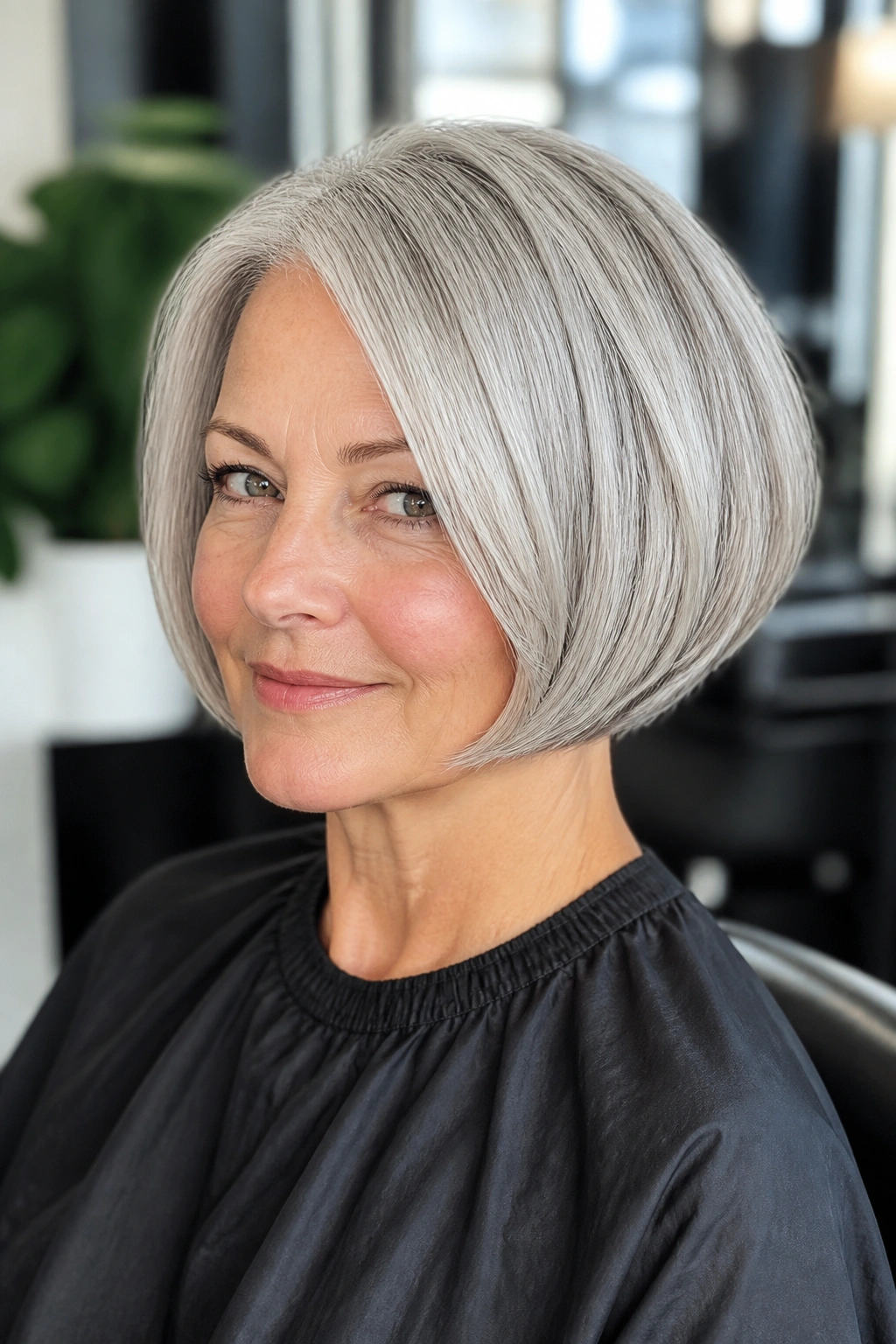
A rounded bob hugs the shape of the head in a way that can make fine hair look fuller than it is. The curve creates the illusion of density because there are no hard corners for the eye to measure against.
I like this cut on silver hair when the texture is straight or only slightly wavy. The shape feels neat, but not stiff. There’s a softness to it that keeps the bob from looking boxy, which matters if your strands are delicate.
The Shape to Ask For
Tell the stylist you want a rounded perimeter with gentle fullness through the sides. Not puffed out. Not tight to the scalp. Just enough curve to keep the outline smooth and full-looking.
This one is sneaky good. It doesn’t shout, but it makes fine hair look healthier, and that’s usually the win people are after.
8. Textured Bob with Invisible Layers
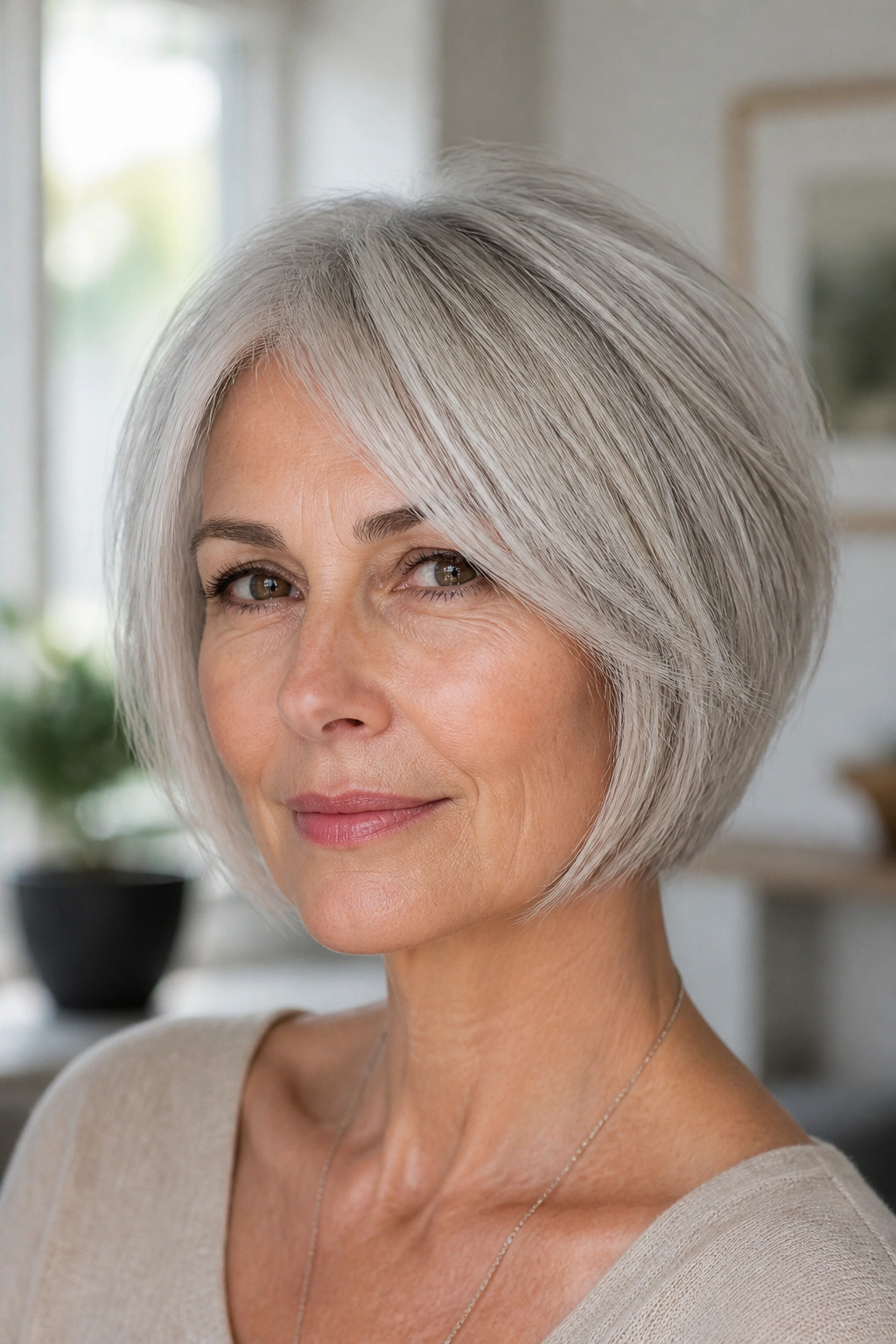
A textured bob can be a gift for fine hair if the layers stay invisible. Visible choppy layers can make the ends feel stringy. Hidden ones, though, create movement without advertising that the hair is thin.
That’s the difference here. You want internal shaping, not shredded ends. The silhouette should still look solid from the outside, even if the inside has a little airiness.
- Ask for subtle point-cutting, not aggressive razoring.
- Keep the outer line blunt enough to hold weight.
- Use a lightweight mousse at the roots.
- Scrunch only a little if your hair has bend.
9. Feathered Bob

Unlike a shag, a feathered bob keeps a cleaner edge. That matters for fine hair, because too much broken texture can make the ends look see-through.
Feathering softens the perimeter just enough to give the cut movement. The ends don’t hang in one heavy block, but they also don’t disappear into wisps. On silver hair, the lightness looks elegant rather than messy.
This style suits someone who wants motion and doesn’t want to fight a hard, precise shape every morning. It’s easier to wear when the hair naturally has a bit of slip.
A feathered bob works best when the feathering happens mostly at the ends, not up near the roots. Keep the base strong. That’s the part that keeps fine hair from looking flimsy.
10. Asymmetrical Silver Bob
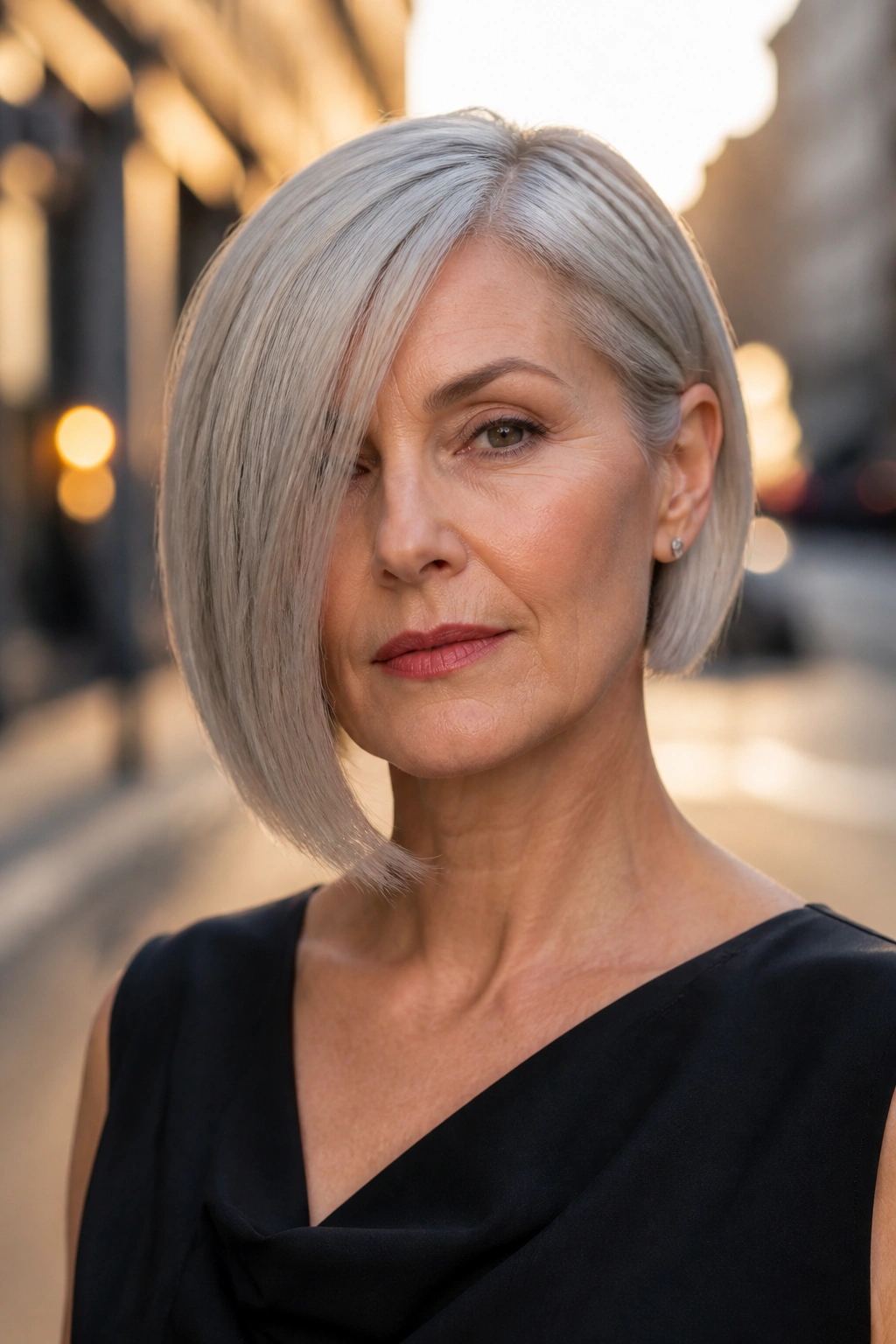
One longer side can change everything. An asymmetrical bob adds edge without needing extra density, which is useful when your hair is fine and tends to lie too flat in symmetrical styles.
The longer side draws the eye along the jaw and neck, while the shorter side keeps the shape lifted. It’s a sharp look, but it doesn’t have to feel severe if the silver tone is soft and cool.
Best On
- Straight or lightly wavy fine hair
- Faces that look good with diagonal lines
- Anyone who wants a bob that feels a little less expected
- Hair with one side that naturally holds more body
The cut only works if the line is clean. If it gets fuzzy, the asymmetry can look accidental instead of deliberate.
11. Collarbone-Length Silver Lob
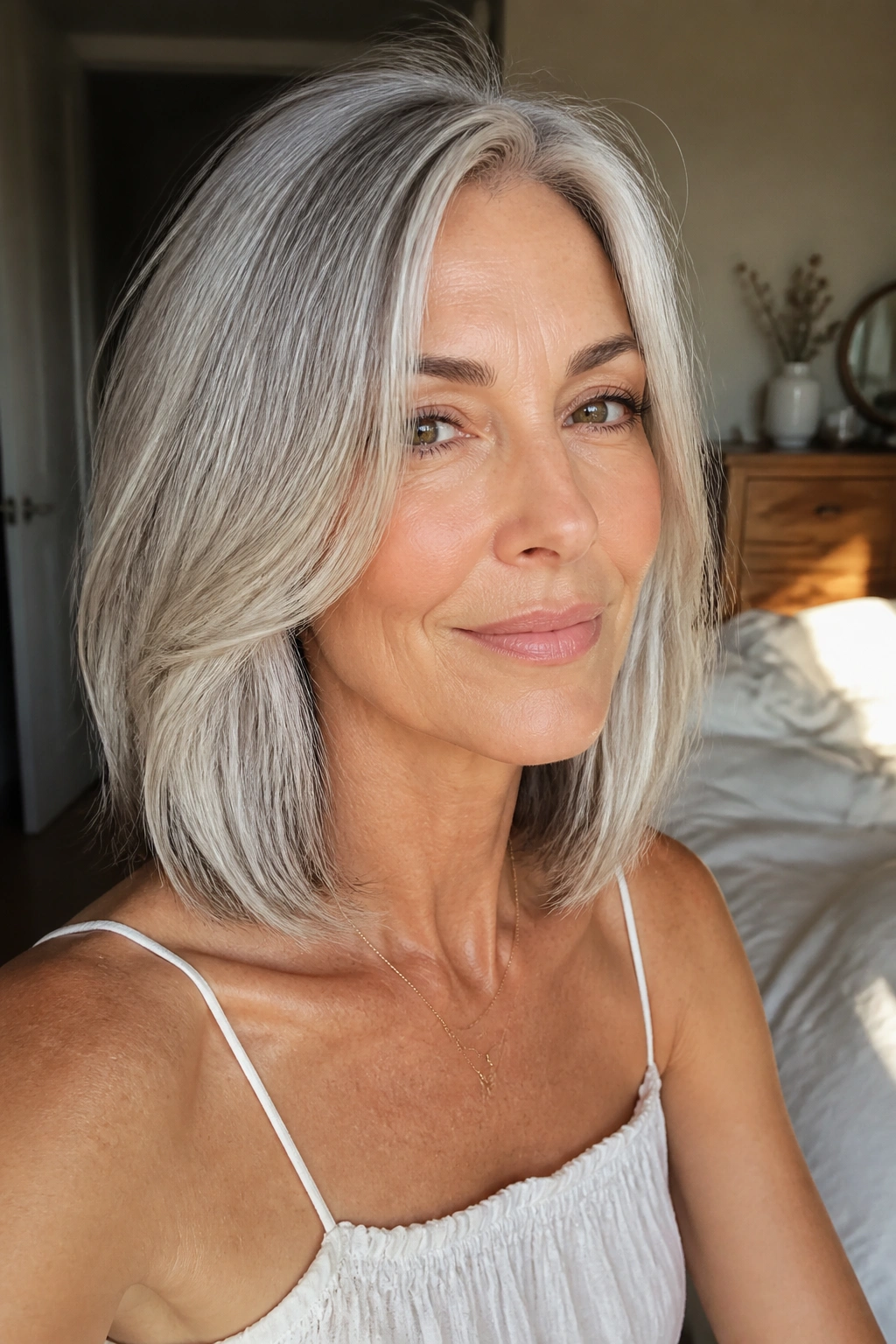
A lob gives you more hair to work with, which can be a relief if your fine strands get sparse when cut too short. The extra length keeps some weight at the bottom, and that weight helps the hair feel fuller.
This shape also gives you more styling options. You can curl it, tuck it, wave it, or wear it straight without losing the bob feel. Silver looks especially nice at this length because the ends have room to move and catch light.
The sweet spot sits around the collarbone, maybe a touch above or below. Too long and it starts to drag the face down. Too short and you lose the softness that makes the lob flattering.
12. Box Bob
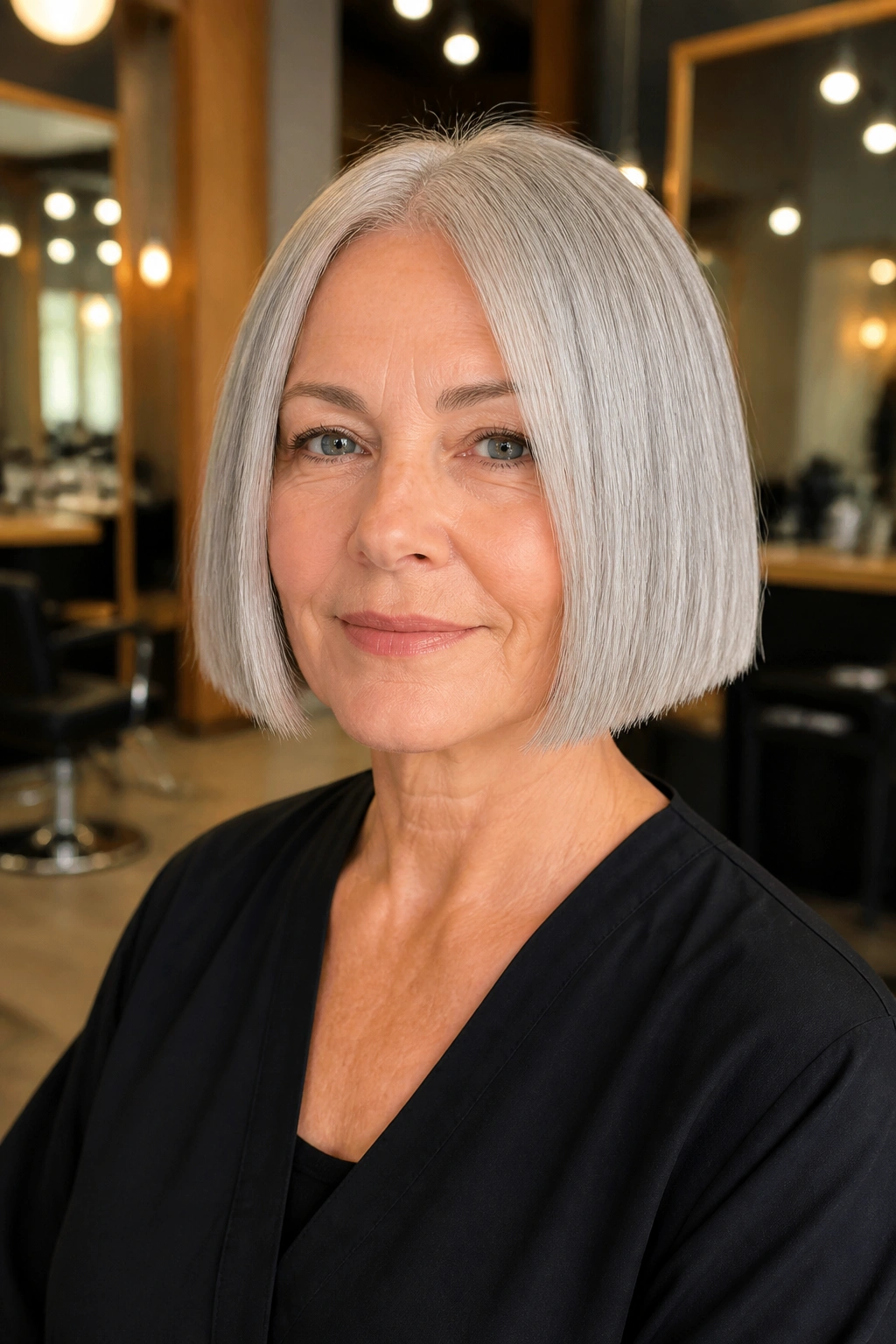
A box bob is blunt, square, and unapologetic. Fine hair often needs that kind of structure because the shape carries more weight than the strand count does.
This cut is best if your hair is naturally straight and you want it to look denser without a lot of styling. The corners near the jaw help frame the face, and the clean line across the bottom gives the illusion of thicker ends.
The vibe is polished, almost architectural. That may sound formal, but on silver hair it feels modern and crisp. It’s one of those cuts that looks expensive even when the styling is minimal.
If you have a narrow face, the box bob can add width in a flattering way. If your face is round, keep the length just a little below the chin.
13. Curly Silver Bob

Can fine hair wear curls? Yes, if the cut respects the curl pattern and doesn’t get too short at the wrong spots. A curly silver bob can look fuller than a straight one because the bend gives the hair built-in body.
The key is cutting it dry or nearly dry, so the stylist can see where the curl springs up. Wet cutting on fine curls often leads to a shape that shrinks too much once it dries.
How to Wear It
Use a light curl cream, then diffuse on low heat. Keep the root area lifted, but don’t pile on product. Fine curls go greasy fast when they’re overloaded.
Silver curls can look soft and bright, almost like brushed metal with a little cloud around it. That’s a good thing.
14. Wavy Bob with Piecey Ends
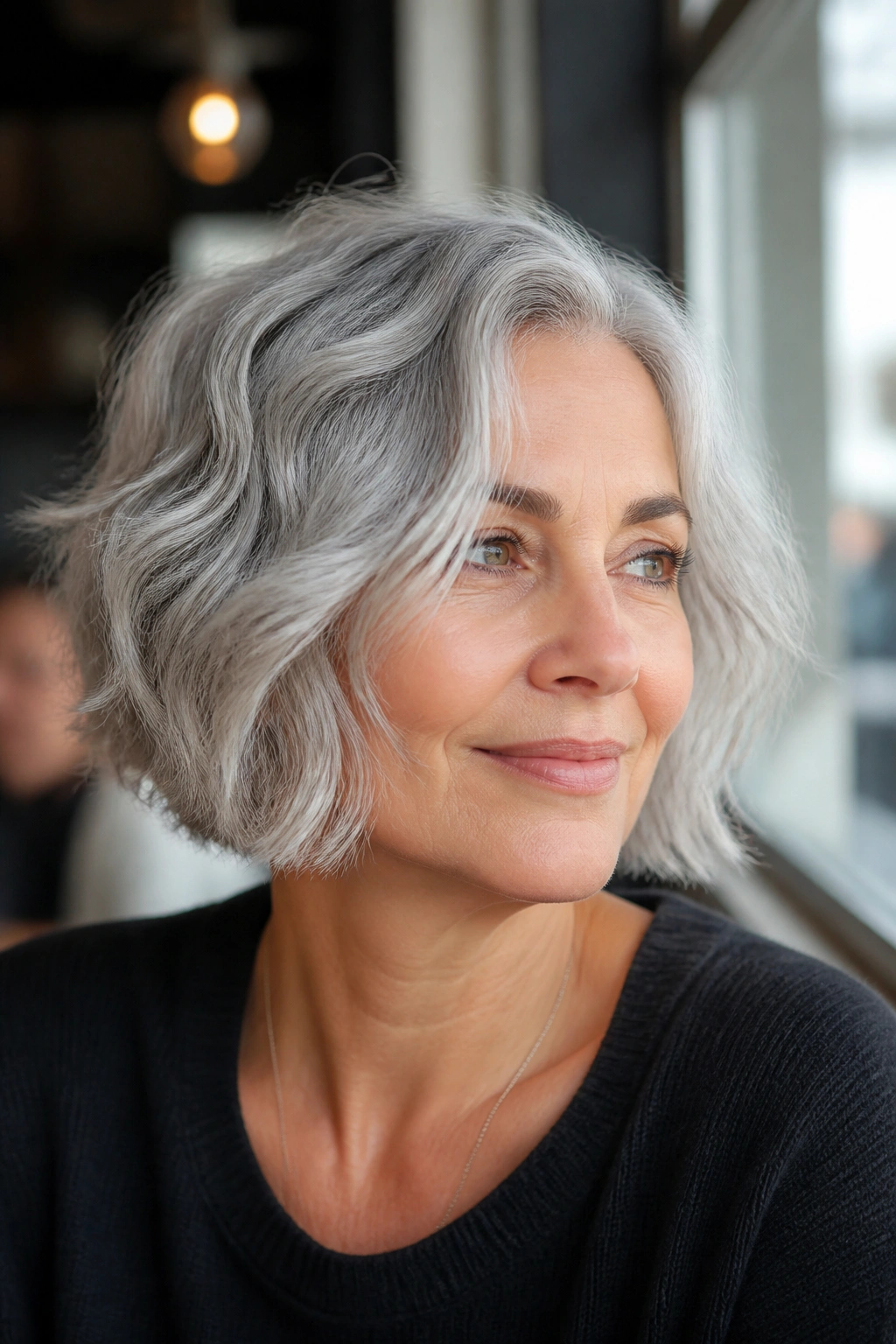
This one is for the person who wants movement without a lot of bulk. The waves create lift, and the piecey ends stop the style from feeling too heavy or too tidy.
A wavy bob on fine hair looks best when the waves are loose and uneven. Perfect curls can make the hair look smaller. Slightly irregular waves, on the other hand, add texture that reads fuller.
- Use a 1-inch curling iron or a fast braid set.
- Leave the last inch or two straight for a modern finish.
- Separate the waves with a tiny bit of cream or paste.
- Keep the overall length around the jaw or just below it.
The silver color catches the bends in a nice way. You get shine at the high points and shadow in the dips, which gives the style depth.
15. Bob with Curtain Bangs
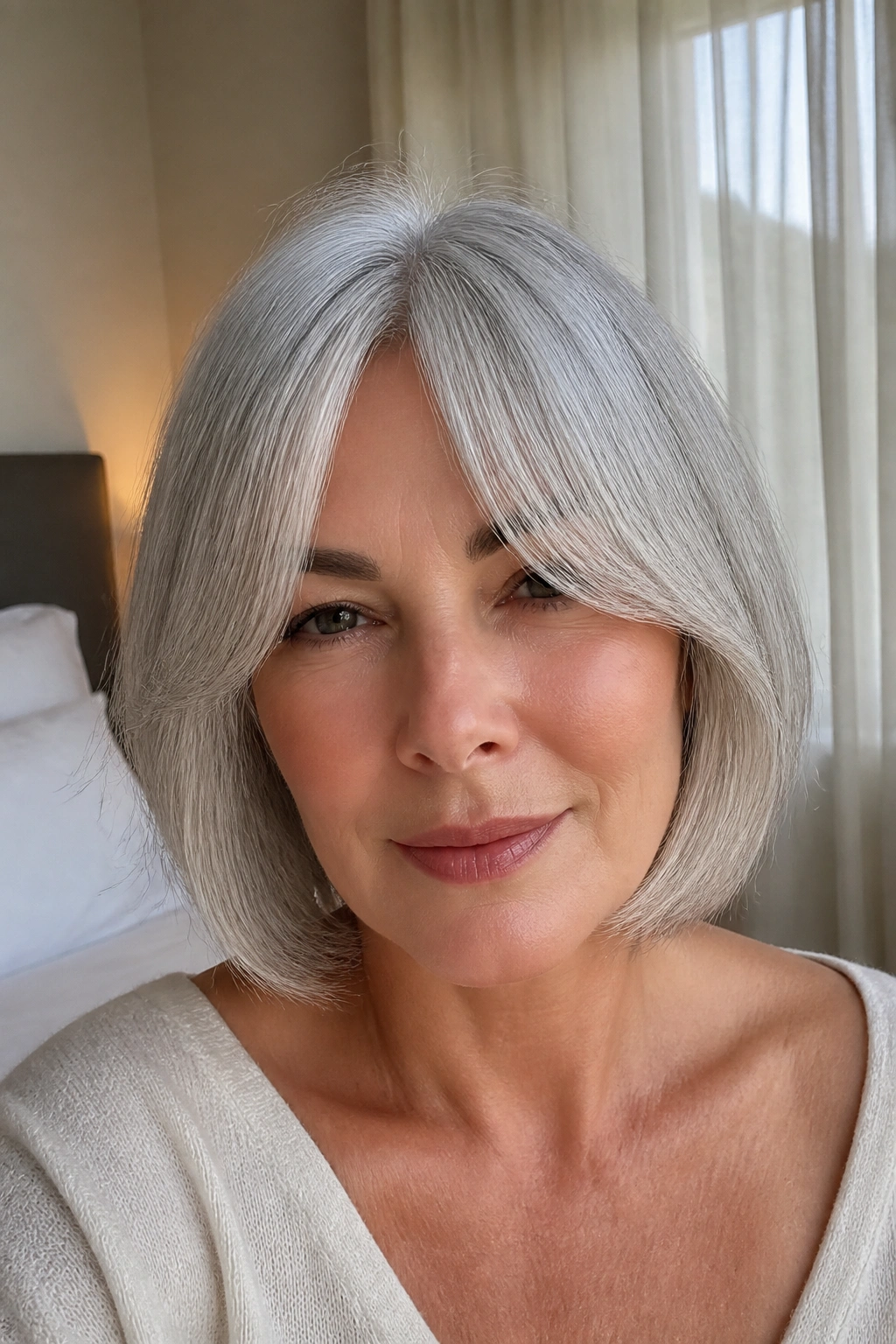
Curtain bangs are a smart match for a bob because they give the front of the haircut a wider frame. Fine hair often needs that kind of help near the temples, where density can be weakest.
The bangs split away from the center and blend into the sides, so the style feels soft instead of bluntly chopped. That helps if you want movement around the face but don’t want a heavy fringe sitting on your forehead.
A bob with curtain bangs also plays well with silver hair because the lighter front pieces brighten the face. Keep the bangs long enough to tuck and sweep. Too short, and they can start fighting the rest of the cut.
16. Bob with Micro Fringe

A micro fringe is bold, but it can be a smart move on fine silver hair. The short bangs bring attention upward, which helps the haircut feel intentional even when the hair itself is delicate.
This is not a forgiving fringe if you hate regular trims. It grows out fast and loses the crisp look once it drops past the brow line. Still, when it’s fresh, it gives the bob a sharp little hit of personality.
The rest of the cut should stay simple. Keep the bob clean, blunt, and not too layered, so the fringe can stay the focal point. Silver makes the line feel even clearer.
It’s a strong choice for someone who likes a little edge and doesn’t mind maintenance every few weeks.
17. Nape-Hugging Inverted Bob
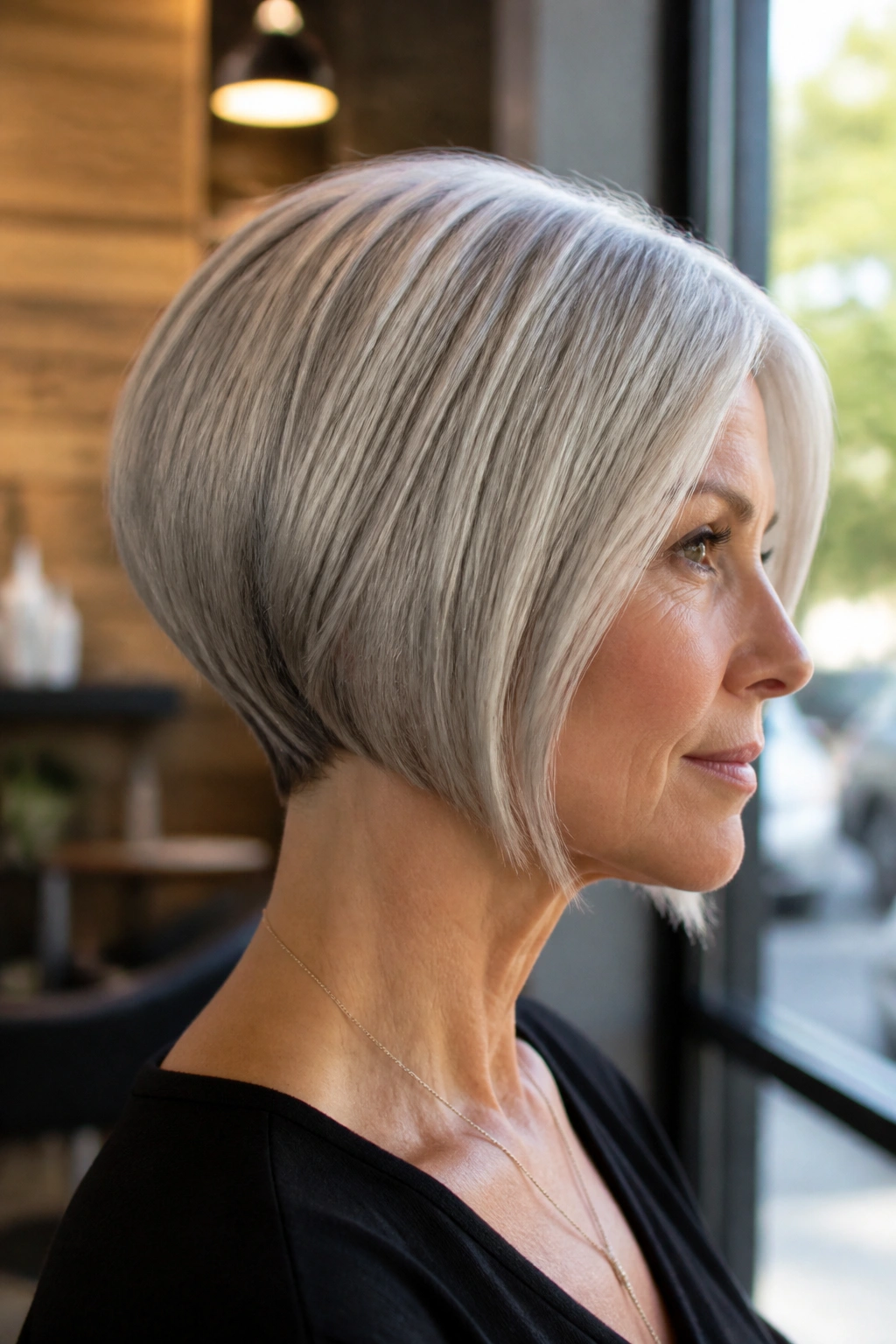
A nape-hugging inverted bob gives fine hair shape where it needs it most: close to the neck and through the back. The shorter back lifts the overall silhouette, while the longer front pieces keep the look soft.
That inversion is useful because it stops the back from sagging. Fine hair often loses structure first at the nape, especially if it’s slippery or very straight.
Good For
- Hair that falls flat at the back of the head
- Necklines that look better with a clean taper
- People who want shorter hair without a severe crop
- Silver tones that need a sharp outline to stand out
If the angle is too steep, the cut can look dated. Keep the transition smooth and the front moderate.
18. Jaw-Length Sleek Bob
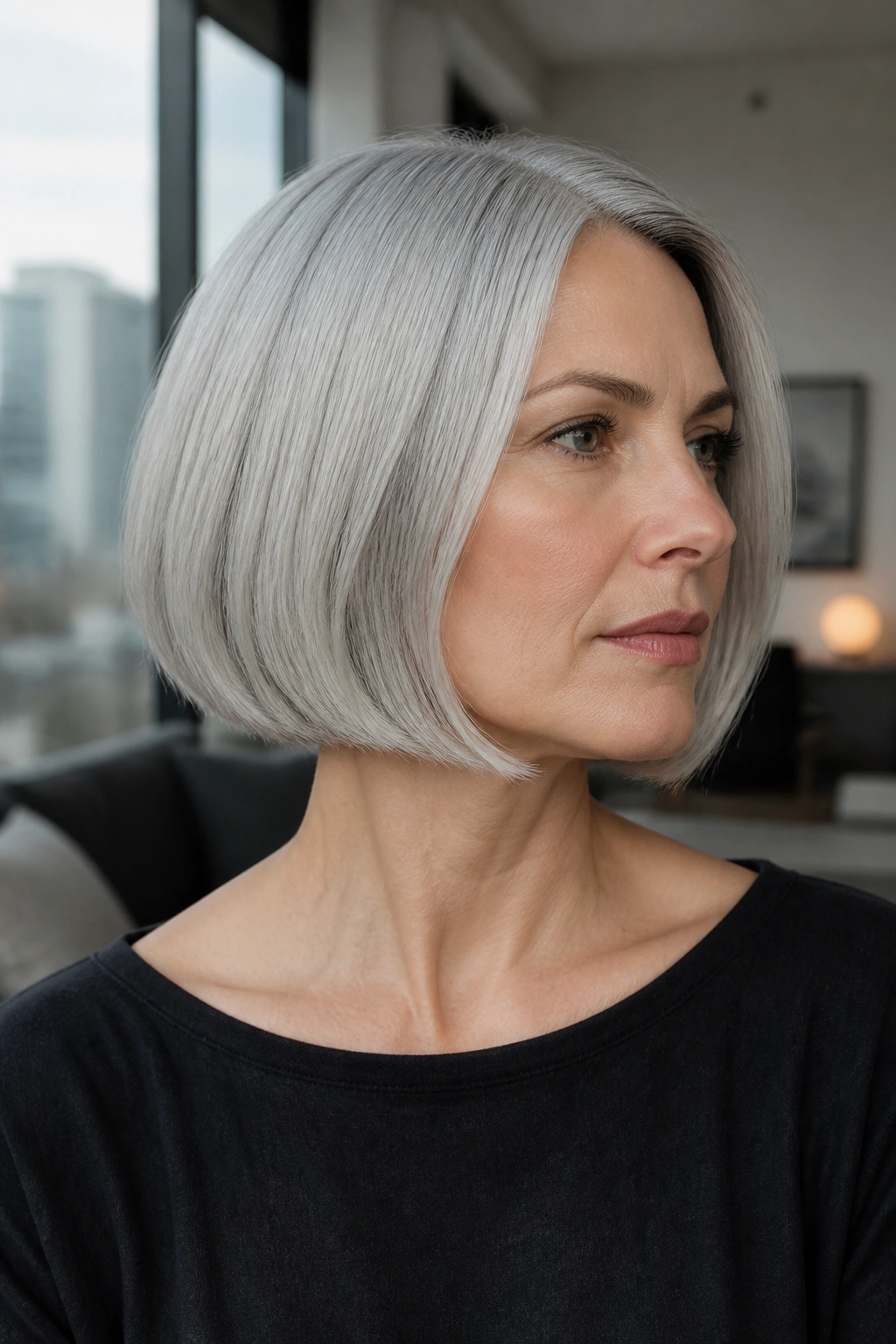
A jaw-length bob can look almost sculpted on fine silver hair. The short length keeps the ends compact, and compact ends usually read thicker.
This cut is good when you want something bold but easy to maintain. It opens the neck, sharpens the jaw, and leaves the hair with just enough length to swing. The silver tone gives the whole thing a clean, cool finish.
The styling matters here. A light blow-dry with a round brush can tuck the ends under, or you can wear it pin-straight if your hair already sits flat in a neat way. Either version works.
Shorter does not mean less feminine. On the right face shape, this length looks deliberate and strong.
19. Light Shag Bob

A light shag bob is the only kind of shag I’d send fine hair toward without hesitation. Heavy shag layers can chew through density and leave the ends too sparse.
The better version uses just enough movement around the crown and sides to keep the bob from feeling stiff. The perimeter still matters. The outer line should stay visible, or the cut loses the fullness that fine hair needs.
What to Avoid
- Razor-heavy layers that fray the ends
- Too much height at the crown
- Choppy texture all over the head
- Bangs that are thinner than the rest of the cut
A light shag bob works because it borrows the energy of a shag without the damage. That’s the whole trick.
20. Tucked-Under Bob
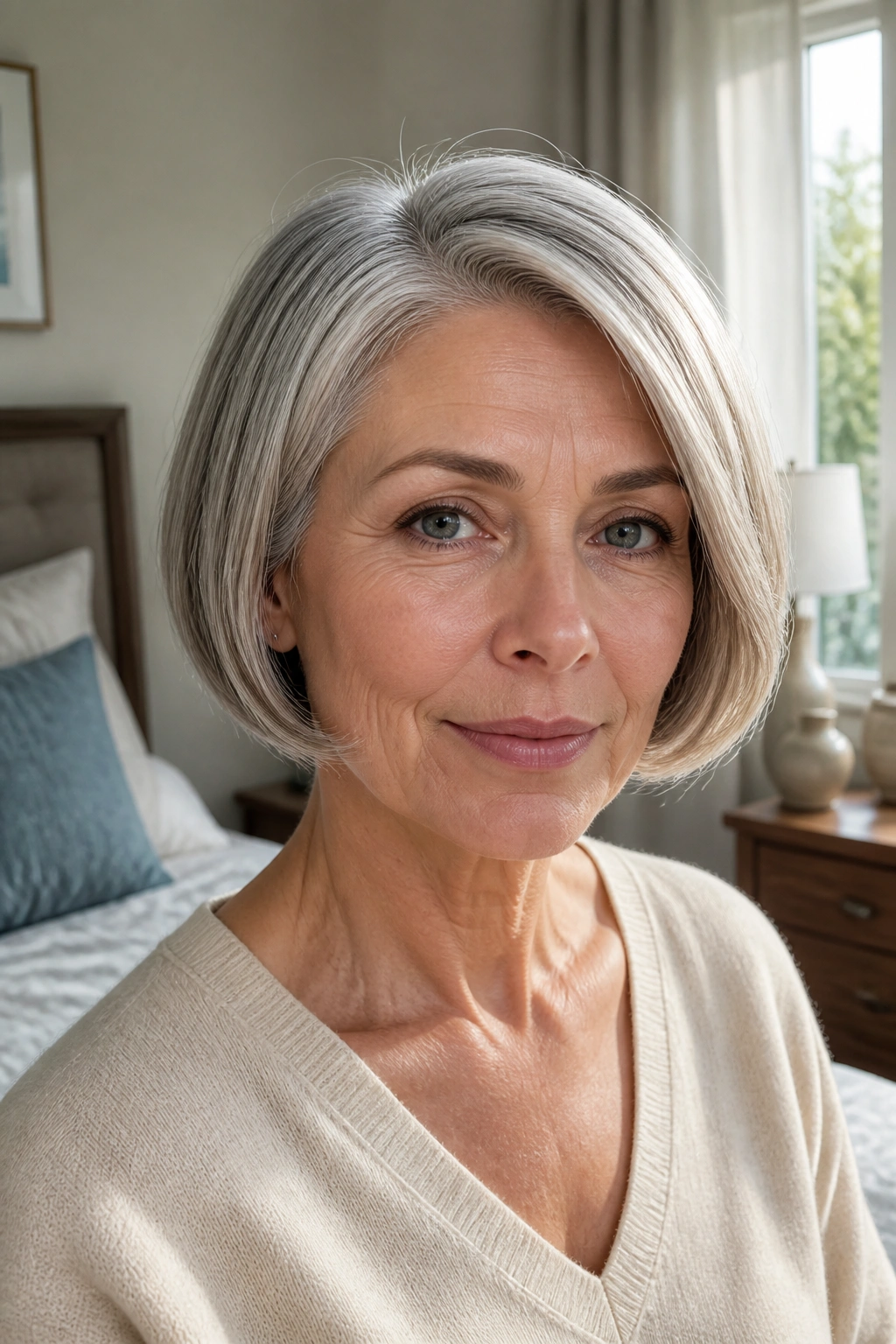
A tucked-under bob has a soft bend at the ends that makes fine hair look more finished. The inward curve catches light and gives the illusion of a thicker bottom edge.
Think of it as the opposite of a flipped-out, airy shape. This cut sits closer to the neck and the jaw, which helps the silhouette feel compact and full. Silver hair looks especially neat here because the curve creates a clear contour.
It’s a good everyday cut. Nothing theatrical. Just tidy, polished, and easy to understand.
If you blow-dry with a round brush, direct the hair under at the very end and hold the brush for a few seconds. That tiny pause helps the shape stay in place longer than people expect.
21. Face-Framing Lob
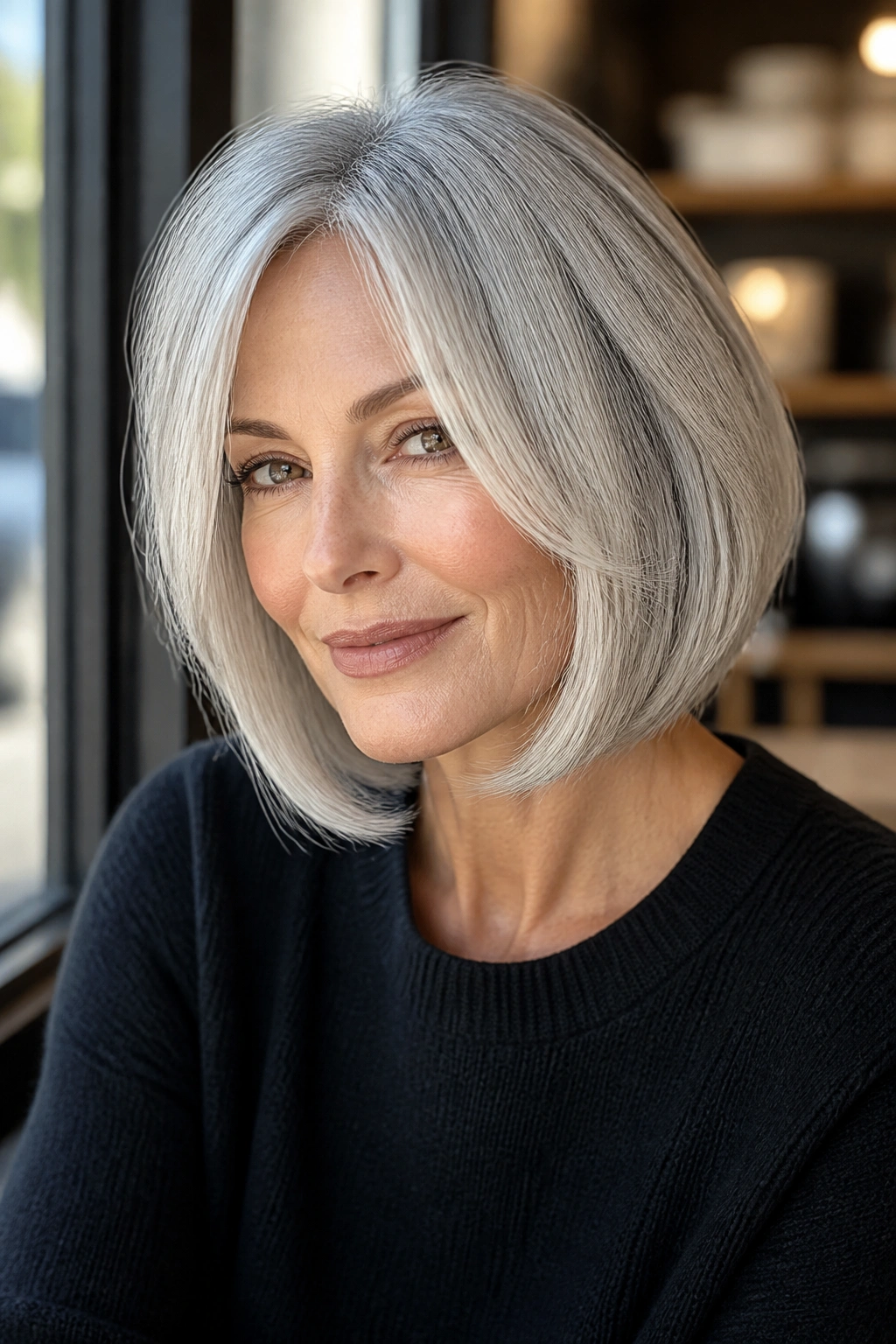
A face-framing lob gives you length where you want softness and structure where you need it. The front pieces guide the eye down and around the face, which can make fine hair look more abundant than a blunt long layer cut would.
This is a nice compromise if you’re nervous about going short. You keep enough length to feel like you still have hair, but the cut still behaves like a bob in the way it holds shape.
The front can be slightly longer than the back, or the whole thing can sit at the collarbone with a few refined pieces around the cheekbones. Silver shines at this length, especially when the hair is curled away from the face.
22. Soft Graduated Bob
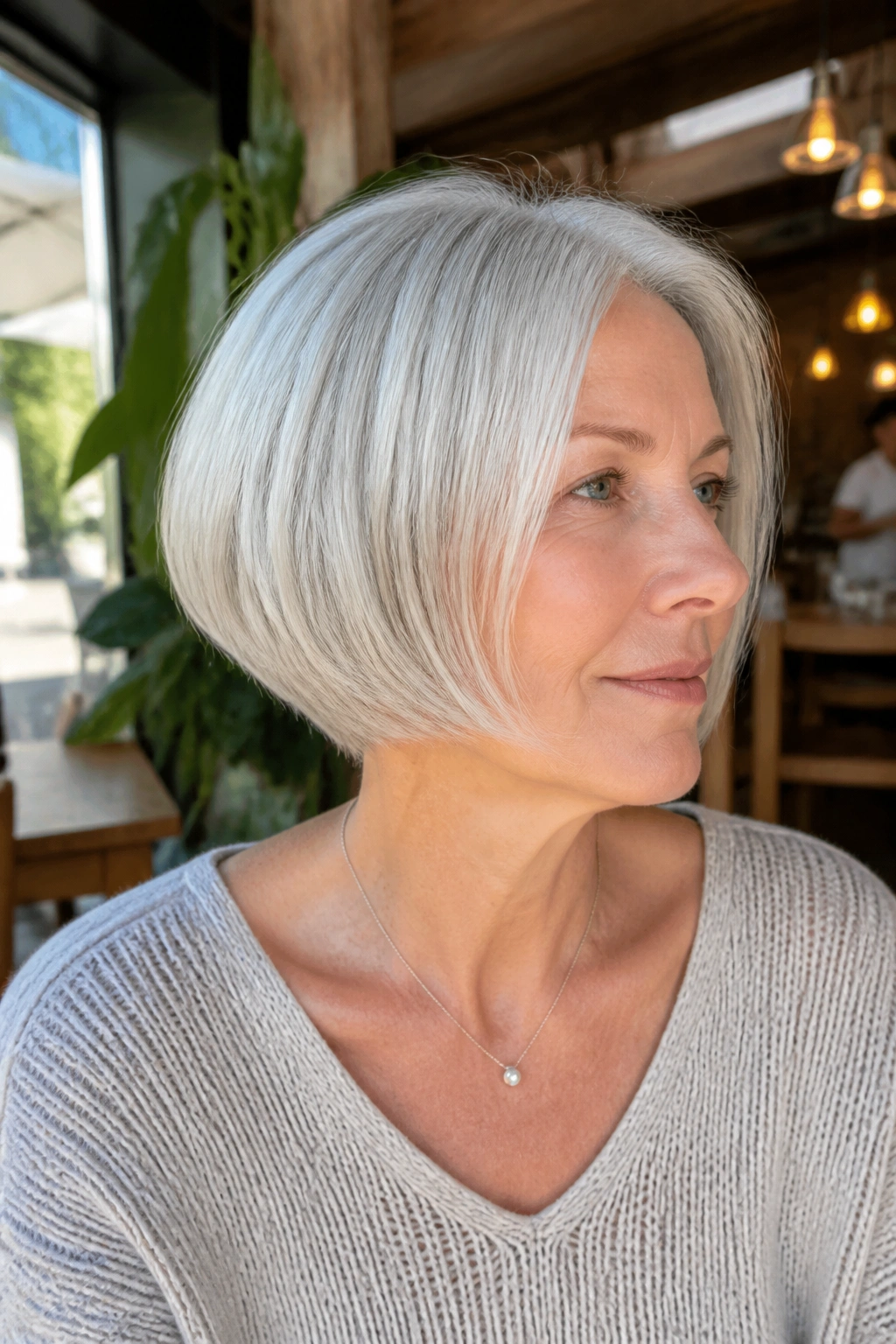
A soft graduation gives fine hair shape without shouting about it. That’s why this cut works so well.
Graduation means the back is subtly shorter and the hair builds forward in a controlled way. The effect is lift, but not the kind that looks spiky or overbuilt. You get body through the back and sides while keeping the outline smooth.
Ask For
- A gentle rise through the nape
- A perimeter that still feels blunt
- Short internal support, not obvious layers
- Soft movement around the ears and jaw
This is one of those cuts that looks tidy on a good hair day and still makes sense on a lazy one. Fine hair likes that. Most people do too.
23. One-Length Lob
Why does a one-length lob keep showing up in fine-hair conversations? Because it works. The blunt outline preserves the most density possible, and that matters more than fancy layering ever will.
A one-length lob sits longer than a classic bob, usually near the shoulders or collarbone. That extra length gives the hair more swing, but the blunt edge keeps the ends from looking see-through.
- Best if you want to keep hair tied back sometimes
- Good for straight or slightly wavy texture
- Easy to style with a middle or side part
- Looks clean with silver, smoky blonde, or soft gray blends
This is the safe choice, but not the boring one. Safe cuts earn their place when they make fine hair look stronger.
24. Silver Bob with Hidden Layers
Hidden layers are the move when you want movement but do not want the haircut to announce itself. The outside still reads as a strong bob, while the inside carries the softness.
That’s useful for fine hair because obvious layers can split the silhouette and make the ends look thin. Internal shaping keeps the bulk where the eye can see it and removes weight where it actually needs to go.
This cut can be a little harder to explain in a salon chair, so be direct. Say you want the perimeter to stay full and only the inside to move. That wording helps more than asking for “some layers,” which usually turns into too much.
Silver tones love this shape because the light catches the outer line first. The support lives underneath, and that’s the part most people miss.
25. Bob with Side-Swept Bangs
A side-swept bang can rescue a fine bob that feels too open around the forehead. The diagonal line gives the haircut a soft lift and keeps the front from looking sparse.
This style works especially well if your hairline is a little uneven or your temples are lighter than the rest. The sweep fills that space in a flattering way, and the bob below it keeps the shape tidy.
Styling Cue
Dry the bangs in the direction you want them to fall, not straight down. That small move changes the whole finish.
A side-swept fringe also plays nicely with silver because the lighter front sections can make the eyes and cheekbones pop. It’s a gentle fix, but a smart one.
26. Airy Bob with Crown Volume
Crown volume changes the whole reading of a fine bob. Without it, the cut can sit too close to the head and feel flat. With it, the same haircut suddenly looks fuller and more alive.
The lift should come from root direction and a little shaping near the top, not from wild teasing. Teasing tends to collapse later and can leave the surface rough. A better answer is a root-lifting mousse, a round-brush blow-dry, and a cut that respects the crown.
- Use a root product on damp hair.
- Blow-dry the crown up and away from the scalp.
- Keep the ends neat so the volume looks intentional.
- Avoid overloading the top with short layers.
This is the kind of detail that changes everything in a mirror. Small lift, big payoff.
27. Angled Bob with Sharp Front Pieces
An angled bob with sharper front pieces gives fine hair a strong silhouette. The front length creates the sense of movement, while the shorter back keeps the whole shape lifted.
Compared with a soft A-line, this version has more edge. The angle is cleaner, the front pieces are more obvious, and the overall feel is a little cooler. If you like a bob that reads modern rather than sweet, this is the one to look at.
The cut is especially flattering on hair that falls flat when it’s all one length. The diagonal line gives the eye something to follow, and that alone can make the hair seem fuller.
I’d keep the ends blunt, not wispy. Sharp lines and fine hair get along better than people think.
28. Pixie-Bob Hybrid
Can you go short without losing the bob shape? Yes. The pixie-bob hybrid sits right in that in-between space, and on fine silver hair, that can be a real advantage.
The back stays short and neat, while the front keeps enough length to read as a bob. It’s light on the head, easy to dry, and good for someone who wants movement without a lot of bulk hanging around the face.
Best For
- Very fine hair that looks better shorter
- Busy mornings with little styling time
- Straight or softly wavy texture
- People who like ear-tucking and cropped necklines
This isn’t the most conservative choice, but it can be one of the most flattering when the hair is sparse and the face needs clear framing.
29. Bouncy Blowout Bob
A bouncy blowout bob brings life to fine hair by turning the shape outward just enough to create lift. The trick is not to curl it into submission. You want movement, not pageant hair.
Silver tones look bright and airy with this kind of finish because the strands reflect light as they move. A rounded brush, a bit of heat, and a clean sectioning pattern can make a plain bob look much fuller.
- Start with a heat protectant.
- Blow-dry in small sections with a medium round brush.
- Lift the roots before you focus on the ends.
- Finish with a flexible spray, not a stiff lacquer.
It’s a little more effort than a wash-and-go cut, but the payoff is obvious. The hair looks thicker because it’s full of motion.
30. Minimalist Chin Bob
A minimalist chin bob is stripped down in the best way. No extra fluff. No choppy layers. No unnecessary shaping that steals density from the ends.
This is the cut for someone who wants silver hair to look clean and strong. It sits at the chin, frames the face, and lets the color do the work. When the silver tone is even and the outline is sharp, the whole style feels deliberate.
The beauty of this bob is how little it asks from the hair. Fine strands don’t have to carry a lot of weight or fake a lot of volume. They just need a good line and a bit of polish.
Keep the maintenance simple: trim the edge on a regular cycle, use a smoothing cream when the texture gets fuzzy, and don’t let the shape grow out too far before it loses its clean edge.
The best silver bob for fine hair is usually the one that looks calm, not busy. That’s the quiet truth behind nearly every cut on this list, and it’s the reason a blunt line, a careful angle, or a soft lift can matter more than piles of layers ever will. Fine hair likes honesty. Silver hair does too.
