



Round faces do not need to be hidden; they need a cut that builds length where the eye wants to travel. That is why long stacked bob haircuts for round faces work so well when they’re drawn properly: the shape adds height at the crown, keeps weight off the sides, and gives the front enough length to stretch the face instead of circling it.
The mistake I see most often is not the bob itself. It’s the stack. Too much fullness at cheek level can make the face feel wider, while a cleaner graduation at the back creates that slim, lifted look people usually want but don’t always know how to ask for.
A good stacked bob is not one-size-fits-all. Fine hair, thick hair, straight hair, loose waves, curls — each needs a different balance of lift, length, and texture. And once you start paying attention to where the shortest layers sit, the whole haircut changes. Dramatically.
1. Collarbone Stack With a Deep Side Part
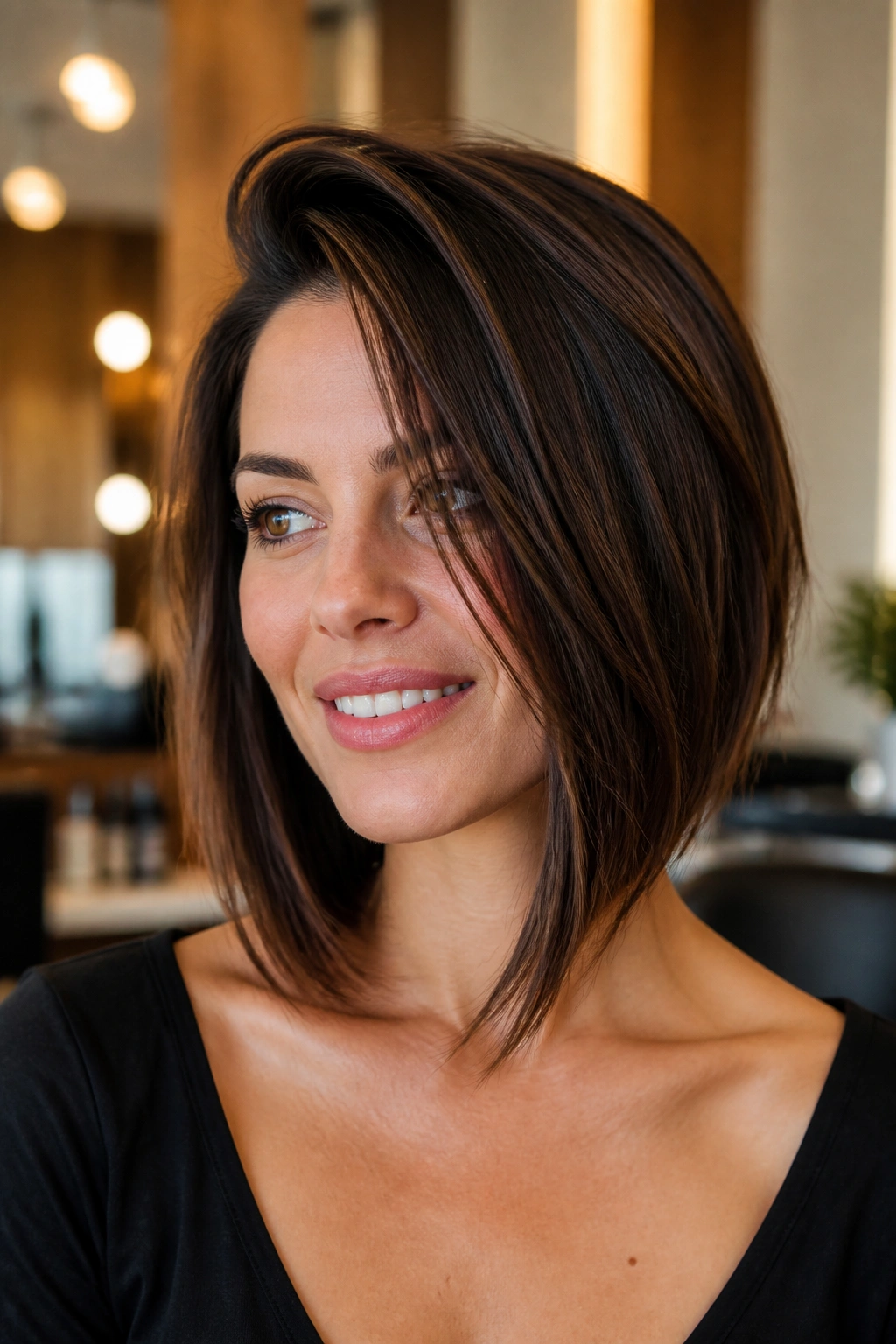
A deep side part changes the whole mood of a long stacked bob. It creates a strong diagonal line across the forehead and cheek area, which is one of the easiest ways to soften a round face without making the haircut feel severe.
Why It Works on a Round Face
The trick is to keep the back stacked enough to lift the crown, then let the front fall well past the chin. I like a front length that lands at the collarbone or just above it, with the shortest back layers starting around the occipital bone. That gives shape without puffing out the sides.
If your hair falls flat in the back, this is a smart pick. The side part adds a little drama, and the stack gives the cut a built-in bend even on days when you do not style it much.
- Ask for soft graduation at the back, not a heavy shelf.
- Keep the front 2 to 3 inches longer than the jawline.
- Blow-dry with a 1.25-inch round brush for lift at the roots.
- Tuck the heavier side behind one ear for a cleaner line.
Best tip: if your face is very round, move the part slightly off-center, not all the way to the temple. Full side parts can look stiff.
2. Soft Graduated Bob With Feathered Nape

This is the haircut I recommend when someone wants shape but hates anything that looks carved. The graduation is there, but it’s soft enough that the back feels airy instead of stacked into a hard edge.
The feathered nape matters. It keeps the neck area tidy while the longer top layers slide forward and skim the face. That little bit of movement stops the cut from settling into a balloon shape, which can happen fast on round faces if the sides carry too much bulk.
It also grows out gracefully. That sounds boring, but it saves you from the awkward middle stage where a sharp bob starts to blur. If you like a haircut that still looks decent four or five weeks later, this is a good one.
Ask your stylist to point-cut the ends lightly and avoid blunt weight through the lower half. The silhouette should feel soft, not puffy. That distinction is everything here.
3. A-Line Lob With Face-Framing Slices

Why does this version flatter so many round faces? Because the front pieces pull the eye downward, and the angled line does the stretching for you.
How to Ask for It
Tell your stylist you want a longer front with a gentle A-line, not a dramatic slope. A difference of about 1.5 to 2.5 inches between back and front usually reads as flattering instead of cartoonish. The face-framing slices should begin around lip level or just below, then taper toward the collarbone.
What Makes It Different
Unlike a blunt lob, this one depends on movement. The front pieces should bend inward a little, almost like they’re wrapping the face instead of sitting flat against it. That inward angle is what keeps the cut from widening the cheeks.
It works especially well if your hair is medium density. Fine hair can wear it too, but the slices need to stay light. Thick hair usually handles the angle beautifully, though the ends may need a bit of debulking so they do not kick out.
4. Wavy Stacked Bob With Beveled Ends
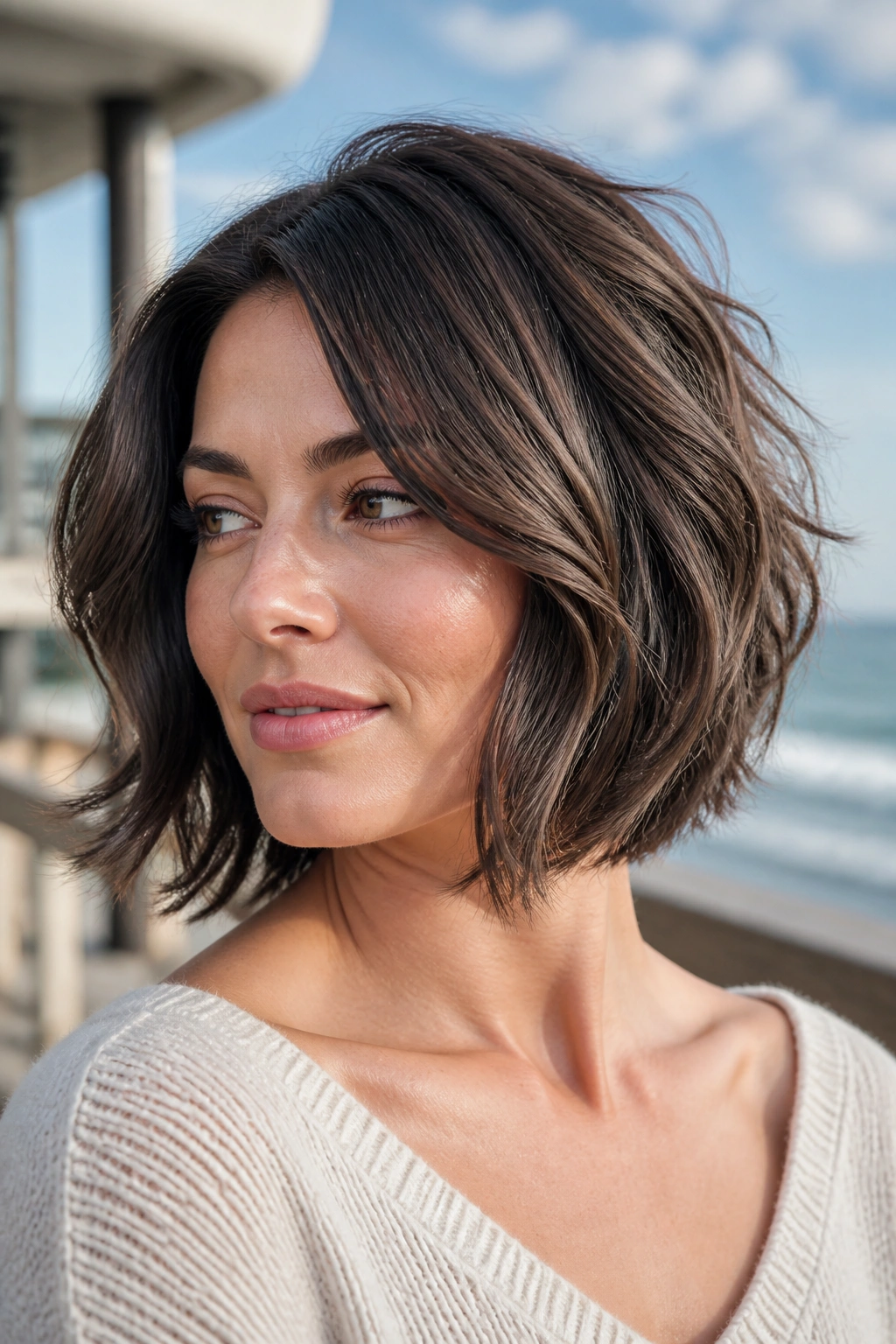
If your hair bends on its own, stop fighting it. A wavy stacked bob with beveled ends makes that natural movement look deliberate, and the bevel keeps the line from getting chunky.
The stacked back gives height, which round faces love. The waves bring texture, but because the ends are beveled rather than chopped blunt, the shape still feels vertical. That matters. Soft wave plus blunt width can go sideways fast.
- Best wave pattern: loose 2A to 2B waves
- Best styling tool: 1-inch curling iron or wand
- Best product: light mousse or wave spray
- Best finishing move: scrunch at the crown only, not the sides
The whole cut should feel a little undone, not fluffy. That is the line you want to protect. If the sides start expanding outward, switch to a smaller amount of product and let the front pieces stay a touch longer.
5. Inverted Bob With a Tight Nape
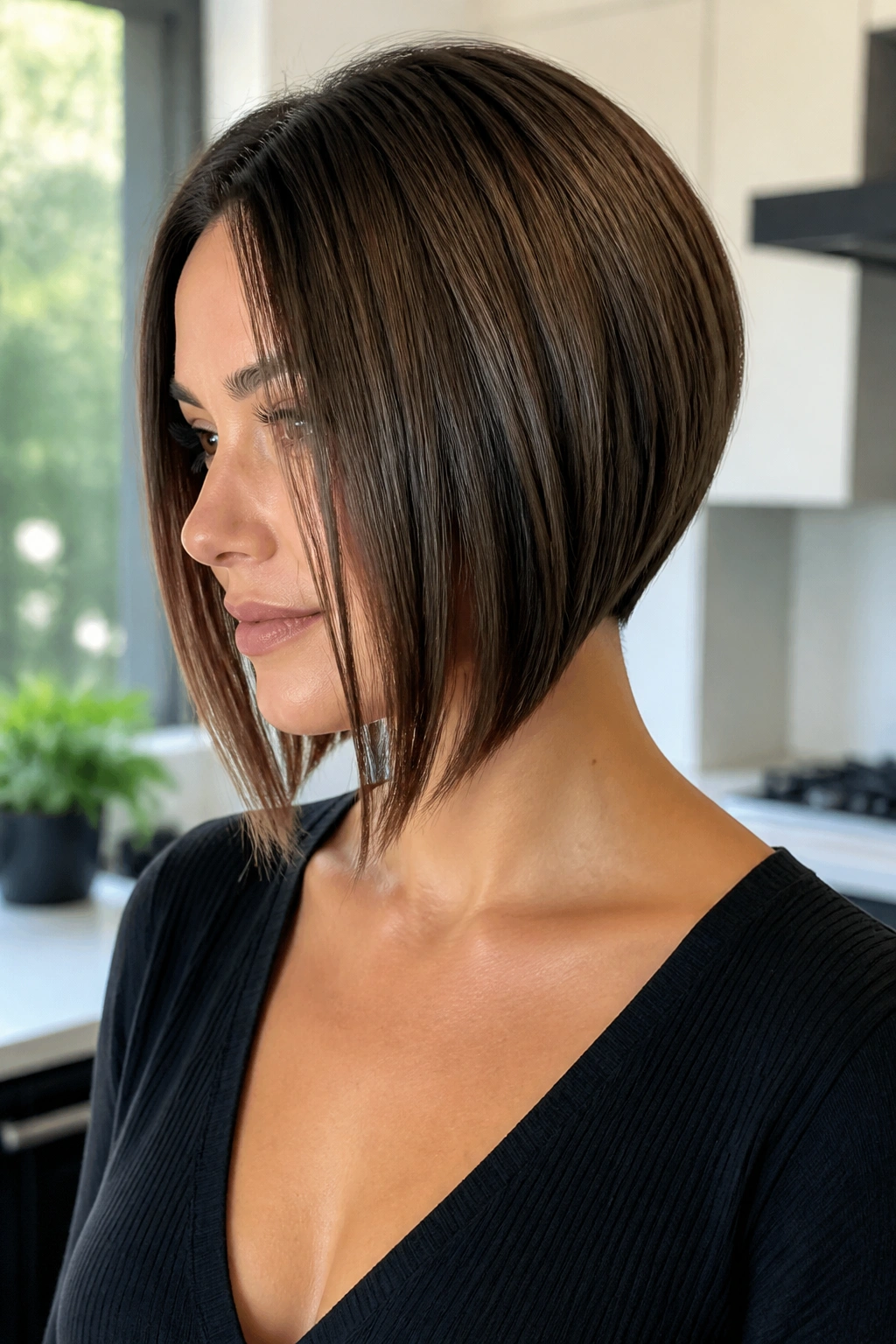
This cut is sharper. Not harsh, just cleaner. The inverted shape hugs the back of the head and opens up the front, which gives a round face more length than width.
I like this one for clients who want a polished look without a lot of daily fuss. The tight nape keeps the neck area neat, while the longer front edges skim past the chin and collarbone. That forward length is doing the heavy lifting here.
It is especially good on straight hair, where the angle shows clearly. On wavy hair, the shape still works, but you may need a flat brush and a quick bend at the ends to keep the front from flipping out. That flip can shorten the line in a way that makes the face look fuller.
A clean inverted bob needs regular trim work. If the back gets overgrown, the whole silhouette starts to sag.
6. Curly Stacked Bob With a Lifted Crown
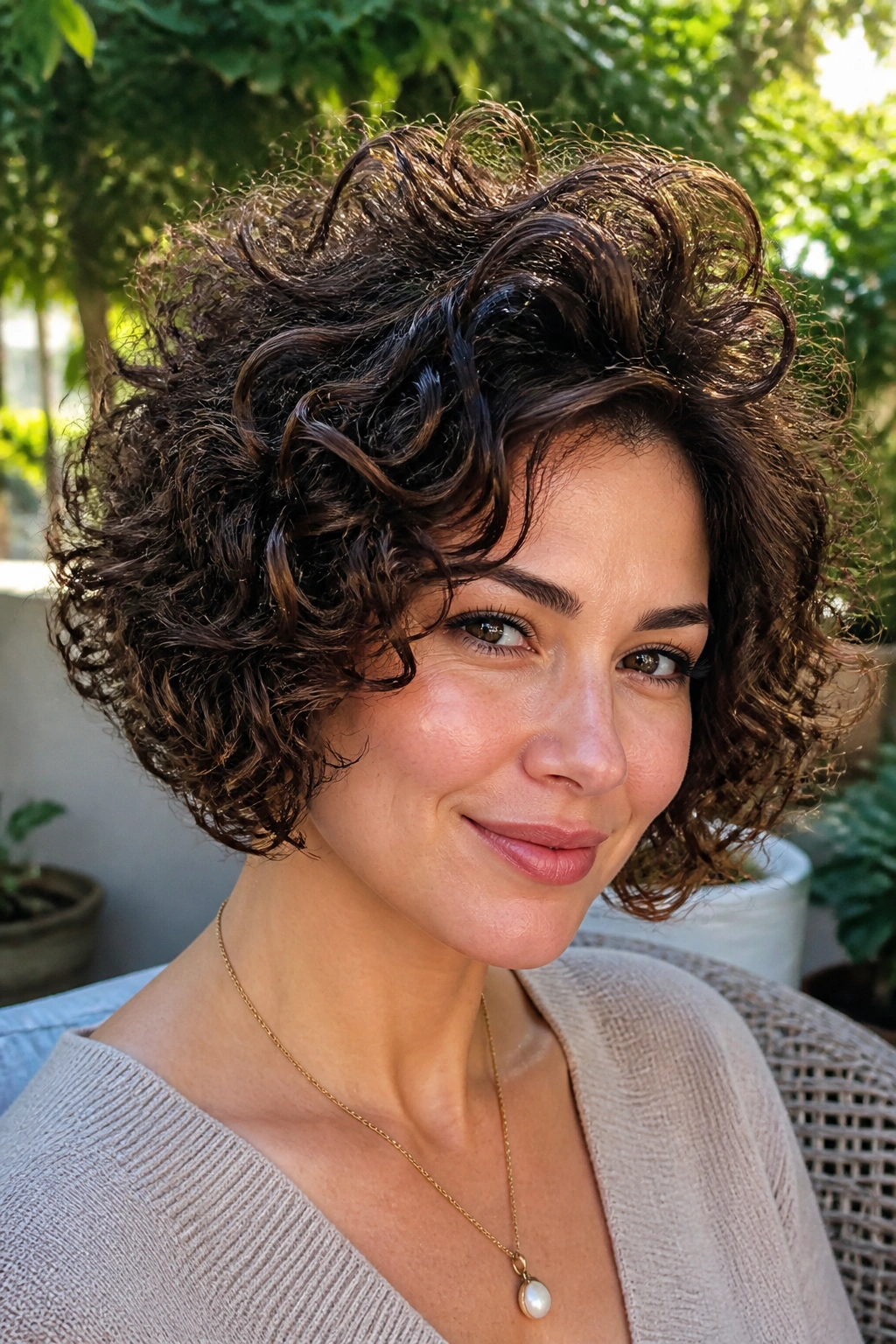
Curly hair and stacked bobs can be gorgeous together, but only when the crown gets enough room. A round face needs height, not a dense halo sitting at cheek level.
What Makes It Different
Unlike a one-length curly bob, this version removes bulk from the lower back and preserves shape on top. That means the curls can spring upward instead of spreading sideways. Ask for dry cutting if possible, because curls lie and shrink in their own way. Wet curls can fool everybody.
How to Keep It Flattering
- Keep the shortest layers at the upper back of the head, not at the widest part of the cheek.
- Leave the front pieces at least chin-length when dry.
- Use a diffuser on low heat and stop before the hair gets fully fluffy.
- Add a little cream only through the mid-lengths and ends.
This cut is best for people who like structure but do not want to flatten their curls into submission. It is a little more work than a straight bob, sure, but the shape pays you back.
7. Sleek Straight Stacked Lob With a Clean Edge
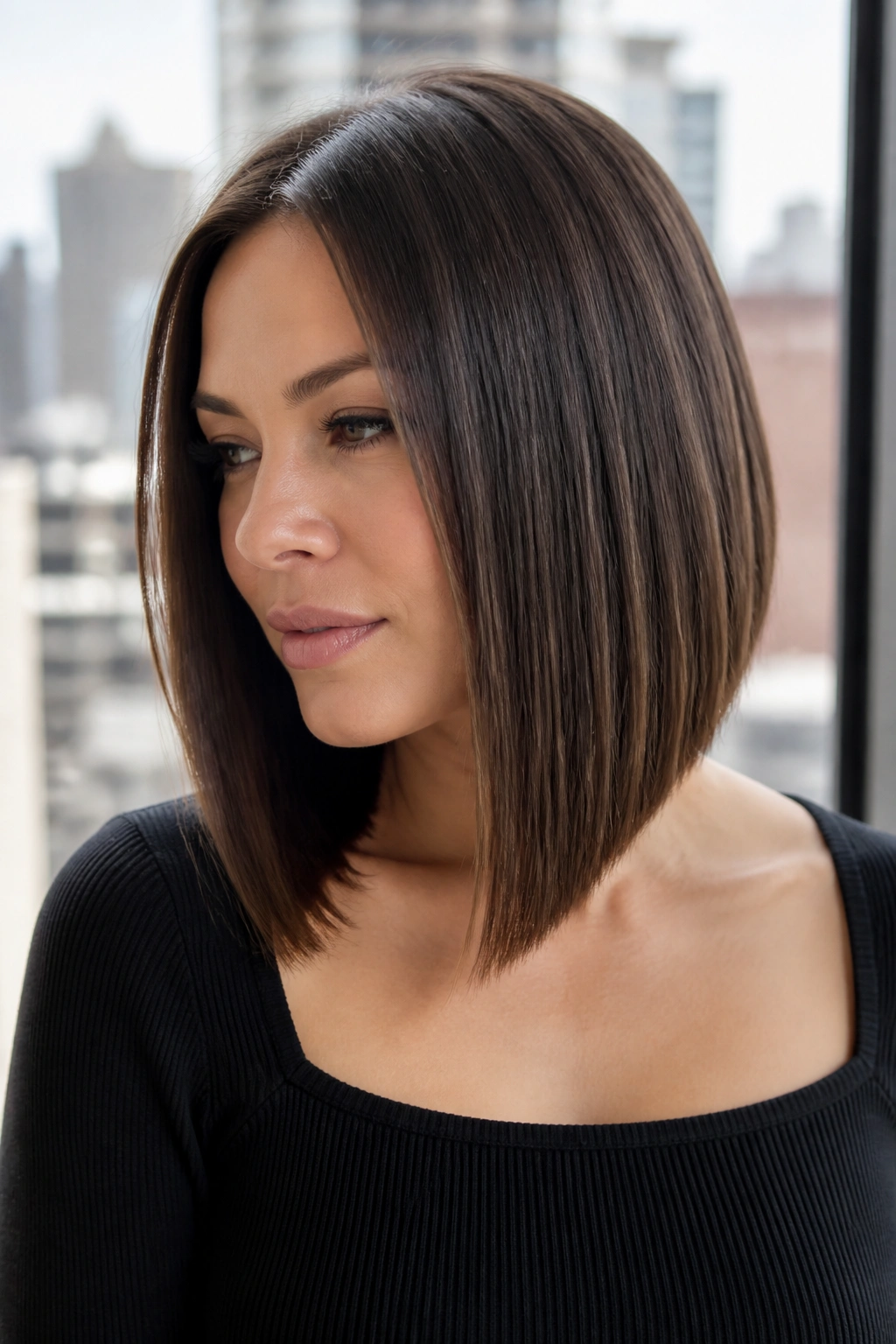
A sleek stacked lob can look expensive in the best sense of the word, but only if the line stays crisp. Round faces do well with this kind of polish because the haircut creates a long, uninterrupted shape from crown to collarbone.
What to Ask Your Stylist
Ask for a light stack in the back, not a dramatic wedge, and keep the front pieces blunt enough to hold a straight line. A slight bevel at the very ends helps the hair tuck inward instead of fanning out.
Tiny Details That Matter
- Use a flat iron on medium heat, not scorching hot.
- Take sections no wider than 1 inch when smoothing.
- Finish with a light shine cream on the mid-lengths.
- Keep the part clean; a jagged part makes the whole cut feel messy.
This style can turn flat fast if the roots collapse, so root lift spray at the crown helps a lot. The goal is a sleek outline, not a pasted-down helmet. Different thing entirely.
8. Shaggy Stacked Bob With Curtain Bangs

This one has attitude, but it still plays nicely with a round face if the bangs are cut with some restraint. Curtain bangs open the center of the face and soften the cheeks, while the stacked back keeps the shape from turning boxy.
The shag element adds movement through the mid-lengths. That movement is useful, but it can go wrong if every layer starts at the same height. You want staggered pieces, not a chopped-up triangle. The best versions keep the lowest face-framing layer around the chin and let the fringe split just above the brows.
This cut suits hair that has at least a little bend. Straight hair can wear it too, though you may need a round brush to persuade the bangs into that loose, parted shape. I would not call it low maintenance. It is more of a “looks effortless after a quick styling routine” haircut.
Still, it’s a strong choice if you want something younger-looking without going short.
9. Side-Swept Layered Lob With a Long Fringe
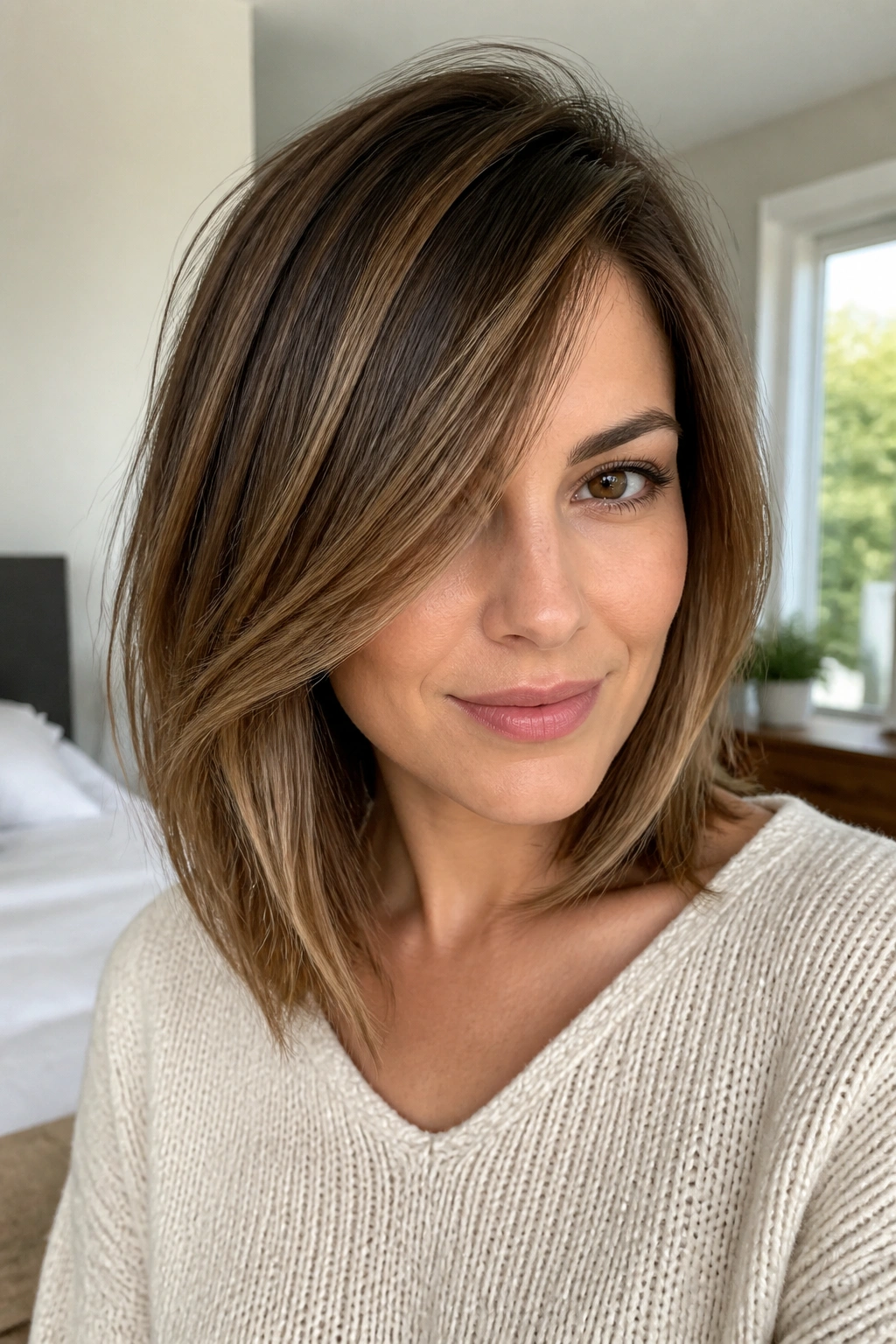
Can a fringe help a round face? Absolutely, if it does not sit straight across the forehead like a hard line.
Why It Flatters
A long side-swept fringe breaks up the curve of the face and draws attention diagonally. Pair that with a layered lob that sits around the collarbone, and you get length in two directions at once. The eye moves down and across instead of stopping at the cheeks.
How to Style It
Start the part on the heavier side and blow-dry the fringe over a medium round brush. The goal is a soft sweep that stays off the eyes but still falls toward the cheekbone. If the fringe is too short, it bounces upward and loses the effect.
The layers through the rest of the cut should stay light near the ends. That keeps the haircut from puffing out at jaw level, which is the one thing you do not want on a round face. A little bend is good. A wide triangle is not.
10. Blunt Stacked Lob With Hidden Internal Layers
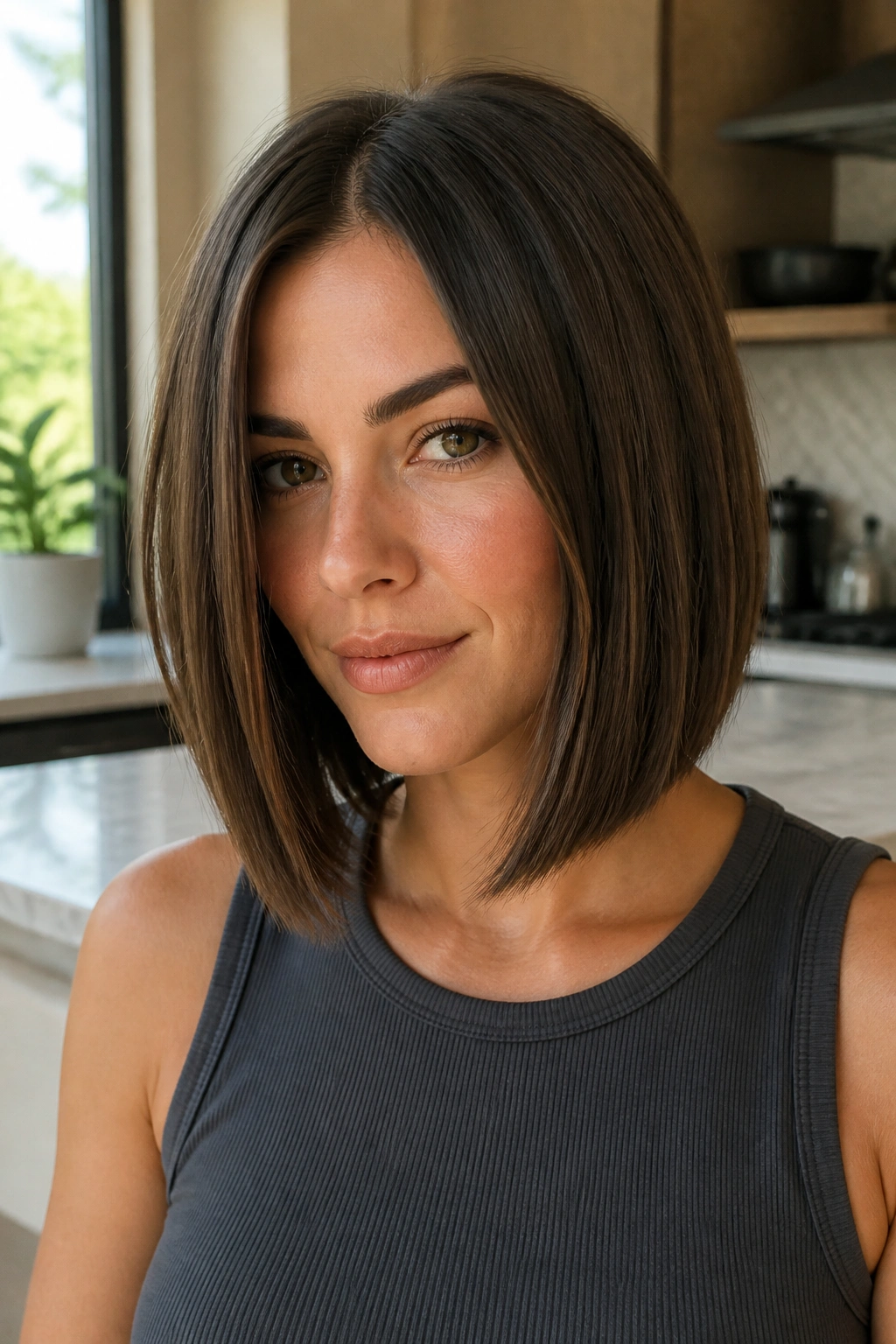
A blunt perimeter can be a lifesaver for round faces. Strange, maybe, but true. The reason is simple: a sharp line below the chin adds a vertical finish, and the hidden internal layers stop the hair from feeling heavy.
If you have thick hair, this version is especially useful. The outside line stays clean, so the haircut looks intentional from every angle. Inside the cut, the stylist removes bulk where you do not need it — mostly through the mid-back section and underlayers near the nape.
That hidden work matters. Without it, the ends can balloon out and make the face look wider. With it, the bob sits close to the head and lengthens the overall shape.
This is not the best choice if you like a lot of messy texture. It wants polish. A middle part, a rounded brush, and a quick pass with a flat iron are usually enough.
11. Asymmetrical Stacked Bob With Longer Front
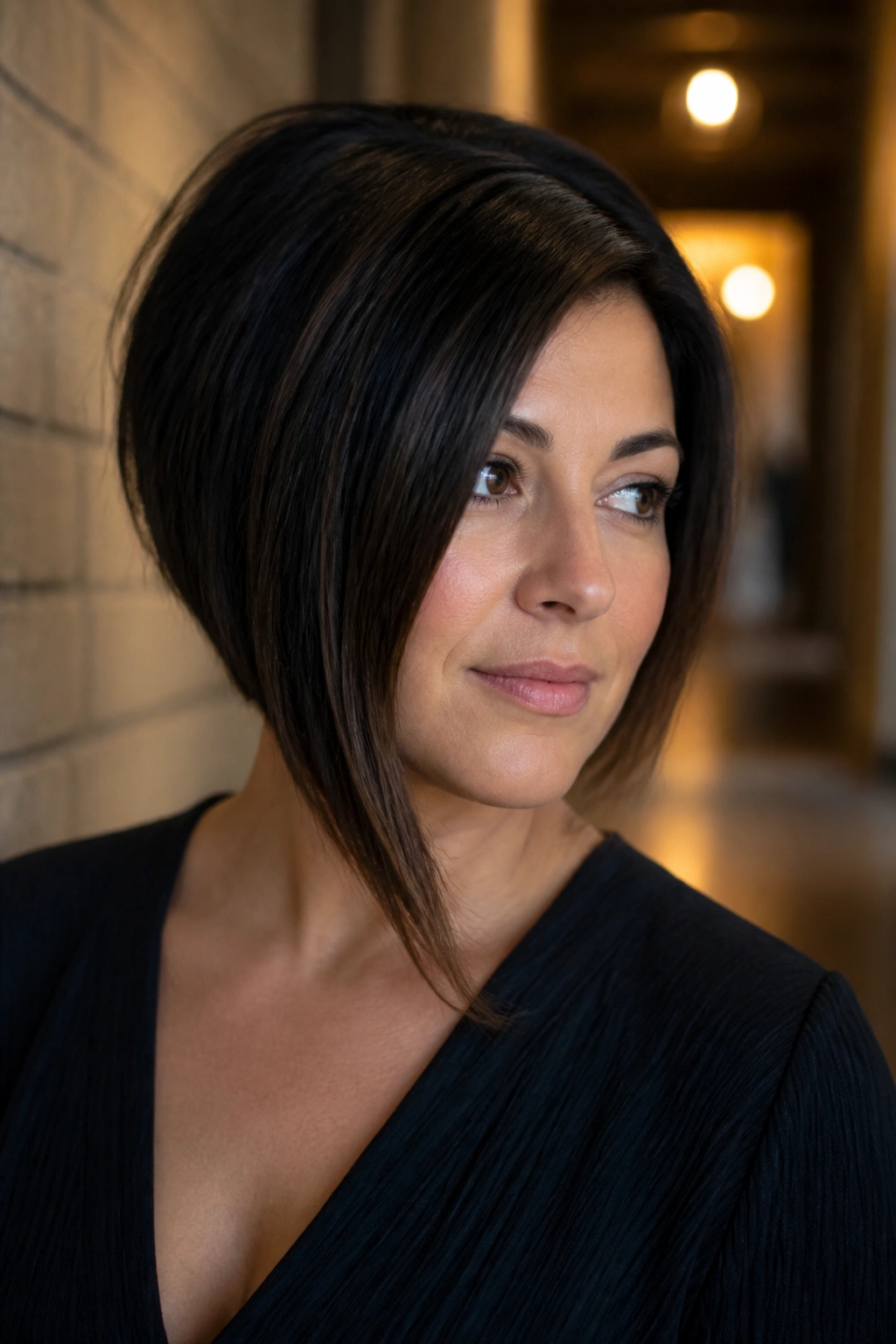
A little asymmetry goes a long way on a round face. When one side is slightly longer, the haircut creates a visual line that keeps the face from reading too evenly or too wide.
The difference does not need to be dramatic. Sometimes half an inch to 1.5 inches is plenty. The strongest versions keep one side grazing the collarbone while the other sits closer to the jaw or upper neck. That variation gives the cut some personality without turning it into a statement piece that needs constant explanation.
I like this style on straight and lightly wavy hair. Strong curls can blur the asymmetry unless the shape is cut and styled with care. The whole point is movement that feels controlled, not random.
There is a practical upside, too: the longer side is handy if you like to tuck one side behind the ear and leave the other loose. Easy. Clean. A little sharper than the average lob.
12. Textured Bob With Carved Face Framing
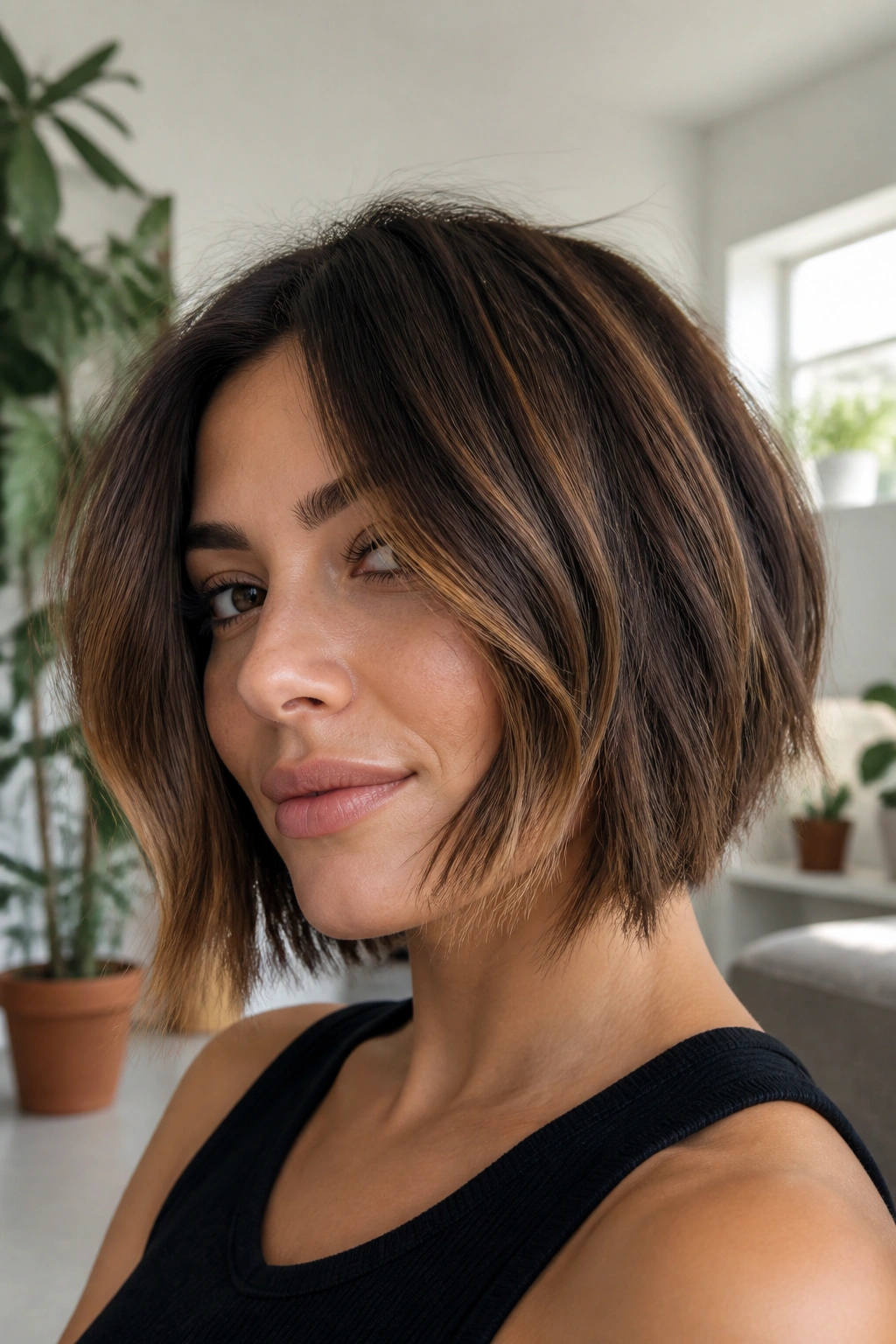
This is the cut for people who want shape but hate anything too neat. The texture gives the haircut life, while the carved face-framing pieces keep the roundness of the face from dominating the silhouette.
What Makes It Different
Unlike a sleek bob, this style depends on separation. The ends are lightly razored or point-cut, and the front pieces are left longer so they fall around the mouth and collarbone. That extra length near the face is doing a lot of quiet work.
Who It Suits Best
It’s a smart pick for medium-density hair that wants movement. Very fine hair can lose the texture too fast, while very thick hair may need more internal thinning to stay light. If your hair has a natural bend, even better. The cut will hold its own with almost no effort.
A salt spray or texture mist through damp hair is usually enough. Scrunch, air-dry, and leave the roots alone unless they collapse. That loose finish keeps the look modern without making it sloppy.
13. Shoulder-Grazing Stack With Soft Bends
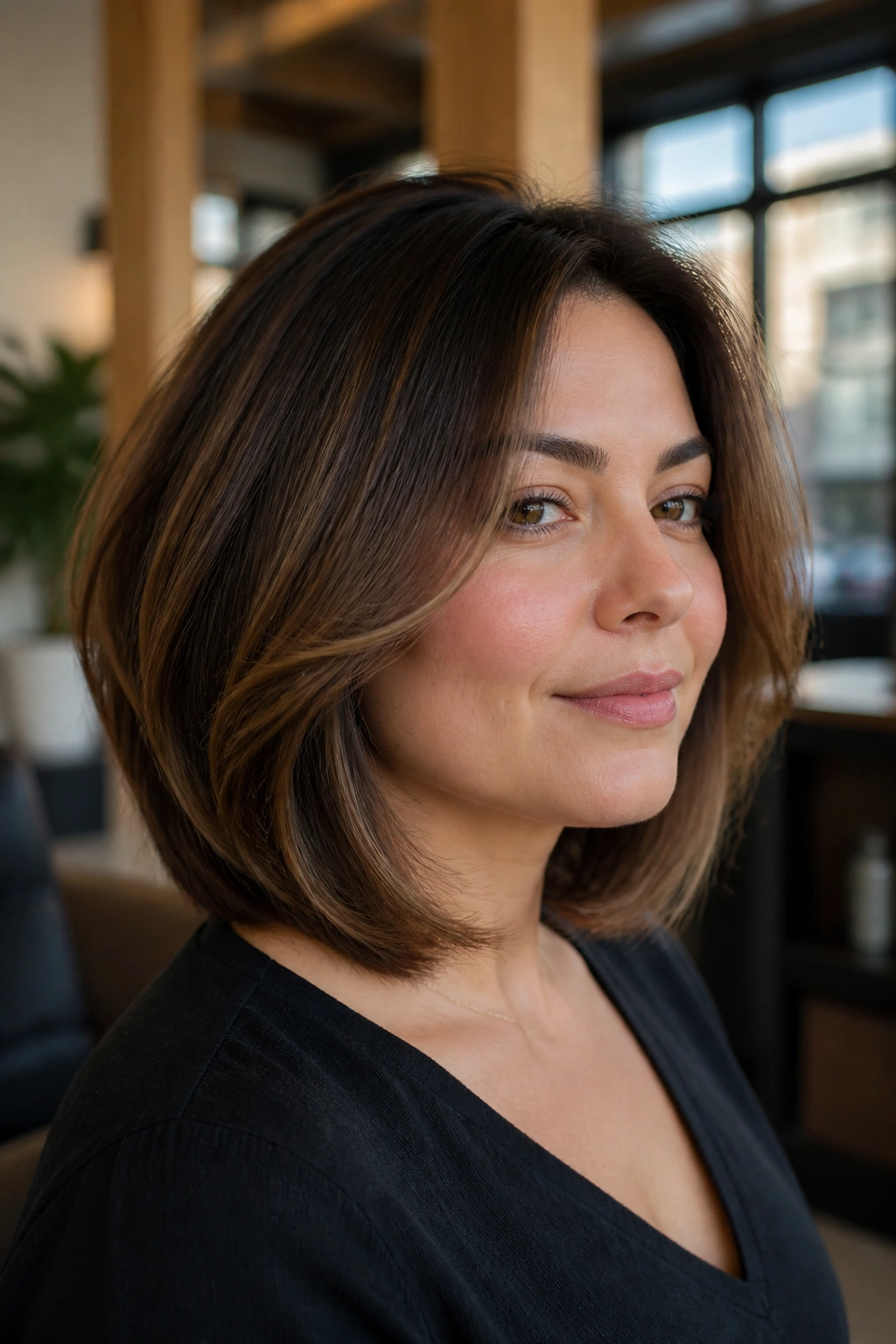
This haircut sits in a sweet spot. It is long enough to feel safe and flexible, but the stack still gives it shape at the back so it does not drag the face downward.
A Few Details Worth Asking For
- Keep the front at shoulder length or a touch below.
- Ask for a subtle stack at the nape, not a deep graduation.
- Add soft bends through the mid-lengths rather than full curls.
- Leave the ends beveled so the shape closes inward.
That last part matters more than people think. If the ends kick outward, the silhouette gets wider. If they turn in softly, the face looks slimmer.
This is one of the most wearable versions on the list because it does not ask for much styling. A blow-dry with a medium brush and a light bend at the ends is usually enough. If you want a cut you can wear to work, out to dinner, and to the grocery store without feeling overdone, this is a strong bet.
14. Razored Long Bob With Wispy Perimeter
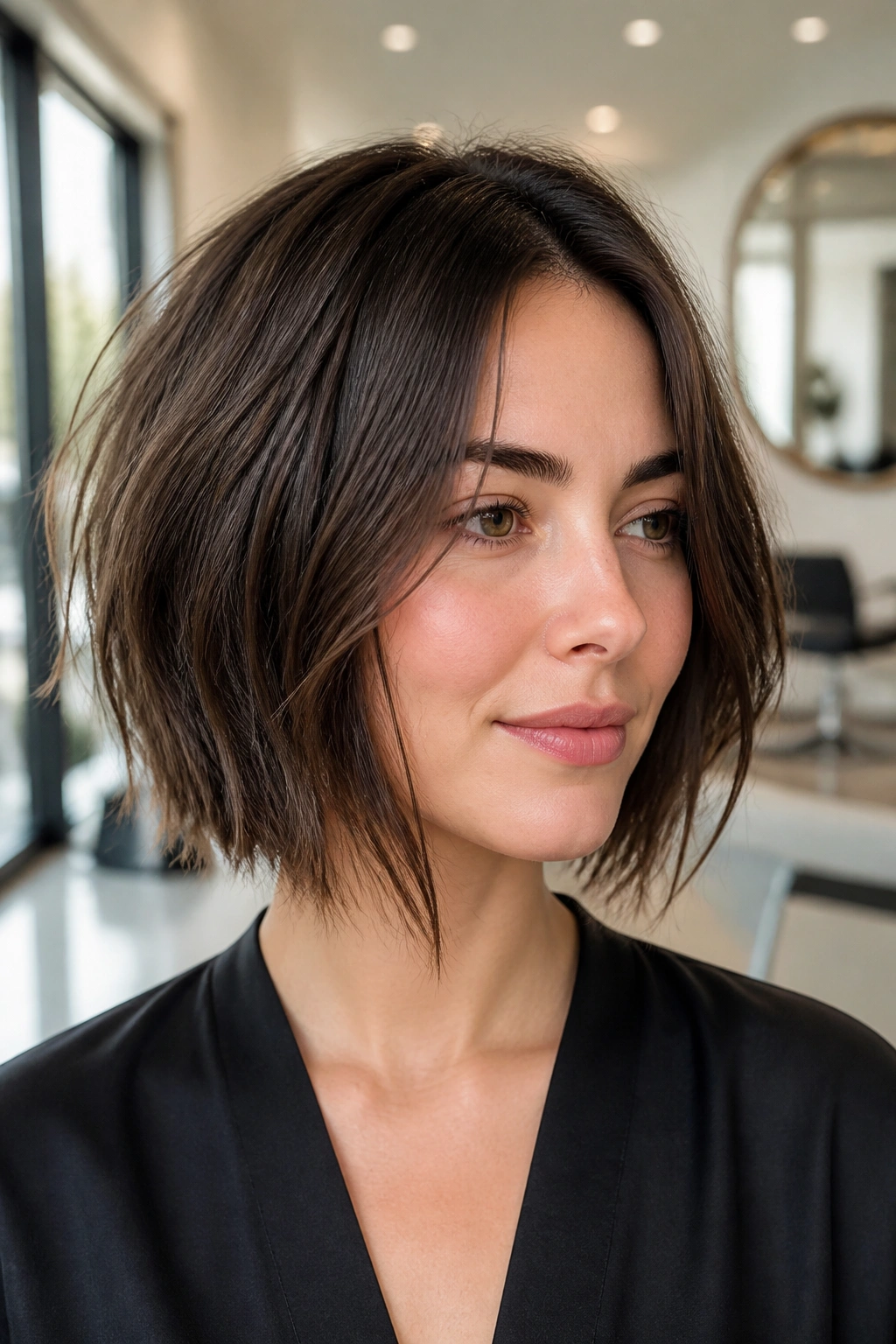
A razored lob can look airy and modern, but only when the perimeter stays wispy, not shredded. On a round face, that light edge helps keep the haircut from feeling bulky near the jaw.
The razor work creates movement through the ends, which makes the hair fall in soft pieces instead of one heavy block. That matters most if your hair is thick or naturally straight. Thick hair can get weighed down fast, and a razor lightens it without taking away the overall length.
I like this version when the client wants something cooler and less polished. It is not fussy. It is a little lived-in. Still, the length should stay below the chin, or the whole point gets lost.
If you go this route, ask for texture where the hair needs air, not all over. Too much razor work near the cheeks can make the ends fray out in a way that adds width. Nobody wants that.
15. Deep-Part Bob With Volume Concentrated on One Side

Does a deep part feel dramatic? Sure. That is part of the charm. It also gives a round face something it often needs: a strong asymmetrical line that breaks up the symmetry.
Why the Shape Works
The volume sits on one side of the crown instead of spreading evenly across the head. That creates a taller silhouette, and height is your friend here. Keep the longer side around collarbone length and the shorter side tucked just under the jaw, and the haircut suddenly feels smarter than the usual center-part lob.
Styling Notes
- Dry the roots in the opposite direction first to build lift.
- Flip the part back once the hair is about 80 percent dry.
- Use a root spray only at the crown, not through the lengths.
- Avoid heavy cream on the fuller side; it can collapse the lift.
This cut has a little edge, but it is not strange-looking. It just looks deliberate. That is usually what people want when they say they want a haircut that “does something” without shouting about it.
16. Airy Lob With Bottleneck Bangs

Bottleneck bangs are sneaky in the best way. They start narrower at the center, then open out toward the temples, which gives a round face a nice bit of vertical space near the eyes and cheeks.
The airy lob underneath keeps the rest of the cut light. The stack at the back should be soft, almost invisible, with enough graduation to stop the shape from hanging flat. If the bangs are cut too heavy, the face can feel boxed in. If they’re too wispy, the whole point is lost. There’s a narrow middle lane here, and it’s worth staying in it.
This style is strong on hair that falls naturally with a bit of bend. Straight hair can wear it too, though the bangs may need a quick round-brush pass each morning. It’s one of those cuts that looks delicate but still has structure, which is not easy to pull off.
And no, you do not need perfect hair for it. You just need enough movement.
17. Soft Undercut Bob With a Polished Top Layer
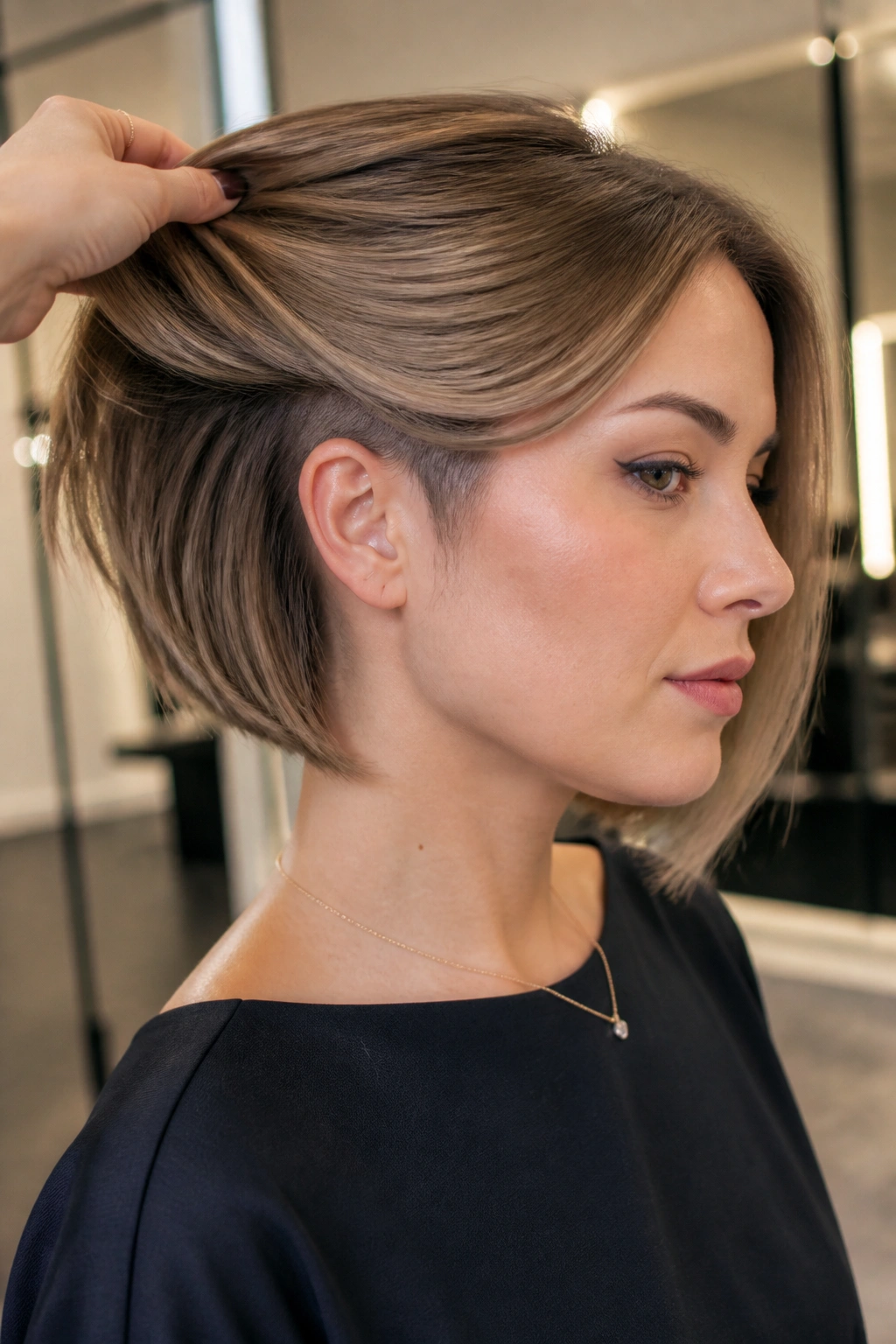
This one sounds a little bold, and it is, but the result can be surprisingly clean. A soft undercut removes bulk where the hair piles up at the nape, while the top layer stays polished and smooth.
For a round face, the benefit is all about control. The undercut prevents the back from bulking out, so the overall shape stays narrow and lifted. The top layer should cover the undercut completely, leaving the haircut looking like a sleek stacked bob from the outside.
It works best on thick hair. Fine hair usually does not need this much subtraction, and if you remove too much, the shape can lose its body. Thick hair, on the other hand, can turn into a square block if the underside is left alone.
This is not a low-commitment cut. It needs upkeep, and a little grow-out at the nape can change the feel fast. But if your hair feels heavy no matter what, this is one of the smartest answers.
18. Tousled Lob With Undone Waves and Crown Lift

A tousled lob can be a little dangerous on a round face if the waves get too wide. The fix is simple: keep the lift concentrated at the crown and let the waves fall more vertically through the sides.
What Sets It Apart
Unlike a polished stacked bob, this style wants movement you can see. The waves should bend in loose S-shapes, not tight curls, and the ends should stay soft. That looseness keeps the haircut from looking overstyled.
Best Way to Wear It
- Use a large-barrel iron, around 1.25 to 1.5 inches.
- Leave the last 2 inches of each section out for a softer finish.
- Tease the crown lightly, then smooth the top layer over it.
- Break up the waves with fingers, not a brush.
This is a strong everyday option if you want something casual that still shapes the face well. The crown lift is doing the elongating work, and the longer front pieces keep the cheeks from feeling too exposed.
19. Graduated Bob With Chin-Skimming Front Pieces
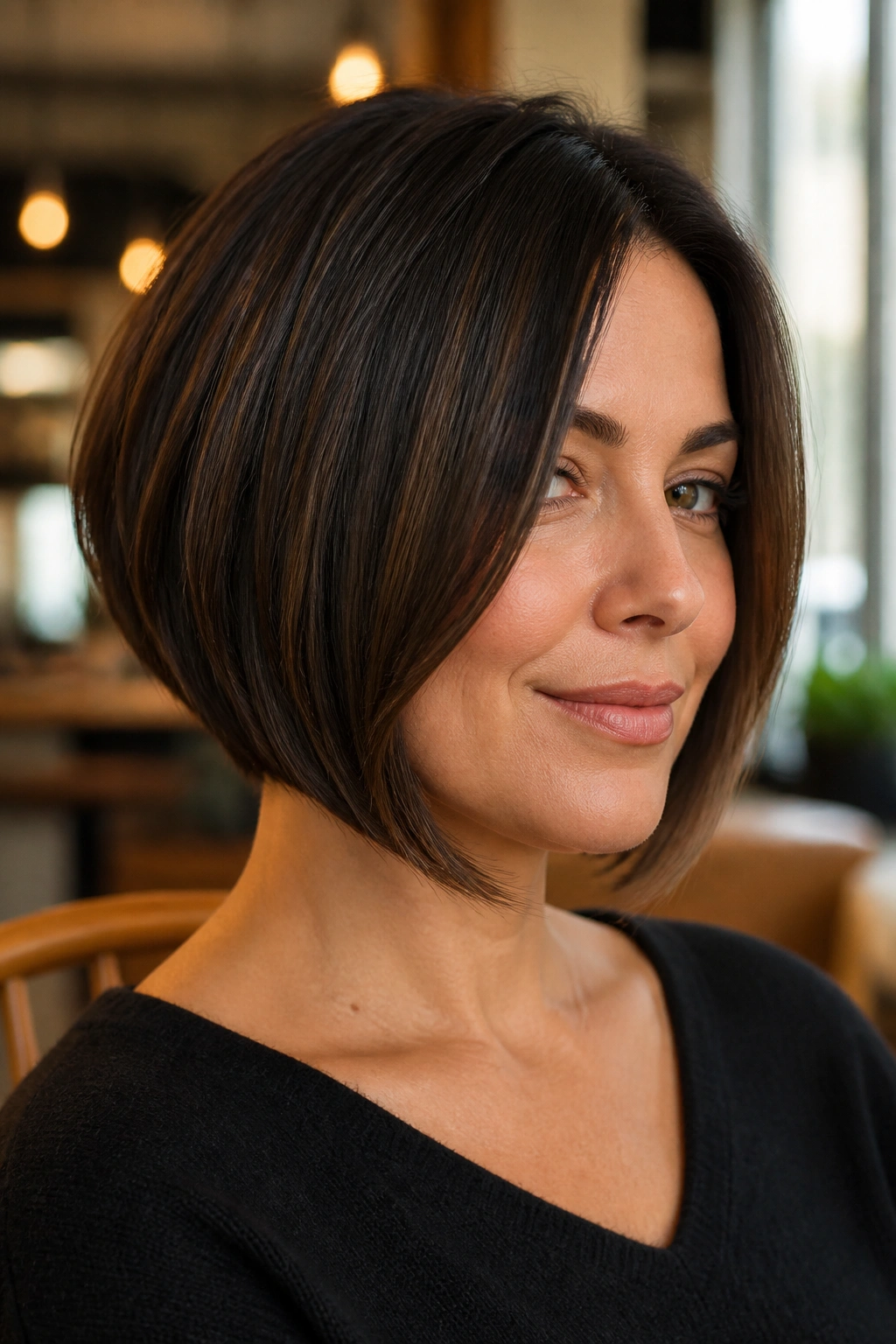
A chin-skimming front is one of the best tools for a round face. It draws the eye downward, softens the cheeks, and keeps the haircut from ending at the widest point of the face.
Why the Front Length Matters
If the front stops too high, the face can look fuller. When it lands right around the chin, it creates a helpful frame. Pair that with a graduated back that rises gently toward the crown, and you get lift without a hard shelf.
Small Details That Help
- Keep the shortest back layers tight but not choppy.
- Let the front pieces angle forward by at least 2 inches.
- Add a slight bend under the chin so the hair hugs the face.
- Use a smoothing serum only on the outer surface, not the roots.
This cut is practical, clean, and easy to explain to a stylist. Sometimes that’s the real win. You do not need an elaborate haircut when a well-placed angle does the work.
20. Balanced Collarbone Lob With Subtle Stack and Tucked Ends

This is the safest choice in the set, and I mean that in a good way. The stack is there, the length is there, and the shape feels balanced enough to work in offices, gyms, dinner plans, and every awkward in-between moment.
The subtle stack keeps the crown lifted. The collarbone length stretches the face. The tucked ends stop the sides from flaring out, which is the mistake that ruins too many otherwise decent haircuts for round faces. Nothing about this cut is loud. That is the point.
If you want the least fussy version, ask for soft graduation starting just below the occipital bone, then keep the front pieces grazing the collarbone. Style it with a round brush or a simple bend at the ends, and do not chase perfect symmetry. A little movement makes it better.
This is the cut I would send to someone who says, “I want something flattering, but I do not want to look like I tried too hard.” Fair enough. That is usually the right request.
It’s also the one that ages well between trims, which matters more than people admit. A haircut that still looks good when life gets busy is worth more than one that only behaves for the first three days.
