



A round face does not need to be “fixed.” It needs shape. That’s the part a good medium inverted bob gets right when so many other cuts miss the mark. The back sits shorter, the front drops longer, and the whole line moves diagonally instead of sitting flat across the widest part of the face. That diagonal matters. A lot.
The mistake I see most often is a bob that ends right at the cheek or lands in a thick, heavy line at the jaw. That can make the face look wider than it is, especially if the cut has too much volume at the sides. A medium inverted bob for round faces should do the opposite: lift at the crown, keep the back neat, and let the front pieces skim past the cheeks with a little intention.
Texture changes the story, too. Straight hair shows off the angle fast. Wavy hair softens it. Curly hair can make the whole shape feel lush and expensive-looking — if the layers are cut with some care, not hacked in as an afterthought. And yes, bangs can work here. So can a side part, a collarbone-length front, or a sharper stack in the back. The trick is choosing the version that shapes the face instead of boxing it in.
1. Classic Stacked Medium Inverted Bob
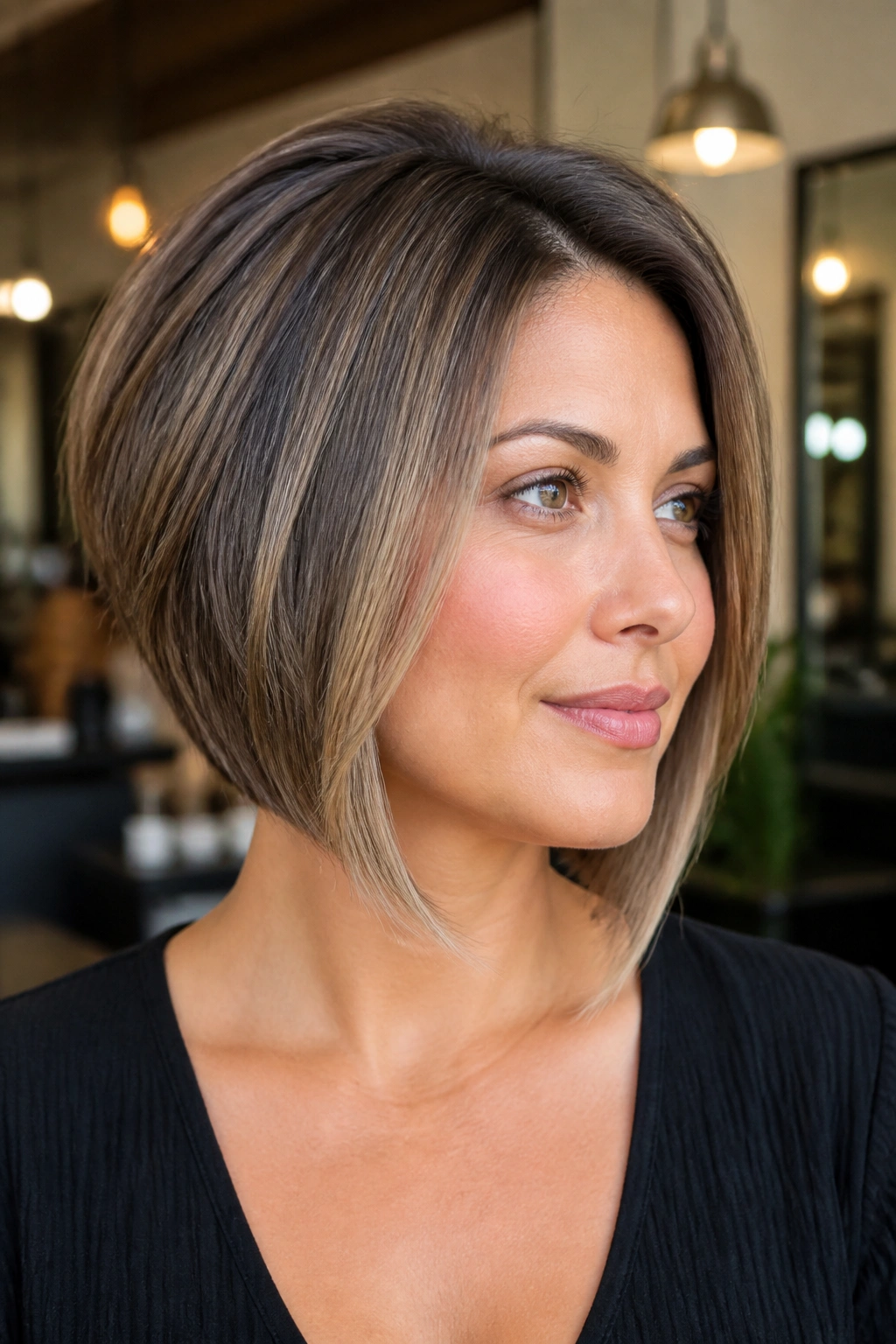
This is the cleanest place to start. The classic stacked version uses short, graduated layers in the back and longer front pieces that slide past the jaw, which gives a round face more vertical movement right away.
Why It Flattens the Wide Spot
The stacked back adds lift at the crown and upper nape, so the eye moves upward before it moves outward. That little shift makes a bigger difference than people expect.
What to Ask Your Stylist
- Keep the back stacked, but not so high that it turns into a shelf.
- Let the front graze the jaw or sit a touch below it.
- Ask for soft graduation through the back so the shape stays rounded, not boxy.
- Leave the perimeter longer in front to keep the line slimming.
Best tip: if your cheeks are full, don’t let the shortest front piece stop at the widest point of your face.
2. Deep Side-Part Inverted Bob
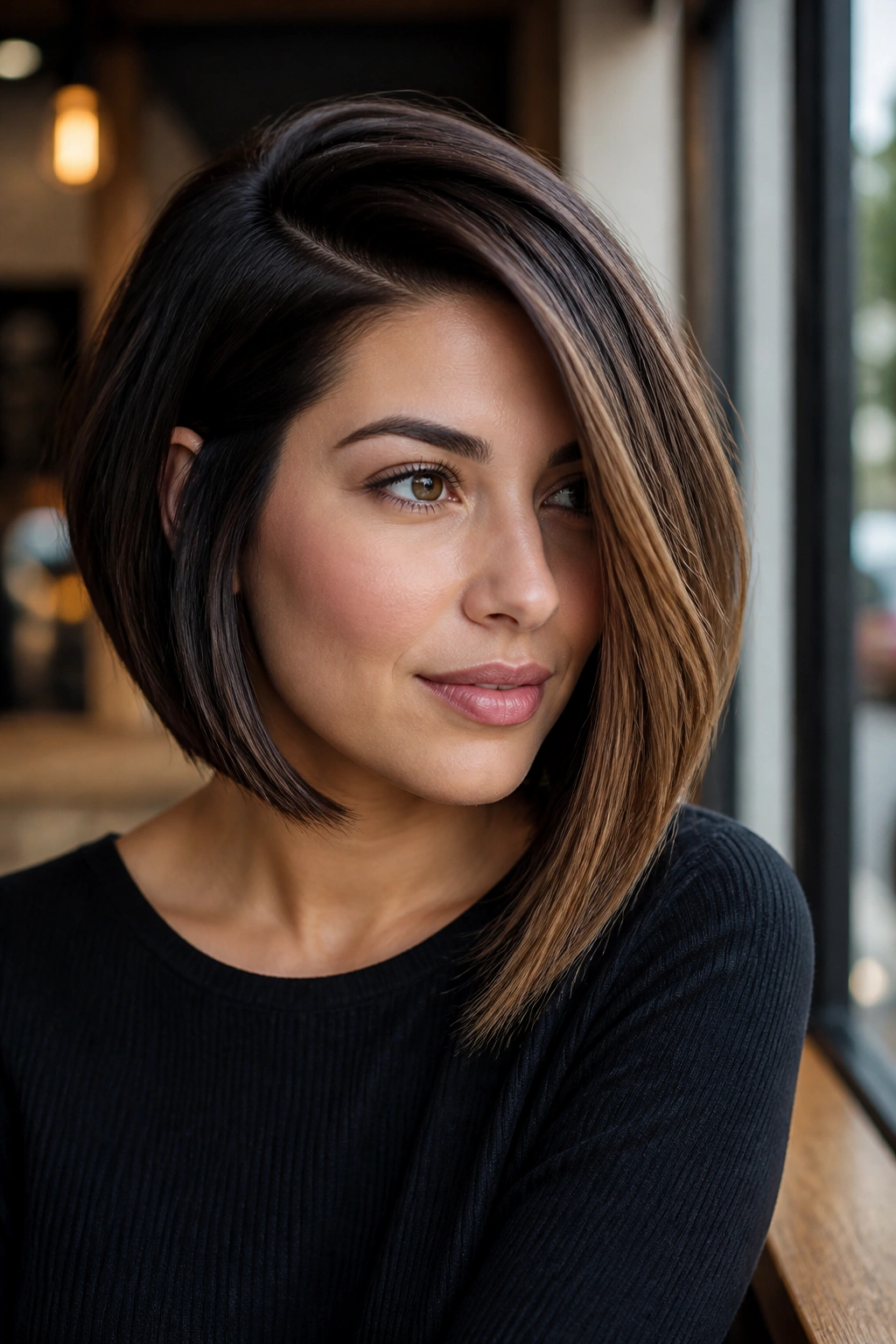
A deep side part is one of those small changes that does a lot of heavy lifting. It breaks up symmetry, and symmetry can be the problem when a face already reads as round.
The stronger part line pulls hair across one side of the forehead and cheek, which creates a longer diagonal shape through the face. That’s useful because round faces need direction, not more width at the sides.
I like this version on straight or lightly wavy hair because the part stays visible and the line feels deliberate. You can tuck the heavier side behind the ear for a cleaner finish, or let it swing forward a little if you want more softness. Either way, the shape feels sharper than a center-parted bob, and that sharpened line helps a round face look a touch narrower.
3. Long-Front Angled Bob with Collarbone Sweep
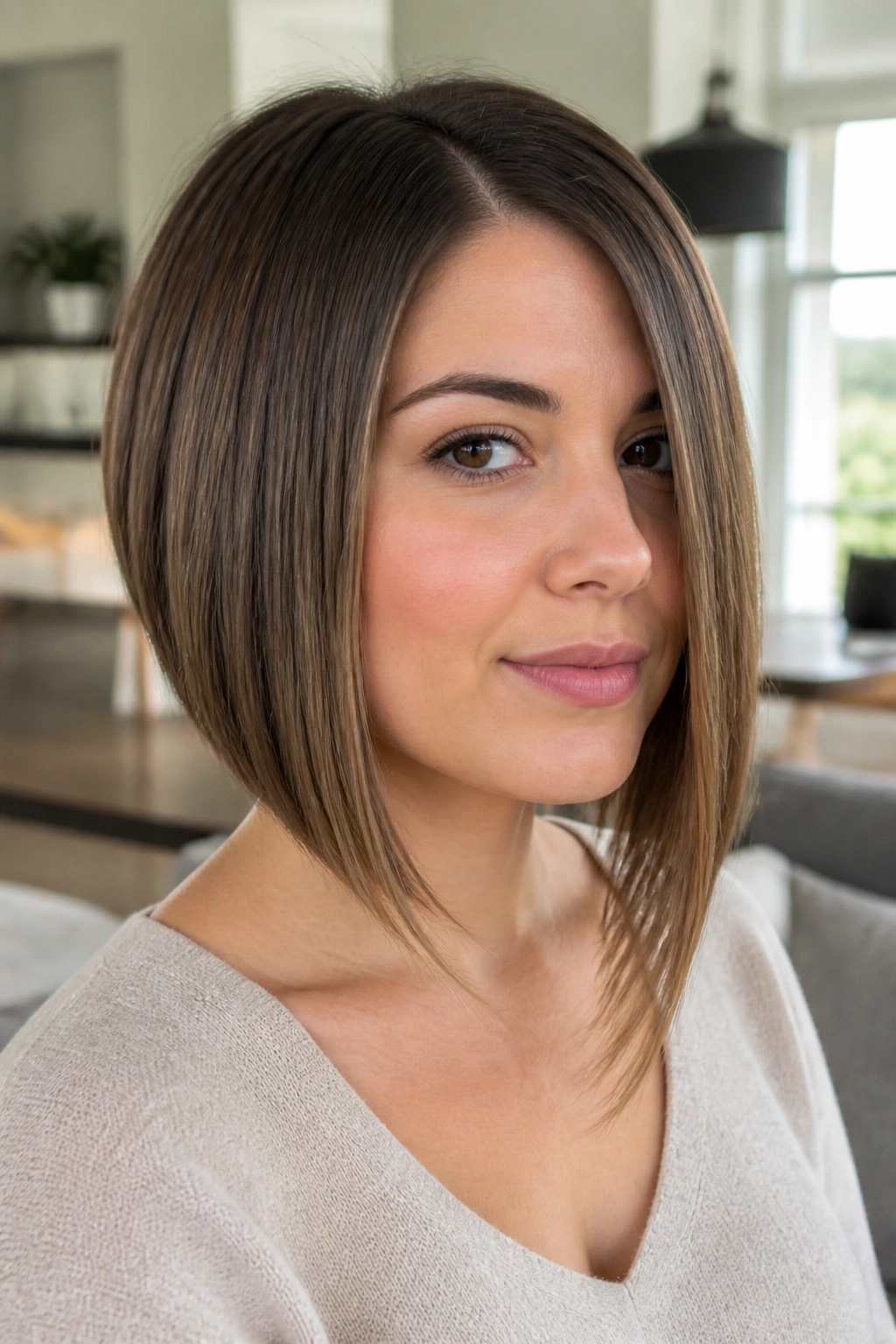
What if you want the inverted shape without losing the comfort of longer hair? This is the answer. The front pieces can dip toward the collarbone while the back stays neatly shortened, so you get the angle without the harshness of a short crop.
How It Helps
The longer front keeps the face from feeling boxed in. On a round face, that extra length near the neck and collarbone creates a stretch of space that feels clean and slim.
How to Wear It
- Blow-dry the front pieces forward and then sweep them back with a round brush.
- Add one loose bend through the ends, not a tight curl.
- Keep the back soft and compact so it still reads as inverted.
- Use a light smoothing cream if your hair puffs out at the sides.
This cut is especially good if you like your hair to sit on your shoulders instead of above them. It still feels fresh. It just doesn’t scream for attention.
4. Feathered Inverted Bob with Curtain Bangs
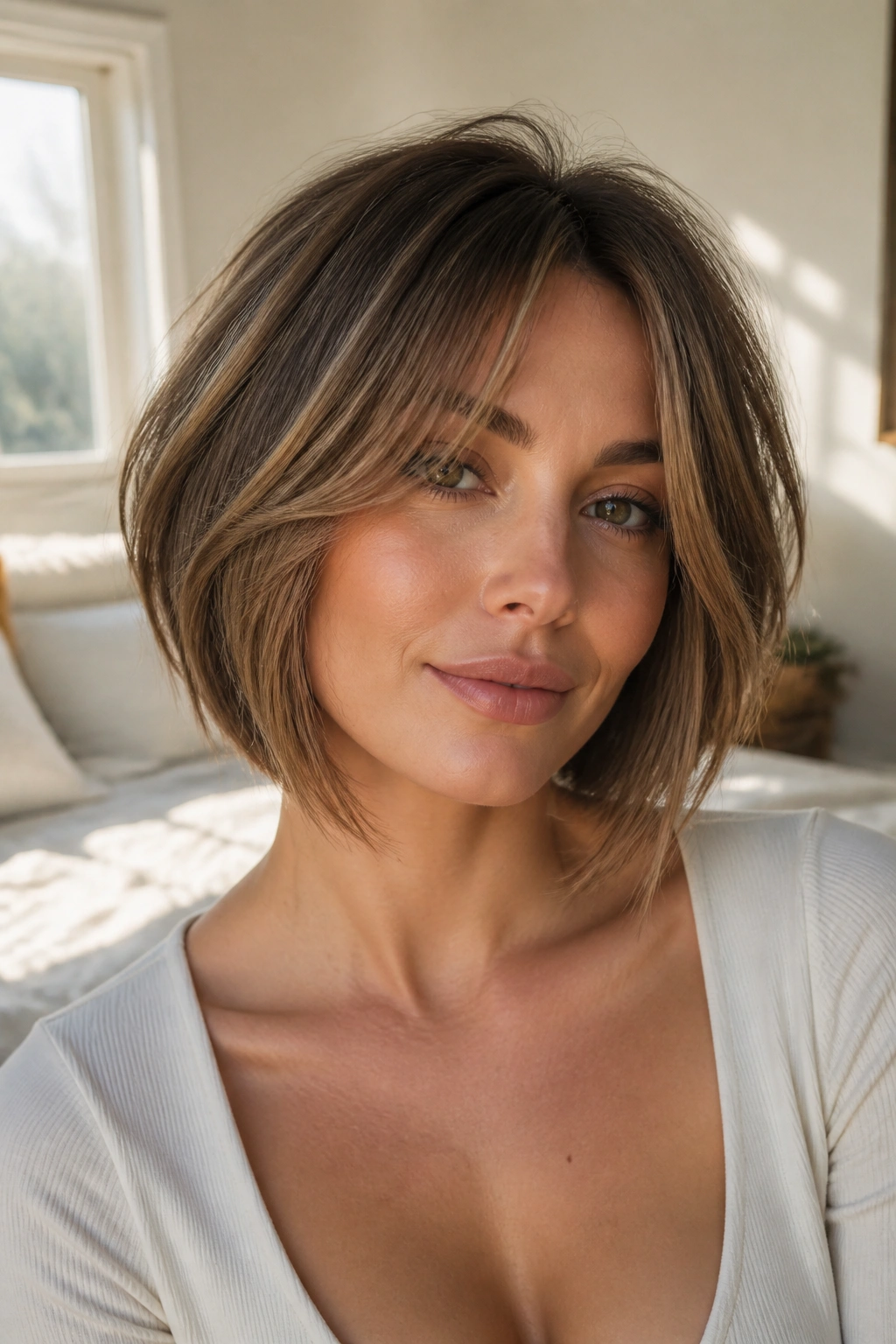
If your face feels soft and you want to keep that softness, this cut makes sense. The feathered layers stop the bob from looking heavy, and the curtain bangs open the center of the face instead of closing it off.
The bangs matter more than people think. A full blunt fringe can make a round face feel shorter, but curtain bangs split the difference. They show some forehead, skim the cheekbones, and keep the focus moving downward.
The Shape in Plain Terms
- The fringe should start around the bridge of the nose and open toward the temples.
- The feathering should land around the cheekbone and jaw, not all in one thick block.
- The back can still be stacked, but the layers need to stay soft.
Use a round brush or a blow-dry brush and bend the curtain pieces away from the face. That movement keeps the style airy. Heavy. But not flat. There’s a difference.
5. Choppy Textured Inverted Bob
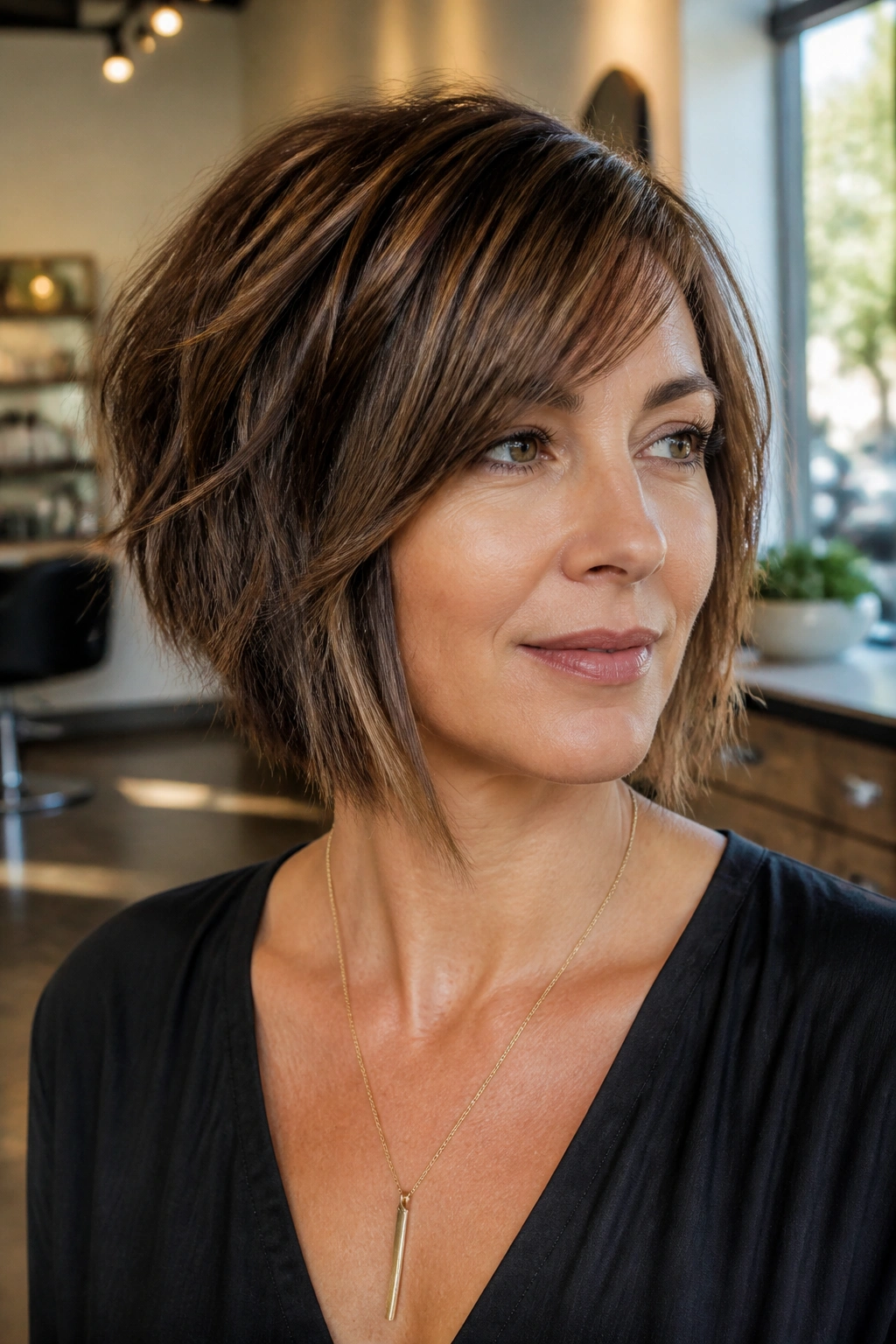
This one has a little attitude, and I mean that in a good way. A choppy inverted bob uses piecey layers and uneven texture to break up the roundness of the face, which keeps the whole look from becoming too sweet or too neat.
It works because the ends don’t sit in one solid line. Instead, they move. That movement interrupts the width of the cheeks and pulls the eye along different angles. On a round face, that’s a relief.
I’d reach for this cut if your hair tends to fall flat by lunchtime. The texture gives it some grit, and grit helps. Ask for point-cut ends rather than a blunt finish, and keep the layering concentrated from the mid-lengths down. If the stylist chops too high, the bob can puff at the sides. Nobody wants that helmet feeling.
A little dry texturizing spray at the ends goes a long way here. So does a quick shake with your fingers instead of brushing everything smooth.
6. Sleek Blunt-Edge Inverted Bob
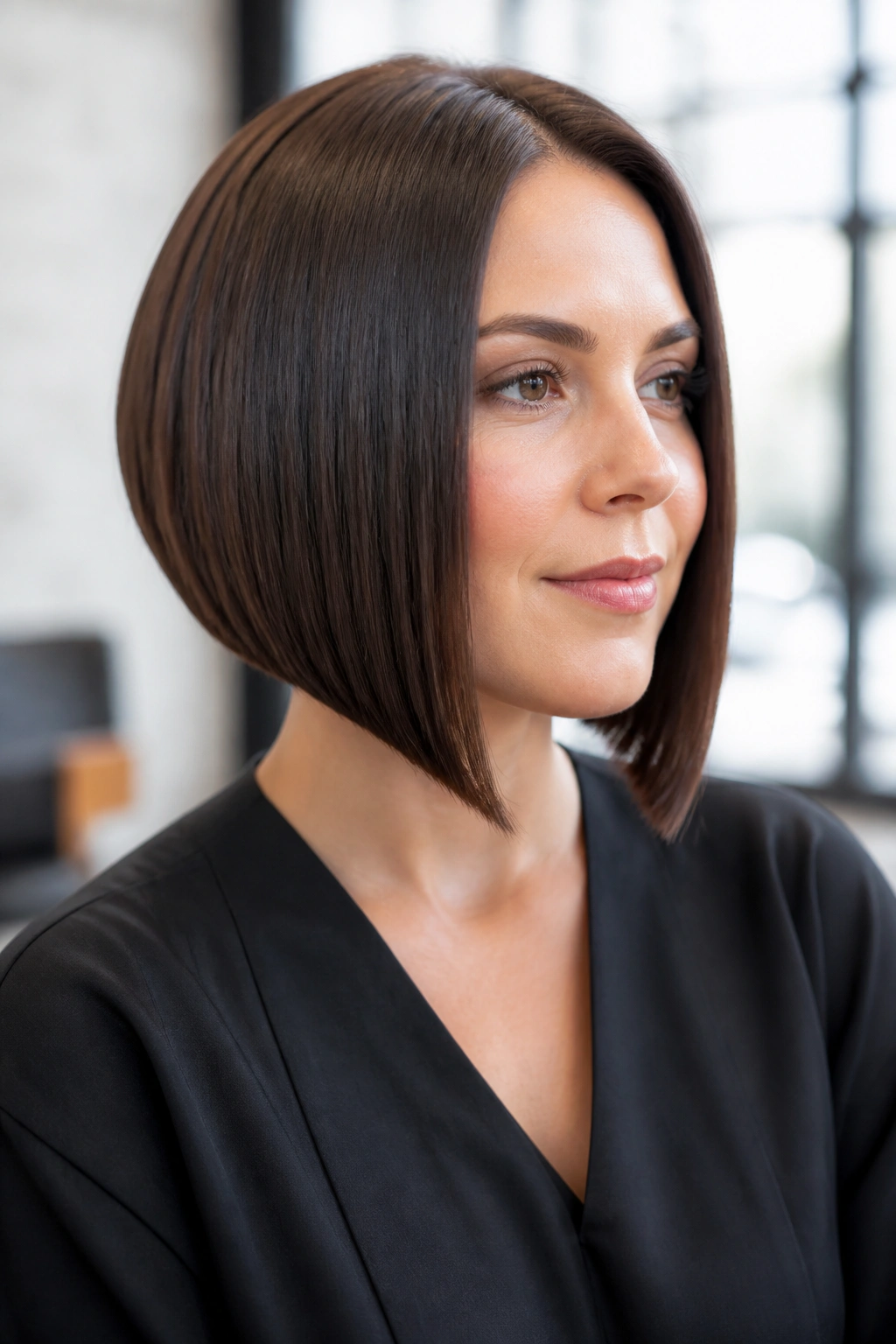
Sleek does not have to mean boring. A blunt-looking inverted bob can be one of the smartest options for a round face, as long as the line still angles down in front.
The key is control. The back should stay tight and clean, and the front should drop below the jaw just enough to add length. If the shape is too wide or too even, it stops working. But when the perimeter is smooth and the angle is clear, the whole haircut looks crisp and expensive.
This version is best for straight hair or hair you’re willing to smooth out with a flat brush and a blow dryer. It also suits people who hate a messy finish. You get a polished outline without a lot of fluff around the cheeks.
A center part can work here, but I usually prefer a slight off-center part. It keeps the style from feeling too symmetrical, and symmetry is rarely the friend of a round face.
7. Wavy Medium Inverted Bob
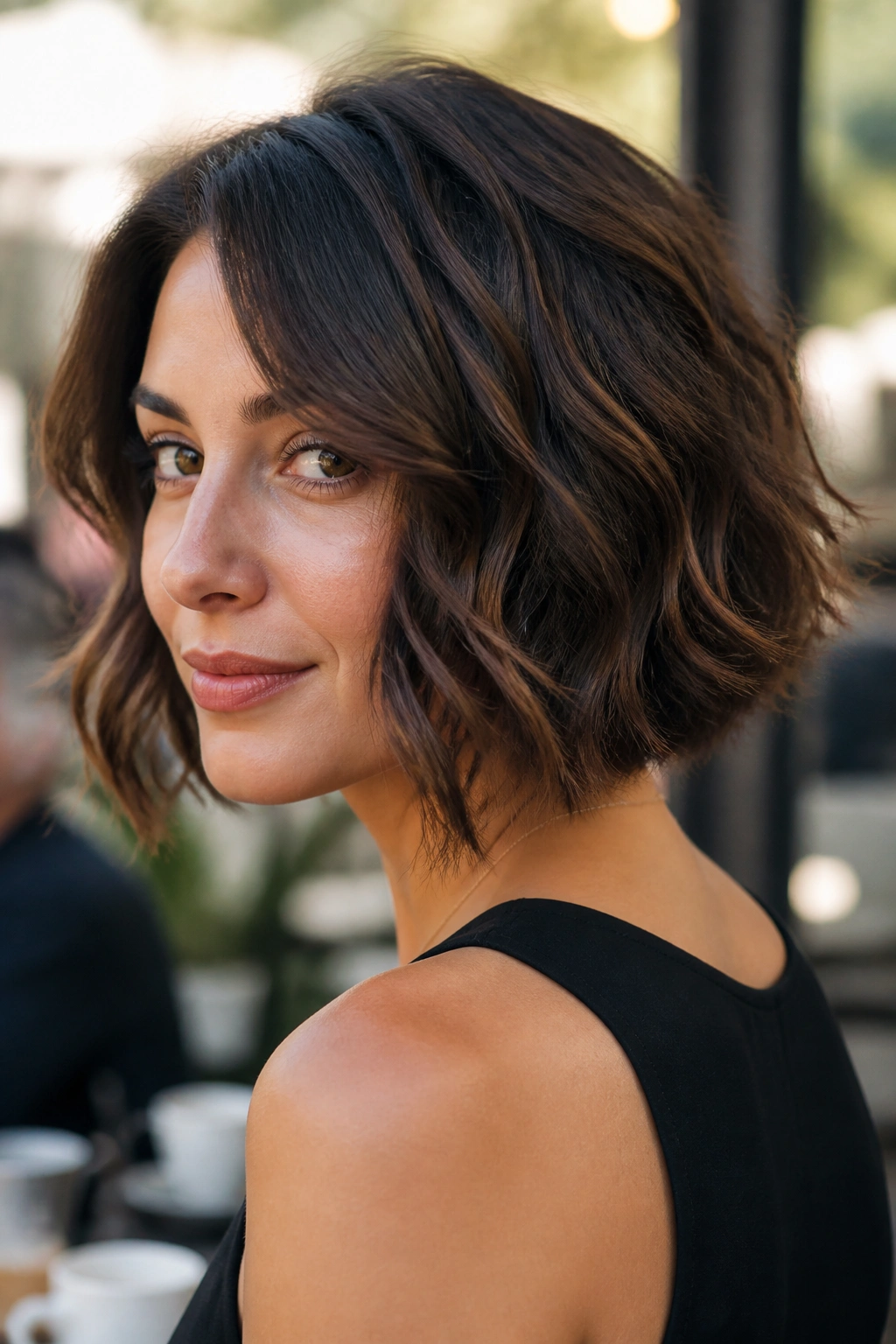
A wavy inverted bob feels softer than the sleek version, but it still gives the face shape. The bend in the hair adds movement through the front pieces, while the shorter back keeps the neck exposed and the silhouette neat.
Why It Looks Good on Round Faces
Waves create a broken line. That broken line matters because it stops the eye from settling on the widest part of the face for too long.
How to Style It
- Use a mousse at the roots if your hair goes limp fast.
- Twist small sections around a 1-inch curling iron, leaving the ends out for a looser finish.
- Brush through once after cooling so the wave looks soft, not ringlet-tight.
- Leave the front pieces a little longer than the back pieces so the shape stays angled.
This is one of my favorite versions for hair that sits between straight and curly. It has enough movement to feel easy, but not so much volume that it spreads the face out.
8. Curly Inverted Bob
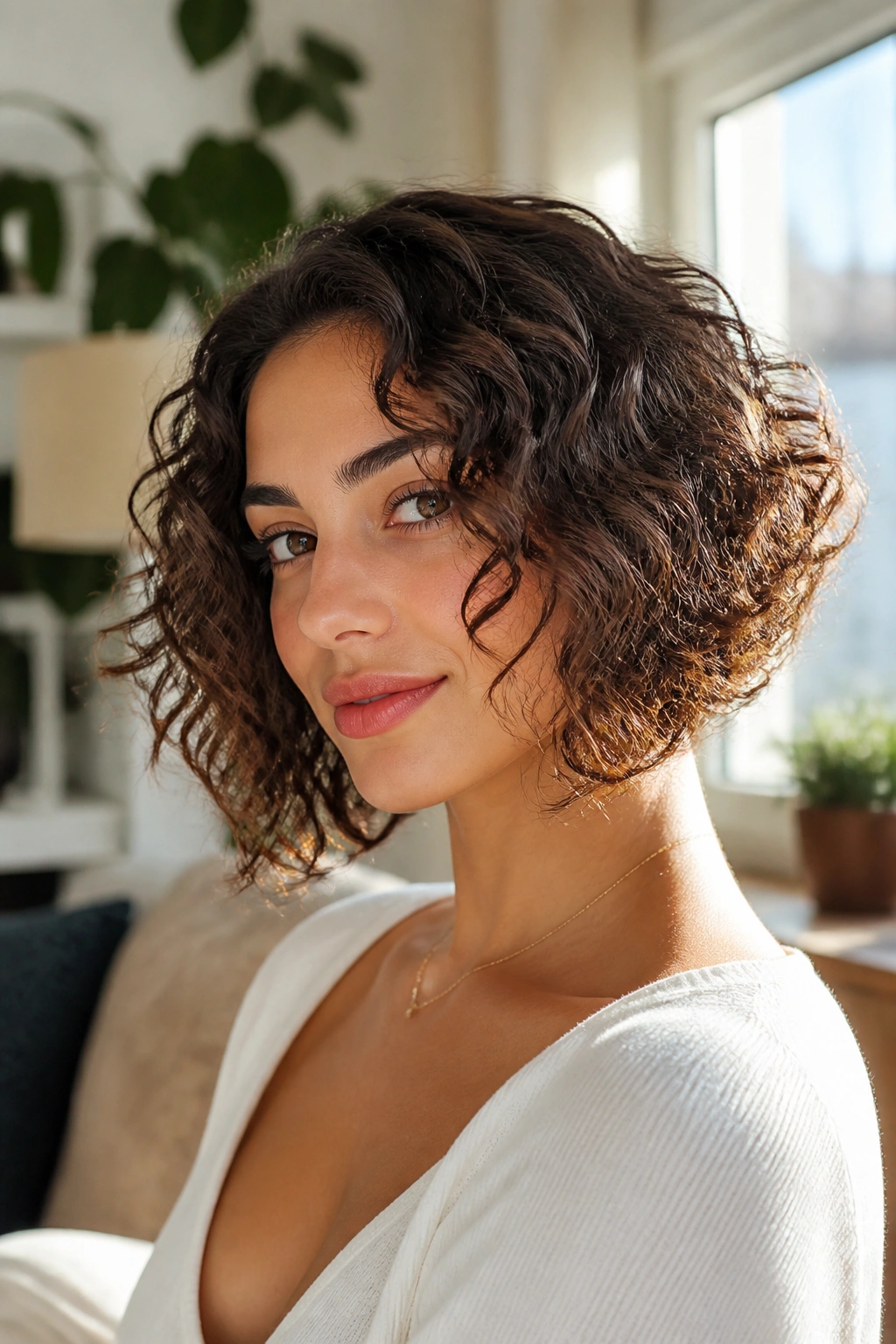
Curls can wear this haircut better than people expect. In fact, a curly inverted bob often looks fuller in the right places and slimmer in the wrong ones, which is exactly the point.
The shape needs to be cut dry, or nearly dry, so the stylist can see how the curls actually sit. Wet curls lie. They shrink, spring, and sometimes do wild things no one predicted. A round face needs the front pieces left long enough to drape around the cheeks, not bounce straight out from them.
The best curly version usually keeps the back slightly shorter and the front a little below chin level. That length lets the curls fall down instead of spreading sideways. If the hair is heavily layered all over, the cut can turn too puffy. So keep the layers selective.
A curl cream and a diffuser are the basic tools here. Nothing fancy. Just enough hold to keep the curl pattern defined at the ends and soft around the face.
9. Asymmetrical Inverted Bob
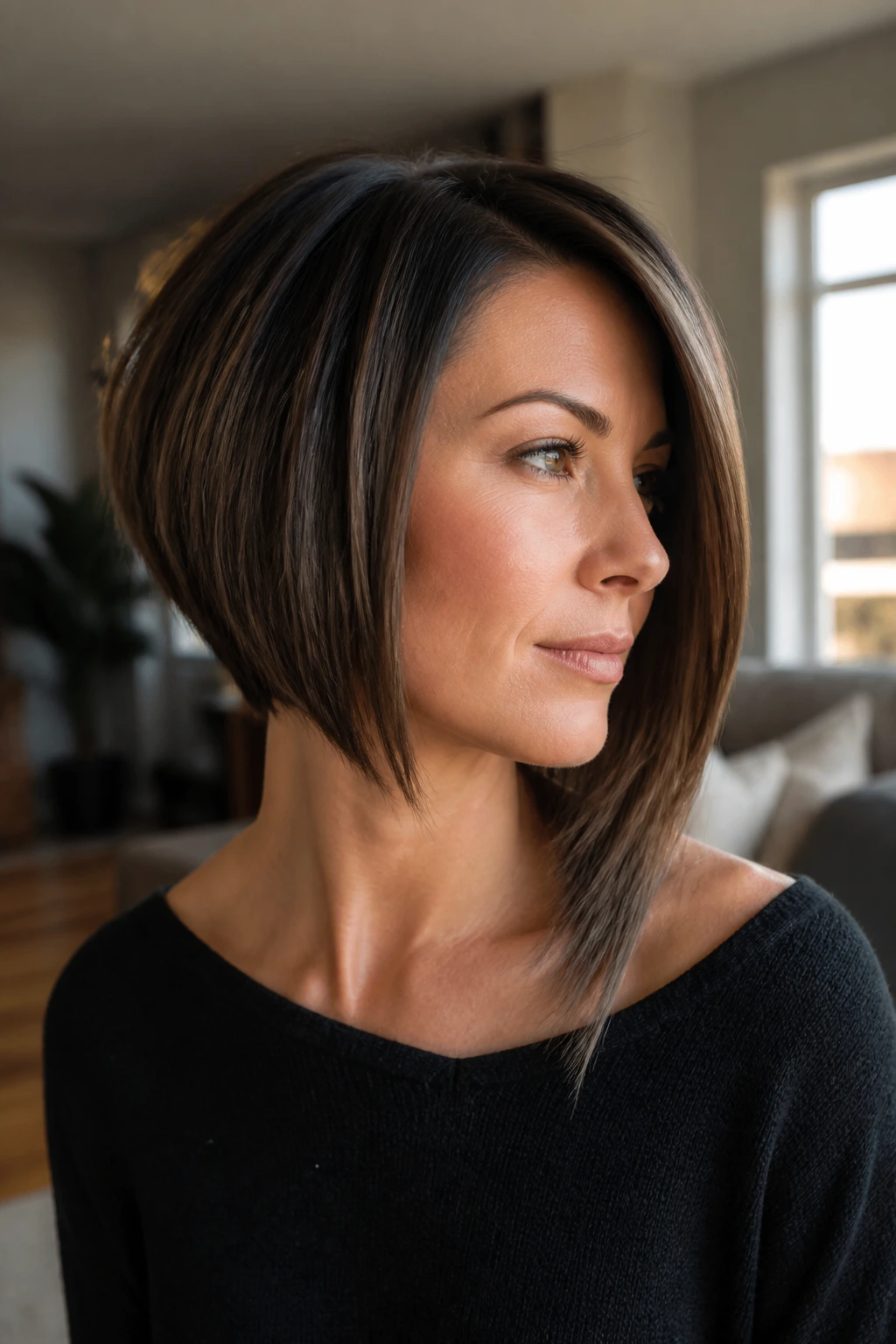
Why does one longer side change the whole haircut? Because the eye loves a diagonal line. On a round face, a diagonal line can be your best friend.
The asymmetrical version takes the usual inverted bob and pushes it a little farther. One side sits noticeably longer than the other, which gives the face a slanted frame instead of a symmetrical one. That slight imbalance pulls attention away from facial width and toward the cut itself.
What to Ask For
- Keep one side about 1 to 2 inches longer than the other.
- Make sure the shorter side still angles down, not straight across.
- Leave enough front length to skim the chin or neck.
- Keep the back compact so the asymmetry does not get lost.
This cut looks sharp with straight hair and even sharper with a smooth blowout. It’s not subtle. Good. Sometimes a round face needs a shape that says something before the face does.
10. Nape-Stacked Bob with Side-Swept Fringe
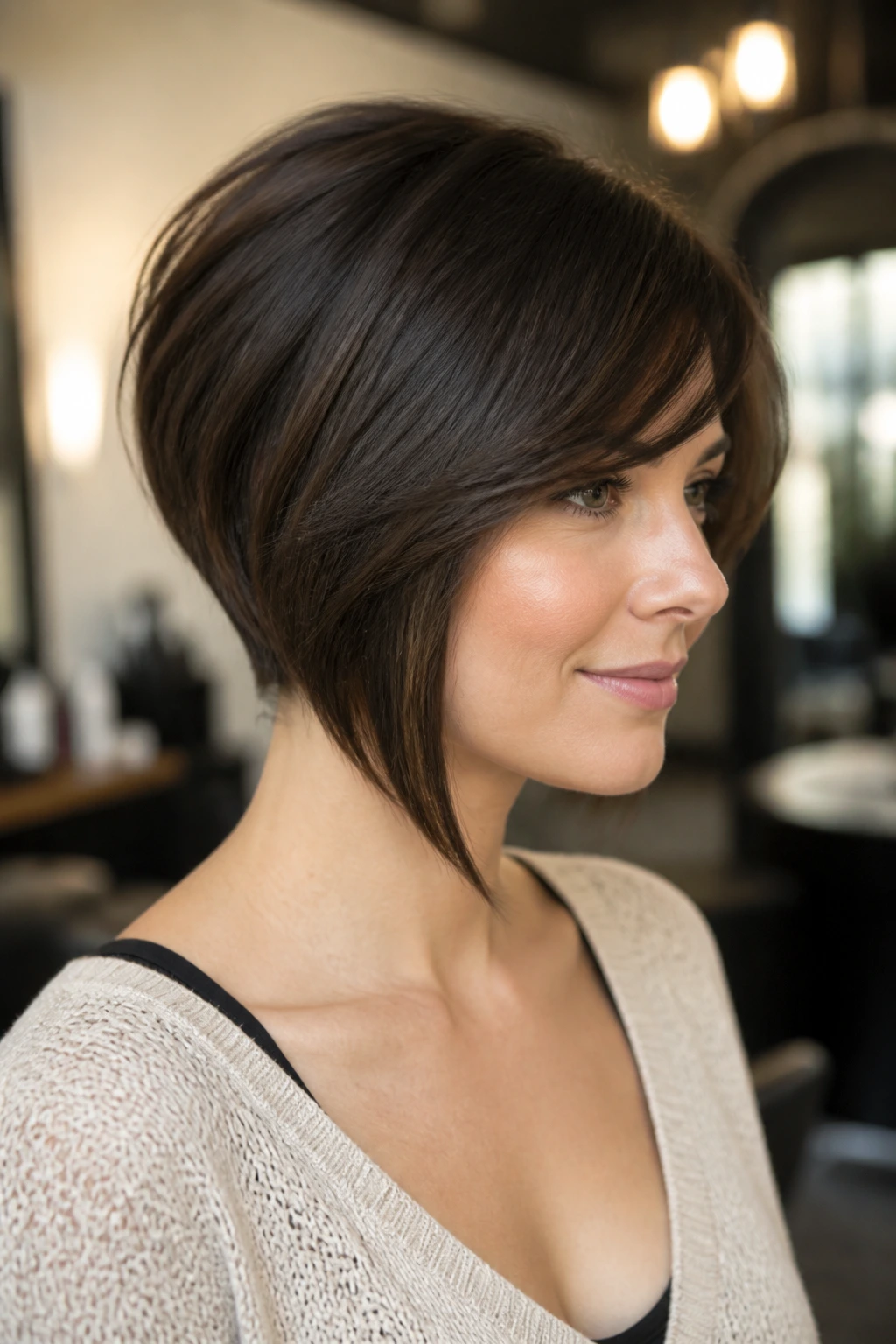
Picture a clean, lifted back with a fringe that slips across the forehead at an angle. That’s the whole appeal here.
The nape stack gives height where you want it, right at the back of the head. The side-swept fringe adds an oblique line across the front, which keeps the face from reading as perfectly circular. It is a very workable combination for anyone who wants softness around the forehead but still wants structure.
- Keep the fringe light enough to move, not heavy enough to sit in one block.
- Use the stack at the nape to build shape, not bulk.
- Let the longest front pieces drop past the cheek, especially if your face is very full through the middle.
- Style the fringe away from the face with a medium round brush.
This cut is a solid choice if you like a little polish in your hair but do not want a severe look. It lands right in the middle.
11. Razored Piecey Inverted Bob
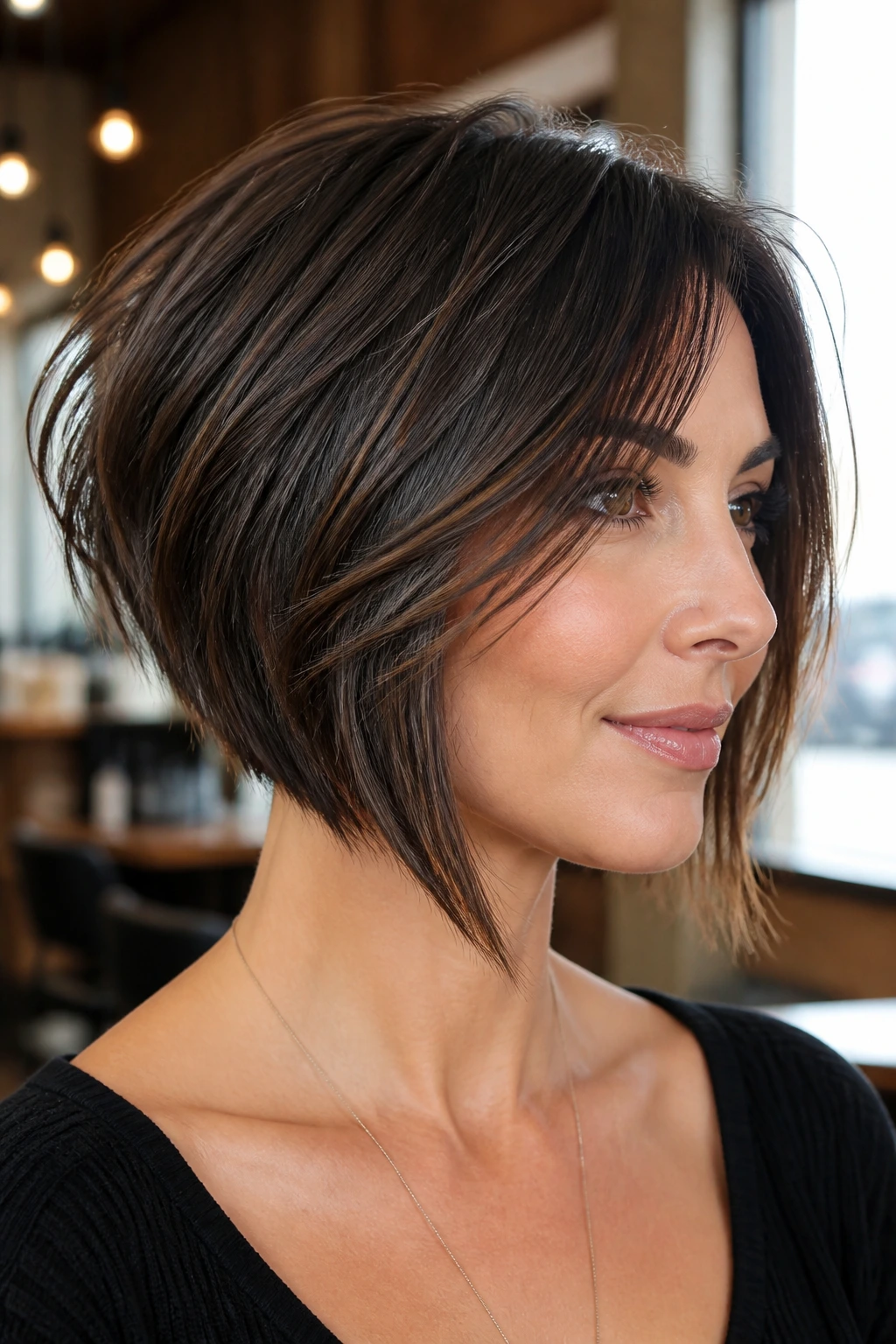
There’s a slightly airy feel to a razored bob that can be hard to fake with scissors alone. The ends look separated, not blunt, and that separation helps a round face by keeping the line from feeling too heavy.
The razor finish is especially useful when hair tends to bunch at the ends. A little softness there stops the cut from sitting in a solid block around the jaw. But here’s the catch: razor work is not ideal on every hair type. Very frizzy or very coarse hair can fray if it’s over-razored.
I like this one on straight or loosely wavy hair. The best result is piecey, not wispy. You still want the shape to hold. The hair should move when you turn your head, but it shouldn’t look thin.
A pea-sized amount of styling paste or cream, warmed between the hands, is usually enough. Press it lightly through the ends. Don’t rake it all the way up unless you want the whole cut to separate too much.
12. Collarbone Inverted Bob
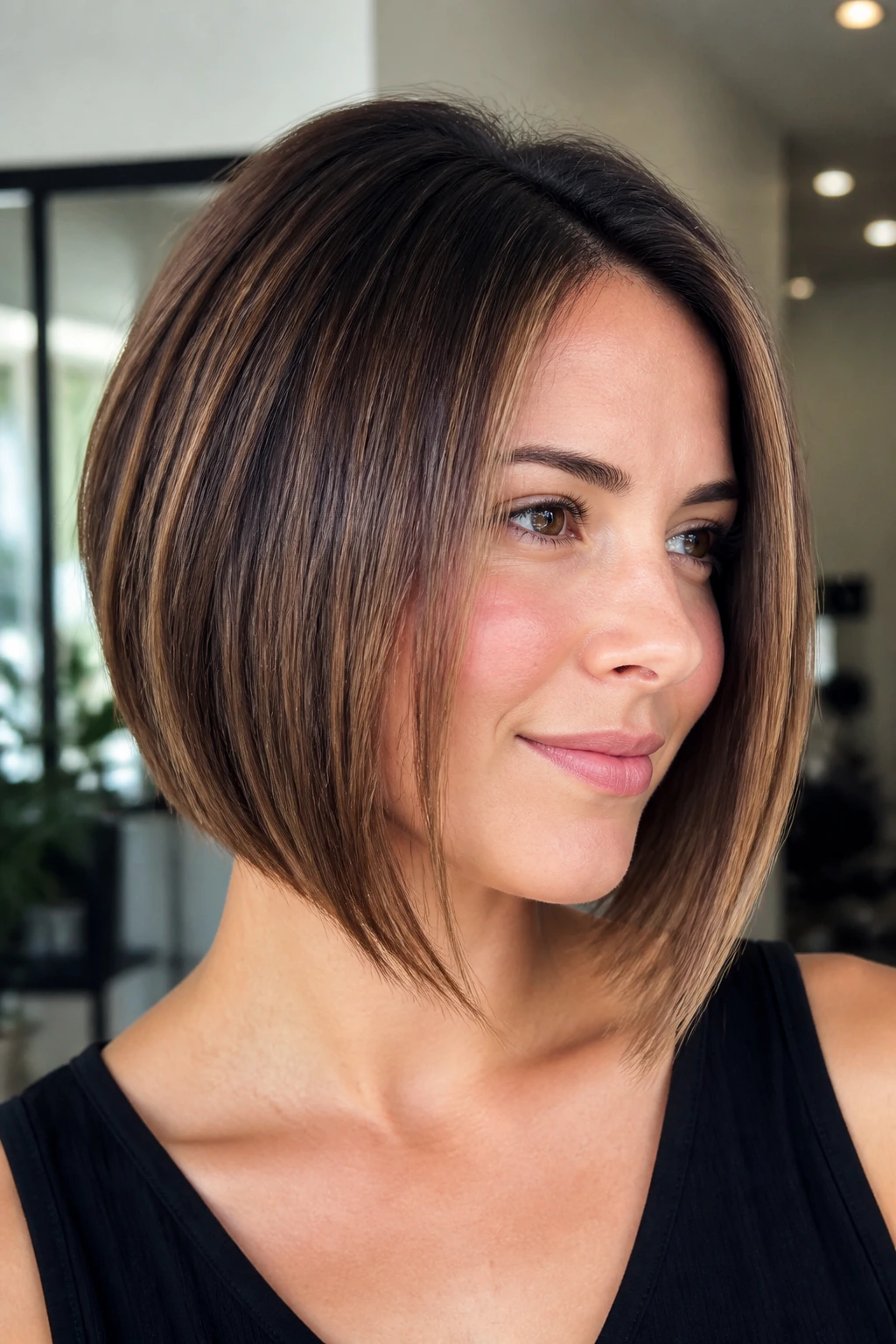
This is the version for someone who keeps saying, “I want an inverted bob, but I don’t want to feel too short.” Fair enough. The collarbone length gives you that extra insurance.
The front hangs around the collarbone or just above it, while the back remains shorter and shaped up. That means the haircut still has the angled DNA of an inverted bob, but the length near the face stays long enough to slim the cheeks and neck.
It also grows out nicely. That matters. A lot of people like a bob on day one and hate it by week six because it starts widening. The collarbone version buys you more time before that happens.
This cut suits people who wear hair tucked behind one ear, half-up, or loose and soft. It’s a good bridge between a bob and a lob, and that bridge can be very useful when you’re not ready to go short-short.
13. Inverted Bob with Bottleneck Bangs

Bottleneck bangs are one of those fringe styles that seem fussy until you see what they do to a round face. They’re shorter in the center, longer at the sides, and that shape opens the face in a way blunt bangs rarely do.
Why the Fringe Matters Here
The narrower center gives a small amount of forehead exposure, while the longer side pieces flow into the cheek area. That softens the roundness without adding width.
Quick Shape Notes
- Keep the center of the bangs light and short enough to reveal a little skin.
- Let the side pieces reach the cheekbone or just below it.
- Pair the fringe with a medium-length inverted bob that still angles at the back.
- Use a round brush only on the ends, not through the whole bang, so the shape stays soft.
This is a nice option if your face feels widest at the middle and you want a cut that breaks that visual line gently. It has more personality than side-swept bangs, but it still feels wearable.
14. Soft Graduated Bob
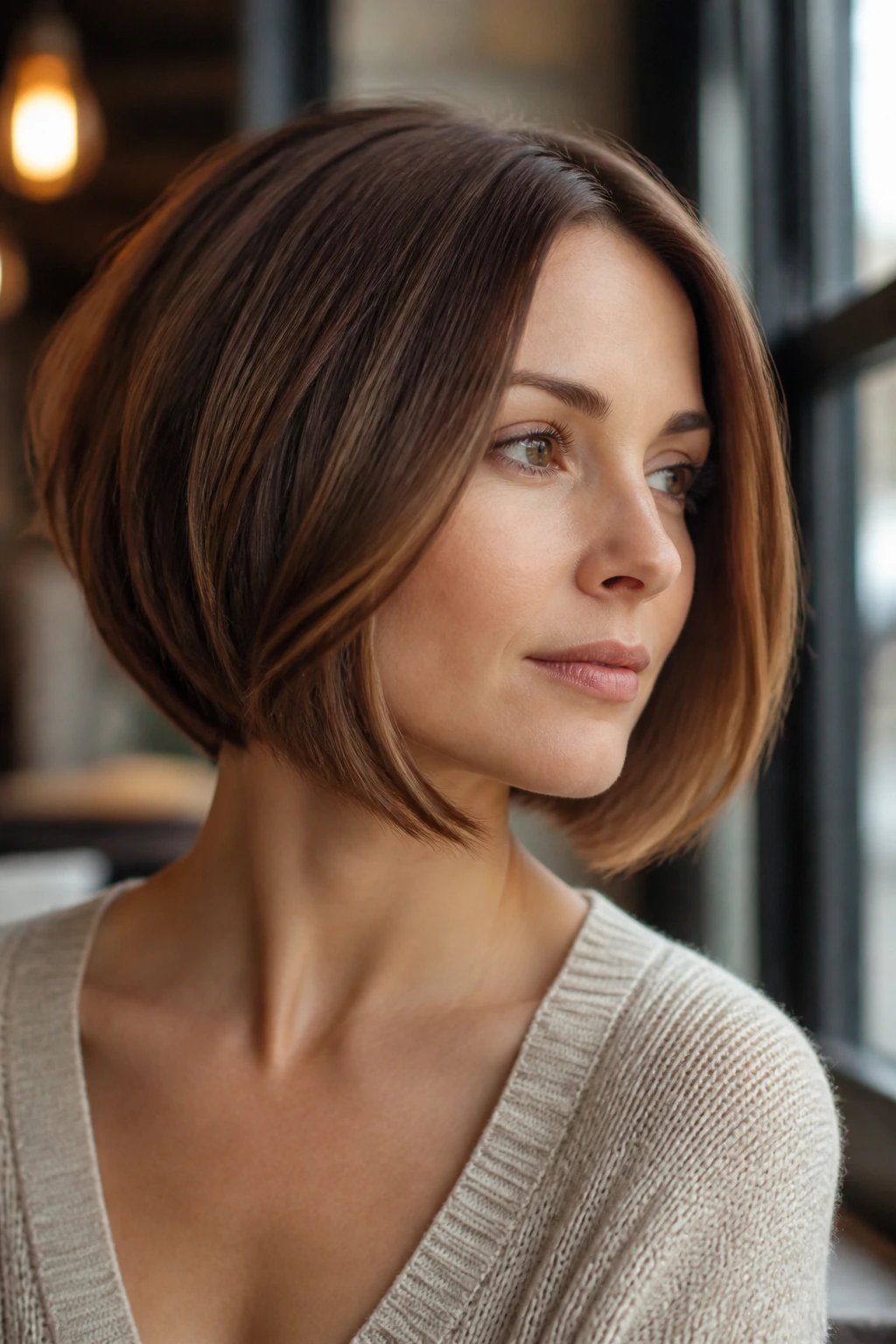
Soft graduation is the quiet hero of round-face haircuts. It gives lift without shouting about it.
The difference between this and a heavy stacked bob is subtle but useful. The layers in the back are shorter and gradually longer as they move forward, but the shift is gentler. That means the silhouette keeps some body at the crown without turning into a hard angle or a stiff shape.
I reach for this version when someone wants a polished cut for work, school, or daily life and does not want to be styling it every morning for 20 minutes. It looks neat even when it’s not perfectly smooth.
The front pieces can sit a little below the chin, which helps lengthen the face. If your cheeks are your widest point, that extra front length is worth keeping. It keeps the focus low and forward instead of wide and sideways.
15. Jaw-Skimming Inverted Bob with Face-Framing Pieces
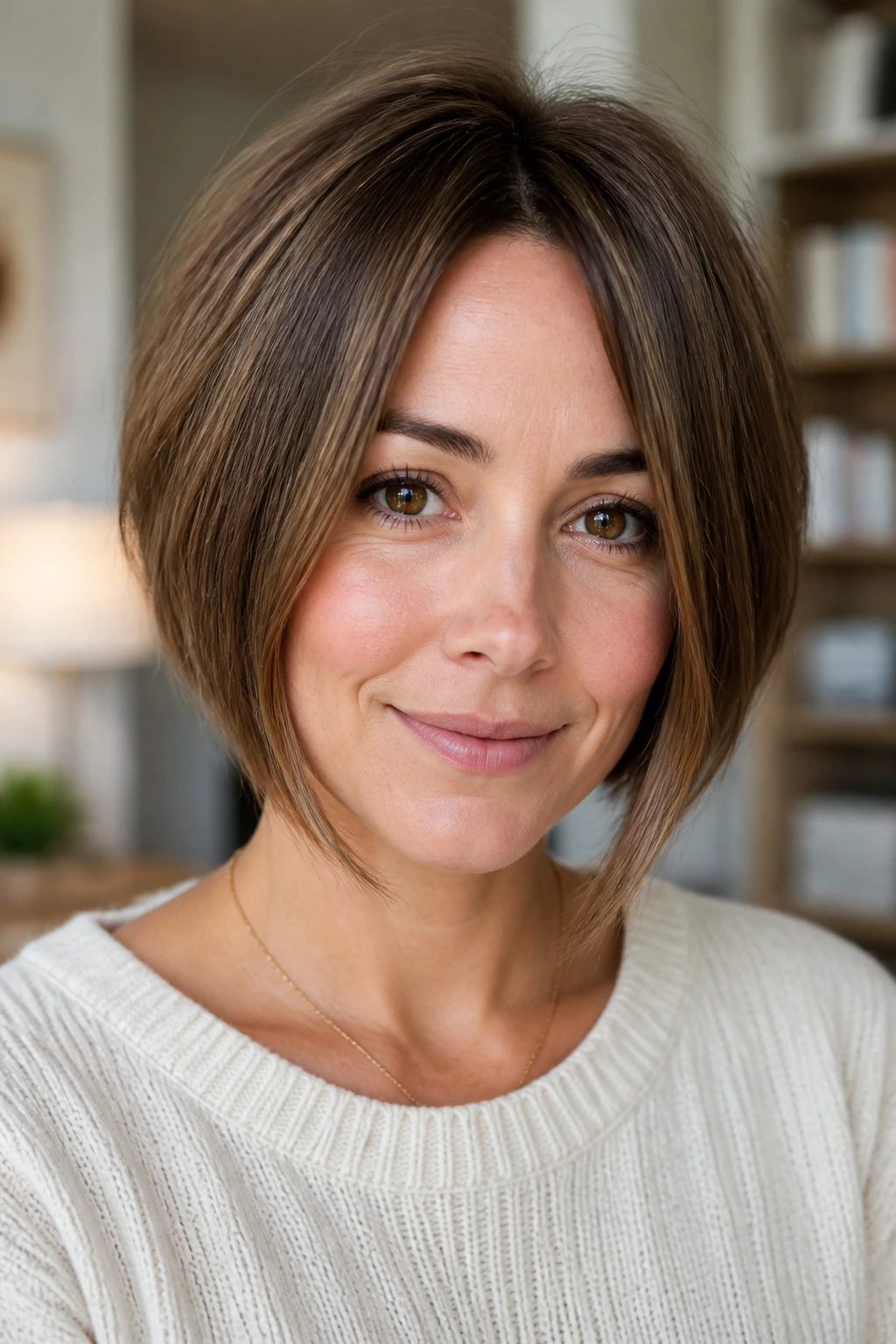
What happens when the shortest front piece lands exactly at the jaw? Sometimes it works. Sometimes it doesn’t. The trick is to keep those jaw pieces soft and paired with longer framing around them.
This version can look gorgeous on round faces when the face-framing pieces start just below the cheekbone and continue past the jaw. That layering creates a tapered effect, which is far better than a hard line right at the widest spot.
The Part That Makes It Work
The jaw-skimming length should not be the only length you see. The longer outer pieces matter more than people think.
A few practical notes:
- Ask for the shortest face-framing layer to touch the jaw lightly, not sit like a shelf.
- Keep the lower front pieces 1 to 2 inches longer.
- Add a soft bend near the ends so the pieces curve inward a little.
- Skip anything too blunt at the chin.
This cut is flattering when the stylist respects the cheek line. If they don’t, the whole thing can widen the face. So be precise.
16. Tousled Inverted Bob for Fine Hair
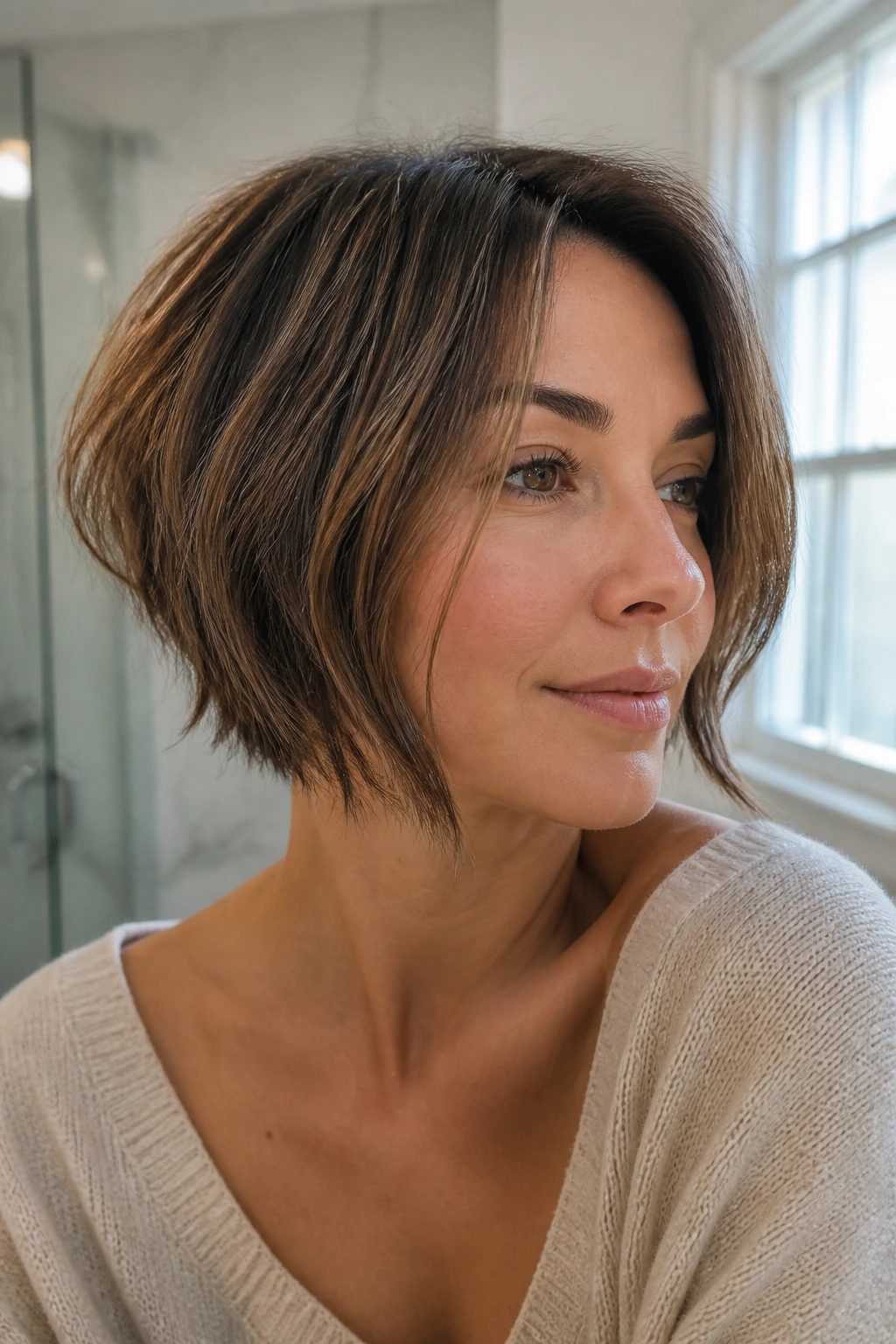
Fine hair usually needs a little help holding shape, and this cut gives it that help. The shorter back builds the illusion of lift, while the tousled texture keeps the style from collapsing into a flat sheet.
The real trick is not over-layering. Fine hair can lose density fast if too much is removed. A better approach is to keep a solid perimeter and add movement through the internal layers and ends. That way the haircut still feels full.
I like this version when the hair naturally falls straight but lacks body. A root-lifting mousse, a rough dry, and a few loose bends near the front are enough. You do not need perfect curls. You need direction.
A round face gets a lift from the height at the crown and a little length through the front. That combination keeps the cheeks from dominating the whole look.
17. Thick-Hair Inverted Bob with Internal Debulking
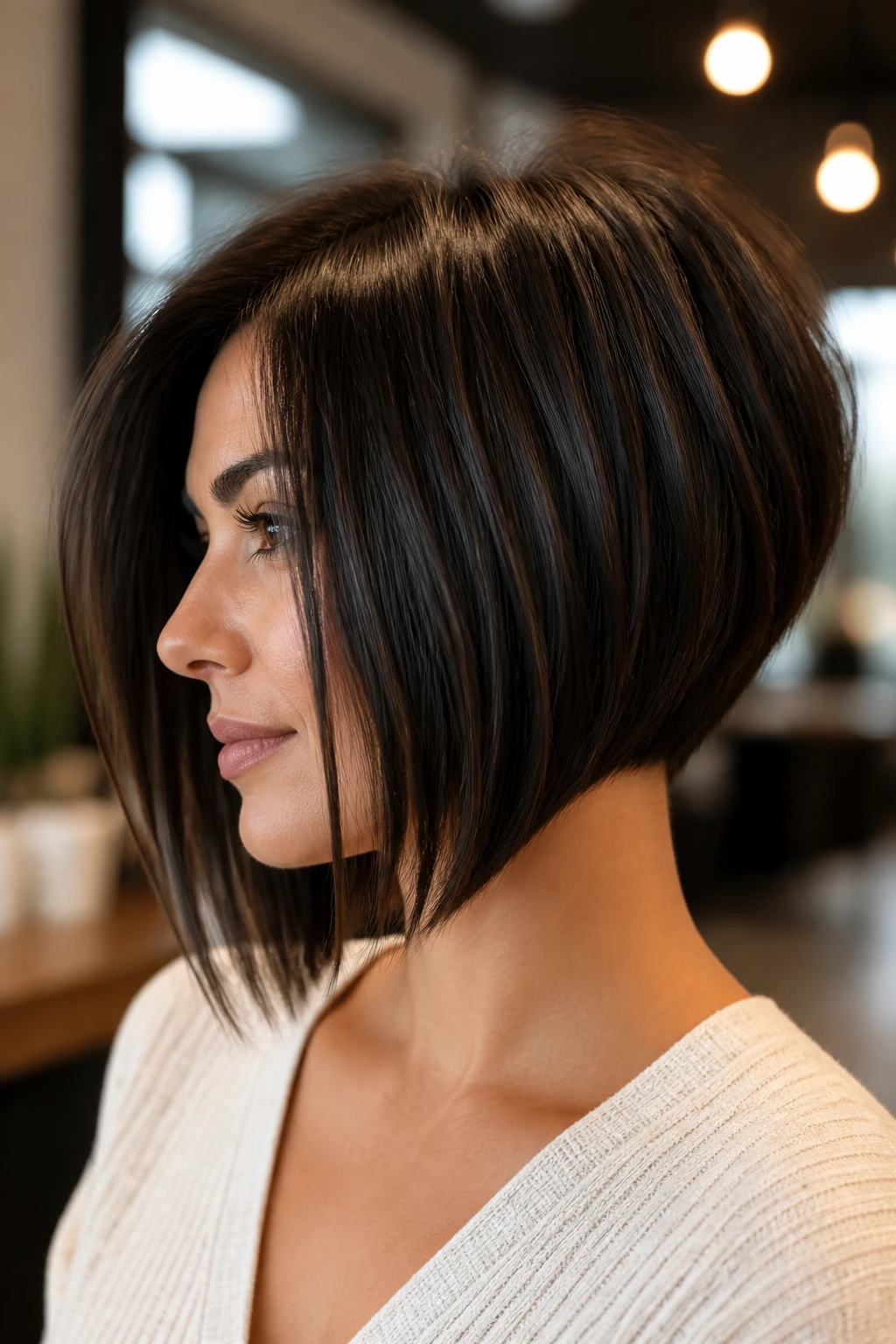
Thick hair can wear an inverted bob beautifully, but only if the bulk is handled correctly. If not, the haircut turns into a puffball. No one asked for that.
The answer is internal debulking, not aggressive thinning on the surface. The stylist should remove weight from inside the shape so the outer line stays clean. That keeps the haircut from ballooning at the sides, which is especially helpful on a round face.
A slightly shorter nape helps here because thick hair likes to mushroom at the back if it’s left too long in one block. The front pieces can be a touch longer, and they should fall in a controlled way rather than kicking out.
If you have thick hair and a round face, this version can be a real relief. It feels lighter on the head, and it looks more deliberate from the front. The difference is not subtle.
18. Inverted Bob with Money-Piece Highlights
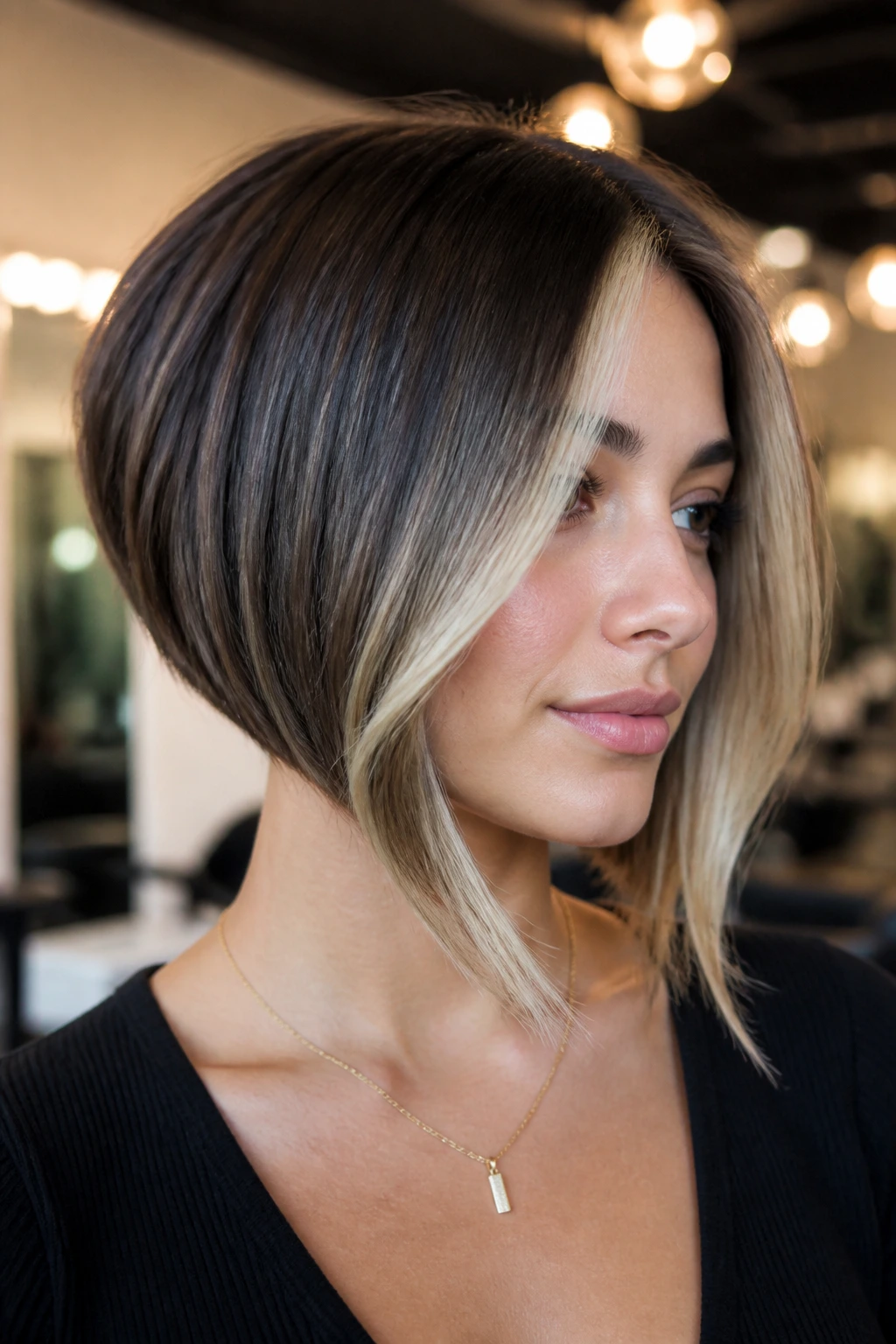
Cut and color work together here. The haircut creates the shape, and the lighter front pieces stretch the eye vertically.
Money-piece highlights are the brighter strands right around the face. On a round face, those lighter ribbons can make the front pieces stand out more, which makes the face look a little longer. The effect is strongest when the highlights follow the angled front of the bob instead of sitting in a chunk near the cheeks.
This is one of those styles that looks more expensive when the color placement is thoughtful. The highlights should begin near the temples or cheekbone area and continue down the front lengths. Too much brightness across the sides can widen the face. A narrow placement is smarter.
The cut itself can be simple — even a classic inverted bob — because the color does part of the visual work. That’s a good trade when you want a cleaner haircut with a little extra edge.
19. Air-Dried Medium Inverted Bob
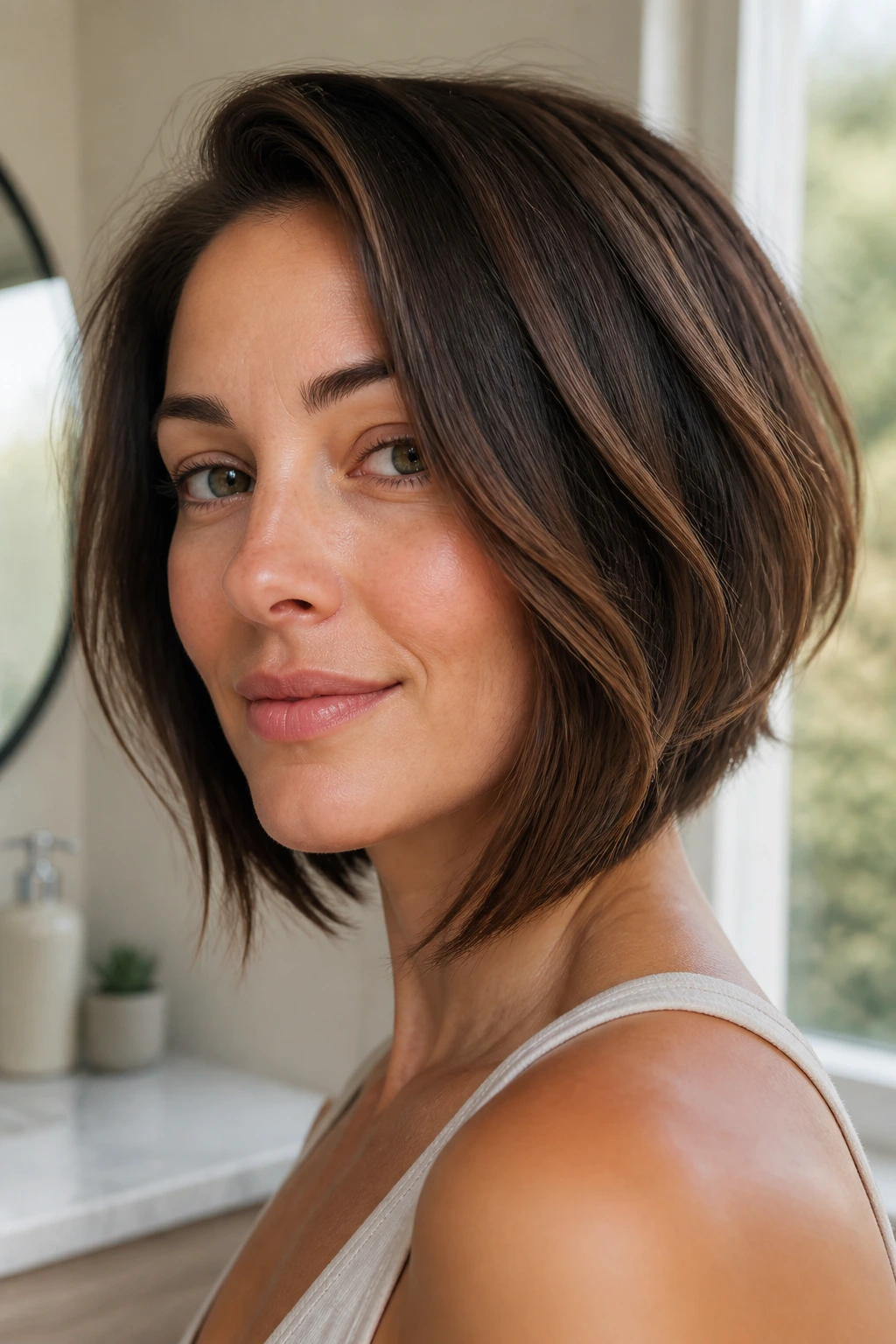
Do you want a cut that still looks fine when you don’t fully style it? Then this is the one to pay attention to.
The air-dried version depends on a shape that behaves well on its own. That means a medium inverted bob with enough internal movement to dry into a soft bend, not a heavy block. It works especially well on wavy hair, but straight hair can wear it too if the cut is done with movement in mind.
How to Use It
- Work a light leave-in cream through damp hair.
- Scrunch or twist the front pieces once or twice so they fall in a controlled direction.
- Let the back stay compact and smooth.
- Avoid brushing it while it dries, or you’ll lose the angled shape.
A round face benefits from the softer, broken line this creates. It doesn’t need to be perfect. That’s the charm. A haircut that survives air-drying without looking sloppy is worth a lot more than one that only looks good under a bathroom mirror for ten minutes.
20. Soft Sweep Inverted Bob
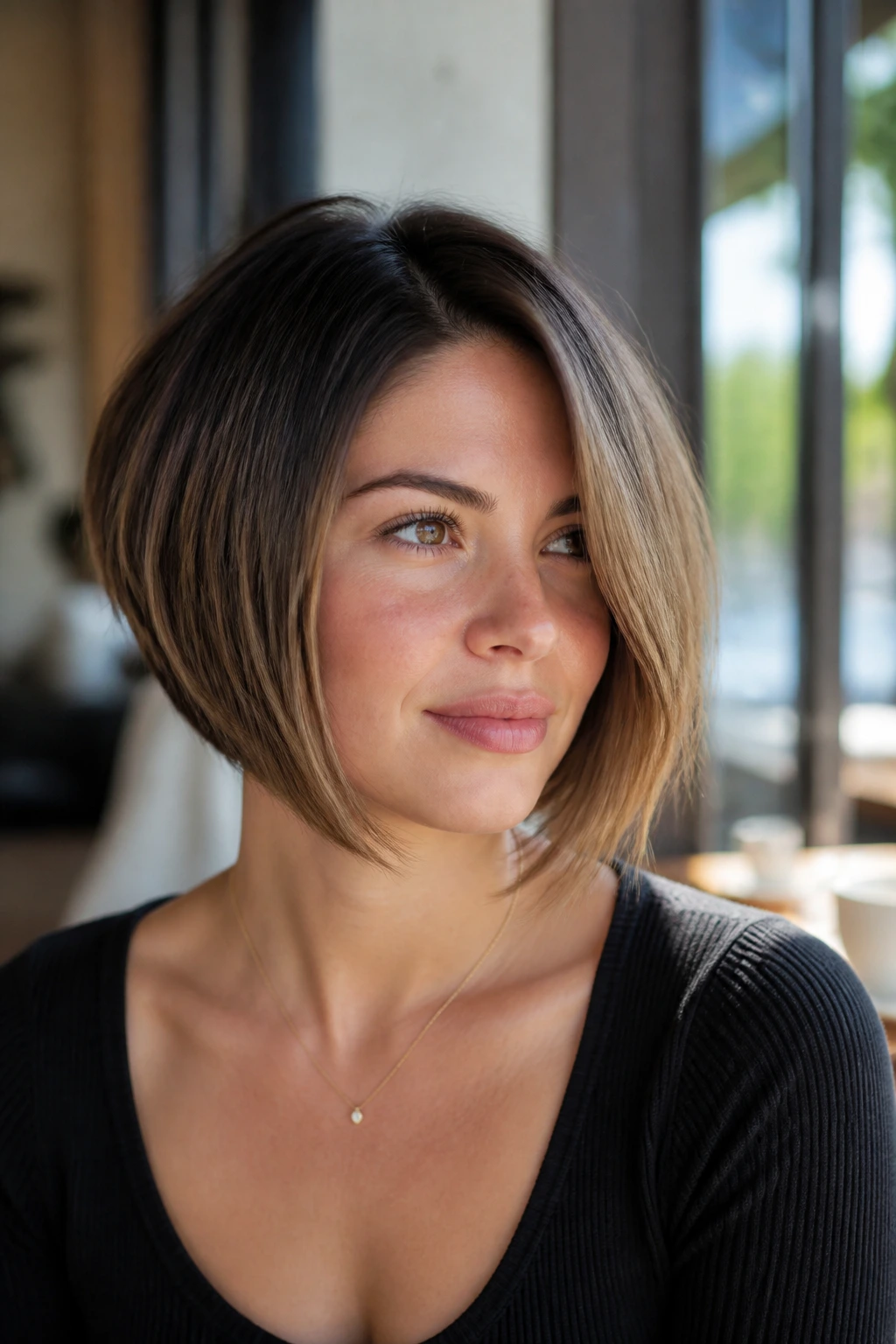
This is the one I’d call the most forgiving of the bunch. The soft sweep version keeps the back gently shortened, lets the front sweep across the face in a controlled curve, and skips the harshness that makes some inverted bobs feel too sharp.
It suits round faces because it does two things at once: it lengthens the face with the front pieces and softens the cheeks with the side movement. The line is angled, but not severe. That matters if you want shape without looking like you’ve committed to a very specific haircut mood.
A side part usually helps here, and a little bend through the ends keeps the front from falling flat against the cheeks. The cut can be worn smooth, wavy, or a little tousled. It doesn’t need a lot of fuss.
If you’re picking one style from this whole list and you want the safest blend of flattering and easy, this is the one I’d hand to most people with round faces. It has shape, but it’s not bossy about it. And honestly, that’s often what makes a haircut last in real life.
