



A round face and a bob can get along beautifully—if the shape knows where to stop. The trouble usually starts when the cut lands right on the widest part of the cheek, or when the sides puff out and make the face look fuller than it is. The right long straight bob haircuts for round faces do the opposite: they pull the eye downward, leave breathing room around the jaw, and give the whole outline a cleaner line.
That’s why length matters so much here. A chin-length bob can be tricky, but a lob that sits at the collarbone or a little below it has more room to work. A blunt edge can still be flattering. So can a side part, a soft angle, or a face frame that starts lower than you might expect. The goal isn’t to hide the face. It’s to shape it.
The details matter more than the label on the salon mirror. Half an inch at the front. A slightly off-center part. Ends that skim the collarbone instead of sitting on the jaw. Those tiny decisions change the whole read of the haircut, and they’re what make the difference between “just a bob” and a cut that makes a round face look longer, sharper, and more deliberate.
1. Center-Part Long Straight Bob for Round Faces
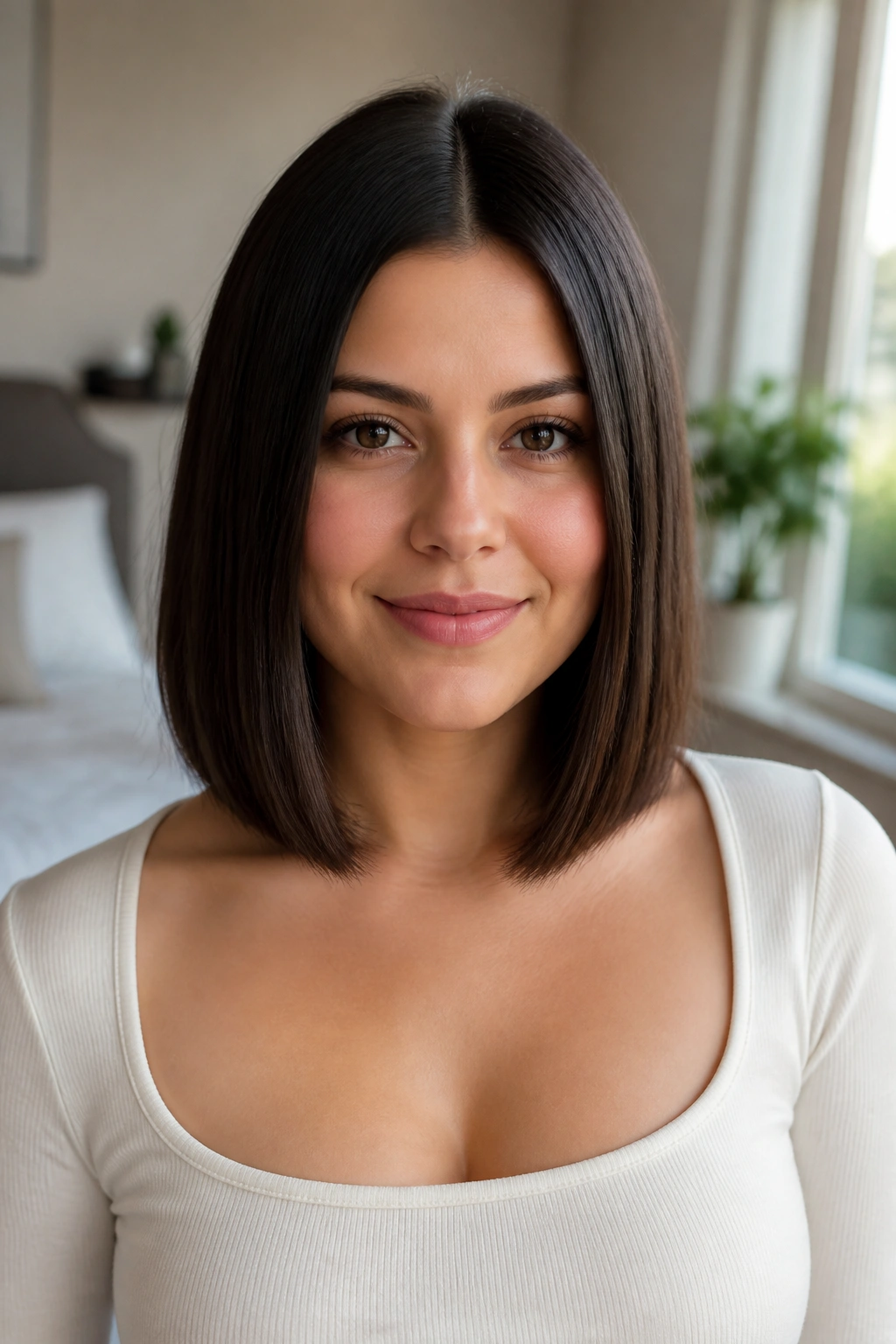
If you want the cleanest line possible, start here. A center-part lob draws a straight vertical line down the middle of the face, which is exactly the kind of visual break a round shape likes. The cut should sit at the collarbone or just below it, with a blunt edge that doesn’t flare out at the sides.
Why the Center Part Helps
The center part splits the face into two equal halves, so the width doesn’t sit all in one place. That matters on a round face, where you’re usually trying to make the eye travel downward instead of outward.
A blunt perimeter adds structure without creating puffiness. Ask for the front pieces to miss the jaw by at least an inch.
- Best length: collarbone to upper chest
- Best finish: sleek, flat-ironed, or blown out smooth
- Best texture: straight, fine, or medium hair
- What to avoid: short layers at cheek level
Tip: If your hair flips out at the ends, keep the last inch beveled inward with a flat brush. That tiny bend keeps the line crisp.
2. Deep Side-Part Angled Lob
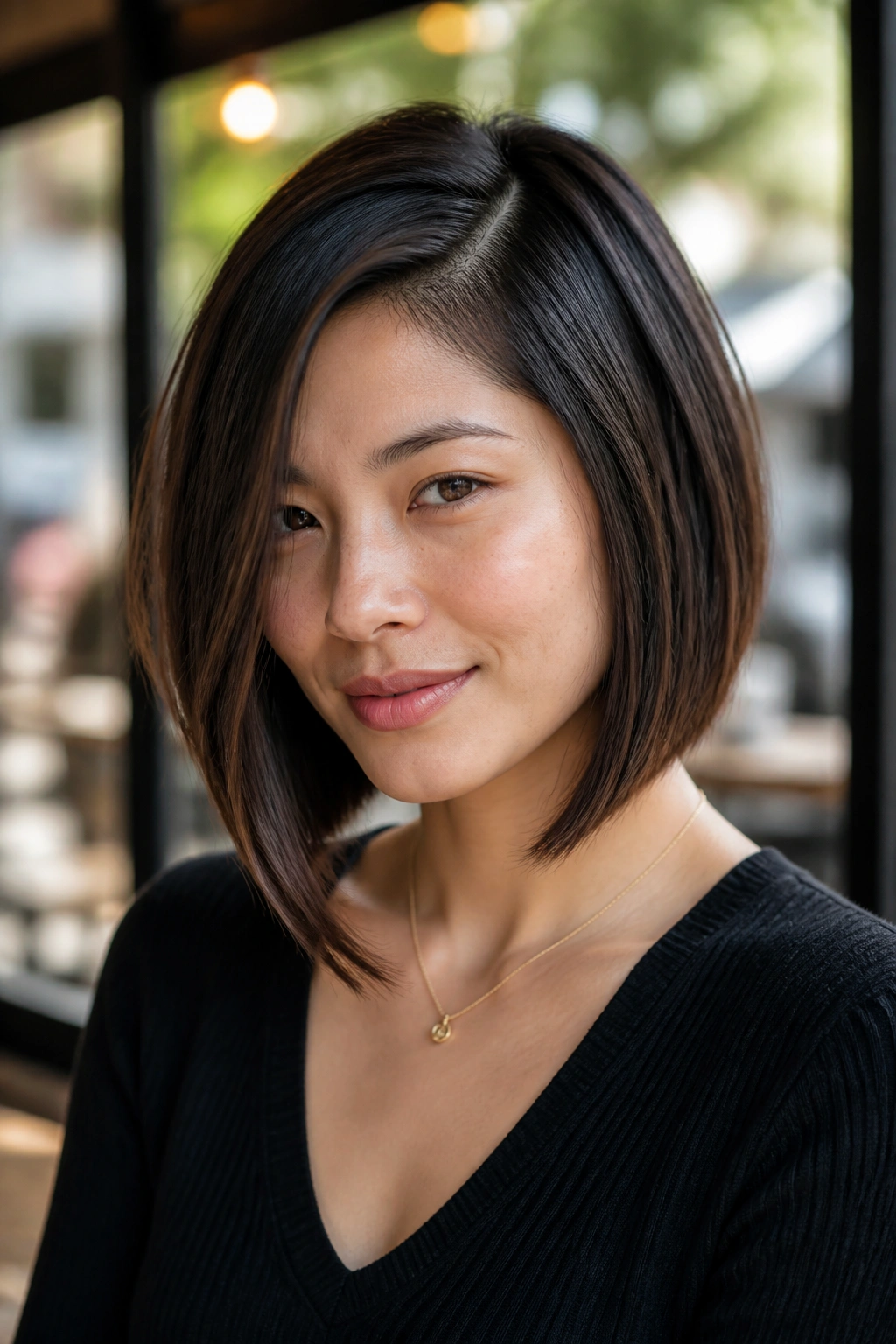
Why does a side part change the whole haircut? Because it throws the balance off in a good way. A deep side part adds a diagonal line across the face, and diagonals are useful when you want a round face to feel a little longer and less symmetrical.
This version works especially well when the front is about an inch longer than the back. Nothing extreme. Just enough angle to make the cut feel intentional instead of heavy.
The side with less hair can tuck behind the ear, which opens up one cheekbone and gives the face some shape. The longer side falls forward and softens the jaw. That combination is harder to beat than people think.
3. Collarbone Lob With Curtain Bangs

This one is for anyone who wants shape near the face without committing to full bangs. The curtain pieces should start around the cheekbone and open away from the center, so they don’t cut the face in half. Done right, they make the eyes look wider and the cheeks look less dominant.
What to Ask For
Ask for the shortest piece to land around the top of the cheekbone, then let the rest blend down to the collarbone. The fringe should be long enough to push aside, not so short that it sits like a shelf.
- Front length: cheekbone to lip
- Back length: collarbone
- Styling note: blow-dry the bangs away from the face
- Avoid: thick, blunt fringe that lands straight across the forehead
This cut has movement, but it still reads sleek. That’s the part I like. It gives shape without making the whole haircut feel busy.
4. One-Length Long Straight Bob for Round Faces
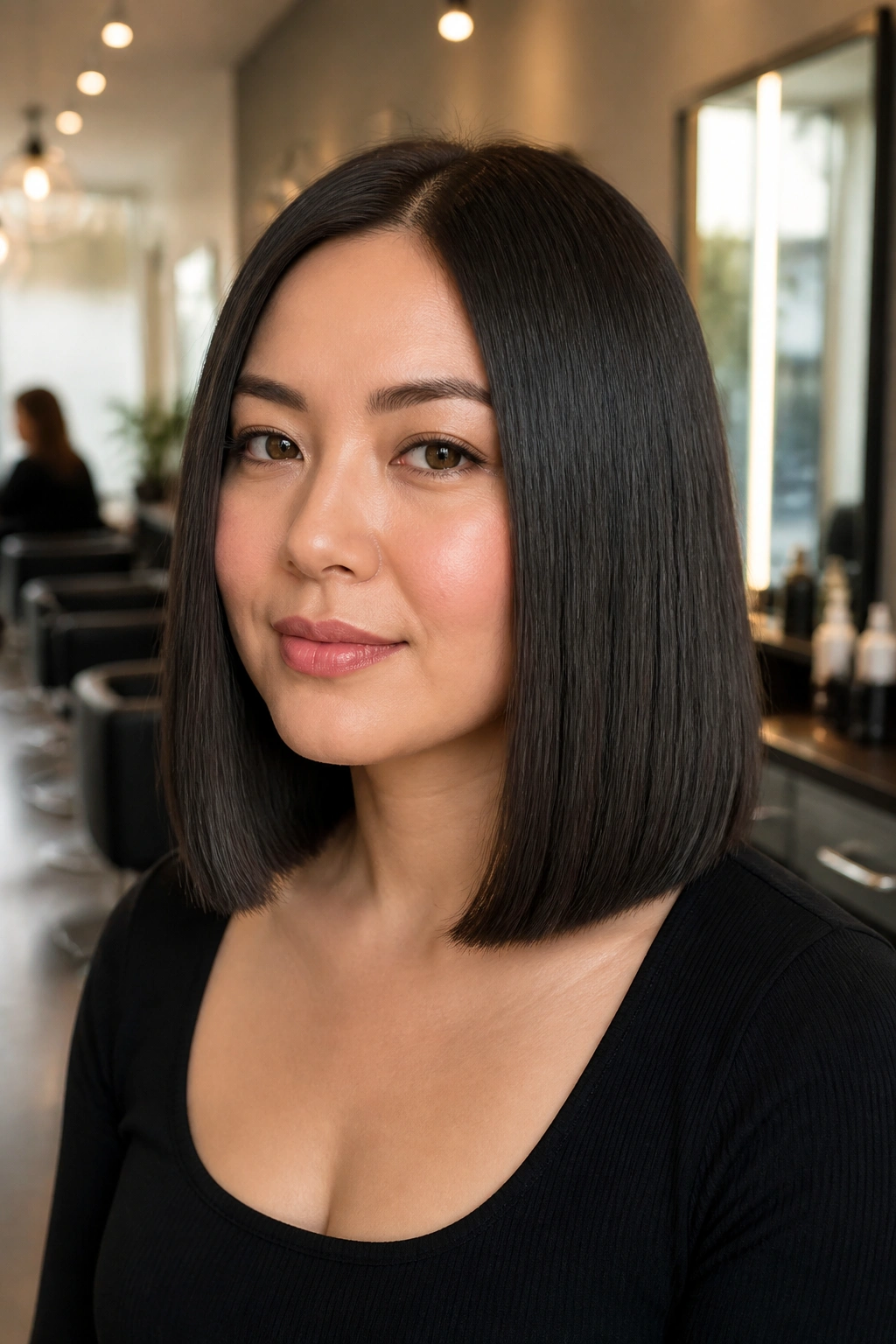
A one-length cut can be the sneaky slimming move. People often assume layers are doing all the work, but a strong, even perimeter below the chin can be just as flattering, sometimes more so. The line stays clean, and the eye doesn’t get distracted by too many breaks.
The trick is placement. If the ends sit at the jaw, the face can look fuller. If they sit at the collarbone, the cut pulls downward and feels longer. That small difference matters.
This version is especially good if your hair is naturally straight or you like a polished blowout. It also grows out in a calm way, which is useful if you hate seeing your haircut lose its shape fast.
5. Softly Stacked Lob
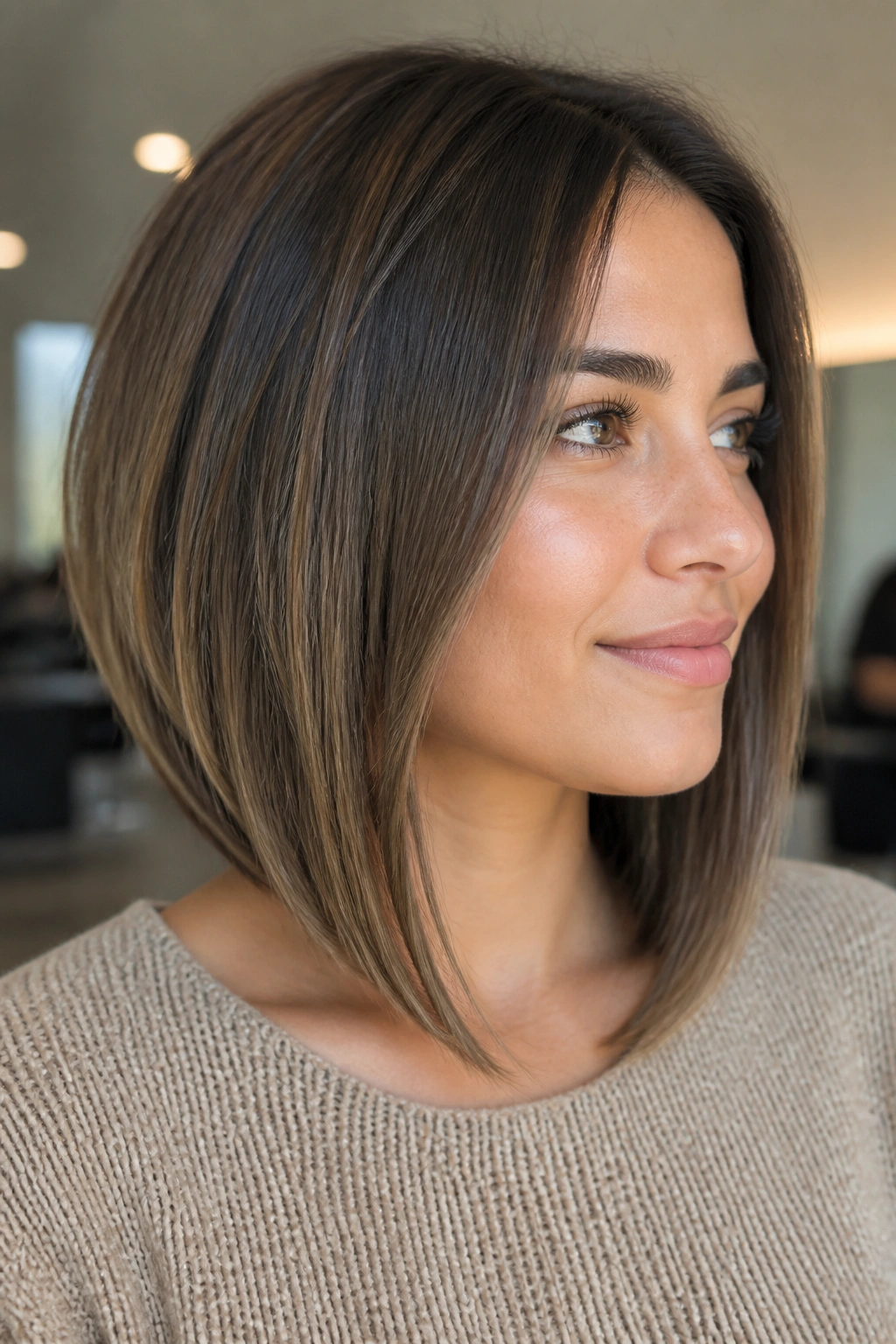
Stacking works only when it stays soft. Too much graduation at the back can make a round face look wider, which is the opposite of what most people want. A gentle stack, though, lifts the nape just enough to keep the silhouette from falling flat.
Salon Notes
Ask for the back to be slightly shorter, with the front still holding collarbone length. You want a quiet lift, not a dramatic pyramid.
- Back length: nape with a soft rise
- Front length: collarbone or longer
- Texture note: light internal shaping, not choppy layers
- Best for: hair that lies flat at the crown
The nice thing about this cut is that it gives the neck a little shape. That extra lift can make the whole face feel less circular. It’s subtle, but it shows.
6. Long Bob With Hidden Internal Layers

This is the cut that looks simple until it moves. From the outside, it can read almost one-length. Underneath, though, the stylist has removed bulk inside the shape so the hair falls cleaner and doesn’t balloon out around the cheeks.
If your hair is thick, this is worth serious attention. Thick straight hair can turn boxy fast, especially at bob length. Internal layers take some of that weight away without breaking the outer line.
The best versions keep the perimeter blunt and let the hidden layers do the hard work. You get swing. You get control. You don’t get that awkward triangle shape that can make a round face look even rounder.
7. Asymmetrical Lob
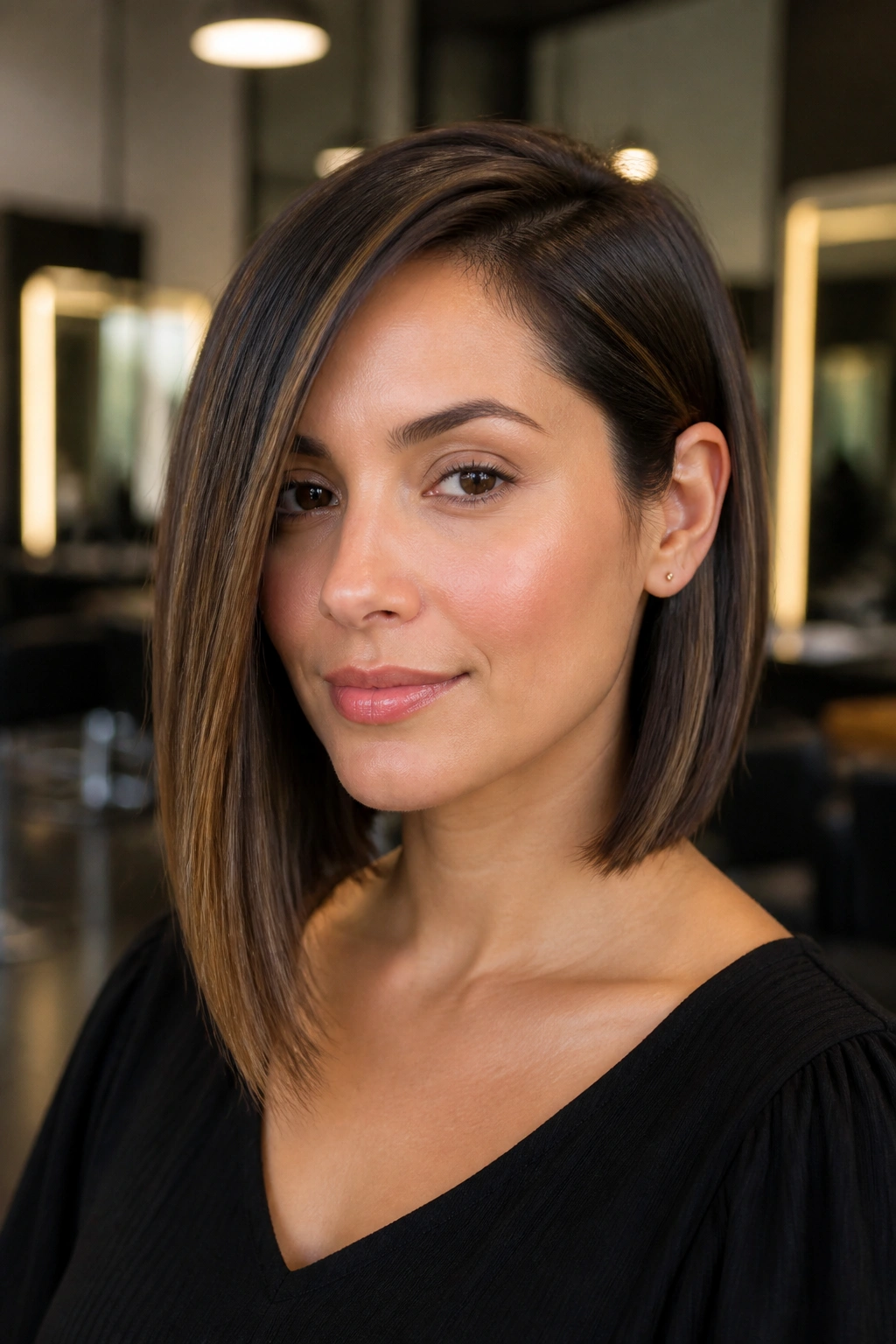
One side a little longer is enough. You do not need a dramatic, fashion-week angle to make this work. A subtle asymmetry—maybe half an inch to an inch longer on one side—adds a diagonal line that helps a round face look less even and therefore a little leaner.
The beauty of this cut is that it feels modern without trying too hard. It also gives you styling options. Wear the longer side forward for shape, or tuck the shorter side behind the ear for a clean line across the jaw.
Keep the difference modest. If the angle gets too steep, the haircut starts doing the shouting for you. A quiet asymmetrical lob is sharper.
8. Tucked-Behind-the-Ear Lob
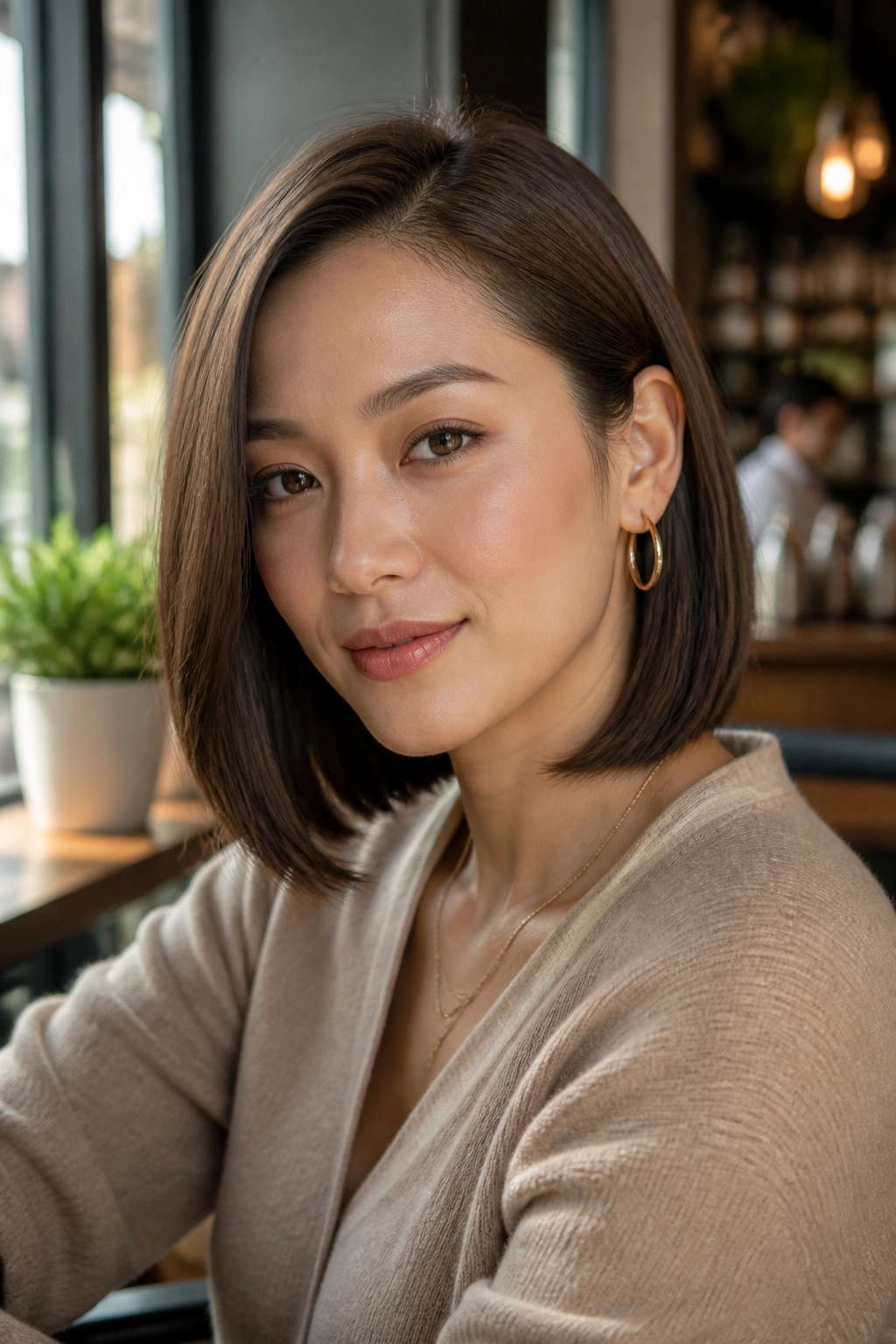
Sometimes the best contouring trick is a tuck. A lob that can be tucked behind one ear shows off the cheekbone, creates a little space near the face, and makes the haircut feel lighter even when the length stays long.
This works best when the side sections are cut cleanly, not overbuilt with heavy layering. You want enough softness at the temple so the tuck looks natural, not forced. The tucked side should fall flat against the head instead of puffing out.
I like this style for people who want a polished cut that still feels easy. It’s formal enough for work, casual enough for a T-shirt, and flattering from almost every angle.
9. Feathered-Ends Lob
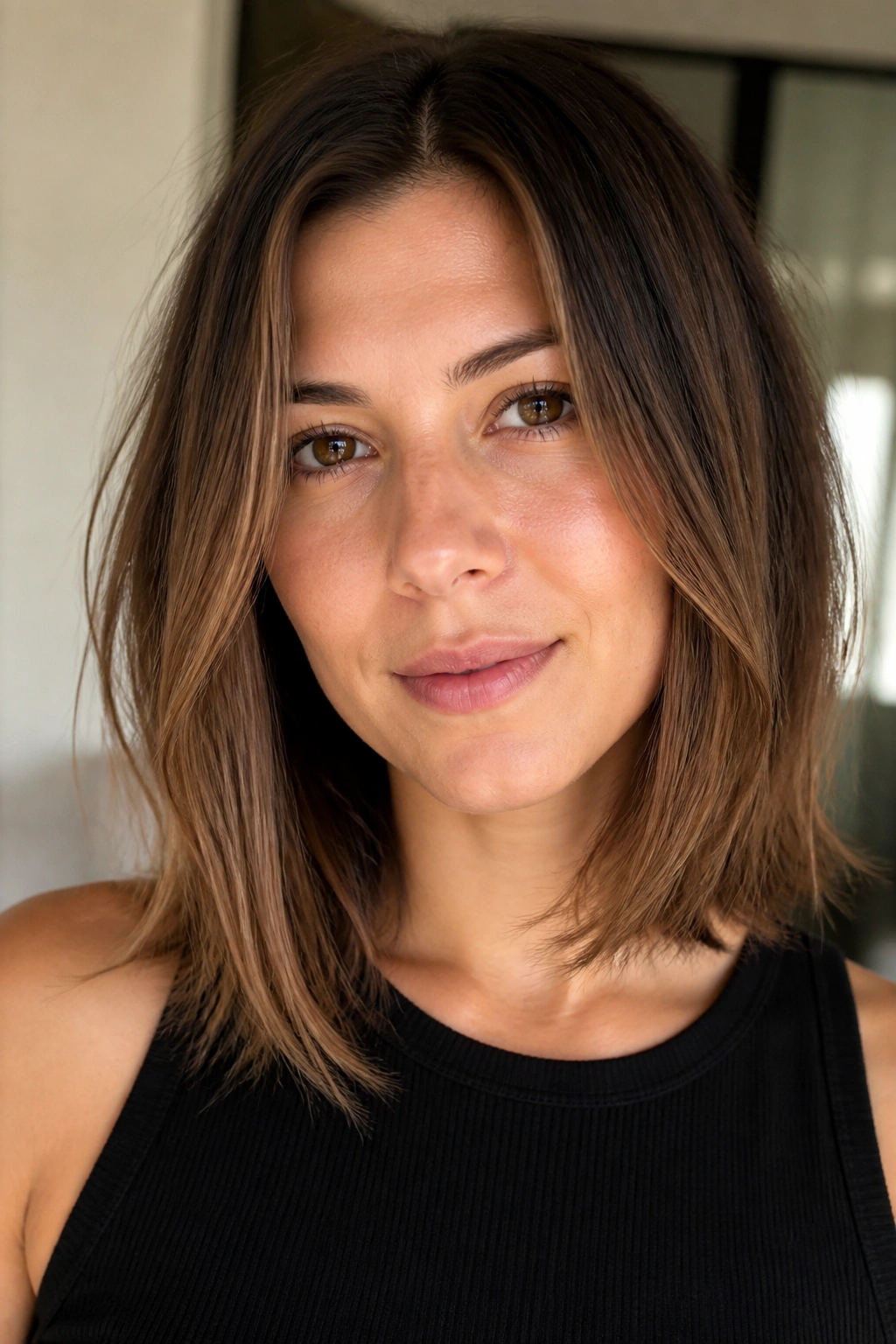
Why do feathered ends look so good on a round face? Because they soften the bottom edge of the haircut without creating extra width near the cheeks. The ends taper into finer pieces, so the line feels airy instead of blocky.
Keep the Feathering Low
The feathering should live mostly in the last 1 to 2 inches of the haircut. If it starts too high, the shape can get wispy in the wrong places and lose the clean structure that makes a lob work.
- Best placement: lower third of the cut
- Best texture: straight to slightly thick hair
- Styling note: smooth with a round brush or paddle brush
- Watch out for: over-thinning the ends
This is a nice choice if you want movement but hate choppy layers. It keeps the finish soft. Very soft.
10. Razored Lob for Thick Hair
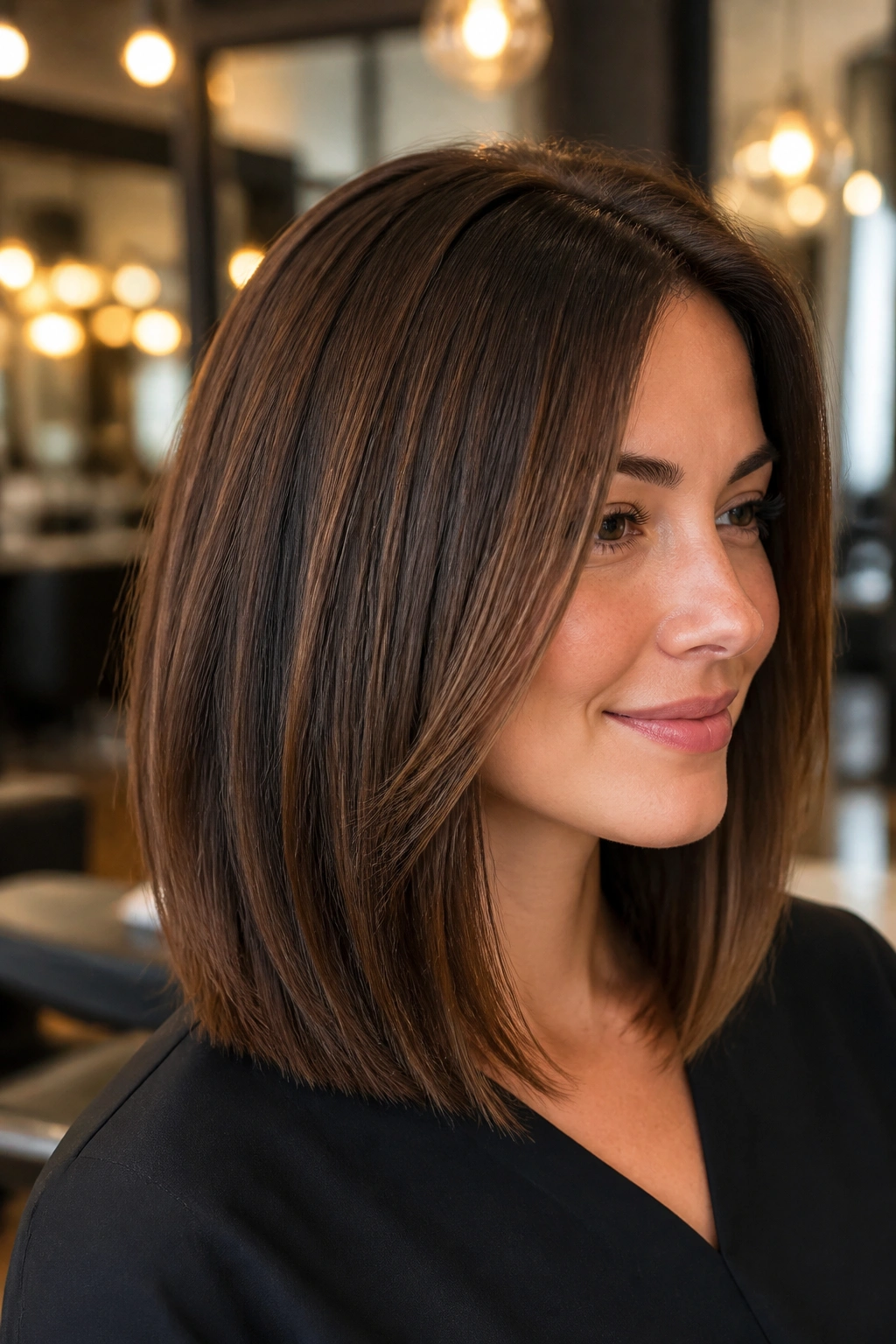
Thick hair needs weight removed, not just length chopped off. A razor can help with that, but only when it’s used with control. The goal is to lighten the interior and keep the perimeter smooth enough to still read straight.
The best razored lobs for round faces keep the ends clean and do most of the softening under the surface. That way the haircut sits flatter near the sides instead of puffing out at the cheek line.
When to Choose It
- Your hair feels bulky after a blow-dry
- Your ends stack up and look heavy
- You want movement without a layered shag look
- You’re willing to use a smoothing cream or light oil
Skip heavy razor work if your ends are already fragile or frizzy. In that case, a scissor cut with internal debulking is safer.
11. Invisible-Layer Lob
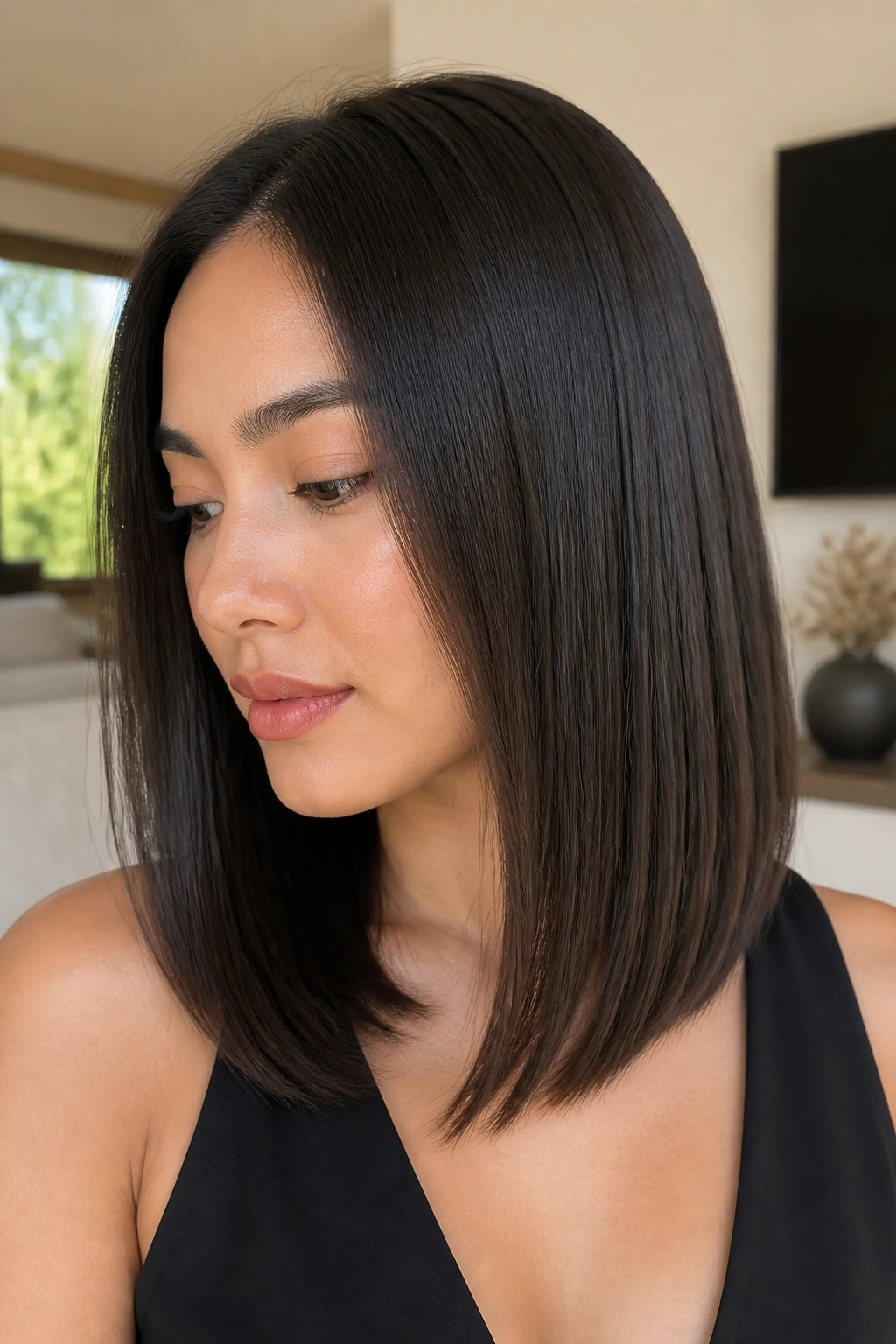
This cut is for people who want the sleek look of a one-length bob but need a little give inside the shape. Invisible layers are blended so well that you barely notice them, yet the hair falls better and doesn’t sit in one stiff block.
On a round face, that matters because a stiff block at cheek level can widen the face. A hidden layer lets the hair drape instead of puff. The outline stays long and straight, which is the whole point.
This is also a smart choice if you like to straighten your hair often. The cut keeps the surface smooth, and the layers stay hidden unless the hair moves. Simple. Clean. Useful.
12. Side-Swept Fringe Lob

No, you do not need full bangs to change the shape of your face. A side-swept fringe can do plenty on its own. It creates a soft diagonal across the forehead, which breaks up the roundness without closing off the face.
The best side fringe is long enough to brush the cheekbone and still tuck away if you get tired of it. Keep it light. Heavy side bangs can drag the face down and make the top half feel crowded.
This style suits people who want a little face-framing action without the commitment of a full curtain bang. It’s also forgiving on grow-out, which is a nice bonus.
13. A-Line Lob With Longer Front Pieces
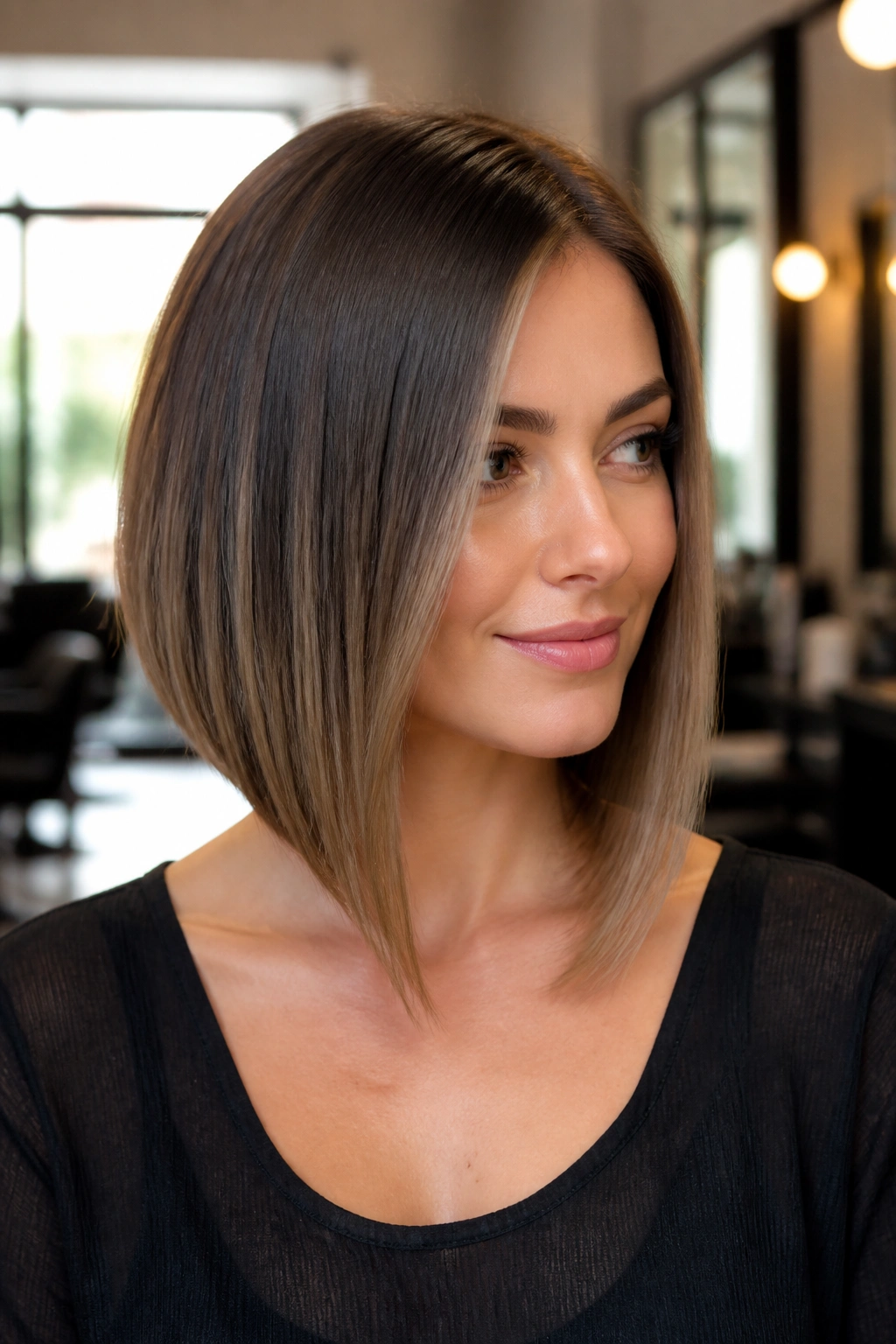
The classic A-line still earns its keep. Shorter in the back, longer in the front, it naturally pulls the eye downward and forward. That front length is the part that matters most on a round face, especially when it reaches the collarbone.
What to Ask For at the Salon
Ask for the front pieces to stay 2 to 3 inches longer than the back, with the angle starting below the cheek. You want shape, not a dramatic wedge.
- Front length: collarbone or slightly lower
- Back length: just above the nape
- Parting: center or soft side part
- Finish: sleek and tucked under
This cut has a little more attitude than a one-length lob, but it still feels grown-up. It’s a good middle ground when you want structure without severity.
14. Beveled Lob That Curves Under
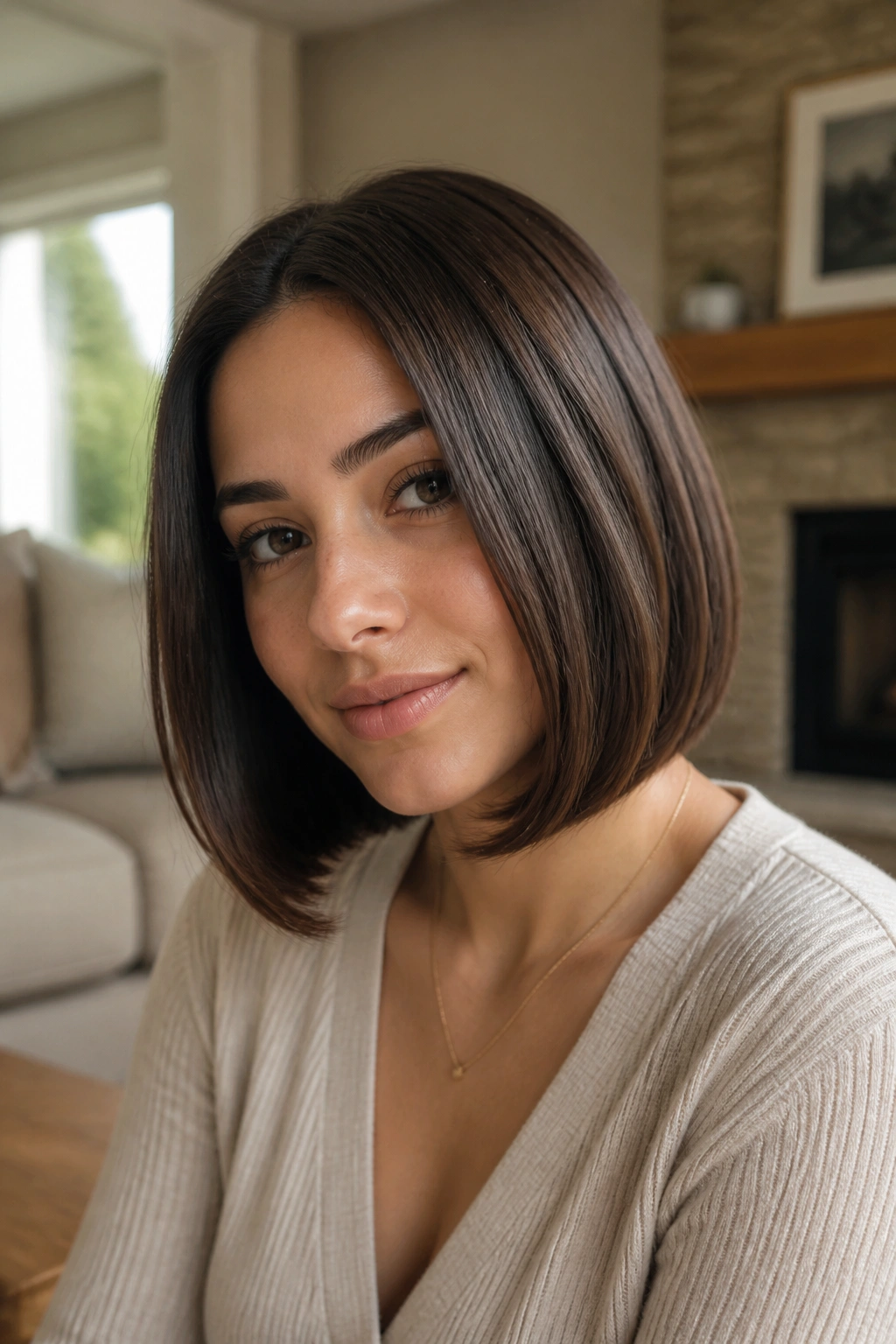
A beveled lob has that neat tucked-under finish that makes straight hair look polished without feeling stiff. The ends curve slightly inward, which helps keep the lower half of the face from feeling too wide.
The shape is subtle. That’s what makes it useful. Instead of creating a hard shelf, the bevel gives the haircut a soft bend at the bottom, and that bend can make the neck and jawline look longer.
This cut works nicely on hair that holds a brush set or flat-ironed bend. It’s tidy, but not fussy. And it has that rare quality I always look for in a bob: it looks intentional even on a lazy day.
15. Blunt Collarbone Bob

Blunt does not mean harsh. A blunt collarbone bob can be one of the best shapes for a round face because it gives the hair a strong bottom line and keeps volume from spreading out at the sides.
Best For
This version shines on medium to thick hair, especially if the hair has some natural density. The blunt edge makes the ends look full, and full ends are better than stringy ones at this length.
- Length target: right at the collarbone
- Layering: little to none
- Maintenance: tidy trims keep the edge clean
- Styling tip: smooth the ends inward or wear them poker straight
If your cheeks are the widest part of your face, this cut gives you a cleaner frame without relying on lots of layers. That’s why it works.
16. Soft Graduated Lob
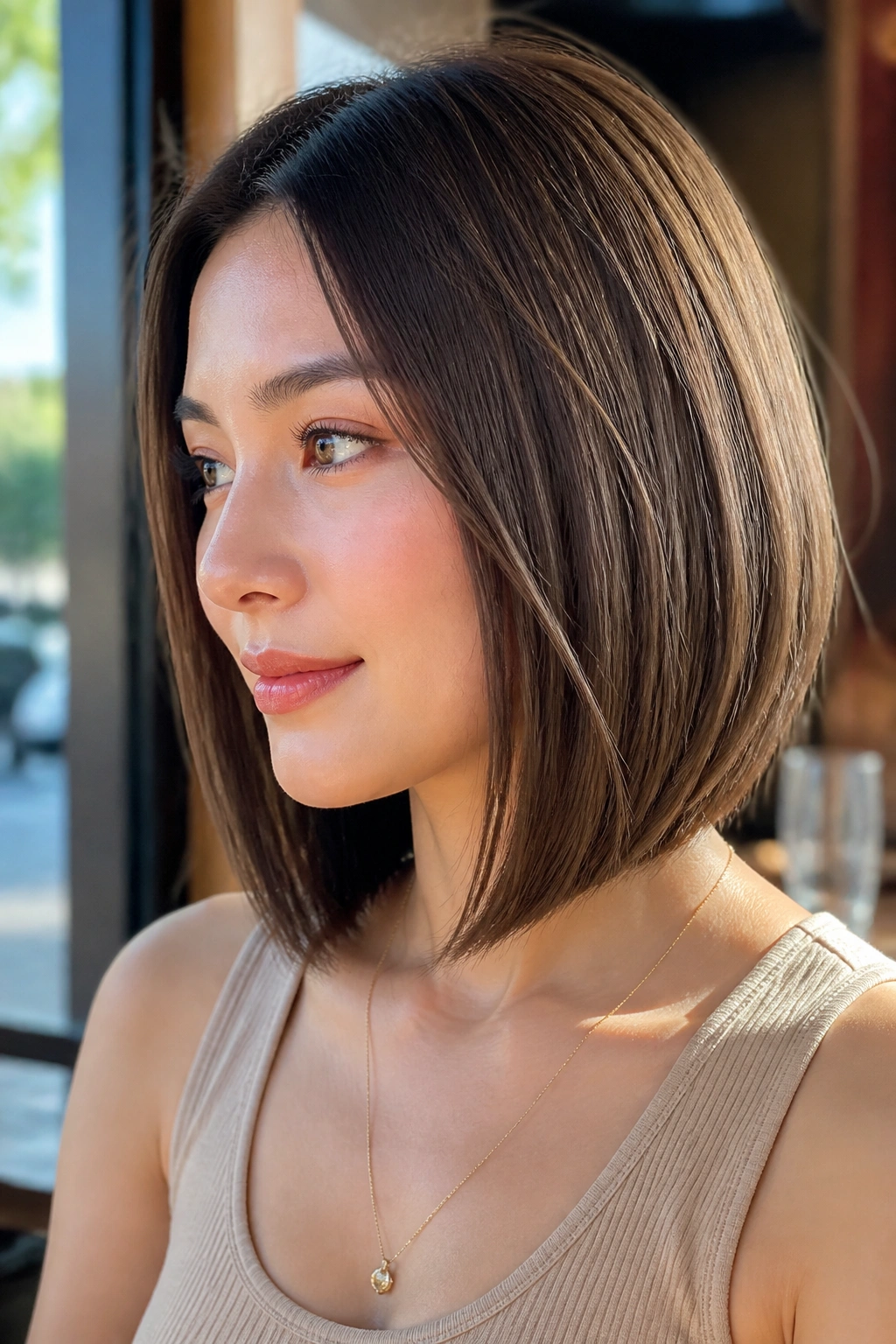
Graduation and stacking are not the same thing. A soft graduated lob uses a gentle rise from back to front, but it keeps the whole cut from looking built-up or heavy. The result is shape without bulk.
For round faces, that matters because you want the hair to move along the jaw and collarbone rather than sit out at the sides. This cut helps the silhouette narrow a little without turning severe.
It’s a good fit for finer hair that needs a bit of structure. It also behaves nicely during grow-out, which is handy if you dislike the sharp line some bobs get after a few weeks.
17. Cheekbone-Framing Lob
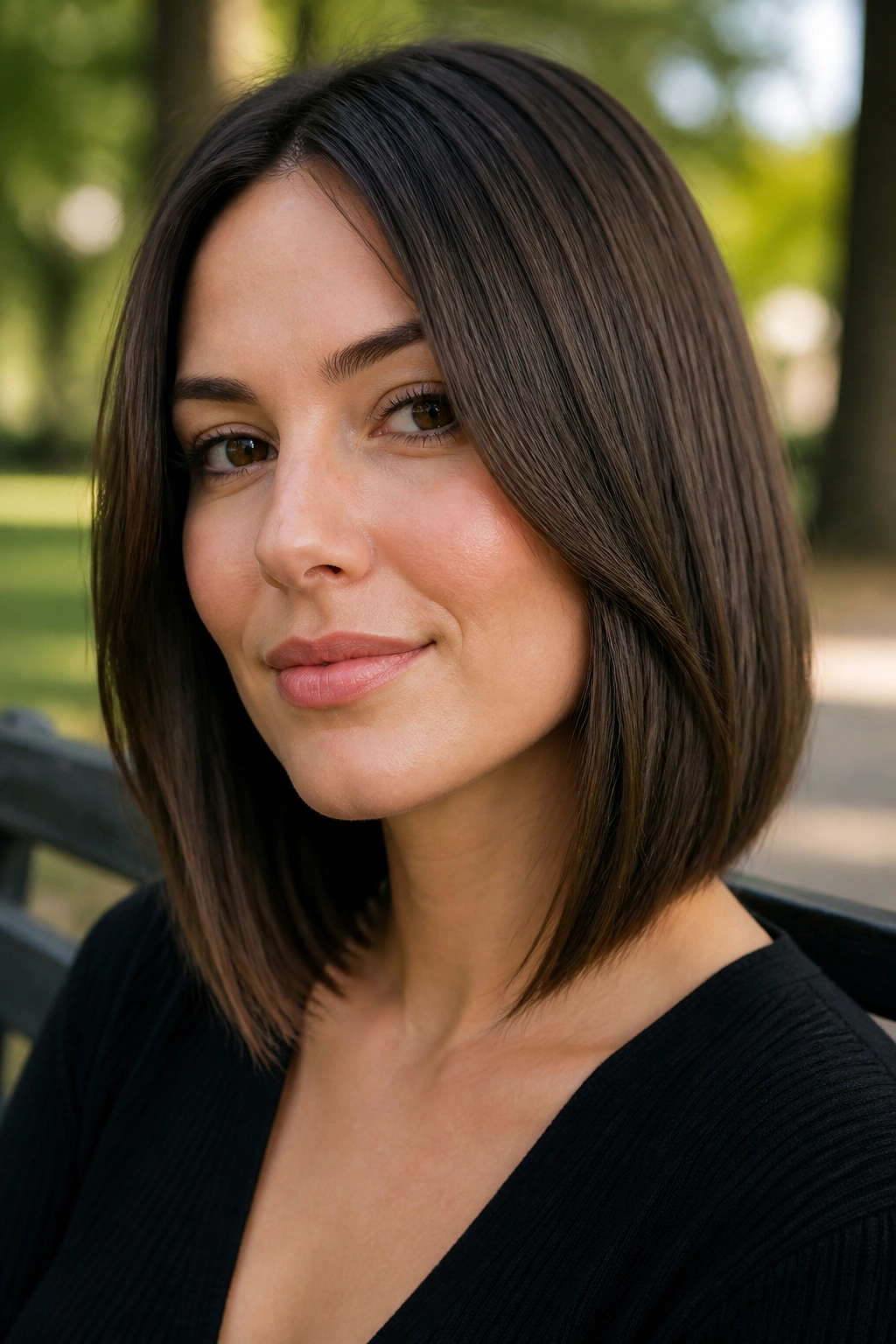
Want contour without makeup tricks? A cheekbone-framing lob does that job with hair. The shortest front pieces should land right around the cheekbone, then fall gradually to the collarbone so the face gets definition at its widest point.
Where the Shortest Piece Should Land
Too short, and the haircut crowds the face. Too long, and you lose the framing effect. Somewhere around the top to middle of the cheekbone is the sweet spot.
- Shortest front piece: cheekbone
- Longest front piece: collarbone or lower
- Parting: center or soft offset
- Styling note: keep the front sleek so the angle shows
This is one of those cuts that looks especially good in motion. The face frame shifts when you turn your head, and that movement gives the whole haircut life.
18. Off-Center Part Lob
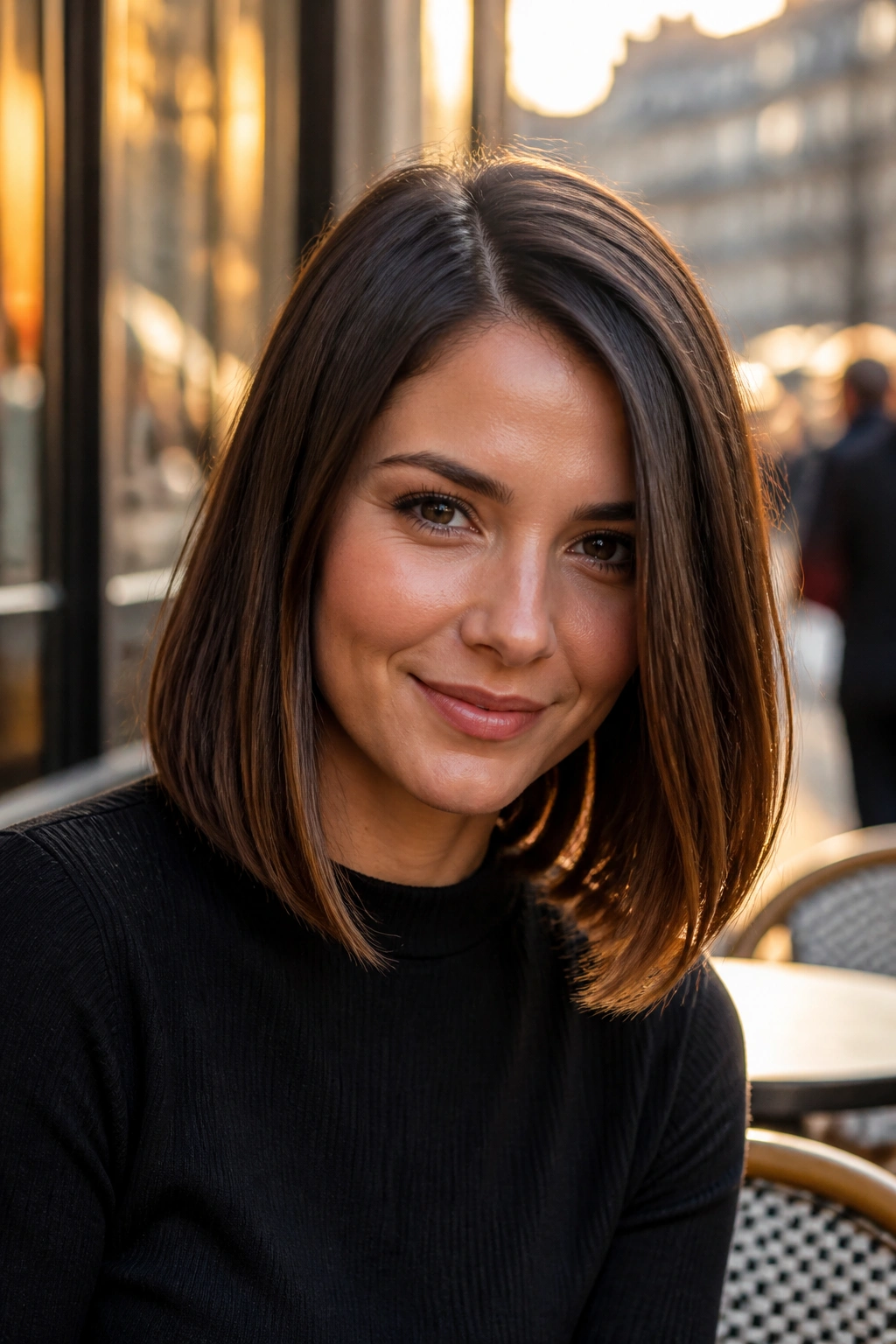
Move the part just two inches and the face shape changes. An off-center part is softer than a deep side part and less rigid than a center part, which makes it a useful middle ground for round faces.
The slight imbalance breaks up symmetry without sending all the hair to one side. That means the cut still feels calm, but the face gets a little more length and a little less width.
I like this on straight hair that tends to fall too evenly. An off-center part stops the haircut from looking flat and gives you a small shift in shape without changing the length at all.
19. Nape-Undercut Lob
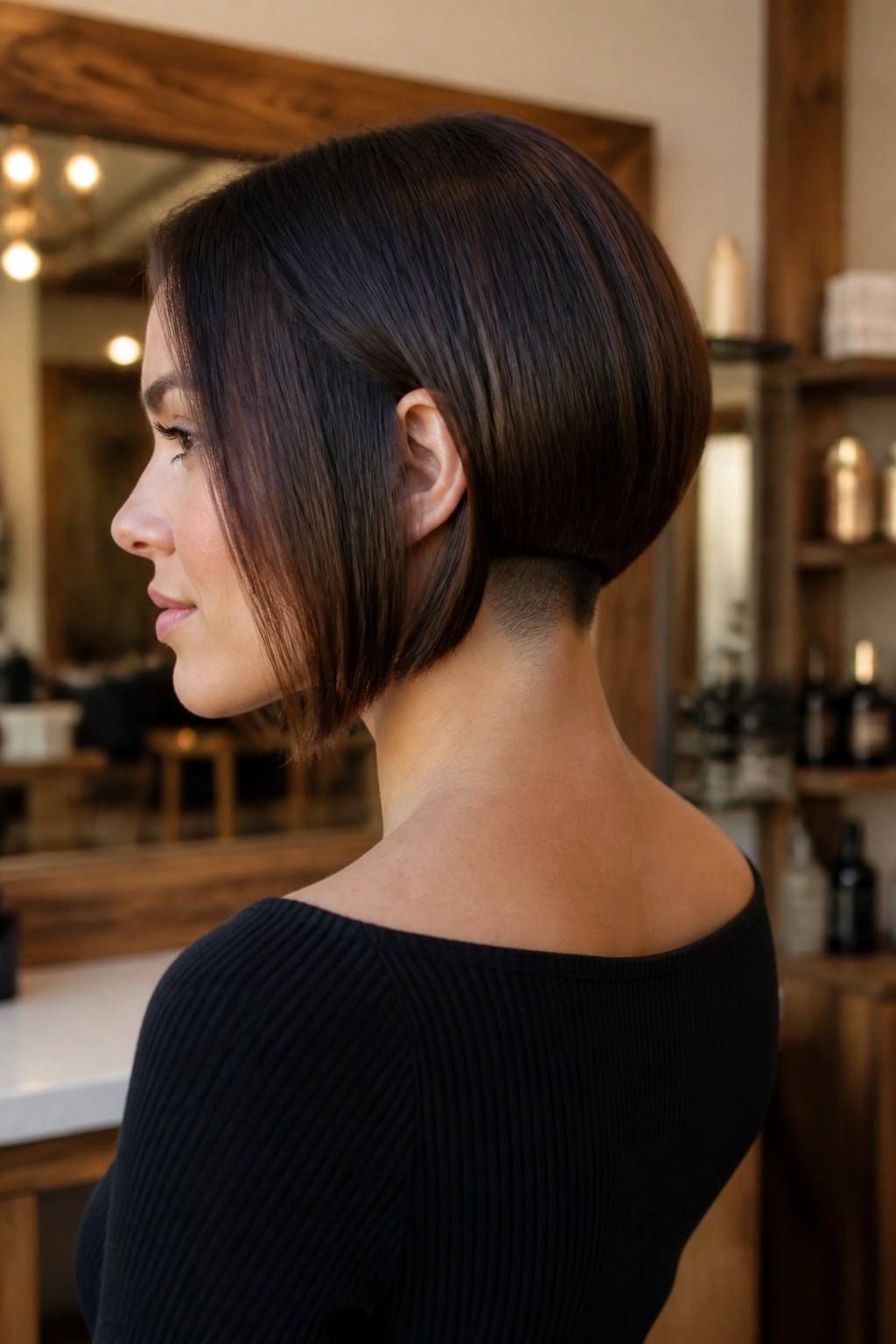
This is the fix for hair that bulks up at the neckline. A hidden nape undercut removes weight underneath the top layer, so the hair can fall closer to the head and keep the sides from puffing out.
That’s useful on a round face because extra bulk at the lower head can make the silhouette wider. By clearing some of that weight away, the top layer keeps its clean, straight outline.
Good Fit for Thick Hair
This cut is especially smart if your hair is dense, coarse, or so full that even a long bob starts to feel boxy.
A small undercut does need maintenance, though. The grow-out can get fuzzy underneath if you leave it alone too long. Still, for the right hair type, it’s worth it.
20. Sleek Pin-Straight Lob
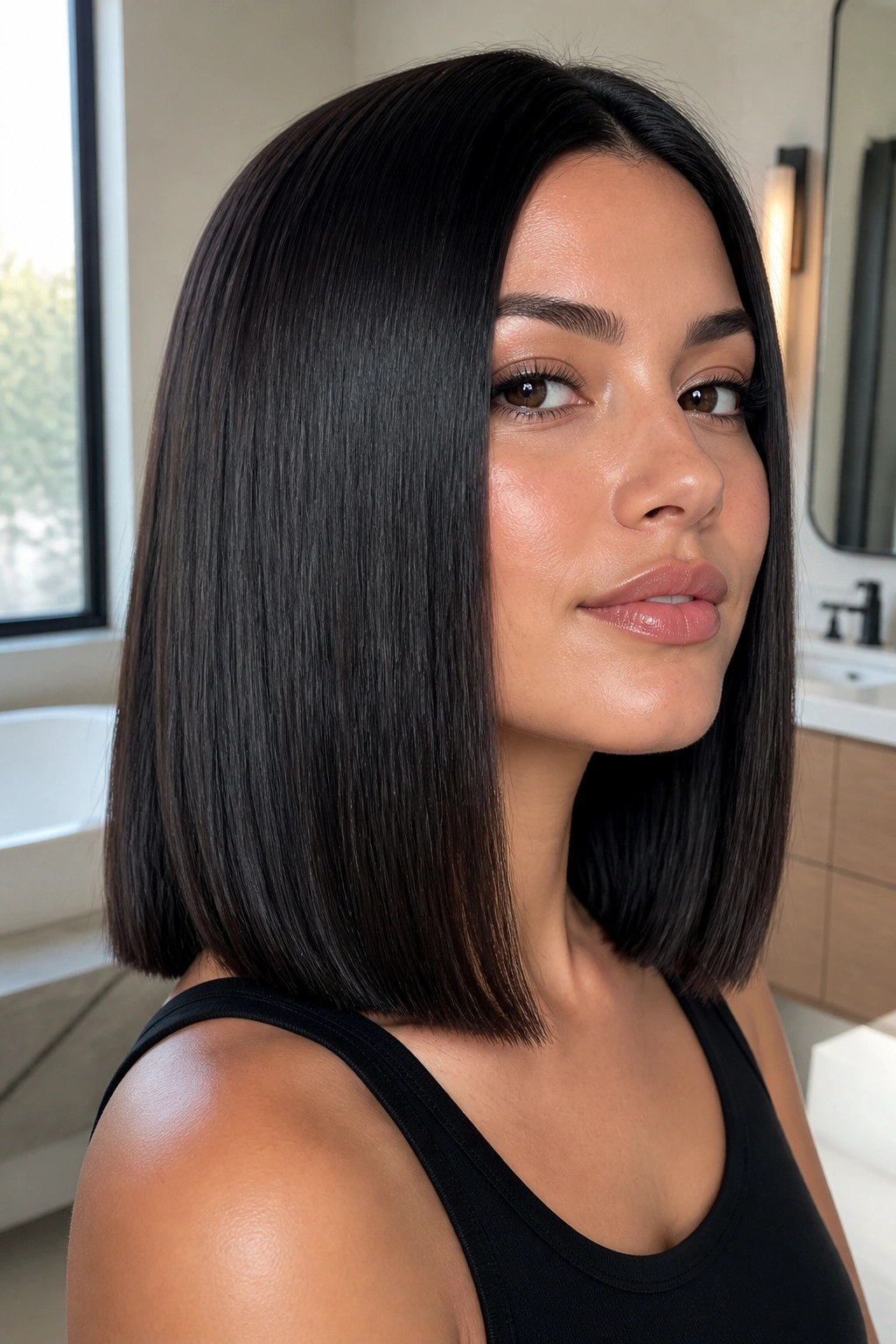
Smooth hair loves a clean line. A pin-straight lob can make a round face look sharper because the haircut becomes one long vertical frame instead of a puffed-out shape.
The key is precision. Use a heat protectant, then flat-iron in small sections—about 1 inch wide—so the ends stay even. If the hair bends out in different directions, the shape loses that sleek effect fast.
Styling Tools That Help
- Heat protectant: always
- Flat iron: medium heat, slow passes
- Comb: fine-tooth for sectioning
- Finish: lightweight serum on the last inch
This is not the haircut for someone who wants a casual air-dry. It’s for people who enjoy a polished finish and don’t mind spending a few extra minutes on the ends.
21. Long Curtain-Layer Lob
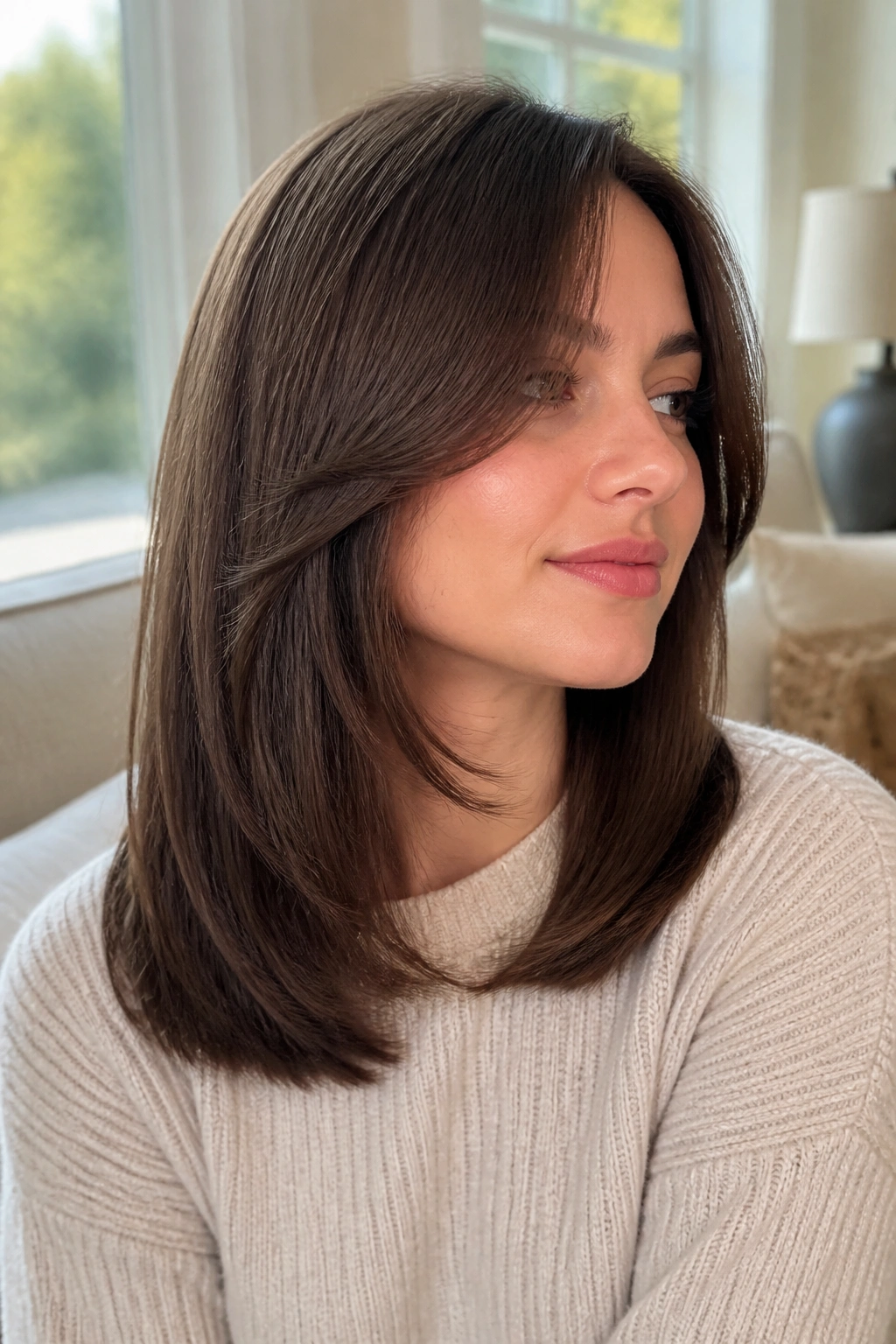
What if you like curtain bangs but don’t want actual bangs? Long curtain layers are the answer. They start low—usually around the cheekbone or just below—and sweep back into the rest of the cut instead of sitting as a separate fringe.
The effect is soft, not frilly. The face gets opening around the center, then the length pulls everything back down to the collarbone. That makes this style feel balanced on a round face without flattening the top.
It’s also easier to grow out than shorter fringe. That alone makes it worth a look if you tend to change your mind halfway through a haircut cycle.
22. Shoulder-Grazing Full-Perimeter Lob
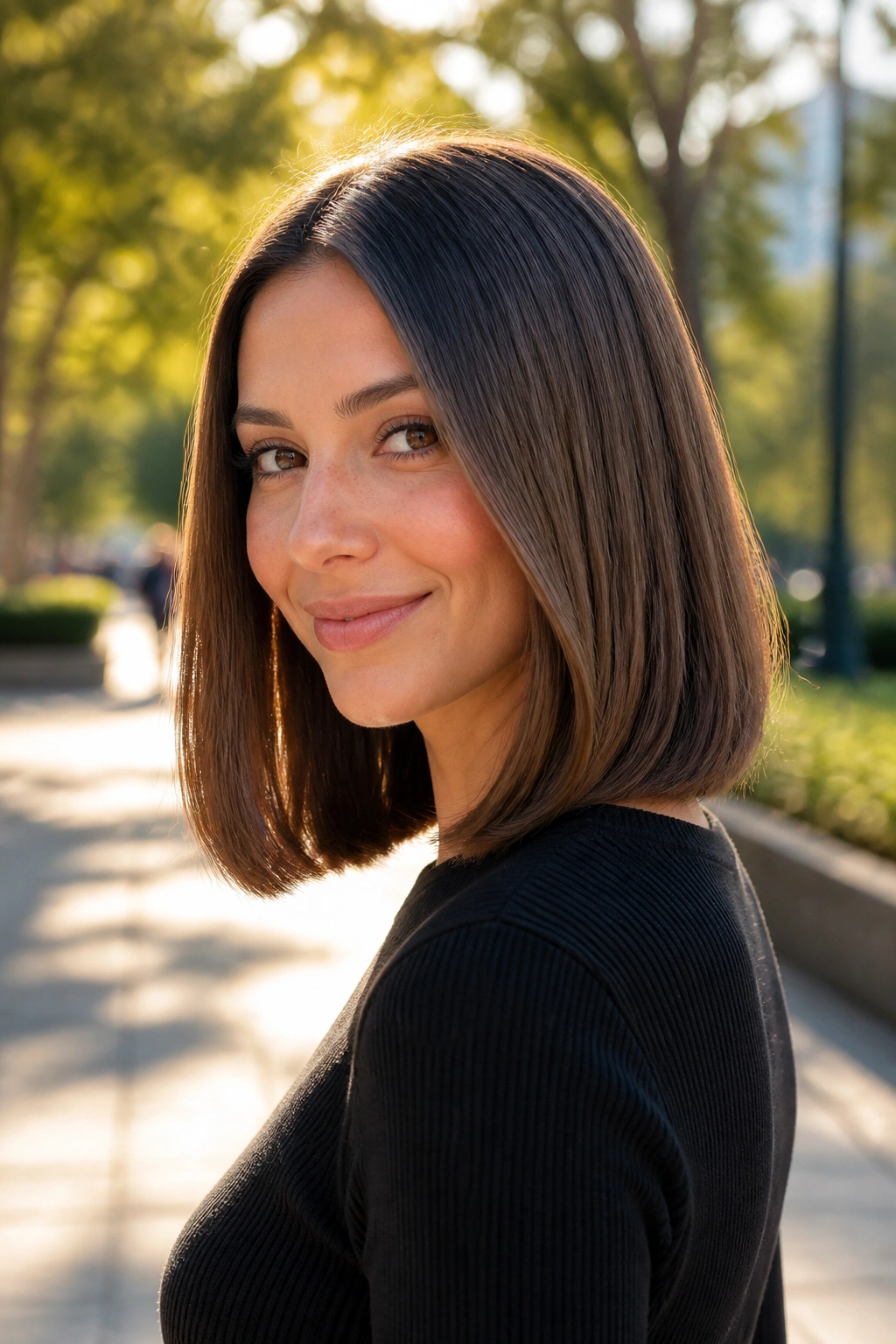
There’s a sweet spot right at the shoulders, but it has to be cut with care. If the ends hit the shoulder blade wrong, they kick out and make the whole haircut look wider. A full-perimeter lob solves that by keeping the line even and the ends controlled.
This is a nice choice for anyone growing out a shorter bob. The extra length gives you breathing room around the face, while the fuller perimeter keeps the haircut from looking thin or choppy.
The best version sits just at or below the shoulders with a slight bend under. That’s enough to keep it sleek without making it stiff.
23. Razor-Sharp Straight Lob
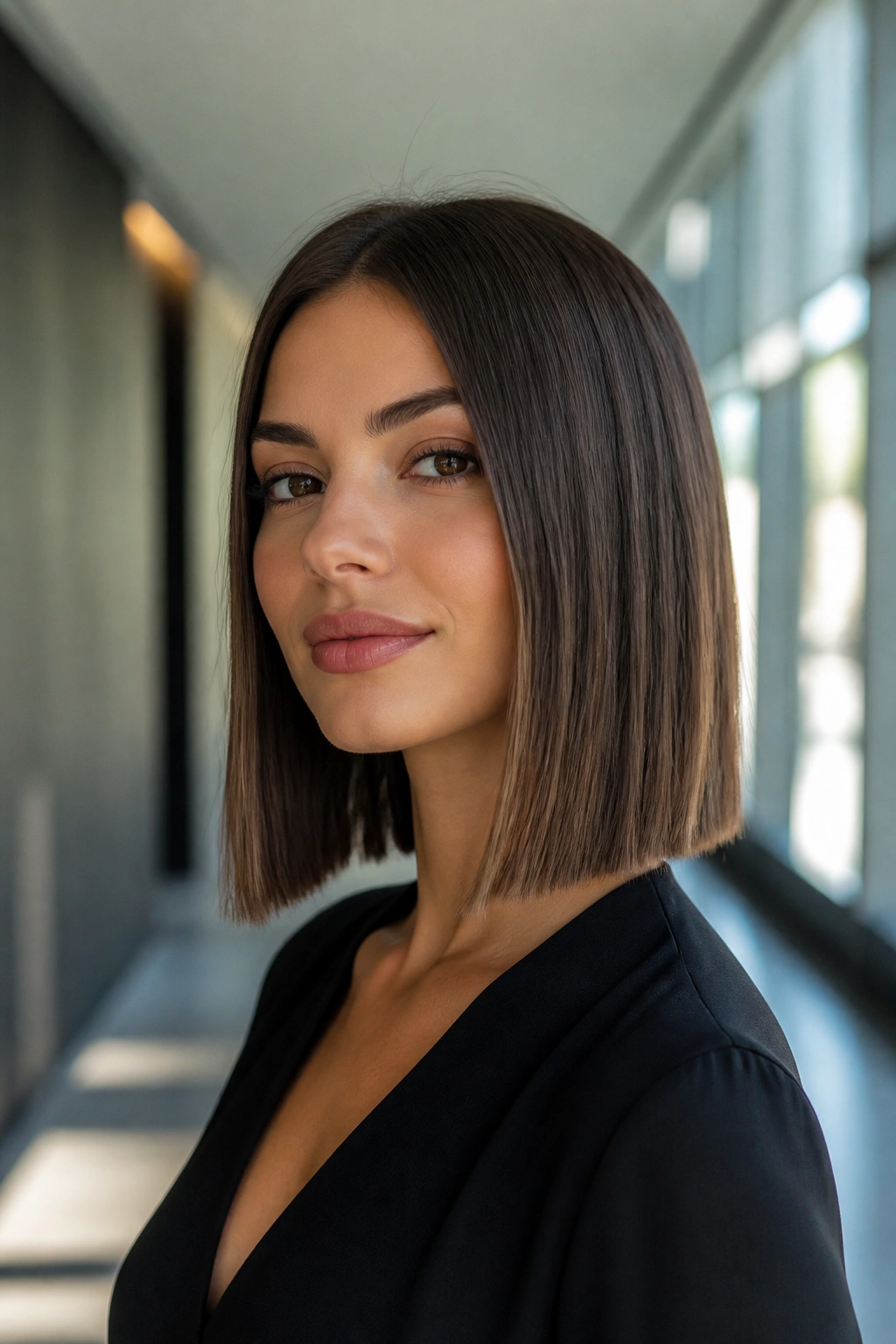
Not every round face needs softness. Sometimes a crisp, graphic line is the better move. A razor-sharp straight lob uses a precise perimeter and a blunt edge to create a strong frame that contrasts with the softness of the face.
This works best when the hair is naturally straight or easy to smooth. Fine hair can look especially sharp here, but medium and thick hair hold the line well too if the cut is clean.
The mood is different from a feathered or rounded lob. This one feels more exact. If you like structure, this is the cut to pay attention to.
24. Crown-Lifted Lob
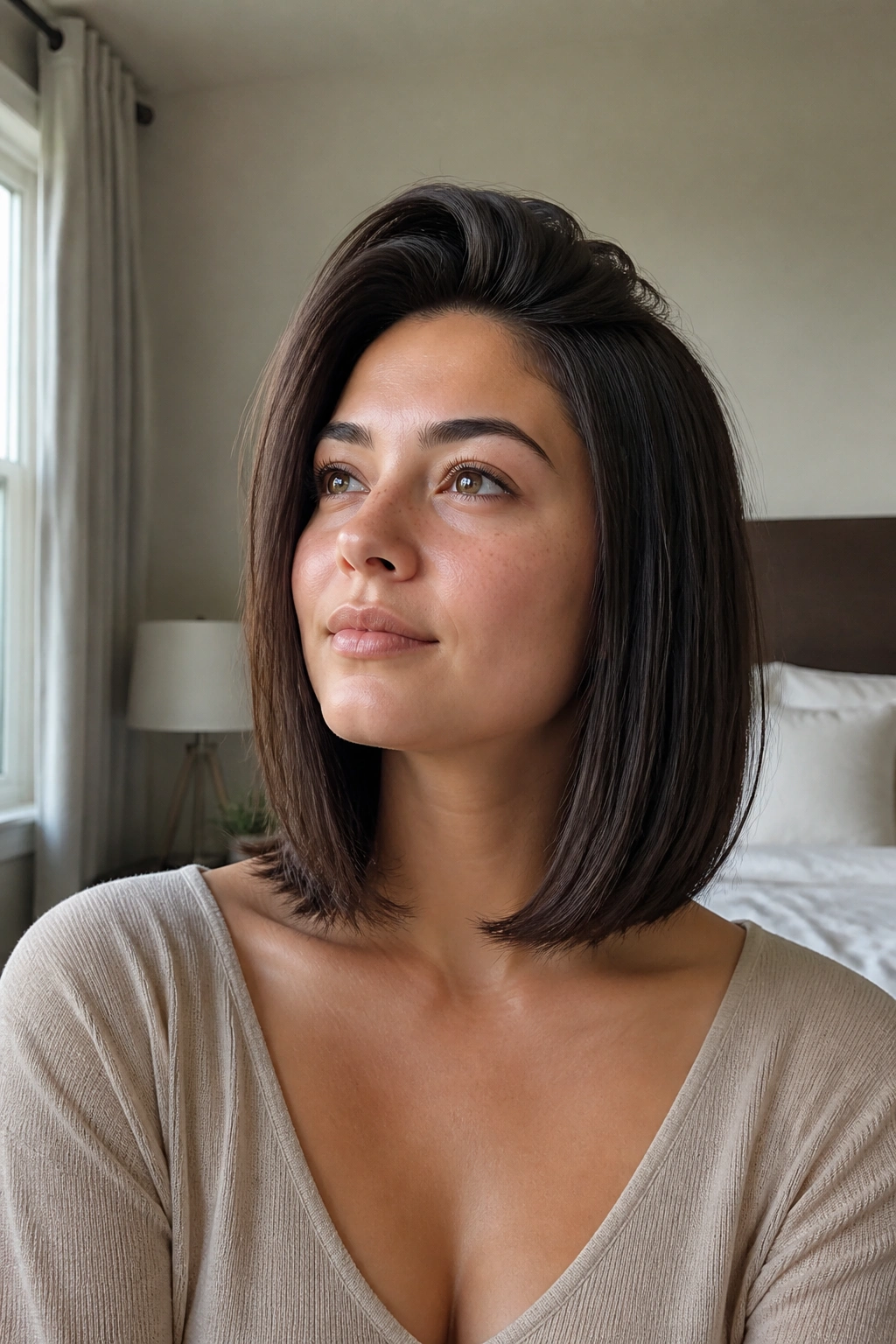
Where should the volume go? At the crown, not the sides. That’s the whole point of this cut. A little lift on top adds vertical height, which helps a round face look longer without changing the basic bob shape.
The sides stay flatter and cleaner, so the hair doesn’t widen around the cheeks. That contrast is what makes the haircut work. You get height where you want it and quietness where you don’t.
Use a root-lifting spray at the crown and blow-dry upward with a round brush or vent brush. Skip the side volume. It sounds small, but it changes the balance fast.
25. Minimal-Layer Lob for Fine Hair
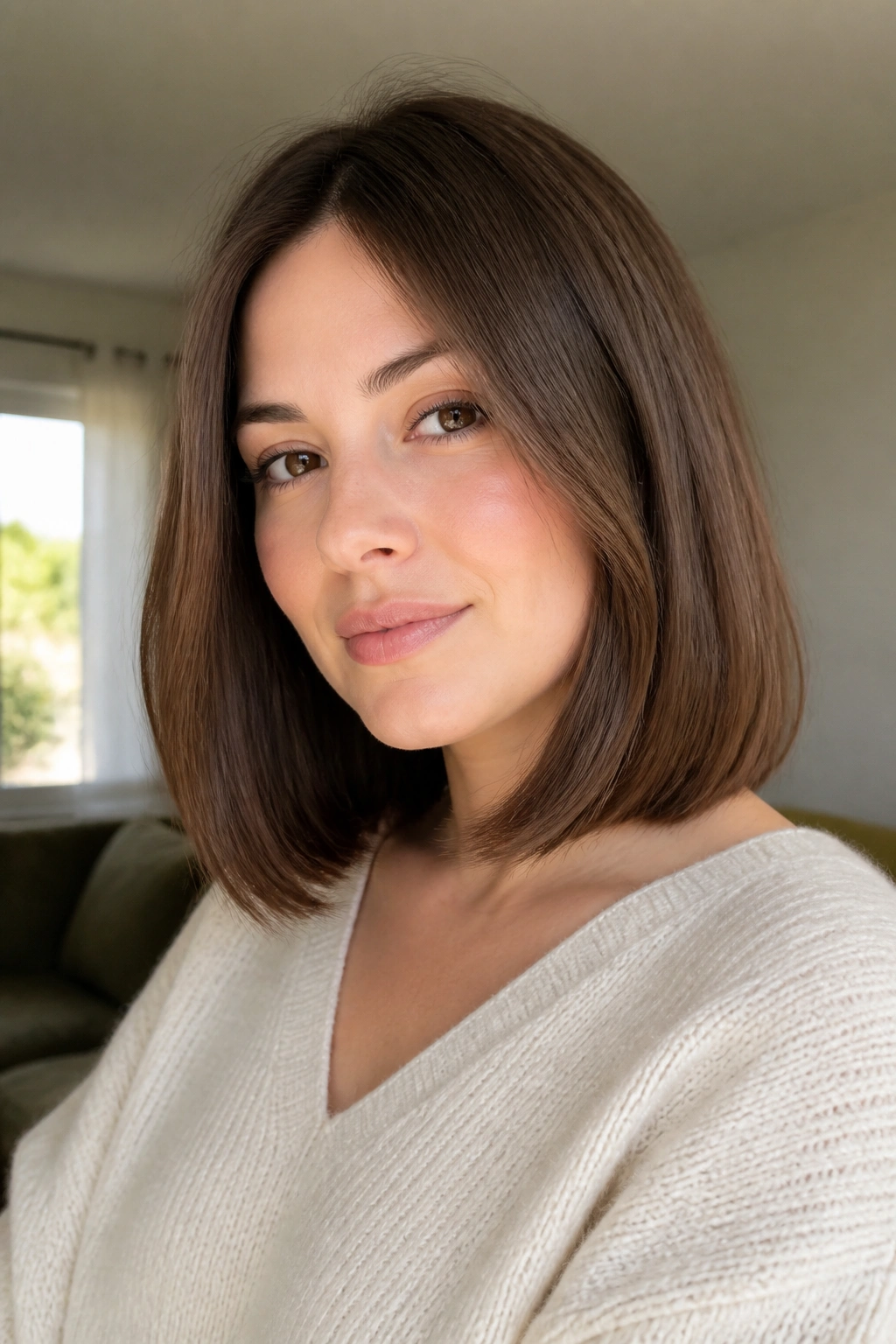
Fine hair usually looks better with less fuss. Too many layers can strip the perimeter and make the ends look see-through, which is the last thing you want near a round face. A minimal-layer lob keeps the line full and the shape clean.
What to Avoid
Avoid short layers around the cheek unless you want a lot of piecey movement. On fine hair, those pieces can vanish.
- Keep the perimeter: blunt and full
- Add layers only: if they’re tiny and low
- Best finish: smooth blow-dry or soft flat iron bend
- Watch for: limp ends that separate too much
The haircut should look like it has substance. Fine hair doesn’t need a lot of tricks. It needs a strong outline and a length that sits low enough to stretch the face.
26. Weight-Removed Lob for Thick Hair
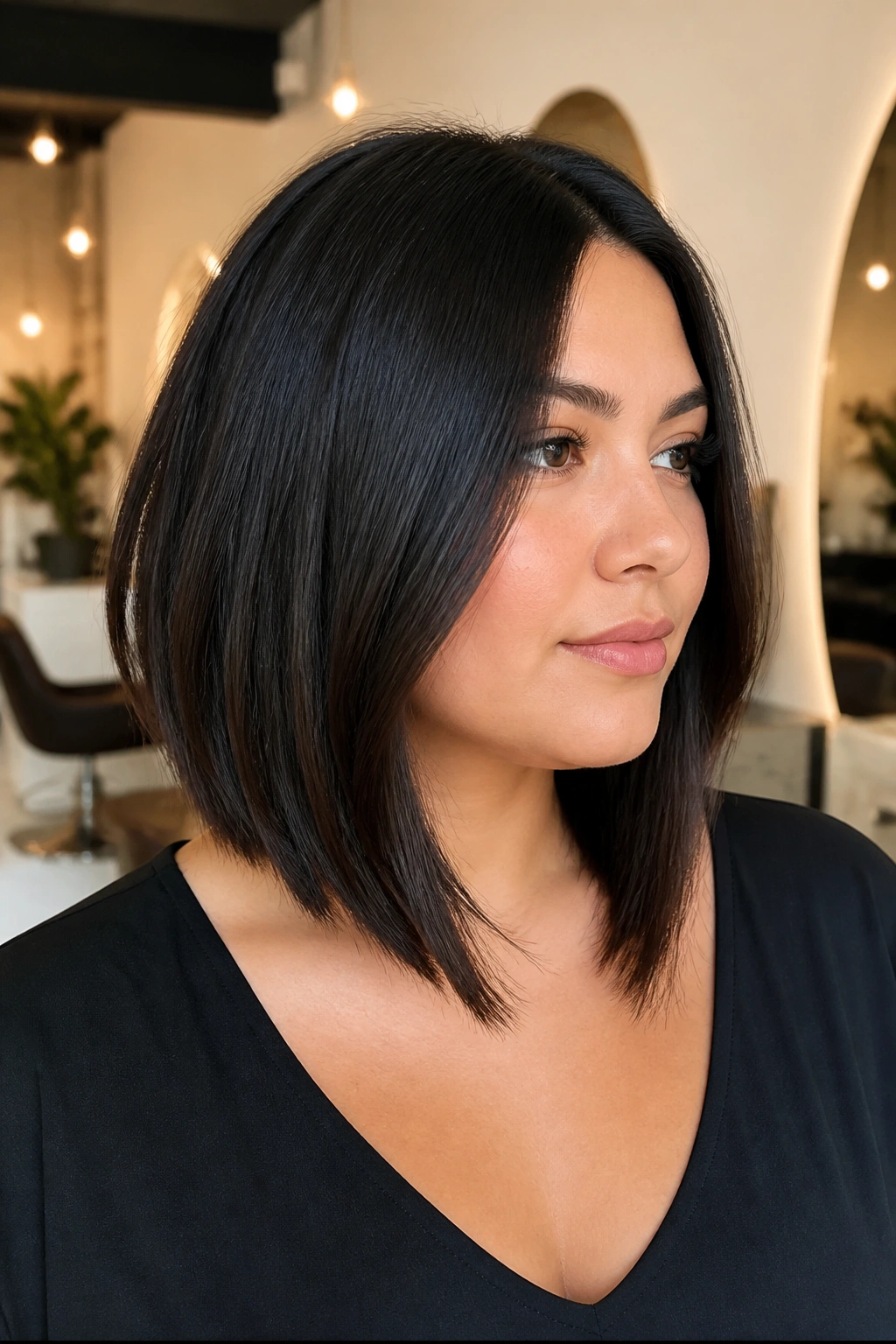
Thick hair needs room to move. If you cut it into a solid wall, the shape can widen the face instead of slimming it. A weight-removed lob fixes that by taking bulk out from the inside and underneath, while leaving the outer line long.
That’s the part I’d ask for most carefully. You want the hair to feel lighter, not shredded. On a round face, the goal is a controlled shape that falls close to the head at the sides and stays long at the front.
This cut is especially useful if your hair tends to expand after it dries. Take some weight out, and the whole silhouette behaves better.
27. Rounded-Edge Lob

A rounded edge softens the whole haircut. Instead of a hard blunt line or a dramatic angle, the perimeter curves gently around the collarbone and jaw area, which gives the style a calmer finish.
That curve is useful on a round face because it avoids harsh corners while still keeping the length below the chin. It doesn’t shout. It just sits nicely.
This is a good option if you dislike sharp, graphic bobs but still want your hair to look neat. The cut has enough shape to feel deliberate, and enough softness to feel easy.
28. Draped Side-Bang Lob
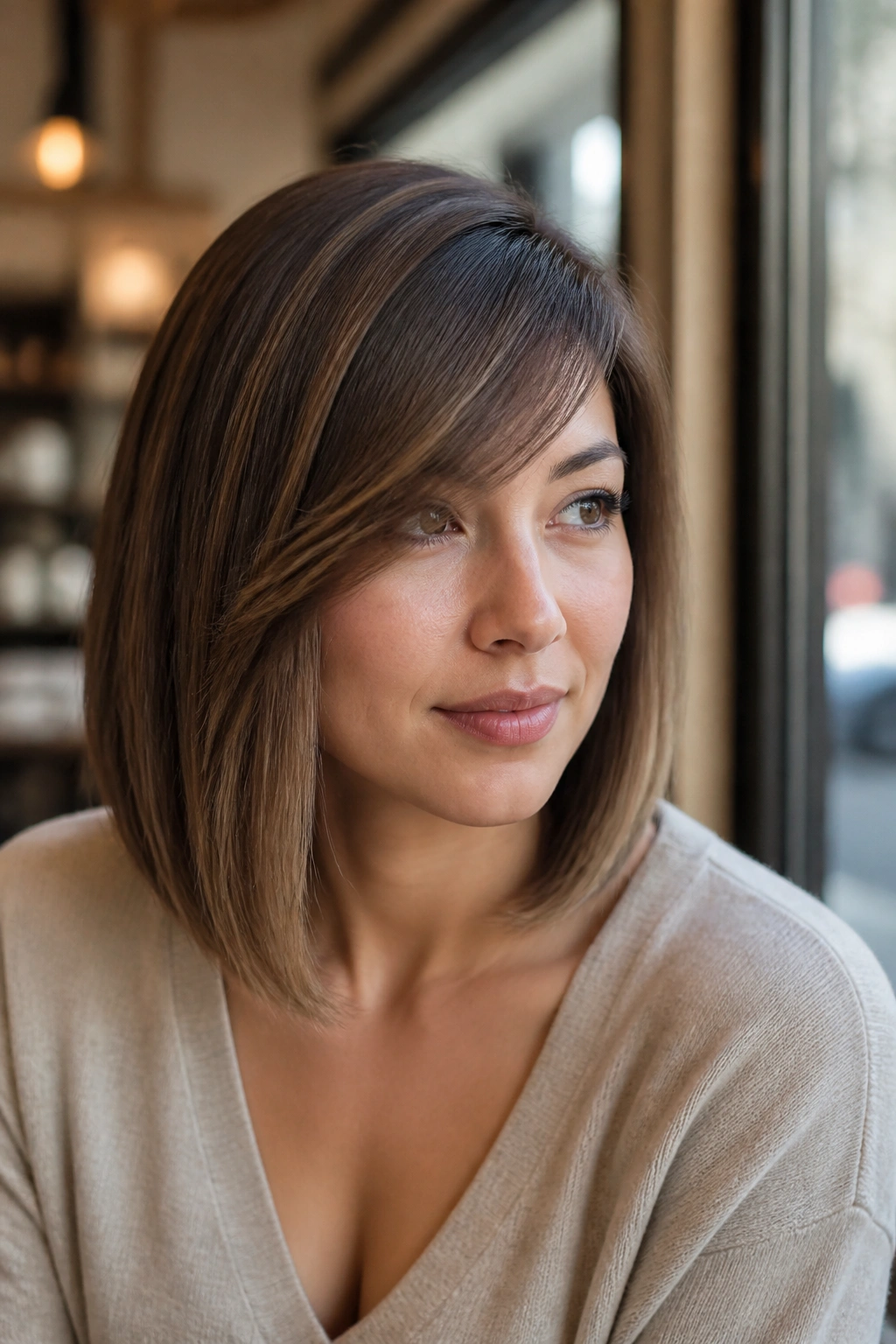
If you keep switching between bangs and no bangs, this is the middle ground. A draped side bang falls from the temple across the forehead and into the face frame, then blends into the lob instead of sitting like a separate piece.
The best version is long enough to brush the cheek and tuck away when you’re tired of it. That makes it friendlier than a full fringe. It also gives a round face a diagonal line, which helps the haircut feel less circular.
I like this style for people who want a little drama near the eyes. Not too much. Just enough.
29. Airy-Interior Lob
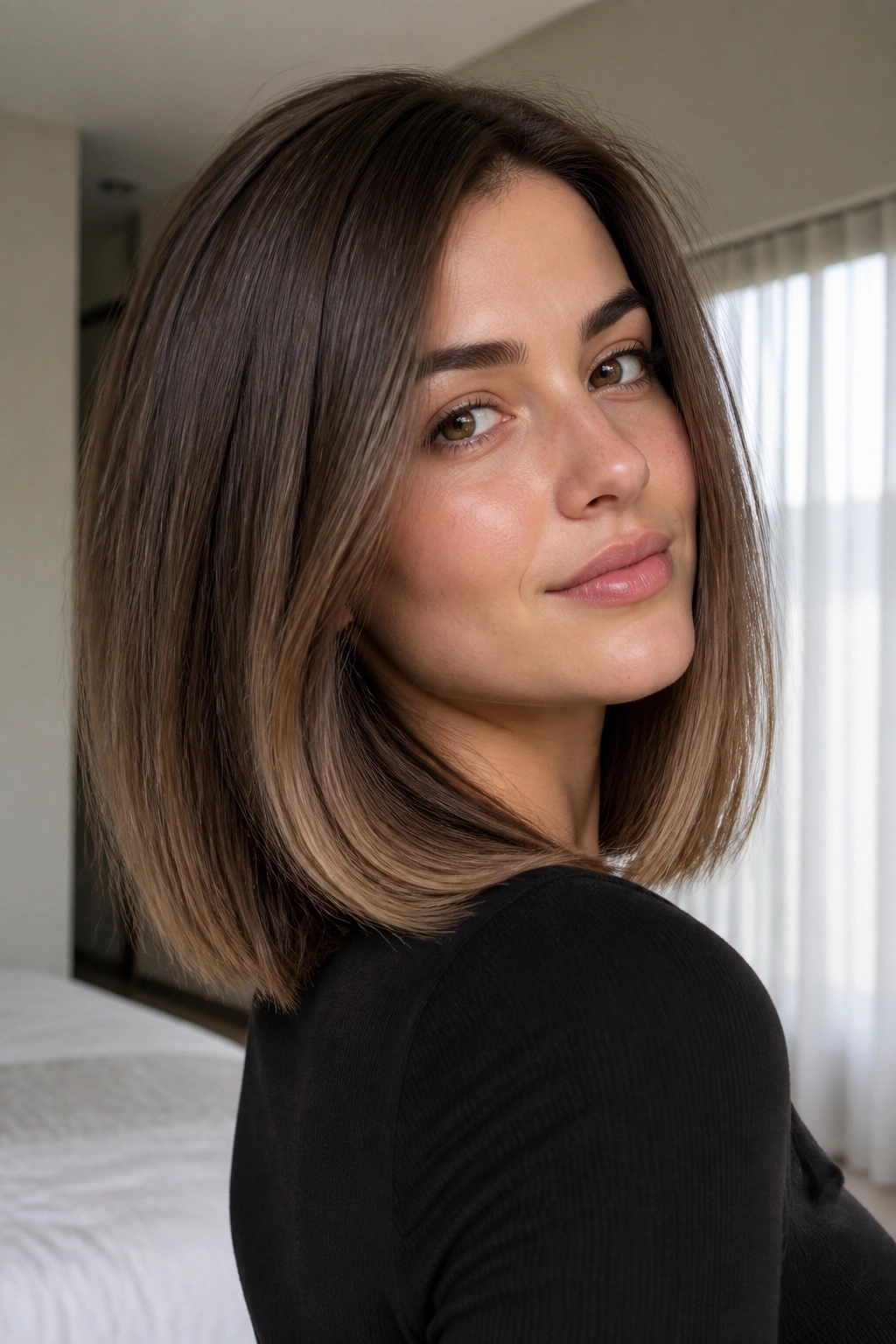
Airy inside, clean outside—that’s the whole point. This lob keeps the perimeter smooth while the interior gets a bit of careful texturizing so the hair doesn’t sit like one dense block.
That matters on straight hair that tends to feel heavy. The interior softening helps the cut move, but the outer line still frames the face cleanly. You get shape without losing polish.
Ask for This
- Outer line: blunt or lightly beveled
- Interior: subtle point cutting or debulking
- Best length: collarbone to upper chest
- Good match for: hair that looks bulky at the sides
This is one of the more forgiving long straight bob haircuts for round faces because it keeps things light without chasing too much texture.
30. The Low-Maintenance Everyday Lob
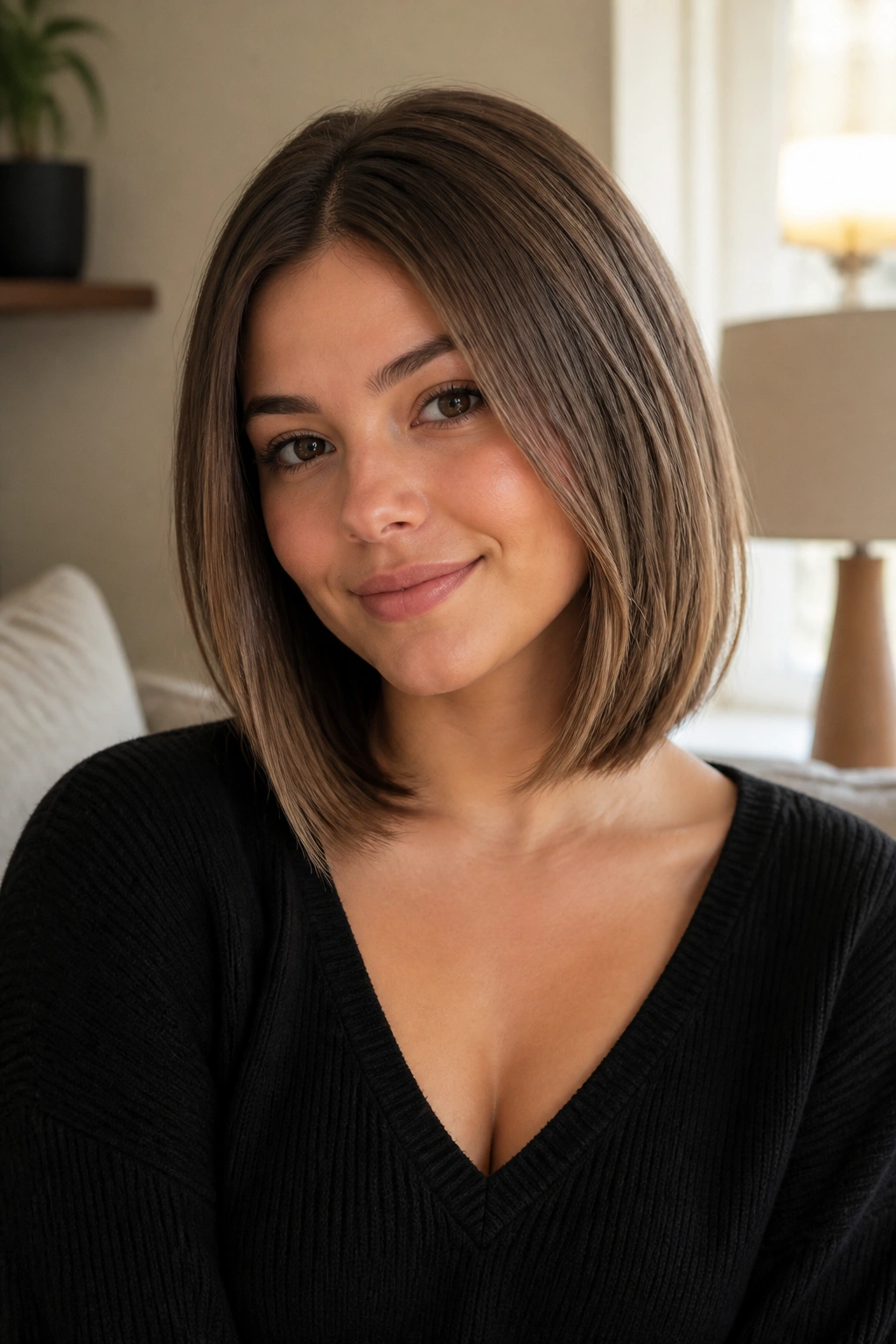
The best haircut is the one you can live with. This version keeps the length around the collarbone, uses only a small face frame, and avoids anything so stylized that it falls apart on a lazy morning.
It works because it borrows the useful parts from the other cuts without overcommitting to any one look. A little length in front. A clean edge. Enough softness around the face to keep the roundness in check. That’s it.
Good Daily Version
- Length: collarbone or slightly below
- Part: center or soft off-center
- Layers: minimal
- Styling: air-dry with a smoothing cream or blow-dry straight
If you want one cut that can be dressed up or left plain, this is the one I’d hand over first.
Final Thoughts
Round faces do not need to be hidden. They need a shape that keeps the eye moving downward, and a long bob can do that better than people expect. The big decisions are usually small ones: where the part sits, how long the front pieces fall, and whether the edge is blunt, beveled, or softly angled.
The smartest choice is the one that fits your hair as it really behaves. Thick hair needs weight removed. Fine hair needs a firmer outline. Straight hair can handle sharp lines, while hair that kicks out at the ends may need a slight bevel or an undercurve.
Pick the version that makes your face look longer without fighting your texture every morning. That’s the cut you’ll actually wear.
