



Fine hair can look gorgeous in a bob, but the wrong cut turns it flat by lunchtime. That is why shaggy bob haircuts for fine hair keep showing up in good salons: they do not rely on bulk. They rely on shape, lightness in the right spots, and ends that move when you turn your head.
The trick is placement. A smart shaggy bob keeps density at the perimeter, then adds texture higher up or around the face so the hair looks fuller from the outside without getting stringy at the ends. That balance matters even more on fine hair, because too much layering can make the bottom look see-through fast. I’d rather see a bob with a clean outline and a few well-placed slices than a heavily thinned mess that needs constant fixing.
If you have fine hair, you already know the usual problems: roots collapse, ends flip in odd directions, and anything too long starts hanging there like wet thread. The best versions of this cut solve those problems with a little attitude. Some use curtain bangs. Some use a blunt base with soft interior texture. Some keep the length at the jaw, where the shape stays visible even on a low-effort day.
The cuts below give you range. Short, long, choppy, polished, airy, face-framing, and a few that sit right in the middle. Pick the one that matches how much styling you can live with, because that part matters more than people admit.
1. Chin-Grazing Shag Bob with Soft Face Framing
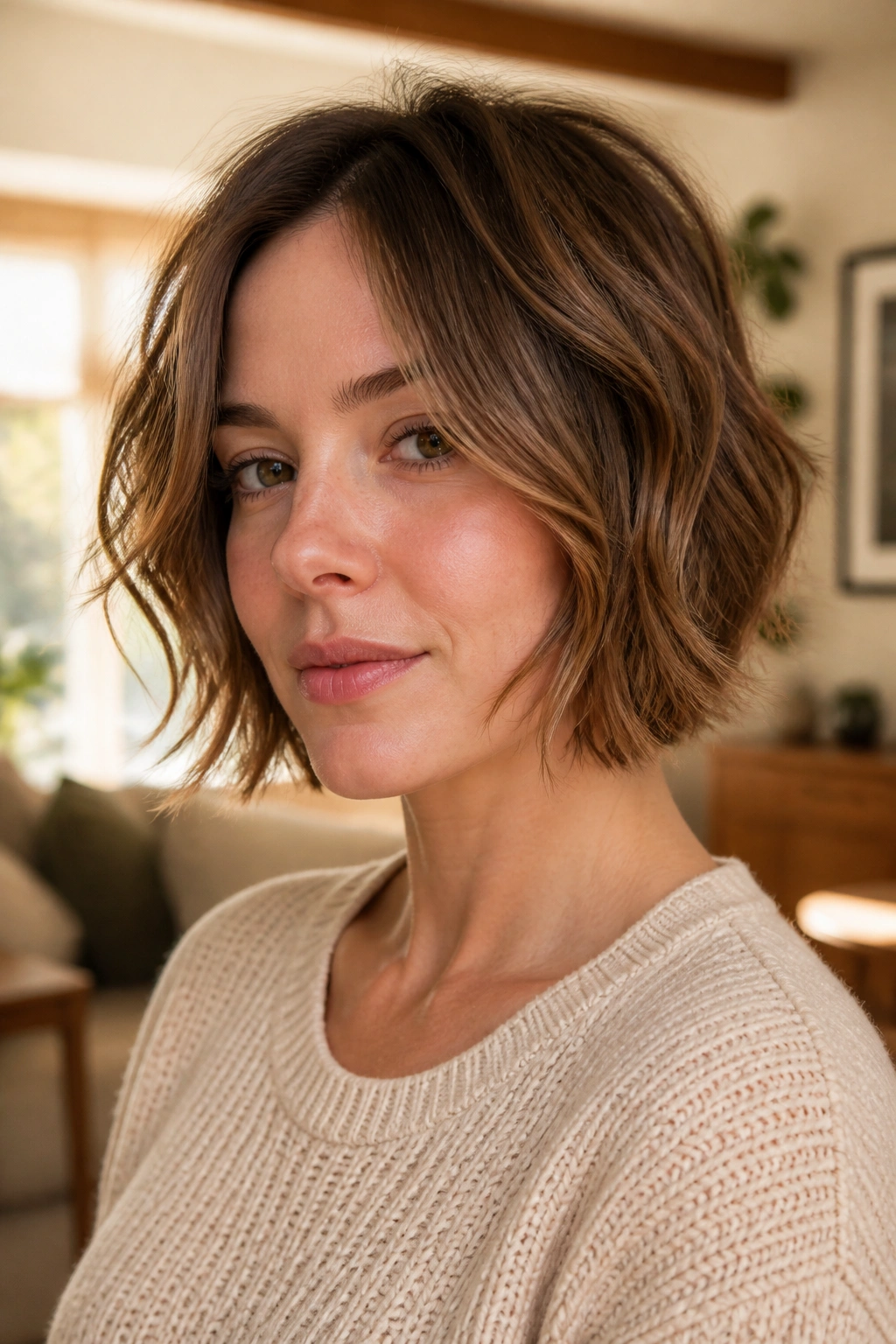
This is the cut I reach for when fine hair needs life fast. Keeping the length right at the chin gives the bob a clean outline, and the soft face-framing pieces stop it from looking boxy. On fine hair, that shape reads fuller than a longer cut that drops flat against the neck.
Ask your stylist for light internal texture, not heavy thinning. The outer line should stay solid, while the front pieces start around the cheekbone and taper toward the jaw. That gives you movement near the face and keeps the bottom from turning wispy. A little point cutting at the ends helps the hair flick instead of sitting like a stiff shelf.
Styling is easy enough. Blow-dry with a round brush, lift the roots at the crown, and bend the front pieces away from the face. A pea-sized dab of cream on the ends is enough. More than that, and the whole cut can go limp by noon.
2. Jaw-Length Razor Bob with Feathered Ends
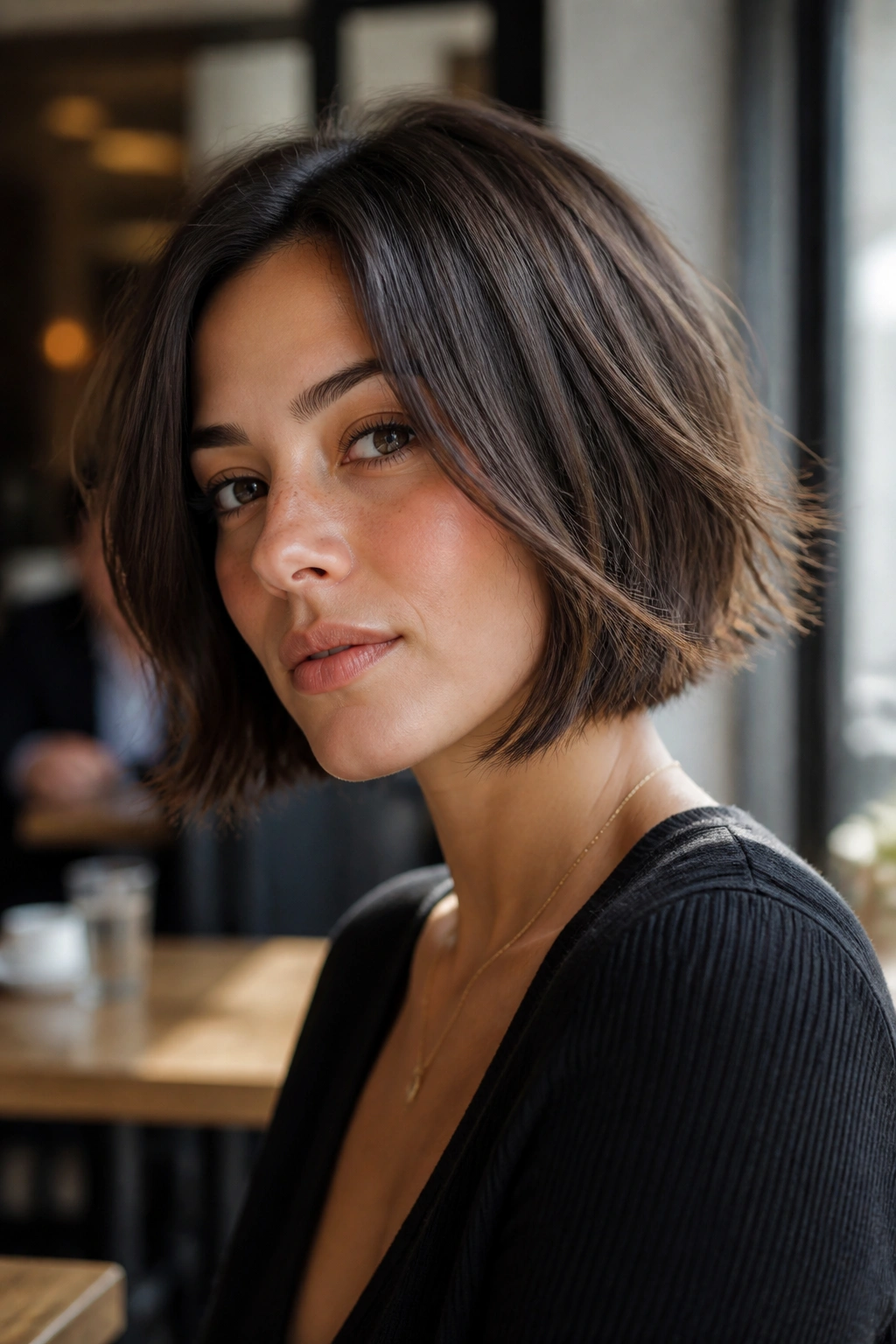
A razor bob is not for everyone, and I mean that kindly. Fine hair can take the soft, feathered edge beautifully, but only if the hair is healthy enough to handle it. When the cut is done well, the ends look airy and separated instead of blunt and stiff.
The secret is restraint. The razor should touch mostly the last inch or two, not chew through the whole head. That keeps the perimeter light while leaving enough density near the jaw to make the shape read as a real bob. On straight or slightly wavy hair, this can look sleek and undone at the same time.
Best part? It moves. A lot. A quick blast with a dryer and a flat brush is usually enough, then you can pinch in a small amount of texturizing paste on the ends. If your hair tends to fray, though, tell the stylist to use scissors for the final detail work instead of going all-in with the razor.
3. Curtain Bang Shag Bob
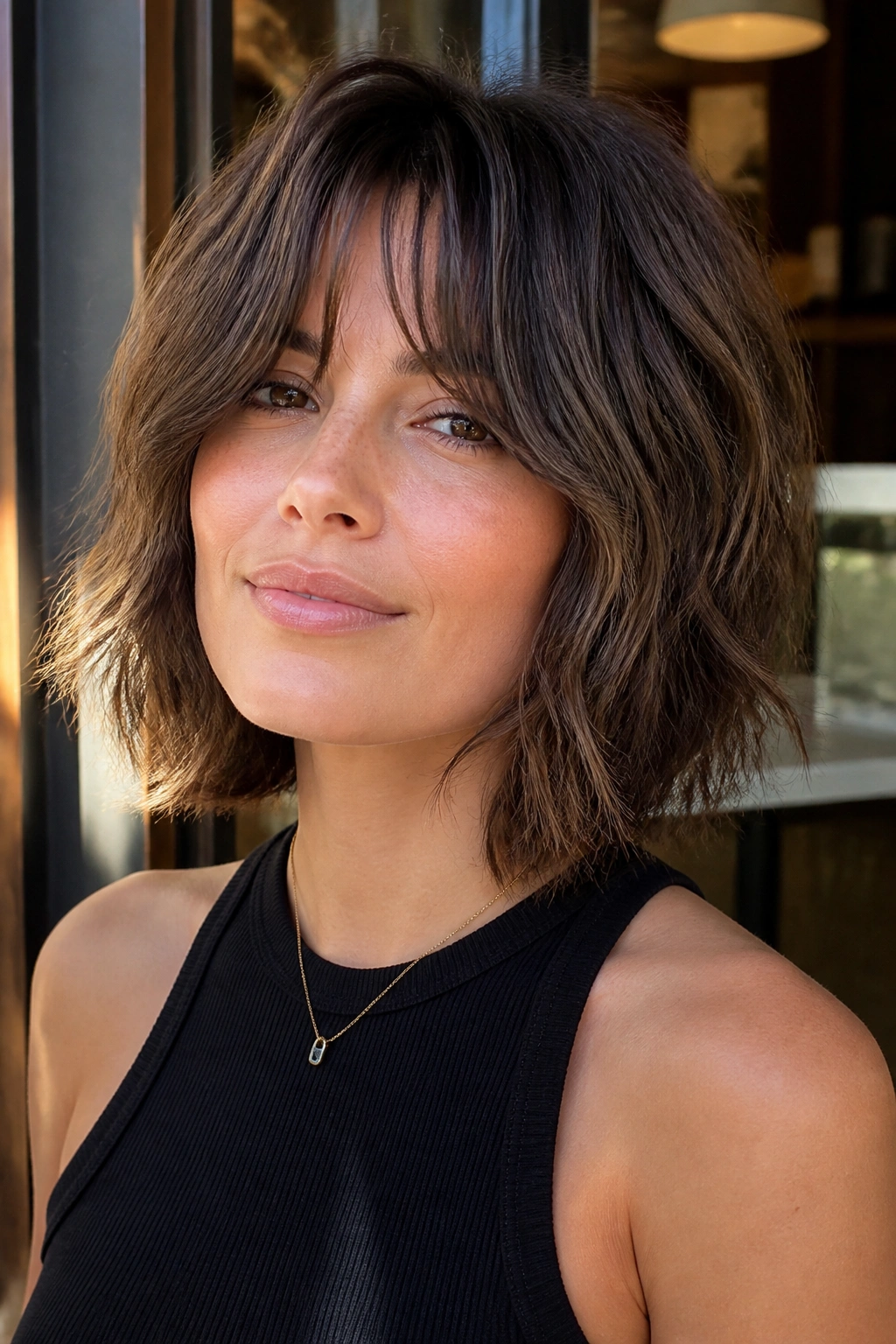
Curtain bangs do a lot of heavy lifting on fine hair. They break up the forehead, add shape at the front, and blend straight into a shaggy bob without making the cut feel overdone. If your hair falls flat around the face, this is one of the smartest options.
Why It Works
Curtain bangs create volume where people actually notice it first: right around the eyes and cheekbones. That soft center part helps the hair fall open instead of sitting in one flat sheet. The length can start around the bridge of the nose and sweep down to the cheekbone, which keeps the bangs flexible as they grow.
What to Ask For
- Keep the bob around the jaw or just below it.
- Start the curtain bang at the nose bridge, then blend it into the front layers.
- Leave the ends piecey, not razor-thin.
- Avoid a lot of weight removal under the crown.
A round brush or a velcro roller at the front works well here. The bang area sets the whole mood of the cut, so if you skip that little bit of styling, the haircut can lose half its charm.
4. Rounded Bob with Crown Lift
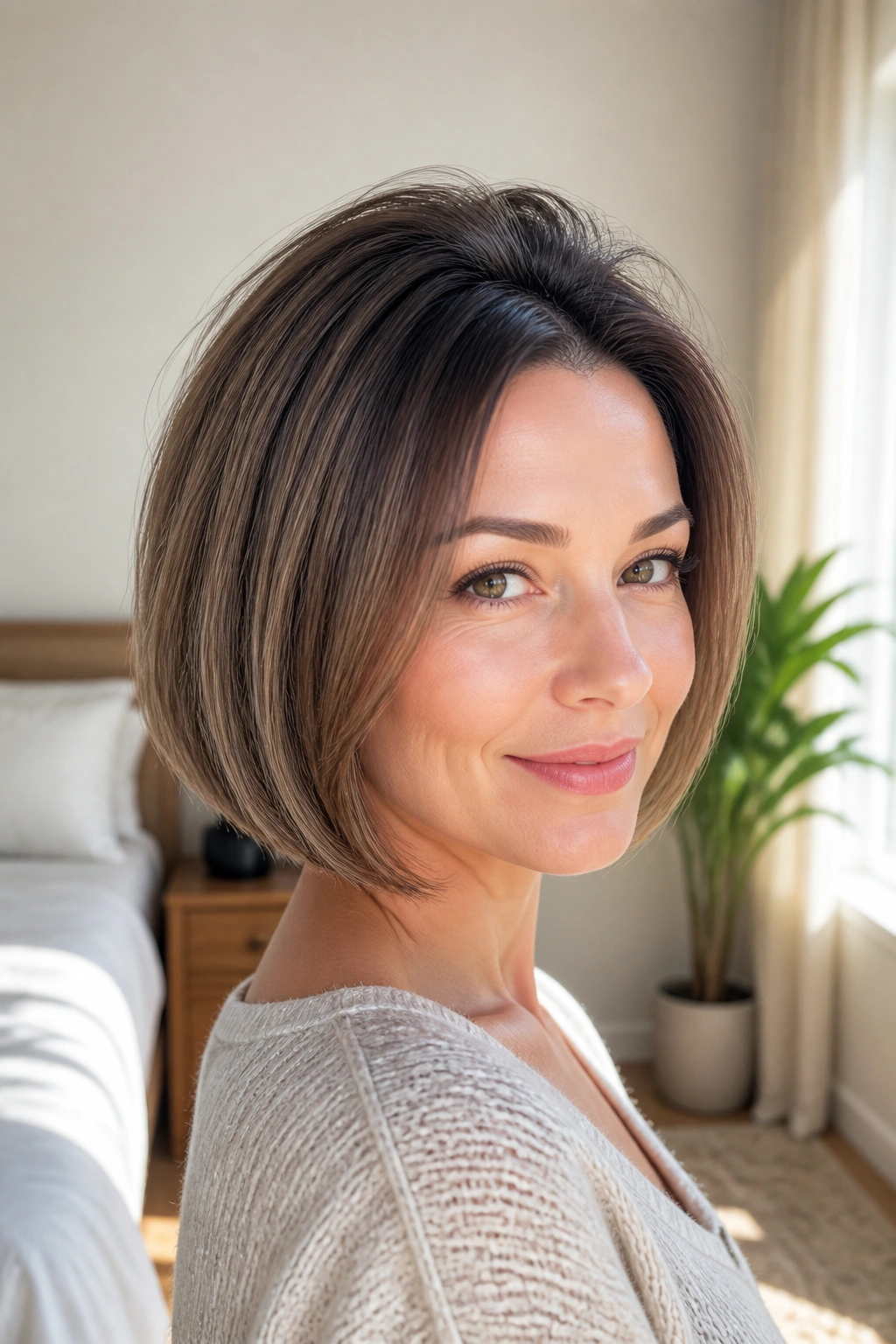
Fine hair loves a rounded bob when the crown needs help. The shape starts slightly shorter at the top and curves softly toward the jaw, which gives the eye a sense of fullness even if the hair itself is delicate. It is a good choice if your hair gets crushed by hats, humidity, or a long day at a desk.
This cut does not need dramatic layers. In fact, too many layers can make the round shape collapse. What you want is a controlled curve, with the shortest pieces sitting near the upper back of the head and the perimeter staying thick enough to show the line.
A little root spray at the crown helps a lot. So does a medium round brush and a quick cool shot at the end of drying. If you like hair that sits close to the head but still has lift, this is one of the neatest-looking options on the list.
5. Micro-Fringe Textured Bob

Short fringe, short bob. That combo can look sharp on fine hair because the eye gets two strong shapes at once. The micro-fringe adds a little drama up top, and the shaggy bob keeps the rest of the cut from feeling too serious.
But here’s the catch: a micro fringe shows everything. Cowlicks, uneven growth, a lazy trim, all of it. You need a stylist who is willing to cut it dry and check it from a few angles. Ask for the fringe to sit just above the brows, then keep the bob around the chin so the proportions stay balanced.
This cut works best if you like a slightly edgy look and do not mind a little upkeep. Use dry shampoo at the roots and a tiny bit of paste on the fringe tips. Too much product will make the bangs clump, and that ruins the whole point.
6. Deep Side-Part Bob with Long Front Pieces
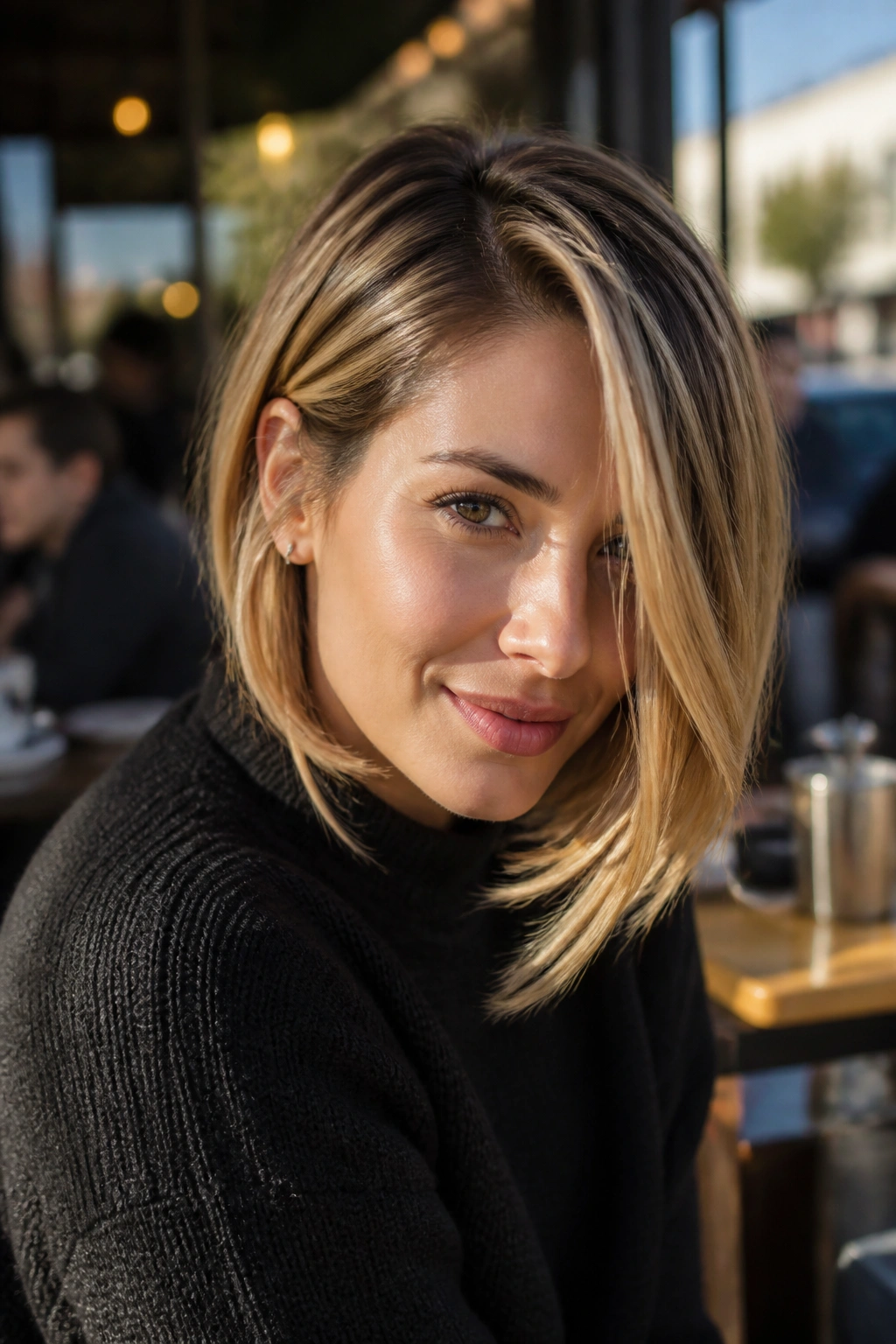
A deep side part can rescue flat roots in a way people underestimate. Fine hair often needs a little cheating at the scalp, and this bob does that without looking fussy. The longer front pieces sweep across the cheek and create instant lift on the heavier side.
This one feels especially good on round or wide faces, because the diagonal line pulls the eye down and across. The back can stay pretty simple. The front does the work. Keep the length around the jaw, and let the side-part side fall a little longer so the style has a clear direction.
Try setting the part while the hair is still damp, then clip the roots on the low side for ten minutes while you finish makeup or get dressed. That tiny trick gives the hair memory. Not magic. Just memory, which is often enough.
7. Collarbone Shaggy Lob for Fine Hair
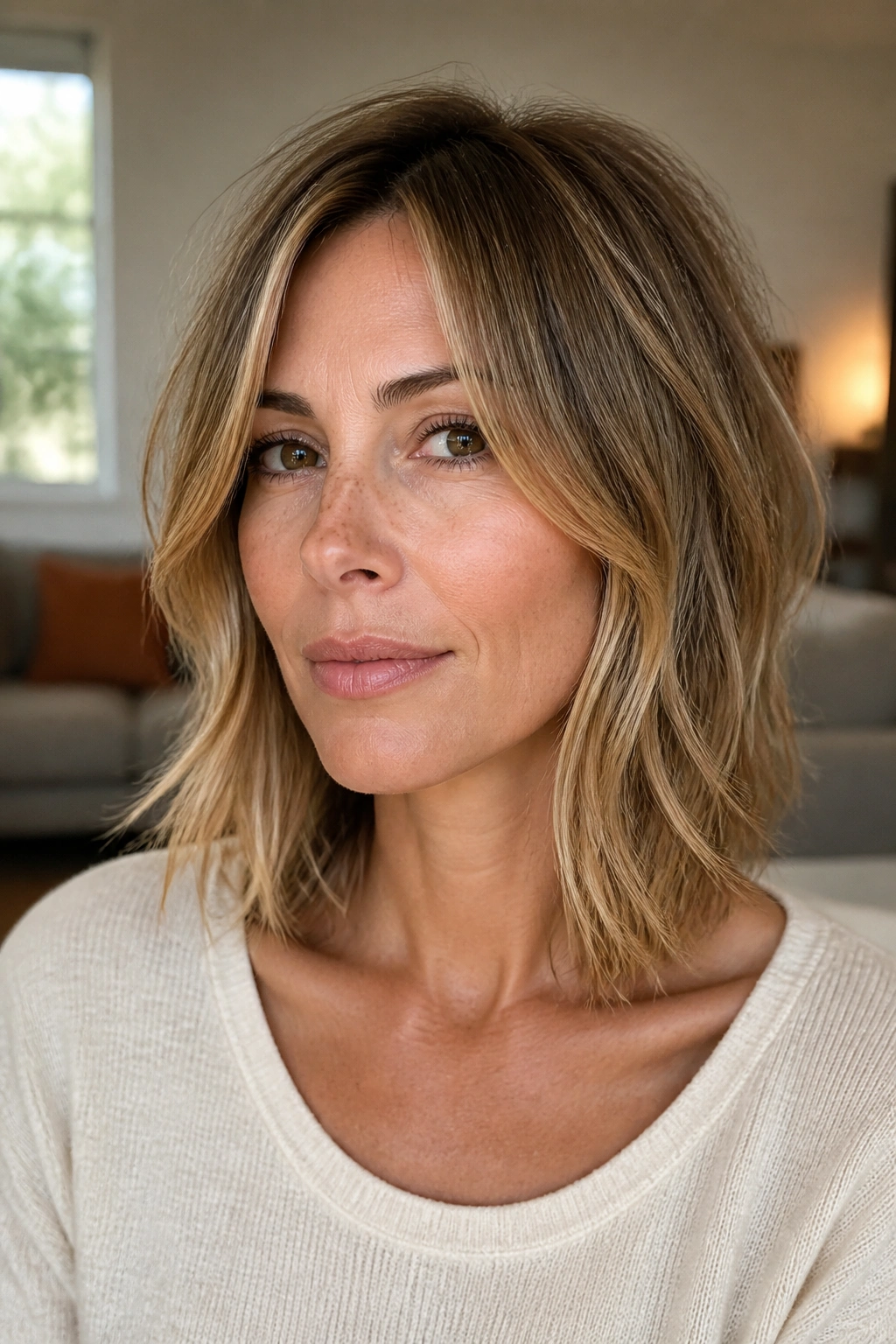
If you are nervous about going too short, this is the gentlest place to land. A collarbone shaggy lob still counts as a bob family cut in spirit, but the extra length gives fine hair a bit more swing. The key is keeping the layers light and the ends clean so the hair does not start to look see-through.
The best version has face-framing layers that begin around the cheekbone and a slightly softer perimeter at the collarbone. That gives movement without stealing too much density. A lot of people with fine hair think they need more and more layers. Usually, they need fewer. Just better placed.
This cut is forgiving on days when you air-dry. Scrunch in a light mousse, twist two front sections away from the face, and let it dry with a natural bend. If you want a cut you can wear sleek one day and messy the next, this is a strong pick.
8. Invisible-Layer Bob for Pin-Straight Hair
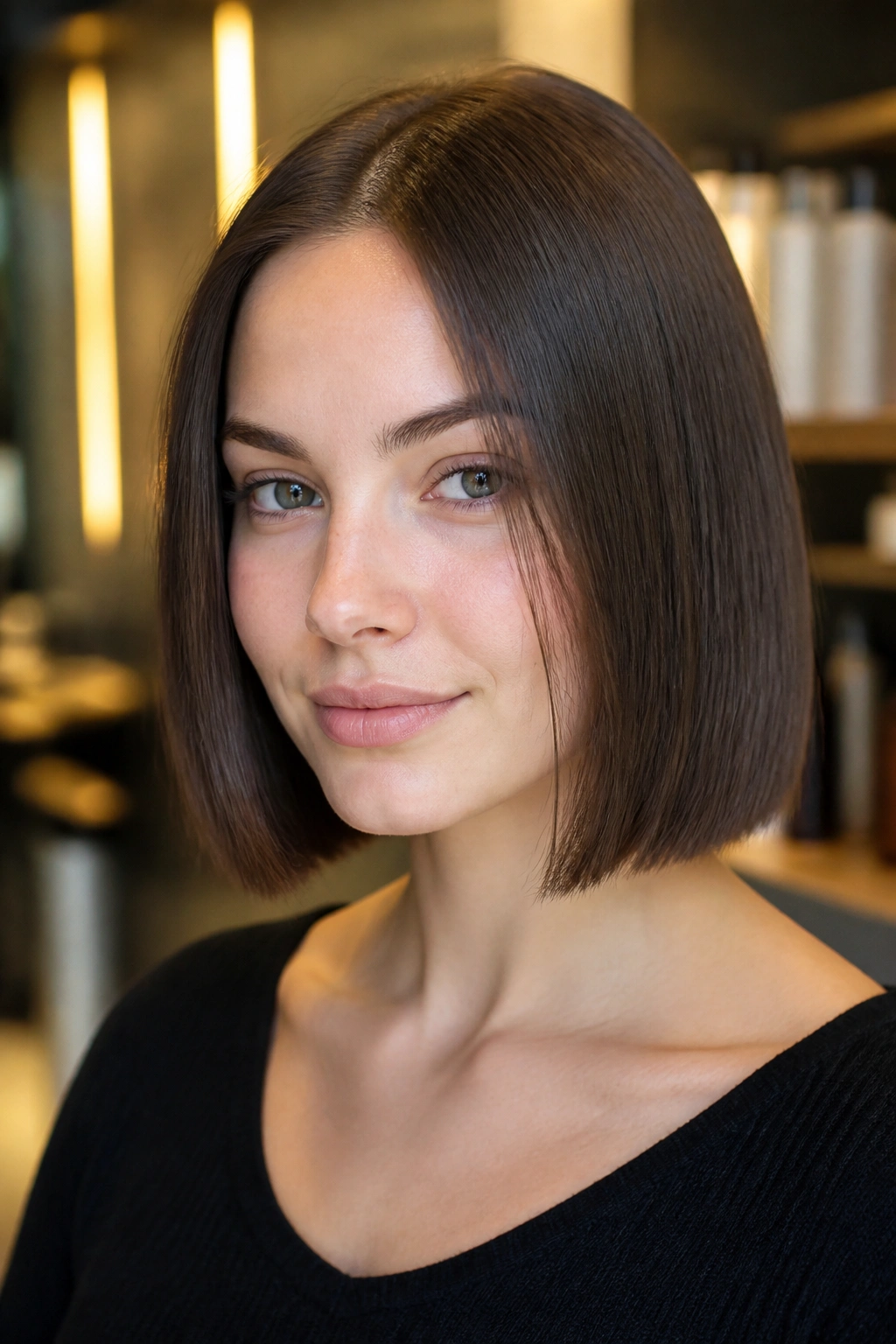
Pin-straight fine hair can be a blessing and a curse. It reflects light well, sure, but it also lays flat in a way that shows every weak point in the cut. The invisible-layer bob solves that by hiding most of the shaping inside the haircut instead of stacking it on the outside.
What Makes It Different
The perimeter stays blunt and dense, which helps the ends look thicker. Inside the shape, the stylist removes weight in small sections so the hair can fold under and move. You do not want choppy layers that announce themselves. You want the bob to look almost one-length until it moves.
Best Salon Notes
- Ask for internal layering only.
- Keep the bottom line crisp.
- Avoid aggressive thinning shears.
- Finish with point cutting at the ends for a softer drop.
This is the cut I’d recommend to someone who wants polish first and texture second. If your hair is straight as a pin, it gives you body without making the ends look shredded.
9. Pixie-Bob Hybrid with Tapered Nape
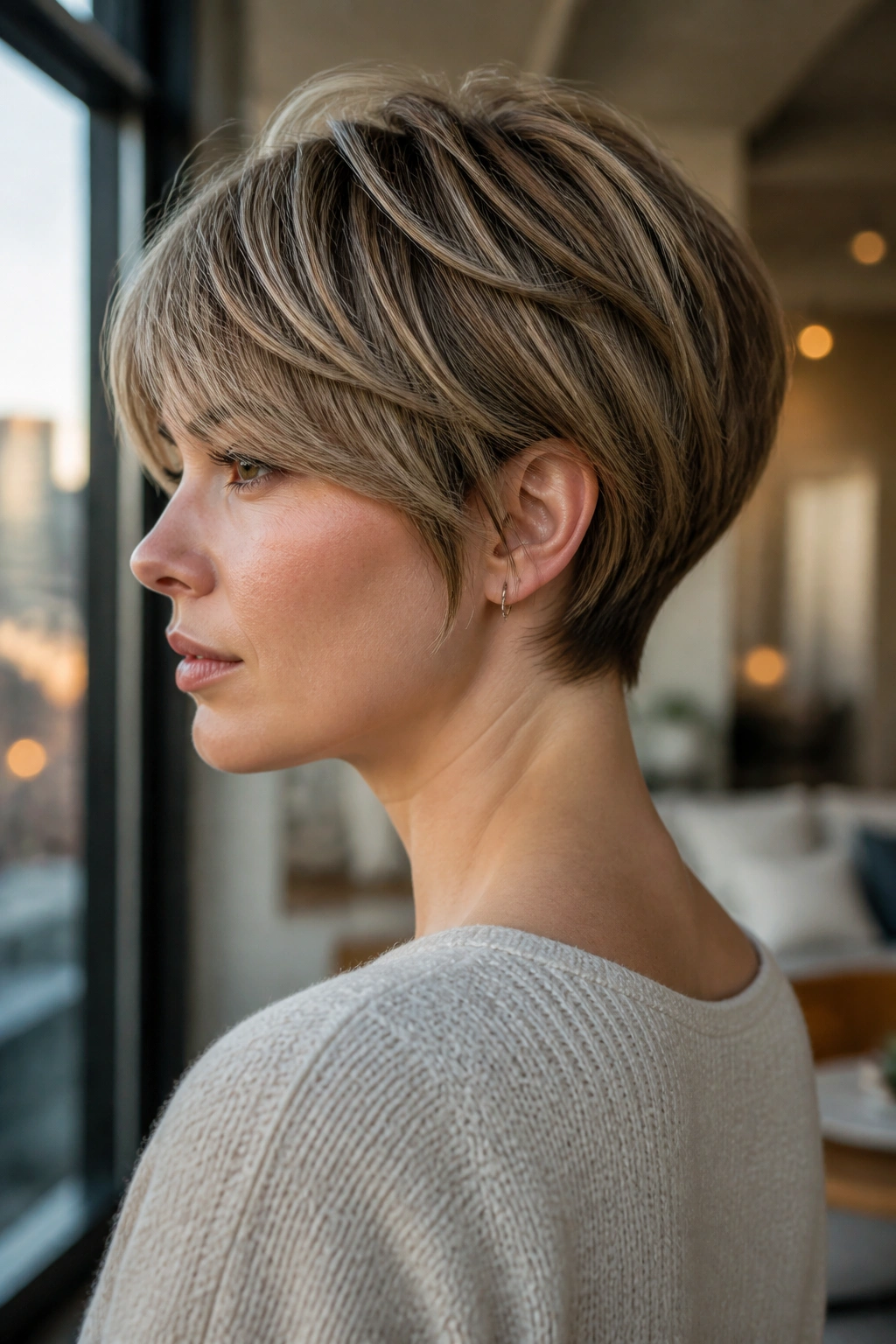
Short hair, but not quite a pixie. That is the appeal here. The nape sits close to the neck, the sides keep a bit more length, and the top has enough softness to move. Fine hair often gets a boost from this kind of contrast because the shorter back naturally stands away from the scalp a little.
It is a bolder shape than a classic bob. You will need regular cleanup around the nape, usually every 6 to 8 weeks, or the line starts to lose its shape. Still, if you like a cut that dries quickly and does not demand much styling, this one can be a relief.
Use a small round brush at the crown and push the top forward or slightly to the side. The whole point is to keep the top airy and the neckline neat. It looks sharp with earrings, too. Small detail, big payoff.
10. Boxy Bob with Shattered Perimeter
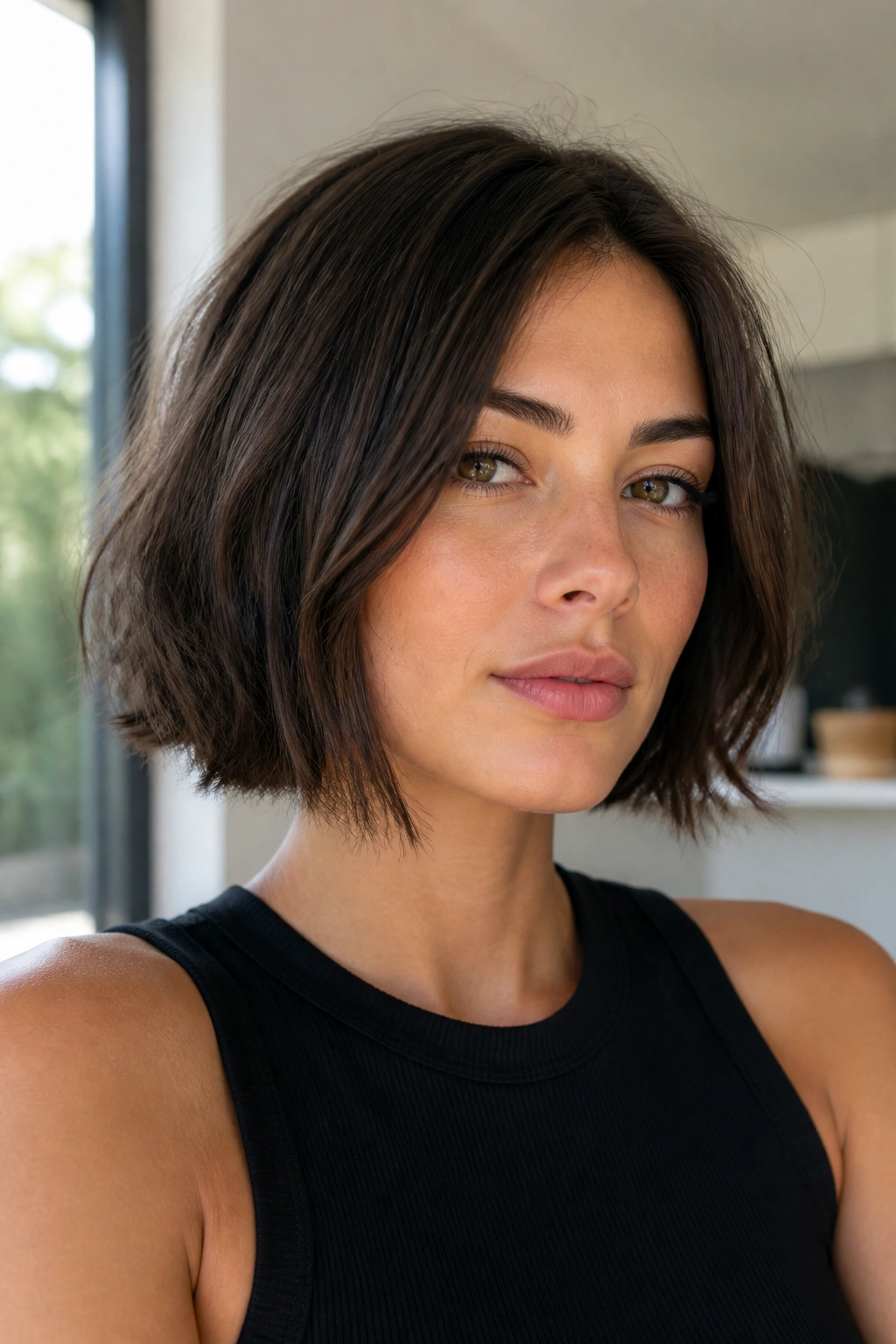
A boxy bob sounds severe, but on fine hair it can look expensive in the best way. The outline stays square and slightly full through the sides, while the ends are lightly shattered so the shape does not feel rigid. That solid edge gives the impression of thickness.
This works best if your hair has only mild wave or bends easily with a dryer. If the texture is too frizzy, the shattered ends can start to look fuzzy. Ask for a blunt base with tiny, broken-up ends rather than obvious layers all the way through. The difference matters.
I like this cut on people who want a cleaner look but still want a little movement when they turn their head. It pairs well with minimal styling: a quick blow-dry, a touch of smoothing cream near the ends, and that is enough. Low maintenance, but not boring. Hard combo to beat.
11. Inverted Shag Bob with Shorter Back
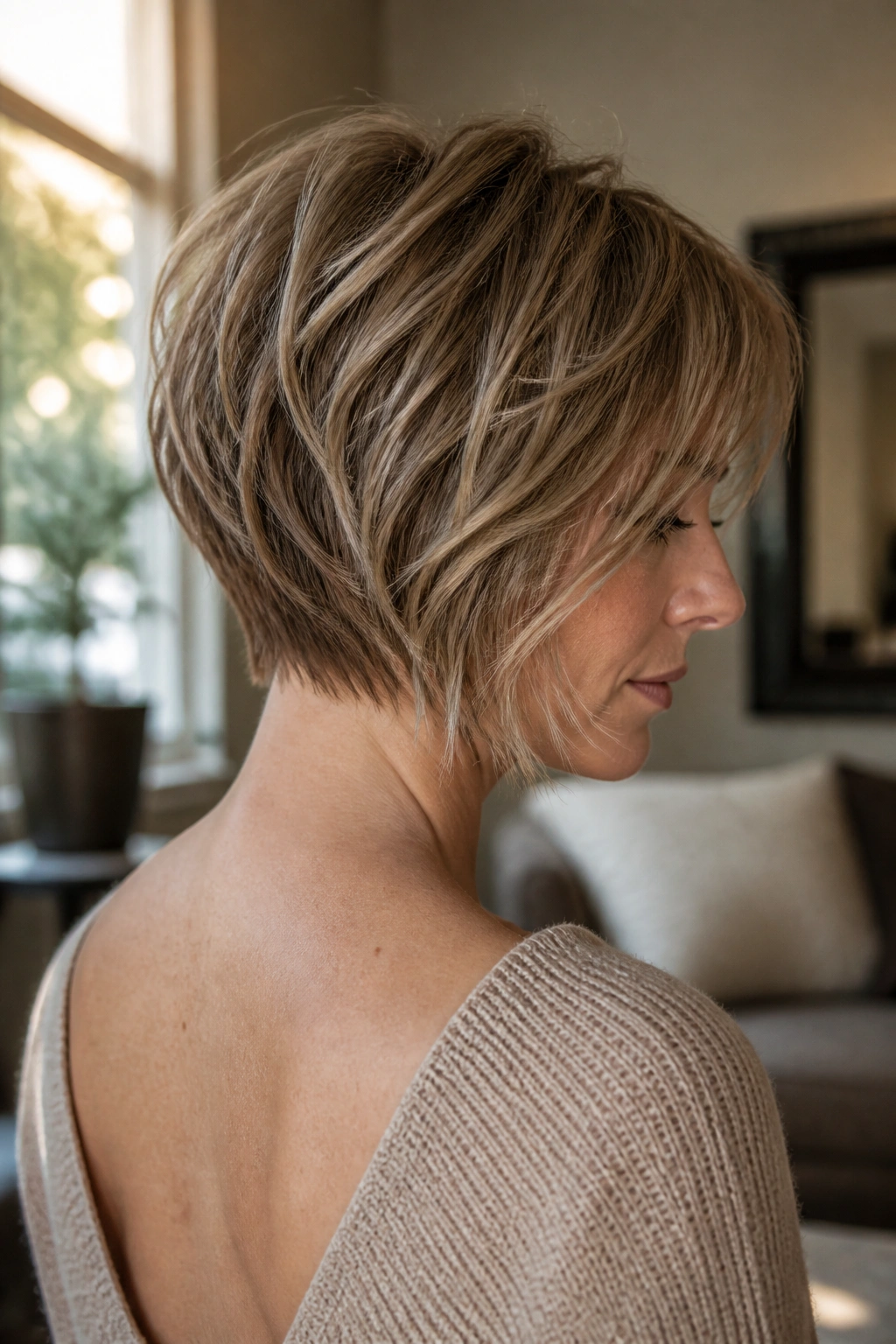
The inverted shape gives fine hair a lift in the back where it usually needs it most. Shorter layers stack softly at the nape, then the front falls longer toward the jaw. That creates a slope the eye reads as fullness, even if the hair itself is light.
This cut can look very polished, but only if the back is blended. If the stacking is too obvious, it turns into an older-school angled bob that feels stiff. I prefer a softer inversion with shaggy surface texture on top. Just enough unevenness to keep it modern. Not a helmet. Never a helmet.
If your hair collapses at the crown, ask for root support in the cut, not just in the styling. That means some lift through the back section and a little length left at the top so the shape doesn’t flatten by lunch. A bit of dry texture spray at the roots helps, but the haircut has to earn the lift first.
12. Bottleneck Bang Bob
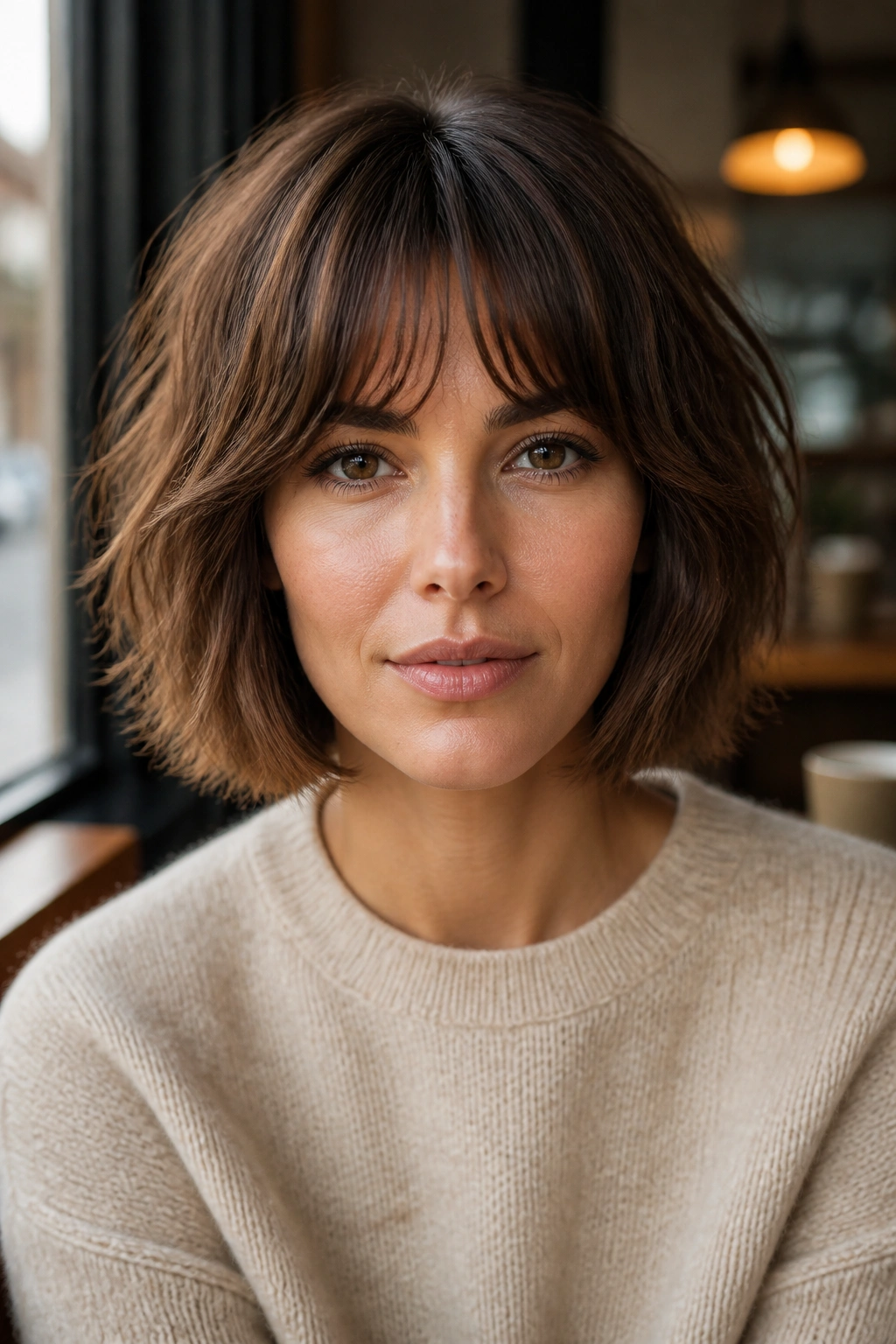
Bottleneck bangs are a smart compromise for anyone who wants fringe but hates constant trimming. They start narrow in the center, then widen and blend into the sides. On a shaggy bob, that shape gives the face some framing while keeping the hair light.
Why This Fringe Helps Fine Hair
The center section adds a visible focal point, which makes the front of the haircut feel denser. The wider side pieces then soften into the bob, so the cut does not stop abruptly at the brow. Fine hair often looks sparse when bangs are too wispy. Bottleneck bangs avoid that problem by keeping the middle a touch fuller.
How to Wear It
A simple blow-dry with a small round brush is enough most days. Pull the center down first, then sweep the side pieces outward so they lie against the cheekbones. A little bend at the ends makes the fringe sit better as it grows.
This is one of my favorite options for someone who wants a softer front than a blunt bang. It feels current, but more useful than trendy haircuts that only work in photos.
13. Angled Bob with Feathered Sides
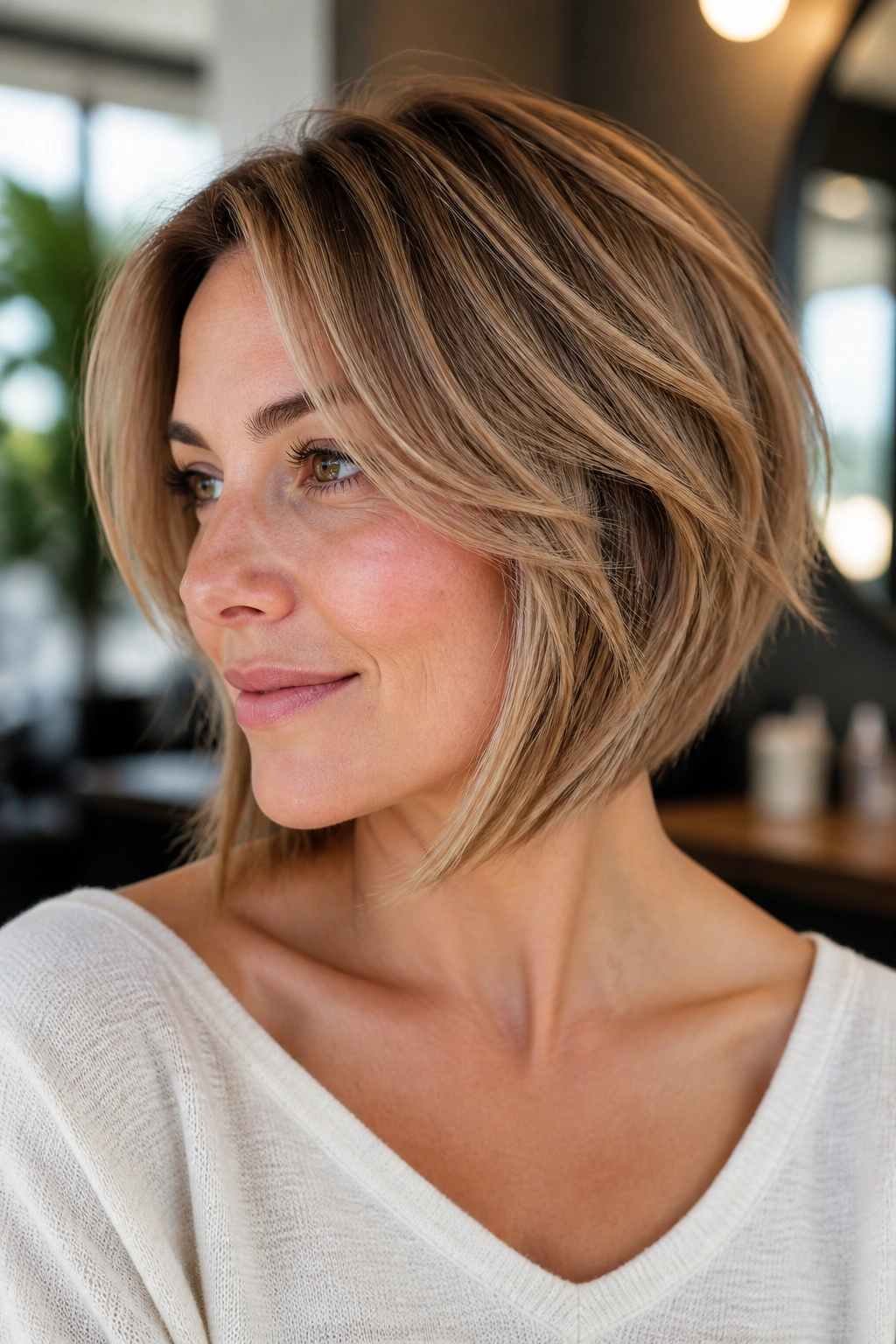
An angled bob can look fantastic on fine hair when the angle is mild and the sides are feathered. The front is longer than the back, which draws attention to the jawline and gives the haircut direction. The feathering keeps that long front from hanging like a curtain.
The danger here is overdoing the angle. If the difference between back and front is too dramatic, fine hair starts to look stretched instead of full. Keep the slope gentle and let the stylist soften the outer edges with scissors, not heavy texturizing. You want movement. You do not want frayed ends.
This cut has a nice side effect: it makes the neck look longer. That sounds like a small thing, but it changes the whole profile. If you wear your hair tucked behind one ear a lot, this shape catches the light in a flattering way without needing much fuss.
14. A-Line Shag Bob with Longer Front
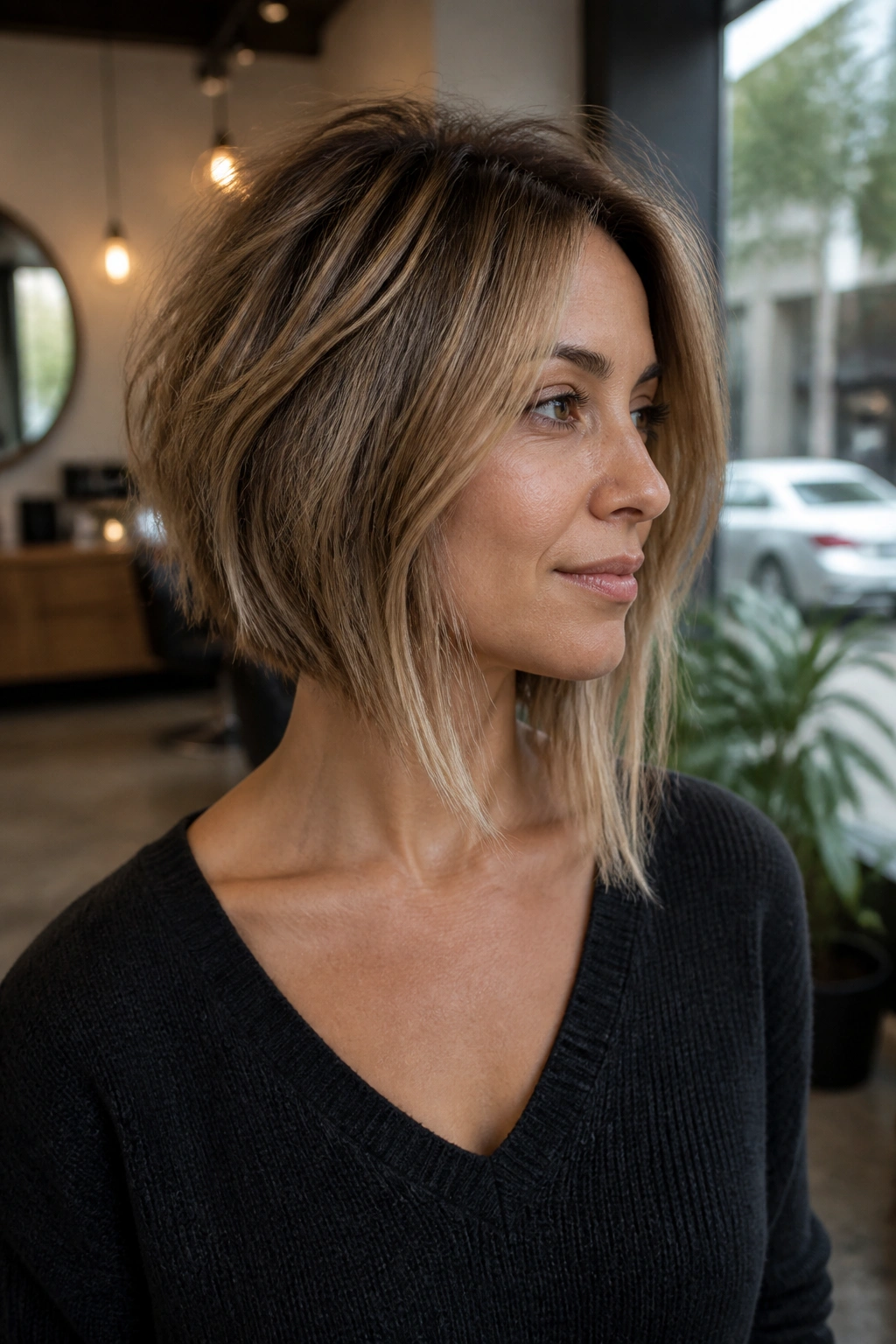
The A-line bob and the shag bob usually live in different camps, but they can play nicely together. The A-line gives you that unmistakable longer-front shape, and the shag layers keep the cut from feeling stiff or too sculpted. On fine hair, that softness helps a lot.
Ask for the front to hit between the jaw and collarbone, depending on how much length you want to keep. The back should sit shorter, but not so short that the cut starts looking stacked. A little surface texture through the top creates movement when the hair swings forward.
This is a good choice if you want a haircut that looks neat from the front and still has some personality when you turn. It also works well if your face is narrower, since the longer front pieces give a bit more width at the jaw. Small adjustment. Big difference.
15. Curly Shag Bob for Fine Hair

Curly fine hair needs a different kind of respect. Too much layering can make the curls spring apart and leave the ends thin. Too little layering, though, and the hair can puff at the sides with no shape through the top. The curly shag bob sits in the middle.
The Shape Matters More Than the Products
A good curly shag bob is usually cut to respect the curl pattern rather than fight it. The length often lands between the jaw and the collarbone, with layers placed where the curls need room to spring. If the curls are loose, a dry cut can help the stylist see how the pattern sits. If they are tighter, a curl-by-curl approach may be better.
Styling Notes That Actually Help
- Use a light mousse on soaking-wet hair.
- Scrunch with a microfiber towel or T-shirt.
- Diffuse on low heat until the roots are 80% dry.
- Do not brush it after it dries.
Fine curls need support, not heavy cream. If you overload them, they drop. That part is unforgiving.
16. One-Length Bob with Internal Texture
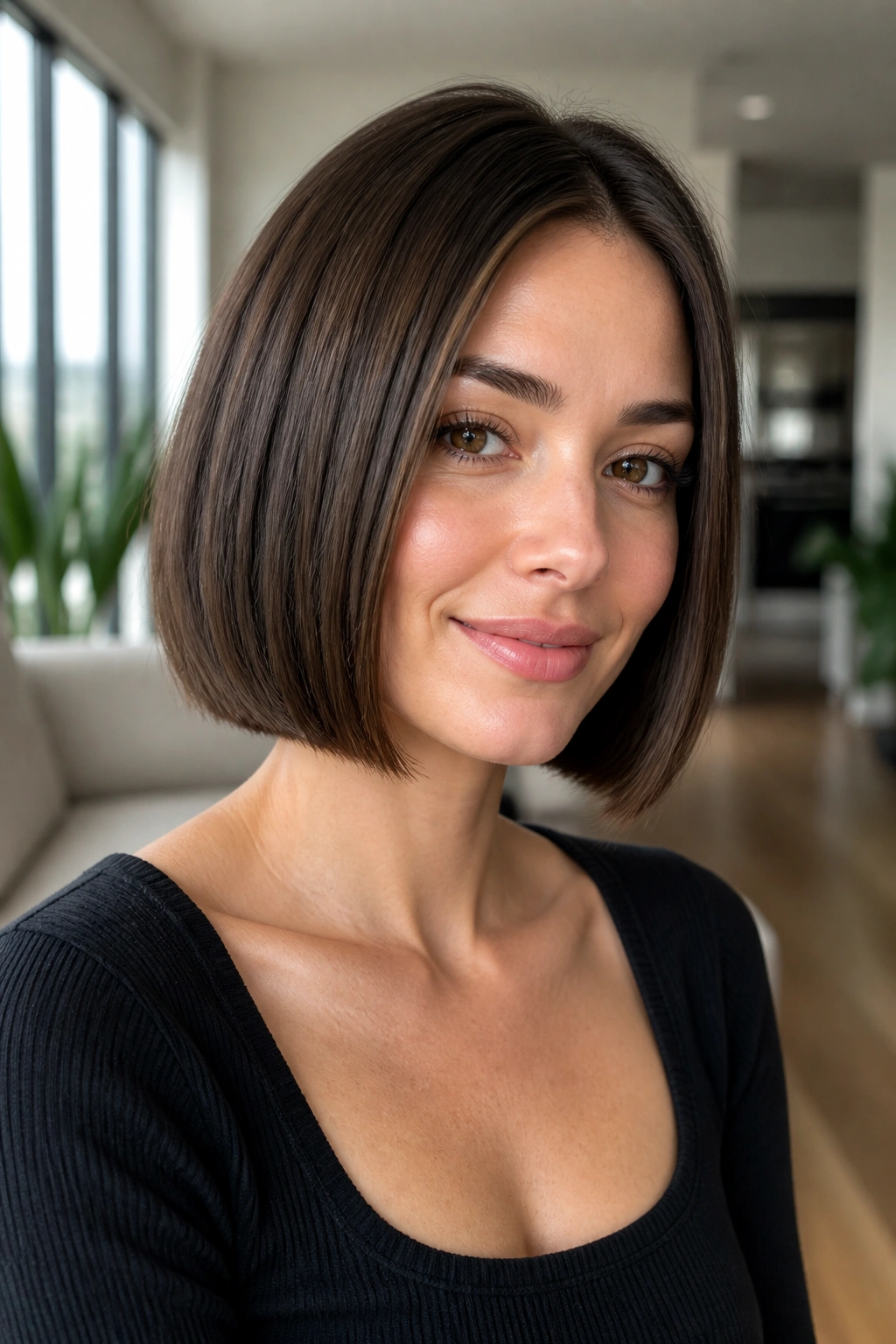
Not everyone wants visible layers. Some people want a bob that looks clean, thick, and easy to part. A one-length bob with internal texture gives you that. The outside line stays solid, which helps fine hair look fuller, while the interior is lightly shaped so the cut does not sit like a block.
This is a good haircut for people who like a quieter look. No obvious choppiness. No dramatic fringe. Just a neat outline with a little bend inside the shape. The trick is to keep the texture subtle enough that the surface still looks dense from every angle.
Blow it out smooth and tuck the ends under slightly. That is where this cut shines. If you like hair that looks expensive in a plain white T-shirt, this is probably your lane. Plain in a good way. Not plain in a boring way.
17. Tucked-Under Bob with Soft Nape Taper
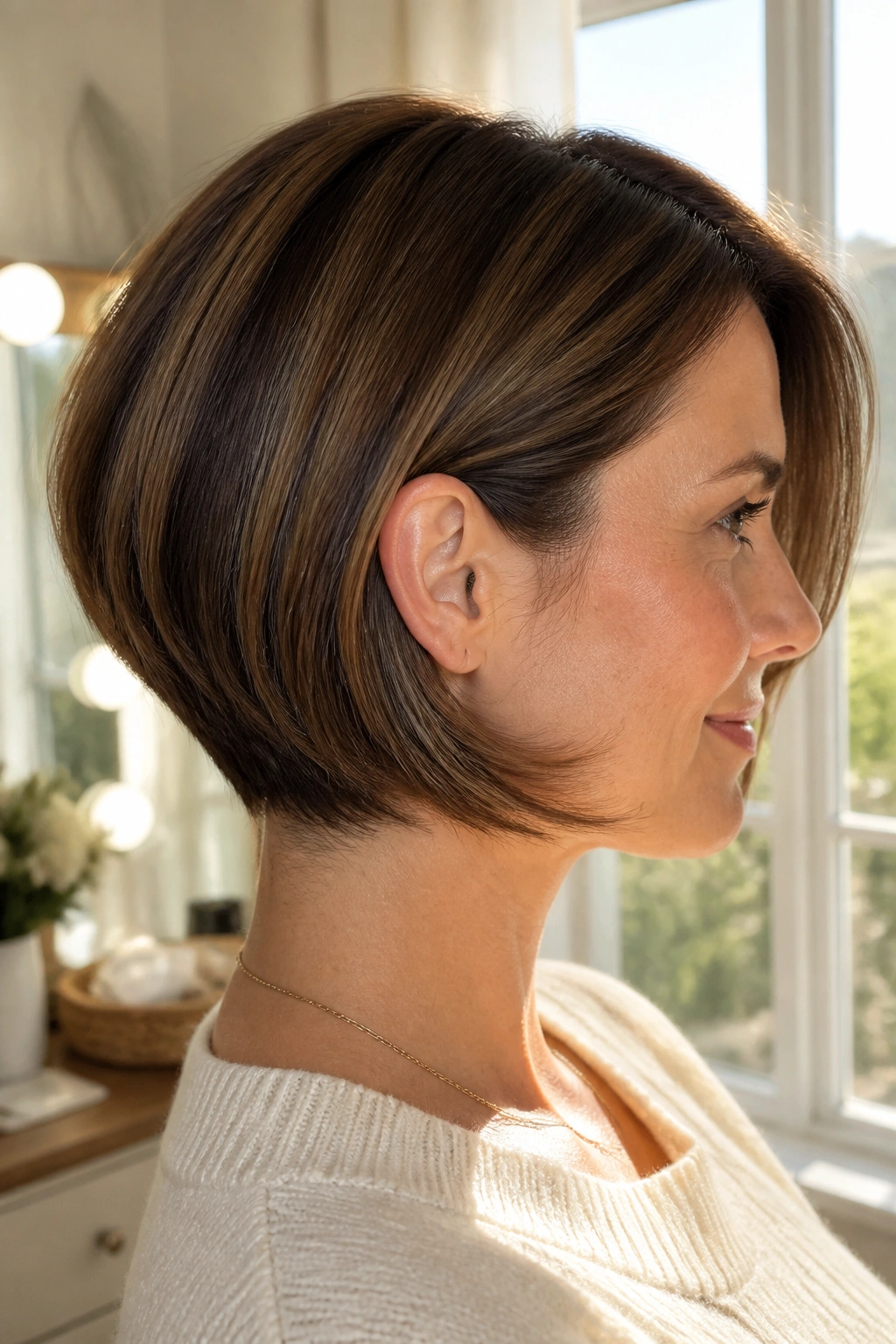
Some fine hair cuts try to shout. This one just looks tidy and works. The nape is tapered softly so the back hugs the neck, while the front curves under enough to tuck behind the ear without exploding out at the sides. It is a neat solution for hair that falls flat but still wants polish.
Why It Feels Fuller
The shortened nape takes away bulk where fine hair often looks limp, and the slightly longer front keeps the silhouette from feeling too cropped. That contrast creates the illusion of density. The shape looks controlled, which helps the haircut stay readable even if the hair itself is delicate.
Good For
- People who wear earrings and like the ear showing.
- Hair that flips at the ends and needs discipline.
- Busy mornings when you want to do almost nothing.
- Anyone who dislikes fussy layers.
A little smoothing serum on the outermost layer is enough. Keep it light. The haircut already has enough structure.
18. Choppy Bob with Wispy Fringe
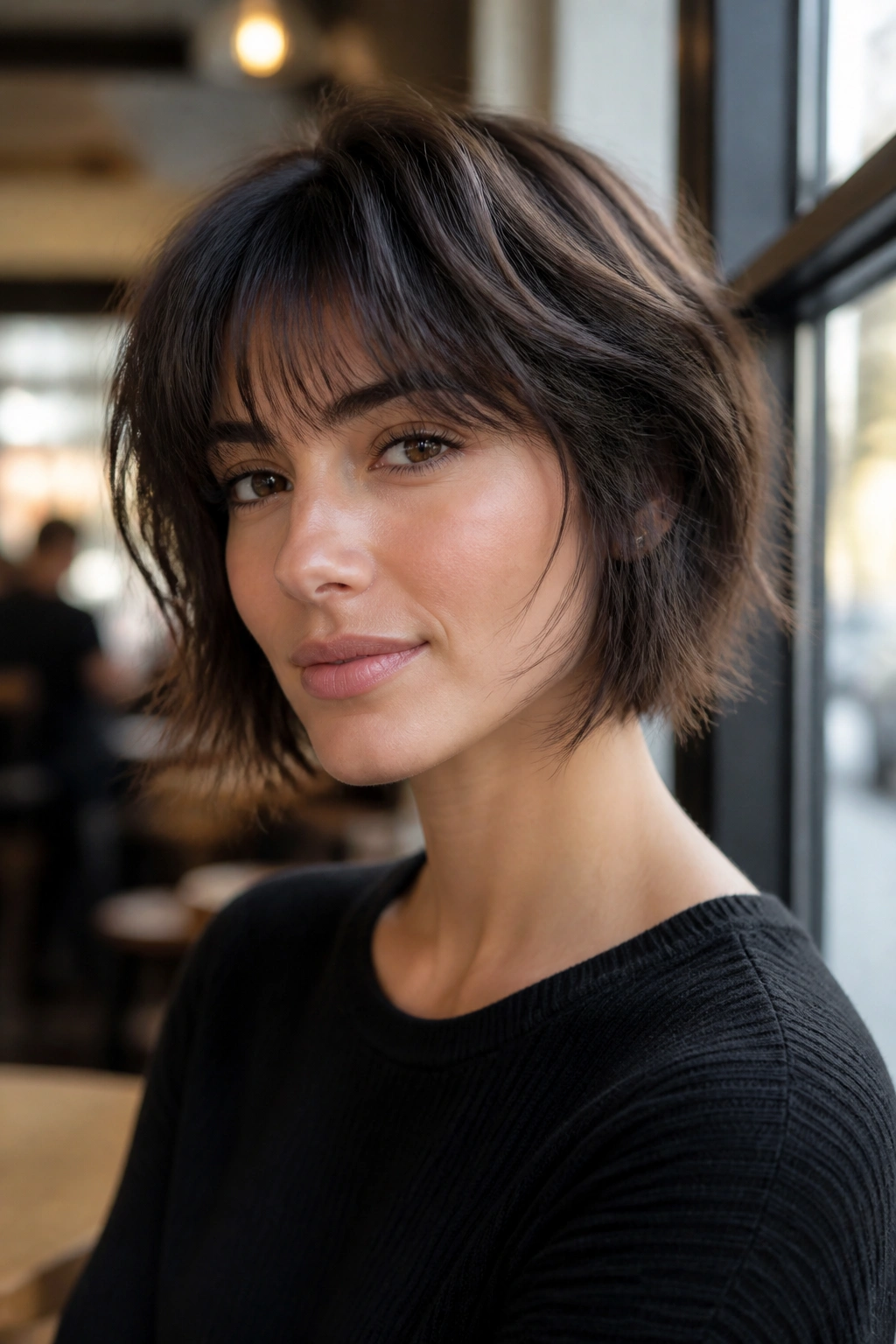
This is the scrappier cousin of the classic shag bob. The ends are visibly choppy, the fringe is wispy, and the overall shape feels a touch more playful. Fine hair can wear that kind of texture well as long as the perimeter still has enough body to keep the haircut grounded.
The fringe is the part to watch. If it gets too sparse, it starts reading as accidental instead of deliberate. The best wispy fringe lands around the brows and blends into the sides just enough that you do not get a hard line. Pair that with a bob at the jaw, and the whole cut feels light on the face.
I like this option for hair that has a small natural wave. Air-dry it half the way, then twist a few pieces around your fingers while it finishes drying. The result should look imperfect on purpose. That is the point.
19. French Bob with Razor-Cut Ends
A French bob usually sits around the mouth or jaw, with a little attitude and a clean shape. On fine hair, the razor-cut ends keep it from looking too blunt or too formal. You get that neat, lived-in edge that feels easy, not precious.
The shape is shorter than many people expect. That matters. If the bob drifts too low, the French effect fades and the hair starts behaving like a standard lob. Keep the length compact, and let the ends stay slightly broken up so the haircut has movement even when you do almost nothing.
This cut likes a quick rough-dry and a bend at the front. It does not need a perfect blowout. In fact, a little imperfection makes it better. If your hair is very fine but has a bit of natural bend, this is one of the prettiest ways to show it off without asking the hair to do too much.
20. Long Bob with Cheekbone Layers
Cheekbone layers are sneaky in the best way. They add shape exactly where the face starts to need it, which means the haircut can look fuller without being chopped up everywhere. On a long bob, that gives fine hair a lift around the front while keeping the back from getting thin.
This is a strong choice if you are growing out a shorter bob and do not want the in-between stage to look awkward. The longest pieces can sit near the collarbone, while the front layers begin at the cheekbone and soften down toward the jaw. That keeps the outline alive.
A 1-inch curling iron or a flat iron bend through the front sections helps the shape show. Do not overcurl it. The goal is not ringlets. The goal is a gentle curve that makes the layers visible when the hair moves. Small motion. Clear shape.
21. Tousled Bob with Deep Side Part
Messy, but controlled. That is the sweet spot here. A tousled bob with a deep side part gives fine hair the look of volume through texture and asymmetry, which works well if your hair usually falls flat in the middle. The side part creates lift, and the tousled finish keeps the style from looking stiff.
This version is a little more undone than the earlier side-part bob. It wants bend, not polish. Use a 1-inch curling iron and alternate the direction of the pieces, then break them up with your fingers once they cool. If you comb them out too much, the wave disappears and the hair loses that airy movement.
Best on hair that can hold a bend for a few hours. If your strands are slippery, start with a mousse on damp hair and finish with a dry texture spray. Not a lot. Just enough to give the cut some grip.
22. Soft Blunt Bob with Surface Shaping
If you like the look of thick hair, this is one of the smartest cheats. The perimeter stays blunt, which makes fine hair look more substantial at the ends, but the surface gets a little shaping so the haircut does not sit like a helmet. It’s a careful balance, and I like that it doesn’t overcomplicate things.
What to Ask Your Stylist
Ask for a clean, one-length line with only a small amount of surface shaping through the top third of the cut. The shaping should be shallow. If the stylist goes too deep, the ends will lose their density. Fine hair needs the base to stay strong.
How It Wears
- Air-dried, it looks calm and neat.
- Blow-dried, it looks thicker than it is.
- Tucked behind the ears, the line still reads clearly.
- With a side part, it gets a little lift at the roots.
This is the cut for someone who wants a bob that behaves. Not flashy. Just reliable and flattering.
23. Wavy Collarbone Bob with Airy Ends
Loose waves and fine hair can get along nicely if the cut gives the wave enough room. This collarbone bob keeps the ends airy and the layers soft, so the hair can bend instead of puff. It is especially good if your natural texture sits between straight and wavy.
The length matters here. Too short, and the waves can spring up and make the cut feel uneven. Too long, and the movement gets weighed down. The collarbone is a good middle ground because it lets the hair skim and shift. Ask for the ends to be lightly texturized, not heavily shredded.
A salt spray can help, but go easy. Fine hair only needs a light mist, scrunched through the mid-lengths. If you soak it, the hair can dry rough and lose shine. A soft wave with clean ends is the aim. Not beach chaos.
24. Jaw-Length Bob with Face-Framing Slices
Face-framing slices are different from full layers. They are thinner, more targeted, and a little more precise, which is a gift for fine hair. The bob itself sits at the jaw, while the sliced front pieces soften the line around the cheek and chin without taking too much bulk from the rest of the cut.
This is a very good choice if you want your cheekbones to stand out. The slices should begin around the mouth or cheekbone, then taper into the front edge of the bob. That keeps the haircut lively from the front and prevents the whole thing from looking too square.
I like this on people who wear their hair down most of the time. Those front pieces are doing a lot of face-shaping work, and they show best when the rest of the cut is simple. It’s a practical haircut, even if it sounds a little fancier than it is.
25. Shoulder-Skimming Shag Bob with Light Crown Layers
This is the longest option here, and it makes sense for anyone who wants movement without losing too much length. The shoulder-skimming shag bob keeps the outline soft, then uses light crown layers to give fine hair a bit of lift where it usually collapses. That crown work is the whole trick.
Because the cut sits longer, the layers have to stay subtle. Too much texture and the ends start to look thin. Too little, and the length just hangs there. You want the hair to hit the shoulders, brush off them, and move when you walk. That little bit of swing matters more than a dramatic shag ever will.
It’s also the easiest cut to grow out from. If you are unsure about going short, this is a safer landing spot that still gives you the movement people want from a shaggy bob. A light mousse, a round brush, and a quick bend through the front are usually enough.
Final Thoughts
Fine hair does best when the cut is doing the heavy lifting. That means shape first, texture second, and density kept where the eye expects to see it. If the perimeter is too shredded, the bob goes soft in the wrong way. If it is too blunt with no movement, it can feel stiff. The sweet spot sits somewhere between those two.
The smartest shaggy bob haircuts for fine hair usually share the same quiet trait: they look fuller because they are built with care, not because they are overloaded with layers. That is the part worth showing your stylist in photos. Not just the vibe. The actual length, the front pieces, the part, the ends.
Bring one photo of the shape you want and one photo of the texture you hate. That second one helps more than people think. A good cut should still look like a bob after a windy walk, after a workday, after you have run your fingers through it three times. That’s the standard I’d use.
