



A short bob can solve the daily hair argument faster than almost any other cut. Short bob haircuts for girls work because they remove bulk, cut down tangles, and still leave enough shape that the hair looks finished after a quick brush.
That matters more than people admit. A cut that sits at the chin, jaw, or nape changes how a child handles mornings, hats, swimming, and the constant habit of tucking hair behind the ears.
Sharp is the point.
Not every bob behaves the same, though. Straight hair likes a clean line, curls need room to spring, and thicker hair usually needs weight removed in the right places instead of being thinned out all over the head. A good bob grows out in a calm, predictable way, which is a blessing when trim appointments get pushed back.
Bring a photo if you can, but pay attention to the shape too. The cuts below keep the hair short, yet each one handles the outline differently — some are crisp, some soft, some a little swingy, and some are made to sit quietly through a busy school day.
1. Classic Blunt Bob
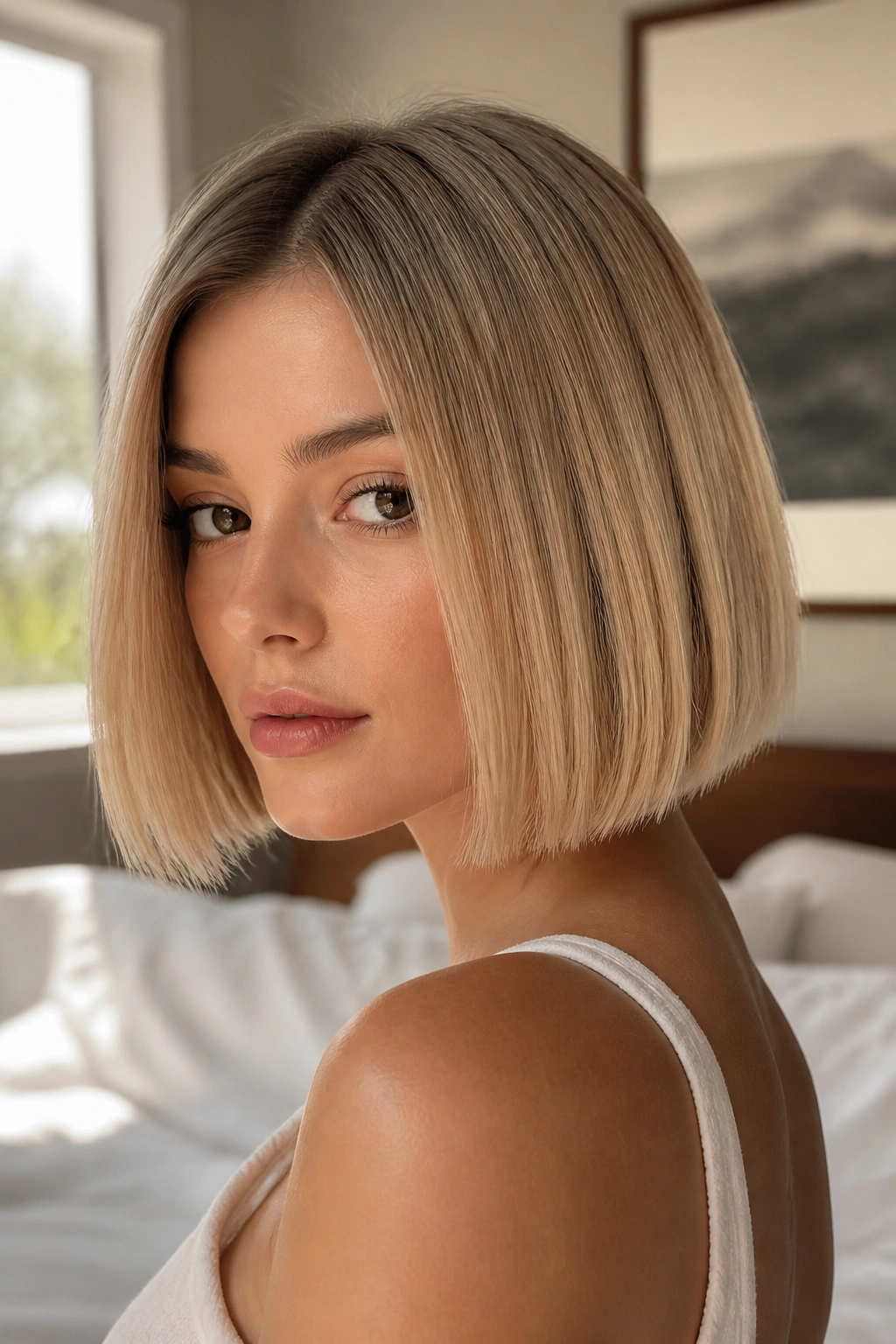
The blunt bob is the cleanest place to start. One even line, usually at the chin or a touch below it, gives the haircut a strong edge that makes hair look fuller without making it puff out everywhere.
I like this shape on straight and slightly wavy hair because the finish stays tidy without much effort. A quick brush and a little leave-in on the ends are often enough.
The best blunt bob is not stiff. It should move when the head turns, but the outline should still look crisp. That straight bottom line is the whole trick.
2. Chin-Length Bob for Girls with Soft Ends
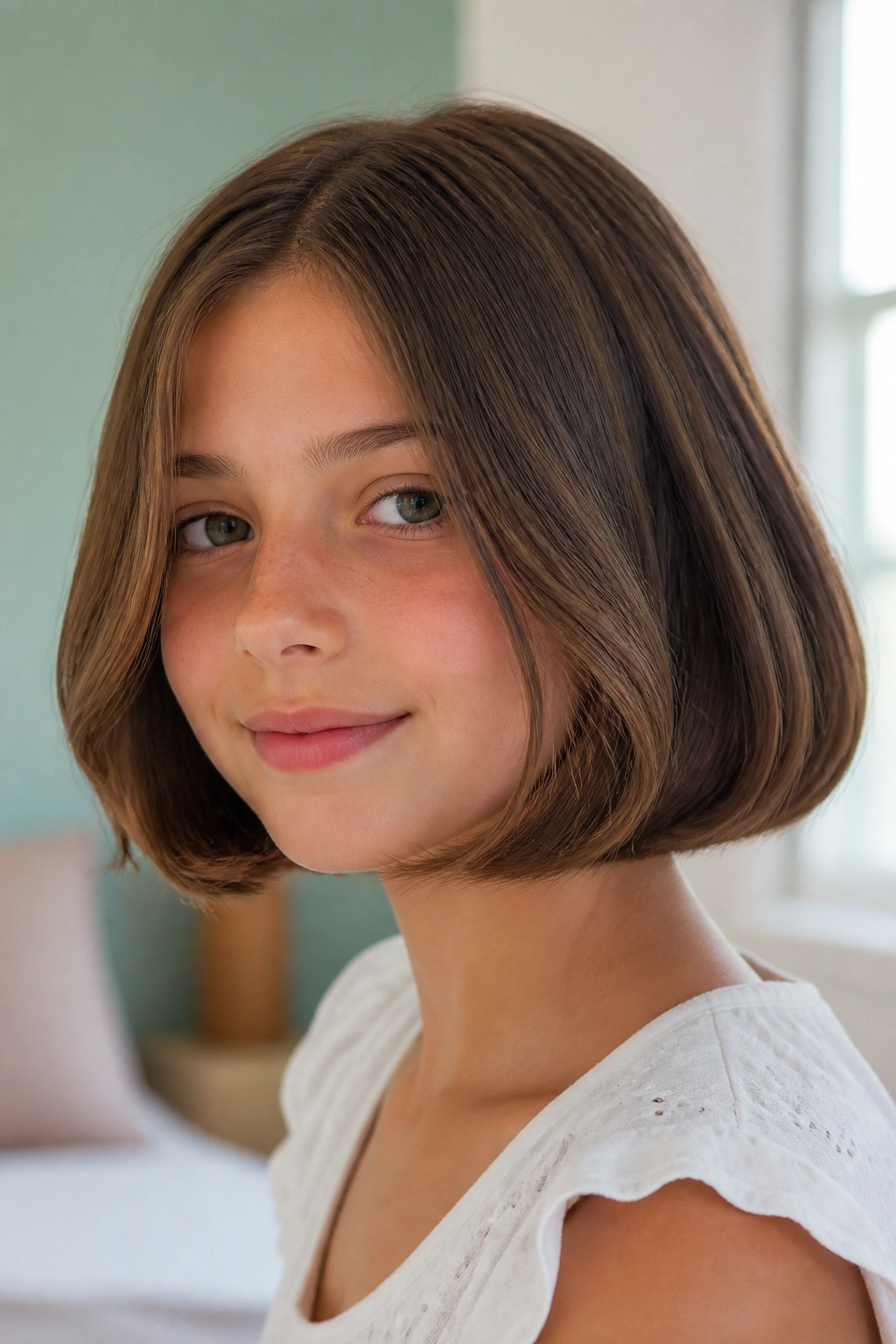
Why does a chin-length bob work so well on younger girls? Because the length lands where the face already has shape, so the haircut feels natural instead of forced. It also keeps hair off the shoulders, which means fewer knots under backpack straps and fewer complaints after a long day.
A soft finish matters here. If the ends are too hard and boxy, the cut can look heavy. If they’re softened with a little point cutting, the hair sits neatly and still has a little swing.
What to ask for at the salon
- Keep the length at the chin or just below it.
- Soften the last half-inch of the ends instead of cutting them blunt and heavy.
- Leave the front pieces a touch longer if the hair tends to flip outward.
The goal is neat, not helmet-like.
3. Layered Bob for Fine Hair
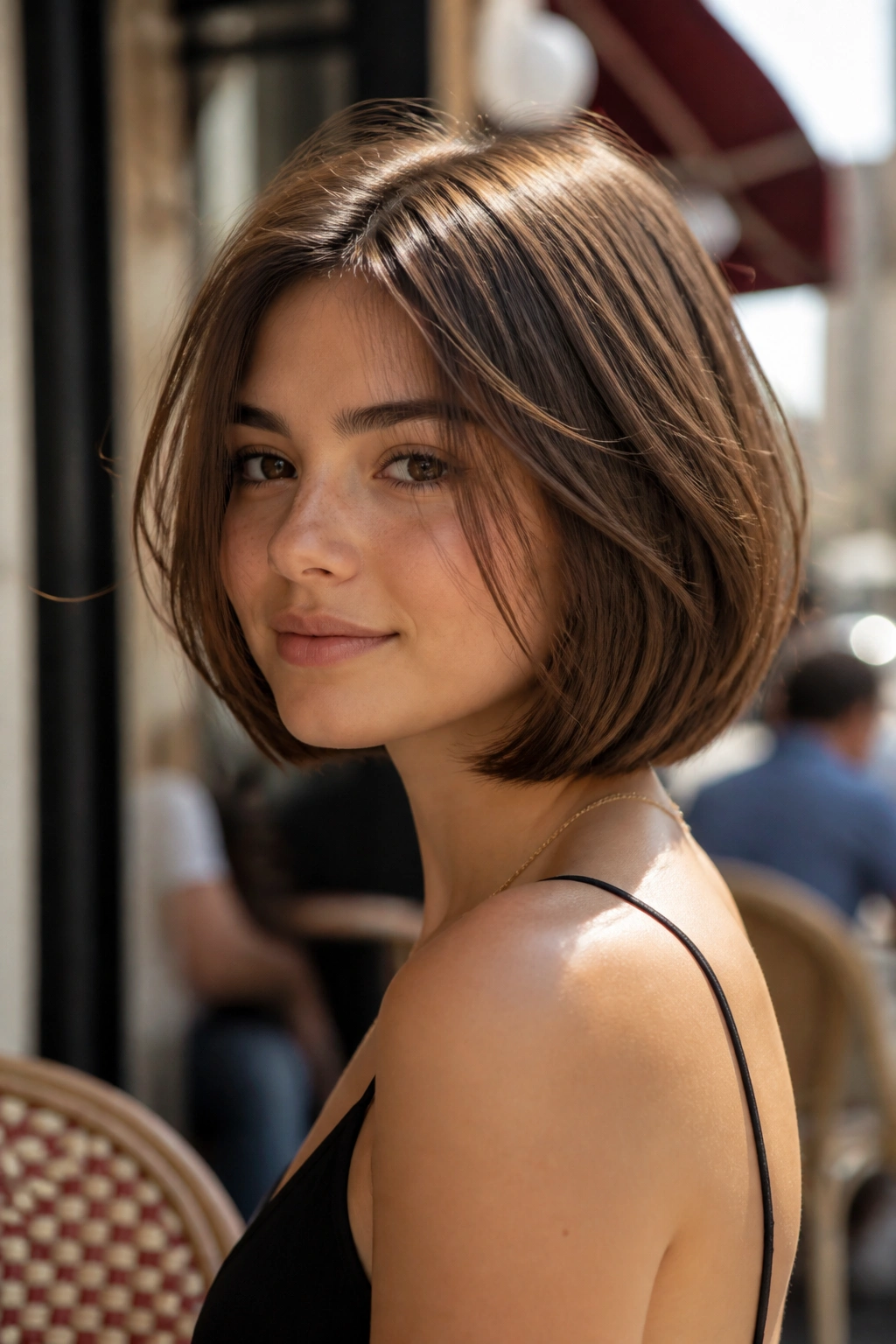
Fine hair can go flat in a hurry. A layered bob gives it lift without forcing the length to disappear, which is usually the mistake people make when they ask for too much texture.
The best version keeps the layers light and placed where the hair needs air — usually around the crown and upper sides. That adds shape at the roots and stops the bob from lying on the head like a sheet.
Where the lift should come from
- Use soft internal layers, not choppy ones all over.
- Keep the perimeter clean so the bob still looks like a bob.
- Skip heavy thinning shears if the hair is already sparse at the ends.
Too many layers can make fine hair look see-through. A little movement helps. A lot of slicing usually does not.
4. Textured Bob for Wavy Hair
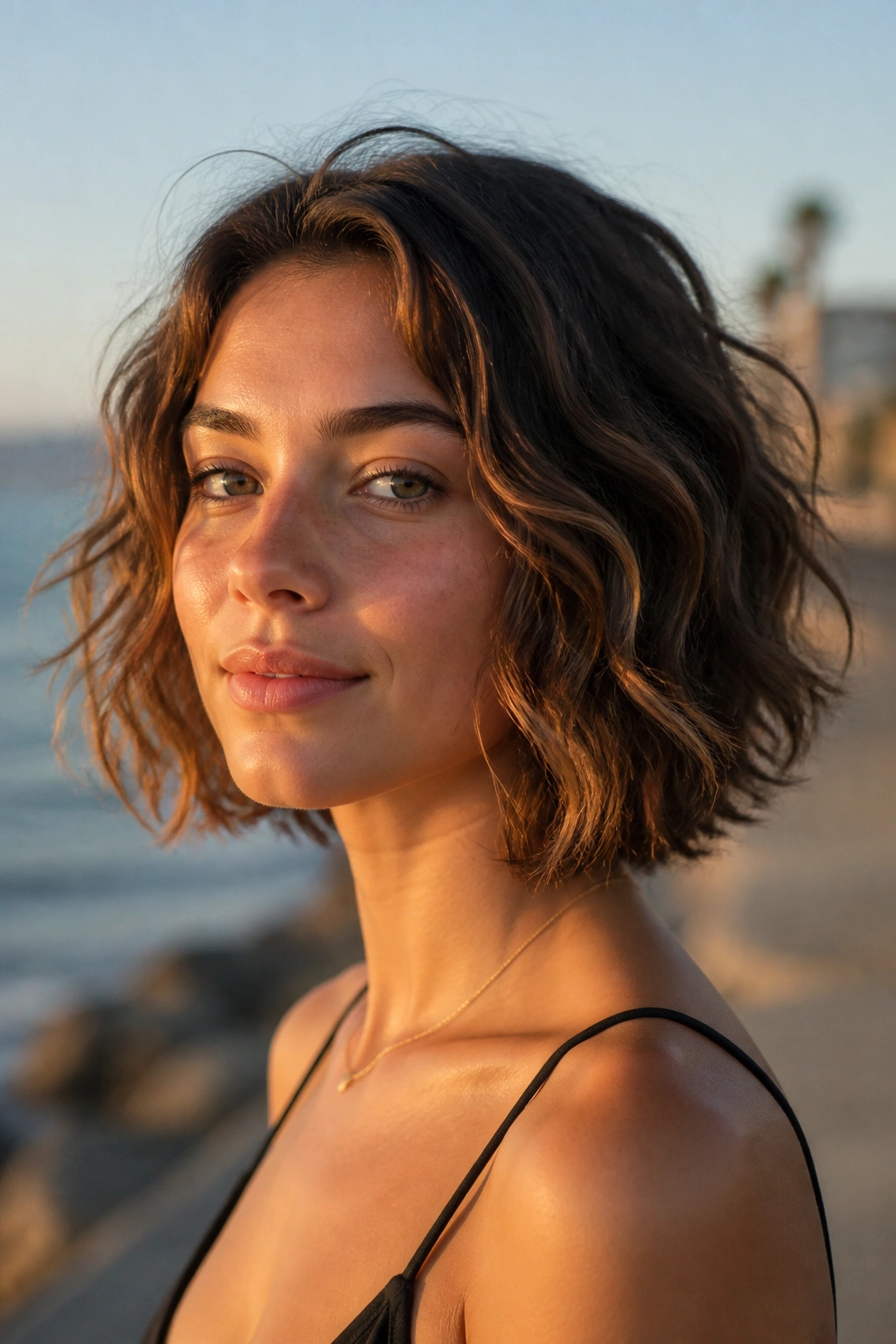
Texture beats polish on wavy hair. Always. A short bob with broken-up ends lets the wave pattern move instead of puffing into a triangle that needs five clips and a prayer to behave.
This cut works best when the stylist reads the wave pattern while the hair is dry or mostly dry. Wet hair can hide how much bend lives in it, and that’s how people end up with a bob that springs up more than expected.
Keep the ends piecey, not frayed. A few soft points around the outline are enough to keep the shape interesting. The haircut should follow the wave, not fight it.
5. A-Line Bob
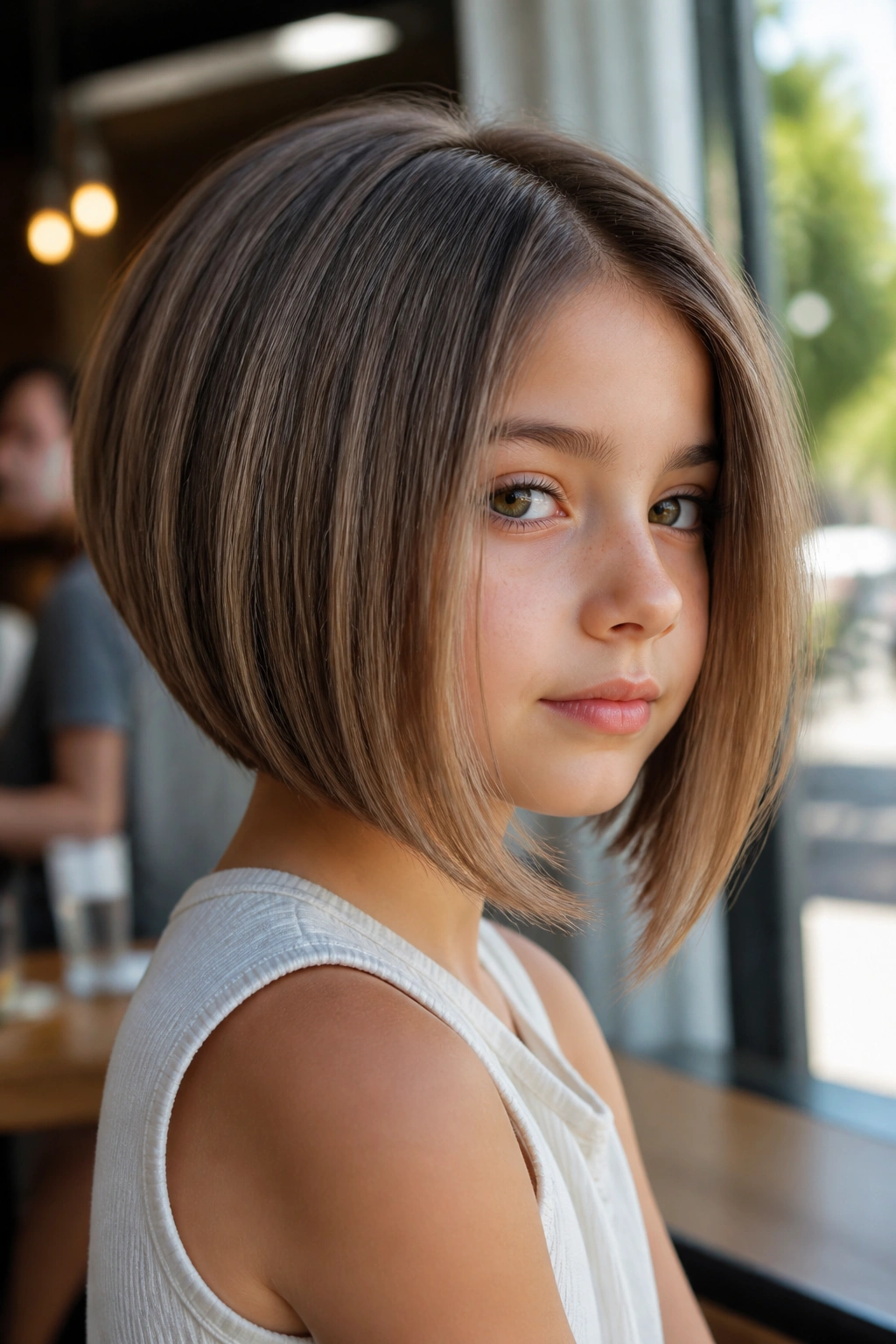
An A-line bob gives you a bit of swing in front without dragging the whole cut down. The back stays shorter at the nape, then the hair lengthens toward the face, which makes the neck look longer and the whole shape feel lighter.
Unlike a blunt bob, this one has a slope. That slope is the point. It gives the haircut a little motion every time the head moves, which is nice on girls who do not want a cut that sits perfectly still.
Keep the front around the jaw or just below. If it drops much farther, the haircut starts acting more like a lob, and the short-bob shape disappears.
6. Side-Swept Fringe Bob
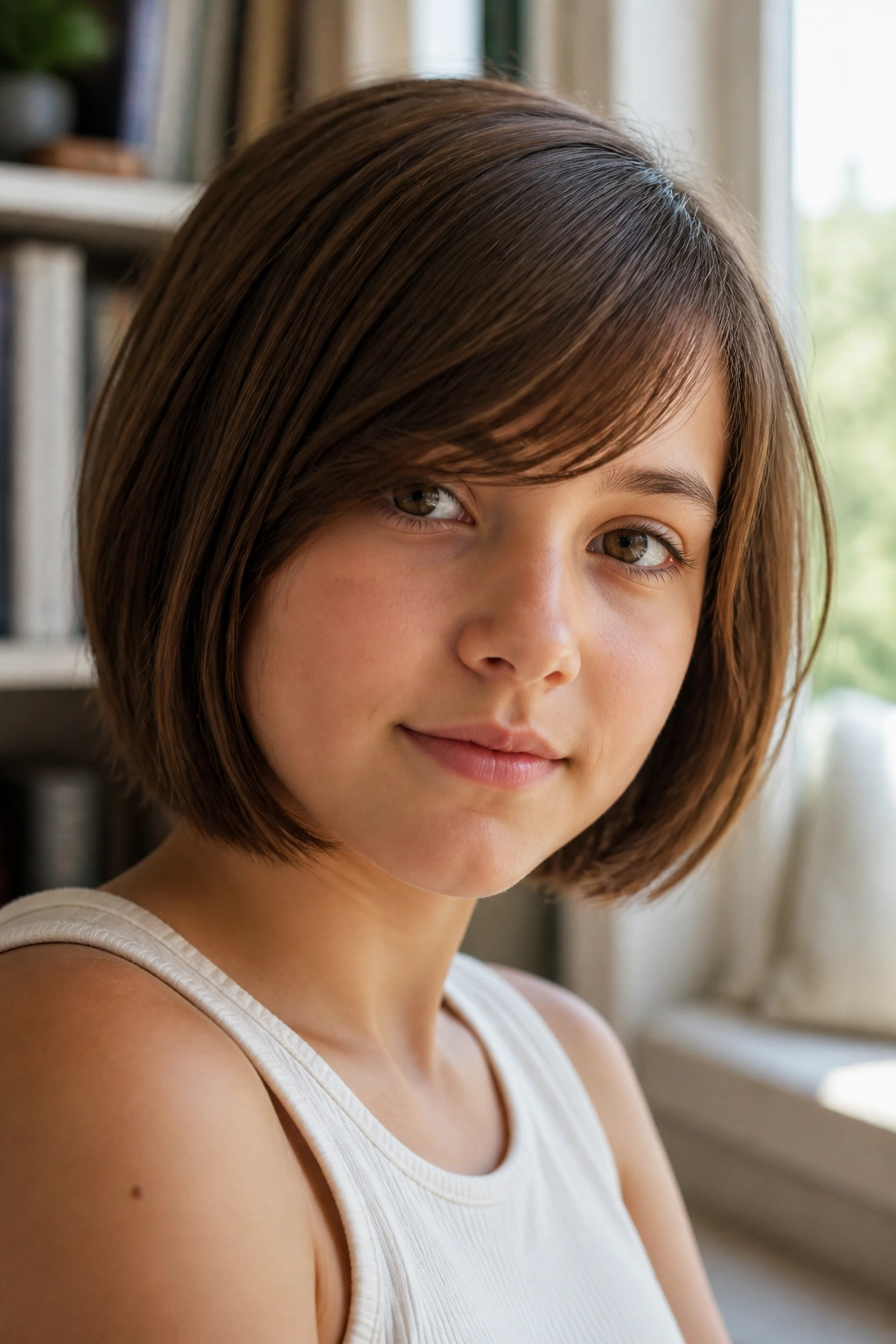
Does a fringe have to sit straight across the forehead? Not at all. A side-swept fringe bob softens the face, keeps hair out of the eyes, and still leaves enough openness that the cut does not feel heavy.
The fringe should skim the brow, not poke it. If it’s cut too short, it grows into a little shelf; too long, and it collapses into the cheek. That middle ground is what makes this one useful.
How to keep it from poking the eyes
- Cut the fringe a little longer than you think you need.
- Dry it in the direction it will be worn.
- Trim it slowly, because a side fringe can go crooked fast.
This is a smart choice for girls who like clips, headbands, and half-up styles. The front stays useful even as it grows.
7. French Bob

The French bob sits at the jaw and usually carries a small fringe or a soft split in front. It has a tidy, slightly dressed-up feel without turning into a stiff little helmet, which is where some short cuts go wrong.
I like it when the ends move a little. A razor-sharp finish can look too severe on younger faces; a touch of softness keeps the cut friendly. It’s a bob that looks good with a sweater, a collar, or a ribbon in the hair.
One nice thing about this shape: it still looks decent after a nap, a windy walk, or a rough morning. That matters. Haircuts that survive real life are the ones parents remember.
8. Stacked Bob
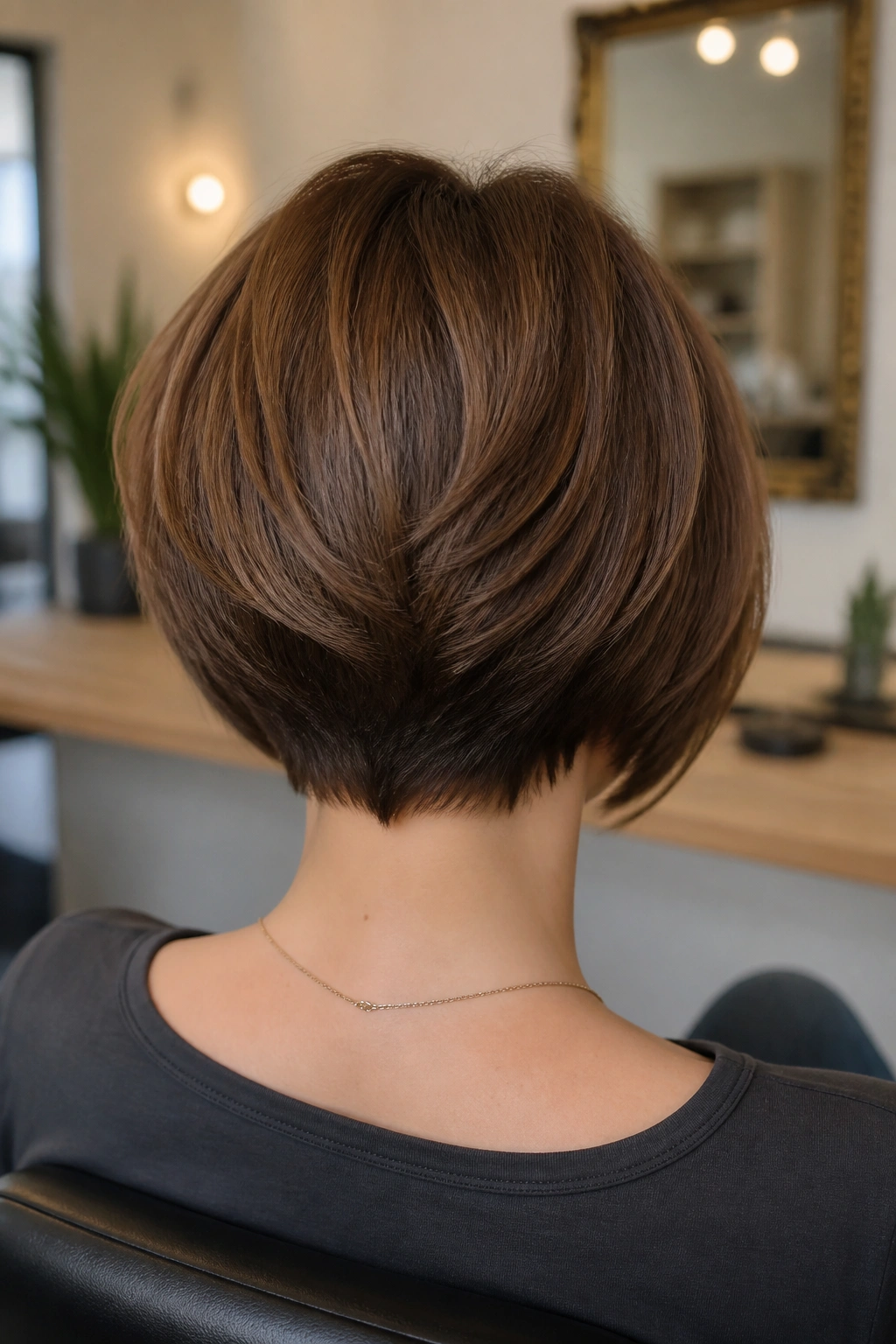
A stacked bob is built for hair that needs shape in the back. The layers are shorter near the nape, then they build upward, which gives the crown lift and keeps the back from looking flat and wide.
That back view matters more than people think. A stacked bob looks neat from every angle, not just the front, and that makes it a good pick for thick hair that wants to sit heavy. If the hair is fine, though, too much stacking can make the crown look puffy.
The part that matters
- Ask for stacked layers at the back, not random choppy pieces.
- Keep the front clean so the shape does not get messy.
- Use this when the hair has a lot of density through the nape and sides.
It’s a practical cut, and not a shy one.
9. Curly Bob for Girls

Curly hair changes the rules. Cut it too short and the shape can bounce higher than expected; leave it too long and the whole bob loses its point and turns into a heavy little curtain.
A curly bob needs room for shrinkage. That means the stylist should look at where the curls live when dry, not guess from the wet length alone. On tight curls, that detail matters a lot.
How to ask for it
- Ask for the bob to be shaped on dry or mostly dry curls.
- Keep the length longer than the shrinkage might suggest.
- Let the face pieces be guided by the curl pattern instead of forcing a straight line.
A curly bob should feel springy, not boxed in. If the curls are allowed to stack naturally, the haircut looks alive even on a plain school day.
10. Asymmetrical Bob
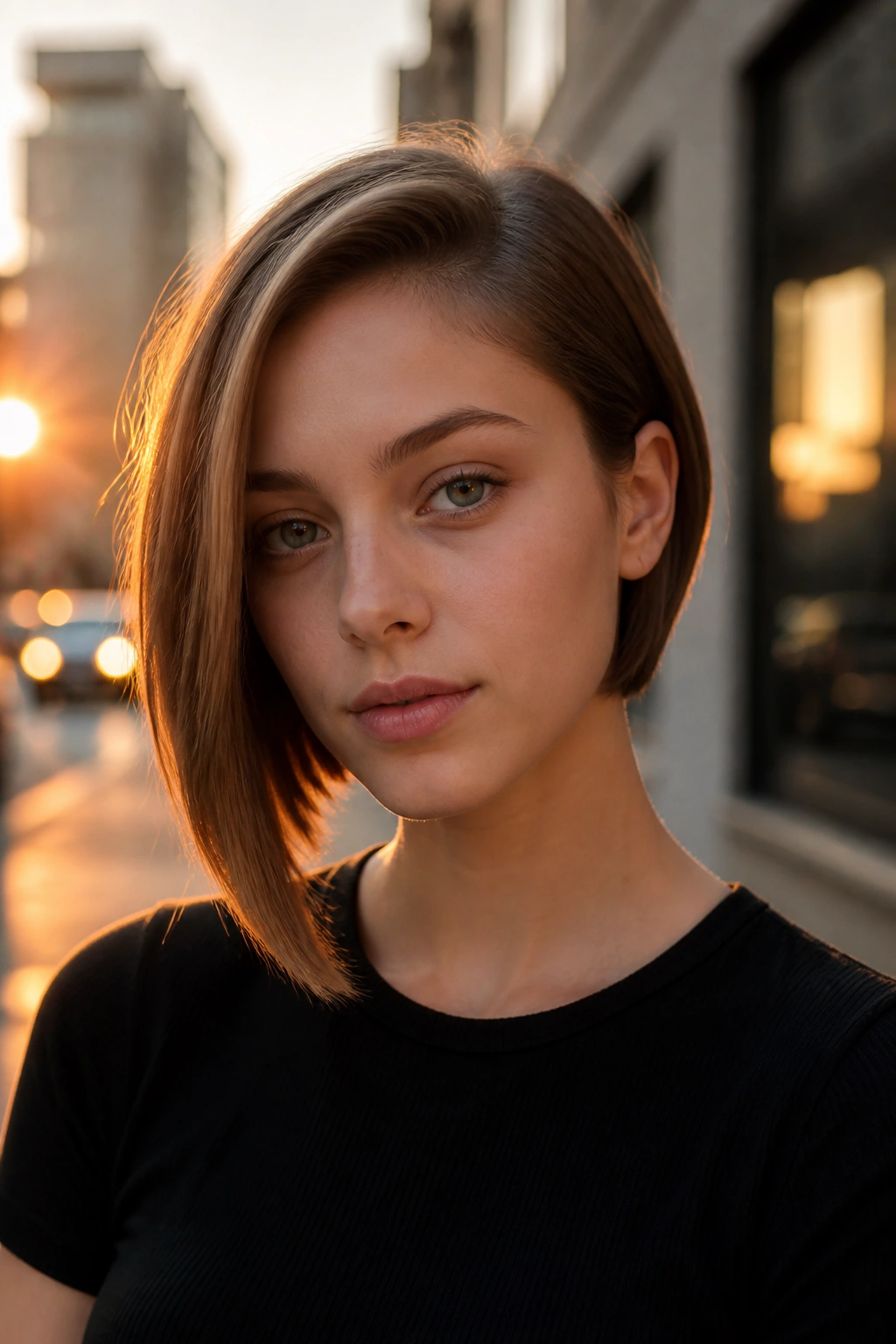
A small asymmetry changes the mood of a bob fast. One side sits a little longer than the other — usually by an inch or two — and that slight imbalance gives the cut a sharper, more modern edge without turning it into a costume.
This works especially well on straight or softly wavy hair because the longer side shows the shape cleanly. If the difference is too dramatic, the haircut starts fighting with clothes, collars, and hair clips. Keep it subtle and the result feels smart.
This is a good choice for girls who want something a bit different but still easy to tie back on busy days. Tiny changes can make a big visual difference.
11. Curtain Bangs Bob

A bob with curtain bangs is the easy-going cousin of a full fringe. The center parts softly, then opens out toward the cheekbones, which keeps the forehead from feeling boxed in.
That open front makes this cut useful when you want face-framing pieces without committing to a blunt bang. It also grows out in a forgiving way, which is a nice thing to say about any haircut that lives on a child’s head for months.
Why it grows out well
- The shortest point sits near the middle, not right across the brow.
- The longer sides blend into the bob instead of stopping hard.
- The shape works with clips, ponytails, and headbands.
If the face needs a little softness, this is one of the smartest bob choices around.
12. Graduated Bob
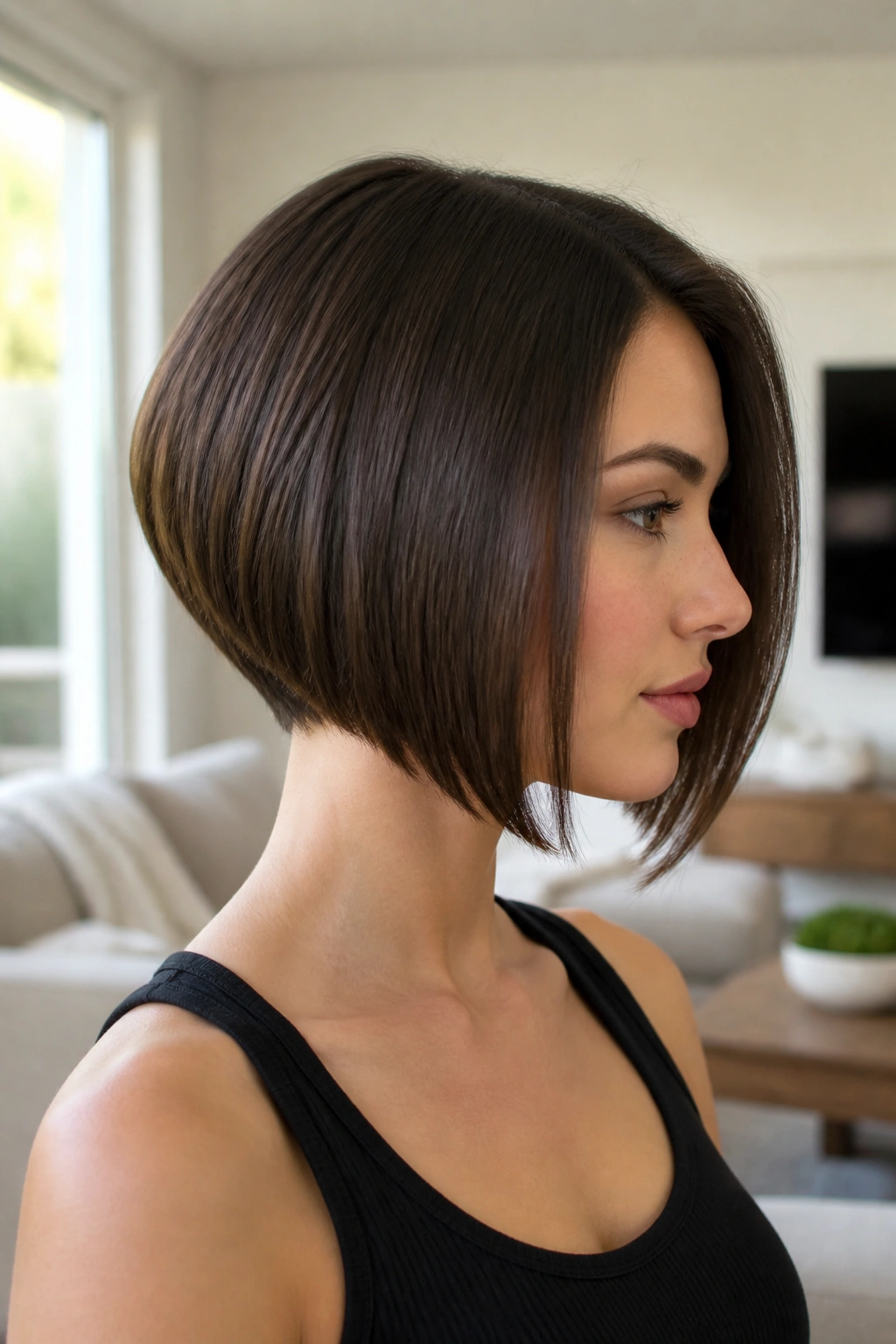
A graduated bob sits between neat and sculpted. The hair is shorter in the back and builds gradually toward the front, but the angle is usually smoother and less dramatic than an inverted cut.
That makes it useful for thick hair that needs some release but still wants a polished outline. The back stays neat at the nape, and the front gives the face a little length, which can be useful on rounder cheeks or fuller jaws.
It’s one of those cuts that looks tidy even when it’s not freshly styled. The shape does a lot of the work.
13. Feathered Bob
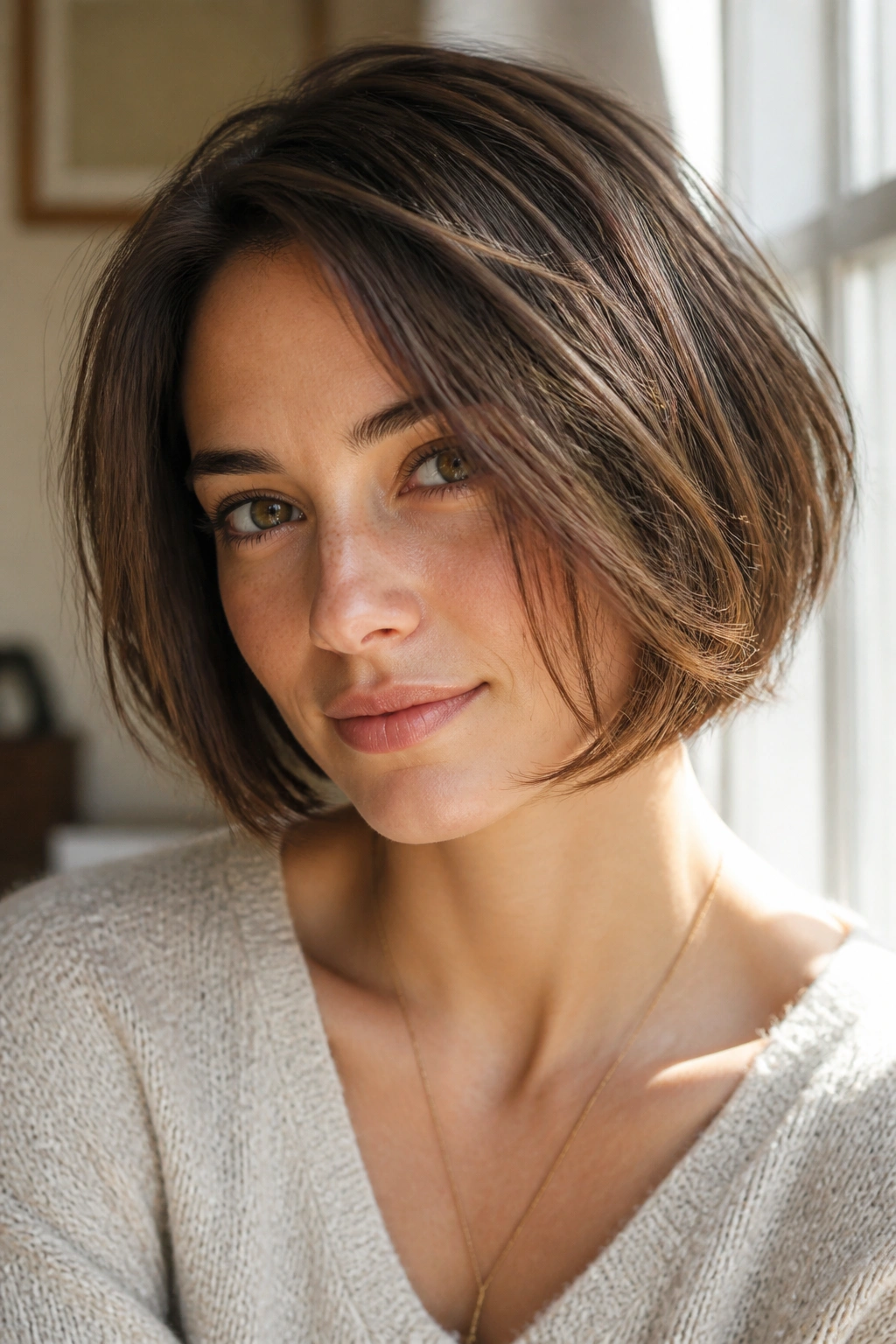
Feathering softens a short bob by removing weight in a narrow, airy way at the ends. It’s not the same as chopping in layers everywhere. The haircut stays bob-like, but the edge feels lighter and less blunt.
I reach for this shape when hair is thick enough to look heavy but not so thick that it needs a dramatic stack or a strong angle. Feathering gives movement around the face and keeps the outline from feeling too dense.
What to ask for
- Soft feathering through the ends, not all over the head.
- A clean perimeter so the haircut still has a bob shape.
- Gentle face framing if the cheeks need a little opening up.
It’s a quieter haircut. That’s part of the appeal.
14. Micro Bob for Girls
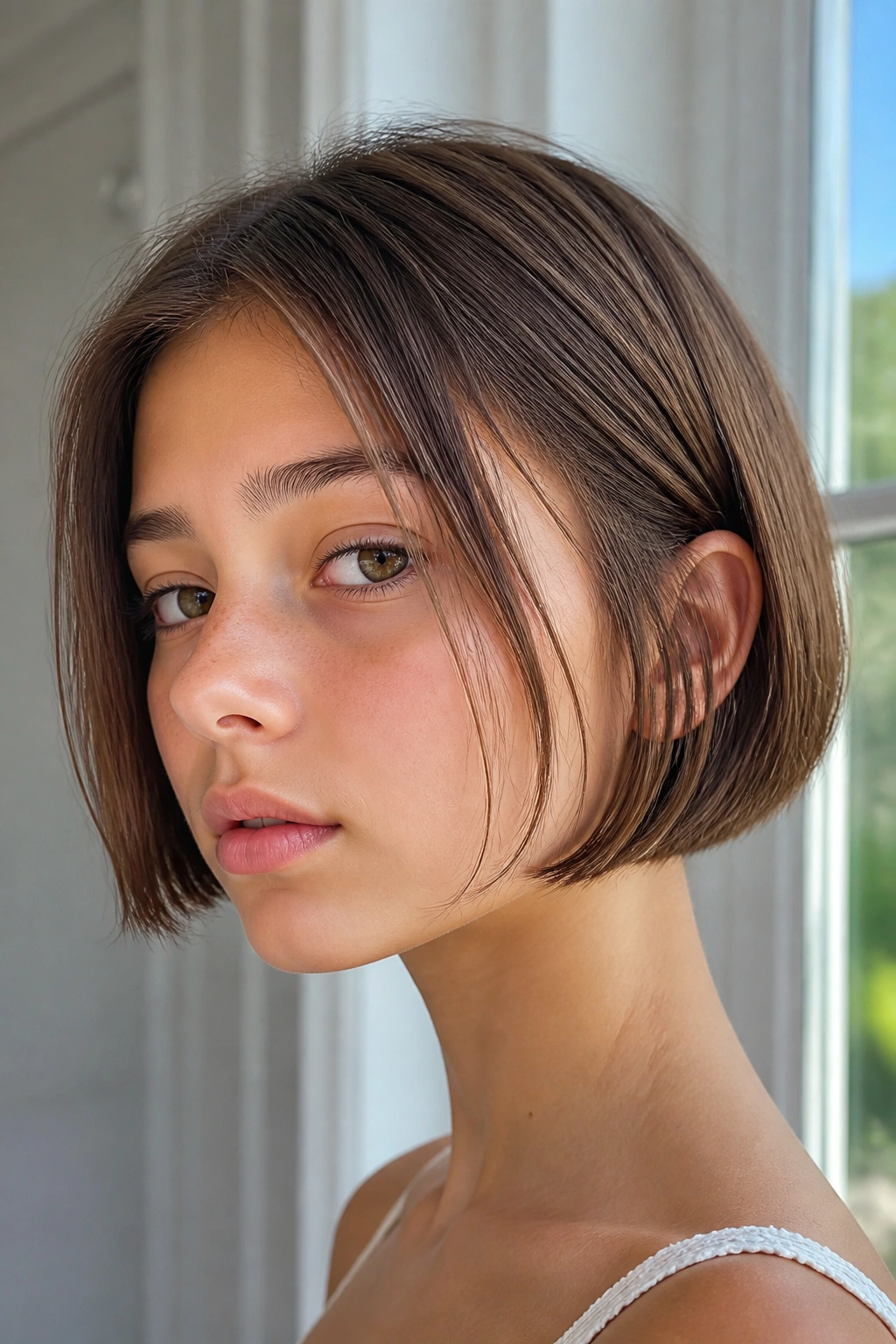
Short is the whole statement here.
A micro bob stops around the jaw or even a touch higher, depending on the hairline and the child’s comfort with short hair. It shows the neck, sharpens the face, and removes nearly all the drag that longer bobs can pick up.
This cut suits straight hair and confident personalities. It can also be a nice fix for hair that tangles the second it meets a sweater collar. The tradeoff is upkeep — a micro bob needs regular trims to keep its shape from drifting into an awkward in-between stage.
If you want short and neat, this is about as far as a bob can go without turning into a pixie.
15. Shaggy Bob

Does a bob have to be neat? No. A shaggy bob is for girls who want movement, soft mess, and a haircut that does not punish a little chaos.
The layers are choppy, but the trick is to keep them from getting too shredded. You want texture that looks lived-in, not damaged. On wavy hair, this cut can look excellent with almost no styling; on straighter hair, it benefits from a quick bend with fingers or a small round brush.
How to style it fast
- Start with damp hair.
- Work in a light leave-in or curl cream if the hair is wavy.
- Scrunch once, then let it dry with as little touching as possible.
This is the haircut for active kids, rainy days, and mornings that move fast.
16. Box Bob
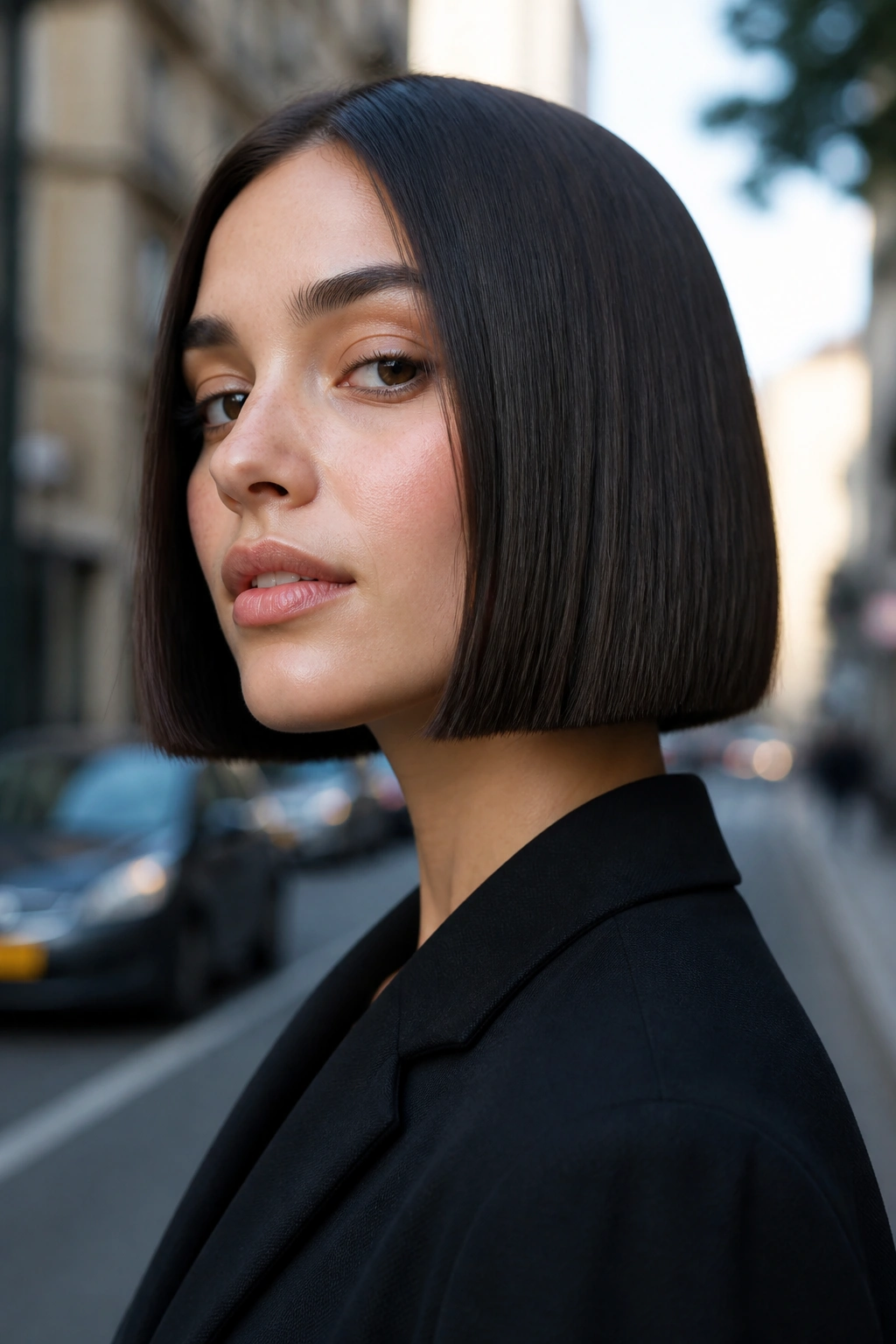
A box bob is straighter at the sides and flatter at the bottom than a rounded cut. It has a more graphic feel, which gives thick hair a clean outline instead of a puffed-out edge.
That straight shape can look very tidy, especially on hair that grows wide at the cheeks. It can also balance fuller features by keeping the side line controlled. If the hair is naturally fluffy or very curved at the ends, though, the box shape may need a little smoothing so it does not stick out.
The appeal is simple: it looks deliberate. Not soft, not messy, not overly styled. Just clear.
17. Sleek Straight Bob
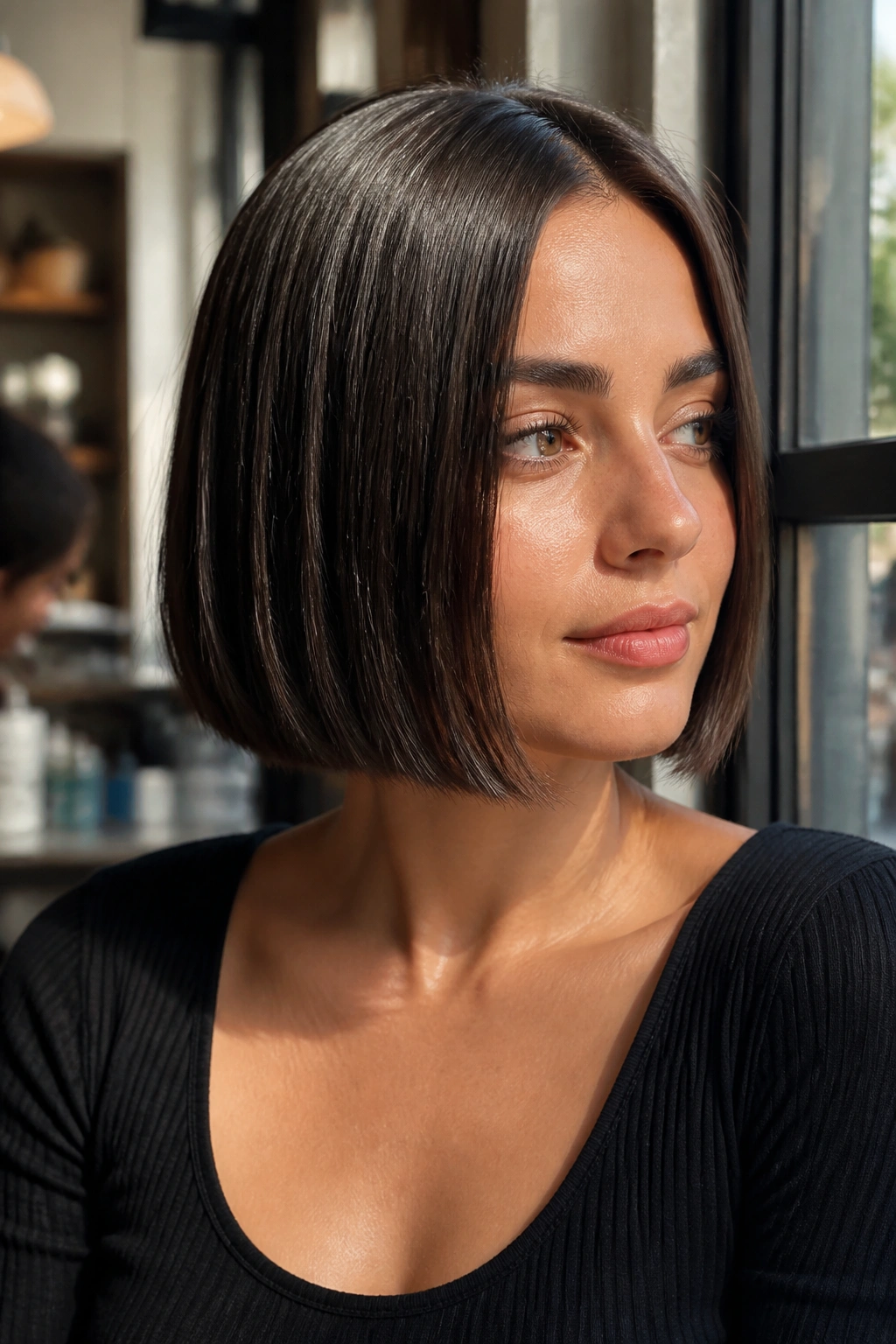
A sleek straight bob sits close to the jaw and depends on a clean finish. The ends are blunt or barely softened, and the surface should look smooth enough that the line reads from across the room.
This cut is happiest on naturally straight hair, or hair that takes a quick blow-dry without much fight. A side part gives it a little softness; a center part makes it feel sharper. Either way, the haircut itself stays neat.
A tiny amount of serum on the ends can help, but don’t overdo it. Too much product makes the hair cling together and lose the crisp edge that makes this bob work in the first place.
18. Bob with Blunt Bangs
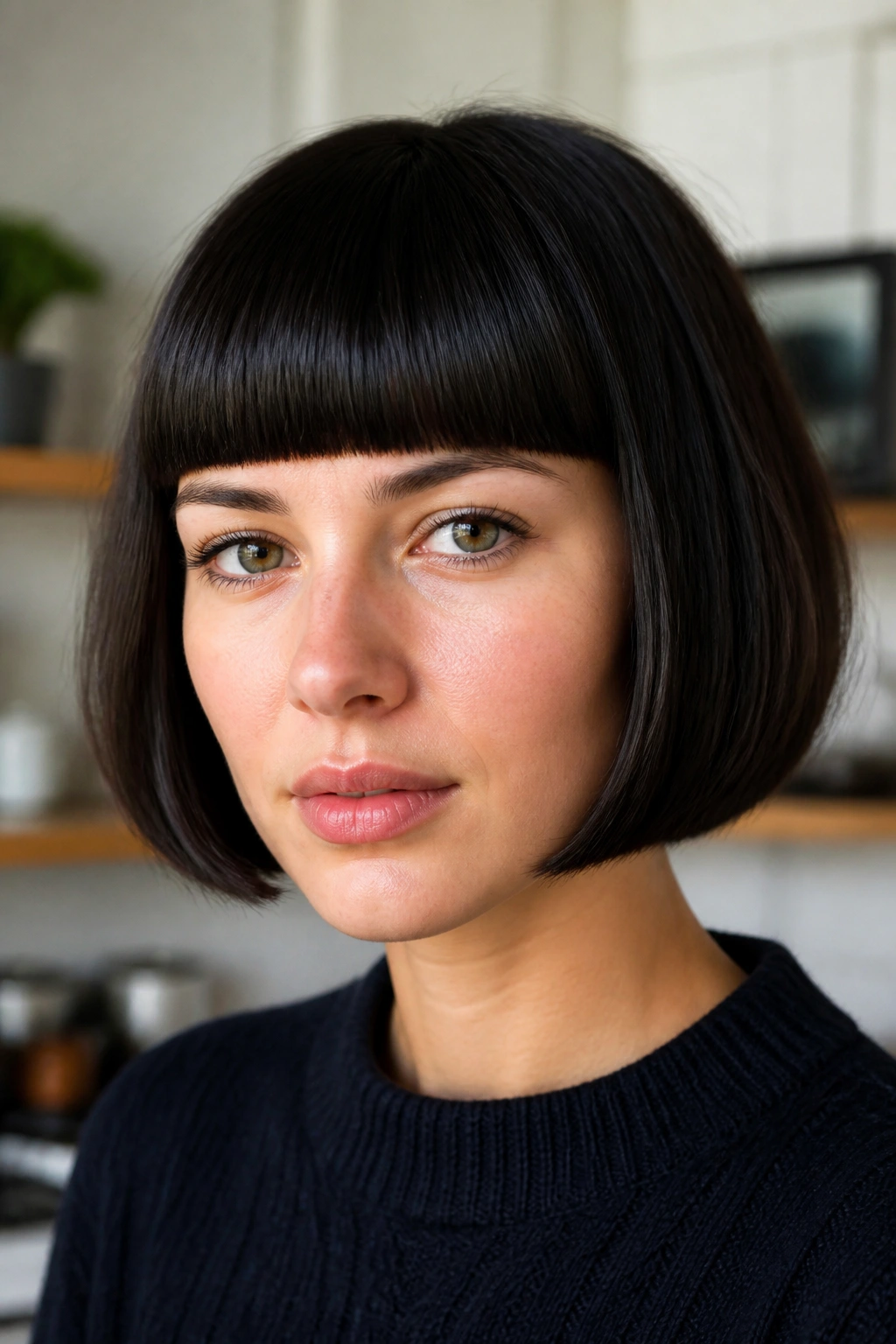
A bob with blunt bangs is a strong look. The fringe lands straight across the forehead, which gives the cut a clear frame and a little attitude without changing the short length underneath.
This is a smart option when a child likes hair out of the eyes and does not mind regular trims. The bangs need upkeep; there’s no way around that. If the hairline has strong cowlicks, the front will need careful shaping so it does not split apart by lunchtime.
A softer edge at the temples can help the fringe sit better and avoid that blocky, square look. The bang line should frame the face, not fight it.
19. Rounded Bob
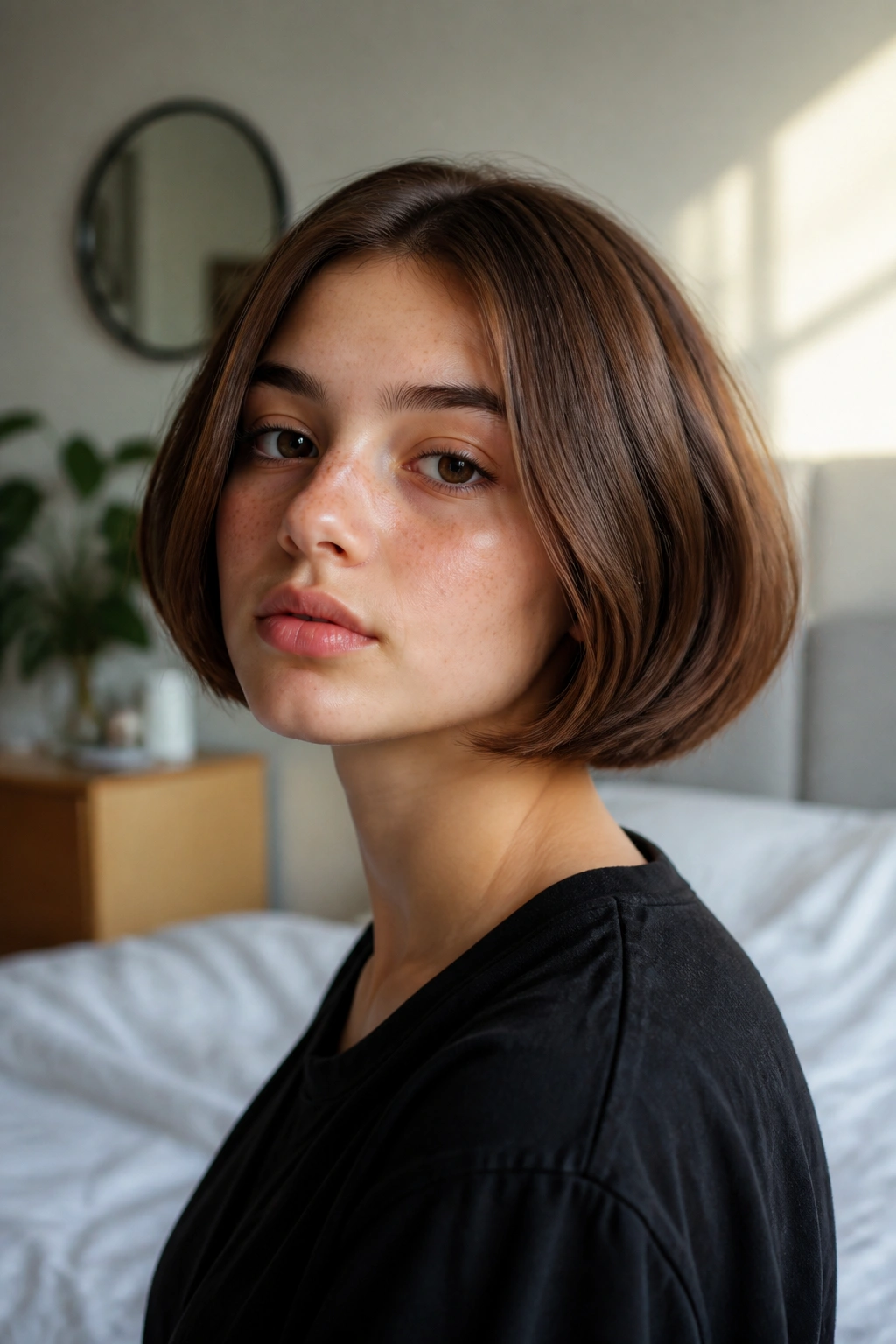
A rounded bob curves in toward the jaw instead of hanging flat and straight. The silhouette feels softer, and the sides hug the face in a way that can be very kind on girls who want a gentle shape rather than a hard line.
This cut works especially well when the hair has a natural bend. Straight hair can still wear it, but the ends may need a bit of round-brush help to keep the curve. On wavy or lightly curly hair, the shape often appears on its own.
Rounded bobs look especially nice when the neck is short or when the face benefits from a little softness around the cheeks. Small shape, big effect.
20. Tousled Bob for Girls Who Hate Fuss
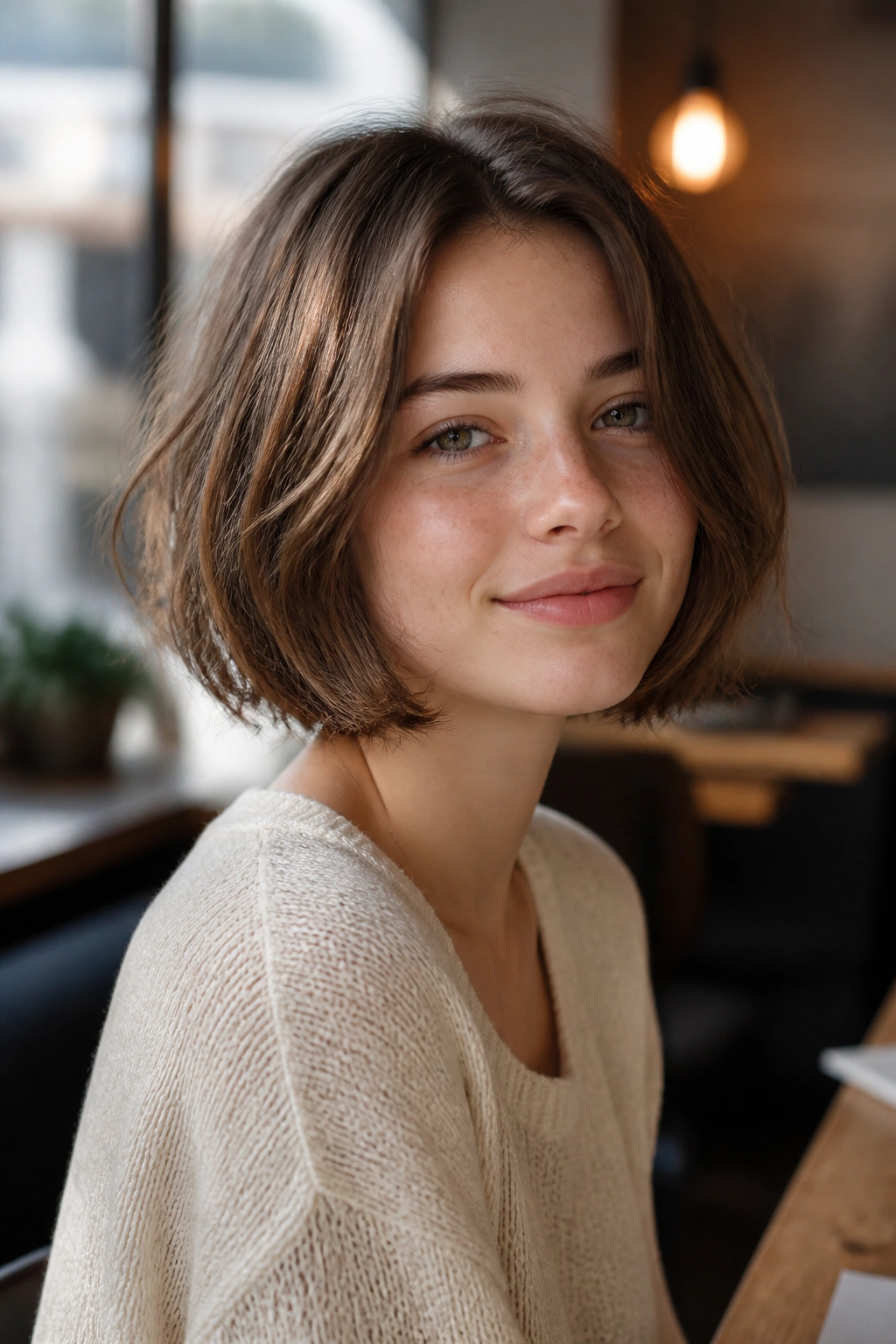
Some girls want hair that can be pushed into place and left alone. A tousled bob is built for that kind of life.
The ends are kept light and a little uneven, the layers are soft, and the finish is meant to look relaxed rather than perfect. That makes it a nice fit for active days, humid weather, or any routine where a brush gets used only when somebody remembers it exists.
What keeps it looking good
- Keep the length around the jaw or chin.
- Ask for gentle interior texture instead of heavy layering.
- Leave enough weight at the bottom so the cut still holds a shape.
A tousled bob should look like hair with a bit of movement, not hair that gave up.
21. Inverted Bob
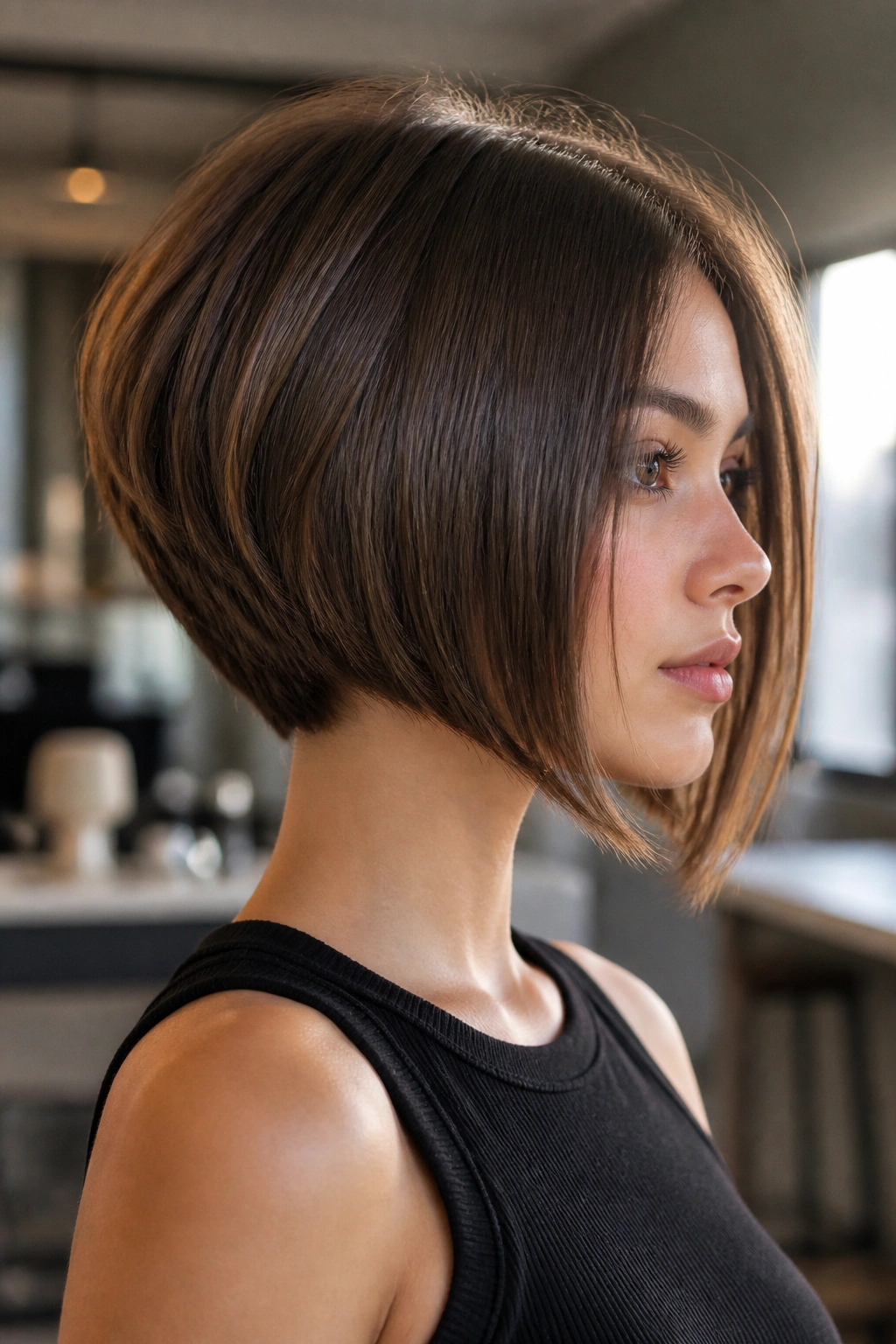
An inverted bob takes the slope idea and turns it up a notch. The back is shorter and more shaped, the front stretches longer, and the whole cut angles forward with a sharper line than an A-line bob.
How it differs from an A-line bob
- The back is more built up and tighter at the nape.
- The front pieces usually drop more clearly toward the jaw.
- The crown gets extra lift, which helps thick or heavy hair sit better.
That stronger angle gives the haircut a polished look from the side, and the back stays neat even when the hair is not freshly brushed. If the face needs length and the hair needs lift, this is one of the most useful short bob shapes.
22. Choppy Bob
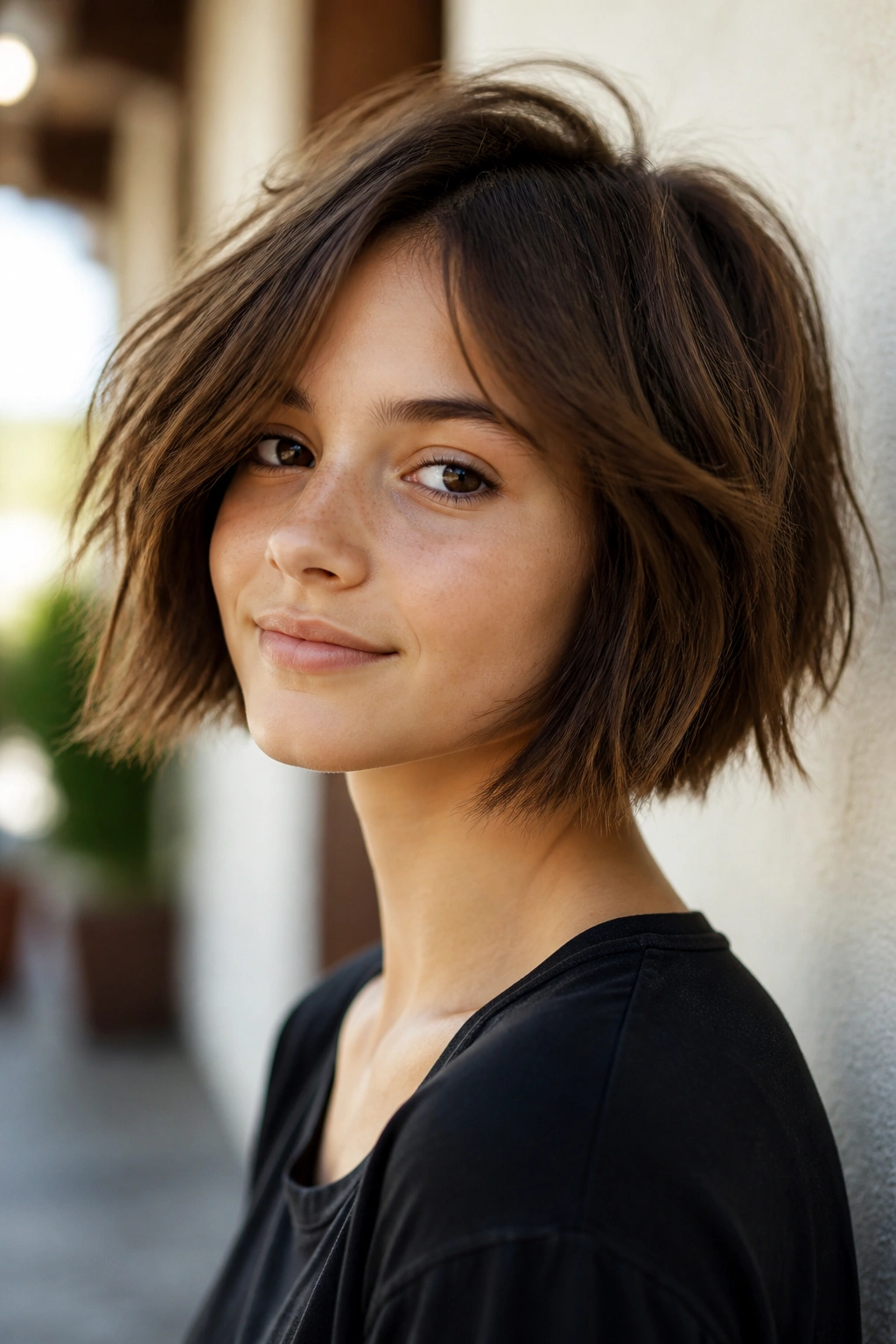
A choppy bob is for girls who want movement first and perfection second. The ends are point-cut, the pieces are broken up a little, and the shape keeps just enough line to stay a bob while still feeling loose.
This cut is a good fit for thick hair, wavy hair, and any child who hates the look of a stiff, flat perimeter. It can also help a bob grow out more easily because the ends do not have to stay perfectly even to look intentional.
Keep the choppiness controlled. Too much and it starts reading as rough instead of playful. A little unevenness is the whole charm. That small gap between neat and casual is where this cut lives.
Pick the haircut that matches the hair on an ordinary Tuesday, not the hair after a salon blow-dry. That one choice saves more brushing battles than any styling trick, and it usually means the cut will still look good when the school bell rings and the day gets messy.
