



A medium choppy bob for round faces works best when it breaks up softness instead of echoing it. That sounds obvious, but a lot of bob cuts miss the point: they stop right at the cheek, add bulk where you do not want it, and then wonder why the face looks wider. The good versions do the opposite. They create movement at the ends, leave a little breathing room around the jaw, and use parting and shape to pull the eye up and down instead of straight across.
The sweet spot usually sits somewhere between just below the chin and the collarbone. Too short, and the cut can puff outward. Too long, and you lose the crisp bob feel that makes the shape interesting in the first place. The best medium choppy bob haircuts for round faces are never stiff. They have a bit of swing, a bit of edge, and just enough mess to feel modern without looking like you forgot to finish your hair.
I’ve always liked bobs that do some quiet work for you. Not the kind that scream for attention. The kind that make your cheekbones look a little sharper, your neck look a little longer, and your whole face look more balanced without making the haircut look “designed.” That balance comes from small decisions: where the longest front piece lands, how much texture gets cut into the ends, whether the part sits dead center or slides off to one side.
So here’s the fun part. The right bob for a round face is not one single shape. It’s a family of shapes, and each one solves a slightly different problem.
1. Soft Chin-Skimming Bob with Side Part

A chin-skimming bob is one of the easiest places to start if your face is round and you want the cut to feel clean but not severe. The side part does a lot of the heavy lifting here. It shifts the bulk off center, which keeps the eye moving instead of parking right in the middle of the face.
Why It Works
The length lands just at or a touch below the chin, which is enough to stretch the face visually without dragging the whole shape down. The ends should be lightly choppy, not blunt and puffy. Ask for point-cutting at the last 1 to 2 inches so the bottom edge breaks up instead of forming a hard shelf.
- Best for fine to medium hair
- Works well with a round brush and a quick blow-dry
- Looks even better if the front pieces are 1 inch longer than the back
My favorite part: this cut looks polished on busy days and still has movement when you toss it behind one ear.
2. Collarbone Choppy Lob with Broken Ends

If you want the safest bet on the list, this is probably it. A collarbone-length lob gives round faces a little extra vertical line, and the choppy ends keep it from feeling heavy or blocky. It’s the haircut I suggest when someone says, “I want to keep some length, but I’m bored of my hair sitting flat.”
The real trick is the bottom edge. It should look piecey, almost lightly torn up, not neat in a way that turns the whole cut into a helmet. I like this cut with a soft bend through the mid-lengths and the last half-inch left straighter. That contrast keeps it modern.
Try a sea-salt spray or texture mist on damp hair, then rough-dry with your fingers. The finish should look lived-in, not crunchy. That little bit of disorder is what keeps the cut from widening the face.
3. Deep Side-Swept Bob with Long Front Pieces
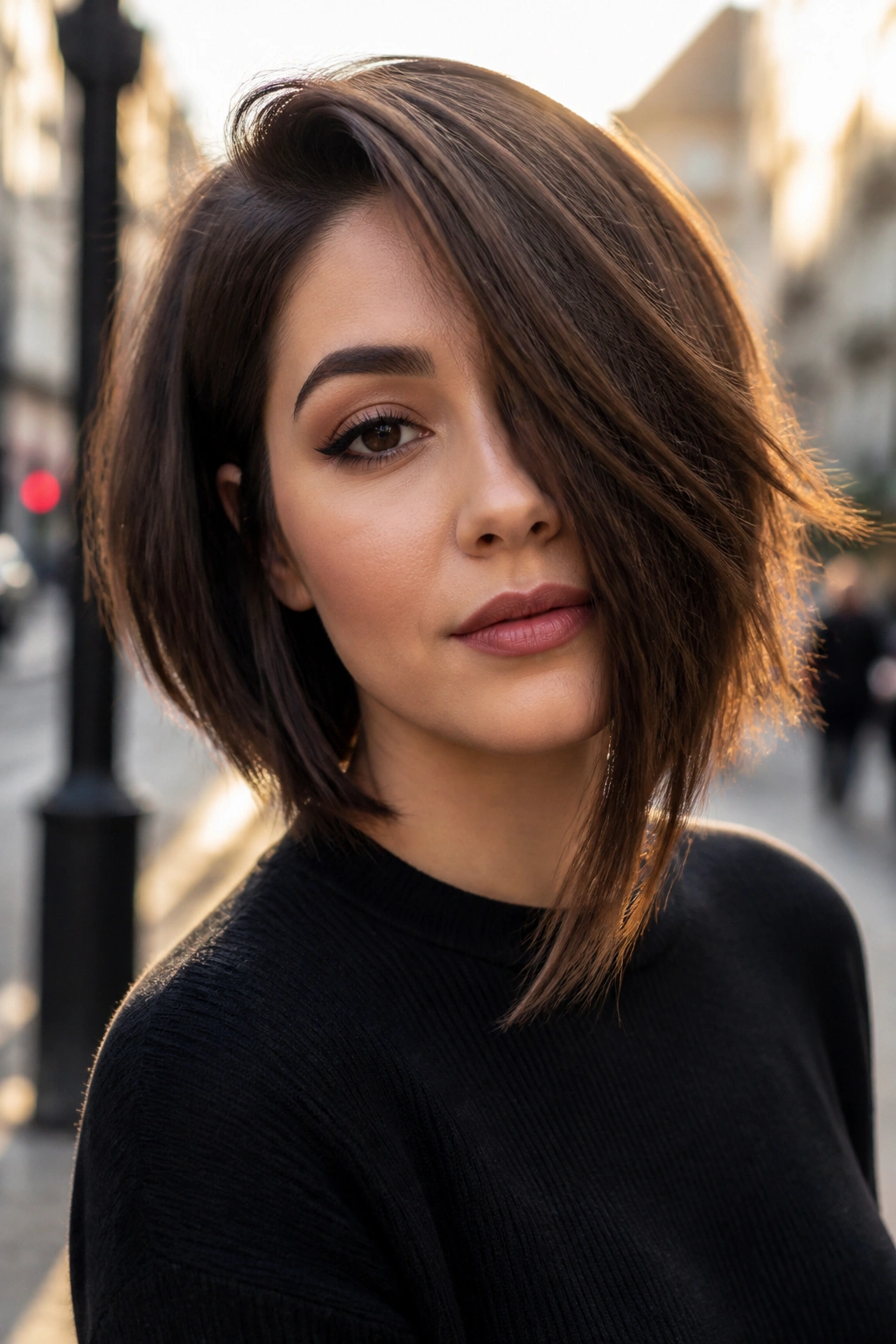
Why does a deep side part work so well on round faces? Because symmetry can be the enemy here. A deep side-swept bob breaks the face into more interesting lines, and the long front pieces draw the eye diagonally instead of letting it run straight across the widest point of the cheeks.
The front should hit somewhere between the mouth and the collarbone. Anything shorter starts to lose the effect. Anything much longer begins to act like a lob, which is fine if that’s what you want, but it changes the whole vibe.
How to Style It
Blow-dry the front section forward first, then sweep it across with a large round brush or a paddle brush. A soft bend is enough. You do not need a big curl.
This cut is especially good if your hair likes to fall flat at the crown. The side part builds a little lift there, and that extra height helps the face feel longer.
4. Feathered Jawline Bob with Airy Ends
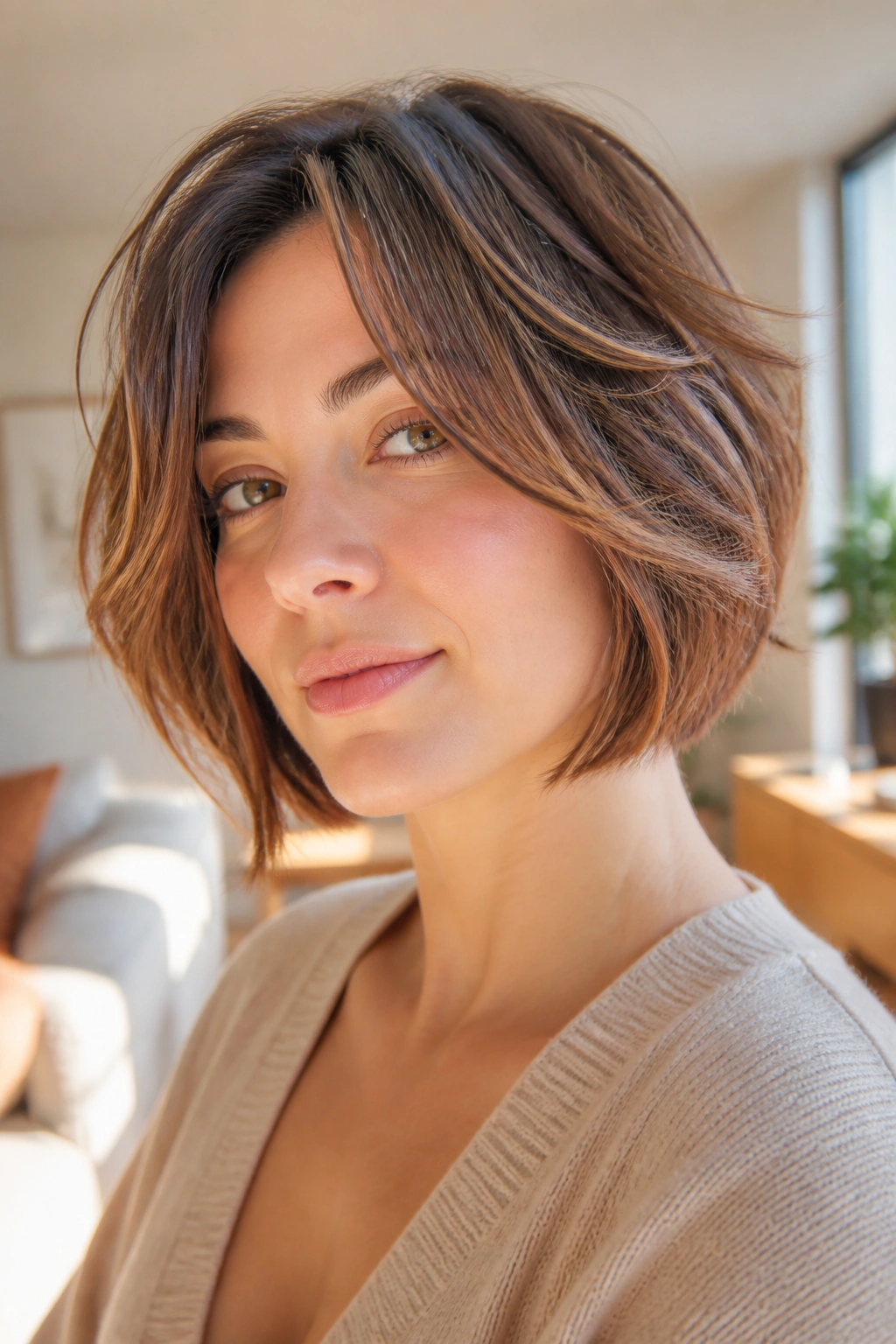
A round face can look too full when the bob ends are too dense around the jaw. That’s where feathering helps. A feathered jawline bob trims away the chunky edge and lets the ends move a little when you walk, which sounds minor until you see the difference in the mirror.
I like this one for hair that gets bulky at the bottom. The feathered ends make the cut lighter, and the jawline stays visible instead of disappearing under a block of hair. It’s a small change, but it matters.
What to Ask For
- Light feathering at the ends, not aggressive thinning
- Slightly longer front pieces
- A soft side part or off-center part
- No blunt line sitting exactly at the jaw
This bob looks best when the ends flick a little rather than curl under tightly. That tiny bit of movement gives the face room.
5. French-Inspired Bob with Loose Texture

This version has attitude, but in a quiet way. It sits in that sweet spot where the hair looks like it has shape from the cut itself, not from a lot of styling. On a round face, the trick is keeping the bob medium and a bit undone so it doesn’t puff out at the sides.
I’d keep the length just below the mouth or near the chin, with texture concentrated at the ends rather than all the way up through the crown. Too much crown texture can make the head look wider from the front. A loose fringe can work too, but only if it stays airy.
The appeal here is the movement. The cut should bend, not sit like a perfect curve. That’s what keeps it from feeling too precious. And honestly, that’s the part I like most.
6. Angled Bob with Longer Front Sections
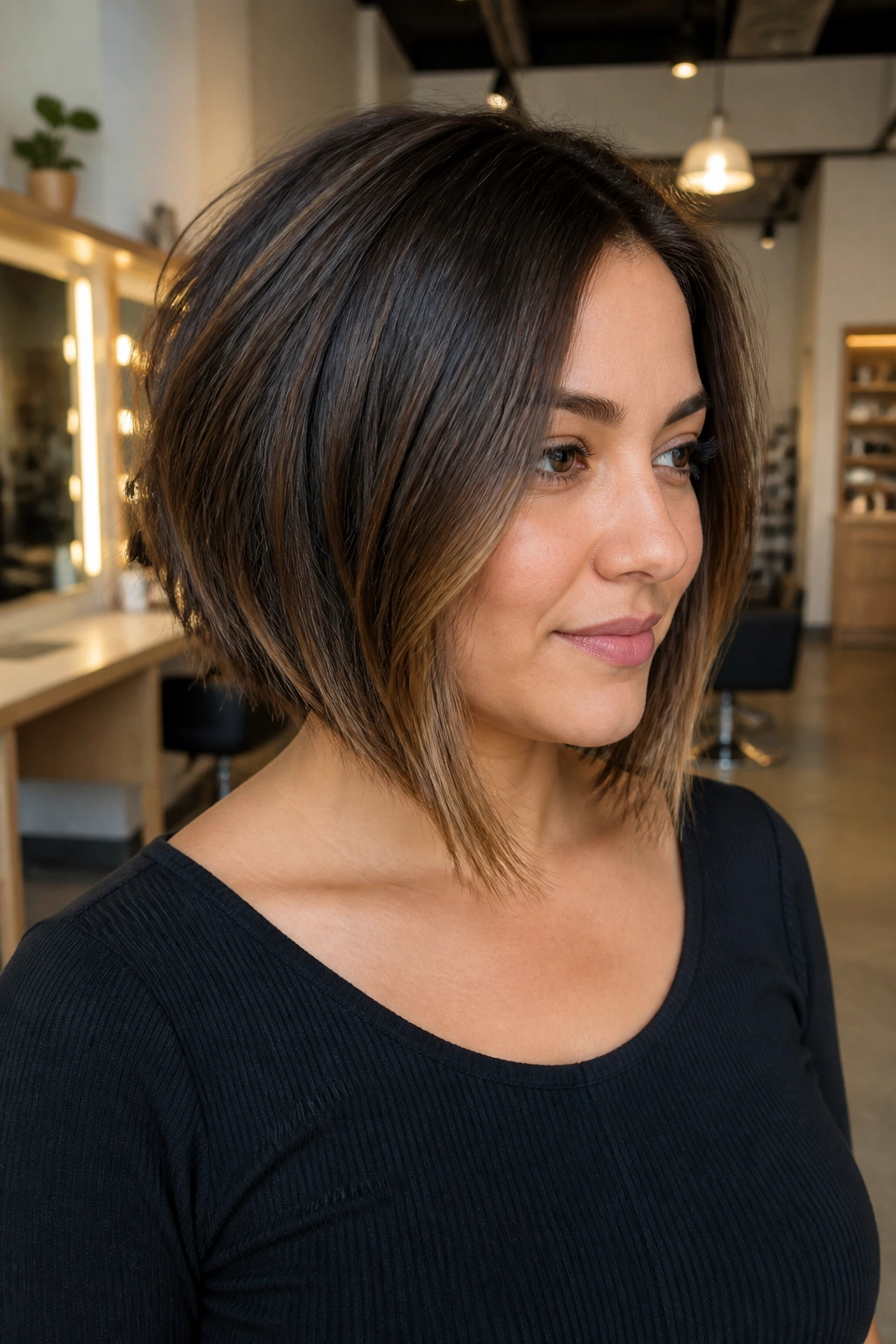
Unlike a one-length bob, an angled bob gives you a clear line from back to front, and that line is useful on round faces. The back stays a touch shorter, while the front drops lower, usually by 1 to 2 inches. That difference sounds small, but it changes the whole profile.
The angle creates length through the face and neck. It also keeps the shape from ballooning out at the cheeks, which is a common problem with medium bobs that are cut too even. I prefer this one with subtle texture at the ends rather than razor-sharp edges. Sharp edges can look a little severe if the hair is dense.
This is a strong choice if you like a bob that still looks neat after a long day. It holds its shape better than a very soft layered cut, and it gives a little structure when your hair air-dries badly.
7. Wavy Bob with Curtain Bangs
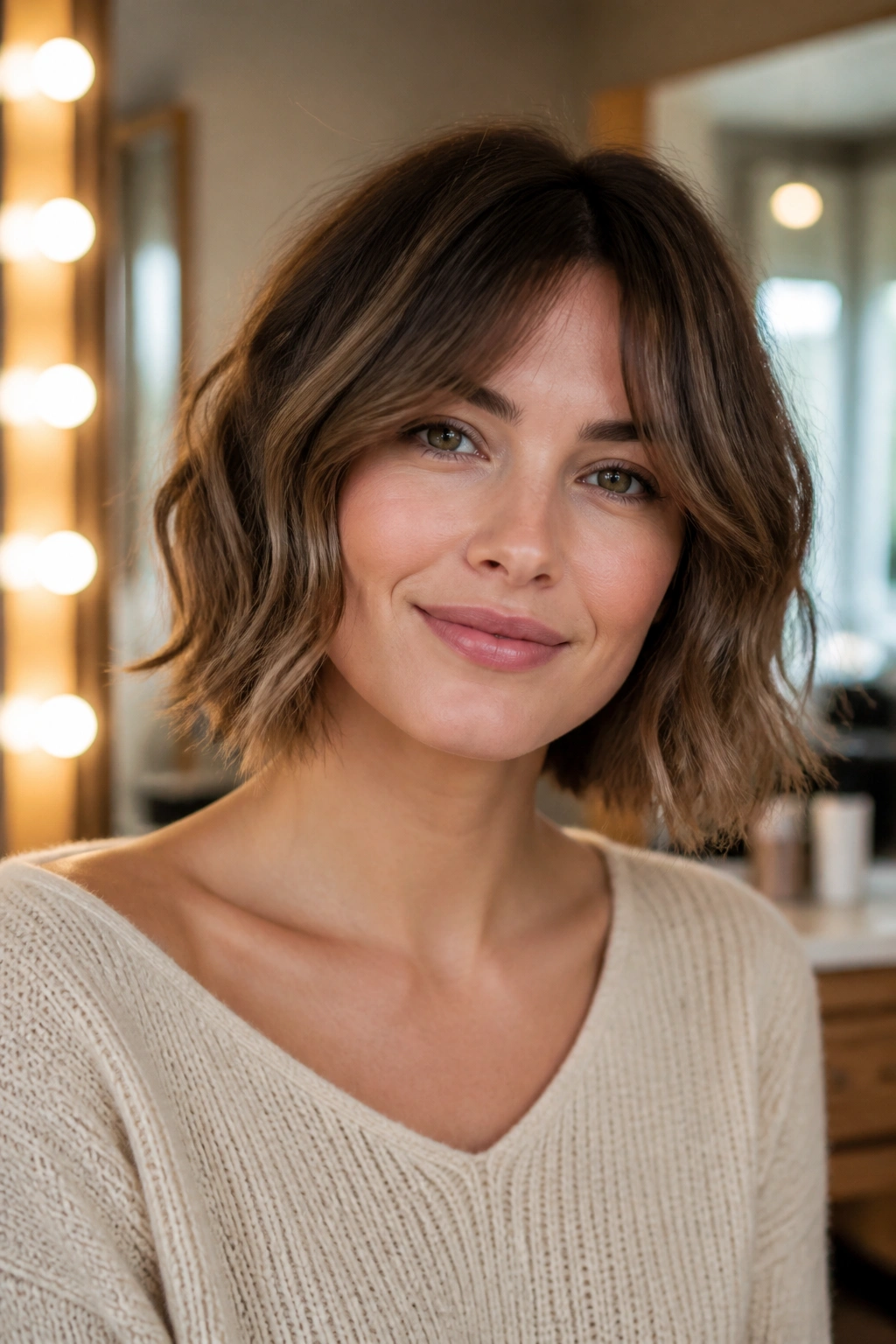
Curtain bangs are not off-limits for round faces. They just need the right landing spot. When they open around the cheekbone and blend into a wavy bob, they can be one of the prettiest options on the list because they frame the face without boxing it in.
The wave matters too. Keep it loose. A 1 to 1.25-inch curling iron or wand usually gives the right bend if your hair doesn’t wave on its own. The ends can stay straight for that slightly undone finish. Too much curl makes the cut look wider. Too much straightness makes it feel flat. The middle path is the one to watch.
Best Way to Wear It
Let the fringe fall in soft pieces, not one solid curtain. Then separate the waves with your fingers instead of a brush. A tiny bit of texture spray at the ends helps, but don’t drown it. The whole point is air.
8. Razored Bob with Piecey Ends
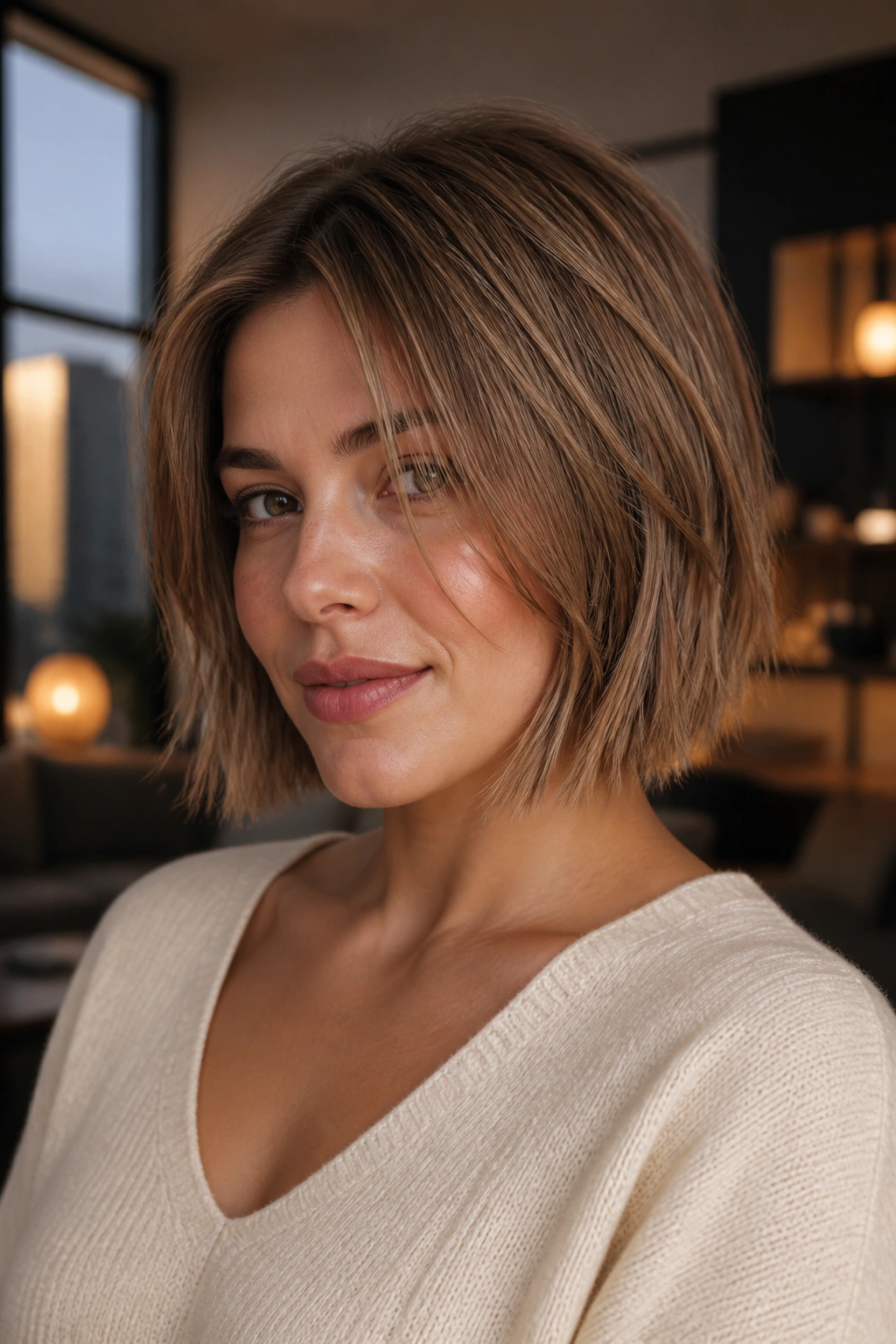
A razored bob can be gorgeous on a round face, but only when it’s done with restraint. I’m not a fan of overly shredded ends on fine hair; they can turn wispy in the wrong way. Still, when the razor work is light and the ends stay piecey, the shape gets a nice broken-up edge that keeps the face from looking too full.
The main benefit is air. The hair moves. It doesn’t sit in one thick line at the jaw, and that alone makes a difference. Keep the length medium and let the stylist carve just enough texture into the bottom half to separate the strands.
What to Watch For
- Ask for soft razor work, not heavy slicing
- Keep the top fairly smooth
- Use a pea-sized amount of styling cream, not a big glob
- Dry the hair with the head slightly forward for lift
This is a cut that looks better a little imperfect.
9. Off-Center Part Bob with a Loose Bend

A round face and a dead-center part can sometimes feel too symmetrical. An off-center part fixes that in a low-key way. Not dramatic. Just enough to shift the weight and make the haircut feel less broad.
Picture a bob that lands around the collarbone with a loose bend through the mids. The front pieces should skim the cheeks, then fall away from the face. That small curve opens the whole shape. It’s especially nice if you wear your hair tucked behind one ear now and then, because the part still keeps a soft line running through the front.
I like this cut because it doesn’t ask for much. A quick blow-dry, a little smoothing cream, and you’re done. If your hair is naturally straight, the off-center part gives it shape without needing much heat.
10. Curved-Under Bob with Hidden Layers
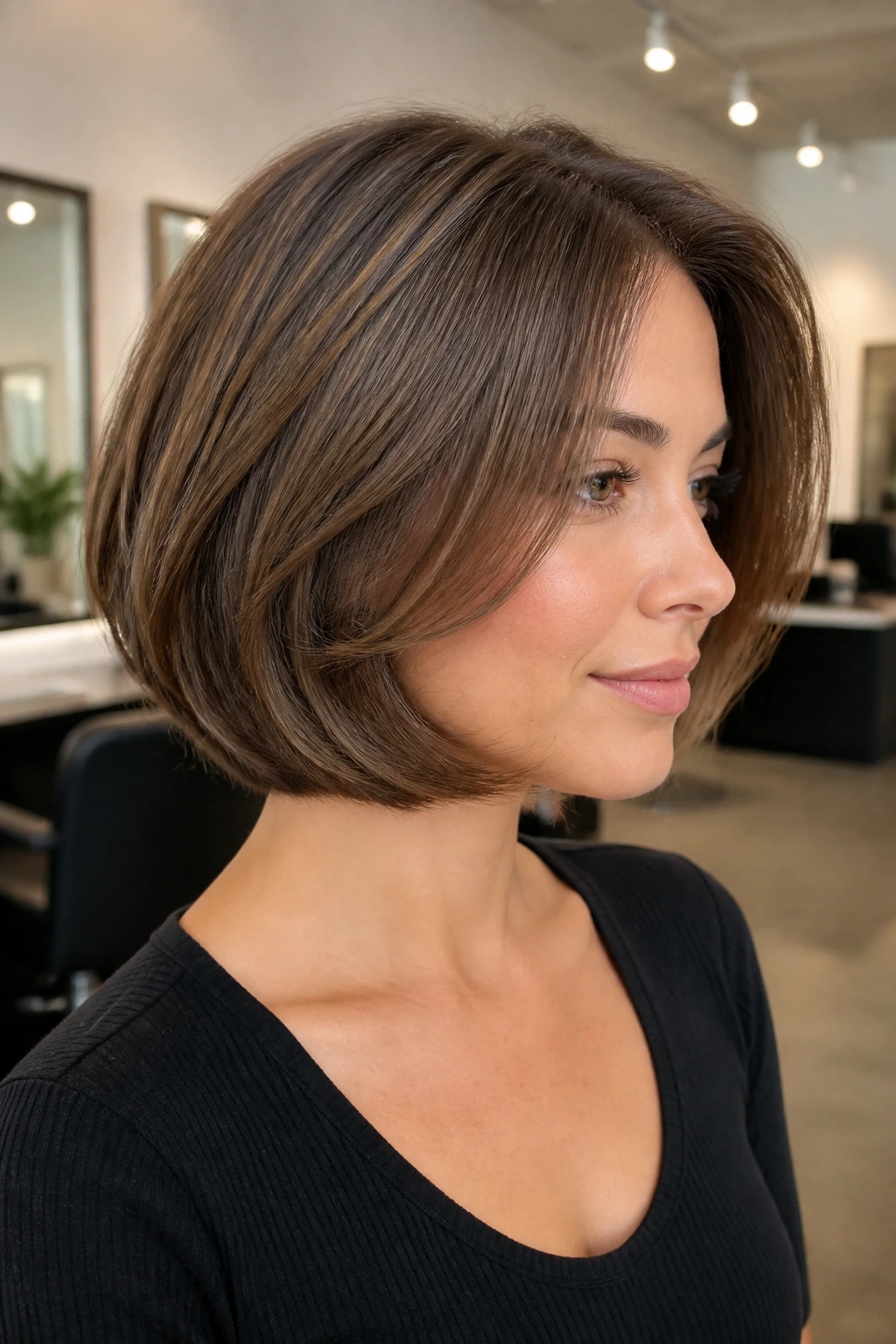
This cut is for the person who likes tidy hair but does not want a rigid blunt line. The curve-under shape gives the bob a clean outline, while the hidden layers keep it from turning boxy around the jaw. On a round face, that matters.
The layers should sit inside the haircut, not on the surface. That keeps the outside shape smooth. If the top layers are too short, the bob can puff out at the sides. If they’re tucked inside and only lightly removed, the hair lies better and keeps its swing.
This is a smart option for straight or slightly wavy hair. It gives a polished finish with less styling than you’d think. A quick bend under the ends with a round brush is enough. And yes, it still counts as choppy if the internal layers are done well.
11. Sleek Straight Bob with Wispy Ends
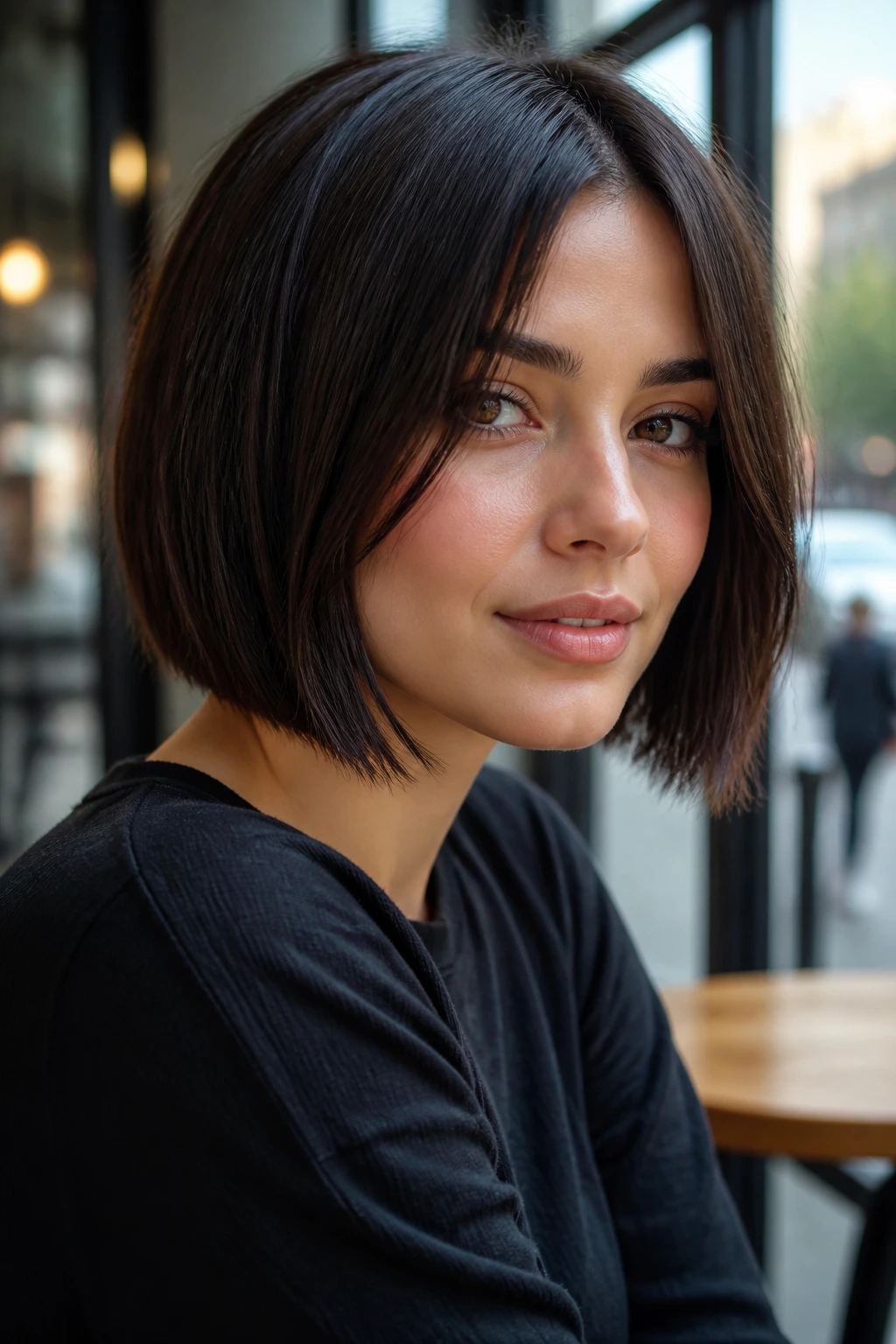
A sleek bob can work on a round face if the ends are softened. That’s the part people miss. They assume sleek means blunt, and blunt is where things can go sideways. A sleek straight bob with wispy ends gives you the clean look without the hard edge that adds width.
I’d keep this one medium, never chin-short. The hair should fall just below the jaw or near the top of the collarbone. That extra inch or two buys you length through the face. The ends can be lightly texturized so they don’t look like a ruler line.
There’s also a nice contrast here: smooth surface, broken edge. That contrast is what makes it feel expensive-looking without trying too hard. Use a flat iron only on the outer layer if your hair needs polish, then leave the bottom a little softer.
12. Shaggy Bob with Bottleneck Bangs
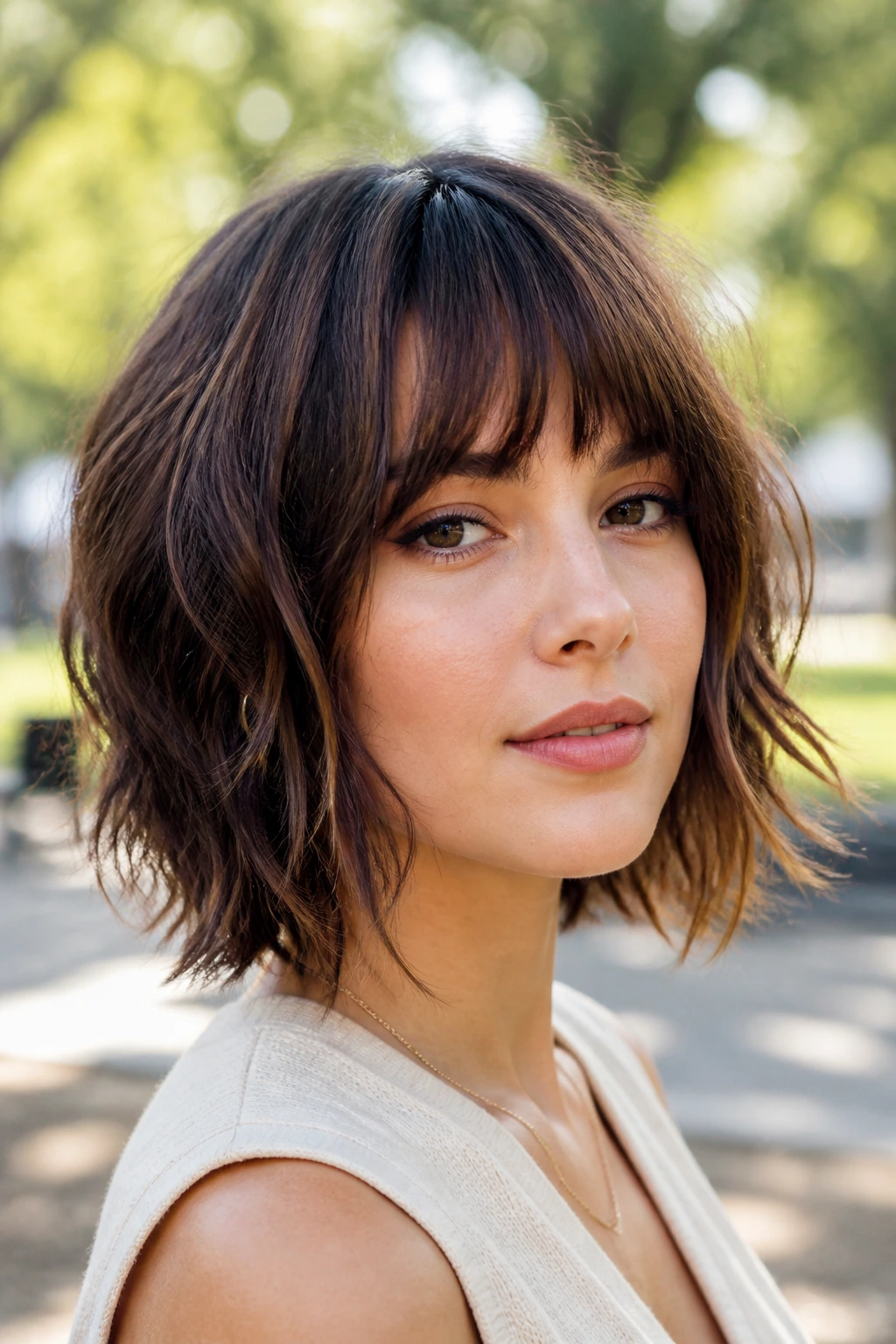
This is one of my favorites for people who want movement. A shaggy bob with bottleneck bangs has enough texture to stop the face from looking round and full, but it still keeps a bob shape instead of drifting into full shag territory. The bangs start a little narrower near the center, then open around the eyes and cheekbones. That shape is doing real work.
Why It Works So Well
The bangs pull the eye upward and inward before releasing it downward. That little zigzag breaks up the circle effect that round faces sometimes have. The bob itself should stay medium and a touch uneven at the ends.
Keep the layers soft. If they get too high, the cut can flare out around the sides. What you want is movement that falls, not movement that expands. Big difference.
This is a good cut if you like hair that looks better after you’ve worn it for a few hours.
13. Asymmetrical Bob with One Longer Side
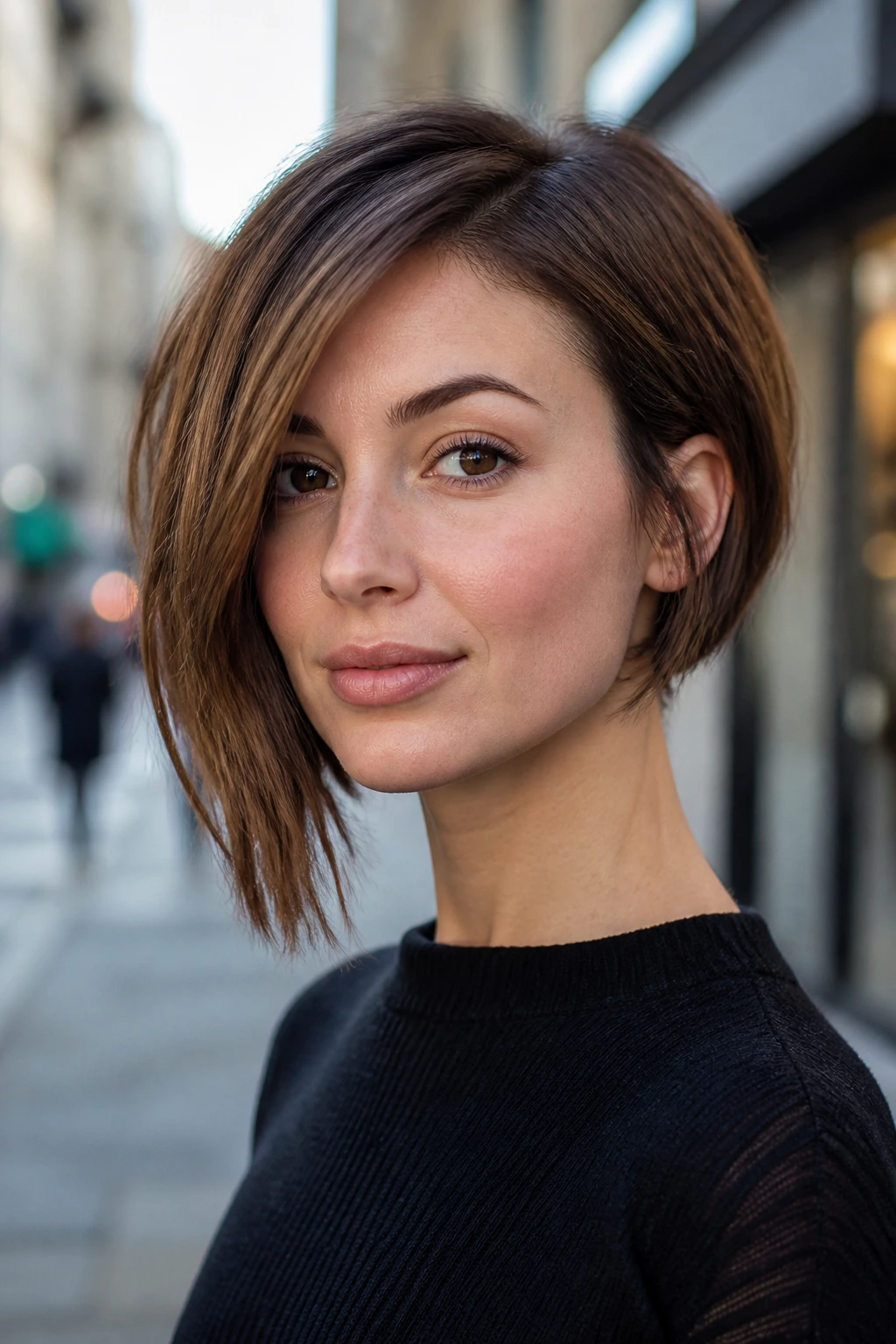
Can asymmetry help a round face? Yes, if it’s subtle. A bob where one side is just a bit longer creates a visual line that interrupts softness. You are not going for a dramatic fashion haircut here. You want a quiet imbalance, maybe 1 to 1.5 inches of difference, enough to be noticed but not enough to look costume-y.
The longer side can skim the cheek and jaw while the shorter side opens up the neck. That mix makes the whole face feel less circular. I like this most on straight or lightly wavy hair because the shape reads clearly. On very curly hair, the asymmetry can get lost unless the cut is kept precise.
If you want to wear glasses or bold earrings, this cut is especially nice. The line of the hair plays against the frame and keeps the face from feeling too closed in.
14. Chin-to-Collarbone Transition Bob

Some of the best cuts are the least flashy. A chin-to-collarbone transition bob sits in that in-between space where the hair is long enough to slim the face but short enough to stay clearly bobbed. It’s the kind of cut you get when you’re growing out a shorter bob and realize, halfway through, that the shape looks better than expected.
The important part is the front. Let it graze the collarbone or just miss it, then keep the back a touch shorter. That creates a long line without losing the bob feel. The ends should stay a little rough around the edges, not feathered to the point of frizz.
Why It Flatters Round Faces
It avoids the widest point of the cheeks. That’s the whole trick. The length falls below the face’s fullest area, so the overall shape looks longer and calmer. Very simple. Very effective.
15. Invisible-Layer Bob for Fine Hair
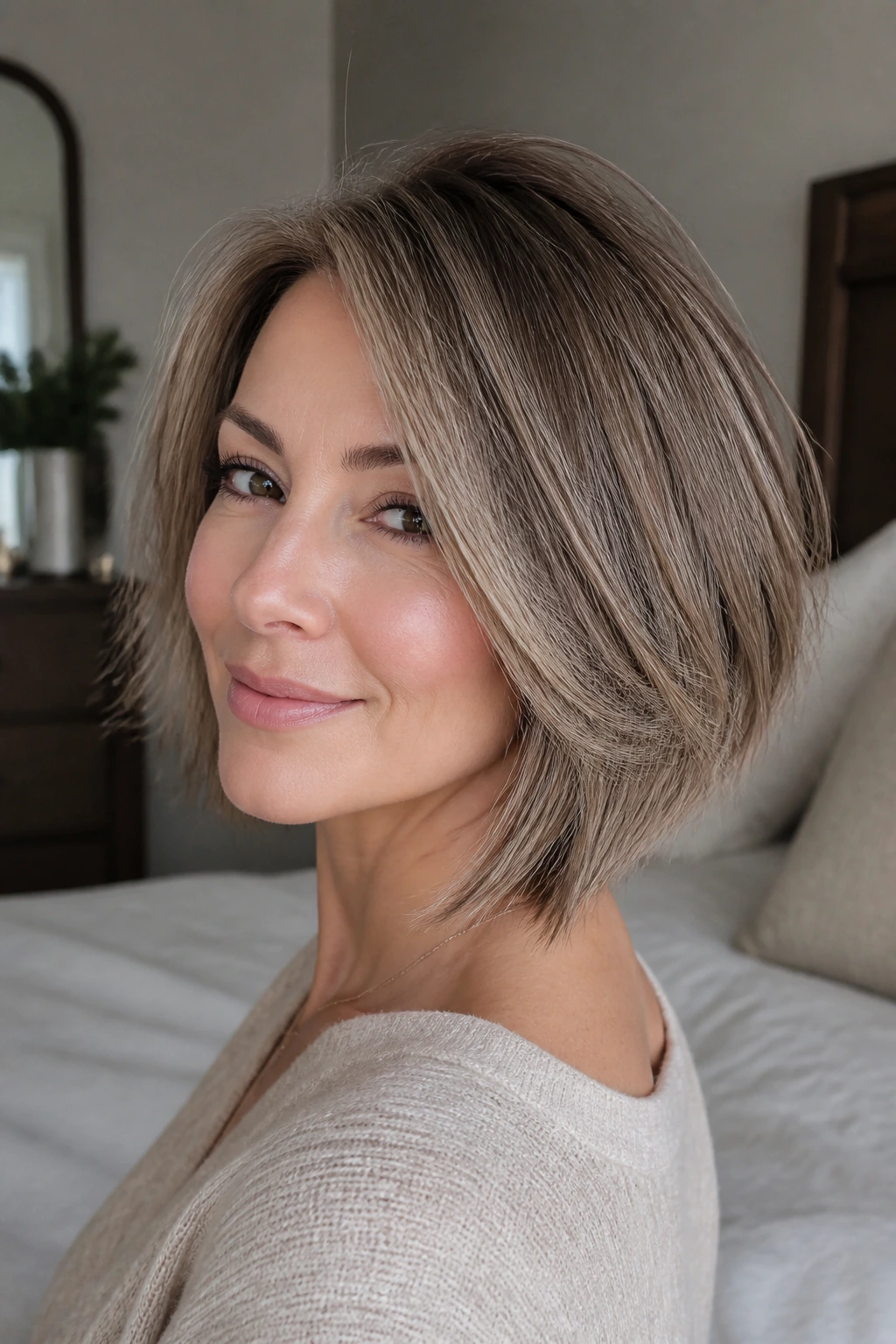
Fine hair and round faces can be a great match if the cut is handled carefully. Too many visible layers and the hair gets thin at the ends. Too few and it falls flat against the head. The invisible-layer bob sits in the middle, hiding structure inside the cut so the outer line stays smooth.
The layers are cut underneath, often around the crown and upper sides, where they create lift without showing choppy steps on the surface. That keeps the outline clean. The result is a bob that has body at the roots and still skims around the jaw instead of swelling out.
I like this one with a soft side part and a root-lifting mousse. Nothing heavy. Fine hair does not need more weight. It needs direction.
16. Weight-Removed Bob for Thick Hair
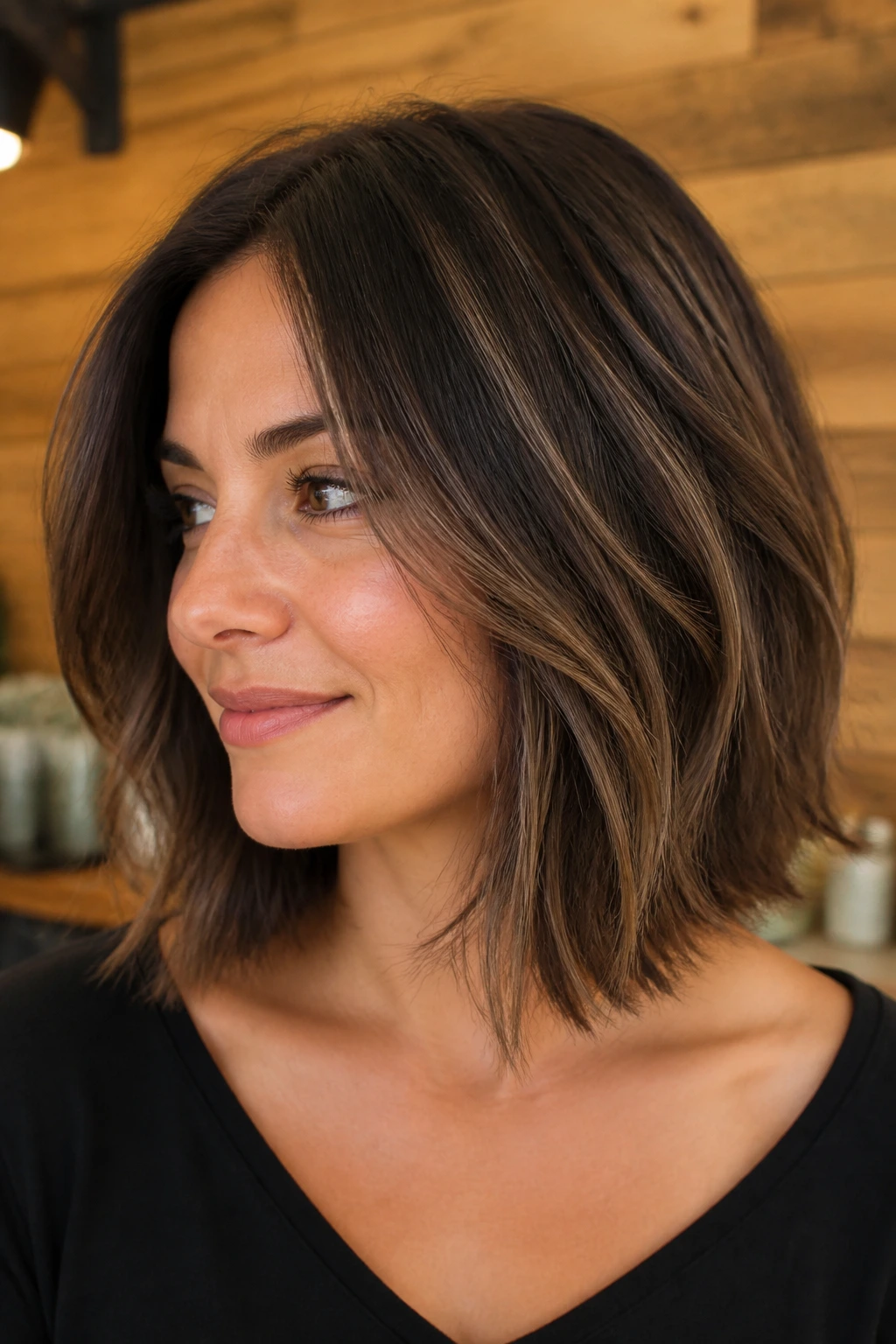
Thick hair can look gorgeous in a medium bob, but only if the bulk is controlled. If the ends are all one dense line, the cut can sit too wide on a round face. A weight-removed bob fixes that by taking out mass from the interior, not by chewing up the ends.
How to Keep It From Puffing Out
- Ask for internal debulking, not aggressive thinning at the perimeter
- Keep the longest front pieces around the collarbone or just above it
- Use point-cutting to soften the ends
- Blow-dry with tension so the hair falls close to the head
This cut is not about making thick hair look smaller. It’s about making it move. A little movement changes everything. Without it, thick bob hair can feel like a block. With it, the shape feels light and controlled.
17. Air-Dry Bob with Natural Bend
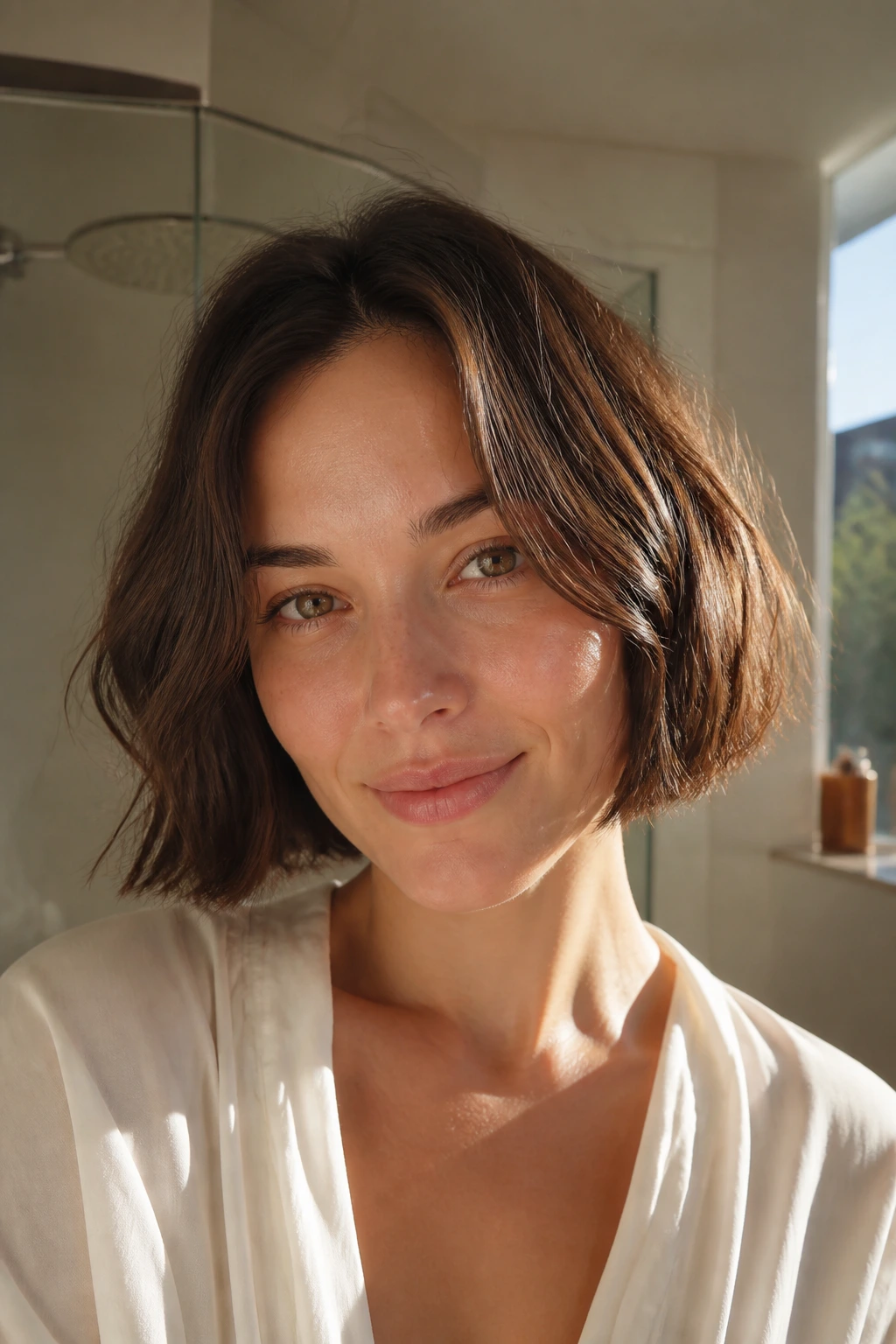
Some cuts are designed for people who are never going to spend twenty minutes with a round brush. This is one of them. An air-dry bob with natural bend should work with the hair you actually have, not the hair you wish you had on a good day.
The length should sit a little below the chin, with loose internal texture and a soft edge. If your hair has a bend, the cut should follow it rather than fight it. That means fewer blunt corners and more subtle layers through the lower half. The result is a shape that dries into something flattering without much effort.
A little leave-in cream goes a long way here. Scrunch, leave it alone, and let the ends dry in their own direction. If you keep touching it, the shape gets weird. Hands off helps.
18. Beachy Bob with One-Inch Wand Waves
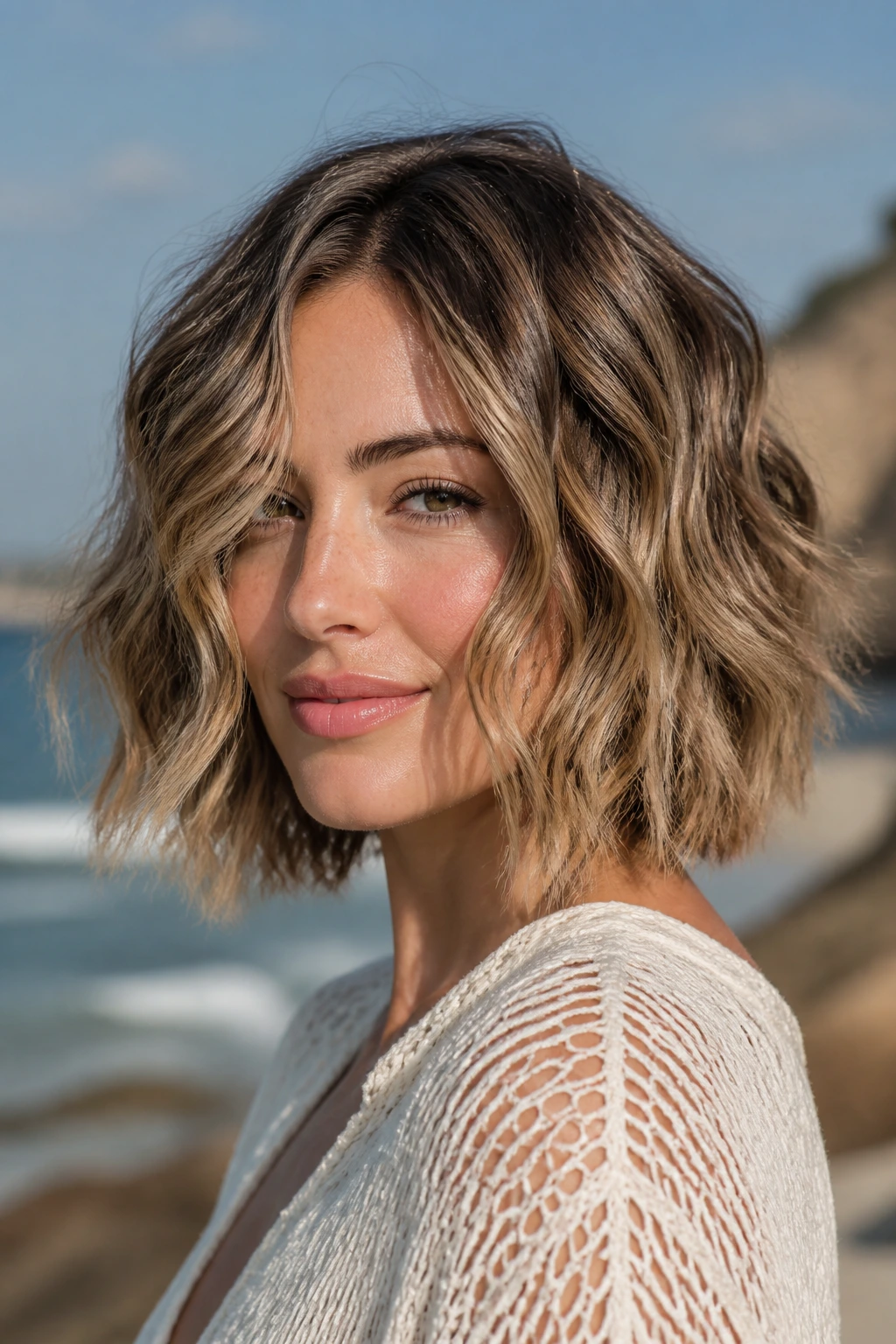
This is the bob that looks relaxed but still feels intentional. The haircut needs enough length to hold a wave, so keep it at the chin-to-collarbone range. Then add loose waves with a 1-inch wand, leaving the last inch of each section out for a softer finish. That little detail matters more than people think.
The waves should not all curl the same way. Alternate directions so the hair doesn’t form one giant pattern around the face. Round faces benefit from that broken-up look because it keeps the width from building in one place.
This cut works especially well when the ends are lightly choppy. The wave pattern settles into the texture instead of sitting on top of it. That means the hair looks fuller, but not bulky.
19. Soft Inverted Bob with Lift in the Back
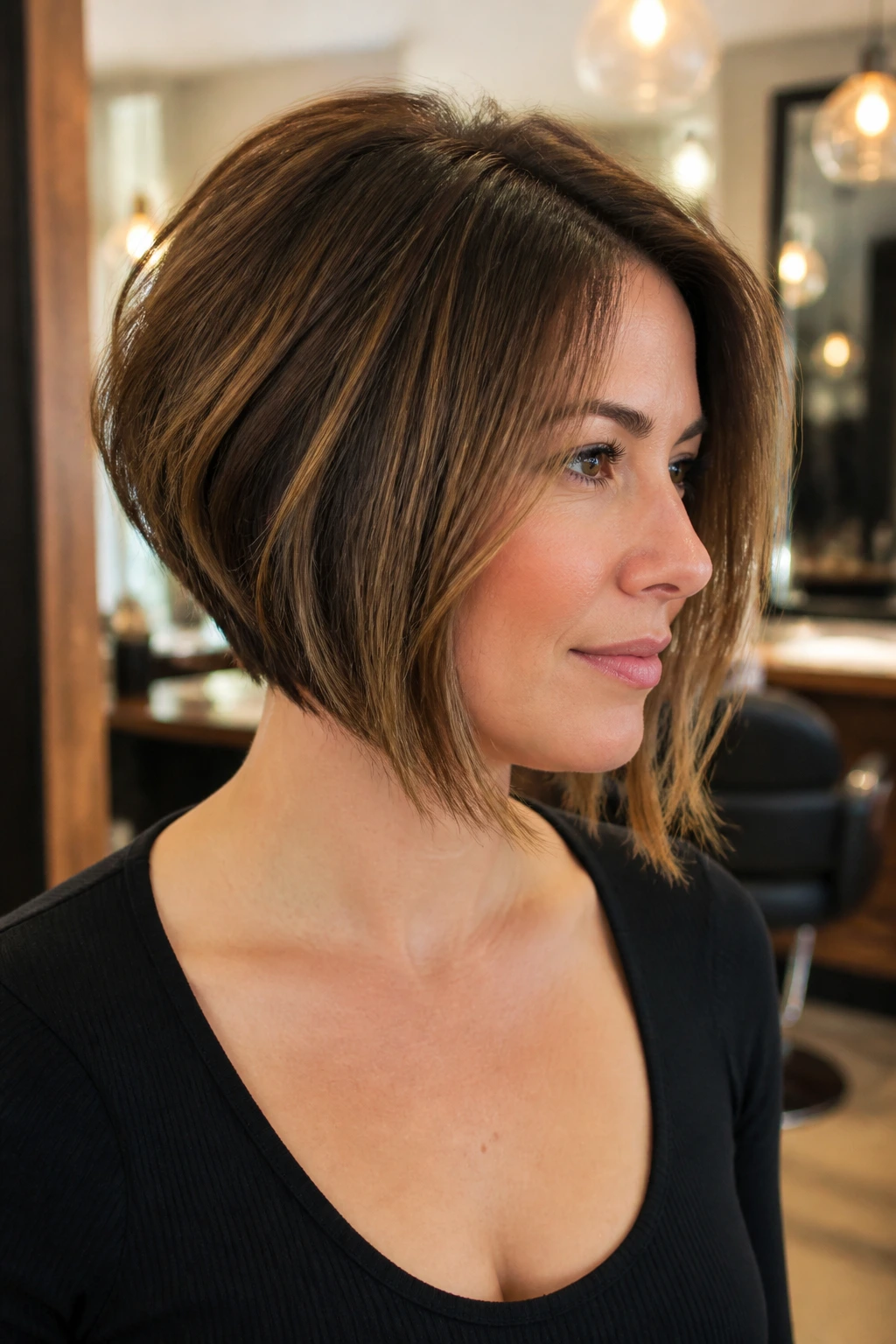
A classic inverted bob can be too sharp for some round faces, but a softer version has real promise. The back stays a little higher, which gives lift at the crown, while the front stretches longer and skims the face. That contrast creates a nice visual slope.
I prefer this shape when the back is not stacked too hard. You want lift, not a little pyramid. A rise of about 1 inch to 1.5 inches at the nape is often enough. More than that, and the cut can start to feel dated.
This is one of the better choices if your hair falls flat at the roots and you want a bob that keeps some energy. The shape gives you height in the right place and keeps the face from reading as wide.
20. Tucked-Behind-the-Ear Bob with Side Fringe
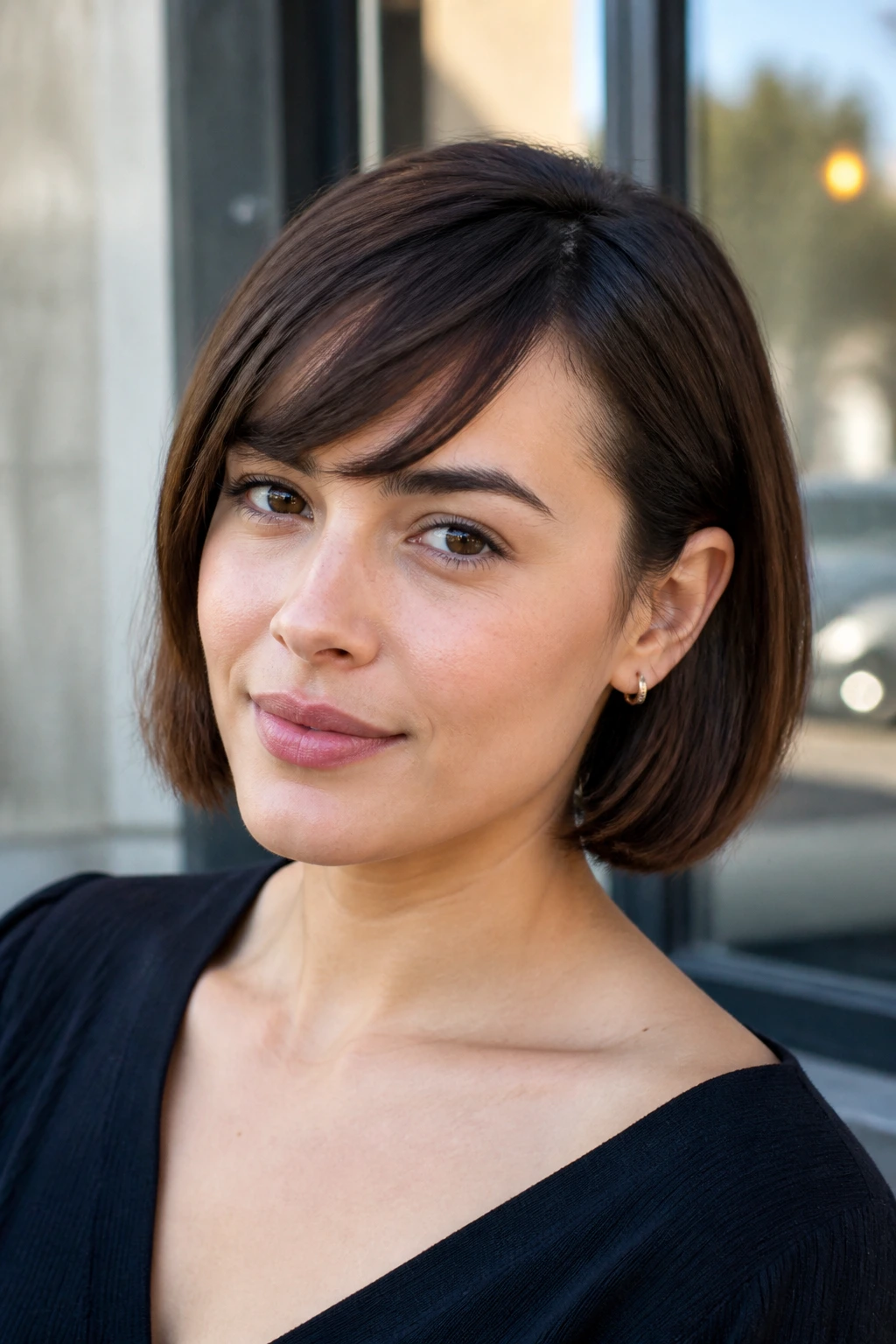
A tucked bob sounds simple because it is simple. That’s the charm. One side goes behind the ear, the other falls forward in a soft fringe, and suddenly the face opens up. For round faces, that exposed space around the cheek and jaw can be a quiet little miracle.
The fringe should not be heavy. It needs to sweep, not sit. I like this best when the fringe starts near the brow and curves down toward the cheekbone. That line keeps the face from looking too square while still breaking up roundness.
This cut is a good reminder that styling placement matters as much as the cut itself. Sometimes the haircut is fine, and the real magic comes from where you put the hair after it’s dry.
21. Curly Choppy Bob with Length at the Front
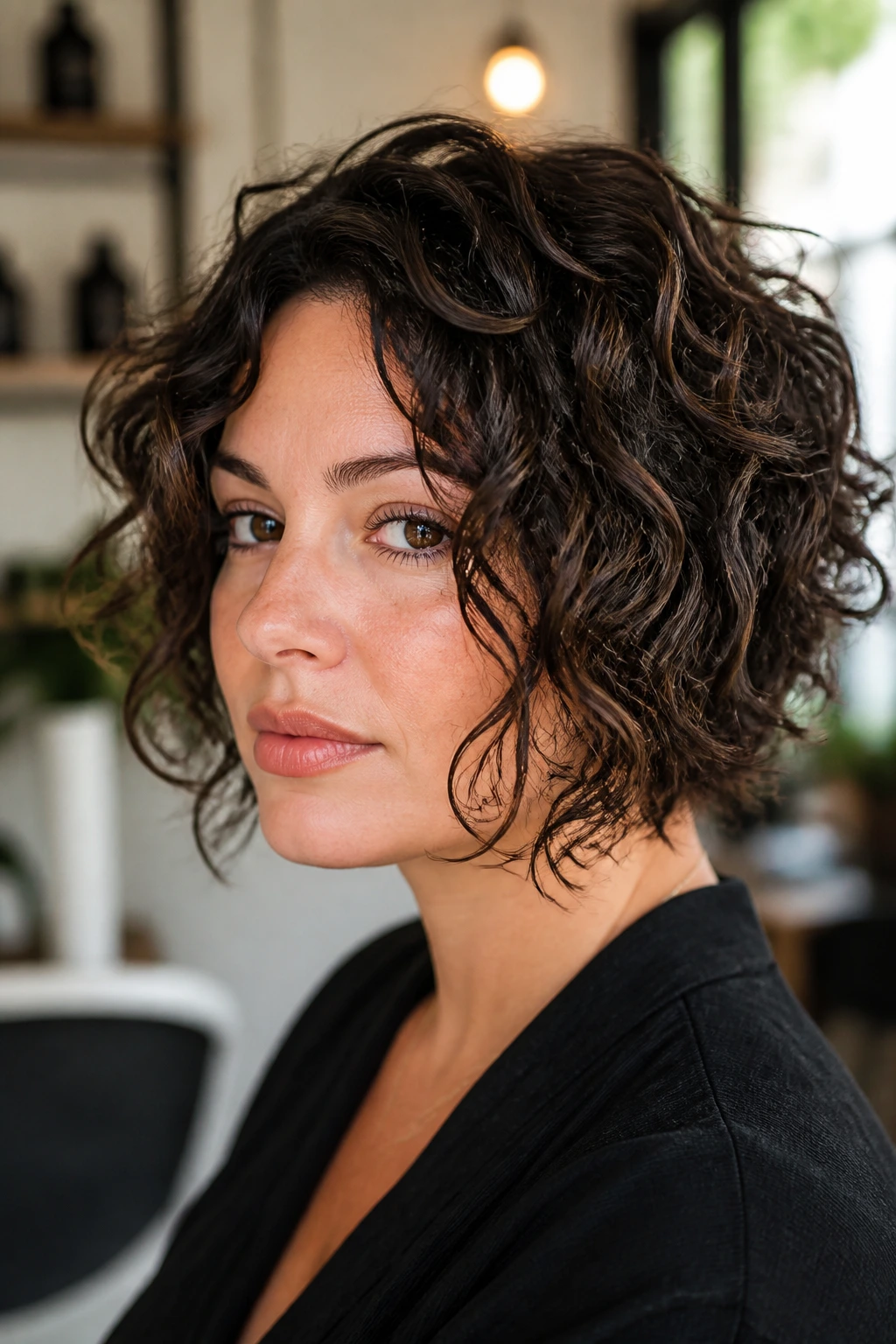
Can curly hair wear a bob on a round face? Absolutely. The trick is to leave the front a touch longer and keep the layers shaped so the curls stack in a vertical line instead of exploding outward. That means the best curly bob is rarely the shortest bob.
The front pieces should land near the jaw or below it, depending on shrinkage. Curl pattern changes everything here, so the cut has to respect that. A curl-friendly shape that looks great wet can still shrink too much when dry, and that’s where people get surprised in the chair.
What Makes It Work
The interior should be lightly layered to remove bulk, while the perimeter keeps enough length to stretch the face. Ask for a dry cut if your curl pattern is unpredictable. It sounds fussy, but it saves heartbreak.
22. Low-Maintenance Bob with Minimal Styling

Not everyone wants a bob that needs a full blowout to behave. Some of the best medium choppy bob haircuts for round faces are the easy ones. A low-maintenance version should fall into place after a rough dry, maybe with a quick pass of a brush through the front and done.
The shape should be forgiving. Think soft layers, lightly broken ends, and a length that sits below the jaw so it doesn’t flare out at the widest part of the face. That one decision matters more than an extra styling product. It also makes the cut easier to live with on humid days, when hair tends to inflate for no good reason.
I like this version for people who are busy, lazy, or both. No shame there. Hair that looks good with little fuss is worth its weight in gold.
23. Soft Blunt-Edge Bob with Choppy Interior

This cut is a nice middle ground if you love a clean outline but do not want the hardness of a straight blunt bob. The perimeter stays fairly even, which gives the haircut polish. Inside that shape, though, the texture gets broken up so the hair can move.
That contrast is useful on round faces because the blunt edge gives structure while the choppy interior keeps the bob from becoming too boxy. The length should stay medium, and the outer line should hover below the jaw. If it sits right at the cheeks, the shape can turn heavy fast.
Best For
- Straight hair that gets flat at the roots
- Faces that want a little more structure
- Anyone who likes neat hair with a soft twist
This is one of those cuts that looks expensive without being precious.
24. Side-Swept Fringe Bob with Face Framing
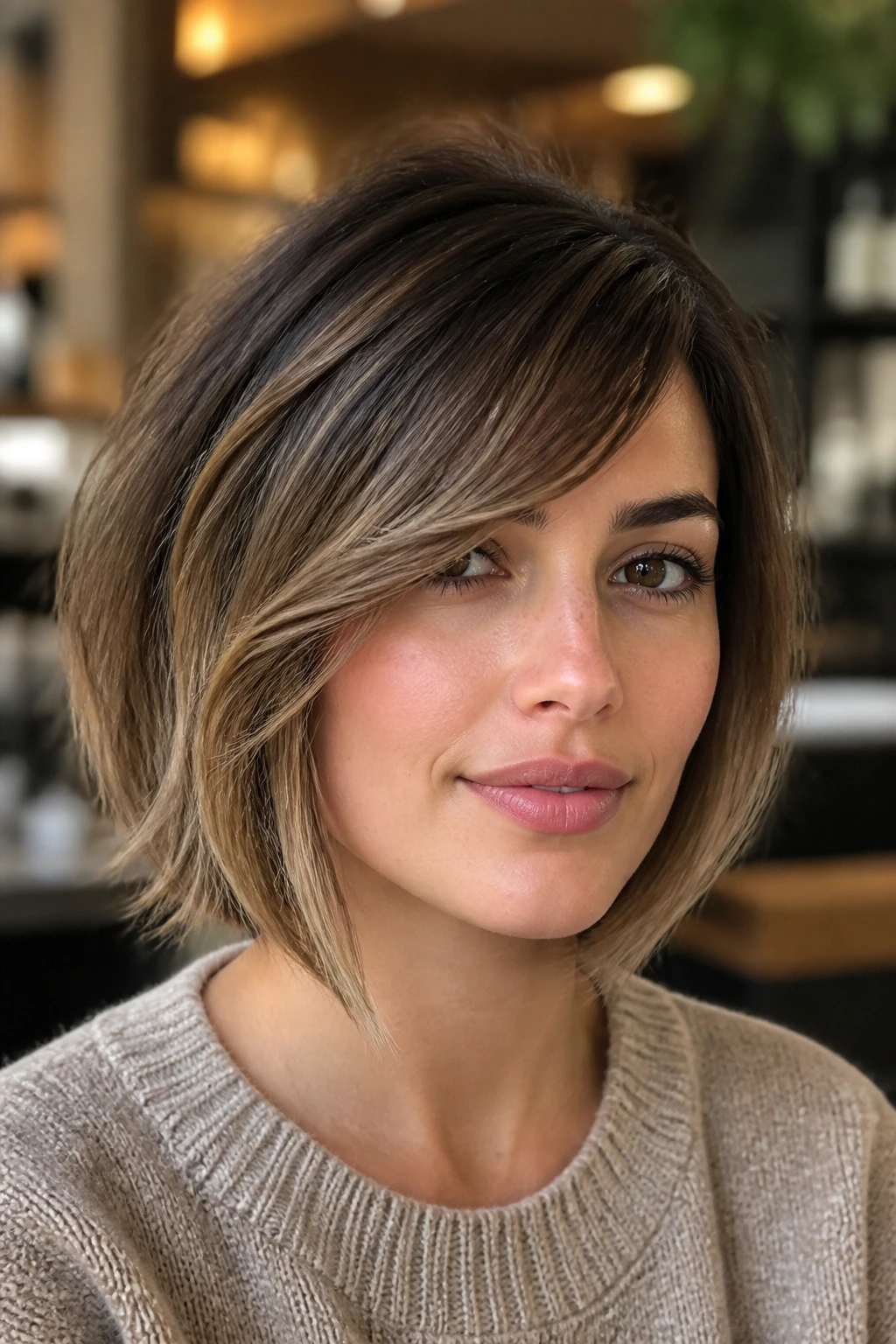
A side-swept fringe can be a very good friend to a round face, as long as it is not too thick. It should move diagonally across the forehead and blend into face-framing pieces that fall toward the cheek and jaw. That diagonal line does a lot of work. It keeps the eye moving, and that movement matters.
The bob itself should stay medium, with the longest sections around the collarbone or just under it. The fringe and the side framing should feel connected, not chopped into separate pieces. If the fringe is cut too short, the face can look shorter. If it is too heavy, the forehead gets crowded. Neither is ideal.
I like this cut on hair that has some natural body. The fringe falls better, and the face-framing pieces stay soft instead of sticking out.
25. Everyday Medium Choppy Bob with Long Curtain Pieces

If you want one version that covers work, weekends, and air-dry days without much drama, this is the one I’d hand you first. The haircut sits in that practical medium zone, with long curtain pieces starting near the cheekbones and the rest of the bob grazing the collarbone. It flatters round faces because it gives length where the face needs it and softness where the hair would otherwise feel stiff.
The ends should be lightly choppy, never shredded. That keeps the shape easy to style and hard to mess up. A little bend at the front, a little movement at the bottom, and you’re done. It is not the flashiest cut here, but it may be the most wearable.
If your stylist asks how much texture you want, say this: enough to move, not enough to frizz. That answer usually gets you closer than a dozen vague adjectives ever will.
