



Fine hair can look expensive in a copper bob. It can also look a little sad if the cut works against the strand pattern.
That’s the whole game here. Copper is generous with shine, which means it shows off shape, movement, and bad layering with the same honesty. A blunt edge can make hair look thicker in an instant. A too-soft finish can make the ends vanish. A good bob knows the difference.
The best copper bob haircuts for fine hair don’t chase one trick. Some use a crisp perimeter to build weight. Some move the bulk upward so the bottom doesn’t fray. Some lean on bangs, a side part, or a small bend at the ends to make the whole head read fuller. And because copper sits in that warm, light-catching zone, the cut matters even more than people expect.
That’s the part I wish more people understood. Fine hair is not weak hair, and it is not doomed to look flat. It just needs a shape that holds its own.
1. Blunt Copper Bob for Fine Hair
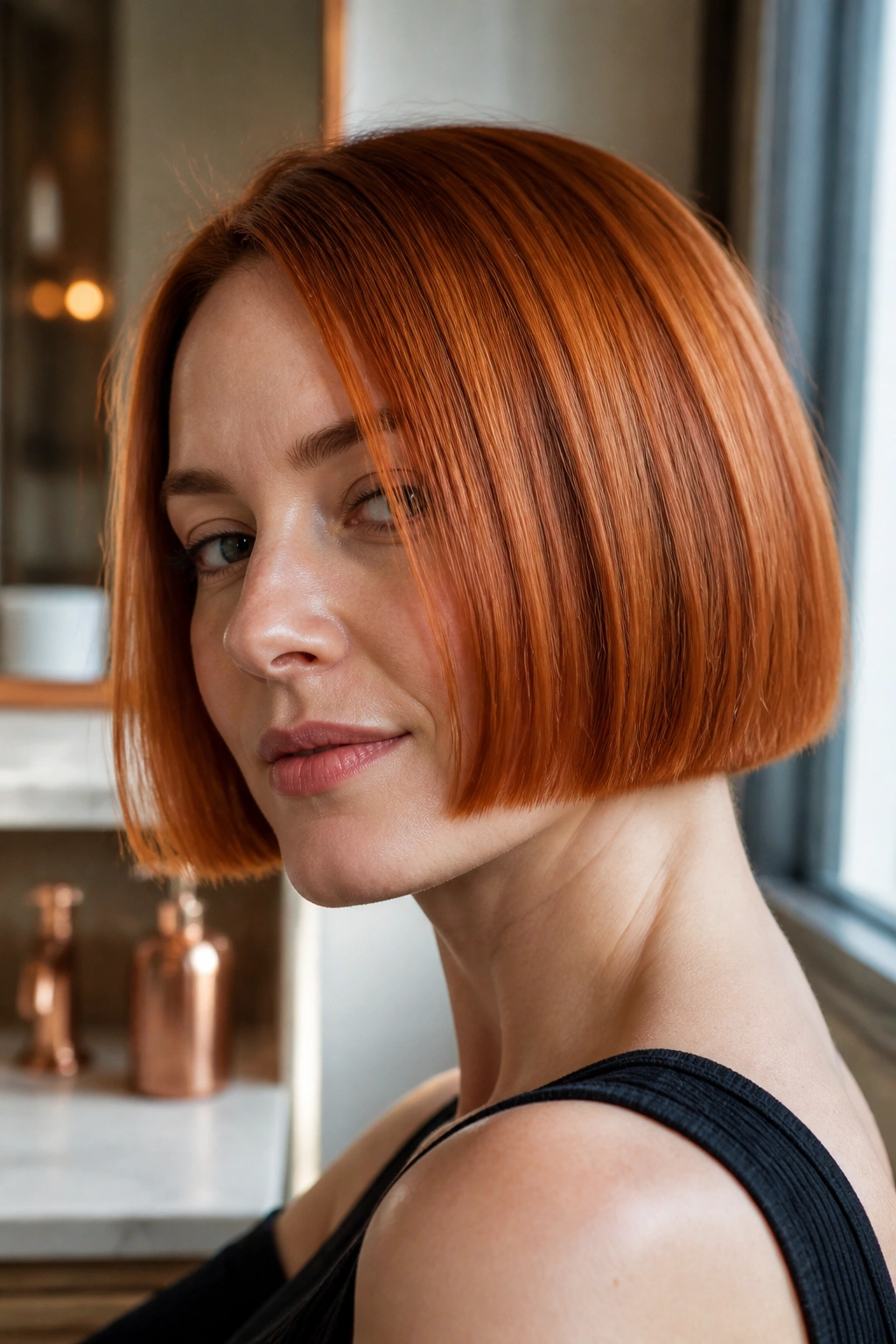
A blunt copper bob is the safest bet when fine hair needs instant density. The straight edge at the bottom gives the eye one clear line to follow, and that line makes the ends look heavier than they are. In copper, the effect is even cleaner because the warm shade highlights the shape instead of hiding it.
Why the Line Matters
The blunt edge keeps the cut from feathering out at the shoulders. That matters a lot when the hair diameter is fine, because wispy ends can look like they disappeared halfway through the style. Ask for a one-length bob that lands somewhere between the chin and the jaw, with only a tiny bevel on the ends.
If your hair bends under on its own, this cut is a gift. If it kicks out, the styling is still easy. A round brush and a quick blow-dry at the ends are enough.
- Ask for minimal internal layering.
- Keep the perimeter clean and heavy.
- Use a pea-size amount of smoothing cream, not a full palmful.
- Blow-dry with the nozzle pointed down for a sleeker finish.
Best move: keep the edge crisp and let the copper do the rest.
2. Chin-Length French Copper Bob

Shorter can look richer. That surprises people, but chin-length often gives fine hair a better read because the hair no longer has to carry much weight below the jaw. A French bob sits right in that sweet spot: neat, cheekbone-skimming, and just a little cool without trying too hard.
The cut works because the eye lands on the face first, then the bluntness of the line. Copper adds warmth, so the whole thing feels polished rather than severe. I like this version when the hair is naturally straight or only slightly wavy, because it keeps the shape compact.
Wear it with a deep side part or a loose center part. Both work. The real difference comes from the ends, which should sit full and tidy rather than soft and stringy.
If you hate spending twenty minutes with a round brush, this is a smart pick. It dries fast. It behaves.
3. Invisible-Layer Copper Bob

Can layers help fine hair without making it look thinner? Yes, if they’re handled with a light hand. Invisible layers live inside the shape, so the perimeter still looks full while the interior loses just enough bulk to move.
How to Ask for It
Tell your stylist you want shape, not texture for texture’s sake. That usually means soft internal removal at the mid-lengths, not choppy pieces all over the head. The best version keeps the ends visually thick and only opens the inside of the bob enough to stop the helmet effect.
This cut is especially useful if your hair puffs at the crown but collapses at the bottom. Invisible layers can fix that imbalance without sacrificing the blunt look people love on fine hair. Copper hair color makes the movement easier to see, which is nice if your hair usually disappears in flat light.
How to Style It
- Dry the roots first for lift.
- Use a round brush only on the top layer.
- Finish with a light mist of flexible hairspray.
- Avoid heavy oils near the ends.
Tiny detail, big payoff: keep the layers hidden and the outline strong.
4. Side-Part Copper Bob with a Soft Bend
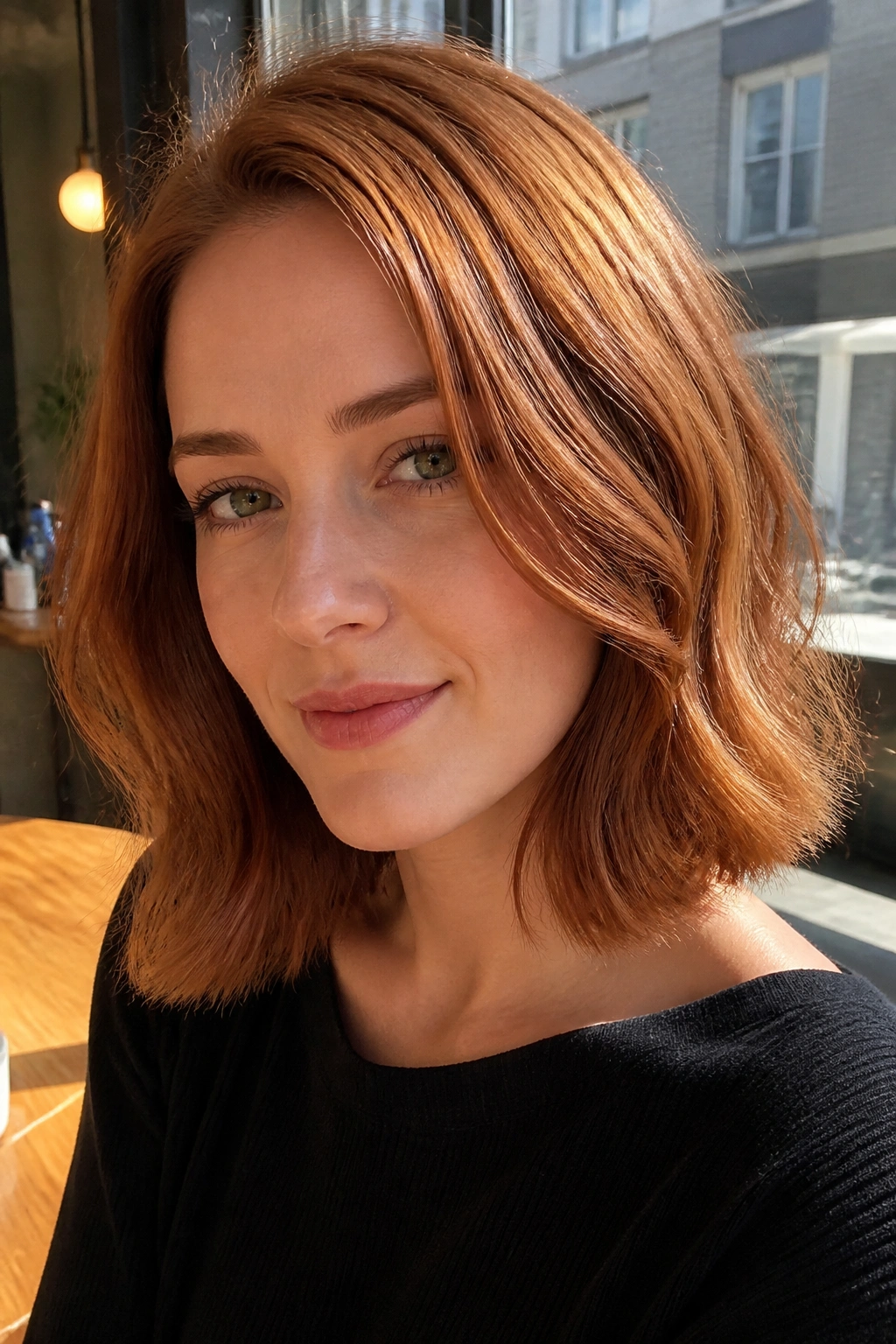
A side part can rescue a flat bob faster than a new product ever will. When fine hair is trained to fall in the same place every day, the crown tends to lie down and the top looks sparse. Shift the part off-center and the hair has to change direction. That alone can make it look fuller.
The soft bend matters too. You do not want a full curl here. You want a gentle curve through the mid-lengths and a little bevel at the ends, the kind that looks casual rather than styled within an inch of its life. Copper catches those curves beautifully, especially around the front.
This version suits people who wear glasses, because the side sweep keeps the face open without making the bob feel severe. It also works when the hair is slightly finer at the temples than through the back.
Ask for a side part that starts about an inch off center. Small change. Big difference.
5. Textured Copper Bob with Micro Waves
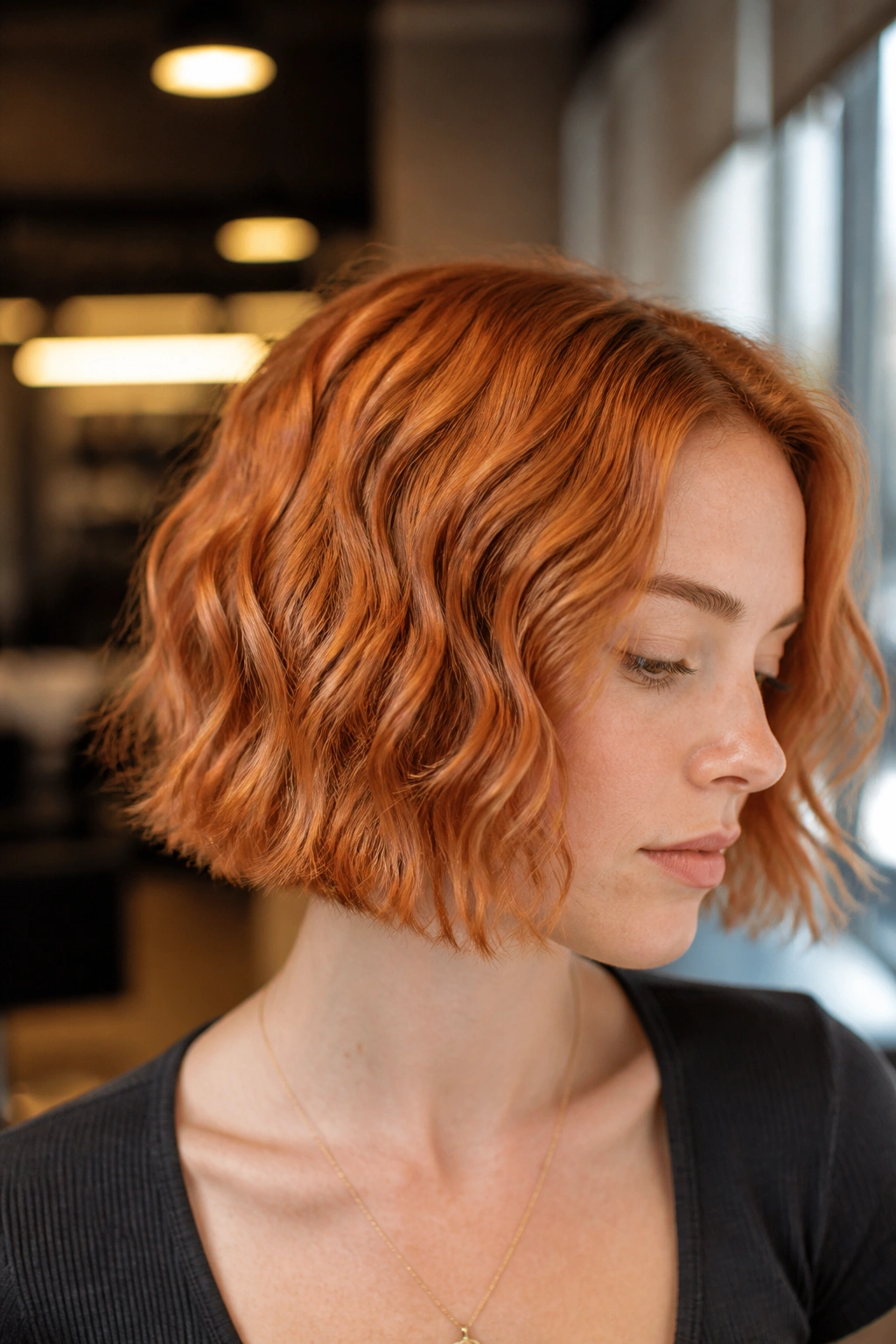
Micro waves are the best friend of a copper bob when fine hair needs movement but not a lot of length change. The trick is to keep the wave pattern tiny and loose, not beachy in the overdone sense. Think bends, not ringlets.
A 1-inch curling iron or a flat iron with soft flicks can build that texture fast. Start lower on the strand, leave the last inch straighter, and alternate directions so the shape doesn’t form one heavy curve. The result feels airy. Not messy. Airy.
This cut is good for hair that falls flat by lunch. The texture gives the surface a little grit, which helps the style hold shape longer. Copper shows that texture nicely because the light moves across each bend instead of gliding over a single flat sheet.
What to Watch For
- Too much wave can shrink the bob.
- Heavy mousse can make fine hair feel sticky.
- Sharp curls can fight the clean copper finish.
A little texture goes farther than people think.
6. A-Line Copper Bob
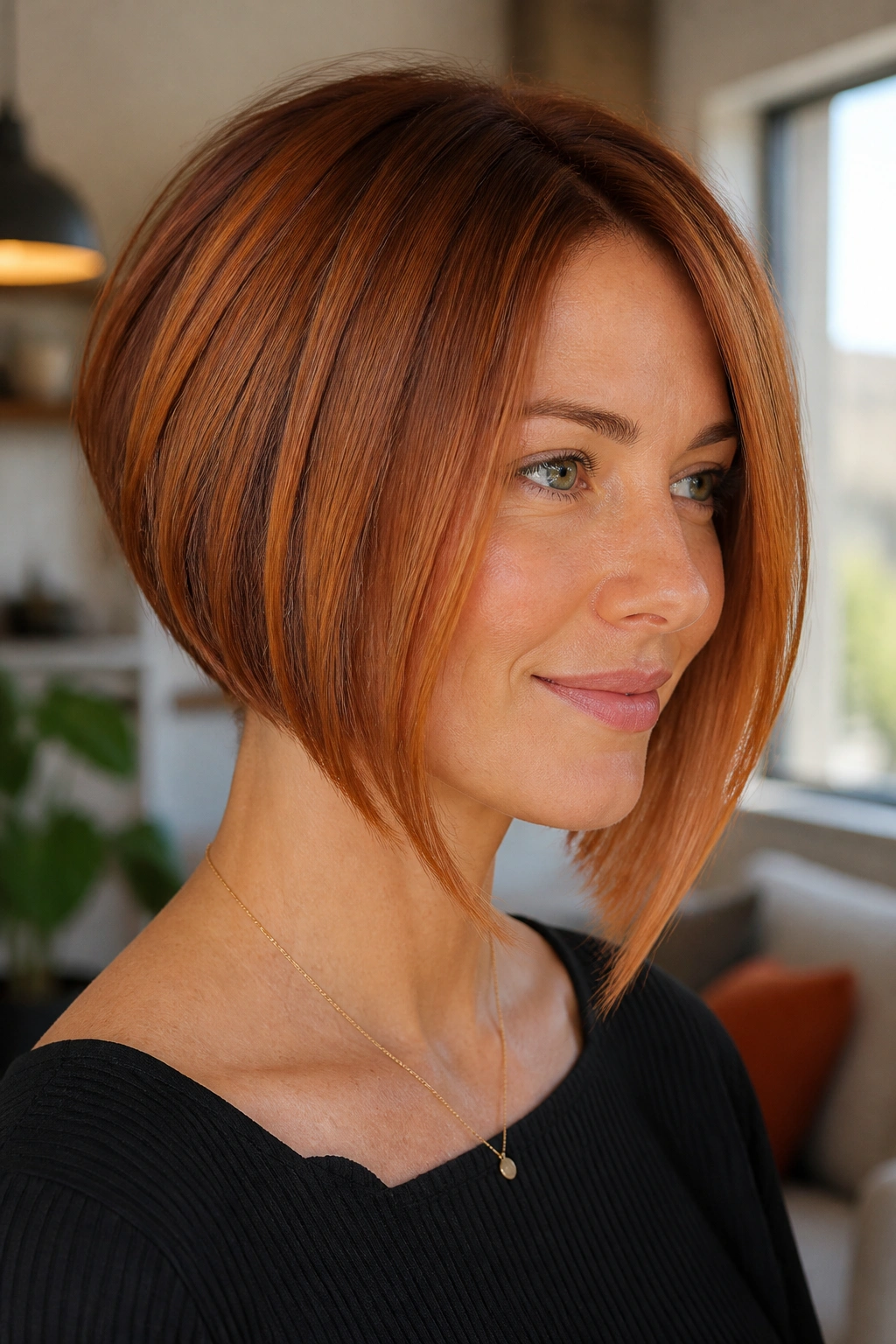
The A-line bob is one of the smartest shapes for fine hair because it gives the back a stronger lift while letting the front hang a touch longer. That diagonal line builds interest without needing lots of layers, and fine hair usually looks better when the cut does the work.
The front pieces frame the jaw, while the shorter back prevents the style from dragging downward. It’s a good choice if your hair naturally grows flat at the nape or if you want something that feels neat but not stiff. Copper adds a soft glow along the angle, which makes the shape read clearly from the side.
I like this cut on straight hair and on smooth waves. If the texture is very curly, the angle can hide a little too much under shrinkage. But on fine strands with some natural bend, it’s sharp in the best way.
Ask for a subtle A-line, not a dramatic stack. The point is structure, not drama.
7. Copper Bob with Curtain Bangs

Curtain bangs can be a clever move for fine hair, but they need enough density to sit well. When they’re cut with care, they widen the face-framing area and make the whole bob feel softer at the front without stealing fullness from the rest of the cut.
Why They Work Here
Copper gives curtain bangs a lot of visual warmth, so even a small amount of fringe makes an impact. That helps fine hair because you do not need a huge mass of hair to create a noticeable style shift. The bangs should start around the cheekbones and fall away from the center, not hang like one flat curtain in front of the eyes.
The rest of the bob should stay pretty clean. Too many layers on top can make the bangs compete with the cut. A tidy perimeter keeps the fringe from taking over.
What to Ask For
- Bangs that split naturally at the center.
- Cheekbone length on the shortest pieces.
- A blunt bob underneath.
- Soft blow-dry direction away from the face.
My take: this is one of the easiest ways to make copper feel softer and more expensive.
8. Rounded Copper Bob with Tucked Ends
A rounded bob does something useful for fine hair: it adds the look of fullness at the silhouette without needing a lot of extra length. The curve follows the head shape and tucks the ends inward, so the haircut feels complete from every angle.
The style is especially good when the hair is straight and tends to splay out at the bottom. A round brush, a medium heat setting, and a little tension at the ends can coax the bob into that smooth arc. Copper makes the rounded line obvious, which is half the charm. You can actually see the shape.
This cut gives off a polished feel, but not in a stiff way if the ends are kept soft. I’d avoid heavy texturizing here. It can break the curve and leave the bob looking patchy.
If you want your hair to look like it has more body in photos and in real life, this one deserves a hard look.
9. Collarbone Copper Lob for Fine Hair
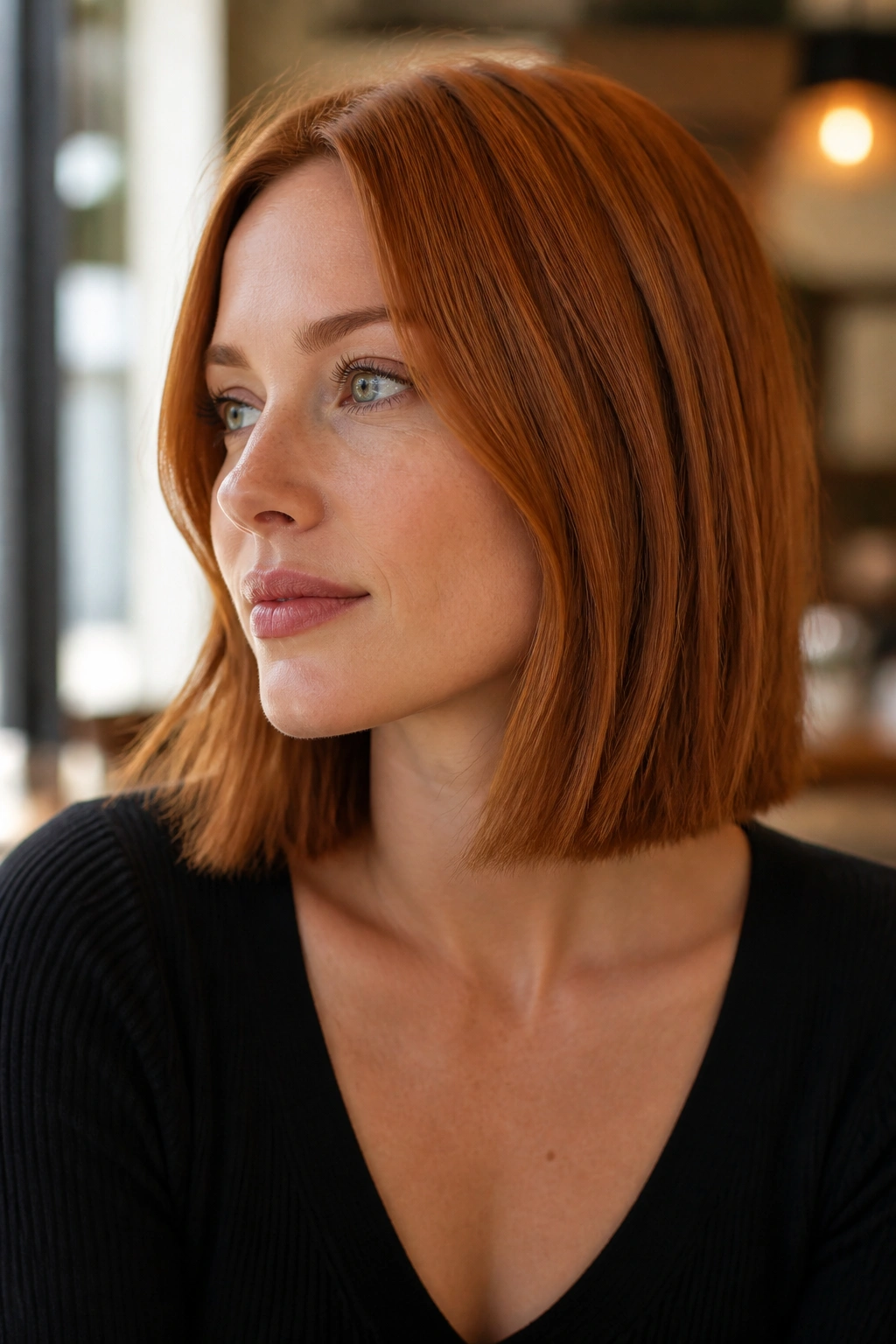
Why stop at the jaw if your hair still wants a little swing? A copper lob that lands at the collarbone can be a good move when fine hair is long enough to lose shape in a shorter bob but too delicate to handle lots of heavy layering. The extra length gives movement. The copper keeps it from looking plain.
A lob works best when the ends are kept blunt and the layers are nearly invisible. That way the shape still reads full, even though the length is longer. Fine hair often collapses when it gets too much weight, so this cut removes just enough of that drag.
How to Style It
Use a root-lifting spray at the crown, then rough-dry until the roots are about 80 percent dry. Finish with a round brush only at the ends. That little bit of lift keeps the lob from going flat against the neck.
It’s a calm haircut. Easy. Clean. Hard to mess up.
10. Boxy Copper Bob

A boxy bob is blunt in a deliberate way. The sides sit almost square, the edge is controlled, and the silhouette looks strong instead of airy. On fine hair, that can be a very good thing. The shape creates the impression of width and weight where the ends usually need help.
I’ve always liked this cut for people who want something modern without a lot of fuss. It has a bit of attitude. Not punk, not precious. Just direct. Copper deepens the boxy effect because the color lights up the perimeter and makes the line easy to read.
Ask Your Stylist For
- A strong horizontal outline.
- Minimal graduation through the back.
- Clean corners near the jaw.
- A finish that sits flat, not puffy.
The only real caution is over-thinning. If too much is taken out of the interior, the squared shape falls apart fast. Keep the weight.
The payoff is a bob that looks deliberate even on a windy day.
11. Shaggy Copper Bob

The shaggy bob is not for every fine head of hair, and I like being blunt about that. If the hair is very sparse, too much shag can leave the ends see-through. But when the density is decent and the texture has some natural give, a soft shag can add life without stealing the shape.
The best version uses long, broken layers that move around the face and through the crown, then keeps the bottom line loose but not shredded. Copper suits this cut because the warm tone shows off the movement in the layers. The hair looks touched by light, not hacked apart.
What Makes It Work
A shaggy bob needs a bit of texture spray or mousse, but not a helmet of product. Scrunch lightly, then let the hair dry with some air around it. The goal is separation, not crunch.
This style has a casual feel that suits people who dislike precision. It’s one of those cuts that looks better when you stop trying to make every piece behave.
12. Inverted Copper Bob
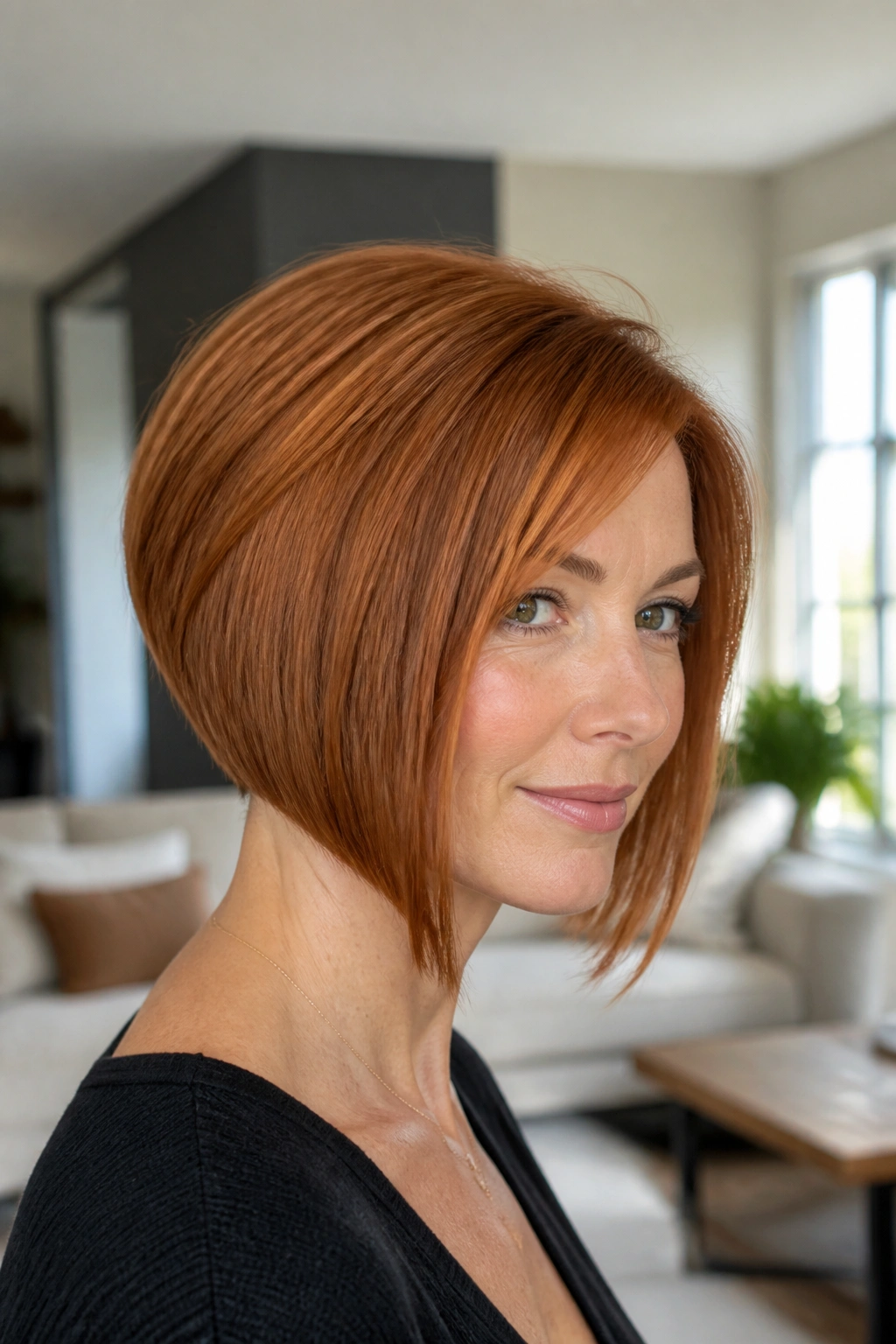
An inverted bob gives fine hair a built-in boost because the back is shorter and the front is longer. That rise in the nape can make the crown look fuller without adding actual bulk. The front pieces usually graze the jaw or sit a bit lower, which keeps the face from feeling boxed in.
Compared with a plain A-line, the inverted version often has a more obvious curve through the back. It feels a little more sculpted. Copper makes that structure easier to see, and I think that’s part of why the cut works so well in this shade.
This is a strong pick if your hair lays flat at the crown and you want a shape that looks styled even on low-effort days. It’s also useful for people with a narrow face who want a bit more width through the lower half.
Ask for controlled graduation, not a stacked hockey shape. There’s a difference, and it matters.
13. Copper Bob with Baby Bangs

Baby bangs are bold, sure, but they can be surprisingly smart on fine hair when the rest of the bob stays clean and full. The short fringe shifts attention upward, which makes the bob itself feel sharper and a little more graphic. Copper keeps the cut from looking too hard.
Why It’s Not Just a Gimmick
The key is density. Baby bangs need enough hair to sit evenly across the forehead, or they’ll separate and show scalp too much. If your front section is sparse, skip this one. If the front has decent coverage, though, the result can be striking in a very controlled way.
The bob underneath should stay simple. Blunt ends. Minimal texture. Maybe a tiny bevel, but not a lot. That keeps the haircut from fighting the fringe.
How to Wear It
- Use a small round brush to bend the bangs under slightly.
- Keep the rest of the bob sleek.
- Avoid heavy dry shampoo near the fringe line.
- Trim the bangs every 3 to 4 weeks if you want the shape to stay crisp.
This is a cut with a point of view. I like that.
14. Sleek Copper Bob with a Deep Side Part
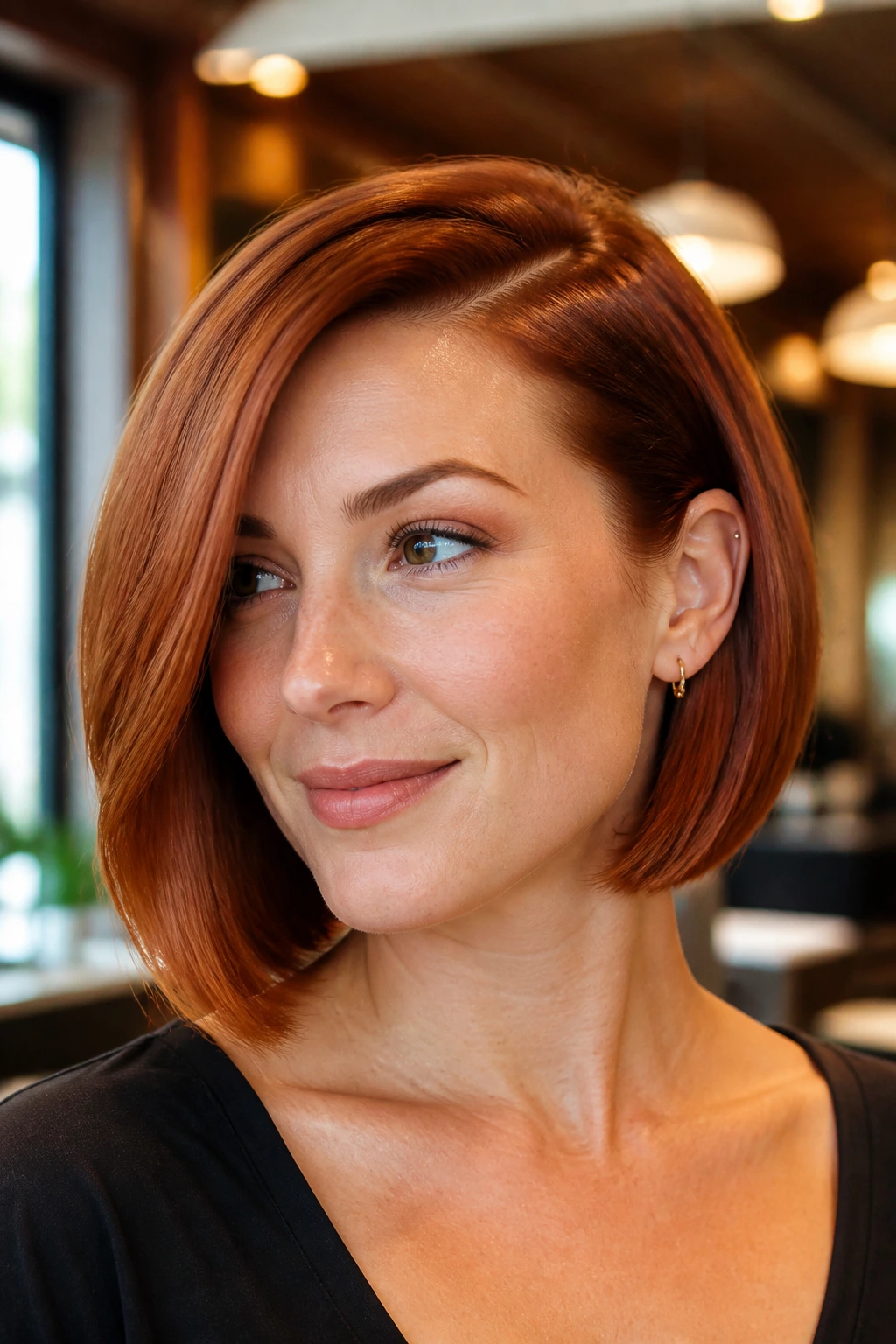
A sleek deep side part is one of the easiest ways to make fine hair look denser without cutting much off. The part creates lift at the root, and the sleek finish keeps the copper shiny enough to make the shape feel intentional. It’s a clean look. Slightly dramatic. Still wearable.
The cut itself can stay fairly simple — chin length, jaw length, or just below the jaw — but the styling changes the whole mood. Tuck one side behind the ear, let the other side fall heavier, and the bob suddenly has asymmetry and body. Fine hair often benefits from that imbalance because it gives the eye a reason to keep moving.
Use a flat brush or a boar-bristle brush to smooth the top. Then bend only the very ends. You want a polished line, not a pin-straight sheet that hangs lifelessly.
This one looks sharp with a strong lip color, though it doesn’t need it.
15. Copper Bob with Face-Framing Pieces
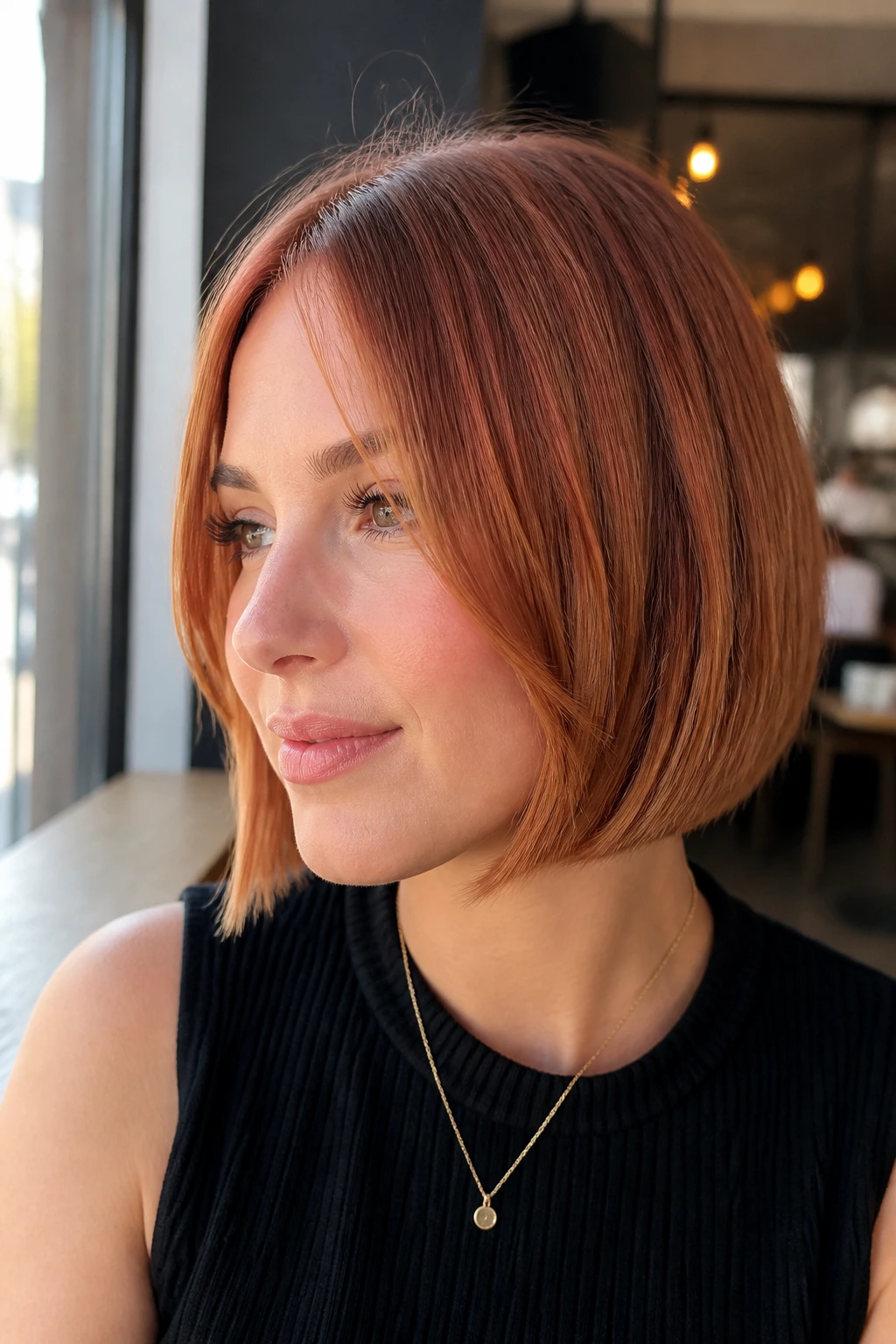
Does a few well-placed face-framing pieces help fine hair? Absolutely, if they’re cut with discipline. The goal is not to pull half the front away from the bob. It’s to carve out two or three soft pieces that start near the cheekbone and stop around the jaw or collarbone.
Where the Face Frame Should Stop
If the pieces go too long, the rest of the bob can feel thin by comparison. Keep them short enough to support the shape, not compete with it. Copper color helps here because those front pieces catch the light and make the face line look softer.
This cut is useful for round faces, square faces, and anyone who wants the bob to feel less blunt around the front. It also works when you tuck one side back, because the face frame stays visible even when the rest of the hair is pinned away.
A small note: keep the face-framing layers soft, not shredded. Fine hair rarely looks better when the front is overcut.
16. Stacked Copper Bob
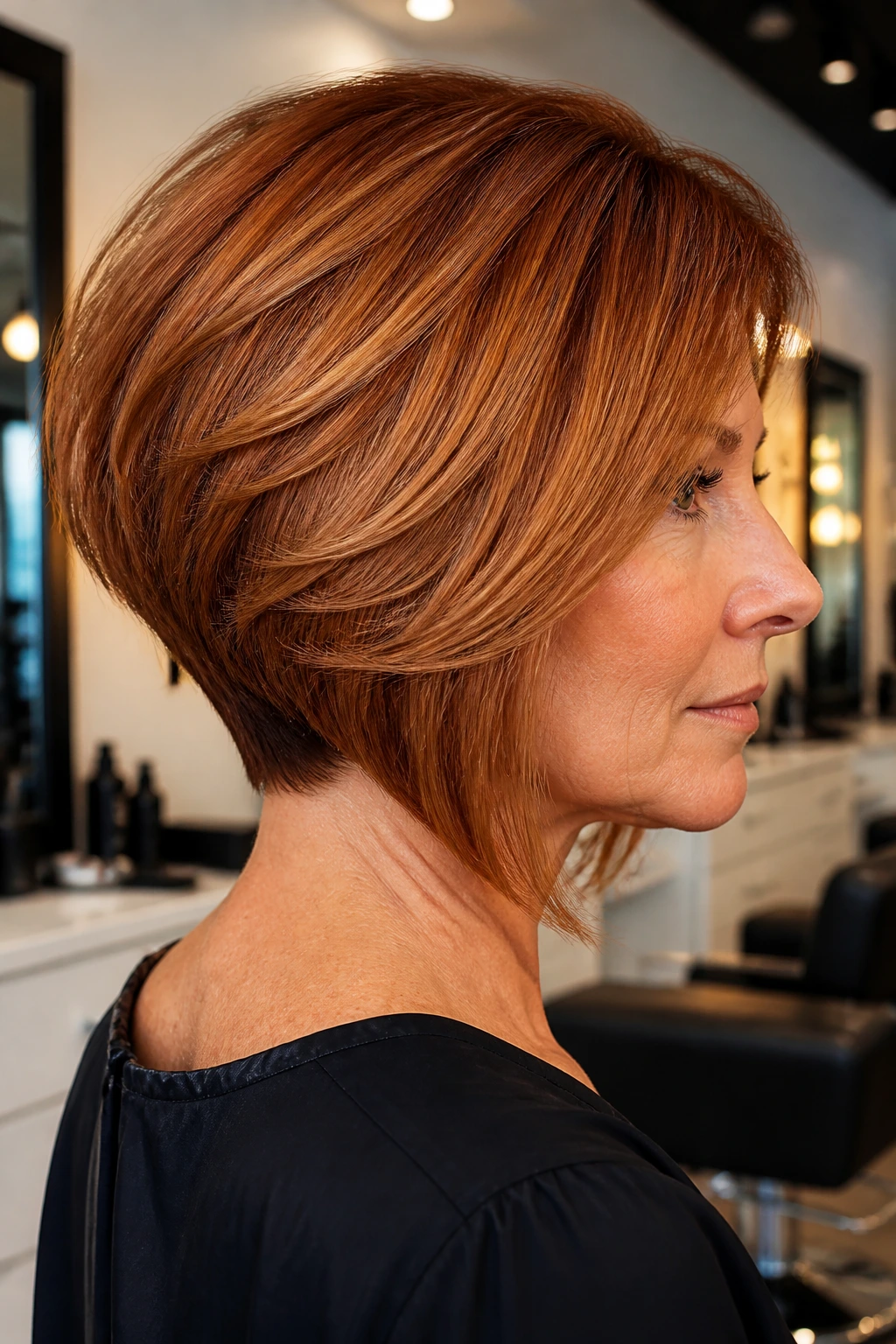
A stacked bob can give fine hair serious lift at the back, which is why it stays popular in salons. The shorter graduation at the nape builds a fuller silhouette, and the top layers sit over that shape to create height where the crown usually needs help.
The danger is over-stacking. Too much graduation and the bob starts to look dated or too fluffy at the back. The version I like is controlled, with enough layering to create a clean curve and not so much that the perimeter loses weight. Copper is helpful here because it highlights the stacked structure instead of flattening it.
This is a strong match for straight hair and for people who want a neat neckline. It opens the shoulders, sharpens the jaw, and gives the back of the head more shape than a blunt cut can manage.
Ask for lift at the nape, not a wedge. Subtlety matters.
17. Airy Wavy Copper Bob

Loose waves make fine hair look more alive, but the trick is to keep the wave airy enough that the style still has body. Tight curls can shrink a bob and leave the ends too light. Soft bends, spaced a few inches apart, give the shape movement without eating the length.
Copper is one of those colors that looks better when the hair moves. The wave pattern lets light hit the surface in broken lines, which makes the cut seem fuller. I prefer this version for hair that already has some natural bend, because you can work with the grain instead of forcing it.
Use a 1-inch iron and wrap only mid-lengths, leaving the ends out for a looser finish. Or twist the hair while it dries and break it up with your fingers afterward. No need to make it complicated.
The best part? It looks less “done” by the end of the day, and that is often the real win.
18. Razor-Soft Copper Bob

Razor cutting can be useful on fine hair, but it needs a careful hand. Too much razor work and the ends turn fuzzy, which is the opposite of what most fine hair needs. Done lightly, though, a razor-soft bob can keep the outline clean while shaving off a little bulk from thicker sections.
The style works best when the hair is fine but not fragile. If the ends split easily or the cuticle is rough, a razor can make things look worse. But on hair that feels smooth and healthy, the softness around the edge can add movement without making the shape disappear.
What Makes It Different
Unlike a blunt bob, this one has a touch of air around the perimeter. Unlike a shag, it does not live on layers. It sits in the middle — neat enough to hold shape, soft enough not to look rigid.
If you go this route, ask for feather-light razor work only on the ends and maybe around the front. That keeps the copper finish sleek instead of frayed.
19. Root-Shadow Copper Bob

Root shadow is one of the easiest ways to make fine hair look thicker at the base. A slightly deeper root creates contrast, and that contrast makes the copper lengths pop. The eye reads the change in tone as depth, which is handy when the hair itself is light in density.
Why It Helps
Fine hair often looks flatter when the color is too uniform from scalp to ends. A soft root shadow breaks that flatness. It also buys you some breathing room between salon visits, because regrowth blends more naturally.
This is not about making the hair dark. It’s about using a shade one or two levels deeper at the root, then melting into a warmer copper through the mids and ends. Done well, it looks expensive without looking fussy.
Best Styling Match
- Keep the cut blunt or lightly beveled.
- Use a lightweight glossing spray.
- Dry the roots with lift, then smooth the ends.
- Avoid heavy oils that flatten the shadow.
If your hair goes limp fast, this one gives you a little help where you need it most.
20. Soft Grow-Out Copper Bob

A copper bob that grows out well is worth its weight in gold, because nobody wants to babysit a haircut every few weeks. This version keeps the line soft enough to survive a little length gain, but still tidy enough to look deliberate. Fine hair often needs that balance more than people admit.
I like this cut for anyone who wants the color to do some of the heavy lifting. A warm copper gloss, a clean outline, and just enough movement around the front can stay flattering even after the shape relaxes a bit. It doesn’t scream for attention. It just keeps working.
The best grow-out bobs avoid harsh stacking, razor-heavy ends, and thin wisps at the perimeter. They hold onto weight, then let the shape ease outward slowly. That means the haircut still looks decent when the styling gets lazy, which is about as real-world as haircuts get.
If you want one copper bob that can live through busy mornings, humid days, and the occasional skipped blow-dry, this is the one I’d pick first.
Final Thoughts
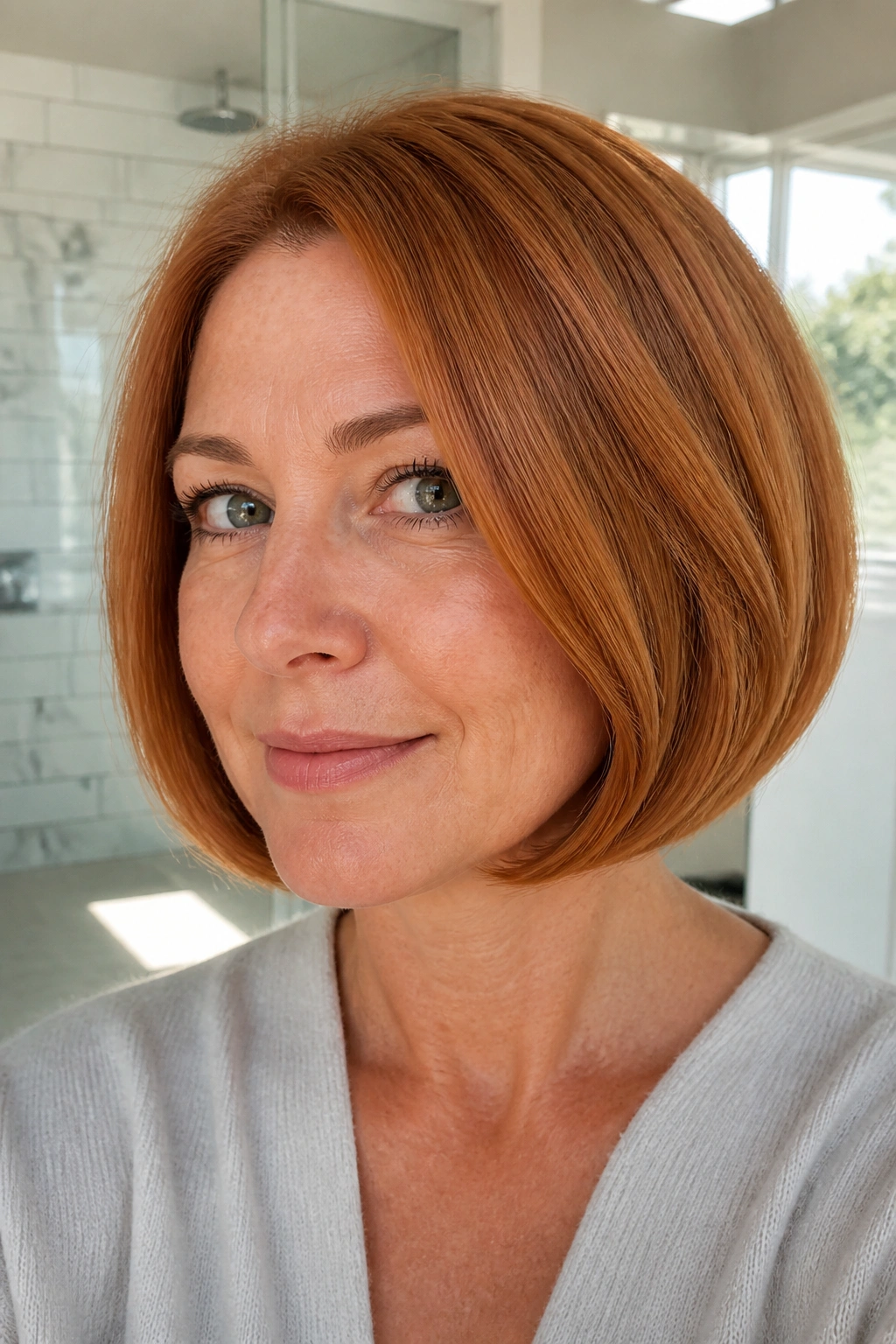
Copper and fine hair can be a brilliant pair when the cut respects both. A blunt edge gives you density. A soft angle gives you movement. A smart part or a little root shadow can change the whole read of the style without piling on extra product.
The mistake I see most often is overcutting. Fine hair does not need to be thinned into submission. It needs shape, weight in the right places, and a finish that knows when to stop.
Pick the bob that matches how much styling you’re willing to do. That choice matters more than the trendiest name on the menu.
