



Fine hair is picky, and a brown bob can either make it look dense and crisp or leave it hanging there like it has given up. The difference usually comes down to shape, not some magic spray. A sharp perimeter, the right part, and a brown shade with a little depth do more than people expect.
I see the same mistake over and over: too many airy layers, too much feathery texturizing, and a color that sits flat from root to end. That combination is rough on fine strands. They need structure. They need a line the eye can follow, plus enough tonal variation in the brown to keep the haircut from reading as one dull block.
Fine hair is not the same thing as thin hair. You can have plenty of strands and still feel like the whole thing collapses by noon. That is why brown bob haircuts for fine hair work best when the cut and color are treated like partners — not two separate decisions you make in different appointments.
The 28 ideas below lean into that logic in different ways: blunt, rounded, stacked, collarbone-grazing, French, glossy, softly waved, and a few that are a little bolder than the average salon request. Some are for people who want maximum fullness. Some are for anyone who wants movement without wisps. And one or two are for the reader who is tired of hearing that fine hair must always stay short.
1. Chestnut Chin-Length Blunt Bob
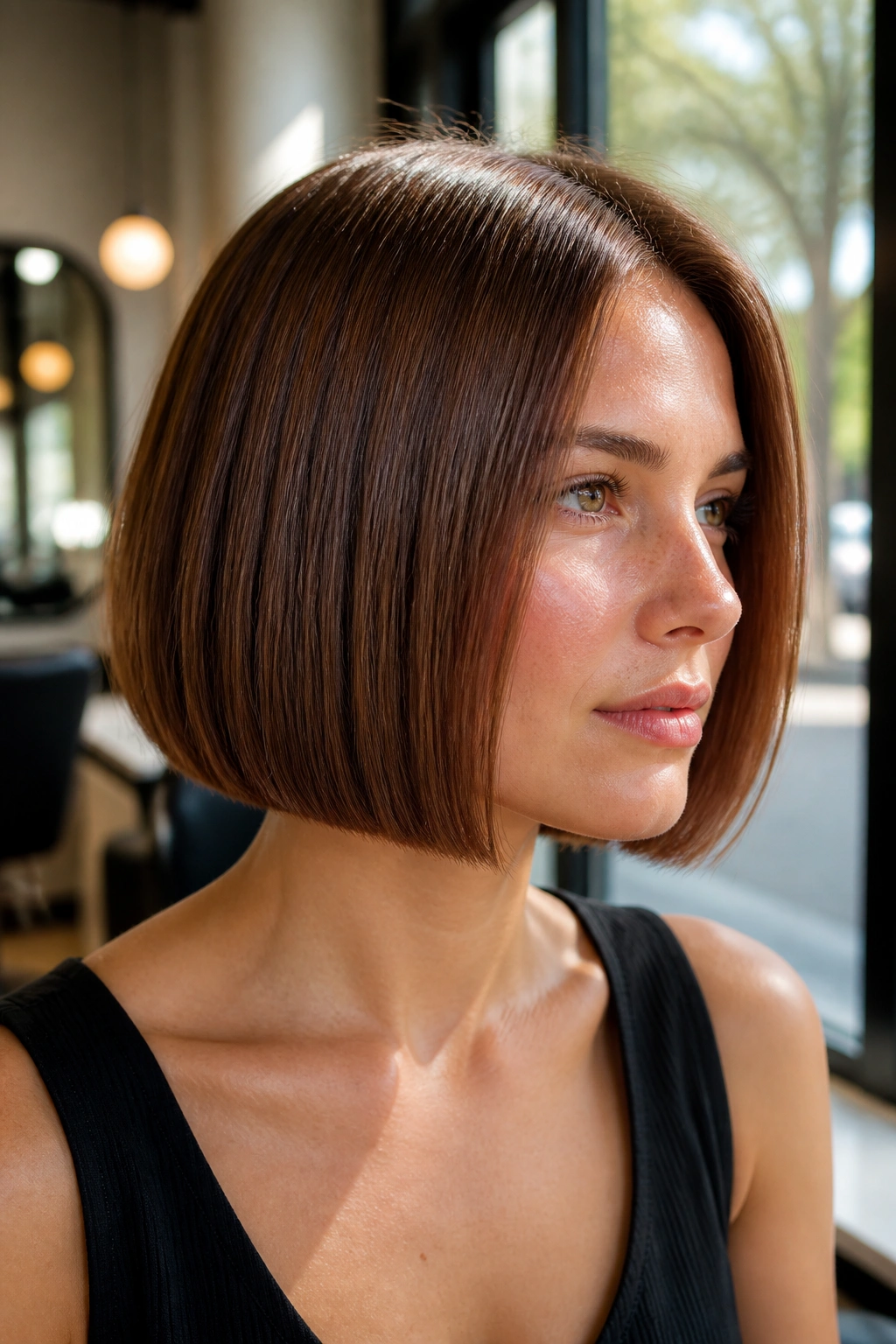
A chin-length blunt bob is one of the cleanest ways to make fine hair look thicker. The blunt edge gives the ends a hard stop, which the eye reads as density, and chestnut brown adds warmth so the cut does not look too severe. It’s a neat little trick, honestly.
Ask for a line that sits right at the chin or a hair above it, with minimal internal layering. The perimeter is the whole point here. If your stylist starts slicing into the ends like they’re decorating a cake, stop them.
- Best on hair that collapses at the bottom by midday.
- Works well with a middle part or a shallow side part.
- Style with a round brush or a flat brush and a quick bend under at the ends.
Best move: keep the finish smooth and the color glossy. A blunt cut without shine can look flat, and that’s the one problem this shape does not need.
2. Espresso French Bob with Micro Fringe
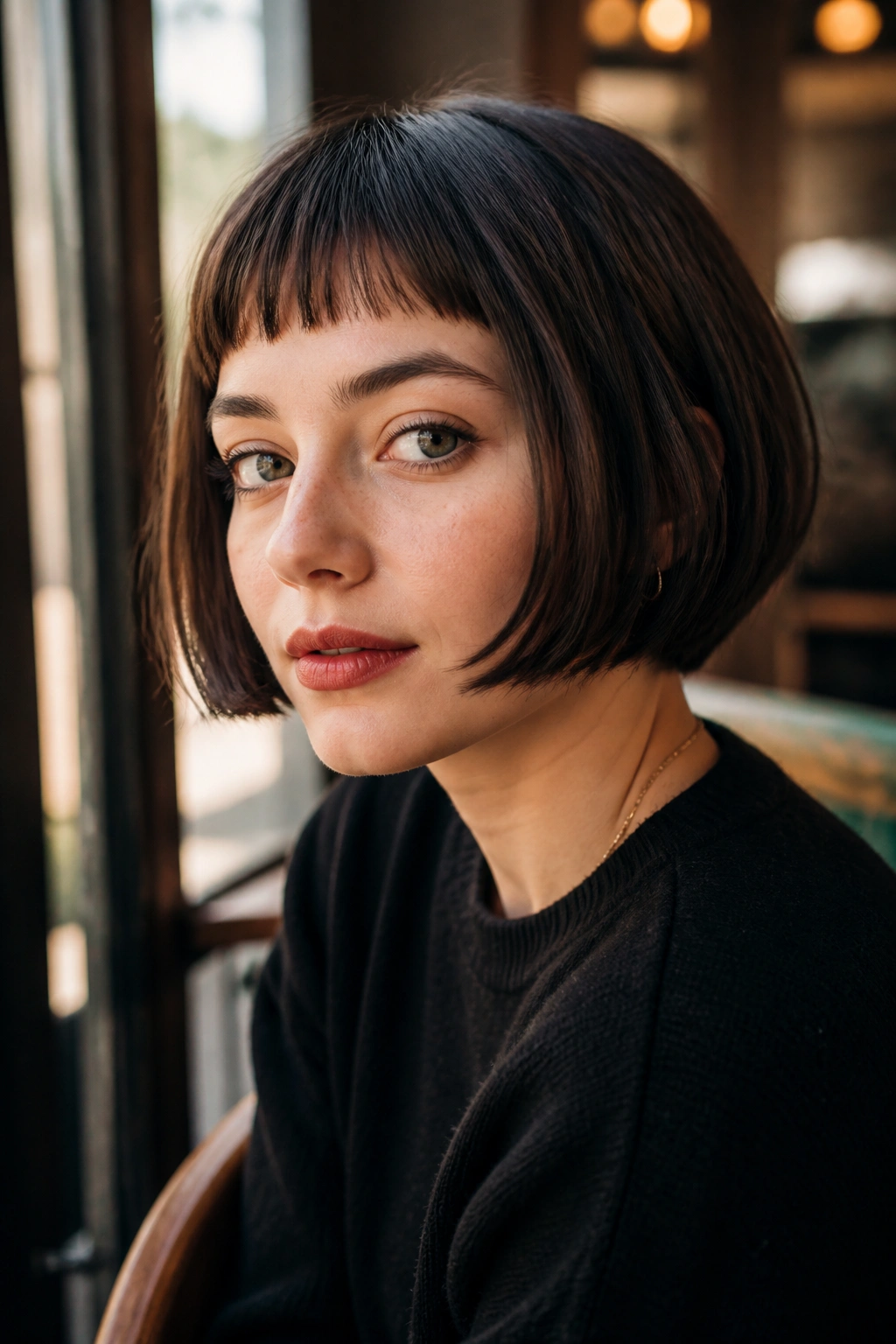
Why does this look fuller than longer styles? Because a French bob keeps the mass close to the head, and a micro fringe puts the attention up where you want it. Fine hair often looks better when the silhouette is compact. This cut knows that.
A micro fringe is not for everyone, and I mean that in the best way. It asks for confidence and a little bit of styling discipline. If you have a cowlick at the front hairline, talk through it before anyone picks up scissors. Otherwise, the result can be charming and sharp at the same time.
What Makes It Work
The espresso brown gives the cut a solid visual base, which is useful when the hair itself is delicate. Darker tones reduce the see-through effect at the crown, and the shorter length keeps the ends from looking sparse.
- Keep the fringe light and piecey, not thick and boxy.
- Ask for the bob to land around cheekbone to jaw level.
- Style the front with a tiny round brush and a quick blow-dry forward.
A French bob like this has attitude. Not a costume. A little attitude.
3. Milk Chocolate A-Line Bob
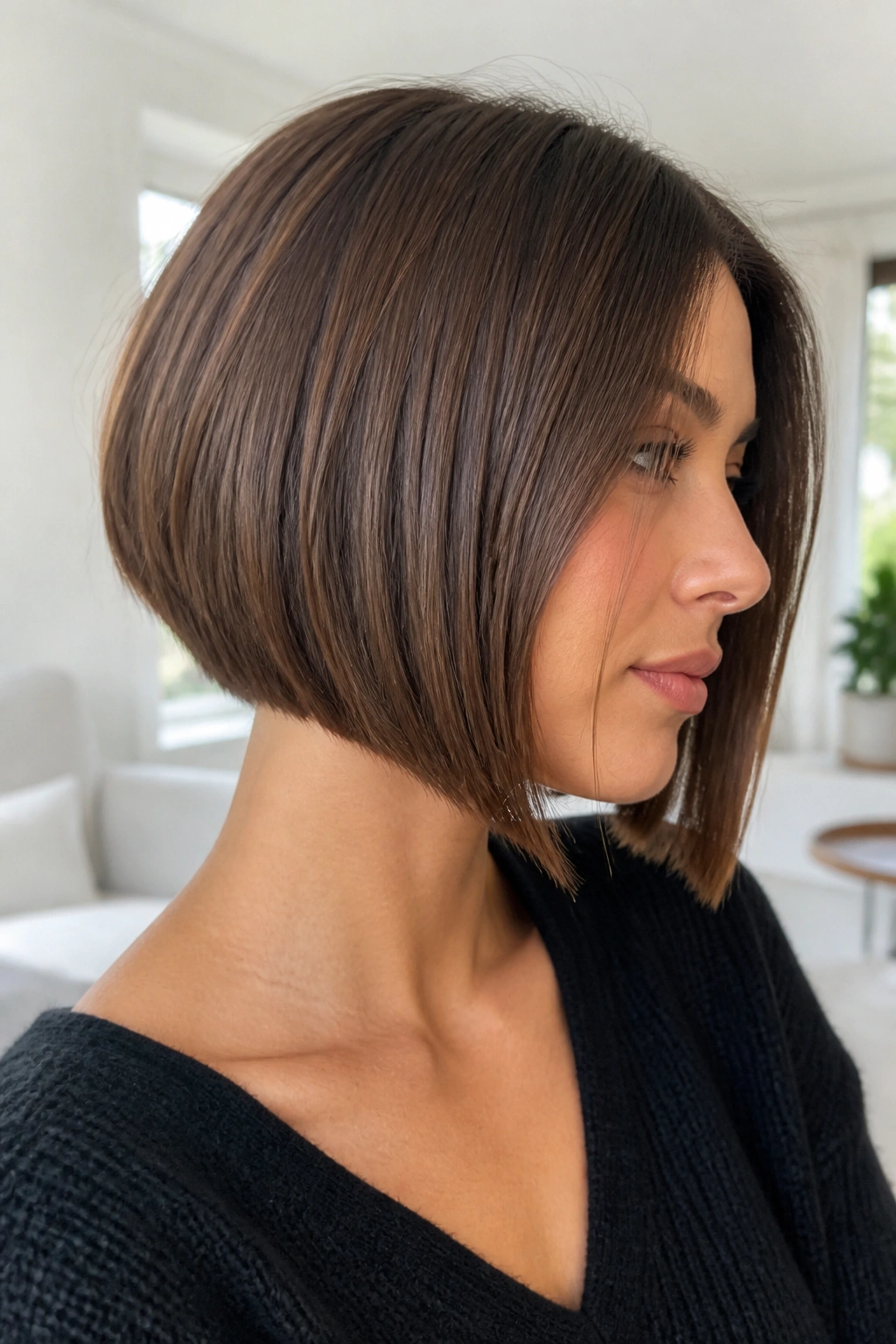
If the back of your hair looks weak but the front still has some swing, an A-line bob is a smart move. The slightly shorter nape and longer front create a shape that feels fuller from the side, which matters more than people think. Milk chocolate brown softens the angle so it feels polished instead of severe.
This is one of those cuts that can quietly do a lot. It lengthens the neck, slims the jaw, and keeps the ends visually dense because the hair gathers forward. On fine hair, that forward weight can be a gift. Less lift at the ends means less wispy drift.
Who this suits: people who want movement without giving up a clean outline.
Who should be careful: anyone who already has very tapered ends or a naturally narrow face.
Keep the angle gentle. A dramatic A-line on fine hair can thin out fast if the front is too long.
4. Cocoa Bob with Invisible Layers
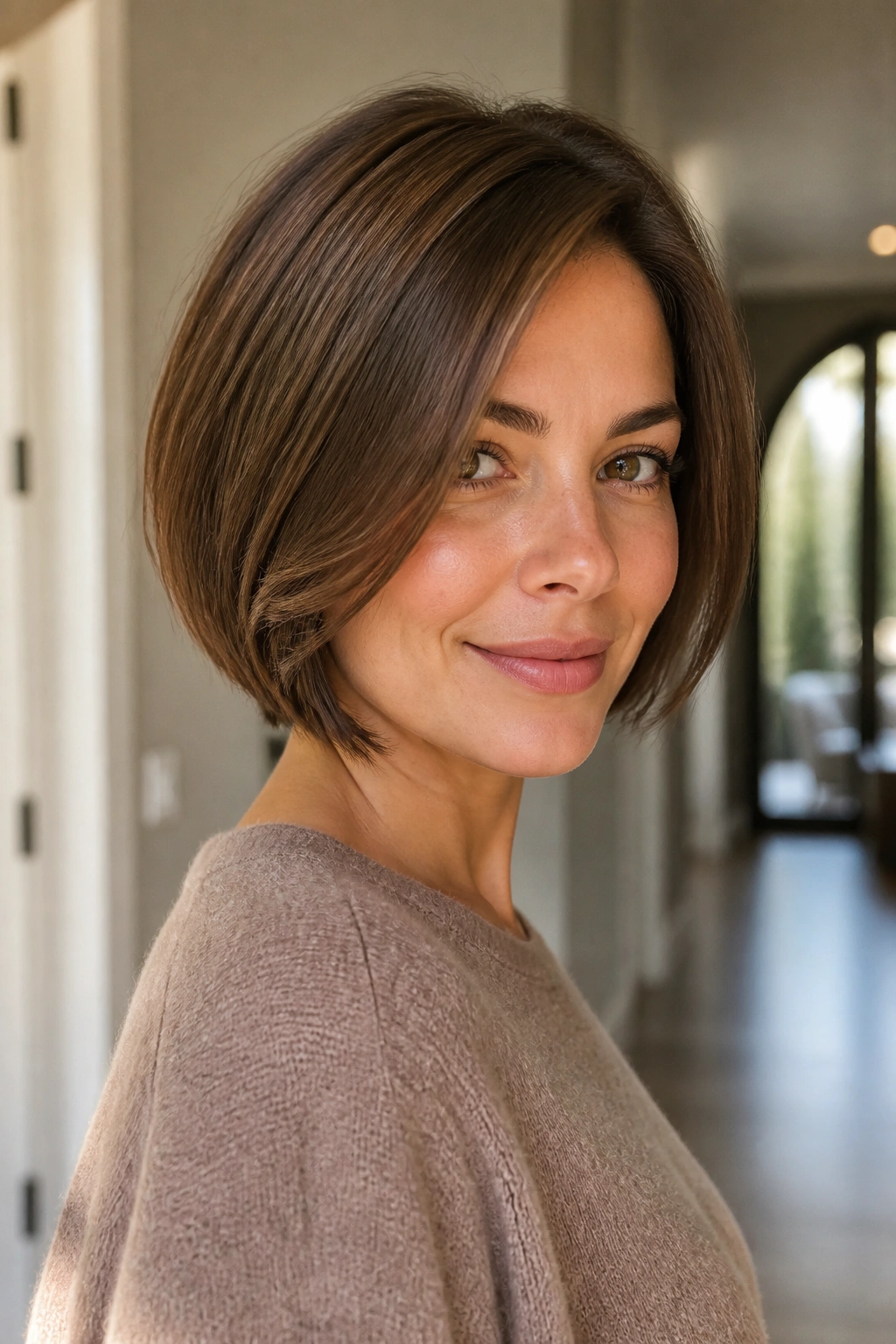
Invisible layers are the kind I wish more stylists would explain better. They remove bulk from inside the shape without breaking the outer line. On fine hair, that means you get a bob that moves without looking shredded, which is the whole fight, really.
Cocoa brown works especially well here because it holds the shape in a soft, rich way. The darker tone keeps the surface looking consistent, even if there’s a little lightness in the mid-lengths. That matters when your strands are fine enough to reveal every bad cut.
This style is for people who want the ends to stay full but don’t want the helmet feel of a pure blunt bob. The trick is restraint. A little internal weight removal. Not a haircut that’s been bitten by scissors everywhere.
If you love airiness, this is not your cut. If you want polished movement, it’s one of the best bets on the list.
5. Warm Walnut Bob with a Side Part
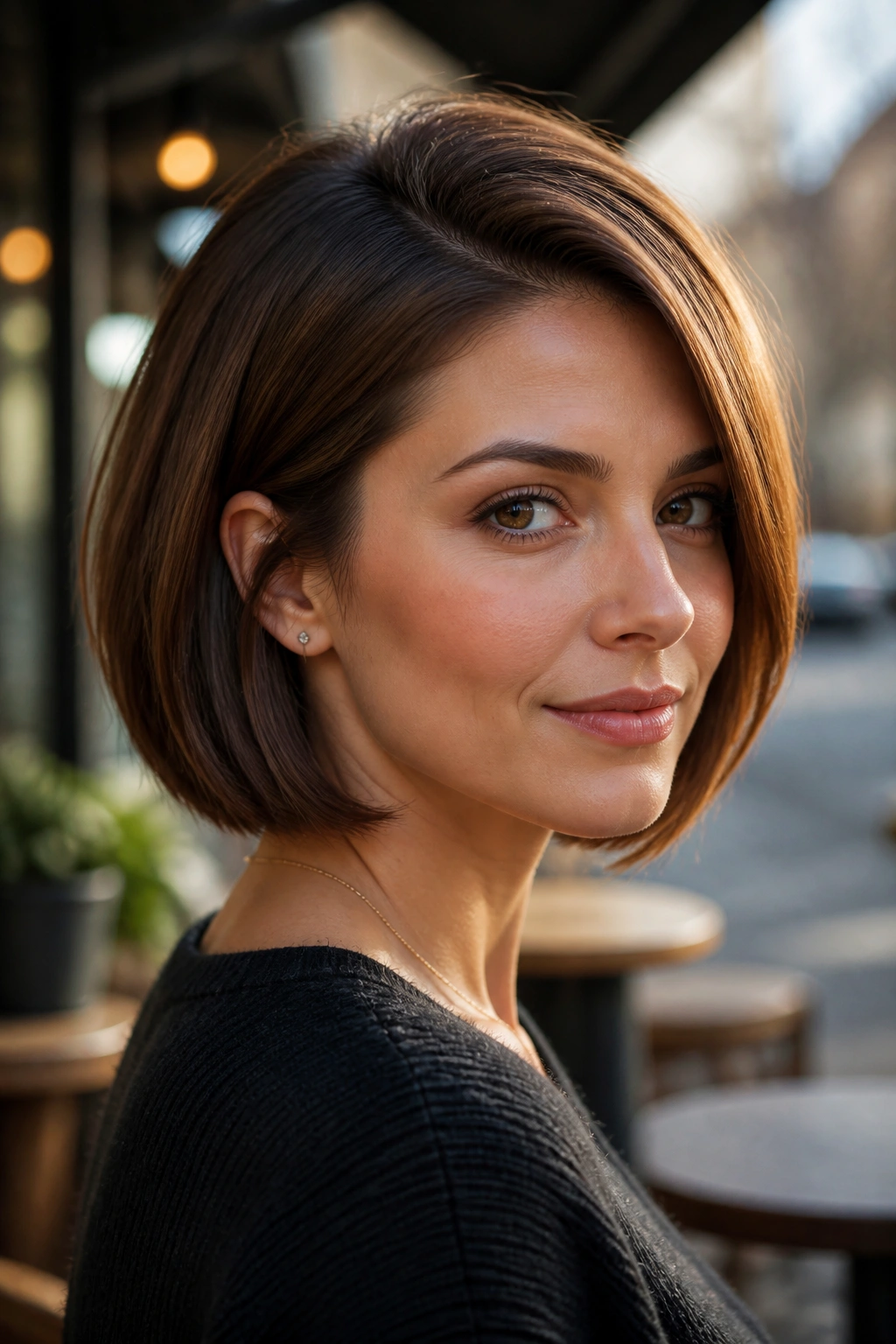
A side part is the fastest way to fake lift. Period. It moves the root volume away from the center line, creates a little height at the crown, and makes fine hair look like it has more body than it does. Add walnut brown, and the depth around the part looks even better.
The nice thing about this bob is that it doesn’t need a lot of drama to work. A subtle side part, a clean edge at the jaw, and a warm brunette tone that doesn’t wash out the ends — that’s enough. If your hair tends to lie flat on top, this shape gives it somewhere to go.
- Use a root spray only at the top.
- Blow-dry against the part first.
- Keep the ends blunt, not wispy.
My take: this is the bob I’d hand to someone who wants more lift but does not want to spend twenty minutes fighting a round brush every morning.
6. Dark Mocha Rounded Bob
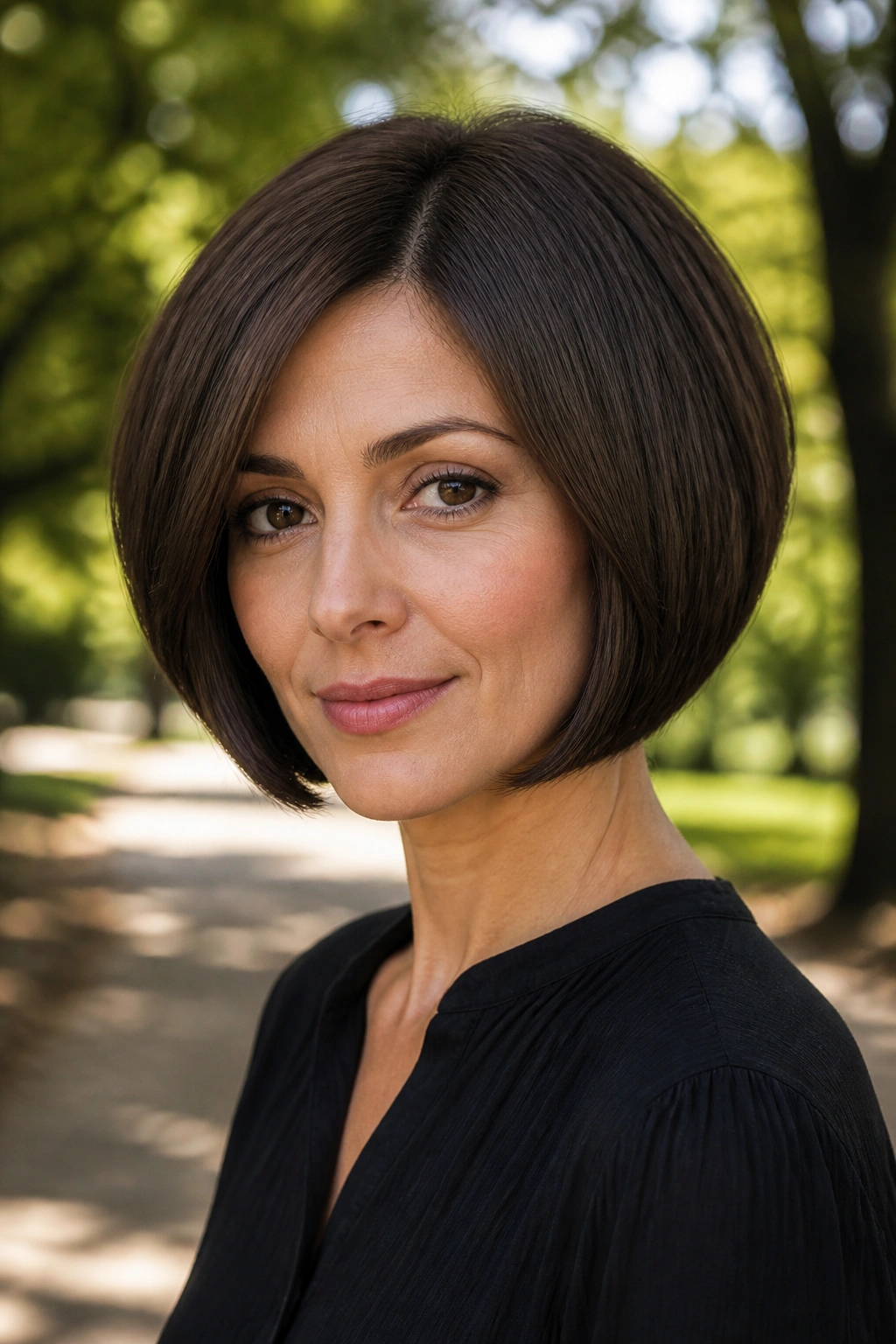
Want the ends to curve in instead of flipping out? A rounded bob is built for that. The haircut itself carries a soft dome shape, so fine hair doesn’t hang in a straight, lifeless sheet. Dark mocha helps because the shade looks dense at the perimeter and a touch softer in the middle.
Why It Sits So Well
A rounded bob gives the illusion of thickness at the crown and through the cheek area. That’s useful if your hair tends to look widest at the ears and narrow everywhere else. It brings the eye back into balance.
The shape also works with a simple blow-dry. Use a medium round brush, direct the hair slightly under, and let the top stay smooth. Do not over-texturize this one. The curve is doing the work, not a pile of product.
If you like a tidy haircut that still feels soft, this one lands in a good place. It has polish without stiffness, and that’s harder to get than people think.
7. Caramel Ribbon Lob
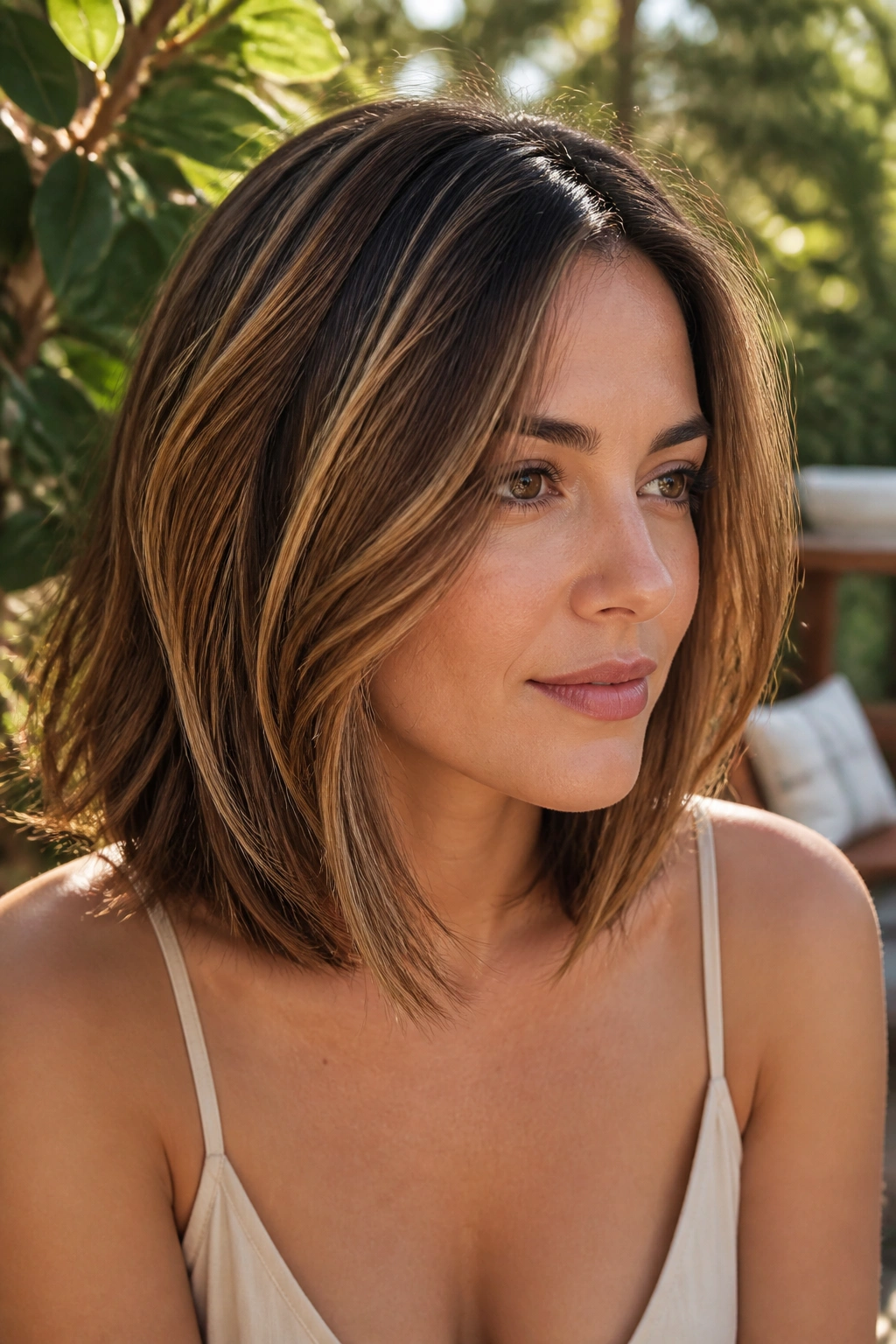
A lob gives fine hair a little more length to hang onto, which can be useful if you’re not ready to go fully short. Caramel ribbons add movement in a way that doesn’t rely on heavy layering. The lighter pieces live inside the brown, so the whole cut looks more alive without showing every strand.
This is the cut I think of for someone growing out a bob or coming from longer hair and needing a safer landing point. The length usually sits between the collarbone and the shoulders, which is long enough to tuck, flip, or wave. But it still looks intentional.
The color matters here. Caramel should be placed sparingly, not painted everywhere. Too much lightness on fine hair can make the ends look thinner than they are. A few well-placed ribbons around the face and under the top layer go further than a full blonding job.
It’s relaxed. Not careless. There’s a difference.
8. Ash Brown Sleek Center-Part Bob for Fine Hair
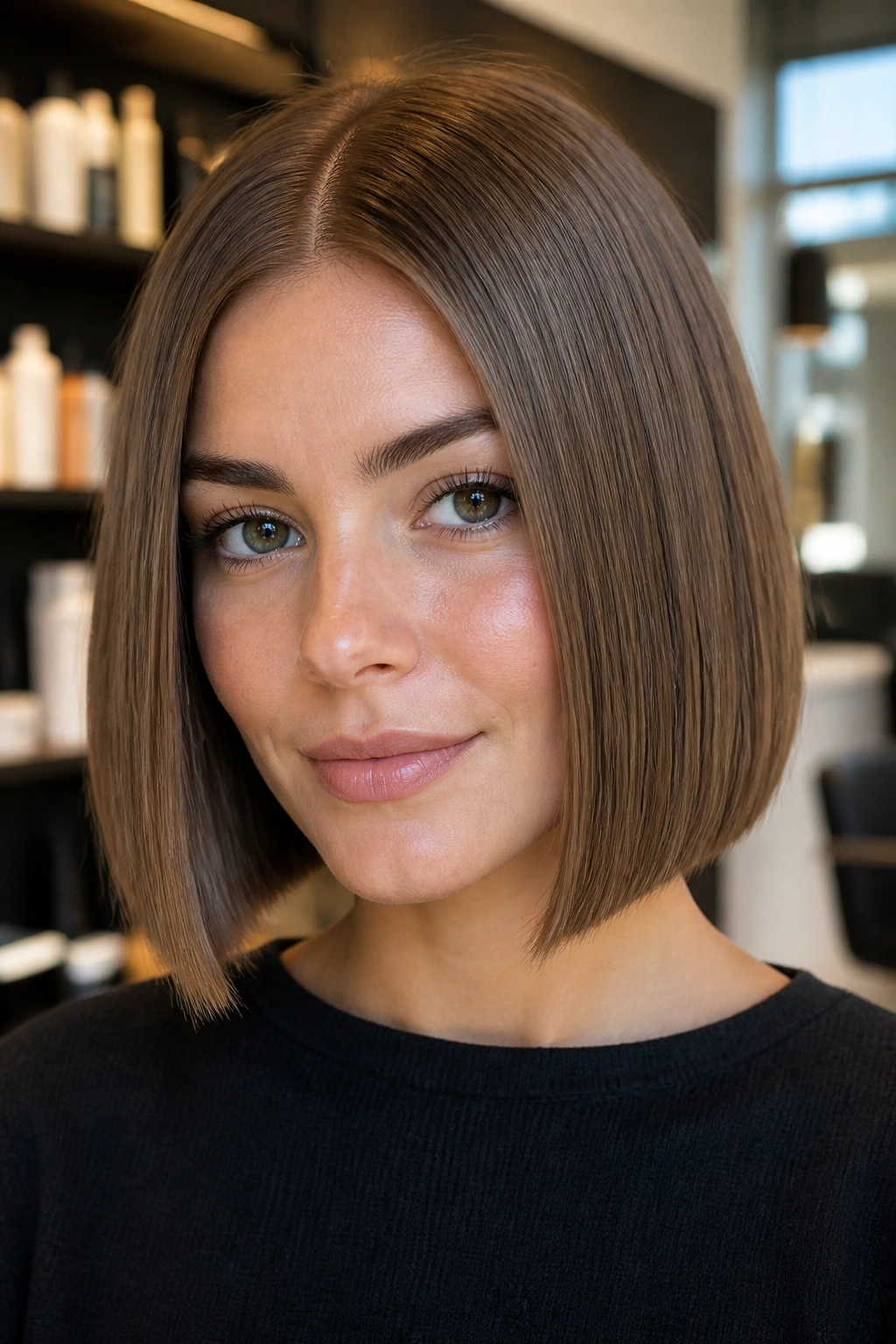
A center part is not off-limits for fine hair. It just needs a cut that supports it. A sleek bob with ash brown color can look sharply defined because the cool tone pulls out the clean line of the cut, and the center part gives the illusion of symmetry even when the hair is naturally a little uneven.
This style depends on precision. The ends should be blunt enough to look dense, and the top should be smoothed just enough to keep the part from splitting open. I like this with a heat protectant, a paddle brush, and one careful pass of a flat iron — not four passes, not six. Fine hair shows damage fast.
The ash tone is doing a specific job here. It tones down warmth and helps the haircut feel crisp instead of fuzzy. If your natural color runs very warm, this is a nice way to make the bob look more intentional. Slightly severe? Yes. That can be good.
9. Honey Brown Wavy Bob
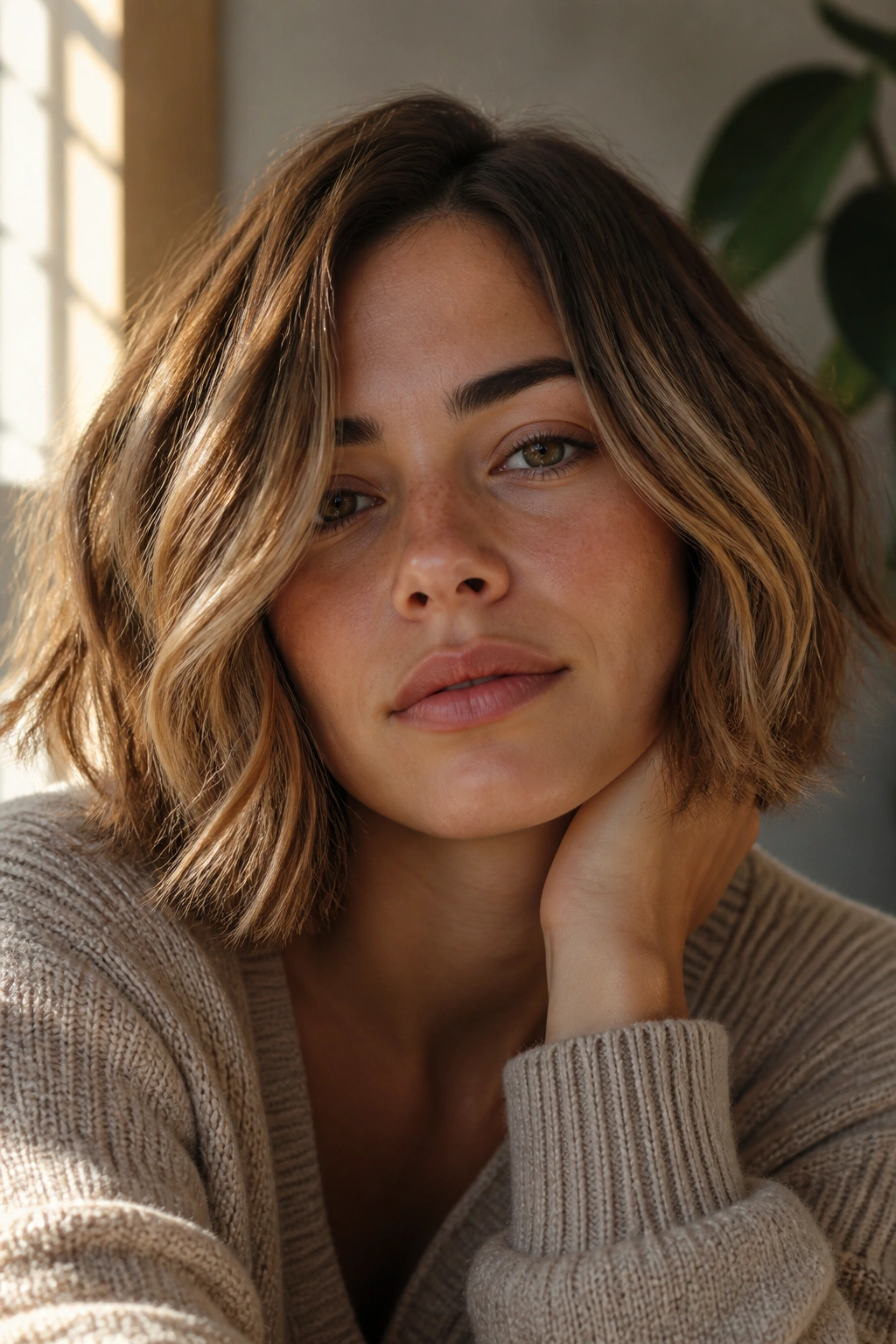
Honey brown wakes up a bob that wants to sit too close to the head. The warmth catches the eye, and soft waves keep the shape from looking too formal. Fine hair often needs a little bend rather than a big curl, or it starts to look overworked.
Picture this cut on hair that has a natural bit of movement already. Not beach-wave chaos. Just enough texture so the bob doesn’t behave like a flat page. A 1-inch curling iron, wrapped for about 8 to 10 seconds per section, usually does the trick. Leave the last inch out if you want the ends to look modern.
Styling Notes
- Use a light mousse before blow-drying.
- Alternate wave direction for a softer finish.
- Run fingers through the hair, not a brush.
The charm here is casualness. If the wave pattern feels too neat, it stops looking easy. If it feels too broken up, you lose the density you were trying to create. The middle ground is where this one lives.
10. Stacked Brown Bob with a Graduated Nape
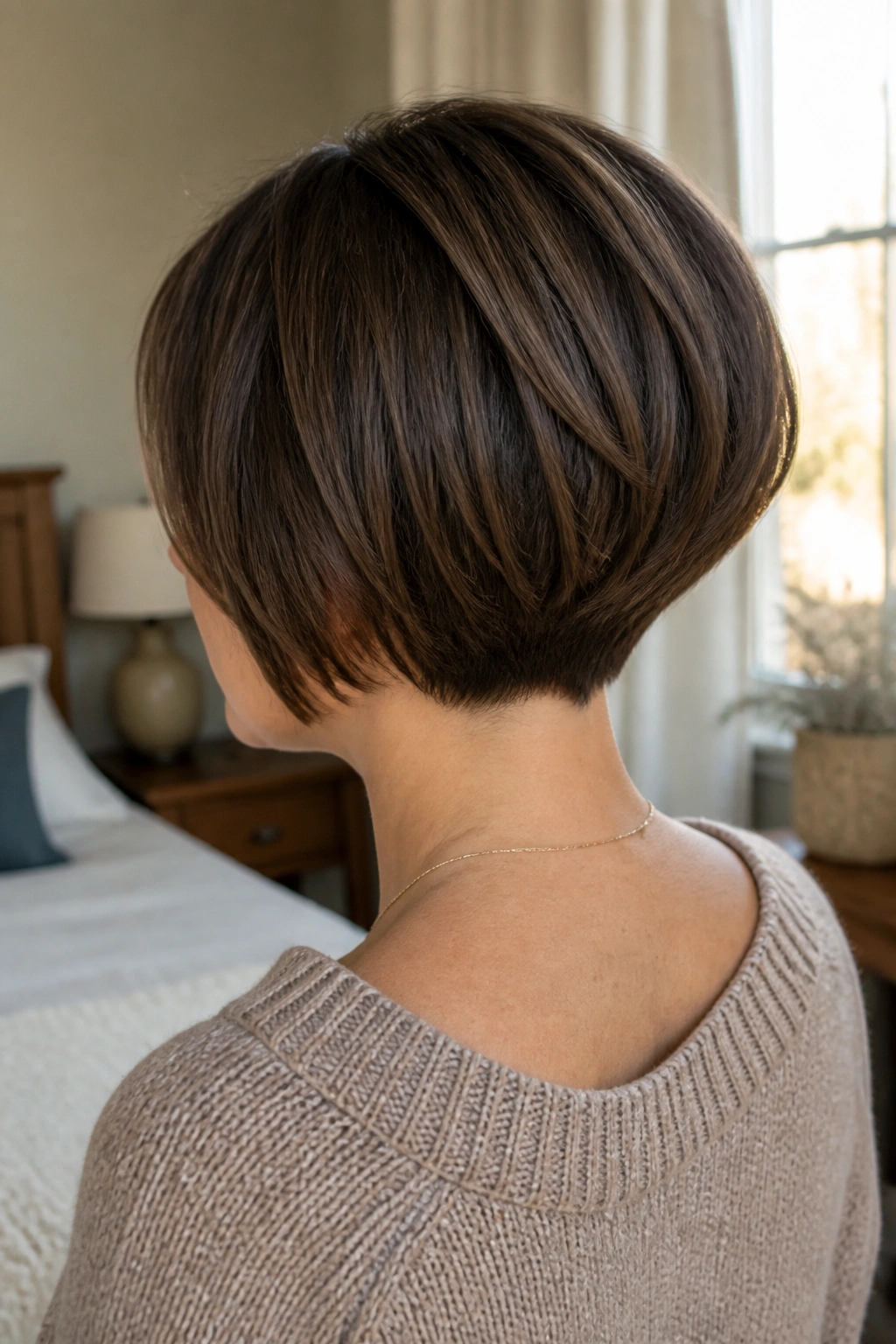
A stacked bob can be a gift for fine hair when the back needs a little structural help. The graduated nape creates lift where the head naturally curves, so the cut looks fuller from behind instead of collapsing into the neck. It’s a strong shape, and it knows it.
What to Ask Your Stylist
Ask for a soft stack, not a choppy one. Fine hair can go frayed fast if the layers are too short or too aggressive. You want weight removed just enough to create lift, while the outer line stays clean.
- Graduated nape with a smooth transition
- Minimal texturizing at the ends
- Brown color with slight lowlights near the back for depth
This cut has more attitude than some of the softer bobs on the list. Good. Fine hair sometimes looks best when it is given a shape that makes a statement instead of pretending to be effortless.
11. Chestnut Bob with Curtain Bangs

Curtain bangs are the easy entry point if you want fringe without committing to a full bang. On fine hair, they help draw the eye inward and soften the forehead area, which can make the whole bob look fuller around the face. Chestnut brown is a nice match because the warmth keeps the style from feeling too stark.
The bangs should start around cheekbone height and open away from the face, not fall in a heavy curtain like drapes in a hotel lobby. Too much bang, and fine hair loses the little volume it has at the front. Too little, and the style reads vague.
Easy lift, no helmet.
I like this cut for people who want a little softness around the face but still want the bob itself to carry most of the shape. It looks good tucked behind one ear, too, which is handy on days when the front needs less attention.
12. Mushroom Brown Micro Bob
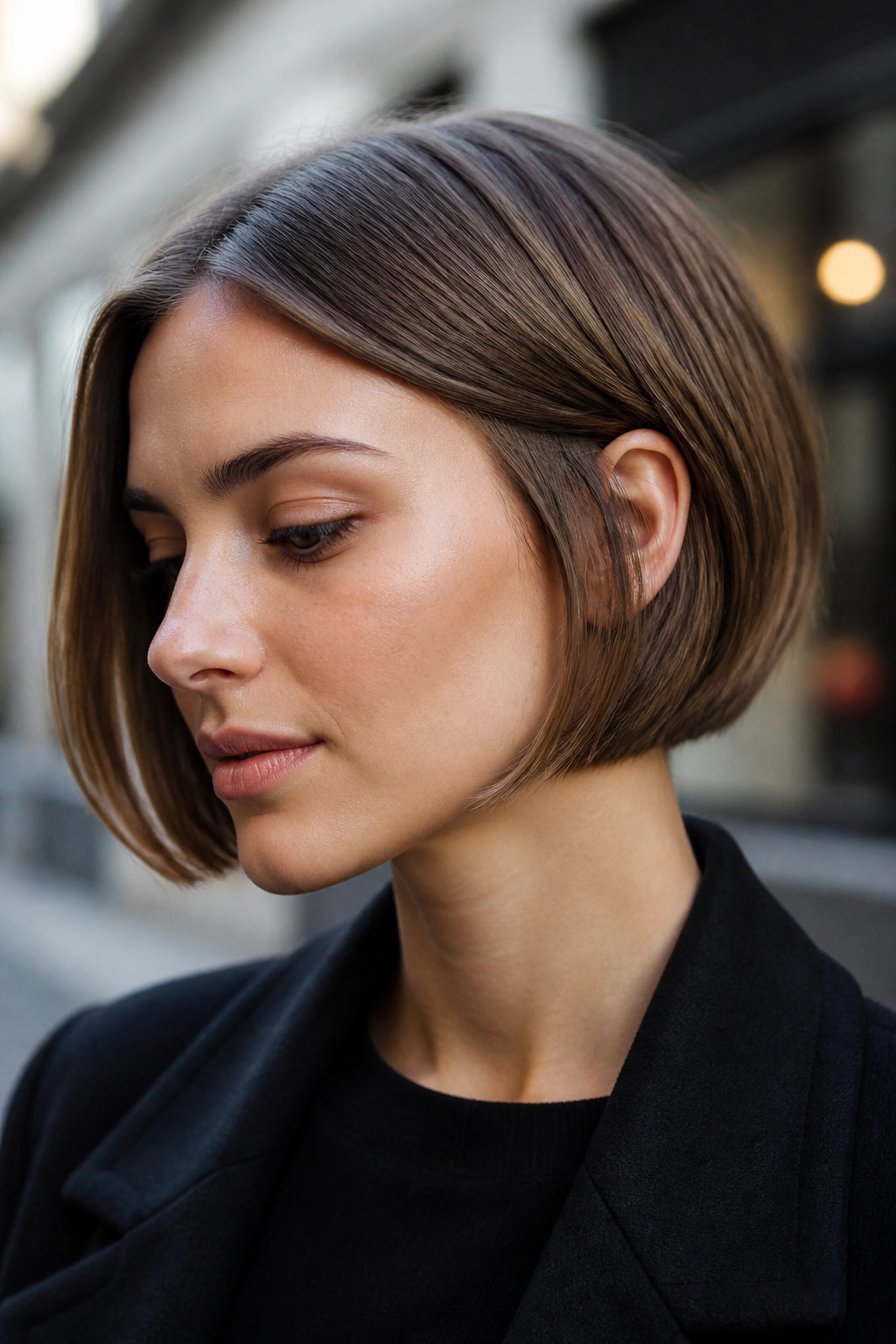
Cool-toned mushroom brown can be a smart choice when your hair tends to expose the scalp at the part. The softer beige-ash mix keeps the color from reading too stark, and a micro bob keeps the length compact enough that the ends don’t look stringy.
This cut has a bit of a fashion edge, and that’s part of the appeal. It is shorter than a chin-length bob, often landing around the jawline or a touch above. The shape puts all the emphasis on line, so the perimeter needs to be tidy. No rough ends. No over-thinned corners.
Quick Facts
- Best on straight or slightly wavy hair.
- Works well with a center or shallow side part.
- Needs regular trims to keep the line sharp.
One warning: mushroom brown can look muddy if the gloss fades. Keep the shine up, or the whole thing loses its point.
13. Soft Brunette Bob with Face-Framing Pieces
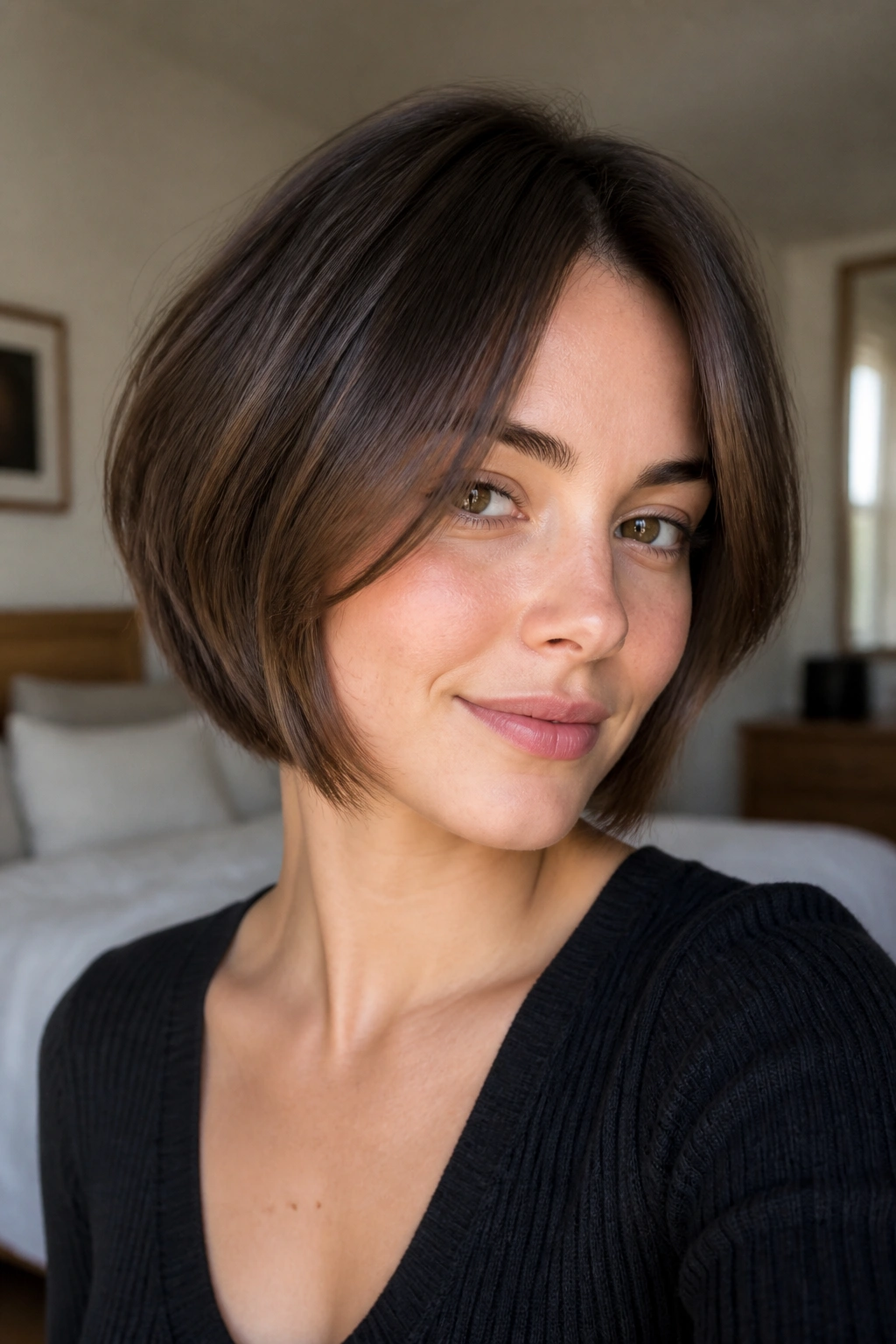
Face-framing pieces can help fine hair when they’re used with a light hand. Two or three small sections around the face are enough. Any more than that, and the haircut starts to lose its structure. A soft brunette tone keeps the look gentle, which is useful if you want the cut to feel less formal than a blunt bob.
What I like here is the balance. The perimeter stays solid, so the bob still looks full, while the front gets a little movement near the cheeks and chin. That can be flattering if your hair sits flat around the jaw or if you want to soften a stronger lower face.
The pieces should blend, not cascade. If the shortest bits are too short, they stop framing and start fussing. And nobody needs that.
This is one of the safest ways to add softness without sacrificing the sense of density that fine hair needs.
14. Rich Chocolate Bob with Tucked Ends
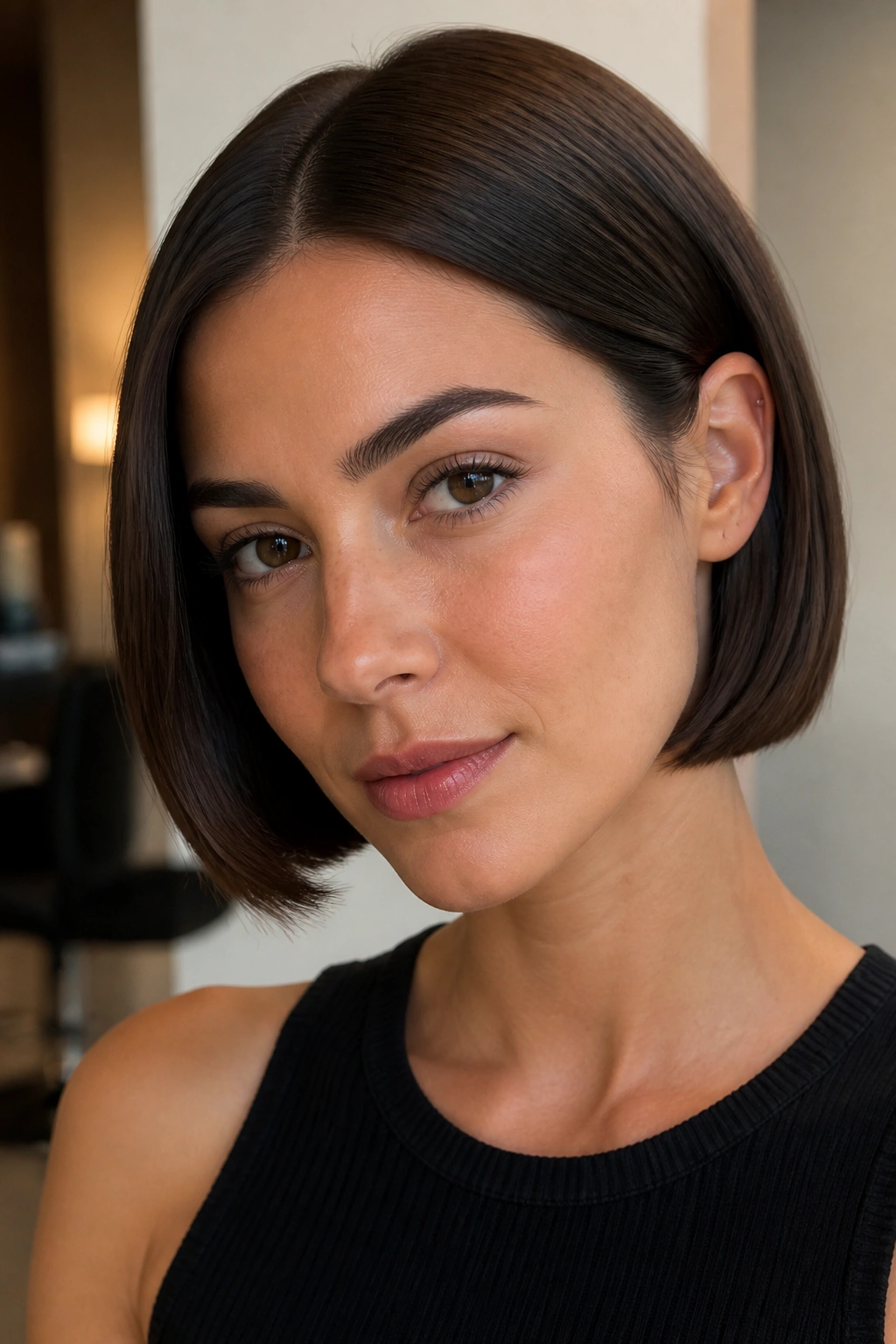
I like this one because it looks polished in about five minutes. The ends are blunt enough to look full, and the rich chocolate shade gives the cut a dense, glossy base. Tucked behind the ears, the shape becomes even cleaner, which is handy if your hair tends to fall into your face all day.
The styling trick is simple: blow-dry smooth, then tuck one side or both sides behind the ears while the hair is still warm. That little move trains the front pieces to sit in place. It also shows off the jawline in a way that suits a bob without making it feel severe.
Fine hair and tucked ends get along better than people think. The look is tidy, but not stiff. And yes, it can still feel modern.
If your hair is prone to flyaways, use a tiny bit of cream only at the very ends. Root-heavy product will kill the lift fast.
15. Toffee Brown Textured Bob
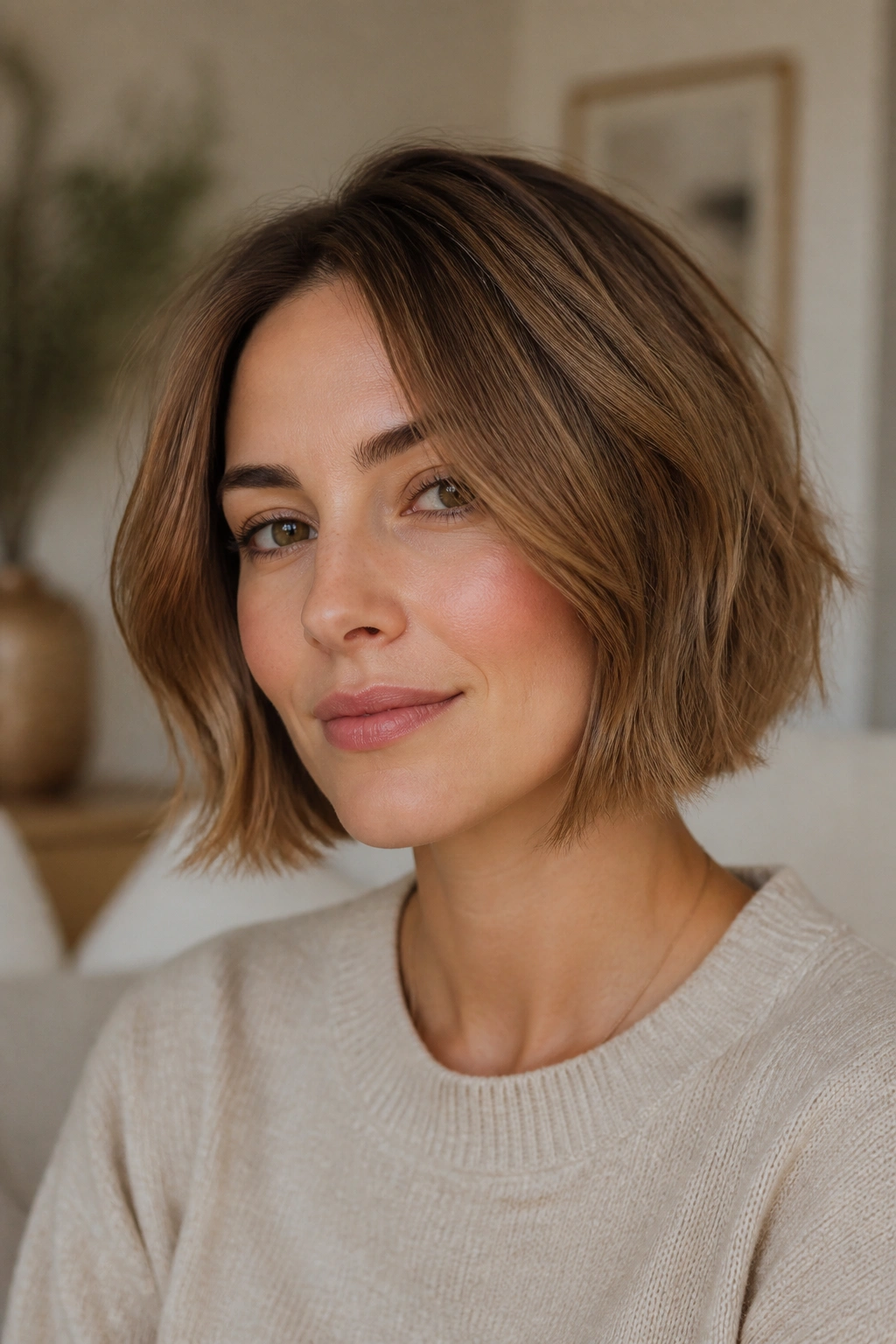
How do you get movement without shredding the shape? That’s the whole question with a textured bob. On fine hair, the answer is to keep the texture controlled — a little point cutting at the ends, a little product at mid-length, and nothing that strips the perimeter bare.
How to Wear It
Toffee brown is warm enough to soften the look, but not so golden that it turns brassy on fine strands. That helps the haircut read as dimensional rather than dry. The texture should feel airy, not broken apart.
- Apply mousse to damp hair, from ears down.
- Blow-dry with a medium round brush.
- Finish with a light spray wax at the ends.
This style is for someone who wants a lived-in bob but still wants the cut to look like a haircut. There’s a fine line there. Go too far, and the bob starts to look like it got roughed up in a wind tunnel.
16. Deep Brown Blunt Bob with a Gloss Finish
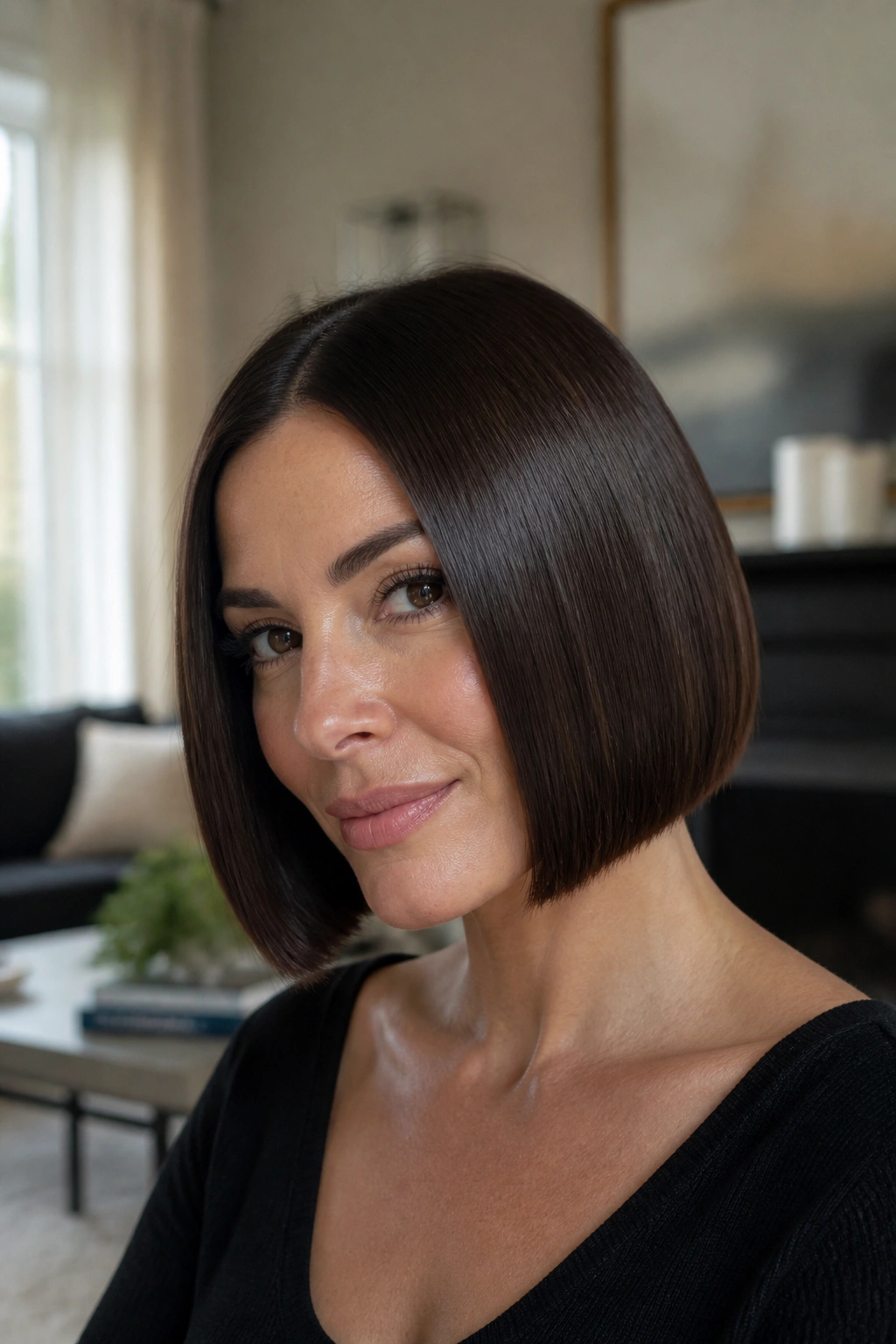
Deep brown and a blunt bob are a strong pair. The dark color makes the ends look denser, and the blunt edge makes the shape read as solid from across the room. Add a gloss finish, and the hair starts reflecting light in a way that makes fine strands look healthier than they are.
The key is shine without slipperiness. If the hair is coated in too much oil, it goes limp. If it’s too dry, the dark color can show every rough tip. A good trim every 6 to 8 weeks helps keep the shape from fraying at the bottom.
This is one of the simplest styles on the list, and that’s not a downside. Simple often looks best on fine hair because there’s less room for the cut to wander off and get wispy.
One detail that matters: ask for the blunt line to be checked at the back while the hair is dry. Wet hair can hide thin patches.
17. Sandy Brown French Bob
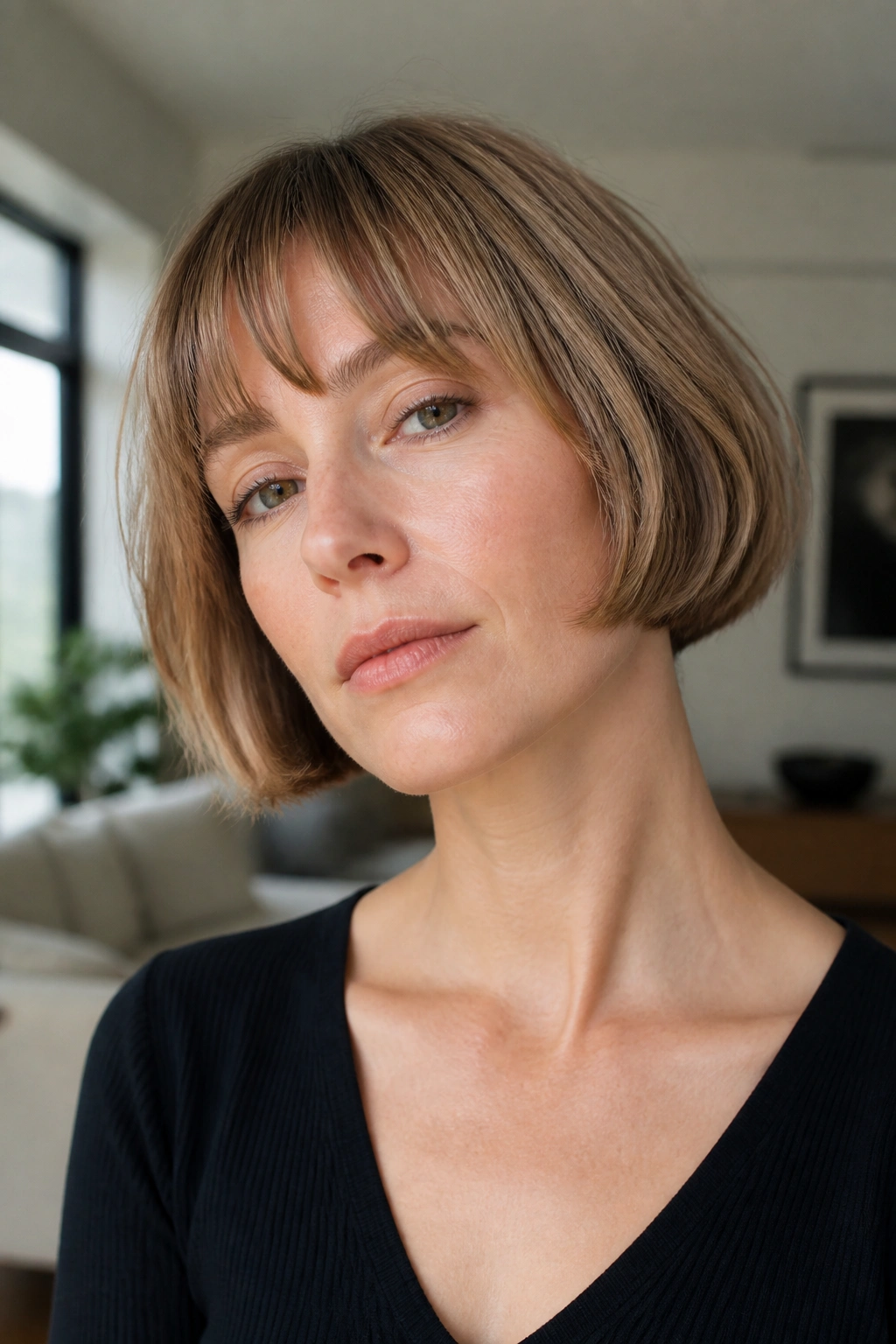
Sandy brown sits in that useful space between beige and ash, which can make a French bob feel softer around the face. The cut itself is short and light, usually skimming the jaw, and the fringe or front pieces sit loose enough that the style doesn’t feel boxy. It’s small, but not tiny.
A French bob like this is good when you want a bit of attitude without spending forever styling it. The texture should be minimal, maybe just a soft bend from a round brush or a quick twist with fingers and a blow-dryer. If you over-style it, the charm drops fast.
Best Features
- Keeps the neck open and the ends looking dense.
- Makes cheekbones stand out a little more.
- Works especially well with naturally straight or slightly wavy hair.
My favorite detail: the sandy tone keeps the cut from looking too dark at the edge, so it feels lighter even when the shape is short and compact.
18. Brunette Bob with Soft Waves
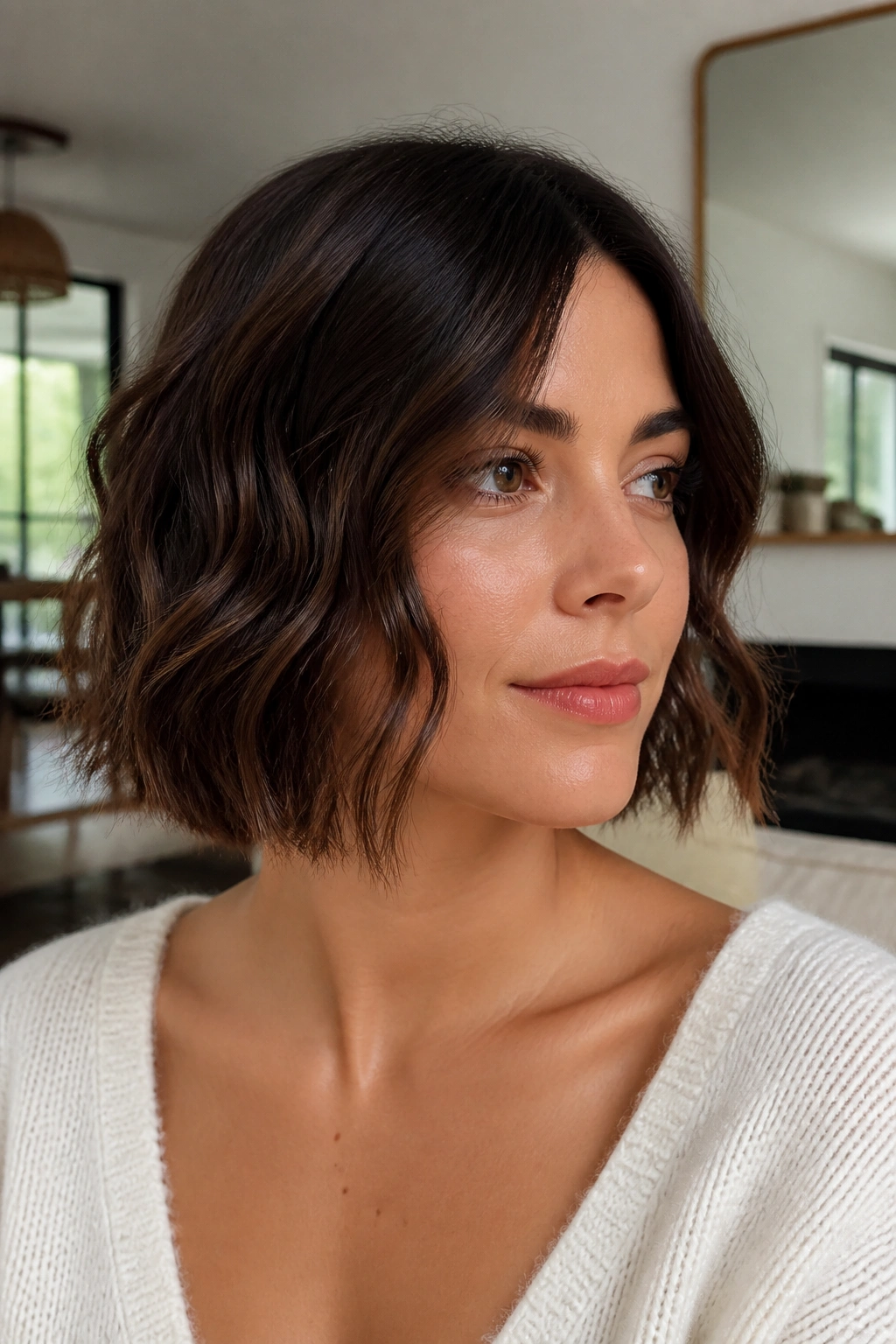
Soft waves are one of the easiest ways to give fine hair a little body, but the wave pattern has to stay loose. Tight curls on a bob can look busy. Gentle bends, on the other hand, make the hair feel fuller without hiding the cut.
The Wave Pattern That Helps Most
Wrap medium sections around a 1-inch iron for only a few seconds, then let them cool before touching them. Fine hair takes shape fast, and over-heating it can make the ends crisp. Leave the last inch or so straight if you want the bob to keep its modern edge.
A brunette tone works well because it keeps the waves from looking too separated. The hair still moves, but the color ties the pieces together. That’s a small thing, and it matters.
If your hair is especially soft, use a salt-free texturizing spray. Heavy sea-salt sprays can make fine strands feel rough and dry, which is a trade nobody asked for.
19. Brown Bob with Peekaboo Highlights
Peekaboo highlights are a smart way to add depth without lighting up the whole head. On fine hair, that matters. A few lighter pieces hidden under the top layer can make the bob feel thicker because the eye catches movement underneath, not just a single flat surface.
The placement should be careful. Around the crown, under the top section, and a little near the face — that’s enough. Too many light pieces and the scalp can start to show more, which is the opposite of what you want. Keep the highlights slim and fairly close to the brown base.
- Best when you want dimension without obvious streaks.
- Good for straight bobs and softly waved ones.
- Ask for warm caramel or beige ribbons, not chunky contrast.
This style is for someone who likes color that works quietly. It isn’t loud. It just makes the bob look richer.
20. Collarbone Brown Lob with a Clean Perimeter
A collarbone lob is a good answer when fine hair feels too fragile short. Longer length keeps more weight in the hair, which can make the ends look fuller. The clean perimeter matters here more than almost anywhere else, because the line is what keeps the style from drifting into limp territory.
I prefer this shape when someone wants to tie their hair back sometimes but still wants the bluntness of a bob. The cut lands just at or below the collarbone, so it can sit on the shoulders or flip away from them, depending on how it’s dried. Brown color helps keep the whole thing grounded.
There’s also a practical upside. The style can grow out for a while before it starts losing its shape. That’s useful if you don’t live at the salon.
Do not load this with layers. A lob for fine hair should feel deliberate, not feathery.
21. Sliced Brown Bob with Razor Ends
A razor cut can work on fine hair, but only when it’s used with a light touch. Too much slicing and the ends start to look frayed. The right version keeps the bob mobile without making it stringy, which is a fine line and not a job for someone who attacks every strand the same way.
This is best for hair that is fine in texture but not sparse in density. If you have a lot of strands that just lie flat, a little slicing can wake them up. If your hair already feels thin, skip the razor and ask for soft point cutting instead.
What to Watch For
- The perimeter should still look clean.
- Razor work should stay away from the very bottom edge.
- A brown shade with lowlights helps keep the cut from looking too wispy.
It’s a cooler, edgier option. Good. Fine hair does not need to look precious all the time.
22. Warm Brunette Bob with Baby Bangs
Baby bangs are not subtle, and that is why they can work. They pull the eye upward and make the face feel more open, which can be useful when fine hair needs a strong focal point. Warm brunette color keeps the style from looking stark or overly severe.
This is the kind of cut that rewards confidence and punishes hesitation. If you like a little fashion edge, it can be a great fit. If you want hair that disappears into the background, it probably won’t be your thing. No shame in that.
The bangs should be thin and deliberate, not thick and blocky. On fine hair, blocky fringe can swallow the rest of the cut. Keep the bob itself sleek or softly tucked under, and let the bangs be the unusual part.
One warning: if your forehead area gets oily fast, baby bangs need more daily attention than a side fringe. That’s the trade.
23. Dimensional Cocoa Bob with a Deep Side Part
A deep side part does two jobs at once. It gives the crown a little lift, and it creates a shadow line that makes the bob look deeper and fuller. Add cocoa brown with subtle dimension, and the haircut stops reading as one flat sheet.
The color placement matters here more than the cut in some cases. Slightly lighter pieces around the front, darker depth under the top layer — that kind of thing. The goal is not obvious highlight stripes. The goal is movement you notice when the head turns.
- Best for straight or softly wavy hair.
- Great if one side of your hair always falls flatter.
- Use a root-lifting spray only where the part lives.
A deep side part can also soften a strong jaw or bring some asymmetry to a face that feels too evenly framed. Small shift. Big payoff.
24. Rounded Brown Bob with Volume at the Crown
If the top of your hair lies flat no matter what you do, a rounded bob is worth a serious look. The cut builds lift through the crown and keeps the outline soft around the head, which helps fine hair look like it has more body. Brown color with gentle depth keeps the shape from looking airy in a bad way.
Ask For These Details
Tell your stylist you want height at the crown, not choppy layers everywhere. Those are not the same thing. A rounded bob should still feel smooth through the sides and full at the top.
A round brush and a cool shot from the dryer help lock the shape in place. You do not need much product. Too much will drag the crown down by lunch, and nobody wants that.
This is a good choice if your hair looks better after a fresh blowout than after air-drying. The shape likes a little direction.
25. Ashy Mocha Bob with a Subtle Undercut
A subtle undercut is not the first thing people think of for fine hair, but it can help when the nape gets bulky or the shape balloons out underneath. Done lightly, it removes hidden weight so the top section sits cleaner. Ashy mocha keeps the style cool and modern without screaming for attention.
The important word here is subtle. Fine hair does not need a dramatic undercut unless there’s a very specific reason. A small reduction at the nape can help the bob lie closer to the neck, especially if your hair grows out with a puff at the bottom.
This is a good one to discuss carefully with your stylist. Show photos. Talk about how much hair you actually want removed. If the undercut is too high, the haircut can start to look patchy as it grows.
I like it for people who already know they want structure and are tired of fighting the back of the bob.
26. Tousled Chestnut Bob with Airy Ends
Tousled does not have to mean messy. On fine hair, it often means the ends have a little lift and the surface has a little bend, so the whole cut feels alive instead of stiff. Chestnut brown gives the style warmth, and the airy ends keep it from looking heavy.
How to Style It
Start with mousse on damp hair, then rough-dry until it’s about 80 percent dry. Use your fingers or a medium brush to bend the ends in random directions. A diffuser can help if your hair has a bit of wave already.
- Keep oils away from the roots.
- Use a light spray, not a heavy cream.
- Shake the hair out instead of brushing it hard.
This bob works because it accepts a little imperfection. Fine hair often looks best when it is not forced into one exact shape all day. The trick is keeping enough line at the bottom so the tousle still feels intentional.
27. Golden Brown Bob with a Long Fringe
A long fringe can do a lot for fine hair around the temples and front hairline. It fills in the front without cutting the entire top shorter, and that makes the bob look more substantial. Golden brown helps the fringe feel sunlit and soft rather than flat.
The fringe should graze the eyes or sit just below the brow, depending on how much styling you want to do. Too short, and it can look abrupt. Too long, and it starts to drag down the front. The sweet spot is where it brushes the cheeks and blends into the rest of the bob.
This style is especially useful if your hairline is a little sparse at the corners. The long fringe covers that without hiding your face. That’s the whole appeal.
Keep the rest of the cut clean and blunt. If both the fringe and the perimeter get too wispy, the haircut loses its backbone.
28. Espresso Brown Bob with Minimal Layers
Sometimes the simplest answer is the best one. Espresso brown with minimal layers gives fine hair a dense, solid look because the eye sees a single, rich shape instead of a bunch of broken pieces. If you want a bob that feels strong on day one and still looks good on day ten, this is a serious contender.
The length can sit at the jaw or a little below it, but the key is restraint. A tiny bit of internal layering is fine if it helps the hair move, yet the perimeter should stay clean. Too many scissors in the wrong places, and the whole point disappears.
This is the bob I’d point to if someone says, “I want my hair to look like it has more of it.” Straight answer. Go brown. Go blunt. Keep the layers light. Then style it with less product than you think you need.
Fine hair usually does best when the haircut is doing the talking. This one gets that.
