



Fine hair can go flat in a hurry, and purple can look muddy if the cut fights it. Put the two together the wrong way and you end up with wispy ends, dull shine, and a shape that collapses before lunch.
Put them together well, though, and the effect is almost unfair. A bob gives delicate strands a clean edge, and purple gives the eye somewhere to land — on the shape, the gloss, the movement — so the hair reads fuller than it really is. That is the quiet magic of purple bob haircuts for fine hair.
The shade matters more than people think. Lilac keeps things airy, plum adds depth, aubergine brings shine, and a darker root can make the whole style look thicker at the perimeter. The cut matters just as much. A blunt line, a soft stack, or a well-placed angle can give you the kind of body that a thousand layers never will.
Some of these looks are polished. Some are a little mischievous. A few lean sleek and expensive, while others are built for people who want motion first and color second. The right one depends on how much maintenance you want, how much movement your hair naturally has, and whether you like your bob neat or a little messy.
1. Soft Lilac Blunt Bob
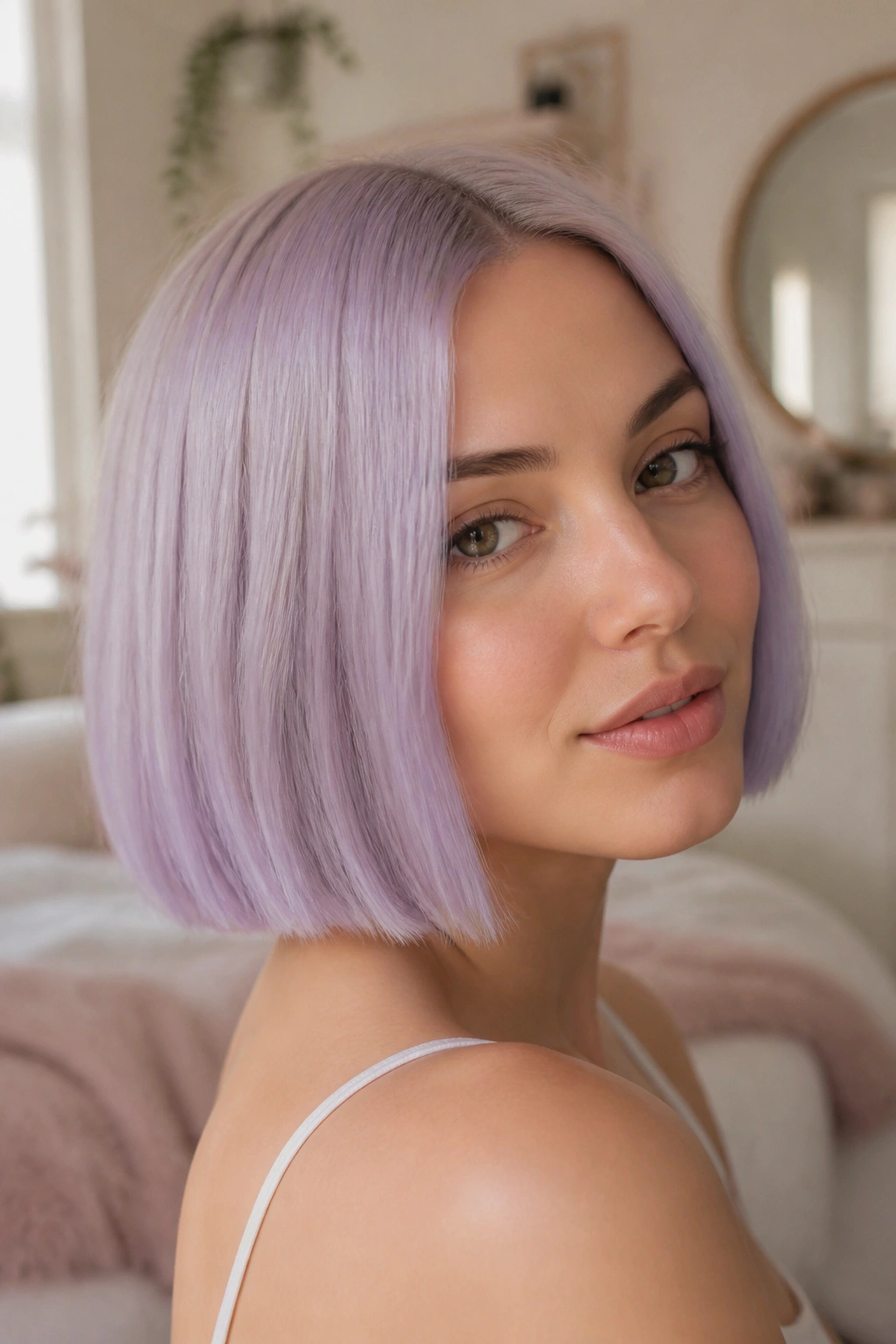
A soft lilac blunt bob is one of the easiest ways to make fine hair look denser without making it feel stiff. The blunt line does most of the heavy lifting here. One clean perimeter, cut right around the jaw or just below it, gives the ends a solid edge, and lilac keeps the whole thing from looking heavy or overworked.
Why It Works on Fine Hair
The blunt finish keeps the eye from seeing see-through ends. That matters. Fine hair often looks thinner at the bottom because the last inch or two gets wispy fast, and this cut solves that by keeping the line full and even.
Lilac is also kinder than a deep, dark violet if your hair is very delicate. It softens the overall look, which makes the cut feel light instead of severe. I like this one best on straight or slightly wavy hair that can hold a smooth shape.
- Ask for one length through the perimeter with only minimal internal layering.
- Keep the length at the jaw, chin, or just above the collarbone if you want more movement.
- Style with a 1-inch flat iron bend or a round brush for a soft curve under.
- Use a light gloss spray, not a heavy oil.
My favorite part: the cut looks deliberate even on a rushed morning. That is a rare thing.
2. Smoky Lavender French Bob
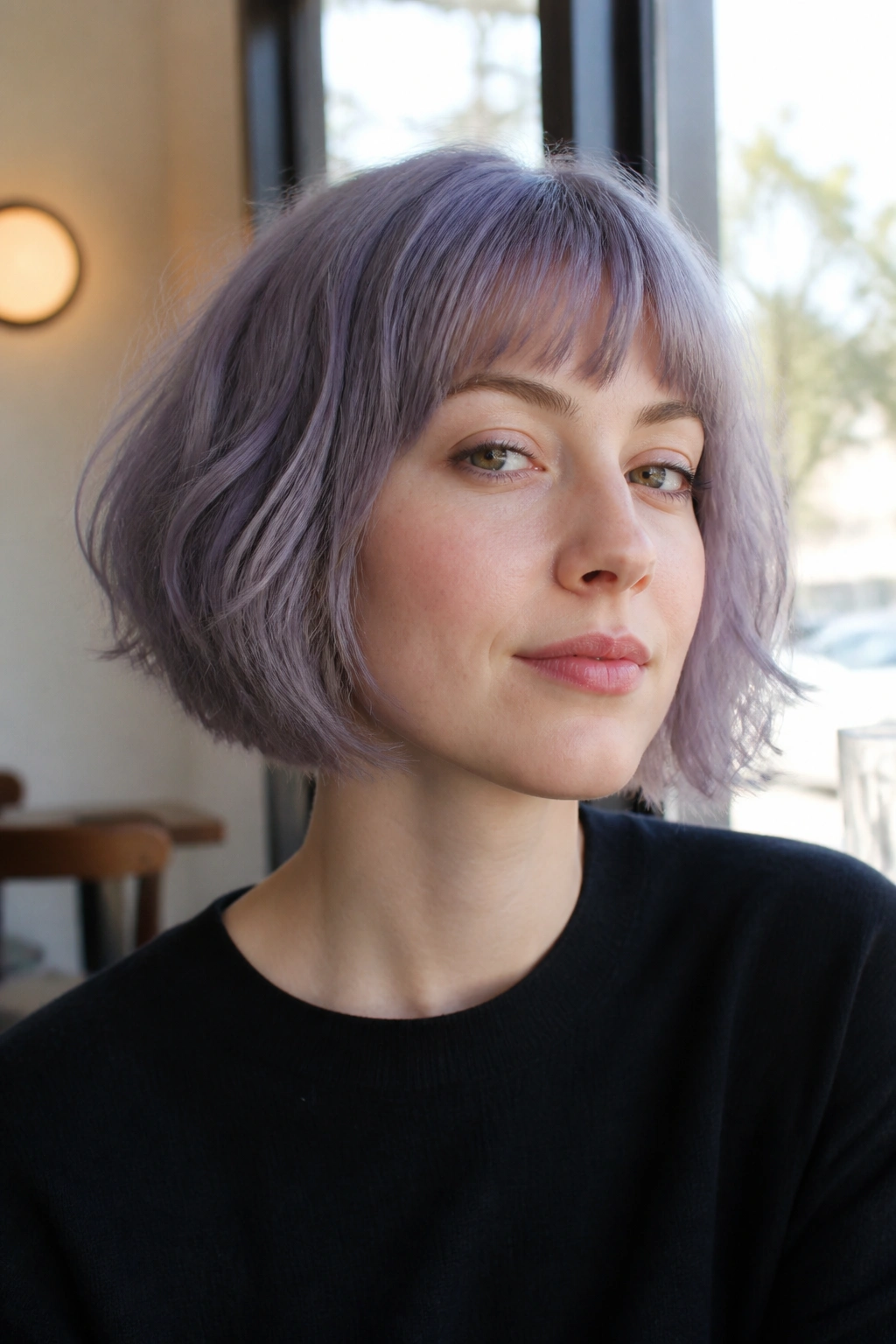
A French bob has that slightly cool, slightly rumpled attitude that works beautifully with fine hair. Smoky lavender gives it depth, and the shorter length — usually somewhere between the cheekbone and chin — makes the hair feel fuller because there is less length pulling it down.
This is the cut I reach for when someone wants hair that looks like it has a life of its own. Not wild. Just lived in. The ends should sit clean, but not fussy, and the texture should feel touchable rather than shellacked into place.
The trick is restraint. Too much layering can make the bob lose its shape, and too much purple contrast can start to look costume-like. A smoky lavender shade, with a slightly muted finish, keeps it chic. A middle part can work, but a slight off-center part usually gives more lift at the crown.
It suits people who like to air-dry their hair partway and then finish with a quick bend at the front pieces. Fast. Easy. Good-looking without much effort.
3. Plum Layered Bob with Subtle Crown Lift
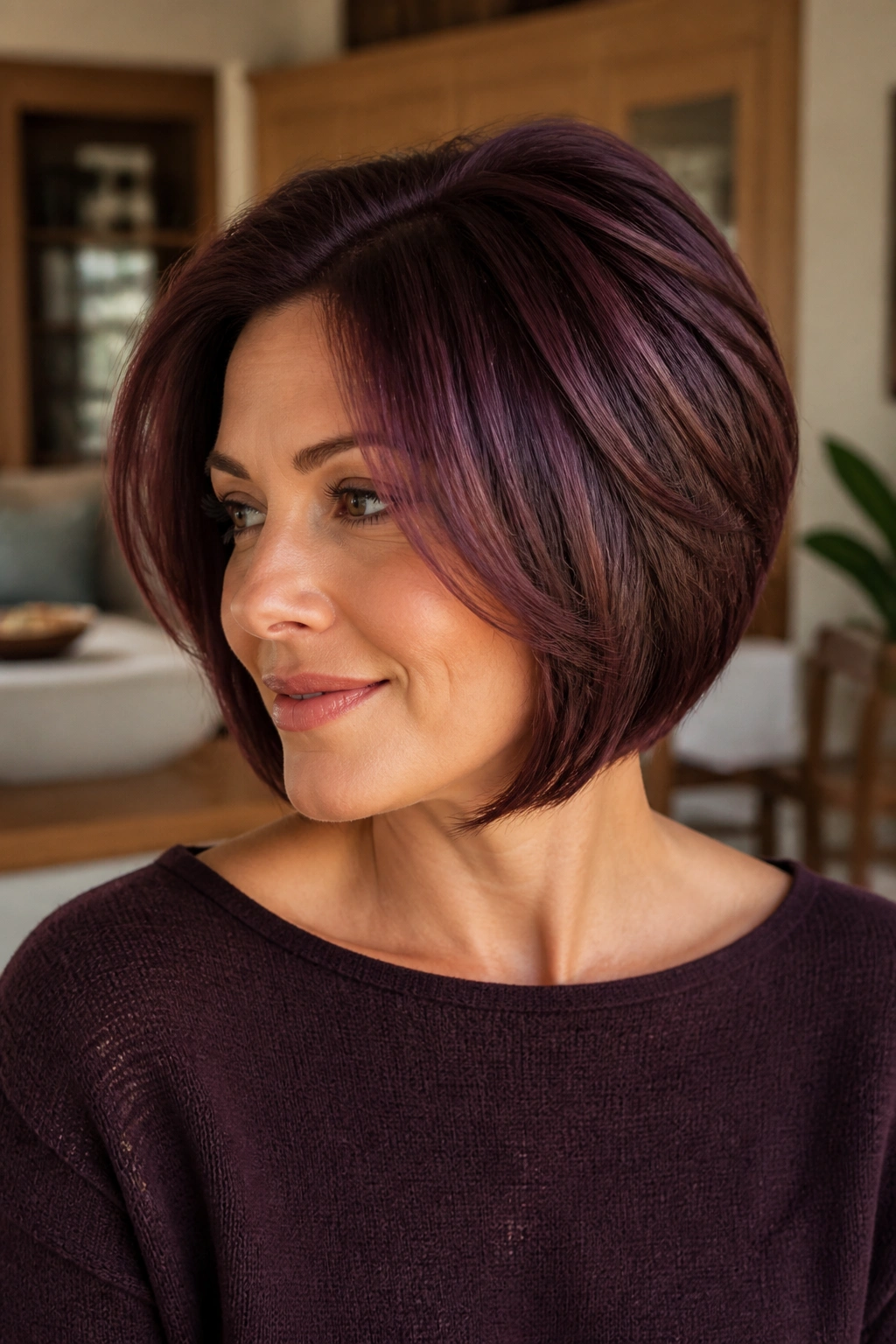
Can fine hair handle layers? Yes, but only if they’re placed with a light hand. A plum layered bob works because the layers stay near the crown and upper sides, where they can help lift the shape, while the ends stay substantial enough to avoid that hollow, stringy finish.
What Makes It Worth Asking For
The plum shade gives the bob depth, especially if your natural color is brown or dark blonde. It makes the haircut look denser at a glance, and that matters more than people admit. Fine hair does not need drama everywhere. It needs a few smart decisions in the right places.
- Keep the lowest layer blunt or nearly blunt.
- Ask for soft crown layering, not a shaggy interior.
- Use a volumizing mousse at the roots before blow-drying.
- Set the crown with two or three clips while it cools to hold lift.
A 1.25-inch round brush gives enough bend without puffing the ends into fluff. That’s the sweet spot. If the layers are too short, the bob starts to look thin. If they’re too long, you lose the lift. The middle path is where this one shines.
4. Angled Violet Bob
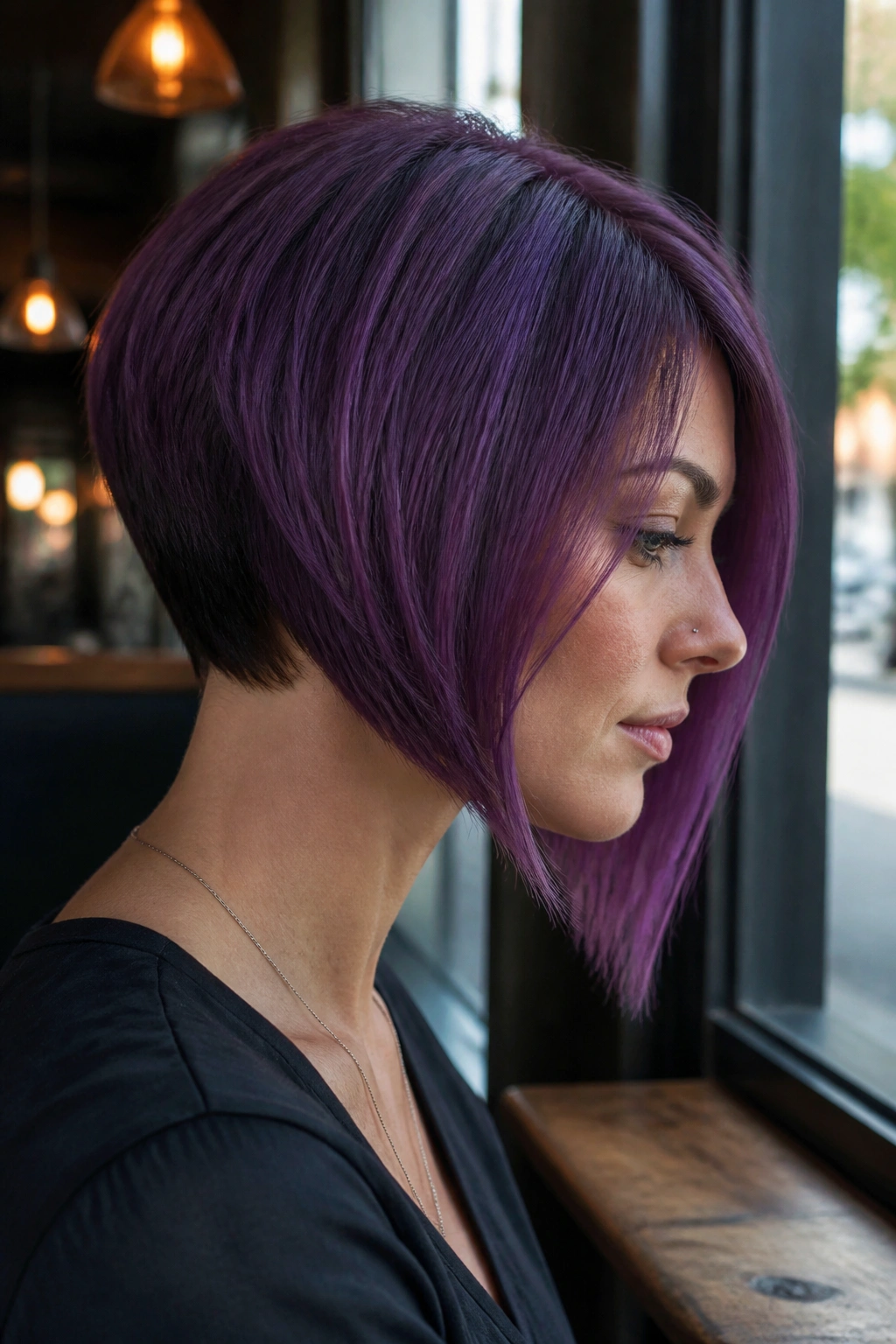
An angled bob is one of those cuts that makes fine hair look intentionally shaped, even when it’s not cooperating. Shorter in the back, longer in the front, it creates a line that feels sharp and modern, and violet color sharpens that shape even more.
This cut is especially good if your hair lies flat at the nape. The angle builds the illusion of back-end fullness because the eye sees a clear graduation from short to long. Keep the difference modest — about 1 to 1.5 inches from back to front is plenty for most people. Go too steep and the ends can start to look thin.
The color should echo the cut. I like a violet that has enough depth to catch shine, not a flat purple that swallows the shape. If your hair is fine and straight, this bob can be worn sleek with a center part or flipped slightly off to one side for more lift at the roots.
It is a clean look. Not fussy. And that clean line is exactly why it works.
5. Pastel Peekaboo Bob
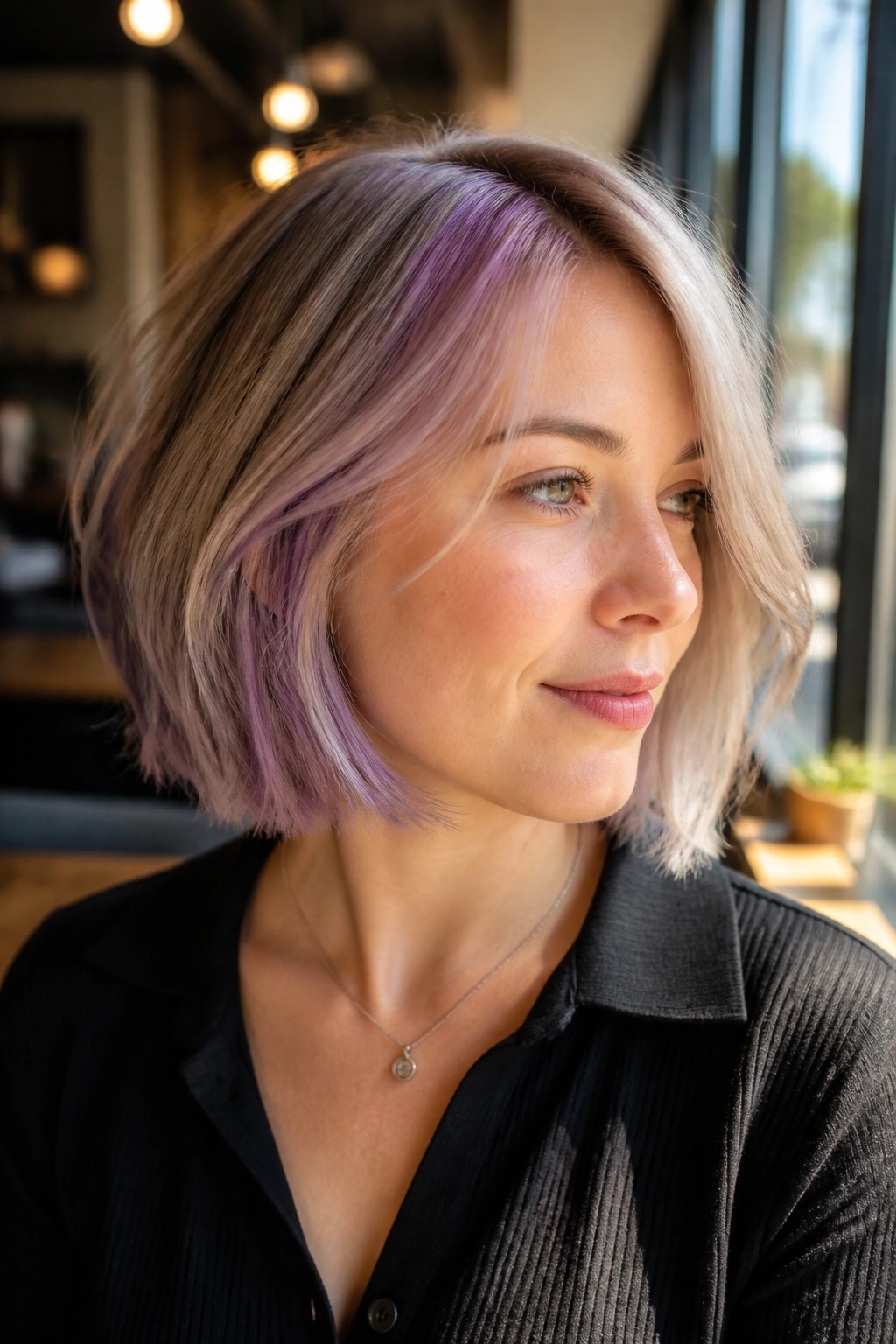
This one is sneaky in the best way. A pastel peekaboo bob keeps the visible surface soft and wearable, while hiding the purple underlayers underneath. When the hair swings, the color flashes through. When it sits still, the bob can read as a more neutral cut.
That makes it a smart choice for fine hair, because you get the fun of color without covering every strand in a bright tone that might show off every thin patch. The cut itself can stay simple — chin length, slightly rounded, maybe with a tiny bit of face framing — while the color does the playful work.
Who It Suits Best
People who want purple but do not want a full-color commitment usually love this one. It also works well if your hair is delicate and gets tired from heavy bleaching. The top layer can stay close to your natural shade, which helps keep the overall look grounded.
A peekaboo placement looks best when the purple is tucked under the crown and side panels, not just at the ends. That way it moves when you move. Small detail. Big payoff.
6. Glossy Aubergine Side-Part Bob
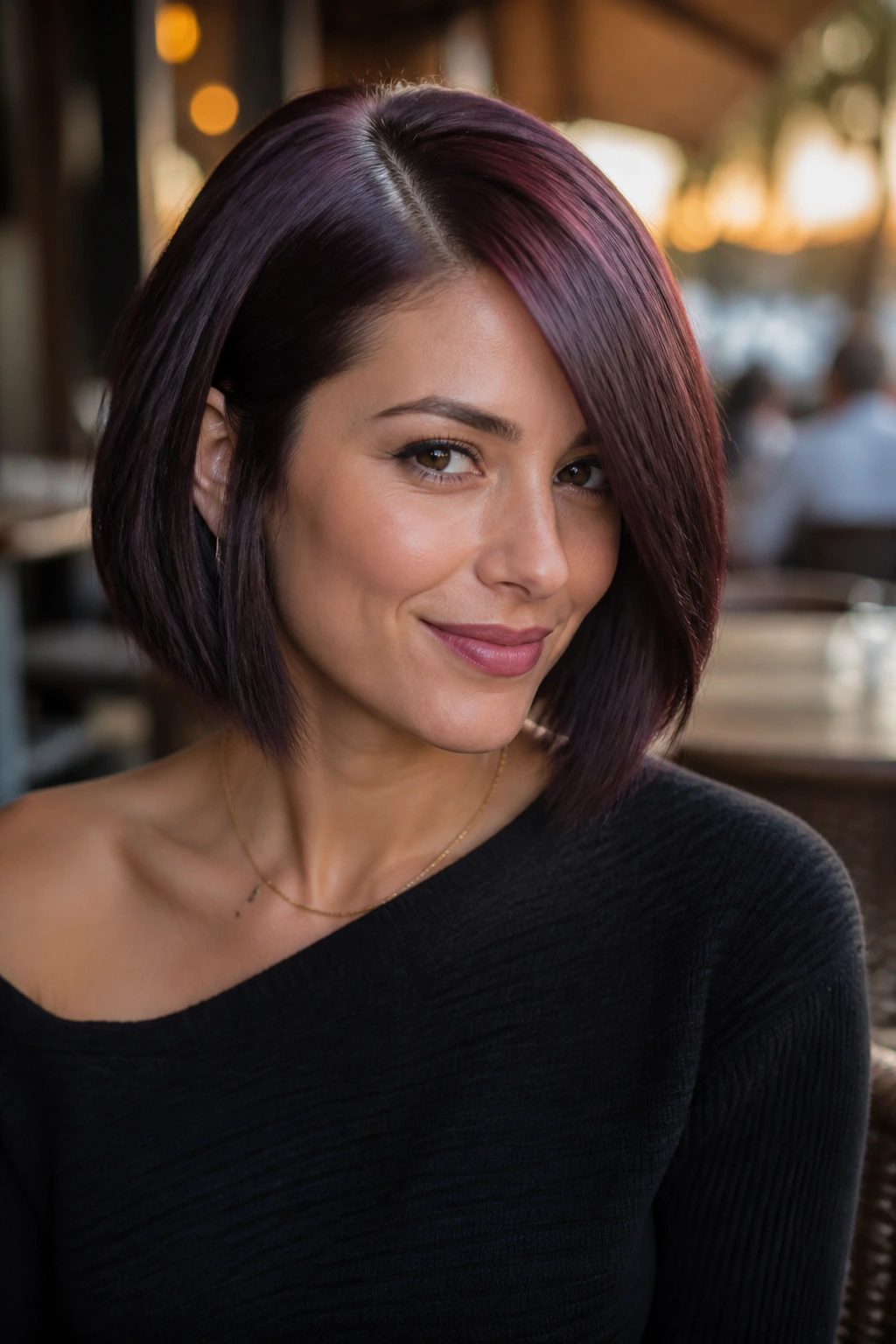
The first thing you notice about a glossy aubergine bob is the shine. Dark purple on fine hair can look rich instead of overpowering, especially when the cut is kept smooth and the part is pushed to one side. That side part gives the roots a little lift and stops the whole style from lying too flat against the head.
Aubergine works because it feels dense. The color has enough depth to make the silhouette look filled in, and the gloss catches light in a way that makes fine hair look polished instead of limp. The cut should stay just above the shoulders or at the jaw, with a soft edge rather than choppy thinning.
Less product is better here. Really. A pea-size amount of smoothing cream through the mids, then a heat protectant before blow-drying, is usually enough. Too much oil at the roots will flatten the lift you’re trying to create.
I like this look on people who wear simple clothes and want their hair to do the talking. It’s moody without being dramatic. And it photographs well in real life, which is a rarer trait than it should be.
7. Textured Micro Bob in Orchid
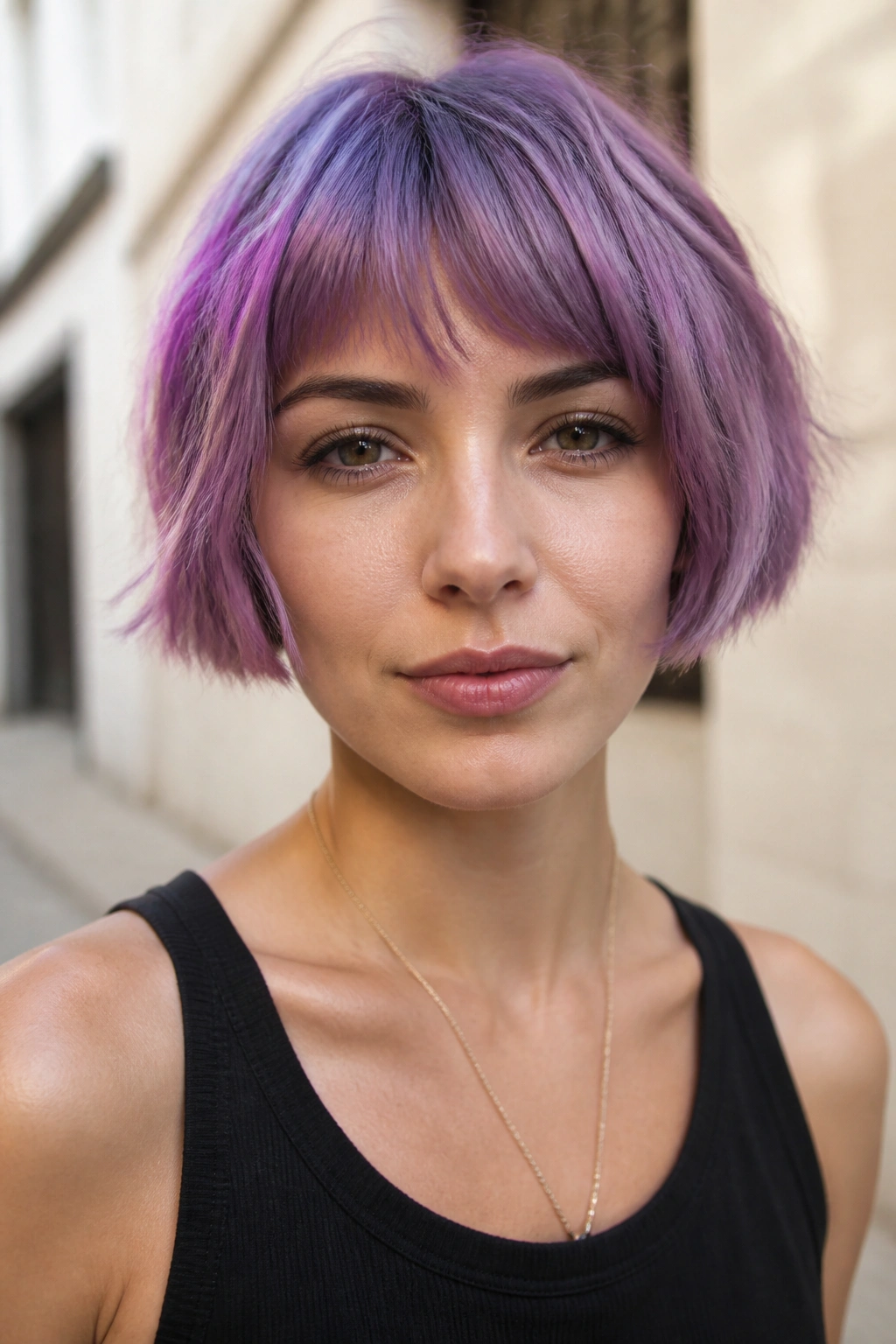
A micro bob sits shorter than most people expect — often skimming the jaw or landing just under it — and that shorter length can be a gift for fine hair. There is less weight pulling the shape down, so the hair can look livelier right away. Orchid color gives the cut a soft edge that keeps it from feeling severe.
This is the style for someone who likes a little energy in the haircut itself. Not all-over layering. Just enough texture at the ends to keep movement going. The texture should be built with point-cutting or very light slide-cutting, not hacked into the shape. Fine hair can go ragged fast if the ends are thinned too much.
- Keep the perimeter clean and close.
- Ask for soft texture at the ends only.
- Style with a small round brush or finger-dry with mousse.
- Finish with a light mist of flexible spray, not a crunchy hold spray.
The orchid shade keeps the cut from reading too harsh, which matters when the length is short. It’s neat, but never boring.
8. Wavy Orchid Lob
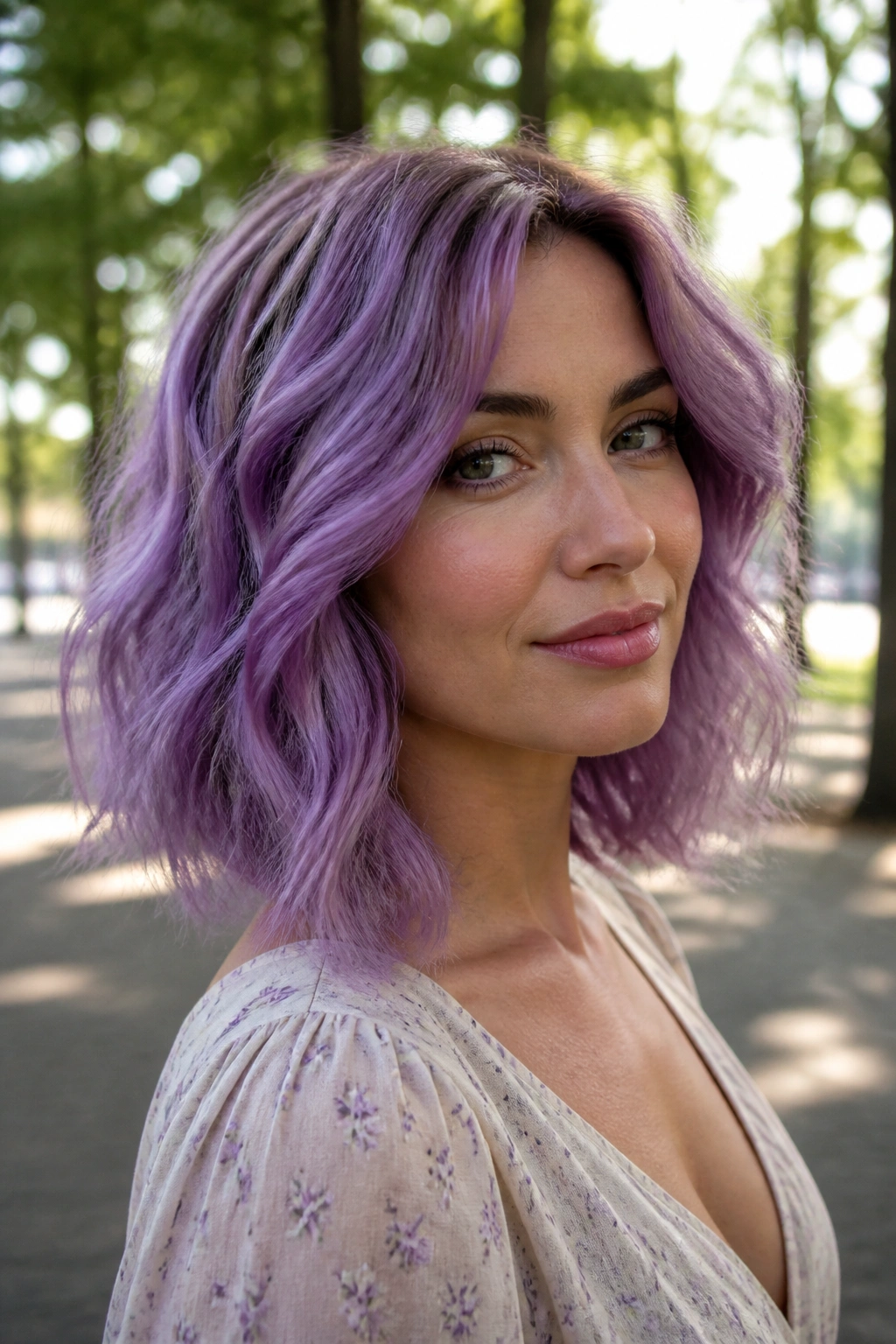
If you want the bob idea without going all the way short, a lob is the obvious answer. A wavy orchid lob usually lands between the collarbone and the shoulders, which gives fine hair enough length to move but not so much that it drags the shape down. The orchid tone keeps the look soft and fresh.
This length is forgiving. That’s the appeal. You can bend it with a 1.25-inch curling iron, leaving the last inch straight, and the result looks relaxed rather than overdone. Fine hair often needs this kind of help: a little bend, a little texture, and enough length to tuck behind the ear when you want it out of the way.
The key is not to over-layer the sides. A lob can easily lose body if the interior gets too light. Keep the perimeter solid and let the waves create the movement. If your hair is naturally straight, a quick mist of texture spray through the mids gives enough grip for loose waves to hold.
It’s a good middle ground. Not too short. Not too precious.
9. Curly Amethyst Bob
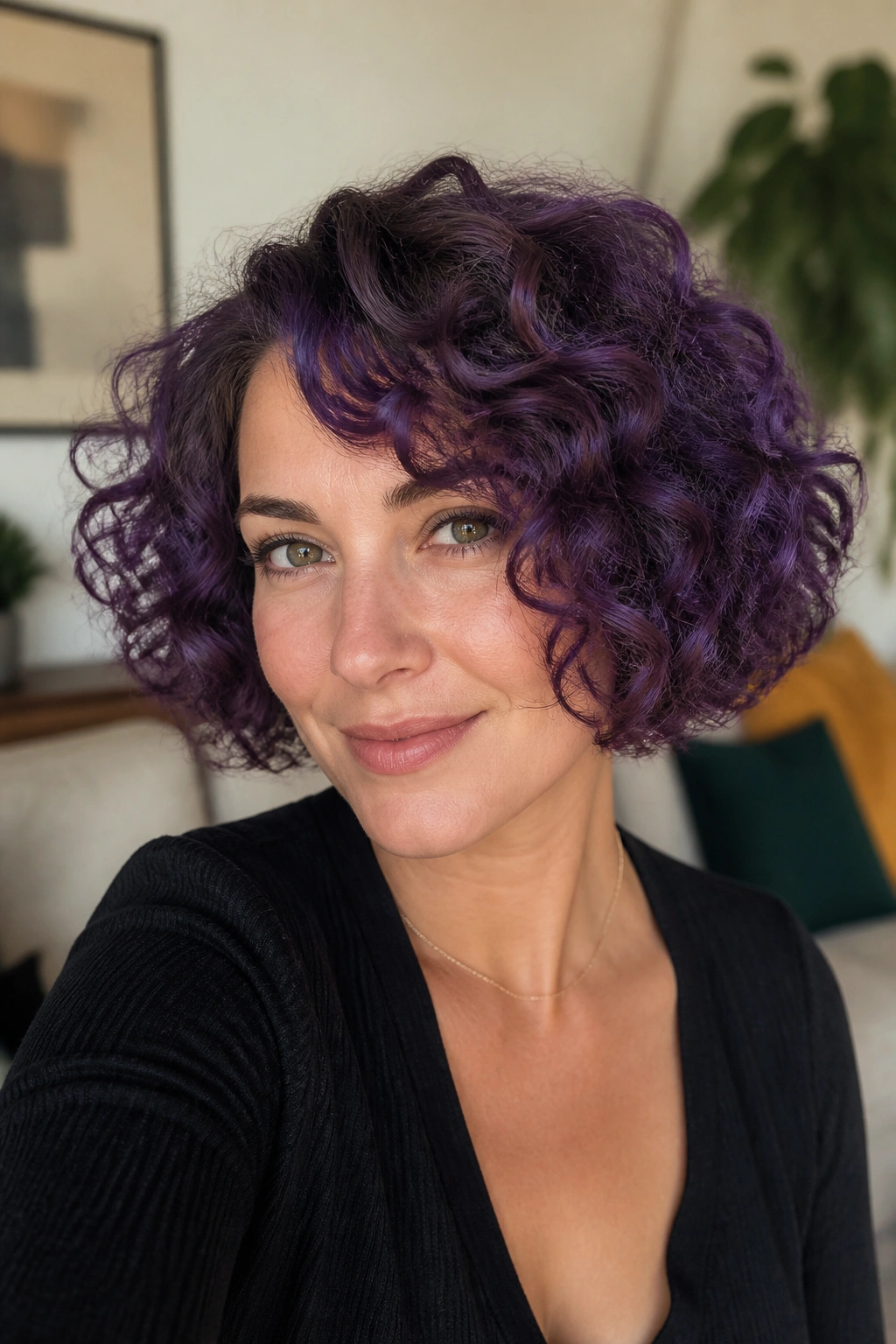
Can curly fine hair pull off a bob? Absolutely, and this is one of the prettiest ways to do it. The trick is not to fight the curl pattern. A curly amethyst bob works best when the shape is cut to the curl, not against it, with enough room for the ringlets or waves to spring up without eating the whole length.
A dry cut is often the smarter move here, because fine curls can shrink in odd ways when they’re wet. The bob usually looks best at chin length or just under, with soft shaping around the face. Amethyst color gives it depth, which helps the curls look richer and more defined.
How to Wear It
Use a curl cream about the size of a walnut, then add a small amount of gel if your curls need hold. Diffuse on low heat until the hair is about 80 percent dry, then let the rest air-dry. Don’t touch it too much. That’s where the frizz starts.
The result should feel airy, not heavy. If the cut is good, the curls will stack themselves into shape.
10. Stacked Purple Bob
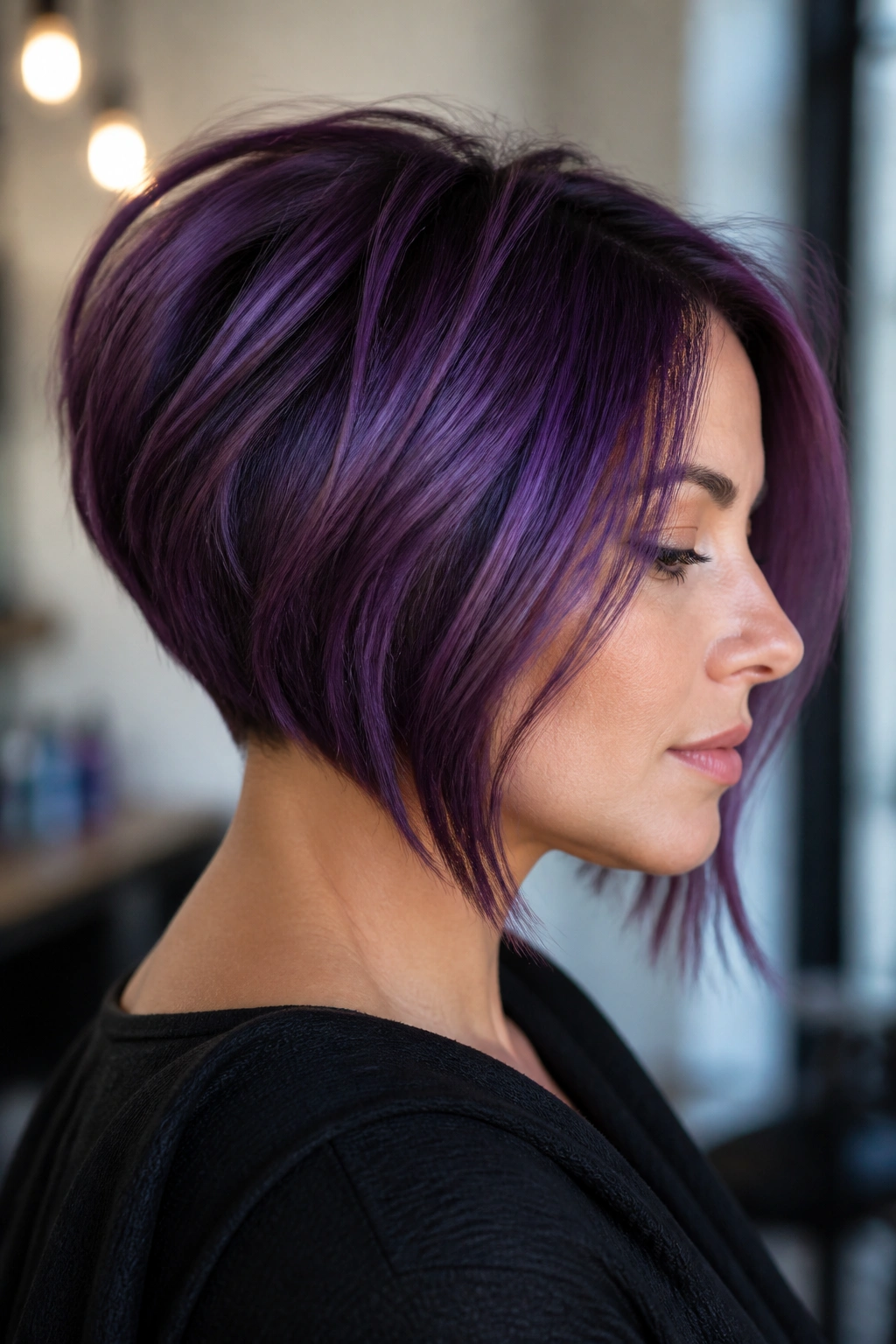
A stacked bob is a smart move for fine hair that needs lift at the back of the head. The short layers at the nape build shape right where the hair usually collapses, and the longer front pieces keep the cut from looking too boxy. Add a saturated purple, and the whole thing feels more sculpted.
This style is a good fit for straight or slightly wavy hair that needs help holding volume. The stack creates a rounded base, which gives the illusion of density without requiring a lot of teasing or product. That said, the stack should be controlled. If the crown is heavily layered and the hair is very sparse, the shape can start to look hollow.
- Keep the nape shorter and tidy.
- Leave enough weight through the top to avoid see-through spots.
- Blow-dry with the head tipped forward for 30 seconds at the roots.
- Set the back with a small round brush for a gentle curve.
This is not a floppy haircut. It has structure. That’s why it works.
11. Blunt Bob with Curtain Bangs
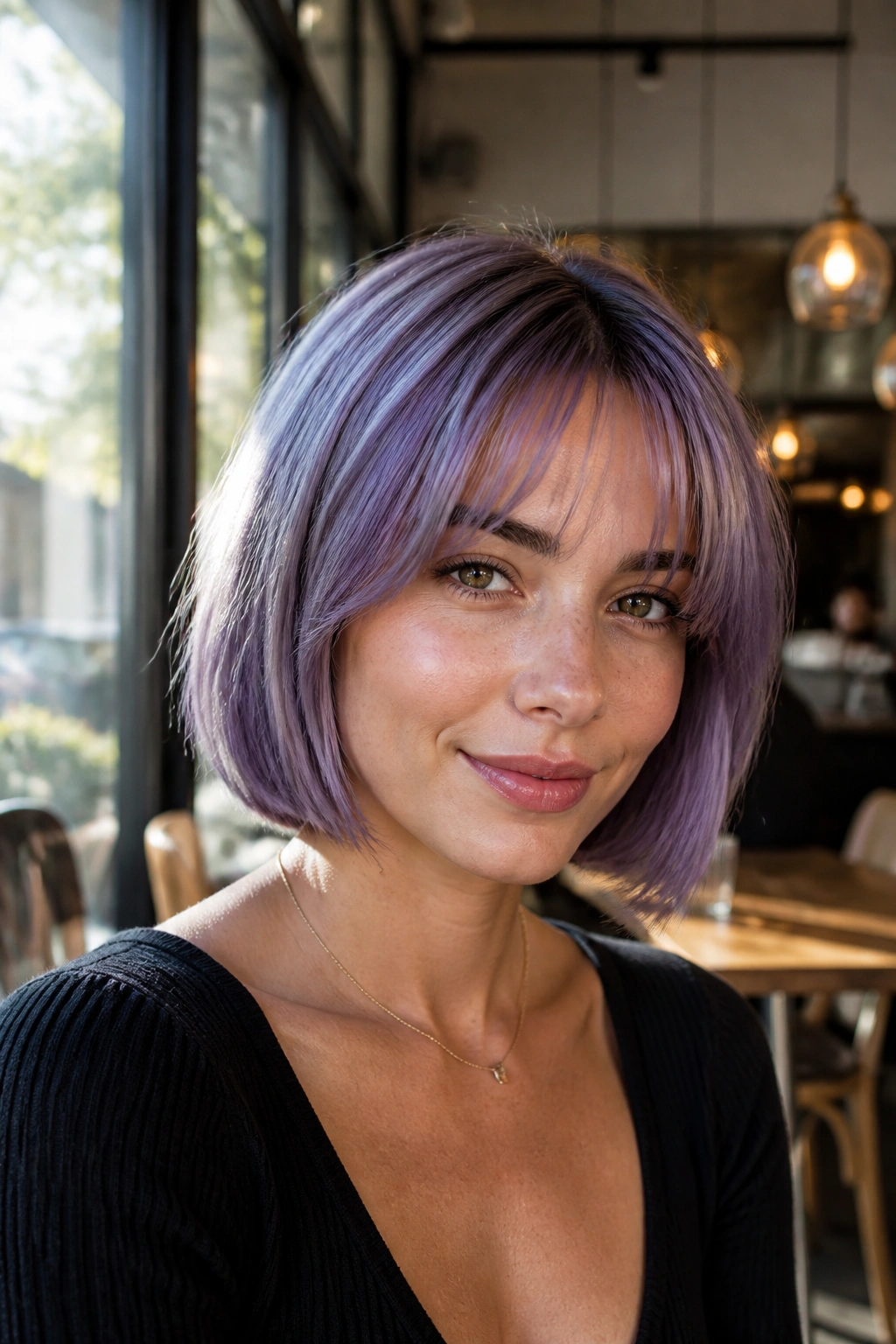
A blunt bob with curtain bangs is a strong combination for fine hair because the bang area adds interest up front while the blunt perimeter keeps the rest of the hair looking full. The bangs should stay soft and airy, though. Heavy curtain bangs can steal too much density from the front if the hair is very fine.
The cut works best when the bob falls around the chin or a little below it. That gives the bangs room to open away from the face without competing with the length. Purple shades with a little brightness — think lavender, iris, or mauve — soften the contrast and keep the face-framing pieces from looking too harsh.
I like this look because it solves two problems at once. The blunt line makes the ends look thicker, and the bangs create movement right where people want it most. But the bangs need care. A 1-inch round brush or even a quick bend with a flat iron keeps them from separating in odd ways.
Don’t overthink the styling. A little root lift, a clean edge, and soft curtain pieces are enough.
12. Feathered Mulberry Bob
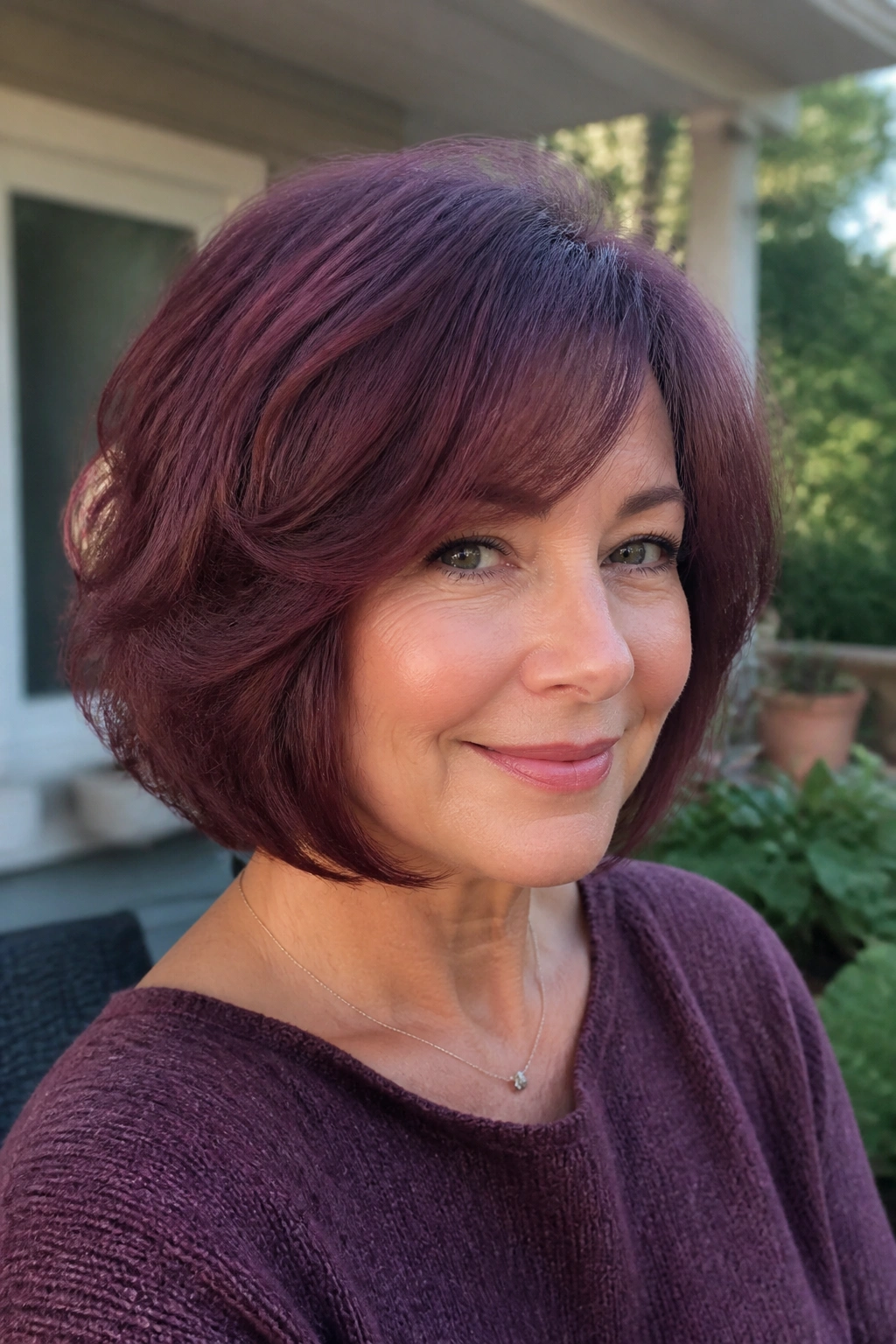
A feathered bob feels lighter than a blunt one, but that’s not the same thing as thin. When it’s cut well, feathering creates softness around the face and movement through the ends while still keeping enough structure for fine hair to look tidy.
Mulberry is a smart shade for this cut because it adds depth without making the feathering disappear. The color has enough richness to hold up against the airy texture, and that matters. If the tone is too pale, the feathered ends can start to vanish into the rest of the hair.
Unlike a shag, this bob does not need layers everywhere. The perimeter should still be there. That edge is what keeps the style from looking wispy. Feathering should happen mostly around the outer line and maybe at the front corners.
Best for hair that has a little natural bend. If your strands are pin-straight and slippery, feathering can look a touch too soft unless you style it with a brush or a tiny amount of paste through the ends.
13. Two-Tone Violet Bob
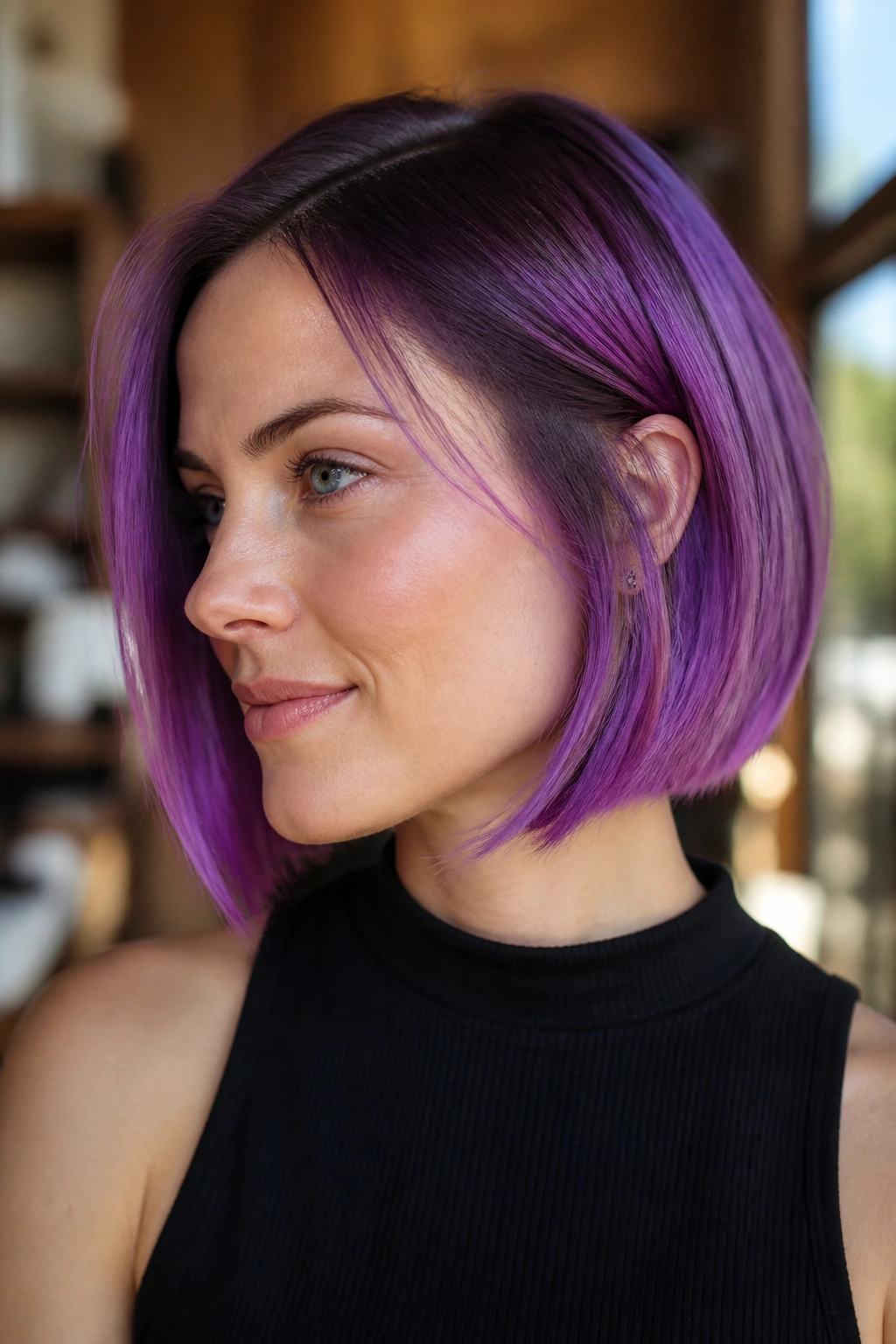
A two-tone violet bob gives fine hair depth in a way a single shade sometimes cannot. The contrast between a darker root and a brighter violet mid-length or end section creates the feeling of thickness, because the eye reads the color shifts as movement and dimension.
That is the real benefit here. Not loudness. Depth. A root shadow of about half an inch to 1 inch can make the hairline look fuller, while the brighter violet through the lower half gives the bob some life. The cut can stay simple — chin length, soft line, slightly tucked behind one ear — because the color is doing part of the work.
It’s a smart choice if your hair tends to look flat after a few days. The root shadow buys you time between touch-ups, and the brighter ends keep the style from reading heavy. I’d avoid very choppy layers with this one. The color placement already creates enough visual movement.
A two-tone bob is a little bolder than the soft lilac options, but it still feels wearable. That balance is hard to beat.
14. Bubble Bob
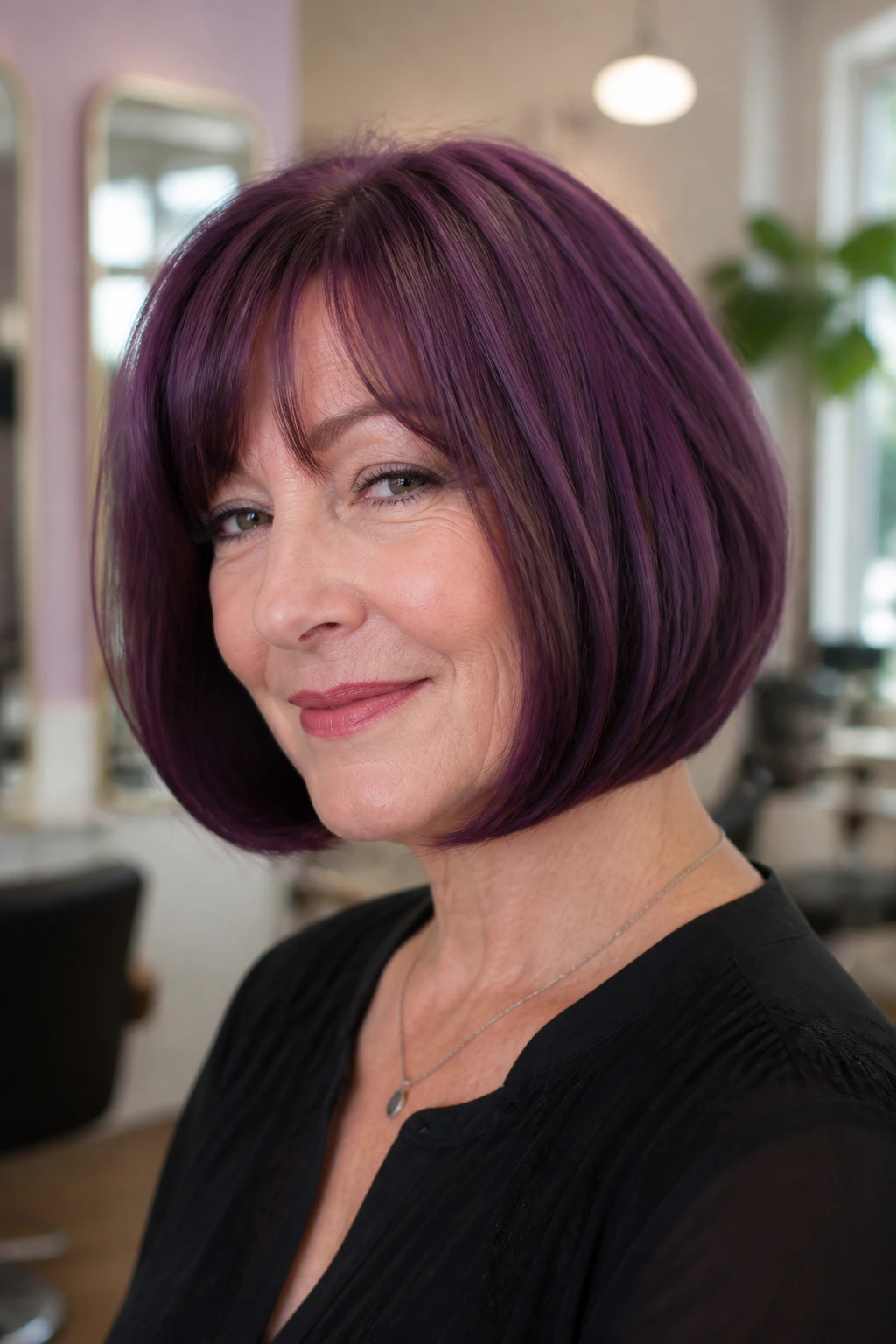
A bubble bob has a rounded shape that curves inward at the ends, almost like the hair is gently tucked into itself. On fine hair, that rounded silhouette can be a gift because it creates the look of fullness without requiring tons of length or layers.
How to Ask for It
Ask for a bob that is full through the sides and slightly beveled under at the perimeter. You do not want the ends shredded. You want them to sit with a soft curve. That shape works especially well if your hair tends to puff away from the neck or collapse flat at the crown.
Purple tones with a bit of shine — orchid, iris, violet glaze — keep the bubble shape from feeling too puffy or childish. The cut should stay tidy, and the styling should aim for control, not stiffness. A round brush and a dryer nozzle are the main tools here. Blow-dry the ends under in small sections, and let them cool before moving on.
This is one of those cuts that looks better the cleaner it’s styled. A little polish goes a long way.
15. Asymmetrical Purple Bob
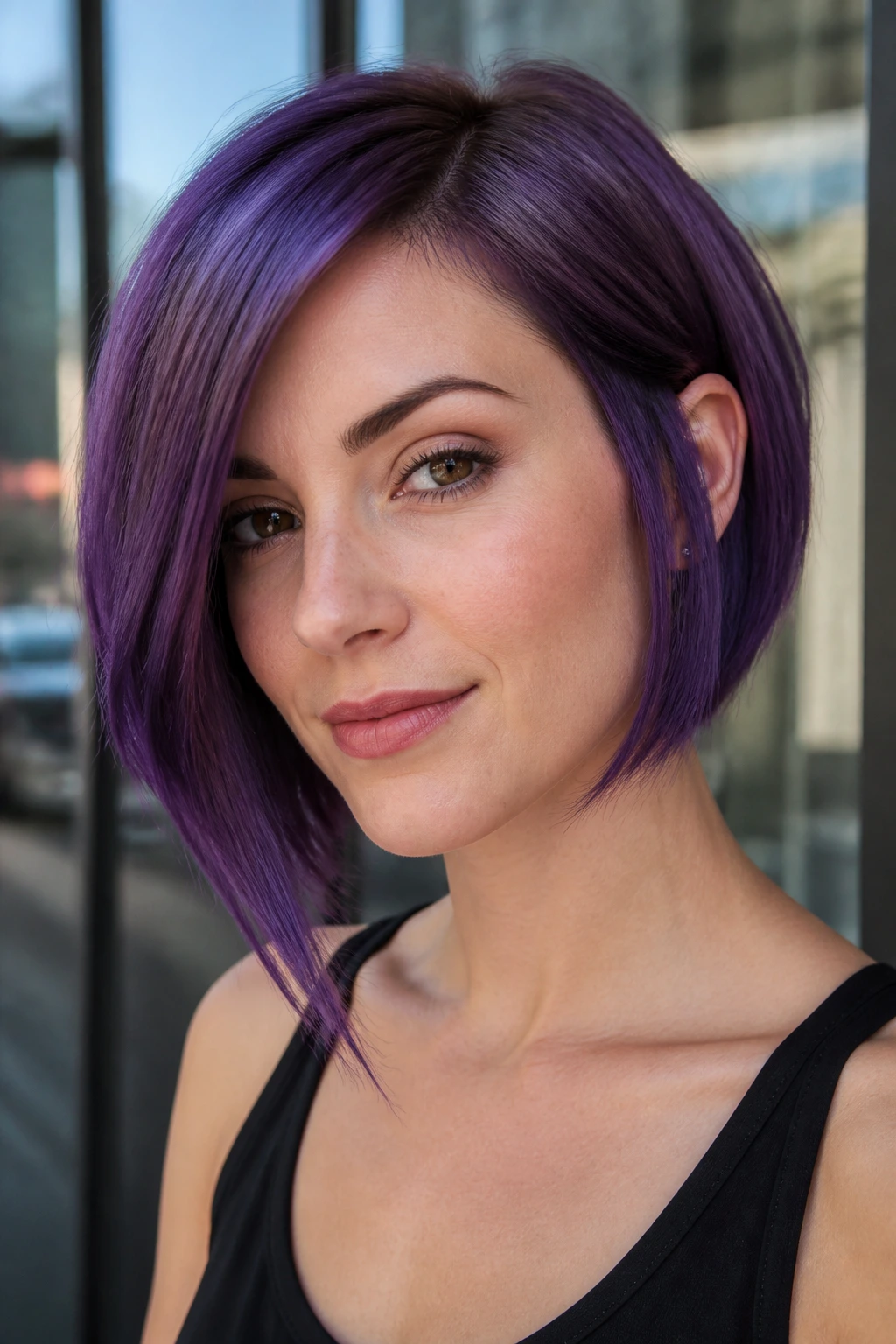
Why does asymmetry work so well on fine hair? Because it breaks up the eye’s expectation. One side slightly longer than the other creates movement before the hair even moves, and that visual shift can make a slender bob look more interesting and fuller than a perfectly even cut.
The difference does not have to be dramatic. Sometimes half an inch to 1 inch is enough. A larger difference makes a stronger statement, but a subtle asymmetry is easier to wear and easier to grow out. Purple helps here because it gives the shape a clear outline, especially if the longer side frames the jaw or collarbone.
Styling the Longer Side
Keep the longer side smooth with a brush or a flat iron pass, then tuck the shorter side behind the ear to let the angle show. That little contrast gives the cut its character.
This style suits people who want a bob that feels a little sharper than usual. It’s not soft and sweet. It’s cleaner than that.
16. Italian Bob with Violet Glaze
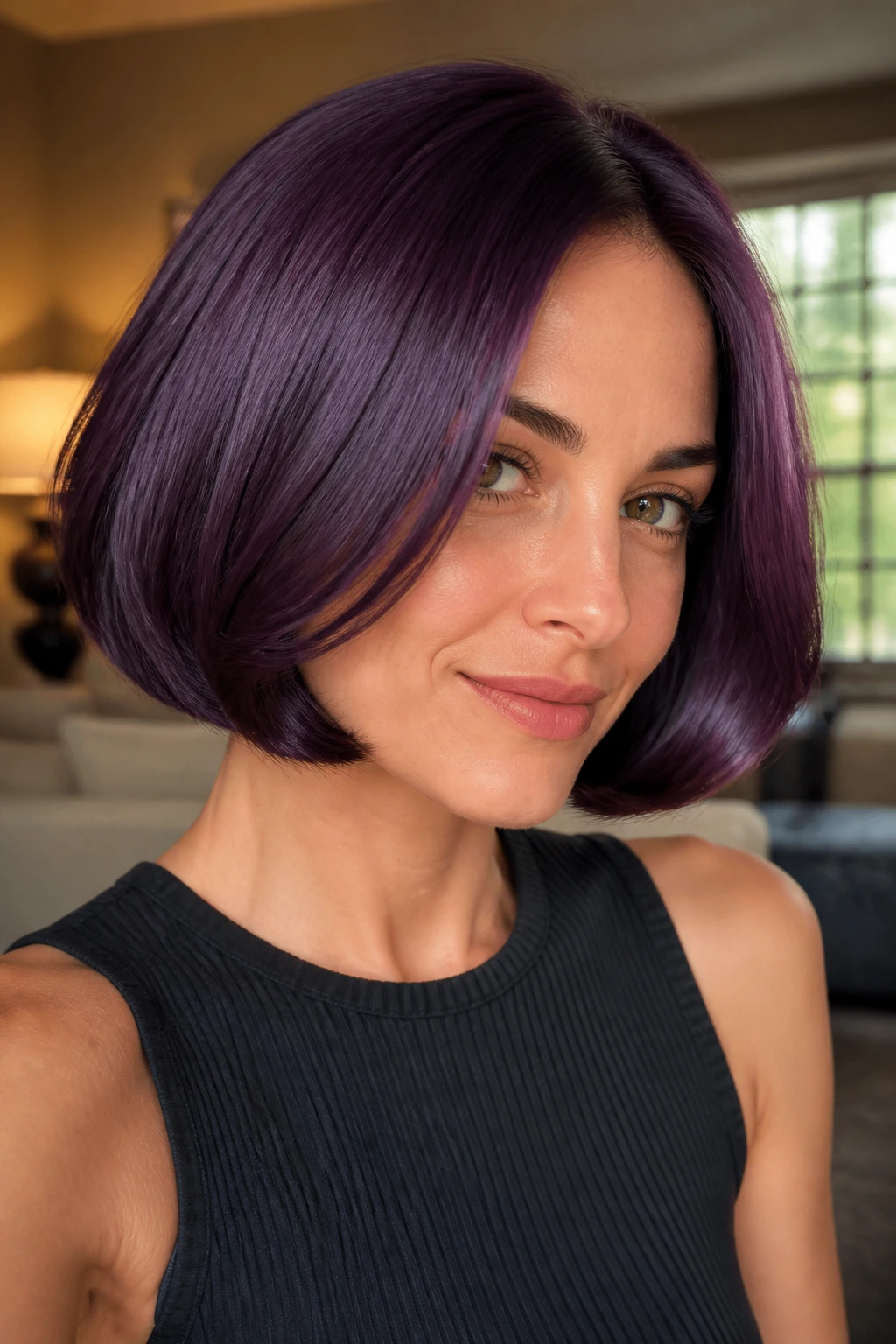
The Italian bob has a bit of old-money polish to it — not in a stuffy way, more in the sense that it looks expensive without trying. On fine hair, that weighty, rounded shape is a blessing. It keeps the bob looking full, and the violet glaze adds a reflective finish that makes the hair appear healthier and denser.
I like this cut when the hair is chin length or just below, with ends that turn slightly in instead of flaring out. That curve matters. It gives the silhouette a solid base. The glaze should be subtle enough to catch light, not so intense that it looks painted on.
- Keep the front pieces heavy enough to frame the face.
- Ask for minimal texturizing through the ends.
- Use a smoothing blow-dry cream before styling.
- Refresh the color with a clear or violet gloss when the shine starts to fade.
This style is calm, neat, and a little luxurious. If you like hair that behaves, this one makes a strong case.
17. Lavender Pixie Bob
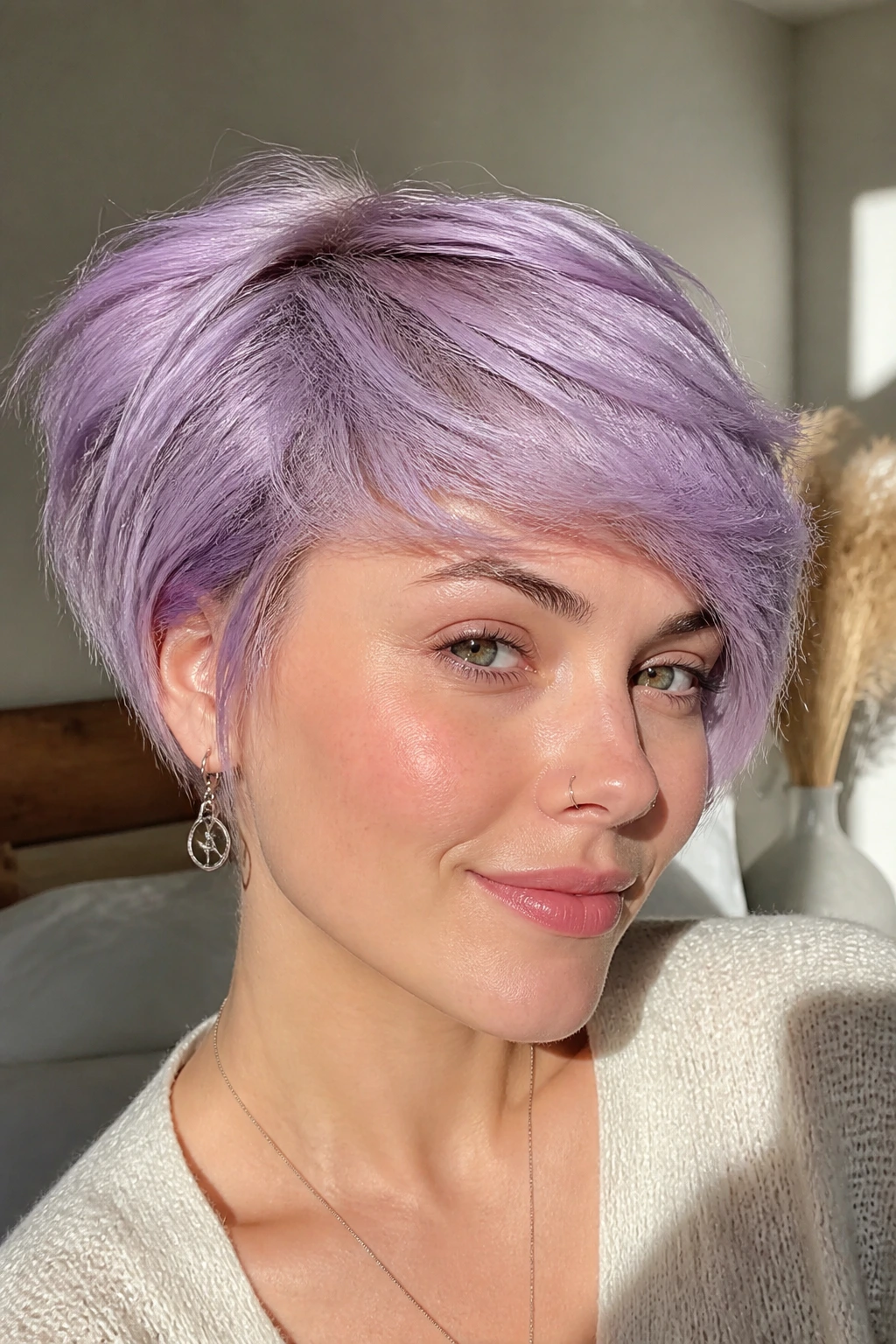
A lavender pixie bob — or bixie, if you prefer that label — is for people who want to lose some weight and gain some attitude. The cut sits between a pixie and a bob, which means the top stays a little longer and the sides stay soft enough to feel wearable. Fine hair often does well at this length because the style removes the dead weight that can pull everything flat.
The lavender color keeps the short shape from looking too severe. It adds lightness and gives the texture something to show off. This cut works best when the crown has a bit of lift and the nape is clean. Frequent trims matter here. Every 5 to 6 weeks is a sensible rhythm if you want the shape to stay crisp.
It is not the haircut for someone who wants to throw their hair into a ponytail. But if you like a short, easy shape that opens the face and gives fine strands some energy, this is a strong option. Short hair. Big personality.
18. Rooted Grape Bob with Soft Ends
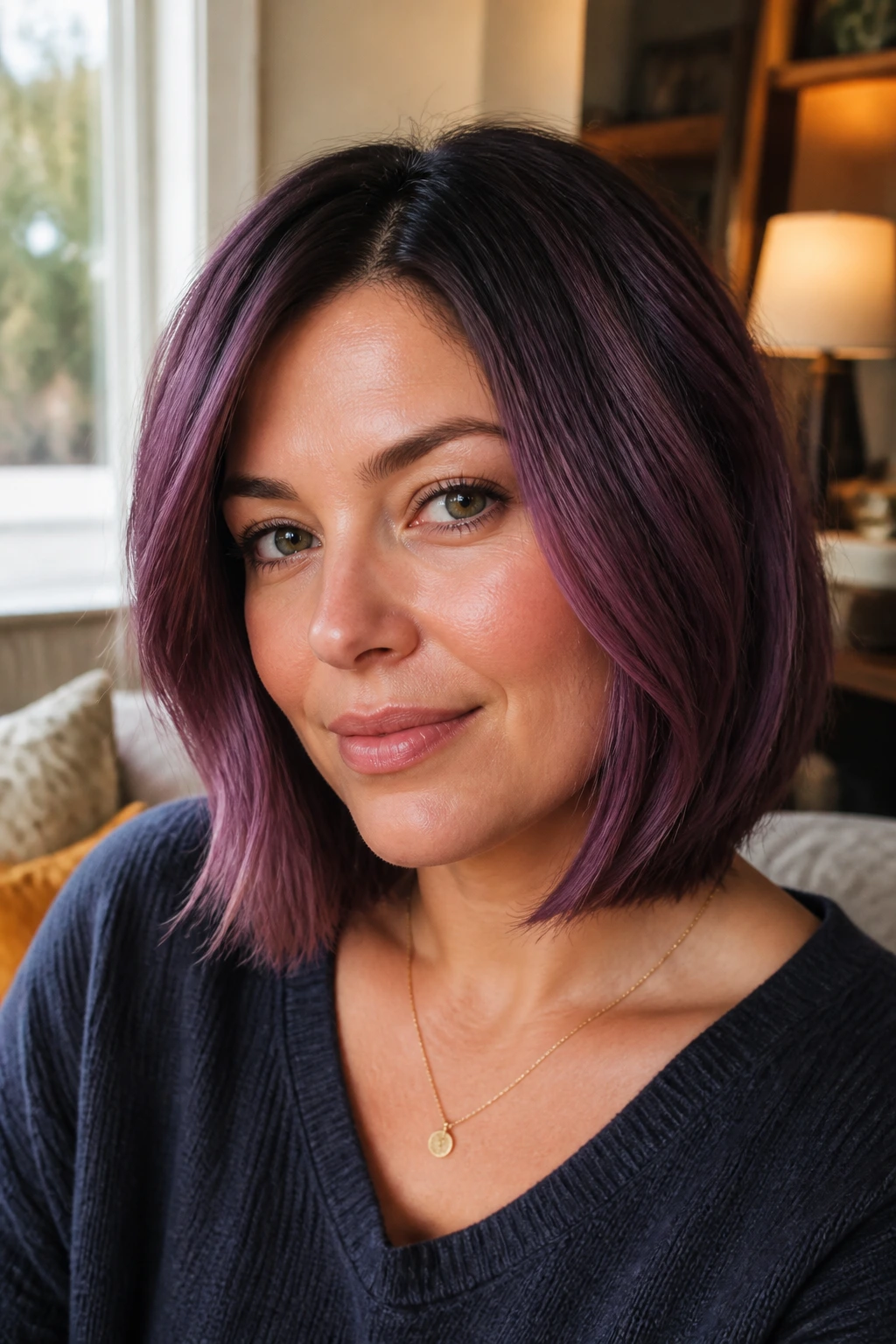
A rooted grape bob is the one I’d hand to someone who wants purple to look rich, not fussy. The darker root adds depth right where fine hair often needs it most, and the grape tone through the mids and ends gives the haircut enough color to feel intentional. Soft ends keep it from looking too hard or too boxy.
This is also one of the easiest purple bobs to live with. The root shadow helps the grow-out blend, which means you can go a little longer between color appointments without the style falling apart visually. That matters more than people think. A haircut that looks good only the day you leave the salon is a bad bargain.
If you are torn between a blunt bob and something softer, start here. A clean perimeter, a modest root shadow, and a gentle curve at the ends give fine hair the best shot at looking full without turning rigid. Add a center part if you want it modern, or a slight side part if you need more lift at the crown.
Purple bobs work best when the cut does the quiet work first. Color can make fine hair look richer, sure. But the shape is what keeps it believable.
