



A bob can sharpen a round face fast. It can also do the opposite if the cut lands in the wrong place, sits too wide at the cheeks, or ends right where the face is already fullest.
Medium bob haircuts for round faces work when they create a little vertical movement. That might mean a longer front corner, a side part, a soft fringe, or hidden layers that stop the shape from puffing out. The good versions feel balanced, not hard. The bad ones can look like a helmet with ambition.
I’ve always thought the most useful bob advice is also the least dramatic: keep the weight away from the widest part of the face. That sounds almost boring, but it changes everything. A few inches of length, a cleaner line at the jaw, or a bit of bend at the ends can make the cut look sharper and lighter at the same time.
The 18 cuts below all handle that problem in a different way. Some are sleek. Some are messy in the right way. A few rely on bangs, which is where people get nervous, and honestly, that’s fair. Bangs can be brilliant on a round face — or a complete waste of salon money if they’re cut too short and too heavy.
1. Angled Collarbone Bob for Round Faces
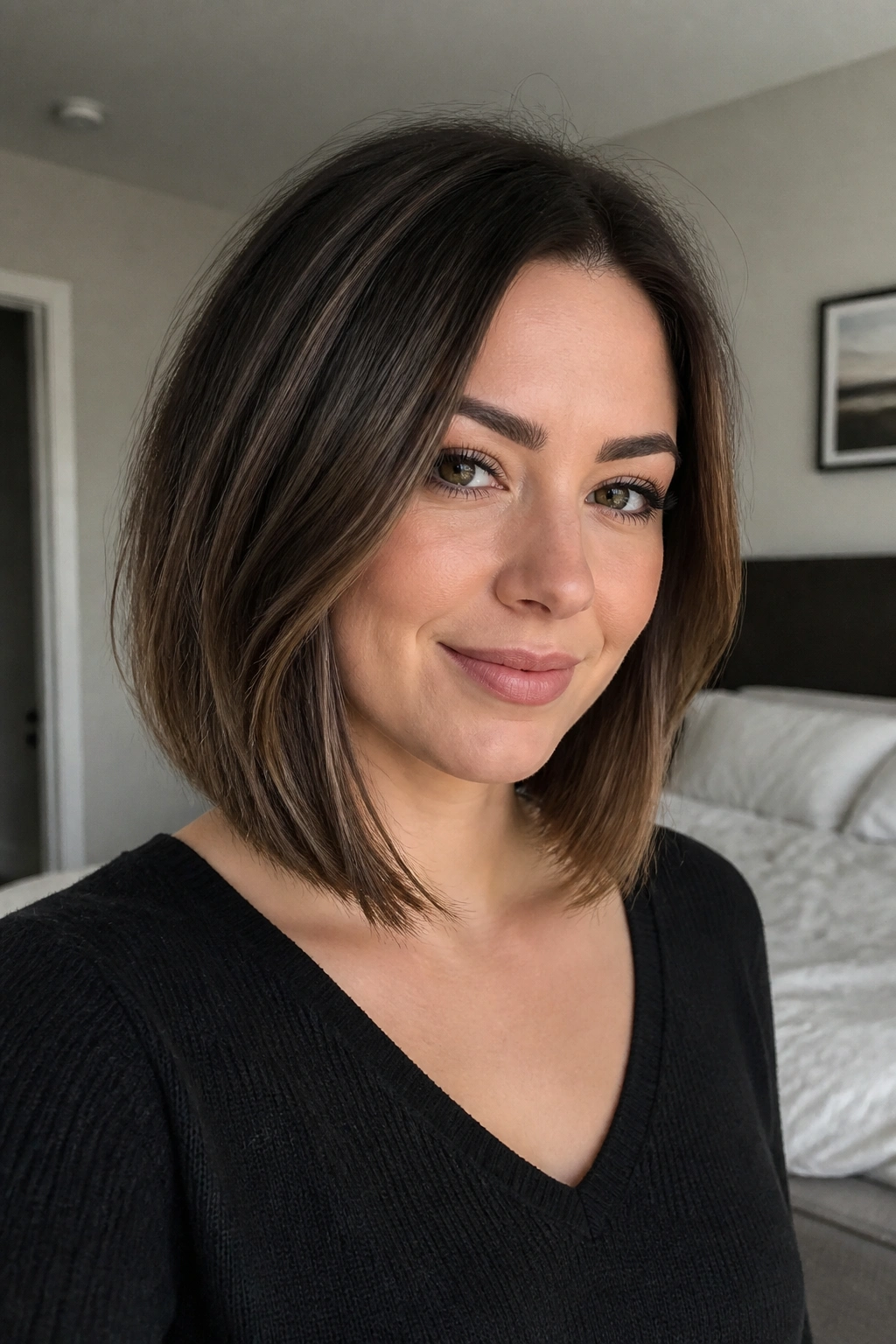
This is the one I’d hand to someone who wants a bob that behaves.
The front sits a little longer than the back, so the eye moves down instead of straight across. That diagonal line matters on a round face because it breaks up the widest part near the cheeks. A collarbone finish gives you enough length to tuck, wave, or wear straight without the cut collapsing into a puffed-out shape.
Why It Works
A soft angle gives the haircut direction. Your hair is no longer just sitting there; it has a line to follow.
Ask for the front pieces to graze the collarbone and the back to stay a touch shorter. If the angle is too sharp, the cut starts to feel severe. If it is too subtle, it can lose the whole point and behave like a plain one-length lob.
- Keep the front about 1 to 2 inches longer than the nape.
- Ask for light face-framing, not a big chunk of layers.
- Style with a 1.25-inch curling iron or a round brush for a soft bend.
- A center or off-center part both work, but the front should not sit flat against the cheek.
My favorite part: this cut still looks good on day two, which is rare enough to matter.
2. Side-Part French Bob with Soft Ends

Why does a side part do so much work on a round face? Because it breaks symmetry before the haircut even starts moving.
A French bob usually has that neat, slightly cheeky shape people love on straighter hair, but for a round face the trick is to keep the edges soft. The part should sit just off center, not way over to one side. That tiny shift pulls the eye diagonally and gives the face a little more length. Soft ends keep the line from feeling too boxed in.
This is a good choice if you like your hair to look polished without looking stiff. The shape is short enough to feel deliberate, but not so short that it widens the face. It also works well with a natural bend, which means you do not have to fight your texture every morning.
If your hair is fine, this cut can look crisp and airy. If your hair is thick, ask for the ends to be softened a bit so the bottom edge does not sit heavy.
3. A-Line Bob with Cheekbone Corners for Round Faces
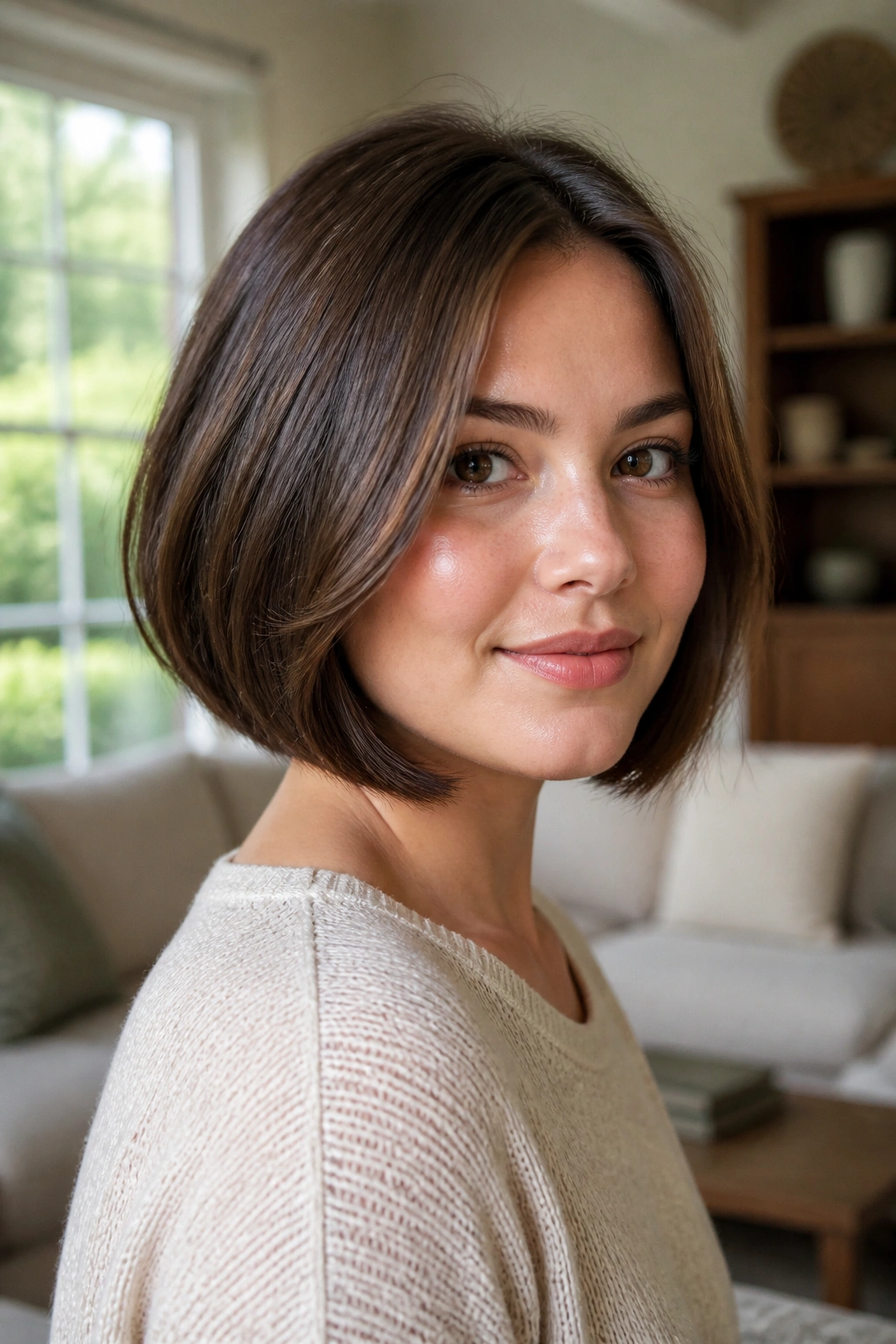
If your hair tends to puff out at the sides, this shape gives it a better job.
The front corners are the point. They should drop just below the chin, sometimes closer to the top of the collarbone if your hair is dense. The back stays shorter and cleaner, which keeps the silhouette from getting bulky where round faces already have width. It is a tidy cut, but not a stiff one.
How to Ask for It
Tell your stylist you want a gentle A-line, not a dramatic wedge. That distinction matters more than people think.
- Keep the front corners long enough to clear the cheeks.
- Let the back sit snug against the nape.
- Start any face-framing at the cheekbone or lower.
- Use a flat brush when blow-drying so the front falls with a smooth line.
The cut looks especially good when the hair swings a little as you move. That movement is doing real work. It keeps the style from reading as a hard geometric shape, which can be unforgiving on a round face.
4. Blunt Medium Bob with Hidden Internal Layers
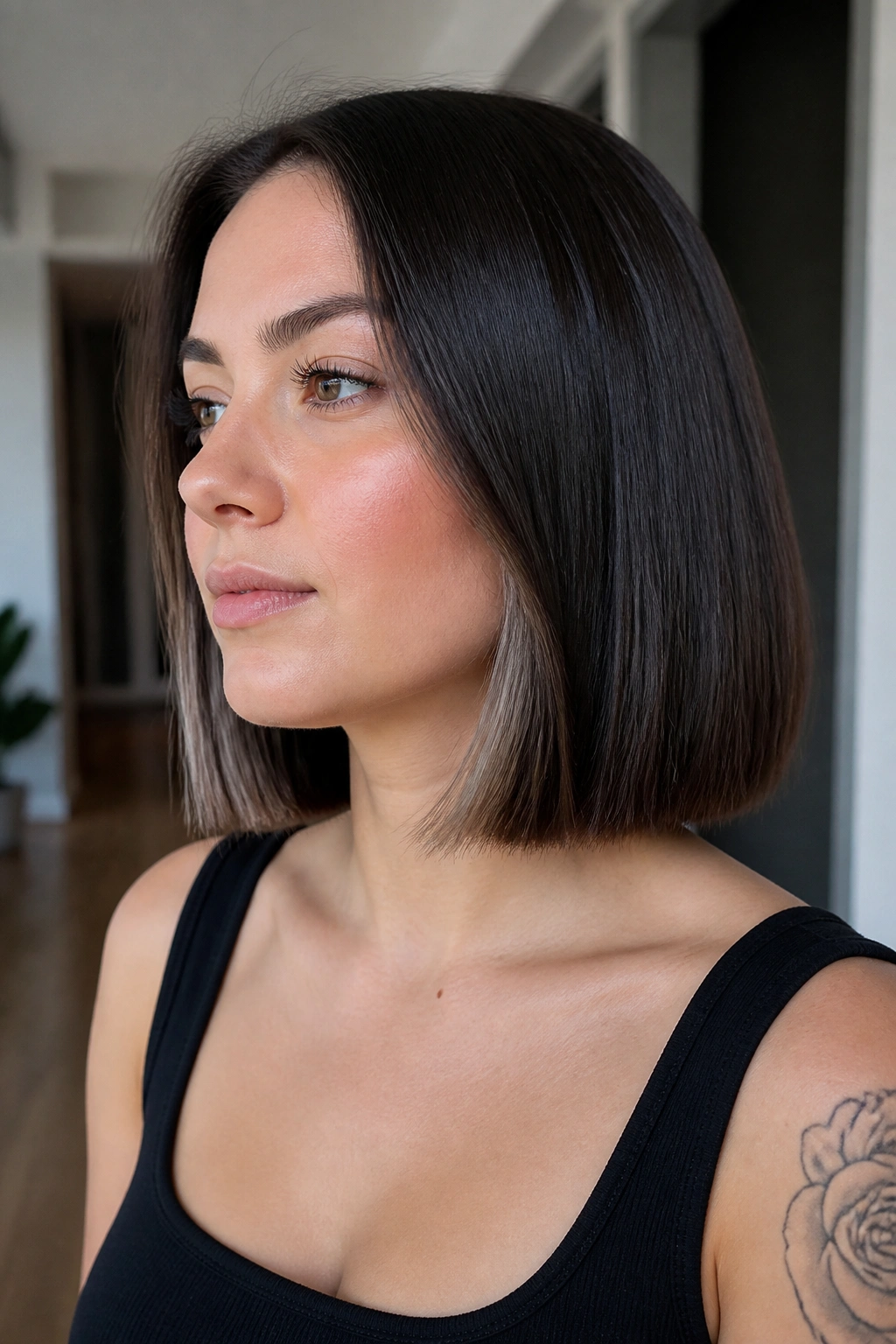
A blunt bob can flatter a round face if the inside of the cut is lighter than the outside.
That sounds counterintuitive, and it is exactly why it works. The outer edge stays clean, so the haircut still has presence. But the hidden layers inside remove some of the bulk that would otherwise push outward at the cheeks. You get a strong line without the mushroom effect.
I like this cut on fine to medium hair because it gives the illusion of thickness at the ends. The perimeter looks solid and expensive, while the inside keeps the shape from going boxy. On a round face, that crisp bottom line creates a little visual length.
On very thick or puffy hair, the blunt shape can turn heavy fast if the internal work is not done well. That is the part people miss. They ask for a blunt bob and end up with a shelf. Not the same thing.
One more thing: this cut looks best when the ends are absolutely clean. If they fray or split, the whole effect gets dull quickly.
5. Wavy Off-Center Lob
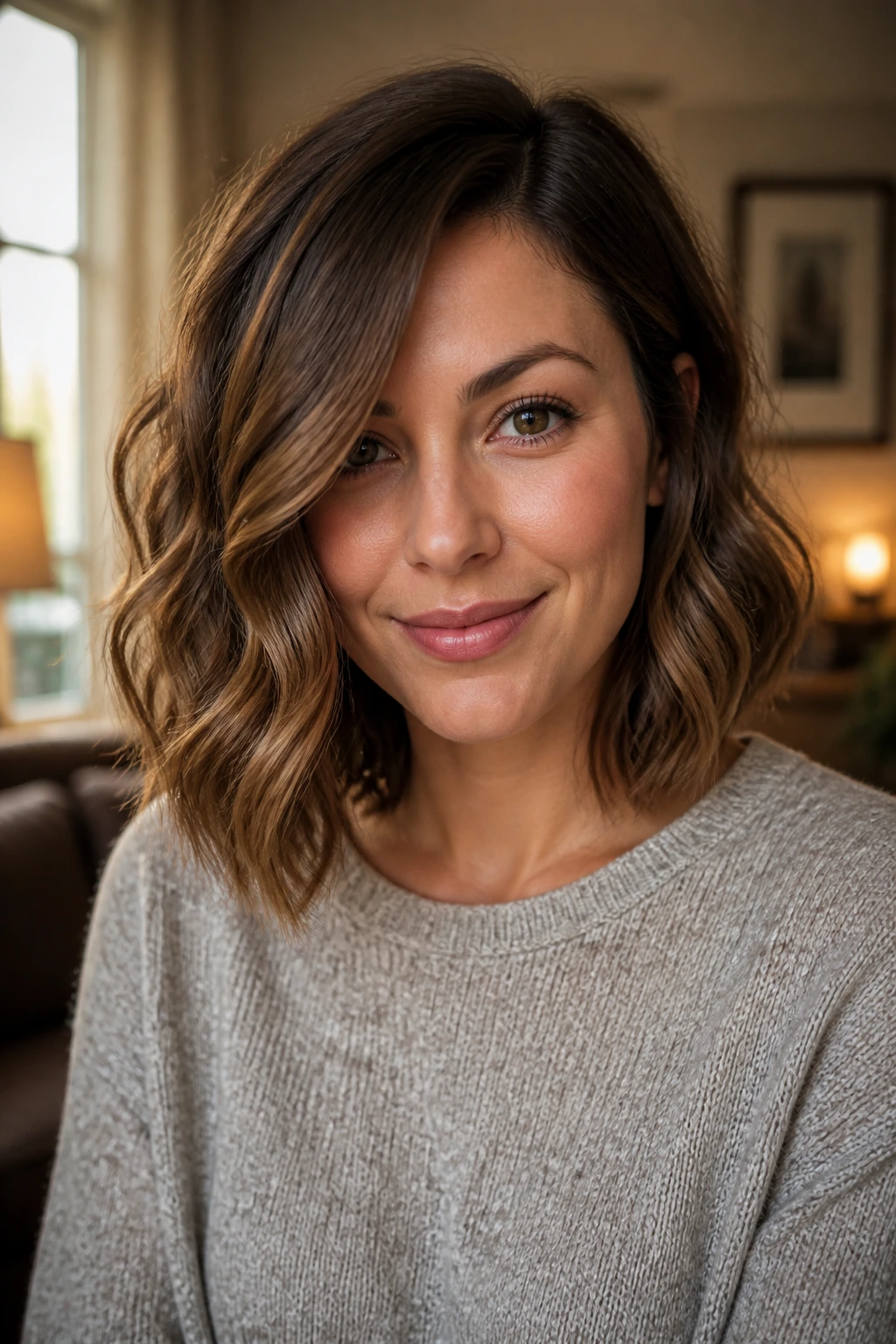
What if your hair already wants to bend on its own? Then you should probably stop fighting it.
An off-center part gives a round face a quiet diagonal line, and the waves do the rest. The trick is not to curl the hair into little uniform spirals. You want a loose bend that starts below the cheekbone and breaks up the width of the face. Too much wave at the top can make the head look wider. Keep the movement lower.
How to Style It
Work with damp hair, not soaking hair.
- Use a lightweight mousse or foam from roots to mid-lengths.
- Dry with a diffuser or a round brush, lifting only at the crown.
- Wrap sections around a 1.25-inch iron, leaving the last inch out.
- Shake the waves out with your fingers, not a brush.
A lot of people overdo this cut. They think bigger waves mean more flattering. Usually, the opposite is true. Soft, uneven bends look better than uniform curls because they keep the hair from ballooning around the face.
6. Curved-Under Beveled Bob
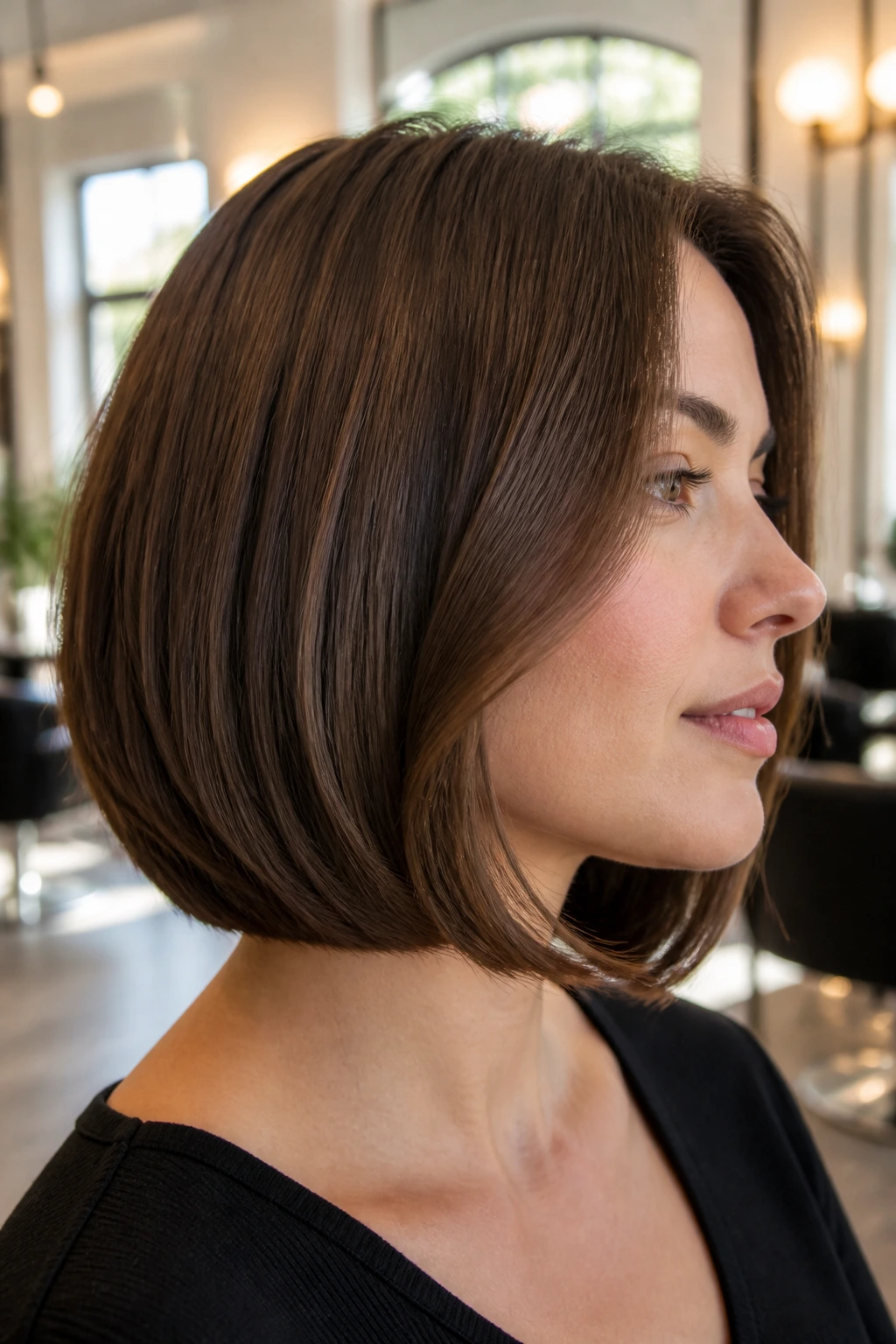
Unlike a flat bob, this one turns inward at the ends.
That small curve is doing a lot of heavy lifting. The hair does not sit straight out from the cheeks; it folds inward, which makes the jawline look more defined. The beveled edge also gives the cut a cleaner finish, especially if your hair has some body and wants to flare out at the bottom.
This is one of my favorite shapes for thick hair because it feels neat without looking overworked. It also plays nicely with glasses, since the soft inward curve keeps the haircut from fighting the frame of the face. If you wear a lot of simple tops and clean lines, this cut fits that whole look well.
Best Way to Wear It
Ask your stylist to bevel the ends, not stack the back aggressively. A hard stack can push the back too high and make the front feel heavy by comparison.
A medium round brush and a quick inward blow-dry are enough. The goal is a smooth curve, not a curled-under helmet. That distinction matters. A lot.
7. Shaggy Bob with Airy Fringe

I like this cut for anyone who hates the feeling of hair sitting like a helmet.
The shaggy bob keeps the edges soft and broken up, which helps a round face by stopping the shape from reading as one big circle. The fringe should stay light, almost feathery. Heavy bangs would do the opposite of what you want here. Airy fringe gives you some forehead coverage while still leaving space around the eyes and cheeks.
This is a strong option for wavy hair, and it can work on straight hair if you are willing to add texture. The layering should feel intentional, not chopped up for the sake of it. You want movement at the ends and a little lift near the crown, not random short bits floating around.
- Best on hair that already has a bit of bend.
- Good when you want a softer, less polished finish.
- Less ideal if you want a sleek, sharp bob every day.
- Ask for point-cut ends instead of blunt clipping.
The whole cut has a slightly undone feel. That is the charm. It also makes the face look less full through the sides, which is why round faces can wear it so well.
8. Inverted Bob with Soft Stacking
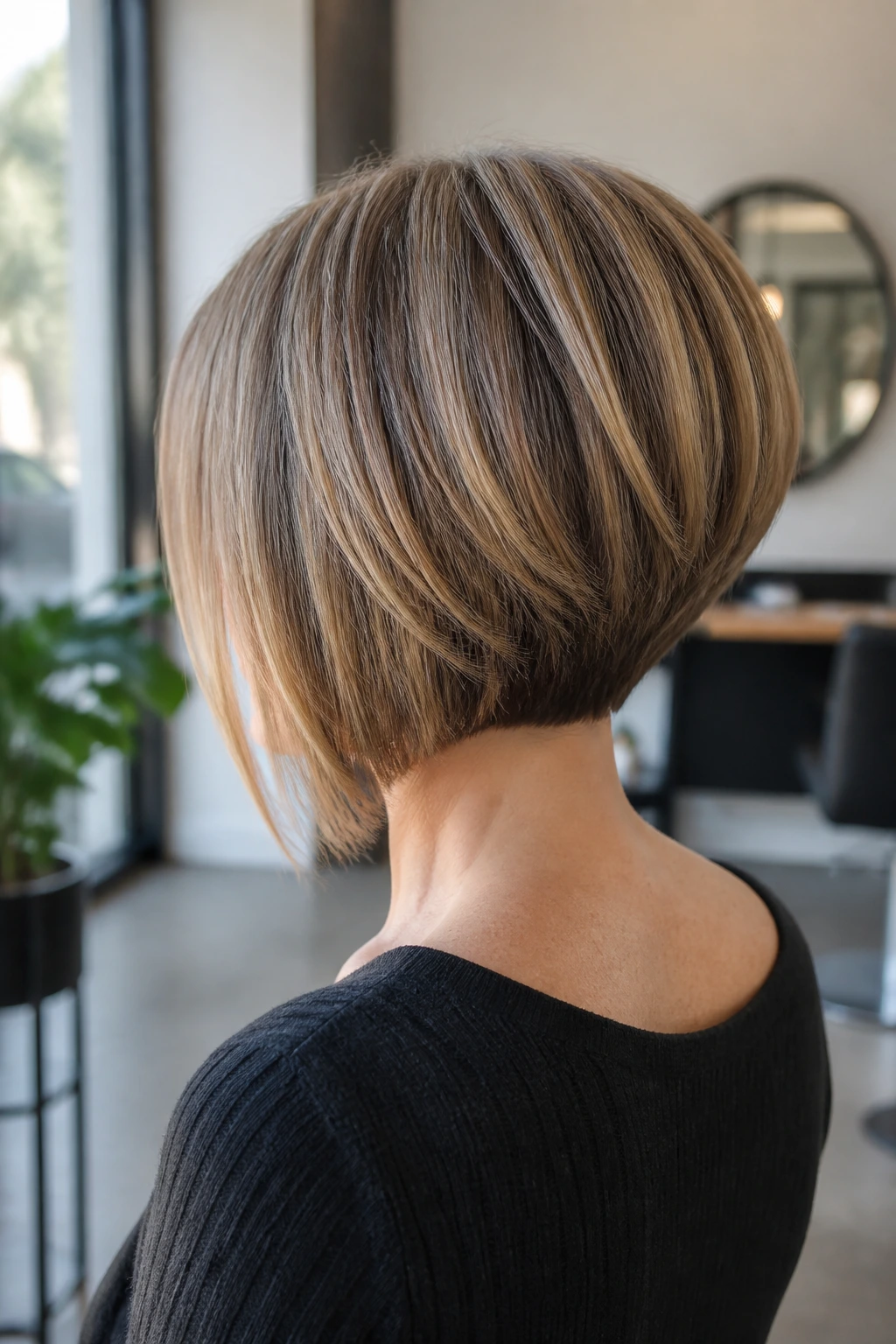
A little lift in the back changes the whole silhouette.
The old-school stacked bob can look harsh if the graduation is too steep. The softer version is different. The nape stays neat and close, but the back gains just enough shape to lift the crown while the front remains longer. On a round face, that matters because it keeps the cut from spreading wide at cheek level.
This is a smart choice if your hair is fine and tends to lie flat. The stack gives the illusion of more body, and the longer front sections keep the face from feeling boxed in. I would not go extreme here. Too much stack starts to look dated fast and can make the head shape feel top-heavy.
The Line to Protect
The most important part is the front corner. Let it drop past the jaw.
Once the front gets too short, the whole balance tips. You want the eye to move down and forward, not stop at the widest point of the face. That is the whole game with a round face and a bob.
9. Curtain Bang Bob for Round Faces
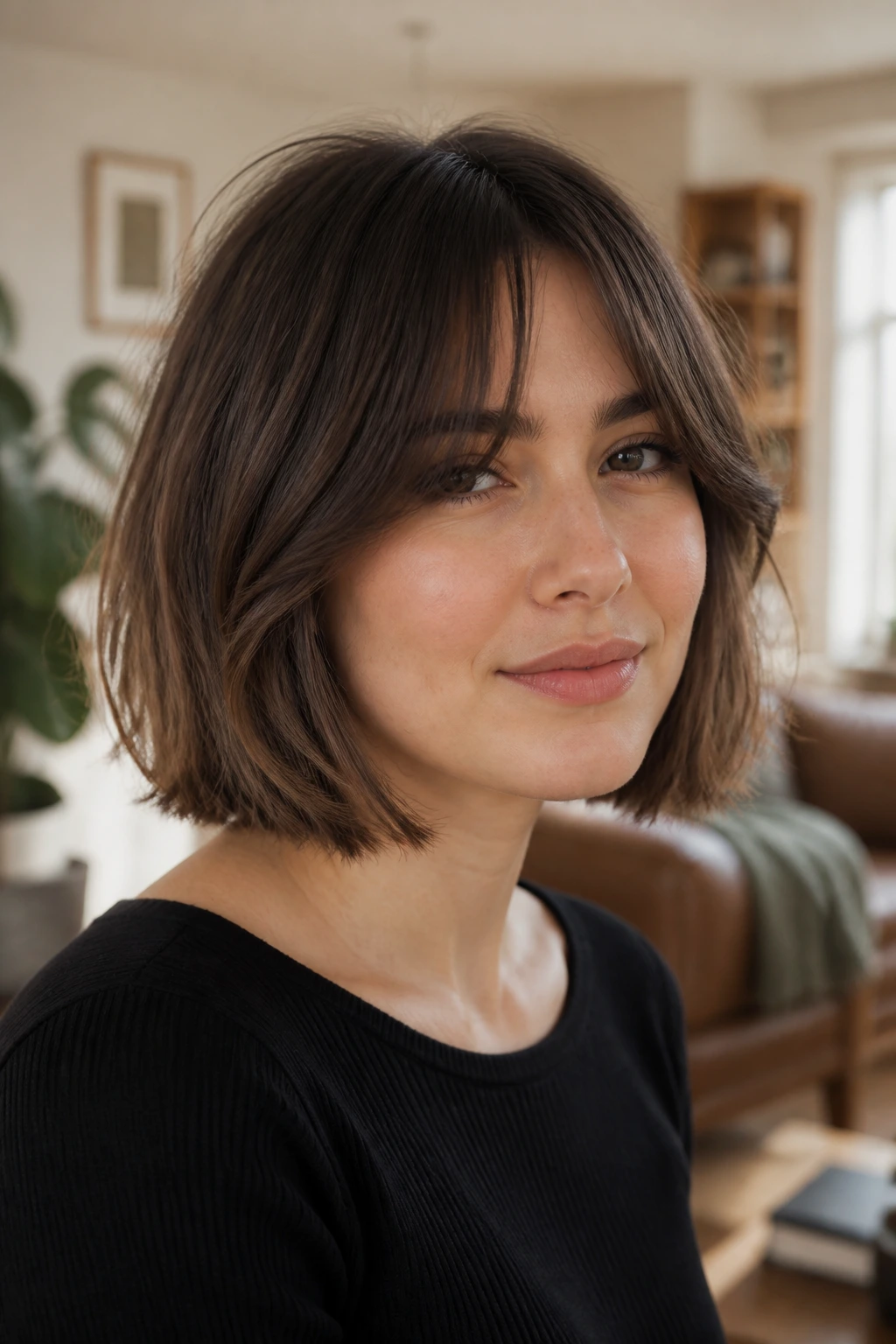
Can bangs help a round face without shortening it? Yes, if they are cut in the right place.
Curtain bangs work because they open in the center and sweep away from the cheeks. They should start around the cheekbone, maybe a little lower if your face is especially full in the middle. If they begin too high, they can make the forehead look too wide and the face feel shorter. If they are too heavy, they sit like a wall. Nobody needs that.
The bob underneath should stay medium length, ideally somewhere between the jaw and the collarbone. The hair around the face needs room to move. That is what keeps the fringe from taking over the entire haircut.
How Long the Fringe Should Be
- Shortest point: near the bridge of the nose or slightly below.
- Longest point: around the cheekbone to the jaw.
- Center split: soft, not forced open with a straight line.
- Side pieces: long enough to blend into the bob.
This cut works best when you are willing to style the front for a few minutes. Not forever. Just enough to shape the fringe away from the face. A round brush or a quick blow-dry with your fingers usually does the job.
10. Choppy Razored Bob

Thick hair can turn a neat bob into a triangle fast.
That is where a choppy razored cut earns its keep. The razored ends break up bulk, so the shape does not sit like one heavy block around the face. On a round face, that lighter edge helps the jaw look less crowded. The haircut feels casual, but there is real technique under it.
This is not the same thing as damaged-looking ends. A good razor cut has movement, not fuzz. The texture should look piecey and separated, with a little irregularity at the bottom. If the stylist gets too aggressive, the ends can look frayed. I would avoid that on hair that already runs dry or rough.
The best version has a clean outline with broken texture inside the cut. That combination keeps the style from looking too neat or too wild. It just looks lived-in.
Use a light styling cream and a small amount of texturizing spray. Too much product will make the ends clump together, and then the whole point disappears.
11. Long Bob with Cheekbone Layers

A one-length lob can be fine. This one is better.
The difference is the face frame. A few soft layers begin around the cheekbone and drift downward, so the front of the haircut has a little movement without losing density at the bottom. On a round face, that means the sides do not sit as a flat wall. The line is still clean, but it breathes.
I like this shape for people who want a cut that works with both straight hair and a loose wave. It does not demand a lot of styling. In fact, it gets better when it is not overdone. Air-drying with a touch of cream can be enough if your hair has a natural bend.
The length matters here. If it stops too high, the cheekbone layers can feel like they are shouting. If it lands near the collarbone, the layers have room to soften the face without crowding it.
You also get a nice side benefit: this cut grows out well. That is not a small thing. Some bobs are charming for two weeks and awkward for the next six. This one usually behaves.
12. Crown-Lift Bob
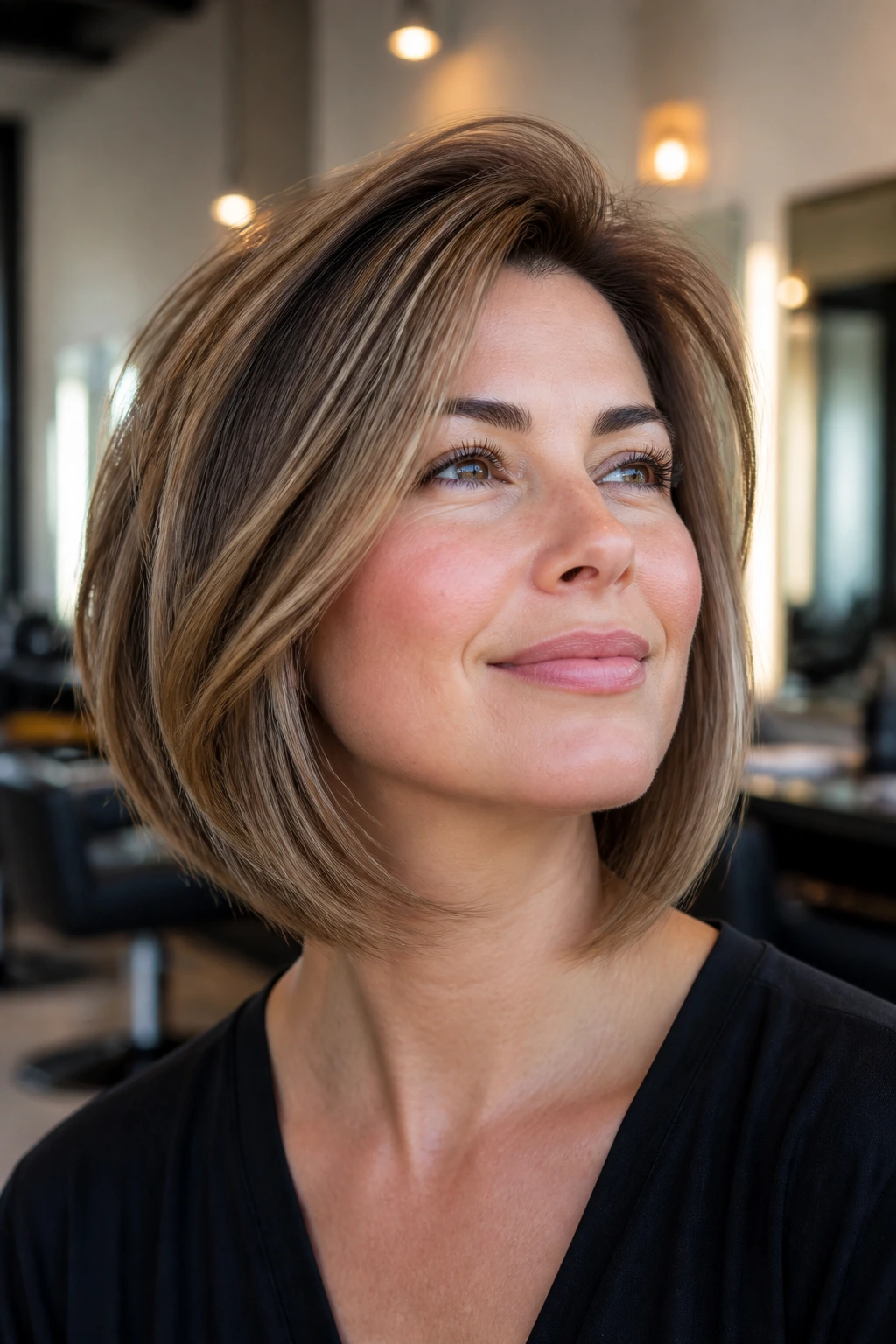
Sometimes the fix for a round face is not more length. It’s a little height at the crown.
A crown-lift bob keeps the sides controlled while the top gets subtle lift from internal layers and smart blow-drying. The shape draws the eye upward, which makes the face look a touch longer. The key is to add lift at the top without puffing out the sides. That part matters more than most people realize.
How to Avoid the Mushroom Effect
Keep the fullness at the crown, not at the temples.
- Ask for light internal layering through the top section.
- Dry the roots upward with a round brush or clips at the crown.
- Keep the perimeter smooth so the cut still reads as a bob.
- Skip heavy side volume; it adds width where you do not want it.
This is a good style if your hair naturally falls flat and you want more shape without giving up a medium length. It also works for people who wear their hair behind the ears part of the day and loose the rest of the time. The lift gives the face a cleaner outline.
13. Asymmetrical Bob
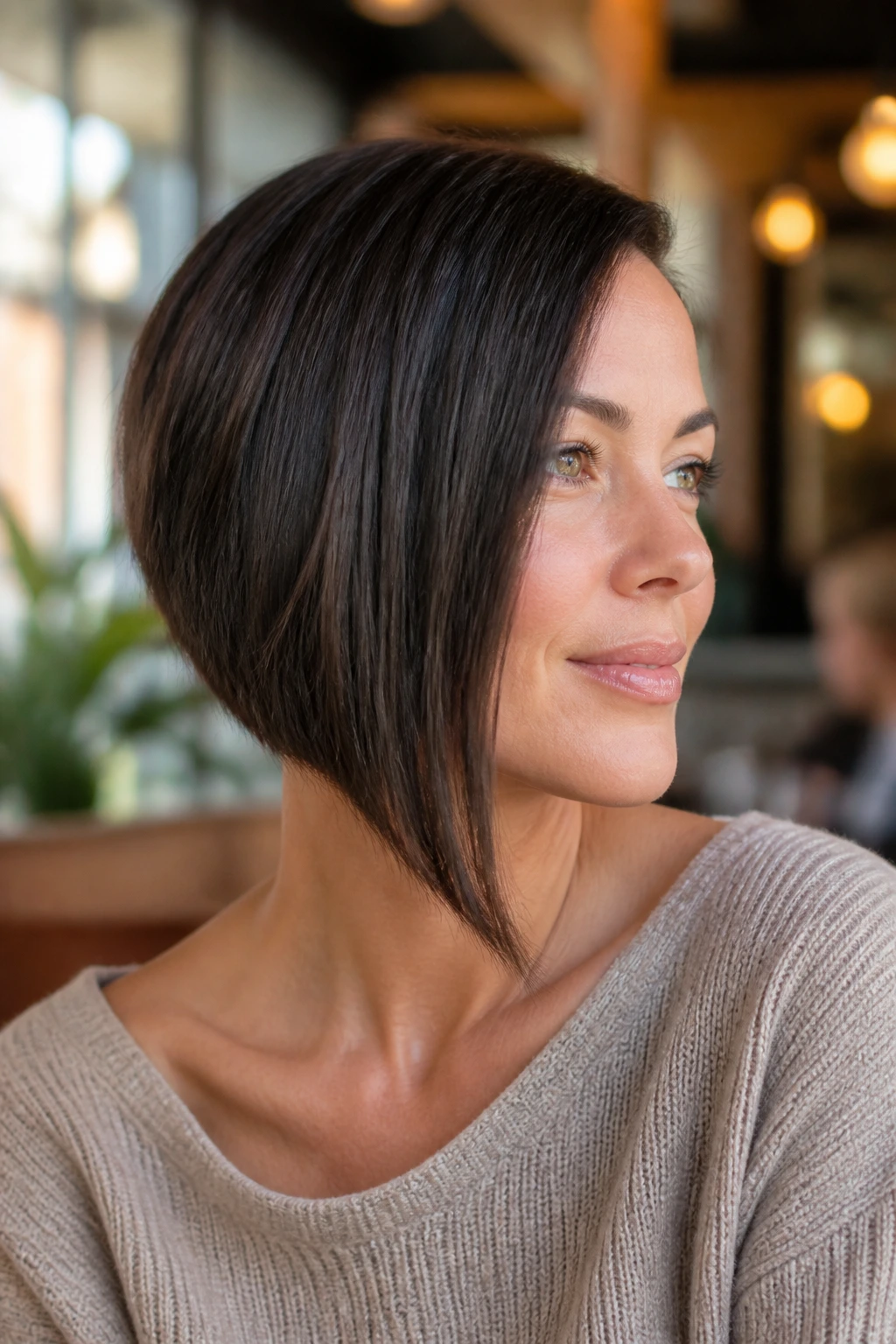
What does one longer side actually do? It changes the entire line of the face.
An asymmetrical bob creates a diagonal, and diagonal lines are useful on round faces because they break up symmetry. The longer side can skim the jaw or fall just past it, while the shorter side stays controlled. The cut should still feel wearable, not theatrical. A tiny difference in length is enough.
This is a cut for someone who wants something with a little edge but not a full-blown fashion haircut. The angle gives the face movement, and the uneven line distracts the eye from the widest part of the cheeks. It also works well if one side of your hair has a stubborn cowlick or sits differently from the other. The asymmetry can make that feel intentional.
A big warning: do not go too extreme unless you want a very sharp look. A difference of about 1 to 1.5 inches is plenty for most people. More than that can take over the whole face shape and feel hard to wear every day.
14. Sleek Center-Part Bob for Round Faces
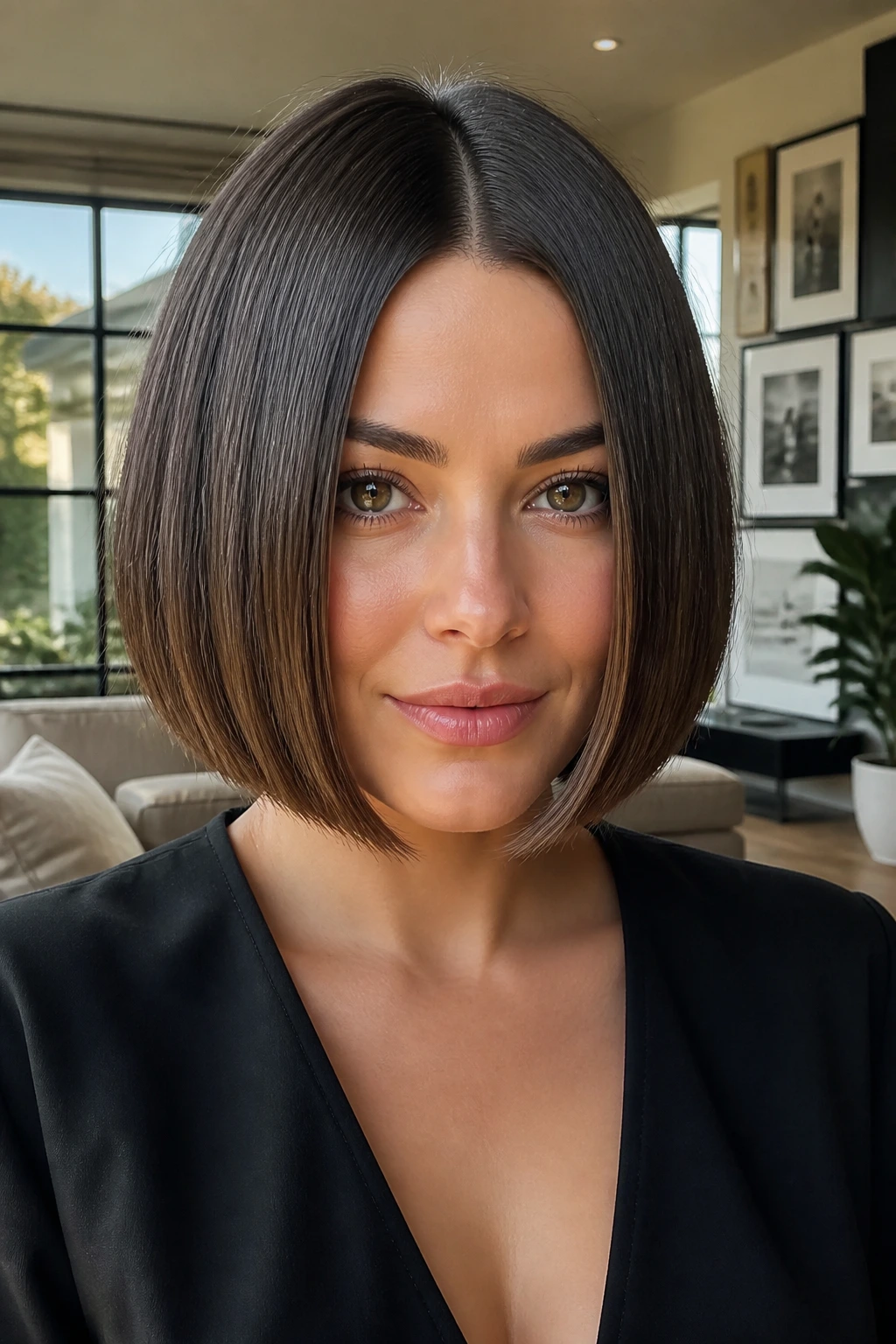
Two inches of front length can make a center part look sharp instead of cute.
That is the trick with this cut. The center part creates balance, but the front pieces need enough length to drop below the cheekbone and soften the width of the face. If the bob is too short, a center part can make a round face feel wider. If the front is long enough, the line goes vertical and the whole shape looks cleaner.
The style works best when the ends are smooth and the outline is neat. A little bend at the bottom is fine. A hard wave through the midsection is not. You want the hair to fall in a straight, clean curtain that frames the face without bunching up beside it.
Where It Fails
- Hair that is too short at the front.
- Heavy wave that sits exactly at cheek level.
- A center part that is not actually centered.
- Ends that flip out in different directions.
If your hair is naturally straight or only slightly wavy, this can be one of the best-looking cuts in the bunch. It is understated. It also grows out cleanly, which saves you from the awkward in-between stage that some bobs hit hard.
15. Textured Bob with Piecey Ends
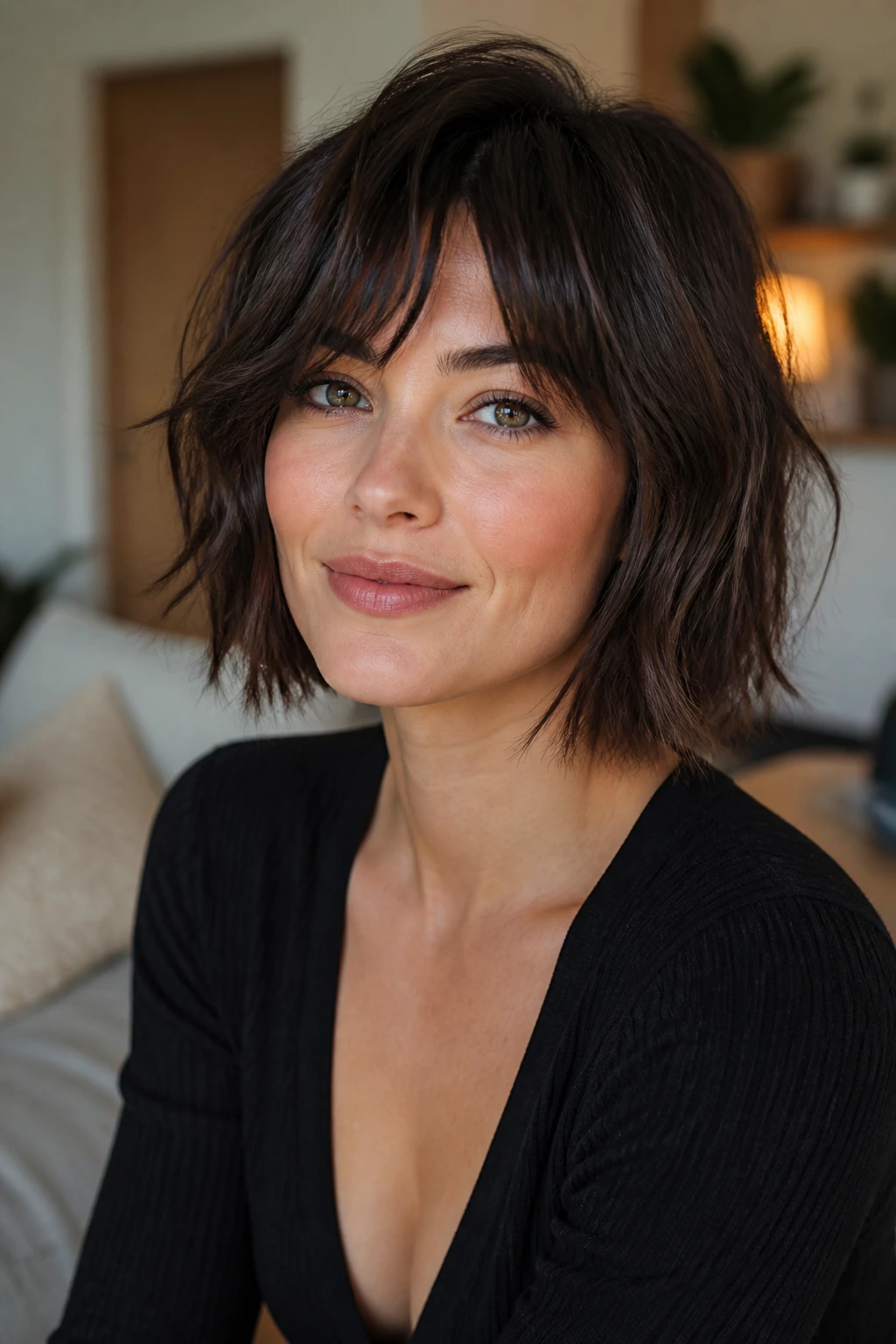
A textured bob is not the same as a shag, and that distinction matters.
This cut keeps the perimeter of a bob, but the ends are broken up into little pieces so the hair never sits as one heavy block. On a round face, those pieces help the eye move around instead of stopping at the widest part of the cheeks. The texture should feel light and separated, not fuzzy.
I like this cut on straight to wavy hair that needs a little movement but not full layering. It works especially well when the hair has some density and needs the bottom edge softened. A stylist can point-cut the ends to create that piecey finish. That means the line still looks intentional; it just does not feel blunt.
The main thing to watch is product. Too much styling cream or heavy oil makes the ends collapse into each other. Use a small amount of something light, then stop. The hair should still move when you turn your head.
This is one of those cuts that looks casual in a good way. Not messy. Just not overcontrolled.
16. Collarbone Bob with Soft Waves and Hidden Layers
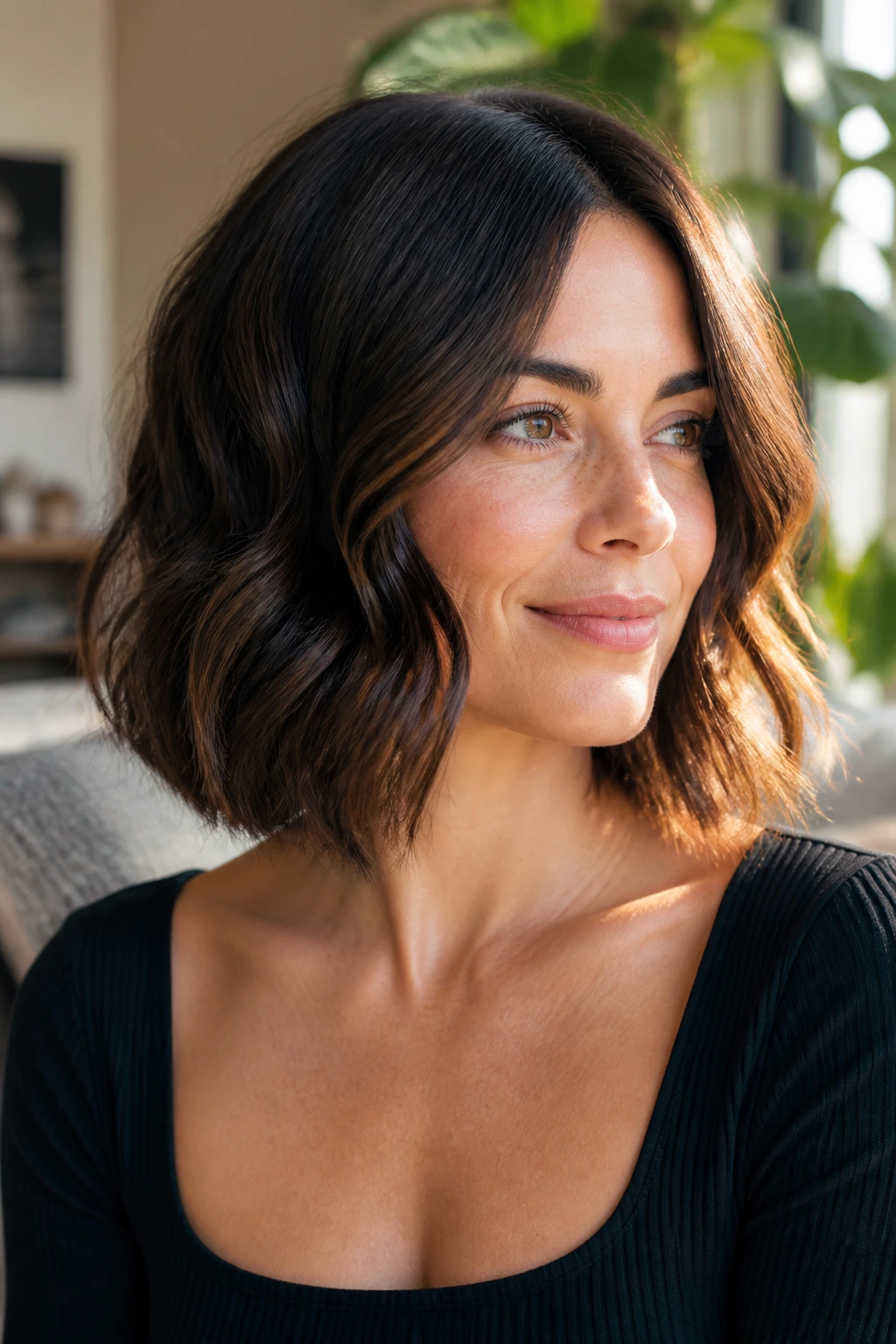
Unlike a blunt lob, this version depends on hidden layers to keep the wave from puffing out.
The collarbone length gives the cut room to swing, and the layers live underneath the surface so they do their work without shouting about it. That matters on a round face because waves can add width fast if they are all sitting on top of each other. Hidden layers take some of that bulk away and let the front fall in a cleaner line.
This is a strong pick for thicker hair or hair that bends naturally but gets too wide when it dries. The wave should feel loose, not springy. If you use a curling wand, alternate directions and leave the ends slightly straighter. That keeps the shape from turning into a round puff.
What to Ask For
- Collarbone length in front, slightly shorter in back if needed.
- Internal layers under the top surface.
- Soft face-framing pieces that start below the cheekbone.
- A finish that keeps the outline smooth, not chopped.
The result is easy to live in. It looks like you meant it that way, which is usually the whole point.
17. Shoulder-Grazing Blunt Bob with Deep Side Part
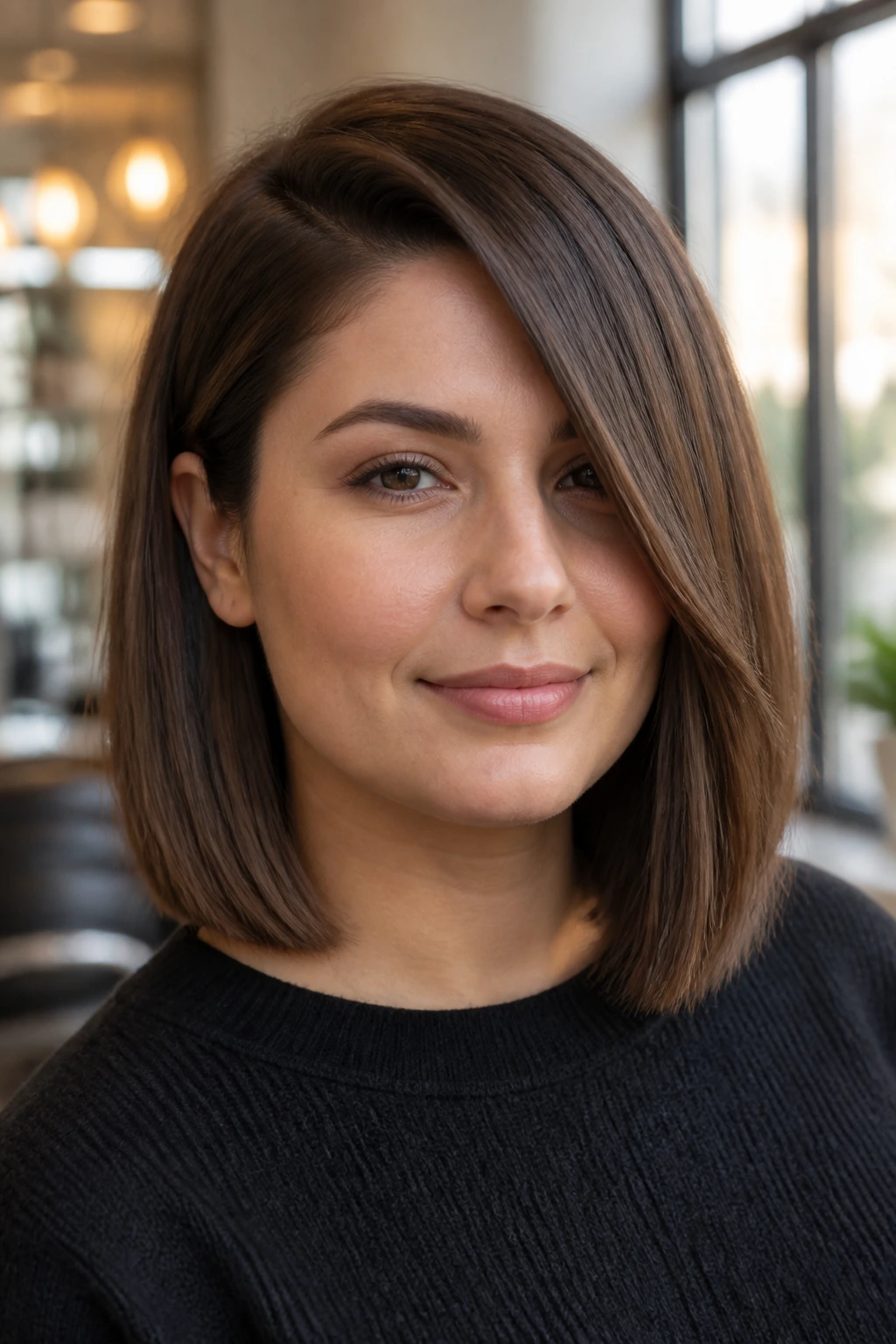
A deep side part can save a blunt bob from feeling too square.
That is the whole reason this cut works on a round face. The blunt edge gives the style structure, while the side part throws the weight to one side and creates a diagonal line across the forehead and cheeks. The shoulder-grazing length gives the face a little extra room, so the bob does not sit right on the jaw.
This is a good cut for fine hair that needs visual thickness. The blunt line makes the ends look fuller than they are. If your hair is straight, this can look crisp and polished with very little effort. If your hair is wavy, you will need to smooth the front a bit or the shape can drift too wide.
I would not choose this if your hair is extremely curly unless you are comfortable styling it. Curly hair can turn the blunt edge into a triangle if it is not shaped carefully. Straight and medium-fine textures get the easiest life here.
18. Soft Layered Lob That Lands at the Collarbone
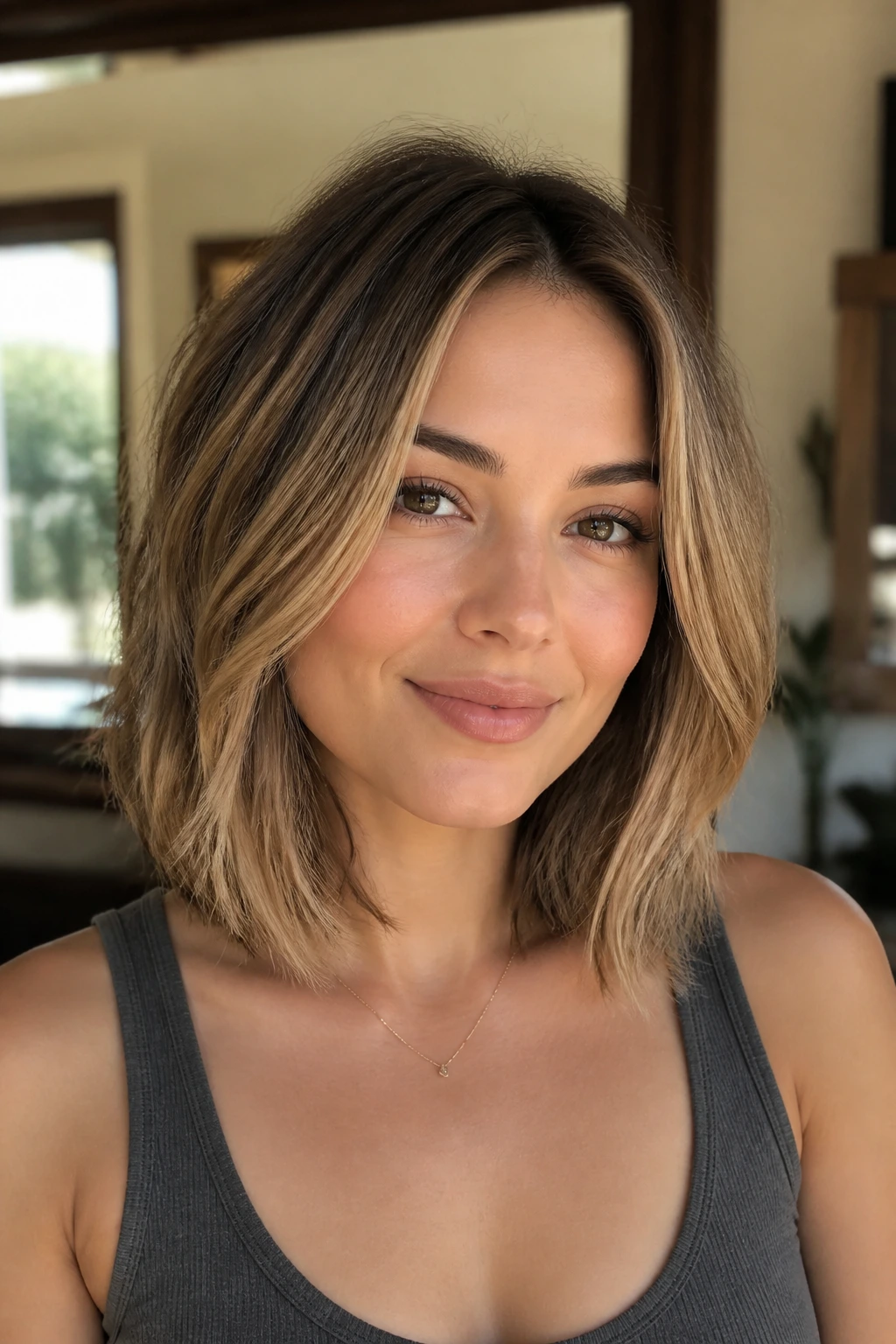
If you want the least fussy option, this is the cut I’d point most round faces toward first.
It has enough length to skim below the jaw, which keeps the face from feeling crowded, and enough layering to stop the ends from hanging like a solid block. The collarbone is a smart landing spot because it gives the haircut motion without letting it drift into long, shapeless territory. That middle ground is where this style lives.
The layers should be soft and strategic. Not choppy for the sake of it. A few well-placed pieces around the front can stretch the face visually, and the rest of the haircut can stay fairly clean. That balance makes the cut easy to wear straight, wavy, tucked, or pinned back on one side.
A final tip: bring photos of the front and the side, not just the back. That is where most bob miscommunications happen. A stylist can match a silhouette from one picture and still miss the line around your face, which is the part that matters most here.
This is the cut I’d trust for someone who wants shape without too much upkeep. It behaves. That alone earns it a place near the top.
