



Fine hair doesn’t need more drama. It needs smarter shape.
A feathered bob haircut can do that better than almost anything else in the short-hair playbook. The soft, wispy ends move instead of hanging in one heavy line, and that movement matters when each strand is fine and easily flattened. The trick is not to carve the hair to pieces. The trick is to keep enough perimeter to make the cut look full while the feathering creates lift, air, and a little swing at the ends.
That balance is where a lot of bob haircuts go wrong on fine hair. Go too blunt and the style can sit flat, especially if the crown is sparse. Go too layered and the ends start to look see-through, which is a miserable trade. A good feathered bob lands in the middle: soft around the edges, controlled at the base, and shaped so the hair seems to have more body than it actually does.
I’ve always liked this family of cuts because it works with the hair’s real texture instead of fighting it. Straight strands get movement. Slight bends look intentional. Even a lazy air-dry can look polished if the layers are cut with enough thought. The first version I’d reach for is the one that gives the cleanest outline and the most believable fullness.
1. Chin-Length Feathered Bob for Fine Hair
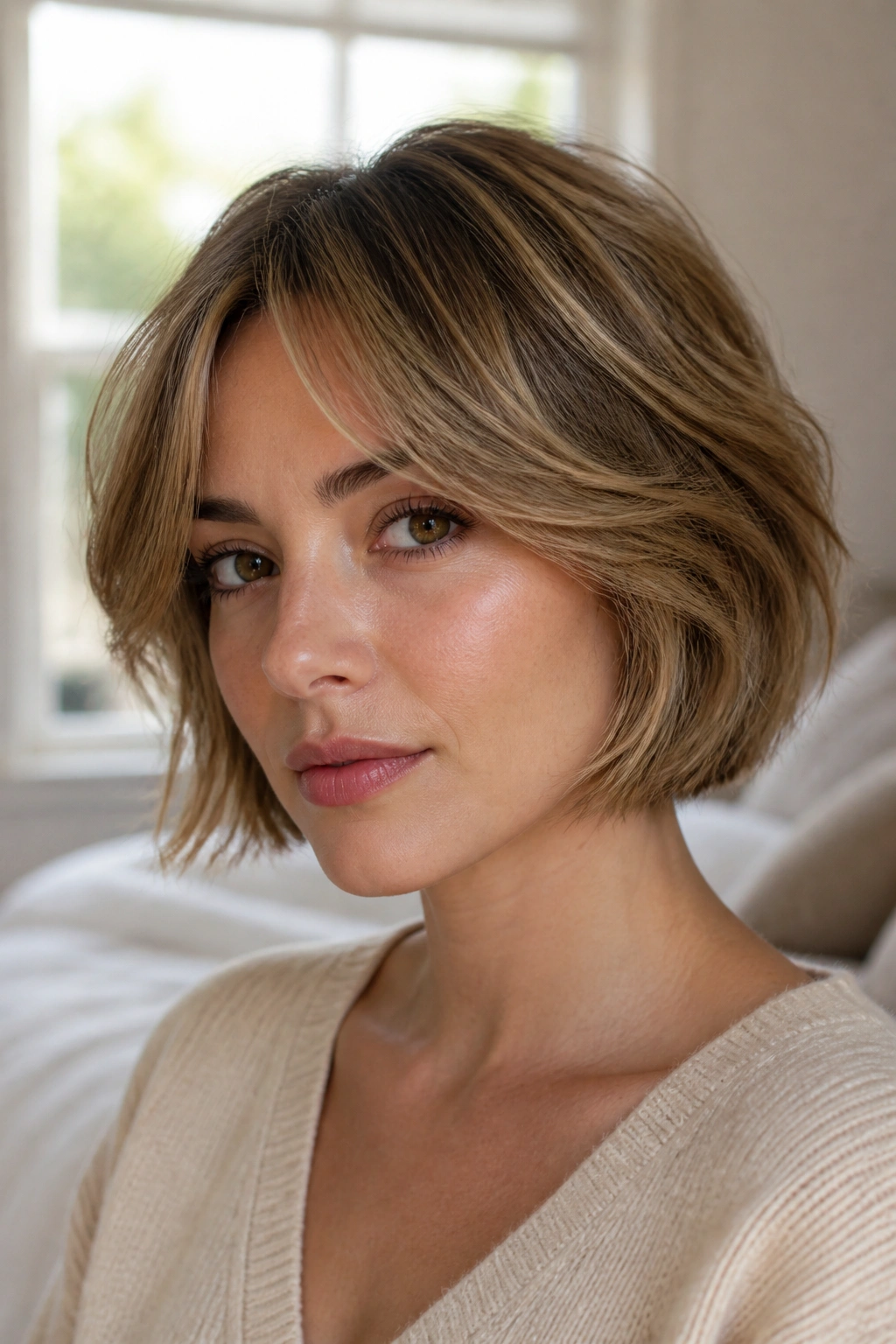
A chin-length feathered bob is the cleanest place to start because it keeps the hair close enough to the face to look full, even when the strands are fine. The length hits where the jaw naturally gives the cut a shape, and the feathering softens the bottom edge so it doesn’t feel helmet-like.
Why It Works
A bob that sits at the chin makes the eye see density. That matters. Fine hair often looks thinner when it’s stretched too long, but a shorter line brings the ends together and gives the cut some weight. Ask for feathering only through the mid-lengths and outer surface, not heavy internal layers. Too much removal at the bottom can make the ends fray out.
- Best when your hair falls flat at the crown
- Good for straight or slightly wavy hair
- Easy to blow-dry with a round brush
- Needs a light texturizing product, not a sticky one
My favorite detail: keep the perimeter just blunt enough to hold the shape. That little bit of structure is what keeps the cut from disappearing.
2. Side-Swept Fringe Feathered Bob
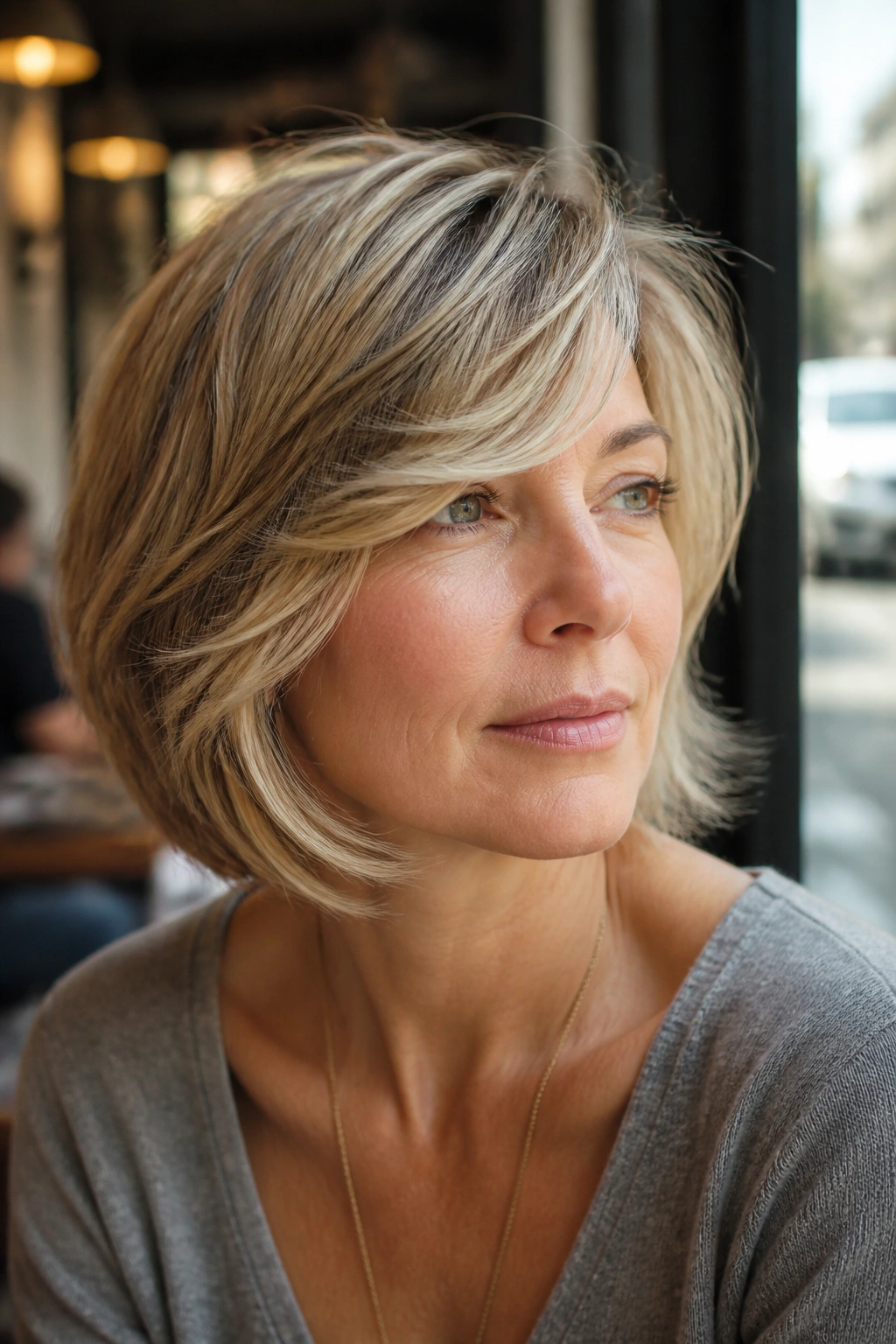
A side-swept fringe can change the whole mood of a feathered bob. It gives fine hair a front section that feels fuller right away, which is useful if the hairline is soft or the top layer tends to fall limp by lunchtime. The fringe should be long enough to move across the forehead without splitting into skinny pieces.
The cut works because the eye lands on the sweep first. That buys the rest of the bob some visual density. I like this version on hair that wants to lie close to the head, because the fringe creates a little lift at the front without needing a ton of teasing or product. A light blow-dry with the nozzle pointing upward at the roots is usually enough.
Keep the fringe soft, not chunky. Thick side bangs can swallow fine hair whole. A feathered side-sweep should look airy, a little brushed through, and never stiff. If the ends flick out slightly, that’s fine. It adds life.
3. Collarbone Feathered Bob
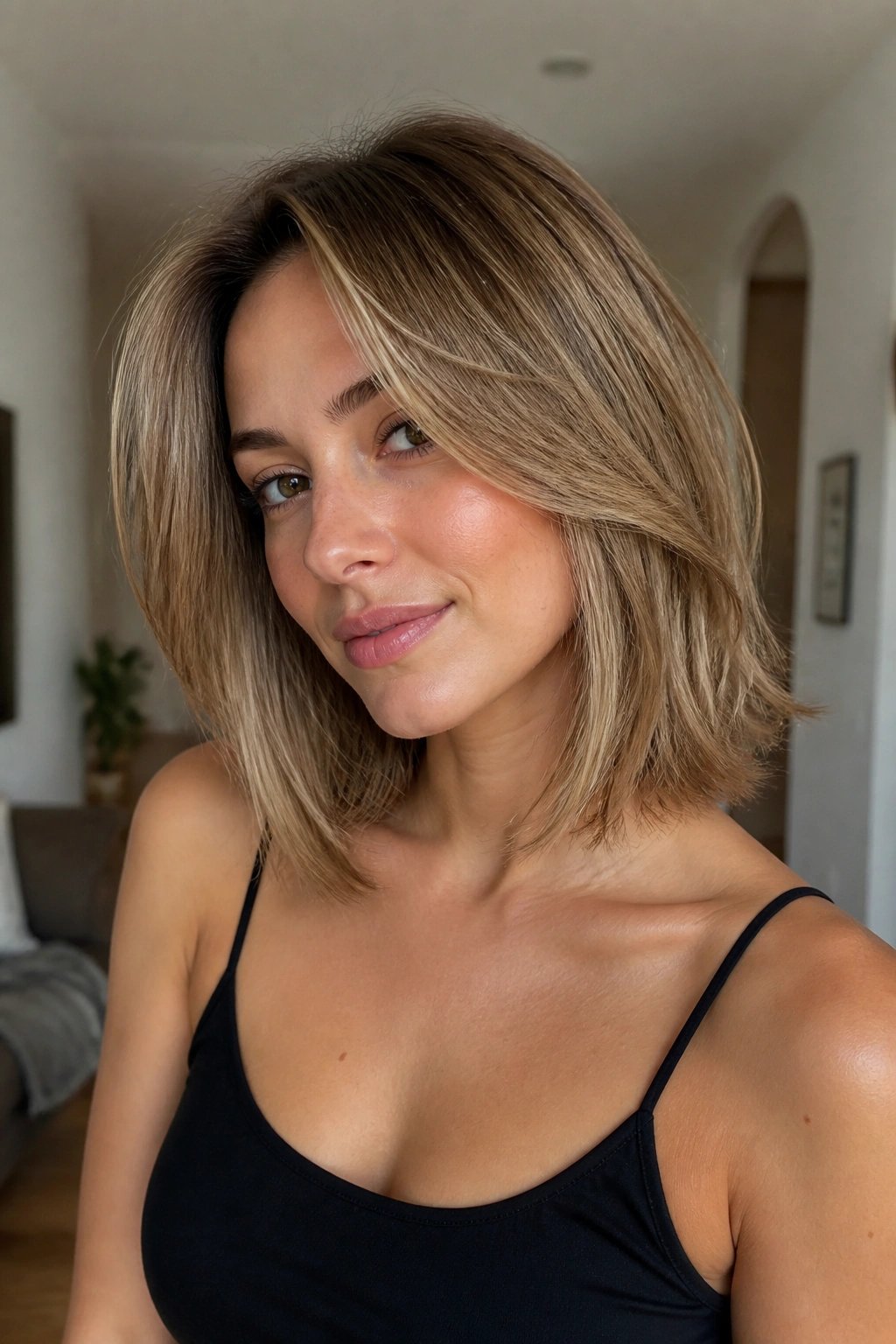
Can a bob be longer and still look full on fine hair? Yes, if the shape is handled well.
The collarbone feathered bob is a smart pick for anyone who wants movement without going too short. The ends skim the collarbone, which gives the haircut a longer line, but the feathering keeps the lower half from looking flat and heavy. It’s a good bridge style if you’re not ready to lose much length.
How to Wear It
The collarbone length works best with a soft center part or a slight off-center part. Either one lets the front pieces fall into the face instead of hanging like curtains. A rough blow-dry with a medium round brush is usually better than over-smoothing it. Fine hair can look thin when it’s pressed too flat.
You’ll get the most out of this cut if the layers are subtle and blended. No choppy staircase effect. Just enough internal movement to keep the hair from sticking to the neck. It’s a graceful cut, and I mean that in the plainest sense: it moves well.
4. Stacked Feathered Bob With Lift at the Crown
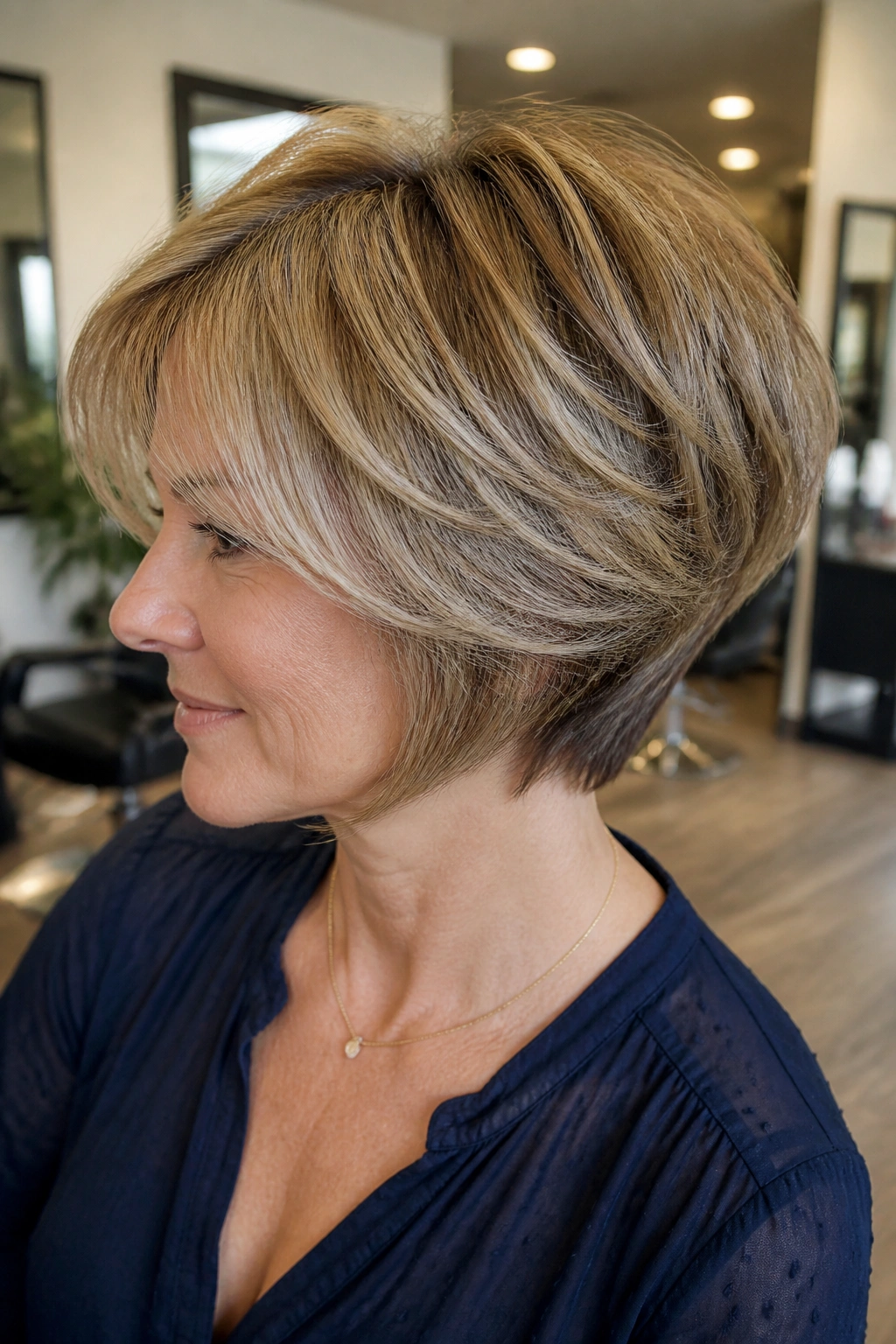
A stacked bob is one of the few shapes that can make fine hair look thicker at the back without a mountain of styling. The shorter layers in the nape create natural lift, while the feathered top layers keep the shape from feeling too rigid or too dated.
I like this cut on hair that collapses at the crown. The stacking gives the head a little curve, and that curve helps the whole style look fuller from the side. The important part is restraint. If the stack is too steep, the cut can start to look like it belongs to a different decade. Keep the graduation gentle and the outer layers soft.
A dab of volumizing mousse at the roots before drying can help, but the haircut should do most of the work. That’s the point. You want shape from the scissors, not a daily battle with hot tools.
5. Soft A-Line Feathered Bob
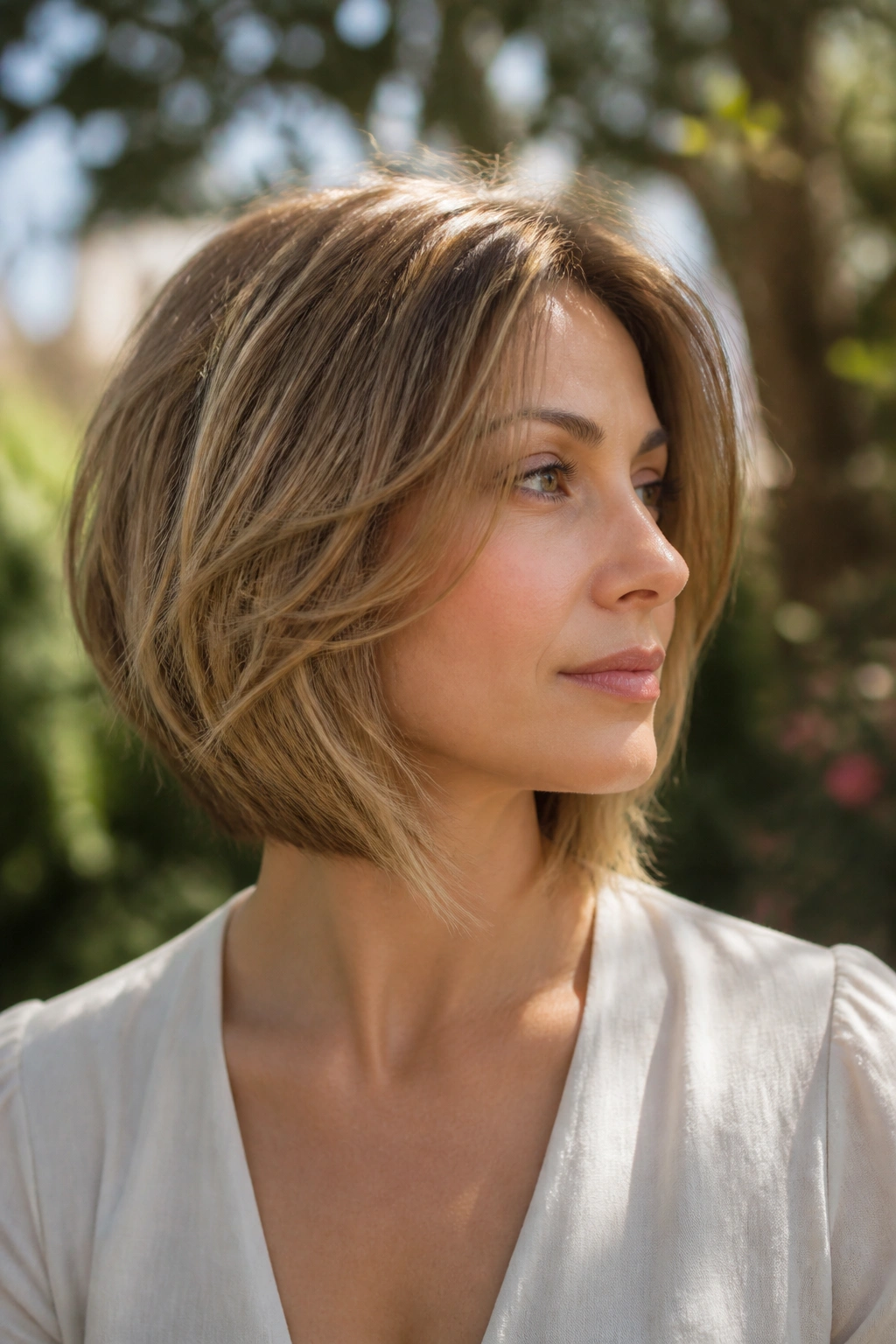
The A-line bob is a nice compromise when you want the face-framing length of a longer bob and the fullness of a shorter one. The front sits a touch longer than the back, so the cut leans forward, which gives fine hair a little more presence around the jaw and cheeks.
What makes the feathered version better than a sharp A-line is the way it softens the edge. A hard diagonal can look thin if the hair is sparse. Feathering the front and lightly texturizing the ends keeps the line from feeling blunt in a bad way. It also moves better when you tuck one side behind the ear.
This is one of those cuts that looks polished on a clean blowout and casual on a quick air-dry. That flexibility is rare. If you want a bob that still feels a little graceful when you’re not fully styled, this one earns its keep.
6. Feathered Bob With Curtain Bangs
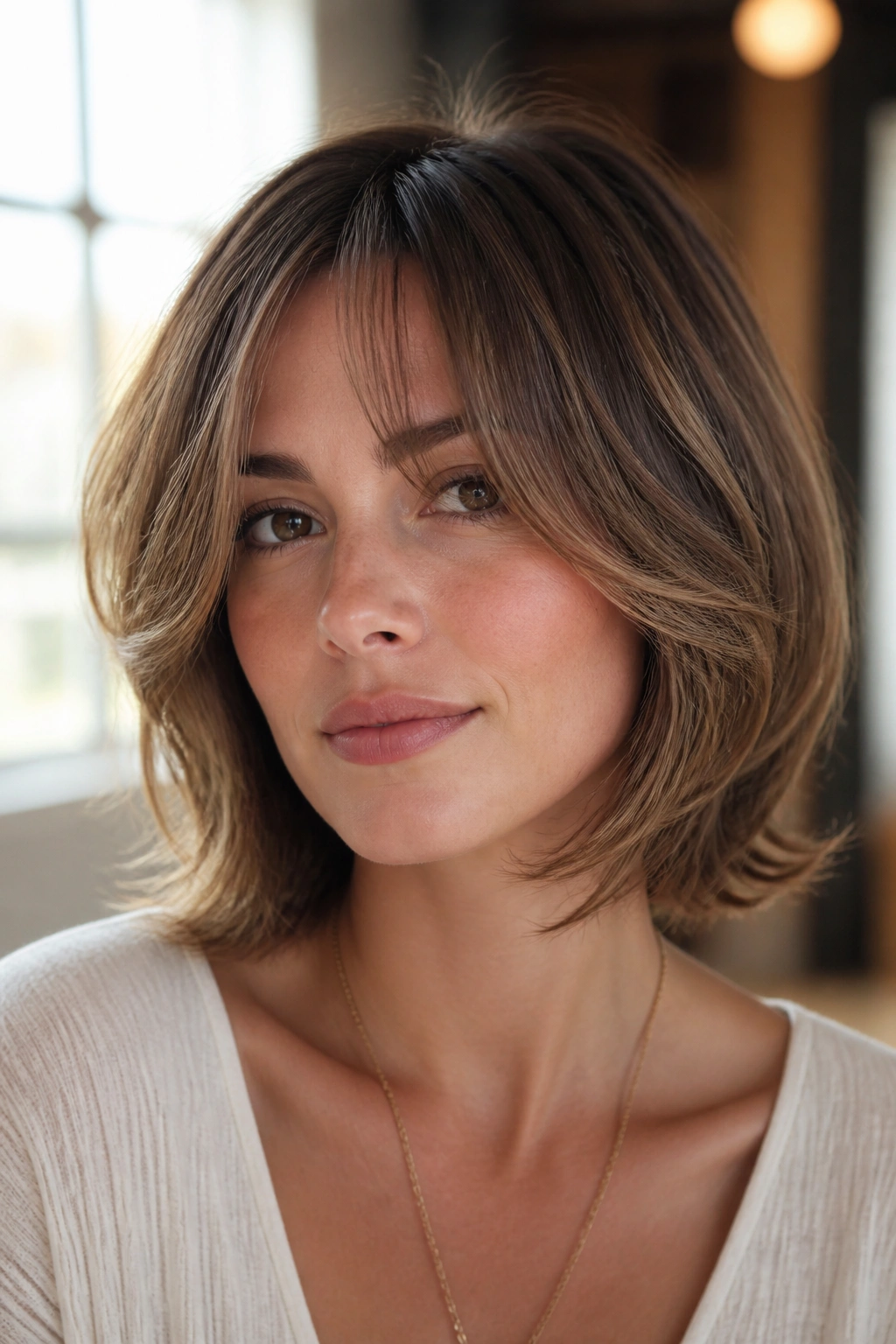
Curtain bangs and fine hair are a tricky pair, but they can work when the rest of the bob has enough body. The fringe should be long, soft, and parted from the center so it opens around the face instead of sitting in one heavy block.
What Makes It Different
Curtain bangs create the illusion of more hair around the front, which is gold when the ends are fine. They also blend nicely into the feathered layers, so the whole cut feels connected. The trick is keeping the bang area light enough to move. If it’s too dense, it starts to separate and reveal the scalp.
A feathered bob with curtain bangs suits anyone who likes a bit of face framing but hates the bluntness of a straight fringe. Blow-dry the bangs forward first, then sweep them out with your fingers while they’re still warm. That little habit matters more than people think.
Best kept a little messy. A perfectly set curtain bang can look too stiff on fine hair, while a softer bend gives the cut its charm.
7. Wavy Feathered Bob
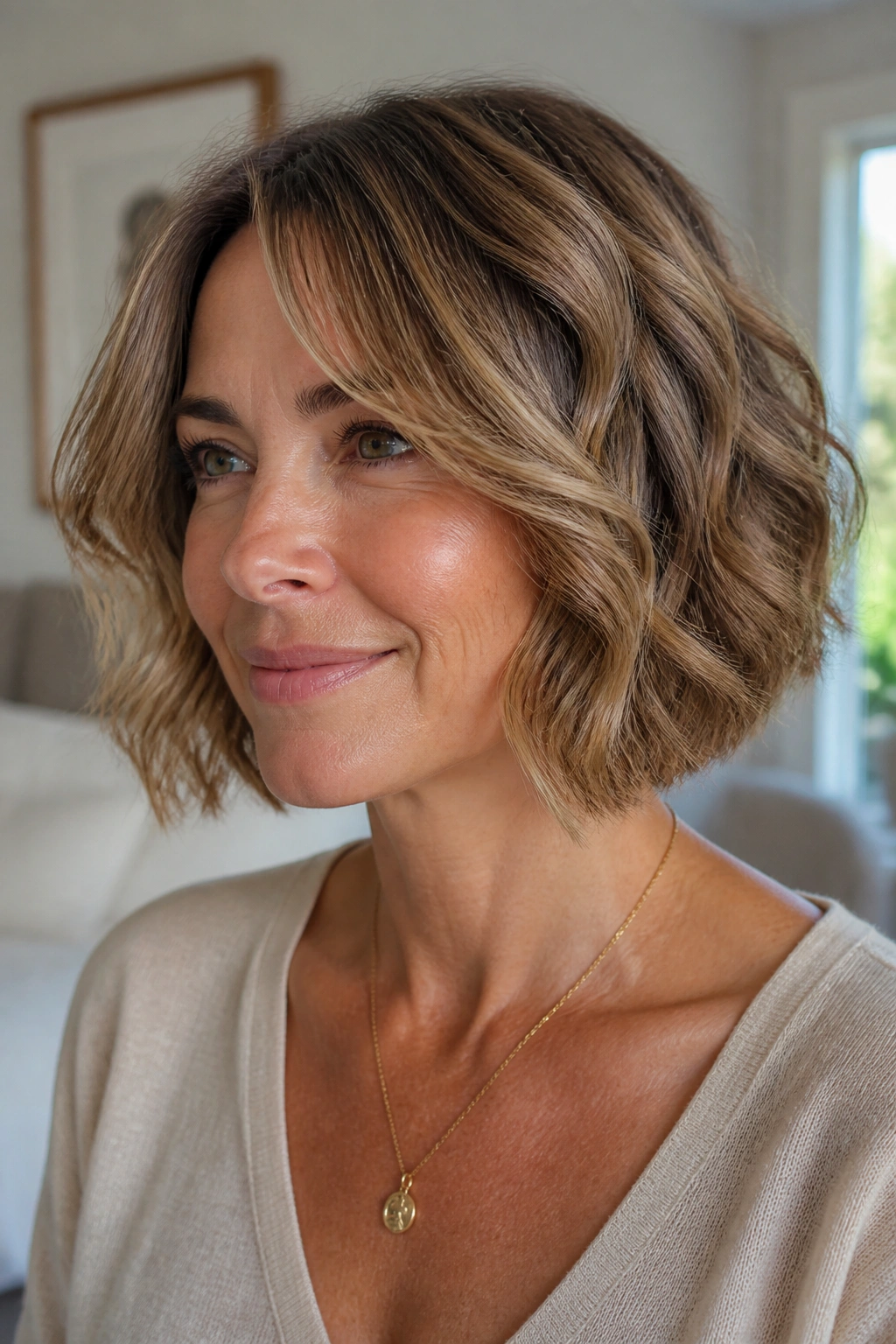
Waves are a gift for fine hair, but only when the cut knows how to hold them. A wavy feathered bob uses soft layering to let the bends pile up on each other, which makes the hair look denser than it is.
This version works because feathering breaks up the ends just enough to keep the wave pattern from getting boxy. Fine hair with a wave can puff out at the wrong points if the perimeter is too blunt. A light feathered edge fixes that. Not by thinning the hair, but by shaping it so the wave has somewhere to sit.
A 1-inch curling iron or a quick flat-iron bend can help if your natural wave is weak. Don’t curl every strand. Just two or three sections around the face and the crown are often enough. The point is movement, not curls that look staged.
8. Inverted Feathered Bob
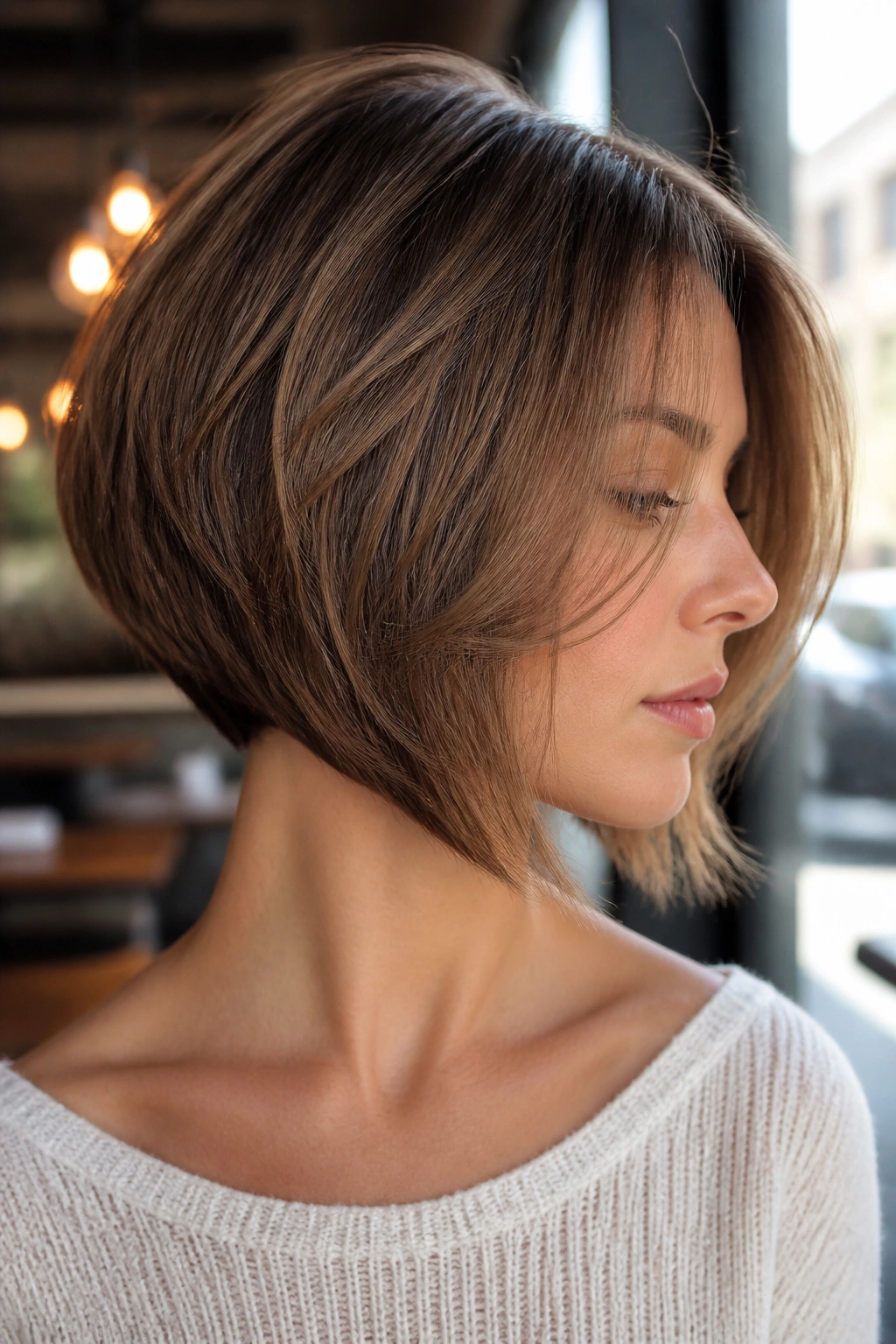
The inverted bob gives you angle, and angle gives fine hair attitude. Shorter in back, longer in front, it creates a clear line that makes the hair appear more deliberate and less wispy. Add feathering, and the shape loses its stiffness without losing its structure.
This is the cut I’d choose for someone who wants the back to feel neat but the front to skim the jaw in a softer way. The forward angle draws the eye downward, which can make the ends look fuller. It also works well if you want to show off earrings or a long neck.
There is a catch. The transition has to be smooth. If the stack in the back is too abrupt, fine hair can expose every bit of the cut line. Ask for a clean blend from nape to front, with the feathering concentrated around the outer layers rather than hacked through the interior.
9. Feathered Blunt Bob Hybrid
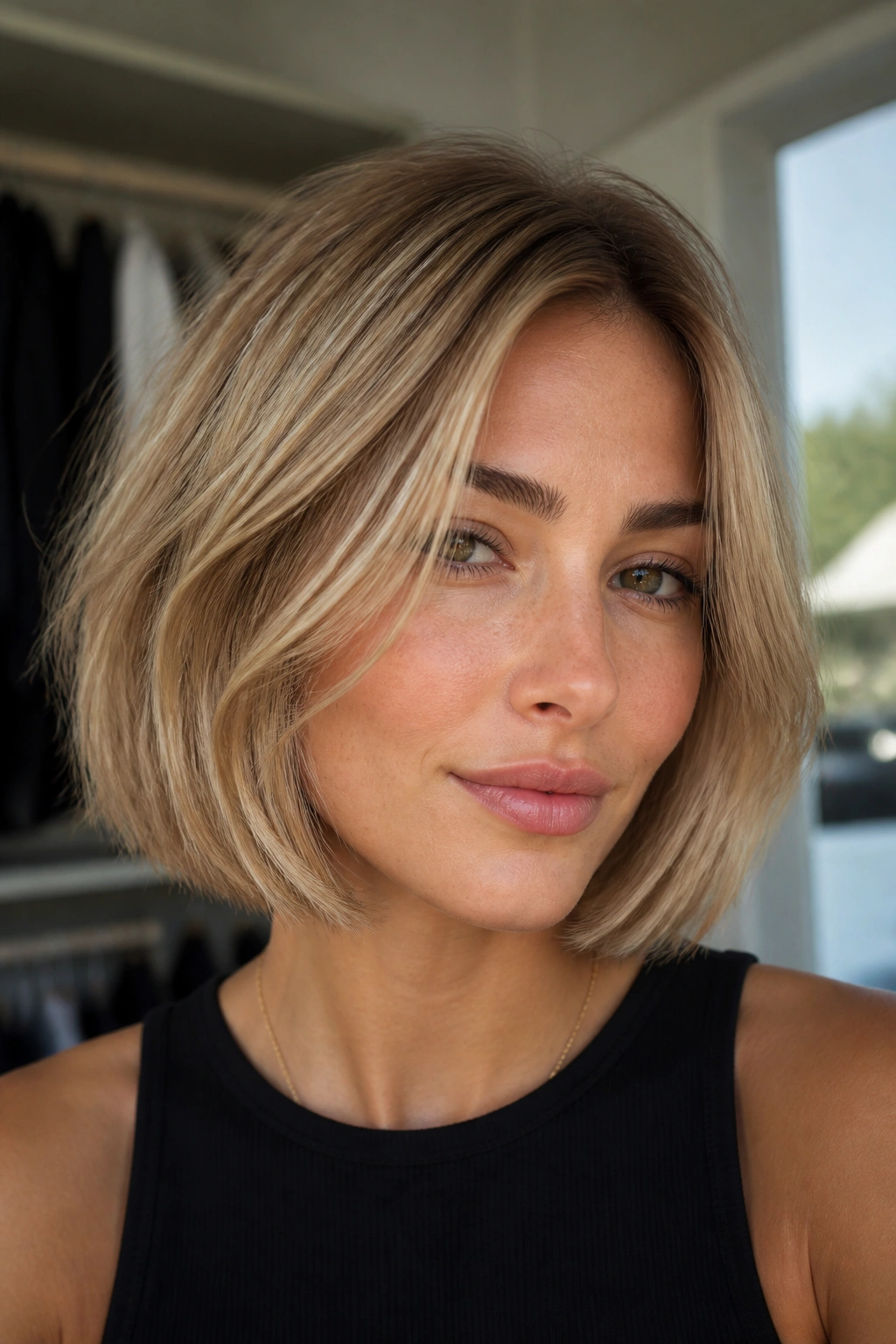
A blunt bob with feathered ends sounds contradictory, and that’s exactly why it works. The blunt perimeter keeps the outline dense. The feathering softens the last inch or so, so the finish doesn’t feel hard or blocky.
For fine hair, this is a strong choice because it preserves fullness where it counts most: the bottom edge. Too many layered cuts thin out the whole head and leave the length looking scraggly. A hybrid bob keeps the base intact while still letting the hair swing. It’s one of my favorite answers for hair that needs body without losing a clean silhouette.
How to Ask for It
Tell your stylist you want a blunt line with feathered movement on the surface. That usually means minimal internal reduction and a little texturizing at the ends. Styling is easy. A quick bend with a flat iron, then a touch of lightweight cream through the mid-lengths, is enough. Crisp at the base, soft at the finish. Nice combination.
10. Razor-Feathered Bob
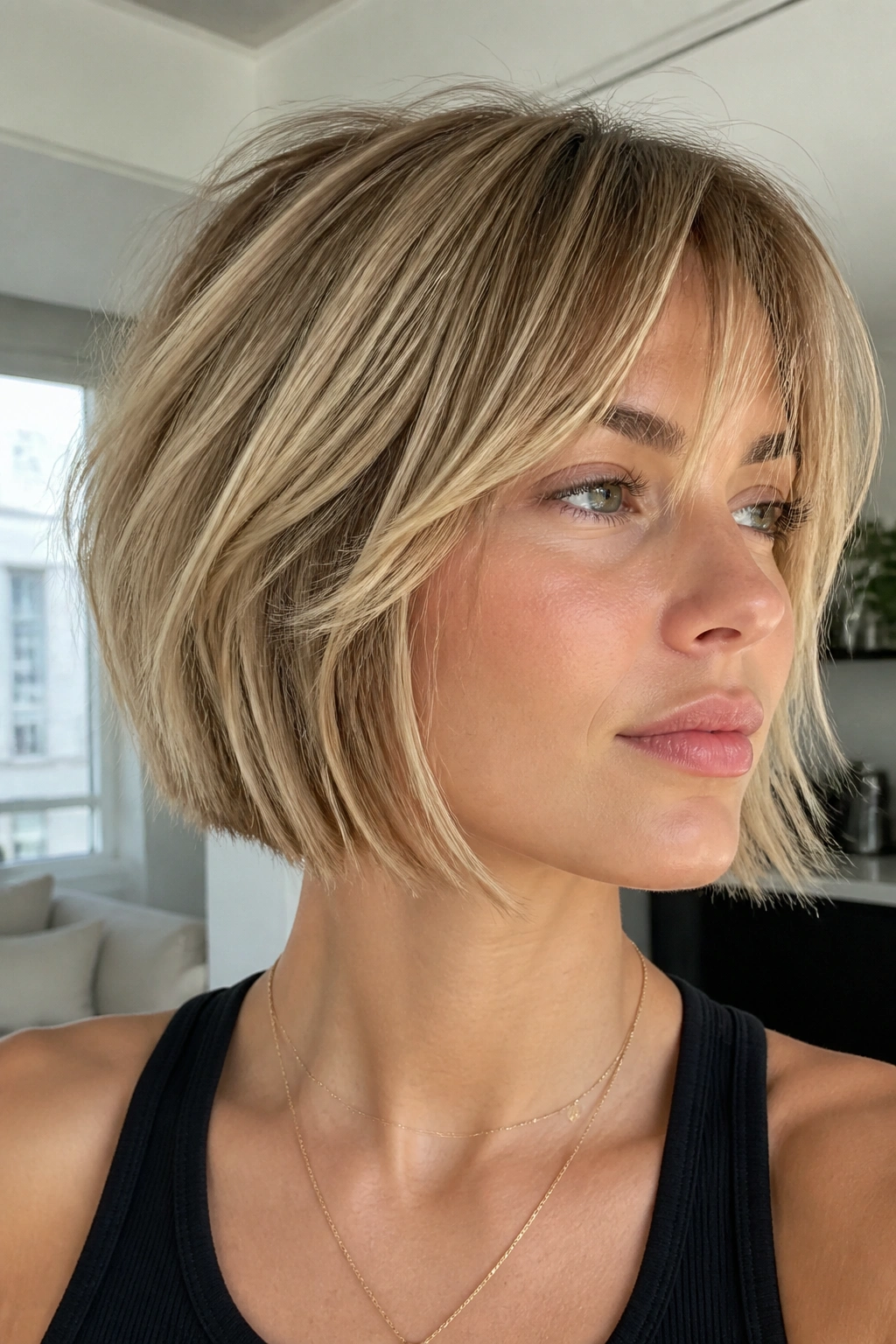
A razor can make a feathered bob look airy fast, but it needs a careful hand on fine hair. The right razor work gives the ends a soft, brushed-out feel that looks natural. The wrong one leaves the hair frayed, which is not the same thing at all.
This cut suits hair that already has a little slip or silkiness. On that texture, the razor can create a finish that feels almost feather-light around the cheeks and jaw. I like it when the aim is movement over volume. If you want a smooth, expensive-looking swing, this cut can deliver it. If you want bulk, look elsewhere.
A good razor feathering should look deliberate in daylight and not stringy at the edges. The stylist should avoid overworking the same section. Fine hair is too easy to over-thin. You want softness, not disappearance.
11. Deep Side-Part Feathered Bob
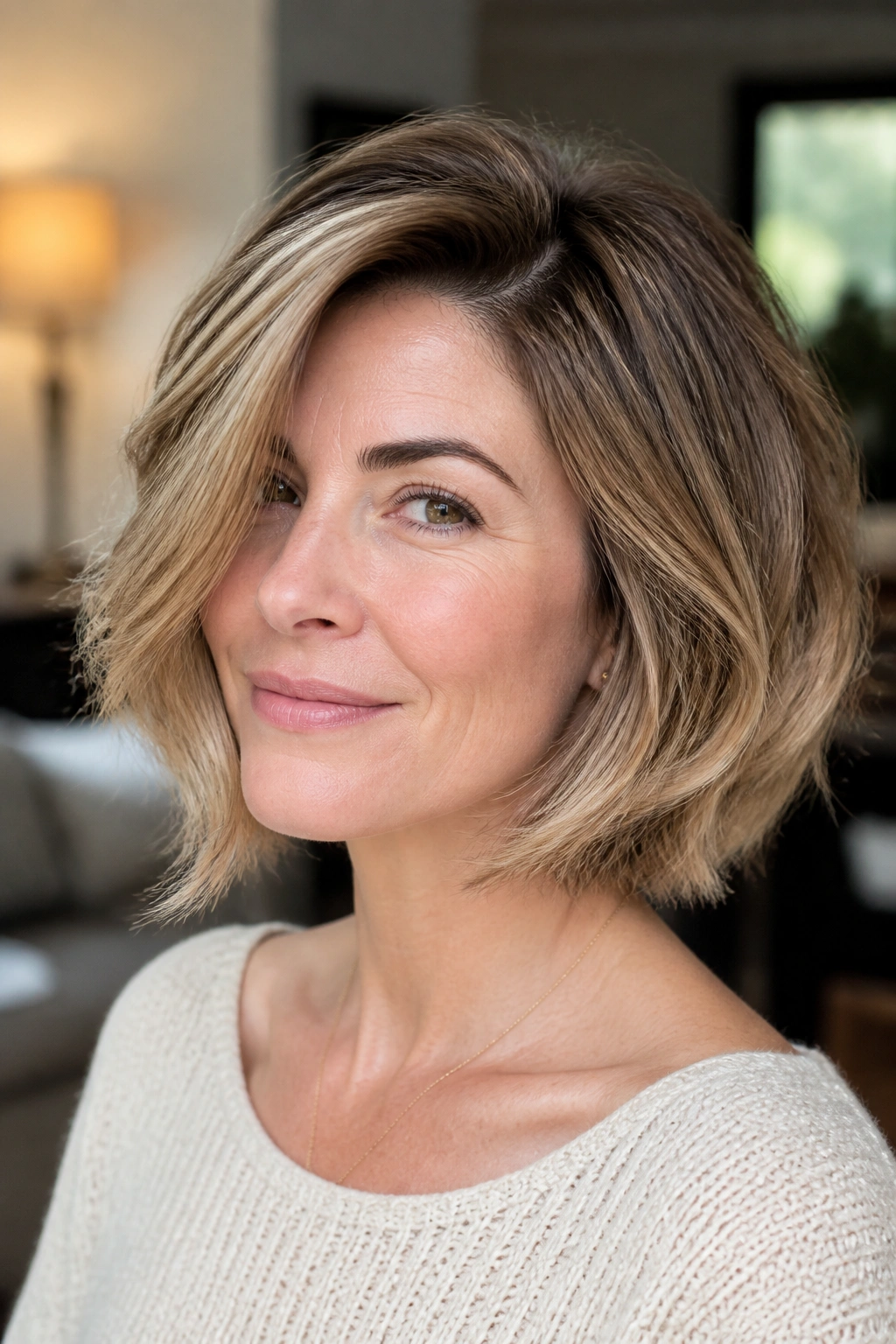
A deep side part is one of the fastest ways to wake up flat fine hair. It shifts weight off the center line and creates instant lift at the roots, especially on the heavier side of the part. Pair that with a feathered bob and the whole cut gains more shape than you’d expect from a simple styling change.
I like this when the client wants a little drama but not a dramatic haircut. The side part gives the illusion of more hair on top, and the feathering keeps the ends from looking bluntly collapsed. The longer side can skim the cheekbone, which is flattering without feeling fussy.
Try drying the hair against its natural fall for a minute or two before flipping it over. That tiny stunt adds more root rise than another round of mousse ever will. The cut does the rest.
12. Rounded Feathered Bob
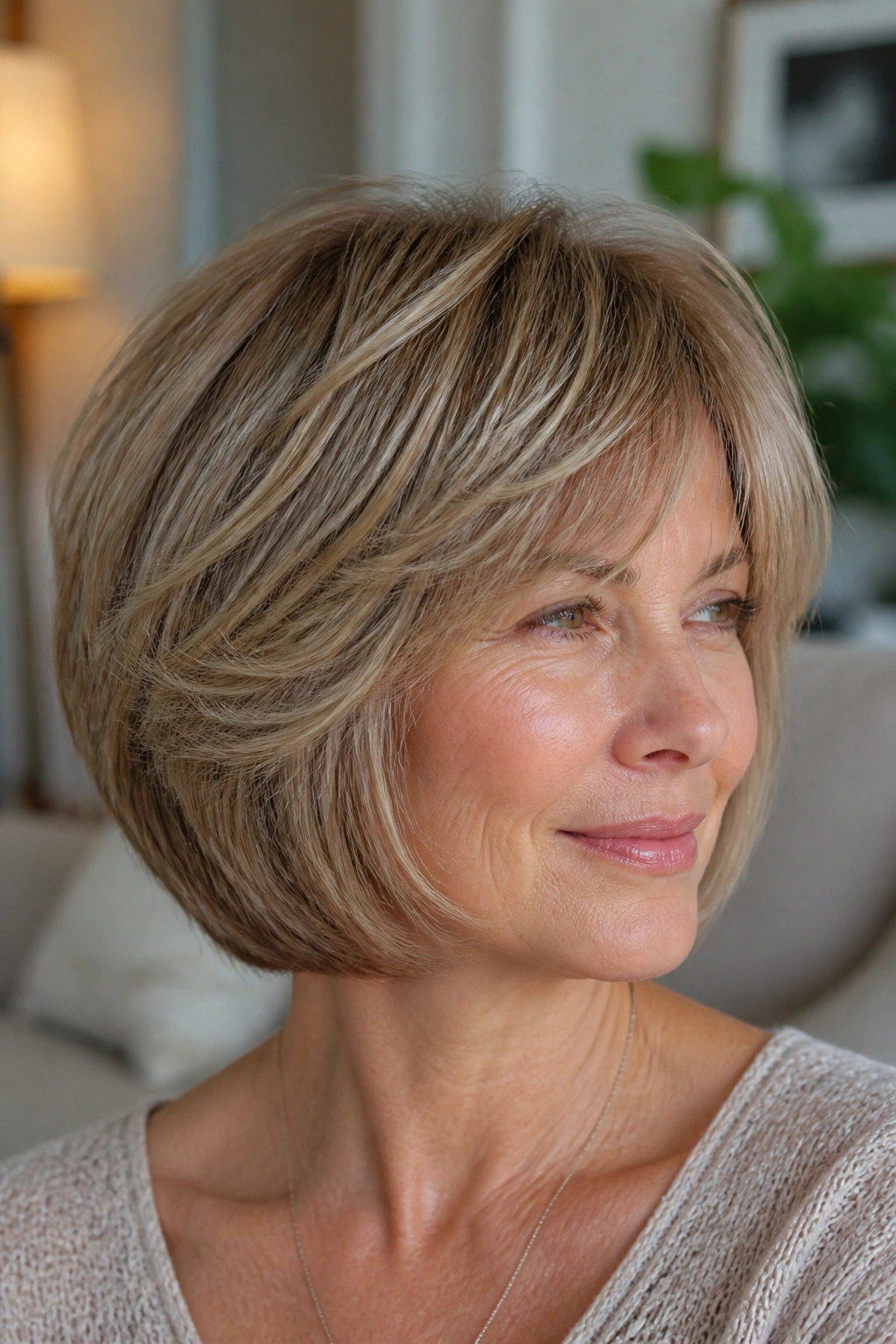
Rounded bobs are underrated for fine hair. A soft round shape hugs the head in a way that creates the feeling of fullness all the way around, especially when the hair is fine and tends to flatten at the crown. Feathering keeps the curve from becoming too perfect.
This style is good if you like a neat silhouette. It’s a little old-school in the best sense: polished, compact, and easy to keep in line. The rounded shape helps the hair look denser from every angle, while the feathered edges stop the cut from feeling like a cap.
What I would not do is over-stack the back or heavily thin the sides. That turns the round shape into something brittle. A soft arc, a light brush-through, and a small amount of smoothing serum are enough. The finish should look touched, not engineered.
13. Feathered Bob With Wispy Bangs
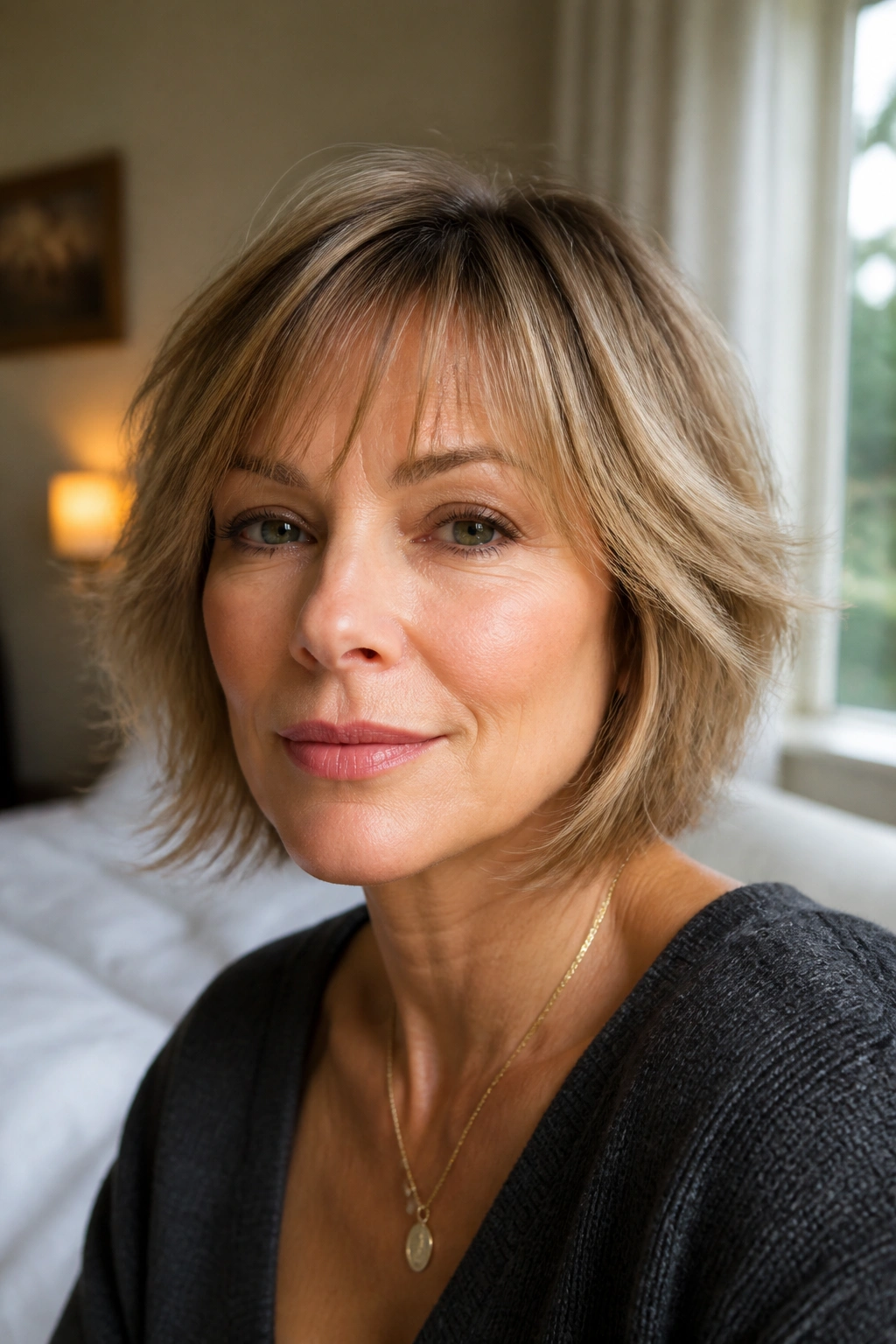
Wispy bangs can be a mercy for fine hair because they give the forehead coverage without eating up too much density. When they’re paired with a feathered bob, the result feels light, almost airy, but still planned.
The bangs should be see-through in the best way. A few soft pieces across the brow, not a curtain of fringe. That lets the rest of the bob keep its fullness. If the bangs are too heavy, they steal body from the top and make the lower lengths look even thinner. That’s the last thing you want.
What to Watch For
- Keep the bang line slightly broken, not blunt
- Blend the side pieces into the first layer of the bob
- Dry the bangs first so they don’t split
- Use a small round brush or your fingers, not a giant brush
This cut is especially good if you like movement near the face but don’t want a full fringe commitment.
14. Tucked-Under Feathered Bob
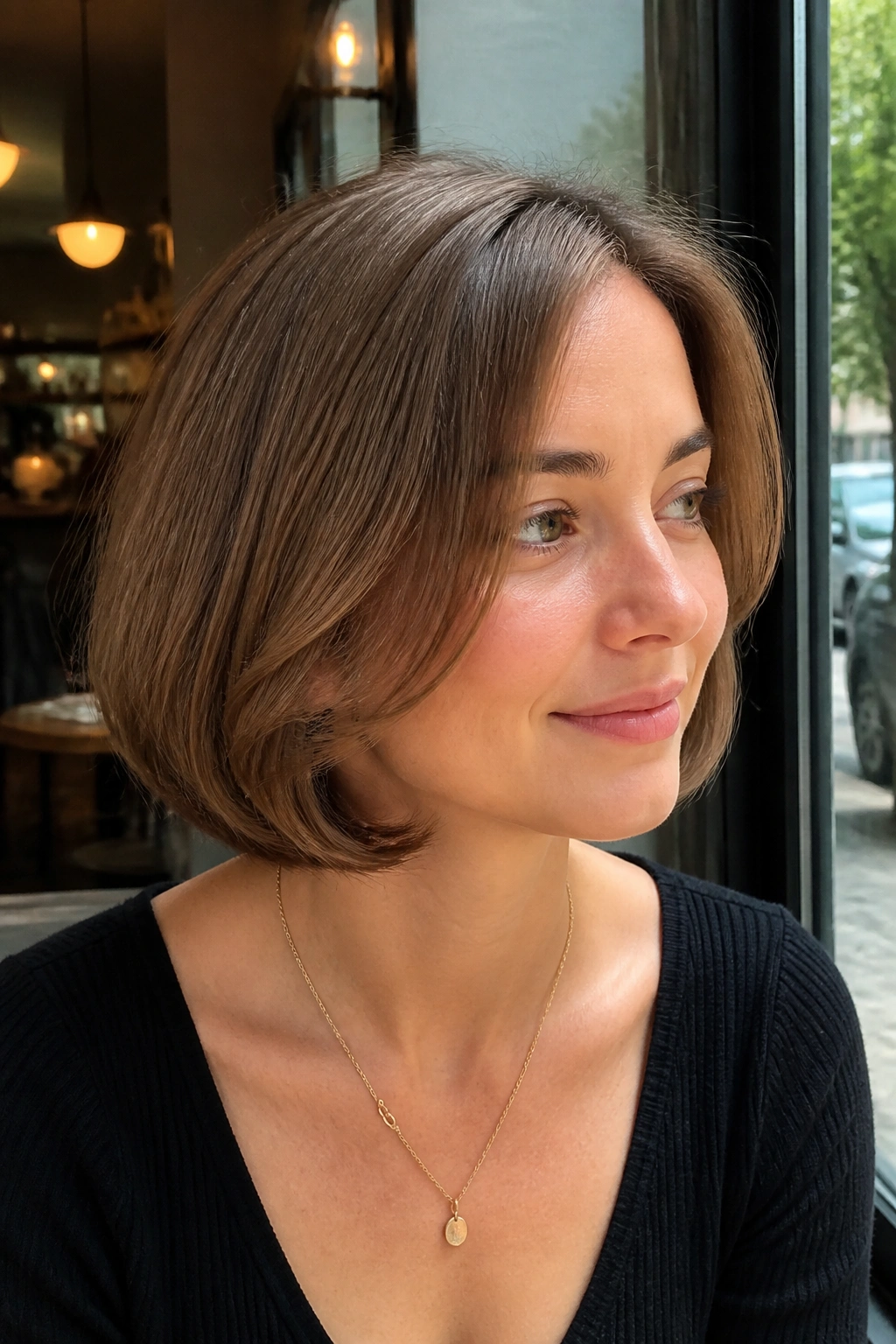
A tucked-under bob has a tidy, almost tucked-in shape at the ends, and that detail does a lot of quiet work for fine hair. The inward curve makes the haircut look fuller because the ends gather toward the neck instead of scattering outward.
Feathering keeps the tuck from feeling stiff. That matters. If the ends curl under in a single hard arc, the style can look dated or too set. Soft feathering lets the line move while still giving the illusion of thicker ends. It’s a neat cut, but not a stiff one.
I like this version for people who want a bob that behaves well under a coat collar or scarf. It keeps its shape without much fuss. A blow-dry with the brush turned slightly inward at the ends is usually enough. No complicated finish. Good shape, simple tools.
15. Air-Dried Feathered Bob
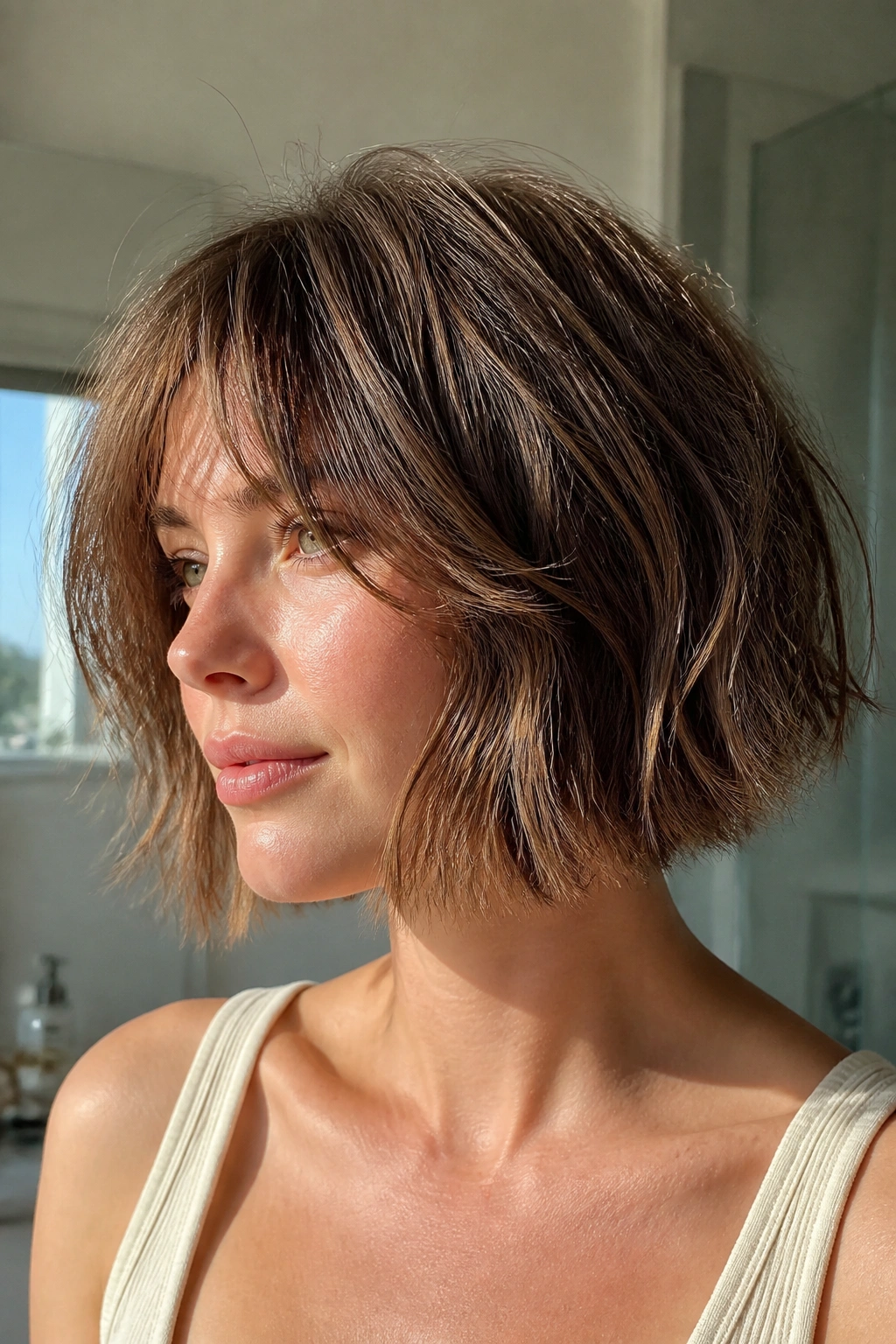
An air-dried feathered bob is for people who are tired of pretending they love long styling sessions. Fine hair often looks better with less heat than people think, as long as the cut is shaped to fall nicely on its own.
The feathering here should be subtle and distributed through the outer layers so the hair dries in soft pieces instead of one flat sheet. A little leave-in conditioner at the mid-lengths, scrunched through with the hands, can help if the hair has a slight bend. If it’s poker-straight, the cut still benefits from a towel-dried tousle and a side part.
How to Get the Most From It
Use a microfiber towel or an old cotton T-shirt to blot out water. That keeps the hair from frizzing while it dries.
A tiny amount of lightweight cream is enough.
Don’t touch it every five minutes. That’s where the shape falls apart.
This is not the sleekest version, but it can be one of the easiest to live with.
16. Feathered Bob for Pin-Straight Hair
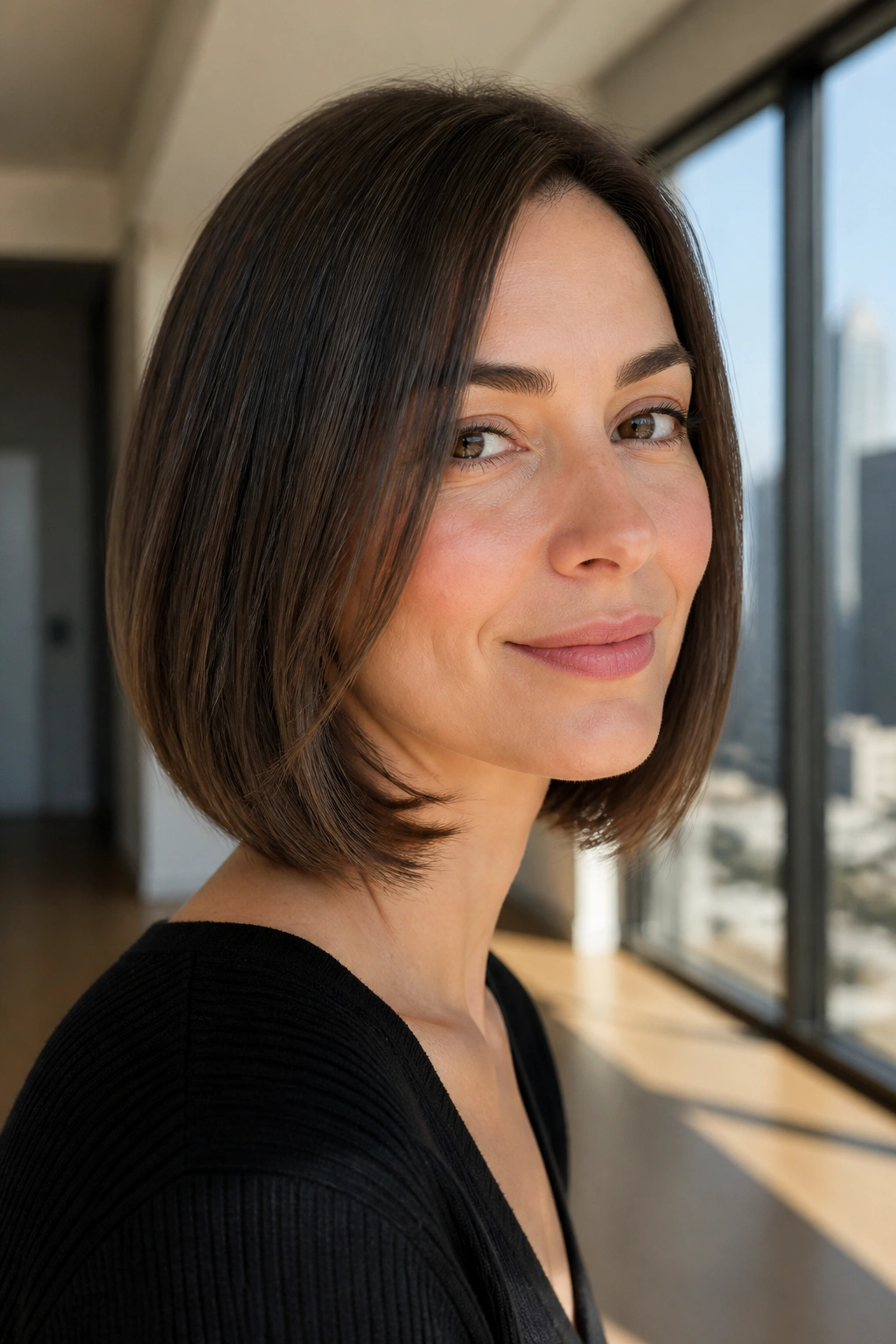
Pin-straight fine hair can look beautiful in a feathered bob, but only if the cut respects the lack of natural bend. Straight hair shows every line, so the feathering has to be soft and precise. Too much layering and the ends start looking like they were nipped away by accident.
What helps here is a cleaner outline with slight movement built into the surface layers. The hair stays sleek, but the feathering stops the style from looking like a sheet. A slight bevel at the ends can make the bob appear fuller, especially around the jaw and the nape.
I’d keep styling simple. Blow-dry with a paddle brush, then flip the ends under with a round brush for the last few passes. That little bend is enough. Straight hair does not need to be forced into volume it won’t hold. It needs shape that sits naturally.
17. Nape-Taper Feathered Bob
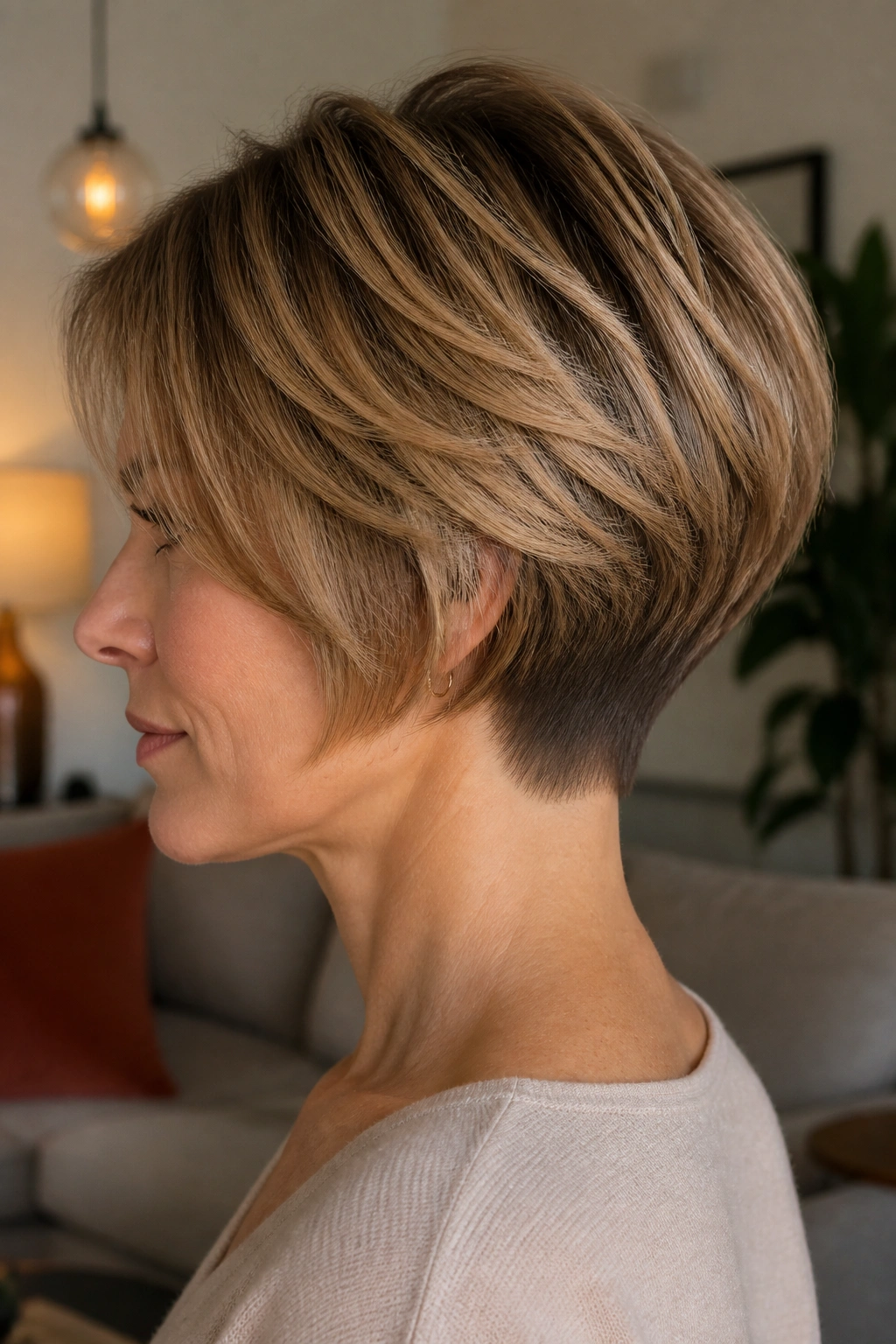
A nape taper is one of those details that seems small until you see it in motion. Shorter, lighter hair at the nape helps the back of the bob lie close to the neck, which gives fine hair a cleaner line and keeps the silhouette from puffing out in strange places.
The feathering should happen above that taper, not all through the back. That keeps the lower section compact and the upper section mobile. It’s a good choice if you wear collars, sweaters, or scarves often, because the cut doesn’t fight against fabric. It just slips into place.
This version can look sharp without feeling severe. There’s a difference. Sharp means the shape is clear. Severe means the haircut wears you. Keep the taper soft and the outer layers brushed out a touch, and the cut stays balanced.
18. Piecey Feathered Bob
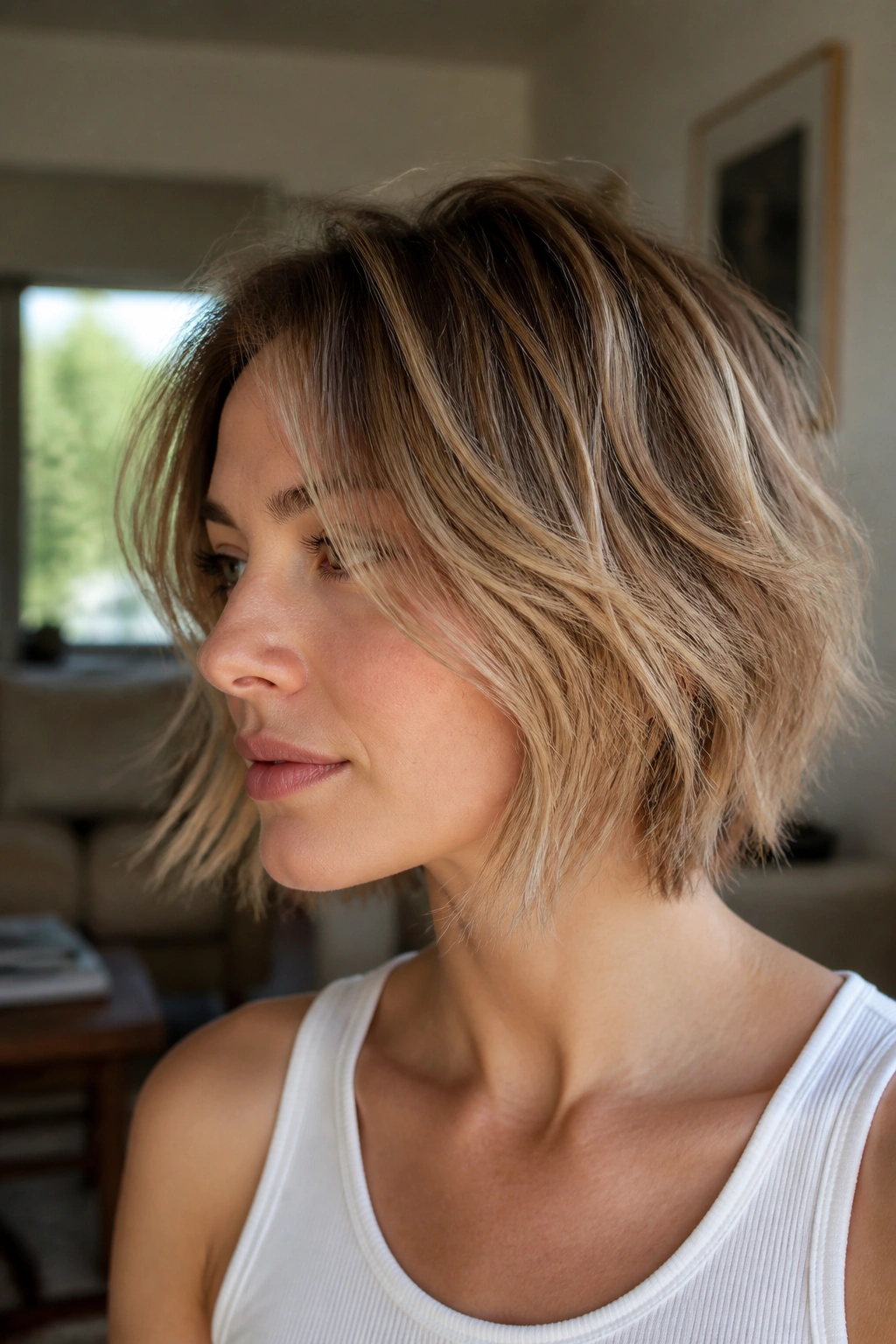
Piecey texture gives fine hair a little grit. Not enough to feel messy. Just enough to keep the strands from lying in one flat mass. A piecey feathered bob relies on lightly separated sections so the hair looks fuller and more alive from root to tip.
This style suits hair that has some natural separation already. If your strands naturally clump a bit, that’s useful here. The feathering should support the piecey finish, not fight it. The result is a bob that looks casual but still has a shape you can trust. A pinch of texturizing spray at the ends is often enough.
What Makes It Different
The shape is less polished than a classic rounded bob, and that is the point. It’s a little cooler, a little more undone. Good for weekends, good for short layers around the face, and good when you want movement without round-brush perfection.
The only caution is over-texturizing. Fine hair can go from piecey to sparse in a hurry.
19. French Feathered Bob
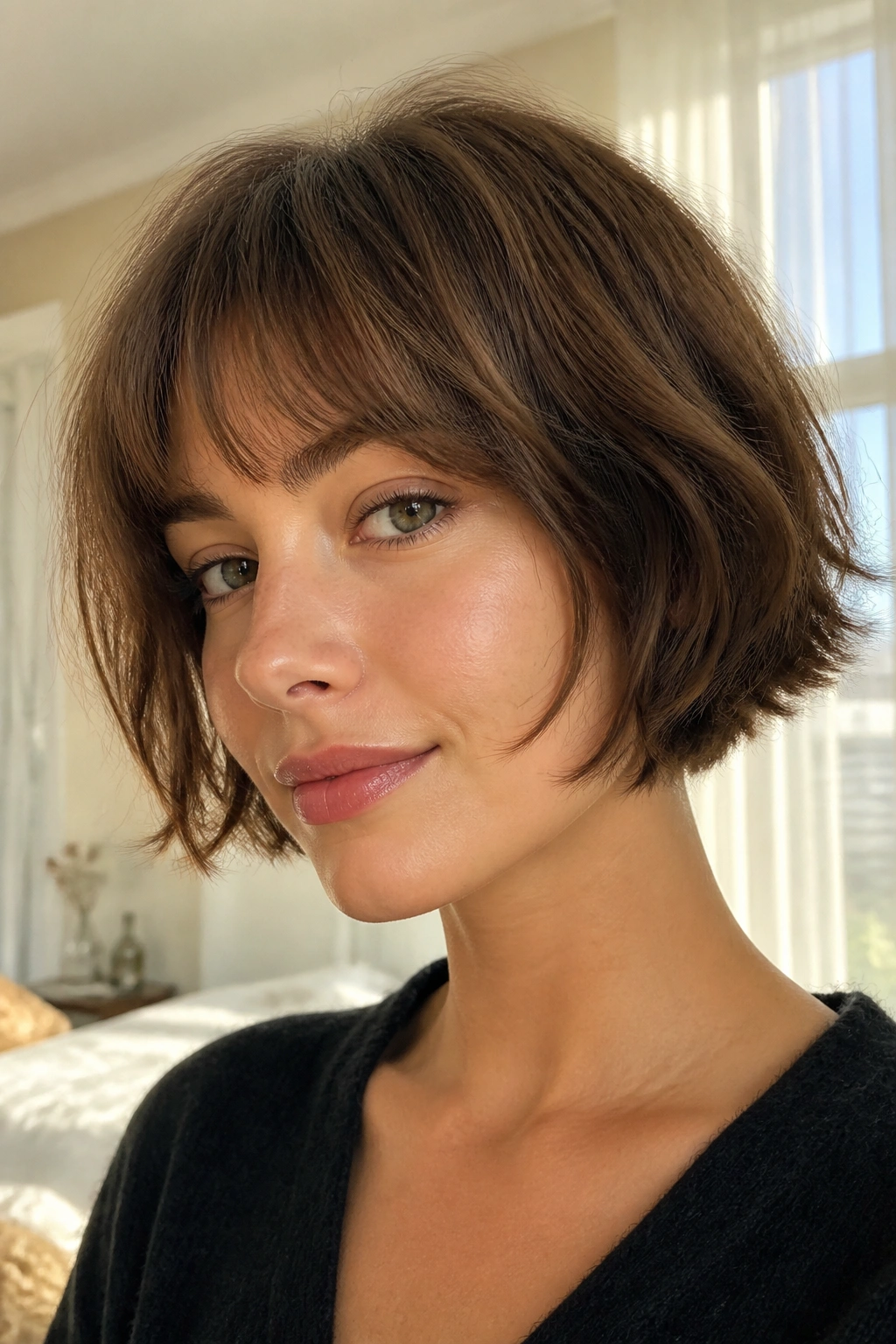
A French feathered bob brings softness to a classic Parisian-inspired shape. It usually sits around the jaw or just below it, with airy movement and a slightly effortless finish that looks casual but not careless.
What makes it work for fine hair is the restraint. The layers are gentle, the ends are touched with a feathered edge, and the overall shape still feels full. I like this cut when the goal is charm rather than big volume. It has that easy, lived-in feel that some bobs never quite manage.
The fringe is optional, but a soft, broken bang can help. So can a side part that lets the front fall a little asymmetrically. The style should look like it was dried by hand and brushed once, not sprayed into obedience. That’s the charm of it.
20. Tousled Feathered Bob With Soft Bends
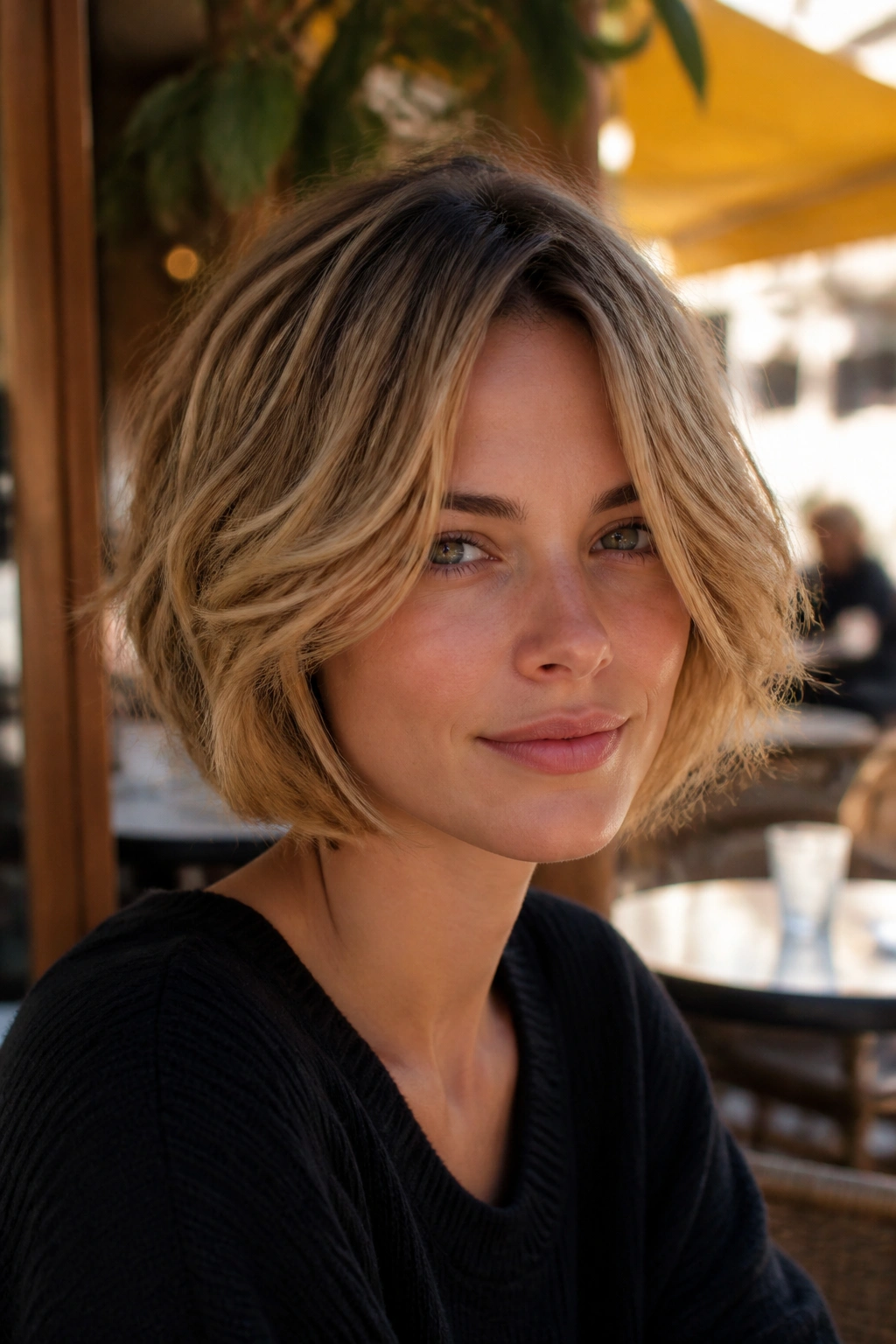
Tousled does not have to mean messy. In a feathered bob, it usually means soft bends, a bit of separation, and ends that move instead of sitting like a hard line. Fine hair often looks better with this kind of looseness because it creates texture without making the hair look overloaded.
A few bends through the mid-lengths are enough. You don’t need a full head of curls. A 1-inch wand, wrapped away from the face on alternating sections, gives enough variation to keep the cut interesting. Then run your fingers through it once or twice. Not ten times. That’s how the shape disappears.
This is one of the easiest versions to wear on busy days. It looks better the less precious you are with it. The haircut should allow that. If it needs constant fixing, it’s not the right cut for fine hair.
21. Face-Framing Feathered Bob
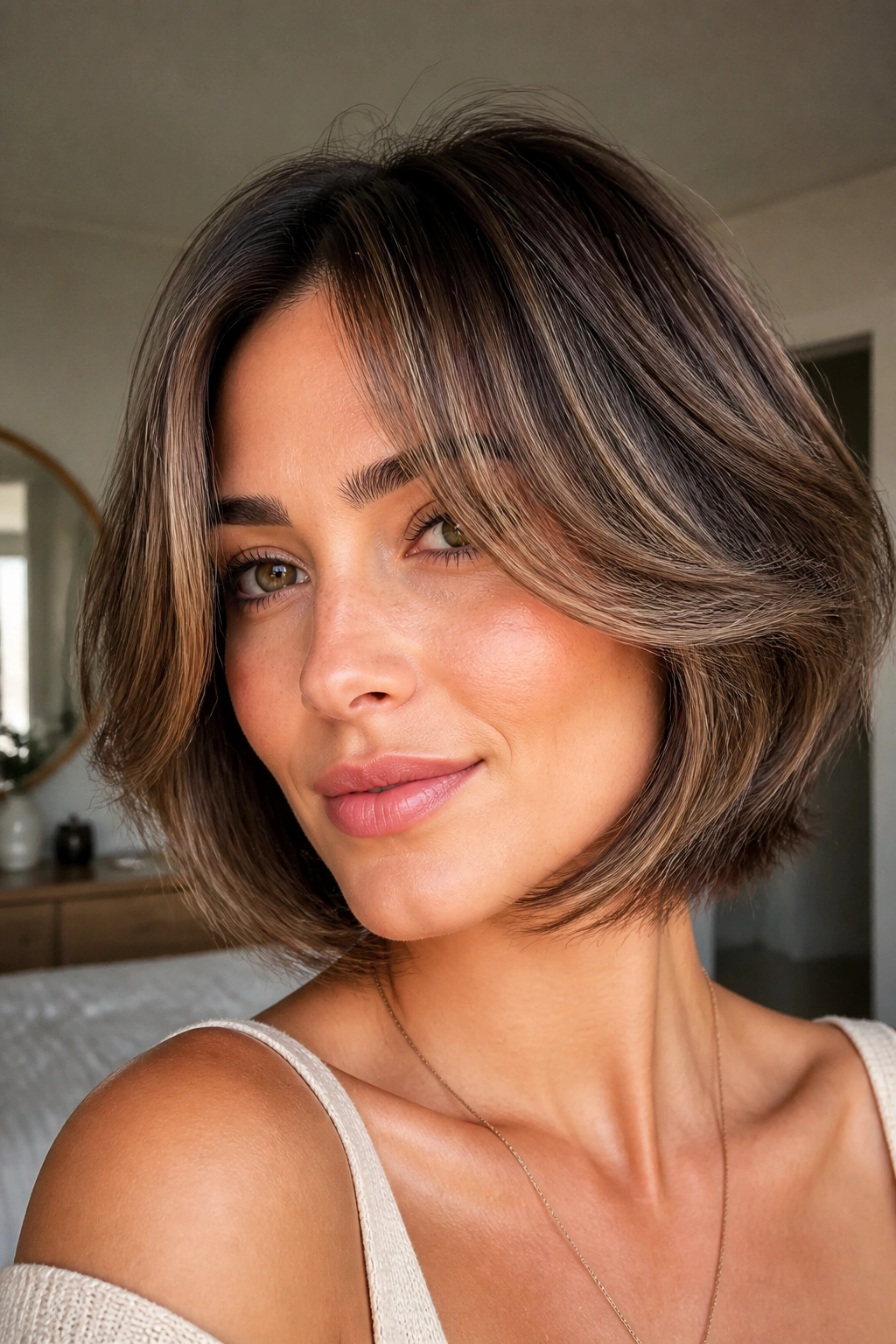
A face-framing feathered bob is built to pull attention toward the cheekbones, jawline, and eyes. The shortest layers live around the front, and they’re feathered so they fall softly instead of stabbing out in hard angles.
This cut works well when you want to keep some length around the face without dragging the rest of the hair down. Fine hair can lose its shape when the front is too heavy, so those lighter front pieces matter. They make the haircut look lighter, which can also make the neck and jaw look more open.
I prefer this version when the client likes to tuck hair behind one ear, because the front pieces still read as part of the style. A little bend with a brush or iron at the front is enough. No need to force every strand into the same direction. That gets stale fast.
22. Feathered Bob for Very Fine Hair
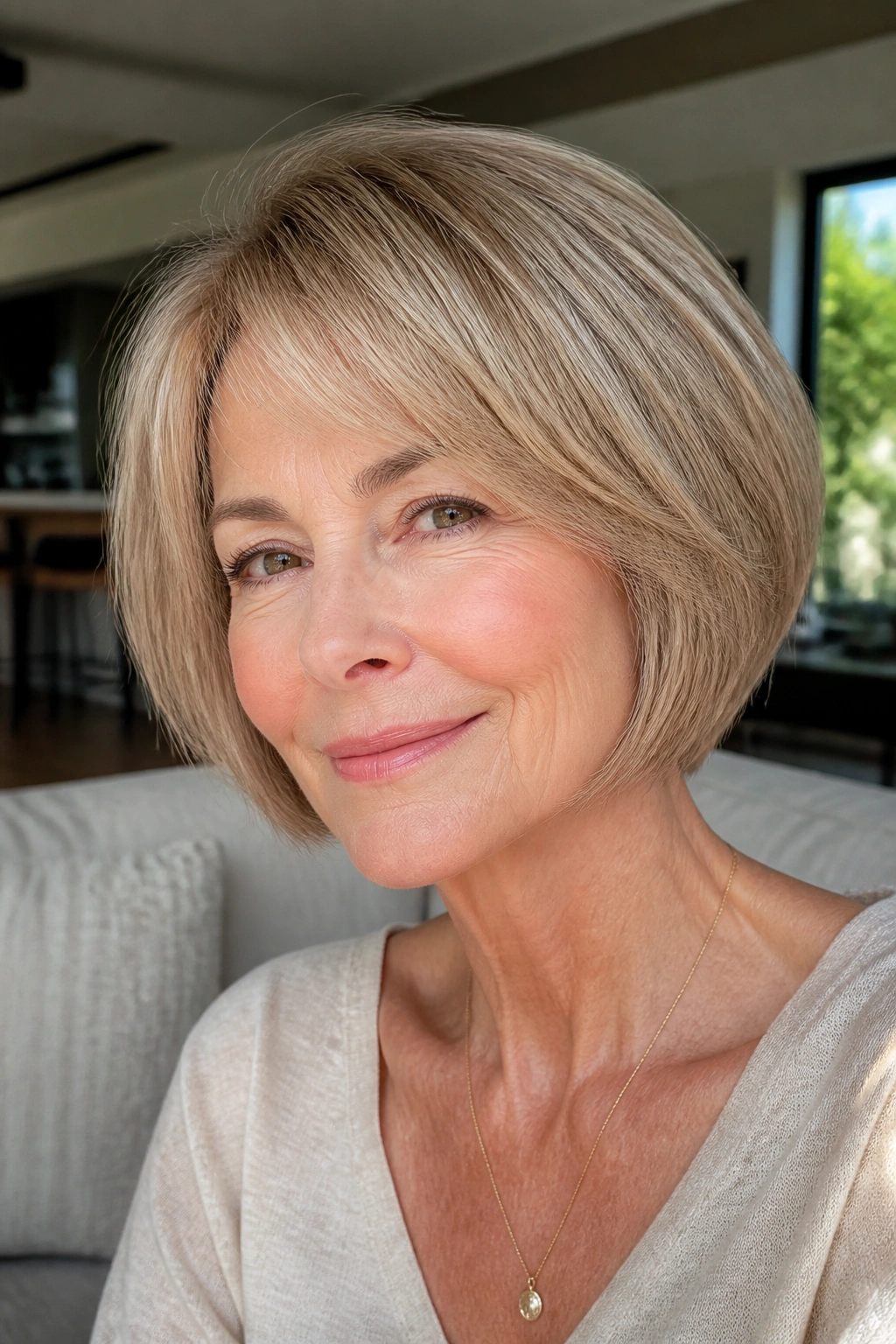
Very fine hair needs a different kind of restraint. Not less style, exactly. More precision. A feathered bob for very fine hair should keep the perimeter strong and use feathering to add motion, not to strip away the little density the hair already has.
The haircut should avoid aggressive thinning shears and anything that slices the ends too much. Those tools can make fine hair look translucent at the bottom, which is a hard thing to recover from. Instead, ask for soft graduation and light layering that supports lift at the crown and movement through the mids. The shape should still feel like a bob, not a suggestion of one.
A small root lift product can help here, but the cut matters more than the bottle. If the silhouette is right, the hair will look fuller with very little work. That’s the real win. Less struggle, better shape.
23. Beveled Feathered Bob
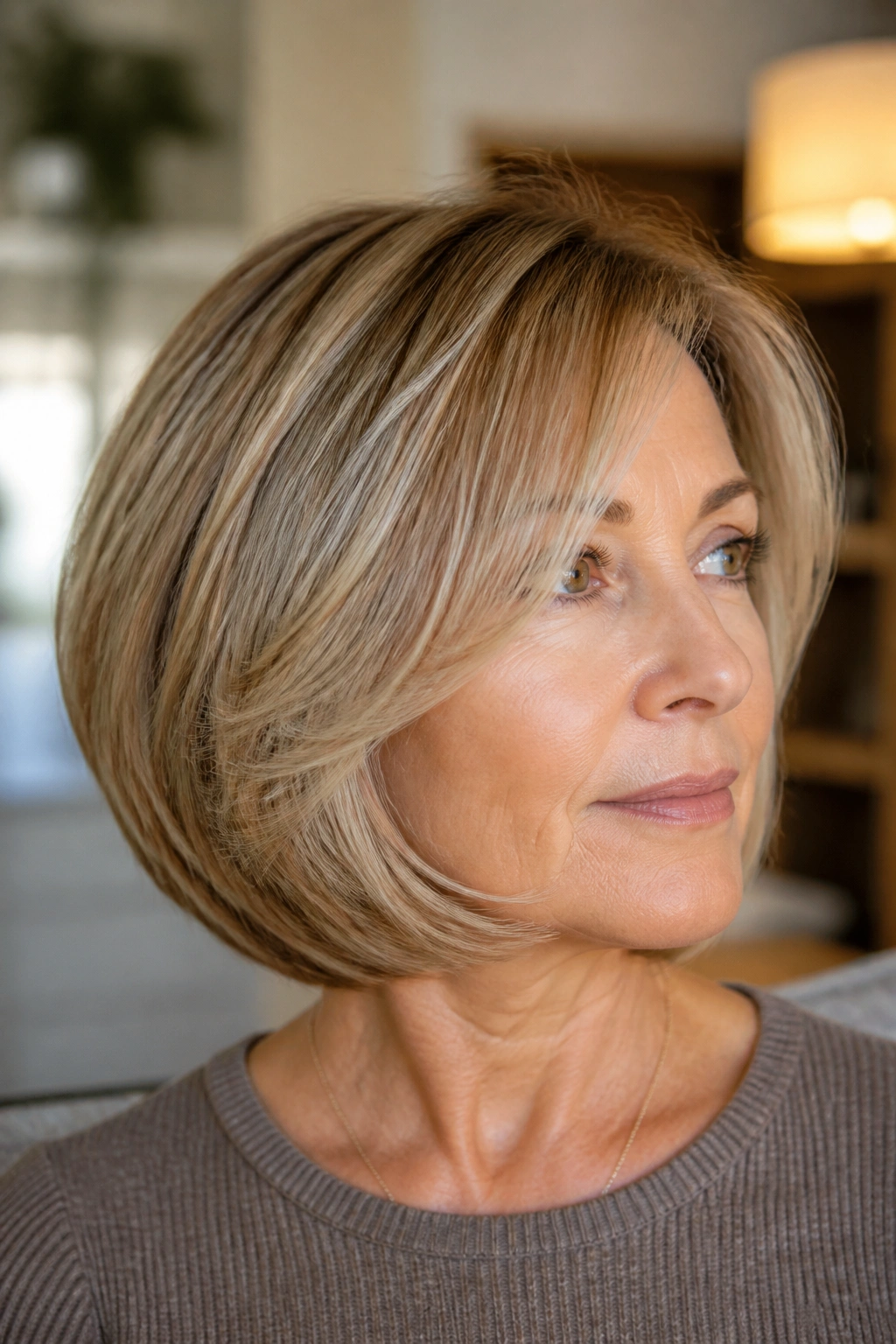
A bevel at the ends changes everything. It gives the bob a smooth inward curve that makes fine hair look denser, especially when the strands are straight or slightly bent. Feathering keeps the bevel from feeling stiff, so the cut can still move when you turn your head.
This is a good choice if you like tidy edges. The bevel creates that polished finish people often chase with tools, but the haircut does some of the work for you. The result is softer than a blunt cut and cleaner than a shaggy one. That middle ground is where fine hair often looks best.
A round brush or a quick pass with a smoothing iron can enhance the shape, but don’t flatten the life out of it. Keep a little curve in the ends. A bevel that’s too perfect can look plastic, and nobody wants that.
24. Graduated Feathered Bob
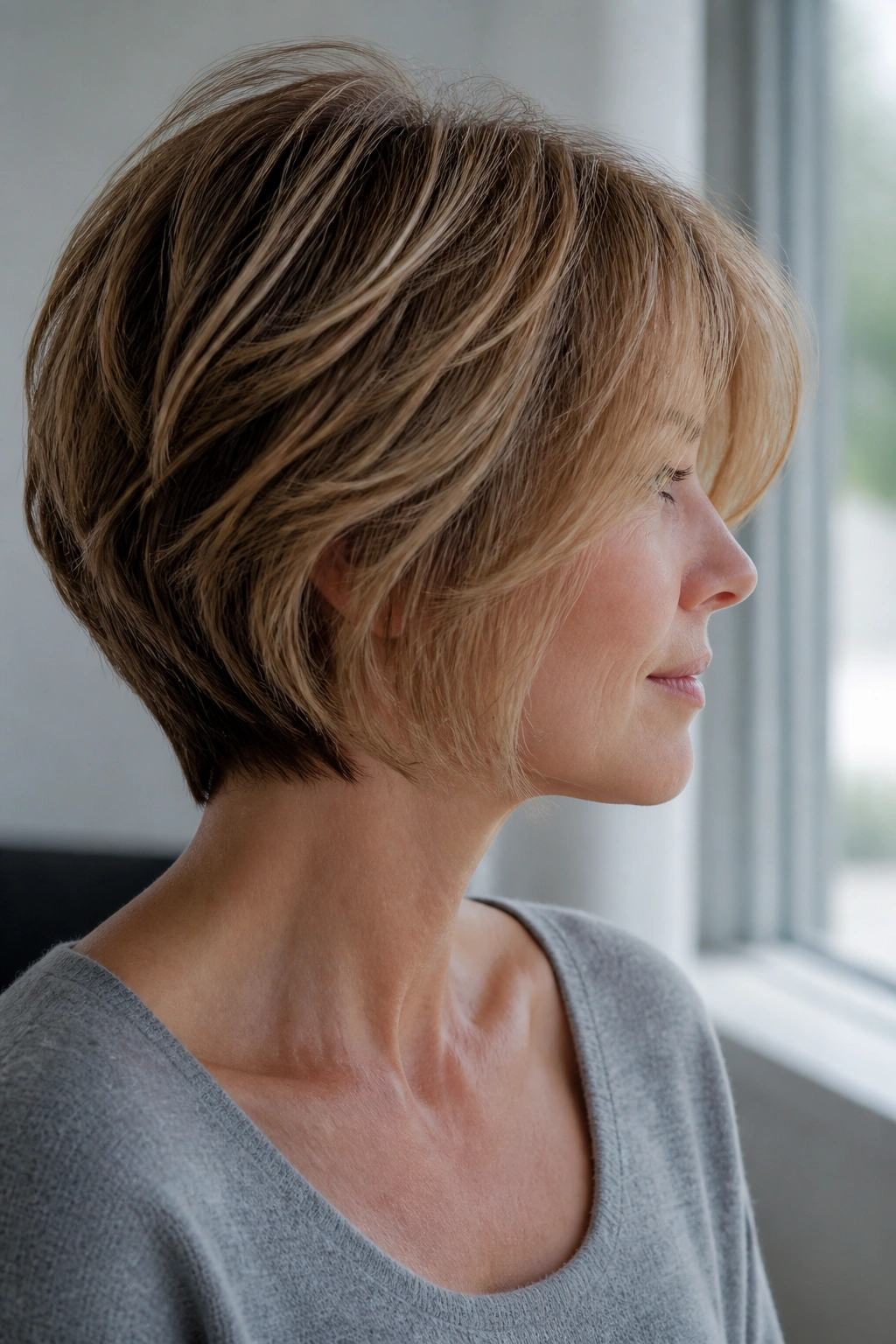
A graduated bob has more visible stacking than a soft rounded version, which gives it a bit of edge. On fine hair, that graduation can create the impression of fuller density at the back while the feathered top layers keep the shape from turning boxy.
This cut is best when you want lift and structure. The back is shorter, the front is longer, and the line between them creates movement even when the hair is still. Feathering helps blur the transition so the haircut doesn’t feel chopped. It’s the right mix of architecture and softness.
I’d keep the graduation moderate. Too much and the cut starts to look steep, which can expose the thinness you’re trying to hide. Moderate stacking, clean corners, and a little root lift on dry hair give the best result. It’s a cut with backbone. Fine hair usually likes that.
25. Shoulder-Skimming Feathered Bob
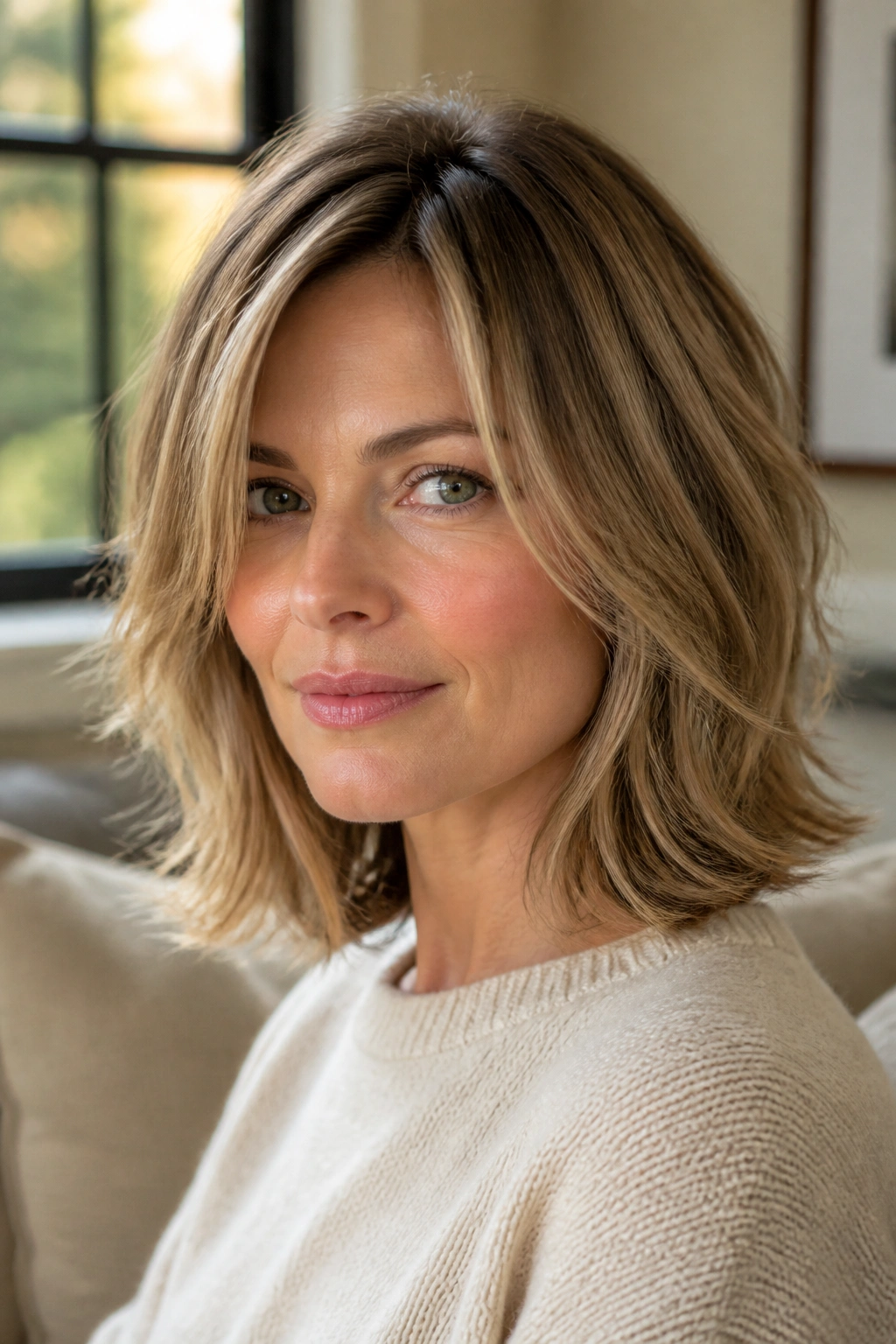
A shoulder-skimming feathered bob is the longest version here, and that can be a smart move when you want to keep length but still get movement. The trick is making sure the ends don’t hang like tired threads. Feathering gives the bottom edge some air, so the cut keeps its shape even when the hair sits just above or on the shoulders.
This length is useful for people who want to tie the hair back sometimes but still wear it loose without much fuss. The cut should be light through the last few inches and fuller around the top and sides. If the ends are too wispy, the style loses its point. If they’re too blunt, the hair can go flat and heavy. That’s the narrow lane, and it’s worth staying in.
A soft blowout or a loose bend through the lower half gives this bob a pretty, natural swing. It’s one of the easier shapes to grow out, too, which is no small thing.
Final Thoughts
Fine hair can take a feathered bob farther than people expect. The right cut doesn’t try to fake thickness with gimmicks. It uses shape, weight placement, and a little movement at the edges to make the hair look fuller in a believable way.
The biggest mistake is always the same: too much thinning, too much layering, too much fear of a solid line. Fine hair usually needs one anchor point somewhere in the cut, whether that’s a blunt edge, a gentle stack, or a bevel that holds the shape together.
Choose the version that matches your daily life, not just your favorite photo. A feathered bob should make your mornings easier, not turn them into a round-brush marathon.
