



A good asymmetrical blonde bob haircut for fine hair does one thing better than almost any other cut: it gives the eye a clear shape to follow. Fine strands can look airy in a flattering way, but they can also go limp fast, and a perfectly even bob sometimes turns into a flat little curtain by lunch. A slight shift in length — even half an inch — changes that. Suddenly the hair has direction.
Blonde helps more than people give it credit for. Not because every blonde shade works the same way, but because lighter tones reflect light off the surface and make the cut line easier to see. Beige blonde, honey blonde, champagne, pearl, buttery beige — those shades all read a little different, and on fine hair the difference matters. The wrong tone can make the ends look see-through. The right tone can make the whole shape look cleaner and fuller.
There’s also a quiet trick here that salon people know well: fine hair usually looks better with structure than with too much layering. A razor-thin edge, a soft bevel, a deep side part, a stacked nape, or a long front corner can do more than a pile of short pieces ever will. That’s the real sweet spot. Clean lines. Smart asymmetry. Blonde that doesn’t fight the cut.
1. Chin-Length Asymmetrical Blonde Bob With Soft Beige Tone
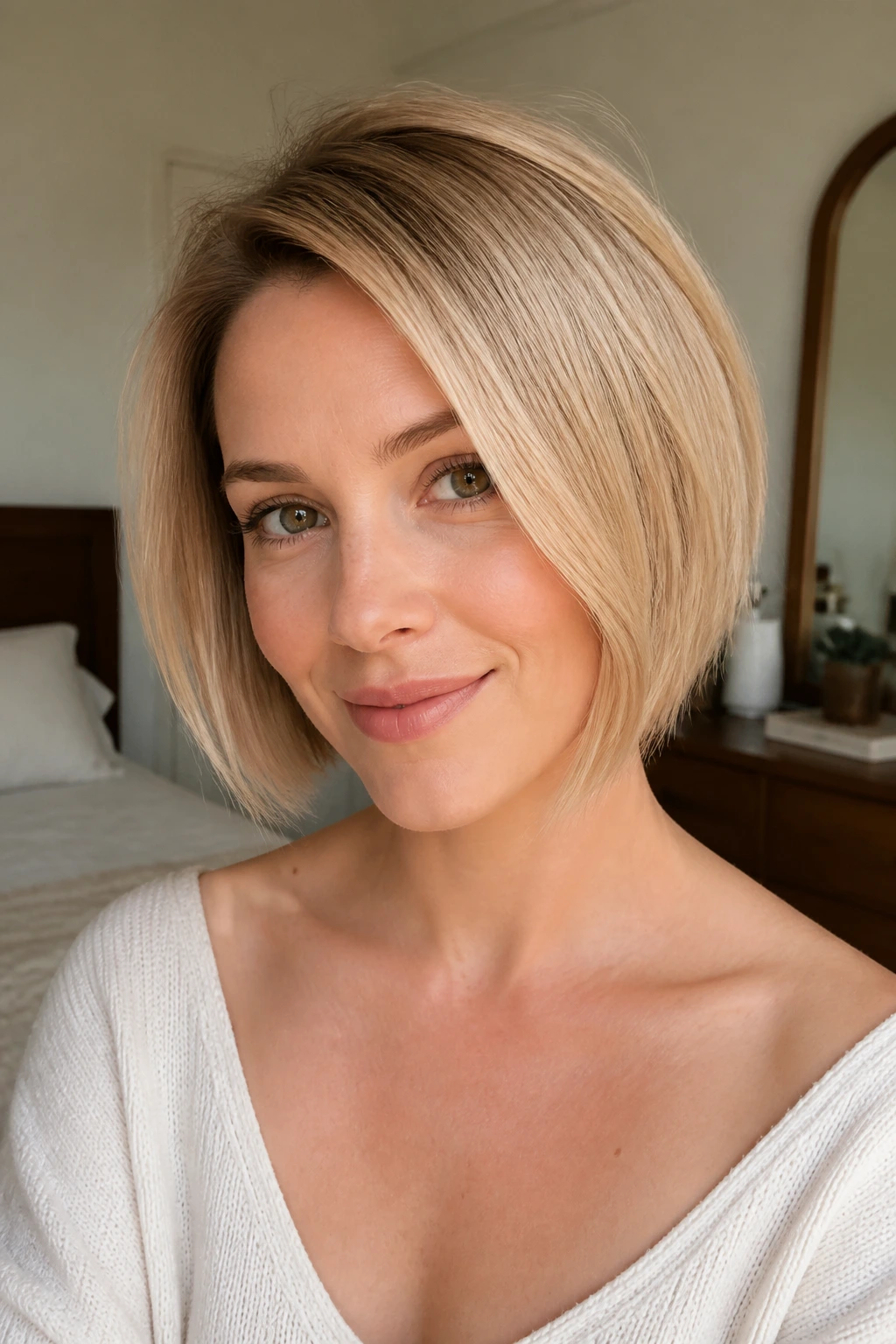
This is the cut I reach for when fine hair needs a little backbone without looking severe. One side lands just at the chin, the other slips slightly lower toward the jaw, and that small difference gives the haircut movement before you even pick up a brush.
Why It Works for Fine Hair
Shorter lengths hold shape better on delicate strands. The chin-length perimeter keeps the ends from looking wispy, while the asymmetry stops the style from feeling too neat or too heavy. Beige blonde keeps the whole thing soft, which matters because harsh platinum can make fine hair look even thinner if the cut is too blunt.
- Ask for one side to drop about ½ to 1 inch longer than the other.
- Keep the neckline clean and lightly beveled.
- Use a soft beige blonde instead of a flat, single-note blonde.
- Blow-dry with a medium round brush for a bend, not a curl.
Best move: tuck the shorter side behind one ear. It shows off the angle and makes the longer side feel even more intentional.
2. Deep Side-Part A-Line Bob in Honey Blonde
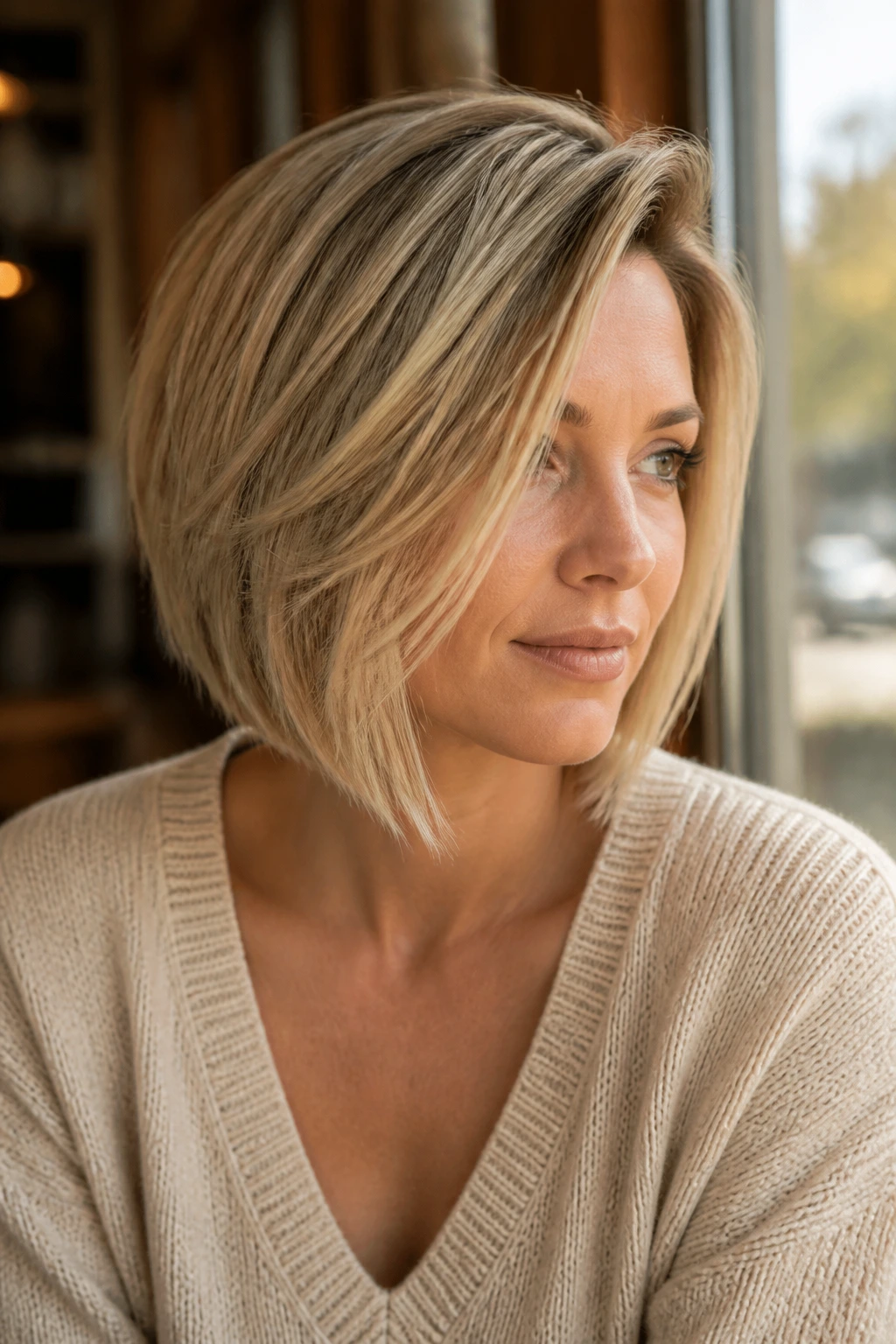
A deep side part can do more for fine hair than another round of layers ever will. It shifts weight, lifts the roots on one side, and turns a plain bob into something with a little attitude.
The A-line shape — shorter in back, longer in front — gives the hair a clean diagonal. That diagonal matters. It creates the illusion of density at the front, where fine hair often needs help most. Honey blonde keeps the cut warm and lived-in, which is useful if your hair tends to look cool or washed out under overhead light.
Wear this one sleek or with a gentle wave. Both work. What I like most is that it doesn’t need much to look finished. A side part, a quick pass of a flat iron, and a tiny bit of serum on the ends are enough.
If your hair naturally falls flat at the crown, this is a smart choice. It gives lift without asking for a complicated styling routine.
3. Stacked Nape Bob With Champagne Blonde Ends
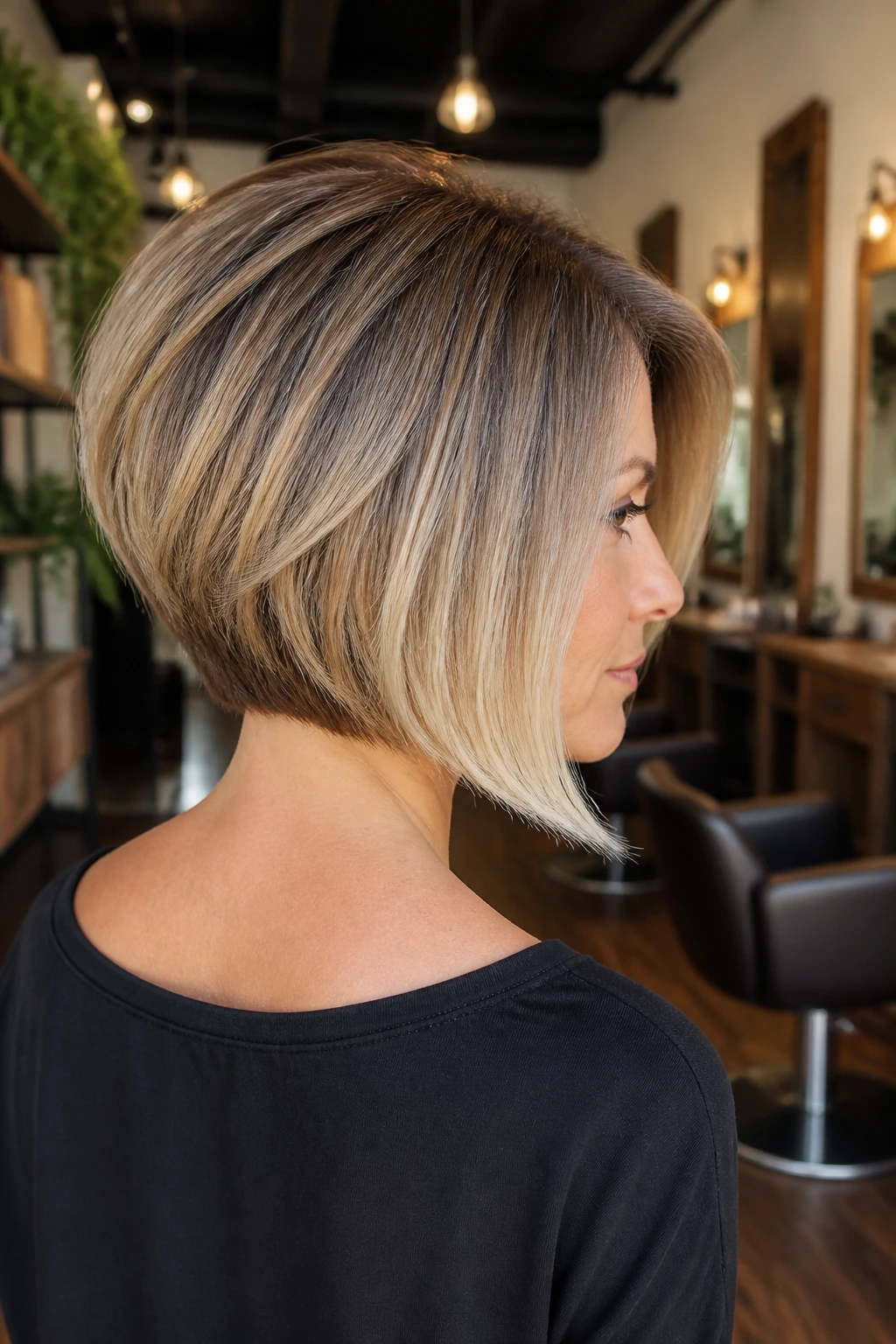
Why does a stacked nape make fine hair look fuller? Because the shorter layers at the back remove dead weight from the neck area and let the crown sit higher. It’s one of those old-school haircut tricks that still earns its keep.
Champagne blonde ends keep the style bright without going icy. That matters. Fine hair can lose visual depth fast, and a little softness in the color helps the cut read as thicker. The trick is to keep the stacking controlled, not puffy. You want the back to curve in, not flare out.
How to Style It
Start drying at the crown and direct the hair back and up with a small round brush. Finish with a cool shot so the shape holds. If the back starts to collapse by midday, a dab of mousse at the roots usually fixes it.
This cut is best when you want the back to do the heavy lifting. The front can stay simple. The shape carries the rest.
4. Jaw-Length Bob With Curtain Bangs and Cream Blonde
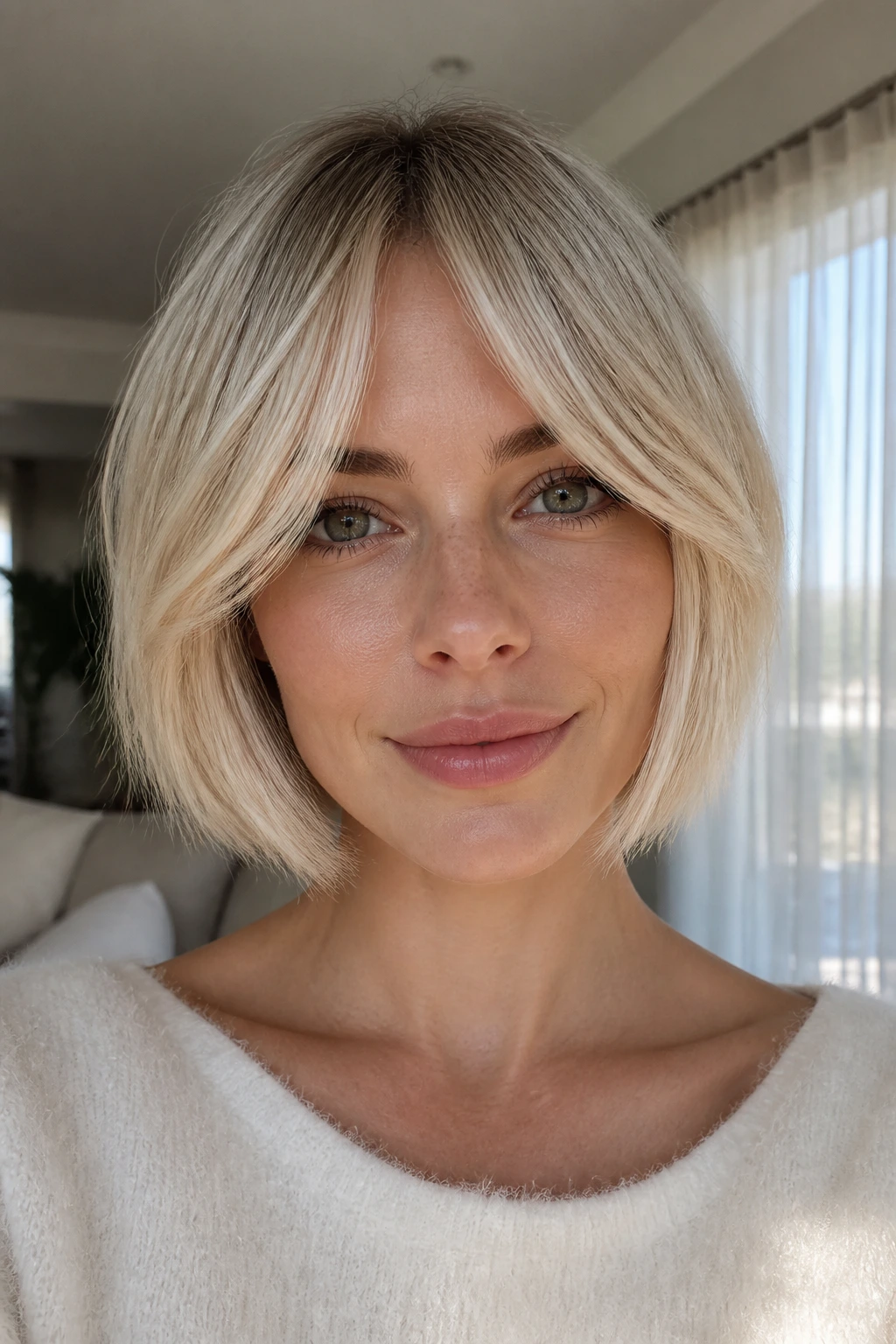
If you want softness near the face, curtain bangs are a smart move. They break up the line of a jaw-length bob and keep the haircut from feeling boxy, which is a real issue with fine hair when the ends are too straight.
Cream blonde gives the fringe a lighter look, so it doesn’t sit there like a heavy curtain. You get a bit of brightness around the eyes and cheekbones, but not enough contrast to make the hair look chopped up. That balance is what makes this version work.
A jaw-length bob also grows out well. That’s a practical detail, and I care about practical details. Fine hair can look awkward in the in-between stage if the cut is too severe. Curtain bangs ease that transition.
- Best for softening a strong jawline.
- Good if you wear glasses.
- Nice if you like to tuck hair behind one ear and leave the rest loose.
- Easier to grow out than a straight micro-bob.
5. Blunt One-Side Longer Bob With Ice Blonde Surface
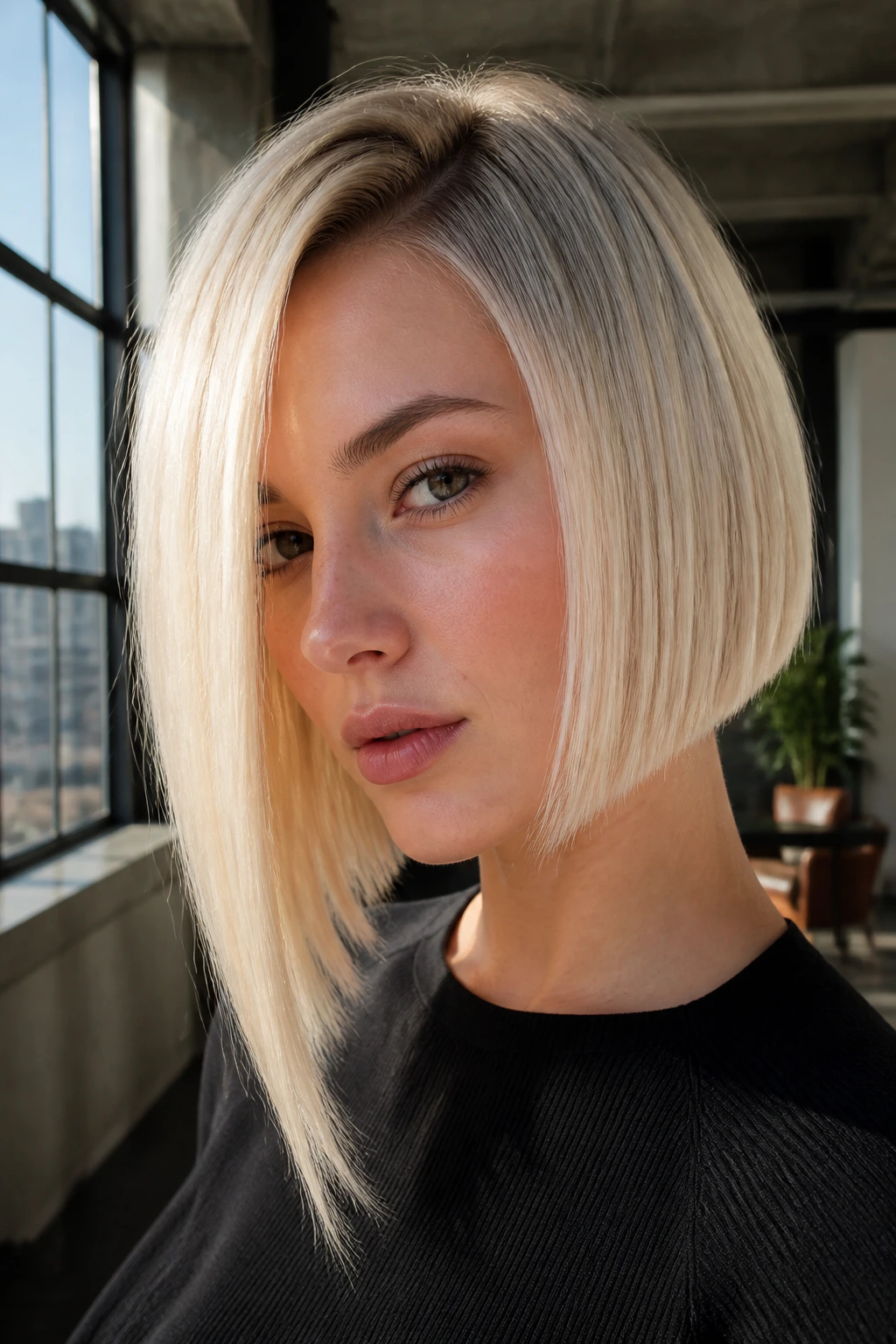
A blunt bob can be a gift to fine hair, provided the line is clean and the weight is left where it matters. Make one side slightly longer, keep the ends precise, and the whole shape starts to feel sharper and more deliberate.
Ice blonde works here when it’s used on the surface, not washed through every strand. That’s the difference. A bright finish on the top layers catches light, while a softer base keeps the hair from looking stripped or sparse. If the blonde is pushed too far into one flat tone, the result can feel harsh. Nobody wants that.
This is one of the best choices for straight hair that already behaves itself. The cut does not want a lot of frizz, and it does not need a lot of product. A heat protectant, a paddle brush, and a quick bend at the very ends are usually enough.
I like this one because it looks expensive without trying too hard. That’s rare.
6. Feathered Bob With Side-Swept Fringe in Soft Gold
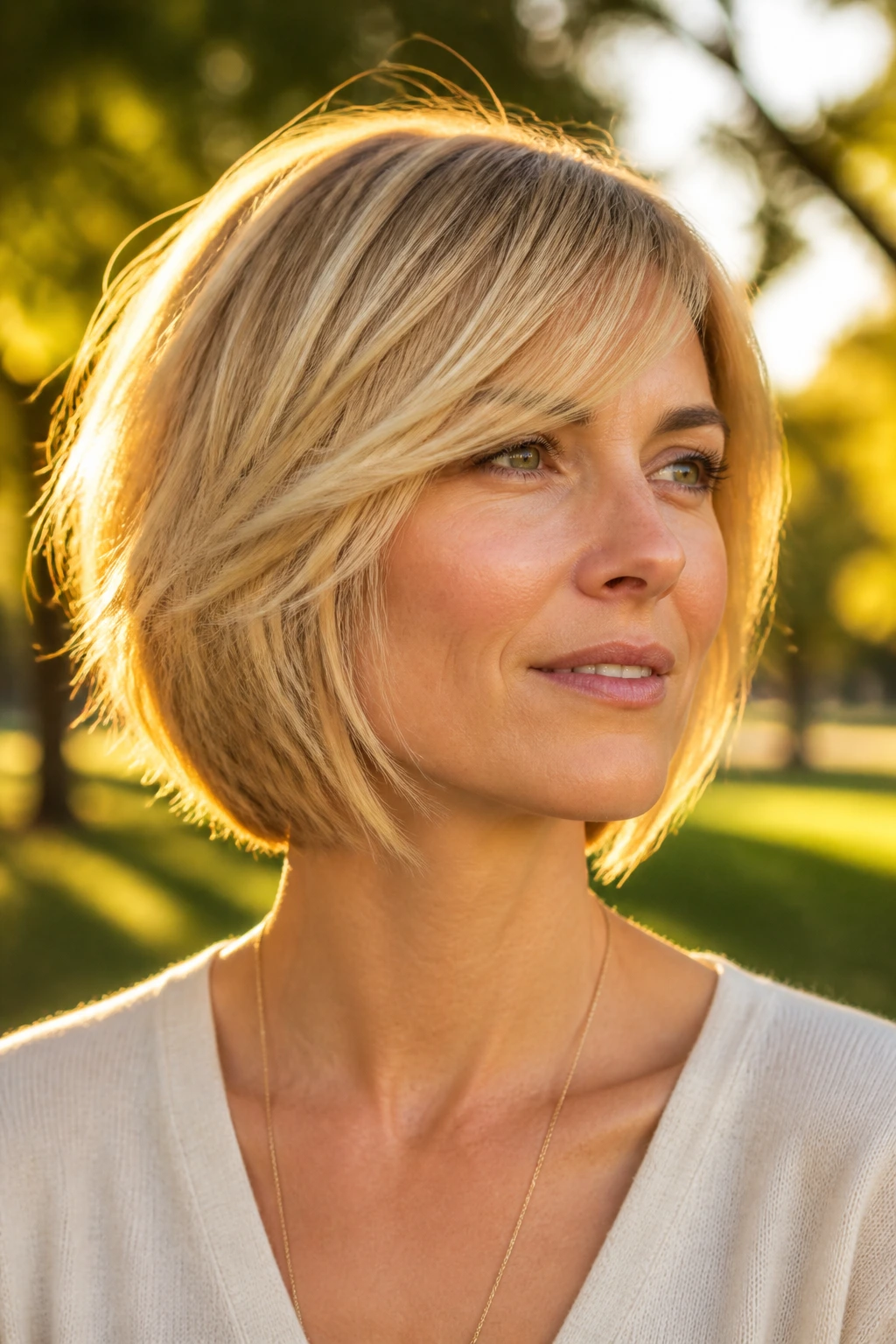
A feathered bob is the anti-heavy option. Instead of building a solid wall of hair, it lets the ends move a little, which is useful if your fine hair hangs flat whenever the weather turns damp.
What Makes It Different
Compared with a shag, this cut stays tidier. Compared with a blunt bob, it feels lighter around the edges. The side-swept fringe helps guide the eye diagonally across the face, and soft gold blonde keeps the haircut warm enough to feel full, not stringy.
The feathering should be light. Too much, and the ends look wispy. Too little, and the haircut loses the point. A good stylist will slice just enough into the perimeter to soften it without taking away all the weight.
If you want movement but not mess, this is the one. It’s especially good for hair that bends a little but never forms a full wave. A little movement is all it needs.
7. Wavy Asymmetrical Bob With Baby Lights
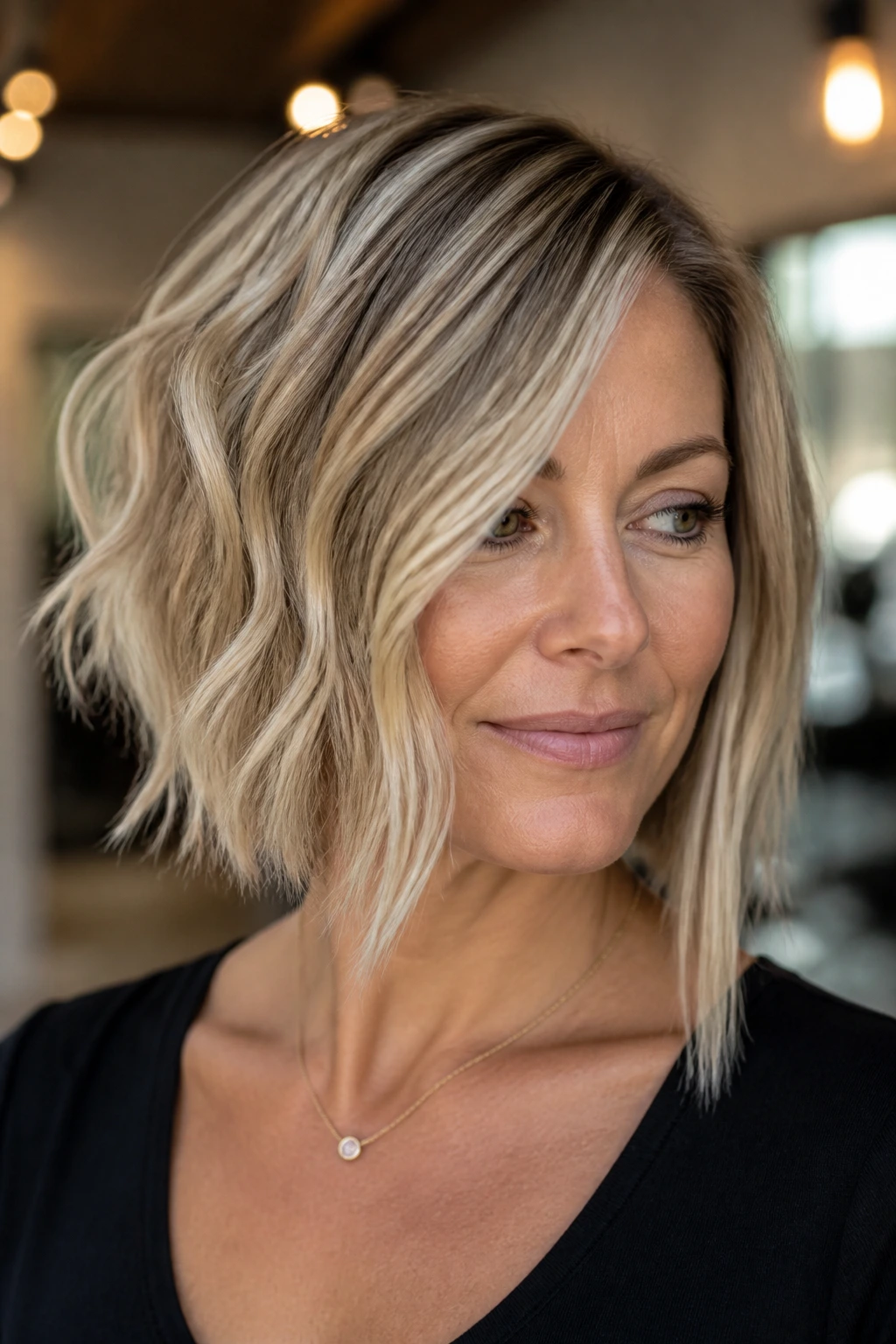
A soft wave on one side and a straighter fall on the other can make fine hair look intentional in a way that a perfectly matched shape sometimes can’t. The contrast does the work for you.
Baby lights help because they’re tiny and scattered close together. That means the blonde reads as woven through the hair instead of sitting on top of it. On fine strands, that subtlety matters. Big stripes can look patchy. Tiny lights look like density.
How to Get the Most From It
- Ask for very fine highlights around the part and crown.
- Keep the front slightly longer so the wave has room to drop.
- Use a 1-inch curling iron and leave the ends out for a modern bend.
- Finger-comb the wave so it doesn’t turn too polished.
This style works best when you like hair that looks touched, not overdone. It has that easy, slightly undone feel, but the cut itself still needs clean lines underneath.
8. Sleek Tucked-Behind-the-Ear Bob With Pearl Blonde
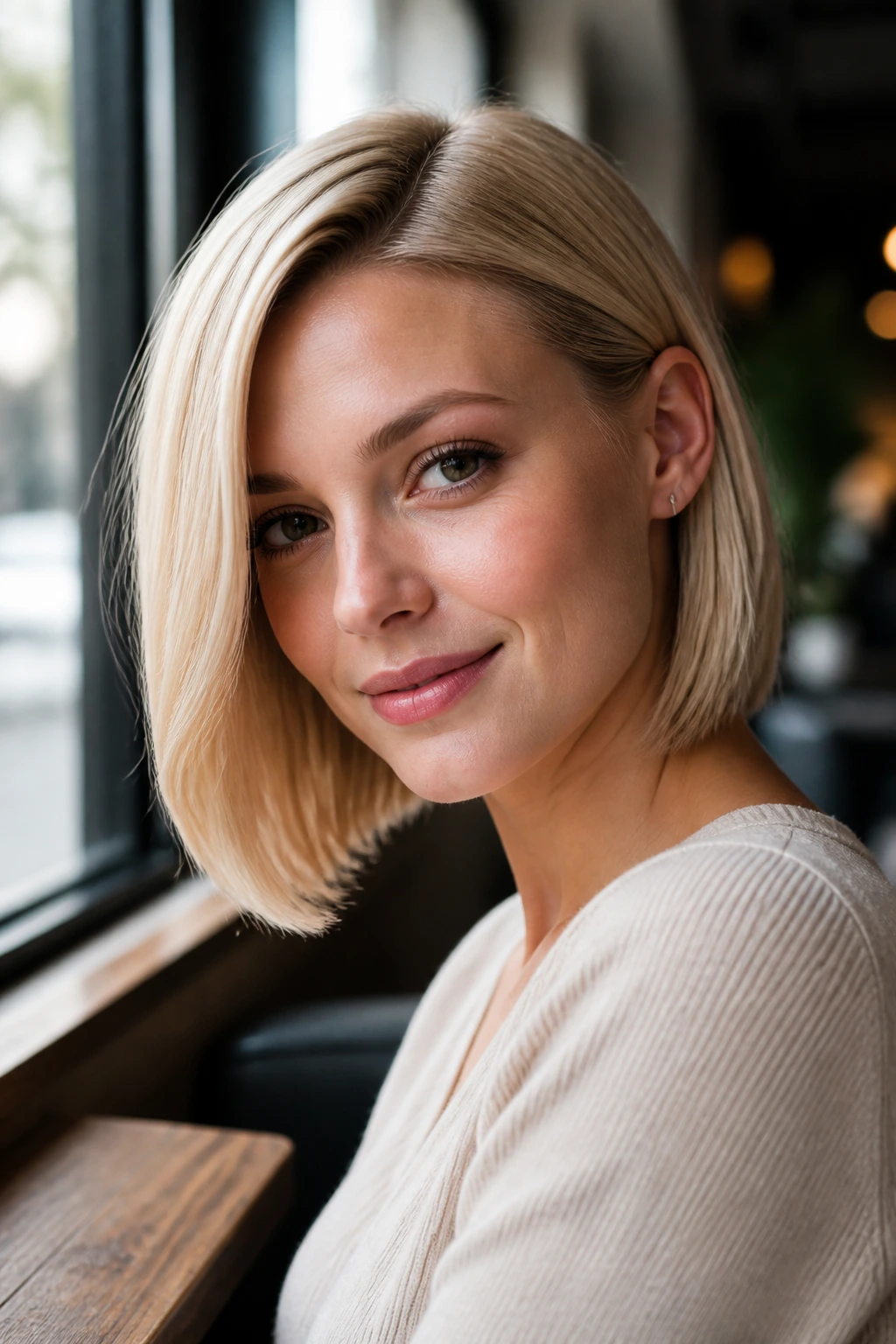
A sleek bob can be one of the best moves for fine hair, and people forget that. When the surface is smooth, the hair looks denser than it does when it’s puffed up with too much product or too much texture spray.
Pearl blonde keeps the finish soft and reflective. The tucked-behind-the-ear trick creates a little asymmetry without changing the cut much at all. One side stays exposed, the other side lies flat and clean. That contrast is enough.
This is the sort of bob that looks best when the ends are trimmed often. If the perimeter starts to fray, the whole effect goes soft in the wrong way. Fine hair shows damage fast. It does. There’s no hiding it.
Use a light serum, not a heavy oil. Then tuck one side, let the other hang, and leave the line alone. The simplicity is the point.
9. Collarbone Asymmetrical Lob With Butter Blonde
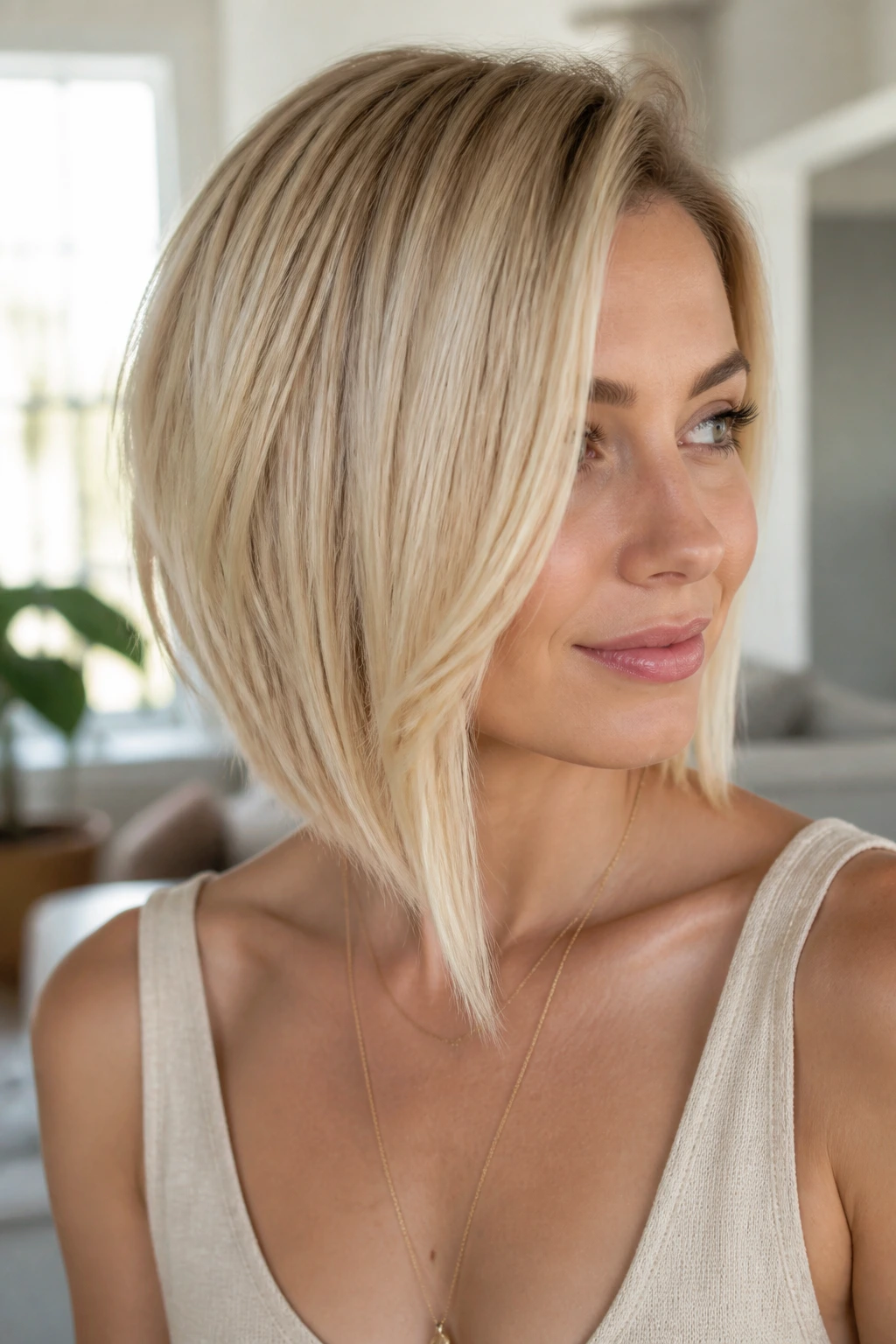
Can a lob still count as a bob? Absolutely, if the shape is built like one. A collarbone-length asymmetrical lob gives fine hair a little more length to work with, which can be a relief if you’re not ready for a shorter cut.
Butter blonde is the right shade here because it keeps the hair soft and bright at the same time. The longer length can make fine hair look flat if the color is too dark, and it can look dry if the blonde is too icy. Butter lands in the middle and feels easy on the eye.
This cut suits people who like to wear their hair half-up or clipped back. The longer front sections frame the face, and the slight asymmetry keeps it from reading as plain. It’s a very forgiving shape, which I appreciate.
If you want a bob that can go from sleek to bent to air-dried, this is a good place to start. It has room to move.
10. Inverted Bob With Dark Root Shadow and Creamy Ends
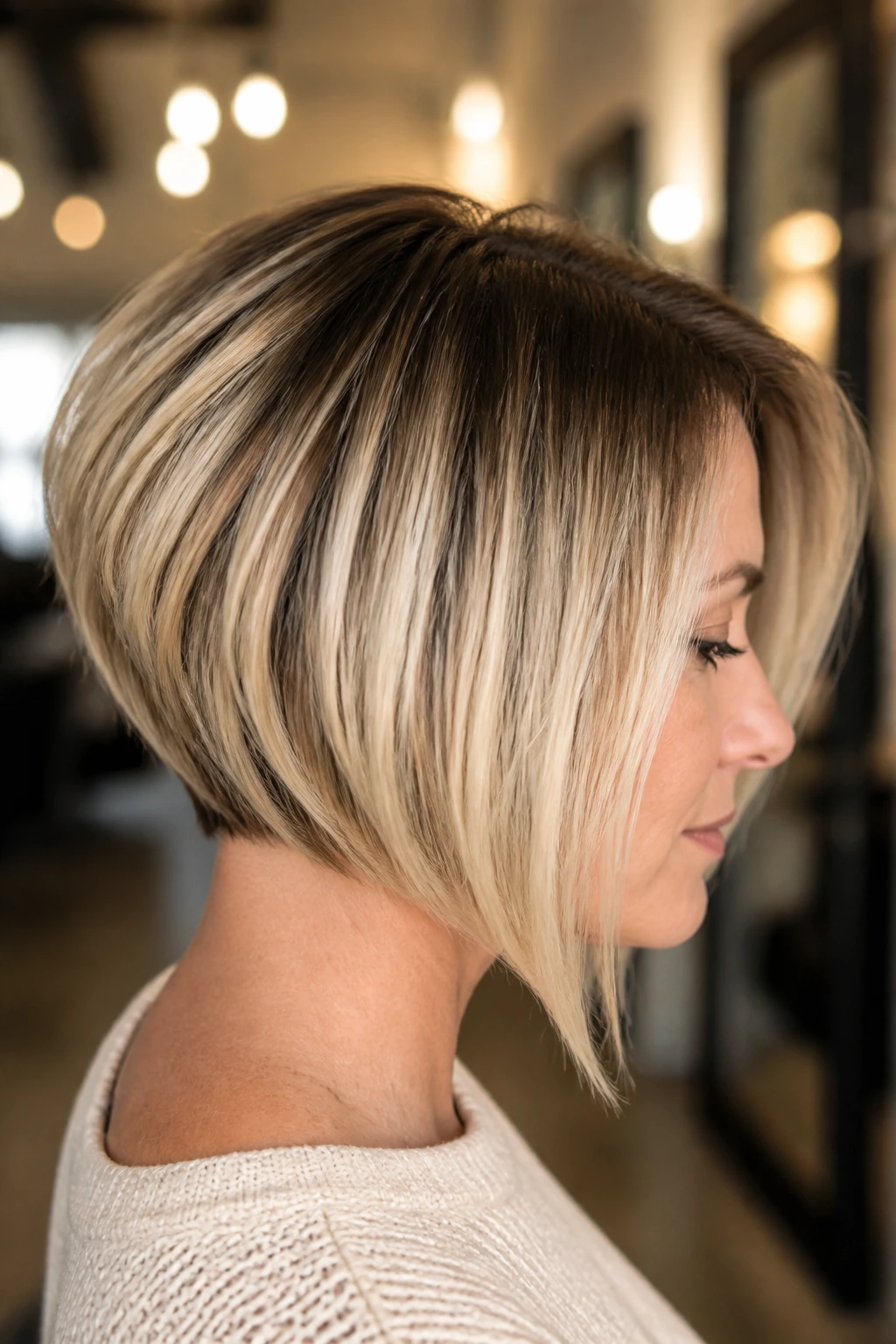
The inverted bob is a fine-hair classic for a reason. The back is shorter, the front falls longer, and that shift creates a lifted profile that flat hair often needs.
Dark root shadow makes the crown look fuller and gives the blonde a place to rest. Creamy ends brighten the front so the cut doesn’t disappear into itself. Without that root depth, a very light bob can look a little washed out, especially under daylight.
Ask Your Stylist For
- A visible but smooth graduation through the back.
- Longer front pieces that reach the jaw or lower.
- A soft root shadow about 1 to 2 shades deeper than the mid-lengths.
- Ends that are clean, not shredded.
This cut has a bit of structure to it, which is good. Fine hair benefits from visible bones. The shape should feel supported, not fluffy.
11. Asymmetrical Bob With a Hidden Undercut
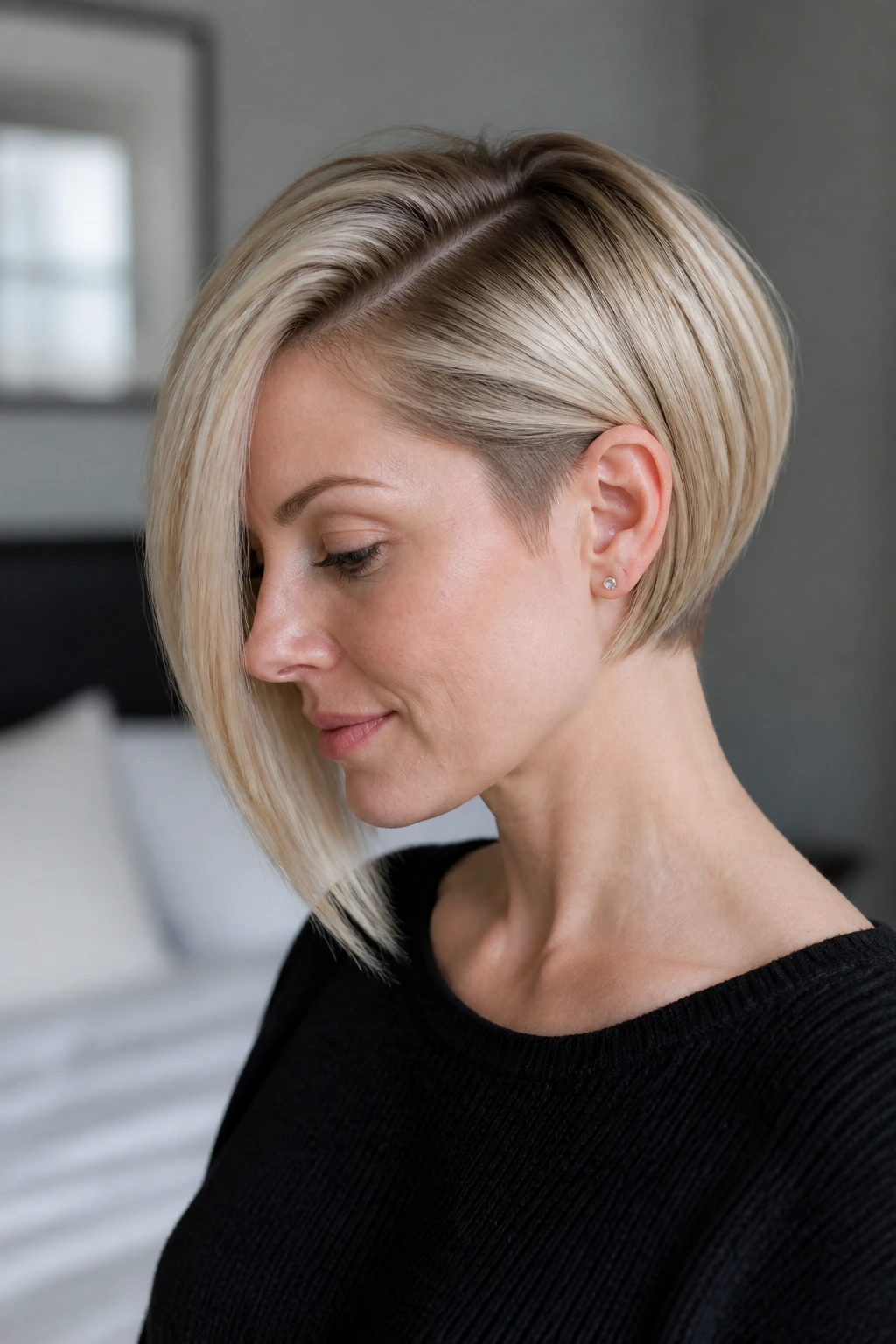
A hidden undercut sounds dramatic, but on fine hair it can be surprisingly practical when it’s done with restraint. The goal is not to shave off a huge section. The goal is to remove a small pocket of bulk under the top layer so the hair sits closer to the neck and jaw.
That works well if your hair swells at the nape or flips out at the bottom. It also helps the longer side fall neatly instead of puffing out. The top layer keeps its length, so the haircut still looks full from the outside.
I’d only choose this if your stylist knows how fine hair behaves. Overdo the undercut and the whole style can look sparse. Keep it hidden, keep it modest, and it does its job without shouting about it.
One small detail matters here: the blonde should stay soft through the top so the cut doesn’t get too sharp. Too much contrast can make the removed section obvious.
12. Tousled French Bob With Face-Framing Blonde Pieces

A French bob usually lives around the cheekbone or jaw, but the asymmetrical version stretches one side a touch longer and keeps the whole thing less precious. That’s what makes it good for fine hair. It keeps the charm, drops the fuss.
Face-framing blonde pieces help the style feel lighter near the front, where the eye lands first. They also break up the edge of the cut in a way that keeps it from feeling like one hard block. The result is softer and more wearable.
Why It’s a Strong Choice
Unlike a super-precise bob, this one can handle a little bend and a little texture. It looks good air-dried with a touch of mousse, which is handy if you don’t want a 20-minute blow-dry every morning.
It suits oval and heart-shaped faces especially well. Round faces can wear it too, but the longer side should be left a bit lower so the face doesn’t feel crowded.
13. Side-Shaved Bob With Platinum Finish
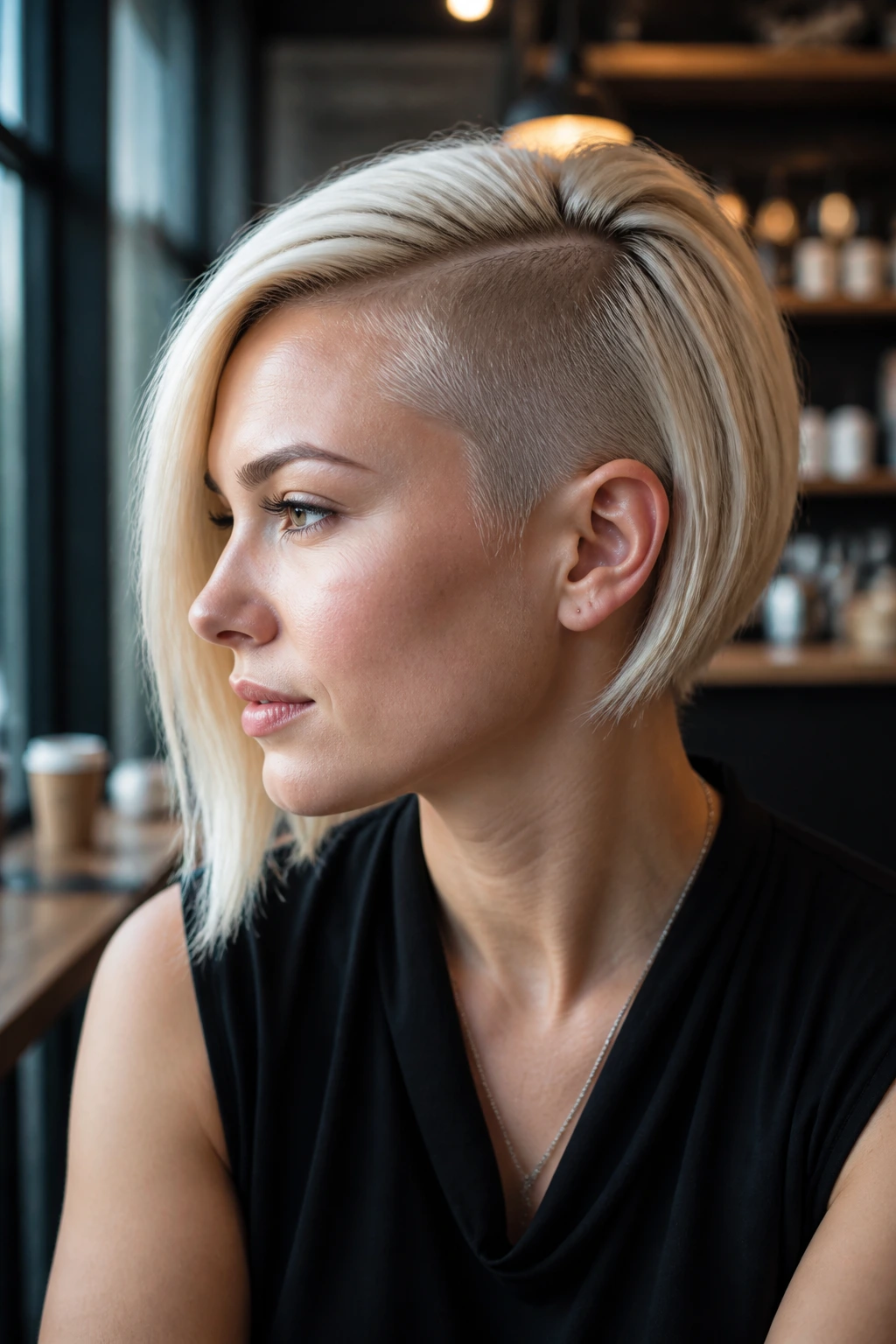
This is the boldest cut in the group, and it works on fine hair because the long side carries the visual weight. The shaved side creates contrast; the longer side keeps the haircut from going flat or boyish.
Platinum blonde makes the longer section stand out, but it needs to be kept clean. On fine hair, platinum can go see-through if the tone is too cool or the hair is over-lightened. You want brightness, not fragility. Big difference.
What to Watch For
- Keep the shaved section small and close to the hairline.
- Leave enough length on the opposite side to cover the ear.
- Use a bond-building treatment if the hair has already been lightened before.
- Expect frequent upkeep. The edges grow fast.
This is not a soft, background haircut. It has a point of view. If you like your hair to have a little edge, it’s memorable without needing a complicated shape.
14. Graduated Bob With Soft Balayage
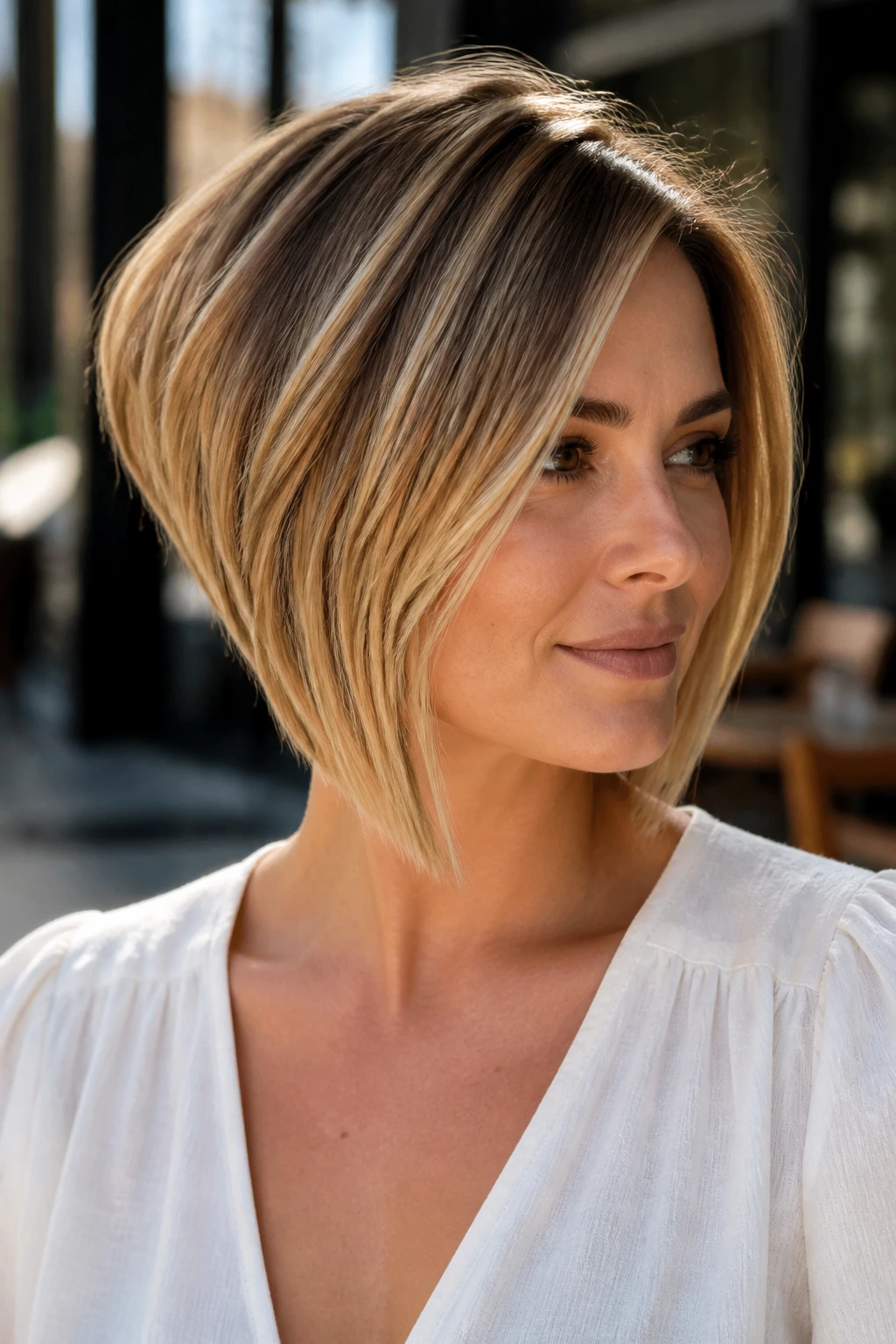
A graduated bob is one of the most reliable ways to make fine hair look thicker at the back. The stacked shape builds a sense of lift through the nape, while the front stays a little longer to keep the line elegant.
Soft balayage stops the color from looking blocky. That matters more than people think. With fine hair, hard stripes can look thin around the part, but a gentle sweep of blonde through the surface gives movement without making the hair look busy.
The best version of this cut has a visible curve in the back. Not a puff. A curve. It should hug the head and then fall into the longer front pieces with a clean diagonal.
If you’ve ever felt like your bob disappeared the minute you turned sideways, this shape fixes that. The silhouette stays visible from every angle.
15. Razor-Cut Bob With Airy Ends
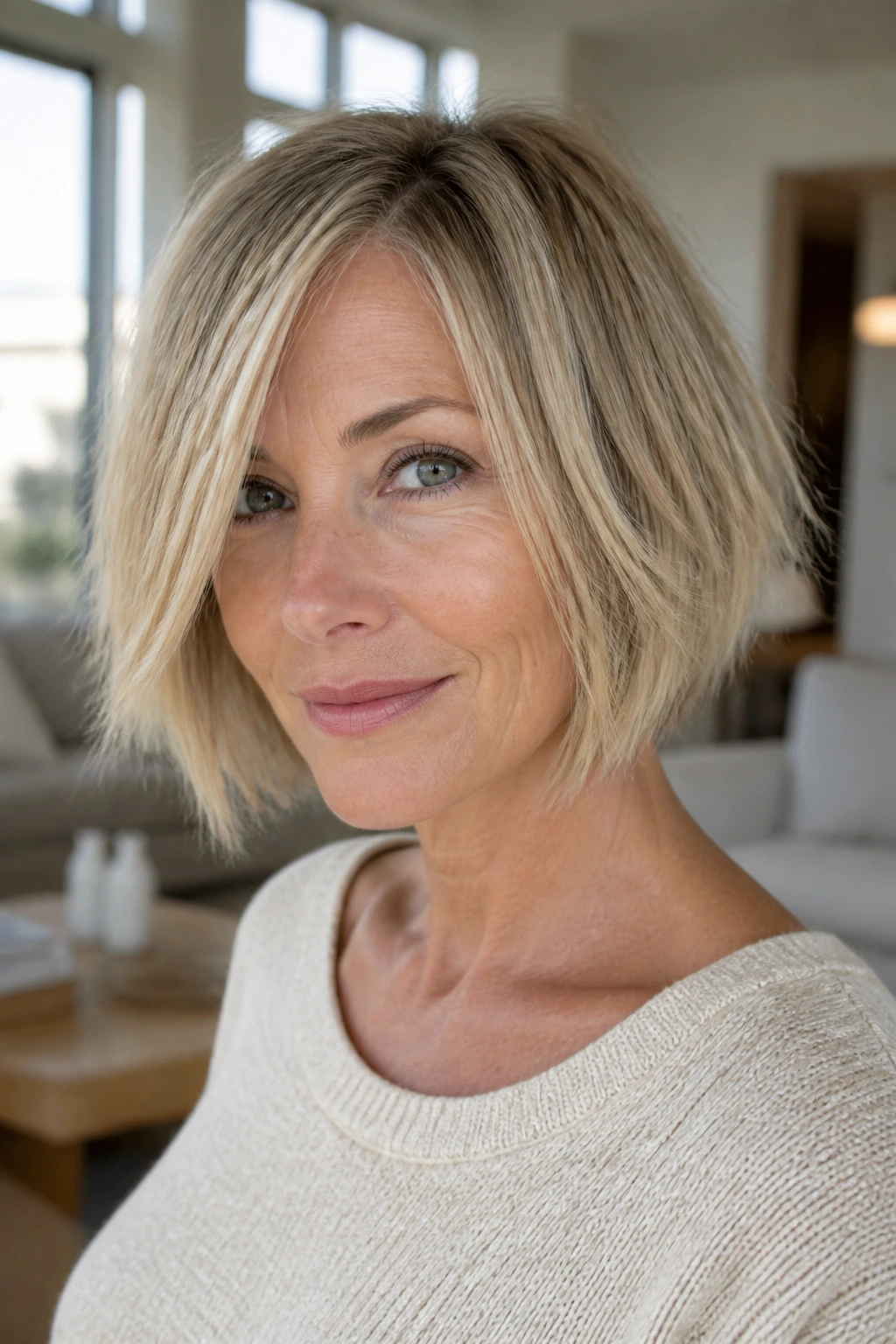
Can a razor cut work on fine hair? Yes — if it’s used lightly and by someone who knows when to stop. A razor can soften the perimeter and make the ends move, which helps if your hair feels stiff in a blunt line.
The danger is over-thinning. Fine hair doesn’t need to be stripped down to nothing. A few airy ends are enough. You want a gentle edge, not shredded tips.
How to Use It
Ask for the razor to be used mostly on the outer perimeter and front corners. That keeps the body of the cut intact. Pair it with a creamy blonde or beige blonde so the light catches the ends and the movement is easy to see.
This cut shines on hair that already has a little natural bend. Straight hair can wear it too, but the finish should stay polished. Too much rough texture makes the shape disappear.
16. Long-Front Bob With Lived-In Blonde
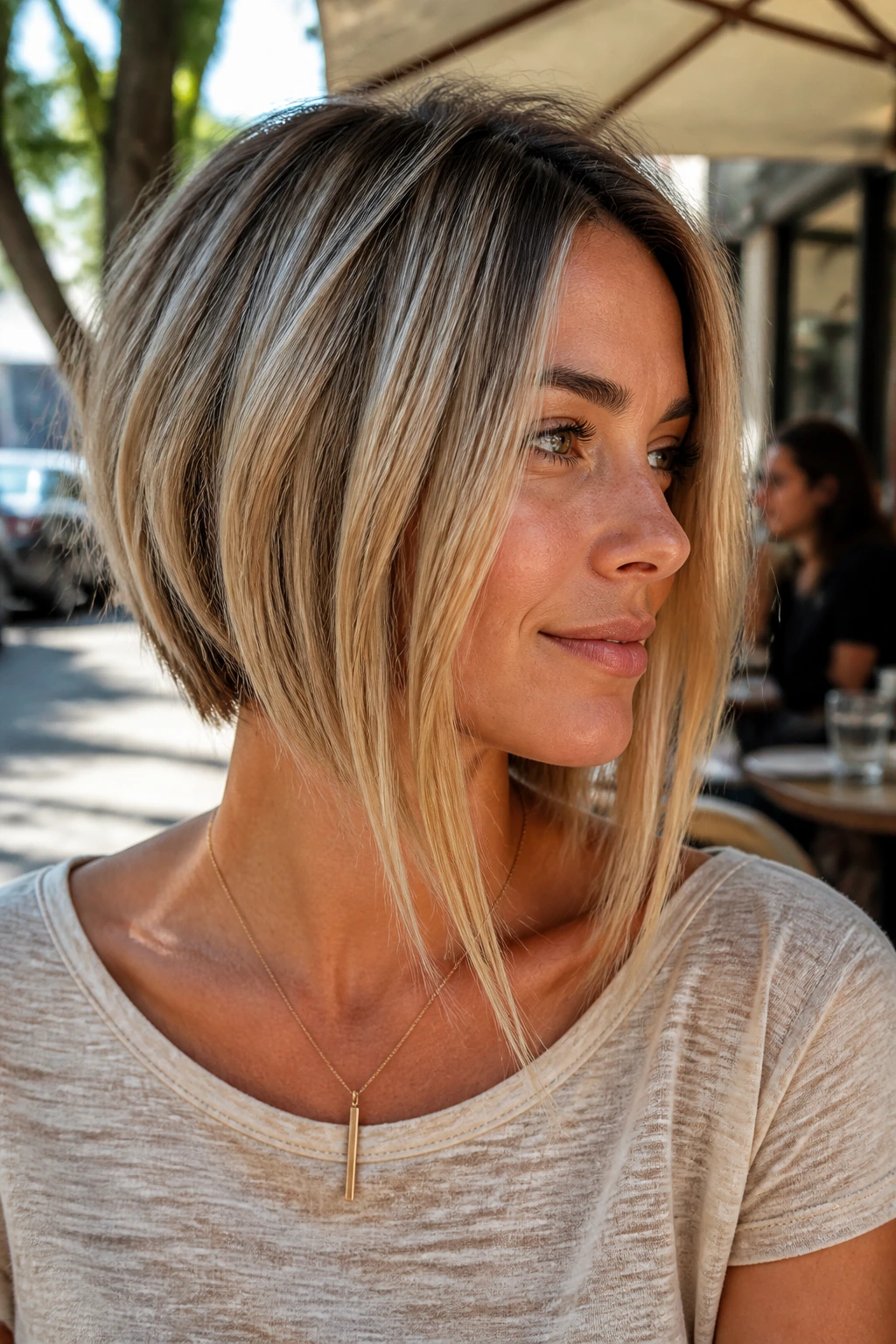
The long-front bob is a good middle ground for anyone who wants a bob shape without losing the comfort of extra length. One side skims the collarbone while the back sits higher, and that angle gives fine hair a useful sense of lift.
Lived-in blonde is a smart choice here because the grow-out stays soft. The roots can remain a shade deeper, which gives the hair more visible depth at the crown. That depth is not decorative. It helps the cut look fuller.
This style works well when you wear your hair in loose bends rather than tight curls. The front pieces should swing a little when you move. That small motion is the whole point.
- Best if you like a low-drama color schedule.
- Good for straight, slightly wavy, or bendy hair.
- Easy to clip back on busy days.
- Looks best with a clean side part or off-center part.
17. Heavy Side-Swept Bob With Soft Root Lift

A heavy side sweep can save fine hair on days when it refuses to cooperate. One long sweep across the forehead shifts the weight and makes the roots on the opposite side stand up a bit more.
This cut is less about color drama and more about shape. The blonde should stay soft and believable — think beige, honey, or a muted gold — so the side sweep doesn’t look like a costume piece. The real magic is in the part and the bend at the front.
The styling trick is simple. Blow-dry the front away from the face, then sweep it across while it’s still warm. Pin it for a minute if you need extra memory. That little pause helps.
I like this one for people who have a stubborn cowlick or a forehead they don’t want to fight every morning. It turns a problem spot into the style itself.
18. Curved Bob With Lifted Back and Vanilla Blonde
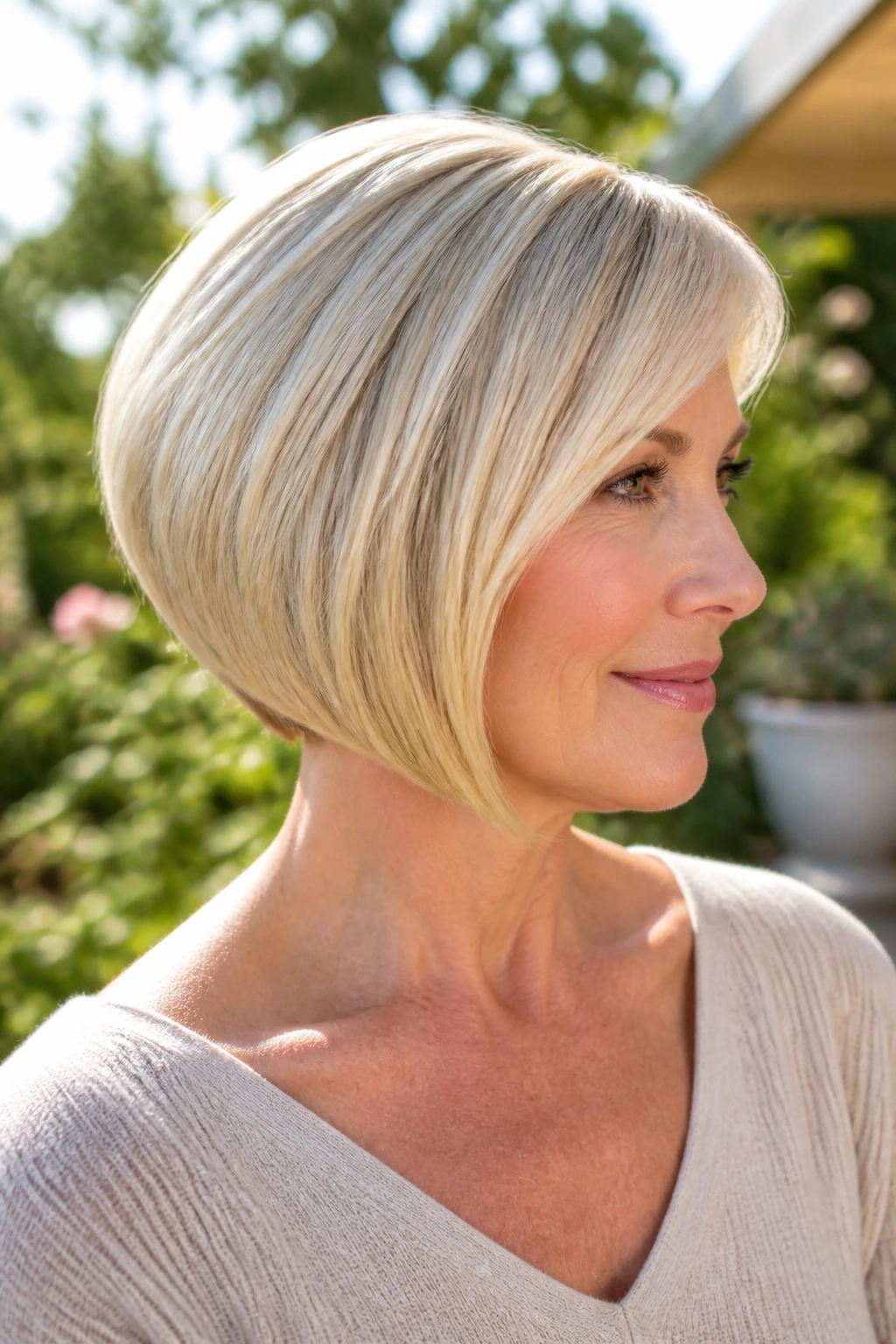
A curved bob sits closer to the head through the back and rounds gently toward the front. On fine hair, that curve is useful because it prevents the shape from hanging like a straight sheet.
Vanilla blonde softens the edges and keeps the haircut from looking too severe. It’s bright, but not icy. Pale, but not flat. That middle ground makes the shape feel airy while still looking full enough to hold its own.
Unlike a Flat Blunt Bob
This version has a subtle rise at the back, which gives the hair a lifted profile even when it’s not freshly styled. A flat blunt bob can fall limp on fine hair if the hairline is soft. A curved bob keeps some posture.
It’s especially good for people with naturally straight hair who want something easy to smooth into place. The line does the work. You don’t have to.
19. Piecey Asymmetrical Bob With Sand Blonde
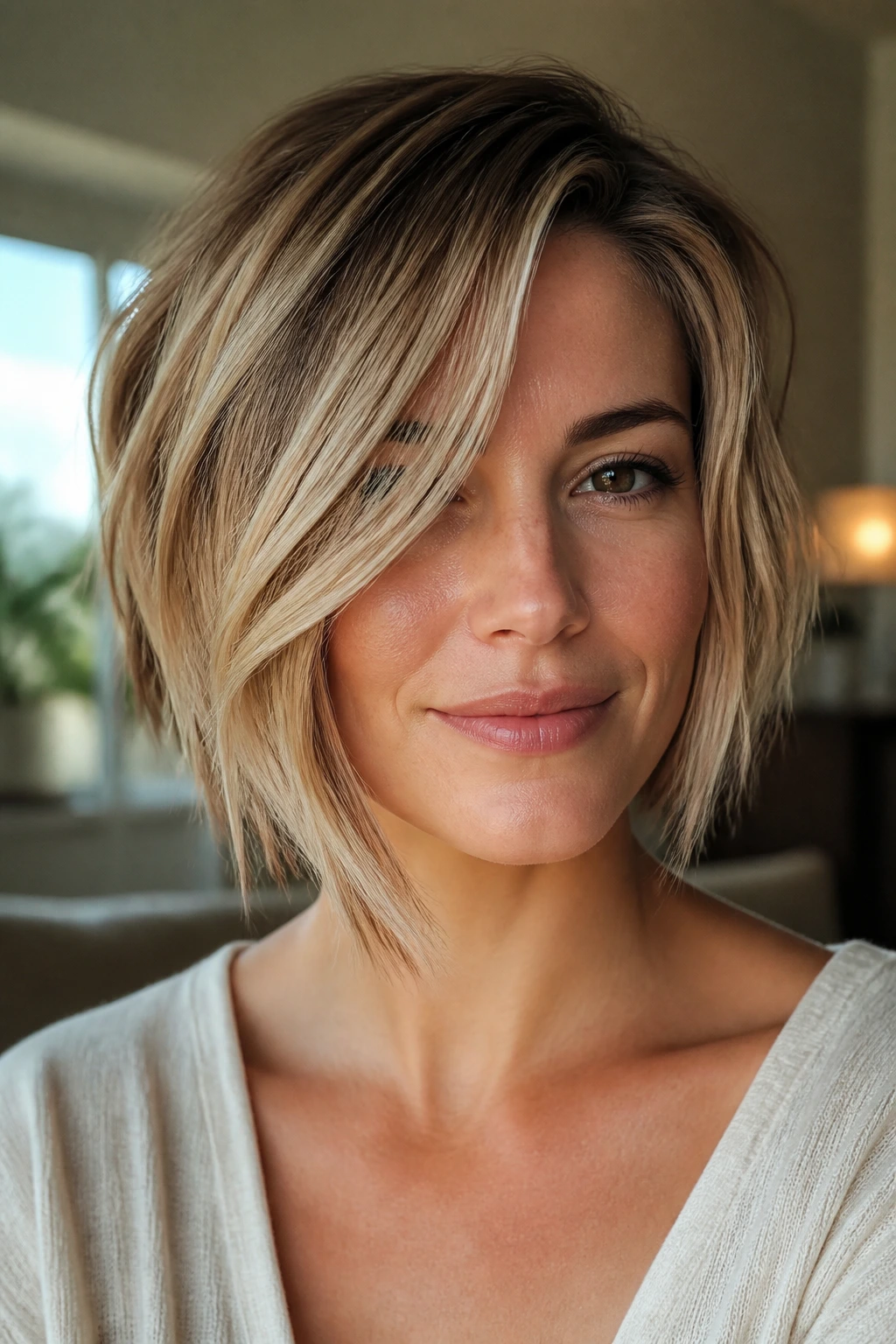
Piecey ends make fine hair look more separated and deliberate, which can be a useful trick if your strands tend to clump in the wrong places. The key is not to overdo it. A few separated sections are enough.
Sand blonde is a good match because it has enough warmth to keep the hair from looking dry. On very fine hair, cool blonde can read a little brittle if the cut is too airy. Sand gives the style a more grounded feel.
How to Get the Most From It
Use a pea-sized amount of texturizing cream — no more — and work it through the ends only. Scrunch lightly. Then stop. If you keep touching it, the shape collapses and the fine strands start to separate in a messy way.
This bob works best on hair with some natural bend or a good blowout. It gives off a relaxed look, but the perimeter still needs to stay neat.
20. Glassy Bob With Side Part and Beige Blonde
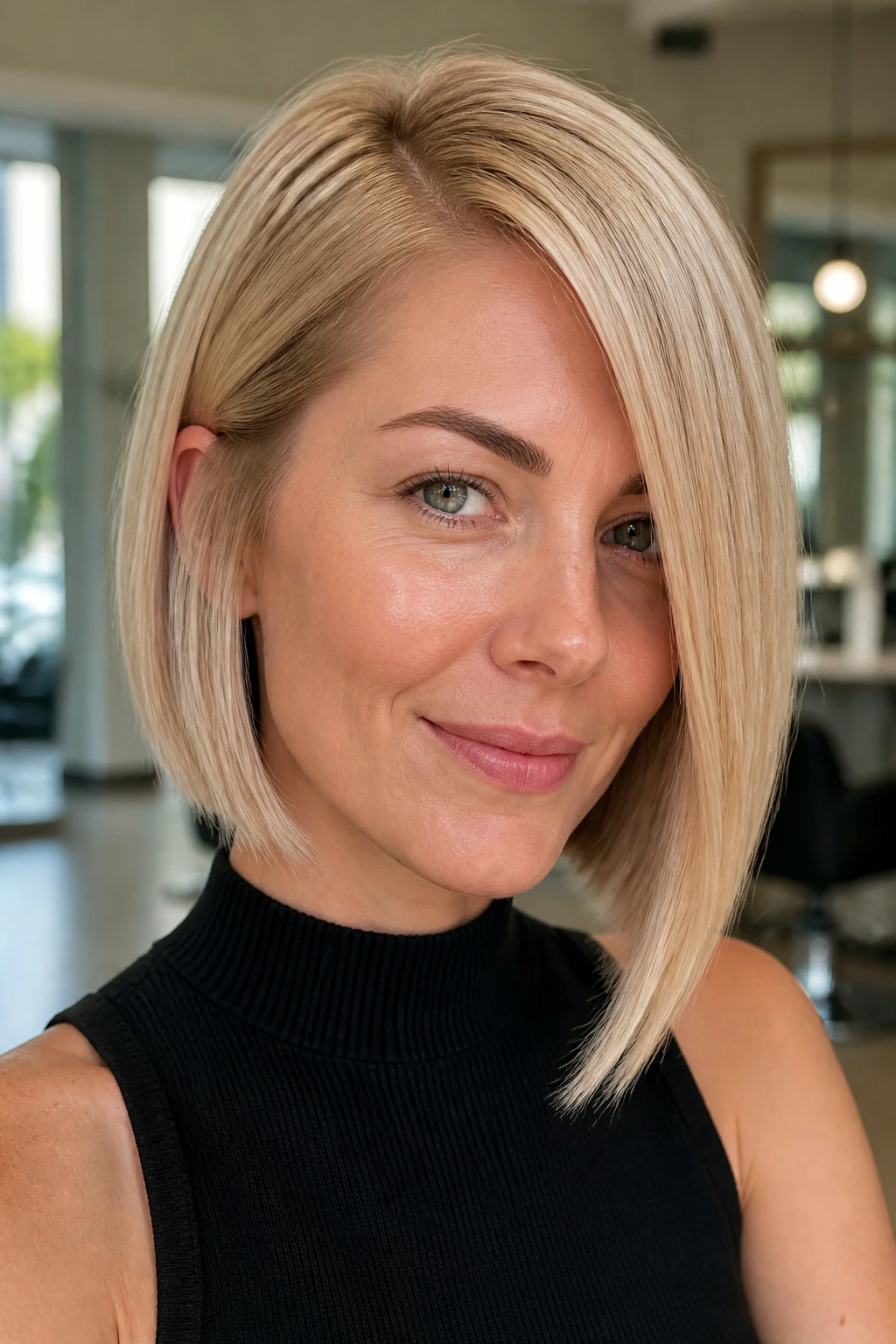
A glassy bob is all about shine and clean edges. That combination is useful for fine hair because a smooth surface makes the strand pattern look denser than a fluffy, overworked finish.
Beige blonde is the right tone when you want gloss without glare. It’s soft enough to flatter the cut line, and it doesn’t steal attention from the shape. The side part adds movement without taking volume away from the crown.
You’ll want a heat protectant, a light smoothing cream, and a 1-inch flat iron if your hair bends oddly at the ends. Straighten in small sections and keep the plates moving. The aim is smooth, not pin-straight and stiff.
This is one of those haircuts that looks better after a careful blow-dry than after a lot of product. Product should support the shine, not sit on top of it.
21. Asymmetrical Bob With Wispy Bangs
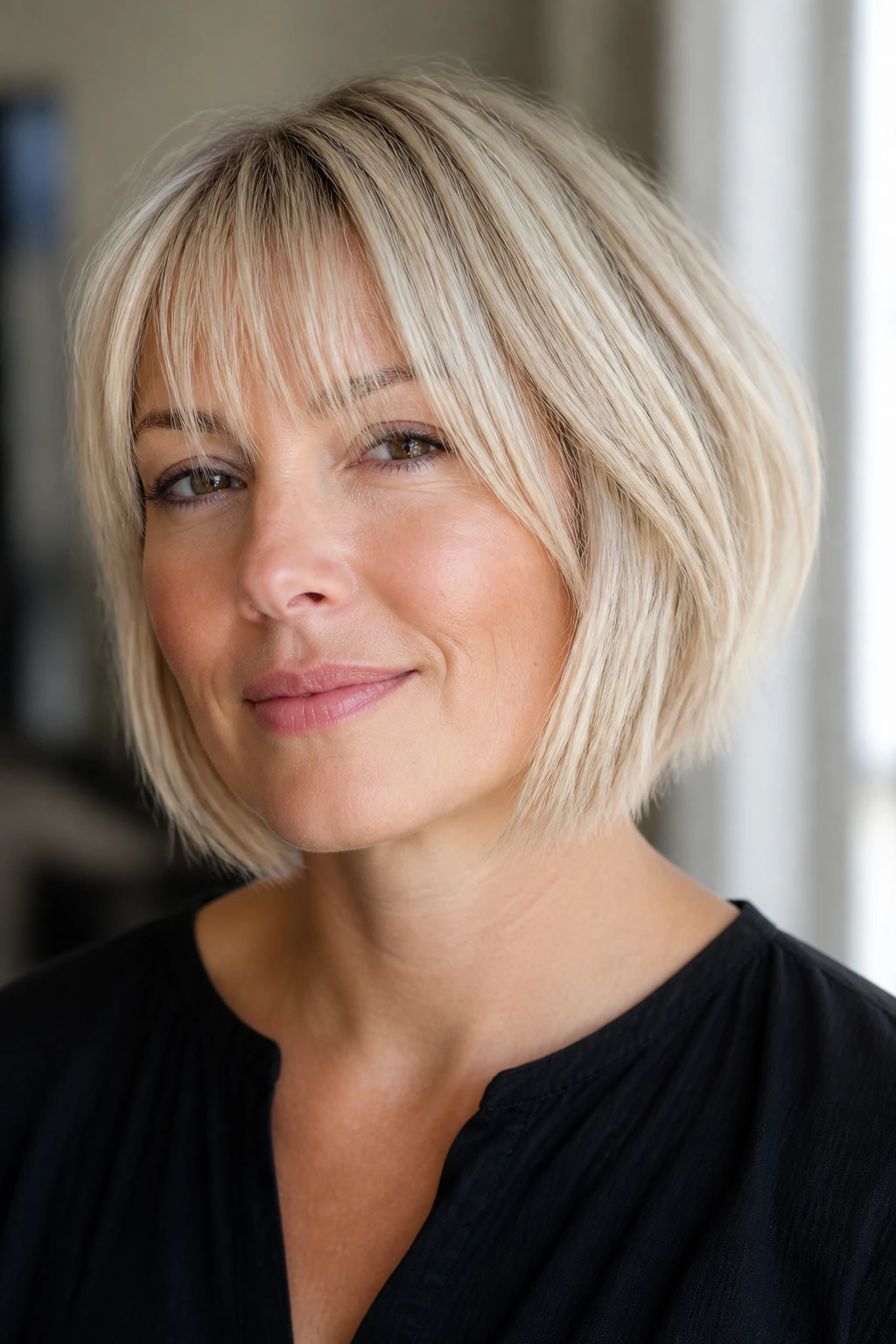
Wispy bangs can be a smart addition to an asymmetrical bob, but they need to stay light. Fine hair already lives on the delicate side, so the fringe should skim the forehead instead of taking over it.
The bangs soften the asymmetry and pull attention upward. That helps if the lower half of your hair tends to look narrow or if you want the haircut to feel less sharp. A soft blonde, especially pearl or creamy beige, keeps the fringe from standing out too much.
How to Ask for It
Tell your stylist you want see-through bangs, not heavy fringe. The shortest pieces should land around the brow, while the longer edges melt into the front sections. That keeps the cut airy.
This style is lovely with a slight bend in the ends. It is not the one to choose if you want zero styling. Bangs always ask for a little attention. They do.
22. Hidden-Layer Bob With Vanilla Blonde
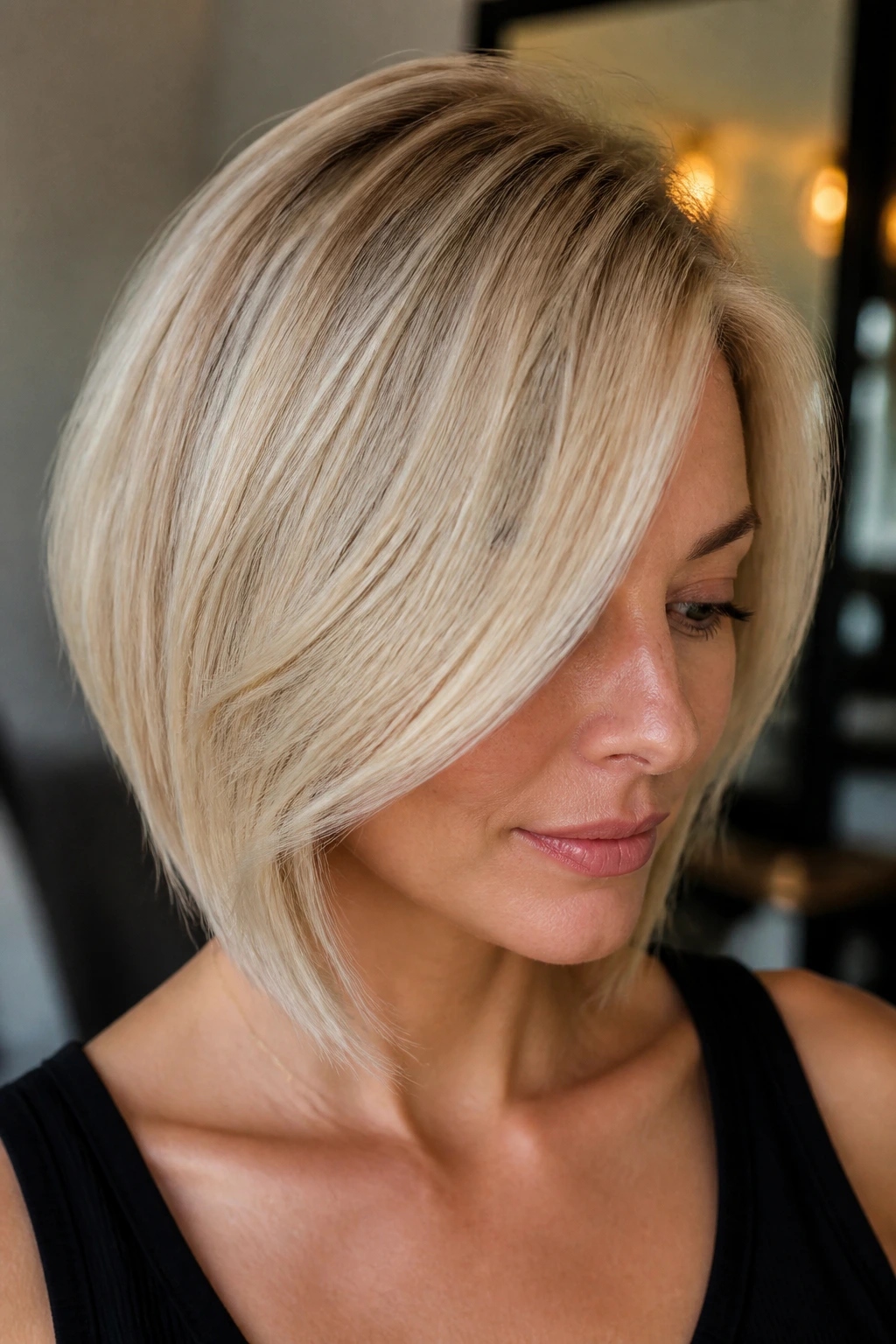
Hidden layers are the quiet fix for fine hair that needs movement but not obvious chopping. The layers sit underneath the top sheet of hair, so the surface stays smooth while the interior gets a little lift.
That matters because visible layers can make fine hair look thinner at the ends. Hidden ones give shape without exposing the work. Vanilla blonde works well here since the color stays soft through the top and lets the cut read as light, not sparse.
I like this cut for people who want a bob that behaves in a neat way. It’s not flashy. It just works. You can blow it out straight, add a bend with a round brush, or let it dry with a little natural texture.
If your hair often feels too heavy at the bottom but too thin at the top, this is one of the smartest compromises around.
23. Deep Taper Bob With Soft Side Length
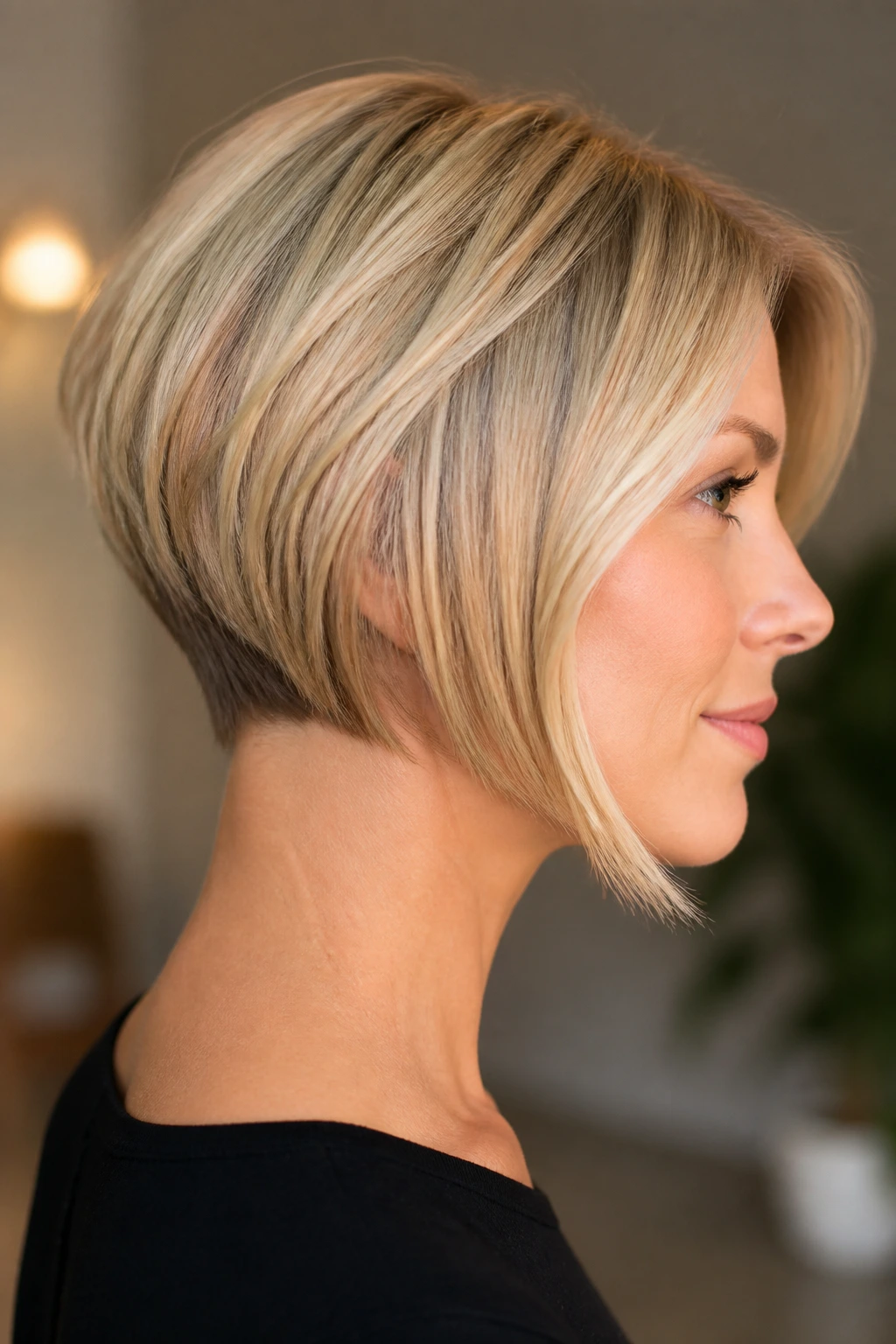
A deep taper at the neckline can make fine hair look cleaner and more lifted, especially if the back tends to puff out in the wrong places. The hair lies closer to the nape, which gives the cut a sharper outline.
The longer side length keeps the shape from looking too cropped. That little asymmetry balances the taper and makes the bob feel modern without getting fussy. Soft blonde highlights through the front pieces are enough to brighten the shape.
The best version of this cut is controlled. No shaggy bits at the bottom. No extra fluff. The taper should feel intentional, almost tailored. A vent brush and a little root spray help keep the back snug against the head.
This is a good option if you like a neck-hugging shape that still gives you a little swing around the face.
24. Choppy Bob With Rooty Blonde
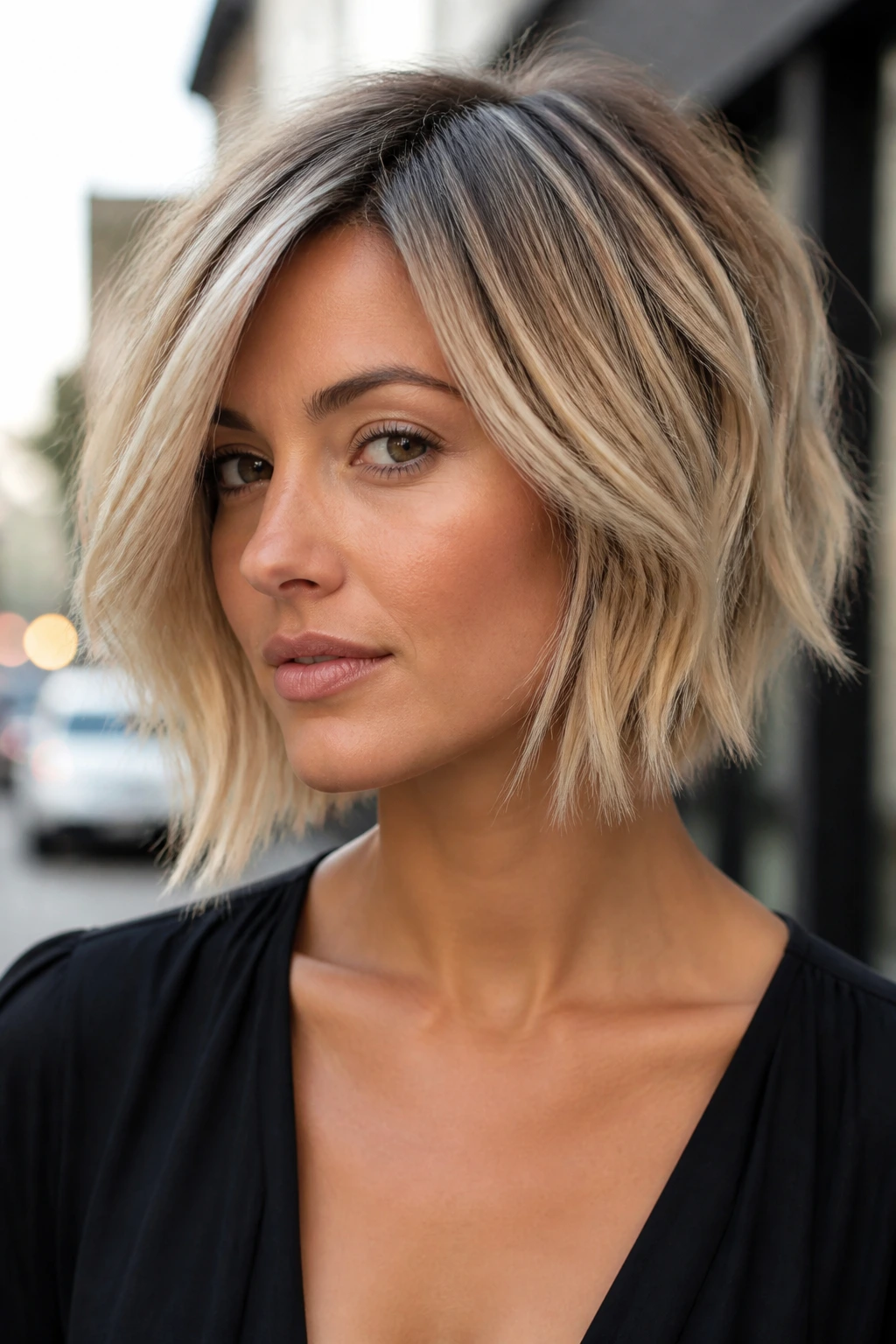
A choppy bob gives fine hair movement, but it needs discipline. Too many chopped pieces and the ends start to look frayed. The right version keeps the interior loose and the perimeter clear enough to hold form.
Rooty blonde helps because it gives the style a little darkness at the base, which makes the crown look fuller. The blonde through the lengths can stay bright and airy. That contrast is what keeps the haircut from feeling flat.
What Makes It Different
Compared with a blunt bob, this cut feels more casual. Compared with a shag, it stays more compact. That middle ground is useful if you want texture without losing shape.
It’s best for hair that already has a bit of natural bend. Straight strands can wear it too, but the cut will need a quick rough-dry and a touch of paste at the ends to show its texture.
25. Asymmetrical Lob With Bright Ends
The collarbone-length lob is the safest asymmetrical option for anyone nervous about going too short. It still gives you a visible angle, but the extra length makes the style easier to tuck, wave, or pin.
Bright ends are the clever part. They draw the eye downward and outward, which helps fine hair look longer and fuller at the same time. Keep the roots a little softer if you want the ends to do the talking.
Why It’s So Easy to Wear
You can wear it straight for a clean line or add bends just through the front. Either way, the asymmetric length stays readable. It’s a good cut if you live in a blazer, a T-shirt, or both. It doesn’t fight your clothes.
For very fine hair, I’d keep the ends blunt rather than over-layered. A crisp edge at the bottom gives the lob more body than a thin, wispy finish ever will.
26. Soft Undone Bob With Swoopy Part
This is the bob for people who want their hair to look relaxed without looking unfinished. The swoopy part shifts the weight, while the soft, undone texture keeps the cut from feeling stiff.
A muted blonde — think beige with a little warmth — works better here than anything too bright. You want the shape to feel easy. Not overstyled. The longer front side can bend toward the cheekbone, while the shorter side stays a touch tighter near the ear.
Drying technique matters. Rough-dry the roots until they’re about 80 percent dry, then use your fingers or a paddle brush to guide the part into place. Too much brushwork can flatten the softness out of it.
This is one of my favorite low-fuss options for fine hair because it forgives a lot. That matters on busy mornings.
27. Minimalist Blunt Bob With an Asymmetric Line
Can one clean line still feel asymmetrical? Yes, and that’s the whole appeal here. The cut looks simple at first glance, but one side is nudged a little longer, so the shape has motion without looking chopped up.
This is the best choice for anyone who loves restraint. No feathering. No aggressive layering. No fuss. Fine hair often looks strongest when the edges are clean and the silhouette stays calm.
Keep the blonde tone soft and close to your natural base if you want the cut to feel expensive rather than stark. A flat, pale blonde on a blunt cut can be unforgiving. A beige or creamy blonde gives the line more life.
If you prefer a haircut that works with a blazer, a white tee, or a black turtleneck without changing a thing, this one is hard to beat.
28. Polished Asymmetrical Blonde Bob for Fine Hair
This is the version I’d point to if you want the haircut to do the talking without a lot of extra styling. One side sits a little longer, the back stays neat, and the blonde stays polished enough to catch light but soft enough to avoid looking brittle.
The real strength here is balance. Fine hair needs a shape that feels deliberate from every angle, not one that only looks good in the mirror. A slight side part, a clean perimeter, and a smooth blow-dry are enough to make this work day after day.
If you keep one rule in mind, make it this: don’t let the ends get too thin. That’s where a lot of fine-hair bobs go wrong. A clean edge, maintained every 6 to 8 weeks, keeps the whole look crisp.
This is the kind of asymmetrical blonde bob that can be worn straight, tucked, waved, or air-dried and still hold its line. That’s the win.
