



A round face and a short graduated bob can be a strong pairing, but only when the cut is built with intent. Short graduated bob haircuts for round faces work best when they create height at the crown and a line that moves diagonally past the cheeks, not straight across them.
The reason is simple. A graduated bob is shorter in the back, usually stacked through the nape, and a touch longer toward the front. That shift changes how the eye reads the face. Instead of sitting wide at the cheekbone, the shape pulls downward and forward, which is what gives a round face a little more length and definition.
Not every bob does that. A blunt line at jaw level can make the face look wider than it really is, and a heavy curve at the cheeks can turn softness into something boxy. The styles below cover polished cuts, piecey textures, curly versions, bangs, and a few sharper options that salon chairs keep repeating for a reason. The first one is the safest place to start.
1. Classic Stacked Bob with a Side Part
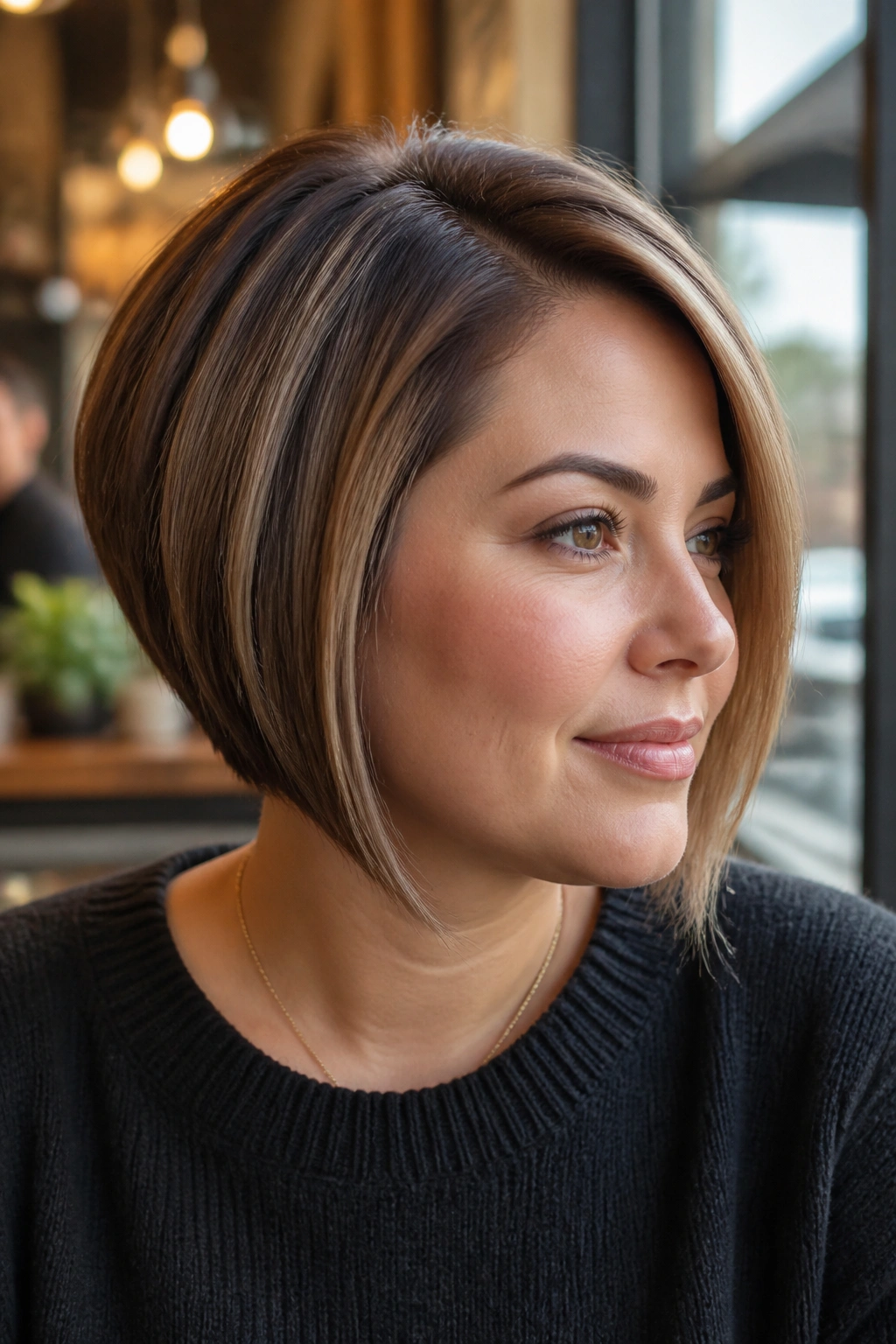
This is the cut I’d hand to someone who wants a clean, reliable shape without a lot of fuss. The back is stacked close to the nape, the side part adds a little lift, and the front stays long enough to skim past the widest part of the cheek.
Why It Flatters a Round Face
A side part breaks symmetry fast. It shifts volume away from the center of the face and builds a diagonal line, which is exactly what a round face needs from a bob haircut. Keep the shortest length at the nape, not the jaw.
- Ask for graduation in the back with a soft stack.
- Keep the front corners just below the chin if your cheeks are full.
- Style with a small round brush to lift the crown 1 to 2 inches.
Best detail: the side part should land just off center, not way over to one side.
2. Chin-Grazing Angled Bob with Longer Front Corners
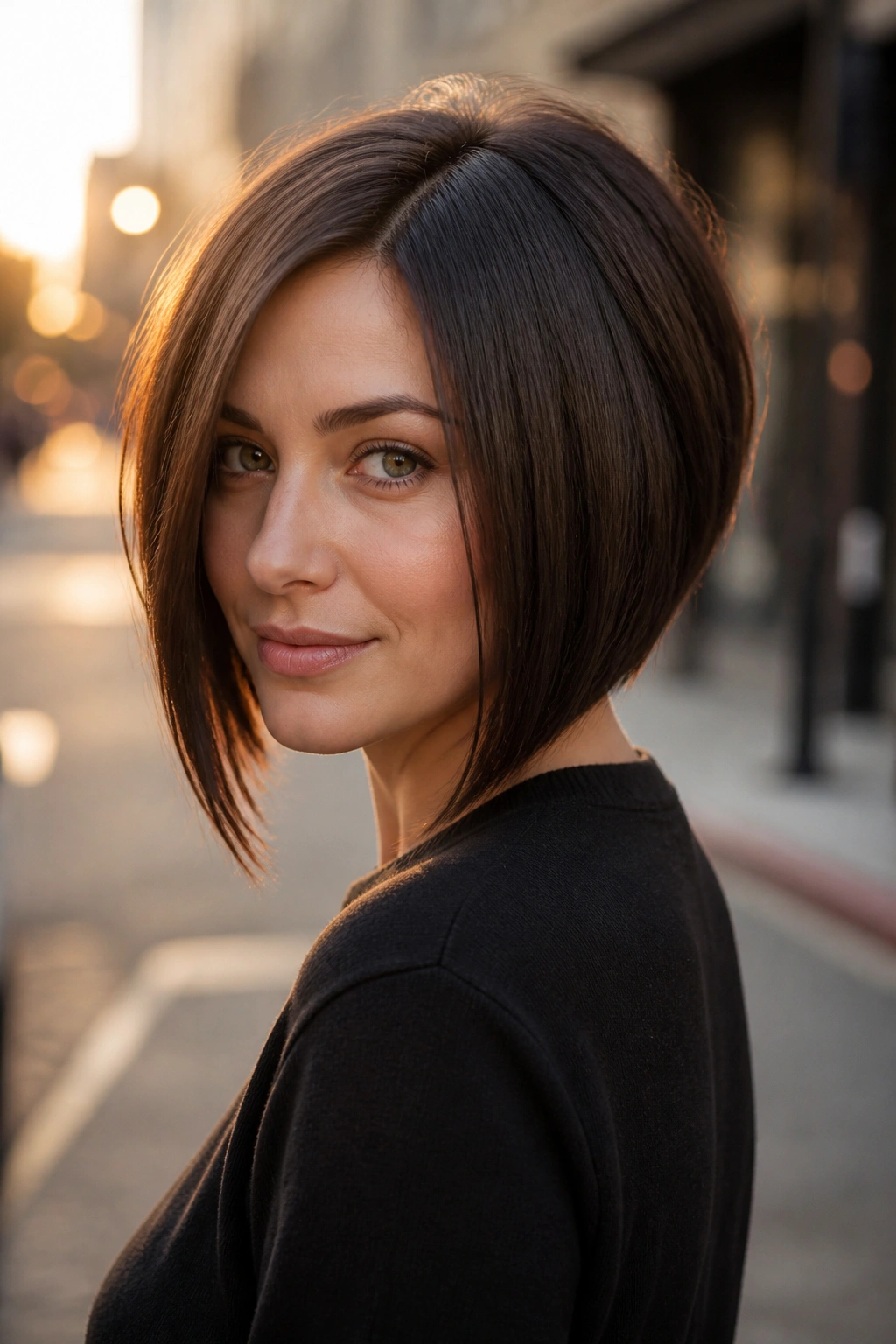
If you want the face to look a little leaner, this is the shape that does the work for you. The front corners sit longer than the back by a noticeable inch or two, and that forward angle pulls the eye down instead of letting it rest on the cheeks.
The trick is not to make the angle too steep. A severe inverted line can feel dated fast. A softer angle looks fresh, moves better, and still gives you that slim, stretched effect that flatters a round face. Straight hair shows it cleanly. Wavy hair makes it feel softer.
I’d ask a stylist to keep the back snug and the front pieces long enough to hit near the chin or just below it. Too short, and the cut gets boxy. Too long, and it stops looking like a short graduated bob at all.
3. Soft Graduated Bob with Loose Bends
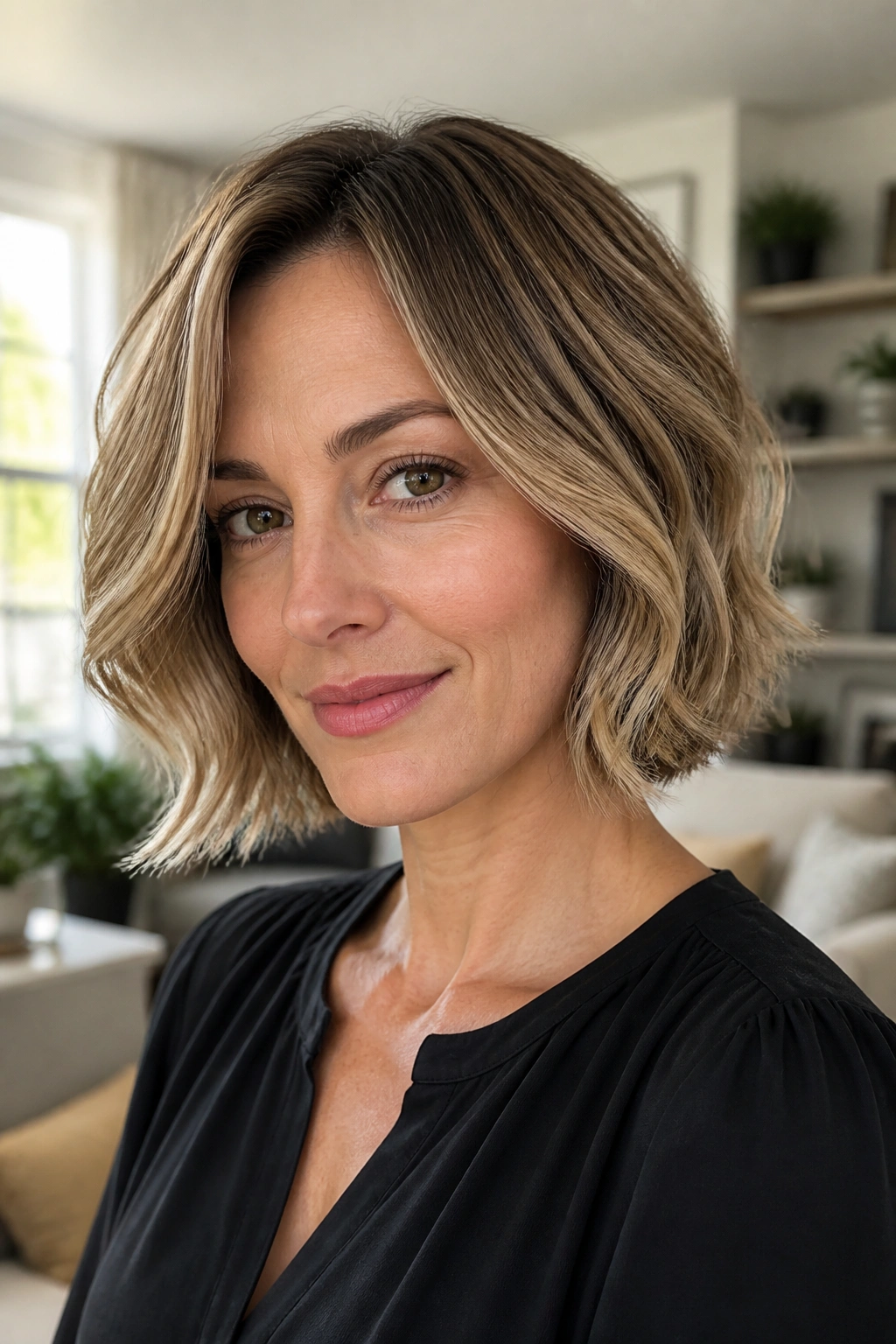
Why does a bob have to be poker straight to look polished? It doesn’t. Loose bends in the mid-lengths make the shape feel lighter, and on a round face they stop the cut from clinging to the cheeks.
How to Style It
Use a 1-inch curling iron or a flat iron twist, but leave the ends out so the bob doesn’t turn into a full curl. That slight bend gives movement without adding width. A little bend near the front pieces is enough.
- Wrap sections away from the face.
- Leave the last half-inch straight.
- Finish with a light mist, not a heavy spray.
The look works best when the top stays smooth and the bottom moves. That contrast is what keeps it from feeling puffy.
4. Piecey Textured Bob with Razored Ends
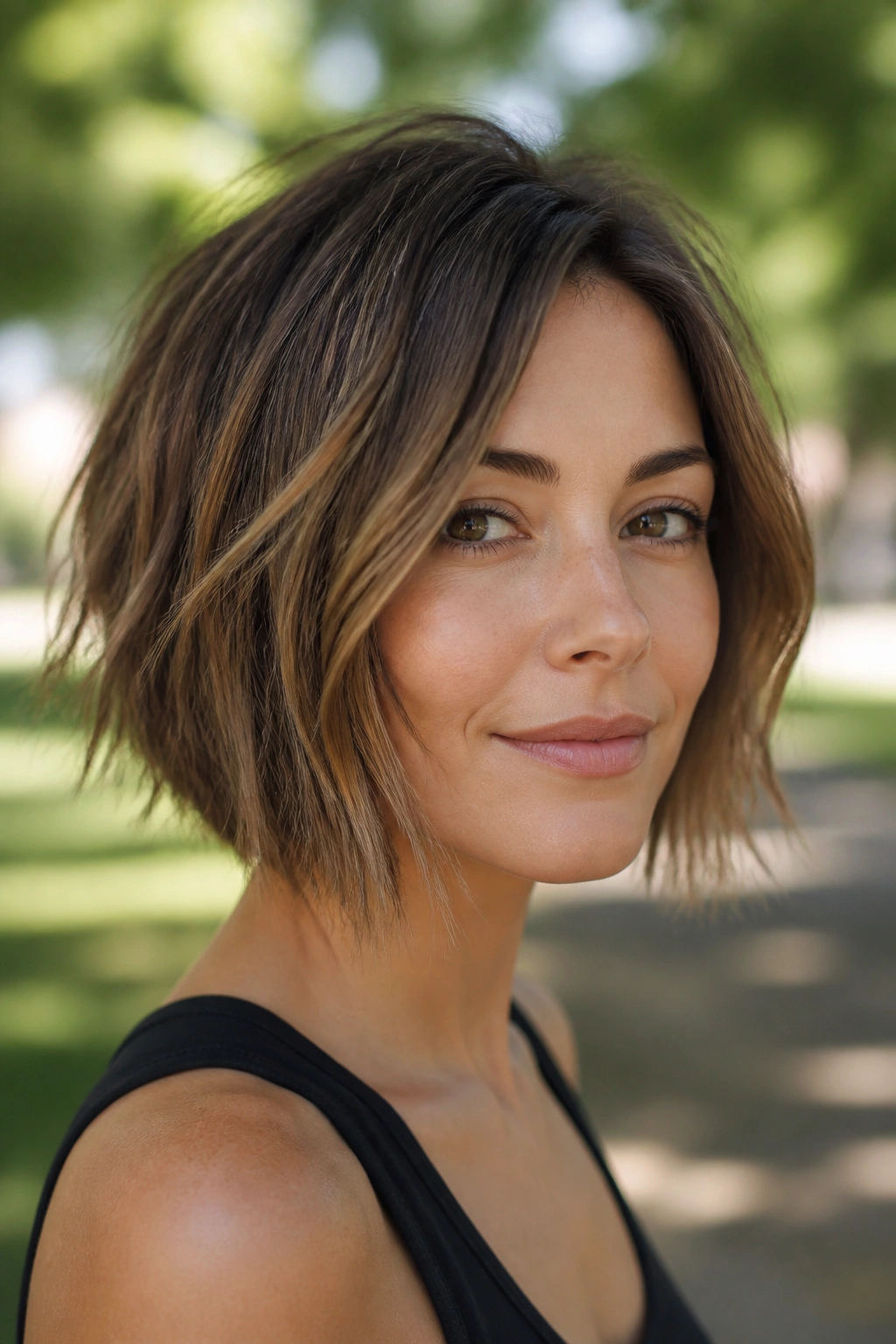
A texturized bob can be a gift for round faces, especially if your hair is thick or naturally full. The razored ends take away that blunt shelf effect, so the cut moves instead of sitting like a helmet.
Picture a bob that looks touched by air, not carved from one block of hair. That’s the goal. The texture should live in the ends and a little through the mid-lengths, while the crown stays controlled so the shape doesn’t widen at the sides.
What to Watch For
- Keep the razor work soft, not shredded.
- Ask for piecey separation around the front.
- Use a dab of styling cream on dry hair, then pinch the ends.
My opinion: this is one of the easiest cuts to make look modern without trying too hard.
5. Sleek Bob with a Tucked-Behind-Ear Finish
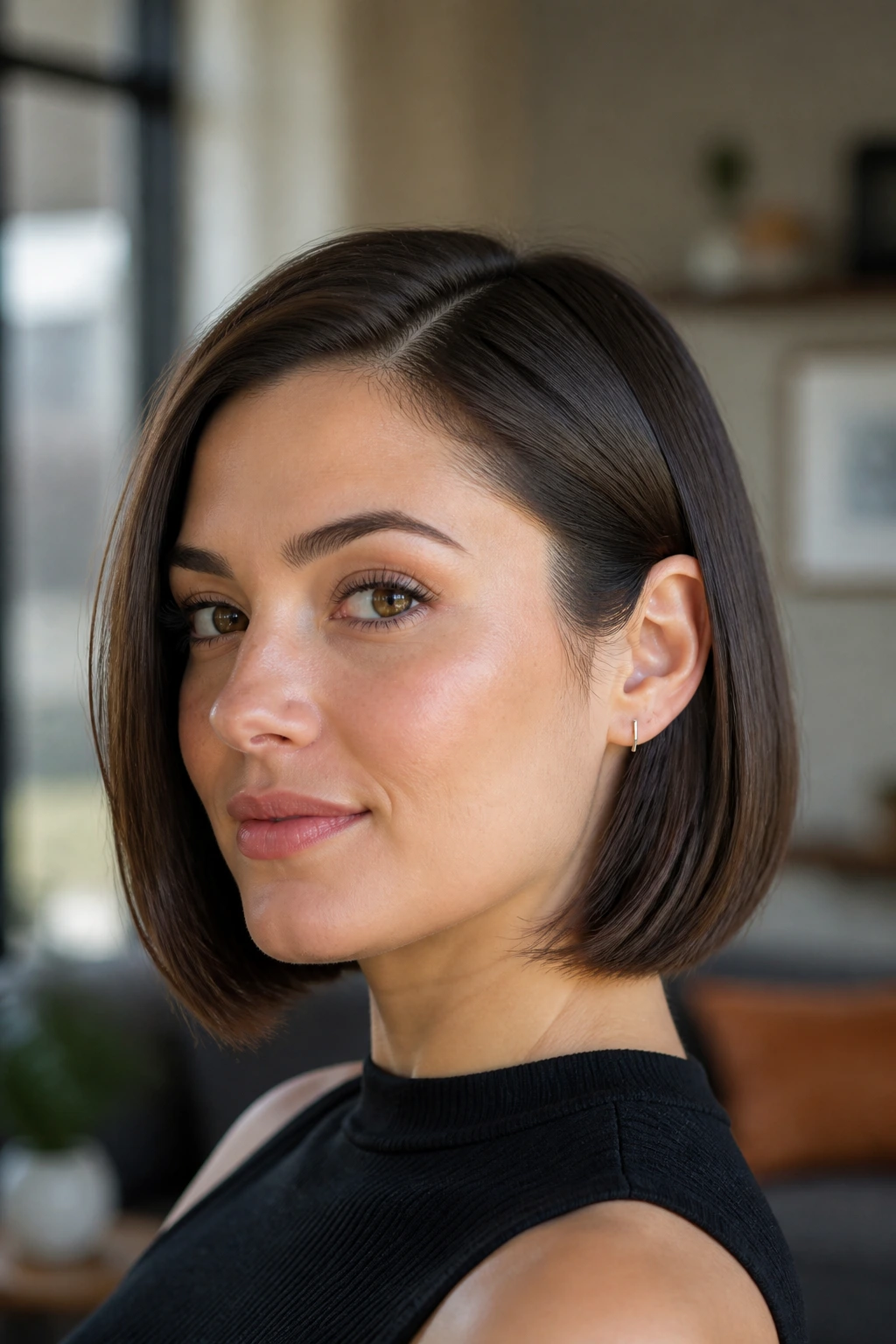
If you want a sharper look, this is the one. Tucking one side behind the ear opens up the face and creates a clean vertical line along the cheek and jaw. On a round face, that little bit of exposure can matter more than people think.
The sleek finish works because it removes side bulk. Hair that sits wide near the ears tends to make the face feel broader, while hair tucked neatly behind one ear narrows that visual space. Use a smoothing cream and a flat brush, then keep the front line smooth.
This style is especially good when the haircut has a strong side part or a slightly longer front corner. It feels polished, not stiff. And it takes almost no styling if your hair already falls straight.
6. Curly Graduated Bob with Diffused Volume
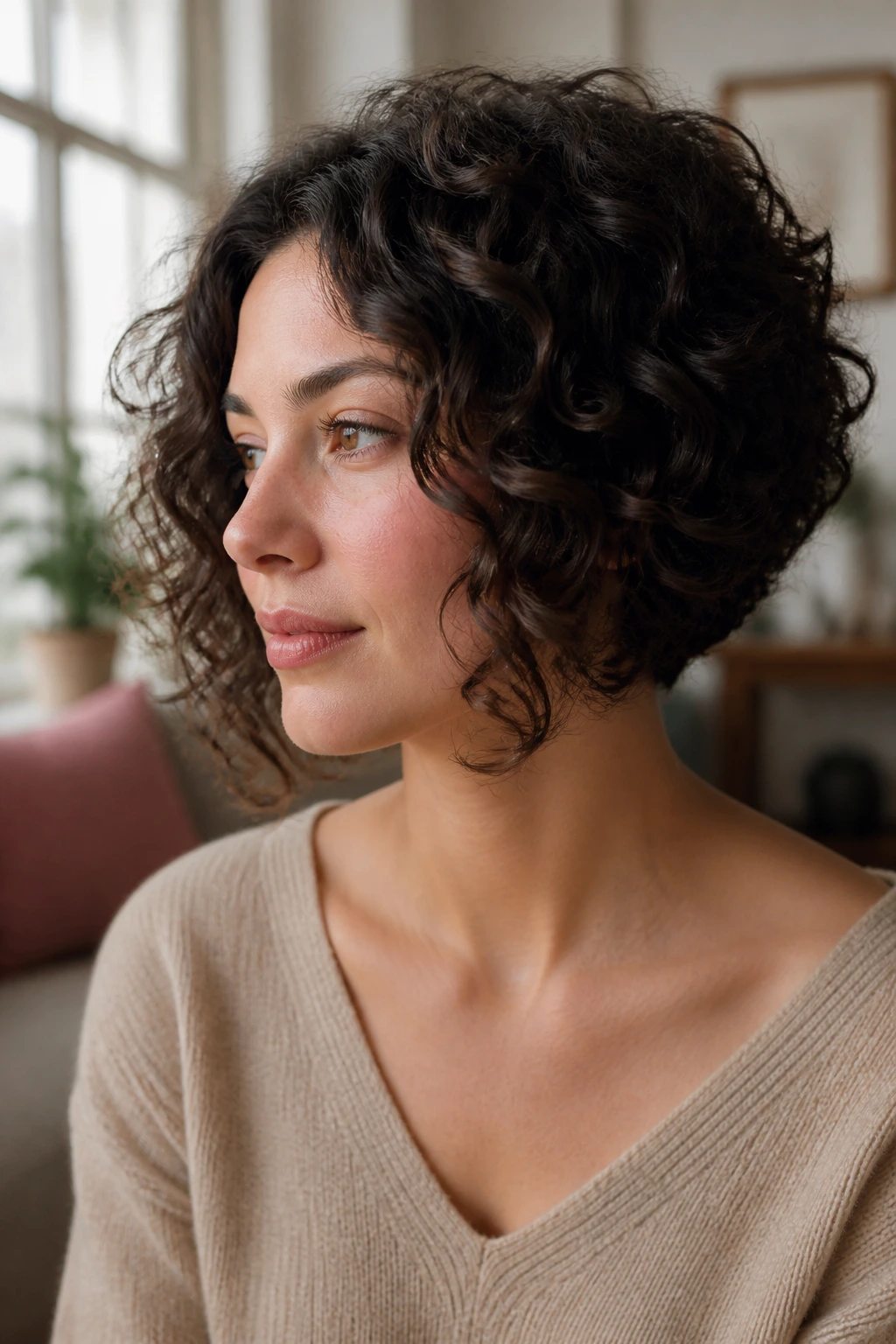
Curly hair and round faces are often treated like a problem to solve. I don’t buy that. The real issue is shape control, and a graduated bob can give curls structure without crushing them.
The back should sit tighter so the curl does not flare out at the nape. The front can stay a bit longer, which keeps the face from reading too wide. If curls are cut dry or shaped curl by curl, the result usually looks more balanced than a wet, one-length chop.
Use a diffuser on low heat and let the roots dry with some lift. Don’t stretch the curl too much. That only makes the cut look flat at the crown and wider at the cheeks. The best curly bob has bounce up top and a soft frame below.
7. Bob with Curtain Bangs and Floating Layers

Can curtain bangs work on a round face? Yes, if they are light and opened enough to split around the center. Heavy, thick fringe can box the face in. Curtain bangs do the opposite when they start near the brows and fall toward the cheekbones.
What to Ask Your Stylist
The bangs should blend into the front layers, not sit on top of them like a lid. That soft connection keeps the cut from feeling chopped. Ask for longer pieces at the outer edges so the fringe melts into the bob.
- Keep the shortest bang length around brow level.
- Let the side pieces fall toward the cheekbone area.
- Style with a medium brush and a quick bend away from the face.
This one suits someone who wants softness without losing shape. It’s easy to wear, which is half the appeal.
8. Side-Swept Fringe Bob That Breaks the Circle
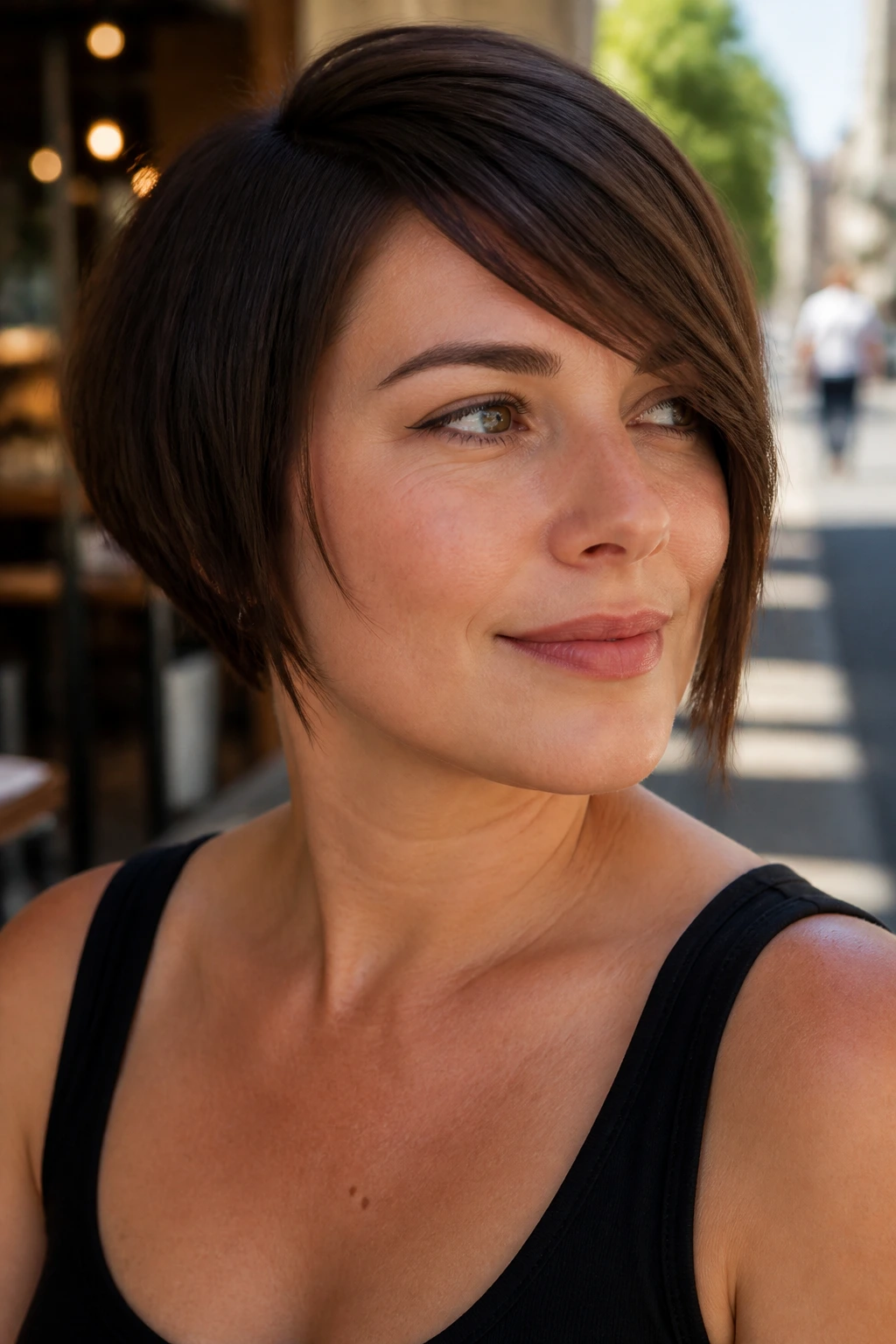
A side-swept fringe is a quiet little cheat code. It draws the eye across the face at an angle, which interrupts roundness better than a straight-across line. The result feels gentle, not severe.
This cut works especially well if you want to hide a higher forehead or soften fuller cheeks without covering the face completely. The fringe should be light enough to move, and it should land near the outer brow or just above the cheekbone. Anything heavier starts to feel crowded.
I like this one more than blunt bangs for round faces. Blunt fringe can shorten the face in a way that is hard to fix. A side sweep gives you openness and a bit of drama, which is a better trade.
9. Asymmetrical Bob with One Longer Side
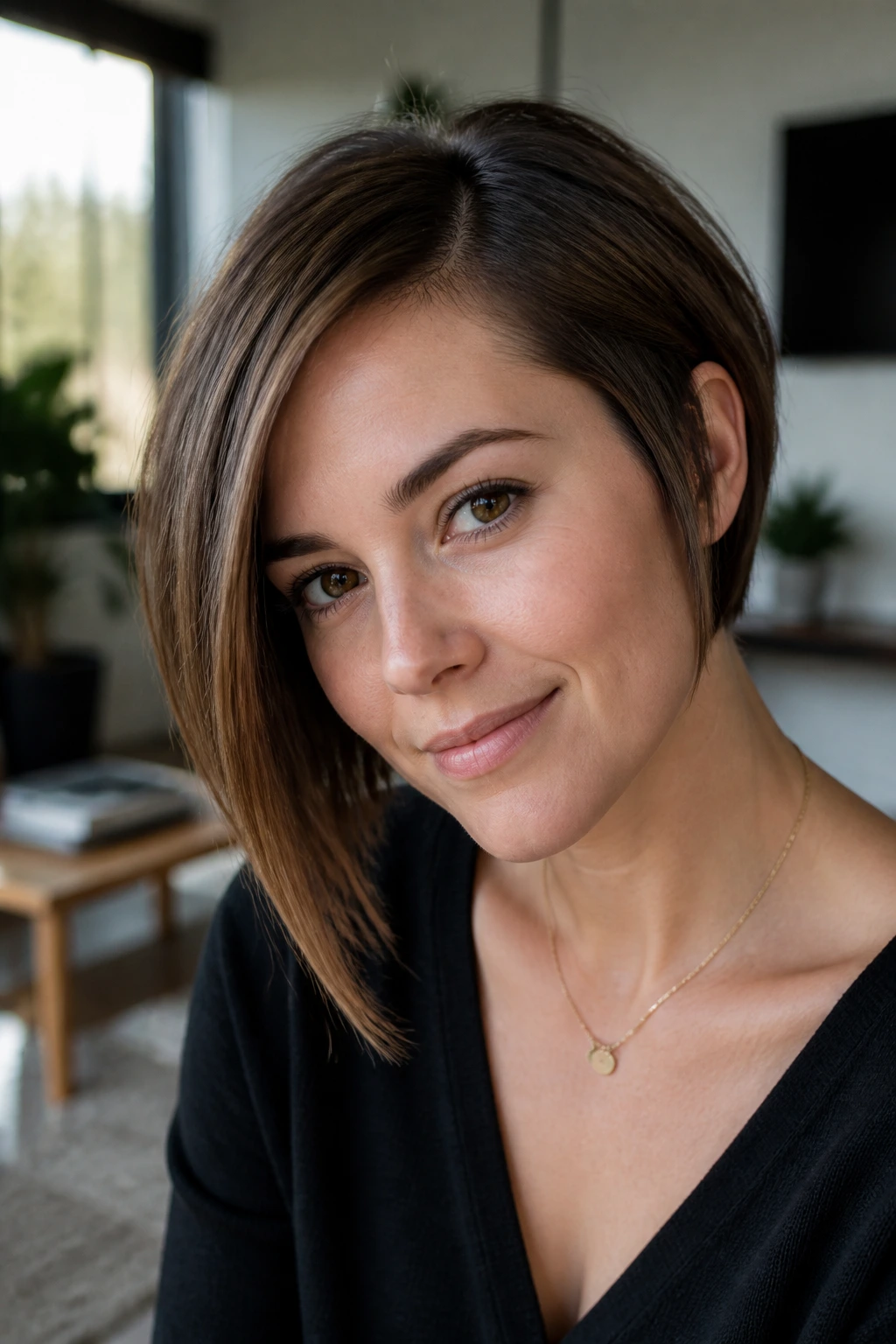
A subtle asymmetrical bob can be very flattering on a round face because it creates motion where the eye expects symmetry. One side falls a little longer, and that small difference breaks up the face shape without looking loud.
The important word there is subtle. If the difference is too dramatic, the cut starts to feel costume-like. Keep the longer side about 1 to 2 inches below the shorter one, and let the shorter side hug the jaw more closely.
This style looks especially good when the part is slightly off center. Straight hair shows the lines cleanly, while a little wave makes the asymmetry feel softer. It is a good choice if you want the bob to look deliberate and a little sharp.
10. Micro-Stacked Nape Bob for a Clean Neckline
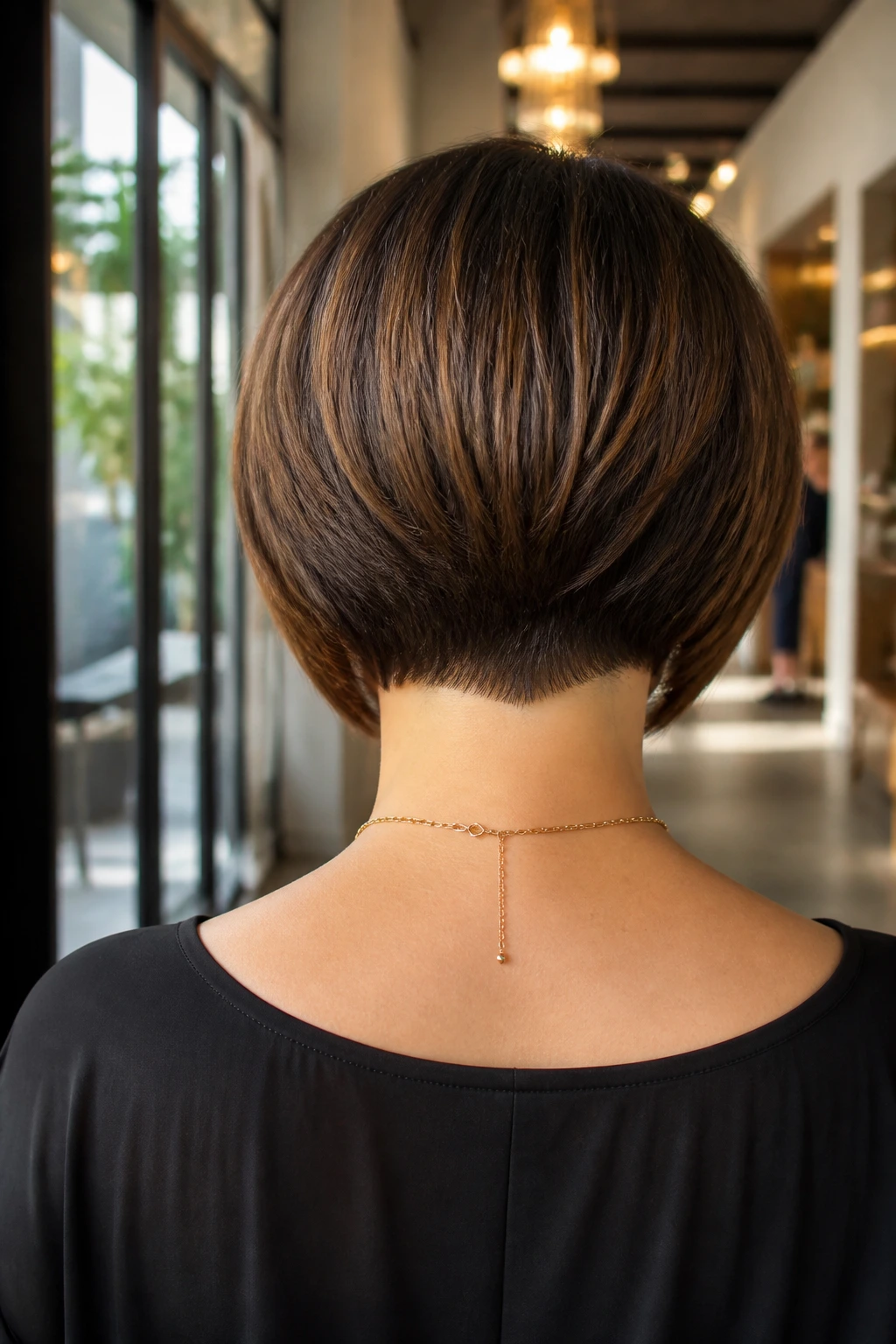
This is the cut for someone who likes a neat neck and a shape that stays tidy. The stack at the nape is small, almost hidden, but it gives the back enough lift to keep the whole bob from collapsing against the face.
The Shape Behind It
A micro-stack is not about big volume. It’s about a small angle that lifts the hair off the neck and makes the front pieces feel longer by comparison. That matters on a round face because it keeps the eye moving instead of stopping at the cheeks.
- Best for straight to lightly wavy hair.
- Ask for a soft neckline taper.
- Blow-dry with the head slightly forward for root lift.
The result is crisp without being harsh. Some people want that kind of precision and never look back.
11. Feathered Crown Bob for Fine Hair

Fine hair needs help in the crown, not a lot of bulk at the ends. That’s why a feathered graduated bob works so well. It keeps the shape airy up top while the back still has enough structure to show that stacked bob line.
A round face benefits when the crown sits a little higher than the cheek area. Feathering helps that happen without making the cut look thin or wispy. The trick is to remove weight carefully, especially if the hair is already soft and delicate.
Use root spray, not a heavy cream, and blow-dry with a round brush lifting the top sections first. If the crown lies flat, the face looks wider. If the crown sits up even a little, the bob starts working in your favor.
12. Thick-Hair Bob with Hidden Internal Layers
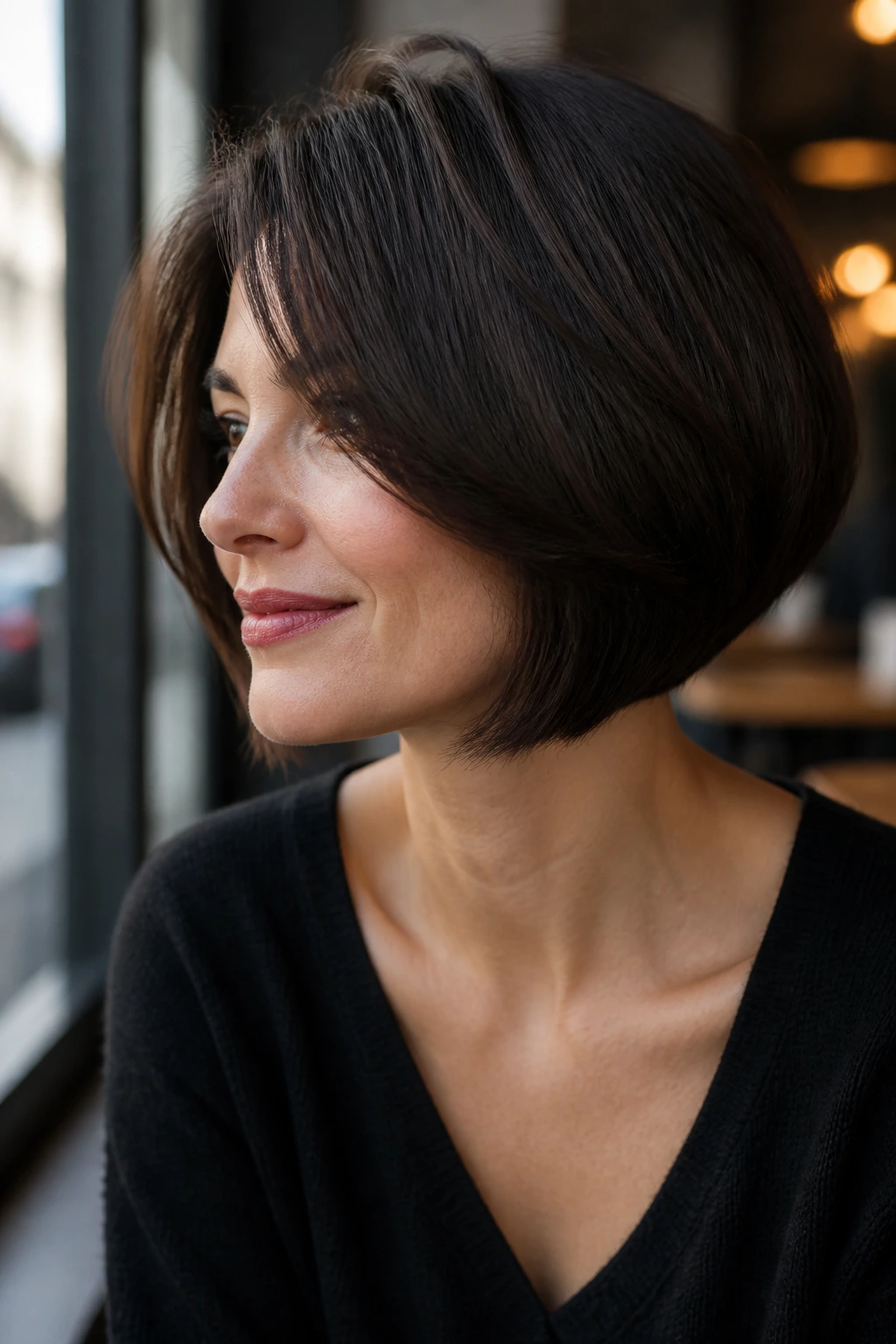
Can thick hair wear a short bob without turning into a triangle? Absolutely, but the bulk has to be removed from inside the shape, not hacked off the outside. Hidden layers let the outline stay strong while the inside loses weight.
That is what makes this version so useful for round faces. The bob keeps its sleek perimeter, which means the cheek area doesn’t puff out. At the same time, the stylist can thin the interior enough that the hair bends instead of ballooning.
Where the Weight Should Stay
Keep the strongest line around the outer edge and the front corners. That gives the cut a clean shape. The internal layers should live higher up and closer to the crown.
- Ask for internal debulking, not choppy surface layers.
- Keep the perimeter smooth and visible.
- Use a paddle brush if you want a flatter finish.
This one is practical. Very practical. And that’s a good thing.
13. Razor-Cut Bob with an Airy Perimeter
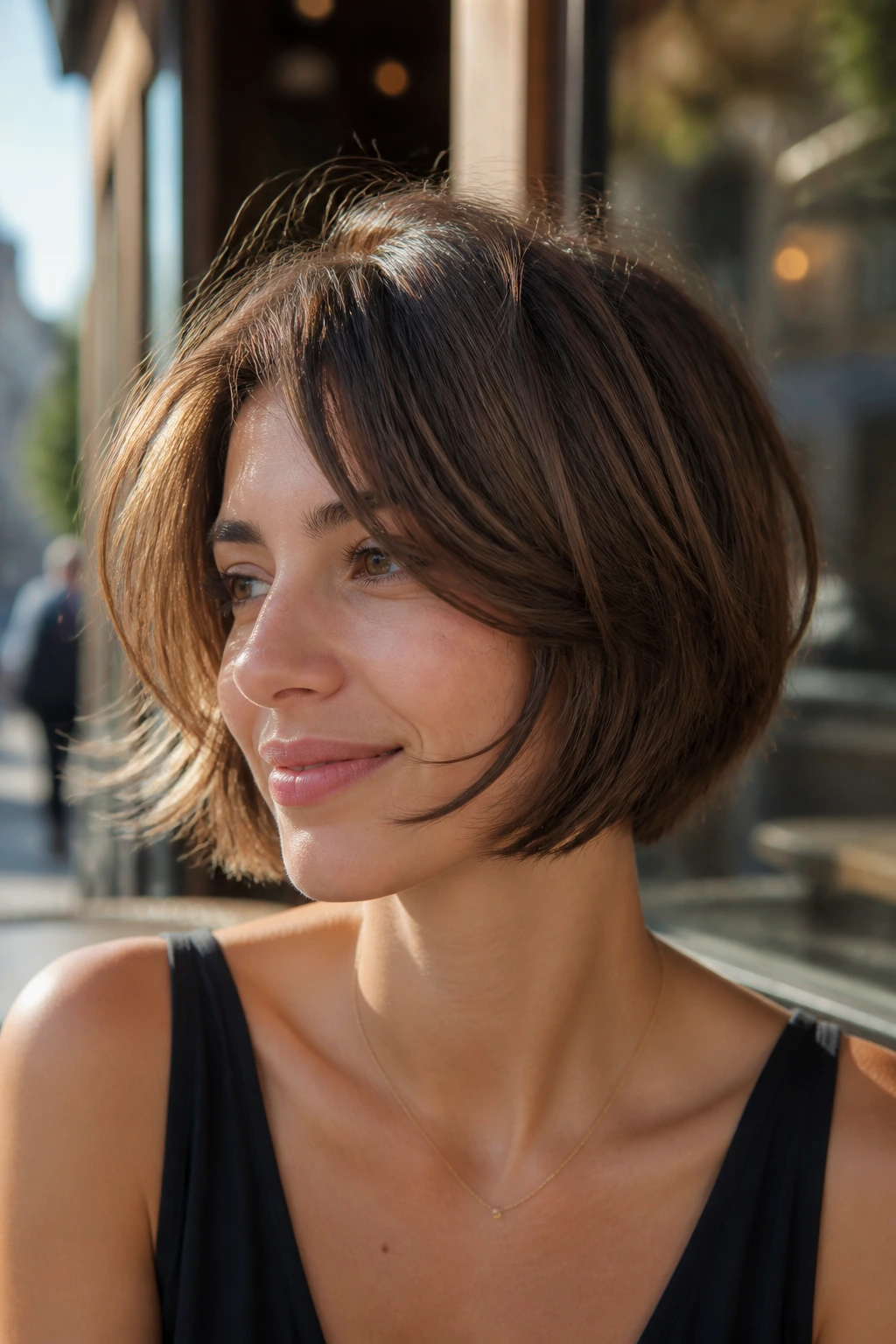
A razor-cut bob can look light and modern on a round face, but only if the hair can take it. Healthy medium hair usually handles the softer edge best. Fragile or over-processed hair can go frayed fast, and nobody wants that.
The reason it works is simple: the razor creates a less solid line. That lighter perimeter stops the bob from sitting like a shelf at the cheeks. Instead, the ends move, which keeps the face from feeling boxed in.
I would not overdo the texturizing here. A little air is enough. Too much slicing, and the cut loses shape. Use a light cream or serum, keep the ends separated, and let the movement do the job.
14. French-Inspired Bob with a Soft Edge
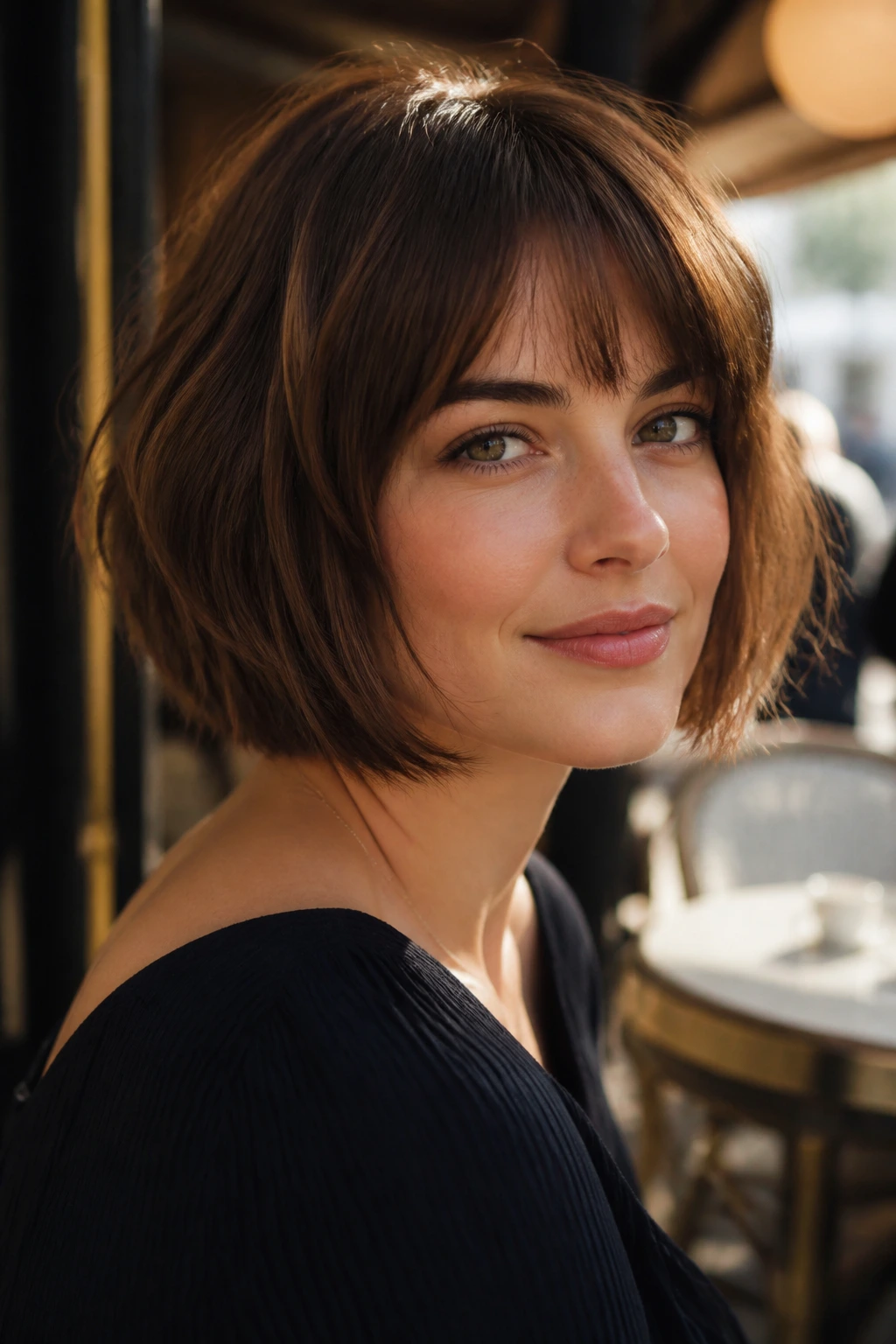
The French-style bob gets a lot of attention, and for good reason. It has attitude without needing a lot of length. On a round face, though, it needs a few adjustments so it doesn’t shorten the face too much.
The front should stay a touch longer than the classic chin-skimming version, and the edge should be softened instead of blunt. A small fringe can work if it’s broken up and airy. I like this cut when it has a little bend, not a hard polished curve.
It’s a good option if you want charm more than sharpness. The shape feels easy, almost casual, but it still needs careful cutting. Too short at the sides and it closes in the face. Too heavy in the fringe and it loses that open look.
15. Face-Framing Bob with Chin-Length Front Pieces
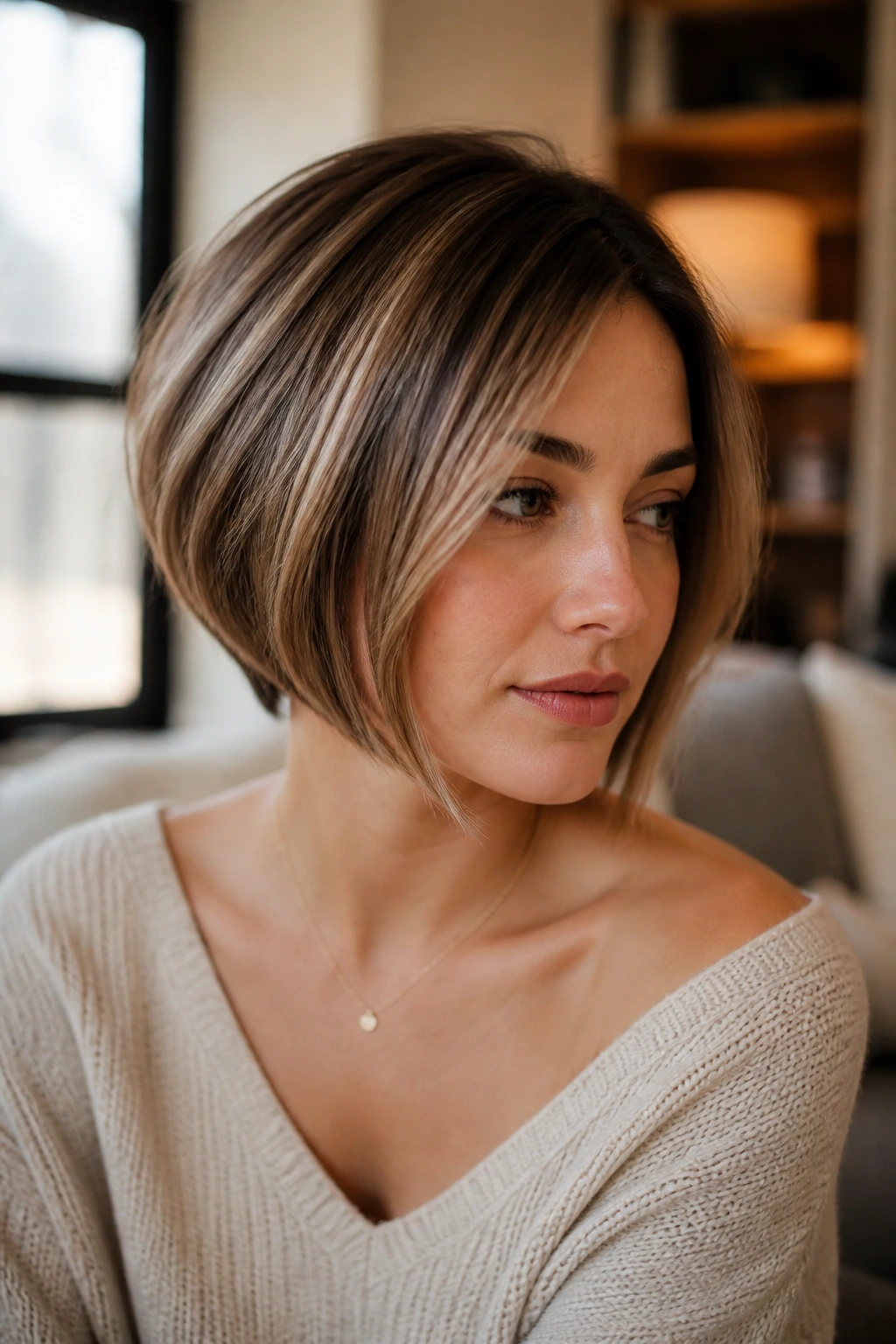
When the cheeks are the widest point of the face, longer front pieces help a lot. They act like side panels that guide the eye downward. That is why a face-framing bob is such a useful shape for round faces.
What to Ask For
The front should graze the chin or sit just below it, while the back stays stacked and compact. That difference gives the face a longer outline without making the style feel severe. Keep the layers soft so the front pieces don’t flick outward too much.
- Front corners: chin length or slightly below.
- Back: shorter and snug to the nape.
- Finish: smooth bend, not a big curl.
This is one of those cuts that looks simple in the mirror but takes real skill to shape well. The small details matter.
16. Inverted Bob with a Strong Forward Angle
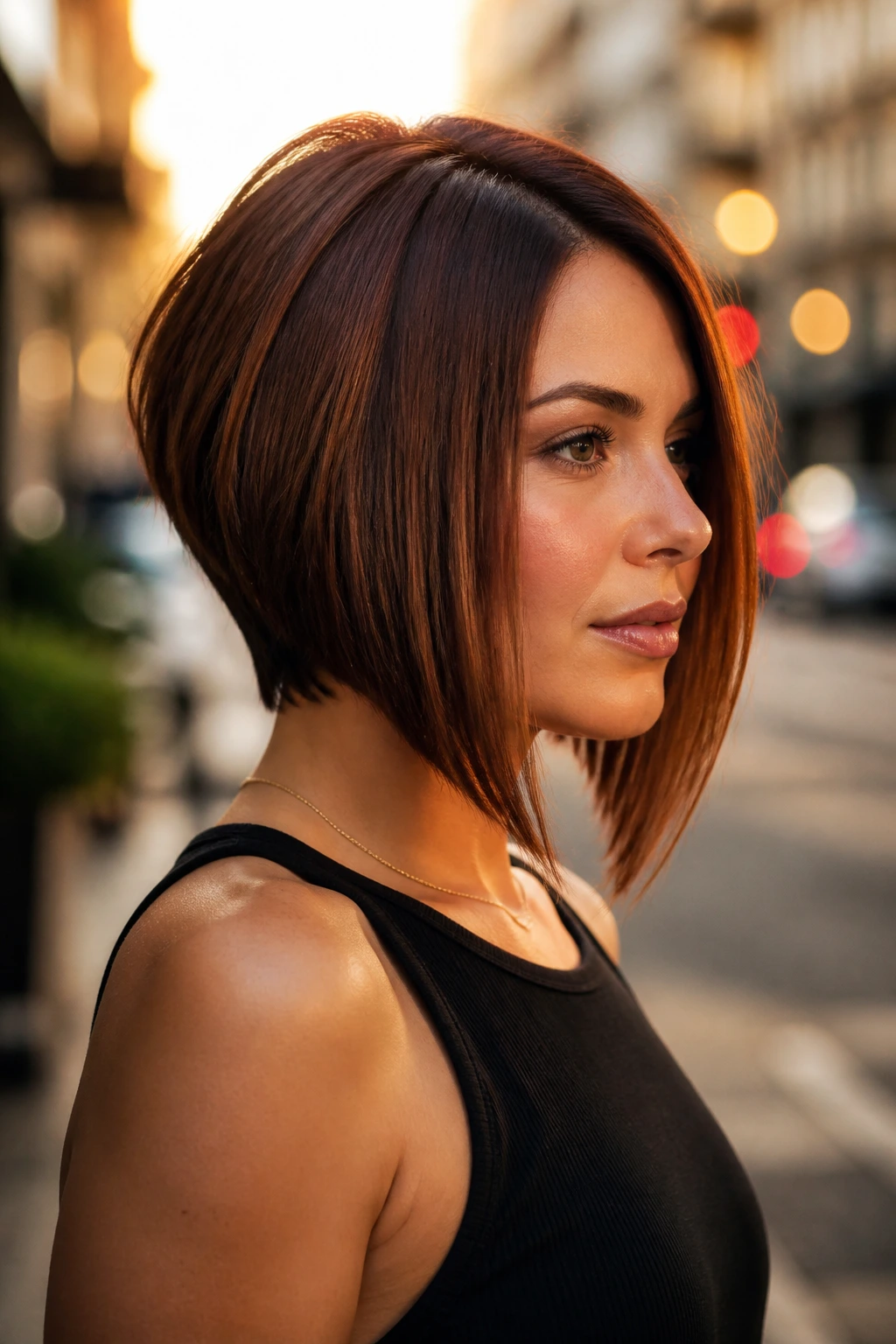
Why does the inverted bob stay so popular? Because the forward angle works. It pulls the shape away from the cheeks and sends the eye toward the front, which is useful on a round face that needs more length than width.
The back is shorter, often noticeably so, but the front should not drag too low. If the angle gets too steep, the cut can feel stiff. Keep it controlled, with enough stack in the back to build lift and enough length in front to soften the jaw.
This cut is a good match for someone who likes a little edge in their hair. It has shape. It has purpose. And it photographs well without needing much styling, which is a nice bonus.
17. Tapered Neckline Bob with a Clean Base
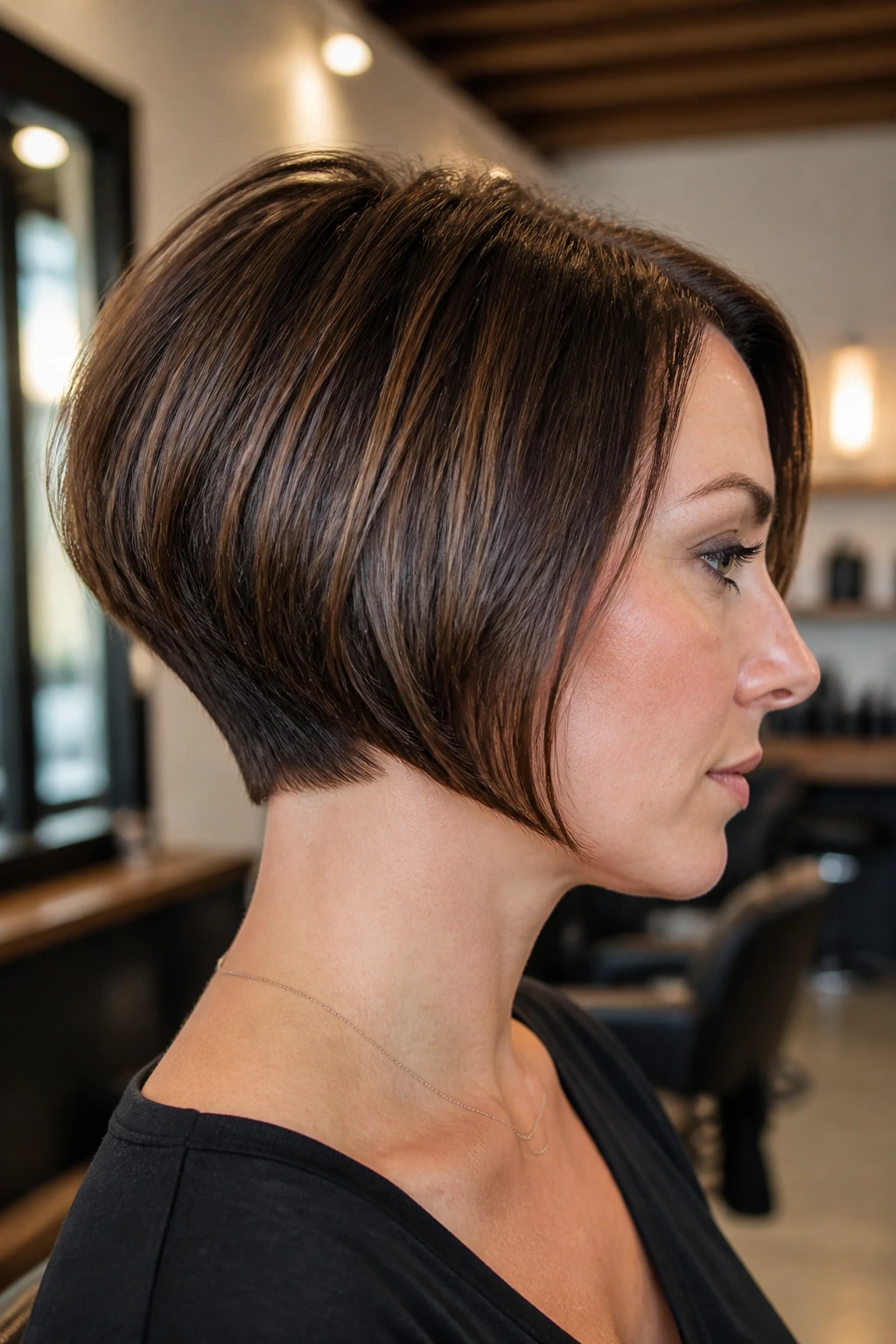
A tapered neckline bob is for someone who wants the back to feel neat and close. The nape is cut to hug the neck, which keeps the silhouette from puffing out where round faces usually don’t need more width.
It’s a more understated version of the stacked bob. The shape is less about obvious layering and more about clean construction. That makes it great for straight hair, active days, or anyone who hates feeling hair touching the collar.
The front can still carry a little length, which matters. If the front is too short, the face can look fuller than intended. Let the taper do the quiet work in the back, then use the front pieces to keep the line soft.
18. Root-Lift Blowout Bob with a Smooth Round Brush Finish
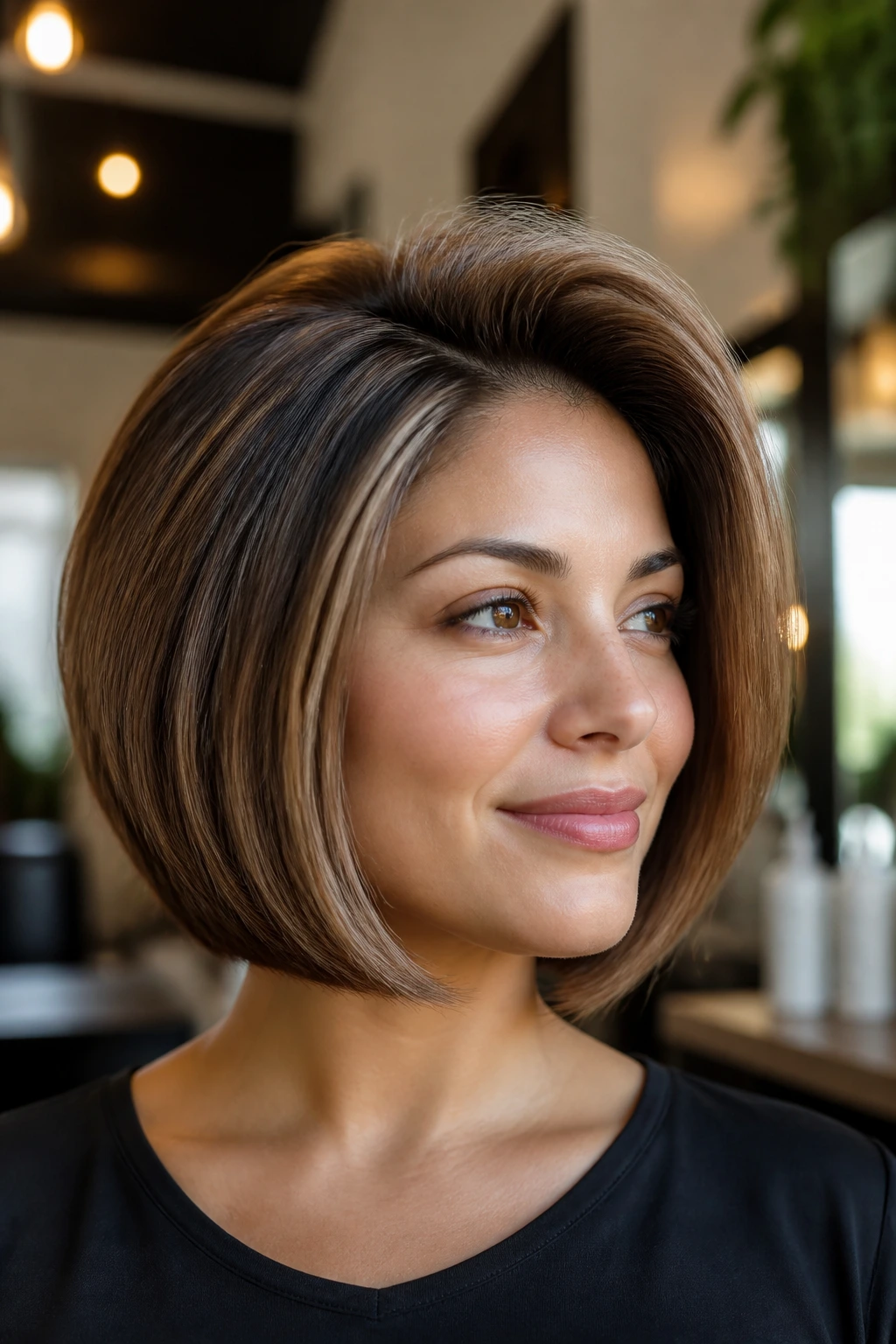
A good blowout can change how a bob reads, especially on a round face. Lift at the roots gives height, and height is useful. The ends should bend under just enough to keep the line tidy, not puffed out.
What I like here is the contrast: a smooth crown, a lifted root area, and a controlled finish around the jaw. That combination makes the face look longer without making the hair feel stiff. A little mousse at the roots goes farther than people expect.
If you use a round brush, roll the top sections away from the face and hold each one for a few seconds as it cools. That cooling step matters. Skip it, and the lift drops by lunchtime.
19. Hidden-Graduation Bob with a Blunt-Looking Surface
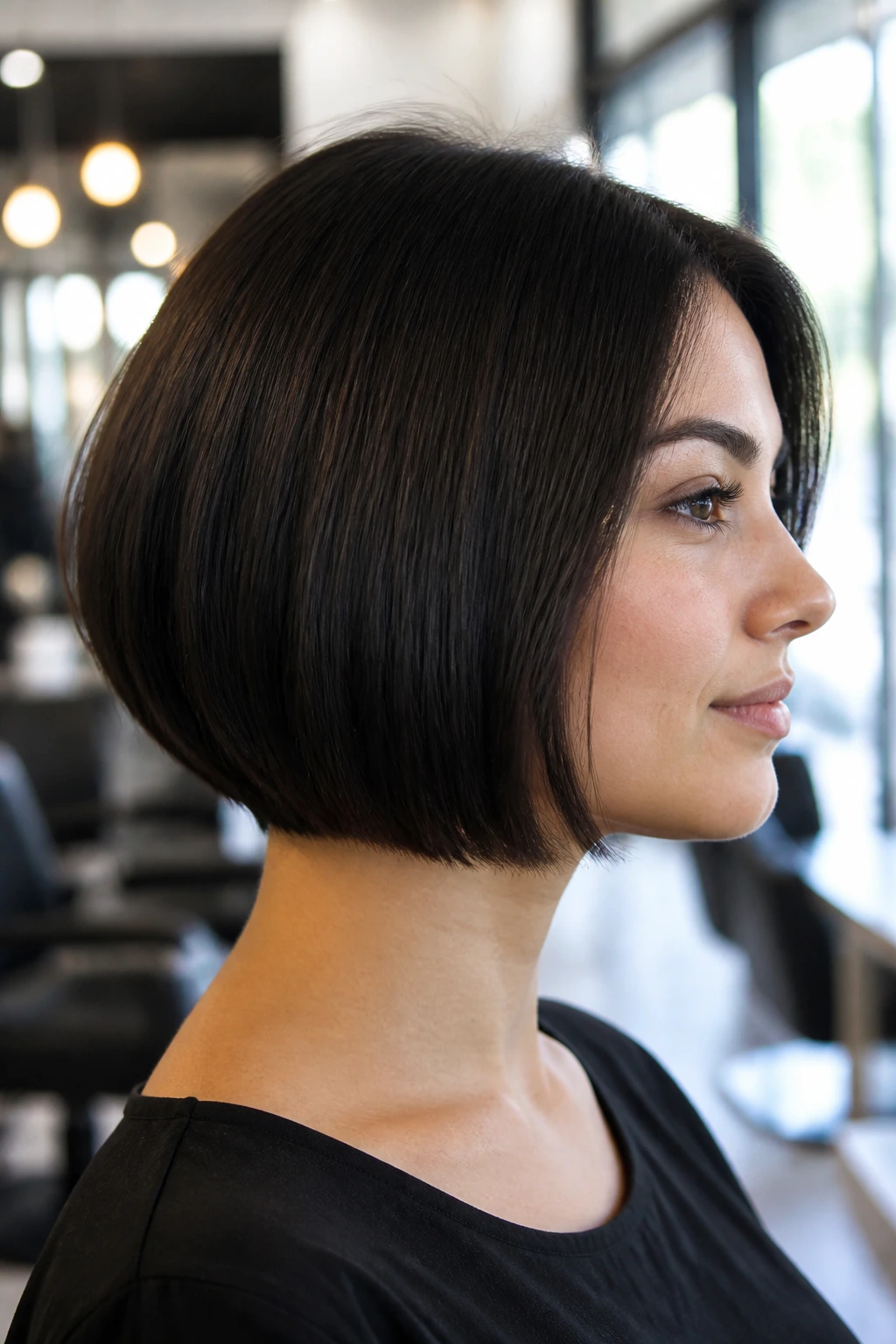
This one is sneaky. From the outside, it looks like a clean, nearly blunt bob. Underneath, the graduation is doing the heavy lifting, building shape through the back so the whole cut sits better on a round face.
That hidden structure is useful if you like polished hair but don’t want a visibly layered style. The line feels simple. The shape is not. The internal stack gives the back a little lift, while the outer edge stays smooth and calm.
I’d recommend this to anyone who wants a bob that grows out gracefully. It doesn’t scream for attention. It just keeps working in the background, which is often the smartest kind of haircut.
20. A-Line Bob with Beveled Ends
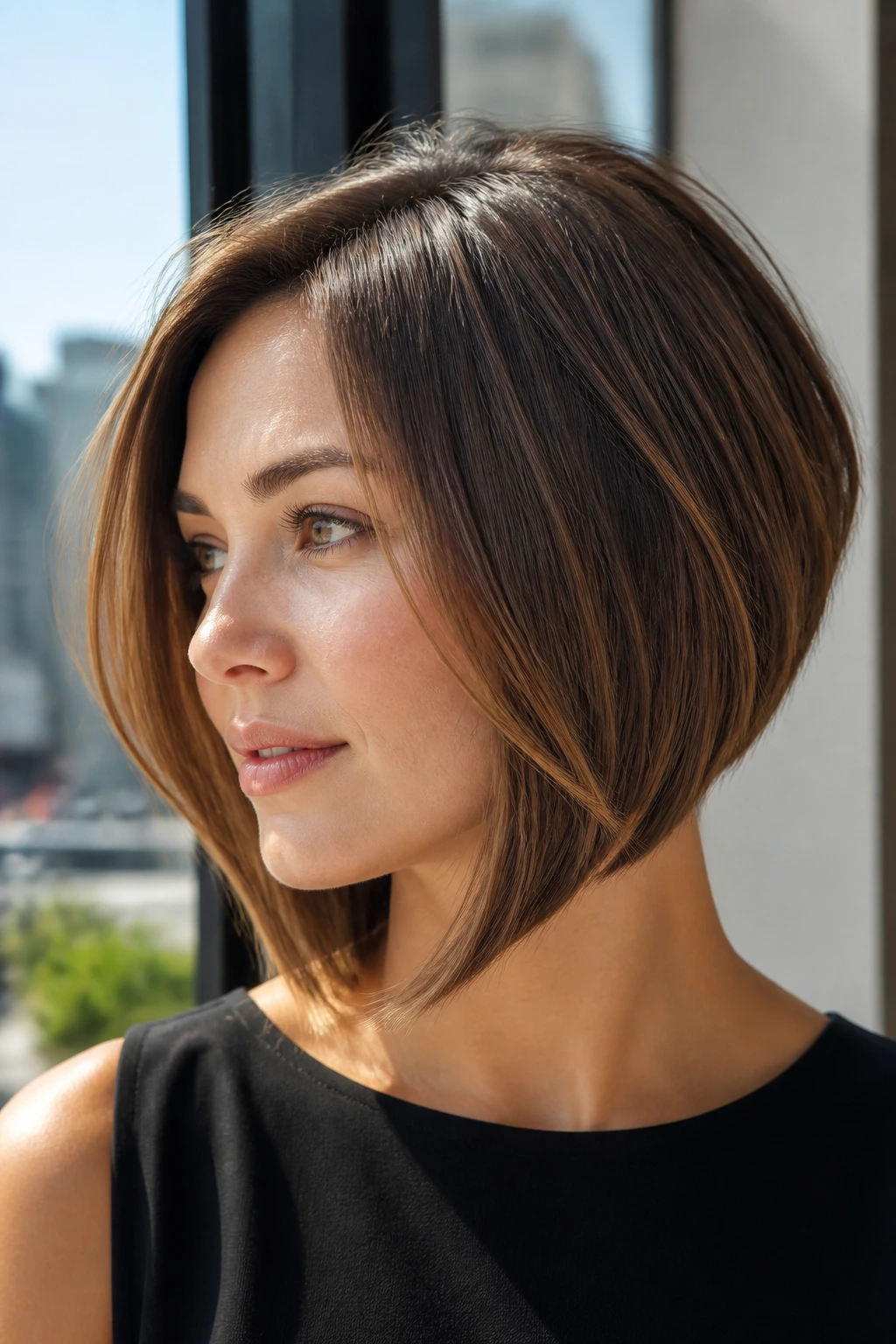
A gentle A-line bob gives you one of the clearest diagonal lines you can put on a round face. The front is longer, the back is shorter, and the perimeter turns under just enough to stay soft instead of boxy.
The bevel matters here. A hard, straight edge can make the cut feel too sharp. A beveled finish bends the line in a way that flatters the jaw and keeps the style from looking severe. It’s a clean shape, but it still has movement.
This version suits straight hair especially well. If your hair is naturally wavy, the bevel may need a bit more styling to stay visible. Still worth it. The angle does a lot of the face-flattering work.
21. Flipped-Out Graduation Bob

A flipped-out bob sounds playful because it is. The ends turn away from the face instead of curling inward, which keeps the sides from closing in on a rounder shape. That little flip adds lightness.
The style is also good when you want movement around the jaw without width. Inward bends can make the face feel tucked in. Flipped ends open the perimeter and give the cut a more relaxed feel. Use a flat iron or round brush, then turn the ends out just slightly.
This is not the most formal version of a graduated bob, and that’s part of the appeal. It feels a bit lively. A bit undone. Easy to wear, too.
22. Center-Part Bob with Equal Front Corners
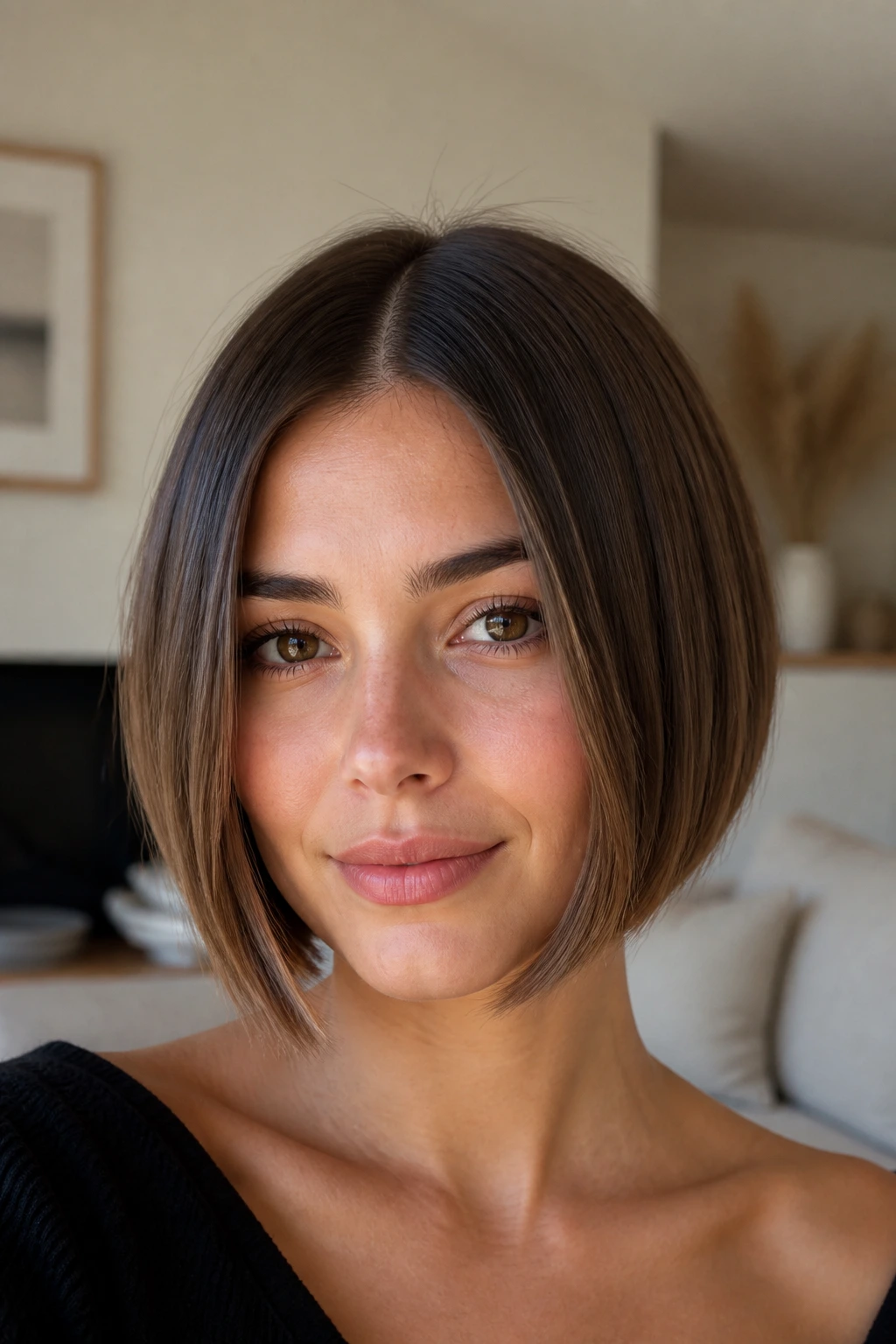
Yes, a center part can work on a round face. No, it does not have to be avoided. The catch is that the front corners need enough length to pull the eye down, and the nape has to stay short enough to keep the shape from spreading sideways.
This is a cleaner, more symmetrical look than the side-part versions. It works best when the face already has some natural balance or when you like a simple, calm line. The center part can actually make the face look longer if the front pieces fall straight and narrow past the cheeks.
I would not pair a center part with a blunt chin-length bob on a round face. That combination can feel too wide. Give it the graduation. Give it the corners. Then let the middle part do its work.
23. Deep Side-Part Bob with Lifted Temple Volume
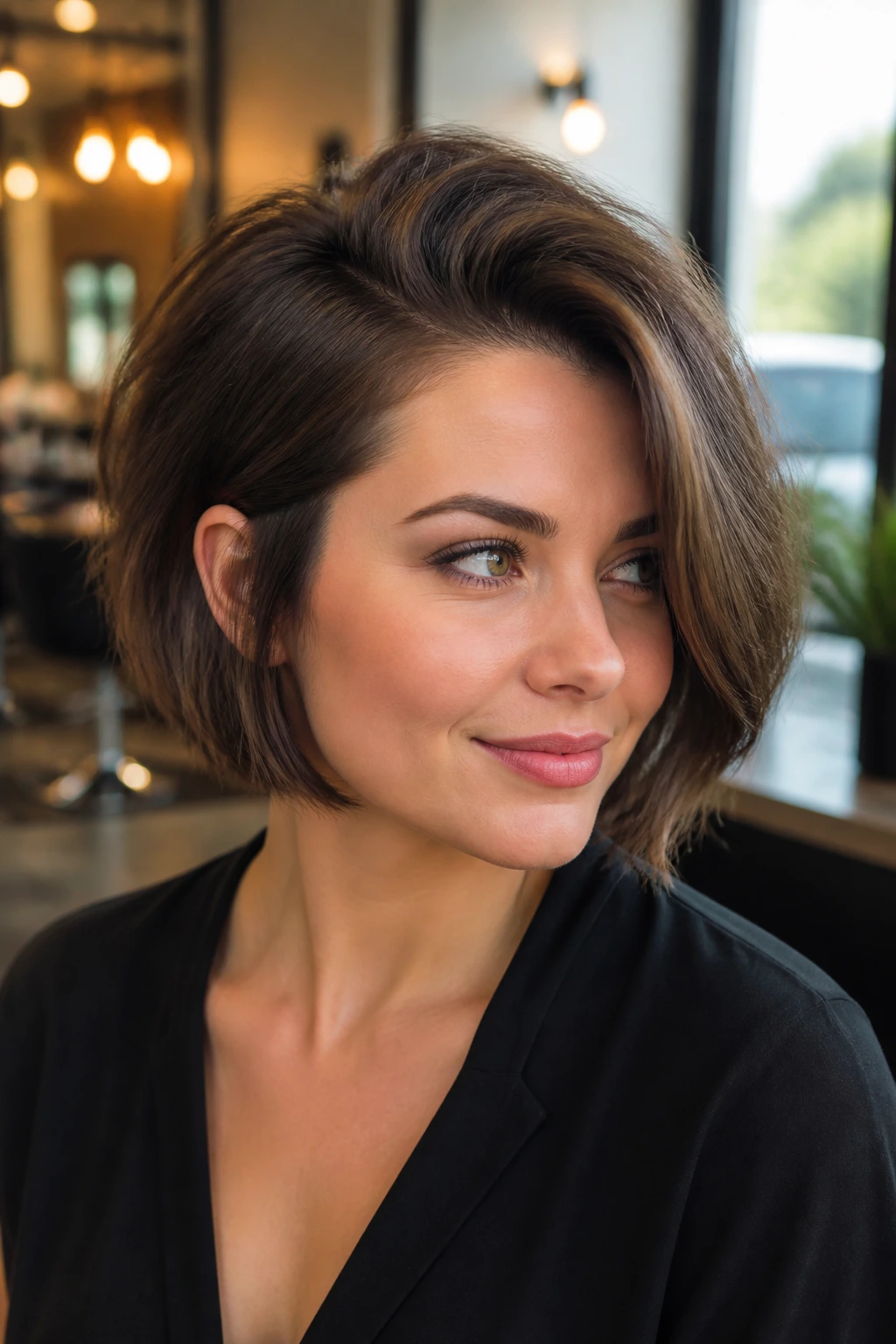
A deep side part is one of the fastest ways to create height, and height helps a round face. The lift happens at the temple and crown, which shifts the shape upward instead of outward.
This works best when the roots have a little support. A root spray or mousse at the part line will help the hair stay up instead of sinking flat against the scalp. The bob itself can stay fairly sleek, which keeps the style from getting too big.
I like this version when someone wants the haircut to feel slim but not severe. The volume is all in the right place. Not at the cheeks. Not at the jaw. Right up top, where it earns its keep.
24. Softly Rounded Bob with an Undercut Nape
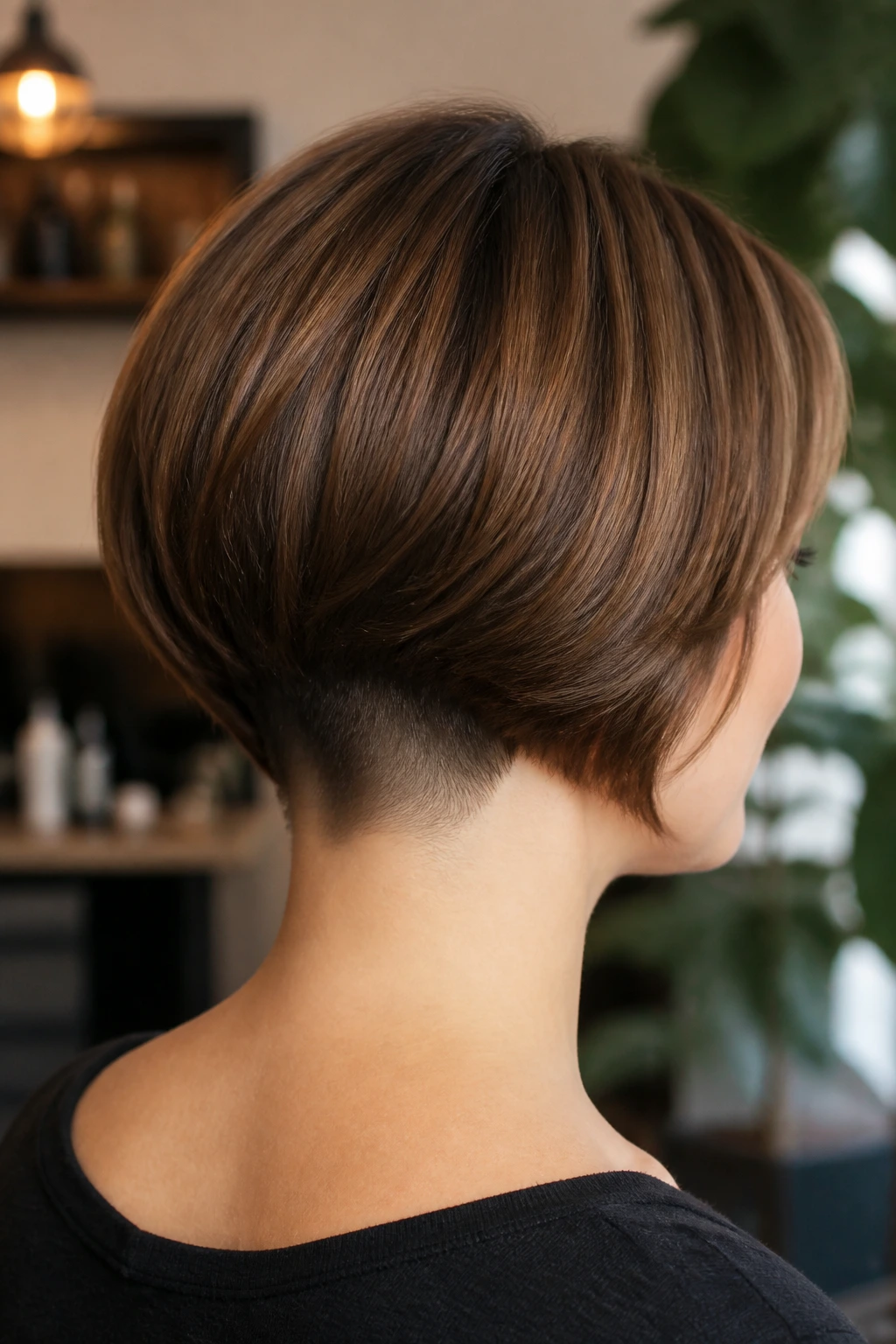
This is a smart choice for very thick or coarse hair. The hidden undercut at the nape removes bulk where the hair tends to sit heavy, while the top layer stays soft and rounded. The result looks controlled, not bulky.
Who Should Ask For It
If your hair grows wide at the back or swells in humidity, this cut can save a lot of daily annoyance. It also helps if you want a short shape that sits close without feeling mushroom-like.
- Best for dense or coarse hair.
- Ask for a hidden nape undercut.
- Keep the top layer long enough to cover the undercut completely.
The outline stays soft, which matters. You want control, not a hard edge.
25. Sliced Bob with Translucent Ends
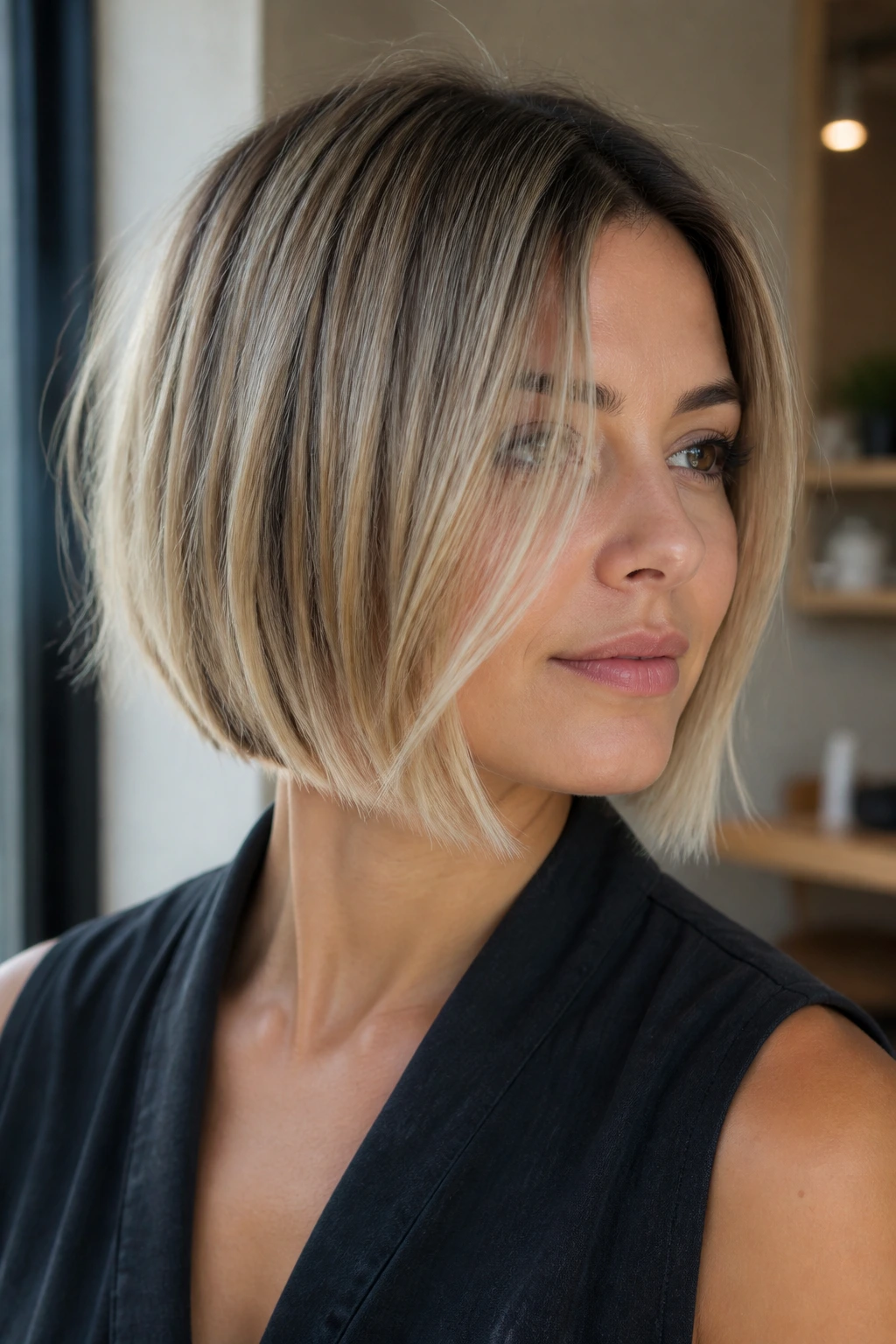
A sliced bob takes weight out of the ends so the hair looks lighter and more transparent at the edge. That can be a huge win on a round face, because a heavy end line often makes the cheeks look fuller.
The cut should still have structure. This is not about making the hair thin or wispy. It’s about allowing little gaps of movement through the perimeter so the bob moves instead of sitting in a single flat plane. Straight hair shows this especially well.
Think of it as the opposite of a shelf. The ends should float a little. If you can see the shape but still feel movement when you turn your head, the slice is working.
26. Wavy Bob with Air-Dried Texture
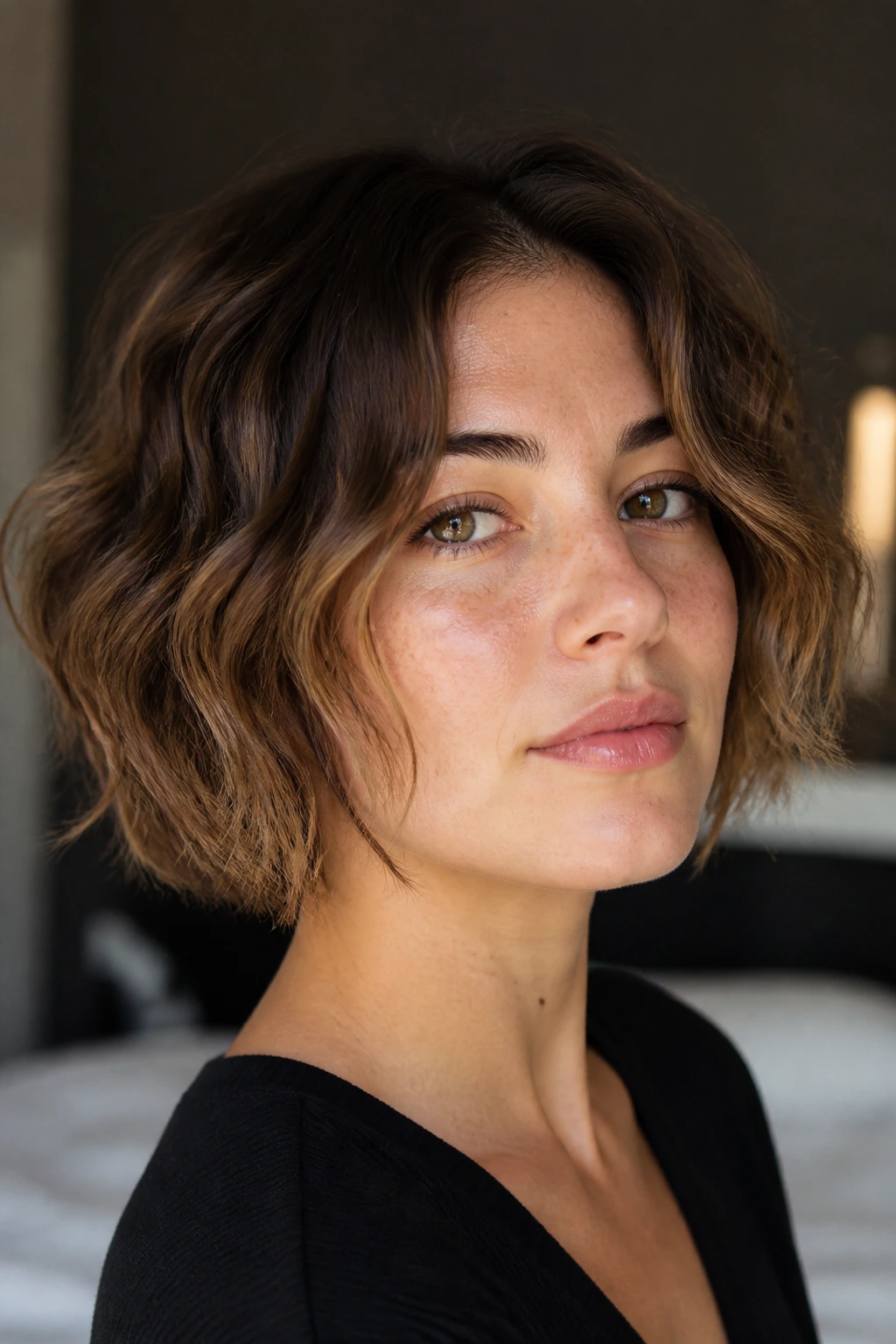
A wavy bob is a strong option when your hair has natural bend and you want the cut to look easy. The waves break up the roundness of the face, especially when the front pieces are left a bit longer and the nape is trimmed tight.
The styling should stay light. A cream for softness, a little mousse for lift, and then hands off. Overworking waves can make them frizz out, and frizz at the sides adds width fast. Let the texture live mostly in the lower half of the cut.
This is one of the few short bob shapes that gets better when it’s not over-polished. Air-dry it. Scrunch it. Leave a few imperfections. That’s where the charm sits.
27. Bob with an Eyebrow-Grazing Fringe
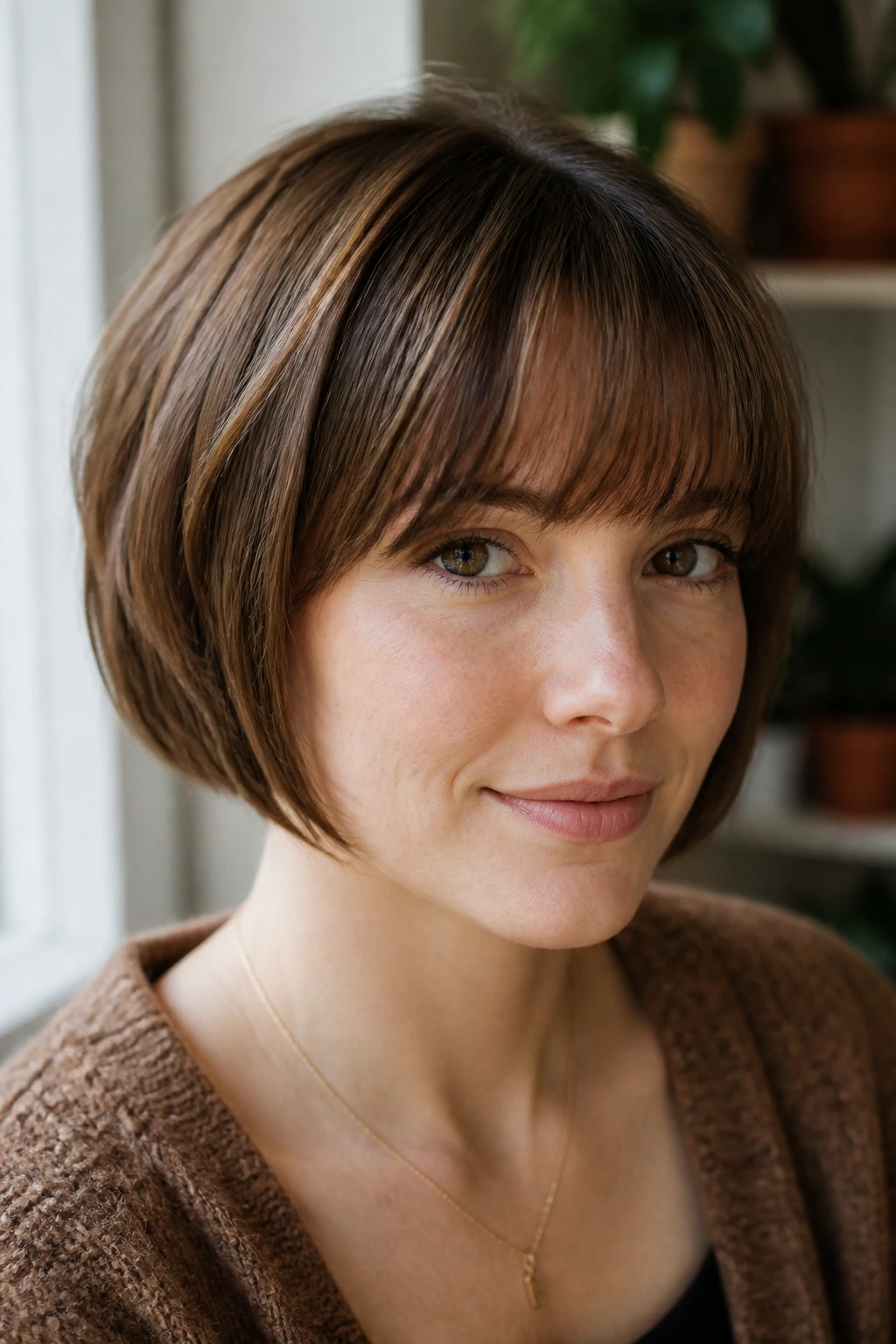
A fringe can be a tricky thing on a round face, but it is not off limits. The difference lies in density and length. A heavy straight fringe tends to shorten the face. An eyebrow-grazing fringe with a little texture opens the features up instead.
The bob underneath should stay graduated and compact. The fringe should be light enough to separate slightly, not sit like a curtain across the forehead. If you want to soften the look further, let the fringe taper a little at the sides so it blends into the front pieces.
This cut is especially nice if you like your eyes to do the talking. It frames them well. It also keeps the bob from feeling too grown-up or too severe, which matters if you want the haircut to have some personality.
28. Sculpted Low-Maintenance Bob with Natural Movement
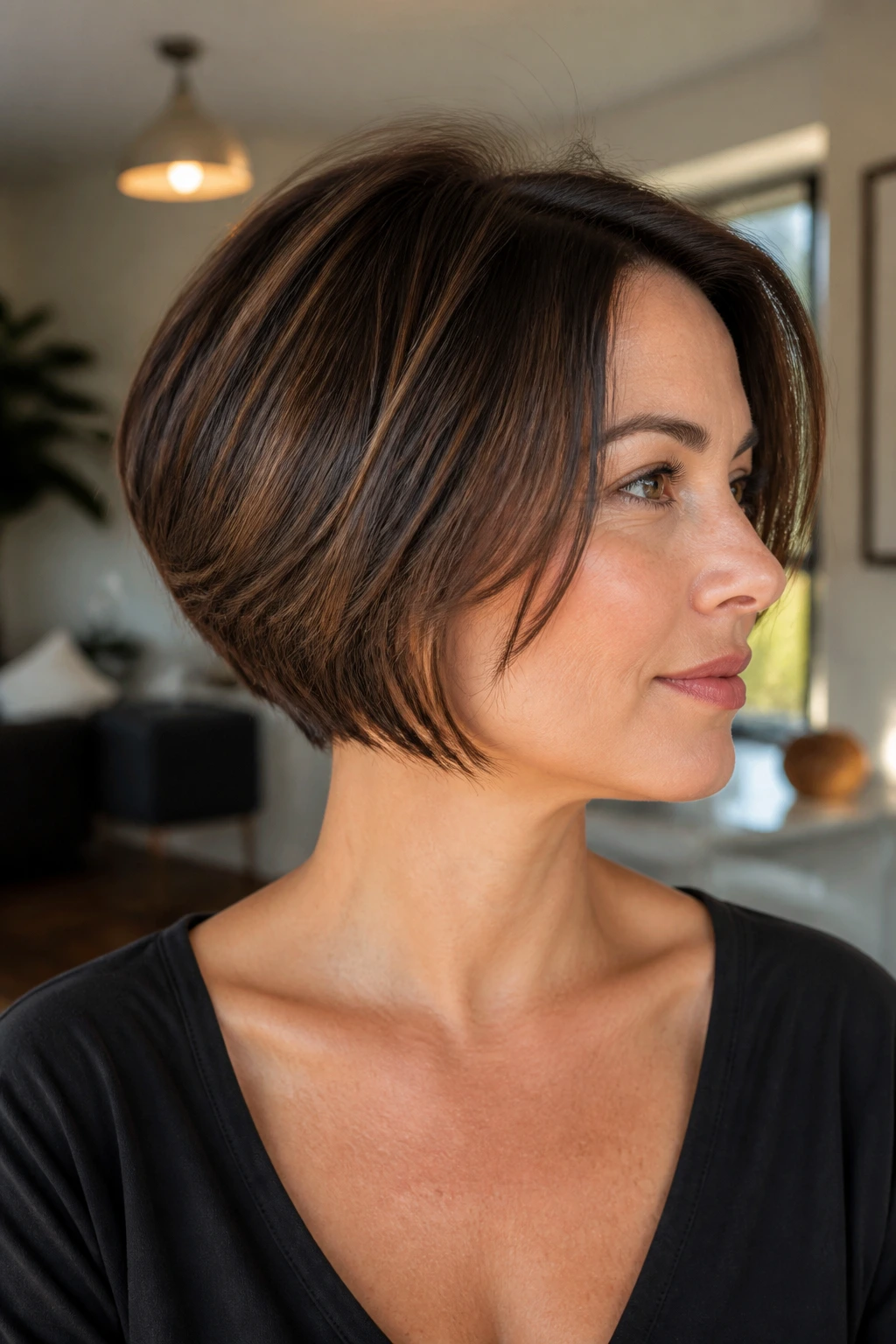
If you want one version that grows out well, stays neat, and does not demand a big styling routine, this is the one I’d point to. The shape is sculpted enough to flatter a round face, but soft enough that it still looks good when you skip a perfect blowout.
The secret is restraint. The back needs enough graduation to lift the nape, the front needs enough length to slim the cheeks, and the edges need to stay clean without being hard. That balance is what makes a bob look intentional after a few weeks of grow-out.
It is the haircut I’d choose for someone who wants polish without babysitting the mirror. A little bend, a clean part, and a smooth neckline are enough. If the cut is designed well, it keeps doing its job long after the salon visit ends.
