



Round faces and bobs can turn on you fast. Cut the line too blunt at the cheek, and the whole style can widen the face instead of shaping it.
The sweet spot is usually a medium wavy bob that sits below the fullest part of the cheeks, bends a little instead of hanging flat, and leaves some breathing room around the jaw. That extra movement matters more than people think. A soft wave can do what a hard line cannot: it breaks up the circle.
I keep coming back to three things for round faces — a little lift at the crown, some softness around the cheekbones, and ends that do not stop dead at the jaw. Get those right and the haircut starts doing the heavy lifting for you. Get them wrong, and even a nice cut can feel off.
Some of these looks are tidy and polished. Others lean messy in the best way. The right one depends on how much time you want to spend with a blow-dryer, a curling wand, and a can of texturizing spray.
1. Soft Layered Medium Wavy Bob for Round Faces

If you want the safest place to start, this is it. A soft layered medium wavy bob for round faces gives you movement without a lot of drama, and that makes it easier to wear day after day. The layers take some weight off the sides so the haircut does not puff out at the cheeks.
Why It Flatters a Round Face
The part should sit a little off center, not pinned dead in the middle. That small shift pulls the eye diagonally across the face, which helps the face read a bit longer. The waves should begin around the mid-lengths, not right at the roots, so the top stays smooth and the sides stay light.
Ask for layers that start around the lower cheek or chin and taper toward the ends. Do not let the stylist over-thin the bottom. You still want a solid shape. The point is air, not frizz.
- Keep the front pieces a touch longer than the back.
- Ask for soft internal layers, not choppy cuts everywhere.
- Use a 1.25-inch curling iron and leave the last inch out.
- Finish with a pea-size cream on the ends only.
Best tip: bend the hair away from the face on both sides. That little detail matters more than people expect.
2. Collarbone-Length Wavy Bob with Long Front Pieces
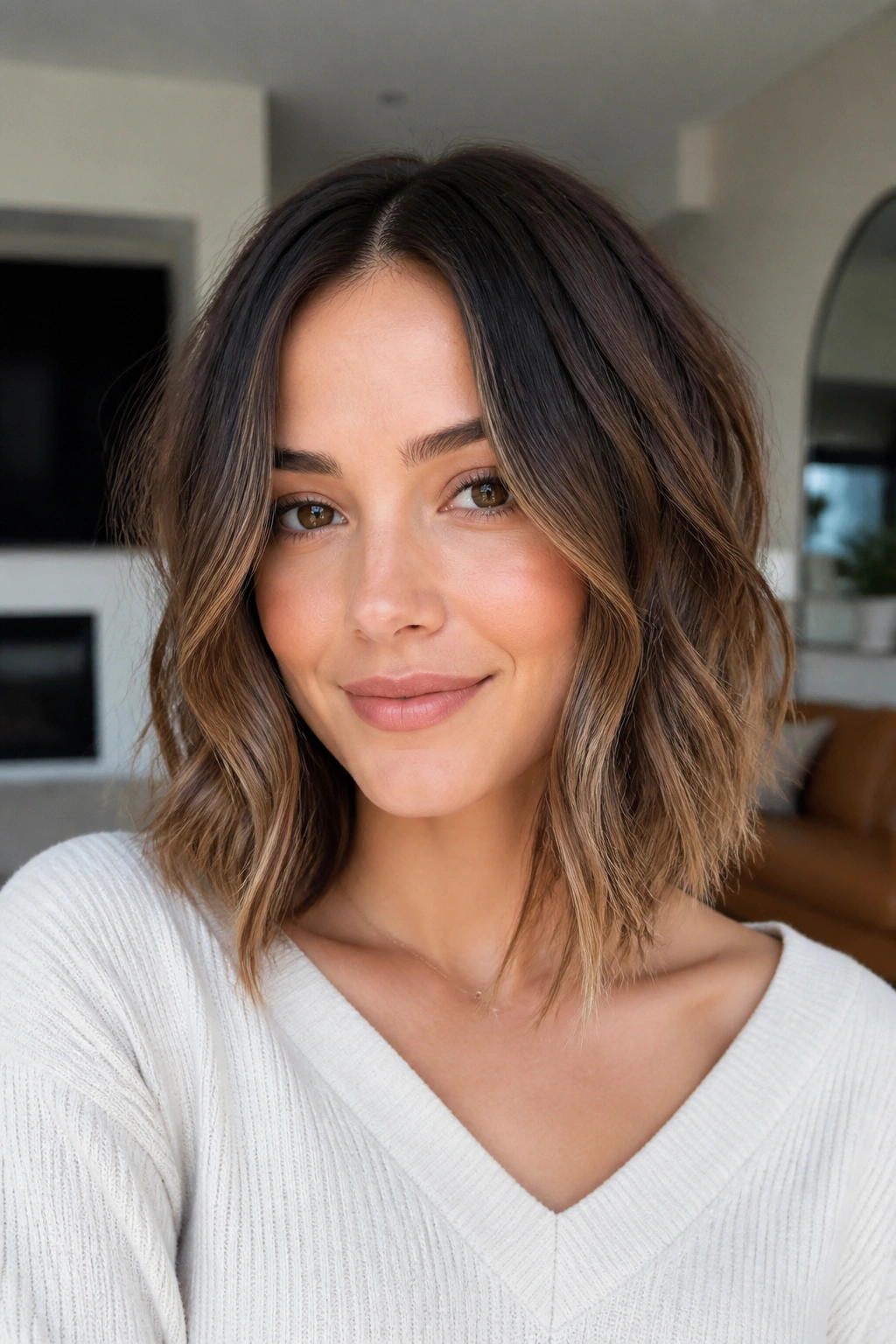
This one is a quiet shape shifter. A collarbone-length wavy bob with long front pieces gives round faces extra vertical line, and that length is a gift when you do not want the cut to stop right at the jaw. The front pieces skim past the cheeks instead of sitting on them.
The reason it works is simple. The eye follows the longer front line downward, so the face feels less boxed in. If your hair has a natural wave, the collarbone length also keeps the bend from bouncing up too high and adding width around the middle of the face.
I like this cut on medium-density hair because it has enough weight to move, but not so much that the shape drags. A clean center part can work here, though a soft off-center part usually gives a little more length to the face. Keep the front pieces loose and face-skimming. Tight curls at the front make the sides read fuller, and that is not the goal.
3. A-Line Bob That Skims the Jaw
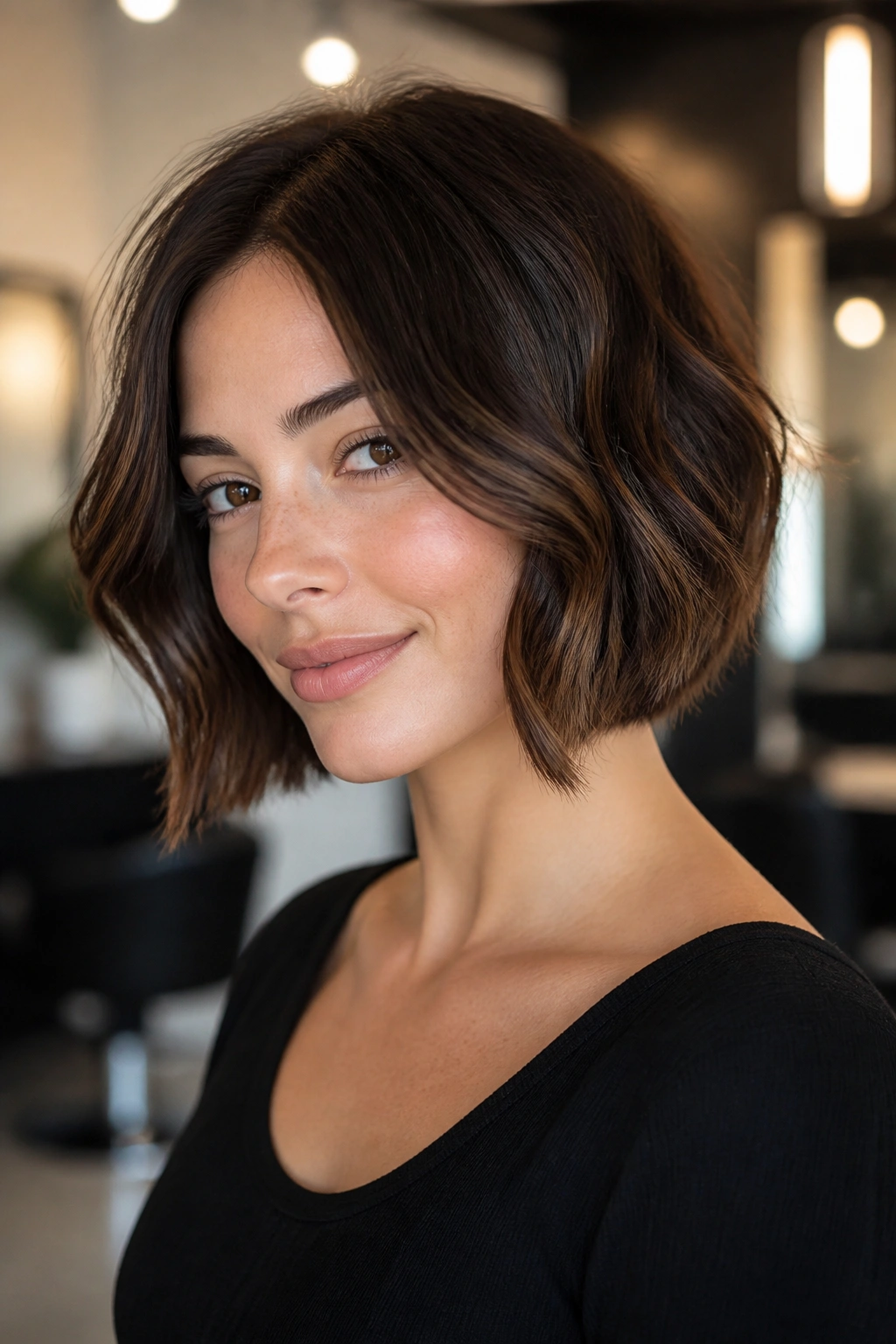
Why does an A-line bob look so good on round faces? Because it builds a diagonal. The back sits a touch shorter, the front extends a little farther, and that slant pulls the eye forward instead of letting it hover at the widest point of the face.
A medium wavy version keeps the whole thing from feeling stiff. The waves soften the line, but the underlying shape still does the work. That matters. A round face rarely needs more width; it needs a longer path for the eye to travel.
What to Ask Your Stylist
- Keep the back at the nape or just above it.
- Leave the front long enough to hit under the chin.
- Add soft texture through the mid-lengths, not the roots.
- Avoid a blunt lower edge that sits flat against the cheeks.
This cut is especially useful if your hair is straight at the top and bends only from the mid-lengths down. The angle gives the haircut structure, while the wave keeps it from feeling severe.
4. Textured Bob with Curtain Bangs

Picture a bob that lands around the chin-to-upper-neck zone, with bangs that split in the middle and fall open at the temples. That is the shape here. Curtain bangs work well on round faces because they carve out space near the center of the face and guide attention toward the eyes.
The texture matters as much as the fringe. If the ends are too smooth, the haircut can feel heavy. If they are too piecey, the whole look starts to wobble. The sweet spot is a loose, broken finish that looks touched, not teased.
- Start the bang length around the bridge of the nose.
- Keep the longest side bits grazing the cheekbone.
- Blow-dry the fringe away from the face first, then let it fall.
- Use a light spray wax only on the ends.
One small warning: curtain bangs need upkeep. Not every three days, but enough that they do not collapse into one thick curtain. That would hide the face instead of opening it.
5. Shaggy Wavy Bob with Choppy Ends

A little mess can be the whole point. A shaggy wavy bob with choppy ends works on round faces because it breaks the outline into softer pieces, so the haircut never reads like one solid circle. The shape feels lighter, almost a touch windblown, and that looseness helps.
It suits hair that already has some bend. If your wave pattern has a mind of its own, this cut usually cooperates better than a blunt bob. The choppy ends keep the edges alive, while the layers stop the sides from stacking too much bulk at the cheeks.
It should not look overdone. That is the trap. Too many layers and the bob turns fuzzy; too much product and it looks stuck. A bit of mousse at the roots, a twist-dry with your fingers, and a small amount of cream through the ends is enough for most people.
I like this cut for busy mornings. It can look better a little imperfect. That is a rare thing.
6. Asymmetrical Bob with a Longer Side

Unlike a symmetrical bob, this one gives the eye a line to follow. An asymmetrical bob with a longer side creates a built-in diagonal across the face, and diagonals are useful when the goal is to make a round face feel a bit narrower.
The difference does not need to be dramatic. Sometimes an inch or two is enough. The longer side can brush the jaw or sit just below it, while the shorter side keeps the cut from feeling heavy all around. When the waves fall through that shape, the haircut looks intentional rather than sharp.
This is a strong choice if you like structure but do not want the haircut to feel severe. It also helps if one side of your hair tends to flip out more than the other. Instead of fighting the bend, the asymmetry uses it. The result is cleaner and, frankly, easier to live with.
7. Stacked Bob with Gentle Crown Lift
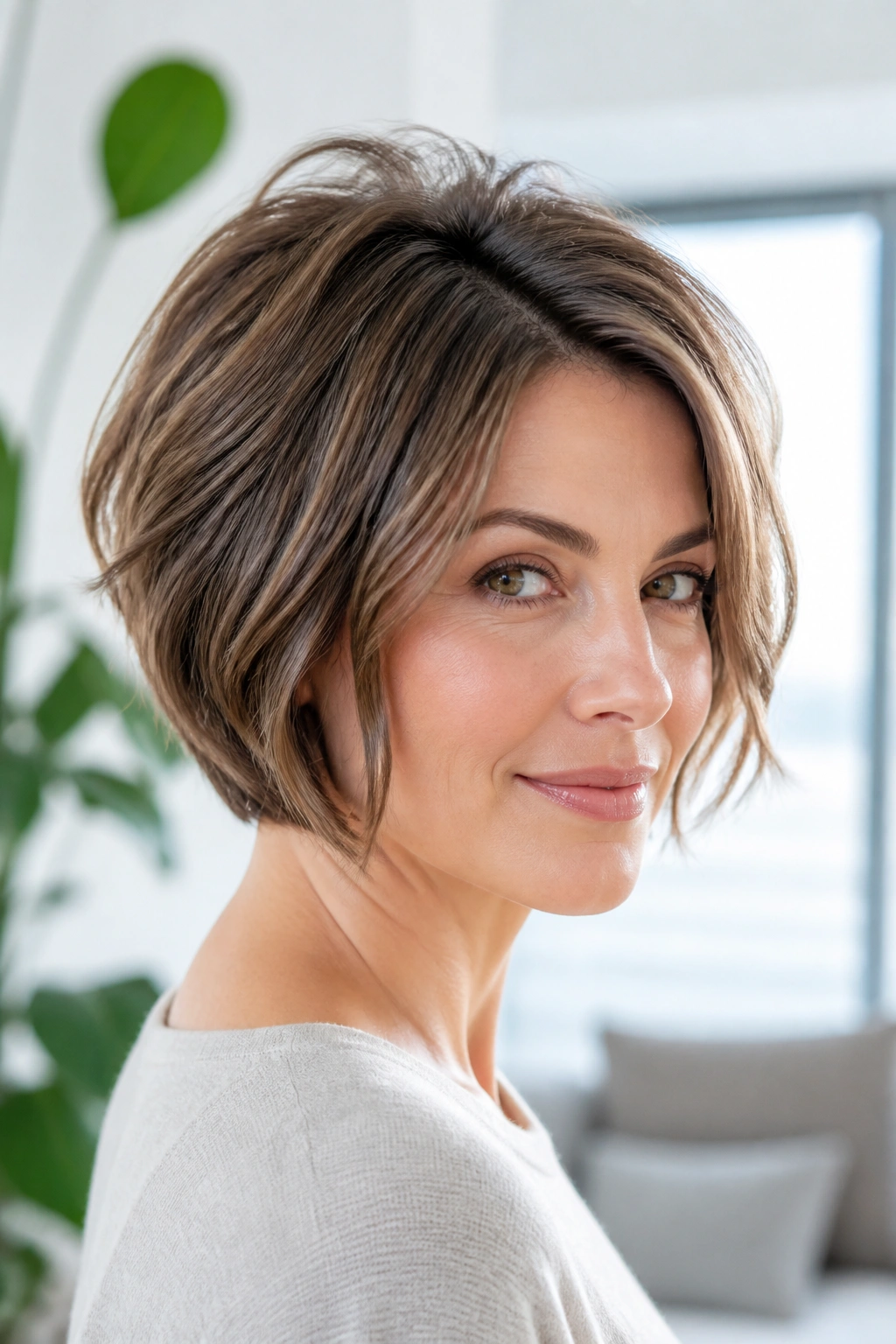
The back can do a lot of work here. A stacked bob with gentle crown lift adds shape right where round faces benefit most: above the widest point. The lift at the crown creates height, while the shorter back keeps the nape neat and the front soft.
Where the Lift Should Sit
The stacking should stay subtle. If the back is cut too high, the head can look narrow at the bottom and wide at the sides, which is a strange balance no one wants. Keep the graduation soft and let the top layer sit with a little air.
- Ask for short, controlled stacking at the nape.
- Leave the sides longer so they skim past the cheeks.
- Style with a root-lifting spray at the crown only.
- Use a round brush to direct the top upward, not outward.
This is a nice cut for thicker hair, because the stacking removes some weight without shredding the shape. It also gives medium waves a place to settle. The waves catch on the layering and hold the form better than they would in a blunt, one-length bob.
8. Longer French Bob with Soft Bends

This is the cleanest one in the group, and I mean that as praise. A longer French bob with soft bends keeps the polished outline of a French cut but stretches it just enough to suit a round face. The line should hover around the jawline or a touch below it, never right on the fullest part of the cheek.
Soft bends are the key. Hard curls make the style look too neat, almost helmet-like. A loose bend through the mids and ends gives the haircut a lived-in feel, which is where the French bob usually gets its charm anyway.
If your hair is fine, this one can be a little tricky. You need enough body to keep the shape from collapsing. If your hair is medium or slightly thick, though, it can be one of the best options. The shorter length in back keeps things tidy, and the longer front gives the face room.
9. Lob-Length Bob with Cheekbone Layers
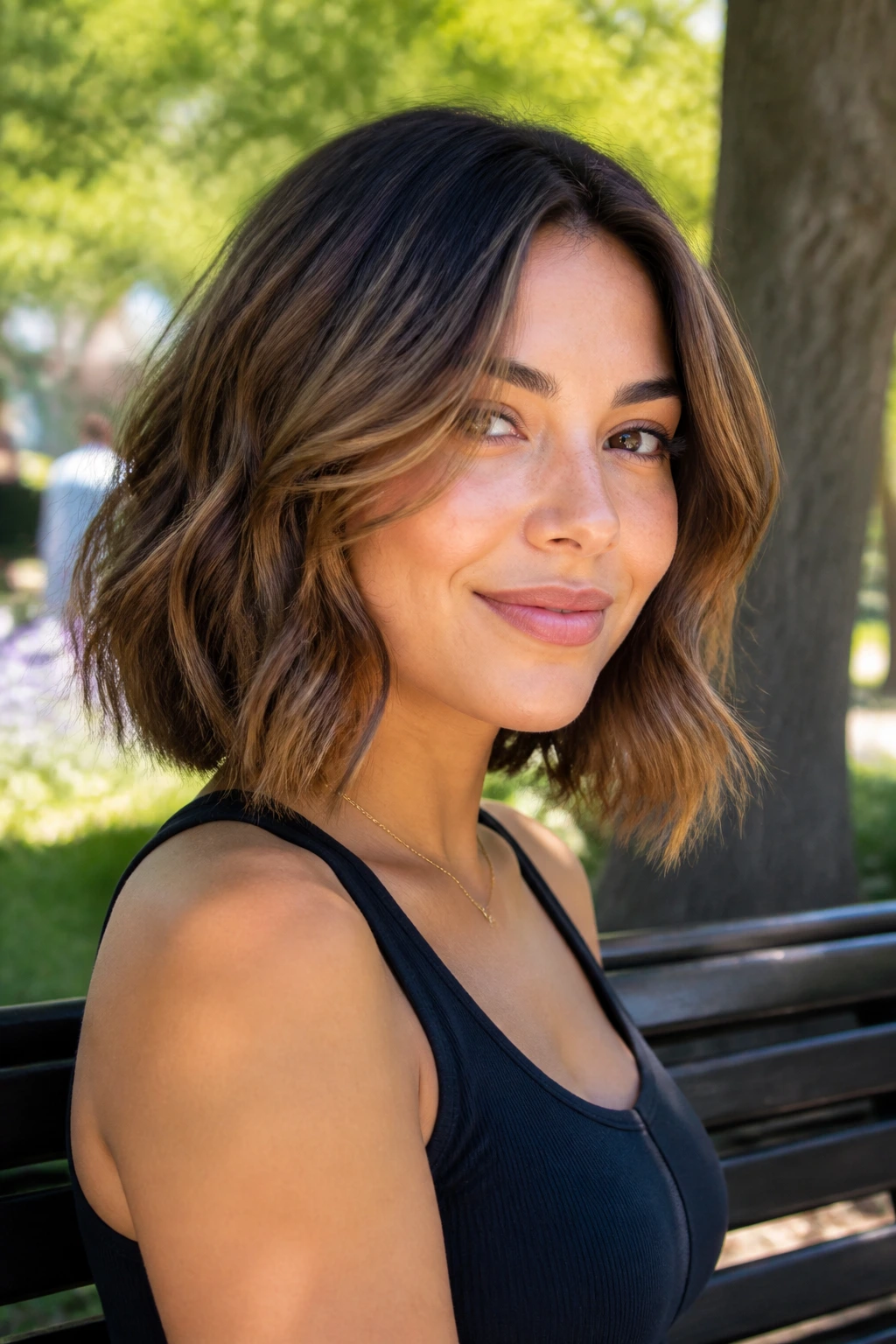
Why does a lob-length bob with cheekbone layers work so well on round faces? Because it moves the eye up and out, then lets it travel down again. That little zigzag of attention keeps the face from feeling overly circular.
The layers should start around the cheekbone, not the jaw. That is the sweet spot. Too low, and they do little. Too high, and the haircut can look chopped up in a way that steals weight from the front. The goal is to tuck in some softness near the cheeks without creating extra width.
The Parting Trick
A side part tends to help this cut more than a center part. It gives one side a bit of lift and lets the longer front pieces drape across the face at a slight angle. If you wear your hair wavy, the bend should happen mid-shaft and then open out toward the ends.
This is a solid choice for anyone who wants a medium haircut that still feels long enough to tuck behind the ear or pull into a loose half-up style. Practical matters.
10. Deep Side-Part Medium Wavy Bob for Round Faces

A deep side part can change the whole haircut. A deep side-part medium wavy bob for round faces pulls volume to one side and gives the face a more vertical read, which is exactly why this shape gets recommended so often.
The lift should happen at the root on the heavier side of the part. That is where a little root spray or mousse earns its keep. The other side can stay flatter and softer, which keeps the look from puffing out equally on both cheeks. Balance is good. Symmetry is not always your friend here.
- Clip the heavy side at the roots for 10 minutes after blow-drying.
- Use a vent brush to lift at the crown.
- Bend the front away from the face.
- Finish with a light mist of spray, not a sticky one.
This cut works especially well if your hair tends to lie flat at the scalp. The deep part gives it life without demanding a full styling session every time.
11. Razor-Cut Bob with Airy Ends
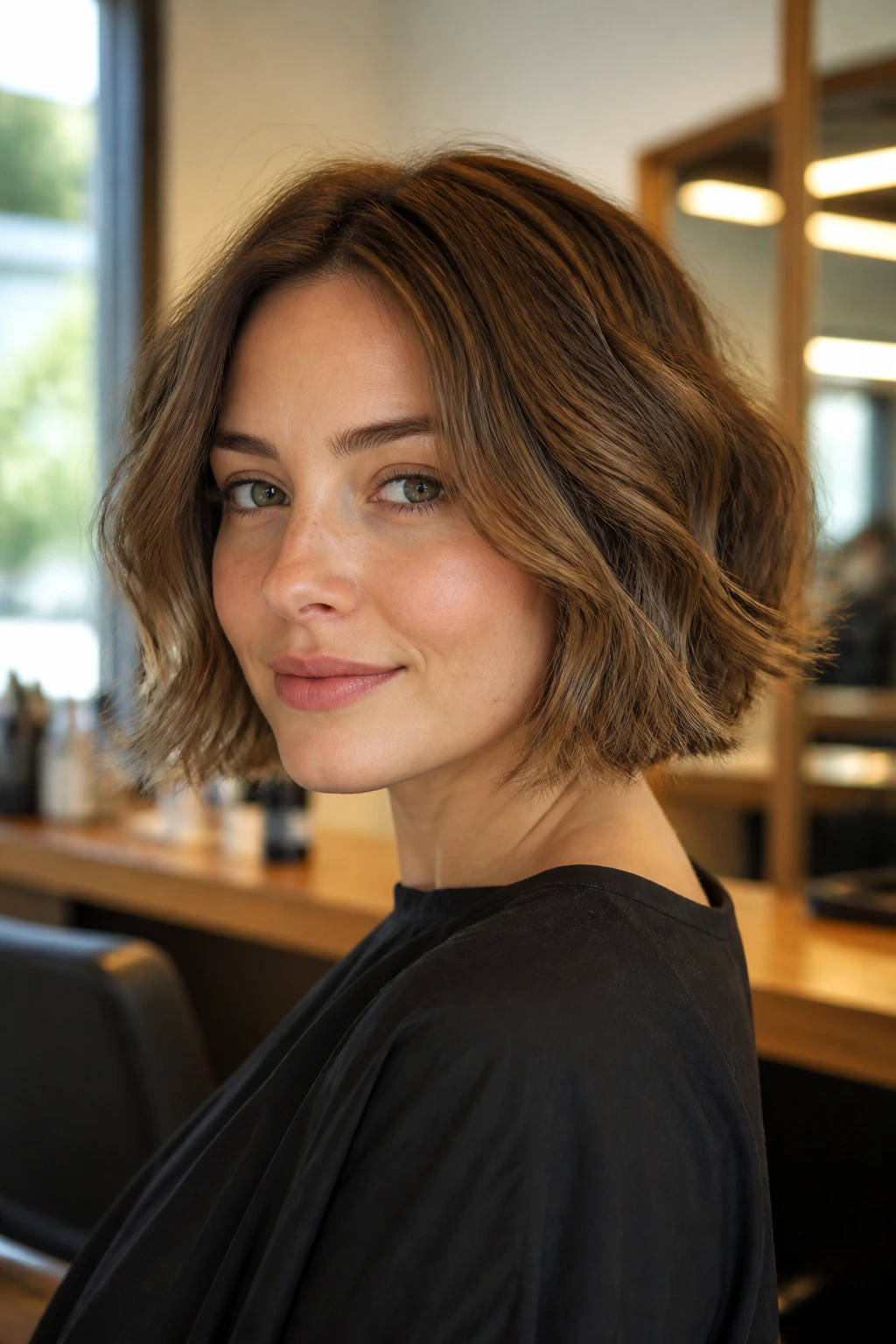
A razor-cut bob is a little risky, and that is exactly why I like it in the right hands. The airy ends create movement that keeps a medium wavy bob from feeling heavy around a round face. The texture is softer than blunt cutting, but sharper than a standard layered finish.
This works best on hair that is straight to softly wavy, with enough moisture to keep the ends from looking frayed. If the hair is very dry or very coarse, a razor can make the perimeter look puffy. That is the trade-off. You get lift and swing, but you lose some protection at the edge.
The cut should feel light at the bottom, not wispy in a sad way. That difference matters. Ask for soft sliding through the ends, then style with a little cream and a low-heat bend. I would not pile on dry shampoo here unless the roots truly need it.
It is a cut that likes restraint. Good restraint.
12. Graduated Bob with Face-Framing Curves
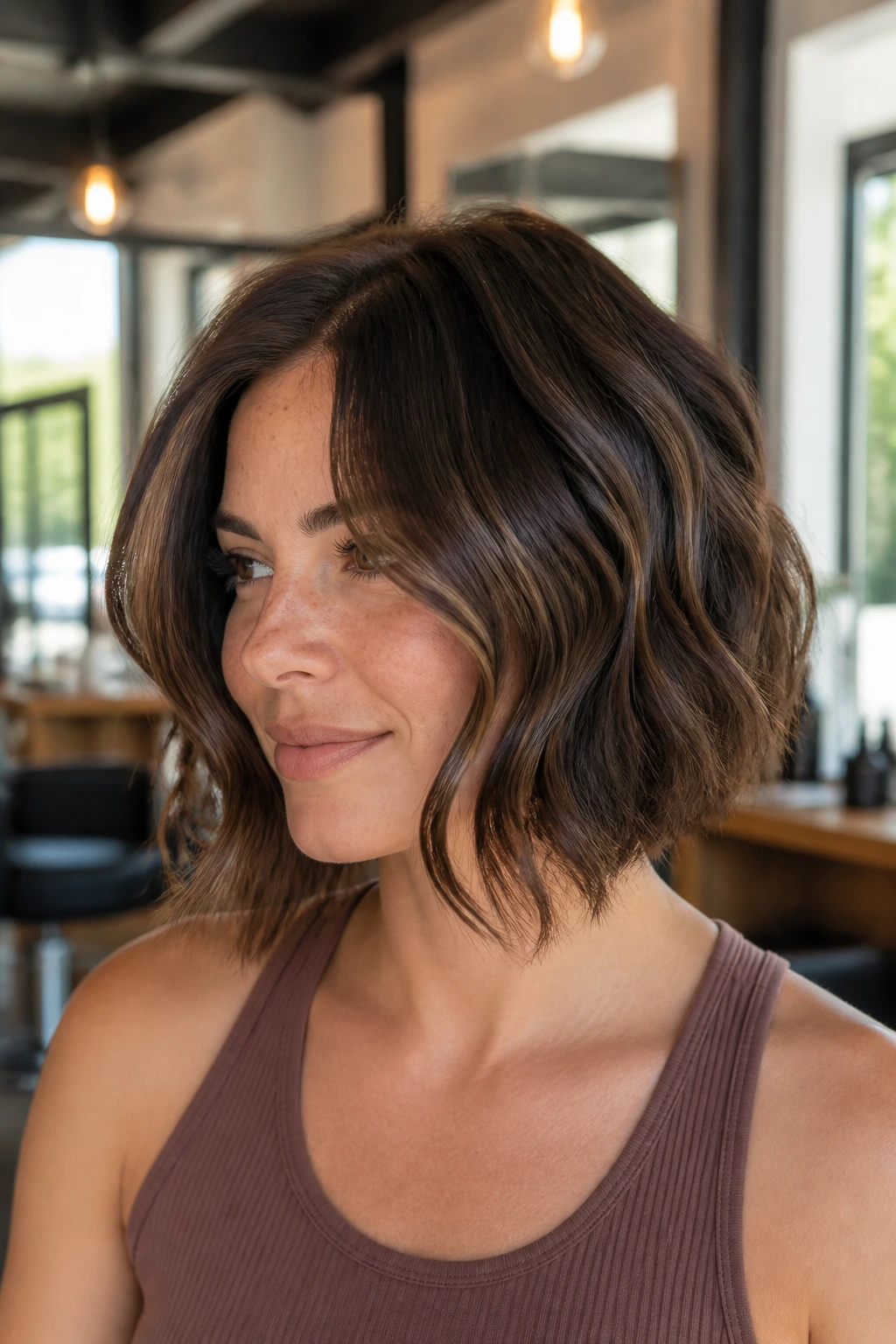
This is not the same thing as a stacked bob, and people mix them up all the time. A graduated bob with face-framing curves keeps more weight in the shape while still tapering enough in the back to give lift. The front curves are what help a round face most.
The front should bend around the face, not squeeze it. That sounds obvious, but a lot of bobs miss this point and end up sitting like brackets at the cheeks. The curve needs to start a little lower, then sweep down along the jawline or just beyond it.
Thicker hair usually handles this cut well because the graduation removes bulk without making the ends thin. Medium waves make it even better, since the bend keeps the outline from feeling blocky. If you want something neater than a shag but softer than a blunt bob, this is a smart middle ground.
13. Blunt Bob with Soft, Undone Waves
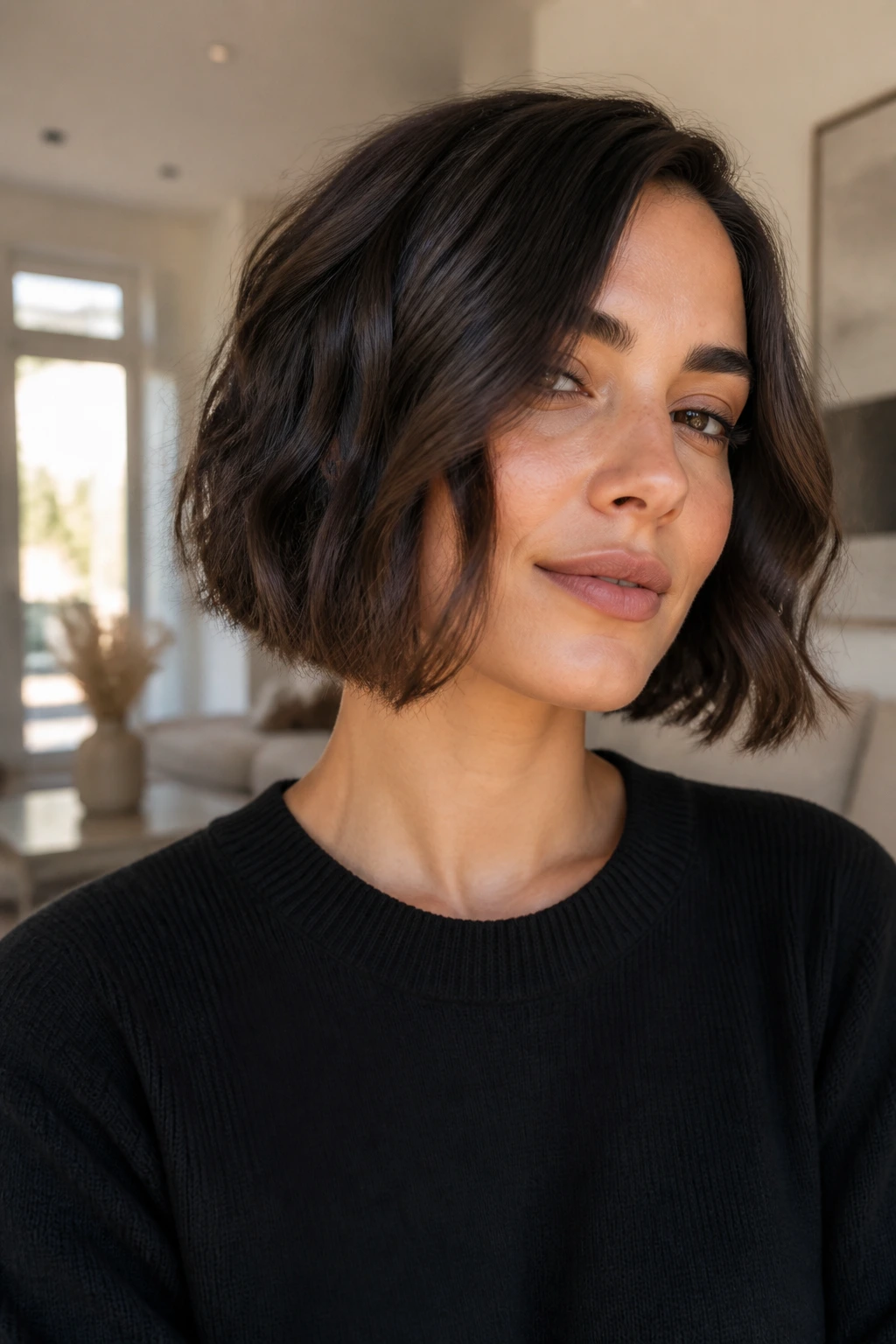
Yes, a blunt line can work on a round face. A blunt bob with soft, undone waves keeps the edge clean but breaks up the width with texture, so the haircut does not read as a heavy circle. The trick is to keep the wave loose and the end line slightly below the chin.
How the Softness Keeps It from Feeling Boxy
The waves should begin below the eye line, not at the roots. That keeps the top smooth and lets the shape flow downward. If the texture starts too high, the sides can look fuller than they need to.
- Keep the blunt edge only slightly beveled.
- Use a 1-inch iron for loose bends.
- Leave the last half-inch straighter for a modern finish.
- Work a matte paste through the ends with your fingers.
This is a good cut for people who want polish without too much layering. It can look expensive in the cleanest sense of the word — tidy, deliberate, and not overworked. The blunt edge gives structure; the waves keep it from hardening into a box.
14. Center-Part Bob with Loose S-Waves

A center part is not off limits. A center-part bob with loose S-waves can look excellent on round faces if the length is right and the wave pattern stays soft enough to stretch the face instead of crowding it.
The shape depends on where the waves break. If the bends sit around the cheekbones, the cut can widen the face a bit. If they fall lower, closer to the mouth or collarbone, the whole look feels longer and calmer. That is the version worth keeping.
This style suits people who like balance and do not want one side doing all the talking. It also works nicely when the hair has a natural wave that falls on its own. You do not need a lot of product here. A small amount of curl cream and a diffuse-dry can be enough.
The caution is simple: keep the ends from flaring out too much. That will undo the lengthening effect of the center part.
15. Wavy Bob with Bottleneck Bangs

Can bangs work on a round face? Absolutely, if they are shaped well. A wavy bob with bottleneck bangs gives you fringe without the heavy block that full bangs can create.
Why Bottleneck Bangs Help
The middle stays a little shorter, then the sides open out and soften near the temples. That shape frames the eyes and cheekbones while keeping the center light. It is a good fix when you want something front-heavy without making the face feel shorter.
The bob itself should stay medium, not chin-short. That matters. The bangs already bring attention to the upper face, so the length below should stay calm and simple. Loose waves through the mids keep the cut from feeling too styled.
- Keep the shortest point of the fringe around eyebrow level.
- Let the outer pieces blend into the cheekbone.
- Use a small round brush only at the fringe.
- Set the rest of the hair with fingers, not a brush.
This is one of those cuts that looks best when it is not trying too hard. A little softness goes a long way.
16. Grown-Out Bob with Hidden Internal Layers
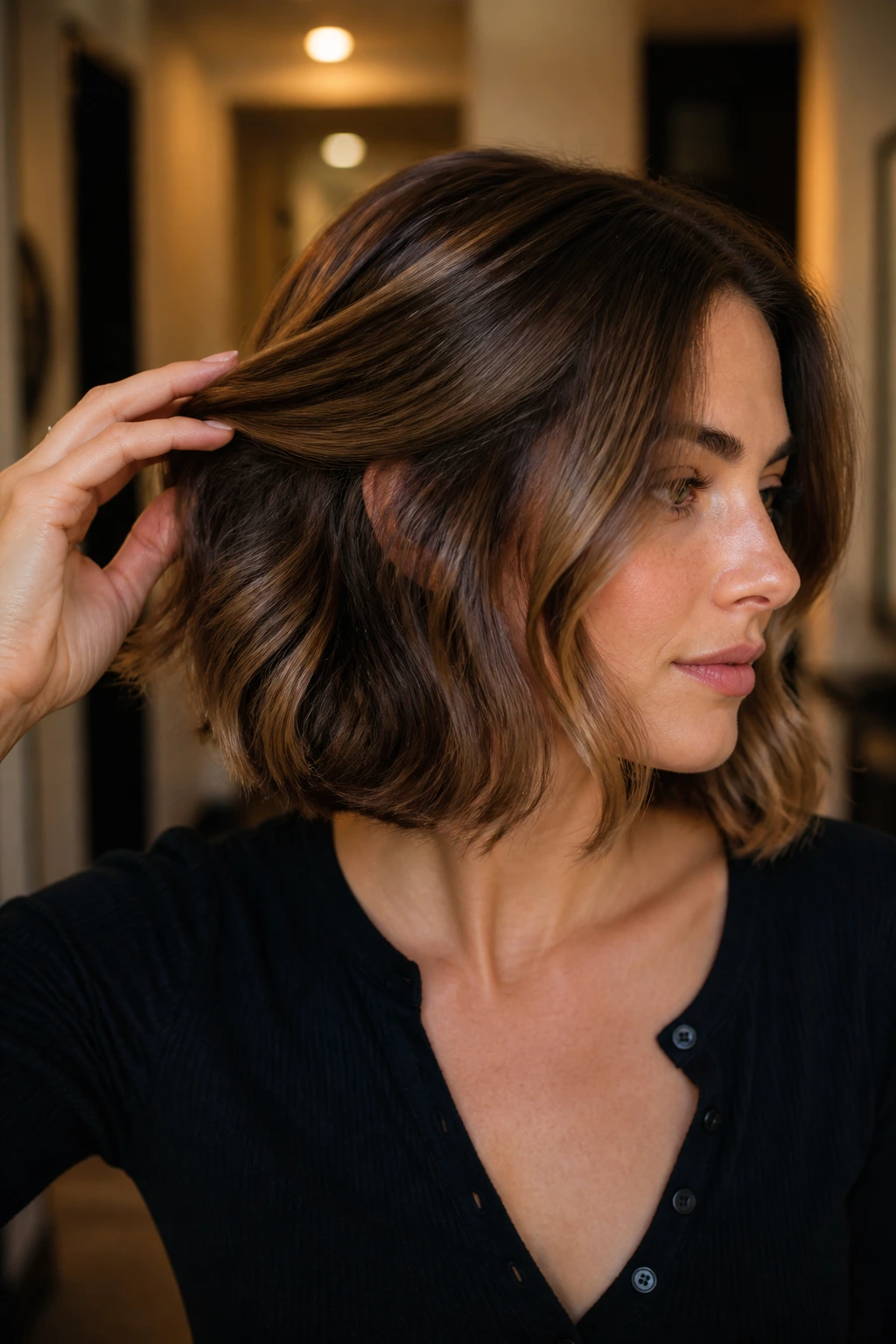
A grown-out bob with hidden internal layers is a sneaky good haircut. The outside line stays smooth, which is nice on a round face, while the layers underneath remove bulk and help the hair move instead of ballooning out.
This is a smart choice if you want a medium wavy bob that does not scream “layered haircut.” The shape feels calm from the outside, but inside the cut there is enough structure to keep the wave from turning heavy at the sides. That balance is useful for thick or dense hair.
Ask for weight removal inside the shape, not at the perimeter. That part matters more than the name of the haircut. If the outside line gets shredded too much, the ends can look thin and the bob loses its clean frame. Hidden layers keep the surface neat and the motion underneath.
It is the kind of cut that makes mornings easier. Hair falls into place with less argument.
17. Collarbone Shag Bob with Feathered Fringes
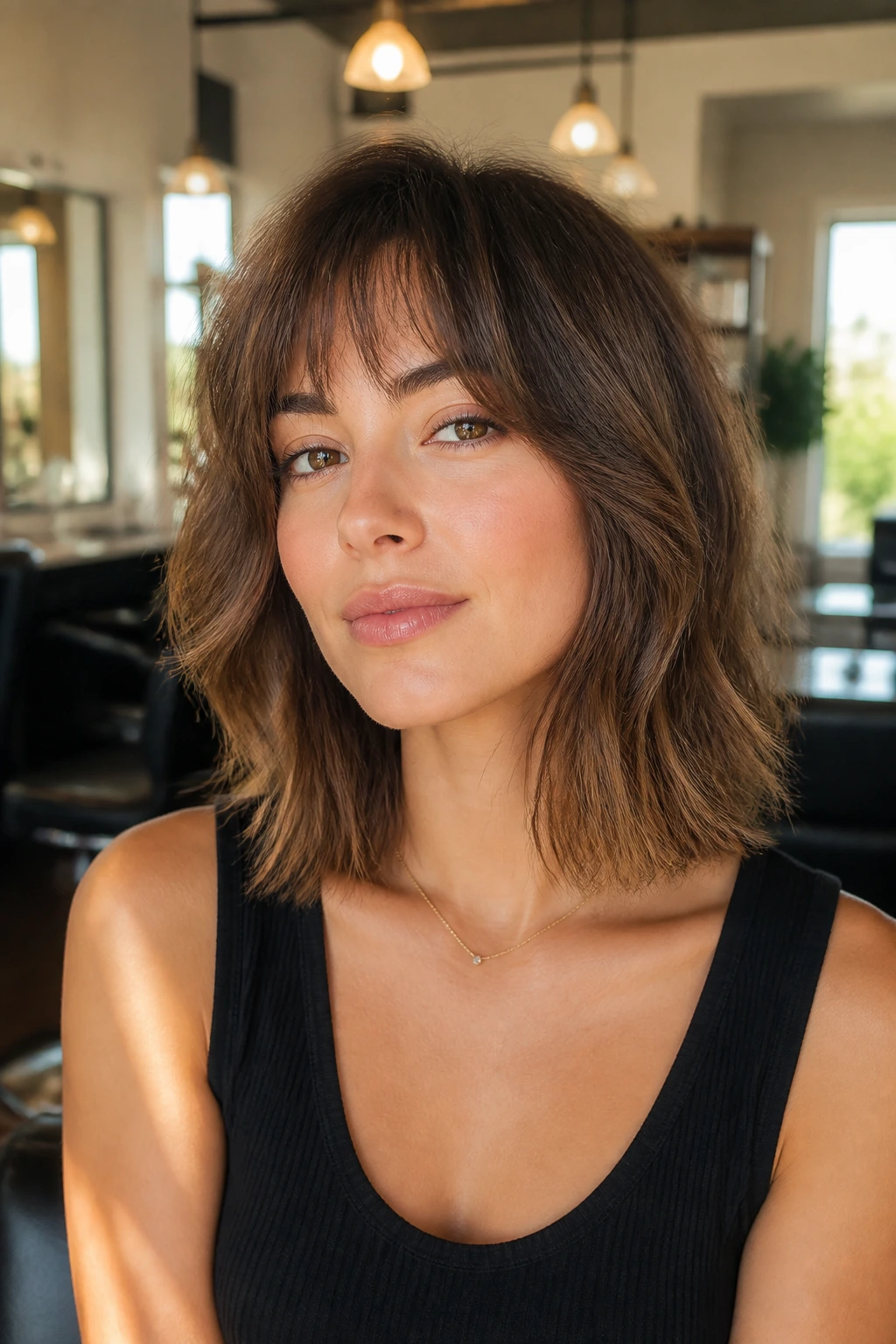
This one leans breezy, and it has a little more softness than the sharper shag variants. A collarbone shag bob with feathered fringes gives round faces movement at the front without putting too much volume at the cheeks.
The fringe should be feathered, not chopped straight across. That gives the forehead some openness and lets the sides of the face stay long. The collarbone length helps even more, because it stretches the cut below the widest part of the face and keeps the whole shape from turning squat.
I like this one on hair with a natural bend, especially hair that dries with some texture on its own. A diffuser, a little leave-in cream, and a touch of salt spray can be enough. If the hair is too frizzy, though, you will need more smoothing than you might expect. That is the trade.
This cut has a relaxed feel without losing structure. That is harder to find than it sounds.
18. Tucked Bob with One-Side Sweep

Unlike a bob that sits evenly on both cheeks, this one shifts the balance. A tucked bob with one-side sweep uses asymmetry in a small, wearable way — one side slides behind the ear, the other falls forward in a soft line.
That little tuck changes the shape of the face immediately. It creates a clear open side and a covered side, which keeps the haircut from reading as one solid ring around the face. On round faces, that break matters. The eye gets movement, then pause, then movement again.
This is a cut you can wear to work, then pin into place for dinner without changing the whole look. It also gives you an easy way to show off earrings, which is a small thing but not nothing. If your hair is medium-thick, the tuck holds better. If it is fine, a light root spray near the part helps.
The style is simple. That is part of the charm.
19. Piecey Bob with Sliced Layers
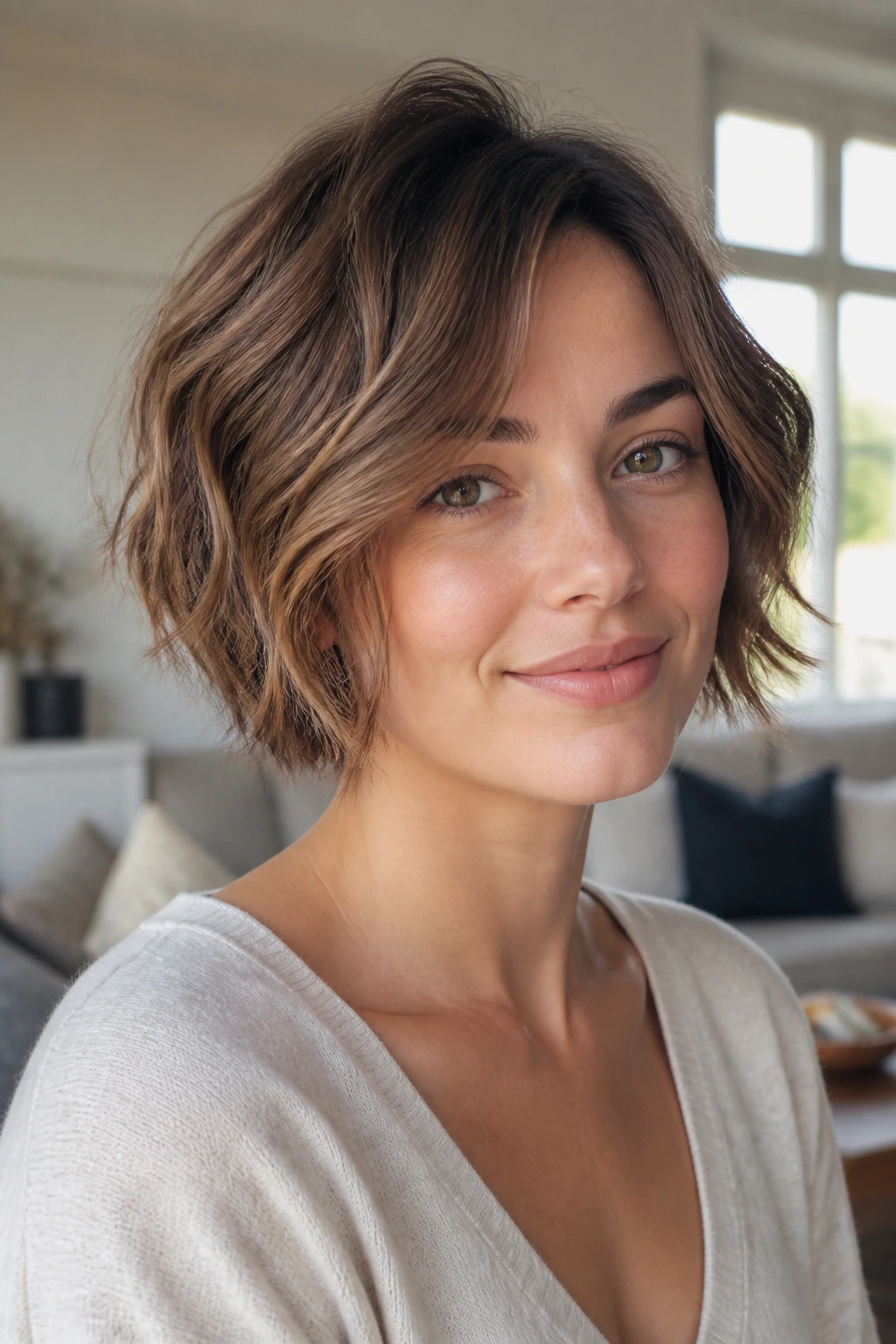
A piecey bob with sliced layers keeps the haircut light, broken up, and a little irregular in the best way. On a round face, that kind of texture stops the shape from feeling too smooth or too wide.
What Sliced Layers Actually Change
Sliced layers remove bulk in thin sections, which creates little separations through the wave. The result is not the same as choppy layers, where the ends can look blunt and busy. Sliced layers are softer. They let the hair fall in pieces instead of one mass.
- Ask for long, invisible layers through the mids.
- Keep the bottom edge soft, not ragged.
- Use a texturizing spray near the ends only.
- Twist small sections around your fingers while drying.
This cut is especially good if your hair wants to clump together and lie heavy. The pieces give it shape without making it fluffy. It also grows out decently, which is nice if you do not want a trim every few weeks. The line stays readable even as it softens.
20. Shoulder-Skimming Bob with Ends Flipped Out

A shoulder-skimming bob with ends flipped out can look playful without making the face appear broader, but the flip has to stay light. Too much outward bend near the jaw will widen the lower face, and that is exactly what you do not want.
The sweet spot is a loose outward turn at the very ends — not a round-brush flip from the middle of the hair. Keep the interior smooth and let the finish lift a little at the shoulders. That keeps the bob from collapsing and gives the waves a little air.
This version works nicely if your hair naturally turns outward anyway. Instead of forcing it inward all day, you shape it enough that the curve looks deliberate. It is also handy for people who like a cut that feels casual but still has a line. The length gives the face room, and the flipped ends keep the bottom from looking heavy.
It should look easy. Not sloppy.
21. Wavy Bob with Long Curtain Fringe

A long curtain fringe can do more for a round face than a heavier bang ever could. A wavy bob with long curtain fringe opens the center, narrows the sides, and lets the hair fall into a shape that feels soft rather than boxed in.
The fringe should start around the cheekbone and taper down toward the jaw. That length is important. If it is too short, the bangs can make the face feel rounder. Too long, and they disappear into the rest of the haircut. The in-between length is the useful one.
How to Keep It Airy
Dry the fringe away from the face first, then split it while it is still warm. A round brush can help, but a bent finger dry works too. The point is to keep the center light and the sides loose.
This cut is especially good if you like your hair a little romantic without going full blowout. It has shape, but no fuss. The fringe frames the eyes, and the medium bob keeps the rest of the face open.
22. Low-Maintenance Air-Dried Bob for Round Faces

If your hair likes to do its own thing, this is the one to watch. A low-maintenance air-dried bob for round faces relies on your natural wave pattern, so the haircut has to be cut with enough shape that it still looks good when you do almost nothing to it.
The best version lands around the collarbone or just above it, with soft layers through the mids and a gentle face frame. Nothing too carved up. The hair should dry with movement, not collapse into one heavy curtain on each side of the face. A little leave-in cream, a pinch of mousse, and a quick scrunch are usually enough.
- Blot with a microfiber towel, not a rough bath towel.
- Work product from mid-lengths to ends.
- Part the hair while it is damp.
- Touch up the front pieces only if they dry crooked.
This cut is not fussy, but it is not lazy either. The shape has to be smart from the start. When it is, the result is one of the easiest medium wavy bob haircuts for round faces to live with. It can look soft, current, and unforced without much help, which is probably why so many people keep coming back to it.
