



Fine hair can look crisp or wispy in a bob, and the difference is often only a few millimeters. A line that sits too heavy at the bottom makes the whole cut sink; a line that’s too choppy can leave the ends looking thin and scattered. That is why messy blonde bob haircuts for fine hair keep coming up as such a smart move: the movement loosens the shape, and the blonde tones stop the haircut from reading as one flat block.
I like this category of cuts because it solves a real problem without pretending fine hair can do something it can’t. Fine strands usually need a little help from the shape itself. A soft root shadow, a broken-up perimeter, a few face-framing pieces, and a texture pattern that bends instead of puffs—those small details matter more than any dramatic chopping spree.
The biggest mistake is overdoing the layers. People think fine hair needs “more texture,” then the bottom starts to look see-through and the crown goes fuzzy. No. The better move is usually a controlled shape with just enough mess to keep it from looking stiff.
The styles below all take a slightly different path, but they share the same goal: make fine hair look fuller, lighter, and easier to wear without turning the bob into a helmet.
1. Chin-Length Messy Bob With Soft Ends
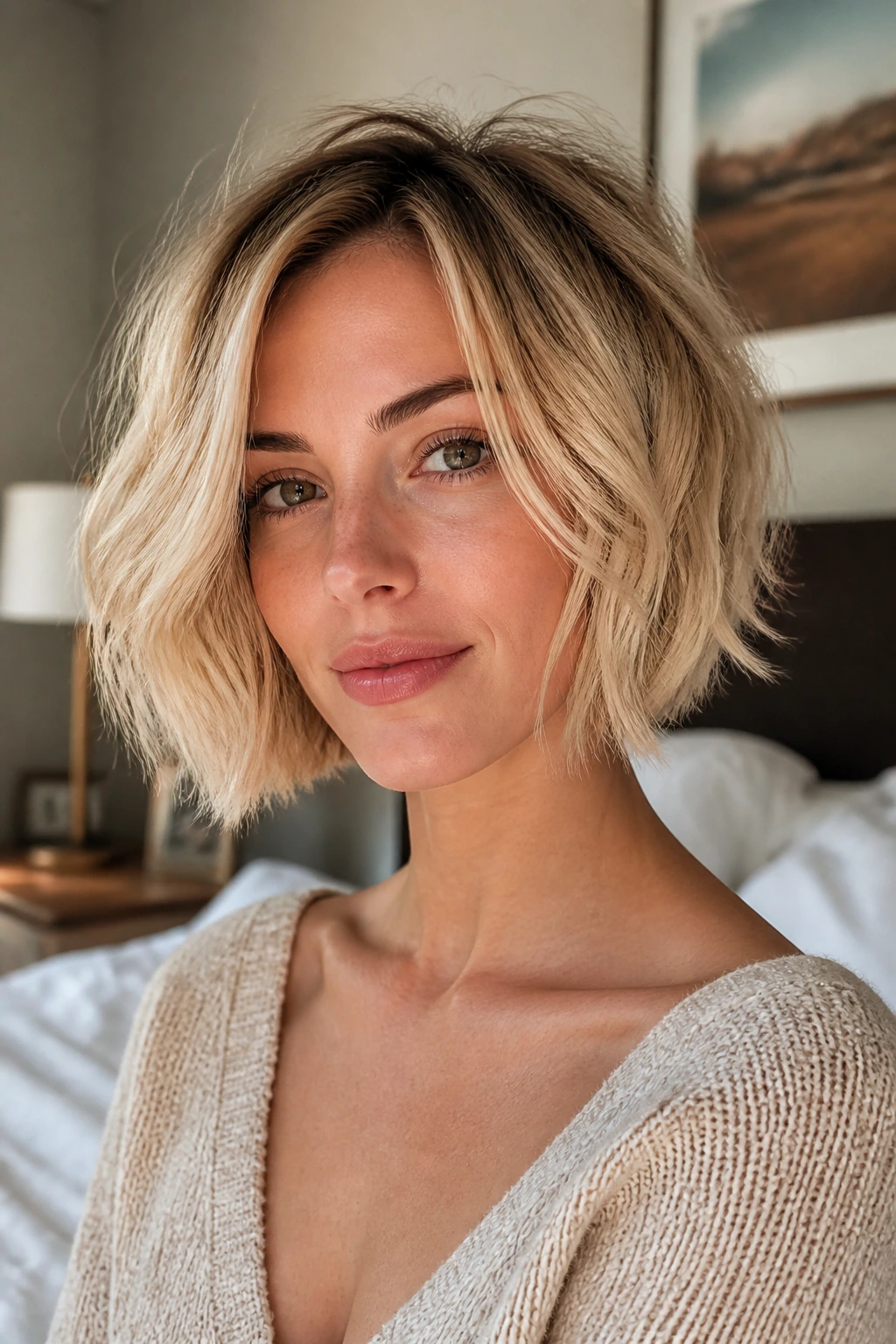
A chin-length bob can be a little bossy on fine hair if the edge is carved too hard. Softening the last inch of the cut changes everything. The shape still feels neat, but the ends don’t stack up like cardboard.
Why It Works on Fine Hair
Chin length gives the hair a natural point of focus right around the jaw, which makes the style look intentional even when the texture is loose. That matters with fine hair, because longer lengths can drift flat fast. At the chin, the eye reads the full outline first, not the individual strands.
Ask for a clean perimeter with light point-cutting only at the tips. A beige blonde or champagne blonde shade keeps the outline from looking too severe, while a small root shadow gives the scalp a little depth. It’s a tiny color trick. Huge payoff.
- Keep the front pieces just a touch longer than the back.
- Ask for softness only at the very ends, not all through the body.
- Style with a 1-inch curling wand, then brush the waves apart with your fingers.
Best finish: a slightly bent, not-perfect wave that lands just under the cheekbone.
2. Rooty Lob That Falls Between Jaw and Collarbone
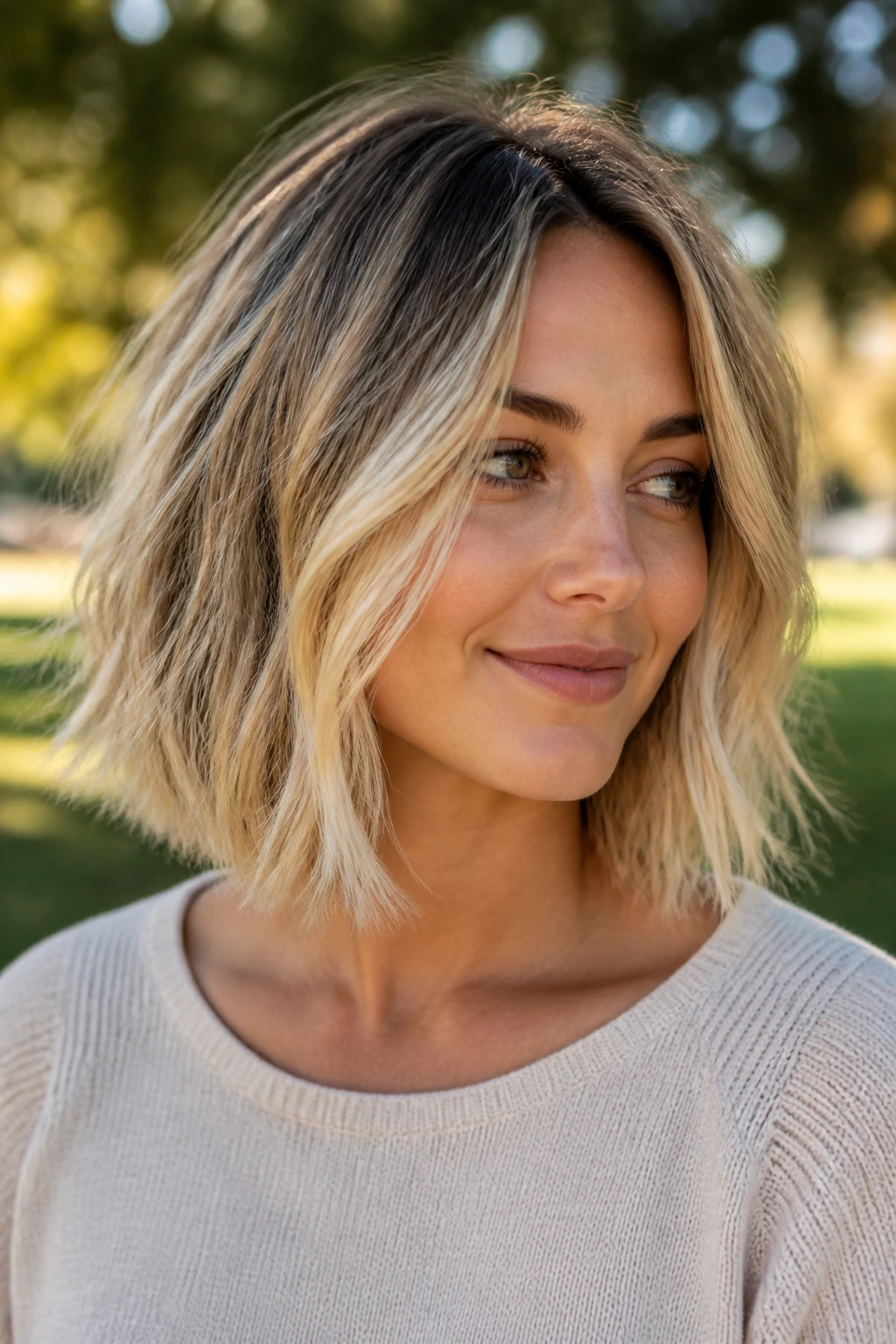
The easiest way to fake fuller hair is to keep a little more length. Not a ton. Just enough that the shape has weight. A messy lob with darker roots and blonde through the mids gives fine hair a denser look because the eye sees shadow first, then brightness.
This cut is the one I’d point to for anyone who likes the bob idea but hates the feeling of going too short. It sits between jaw and collarbone, which means it can still tuck behind an ear or catch a loose wave without collapsing into nothing. On finer hair, that extra inch or two matters more than people think.
The mess comes from styling, not from carving the haircut to pieces. A rough dry with a round brush at the roots, then a bend through the ends, is enough. Keep the top smooth and let the bottom be a little imperfect.
3. Piecey Bob With Curtain Bangs

Can fine hair handle bangs? Yes, if the bangs don’t try to do too much. Curtain bangs that split cleanly in the center and sweep toward the cheekbones make a bob feel soft without burying the face in hair.
How to Style It
The trick is keeping the fringe airy. You want a little separation, not a heavy curtain that sticks to the forehead. A lightweight mousse at the roots and a quick blow-dry with a small round brush usually gives enough bend.
Curtain bangs also help if your fine hair falls flat around the front, because they create a second point of interest above the bob line. That little break in shape makes the whole haircut feel fuller.
- Blow the bangs forward first, then split them while they’re still warm.
- Keep the rest of the bob loose and slightly undone.
- Use a dab of texture cream only on the ends.
A blunt fringe would be too much here. These bangs should look like they’ve been there all along, not like they’re making a speech.
4. French-Inspired Wavy Bob
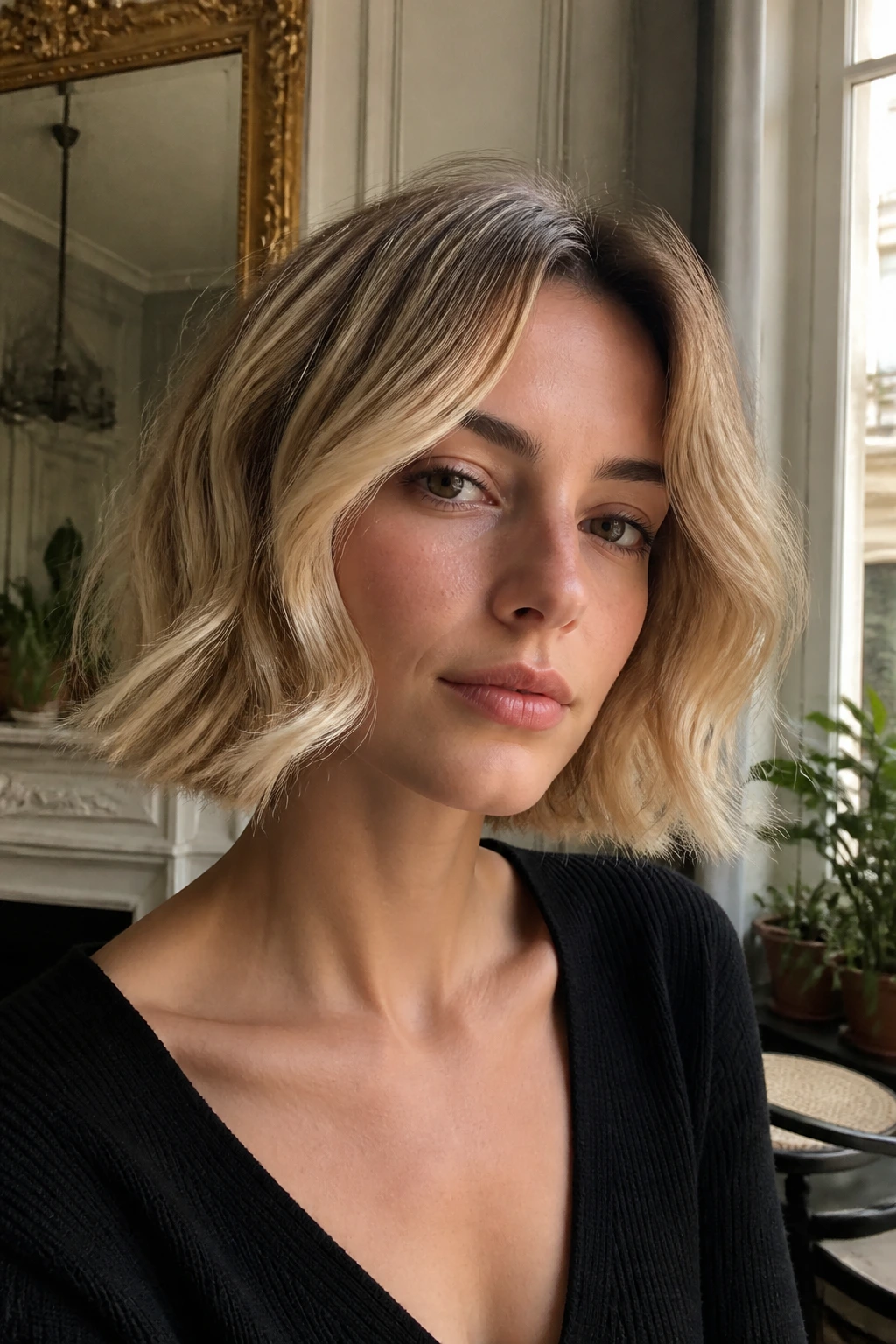
Picture hair that bends at the cheekbones, flips a little at the ends, and never looks overly styled. That’s the charm of a French-inspired bob. It’s relaxed, but not lazy. Fine hair likes that because it doesn’t need heavy structure to look alive.
The blonde should lean soft and natural here—beige, sandy, or a pale wheat tone works better than a bright, icy one. Harsh contrast can make fine strands look sparse, while a gentle blend makes them seem thicker in motion. The cut itself can stay fairly clean. The movement lives in the styling.
A flat iron can make the bend faster than a curling wand if your hair is straight and stubborn. Clamp, twist half a turn, release, and leave the ends a little rough. That imperfect finish is the whole point.
5. Air-Dried Bob With Micro Layers
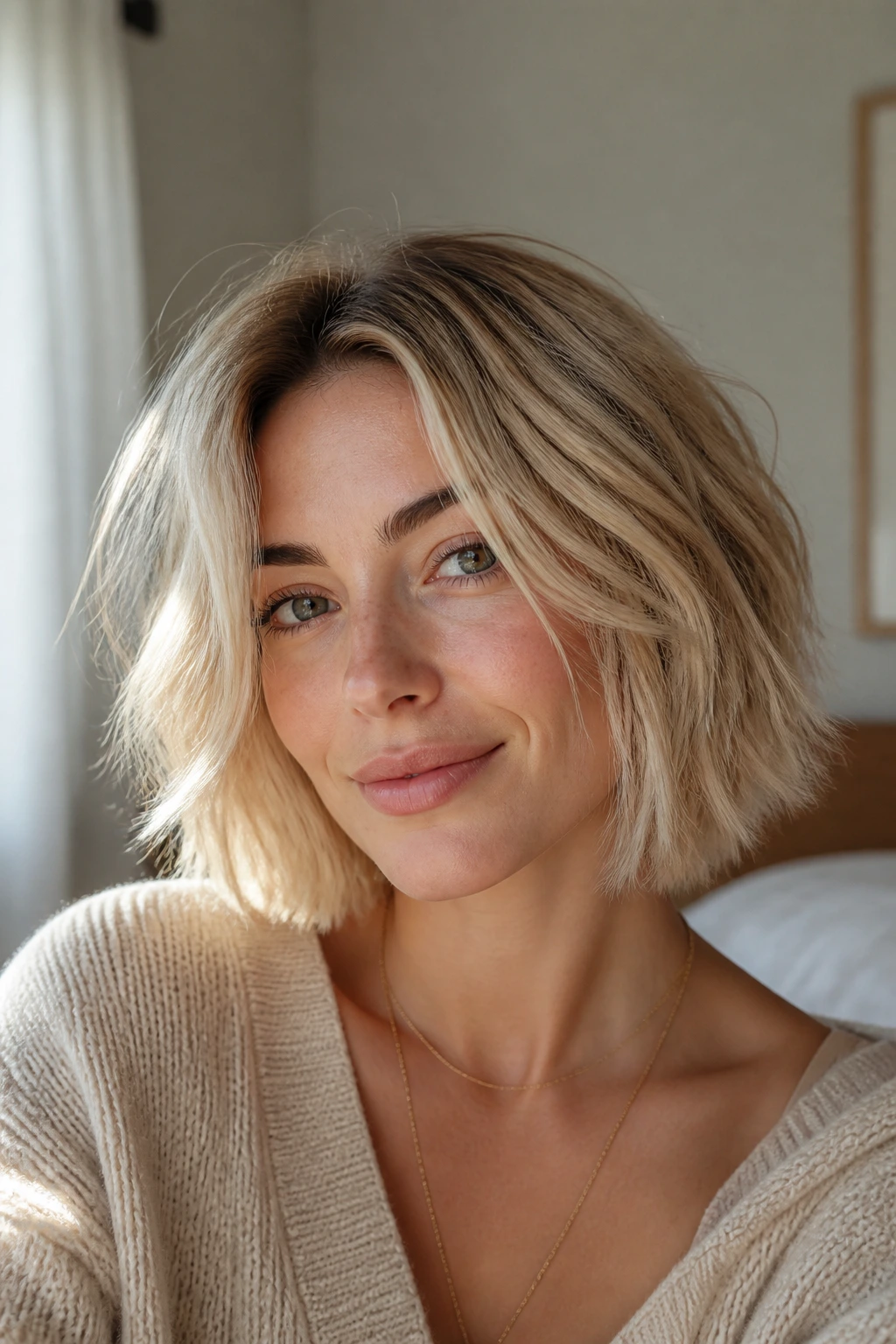
Air-drying and fine hair can be friends, but only if the cut is built for it. Micro layers—tiny, barely visible layers placed where the hair needs lift—let the bob move without turning wispy. You won’t see big steps or choppy jumps. You’ll just notice that the hair behaves better.
This is a good style for anyone whose hair has a slight wave on its own. The layers help that wave show up instead of hanging limp. If your hair is pin-straight, the style can still work, but you’ll need a little product and maybe a twist with your hands while it dries.
A lightweight mousse or volumizing cream is enough. Heavy oils are not. They flatten the crown in minutes. Let the hair dry about 80 percent of the way before touching it much. That’s when the shape starts to set without getting frizzy.
One-sentence truth: fine hair often looks best when you stop fussing with it halfway through the dry.
6. Blunt Bob With Broken-Up Texture
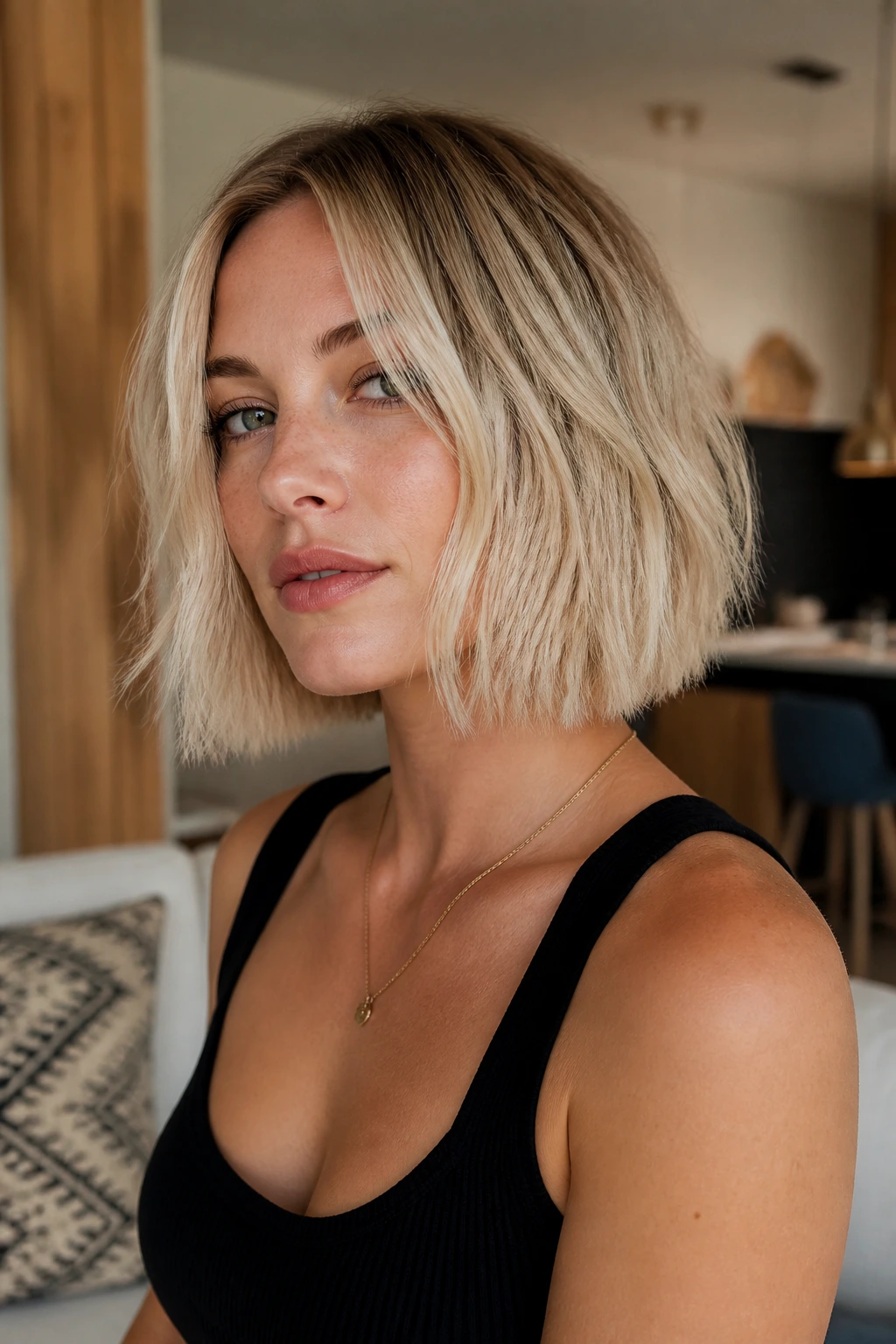
A blunt bob sounds severe, and on some hair it is. But a blunt line with broken-up texture inside the shape can be one of the best cuts for fine hair, because the perimeter still reads full while the texture keeps it from feeling stiff.
What Makes It Different
Unlike a heavily layered bob, this version keeps the edge strong. The movement comes from subtle interior texturizing and from styling, not from removing a lot of weight. That means the ends still look solid. Solid ends matter.
Ask for a one-length base with a tiny bit of internal softening, then style it with a flat iron bend or a quick brush-out wave. The blonde color can be bright, but I’d keep the root area a shade deeper so the outline doesn’t disappear. A pure pale blonde on fine hair sometimes looks a little washed out.
This cut is for people who like shape. It has discipline. The “messy” part comes after the cut, not from the scissors doing all the talking.
7. Angled Bob That Stacks the Back
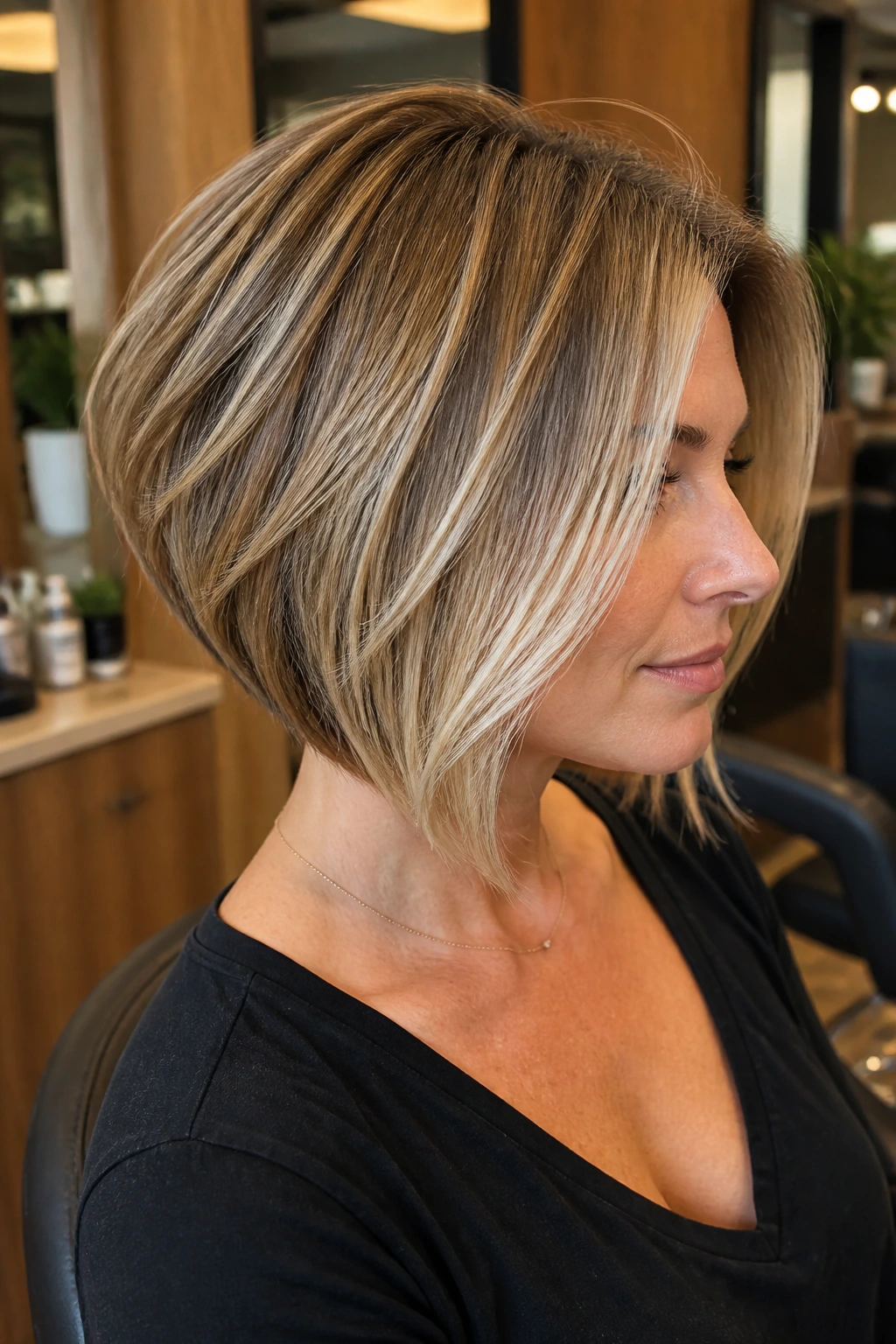
A little angle can do more for fine hair than a whole bag of layers. When the back is a touch shorter and the front falls longer toward the jaw, the shape gets a built-in lift. The eye reads fullness where the stack sits, and that helps a lot when the hair itself is light.
This is one of those cuts that looks sharp on day one and still behaves well on day three, which is rare. The short back gives you volume at the crown, while the longer front pieces keep the style from looking too clipped. A soft blonde balayage adds another layer of visual depth. Not color depth in a dramatic sense. Just enough to make the shape feel more three-dimensional.
A blow-dryer with a concentrator nozzle helps here. Direct the air up at the roots in the back, then round the ends under just a little. That small bend keeps the angle visible without making it rigid.
8. Mushroom Blonde Bob With Soft Crown Lift

Why does a rounded bob sometimes look fuller than a spiky one? Because fine hair usually needs shape first, texture second. A mushroom blonde bob keeps the silhouette soft and curved, with enough lift at the crown to keep the top from going flat.
The color matters more than people expect. Mushroom blonde sits in that beige-ash zone, which gives a gentle shadow without looking muddy. On fine hair, that muted tone can make the cut read thicker because the color doesn’t break the shape into too many bright lines. The result is calm, not boring.
What to Ask For
Ask for a rounded outline, not a shelf-like one. The crown should be lifted, but not stacked hard. You want the hair to curve around the head the way a good wool hat does—snug, soft, and controlled.
This cut is especially kind to straight fine hair that refuses to hold a curl for long. It still looks styled even when the wave drops a bit.
9. Razor-Cut Bob for Feather-Light Ends
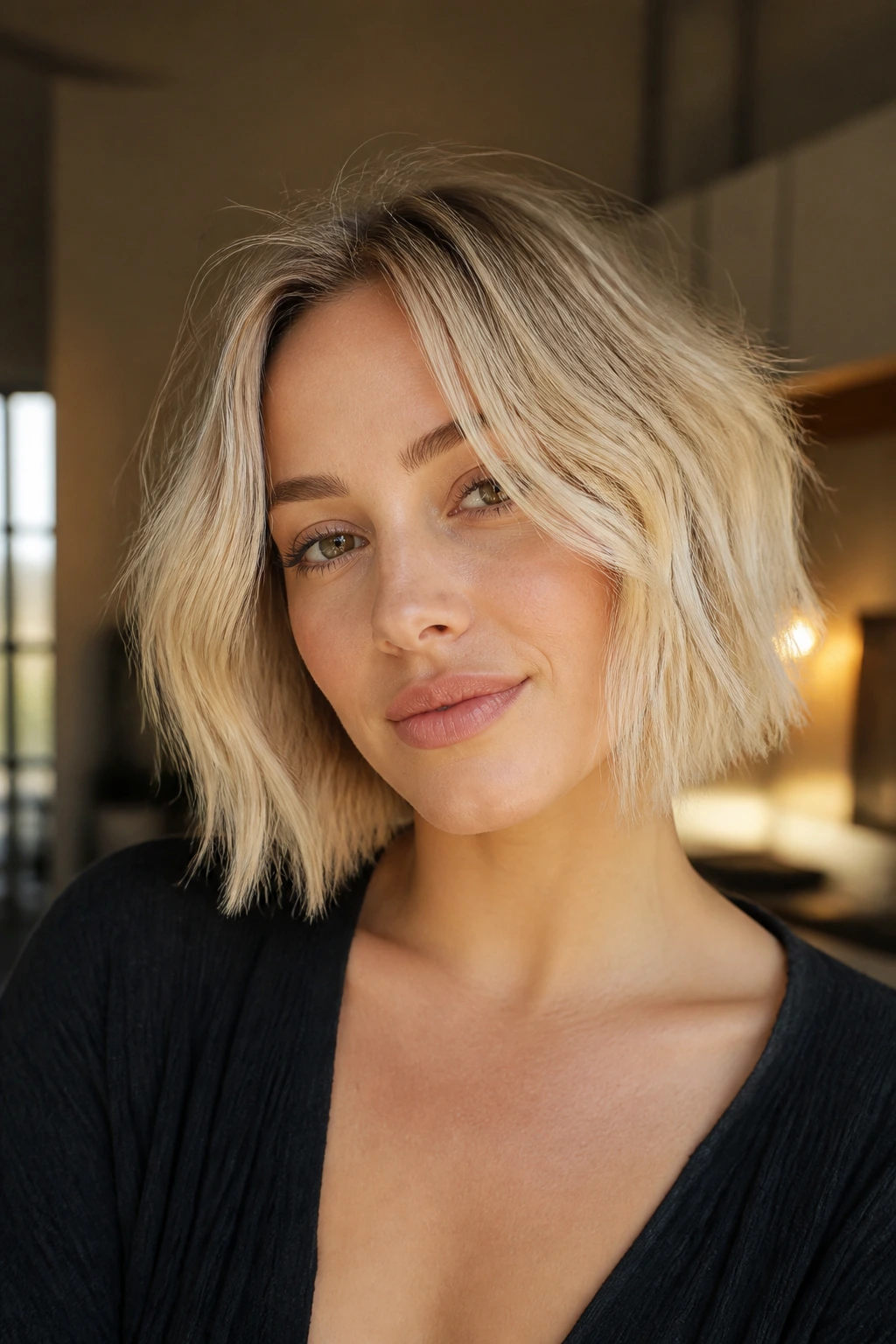
There’s a point where fine hair stops needing bulk removed and starts needing the ends to move. A razor-cut bob can do that, but only when it’s handled with restraint. Too much razor work makes the hair fray. Too little and the cut stays boxy.
This style depends on a skilled hand. The ends should feel light, almost airy, while the body of the bob still has enough presence to look full. I would not ask for this if your hair is very damaged or already prone to frizz. That’s asking for trouble. Healthy fine hair, though, can wear it well.
- Best for hair that lies straight or slightly wavy.
- Avoid if your ends split easily.
- Style with a smoothing lotion and a quick bend at the bottom.
The whole point is movement. Feather-light, not shredded.
10. Side-Part Bob With One Tucked Side
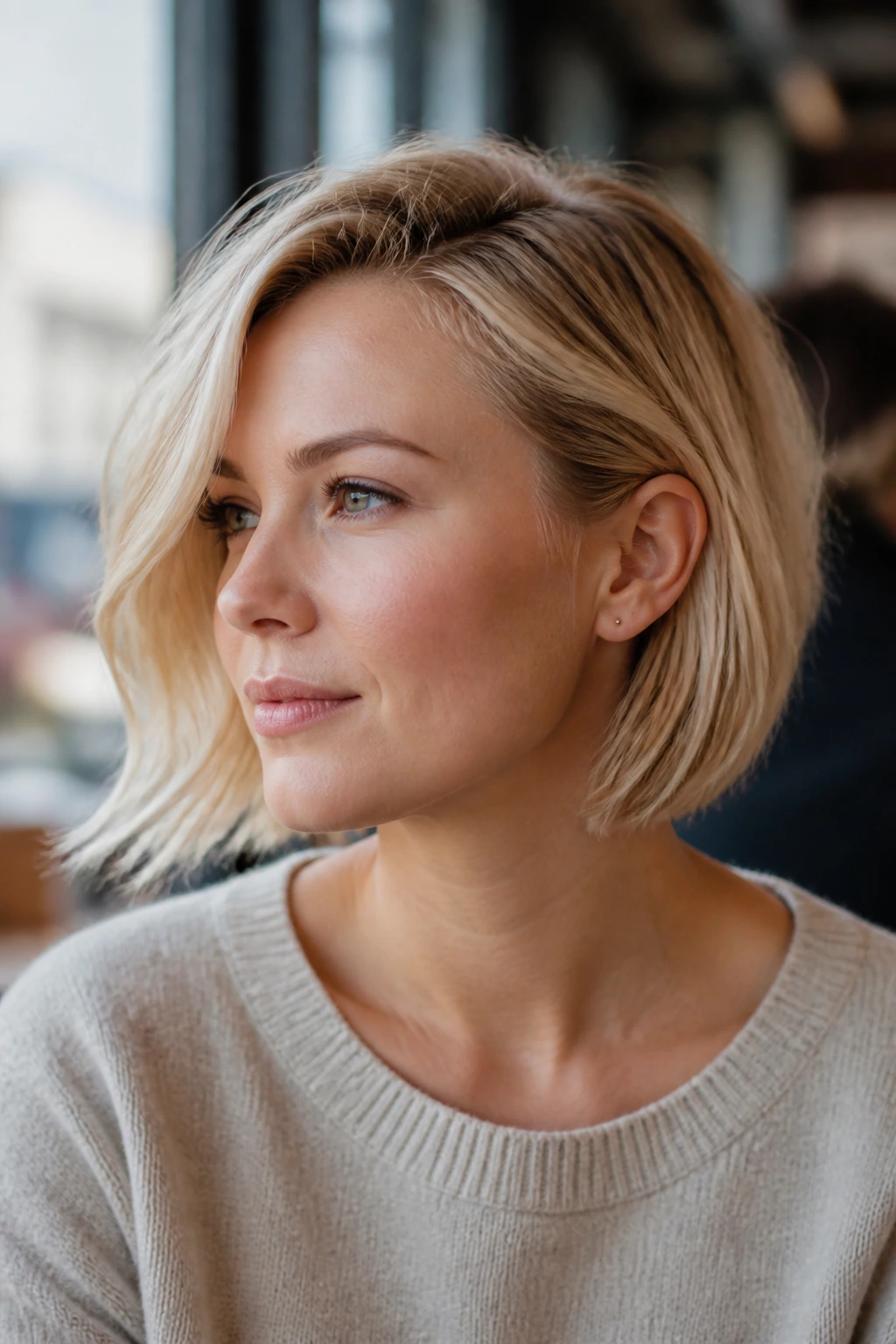
A center part can be honest. A side part can be kinder. On fine hair, shifting the part even an inch off center changes the way the bob lifts at the roots, and that can make the whole cut seem fuller right away.
This version is especially good if one side of your hair naturally lies flatter than the other. Tucking the lighter side behind the ear gives the bob an uneven but flattering shape, which keeps it from looking too symmetrical. Fine hair often needs that asymmetry. Symmetry can expose thinness.
A small clip, a tucked ear, or even a light bend at the front piece helps. The blonde color should be softly blended, not striped. Harsh ribbons draw attention to the parts of the hair that are thin. Gentle blending does the opposite.
One clean side. One softer side. Easy.
11. Tousled Bob With Sandier Blonde Highlights
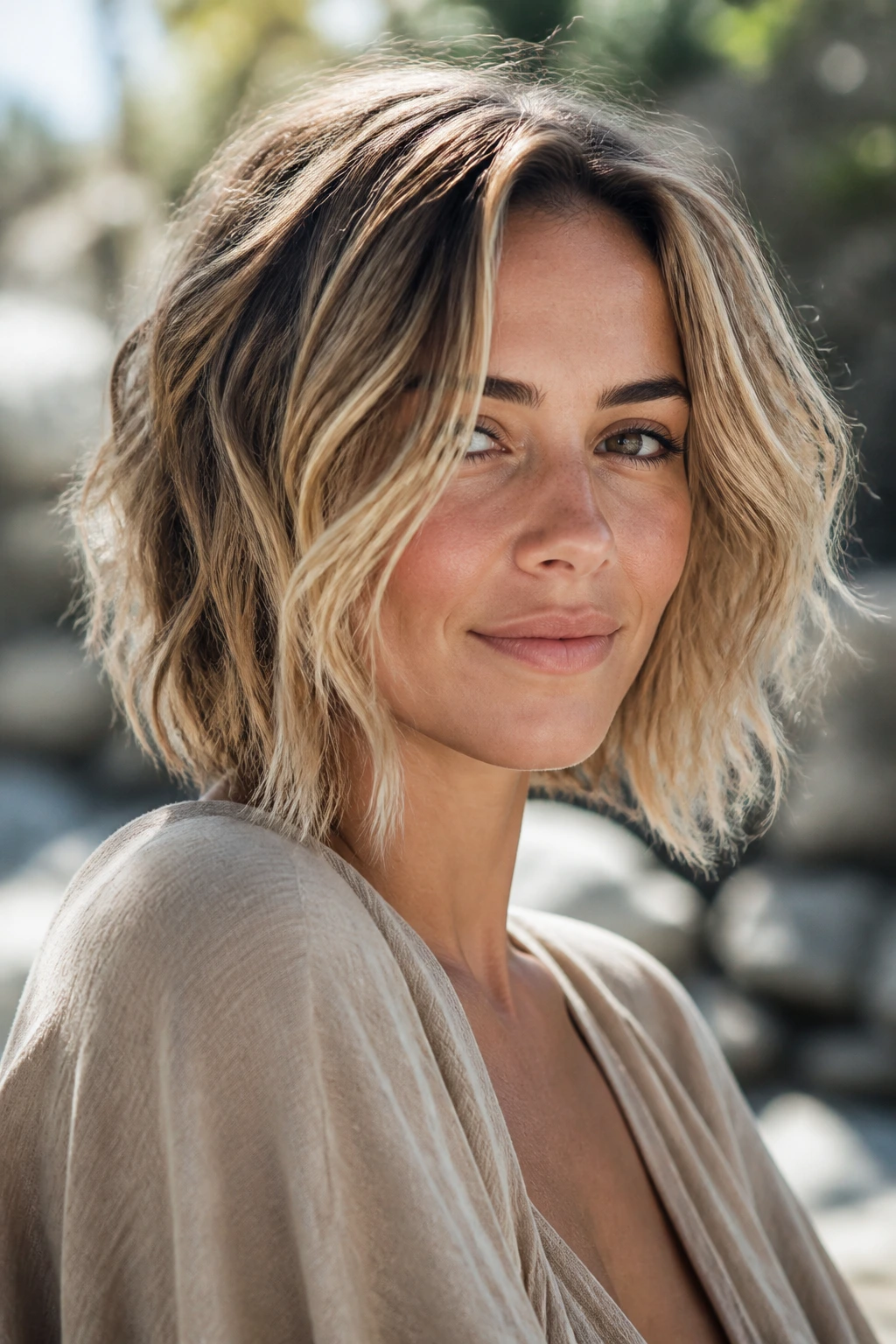
Tousled hair can go wrong fast when the color is too bright or too streaky. Sandier blonde highlights fix that problem because they blend into the base instead of shouting over it. On fine hair, that makes the texture look softer and the cut feel fuller.
I like this bob when the highlights are placed around the outer edges, the face frame, and the top layer—not scattered everywhere like confetti. Fine hair doesn’t need a highlight map that keeps exposing the scalp. It needs selective brightness. A few lighter ribbons near the front can make the haircut seem more lifted than it really is.
The best version of this cut looks like the hair has caught some sun, not a spotlight.
Ask for loose, irregular waves and keep the ends a bit blunt so the shape holds. If the waves are too uniform, the style starts to look stiff. A good tousled bob should shift when you turn your head.
12. Wavy Bob With Deep Root Shadow
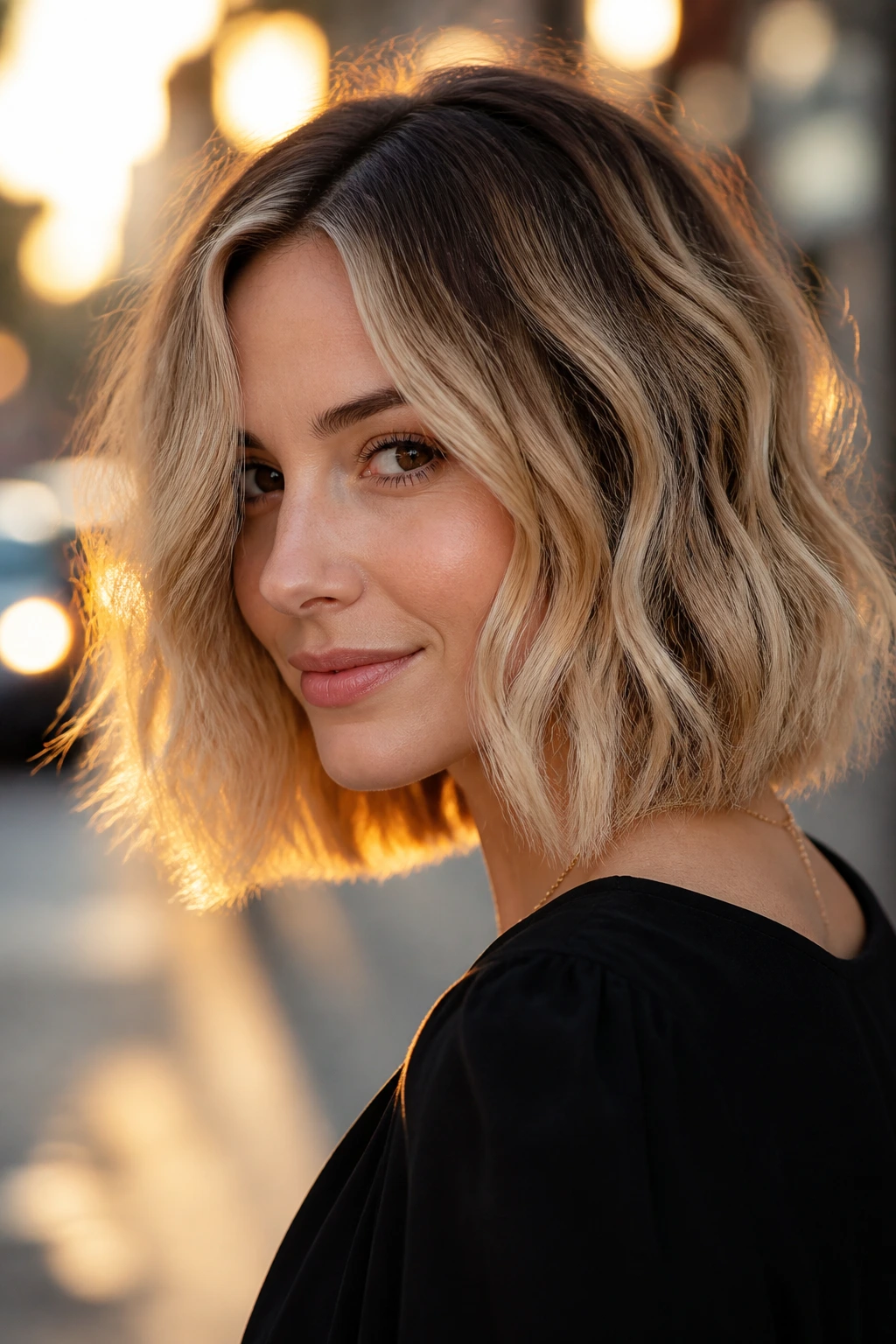
Root shadow is one of the easiest tricks for making fine hair look denser. Darker roots create a base, and the blonde mids and ends sit on top of that base like a little cushion. If the contrast is kept soft, the haircut gains depth without looking harsh.
This works especially well on a wavy bob. The wave breaks up the line of the cut, while the root shadow stops the scalp from showing too much through the top. It’s not about hiding everything. It’s about giving the eye something more solid to read.
You do not need a huge contrast. A root that’s one to two levels deeper than the mids is usually enough. Anything stronger can look stripey, which is the last thing fine hair needs. Keep the blonde warm or beige if your skin tone likes it, or cooler if you wear silver jewelry and pale makeup. The point is softness.
13. Bob With Bottleneck Bangs
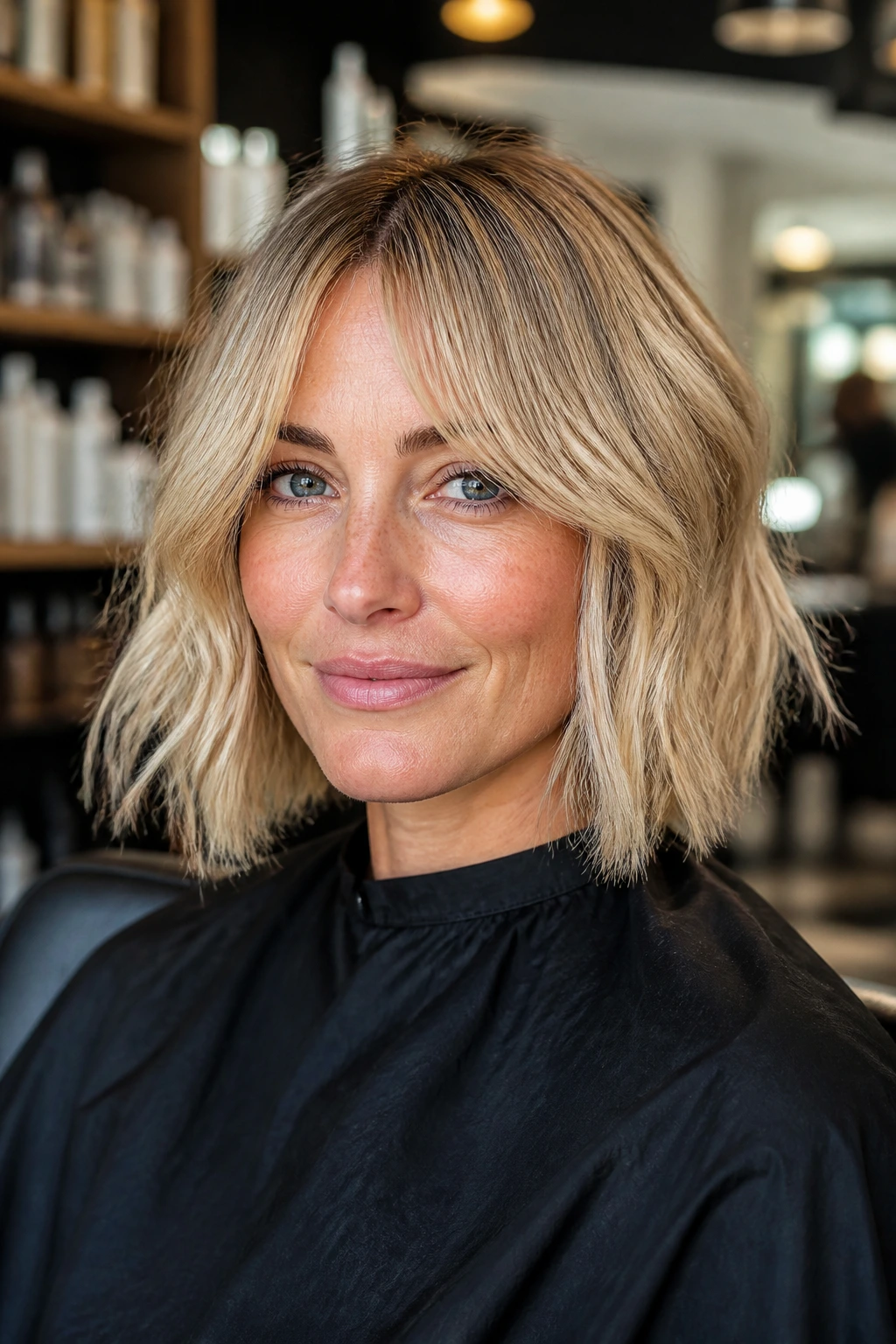
Can bangs make a fine-hair bob feel fuller? Absolutely, if the fringe is shaped well. Bottleneck bangs are narrow at the center and widen toward the cheekbones, which gives the forehead a little opening and the face a soft frame without weighing the front down.
Why They Work
The shape takes less hair than a full blunt fringe, so there’s less chance of the front going flat or splitting weirdly by noon. That’s a real problem with fine hair. Too much fringe can eat up density. Bottleneck bangs keep the look light.
Ask for the shortest point to land somewhere around the center of the forehead, then let the sides blend into the bob. A warm blonde or a creamy beige blonde keeps the transition gentle. If the bangs are too high-contrast, they can look disconnected from the rest of the cut.
A quick round-brush blow-dry at the fringe is usually enough. Don’t overwork them. They’re meant to look soft, not nailed into place.
14. Collarbone Bob That Barely Brushes the Neck
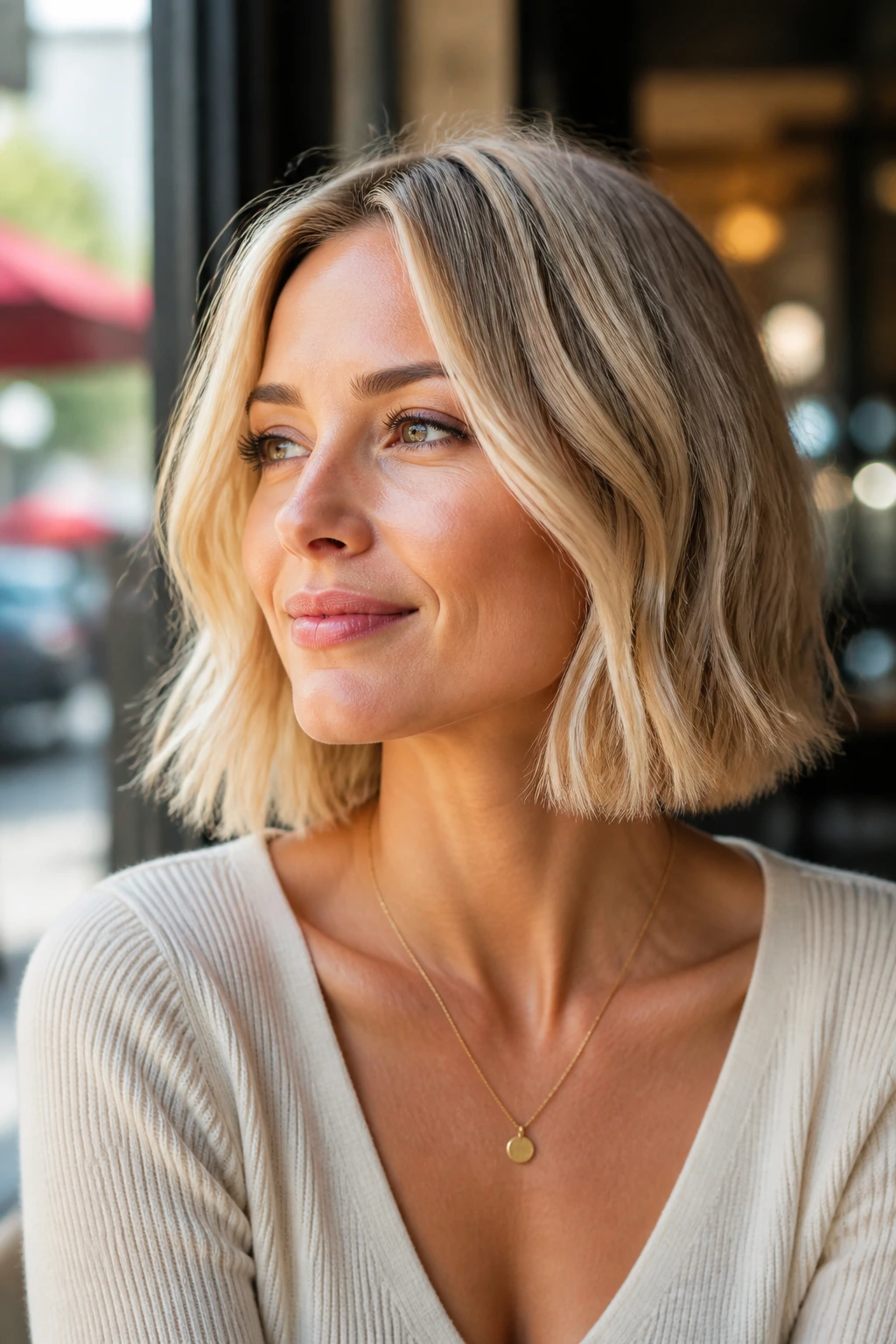
If you want movement but can’t quite let go of length, a collarbone bob makes a lot of sense. It gives fine hair enough weight to stay smooth, but it still moves when you turn your head. That little swing matters.
This cut looks especially good when the ends barely brush the neck and the front pieces fall a hair longer. Fine hair can look almost fragile when it gets too short, so this longer bob keeps the silhouette graceful without getting stringy. A messy finish here should be loose, not beachy in the overdone sense. Think soft bends, not tight bends.
It’s also a forgiving style for people who tuck hair behind the ear, wear glasses, or like a small clip on one side. The collarbone length gives you options. Shorter bobs can feel committed. This one doesn’t.
A few light face-framing highlights help, but I’d avoid streaks that start too high. Leave some depth near the roots.
15. Layered Bob With Feathered Crown
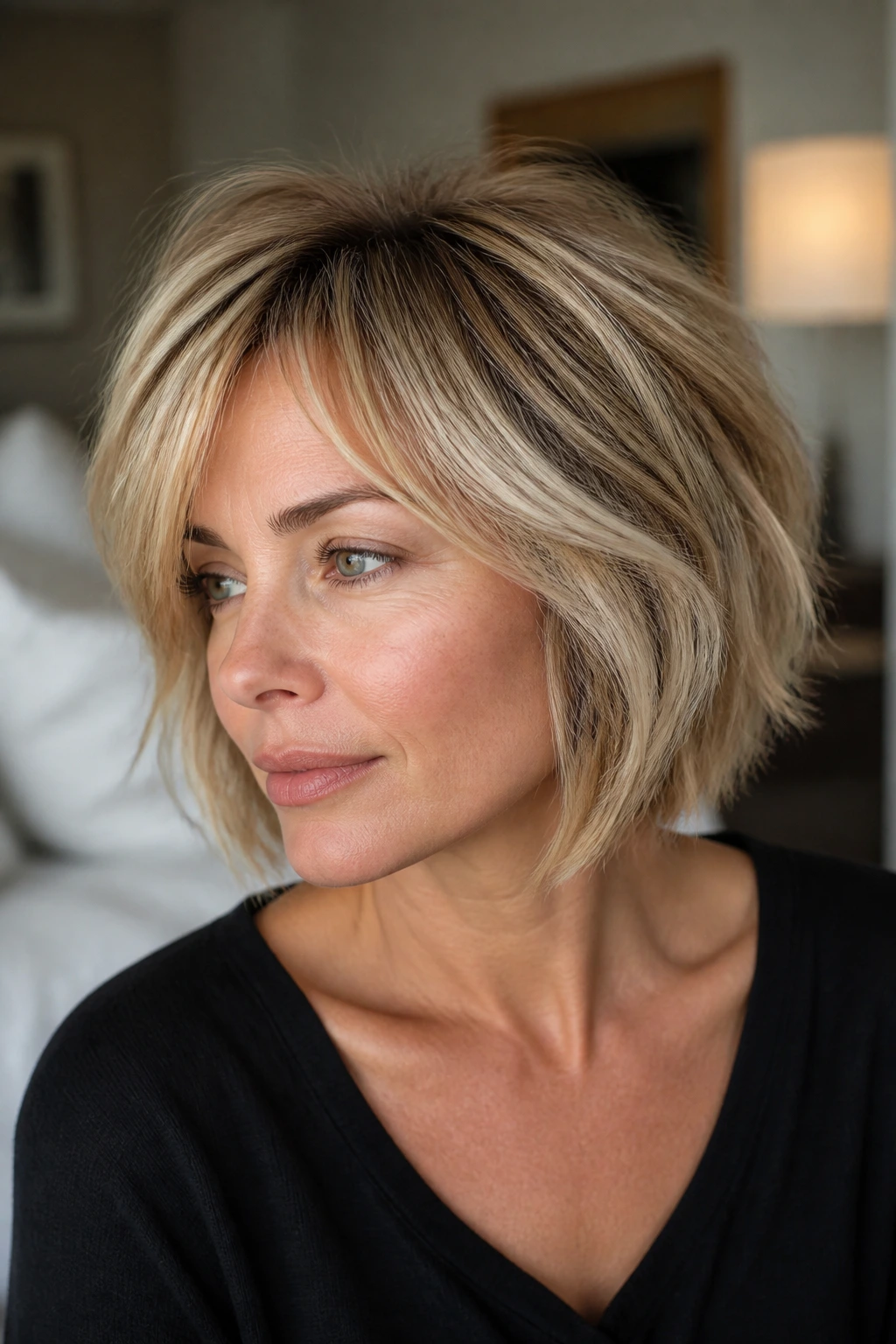
This is not the same thing as a shag. That difference matters. A feathered crown bob keeps the perimeter intact while using light layers near the top to lift the crown and stop fine hair from lying dead flat.
The shape is useful if your hair collapses near the roots but the ends are already thin. Heavy layers would make the bottom look bare. Feathering the crown solves the root problem without stealing density from the outline. The blonde should stay blended through the top so the lift looks natural, not striped.
What to Avoid
- Too many short layers around the bottom half.
- Heavy thinning shears through the ends.
- Product that leaves a sticky, crunchy finish.
A light volumizing spray at the roots and a round brush are enough to bring this one to life. The effect is subtle from the front, which is exactly why it works. The cut is doing work you don’t need to announce.
16. Messy Inverted Bob With Face-Framing Bits
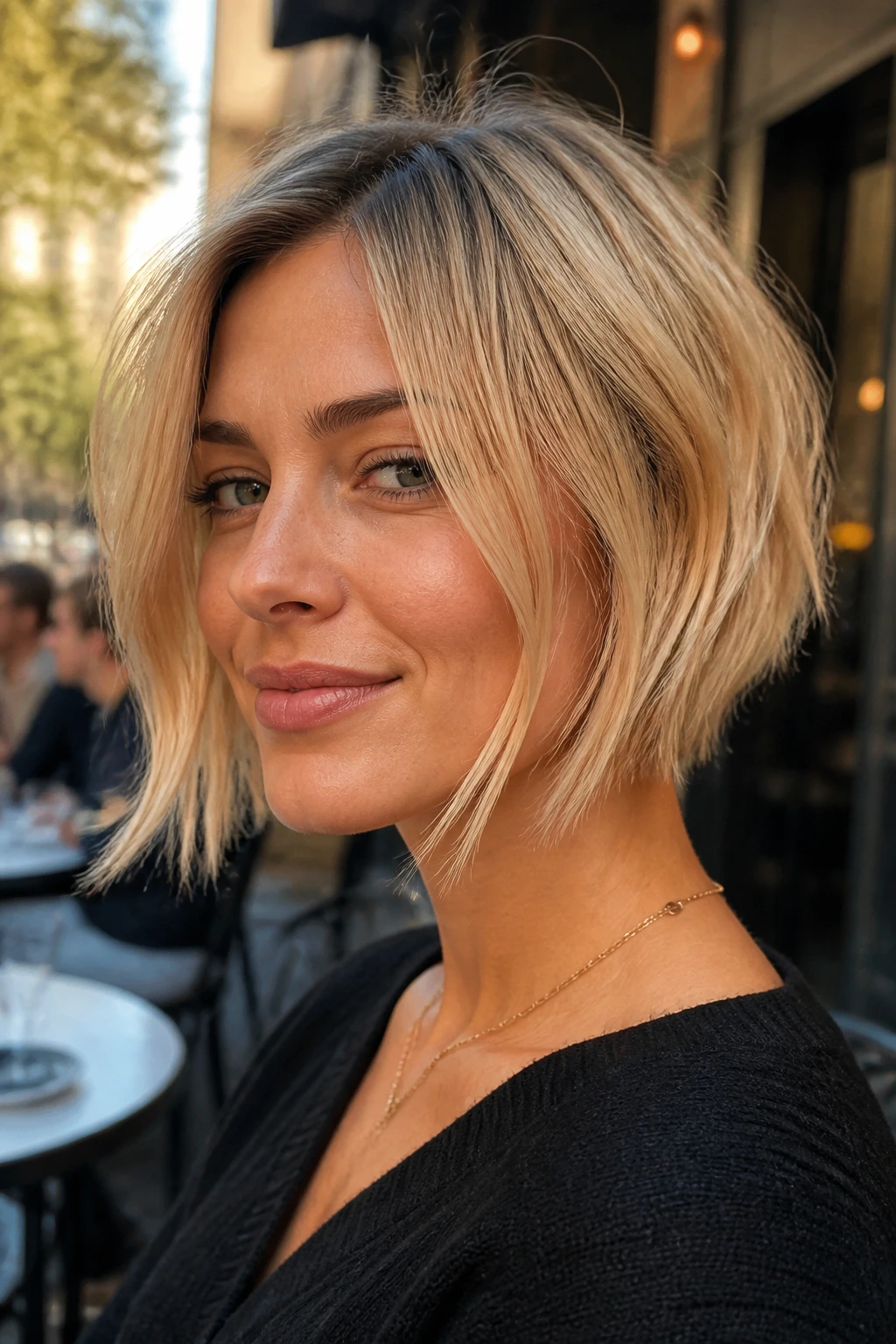
A messier inverted bob can be a gift for fine hair because the shorter back creates lift while the longer front keeps the style from feeling severe. Add a few soft face-framing pieces, and the whole cut starts to feel easier and less stiff.
The face frame should not be too chunky. Chunky can drag the front down. Instead, think of two or three broken pieces that skim the cheekbones and then taper away. That little bit of softness is enough to break up the shape. The back can stay clean and compact so the style has a solid base.
This cut works best with a side part or a slightly off-center part. A center part can flatten the angle a bit. If your hair naturally bends under at the ends, even better. If not, a flat iron bend through the front pieces will fake it nicely.
A good inverted bob should look as if the hair knows where it wants to go.
17. Shaggy Bob With Soft Fringe

A shaggy bob can look fantastic on fine hair, but only when the layers are long and the fringe is soft. Short, choppy layers can leave the ends hollow. Long, loose ones give you movement without stripping the shape away.
How to Keep It From Going Too Thin
Ask for layers that start low enough to keep the outline full. The fringe should be wispy, not chopped into tiny bits. A little bend in the hair is enough. You do not need a whole lot of separation for this style to read as messy.
- Use a light mousse on damp hair.
- Scrunch only a little; too much scrunching can puff the cut out.
- Finish with a dry texture spray at the ends, not the roots.
This is a good choice if you like a lived-in look and don’t mind a little imperfection. It’s less polished than some of the other bobs here. That’s the point.
18. Sleek-at-the-Root, Messy-at-the-Ends Bob
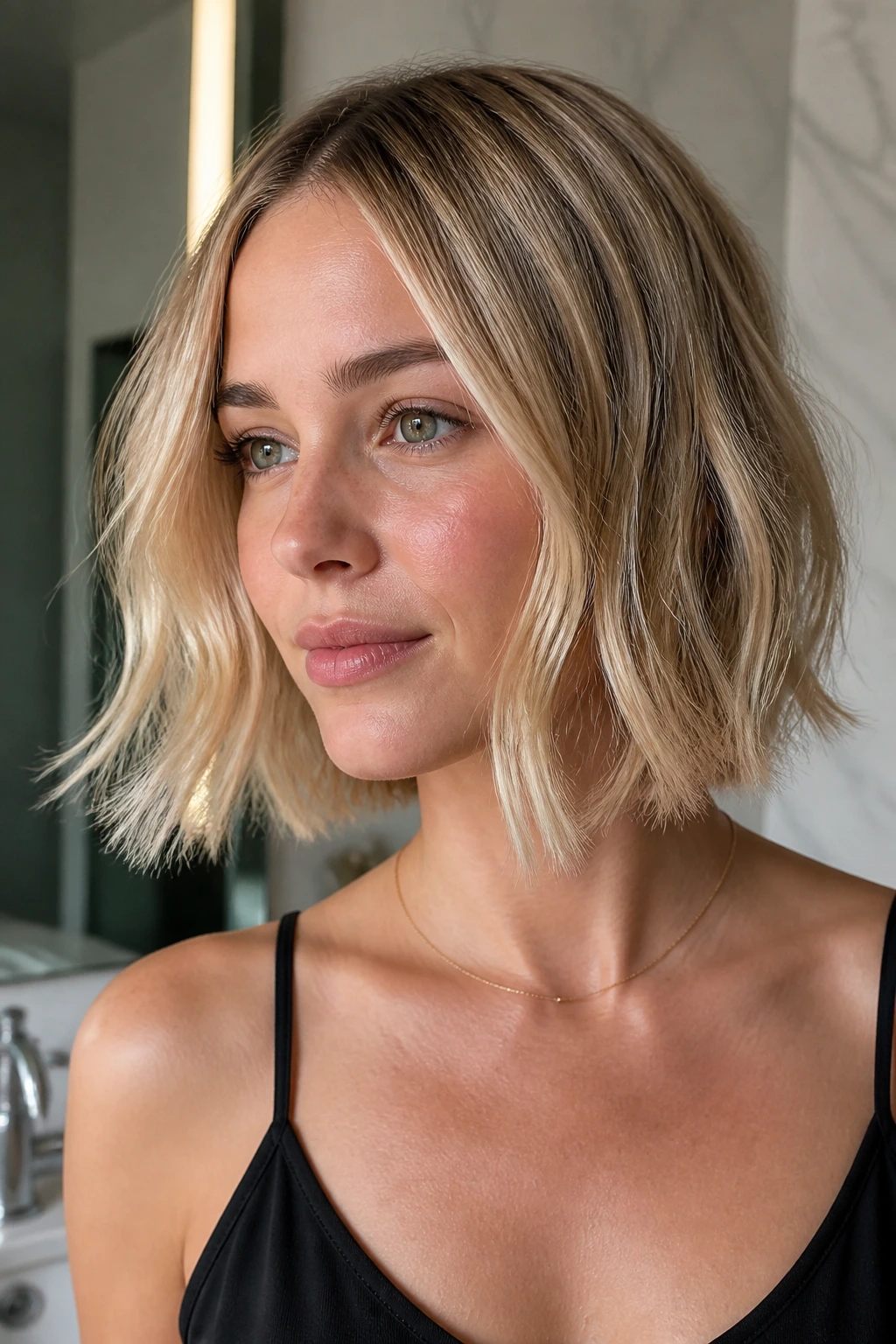
Why does this look feel richer than a fully tousled bob? Because the roots stay smooth, which gives the eye a clean line to follow, and the ends can play a little. Fine hair often looks fuller when it has one controlled area and one looser area instead of chaos everywhere.
This style is nice if your hair gets frizzy when you try to force too much texture into it. Keep the crown smooth with a light blow-dry cream, then add a bend only from the mid-lengths down. A soft blonde balayage helps the movement show up without looking choppy. The contrast should live in the shape, not in the color.
A side part or off-center part usually suits this cut better than a straight middle part. The little lift at the root makes the style look finished. And yes, this is one of those bobs that looks better after the first hour than it does the second you put the brush down.
19. Bob With Chunky Ribbons of Blonde
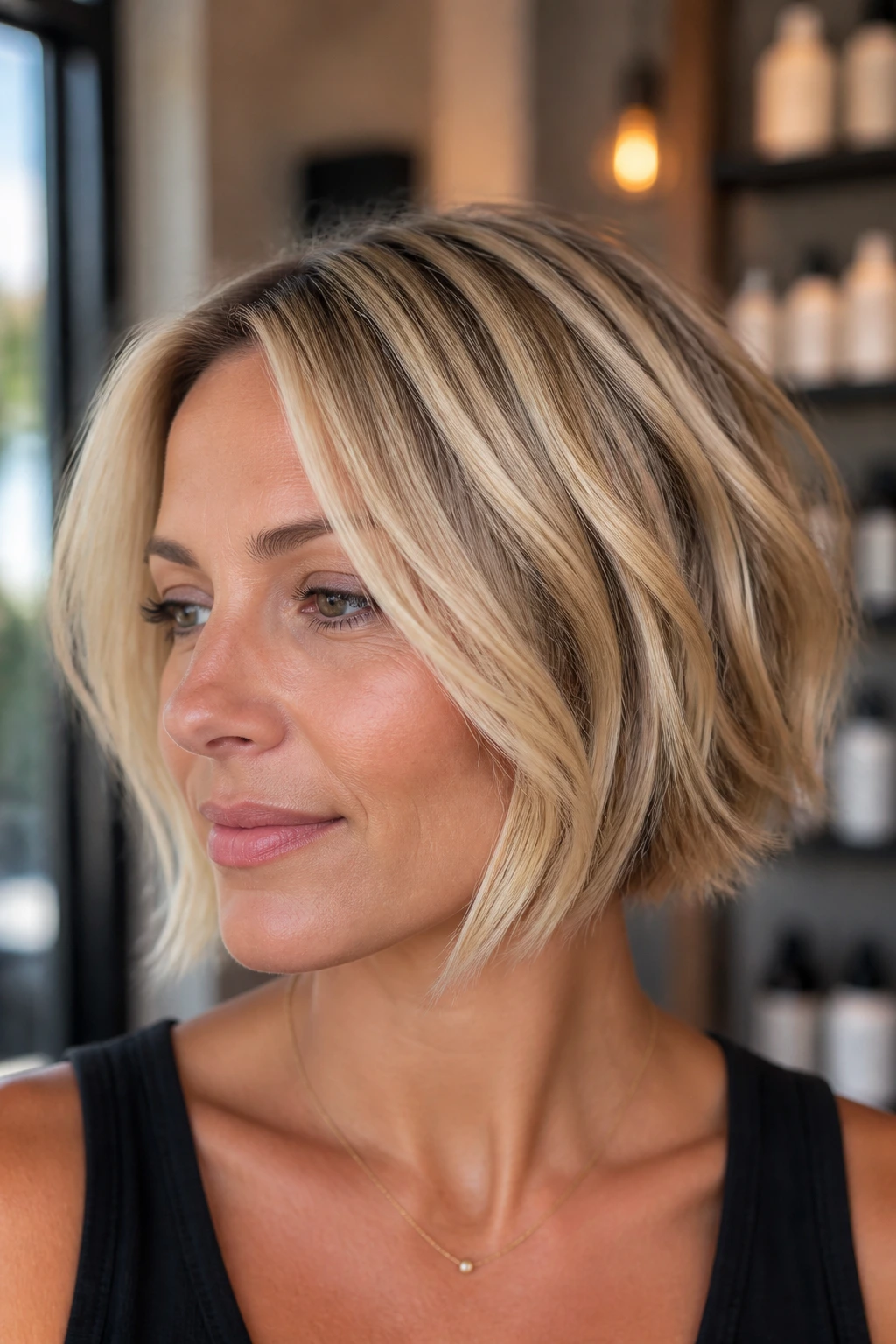
A few chunky ribbons of blonde can do more for fine hair than a busy all-over highlight job. When the light pieces are placed with intention, they give the bob depth where the eye needs it most—around the face, the crown, and the outer curve of the haircut.
This is not about striping the hair. It’s about placing stronger pieces in spots that show movement. A chunky ribbon near the front can make the face frame pop. Another one higher up can make the crown look lifted. The rest of the color should stay softer and more blended so the cut doesn’t get noisy.
This kind of blonde works best with a bob that has a little bend or wave. Straight hair can handle it too, but the color really comes alive when the ends move. If you have very fine hair, keep the ribbons narrow enough that they do not start to break up the density of the base.
A little contrast goes a long way here. A lot of contrast can get messy in the wrong way.
20. A-Line Bob With Loose Bevel
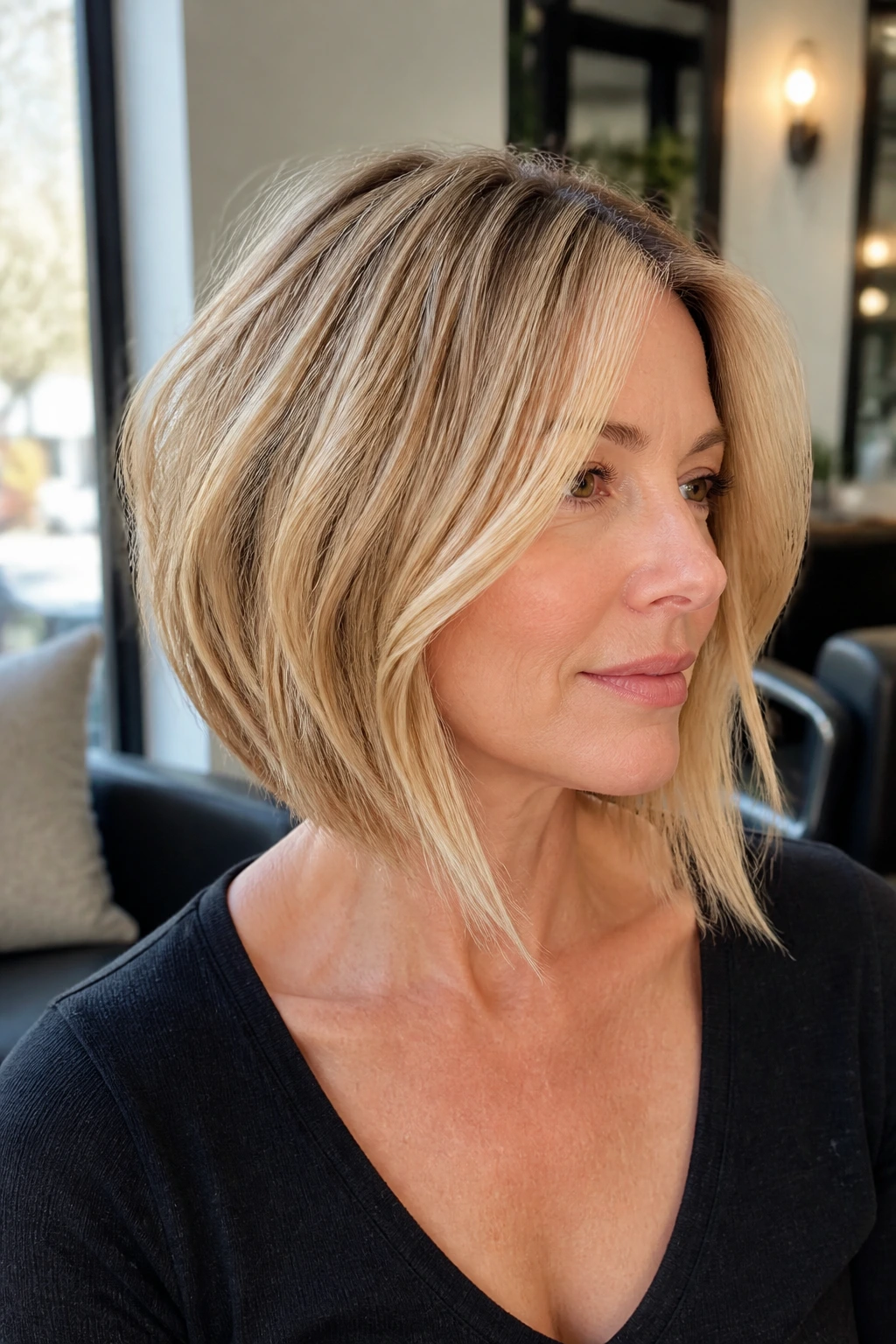
An A-line bob naturally gives fine hair a stronger shape because the front stays a bit longer than the back. The loose bevel at the ends softens that angle so it doesn’t look too hard or too dated.
The Shape Advantage
The longer front pieces frame the face, while the shorter back adds lift and keeps the neck area from feeling weighed down. For thin hair, that’s a useful trade. You get more visual fullness in the back and more movement around the front.
Ask for a gentle A-line, not a steep one. Steep can look severe on fine hair. The bevel should be soft enough that the ends curve slightly inward or outward, depending on your styling habits. A neutral blonde with a hint of warmth makes the shape feel easier and less icy.
This cut is one of the most practical choices on the list. It looks polished when needed, and it looks casual when finger-styled. That’s not flashy. It is useful. And useful haircuts tend to stick around.
21. Grown-Out Bob That Looks Deliberately Undone
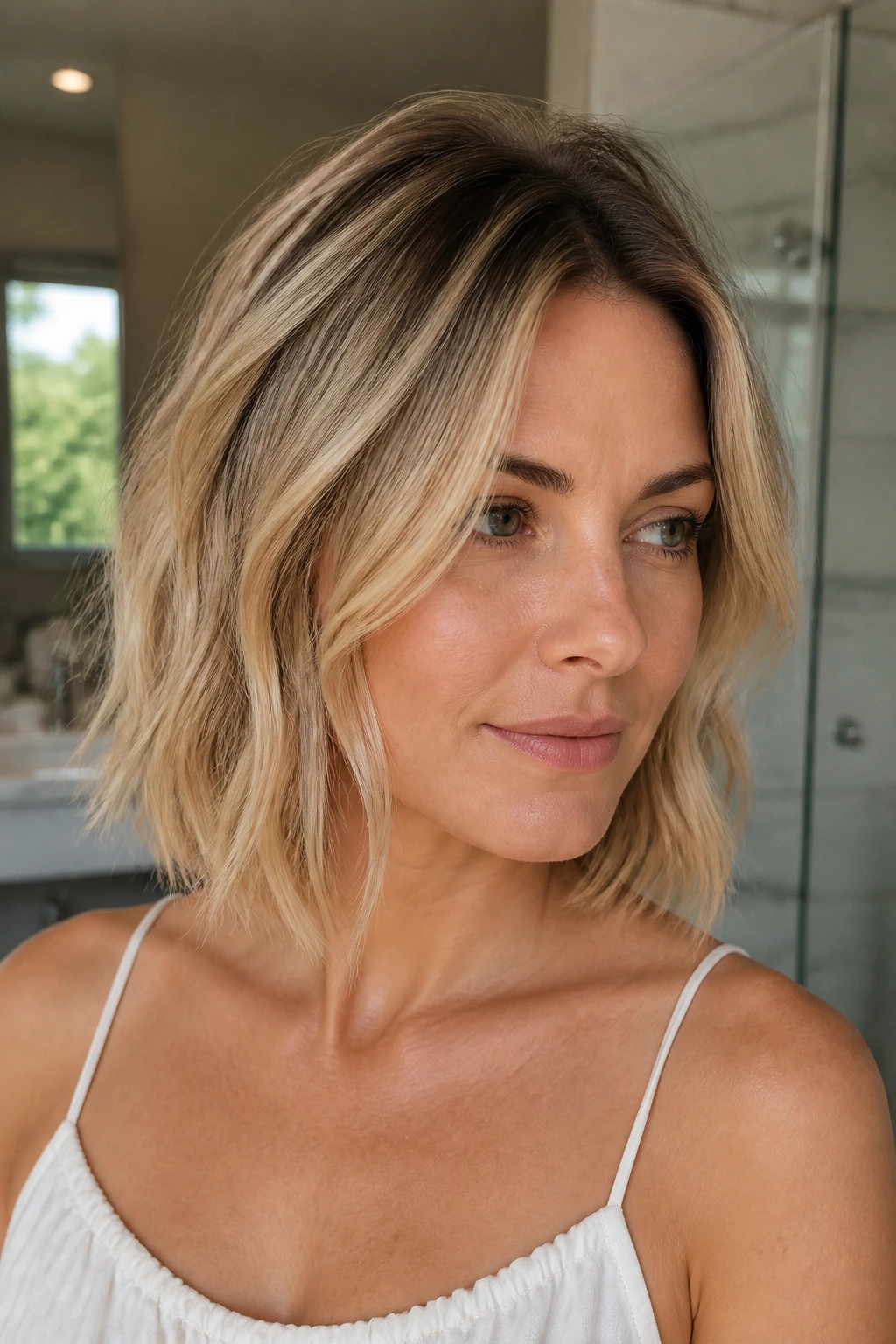
Some of the best bob cuts are the ones that look a little lived in. A grown-out bob can be a gift for fine hair because the extra softness at the ends keeps the style from turning brittle-looking. It’s the haircut version of a white shirt that’s been washed a few times and somehow looks better for it.
The key is to keep the shape deliberate. You still want a clean outline around the shoulders or jaw, just with enough length and texture that the style doesn’t feel freshly trimmed every morning. A rooted blonde works especially well here because the darker base helps the top look fuller while the lighter mids give movement.
If your hair grows fast or gets flat by lunch, this cut is forgiving. You can wear it with a wave, a tuck, a clip, or a messy bend. It takes on your day a little bit.
One of my favorite things about this shape is that it doesn’t panic when it’s not perfect.
22. Light, Airy Bob With Barely There Layers
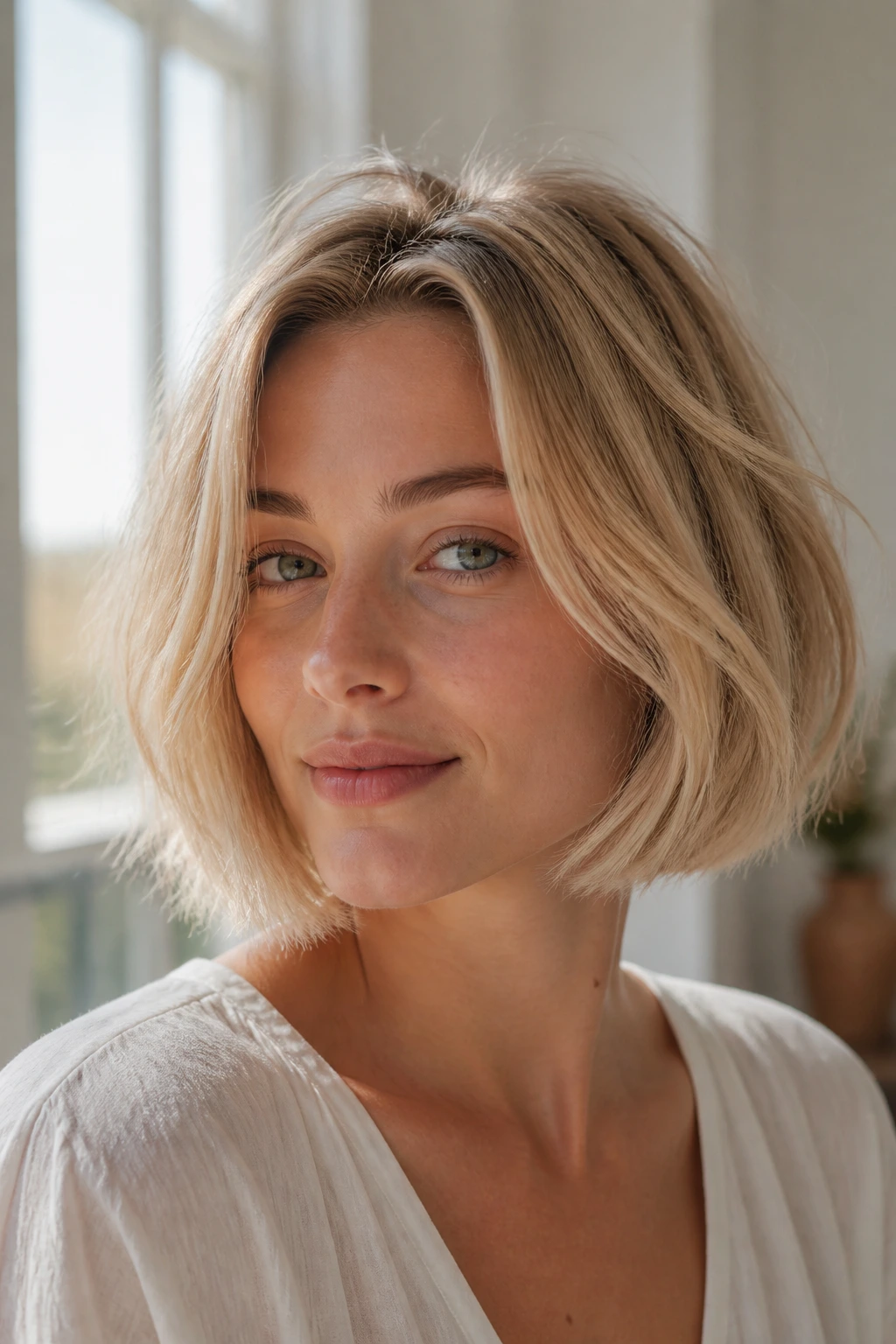
If fine hair only had one safe place to start, this would be it. A light, airy bob with barely there layers keeps the shape full while giving the hair just enough room to move. Nothing about it feels heavy. Nothing about it feels forced.
The best version sits somewhere around the jaw or just below it, with a soft blonde that isn’t too bright at the roots. The layers should be so subtle that you notice the lift before you notice the cut itself. That’s the sweet spot. Too much layering and the bottom starts to vanish; too little and the bob goes flat. This middle ground is calmer, and calmer usually wins with fine hair.
If you want a bob that looks good on clean hair, second-day hair, and the kind of day where you barely have time to flip your head upside down and go, this is the one. A tiny bit of root lift, a loose bend through the ends, and a shade of blonde that leaves some shadow behind—that’s enough. Sometimes enough is the whole trick.
