



A short straight bob can be the best haircut in the room—or the one that makes a round face feel even rounder. The difference is usually not dramatic. It’s a half inch here, a side part there, a slightly lower hemline, and suddenly the whole shape looks sharper.
Round faces have softness built in: fuller cheeks, gentle curves, and a width that can read almost equal to the length. That does not mean you need long hair. It means the bob has to work a little smarter. The cut should guide the eye downward, keep the sides tidy, and avoid sitting right on the widest part of the face.
Straight hair helps, honestly. It shows the line of the cut without much fuss, so you can actually tell whether the shape is flattering or just pretending to be. If a bob puffs at the cheeks, lands too high, or feels boxy in the wrong place, you see it fast.
The 20 cuts below each solve the shape problem in a different way—some add length, some slim the sides, and some make the jawline look cleaner than it does in a mirror selfie. Pick the one that fits your hair density, your styling patience, and how much edge you want around your face.
1. Chin-Length Blunt Bob With a Center Part
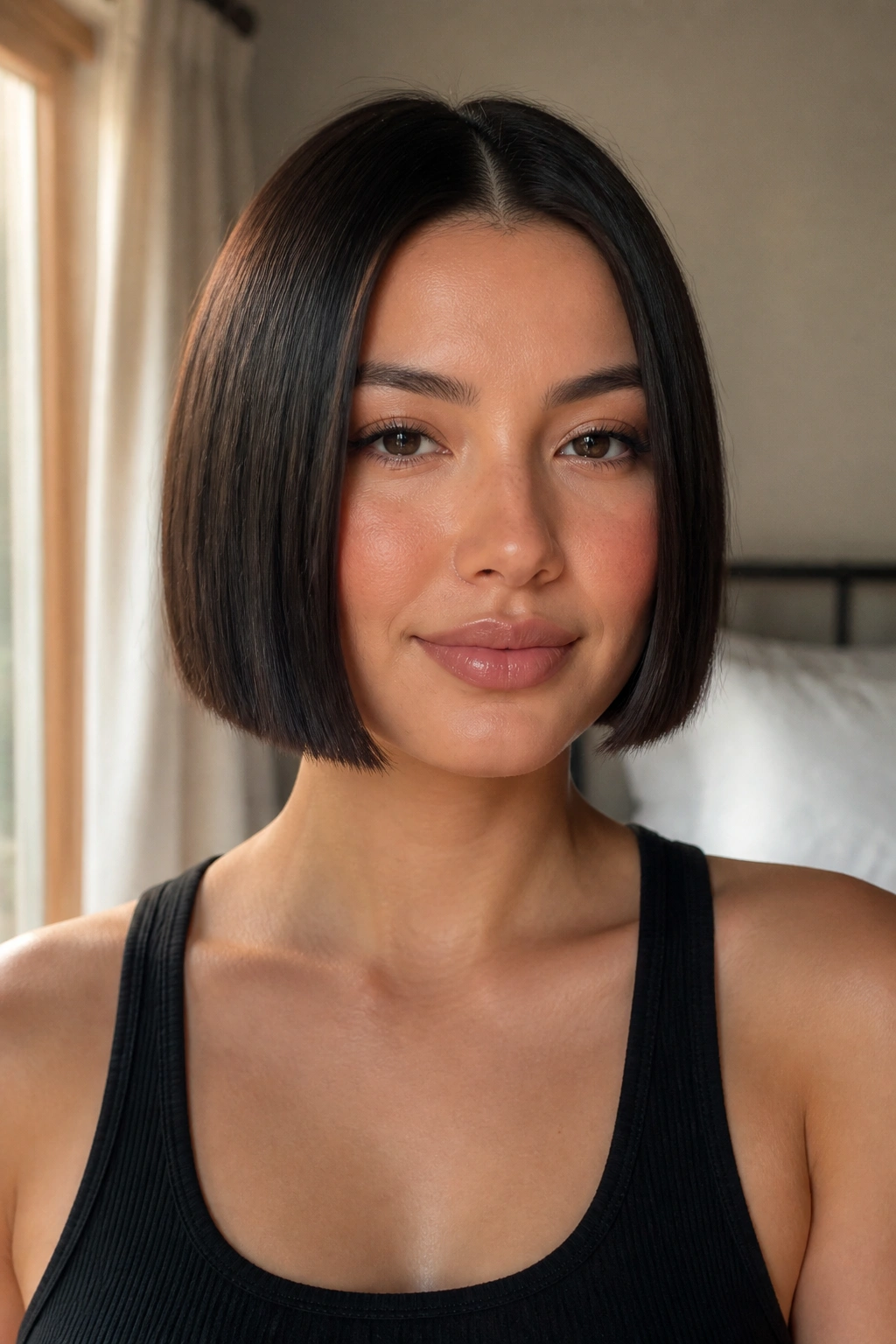
This is the classic move, but it only works when the length is placed with care. On a round face, a chin-length blunt bob should sit just below the chin, not smack on the fullest part of the cheeks. The center part adds a clean vertical line, which helps the face read a little longer.
What I like about this cut is the honesty of it. No feathering, no fussy layers, no pretending. The blunt edge gives straight hair a crisp finish, and the center part keeps the shape calm instead of wide.
Best for: fine to medium straight hair, especially if you want a neat, polished look.
Ask your stylist for:
- A blunt perimeter that lands ¼ to ½ inch below the chin
- Minimal layering through the sides
- A center part that can shift slightly off-center if needed
Watch for: too much volume at the cheek line. That’s the one thing that can make this cut look boxy on a round face.
2. Slightly Angled A-Line Bob for Round Faces
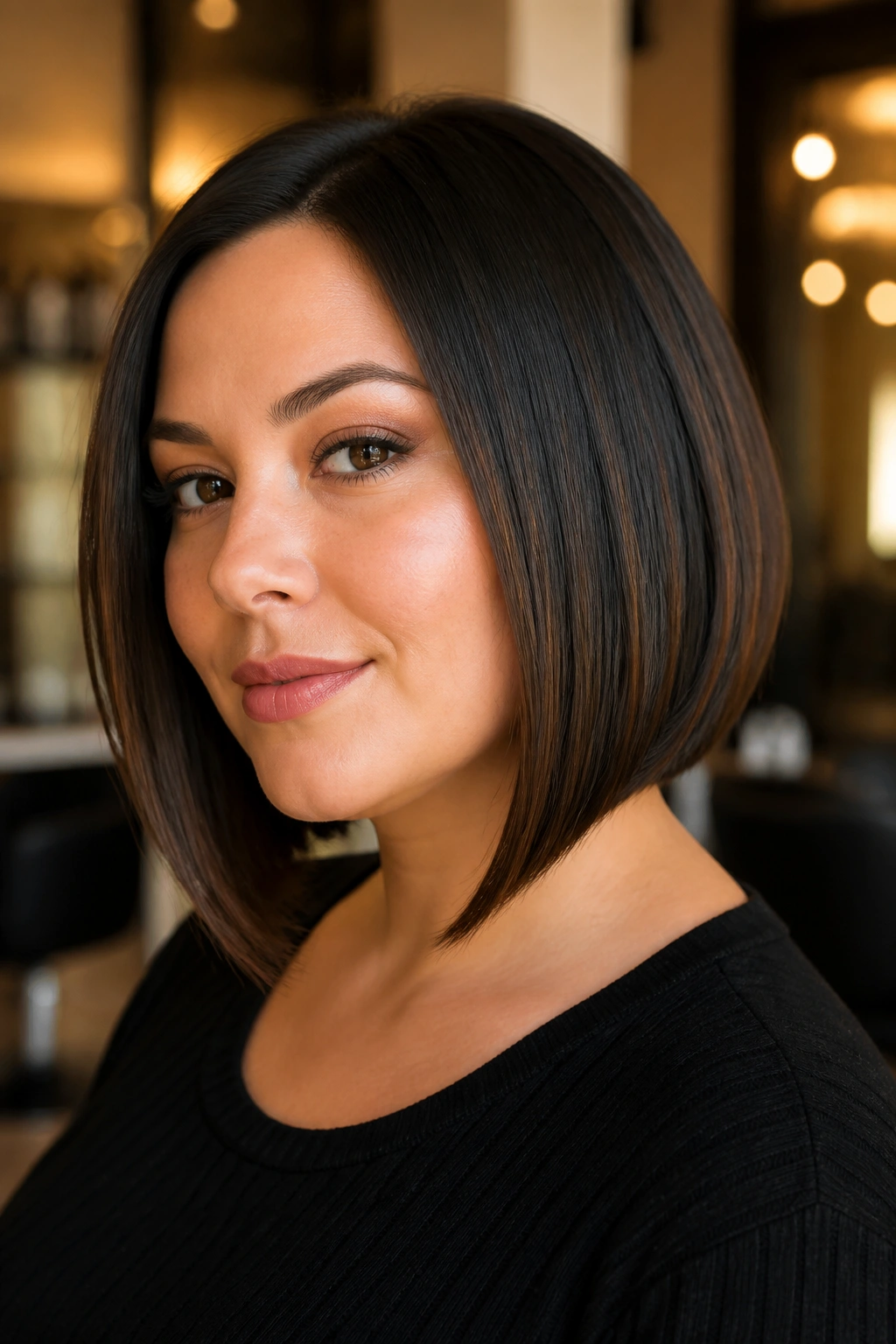
A soft A-line bob is one of the easiest ways to make a round face look longer without doing anything dramatic. The back stays a touch shorter, while the front pieces angle down toward the jaw. That diagonal line matters more than people think. It gives the face direction.
Why It Works
Straight hair shows off the angle clearly, which is the whole point. A tiny difference in length—maybe 1 to 1.5 inches from back to front—creates a cleaner frame around the face. It keeps the eye moving instead of stopping at one round point.
What to Ask For
- Shorter nape length with a gentle forward drop
- No heavy stacking at the sides
- Clean, sharp ends rather than wispy ones
If your hair is thick, this cut is especially useful because the front pieces can be thinned just enough to keep them from flaring at the jaw. It’s sleek, not severe. That’s why it works so well.
3. Jaw-Grazing Bob With a Deep Side Part
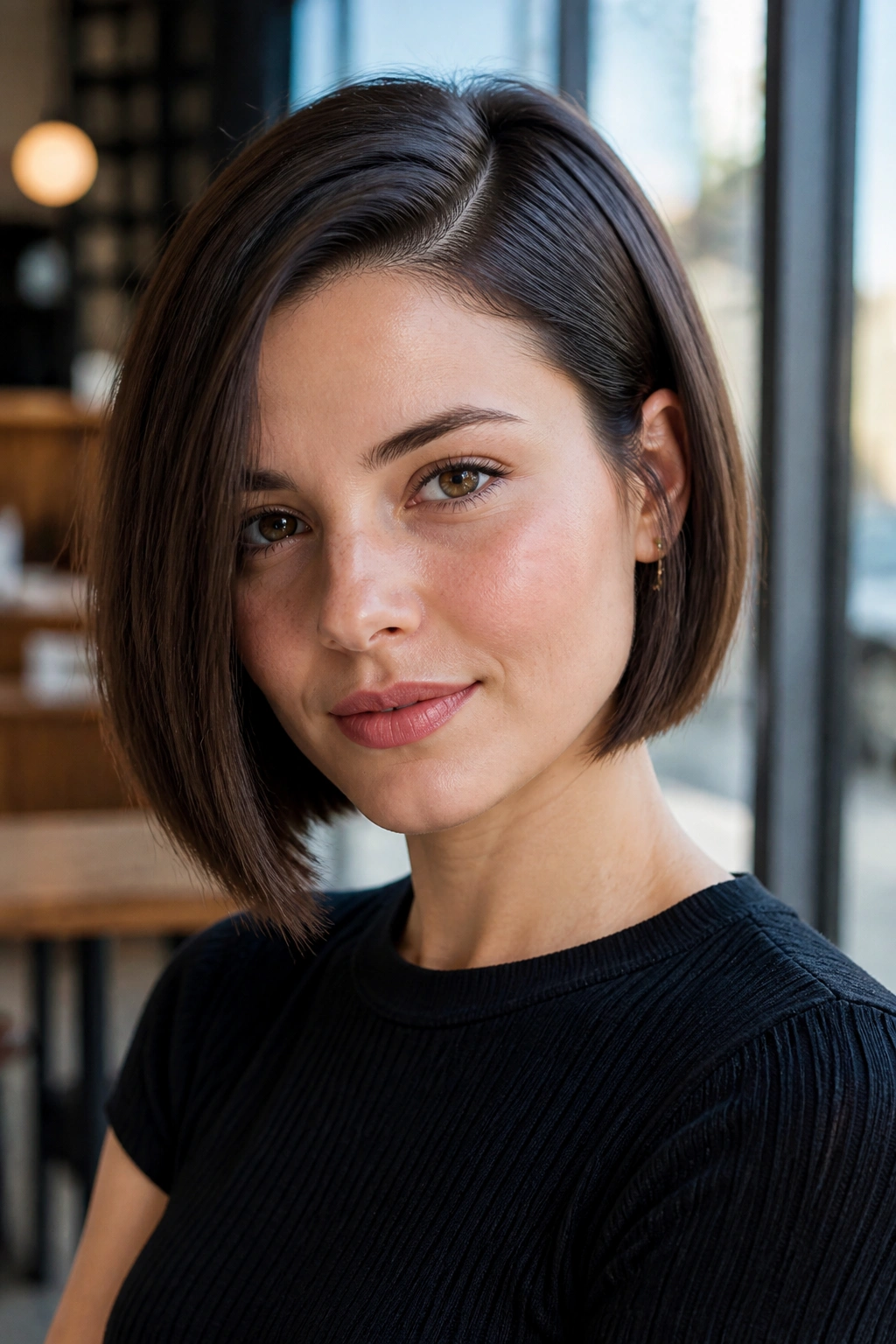
A deep side part changes the whole mood of a bob. One side gets lifted, the other side falls in a soft diagonal across the face, and suddenly the roundness feels less centered. That asymmetry is the trick.
This cut is one of my favorites for straight hair that tends to lie flat. The side part adds a little root lift, and the jaw-grazing length draws the eye along the lower half of the face instead of across the cheeks. It’s simple. It works.
If you want this shape to feel modern rather than old-school, keep the ends blunt and skip the curled-under finish. A smooth blow-dry with a flat brush gives you that sleek line without extra puff.
Best for: medium-density hair and anyone who wants a little softness around the face without losing structure.
4. French Bob With a Soft Fringe

A French bob can flatter a round face, but only if it stays airy. The heavy, helmet-like version is a bad idea here. The better version lands around the cheekbone or just below it, with a fringe that’s soft enough to break up the width at the forehead.
The Shape to Aim For
Think short, clean, and slightly undone. Not messy. Just relaxed enough that the bob doesn’t feel boxed in. The fringe should graze the brows or split gently in the middle if your forehead is shorter.
Keep It From Looking Too Wide
- Ask for a fringe that’s lightly textured, not dense
- Keep the body of the bob close to the head
- Avoid big side volume at the cheeks
A round face can wear this cut beautifully when the fringe is treated like a detail, not the whole haircut. The result feels a little Parisian, but the useful part is more practical than that: the soft fringe shortens the forehead while the short bob keeps the look fresh and clean.
5. Box Bob With Crisp Edges
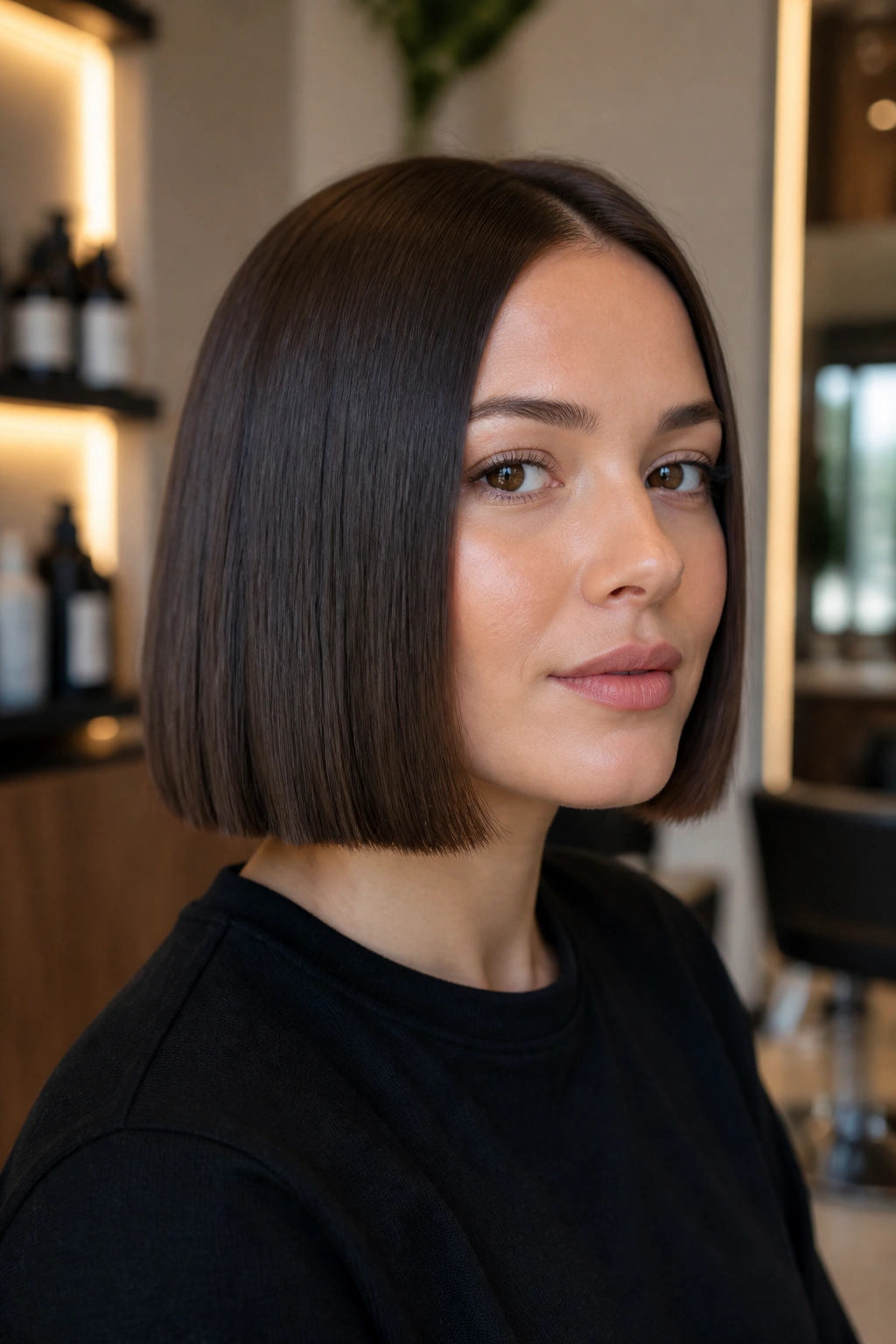
A box bob is blunt, square, and straight at the edges. That shape can sound severe, but on a round face, a little structure is a good thing. The square outline gives contrast to soft features, which is exactly what makes the face look sharper.
This is the bob for someone who likes precision. No mushy layers. No airy, piecey ends. The perimeter does all the work, and it should look deliberate from every angle. If your hair is straight and fairly dense, the shape holds up well and doesn’t collapse by lunchtime.
One thing to avoid: too much width at the sides. A box bob should sit close to the head through the cheek area and keep the weight low. That keeps the cut from turning into a little sphere, which is the last thing a round face needs.
6. Graduated Bob With a Lifted Nape
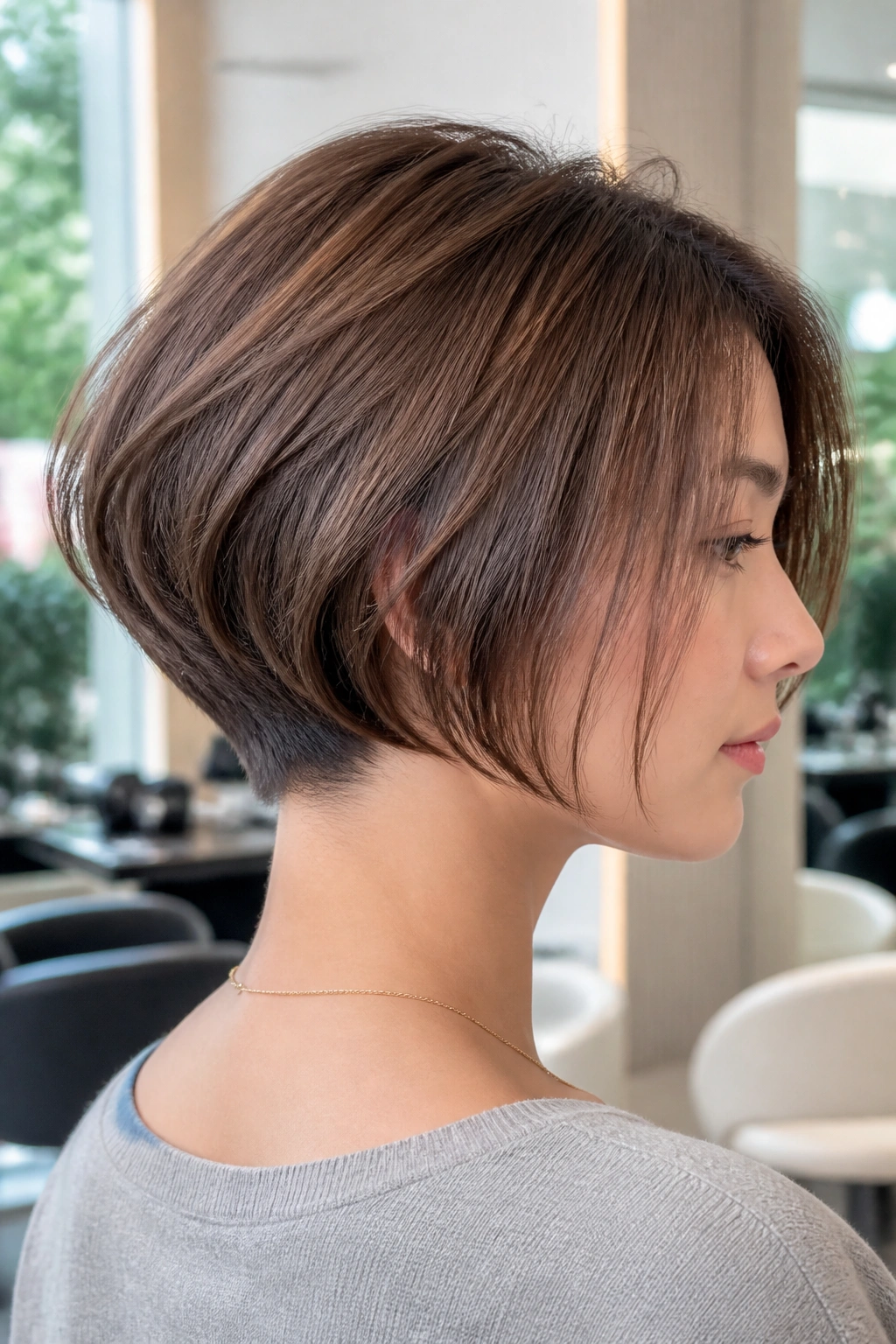
A graduated bob gives you lift at the back and a cleaner outline in the front. On round faces, that lift can be a gift because it keeps the crown from looking flat while the front still narrows the face.
The stack at the nape should be controlled, not bulky. Too much stacking creates a mushroom shape. Too little, and the whole cut loses its purpose. You want a smooth rise at the back, then a gentle angle toward the jaw. Straight hair shows this line clearly, which makes the haircut feel more expensive even when it’s actually pretty practical.
Good if you want:
- Shape without curl or wave
- A bob that holds volume at the crown
- A neat neckline with a little movement in front
It’s a tidy haircut with real backbone. Not every round face needs softness. Sometimes the face looks better with a firmer silhouette.
7. Sleek Bob With Long Front Pieces
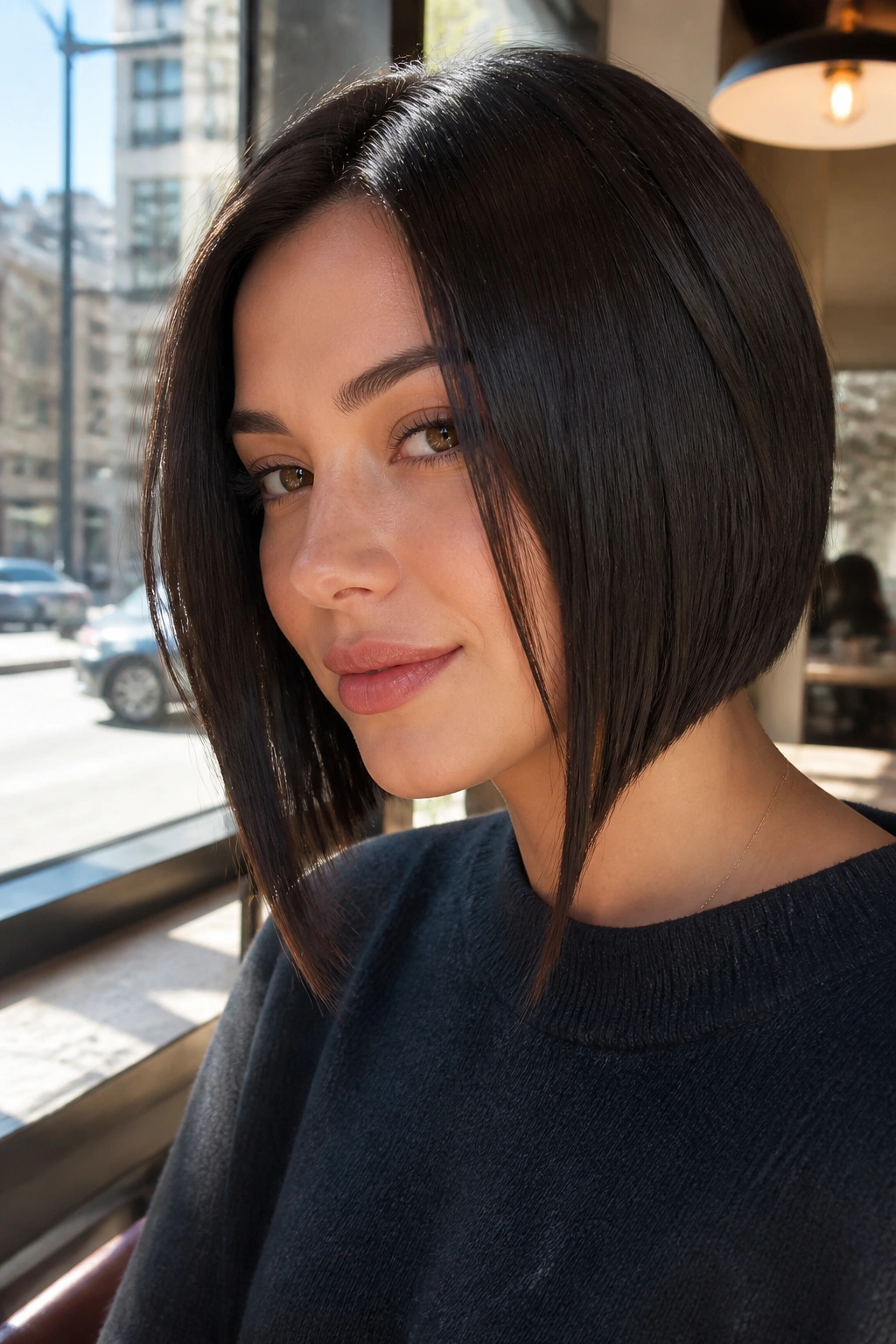
Longer front pieces are a smart move when you want short hair but still want a little face-framing length. The front should fall near the jawline, maybe a touch below, while the back stays compact. That difference pulls the face downward and away from the cheeks.
Unlike a one-length bob, this version gives you a cleaner line on the sides without making the haircut feel flat. The front pieces can tuck behind the ears, which is a nice bonus if you like changing the shape during the day.
This style is especially good if your face is round but your jaw is a little sharper than your cheeks. The longer front pieces give that jaw more room to show up. Keep the ends blunt. Soft, wispy ends tend to blur the line and make the whole cut feel less precise.
8. Micro Bob That Skims the Ear

Shorter than most people expect, the micro bob is the bold one in the group. It sits around the ear or just below it, with a clean neckline and a strong perimeter. On a round face, the point is not to hide the shape of the face. It’s to show off the neck, the jaw, and the cheekbones.
This cut works best when the head shape and hair density cooperate. If your hair is very thick, the bob can swell out at the sides. If it’s fine to medium, the short length can look crisp and architectural. That’s the sweet spot.
You do need confidence for this one. No pretending. But the payoff is a haircut that feels light, sharp, and very direct. If you like a straight line and don’t want to spend ages styling, it’s worth considering.
9. Bob With Curtain Bangs and Straight Ends

Curtain bangs are a useful trick on round faces because they break up the upper half of the face without closing it in. The bangs should open at the center and sweep down toward the cheekbones, not hang like a heavy curtain. That difference matters.
How to Keep It Balanced
The bob itself should stay straight and clean, usually around chin length or a little longer. The bangs add movement up top, while the blunt ends keep the bottom line tidy. You get softness at the forehead and structure near the jaw.
What to ask for
- Bangs that start around the bridge of the nose
- Cheekbone-length side sweep on both sides
- A blunt bob underneath, not choppy ends
This is a good option if you like your face shape but want a little more length in the visual line. The bangs pull attention upward and outward. The bob keeps everything grounded.
10. Tucked-Behind-the-Ear Bob
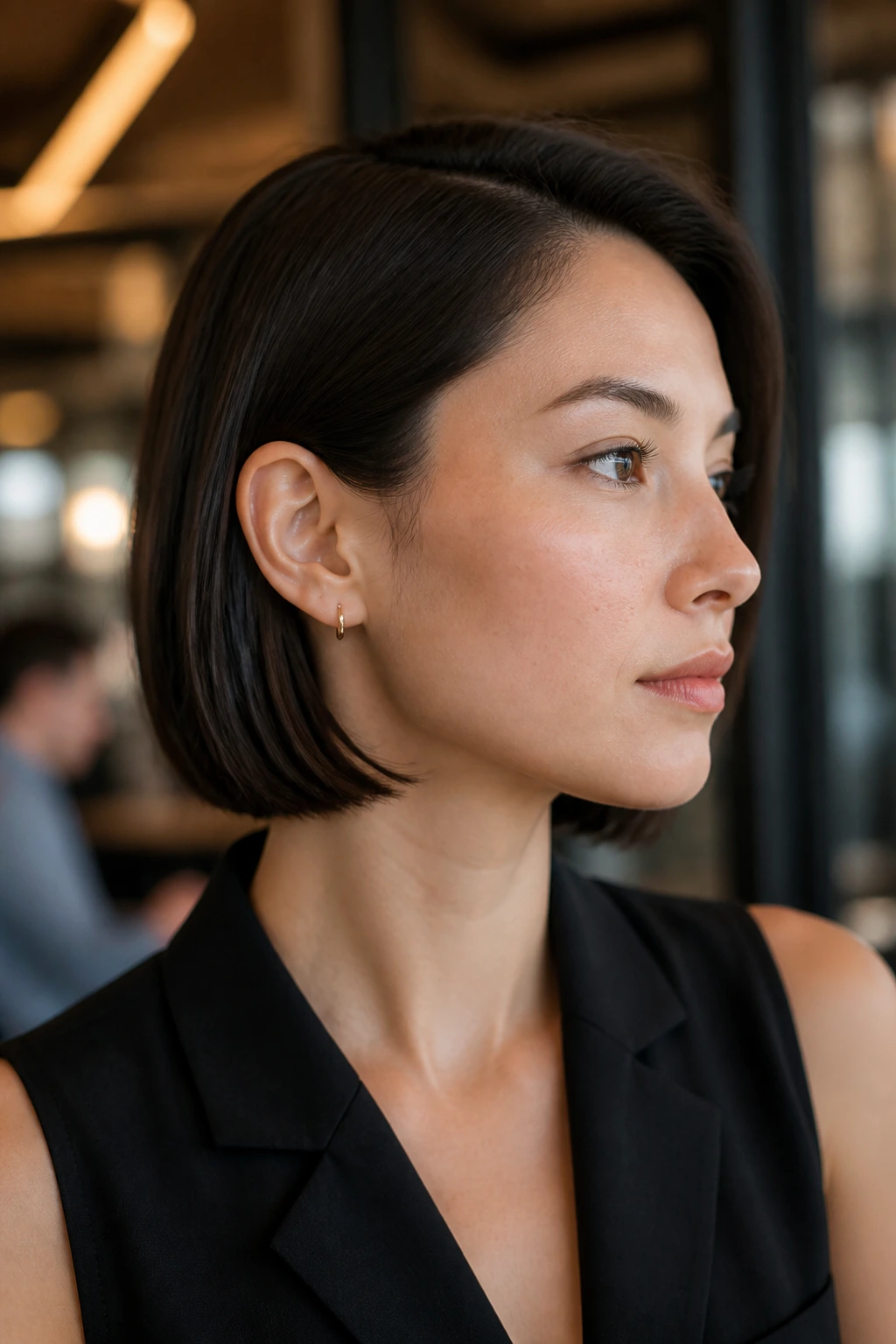
A tucked-behind-the-ear bob is a haircut that changes shape depending on how you wear it, which is part of the charm. The cut itself should have enough length in front to sit neatly behind the ear without fighting you. That little bit of extra length creates a narrower look through the cheeks.
The styling effect is surprisingly strong. Tucking one or both sides behind the ears opens the face, exposes the jawline, and makes the haircut look cleaner. On a round face, that open space matters. It gives the eye somewhere to go.
This one is especially nice if you like earrings or glasses, because the tucked shape frames both instead of competing with them. Keep the edges blunt and the crown smooth. If the top gets too puffy, the whole point gets lost fast.
11. Neck-Skimming Bob With a Clean Hemline
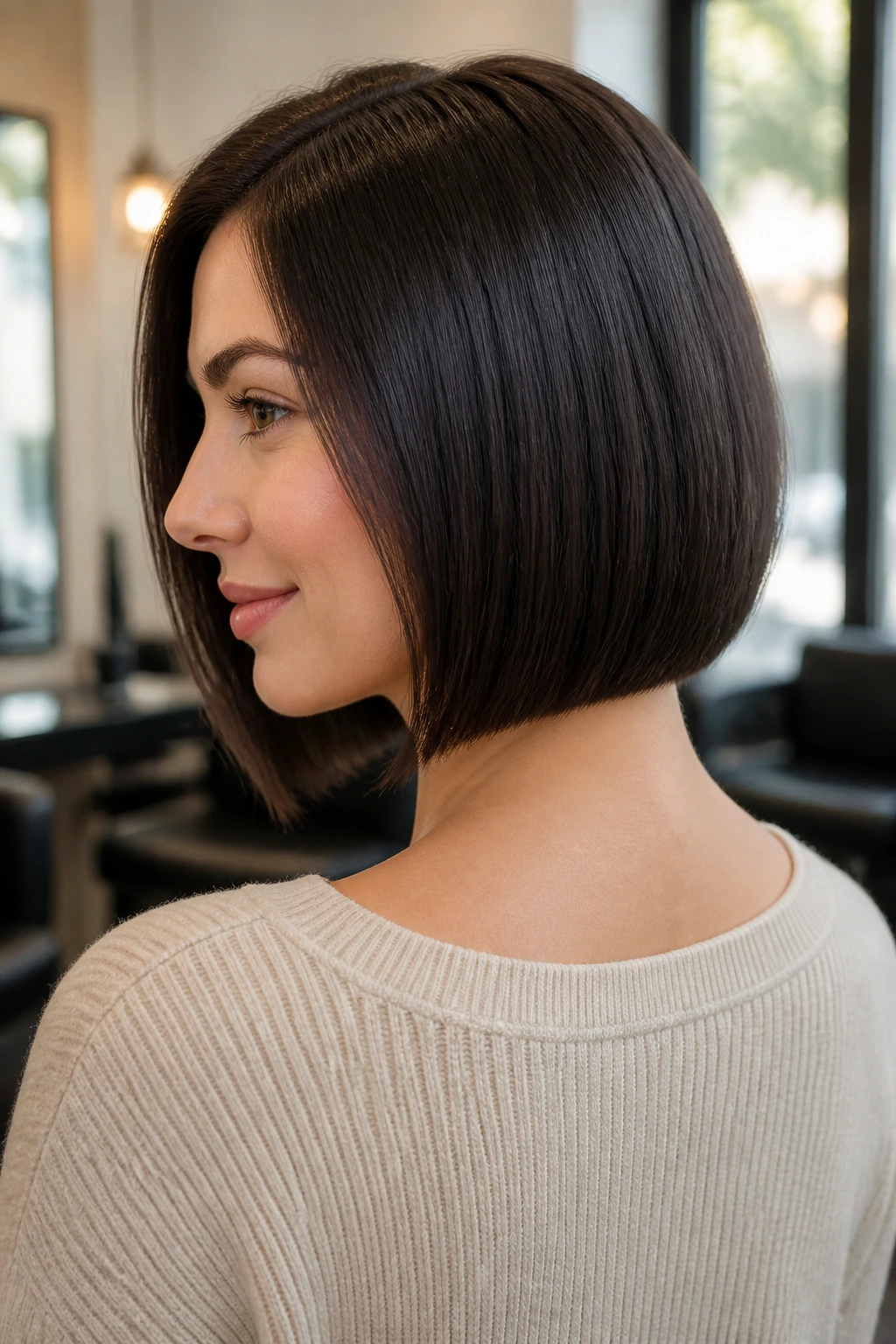
This cut sits right at the edge of short hair and starts to flirt with a lob, but the cleaner hemline keeps it firmly in bob territory. It skims the neck, avoids the widest part of the cheeks, and gives the face a longer-looking frame.
The trick is restraint. No heavy layers. No exaggerated bend at the ends. Just a smooth line that falls close to the neck and follows the natural curve of the head. Round faces usually look good in this shape because the haircut doesn’t fight the face; it quietly elongates it.
I’d call this the safest bob on the list if you want something short but not severe. It’s neat at the office, easy to blow-dry, and forgiving when you’re a day past wash day. That last part counts more than people admit.
12. Asymmetrical Bob With One Longer Side
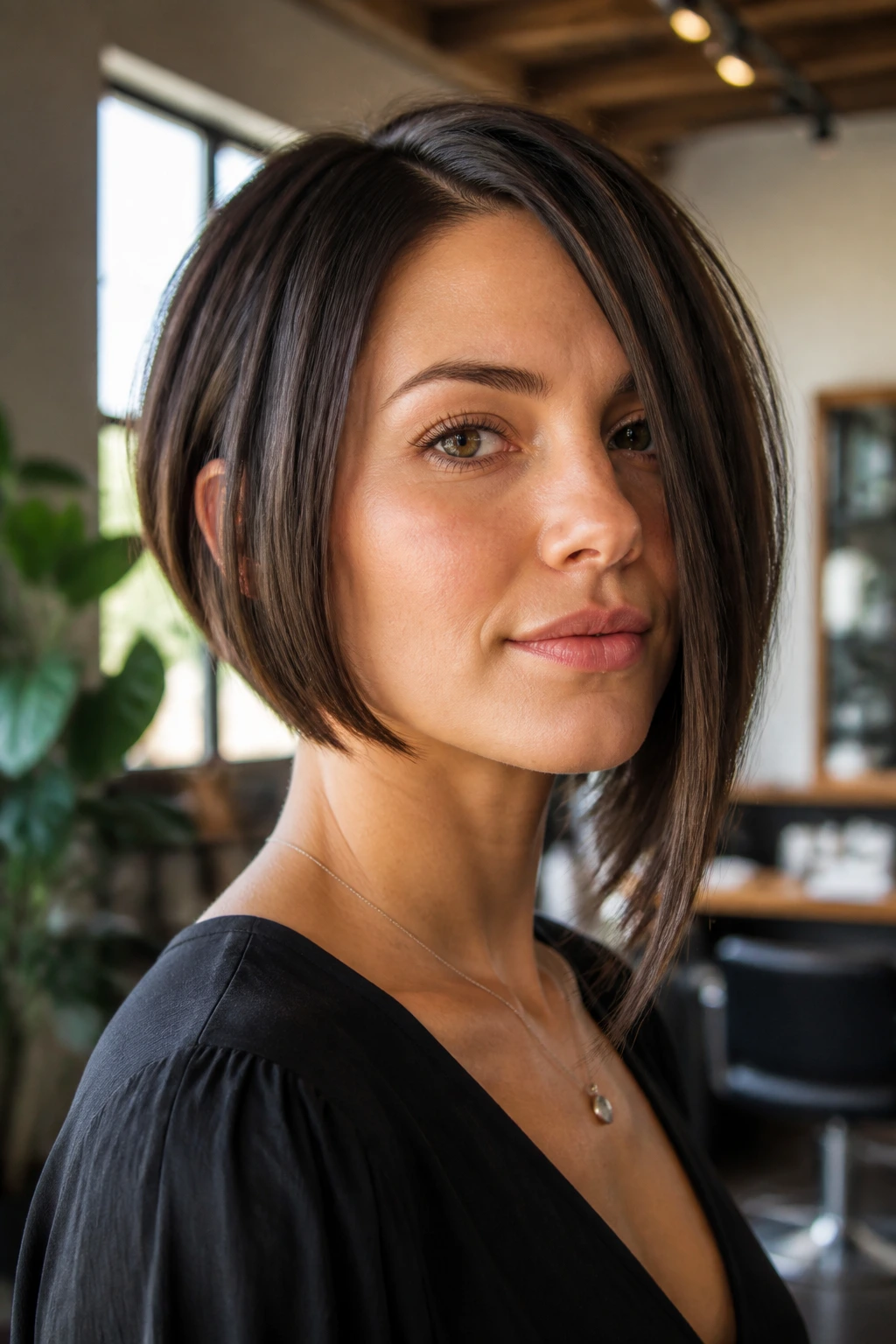
A subtle asymmetrical bob can do a lot for a round face because it breaks the symmetry that often makes the face look wider. One side stays slightly longer, usually by about ¾ to 1 inch, and that tiny shift changes the line across the jaw.
The cut should not look lopsided. That’s the mistake. It should feel intentional, with the longer side acting like a diagonal frame. On straight hair, the difference is crisp enough to read without shouting about it.
What Makes It Work
- Keep the difference small and controlled
- Let the longer side land below the jaw
- Pair it with a side part if you want more shape
This is one of those cuts that looks best when the styling is almost too simple. Smooth the hair, tuck one side if you want, and let the angle do the talking.
13. Grown-Out Pixie Bob
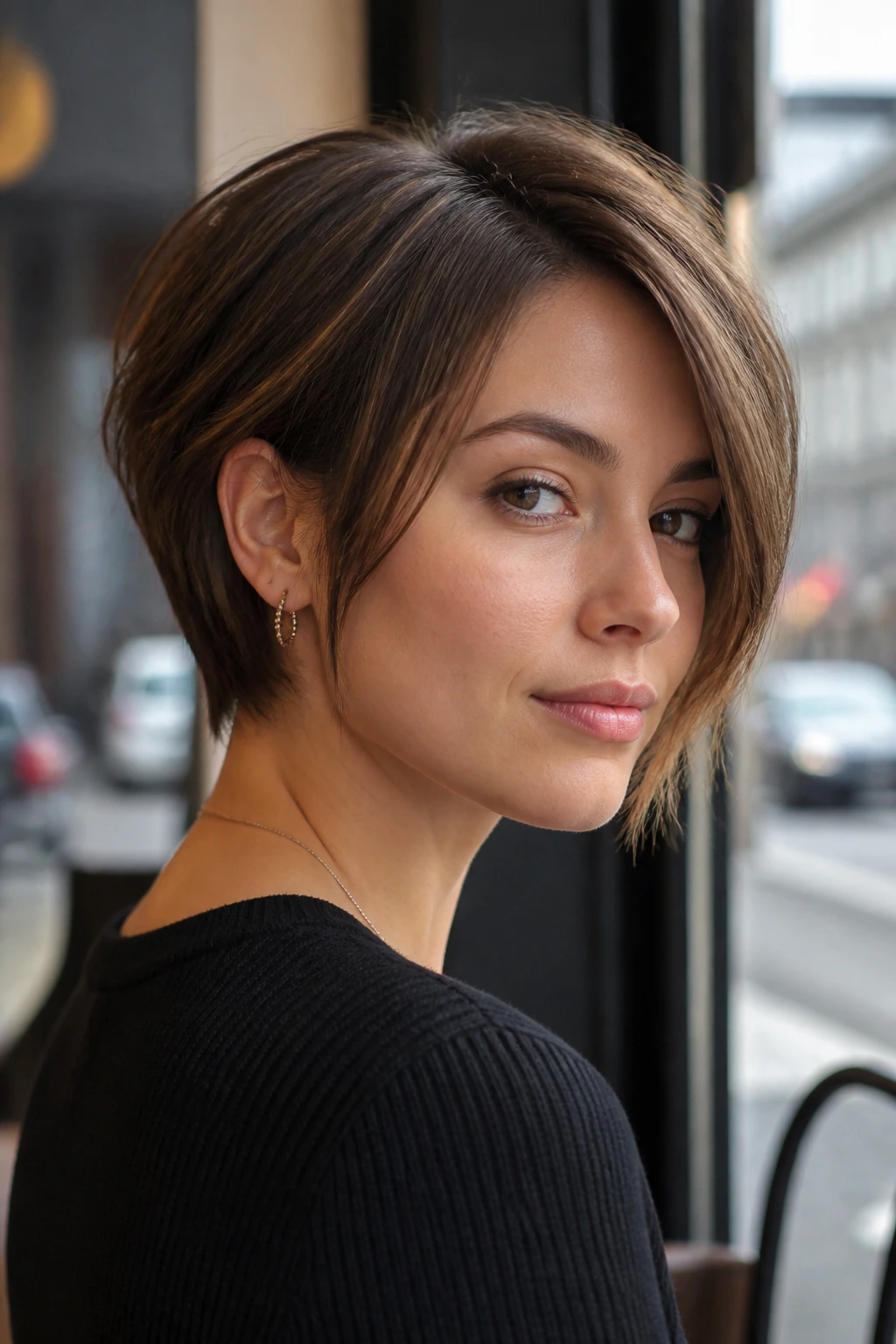
A grown-out pixie bob sits between a pixie and a bob, which sounds awkward until you see how useful it is. The back stays short and neat, while the front and sides keep enough length to soften the face. For round faces, that extra length near the front is the good part.
The haircut works because it creates a compact shape without puffing out around the cheeks. It also gives you a little edge if you like short hair but don’t want the look to become too sweet or rounded. Straight hair helps keep the transition clean from short back to longer front.
This is a strong choice if you want something easy to style in the morning. A quick blow-dry and a touch of smoothing cream usually does it. The cut itself does the heavy lifting, which is nice. Not every short haircut has to be high-maintenance to look intentional.
14. Blunt Bob With Invisible Layers
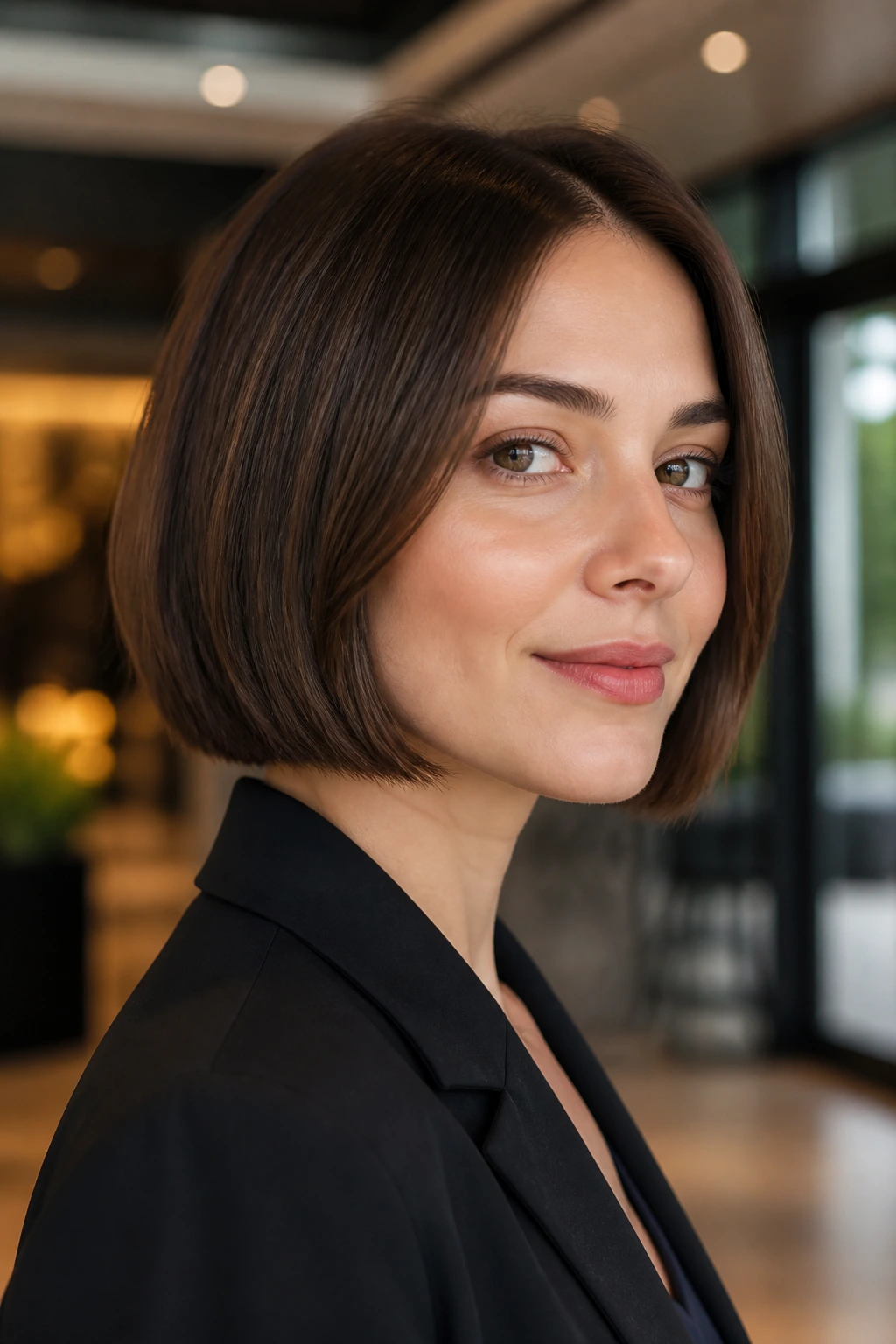
Invisible layers are the quiet fix for thick straight hair. The outer line stays blunt, but the interior gets lightened just enough to keep the bob from ballooning at the sides. That matters on round faces because too much side volume can erase the benefit of the cut.
Why It’s Better Than Obvious Layers
A heavily layered bob can make the hair flick out at the cheeks, which is not flattering here. Invisible layers keep the shape smooth from the outside while reducing bulk inside. You get movement without losing the clean edge.
Good signs to ask for
- Blunt perimeter
- Internal texturizing only where the hair is too bulky
- Little to no layering at the jawline
This is one of the smartest cuts in the group if your hair is dense and naturally straight. It looks calm. It behaves well. And it avoids the puffy triangle shape that so many round faces end up fighting.
15. Soft Underbeveled Bob
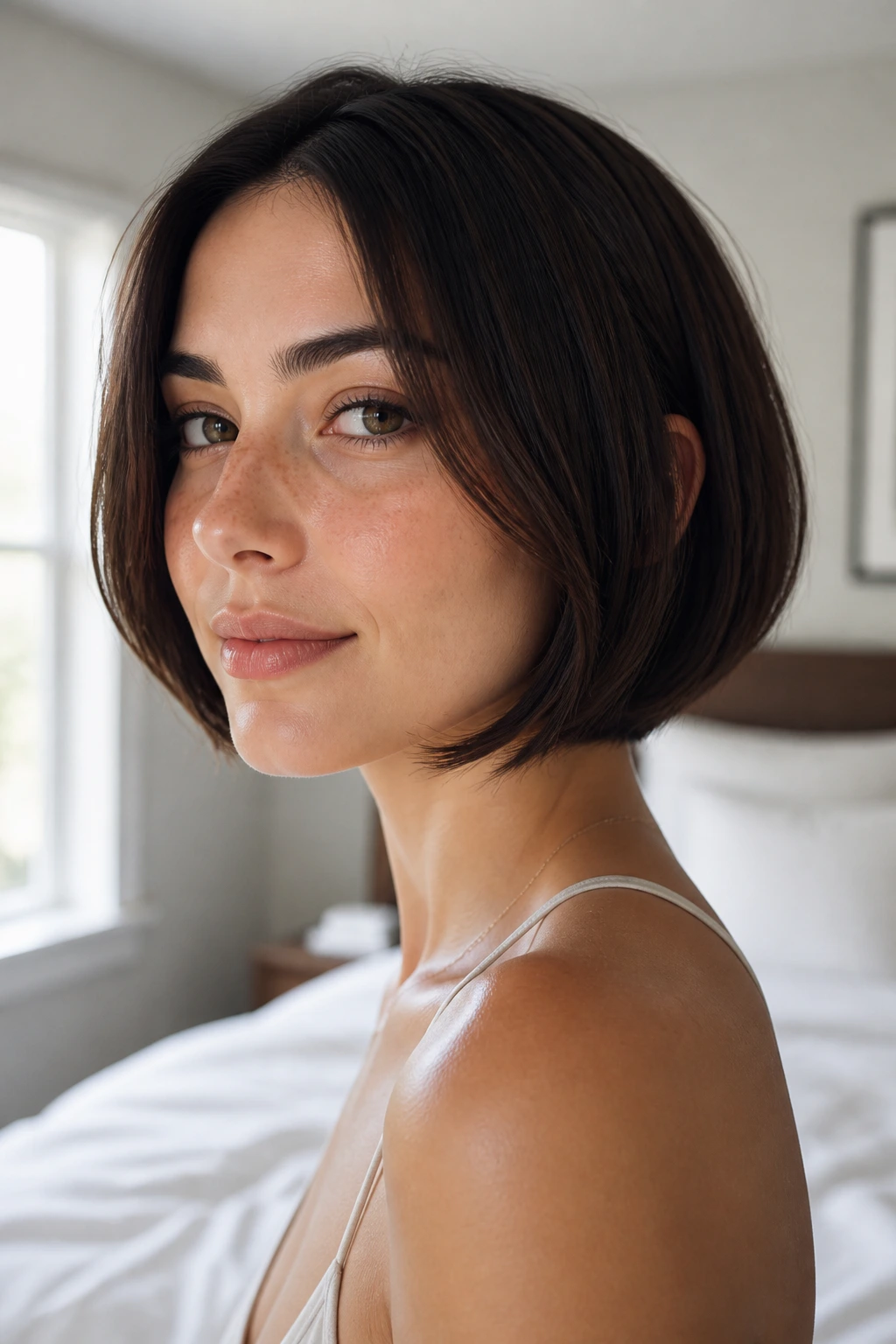
A soft underbevel means the ends curve inward just a bit, enough to hug the neck and jaw without turning into a ball. On a round face, that “just a bit” is the important part. Too much curve and the haircut starts to echo the face shape. Too little and it can feel blunt in a harsh way.
This cut is good if you want something gentle but not shapeless. The underbevel keeps the line tidy, especially around the nape, while the front stays neat and face-framing. Straight hair shows the bend cleanly, which makes the shape feel polished rather than fussy.
If your stylist reaches for a round brush, make sure they keep the finish modest. You want a small inward bend, not a huge curl under. The difference is subtle in the chair and obvious in the mirror.
16. Short Bob With Side-Swept Bangs

Side-swept bangs are a reliable way to break up a round face without hiding too much of it. They cut across the forehead on a diagonal, which changes the shape of the upper face and makes the whole haircut feel less centered.
The bob underneath should stay straight and fairly compact. Let the bangs bring the softness; let the cut do the narrowing. That balance keeps the hairstyle from becoming too busy. If the bangs are too thick, they can overpower the rest of the bob. If they’re too thin, they won’t do much.
This is a useful cut when you want some forehead coverage but don’t want full bangs. It also grows out better than a blunt fringe, which means fewer awkward weeks between trims. A nice side benefit. Plain, but real.
17. Hidden Undercut Bob
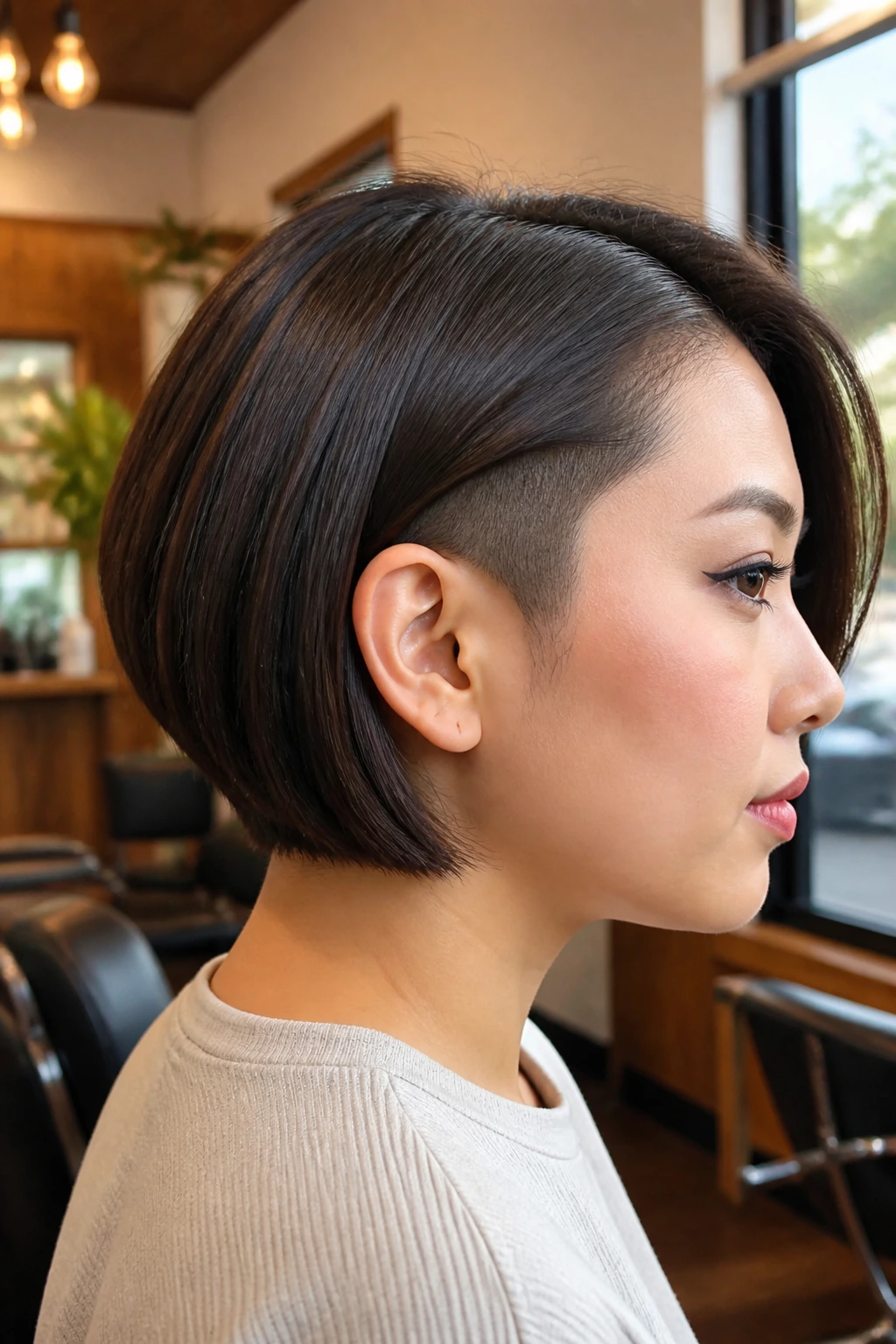
A hidden undercut sounds dramatic, but most of the time it’s just a practical fix for thick hair. The top layer keeps the bob looking full and smooth, while the underneath is clipped away enough to remove bulk at the nape and sides. On a round face, that lighter shape can make a big difference.
The front still needs to stay clean and purposeful. If the undercut is too aggressive, the haircut can lose its body and start to look thin at the ends. The goal is balance: enough hair on top to create a sleek outline, enough removed underneath to stop the sides from flaring.
Who it’s best for
- Thick, straight hair that puffs easily
- People who want a neat shape with less daily blow-drying
- Anyone tired of the triangle effect
This one is a little behind-the-scenes, which is why I like it. The haircut looks simple from the outside, but the shape is doing more work than you think.
18. Wedge Bob With a Tapered Back
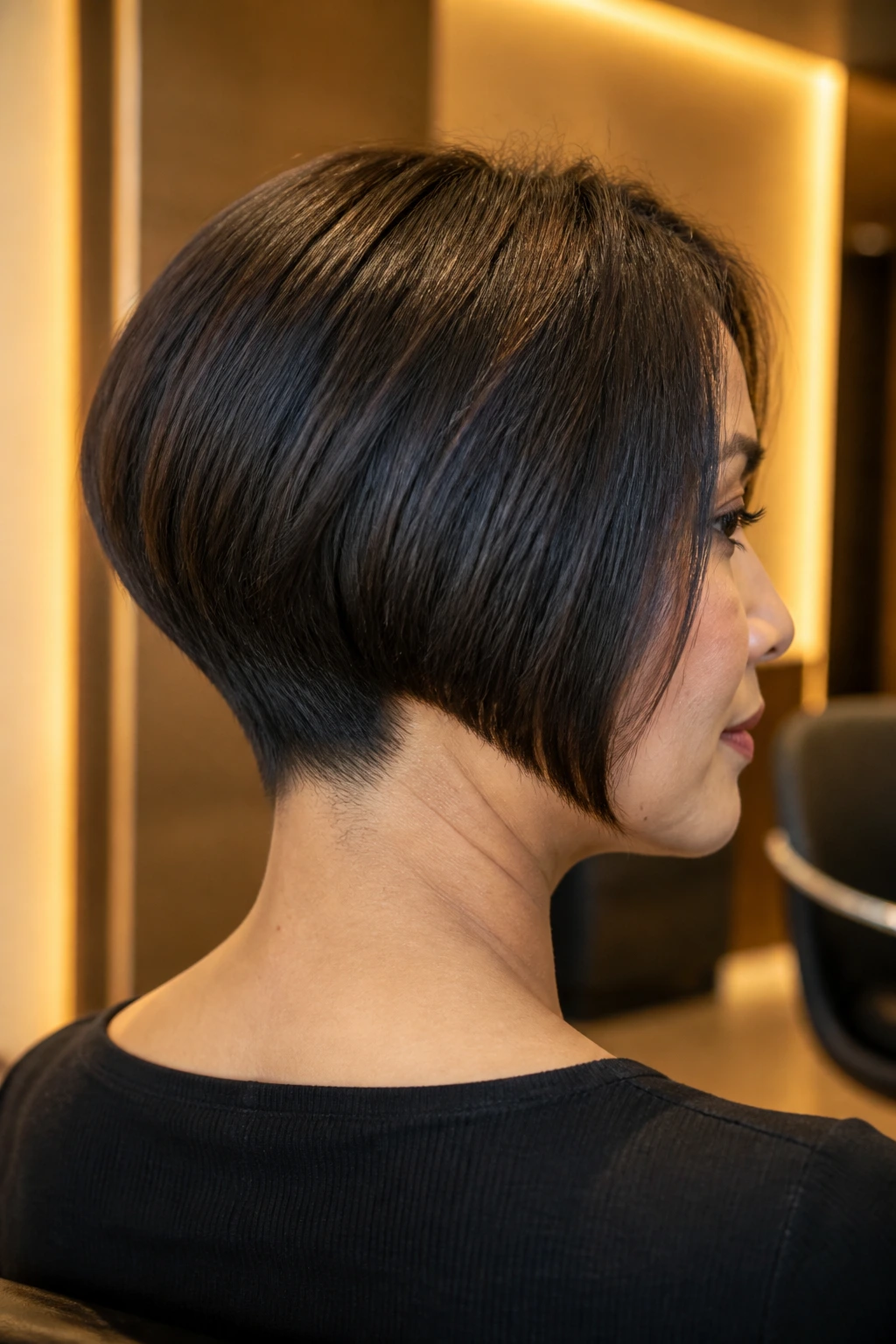
The wedge bob brings a sharper slope at the back than a standard graduated bob. It’s shorter in the nape, then angles forward with purpose. On a round face, that taper can create a more lifted look through the back of the head and a cleaner line around the jaw.
It does not need to look retro. That’s the mistake people make. If the stack is too obvious, the cut can feel dated. Keep the taper smooth and the sides controlled, and it becomes a clean, strong shape instead of a throwback.
This cut suits someone who wants structure and doesn’t mind seeing the architecture of the haircut. Straight hair makes the wedge line read clearly. If your hair has a lot of natural bend, the shape can get lost, so this one is better for naturally straight textures.
19. Glass-Hair Bob With a Deep Center Part
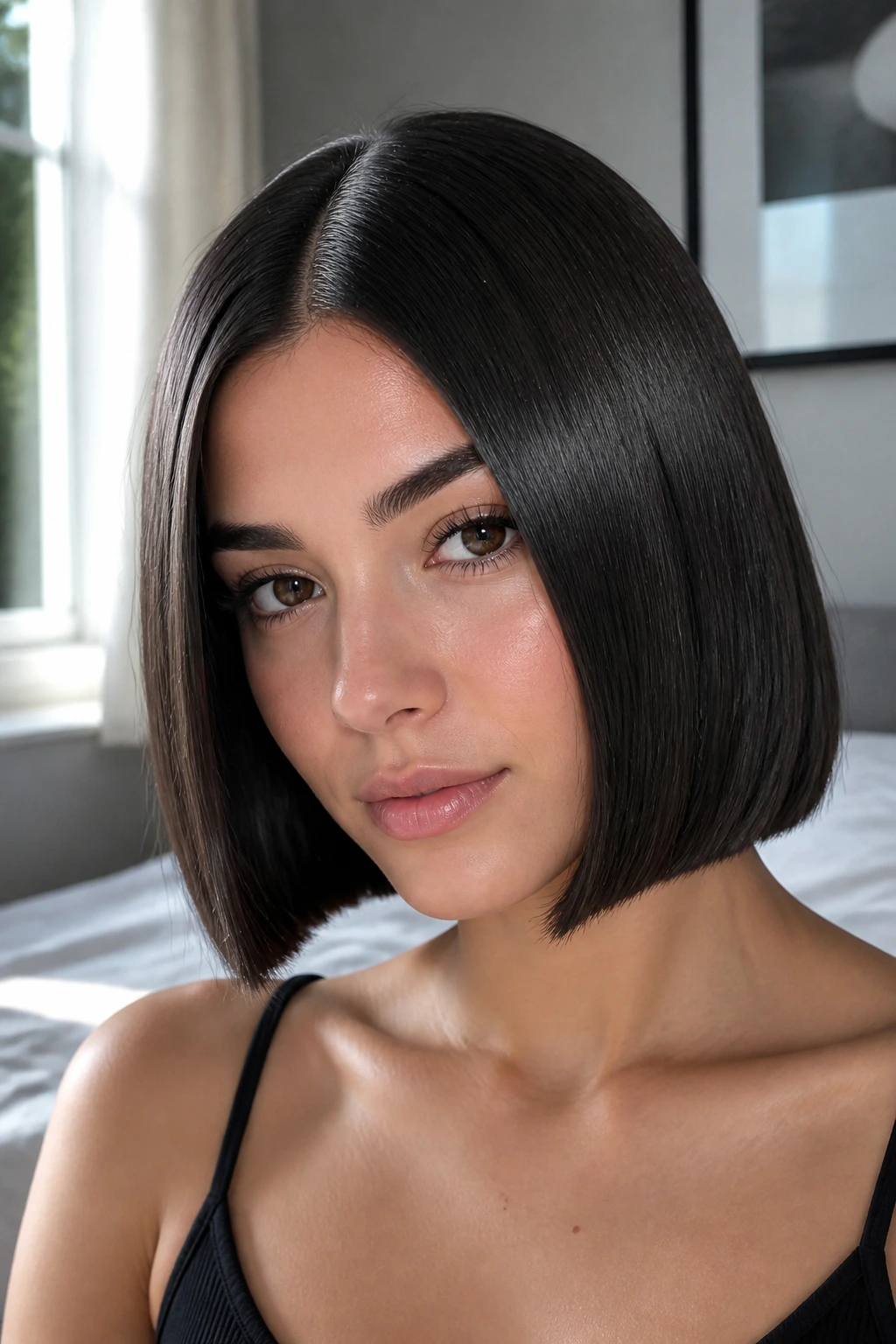
A glass-hair bob is all about shine, polish, and a line so smooth it looks almost reflective. On a round face, the deep center part matters because it splits the face into two long planes. That alone can make the face appear less wide.
The cut itself should be simple. One length, clean ends, little to no visible layering. The styling is where the drama lives. Flat-ironed hair, a smoothing serum, and a blow-dry that keeps the top flat but not limp—that’s the recipe. If the hair puffs at the cheeks, the effect is gone.
This is not the haircut for someone who wants casual texture. It’s for people who like order. If that sounds like you, the result is sharp, chic, and a little severe in a good way.
20. Polished Power Bob With a Slight Front Extension
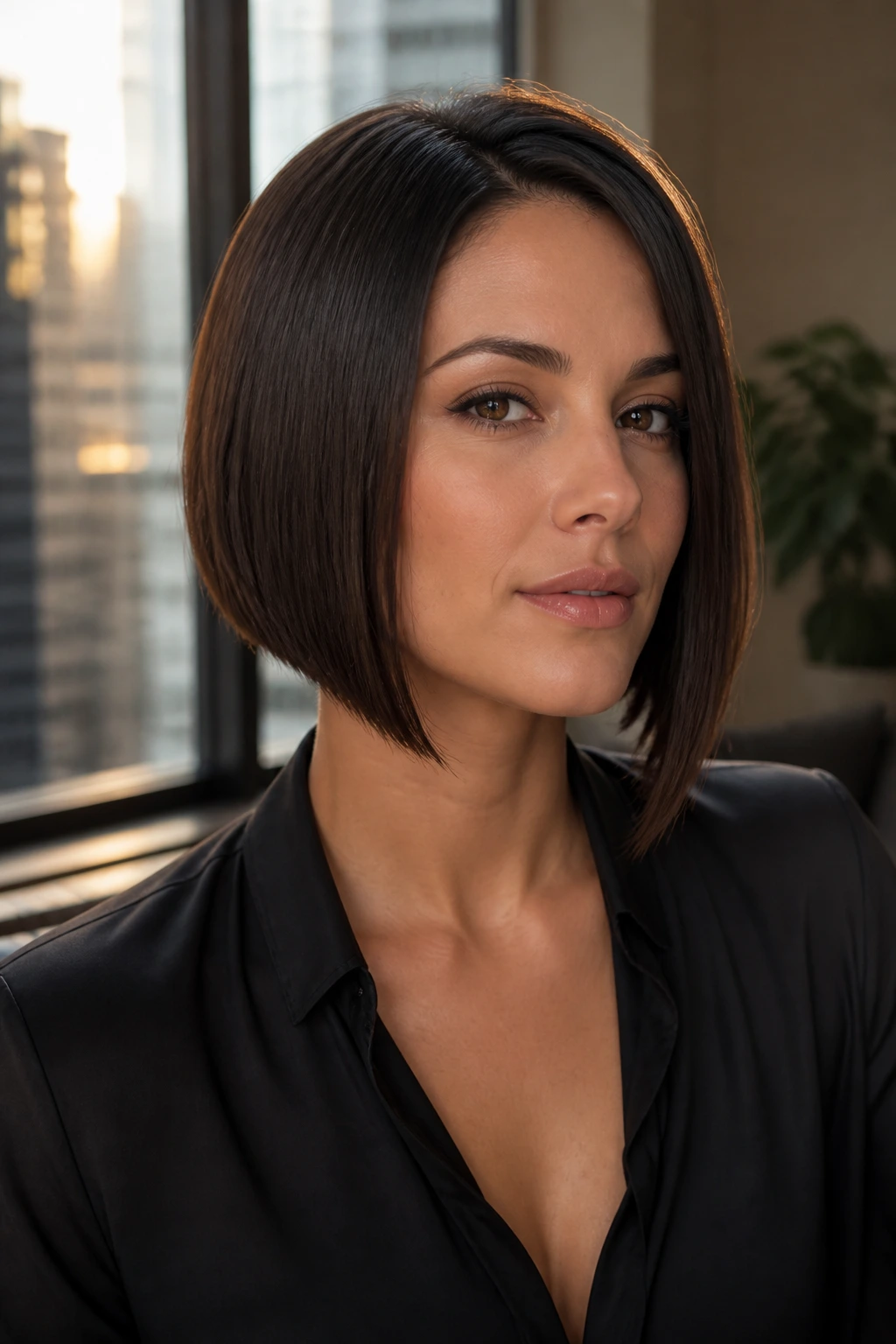
The polished power bob is the one I’d hand to someone who wants short hair with presence. It has a slight extension in front—enough to lengthen the face—but the overall shape stays compact and clean. On a round face, that front drift helps pull the eye down and away from the cheeks.
What makes this version different is the finish. The hair should look smooth, deliberate, and a little glossy, not fluffy. The edges matter more than volume here. You want the cut to sit close to the head at the sides, then open slightly toward the front in a way that feels controlled.
This is a good final answer if you keep coming back to the same question: how short can I go without making my face look wider? Short. Just not too short at the sides, and not too soft around the edges. That’s the whole game.
If you like your hair crisp, neat, and easy to tuck, this bob does the job without fuss. It’s sharp enough for a strong profile, and soft enough that it doesn’t turn your face into a circle with bangs.
