



A good short bob haircut for round faces does not hide the face. It gives the face a sharper outline, then leaves enough movement so the hair doesn’t feel stiff or boxy. That’s the whole trick, and it’s why some bobs make cheeks look fuller while others create a cleaner, longer line.
Round faces usually have soft curves, similar width and length, and cheeks that carry a little more visual weight than a narrow jaw would. So the cut has to do two jobs at once: add shape and avoid adding extra width right where the face is widest. Easy enough in theory. Harder in a bad haircut.
The good news is that bob haircuts for round faces can be blunt, layered, sleek, messy, swingy, or sharp. You do not have to stick to one safe version. What matters is where the length lands, how the front pieces fall, and whether the cut gives you vertical lines, diagonal lines, or soft movement instead of a hard circle around the face.
A lot of the time, the difference comes down to millimeters and angles. A front piece that drops just below the chin behaves differently from one that stops right at the cheek. A center part can look calm and clean, while a deep side part can change the whole mood of the cut. Small things. Big effect.
1. Chin-Length Blunt Bob
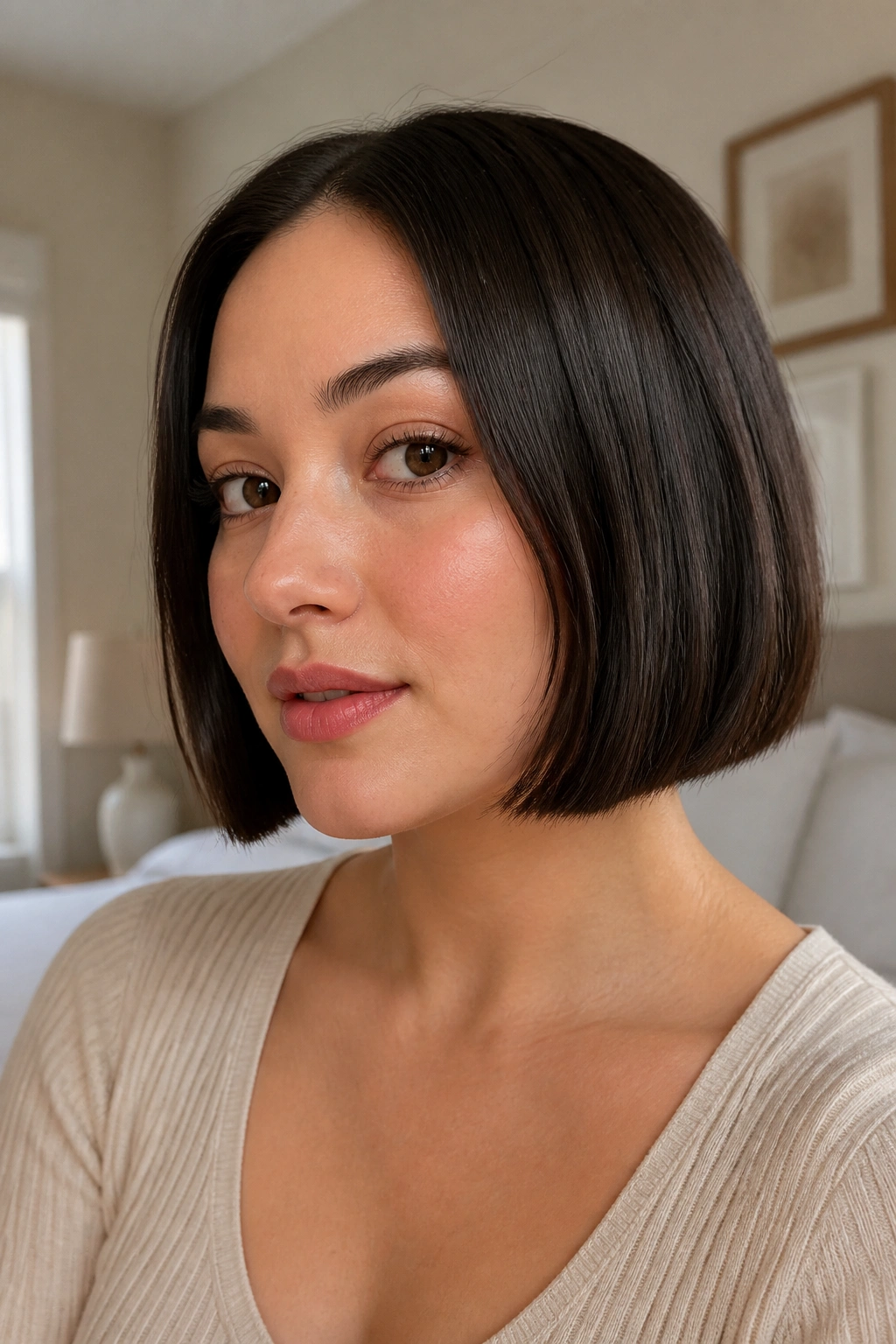
A chin-length blunt bob can look superb on a round face when the edge is placed with care. The clean line gives the face definition, and the blunt finish keeps the cut from turning fluffy or overly sweet. I like this shape most when the hair is straight or only slightly wavy, because the edge reads clearly.
Why It Works on Round Faces
The length matters here. If the blunt line sits right at the fullest part of the cheeks, the face can feel wider. Push it a little lower, or soften the front by a fraction, and the whole shape settles down. That tiny shift changes everything.
- Ask for the ends to hit just below the chin rather than above it.
- Keep the front a touch longer than the back.
- Use a flat brush and blow-dry the ends with a soft bend inward.
- Best on fine to medium hair that needs a stronger edge.
Pro tip: a slight off-center part keeps the look from reading too square.
2. A-Line Bob with Longer Front Pieces
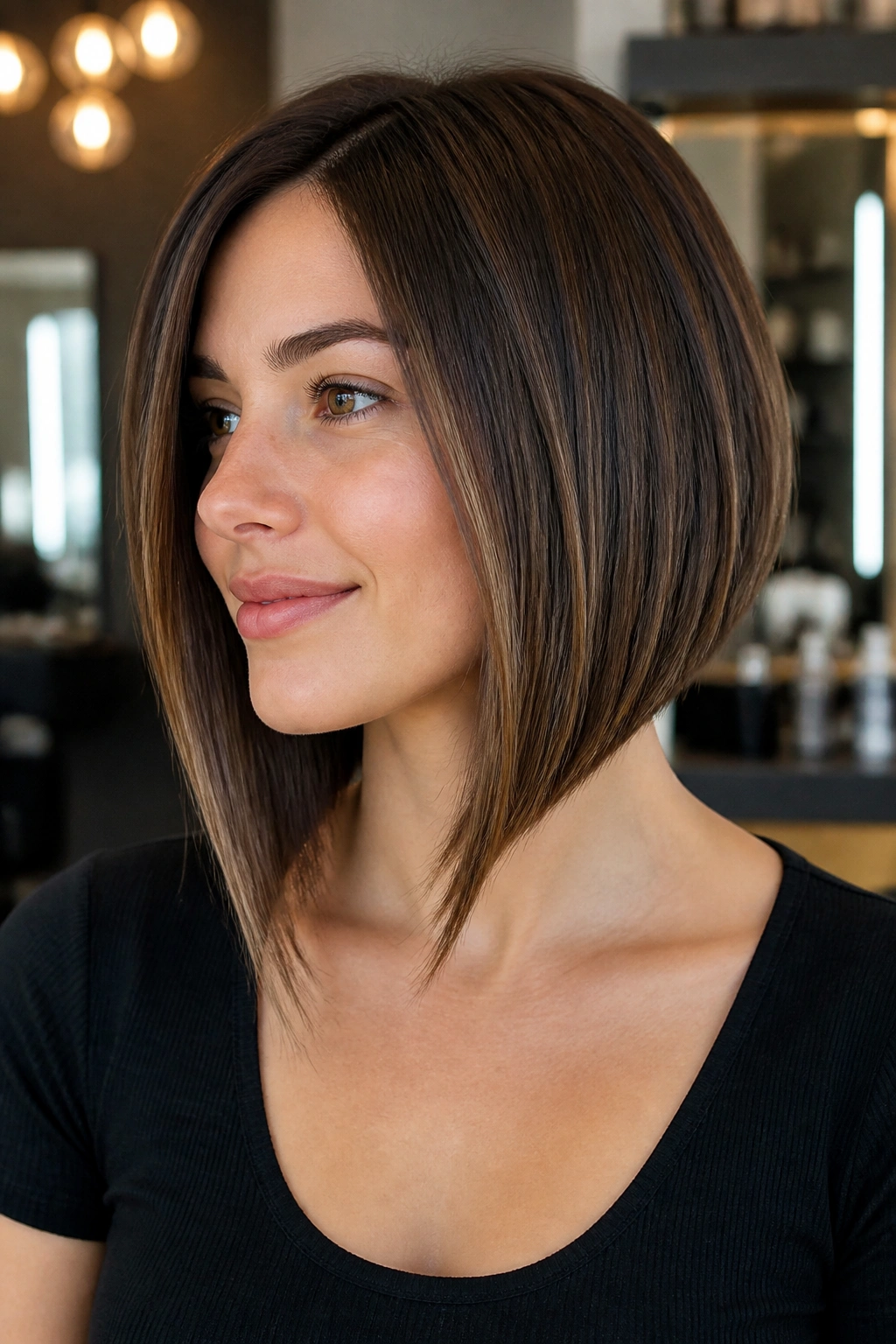
This is the cut I reach for when someone wants a bob that feels sharp but not severe. The back sits a little shorter, the front drops forward, and that diagonal line pulls the eye down instead of out. On a round face, that diagonal is gold.
The shape works because it creates a clean visual path from the nape toward the collarbone. You get movement without piling volume at the cheeks. If your hair is thick, ask the stylist to remove bulk inside the shape rather than thinning the ends into wisps. Wisped-out edges can look a little ragged on this cut.
A strong A-line bob also plays well with a side part. The part gives the crown some lift, and the longer front pieces frame the jaw without crowding it. It’s a tidy, modern cut that still has swing when you turn your head.
3. Layered Jaw-Grazing Bob
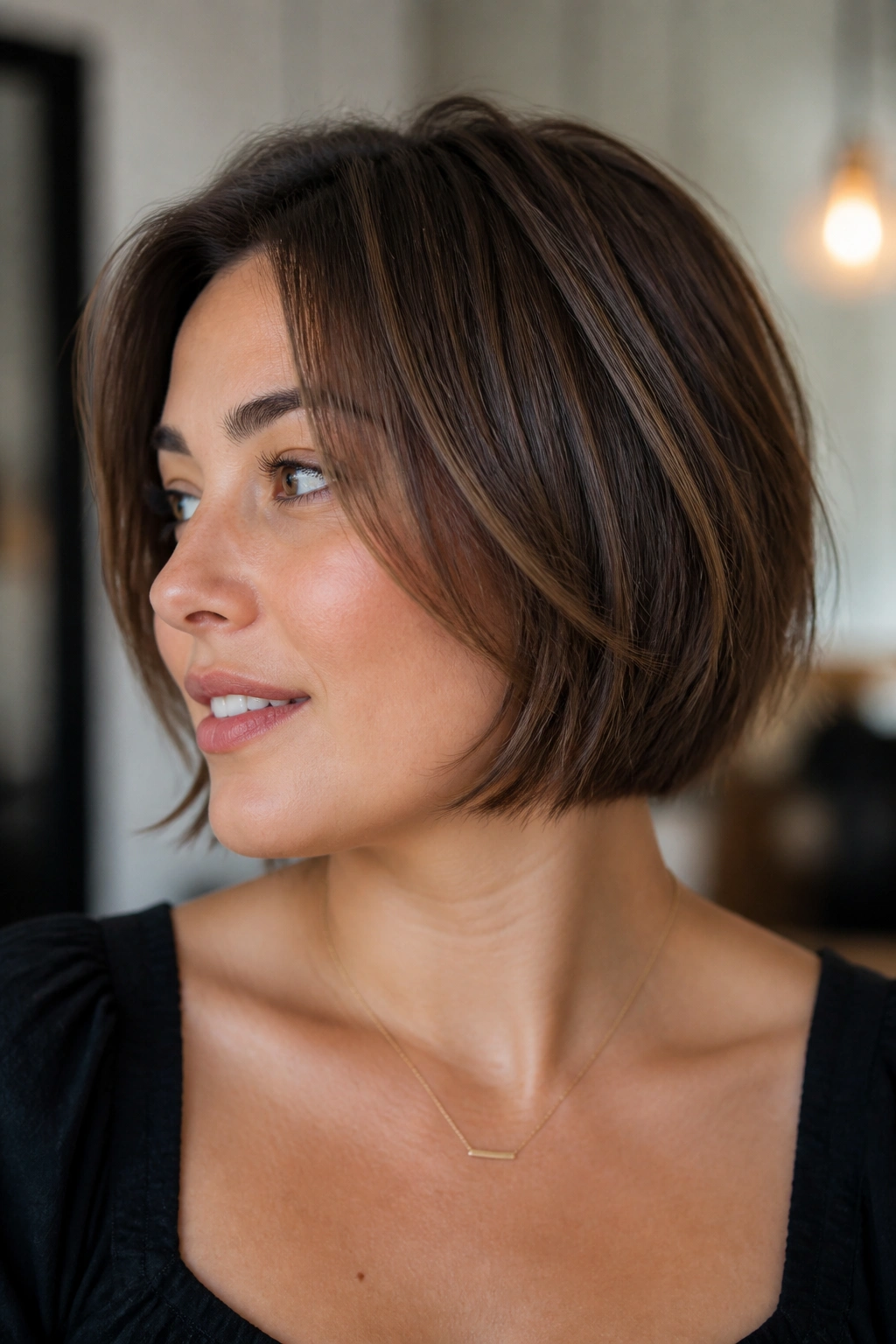
Can layers work on a round face? Absolutely — if they’re put in the right place. A layered jaw-grazing bob gives softness and movement, but the layers need to start below the cheekbone so they do not puff out at the widest point of the face. That’s the whole deal.
How to Style the Bend
A round face looks better when the bob has a little lift at the crown and a little bend near the ends. That shape breaks up the circle without making the hair look stiff. A round brush or a 1-inch curling iron will do the job.
- Use a light mousse at the roots before drying.
- Bend only the bottom 1 to 2 inches of hair.
- Keep the top smooth, not puffy.
- Ask for layers that begin around the mouth or lower jaw.
This one is a good fit if you like movement more than precision. It’s softer than a blunt bob, but it still has enough structure to do the face-flattering work.
4. French Bob with Micro Fringe

A French bob can be a beautiful choice on a round face, but only if the fringe stays airy. I’m talking about a short bob that skims the cheeks, paired with a micro fringe or a broken, piecey bang instead of a heavy curtain across the forehead. Heavy bangs can make the face feel shorter. Soft bangs do the opposite.
The shape works best when the ends are a little undone. Not messy in a sloppy way. Just a little lived-in. That tiny bit of texture keeps the cut from turning into a neat little helmet, which is the last thing a round face needs.
What to Watch For
- Keep the fringe light and separated, not blunt and thick.
- Let the length hover around the jaw or just above it.
- Ask for soft point-cut ends.
- This cut loves straight hair and relaxed waves.
A French bob has personality. A lot of personality. If you like a cut that feels polished but still a little rebellious, this is one of the strongest options.
5. Textured Bob with Choppy Ends
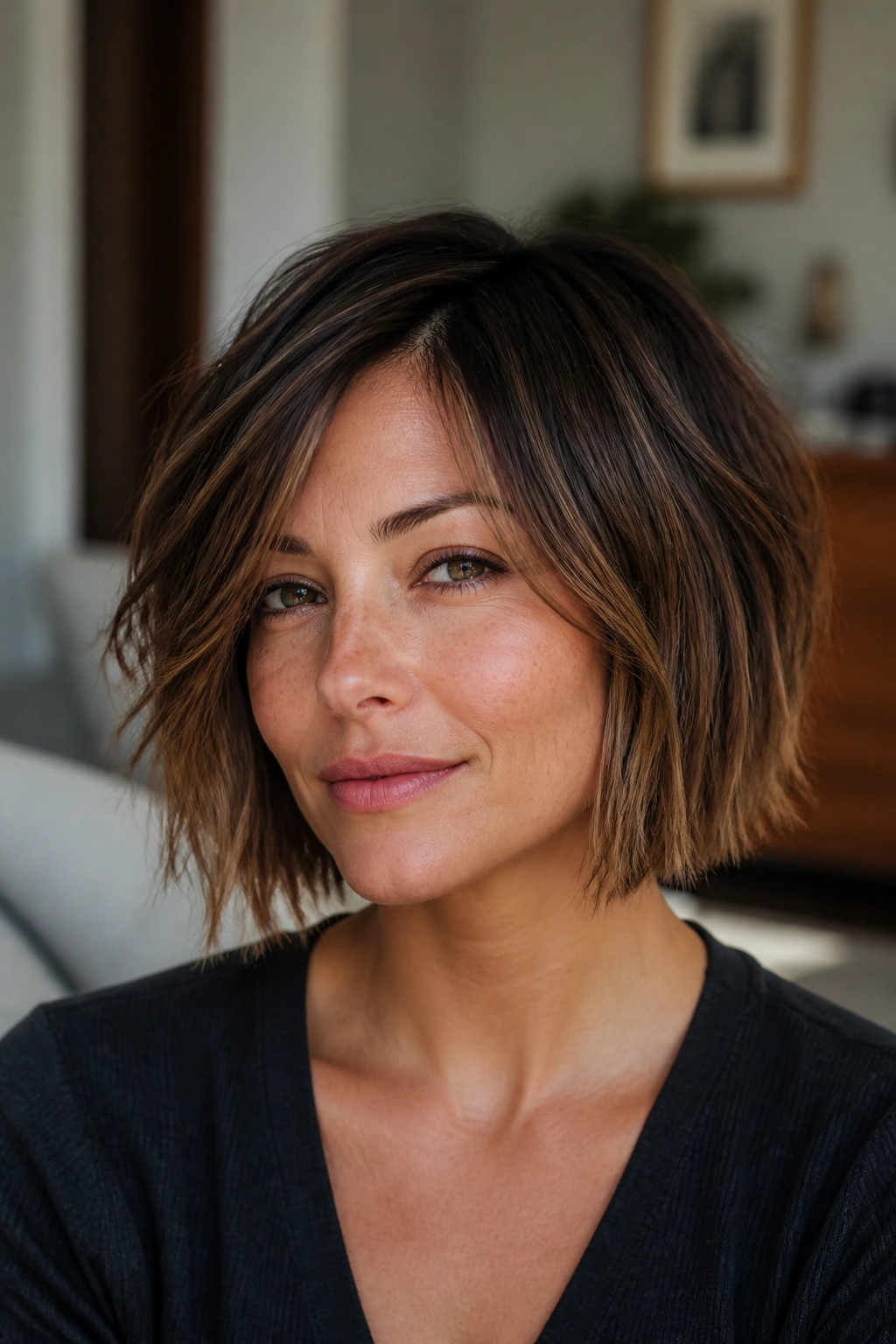
The textured bob is a workhorse cut for round faces. It breaks up the circle with broken ends and irregular movement, which keeps the hair from settling into one wide shape around the cheeks. That matters more than people think. A cut can be short and still feel heavy if the ends are too clean and too blunt.
This version shines on medium-thick hair, especially when the hair has some natural bend. The choppy ends create tiny shifts in direction, so the eye keeps moving. That movement makes the face feel less boxed in. It also helps if you don’t want to heat-style every single day, which, honestly, most people do not.
The main caution is frizz. If your hair already has a rough surface, too much choppiness can make the cut feel fuzzy rather than piecey. In that case, ask for texture mainly through the mid-lengths and keep the perimeter a little softer. You want movement, not chaos.
6. Deep Side-Part Bob
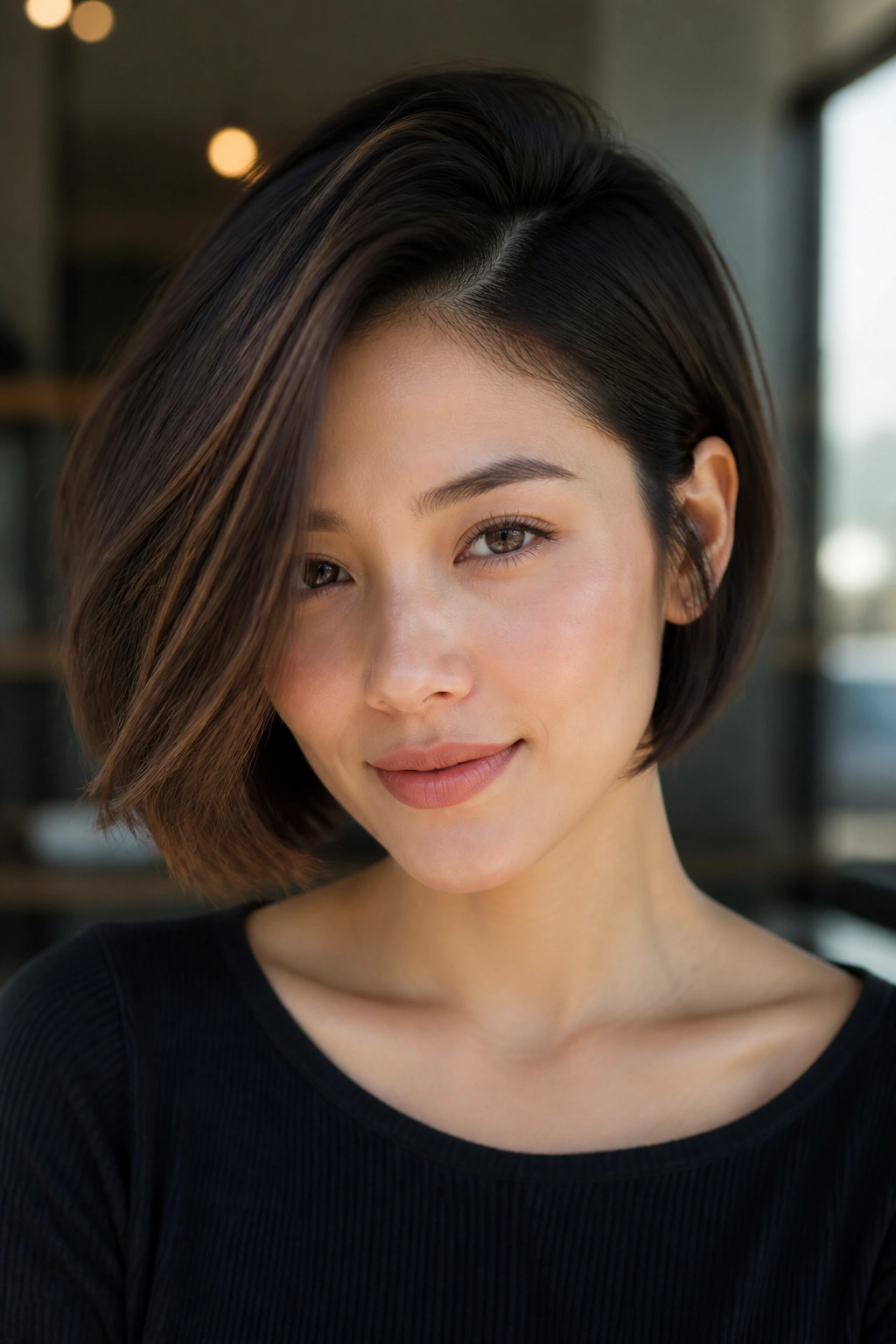
A deep side-part bob changes the face fast. One side rises higher, the other falls lower, and that diagonal line cuts through the roundness in a way a center part often cannot. I prefer this on people who want an easy shape shift without losing much length.
The cut itself can be blunt, layered, or slightly angled. The part is doing a lot of the face-flattering work on its own. Push the part to the arch of the brow, then let the front section fall across the forehead and cheek. It pulls attention upward and diagonally, which is exactly the point.
If your hair is flat at the crown, this cut gives you a place to build lift without teasing the life out of the roots. A little root spray, a blow-dry in the opposite direction of the part, and you’re set. Clean. Simple. Effective.
7. Stacked Bob with Lifted Nape
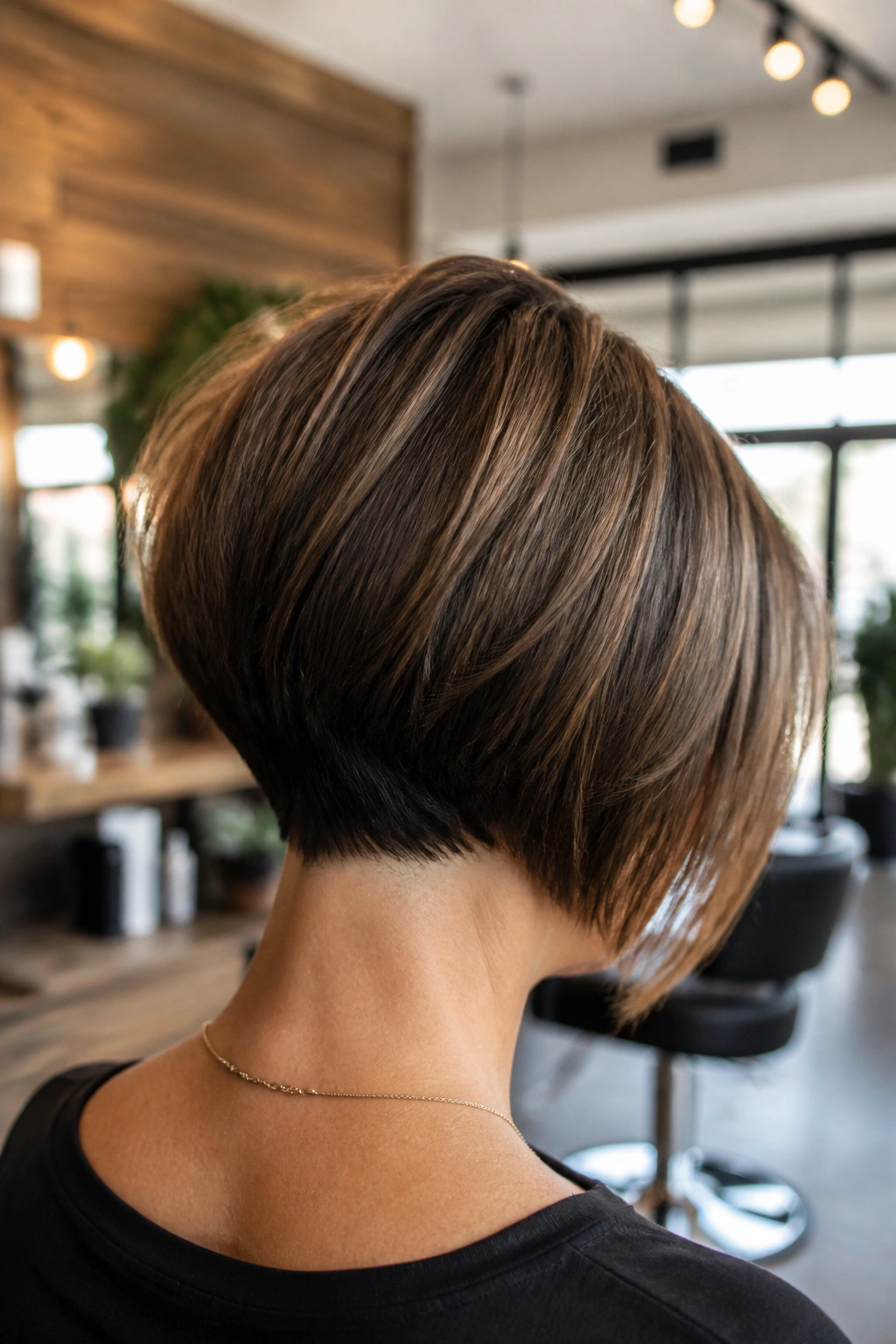
A stacked bob gives the back of the head a neat, rounded lift while keeping the front longer and more flattering around the face. On a round face, that extra height at the nape can help the whole silhouette feel more vertical. The shape is tidy, but it’s not fussy if it’s cut well.
What to Ask for at the Salon
You want the stack to be controlled, not puffy. A heavy stack can look dated fast. A softer stack, with blended layers through the back, creates shape without building too much width.
- Ask for shorter layers through the nape and longer pieces toward the front.
- Keep the perimeter below the chin if your cheeks are full.
- Bring a photo, because “stacked” means different things to different stylists.
- Plan for trims every 6 to 8 weeks.
This cut is especially good for thick hair that needs weight removed in the back. The back stays light, the front stays clean, and the whole thing sits nicely on a round face.
8. Wavy Bob with Soft Bends

A wavy bob is one of the easiest ways to make a round face read longer and leaner. The wave breaks up the curve of the face, so the eye doesn’t stay parked on the cheeks. Instead, it keeps traveling through the hair.
The trick is to keep the wave soft. Tight curls can add width. Loose bends do the opposite. I like using a 1-inch curling iron and wrapping sections away from the face, but leaving the last inch out so the ends don’t curl into ringlets. That little omission matters.
If your hair air-dries with a bit of movement already, this cut is almost unfairly easy. Scrunch in a light cream, twist two or three sections while damp, then shake it out once it’s dry. The result should feel relaxed, not beach-cliché. Just enough bend to take the roundness off the face.
9. Sleek Rounded Bob
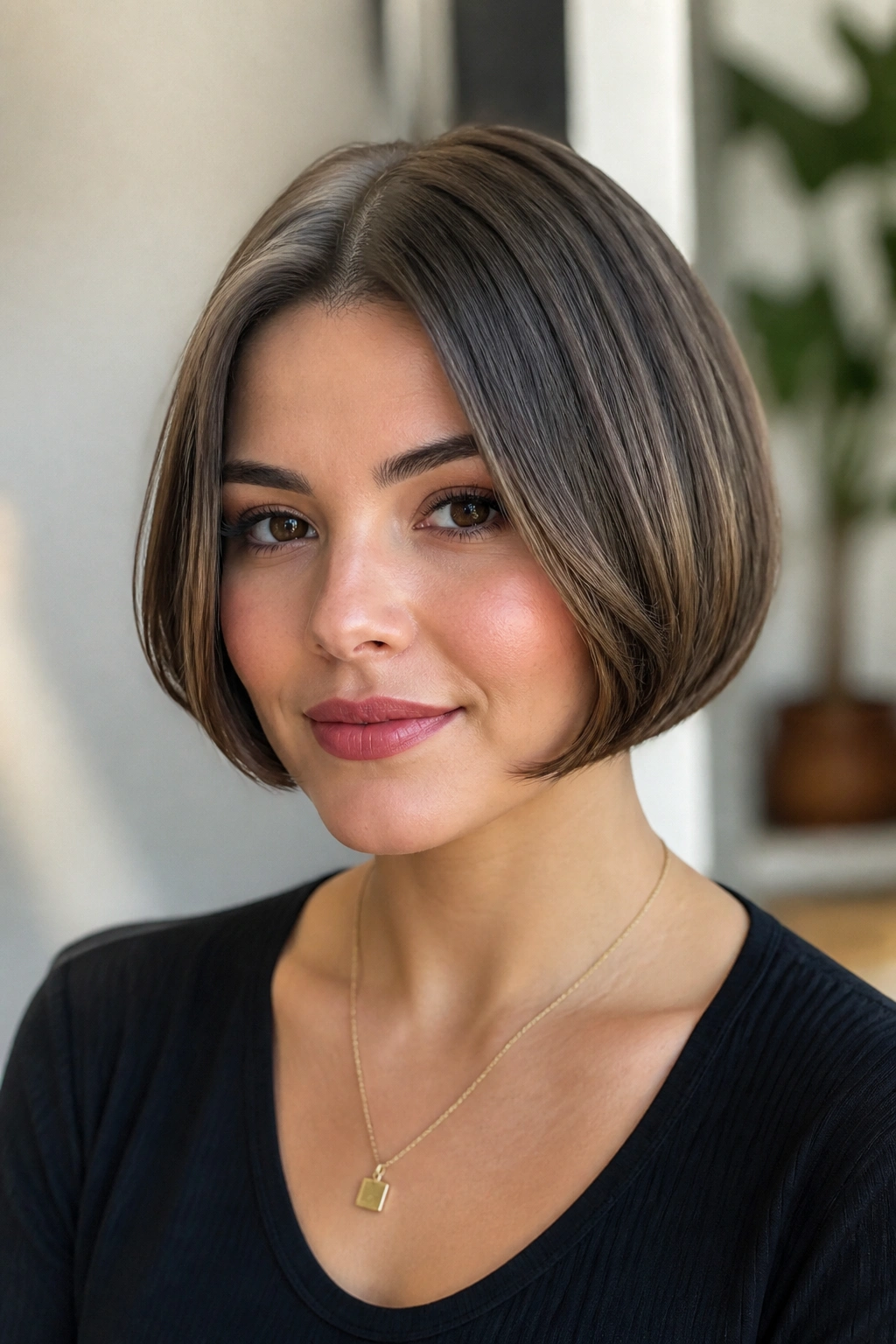
Can a rounded bob work on a round face? Yes, if the curve is controlled and the ends sit below the cheek line. The word rounded sounds like trouble here, but the shape can be flattering when it hugs the jaw lightly instead of puffing around the cheeks.
Keeping It Soft, Not Helmet-Like
The difference is in the finish. A sleek rounded bob should feel smooth and polished, with the curve happening near the ends, not across the widest part of the face. Think subtle inward bend, not a shell.
A center part can work if the hair has enough density to hold the shape. A slight side part is safer if your face feels full through the middle. Either way, keep the crown smooth and the ends tucked just enough to show the curve.
This cut is a nice match for straight hair that resists frizz. A little serum on the mid-lengths and a flat brush can make the whole thing fall into place. If the ends flip out, the line gets messy fast.
10. Asymmetrical Bob
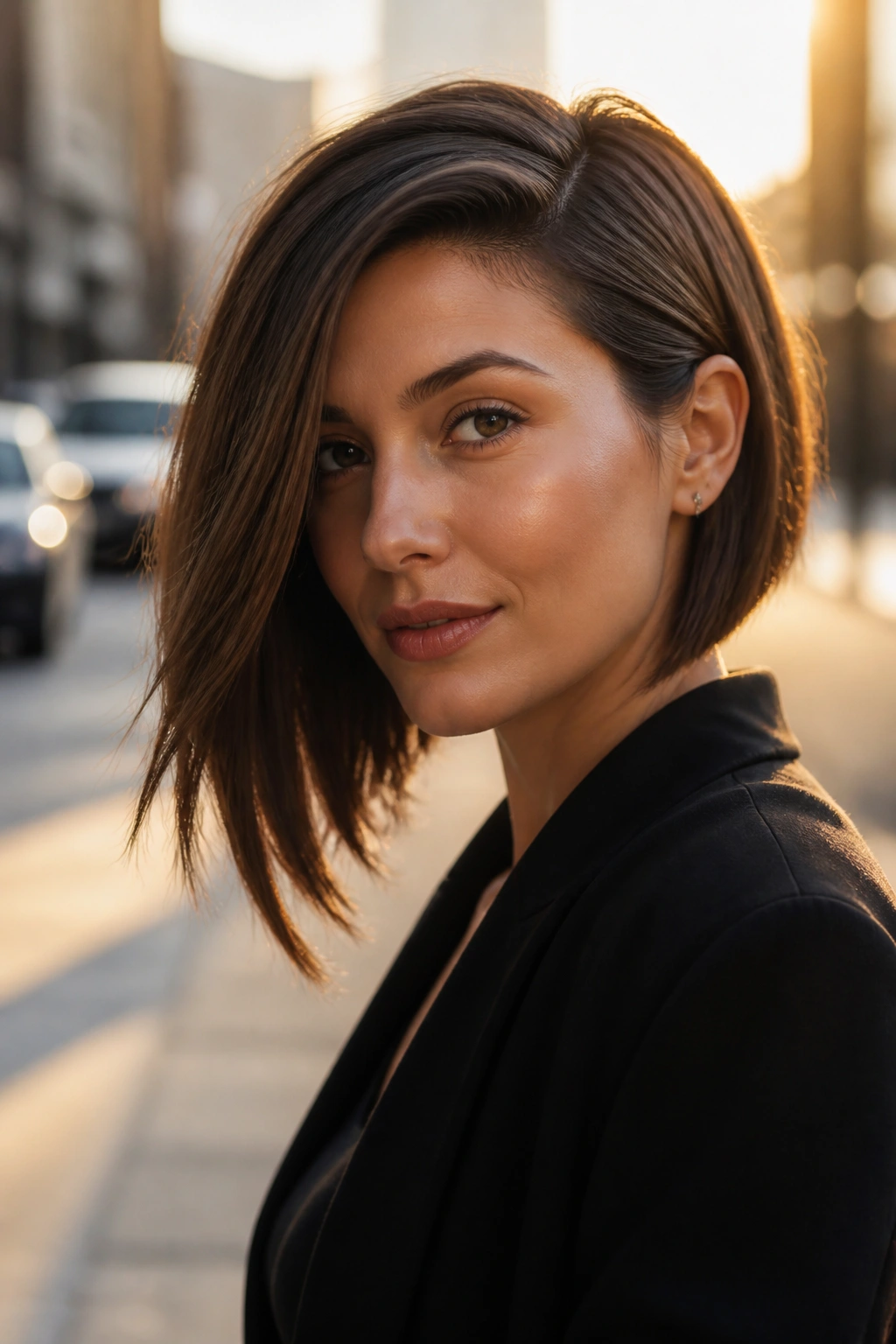
An asymmetrical bob gives a round face a built-in break in symmetry, and that break is the point. One side sits longer, the other shorter, so the eye has to move instead of resting on a wide horizontal line. That alone can make the face look more sculpted.
I’ve always liked this cut for people who want something with edge but not a full-on dramatic haircut. The difference between the two sides can be mild — maybe an inch or two — or more obvious. You don’t need a massive contrast to get the effect. A small angle is often enough.
Key Details
- Keep the longer side brushing the jaw or collarbone.
- Make sure the shorter side still has weight; don’t hollow it out.
- A side part usually strengthens the angle.
- Works well on straight and slightly wavy hair.
This is a strong option if you like a cut that feels a little unexpected every time you turn your head. It’s not subtle, but it isn’t noisy either.
11. Curtain-Bang Bob
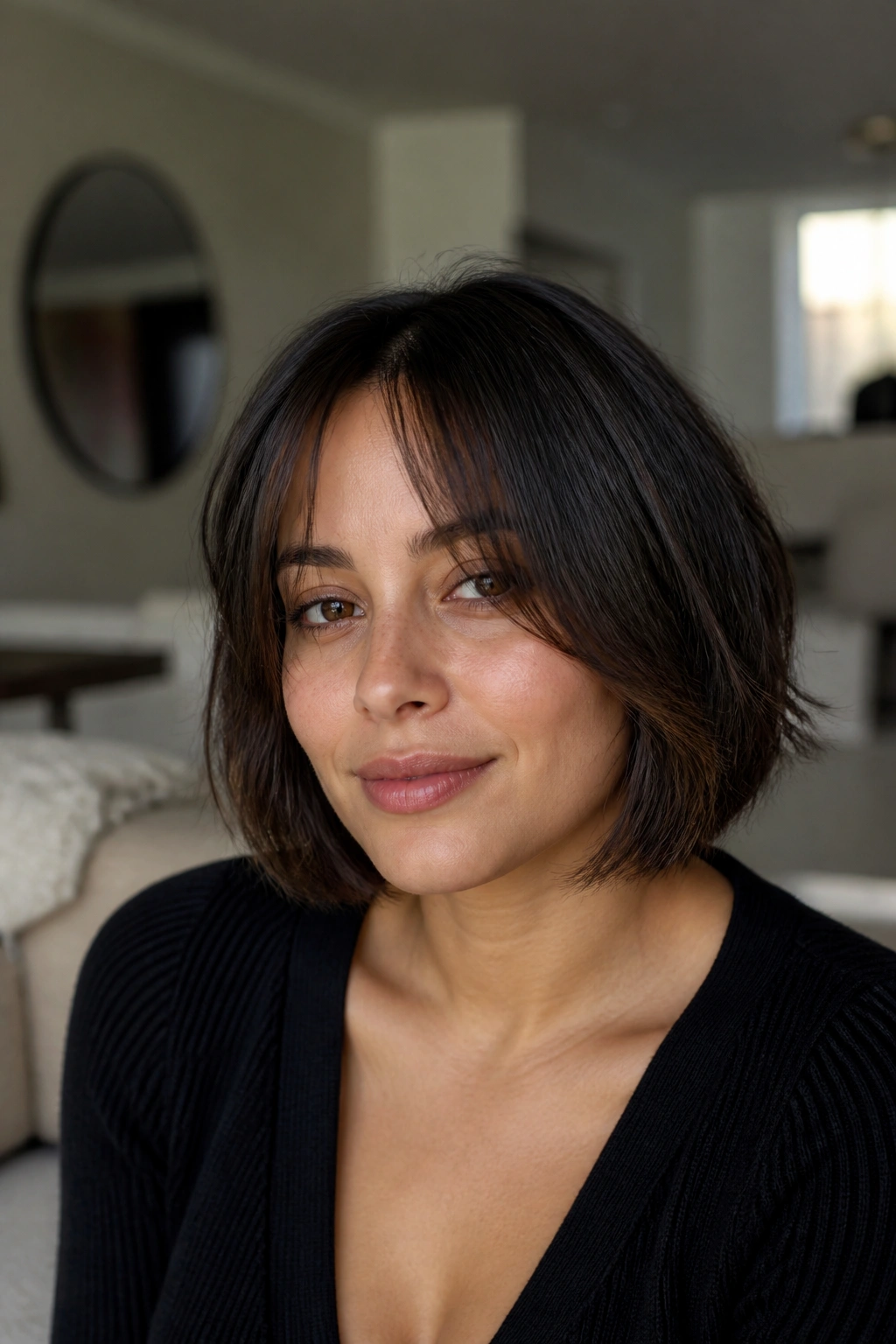
Curtain bangs and round faces have a tricky reputation, but the right version works. The key is keeping the bangs loose and longer through the sides so they open the face instead of closing it off. Dense, heavy fringe is the wrong move. Soft, split bangs are the right one.
The bob underneath can be chin-length, jaw-length, or just a touch longer. What matters is that the bang pieces land around the cheekbone and flow into the rest of the cut. That gives the face a vertical frame on both sides while still leaving the forehead open enough to breathe.
This one looks best when it’s worn with a slight bend, not pin-straight. A bit of movement in the bang helps it blend rather than sit on top of the haircut like a separate piece. And if the bangs get oily fast, that’s fine; dry shampoo at the roots fixes more than people think. A curtain-bang bob is not maintenance-free, but it is worth the extra minute.
12. Box Bob
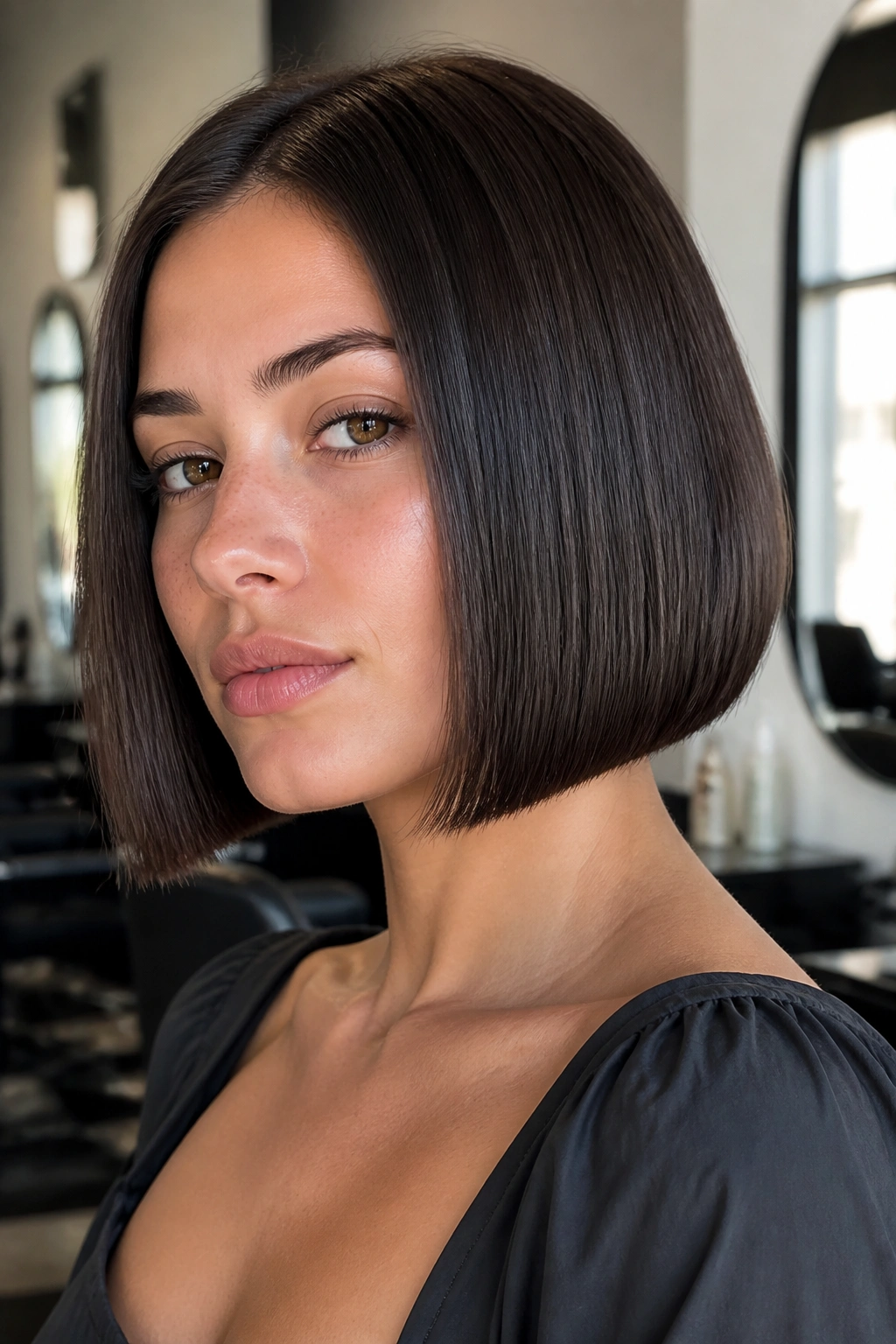
A box bob is crisp, graphic, and a little severe in the best way. Unlike softer layered cuts, it gives the hair a squared outline that can balance the curves of a round face. The line feels deliberate. That’s why it works.
The cut usually sits around the jaw or just below it, with minimal layering and a strong perimeter. If the hair is too soft or overly feathered, the boxy shape disappears. You want a clear edge. Not harsh, not chunky — just defined.
This bob suits straight hair especially well, because straight texture shows off the architecture of the cut. If your hair bends a lot, you’ll need more styling to keep the outline visible. A flat iron pass at the ends can help, but don’t overcook it. A little movement is fine. The shape still needs to read.
13. Choppy Bob with Airy Layers
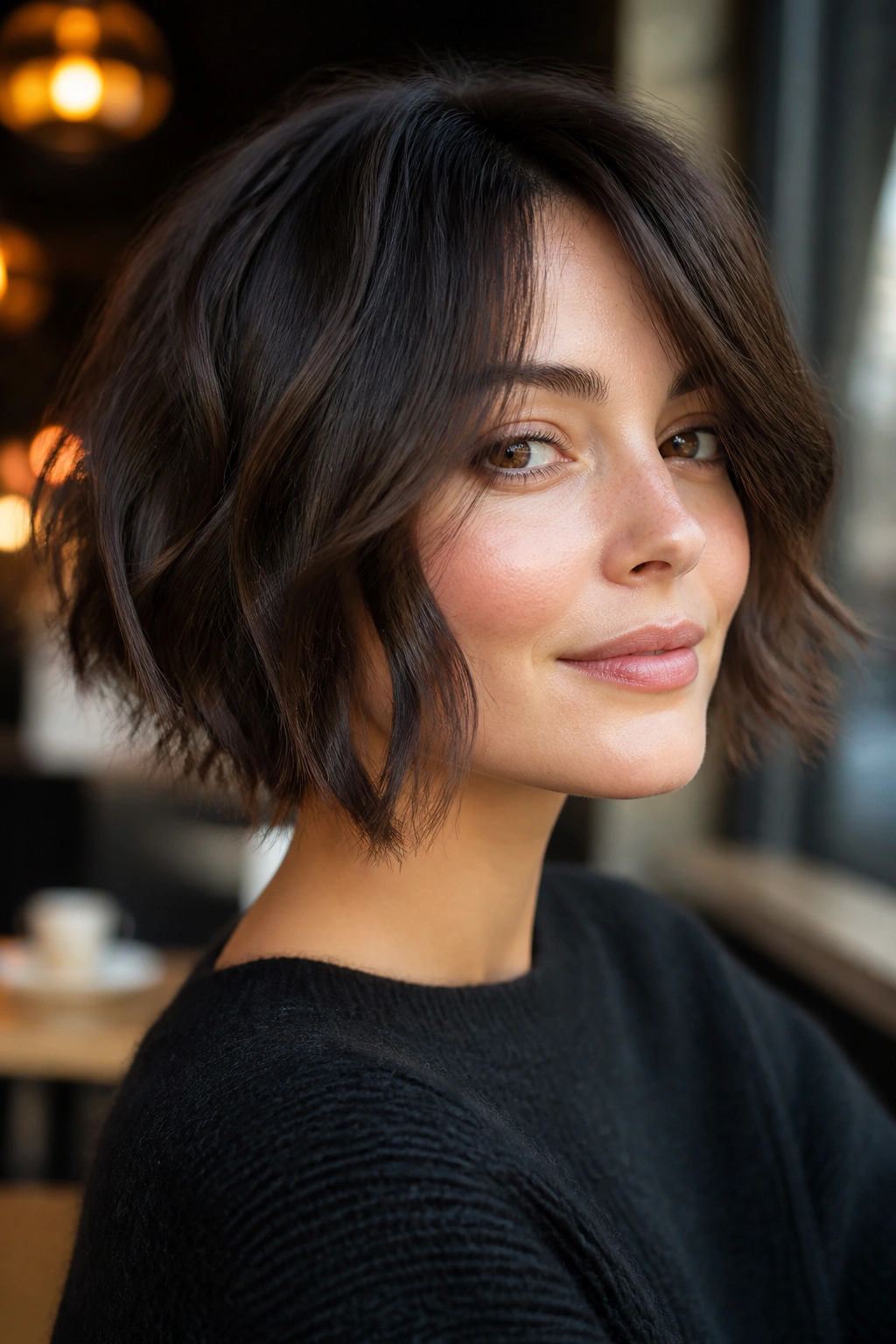
A choppy bob works because it refuses to sit still. The ends are broken up, the layers are light, and the shape never becomes one solid circle around the face. On a round face, that matters. Stillness is the enemy here.
Where the Layers Should Sit
The safest place for airy layers is through the lower half of the haircut, not right at the cheeks. If the shortest pieces land too high, the face can widen. Keep the top smooth, add texture below the cheekbone, and let the ends do the work.
- Ask for point-cut ends rather than a blunt edge.
- Keep the weight line below the cheek.
- Use a matte paste or light texture spray for separation.
- Best for hair that feels heavy and needs movement.
This cut is especially useful if your hair falls flat after a few hours. The irregular ends keep it from collapsing. It has a little attitude without looking forced, and that’s a nice place to be.
14. Graduated Bob
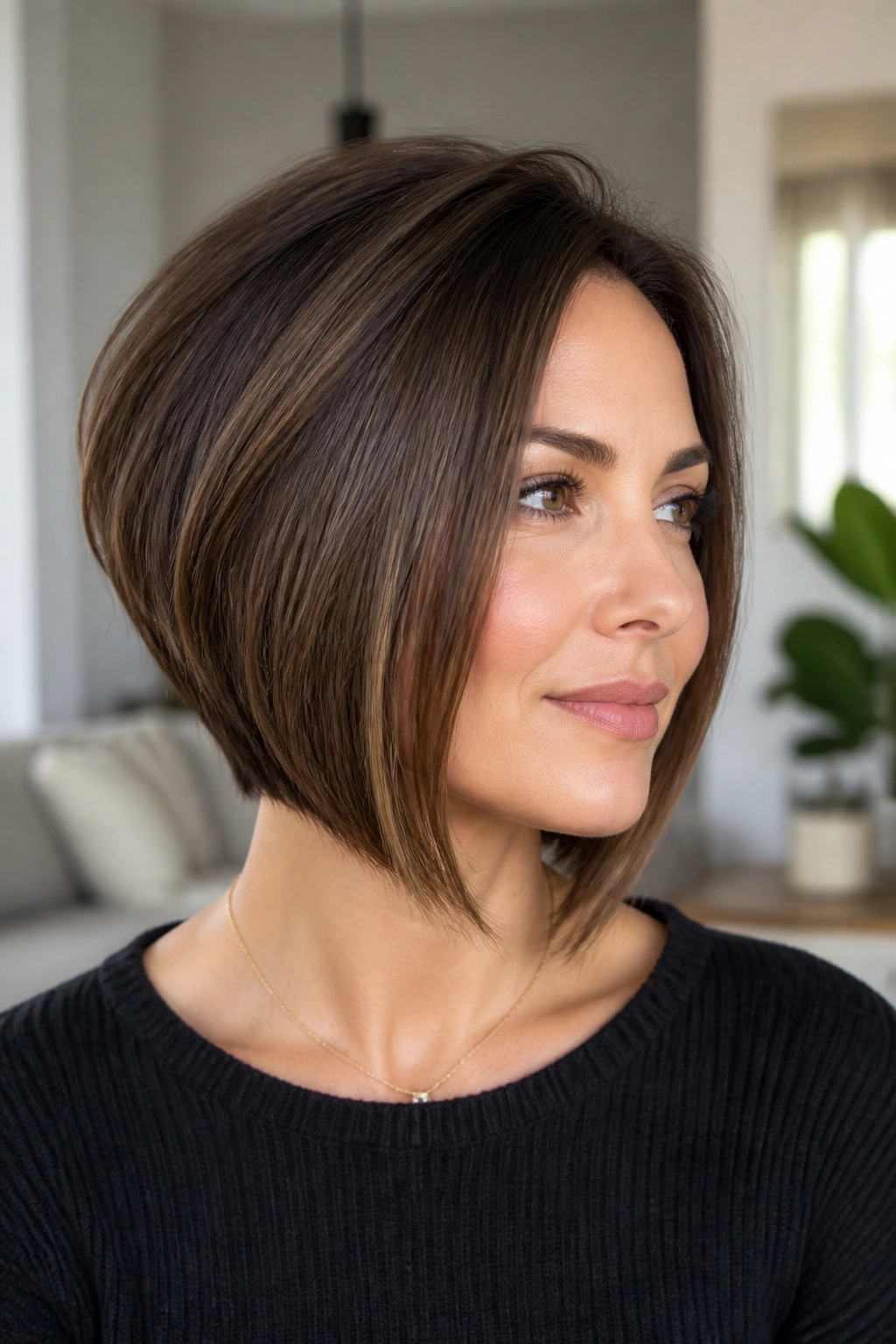
A graduated bob is a cleaner, softer cousin of the stacked bob. The back is shorter, the front is longer, and the transition between them is smoother. That makes it a smart pick if you want shape but do not want the haircut to look obviously layered from the back.
For a round face, the gentle graduation helps create lift at the crown while leaving the front pieces to frame the jaw. The result feels tidy and controlled. Not stiff. Controlled. There’s a difference, and it matters.
This style works best when the stylist keeps the graduation subtle enough that the back doesn’t balloon. Too much lift can fight the face shape instead of helping it. If your hair is thick, ask for internal removal near the nape. If your hair is fine, keep the graduation modest so the ends still hold their line. A little precision goes a long way here.
15. Pixie Bob
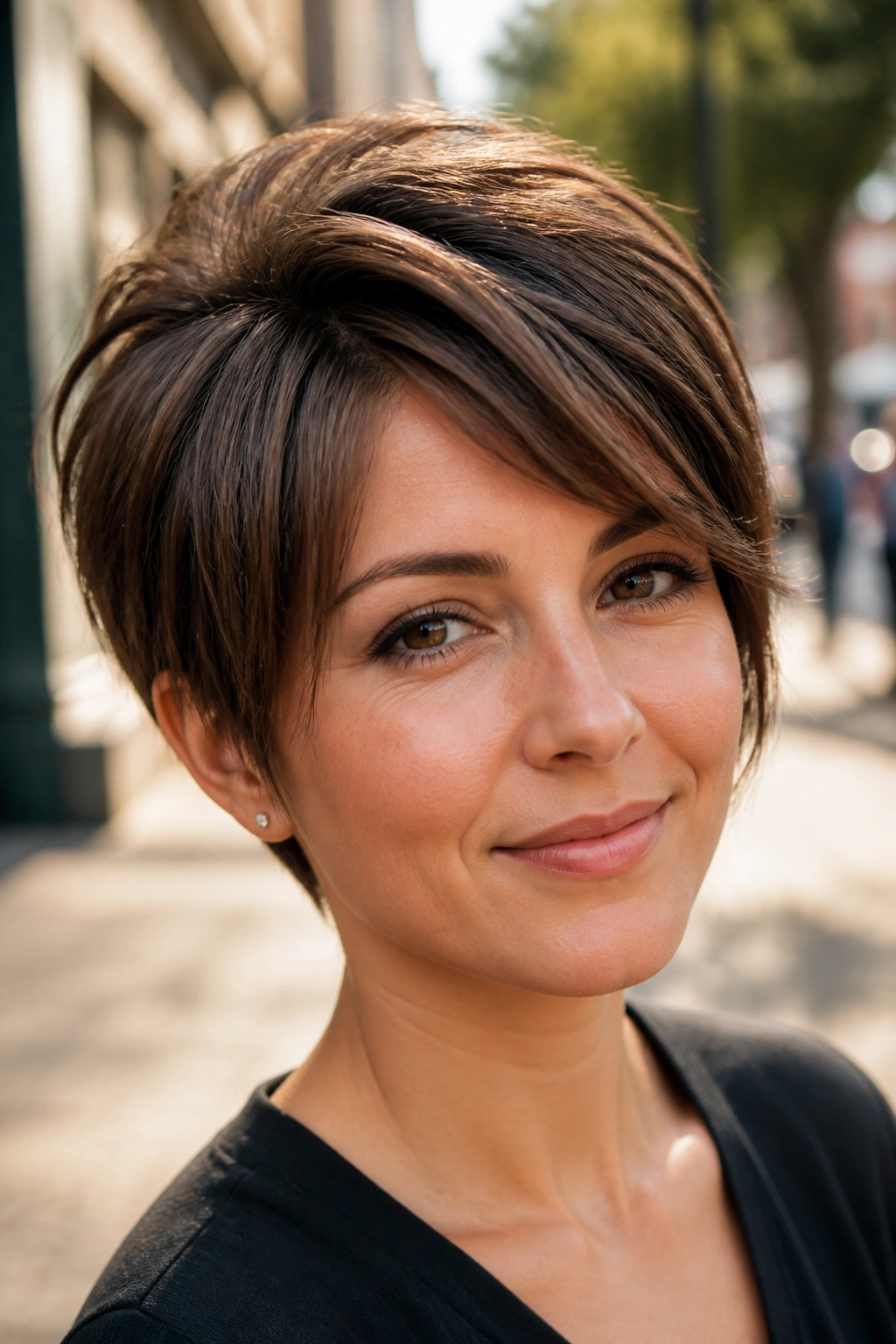
A pixie bob sits between a pixie and a bob, and that in-between shape can be flattering on a round face when the crown has height. The sides stay neat, the neckline is light, and the top has enough length to give the face some vertical pull. Short, but not tiny.
Who This Cut Helps Most
This cut works well if you like short hair but still want a little swing around the face. It also suits people whose hair gets bulky quickly at the sides. The shorter back removes weight, while the longer top avoids the hard cropped look of a pure pixie.
A pixie bob can be worn sleek or tousled. Sleek gives you polish. Tousled gives you a softer line around the cheeks. Either way, the top should not lie flat to the head, or the roundness of the face comes forward too much.
The maintenance is straightforward. Keep the nape tidy, and trim the shape before it grows heavy. Once it grows out too much, the whole thing loses the point.
16. Inverted Bob
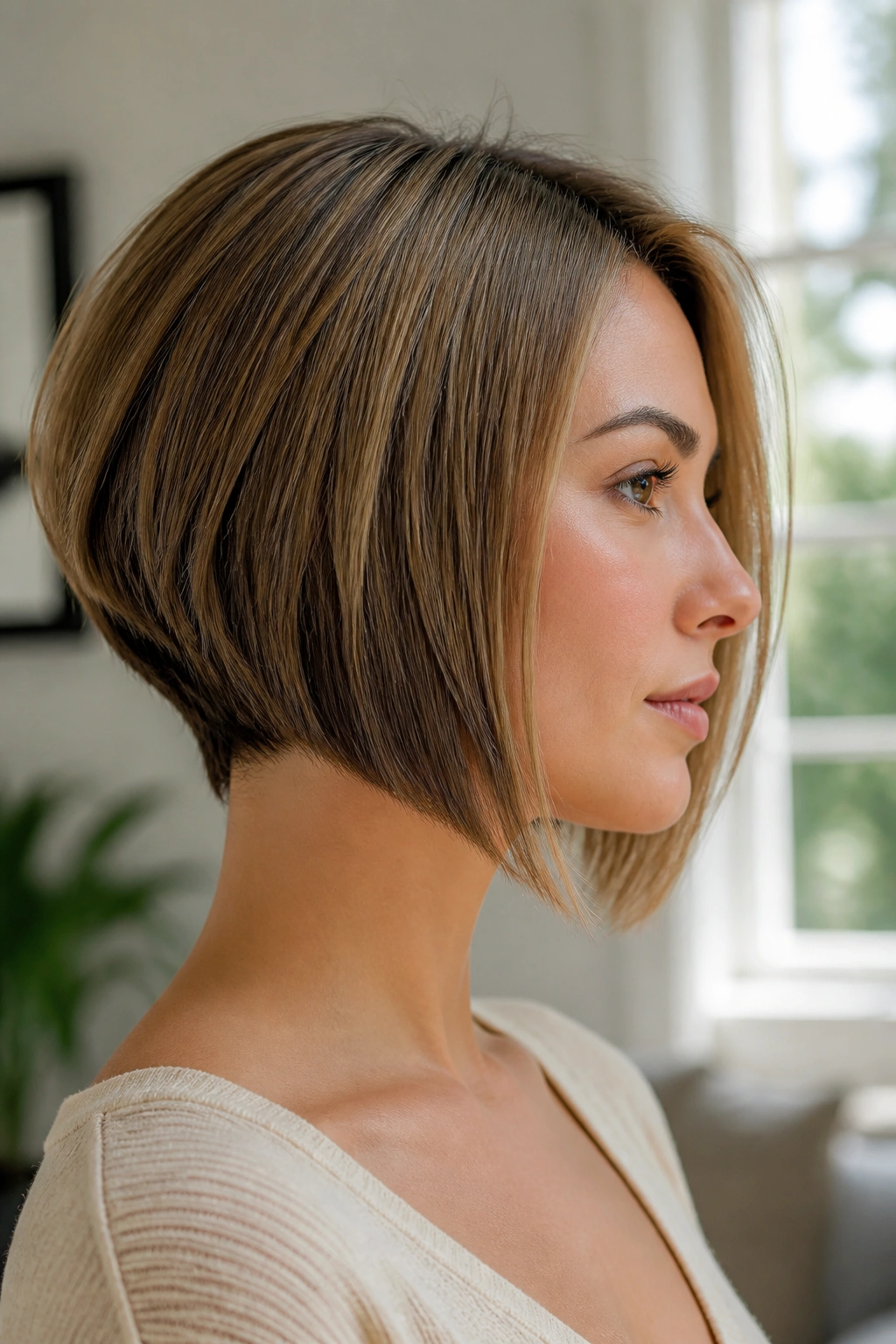
An inverted bob is sharper than an A-line and more dramatic than a graduated bob. The front is clearly longer, the back is short, and the angle is easy to see. On a round face, that strong diagonal can be a gift because it creates a long line through the haircut.
I like this cut when someone wants shape that is easy to read from across a room. The front pieces can skim the jaw or drop lower toward the collarbone, which keeps the face from feeling boxed in. The back stays neat and lifted, so the neck area feels open.
What Makes It Different
- The slope is steeper than a soft A-line.
- The back is usually tighter and cleaner.
- The front carries most of the visual weight.
- It needs regular trimming to keep the angle intact.
If you like sharp lines and a little structure, this is one of the most dependable options. It’s not quiet. That’s part of the appeal.
17. Razored Bob
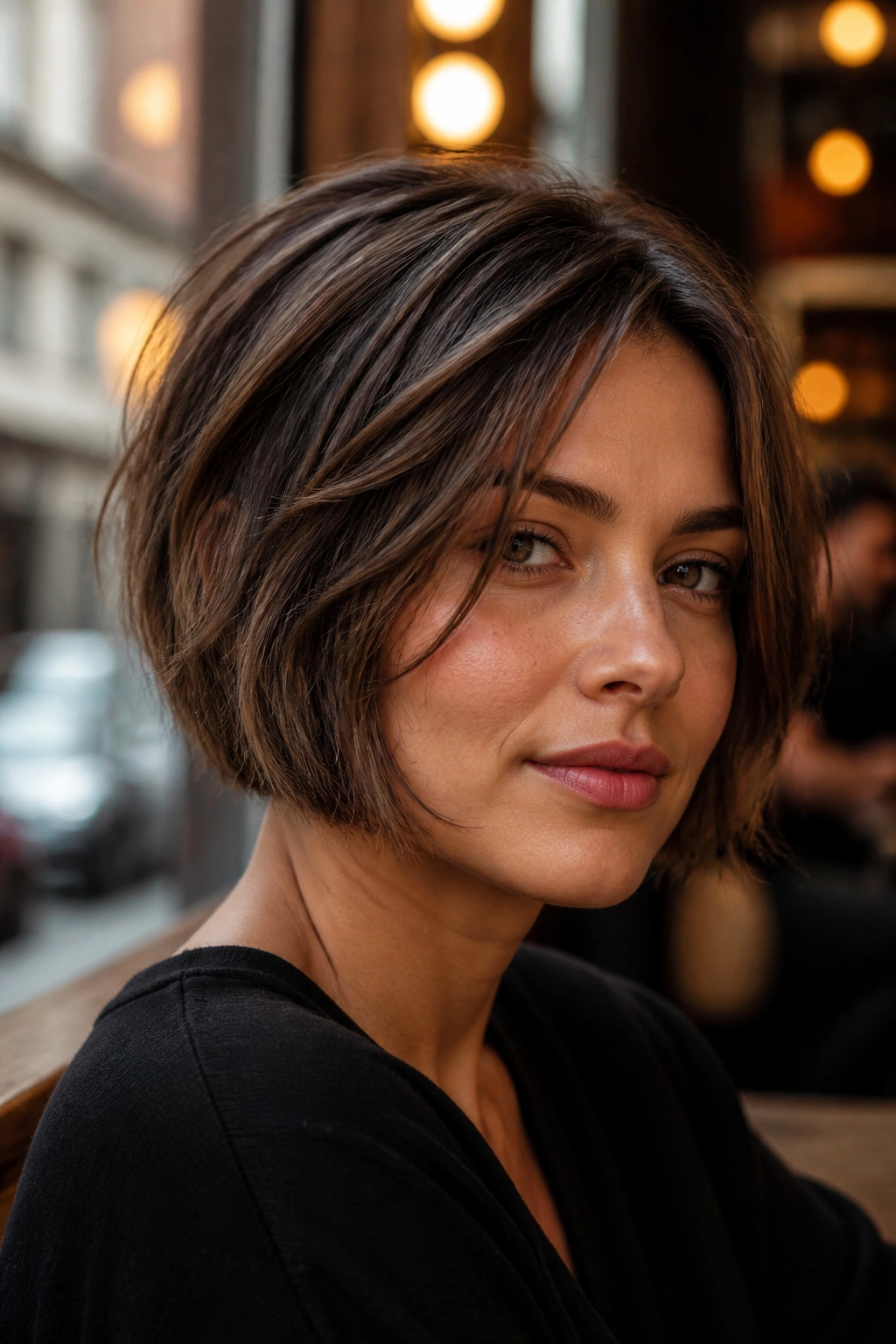
A razored bob can be a smart move for thick hair that wants to take over the whole face. The razor softens the ends and removes bulk in a way that makes the haircut feel lighter. On a round face, that lightness helps keep the outline from spreading outward.
The cut should still have a plan. Too much razor work can leave the ends frayed, and frayed ends on fine hair are a mess. This style is stronger on medium to thick hair with a bit of natural body. The hair moves, but it doesn’t collapse.
I also like this bob for people who hate the blunt, freshly cut look right after a salon visit. A razor gives the ends a softer edge from the start, so the haircut feels lived-in sooner. That can be a blessing if you prefer hair that looks a little undone rather than polished to the bone.
18. Side-Swept Fringe Bob
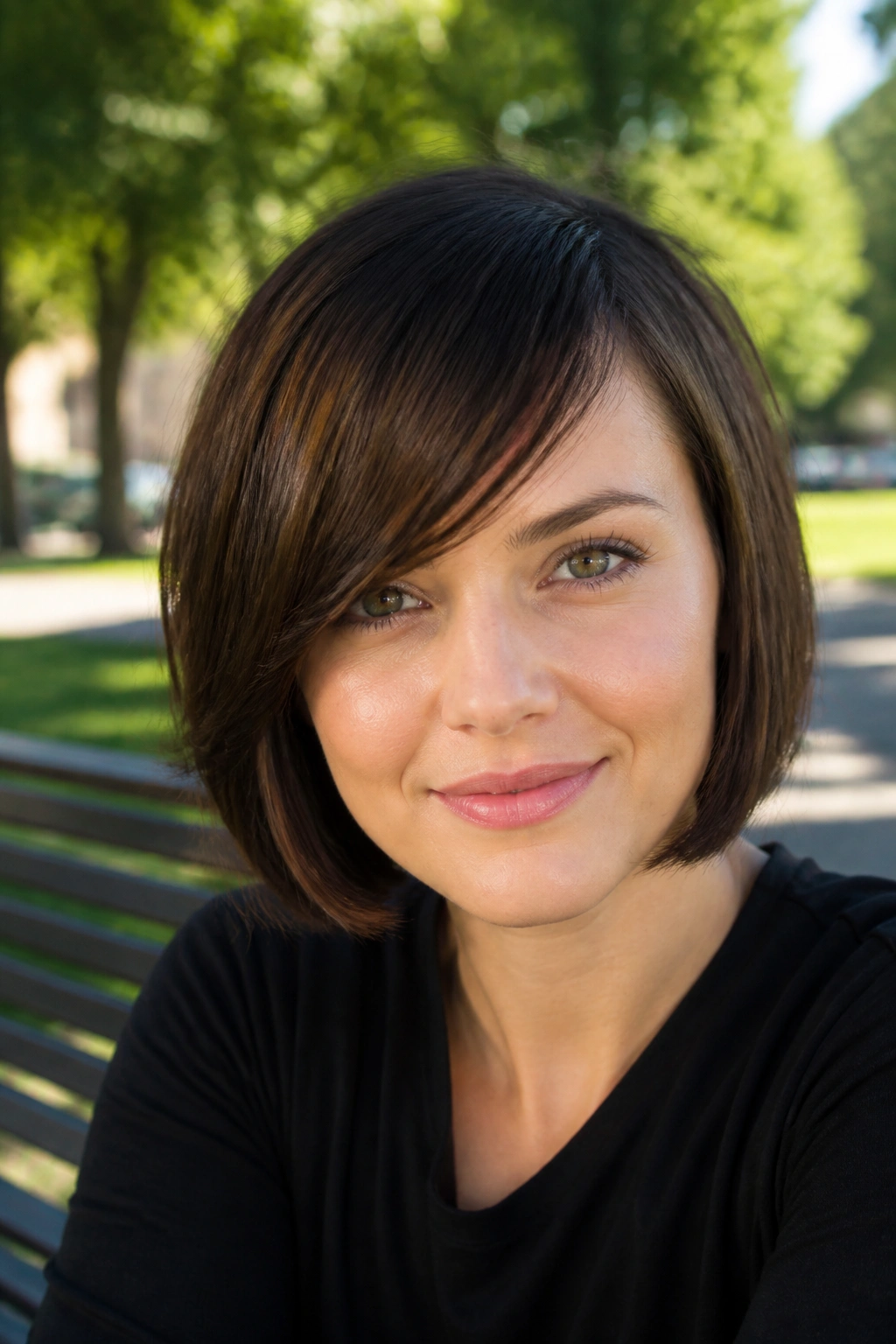
A side-swept fringe can change a bob faster than a full cut change. The fringe creates a diagonal line across the forehead, which helps break up the curve of a round face. It also keeps the front from feeling heavy, which is where people often go wrong with bangs.
Unlike straight-across bangs, a side-swept fringe leaves some forehead visible. That open space matters. It keeps the face from feeling shortened, and it gives the cheek area somewhere to relax. The bob underneath can be blunt, layered, or textured. The fringe does the balancing work.
This is a strong pick if you want to try bangs without making a huge commitment. The fringe can grow out into face-framing pieces if you get bored, and it usually styles faster than full bangs. Sweep it to the heavier side, give it a little lift at the roots, and let it fall where it wants.
19. Tapered Nape Bob
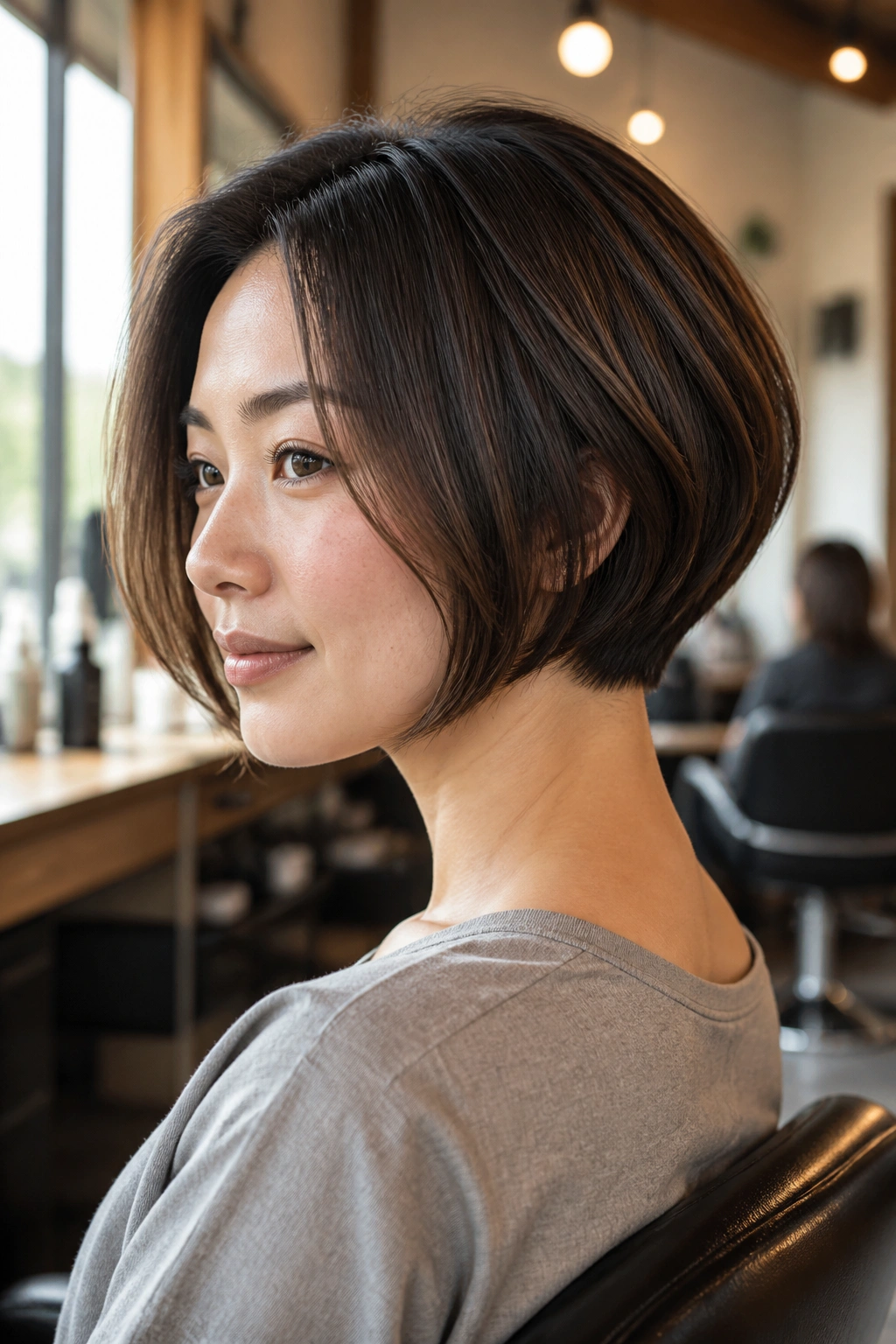
A tapered nape bob gives the back of the haircut a neat, narrow finish while keeping the front soft enough to flatter a round face. The taper keeps bulk off the neck and adds a clean end point that makes the whole shape feel lighter. I like this cut on hair that gets wide in the back.
What to Ask Your Stylist
Be specific here. “Tapered” can mean a lot of things, and not all of them help a round face. You want the nape to narrow gradually, not disappear.
- Keep the front pieces at or below the chin.
- Ask for a soft taper at the nape, not a clippered fade.
- Make sure the side panels are not puffed out.
- Use a round brush to tuck the ends inward.
This cut works well if you wear jackets, collars, scarves, or anything that sits near the neckline. The shape stays neat instead of fighting with your clothes. Small thing, but it matters.
20. Undercut Bob
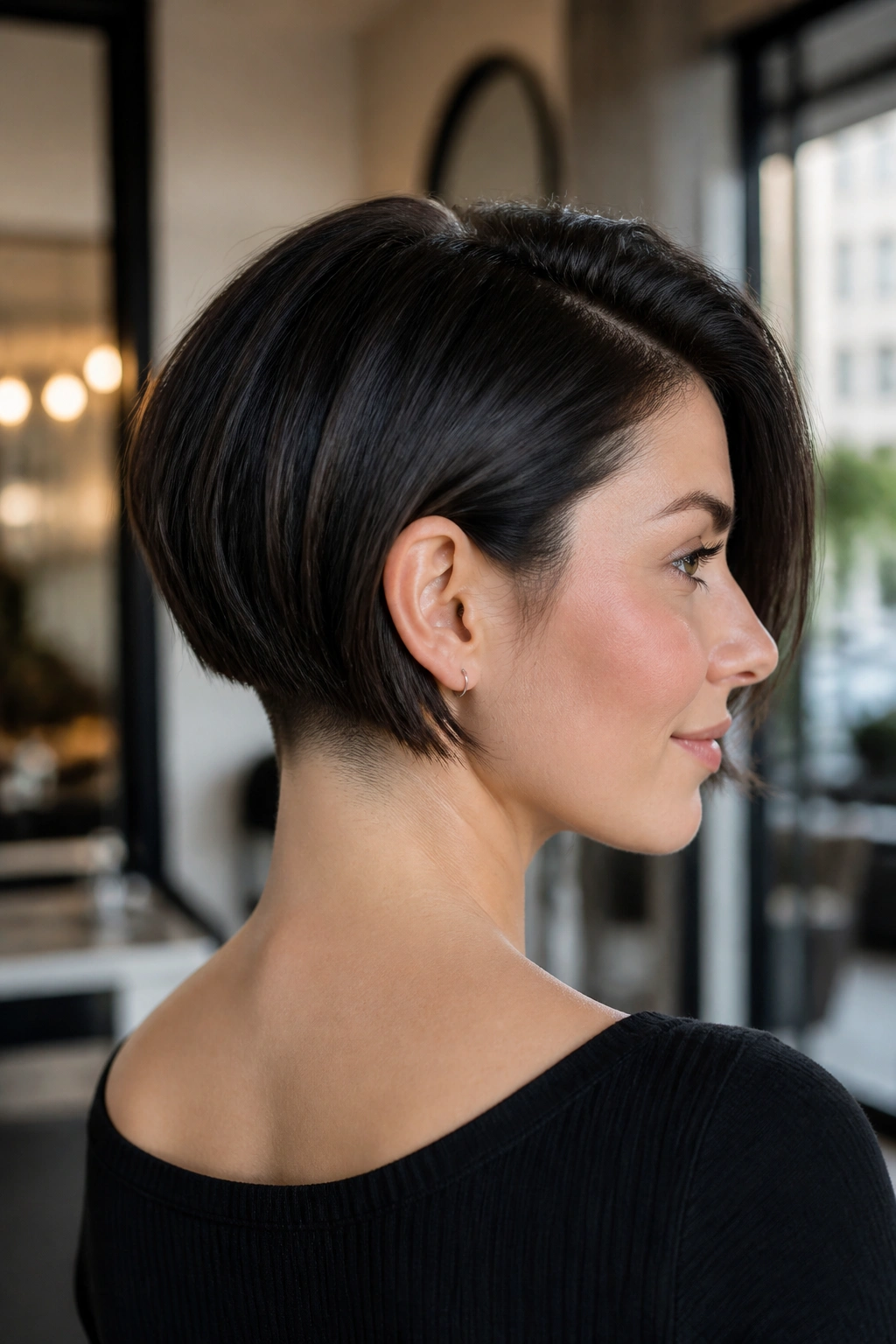
An undercut bob is not shy, and that’s why it works so well for some round faces. Removing weight underneath lets the top layers fall cleanly, so the haircut does not balloon around the sides of the face. If your hair is thick, this can be a lifesaver.
The undercut is usually hidden, which means the haircut still looks like a bob from the outside. But it behaves differently. It’s lighter, cooler, and easier to tuck behind the ears without building a mushroom shape. That hidden reduction is the whole point.
This one is especially good if you like clean lines but have a lot of hair to manage. It can also make drying time shorter, which is a nice bonus. The tradeoff is that it needs a stylist who understands placement. Put the undercut too high and the shape gets too aggressive. Leave it too low and the bulk stays where you do not want it.
21. Neck-Length Bob
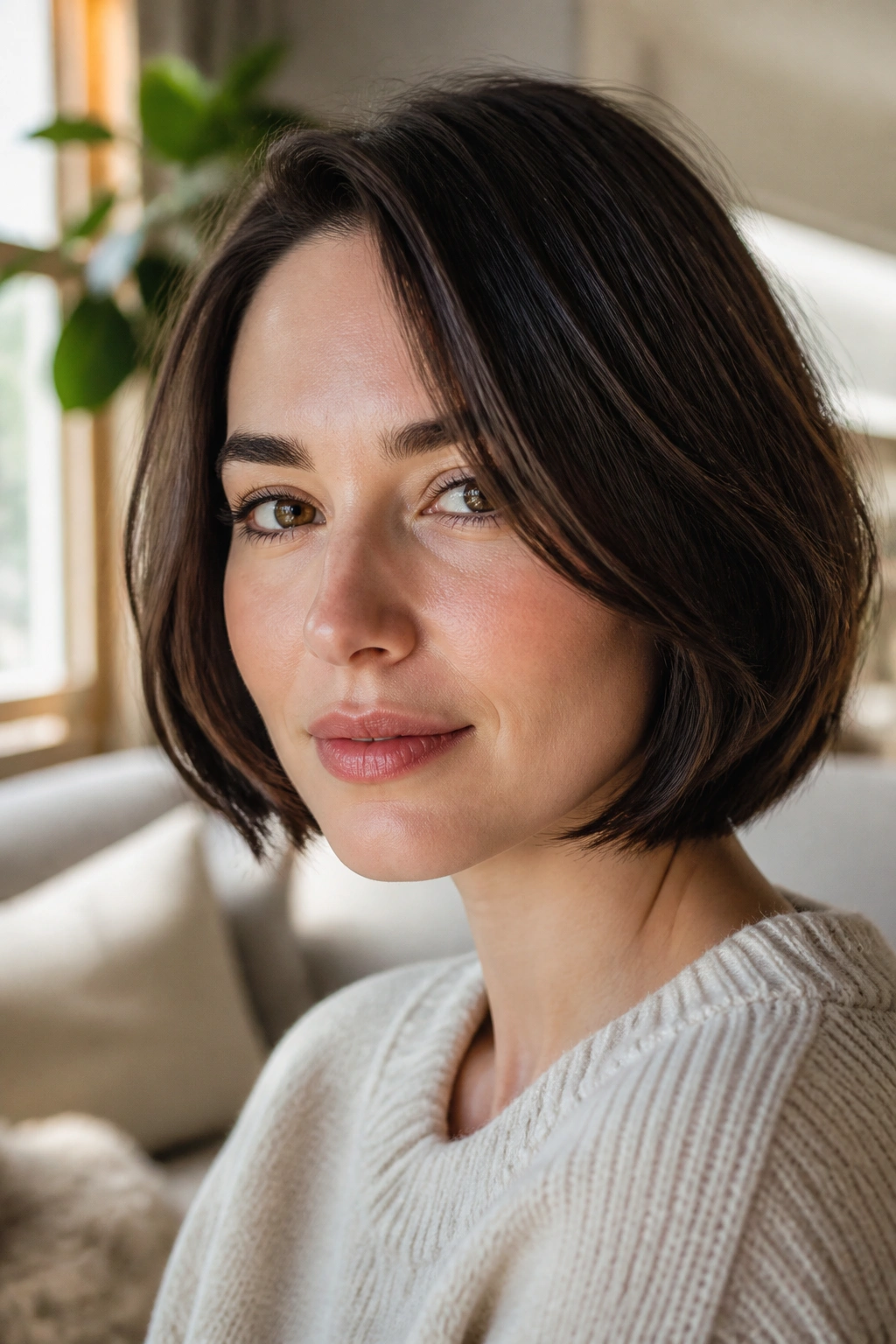
A neck-length bob gives a round face a little more room than a strict chin-length cut. That extra inch or two can make the cheeks look less dominant because the shape drops below the widest point of the face. Short, yes. Boxy, no.
How to Keep the Shape Lively
The danger with a neck-length bob is that it can drift into plainness if the ends are too heavy. A small bend, a side part, or a touch of layering through the front fixes that fast. You want the hair to move, not hang there.
I like this length for people who want something easy to tie back on rough days but still want the clean feel of a bob. It sits in that useful middle zone. Long enough to soften the face. Short enough to feel intentional.
If your hair is wavy, this length often behaves better than a shorter bob. The wave has room to sit without exploding into width. That alone can make styling less annoying.
22. Ear-Grazing Bob with Face-Framing Pieces
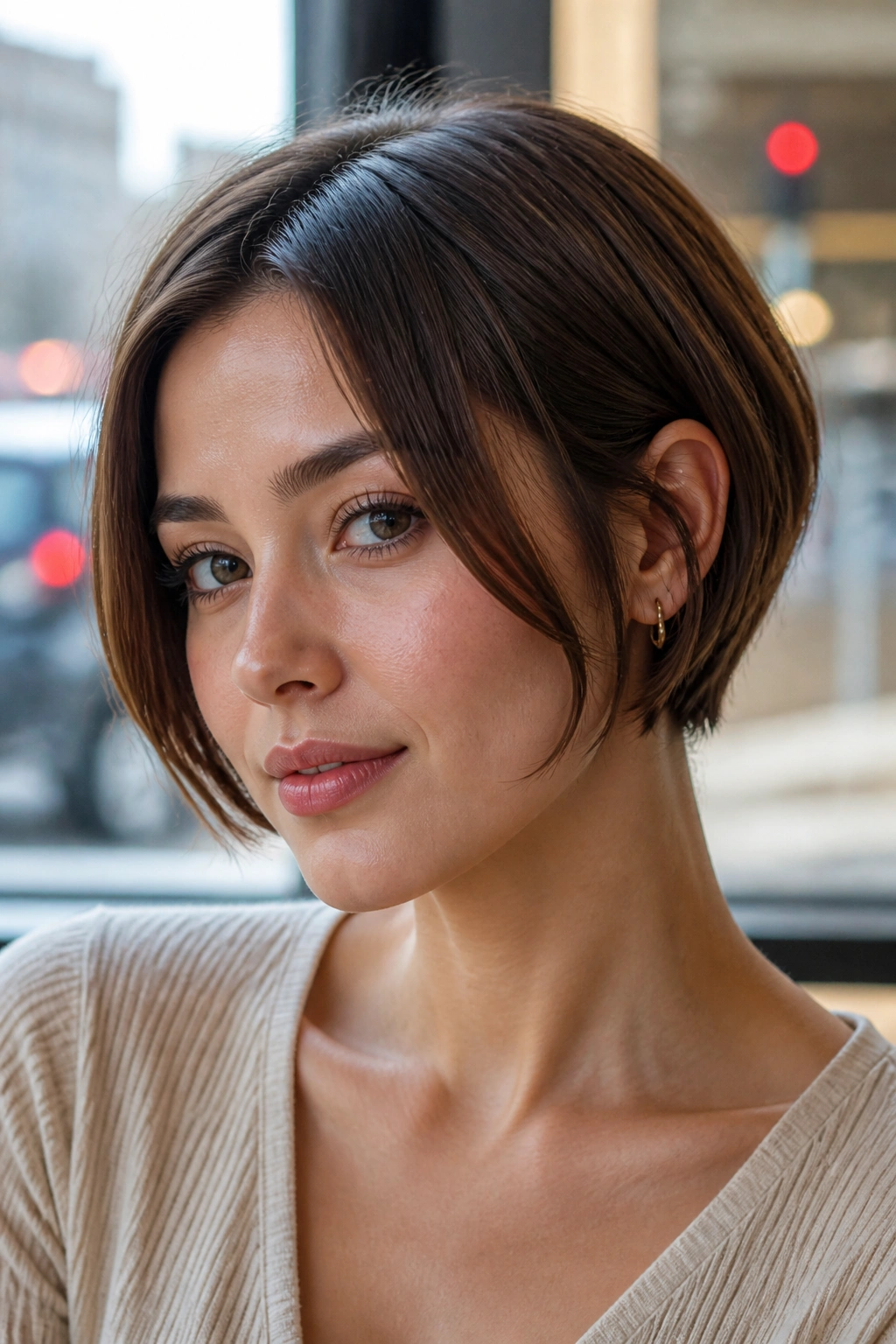
An ear-grazing bob is one of the shortest cuts that can still flatter a round face, but the front pieces have to be placed well. If the length stops too high and the sides are blunt, the face can widen. If the front drops a little lower and the ends are softened, the cut suddenly makes sense.
I like this style on people who are comfortable with a strong haircut. It shows the ears, opens the neck, and puts the focus on the eyes and jawline. The face-framing bits near the front do a lot of work here, especially if they curve down just below the cheekbone.
What to Ask For
- Keep the front pieces a little longer than the sides.
- Add soft texture at the ends.
- Avoid a hard shelf across the cheeks.
- Style with a light cream so the shape stays smooth.
This cut has presence. If you want a bob that feels crisp, short, and awake, it’s a compelling choice.
Final Thoughts
The most flattering short bob haircuts for round faces all do some version of the same job: they create line, angle, or lift where the face is naturally soft. Some do it with a blunt edge. Some do it with length in front. Some do it with texture, bangs, or a simple side part. The shape matters more than the label.
If you’re choosing between two bobs, pick the one that gives you the strongest line below the cheeks. That’s usually where the face needs the most help. A photo of the cut from the side is often more useful than a front view, because it shows whether the angle actually does anything.
Bring pictures, yes, but bring your daily routine too. A sharp stacked bob that needs a round brush every morning is a bad fit for someone who air-dries and runs out the door. The right haircut should work with your habits, not punish them.
