



Fine hair and stacked inverted bob haircuts for fine hair get along better than most people expect. The cut does the heavy lifting for you. It builds shape at the nape, keeps the front moving, and stops the whole style from collapsing by lunchtime.
No extra bulk required.
The trick is not piling on layers everywhere. Too much thinning makes the ends look see-through, and fine hair shows that mistake fast. A cleaner perimeter, a little graduation through the back, and a smart part can make the whole head look fuller without turning it into a helmet.
I love this haircut on hair that needs structure, not volume theater. It can look sleek, airy, sharp, soft — all depending on where the weight sits. That is why one bob on this list may look almost severe while another feels softly lived-in, even though both use the same basic shape.
The 20 cuts below are not cookie-cutter versions. Some are cropped and crisp, some leave a bit more room at the jaw, and some rely on bangs or color to help the silhouette. If fine hair has been fighting you, the right version of an inverted bob can make styling a whole lot less annoying.
1. Jaw-Grazing Stacked Inverted Bob with a Clean Nape
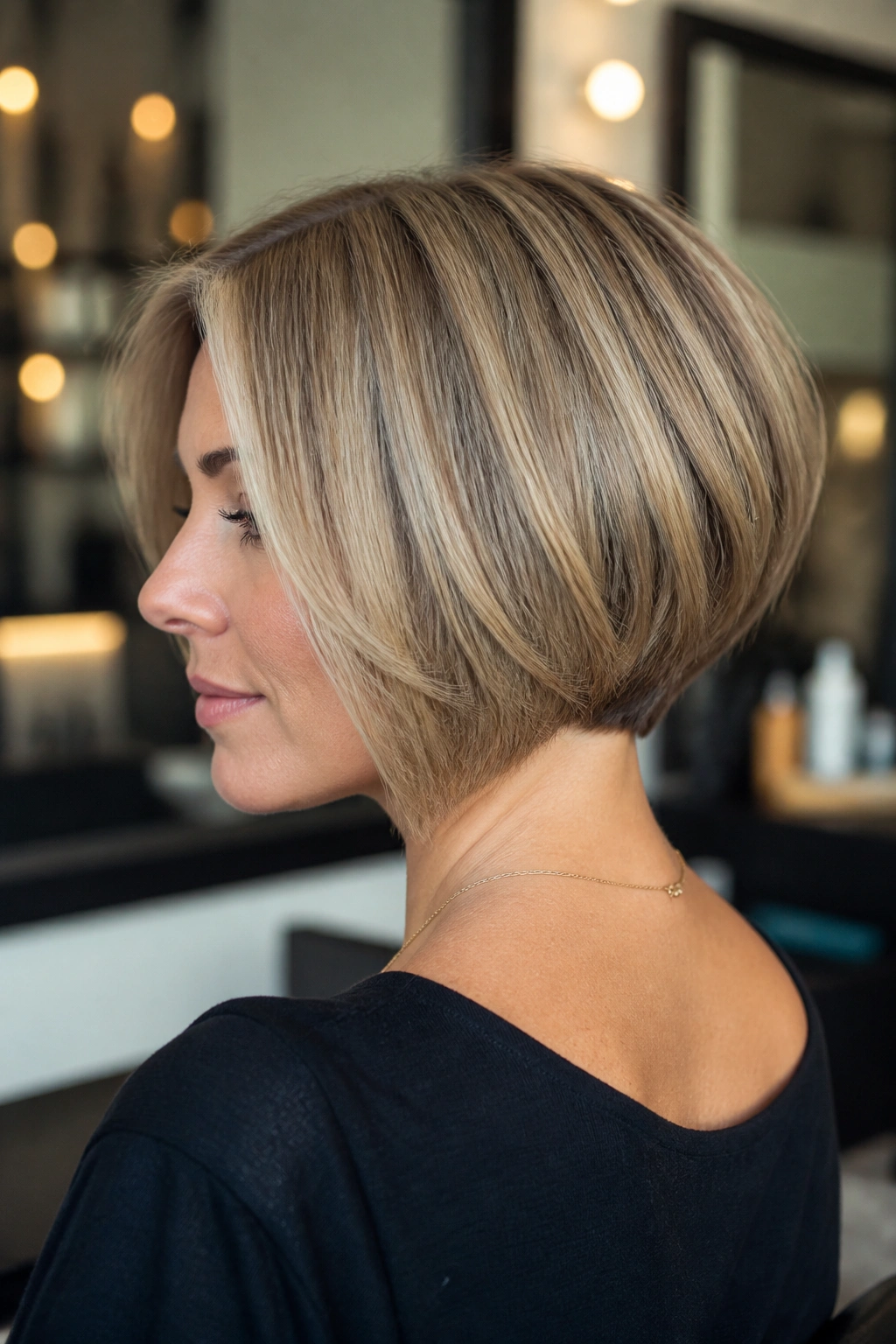
This is the haircut that makes fine hair look disciplined. The back sits close to the head, the nape stays neat, and the front falls right around the jaw so the shape reads as intentional, not limp.
What I like here is the restraint. A clean nape line gives the illusion of thickness because the cut edge is clear, and the slight forward angle keeps the front pieces from swallowing the face. It’s tidy, but not stiff.
Why it works on fine hair
- A blunt perimeter at the jaw keeps the ends from fraying out and looking wispy.
- Shorter layers at the nape create a little lift where fine hair usually collapses.
- Longer front pieces keep the cut from feeling too severe.
- A slightly lower crown helps the head shape look fuller without puffing up.
Ask for the stack to stay tight in the back and for the front to graze the jawline, not hang past the collarbone. That small difference matters. On fine hair, an extra inch can drag the whole shape down.
2. Rounded Side-Part Stacked Bob
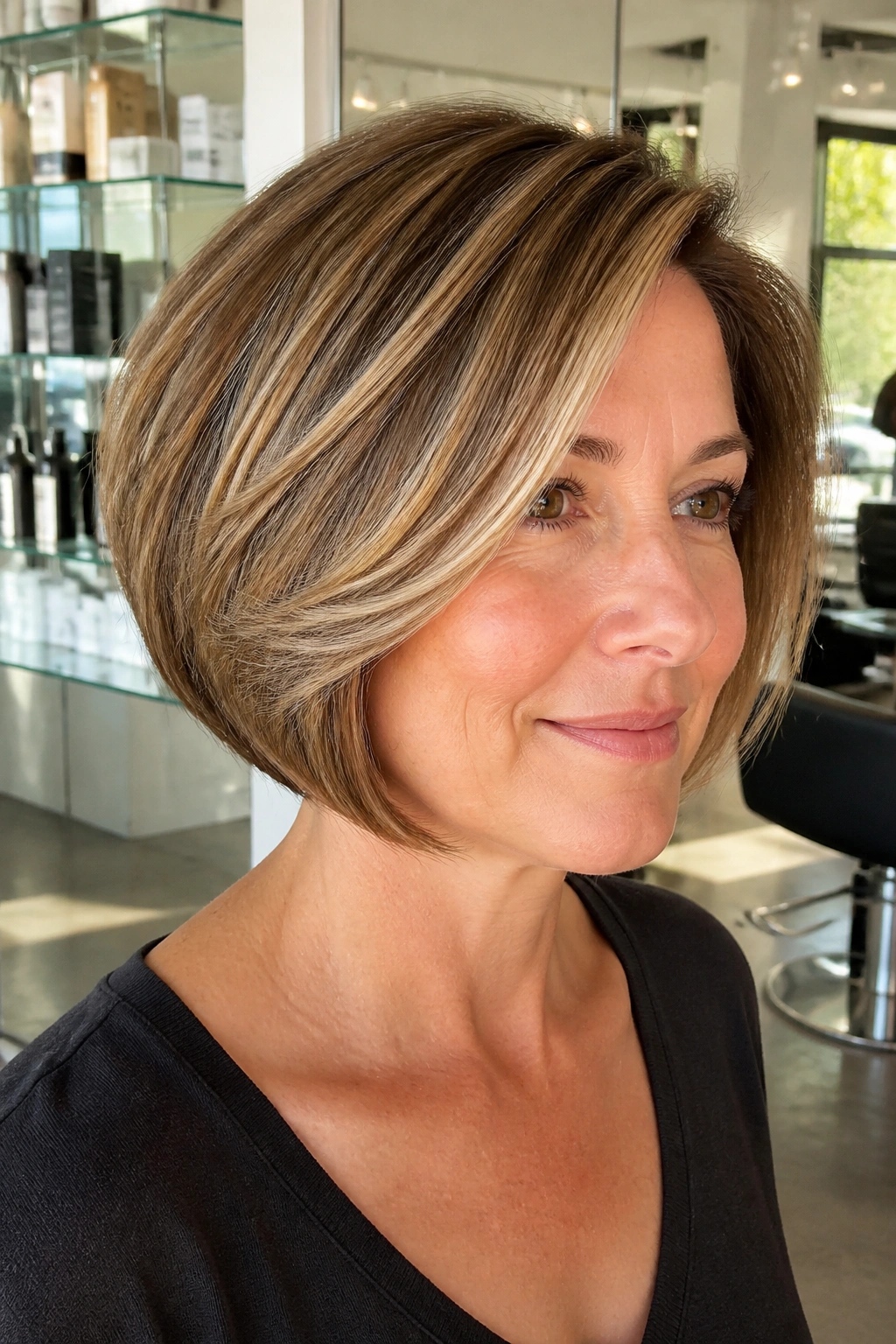
Why does a side part help so much? Because fine hair often looks flat when the part sits dead center and everything falls in the same direction. A side part breaks that habit right away.
This version curves softly around the head instead of making a hard angle. The back still has stacked structure, but the overall feel is rounded, which is useful if your hair lies close to the scalp and needs a little help looking alive.
A rounded side-part bob also works with a quick blow-dry. Lift the roots at the part with a small round brush, then direct the front forward and under. The result is a smooth bend, not a puffy flip.
The nice part is how low-drama it is. You do not need perfect styling. You need direction, a bit of root lift, and a clean shape.
3. Collarbone-Length Inverted Bob with Soft Stacking
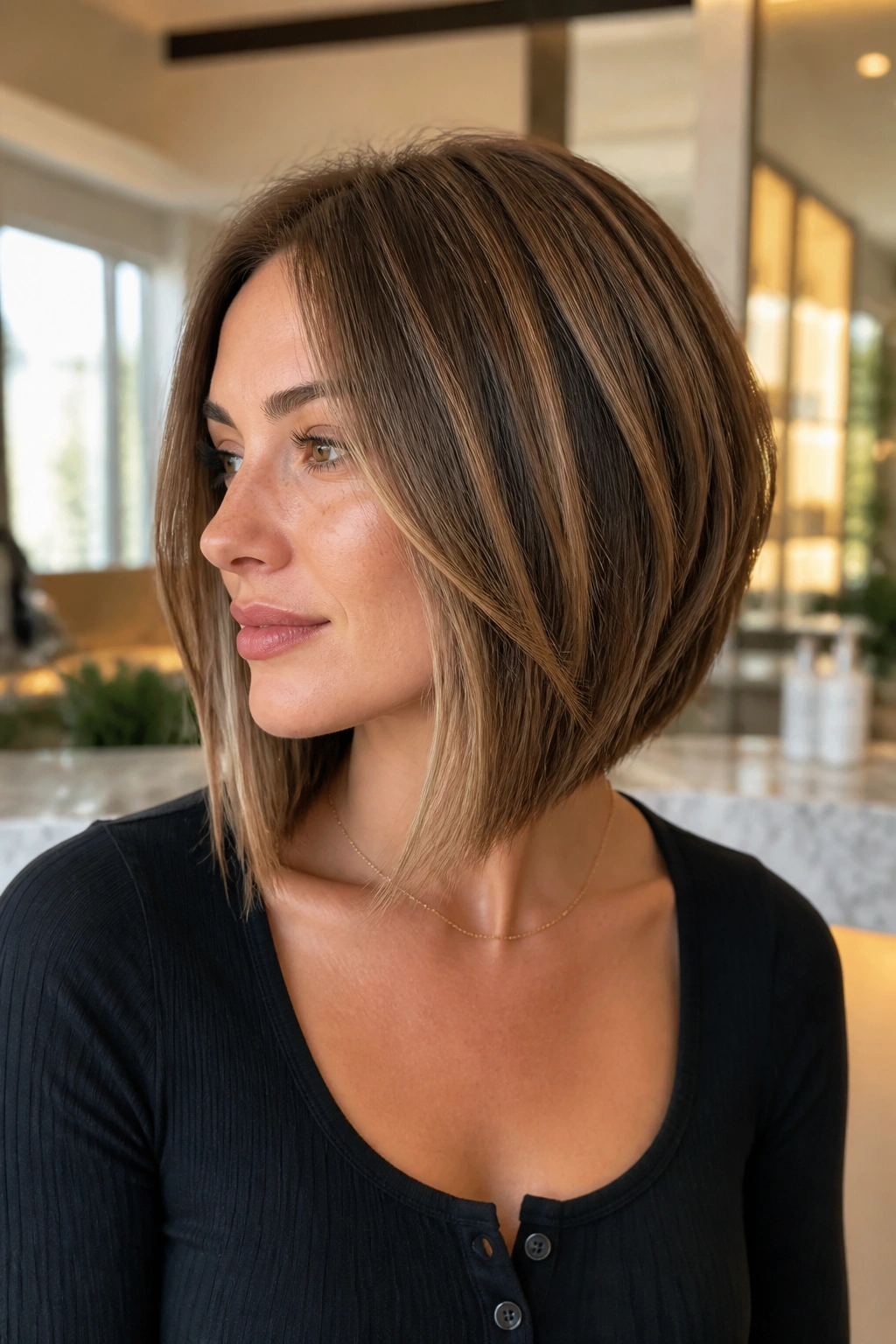
If you are not ready to go chin-short, this is the safer bet. The collarbone length keeps some swing at the front, while the back still gets enough graduation to stop fine hair from hanging in a straight, flat curtain.
I prefer this cut on people who want movement more than they want drama. It is long enough to tuck behind an ear or clip back, which helps on days when you do not want to fuss with it. But the inverted angle still keeps the shape from feeling heavy.
What to ask for
- Keep the front just brushing the collarbone or a little above it.
- Start the stack at the occipital bone, not halfway down the head.
- Leave the ends soft, not shredded.
- Ask for a slight bevel under the perimeter so the hair curves in.
This is the one that grows out with some grace. That matters more than people admit. A cut that still looks decent four weeks later saves you from that awkward triangle stage.
4. Blunt-Edged Stacked Bob for Thin Ends
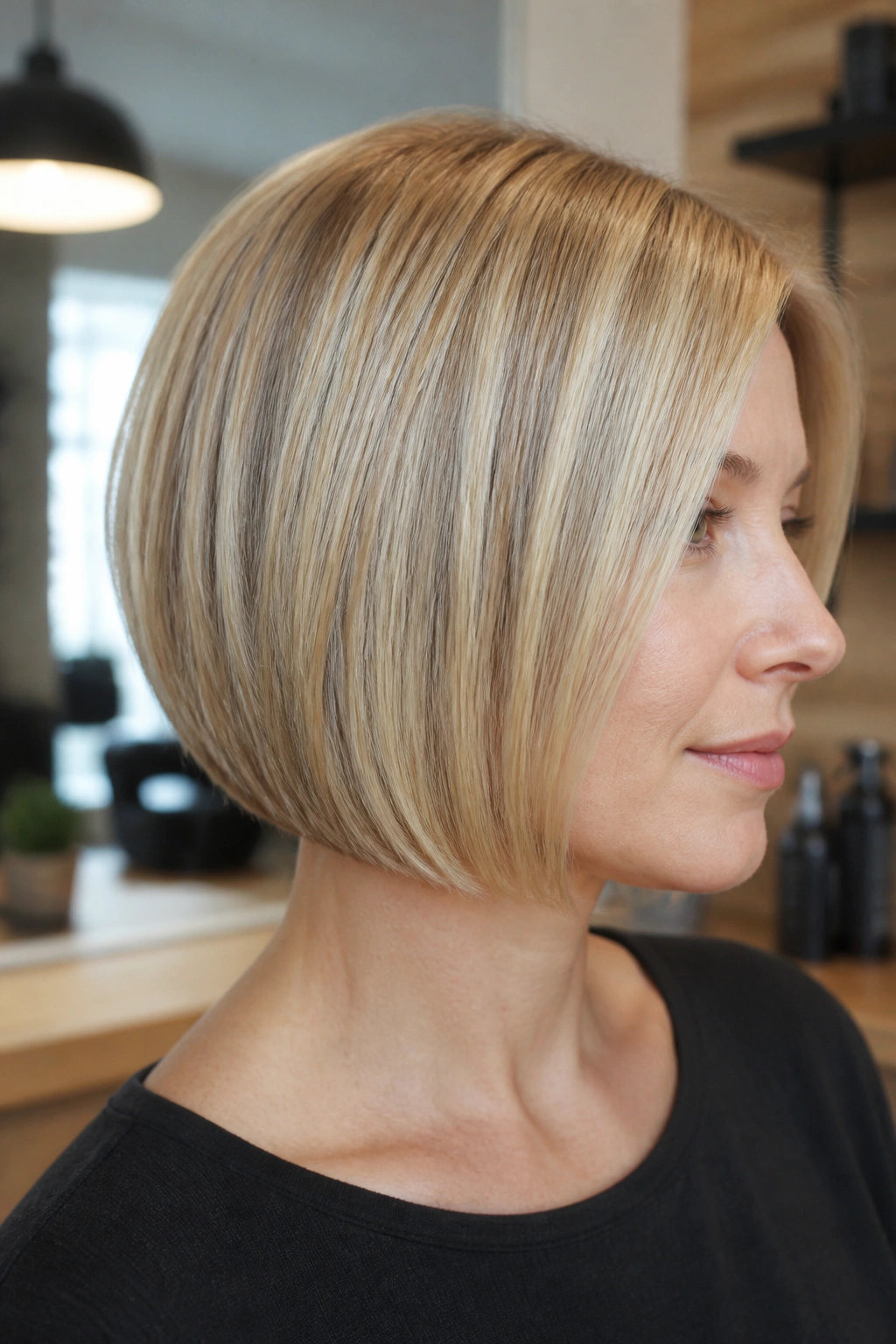
Blunt ends beat wispy ends on fine hair. Every time. A sharp perimeter makes the hair look denser because the eye sees a stronger line, not a frayed one.
This version trims the stack enough to add lift, but it keeps the bottom edge full and solid. That is the trick. If the stylist layers the ends too much, fine hair can start looking like it has been chewed at the bottom. Nobody wants that.
It works especially well if your hair is naturally straight or only slightly wavy. Air-dry it, smooth it with a paddle brush, or use a flat iron on the lowest setting that still gets the job done. The point is not glassy perfection. It is a firm outline.
A blunt bob can feel almost too simple in photos, but in real life it often looks richer than more “textured” cuts. Clean wins here.
5. Stacked Bob with Curtain Bangs
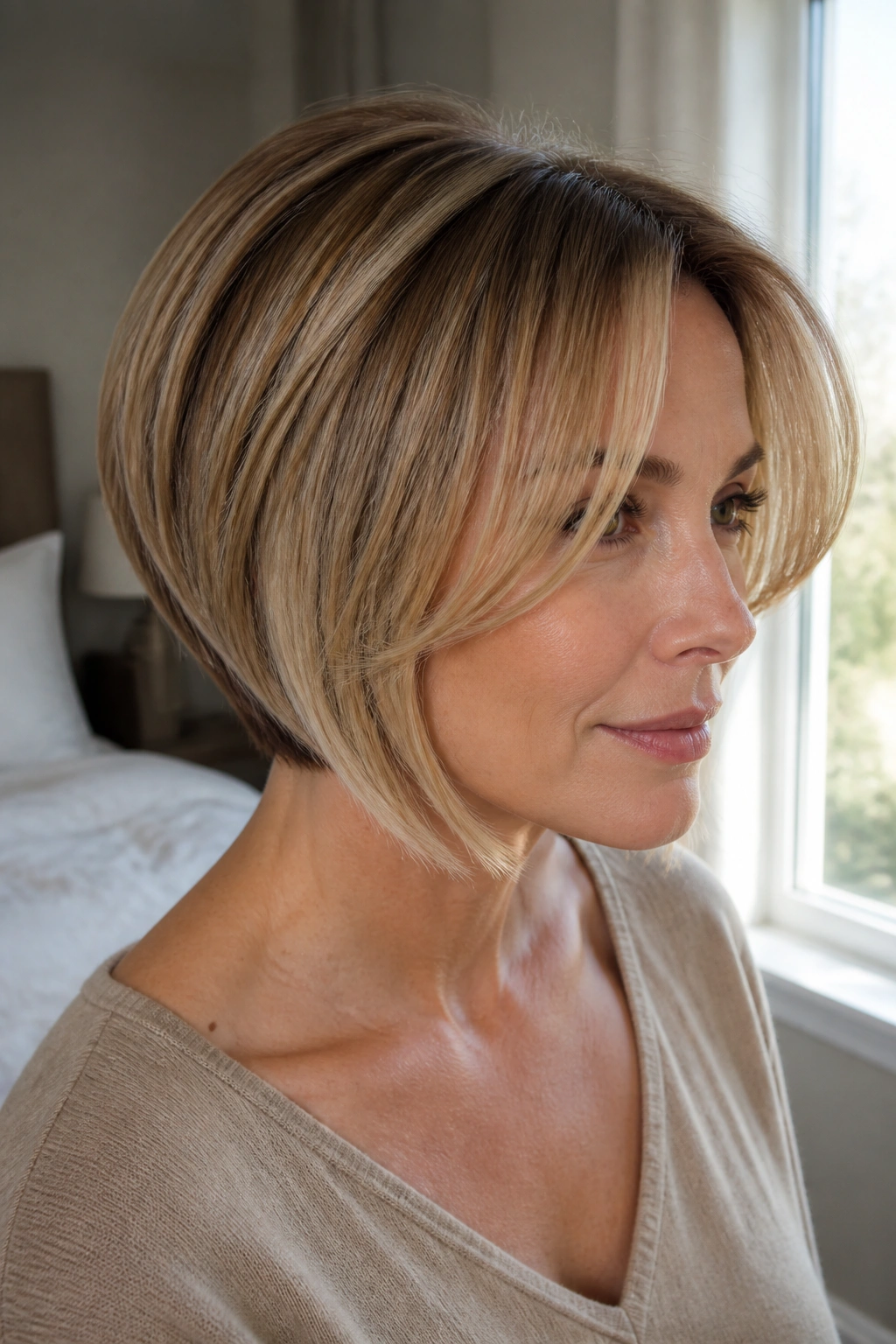
A curtain fringe can pull the eye upward without eating density. That is the big win. Fine hair often needs help around the front, and curtain bangs give shape without demanding a heavy, straight-across bang line.
Best bang length for this cut
The sweet spot sits around the cheekbone or just below it. Shorter than that, and the fringe can feel skimpy. Longer than that, and it starts competing with the front of the bob instead of supporting it.
How to style it
- Blow-dry the bangs away from the face with a round brush.
- Keep the part soft and slightly off-center.
- Use a pea-sized amount of lightweight cream, not a thick balm.
- Let the ends curve out just a little so the fringe blends into the bob.
This haircut has a softer mood than the blunt bob, and that’s the point. If your face likes a little framing and your hair needs help at the front, curtain bangs can do both jobs without stealing volume from the rest of the cut.
6. Asymmetrical Inverted Bob with Longer Front Pieces
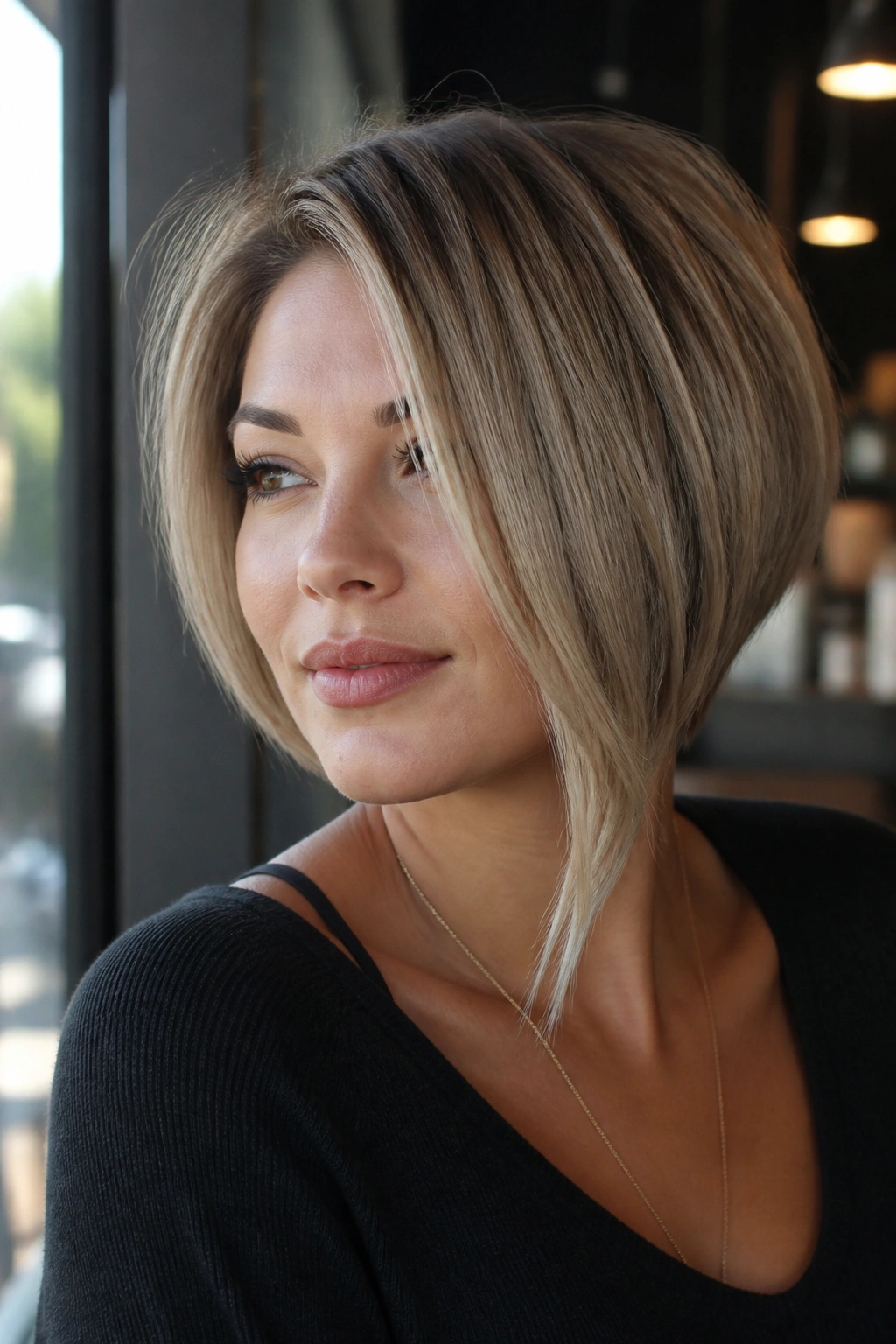
Uneven can be useful. A subtle asymmetrical line draws the eye in a diagonal, which makes the hair look more active and less static. On fine hair, that visual movement counts for a lot.
The key is subtlety. You want one side a touch longer, not a dramatic one-side-longer haircut that feels trendy for the sake of it. A small difference in length is enough to create interest and keep the front from looking boxy.
This cut works especially well if one side of your hair tends to fall flatter than the other. The asymmetry makes that difference feel designed, not accidental. I also like it for side-part wearers who want a little extra shape near the cheek.
Keep the finish smooth. If the texture gets too rough, the angle gets lost and the whole cut can start looking chopped up. That is a fast way to lose the sharpness that makes it work.
7. Tousled Stacked Bob with Piecey Texture
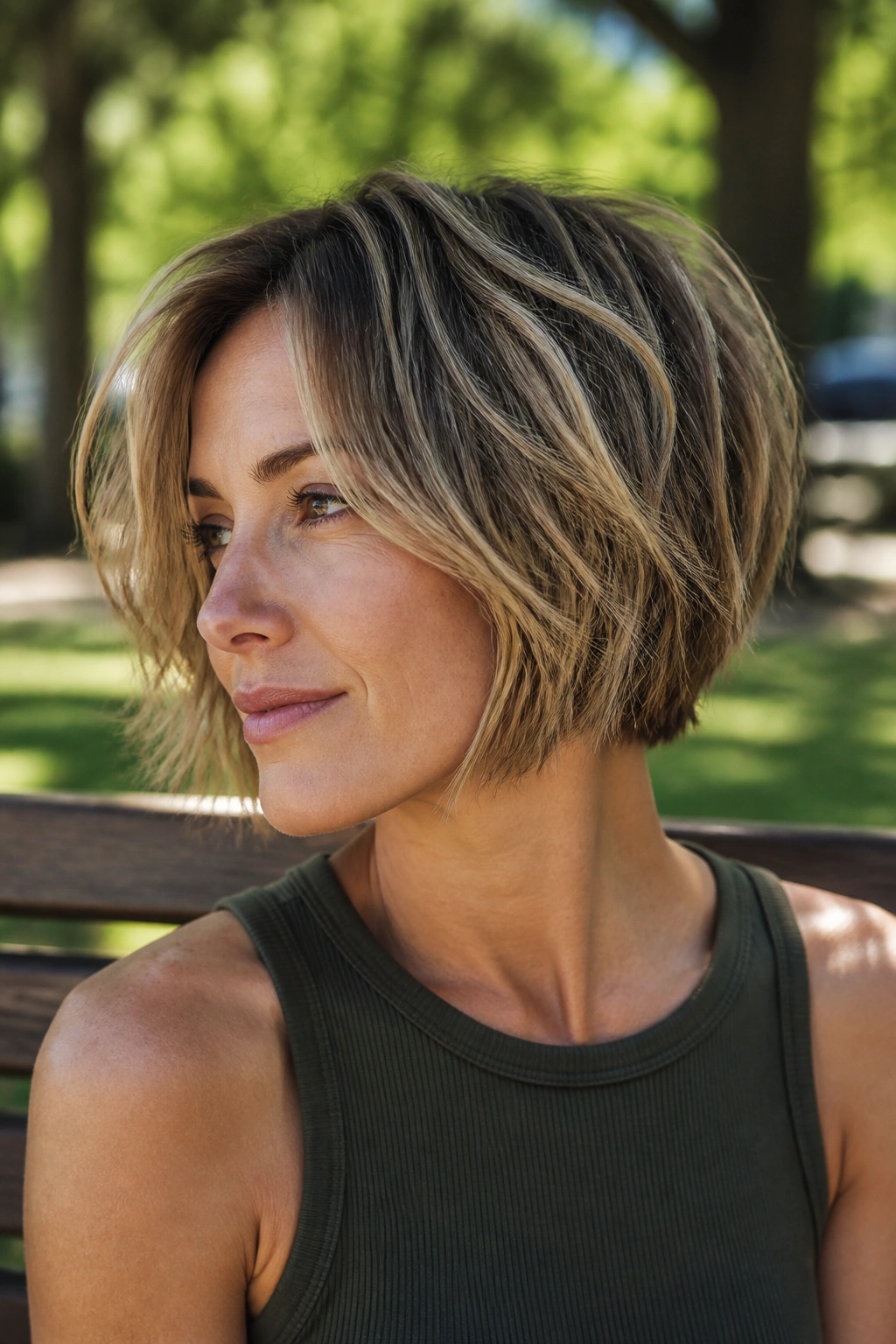
Run your fingers through it and it should feel light, not fluffy. That is the difference between a good tousled bob and one that just looks messy. Fine hair needs texture, but it needs the right kind.
This version uses soft, controlled breakup in the ends so the stack doesn’t look too neat. A little mousse at the roots, a quick scrunch, and a few bends created with a small iron are usually enough. Skip the heavy sea-salt sprays that leave fine hair feeling dry and rough.
A piecey finish works best when the base cut is still clean. If the perimeter is too thin, the texture has nothing to sit on. So keep the shape solid and let the styling add the movement.
I like this one for people who do not want a high-shine, polished look every day. It feels easier, and it has a little edge without asking for a lot of product.
8. Graduated Nape Bob with Micro-Layers
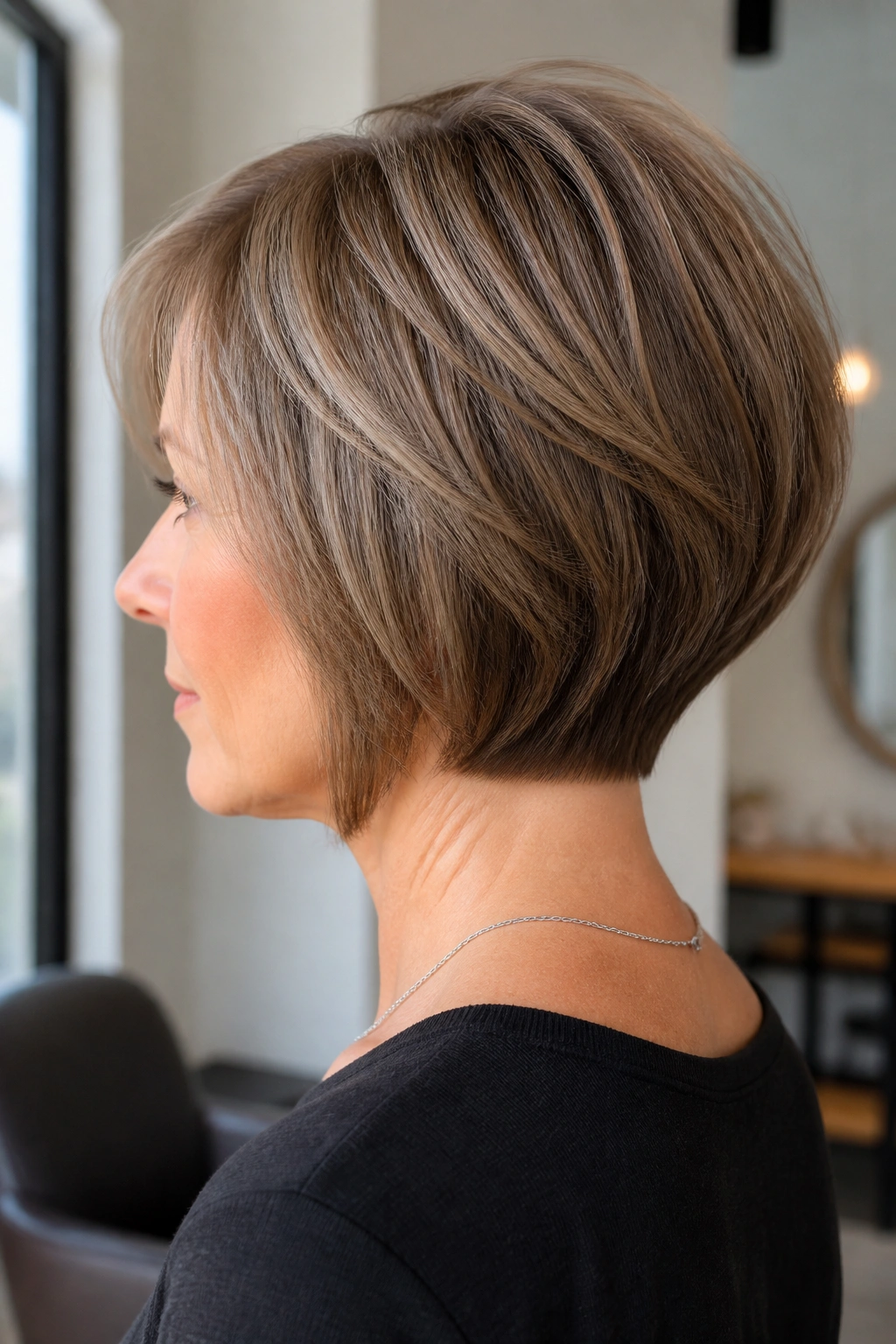
Micro-layers are safer than big chops. That sounds obvious, but it’s where a lot of fine-haired bobs go wrong. Heavy layering can leave the top too thin and the bottom too stringy.
What to ask for
- Graduation only through the nape and lower back.
- Tiny, controlled layers, not disconnected chunks.
- A perimeter that stays full at the bottom.
- Texture concentrated near the crown if you need lift there.
This cut is tidy from the back and very flattering if you like seeing a clear shape when you turn your head. The nape stack gives lift, but the micro-layers stop the look from becoming bulky.
It’s also a smart option if your hair is fine but abundant enough that it tends to sit flat at the back of the head. You get a little support, not a lot of fuss.
9. Deep Side-Part Volume Bob
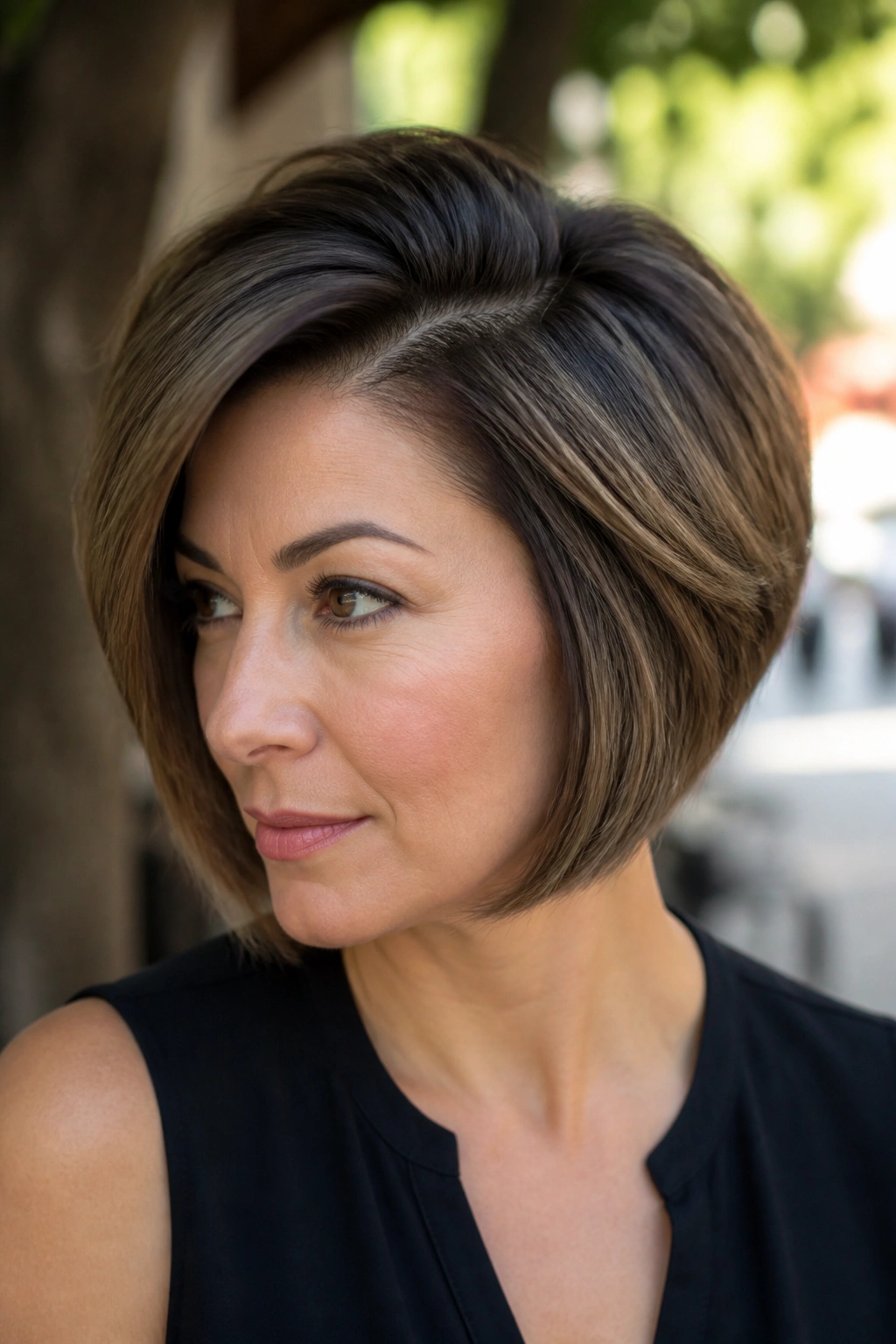
Want more lift without cutting much shorter? Use a deep side part. It sounds almost too simple, but the shape change can make a surprising difference on fine hair.
The deeper part shifts weight off the center line, which lets the top section stand up a little instead of lying flat. Pair that with a stacked back and you get a bob that looks fuller at the root without adding a lot of product.
A quick trick helps here: blow-dry the hair in the opposite direction of the part first, then flip it back once it cools. That small reset gives the roots a bit of memory. No need for a complicated routine.
This cut is a good choice if you want a styling change more than a haircut revolution. Sometimes the smallest change is the one that buys you the most volume.
10. Feathered Face-Framing Inverted Bob
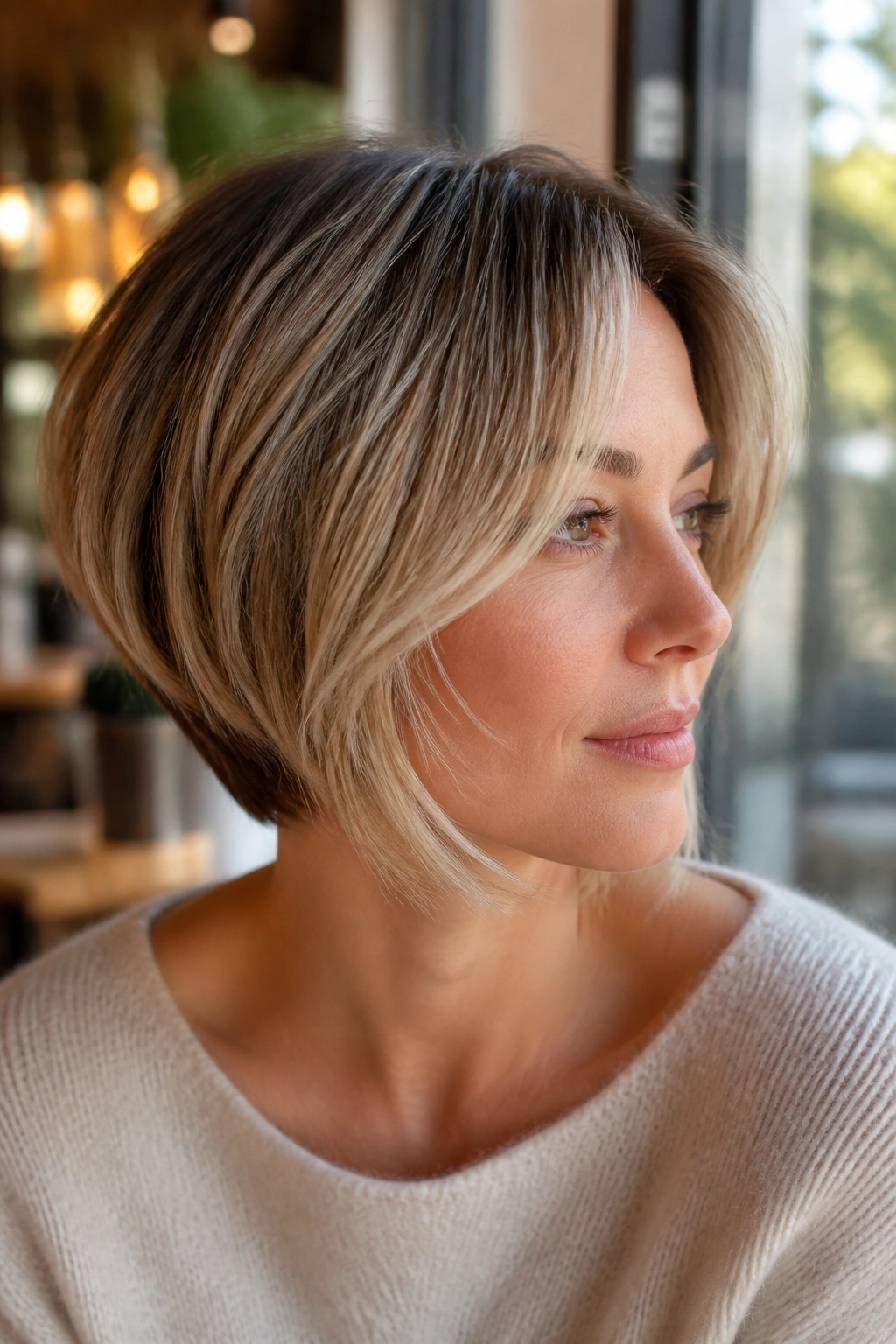
A few soft pieces around the face can save the whole cut. Fine hair often looks sharper when the front is too heavy, so feathering just the first inch or two near the cheekbones makes the line feel lighter.
This isn’t the same as thinning the ends. Big difference. Feathering should soften the front, not remove so much weight that the shape turns see-through. If a stylist starts razor-blending everything, steer them back to the outline.
The face-framing pieces can begin around the cheek or chin, depending on how much movement you want. Shorter face layers give more lift. Longer ones keep things calmer. I usually favor the longer version because fine hair needs all the structure it can get.
It’s a good middle ground for anyone who wants a bob that feels less severe but still looks neat.
11. Sleek Straight Stacked Bob
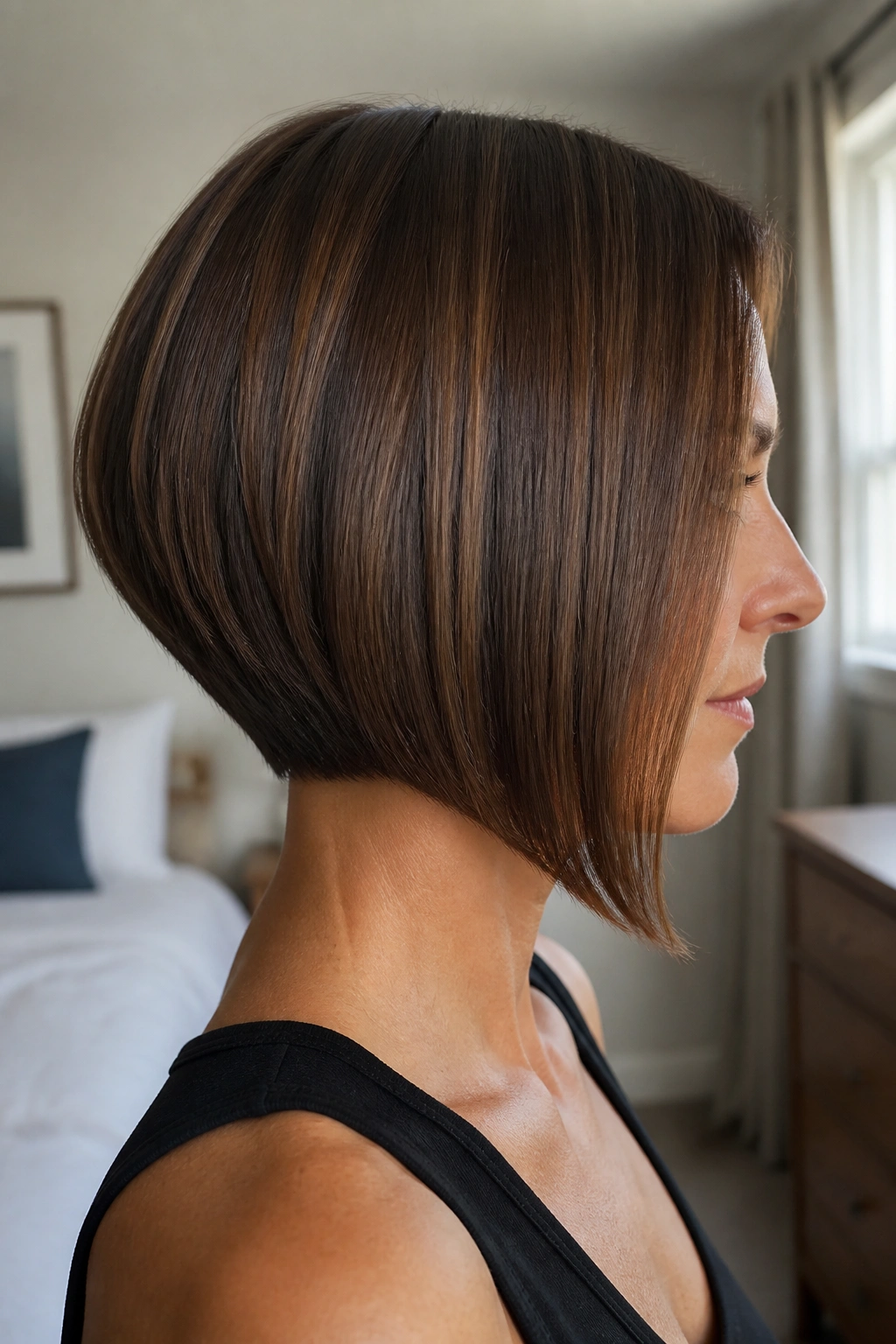
Unlike textured versions, this one wins by being clean. If your hair naturally falls straight or close to it, a sleek stacked bob can make it look denser because every line is visible.
The back should hug the head, the front should angle down a little, and the ends should curve under instead of flicking out. A flat iron helps, but use it lightly. Over-smoothing fine hair can make it look stringy, which is not the point.
A touch of heat protectant and a small amount of serum on the ends usually does enough. If your hair frizzes easily, smooth only the outer layer and leave the interior alone so the cut keeps some body.
This is one of those styles that looks more expensive when it is clean, not when it is overworked. A sharp bob and fine hair can be a great match if the line is handled with care.
12. Wavy Inverted Bob with Hidden Support Layers
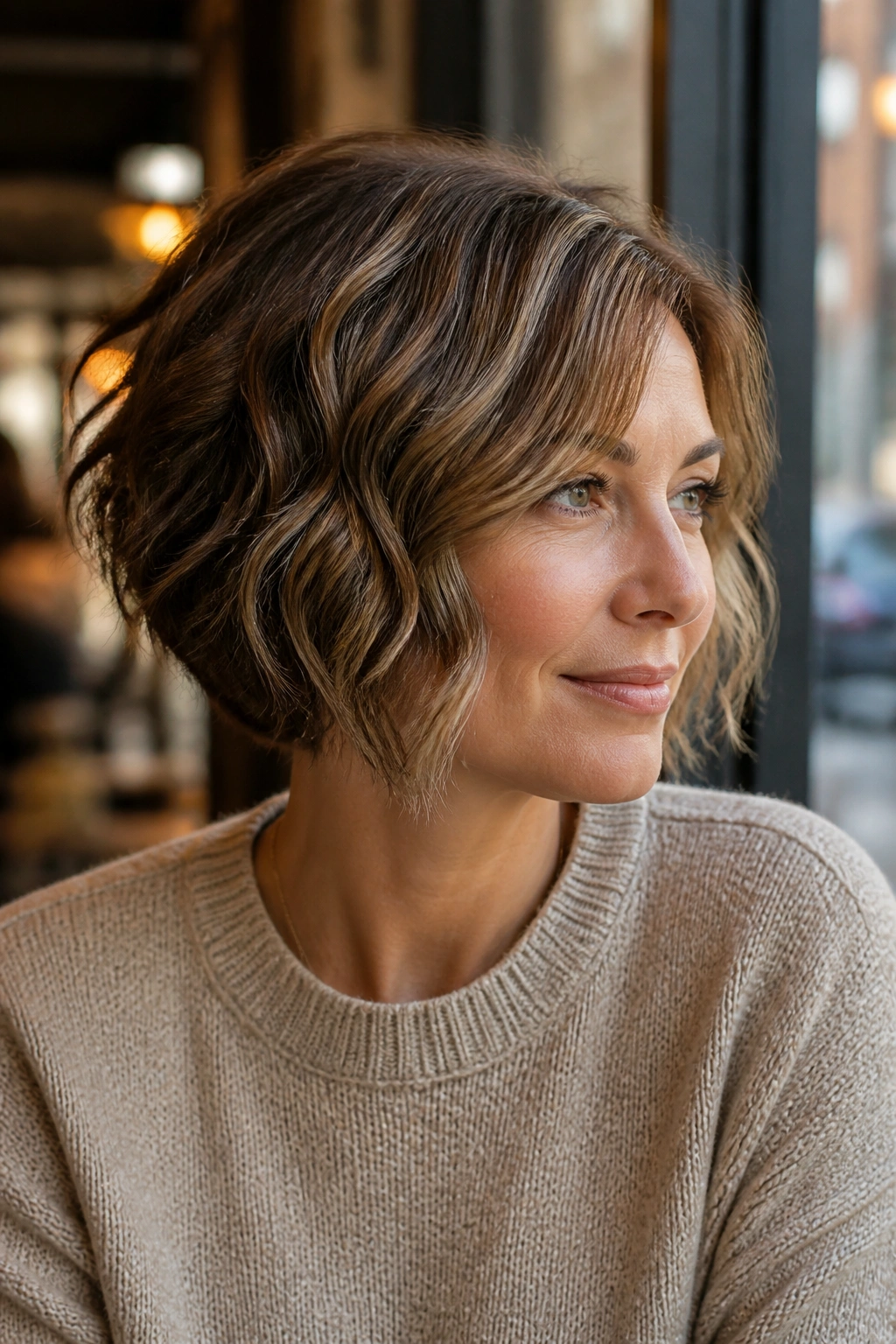
Waves need support, not random thinning. That’s the mistake I see most often. If the interior is stripped too aggressively, the waves lose their shape and the whole cut starts to droop.
This version keeps hidden layers inside the bob so the surface still looks smooth. The layers are there to help the hair bend and stack, not to show off. Once dry, the cut reads as soft and full, which is exactly what fine wavy hair usually wants.
A 1-inch wand or a diffuser can both work. Wrap sections loosely, leave the last inch out, and let the wave cool before touching it. If you brush it too soon, the shape disappears fast.
The effect is casual, but not sloppy. That balance is hard to get, and it is why this cut stays so useful.
13. Chin-Length Bob with Airy Bangs
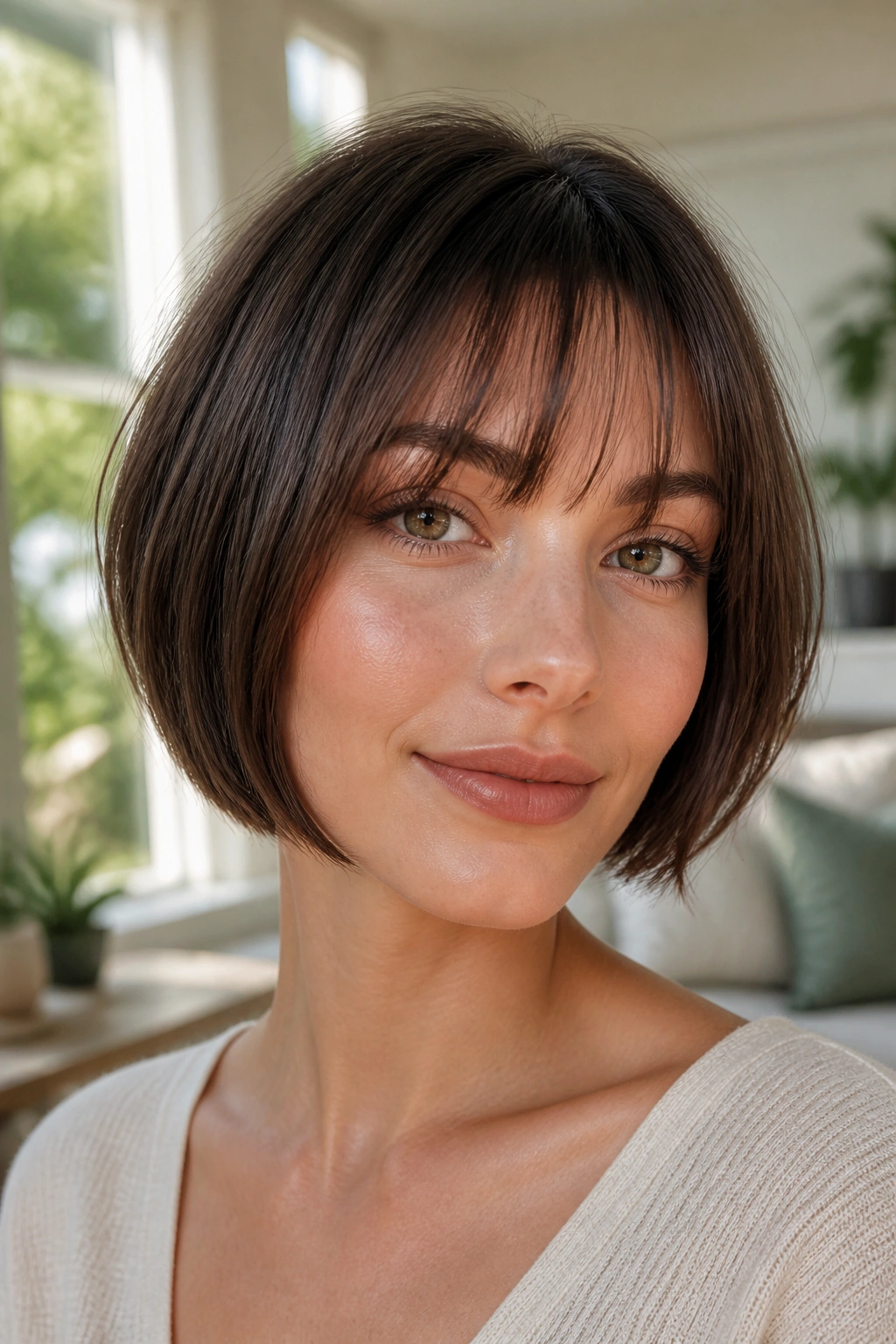
Airy bangs work because they give the forehead some shape without covering half the face. Fine hair can carry them better than heavy bangs, which tend to split and reveal too much scalp if they are cut too thick.
Bang shape and placement
Ask for bangs that are soft at the edges and a little longer in the middle. The line should be loose, not blunt. If the fringe lands just at or above the brows, it feels light enough to stay believable on fine strands.
What to keep in mind
- Keep the bang section narrower than you would for thick hair.
- Avoid heavy texturizing at the very ends.
- Style with a small round brush or finger-drying.
- Let the bob itself stay clean so the fringe doesn’t compete with it.
A chin-length bob has a nice amount of presence on its own. The bangs just give it another layer of personality, which is useful when you want the cut to feel a little softer without losing structure.
14. Neck-Length Stacked Bob with Tucked Ends
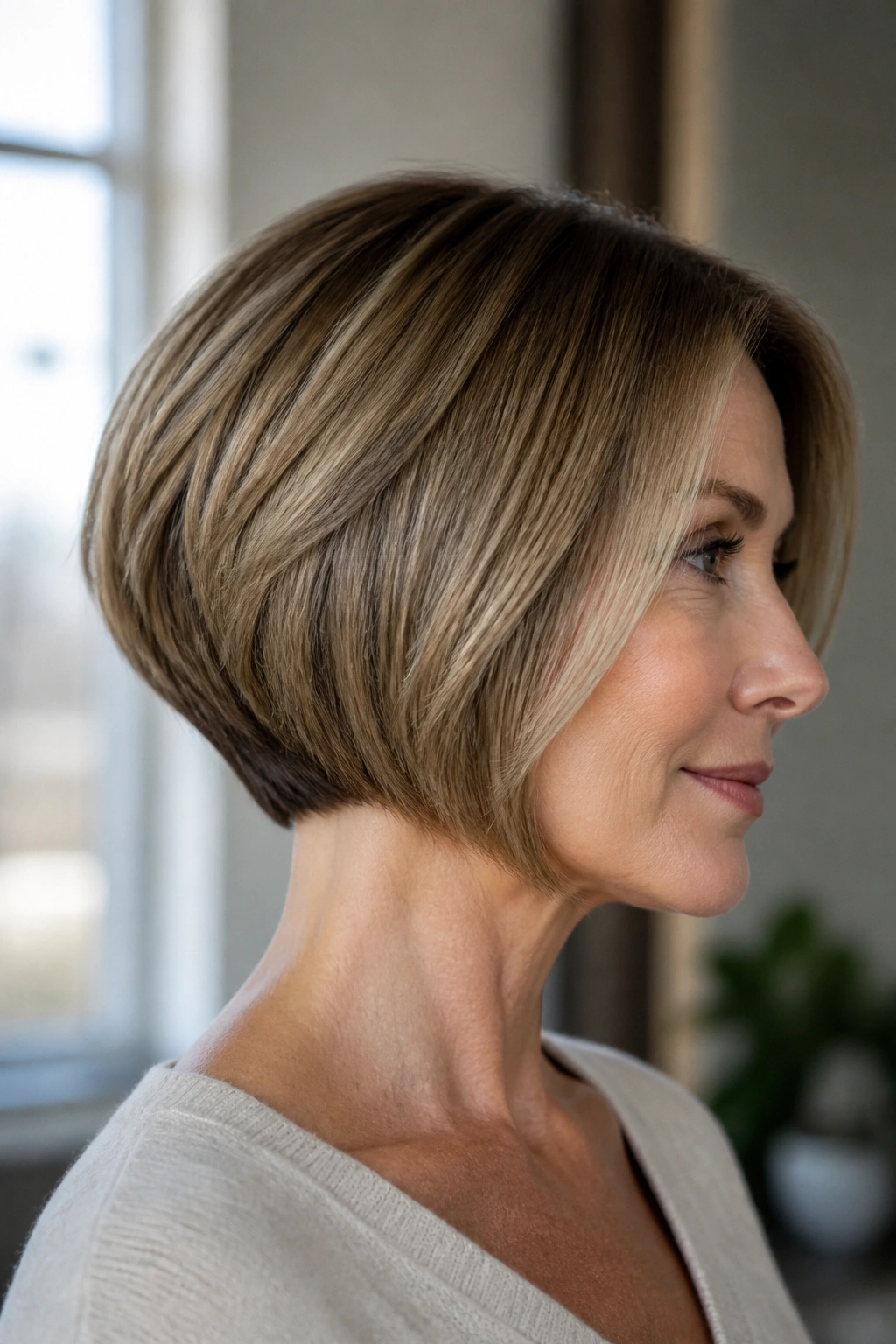
Longer is not always safer. On fine hair, a neck-length bob can still have shape, and sometimes it looks better than a shorter cut because the extra length gives the stylist room to build a cleaner angle.
The magic is in the tucked ends. Instead of flipping out, the bottom edge bends under slightly and keeps the outline smooth. That keeps the neck area neat while the back still carries a soft stack.
This version is a good fit if you want to tuck hair behind the ears, wear earrings, or pull the front away from the face without losing the bob shape. It’s not the most dramatic cut on the list, but it may be the most wearable.
One small warning: if the ends get too thin, the shape turns droopy fast. Keep the perimeter honest. No airy shredding just for the sake of movement.
15. Razor-Light Shattered Bob
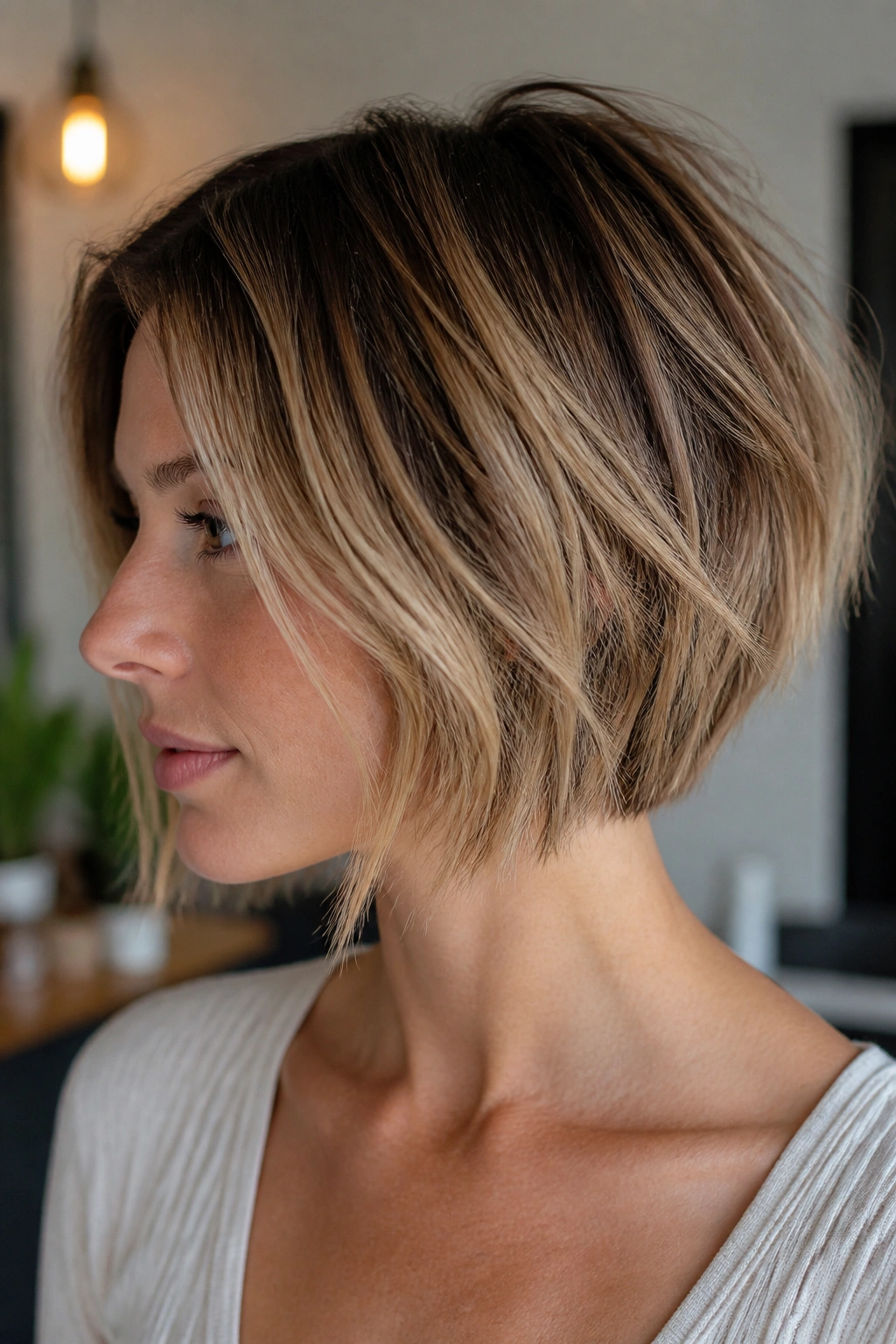
A razor can help, but only when the stylist is careful. On fine hair, it should be used sparingly, because over-razoring can make the ends fray and look softer in the bad sense.
This haircut uses the razor light-handedly to break up the interior and keep the bob from feeling too solid. The result is a cut with a bit of edge, a bit of swing, and less blockiness around the head. It works best when the hair is healthy and not already fragile at the ends.
Straight hair usually shows this shape best. If your strands are very fine and prone to splitting, ask for scissor texturizing instead of a razor through the whole cut. That keeps the line cleaner and avoids that shredded look that can be hard to fix.
There’s a real difference between texture and damage. This style should look touched, not torn.
16. Soft Undercut Bob
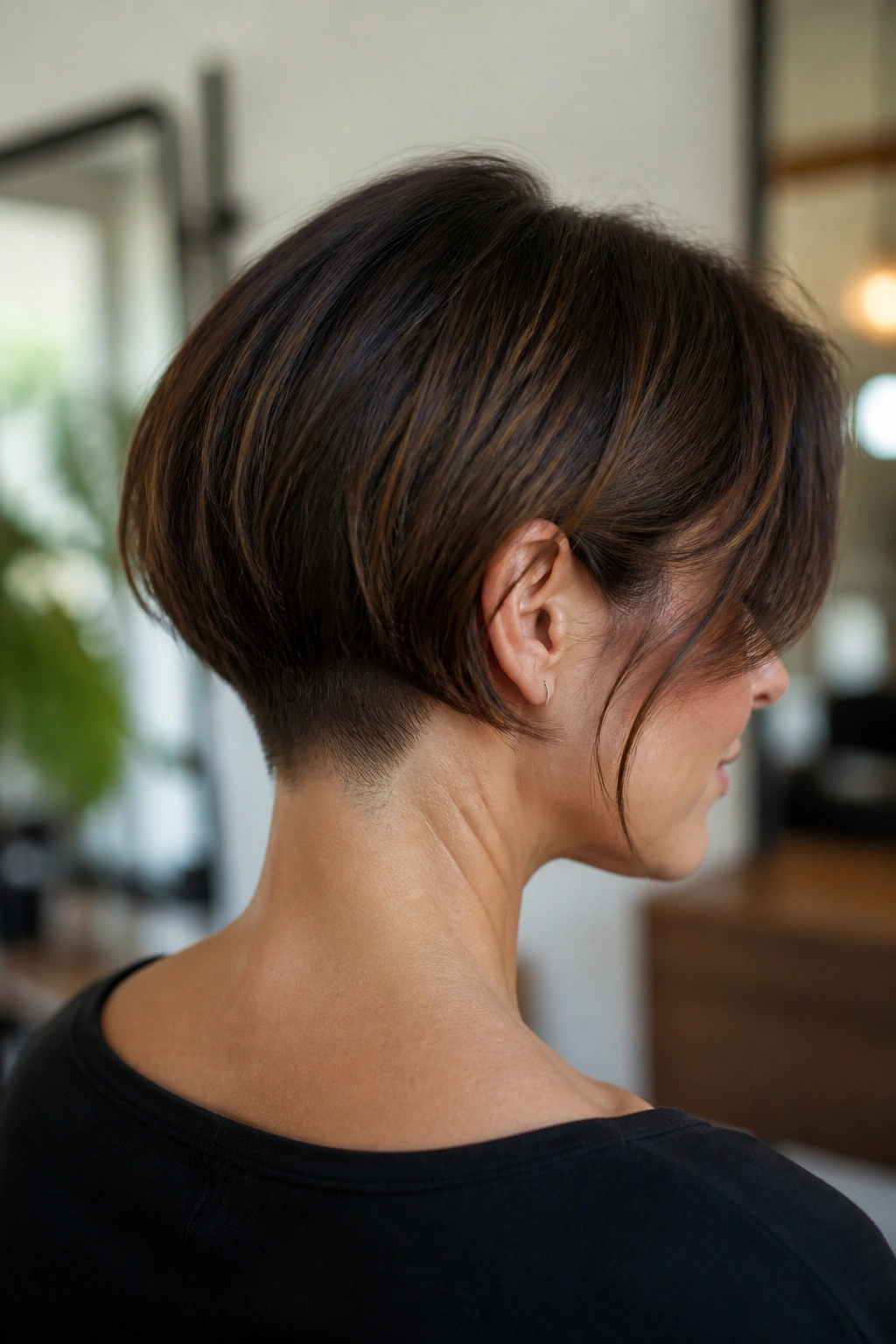
If the back of your head feels bulky or heavy, a tiny undercut can help. The word sounds dramatic, but the version that works on fine hair is usually subtle — just enough removal at the nape to let the shape sit closer.
This is not a shaved-side haircut. It’s a hidden cleanup under the top layer so the bob can stack without puffing out at the base. On the right head shape, that small change makes the whole style lie better.
I’d only use this when the hair at the nape grows thick, or when a normal stack still looks too wide at the back. For very fine hair, too much removal can backfire, so the undercut should be tiny and deliberate.
It’s a practical cut, not a flashy one. But practical is good when you’re dealing with a bob that needs help staying neat.
17. Balayage-Boosted Stacked Bob
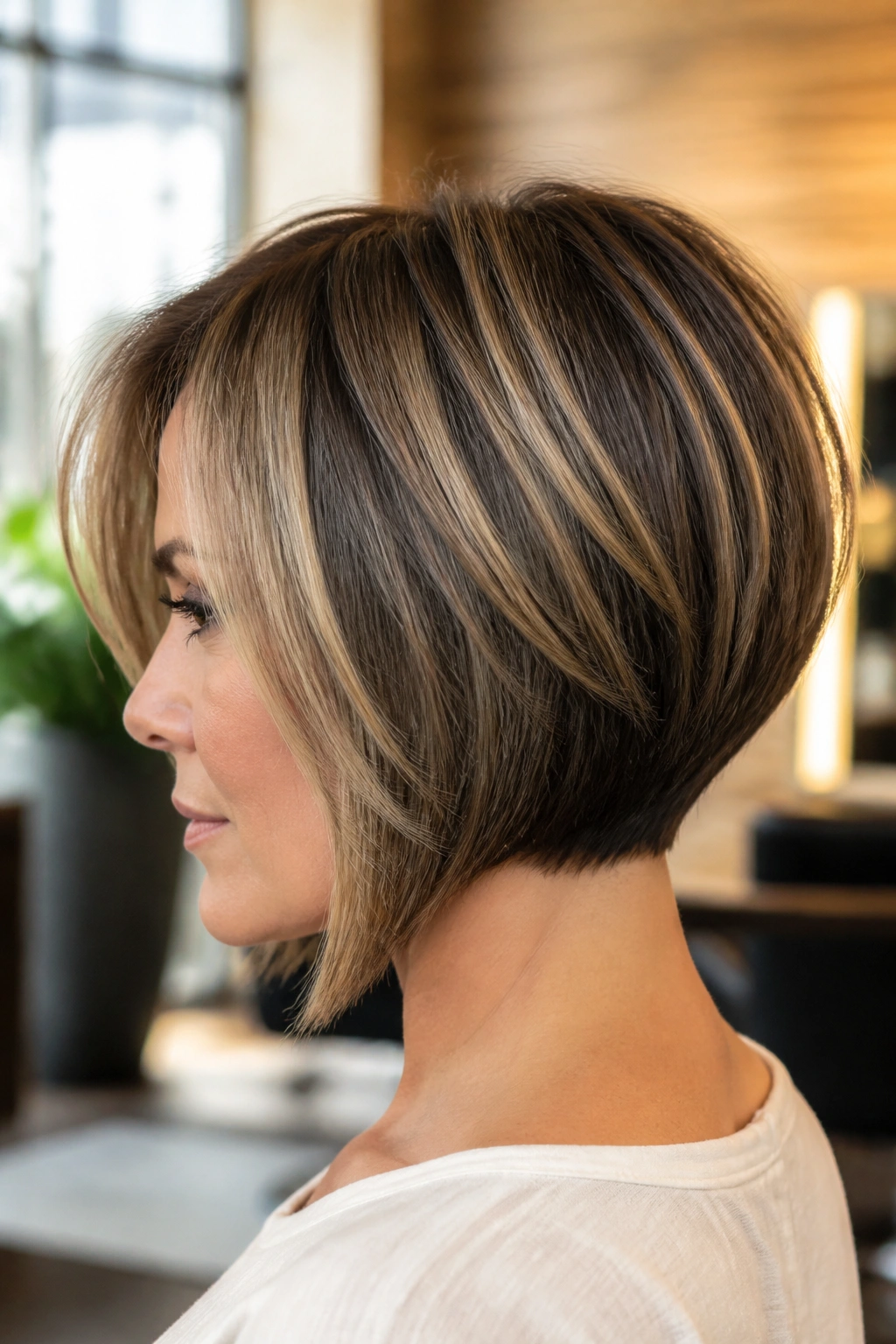
A few lighter ribbons can fake extra depth. That’s why color matters here. Fine hair often looks flatter when the tone is one solid shade from root to tip, especially in a stacked cut where the back needs visual lift.
Where the color should sit
- Keep the brightest pieces near the crown and upper sides.
- Leave the underside a touch deeper so the stack reads as fuller.
- Soft face-framing pieces can help the front look thicker.
- Avoid chunky streaks that break the line of the bob.
The goal is not obvious striping. It is dimension. A gentle balayage pattern gives the cut some depth without making the ends look thin.
This is one of my favorite pairings for fine hair because the color helps the shape do its job. The cut builds the structure, and the lighter pieces help the eye see that structure faster.
18. Side-Swept Fringe Stacked Bob
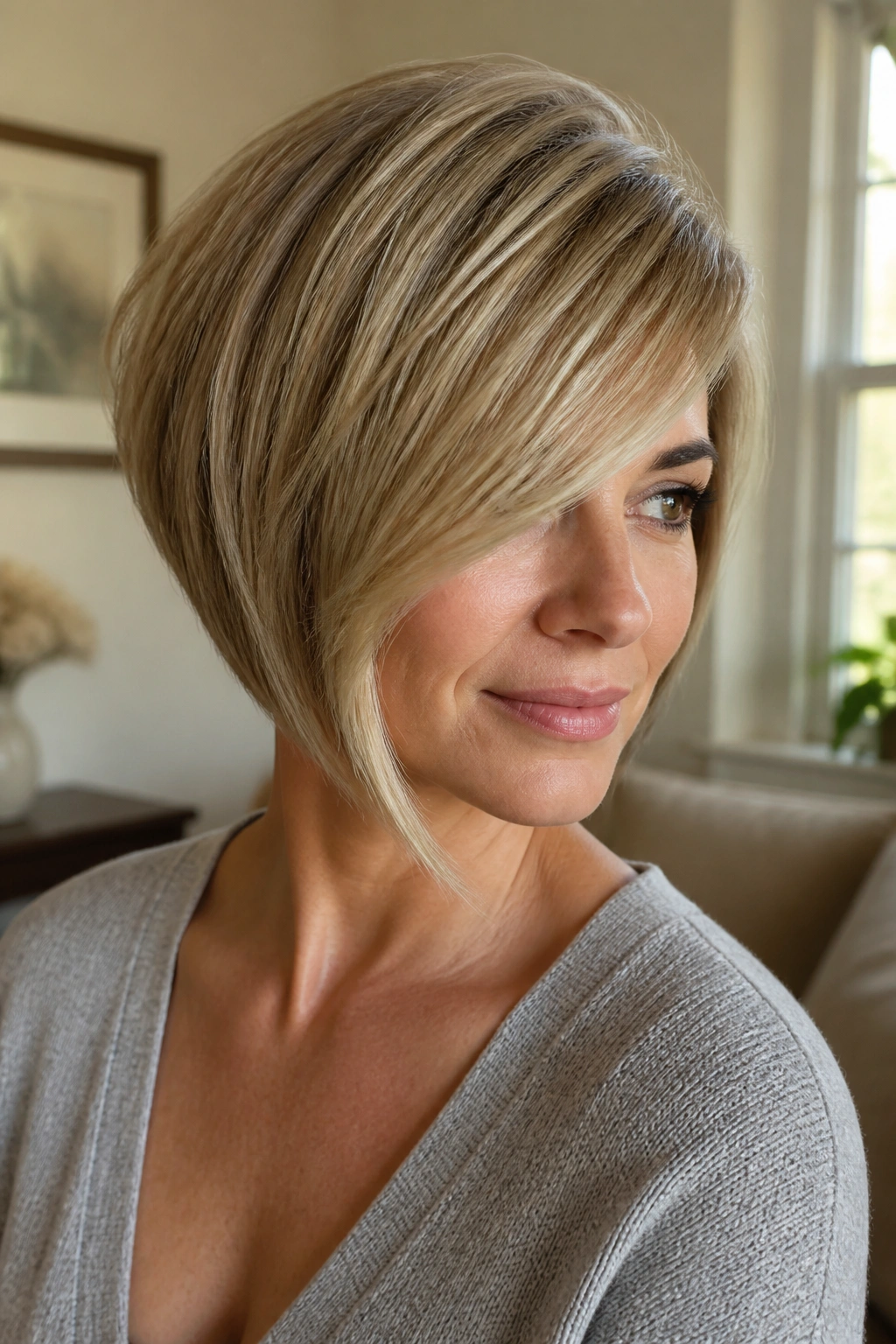
This is the easy answer when you want a little forehead coverage. A side-swept fringe blends into the longest front section, so it does not sit there like a heavy wall of hair.
Fine hair handles this kind of fringe nicely because the sweep uses movement, not thickness, to create softness. The fringe should start a little deeper in the part, then fall diagonally across the forehead and into the bob. If it’s cut too blunt, it loses that easy feel.
A side-swept fringe also helps if one eyebrow or one side of the face is a little stronger than the other. It softens the whole frame without hiding everything.
Styling is quick. A round brush, a short blow-dry, and a little bend through the front is usually enough. That’s part of the appeal. It looks considered, but not fussy.
19. Grown-Out Inverted Bob with Soft Edges
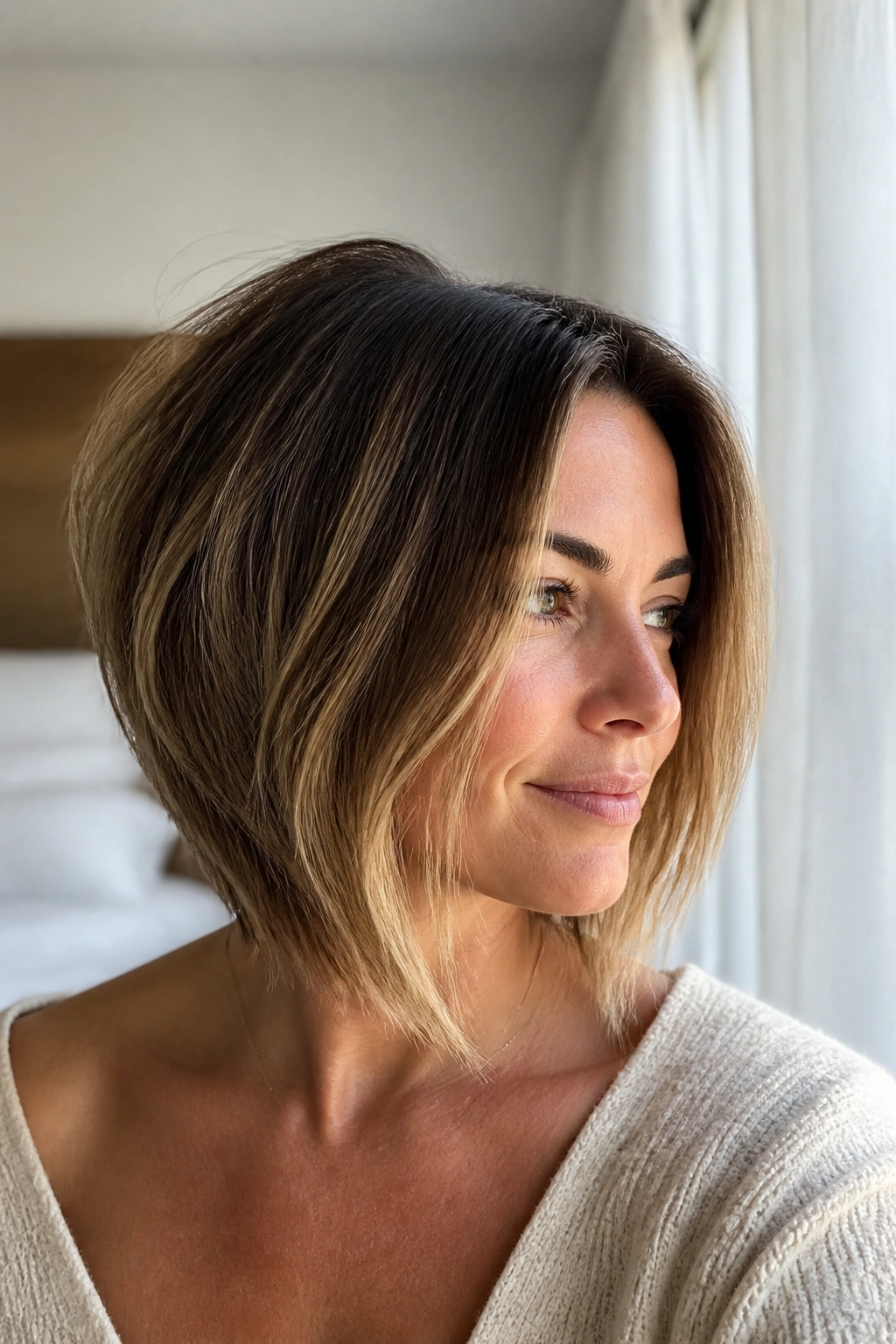
A little softness can make the cut look better. That’s especially true for fine hair, which can start looking harsh if every line is too sharp. The grown-out version keeps the inverted shape, but the edges are softened just enough to feel lived-in.
This is the one I’d pick for someone who hates the look of a fresh, ultra-precise bob after three weeks. The outline should stay clear, but the ends can be point-cut lightly so the grow-out is smoother. You still have the angle. You just lose the hard edge.
It’s also kinder to people who do not want to visit the salon constantly. Fine hair often loses its shape faster than thick hair, and a softer bob can stay attractive even when it’s no longer perfect. That matters in real life.
If you want polish without stiffness, this is the lane. Not fancy. Just smart.
20. Low-Maintenance Stacked Bob for Everyday Wear
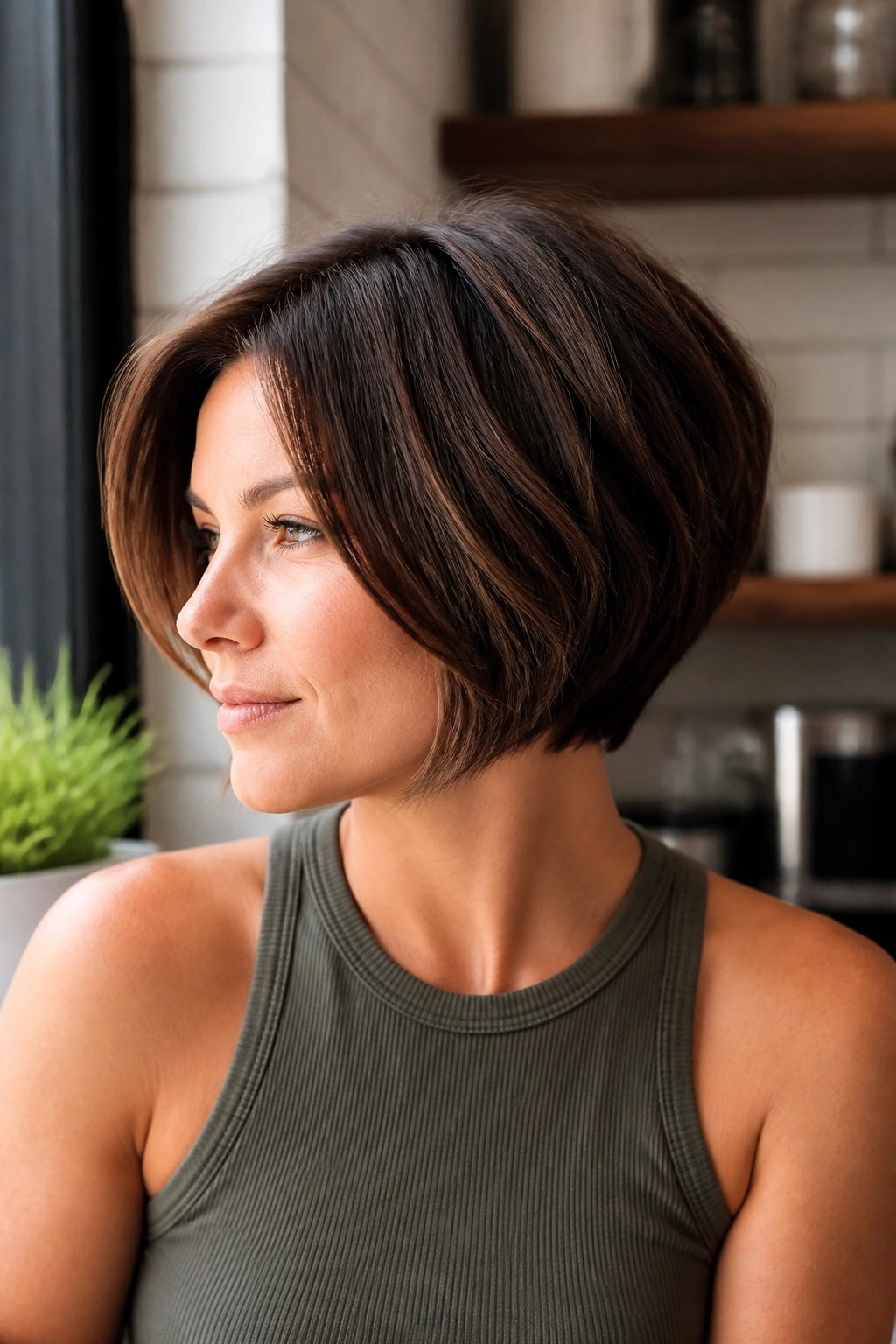
This is the one to choose if you want a bob that behaves. It sits between neat and casual, with enough stack in the back to give the shape life and enough length in the front to keep styling simple.
What makes it easy to live with
- The nape stays short enough to hold shape between trims.
- The front lands close to the jaw or upper neck.
- The layers are soft enough to air-dry without chaos.
- The perimeter stays full, so fine hair doesn’t look scraggly.
I like this version for people who want a haircut that can handle a rushed morning. A quick blow-dry, a bit of root lift, and you’re done. If you let it air-dry, it should still look like a planned haircut instead of a compromise.
Book trims before the nape starts to bulge and the front loses its angle. That’s the real secret with stacked inverted bobs on fine hair: keep the shape clean, and the haircut does most of the work for you.
