



Fine hair can look flat in a bad bob, but the right tousled shape gives it lift, movement, and a little attitude. That’s the whole trick: not more hair, just smarter hair.
A good tousled bob for fine hair doesn’t rely on heavy layering or a ton of product. Too much thinning at the ends can leave the hair looking stringy, and too much cream can make the whole cut collapse by lunch. The sweet spot is cleaner around the outline, softer through the interior, and loose enough to move when you turn your head.
I’ve always liked bobs that look a little imperfect on purpose. Not messy in the sloppy sense — just broken up, touchable, and easy to wear without a lot of fuss. Fine hair usually looks best when the cut does half the work and the styling does the rest.
The best versions all borrow the same idea in different ways: keep the shape full, then rough up the texture just enough to stop it from sitting like a helmet. Some are blunt and cheeky. Some lean soft and airy. Some use a side part, a bend, or a fringe to fake density where fine hair tends to go quiet first.
1. Chin-Length Blunt Tousled Bob
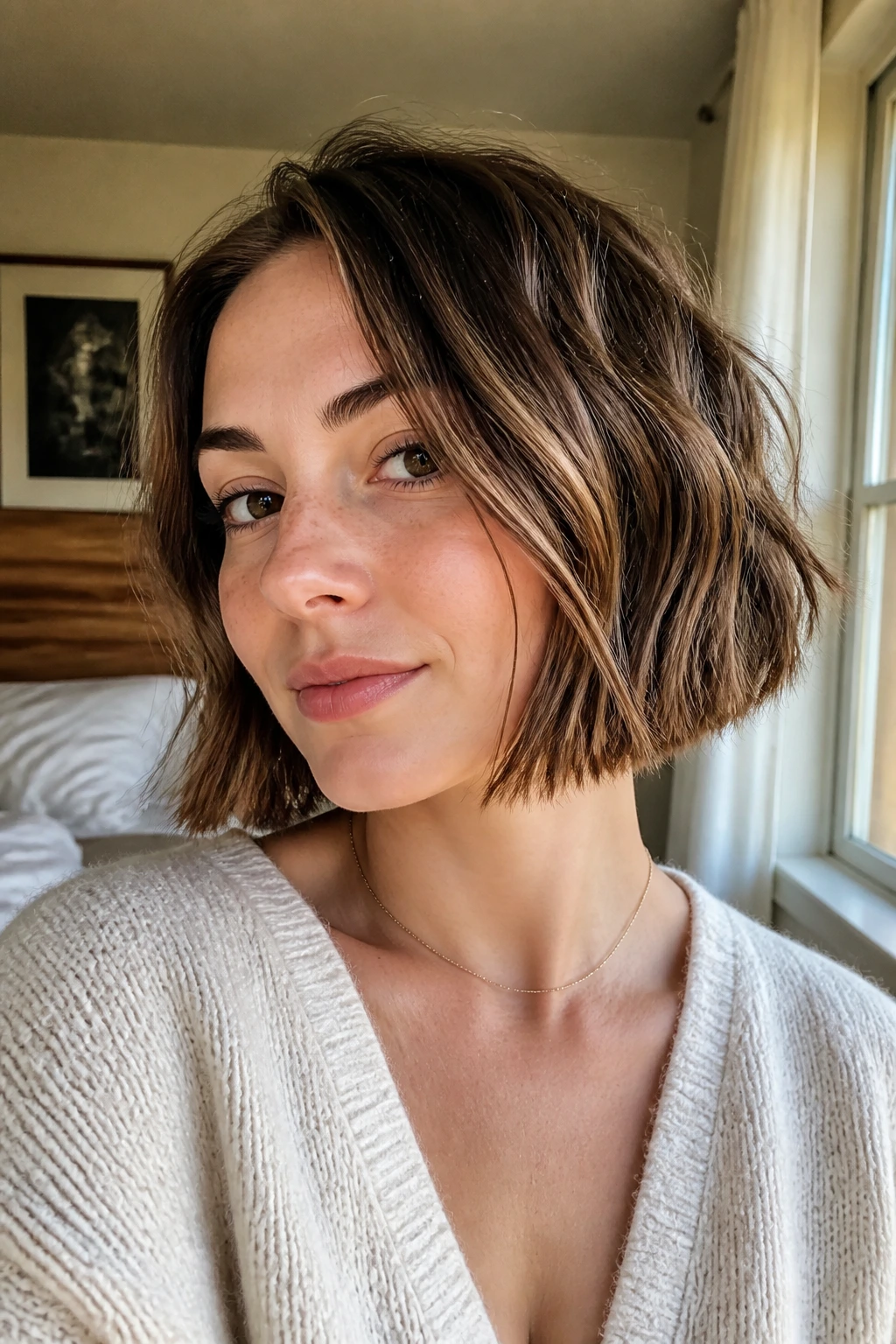
A chin-length blunt bob is one of the strongest choices for fine hair because the edge stays solid. That clean line at the bottom makes the hair look thicker than it is, while a few loose bends keep it from feeling too neat or stiff.
The key is to keep the perimeter blunt and the texture soft. Ask for a one-length base with only light point-cutting around the front, then style with a 1-inch curling iron or flat iron bend so the ends don’t all sit in the same direction. You want movement, not curl. Tiny differences in direction make the hair look fuller fast.
What to ask for
- A blunt line that hits around the chin
- Soft face-framing pieces, not shredded layers
- Minimal texturizing through the ends
- A finish that still looks clean when air-dried
Best for: Fine hair that needs the illusion of density.
Skip it if: You want something very soft and shaggy.
A little dry shampoo at the roots helps this cut stay lifted. Keep the product light, though. Fine hair goes limp fast when you pile too much on it.
2. Soft Layered Bob With Airy Ends
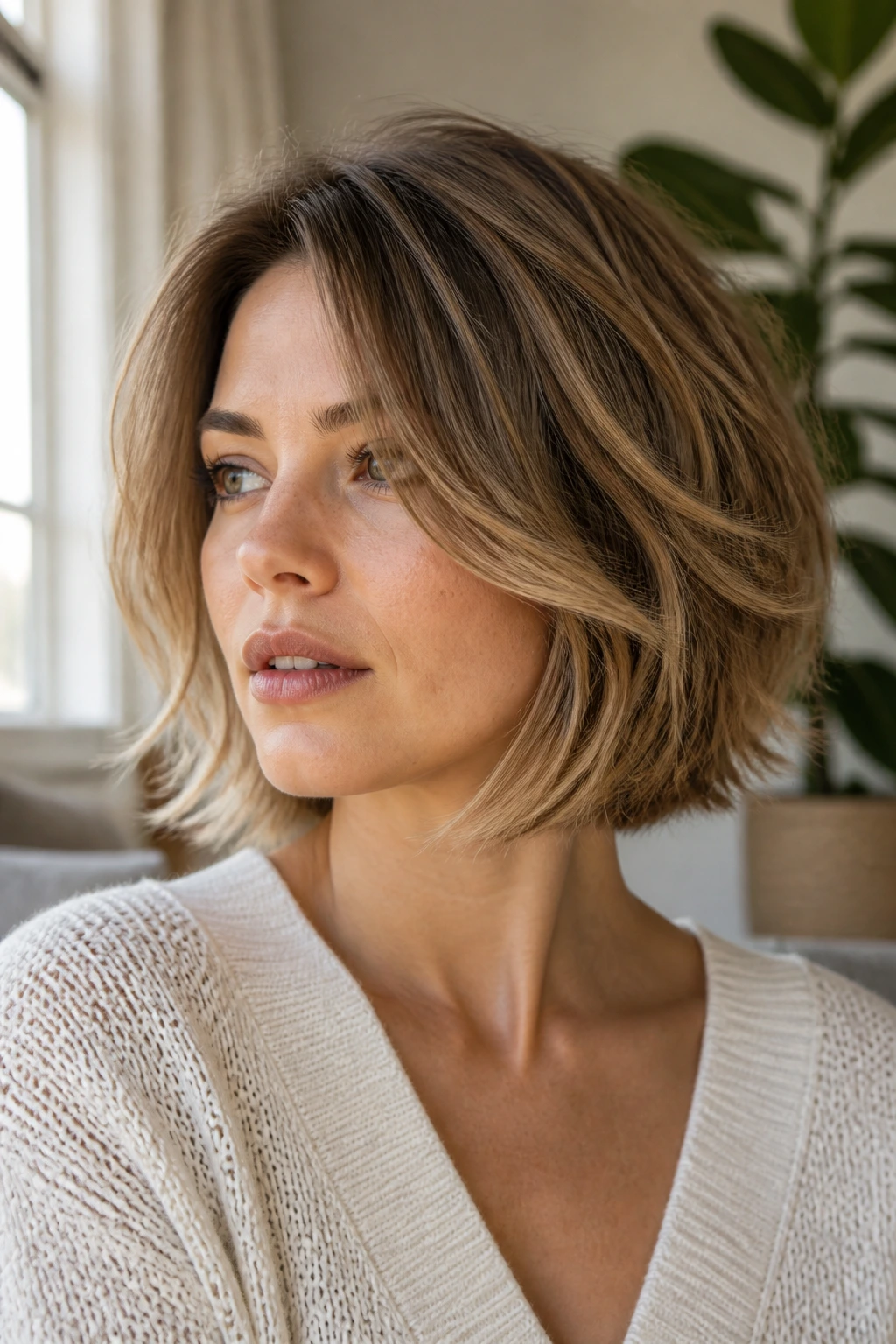
This is the bob for people who want movement without a choppy look. The layers live inside the cut, so the outside still reads full. That matters with fine hair, because visible layers can sometimes make the ends look sparse before they make them look stylish.
Think of this as a bob with hidden structure. The hair should still swing together, but the interior has enough breakup to stop it from lying flat. A round brush and a small amount of mousse at the roots usually do more here than a heavy styling cream ever will.
Why it works
The layers remove weight where fine hair tends to collapse, mainly near the crown and the lower back of the head. Yet the outline stays intact, which keeps the haircut looking dense.
A pea-sized amount of lightweight cream on the ends is enough. More than that and the airy finish disappears. Fine hair is fussy about this. It wants shape, not coating.
3. French Bob With Broken Texture

A French bob sits short, sharp, and a little cheeky, usually somewhere between the cheekbone and the jawline. On fine hair, that shorter length can be a gift. Less length means less weight, and less weight means the hair has a better chance of standing up with a bit of bend.
The best French bob never looks over-styled. It should feel like you ran your fingers through it and stepped out the door. Add a soft fringe if you want more character, or leave the front pieces slightly longer if you prefer a cleaner face shape. Either way, the texture should be broken, not fluffy.
Short hair like this works well with a diffuser or a quick air-dry followed by a few bends from a curling iron. Don’t curl every section. That’s how you end up with a ringlet situation nobody asked for.
Fine hair especially likes this cut when the ends are kept blunt. The whole point is to make the bob look compact and full, almost like a polished crop with some lived-in looseness around the edges.
4. Deep Side-Part Bob With Root Lift
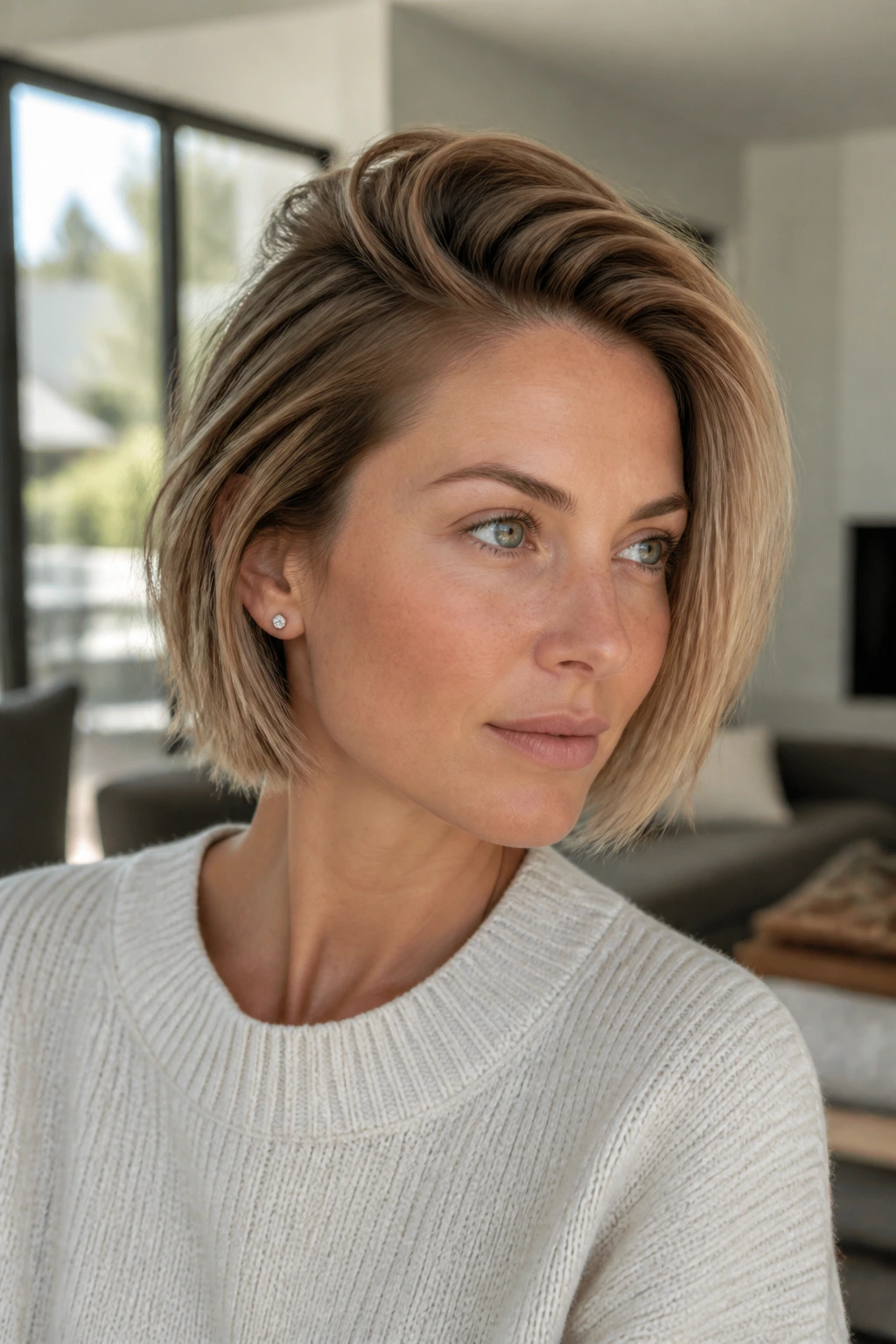
A side part can do more for fine hair than another layer ever will. It shifts the weight, creates instant volume on top, and makes the haircut feel less symmetrical in a good way. That asymmetry gives the illusion of thickness because one side has more visual drama.
This version works especially well if your hair tends to fall flat at the roots by midday. A deep side part lifts the front section and gives the crown a little air. Use a root-lift spray on damp hair, then blow-dry the roots in the opposite direction of the part first. It sounds fussy, but it works.
How to style it
- Blow-dry the roots first for 30 to 45 seconds per section
- Flip the part back only after the hair is mostly dry
- Use a small round brush at the crown
- Finish with a light mist of flexible-hold spray
The cut itself can be blunt, slightly layered, or chin length. What matters most is the part and the root shape. This is a smart one for round faces, square faces, and anyone whose hairline needs a little lift.
5. Collarbone Tousled Lob

A collarbone-length lob is the safer choice for people who want movement without going very short. It keeps enough length to tuck behind the ear or pull into a small clip, but not so much that fine hair gets weighed down and droops.
The best collarbone lob for fine hair is blunt enough at the ends to keep the shape strong, then lightly bent through the middle. That middle section is where the body lives. If you curl only the ends, the style can look stiff. If you bend from mid-length down, it feels softer and fuller.
This length also plays nicely with second-day hair. A quick spritz of dry shampoo at the roots and a few finger-tousled waves are usually enough. You do not need a mountain of product. In fact, the cut is better when the hair stays touchable.
It’s the bob for someone who wants versatility. Straight one day, undone the next, tucked on one side when you’re tired of fussing with it. Good haircuts make that kind of laziness look deliberate.
6. Stacked Bob With Feathered Nape
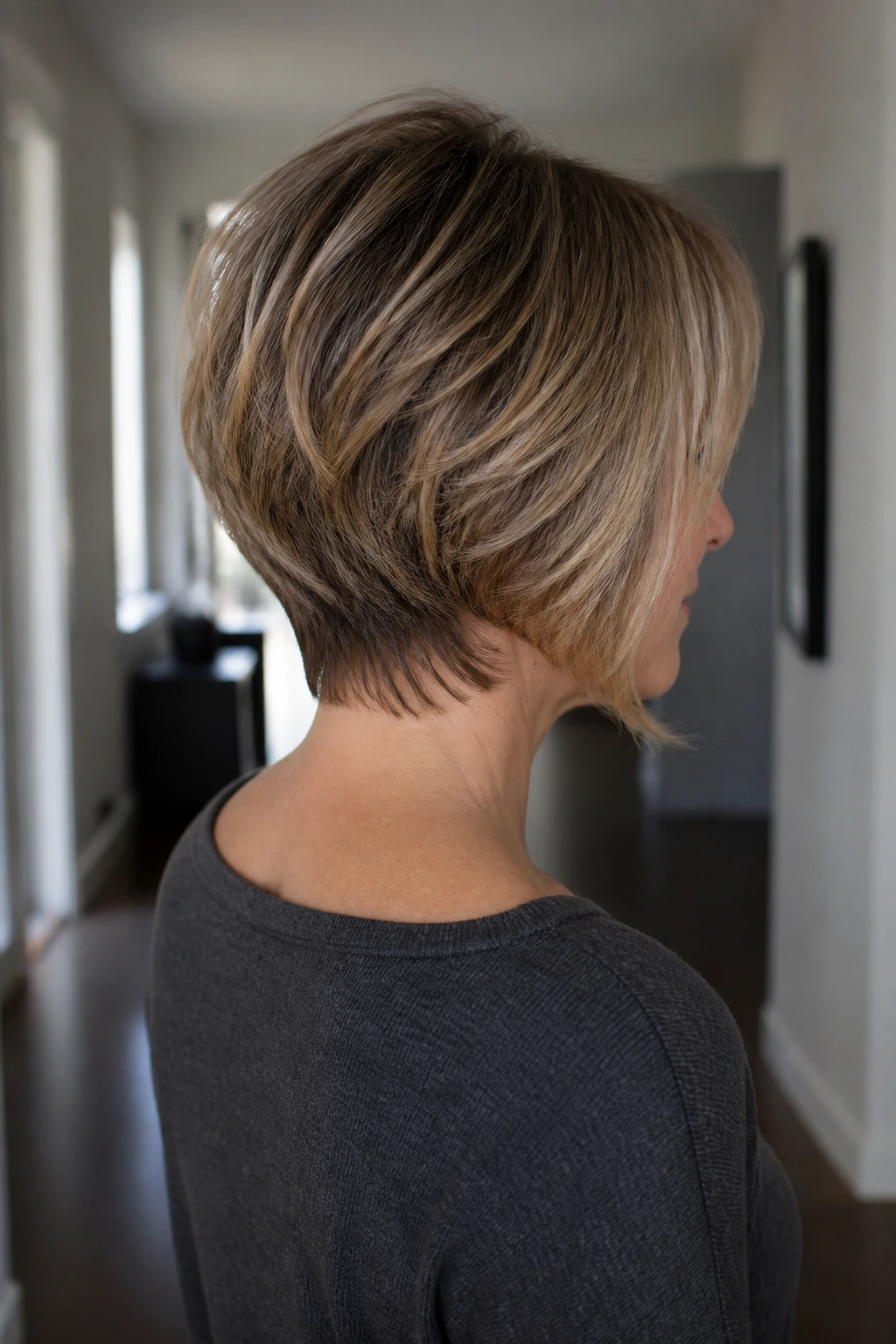
A stacked bob builds lift at the back by shortening the nape and letting the crown sit a little higher. On fine hair, that can be a smart move — as long as the stacking stays soft. Too much graduation and the cut starts to look dated fast.
The feathered nape gives the style a clean finish without making the back feel heavy. That’s the part a lot of people forget. Fine hair often loses shape where the neck meets the collar, so a neat back section helps the whole haircut hold its line.
A small round brush works better than a big one here. Blow-dry the back up and under, then let the top layers fall naturally. If you force every strand into place, the haircut loses that relaxed feel the minute you leave the bathroom.
This one suits people who want a little body at the crown and a tidy neckline. It’s especially good if your hair grows out in a soft wave, because the stacked shape tends to keep that movement under control instead of letting it puff in odd places.
7. Micro Bob With Piecey Texture
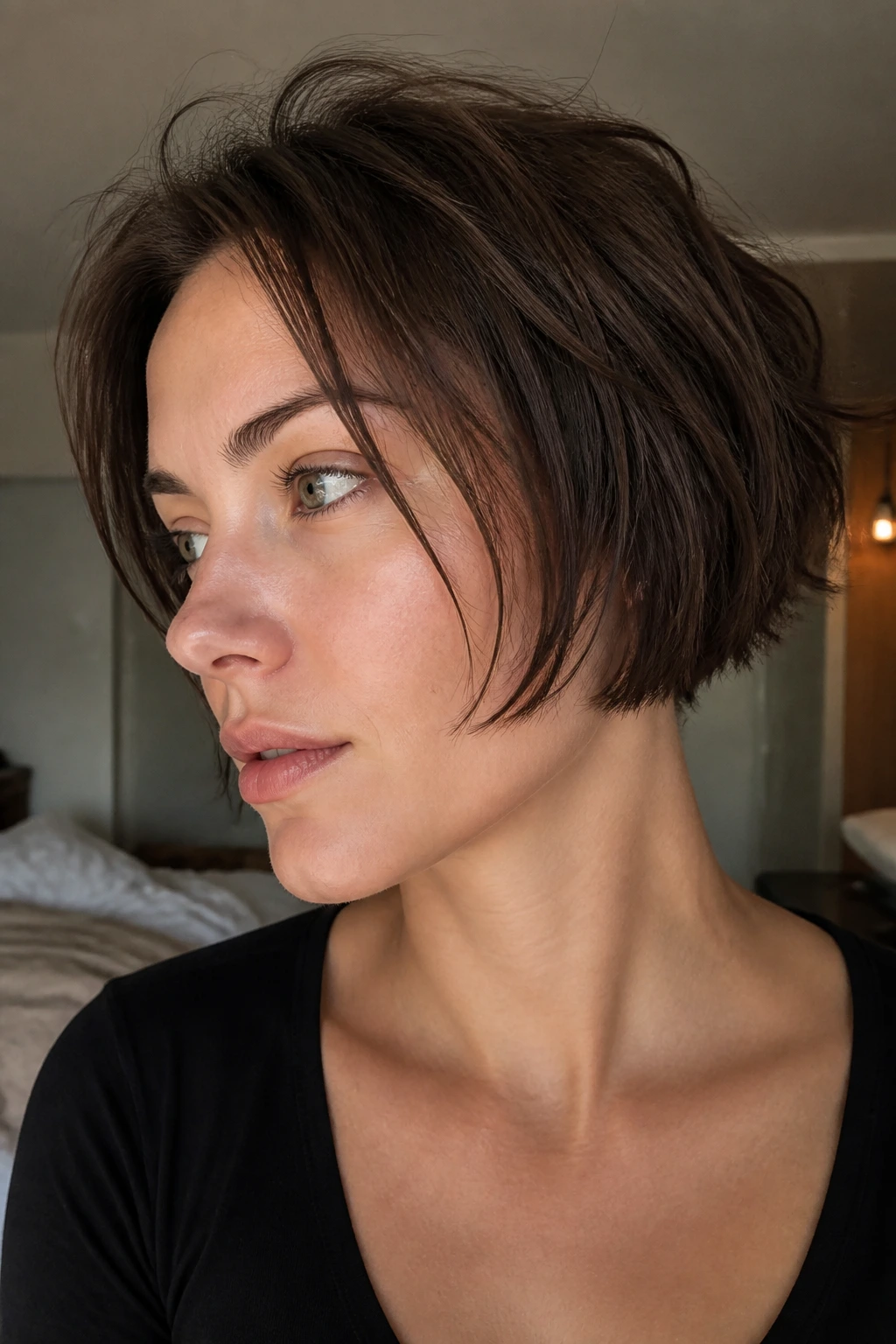
The micro bob is short, sharp, and not shy. It usually stops somewhere between the cheekbone and the jaw, and on fine hair that shorter length can make the strands look denser almost immediately. There’s less distance for the hair to thin out visually, which is the whole point.
Piecey texture keeps it from feeling severe. A tiny bit of matte paste or styling balm on the ends gives the cut definition without shine overload. But go light. Fine hair can turn greasy-looking in seconds if you use too much waxy product.
This style has a strong personality. It looks best when the cut is crisp, the neck is visible, and the front pieces are a touch longer than the back. That tiny difference keeps it from looking boxy.
If you like earrings, jawline definition, or a haircut that makes your face feel more open, this is a good one. If you prefer softness around the shoulders, it may feel too short. There’s no magic here. It’s just a clean cut with attitude.
8. A-Line Bob With Subtle Underlayers
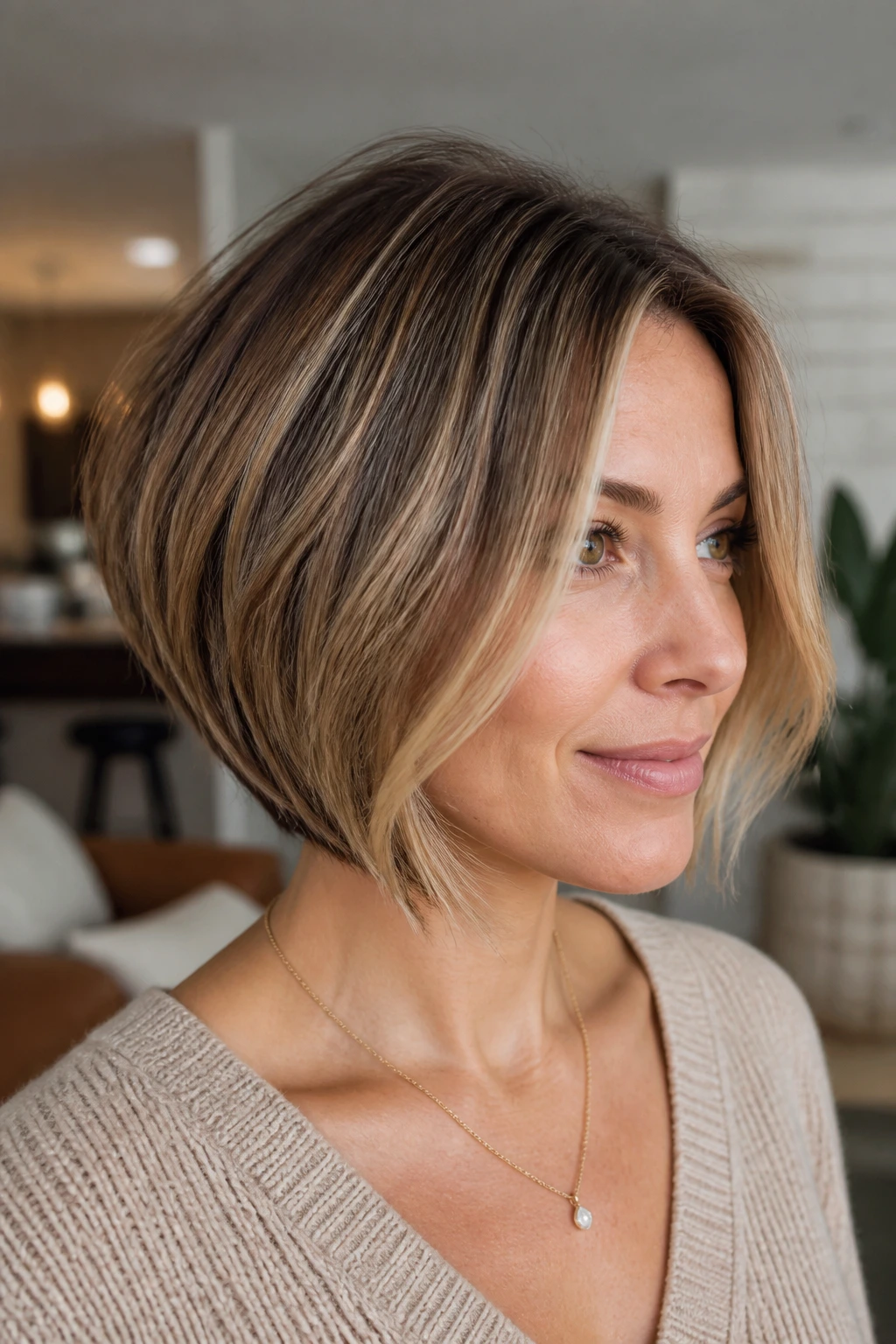
An A-line bob gives you a longer front and a shorter back, which creates swing without sacrificing the compact feel that fine hair needs. The shape draws the eye forward, so the hair looks like it has more presence than the raw density might suggest.
The important part is subtlety. A dramatic A-line can look sharp, but on fine hair it can also expose the ends if the layering gets too aggressive. A mild angle keeps the front pieces full and allows the back to sit neatly against the neck.
Best way to wear it
- Keep the front just below the jaw or near the collarbone
- Ask for internal underlayers, not visible choppy layers
- Bend the front sections away from the face
- Keep the back smooth and controlled
This is a smart pick if you want a little edge without committing to a very short cut. It also grows out fairly gracefully, which matters more than people admit. A bob that looks good at week eight is worth more than one that only behaves on day one.
9. Curtain-Bang Bob With Soft Waves
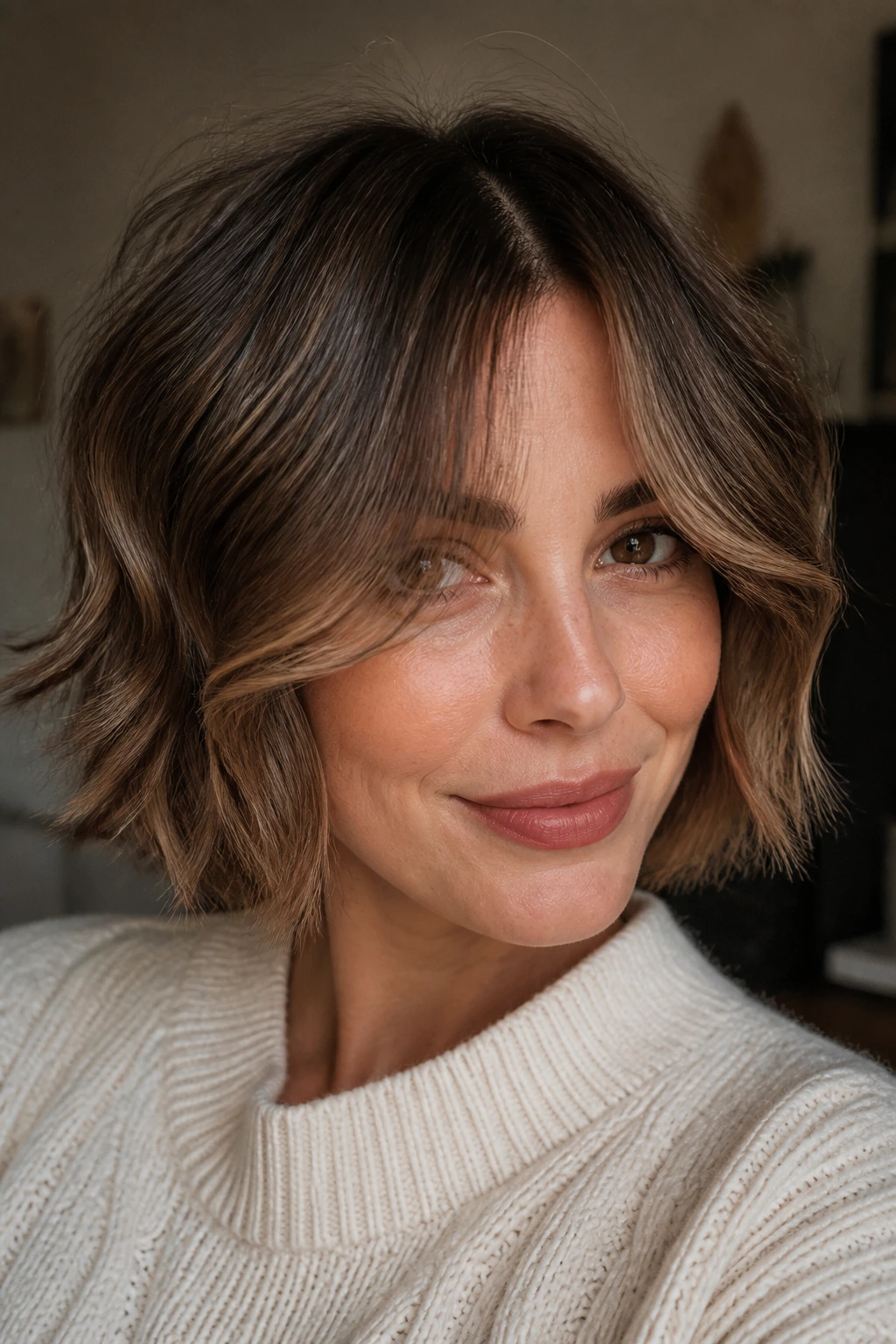
Curtain bangs can make a fine-hair bob look fuller around the front almost instantly. They break up the forehead area, frame the eyes, and give the haircut a softer shape, which helps if your hair tends to fall flat near the hairline.
The bob underneath should stay simple. A blunt or lightly layered base works best because the bangs already bring enough motion. Add soft waves through the sides and ends, and the whole cut looks broader and more textured without needing a lot of hair.
Why the bang length matters
If the bangs are too short, they can separate and look skinny. If they’re too long, they can drag the face down. The sweet spot is usually somewhere between the brow and the cheekbone, with the center part opening gently in the middle.
This cut needs a round brush or a small blowout brush. Sweep the bangs away from the face, then let them cool before touching them. That cooling step matters. Hair sets as it cools, and fine hair loses shape faster than most people expect.
10. Shaggy Bob With Razored Ends
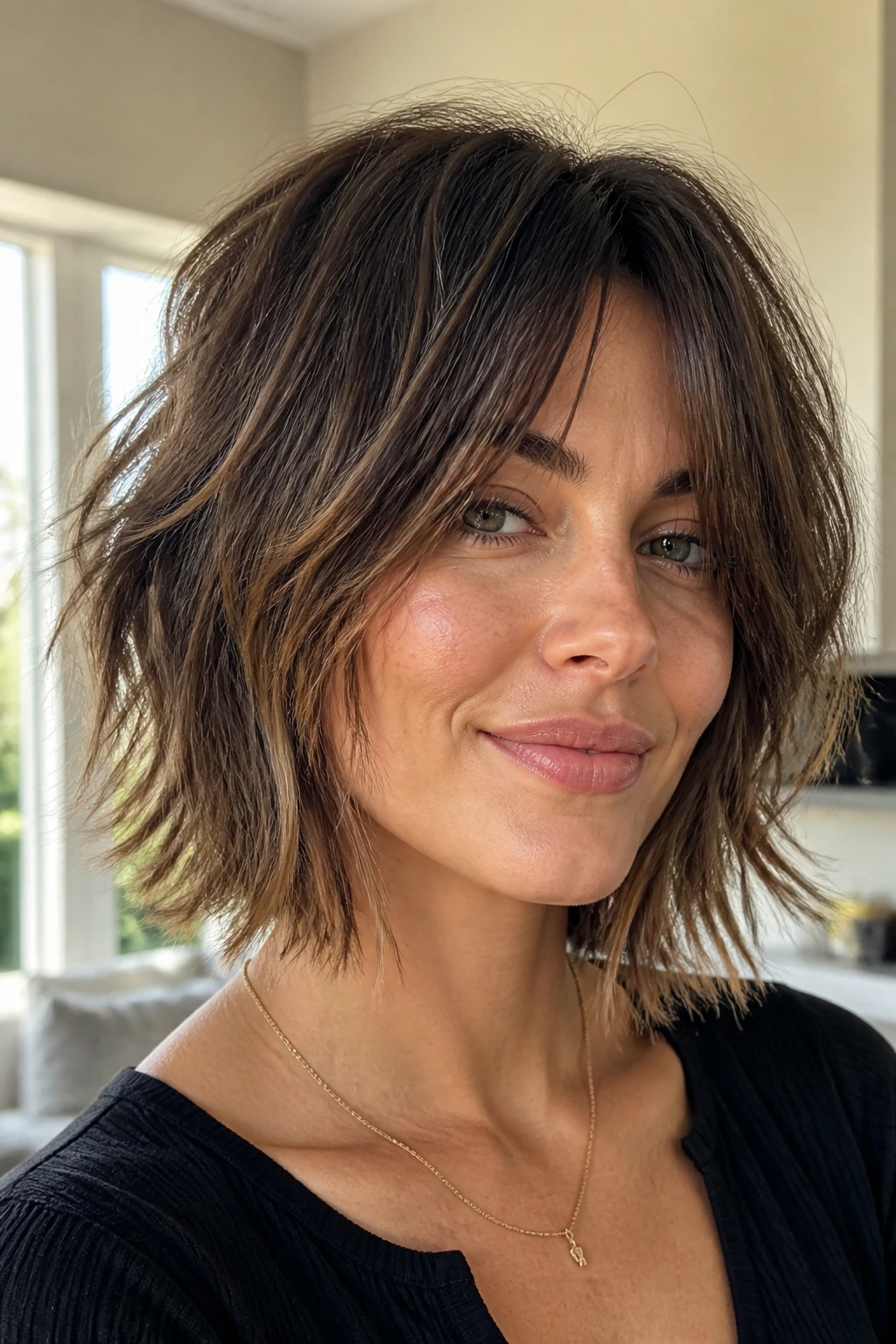
A shaggy bob can be brilliant on fine hair, but only if the razor work is handled carefully. Too much thinning and the ends disappear. Too little and the cut loses the loose, airy quality that makes it work.
The best version keeps the shape bob-like while borrowing just enough from the shag to feel relaxed. The ends should look broken and soft, not stringy. I prefer this style on fine hair that already has a bit of wave, because the natural bend helps fill in the space between layers.
A salt spray or texture mist can help, but keep it off the roots. Put it on the mid-lengths and scrunch lightly. Then stop. Overdoing texture spray is one of those mistakes people make when they want more body, and all it does is make the hair feel dry and noisy.
This is a better choice for someone who likes a lived-in look and doesn’t mind a little roughness in the finish. It is not the neatest bob on the list. That’s the appeal.
11. Rounded Bob With Polished Mess
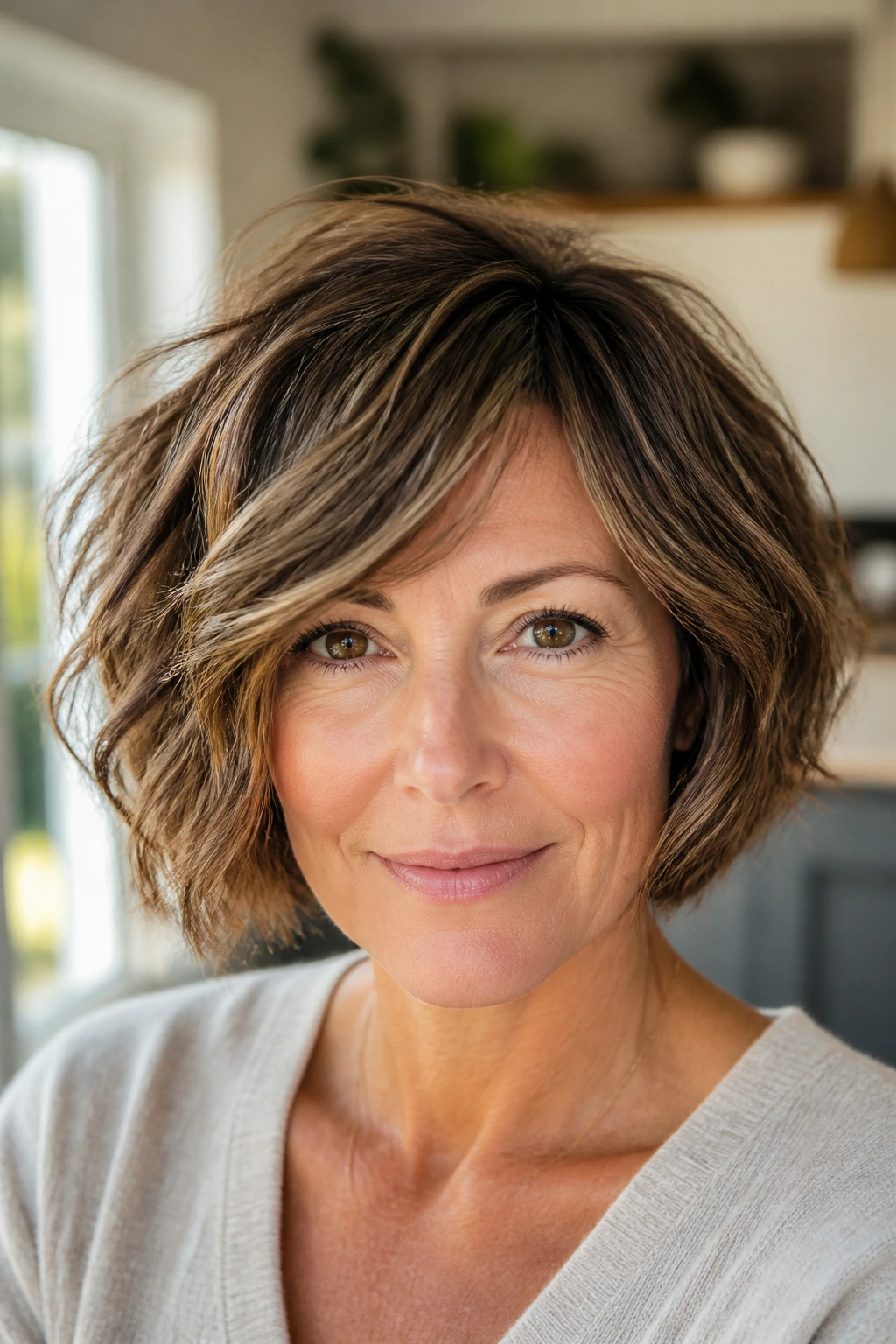
A rounded bob sounds formal, but when it’s done right, it has a soft, full shape that suits fine hair beautifully. The curve around the head gives the impression of density, especially if the ends are tucked in just a little rather than left straight and flat.
The trick is to keep the polish in the cut and the mess in the styling. That means a clean silhouette with a few loose bends, not a perfect bubble shape. Blow-dry with a round brush, then twist two or three random sections around a curling wand for a little irregularity.
What makes it different
Unlike a very blunt bob, the rounded version follows the head shape. That helps fine hair look controlled without feeling stiff. It also flatters people with narrow faces because it adds a bit of width at the sides.
A shine spray on the ends can look lovely here, but use a light hand. Fine hair looks richer when it reflects a little light, not when it’s drenched in product. There’s a difference, and it shows fast.
12. Jaw-Length Bob With Tucked Sides
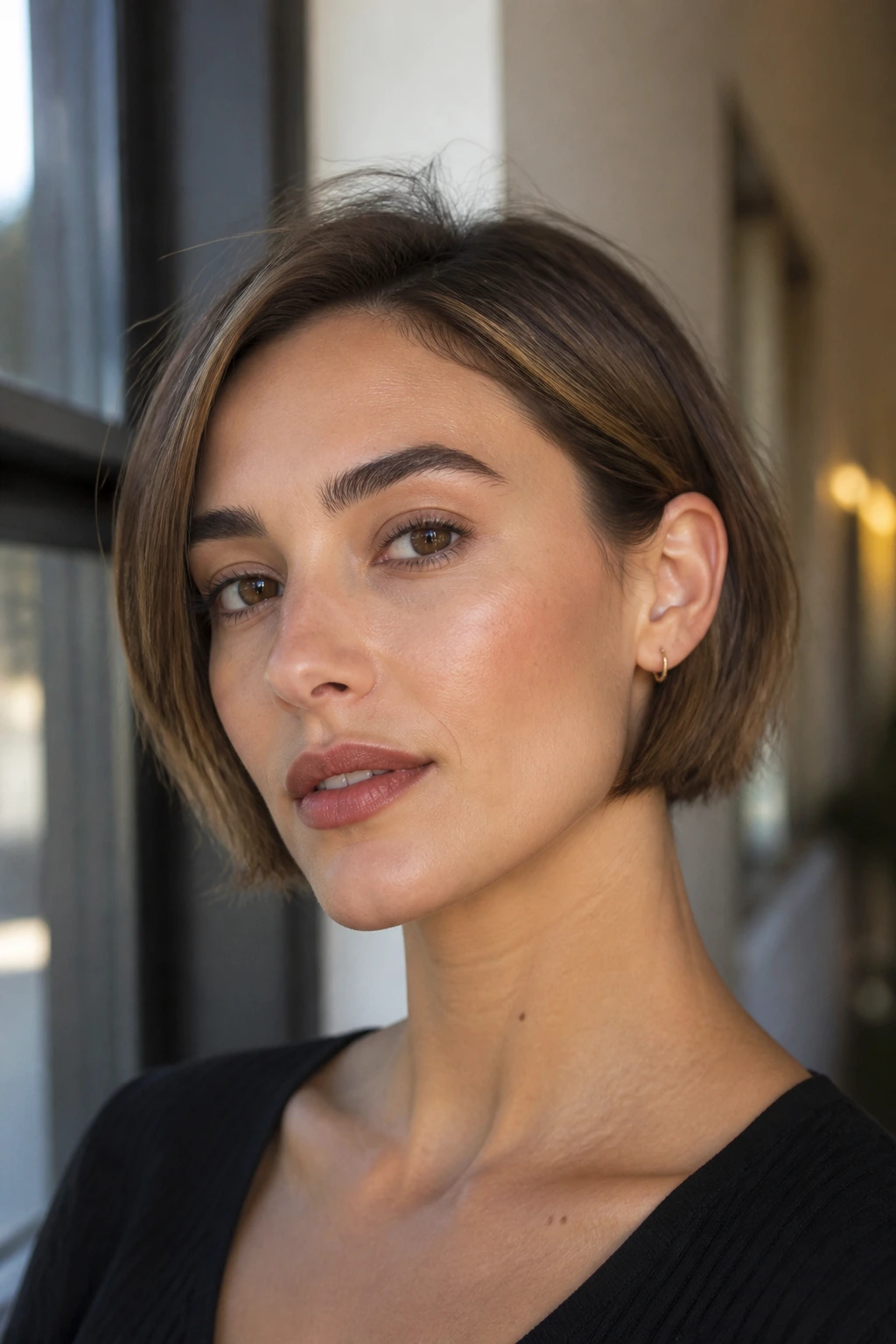
A jaw-length bob is clean, easy to wear, and surprisingly good at making fine hair look fuller. The shorter outline keeps the ends from dragging, while the length at the jaw opens up the face and gives the haircut a crisp edge.
Tucked sides are the secret sauce. When one or both sides sit behind the ear, the haircut gains shape without losing softness. It also makes the hair look intentionally styled even on days when you only spent five minutes on it.
This cut works especially well with glasses or strong brows because it clears space around the face. If your hair tends to cling to your cheeks, this is a nice fix. The line of the jaw stays visible, and the haircut looks lighter without becoming wispy.
A tiny amount of styling cream on the front sections is enough. Anything heavier and the tucked shape starts falling apart by noon. Fine hair is very honest about product. It shows everything.
13. Bottleneck-Bang Bob
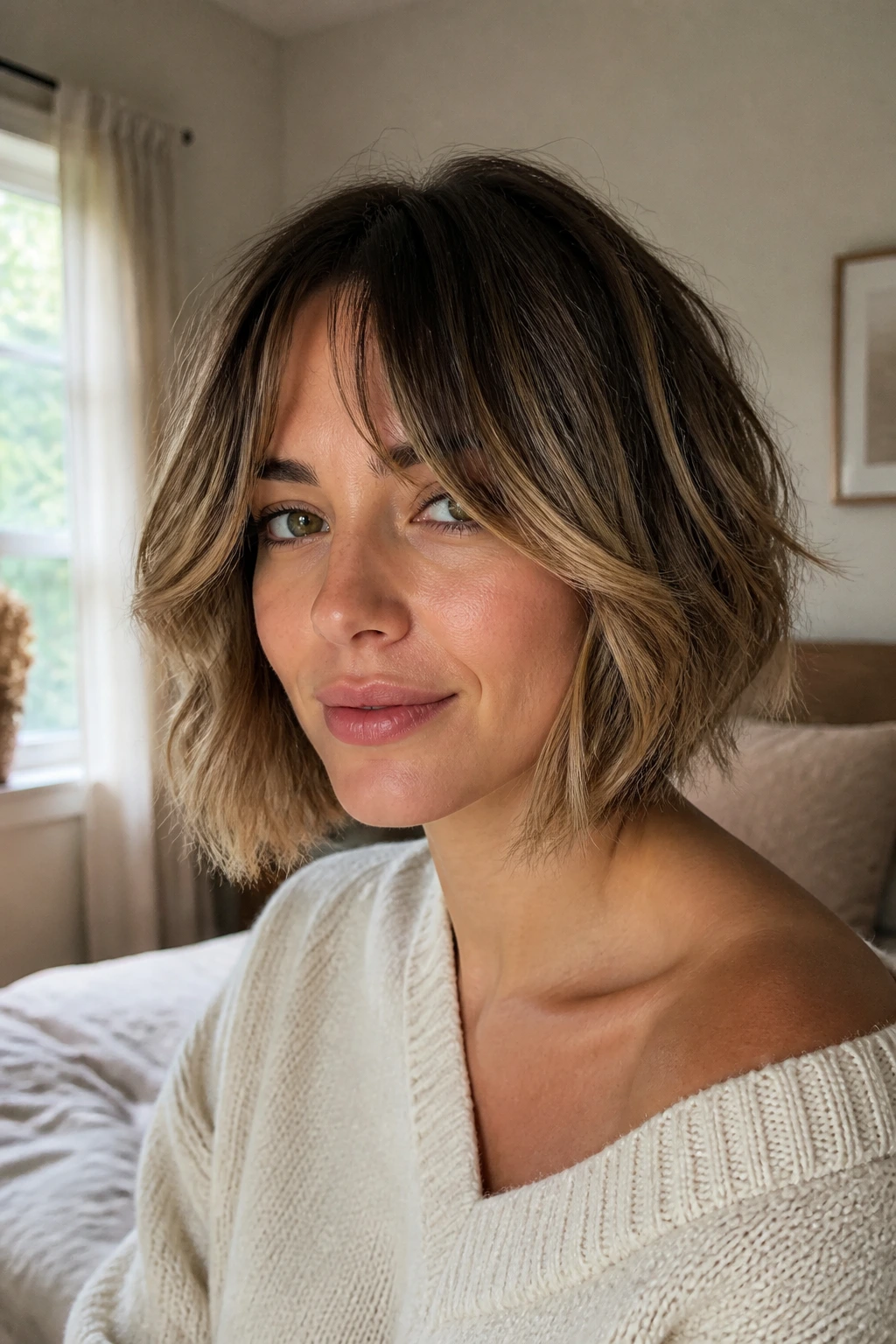
Bottleneck bangs are narrower at the center and longer at the sides, which makes them a smart partner for a tousled bob on fine hair. They give the front of the cut some shape without swallowing the face in a heavy fringe.
That face-framing curve is useful if your hairline feels sparse or your forehead is the feature you’d rather soften. The bangs draw attention inward, then open out around the cheekbones. The bob underneath can stay blunt or softly layered, depending on how much movement you want.
A flat iron bend works well here, but keep it loose. You’re not trying to create curls. You’re shaping the front pieces so they arc away from the eyes and blend into the rest of the haircut.
This style is a good middle ground for people who want bangs but are nervous about maintenance. The grow-out is softer than a straight fringe, and the bob still looks fine when the bangs split a little during the day. That kind of forgiveness matters.
14. Choppy Lob With Internal Layers
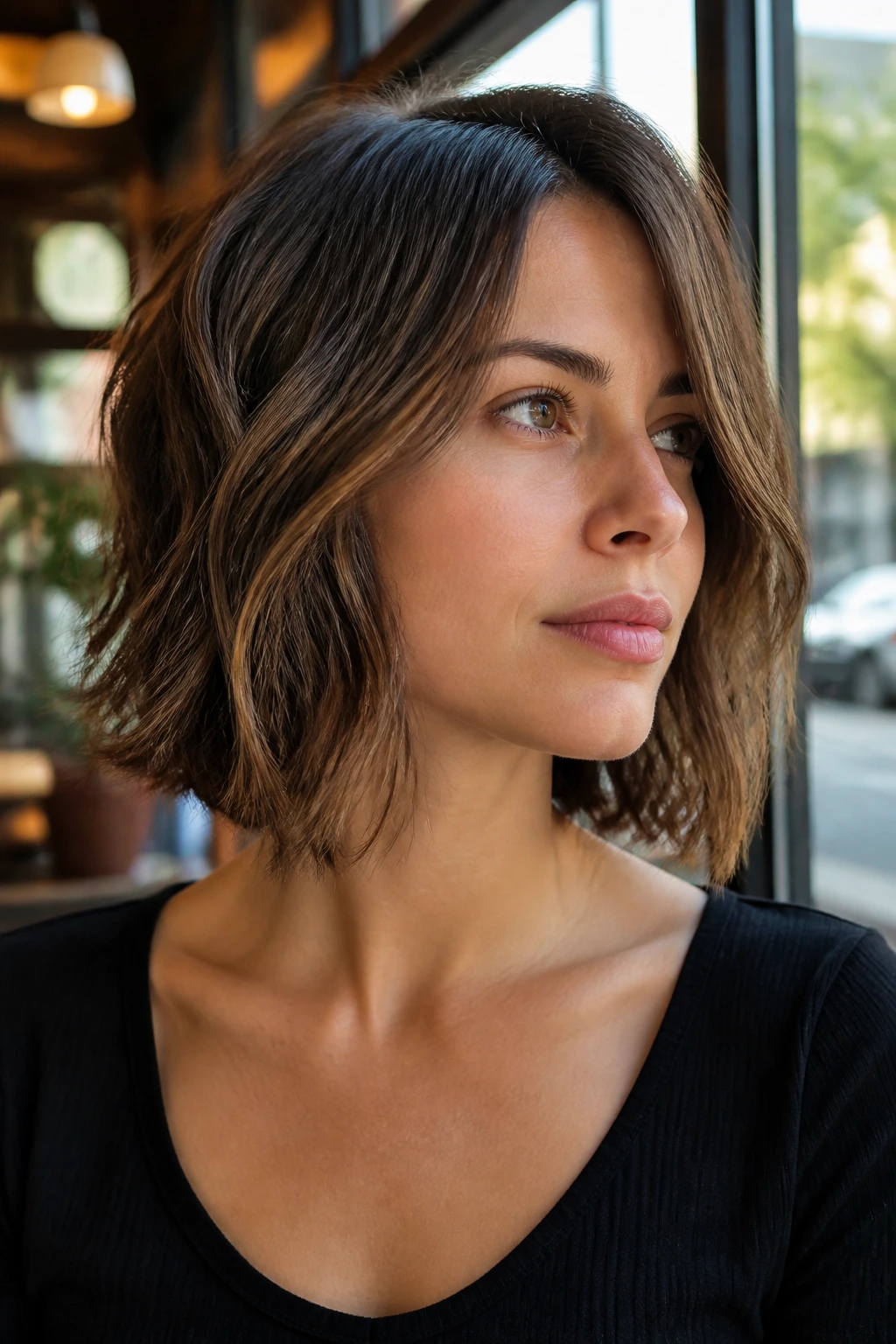
A choppy lob gives fine hair movement without making the overall shape look thin. The term “choppy” sounds aggressive, but on the right cut it really means broken up in a controlled way. The surface stays full, while the inside carries the motion.
Internal layers are the reason this works. They remove bulk where the hair needs lift, not where it needs density. That’s a better deal for fine hair than obvious slicing across the bottom, which can make the edges look feathered in the wrong way.
Use texturizing spray from the ears down and leave the roots mostly alone. Roots need lift, not grit. That distinction matters more than people think. Fine hair often needs volume at the top and movement at the ends, not texture sprayed everywhere like confetti.
This lob is for someone who wants a more casual shape that still looks intentional. It can be waved, air-dried, or lightly curled in pieces. Honestly, it’s one of the easiest styles to live with if you don’t want to fight your hair every morning.
15. Sleek Bob With Undone Finish
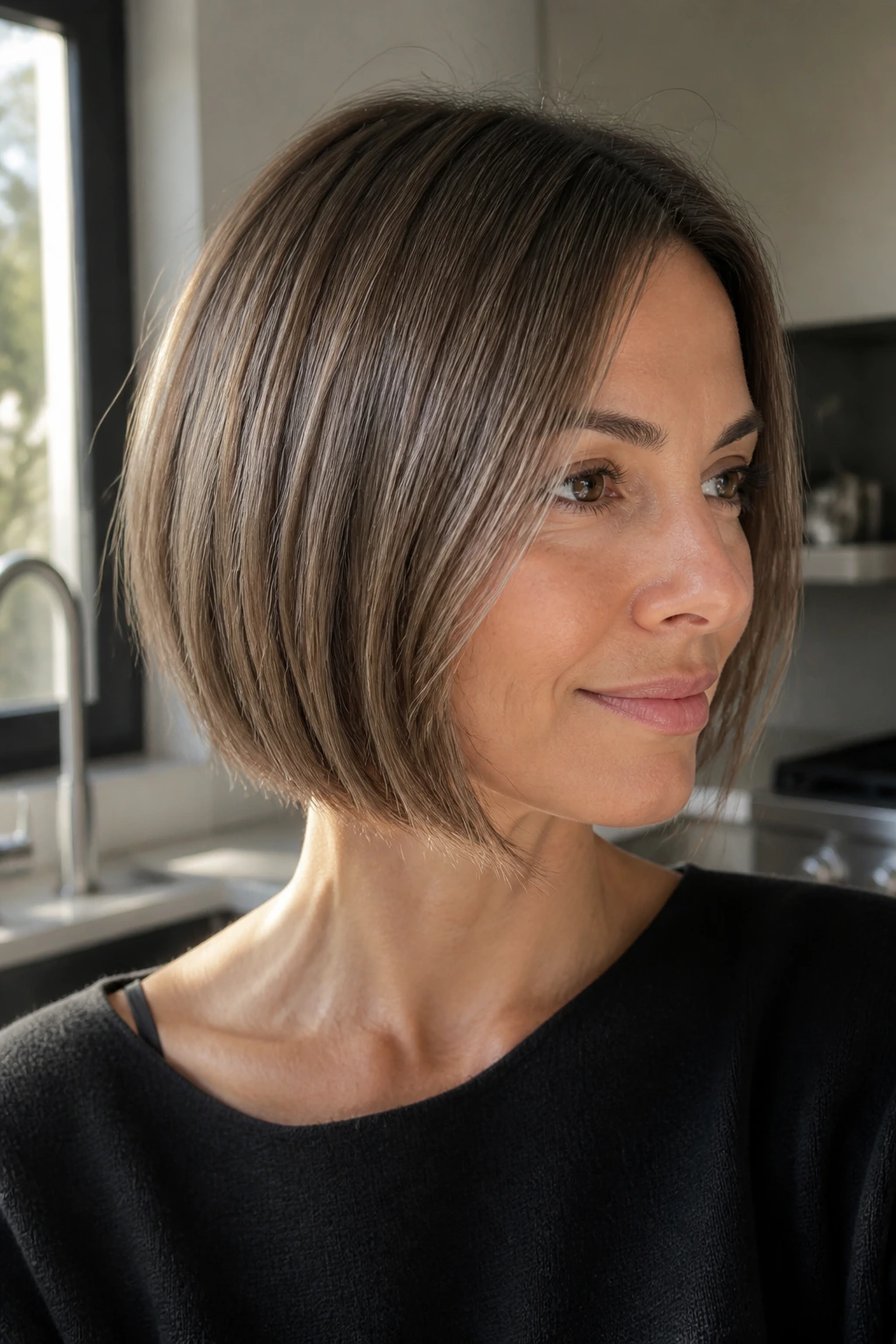
A sleek bob can be excellent for fine hair because the cut line stays visible. The secret is not to make it too perfect. A tiny bend at the ends, a little lift at the crown, and one side tucked behind the ear are often enough to keep the style from feeling severe.
This is the bob for people who like cleaner lines but still want a touch of movement. If the hair is blown out pin-straight from root to tip, fine strands can look a bit see-through. But if you keep the top smooth and let the ends flick slightly, the cut feels modern and soft.
A simple styling rule
- Use smoothing cream only from mid-length to ends
- Blow-dry the roots flat, then round the ends under
- Finish with a light mist of shine spray, not oil
- Break the part with your fingers so it doesn’t look fixed
This cut is also useful if your hair frizzes in humidity. A controlled base with just a bit of undone texture tends to hold up better than a fully wavy style that falls apart.
16. Inverted Bob With Lifted Crown
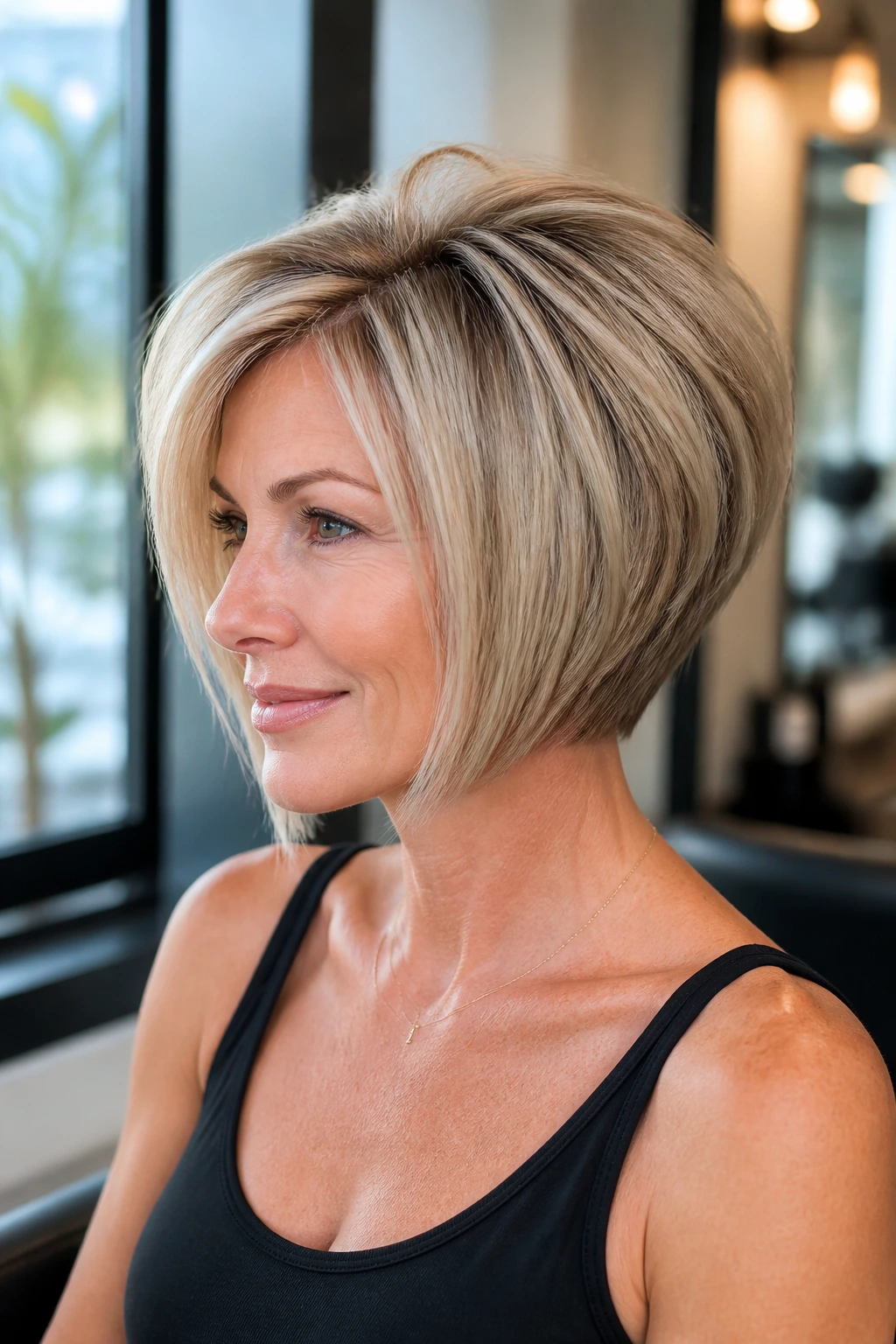
An inverted bob brings a little drama, but it doesn’t need to be extreme. The back sits shorter, the front stays longer, and that shape naturally pushes the eye upward. Fine hair benefits from that lift because the crown gets visual weight instead of disappearing into the rest of the cut.
The version I like for fine hair is soft at the angles. If the front drops too sharply, the cut can feel dated. Keep the graduation gentle and the front pieces touchable, almost like they were bent with a loose hand rather than locked into place.
This bob looks especially good when the crown has a bit of root volume. A volumizing mousse at the base, followed by a round brush or a hot brush, can make the whole haircut feel fuller in under ten minutes. That’s a big win for people who want shape without a long routine.
It’s a polished option, but not stiff. Good haircuts should make you look awake. This one does that.
17. One-Length Bob With Textured Spray

Sometimes the simplest cut is the smartest one. A one-length bob gives fine hair a thicker-looking outline because every strand ends at the same point, which creates a fuller edge. There’s no visual thinning from stacked layers or overworked texture.
Texture comes from the styling, not the cut. That means you can keep the haircut crisp and then add loose movement with a texture spray or a few bends from a curling wand. The result feels intentional without looking overbuilt.
This is a good choice if your hair is fragile, color-treated, or a little prone to breakage. Heavy layering can show damage more quickly on fine hair, while a one-length bob hides it better. The ends look dense, and the style tends to grow out in a tidy way.
If you like changing your part or tucking one side behind the ear, this bob gives you room to play. It’s plain in the best way. Reliable. Clean. Easy to adjust.
18. Asymmetrical Bob With Sweep
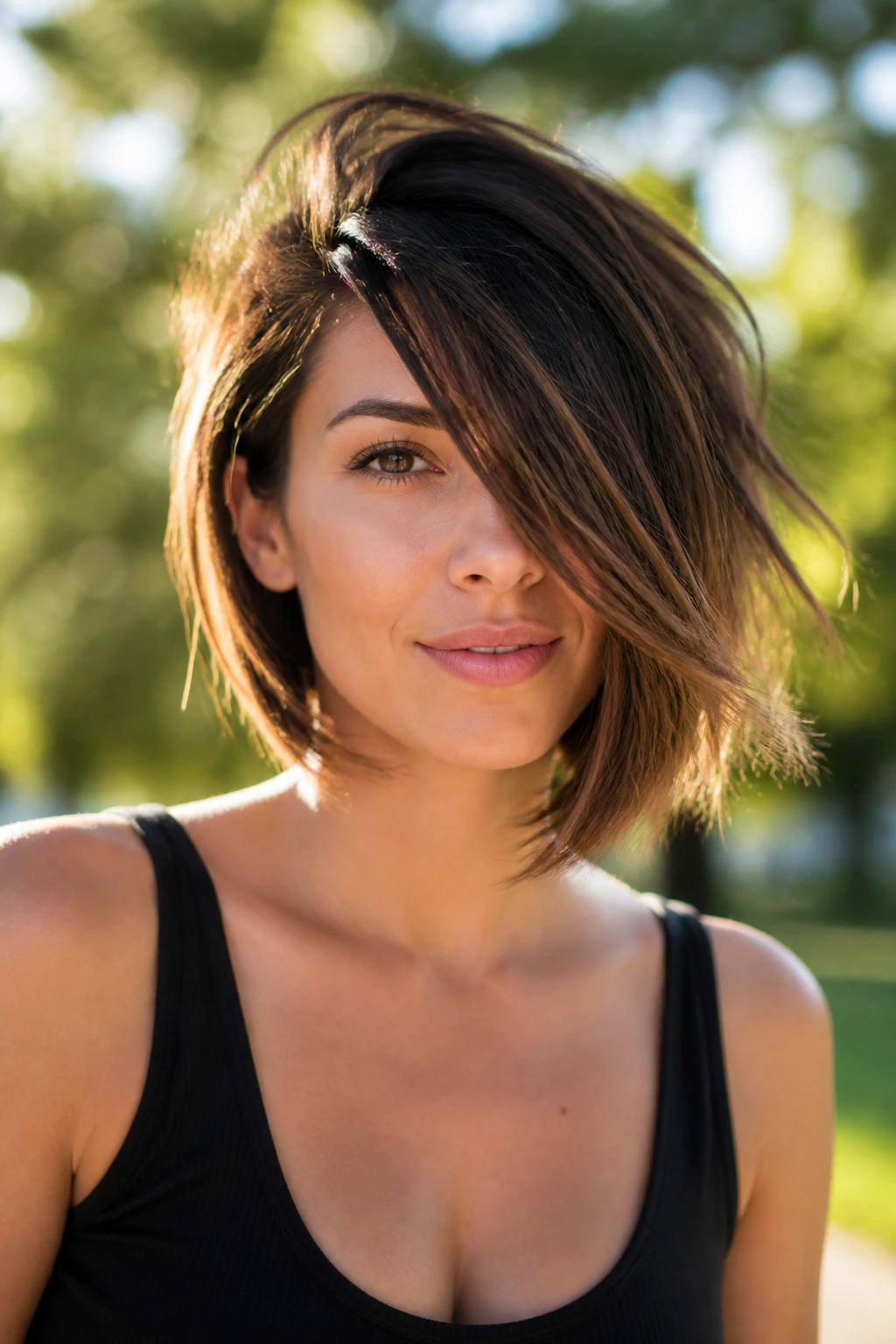
An asymmetrical bob makes a small difference on paper and a big difference in real life. One side sits a little longer, which shifts the eye and creates the impression of fullness on the heavier side. Fine hair loves that visual trick because it feels like movement without needing a lot of length.
The sweep matters as much as the angle. A side-parted asymmetrical bob looks richer when the front pieces move across the face instead of hanging straight down. That sweep gives the hair an easy lift around the cheekbone and jaw.
This haircut is good if you want something a little less predictable than a standard bob. It’s not wild. Just sharper. And that small edge can be useful when fine hair needs a shape with more personality than “nice and neat.”
A flat iron bend on the long side, paired with a smoother finish on the short side, keeps the cut from looking too lopsided. The contrast should feel deliberate, not accidental.
19. Air-Dry Bob With Natural Bend
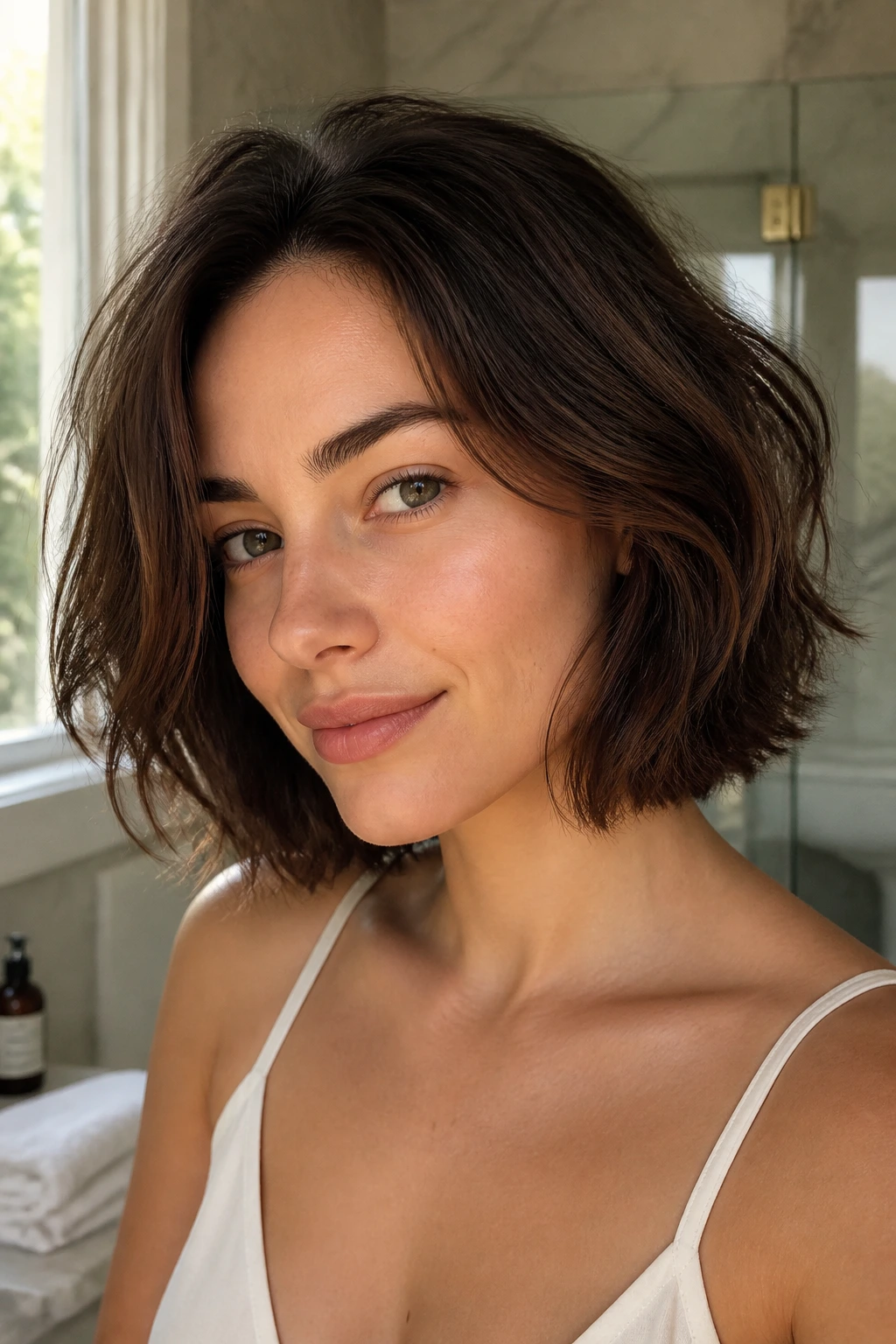
If you hate heat styling, this is the bob to ask about. An air-dry bob for fine hair should work with your natural bend, not against it. That means the cut needs enough shape to hold itself, but not so much layering that the hair loses body as it dries.
A light leave-in mist and a small amount of gel or mousse can help define the bend without making the hair crunchy. Scrunch it once or twice, then leave it alone. Fine hair usually looks best when it’s not overhandled while wet.
What makes this cut different is the styling philosophy. You are not building a perfect wave pattern. You are coaxing the hair into its own texture and letting the bob outline do the rest. That’s why it can feel softer and more natural than a fully styled look.
This is a practical haircut for busy mornings. It also suits people whose hair gets frizzy when brushed too much. Sometimes the best move is to stop touching it and let the cut do the job.
20. Messy Bob With Face-Framing Pieces
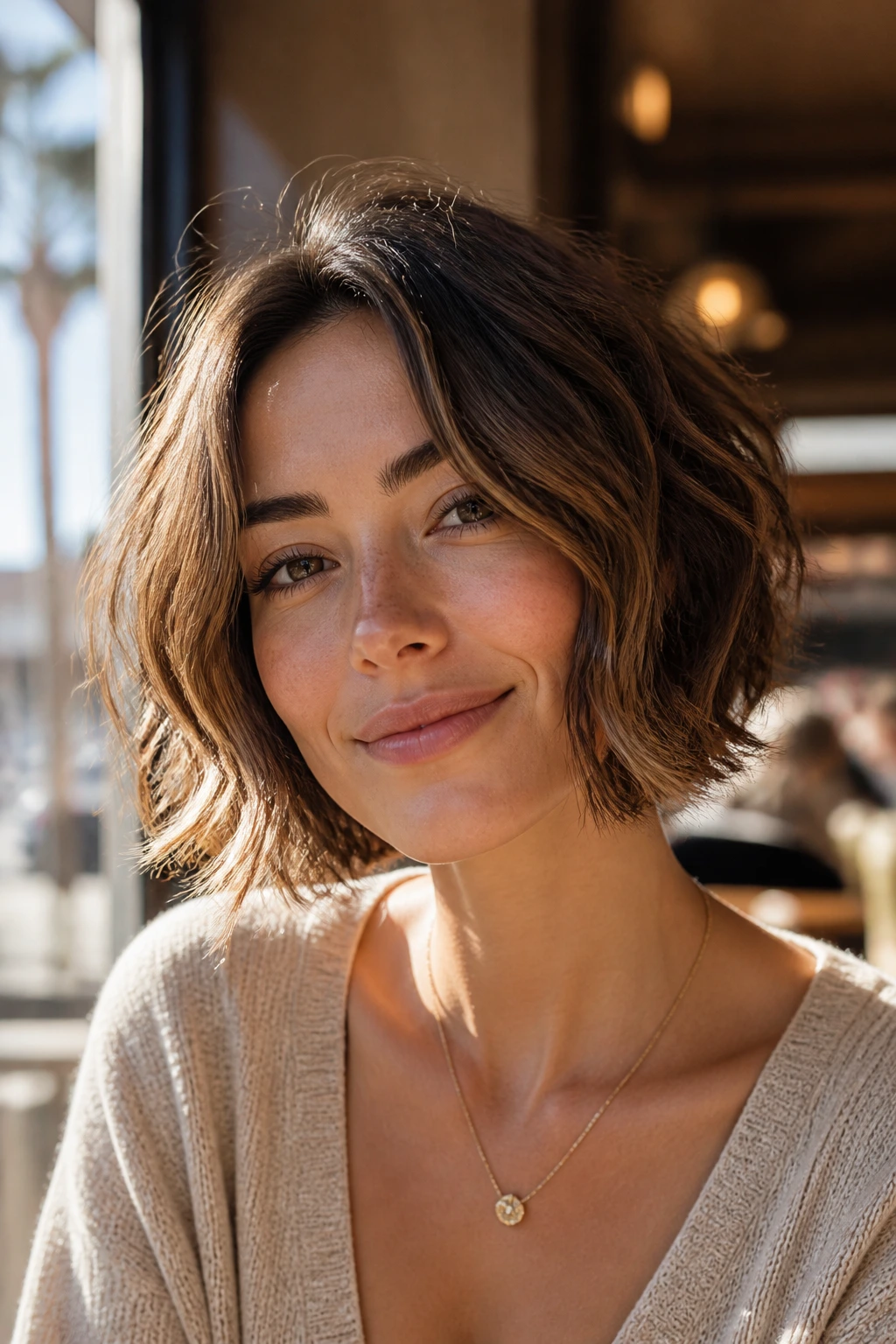
A messy bob with face-framing pieces is probably the most forgiving style on this list. It works because the front pieces do a lot of the visual work while the rest of the cut stays loose and light. Fine hair gets movement without losing its shape.
The face frame should be short enough to show the jaw and cheekbones, but not so short that it breaks away from the bob. That little balance matters. If the front is too long, the haircut starts looking heavy. If it’s too short, it can turn puffy. The sweet spot sits somewhere around the cheekbone to the lip line, depending on your face shape.
This style loves a quick bend with a wand and a bit of finger separation after the hair cools. Pinch the ends, shake out the roots, and stop before the texture gets too broken up. You want the hair to look touched, not teased.
For me, this is the easiest bob to recommend when someone wants fine hair to look fuller without making the haircut feel precious. It’s relaxed, flexible, and a little more forgiving than the cleaner shapes above. And honestly, that’s often the one people wear most happily.
If you’re choosing between these tousled bob haircuts for fine hair, start with the shape that matches how much styling you’ll actually do. A blunt chin bob needs less help than a shaggy lob. A side part can fake volume faster than a complicated cut. And if your mornings are rushed, a one-length or collarbone bob will usually treat you better than anything high-maintenance and fussy.
