



Fine hair and a bad bob have a strange relationship. The cut can either make the hair look denser, or it can strip away so much shape that every strand seems to drift apart. Textured bob haircuts for fine hair work only when the texture is placed with care.
Fine means strand thickness, not how much hair you have. Someone can have a lot of very fine strands, and someone else can have sparse fine strands; the cut needs to respect that difference. Too much layering at the bottom turns wispy fast. Too little, and the whole shape collapses flat.
A good bob on fine hair usually keeps a strong outer line, then sneaks movement into the inside of the cut. Point cutting, a slight A-line, or a few hidden layers near the crown can change the whole feel without making the ends look thin. That’s the part most people miss.
The strong versions are crisp. Others look soft and piecey. The ones that earn their keep give you body at the roots and a clean edge at the ends, and that balance is where the real fun starts.
1. Blunt Chin-Length Bob with Invisible Layers
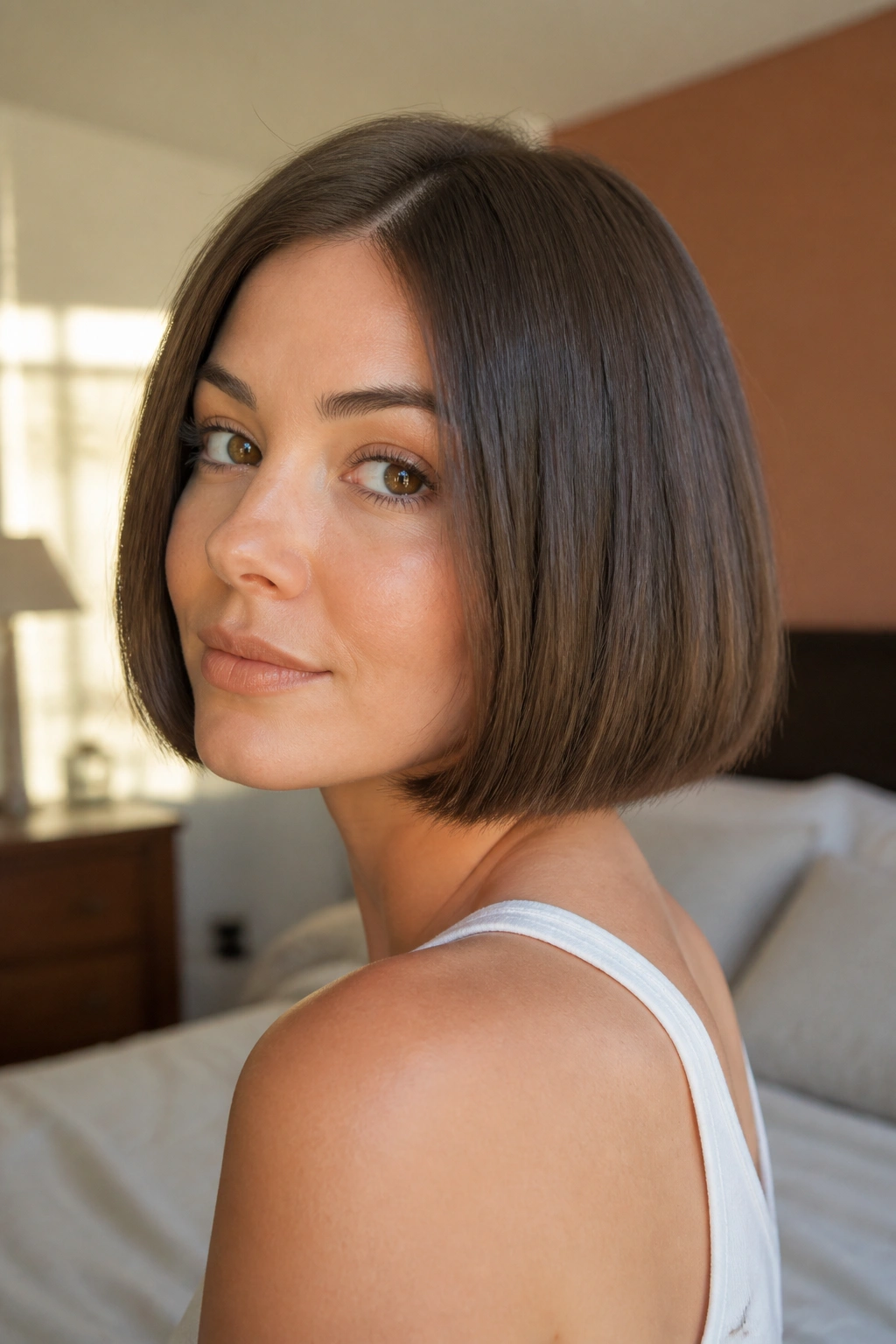
This is the cleanest way to make fine hair look fuller fast. A chin-length bob keeps the ends close together, so the eye reads one solid shape instead of a wispy cloud. The trick is to hide the texture inside the cut, not on the surface where it can break the outline apart.
Why It Works
A blunt edge gives fine hair something to hold onto. If the length drops much past the chin, the ends start to separate and you lose that dense look. Keeping the layers invisible under the surface lets the top move while the perimeter stays firm.
Ask your stylist for a line that grazes the chin and only a few internal snips around the crown. That’s enough. More than that, and the bob starts to look overworked.
- Keep the outer line blunt.
- Ask for hidden layers that sit below the top section.
- Blow-dry with a small round brush for a slight bend under the jaw.
- If you use a flat iron, curve the ends in just a touch.
Pro tip: Part it slightly off center. That tiny shift adds lift without making the cut feel fussy.
2. French Bob with a Micro Fringe

Do you want something shorter and a little sharper? A French bob with a micro fringe can be a smart move on fine hair because the short line makes the style look deliberate instead of thin. The fringe also gives the eye a strong starting point right above the face.
The important part is restraint. A micro fringe should sit soft and a little piecey, not like a hard ruler cut across the forehead. On fine hair, that soft edge keeps the style from feeling too severe.
What to Ask Your Stylist
- Keep the bob around the lip to jaw line, depending on your face shape.
- Ask for a fringe that sits just above or just at the brow, then breaks into light pieces.
- Leave a little softness at the temples so the cut doesn’t box in your face.
- Use a dry texture spray only at the roots and fringe area.
The cut works especially well if your hair lies flat at the front. It gives the whole style a point of interest. And if your hair is pin-straight, even better. You get that crisp little Parisian line without having to fight the natural texture every morning.
3. A-Line Bob with a Lifted Back
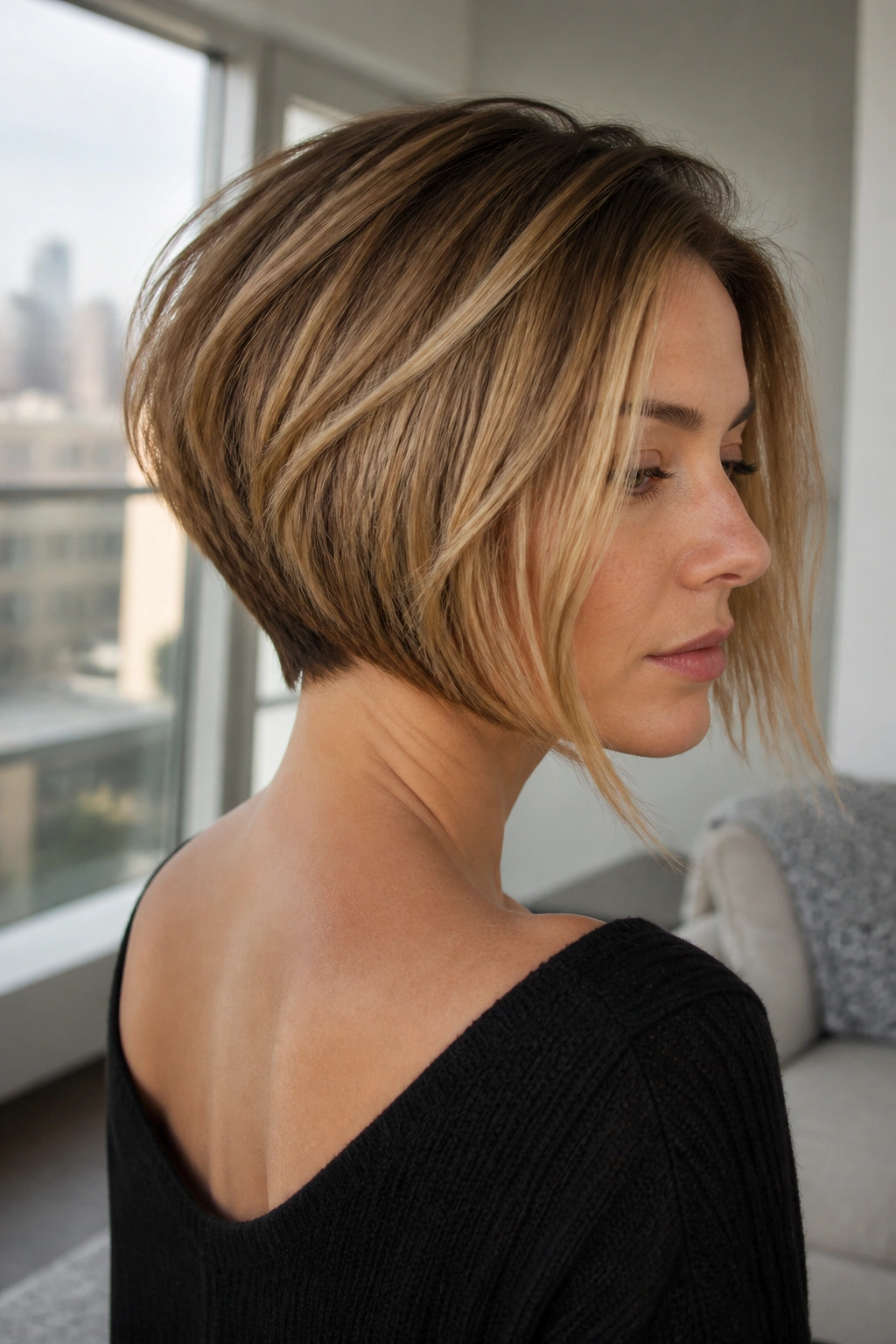
Picture hair that slips flat at the crown by lunchtime. An A-line bob fixes that by shifting the weight forward, where fine hair can look a little thicker and more intentional. The back sits shorter, the front stays longer, and the whole shape angles down in a way that makes the hair seem fuller than it is.
That diagonal line matters. It gives the cut movement even when the hair is dry and clean and doing nothing fancy. I like this shape for people who want a bob that still feels polished, not shaggy.
The Sweet Spot
Ask for the back to sit about 1 to 2 inches shorter than the front, with the longest pieces landing near the jaw. That is enough slope to make the shape visible without turning the haircut into a dramatic wedge.
A-line bobs can go wrong when the front gets too long. Then the hair starts to look like it’s hanging instead of moving. Keep the line short enough that the ends still look dense.
A side part helps here, too. It gives the shorter back a little lift and keeps the front from falling dead flat against the cheeks.
4. Shattered Wavy Bob with a Side Part
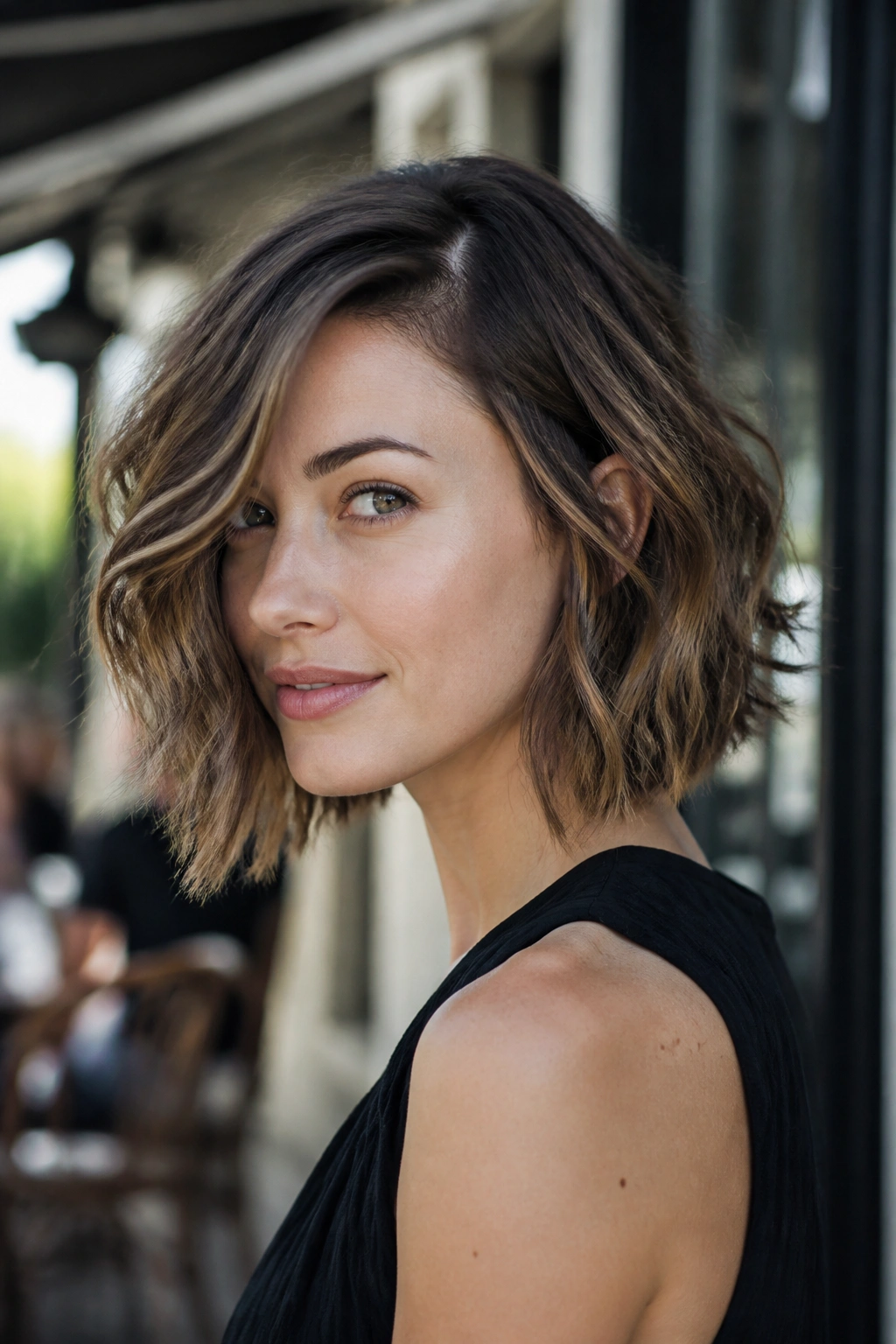
The messier this one looks, the better it usually works. Fine hair can look limp when every strand is sitting in the same place, so a shattered bob breaks that sameness up with small bends and uneven ends. A side part gives the shape a little extra height on one side, which is always helpful when volume is the goal.
What makes this cut different from a basic wavy bob is the edge. The ends are not chopped into a uniform line. They’re broken up with light point cutting, so the finish feels soft and airy instead of blunt and heavy.
A 1-inch curling iron is enough. Wrap sections away from the face, leave the last inch out, and then shake the waves loose with your fingers. You want movement, not ringlets. A dab of texture cream at the ends can keep the waves from separating too much.
This cut has an easy feel to it, but it still needs a plan. Without the side part and the shattered edge, the style loses its shape fast.
5. Collarbone Lob for Fine Hair with Airy Ends
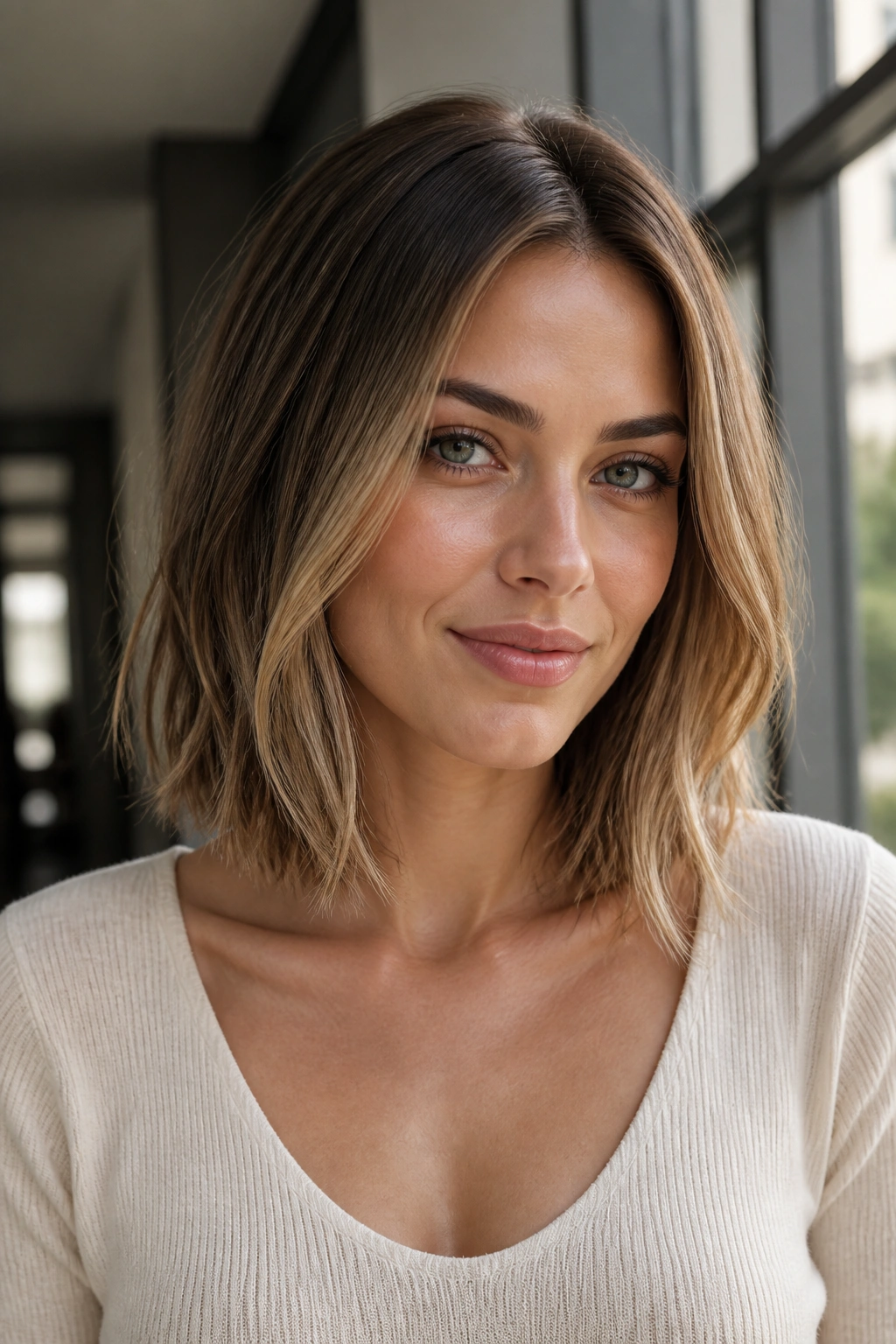
The shoulder-grazing lob is for the person who likes the idea of a bob but flinches at anything too short. On fine hair, that extra length can be a gift. It gives the ends more room to gather together, which helps the hair read as fuller, especially when the perimeter stays clean.
The ends should not be thinned out to the point of transparency. That’s the mistake I see over and over. A lob only looks good on fine hair when it still has a solid bottom line, even if the top has a little movement.
A subtle bend through the middle of the hair keeps the shape from feeling heavy. Think of it as a floaty outline rather than a big wave. Air-dry-friendly styles work here, too, especially if your hair bends on its own.
If you want a low-drama cut that still feels modern, this is one of the safer bets. It’s also forgiving during awkward grow-out phases, which matters more than people admit.
6. Curly Bob with Soft Internal Layers
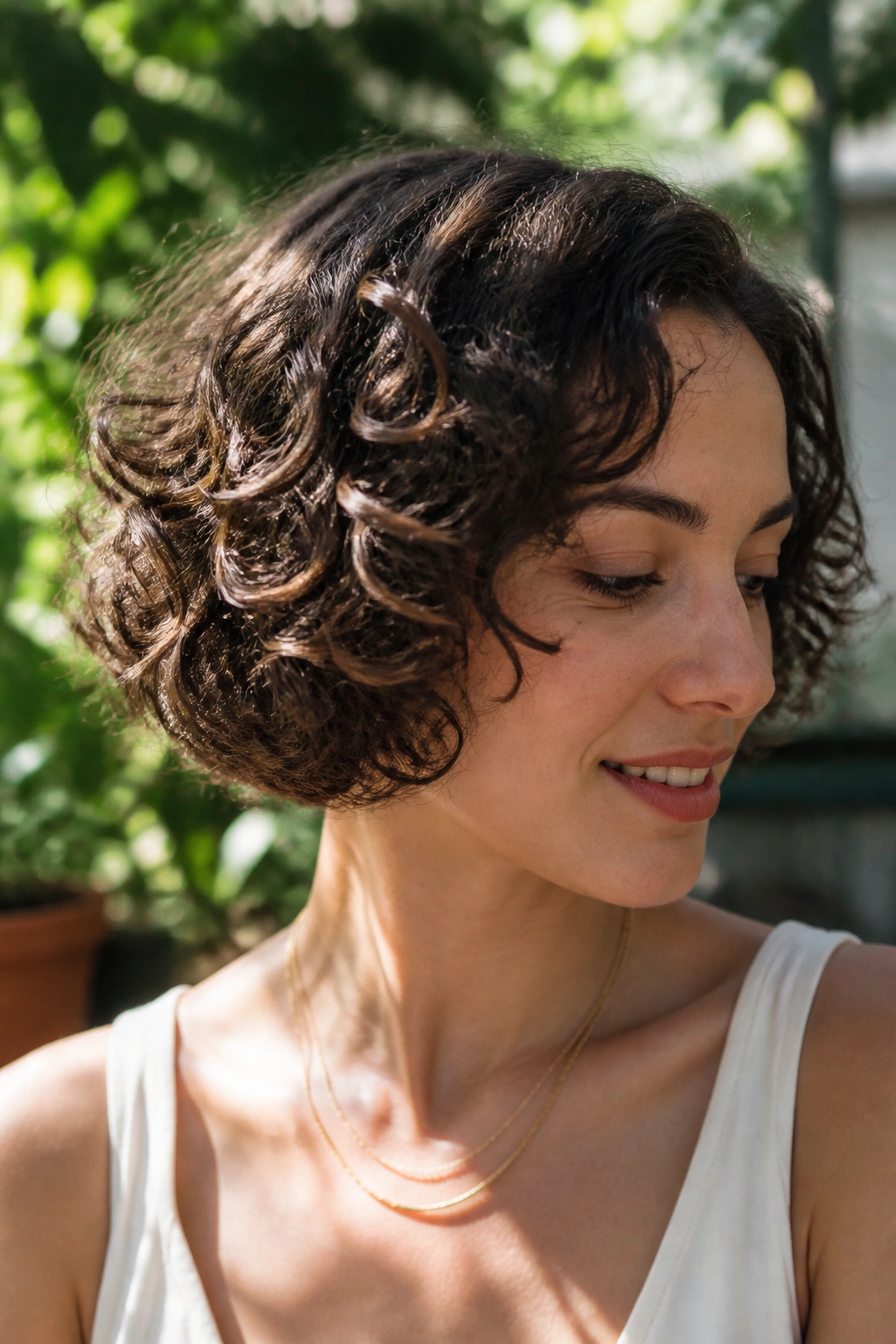
Not too much layering. That is the trick.
Fine curls can go flat at the root and fuzzy at the ends if they are cut too aggressively, so the goal is to keep the silhouette full while letting the curls stack naturally. Soft internal layers help the curls spring without turning the bottom into a triangle.
What to Tell the Stylist
- Keep the perimeter at jaw to cheekbone length.
- Add only enough internal layering to let curls sit on top of one another.
- Avoid over-thinning the ends with a razor.
- Shape the cut dry if possible, because curls shrink.
A diffuser on low heat works better than blasting the hair with hot air. Scrunch in a light curl cream, not a heavy butter, and stop before the hair feels coated. Fine curls hate being smothered. They lose bounce fast.
This is one of those cuts that looks a little plain in the chair and much better once the curls settle. Give it a day. The shape usually lands after the hair dries and the layers fall into place.
7. Sleek Beveled Bob with Crown Texture
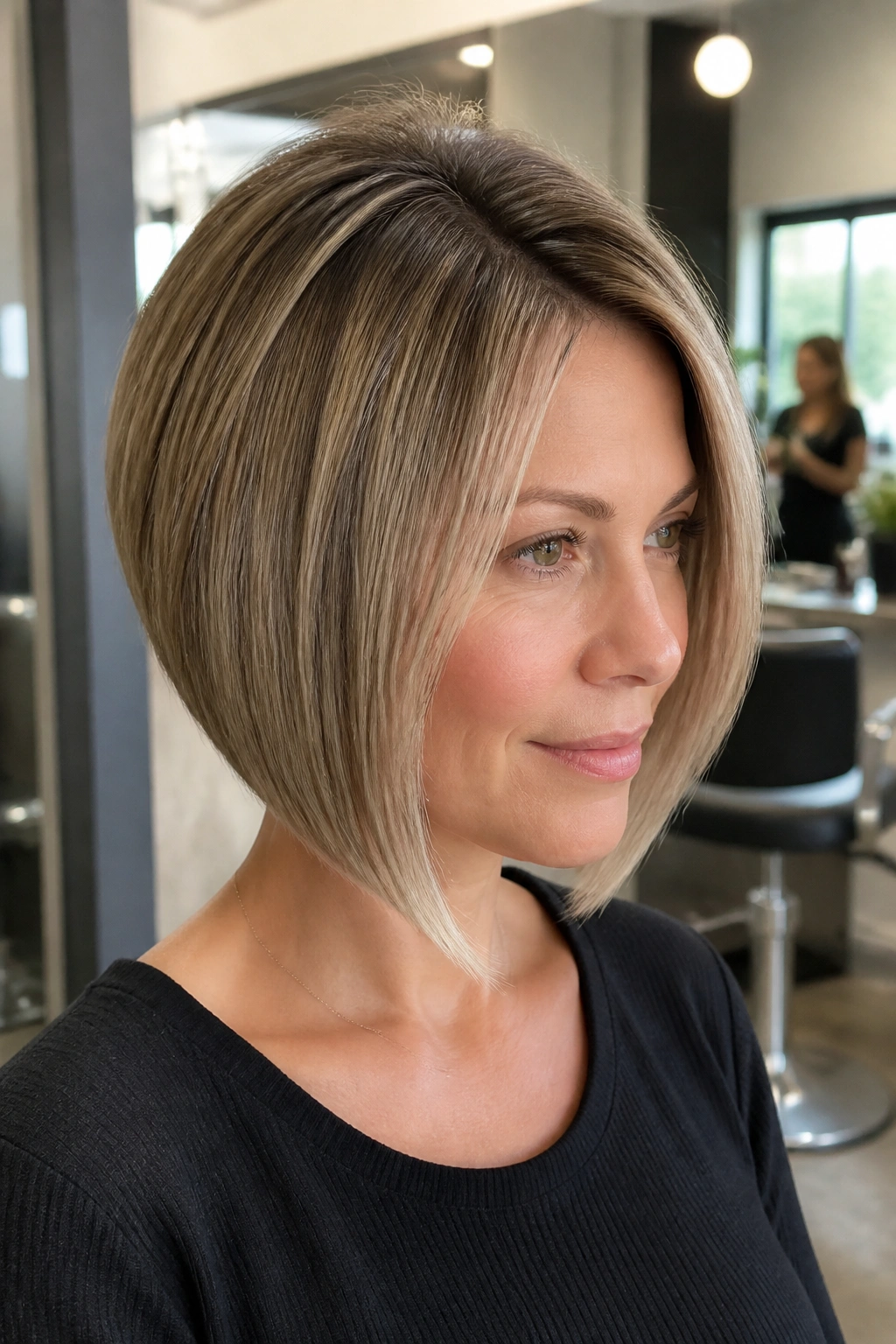
Flat is the enemy here. A sleek beveled bob can still work beautifully on fine hair because the shape is doing the heavy lifting. The perimeter is smooth, the ends tuck under a touch, and a little hidden texture at the crown keeps the top from lying like a sheet.
The bevel matters more than people think. A slight inward curve at the ends makes the bob look deliberate and dense, especially when the hair is straight. If the ends stick out too sharply, the line breaks and the hair looks thinner.
A round brush and a small root clip can make a big difference. Dry the roots upward, clip them at the crown for about 10 minutes while they cool, then brush the ends under. That tiny cooling step helps the lift last longer.
This is a good choice if you like a neat finish. It’s tidy, but not stiff. And on fine hair, that little bit of polish can make the whole cut feel more expensive than it really is.
8. Razor-Cut Bob with Piecey Ends
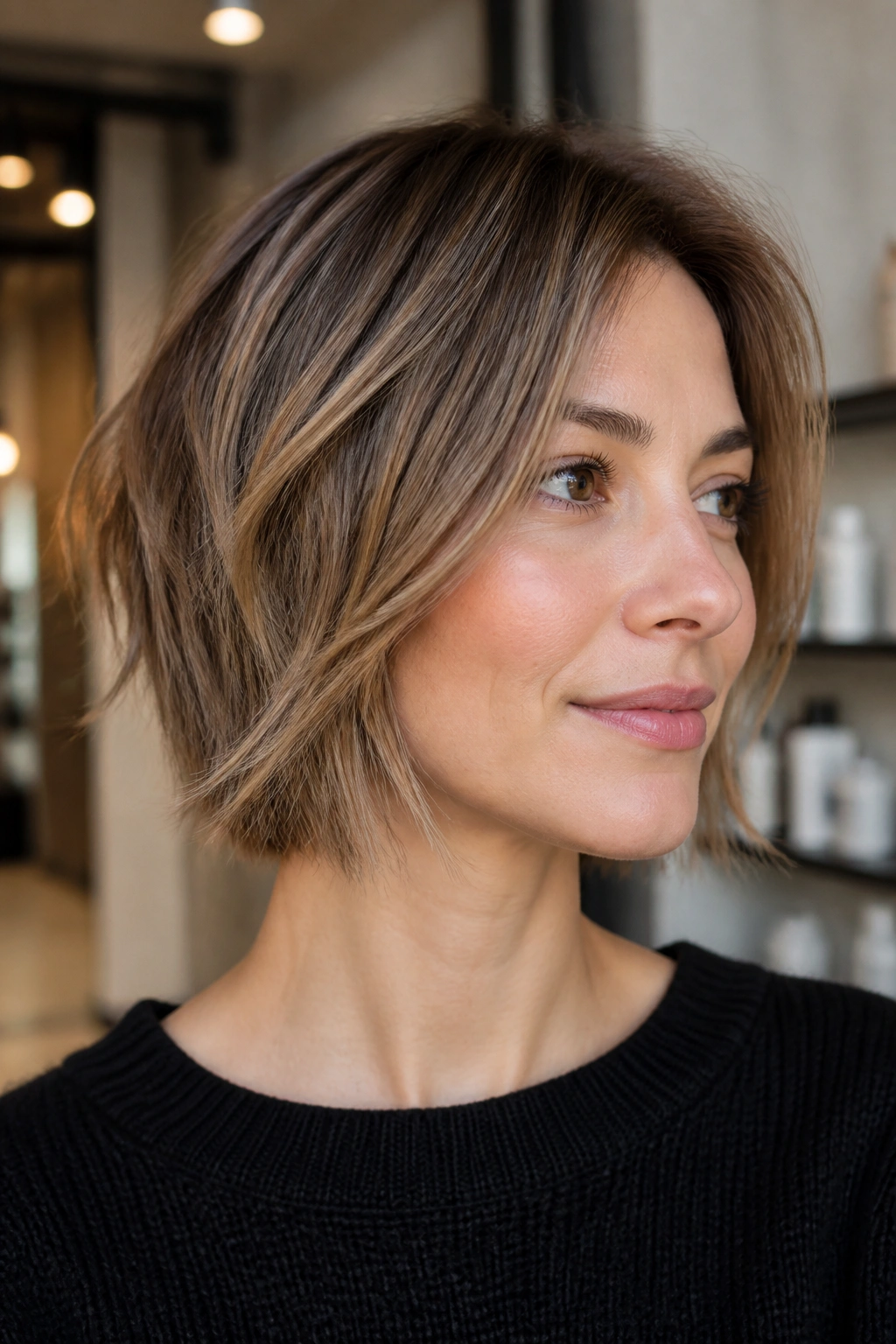
Unlike a scissor-cut bob, this one gives up a little hardness in exchange for movement. A razor cut can make the ends feel feathered and light, which is handy if your fine hair tends to lie in one boring sheet. The shape looks softer right away.
The catch is obvious. Too much razor work on already delicate hair can make the ends look frayed. So this is only worth it if the stylist uses the razor with restraint, usually just on the last half inch or so of the perimeter.
What Makes It Different
A razor-cut bob works best when the hair has some natural texture or a slight wave. Straight, very sparse fine hair can look a little too broken up if the blade gets too enthusiastic. The best version has clean lines near the roots and soft, separated ends.
If you style it at home, use a light wax or cream on the tips only. No heavy product. That will just pull the hair down and cancel the airy finish.
This cut has a lived-in feel, but it is not lazy. You still need shape. You just get to keep the ends softer than a classic blunt bob.
9. Asymmetrical Bob with a Longer Front
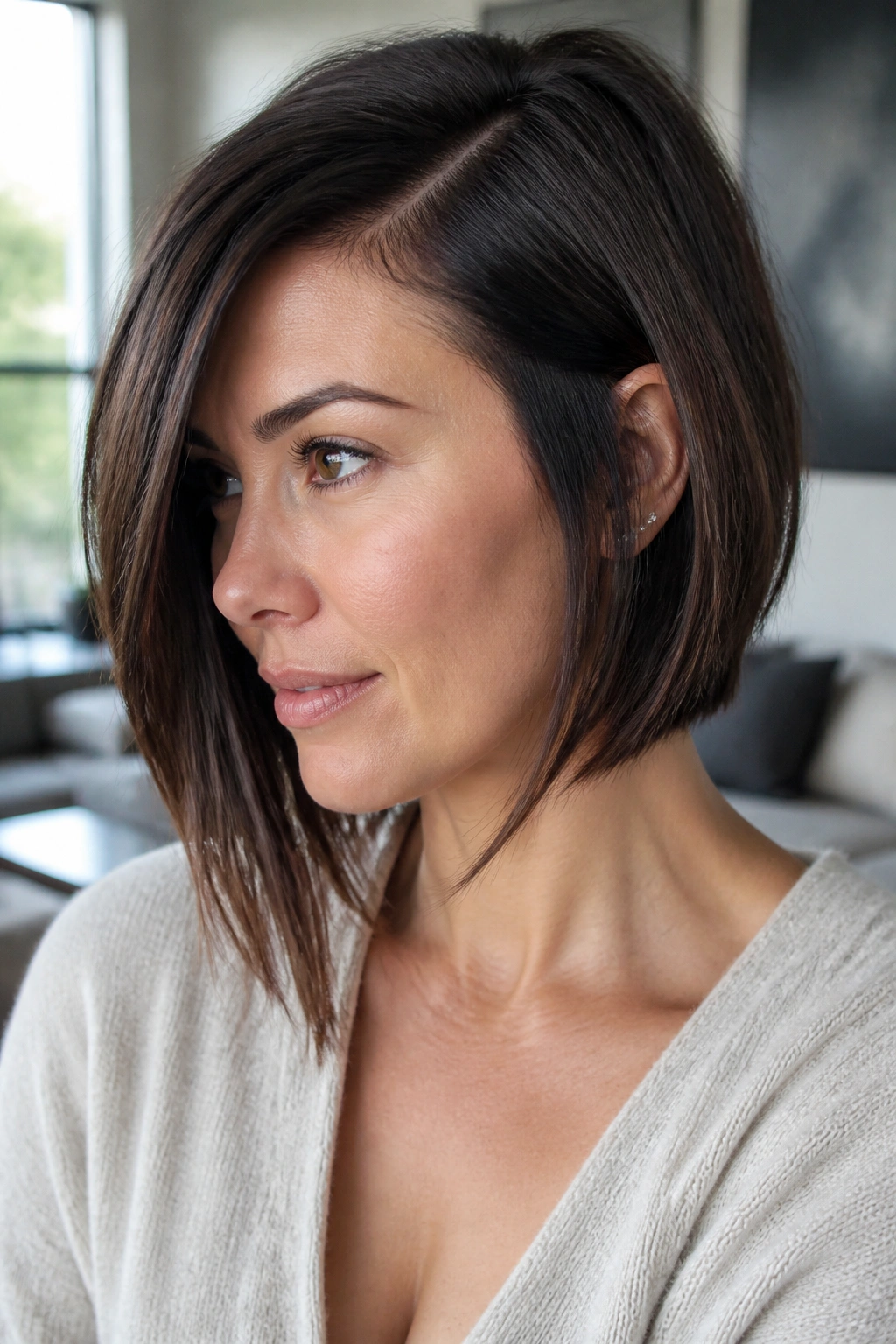
A small imbalance can make fine hair look more interesting. An asymmetrical bob uses a longer front on one side to draw the eye down and forward, which helps the hair appear fuller around the face. It also gives the cut a little attitude without requiring a lot of extra styling.
Keep the difference subtle. I prefer a front that’s only about 1 inch longer on one side unless the hair is very dense. Too much contrast can look gimmicky, and fine hair usually looks better when the shape feels intentional rather than dramatic.
A side part helps the diagonal line show up. It also creates a little extra lift at the crown, which is half the battle with fine strands. The shorter side can skim the jaw, while the longer side grazes the cheekbone or lip line.
This cut is especially nice if one side of your hair naturally grows flatter than the other. The asymmetry can hide that imbalance instead of fighting it, which saves time in the mirror.
10. Layered Bob with Curtain Bangs for Fine Hair
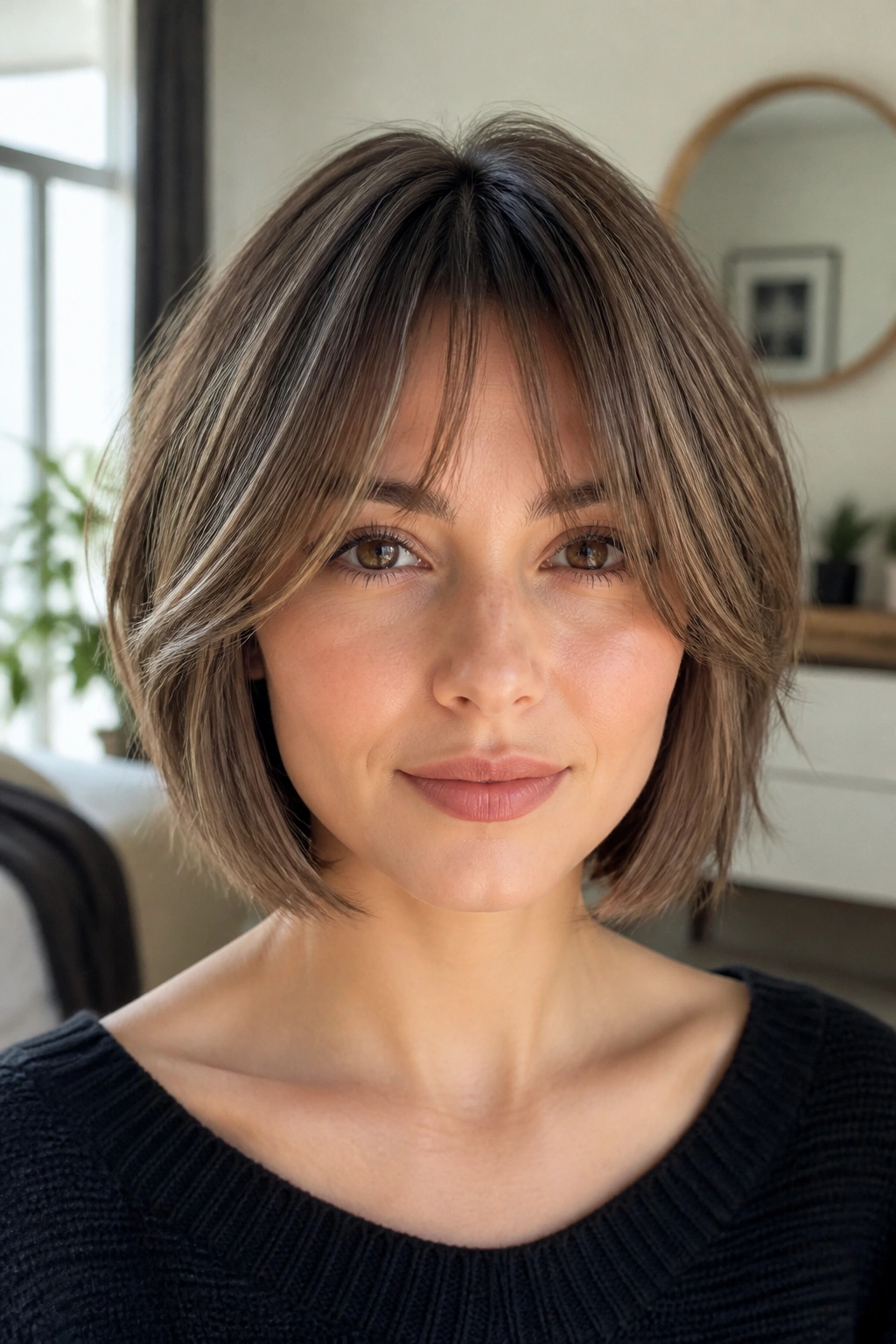
Do you want more movement around the face without sacrificing the body through the back? Curtain bangs can do that work for you. They split the attention between the front and the length, which is useful when fine hair needs a little help looking intentional.
The bangs should start soft, not heavy. A good curtain bang on fine hair usually begins around the brow or a little below it, then opens toward the cheekbones. That shape makes the front look fuller without building a thick curtain that will fall flat.
Where the Bangs Should Start
- Shortest point: around the brow to pupil zone.
- Longer pieces: near the cheekbone.
- Blend the bang into the first side layer.
- Ask for a dry check after cutting, because fine fringe shrinks in odd ways.
Curtain bangs do need upkeep. They grow fast enough to annoy you, and they flatten if you forget to dry them with a round brush. But when they’re cut well, they pull the whole bob together and give fine hair a lot more life around the face.
11. Choppy Bob with a Deep Side Part

If your hair goes limp the second you leave the bathroom, this is the cut that gives you a fighting chance. A deep side part creates instant lift at the roots, and the choppy layers stop the bob from looking like one solid block. That combination is useful when fine hair needs shape more than it needs length.
I like this version because it doesn’t pretend to be polished. It’s a little rough around the edges, which means the texture looks deliberate instead of accidental. The hair can move, but it still has structure.
A few loose bends with a 1-inch iron help. Leave the ends a little straighter than the middle so the texture looks soft rather than curled. Then push the heavier side up with your fingers and a bit of dry shampoo at the roots.
This cut feels easy on days when you want a no-fuss look, but it still has enough shape to look finished. That’s the sweet spot.
12. Rounded Bob with Soft Graduation
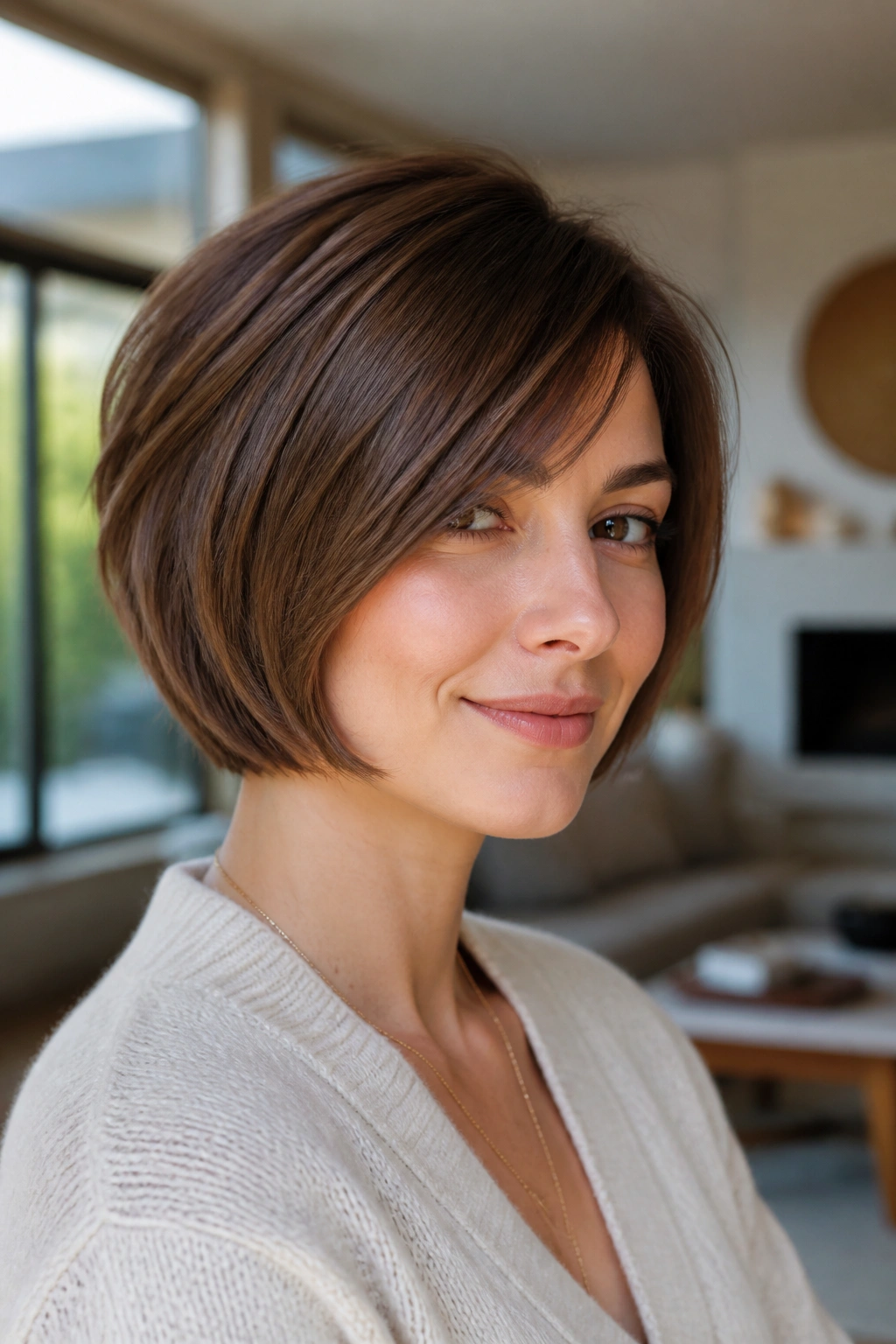
A round bob sounds old-fashioned until you see what it does for fine hair. The rounded outline makes the hair sit closer to the head at the sides and fuller at the nape, which can be a smart way to fake density. The shape feels gentle, not boxy.
Graduation is the key word here. It means the back is stacked a bit shorter so it supports the curve of the cut. On fine hair, that little lift at the nape can stop the style from collapsing into a flat line by the neck.
The front should stay soft. If the corners are too sharp, the round shape loses its charm. Ask for a clean perimeter with enough internal shape to keep the ends from flipping outward at odd angles.
This is a strong option for straight fine hair that refuses to hold waves. The cut itself does the work. You don’t need a lot of styling tricks, which is exactly why people come back to it.
13. Inverted Bob with a Narrow Nape
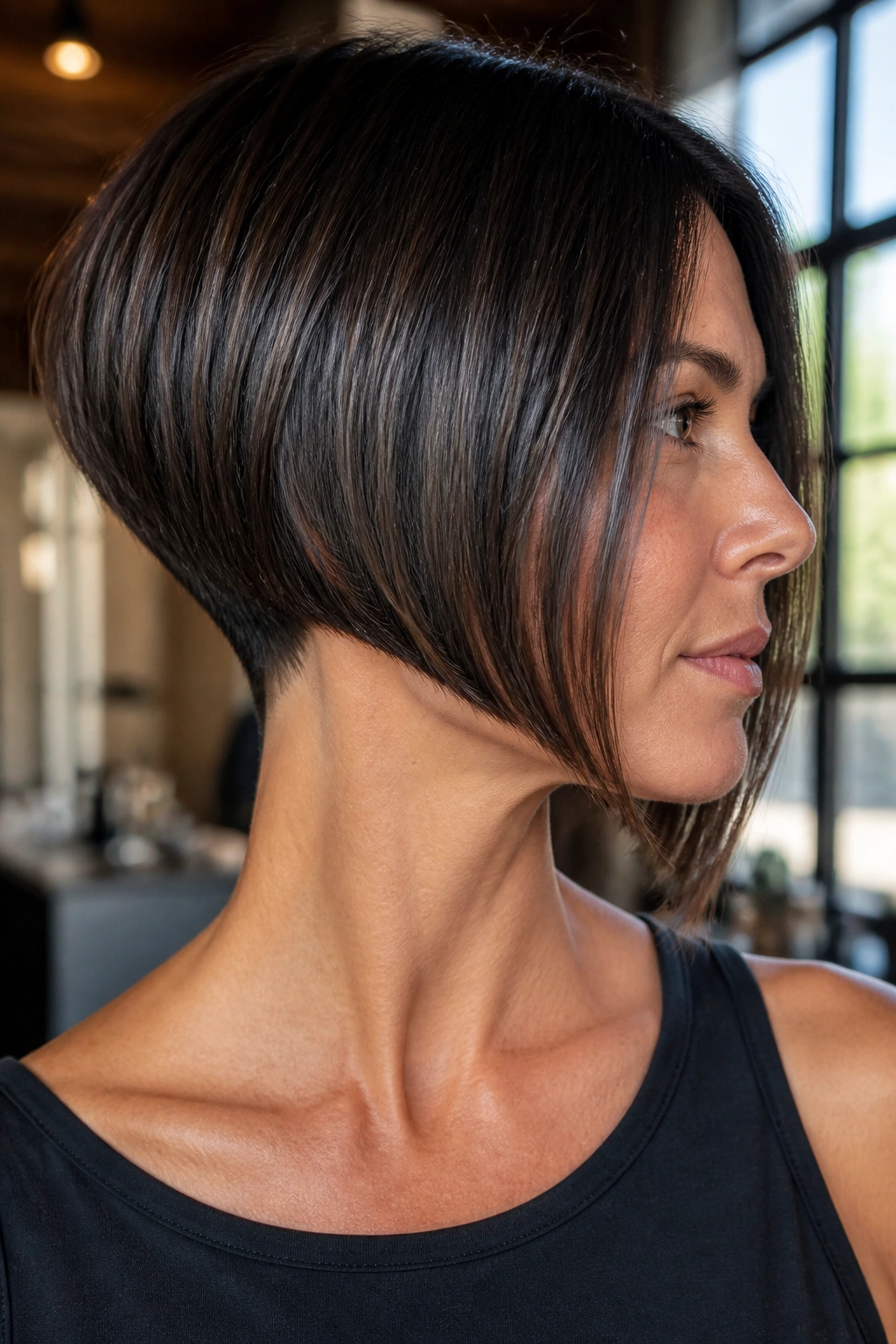
Two inches can change the whole silhouette. An inverted bob is a more dramatic cousin of the A-line cut, with the back tucked in tighter and the front falling farther forward. On fine hair, that sharper angle can create the look of extra fullness because the hair stacks visually instead of hanging in one even sheet.
The Measurement That Matters
- Keep the nape narrow and clean.
- Let the front fall 1 to 3 inches longer than the back, depending on your face shape.
- Avoid over-thinning the underlayers.
- Ask for a soft connection between the stacked back and the front length.
The danger is going too long in front. If the front reaches far past the chin, the cut starts to lose density where it matters most. A shorter version usually works better on fine hair because the ends stay concentrated.
This shape is a little bolder than a classic bob, and that’s part of the appeal. It has a clean profile from the side, and that profile can make the whole head look more lifted.
14. Tousled Bob with Lived-In Waves

The ends should feel soft, almost dry to the touch. That is the vibe here. A tousled bob with lived-in waves works because it makes fine hair look like it has more texture than it really does, but without turning the finish crunchy or overdone.
Skip the heavy salt spray if your hair is extra delicate. It can rough up the cuticle and leave fine strands feeling brittle. A light mousse at the roots, then a texture mist through the mids, usually gives a better result. Less grip, more movement.
Wrap a few sections around a 1-inch iron, hold for a few seconds, then let them cool before finger-combing. That cooling step matters. Warm hair will collapse if you touch it too soon.
This is a good cut for people who like hair that looks a little undone. Not sloppy. Just relaxed, with bends that break up the outline and keep the bob from sitting too neatly.
15. Box Bob with Blunt Edges
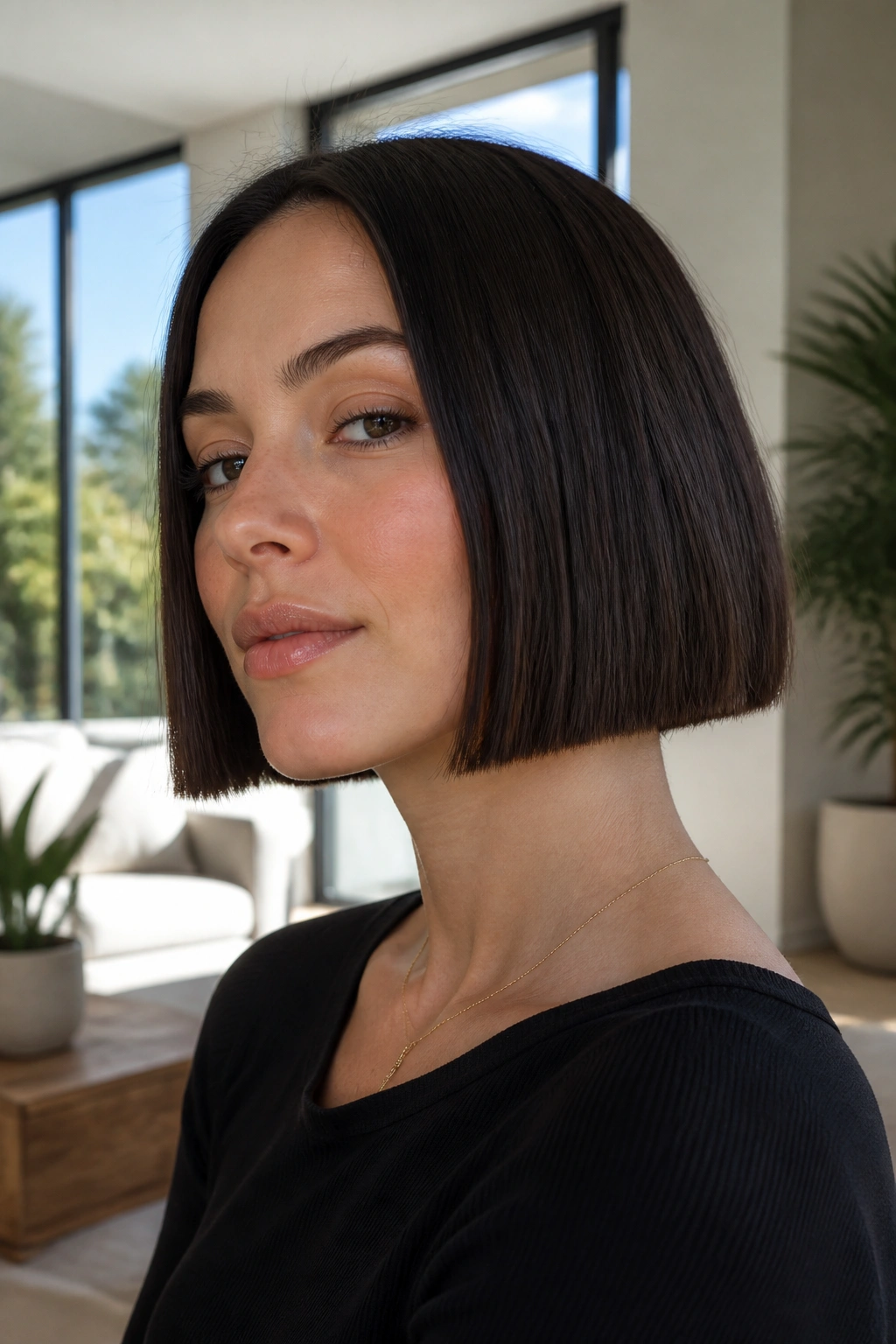
If you want density, a box bob cheats the eye in the nicest way. The square shape makes the hair look thicker because the edges sit level all the way around. On fine hair, that blunt bottom line can be a lifesaver.
The cut is simple, but it is not boring when it’s done well. A box bob needs precision. If one side drifts longer than the other, the square effect disappears and the whole shape looks accidental.
This cut works especially well on straight hair that gets fluffy when layered too much. Keep the perimeter blunt, keep the texture minimal, and let the line do its job. If you want movement, build it with styling, not by hacking away at the ends.
The only caution is face shape. A very square bob can feel strong around a round face, so you may want soft corners near the jaw. Tiny detail. Big difference.
16. Bob with a Hidden Undercut
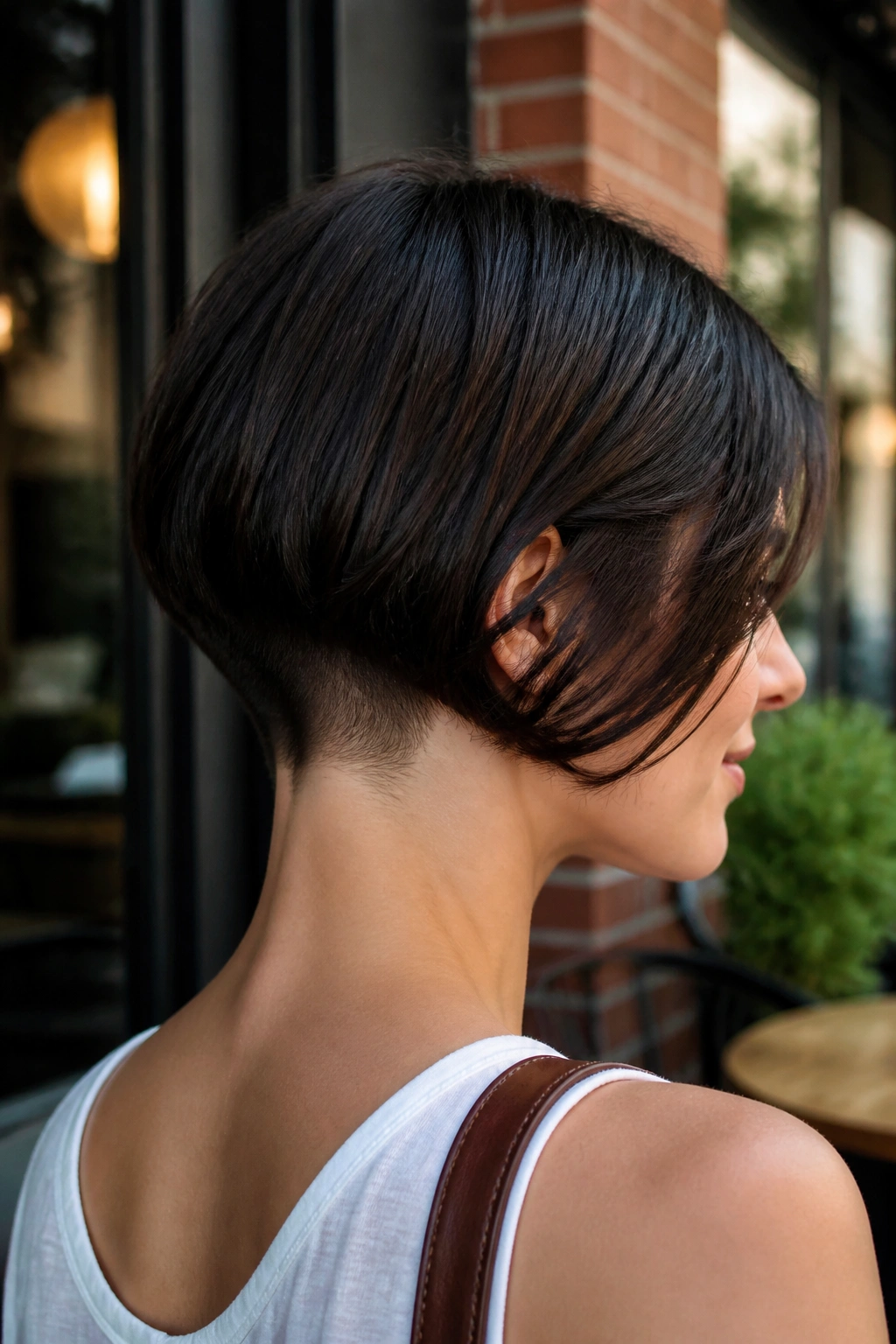
Who actually needs an undercut on fine hair? People whose hair is fine on top but oddly bulky underneath. That happens more than people think, especially at the nape where growth patterns can make the bottom feel puffy. A hidden undercut removes that extra bulk without changing the surface shape.
This is not the cut I’d hand to someone with sparse, fragile strands. If your hair already looks thin, shaving away the underside is a bad trade. But if your fine hair grows with a lot of weight at the neck, a tiny pocket under the top layer can help the bob sit cleaner.
When to Skip It
- If your hair is very sparse through the crown.
- If you want maximum fullness at the nape.
- If you never wear your hair up and want no risk of visible short bits.
- If you hate maintenance around the neckline.
The visible part of the bob can stay chin-length or jaw-length, while the hidden section below it gets shortened. That gives you a cleaner line without sacrificing the surface shape. It’s a sneaky move, and on the right head of hair, it works.
17. Chin-Grazing Bob with Face-Framing S-Waves
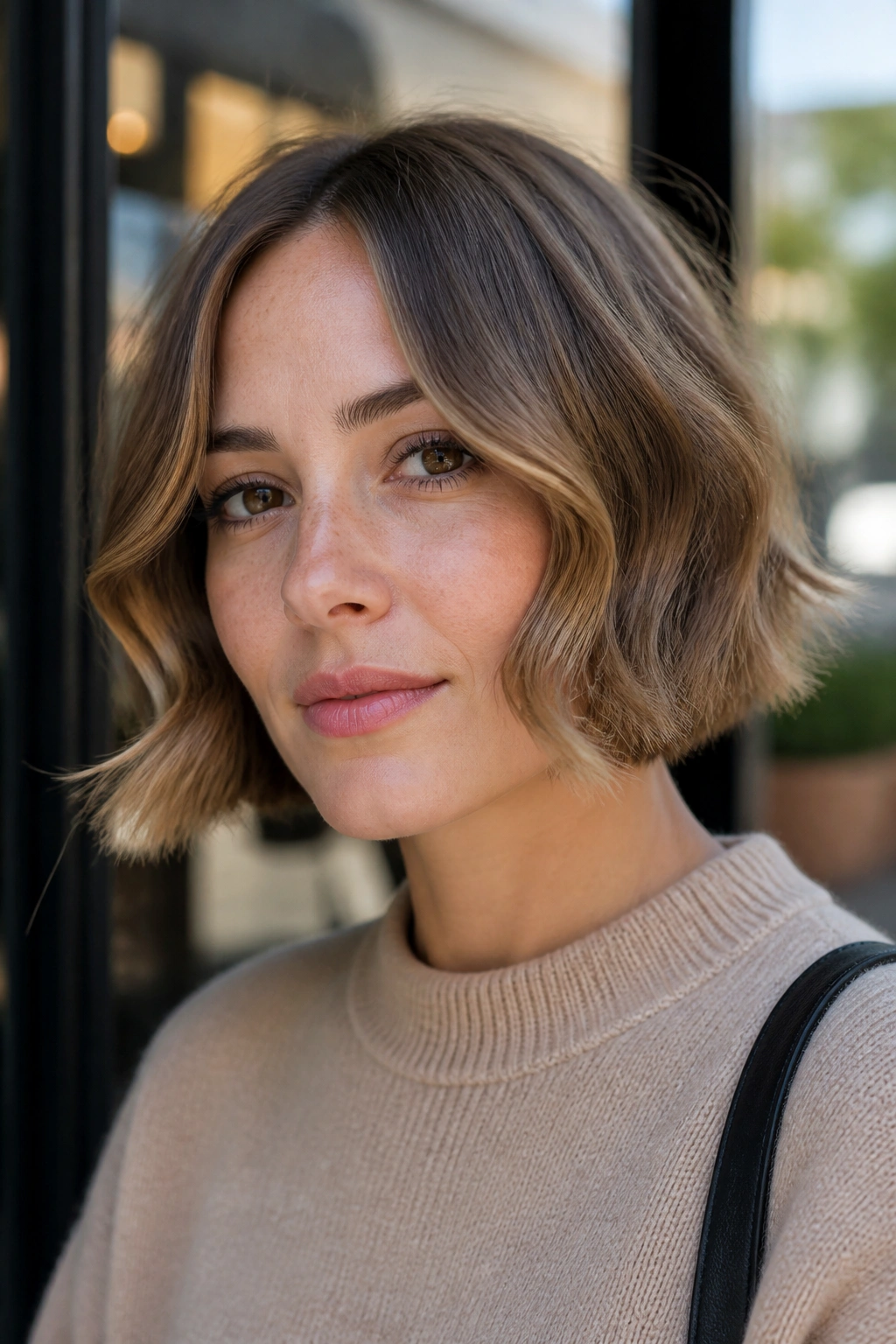
Picture a jawline bob with two loose S-curves dropping beside the cheekbones. That is the whole point of this cut. The chin-grazing length keeps the ends dense, and the soft wave in front makes the hair feel lighter without turning it wispy.
The front matters more than the back here. Those face-framing pieces should start close to the cheekbone, then bend gently toward the jaw. On fine hair, that kind of shape makes the face look more open and the bob look less severe.
A 1-inch curling iron is enough. Clamp a section, twist halfway through, and leave the ends out so the wave doesn’t get too tight. Then brush it out with your fingers once it cools. If you want the wave to last longer, pin the front pieces up for a few minutes while they set.
This is one of the easiest cuts to dress up or down. It can look soft with a sweater and neat with a blazer, and fine hair usually enjoys that kind of easy structure.
18. Shaggy Bob with Airy Crown Layers
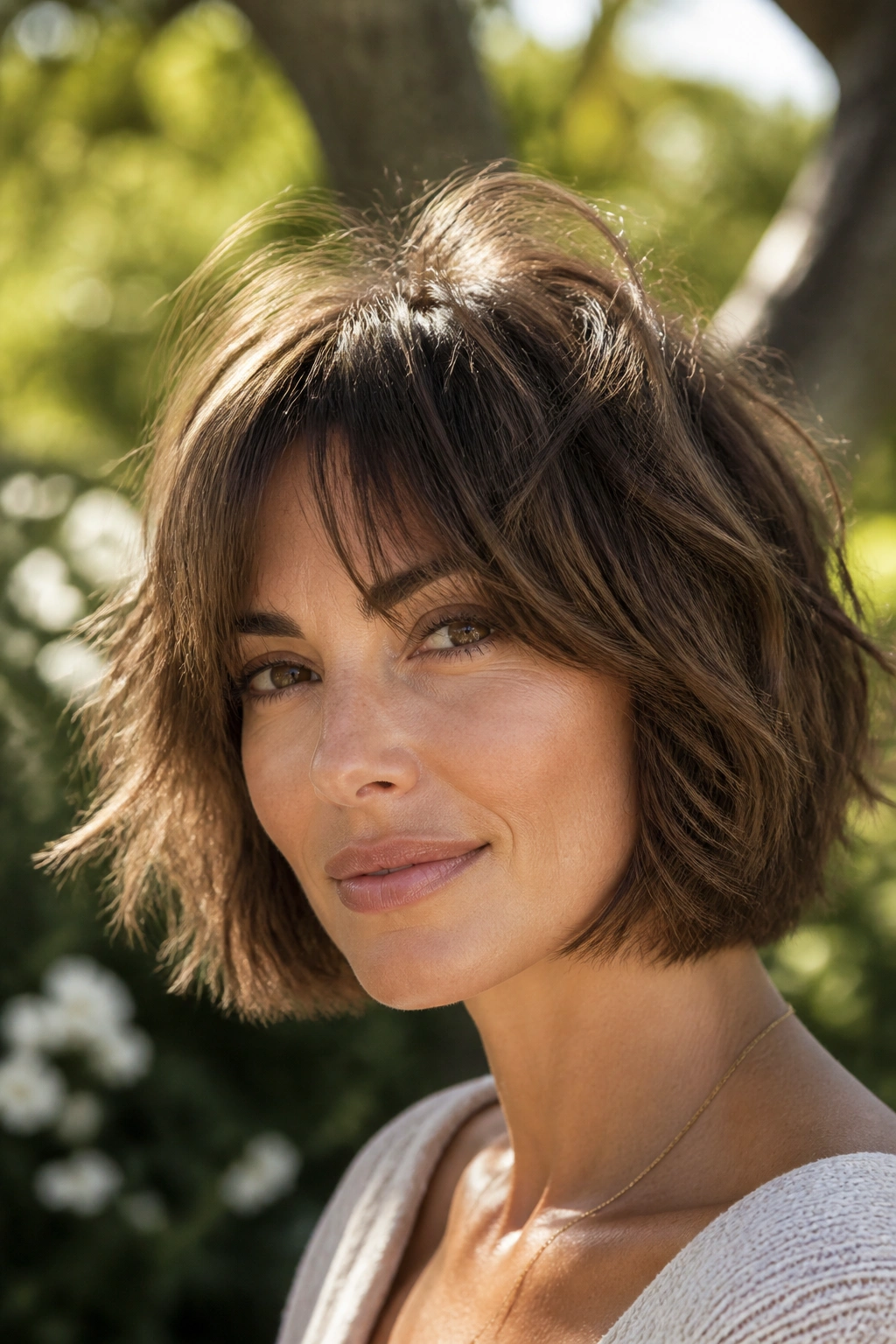
A shag is risky on fine hair, and that is exactly why the quiet version works. Too many layers can leave the ends empty. A lighter shaggy bob keeps the volume near the crown and the outline at the bottom, so the hair still looks like it has some weight.
The layers should stay soft. Think small lifts around the top, not a heavy chop through the entire head. That gives the cut movement where the eye wants it most, especially when the crown tends to sit flat.
What to Watch For
- Keep the bottom edge strong.
- Ask for light crown layers, not deep thinning through the ends.
- Use a small amount of matte paste only on the tips.
- Avoid over-styling the waves; a loose bend looks better than a tight curl.
This cut has a little edge, but not so much that it feels loud. It’s one of those styles that looks best when the hair has a bit of natural texture or a bend from sleeping on it. Fine hair often does better with that soft, imperfect finish than with a perfectly polished one.
19. Shoulder-Skimming Bob with Long Layers
This is the cut for the person who wants bob energy without losing shoulder-grazing length. A shoulder-skimming bob can work on fine hair if the base stays blunt and the layers stay long enough to avoid chewing up the body of the hair. That balance matters.
The length gives fine strands a little more weight, which helps them hang instead of puffing out. But if the cut is left all one length with no shape at all, it can turn flat fast. Long layers fix that by adding movement without breaking the density at the bottom.
I like this shape for hair that flips out at the shoulders. A few soft layers can calm that flip and make the ends fall in a more controlled way. It’s also a nice middle ground if you are growing out a shorter bob and do not want to lose the shape entirely.
Keep the layers subtle. If they are obvious, the bob stops reading as full. The whole point is to let the length do part of the work while the layers quietly keep it from sitting heavy.
20. Jaw-Skimming Bob with a Feathery Fringe
A jaw-skimming bob is one of the easiest ways to make fine hair look neat and dense at the same time. The length sits right where the hair still has enough weight to read as full, and the feathery fringe softens the front without swallowing the face.
This cut suits people who want shape without a lot of bulk around the neck. The fringe helps balance the clean line of the bob, especially if your forehead is broader or your features need a little softness up top. Keep the fringe light, though. Heavy bangs on fine hair can collapse into your eyes in a hurry.
Ask your stylist to dry-cut the fringe after the bob is shaped. That tiny step matters because fine hair can spring up or fall flat once it’s dry, and you want the final line to sit where you expect it to. A quick pass with a round brush in the morning is usually enough to keep the front pieces moving.
If you are torn between sharp and soft, this is the cut I’d point you toward. It gives you both, which is a rare thing.
