



A wavy lob haircut for medium length hair has a rare kind of charm: it looks finished even when you didn’t spend half the morning on it. The cut sits in that sweet spot between short and long, so the waves can move, bend, and fall in a way that feels easy instead of fussy.
That’s part of why people keep coming back to the lob. It has enough length to tuck behind an ear, pull into a tiny clip, or flip over one shoulder, but it also keeps the shape of the haircut visible. Medium length hair can sometimes feel stuck in the middle. A wavy lob fixes that fast. The right cut gives the ends purpose, and the waves do the rest.
The tricky part is choice. A blunt edge, soft layers, curtain bangs, a deep side part, razor texture, face-framing pieces — each one changes the whole mood. Some versions make fine hair look fuller. Others take weight out of thick hair. A few are polished. A few look like you slept on them and somehow won. The smartest way to choose is to match the cut to how your hair behaves when it air-dries, then shape the waves around that.
1. Classic Collarbone-Grazing Wavy Lob
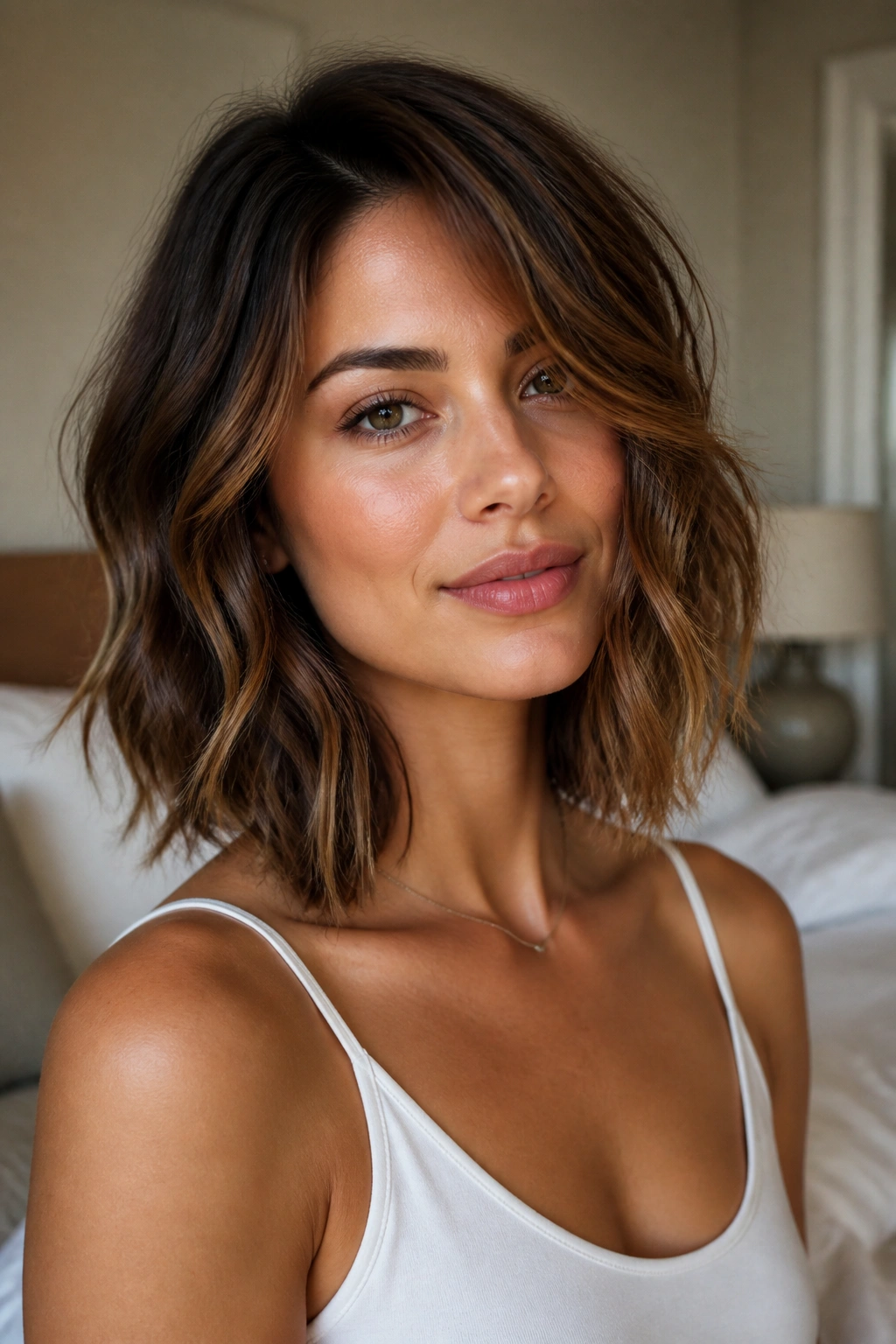
A collarbone-length lob is the cleanest place to start. It sits right where the neck opens up, which gives the waves room to swing without the cut feeling heavy. On medium length hair, this shape has a nice built-in balance: long enough to feel soft, short enough to keep the ends from dragging.
Why It Works So Well
The collarbone gives the haircut a natural stopping point. Hair that lands there tends to move instead of hanging flat, and that matters more than people think. Loose waves land in a better spot when the base cut has a little structure.
- Best for hair that falls straight at the root and bends at the ends
- Easy to style with a 1-inch curling wand
- Looks good with a center part or a soft off-center part
- Keeps enough length for clips, half-up styles, and low buns
One small warning: if your hair is very dense, ask for slightly removed weight at the ends. Otherwise the lob can start to puff out instead of bending.
2. Center-Part Beach Wave Lob
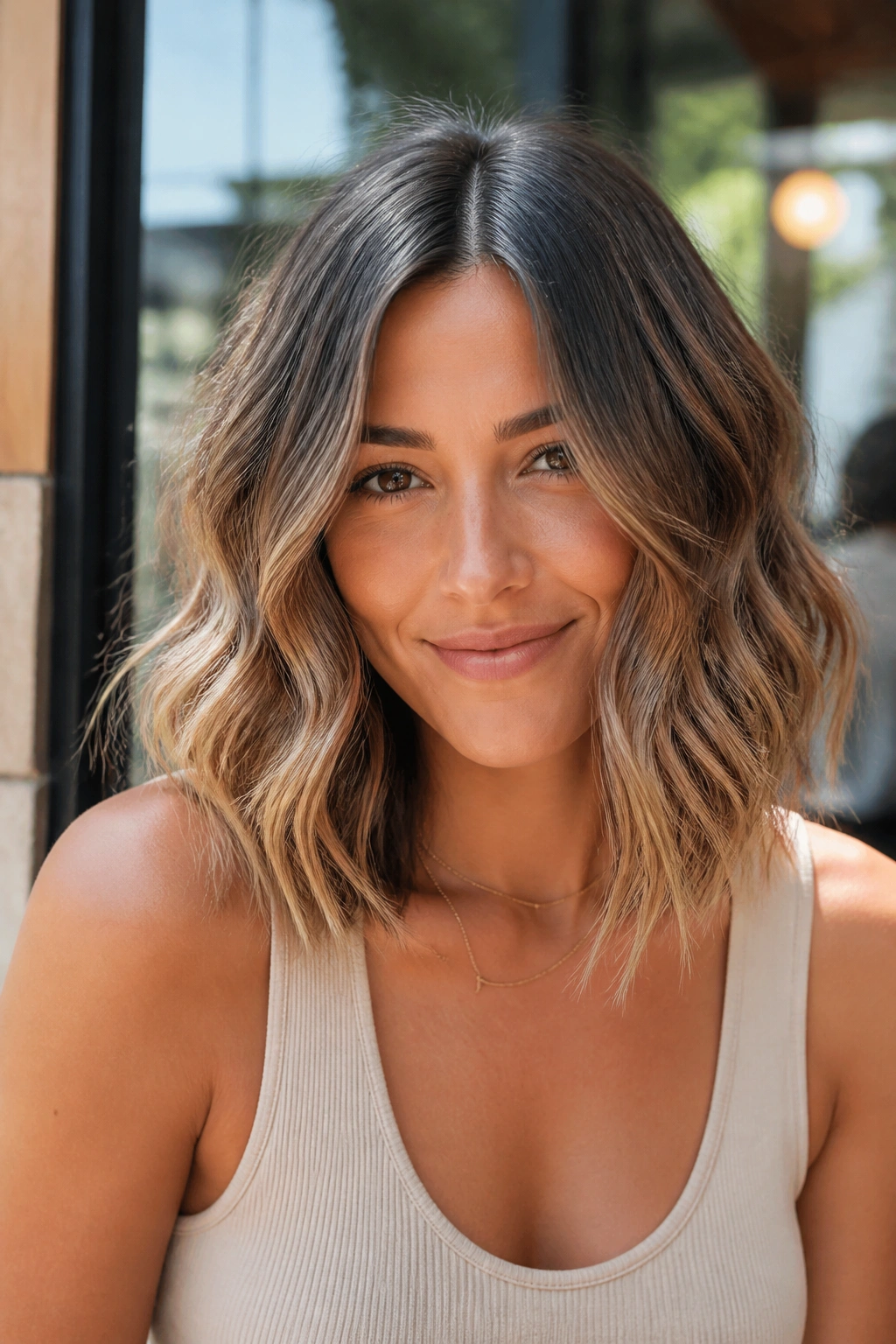
A center part changes the whole feel of a wavy lob. It makes the cut look cooler, cleaner, and a bit more deliberate, even when the waves are loose and undone. The middle part also lets both sides fall evenly, which is handy if your face is already balanced and you want the haircut to stay calm rather than dramatic.
Beach waves are not about tiny, perfect curls. They’re about a bend that starts a little below the cheekbone and loosens toward the ends. That softer pattern keeps medium length hair from looking overworked.
The best version of this cut has a bit of root lift, especially near the crown. A dry texture spray or a mousse at the roots gives the part some staying power. Without it, the whole style can collapse into the middle by lunch. That’s the boring part of the truth. Still worth doing.
3. Side-Part Wavy Lob With Soft Lift
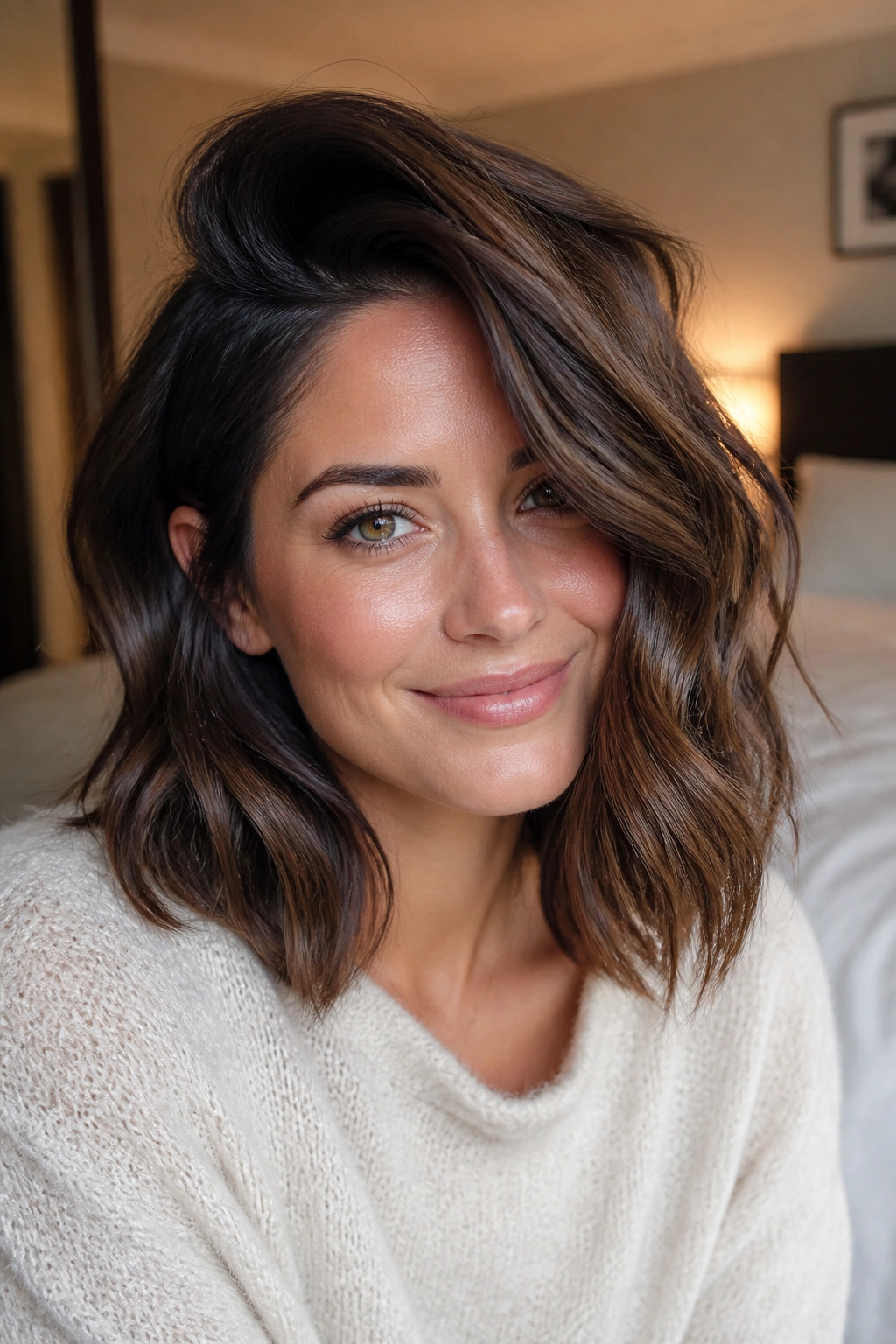
Why does a side part change so much? Because it gives the haircut a line to break against. On a wavy lob, that break creates instant shape, especially around the cheekbone and jawline.
The side-part version is the one I reach for when hair needs a little extra attitude. It looks fuller on top, and the wave pattern feels less predictable than a center part. If your hair lies flat around the crown, this is one of the easiest fixes.
Styling Note
Blow-dry the front section in the opposite direction first, then switch it back. That small trick builds lift without teasing. Finish with a light spray at the roots, not a heavy one — heavy sprays make the part stiff and greasy-looking fast.
4. Wavy Lob With Curtain Bangs
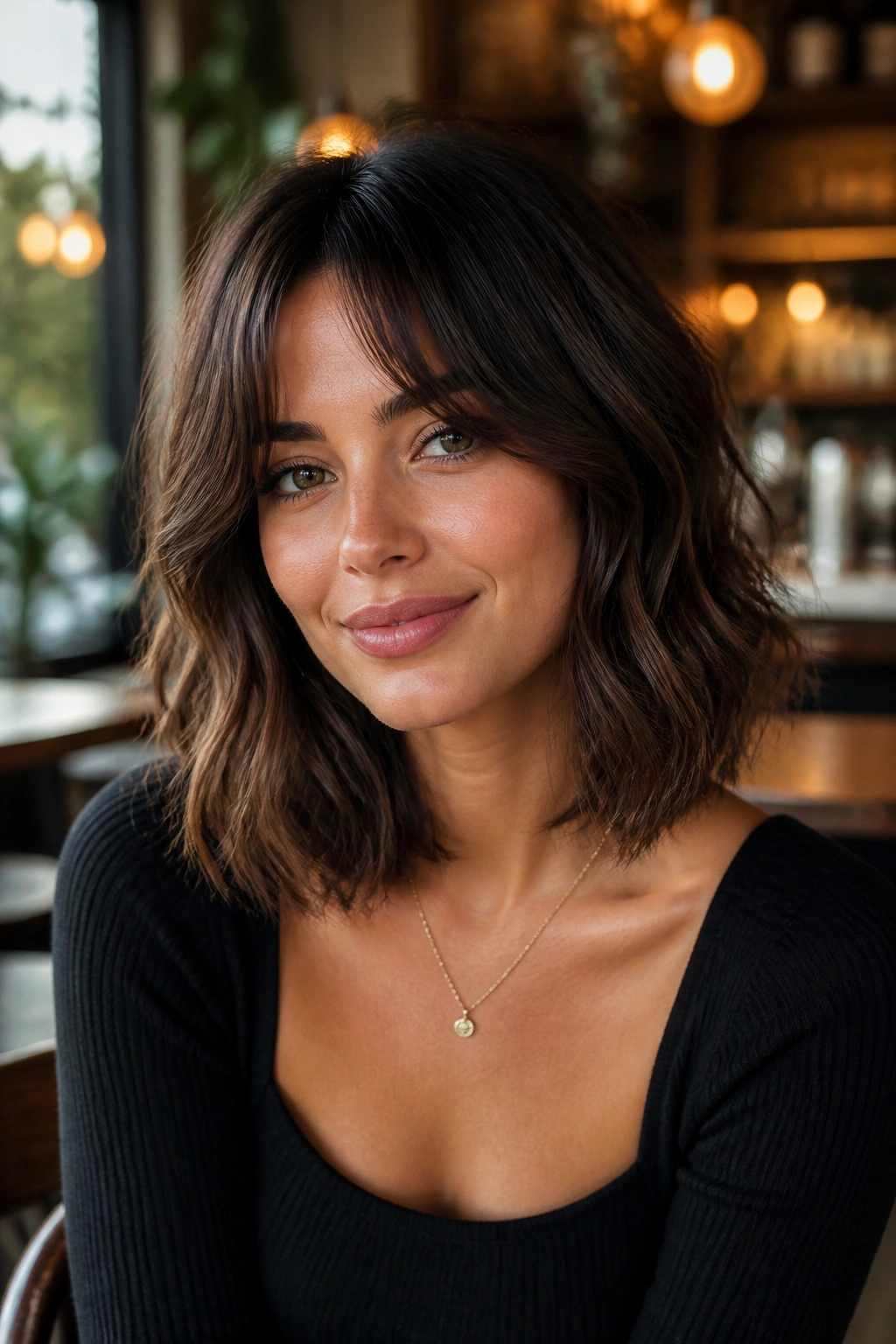
Curtain bangs and a lob are a smart pair. The bangs soften the forehead and slide into the waves instead of sitting on top of them like a separate haircut. That blend matters. You want the fringe to feel connected to the rest of the shape, not pasted on.
This version suits medium length hair especially well because the length keeps the bangs from dominating the face. The lob still does most of the work. The bangs just tilt the mood a little softer and more relaxed.
Ask your stylist to keep the shortest pieces around the brow or just below it, then let the sides taper into the cheekbone. If the bangs are cut too short, they can fight the waves. Too long, and they disappear. The sweet spot is right in the middle, and yes, that sounds obvious. It isn’t always easy to hit.
5. Blunt Wavy Lob With Clean Ends
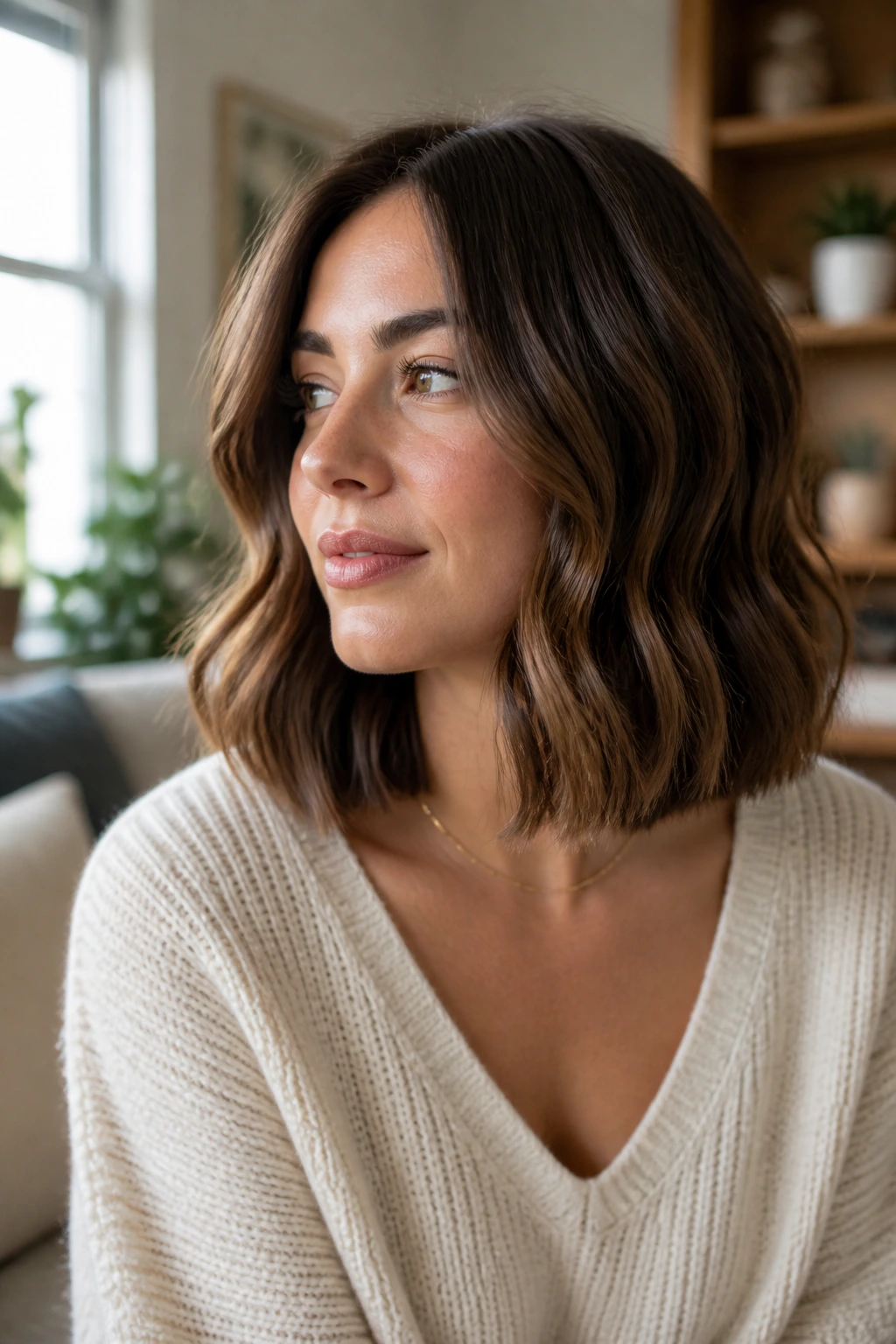
A blunt wavy lob has edge. Not attitude for the sake of it — just a sharper perimeter that makes the waves stand out. When the ends are cut straight, the movement above them looks fuller and more intentional. Medium length hair usually benefits from that contrast.
This is one of the best choices if your hair is fine but not fragile. The blunt line keeps the shape solid, and the waves stop it from looking too severe. On thicker hair, the same cut can feel heavy unless some internal weight is removed. That’s the trade-off.
The styling part is simple. Keep the waves loose and start them a few inches below the root. If you curl all the way up to the scalp, you lose the point of the blunt cut. The clean edge is the star here. Don’t bury it.
6. Layered Wavy Lob For Thick Hair
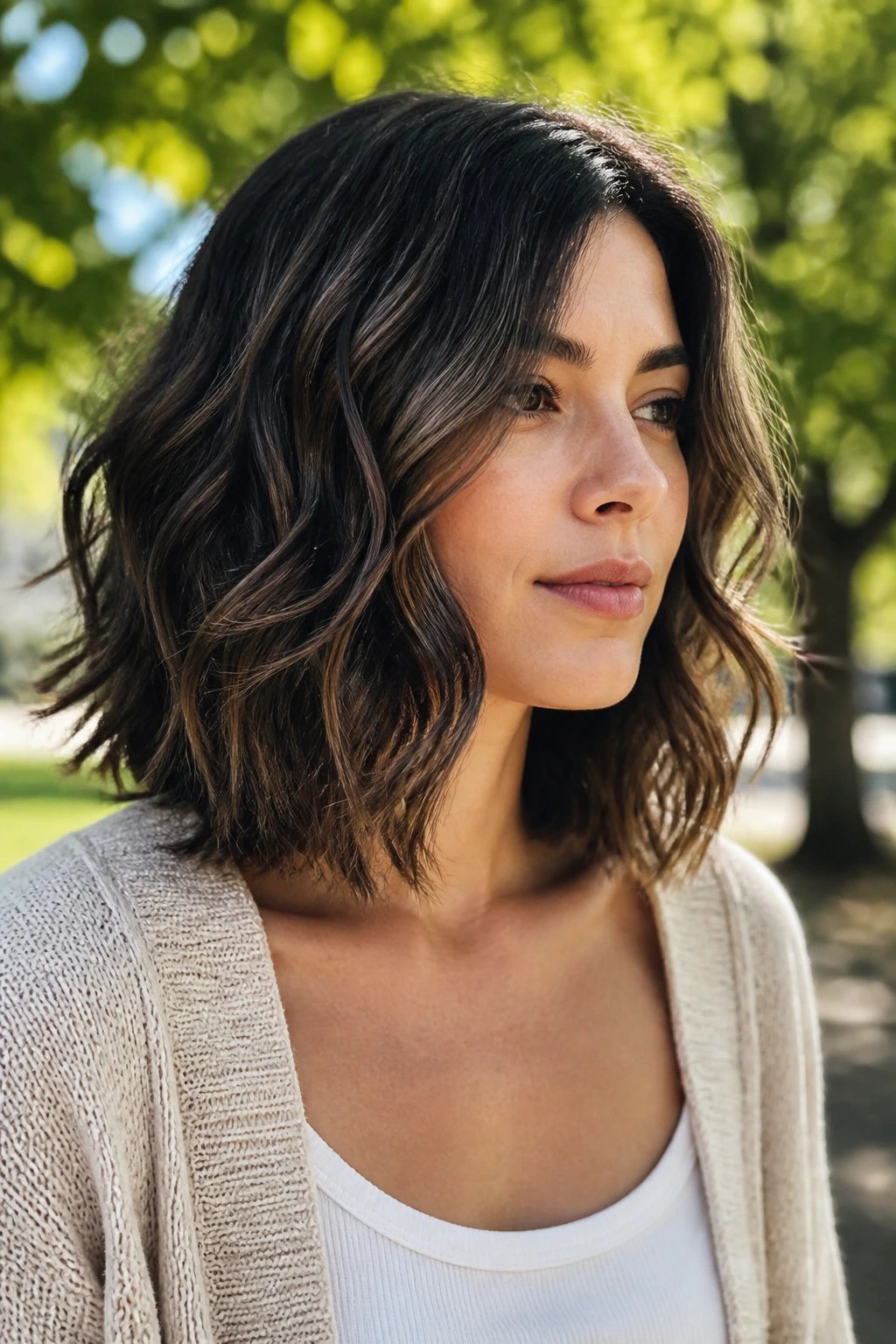
Thick hair loves a layered lob when the layers are placed with a purpose. The goal is not to chop the shape into pieces. The goal is to let the waves fall without that bulky triangle effect that thick hair can create at medium length.
A good layered lob removes weight from the right spots — usually around the interior and slightly through the sides — while keeping enough fullness at the perimeter. That keeps the haircut from feeling airy in a bad way. You want movement, not stringiness.
This cut also makes styling easier. Thick hair tends to hold a wave pattern well, but it can become too big if every section is curled the same direction. Alternate the curl pattern, brush it out lightly, then let the layers settle. It should look lived-in, not puffy. That difference matters.
7. Lightweight Wavy Lob For Fine Hair
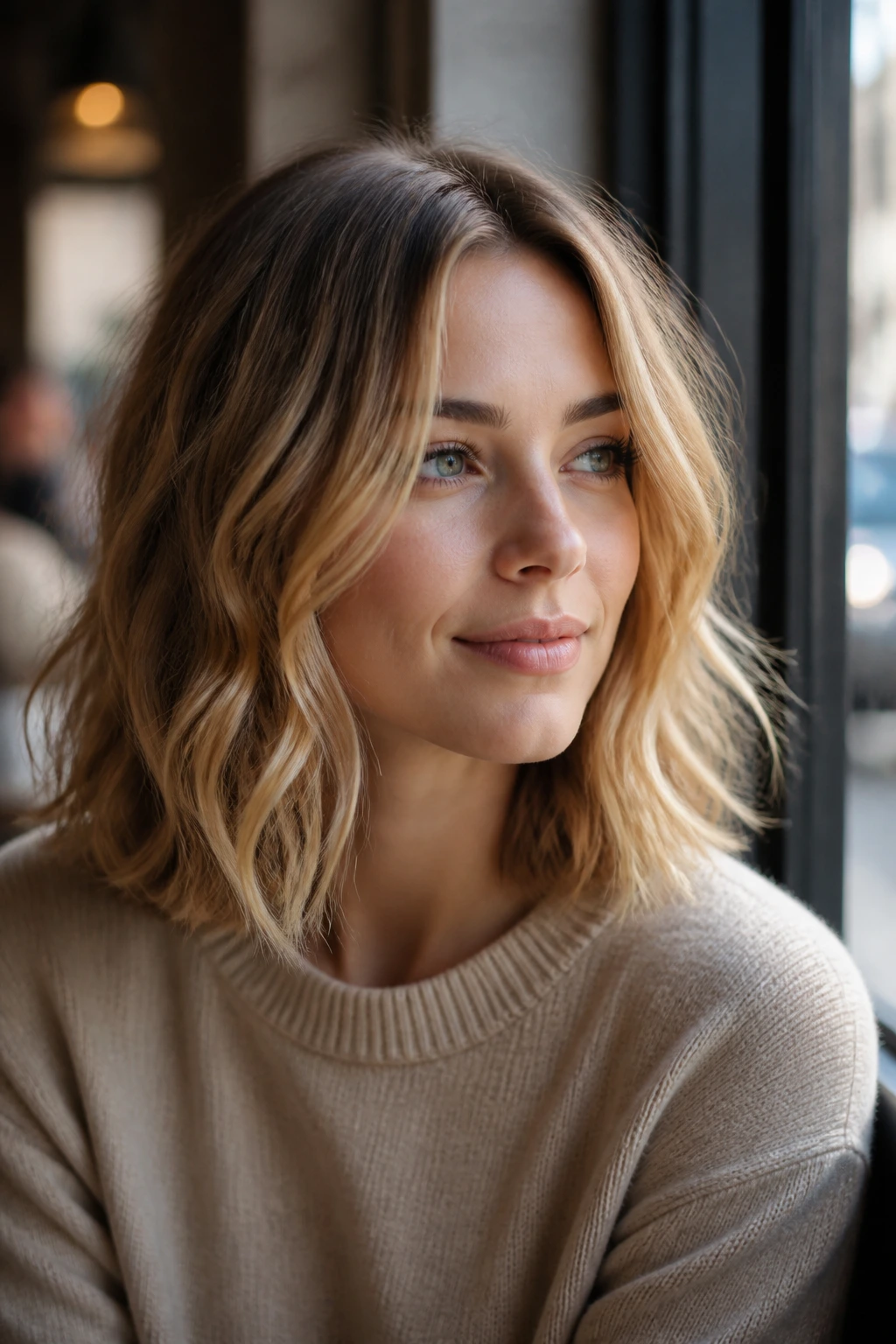
Fine hair needs a different kind of help. Too many layers can make it look wispy at the ends, and too much texture can make the lob collapse faster than you’d like. A better choice is a light, softly shaped lob with a little bit of movement around the face and just enough internal layering to keep it from falling flat.
The real trick is where the wave starts. Keep it lower, around the mid-lengths, so the root area can stay fuller. A root-lift mousse or a lightweight volumizing spray can help, but the cut has to do most of the work. Products can’t fake density for long.
If you want the shape to last, don’t rake through the hair too much after styling. Fine hair loses body fast when it’s handled over and over. Touch it once, maybe twice. Then leave it alone.
8. Shaggy Wavy Lob With Choppy Texture

A shaggy lob looks like it has a little more life in it. The ends are piecey, the layers are a bit more visible, and the overall finish feels more relaxed than polished. It’s a good fit for medium length hair that needs movement and doesn’t want to sit in one neat line.
This cut works because the wave pattern can break up the layers instead of revealing them too harshly. A razor or light point-cutting through the ends can help, but only if the person cutting hair understands restraint. Too much texturizing and the lob starts to fray.
What to Ask For
- Choppy ends, not shredded ends
- Soft layering through the mids
- A little extra framing near the face
- Enough length to keep the shape collarbone-adjacent
Best with: dry texture spray, a diffuser, or a quick bend from a flat iron if your natural wave needs help.
9. Polished Wavy Lob With Glossy Finish
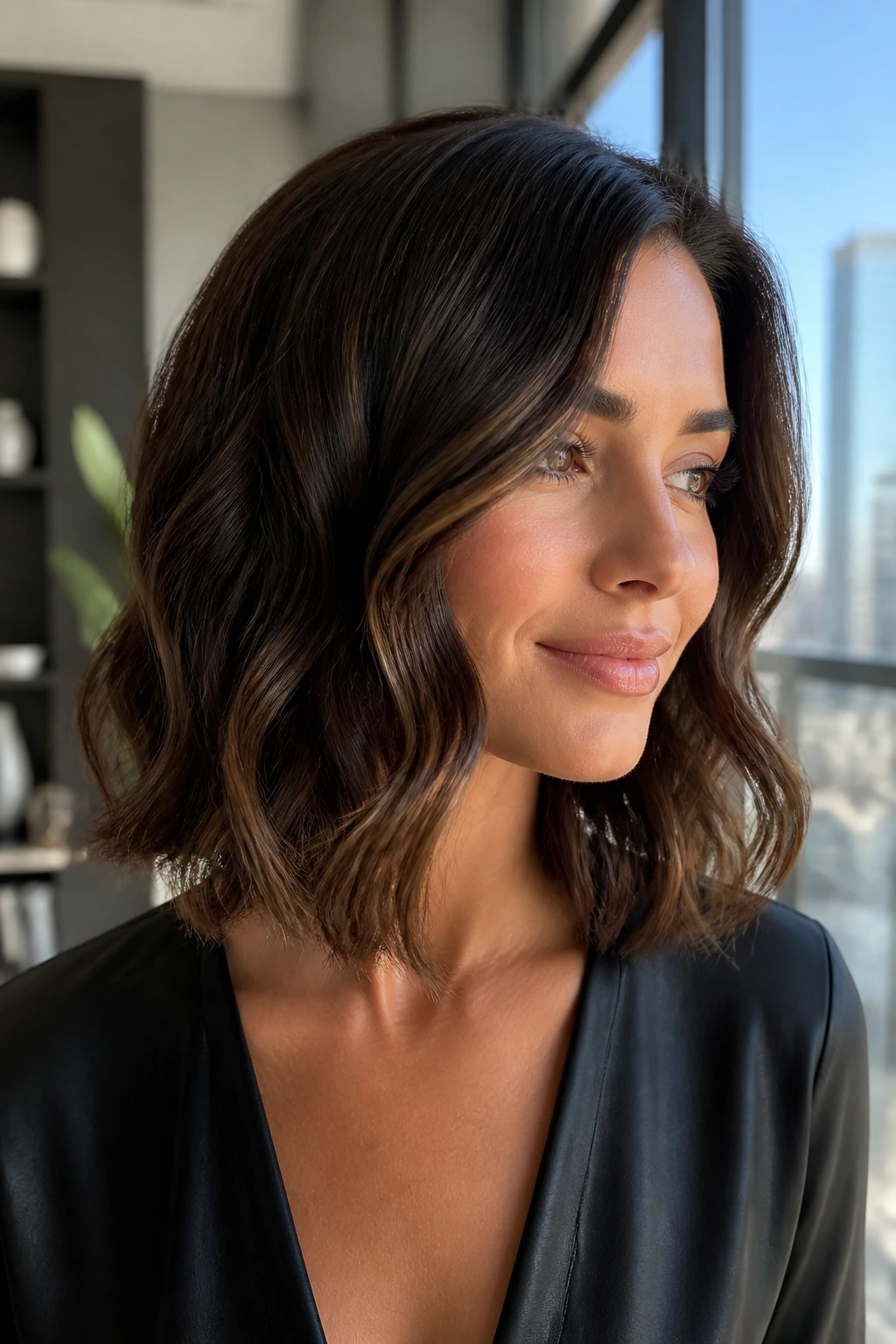
Some wavy lobs look better with a smoother finish. This is the one you wear when you want the haircut to feel neat, not messy. The wave is still there, but it’s controlled, almost satin-like, with a soft bend instead of a rough beach texture.
Gloss matters here. A shine serum on the mids and ends can make medium length hair look healthier and more expensive, even if the cut itself is simple. Use a tiny amount. A pea-sized drop is enough for many heads of hair. Too much and the ends go limp.
This version suits people who wear structured clothes, tailored jackets, or anything with clean lines. The haircut should echo that. If you’re someone who hates piecey texture, this is the safer choice.
10. Air-Dried Wavy Lob
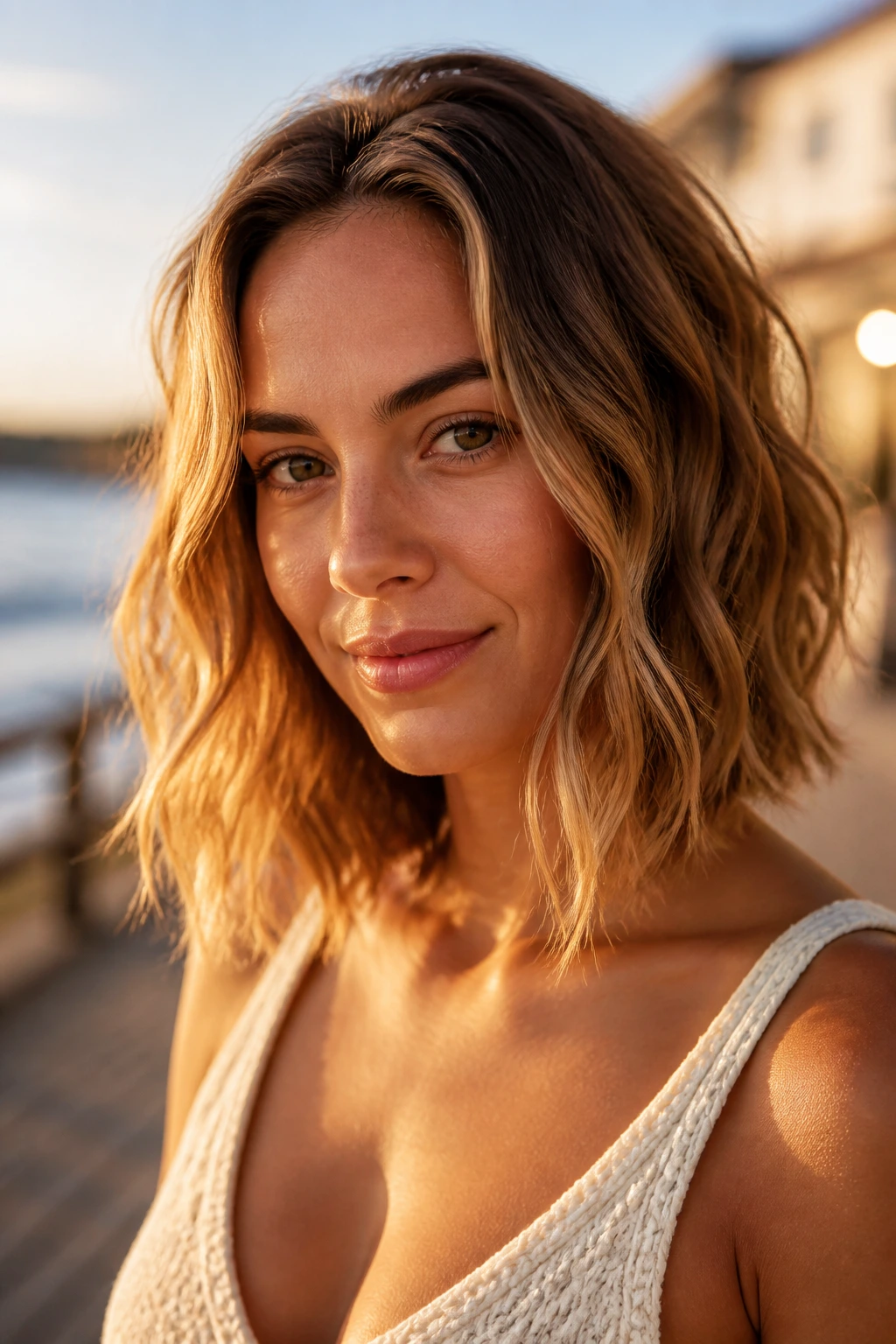
An air-dried lob is for people who want their haircut to do the heavy lifting. The cut has to be shaped well, because you’re not relying on hot tools to fake the movement. That means the waves need to land in a place that looks good as they dry on their own.
A little leave-in conditioner and a styling cream are usually enough. Scrunch the hair gently, then leave it alone. If your wave pattern is loose, you may want to twist a few front sections while damp so the face-framing pieces don’t dry flat.
Does it always dry the same way? No. Hair has its moods. But an air-dried lob has a charm that polished styles can miss. It looks a bit easier, and often that’s the point.
The Best Hair Type for This Cut
Medium to thick hair with a natural bend tends to win here. Very straight hair can still wear it, but it may need a few touch-ups with a wand around the front.
11. Face-Framing Wavy Lob
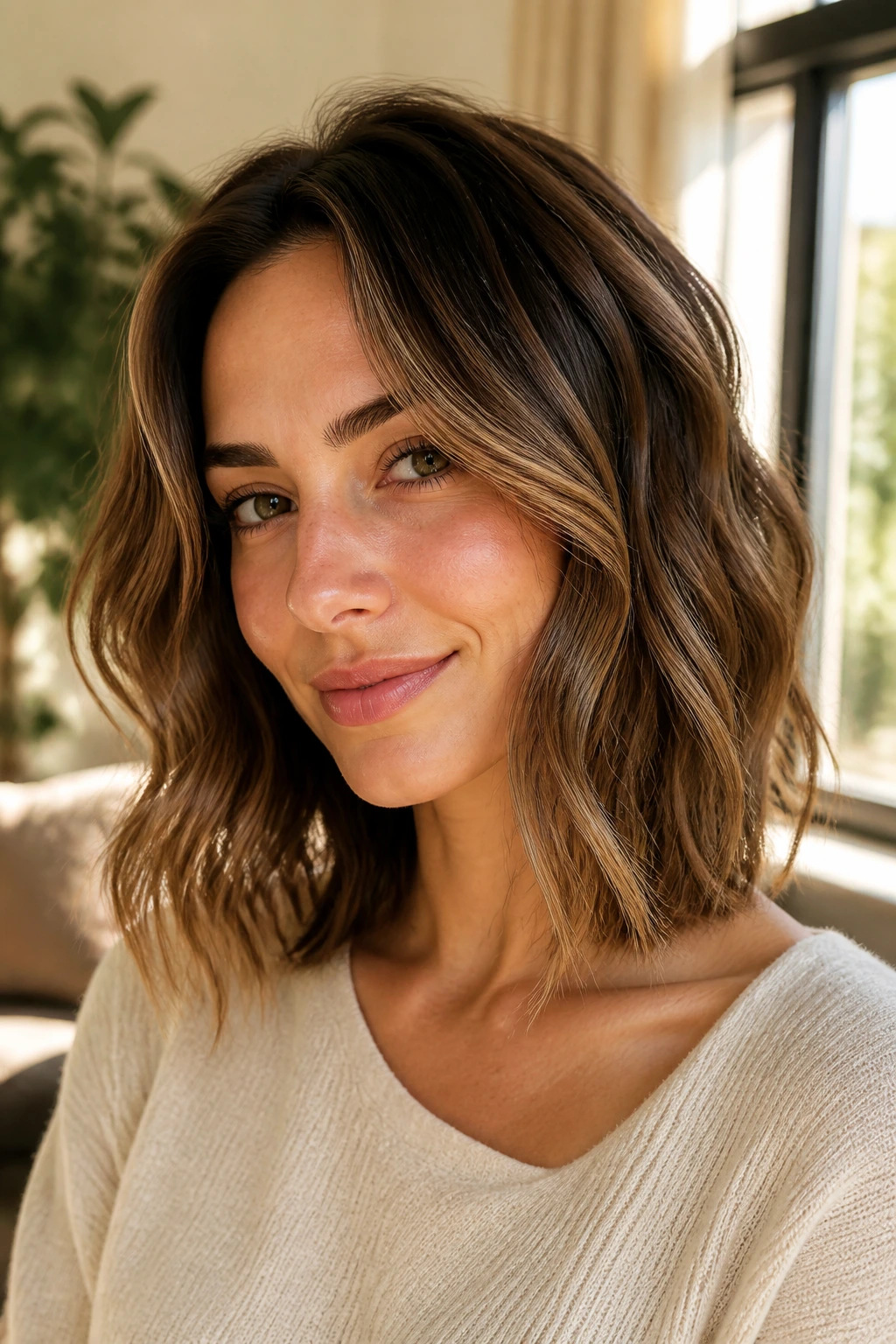
Face-framing pieces are one of those small changes that do a lot. A few longer front layers can soften the entire haircut, especially if your medium length hair feels one-note when it all lands at the same level.
The framing should start around the cheekbone or just below it, then slide into the rest of the lob. That creates a curve that helps the waves fold around the face instead of hanging beside it. It’s flattering in a practical way, not a dramatic one.
This style is especially useful if you wear glasses, because the front pieces can be adjusted to sit above or below the frames without fighting them. It also keeps the haircut from looking boxy when you tuck one side back. Small detail. Big payoff.
12. Angled Wavy Lob
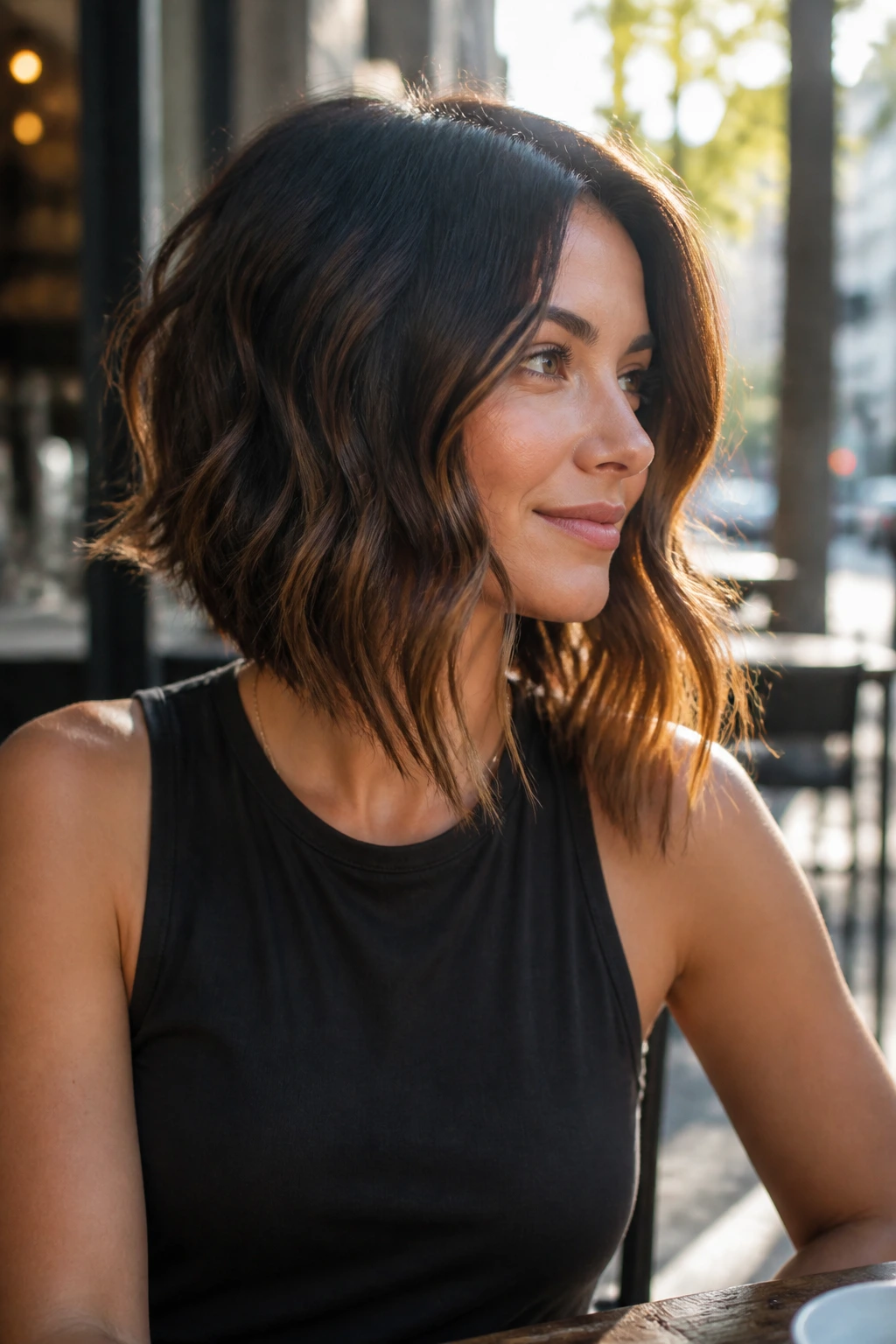
An angled lob is shorter in the back and a little longer toward the front. The angle gives the haircut motion even before you style it, which is useful if your hair tends to fall flat when it’s all one length.
The front pieces graze the jaw or collarbone, depending on how strong you want the angle to be. A softer angle reads calm. A sharper one feels sharper, almost architectural. I usually prefer the softer route on wavy hair because the bends already create plenty of interest.
If you want the cut to keep its shape, ask for a clean outline at the ends. The angle should be visible from the side, not disappear once you add waves. That part gets missed a lot.
13. Wavy Lob With Bottleneck Bangs
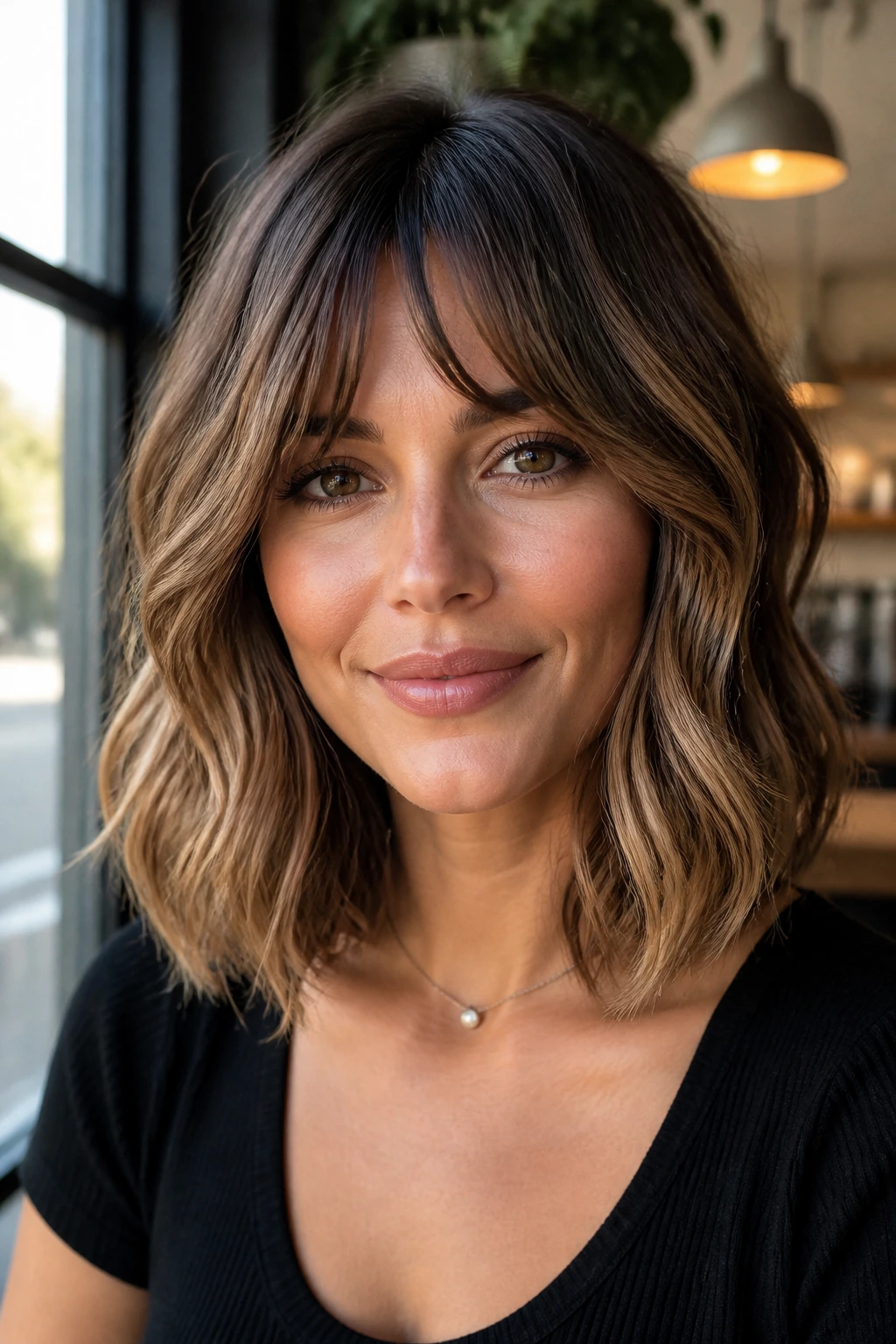
Bottleneck bangs are a good middle ground if curtain bangs feel too wide and full bangs feel too heavy. They start narrow at the center, open a little as they move outward, and blend into the lob without a hard line.
On medium length hair, that shape helps keep the top of the haircut light. It also gives the face some softness without covering too much of the forehead. The effect is subtle, which is nice. Not every haircut needs to shout.
How It Works
The narrow center keeps the bangs from taking over, while the wider side pieces connect to the waves. That connection is the real win. The bang should not look like a separate panel of hair. If it does, the cut feels chopped up.
14. Retro Wave Lob With a Deep Side Part
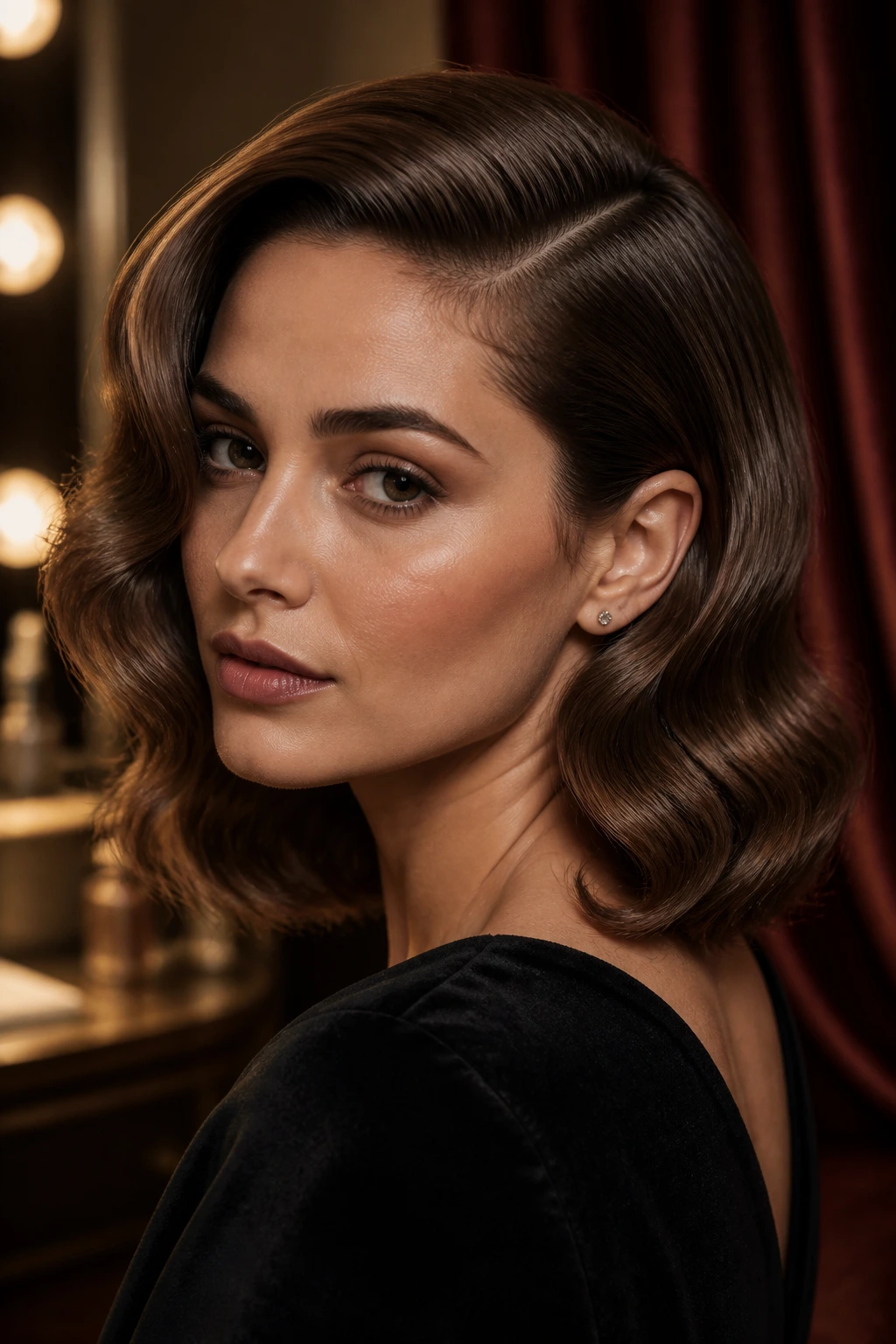
A deep side part and a polished wave pattern can push a lob into vintage territory fast. The look is soft, sculpted, and a little glamorous without being stiff. It’s the kind of style that works especially well when the hair is shiny and the waves are brushed into a smooth S-shape.
This version needs more direction than a beach wave lob. Set the waves with a larger curling iron or wand, let them cool, then brush through them lightly. The final shape should feel deliberate. Not rigid. Deliberate.
A deep side part also gives a nice lift over one eye and adds height at the crown. That extra height can be useful if you want the haircut to feel more balanced with a strong jawline or a longer face shape. Keep the front pieces soft. Sharp ends kill the mood.
15. Tousled Wavy Lob For Naturally Curly Hair

If your hair already leans curly, a lob can be a relief. The length is short enough to keep the curl pattern lively, but long enough to avoid that round, puffy shape that sometimes happens with shorter cuts. A tousled lob lets the curl separate a little and breathe.
The key is shaping the cut when the curls are in their natural state. Dry cutting or curl-by-curl shaping often gives a better result than cutting it wet and hoping for the best. Curls shrink. You know this already if you’ve ever left the chair and stared at the mirror.
For styling, use a curl cream that gives slip, then scrunch with a microfiber towel or T-shirt. Once it’s dry, break the cast gently. The waves and curls should feel soft, not crunchy. That part matters more than people admit.
16. Invisible-Layer Wavy Lob
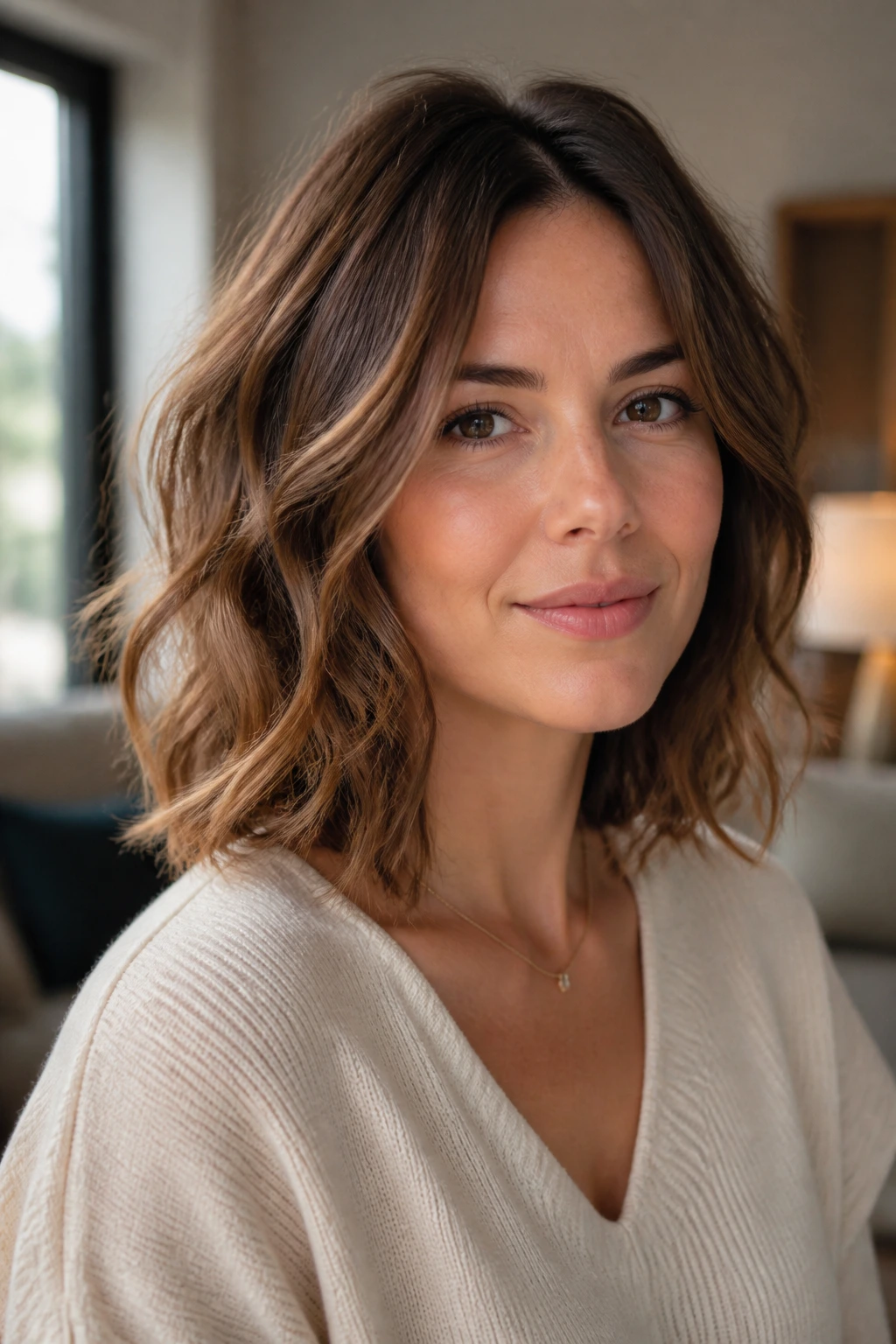
Invisible layers are the quiet workhorse of this whole haircut family. They remove bulk without advertising themselves, which means the surface still looks clean while the inside has enough movement to keep the waves from stacking up too heavily.
This is a smart choice if you like the idea of a blunt lob but need more swing. The cut keeps its line, yet the hair feels lighter when you move. That balance is hard to beat. It’s also the kind of detail many people miss until they feel the difference.
If your hair sits between straight and wavy, invisible layers can help the bend show up more clearly. The hair doesn’t have to fight its own weight as much. Less drag. Better shape.
17. Beachy Balayage Wavy Lob
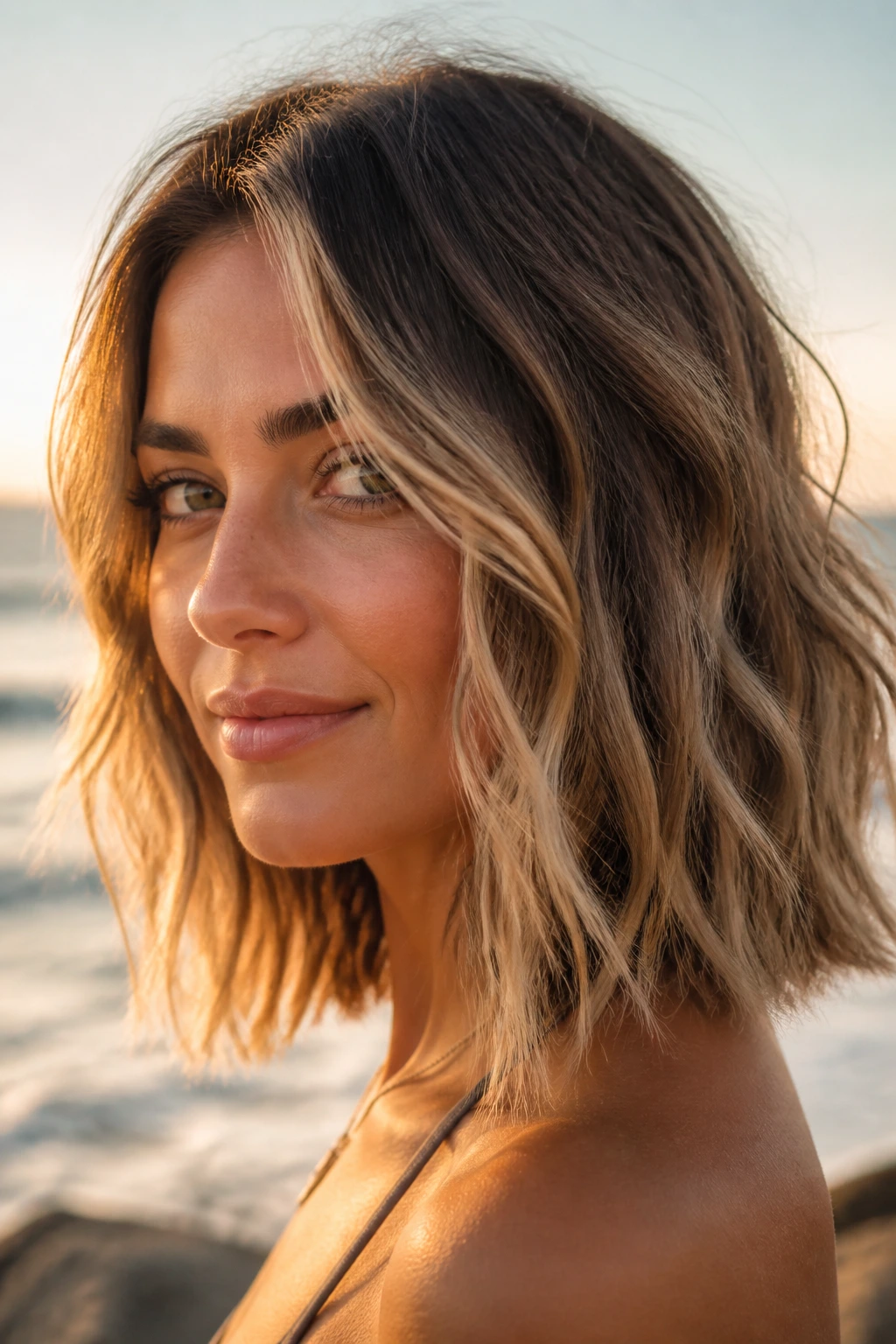
Balayage and a wavy lob are natural partners because the color placement follows the movement of the cut. Light pieces around the front and through the mids make each wave read more clearly, which matters when you want texture without a ton of layering.
The best balayage for medium length hair is usually painted with restraint. A few brighter ribbons near the face, some softer pieces through the ends, and a darker root to hold the shape. Too much lightening can make the haircut look dry. Too little, and the waves disappear into one flat color.
This style likes casual styling: loose bends, finger-combed texture, and a salt spray or matte mist. It’s relaxed, but not sloppy. There’s a difference.
18. Brunette Gloss Wavy Lob
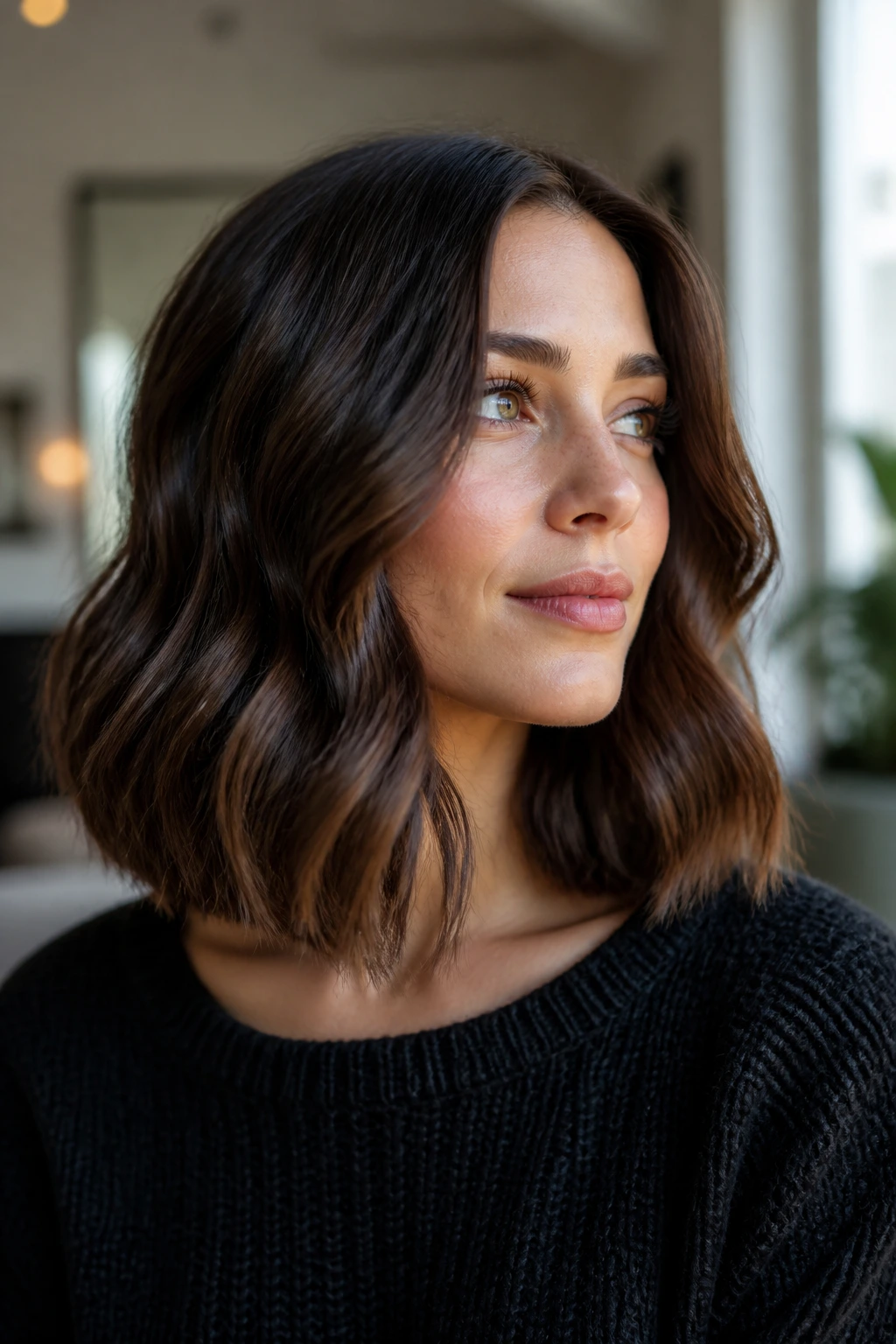
Brunette hair can look richer in a lob than in longer cuts because the shape lets the shine sit on the waves instead of getting lost in the length. A gloss treatment or a clear shine glaze can make the color feel deeper and the waves look more defined.
This is one of my favorite low-drama cuts. No huge layers. No wild texture. Just a clean lob, a soft wave, and a color that has some depth to it. If your hair already has natural dimension, the result can be surprisingly polished.
Use a smoothing cream before blow-drying, then set a few bends with a medium wand. You want the hair to move like fabric. Not stiff. Not over-curled. Just soft and touchable.
19. Blonde Dimension Wavy Lob
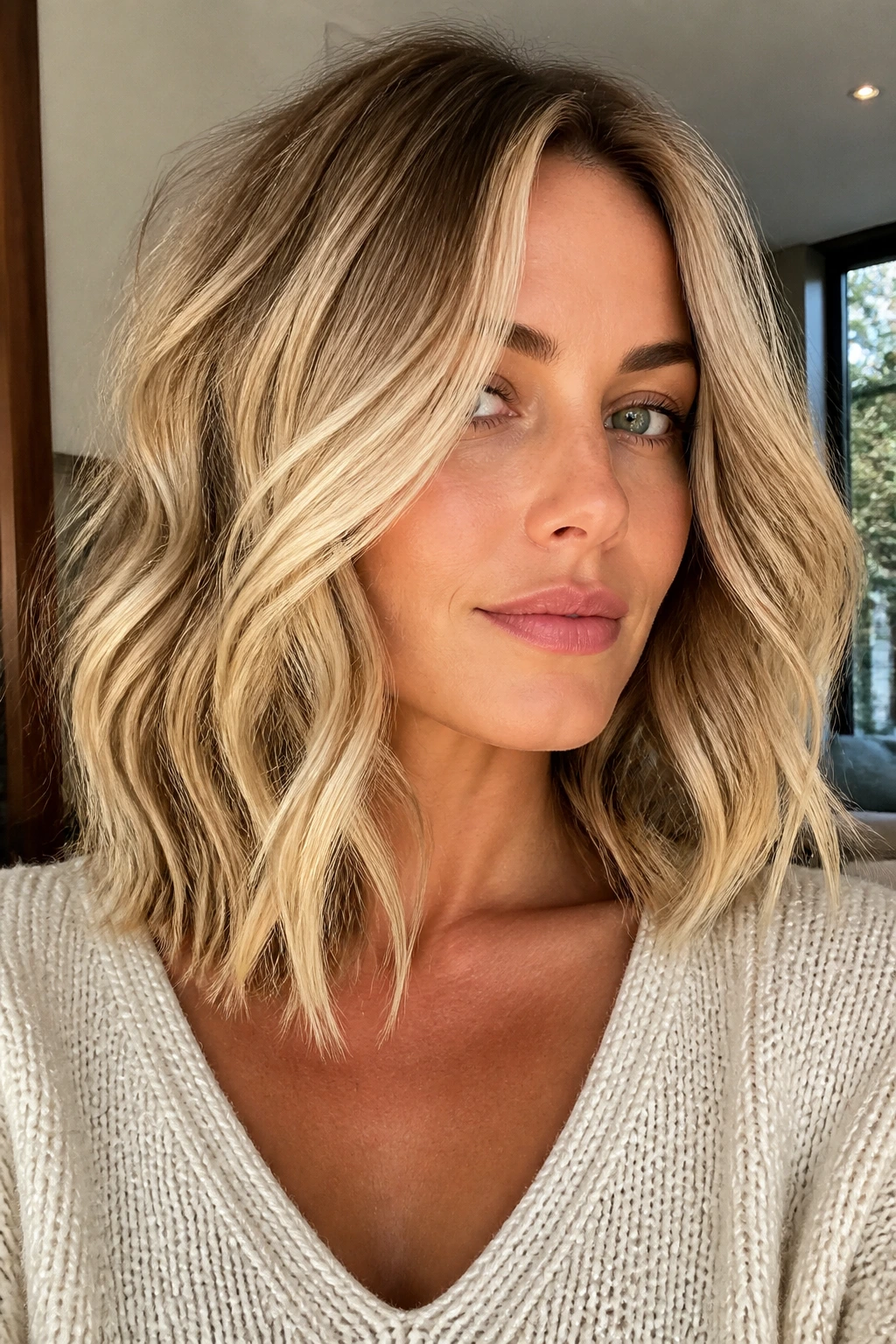
Blonde hair can go flat fast if the cut is too even, so dimension matters. A wavy lob with some tonal variation — lighter pieces around the face, slightly deeper roots, maybe a few lowlights — keeps the haircut from looking washed out.
The waves help even more than the color does. They create shadow and light across the surface of the hair, which gives a medium length cut more depth. Without that movement, blonde can sometimes look one-note.
This style works best when the ends are kept healthy. Lightened hair shows damage fast, and a rough lob loses its shape at the tips first. Trim it on a regular cycle and use a heat protectant every time you add a bend. Annoying? Yes. Worth it? Also yes.
20. Copper Wavy Lob
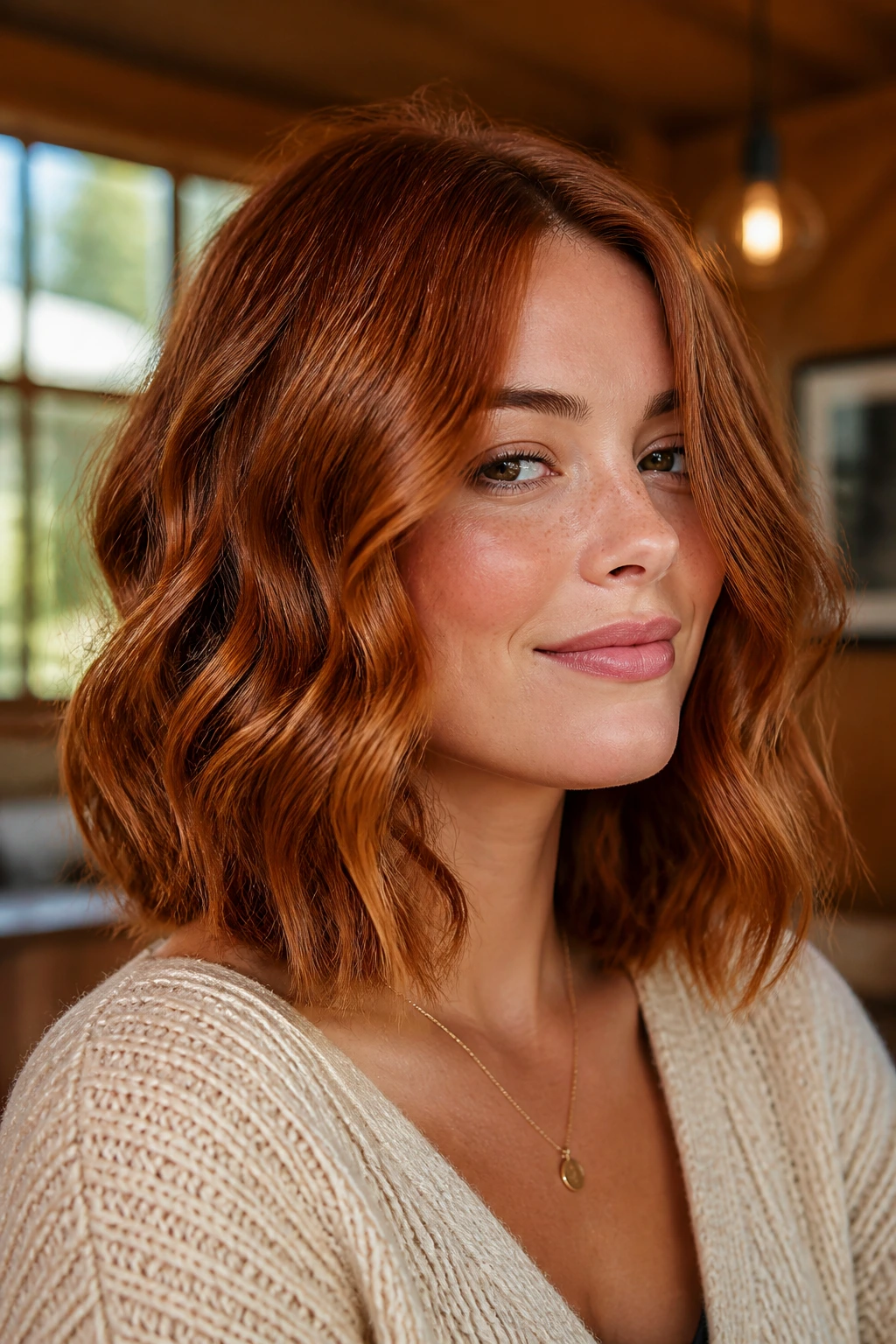
Copper and a wavy lob have real energy together. The color catches attention fast, and the haircut keeps it grounded. Medium length hair is a nice canvas for copper because the shape doesn’t swallow the tone the way longer hair sometimes can.
The wave pattern should be soft and a little irregular. Perfect curls can make copper look too uniform. A loose bend with a few straighter ends feels more modern and less costume-like. That’s the line to watch.
Copper also needs shine. Dry ends make the color look dull. A small amount of smoothing serum on the last inch or two can help the tone read richer, especially in indoor light.
21. Razor-Cut Wavy Lob
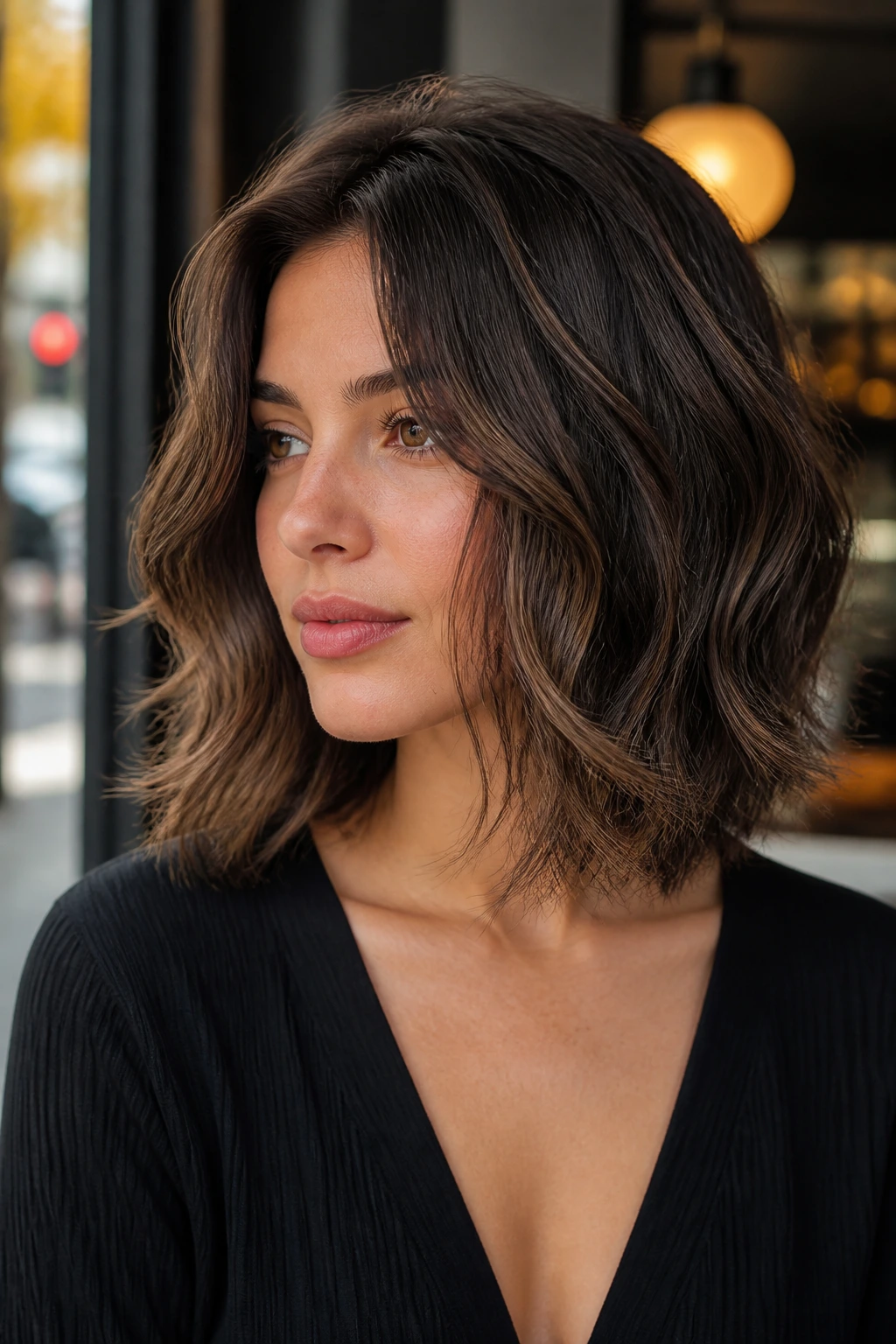
A razor-cut lob is not for everyone. It gives the ends a softer, feathered feel, which can look airy and cool on the right hair, but it can also make very fine or very damaged hair look frayed if the cut is too aggressive.
When it works, though, it really works. The razor removes weight and leaves a line that has movement built into it. The waves fall with less stiffness, and the haircut can feel almost effortless. Almost.
What to Watch For
- Best on healthy medium to thick hair
- Needs a stylist who knows how much pressure to use
- Can look too rough on hair that breaks easily
- Usually looks better with a little styling cream, not heavy oil
22. Soft French-Girl Wavy Lob
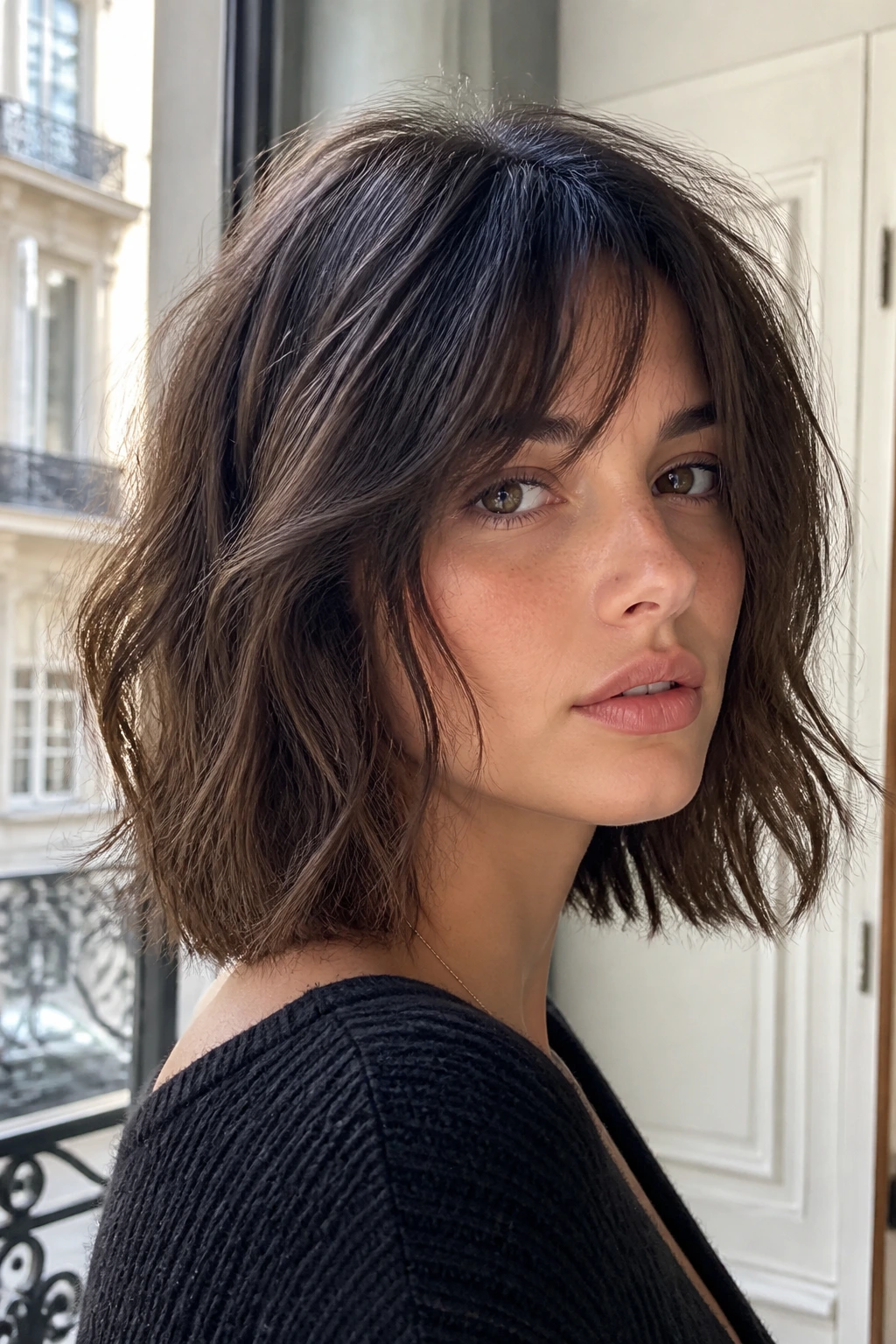
The French-girl version of a wavy lob is less about a perfect wave and more about soft, uneven movement that looks like you didn’t fuss. That doesn’t mean careless. It means the haircut itself is doing enough that the styling can stay light.
Think of it as a slightly undone lob with a clean silhouette. The ends are tidy, the texture is relaxed, and the face-framing pieces fall in a way that feels easy. If the hair is too polished, the mood disappears. If it’s too messy, the cut gets lost.
A small flat iron bend near the face can help create that barely-there wave people like. Use it sparingly. Two or three sections are often enough.
23. Wavy Lob With Tucked-Behind-the-Ear Styling
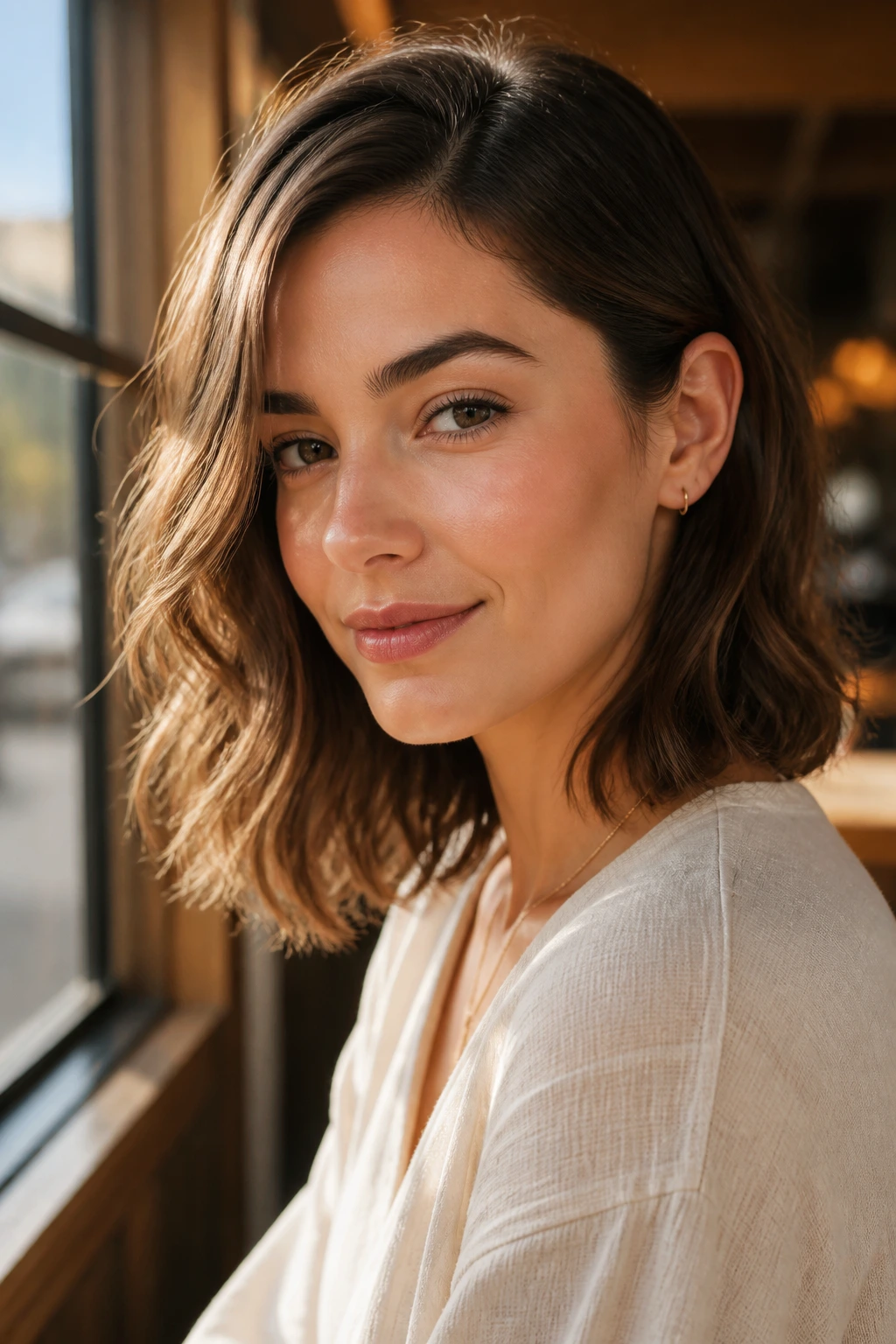
This one is practical and underrated. A wavy lob that can be tucked behind the ear without losing its shape is useful in real life — at work, at dinner, while you’re trying not to have hair in your face for an hour. The haircut needs enough length to tuck, but not so much that it drops straight out again.
A slight angle or a bit of layering near the front helps the tuck stay put. So does texture. Hair with a tiny bit of grit holds behind the ear better than silky hair that slips the second you move.
If one side is tucked and the other falls loose, the haircut gets a casual asymmetry that feels easy. That’s often more flattering than trying to make both sides behave the same way.
24. Wavy Lob With a Money Piece
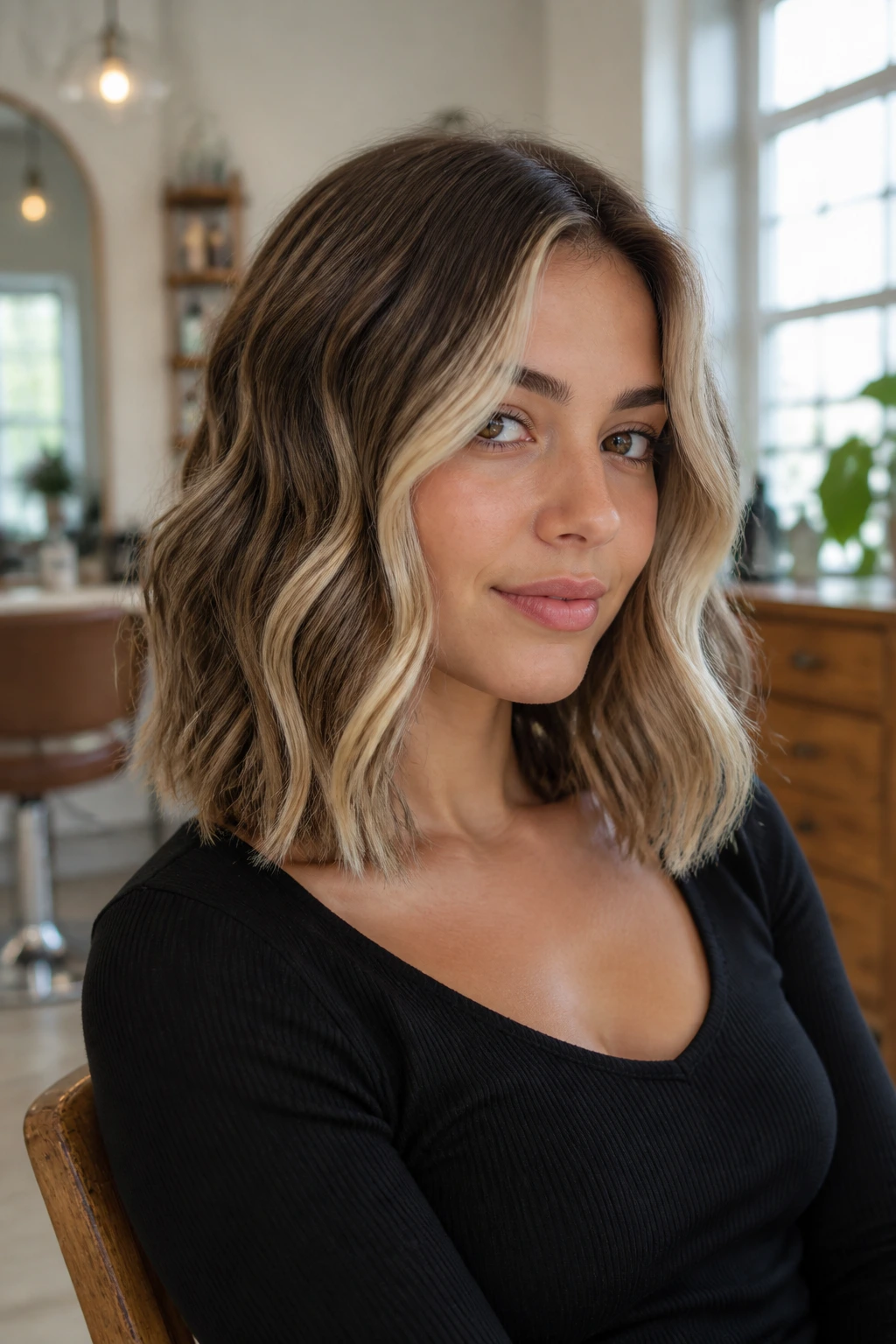
A money piece is that brighter front section around the face, and on a lob it can make the whole cut look lighter and more focused. The brightened area draws attention to the wave pattern near the front, which is where most people notice the haircut first.
This is a good choice if the rest of your color is deeper or more muted. The contrast keeps the medium length from blending into your clothes or skin tone. The front pieces should still be soft, though. Too stark and the cut starts to look disconnected.
I like this best when the waves are slightly more defined near the face and looser through the back. That little shift gives the color room to show without making the whole head feel overdone.
25. Wavy Lob For Round Faces
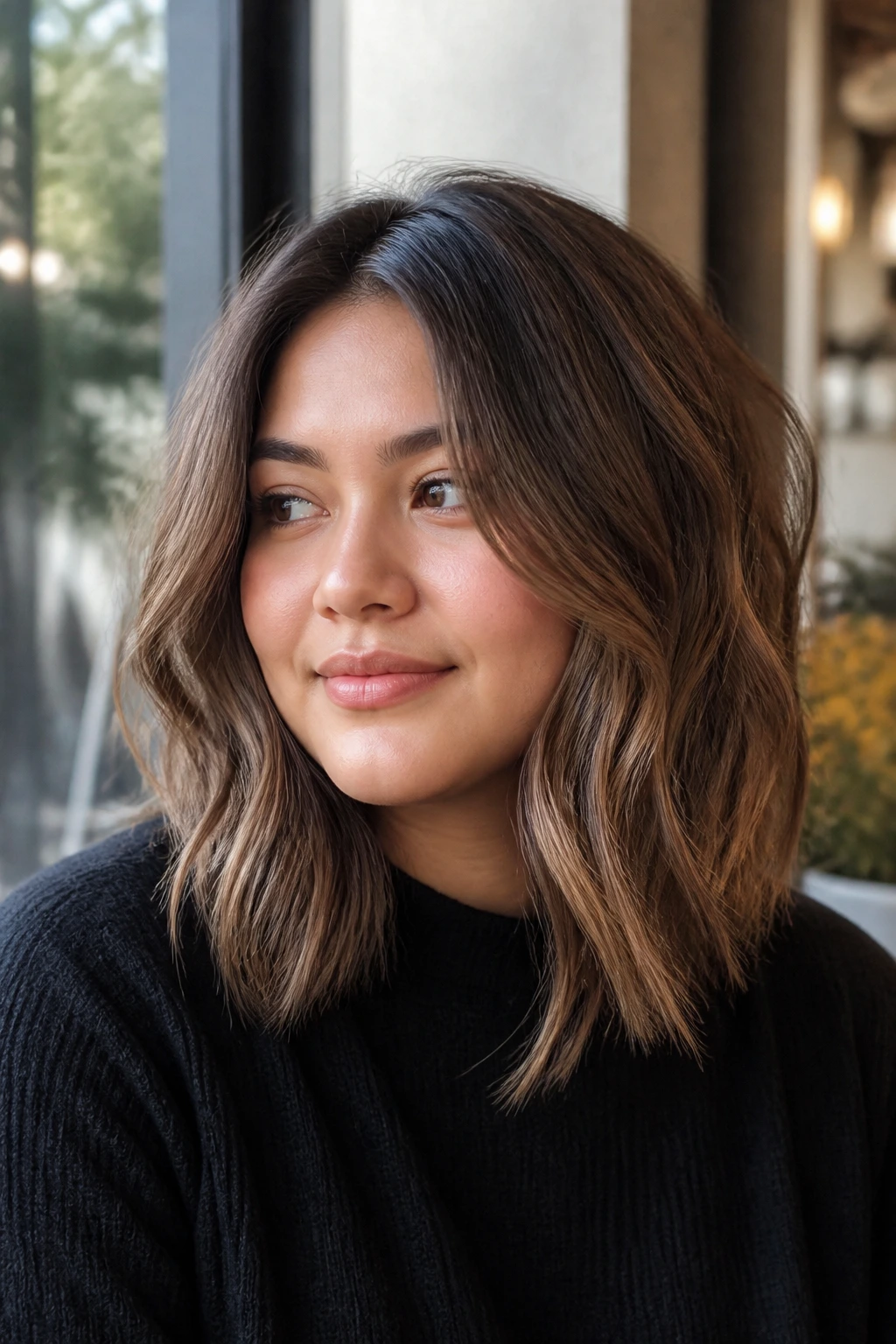
A wavy lob can be very flattering on a round face when the cut has a little length in front. The goal is to create vertical movement, not width. So the waves should sit lower, closer to the mid-lengths and ends, while the front pieces stay a bit longer.
A center part can work, but a soft off-center part often gives more shape. Side sections that graze the cheekbones help slim the overall outline without trying too hard. The haircut should move downward, not outward.
Avoid puffing the waves out near the cheeks. That’s the mistake that turns a nice lob into a wider shape than intended. Keep the crown smooth and let the ends do the talking.
26. Wavy Lob For Oval Faces
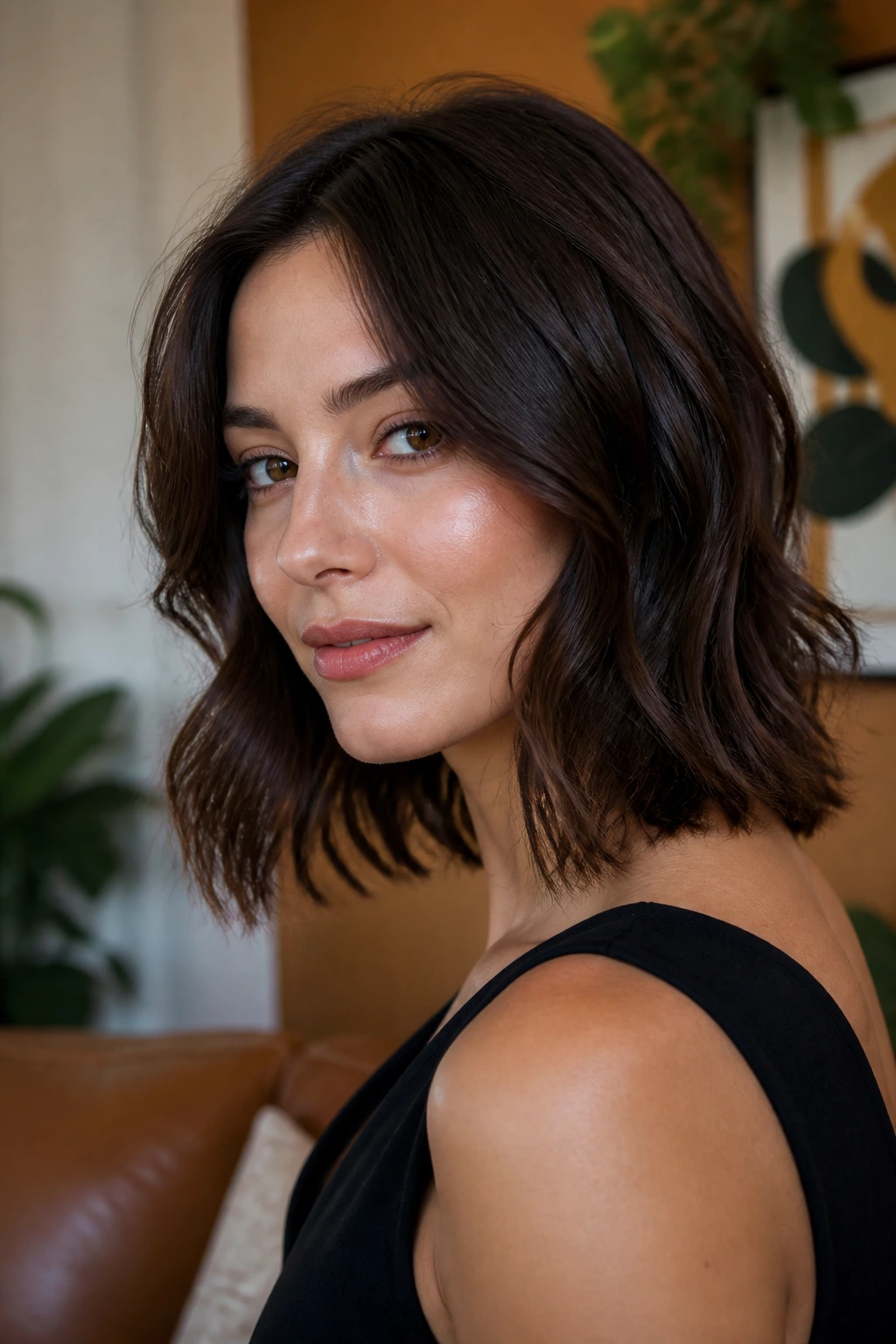
Oval faces get a lot of freedom here, which is half the fun. The balance of an oval shape means you can wear a blunt lob, a layered one, a center part, or a side part without fighting your features. The trick is deciding what mood you want.
If you want something softer, keep the waves loose and the front pieces a little longer. If you want the haircut to feel sharper, bring the ends up a touch and keep the wave pattern more controlled. Oval faces can carry both.
That said, don’t overcomplicate it. A medium length wavy lob already has enough structure. You’re adjusting the outline, not rebuilding the whole thing.
27. Wavy Lob For Square Jawlines
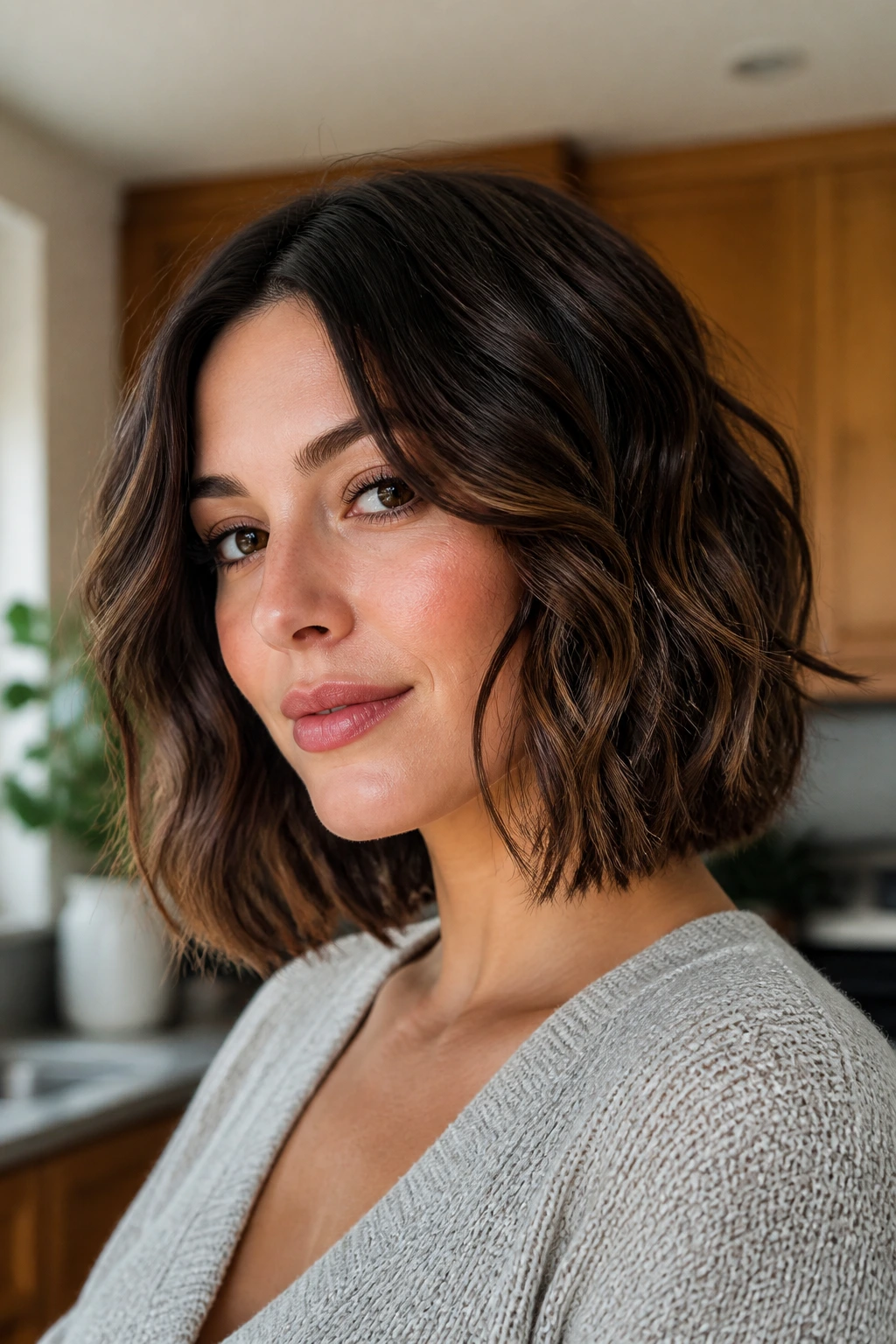
Square jawlines often look better with a lob that bends around the lower face rather than ending right at the jaw. Soft waves help because they interrupt the hard line a bit and keep the haircut from echoing the jaw too closely.
Layers near the face can soften the corners without hiding them. That balance is useful. You still want the jawline to be visible; you just don’t want the haircut to stop dead right there. A little length below the chin usually helps.
Loose waves work better than tight ones here. Tight curls can make the shape busier than it needs to be. Soft, brushed-out bends are easier to live with.
28. Low-Maintenance Grow-Out Wavy Lob
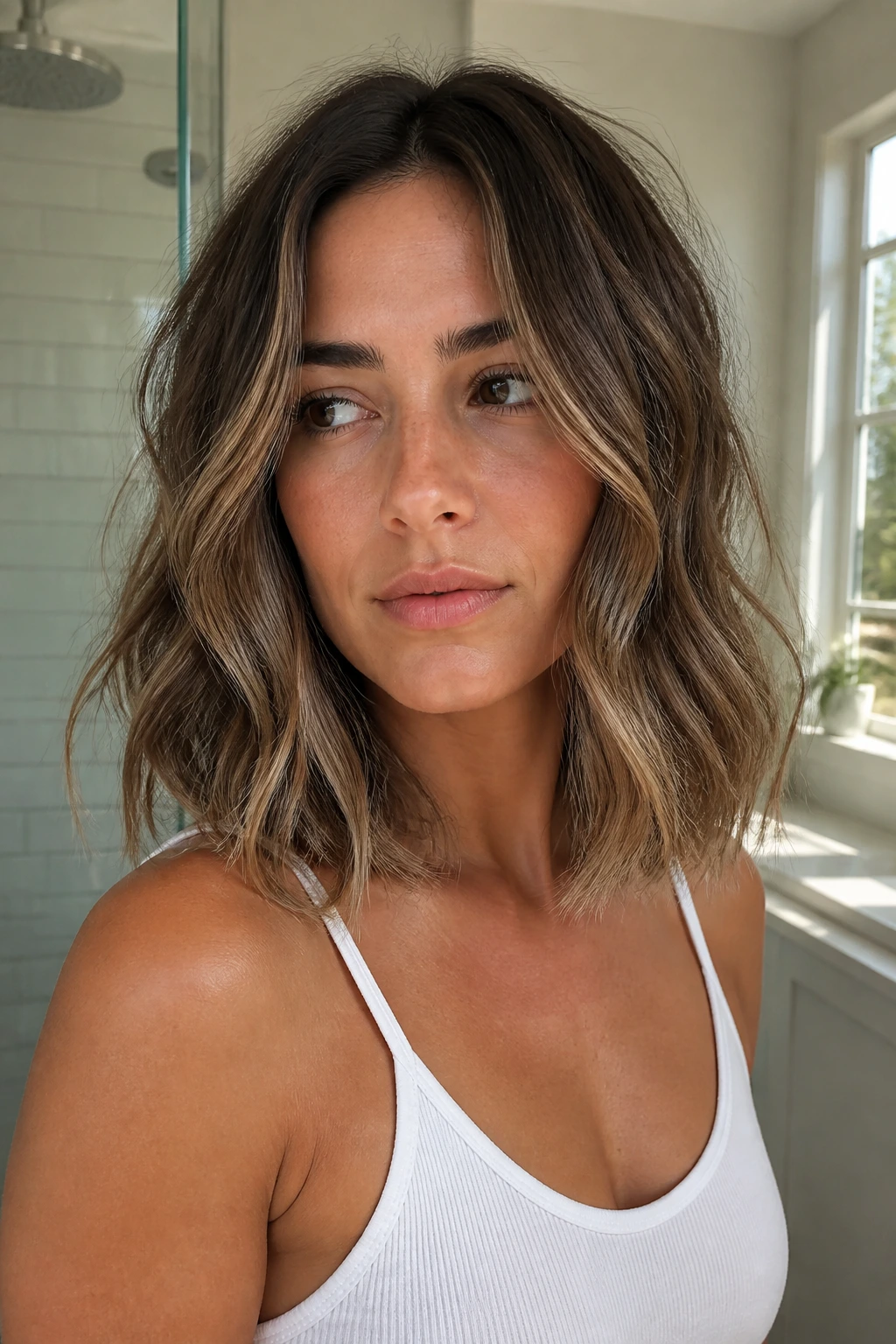
Some haircuts are built to look fresh for a week. This one is built to age gracefully. A low-maintenance wavy lob with a soft perimeter, subtle layers, and enough length to keep growing out neatly is the version I’d choose if you hate strict appointment schedules.
The cut should hold its shape even when it’s not freshly trimmed. That means avoiding extreme angles or heavy texturizing at the ends. A little movement is good. Ragged ends are not. The waves help blur the grow-out line, which is why this style stays wearable longer than a super-precise cut.
It also gives you room to change the styling without changing the haircut. Wear it polished on one day, air-dried the next, tucked behind one ear when you’re in a hurry. That flexibility is the real appeal of a medium length wavy lob. It’s not one look. It’s a whole range of looks hiding in the same cut.
