



Fine hair can collapse fast when the cut is too long, too thinned out, or too soft around the perimeter, and that is exactly why ash bob haircuts for fine hair keep making sense. A bob gives the hair a clear line. Ash tones add a cool, smoky finish that keeps the cut from looking brassy or flat under strong light.
The best versions are not fussy. They rely on shape first: a blunt edge, a light bevel, a nape that sits neatly, or a tiny bit of movement where the hair needs it most. Too many layers can make fine strands look see-through at the ends. Too much length can drag everything down. Annoying, yes. Also fixable.
Ash shades help more than people think. A cool beige ash, soft mushroom brown, or smoky blonde can make the cut read cleaner and a little denser, especially when the color has subtle dimension at the root and around the face. That combination matters. It keeps the bob from looking like a helmet, which is the fear people usually have, and it keeps the hair from disappearing into itself, which is the bigger problem.
1. Chin-Length Blunt Ash Bob for Fine Hair
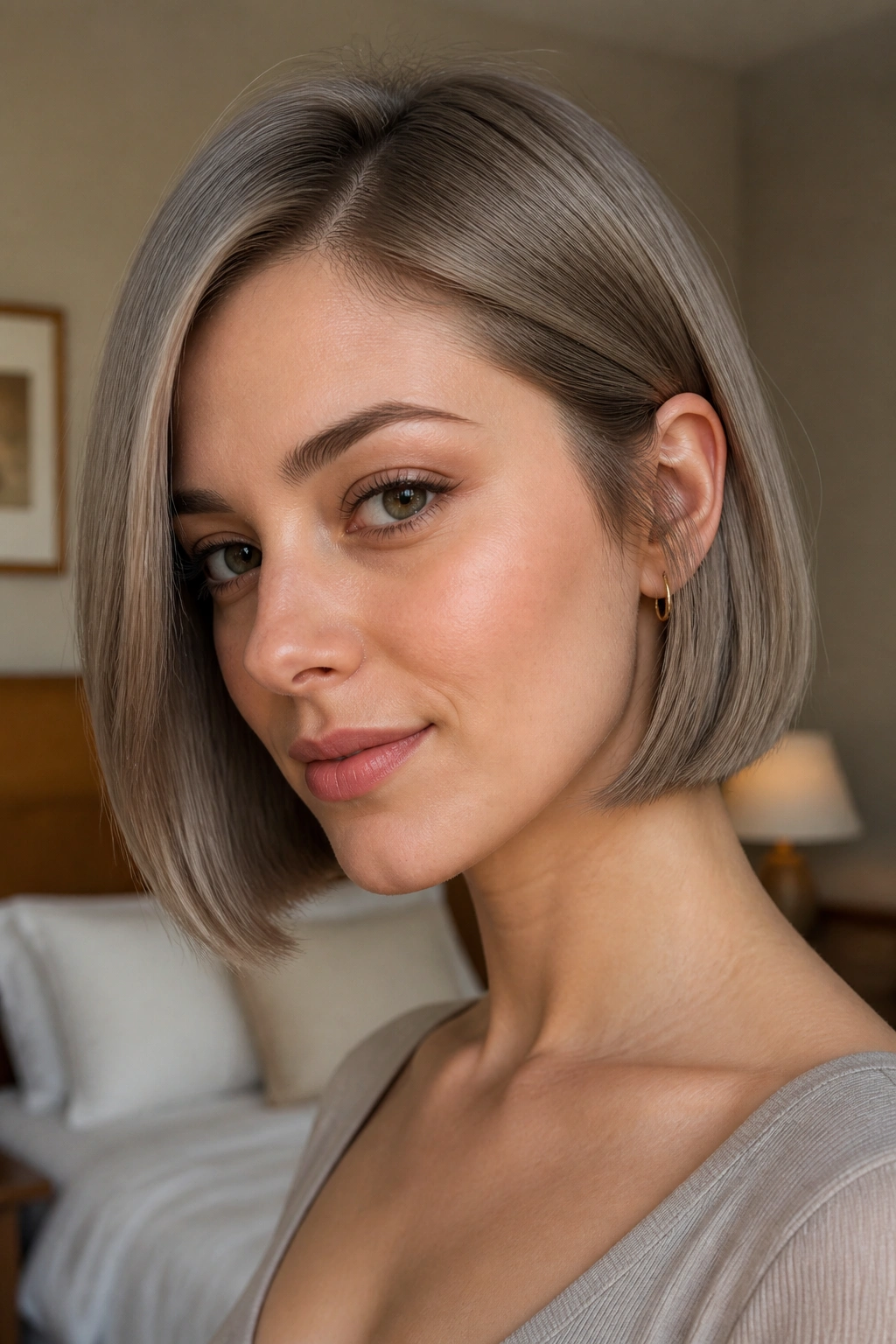
A chin-length blunt bob is one of the strongest moves you can make with fine hair. The line sits high enough to give the ends weight, and the blunt edge stops the cut from looking wispy at the bottom. Add an ash brunette or ash blonde finish, and the whole shape looks sharper.
The real win is density. Fine hair often looks better when it is allowed to fall in one clean sheet. No over-layering. No shredded ends. Ask for a perimeter that hits right at the chin, with a tiny bit of internal softness only if your hair bends awkwardly at the ends.
Best for: straight to slightly wavy hair that needs a fuller outline.
Ask for: a blunt baseline, a soft ash gloss, and minimal thinning.
Avoid: razored ends that leave the bottom too airy.
A small tip: tuck one side behind the ear and leave the other loose. It makes the line look intentional, not severe.
2. Jawline A-Line Ash Bob
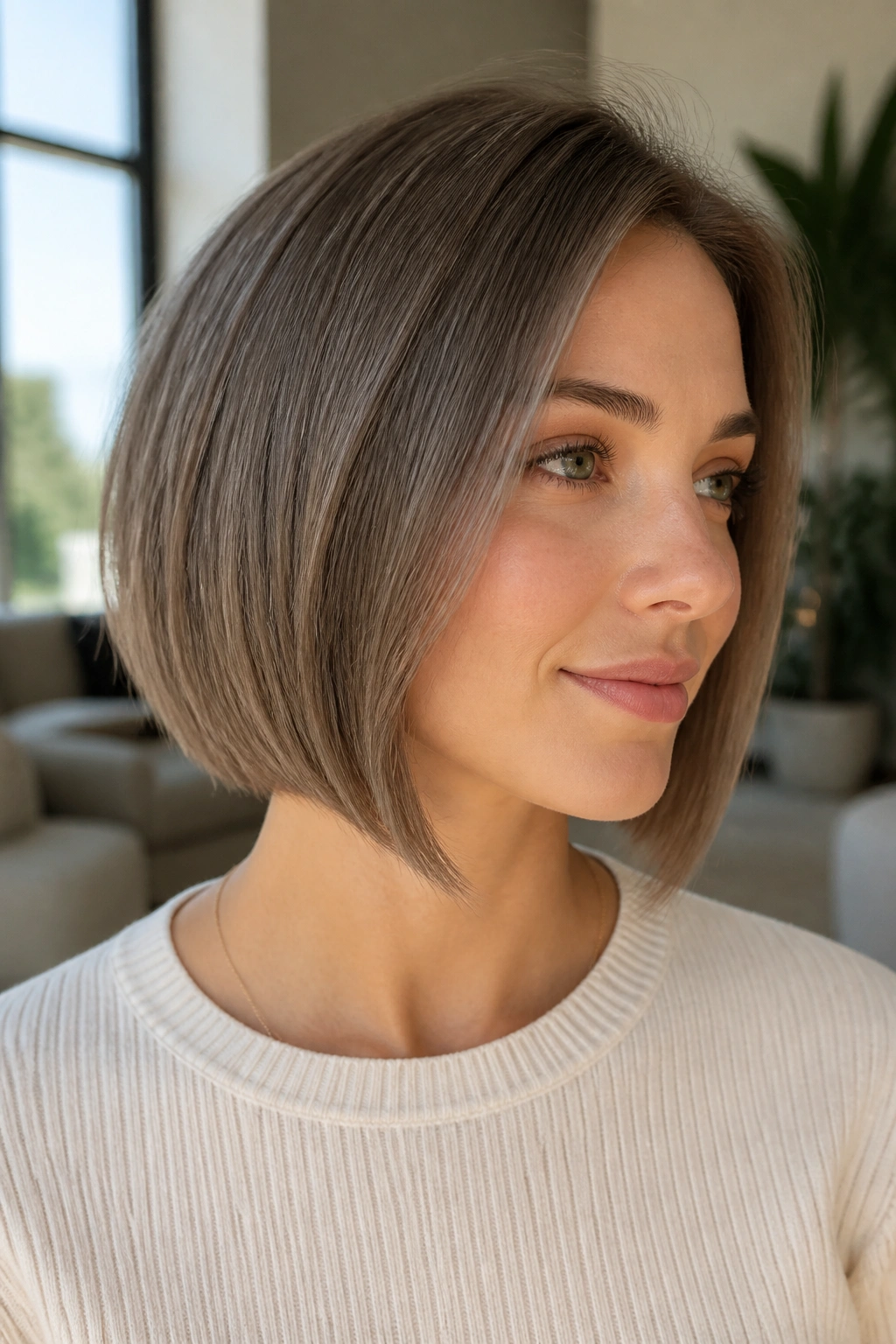
An A-line bob works because the front pieces sit a touch longer than the back, which gives fine hair a little visual sweep. That extra inch or so at the face creates movement without stripping away bulk. It feels lighter. It still looks thick.
Why It Flatters Fine Hair
The angle creates the illusion of more hair where the eye lands first. The back stays compact, so the nape does not sag. The front gets a soft drop that frames the jaw instead of sitting like a block.
What to Ask Your Stylist
- Keep the back neat and slightly shorter.
- Let the front graze the jaw or lower cheekbone.
- Add a cool ash brown glaze to mute warmth.
- Skip heavy texturizing shears near the perimeter.
This cut is especially good if your hair flips out at the ends. The A-line gives that flip a place to go.
3. Micro Ash Bob
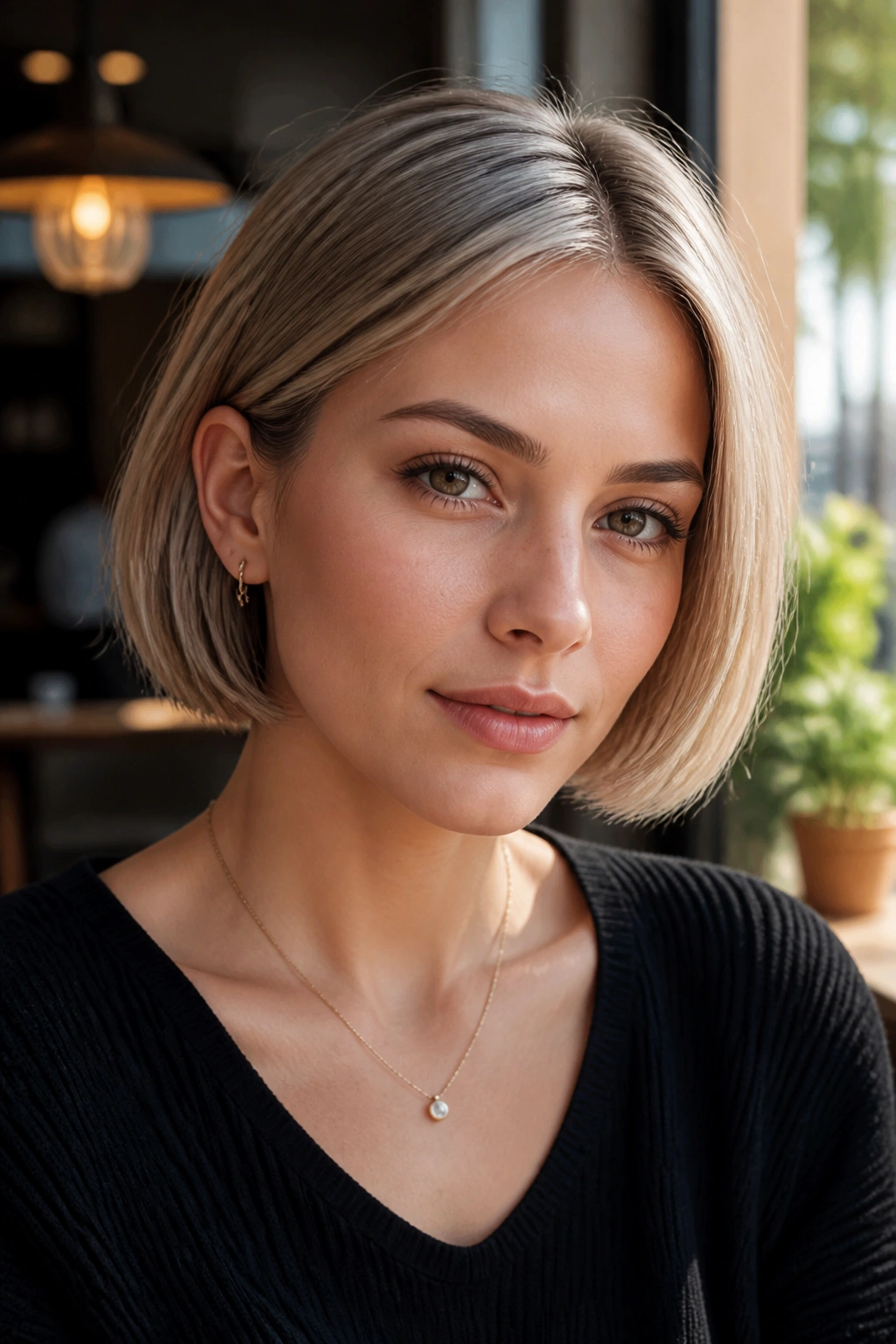
Can a short bob look softer on fine hair? Absolutely, if the line is clean and the length stays just below the ears. A micro bob takes away the drag that longer lengths can create. That alone can make fine strands look thicker at the root and more polished overall.
This one is bold, but not harsh when the color is right. A smoky ash blonde or cool dark blonde keeps the haircut from reading too sharp. The shade blurs the edge a little, which is helpful if your hair is naturally delicate. No heavy layers here. The cut works because the outline is compact.
If your hair lies flat, this is one of the easiest shapes to wake up with a round brush and a little root spray. Quick. Clean. Done.
4. Curtain Bang Ash Bob
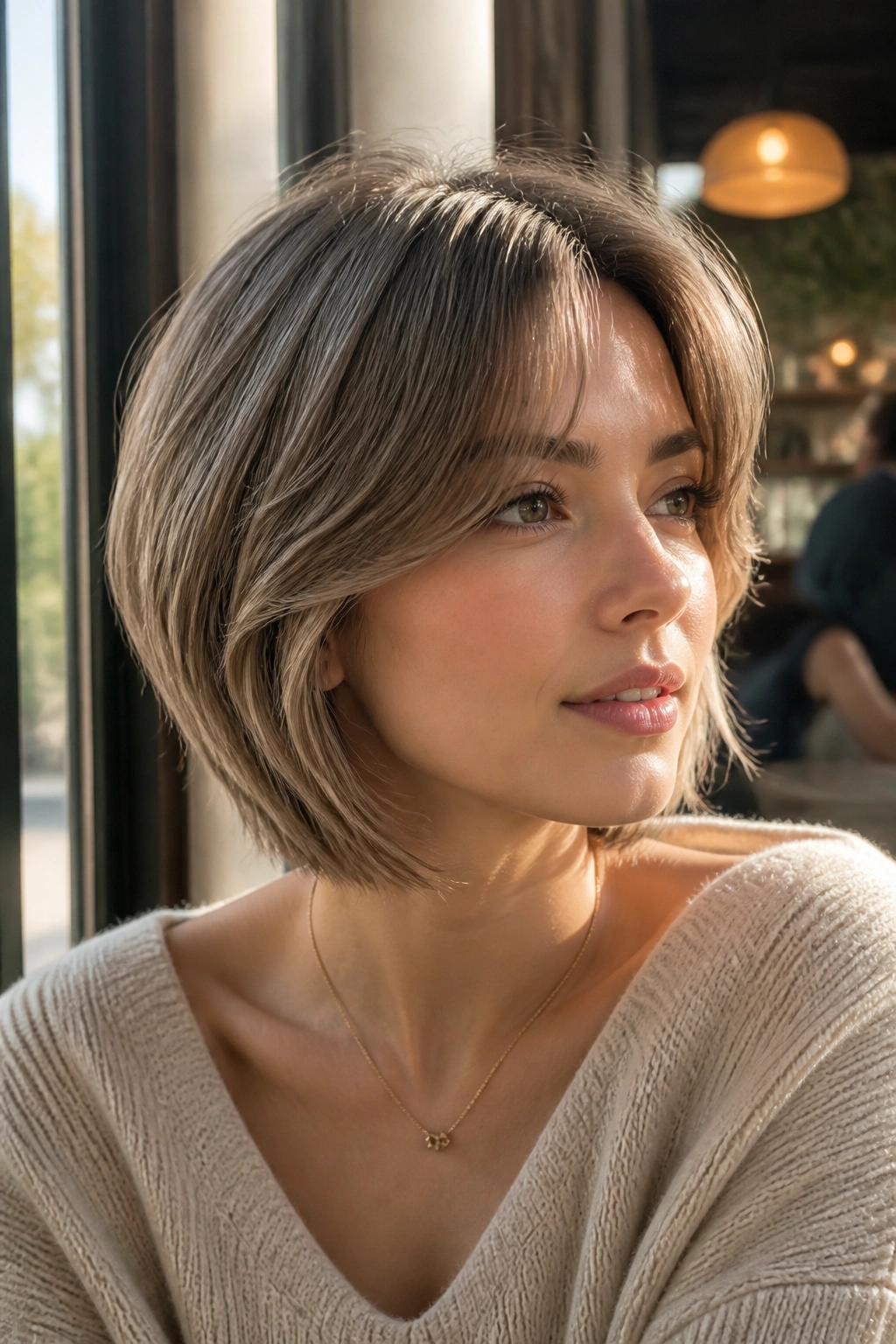
Curtain bangs can make a bob feel fuller without taking too much off the sides. That matters on fine hair, where every cut has to earn its keep. The center part of the fringe creates lift, and the longer sides blend into the bob instead of chopping it up.
This style works best when the bangs are soft, not heavy. You want movement that opens the face, not a thick curtain that steals density from the rest of the cut. A cool ash brunette or beige blonde keeps the whole look airy.
The best part is how forgiving it is during grow-out. Curtain bangs soften the grow-out line, so you are not stuck with a harsh fringe every time it grows half an inch. That is a real advantage.
5. Side-Swept Fringe Ash Bob
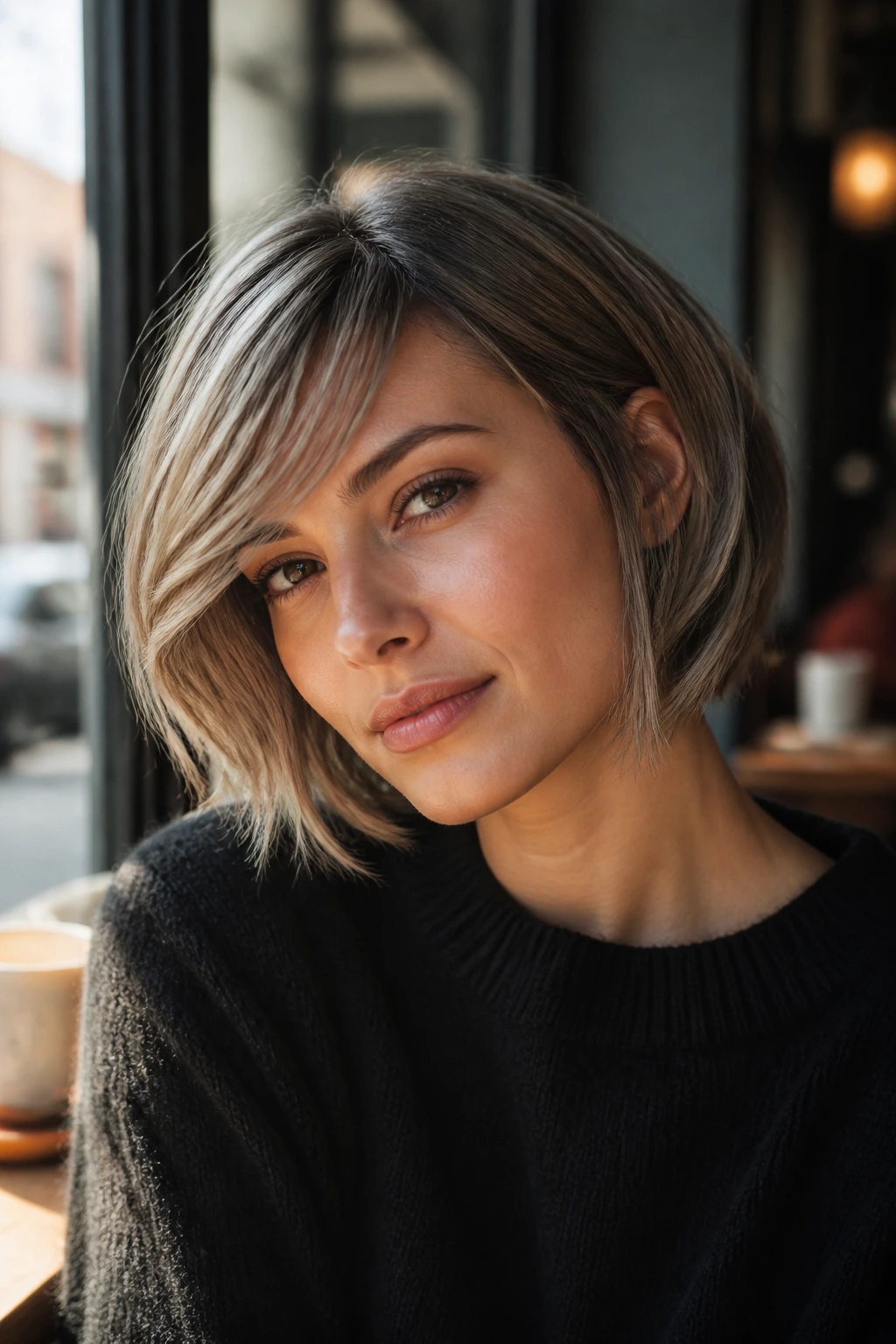
Picture a side part, a soft sweep across the forehead, and a bob that lands right at the cheekbone. That shape can be magic on fine hair. The fringe creates diagonals, and diagonals are your friend when you want a cut to look fuller than it is.
What Makes It Work
Side-swept bangs break up the forehead area without removing too much hair from the crown. The bob itself can stay blunt or slightly beveled. Either way, the side sweep adds body where straight-across bangs might feel too heavy.
Good Details to Request
- A fringe that starts light near the part.
- Length that skims the eyebrow or cheekbone.
- A soft ash toner, not an orange-muted brown.
- A clean finish at the ends so the bob still reads full.
This one is especially nice if your face likes some softness near the eyes.
6. Rounded Ash Bob
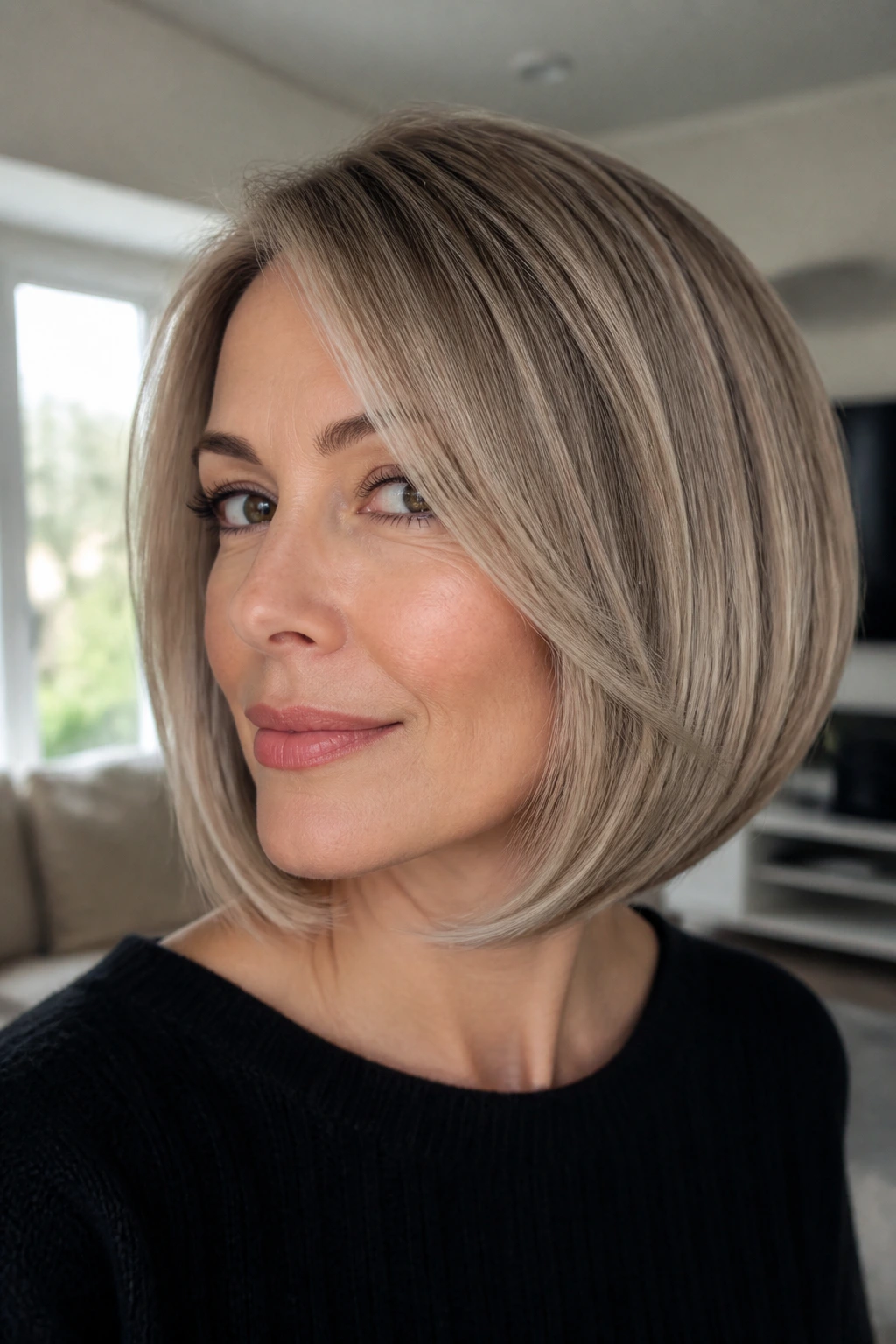
A rounded bob gives fine hair a little curve, and that curve matters more than people admit. Straight boxy bobs can look flat if the hair is very fine. A rounded shape lifts the ends inward and makes the silhouette feel fuller from every angle.
What I like here is the balance. The crown gets a touch of contour, the sides stay neat, and the bottom edge curves under instead of hanging loose. That tiny bend can make the entire cut seem more expensive. Not flashy. Just finished.
It is a smart choice if your hair flips outward at the shoulders or if you want a style that works with a blow-dryer brush in ten minutes or less. Keep the ash tone soft and muted so the shape, not the color, does the heavy lifting.
7. French Ash Bob
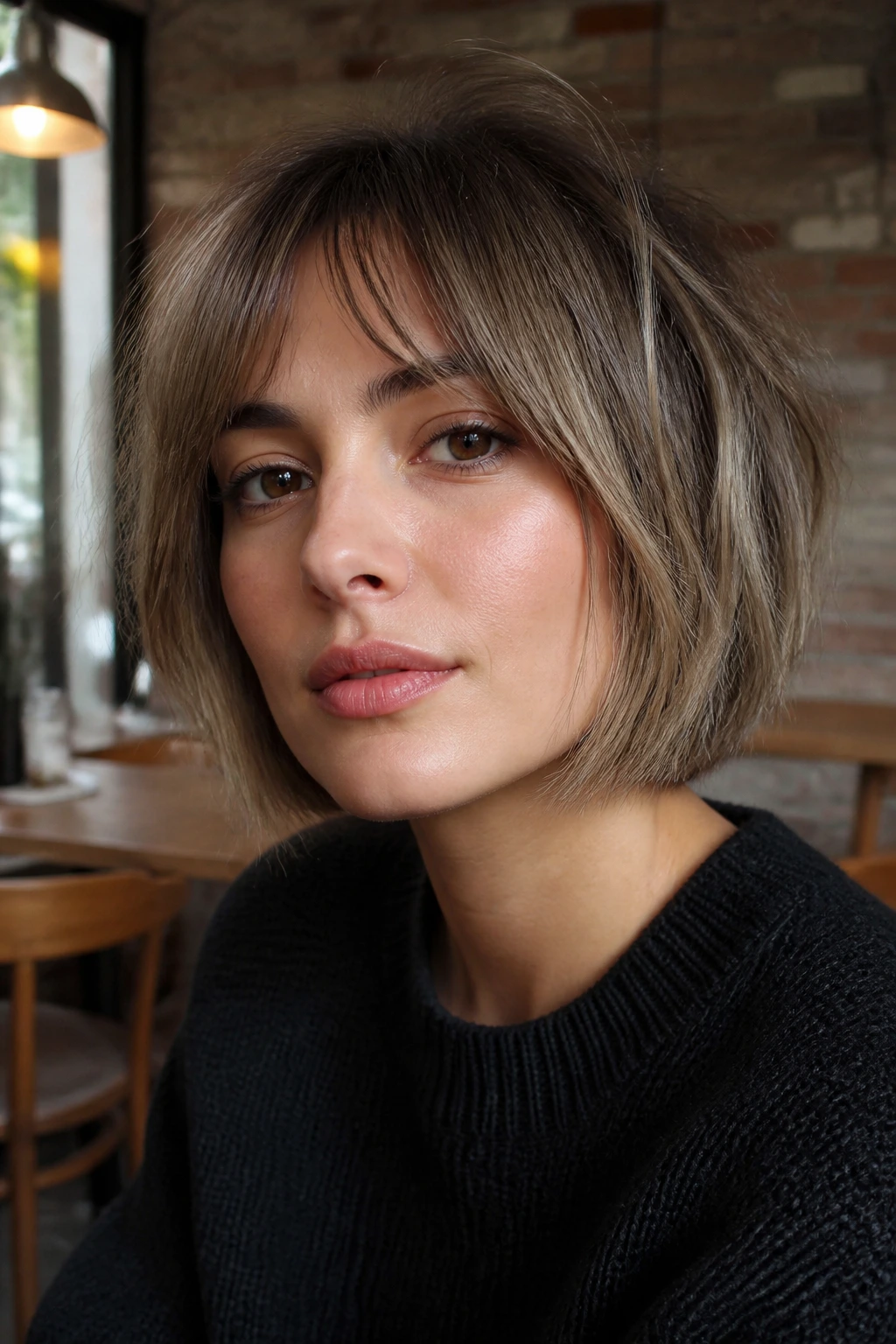
The French bob has a little attitude, and fine hair often wears that attitude well. Shorter length. Slightly messy texture. A fringe that may or may not cooperate every day. It is a forgiving haircut when the hair is thin, because the shape does not depend on weight.
This version looks especially good in smoky ash blonde, cool brown, or a muted silver-beige. Those shades keep the bob from looking overly sweet. They also help the cut feel lived-in, not overworked. You want a bit of air around the face and enough structure at the jaw to keep it grounded.
One thing to watch: if your hair is very pin-straight and very fine, this cut needs a little styling cream or mousse at the roots. Otherwise, it can look too slick and small.
8. Collarbone Ash Bob Haircut for Fine Hair
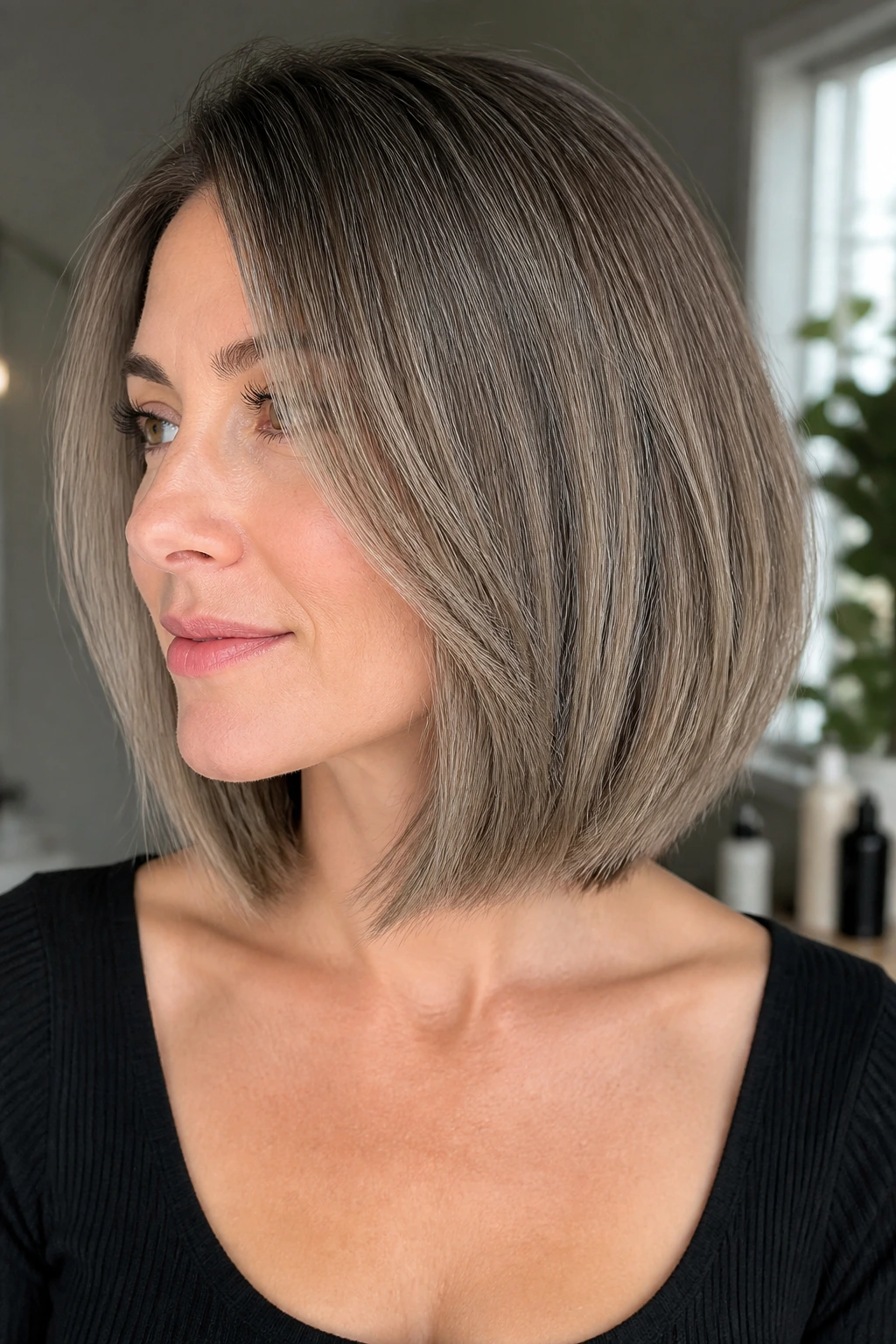
The collarbone bob is the long version I keep recommending to people who want movement without losing too much density. It lands in that sweet spot where the hair can still look full, but the length is not so short that it feels severe. For fine hair, that matters.
Why It Feels Fuller
The collarbone gives the ends a place to sit. Hair that brushes the shoulders can sometimes kick out and separate, which makes the ends look thinner than they are. A cut that lands just above or right at the bone avoids that. Add a cool ash gloss and a soft bevel, and the shape looks intentional.
Best Styling Move
A round brush and a light volumizing mousse are enough. Blow-dry the ends under just a little. No big barrel curls. No heavy layering. The haircut does the work.
9. Center-Part Sleek Ash Bob
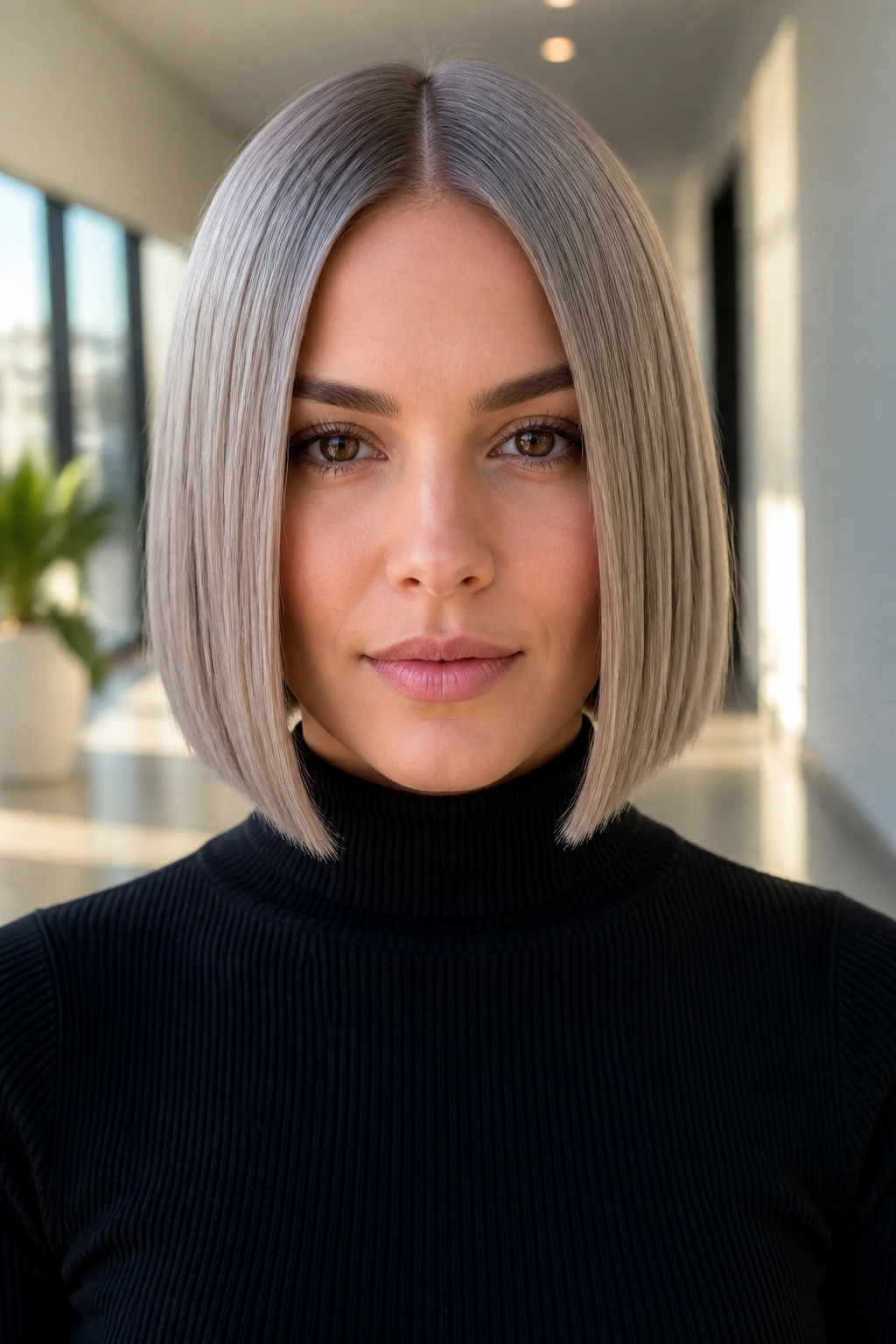
A center part can be brutal on the wrong cut. On the right bob, it looks crisp. Fine hair often benefits from that crispness because the center line forces the eye to read symmetry and shine instead of volume alone.
This style works best when the cut is blunt and the hair is glassy, not fluffy. Think cool ash brown, silver beige, or a clean mushroom brunette. The color should feel muted and reflective at the same time. Too much warmth can make the style look softer than you want.
Ask for This
- A precise middle part.
- A chin to jaw-length bob.
- Straight or lightly beveled ends.
- A gloss in a cool ash tone.
The whole point is discipline. Clean lines make fine hair look deliberate.
10. Wavy Ash Bob
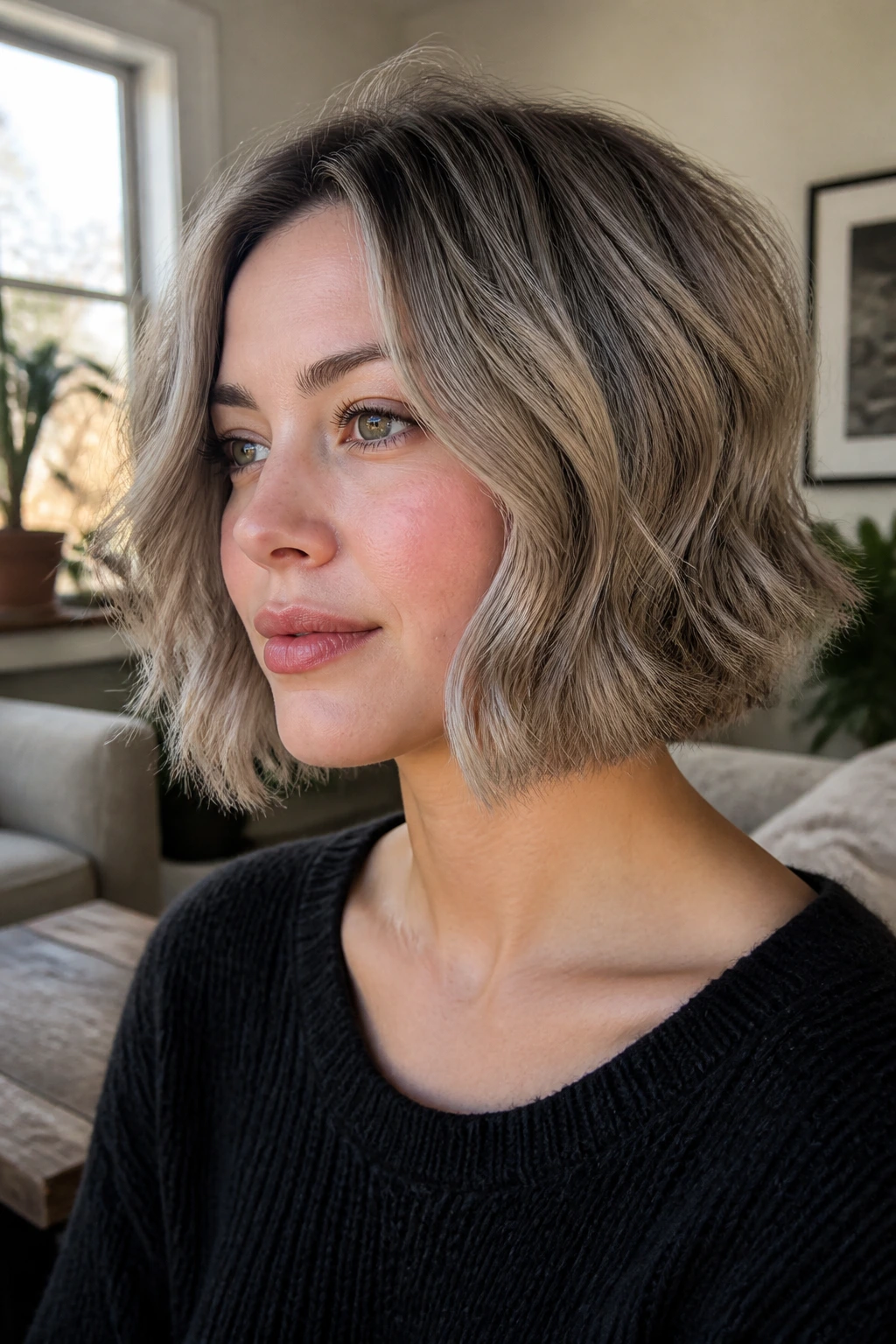
Can fine hair wear waves without going limp? Yes, if the cut is short enough and the bends are loose. A wavy ash bob works because the texture creates width, while the length keeps the wave from falling flat under its own weight.
This is not the giant curling-iron look. Keep the waves soft, spaced out, and a little undone. Use a 1-inch iron or braid-dry the hair and break it up with fingers once it is cool. The ash color helps here too, because it makes the texture look more smoky and less shiny in a plastic way.
The best version has a blunt base with just enough internal movement. Too many layers and the wave separates into strings. Not cute. Not useful either.
11. Inverted Ash Bob
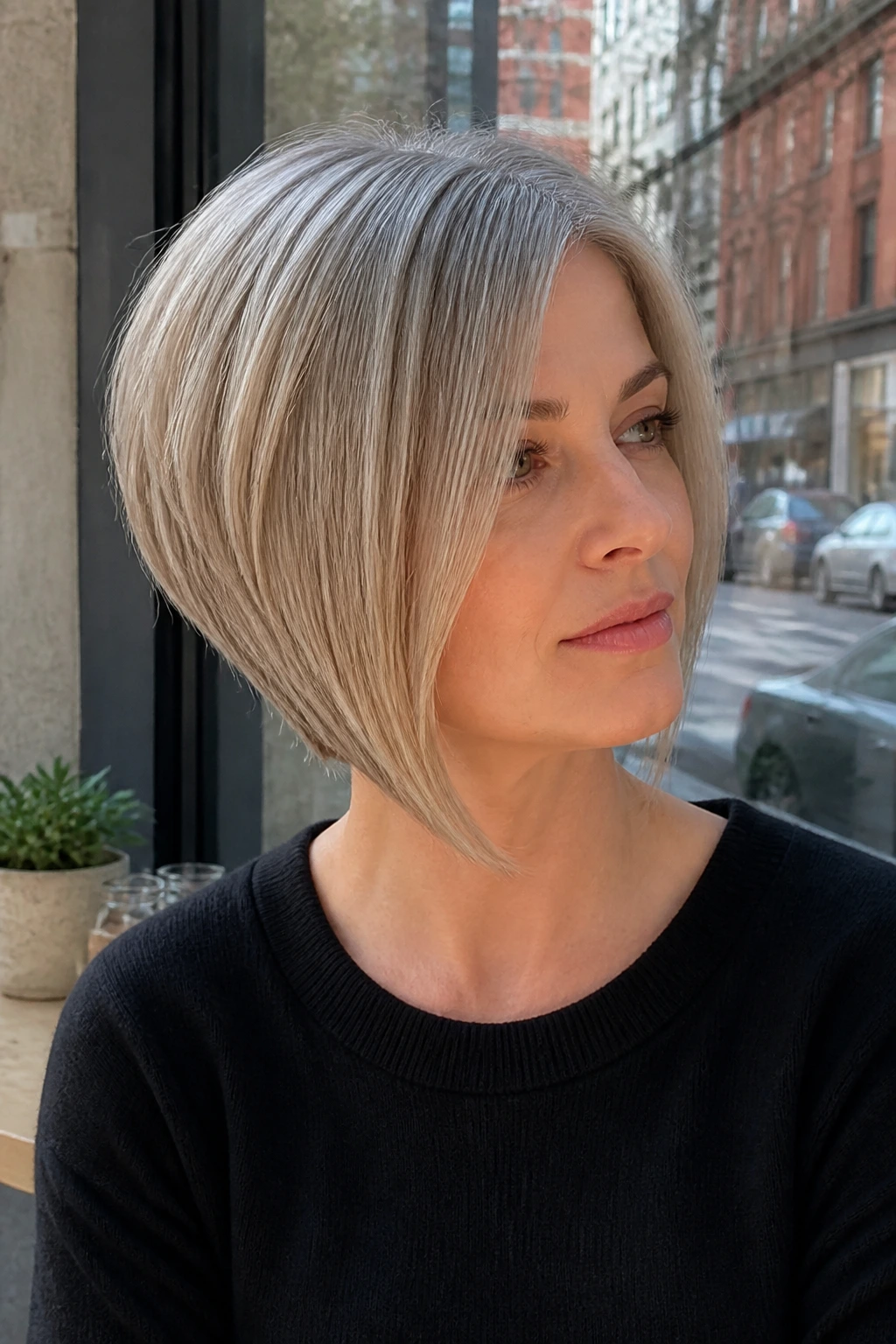
Shorter in the back, longer in the front. That simple angle gives fine hair a lift that can be hard to fake with styling alone. The back sits up closer to the head, which can make the crown and nape look fuller. The front keeps enough length to soften the face.
I like this cut on people whose hair grows flat at the roots. The inverted shape adds structure where the scalp shows through most. Pair it with a cool ash blonde or smoky brunette, and the contrast between root and length gets subtler, which helps the cut look thicker.
Watch for this: if the front is too long and the back too short, the shape can feel dated. Keep the angle soft. The goal is lift, not a cliff.
12. Razor-Cut Ash Bob
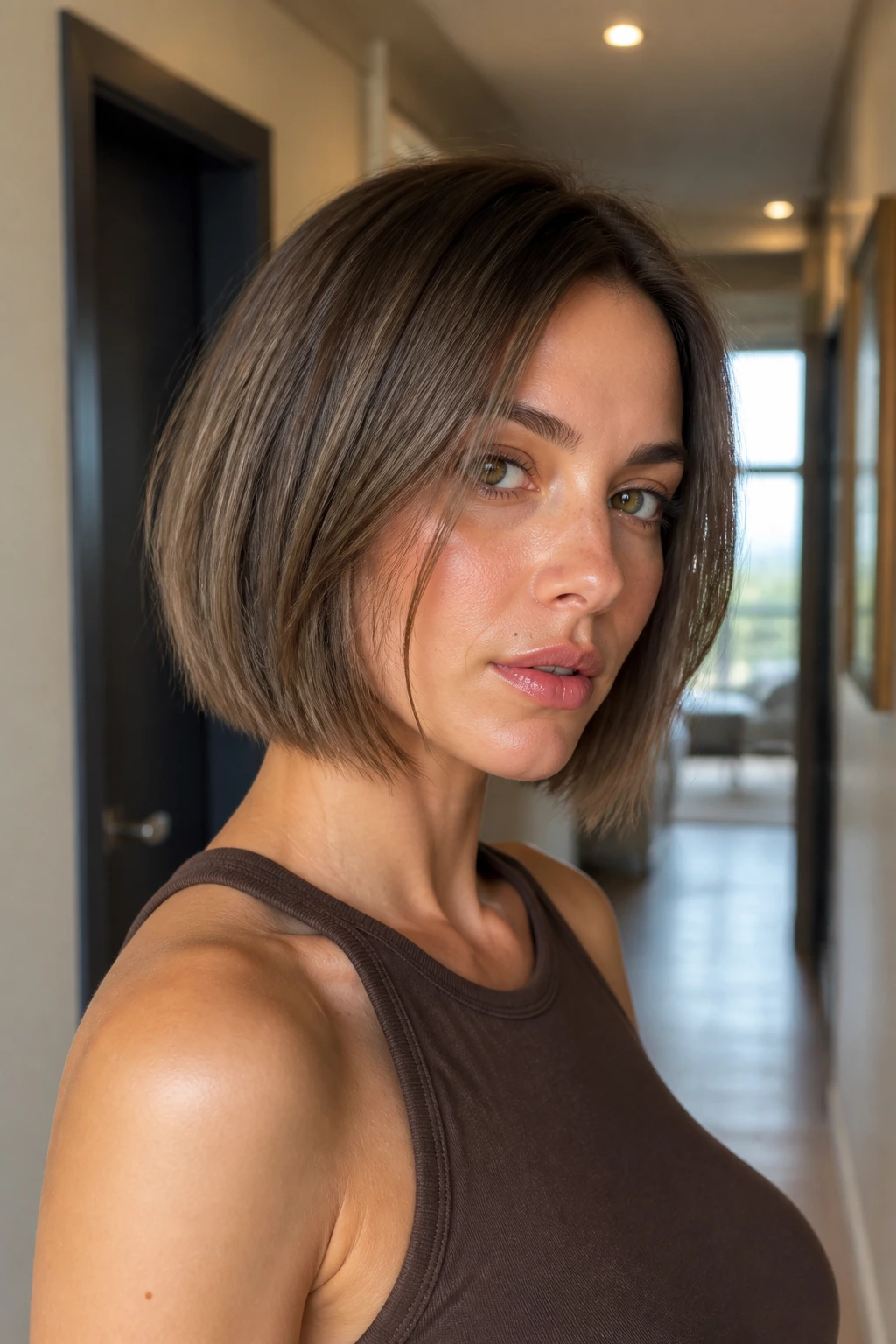
A razor cut can be lovely on fine hair, but only when it is used sparingly. The reason is simple: too much razor work can make the ends fray. A light pass, done by someone who knows exactly where to stop, can create movement without stripping the hair of its edge.
This bob has a softer finish than a blunt one. It works best if your hair is naturally smooth and you want a little swing around the jaw. The ash tone helps keep the texture from looking fluffy or warm. A smoky beige brown, especially with a shadow root, gives the haircut a lived-in feel.
Not every fine-haired head needs a razor. Some need a blade line. This one is for the people who want movement first and crispness second.
13. Long Ash Bob with Face-Framing Pieces
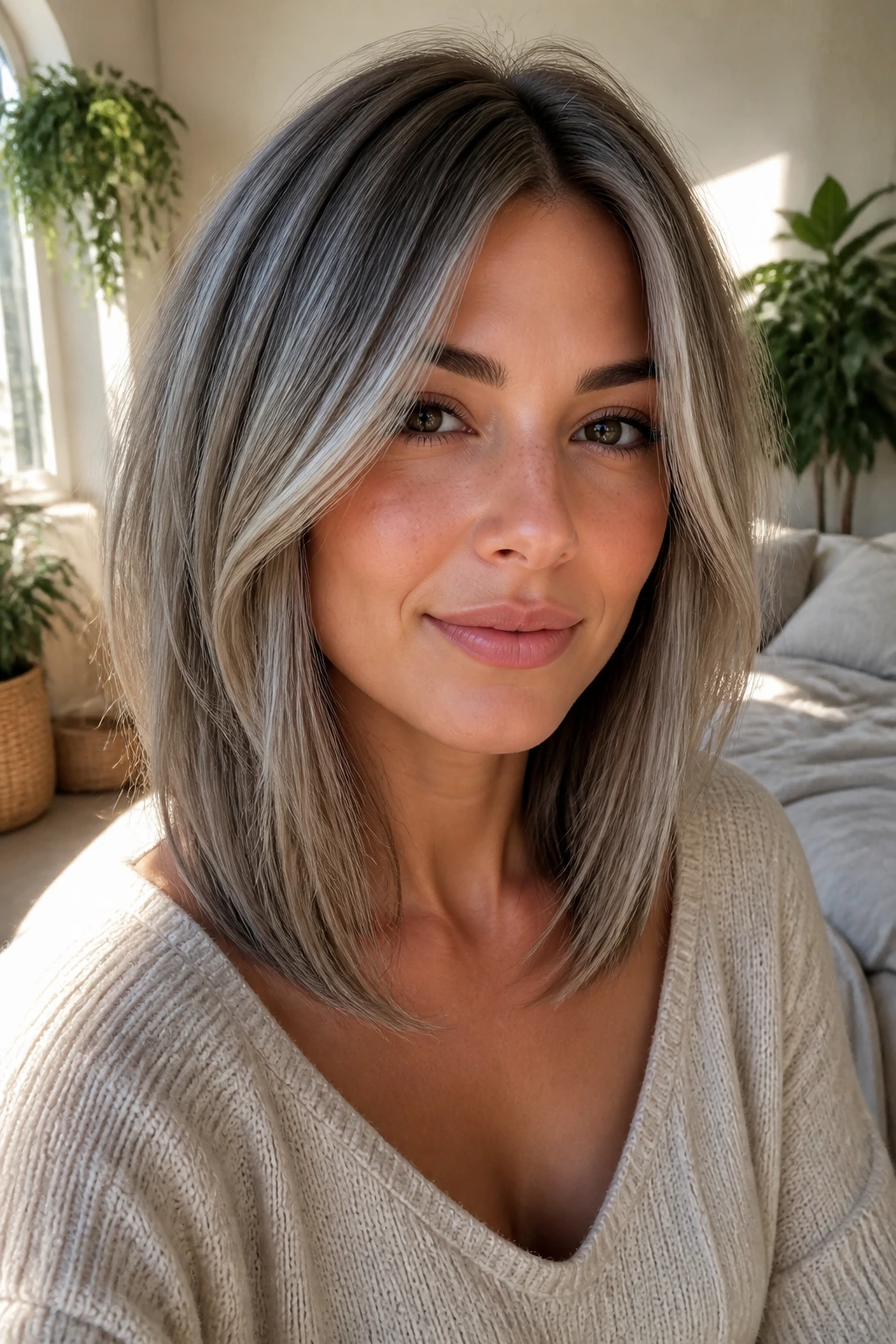
A longer bob with face-framing pieces gives fine hair room to move without dragging it down. The front stays lighter around the cheeks, which can brighten the face, while the rest of the cut keeps enough length to tuck behind the shoulders. It is practical. Also flattering.
The key is restraint. The face-framing pieces should be soft, not drapey. They should blend into the bob instead of hanging like separate curtains. An ash gloss or cool-toned balayage keeps the shape from reading too warm or too heavy.
This cut is a good middle ground for someone who wants the bob look but is nervous about going short. It gives you a safe landing spot, and sometimes that is the difference between loving the haircut and ignoring it for three months.
14. Disconnected Bob with Hidden Undercut
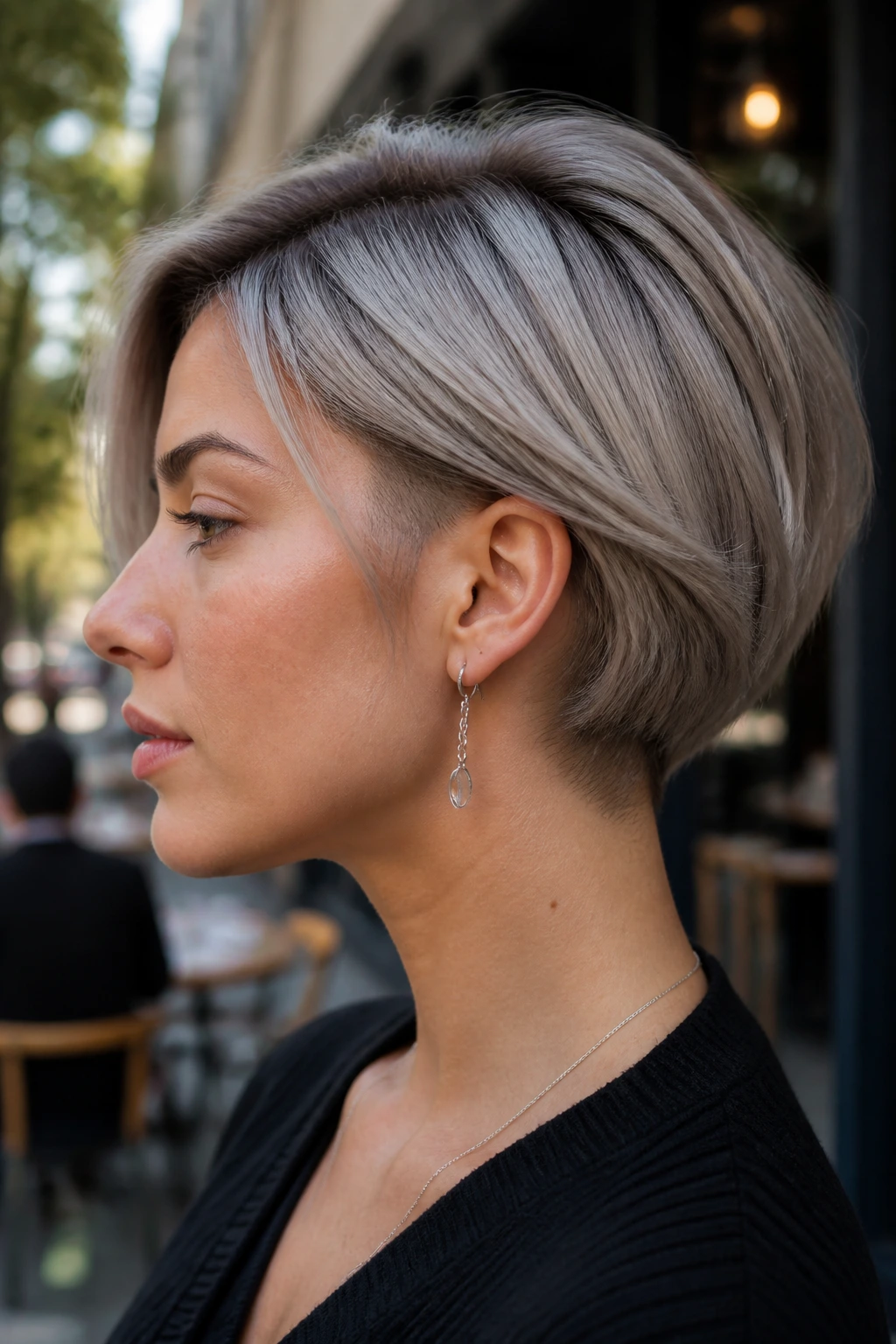
A hidden undercut can save fine hair from collapsing at the nape. When the lower layers are removed underneath, the top section can sit more cleanly and seem fuller. You do not see the undercut in normal life. You feel it in the shape.
What It Changes
The haircut becomes lighter where the hair usually piles up. That means the visible top layers can fall with more structure instead of puffing out at the bottom. It is especially useful if your hair is dense in some spots and wispy in others.
A Smart Ask
- Keep the outer layer blunt or slightly beveled.
- Hide the undercut beneath the crown and nape.
- Use ash brown or ash blonde color to keep the texture cohesive.
This one is not for everyone, and that is fine. It is a tool, not a personality.
15. Choppy Piecey Ash Bob
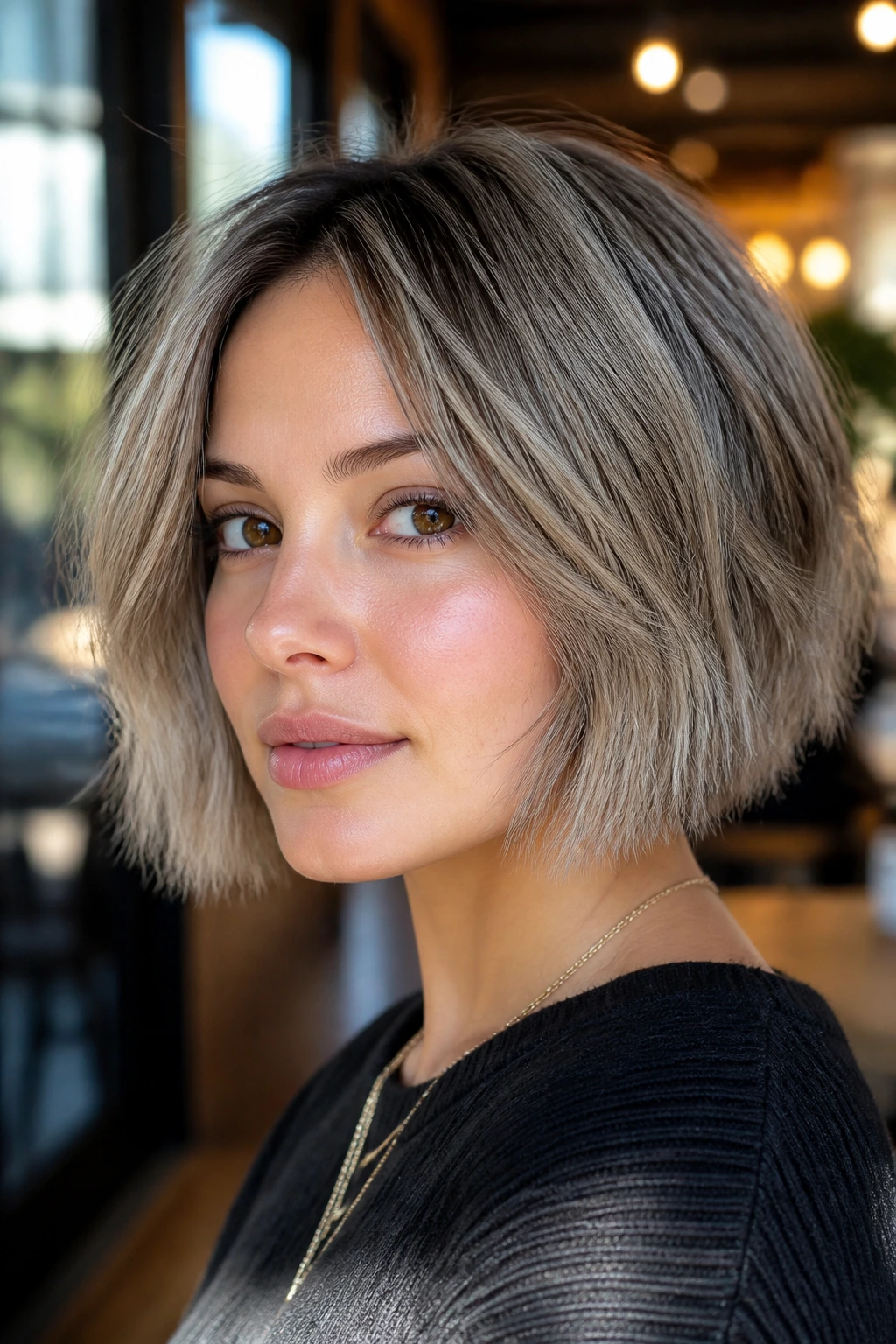
Choppy can be good. Choppy can also be a mess. On fine hair, the difference comes down to how much is removed and where. A piecey bob adds separation at the ends, which can make the cut feel airy and modern without turning it stringy.
The right version keeps a solid base and builds texture only in the top and mid-lengths. That way the bob still looks thick from the front. A cool ash toner helps the separation look smoky rather than wispy. That little distinction matters more than people think.
This cut is a nice fit if you like a bit of edge and do not want a polished blowout every day. If your hair is ultra-sparse, keep the chop soft. Too much texture can make the ends disappear.
16. Mushroom Ash Bob
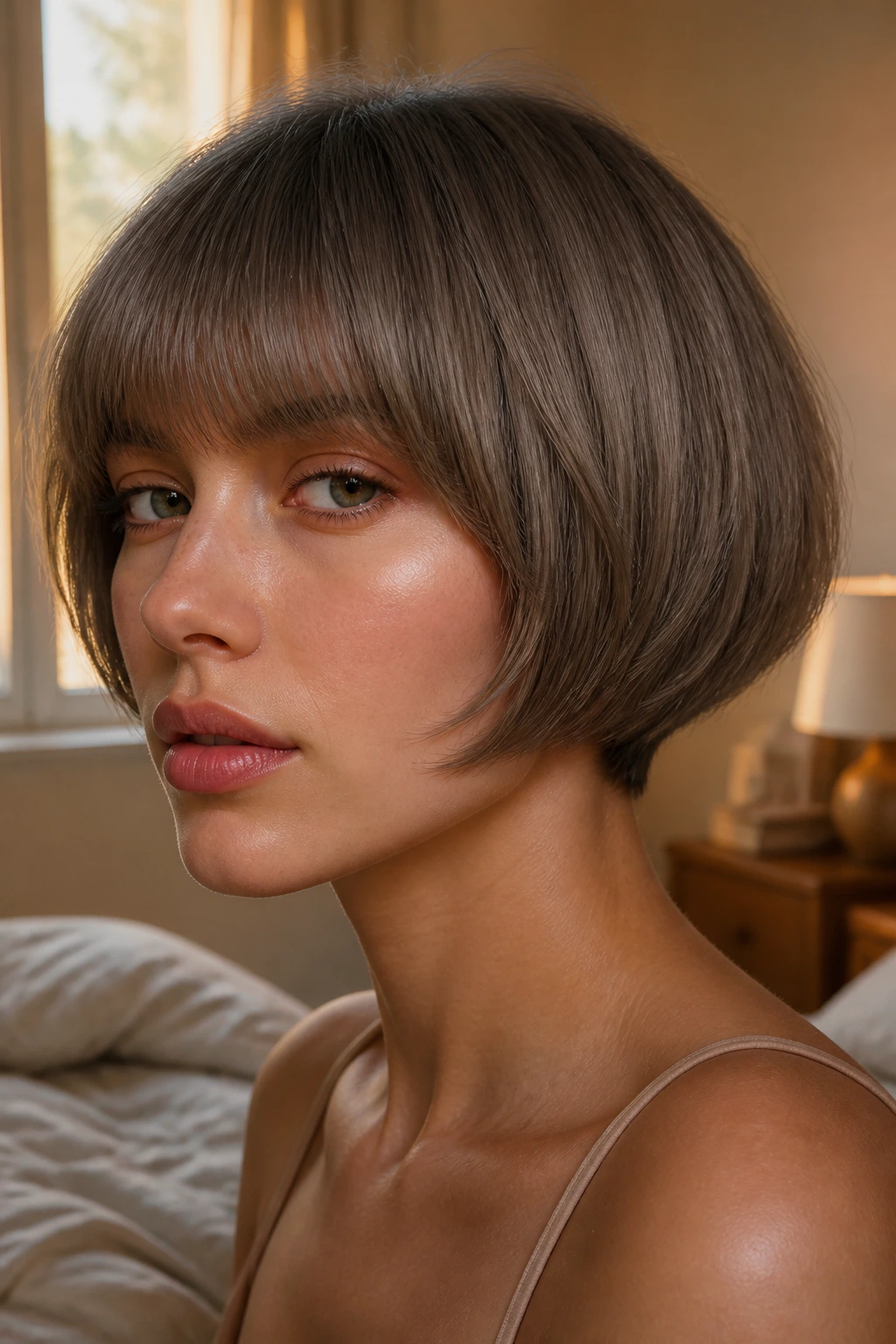
The mushroom bob has a rounded, slightly curved shape that works beautifully with ash brown or smoky taupe tones. It feels understated in the best way. Not flat. Just controlled. Fine hair often looks better when it is shaped into a neat dome instead of left to float around on its own.
Unlike a sharp A-line, this cut keeps the sides balanced and the crown soft. That makes it useful for people who want fullness without a hard edge. The ash color also keeps the shape grounded, especially if you add a tiny bit of shadow at the root.
It is a quiet haircut, which sounds boring until you see how much thicker it can make the hair look. Quiet is sometimes the point.
17. Bottleneck Bang Ash Bob

Why do bottleneck bangs work so well on fine hair? Because they open at the center and widen gently toward the cheeks, which gives the forehead area lift without taking too much density away. The bob underneath stays the anchor.
This fringe is softer than a blunt bang and more controlled than curtain bangs. It helps the haircut feel layered at the front without scattering the whole shape. Pair it with a cool ash blonde or dark ash brown, and the line between bang and bob stays soft.
How to Style It
Blow-dry the bangs with a small round brush, lifting the center first and curving the sides away from the face. That tiny bit of shape keeps the fringe from splitting awkwardly. Fine hair needs help there. Not a lot. Just enough.
18. Rounded C-Cut Ash Bob
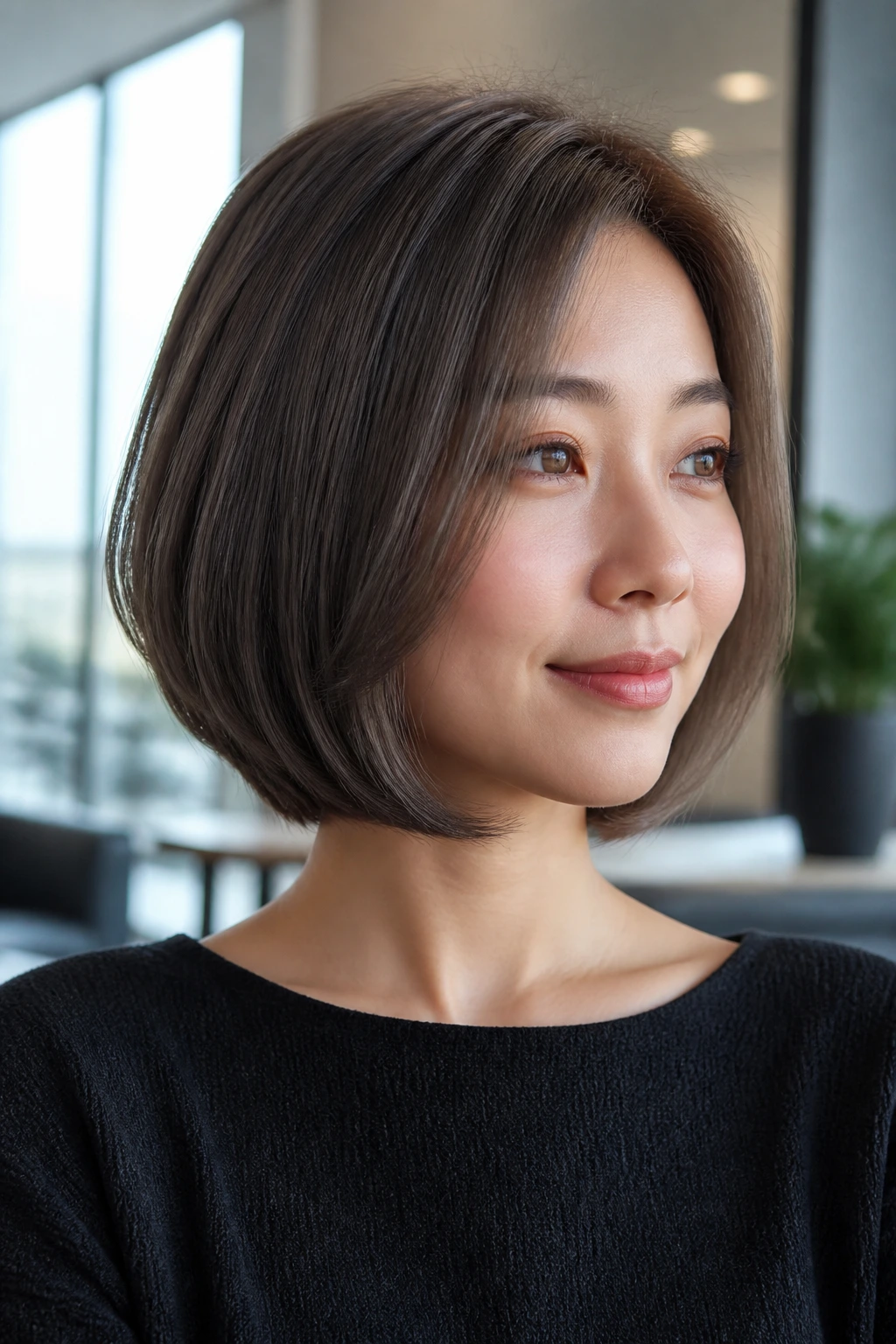
The C-cut bob curves in toward the neck and cheek in a way that makes fine hair look polished without being stiff. It is different from a blunt bob because the edge is softly tucked, not flat. That bend can make the whole style feel fuller and more intentional.
This cut is great if your hair wants to sit close to the head but still needs a little shape. The ends should curve under cleanly, almost like a quiet arc. Ash tones work well here because they emphasize the line, not the shine.
It is a strong office haircut, a strong dinner haircut, and a strong “I do not want to fuss with this” haircut. Those are useful categories.
19. Ear-Length Tucked Ash Bob
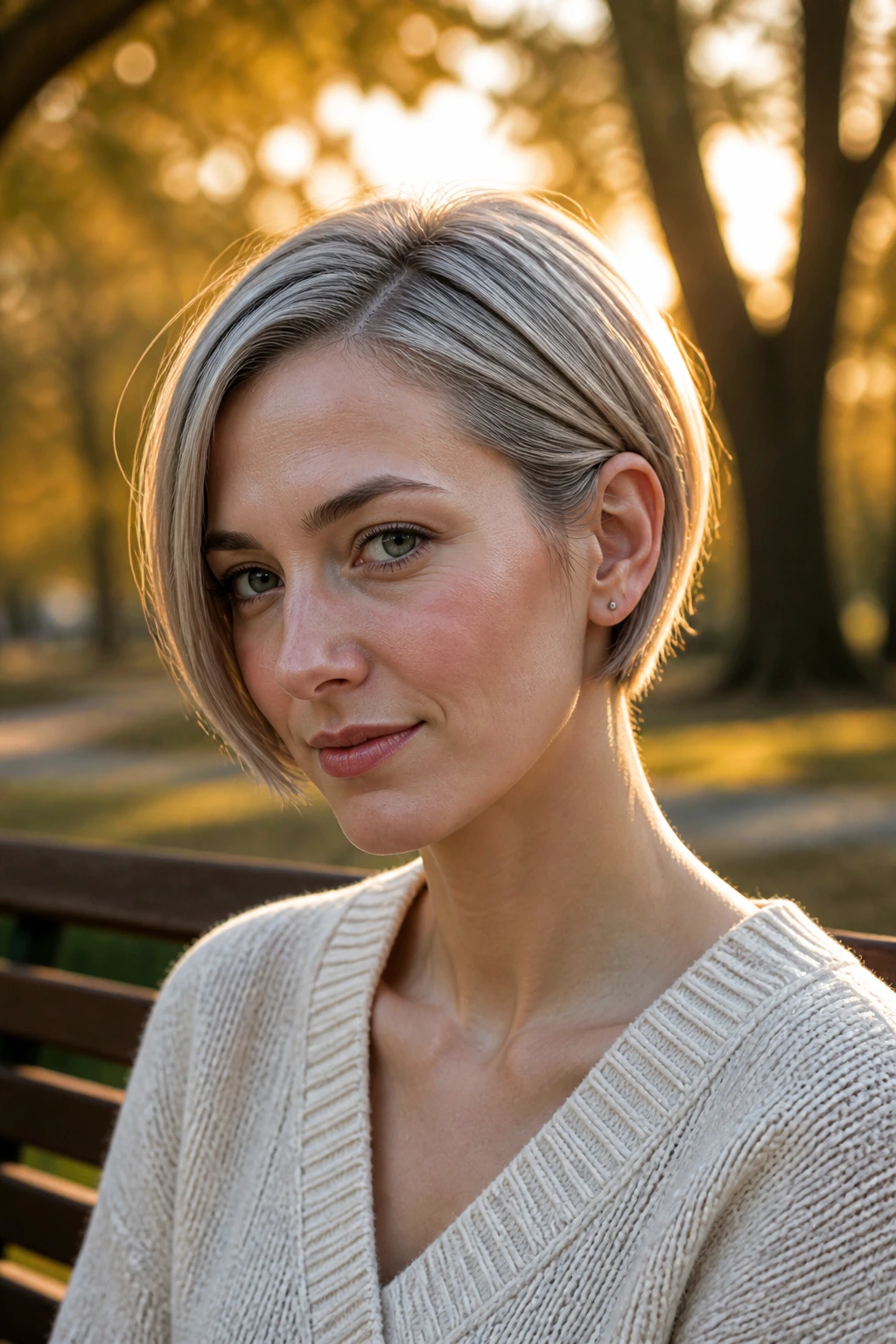
An ear-length bob can sound severe, but when it is cut well, it has a fresh, lifted feel that suits fine hair. The short length takes advantage of the hair’s natural softness. It also makes the silhouette feel fuller because there is less length weighing the shape down.
Why It Works on Fine Hair
The hair stays close to the head, so it does not separate into thin-looking sections. Tucking one side behind the ear gives the cut a little asymmetry, which can be more flattering than a perfectly even frame.
Little Details Matter
- Keep the nape clean.
- Ask for a soft ash glaze.
- Use a dab of lightweight cream, not oil.
- Let one side sit flatter than the other.
That slight imbalance is what keeps the haircut from feeling too precious.
20. Dimensional Ash Bob Haircut for Fine Hair
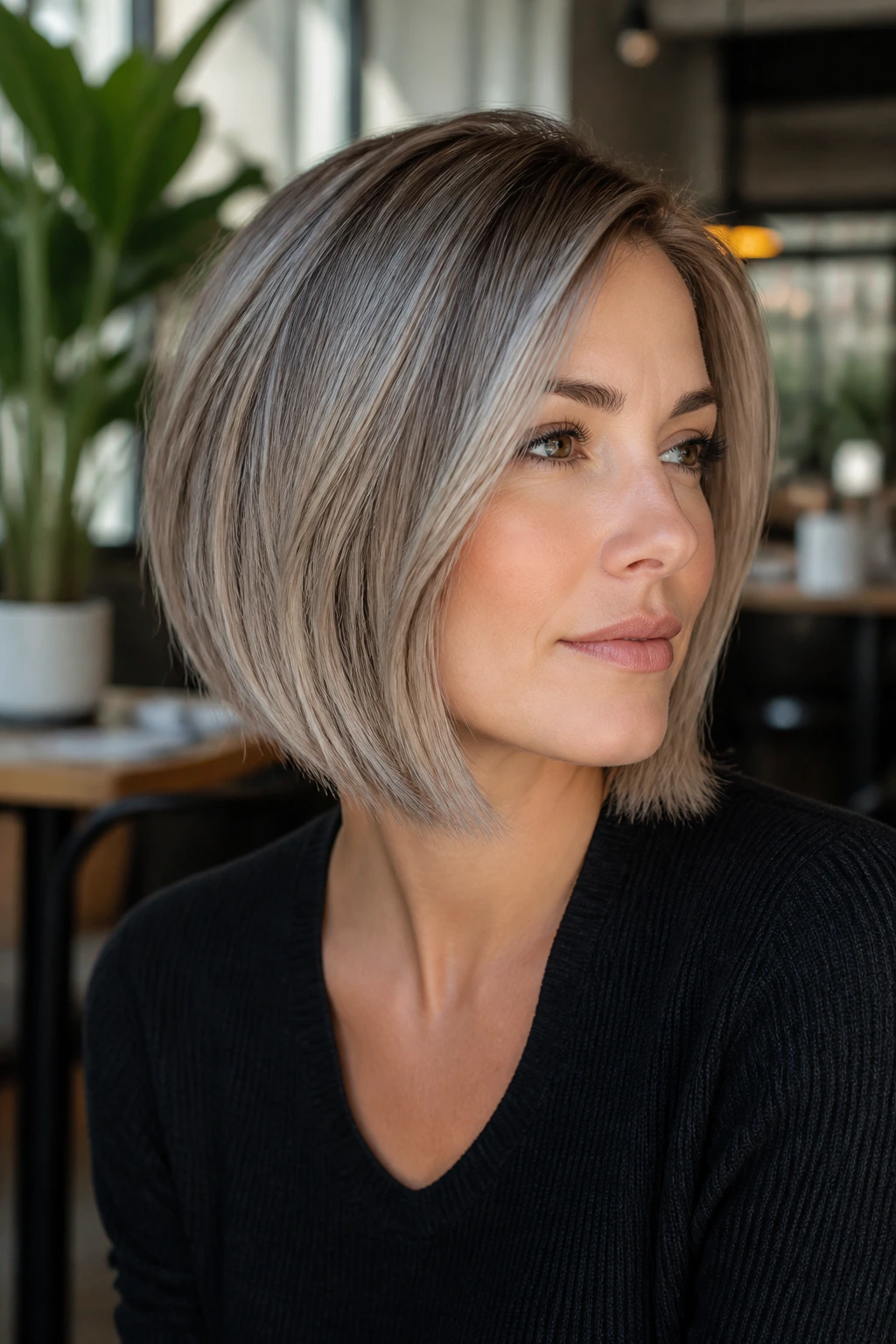
A single flat color can make fine hair look smaller than it is. Dimension fixes that. A bob with subtle ash highlights, a soft root shadow, or a low-contrast balayage creates the feeling of depth, which the eye reads as fullness.
This is not about bright streaks. It is about tiny shifts in tone. Cool beige pieces around the face, a darker ash root, and a lighter mid-length can do a lot without shouting. The haircut stays the same, but the color gives it body.
I like this approach on chin-length or collarbone-length bobs. The movement shows up better there. If the highlights are too light, the hair can look see-through, so keep the contrast modest. Subtle is doing the heavy lifting here.
21. Deep Side-Part Ash Bob
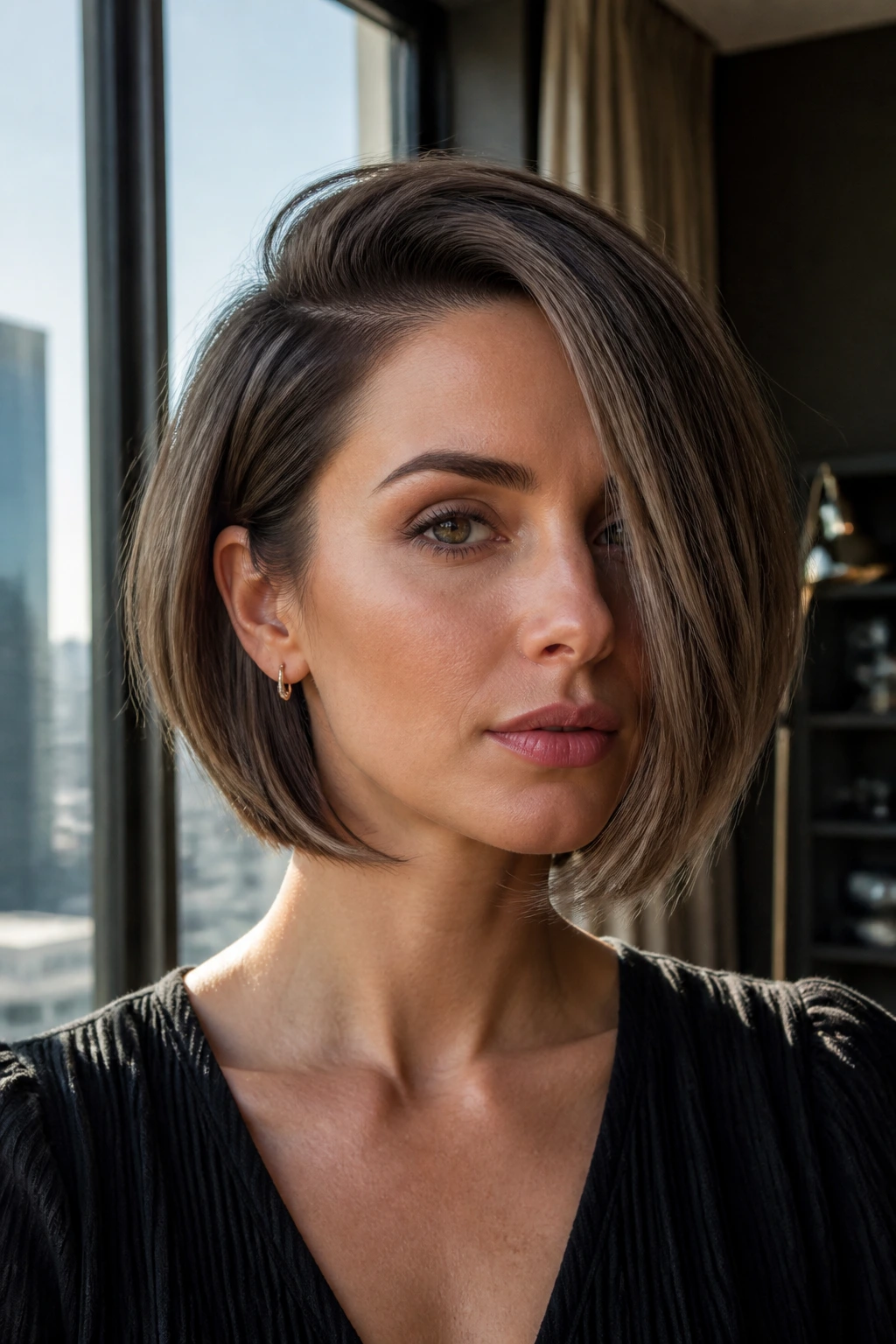
A deep side part changes the whole mood of a bob. It creates instant lift at the root and throws more weight to one side, which is a useful trick when the hair is fine and tends to lie flat. The part does not need to be dramatic to matter.
This style looks especially good with a sleek ash brunette or dusty blonde finish. The contrast between the deep part and the cool tone gives the cut a little edge. You can wear it smooth, tucked, or with a slight bend at the ends.
Strong shape. Easy styling. That combination is why this one stays useful. If your crown is stubborn, a side part can help without asking the rest of your hair to do anything strange.
22. Glassy Straight Ash Bob
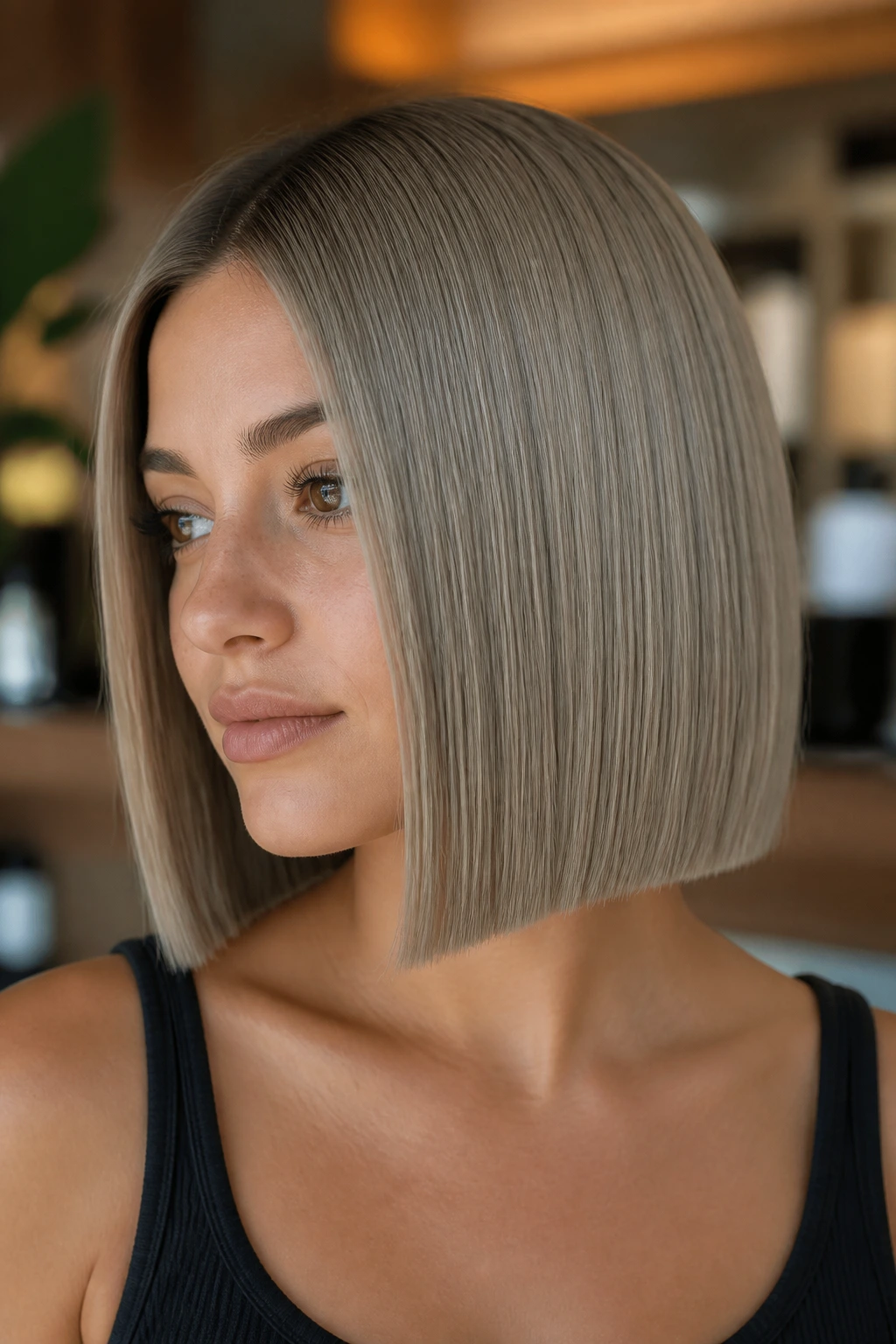
A glassy bob is all about shine and precision, and fine hair often excels here because it can lay flat in a clean way when the cut is right. A blunt perimeter, a center or slight off-center part, and a cool ash gloss make the hair look sleek instead of thin.
What to Ask For
- One-length or nearly one-length ends.
- A glossy ash glaze.
- Minimal layering.
- Heat styling that keeps the surface smooth.
This cut is not forgiving if the ends are damaged, so trims matter. But when the hair is healthy, it looks crisp and expensive without needing much product. Just keep the product light. Heavy serums can turn the whole thing limp fast.
23. Low-Maintenance Grow-Out Ash Bob
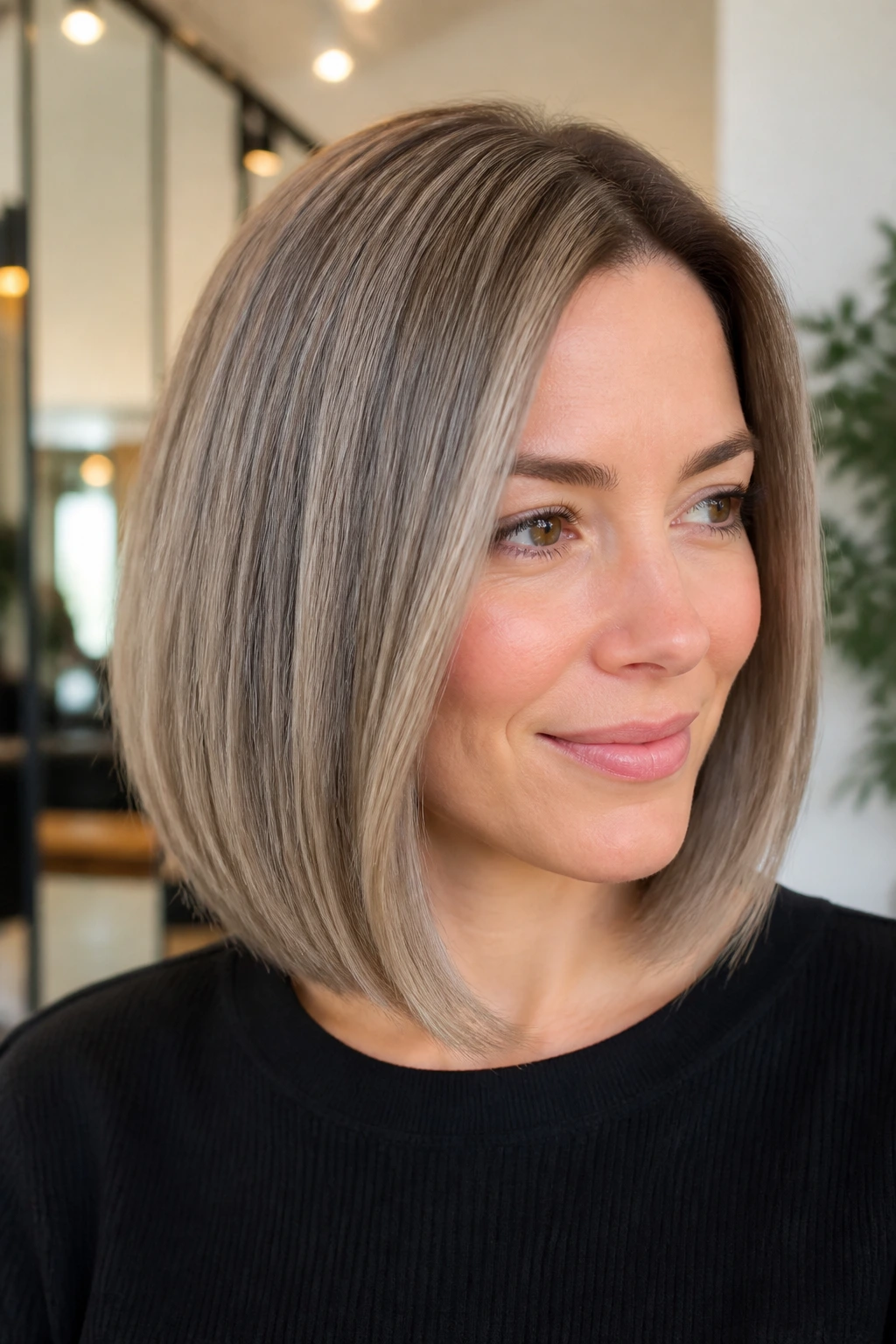
Some bobs look great only on the day you leave the salon. This one is built to survive the awkward weeks after. A slightly longer bob with soft internal shaping grows out more gracefully, which is a relief if you do not want a calendar full of trim appointments.
The ash tone helps here too. Cool brown, mushroom beige, or smoky blonde softens the regrowth line. That means your roots can grow in without the cut looking messy right away. The trick is keeping the perimeter clean enough that the hair still has a body to it.
Good for If You Hate High-Maintenance Hair
- You air-dry often.
- You prefer one product and out the door.
- You want a bob that lasts past the first three weeks.
That is a useful haircut. Not glamorous talk. Just useful.
24. Air-Dried Ash Bob
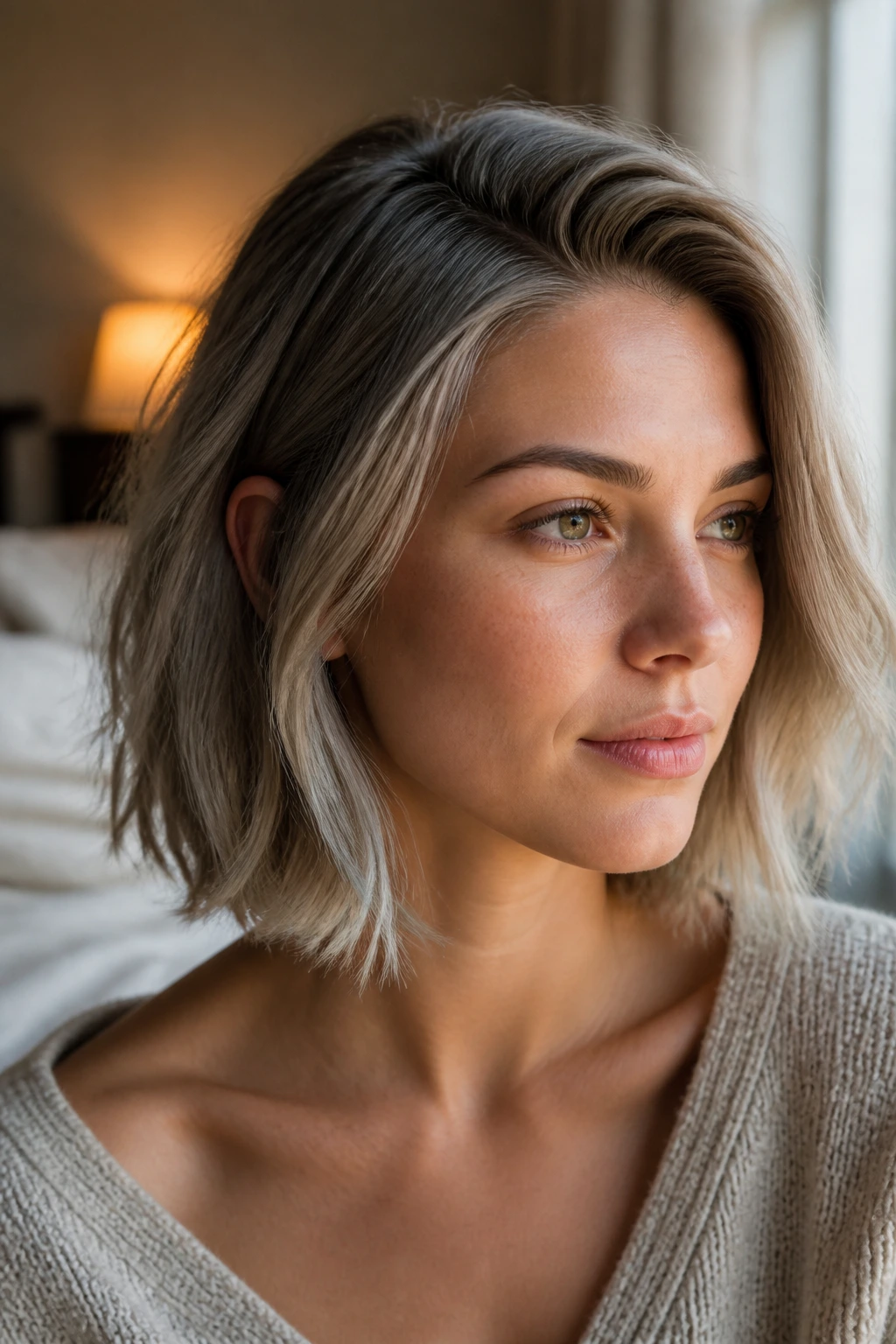
What happens when you let fine hair dry on its own? Sometimes a mess. Sometimes a nice bend. The difference usually comes down to the cut. An air-dried bob works when the shape is short enough to keep from pulling itself flat and soft enough to let the wave show up.
This version should have a blunt base with a little internal movement near the ends. Use a lightweight leave-in, scrunch once, and leave it alone. The ash color matters because it makes the natural bend look smoky instead of frizzy. That is a nice upgrade.
If your hair gets puffy when it air-dries, do not fight it with heavy creams. Use a small amount of foam or a milk-texture styler. Less drag. Better shape.
25. Curved-In Blunt Perimeter Bob
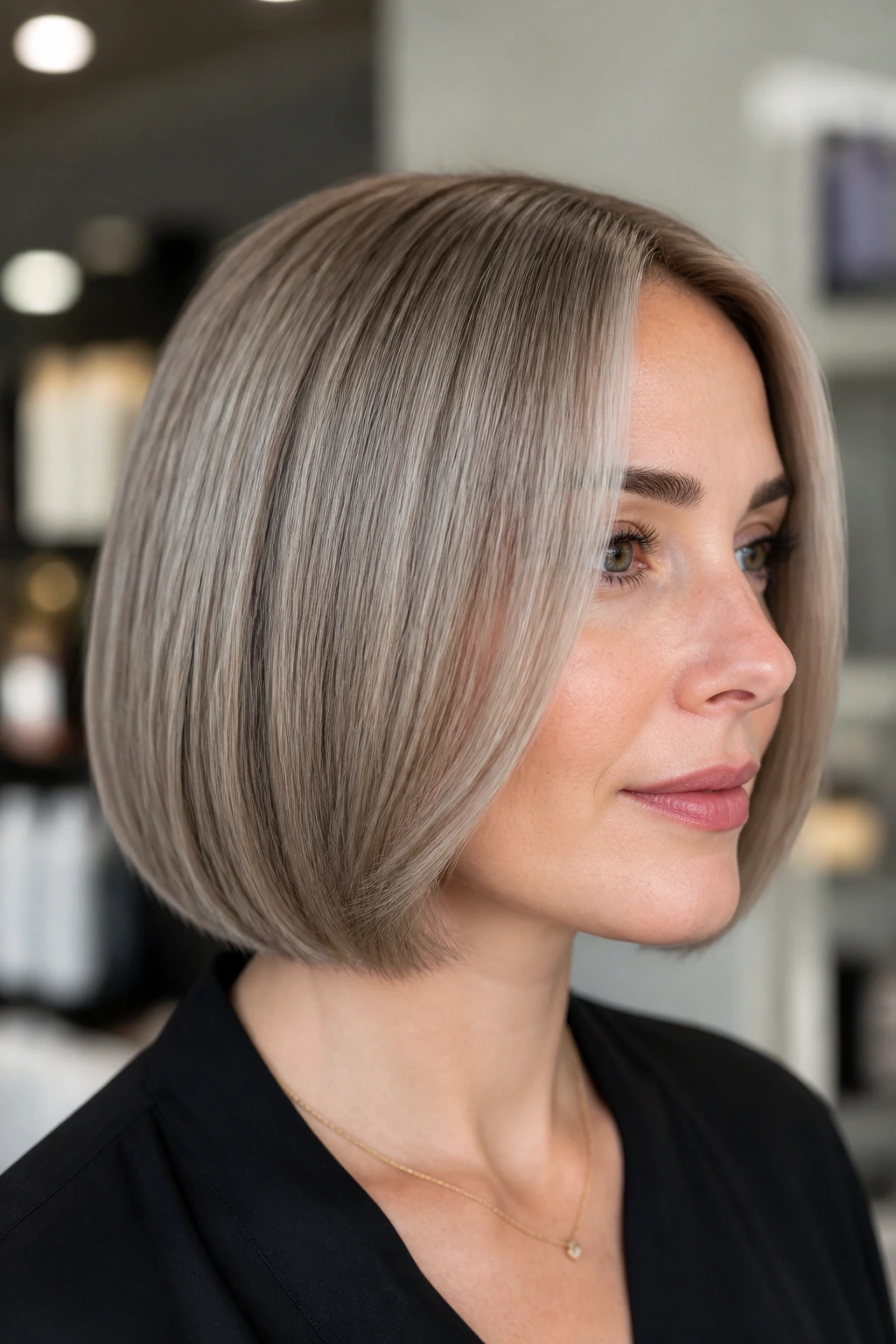
A curved-in blunt bob gives you the best part of a blunt cut and none of the stiffness. The ends stay thick, but the line tucks under just enough to make the shape feel finished. Fine hair likes that because the perimeter still reads full.
The difference between this and a plain blunt bob is small on paper and big on the head. A tiny bevel can stop the ends from fanning out or lying weirdly at the shoulders. Pair it with an ash brunette or ash blonde shade, and the clean line looks sharper.
If your hair has a habit of splitting at the bottom, this cut can calm it down. Not cure it. Calm it down. That is often enough.
26. Ice Ash Bob with Silver Sheen
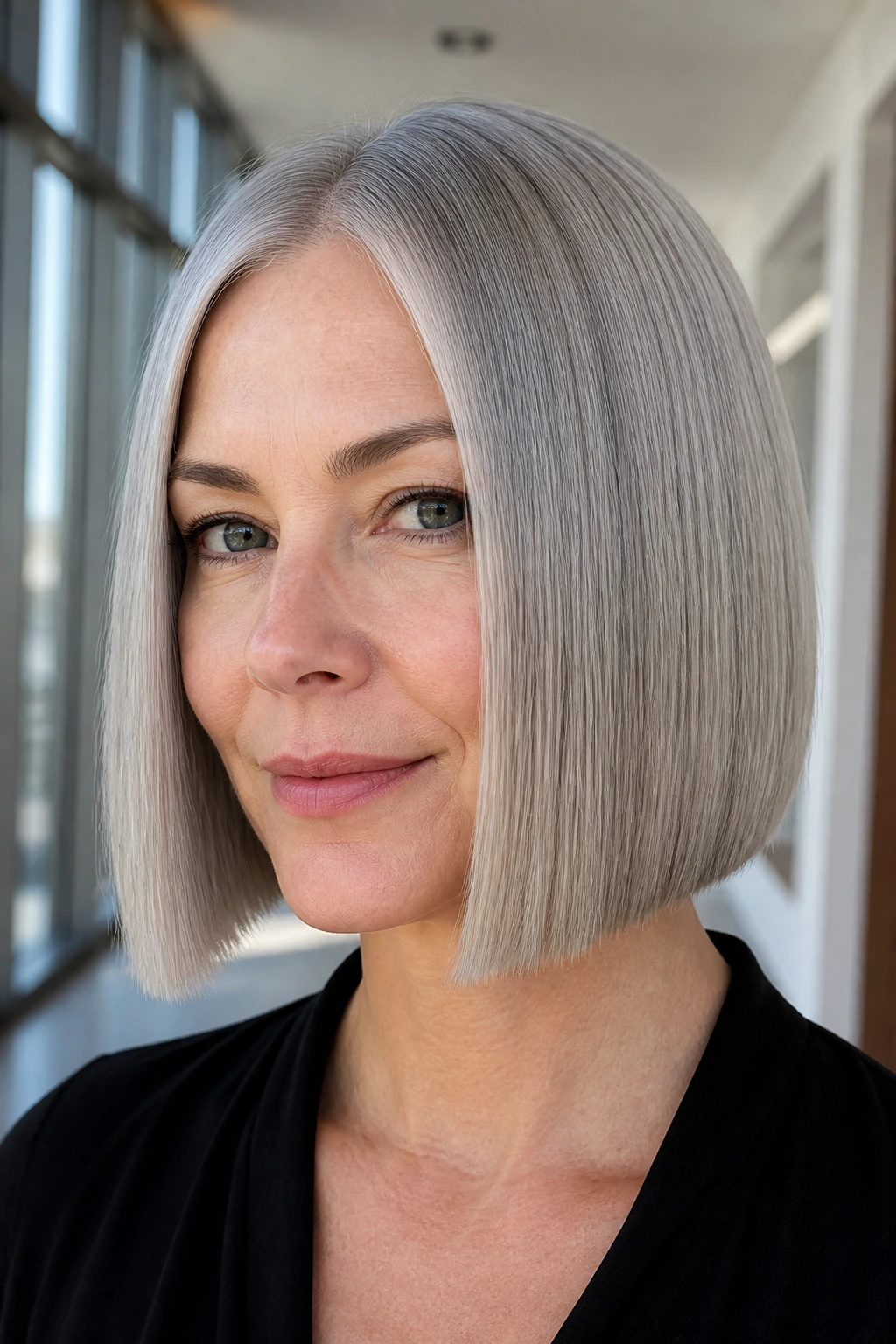
An ice ash bob can look stunning on fine hair when the color is controlled and the cut is tight. The cool silver-beige finish reflects light, but it also softens the look of thin strands by keeping the tone unified. There is a brightness to it that can make the haircut seem fuller than it is.
The Shape Needs to Be Strong
The color is only half the story. Without a clean blunt line or a softly beveled edge, the cool tone can make the hair look even finer. So keep the cut structured. Bob first, shine second.
Best Pairings
- Jaw-length or chin-length shape.
- Root shadow for depth.
- Light styling cream on the ends only.
This one does ask for maintenance. Brass shows fast on pale ash tones. If you like tidy hair, it is worth it.
27. Soft Shag-Bob Hybrid
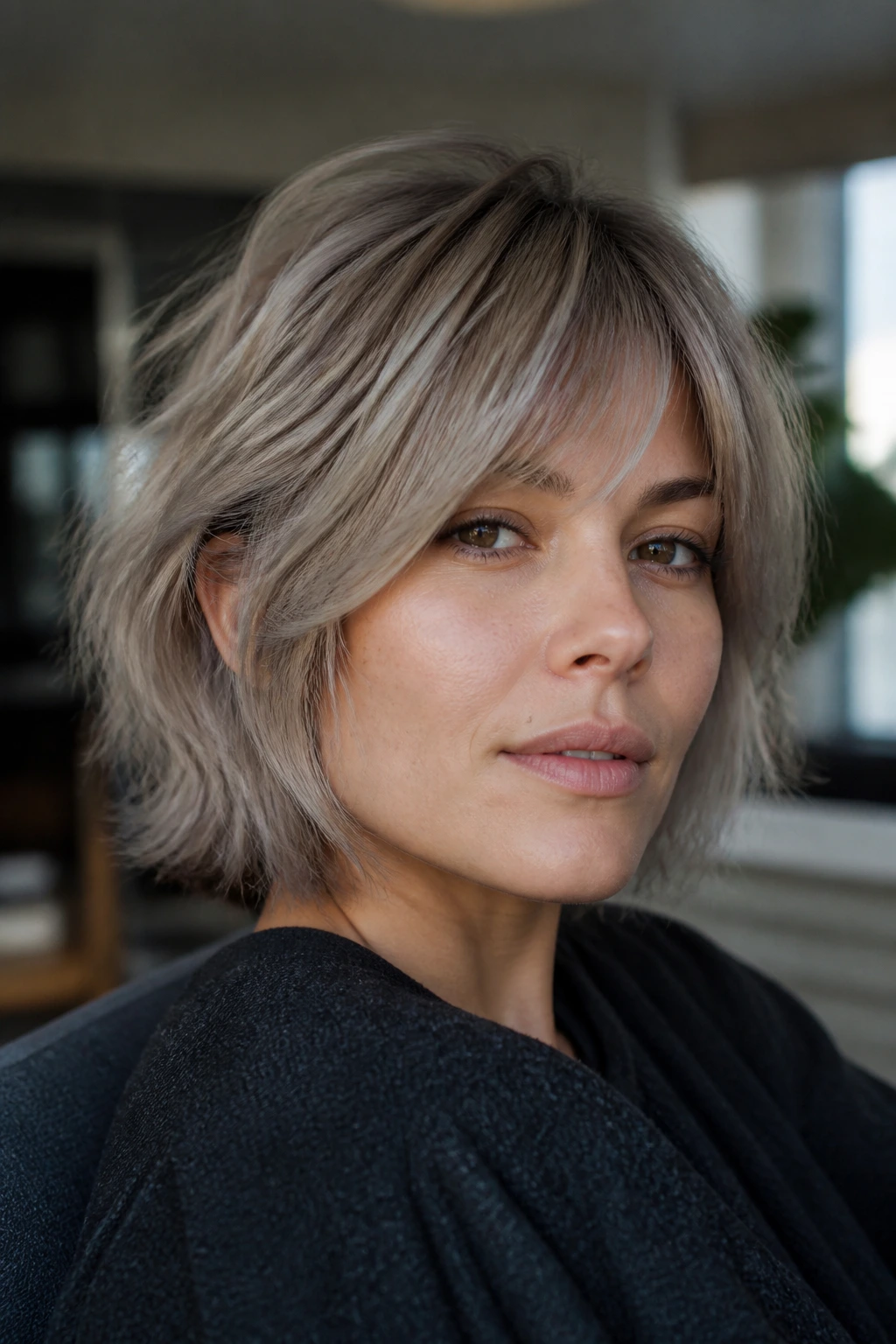
Can a shag and a bob share the same head? Yes, but only if the shag part stays soft. A hybrid cut gives fine hair a bit of texture around the crown and face while preserving enough perimeter weight to keep the ends from disappearing.
The point is movement without chaos. You want airy layers, not shredded layers. That difference is huge on fine hair. Too much shag and you lose the bob. Too little and you lose the lift. The ash tone helps by calming the texture visually, especially in cooler brunette or smoky blonde shades.
This is a good fit if you like a lived-in look and do not mind a little styling paste or spray. It is not the easiest cut in the bunch. It may be one of the most flattering.
28. Micro Bang Ash Bob
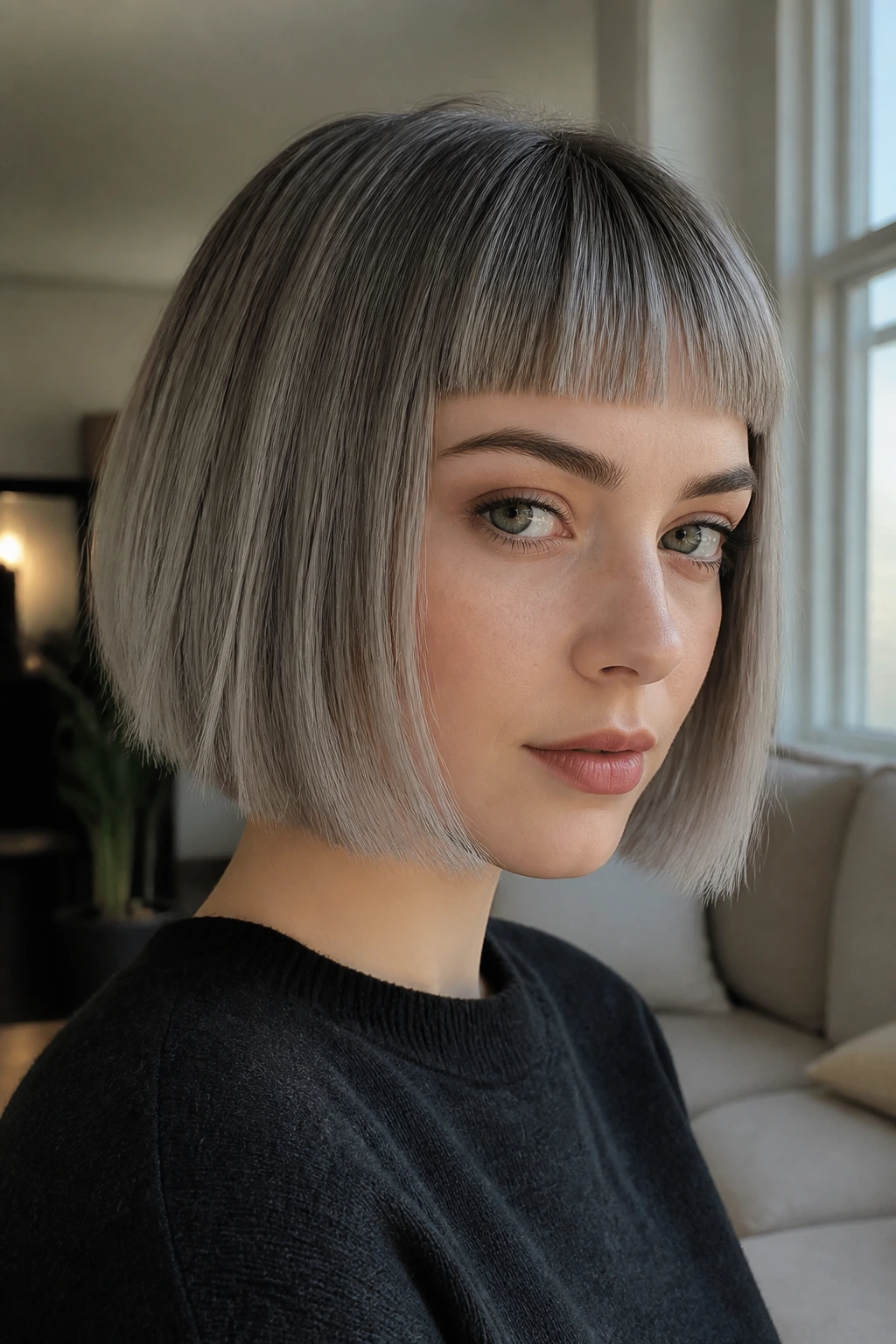
Micro bangs are not subtle, and that is exactly why they can be fun with fine hair. The short fringe brings attention to the eyes and makes the bob underneath look cleaner and fuller. The line feels deliberate. Almost graphic.
This style works best when the bob itself stays tidy and compact. A blunt chin-length shape or a short French bob gives the micro fringe a base that can hold the look together. Ash tones keep the whole thing from feeling too sharp by softening the contrast.
It is not the best choice if you want a low-risk haircut. It is the right choice if you want your bob to have a little bite. That bite can be flattering on delicate hair.
29. Feathered Ash Bob
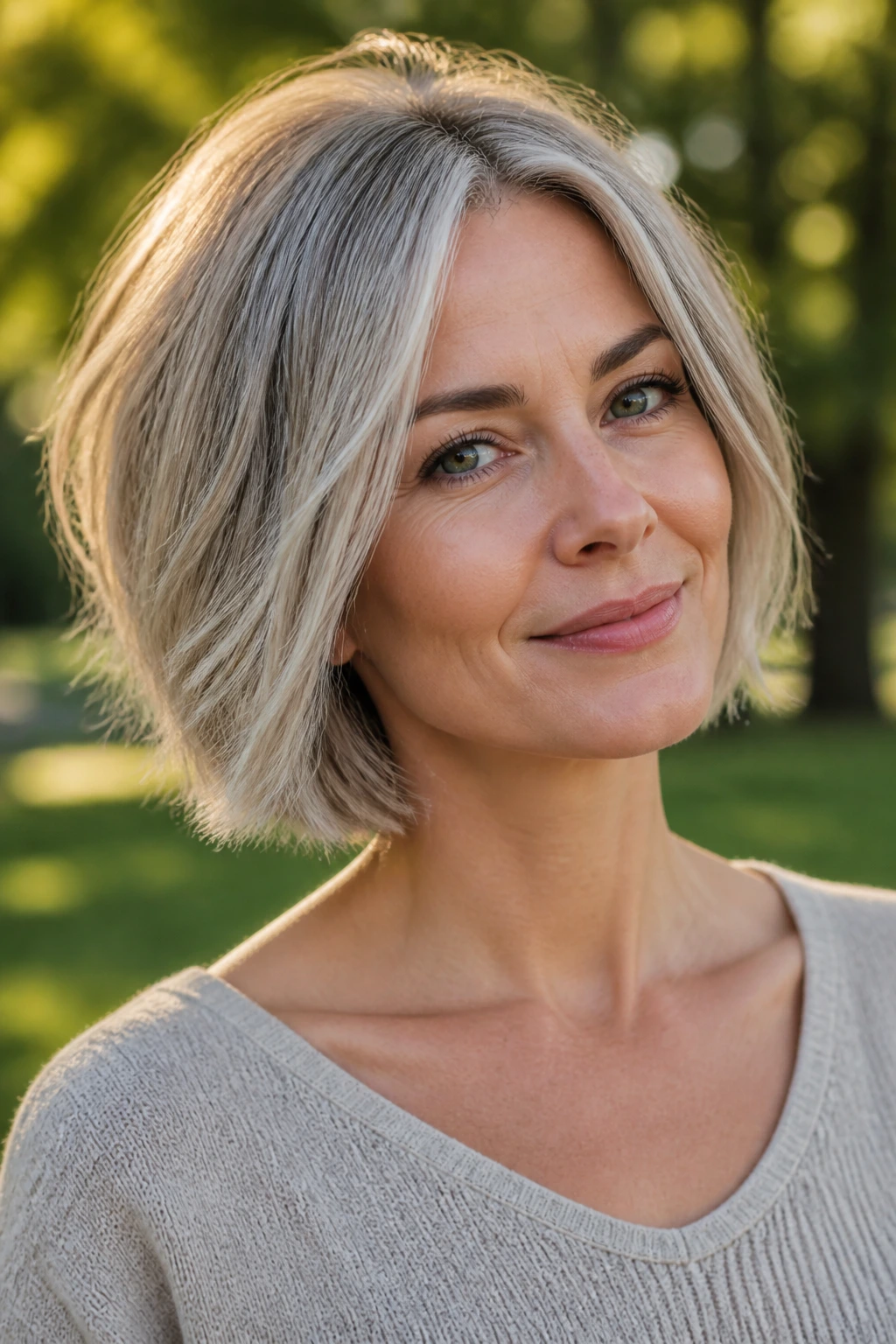
Feathered ends can be lovely on fine hair when the feathering is light and controlled. The haircut gets a whisper of movement around the bottom edge, which keeps it from looking too solid. A soft ash blonde or cool brown makes the texture feel airy, not dry.
Why It Feels Lighter
The feathering removes just enough weight to keep the bob from sitting like a block. The top layers can move, while the bottom still keeps some thickness. That balance is what makes it work.
Keep It From Going Thin
- Ask for feathering only at the ends.
- Keep the perimeter visible.
- Use a lightweight mousse, not a thick cream.
- Finish with a cool shot from the dryer to hold the bend.
This style is good for hair that needs softness more than volume at the crown.
30. Sculpted Neck-Length Ash Bob
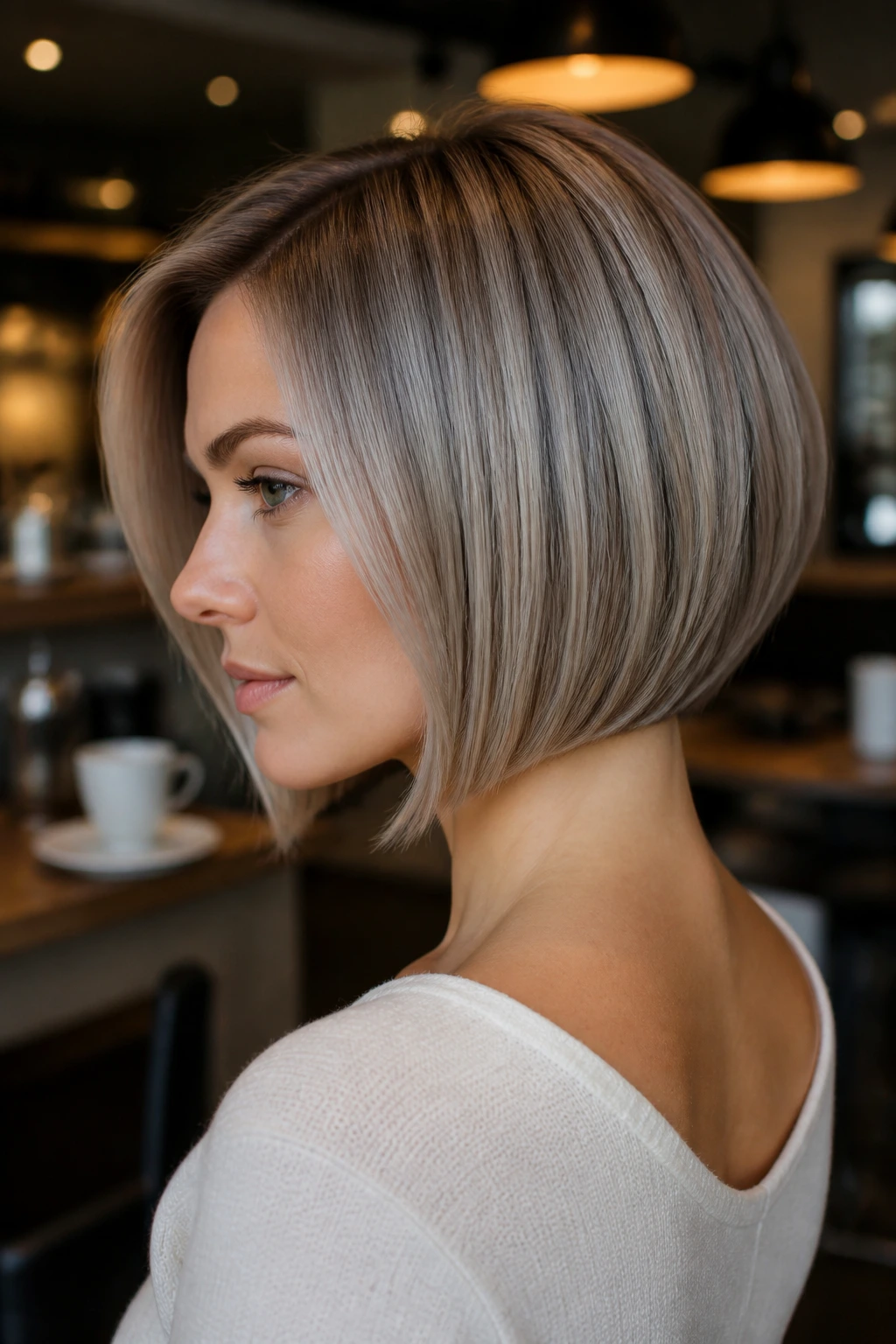
A neck-length bob sits in a useful middle zone. It is short enough to feel neat, long enough to tuck behind the ear, and just heavy enough to keep fine hair from floating apart. When the line is sculpted, the whole cut looks deliberate and full.
This is the style I would hand to someone who wants a polished bob without going so short that they panic halfway through the appointment. Keep the outline clean. Add a soft ash brunette or beige ash gloss. Let the nape sit close and the front curve gently toward the jaw.
The honest truth: fine hair usually looks better when the cut is a little stricter than you first expect. Clean edges, cool color, and a shape that respects the hair’s natural fall. That combination is what keeps the bob from turning flimsy.
