



Curly blonde bob haircuts for round faces work best when they stop trying to hide the face and start shaping it. That sounds simple, but it is where so many cuts go sideways: too much width at the cheeks, too much bluntness at the jaw, not enough lift at the crown.
A good bob for a round face usually does two things at once. It pulls the eye up and down, not just side to side, and it leaves a little breathing room around the widest part of the face. With curls, that matters even more, because shrinkage can swing a cut by an inch or two once it dries. A bob that looks neat in the chair can turn into something far shorter, puffier, or boxier by the end of the day.
Shrinkage changes everything.
Blonde helps, too, but not in the cartoonish way people sometimes think. A soft beige blonde, honey blonde, or rooted blonde can break up the mass of the curl pattern and keep the whole shape from feeling heavy. The color should support the cut, not fight it. And when the cut is right, the face looks cleaner, longer, and more open without losing that lively curl movement people want from a bob in the first place.
1. Curly Blonde Bob Haircuts for Round Faces with a Side Part
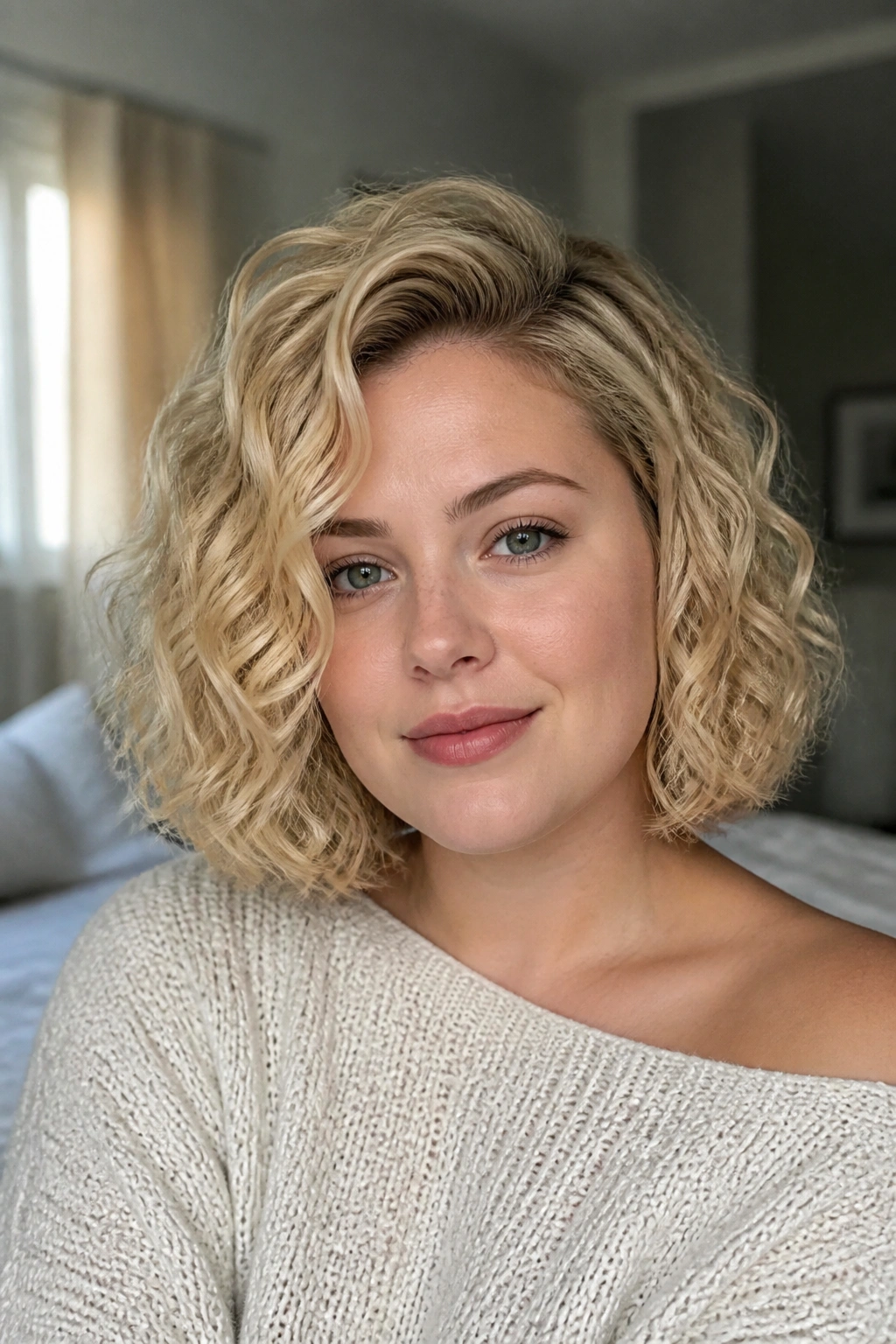
A side part is one of the easiest ways to make a curly bob read slimmer through the cheeks. It shifts volume off center, gives the crown a little height, and keeps the face from looking too symmetrical or too wide. That tiny shift does a lot of work.
I like this version for curls that naturally puff outward. The longer front side creates a diagonal line, and diagonals are your friend here. They break up the roundness without making the cut feel severe.
What to ask for
- Keep the shortest front curl at or just below the jaw when stretched.
- Leave the longer side 1 to 1½ inches lower.
- Cut the curls dry, or at least mostly dry, so shrinkage is not a surprise.
- Ask for soft face-framing pieces, not a hard corner at the cheeks.
Best of all, this shape still looks good on day three. Once the curls loosen a little, the side part keeps the whole cut from collapsing into one big puff.
2. The French Bob with Wispy Fringe

Can a French bob work on a round face? Yes, if the fringe stays airy and the length does not stop right at the cheekbone. That is the whole trick. A heavy, blunt fringe can shorten the face fast. A wispy one opens it up.
This cut works because it feels light. The ends sit near the mouth or just under it, while the fringe breaks the forehead into smaller pieces instead of one solid line. On blonde curls, that softness matters even more, because bright color can make a blunt shape feel louder than it really is.
Why it doesn’t box the face in
The fringe should be see-through enough that skin still shows through at the forehead. If you can only see bangs and no forehead, the cut is probably too dense. Keep the curl pattern loose around the front so the bob doesn’t turn into a helmet.
A little bend in the bang is better than a straight line. Every time.
3. An Angled Curly Bob with Longer Front Pieces
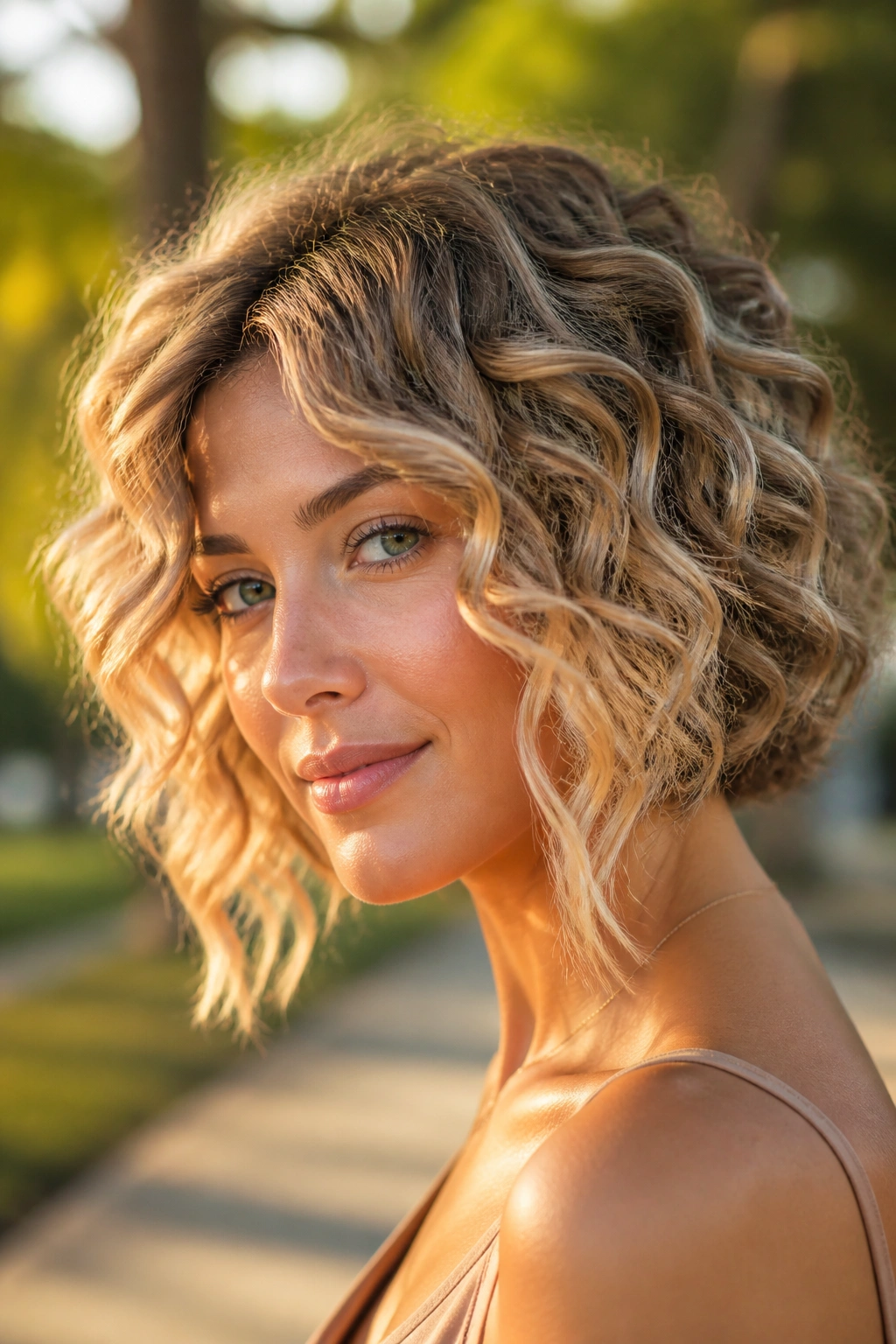
If your curls get wider at the sides, this is the cut that reins them in without flattening them. The back stays a little shorter, the front drops lower, and the whole shape points the eye downward instead of straight across the cheeks.
That angle matters more on round faces than people think. It creates the feeling of length, even when the actual cut is still a bob. And because the front pieces are longer, you keep some movement around the jaw instead of chopping the face off right at its fullest point.
A few details make or break it:
- The angle should be soft, not dramatic.
- The front should skim the jaw or land below it.
- The back should not be stacked so high that it balloons out.
- A beige or champagne blonde dimension helps the angle show up in curls.
This is one of those cuts that looks calm but does a lot. Quietly. That is why it works.
4. A Curly Bob with Curtain Bangs and Root Shadow
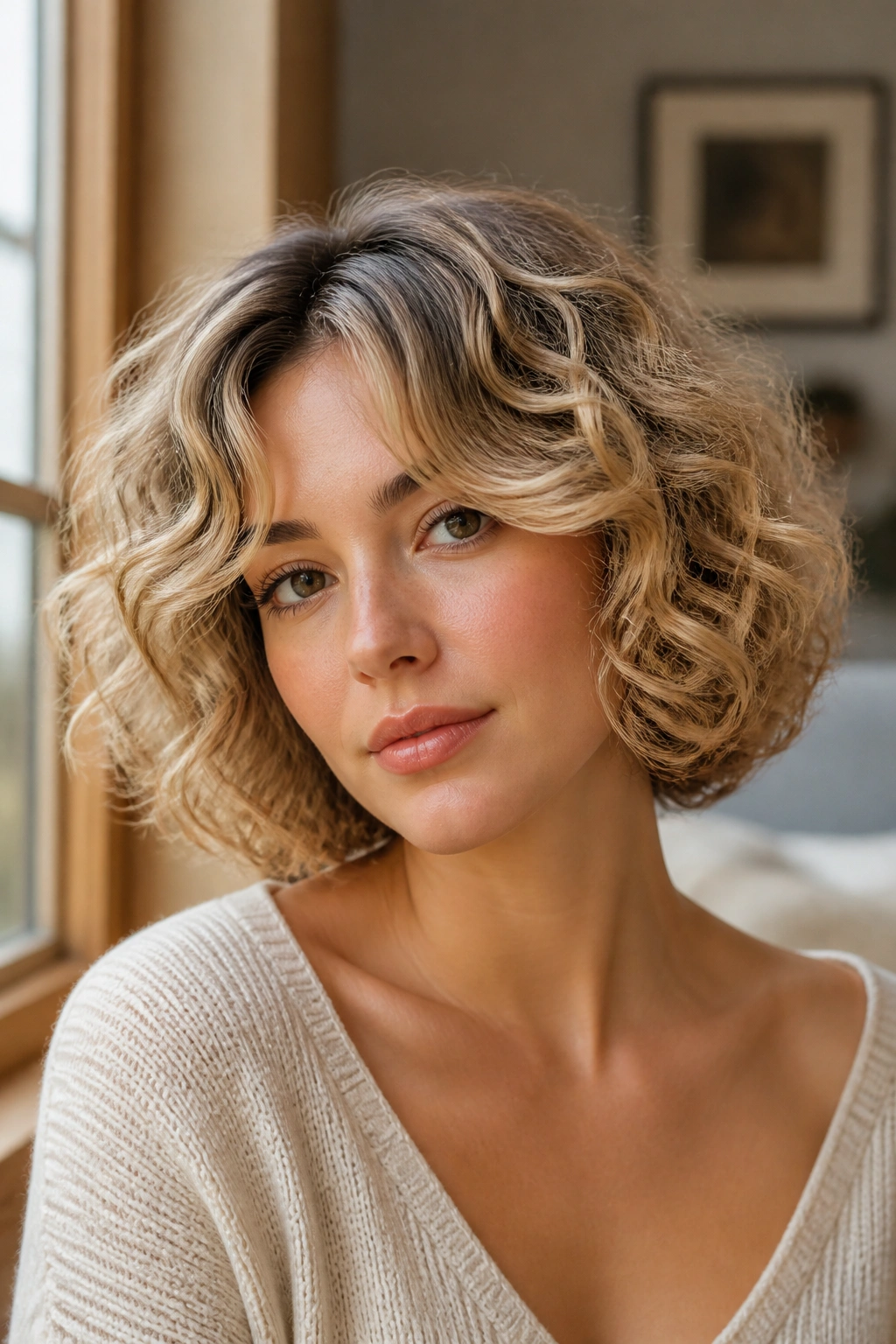
Curtain bangs are one of the smartest moves for a round face because they split the width at the front. Instead of one block of hair sitting across the forehead, you get two softer panels that open the center line and lead the eye down. Pair that with a rooted blonde and the cut gets even better.
Root shadow keeps the base from looking too bright and flat. It adds depth right where curls can lose it. Without that little stretch of darker color near the scalp, blonde curls can sometimes turn into one solid shape. The shadow gives the bob a bit of contour.
The bangs should start around the brow or just below it when dry, then taper into the cheekbones. Too short and they fight the face. Too dense and they steal the softness.
I’d choose this one for someone who likes movement but doesn’t want a full fringe. It has a little polish, a little looseness, and enough face framing to do the job.
5. The Collarbone Lob with Loose Blonde Curls
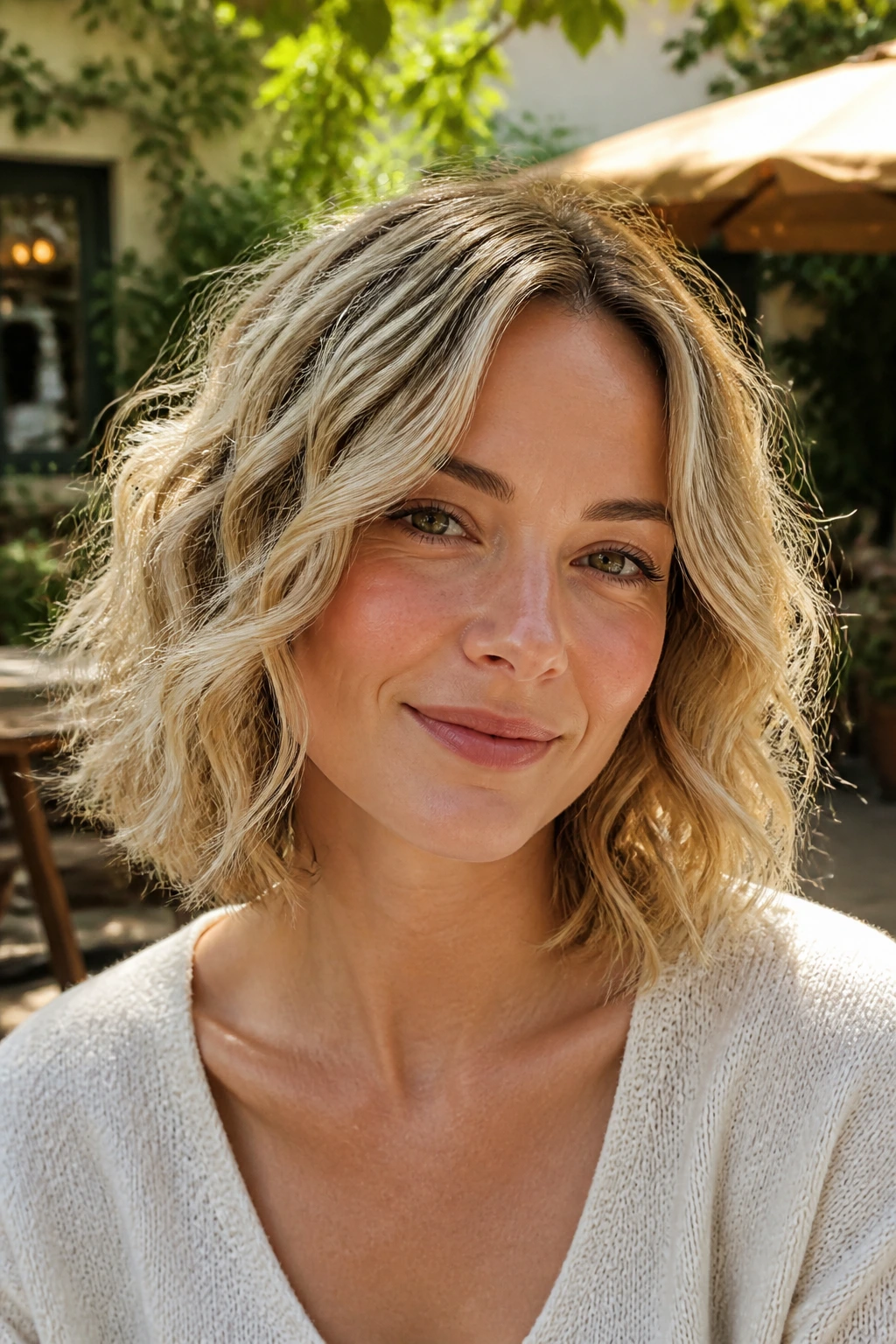
This is the easiest place to start if you’re nervous about going too short. A collarbone lob gives round faces more vertical length without putting all the volume at the widest point of the cheeks. It also buys you time if your curls shrink more than expected.
Loose blonde curls make this cut feel airy instead of bulky. The length gives the curl pattern room to stretch, and that stretch is useful. It keeps the edges from sitting like a circle around the face, which is the one thing you do not want.
I reach for this shape when someone likes low-stress hair. It grows out cleanly, it can be air-dried with a diffuser in minutes, and it does not demand a perfect styling day to look good. A few long layers starting below the cheekbone are enough. Anything higher can widen the face again, and there is no reason to invite that problem back in.
6. A Stacked Crown Bob for Fine Hair
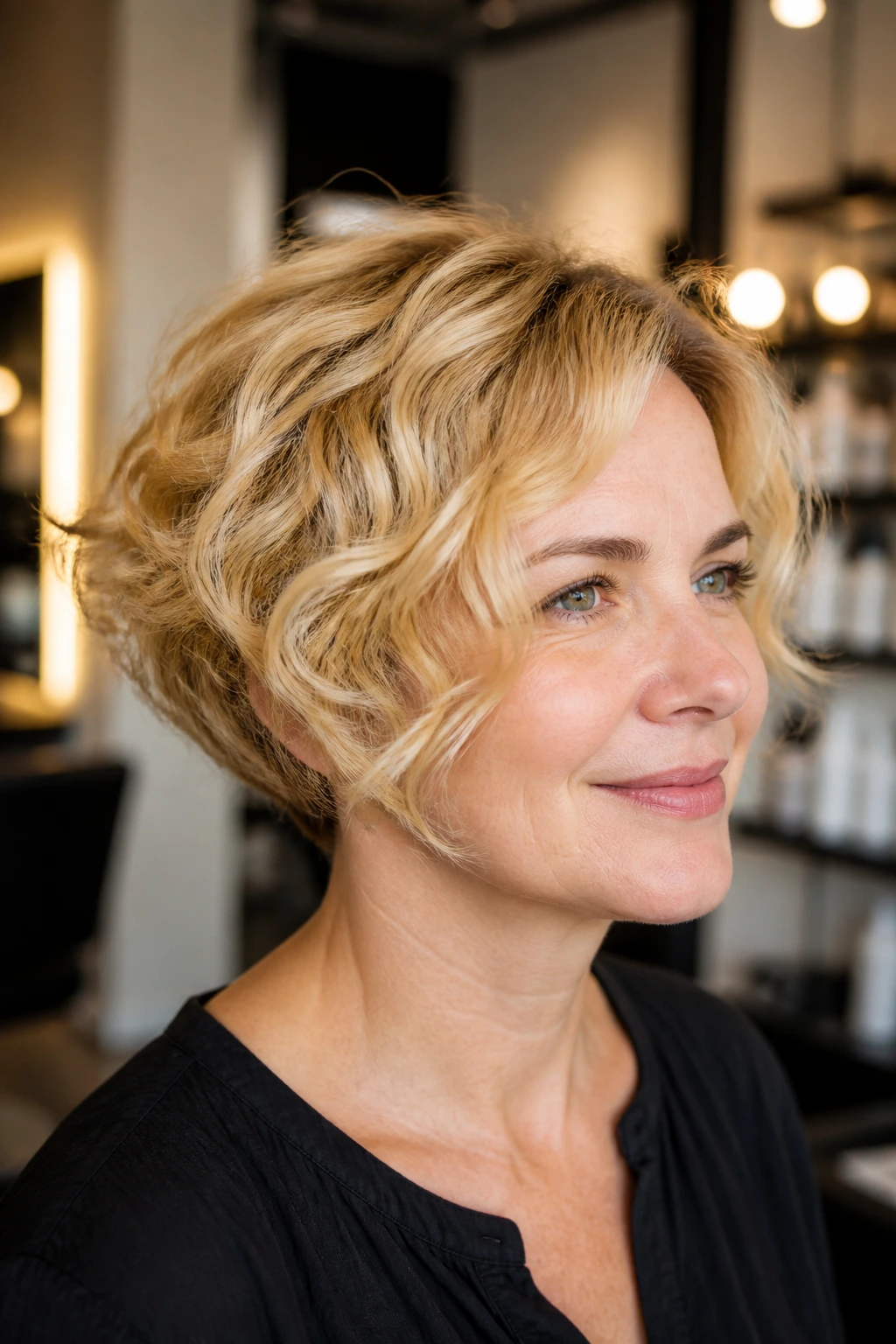
Fine curls can disappear fast in a blunt shape. A stacked crown bob fixes that by putting the lift where the eye needs it most: above the temples and behind the top of the head. That height pulls attention up, which is exactly what a round face needs.
The back is cut shorter and the layers build gradually toward the crown. Not choppy. Just shaped. That structure gives the illusion of more body without making the sides swell out like a triangle.
How to ask for it
- Ask for a gentle stack, not a big wedge.
- Keep the side pieces slightly longer than the nape.
- Leave enough weight around the front so the cut doesn’t puff at ear level.
- Style with a diffuser and a light mousse at the roots.
What to watch for
Too much stacking can make the back look dated and the sides look wide. I’d keep the lift modest and the silhouette soft. The best version looks full, not stiff.
7. An Asymmetrical Bob with a Deep Side Sweep
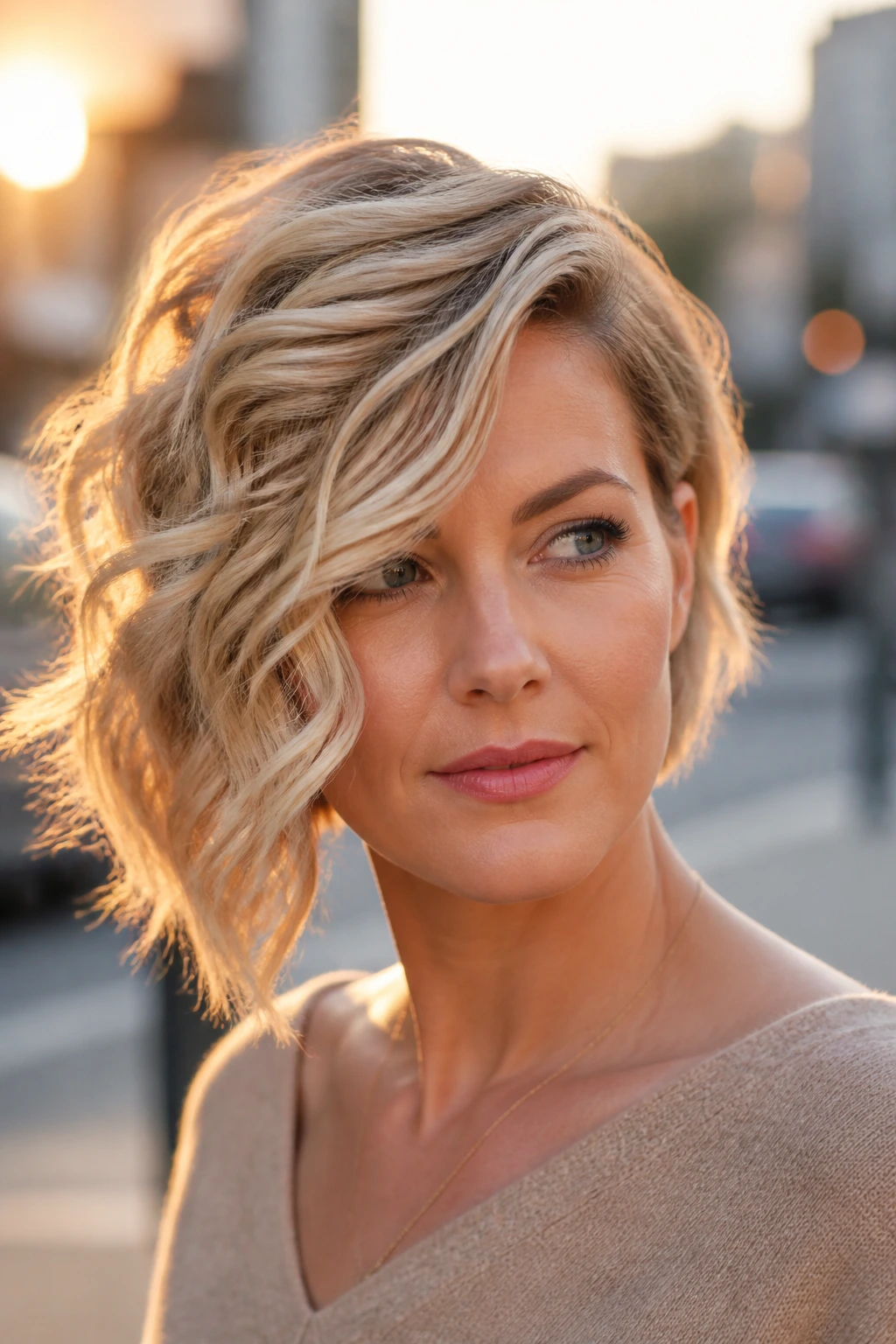
Asymmetry is a cheat code for a round face. One side sits a little longer, the part gets pushed farther over, and the eye stops reading the face as one even circle. That small imbalance works in your favor.
The best version does not need a dramatic size difference. One side just needs to hang lower by about an inch, maybe a little more if the curls are tight and springy. The longer side can brush the jaw, while the shorter side stays tucked closer to the cheekbone.
A deep side sweep adds another layer of length. It gives the forehead some softness and creates a clean line that moves diagonally across the face. That is the part people notice first, even if they can’t name why it looks good.
I would not over-texturize this cut. Let the shape do the heavy lifting. Too many layers can erase the whole point.
8. A Tapered Jaw-Length Bob with Soft Ends
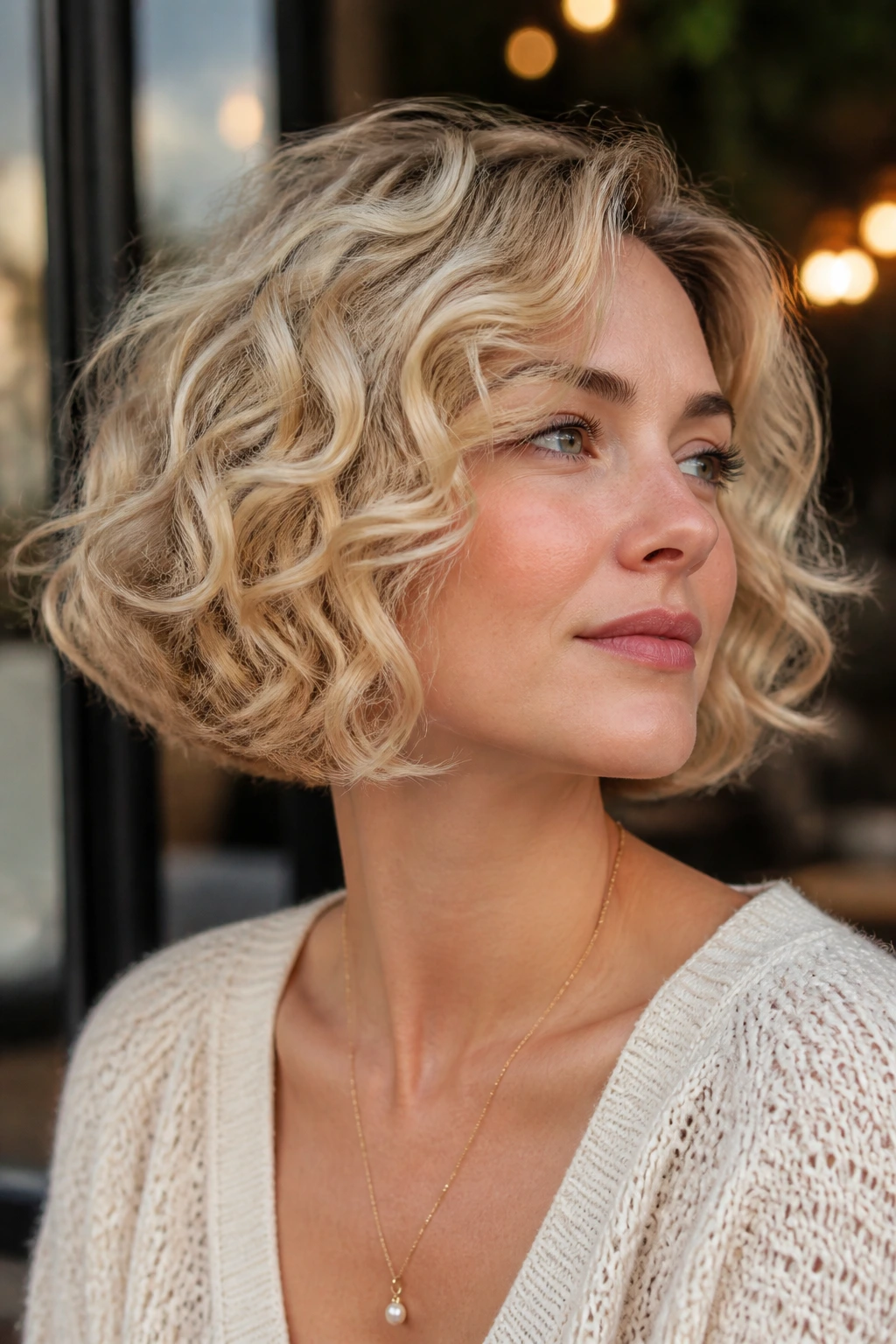
Can a jaw-length bob work on a round face? Yes, but only if the ends are softened. A blunt jaw-length line is rough on this face shape because it lands exactly where the face is broadest. A tapered edge fixes that fast.
The taper keeps the perimeter from looking like a hard shelf. Instead, the curls narrow a little at the bottom, and that narrowing is what gives the cut shape. It feels cleaner, less boxy, and a lot easier to style.
The line you want
Ask for a cut that follows the jaw, not one that stops dead on it. The perimeter should bend, not sit stiff. A little internal layering can help, but the stylist should leave enough weight that the curls still have structure.
If your curls are thick, this cut gets even better with a soft side part. If they’re looser, a center part can work, but only when the front pieces are long enough to graze the cheeks instead of sit above them.
9. The Shaggy Curly Bob with Choppy Layers
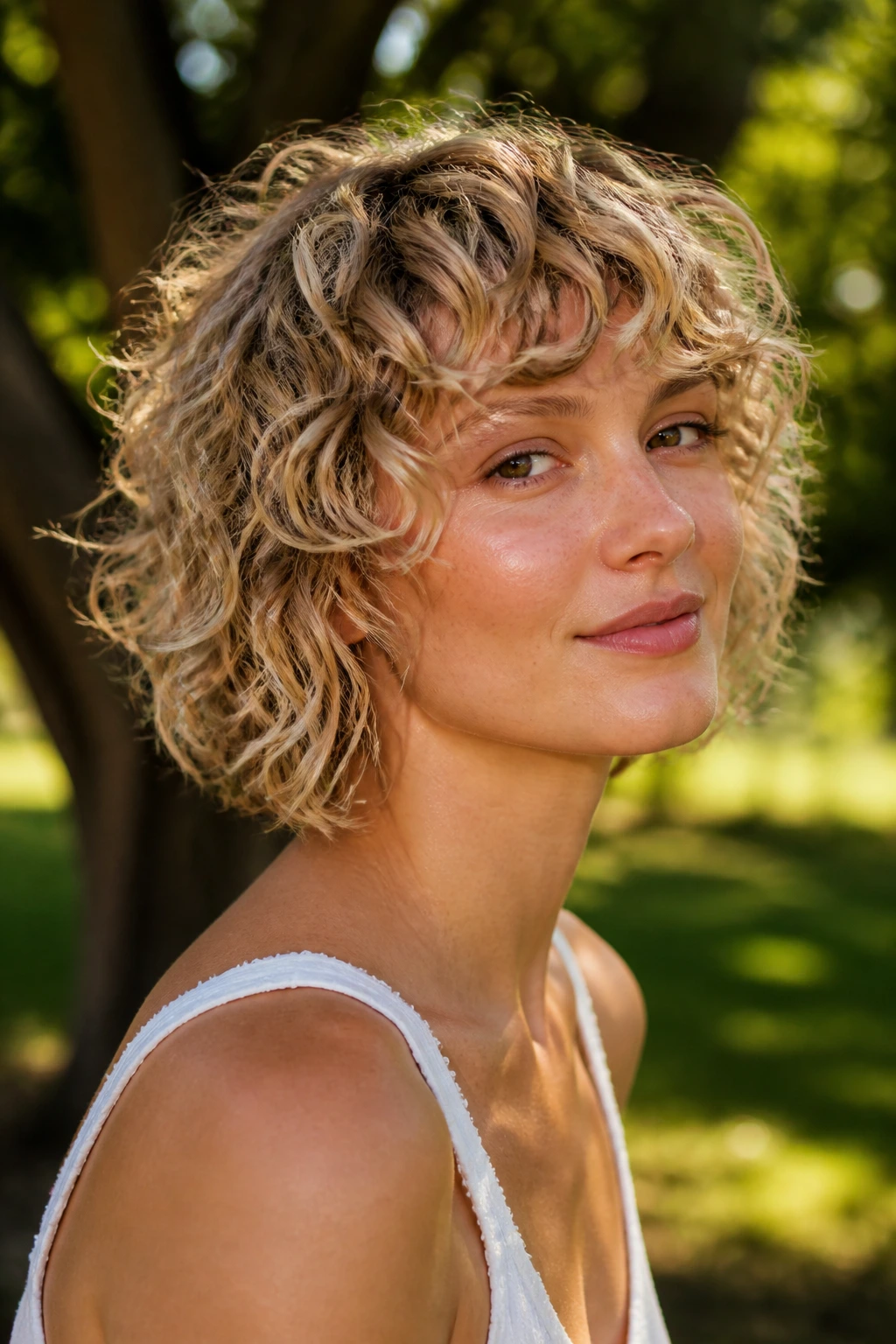
This is the cut for curls that refuse to behave, and I mean that in the best way. A shaggy bob takes all that natural lift and turns it into shape instead of fighting it. On a round face, the choppy layers break the outline enough that the face feels longer and less circular.
The point is not neatness. The point is movement. You want pieces that fall at different spots around the cheek, jaw, and neck so the eye keeps traveling instead of landing on one wide curve.
A dry cut helps a lot here. So does a light hand with thinning. If the ends are over-thinned, the bob can frizz out and lose its shape by midday. Keep the curl pattern loose, let a few pieces fall forward, and don’t overstyle the front.
This cut looks especially good in creamy blonde tones with a hint of shadow at the root. The texture shows up better that way.
10. Curly Blonde Bob Haircuts for Round Faces with Money-Piece Highlights
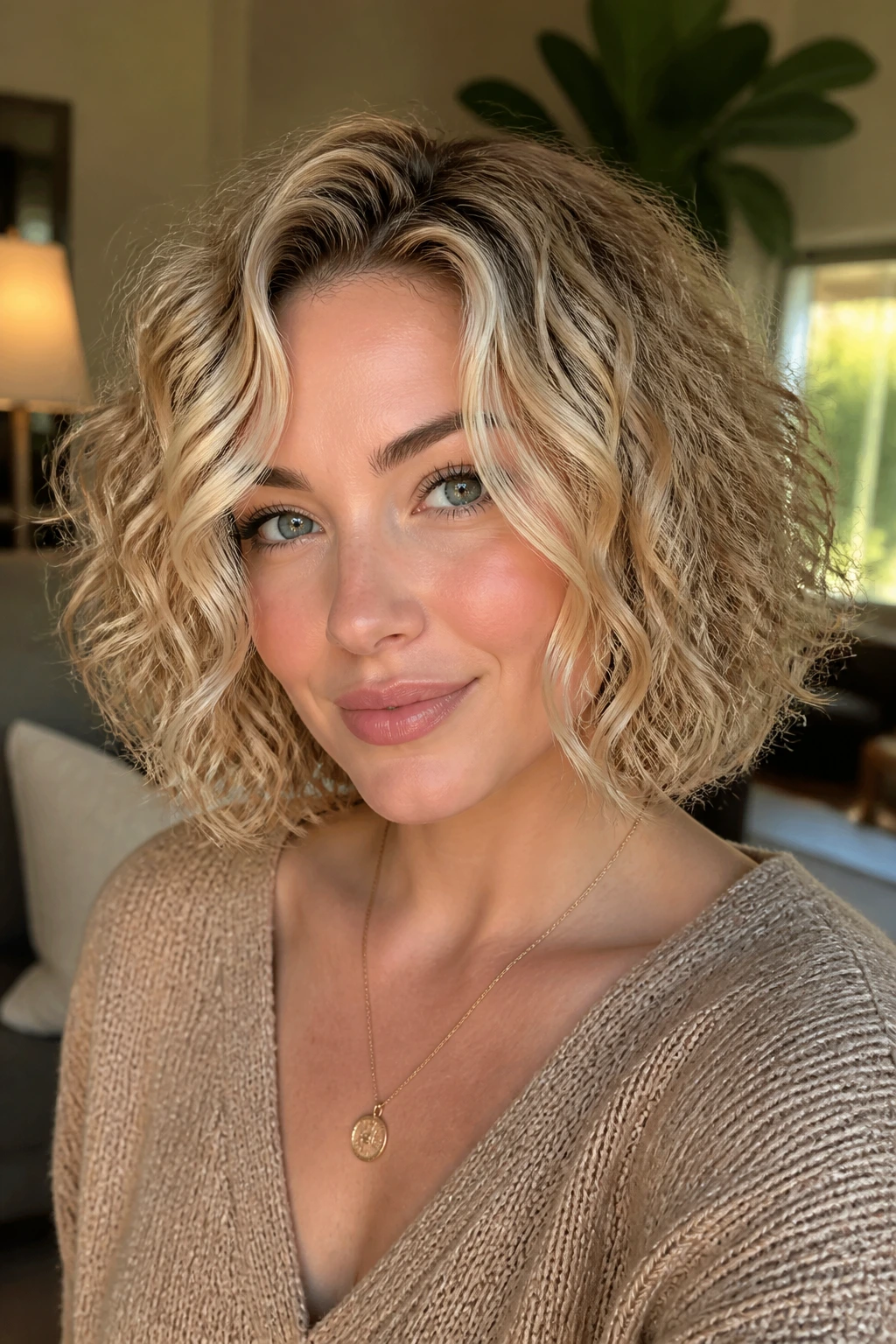
Money-piece highlights change the whole mood of a curly bob. Those brighter front pieces pull light toward the face, but they also create vertical streaks that help stretch a round shape. Done well, they make the bob feel more alive without turning it busy.
The placement matters. The brightest blonde should sit around the temple and front curl line, not spread through every strand. If you flood the whole head with light, the shape can lose definition fast. A few concentrated ribbons do more work than a full blonde wash.
Where the highlights should sit
- Start the brightest pieces near the cheekbone and temple.
- Keep the base a shade or two deeper for contrast.
- Let the front pieces stay slightly longer than the back.
- Ask for soft, hand-painted sections rather than chunky stripes.
This is a good choice if you want the haircut to look more expensive without adding extra length. The color frames the face. The cut keeps it honest.
11. A Blunt Curly Bob with Hidden Internal Layers
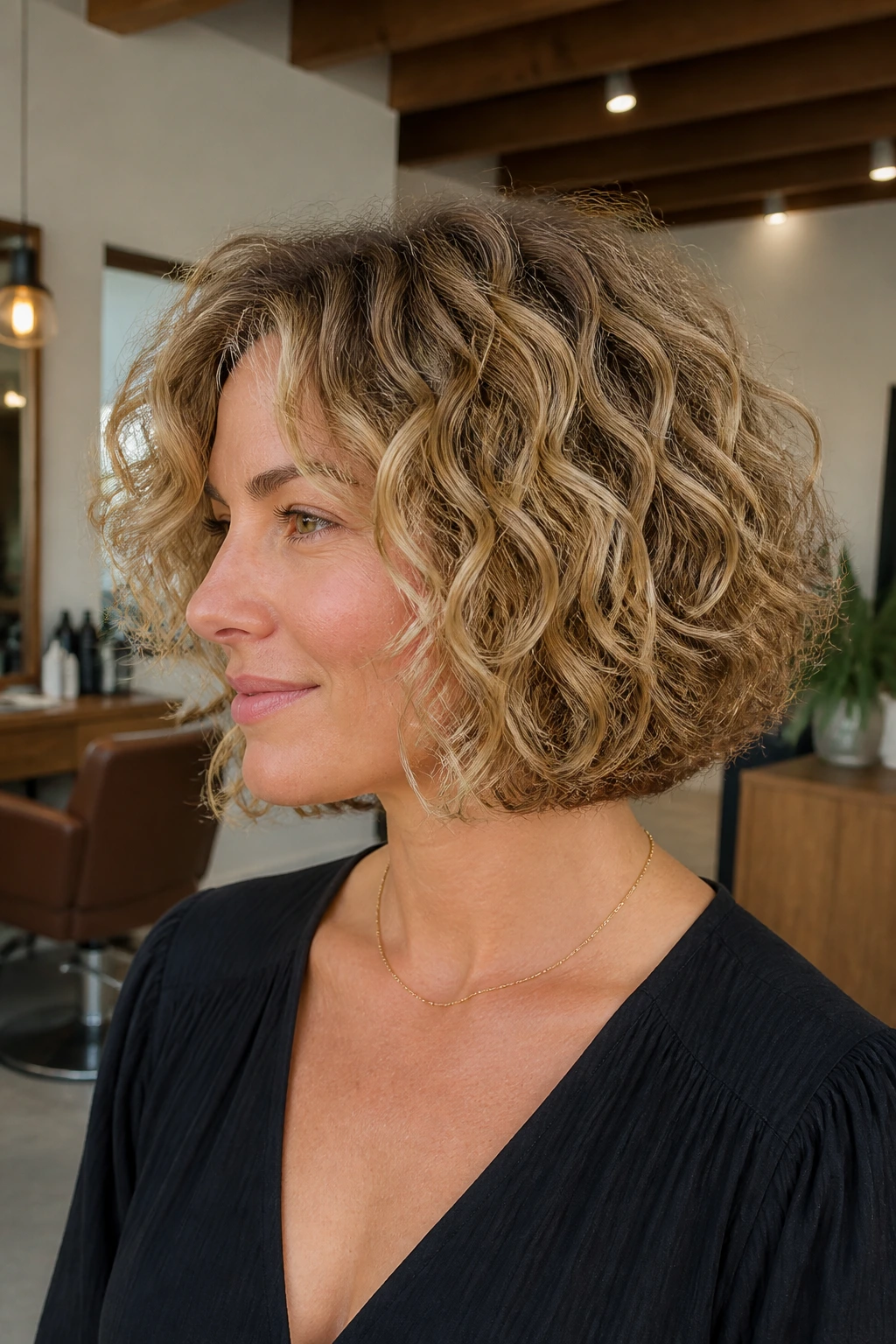
A blunt curly bob sounds risky on a round face, and in a bad salon chair it can be. But with hidden internal layers, the shape gets the clean edge people love while the inside stays light enough to move. That combination is the whole point.
Unlike a shag, this cut keeps the outline fuller. That can be great for curls that are sparse at the ends or frizz-prone. The inside layers remove bulk where the hair stacks up, while the outside line stays smooth and deliberate.
It’s the kind of bob I’d choose for someone who likes structure but hates looking overdone. The cut feels polished, but not stiff. A side part can keep it from reading too wide, and a slightly longer front section helps the face feel less boxed in.
The warning is simple: if the ends are cut too blunt and too short, the shape gets square fast. Keep the perimeter soft enough to bend.
12. A Grown-Out Beachy Bob with Soft Texture
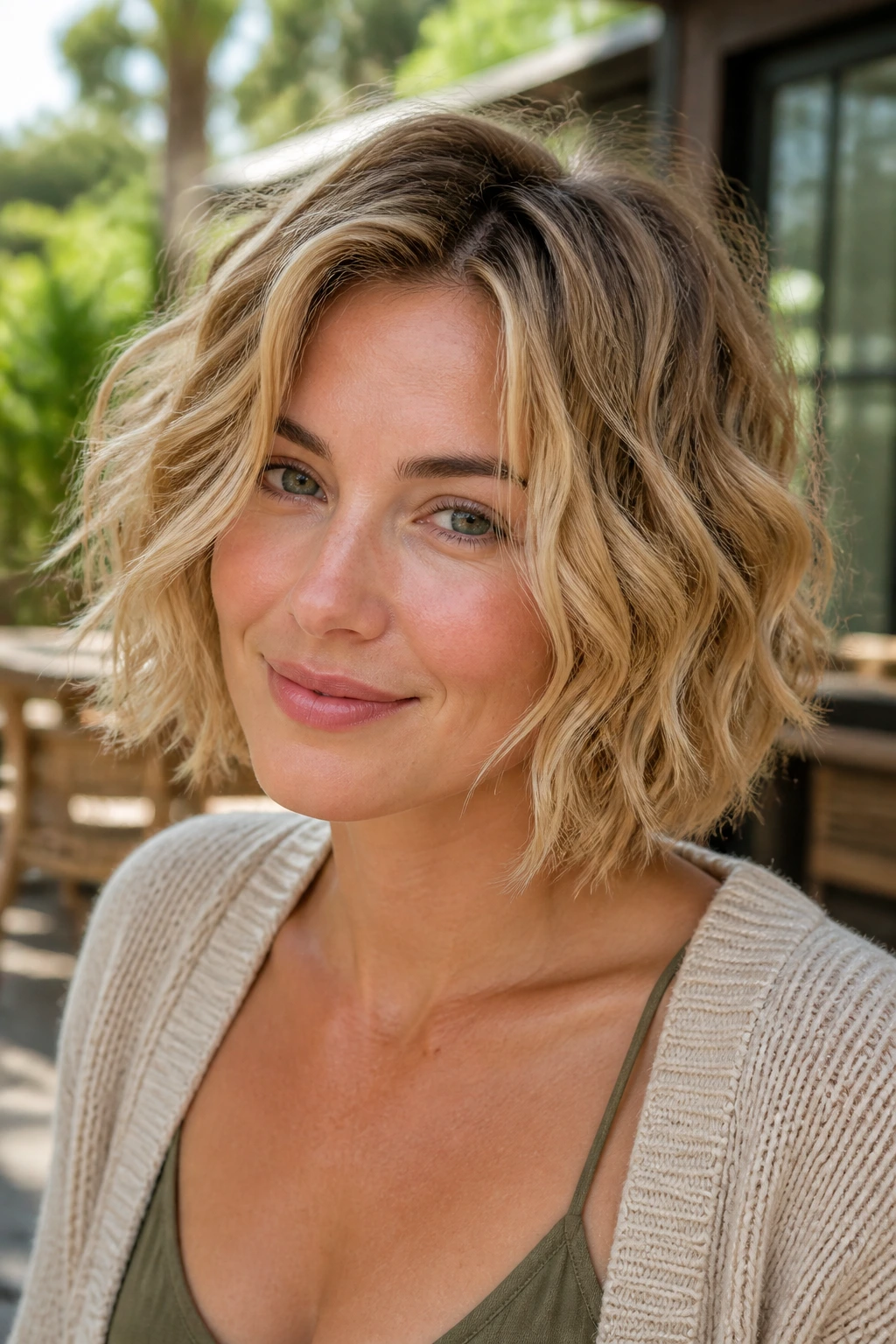
This one looks best when it is not trying too hard. The curls or waves sit a little looser, the ends are soft, and the blonde has enough variation that the whole shape feels sun-kissed rather than formal. For a round face, that softness is useful because it keeps the cut from drawing a hard circle around the cheeks.
The length usually lives somewhere between the jaw and the collarbone. Not too short. Not so long that it stops behaving like a bob. That middle ground is where the shape feels easy.
The texture should look touched, not shellacked. A light cream or mousse and a quick diffusing pass are enough. If you can still see movement in the ends when the hair settles, you’re in the right zone.
This cut grows out better than most. That’s the quiet advantage. You can stretch the trim schedule a bit without the shape falling apart, which is rare and worth keeping.
13. An Inverted Bob with a Rounded Back
An inverted bob gives a round face a useful trick: shorter volume in back, longer movement in front. The back rises a little toward the nape, then the front angles downward enough to make the face feel longer. It is a simple shape, but it works.
On curly blonde hair, the rounded back keeps the crown full without letting the sides spread too wide. That matters. Too much width at the ears is the fast track to a bulky look, and nobody needs that.
Who this cut suits
- Dense curls that need shape.
- Hair that gets heavy at the nape.
- Anyone who wants visible structure without a sharp angle.
What not to do
Do not over-stack the back. A heavy wedge can feel old-fashioned fast. Keep the line soft, especially if the curls are springy and already have a lot of natural lift.
This is a cut with backbone. It just needs restraint.
14. A Honey-Blonde Bob with Side-Swept Fringe
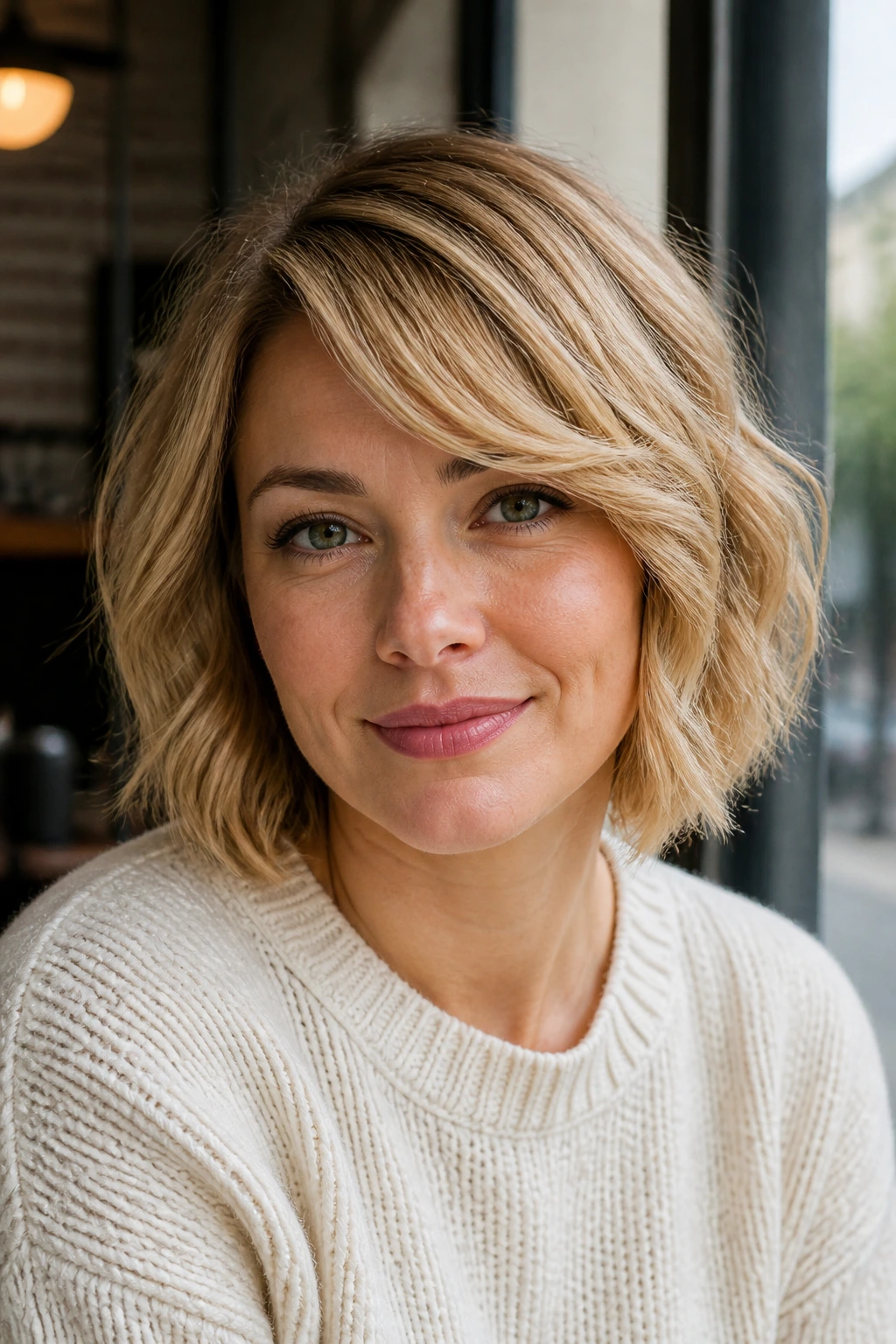
Blonde does not have to be icy to flatter a round face. In fact, warm honey tones can be better because they soften the overall shape and keep the haircut from feeling harsh. Pair that warmth with a side-swept fringe and you get a bob that feels easy to wear.
The fringe is doing real work here. It breaks the forehead line, cuts across the face at an angle, and keeps attention moving. That angle is especially helpful when the curls around the cheeks are full, because it gives the eye somewhere else to go.
Honey blonde also plays nicely with curls that have different densities. A few lighter ribbons around the front brighten the face, while the deeper base keeps the cut from floating away from the head. It is a nice balance.
If your skin leans warm or neutral, this is one of the easiest bobs to pull off. And if your curls are thick, the warm tone helps the shape look softer instead of heavier.
15. Curly Blonde Bob Haircuts for Round Faces with a Middle Part
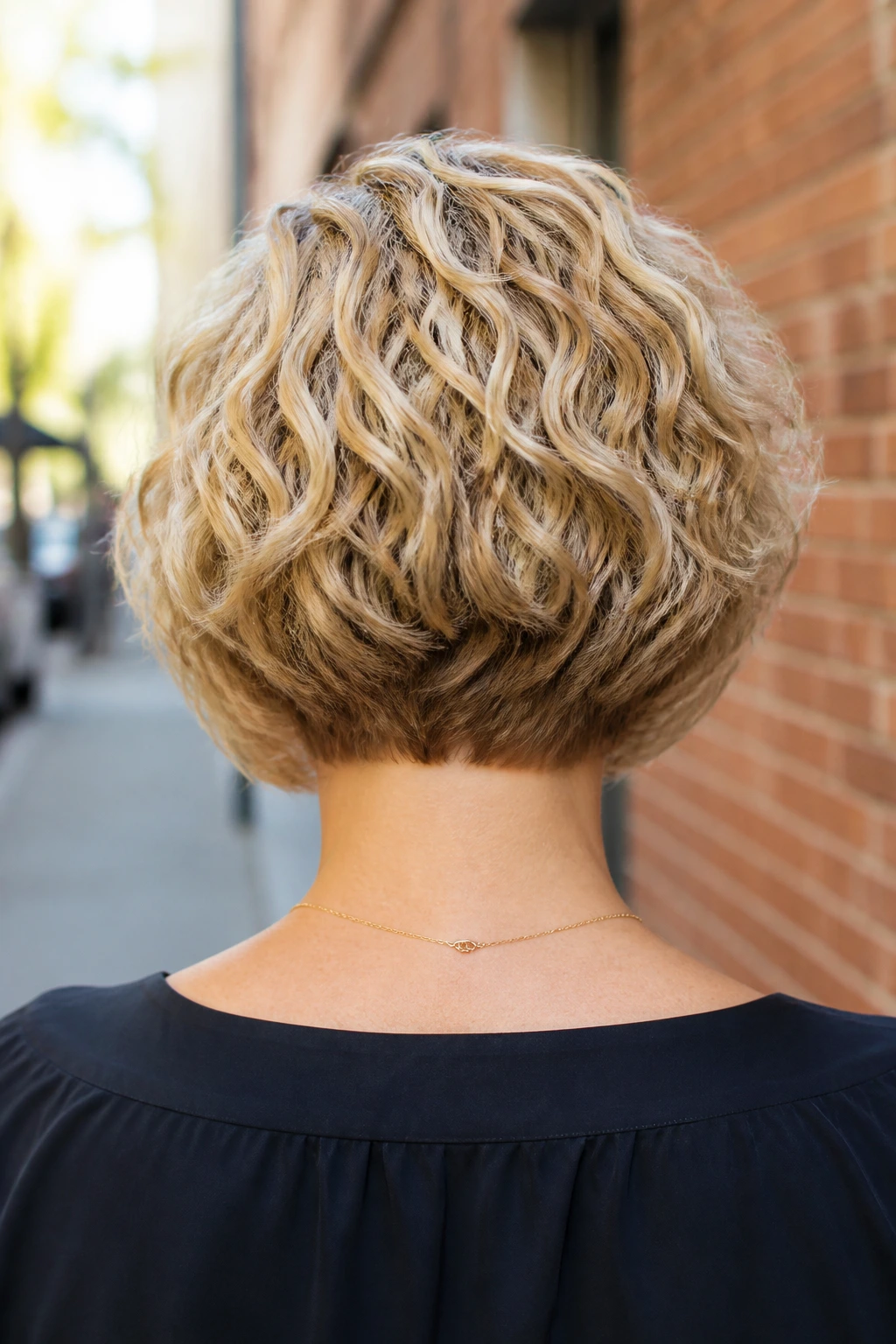
A middle part can work on a round face, but it needs help. The cut has to carry enough length and enough face-framing layers to keep the center line from making the face feel wider than it is. Without that support, the look can go flat in the wrong places.
The best version usually lands around the chin or a little below it, with curls that fall in two soft curtains on either side of the face. That split is what creates the length. If the front pieces are too short, the effect disappears.
Make it work by
- Keeping the front layers longer than the cheekbone.
- Adding crown height so the center part doesn’t collapse.
- Leaving some softness around the mouth and jaw.
- Using a blonde shade with depth at the root, not one flat tone.
I like this one for people who want a cleaner, quieter look. It is less playful than a shag and less edgy than an asymmetrical bob, but it can be one of the most flattering when the cut is calibrated well.
16. A Micro Bob with Sculpted Ringlets
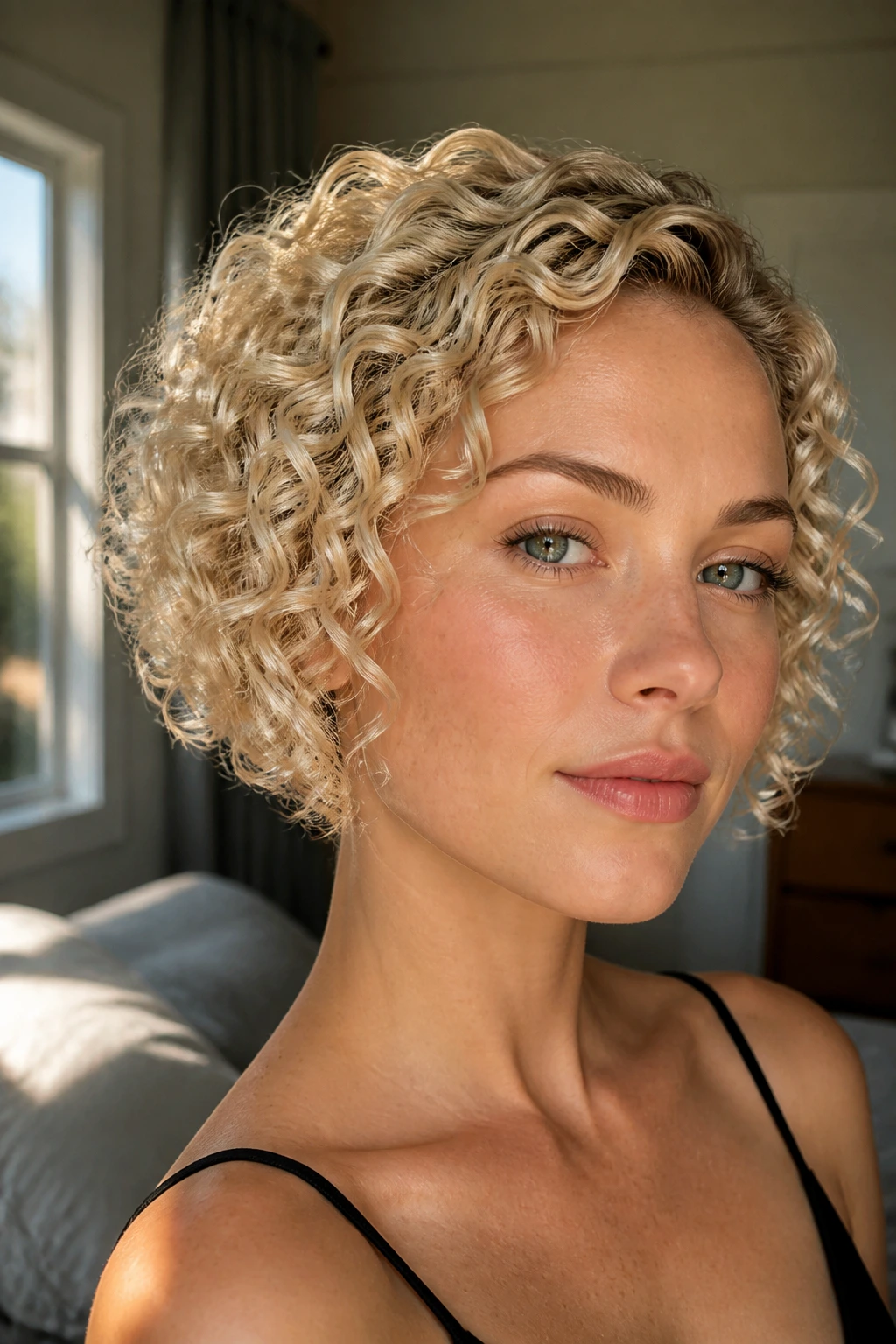
Short can be sharp in the best way. A micro bob, cut just below the ear or around the upper jaw, makes tight curls look deliberate and crisp. On a round face, the key is to keep the shape narrow and high enough that it doesn’t spread wide at the cheeks.
This cut shines when the curl pattern is springy and defined. Loose curls can puff out too much at this length. Tighter ringlets sit better and create a cleaner line around the head.
The styling needs a little discipline. Use a diffuser on low heat, then leave the curls alone once they dry. Tugging at them too much ruins the compact shape. A pale blonde or icy beige tone can keep the cut from feeling too heavy, but the cut itself is what matters most.
I would not call this the safest choice. I would call it the boldest. And sometimes that is exactly what makes it work.
17. A Collarbone Bob with Flipped Ends
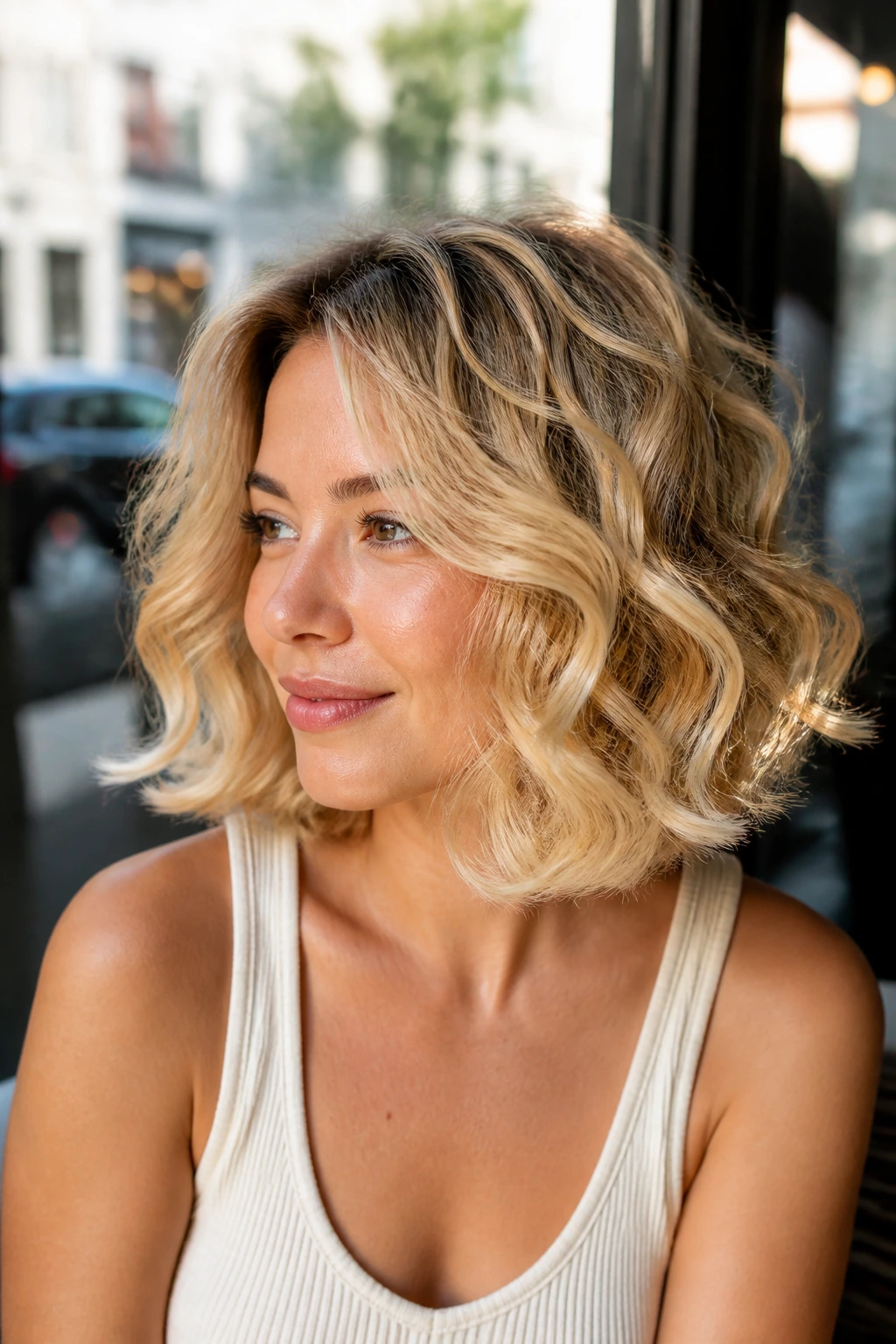
Picture a bob that brushes the collarbone, then kicks out softly at the ends. That little flip keeps the cut from hanging straight down and gives the silhouette some motion. On a round face, the shape feels lighter because the eye sees movement below the chin.
The trick is not to flip the ends too far outward. A big outward kick can widen the lower face if the hair is already full. Keep the curve small and soft, almost like the hair is turning the corner rather than announcing itself.
This style works especially well with medium curls and blonde highlights that sit around the perimeter. The lighter ends show the flip nicely, which makes the haircut look lively even on low-effort days.
It is a good middle ground for anyone who wants a bob that feels feminine without being precious. Easy to wear. Easy to grow out.
18. A Nape-Undercut Bob for Thick Curls
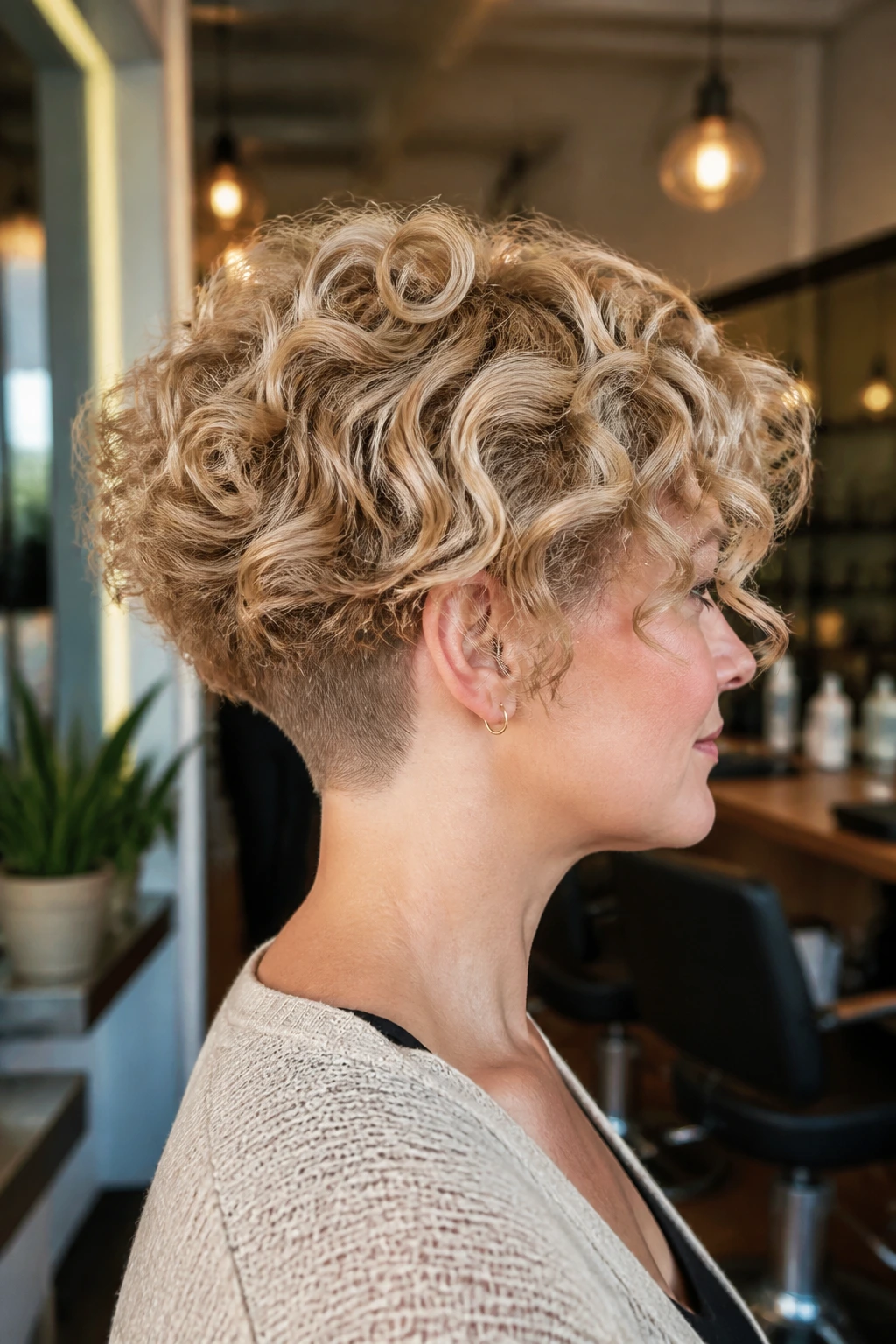
Thick curls can carry a lot of bulk at the nape, and that bulk can drag the whole bob down. A small undercut in back removes some of that weight, which helps the shape sit closer to the head and keeps the sides from ballooning. For a round face, that’s useful because the cut stays cleaner.
The undercut does not need to be dramatic. A narrow section at the nape is enough. The top layers cover it, so the haircut still looks like a bob, not a buzzed style with a cover-up job.
What to tell the stylist
- Thin only the heavy nape area.
- Keep the side layers longer than the back.
- Leave enough length over the ears to avoid widening the face.
- Dry-check the shape before removing too much bulk.
This cut is practical. Plain and simple. If your curls are dense, it can save you from a bob that puffs out every time humidity shows up.
19. A Babylights Bob with Soft Wave Pattern
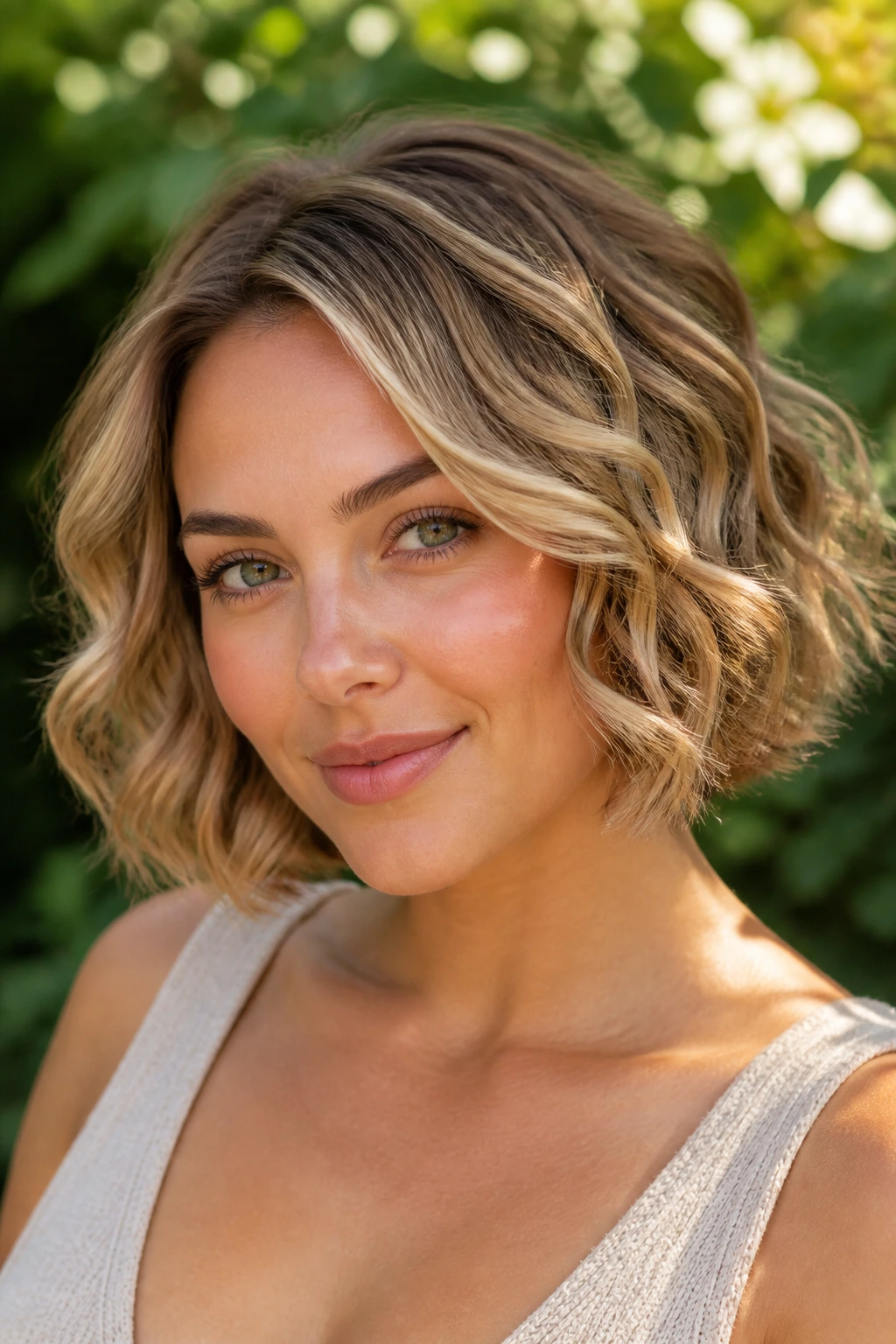
Babylights are tiny, fine highlights that mimic the way hair gets lighter in scattered strands. On a curly bob, they keep the color from looking blocky, which is useful for round faces because the shape stays soft instead of chunky. The result is a bob that looks dimensional without screaming for attention.
The key is subtlety. If the highlights are too wide or too high-contrast, the face can seem broader. Babylights avoid that by threading brightness through the curl pattern in small pieces, especially around the top and front.
This cut works best with a soft wave pattern rather than dense corkscrews. The movement shows the highlight placement, and the blonde reads as part of the cut instead of pasted on top of it. A pale beige or creamy tone often looks cleaner than a brassy one here.
If you want shine, not drama, this is the lane. It’s understated in the best sense of the word.
20. Curly Blonde Bob Haircuts for Round Faces That Grow Out Softly
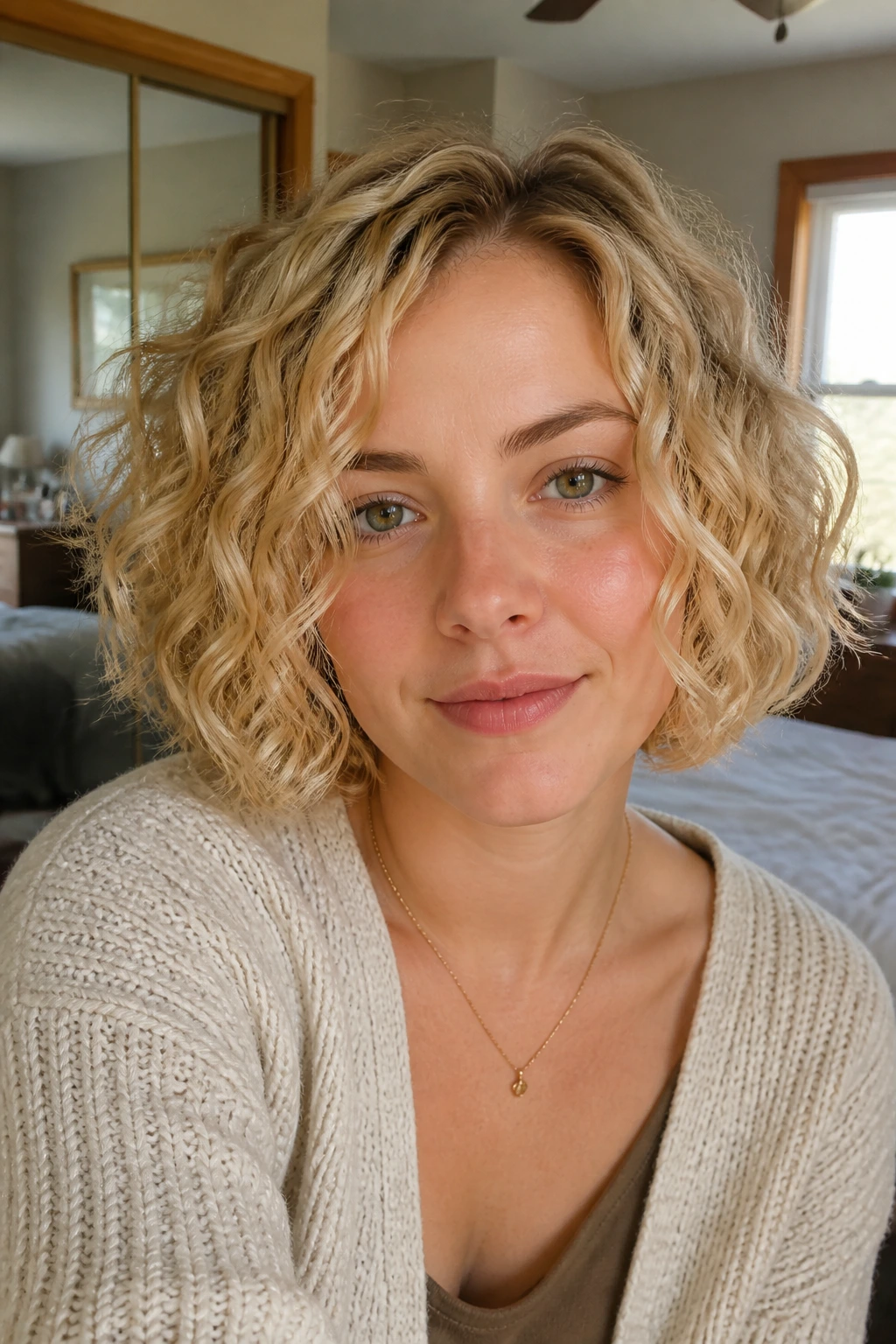
The best bob is the one you do not resent at week six. That is why soft grow-out matters so much for curly blonde bob haircuts for round faces. A cut with long layers, a gentle perimeter, and a little shadow at the root can age better than a sharper shape that needs constant correction.
I like this kind of bob for people who want shape without babysitting every curl. It lands somewhere between a true bob and a loose lob, which gives it room to breathe. The curls can shrink a little, loosen a little, and still keep the outline intact.
A final practical note: ask for the front to stay a touch longer than you think you need. That one move saves you from the dreaded too-short curl bounce, which is how a lot of round faces end up looking broader than they should. The right bob should frame the face, not crowd it.
And that’s the real test. If the cut adds lift, softens the cheeks, and still looks good when the curls do their own thing, you’ve got the right one.
