



A curly bob can be a fantastic cut on a round face — when the shape is doing the right work. If it stops at the wrong spot, though, it can make the cheeks look wider and the whole silhouette feel a little boxed in.
That’s the part people miss. Curls change the rules.
A bob that looks chin-length in the chair may spring up an inch or two once it dries. A soft layer that seems harmless when wet can create a puff at cheek level later. So the sweet spot is usually about shape, not sheer length: a little height at the crown, some movement around the face, and enough drop below the widest part of the cheek to keep the eye moving vertically.
The good cuts are the ones that feel airy, not bulky. They give your curls room to move without turning your head into a circle. That’s the balance worth chasing, and each of these 20 curly bob haircuts for round faces does it in a slightly different way.
1. Chin-Length Curly Bob With a Deep Side Part
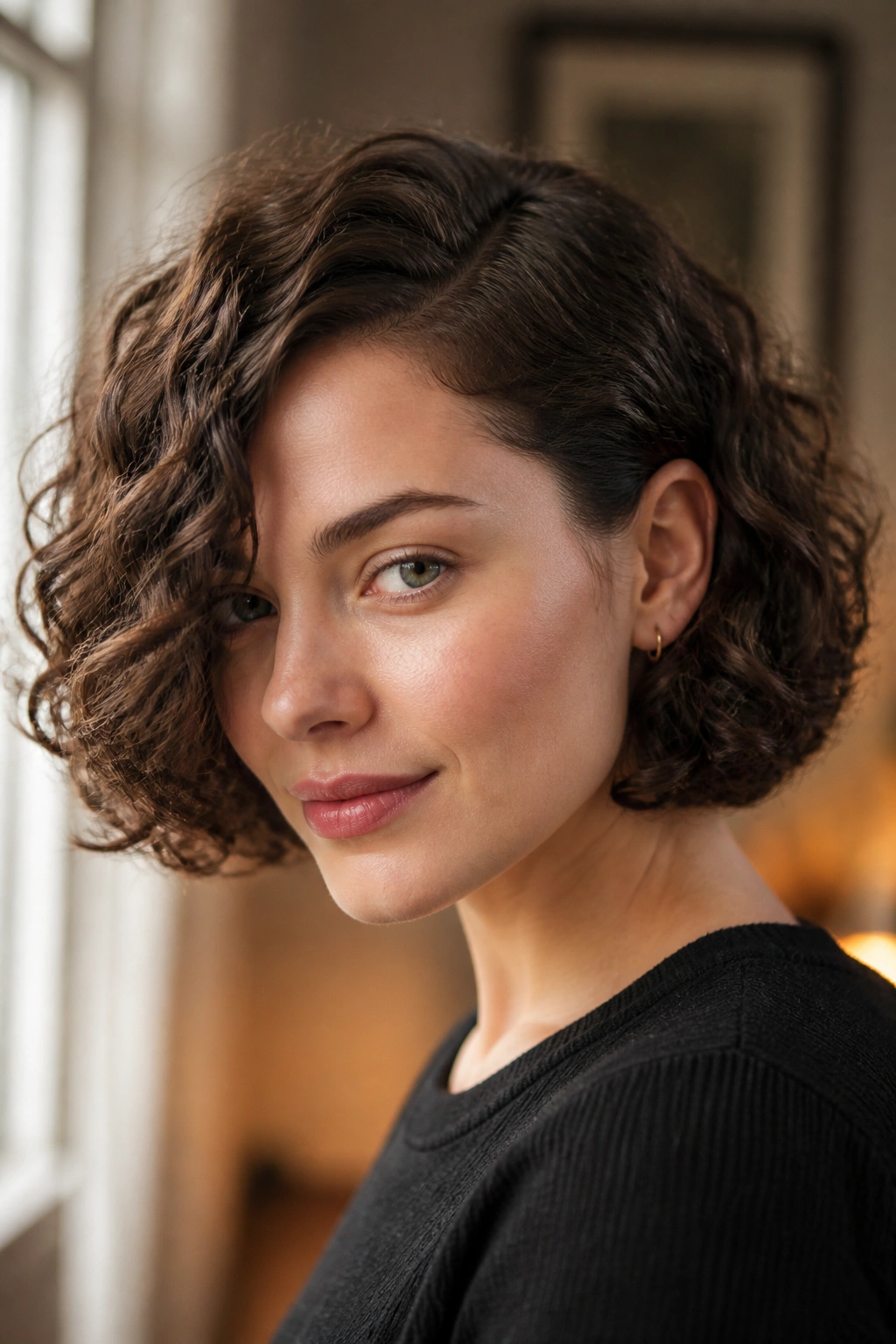
A chin-length curly bob can work on a round face when it doesn’t sit like a tidy little cap. The deep side part breaks the symmetry and pulls the eye diagonally, which helps the face look a bit longer straight away.
The trick is where the hemline lands. If the curl pattern bounces right at the cheek, you get width right where you don’t want it. If the ends sit just below the jaw, the shape feels cleaner and the curls read as soft movement instead of side-to-side bulk.
What to ask for:
- A blunt base that lands just under the chin
- A deep side part with extra crown lift
- Light shaping around the front, not heavy cheekbone layers
- A dry finish cut if your curls shrink a lot
One small thing that matters: tuck the smaller side behind your ear on one side and leave the other loose. That little asymmetry does more than people expect.
2. Layered Curly Bob With Crown Lift
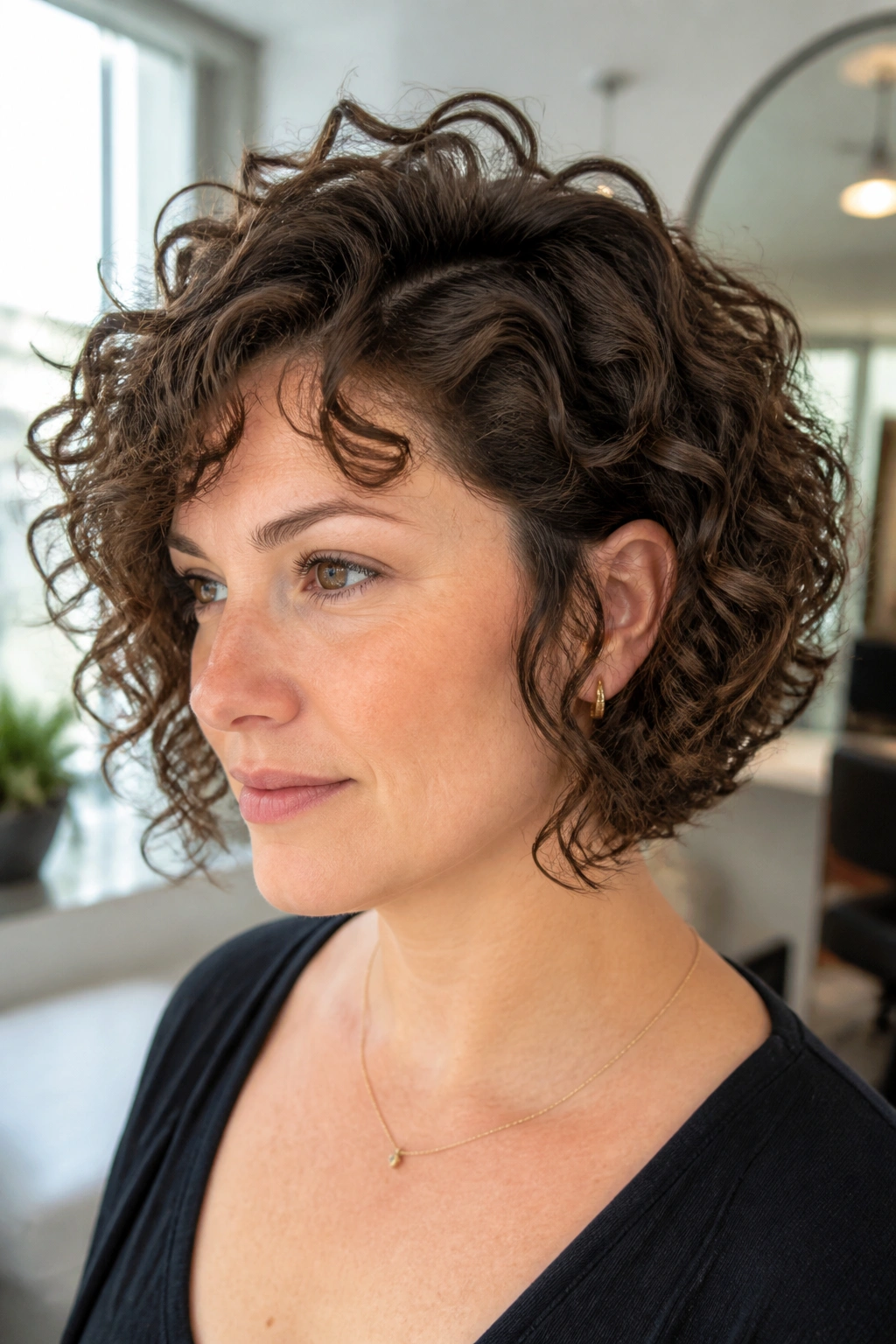
Layers are the fastest way to take width out of a curly bob without making it look thin. On a round face, the lift belongs at the top, not around the cheeks. That’s the whole game.
Too many people ask for “layers” and stop there. Then the cut gets chopped all around the head, and the curls balloon out at the exact widest point. Better layers are placed to create height through the crown and a softer, slimmer perimeter through the sides.
Where the layers should start
A good stylist usually starts the shortest internal layers above the ear or near the upper crown, then leaves the lower side lengths a bit longer. That gives the bob a taller profile and keeps the face from feeling boxed in.
Best for: dense curls, coarse curls, and anyone whose hair tends to swell at the sides.
Styling note: diffuse with your head tipped slightly forward, then lift the roots at the crown with the diffuser cup. Don’t rough-dry the sides first. They’ll puff.
3. Angled Curly Bob That Stays Longer in Front
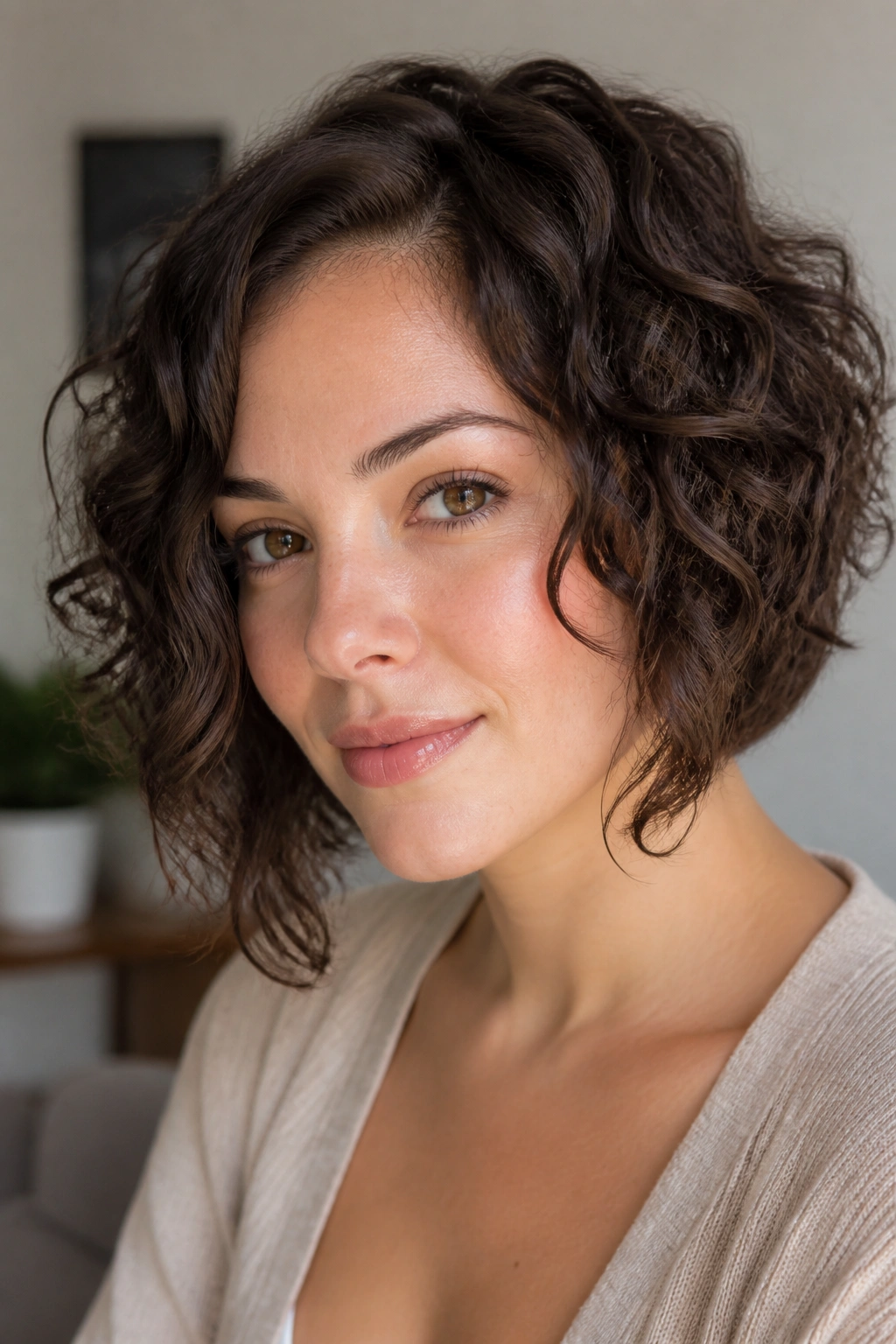
Why does an angled bob flatter a round face so well? Because the eye follows the line. Shorter in the back, longer in the front — that diagonal gives the face a lengthening effect without needing a lot of extra hair.
Keep the angle subtle. If the front pieces are five inches longer than the back, the cut can start to look harsh or dated. A difference of about one to two inches is usually enough for curly hair, because the curl pattern adds visual size on its own.
A soft angle also helps curls fall forward instead of spreading out sideways. That matters. A lot. The shape should feel like it’s moving toward the jaw, not blooming from the cheek.
How to wear it
- Part off-center or deeply to one side
- Let the front pieces skim the lips or just graze the chin
- Diffuse the front section first so it sets in a forward direction
If you like polished shapes but don’t want a severe cut, this one lands in a nice middle ground.
4. French Bob With Soft, Airy Curls

A French bob sounds risky on a round face, and honestly, the wrong version is. The line between chic and too-short is thin here. But if the bob keeps a little air in it — and a soft fringe rather than a hard shelf — it can look playful instead of puffy.
The best version sits near the cheekbone or slightly below it, with the curls broken up enough to avoid a solid circle. Think lightness, not helmet. The ends should feel loose and touchable, not packed together.
This haircut is especially good if you have naturally springy curls that collapse into a narrow silhouette when cut too long. Shorter curls often get more shape, not less, once the weight comes off.
A tiny warning: do not let the sides grow outward too wide. Keep the perimeter crisp and the top soft. That contrast is what saves it.
5. Inverted Curly Bob With a Slimmed-Down Nape
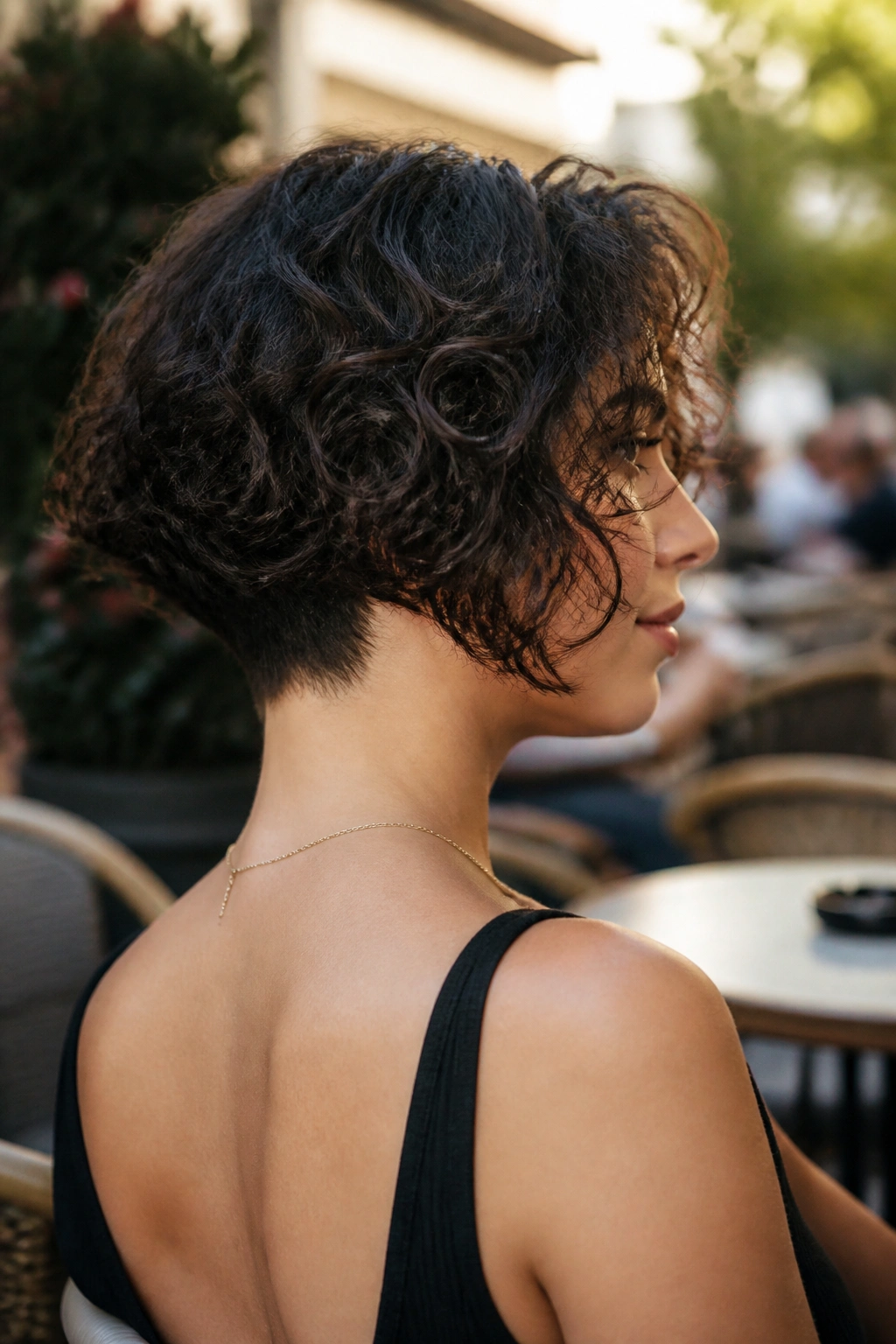
Compared with a square bob, the inverted curly bob gives a round face more lift because the back is shorter and the front keeps going. That back-to-front difference opens up the neckline and lengthens the whole profile.
The nape should be neat, not overstacked. Too much stacking turns the back into a little bubble, and that can add width you never asked for. A clean, slim nape with longer front pieces gives you the nice angle without the fluff.
This cut shines on thick curls that need some removal at the back. If the bottom of your hair tends to sit heavy on your shoulders, an inverted shape can make the whole cut feel lighter in a day-to-day way, not just in photos.
It also works well with glasses. The angle keeps the hair from fighting the frame.
6. Curly Bob With Curtain Bangs
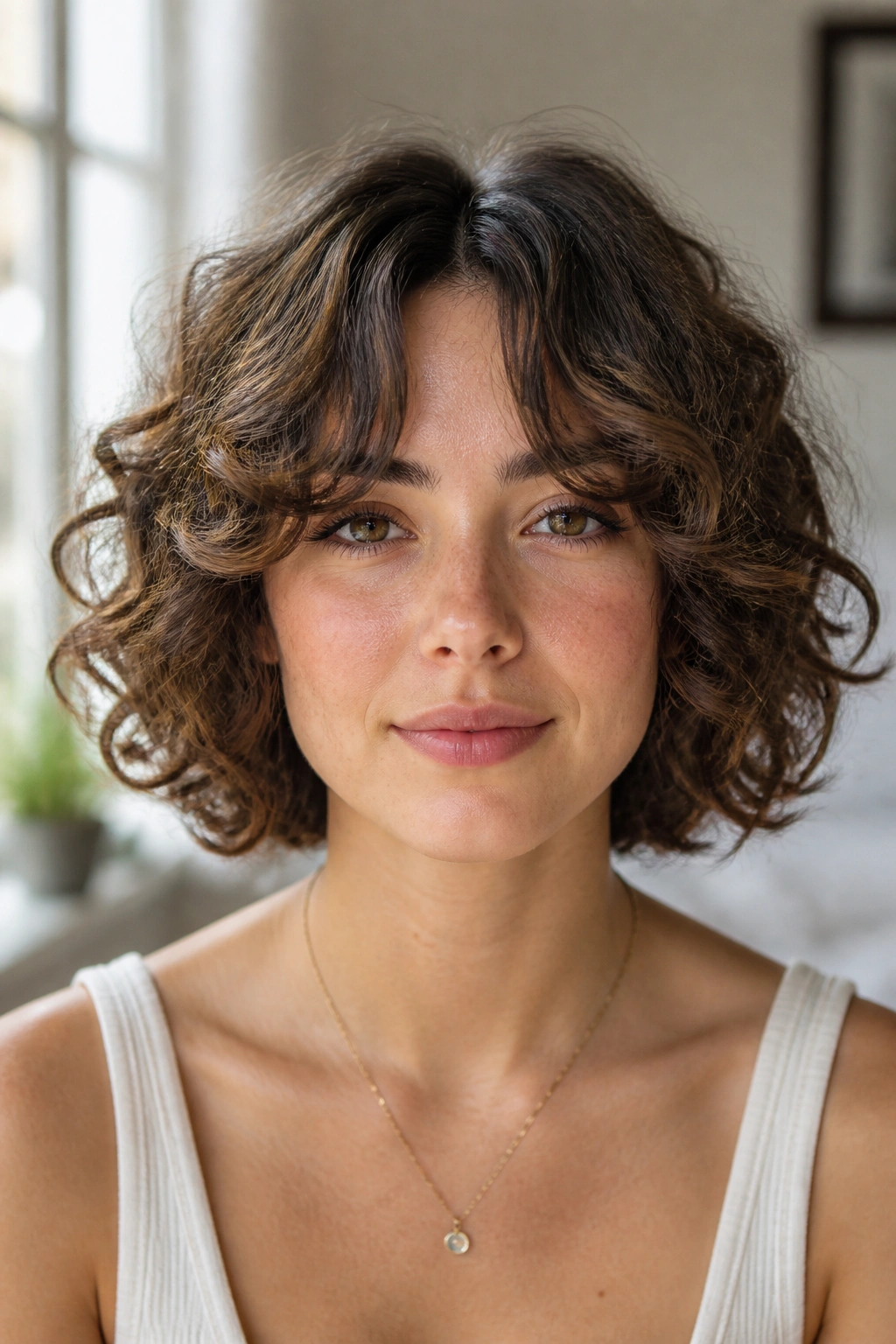
Can curtain bangs work on a round face with a curly bob? Absolutely, if they’re cut long enough. The mistake is short, blunt bangs that stop high on the forehead and add more curve to the face.
Curtain bangs should part in the middle and sweep down toward the cheekbones or even the mouth, depending on curl shrinkage. That soft split opens the center of the face and gives the illusion of more length. It also keeps the bob from feeling too full at the sides.
What to request at the salon
Ask for bangs that start as face-framing pieces first, then blend into the front of the bob. Curly bangs tend to spring up, so what looks like nose length when wet may land higher once dry. A cautious stylist will leave them a little longer and refine them later.
This is one of those cuts that looks romantic on good days and still works on messy ones. That’s not a small thing.
7. Tapered Curly Bob With a Cleaner Back
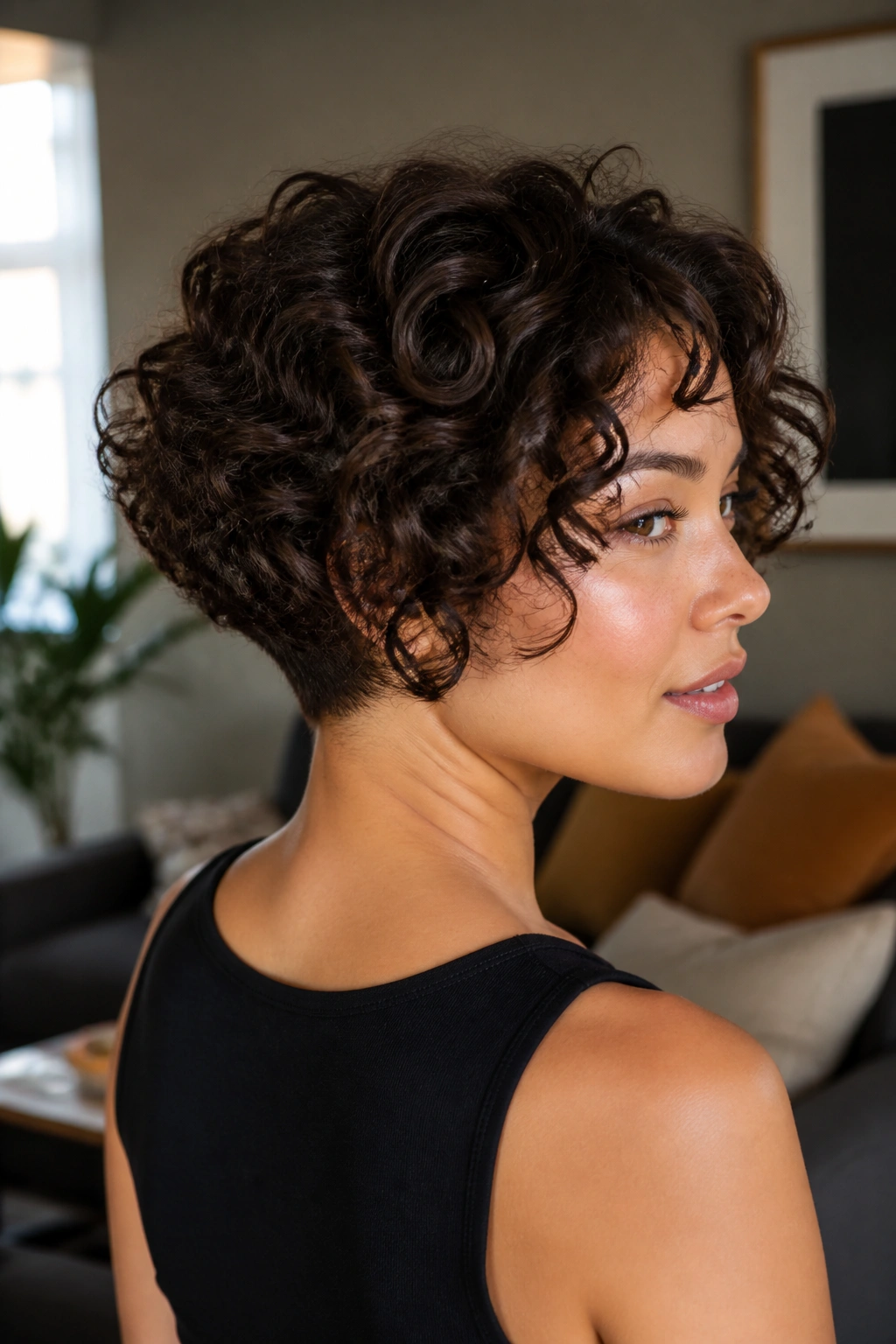
A tapered curly bob is a smart answer if the back of your hair is the part that gets biggest. The taper narrows the outline near the nape and keeps the shape from spreading out like a triangle.
That slimmer back gives the front room to do the flattering work. Your face still gets soft curls around it, but the overall silhouette stays neat. If your curls are thick, this can be the difference between “cute bob” and “why does my head look so wide?”
The cut is especially useful for people who hate a lot of weight at the neck. A tapered back removes that drag, so the bob feels easier to wear on humid days and easier to style when you’re in a rush.
Watch for this: the taper should be controlled, not shaved down too far. You want contour, not a hard undercut unless that’s the look you actually want.
8. Shoulder-Grazing Curly Lob for Extra Length

Sometimes the easiest answer is the one that gives you more length. A shoulder-grazing lob keeps curls below the cheekbone zone, which helps a round face look longer and a little leaner without trying too hard.
This cut is nice if you like the bob idea but don’t want your hair floating right at the jaw. The extra inches matter. They give curls room to bounce without building width in the middle of the face.
It’s also forgiving. If your curl pattern is uneven, a longer bob hides that better than a tight crop. And if you like to wear your hair half-up, this length makes that much easier without losing the bob feel.
The best version lands at the collarbone or just above the shoulders, with a few internal layers so the ends don’t hang like one heavy curtain. Lightness counts here.
9. Feathered Curly Bob With Broken-Up Ends
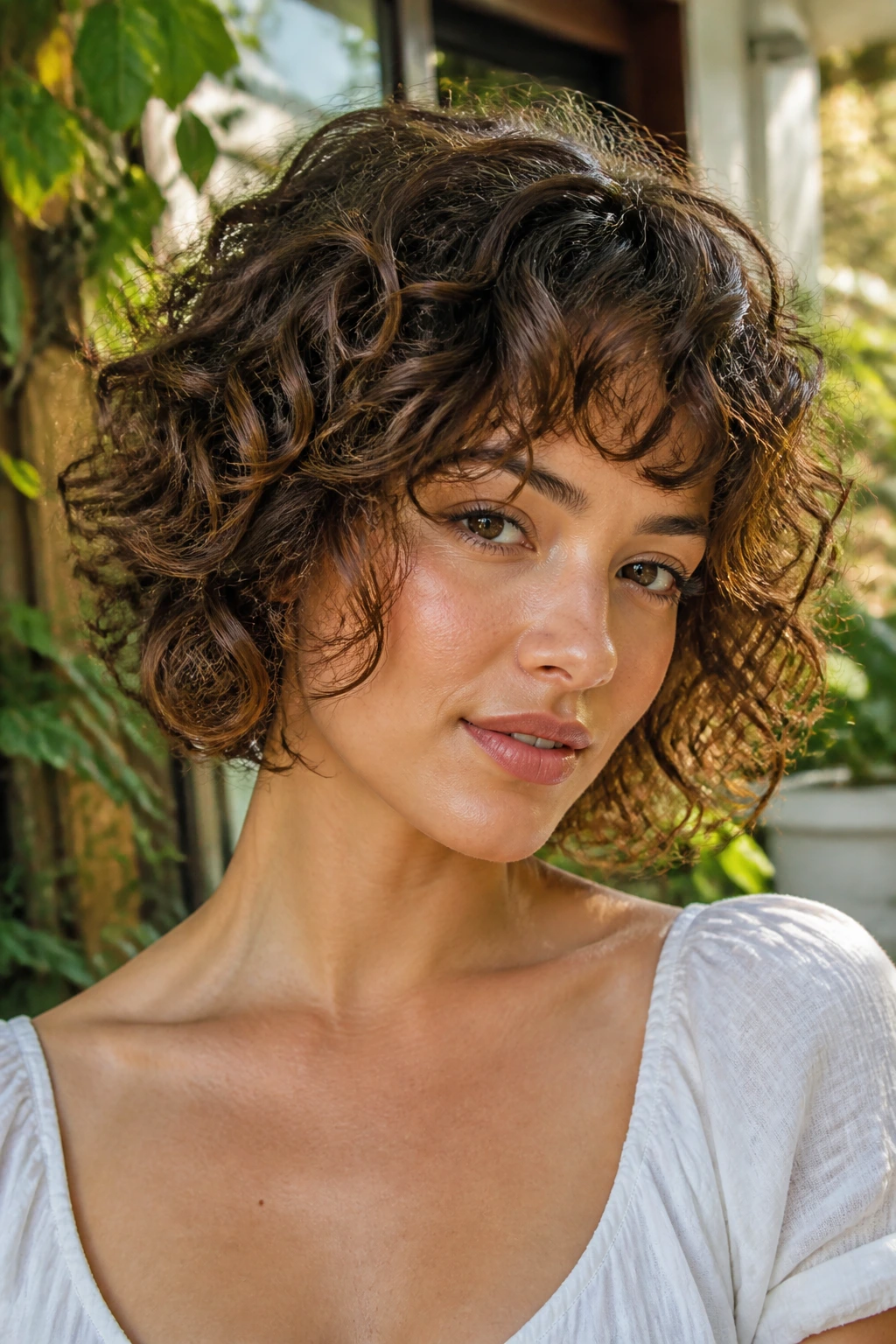
A feathered curly bob is built for movement. Instead of one solid edge, the ends are softened and separated so the shape doesn’t look blocky at the sides. On a round face, that broken-up finish helps a lot.
This cut works especially well if your curls clump together in big pieces. Feathering gives them room to fall in a more vertical way, which makes the face read slimmer. It’s not about making the hair flat. It’s about making the shape less round.
Why it works
- The end line is lighter, so it doesn’t sit as one heavy shelf
- The curls fall in pieces instead of one wide mass
- The eye notices movement, not just width
You’ll get the best result if your stylist uses small, controlled cuts rather than over-thinning the whole head. Too much razor work can make curly ends frizzy. A careful point-cut does the job with less damage.
10. Asymmetrical Curly Bob for a Sharper Line
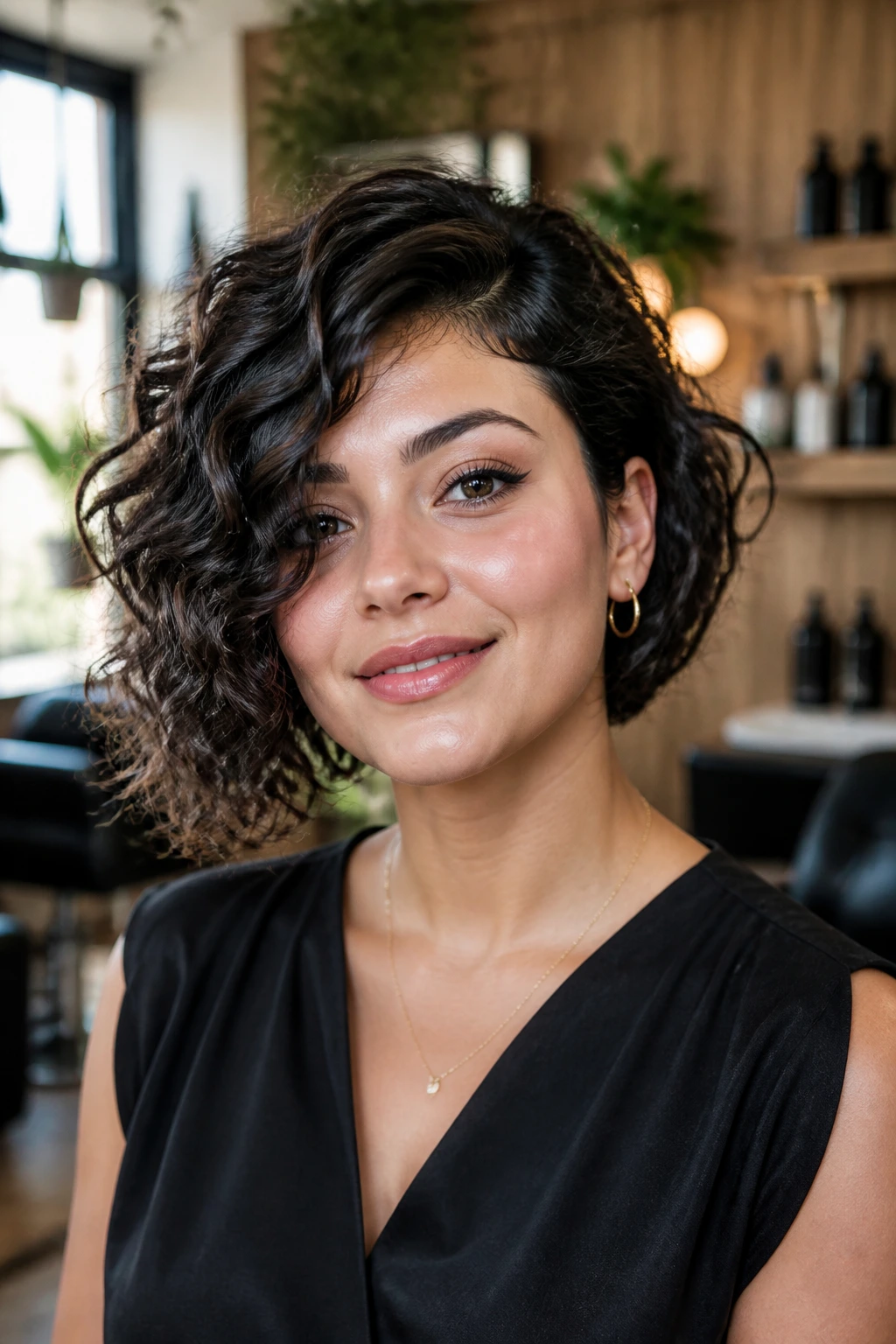
An asymmetrical bob gives round faces a line to follow. One side sits a little longer than the other, and that unevenness creates a diagonal that pulls the eye across the face instead of straight out.
The difference does not need to be dramatic. A small shift — maybe an inch or two — is enough for curly hair. Because curls already build visual volume, a tiny asymmetry often looks stronger than a big one.
This cut has a bit more attitude than the softer shapes on this list. Good. Not every flattering haircut has to be sweet. If you like a sharper look, this one can give your curls a clean edge without going severe.
It also works nicely if one side of your hair is curlier or denser than the other. The asymmetry can make that imbalance feel intentional instead of annoying.
11. Blunt Curly Bob With Hidden Internal Layers
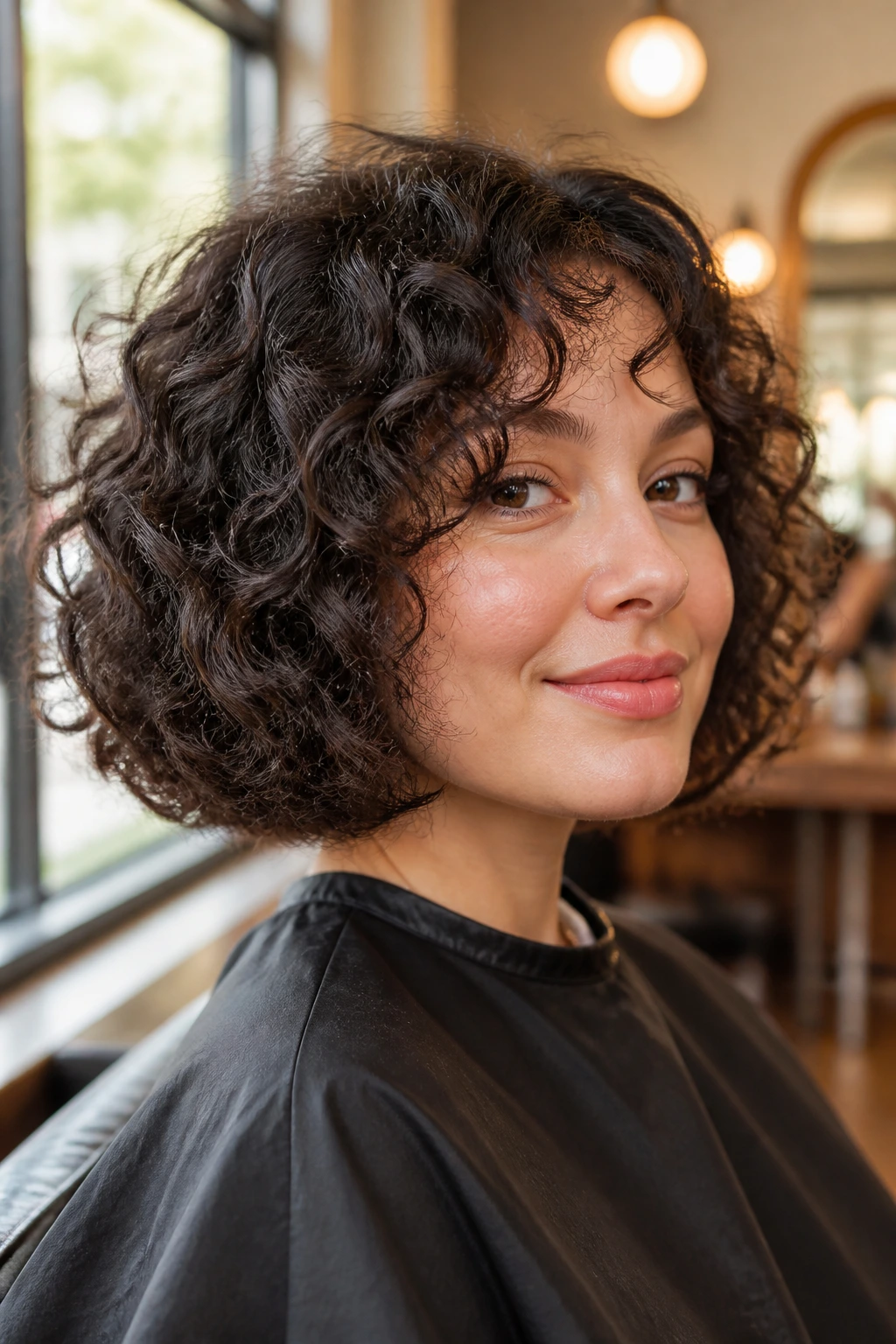
A blunt curly bob can flatter a round face if the outside line stays clean and the inside gets all the texture work. That’s the part people miss. The perimeter gives structure; the hidden layers keep it from turning into a puffball.
This cut is good when you want your curls to look full but not wild. The blunt edge gives the bob shape. The internal layers let the curls stack in a softer way underneath, so the outside doesn’t spread too wide.
It’s a careful cut. Not a lazy one.
If your curls are fine, this style can look thicker than a heavily layered bob. If your curls are dense, the hidden layers remove just enough weight to keep the line from ballooning at the sides. The key is restraint. Too many interior cuts and the blunt effect disappears.
12. Shaggy Curly Bob With Messy Texture

A shaggy curly bob is one of the easiest ways to stop a round face from looking too circular. The cut breaks up the shape in all the right places, so the hair looks lived-in instead of rounded-off.
What I like about this one is the looseness. The ends don’t sit in one neat line, and the layers don’t try to behave too much. That chaos is useful. It keeps the outline from following the face too closely.
How to keep it flattering
Use a curl cream or light gel, then scrunch only from mid-length to ends. Leave the roots a little freer so the top has lift. If the sides start to swell, clip the crown while drying and let the pieces near the cheekbone stay a little softer.
This is a strong choice for people who don’t want to babysit their haircut. It looks better a little imperfect. That’s the point.
13. Side-Swept Fringe Bob That Opens the Face
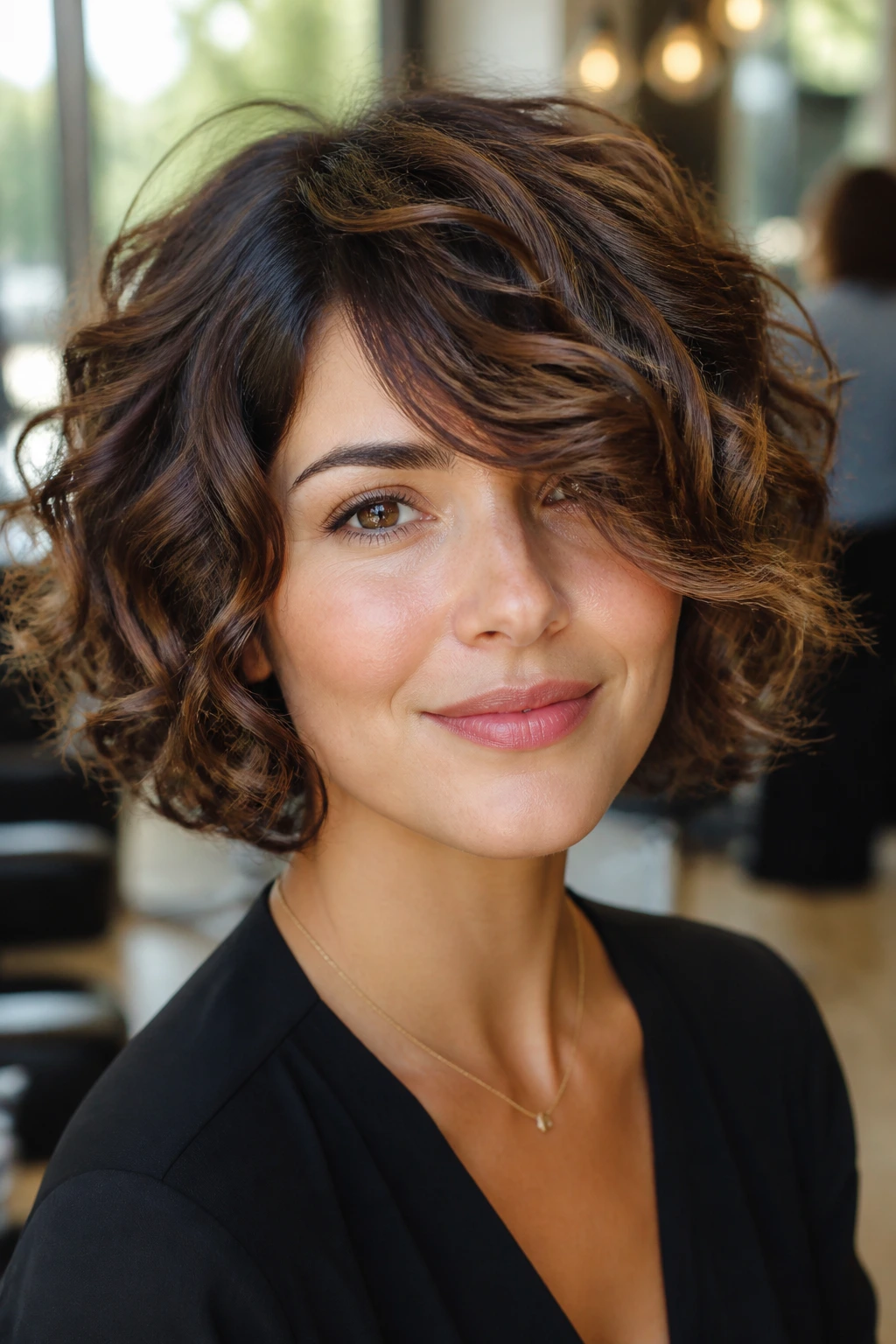
Why do side-swept bangs work on round faces? Because they interrupt the horizontal line. Instead of sitting straight across the forehead, they move diagonally, which helps the face look longer and less full at the cheeks.
For curly hair, the fringe should be cut longer than you think. Curls spring up. A lot. If you cut the bang too short in the chair, it may end up floating above the brow in a way that feels accidental, not styled.
What to keep in mind
- Start the shortest part near the brow bone or just below it
- Blend the fringe into the front curls
- Keep the ends soft so the bang doesn’t form a hard wall
- Use a diffuser to dry the fringe in the direction you want it to fall
This style suits people who want face coverage without committing to full bangs. It opens the face, but it still gives you something to play with.
14. Stacked Curly Bob With Built-Up Back Volume
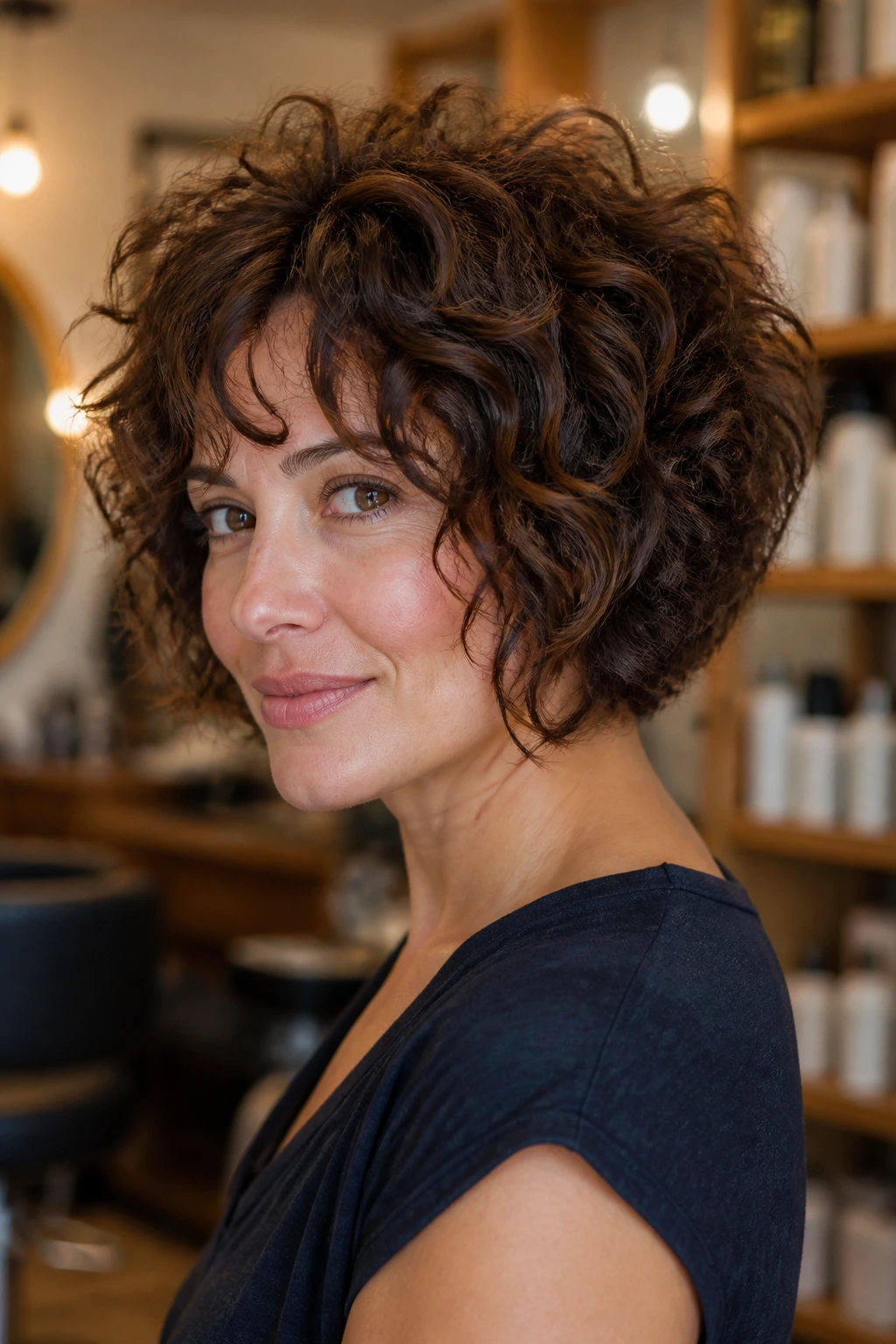
A stacked bob can be gorgeous on curls when the stacking is controlled. Too much, and you get a little dome at the back. Enough, and you get lift where the head naturally needs height.
I’ve always thought this cut works best when the stylist respects the curl pattern instead of forcing a neat geometric shell. The back should rise softly, not puff out like a cushion. The front should stay a touch longer to keep the face from feeling too round.
This is a good choice if your hair lies flat at the crown and collapses at the back. The stack creates support, almost like an architectural brace, so the curls have somewhere to sit.
- Best for medium to thick curls
- Better with a slight off-center part
- Needs regular reshaping every 8 to 10 weeks
- Looks best with a diffuser, not air-dried chaos
It’s not the softest shape on the list. It’s one of the most structured.
15. Deva-Cut Curly Bob Shaped on Dry Hair
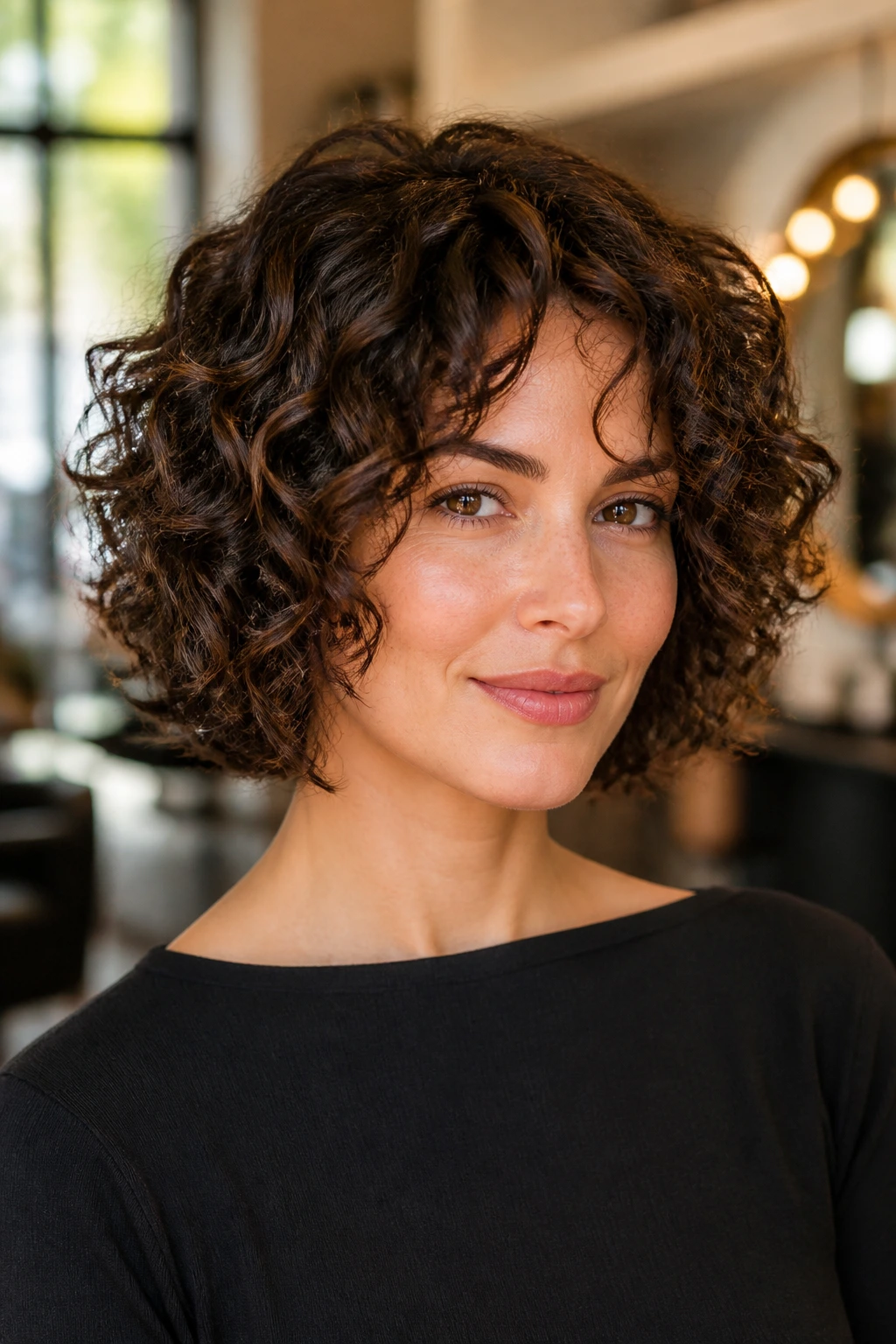
A dry cut can be a lifesaver for round faces because curls do not behave the same wet and dry. A Deva-cut style shaping session lets the stylist see the real silhouette, not the stretched-out version in the sink.
That matters when the goal is balance. They can place weight, remove bulk, and shape the face-framing pieces while the curls are living in their natural state. No guessing. No surprise shrinkage that lands the bob two inches shorter than planned.
This is especially useful if one side of your curls is tighter than the other. Dry shaping lets each section be treated on its own terms. The final bob usually feels more customized and less generic, which is a nice word for haircutting code: it means it actually fits your head.
If your curls are inconsistent, ask for a slow, section-by-section cut. That patience shows in the result.
16. Curly Bob With Face-Framing Tendrils

Face-framing tendrils are not bangs, and that difference matters. Bangs tend to sit above the face; tendrils fall beside it. For a round face, those longer front curls can slim the cheeks and soften the jaw without cutting across the forehead.
The best tendrils usually start around the lip or chin, then curl inward or outward depending on your pattern. They should look deliberate, not like stray pieces that escaped the cut. When they’re placed well, they act like vertical rails on either side of the face.
Where they should fall
- Lip length for softer cheek control
- Chin length for more visible slimming
- Slightly longer if your curls spring up a lot
This cut is a strong pick if you want movement near the face but hate the feeling of full fringe. It gives you that softness with less daily maintenance. Also, you can pin them back on lazy days. That never hurts.
17. Neck-Length Curly Bob With a Deep Middle Part

Sleek? Not exactly. But a neck-length curly bob with a deep middle part can be very flattering when the cut has enough length to hang below the cheeks.
The middle part creates a vertical line down the face, which helps balance roundness. The neck-length cut gives the curls enough drop so the silhouette doesn’t widen at the cheekbones. If you keep the shape too short, the part loses its magic. The length is doing half the work.
This style tends to look clean and a little modern without trying too hard. It’s also nice for people who wear their curls loose most of the time and don’t want heavy shaping around the temples. The center part leaves the face open, and the length keeps the whole thing grounded.
A little root lift at the crown makes this cut even better. Flat roots and a middle part can drag the face downward. A bit of height fixes that fast.
18. Tousled Curly Bob With Invisible Layers
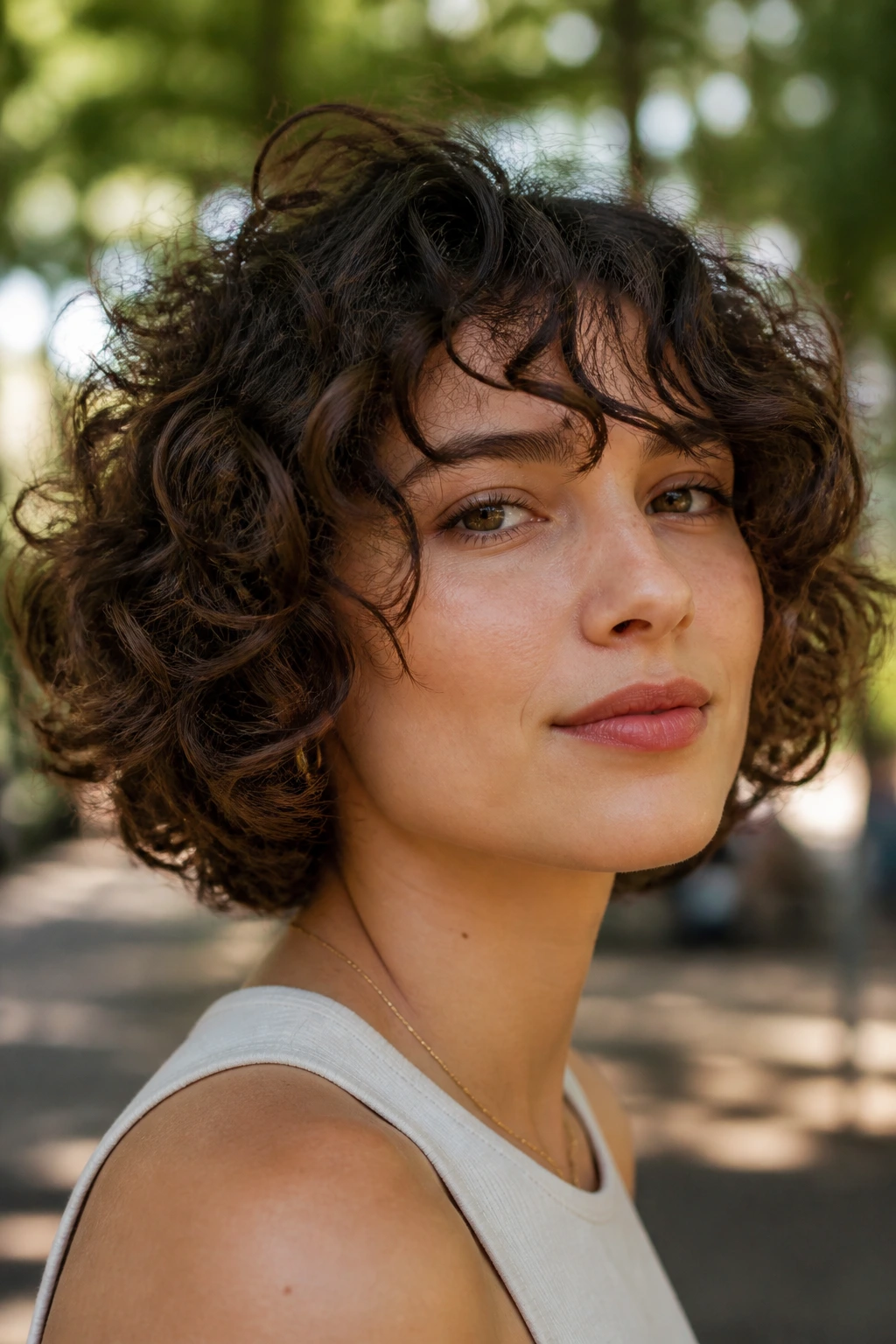
Invisible layers are one of those haircut ideas that sounds fussy but works in a very practical way. The outer shape stays smooth, while the hidden cuts take out just enough weight so the curls don’t flare sideways.
For round faces, that’s gold. You get volume without a bulky outline. The hair looks thicker and lighter at the same time, which sounds contradictory until you see it on curl patterns that hate looking chopped up.
The best way to style this bob is to keep the texture loose near the ends and lift the crown slightly while drying. If the layers are placed well, the haircut will do most of the work on its own. That’s the nice part.
Good signs: the curls move, but the silhouette still has shape.
Bad signs: the sides puff out and the bottom disappears.
That second one usually means the layers were cut too high or too aggressively.
19. Micro-Layered Curly Bob for Fine Curls

Fine curls need a different approach. Too much layering and the hair can start looking wispy in all the wrong places. Micro-layers solve that by adding tiny shifts in weight rather than big jumps in length.
This is a good cut if your curls are soft and prone to collapsing. The small layers create movement without stripping out the thickness that fine hair needs. On a round face, that movement keeps the hair from sitting in one wide ring around the cheeks.
What makes it work
The layers are short enough to wake up the curl pattern, but not so short that the bob breaks apart. Think gentle shaping, not heavy texturing. If your hair gets frizzy easily, this style can be a safer bet than a shag.
A mousse or lightweight curl foam helps here more than rich cream. Fine curls can get dragged down fast. Keep the product light and the shaping subtle.
20. Soft Curly Bob With Defined Ends

A soft curly bob with defined ends is the kind of haircut that makes sense when you want ease. The outline stays gentle, the curls look finished, and the shape doesn’t fight your face.
This is a smart final option because it borrows the good parts of several other cuts without leaning too hard in one direction. You can wear it with a side part, a middle part, or a loose off-center part. You can ask for chin length, neck length, or a little beyond the jaw. The point is the same: keep the ends clean enough to hold shape, but soft enough to move.
It’s the haircut I’d point to for someone who wants a reliable everyday bob rather than a dramatic statement. And honestly, that’s most people. A good curly bob on a round face should make your curls look intentional on a normal Tuesday, not only when you’ve spent forty minutes diffusing them.
If you’re heading to the salon, bring one clear idea: keep the width under control, keep some lift at the crown, and let the front do a little lengthening work. That’s the shape that keeps paying off.
