



Fine hair can collapse fast, and a blunt cut often makes the limpness louder. Graduated bob haircuts for fine hair work because the back is built a touch shorter and the weight line stays controlled, so the haircut lifts itself instead of hanging there.
The mistake people make is asking for layers everywhere. That usually leaves the ends wispy and the sides thin, which is a bad trade. A good graduated bob uses shape, not random slicing, and that difference matters more than most salon conversations admit.
When I look at this family of cuts, I pay attention to three spots: the nape, the crown, and where the front lands against the jaw. If those are balanced, fine hair suddenly looks like it has a plan.
Some versions are soft enough to air-dry. Some need a round brush, a root spray, and ten patient minutes. Pick the one that fits your morning, not the one that looks clever on a mannequin head.
1. Soft Stacked Graduated Bob for Fine Hair
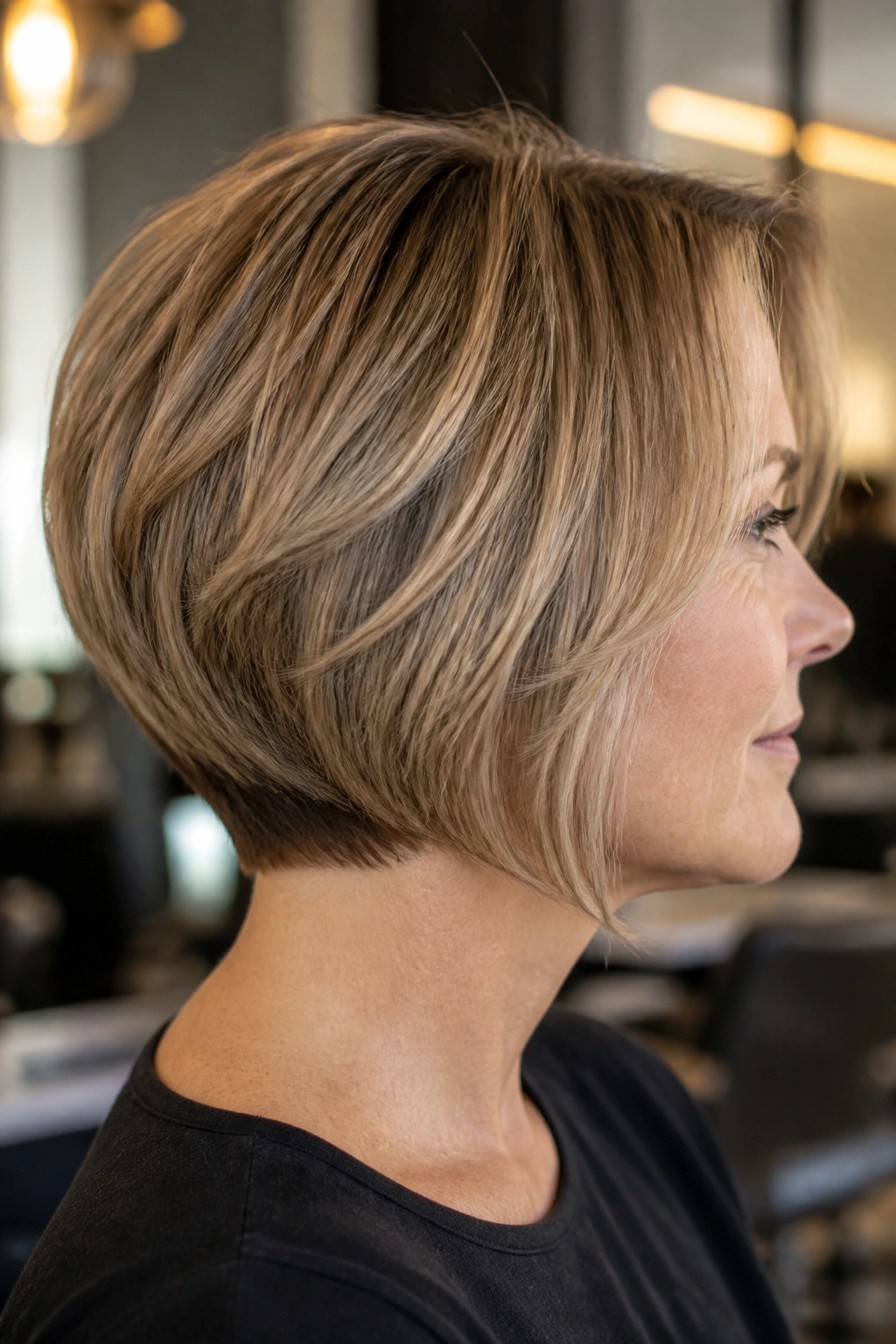
This is the cut I reach for when someone wants lift without the helmet look. The back is stacked just enough to raise the crown, but the front stays calm and clean.
Why It Works
The subtle graduation keeps the nape from collapsing while the upper layers stay light enough to move. On fine hair, that balance matters because too much stacking looks dated fast, and too much softness makes the shape vanish by lunch.
- Ask for the shortest point to sit at the nape, with the back built up in small steps.
- Keep the side perimeter blunt or only lightly point-cut.
- Finish with a root mousse and a 1-inch round brush.
Skip heavy thinning at the ends; fine hair needs a clear edge more than it needs extra air.
This version suits straight hair and loose bends especially well. If your hair frizzes easily, keep the stacking modest and let the shape come from the cut, not from over-styling.
2. Collarbone-Length Graduated Lob
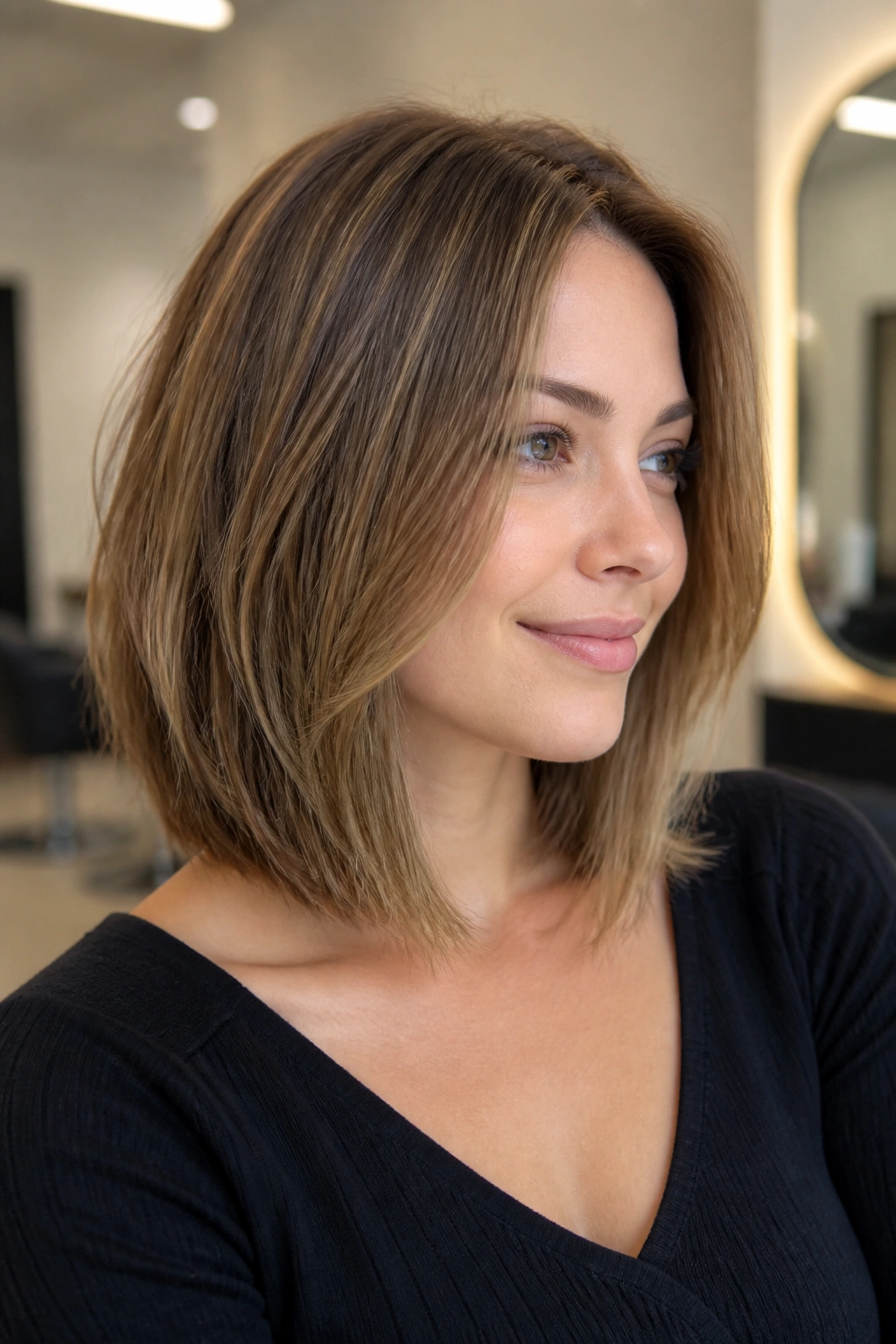
If you are scared of losing length, start here. A collarbone-length graduated lob gives the same lift as a shorter bob, but it keeps enough swing in the front to feel safe.
The trick is hidden graduation. The back should sit slightly tighter under the top layer, while the front falls softly along the collarbone. That keeps the outline from looking heavy, which is the thing that ruins long fine hair.
It still reads as a bob. It just gives you a little more room to tuck hair behind one ear, clip it back, or wear it loose without seeing every weak spot in the density.
I like this cut for people who want polish on workdays and a bit of softness on weekends. It does not need hard styling, either. A blow-dry with a medium brush and a light mist of volumizing spray at the roots is usually enough.
3. Chin-Length Bob with a Side Part
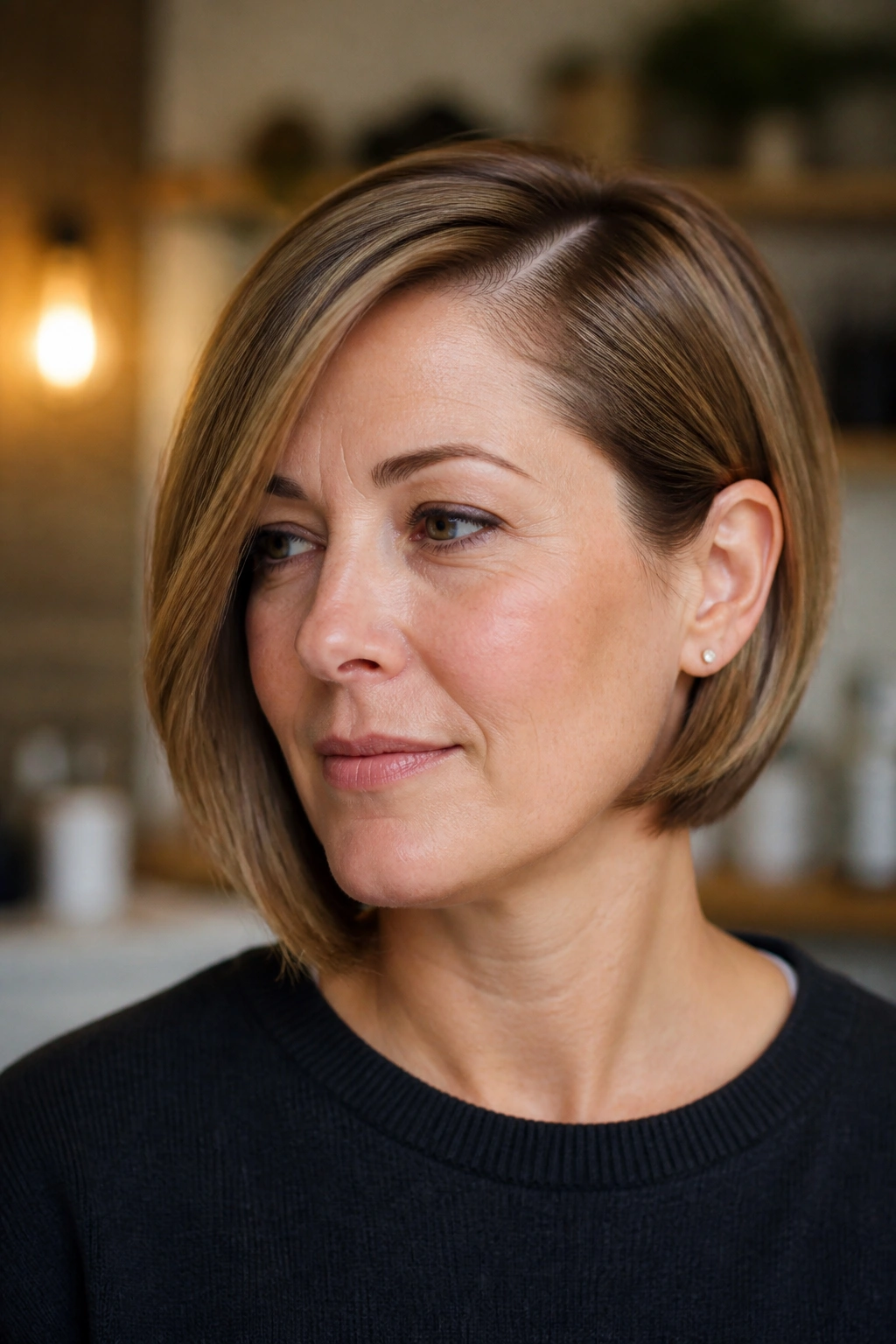
Can a side part make fine hair look thicker? It can, when the haircut is cut to lean with it.
A chin-length graduated bob with a side part gives the roots a place to lift and gives the eyes a strong line to follow. The part shifts weight off the center, which is where fine hair tends to sink first. That small change can make the whole haircut feel fuller.
How to Wear It
Keep the heavier side a little longer and let the shorter side sit close to the jaw. The asymmetry helps the cut look intentional, not accidental. If the face is round or soft, this shape adds a sharper edge without turning severe.
- Ask for the side part to be built into the cut, not added later.
- Keep the front grazing the chin rather than stopping high on the cheek.
- Use a root spray at the heavier side and blow-dry that section up and away.
One clean bend at the ends is enough. No need to fight the hair into a perfect wave.
4. Angled A-Line Graduated Bob
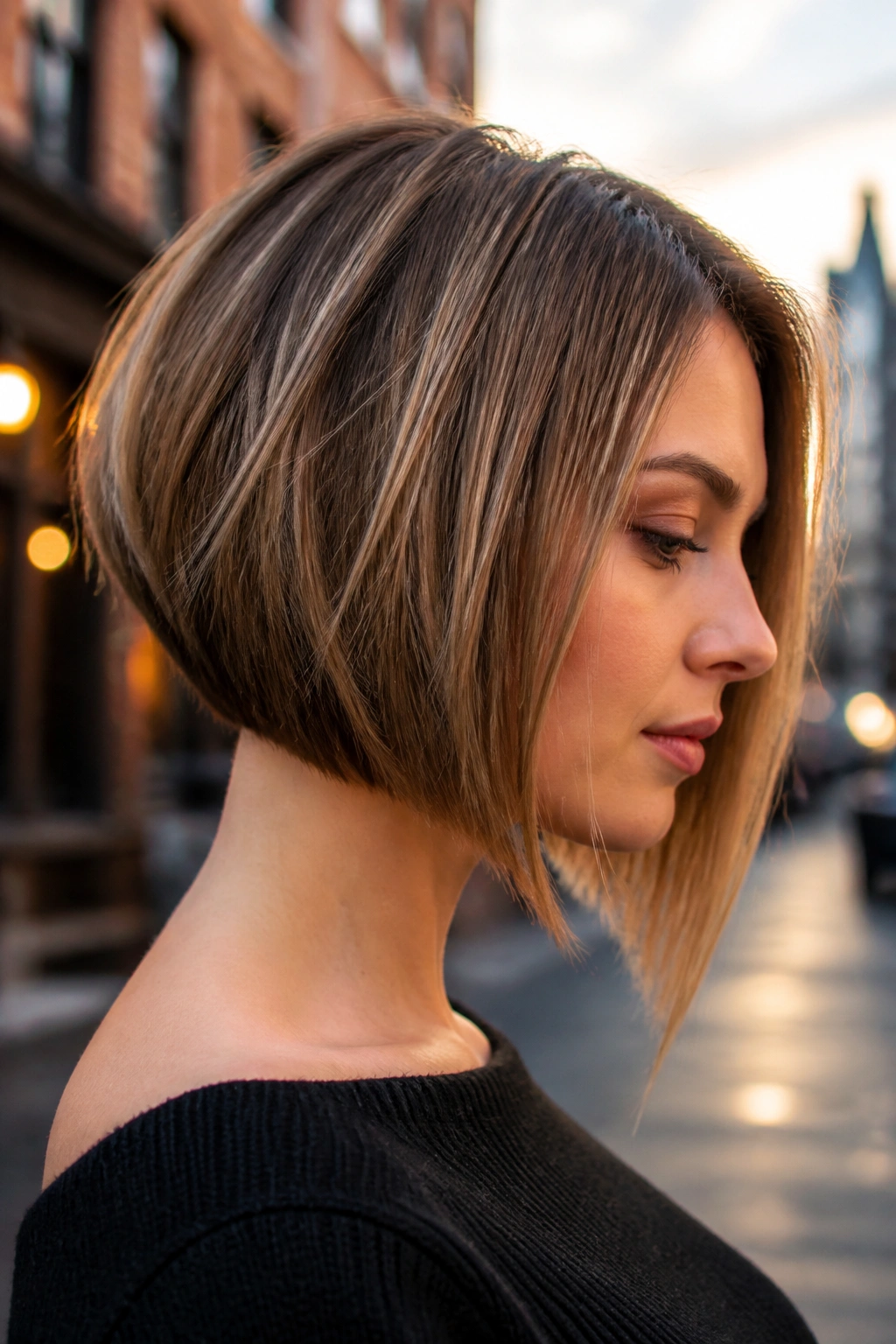
Picture hair that turns flat near the crown but flips out at the jaw. An angled A-line bob fixes that contrast by giving the back a stronger internal shape and the front a longer, sleek line.
This is one of the sharpest-looking graduated bob haircuts for fine hair because the angle does half the styling for you. The eye sees a fuller back, then follows the longer front pieces forward. That long diagonal creates movement even when the hair is not doing much on its own.
- Ask for the front to be 2 to 3 inches longer than the nape.
- Keep the angle clean, not extreme.
- Style with a flat brush if you want polish, or bend the ends under with a round brush for softness.
The clean line is the whole point. If the layers get too soft, the structure disappears and the haircut loses its edge.
5. Tapered Nape Bob
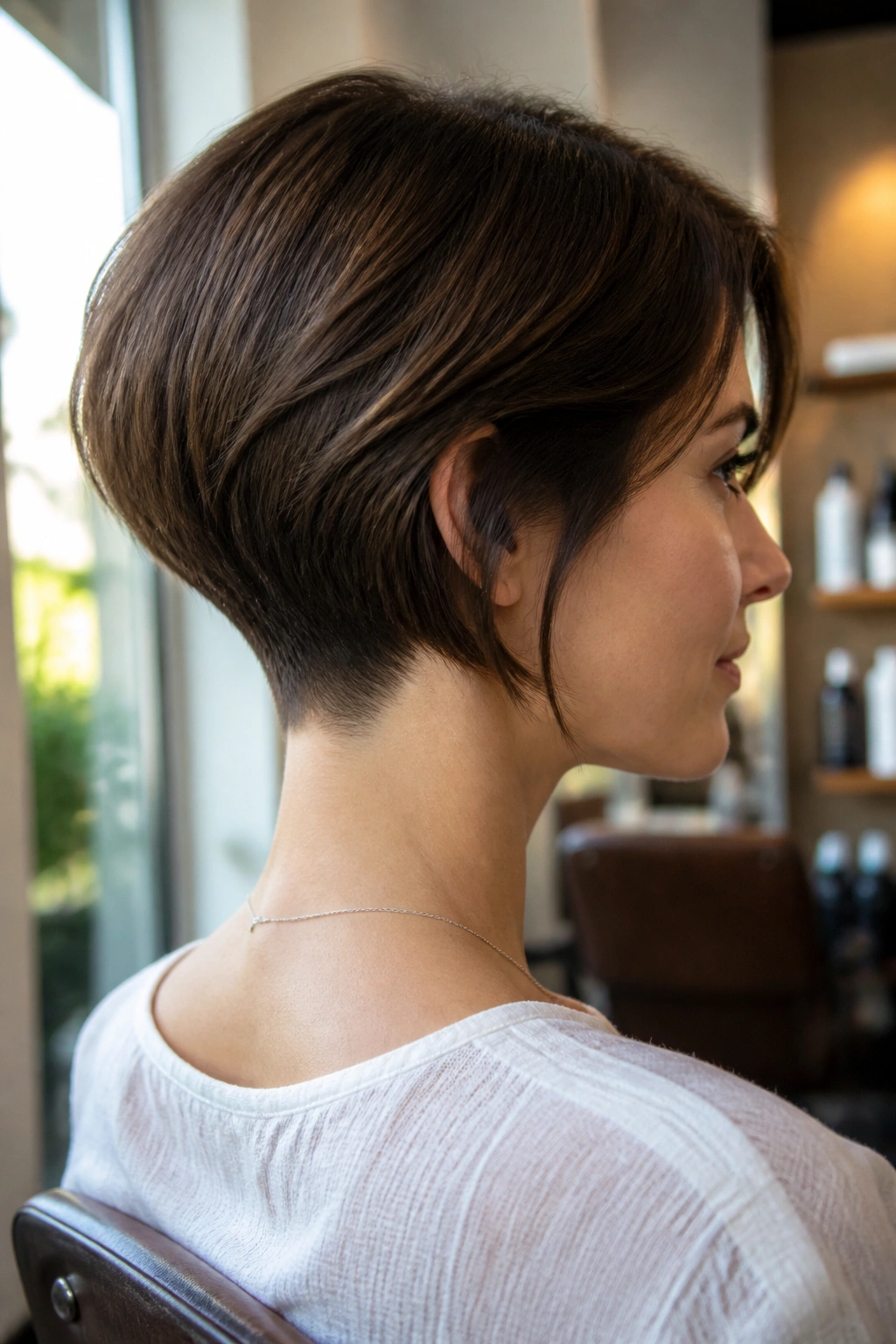
The nape is where this cut lives or dies. If the back sits too bulky, fine hair slumps; if it is too loose, the shape falls apart.
A tapered nape bob keeps the underside close to the head and lets the upper sections build a neat little shelf of volume above it. That creates a crisp silhouette, especially from the side. It also makes the neck look longer, which is one of those small things that changes the whole feel of a haircut.
I like this version when someone wants precision. It does not need much fluffing, but it does need regular trims. Every five to seven weeks keeps the taper from growing into a mushroom shape, and that happens faster than people expect.
One warning. If your stylist over-tapers the nape on very fine hair, the back can look see-through. Ask for a controlled taper, not a shaved look.
6. Rounded Graduated Bob
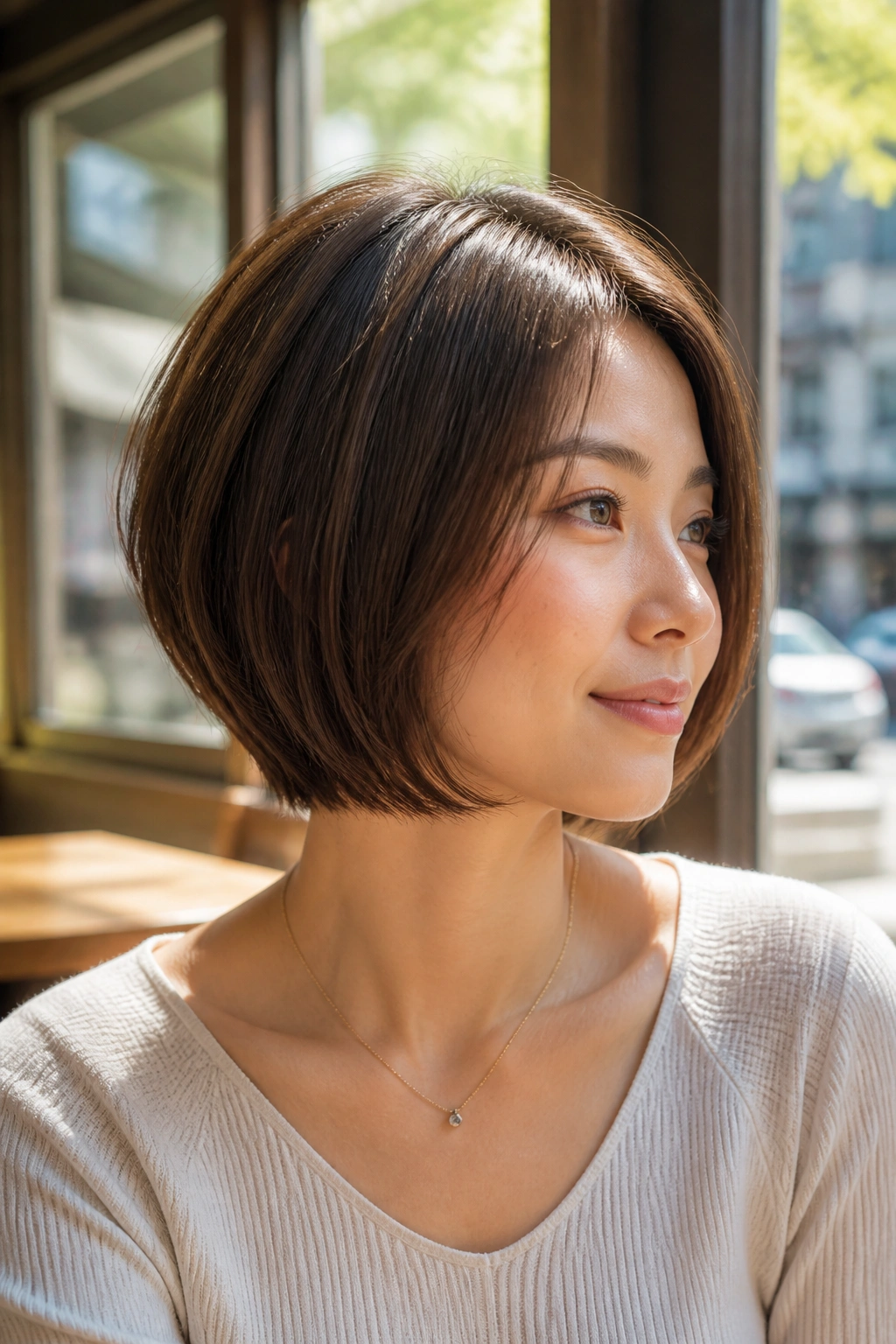
Unlike a square bob, the rounded version keeps the silhouette curved from crown to jaw. That curve is useful on fine hair because it gives the illusion of density without forcing the ends to sit in a hard line.
The rounded shape works especially well if your hair bends easily or if your crown goes flat and then sticks out at the sides. A soft arch through the back helps everything settle into one shape. It feels calmer than a sharp A-line, and sometimes that is exactly what the head of hair needs.
This cut is also kinder on profiles that want a bit of softness around the cheek and jaw. A straight-edged bob can be lovely, but it can also look boxy fast. The rounded version avoids that problem.
Do not over-round-brush the crown if your roots collapse easily. Lift the root area, smooth the top, and let the curve happen lower down. That keeps the volume where it actually helps.
7. Choppy Graduated Bob for Fine Hair
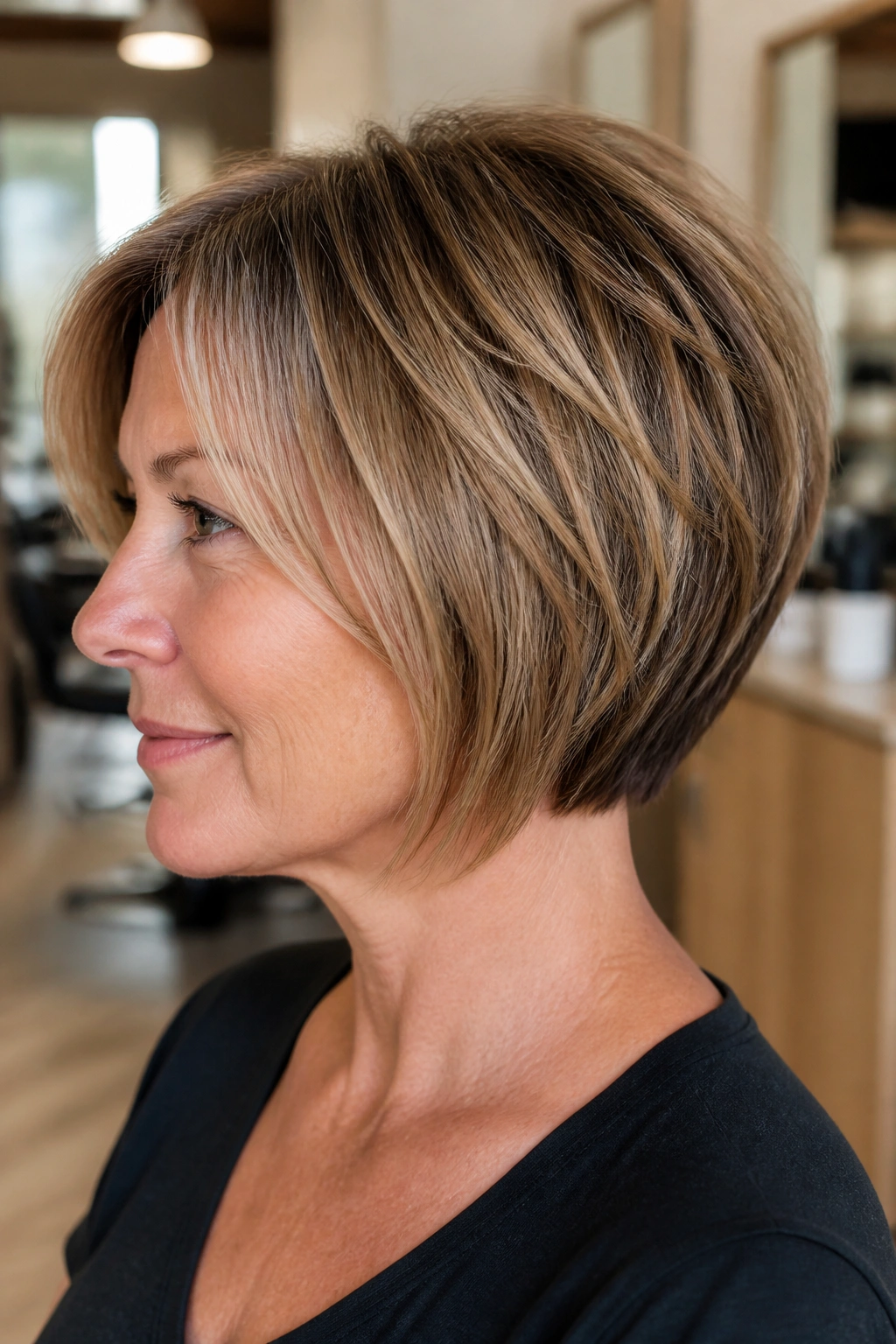
Chop is not the same thing as careless layering.
A choppy graduated bob for fine hair can look modern and airy, but only when the texture is placed with restraint. Too many short pieces at the sides make the hair look thinner than it is. Keep the mess up top and the perimeter clean. That is the entire trick.
What Makes It Different
The choppiness should live mostly in the crown and the upper back, where it breaks up flatness. The lower edge needs enough weight to keep the hair from floating away. Fine hair loses structure fast if the ends are shredded, so this cut has to be controlled.
- Keep the layer jumps small, about 1/4 to 1/2 inch.
- Ask for point-cutting, not aggressive razor work.
- Use a light paste or cream, then scrunch just the top layer.
If the hair is fragile or frays easily, soften the chop and keep the outline blunt.
This is the version for someone who wants movement with a little bite. It is not the one for a person who likes glassy smooth hair.
8. Sleek Blunt-Front Graduated Bob
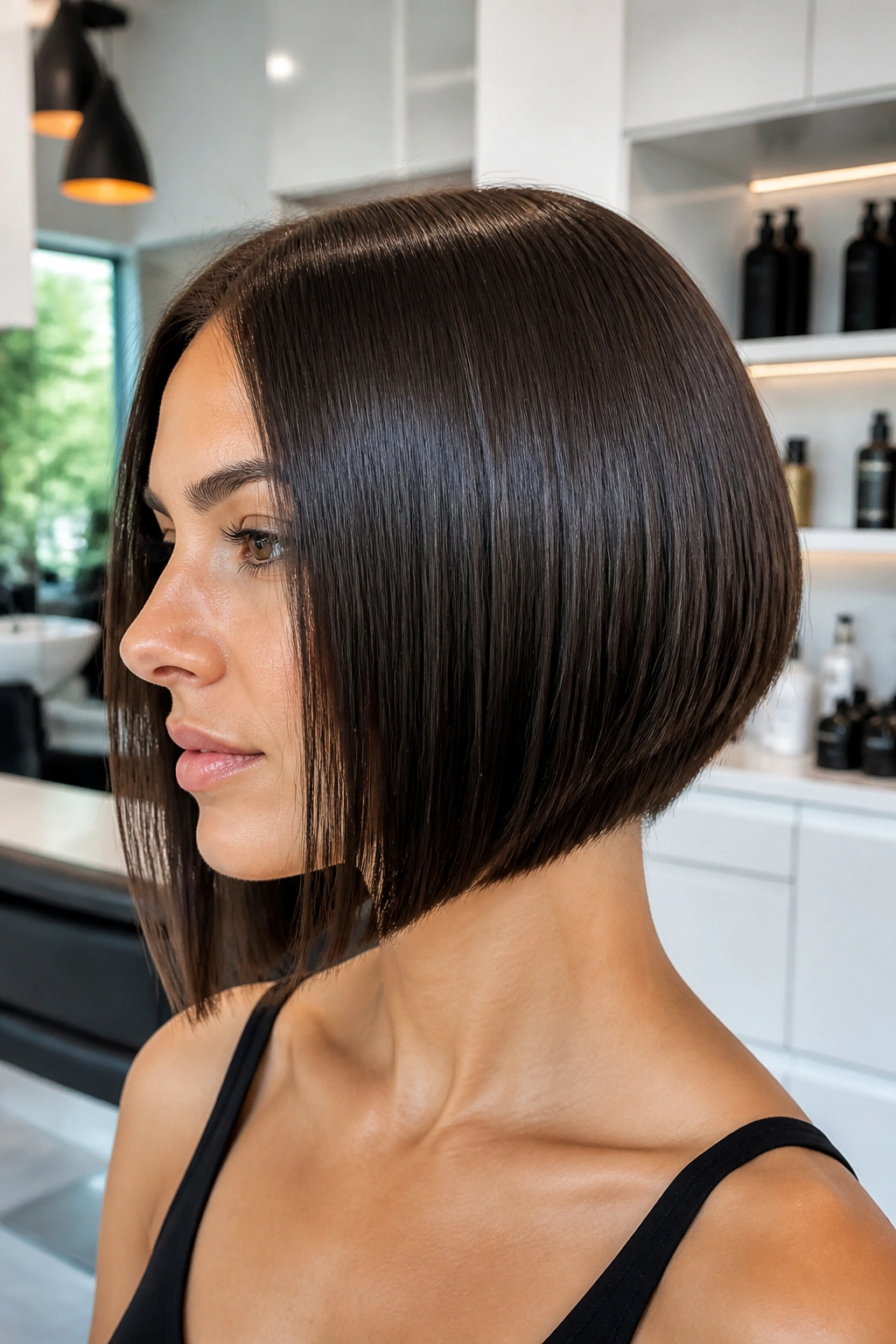
Fine hair often looks fuller when the outline is blunt, not feathered. That is why a sleek blunt-front bob can be such a good match for graduation in the back.
The front line gives the eye a solid shape to read, which makes the hair seem denser. Meanwhile, the graduated back quietly props up the crown and keeps the whole cut from going flat. The contrast is the point. One side gives weight, the other gives lift.
This style is especially good if you like a polished finish. Blow it smooth, tuck the ends slightly under, and let the shine do the work. A tiny bit of serum on the last inch of hair helps the edges stay tidy, but skip anything heavy near the roots.
A blunt front can look harsh if the face frame is too rigid. Keep the corners softened just enough to move, and the cut stays sharp instead of stiff.
9. Curtain Bang Graduated Bob
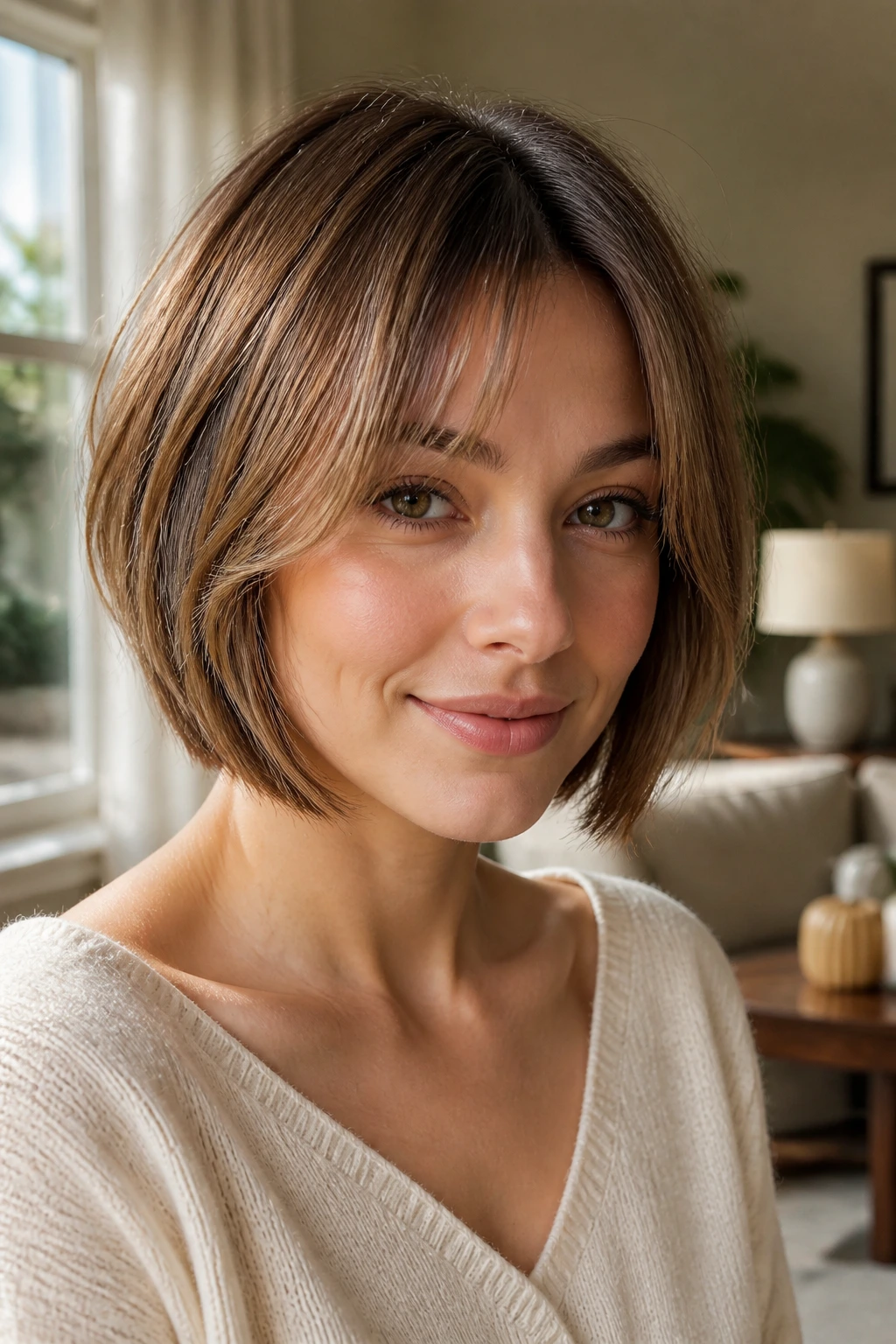
Do curtain bangs work on fine hair? They do, if the fringe is cut light enough to breathe.
A curtain bang graduated bob gives the face softness at the front and lift at the crown, which is a nice combination when the hair itself needs help. The bangs should not be dense. That is the trap. Too much fringe steals from the rest of the haircut and makes the sides look skimpy.
How to Style the Fringe
Blow-dry the curtain pieces away from the face with a small round brush or a medium roller. The goal is bend, not volume for volume’s sake. If the fringe falls into two loose wings, the bob underneath gets to stay visible and the whole cut reads balanced.
- Keep the shortest part of the curtain around brow level or slightly lower.
- Let the outer pieces drop toward the cheekbones.
- Style the fringe first so it does not collapse while you work on the rest.
This cut is a smart pick for long faces, high foreheads, or anyone who wants a little frame without a heavy bang.
10. Wavy Graduated Bob
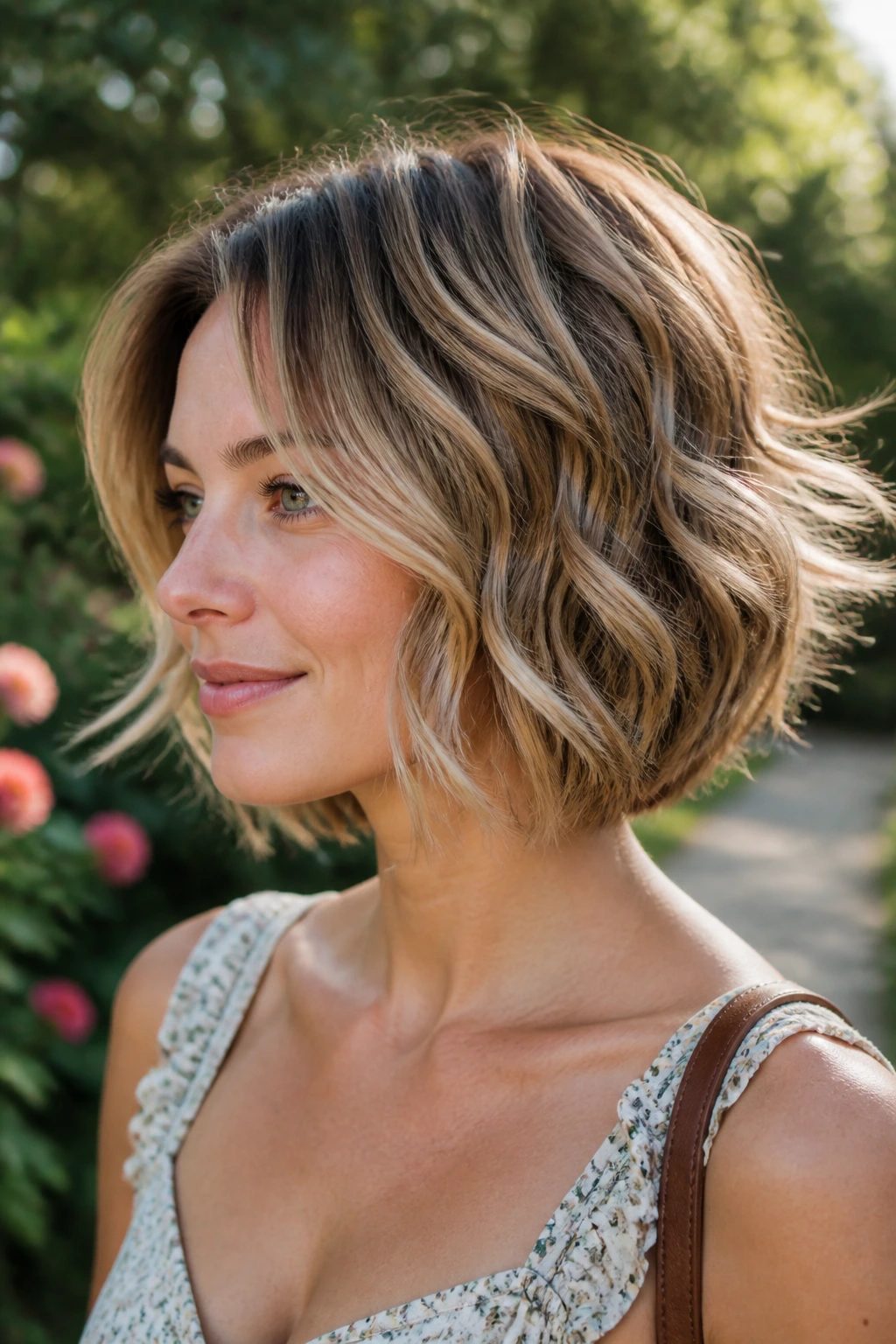
If your hair bends when it dries and then loses shape by dinner, this one is worth a close look.
A wavy graduated bob gives natural texture somewhere to land. The stacked back stops the head from looking triangular, and the shorter interior shape lets the wave spring up instead of drooping. That matters more on fine hair than people realize, because weight pulls wave pattern down in a hurry.
I like this cut with a loose styling routine. Scrunch in a wave spray on damp hair, blot with a microfiber towel, then diffuse on low until the hair is about 80 percent dry. Let the last bit air-dry. That keeps the wave soft instead of crispy.
- Use a light mousse at the roots.
- Skip heavy oils.
- Break the wave with your fingers only after the hair is dry.
A rough finish suits this cut better than a tight curl pattern. It wants movement, not perfection.
11. Tousled French Bob
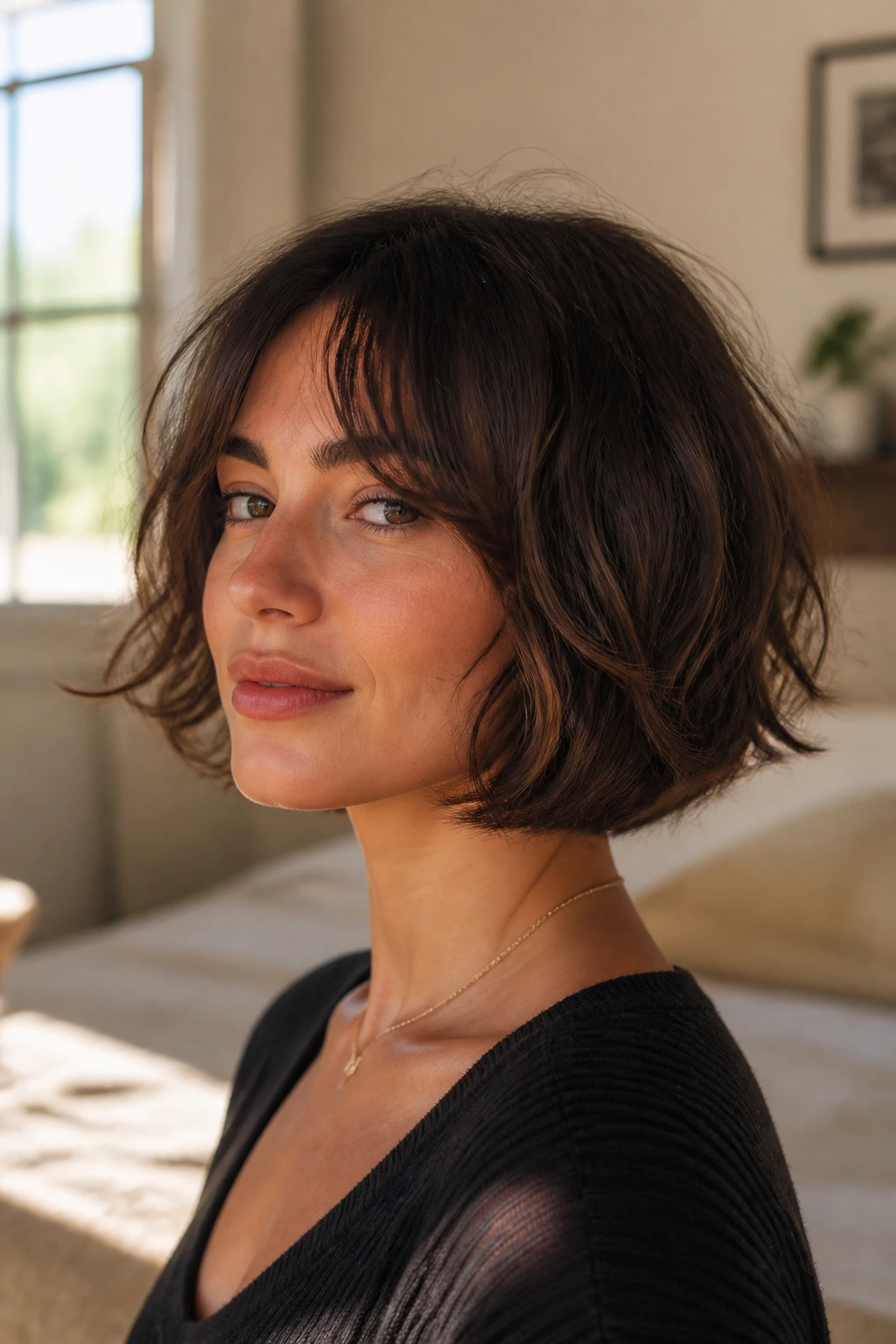
The French bob looks casual, but the shape has to be exact. On fine hair, that is where the difference shows.
A tousled French bob usually sits shorter, somewhere around the cheekbone or just below the jaw, and the graduation lives low and quiet. That keeps the back lifted without stealing too much density from the sides. The ends should feel soft, not frayed. There is a difference, and stylists know it when they see it.
This is a lovely cut if you like a bit of attitude. It works with a middle part, a soft side part, or hair tucked behind one ear. It also makes earrings do more of the visual work, which sounds shallow until you notice how good the whole shape looks with a simple hoop.
One thing to watch: if the hair is too fine and too straight, this cut needs a little bend from styling. A quick wrap around a brush or a few seconds with a flat iron at the ends usually does it.
12. Feathered Graduated Bob
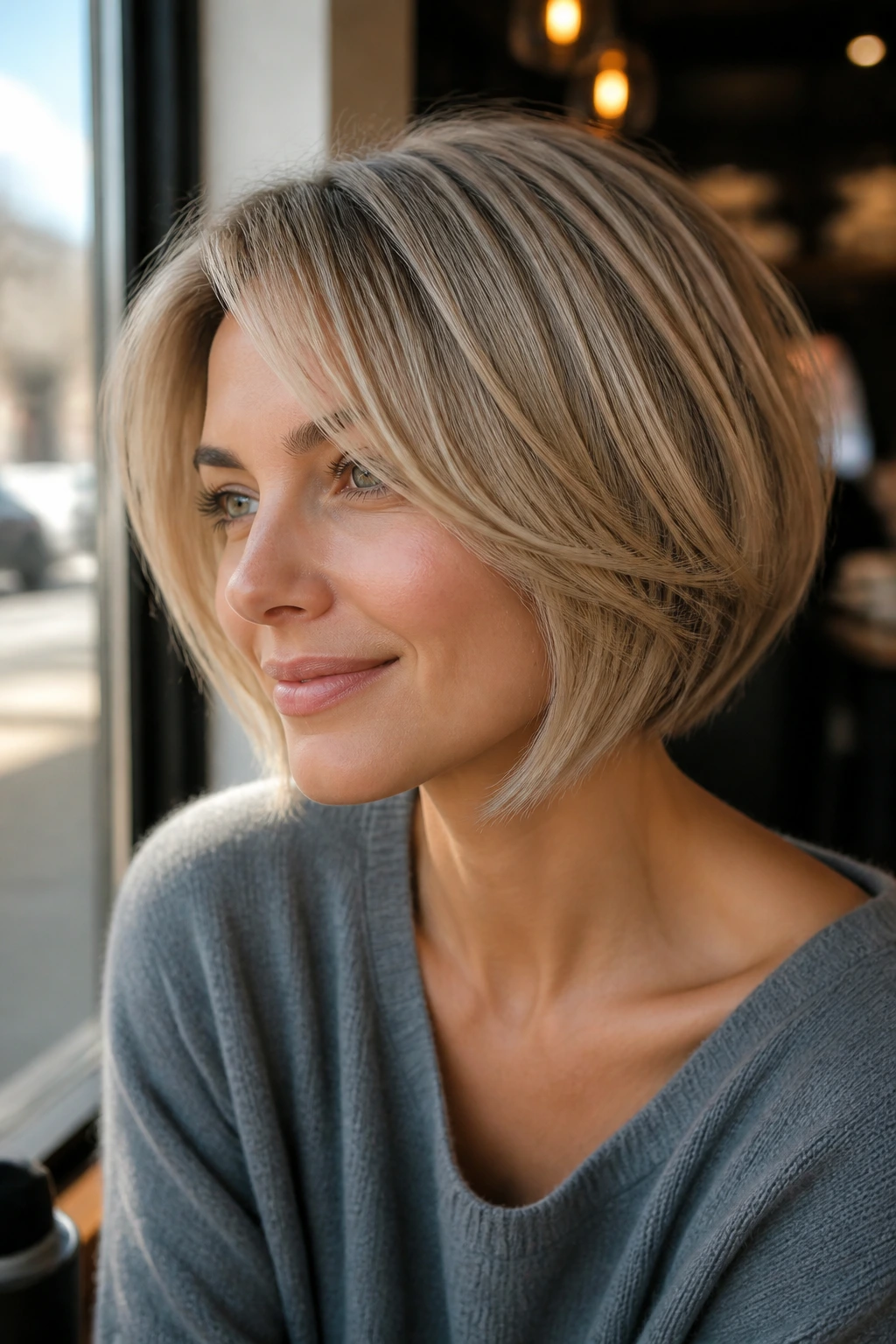
A feathered bob is not the same as a chopped one, and that matters.
Unlike the choppy version, feathering softens the edge rather than breaking it up. The result is lighter movement around the perimeter, with enough smoothness left in the cut to keep fine hair from looking sparse. It is a better choice for people who want airiness without obvious texture lines.
This cut tends to flatter hair that slips flat at the crown but still has some body through the middle. The soft slices around the top and sides help the hair move, while the back keeps a subtle stack. If the feathering is done well, the haircut reads gentle, not flimsy.
I would ask your stylist to keep the feathering away from the very bottom edge. That little strip of weight at the hem gives the hair the look of density. Remove that, and the whole thing can start to look thin.
A light blow-dry with a paddle brush is enough most days. No need to polish every strand.
13. Curly Graduated Bob for Fine Hair

Curly fine hair needs more caution than straight fine hair. The curl gives you lift, but it can also shrink the length faster than you expect.
A graduated bob can be excellent on curls because the back structure stops the cut from ballooning out at the sides. The trick is leaving enough length for the curl to gather. If the bob is cut too short, the hair can stand away from the head and feel puffy instead of shaped.
What to Ask For
- Cut the curl mostly dry so the true length is visible.
- Keep the graduation longer than you would on straight hair.
- Leave the front pieces at or below the jaw unless the curl is loose.
Avoid aggressive thinning shears near the crown; they can turn a soft curl pattern into frizz.
This cut works best when the curl pattern is loose to medium and the density is moderate. If the curls are very springy, the bob should stay longer and the graduation should be subtle. Otherwise the silhouette can grow upward too fast.
14. Inverted Graduated Bob
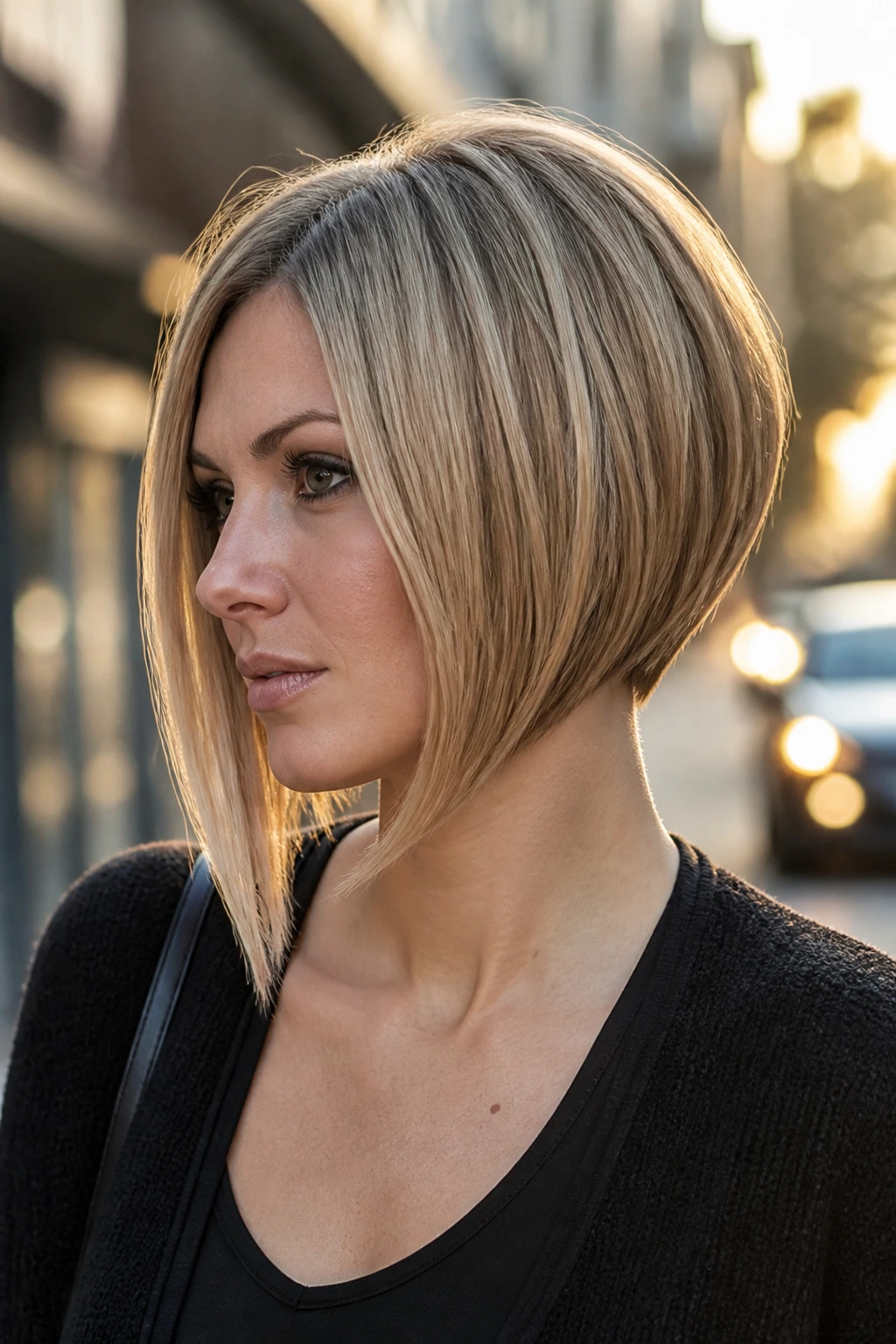
Want a cut that looks sharper without needing thick hair? The inverted bob earns its keep here.
The inverted shape gives you a dramatic front and a lifted back, which is exactly what fine hair can use. The angle creates the illusion of a stronger outline, while the stacked nape keeps the crown from collapsing. It is a little bolder than a soft A-line, and that boldness is part of the appeal.
This version suits someone who likes a crisp profile. It also works when the jawline could use a bit of framing, because the front pieces pull the eye forward. Keep the back controlled, though. If the stack gets too high, the hair can look overworked.
A straight blow-dry shows off the angle best. If you want a softer finish, tuck the ends under with a round brush and keep the front glossy. The shape should still look deliberate, even when the styling is loose.
15. Undercut Nape Graduated Bob
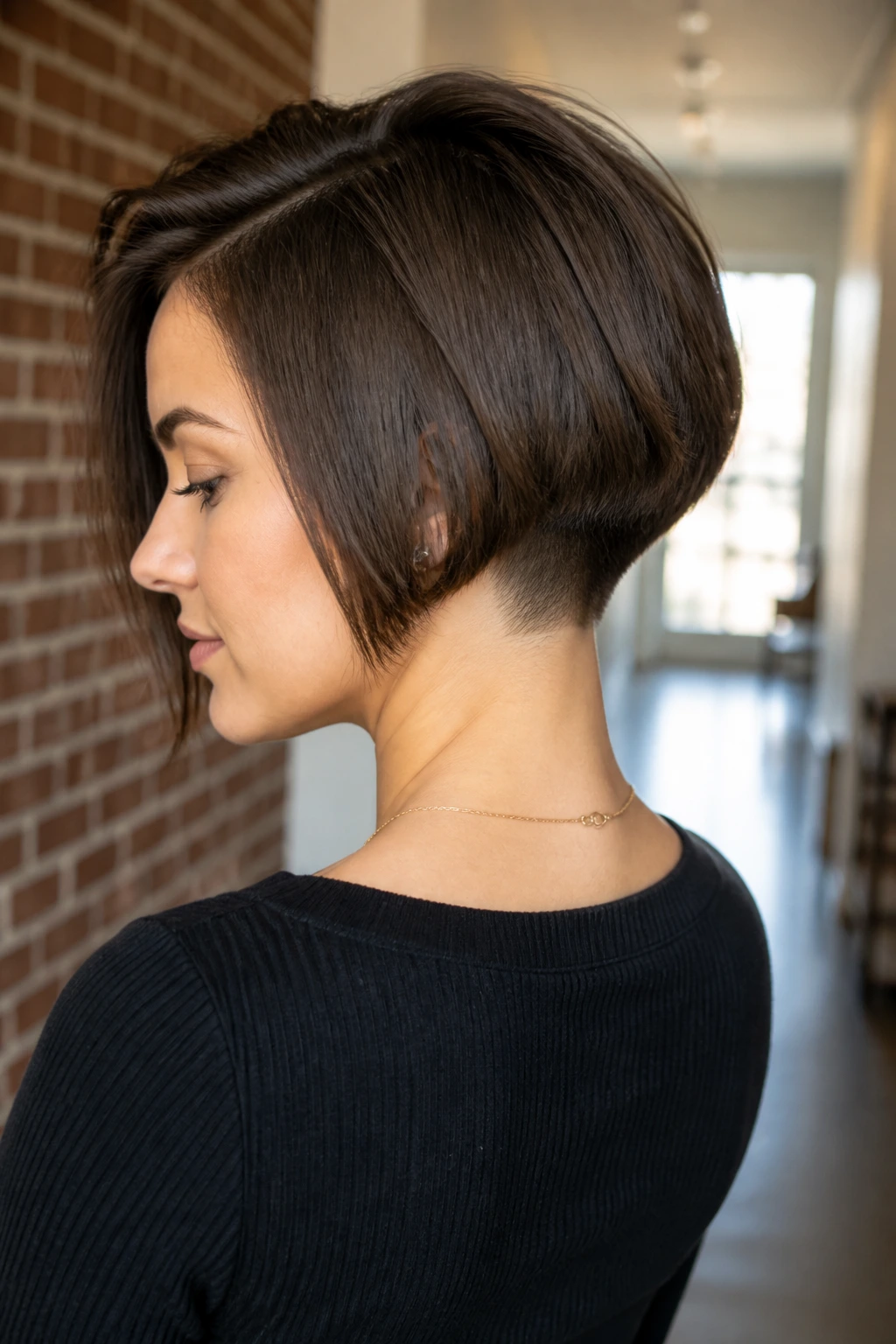
A hidden undercut can sound dramatic, but on fine hair it can be practical when the back feels bulky and the top still needs help.
The undercut nape bob removes a narrow strip of weight beneath the top layer, which lets the rest of the bob sit cleaner. That can make the crown feel lighter and the silhouette look neater. It is not a cut I would hand out casually. On very sparse hair, an undercut can expose scalp and create a patchy look.
If you do choose it, keep the undercut small and hidden. Think a strip no wider than the lower nape, not a big shaved panel. The goal is control, not shock value.
This style is especially handy if your hair grows out bulky at the neck or if you hate the feeling of thick ends at the collar. It also dries faster, which is a small mercy on busy mornings.
16. Piecey Razored Graduated Bob
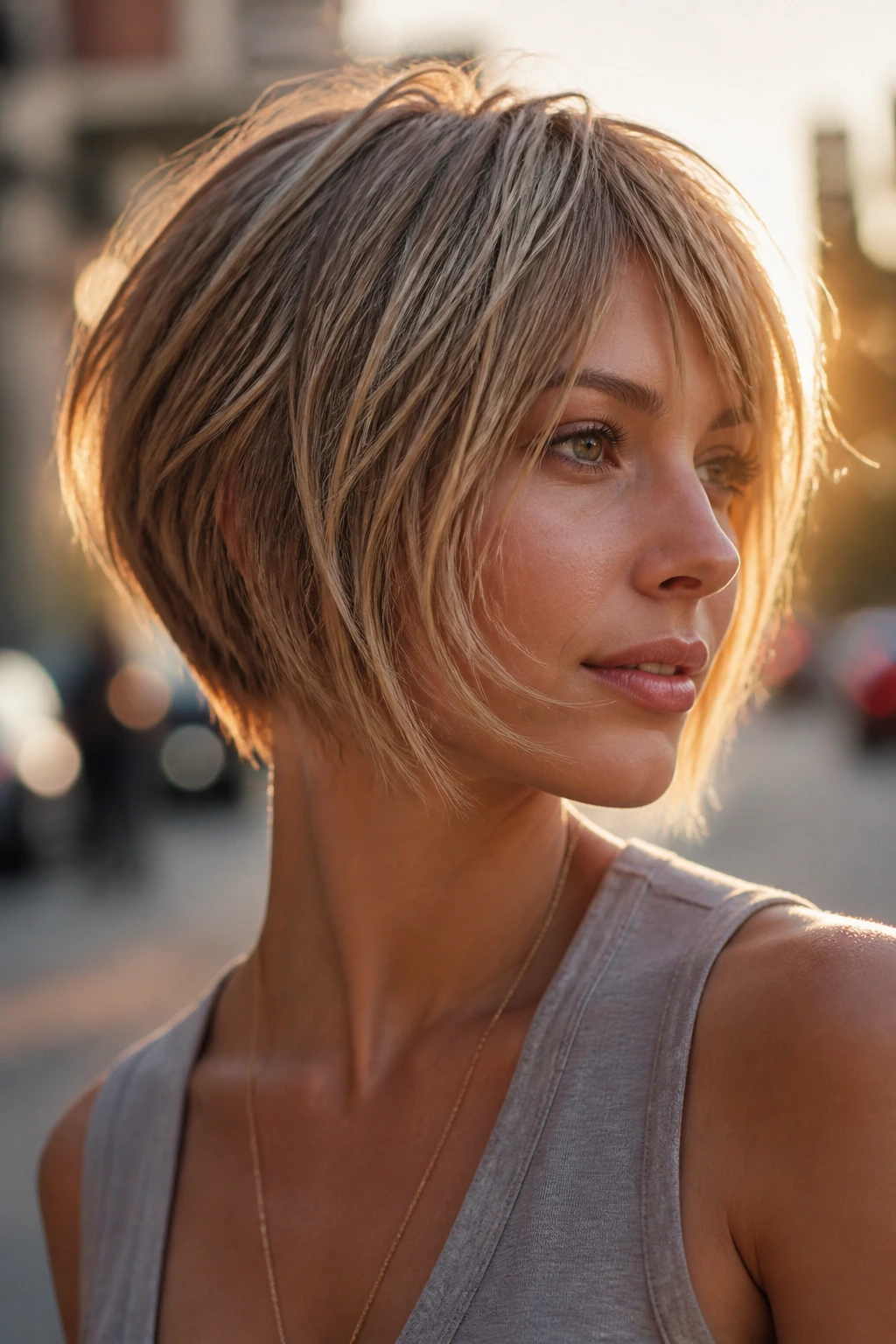
Razor work can be lovely on soft hair, and a mess on fragile hair. That is the honest version.
A piecey razored bob uses the razor to create movement through the top and front, while the graduated back keeps the shape grounded. On healthy fine hair, that can give a light, airy finish that looks modern without feeling overdone. On brittle hair, the same technique can rough up the ends and make them look frayed.
I only like this when the strands can handle it. If your hair snaps easily, point-cutting is safer. If the hair is smooth and responds well to texture, a gentle razor pass through the upper third can be useful.
The piecey look should stay controlled. You want separation, not gaps. A small dab of styling cream on the fingertips and a little pinch at the ends goes a long way.
This is a cut for movement lovers. If you want tidy and polished every day, skip it.
17. Neck-Length Graduated Bob with a Deep Side Part
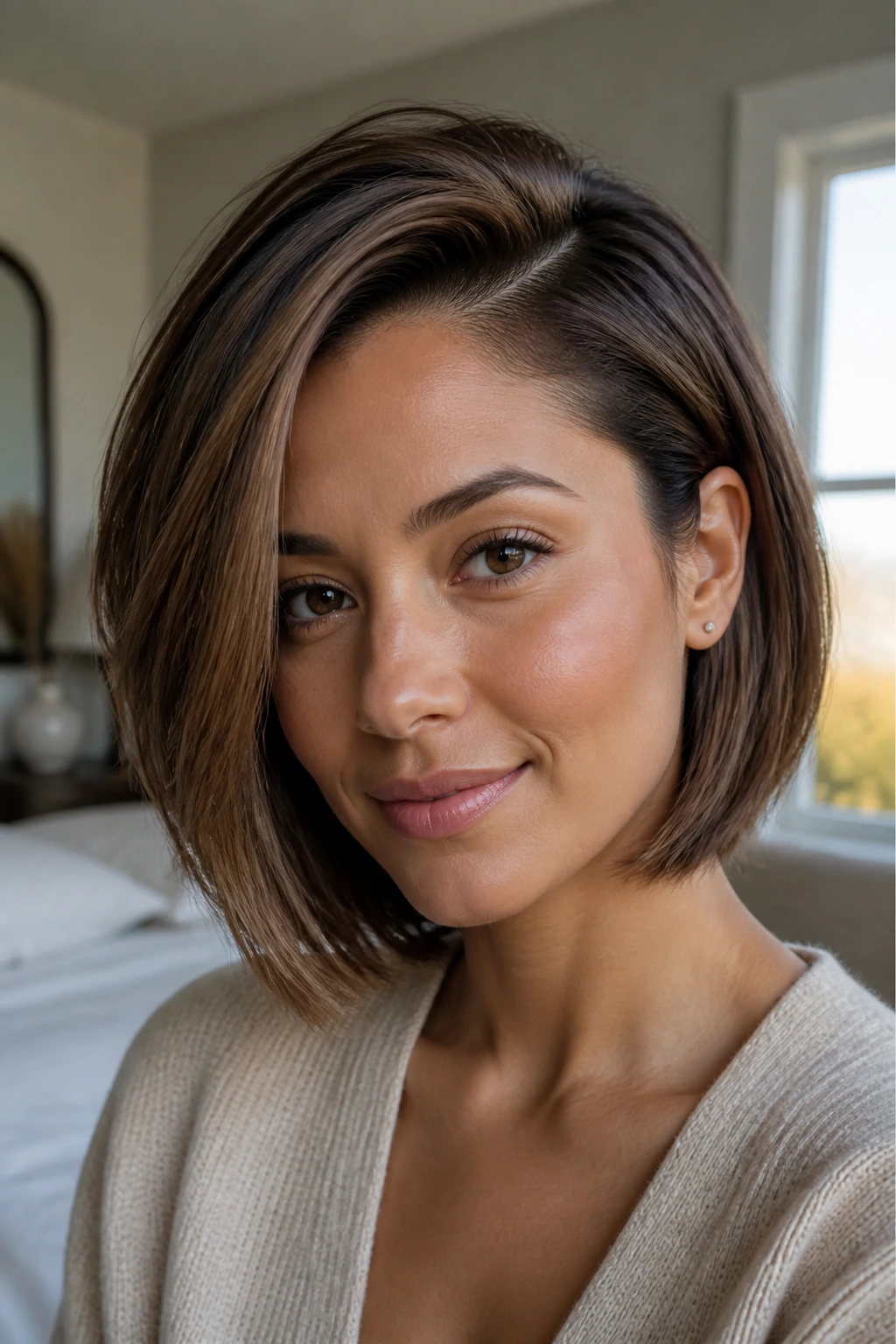
A deep side part gives more drama than another inch of length ever could.
This neck-length graduated bob is a smart middle ground for fine hair. It keeps enough coverage to feel versatile, but the side part lifts the roots and shifts the weight off the center line. That gives the haircut a bit of bounce without asking for a full short cut.
The length at the neck also helps if you like to pin one side back or wear the hair under a coat collar without it puffing out. It is practical in a way that shorter cuts are not always willing to be. The graduation stays tucked inside the shape, so the top layers can move without the ends feeling bare.
I would recommend this to anyone growing out a shorter bob, or anyone who wants a hair-friendly cut that still looks refined with minimal effort. A quick blow-dry at the roots and a bend at the ends is usually enough.
18. Micro Graduated Bob
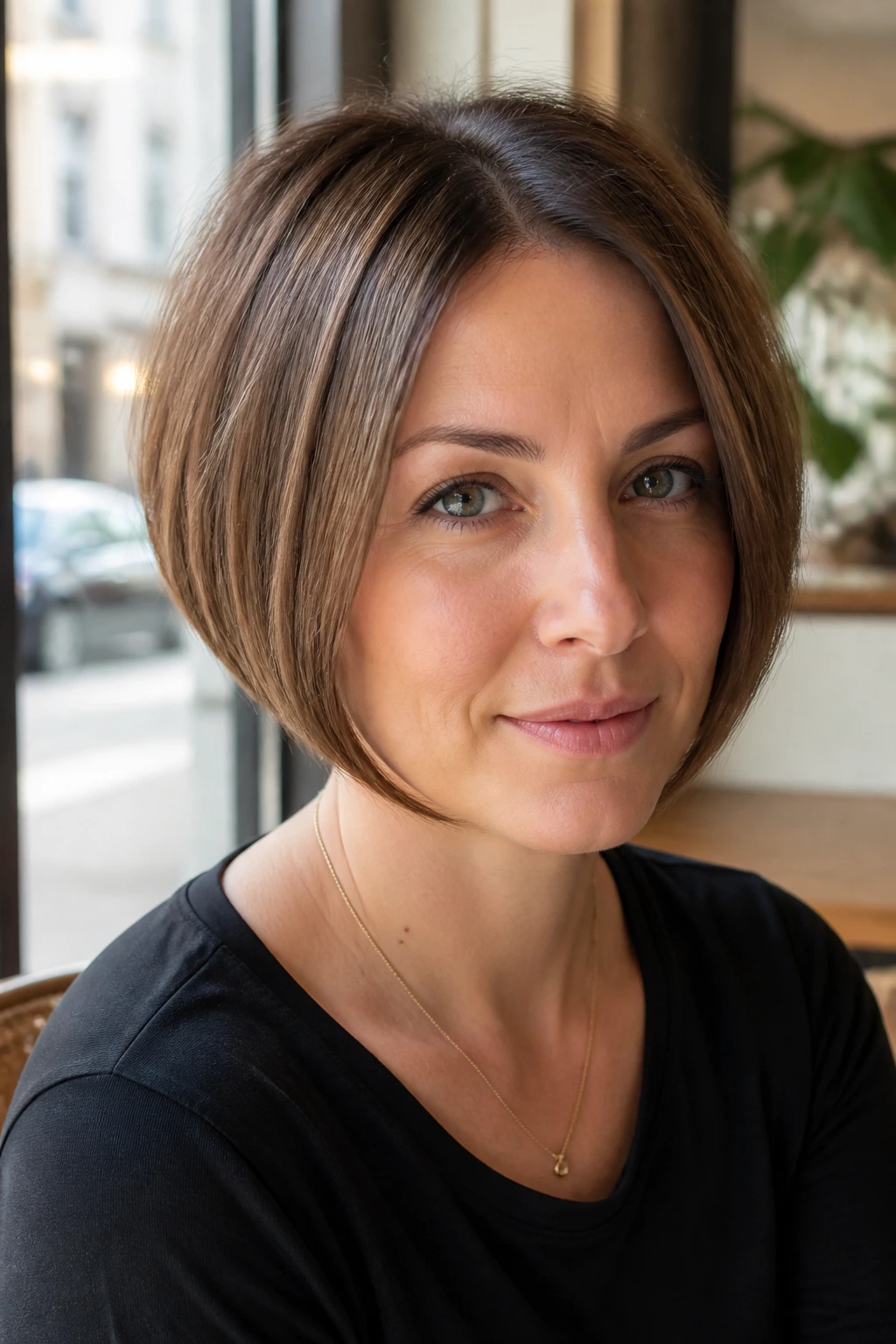
Short does not automatically mean severe.
A micro graduated bob sits higher on the head, often around the jaw or a touch above, and the short length can make fine hair appear thicker because the strands have less distance to split apart. The back stacking supports the crown, while the tiny front length gives the cut a clean finish.
This style is not for everyone. It needs confidence, and it needs a decent neck. If the neck is short or the hair grows in a strong cowlick, the shape can be harder to control. That said, when it works, it looks crisp and expensive without being fussy.
The styling is mercifully quick. A small round brush, a light volumizing spray, and two or three passes with a blow-dryer usually do the job. Keep the edges tidy. A micro bob loses its charm fast if it grows out into a fuzzy triangle.
19. Textured Graduated Bob with Face-Framing Pieces
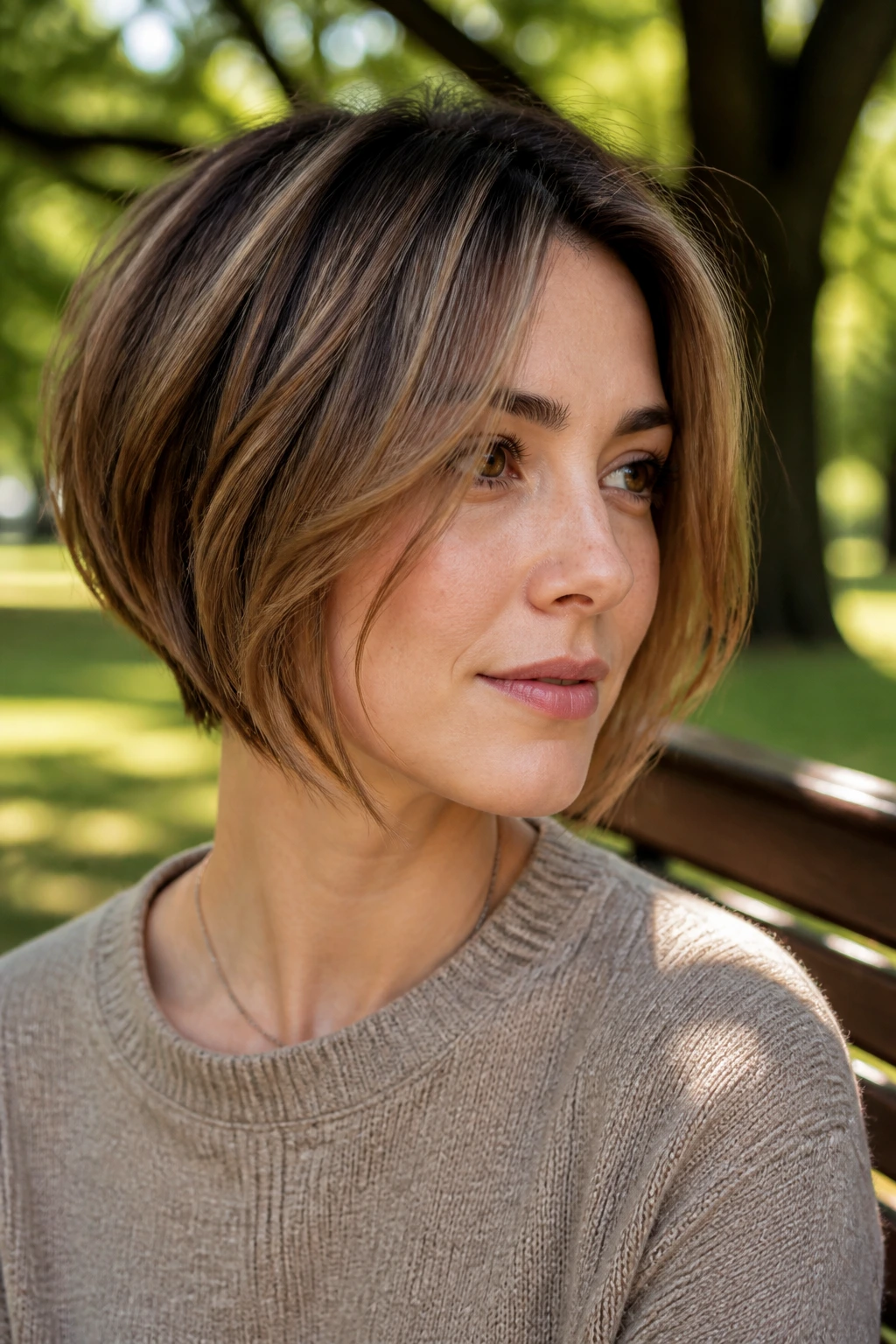
Texture belongs in the front when you want the cut to feel alive.
A textured graduated bob with face-framing pieces keeps the back compact and gives the front a little movement around the cheekbone and jaw. That approach works well on fine hair because the texture is targeted. You are not stripping density from the whole head. You are placing softness where the eye lands first.
Where the Texture Should Live
Start the shortest face-framing piece around the cheekbone or lip, then let the next piece fall a little longer. That stagger creates movement without turning the sides wispy. The back should still hold its structure, because that is what keeps the haircut from falling flat.
- Ask for texture in the front third only.
- Keep the perimeter strong around the neck.
- Style with a light spray, then separate only the front pieces with your fingers.
This is a useful cut if you wear glasses or like to show off earrings. The frame around the face gives the bob some personality, while the stacked back quietly does the volume work.
20. Air-Dry Graduated Bob for Fine Hair
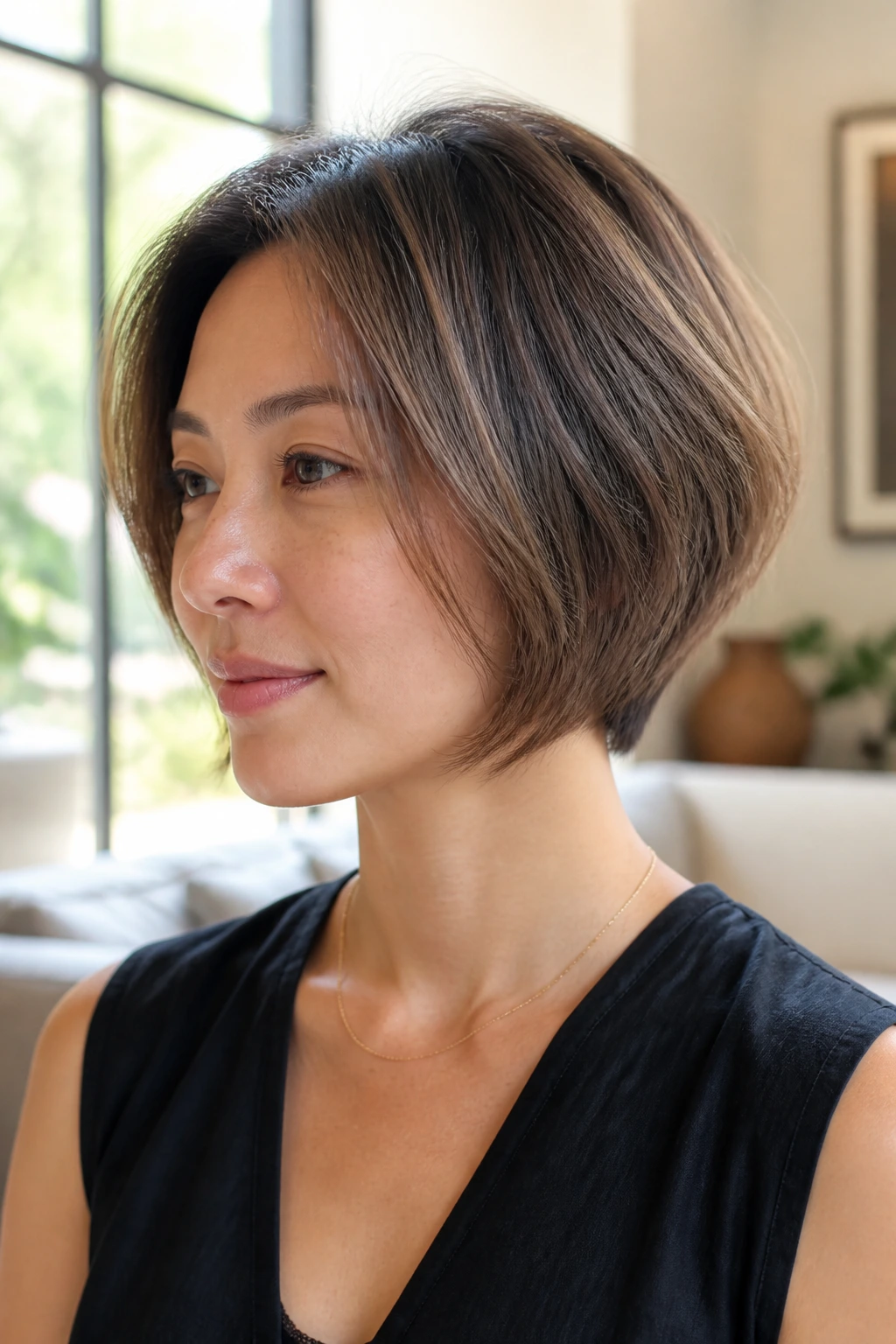
This is the version that saves time.
An air-dry graduated bob for fine hair is built with enough internal shape that you do not need to fight it every morning. The back should still have a gentle stack, but the top needs to stay soft and mobile so the hair settles on its own. If the cut is too fancy, air-drying exposes every odd piece. If it is too blunt, the ends collapse. The sweet spot sits in the middle.
How to Ask For It
- Keep the graduation moderate, not steep.
- Leave the top layer long enough to drape.
- Ask for a soft perimeter with minimal thinning.
A leave-in conditioner, a pea-size dab of cream, and a quick scrunch are usually enough. If your hair dries with a little bend, let it. That slight irregularity gives the bob life.
This is the cut I come back to when someone wants shape without daily drama. It looks neat when rushed, and it still behaves when you take ten extra minutes with a brush. That combination is hard to beat, and it is why graduated bob haircuts for fine hair keep showing up in my notebook.
