



Fine hair can collapse under the wrong bob. One blunt, heavy shape at the wrong length and the whole cut sits there like wet paper.
An inverted blond bob changes that by taking weight out of the back, building a clean rise at the nape, and leaving enough length in front to make the hair read fuller than it really is. That is why inverted blond bob haircuts for fine hair keep showing up on salon chairs when someone wants body without a lot of daily fuss.
The tricky part is that fine doesn’t always mean thin. Some people have a full head of hair and still watch every strand go flat by lunchtime. Others have fewer strands and need the cut to fake density from every angle. A good inverted bob handles both jobs if the shape is clean and the ends are left with enough weight to hold their line.
Blonde color helps, but shape does the heavy lifting. Light reflects off a pale ribbon of hair and gives the eye more to follow, which is useful when the strands themselves are delicate. Get the line wrong, though, and the haircut starts looking narrow at the back and tired at the front. Nobody wants that.
1. Chin-Length Inverted Blond Bob with Soft Stacking
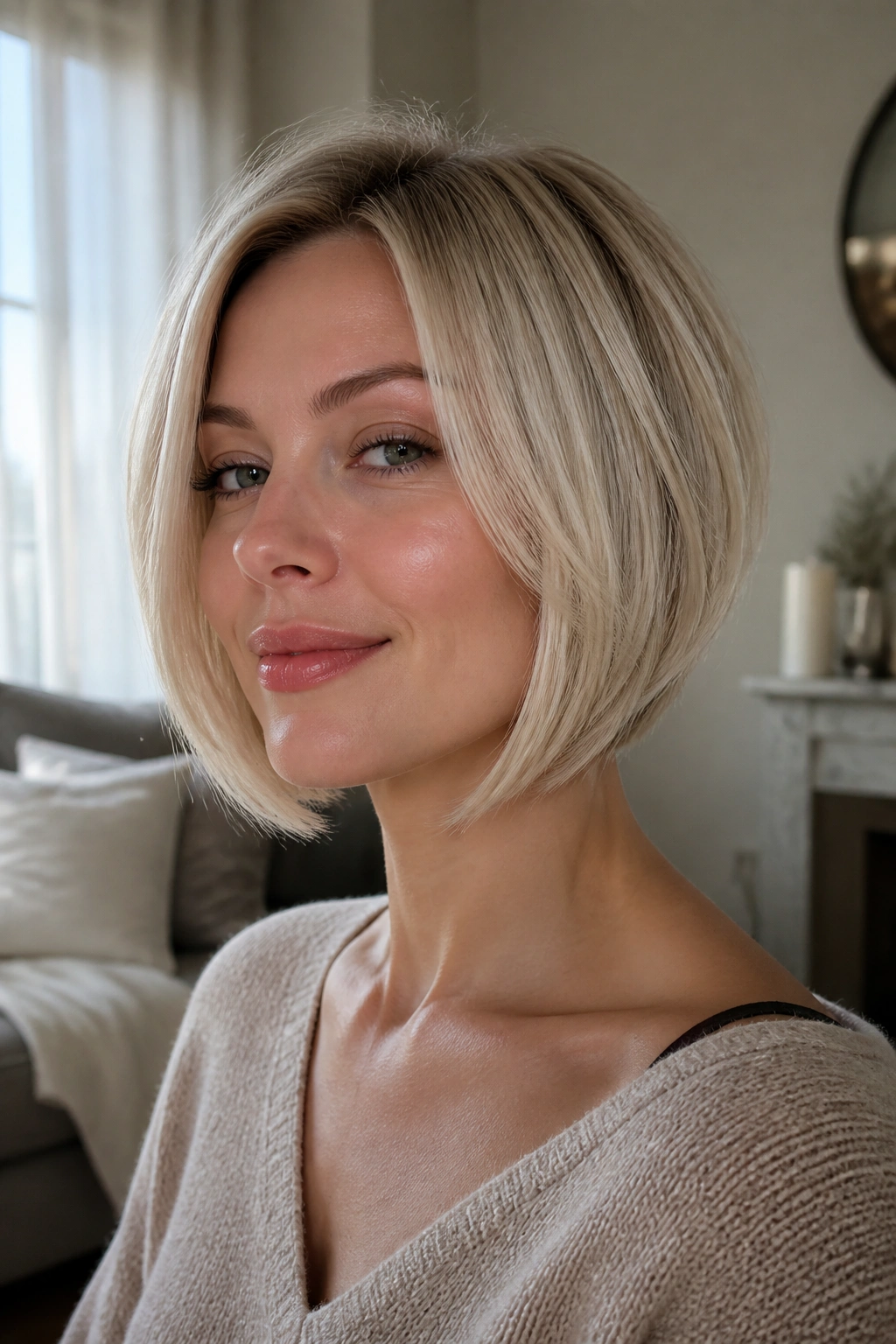
This is the cleanest starting point if your hair goes limp the second it gets past your jaw. The cut sits right at chin level in front, rises a little at the nape, and keeps enough body at the edge to make fine hair look denser.
Why It Works for Fine Hair
The back does the lift. The front does the framing. That split matters because fine hair usually needs a strong outline more than a forest of tiny layers.
Cream blonde makes the shape read even fuller. A lighter shade around the outer edge reflects more light, so the perimeter looks thicker and more defined. Keep the stack soft, not sharp. A hard stack can look like a wedge on delicate hair, and that is not the same thing as volume.
What to Ask Your Stylist For
- Keep the front about at chin length or a touch below so the cut still feels soft.
- Ask for a light stack at the nape, not a heavy graduation.
- Leave the ends blunt and tidy, especially through the front corners.
- Use a small round brush and dry the back upward before smoothing the sides down.
Best detail: do not let the ends get shredded. Fine hair needs a bit of weight to stay visible.
2. Icy Blonde Micro-Inverted Bob with Blunt Ends
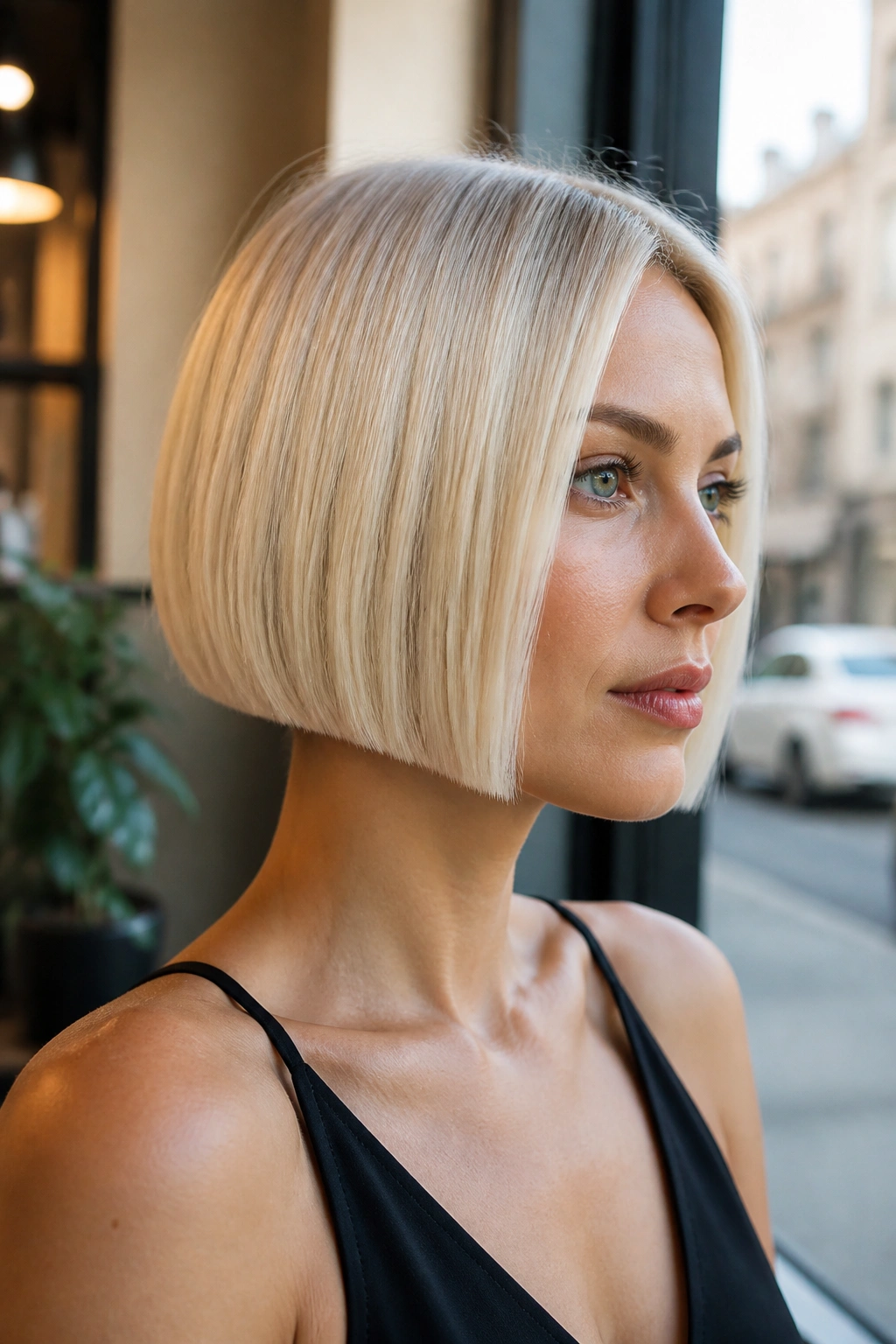
A micro-inverted bob is the sharpest way to make fine hair look fuller. The back sits high and neat, the front drops just enough to create an angle, and the blunt ends stop the shape from falling apart visually.
I like this on hair that has a little bend but not much bulk. The shorter nape creates a lifted line right where fine hair tends to collapse, while icy blonde turns that line into something crisp and bright. If the tone is too yellow or too muddy, the cut loses its clean edge fast.
The styling is simple, which is part of the appeal. A puff of root-lift spray at the crown, a fast blow-dry with a paddle brush, and a quick pass of the flat iron on the outer layer is enough. Skip the heavy cream products. They sink this kind of bob like a stone.
3. Side-Parted Inverted Lob with Root Lift
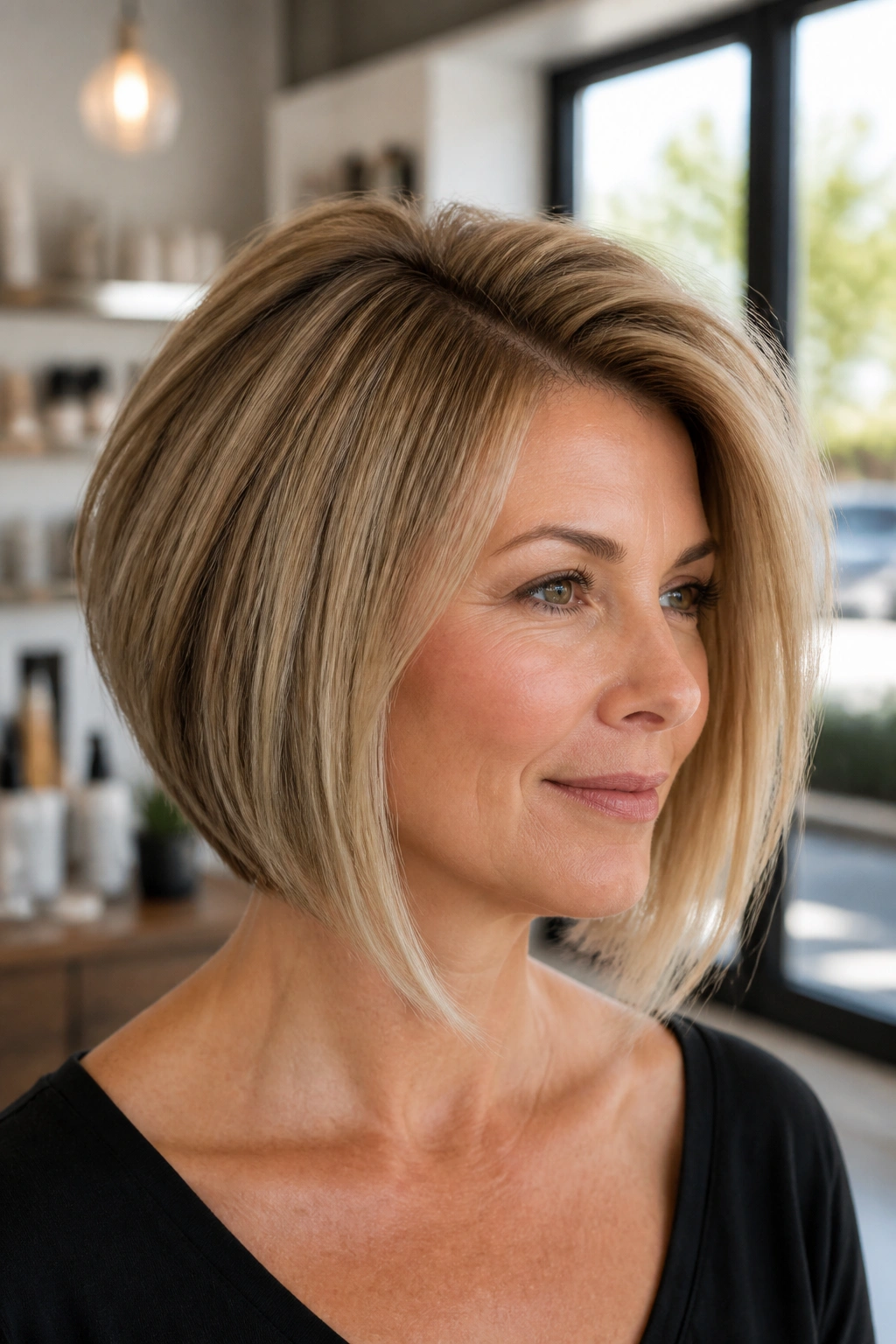
Why does a side part change an inverted lob so much? Because it breaks the crown in a way a center part never can. Fine hair often splits flat right where you want lift, and a deep side part shifts that problem off-center.
How to Wear It
A good side part starts about an inch past the highest point of the brow arch. That tiny move gives the front more body and lets the shorter back work harder. It also makes the cut feel less symmetrical, which helps if your hair grows flat on one side and puffs on the other.
Blow-dry the roots in the opposite direction first, then flip them back. That little trick adds a bend that lasts longer than straight-up teasing. Finish with a light root spray, not hairspray all over the head. You want lift at the scalp and movement through the front, not a helmet.
This is the sort of bob that looks polished at work and slightly undone after a few hours. That is a good thing.
4. Champagne Blonde Bob with Curtain Bangs
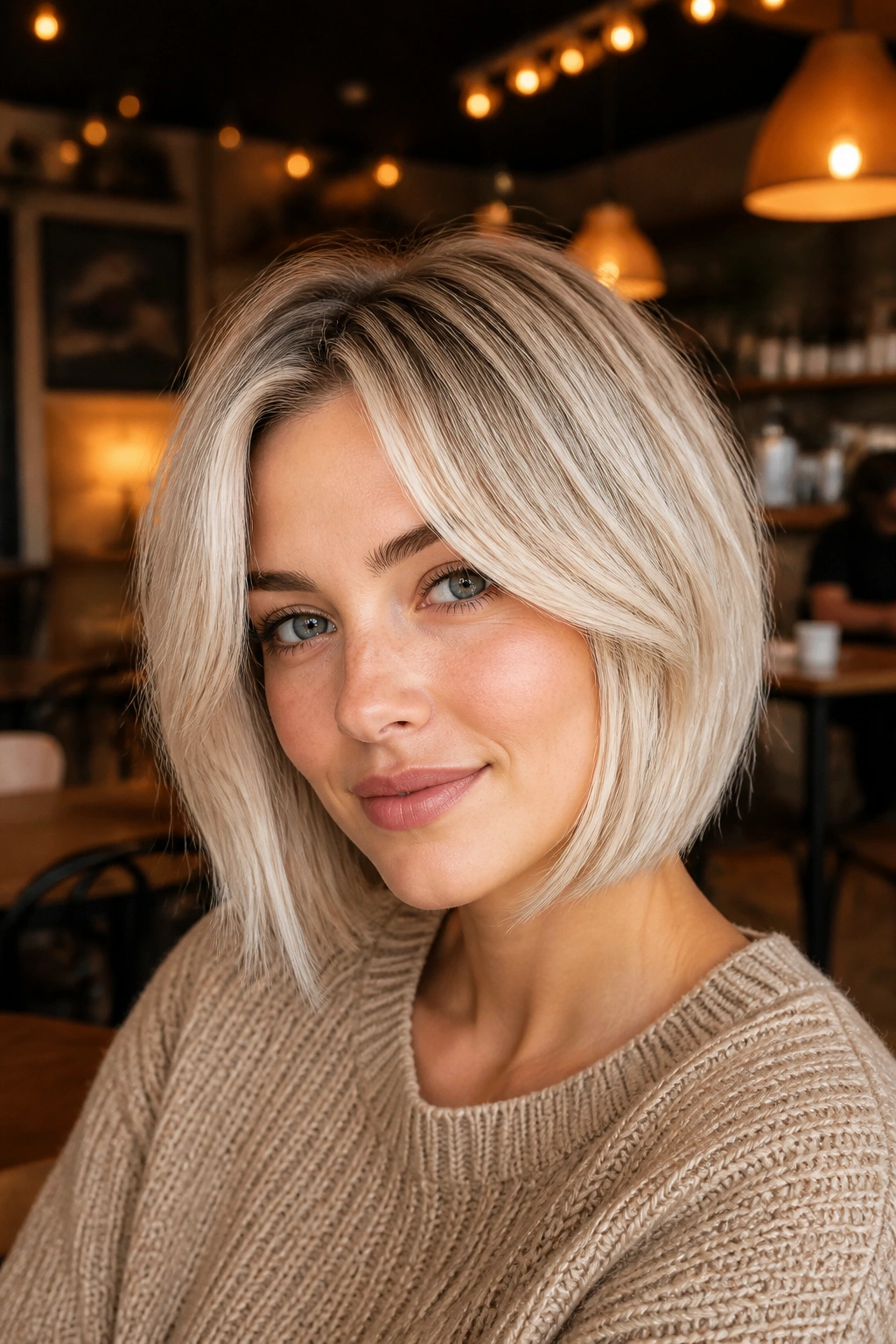
Picture a bob that hits just below the chin, opens at the face, and softens the whole head shape with a curtain fringe. That is the charm of this cut. It gives fine hair a little romance, but it still keeps the backbone of an inverted shape.
Curtain bangs are useful here because they break up a narrow forehead and stop the front from looking too severe. Champagne blonde helps too. The shade sits in that soft middle ground where the hair looks bright without turning chalky, so the texture reads a little thicker than it is.
- Keep the curtain bangs long enough to tuck back if you change your mind.
- Ask for the shortest point to land around brow level in the center.
- Let the front corners fall to the cheekbone or jaw, not higher.
- Use a light mousse at the roots so the bangs do not separate too soon.
My take: this is one of the easiest ways to make an inverted bob feel friendly instead of sharp.
5. Beige Blonde Rounded Inverted Bob with a Tucked Nape
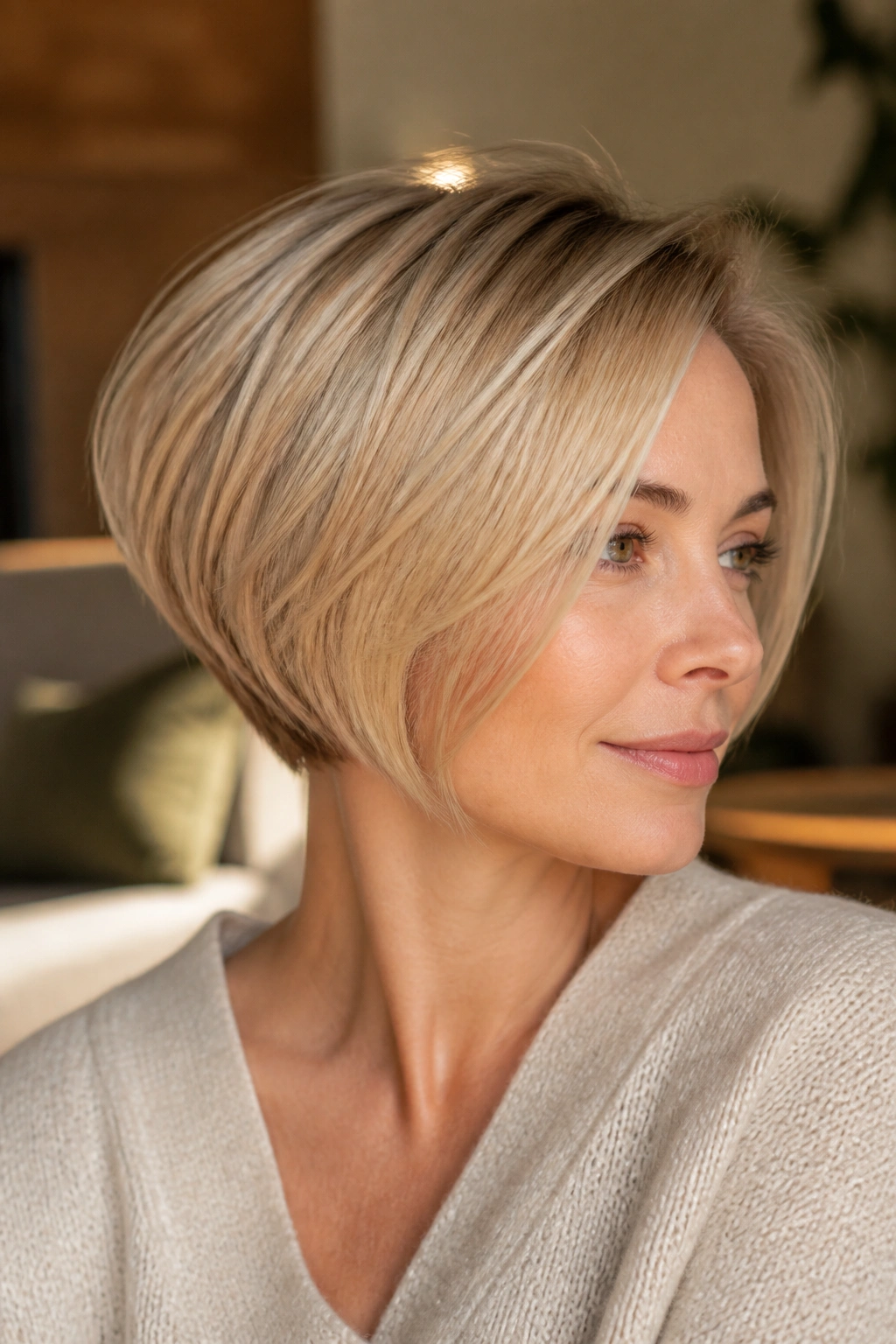
Rounded shapes are underrated. A lot of people think fine hair needs sharp angles to look fuller, but a soft curve can be better because it keeps the outline solid from every side. A beige blonde tone helps here by softening the contrast between light and shadow, which makes the hair look smoother and more filled in.
The tucked nape matters more than people expect. When the back is close and clean, the rest of the bob can hover with a little air around it. That lifted curve at the back of the head gives the haircut a neat finish, and neat finishes usually look denser on fine hair.
I prefer this version on straight or lightly wavy hair. It does not fight the texture. It works with it. Ask for a rounded line, not a sharp shelf, and keep the layers internal so the outside shape stays full. The result feels soft, but it does not disappear into the neck.
6. Platinum Blonde Bob with a Deep Side Sweep
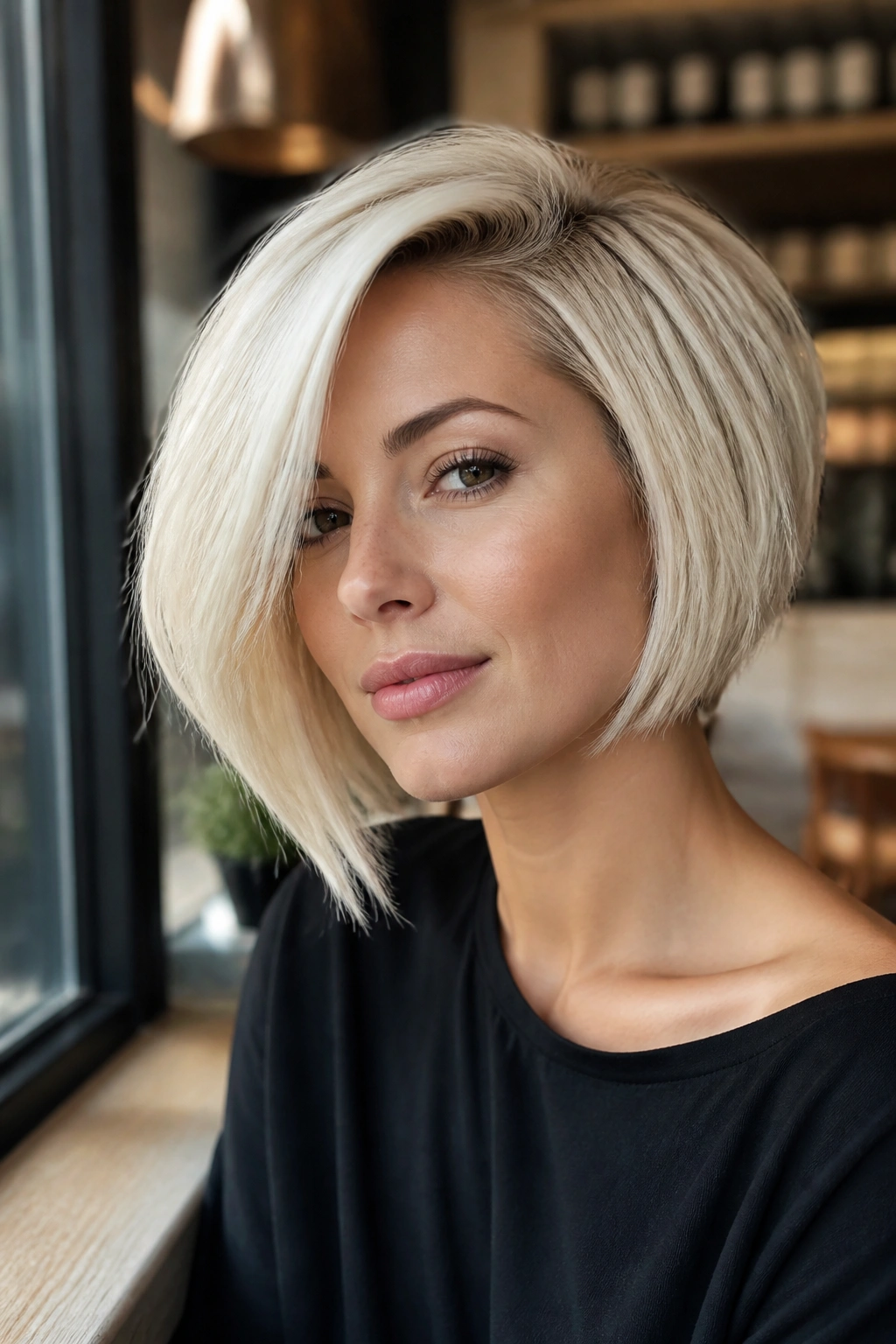
Unlike a center-parted bob that can split open at the crown, this one uses a deep side sweep to create a bit of drama and a lot of lift. Platinum blonde makes every line more visible, which is a gift and a warning at the same time.
If the cut is even a little sloppy, platinum shows it. The upside is that a clean perimeter looks expensive and deliberate, and fine hair suddenly seems more substantial because the light catches the edge so sharply. Keep the front section long enough to sweep over one eye or tuck behind the ear. That asymmetry helps the back feel stronger.
This is a good pick if you like your hair to look styled even on a plain day. It suits round faces especially well because the diagonal front line breaks up softness. Use a small amount of smoothing cream on the ends, not the scalp. The scalp needs lift; the ends need control.
7. Honey Blonde Inverted Bob with Feathered Interior Layers
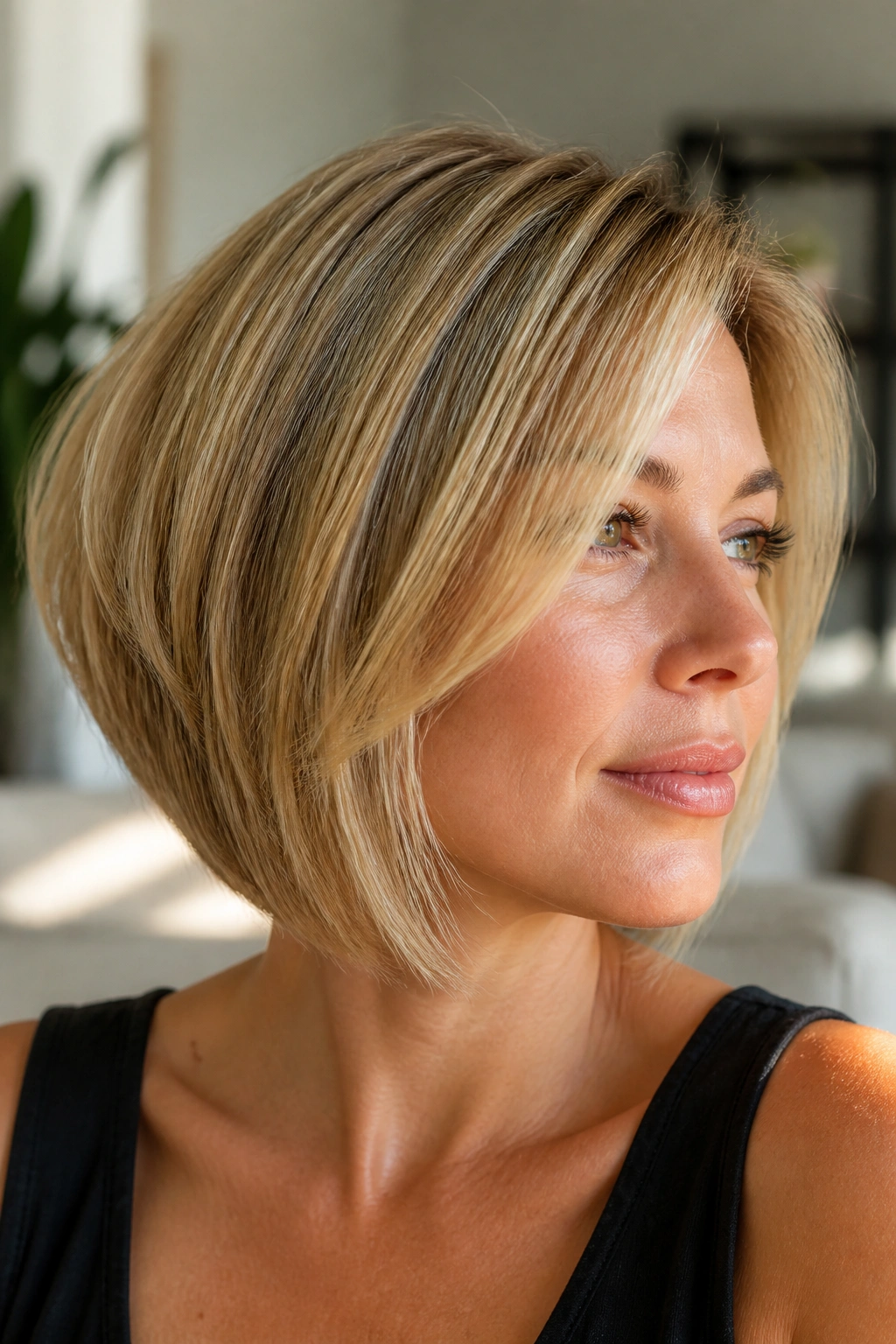
Feathered interior layers sound scarier than they are. Done lightly, they remove bulk without making fine hair look thin at the edge. That balance is the whole point of this cut.
What to Watch For
The layers should hide inside the shape, not slice through the outside line. Honey blonde gives the cut warmth, and that warmth keeps the hair from reading flat or hollow. A soft bend through the front also helps the lighter strands show up against the darker roots or brows.
A Few Good Rules
- Keep the perimeter blunt so the bob still has weight.
- Ask for only a few internal layers, not a shag.
- Let the front pieces fall to the lip or chin for softness.
- Finish with a round brush or large Velcro roller at the crown.
One small warning: if your hair is fine and sparse at the ends, too much feathering will backfire fast. This cut needs restraint.
8. Jaw-Grazing Inverted Bob with a Soft Money Piece
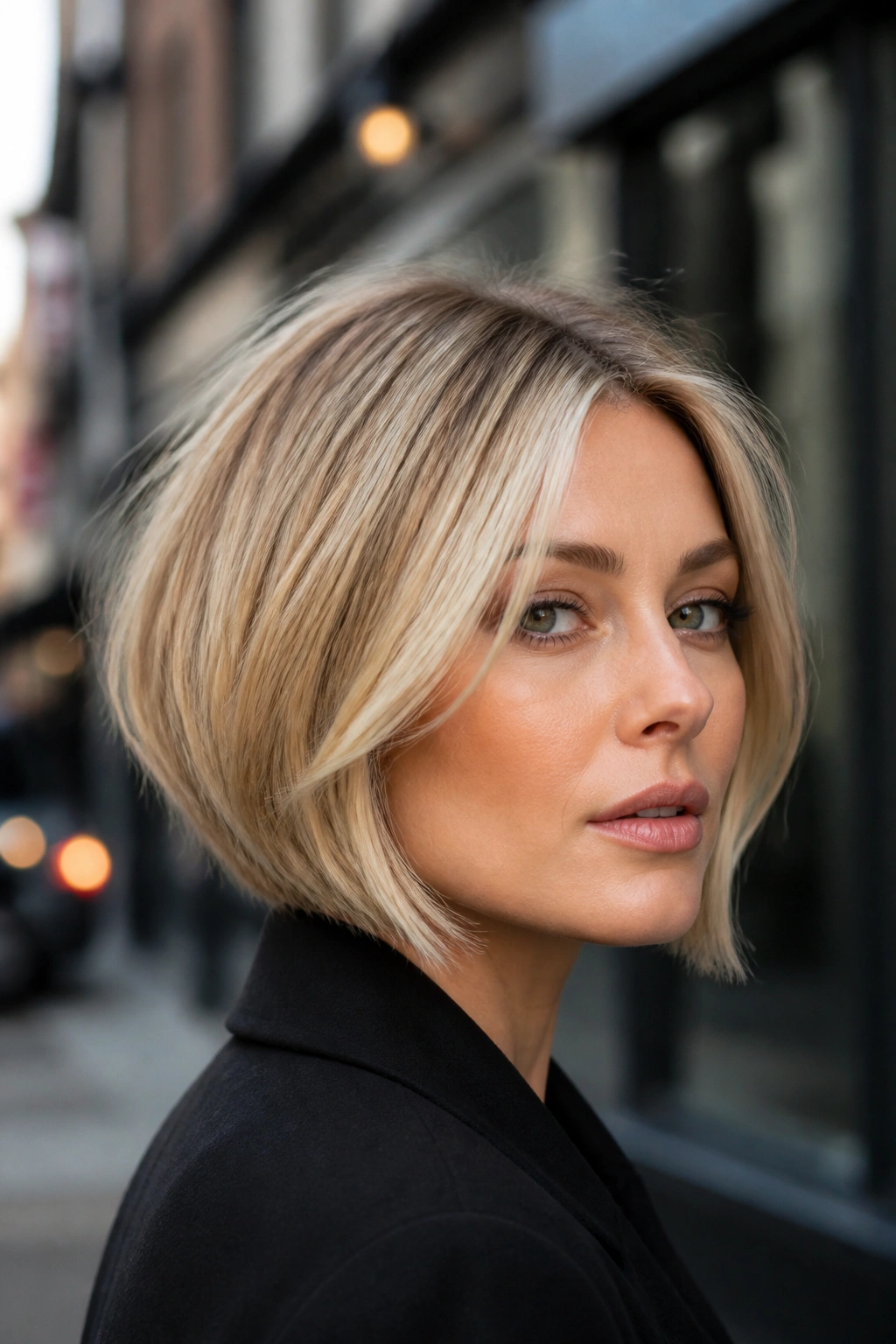
A money piece is not decoration here; it is a shape tool. When the front sections are a little brighter than the rest, the eye goes straight to the face line, and that makes fine hair feel more intentional.
Jaw-grazing length is the sweet spot for a lot of people because it gives the bob enough presence without weighing down the neck. Keep the bright pieces soft and narrow—about an inch wide on each side is usually enough. Chunky highlights can look striped on delicate hair, and striped is not the goal.
This cut also grows out well. The front can drift a little past the jaw while the back stays neat, so you do not get that awkward shelf that some short bobs develop. A light texturizing spray through the mid-lengths adds separation. Not too much. You want movement, not frizz.
9. Glassy Vanilla Blonde Bob with a Blunt Perimeter
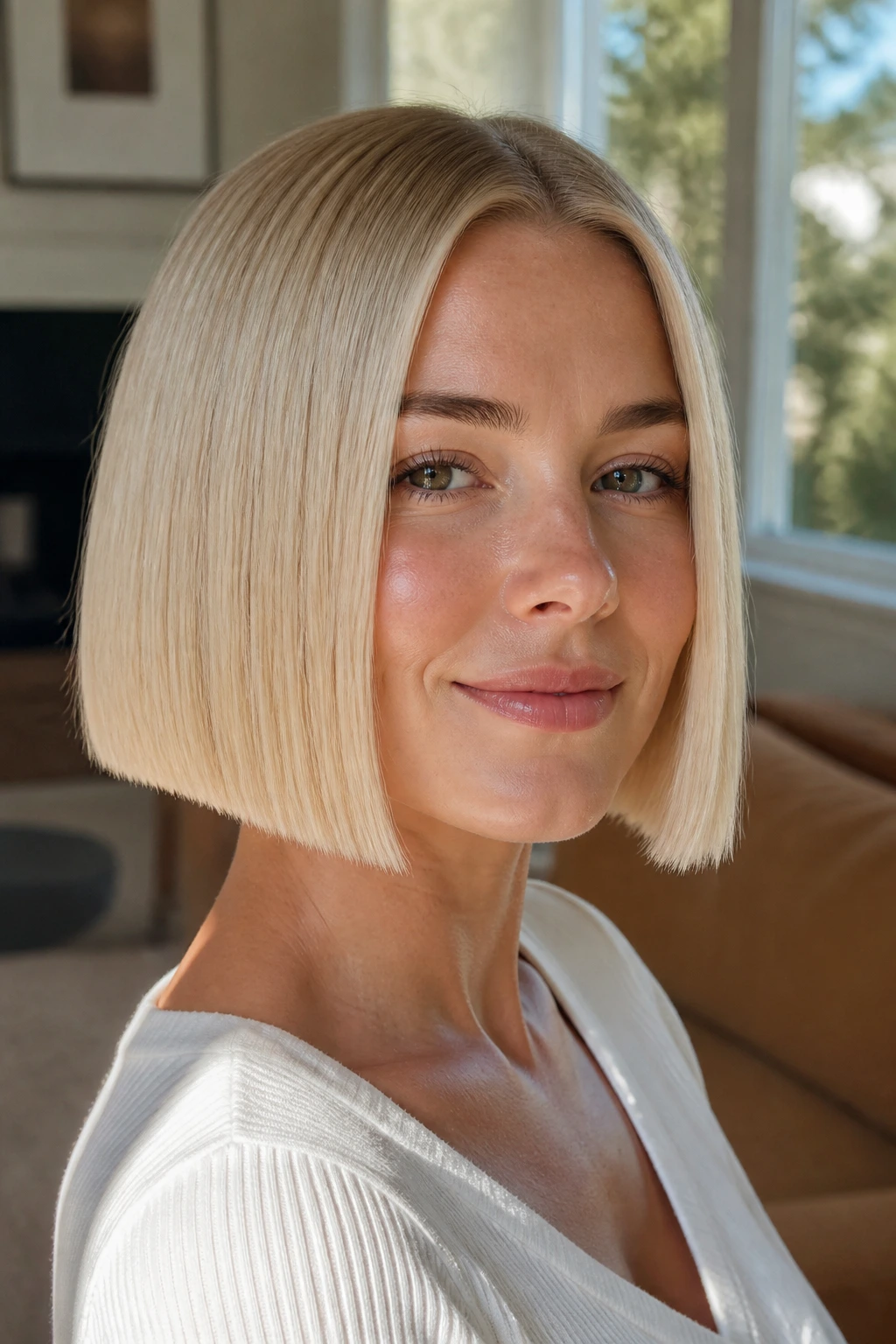
Can fine hair wear a sleek bob without going limp by lunchtime? Yes, if the cut is blunt enough and the finish is kept light. A glassy bob works because the surface is smooth and the edge is solid, so the eye sees one clean shape instead of a bunch of wispy bits.
Vanilla blonde is a smart color for this look because it stays pale without turning icy. That softer tone keeps the haircut from looking severe. It also makes the blunt line at the ends stand out a little more, which helps fine hair read fuller.
How to Keep It Smooth
Use heat protectant, then blow-dry with a nozzle attachment and a flat brush. Take the final pass with a flat iron only through the outer layer if the hair needs it. The trick is not to overwork the ends. Fine hair gets tired fast when you keep passing hot tools over the same section.
This is a polished cut. It asks for discipline. But the payoff is a bob that looks clean even on windy days.
10. Tousled Ash Blonde Lob-Bob with Invisible Layers
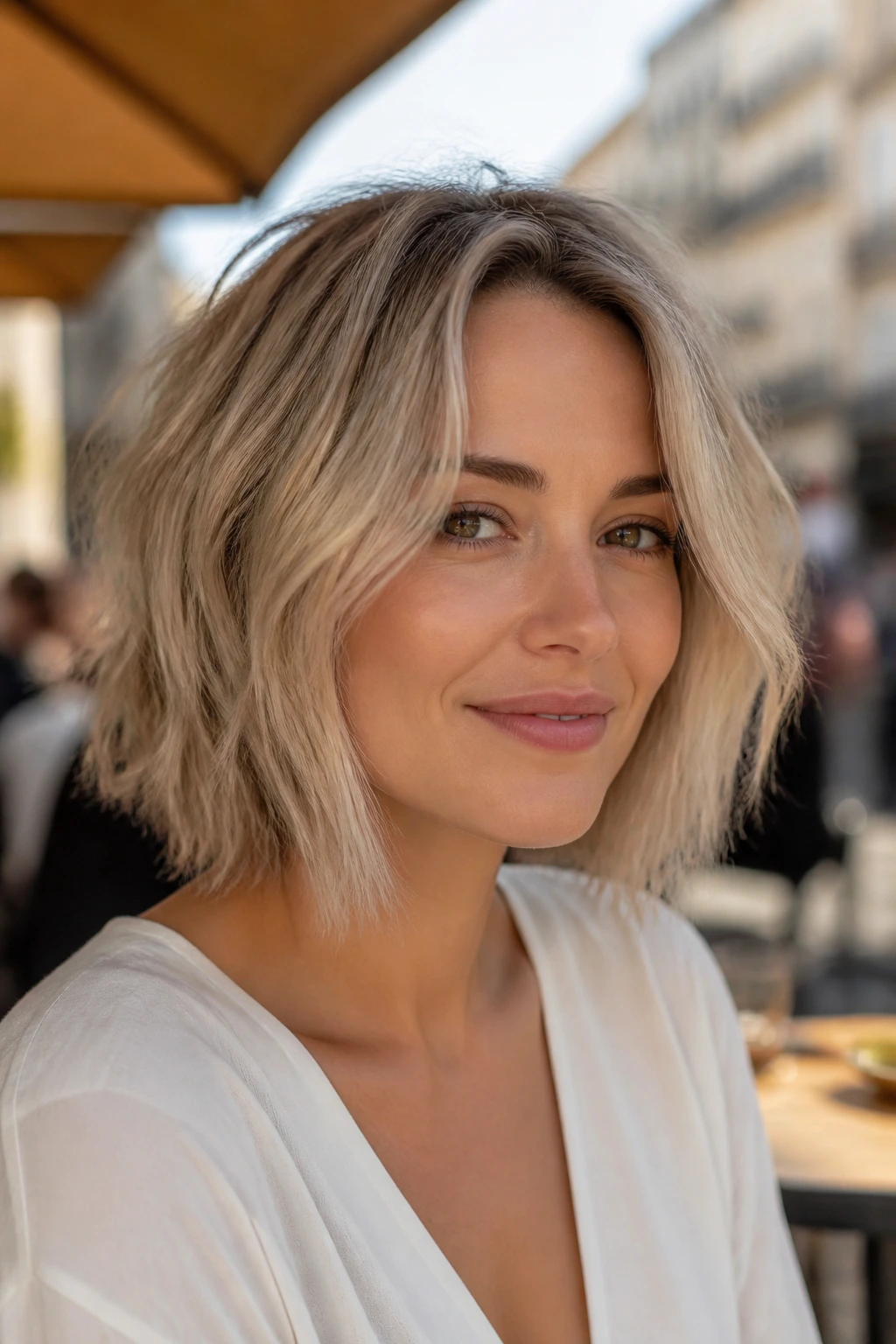
Some days hair looks better with a little mess in it. That is where this cut lives. It gives you the easy feel of a lob with the shape benefit of an inverted bob, and the invisible layers keep the texture loose instead of choppy.
Ash blonde is useful because it mutes shine in a good way. The color looks soft and airy, which keeps fine hair from turning into a flat, reflective sheet. Add a few bends with a 1-inch curling iron, then shake them out with your fingers. Do not brush them to death. That would ruin the whole point.
- Ask for subtle internal layers that start below the crown.
- Keep the front long enough to skim the collarbone.
- Use a salt-free texture spray if your hair gets sticky fast.
- Let the ends stay a little uneven so the finish feels relaxed.
This is the cut for people who like movement more than polish. Easy. But not sloppy.
11. French-Inspired Blonde Bob with Bottleneck Bangs
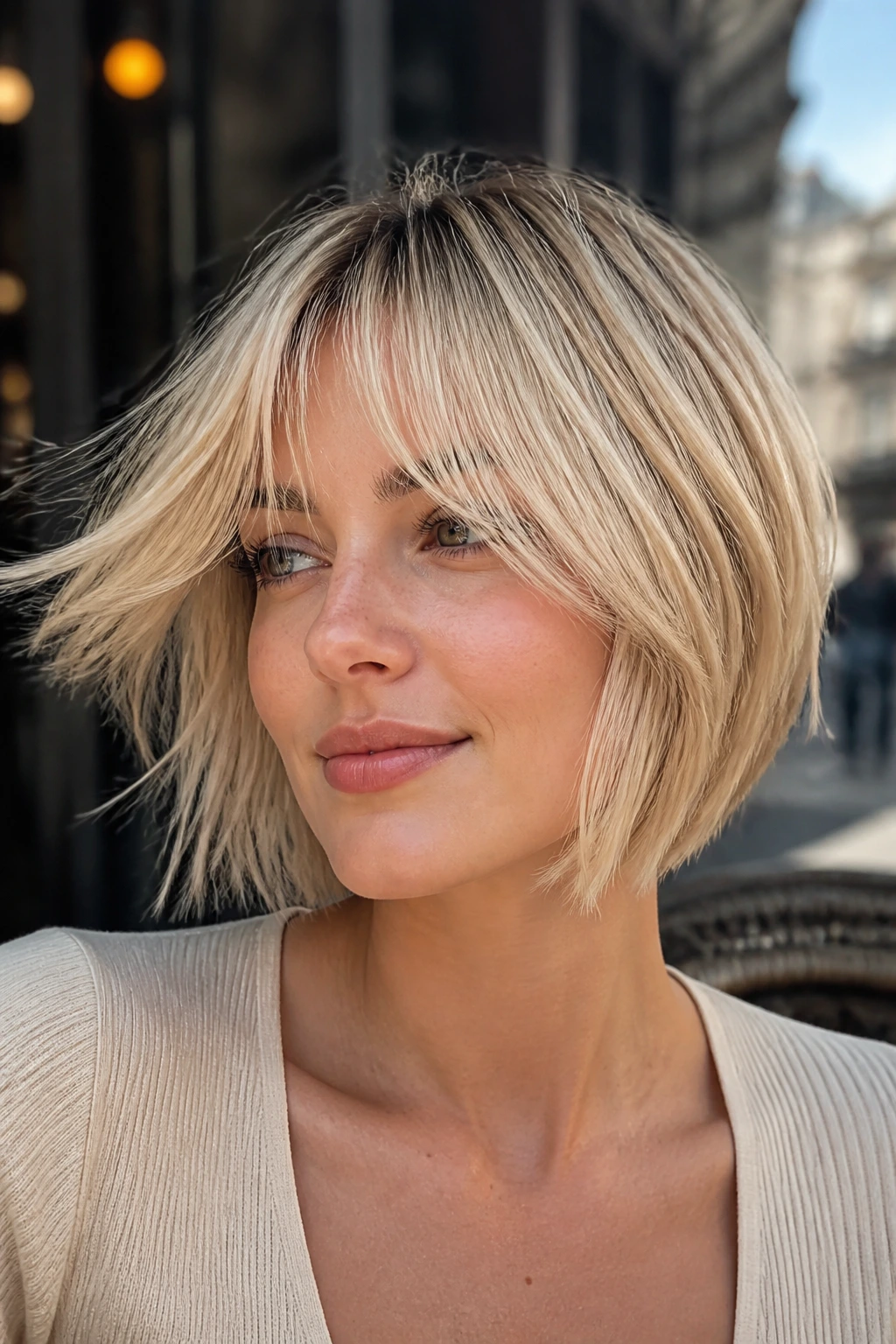
A French-inspired bob has a specific feel: casual, a little chic, and never too perfect. Bottleneck bangs fit that mood because they start a touch shorter in the center, then curve longer toward the temples. That shape flatters fine hair by putting attention on the eyes and cheekbones instead of on sheer bulk.
The bob itself should stay compact at the back and slightly longer in the front, but the real charm comes from the fringe. On fine hair, bangs can go stringy if they are cut too full. Bottleneck bangs avoid that problem because they leave air between the pieces. You get softness, not a thick curtain.
I like this version with a clean blowout and almost no product at the ends. A pea-sized serum at the tips is enough. If the hair is very fine, heavy cream will flatten the fringe and make the whole cut feel sleepy. Keep it light and let the shape do its work.
12. Rooted Cream Blonde Bob with a Gentle A-Line
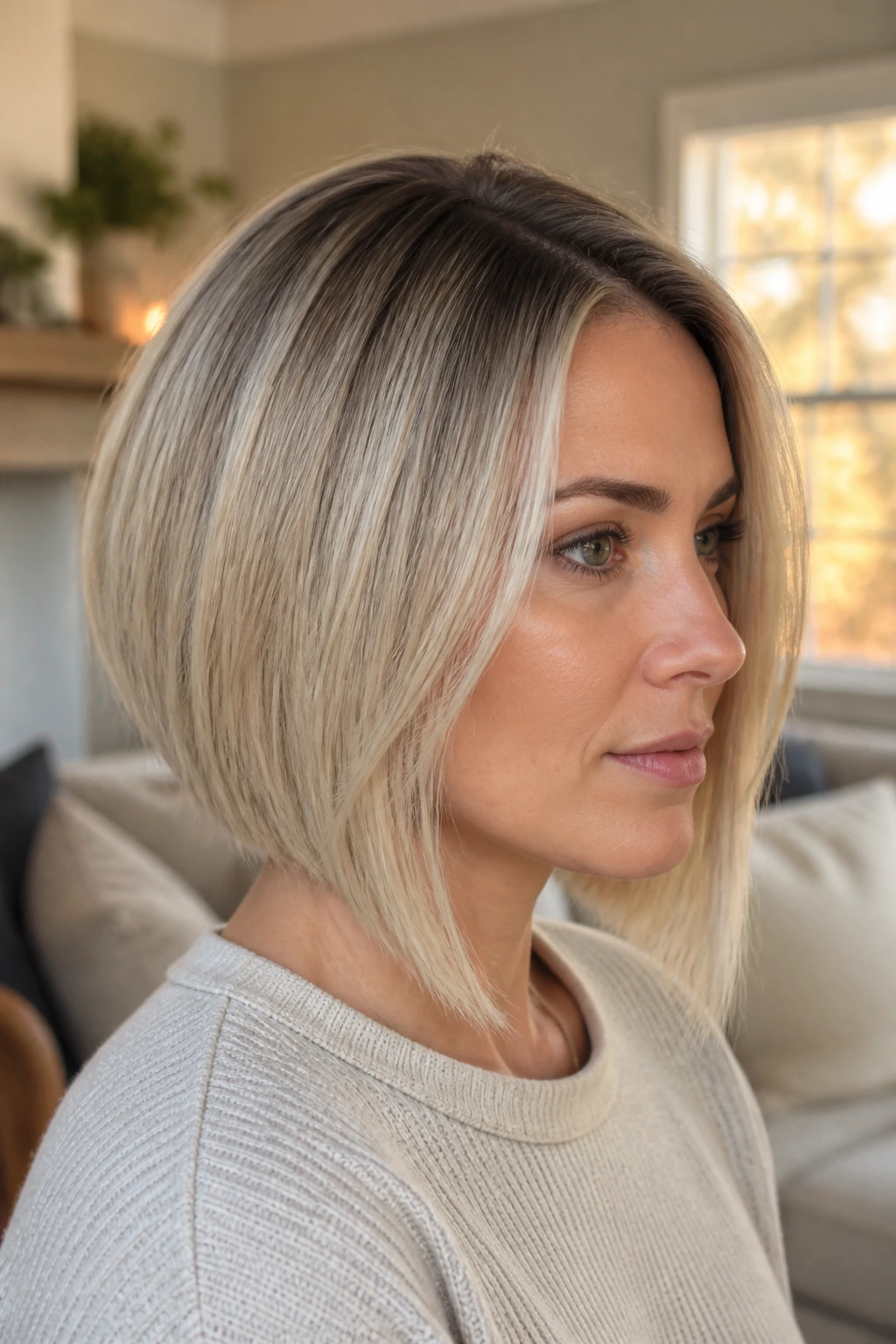
Unlike a severe inverted bob that announces itself from across the room, this one sits closer to the head and feels easier to live with. The A-line is still there—the front is longer than the back—but the angle is softer, which suits people who want shape without a hard edge.
The rooted cream blonde color matters because it adds depth near the scalp. Fine hair often benefits from a shadow at the roots, since it gives the illusion of density where the hair tends to look most see-through. The lighter ends still keep things bright.
This is a smart choice if your hair is fine, straight, and not especially eager to hold a curl. The cut keeps the silhouette tidy even when the styling slips a bit. Ask for the back to stay snug and the front to land somewhere between the jaw and the top of the neck. It is an easy grow-out, which is rare enough to mention.
13. Strawberry Blonde Inverted Bob with a Face-Framing Bend
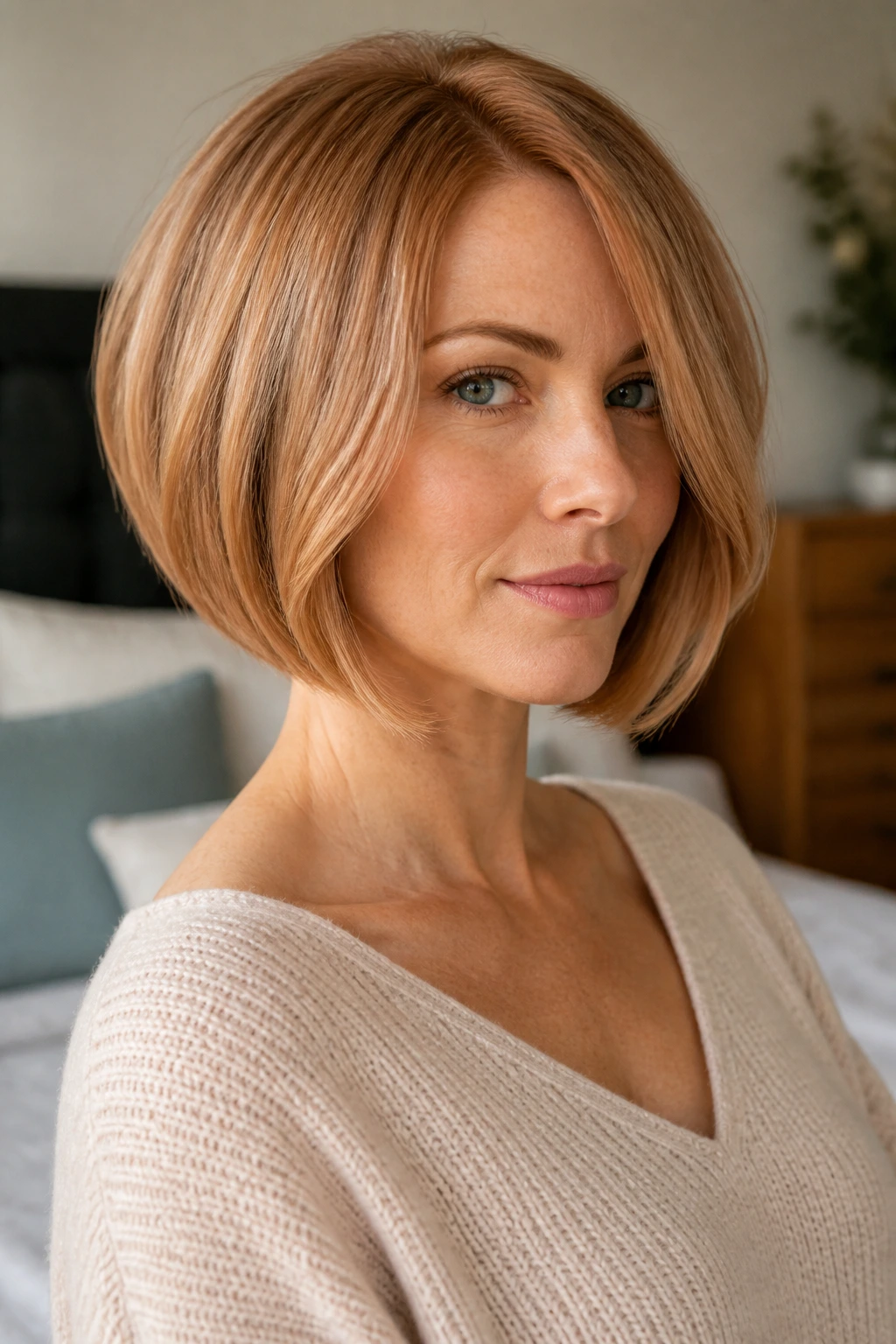
Strawberry blonde is one of those shades that makes fine hair look a little less see-through. The warm copper notes give the hair more visual texture, and the inverted shape adds structure where the hair needs it most.
Where the Bend Should Sit
The bend should start around the cheekbone and soften toward the jaw. That keeps the front from hanging straight, which is the fastest way to make fine hair look tired. A little curl at the ends is enough. You do not need a full wave set.
- Keep the shortest back point just above the neckline.
- Leave the front pieces long enough to brush the jaw.
- Use a 1-inch iron or a small round brush for a soft bend.
- Finish with a light hold spray, not sticky gel.
A useful rule: if the bend is too tight, the cut starts looking dated. Loose, curved, and airy is the better lane here.
14. Pearl Blonde Bob with a Clean Tapered Back
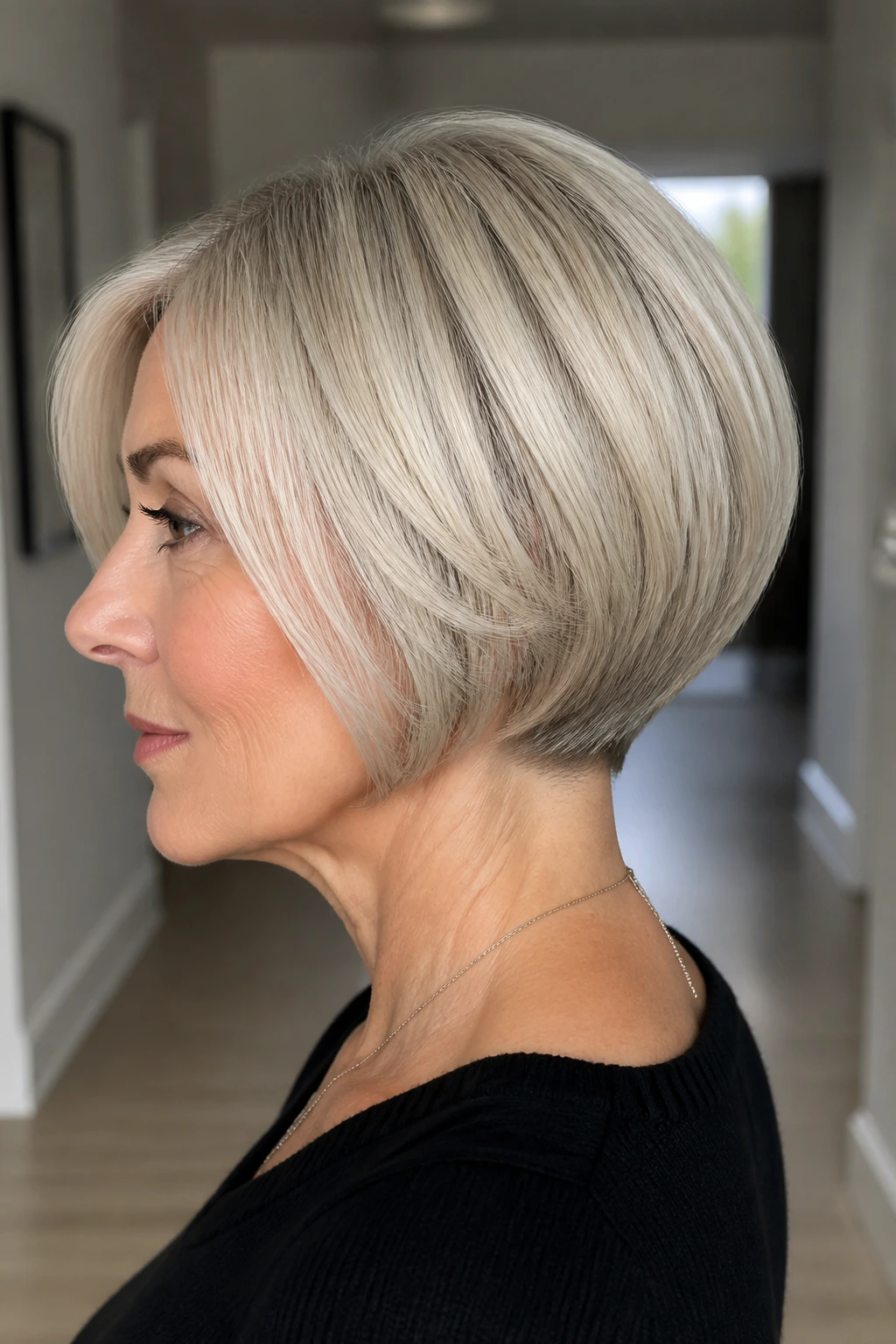
A pearl blonde bob needs one thing more than color: a narrow, controlled back. Pearl tones are soft and reflective, and they can make the cut look expensive if the neckline is crisp.
The tapered back removes just enough weight to create lift, but it should never look shaved or overcut. Fine hair can go sparse fast if the stylist gets enthusiastic with the nape. I like a tidy taper that hugs the head and then opens into a slightly longer front corner. That gives you shape without exposing every strand.
This cut is especially good if your hair is straight and you hate styling time. A quick blow-dry downward at the sides and upward at the crown is usually enough. The pearl tone keeps the cut from feeling harsh, and the clean back keeps it from feeling flat. It is a neat, disciplined bob. Not fussy. Just tidy.
15. Collarbone-Length Inverted Lob with Soft Graduation
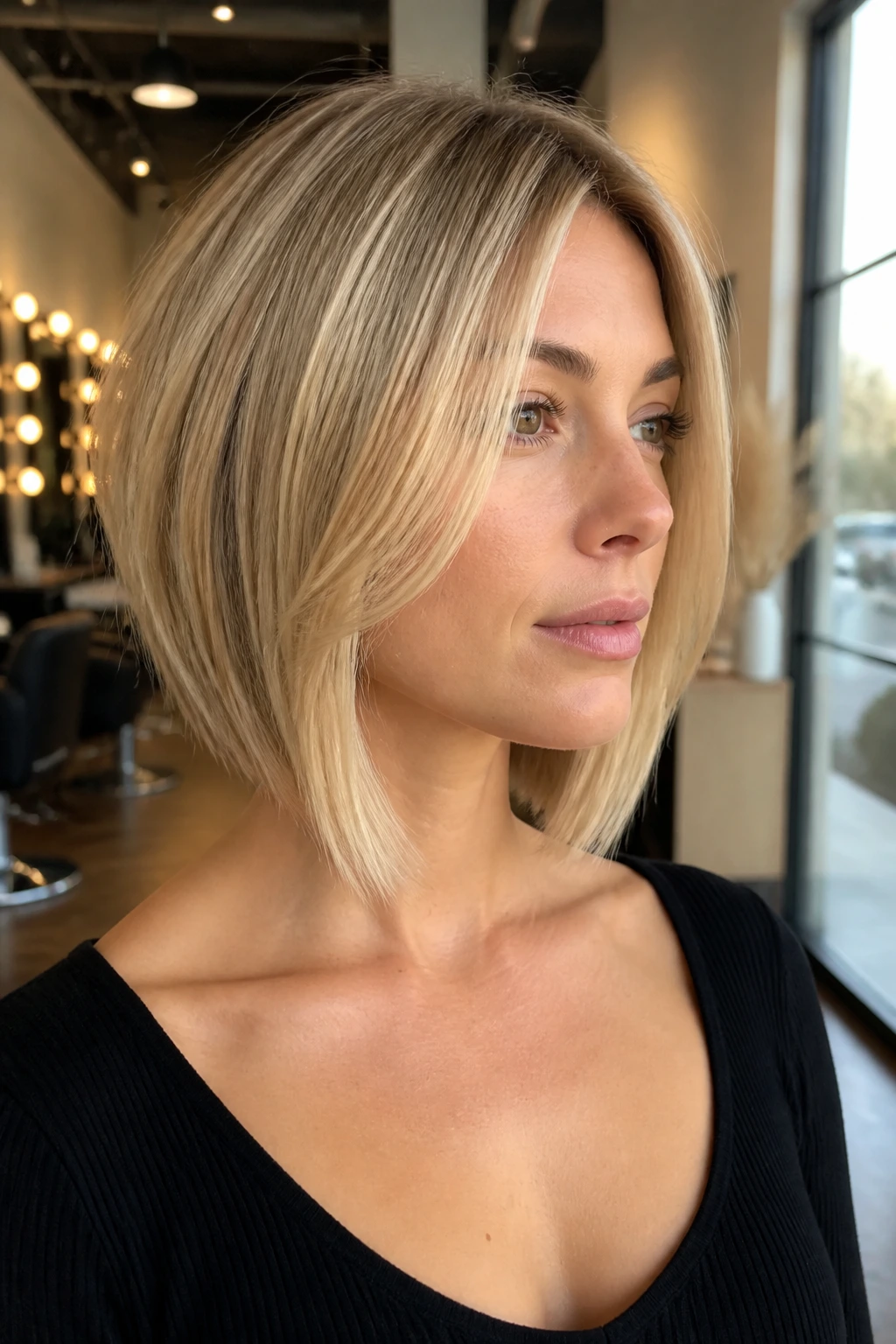
How long can an inverted lob get before it stops looking like an inverted lob? Usually, the answer is somewhere near the collarbone. Past that, the difference between front and back starts to blur unless the graduation is very precise.
How to Style It
The trick is to keep the back snug while letting the front skim the collarbone in a clean line. Soft graduation gives the cut shape without making it look chopped. On fine hair, that matters because too much layering at this length can strip away the very weight that keeps the hair from puffing out.
If you like to tuck hair behind one ear, this cut is a good match. It still has enough front length to do that without losing its outline. A root lift spray at the crown and a medium round brush are usually enough. That is the appeal: enough length to feel flexible, enough angle to stay interesting.
This is a safe middle ground for people who are bob-curious but not ready to go short-short.
16. Golden Blonde Bob with an Airy Curtain Fringe
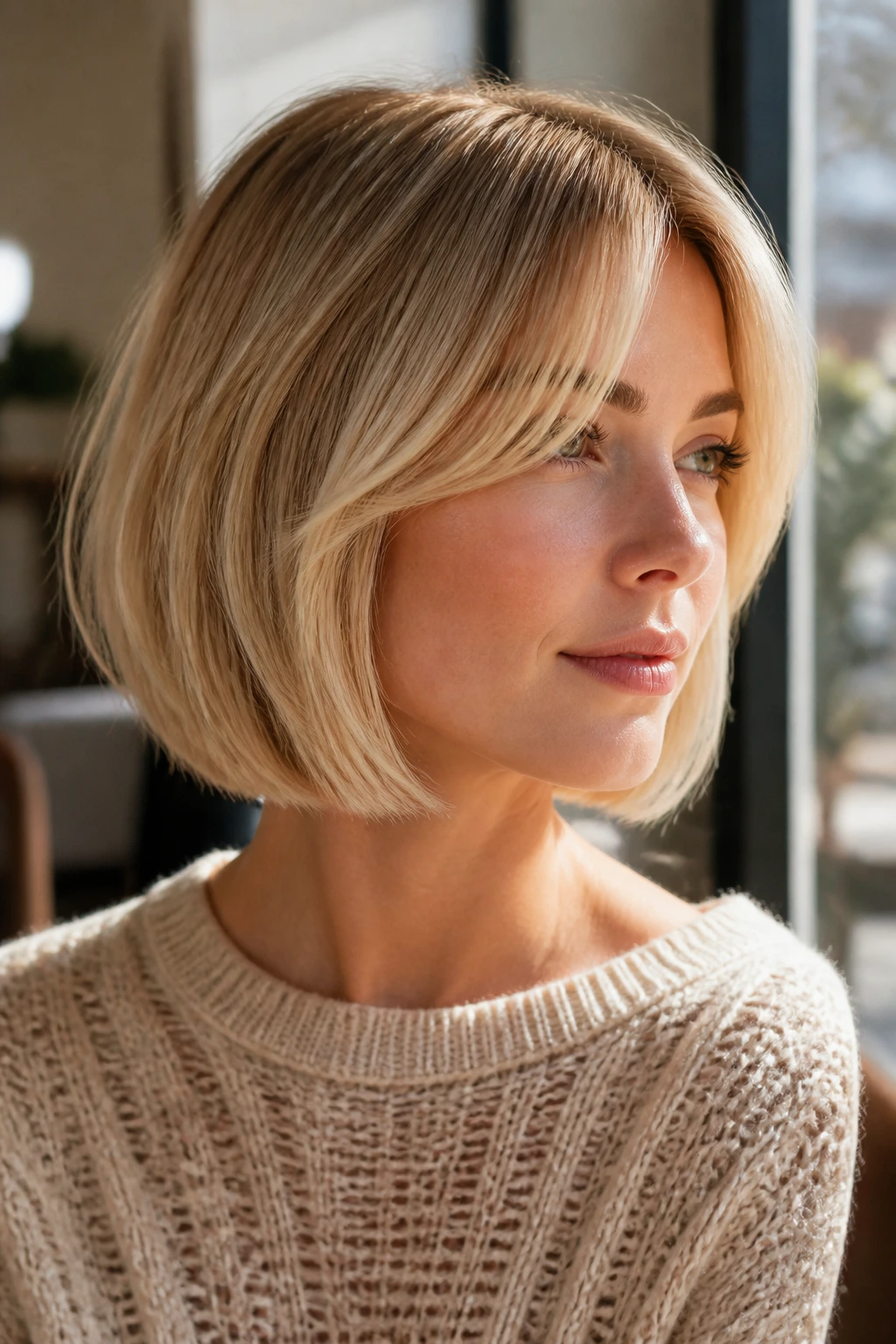
Golden blonde and a curtain fringe are a friendly pair. The warmth in the color keeps the cut from looking severe, and the fringe opens the face so the hair does not seem weighed down by one solid line.
This version works especially well on fine hair with a small natural wave. The curtain fringe should be long enough to split and sweep back, not sit heavy on the forehead. If it sits too low, it steals lift from the crown. That is a bad trade. Keep the center a little shorter and the sides softer so the fringe can move.
- Ask for the fringe to start around the bridge of the nose and blend out toward the cheekbones.
- Keep the bob slightly shorter in back so the shape still reads inverted.
- Use a 1.25-inch round brush to lift the fringe away from the face.
- A touch of dry shampoo at the roots helps the style last into the next day.
This is one of the easiest cuts to live with if you like a little softness around the face.
17. Cool Blonde Inverted Bob with an Undercut Nape
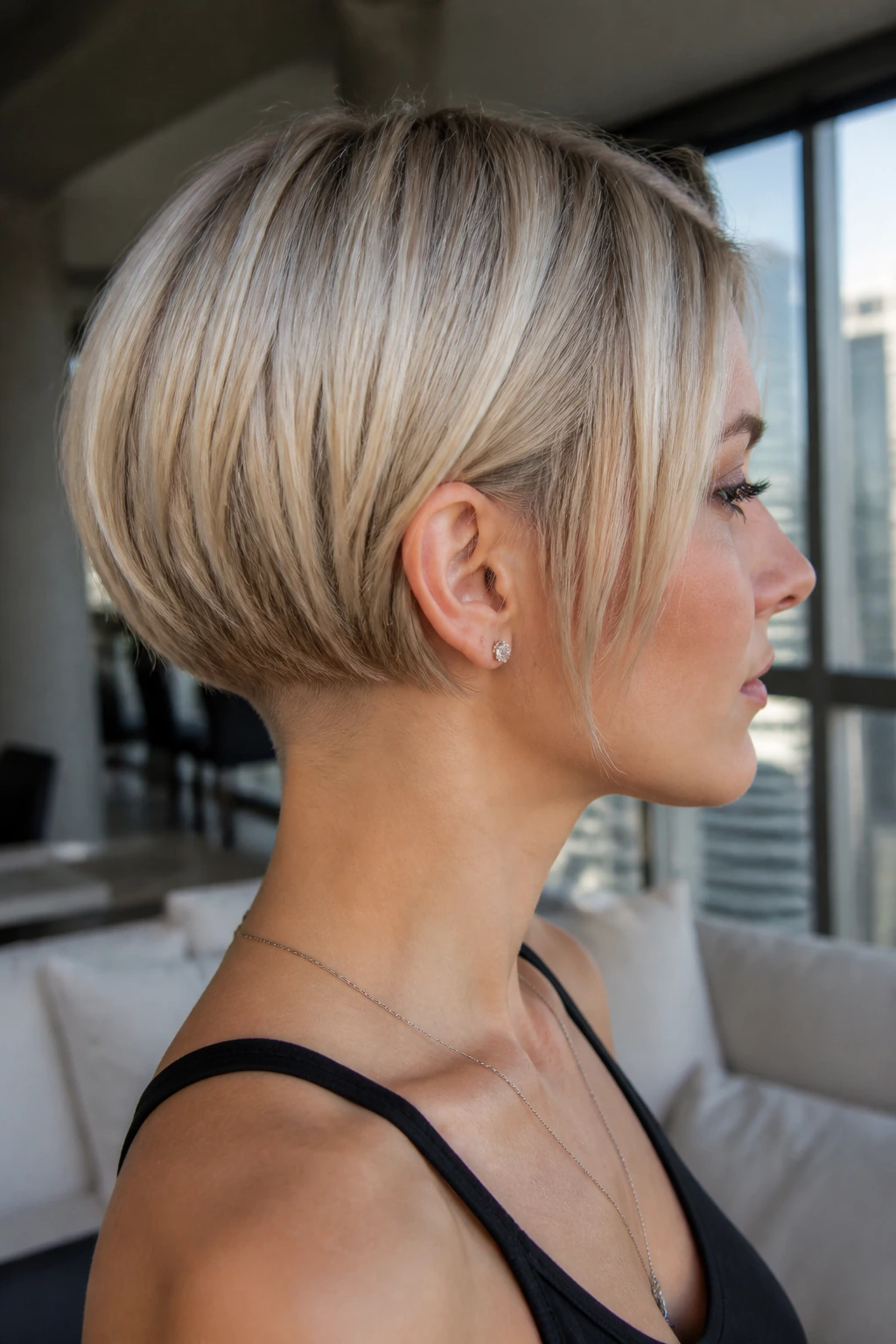
An undercut nape sounds aggressive, and it can be, but on the right head it solves a real problem. If your hair is fine but dense at the back of the neck, the lower section can puff out and ruin the clean line of an inverted bob. A small undercut removes that bulk.
The key is restraint. You are not trying to create a dramatic shaved look. You are just freeing the back so the top layers can sit smoother. Cool blonde works well here because the cooler tone keeps the shape sharp and modern. It also makes the cut look more even, which matters when the nape is very close to the skin.
This is not the cut for someone whose hair is already sparse at the neckline. Too much removal back there can make the bob look thin from the side. But if the nape tends to bulk up, this version is a lifesaver. It holds the neckline tight and makes the rest of the hair behave.
18. Sandy Blonde Bob with Piecey Ends and a Side Flip
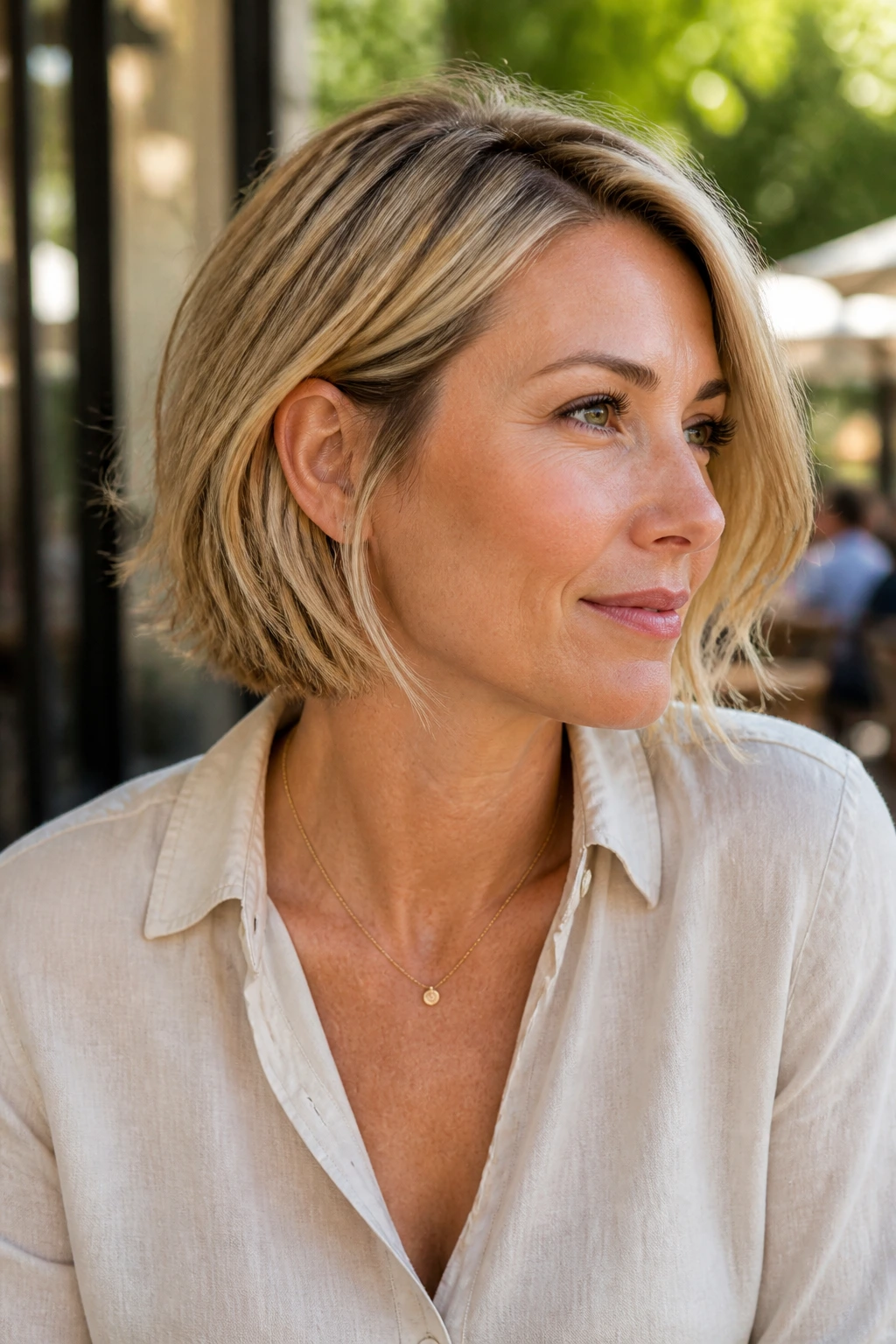
Unlike a glassy bob, this one wants a bit of breakage in the shape. Sandy blonde softens the whole look, and piecey ends keep the haircut from feeling too neat or too polished.
The side flip is what gives it personality. Fine hair that gets tucked behind the ear all day can start to look lifeless, so a subtle flip at the front breaks that pattern and adds a little movement around the face. Use a texture spray on the mid-lengths, then twist the front section away from the face with your fingers while it cools.
This is a good fit for hair that has a small natural wave or refuses to stay perfectly smooth. It can handle a little bend. It can handle a little air. If you like a bob that looks better after you run your hand through it, this is your lane.
I would not wear it with heavy oil. That defeats the texture and makes the ends disappear.
19. Bright Beige Blonde Bob with a Rounded Crown
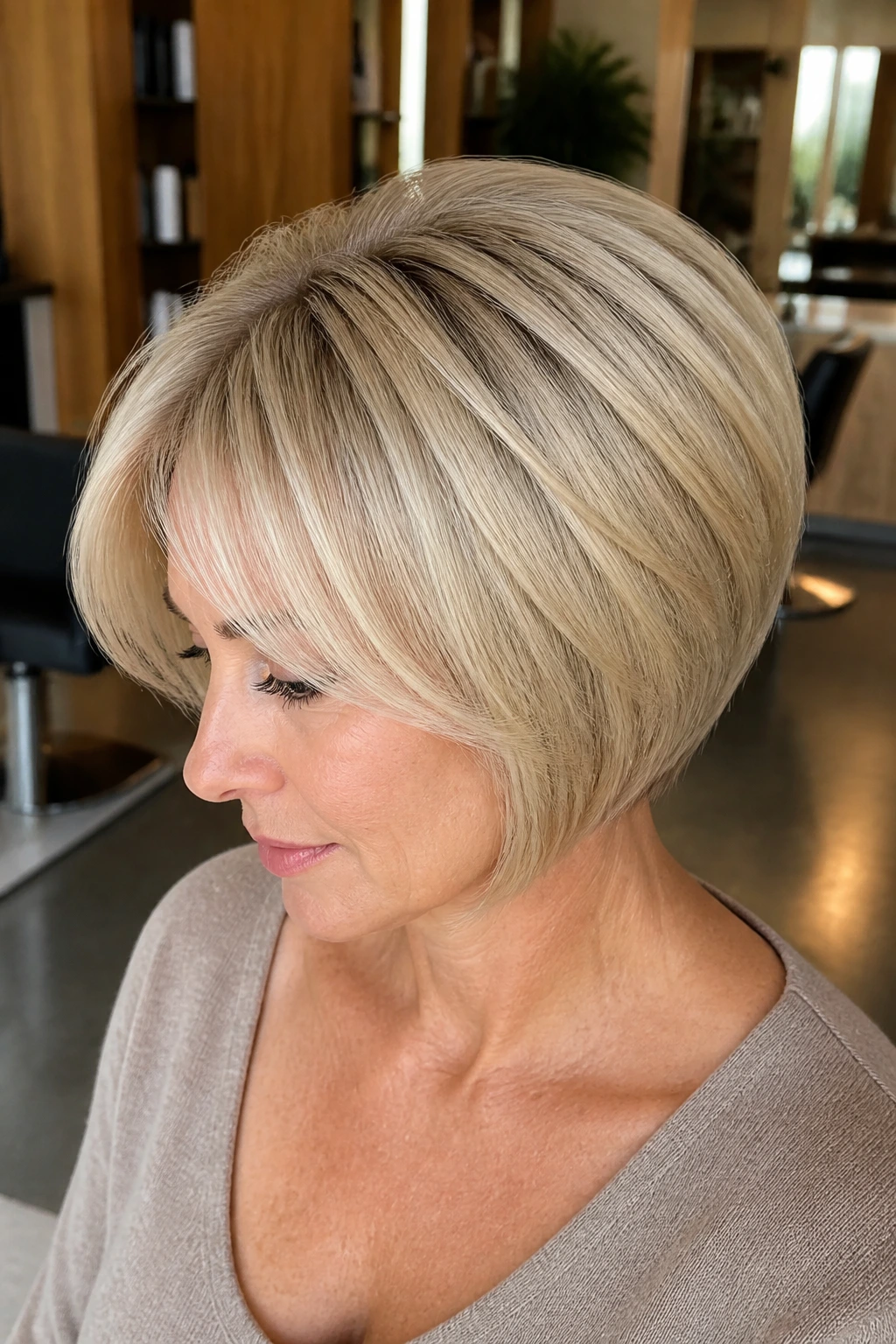
Rounded crowns are what stop a bob from looking pasted to the head. On fine hair, that little dome of lift at the top makes a big difference because it keeps the shape from collapsing into the scalp.
How the Shape Is Built
The cut should be lifted at the crown during the blow-dry, then smoothed down through the sides so the top keeps a soft curve. Bright beige blonde helps because it keeps the color lively without going stark. The result looks airy, but the outline stays solid.
- Ask for a rounded crown with gentle stacking at the back.
- Keep the front pieces longer than the cheekbone for a softer line.
- Use a medium round brush and roll the top section away from the scalp.
- Finish with a light mist of flexible hairspray so the crown does not fall flat.
One thing people miss: the crown should lift, but it should not puff. Puff is the enemy here. Shape is the goal.
20. Soft Everyday Inverted Blond Bob for Fine Hair
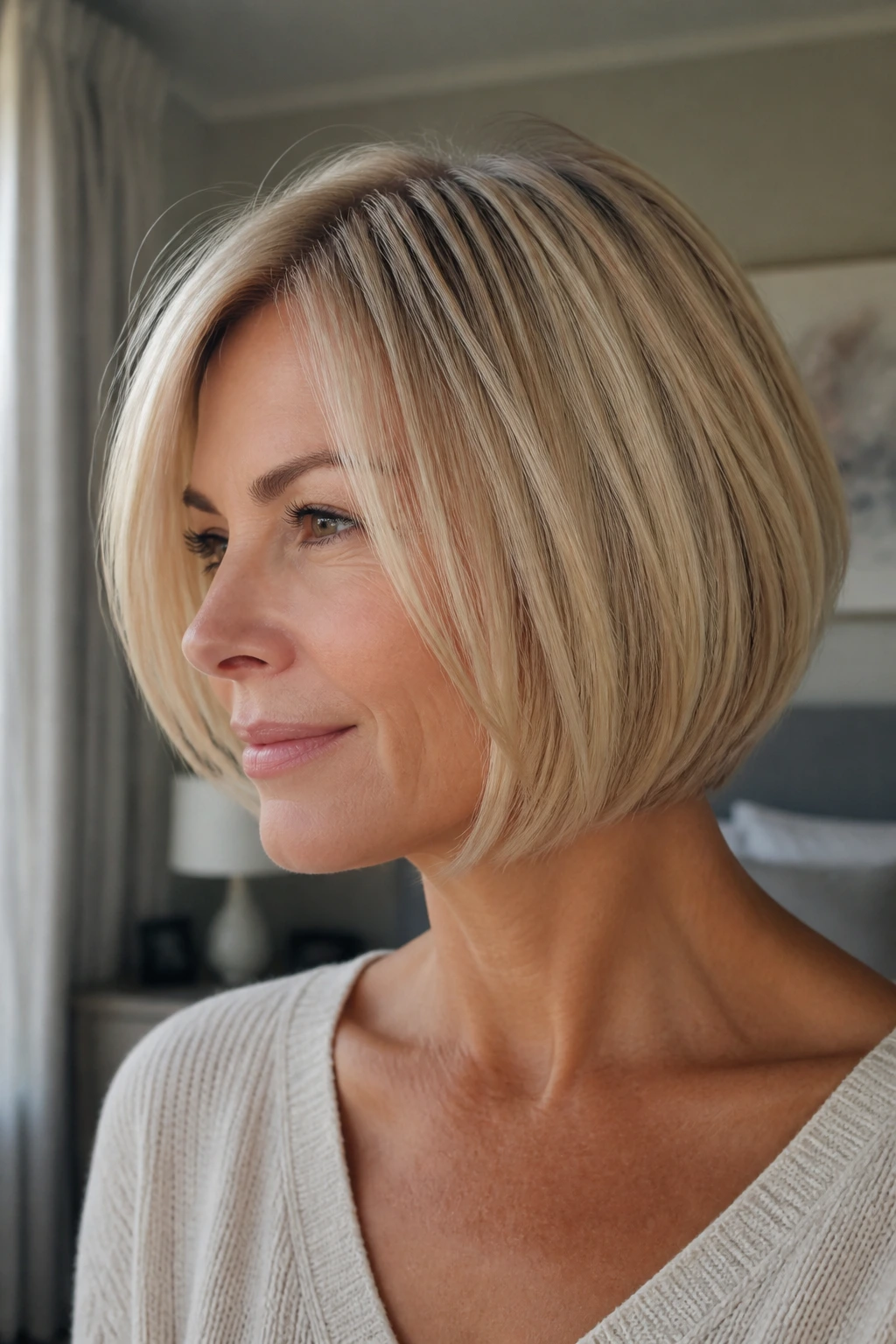
If you only want one version to live with for months, make it this one. The front sits softly around the jaw, the back stays neat, and the finish is blunt enough to keep fine hair from looking wispy at the ends.
This is the least dramatic cut in the list, and that is why it works so well. You can air-dry it and tuck one side behind the ear. You can add a loose wave for dinner. You can keep it straight and let the shape do the talking. It handles all three without demanding a different personality each time you leave the house.
The best part is the grow-out. Because the line is gentle rather than severe, it stays tidy for longer and does not hit that awkward half-grown stage as quickly. If you keep coming back to the same bob photo, that usually means you want shape, not drama. This is shape.
A good version should leave the nape clean, the front soft, and the ends thick enough to hold their line. That is the real test, and it never gets old.
If you keep the outline strong and the layering disciplined, an inverted bob can do a lot of heavy lifting for fine hair. Color helps, sure. A smart blonde tone brings light to the edges and a little depth near the roots, but the cut is what stops the whole thing from sagging by mid-afternoon.
The version worth choosing is the one that still looks like a bob when you skip a perfect blowout. That is where these cuts earn their place.
