



Fine hair does not need more layers than it can hold. It needs shape, clean edges, and a haircut that gives the illusion of bulk without shredding the ends to pieces. That is why stacked inverted bob haircuts for fine hair keep showing up as a smart choice: the back builds lift, the front gives length, and the whole cut does the heavy lifting for you.
There is one detail people miss all the time. Fine hair refers to the width of the strand, not how much hair you have on your head. You can have fine hair that’s dense, sparse, straight, slightly wavy, or somewhere in between, and each version wants a slightly different stack. The cut has to work with that, not fight it.
The sweet spot is usually a strong nape, a controlled angle, and a perimeter that stays tidy enough to look full on purpose. Too many wispy layers make the ends look tired. Too much length makes the whole shape collapse. Get the balance right, and the bob suddenly looks thicker, cleaner, and far less fussy than most people expect.
1. Classic Stacked Inverted Bob Haircut for Fine Hair
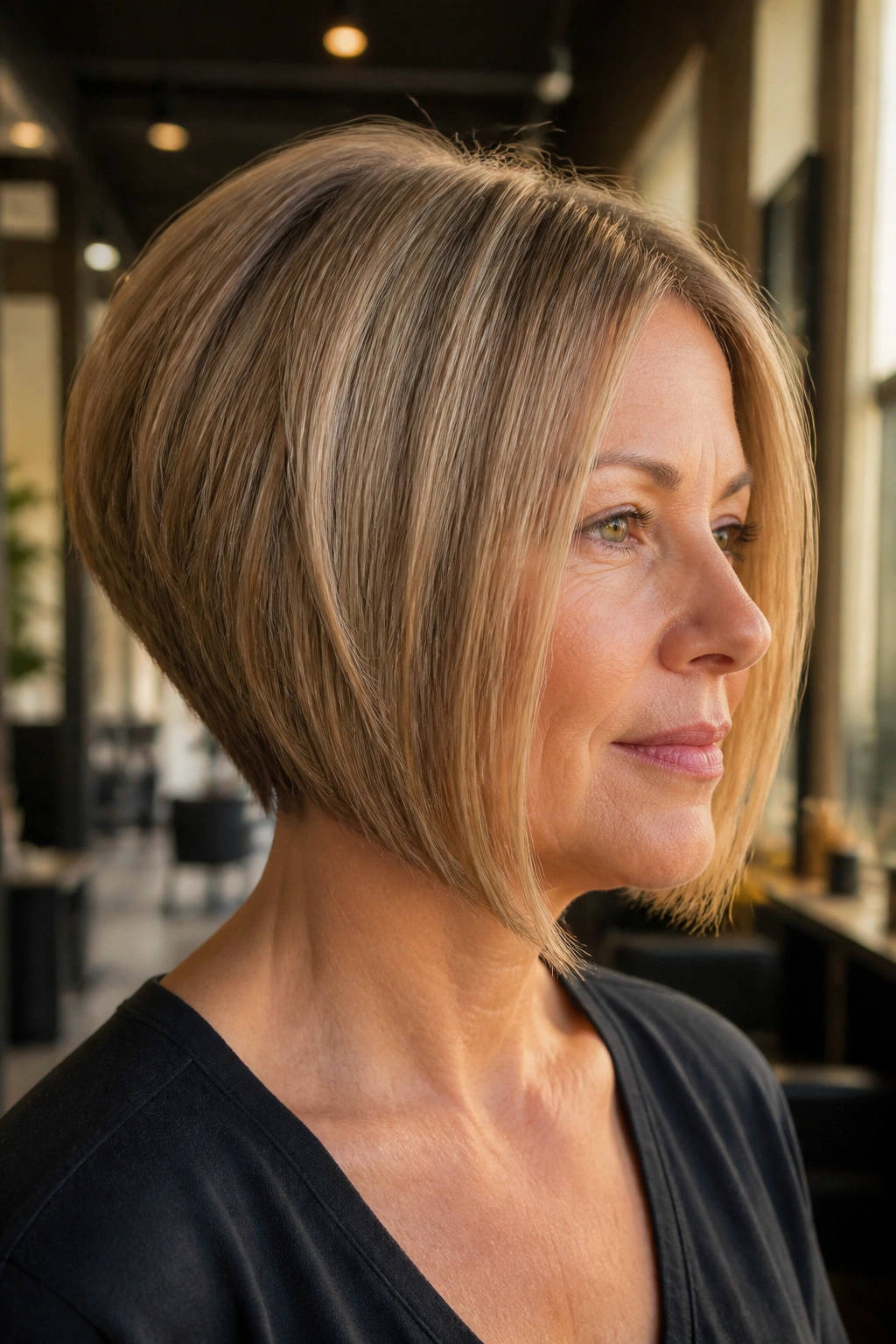
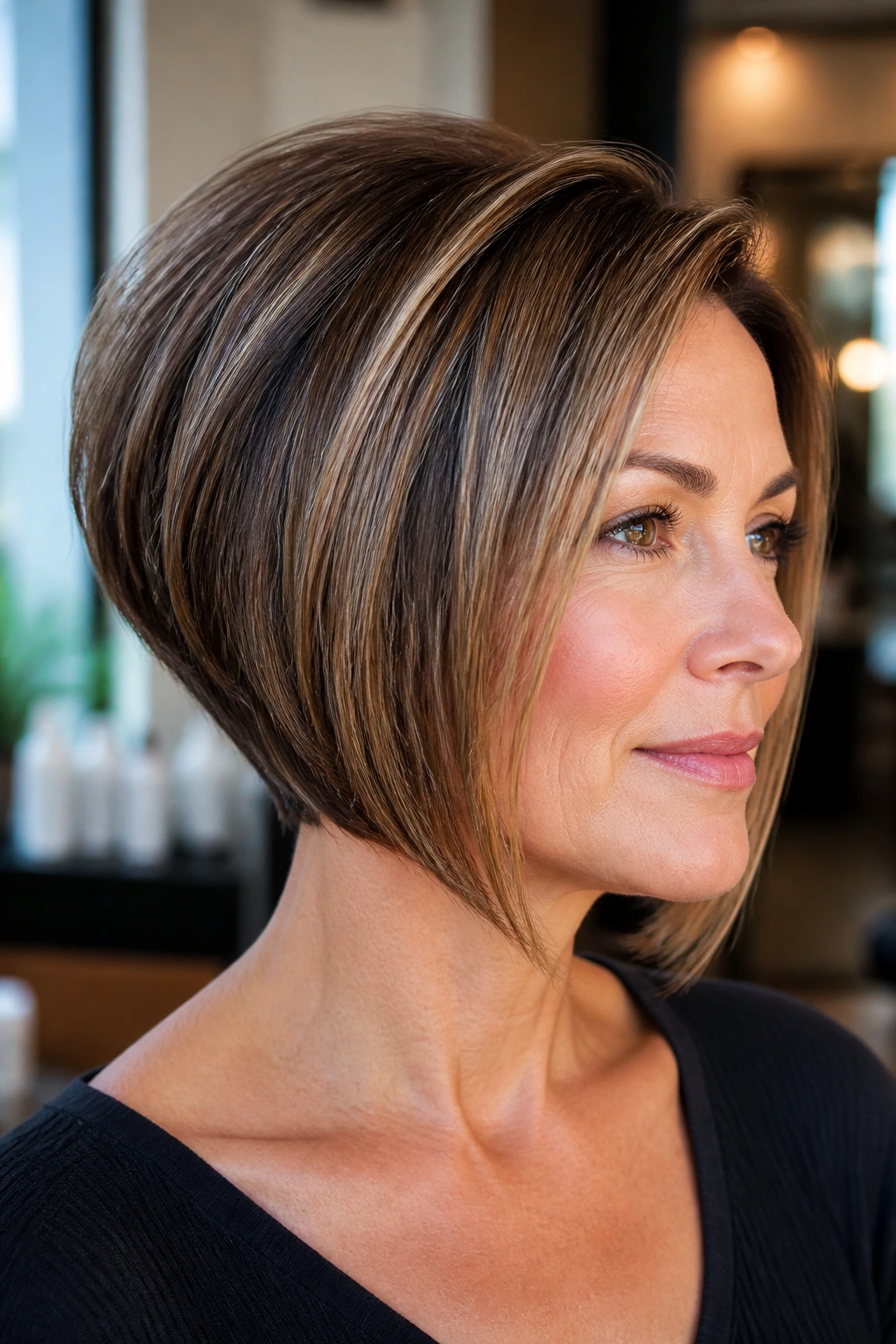
This is the version that made the cut famous, and it still earns its keep. A classic stacked inverted bob haircut for fine hair uses a short, graduated back to build height at the crown, then lets the front fall longer toward the jaw. The shape does not need tricks. It just needs clean geometry.
Why It Works
The back is cut with short, overlapping layers that sit close to the head, which creates a lifted look where fine hair usually goes flat. The front stays longer, so the silhouette feels fuller instead of hollow. That longer front also keeps the cut from looking too helmet-like, which can happen when someone stacks the back too aggressively.
Ask for a blunt outer line with soft internal graduation. That combination keeps the ends looking dense while the back still gets the lift. If you want the most polished version, keep the length between the jaw and just below the chin.
- Best for: straight or slightly wavy fine hair
- Salon phrase to use: “short stacked back, longer front, no razor-thin ends”
- Style note: a 1.25-inch round brush adds body fast
- Watch out for: over-thinning, which makes the perimeter look see-through
My blunt opinion: if your hair tends to collapse by lunchtime, start here before trying anything fancier.
2. Softly Rounded Stacked Bob
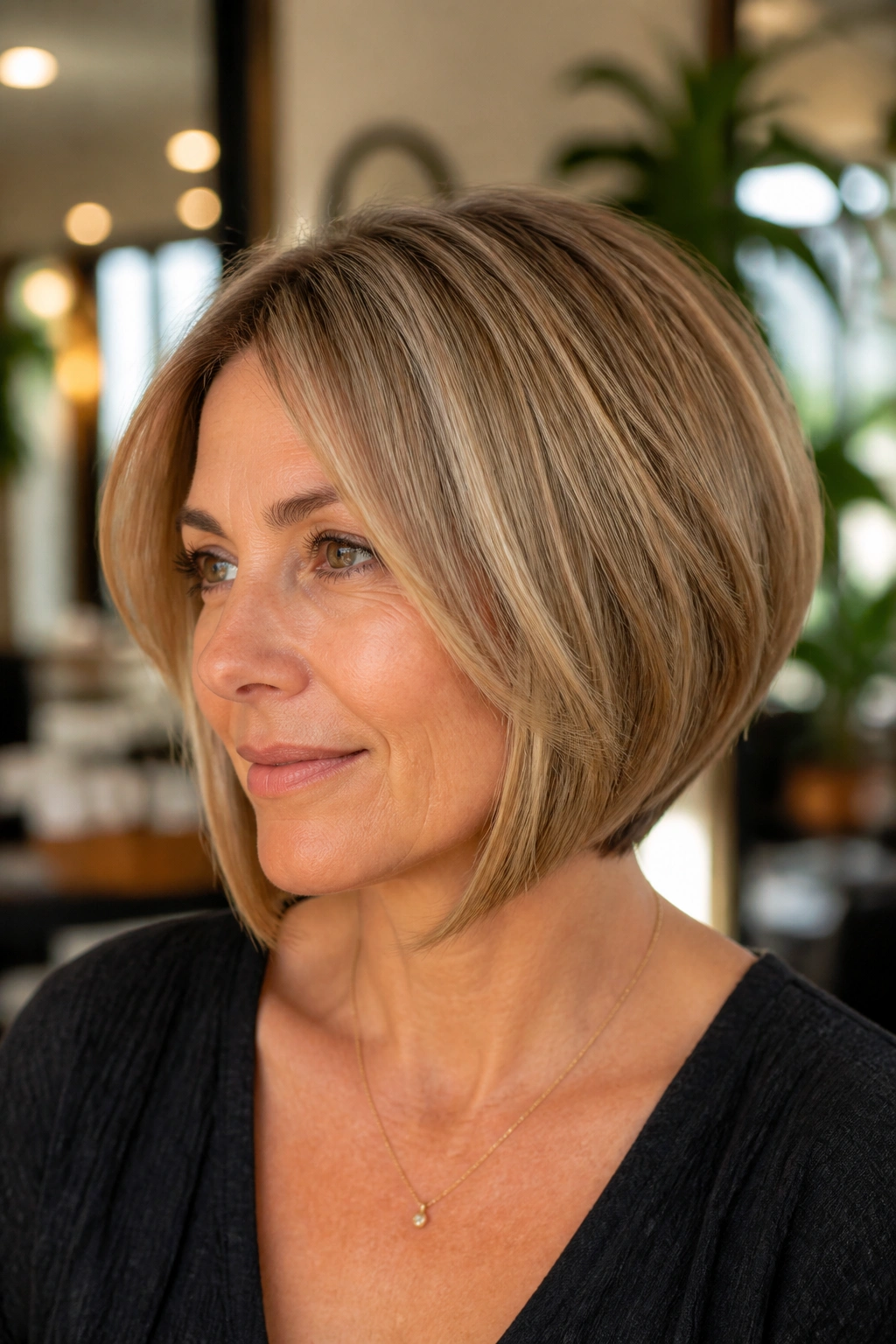
Want volume without a hard corner in the back? This is the version to try. A softly rounded stacked bob keeps the graduation, but the curve is gentler, so the cut looks plush instead of severe. On fine hair, that softness matters more than people think.
The rounded shape is useful if your hair has a little bend or if your neck line is shorter and you don’t want the cut sitting too high. It also plays nicely with soft makeup, minimal styling, and those days when you want to dry your hair and leave the house without a wrestling match.
I like this cut for anyone who wants movement without a lot of piece-y ends. The back still gives lift, but the sides don’t scream for attention. That makes the whole haircut easier to wear with earrings, turtlenecks, or anything that sits close to the face.
3. Angled Inverted Bob With a Deep Side Part
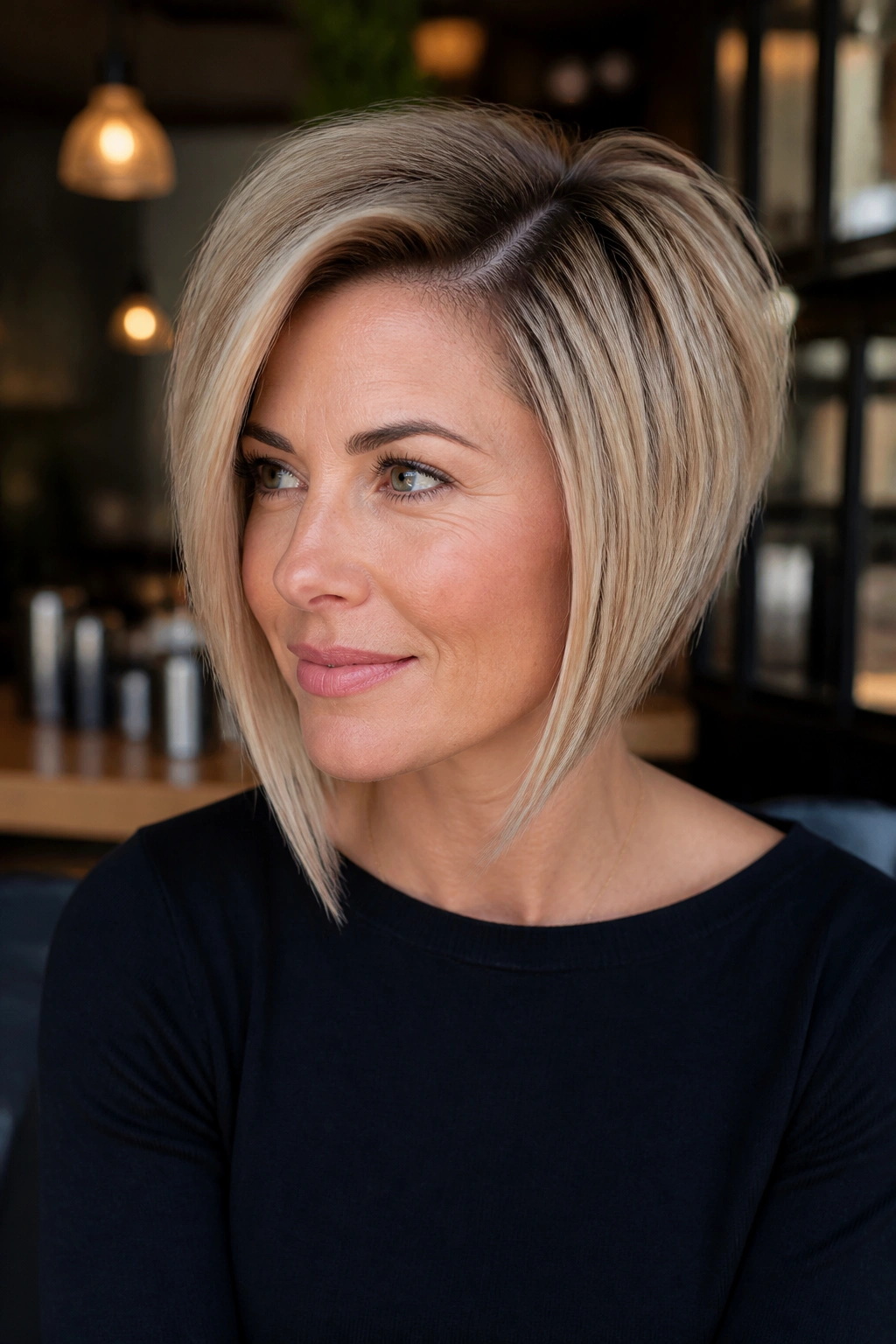
A deep side part does a lot of the heavy lifting here. It pushes more hair to one side, gives the roots a natural boost, and keeps fine strands from lying too flat across the scalp. The angle of the bob then makes the front look intentional instead of heavy.
How to Wear It
Blow-dry the hair in the opposite direction of the part first, then flip it back once it’s nearly dry. That little detour gives the root area extra memory. If you want even more lift, mist a root spray at the crown and direct the dryer upward at the first inch of hair.
This cut is especially good if one side of your hair tends to fall flatter than the other. The deep part hides that problem in plain sight. And when the front length drops toward the collarbone, the whole shape feels longer and more elegant without losing the fullness at the back.
4. Chin-Grazing Stacked Bob With a Tucked Front
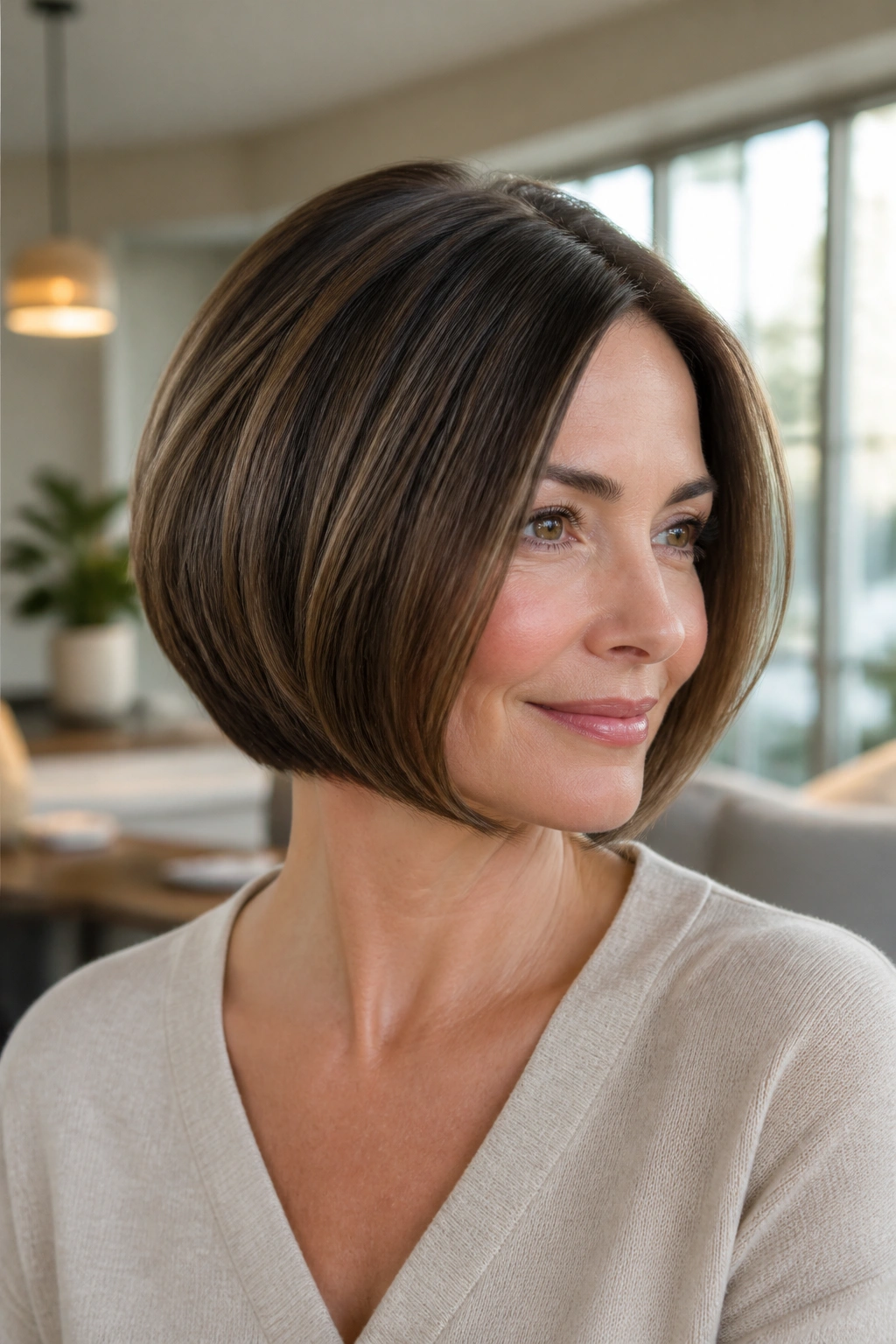
Picture a bob that lands right at the chin, then curves in just enough to tuck under cleanly. That’s the appeal here. It gives the face a crisp frame, and on fine hair, crisp is a gift.
This version works well when you want more presence around the jaw but do not want to commit to a longer bob. A chin-grazing length gives enough weight to keep the cut from floating, while the stacked back still keeps the crown from going limp. If your hair has a few cowlicks at the nape, this cut can make them easier to manage because the shorter back follows the natural growth a little better.
- Good if you want: a neat outline and easy daily styling
- Less ideal if you want: lots of swing in the front
- Ask for: a tucked-under finish at the ends, not a flipped-out one
- Styling tool: a small round brush or a flat brush with a dryer
It’s a sharp little cut. Clean. Direct. Very little nonsense.
5. Collarbone-Length Elongated Inverted Bob
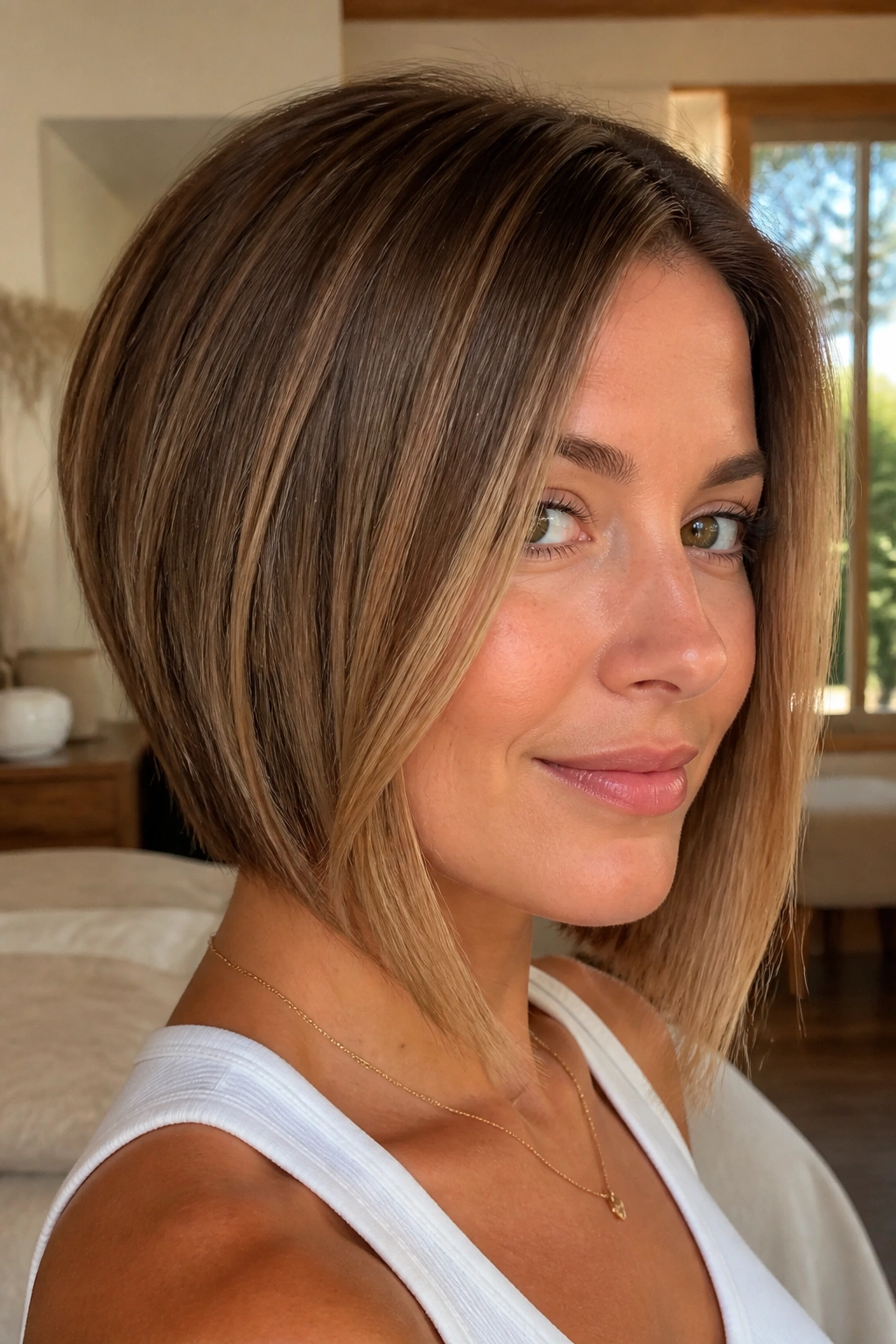
Not every stacked bob has to stop at the jaw. A collarbone-length inverted bob keeps the shorter back and longer front, but stretches the front line down enough to add softness. That extra length can be a relief if your fine hair feels too fragile in shorter cuts.
The nice part is that the added length gives you more options. You can tuck it behind one ear, curl just the ends, or wear it straight and let the angle do the talking. The stack at the back still creates lift, but the overall shape reads less severe than a shorter bob.
I’d choose this version if you want a bob that can survive both polished styling and lazy air-drying. It’s also one of the easier versions to grow out, which matters more than most salon conversations admit. Some haircuts are lovely on day one and awkward by week three. This one has a longer runway.
6. Stacked Bob With Side-Swept Fringe
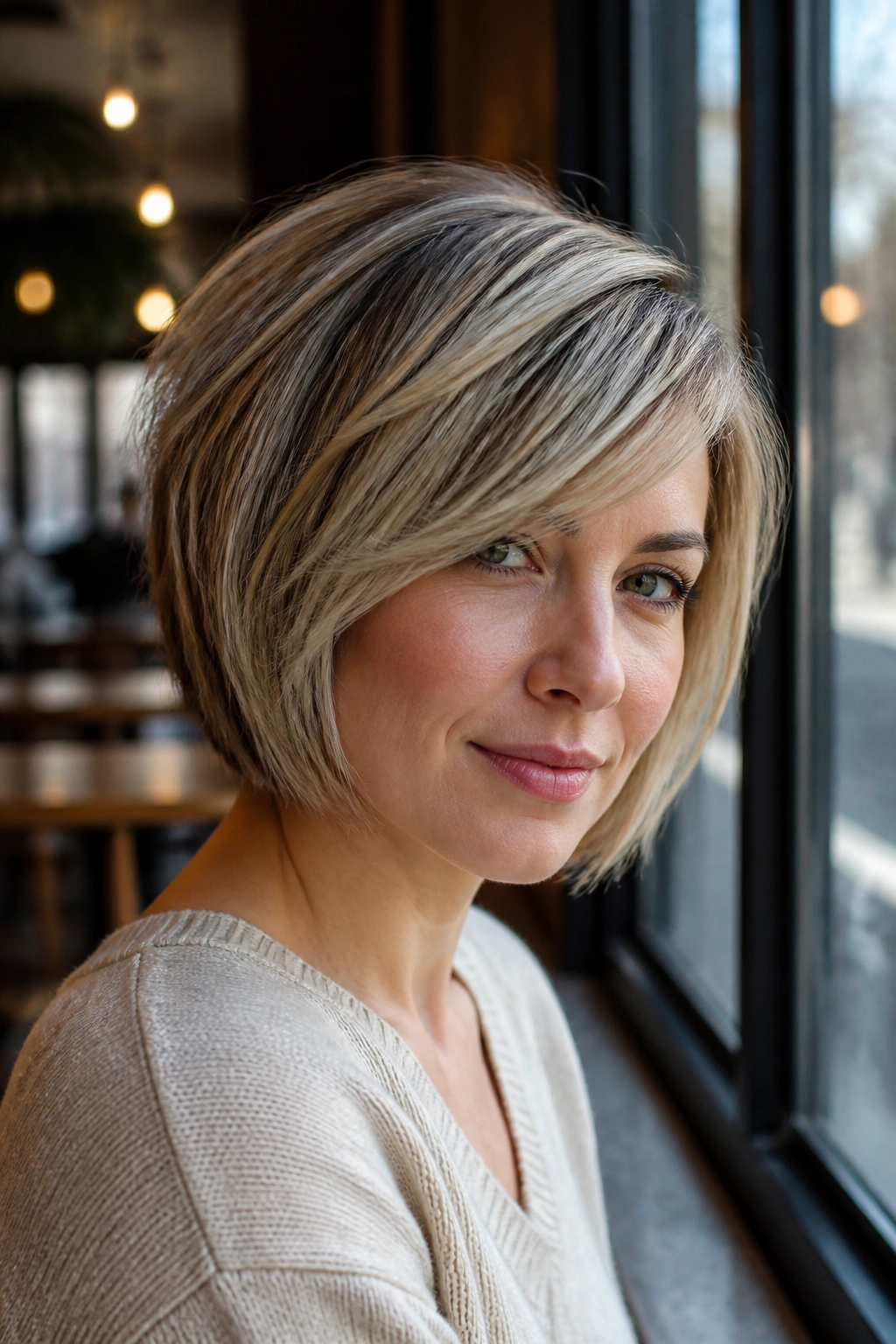
A side-swept fringe can make fine hair look fuller at the front without cutting a blunt bang line across the forehead. That matters. Heavy bangs can eat up density fast, while a soft sweep keeps the hairline open and the whole cut lighter.
What the Fringe Changes
The fringe gives the eye something to follow, which makes the front of the bob feel thicker. It also softens a stacked back that might otherwise feel a little too geometric. The angle from fringe to chin creates a nice line, and that line does a lot of visual work when the hair itself is fine.
If your forehead is on the shorter side, keep the fringe longer and feathery. If your face is longer, a fuller sweep can balance things out. I would avoid a fringe that’s too wispy, because wispy bangs on fine hair can look broken up instead of airy. There’s a difference.
7. Feathered Stacked Bob With Airy Ends
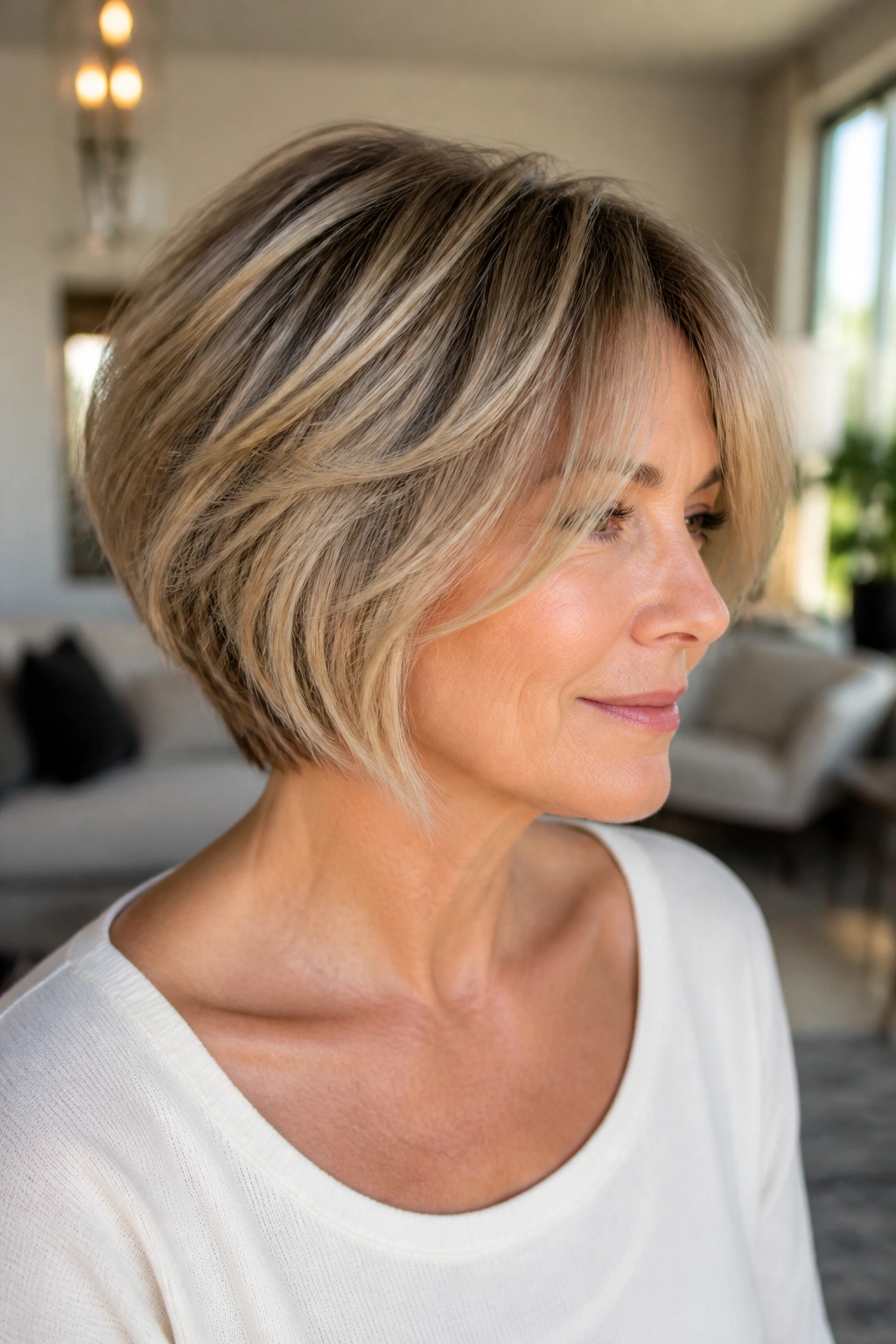
Feathered ends sound delicate because they are. The trick here is that the feathering happens in a controlled way, so the bob still holds its shape instead of dissolving into fuzz. On fine hair, that balance is touchy, and it’s why this cut needs a careful hand.
The texture should feel light, not stripped. Think soft movement at the front and a clean stack through the back. If a stylist slices too much into the perimeter, the ends lose their line and the whole head looks thinner. That is the part to guard against.
A feathered stacked bob works nicely if your hair already has a little bend or if you like a round brush blowout with soft flip at the ends. It can look expensive in the good sense—well-shaped, touchable, not overworked. The style is friendly to earrings and open necklines too, which sounds minor until you notice how often you wear both.
8. Inverted Bob With an Undercut Nape
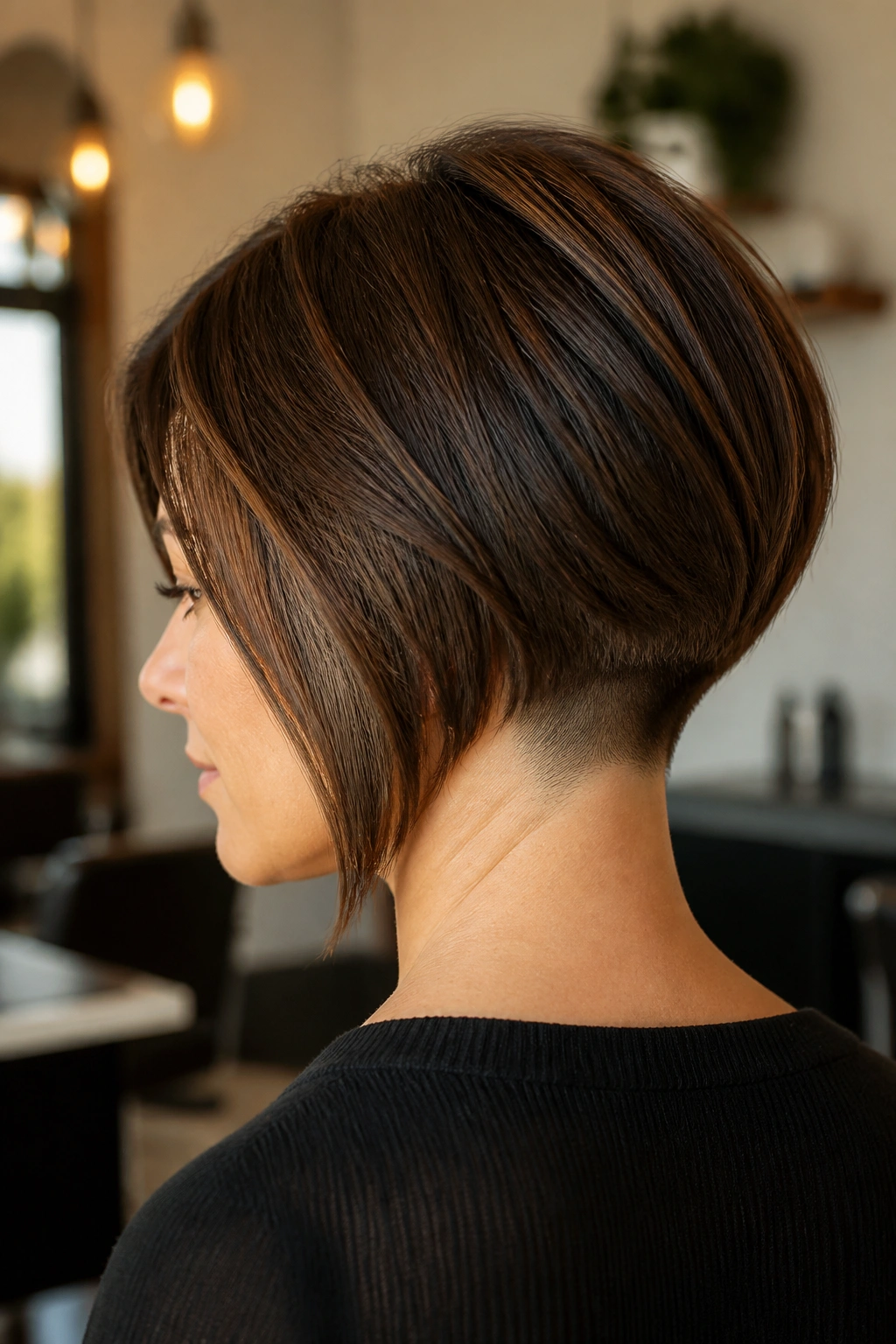
This one is not shy. An undercut at the nape removes bulk underneath the top layers, which can make the crown sit higher and the back lie cleaner. For fine hair, that may sound backwards, but it works when the hair at the nape grows in thick enough to puff out.
The undercut is best used as a control move, not a party trick. You want the back to sit close, not look shaved to the point of obviousness. If the undercut is too high, the bob loses body and starts to look narrow from the side. Keep it hidden, keep it neat, and let the longer top layers cover it.
This cut can be a lifesaver if you have a dense nape and fine strands elsewhere. It also dries faster. That part is underrated. Less bulk means less time fighting the round brush, and that is a win on busy mornings.
9. Textured Stacked Bob for Wavy Fine Hair
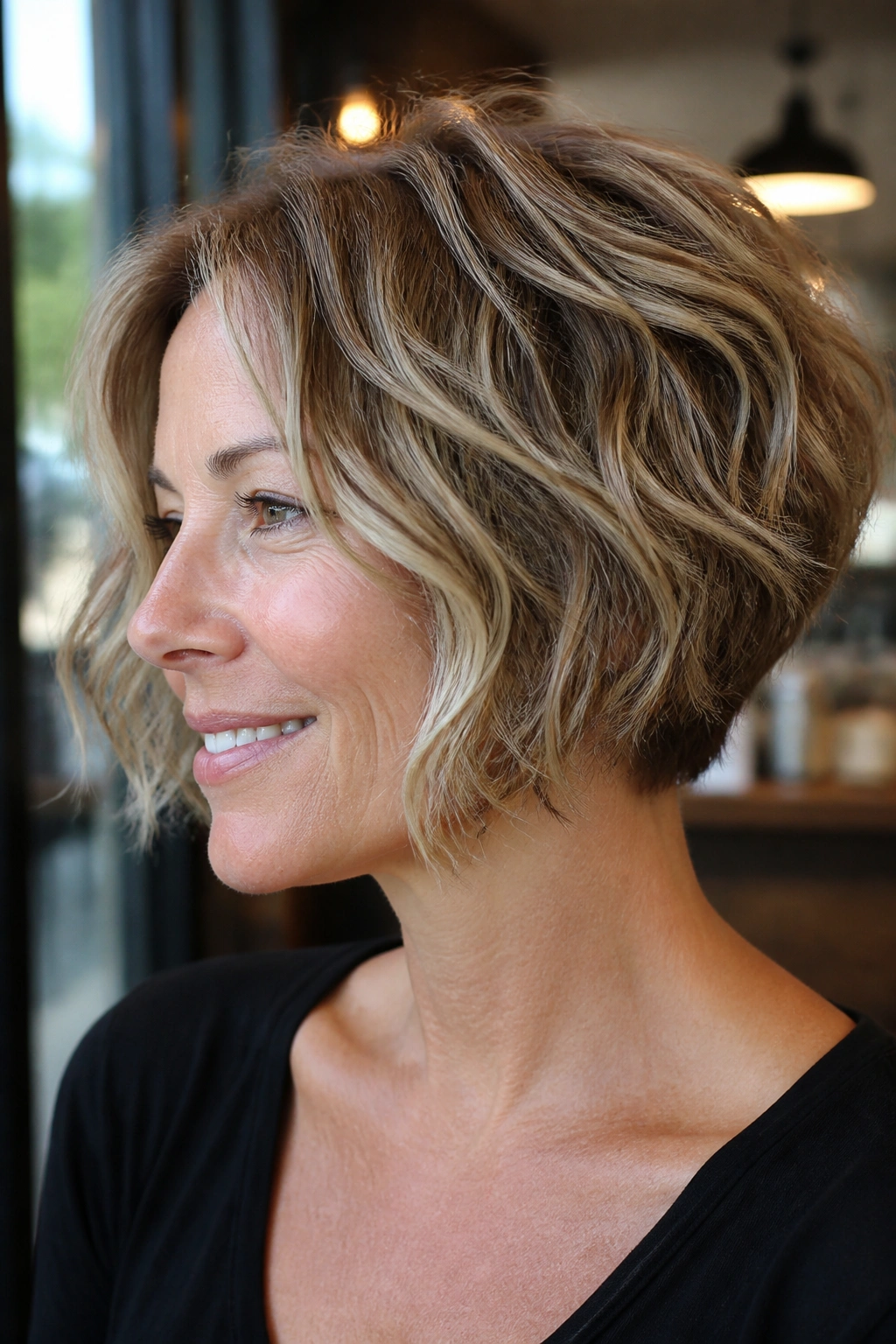
What if your fine hair already bends a little on its own? Then texture becomes your friend, but only in the right dose. A textured stacked bob for wavy fine hair uses the wave pattern to soften the graduation, so the back still lifts while the front stays loose.
Air-Dry Note
Scrunch in a small amount of mousse or a lightweight curl cream on damp hair, then let the front fall where it wants to. The back can be blown dry with a diffuser or a quick rough-dry from the roots. If you overbrush the wave out, the cut loses half its charm.
The point is not beachy chaos. It’s shape with movement. Wavy fine hair can look flat when it is cut too bluntly, but it can also look stringy when it is over-layered. This version sits in the middle. A little bend, a little lift, a clean line where the eye needs it. That’s the good stuff.
10. Glassy Stacked Inverted Bob Haircut for Fine Hair
A sleek finish can make fine hair look denser than a fluffed-up, over-textured cut. The glassy stacked inverted bob haircut for fine hair leans into shine, clean edges, and a smooth curve through the front. If your hair responds well to heat styling, this is a strong choice.
The danger with a glossy bob is flattening the crown. So the stack at the back has to be precise. Short graduation gives the illusion of body, while the outer surface stays smooth and controlled. A heat protectant, a paddle brush, and a 1-inch flat iron are usually enough to finish the look without making the hair feel fried.
I especially like this cut on very fine, straight strands that frizz a little at the ends. The bluntness hides the lack of density better than shredded layers do. It also grows out cleanly, which means the line keeps looking deliberate even when it is a few weeks past the salon.
11. Asymmetrical Stacked Bob With One Longer Side
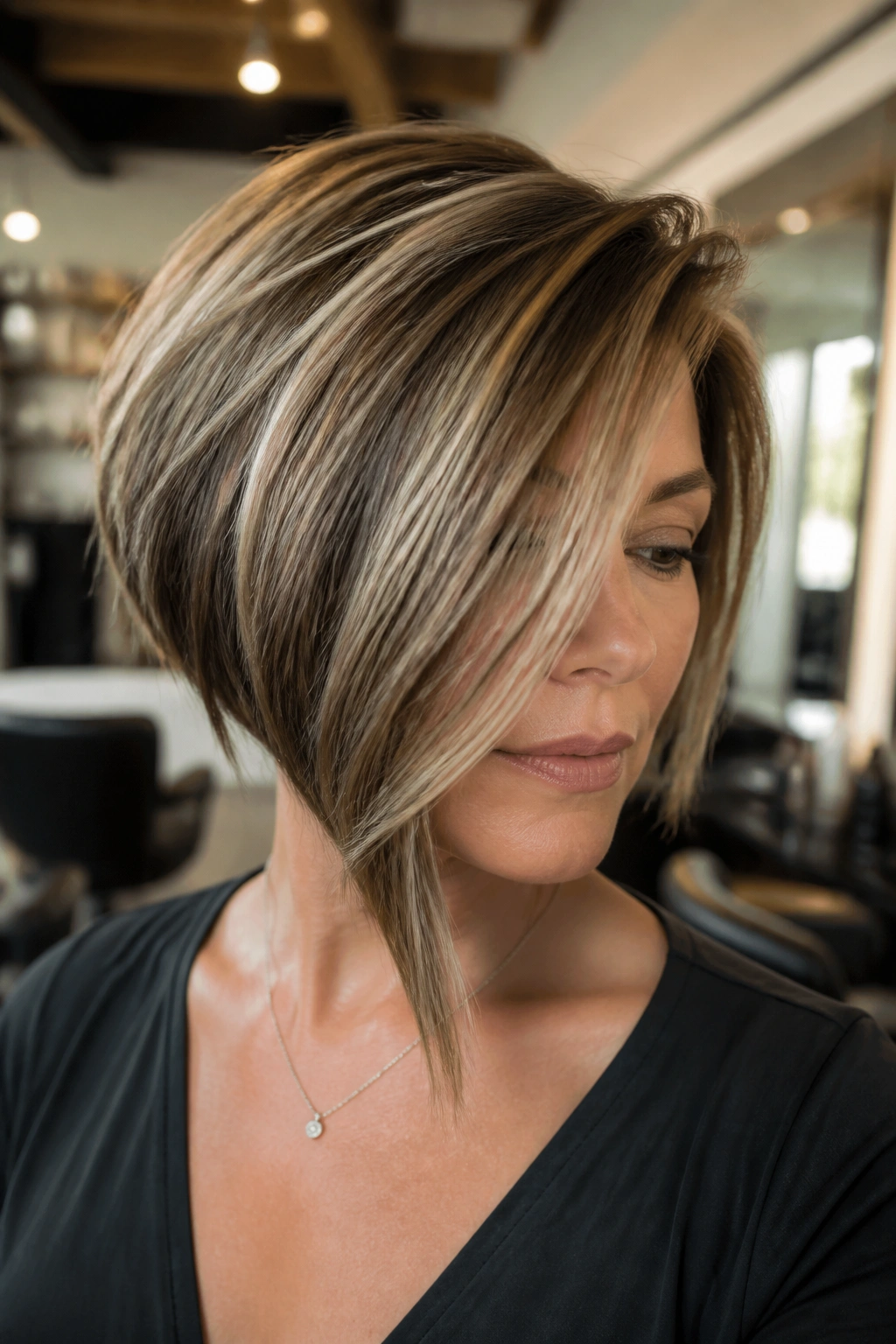
When one side is longer, the whole haircut gets a little attitude. That asymmetry can make fine hair look fuller because the eye keeps moving across the angle instead of landing on a single flat line. It’s a smart distraction, and I mean that in the nicest possible way.
This version works best when the shorter side still keeps some stack at the back. If both sides are long, the shape can sag. The whole point is contrast: shorter through the nape, longer on one side, and enough density left at the ends to keep the silhouette solid.
You can wear this cut tucked behind the ear on the shorter side or leave both sides loose. Either way, the diagonal line adds lift. It also gives you a little more room to play with earrings, which sounds superficial until you see how much the shape changes with one simple tuck.
12. Layered Crown-Lift Bob With Hidden Graduation
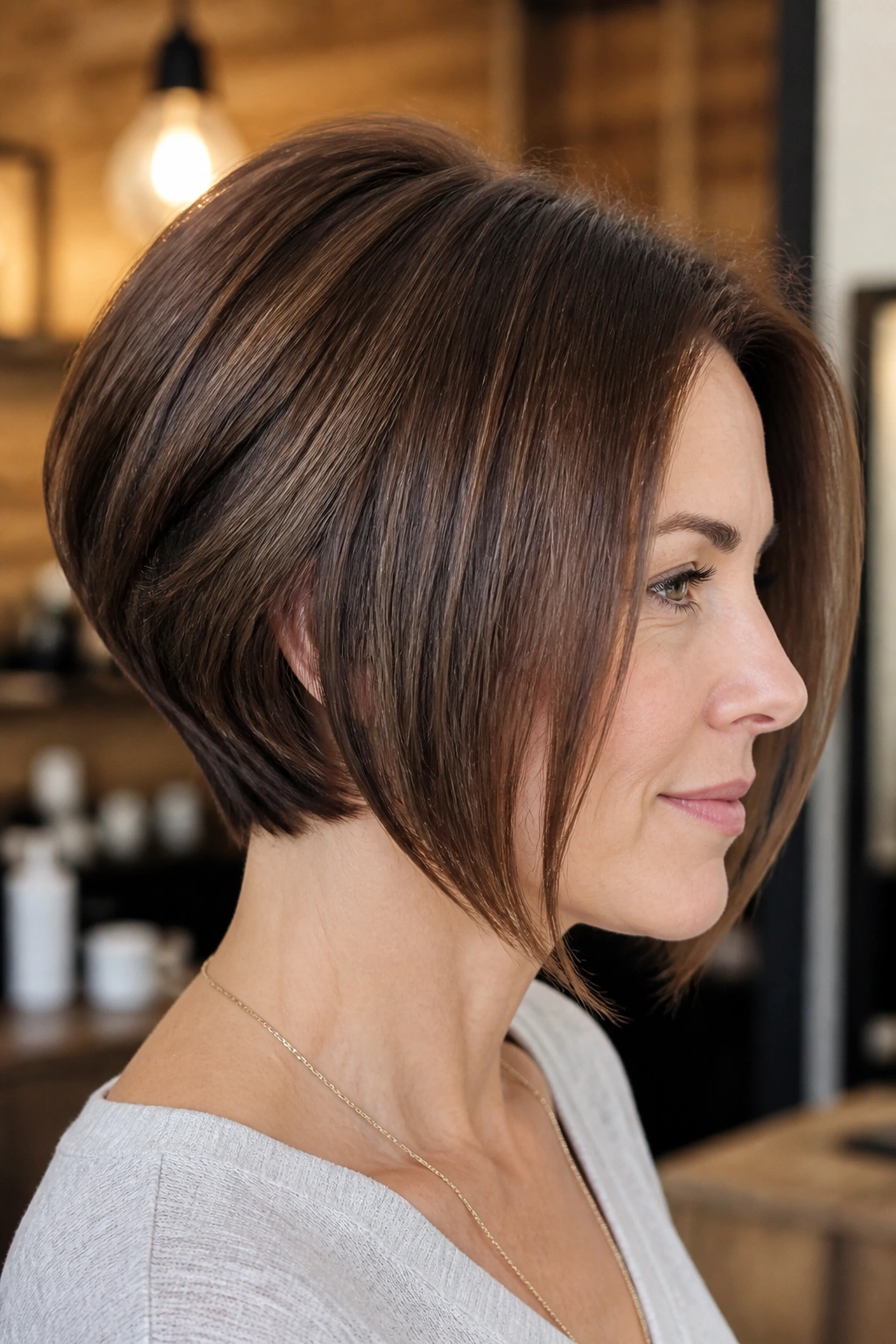
Sometimes the front of the haircut is not the problem. The crown is. A layered crown-lift bob hides most of the graduation underneath, then concentrates the lift where fine hair usually goes limp first. That is a smarter move than adding layers all over the head and hoping for the best.
What to Ask For at the Salon
Tell your stylist you want internal graduation at the crown and a clean outer line. That means the lift stays inside the haircut instead of breaking apart the perimeter. If the top is cut too short or too choppy, the bob can puff out in the wrong place and feel mushroomy. Nobody wants that.
This cut is especially useful if your hair sits flat at the top but looks fine through the ends. You get height where you need it, and the bottom keeps enough weight to frame the face. It is a tidy solution. Not flashy. Just clever.
13. Piecey Stacked Bob With Razor-Cut Ends
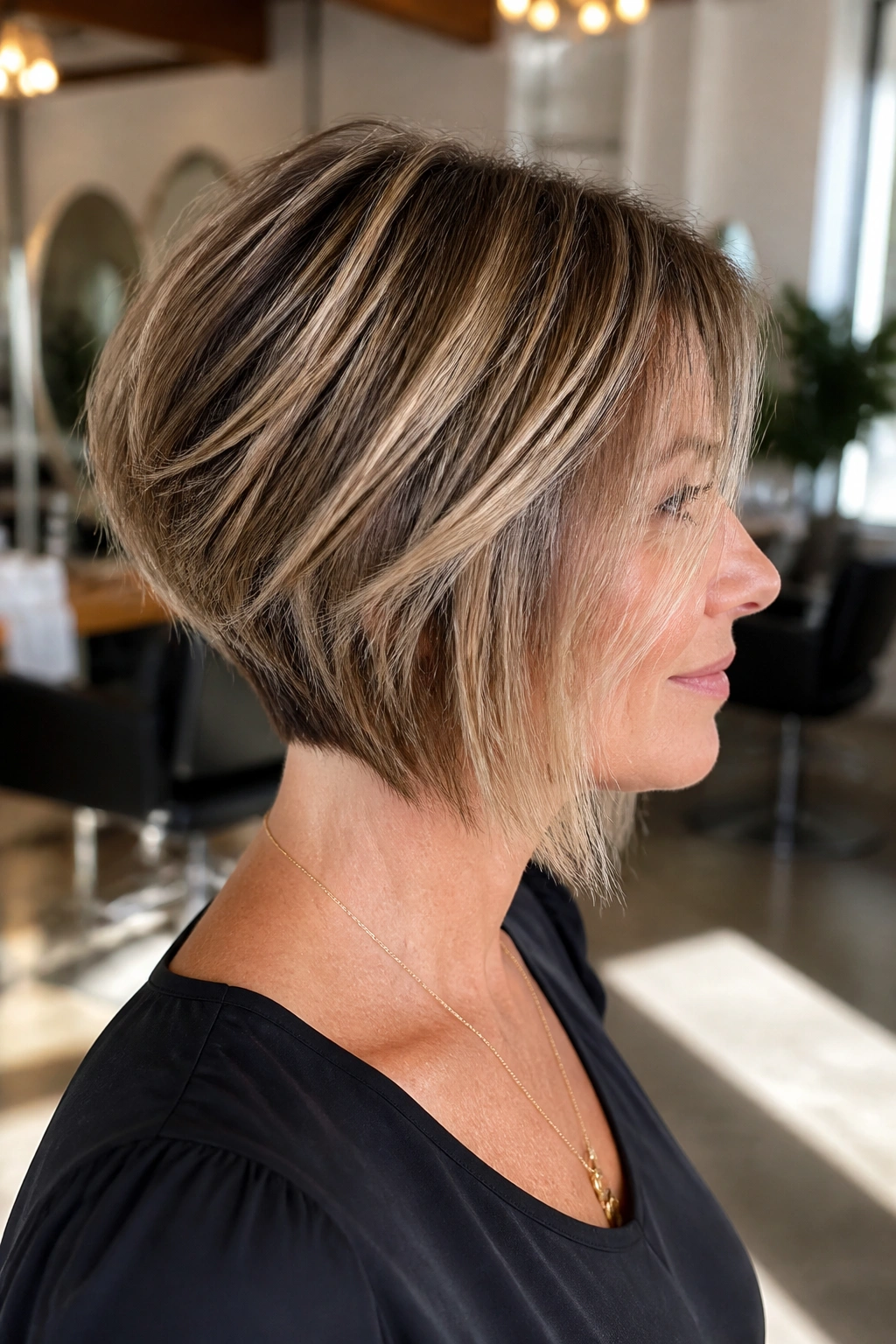
A little piecey texture can be useful, but only if the hair can handle it. Razor-cut ends give the bob a lighter finish and a touch of separation, which can help fine hair move instead of sitting like one solid block. The catch is that too much razor work can make the ends look frayed.
That is why this version needs a restrained hand. Keep the stack clean and let the piecey effect live mostly around the face and the surface layers. The outline should still feel deliberate. If the ends look too see-through, the haircut starts doing the opposite of what you wanted.
I’d pick this when you like a slightly undone finish and don’t mind spending a minute with styling paste or a texture spray. A pea-sized amount is enough. Rub it between your palms, pinch the ends, and stop before the hair looks sticky. Fine hair shows product fast.
14. French-Inspired Short Inverted Bob
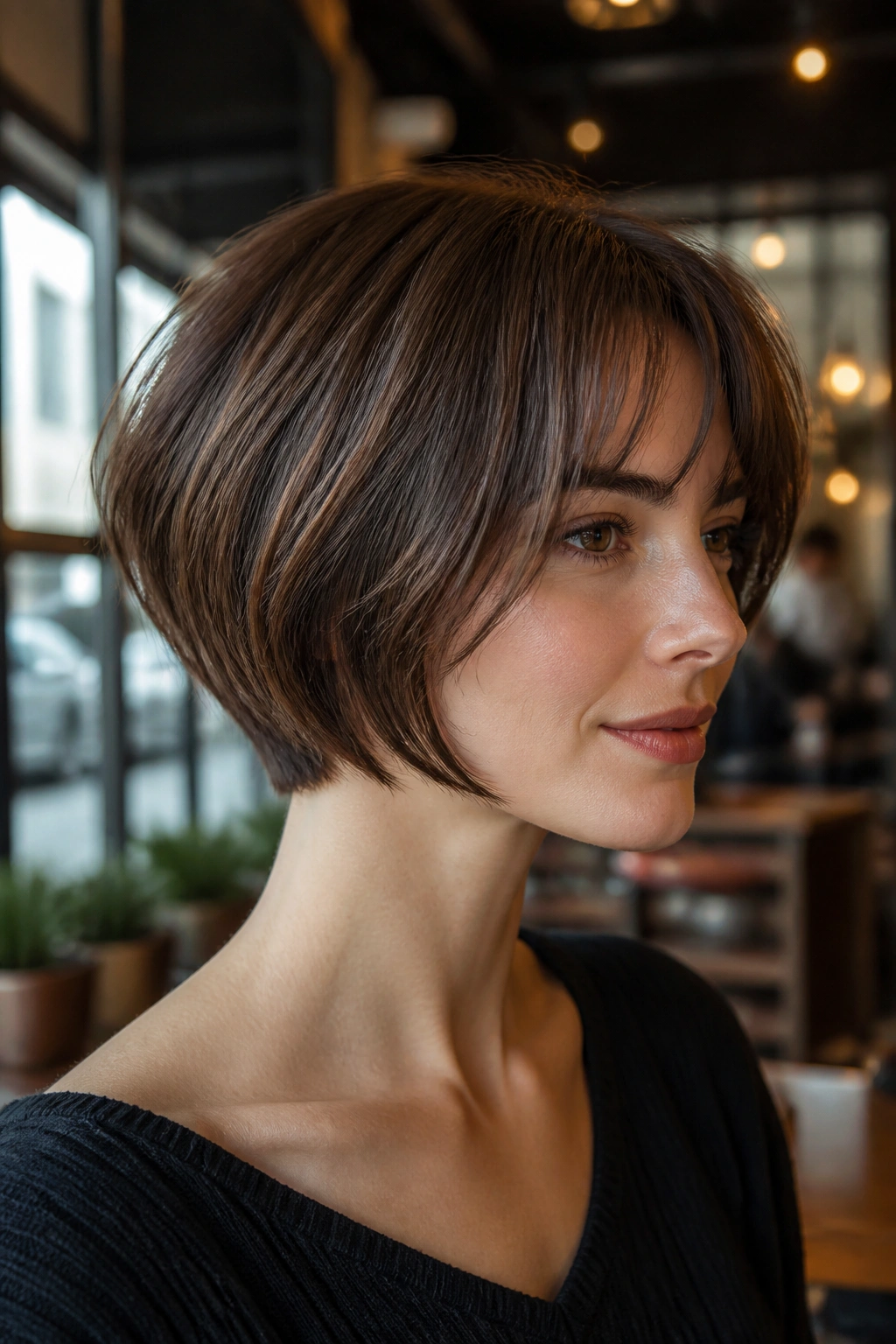
Short, curved, and a little cheeky. That is the mood here. A French-inspired inverted bob usually lands around the jaw, with a soft stack in the back and a front that sits just long enough to skim the cheekbone. On fine hair, that length can look surprisingly full because the shape stays compact.
The beauty of this cut is that it does not ask for a lot of volume tricks. It already has a strong outline. Add a slight bend at the ends and a side part or fringe, and it starts to feel done without much effort. I would not make the back too high, though. Once the stack gets exaggerated, the cut stops feeling graceful and starts feeling severe.
If your style leans simple, this is a lovely option. It works with knit tops, sharp collars, bare ears, and minimal makeup. Clean hair. Clean line. That’s the whole point.
15. Stacked Bob With Curtain Fringe
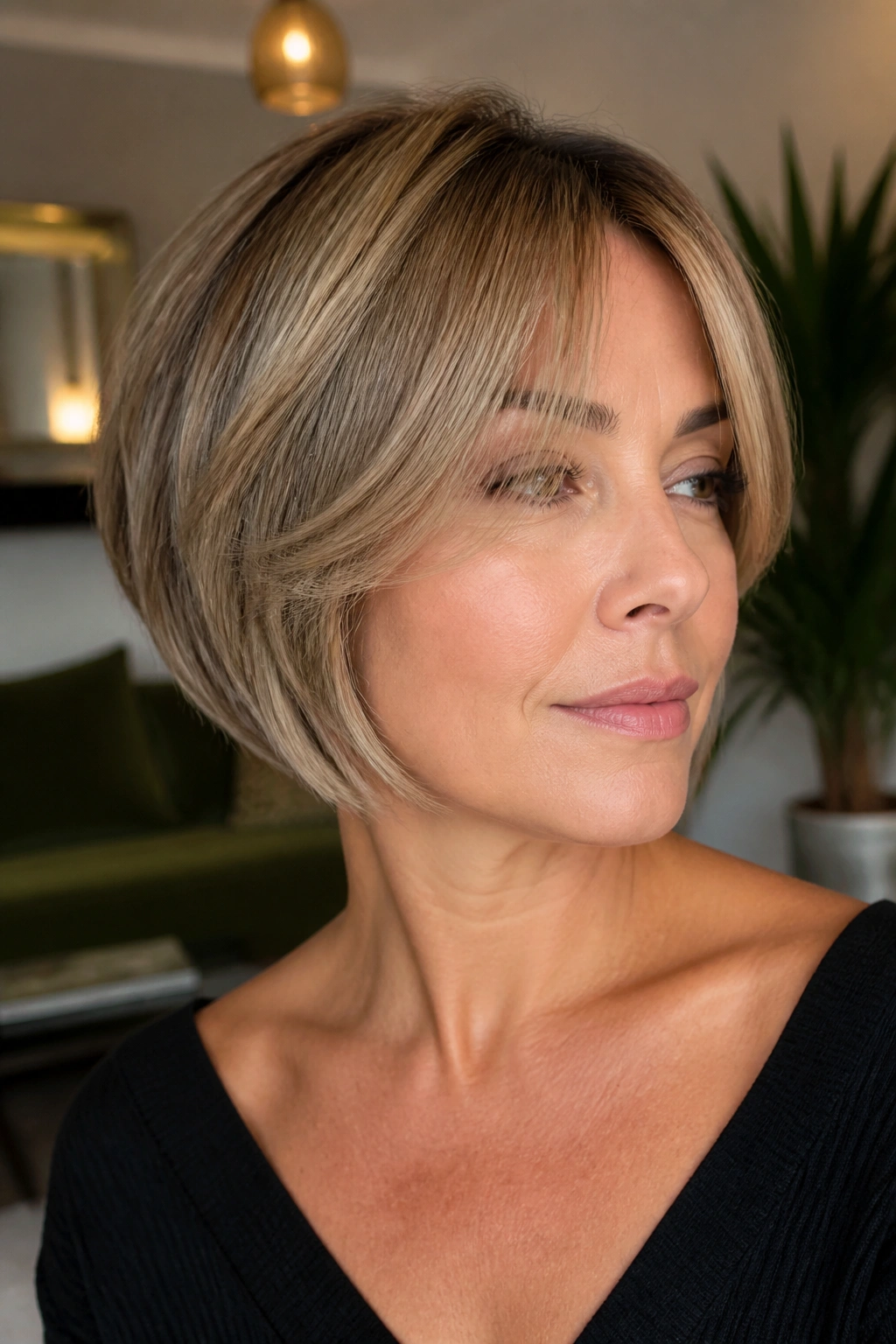
Curtain fringe changes the whole mood of a bob. Instead of all the attention sitting at the ends, the fringe opens the front and makes the face look softer while the stacked back keeps the shape lifted. That combination is useful for fine hair because it spreads the visual weight around.
Why the Fringe Changes the Silhouette
Curtain fringe creates movement around the eyes and cheekbones, which keeps the haircut from looking bottom-heavy. It also gives you a little flexibility. You can part it wider, tuck it, or let it fall forward on days when you want more softness. Straight-across bangs do not give that same range.
- Best when the fringe is cut long enough to blend into the front pieces
- Avoid a heavy, blunt curtain shape if your hair is very sparse at the temples
- Use a round brush only at the ends so the fringe doesn’t puff up
- Keep the stack neat or the whole cut can feel top-heavy
This is one of those cuts that looks easy but depends on careful length choices. Too short, and the fringe fights the bob. Too long, and it loses the point.
16. Dimensional Balayage Bob for Finer Strands
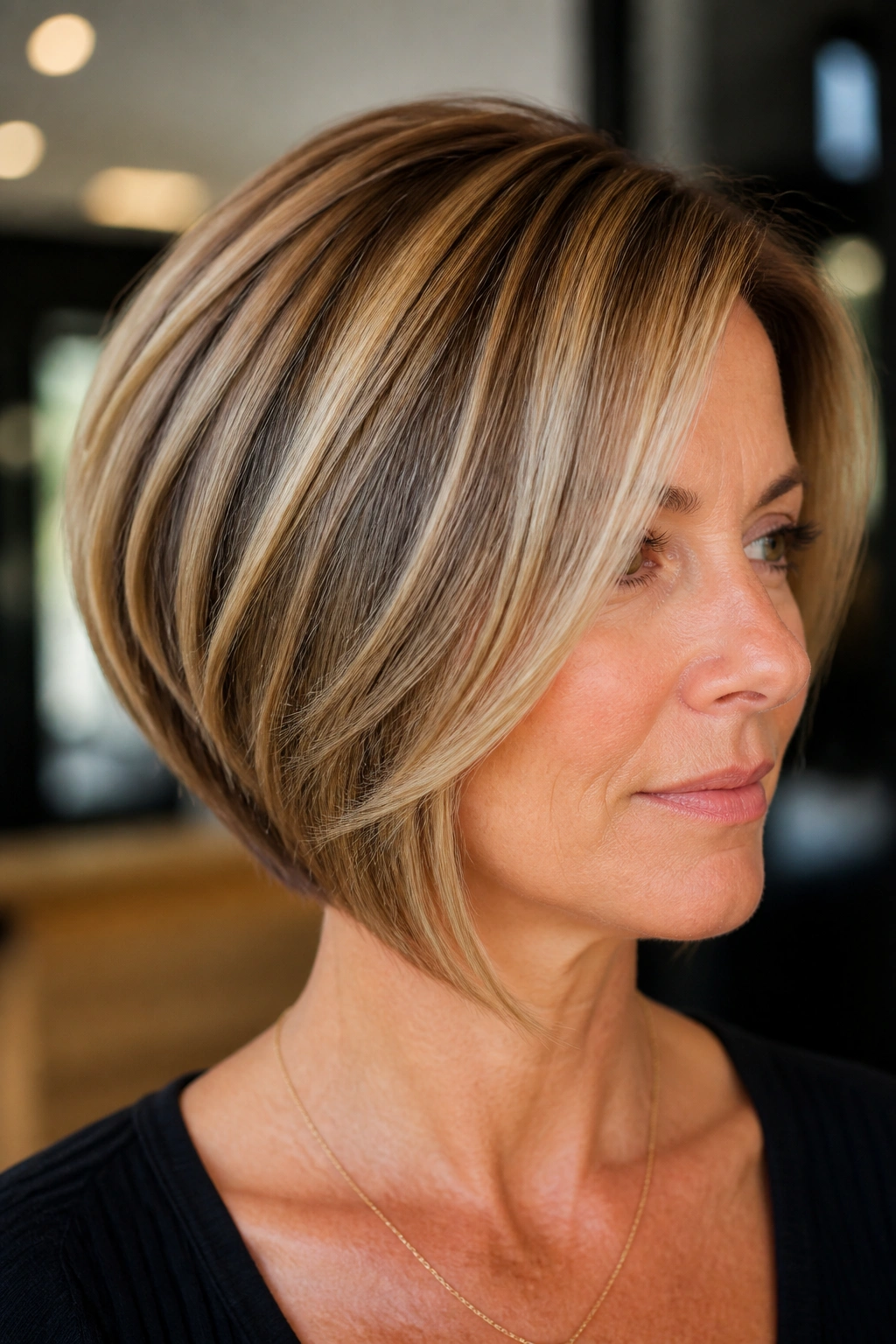
Color can change the whole read of a bob, and fine hair often benefits from that extra dimension more than people expect. A dimensional balayage bob keeps the cut stacked and inverted, but adds lighter ribbons through the top and around the face so the shape looks deeper and fuller.
The trick is not going too stripey. Fine hair rarely needs loud contrast. It needs depth at the roots and a few lighter pieces where the light can break up the surface. A soft shadow at the root and lighter ends can make the stack at the back look richer and the front pieces look thicker than they are.
I’m not a fan of overprocessing fine hair just to chase brightness. A few well-placed highlights do more than a full head of aggressive lightening. Keep the tone close to your natural base and let the haircut stay the star. The color should support the shape, not steal the show.
17. Low-Maintenance Stacked Inverted Bob Haircut for Fine Hair
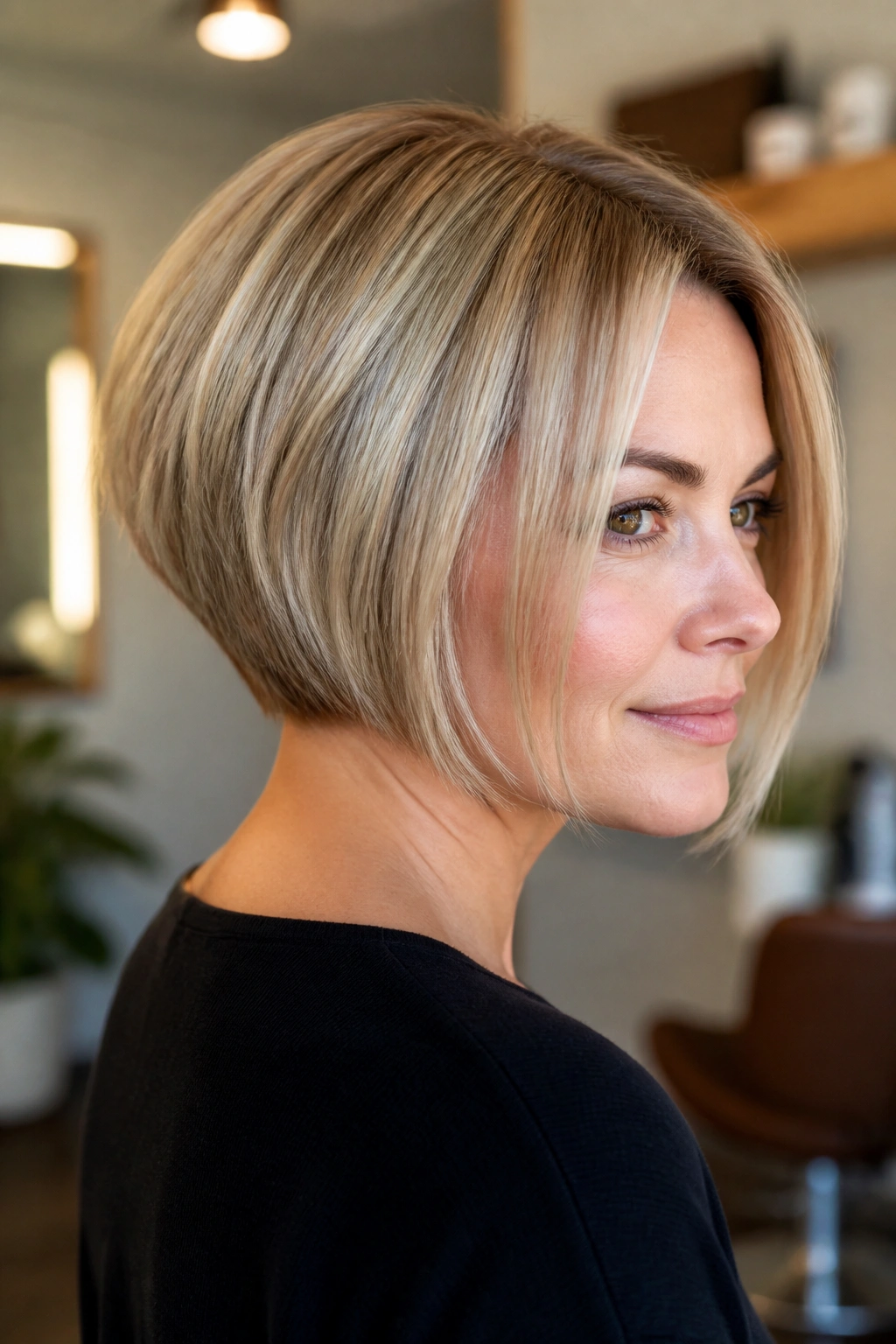
If you do not want a morning routine that involves three brushes and a prayer, this is your lane. A low-maintenance stacked inverted bob haircut for fine hair keeps the angle and volume, but the lines stay simple enough to air-dry well or take a quick blow-dry with little fuss.
What to Ask For If You Hate Styling
Ask for a soft stack, a clean neckline, and ends that are blunt enough to hold shape. That combination matters more than fancy layering. If the cut is too airy, it will need constant styling to look intentional. If it keeps its weight, you can often shake it out, add a dab of cream, and move on.
- Best length: jaw to just below the chin
- Best finish: slightly undercurved ends
- Helpful product: lightweight mousse at the roots
- Skip: heavy oils, which flatten fine hair fast
This is the cut I’d point to when someone says they want fullness but not high upkeep. It’s practical. No drama. It behaves better than the trendier versions.
18. Rounded Retro Stacked Bob
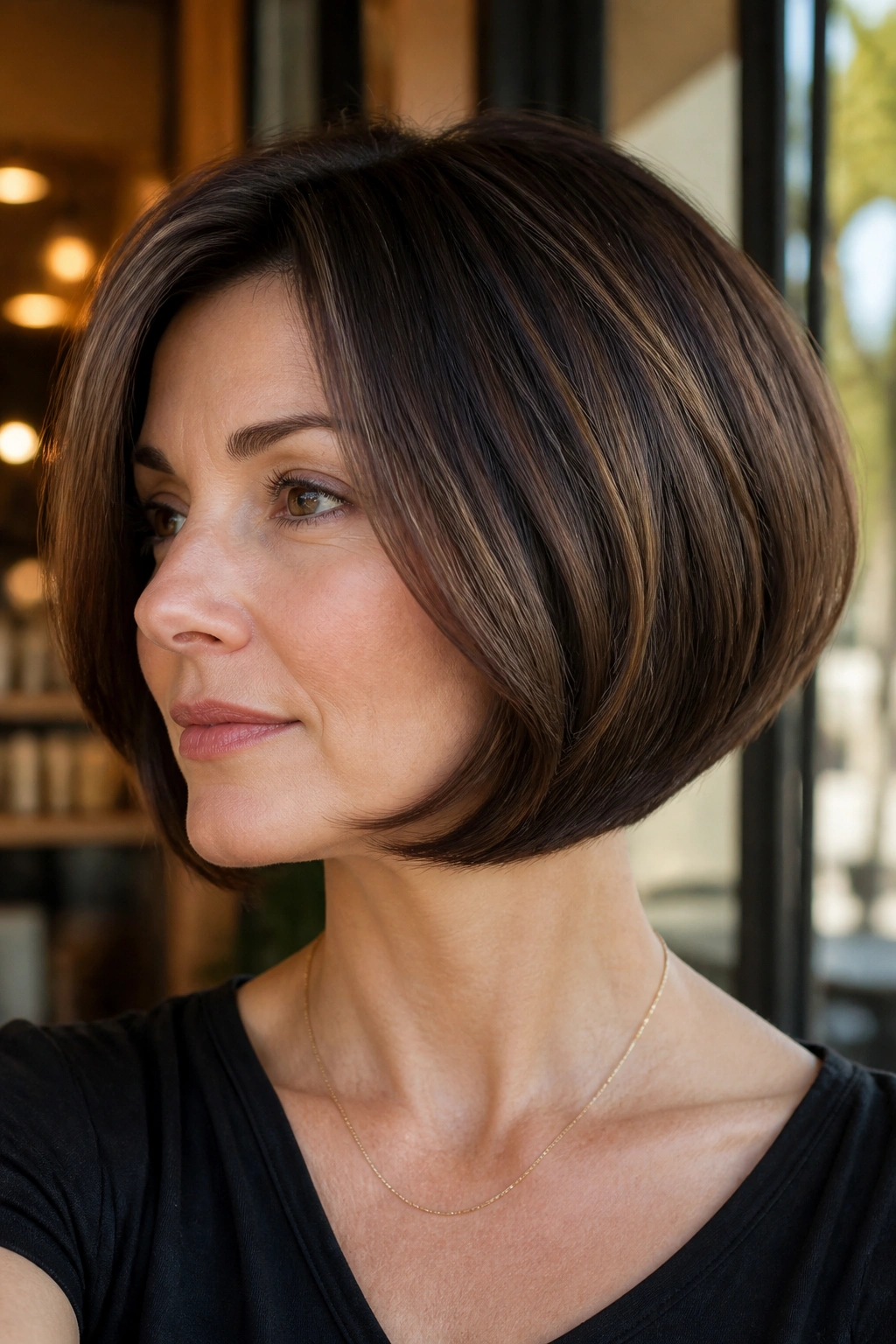
A rounded retro bob brings the stack back into a more polished, almost sculpted shape. The back hugs the head, the sides curve inward, and the front keeps enough length to frame the cheekbones. On fine hair, that rounded structure can make the hair look much thicker because every strand has a job.
This cut works especially well if your hair is naturally straight and a little slippery. The round shape gives it a place to land. If you want the finish to stay soft, ask for a gentle bevel at the ends rather than a hard curl-under. That keeps it modern enough to wear without feeling costume-like.
It does take a little attention at the salon. The nape needs regular cleanup, and the crown should not be over-thinned. But when it is done well, this bob has presence. Quiet, maybe. Still there. And on fine hair, that is often the whole game.
Final Thoughts
Fine hair usually looks best in a cut that respects weight. Too much feathering, too much slicing, too many layers that float away from the perimeter—those are the moves that make the ends disappear. A stacked bob works because it keeps the back lifted and the outline clear.
If your hair is very fine, ask for a clean nape and a blunt finish at the ends. If it has more density, you can handle a sharper angle or a bit more stacking. Either way, the best version is the one that keeps the shape visible on day one and day ten. That’s the part worth protecting.
