



A textured lob haircut can make medium length hair feel lighter, swingier, and far less fussy. That’s the whole appeal, really. You keep enough length to tuck behind the ear, toss into a clip, or tie back when life gets annoying, but you lose the dead weight that makes shoulder-length hair hang flat.
Flat ends are the enemy.
A lob sits in that sweet spot between a bob and longer layers, and texture is what keeps it from turning into a helmet. Sometimes that texture comes from point cutting at the ends. Sometimes it comes from internal layers that never show unless the hair moves. Sometimes it’s just a clean perimeter broken up by a little softening so the line doesn’t look too heavy. The details matter more than people think.
The tricky part is that “lob” is not one haircut. It’s a family of cuts. A textured lob haircut on medium length hair can look sharp and modern on straight strands, airy on thick hair, plush on waves, or almost cloud-like on curls. Pick the wrong version, and it grows into a triangle. Pick the right one, and it stays useful for weeks.
1. Choppy Collarbone Lob
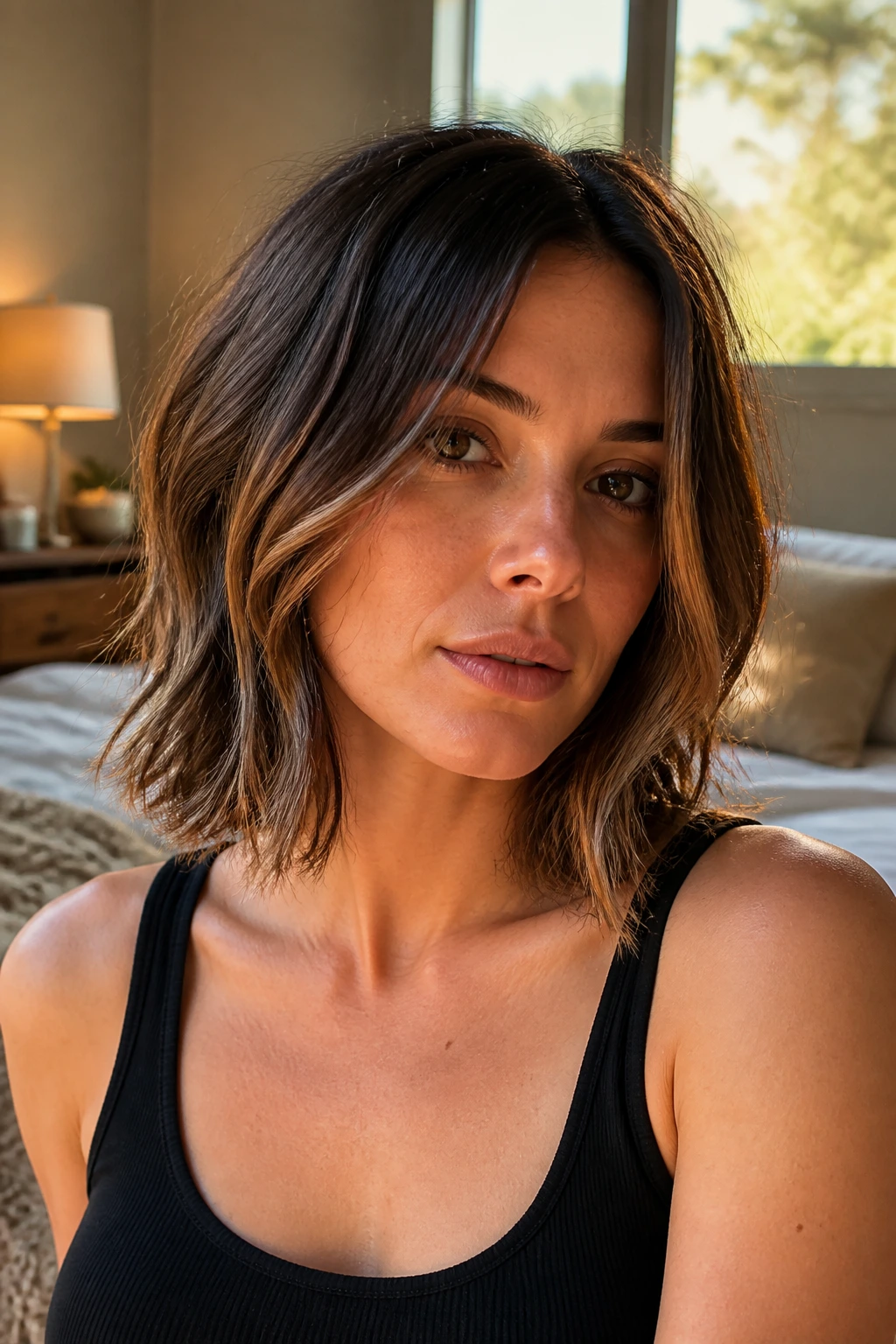
A choppy collarbone lob is the one I reach for when someone wants movement without losing the outline. It sits right at the collarbone, which means the shape still feels intentional even when the ends start to flip out a little. That tiny bit of mess is the point.
Why It Works
The cut lives on texture at the bottom, not heavy layering through the whole head. A stylist usually point-cuts the ends and keeps the inside fairly clean, so the hair moves without looking thin. If your hair is thick, this is a smart way to remove bulk without making the shape collapse.
- Best for: Straight to wavy hair that needs motion.
- Ask for: Collarbone length with soft, choppy ends and minimal layering around the crown.
- Styling cue: A 1.25-inch curling iron gives the bends enough room to look loose, not curled.
- Watch for: Over-thinning the ends. That turns “textured” into wispy and tired.
A cut like this looks especially good when the front pieces graze the collarbone and the back sits a touch higher. The line keeps the haircut from feeling shaggy in a bad way. It still has a spine.
One good rule: if the ends start looking like they were attacked with scissors, ask for less texture, not more.
2. Blunt Lob with Soft Texture
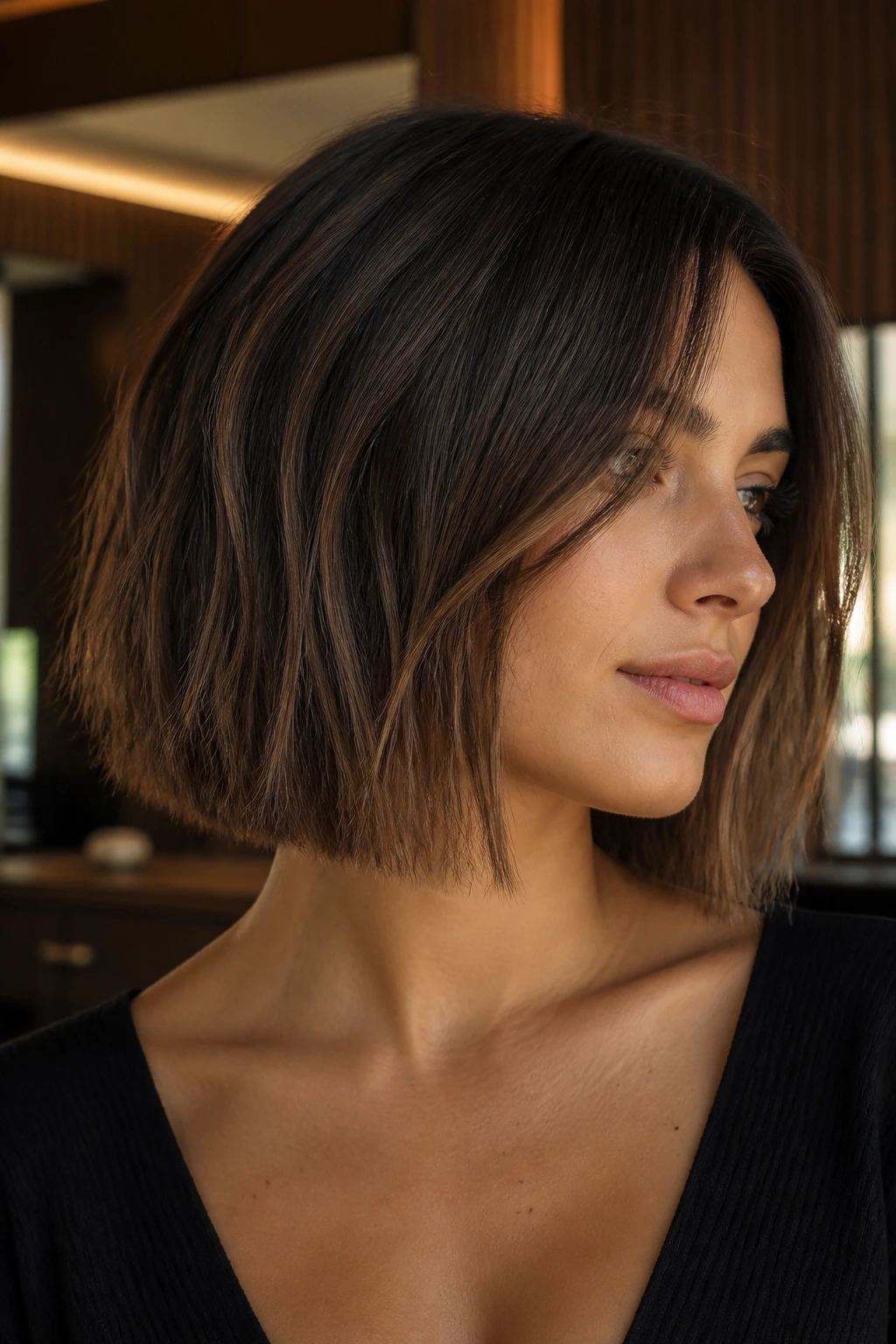
A blunt lob does not have to feel heavy. That’s the part people get wrong. The perimeter stays clean, but the interior gets just enough soft texturing to keep the hair from looking like a block.
The best version has a polished edge with tiny irregularities tucked inside the shape. Think of it like a tailored coat with a better lining than anyone else sees. On fine hair, this is often the smartest lob haircut because it keeps the illusion of density at the bottom while still moving when you turn your head.
A stylist might use slide cutting or very light point cutting, especially near the front. The goal is not to shred the line. It’s to stop the ends from feeling too stiff. That’s a useful distinction, because once the perimeter gets too broken up, the whole haircut starts to look smaller than it is.
This one works best if you like hair that can air-dry into a neat shape and still bend a little at the ends. It’s clean, but not severe. And yes, those two things can live together.
3. Tousled Wave Lob
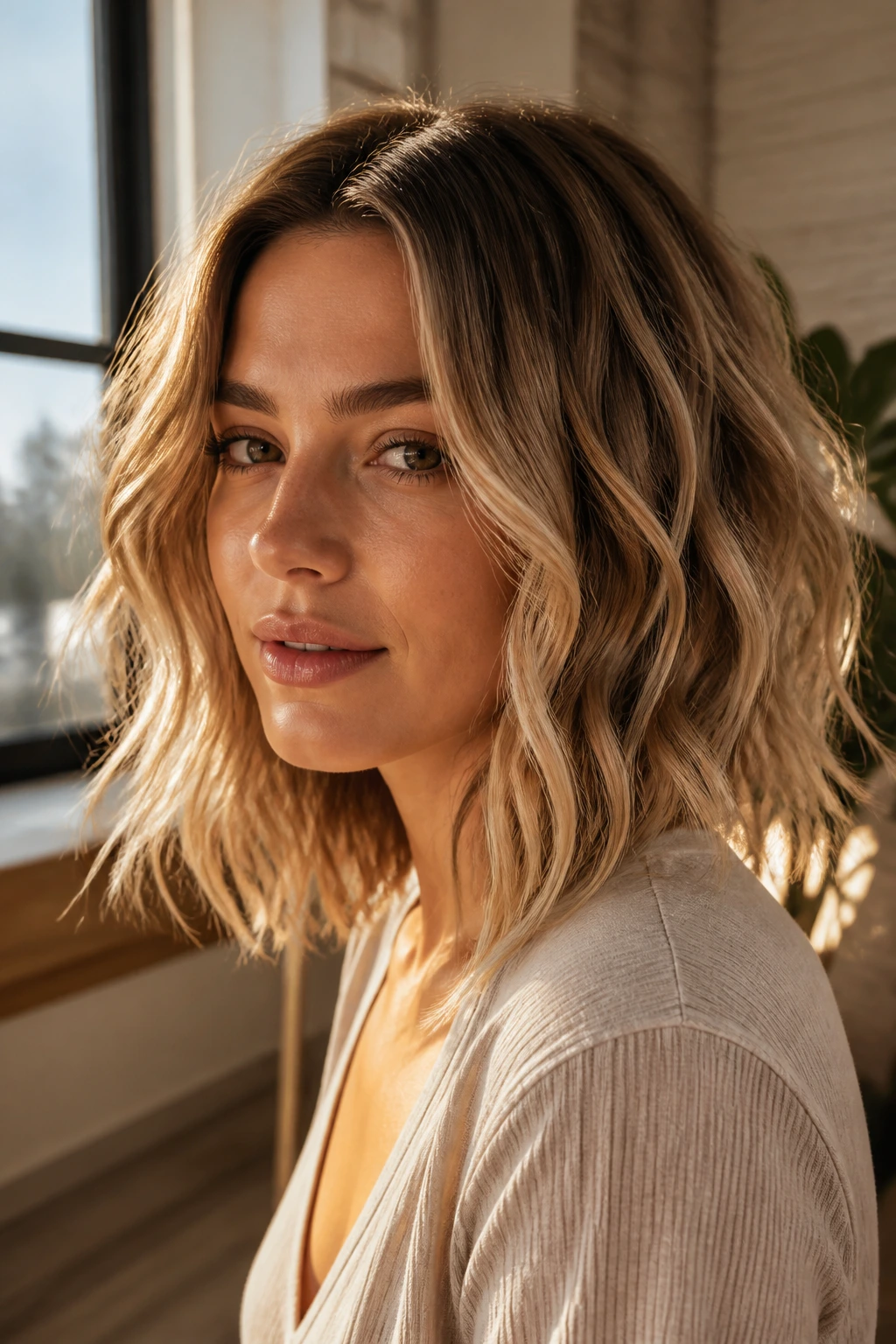
Why does a tousled wave lob work so well on medium length hair? Because the length is long enough to hold a bend, but short enough that the waves don’t drop before lunch. That balance is the magic trick.
The cut itself should be soft around the ends, with a little longer front to frame the face. The styling does half the work, though. A quick rough-dry, a 1-inch iron, and a few alternating bends are enough. You do not need perfect curls. In fact, perfect curls usually look too done here.
How to Style It
- Mist a heat protectant through damp hair and rough-dry until it’s about 90% dry.
- Wrap 1-inch sections around the iron, leaving the last inch out.
- Change direction every other section so the waves don’t lock into one pattern.
- Break the waves apart with your fingers, then finish with a light mist of flexible hold spray.
This lob looks best when the ends still have a little separation. If every strand blends into the next, the shape goes soft and sleepy. A textured lob haircut should move. It should not melt.
4. Curly Lob with Shape
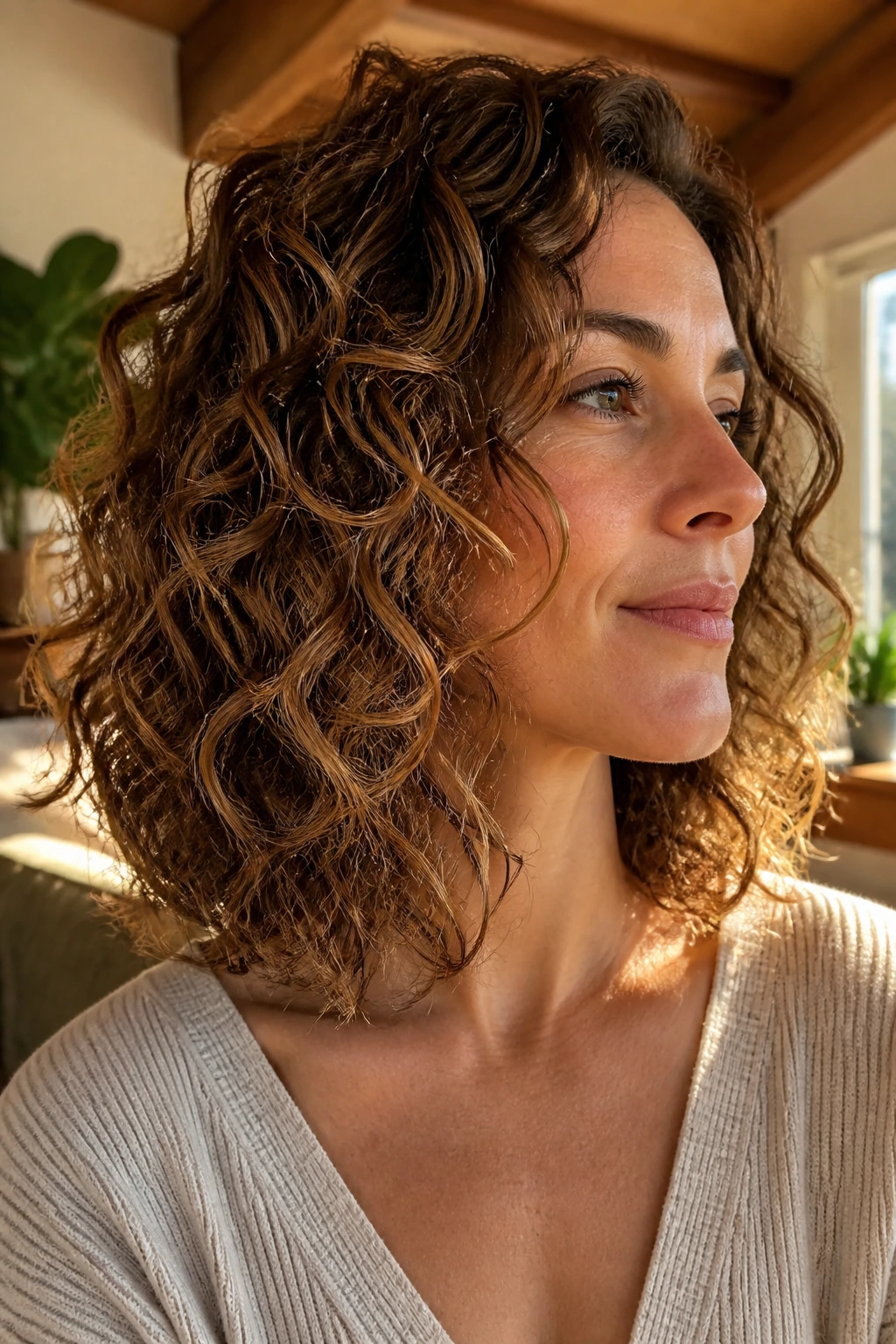
If your curls puff out at the bottom, a lob can fix the silhouette fast. The problem with longer curly hair is often weight in the wrong place: too much length dragging at the ends, not enough shape around the face. A medium-length lob cuts that problem down to size.
The best curly lob is usually cut dry, curl by curl, so the stylist can see where each curl actually lands. That matters. Wet curls lie. Dry curls tell the truth. A good shape usually lands somewhere between the chin and the collarbone, with the perimeter curved slightly so the hair doesn’t form a hard box.
You want movement at the cheek and jaw, not a stack of choppy layers that explode outward. Soft internal shaping works better than aggressive layering for most curl patterns. It gives the curls room to sit on top of one another without building a triangle shape.
- Best for: Wavy-curly and curly hair that loses shape at the ends.
- Ask for: A dry-cut lob with curl-specific shaping and a rounded perimeter.
- Style note: Use a diffuser on low heat and stop handling the curls once they start forming.
- Avoid: Razor-heavy ends on fragile curls. They can fray.
This one looks especially good when the curls are defined but not crunchy. Soft, touchable, and a little imperfect.
5. Shaggy Lob with Face-Framing Layers
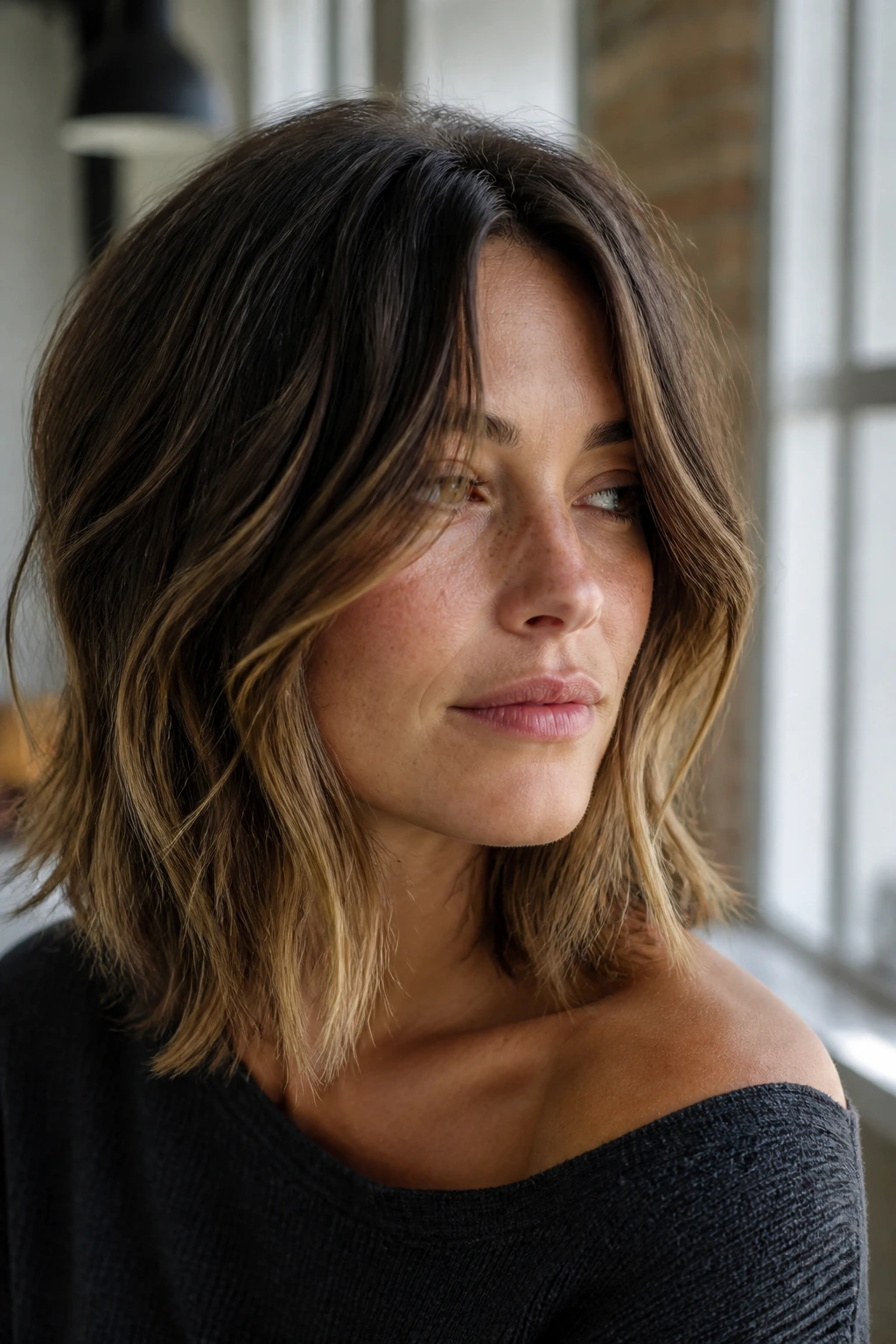
A shaggy lob with face-framing layers has a little attitude, but not the messy kind that looks accidental. The layers should start around the cheekbone or jaw, then fall into a softer collarbone length. That gives the haircut a lifted shape without turning it into a full shag.
The reason it works is simple: the front does the visual work. Those face-framing pieces pull the eye upward, which keeps medium length hair from feeling heavy around the shoulders. If your hair is thick, this cut can take out enough weight to make styling easier. If your hair is wavy, the layers help the bend show up instead of vanishing under a blunt edge.
I like this version for people who want hair that looks better after it’s been lived in for a few hours. Fresh from the salon, it looks neat. By the end of the day, it looks even better. That’s not sloppiness. That’s good layering.
A light mousse at the roots and a scrunch through the ends is often enough. Don’t overthink it. The haircut should do most of the talking.
6. Asymmetrical Textured Lob
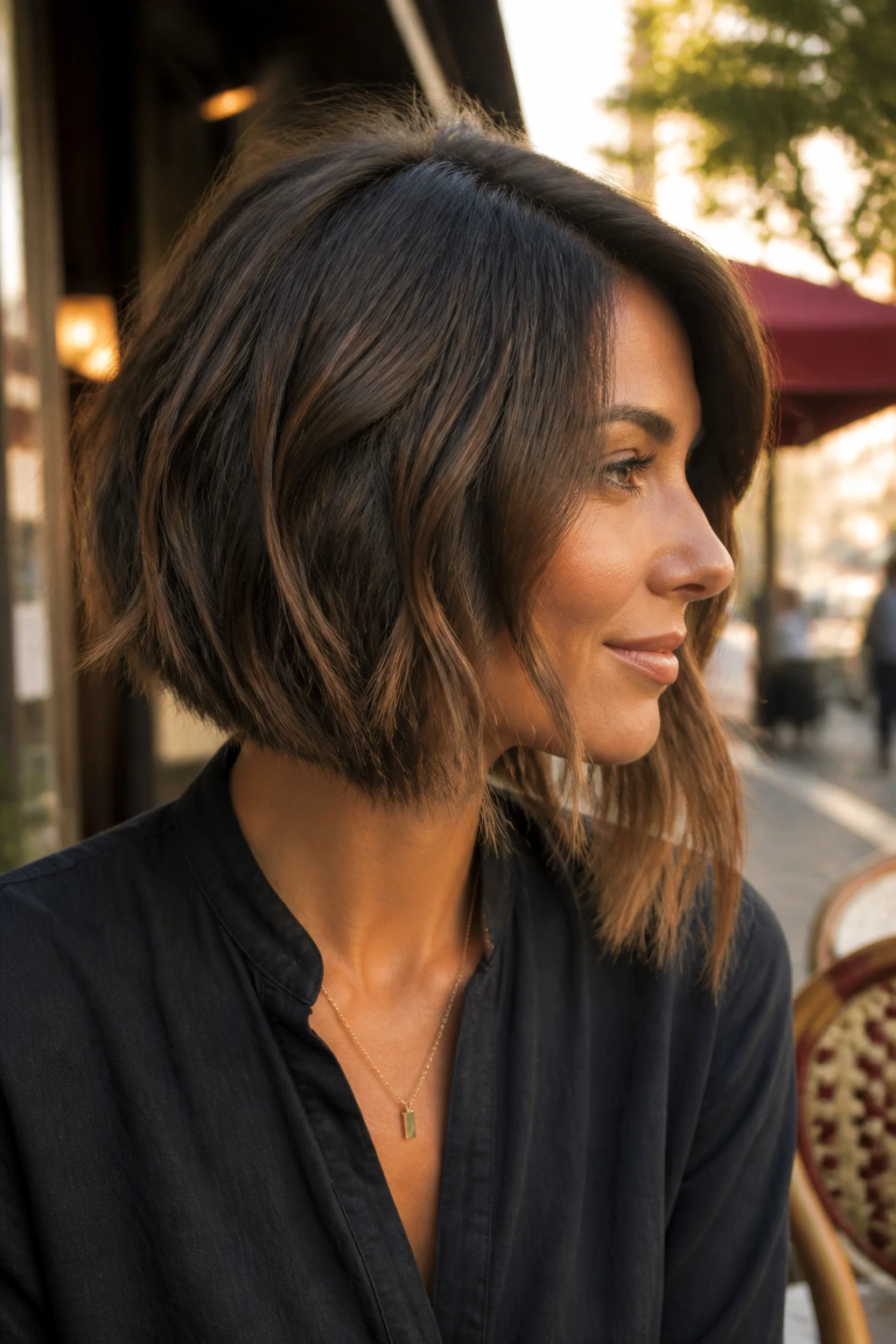
An asymmetrical textured lob changes the mood fast. One side sits a little longer than the other, usually by half an inch to an inch and a half. That small difference is enough to create interest without making the cut feel costume-y.
Unlike a symmetrical lob, this one brings the eye across the face in a diagonal line. That can sharpen a soft jawline, stretch a round face, or make straight hair look less predictable. It also works well with a deep side part, which gives the longer side a little more swing.
The best asymmetrical lob is subtle. You want people to notice the shape before they notice the math. If the difference is too dramatic, the haircut starts to feel like two separate ideas fighting each other. Keep the texture soft, too. Sharp asymmetry plus jagged ends can look harsh fast.
This cut suits someone who wants a little edge but still needs hair that behaves at work, at dinner, and after a rainstorm. Quiet drama. That’s the sweet spot.
7. Razor-Cut Lob
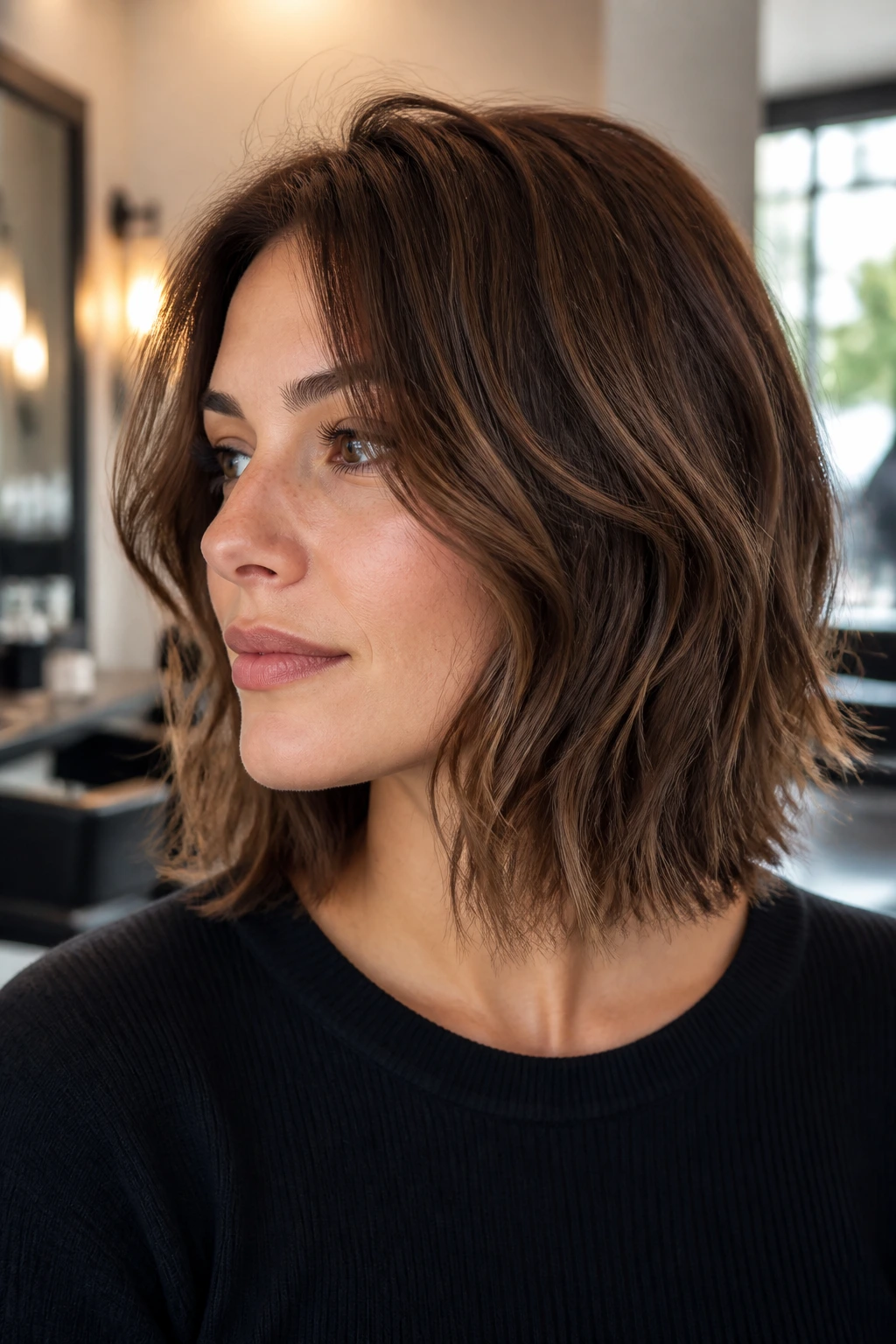
A razor-cut lob has softer edges than a scissor-cut version, and that can be a gift if your hair is dense and a little stubborn. The razor slices through the ends in a way that removes bulk while keeping the finish airy. It’s not the same as shredding. Good razor work leaves movement, not frizz.
What the Razor Changes
The ends fall with less stiffness, which helps straight and wavy hair bend more easily around the shoulders. The shape can feel lighter even when the length stays the same. That’s useful on medium length hair, where too much weight at the bottom can make everything look boxy.
- Best for: Thick straight hair and coarse waves.
- Ask for: A soft razor finish through the ends, not a full razor carve-up.
- Helpful styling: A smoothing cream through damp hair keeps the ends from puffing.
- Caution: Fragile, bleach-damaged hair may not like razor work.
This is one of those cuts that looks expensive when done well and a little ragged when done badly. The difference usually comes down to restraint. A careful razor lob should still have a shape you can trace with your eyes.
8. Lob with Curtain Bangs
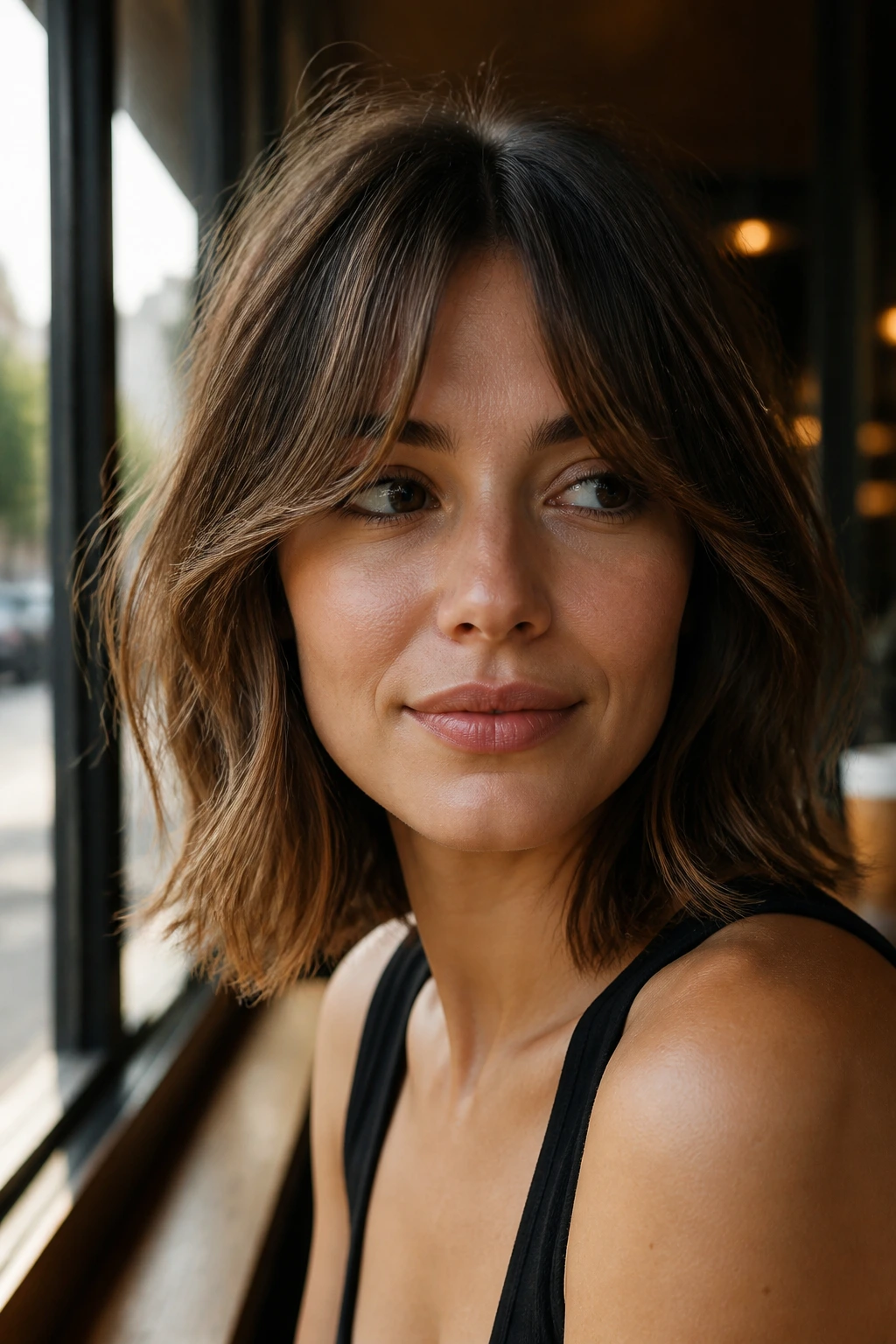
Curtain bangs change a lob more than people expect. They soften the front, make the cut feel more finished, and give medium length hair something to do around the face. The best part? They grow out in a fairly forgiving way.
The bangs should open away from the middle, usually starting a bit shorter at the center and dropping longer toward the cheekbones. That shape blends into a textured lob haircut without making the haircut feel chopped up. It’s one of the few fringe styles that can make a shoulder-length cut feel deliberate on day one.
How to Style It
Use a round brush or a small blow-dry brush to lift the bangs away from the face while they’re still damp. A little root tension matters here. If you let them dry flat, they collapse into the forehead and lose that airy bend.
The rest of the lob can stay softly waved or straight with turned-under ends. Either way, the bangs should feel like part of the haircut, not a separate accessory. If they’re too thick, they crowd the eyes. Too thin, and they disappear.
This is the cut for someone who likes shape near the face and doesn’t mind a little morning styling. Five minutes. Maybe seven.
9. Side-Parted Piecey Lob
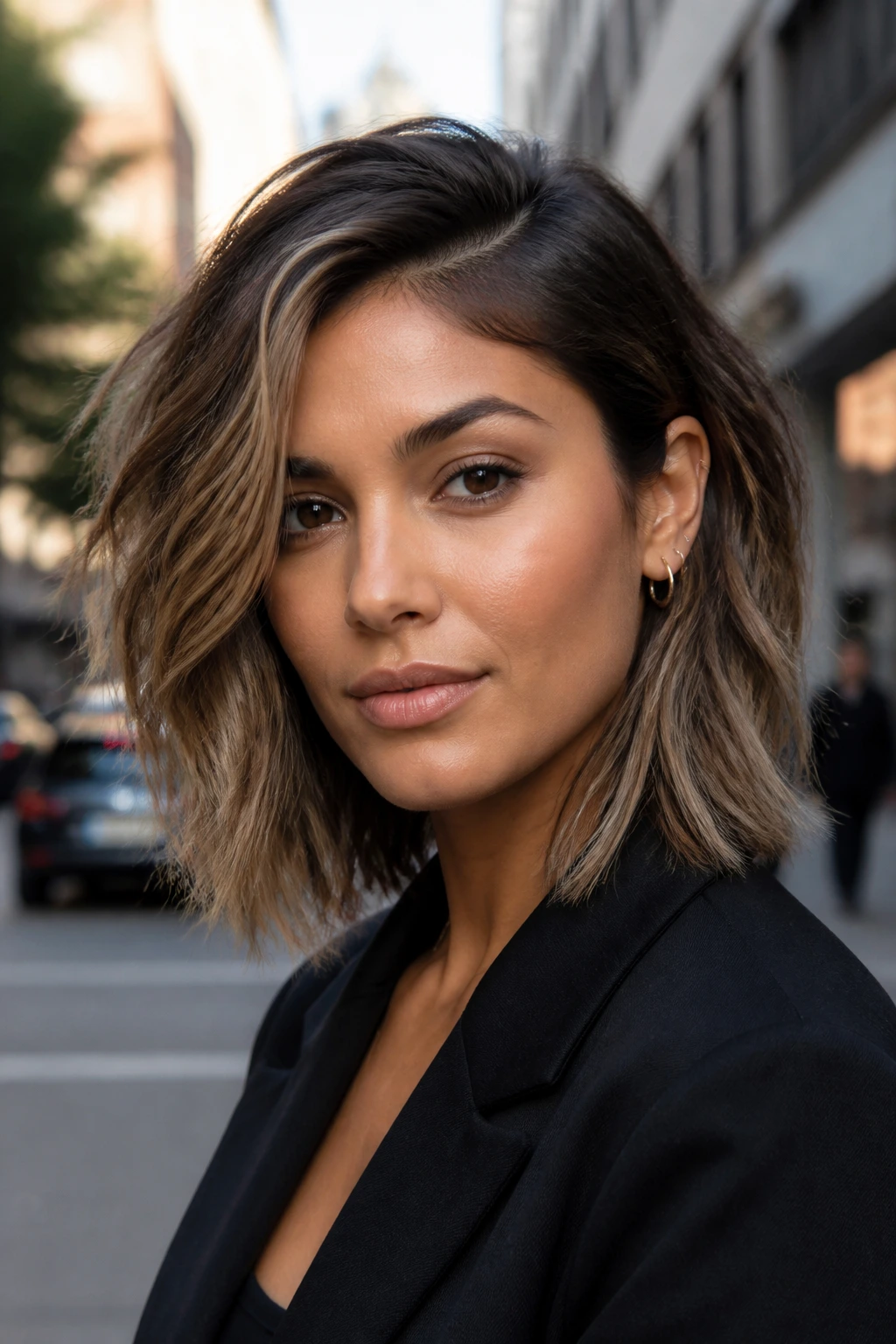
A side part can do more for a lob than a whole round of layers. It shifts the volume, builds lift at the crown, and gives the haircut a piecey finish that feels intentional even when the rest of the hair is simple.
This version works especially well if your hair tends to fall flat on top. A deep side part breaks the symmetry and lets one side sit fuller than the other. Add a bit of texturing through the mid-lengths, and the cut picks up that separated, ropey look that people usually want from a lob anyway.
The styling is straightforward. Blow-dry the roots in the opposite direction first for lift, then flip the part back where you want it. Finish with a tiny bit of matte paste rubbed between the palms and tapped through the ends. Not a lot. Too much and you lose the movement.
- Best for: Round or square faces, or anyone whose hair goes flat at the crown.
- Ask for: A clean baseline with soft internal texture and a part that can shift easily.
- Style note: The part can change the whole mood of the haircut.
A side-parted lob is low drama in the best way. It looks like you meant it.
10. Balayage Lob with Dimension
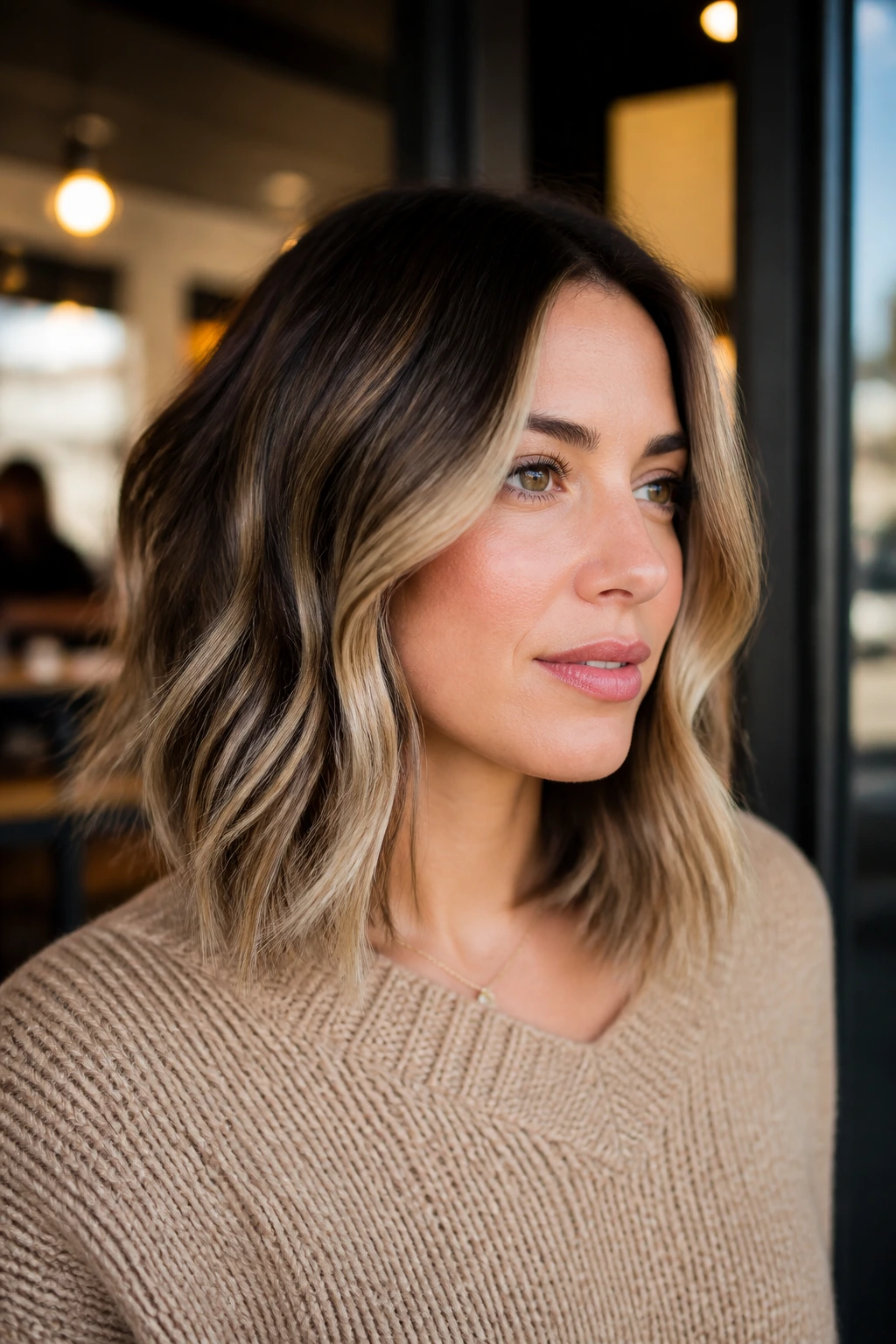
Color does not change the haircut, but it changes how the haircut reads. A balayage lob with dimension makes the texture visible. The lighter pieces catch the bends, while the darker base keeps the shape grounded.
That matters on medium length hair because textured cuts can disappear visually when everything is one solid shade. Soft balayage around the face and through the ends gives the lob more depth. You can see the layers. You can see the movement. Even a simple wave looks more finished.
The best placements are usually around the face, at the mid-lengths, and on the top layer of the ends. Too much lightness at the top can make the scalp look busy. Too much at the bottom can make the haircut feel over-processed. Keep the contrast gentle and the dimension believable.
This is one of the easier ways to make a lob look expensive without changing the cut itself. A good color job and a thoughtful shape play off each other. That combination is hard to beat.
11. Inverted Lob with Soft Ends
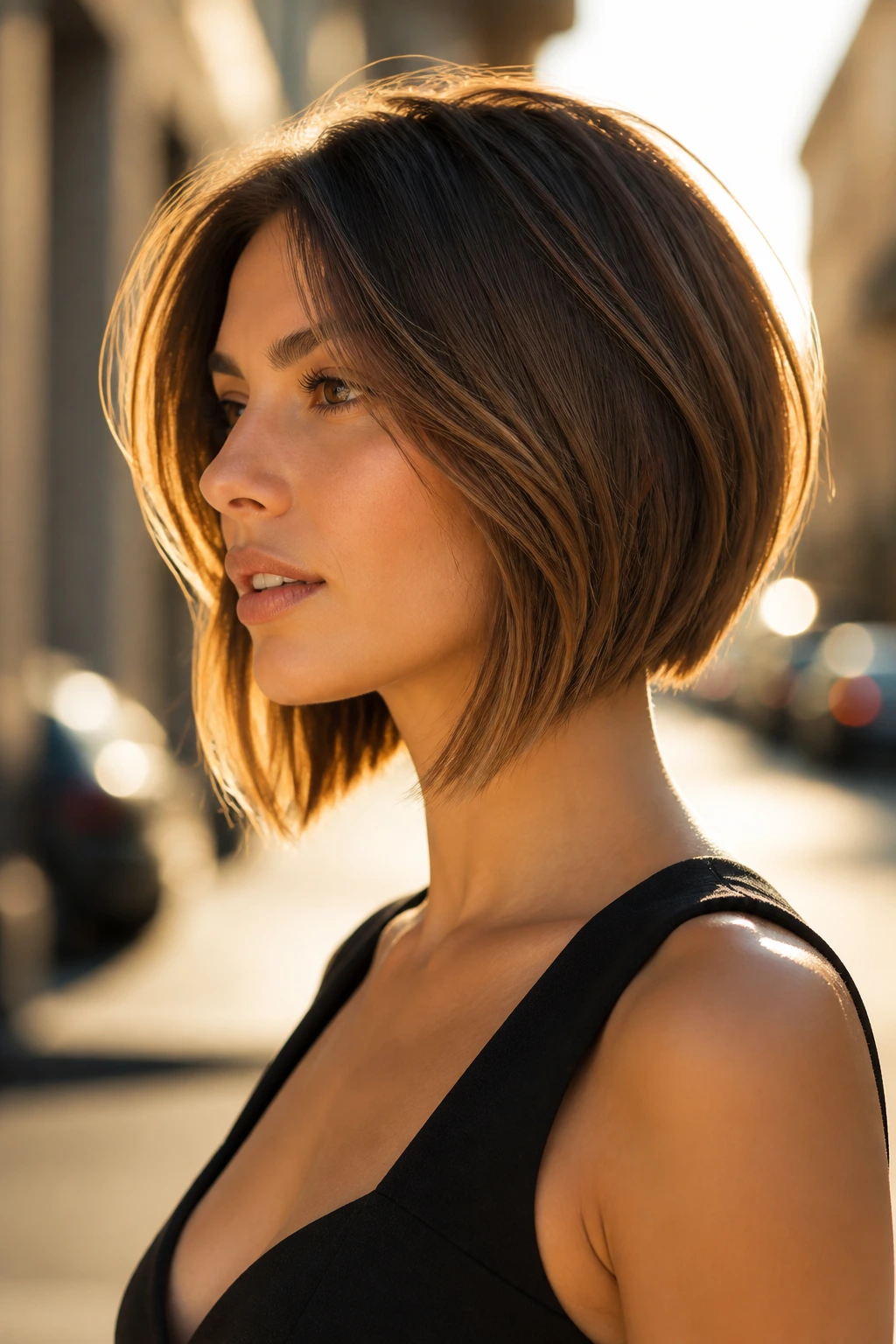
An inverted lob is shorter in the back and slightly longer in the front, but the best version does not look stacked or severe. The angle should be soft enough that you notice the line only when you look from the side.
This shape is useful when you want the neckline a little lighter. It clears space at the back of the neck, which can make the haircut feel cleaner and easier to wear with collars, jackets, or a scarf. For fine to medium hair, the shorter back can also create the illusion of more lift without teasing the roots every morning.
Soft ends matter here. If the perimeter is too blunt, the angle becomes obvious in a bad way. If it’s too broken up, the haircut loses the sleek front line that makes the inverted shape worth cutting in the first place. There’s a narrow path, and that’s why this cut is better in the hands of someone who knows how to shape a bob with restraint.
Wear it smooth for a sharper look, or put a loose bend through the front for a gentler one. Either works.
12. Air-Dried Natural Texture Lob
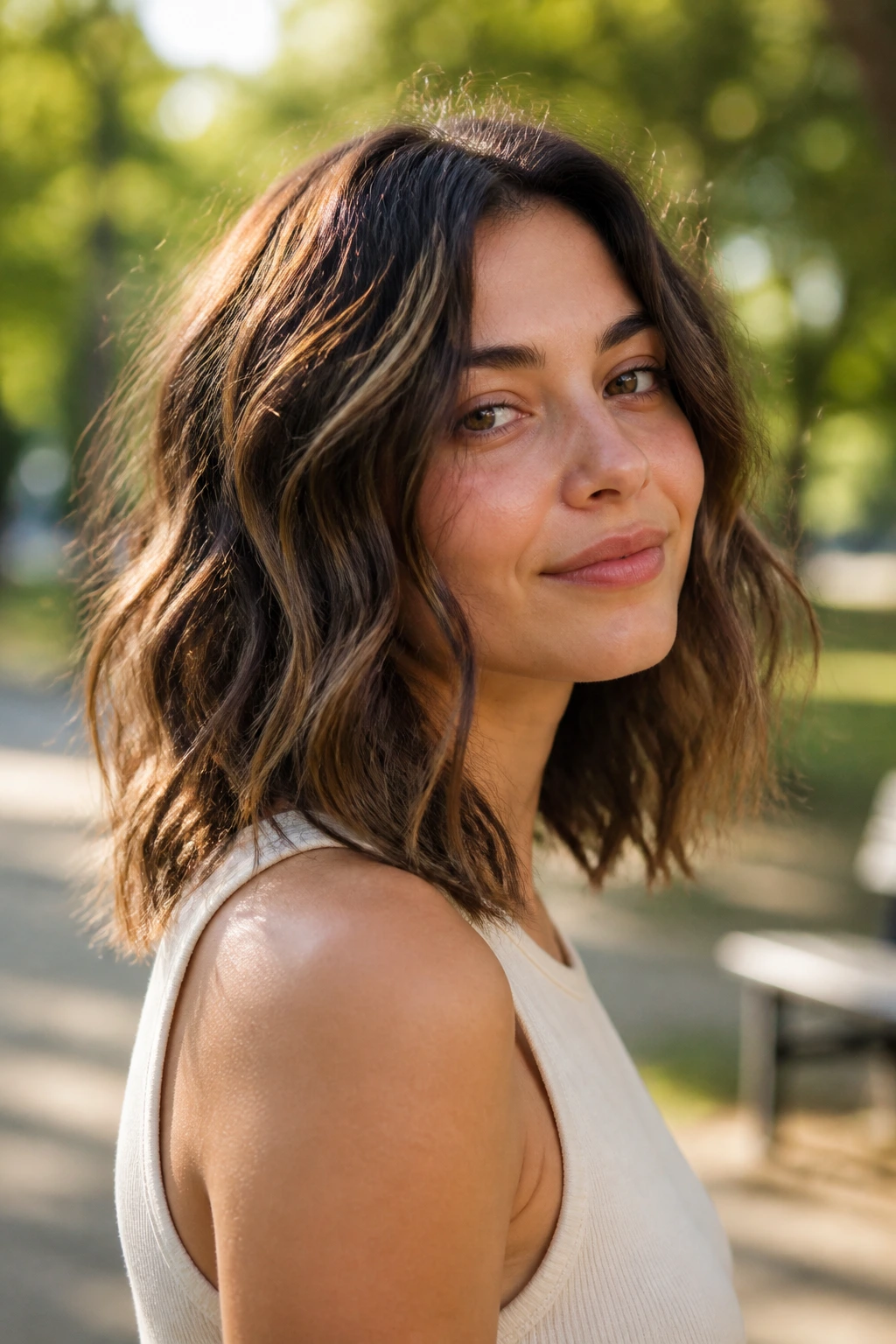
Some cuts look better when you leave them alone. This is one of them. An air-dried natural texture lob works when your hair already has wave, bend, or soft curl, and you want a shape that falls into place without a fight.
The cut should be built around what your hair actually does, not what you wish it would do. That means a smart perimeter, a little internal shaping, and enough room for the natural texture to show. The hair should hit somewhere around the collarbone or a little above it so it doesn’t stretch out under its own weight while drying.
A leave-in conditioner and a light curl cream are often enough. Scrunch, let it dry, and resist touching it until the cast or stiffness softens. Then break it up with clean hands. That’s the whole routine. There’s no prize for doing more.
- Best for: Wavy and loose-curly hair.
- Ask for: A cut that respects your natural bend and avoids over-layering.
- Style note: Less product usually means better movement.
- Avoid: Heavy oils at the roots. They flatten the shape.
This is the honest haircut. It doesn’t ask you to become a different person before breakfast.
13. Feathered Lob
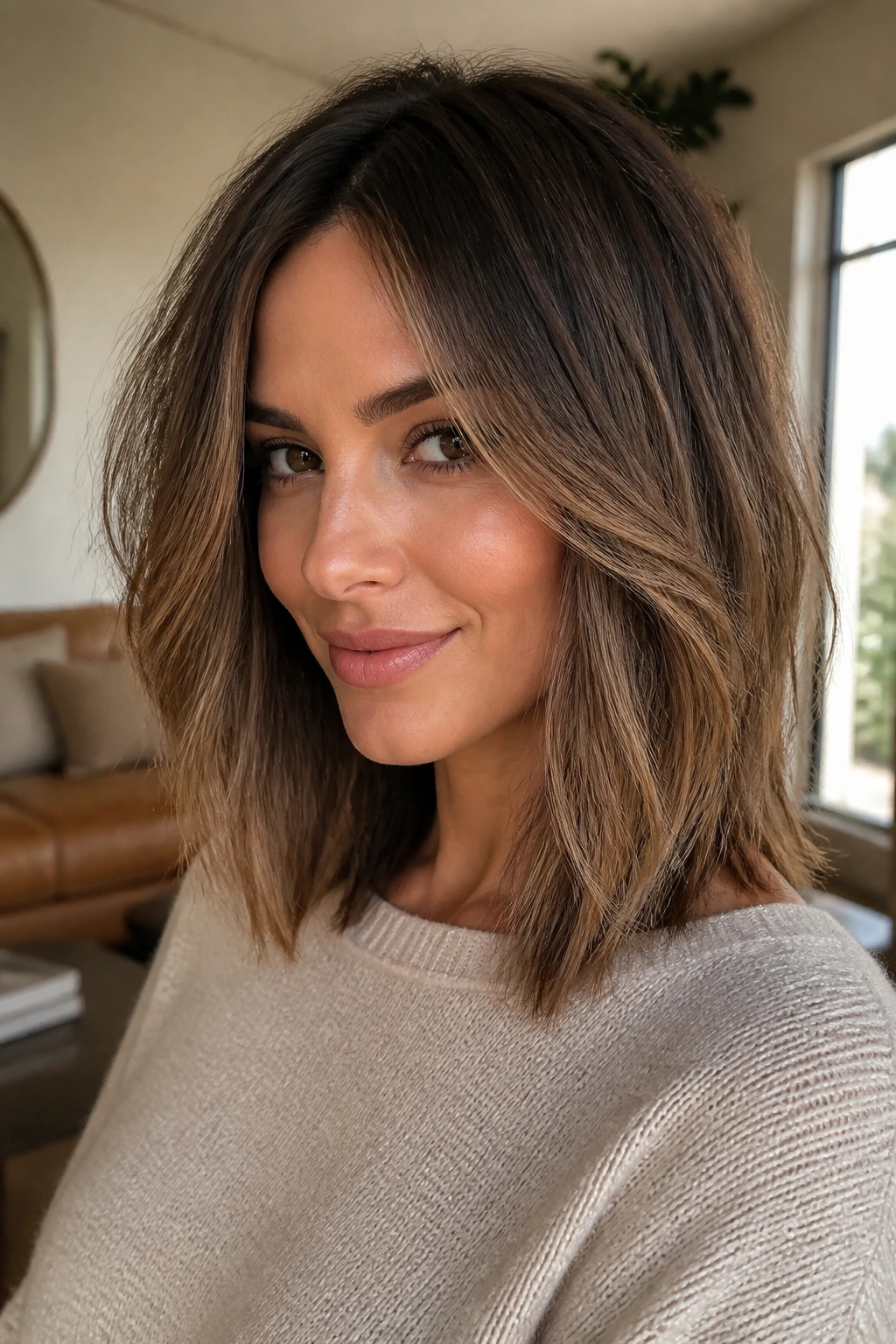
A feathered lob has a softer edge than a blunt cut, but it’s more controlled than a shag. The ends are thinned and softened so the hair flips and moves without looking ragged. Done right, it feels light around the face and through the shoulders.
The feathering can happen mostly at the ends, or it can run through the top layer for a gentler, more airy finish. I like it on medium length hair that feels bulky at the bottom but doesn’t need a lot of layering around the crown. It keeps the silhouette friendly.
There’s a reason feathering keeps coming back: it solves a real problem. Some hair needs softness, not a harder line. Feathered ends make that possible without turning the haircut into a full shag. If you like hair that turns out at the ends in a soft way, this cut will make sense fast.
A round brush and a quick blowout will show off the shape, but you can also wear it slightly tousled. The haircut doesn’t demand a perfect style. That’s part of the charm.
14. Messy French-Girl Lob
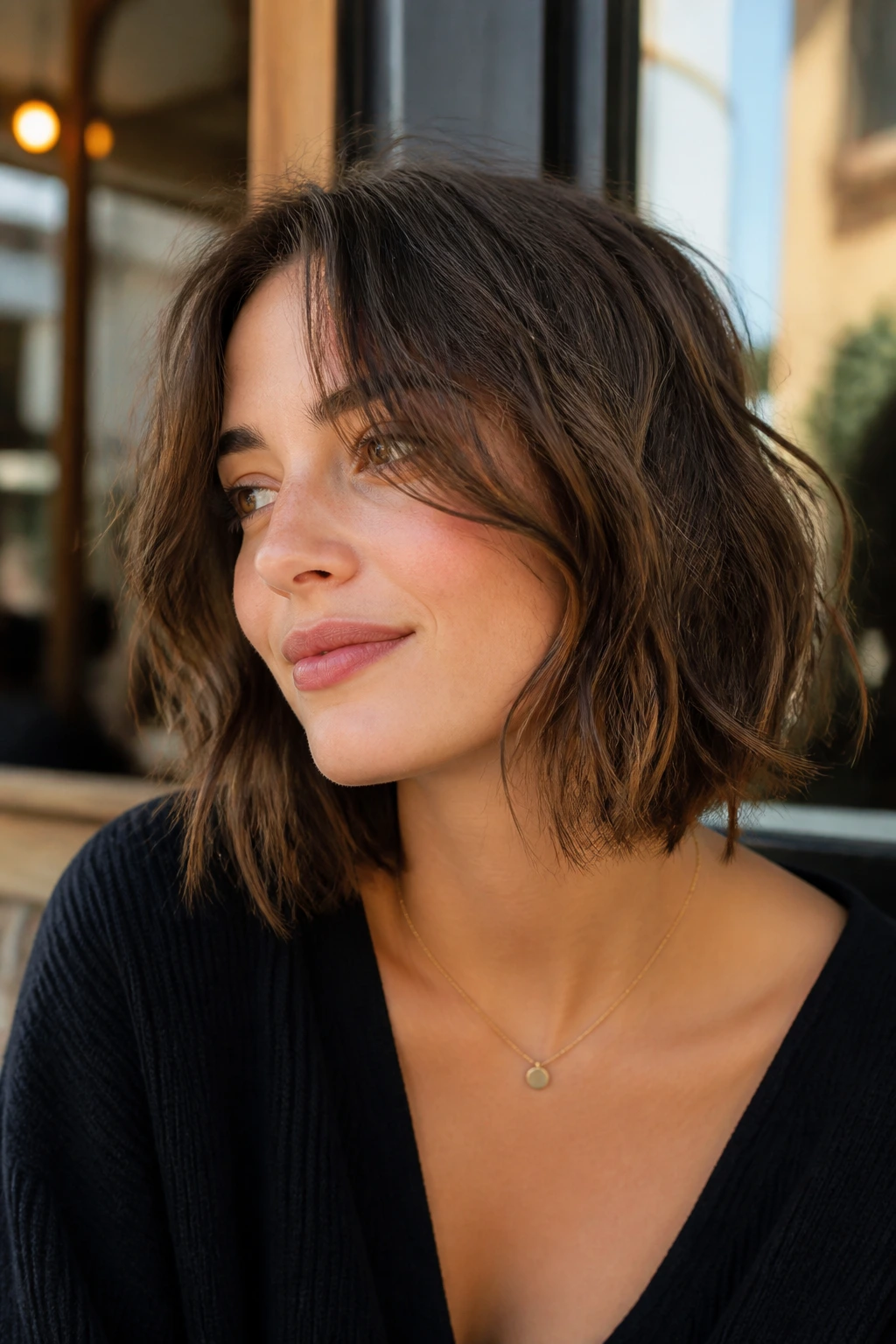
The messy French-girl lob is less about one exact shape and more about attitude. It usually sits around the jaw to collarbone range, with soft ends, a loose part, and a texture that looks a little slept-in even when it’s freshly done.
Unlike a polished blowout lob, this one doesn’t need every strand smoothed into place. A bit of bend is welcome. A little frizz can even help. The haircut works because it feels easy, not because it looks expensive in a glossy, high-effort way. That’s a good distinction to keep in mind.
This version suits people who don’t want to spend 20 minutes convincing their hair to act civilized. A dab of styling cream, a rough blow-dry, and a few bends with a flat iron are enough. The cut should already have that undone shape built in.
If you want hair that feels relaxed but not messy in the wrong way, this is a strong pick. It’s casual on purpose. There’s a difference.
15. Mid-Length Lob with Internal Layers
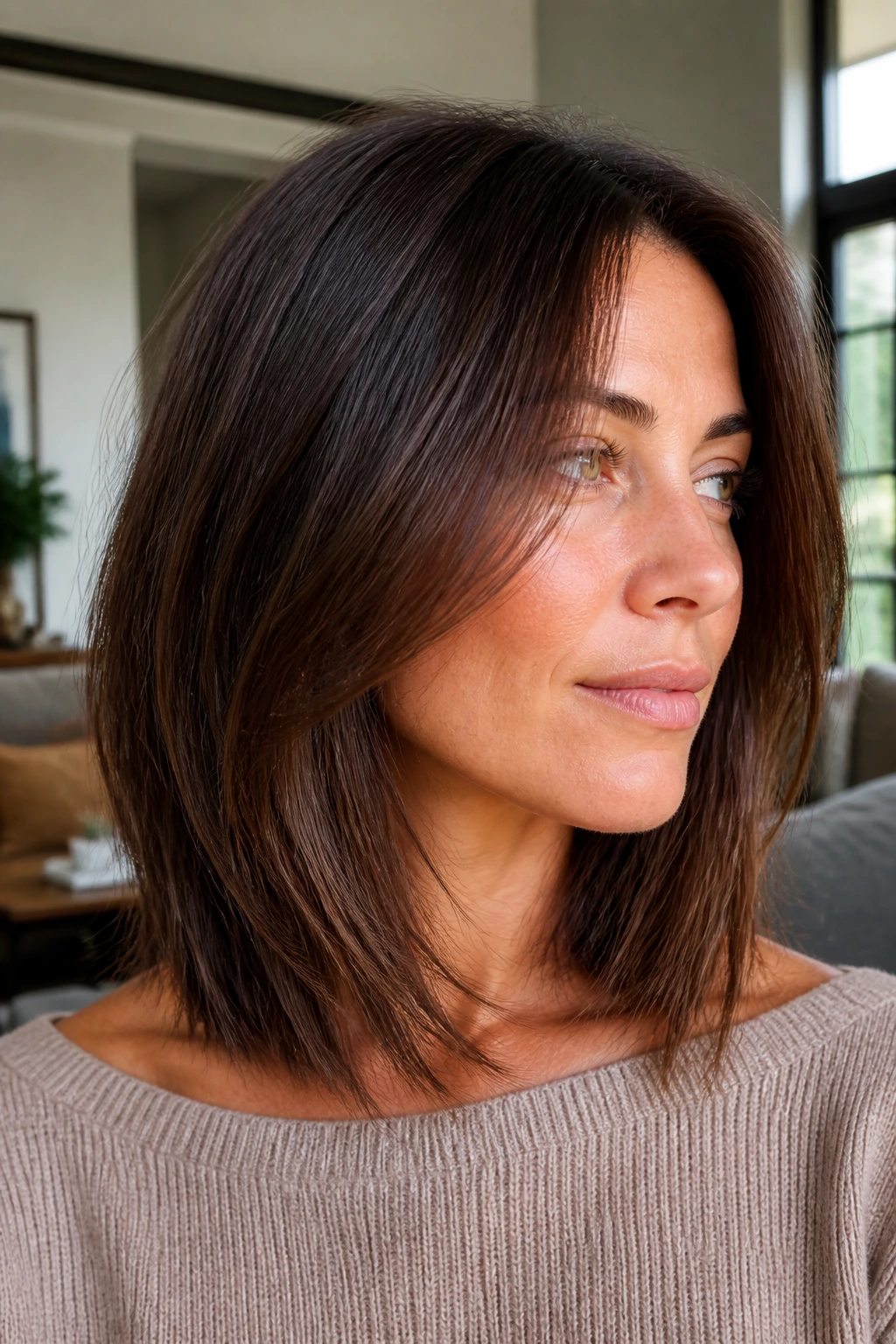
Can a lob look full without looking bulky? Yes, if the weight is removed from inside the haircut instead of carved off the outside. That’s what internal layers do.
The perimeter stays clean, which keeps the lob looking like a proper shape. Inside the cut, the stylist takes out some of the heavy spots so the hair can fall more softly. This is especially useful for thick hair that grows out into a triangle or for hair that swells around the shoulders and feels too wide.
The nice thing about internal layers is that they hide. You get the movement without the choppy visual effect some layered cuts create. When the hair moves, the cut comes alive. When it sits still, it still looks neat. That’s the sweet spot.
I’d ask for this if you like a controlled finish but hate that blunt, solid feeling at the bottom of the hair. It’s a quieter haircut than a shag, and frankly, more useful for a lot of people.
16. Wavy Lob for Fine Hair
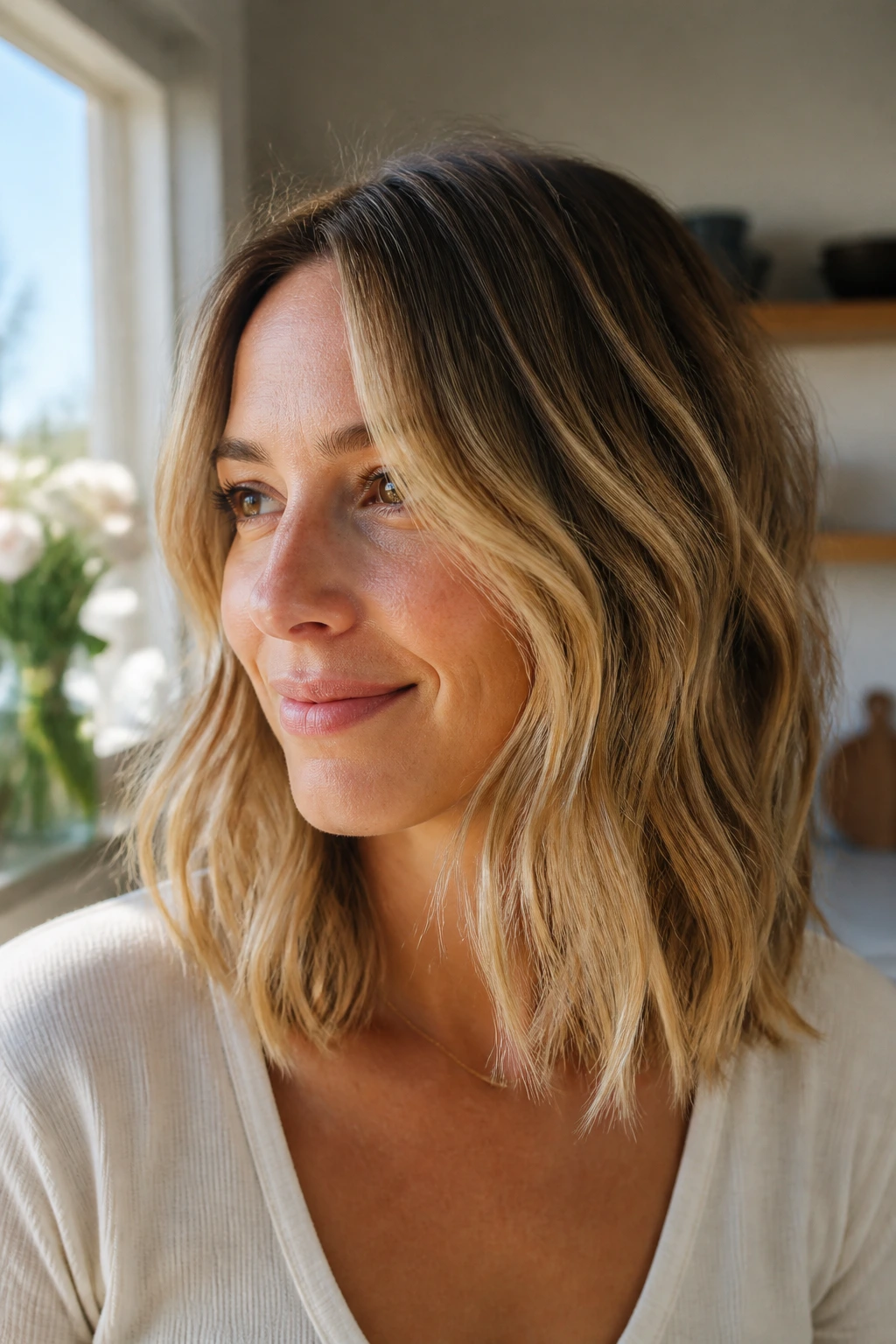
Fine hair needs a textured lob that keeps enough length to fake density. Go too short, and the ends can look stringy. Go too layered, and the body disappears. The best wavy lob for fine hair walks a narrow line.
You want a collarbone-to-shoulder length with soft, minimal layers and a little bend through the mids. That bend can come from air-drying with a light mousse or from a quick pass with a 1-inch curling iron. The point is to build movement without making the hair look sparse at the bottom.
A bluntish perimeter usually helps fine hair more than a highly shredded one. It gives the ends visual weight. Then a few soft waves keep the haircut from lying flat against the head. If the hair is pin-straight and very fine, a little root lift spray at the crown can help, but don’t go wild with product. Fine hair punishes overloading fast.
This is one of those cuts that looks better in motion than in photos. That’s not a flaw. It’s the point.
17. Thick-Hair Textured Lob
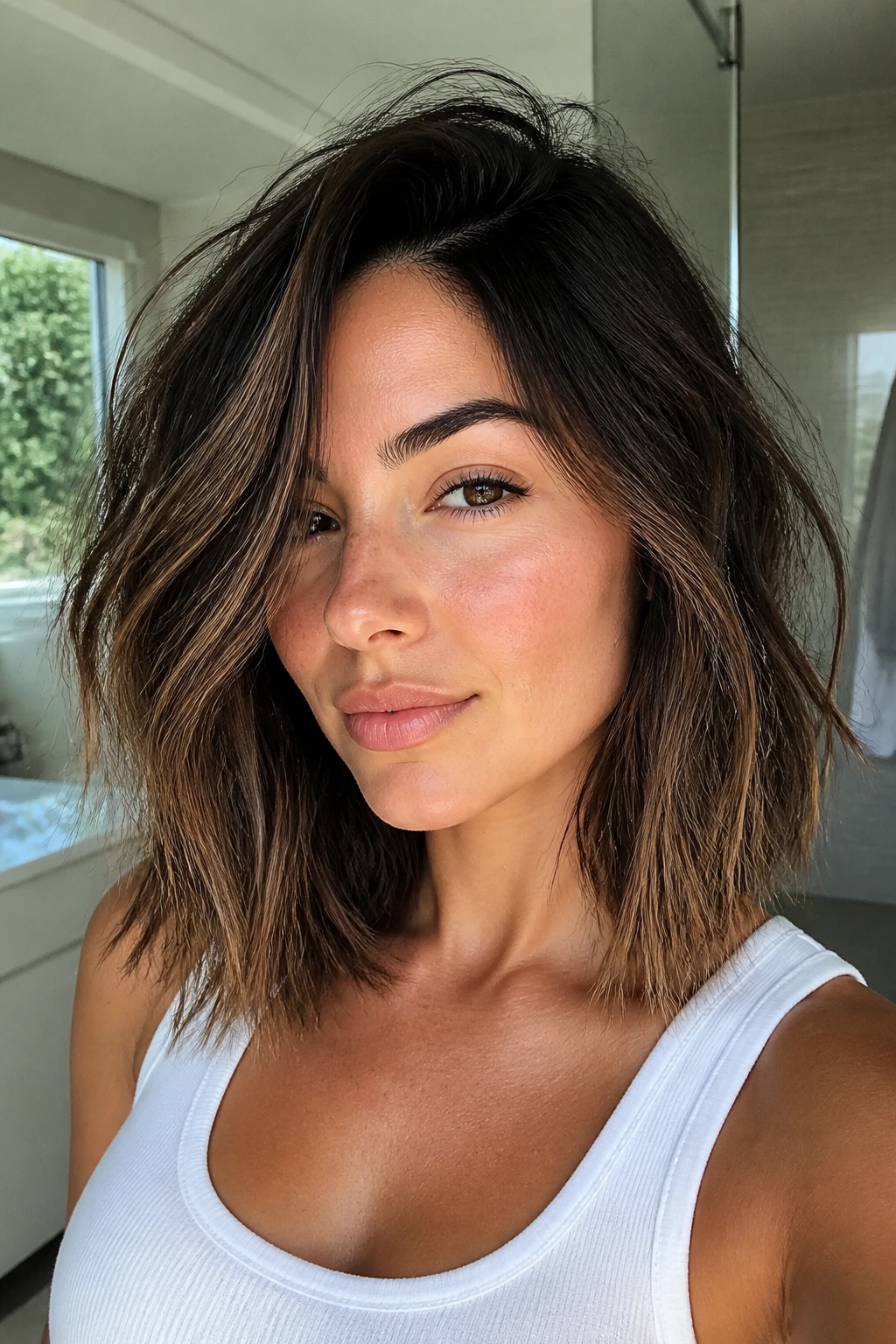
Thick hair needs texture for a different reason: not to create fullness, but to remove the extra weight that makes the shape puff out. A textured lob haircut on thick medium length hair should feel lighter through the inside while still keeping a strong outline.
The best version usually includes internal debulking, longer layers, and a perimeter that stays clean enough to anchor the haircut. If the layering gets too aggressive, thick hair can spring up and lose its shape. If nothing gets removed, it turns into a wall. Neither outcome is fun.
A smart stylist will often work in sections, taking out bulk where the hair naturally swells — around the occipital area, below the crown, and sometimes near the sides if the hair is wide. That makes the haircut easier to blow-dry and keeps the ends from flipping in every direction.
- Best for: Dense, coarse, or heavy wavy hair.
- Ask for: Internal weight removal plus a controlled perimeter.
- Helpful styling: A smoothing cream and a medium round brush tame the mid-lengths.
- Skip this if: You want a razor-thin, airy finish. Thick hair usually looks better with structure.
This cut should feel lighter, not flimsy. That difference matters.
18. Soft Grow-Out Lob
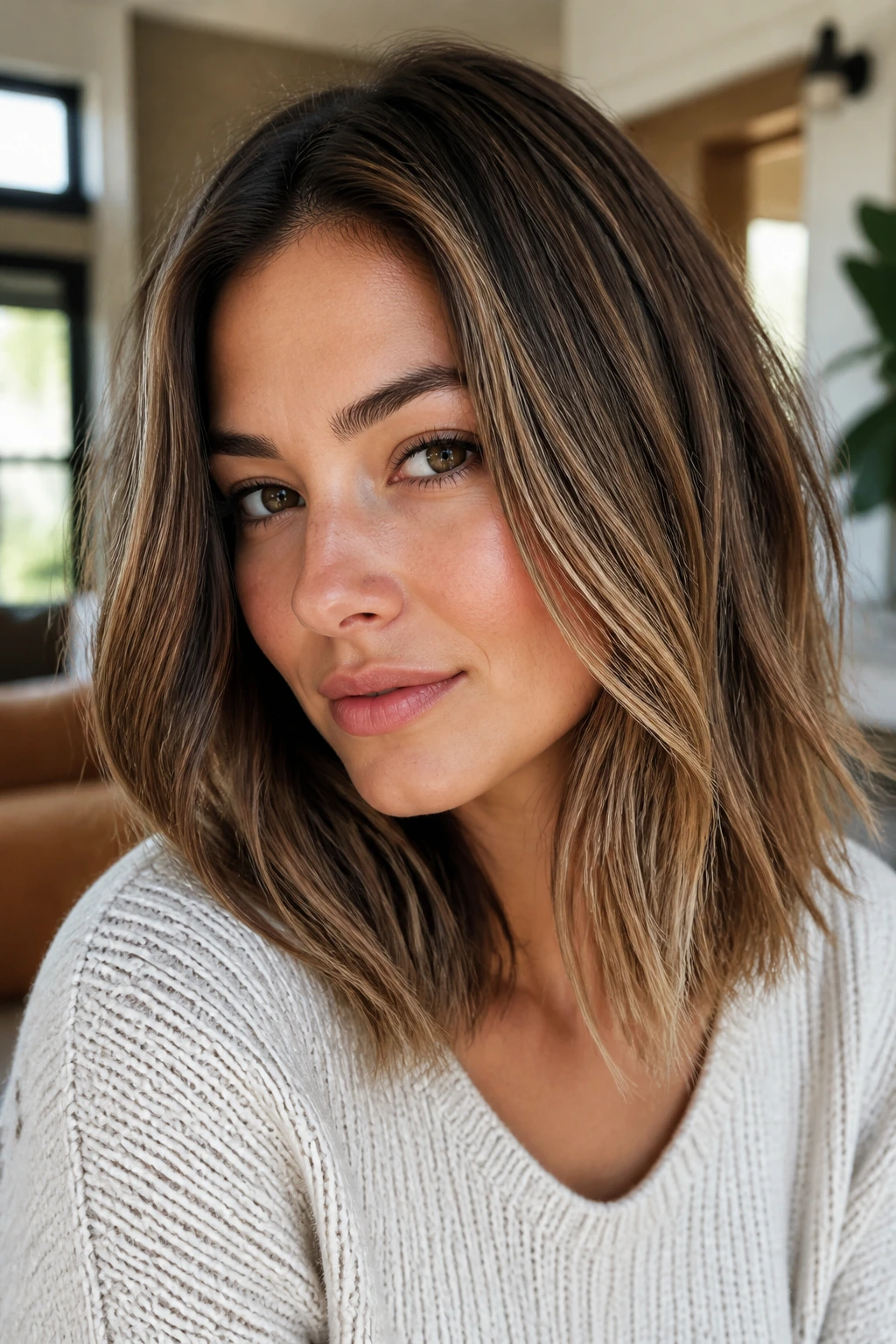
A soft grow-out lob is the one I’d recommend to anyone who wants a haircut that still looks good after it starts to change. The front can sit a touch longer, the layers can stay gentle, and the ends can be textured just enough to soften the line. Nothing about it should feel precious.
This is the smartest choice if you do not want to chase the salon every few weeks. A good grow-out lob keeps its shape even when the collarbone length creeps a little lower. The texture helps the haircut blur the line between fresh and grown-in, which is exactly what makes it useful.
I like this version best when the stylist keeps the outline clean and uses soft point cutting near the ends. That gives you movement without the kind of broken texture that ages badly. It can be worn straight, waved, tucked behind one ear, or clipped back at the sides. No drama. No special rules.
If you want one lob that plays nice with real life, this is the one I’d pick. It looks finished on day one and still makes sense weeks later, which is more than most cuts can say.
