



A long bob can do more for a round face than almost any other cut. The trick is shape, not length alone.
Keep the length grazing the collarbone or slipping just past the chin, and the whole face starts to look longer, leaner, and a little sharper around the edges. Go too short at the cheek, and the cut can widen the face instead of balancing it. That’s the part most people miss.
The good lob has a job. It pulls the eye downward, breaks up cheek fullness, and keeps the silhouette moving instead of sitting in one blunt line right across the widest point of the face. A side part can help. So can a soft bend, a longer front angle, or a fringe that opens in the middle instead of stopping dead across the forehead.
Some lobs look polished. Some look undone. A few lean sleek and straight, which I love on round faces when the ends are cut with purpose. Others are all about loose texture and a little bend through the mid-lengths. The useful part is this: you do not need to chase one “correct” look. You just need the right shape for your hair and your features.
1. Collarbone Blunt Lob
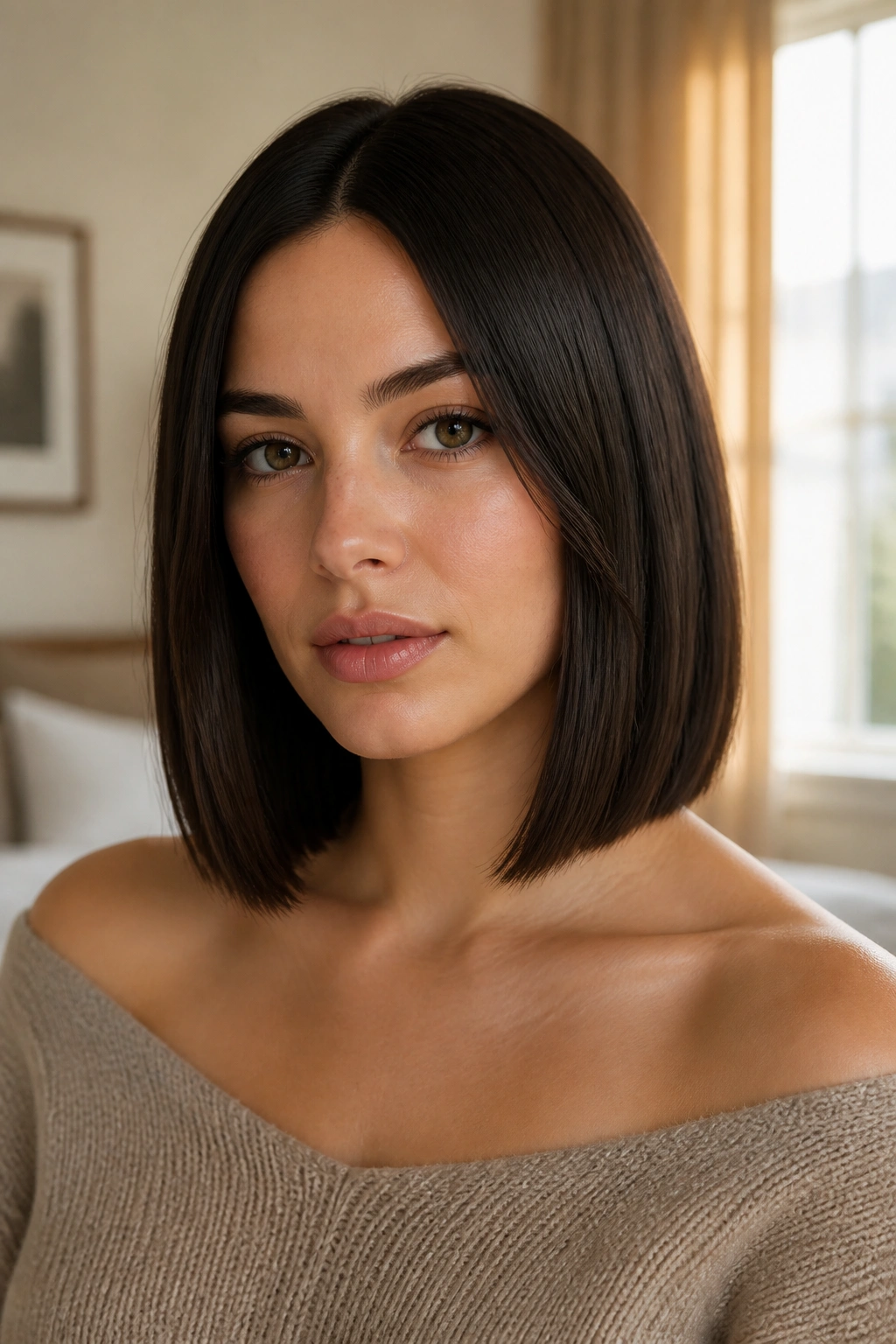
A blunt lob that lands at the collarbone is one of those cuts that looks calm but does a lot of work. The line is clean, the ends feel full, and the extra length keeps the eye moving down instead of stopping at the cheeks. On a round face, that matters.
I like this cut most on fine to medium hair because the blunt edge gives the ends some weight. No fluffy outline. No soft fade at the jaw. Just a firm, tidy shape that reads stronger in motion than you’d expect from a simple cut.
Ask for the ends to hit right around the collarbone, maybe a touch lower if your neck is short or your face is especially full through the middle. That tiny bit of extra length changes everything. It keeps the look from turning into a chin-length bob in disguise.
2. Soft A-Line Lob

A slight angle does more than extra layers ever will. The front sits a little longer than the back—usually by about 1 to 2 inches—and that diagonal line helps a round face look less wide. It’s subtle. Good. You do not want a dramatic wedge unless you like a sharper, more graphic look.
What Makes It Work
The A-line shape gives your hair a built-in forward sweep. That means the front pieces skim the jaw while the back stays a bit shorter and lighter, which keeps the neck area open. It’s a smart cut for anyone who wants structure without looking severe.
What to Ask For
- Keep the front length at or below the collarbone.
- Leave the back softly shorter, not stacked high.
- Avoid a heavy blunt edge at the cheeks.
- Style with a flat brush so the front curves inward a little.
If you like shape but hate fussy styling, this is a strong pick.
3. Curtain Bang Lob for Round Faces

Why do curtain bangs work so well with a lob? Because they break up the face in the middle and send the eye outward in two directions. That little split around the forehead creates a vertical line without making the cut feel stiff.
Why It Flatters the Face
Curtain bangs should start higher than you think—usually around the eyebrow or just above the cheekbone—and then fall away from the face in a soft sweep. They should not sit like a heavy curtain across the forehead. That’s a different thing, and it can make a round face look shorter.
How to Style It
Blow-dry the fringe forward first, then roll it away from the face with a round brush. Keep the longest pieces blending into the sides of the lob so there’s no obvious line where the bangs stop. That blend is the whole point. Without it, the cut loses the softness that makes it work.
4. Wavy Lob with Cheekbone Pieces
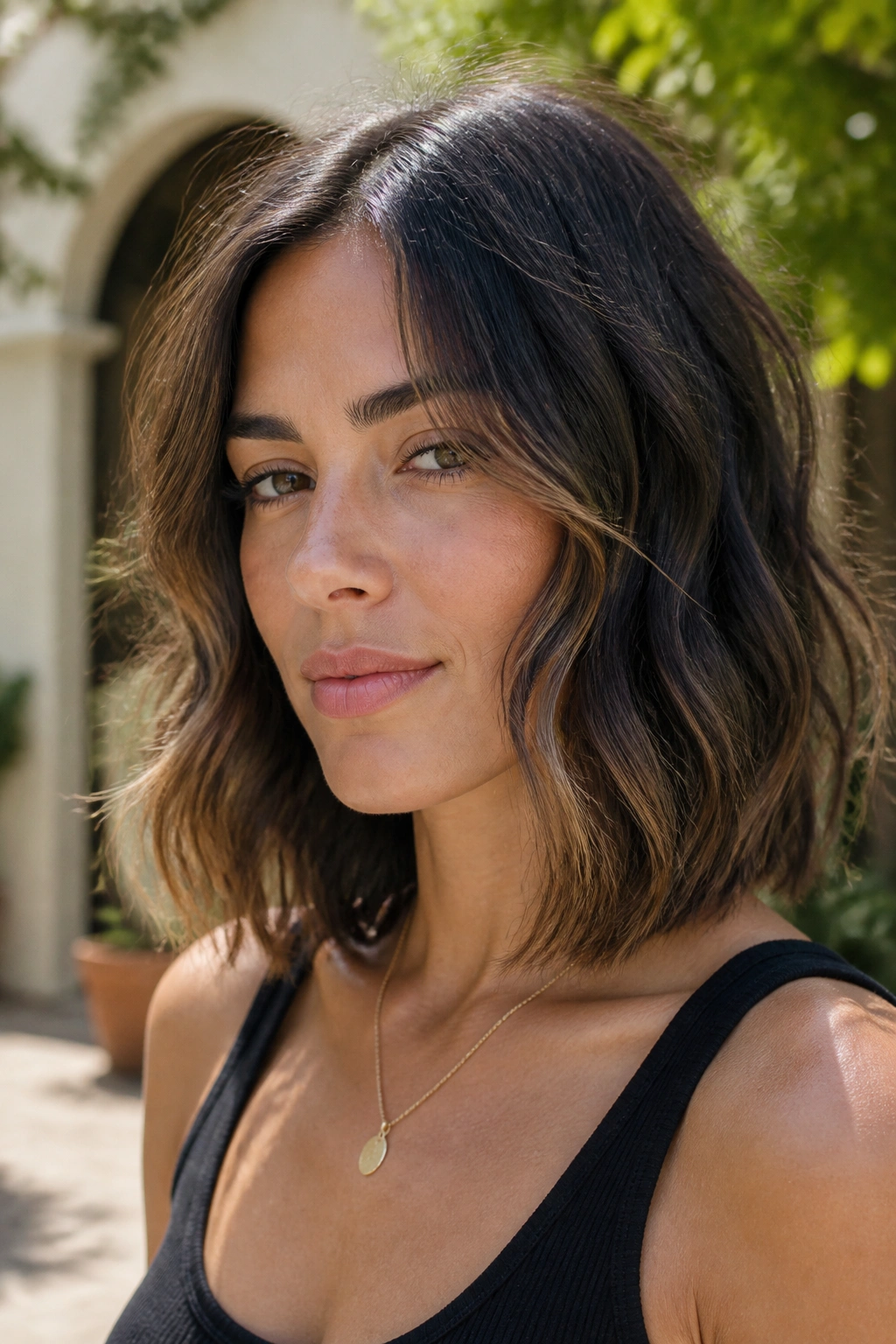
If your hair already has a bend to it, don’t fight that. A wavy lob with pieces that start around the cheekbone can give a round face more angle without looking forced. It feels easy, but the shape is doing real work.
The strongest version of this cut uses loose, medium waves—not tiny curls packed close to the head. The goal is to keep movement through the lengths while letting the front pieces skim the sides of the face in a controlled way. When the waves start too high, the face can look wider. When they start below the cheek, the shape opens up.
A 1.25-inch curling iron is usually enough for this look. Wrap the hair away from the face, leave the ends out on a few sections, and let the wave cool before brushing it lightly. That gives you bend without a helmet.
5. Deep Side-Part Lob
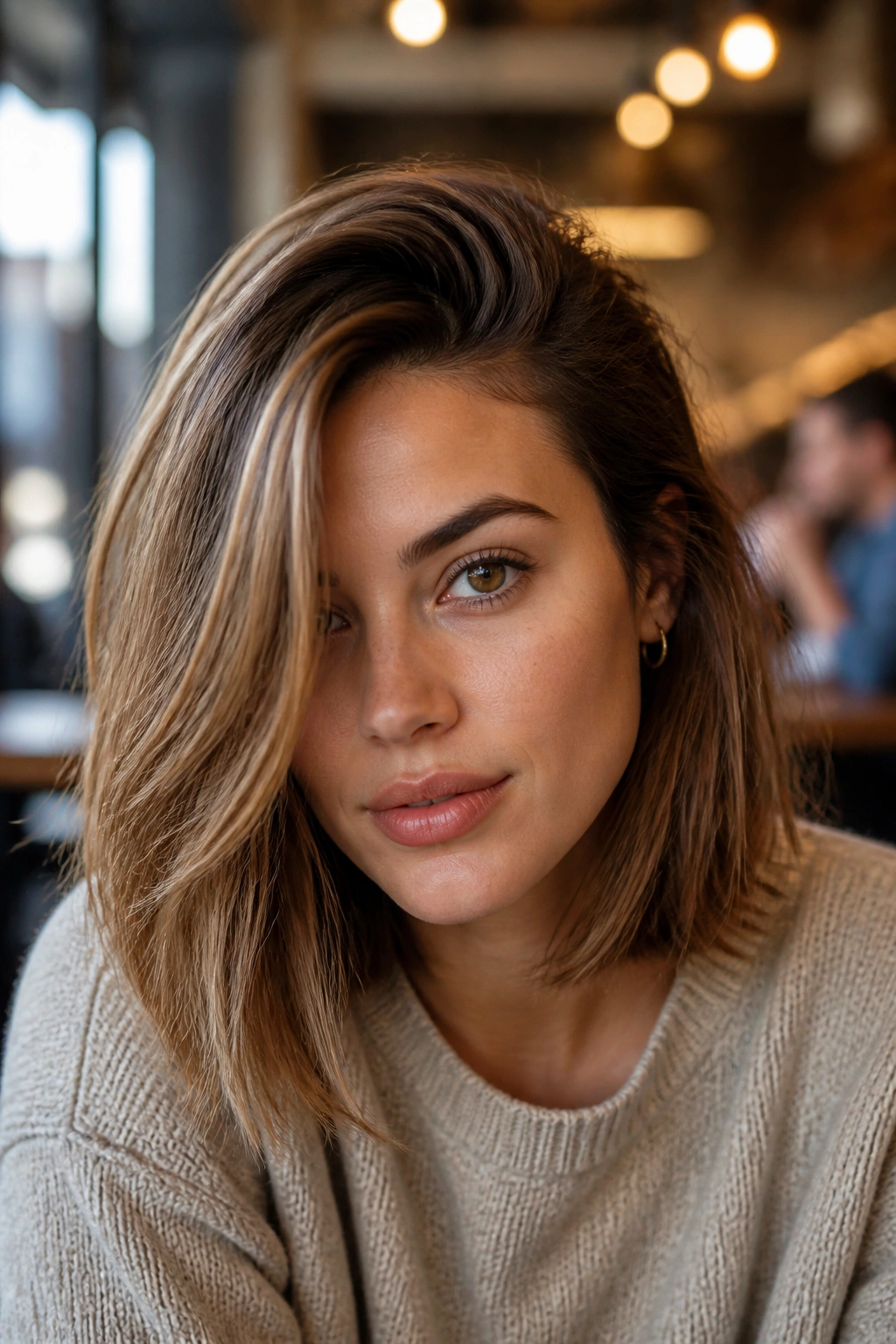
A deep side part is one of the easiest fixes for round faces, and I mean that in the plainest way. It changes the balance fast. Suddenly the cut has asymmetry, the crown has height, and the face doesn’t read as wide across the middle.
This works especially well if one side of your hair naturally wants to lie flatter than the other. The heavier side drapes across the cheek, while the lifted side adds a little vertical line near the temple. That visual shift matters more than people think.
The part does not need to be dramatic. An 8:2 or 7:3 split is enough. Too deep, and the style can feel dated or overdone. A little off-center goes a long way.
6. Choppy Textured Lob
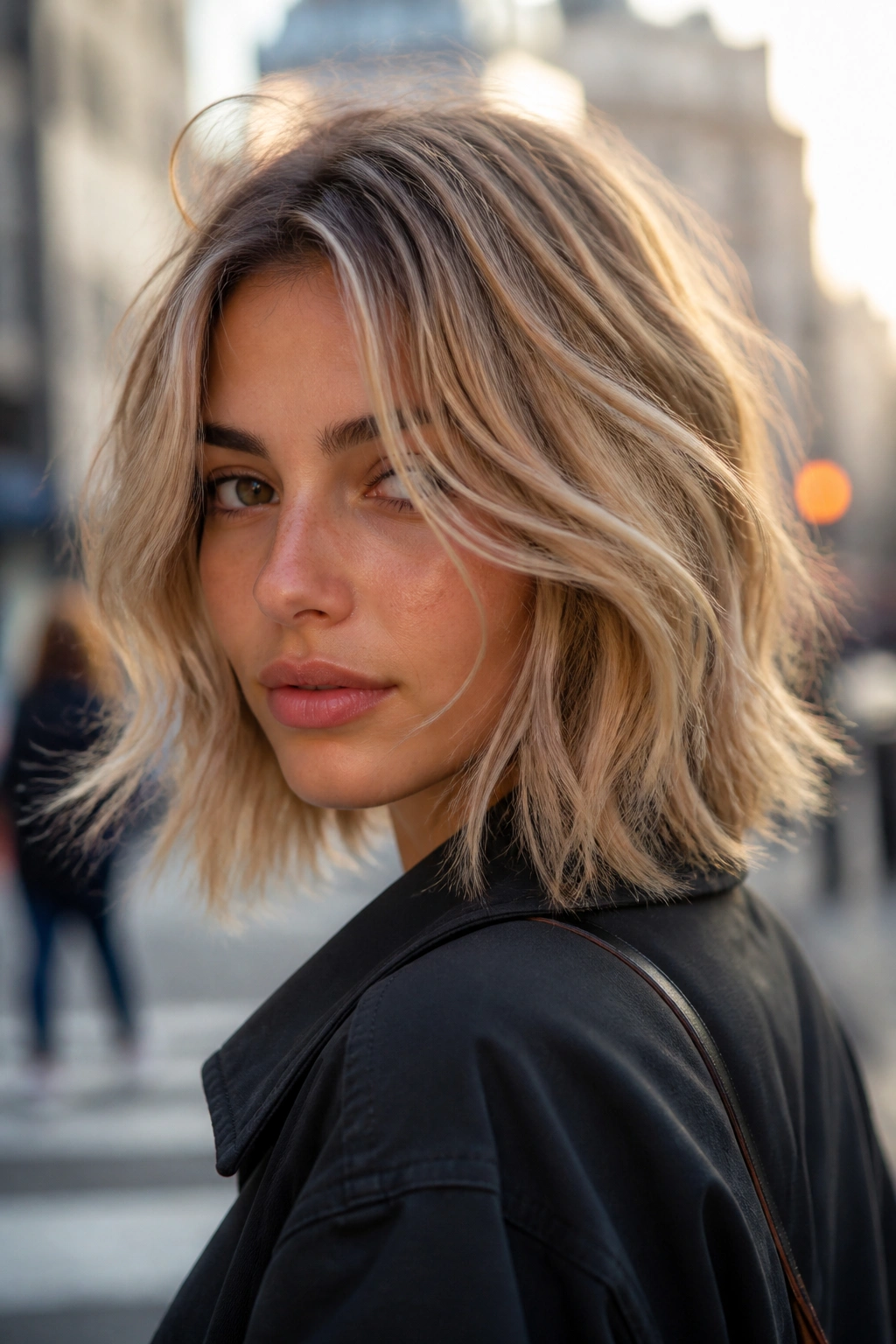
Unlike a blunt lob, a choppy textured lob gives the ends more movement and less weight. That can be a gift if your hair is thick, puffy, or prone to sitting in one big shape around the face. The point is not messiness. It’s separation.
The cut usually relies on point-cut ends and soft internal texture, which keeps the perimeter from looking heavy. On a round face, that helps because the hair doesn’t puff outward at the cheeks. It bends and shifts instead.
This is the kind of lob that looks better with a little grit. A matte styling cream, a pea-sized amount, or a dry texture spray can keep the piecey finish from falling flat. If your hair swells at the sides, this one is worth your time.
7. Sleek Center-Part Lob
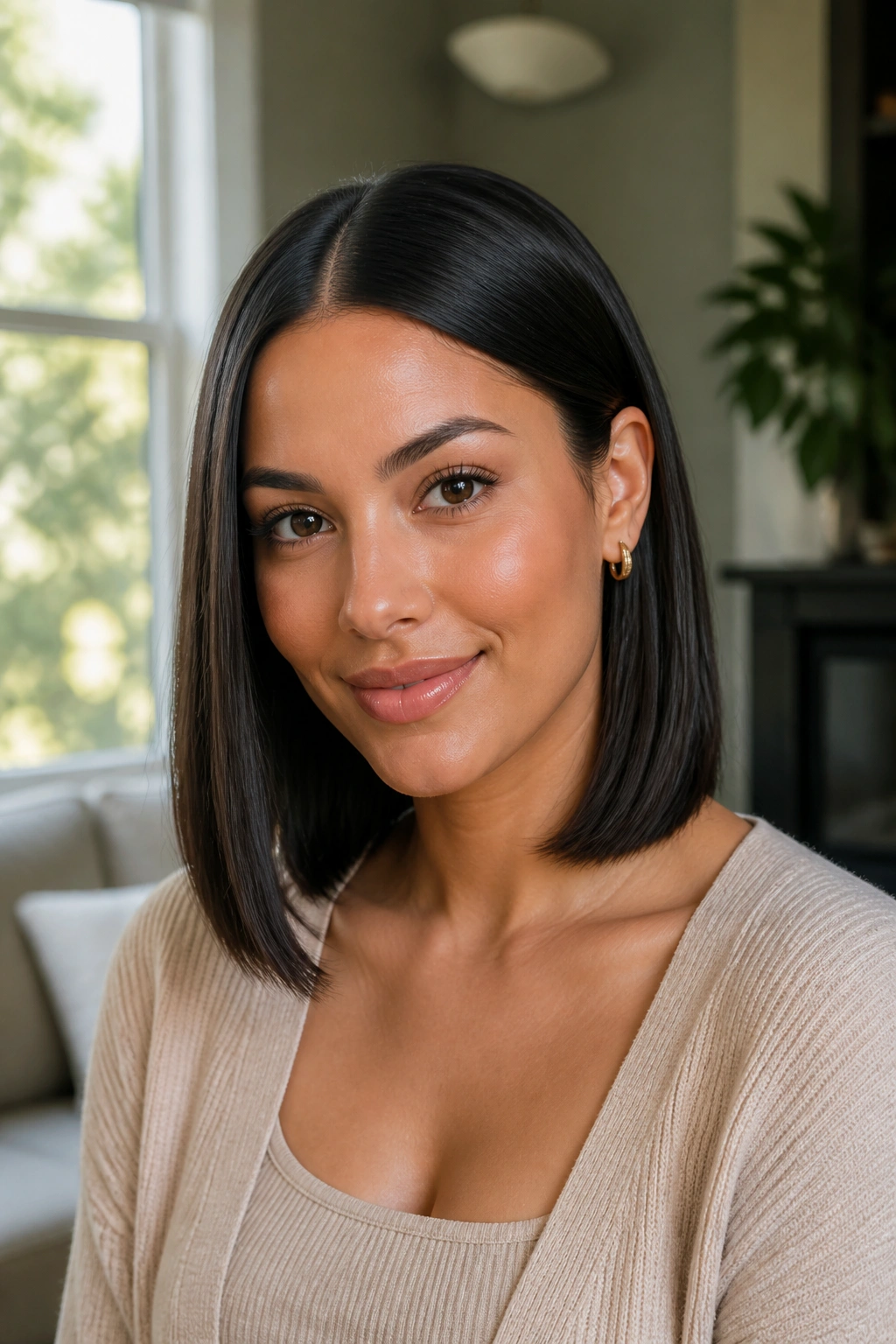
A center part is not the enemy. Not even close. On the right lob, it can create a clean vertical line that lengthens a round face and keeps the style from drifting too far to one side.
How to Keep It from Widening the Face
The key is length and control. The lob should sit below the chin, ideally closer to the collarbone, and the hair should be smoothed enough that it hugs the head at the top before it moves outward at the ends. If the hair balloons at the temples, the part will work against you.
Best Way to Wear It
Tuck the front pieces behind the ears for one or two inches of hair on each side, or leave them loose with a soft bend at the ends. That creates shape without puff. The line stays clean, and the face gets more room to breathe.
8. Long Layered Lob with Face-Framing Pieces
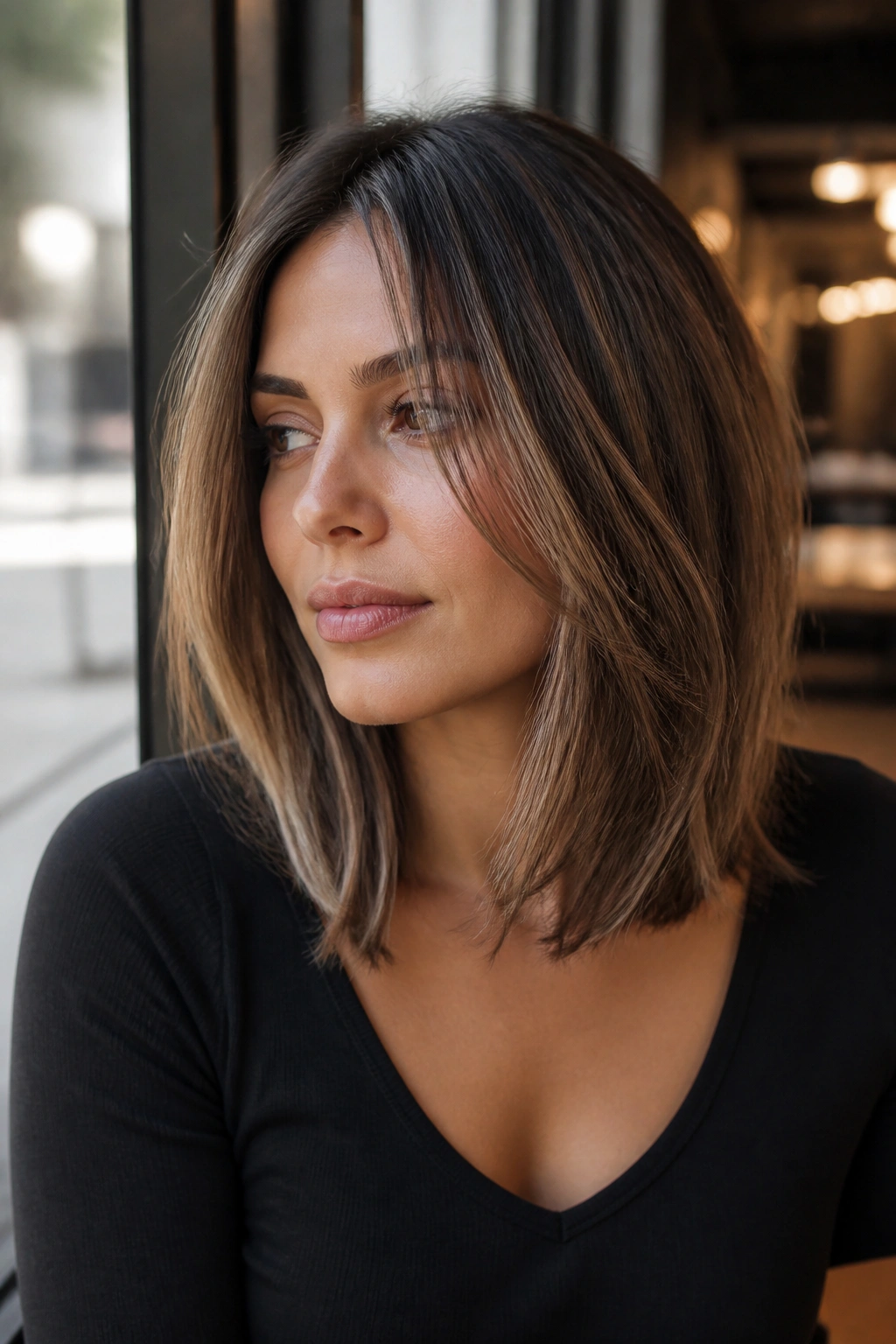
A long layered lob is the cut I’d hand to someone who likes movement but doesn’t want a shag. It gives you shape through the front, softness through the sides, and enough length to keep the face from looking boxed in.
The face-framing pieces matter most. Ask your stylist to start them around the chin or just below it, then let them drift toward the collarbone. Anything shorter can land right on the widest part of a round face, and that is usually the wrong place to stop.
Best Lengths to Ask For
- Chin-length front pieces for a softer frame.
- Collarbone length at the longest point.
- Light layering through the ends, not the crown.
- A center or off-center part, depending on where your hair falls naturally.
This cut lives or dies by the front angle.
9. Bottleneck Bang Lob
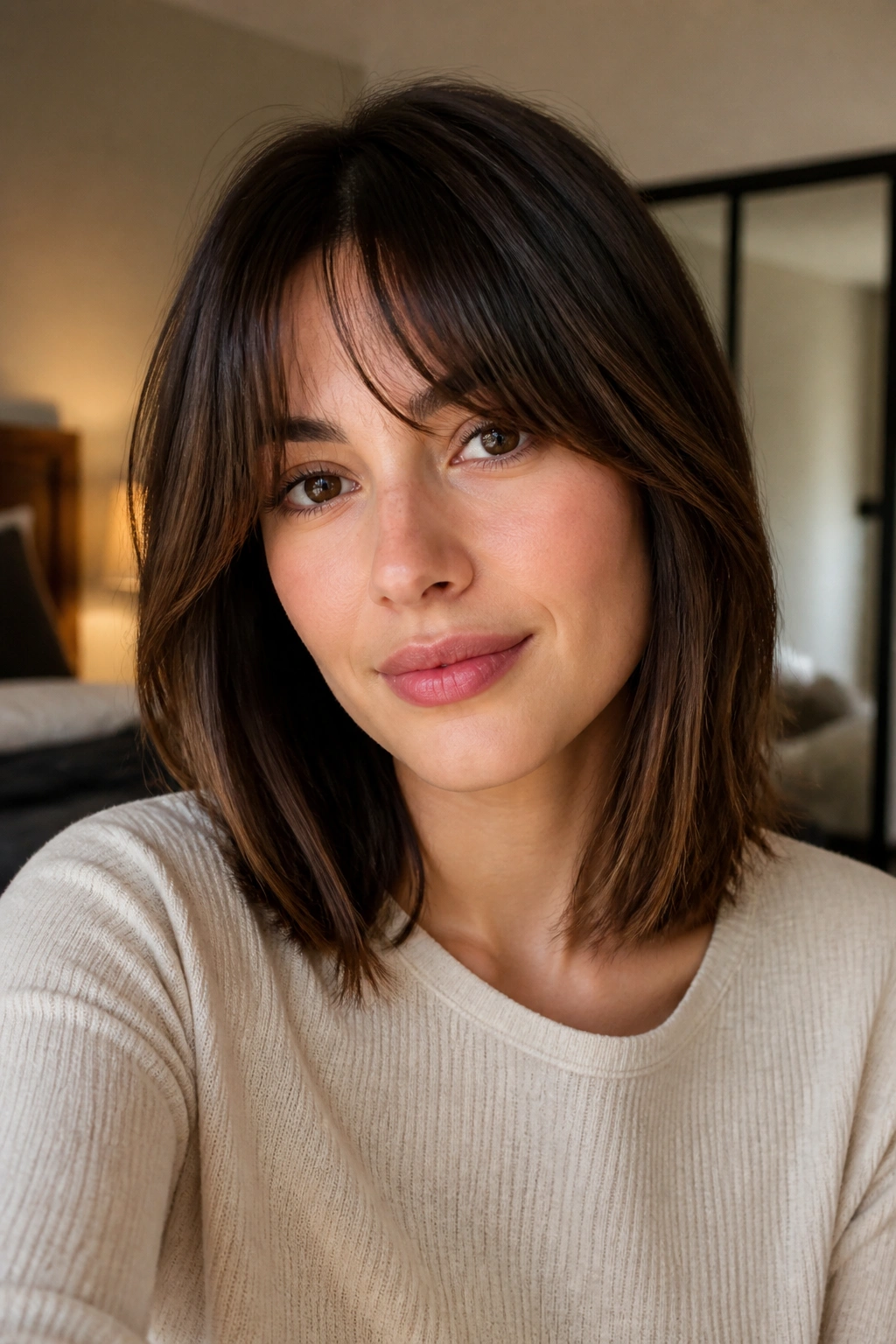
What makes bottleneck bangs so useful is the shape: narrow at the top, wider as they drop toward the cheekbones. That shape gives a round face a little opening at the forehead and a little softness at the sides. It feels less blunt than a straight fringe.
I like this fringe with a lob that stays fairly straight through the body of the hair. The contrast is nice. The bangs do the soft work, and the lob keeps the line neat. If everything is fluffy, the face can get lost in the volume.
Ask for the shortest point of the fringe to hover around the middle of the forehead, then let the sides taper into the cheekbone area. Too short and it gets boxy. Too long and it disappears.
10. Air-Dried Wavy Lob

Some of the most convincing lob haircuts for round faces are the ones that look like you barely touched them. Air-dried waves can do that. They keep the shape loose near the jaw and stop the cut from becoming too “done.”
A good air-dried lob depends on where the hair bends. If your wave pattern kicks in low, that’s ideal. Let the root area stay a little smooth, then scrunch the ends with a lightweight cream or foam. The volume belongs through the mids and ends, not at the cheeks.
No, you do not need ten products. A small amount of leave-in conditioner, a bit of curl cream, and a diffuser if your hair dries frizzy can be enough. The cut should support the texture, not fight it.
11. Razor-Cut Lob
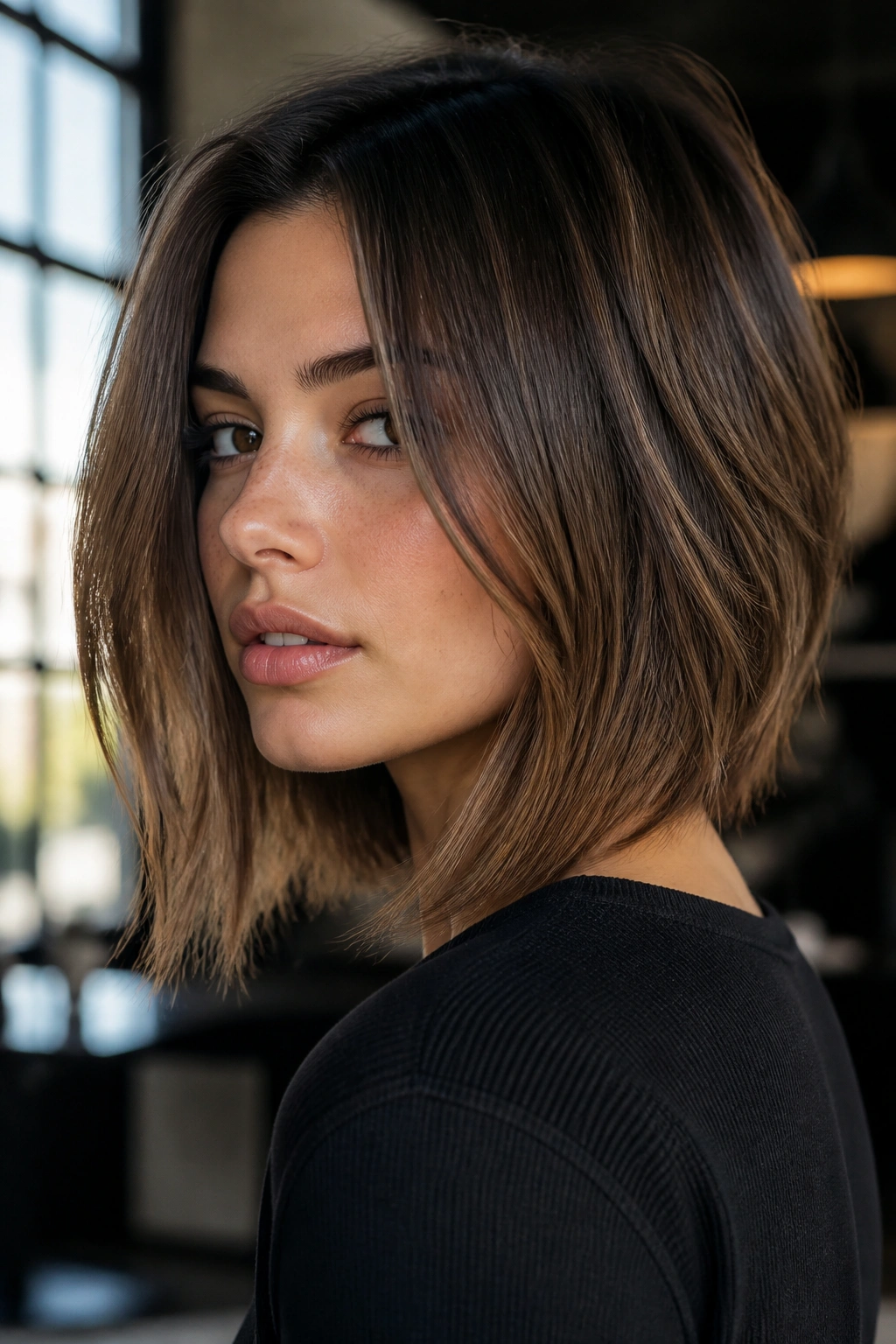
A razor-cut lob has a softer edge than a blunt one, and that softness can help thick or coarse hair lie closer to the head. On a round face, that matters because bulky ends tend to push the width outward.
The razor creates tapered tips that feel lighter and move more easily. There’s a catch, though. Fine hair can look frayed if the razor work is too aggressive, so this is one of those cuts that depends heavily on a stylist with a steady hand.
This shape works best when the layers stay long and the perimeter remains controlled. You want a bit of air, not a shredded finish. The best razor lob still looks intentional.
12. Feathered Lob
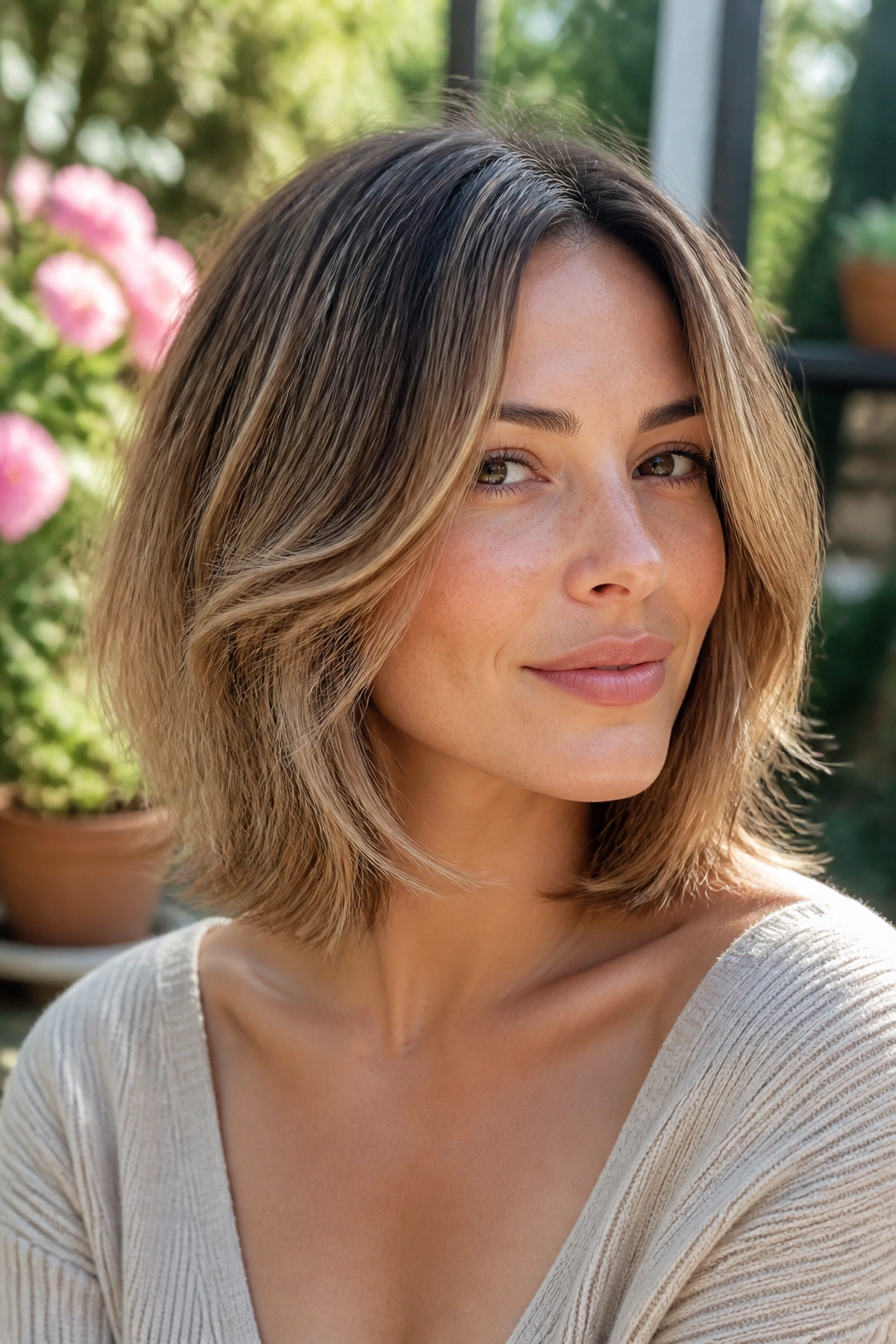
Feathering softens a lob without turning it into a shag. The layers blend into each other instead of sitting in visible steps, which keeps the face from looking broad at the sides. It’s a gentler option than choppy texture.
Why It’s Different
A feathered cut removes bulk in a smoother way. The ends turn lighter, the mid-lengths move more, and the front pieces fall in a way that feels airy rather than heavy. For round faces, that can be a nice middle ground between sleek and tousled.
Who It Suits
- Medium-density hair that needs motion.
- Wavy hair that gets puffy with blunt ends.
- Anyone who wants lift without short layers.
- People who hate the look of obvious chunking.
If you want softness with a little shape, this is the cleanest path.
13. Angled Lob with Longer Front Pieces
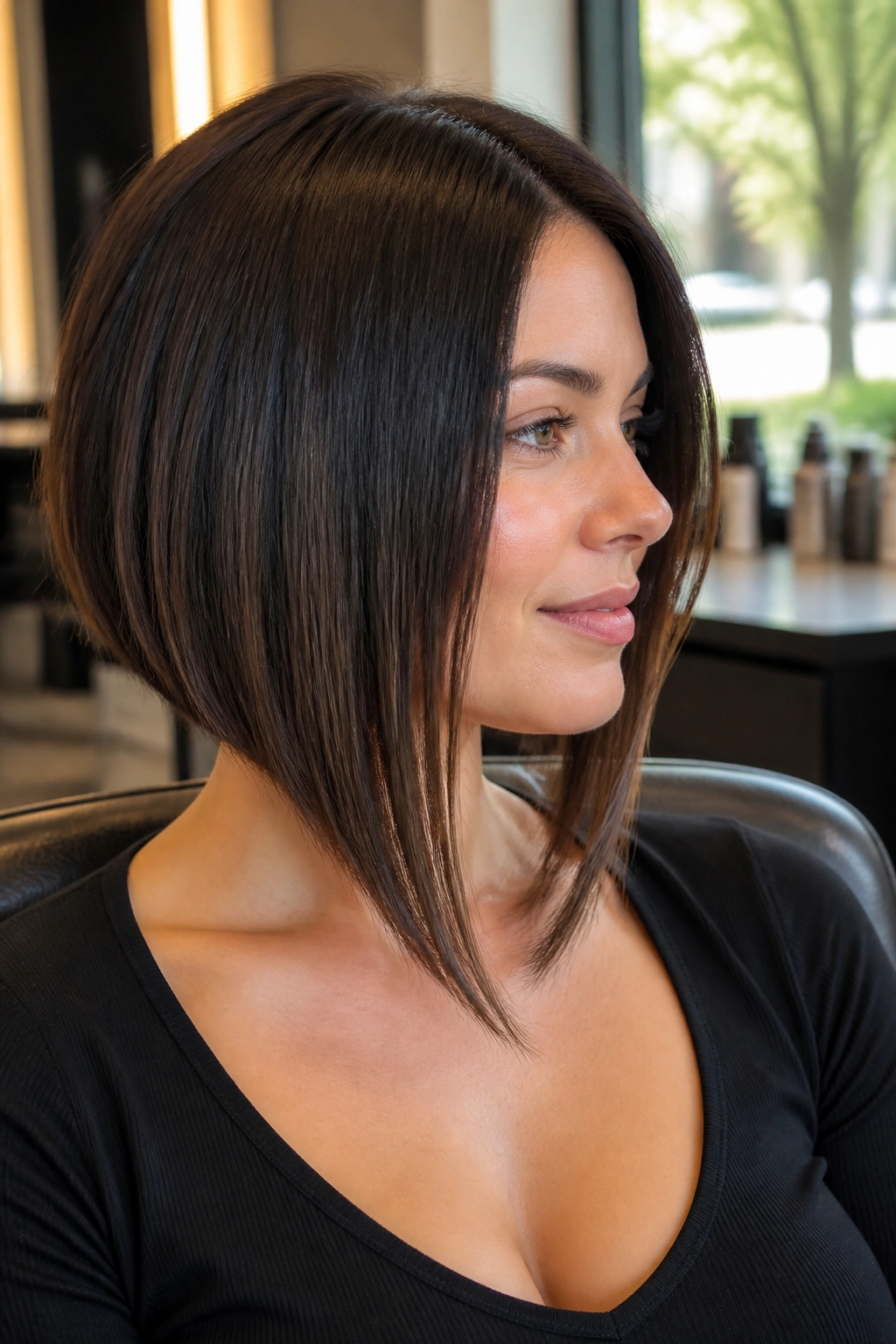
The strongest angled lob makes the front work harder than the back. The back stays neat and controlled, while the front reaches toward the collarbone or even a touch lower. That diagonal move is flattering on a round face because it points the eye downward.
This cut feels especially smart on straight or lightly wavy hair. You can see the angle clearly, which is half the charm. If the hair is too curly or too layered, the line can blur and the whole point gets lost.
Tell your stylist you want a visible front angle, but not a dramatic stacked back. The difference between “angled” and “puffed” is smaller than people think.
14. Flipped-Out Ends Lob
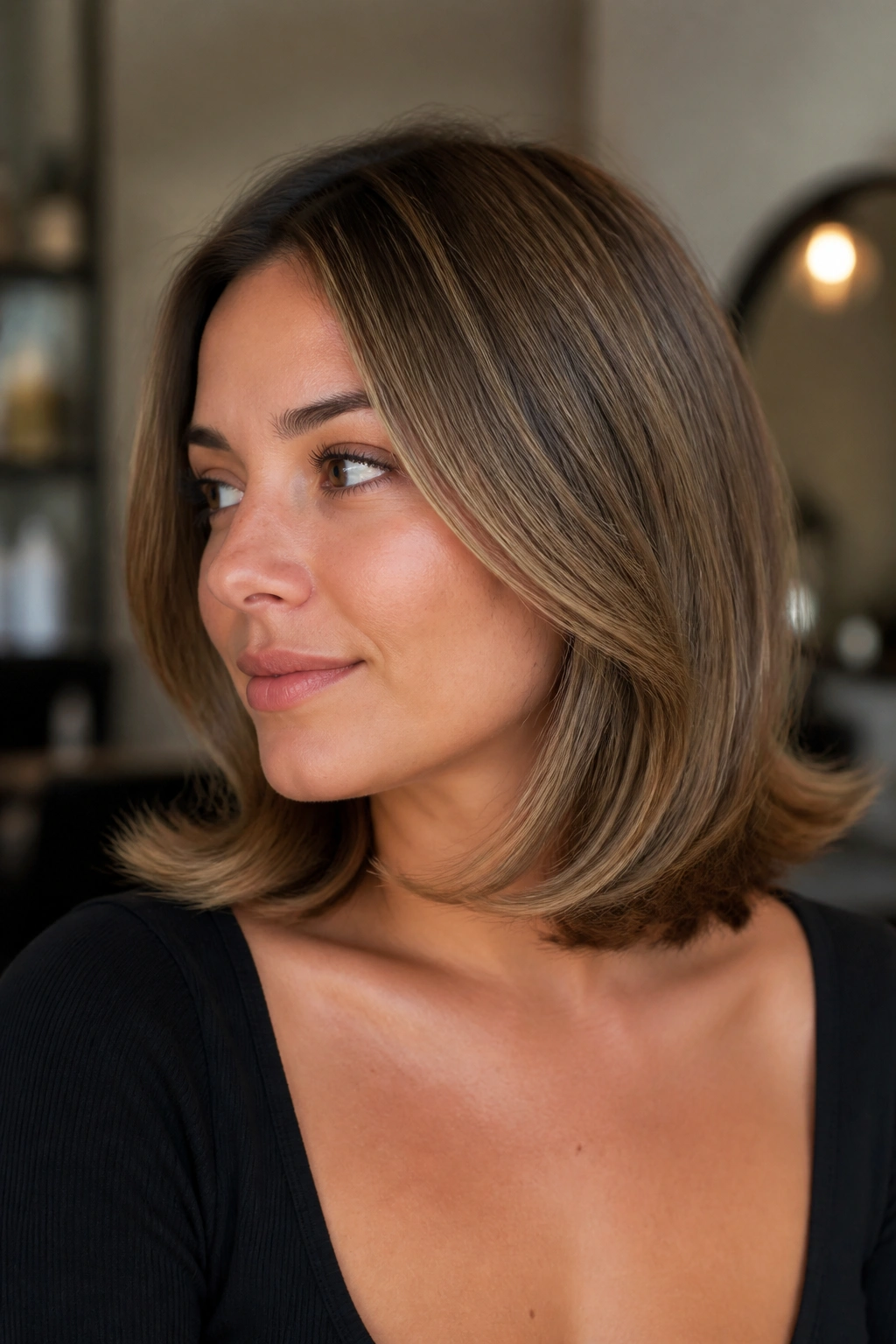
A flipped-out lob has a little retro spirit, and I’m fine with that. The outward bend keeps the ends from curling inward and crowding the jawline, which can help a round face look a bit longer and less closed in.
The trick is restraint. If the flip is too sharp, the style starts to look costume-like. A soft bend at the ends—created with a round brush, a flat iron twist, or a blow-dry brush—gives the cut enough lift without turning it into a sitcom haircut.
This one especially helps if your hair naturally sits flat at the roots and wide at the bottom. The flip redirects the eye. It’s small, but it changes the whole outline.
15. Shoulder-Grazing Shag Lob

A shag lob can work on a round face when the layers stay long and the texture stays loose. Short shag layers near the cheeks are where things go wrong. Keep them below the cheekbone, and the cut starts to feel airy instead of wide.
This is a good choice if you like a little grit and movement. The cut reads casual, but the shape still matters. The best versions have wispy ends, longer crown layers, and a perimeter that brushes the shoulders rather than sitting above them.
If you’re tempted by a shag but worried about puffiness, ask for a soft shag rather than a full one. That single word does a lot of heavy lifting.
16. Minimal-Layer Lob for Fine Hair
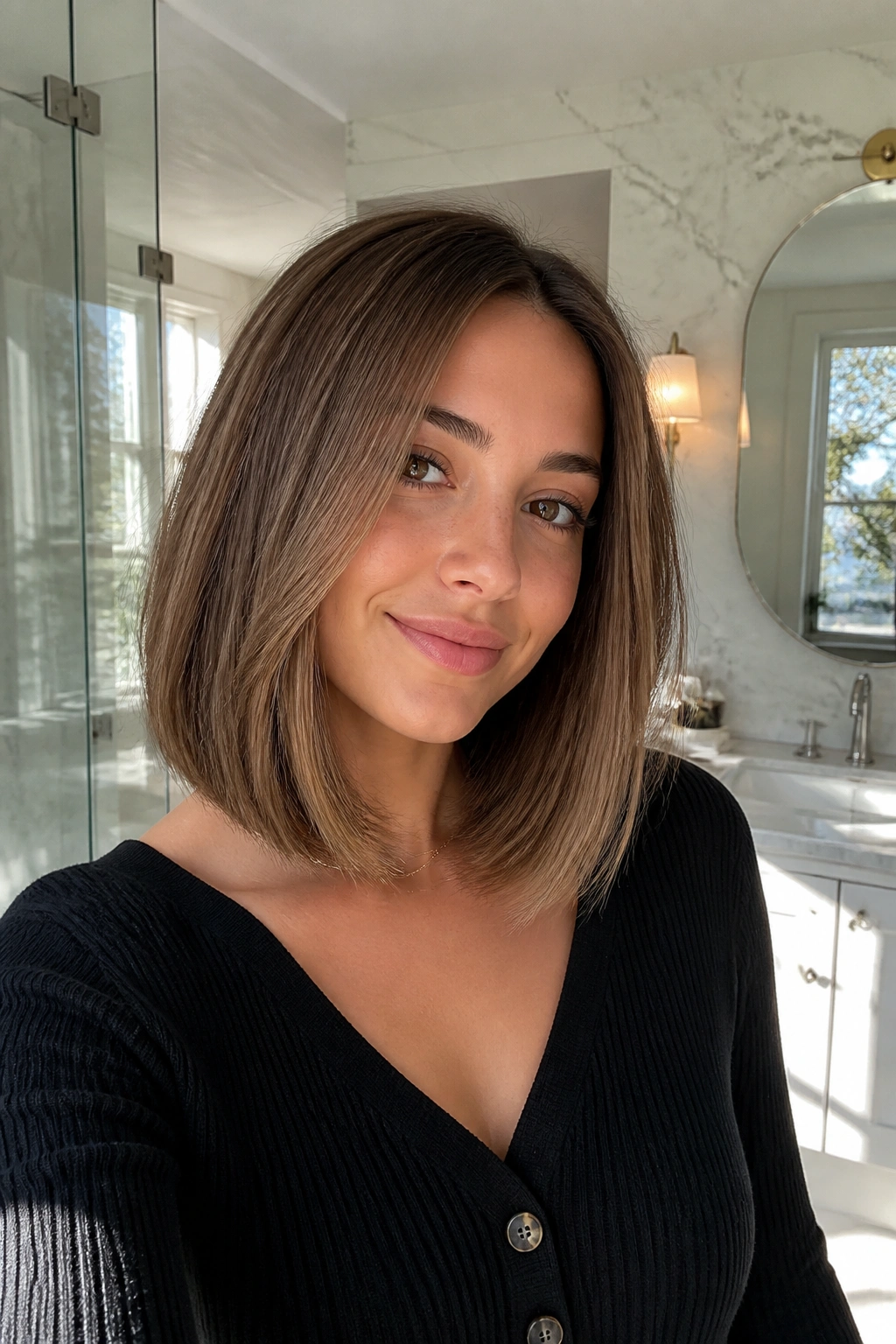
Fine hair can get stringy fast if the layers are too ambitious. That’s why a minimal-layer lob often works better than a heavily chopped one. You keep the body, keep the weight, and still get enough movement to stop the cut from looking flat.
The shape should stay mostly one length, with just a little internal softness near the front. That keeps the ends looking fuller, which matters on a round face because thin, wispy sides can make the face look broader by comparison.
A clean blowout with a small round brush is usually enough here. The cut should create the fullness, not your styling tools. If the ends are see-through when dry, there’s too much taken off.
17. Thick-Hair Lob with Internal Weight Removal
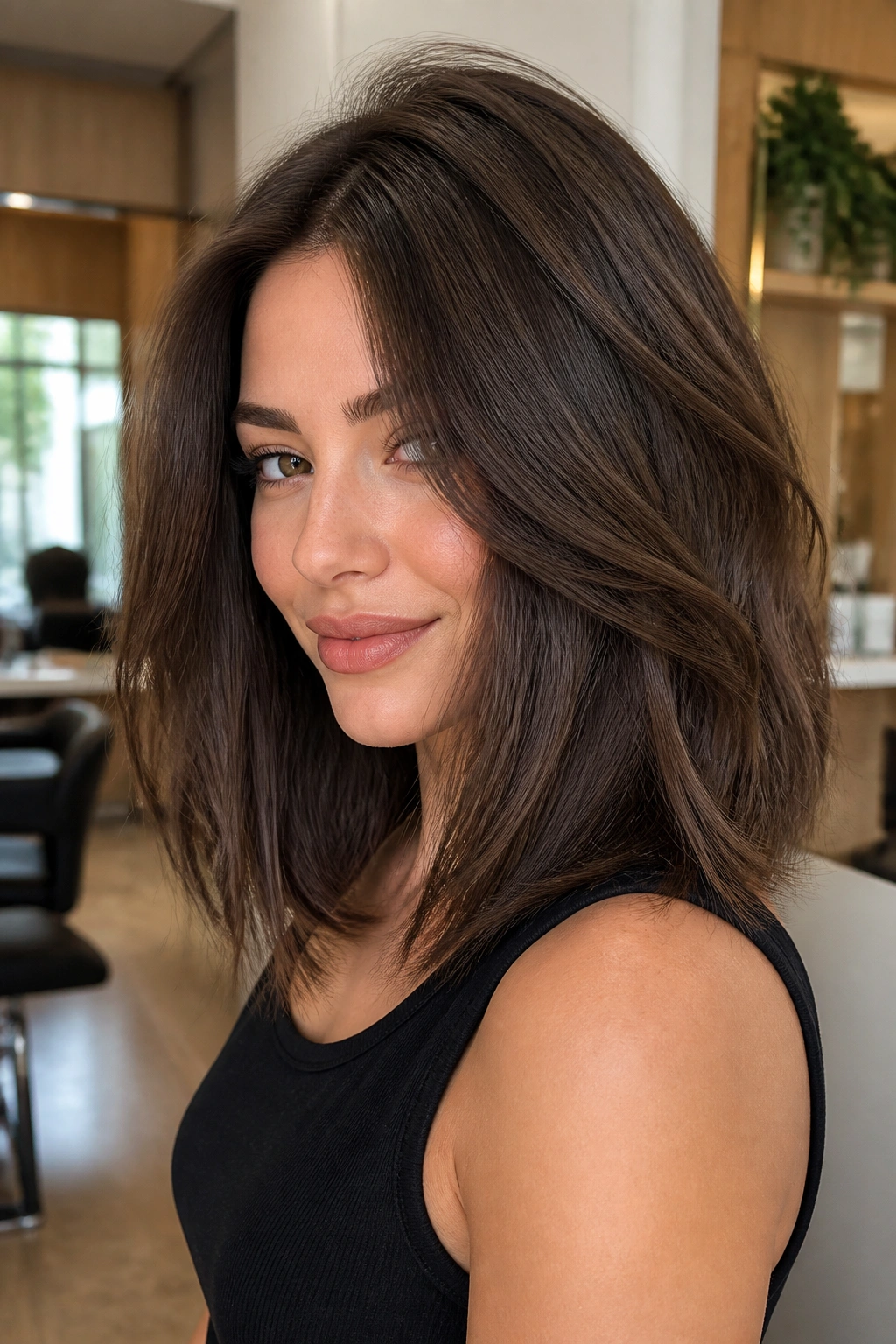
Thick hair needs a different kind of discipline. If you cut the outer line too aggressively, the hair can mushroom out at the sides. That is the exact opposite of what most round faces want.
What Your Stylist Should Do
- Remove bulk from the inside, not the outer edge.
- Keep the perimeter long and strong.
- Leave the front pieces slightly longer than the back.
- Check the shape both wet and dry, because thick hair changes a lot as it settles.
The best thick-hair lob feels lighter when you move your head, but it still holds a clean outline. That balance matters. Too much thinning turns into frizz. Too little leaves you with a triangle.
18. Lob with Long Side Bangs

Long side bangs are easy to overlook, which is a shame. They sweep across the face in a diagonal line, and diagonal lines are useful when a face shape is soft and full. The bang does the breaking-up work before the eye ever gets to the jaw.
This version is especially good if you like having some hair on your forehead but do not want a full fringe. The side bang blends into the lob and gives you a little movement around the eyes and cheekbones. That keeps the style from feeling heavy.
Ask for the shortest point to graze the brow or upper cheek, then taper it into the front layers. The bang should float, not sit like a curtain.
19. Rounded Lob with Soft Ends
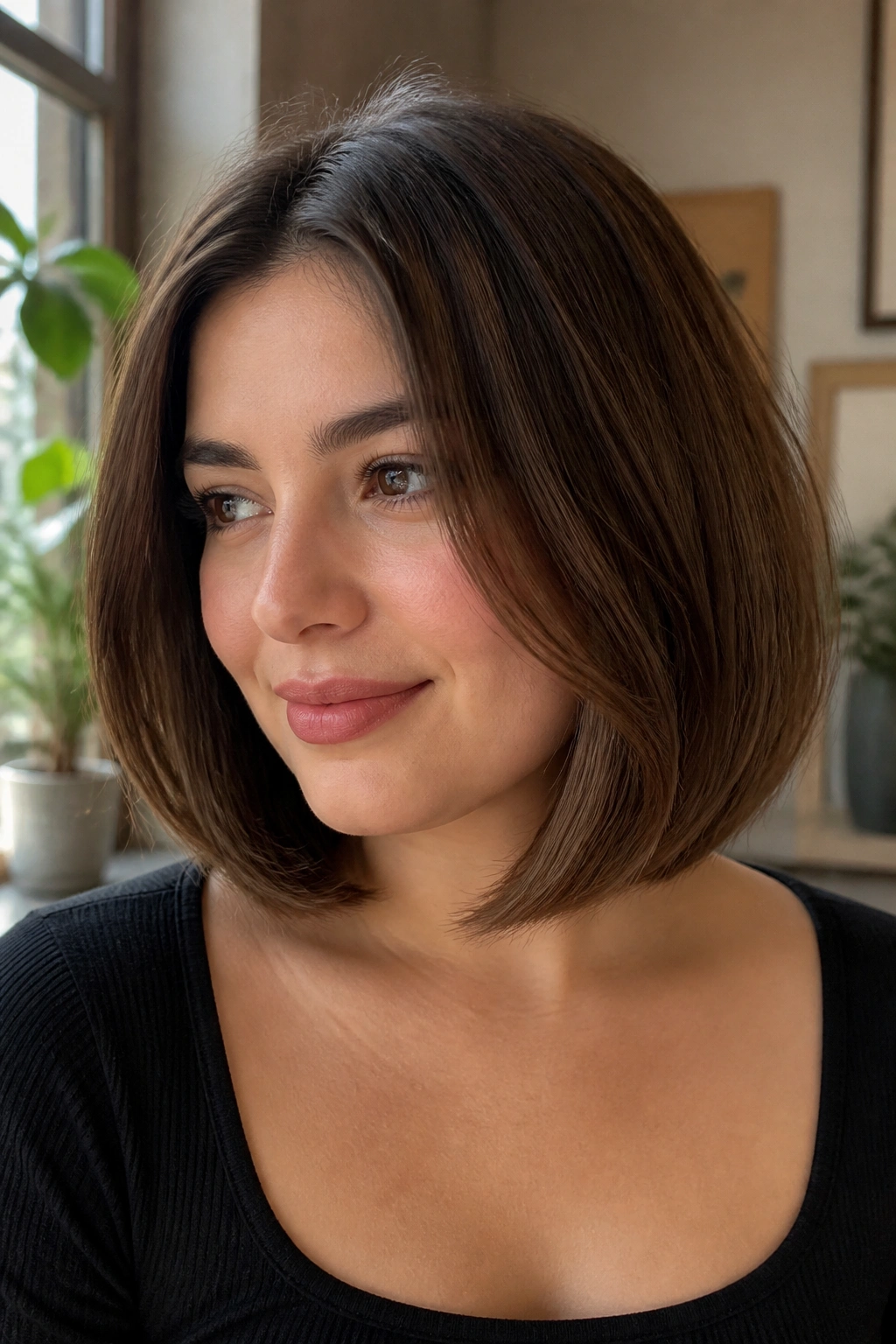
A round face does not always need a sharp angle. Sometimes a slightly rounded lob works better because it softens the edges without adding width. The key is keeping the curve low and controlled, not puffed out around the cheeks.
This is the sort of cut that looks especially nice when the ends tuck inward just a bit. Think of it as a gentle frame, not a halo. The shape can be elegant on straight hair and surprisingly flattering on soft waves, as long as the curve begins below the cheekbone.
If you want the face to look a touch slimmer, keep the crown smooth and the sides close. A rounded shape can flatter a round face when it sits in the right place.
20. Tousled Lob with Root Lift
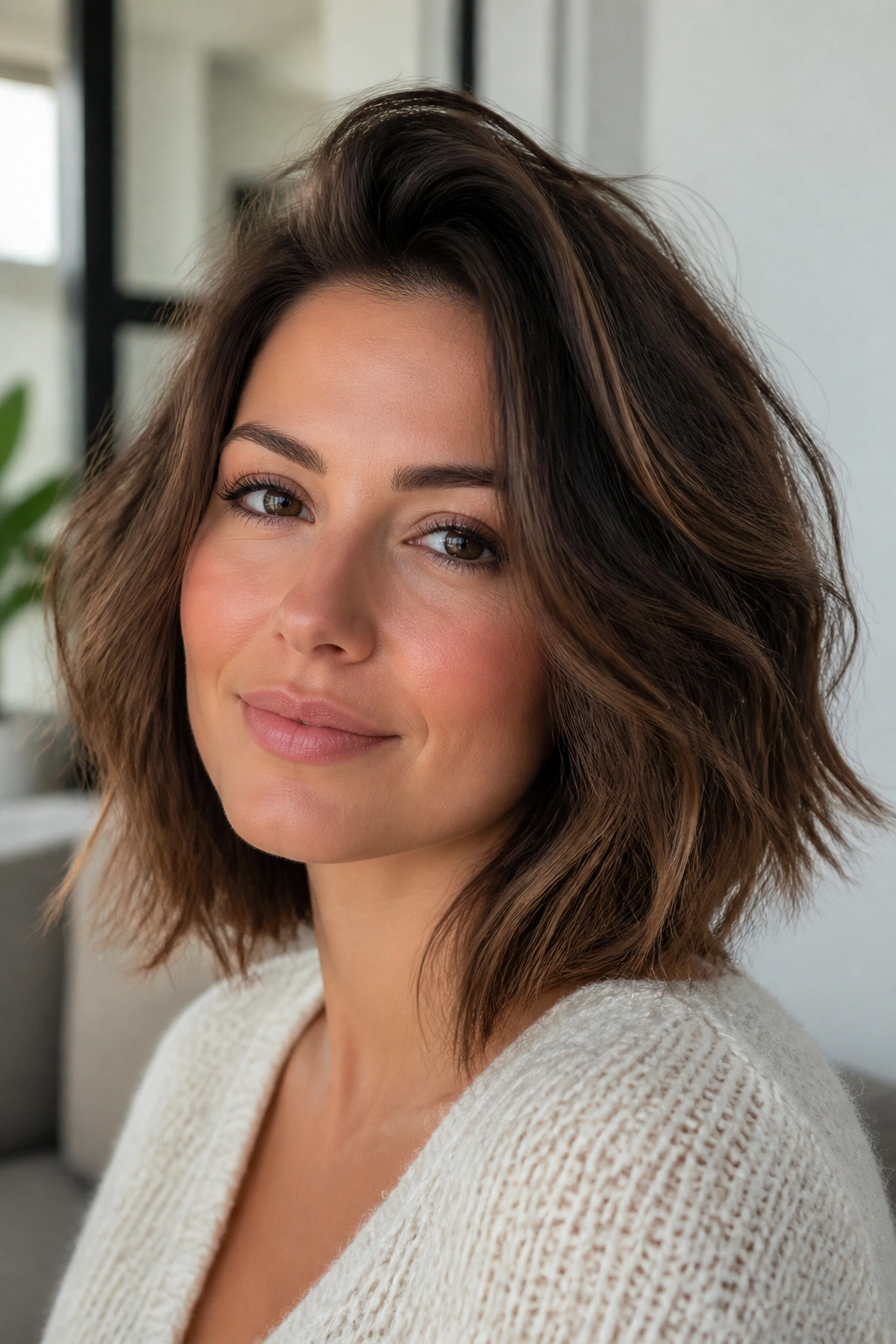
A little height at the crown changes the silhouette fast. That’s why a tousled lob with root lift can be so useful on round faces. The top gets air, the sides stay softer, and the whole cut looks taller.
How to Build the Shape
Use mousse or a root spray at the roots only, then rough-dry with your fingers until the top has lift but the sides are still close to the head. If you add volume around the cheeks, the face can read wider. Keep it up top. That’s the rule.
A tousled lob does not have to be messy. It can be polished enough for work and loose enough for weekends. The difference is where the volume sits.
21. Straight Lob with Subtle Graduation
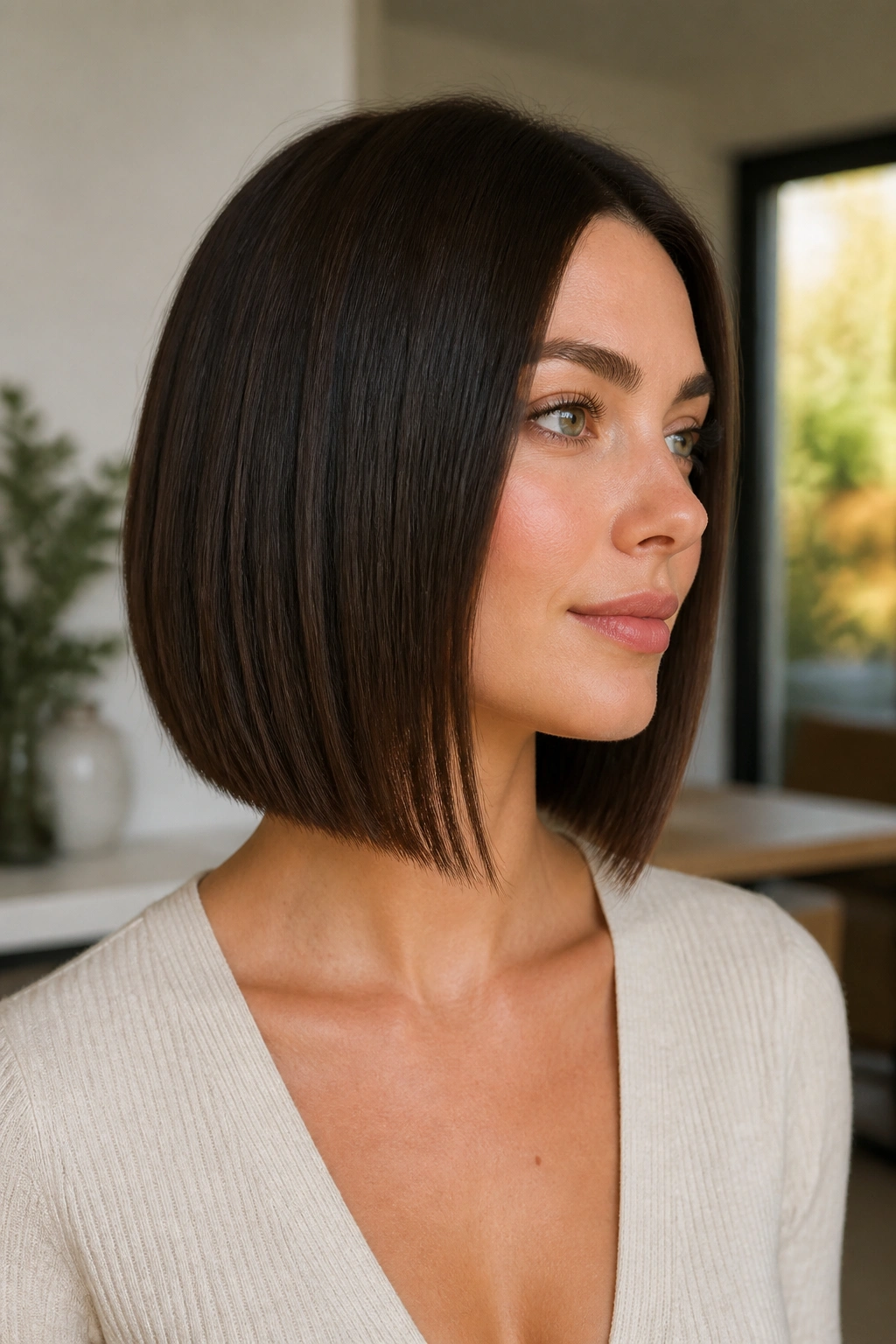
Straight hair can look flat in a lob if the cut has no structure. A little graduation at the nape fixes that. The back gets a touch more shape, the front stays long, and the profile looks smoother from side to side.
This is not a stacked haircut. The graduation should be soft and almost hidden. You want enough lift in the back to keep the hair from collapsing, but not so much that the cut turns boxy or old-fashioned.
I like this on people who want a neat silhouette and don’t want to spend half the morning styling. A small amount of structure is often enough. The haircut does the job before the brush does.
22. Lob with Curtain Fringe and Soft Waves
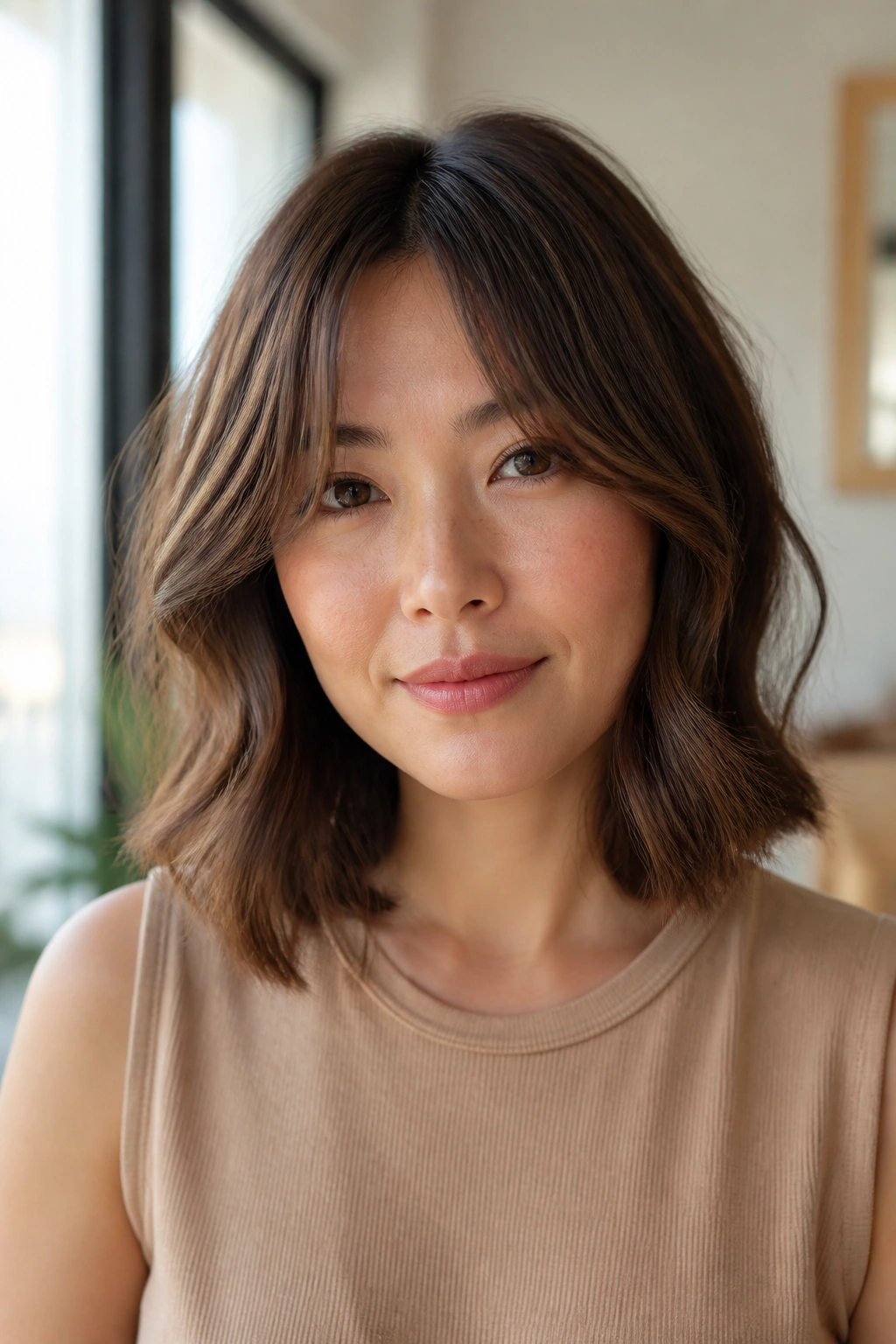
Curtain fringe plus soft waves is a classic pairing for a reason. The fringe opens the forehead, the waves break up the sides, and the lob itself keeps the whole thing grounded. On a round face, that mix can feel easy without becoming shapeless.
What makes this version different from a tighter bang look is the softness through the ends of the fringe. The hair shouldn’t stop sharply. It should melt into the sides so the face gets a gentle frame rather than a hard border.
If your waves are loose, let them be loose. If they’re stronger, keep the crown smoother so the cut does not balloon. The fringe and the waves should talk to each other, not compete.
23. Off-Center Part and Tucked Side Lob
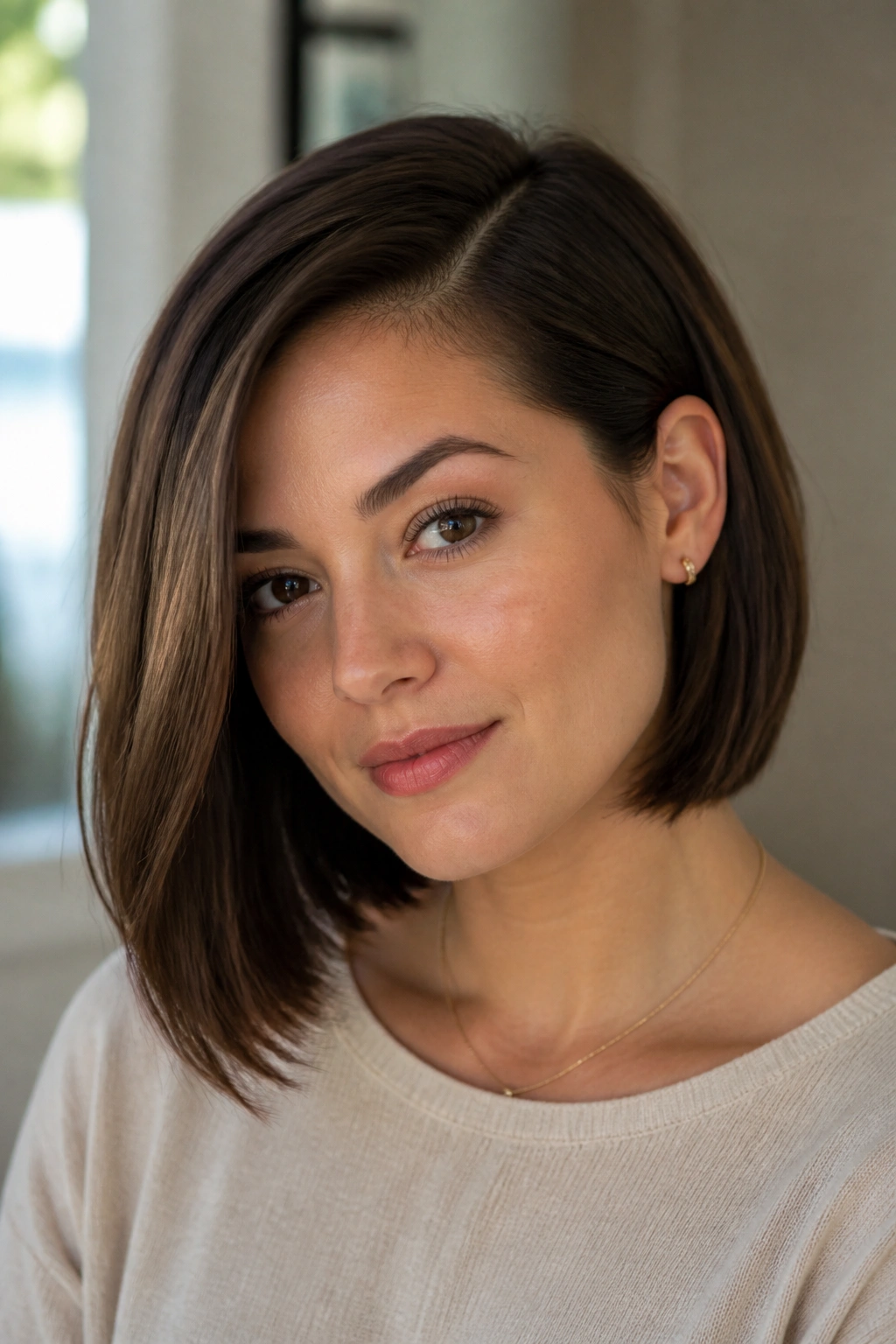
A small shift in the part can do more than a big haircut change. An off-center part creates a line that feels natural but not symmetrical, and that little asymmetry works in your favor on a round face.
Tucking one side behind the ear makes the jawline show a bit more, which is useful if the face is fuller through the cheeks. The exposed side gives you space. The tucked side adds polish. Simple. Effective.
Why It Helps
- It breaks the face into uneven sections.
- It keeps the style from looking too round.
- It shows a little neck, which sharpens the outline.
- It works on straight, wavy, and lightly curly hair.
You do not need a dramatic cut to make an obvious difference.
24. Face-Framing Lob with Chin-Length Pieces
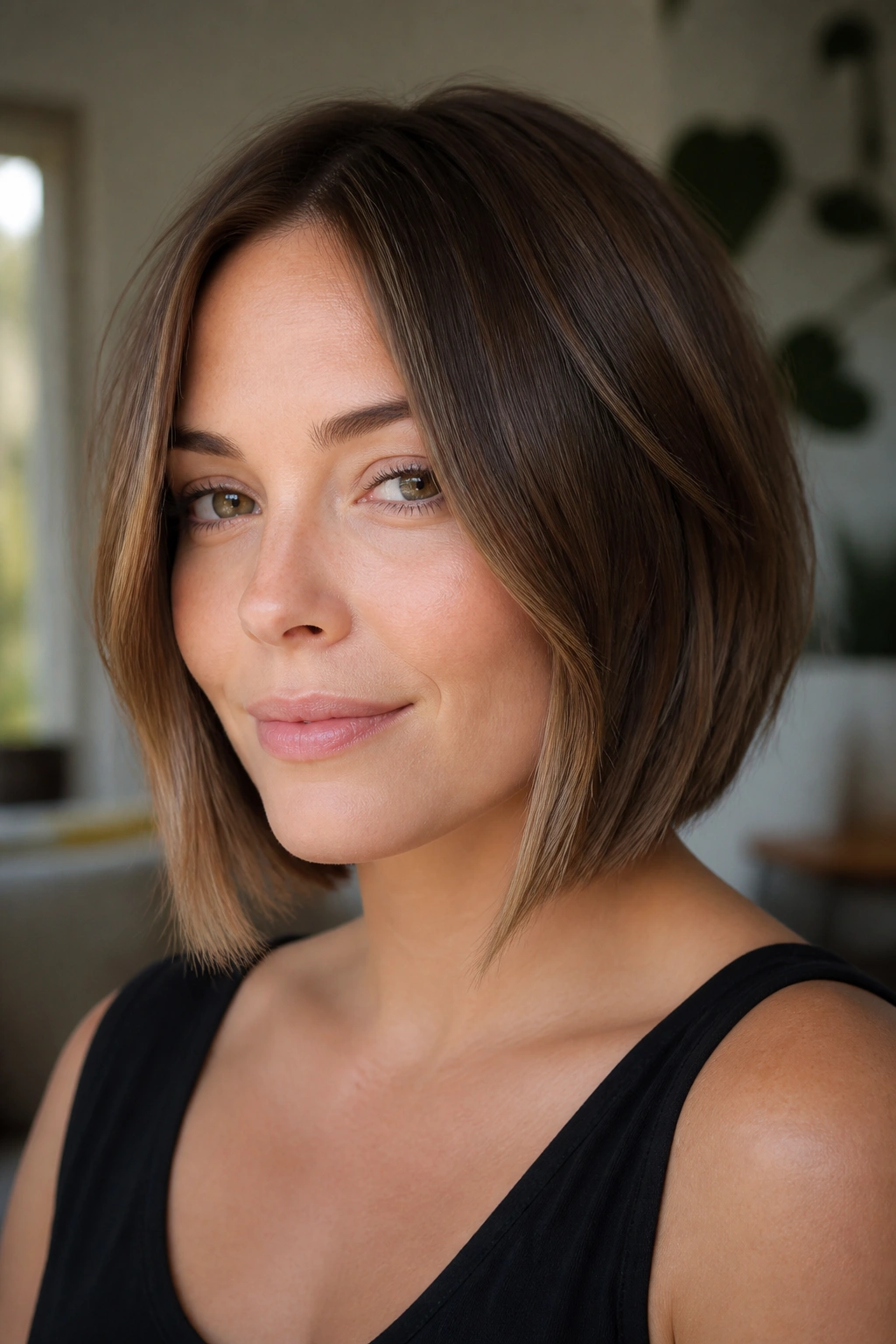
Chin-length pieces can be a risky place to stop, so the cut has to be handled with care. When they’re soft and slightly angled, they frame the face without making it look wider. When they’re blunt and dense, they can do the opposite.
The best version keeps the front pieces light, movable, and a little longer toward the collarbone. That gives you a contour effect without the hard line. It can be especially nice if you want to see the cheekbones but do not want a fringe.
This is one of those cuts that looks simple in the chair and smarter once it moves. The pieces should glide, not sit still.
25. Layered Lob for Curly Hair
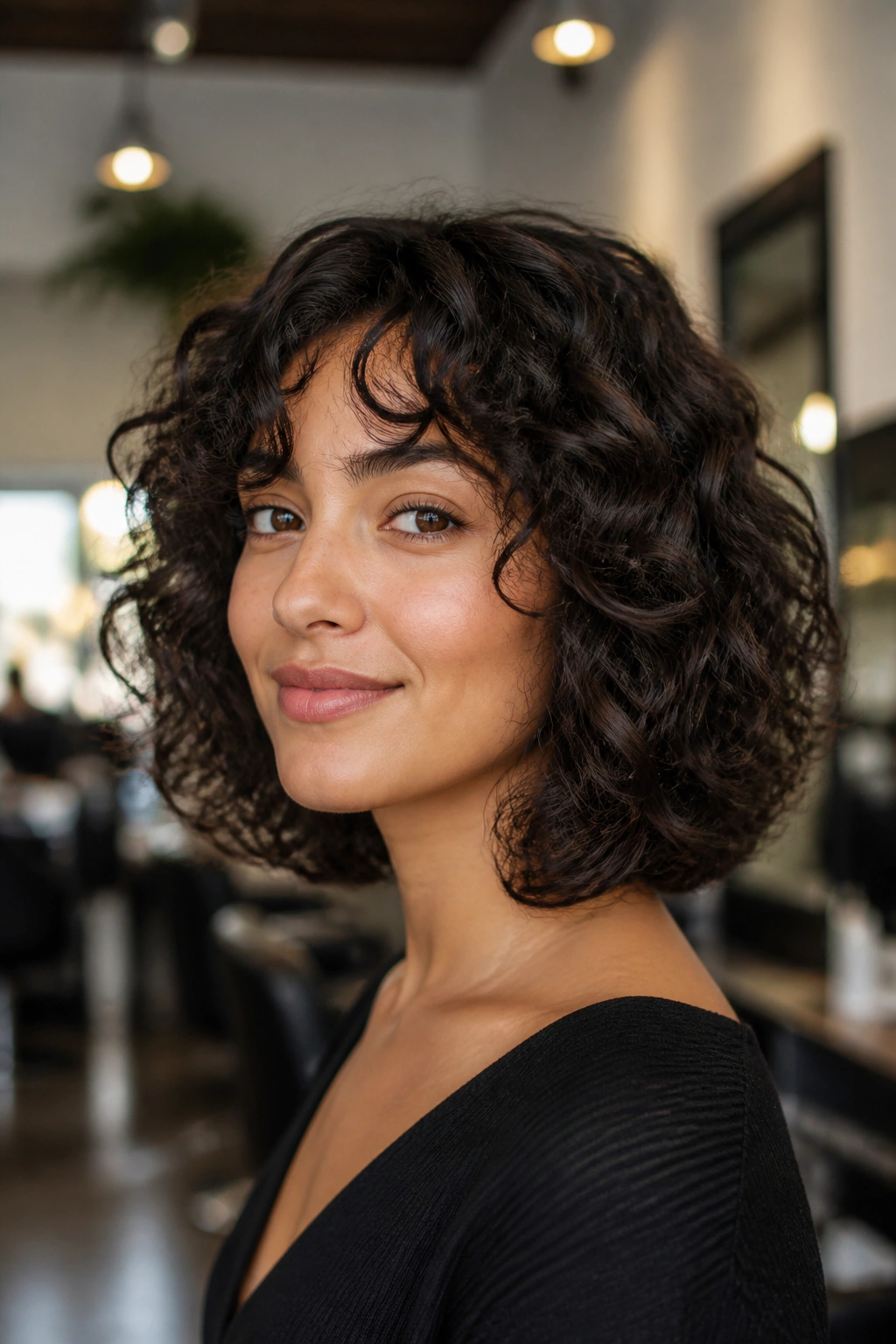
Curly hair needs shape that respects the curl pattern, not a haircut that fights it. On a round face, that means keeping the layers long enough to avoid a puffed-out halo while still letting the curls spring.
A dry cut or curl-by-curl approach is often the safest route if your curls change shape a lot when wet. The stylist should check where the curls land after they shrink, because shoulder-length in the sink can become chin-length after drying. That’s not a small detail. It changes everything.
The best layered curly lob opens at the sides and stays a little longer in front. Too many short layers near the cheeks can widen the face fast.
26. Blunt Lob for Wavy Hair
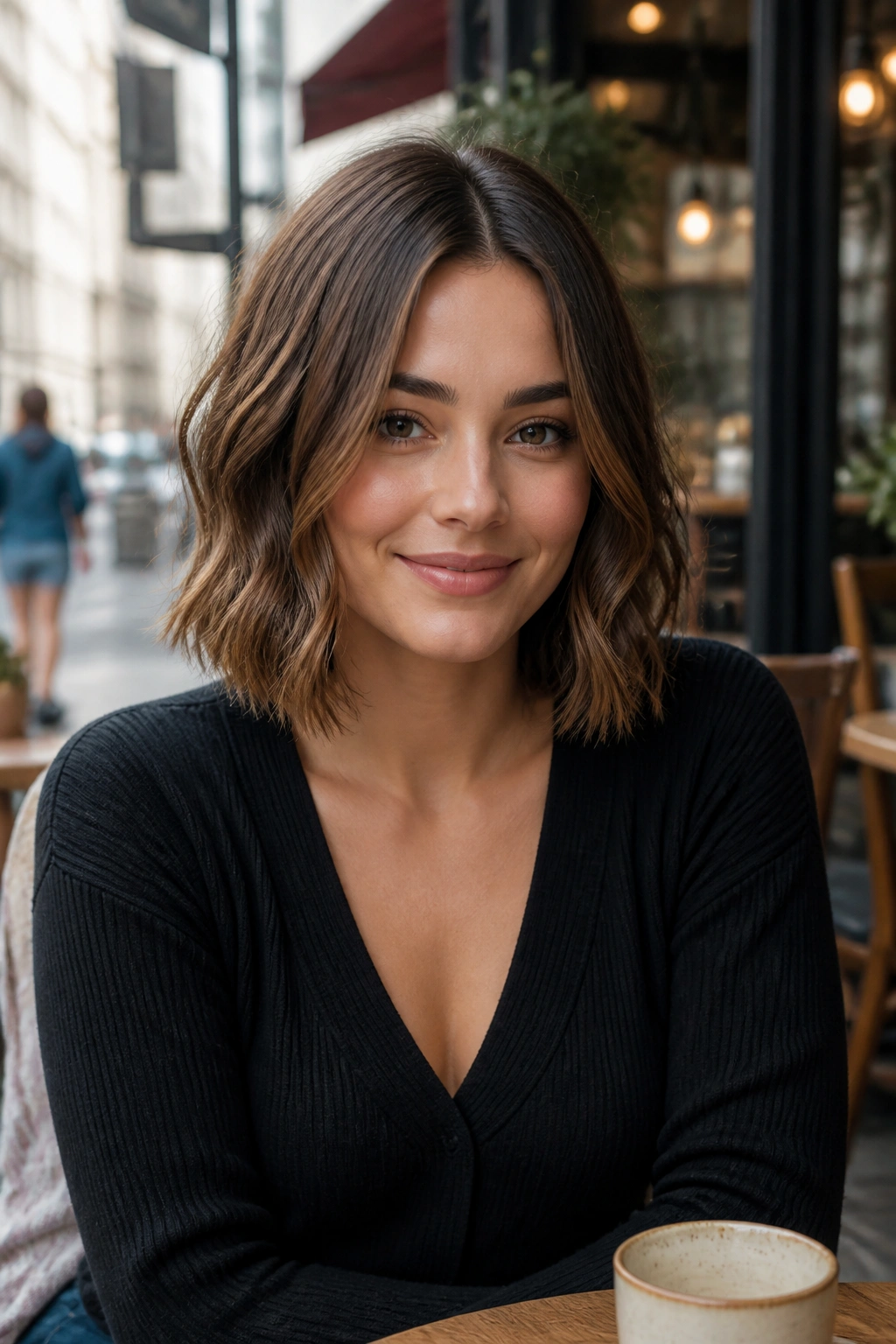
Wavy hair and a blunt lob make a good pair when the wave is soft, not fluffy. The blunt line gives the cut discipline, while the natural bend keeps it from looking hard or blocky. On a round face, that controlled shape can be a relief.
The trick is avoiding too much volume at the sides. If the wave kicks out at the jaw, the cut can widen the face. If the wave is encouraged to fall downward with a slight bend, the silhouette stays long and clean.
This is one of my favorites for people who want low fuss but still want the haircut to look deliberate. The wave gives you texture; the blunt edge gives you order.
27. Glossy Lob with a Middle Part
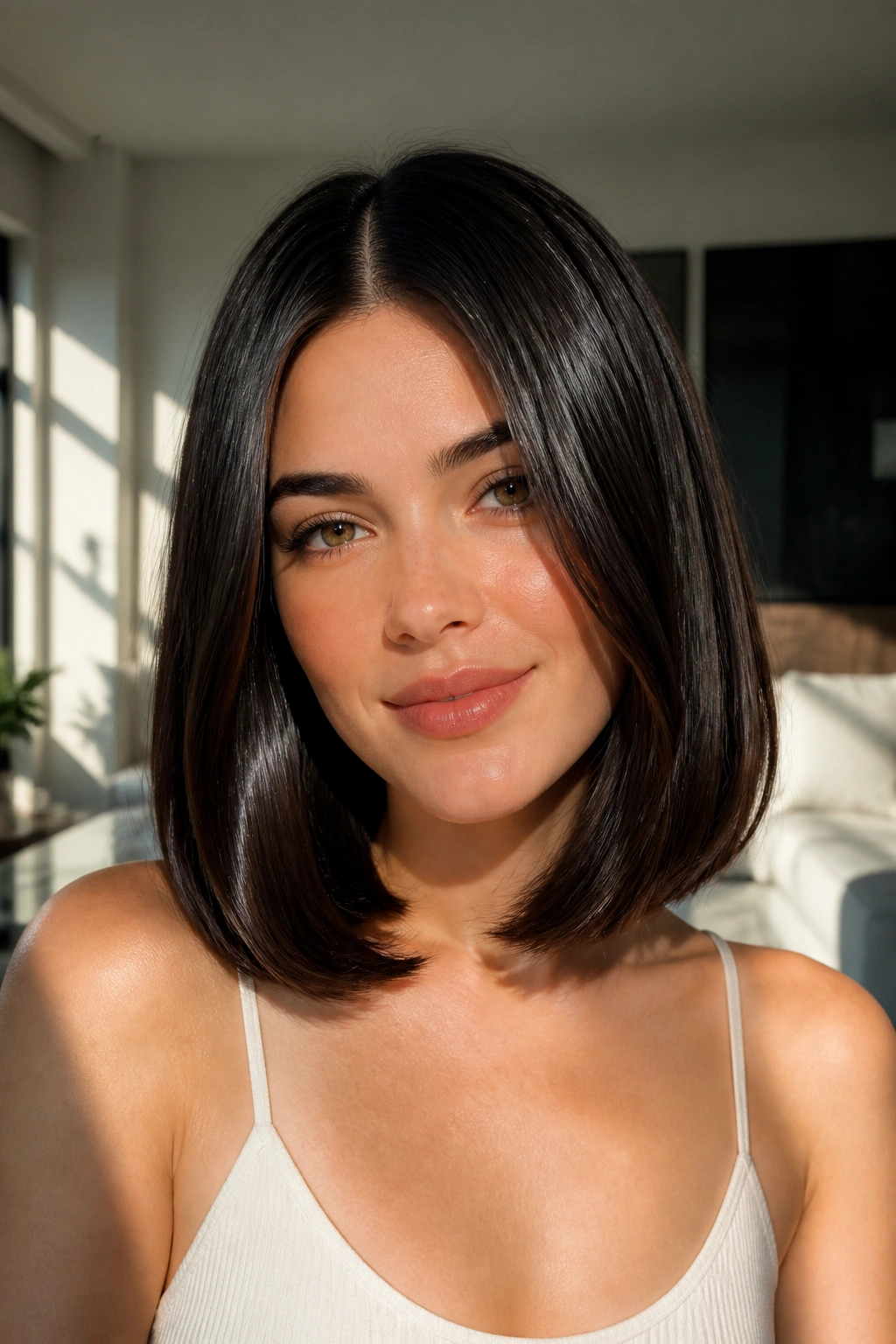
A glossy lob with a middle part feels tidy, calm, and a little sharp around the edges. The shine matters here because sleek hair shows off the line of the cut. If the shape is good, the shine makes it look expensive without trying too hard.
Keep the ends slightly curved under or softly beveled so they don’t stick out at the sides. A flat, pin-straight line can feel too severe on some round faces, while a tiny inward bend makes the whole cut sit better against the neck and jaw.
A light serum on the mids and ends is usually enough. Too much product will collapse the movement and make the hair look stringy. That’s not the goal.
28. Low-Maintenance Grow-Out Lob

Some cuts look good on day one and annoying three weeks later. This is not one of them. A grow-out friendly lob keeps its shape even when the ends lose a little crispness, which makes life easier if you do not want frequent salon trips.
What Makes It Grow Out Well
The perimeter should be soft, not razor sharp. The layers should be long enough to blend as they grow. And the front should be forgiving—usually longer around the collarbone so the cut still frames the face when it settles.
This is a smart choice if you like movement but do not want a cut that needs constant rescue. A few weeks later, it should still look intentional. That’s a bigger deal than people admit.
29. Wispy Fringe Lob
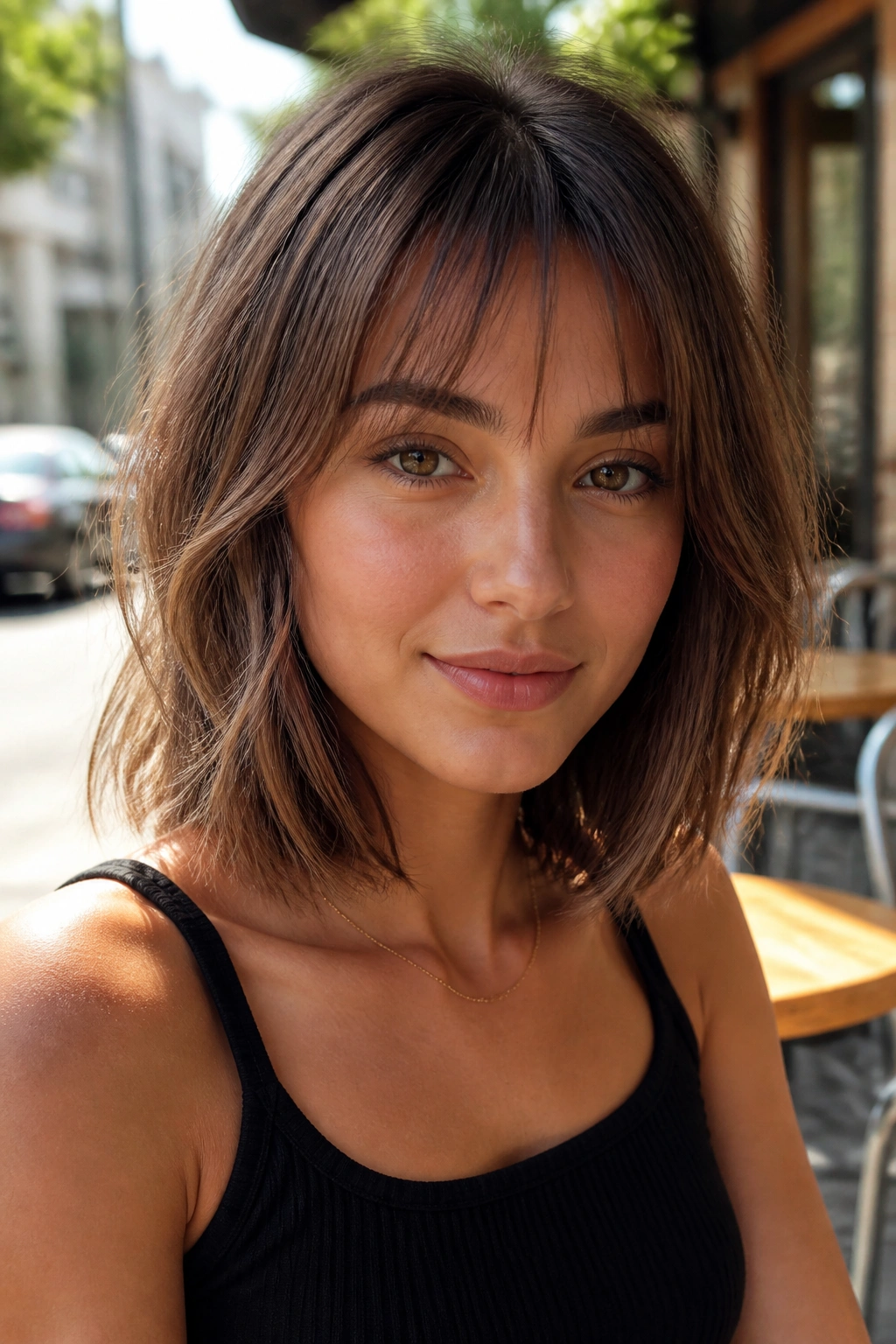
A wispy fringe can soften a round face without boxing it in. The strands are lighter than a full bang, so they let skin show through and keep the forehead from feeling closed off. That transparency matters.
This type of fringe works best when it’s paired with a lob that has some structure at the ends. If everything is airy, the face can disappear into the texture. If the lob is clean and the fringe is light, the contrast is lovely.
I like this one on fine to medium hair. It’s gentle, not heavy, and it’s easier to wear than a dense fringe if you do not want to commit to a lot of styling. The fringe should whisper, not declare itself.
30. The Collarbone-Grazing Lob That Ends Cleanly
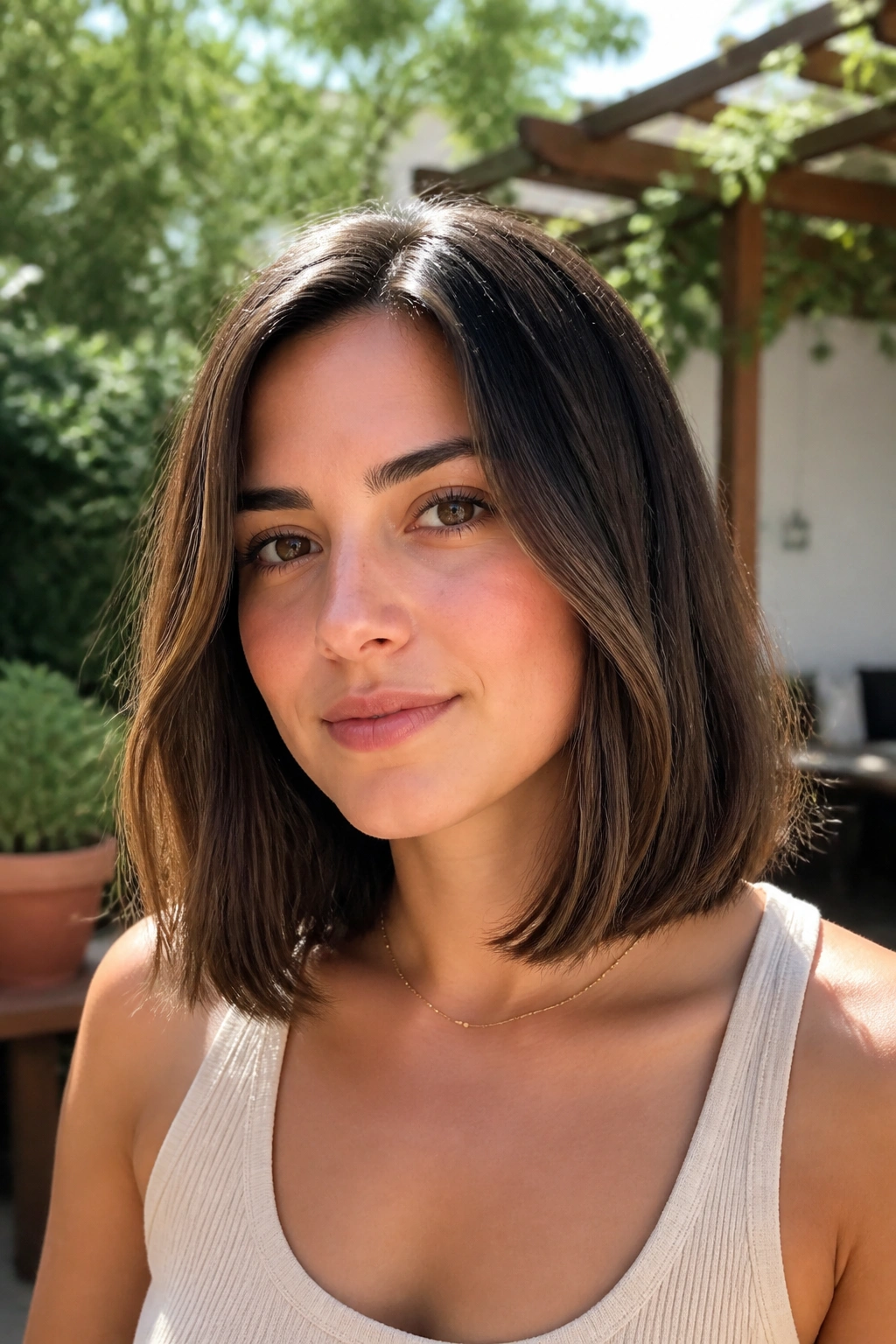
If you want one lob shape that plays nicely with a round face, this is the one I would send you to first. The collarbone-grazing length keeps the face long, the clean ends give the hair body, and the shape works straight, wavy, or slightly bent without falling apart.
There’s a reason this cut keeps showing up in good salons. It’s forgiving. You can wear it tucked, parted off-center, brushed sleek, or left with loose bends, and it still makes sense. That kind of flexibility is rare, honestly.
Ask for a clean perimeter, a length that hits just below the collarbone, and only the lightest bit of face-framing if you want it. Nothing fussy. Nothing boxy. Just a lob that stays sharp when it should and soft when it needs to be.
