



Fine hair can look full in the mirror and flat by lunch. The cut matters more than the mousse bottle, and curtain bob haircuts for fine hair are one of the few shapes that can give you movement without making the ends look wispy and tired.
The trick is balance. Fine hair usually needs a stronger perimeter, not a thousand tiny layers, and it usually looks better when the front opens softly around the cheekbones instead of falling in one limp sheet. That’s why a good curtain bob can feel oddly generous: it keeps weight where the hair needs it, then uses the fringe and front angles to create shape.
I’ve always thought the best versions are the ones that look a little expensive without trying too hard. Not stiff. Not over-chopped. Just enough bend, enough line, enough face framing to make the whole haircut feel deliberate.
1. Chin-Length Curtain Bob With Soft Center Lift
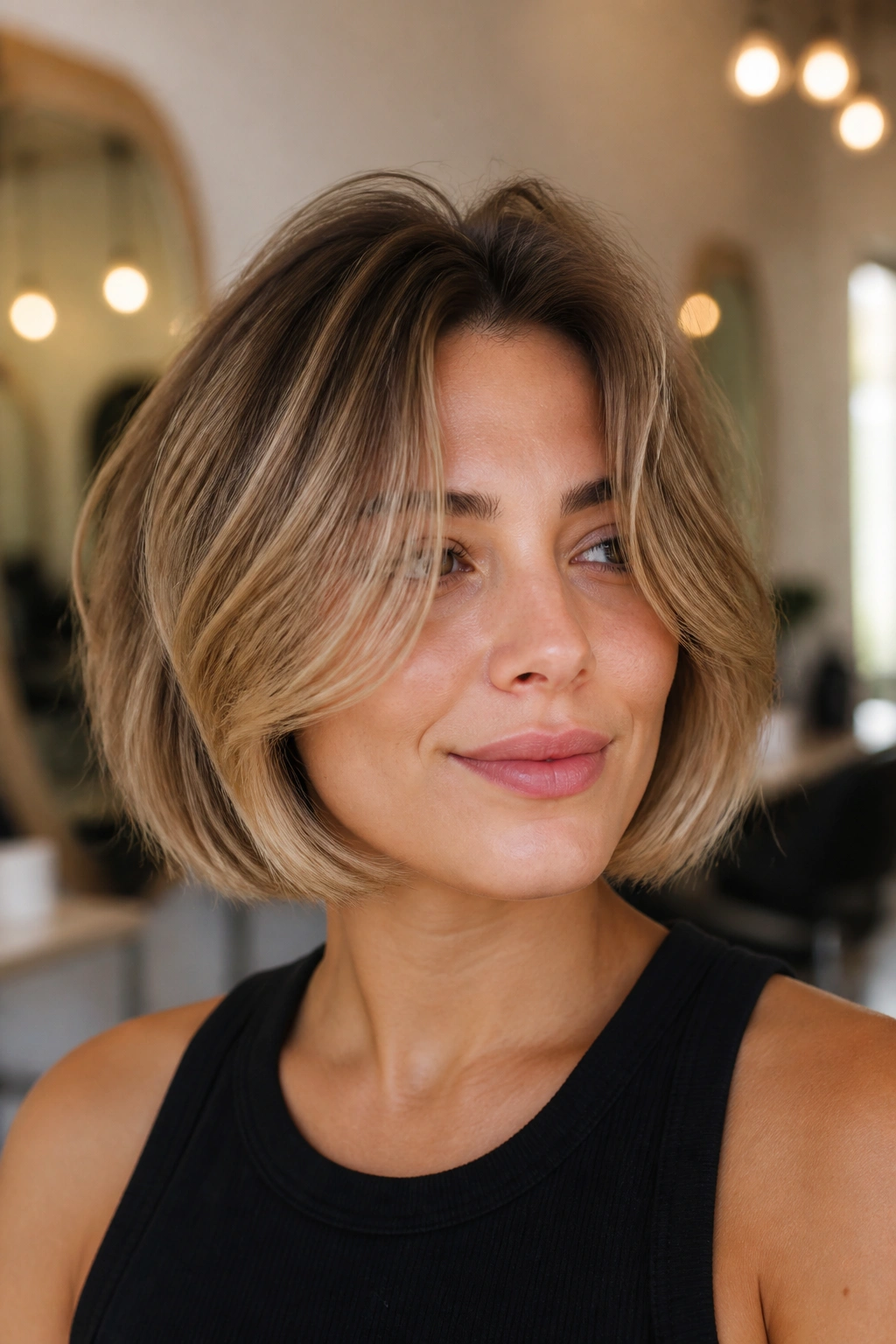
The cleanest way to make fine hair look fuller is to stop fighting its natural softness. A chin-length curtain bob does exactly that. The length lands where the jaw starts to do some of the visual work for you, and the center lift keeps the top from lying like a helmet.
Why This Length Helps Fine Hair
Fine hair loves a strong bottom edge. When the ends stop at the chin, the line looks thicker than a longer bob that has to stretch to the collarbone. The curtain pieces only need to bend away from the face by an inch or two, so you get movement without giving up density.
Keep the layers subtle. Ask for the front to graze the cheekbone and for the back to stay mostly one length. If the stylist keeps snipping the interior too much, the haircut can lose the very weight that makes it work.
- Best for hair that goes flat at the temples
- Easy to blow-dry with a 1-inch round brush
- Looks fuller than a heavily layered bob
- Sits neatly under a blazer collar or sweater neckline
My favorite part: this shape still looks good on day two. A little dry shampoo at the roots and a quick finger-twist at the front is usually enough.
2. Soft-Stacked Curtain Bob That Gives the Crown a Boost
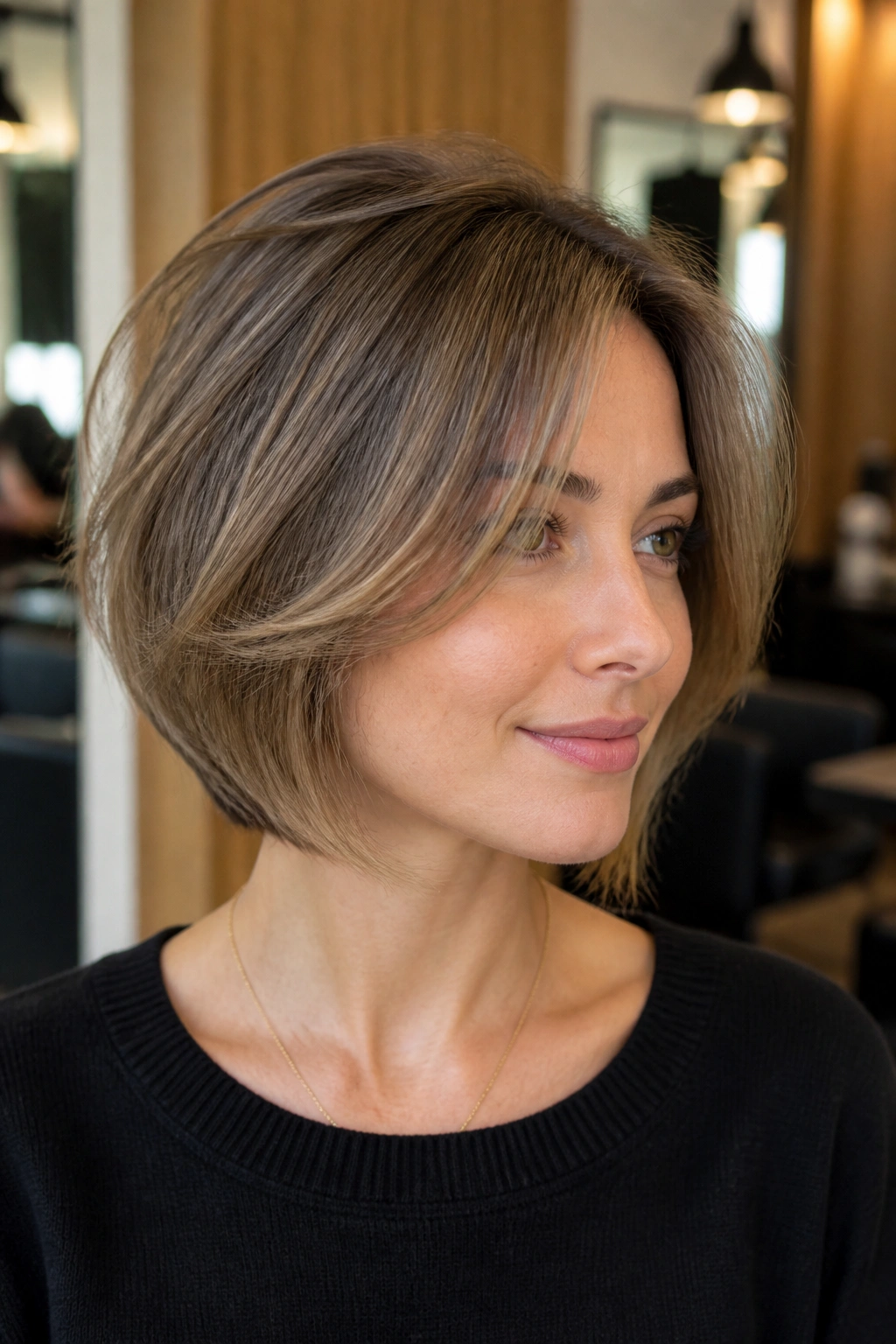
A stacked bob can go very wrong on fine hair if the back gets too short and round. A soft stack, though, is a different animal. It nudges the crown up, creates a little lift at the nape, and keeps the silhouette from sinking in the middle by afternoon.
The key is restraint. You want a gentle graduation, not a dramatic wedge. The back should sit snug against the head, while the front curtain pieces stay long enough to skim the mouth or cheekbones. That contrast gives the haircut body without making it look old-fashioned.
This is a smart pick if your hair lies so flat that even a root spray gives up halfway through the day. Blow-dry the crown upward first, then direct the ends under with a brush. That first five-minute shape makes the rest of the style behave.
If you like a bob that feels neat but not severe, this one has a lot of mileage. It also grows out with less drama than a sharper stacked cut.
3. Airy French Bob With Cheekbone-Grazing Curtains
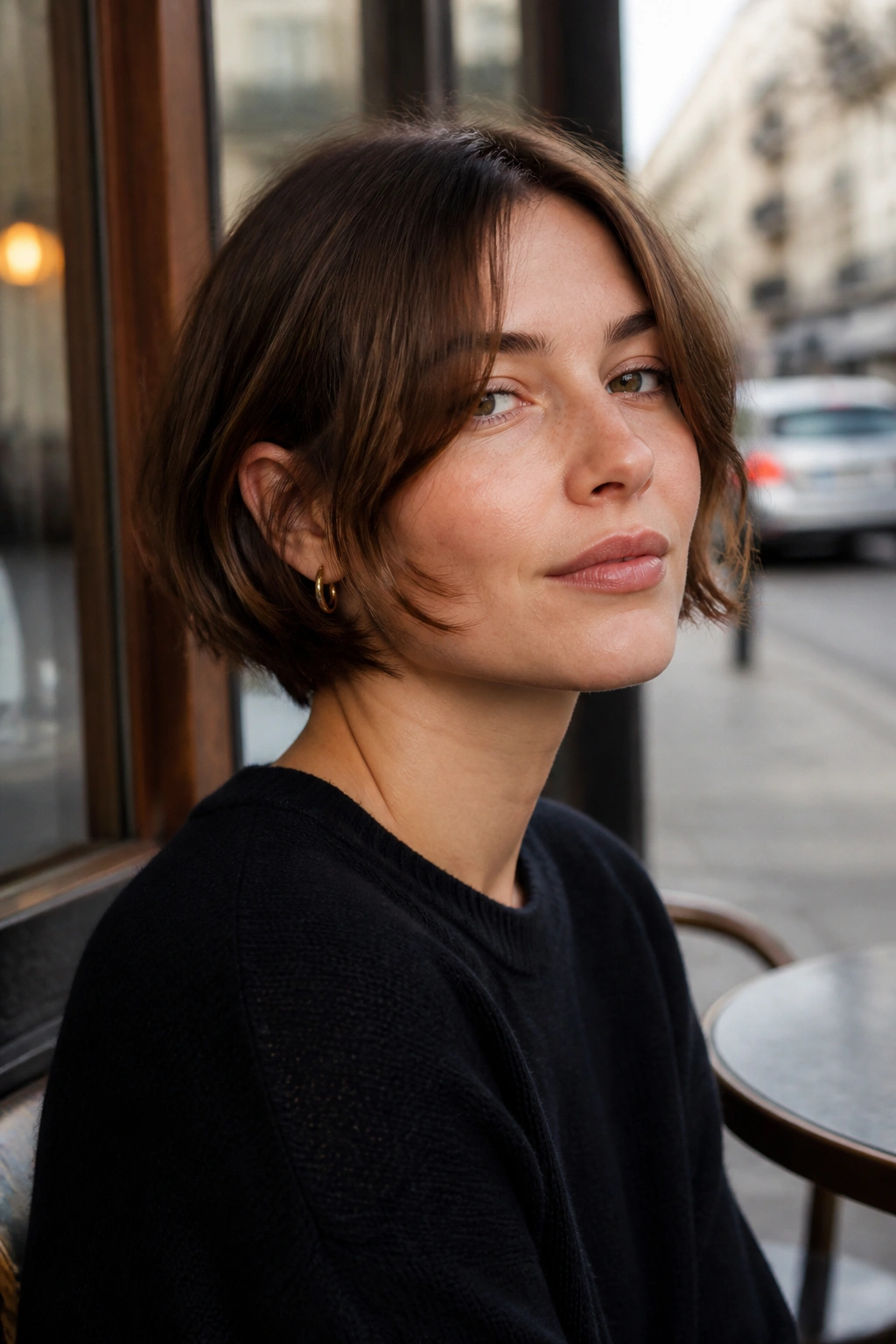
Can a short bob look softer than a long one? Absolutely. A French bob with curtain pieces proves it, and fine hair often looks better in this shorter range because the density stays concentrated. The finish feels airy, but not stringy.
The curtain fringe here is the main event. Instead of heavy bangs that sit across the forehead, the front is split and swept outward so the eyes see an open center and two soft wings. Those wings can hit the cheekbones or sit just below them, which is the sweet spot for adding shape without dragging the face down.
How to Style It
Use a small round brush or a Velcro roller at the front, then let the rest dry with a little natural texture. A pea-sized amount of lightweight mousse is plenty. Anything heavier starts to flatten the roots and dull the ends.
This cut suits people who want a little attitude in their haircut. Not loud. Just sharp enough to feel intentional.
4. Collarbone Bob With Longer Curtain Pieces
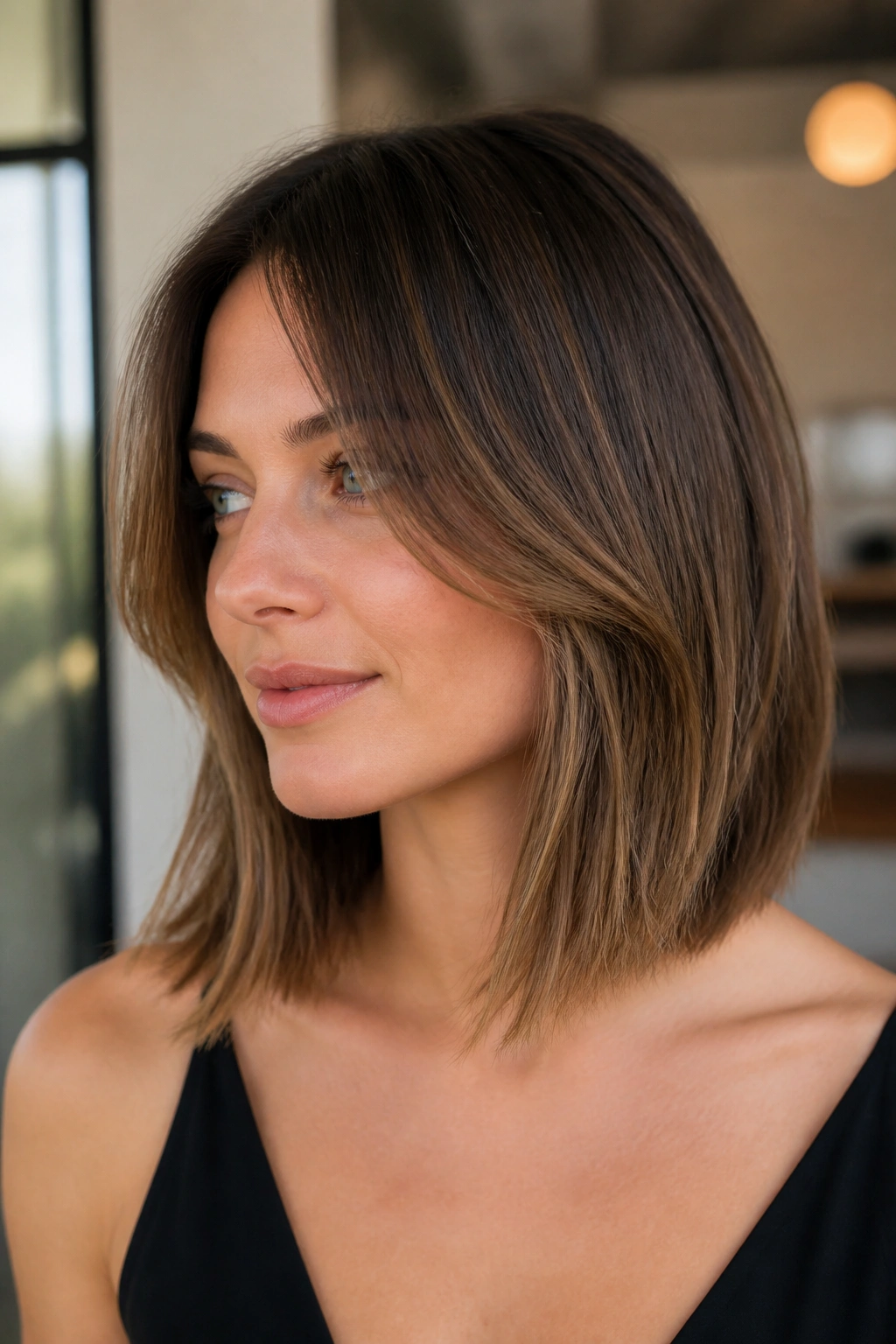
If you’re nervous about going short, start here. A collarbone bob gives fine hair room to move, and the longer curtain pieces soften the line so it doesn’t read as bulky or blunt. It’s the least risky cut on this list, which is exactly why so many people end up loving it.
The collarbone length matters because it gives the hair a place to rest without pulling too much width into the outline. The front pieces can be cut to hit the lip, chin, or upper collarbone depending on how much framing you want. That extra length also makes it easier to tuck one side behind the ear without losing the shape.
- Good if you wear your hair both up and down
- Easy to curl with a 1.25-inch iron
- Lets you keep enough length for ponytails
- Works with center or slightly off-center parts
The one thing to avoid is dragging the whole shape too low. Once a fine-hair bob gets past the collarbone, it starts looking less like a bob and more like hair that forgot to commit.
5. Blunt Bob With Feathered Curtain Bangs
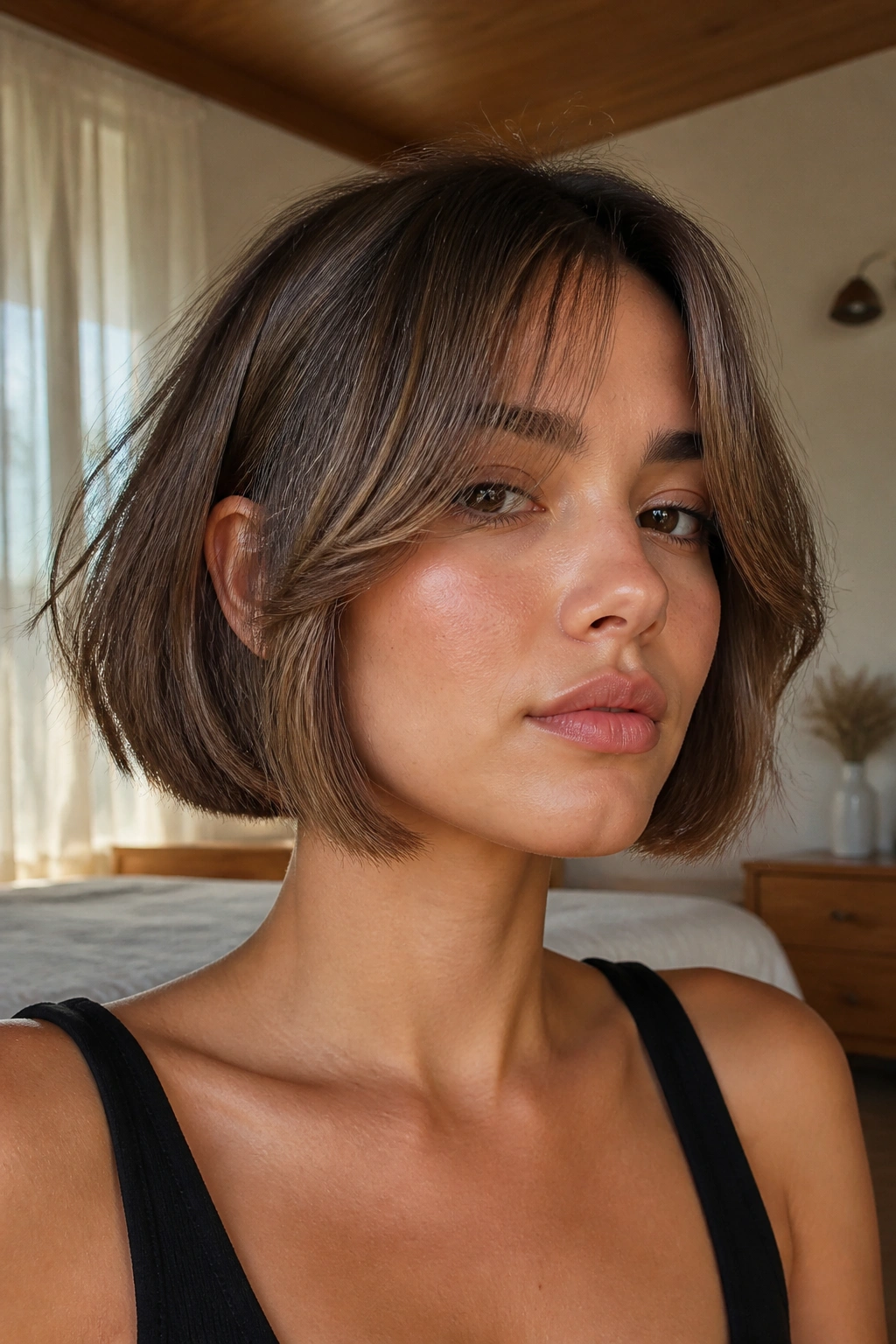
A blunt perimeter is one of the best tricks for fine hair. It creates the illusion of thickness because the edge looks solid, clean, and deliberate. Add feathered curtain bangs to that, and you get softness up front without sacrificing the density at the bottom.
The contrast is the whole point. The bob itself should be cut with a straight, even line. No chunking. No aggressive texturizing. Then the front pieces get lightly feathered so they fall away from the face instead of sitting heavy across the forehead. That little contrast can make the haircut feel much richer than it really is.
Keep the styling simple. A quick blow-dry with a paddle brush at the back and a round brush just on the front is usually enough. Do not over-layer the sides. Fine hair rarely benefits from being thinned out at the perimeter, and you can see the mistake immediately in daylight.
This is the haircut I’d choose for someone who wants polish more than playfulness. It looks good in a crisp white shirt. It also looks good with nothing done to it, which is always the real test.
6. Natural-Wave Curtain Bob That Air-Dries Well
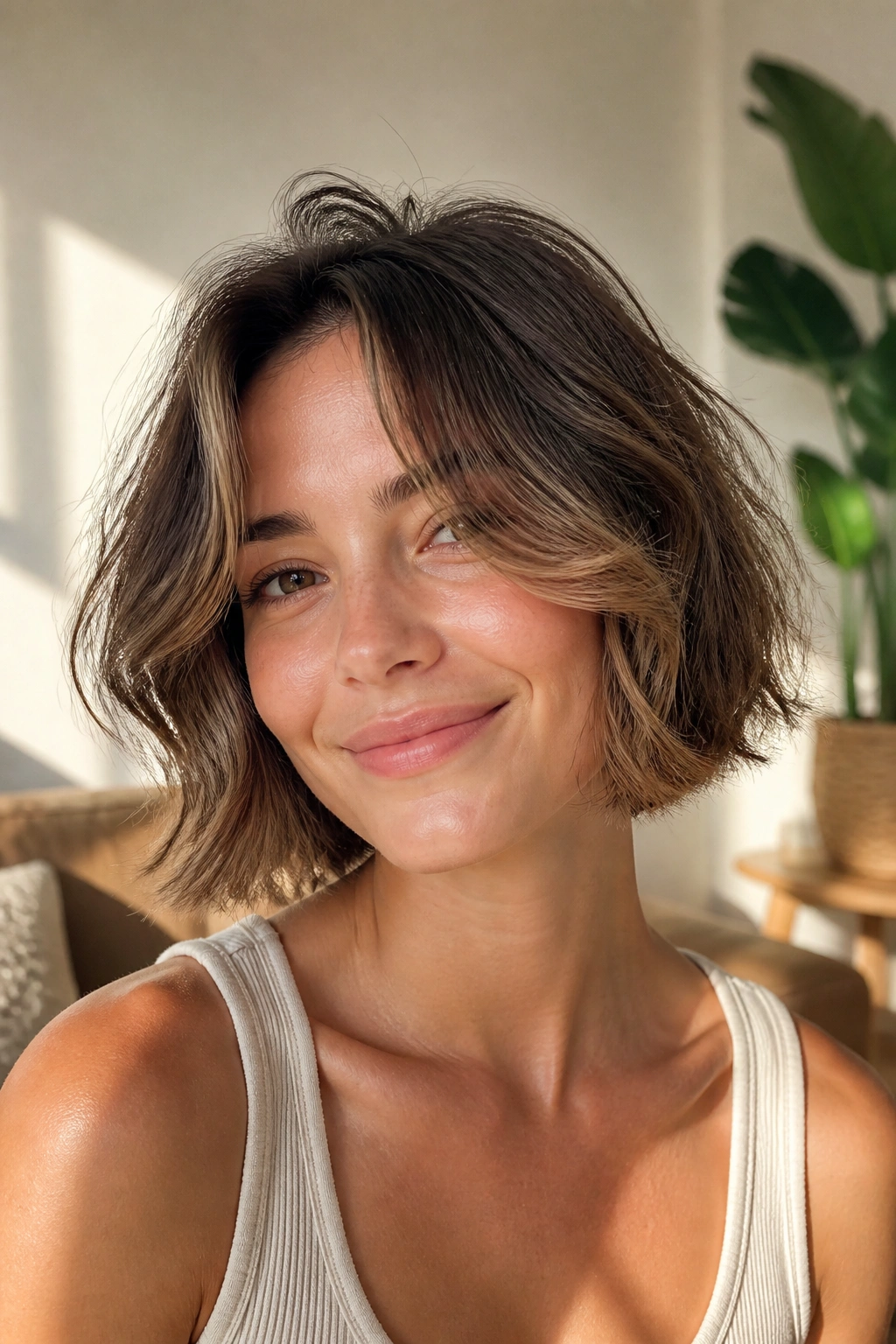
Some hair wants to bend. If yours does, let it. A natural-wave curtain bob works with fine hair that has even a little texture, because the waves do the job of creating dimension without needing heavy styling.
What makes this version different is the cut is shaped around the way the hair dries on its own. The front pieces are left long enough to swing away from the face, and the ends are softened just enough to keep the wave from looking sharp or blocky. That matters. Fine waves can turn puffy at the sides if the cut is too blunt, but they can also look see-through if too much weight gets removed.
I like this style for people who hate spending fifteen minutes with a round brush. Scrunch in a light mousse, twist the front sections away from the face, and leave the rest alone. A diffuser helps, but you do not need to fuss.
It’s a forgiving cut, which is rare. If a strand falls oddly, it usually looks like texture instead of a mistake.
7. Inverted Curtain Bob With Longer Front Angles
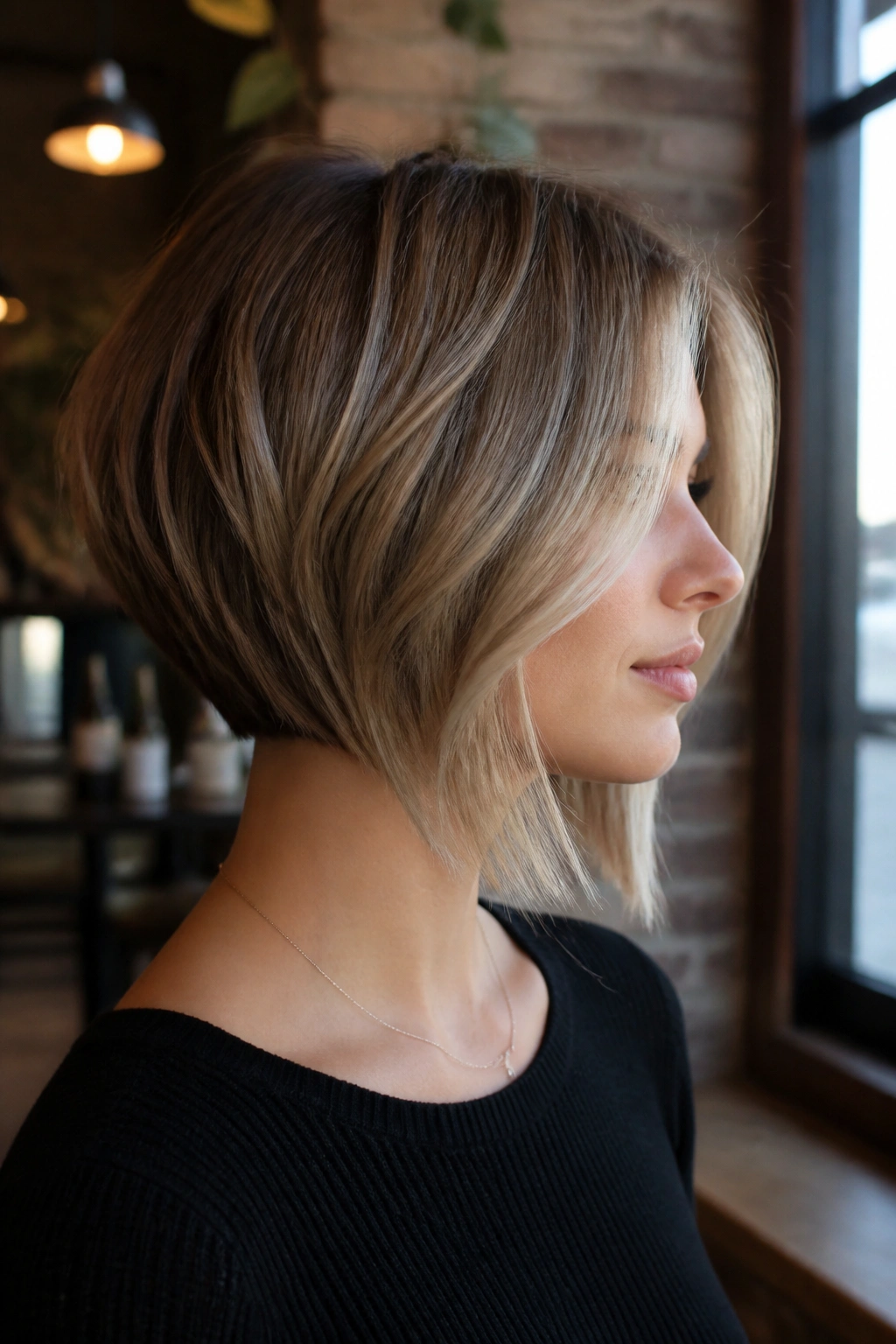
The inverted bob earns its keep on fine hair by sneaking in shape where flat hair usually gives up. The back sits shorter and tighter, while the front angles down longer toward the jaw or collarbone. That slant creates a visible line, and visible lines are your friend when the hair itself is fine.
What Makes the Angle Work
The short back gives lift at the nape. The longer front gives the illusion of more hair because your eye follows the length. Put those together and you get a bob that feels structured without being stiff.
- Ask for a soft inversion, not a harsh wedge
- Keep the curtain pieces blended into the front angle
- Style the crown first so the cut shows off its shape
- Use a flat brush if you want the finish sleeker
This is a good option for someone whose hair sits flat at the back of the head. It adds definition in profile, which is a nice bonus if you wear your hair tucked behind one ear a lot.
I’d avoid this if you want a very relaxed, messy look. Inverted shapes like a bit of discipline. Give them that, and they pay you back.
8. Piecey Curtain Bob With Textured Ends
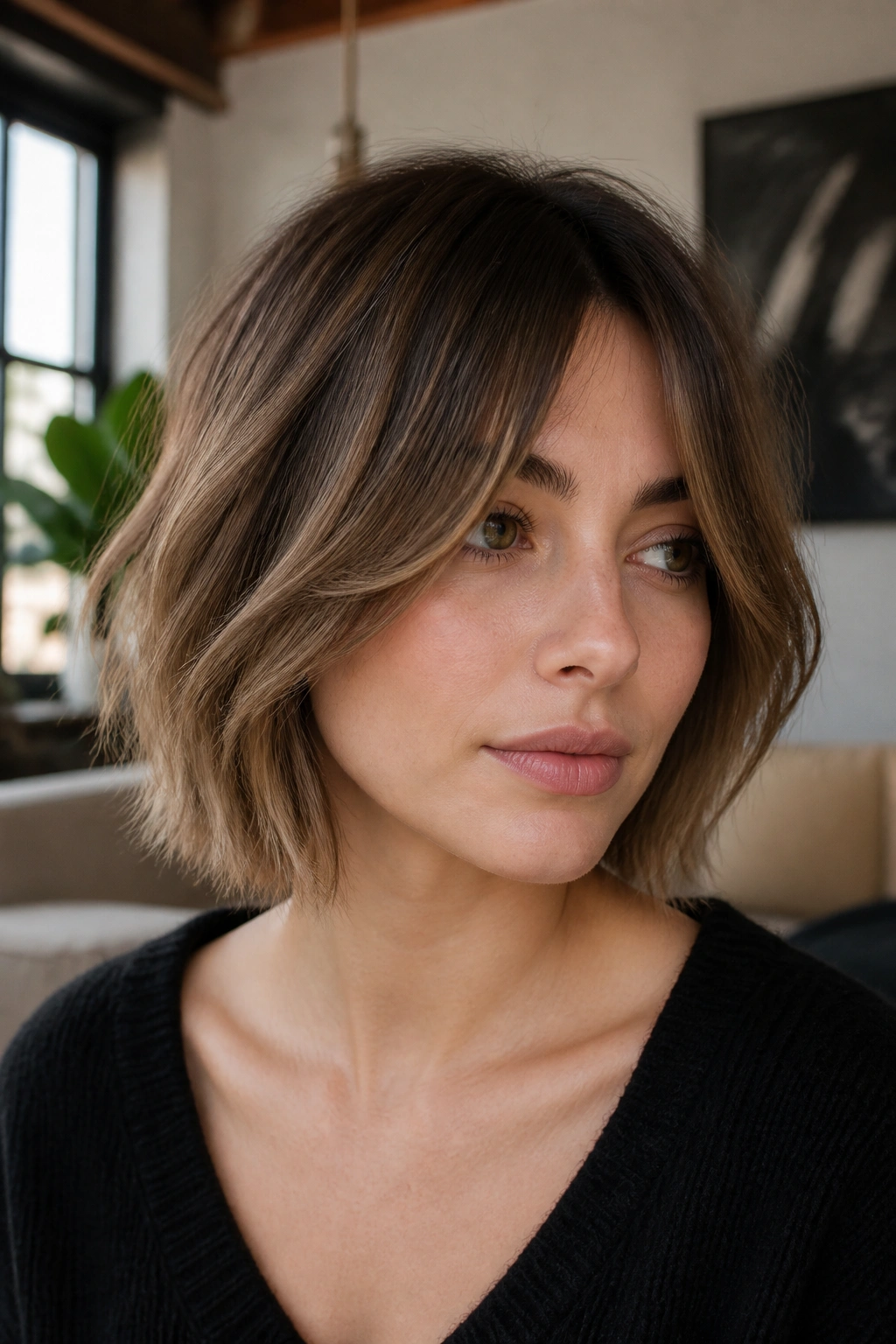
A piecey bob sounds casual, but there’s a lot of skill behind it. The trick is to remove just enough weight to make the ends separate a little, not so much that the haircut starts looking thin. On fine hair, that line is thin. Too much texture and the bottom disappears.
A good piecey curtain bob keeps the interior light and the perimeter honest. The front pieces are cut to frame the eyes and cheekbones, then the ends are point-cut or lightly razored so they move in little sections instead of one solid curtain. That motion can be a lifesaver if your hair looks too perfect in the wrong way.
Use a texture spray, not a heavy paste. A dime-sized amount worked through the ends is usually enough. Finger-combing does more here than a brush ever will.
This is one of those haircuts that looks best a little imperfect. If every strand sits in place, it loses the charm. If it breaks apart slightly, it suddenly looks lived-in and expensive.
9. Deep Side-Part Curtain Bob for Extra Lift
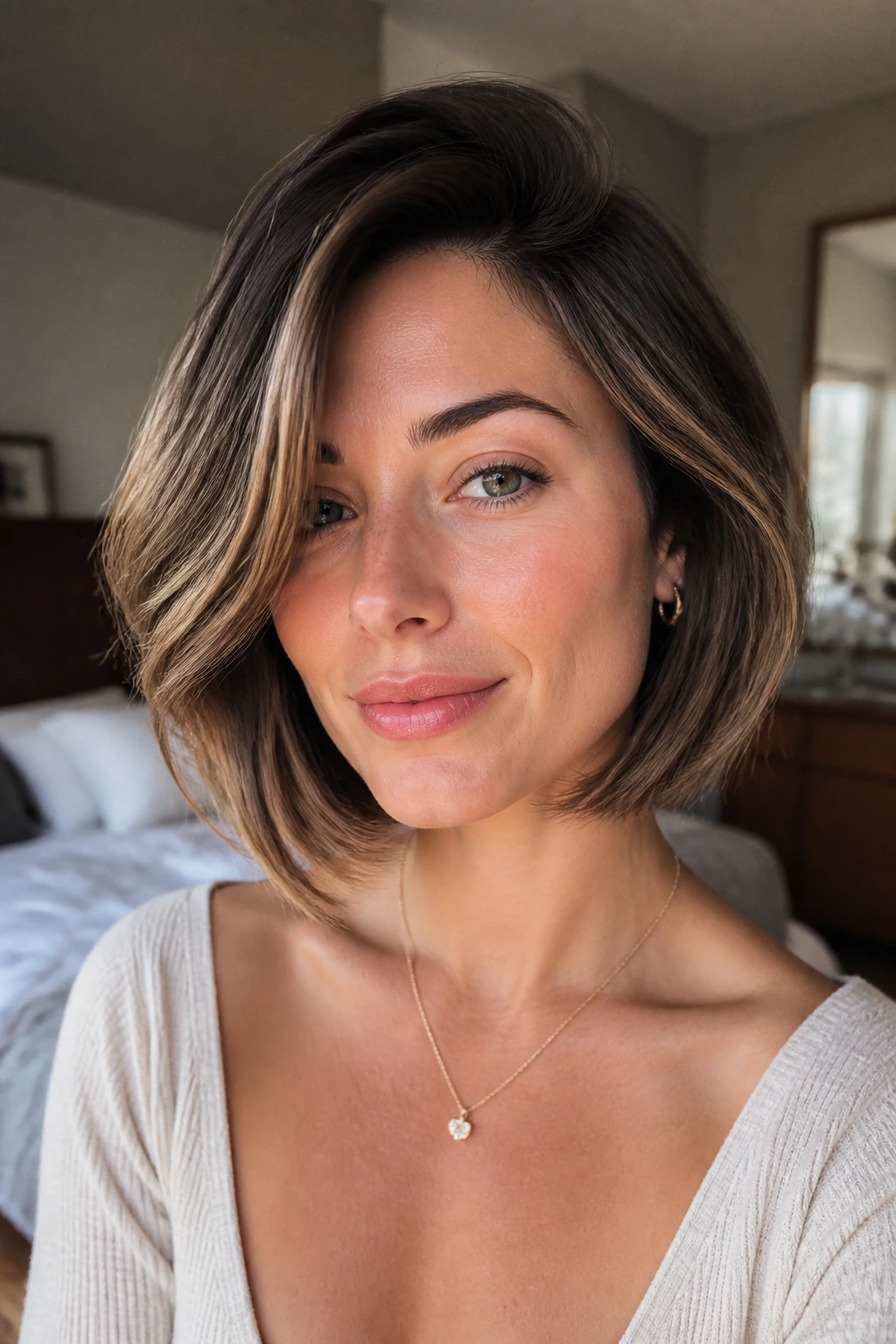
A deep side part can change the whole mood of fine hair in about ten seconds. It shifts the weight, lifts the front, and gives the roots a chance to look taller instead of glued to the scalp. When paired with curtain pieces, it keeps the softness of a center part but adds more drama at the crown.
The reason this works is simple: fine hair often collapses where it’s asked to split evenly. Push the part off center and the larger side gets a little height all on its own. The smaller side can be tucked, pinned, or left to fall across the cheek. Either way, the silhouette feels less flat.
How to Use It
Start with damp hair and direct the roots away from the part as you blow-dry. A root-lifting spray at the scalp can help, but the direction of the dry matters more. After that, wrap the front pieces away from the face with a round brush and leave the ends softly curved.
This cut is especially useful if your face looks better with asymmetry. Not every bob needs a strict center line.
10. Sleek Glassy Curtain Bob With Rounded Under Ends
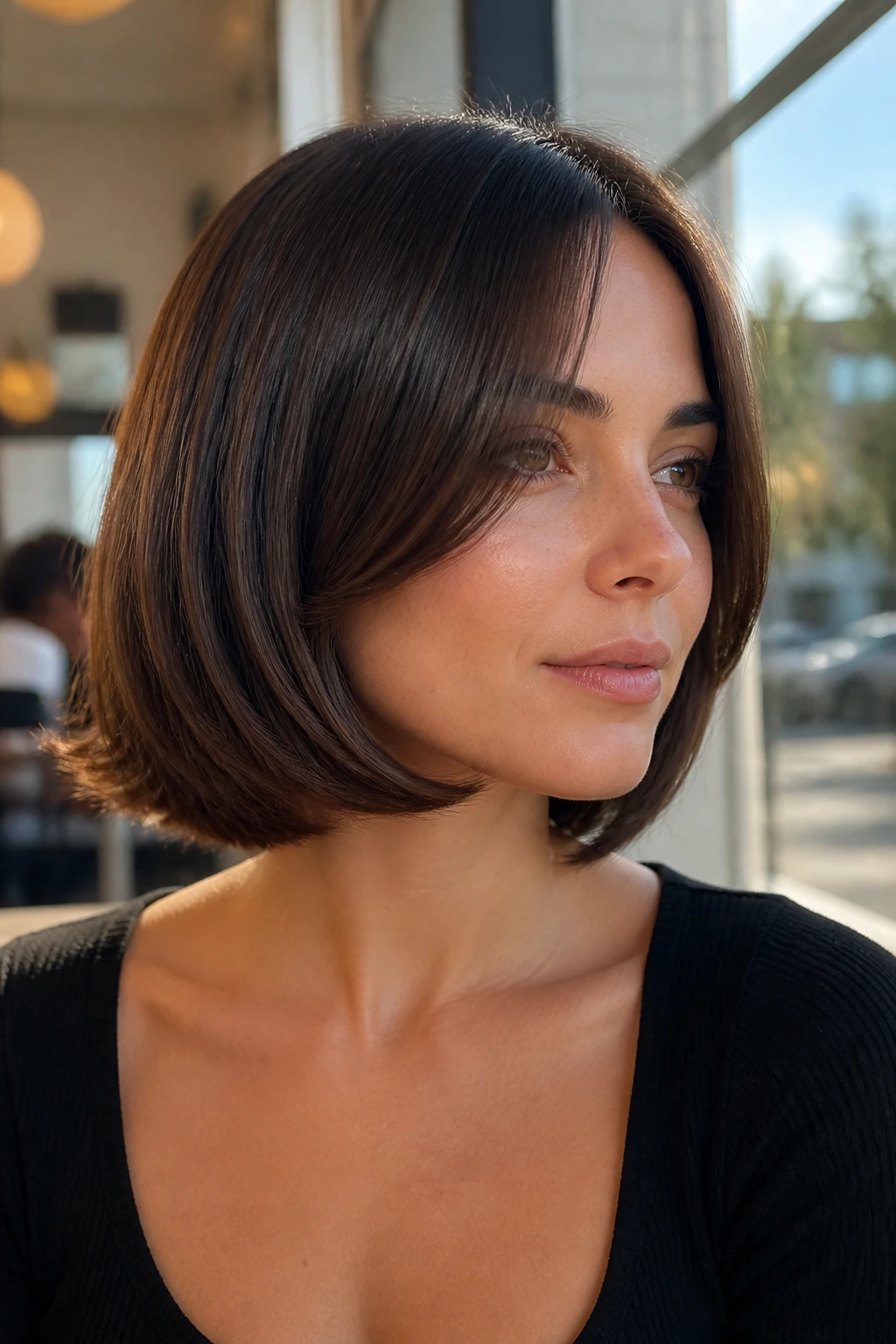
A sleek bob can absolutely work on fine hair, but it needs the right finish. If the ends are too straight and sharp, the whole cut can look stringy. Rounded under ends solve that problem by giving the perimeter a little curl under the jaw, which makes the shape look fuller.
The curtain pieces stay smooth and controlled here. They’re not fluffy. They just open gently at the center and taper into the rest of the haircut. That contrast between glossy top and curved bottom creates a dense-looking outline that fine hair often struggles to make on its own.
This style loves heat protectant and a decent flat iron. Keep the iron moving in a slow, steady pass, then bend the ends under with a wrist turn or a round brush. Don’t chase pin-straight perfection. The slightest curve keeps the cut from looking thin.
It’s a polished option, good for work, dinner, or anywhere you want the hair to look intentional. The shine does a lot of the heavy lifting.
11. Rounded Bob With Curtain Bangs and Full Perimeter
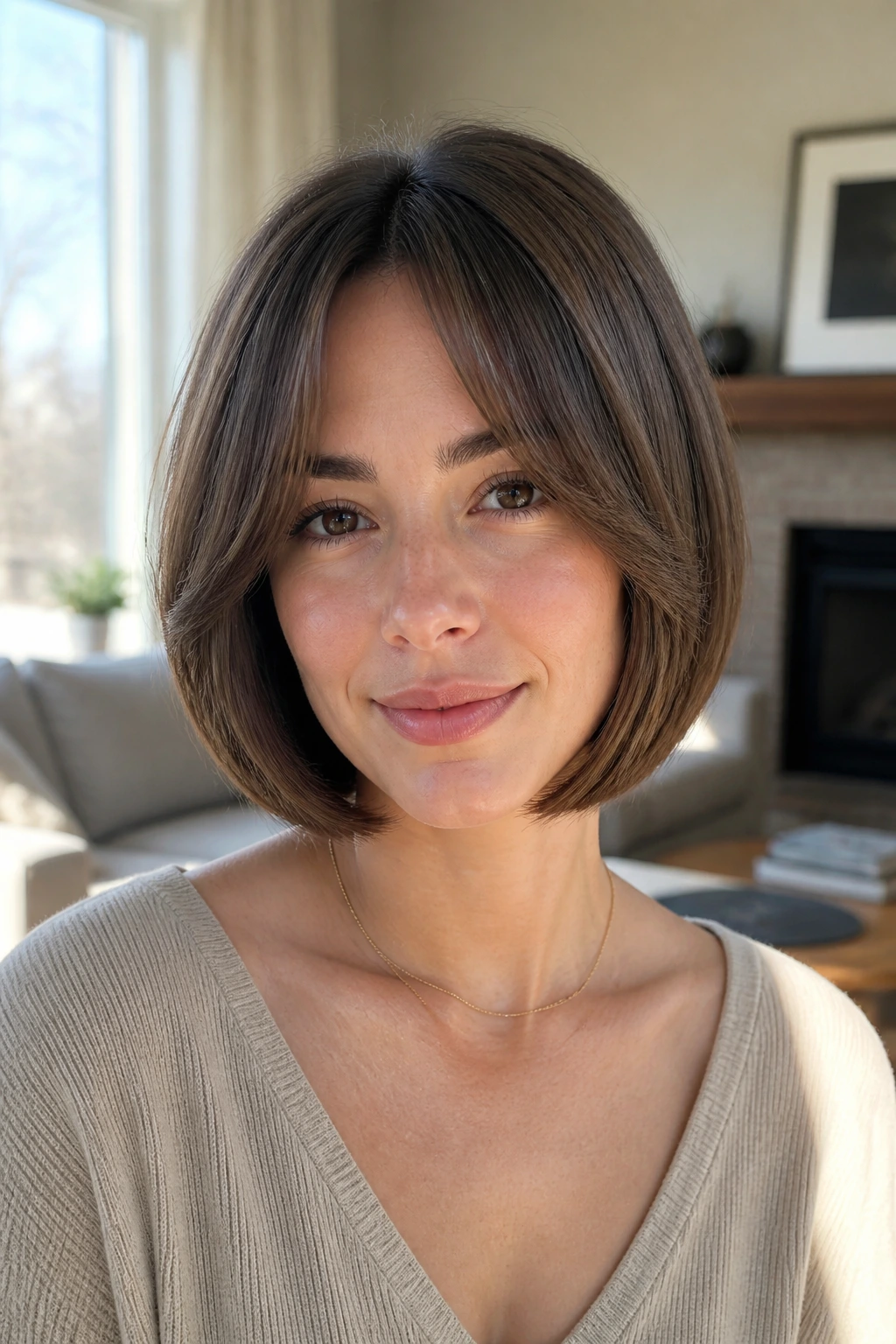
A rounded bob is one of those shapes that sounds old-school until you see it on fine hair. Then it makes perfect sense. The curve hugs the jaw and keeps the silhouette compact, which helps the hair read thicker from every angle.
The full perimeter is what matters most. Instead of letting the ends taper too much, the cut keeps the line filled out and soft. Curtain bangs break up the front just enough so the style doesn’t feel heavy around the face. That balance is what makes it work.
You’ll want to keep the curve consistent when styling. A round brush, medium tension, and a short inward bend at the ends are enough. The goal is not volume for its own sake. The goal is shape that holds its own when the air gets humid or the roots relax.
This is a smart choice for someone with a narrow jaw or a face that looks better with a bit more contour around the lower half. It frames the face in a calm, deliberate way.
12. Razored Curtain Bob With Wispy Movement
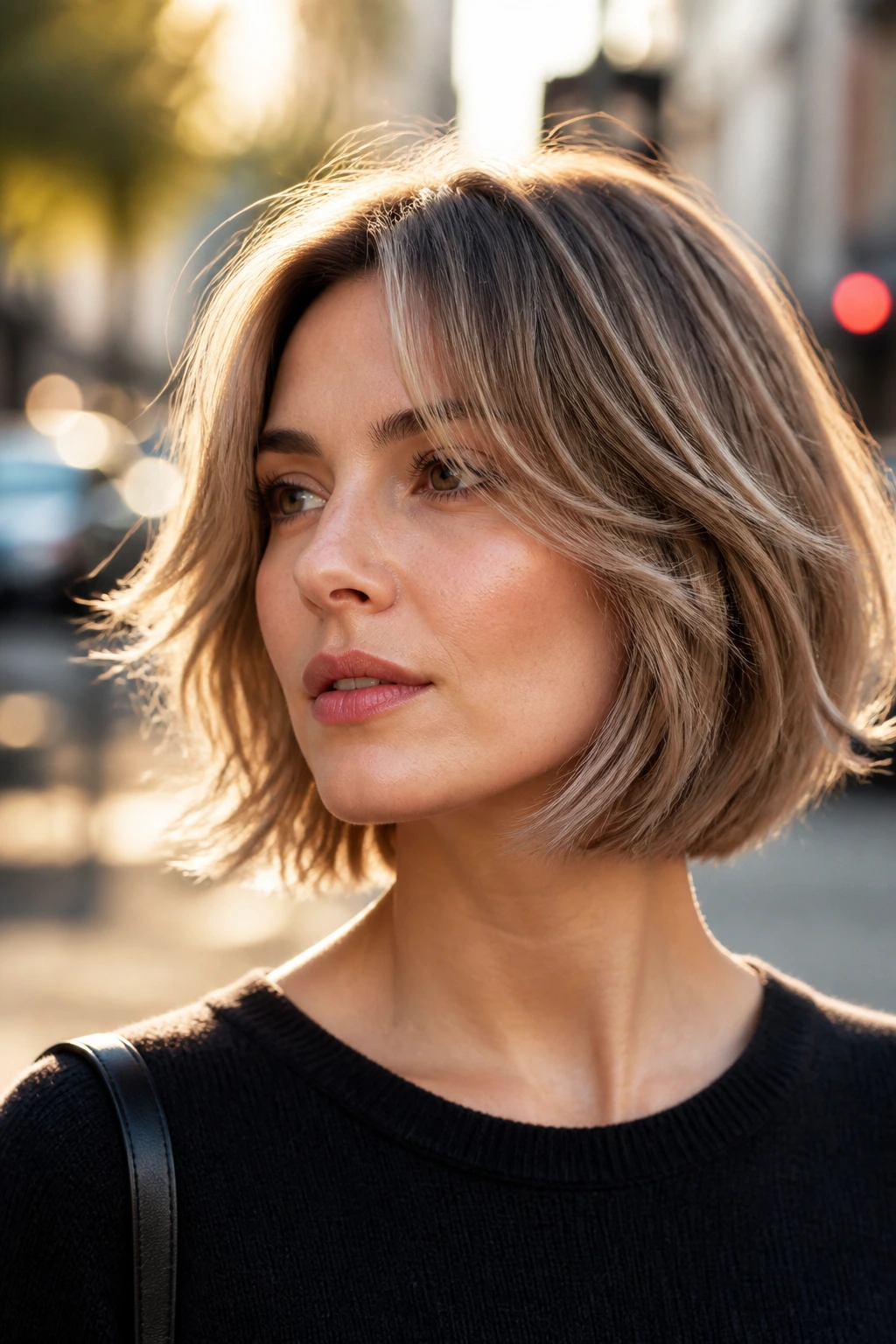
A razored curtain bob can look gorgeous on fine hair, but only when the razor is used with a light hand. Too much slicing and the ends start to fray. Done well, though, the haircut gets a soft, lived-in movement that scissors alone can’t always give you.
Unlike a blunt bob, this version feels airy through the sides and front. The curtain pieces melt into the rest of the cut instead of sitting like separate bangs. That makes it a good fit if you want something less precise and more relaxed.
What to Ask for at the Salon
Tell your stylist you want soft, not shredded. That matters. Ask for the perimeter to stay full, then let the texture show mainly in the front and a little through the interior. If your hair is extremely fine and straight, keep the razor work minimal. Otherwise the ends can go translucent fast.
This one suits people who like a bit of edge in their haircut. It’s not stiff. It doesn’t pretend to be. And that is the appeal.
13. Layered Bob With Face-Framing Curtain Pieces
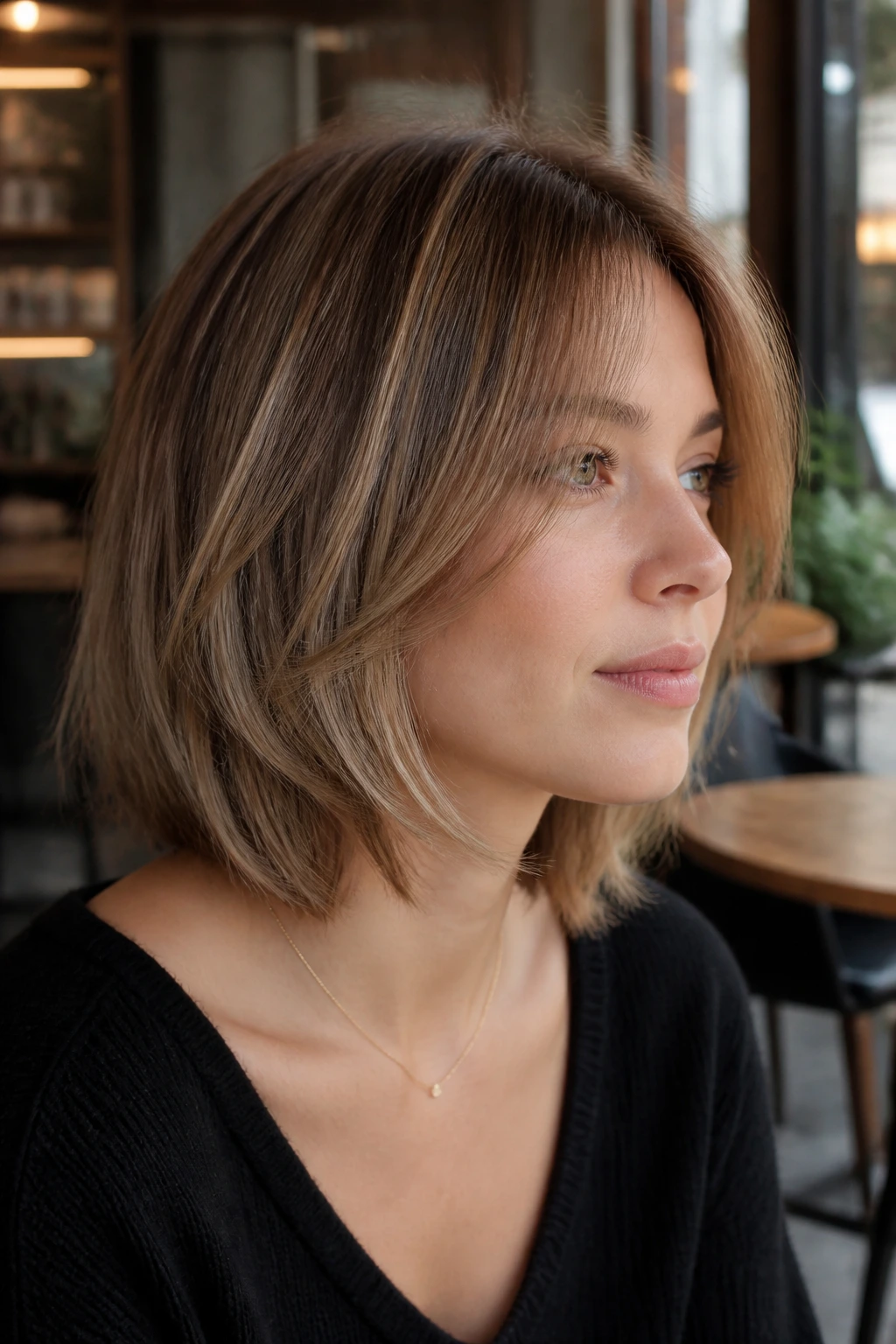
Layers can be helpful on fine hair, but only if they’re placed with restraint. This bob uses them where they count: around the face and slightly through the crown, not all over the head. That gives the haircut movement without stripping the ends bare.
Where the Layers Should Start
Ask for the first visible layer to begin below the cheekbone, not right at the chin. Starting too high tends to hollow out the sides. Starting lower keeps the bob dense, while the face-framing pieces do the softening work.
A few loose curls or a bend from a flat iron will make the layers show without needing much product. A lightweight cream can smooth the front, but avoid anything oily. Fine hair drinks in oil and then sulks.
The nice thing about this cut is that it plays well with grow-out. Even after six or eight weeks, the layers still look intentional instead of shaggy. That matters if you don’t want to live in the salon chair.
14. Soft A-Line Curtain Bob With Quiet Shape
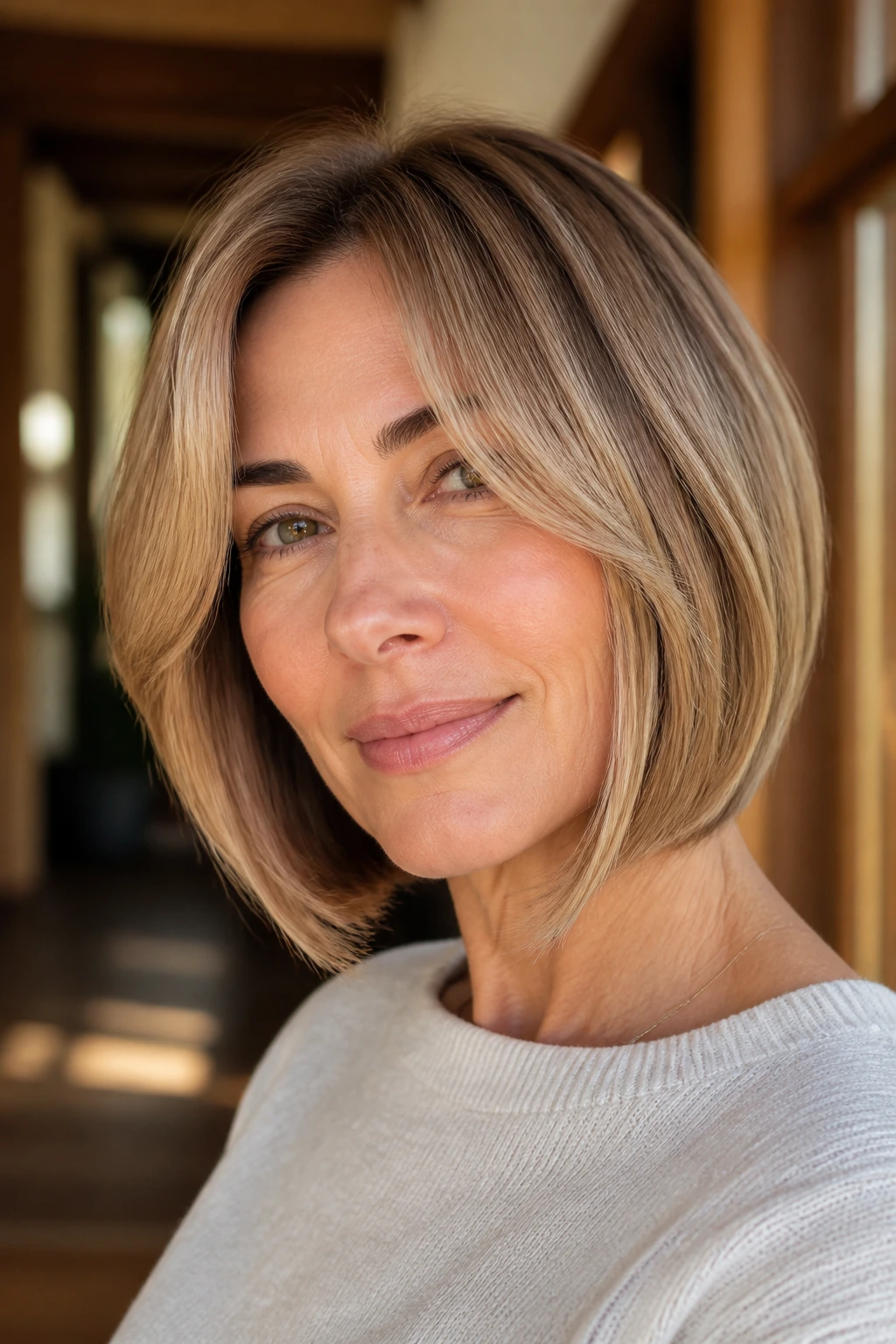
The soft A-line bob is the sleeper hit of this whole group. It’s not loud. It doesn’t shout about itself. But on fine hair, a gentle longer front and shorter back can create enough shape to make the hair look denser than it is.
What I like here is the quiet geometry. The angle is subtle enough to feel modern, not severe, and the curtain pieces soften the front so the cut doesn’t read like a wedge. If your hair tends to fall limp at the sides, the A-line structure gives it a little backbone.
A 1/2 inch difference between the back and front can be enough. You do not need a dramatic slope. In fact, too much angle can make fine hair look like it’s trying too hard. Keep the front soft, the ends clean, and the crown lightly lifted.
This is a good choice for someone who wants a bob that still feels grown-up and easy. It’s the haircut equivalent of a well-cut jacket.
15. Mini Bob With a Split Fringe
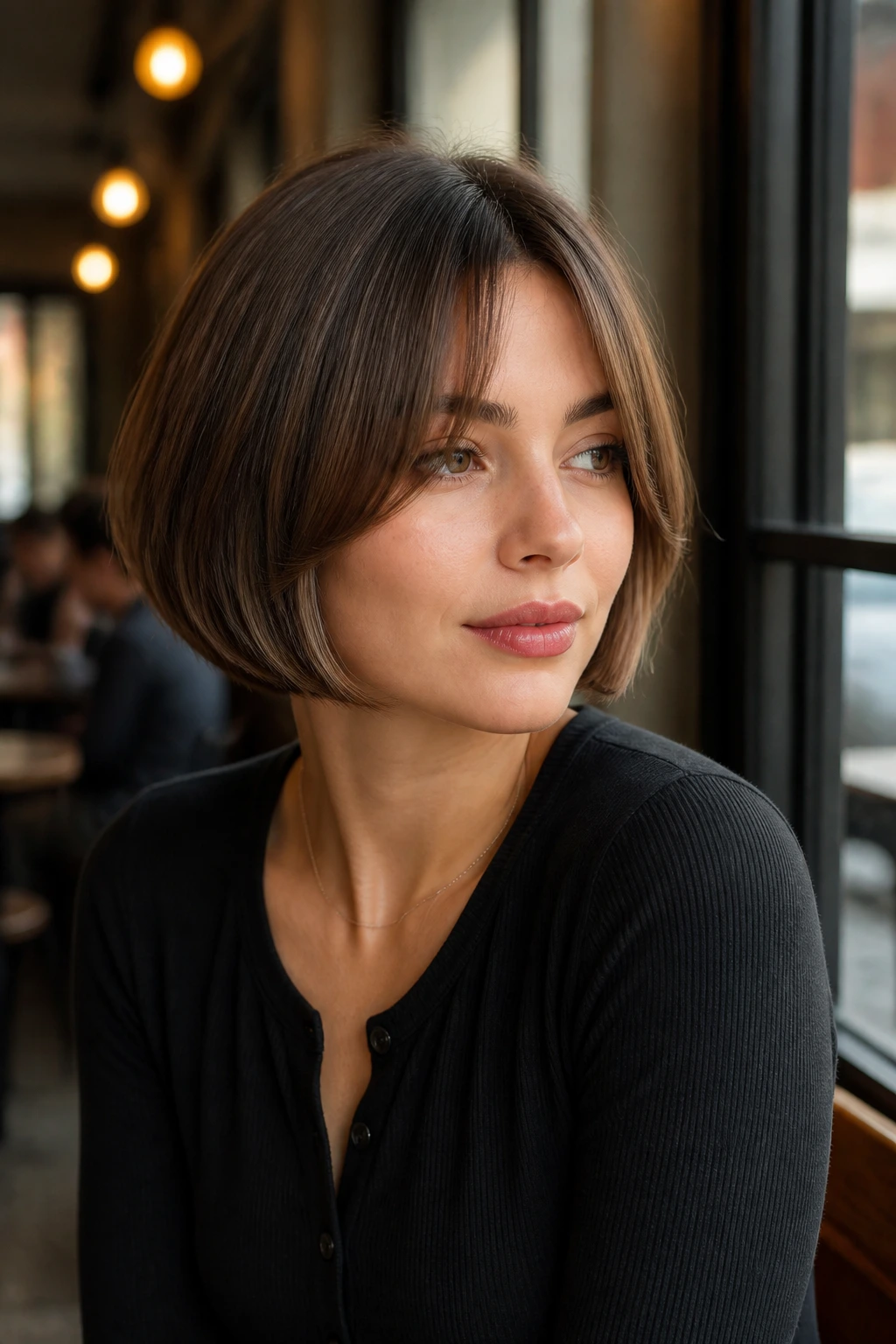
Can a very short bob work on fine hair? Yes, if the perimeter is clean and the fringe is split with care. A mini bob sits above or right at the jaw, which can make the ends look fuller because there’s less length to support. The split fringe keeps that compact shape from looking harsh.
The danger with a mini bob is obvious. If the cut is too short or too layered, it can expose every thin spot. So the edges need to stay tidy, and the front pieces need to taper softly around the eyes. That little bit of fringe keeps the haircut from feeling boxy.
Who Should Skip It
If you love hair you can toss into a low ponytail, this is not your cut. If you want the illusion of density and don’t mind regular trims, it’s excellent.
It’s also a strong option for people with small features. The short line brings attention upward, and the split fringe gives the face room to breathe.
16. Air-Dry Curtain Bob for Fine Hair That Fights Styling
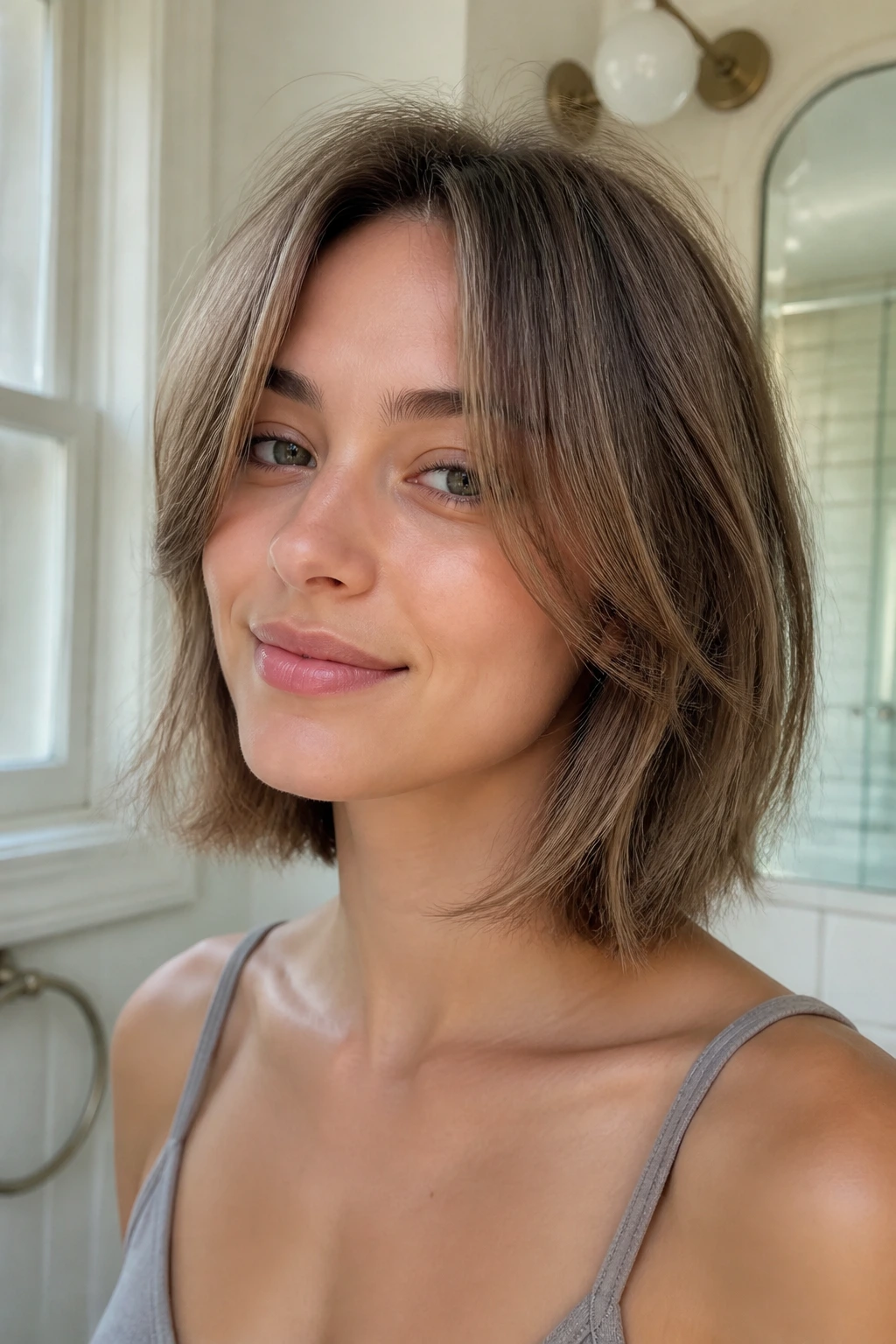
Some people are not going to blow-dry their hair every morning. Fair enough. An air-dry curtain bob is cut for that kind of life, and it can be a blessing if your fine hair has a little natural bend but hates heat tools.
The shape depends on keeping the ends balanced and the front pieces long enough to fall neatly when damp. If the layers are too short, air-dried fine hair can puff in odd places. If they’re too long, it collapses. The sweet spot is a bob that dries into a soft outline with the curtain pieces naturally splitting and settling around the face.
A little leave-in conditioner, a small amount of mousse, and a hands-off drying process go a long way. Scrunch once or twice, then stop touching it. Touching it too much is the fastest way to wreck the shape.
This is one of the easiest styles to live with. It won’t look styled in a strict sense, but it can look clean, calm, and expensive in a very low-effort way.
17. Side-Swept Curtain Bob With Flexible Parting
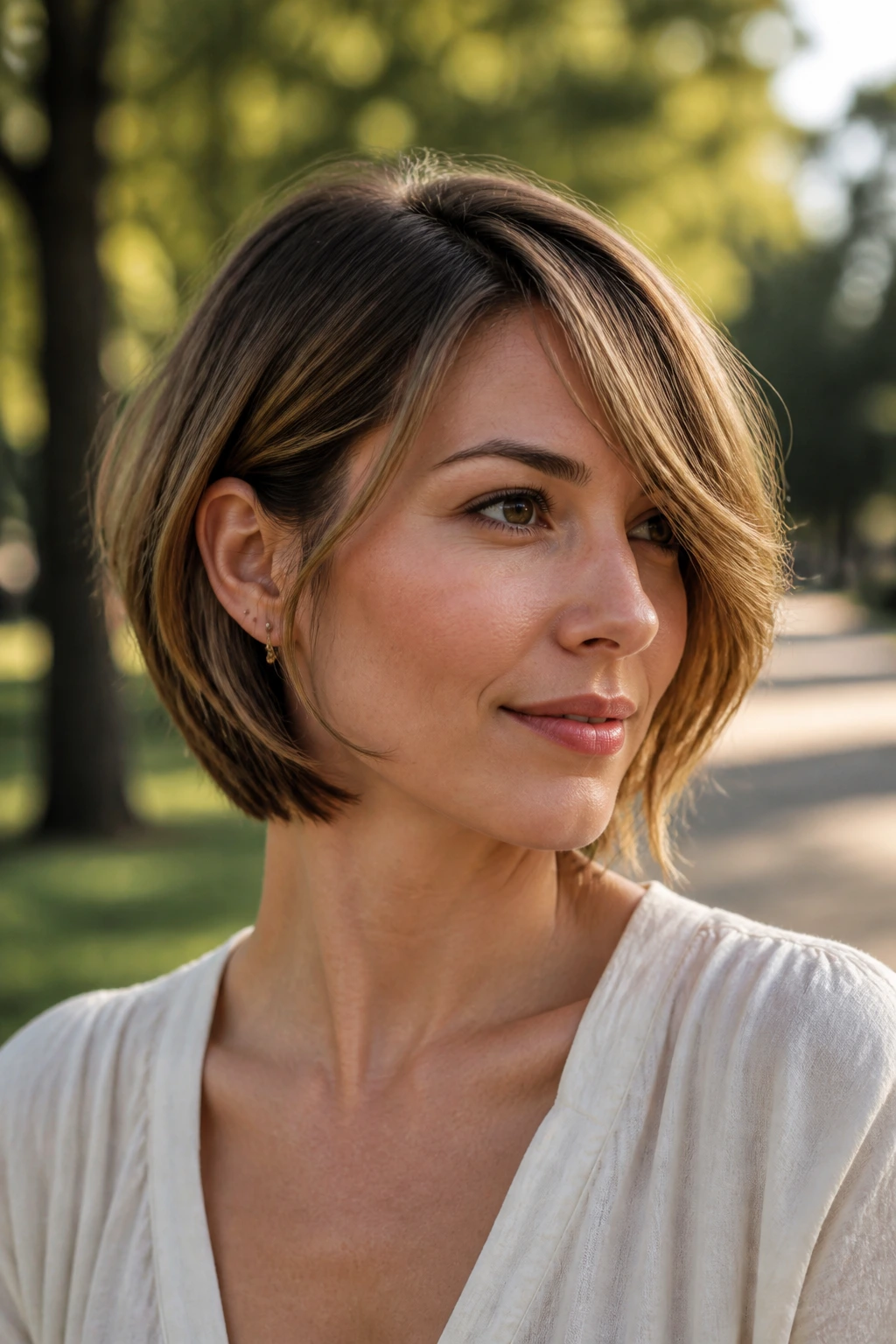
A center part is not a law. Fine hair often looks better when the part moves around a little, and a side-swept curtain bob lets you keep that flexible feeling without losing the face-framing effect.
The cut itself should still include those soft front pieces, but they’re styled to sweep across the forehead and taper into the cheek area instead of falling symmetrically. That slight imbalance makes the hair look fuller because the eye sees more lift on one side. It also helps if one side of your hair naturally falls flatter than the other.
This is a cut I’d recommend to people who tuck hair behind one ear, wear sunglasses often, or hate how straight symmetry can look on them. It’s easy to shift the part by an inch and change the whole mood.
There’s a nice practical bonus too. If one side gets oily faster, you can simply move the part and get another day out of the style. Small thing. Useful thing.
18. Choppy Jaw-Length Curtain Bob With Broken-Up Ends
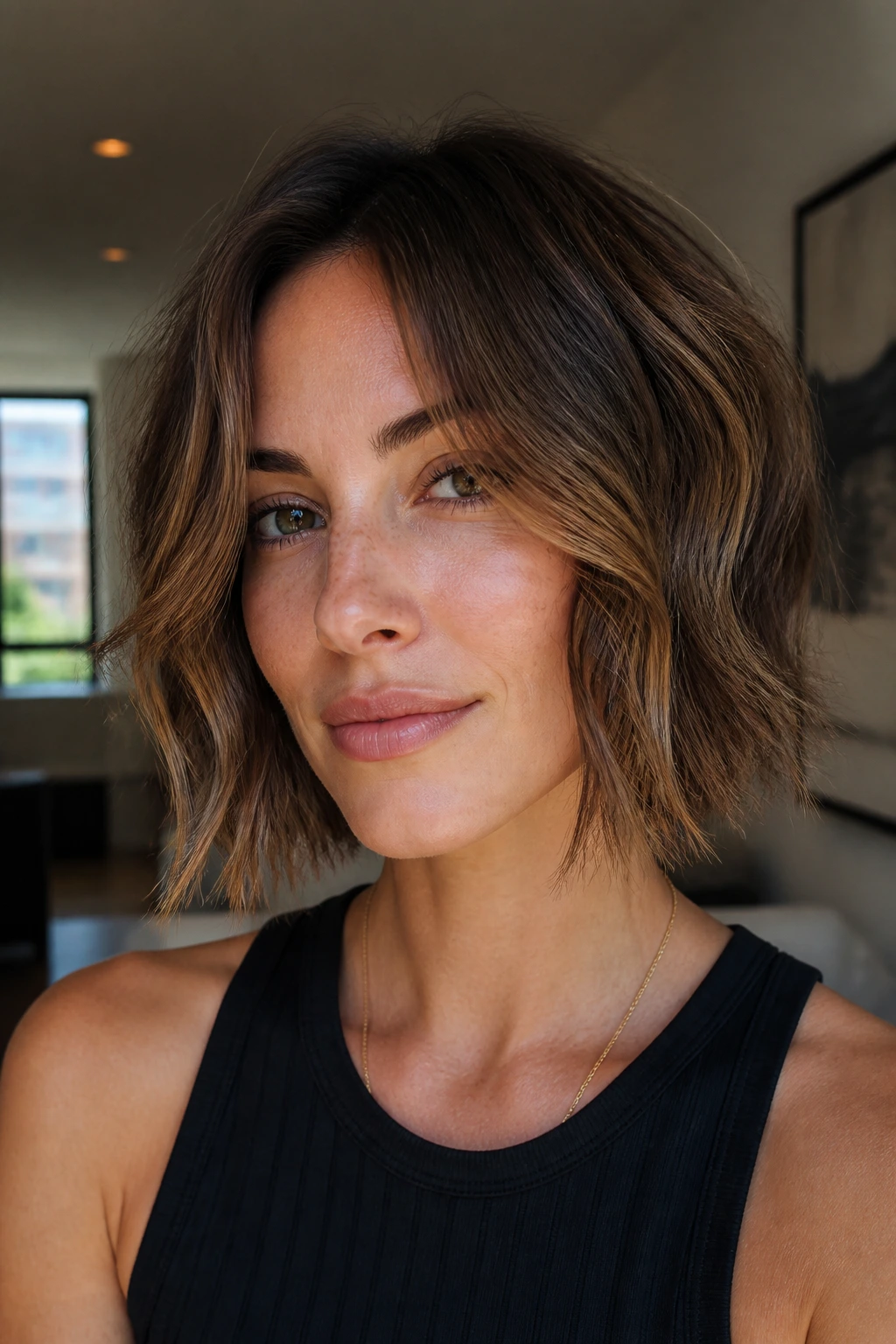
A choppy bob is not the same as a damaged bob. The difference is intent. Here, the chopped texture is placed on purpose so the ends break up a little and the haircut has a rougher, more modern edge.
Fine hair can benefit from this if it’s very straight and stubbornly flat. The chopped ends create little shadows and tiny changes in length that make the hair look fuller in motion. The curtain pieces soften the front, so the style never turns harsh or punky unless you want it to.
This cut works best when the jaw-length perimeter stays mostly intact. The choppiness belongs at the ends and a bit around the face, not all over the head. If every inch gets textured, the haircut starts to lose body.
I like it for younger, sharper looks, but it also works on adults who want something less polished. Pair it with a matte texture spray and a slightly messy part. Clean lines and a little mess can live together just fine.
19. Flipped-End Curtain Bob That Fakes Thickness
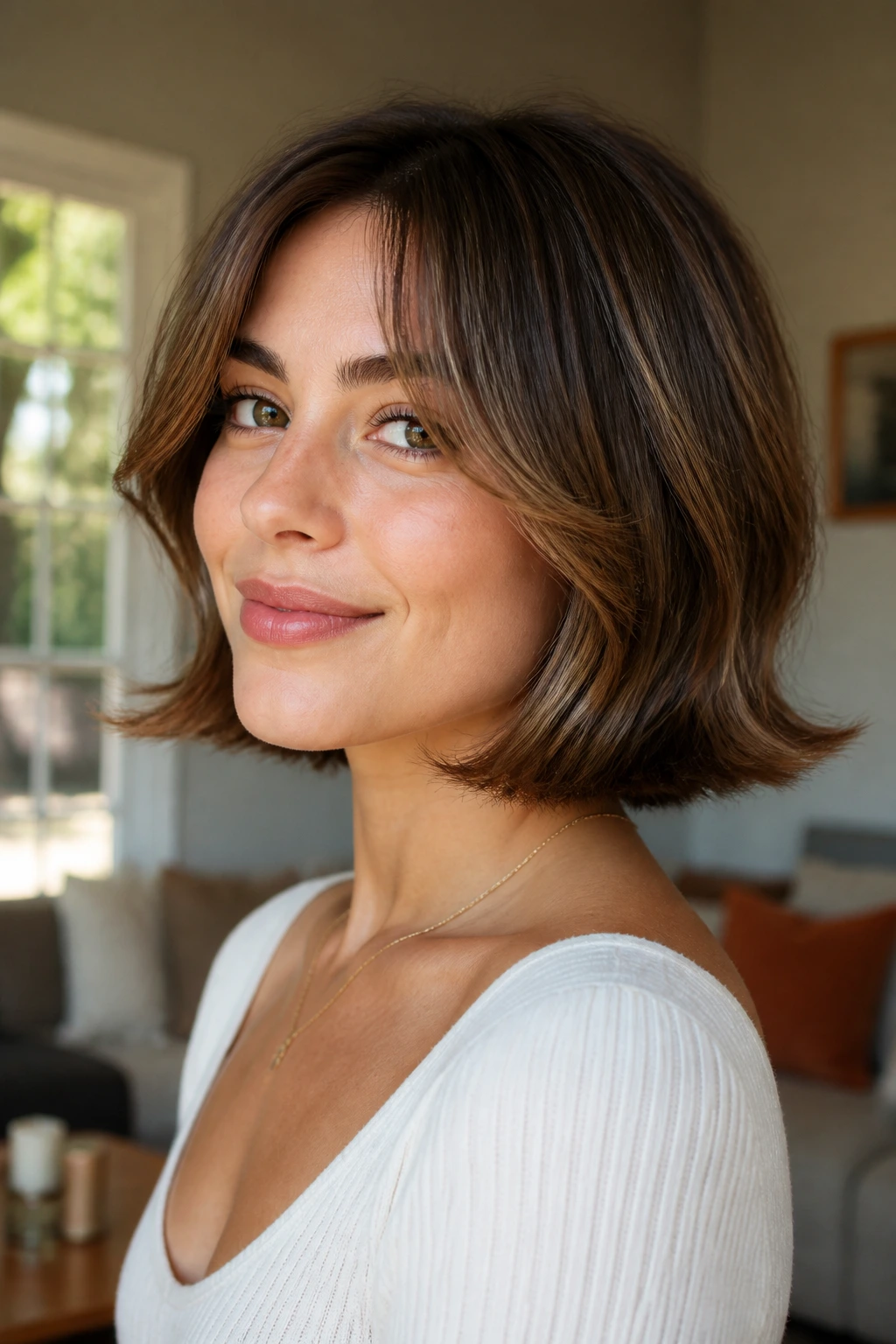
Flipped ends are underrated. When the tips turn outward even slightly, they catch the eye and make the haircut look like it has more movement than it really does. On fine hair, that’s a useful illusion.
The cut needs enough structure to support the flip. A chin-length or jaw-length bob works best. The curtain pieces should sit long enough to frame the face, while the bottom edge stays blunt or nearly blunt so the outward flip feels playful rather than feathered into nothing.
Quick Styling Details
- Use a 1-inch round brush or a small flat iron bend
- Flip only the last 1 to 1.5 inches of hair
- Keep the roots smooth so the ends stand out
- Add a light mist of hairspray, not a shell
This style feels a little retro in the best way. It’s also handy when your hair refuses to hold a curl. A flip is easier to create than a full wave, and it often lasts longer on fine strands.
20. Dimensional Curtain Bob With Balayage and Shadow Roots
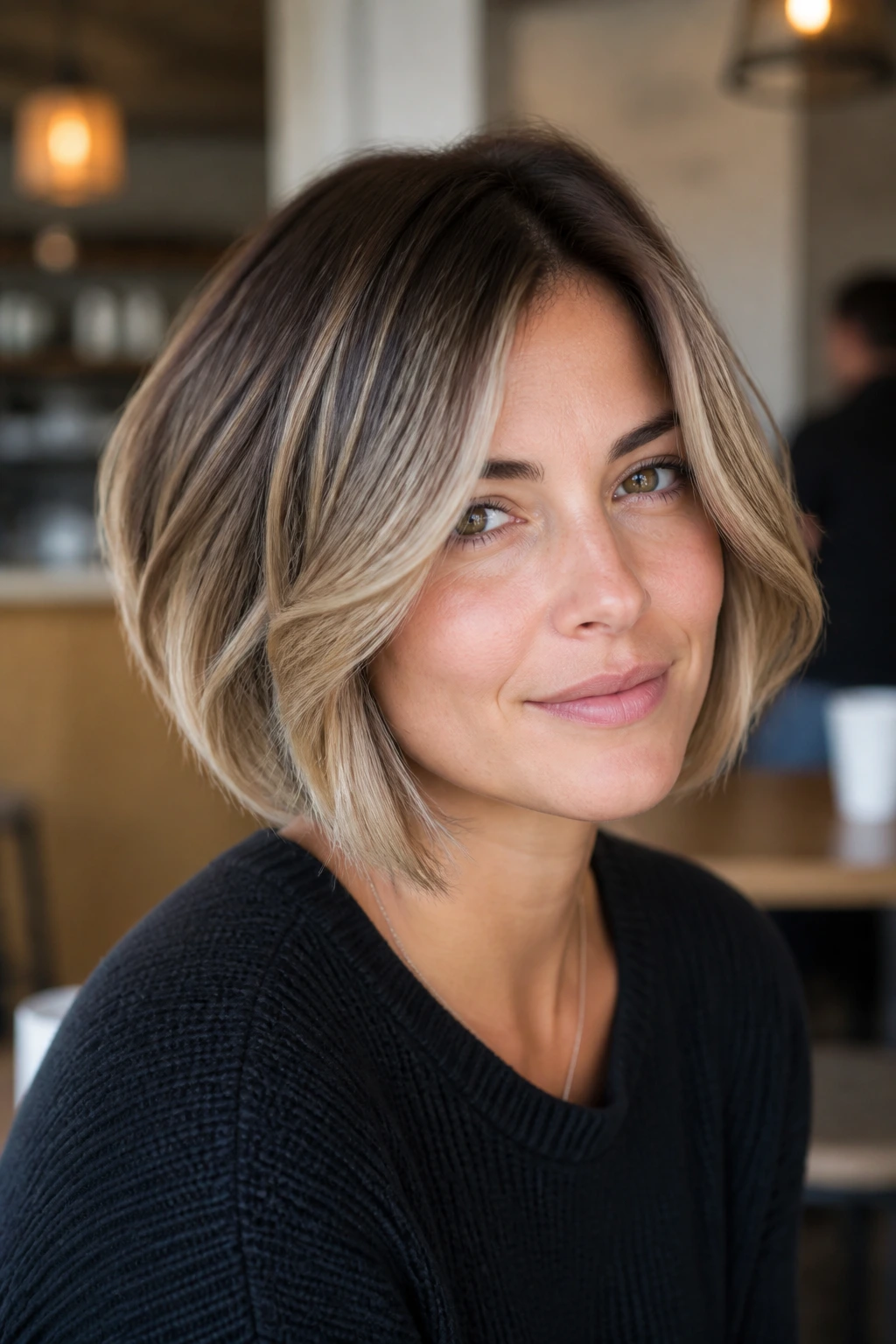
Color can do half the work for fine hair, and people forget that. A dimensional curtain bob uses balayage, shadow roots, or softly painted highlights to create depth where the haircut alone might fall a little flat.
The haircut should stay clean and shaped first. Then the color adds contrast: darker near the root, lighter through the surface, with the curtain pieces catching a slightly brighter tone around the face. That contrast tricks the eye into seeing more texture and more body. It’s not magic. It’s contrast.
The important part is keeping the color soft. Stripey highlights can make fine hair look thinner, not fuller. The placement should feel blended, with brighter pieces near the front and a little depth underneath. A harsh money piece can overwhelm the cut. A gentle one tends to work better.
This is a strong option if you like styling your bob in waves or bends. The color shows off the motion. Without it, the style can still work. With it, the haircut has more presence.
21. Curly Curtain Bob With Long Front Pieces
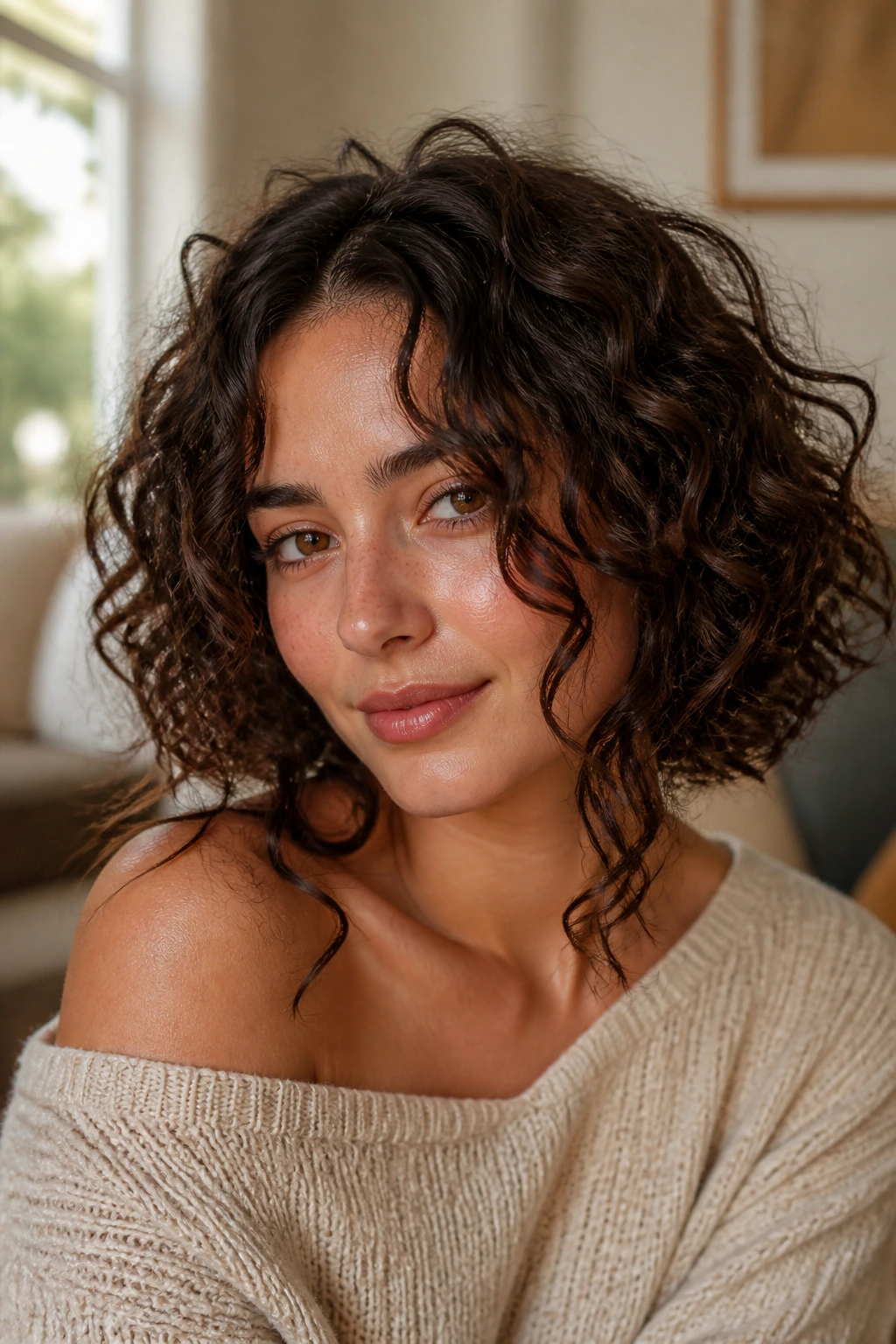
Fine hair can be curly, wavy, or both, and a curly curtain bob needs a different touch than a straight one. The cut has to respect the spring in the hair, or the shape gets shorter than expected and starts to puff out.
Long front pieces are the anchor here. They keep the face framing soft while the rest of the bob lifts and curls around the head. A dry cut or a curl-by-curl approach helps because curly fine hair can shrink in ways that are hard to predict when wet. That’s not a flaw. It’s just the way the curl works.
How to Style It
Use a gel or curl cream with a light hand, then diffuse on low heat until the curls form a soft cast. Scrunch out the cast once the hair is dry. If the curls look separated and springy, you’re on track. If they look crunchy, the product got too heavy.
This cut is lovely when it’s shaped with patience. Rushed curly bobs tend to look triangular. Careful ones look airy and defined.
22. Tucked-Under Curtain Bob With a Polished Finish
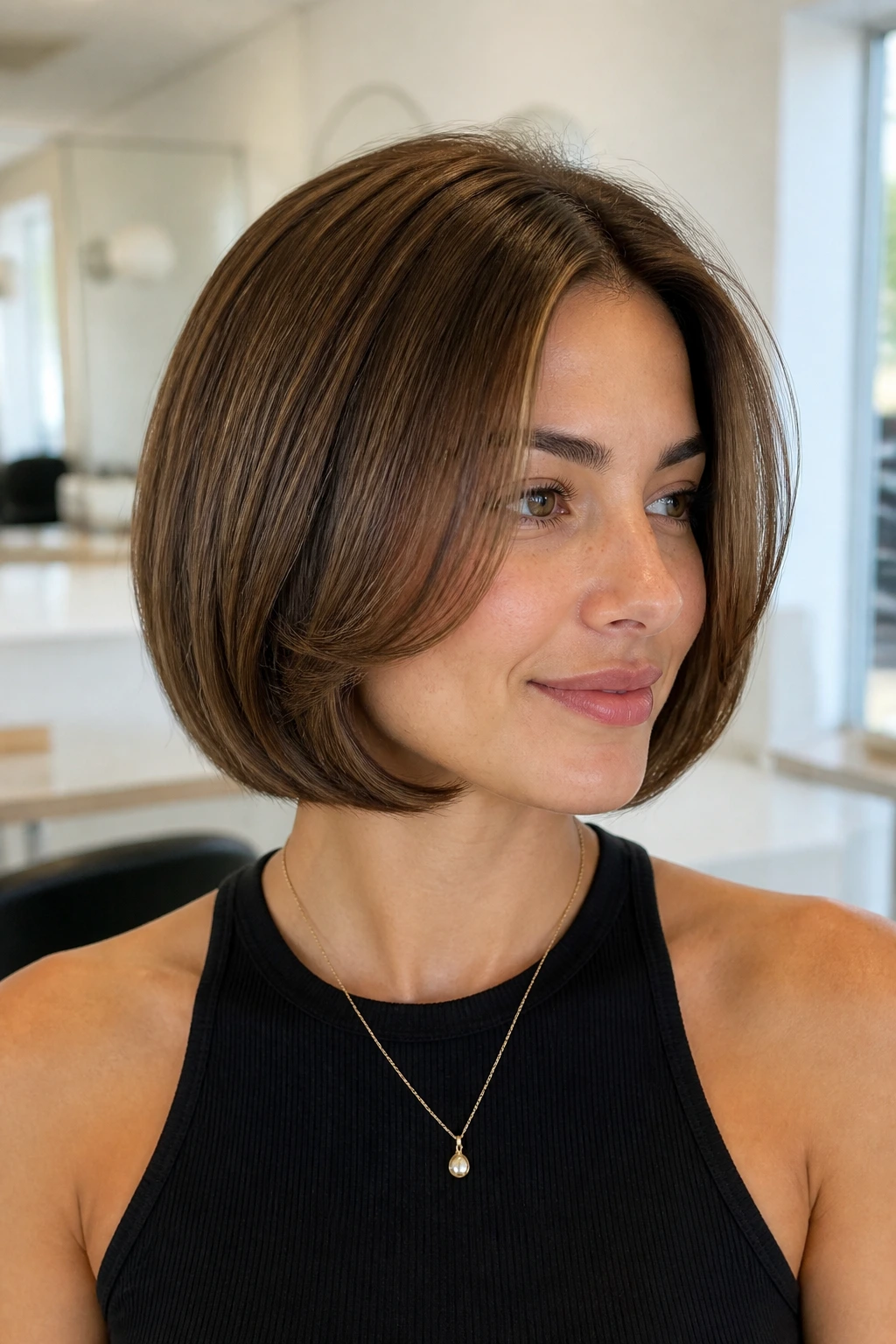
A tucked-under bob sounds plain until you see what it does for fine hair. The inward curve adds density at the edge, and the smooth finish makes the haircut look neat even when the hair itself is delicate.
The curtain pieces keep the front from becoming boxy. They part softly at the center and fall away from the face, while the ends curl just under the jaw. That combination creates one of the most dependable silhouettes for fine hair because it uses shape, not volume, to make the cut look full.
This is a cut that rewards a simple routine. Blow-dry with a round brush, turn the ends under on the last pass, and finish with a tiny bit of smoothing cream through the tips. Not much else is needed. Too much product flattens the shape fast.
It’s also one of the most versatile versions on the list. You can wear it polished, tuck one side, or rough it up a little with dry texture spray. The haircut still holds its line.
Final Notes
The strongest curtain bob haircuts for fine hair do one thing well: they keep the perimeter honest. That solid edge is what gives the style its weight, even when the hair itself is delicate.
Curtain pieces are the softening tool, not the whole haircut. If they’re cut with care, they frame the face and make the bob feel lighter around the eyes without stealing density from the ends. That’s the balance worth asking for.
Bring photos, sure, but also bring a little honesty about how you wear your hair. If you blow-dry every day, say so. If you air-dry and run, say that too. The right bob is the one that fits your actual morning, not the version of your life that needs a full round brush and twenty spare minutes.
