



Fine hair can look flat in a bob that’s cut too softly. A clean purple bob haircut changes the whole read of the hair, because the right edge, the right length, and the right shade all work together to make the shape look fuller than it is.
That’s the trick with purple bob haircuts for fine hair. You do not need a huge pile of layers or a dramatic chop to the scalp. You need weight in the right places, a line that holds its shape, and a purple tone that gives the eye something to follow instead of a single flat sheet of color. A blunt perimeter can do more for thin strands than a dozen wispy layers ever will.
Purple helps in a way people underestimate. Deep plum and smoky violet add depth near the roots, while lilac, orchid, and silver-lilac can make the cut feel lighter around the face. The wrong version looks see-through fast. The good version looks expensive, sharp, and oddly easy.
Some of these cuts lean sleek. Some are softer and more playful. A few are a little bolder than most people wear every day, which is exactly why they work so well when you want fine hair to stop disappearing into the background.
1. Lavender Blunt Bob With a Solid Edge
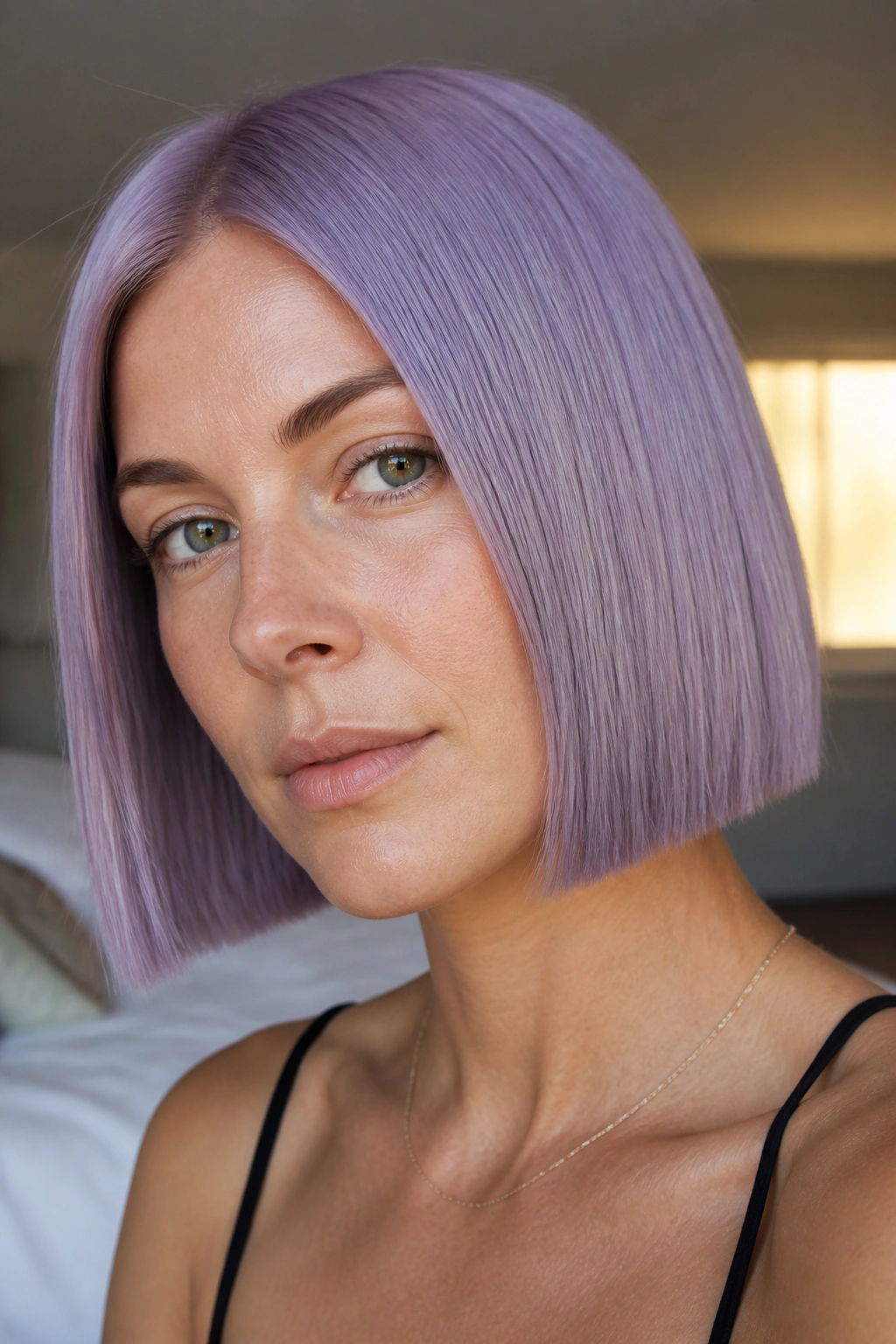
A blunt bob is one of the easiest ways to make fine hair look denser, and lavender keeps it from feeling heavy or severe. The line matters here. When the ends all sit at nearly the same length, the eye reads a thicker outline, which is half the battle with finer strands.
Why the blunt edge matters
A clean perimeter gives the bob a little visual muscle. Soft layers can be lovely, but on very fine hair they sometimes strip away the part that actually makes the cut look full. Lavender adds a cool, airy finish, yet the blunt line keeps the shape grounded.
Best length: chin to just under the jaw.
Best finish: smooth with a slight bend under the ends.
Best purple tone: pale lavender with a neutral base, not icy silver.
Styling tip: use a round brush and set the ends inward by half an inch.
My favorite trick: ask for the bob to be cut dry or close to dry, so the stylist can see how much the hair really collapses.
2. Smoky Plum French Bob
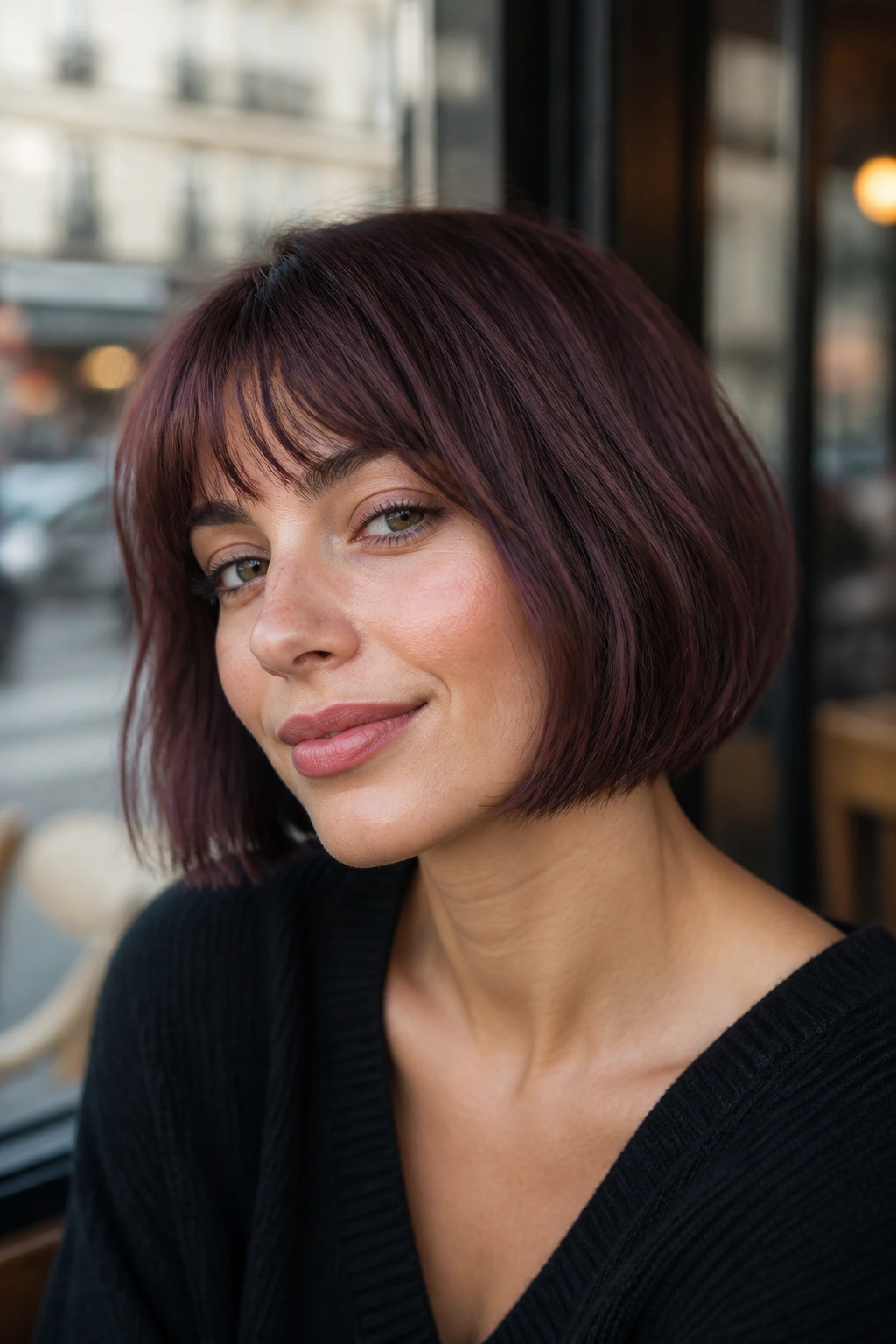
A smoky plum French bob has more attitude than a classic neutral bob, and that attitude helps fine hair. The cut usually sits around the cheekbone or jaw, which gives the neck a little length and makes the hair look intentional instead of delicate in a fragile way.
The plum shade should stay moody, not bright. That darkness near the base gives the hair some visual density, while the slightly brushed-out finish keeps it from looking stiff. Fine hair can go limp when it’s forced into too much neatness, and this cut avoids that trap.
It works especially well if your hair naturally falls straight or only has a soft wave. A tiny bit of bend through the mid-lengths is enough. Too much curl can make the ends look thin, which is the opposite of what you want.
This is the bob I’d hand to someone who wants polish without fuss. It’s chic, but not fussy. And it doesn’t ask for a long morning routine.
3. Angled Violet Bob With a Deep Side Part
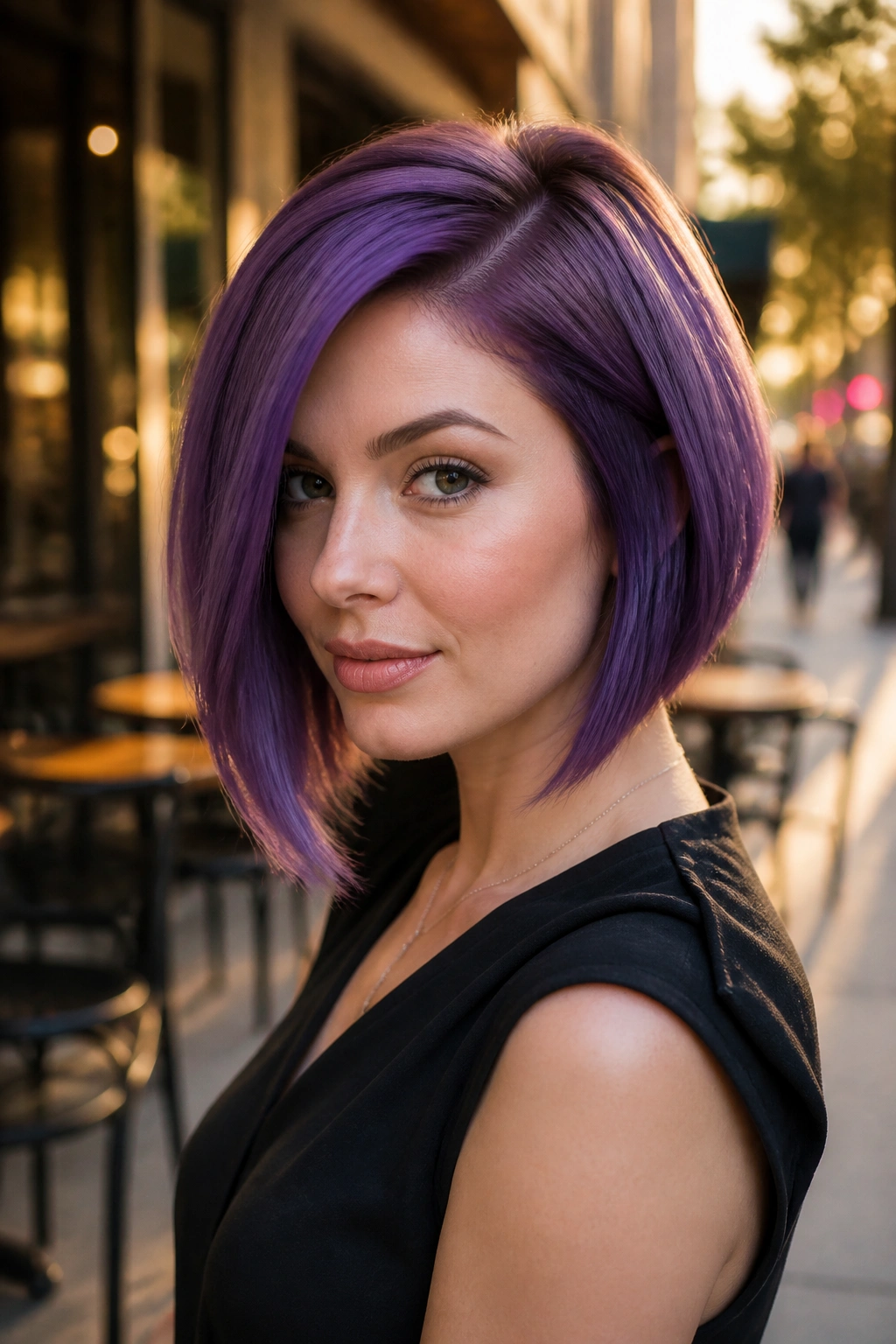
Why does an angled bob help fine hair so much? Because it changes where the weight sits. A slightly shorter back and longer front make the style look like it has movement, even when the strands themselves are fine and light.
A deep side part adds another layer of lift. It pushes more hair over one side of the head, and that bit of extra overlap makes the crown look fuller. Violet is a smart choice here because the color catches the eye along the diagonal line of the cut.
How to wear it
Keep the angle subtle. Half an inch to an inch of difference between the nape and the front is enough. Go too steep and the ends can look stringy.
A medium purple gloss works better than a flat pastel. The slight depth gives the front pieces more presence when they swing forward. And yes, that swing matters. Fine hair often looks better when the movement is obvious and the shape is crisp.
This one suits people who like a little drama without going full statement cut.
4. Lilac Micro Bob With Tucked Ends
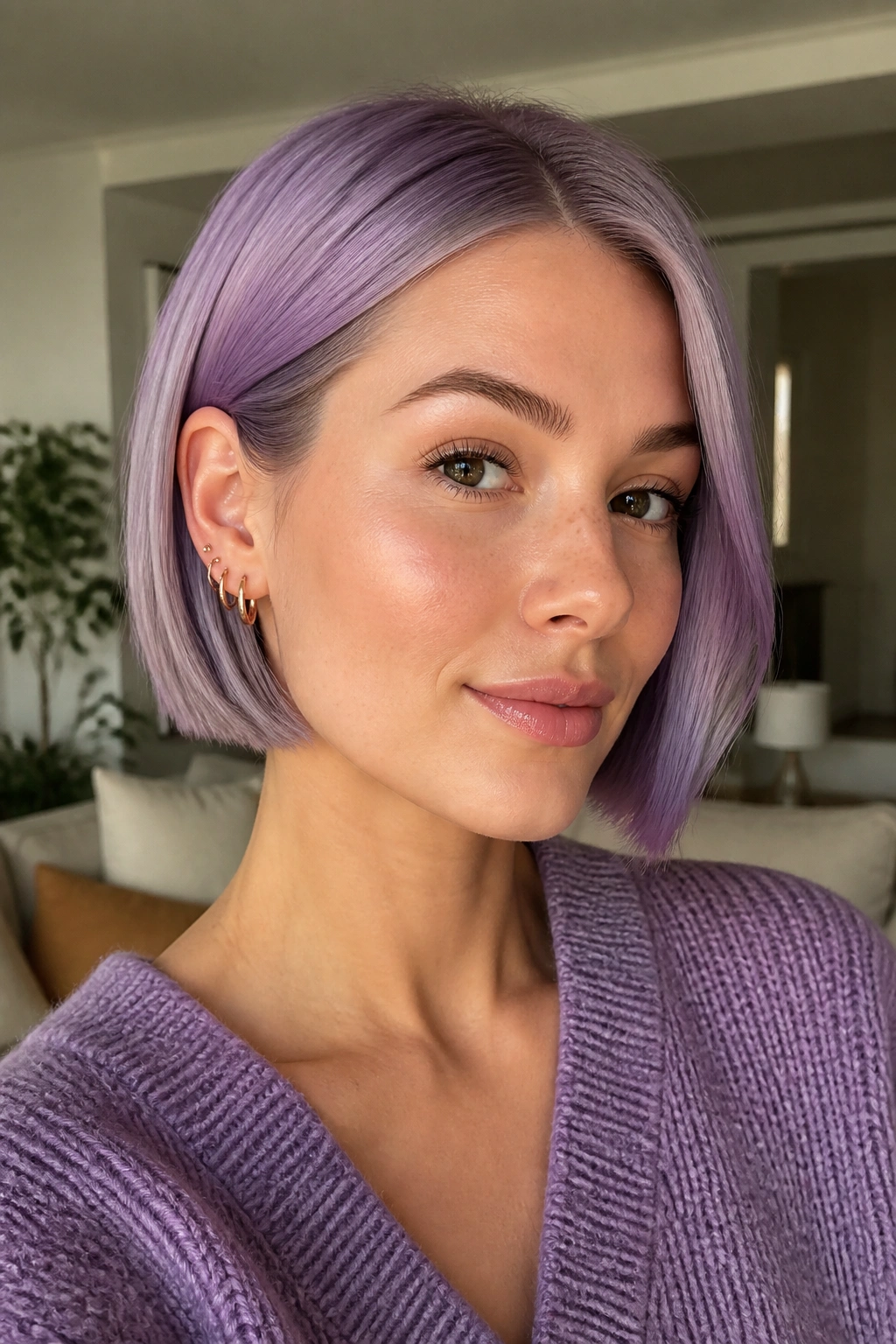
A micro bob sounds bold, but on fine hair it can be a smart move if the line stays clean. The length sits right around the jaw or just above it, which gives the illusion of thicker ends because the hair is not dragged down by too much length.
The lilac shade keeps the look soft enough to wear every day. It reads light and fresh, but the cut itself stays neat. Tucking one side behind the ear is not a small detail here — it opens the face, shows off the jawline, and makes the hair look deliberate instead of accidental.
- Keep the length at the lip of the jaw or slightly higher.
- Ask for blunt ends with only a light bevel.
- Use a shine spray, not a heavy oil.
- Tuck one side behind the ear for a clean line.
- Wear it with a center part or a soft off-center part.
The danger with a micro bob is over-texturizing. Don’t let anyone chew up the ends with thinning shears. Fine hair needs shape, not shredding.
5. Aubergine Layered Bob
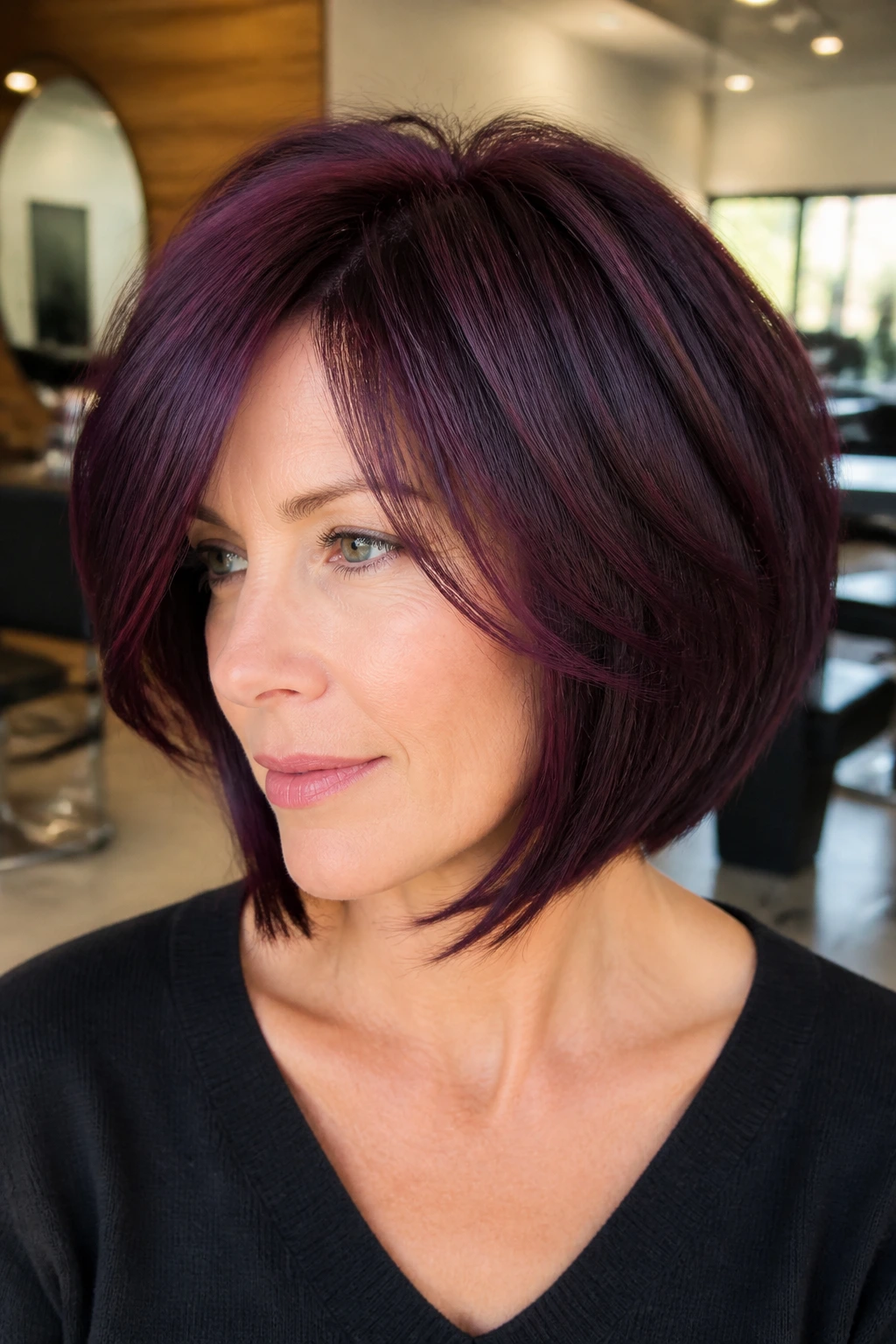
Aubergine is one of those shades that makes fine hair look richer without shouting about it. The color has enough depth to hide a little scalp show-through at the part, which is useful if your hair is sparse in places. The cut itself should stay layered, but only in the interior.
That’s the key. Interior layers remove bulk from inside the bob without making the perimeter wispy. The outer line still looks full, which is what keeps the style from collapsing by lunchtime. A soft blowout with a medium round brush gives the layers a little lift, especially around the crown.
Air-dryers sometimes make this cut look too flat, so I’d still reach for a blow-dryer if you can. A pea-sized mousse at the roots, then a light pass of heat, is enough. You do not need a mountain of product.
This is one of the easiest purple bobs to live with. It looks refined in a ponytail-less, hair-down kind of way. Which sounds tiny, but it matters.
6. Mulberry Bob With Curtain Bangs
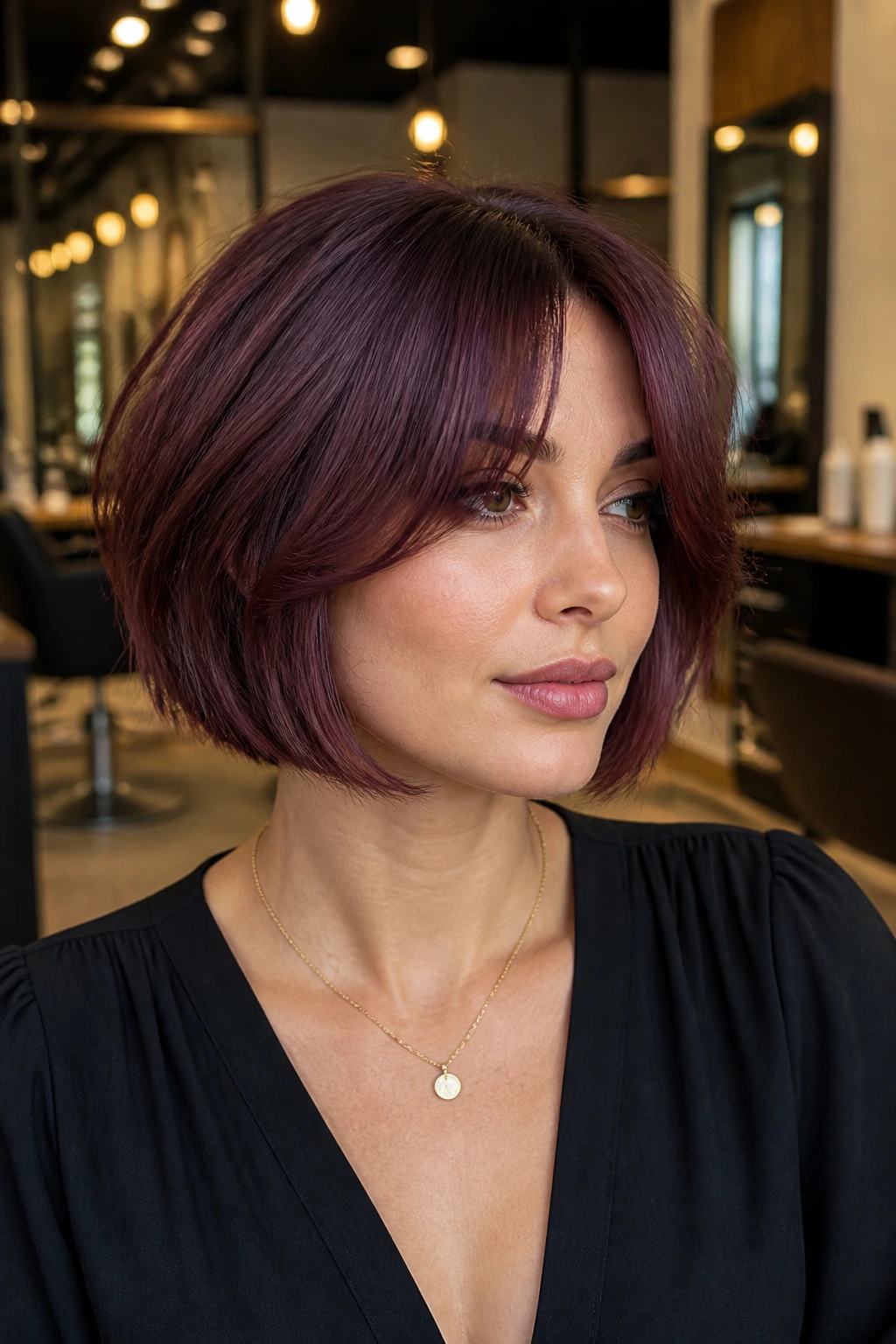
Unlike a heavy full fringe, curtain bangs leave some openness around the forehead and keep fine hair from looking boxed in. That matters. When the front is too dense, the rest of the bob can seem flatter by comparison, and nobody wants that.
Mulberry is a smart middle ground between red and purple. It brings warmth to the face, especially if your skin runs cool and the usual icy shades wash you out. The bob itself can sit at the chin or a touch below, with the bangs starting around the cheekbones so they drape instead of clump.
This cut is good for people who want movement near the face but still want the ends to look solid. Curtain bangs also let you cheat a little with volume. A quick blow-dry away from the face creates lift at the roots, and that lift makes the rest of the style feel fuller.
If your hair grows cowlicks at the hairline, keep the bangs longer rather than shorter. Short curtain pieces can flip around and thin out fast.
7. Stack-Cut Purple Bob With Crown Lift
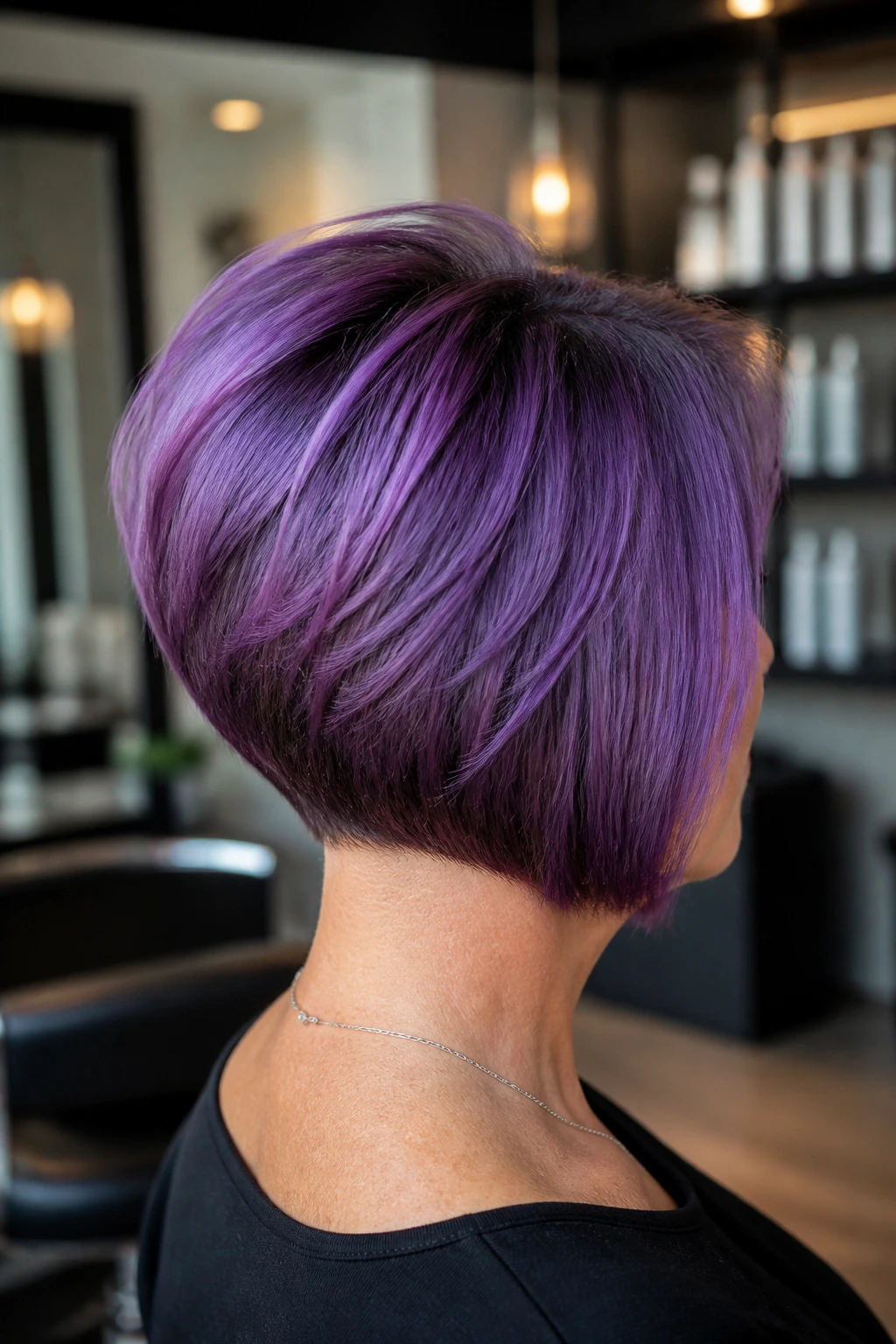
A stacked bob gives fine hair a shape that feels built in. The nape sits shorter, and the layers rise subtly toward the crown, which creates lift where fine hair usually needs it most. Purple makes the structure easier to see, especially when darker lowlights sit beneath the top layer.
Where the lift comes from
The crown lift does not come from teasing or a ton of spray. It comes from the geometry of the cut. The back is angled inward so the top layer rests lightly on it, and that small overlap creates a little pocket of volume.
Styling notes
Blow-dry with a small round brush and direct the roots up and back.
Use a light mousse before drying, then a flexible spray after.
Skip heavy serums near the crown. They flatten the whole point.
Choose a violet shade with a deeper root for extra contrast.
This is a strong choice if your hair falls limp at the back of the head. The stacked shape keeps the silhouette neat from every angle.
8. Glossy Orchid Bob With Face-Framing Pieces
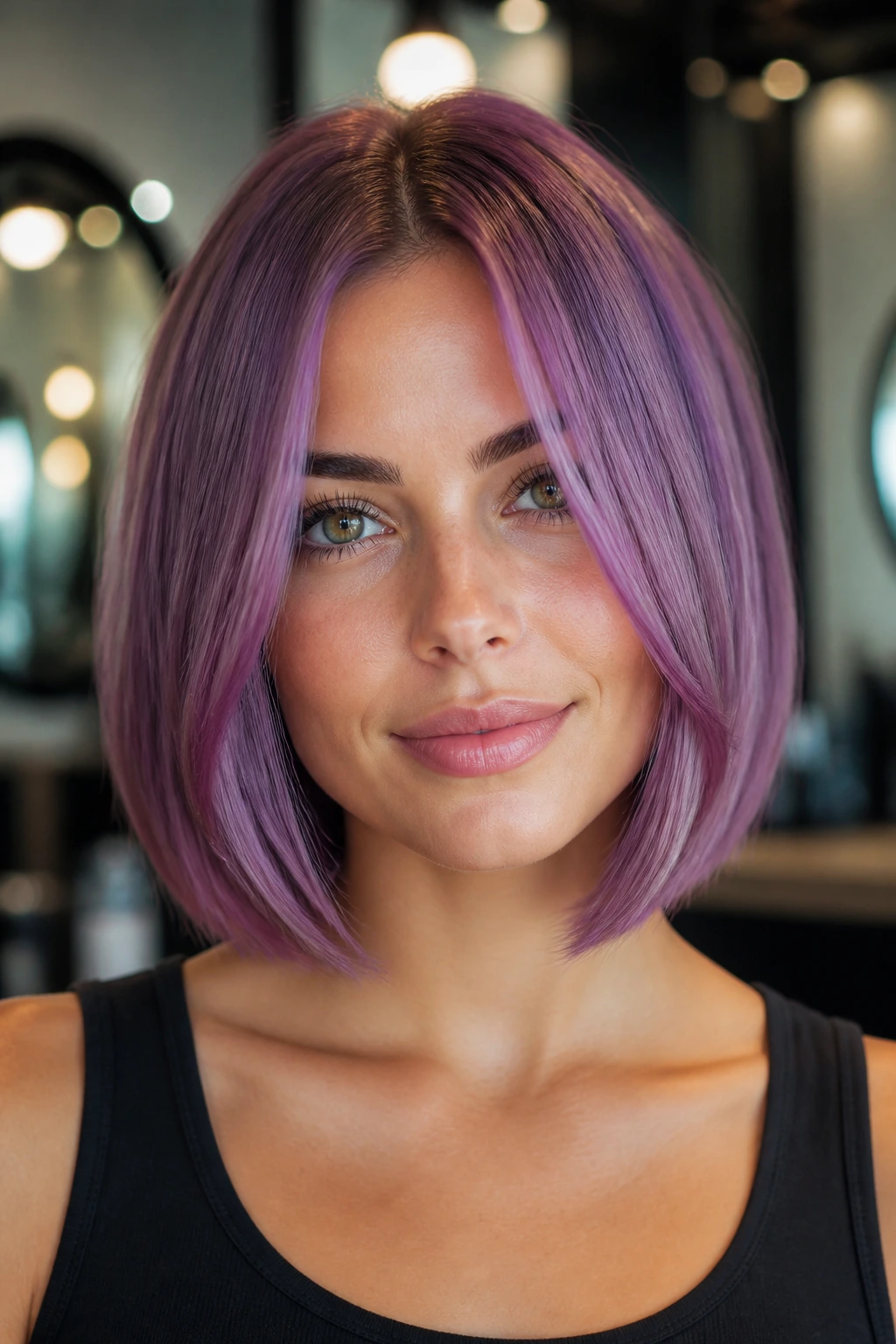
A glossy orchid bob can look surprisingly full on fine hair because shine makes the cut appear smoother and thicker. Not greasy. Just glossy. There’s a difference, and it’s a big one.
The face-framing pieces are what keep this style from feeling too uniform. They should start around the lip or cheekbone and fall forward in a soft line. That gives the bob a little movement without wrecking the perimeter. If you keep the rest of the cut blunt, the face frame acts like a small accent instead of the main event.
Orchid is a good purple for people who want color that feels bright but not candy-like. It sits between lavender and violet, which means it reads dimensional even on fine hair. A central part works well here, but a slightly off-center part can give extra lift if your hair lies too flat.
This one is polished, but not stiff. And that is the appeal.
9. Plum Money-Piece Bob
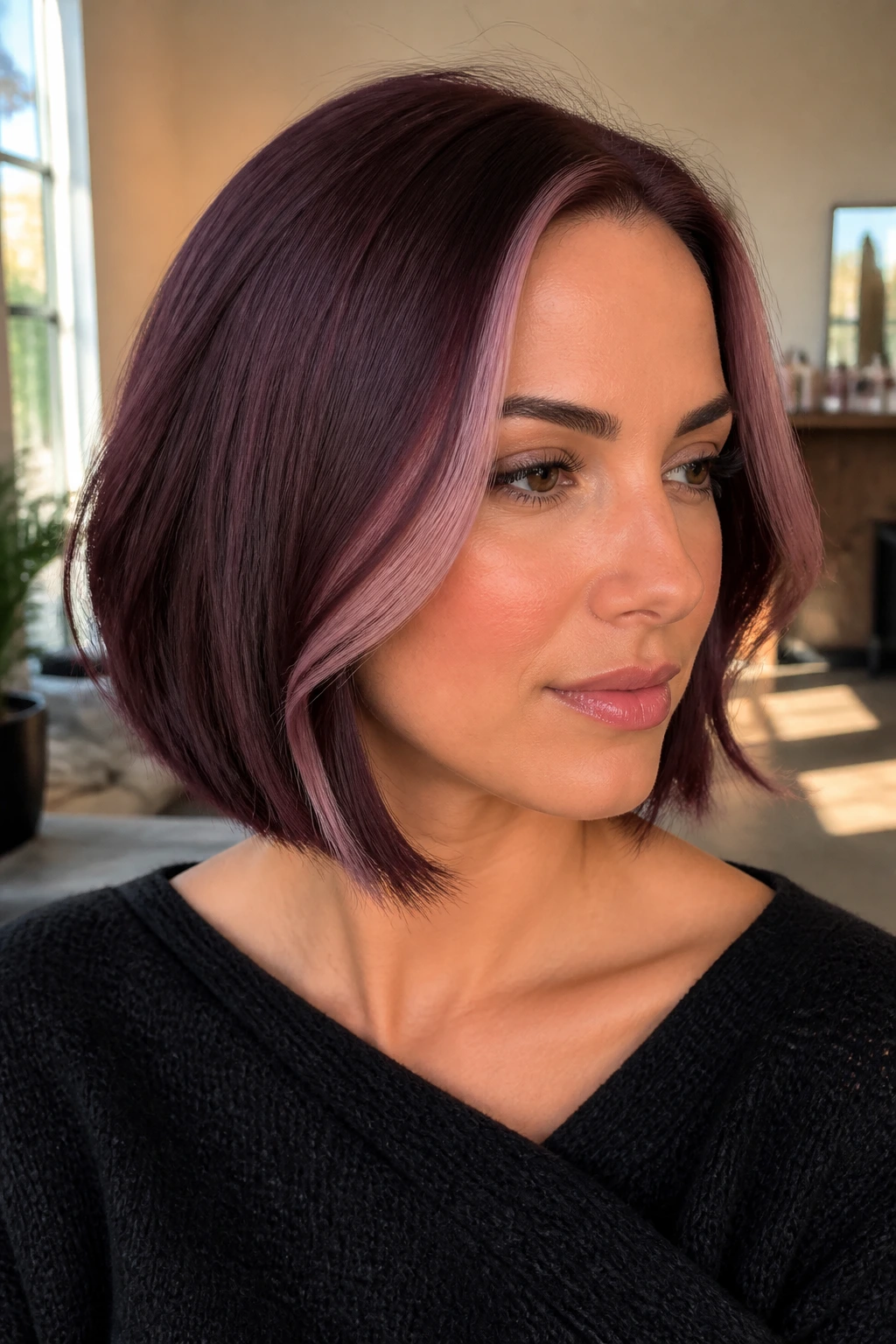
Why does a money piece work so well on fine hair? Because it gives the eye a bright landing spot right at the face, which makes the bob seem fuller without needing heavy color everywhere else. A small burst of brightness can do more than a full-head highlight job.
The base should stay rich plum. Then the front panels shift a little lighter, maybe toward violet or dusty lilac. That contrast gives the haircut depth, and depth is gold when the hair itself is fine. Keep the bob at the chin or just above the shoulders so the lighter front pieces do not drag the shape down.
How to use it
Ask for the front lightening to begin a few inches back from the hairline.
Keep the money piece narrow, not chunky.
Style with a soft bend away from the face.
Use a gloss every few washes to keep the plum from looking muddy.
This is one of those cuts that looks simple from a distance and smarter up close. I like that.
10. Deep Berry Wavy Bob
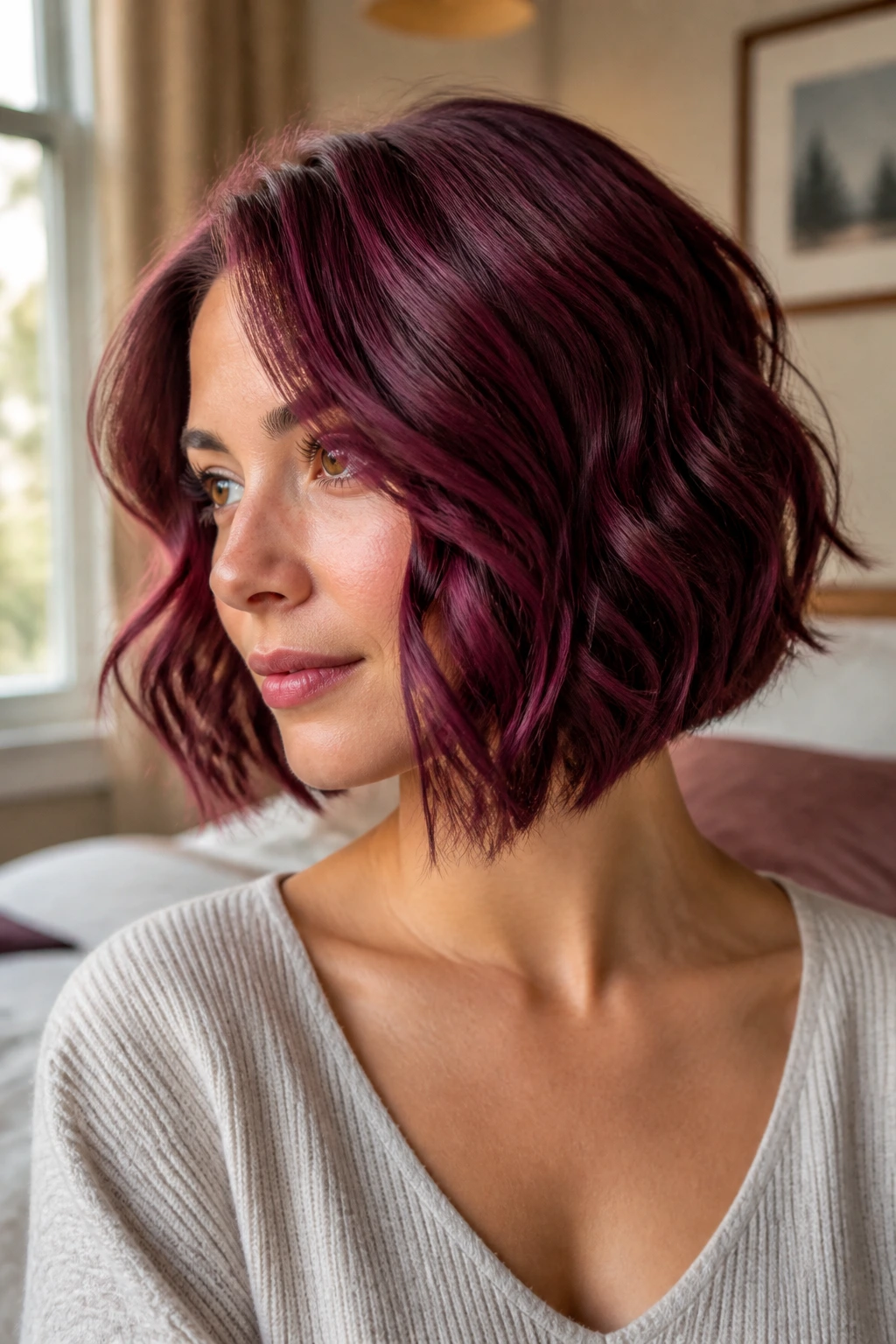
A loose wave can make fine hair look thicker, but only if the wave stays soft and broad. Tight curls tend to separate and expose the thinner ends. A deep berry bob works because the color keeps the shape rich while the wave gives it a little air.
Think of this cut as movement with manners. The bob should hit somewhere between the chin and collarbone, long enough to bend well but short enough to keep the outline strong. The berry tone adds warmth and depth, which is useful if your hair is naturally pale and a blunt cut would otherwise disappear against your skin.
- Use a 1-inch to 1.25-inch curling iron.
- Leave the last inch of each section straight.
- Brush the waves out with fingers or a wide-tooth comb.
- Finish with a light texture spray, not a sticky one.
- Keep the part loose so the roots do not lie flat.
The whole style depends on restraint. Too much curl makes fine hair look stringy. A little bend is enough.
11. Silver-Lilac Bob With a Root Shadow
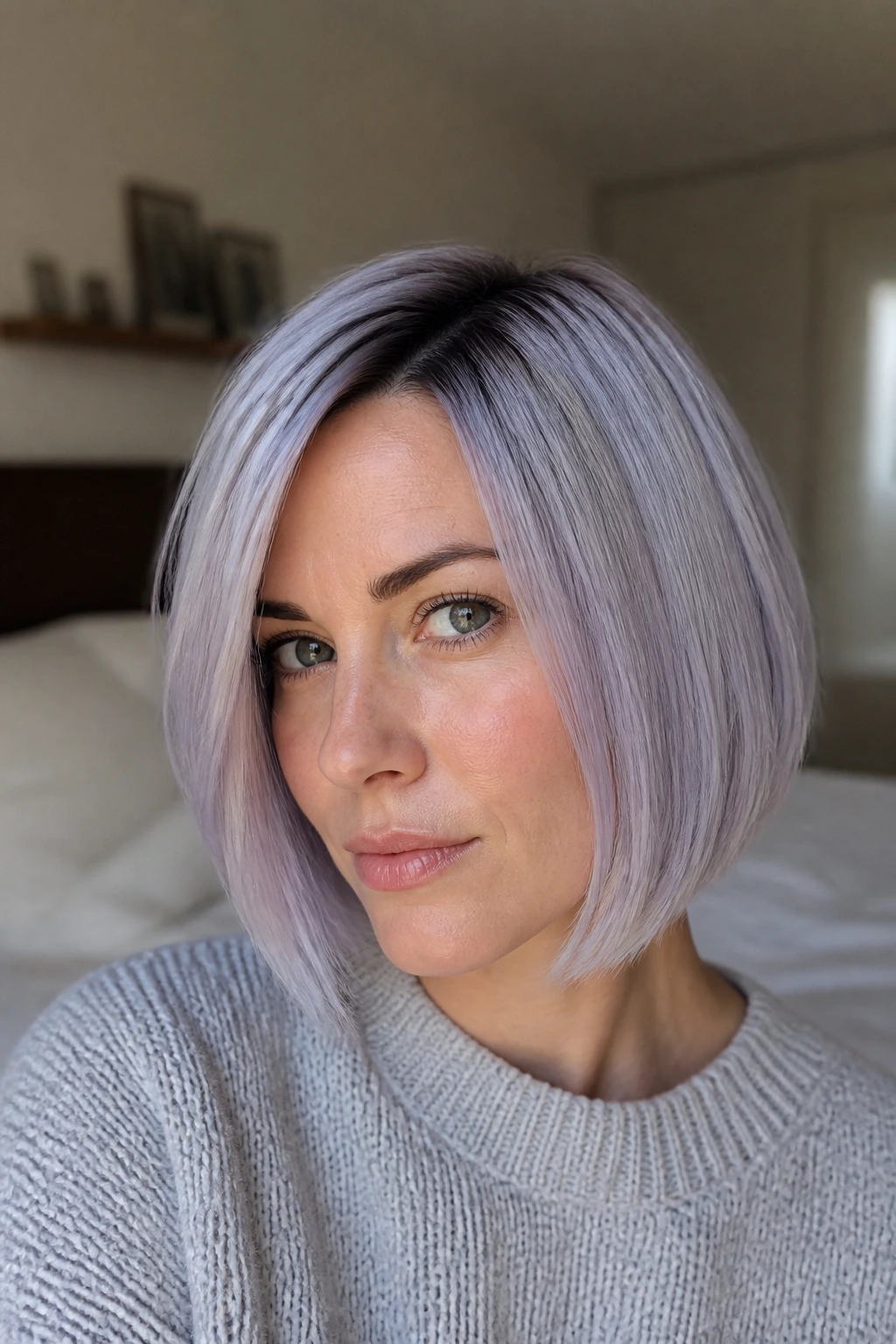
Silver-lilac can look airy and expensive on fine hair, but it needs a root shadow or it can go flat fast. The shadow root gives the scalp area more depth, which matters when the strands are thin and the part line wants to show everything.
This cut works best as a classic bob that sits just below the chin. The shape should stay clean, almost architectural, while the color does the softening. Silver at the ends and lilac through the mid-lengths create a gentle fade that keeps the eye moving. Fine hair benefits from that kind of movement because the color itself builds the illusion of thickness.
The root shadow should be only one or two levels deeper than the rest, not a harsh stripe. That tiny shift is enough. It keeps the hair from looking washed out and gives the cut more depth in photos and in real life, which are not always the same thing.
If your hair is naturally cool-toned, this one can look almost icy. If not, ask for a more muted lilac so the shade doesn’t fight your skin.
12. Asymmetrical Eggplant Bob
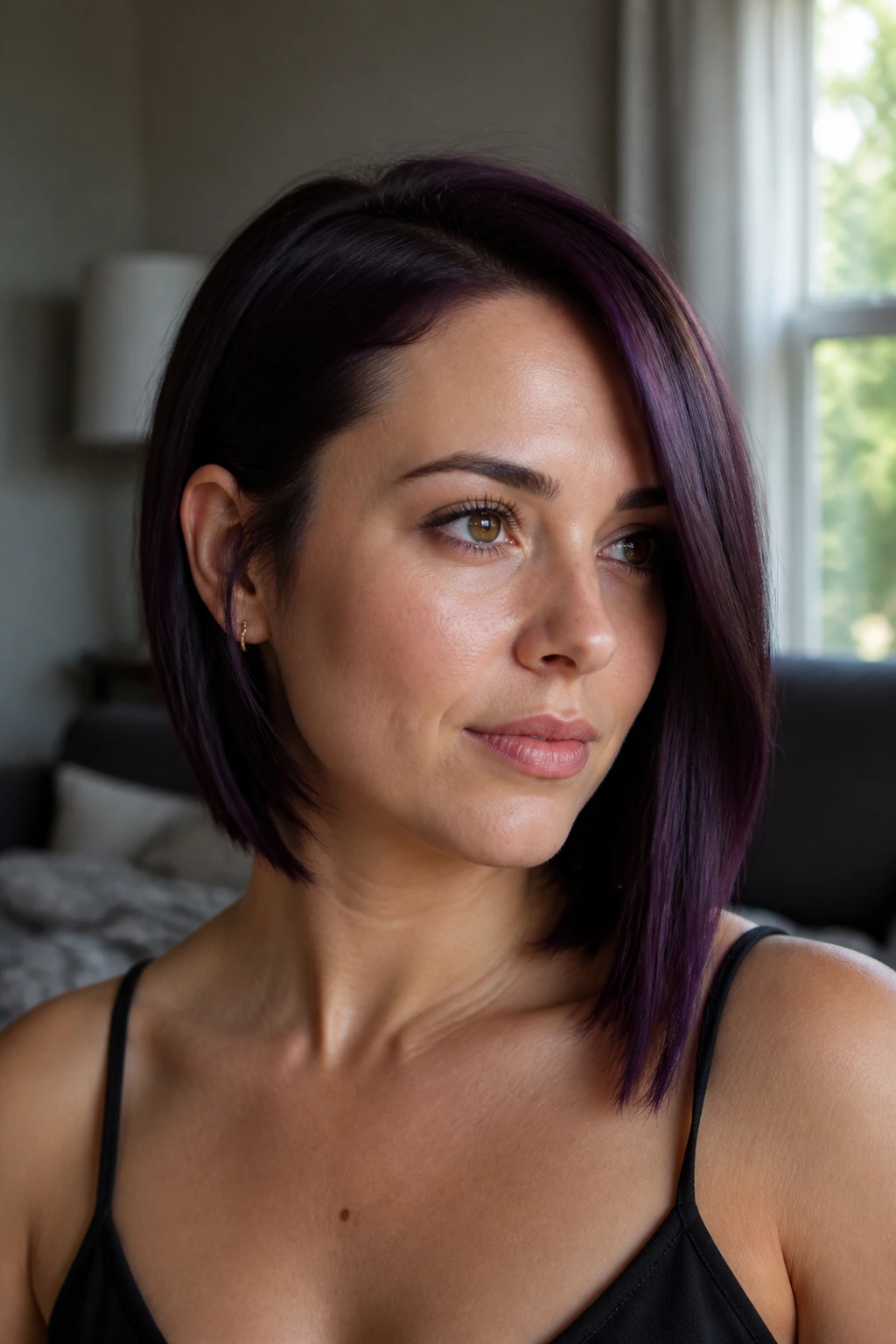
An asymmetrical bob does something clever for fine hair: it breaks up the outline without making the hair look thin. One side is a touch longer than the other, so the eye reads movement and shape instead of a single static line.
Eggplant is the right shade for this because it has enough darkness to ground the cut. The color keeps the style from becoming too airy, which is a real risk when a bob starts playing with asymmetry. Keep the difference modest, though. Half an inch to an inch is enough. Too much length difference starts to look like a haircut you meant to fix later.
This style suits people who wear their hair tucked behind one ear or who like a side part. The longer side can soften the jawline, while the shorter side keeps the back neat. It’s a small design move, but small moves matter on fine hair.
If your face is round, this cut gives a bit of length. If your face is long, keep the asymmetry subtle so it doesn’t stretch things too far.
13. Mauve Choppy Bob With Airy Ends
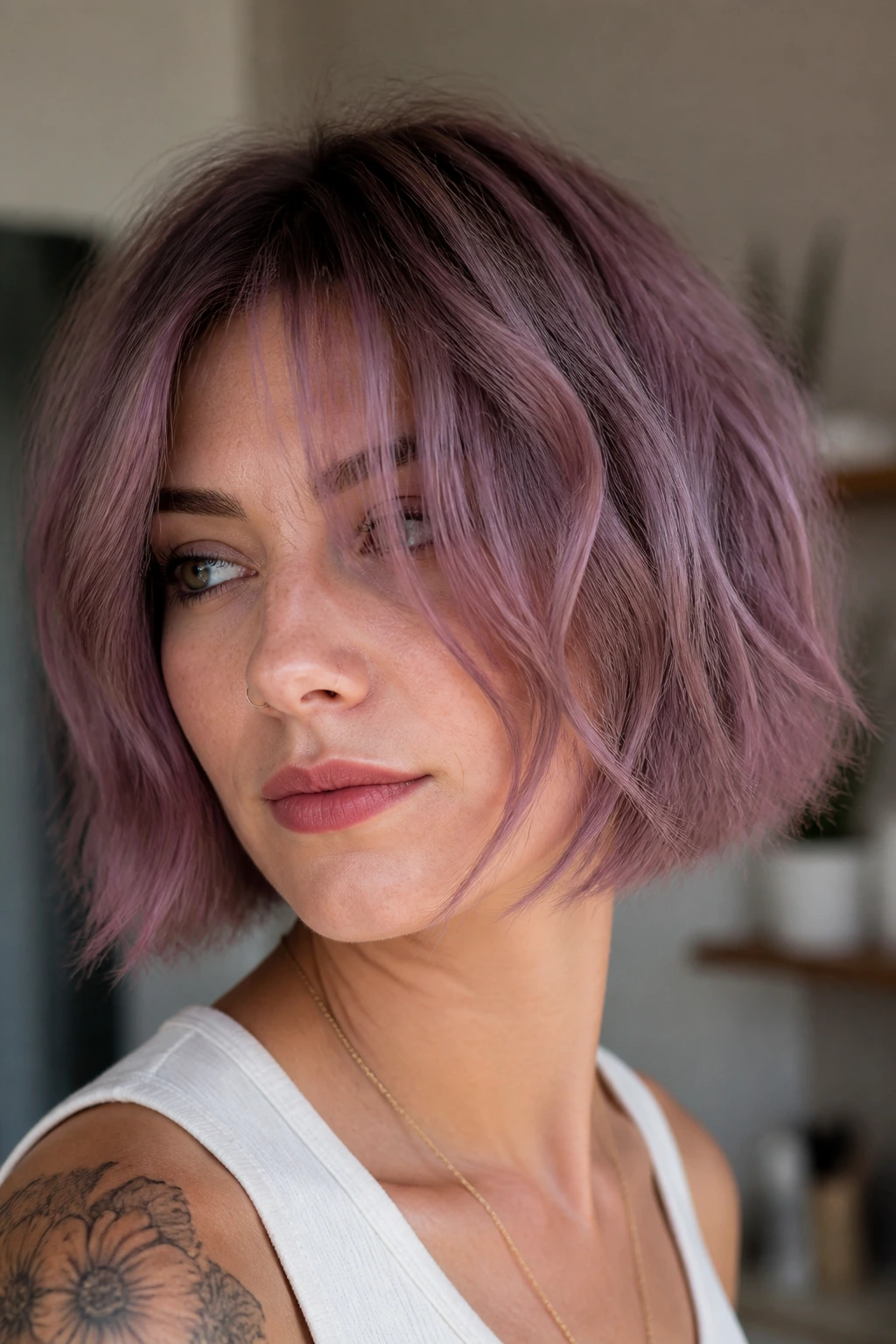
A choppy bob can be brilliant on fine hair, but only if the choppiness stays controlled. The ends should look soft and piecey, not shredded. Mauve works here because it reads muted and modern, which keeps the textured shape from looking too busy.
Why choppy doesn’t have to mean thin
A lot of people hear “choppy” and think “thinned out.” Not the same thing. Choppy ends are about shape. Thinned ends are about removing too much bulk. Fine hair usually needs the first and can’t spare the second.
A good mauve bob should have a blunt-ish outline with light internal movement. The ends move a little when you turn your head, but the shape still looks present from the front. That balance is the whole point.
Good signs: the bob still has a visible edge, the texture is soft, and the part line does not look gappy.
Bad signs: the ends look see-through, the crown lies flat, and the texture disappears when the hair is clean.
A matte finish spray can help here. It gives the hair a touch of grip without making it feel stiff.
14. Black Cherry Purple Bob With Razor Texture
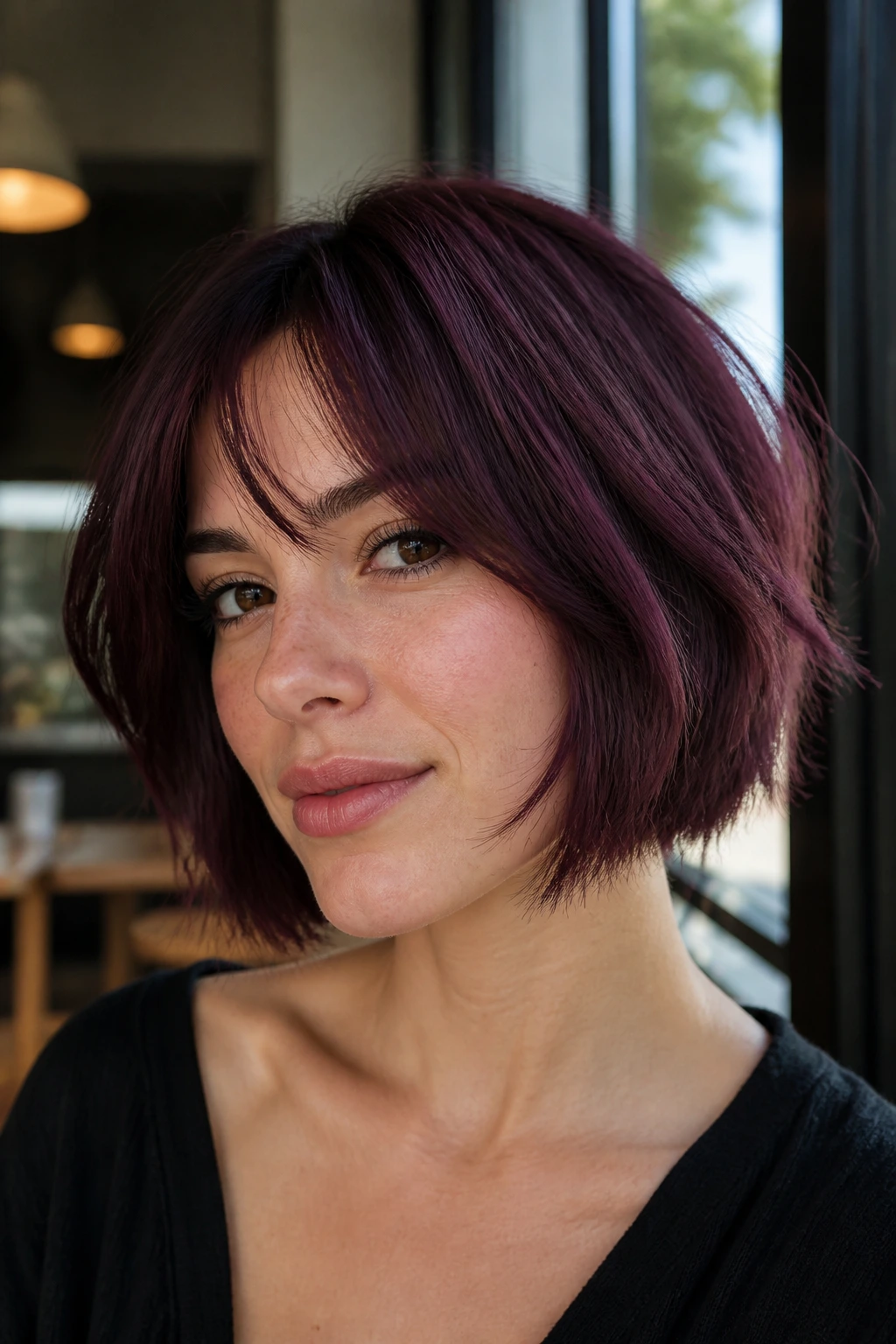
A razor-cut bob is risky on fine hair, and I would not hand it to someone whose strands are already sparse at the ends. But if your hair is fine and plentiful, not wispy, razor texture can give the cut a soft swing that scissors sometimes miss.
Black cherry purple adds weight to the look. It is dark enough to make the silhouette feel fuller, with a red-purple undertone that keeps the shade from reading flat. The razor texture should stay on the surface and around the face, not hacked into the whole head. That’s the difference between soft and stringy.
Use this cut if you like a little edge and you don’t mind styling it. A quick pass with a blow-dryer and a smoothing cream can keep the texture looking intentional. Leave it to air-dry and it may separate more than you want.
This is not the most low-maintenance bob on the list. It does, however, have a really good attitude.
15. Pastel Violet Rounded Bob
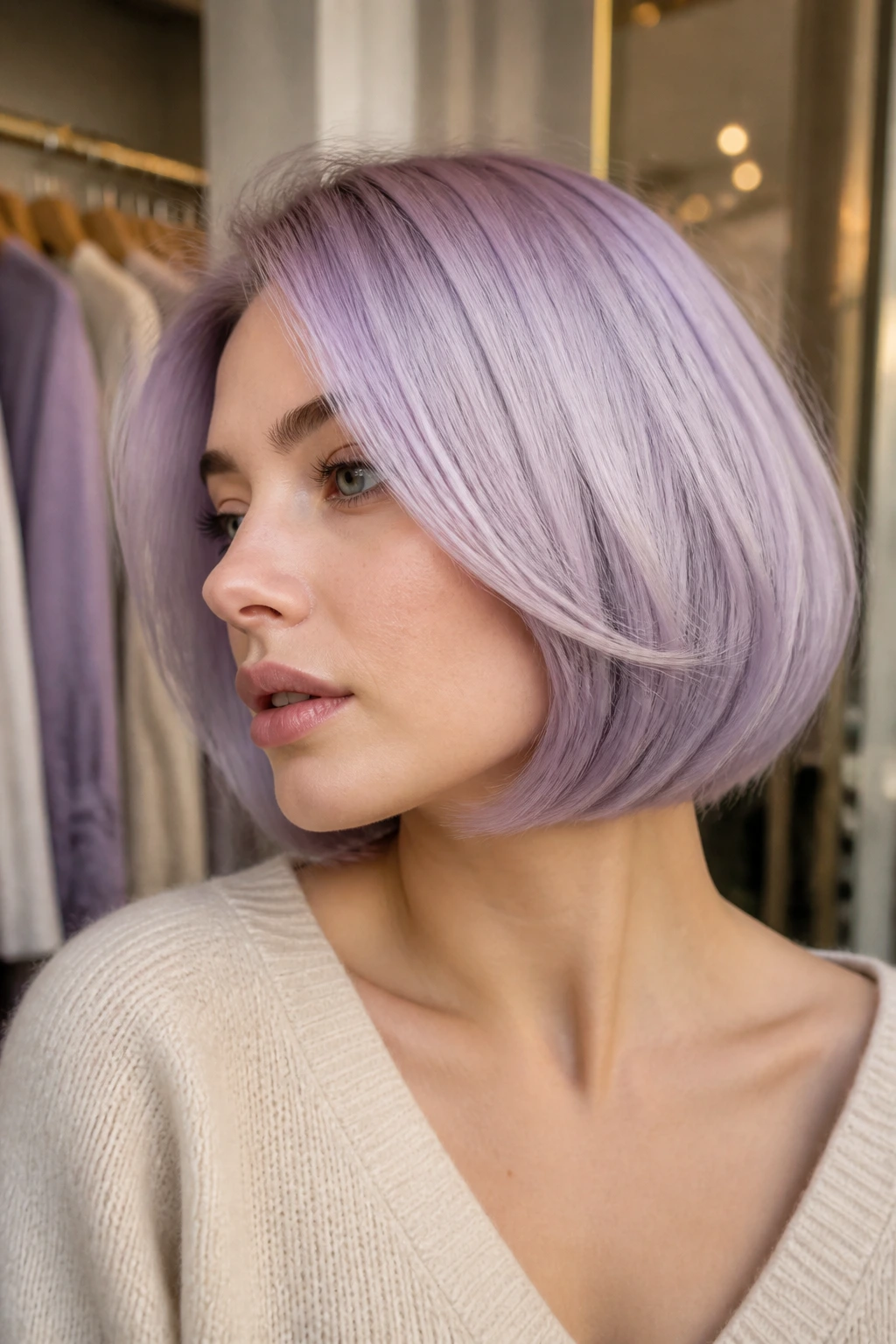
Can a pastel shade work on fine hair without making it look fragile? Yes, if the cut itself carries enough shape. A rounded bob does that job well because the silhouette curves softly inward and gives the hair a fuller outline.
Pastel violet needs a rounded finish more than a sharp one. The ends should hug the jaw or skim the neck so the style feels plush. If the hair is longer and flatter, pastel can start to look washed out. If the bob is compact and softly curved, the color stays sweet instead of weak.
How to keep the shape plush
Blow-dry with a medium round brush and pull the ends slightly under.
Set the top at the roots with a clip while it cools.
Use a light leave-in mist, not a heavy cream.
Sleep on a silk pillowcase if your ends frizz easily.
Refresh the shape with a few large Velcro rollers if needed.
This is a nice choice for people who like softer clothing, softer makeup, and hair that doesn’t look too severe at the jawline.
16. Soft Amethyst Lob With Invisible Layers
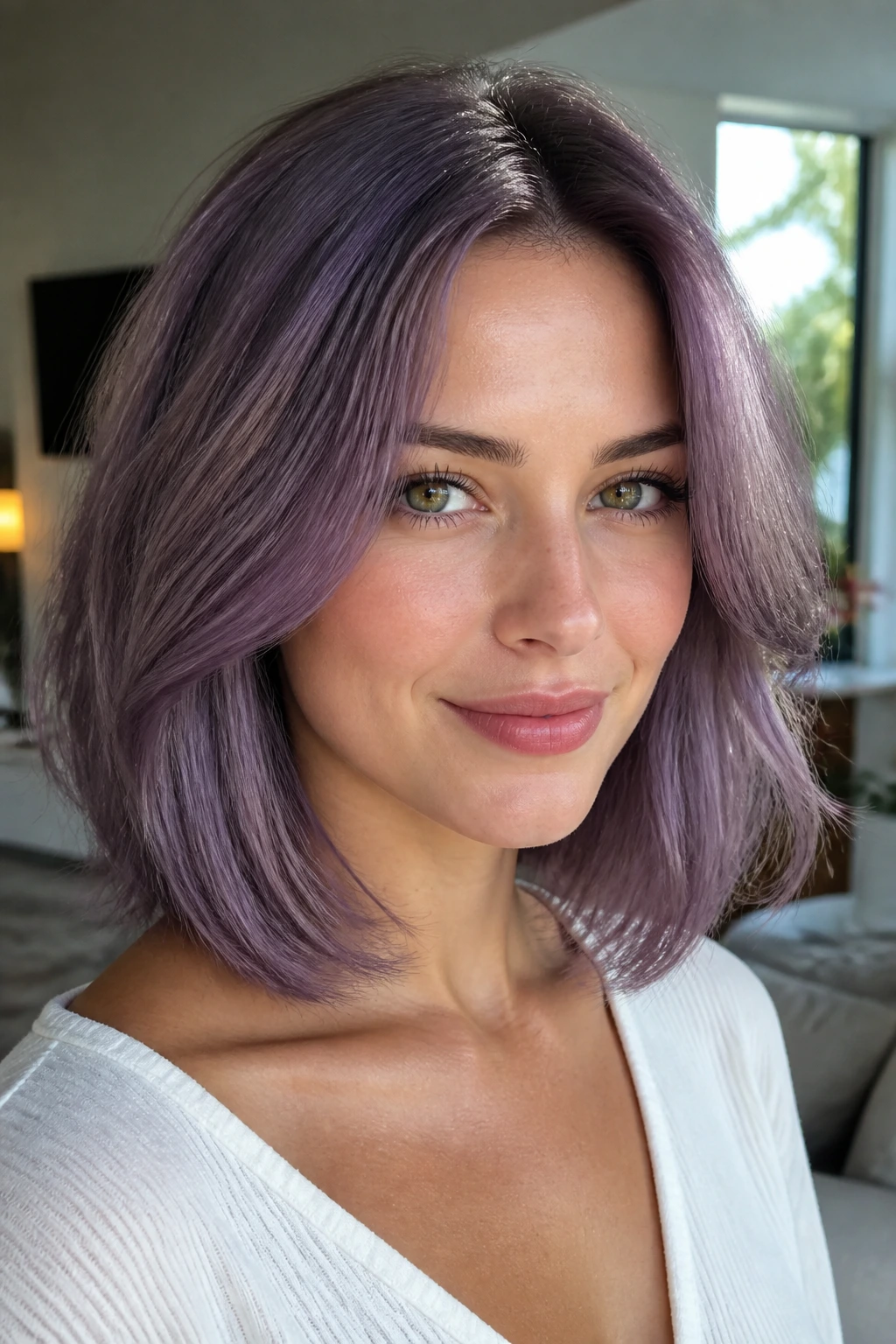
A lob gives fine hair a little more length to work with, which can be a good thing if your strands fall flat when cut too short. The amethyst shade keeps the longer shape from looking plain. It adds enough richness that the hair still feels styled, even when it’s worn straight.
The layers should be almost hidden. Invisible layers live inside the cut, so the outer line stays smooth and full. That’s the part I like most. Fine hair often needs help moving without giving up density, and hidden layers do exactly that if they’re cut with a light hand.
- Ask for the length to sit at the collarbone or a touch below.
- Keep the layers long and internal, not choppy on the surface.
- Use a middle part if your density is even, or a soft side part if one side is thinner.
- Add a bend near the ends with a flat iron or large iron barrel.
- Finish with a mist that adds sheen, not hold-heavy crunch.
This is a good cut for someone growing out a shorter bob but not ready for a shoulder-length look.
17. Glossy Grape Bob With a Center Part
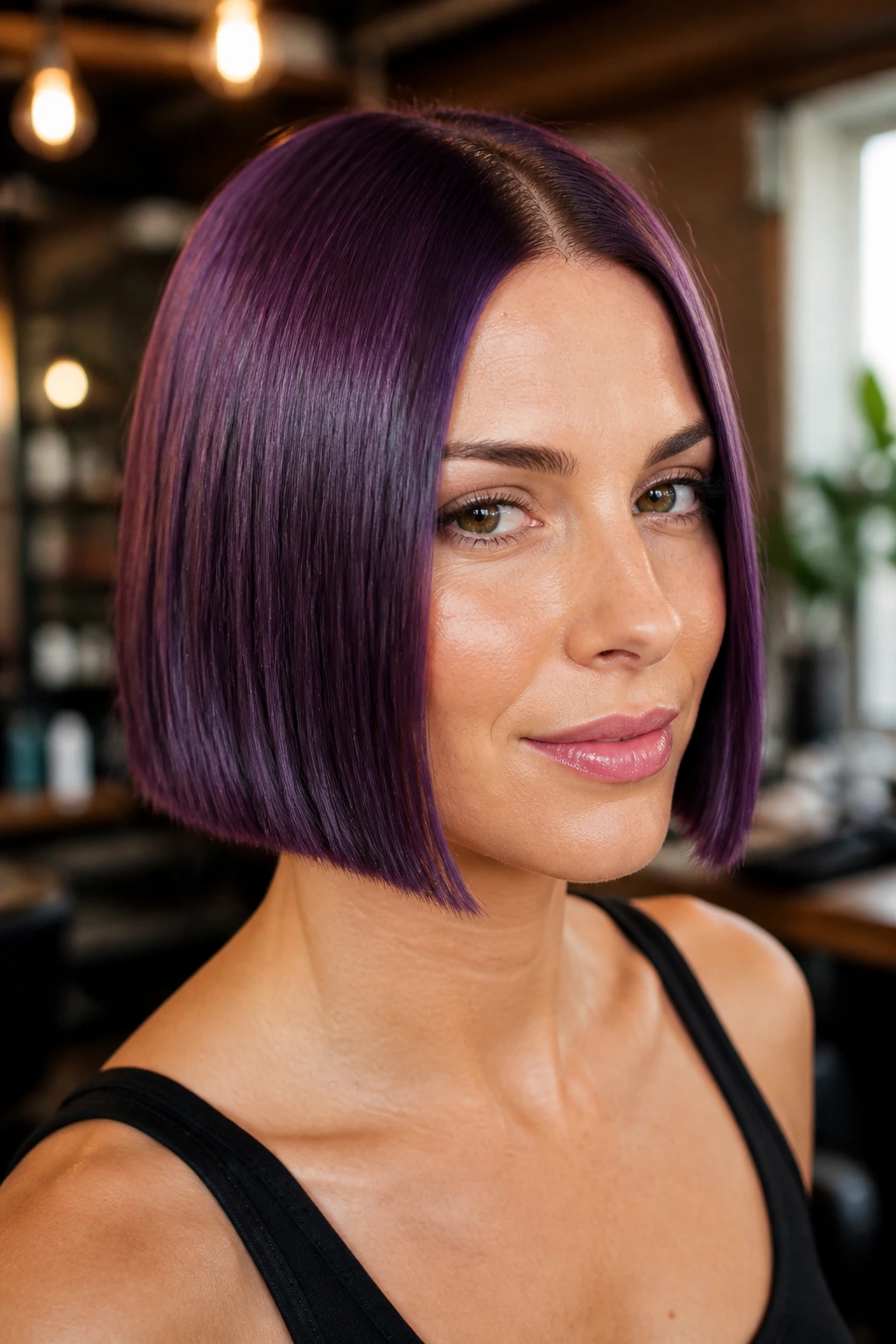
A center part can be hard on fine hair if the cut is weak, because it puts the part line right on display. But on a clean grape bob, that same center part can look sharp and expensive. The key is that the bob has to carry enough structure on its own.
Grape is a bold purple, yet it can still look refined when the finish is glossy and the cut is blunt. A straight line through the ends keeps the hair looking thicker than it is. A bit of shine serum through the mid-lengths helps the color reflect light, which gives the bob more depth and stops it from reading one-note.
This cut works best on hair that falls naturally straight or only slightly wavy. If your hair has a strong bend, the center part may split the shape too much unless you smooth it well. A paddle brush and a nozzle attachment can make a bigger difference than people expect.
One small note: if your roots show quickly, this shape still looks good with a soft regrowth line. The clean center part actually makes that look deliberate.
18. Smoky Lilac French Bob With a Micro Fringe
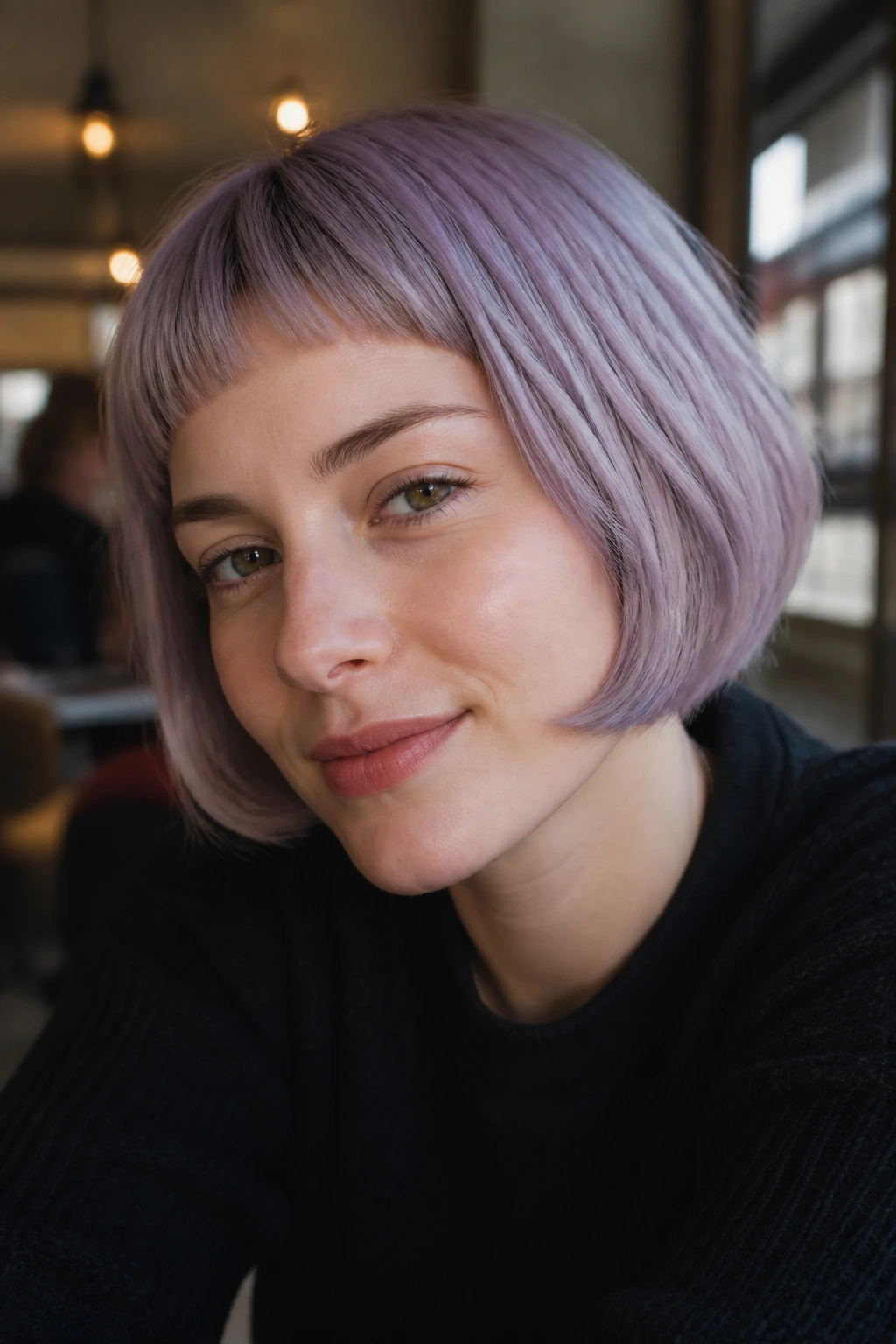
The French bob already has a certain insistent charm, and smoky lilac softens that just enough for fine hair. A micro fringe keeps the forehead open and draws the eye upward, which makes the rest of the bob feel fuller by comparison. Strange little trick. It works.
This version sits short, usually around the cheekbone or jaw, and the fringe stays light rather than heavy. That matters because fine hair can get swallowed by a dense bang. A tiny fringe gives shape without eating too much of the overall volume. The smoky lilac color adds a muted haze that suits the cropped length.
I like this cut on someone with a fairly small face or neat features, because the short fringe can be charming without overwhelming them. The bob itself should be a touch rounded so the sides don’t flare out.
If you want a version that feels less strict, ask for the fringe to be slightly uneven at the tips. Not ragged. Just softened.
19. Purple Melt Bob With Dark Roots and Pale Ends
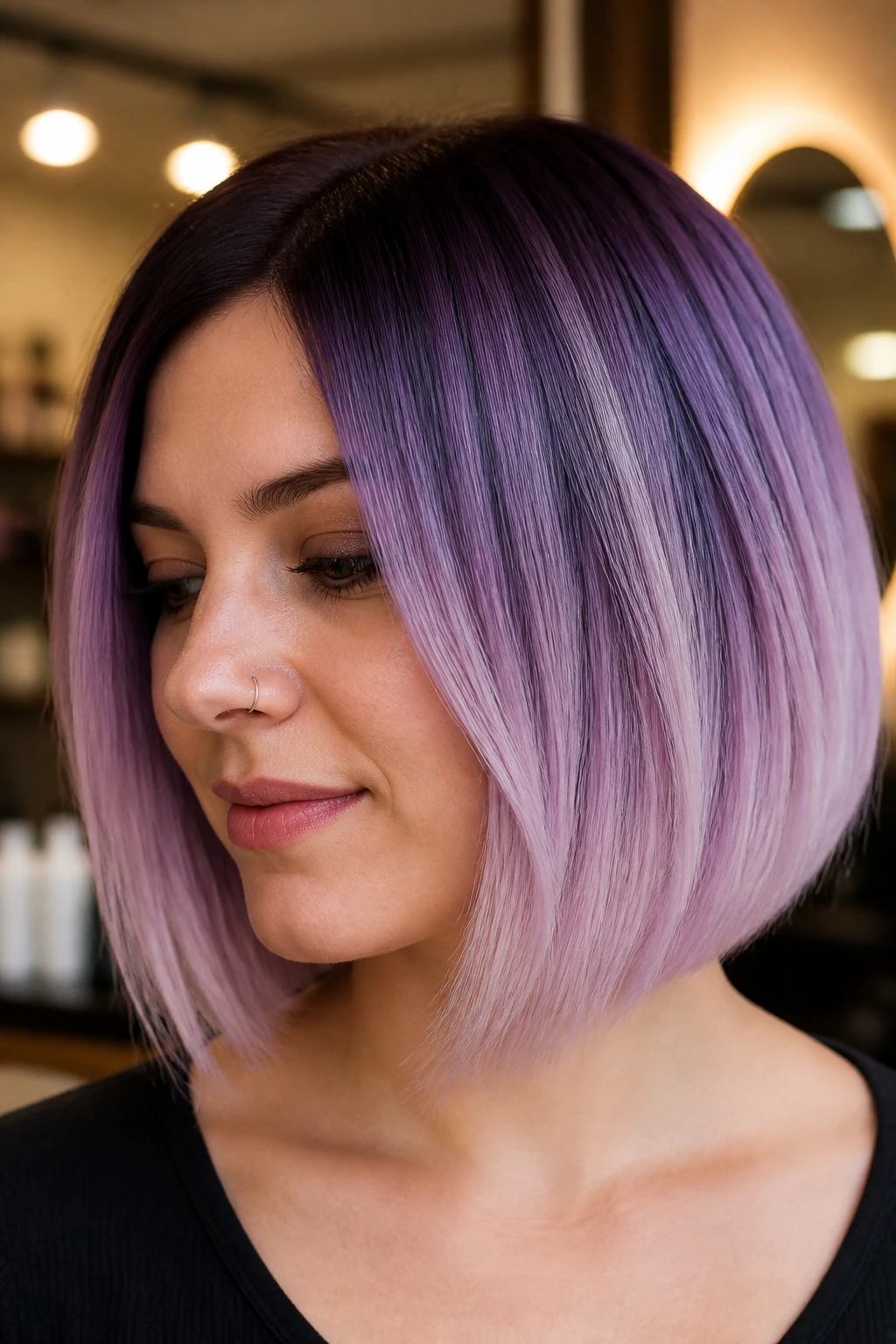
A color melt is useful when fine hair needs depth at the root and brightness around the face. Dark roots anchor the style, and the lighter purple ends keep it from feeling heavy. The transition between shades should be soft, almost blurry, so the cut looks dimensional instead of striped.
Why the melt works
Fine hair can look sparse when the color is all one pale tone. A darker base fixes that. The eye reads more density near the scalp, and the lighter ends bring movement to the silhouette.
Best shape for the cut
A chin-length or slightly longer bob works best.
Keep the perimeter blunt enough to hold shape.
Ask for the color to melt from deep violet or plum into lilac or orchid.
Use a gloss every few washes so the fade stays smooth.
Style with a bend, not tight curls.
This is one of the most forgiving purple bob haircuts for fine hair if you want dimension without a big styling routine. It also grows out nicely, which is a small mercy.
20. Airy Violet Box Bob With a Soft Bevel
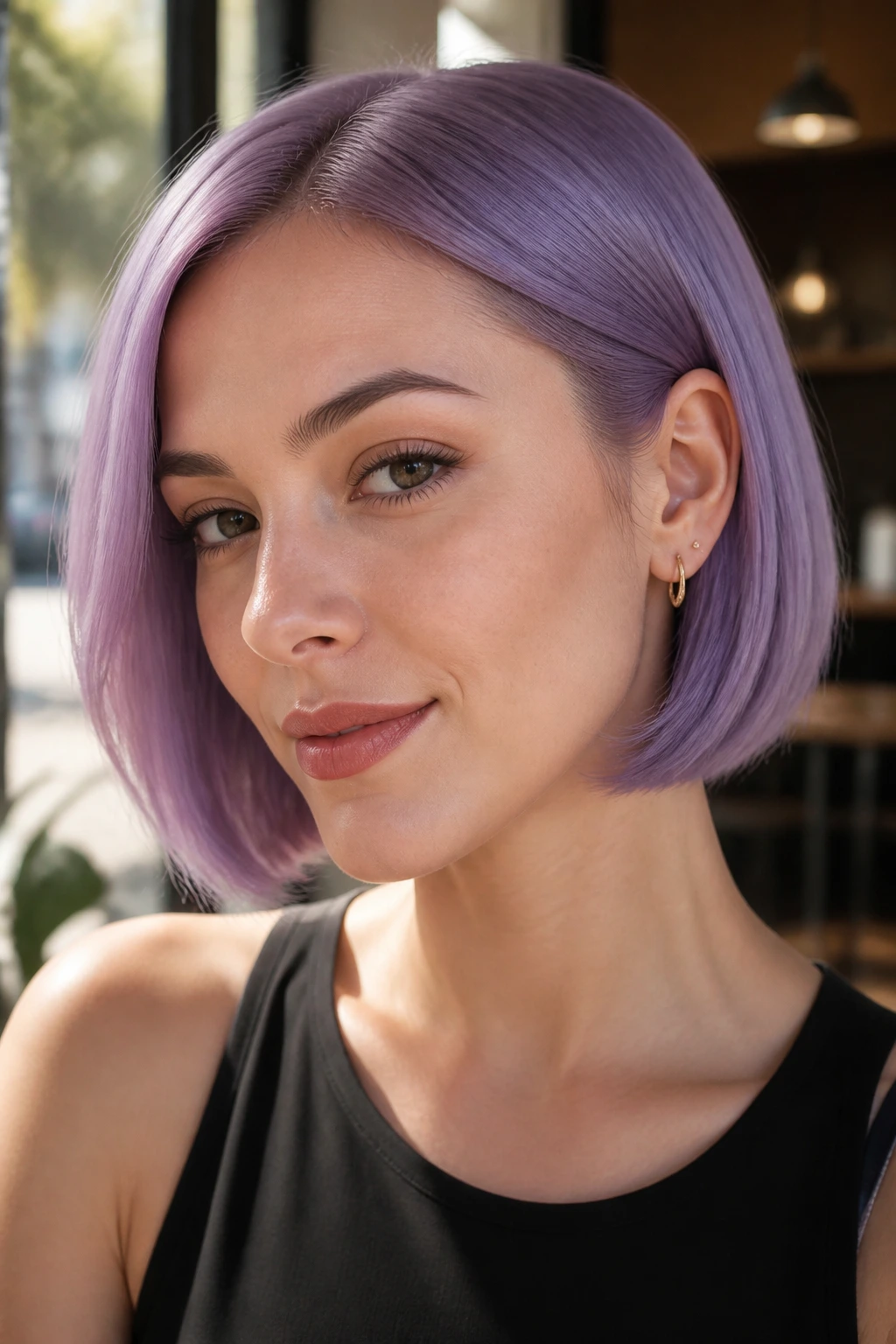
A box bob sounds severe on paper, but a soft bevel changes everything. The ends turn just enough under the chin or jaw to keep the shape from looking stiff. Violet gives the cut some life, and the clean boxy outline makes fine hair look denser because there’s almost no visual loss at the perimeter.
This one is for someone who likes clean lines and does not mind a haircut with a little presence. It looks especially good when the hair is tucked behind the ears on one or both sides. That shows off the line and keeps the silhouette crisp. If the purple is a mid-tone violet rather than a pastel, the whole style looks more grounded.
The bevel should be subtle. Too much curl at the ends makes the cut look dated. Too much flatness makes it look severe. Half an inch of inward curve is enough to soften it.
If I had to pick one style here for a person who wants the strongest shape with the least visual fuss, this would be near the top. Clean. Easy to read. Hard to make look thin.
Some of these purple bob haircuts for fine hair are built for polish, while others lean softer and more casual. The best ones do the same basic job: they keep the outline strong, use color to add depth, and avoid the kind of over-layered thinning that makes fine hair disappear.
If you want the safest starting point, go blunt with a darker purple. If you want more movement, add one smart angle, one soft fringe, or one dimensional color trick. Tiny changes matter here. They matter a lot.
